
Modern Road Racing, Flat Track Heritage…
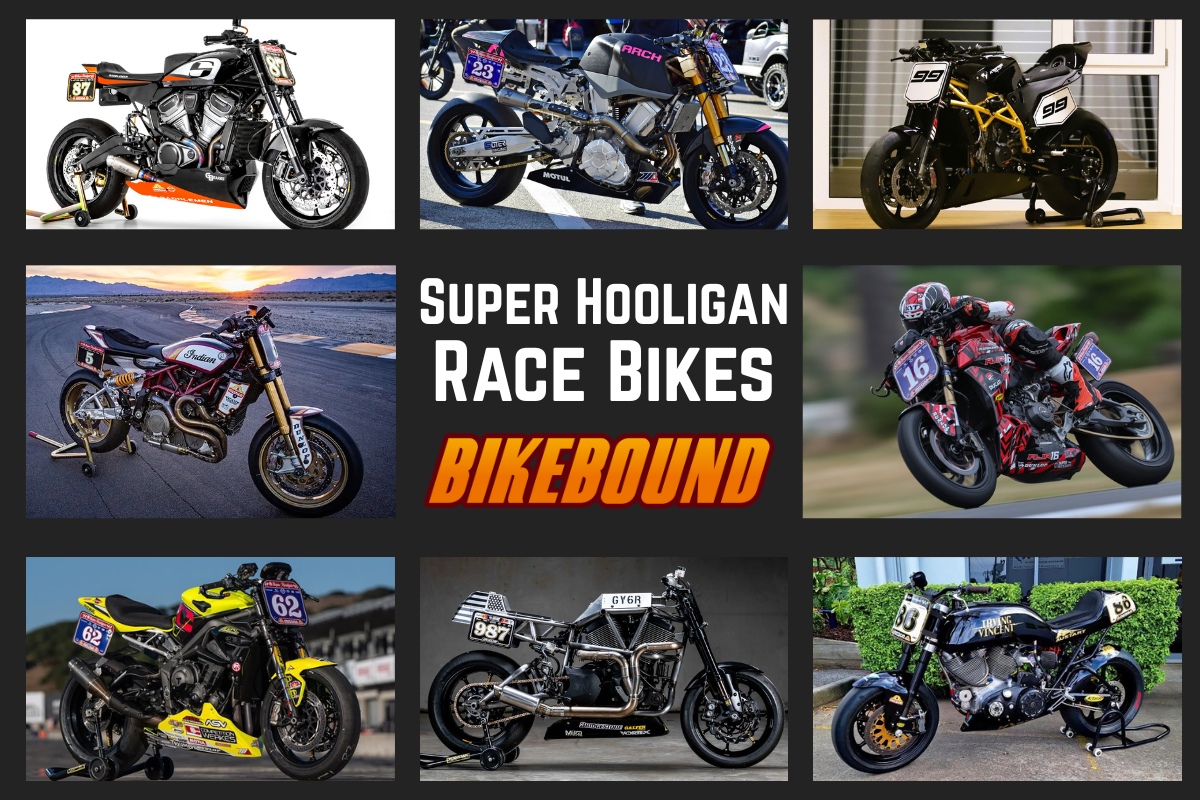
What’s a Super Hooligan bike? Super Hooligan motorcycles represent a unique fusion of retro flat-track styling and contemporary road-racing performance. Although the term originated in dirt-track competition, today’s Super Hooligan machines compete almost exclusively on paved circuits. The result is a distinctive class of motorcycles that combines traditional tracker aesthetics with the dynamics of big-twin streetbikes adapted for modern racing.
The Origins: Flat Track Roots

The concept began in the mid-2010s with the Super Hooligan National Championship (SHNC), founded by Roland Sands Design (RSD). The initial goal of the series was to create an accessible and entertaining form of racing:
- Use full-size, production-based street motorcycles
- Require twin-cylinder engines, often 750cc or larger
- Retain much of the bikes’ original character
- Race them on dirt flat tracks
- Encourage creativity and participation over strict technical rules

Early Super Hooligan races featured modified Harley-Davidson Sportsters, Indian Scout-based builds, and other heavyweight streetbikes reconfigured into flat-track machines. These races became known for their unpredictability and close competition, helping establish the hooligan aesthetic as its own distinct style.
The Evolution: From Dirt to Asphalt

Beginning around 2019, Super Hooligan racing began transitioning into a mixed-surface format, incorporating TT layouts and kart-track-style courses. By 2022–2024, the shift became definitive: Modern Super Hooligan racing is now almost entirely road-race focused.
The SHNC partners with MotoAmerica for events at major road courses such as:
- Laguna Seca
- COTA
- Daytona International Speedway
- Road America
- Ridge Motorsports Park
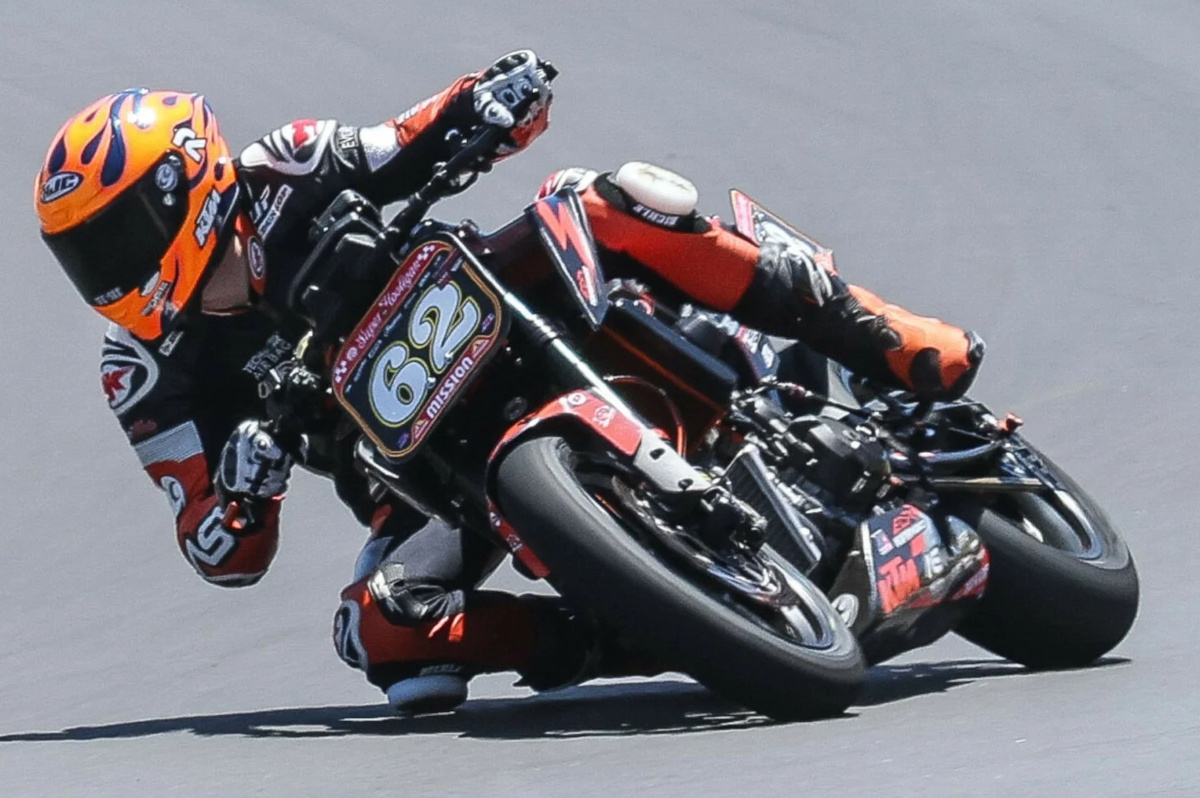
This transition fundamentally changed the performance and setup requirements of hooligan motorcycles:
- Slicks or DOT race tires replaced flat-track rubber
- Large road-race brakes replaced the former “no front brake” flat-track setups
- Suspension, geometry, and ergonomics aligned with asphalt racing
- Engines were tuned for smooth, tractable midrange and stability under heavy braking
Even with these changes, the stylistic DNA of flat track remains central to the category.
Super Hooligan Specs

A modern Super Hooligan motorcycle typically shares the following traits:
1. Production-Based Streetbike Foundations

Super Hooligan racers start life as standard street motorcycles rather than purpose-built racebikes. Common platforms include:
- Indian FTR 1200
- KTM 790/890 Duke
- Ducati Scrambler 1100
- Triumph Speed Twin or Scrambler 1200
- Harley-Davidson Sportster and Softail models
- Yamaha MT-07 / XSR700
- Models from ARCH, Ducati, Krämer, Victory, and more have also found their way onto the grid.
This foundation differentiates hooligan bikes from MotoAmerica Superbikes or middleweight prototypes.
2. Tracker-Inspired Styling
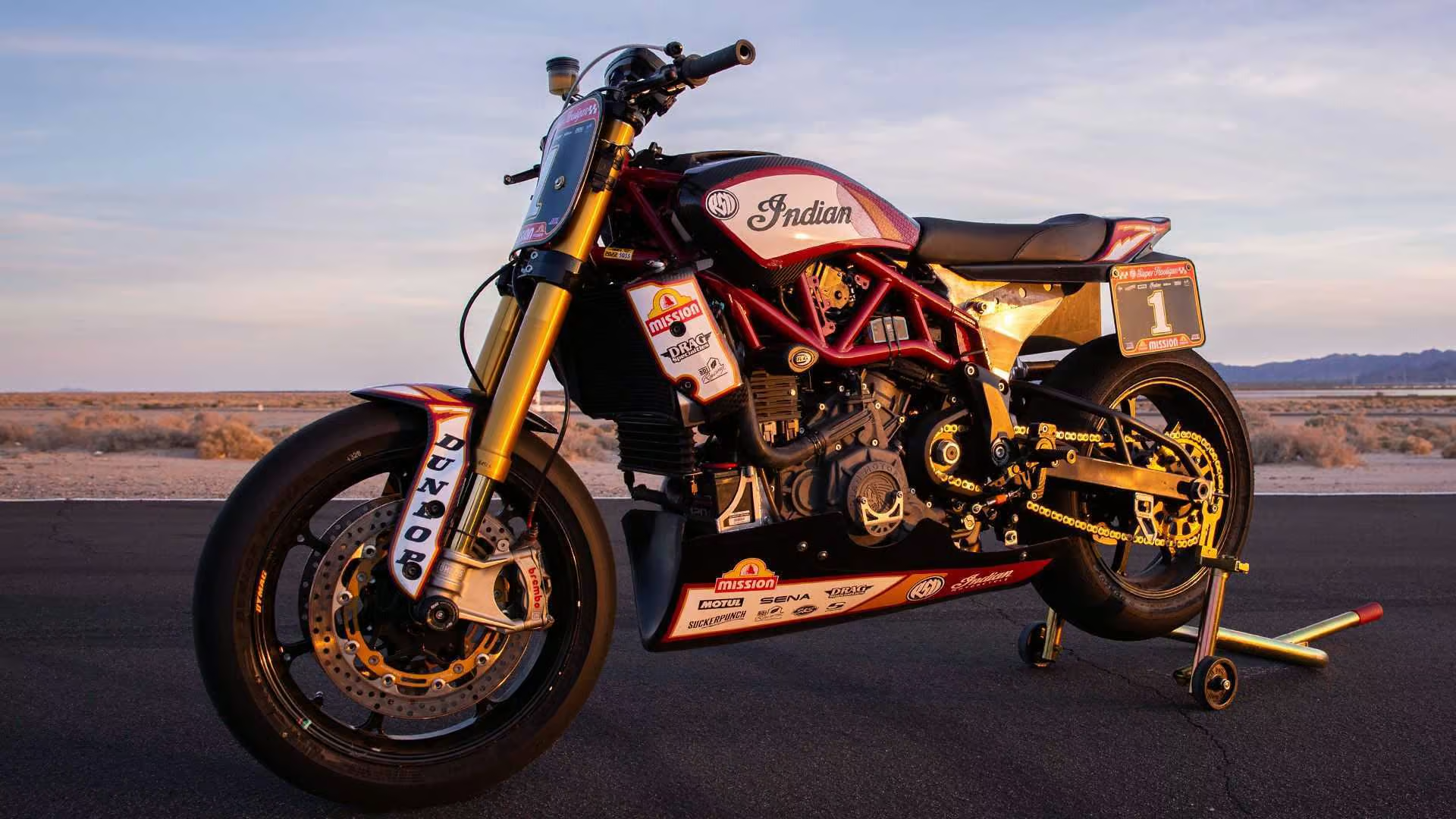
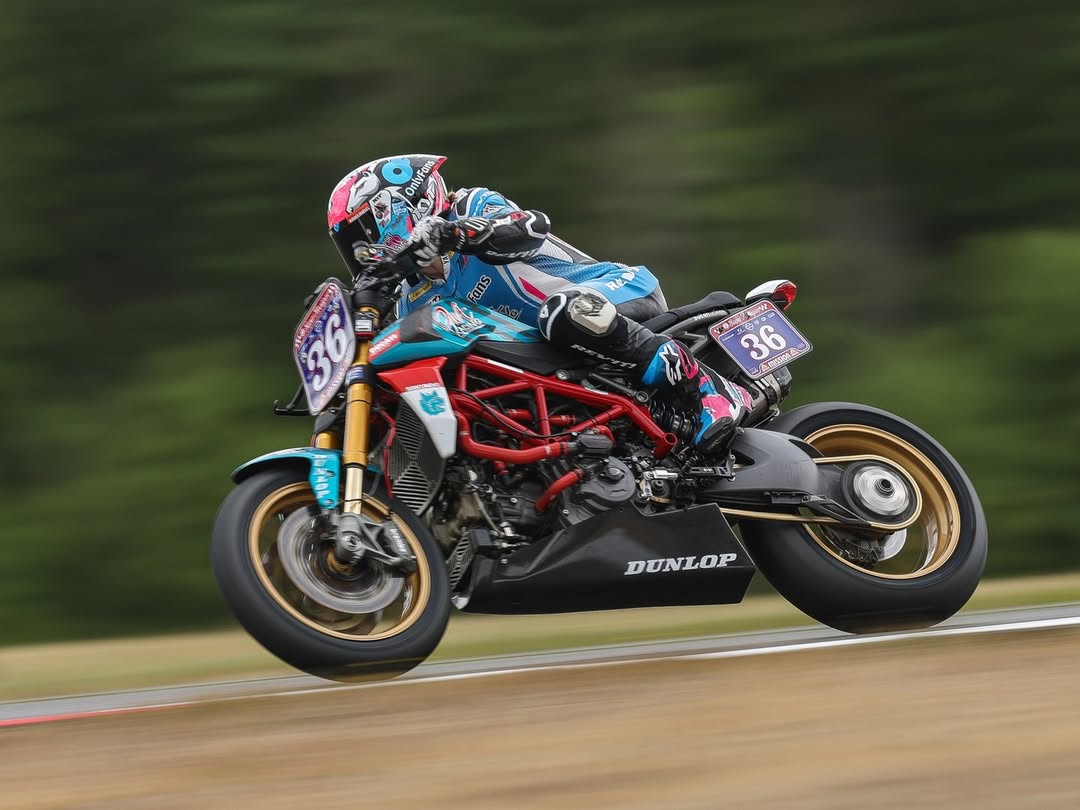
Although these motorcycles now race on pavement, they retain the visual identity of flat trackers, streetfighters, and old-school muscle bikes.
- High, upright handlebars
- Number plates in place of headlights
- Minimalist bodywork
- Flat or slightly stepped seat designs
- Compact proportions and visible mechanical components
These elements give Super Hooligan bikes a recognizable aesthetic that appeals to custom builders and street riders alike.
3. Adapted for Road Racing
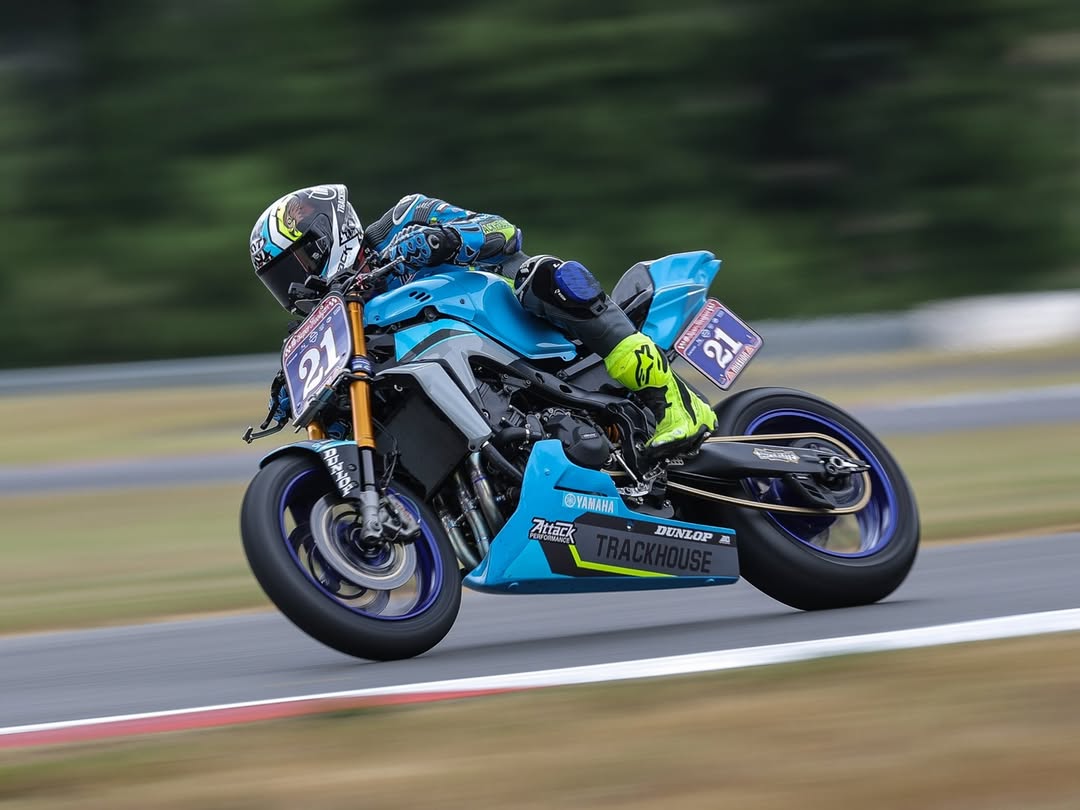
Modern competition requires substantial upgrades over the early dirt-focused builds:
- 17-inch wheels with road-race tires
- Upgraded fork internals or replacement front ends
- Twin-disc brake setups with radial calipers
- Reinforced swingarms and chassis bracing
- Road-race foot controls and ergonomics
- Engine tuning for smooth, predictable power delivery
The result is a motorcycle that visually evokes flat-track heritage but performs closer to a midweight naked sportbike.
4. Higher Weight and Displacement than Traditional Racers
A defining feature of Super Hooligans is that the motorcycles remain comparatively heavy and high-displacement, typically:
- 375–425 lbs (race-prepped)
- 700–1200cc twin-cylinder engines
This sets the class apart from both middleweight sportbikes and classic dirt-track machines, contributing to its distinct racing style and mechanical identity. The bikes tend to slide, wheelie, and bang bars more than those of more traditional racing classes.
Popular Super Hooligan Bikes

While builders can use a wide range of motorcycles, the following have become the most prominent in current competition:
- KTM 890 Duke R / GP – Among the most competitive modern platforms
- Indian FTR 1200 – Strong flat-track heritage adapted to road racing
- Triumph Speed Twin and Scrambler 1200 builds
- Ducati Scrambler 1100 / Monster-based builds
- Yamaha MT-07 / XSR700
- Harley-Davidson Sportster / Softail builds – Still used, but less common at the top level
These platforms reflect the shift away from heavyweight cruisers toward more agile, balanced middleweight twin-cylinder motorcycles.
What Makes Super Hooligan Racing So Popular?
Super Hooligan motorcycles have carved out a unique place in motorcycling by combining:
- Accessible streetbike-based performance
- Classic tracker-inspired styling
- A rule set that encourages experimentation
- Competitive racing that remains visually dynamic and approachable
This blend has inspired a large custom-building culture — many riders construct “hooligan-style” streetbikes even if they never intend to race them.
Custom Bikes, Real Racing…
A Super Hooligan motorcycle is best understood as a modern road-racing machine with flat-track origins and streetbike foundations. While the styling still reflects its dirt-track heritage, today’s competition is firmly asphalt-focused, demanding a level of performance and refinement that early hooligan builds never required.
The result is a class of motorcycles that feels simultaneously retro and modern, mechanical yet sophisticated, and deeply connected to both racing culture and the contemporary custom scene.


