 “Retirement planning should include cool hobbies…”
There are those who work their whole lives looking forward to retirement, only to realize they don’t know what to do with their newfound free time. Jeff Holsey of Calgary, Alberta, is not one of those men. After spending a career as a heavy-duty and motorcycle mechanic, including a three-decade stint at a Harley dealership where he completed 20+ factory training courses, the 70-year-old continues to build bikes and race flat track.
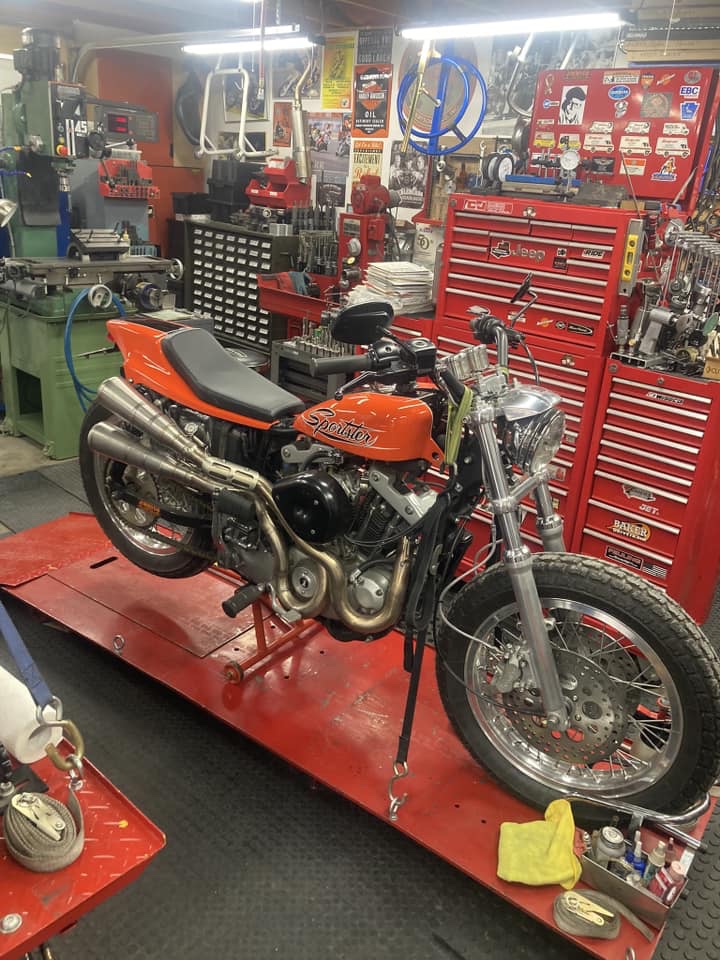
“I’m retired now but the motorcycle passion hasn’t faded. My career spilled over into my residence in a big way; it took years but I’ve outfitted my workshop to enable any type of machining I’d ever need to do. Welding is a part of the program too so fabricating is part of the regular routine. Retirement planning should include cool hobbies.”
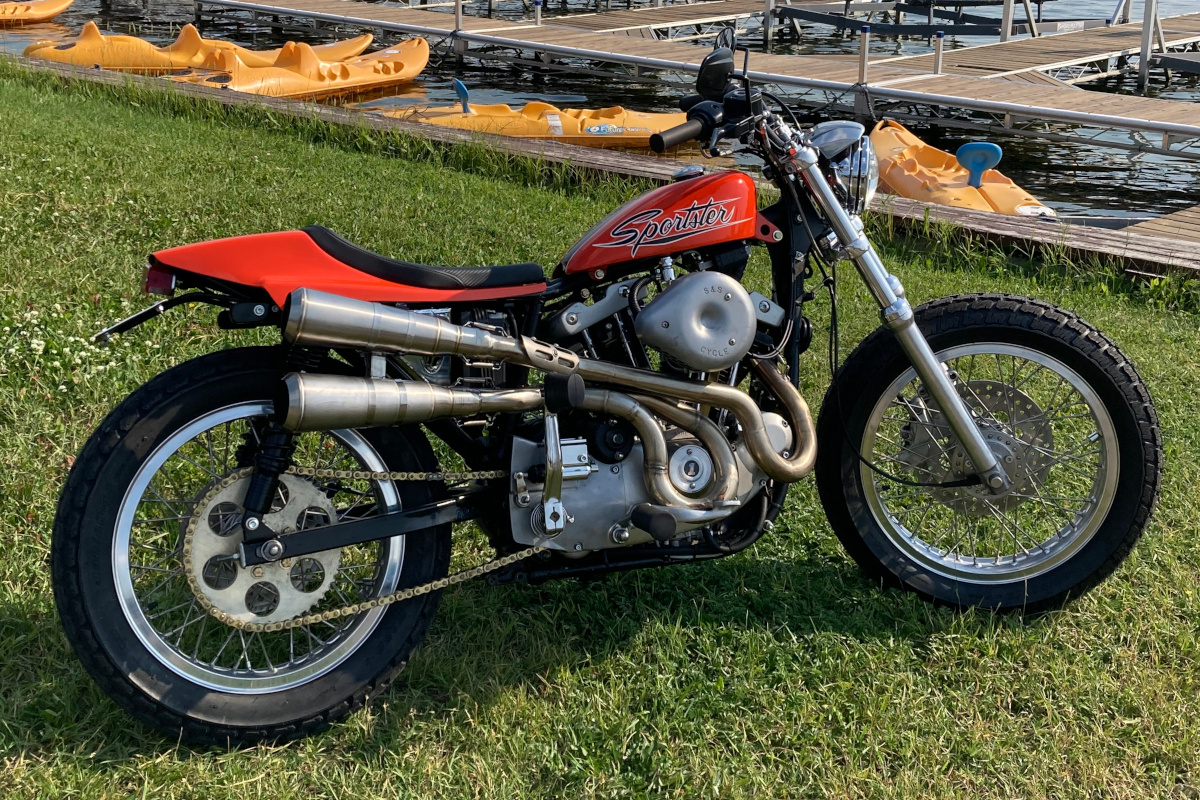
Jeff picked up the 1979 Ironhead Sportster you see here in ratty condition — in fact, it had been used to herd cattle! Jeff immediately knew he wanted to transform the Milwaukee tractor into a scorching street tracker.
“I’m a long-time fan of flat track racing and I race a Buell Blast / C&J frame-based flat track bike. In 2025 I came second in points in two classes, 60+ veterans and Sportsman — not bad for a 70-year-old!”
 Jeff has built the old XLS into one of the baddest Ironheads we’ve ever seen. At its heart is a stroker motor with S&S / Andrews internals, ported heads, and oversize valves — Jeff even machined the heads to run dual spark plugs. The transmission was fully overhauled as well.
“Full Andrews Transmission, gears, shafts, ‘C’ ratio main drive gear set, and ‘W’ ratio 1st gear set. Barnett Scorpion Clutch.”
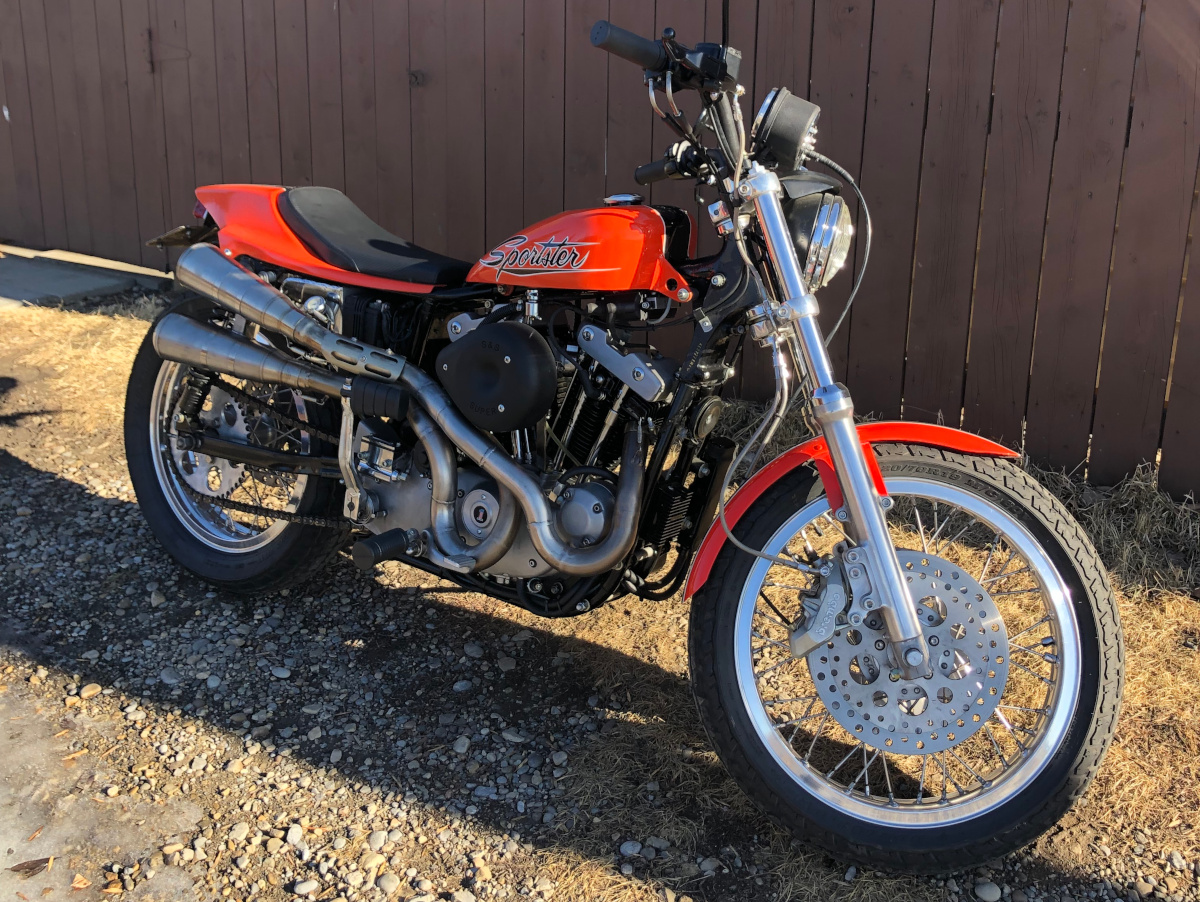 Jeff TIG-welded the stainless steel exhaust from OEM take-off parts — one of the most challenging yet rewarding aspects of the build.
“To get this done I had some coaching and encouragement from friends who are far better welders than me.”
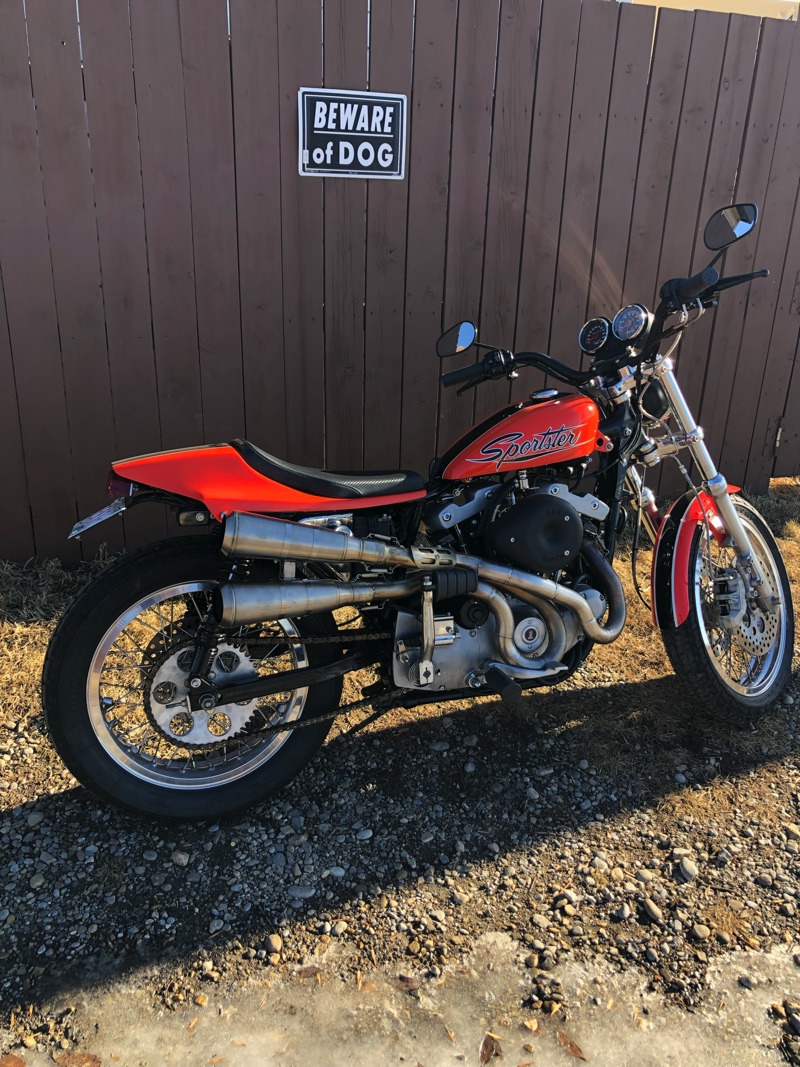 He cut down a Sportster King tank and welded on a new bottom for a sleeker look, matched with an AirTech XR750 tail section and Saddleman seat. The wheels consist of shouldered aluminum rims, modified H-D hubs, stainless spokes, and Dunlop DT3-R rubber. The bike is running newer 39mm Showa forks with RaceTech internals and wider yokes to run a 130 front tire (though he’s running a 120 at the moment).
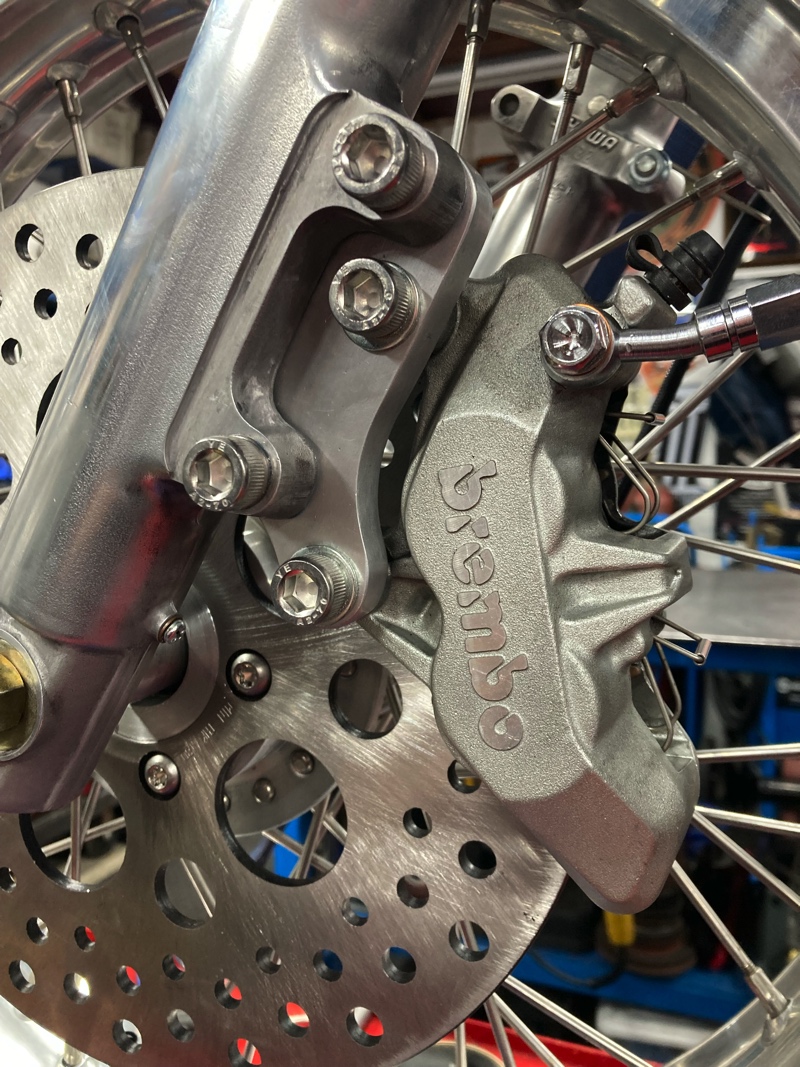
 The brakes were massively upgraded, featuring Brembo four-piston front calipers from a Ducati 998 and a four-piston rear caliper from a ’16 Sportster.
“It stops VERY well. Overall a massive improvement from the Kelsey Hayes Flintstone brakes ’79 Harleys were equipped with.”
 Jeff added a kickstart, modern hand controls and switchgear, and FXR instrumentation. He says he wanted a “lively” build…and “The Dirtster” certainly is.
“On the street this bike handles very well for what it is. I have had it out on the half-mile for some laps when it’s permitted, while I’m at the track for racing weekends. I gotta say, it’s fun but kinda frightening — on a dirt track it doesn’t turn anything like my 500cc framer…”
 We love this build, Jeff — it’s rare to see an Ironhead given the street tracker treatment, and even rarer to see such a high level of execution. Bravo!
Below is our full interview with Jeff about the build, including many details and backstory.
Ironhead Street Tracker: Builder Interview

• Please tell us a bit about yourself, your history with motorcycles, and your workshop.
I’ve been a tradesman since high school, several years as a welder but mostly as a mechanic. I’m a journeyman Heavy Duty Mechanic and a journeyman Motorcycle Mechanic. Several (30+) years in a Harley-Davidson dealership, attending 20+ factory training courses during that period.
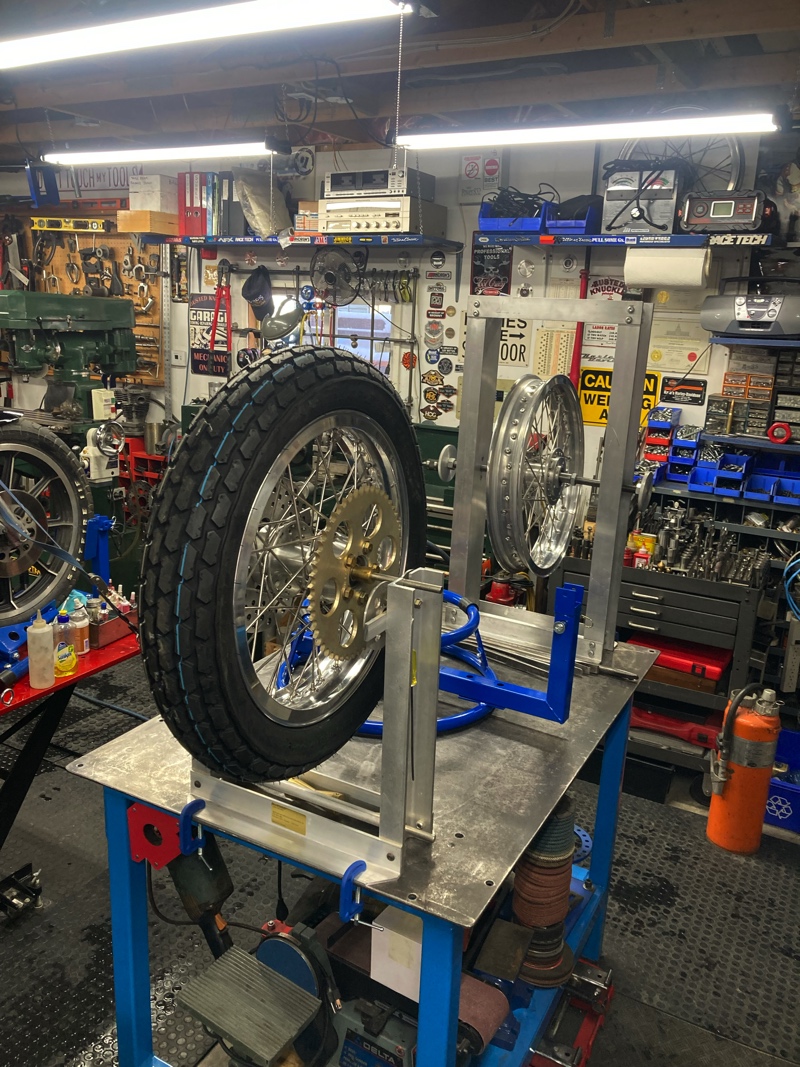
I’m retired now but the motorcycle passion hasn’t faded. My career spilled over into my residence in a big way; it took years but I’ve outfitted my workshop to enable any type of machining I’d ever need to do. Welding is a part of the program too so fabricating is part of the regular routine. Retirement planning should include cool hobbies.
I started riding in 1973 and quickly took on all of my own maintenance and repairs as problems appeared, mostly out of necessity — money was tight.

I’ve never given the motorcycles a rest and don’t plan on it anytime soon. At 70, I still race flat track, regionally. I have a hand-crafted motorcycle that was purpose built for dirt track. For 2025 I finished second in points for the season in two classes: 60+ and Sportsman. Not bad for a chubby, old, slow guy!
• Please tell us a bit about the bike and why you built it.
It’s a 1979 Sportster XLS I bought in 2023. It was ratty but it ran. I knew right away what I was going to turn it into: a Street Tracker .
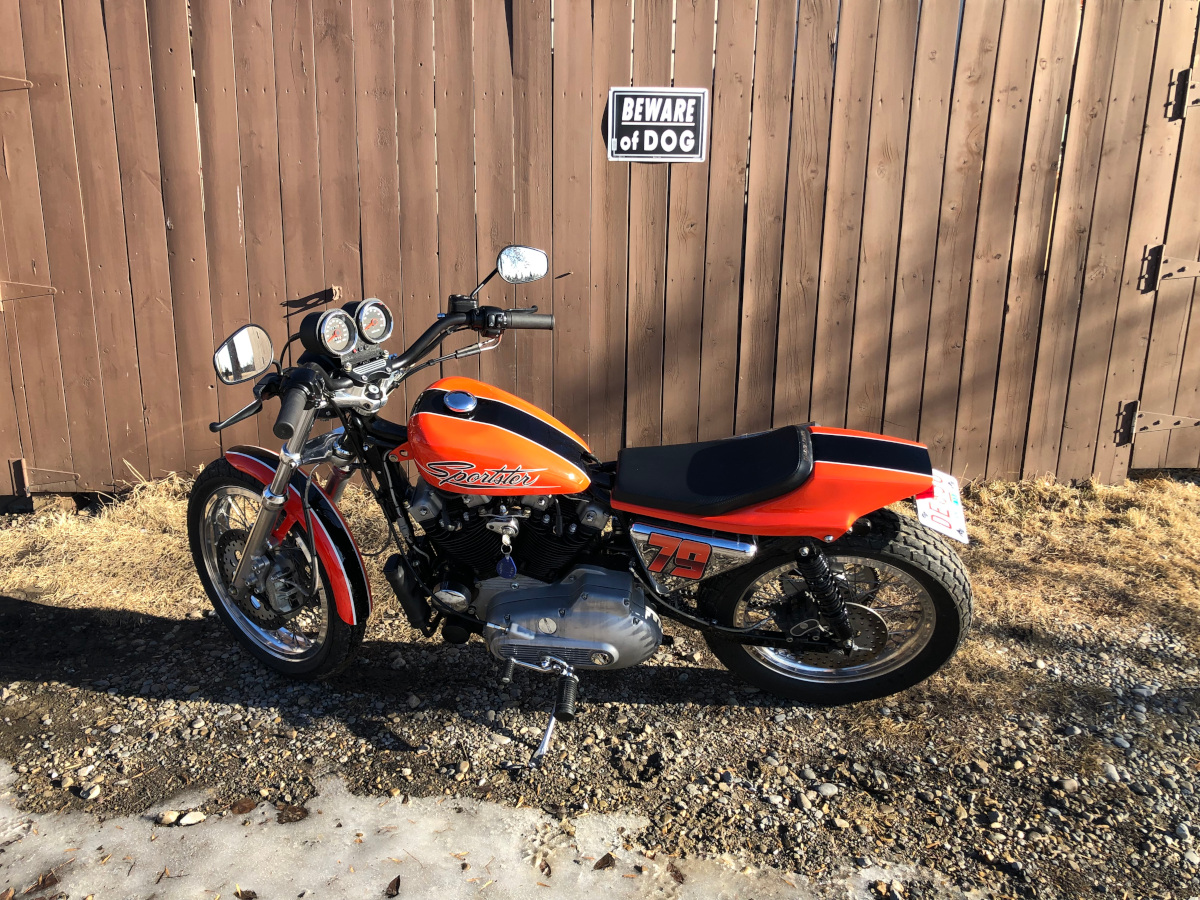
1979 Sportster frames were a change from the long-standing design that was enjoyed by Sportster fans for years. The triangulated rear frame section is very similar to the XLCR and XR750 frames of the 70’s, so it made sense to turn it into a street tracker.
I’m a long-time fan of flat track racing and I race a Buell Blast / C&J frame-based flat track bike. In 2025 I came second in points in two classes, 60+ veterans and Sportsman — not bad for a 70-year-old!

I have been a mechanic since high school — retired now, but the builds have been going on and continue in my home workshop, which is a fully equipped machine shop. The only thing I send out is powder coat, paint, and plating — the rest is done in house.
• What custom work was done?
- Hand crafted wheels: shouldered aluminum rims, Harley-Davidson hubs (modified), stainless steel spokes, Dunlop DT3-R radial tires.
- Brembo / Ducati four piston calipers out front, 2016 Sportster rear caliper, braided hoses .
- Modernized hand controls / late model switches, XR 1000 handlebars, FXR-style instruments.
- King Sportster fuel tank that has been cut down (for the look) and a new bottom welded on. Air Tech XR750 tail section, Saddleman seat.
- S&S 4 5/8″ stroker flywheels, balanced, S&S rods, S&S / TRW pistons, Andrews R5 cams, Andrews pushrods, ported heads w/ oversize valves & Manley springs, machined for dual spark plugs.
- Dyna “S” single fire ignition, dual plug Dyna coils, S&S Super E carb.
- Hand-crafted stainless steel exhaust system, built out of discarded OEM exhaust systems .
- Full Andrews Transmission, gears, shafts, “C” ratio main drive gear set, and “W” ratio 1st gear set. Barnett Scorpion Clutch.
Was it expensive to build? Yes. Do I care? No.


• Can you tell us what it’s like to ride this bike?
I’m no stranger to Sportsters — Ironhead or Evo — I’ve owned several and built quite a few of them for myself as well as for customers back at the dealership, so my expectations were simple. I wanted an engine that made good torque and a chassis / suspension that had good ride quality.
The end result meets those two requirements and the drop-dead good looks just happen to go along with the flat track theme. It turns heads for sure and I’m happy with the way the engine performs.

I decided at the start of the build it had to be lively — it is! Maybe someday I’ll put it on the dyno. I should mention, it’s getting more difficult to build an old Sportster with a stroker motor; finding parts is the biggest challenge.
This bike has come a long way in the three years I’ve owned it, from a clapped-out 44-year-old beater that was used to herd cattle to what it presently is.

I modernized it a bit for comfort, convenience, and safety, added a kickstart, modern switches / controls, brakes, and 39 mm Showa forks off a later Sportster. The forks were rebuilt with RaceTech internals, adjustable preload, wide triple clamps to fit a 130 tire.

With the suspension upgrade I thought it would be nice to have brakes that actually work, so for the front brakes, I made some adapter brackets to use Brembo four-piston calipers from a Ducati 998. For rear braking I used a 2016 Sportster four-piston rear caliper. It stops VERY well. Overall a massive improvement from the 1979 Kelsey Hayes Flintstone brakes ’79 Harleys were equipped with.
For now, it has Dunlop DT3-R radials, a 150 on the back and a 120 on the front.
On the street this bike handles very well for what it is. I have had it out on the half-mile for some laps when it’s permitted, while I’m at the track for racing weekends. I gotta say, it’s fun but kinda frightening — on a dirt track it doesn’t turn anything like my 500cc framer (a story in itself).
• Was there anything done during this build that you are particularly proud of?
The exhaust system — it’s made up out of takeoff pipes. In the Harley world, takeoff parts can become a problem for dealerships, discarded parts pile up, the pile grows to be large. Harley has been using stainless steel to build exhaust systems for some time now.

The pipes are made by envisioning what you want them to be, you gotta have an imagination. It also helps to have a TIG welding machine. I struggled with this as my TIG skills were weak.

To get this done I had some coaching and encouragement from friends who are far better welders than me. I struggled a bit with the fuel tank too. That job was a bit out of my comfort zone. Machining? I’m comfortable with that in all its forms. Specialty welding? Not so much .
• Is there anyone you’d like to thank?
My sweetie for putting up with me, my friends for the support, my racer buddies where I get a lot of positive encouragement.


Nice job hoser, see you In a month in reddeer
Ah yes …… the vintage swap meet where vintage people meet .
Great looking Sportster that will go as good as it looks.
Thank’s
It’s every bit as much fun as any of the Sportster’s or Buell’s I’ve owned .