

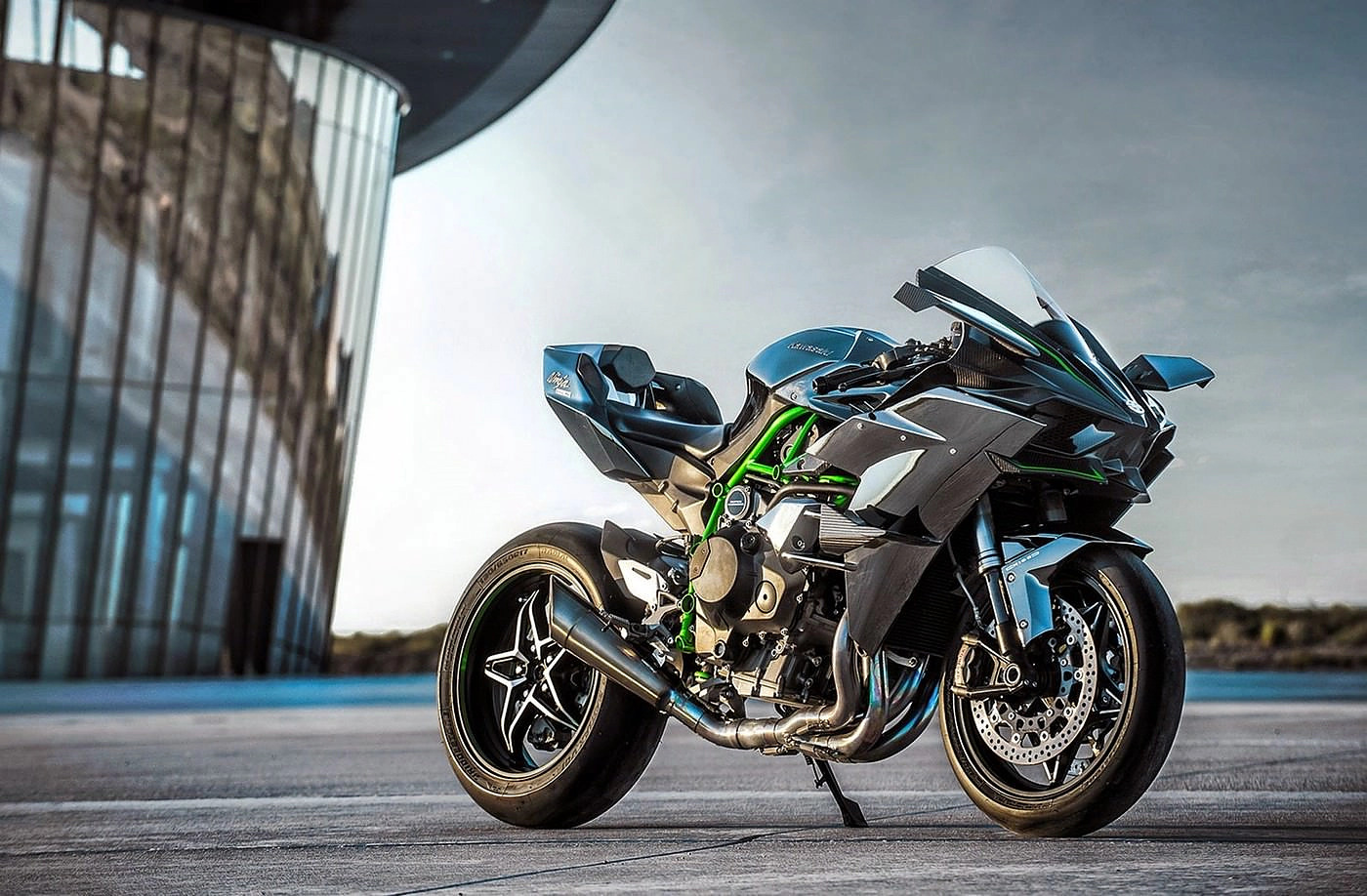
The Kawasaki Ninja H2R is not just a superbike — it’s one of the most extreme, technologically advanced, and outrageously powerful motorcycles ever produced. A track-only hyperbike running a supercharged inline-four that produces mind-bending power, the H2R represents Kawasaki engineering with no limitations. No emissions rules, no noise restrictions, no concessions to practicality — just pure mechanical excess.
Built as a showcase for Kawasaki Heavy Industries’ engineering divisions (Aerospace, Gas Turbine, Machinery, and more), the H2R is part motorcycle, part engineering statement. It is without question one of the most astonishing production motorcycles ever created.
Design Overview
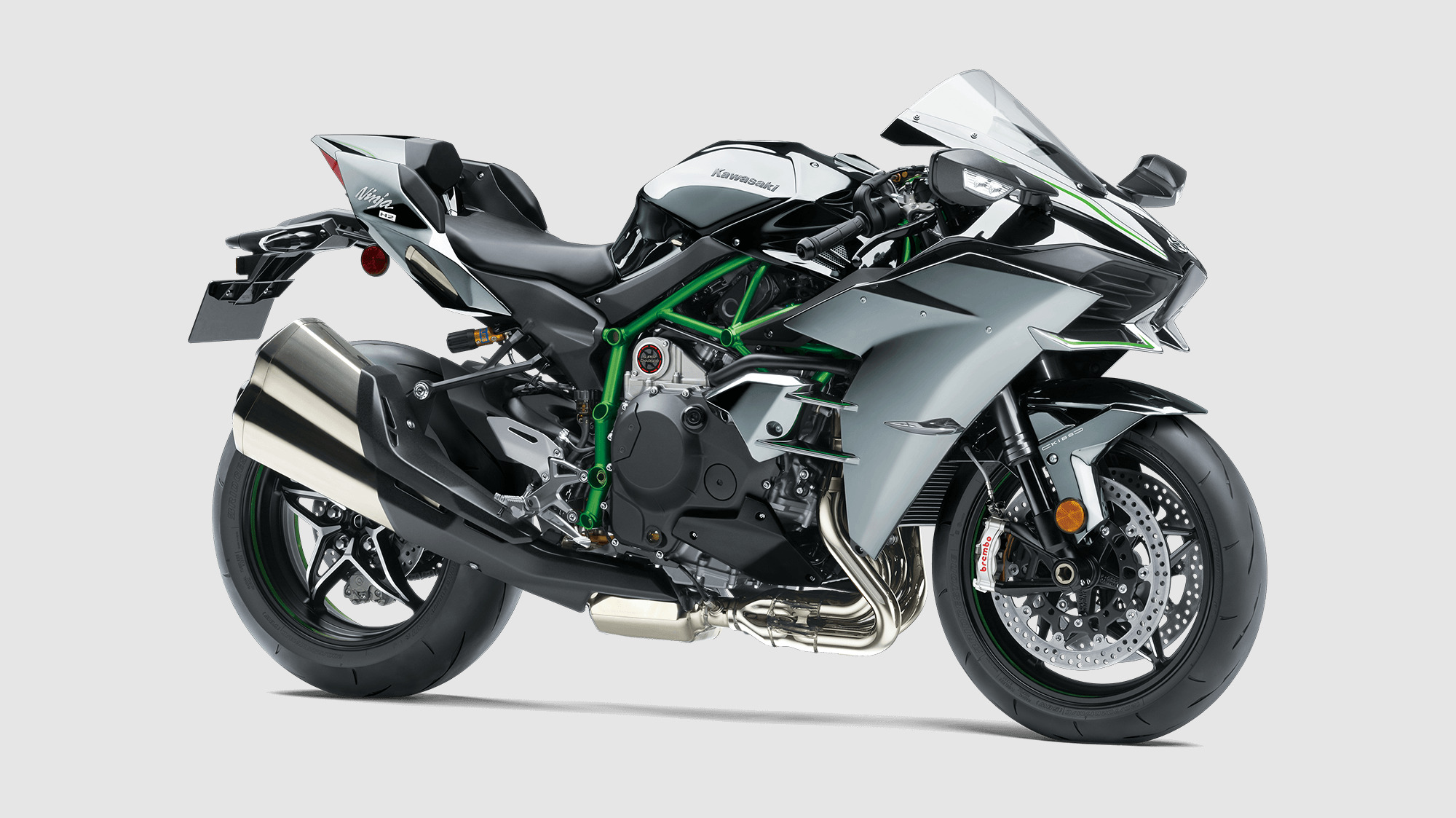
The H2R is the pinnacle of Kawasaki’s engineering capabilities. While the street-legal H2 stunned the motorcycle world with its forced-induction power, the H2R removes every restriction that held its sibling back.
Defining characteristics:
- Track-only, non-street-legal hyperbike
- Supercharged 998cc inline-four producing unprecedented horsepower
- Extensive use of carbon fiber and aerospace technology
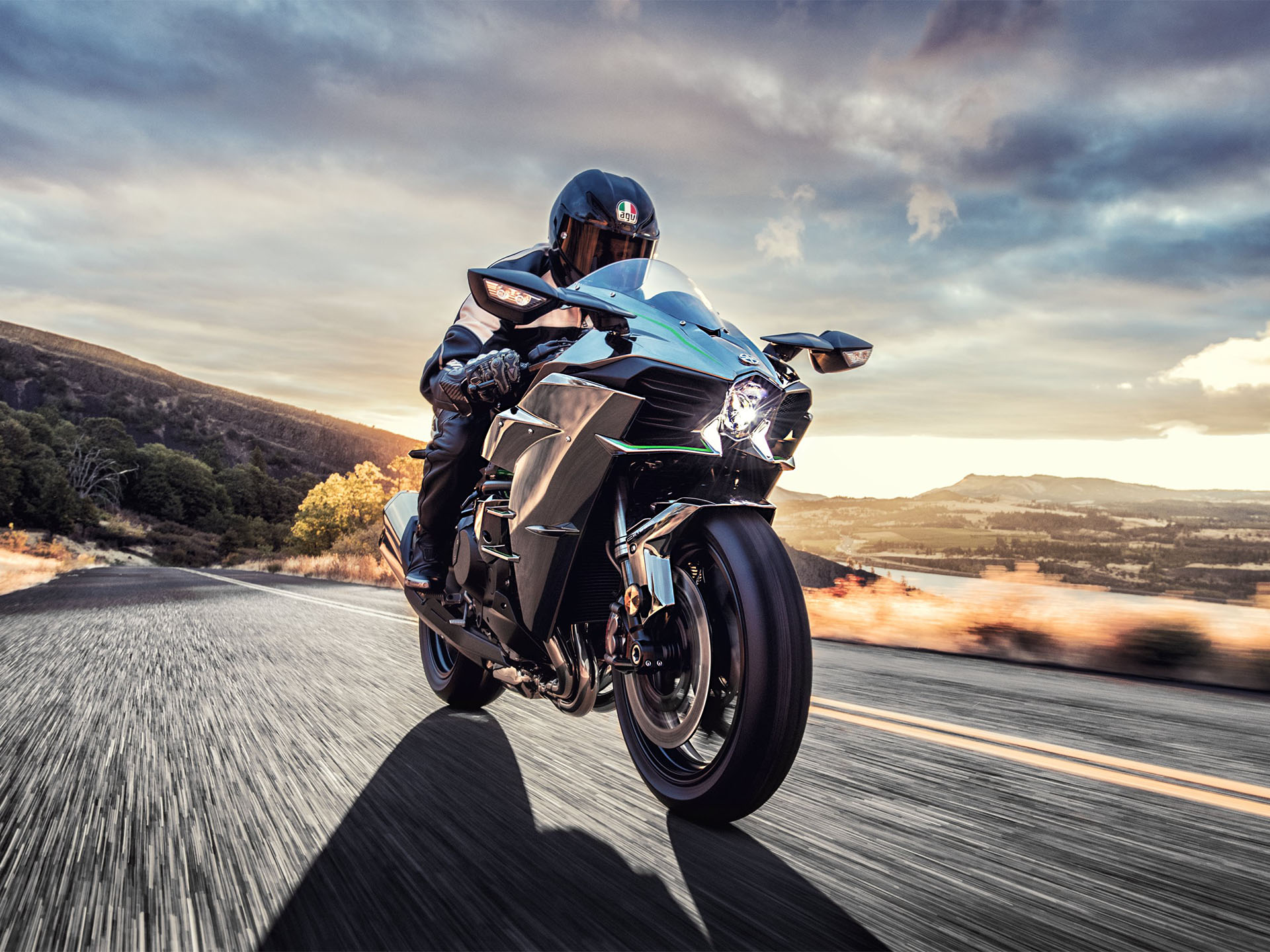
- Winglets derived from Kawasaki’s aerospace division for downforce
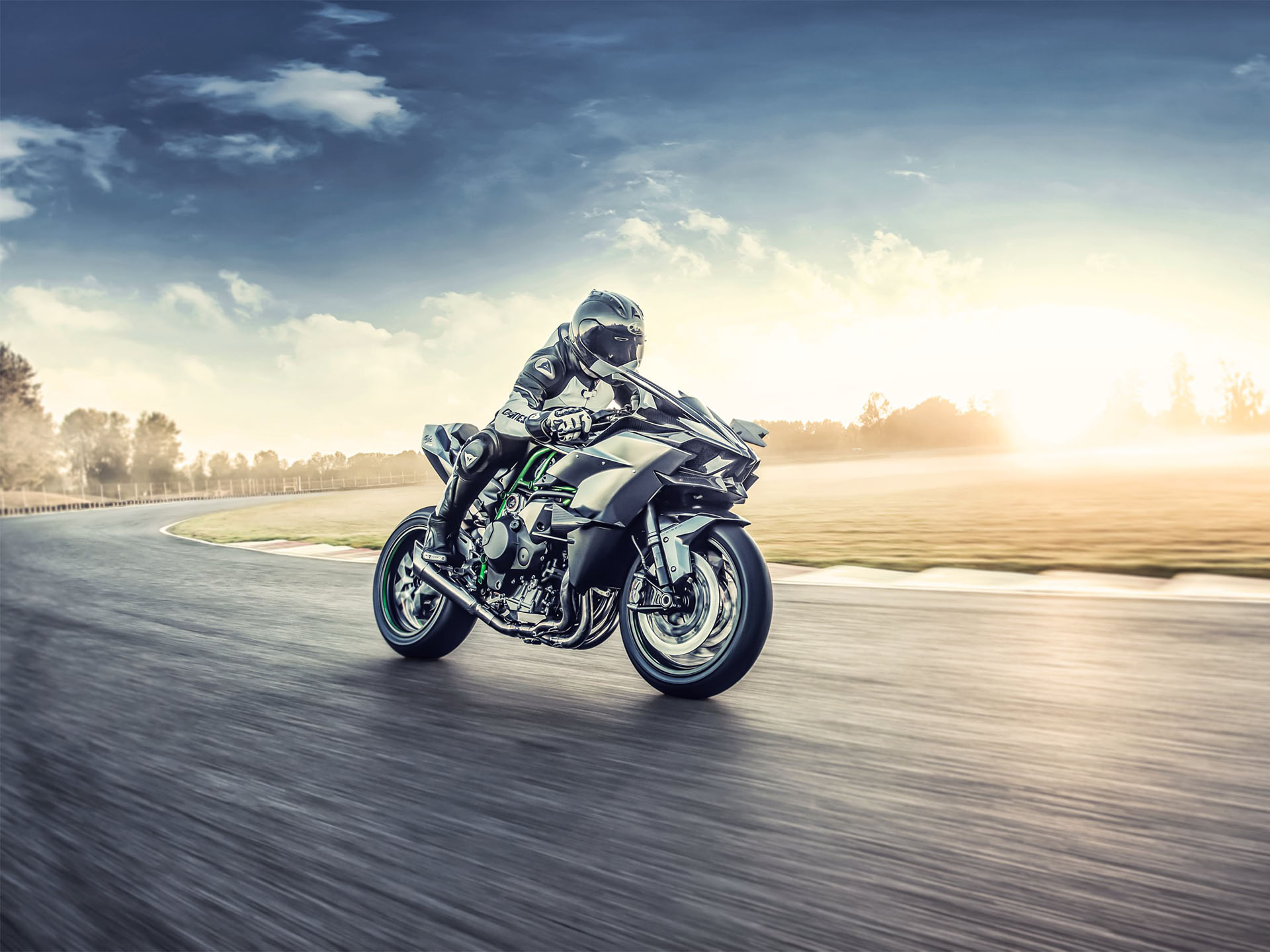
- Purpose-built for closed-course riding at extreme speeds
This is not a road motorcycle. This is a laboratory experiment — released into the wild.
Engine & Performance
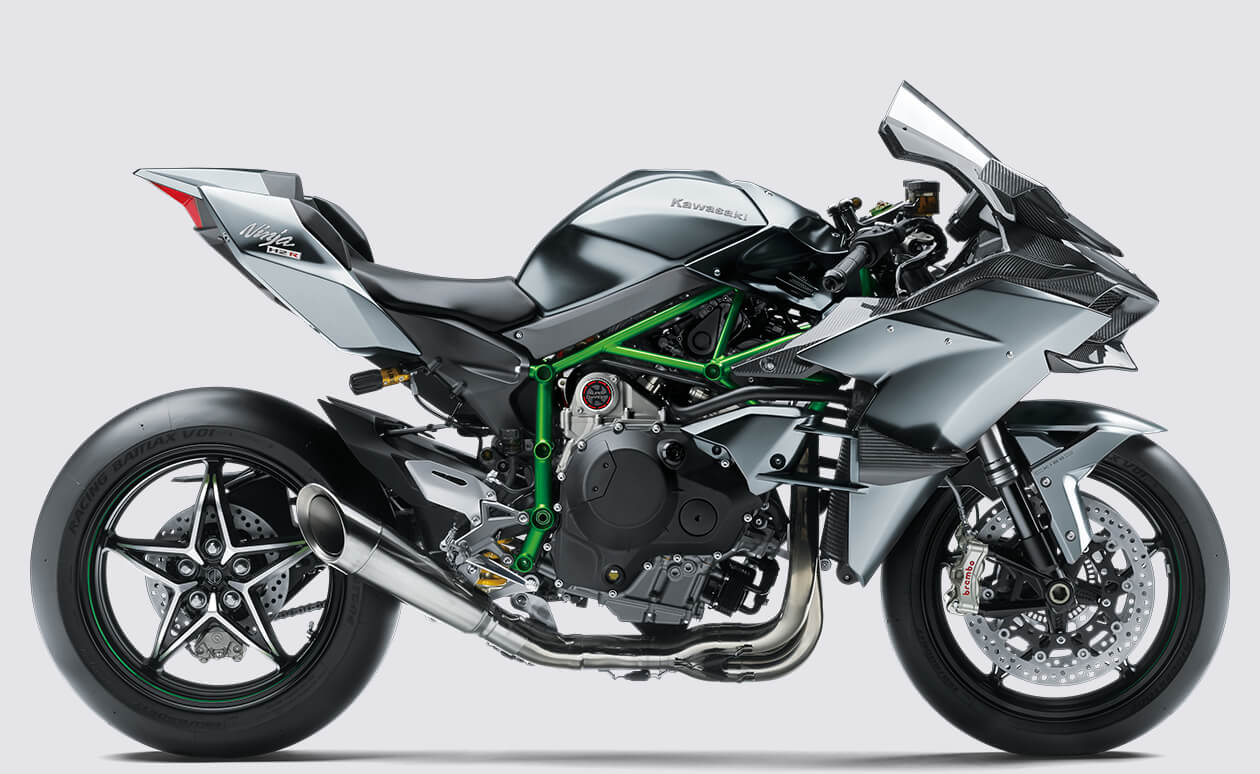
The heart of the H2R is its legendary supercharged 998cc inline-four, developed jointly with Kawasaki Heavy Industries’ turbine division. The result is an engine like nothing else in motorcycling.
Typical performance (varies slightly by year and environment):
- ~310 horsepower (standard) / ~326 hp with ram-air assist
- Approximately 121 lb-ft of torque
- A power curve that builds into a violent, endless rush
- A 14 psi+ centrifugal supercharger spinning at up to 130,000 rpm
- Top speeds well beyond 240 mph on closed courses
The acceleration is surreal — unlike any naturally aspirated motorcycle. The engine feels bottomless, the intake howl is intoxicating, and the supercharger whine is unmistakable.
Nothing on two wheels accelerates quite like the H2R.
Handling & Chassis
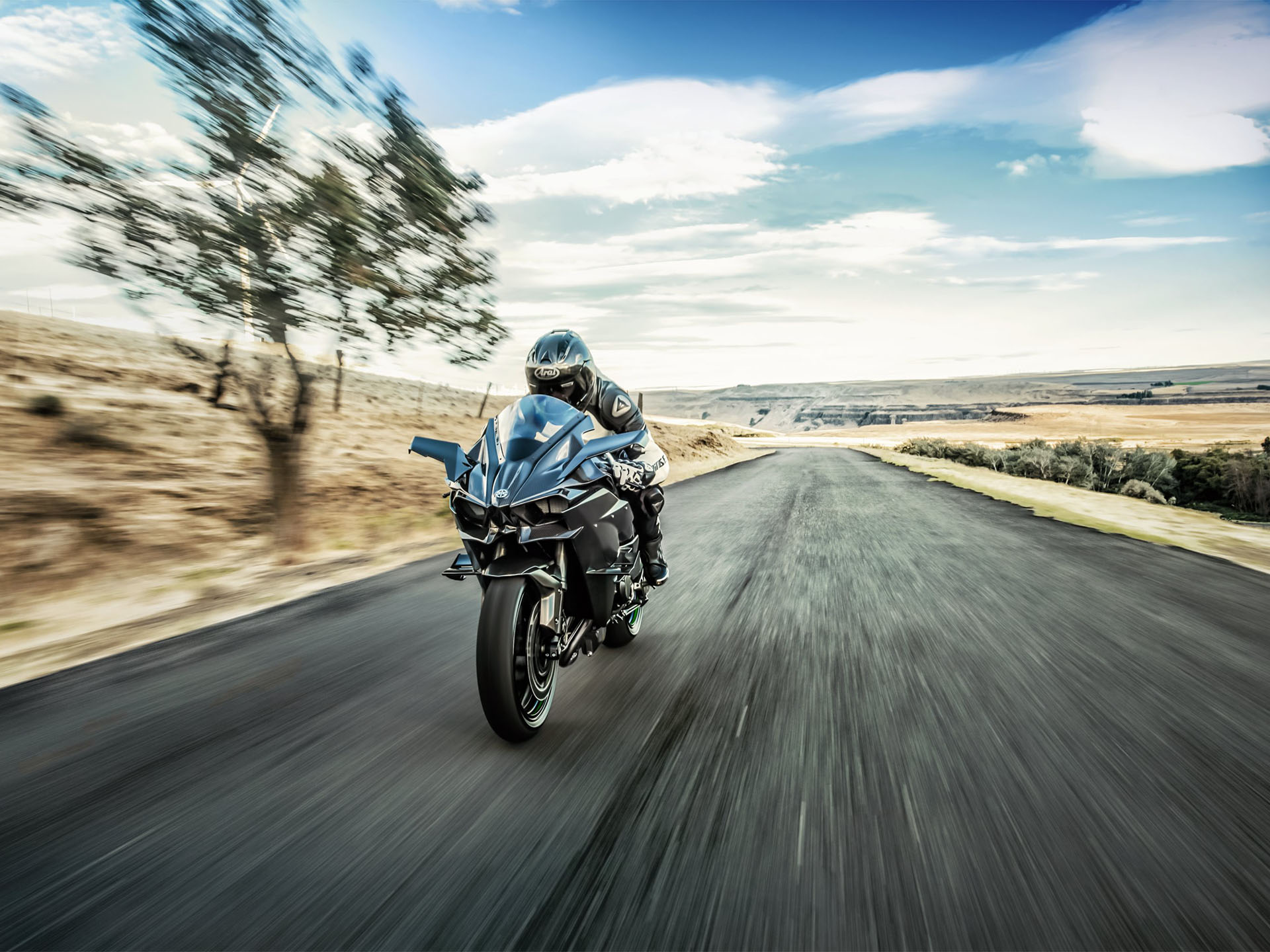
Although brutally powerful, the H2R’s chassis is engineered to keep that power usable.
Highlights:
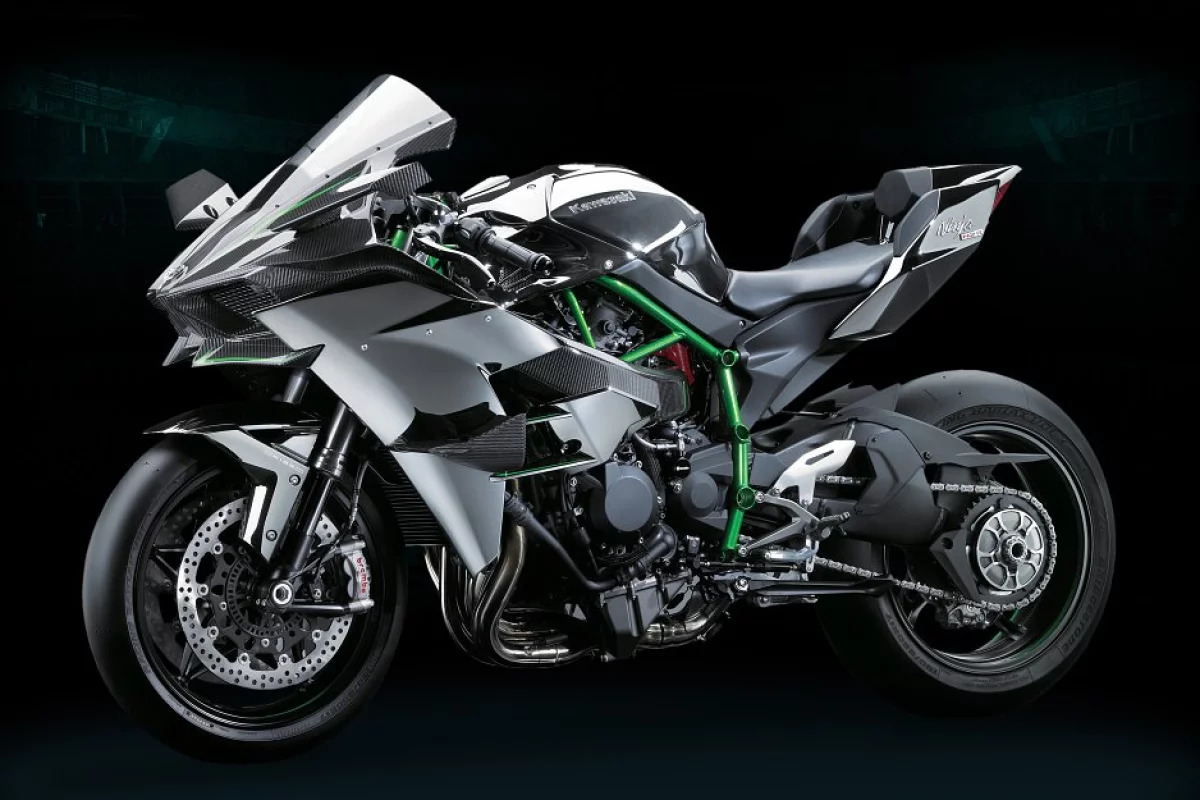
- Trellis frame engineered for stability under supercharged acceleration
- Carbon-fiber winglets adding real aerodynamic downforce at high speed
- WSBK-level suspension (fully adjustable KYB AOS-II or equivalent)
- High-spec Brembo braking system to control massive speed
- Longer wheelbase for stability and traction under boost
This is not a flickable canyon bike. The H2R is built for sweepers, straights, and racetracks where aerodynamic stability matters more than nimbleness.
At extreme speeds, it feels planted, calm, and shockingly composed — evidence of Kawasaki’s aerospace-driven aerodynamics.
Electronics & Rider Aids
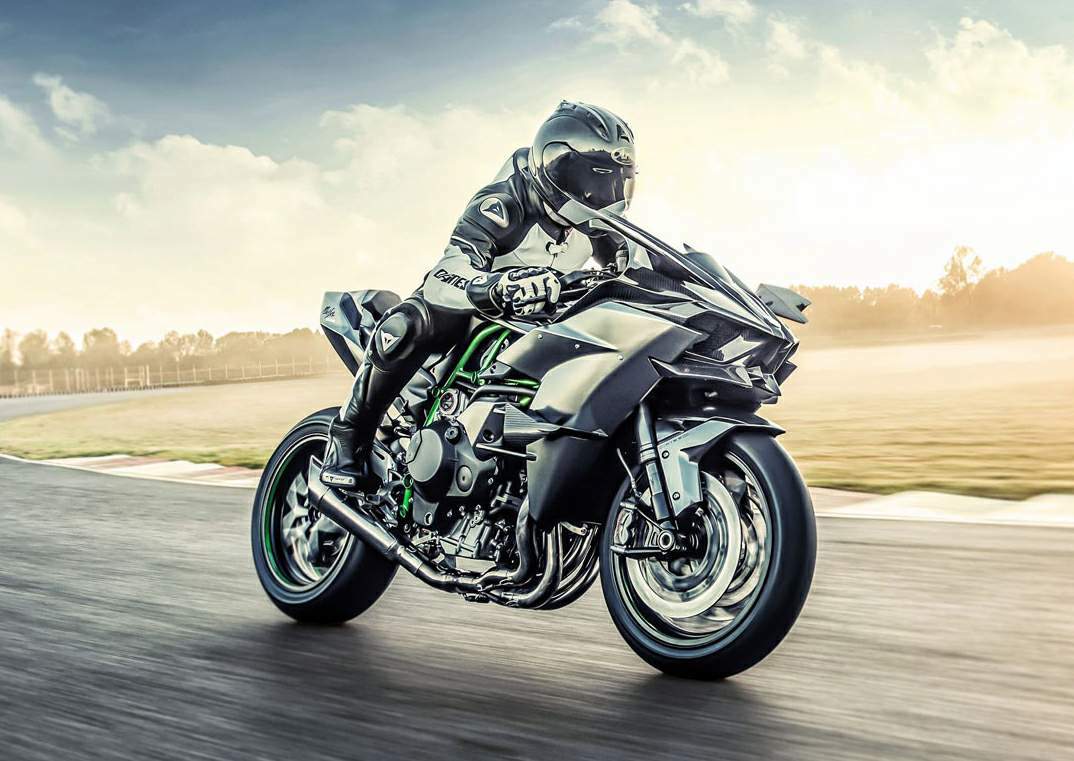
With over 300 horsepower on tap, the H2R needs a serious electronics package. Kawasaki equips it with one of the most advanced systems in motorcycling:
- Cornering Management with IMU assistance
- Multiple power modes
- S-KTRC traction control
- Launch control
- Engine braking control
- Kawasaki Intelligent ABS (track-calibrated)
- Quickshifter (up/down)
- Wheelie, lift, and traction intervention tuned for ultra-high speeds
These systems don’t neuter the bike — they merely keep the power manageable for skilled riders.
Ergonomics & Design
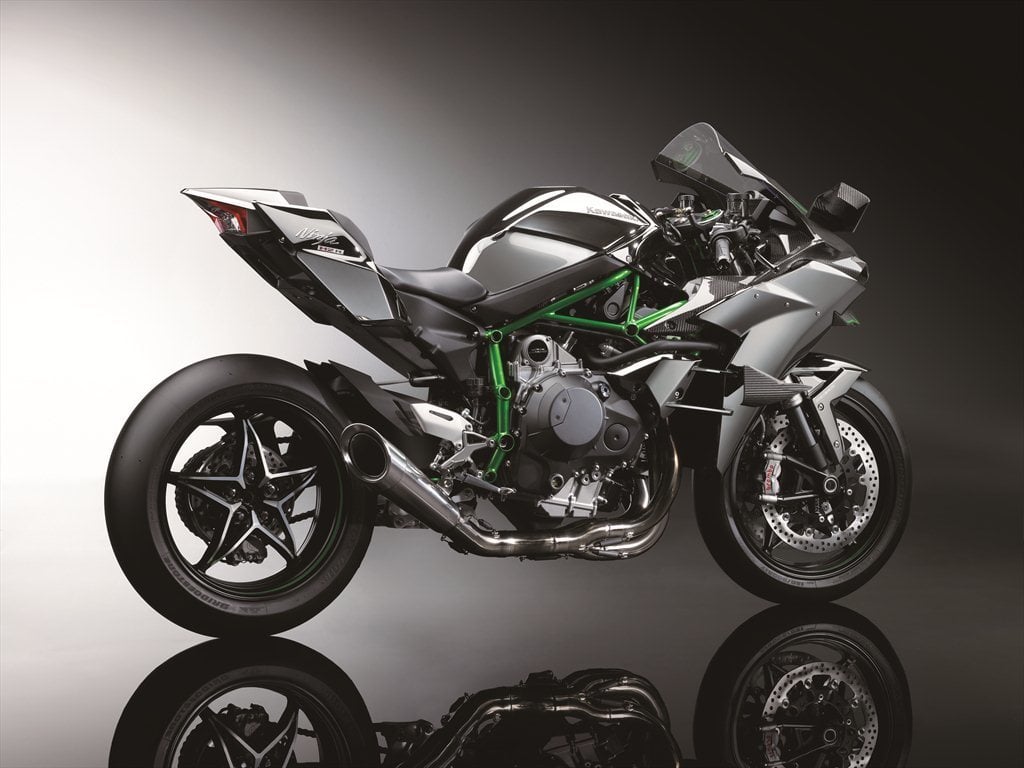
Every part of the H2R is engineered around aerodynamics and extreme performance.
Key features:
- Carbon-fiber fairing with integrated winglets
- Aggressive, compact ergonomics for race use
- Polished silver-mirror paint (special multilayer finish)
- High-speed downforce bodywork
- Single-seat configuration
It looks like a machine out of science fiction — and sounds even more unreal thanks to its straight-through titanium exhaust.
Why Riders Love the H2R
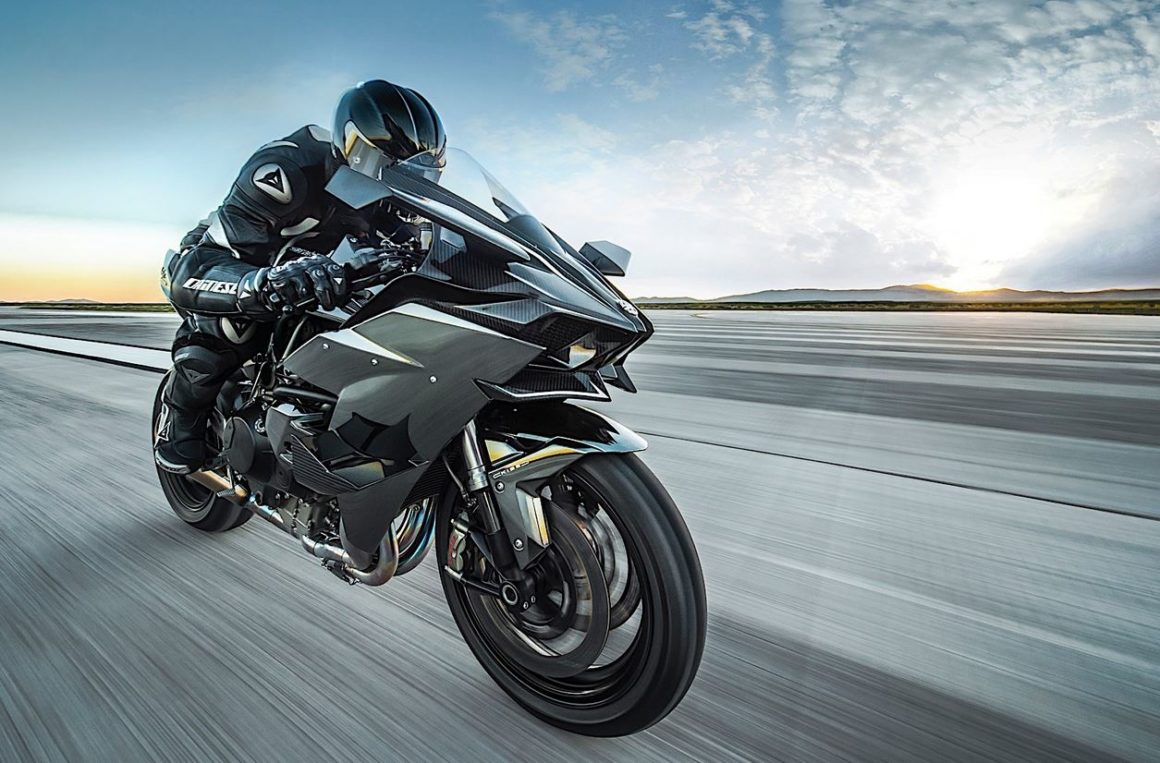
The H2R is revered because it represents something rare in the modern motorcycle world: a machine with zero compromises.
Riders love it for:
- The most extreme acceleration of any production motorcycle
- The raw, mechanical soundtrack of a supercharger at full scream
- Its exclusivity — very few are built each year
- Its function as a track weapon, engineering marvel, and status symbol
- The sheer audacity of Kawasaki producing such a machine
The H2R isn’t about practicality — it’s about pushing boundaries.
Kawasaki Ninja H2R Specifications
Engine: 998cc supercharged inline-four
Power: ~310–326 hp
Torque: ~121 lb-ft
Transmission: 6-speed with quickshifter
Frame: Steel trellis
Front Suspension: Fully adjustable KYB AOS-II
Rear Suspension: Fully adjustable monoshock
Front Brakes: Dual Brembo discs
Winglets: Carbon-fiber, aerodynamic downforce units
Curb Weight: ~476 lbs
Seat Height: ~32.7 in
Top Speed: 240+ mph (closed course)
(Non-street-legal)
H2R vs. H2: What’s the Difference?
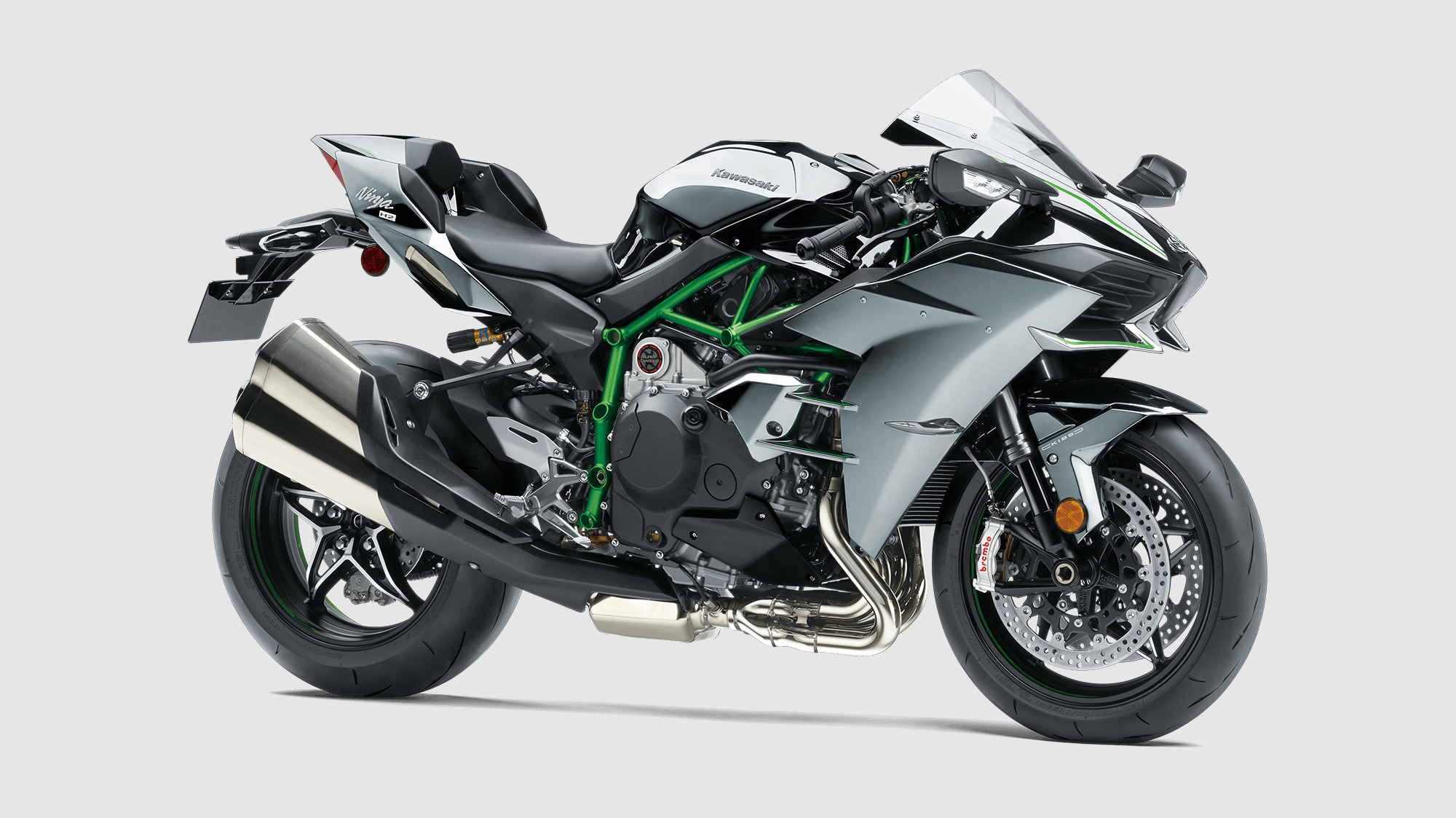
Although they share a name and basic architecture, the H2R and H2 are completely different machines in purpose and capability.
Power & Performance
H2R:
- 310–326 hp
- Track-only
- Titanium straight-through exhaust
- Higher boost levels
- No emissions equipment
- Much more aggressive mapping
H2:
- ~197 hp (street legal)
- Catalytic converters, silencing, and emissions compliance
- Tamer tuning, quieter exhaust
- Designed for road manners, not pure track dominance
The H2 feels wild. The H2R feels otherworldly.
Chassis & Aerodynamics
H2R:
- Carbon winglets
- Race-spec suspension
- Slick-tire-ready geometry
H2:
- No external winglets
- More street-oriented suspension
- Heavier overall package
Use Case
H2R: Track only, closed-course, collectors, experienced riders
H2: Street-legal hyperbike, high-speed touring, performance enthusiasts
Price & Exclusivity
H2R:
- Very limited production
- Far more expensive (often $50,000+)
- Purchased mainly by collectors and track specialists
H2:
- Around $30,000 (varies by year)
- More available, more practical, more usable
H2R Price
The Kawasaki Ninja H2R is one of the most expensive production motorcycles in the world — and for good reason. As a track-only hyperbike with aerospace-derived technology and extremely limited production numbers, the H2R carries a price tag that reflects its exclusivity.
- Typical MSRP: Around $56,000–$58,000 USD
- Out-the-door costs: Often exceed $60,000+ depending on dealer fees, availability, and setup
- Used-market pricing: Rarely drops; pre-owned examples often sell for $45,000–$55,000, depending on condition and mileage (though most H2Rs are low-mile track or collection pieces)
Because of its limited availability and the sheer cost of components (forged wheels, carbon wings, supercharged powerplant, etc.), the H2R retains value extremely well. Many owners treat it as a collector piece as much as a track machine.
This is not a motorcycle purchased for practicality — it’s a halo product meant for serious collectors, track specialists, and riders who want the most extreme machine Kawasaki has ever built.
Verdict: H2R vs. H2
- Choose the H2R if you want the most extreme, fastest-accelerating production motorcycle ever made — and you have a racetrack to use it on.
- Choose the H2 if you want a street-legal, supercharged hyperbike that still delivers outrageous performance without the track-only restrictions.
Both are legends — but the H2R is on another planet entirely.


