


The Royal Enfield Hunter 350 is one of the most approachable, affordable, and style-forward small-displacement motorcycles on the market. Built on RE’s proven J-platform, the Hunter mixes classic urban styling with lightweight maneuverability and beginner-friendly performance. It’s a simple, charming machine that excels in city riding and everyday usability — without sacrificing the retro appeal that defines Royal Enfield’s modern lineup.
Design & Build
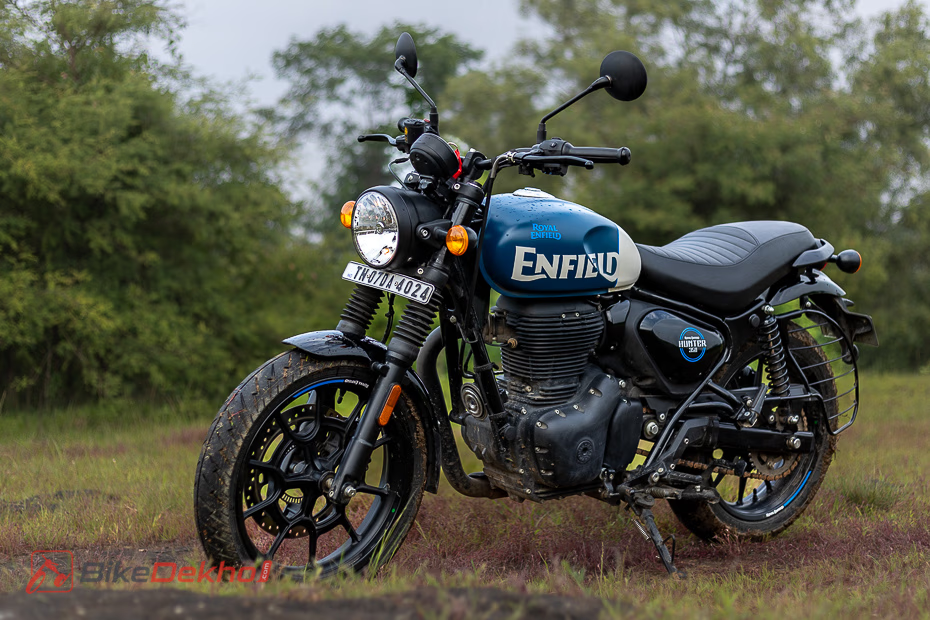
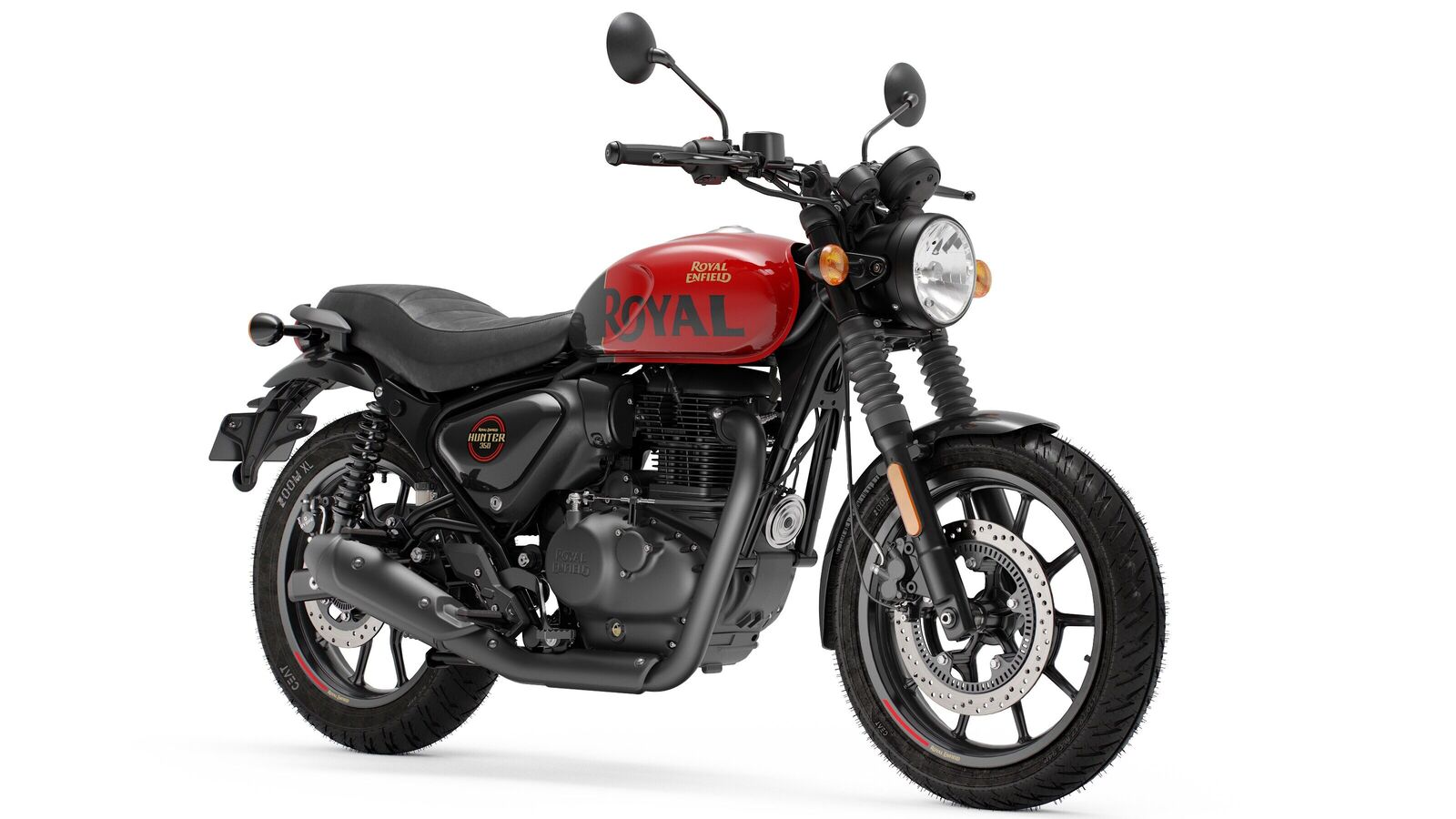
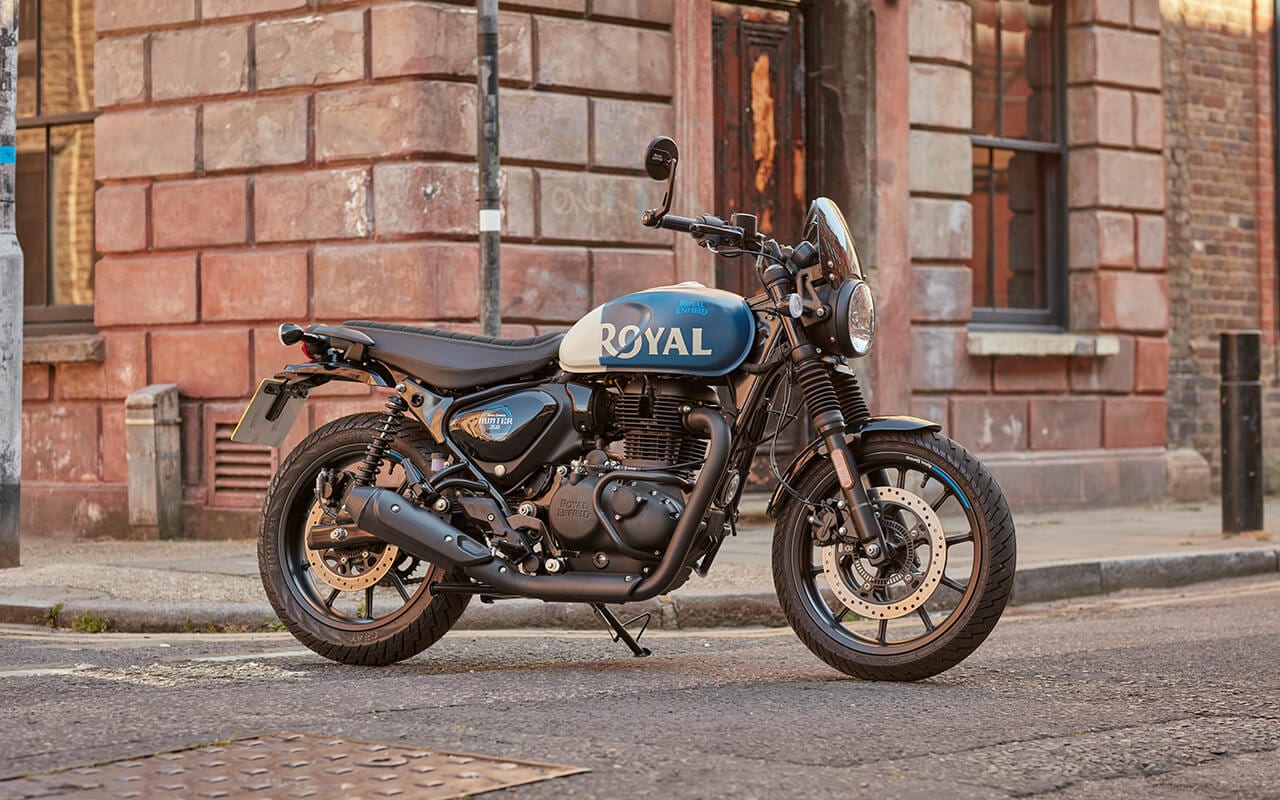
The Hunter 350 leans into a modern-retro roadster style. It’s smaller, tighter, and more compact than most of Royal Enfield’s lineup, giving it a youthful personality and a playful stance. You get:
- A sculpted teardrop tank with retro graphics
- Upright handlebars for neutral ergonomics
- A slim seat and minimal bodywork
- A tidy tail section with modern detailing
- Cast wheels available on many trims (a first for RE in this class)
Compared to Royal Enfield’s more traditional Classic and Meteor 350 models, the Hunter is noticeably more contemporary. The lines are cleaner, the stance is sharper, and the bike looks more athletic and urban-focused.
Fit and finish are surprisingly good for the price point. The switchgear is clean, the paintwork is attractive, and nothing feels cheaply assembled. The simplified layout — analog-style speedo with digital inserts, clean wiring, and a straightforward frame — keeps the bike accessible and minimalist, exactly as intended.
Engine & Performance
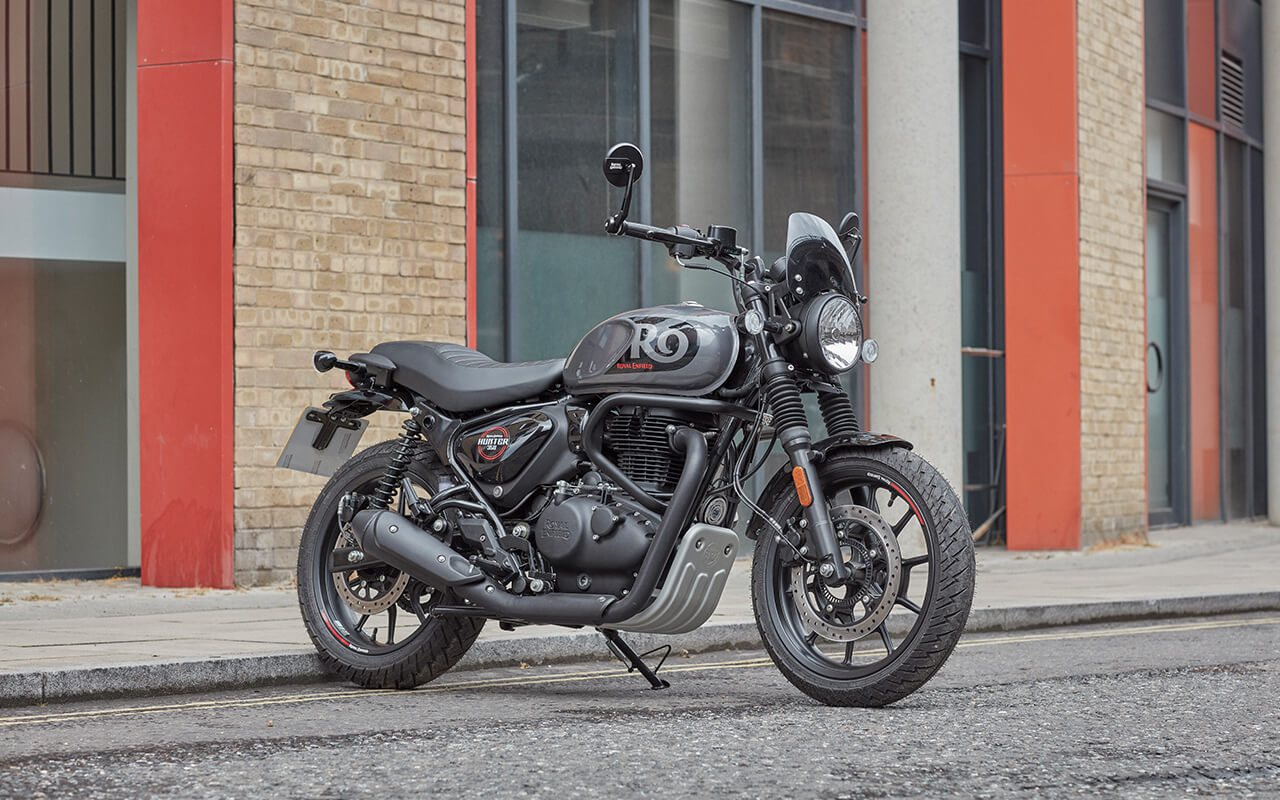
Powering the Hunter 350 is Royal Enfield’s 349cc air-/oil-cooled single-cylinder engine. It produces around 20 horsepower and roughly 20 lb-ft of torque — modest numbers, but ideal for the bike’s mission.
This engine is tuned for smooth, predictable delivery rather than speed. It excels at:
- Commuting
- Stop-and-go traffic
- Low-speed maneuvering
- Relaxed, fuel-efficient riding
The powerband is friendly for new riders, with a gentle pull off the line and a flat, consistent midrange. It won’t intimidate beginners, yet it has enough charm to entertain more experienced riders who appreciate simplicity over performance.
Top speed lands in the 65–70 mph range depending on conditions, which makes the Hunter more of a city/backroad machine than a sustained highway cruiser. The exhaust note is mellow and characterful — a soft thump rather than a bark — contributing to its approachable personality.
Chassis, Suspension & Features
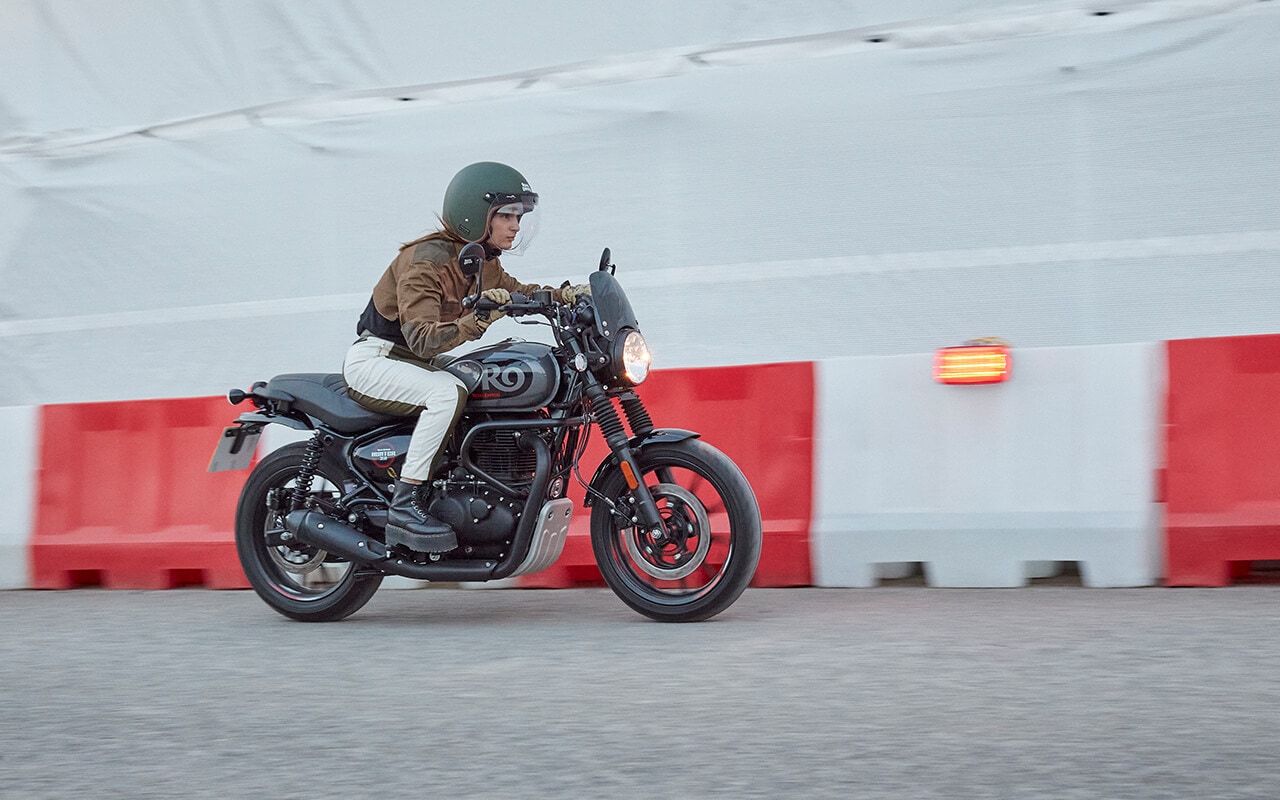
The Hunter rides on a simple but effective chassis: a twin-downtube frame paired with a telescopic fork and dual rear shocks. The geometry is tighter than the Meteor or Classic, giving it quicker steering and a more agile feel.
Suspension is tuned for urban comfort, soaking up rough pavement without being overly soft. It’s not built for aggressive canyon carving or off-road ventures, but for everyday riding, it performs exactly as expected.
Brakes consist of single discs front and rear, supported by dual-channel ABS depending on trim. Stopping performance is predictable and appropriate for the engine’s output.
Features remain intentionally minimal:
- Analog-style speedometer with digital insert
- Optional Tripper navigation on some trims
- USB charging on many versions
- LED elements depending on market and year
Like many Royal Enfields, the Hunter’s simplicity is a feature, not a drawback. There’s nothing to distract from the raw riding experience.
Rider Experience
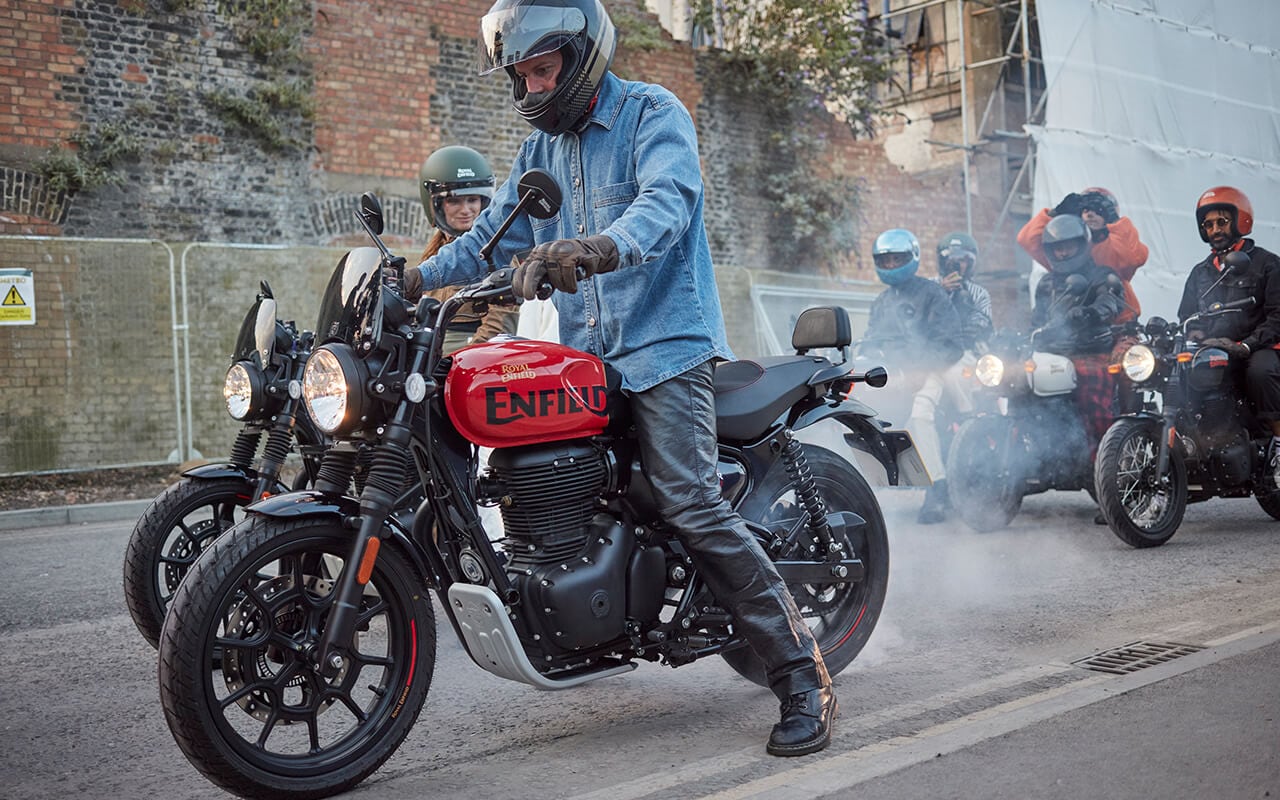
On the road, the Hunter 350 delivers exactly what it promises: lightweight fun. It’s exceptionally easy to handle thanks to its compact proportions and low seat height. At around 400 pounds ready to ride, it feels light and unintimidating for almost any rider.
The upright ergonomics, responsive steering, and small footprint make it one of the most enjoyable small bikes for:
- Urban commuting
- Campus or neighborhood riding
- New riders learning slow-speed control
- Anyone wanting a small, stylish, low-stress machine
The bike’s charm comes from its simplicity. You ride it for the feeling, not the numbers. It encourages a slow-down-and-enjoy-the-ride approach rather than speed or aggression.
The Hunter excels in tight urban environments, darting through traffic and parking easily. On backroads, it is stable and predictable as long as you stay within its modest power envelope. It delivers a rewarding, approachable experience ideal for real-world riding.
Royal Enfield Hunter 350 Specs
Engine: 349cc air-/oil-cooled single-cylinder
Power: ~20 hp
Torque: ~20 lb-ft
Transmission: 5-speed manual
Weight: ~400 lbs (varies slightly by trim)
Frame: Steel twin-downtube frame
Suspension:
• Front: Telescopic fork
• Rear: Twin shocks
Brakes:
• Front: Disc
• Rear: Disc (or drum on some trims, depending on region/year)
• ABS: Single or dual-channel depending on model
Electronics: Analog/digital gauges, optional navigation module, USB charging (varies by trim)
Seat Height: ~31 in
Fuel Capacity: ~3.4 gal
Wheelbase: ~53.5 in
Performance:
• Top Speed: ~65–70 mph
• Fuel Economy: ~70–90 mpg
Options & Packages:
• Bar-end mirrors
• Accessory seats
• Crash protection
• Soft luggage
• Touring screen
• Multiple colorways and urban-themed graphics
Pros & Cons
Pros:
• Stylish and youthful retro-modern aesthetic
• Extremely beginner-friendly
• Light, nimble, and easy to handle
• Excellent fuel economy
• Very affordable
• Simple design with low running costs
• Perfect for cities and backroad cruising
Cons:
• Not ideal for sustained high-speed highway travel
• Modest power — won’t satisfy riders seeking acceleration
• Basic suspension and features
• Limited two-up comfort
• Drum-brake rear on some trims
Hunter 350 vs Classic 350
Style & Intent:
- Hunter: Urban roadster, youthful, sharper lines
- Classic: Heritage-focused retro machine
Ergonomics:
- Hunter: More compact, slightly sportier posture
- Classic: More upright and traditional, with relaxed geometry
Handling:
- Hunter: Quicker steering, more agile in city traffic
- Classic: More stable but less flickable
Use Case:
- Hunter: Best for commuting, urban riding, newer riders
- Classic: Best for relaxed cruising and traditional retro enthusiasts
Which to choose?
Pick the Hunter if you want a modern-retro roadster that feels light and playful.
Pick the Classic if you want maximum vintage charm and comfort.
Verdict
The Royal Enfield Hunter 350 is one of the most approachable motorcycles on the market today. It’s charming, affordable, easy to ride, and stylish in a way that appeals to both new riders and seasoned enthusiasts looking for something simple and fun.
It’s not about speed or long-distance performance — it’s about accessibility, character, and everyday enjoyment. For city riders, first-time buyers, or anyone who values simplicity and style, the Hunter 350 stands out as a compelling choice in the lightweight retro segment.


