

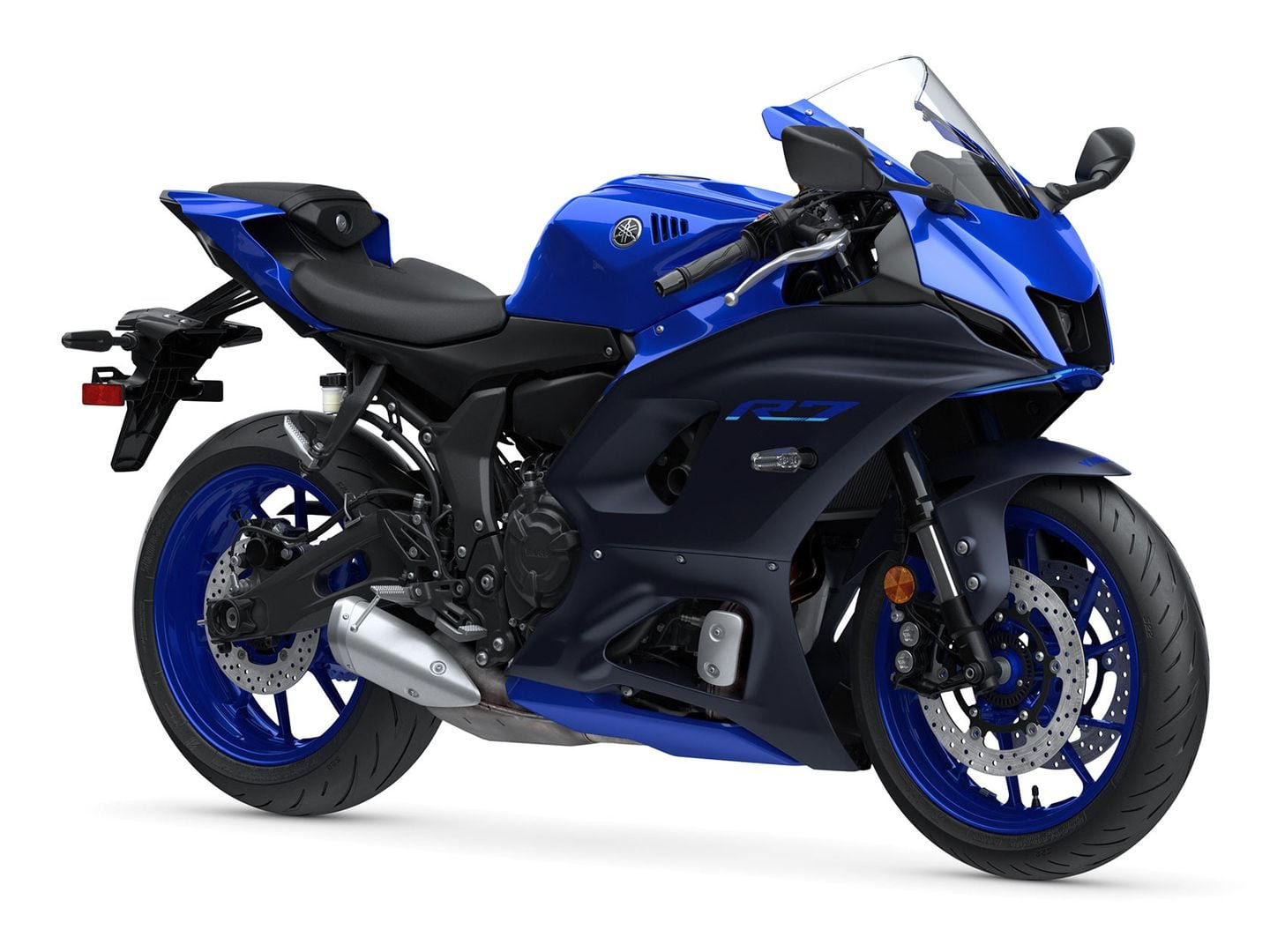
The Yamaha YZF-R7 is a middleweight supersport that strikes a very thoughtful balance between on-track performance and street usability. Powered by the proven 689 cc CP2 twin-cylinder engine, it’s not about wild peak horsepower — instead, it delivers usable torque, excellent handling, and real sport-bike DNA in a very accessible package.
Design & Build

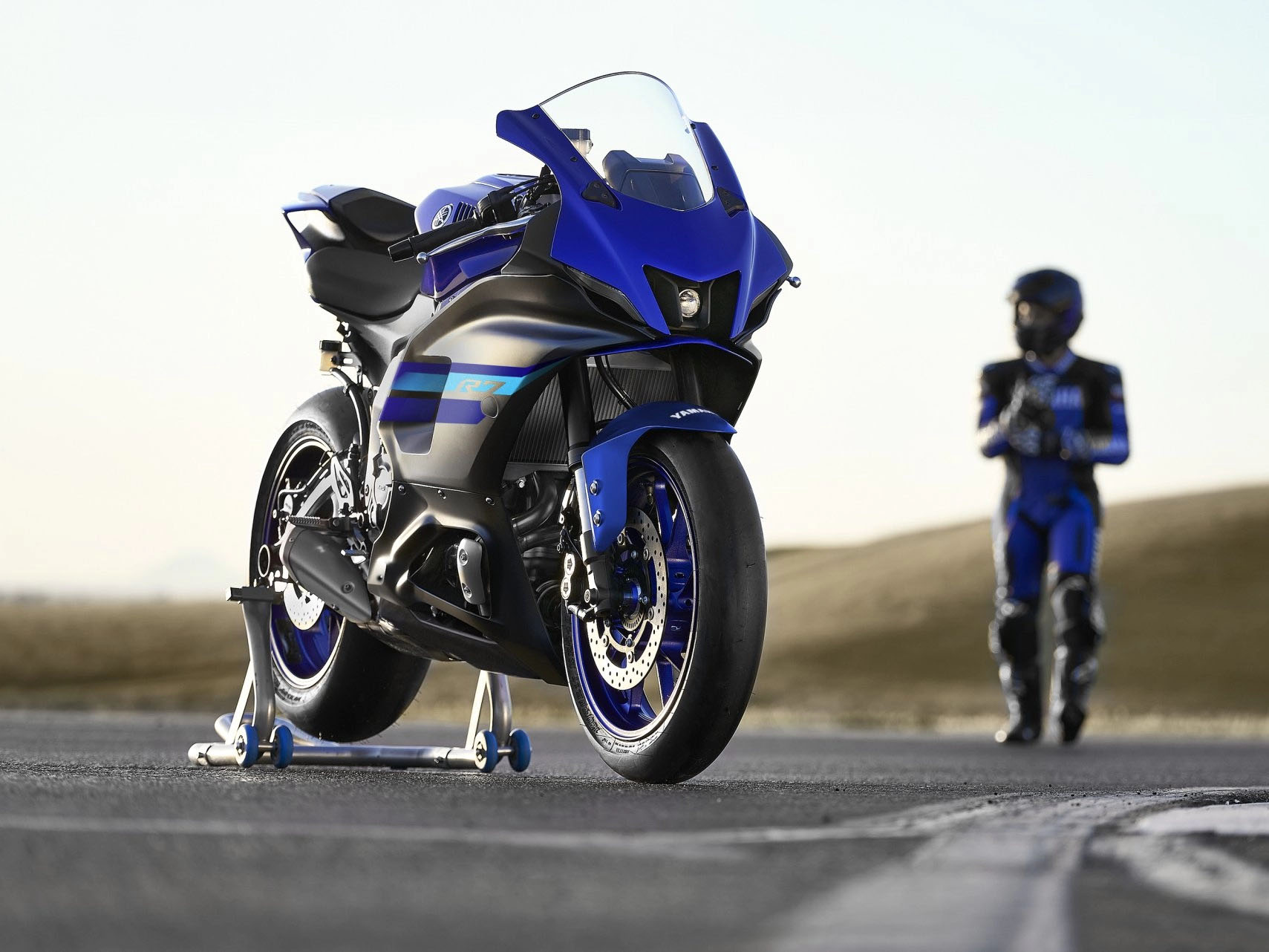
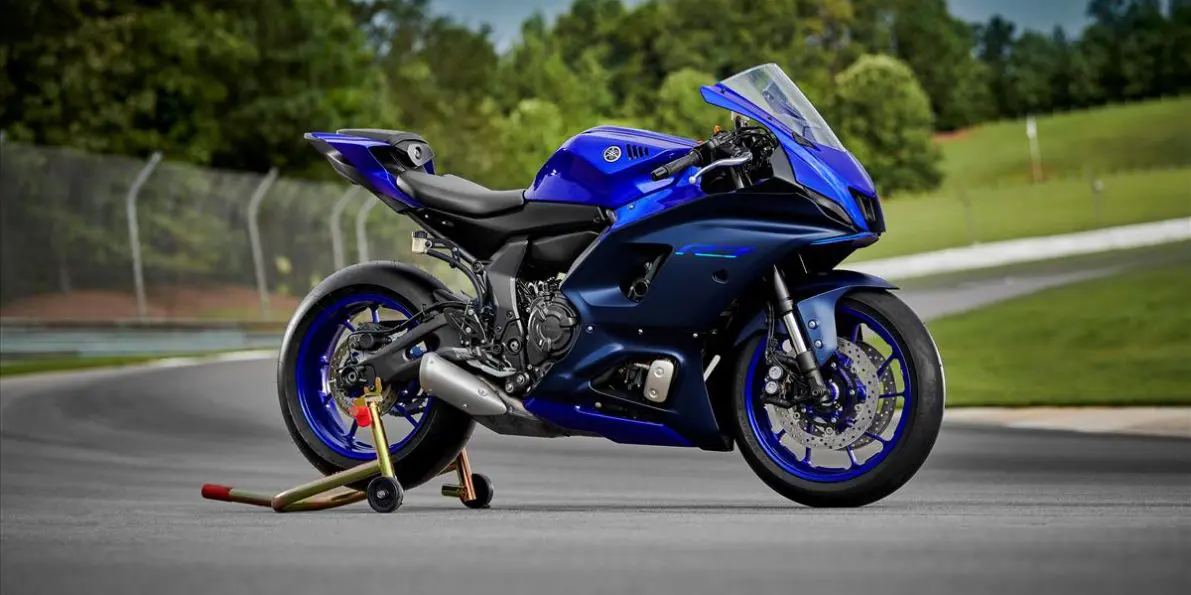
The R7’s styling stays true to Yamaha’s R-series lineage, with aerodynamic bodywork, a twin-eye front face, and a slim “M-shaped” duct that gives it a distinct, aggressive look. (Yamaha Motorsports)
Yamaha’s chassis choice — a high-strength steel frame with an aluminum center brace — gives the R7 a rigid yet relatively lightweight backbone. The seating position is sporty: clip-on bars, rear-set pegs, and a rider triangle that prioritizes control without being overly punishing.
Engine & Performance
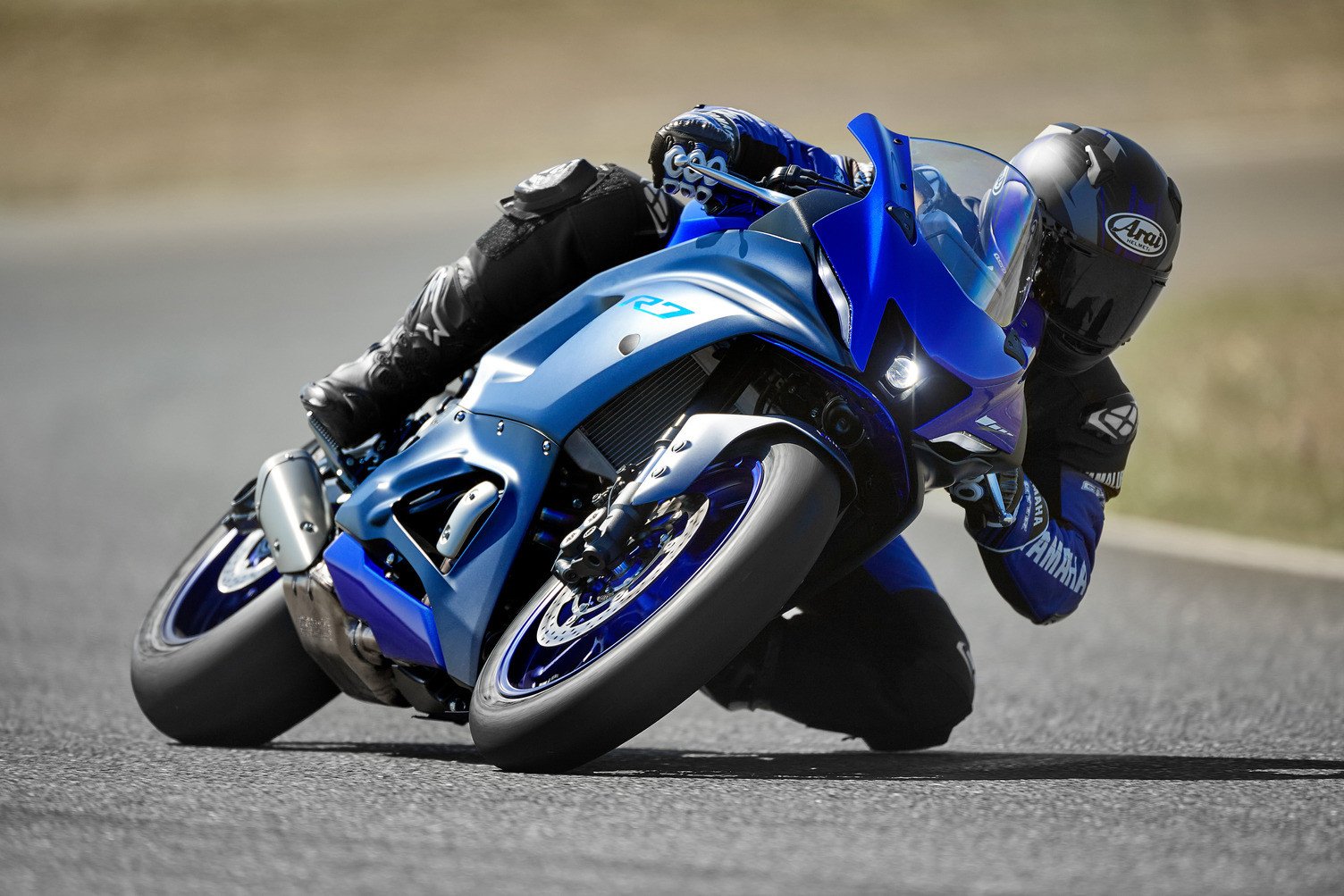
Under the fairing, the R7 uses a 689cc liquid-cooled, DOHC inline twin — Yamaha’s CP2 engine — with a 270° crank for that classic, torquey feel. The 270° setup helps deliver strong, linear torque and limited vibration.
To help with smooth gear changes, it has an Assist & Slipper clutch, which reduces lever effort and stabilizes downshifts. For quicker upshifts, there’s an optional Quick Shift System (QSS).
While Yamaha doesn’t openly list a massive peak-horsepower number on its U.S. spec sheet, the CP2 engine is well-known for its strong midrange and usable power in real-world conditions.
Chassis, Suspension & Brakes
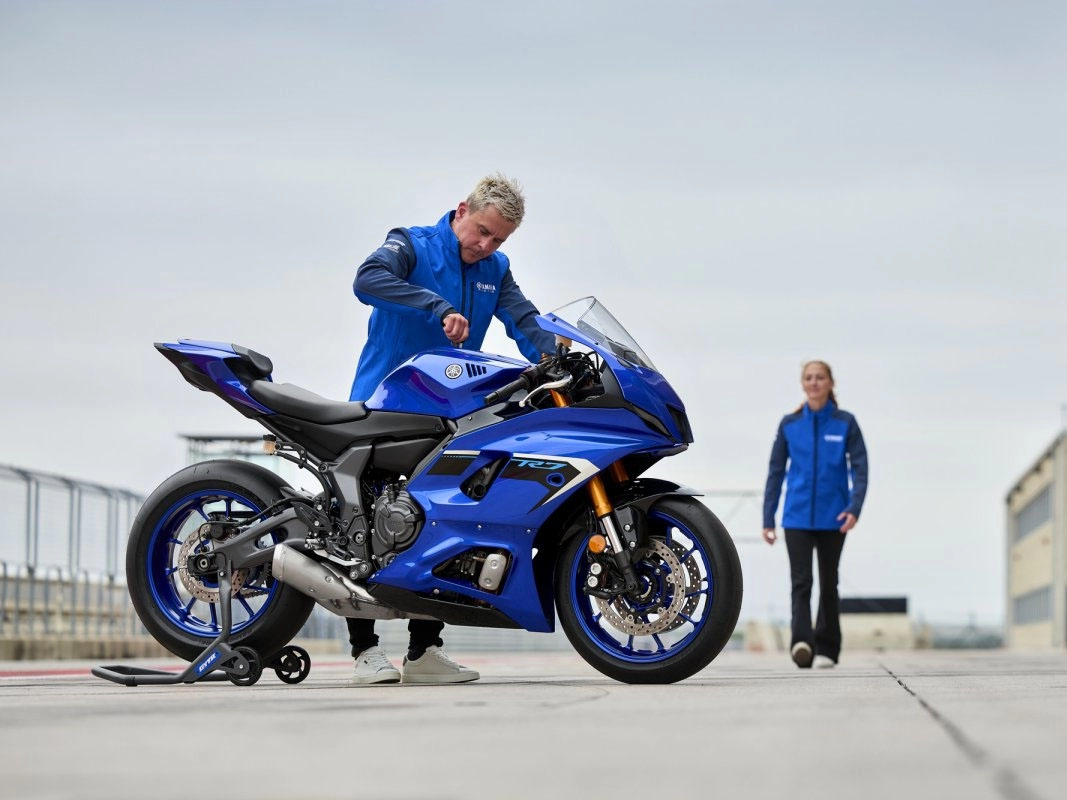
- Front Suspension: Inverted KYB 41 mm fork, with adjustable preload, rebound, and compression.
- Rear Suspension: Linked Monocross shock, adjustable preload and rebound.
- Brakes: Dual 298 mm front discs with radial-mount calipers, plus ABS.
- Frame: Steel frame with an aluminum center brace for a good balance between stiffness and agility.
Yamaha’s setup here is tuned for both track-day precision and street comfort — not overly stiff, but very capable under spirited riding.
Dimensions & Ergonomics
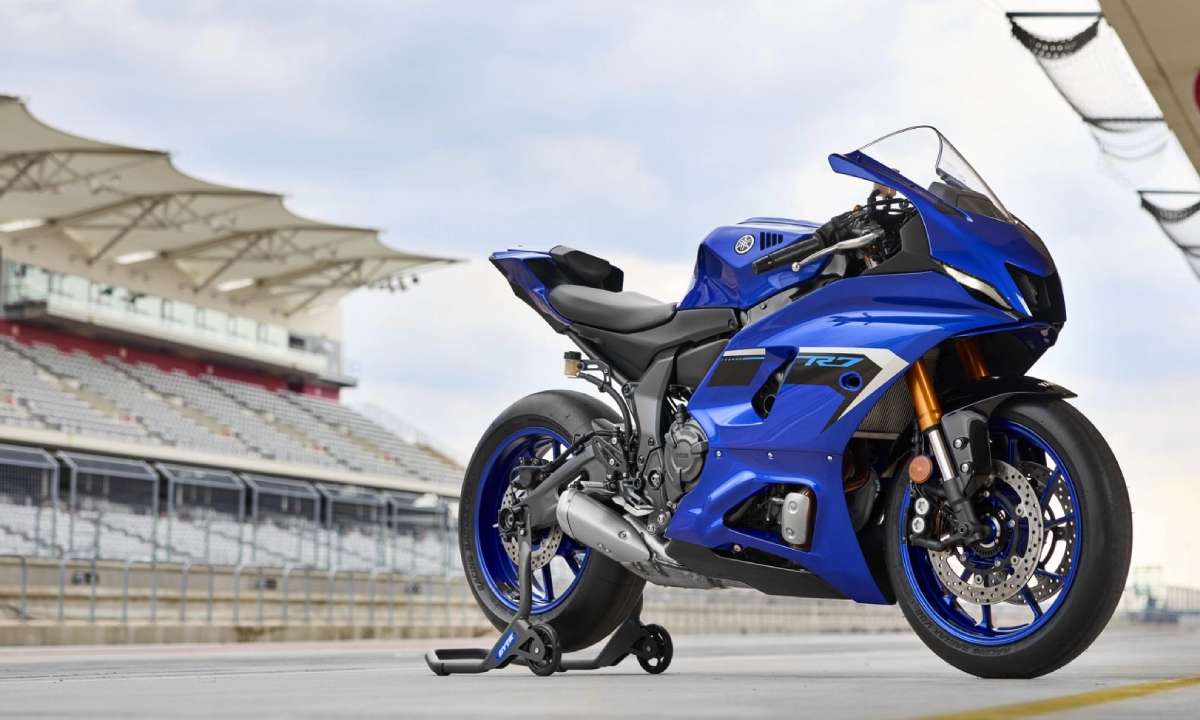
- Seat Height: 32.9 in (≈ 836 mm)
- Wet Weight: ~414 lb (≈ 188 kg) per specs.
- Fuel Capacity: 3.4 gallons (≈ 12.9 L)
- Wheelbase: 54.9 in (≈ 1394 mm)
This makes the R7 a relatively compact but planted sport bike, achieving a good mix of agility and composure.
Electronics & Features
- Assist & Slipper Clutch: Smooth clutch feel + safer downshifts.
- Optional Quick Shift System (QSS): For clutchless upshifts.
- LED Lighting: The R-series twin-eye front has adaptive, bi-functional LED headlight.
- Instrumentation: A full-LCD screen shows gear position, fuel, economy, and more.
Yamaha emphasizes rider control and engagement over electronic complexity, which suits the R7’s “sport but not over-engineered” philosophy.
Riding Experience
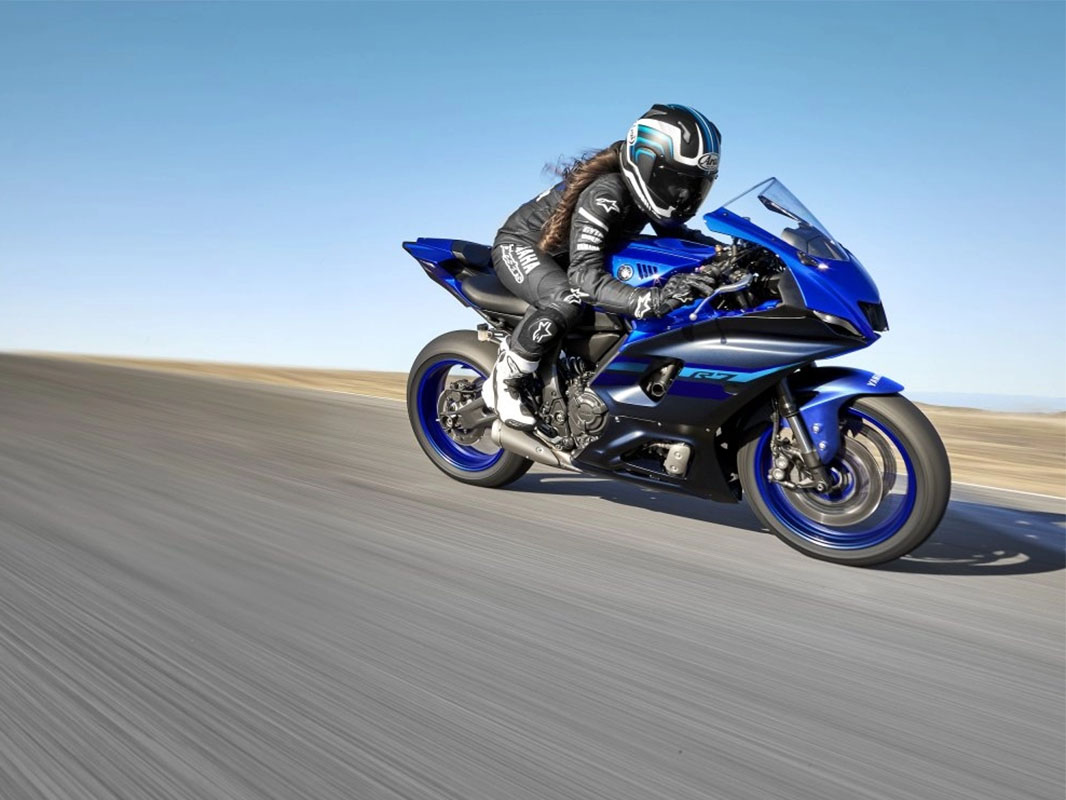
On the road, the R7 feels very lively thanks to its torquey twin. The 270° CP2 engine gives a “pulsing” feel you don’t always get in inline-fours or singles, and the mid-range is strong enough for both twisty roads and city riding. The assist/slipper clutch helps when you’re downshifting hard, making it less jerky.
When pushed on a track-day, the suspension and brakes hold up well — the front feels planted, and the bike remains responsive through corners. Its slim body also helps with rider ergonomics, making it easier to tuck in and lean aggressively.
Practicality & Daily Use
The R7 is more practical than many big supersports:
- With a 3.4-gallon tank, you’ll need to refuel regularly, but not ridiculously often for a sport bike.
- The seat height is somewhat moderate for a sport bike — not super low, but manageable for many riders.
- Fuel economy is decent for its class; Yamaha estimates around 58 mpg for the 2025 spec. (Yamaha Motorsports)
- It’s comfortable enough for daily commuting, though the riding position leans sporty, so long highway rides could be more tiring than a naked bike or touring machine.
Real-World Feedback
From rider communities:
- Some newer or returning riders love the R7 for being “track-capable but not a monster.”
-
“Such a reliable motor … I got the R7 just for the CP2.” (reddit.com)
- A few owners note that used R7s don’t always hold value very strongly, so cost of ownership is something to consider. (reddit.com)
- Others praise how nimble it feels in corners, but mention the fuel tank feels small when pushing it hard. (reddit.com)
Who Is the R7 For?

Great For:
- Riders looking for real supersport performance without jumping to liter-class bikes.
- Track-day enthusiasts who want a capable but lighter middleweight.
- Experienced commuters who want sporty performance in a usable, manageable package.
- Riders who appreciate Yamaha’s engine feel — the CP2 is very dependable and has a rewarding torque curve.
Less Ideal For:
- Absolute beginners who may find the sporty riding position challenging.
- Riders wanting max horsepower — the R7 is about balance, not peak power.
- Long-distance touring riders — limited tank size and sport-oriented ergonomics may be fatiguing.
- Those who want highly advanced electronics (slide control, launch, etc.) — older models don’t have all of that (unless future versions do).
Pros & Cons
Pros:
- Very strong mid-range torque from the CP2 engine
- Assist & Slipper clutch aids in smooth downshifting
- Good suspension and braking for a sport bike at this level
- Sporty, aerodynamic design and lightweight feel
- Optional quick-shifter adds more engagement
- Relatively efficient for a sportbike
Cons:
- Not ultra-compact — seat height is a bit tall for some
- Smaller fuel tank — less range under spirited riding
- Less aggressive power than liter or supersport bikes
- Base model electronics are modest (though newer model years may improve)
Yamaha R7 Specs
Engine: 689cc liquid-cooled CP2 parallel twin
Power: ~72–73 hp @ ~8,750 rpm
Torque: ~49 lb-ft (67 Nm) @ ~6,500 rpm
Transmission: 6-speed manual with assist & slipper clutch
Weight (wet): ~414 lbs
Frame: Lightweight diamond-type frame with aluminum center bracing
Suspension:
• Front: 41mm KYB inverted fork, fully adjustable
• Rear: Monoshock with preload & rebound adjustment
Brakes:
• Front: Dual 298mm discs with radial-mount 4-piston calipers
• Rear: 245mm disc
• ABS standard
Electronics & Features:
• Basic electronics (ABS, fuel injection)
• Optional quickshifter (up only)
• LED lighting
• LCD display
Seat Height: ~32.9 in
Fuel Capacity: ~3.4 gal
Wheelbase: ~54.9 in
Performance:
• Top Speed: ~139–143 mph (estimated)
• 0–60 mph: ~3.3–3.5 seconds
• Fuel Economy: ~50 mpg
Options & Packages:
• Optional quickshifter
• Yamaha accessory exhaust and aero pieces
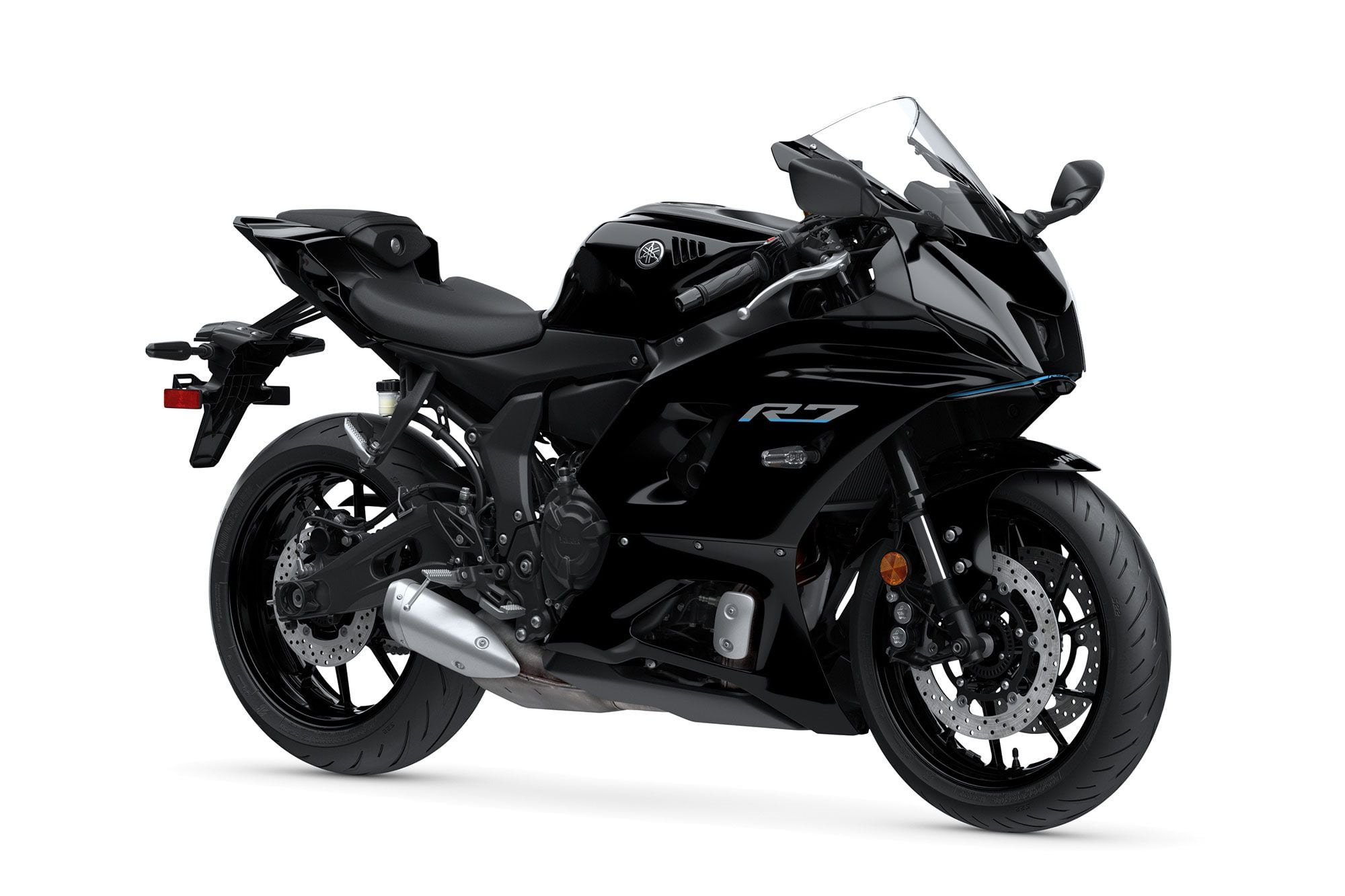
• Color/graphics options (Team Yamaha Blue, Performance Black, etc.)
Yamaha R7 vs Aprilia RS 660 vs Kawasaki Ninja 650
Power & Performance
- Aprilia RS 660: The clear horsepower leader with ~100 hp, advanced electronics, and strong midrange. Fastest in the group by a wide margin.
- Yamaha R7: Middle of the pack with ~72–73 hp and a torquey CP2 twin. Not the quickest, but feels lively thanks to gearing and chassis tuning.
- Kawasaki Ninja 650: Slightly less power (~67 hp) but very smooth, very approachable, and more commuter-friendly than track-focused.
Handling & Chassis
- Aprilia RS 660: Sharper and more advanced — lighter feel, sophisticated suspension, and high-spec brakes. Closest to a “true supersport.”
- Yamaha R7: Extremely agile with stiff front-end feel, fully adjustable fork, and great cornering confidence. More track-oriented than the Ninja, more accessible than the RS 660.
- Kawasaki Ninja 650: Stable and predictable, but softer suspension and more relaxed ergonomics. Least track-focused of the three.
Electronics
- Aprilia RS 660: The most advanced — multiple ride modes, traction control, wheelie control, engine braking, ABS modes, and a full TFT suite.
- Yamaha R7: Minimal electronics — ABS and optional quickshifter. Built to be lightweight and rider-focused.
- Kawasaki Ninja 650: Also minimal — ABS and basic instrumentation. No advanced rider aids.
Ergonomics & Comfort
- Ninja 650: Most comfortable by far — upright, roomy, good for commuting and longer rides.
- Yamaha R7: Aggressive supersport ergonomics, but still more forgiving than an R6 or ZX-6R.
- Aprilia RS 660: Sporty but surprisingly comfortable; more relaxed than the R7 but sharper than the Ninja.
Weight
- Aprilia RS 660: ~403 lbs
- Yamaha R7: ~414 lbs
- Kawasaki Ninja 650: ~420 lbs
(All relatively close, but the RS 660 leads in power-to-weight.)
Price & Value
- Kawasaki Ninja 650: Best budget option; great value for everyday use.
- Yamaha R7: Best value for riders who want a true sportbike feel without supersport cost.
- Aprilia RS 660: Most expensive, but offers premium performance and features to justify the price.
Which One Should You Choose?
Choose the Yamaha R7 if you want:
• A lightweight, track-ready twin
• Sharper handling than the Ninja 650
• More affordability and simplicity than the RS 660
• A bike that feels like a “mini R6” without the intensity
Choose the Aprilia RS 660 if you want:
• The fastest, most powerful option
• Premium electronics and a high-tech ride
• A middleweight that genuinely rivals supersports
Choose the Kawasaki Ninja 650 if you want:
• A sporty motorcycle that doubles as a comfortable commuter
• Low running costs
• Friendly ergonomics and ease of use for beginners or returning riders
Verdict
The Yamaha YZF-R7 is one of the most well-rounded middleweight sport bikes available. It’s not a hyper-aggressive superbike, but it’s not a watered-down entry-level bike either. It sits in a sweet spot: sporty, lively, and usable for riders who want to experience real supersport dynamics without the compromises (cost, complexity) of bigger or more extreme machines.
If you want a bike that’s fun on the street, capable on weekends, and doesn’t feel like a second job to maintain — the R7 is a seriously strong contender.


