
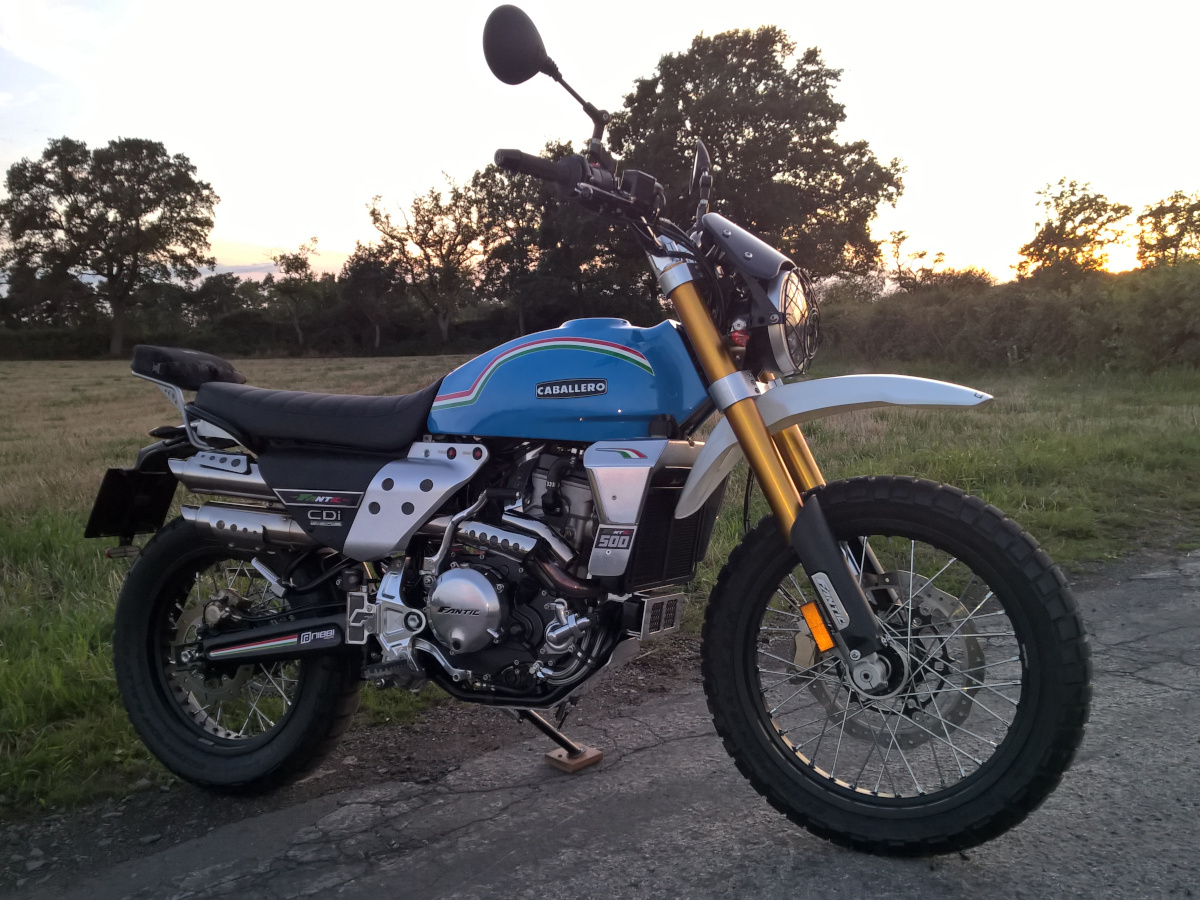
Dave Gillery’s NC450S-Powered Caballero Scrambler…
Beginning in 1968, Italian manufacturer Fantic Motor began producing dual-sports, motards, mopeds, and trials motorcycles out of their factory in Casier, Italy. In 1972, the company’s 50cc machines began arriving in the UK to take advantage of laws that limited the legal displacement of motorcycles for riders under 16.
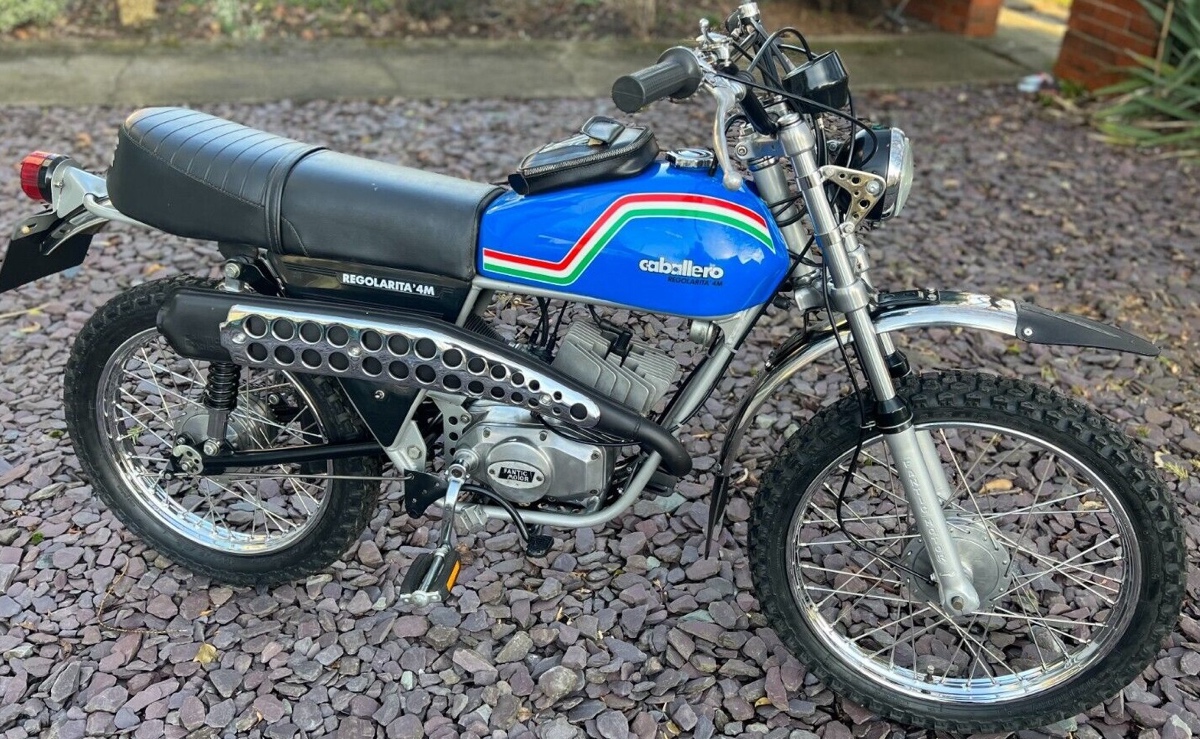
 Our new friend Dave Gillery of York, England, fell in love with the original Fantic Caballero 50cc in 1975. At the time, Dave was 15 years old, in the middle of his electrician’s apprenticeship, and most of his mates were already old enough to ride 50cc sport mopeds. Missing out on the two-wheeled action was killing him, especially after he came across a pristine one-year-old Fantic Caballero 50cc moped — one of the fastest such machines on the market.
“I managed to convince my dad that I’d use the six months until I was 16 to practice off road riding. He then parted with the full payment of £200 and I got my dream machine… I spent most of my teen years riding and repairing bikes and even had a spell dispatch riding. Fast forward 43 years and I couldn’t believe it, Fantic were about to re-launch the Caballero brand.”
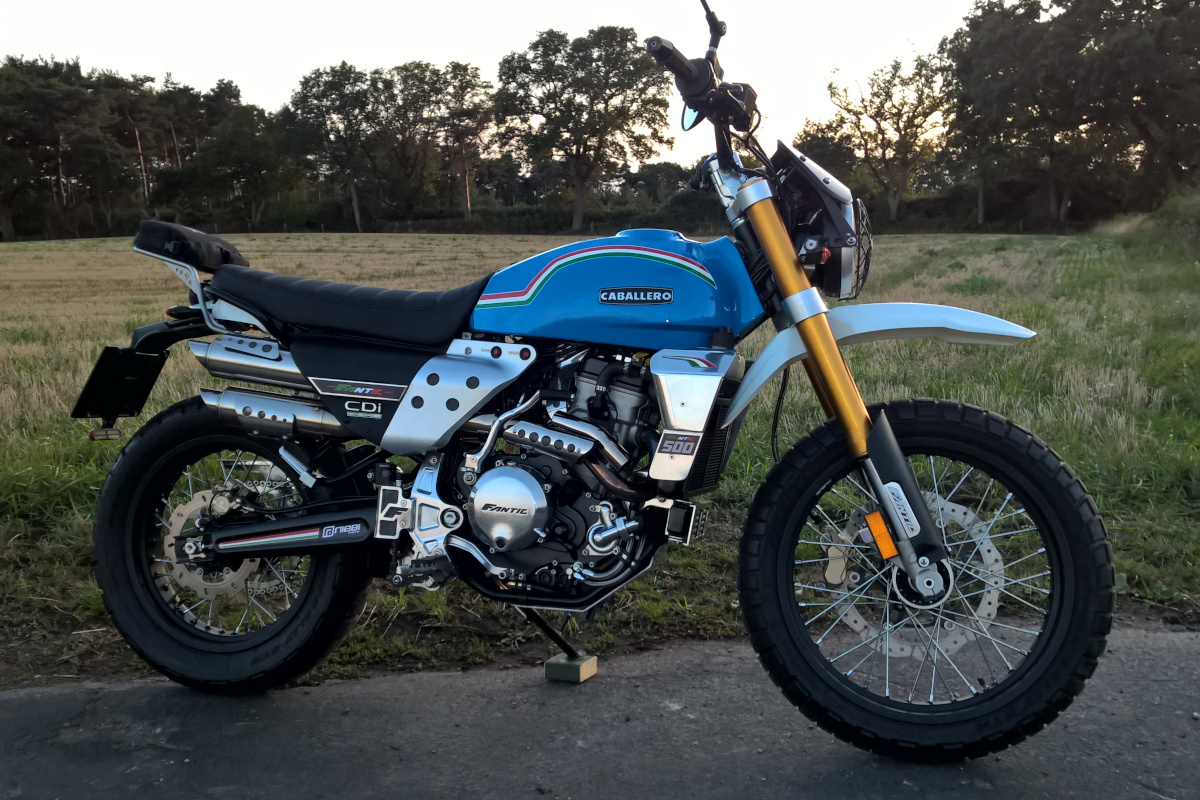
Yes, as many of you know, introduced the Caballero 500 Scrambler in 2018. It’s one of the best-looking retro bikes on the market, and reviews of the quality and riding experience have been positive.
“A simple joy to ride, it’s packed with meaty, real world punch, charm and a generous level of equipment. Light, smooth and accurate it’s happy to burble serenely through town, flow through B roads and even get its tyres muddy… Put simply, the Fantic is the light, simple, affordable, cheeky Scrambler Ducati should have built…but never could.” –MCN
 Dave Gillery was one of the first enthusiasts to put down a deposit. When his Caballero Scrambler 500 arrived, however, issues with the EFI made for an erratic ride. Fortunately, as an electronics engineer, Dave had the skills and expertise to tackle the problem head-on.
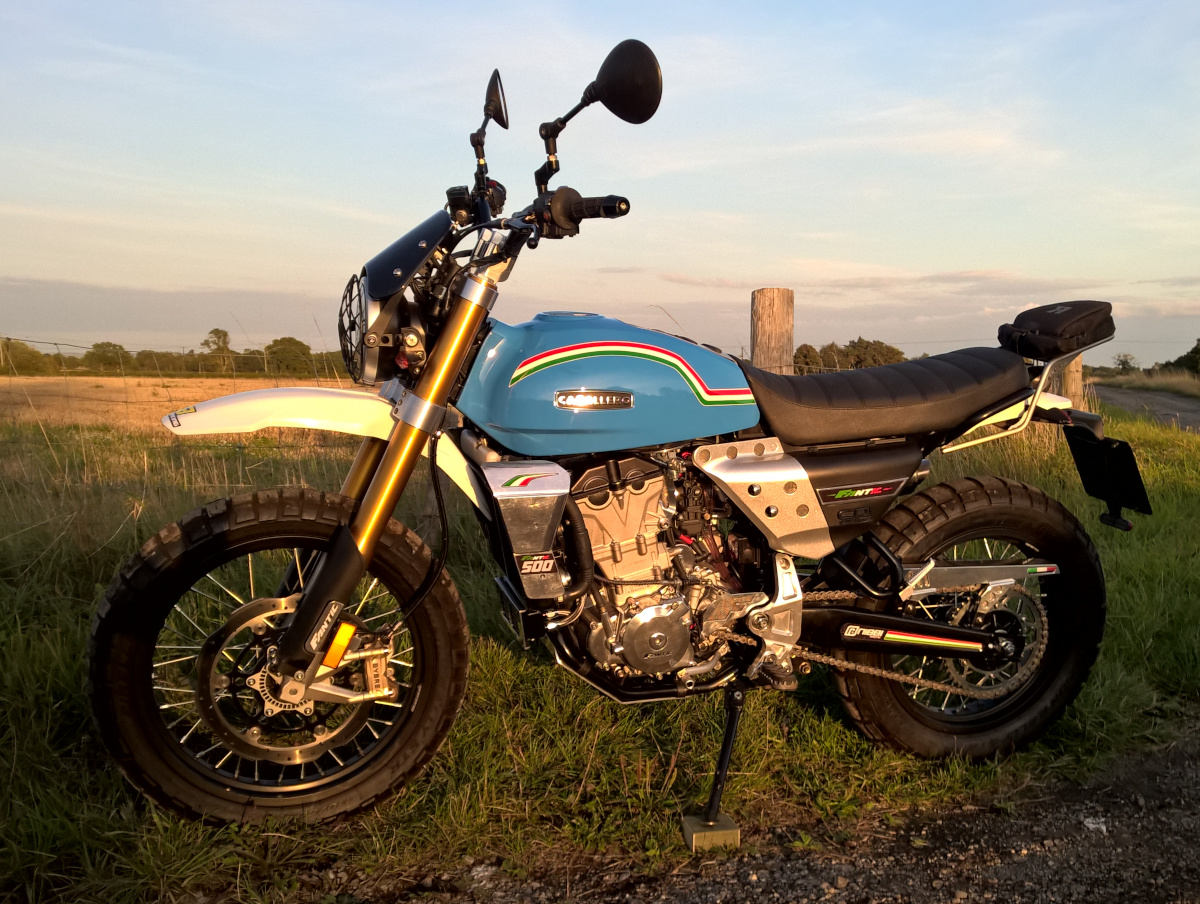
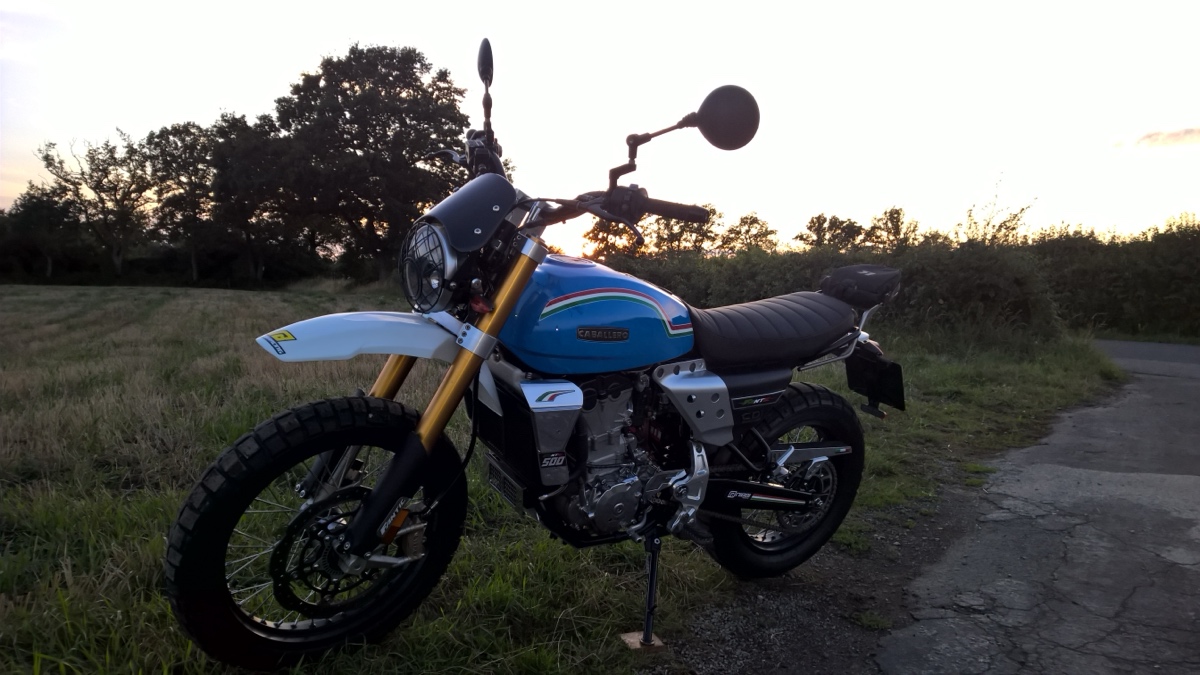
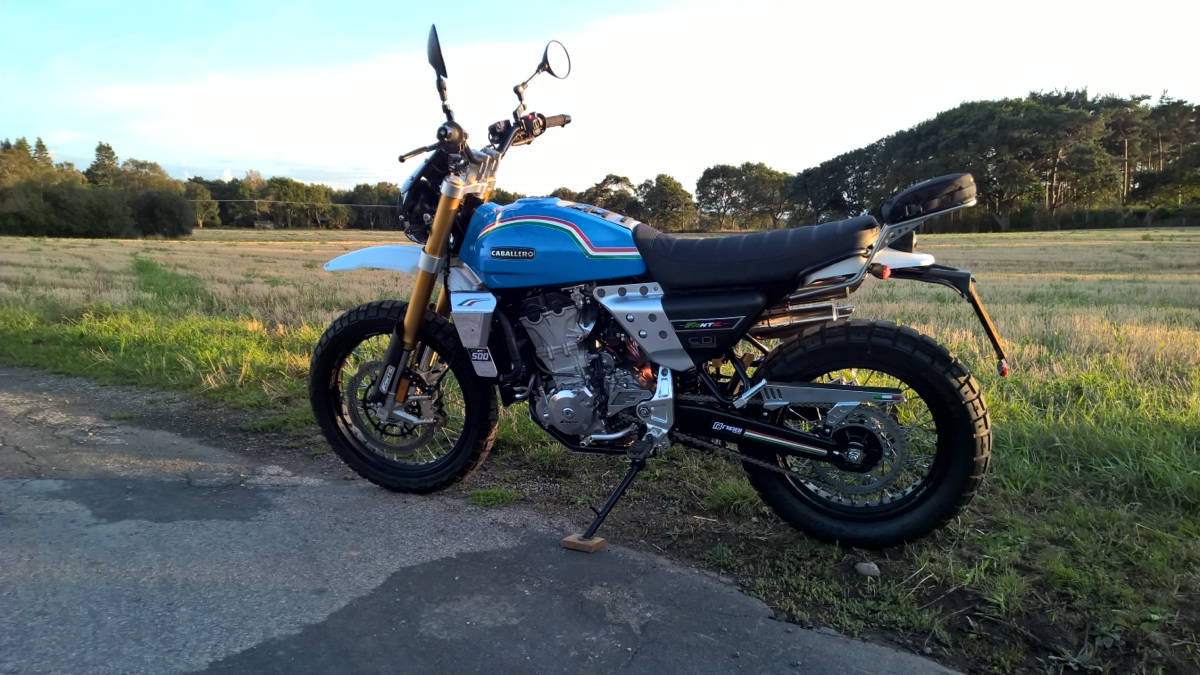
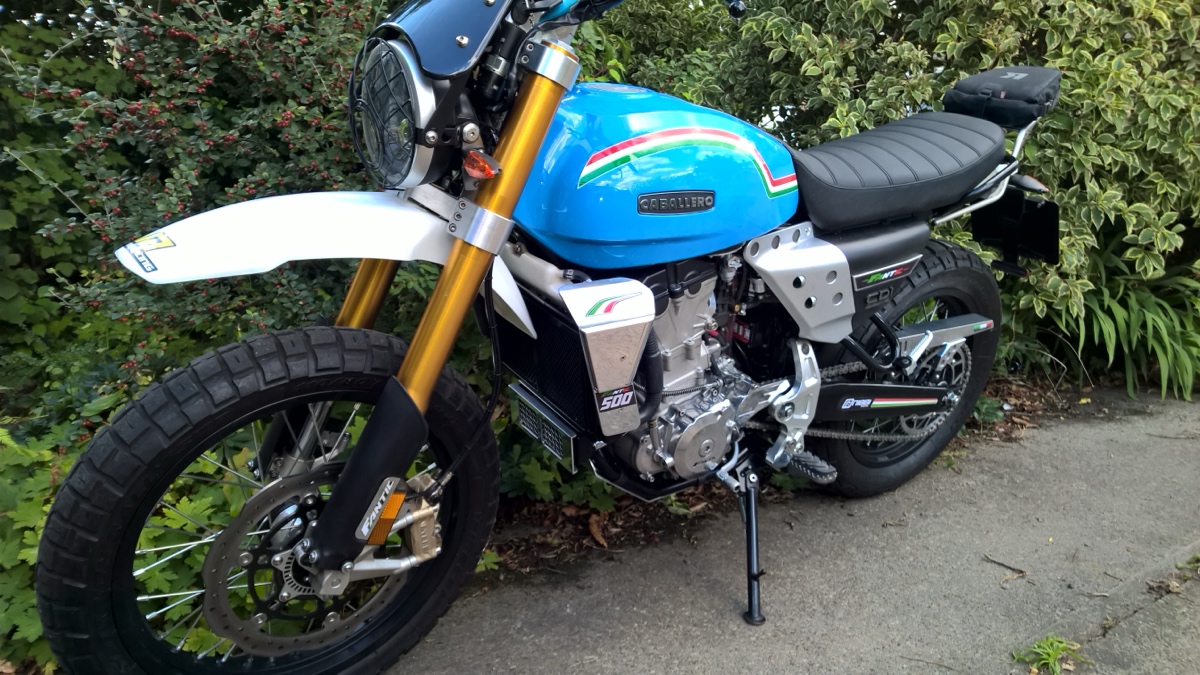
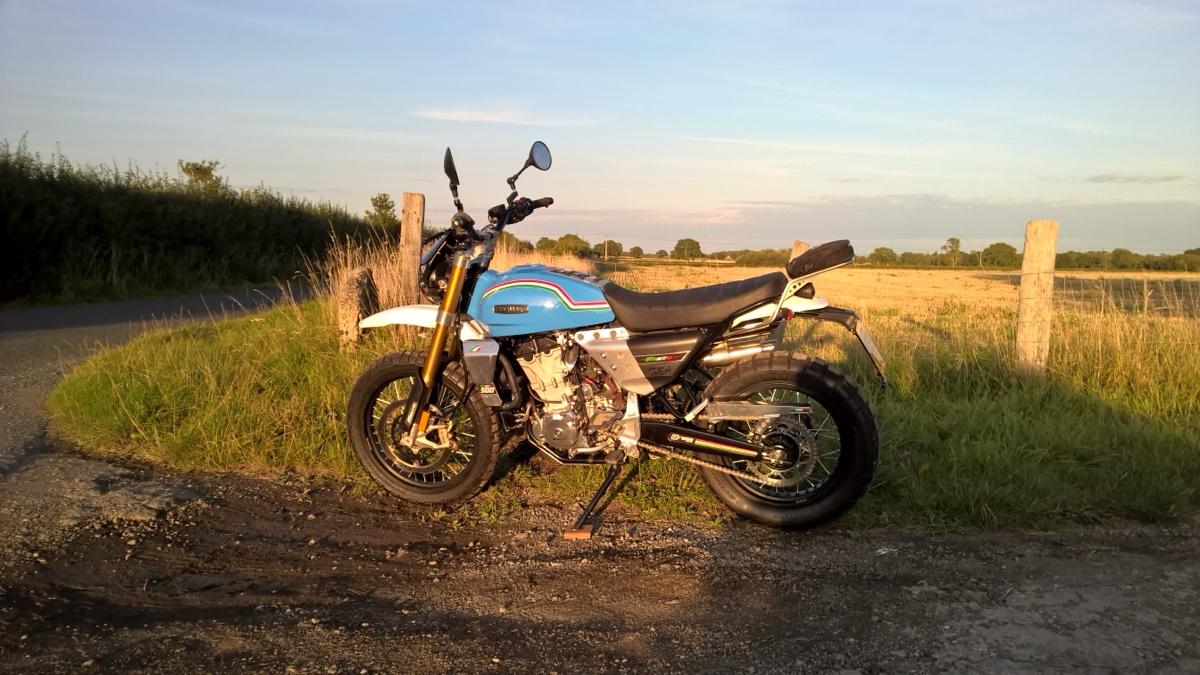 Thence began a long series of modifications that Dave details fully below: a piggy back injector control system, race exhaust, oil cooler, multi-function Daytona Deva 01 cockpit display, rally-style front fender, Berotec rear rack, blue tank cover with Italian stripes to mimic his ’75 Caballero, and even a carburetor conversion to eliminate the fuel mapping issues.
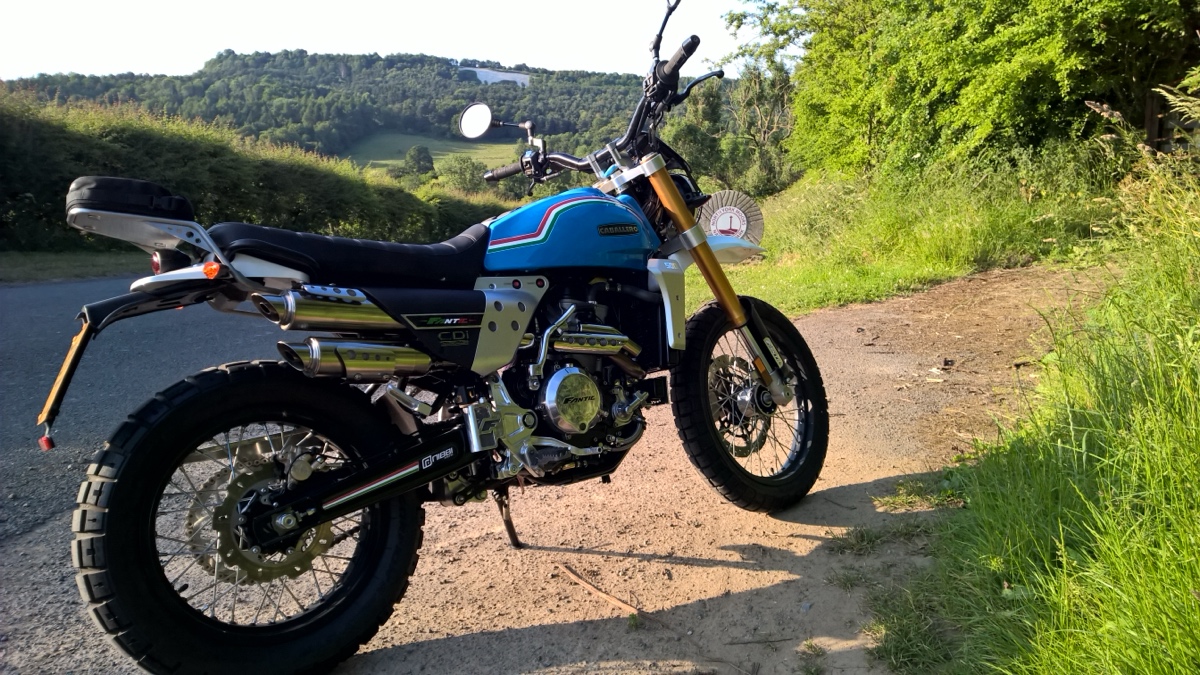
Dave still wanted to get a bit more power out of the bike — that’s when he realized they now make a DOHC version of the SOHC NC450 engine in the bike. Known as the NC450S, it’s the same engine that powers the Kove Rally 450 bikes — a trio of which completed the 2023 Dakar Rally, which has a 70% attrition rate.
“I was ready for a new challenge so took a gamble and ordered a Zongshen NC450S engine. Without a tracking number and only the name of a cargo ship to go on, I was slightly apprehensive, but after tracking the ship for three months the engine finally safely arrived.”
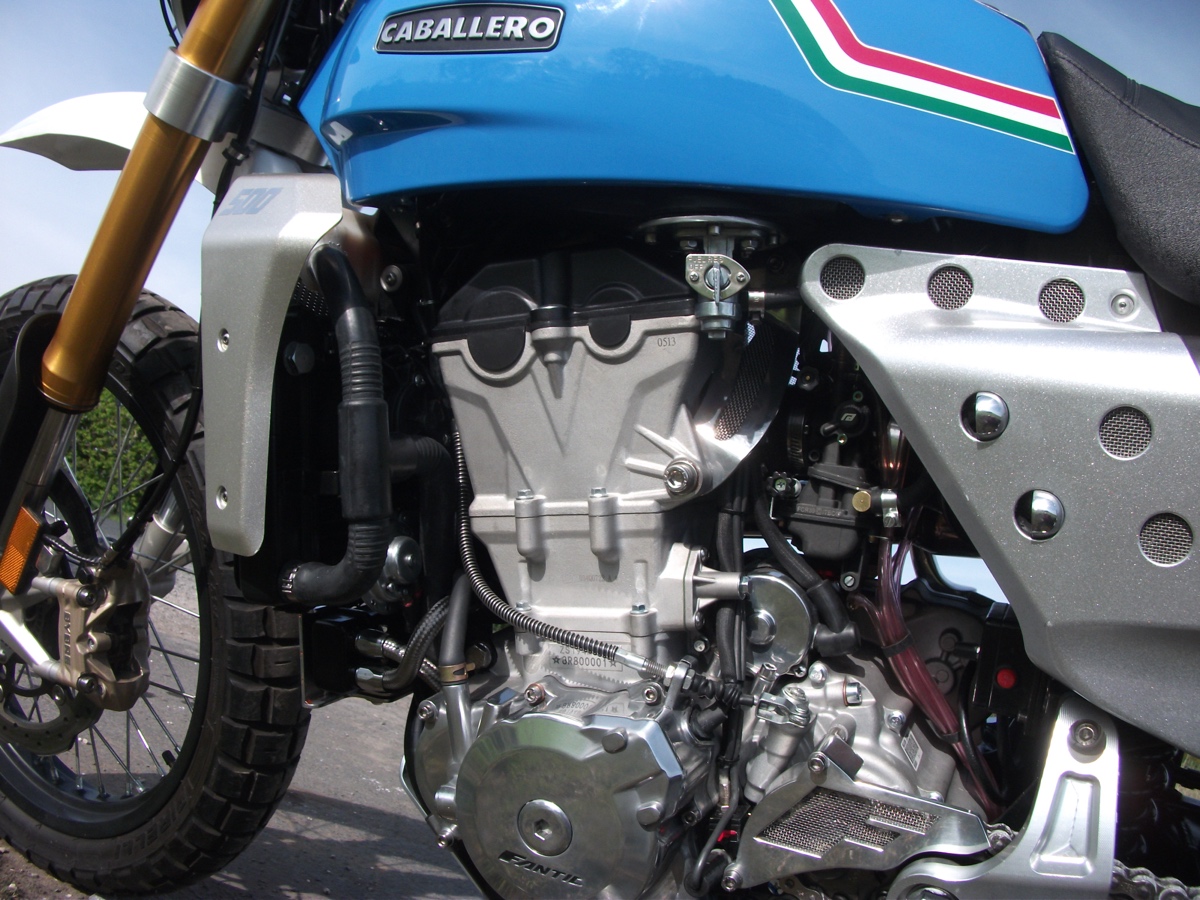
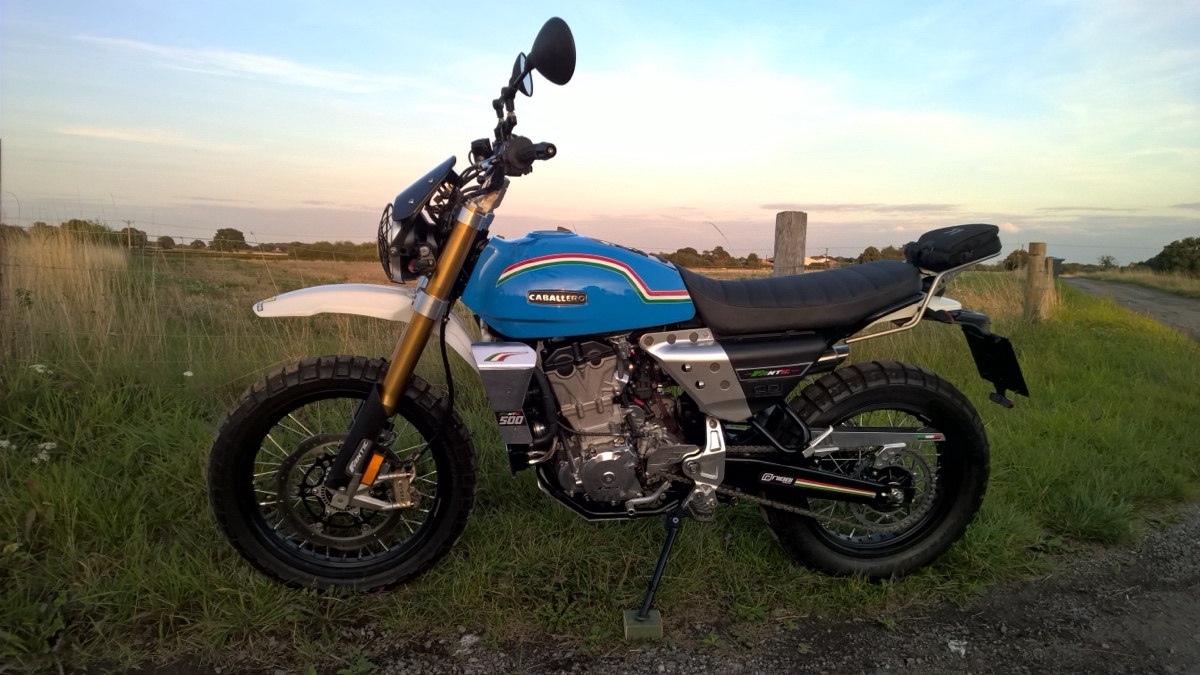 The NC450S was not a plug and play solution. Dave had to fabricate new rear support brackets, relocate the fuel tap plate, raise the tank needed to clear cylinder head, and solve the interface between the carb and engine — but he made it all work.
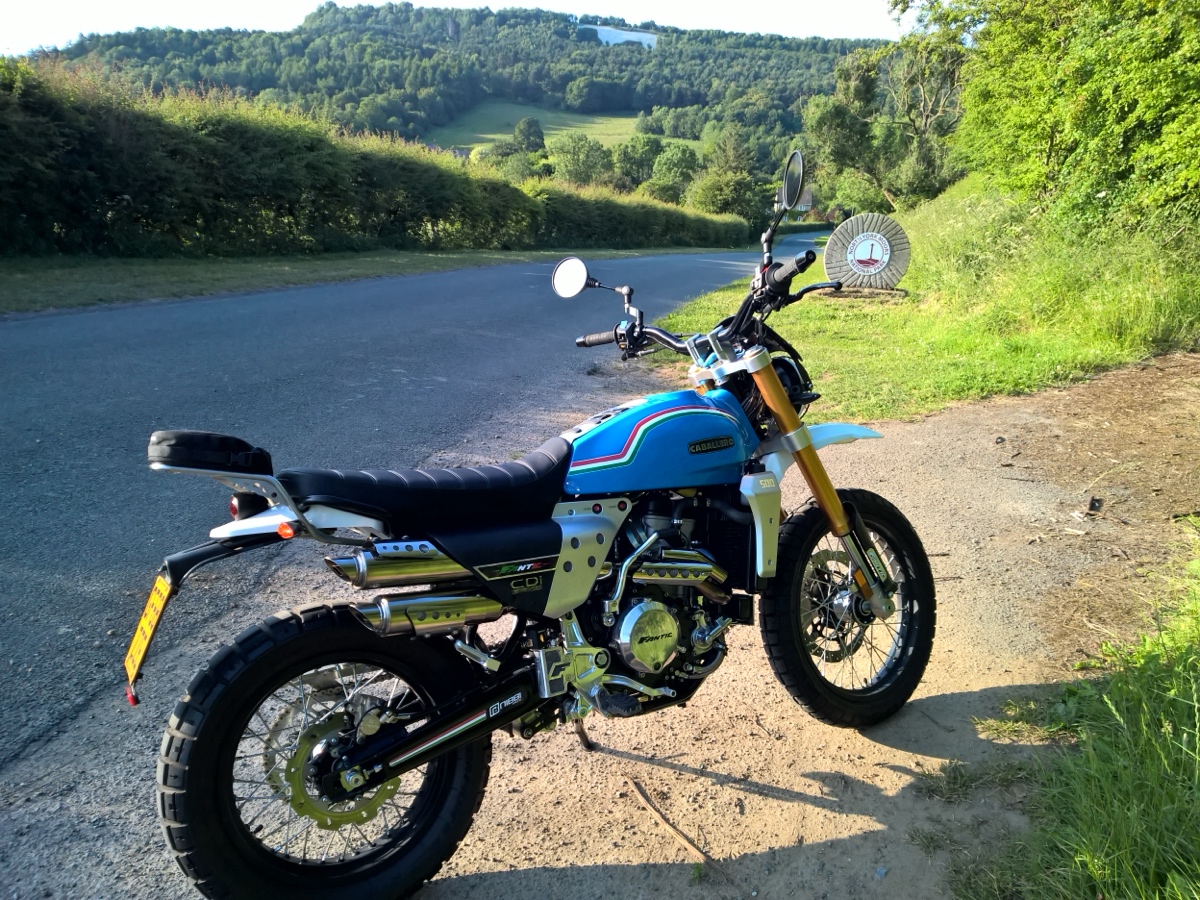
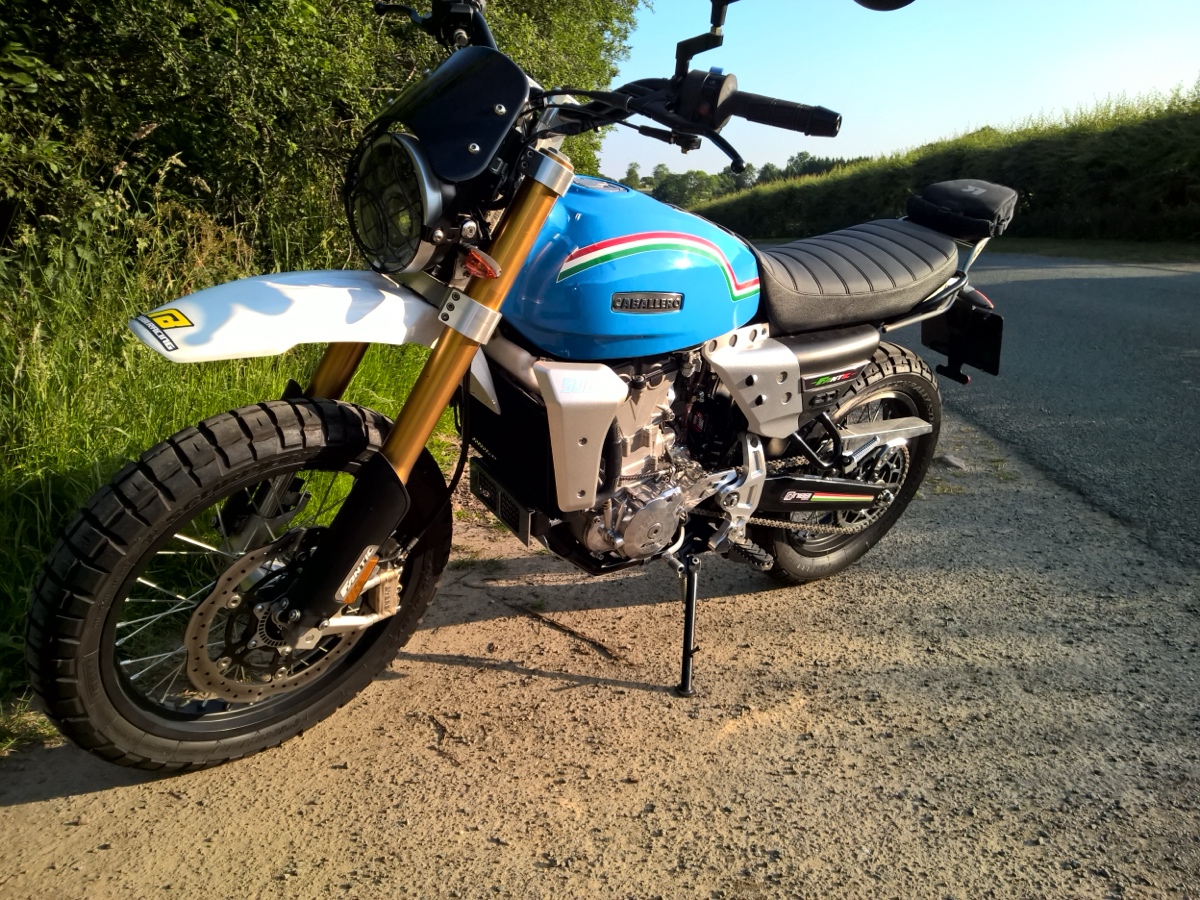
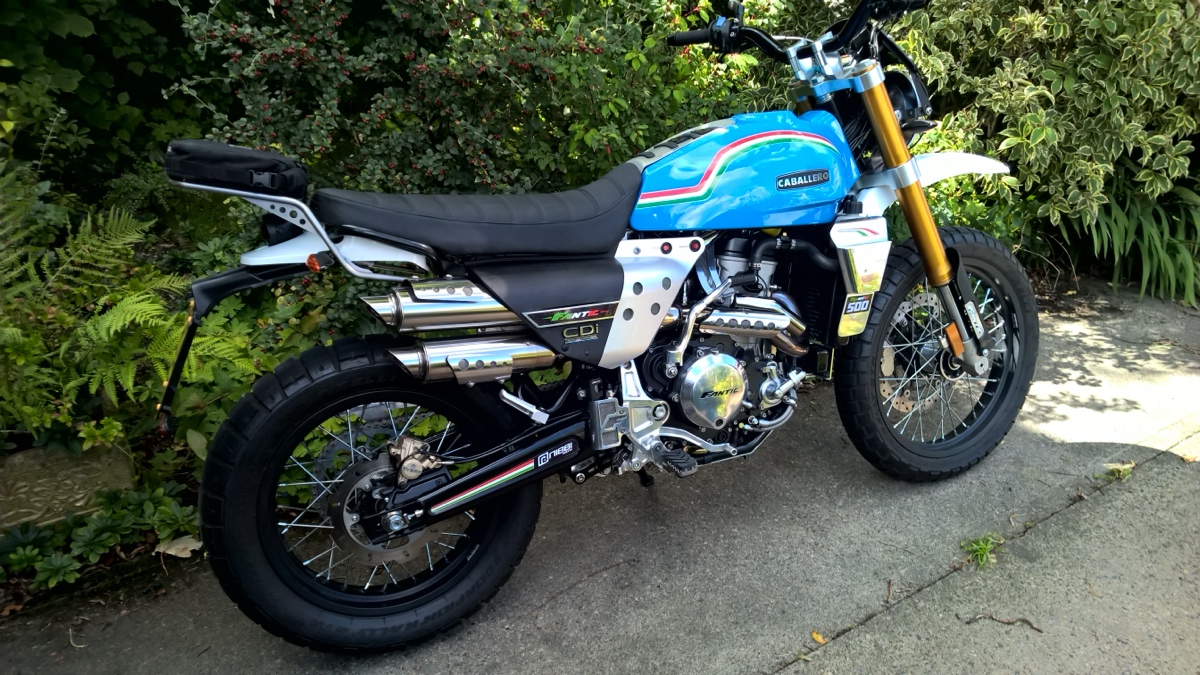
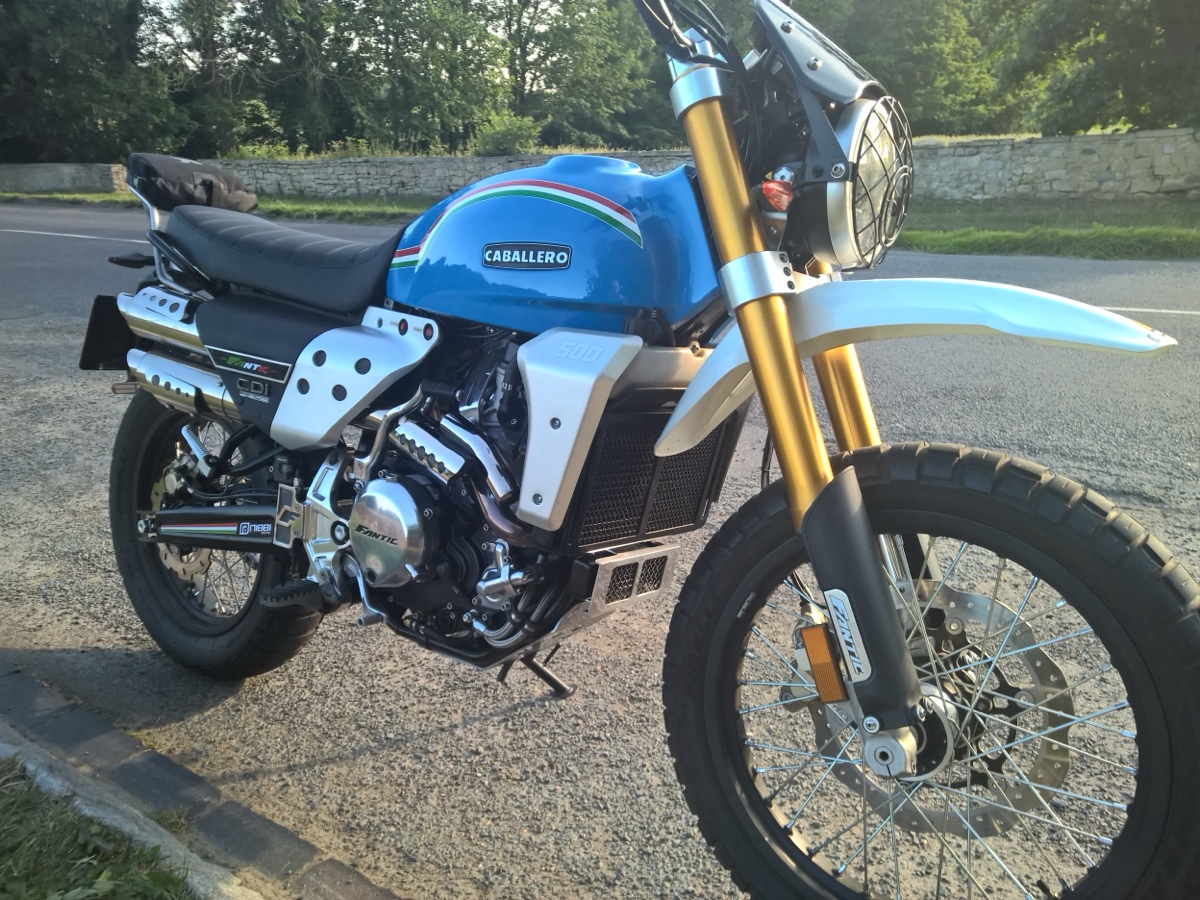 The result? What has to be the world’s only DOHC Caballero Scrambler, with significantly more power, more torque, and better throttle response than the original. It’s a really neat modern evolution of Dave’s ’75 Cabby, and best of all, he built it in his own garage:
“It’s a simple workshop with just a pillar drill, linisher, buffing wheel, and a vice, but that’s all I needed to rekindle my youth and develop the Caballero into what I would call the perfect bike.”
Below, Dave gives us the full details and story behind his “CabbyCarby” DOHC 500. Thanks for sharing your build with us, Dave. We hope it inspires some other folks recreate the bikes of their youth in modern form!
“CabbyCarby” DOHC Caballero Scrambler: Builder Interview
• Please tell us a bit about yourself, your history with motorcycles, and your workshop.
I always wanted to be a motor mechanic but at the time electricians had better opportunities and prospects, so I ended up doing an electrical apprenticeship. The law at the time meant that I couldn’t legally ride a sport’s moped until I was 16, and most of my apprentice mates were 16 and had theirs. I was one of the youngest in my year which made things even more frustrating.
However, I came across an immaculate one-year-old blue Fantic Caballero 50cc moped and managed to convince my dad that I’d use the 6 months until I was 16 to practice off road riding. He then parted with the full payment of £200 and I got my dream machine. Unfortunately as time moved on everyone progressed to 250cc bikes and I couldn’t keep up with them, so the Cabby had to go, but I will always remember the fun times, freedom, and enjoyment that this super little moped gave me.
I spent most of my teen years riding and repairing bikes and even had a spell dispatch riding. Fast forward 43 years and I couldn’t believe it, Fantic were about to re-launch the Caballero brand. I hastily put down a £750 deposit for a 500 Scrambler in January 2018 and patiently waited! It transpired the dealer no longer had the Fantic franchise and I feared that was the end of the story and my deposit. The dealer, however, still had a business, just not selling motorcycles anymore, and he honoured my order and to my relief delivered the bike in Nov 2018.
I was an electronics engineer at the time and about to be made redundant so spent this time doing a garage conversion which included a new workshop. It’s a simple workshop with just a pillar drill, linisher, buffing wheel, and a vice, but that’s all I needed to rekindle my youth and develop the Caballero into what I would call the perfect bike.
• What’s the make, model, and year of the donor bike?
Fantic Caballero 500 Scrambler 2018.
• Please tell us about the bike and all the modifications you’ve done.
As mentioned above, my love for the Fantic Caballero first started when I was 15 years old in 1975. I would have preferred blue [for my 2018] but red was the only option at the time. I had rekindled the dream and couldn’t wait to ride it! I hadn’t ridden a bike for 30 years so I was slightly apprehensive.
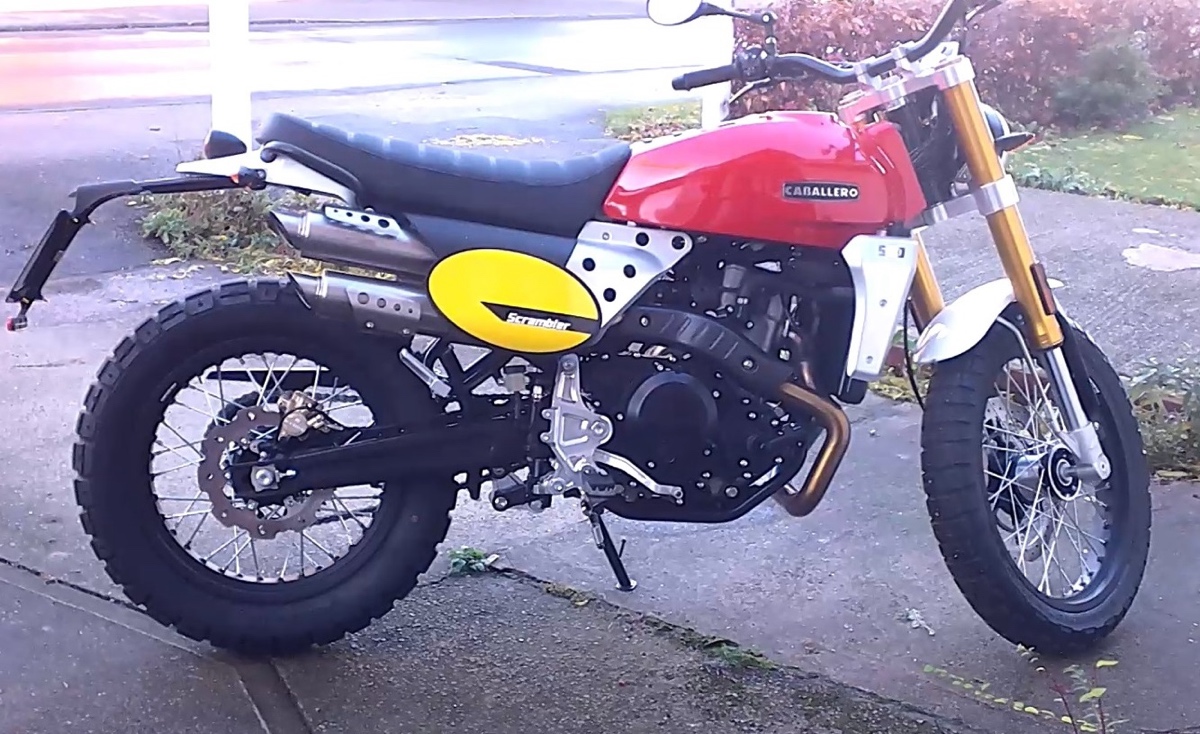
The ride was very erratic with poor idling, popping on deceleration and engine cut outs. I thought initially having not had a bike with an ECU and fuel injection that it this was normal! It wasn’t I think it was just the ECU mapping that had been hastily developed to get the bikes into the showrooms.
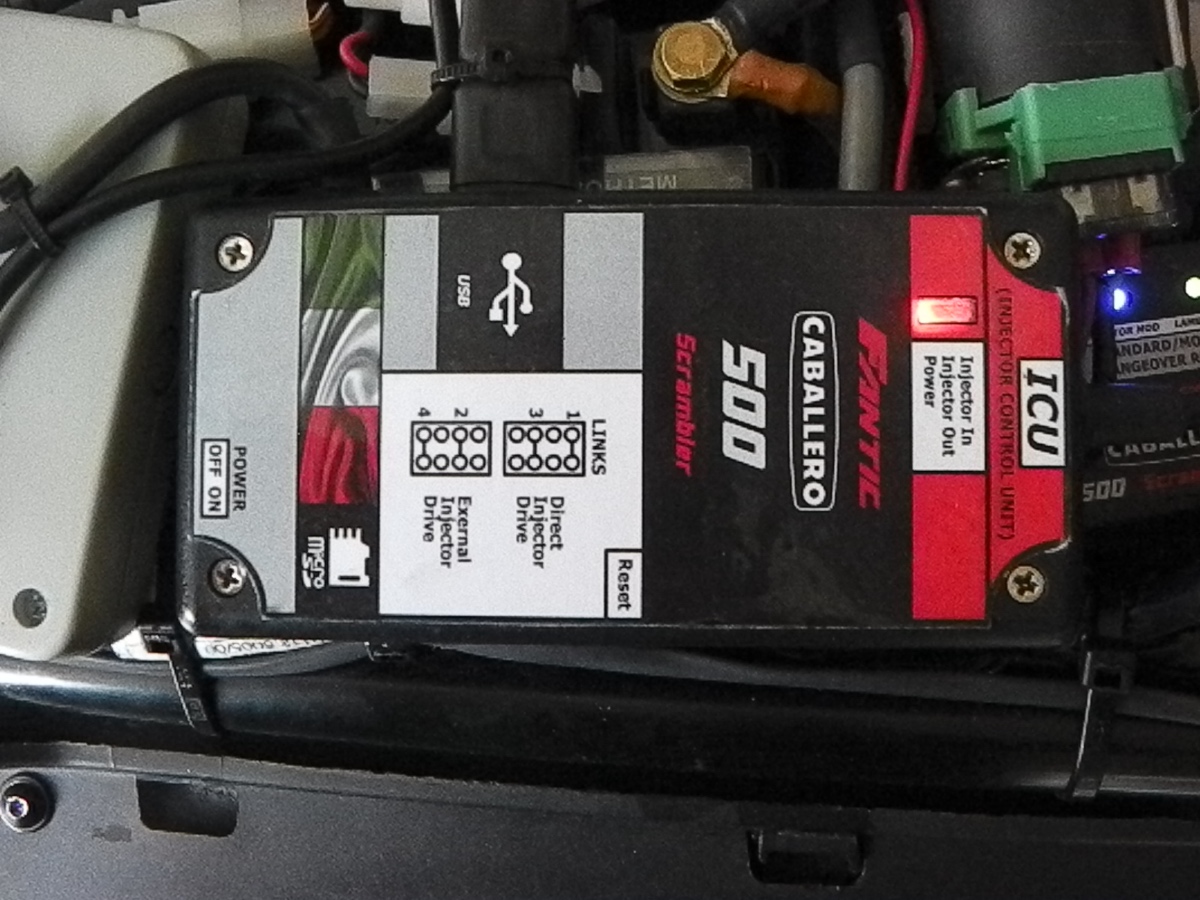
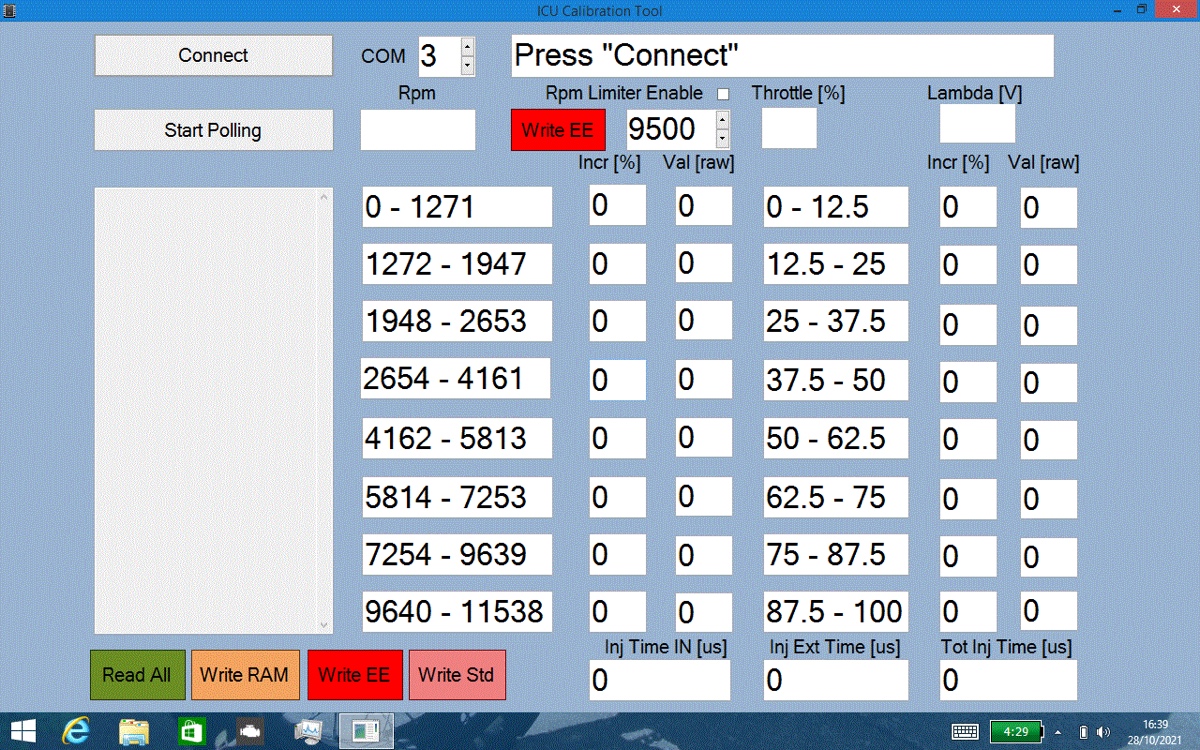
As soon as a new map became available, Fantic UK sent me a replacement ECU, which to be honest was very much the same. I was an electronics engineer so had the knowledge and ability to design and build a piggy back injector control system for myself, so I did. The project used an Arduino Nano module and controlled the injector time relative to rpm and throttle position and was based around a Fuelino freeware project that I discovered online. I could even modify the data via Bluetooth using a tablet running Windows 8.
Next step was to fit a tank pouch with some gauges so I could keep an eye on everything. I also fitted a homemade gear indicator and rev counter — all a bit over the top. Looked great at night but
the tank gauges were difficult to read while riding.
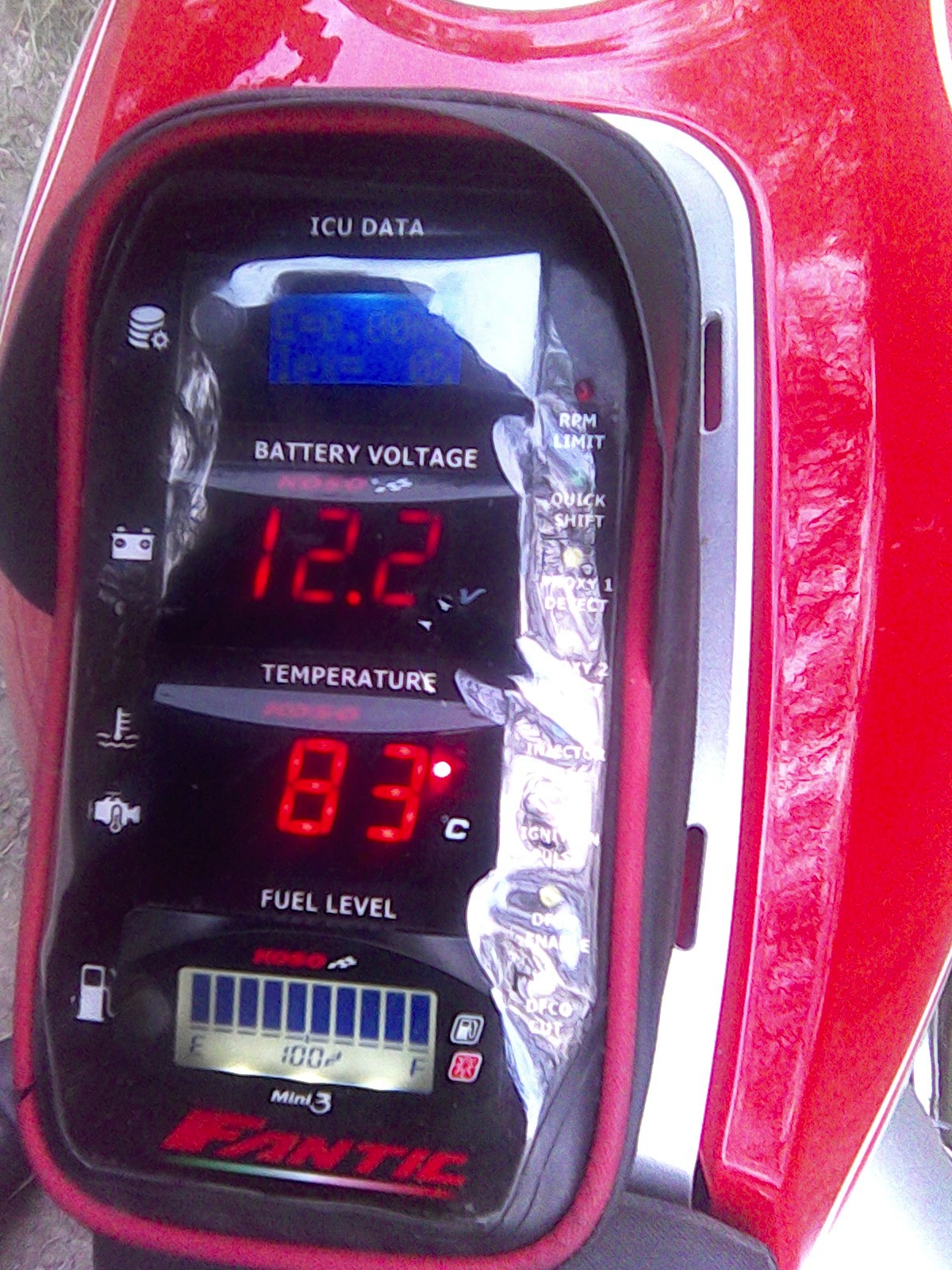
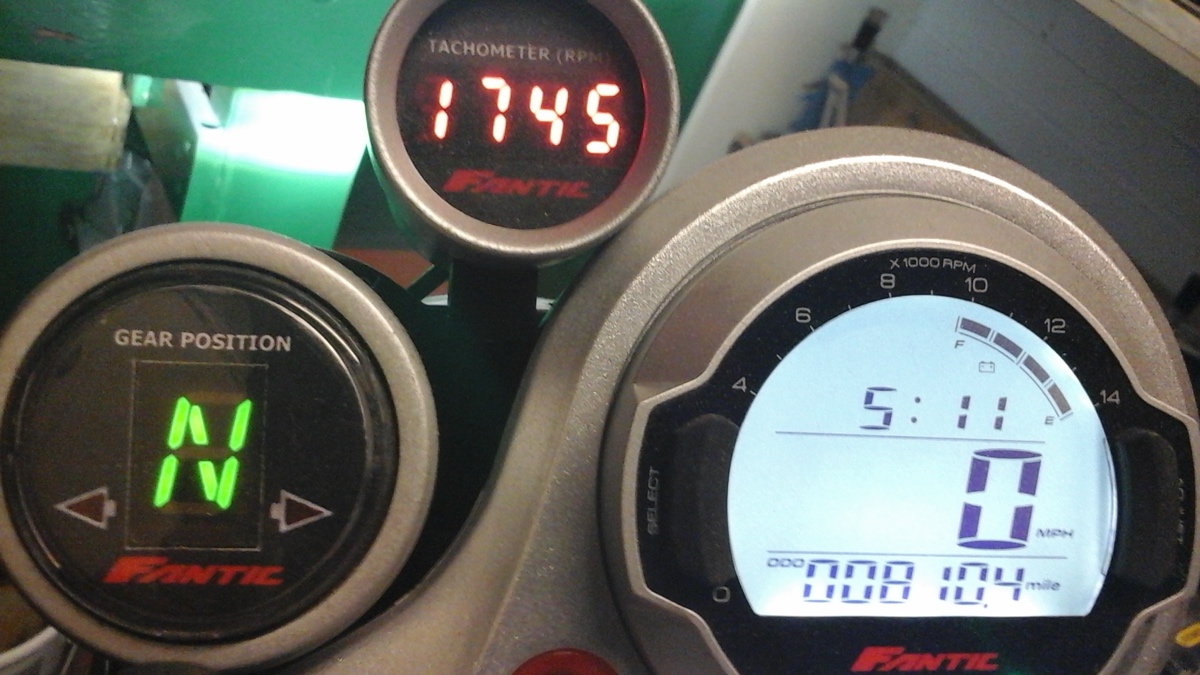
Just when I’d finished the ECU piggyback project, Fantic UK got in touch with me to let me know that a race map for the ECU was now available if I was interested. I certainly was and the re-map completely transformed the bike and most of the irregularities had been solved. I now had a decent ECU map and also a modify switch that allowed me to experiment with my own injector times.
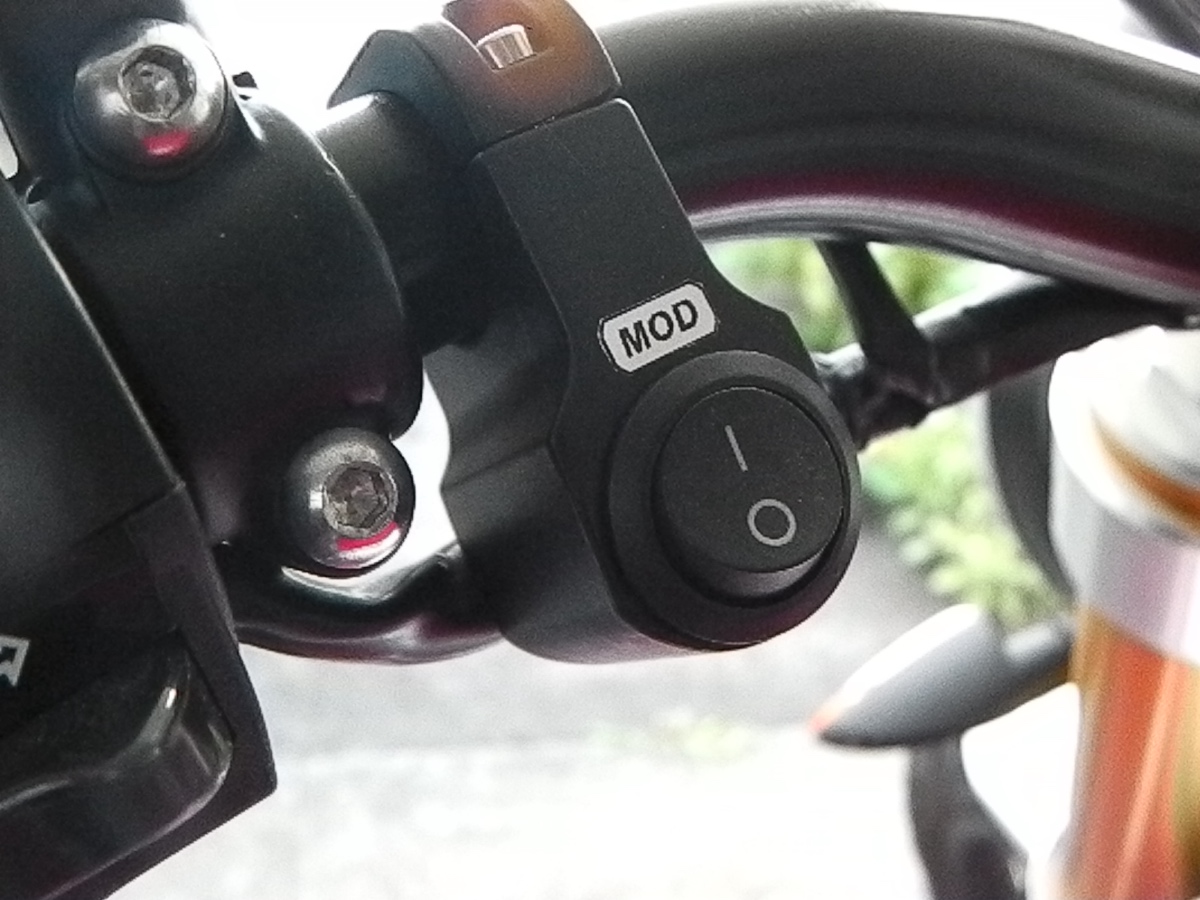
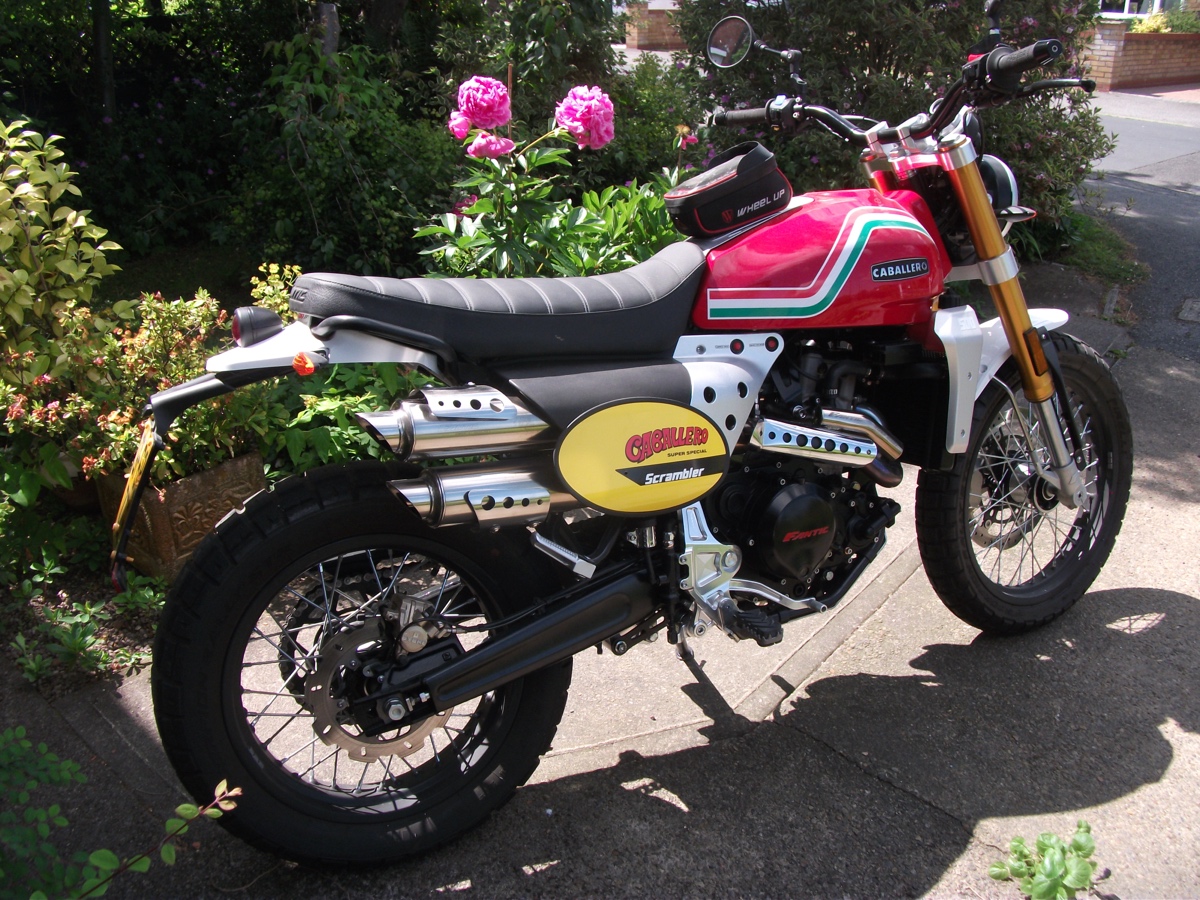
In order to get the best results from the race map I needed to purchase a race exhaust system, which had just been released, but at around £1000 it couldn’t really be justified. The front downpipe was a reasonable price but the carbon silencers were about £700! I decided to purchase the front downpipe and make up some adapters to interface with the original silencers, which I preferred anyway. This is how the bike now looked.
I was pretty pleased with the bike now but things were about to change. On a local bike ride, the engine cut out on me while overtaking a vehicle without warning and I had to coast embarrassingly down a farm track. No idea why and bike started up again straight away but from then on I was apprehensive about hard accelerating and overtaking so something had to change.
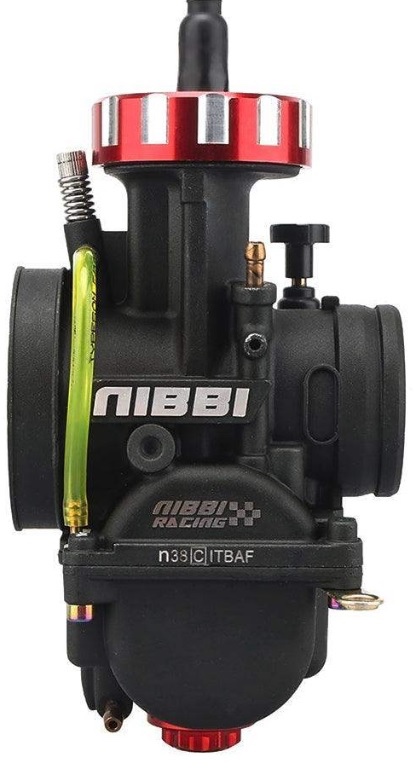
I had just recently been made redundant and now had plenty of time on my hands so I was looking for a new project. The project was to remove the fuel injection system and convert the bike to carburetor. I decided to use a Nibbi PWK 38 carburetor because it’s a good quality, well priced, and a popular choice carburetor for single cylinder motocross bikes.
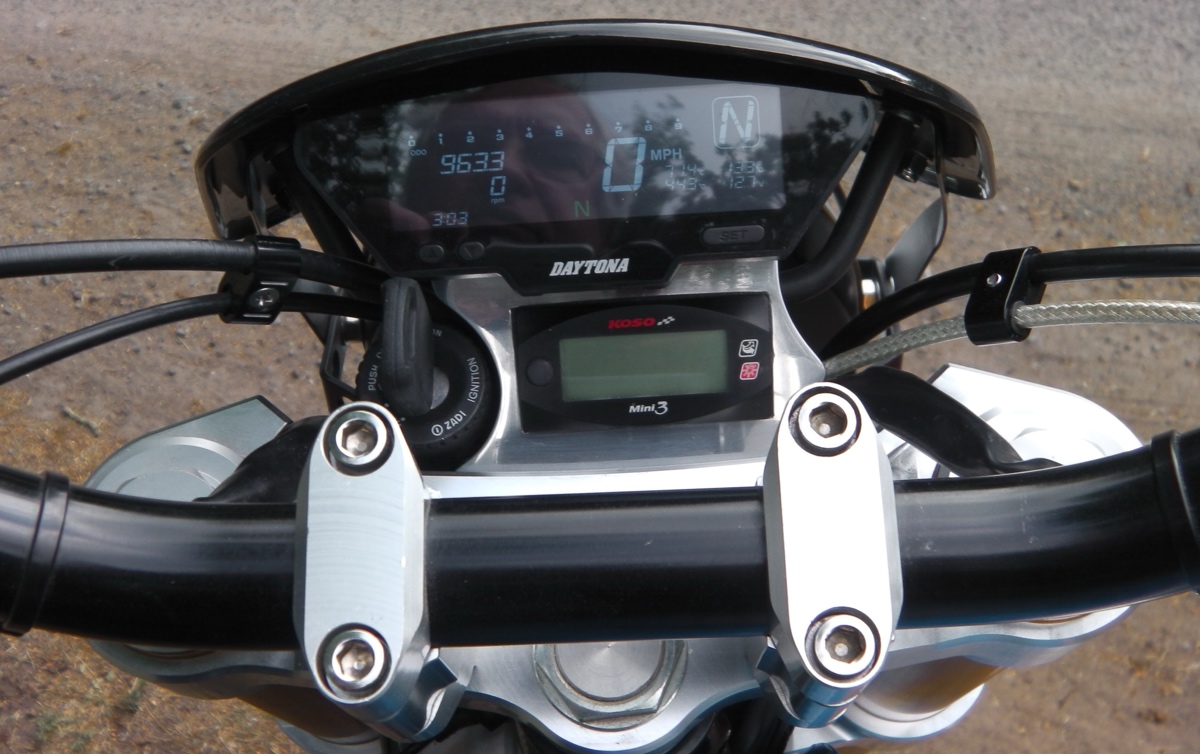
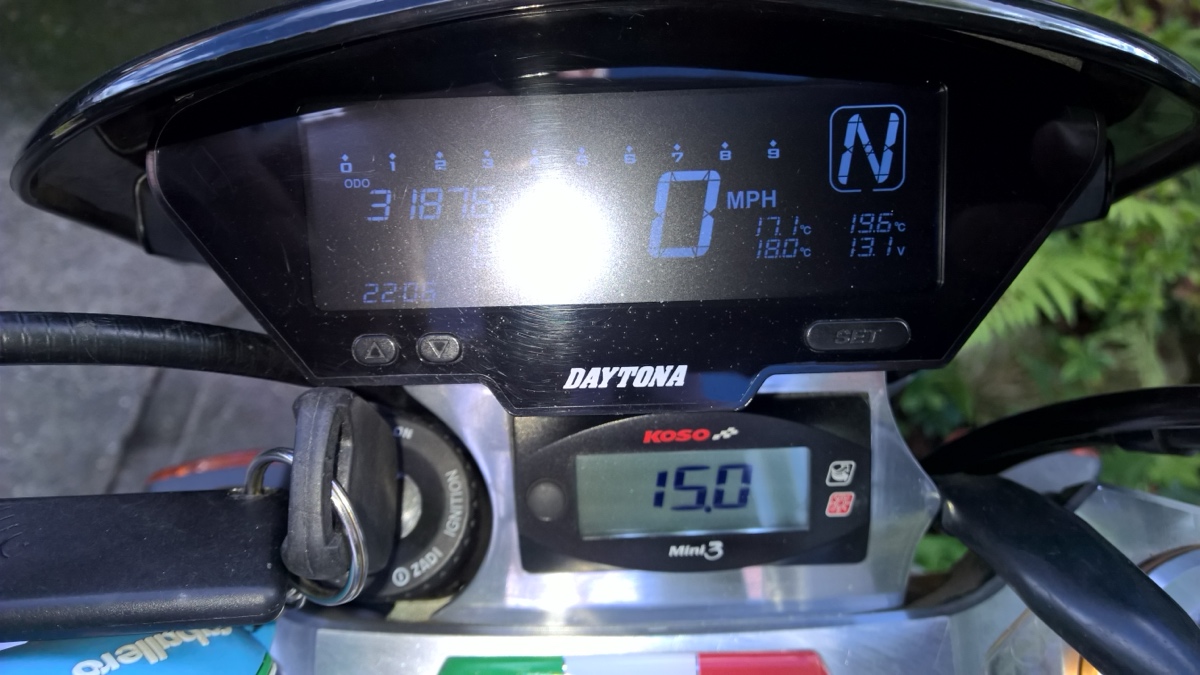
Before I started the carburetor modification, I decided to remove most of the fancy electronic gauges that I’d fitted and to replace them with a more practical and better looking multifunction Daytona Deva 01 cockpit display.
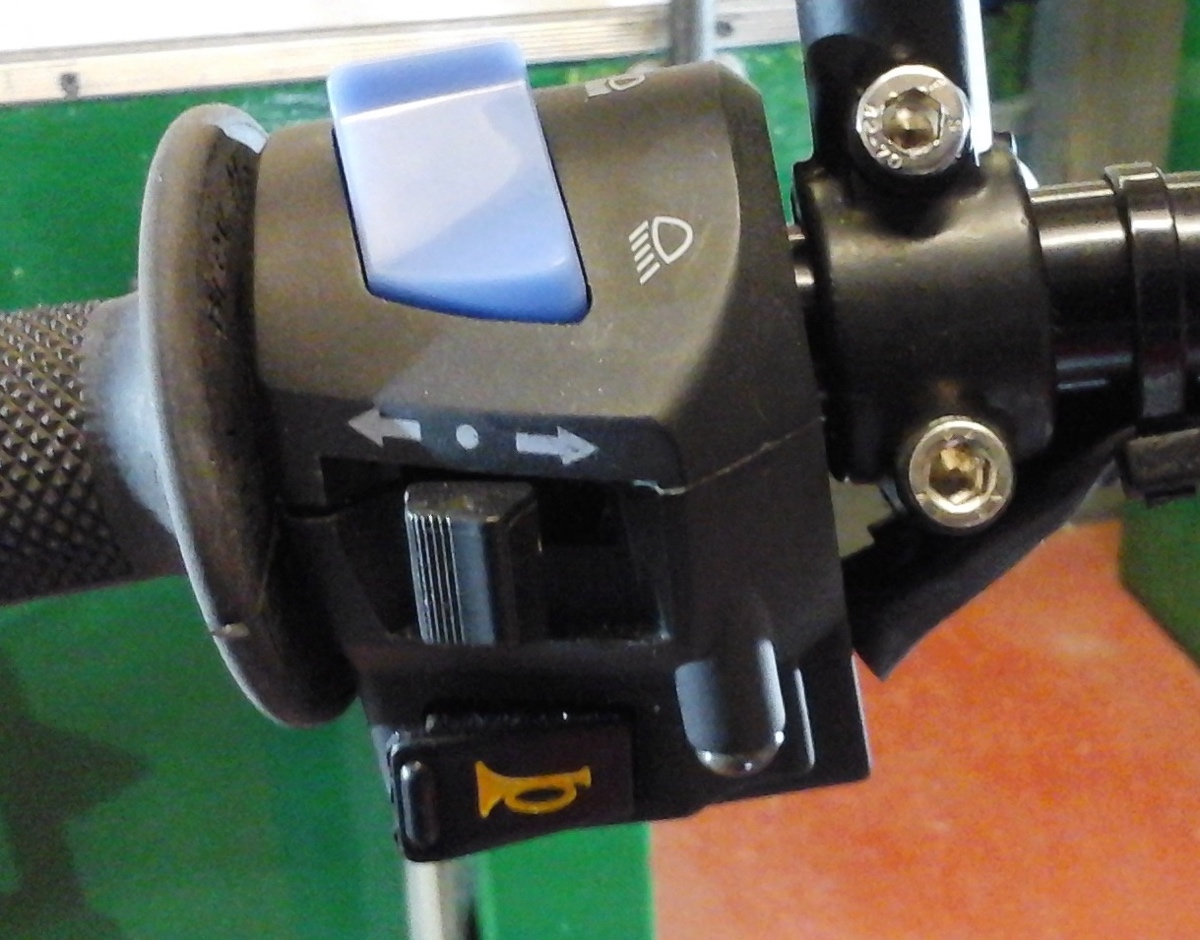
The switchgear also got replaced, basically because the rotary light switch was difficult to operate with gloves on and also the indicator switch wasn’t designed to spring return to center position, which I found awkward to use.
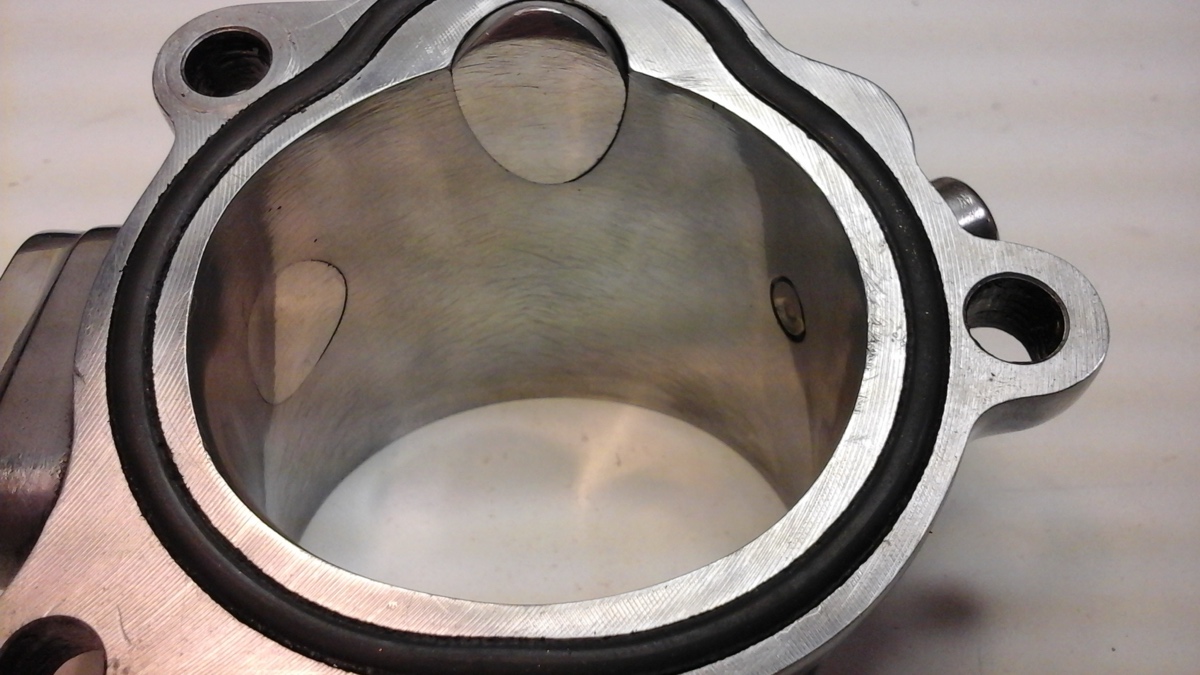
I wanted to be able to revert back to EFI in the future if the carburetor modification didn’t work out, so I unplugged and sealed up all the connectors associated with EFI. I then removed the inlet manifold and blanked off the injector and sensor ports.
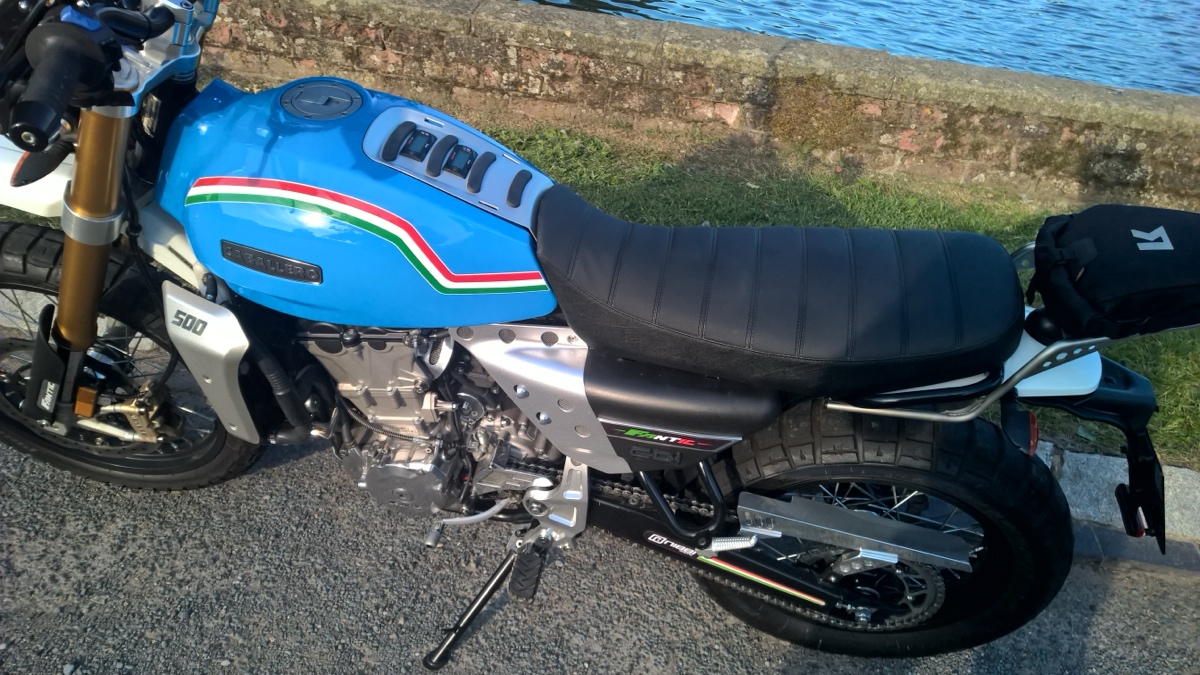
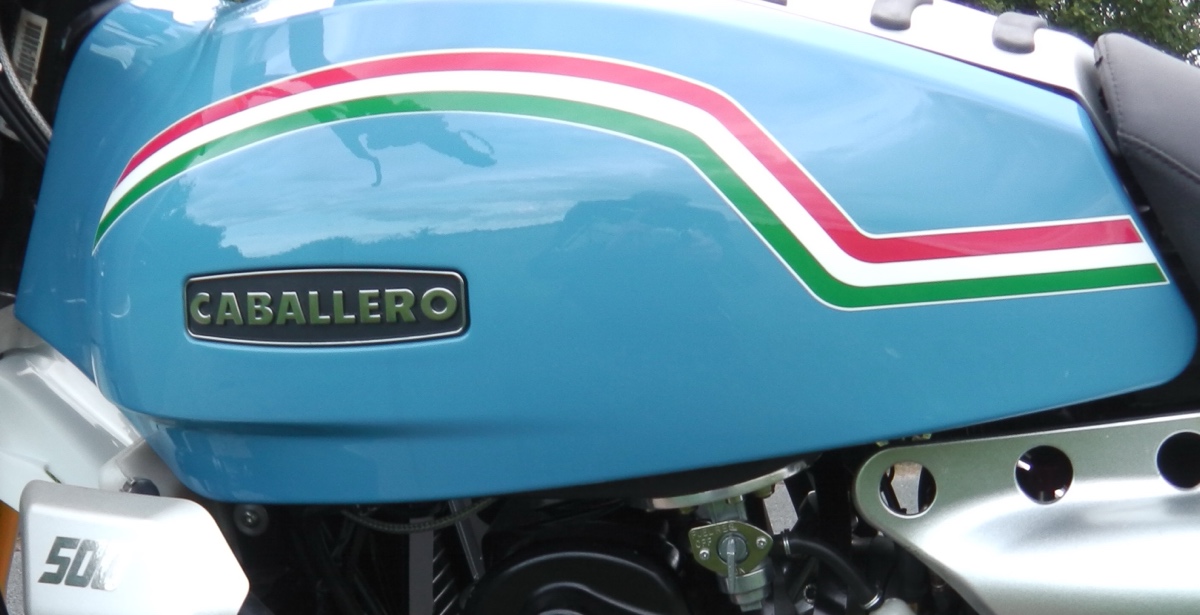
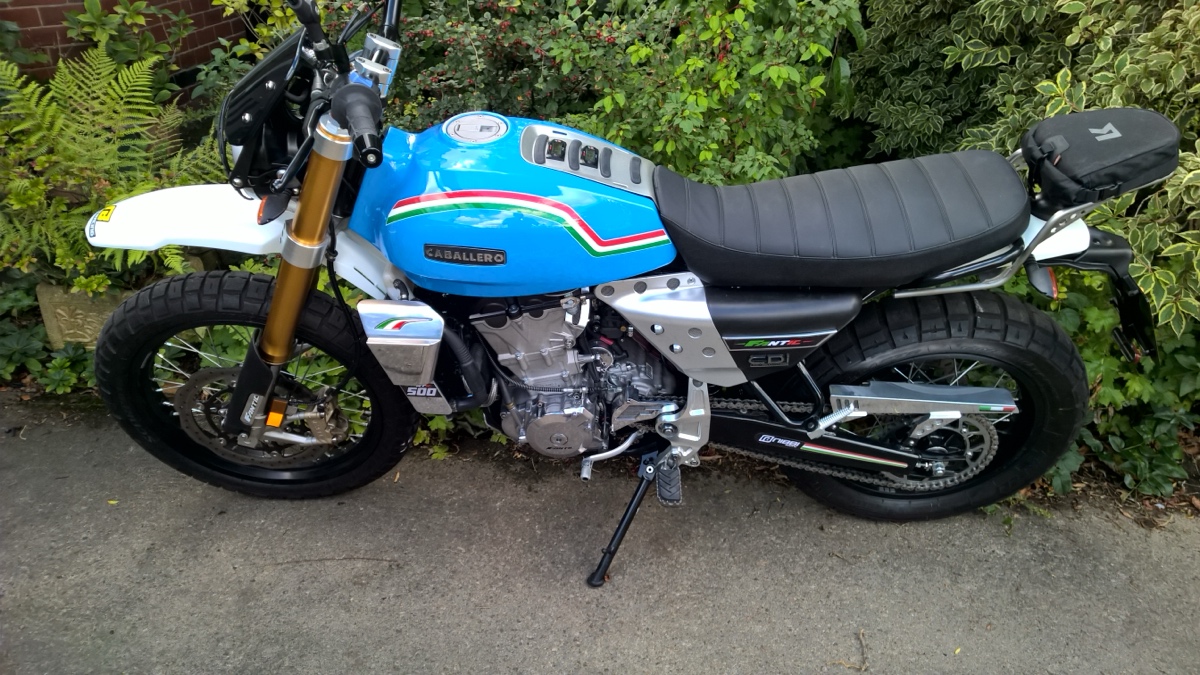
The EFI fuel pump was then removed and using the same fixings I replaced it with an aluminum blanking plate, cork gasket, and fuel tap. I also changed the red tank cover to my favorite blue and Italian stripes tank cover mimicking the 1975 Cabby.
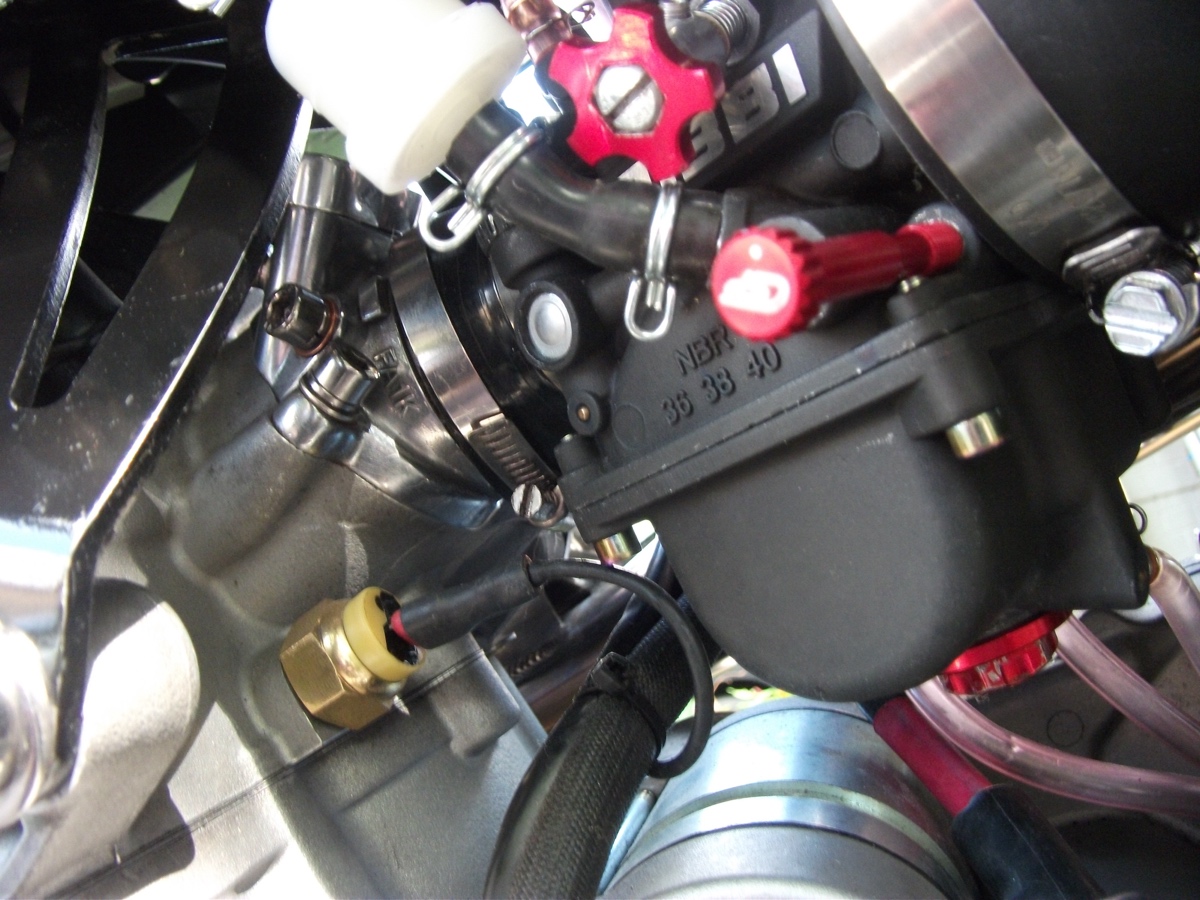
Then with the carburetor fitted, the engine started up straight away, initially using the ECU to generate the spark. Unfortunately the ECU seemed to have an RPM limiter that cut in at about 6000rpm, so I had to fit a CDI control unit, a single lobe flywheel, and a 12 pole stator.
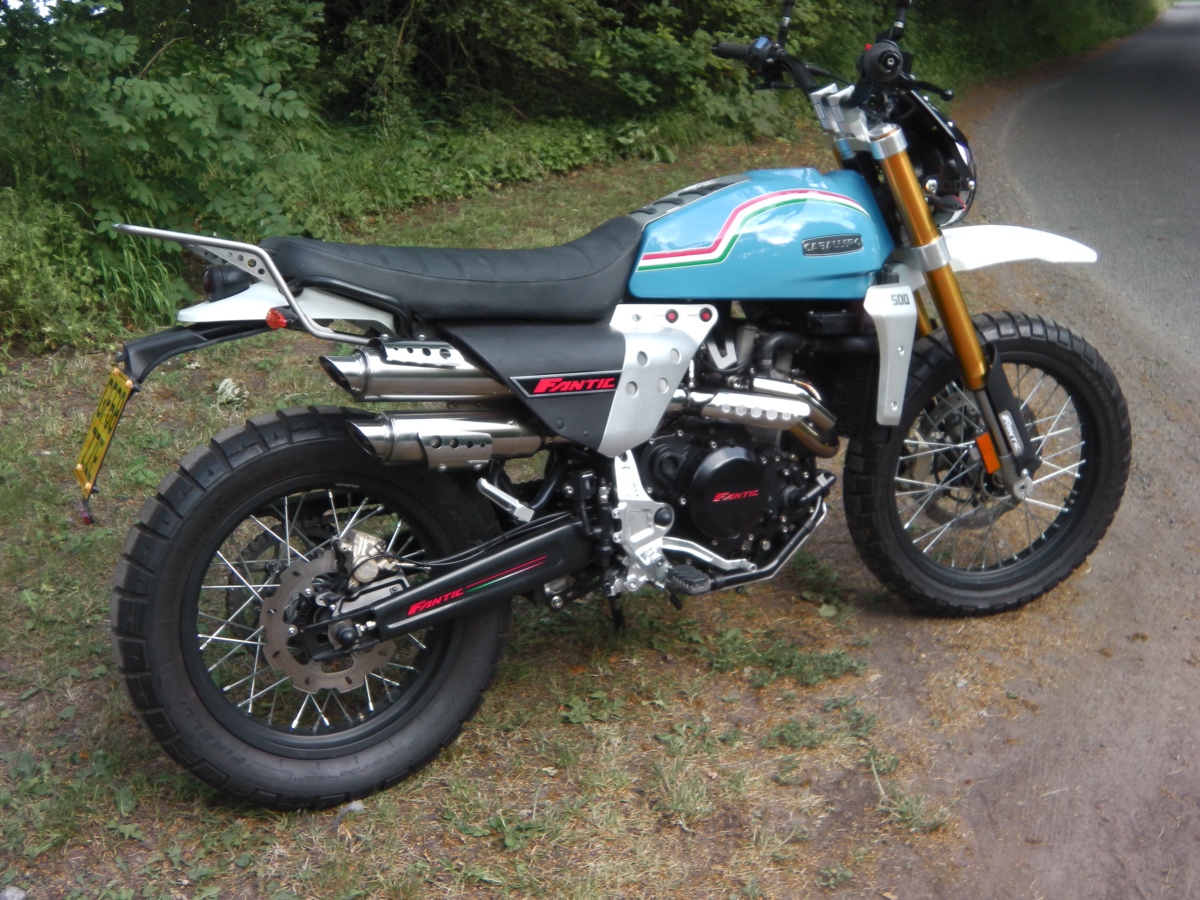
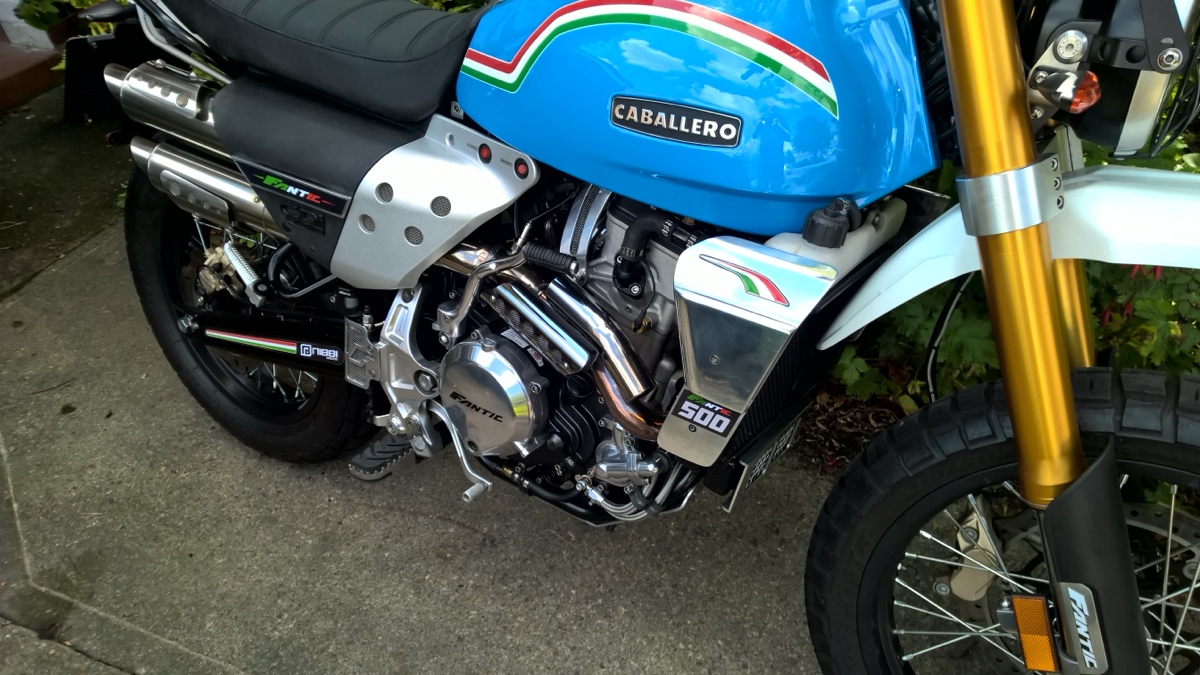
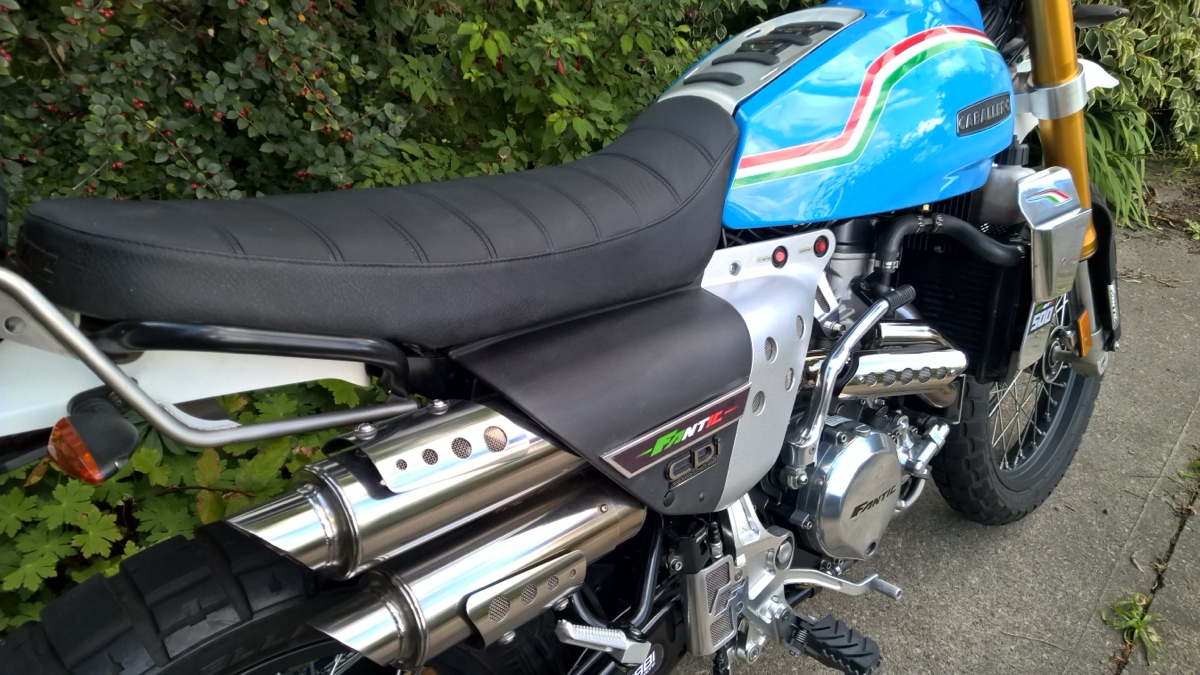
With the carburetor correctly tuned I was extremely pleased with the progress so far, and with a Rally style front fender, Berotec rear rack, and some homemade side panel badges, this is how the bike now looked.
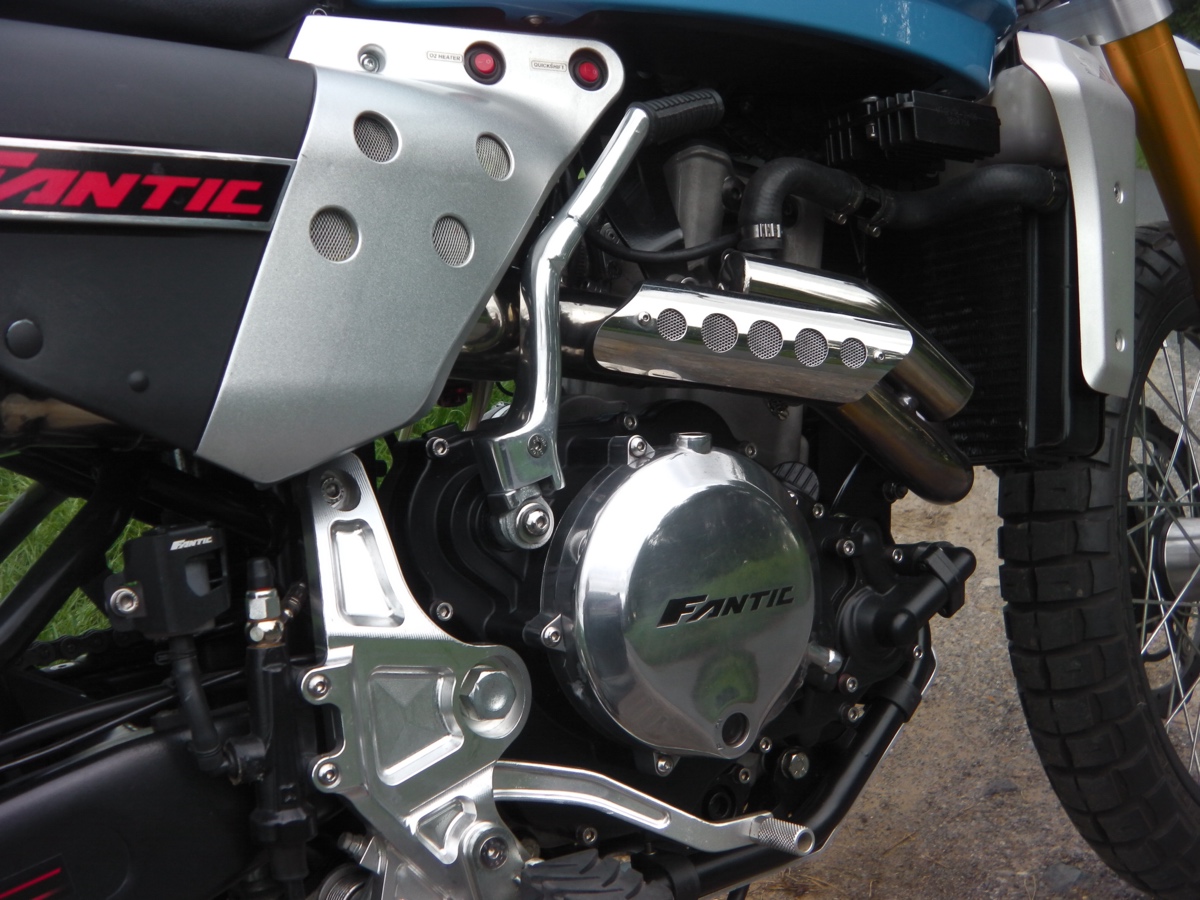
Everything had all gone to plan so I could now move on my youthhood polishing addiction and attacked the engine casings. I also added a kickstart for extra peace of mind should the battery fail.
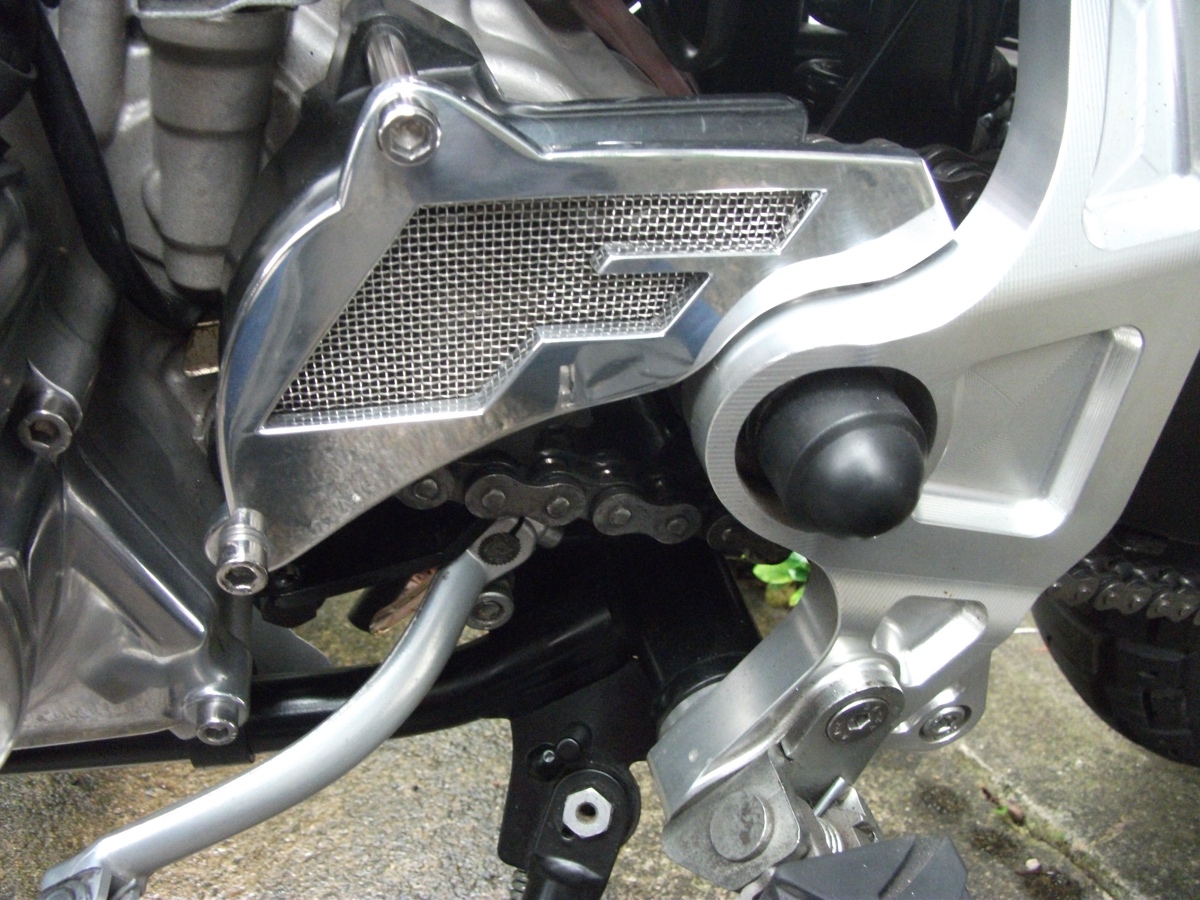
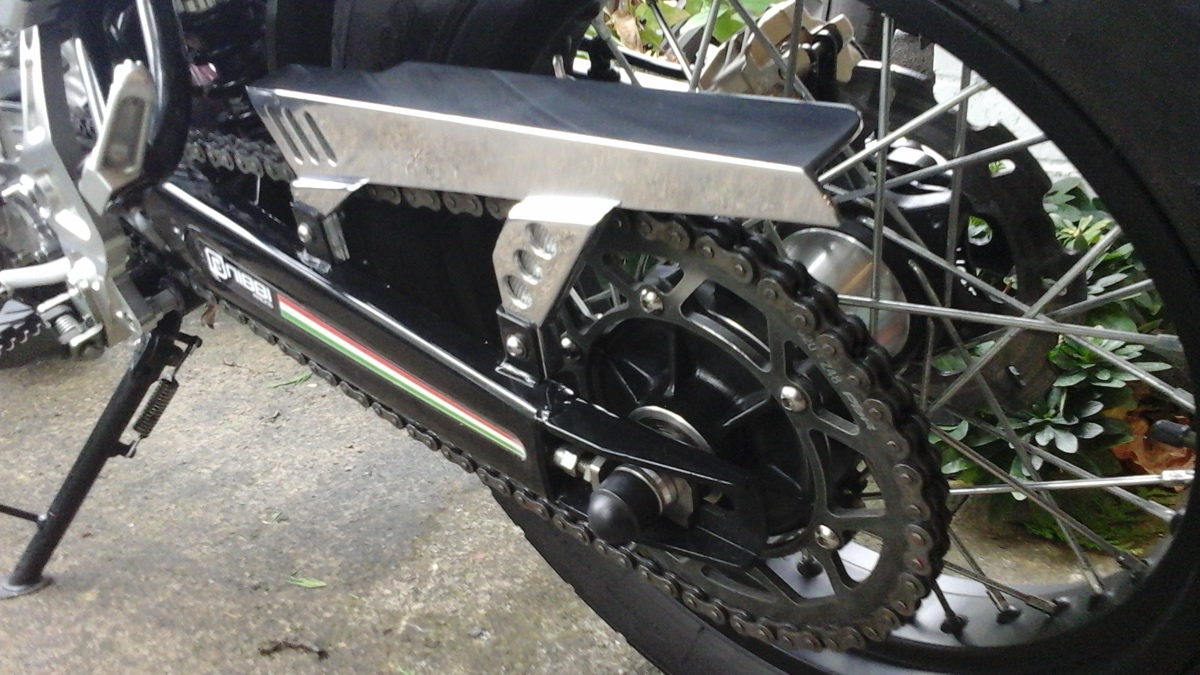
Next I made up an aluminum chain guard and front sprocket cover to replace the original plastic
versions. I also made up a fancy brake actuator guard.
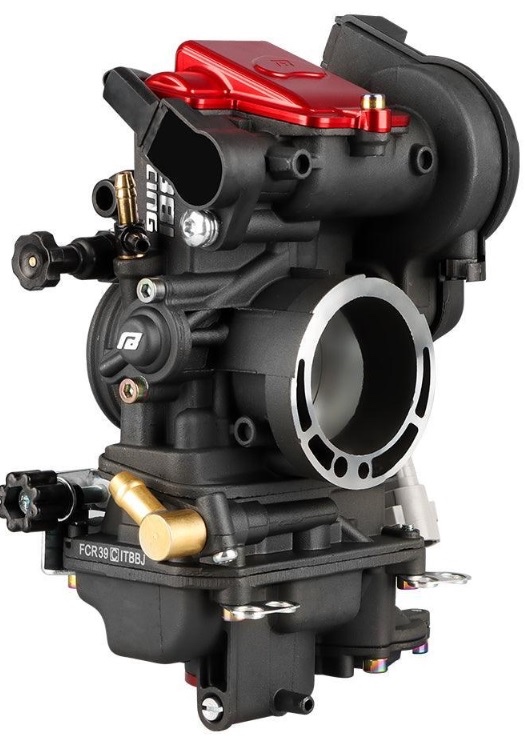
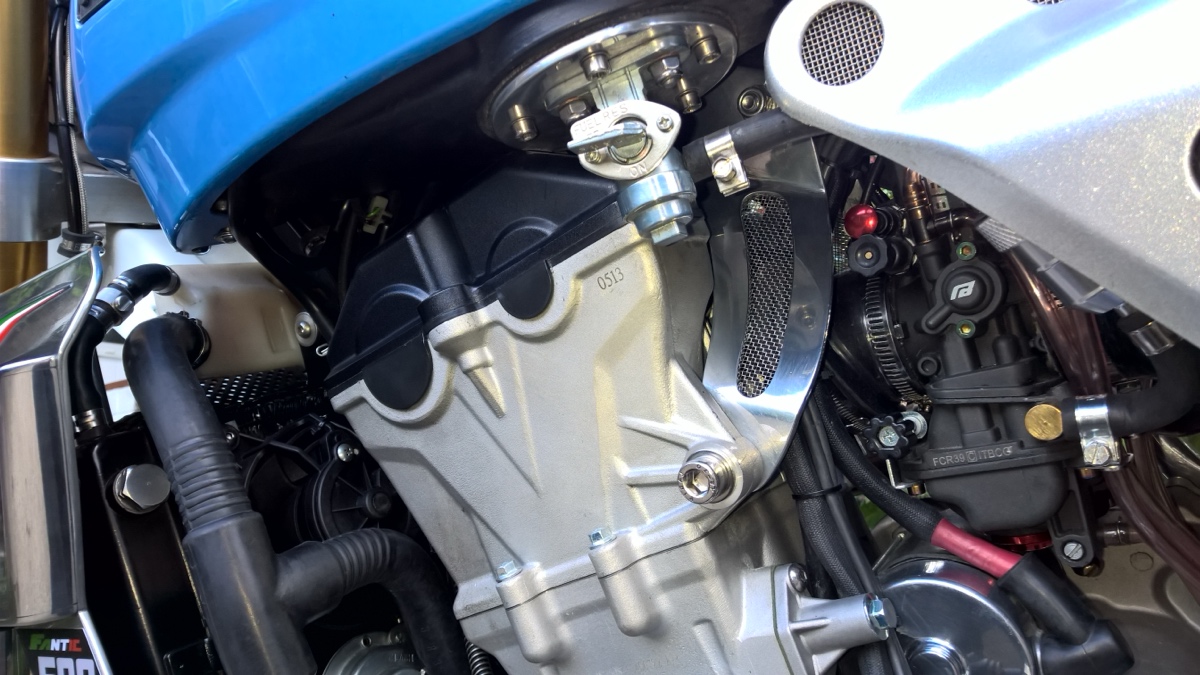
After I had fitted the PWK carburetor the question was asked: Why didn’t I go for a FCR carburetor? There wasn’t any reason I just hadn’t come across the FCR. The FCR carburetor is a high-performance, flat-slide carburetor developed by Keihin for racing and high-performance applications, most notably on four-stroke off-road motorcycles. So it would have been ideal but the £700 price tag was not justifiable. However, Nibbi had started producing FCR carburetors and with a late summer 20% discount I purchased a Nibbi FCR 39 and hoped that it would fit! With a few adaptations the FCR fitted perfectly and was easy to set up. The accelerator pump action gives amazing instant throttle response.
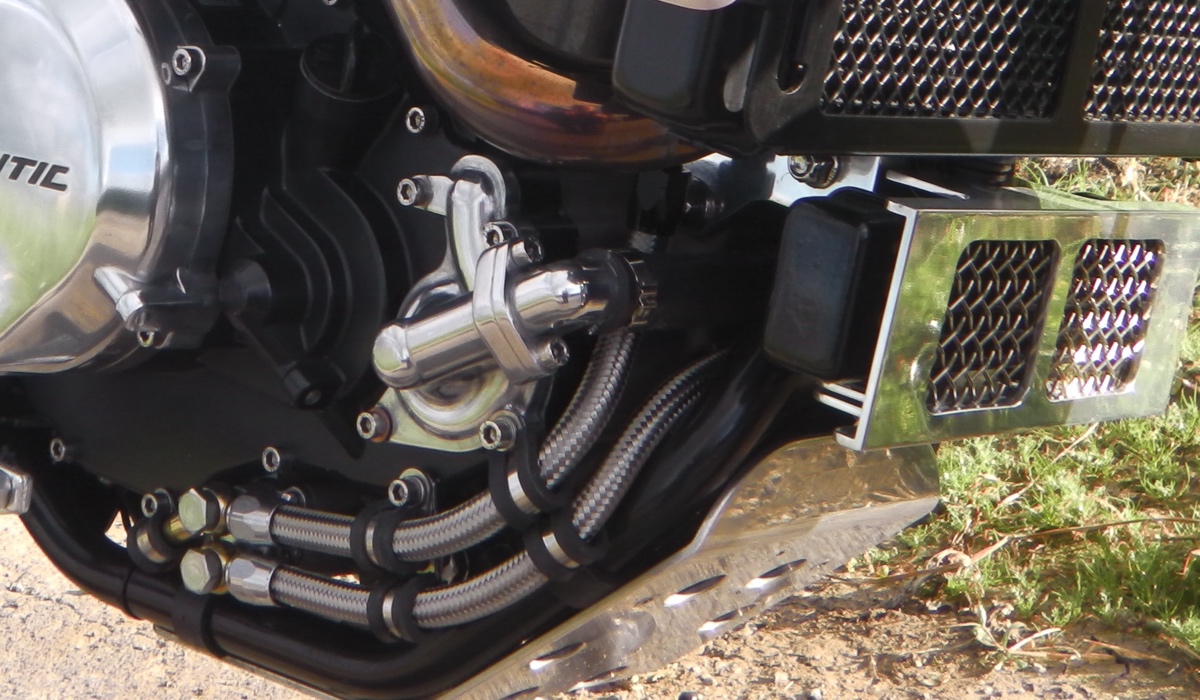
By this time I’d started to run out of ideas on what my next project would be, then someone suggested fitting an oil cooler which is what I did. I used this high quality Jagg Universal Slimline 1270 series Oil Cooler. I made an oil filter housing adapter for the oil cooler feed and return hoses and then fitted an external oil filter to replace original.
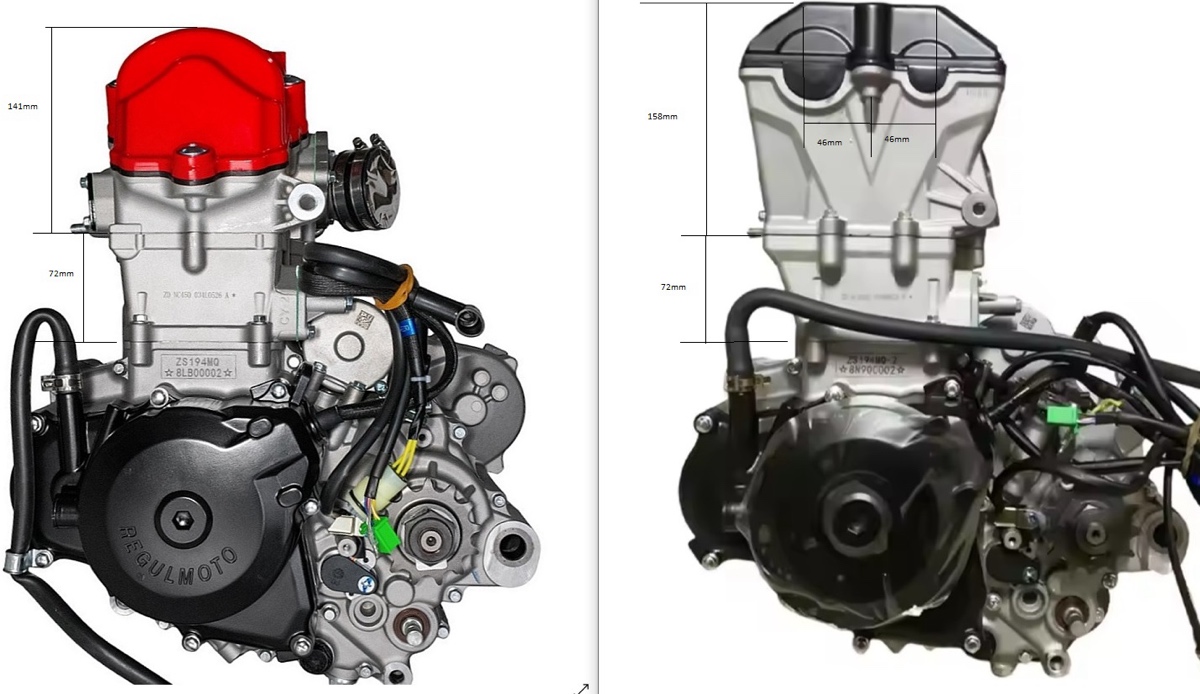
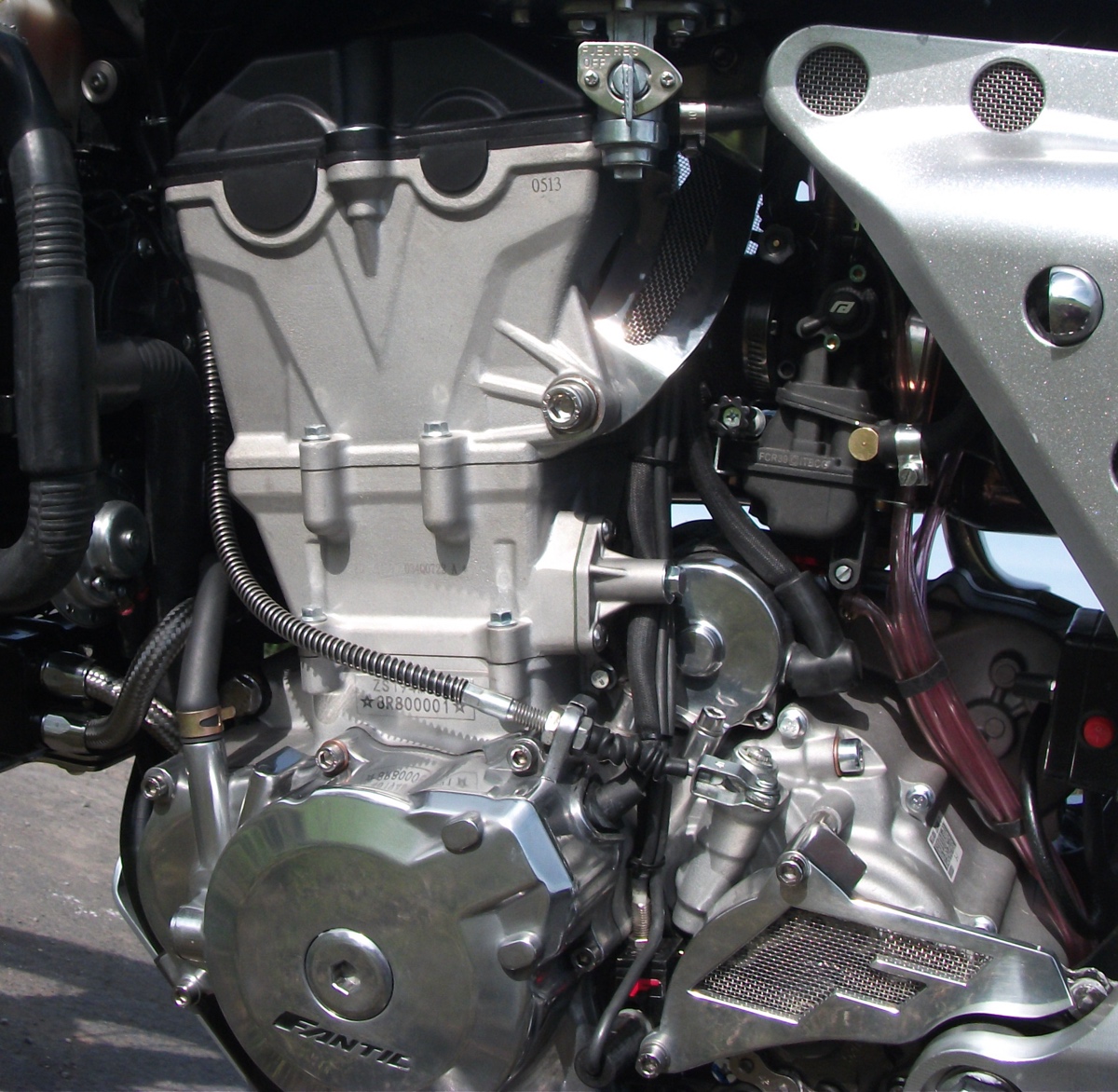
I wanted to get a bit more power from the NC450 SOHC engine so started doing some online research. I found out that Zongshen now manufacture a DOHC version of the NC450, the NC450S, which is used in the Kove Rally 450. DOHC engines provide better airflow, allowing for higher RPMs, more horsepower, and better top-end power. Comparing side by side images of the engines, the crankcases and fixings all appeared to be identical, and the only differences appeared to be the inlet port size and head height.
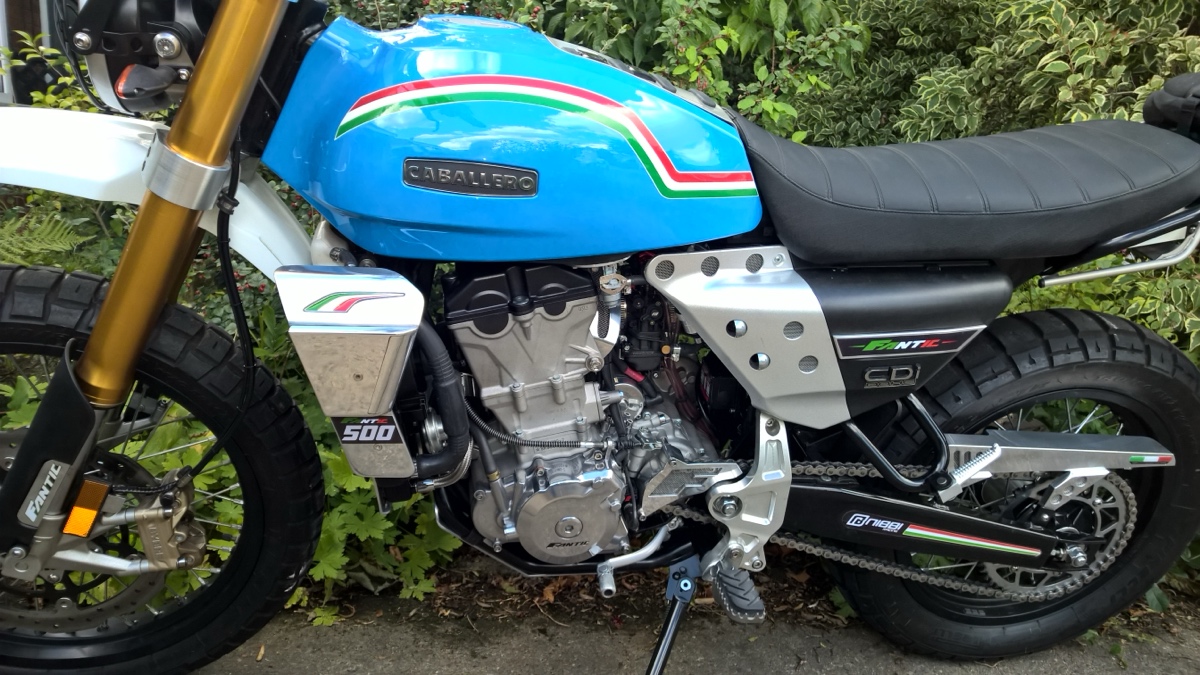
I was ready for a new challenge so took a gamble and ordered a Zongshen NC450S engine. Without a tracking number and only the name of a cargo ship to go on, I was slightly apprehensive, but after tracking the ship for three months the engine finally safely arrived. All lower engine fixings aligned perfectly; I just had to make up some rear support brackets. The fuel tap plate needed to be moved closer to the seat and the tank needed to be raised 6mm to clear cylinder head, but the main headache was the interface of the carburetor to the engine, which was quite complex to solve but I got there in the end.
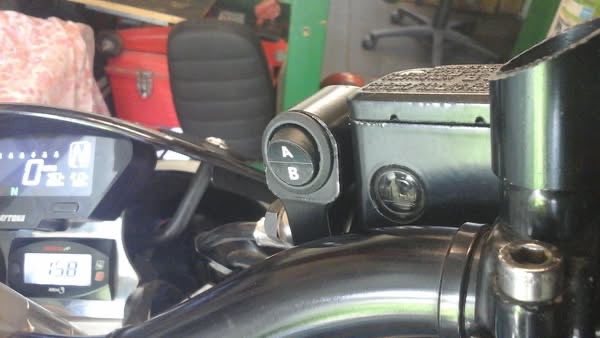
I decided to replace the CDI with an Ignitech Sparker DCCDIP programmable type to allow me to switch from a standard “A” map to an experimental “B” map.
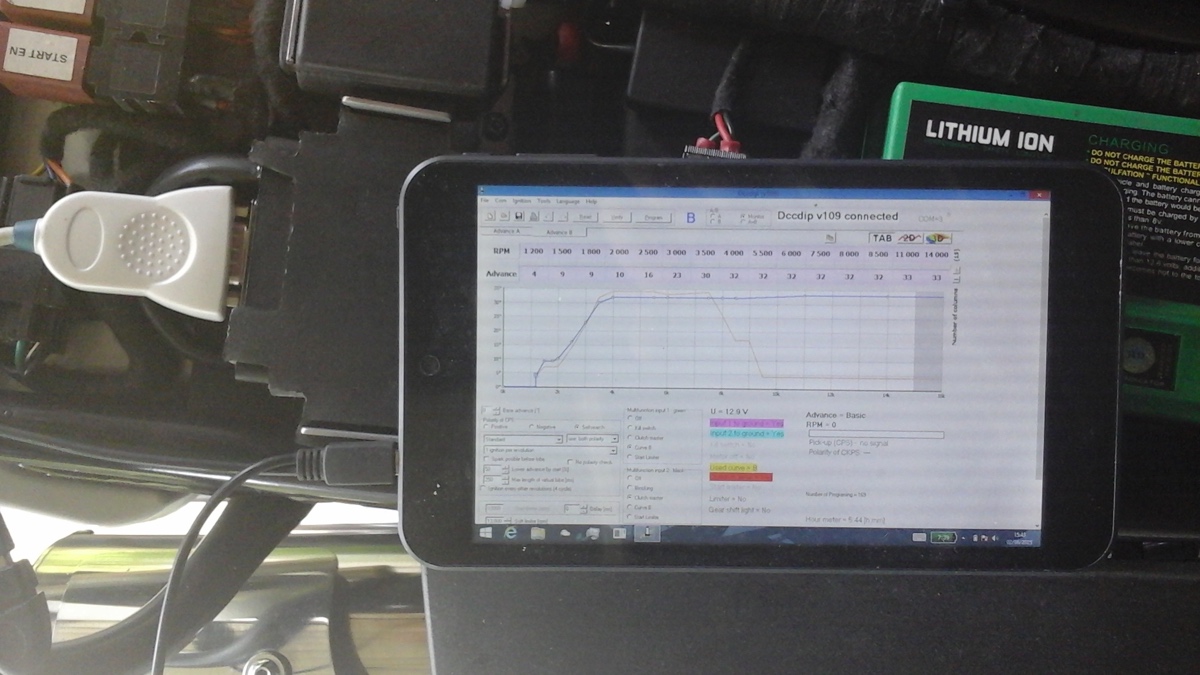
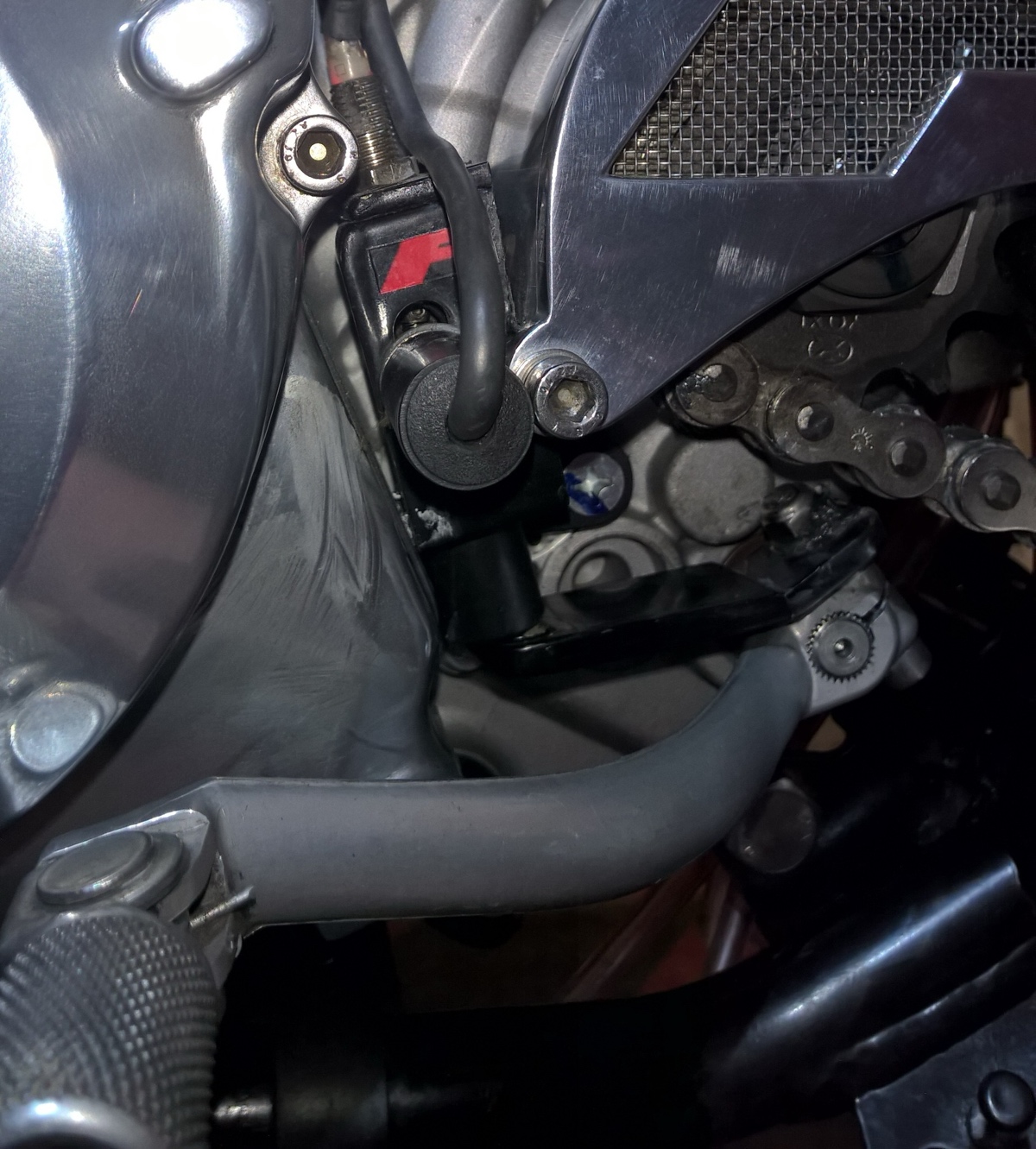
I could also now connect a previously developed quickshifter that worked fine with EFI but I hadn’t used it with a CDI.
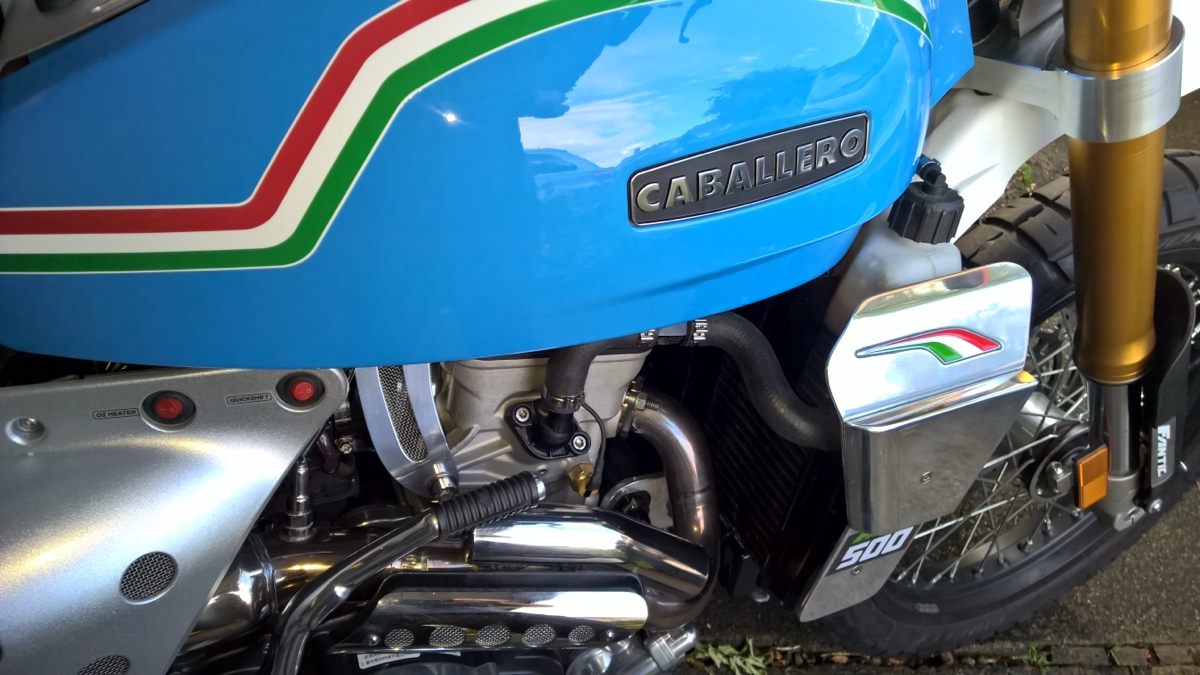
Just one final modification, I replaced the plastic radiator cheeks with polished aluminium versions that are inlayed with Italian fin badges and have cooling vents fitted.
• Can you tell us what the riding experience is like on the completed bike?
The engine is now really flexible and pulls superbly in all gears. The extra torque makes the bike now feel more at home and belong on country roads, which is what I wanted. When required the FCR carburetor accelerator pump gives instant power and makes riding exhilarating.
• Was there anything done during this build that you are particularly proud of?
I was particularly proud when the PWK carburetor was fitted and the engine fired up first time under CDI power with the ECU removed, and that I no longer needed worry about intermittent engine cut outs and OBD engine warnings.
• Is there anyone you’d like to thank?
I would like to thank all those in the Fantic Caballero Facebook groups for their feedback and
encouragement to tackle projects, and also to my partner Karen for her patience and understanding.


Egad!
That’s a lot of work.
Yes, but pleased with result. The problem is knowing when to stop!!!!.
Congratulations
Cheers Loic, thanks for your support