
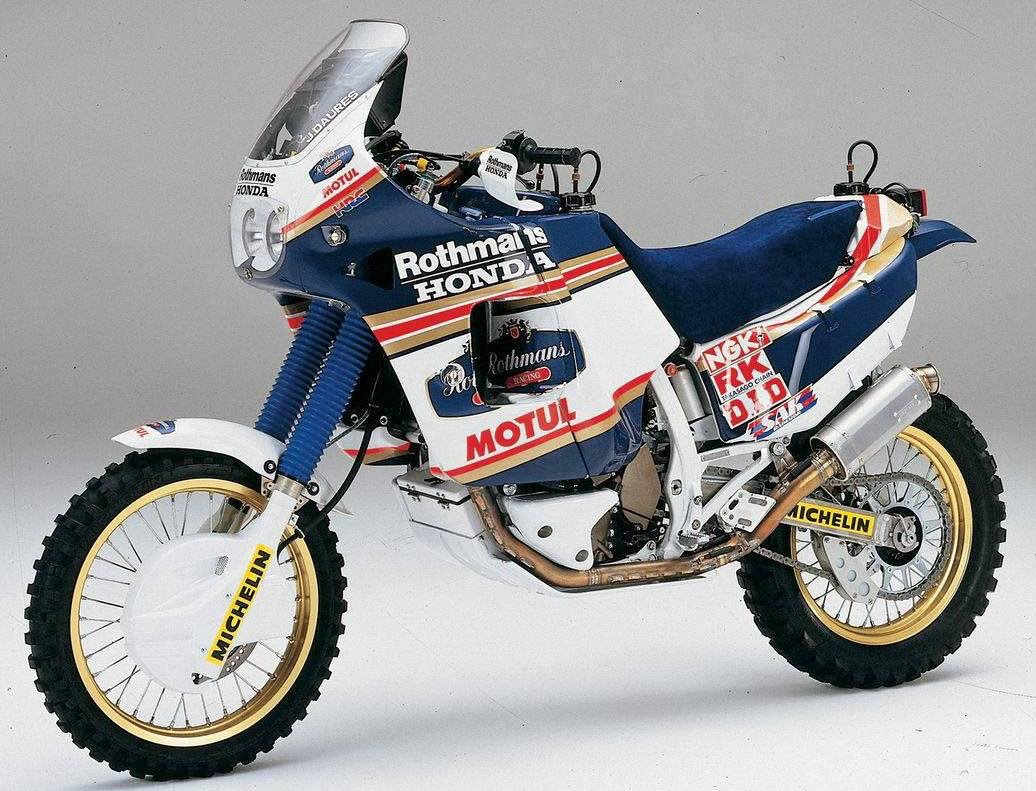
 Honda’s NXR750: Queen of the Desert…
Few motorcycles in history can claim to have dominated the most brutal race on earth the way Honda’s NXR750 did. Built specifically to conquer the Paris-Dakar Rally, the NXR750 wasn’t a modified production bike or a marketing exercise — it was a purpose-built rally weapon that became one of the most successful desert racing motorcycles ever created.
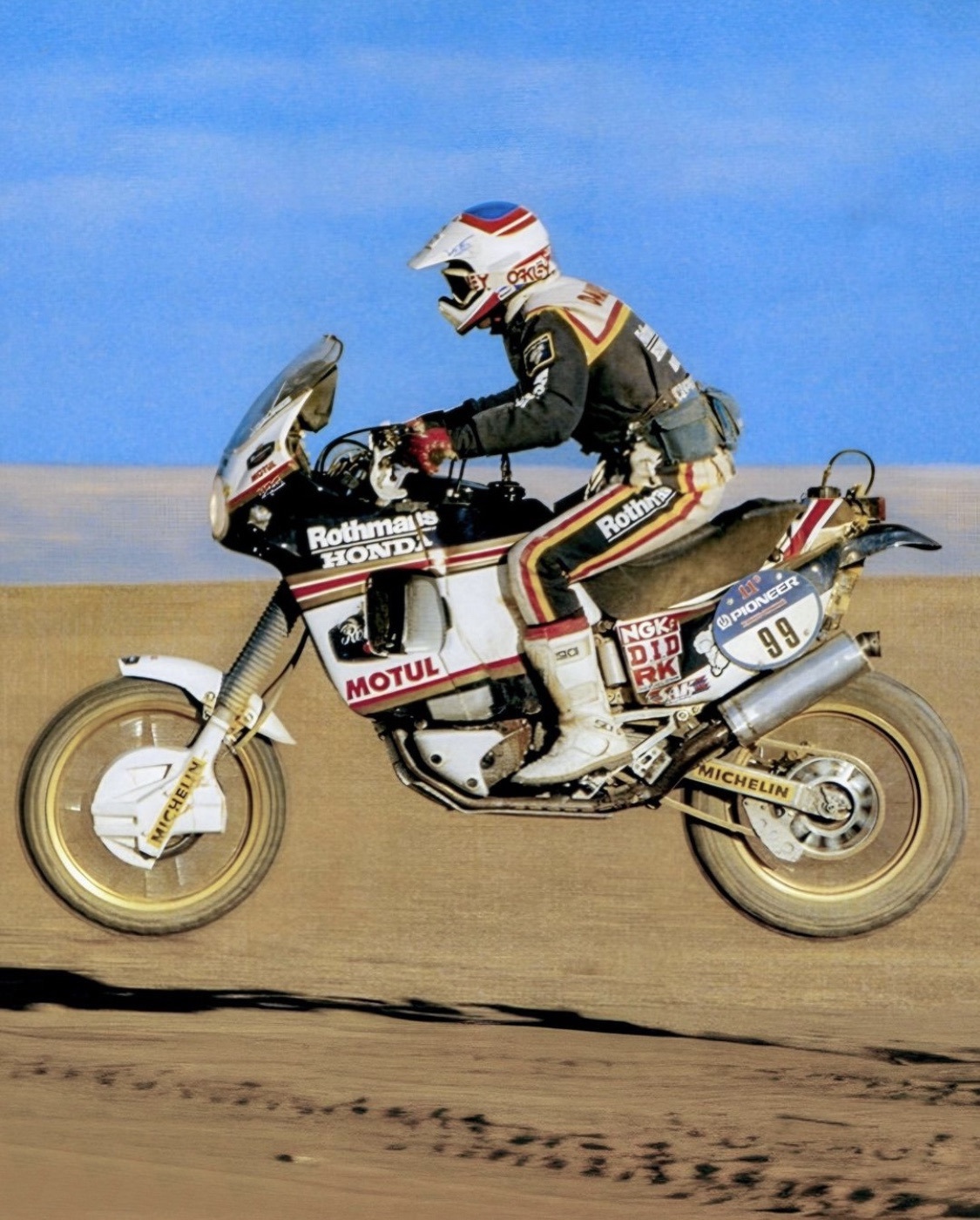 Between 1986 and 1989, the Honda NXR750 won four consecutive Paris-Dakar Rallies, establishing Honda as the undisputed king of rally raid racing and laying the groundwork for the Africa Twin series that would follow. Rugged, powerful, and astonishingly reliable, the NXR750 represents the moment when Honda mastered long-distance desert competition.
With the 2026 Dakar Rally fast approaching, we decided to take a look back at this legendary rally bike.
NXR750: Model Overview
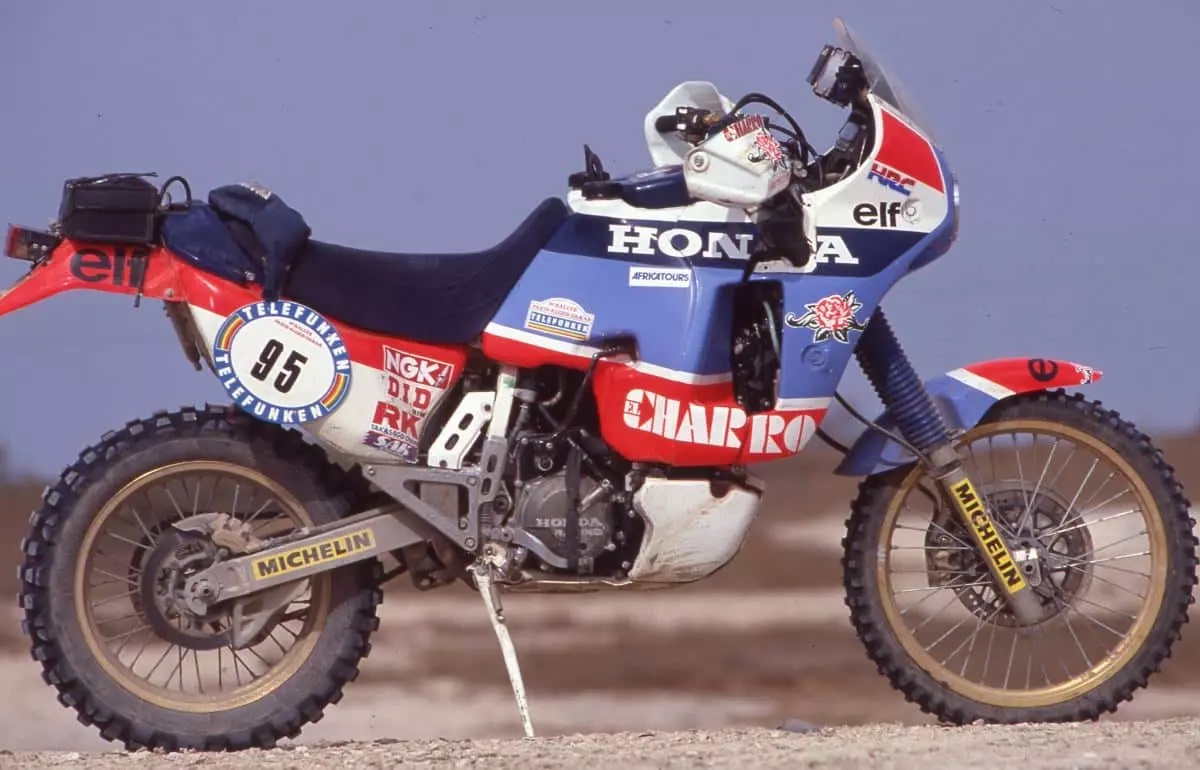 By the mid-1980s, the Paris–Dakar Rally had evolved into an endurance race of near-mythical difficulty. Covering thousands of miles across Europe and Africa, the event demanded motorcycles that could survive weeks of abuse, including deep sand, rocky pistes, extreme heat, and relentless mechanical stress. Honda’s response was the NXR750 (“New X-Rally”) — a factory prototype designed from the ground up for rally competition.
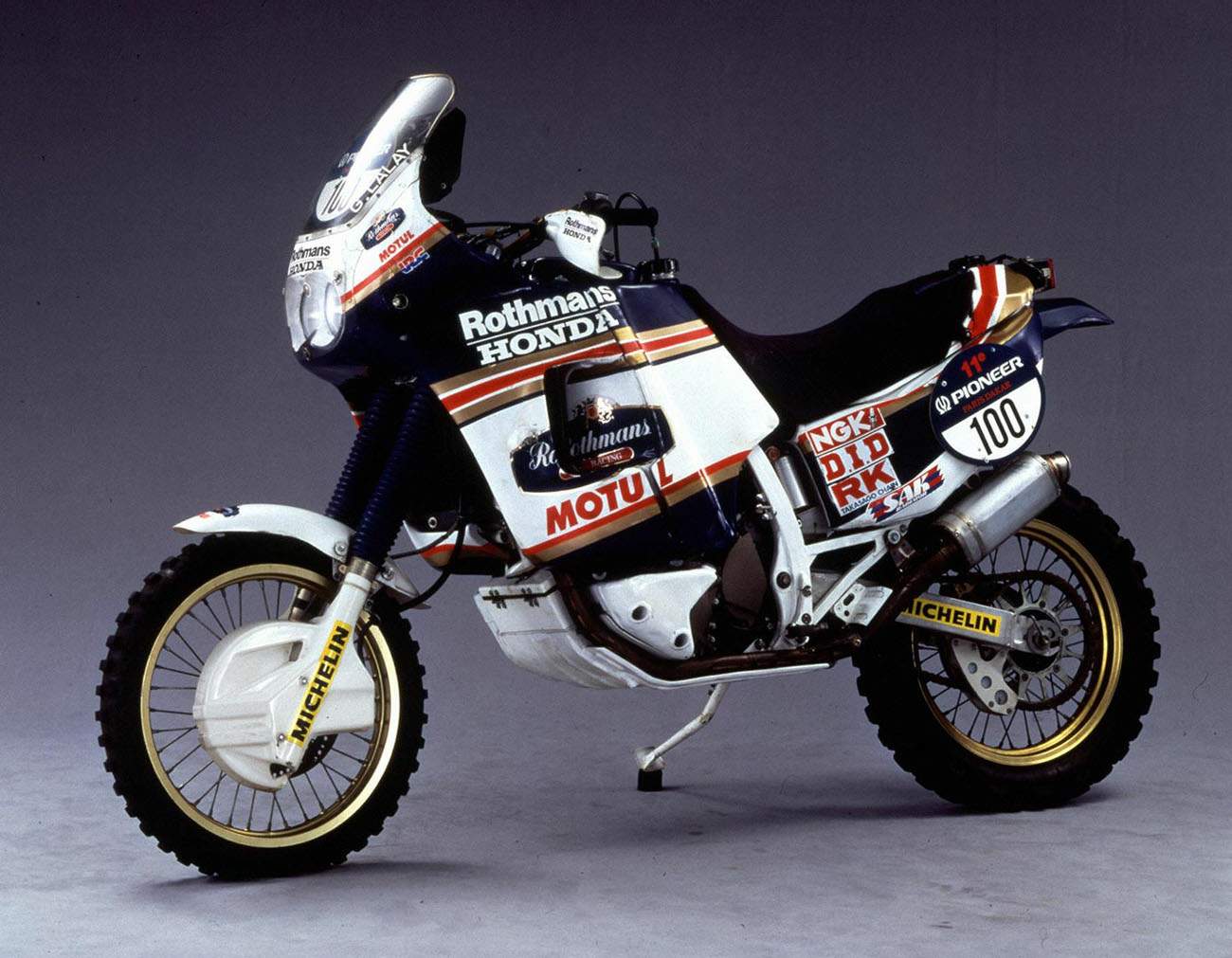 Defining characteristics of this purpose-built Paris–Dakar prototype included a liquid-cooled V-twin engine optimized for exceptional reliability over sheer peak performance, a chassis designed for stability at high speed across desert terrain, and massive fuel capacity for marathon stages.
Unlike many competitors, Honda focused less on raw horsepower and more on balance, durability, and rider survivability — a philosophy that paid off spectacularly.
NXR750: Engine & Performance
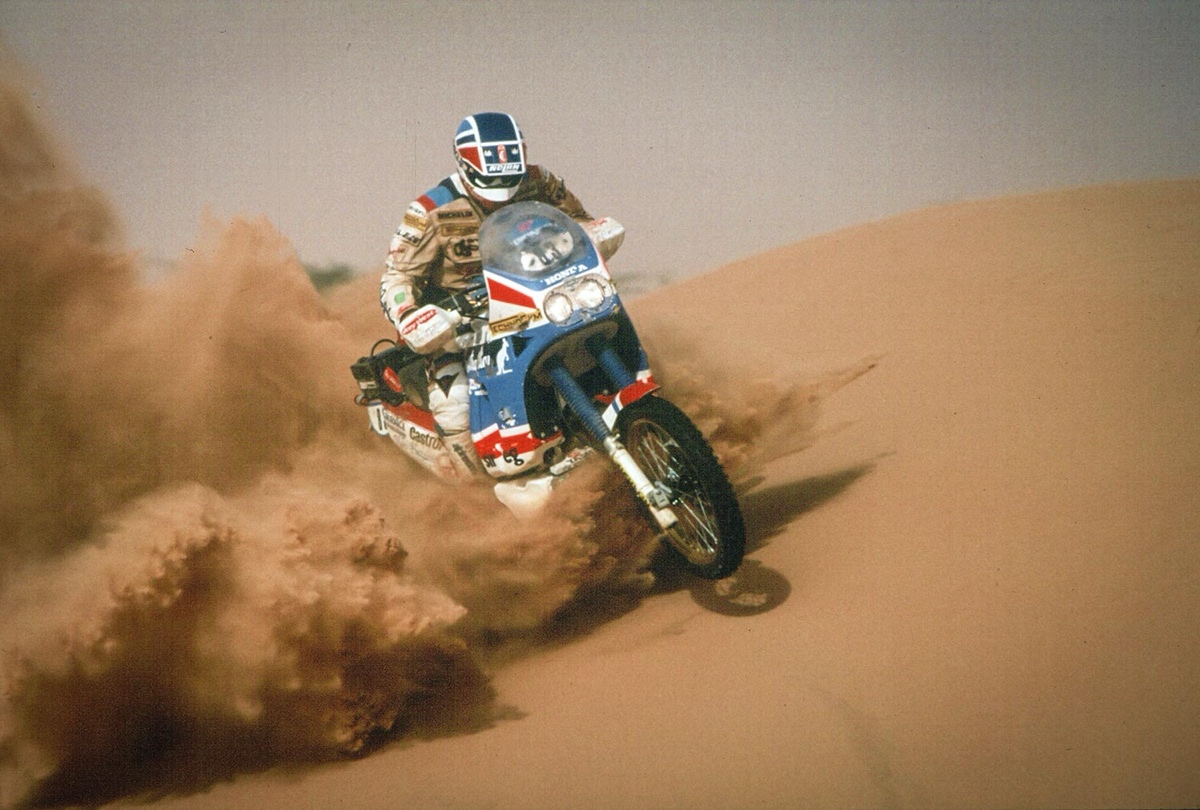
At the heart of the NXR750 lies a liquid-cooled 779cc 52-degree V-twin, engineered specifically for long-distance desert racing. While specs varied from year to year, typical performance characteristics included the following:
- ~70 horsepower (race-tuned, endurance-focused)
- Broad, torque-rich powerband
- Exceptional heat management in extreme climates
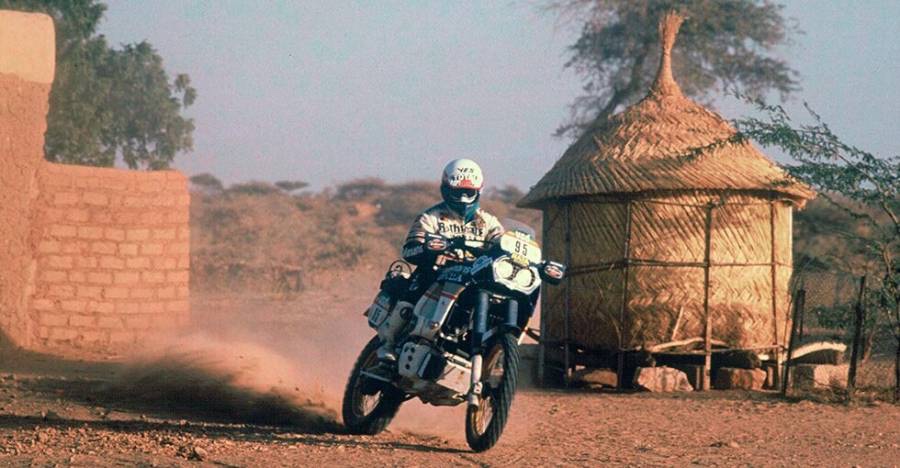 Rather than chasing maximum output, Honda tuned the engine for smooth, predictable power delivery that could be sustained for hours at high speed. This approach reduced rider fatigue, minimized mechanical stress, and allowed the bike to maintain relentless forward momentum across dunes and hardpack alike.
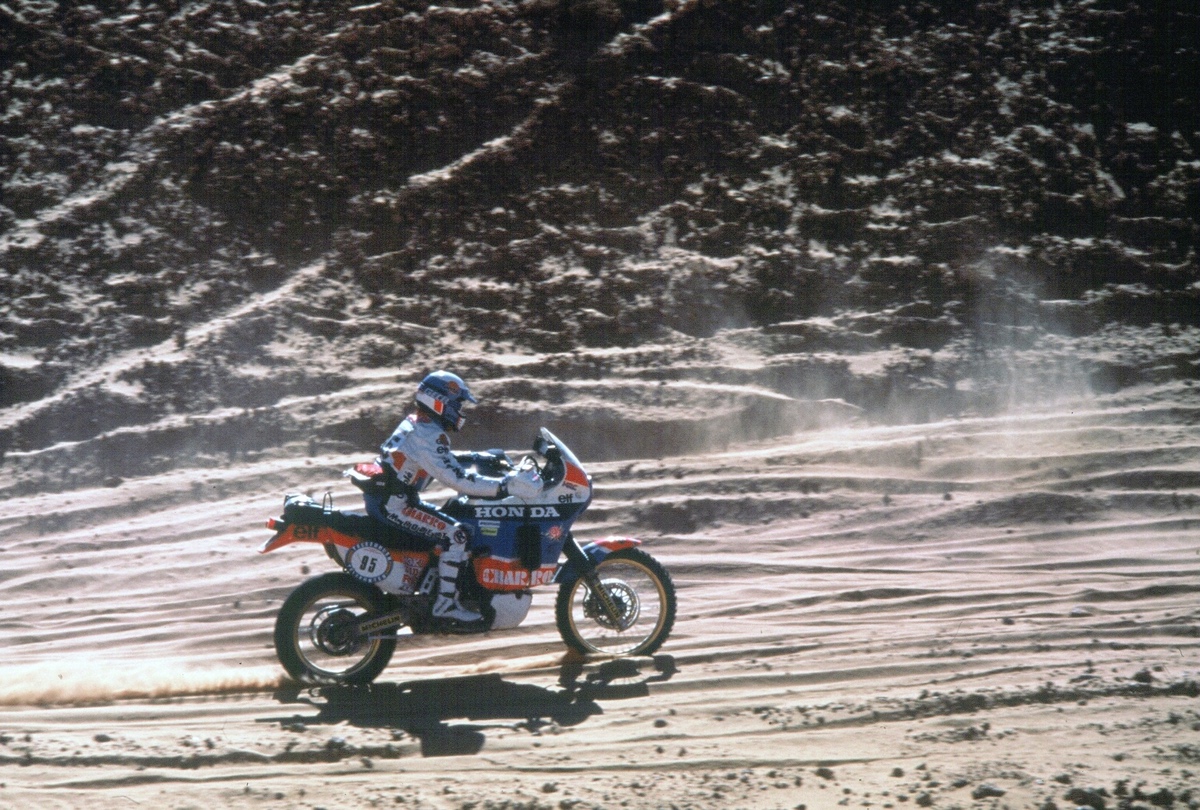 The V-twin layout also provided excellent balance and a relatively low center of gravity — critical for stability in sand at speed.
NXR750: Handling & Chassis
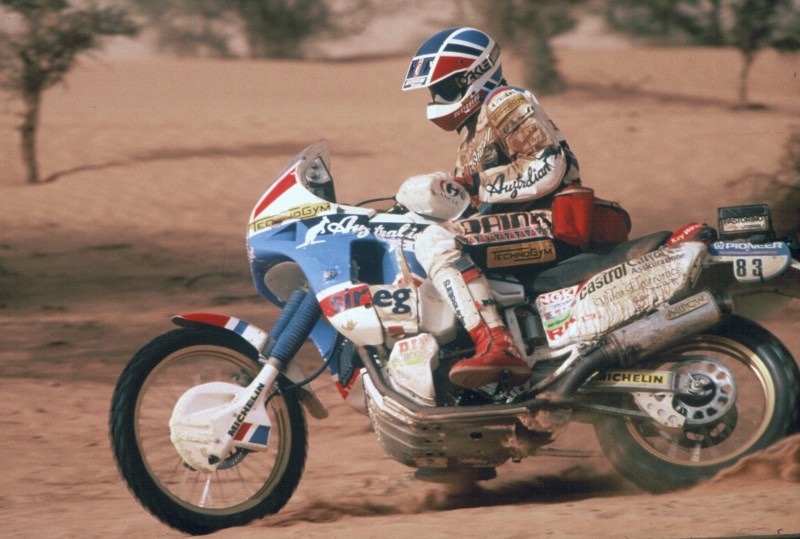 The NXR750’s chassis was a masterclass in rally engineering. Honda built a lightweight yet incredibly strong steel frame designed to handle massive fuel loads while remaining stable at triple-digit speeds in the desert. Chassis highlights:
- Long-travel suspension front and rear
- Rally-specific geometry for straight-line stability
- Reinforced subframes to support fuel tanks and luggage
- Steering geometry optimized for sand and high-speed pistes
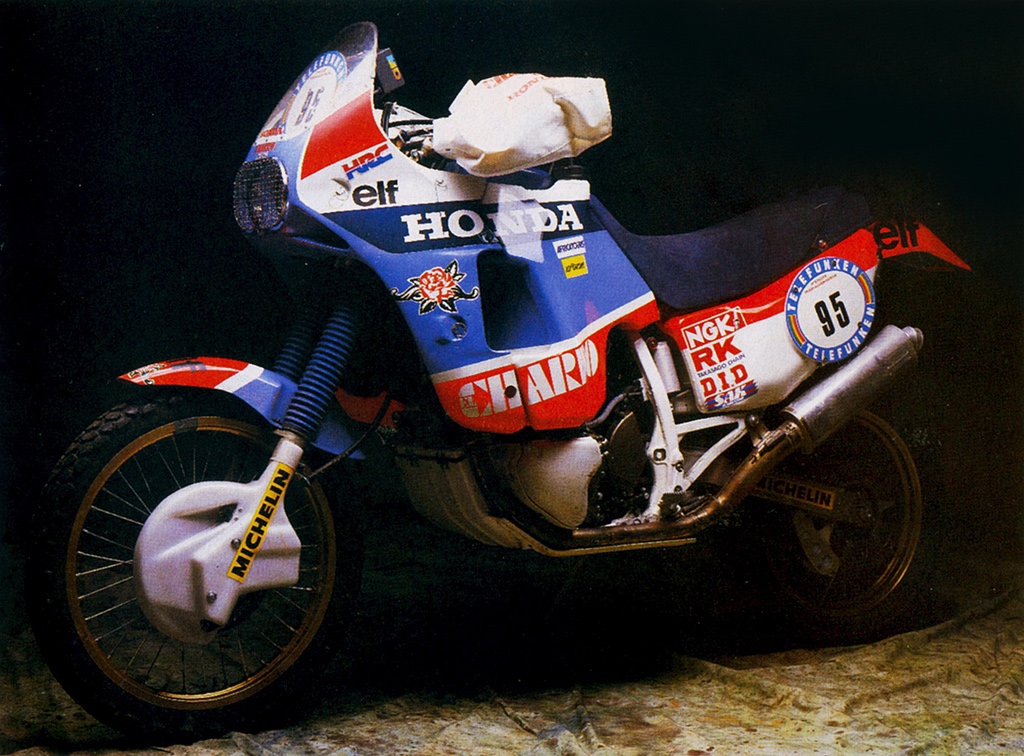 Suspension was tuned to allow the bike to float over rough terrain instead of deflecting or pitching. In deep sand, the NXR tracked straight and true — a key advantage in Dakar conditions.
Fuel Capacity & Rally Equipment
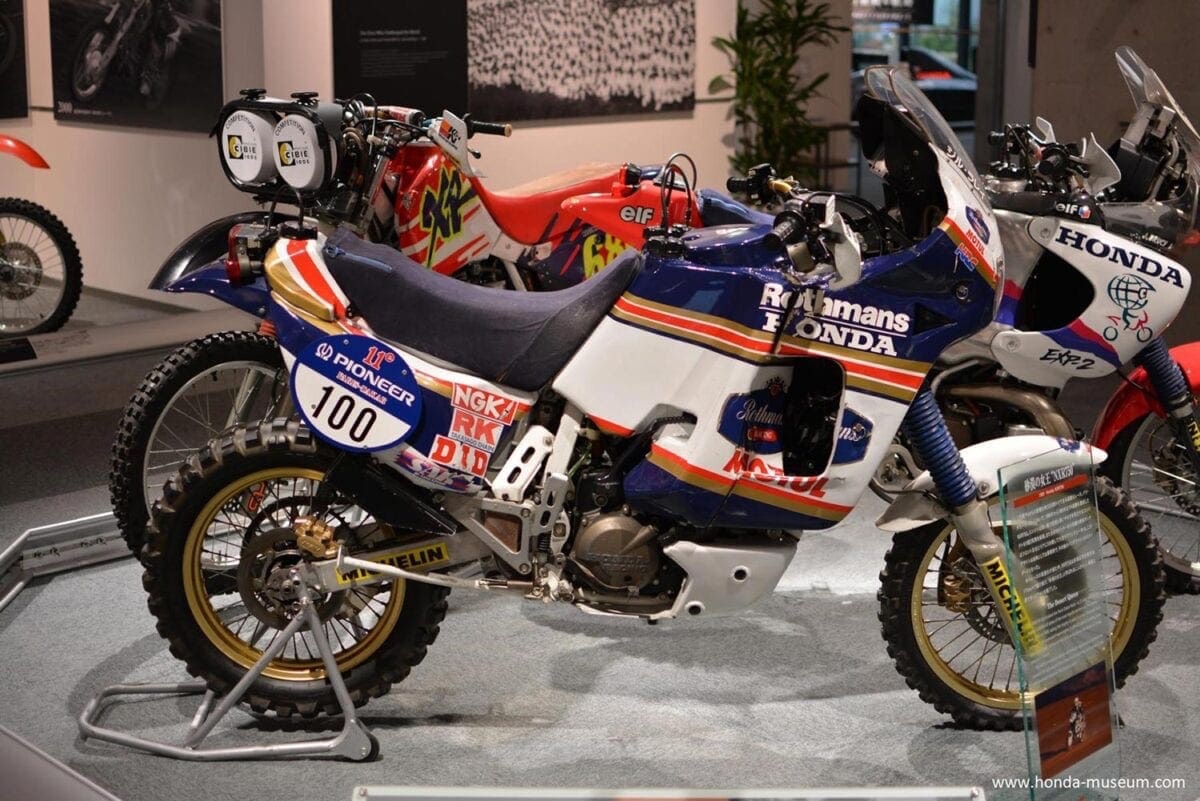 Key features included:
- Multiple fuel tanks integrated into the chassis
- Total fuel capacity exceeding 45 liters (varied by year/stage)
- Fairing-mounted navigation equipment
- Roadbook holder, trip meters, and lighting systems
- Reinforced wheels and heavy-duty braking components
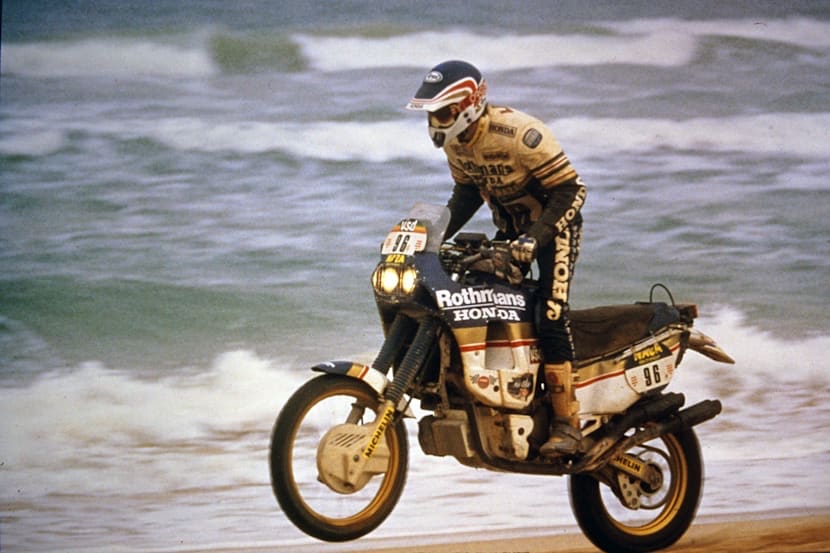 This setup allowed riders to tackle stages lasting hundreds of miles without refueling — often in terrain where support vehicles were hours or days away.
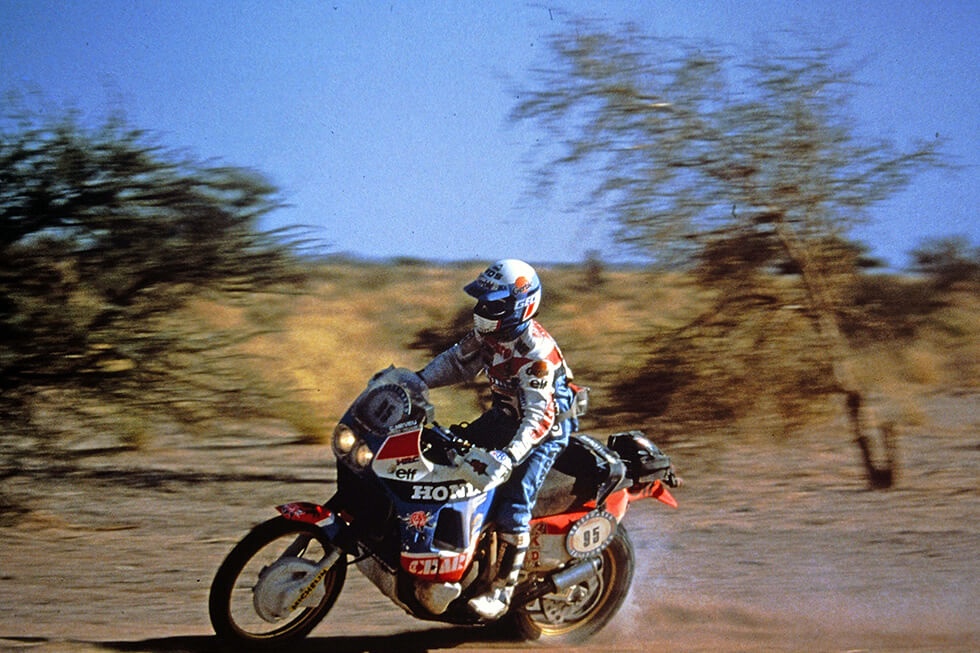 Function dictated form on the NXR750, and the result was a motorcycle that looked every bit the desert predator it was. Visual hallmarks including a tall rally fairing with wind protection, large integrated fuel tanks forming the bike’s silhouette, high-mounted exhausts, minimal bodywork outside of functional needs, and iconic Rothmans or HRC liveries.
The NXR750’s appearance became the blueprint for modern rally bikes and heavily influenced the look of production adventure motorcycles for decades to come.
Why the NXR750 Was So Dominant…
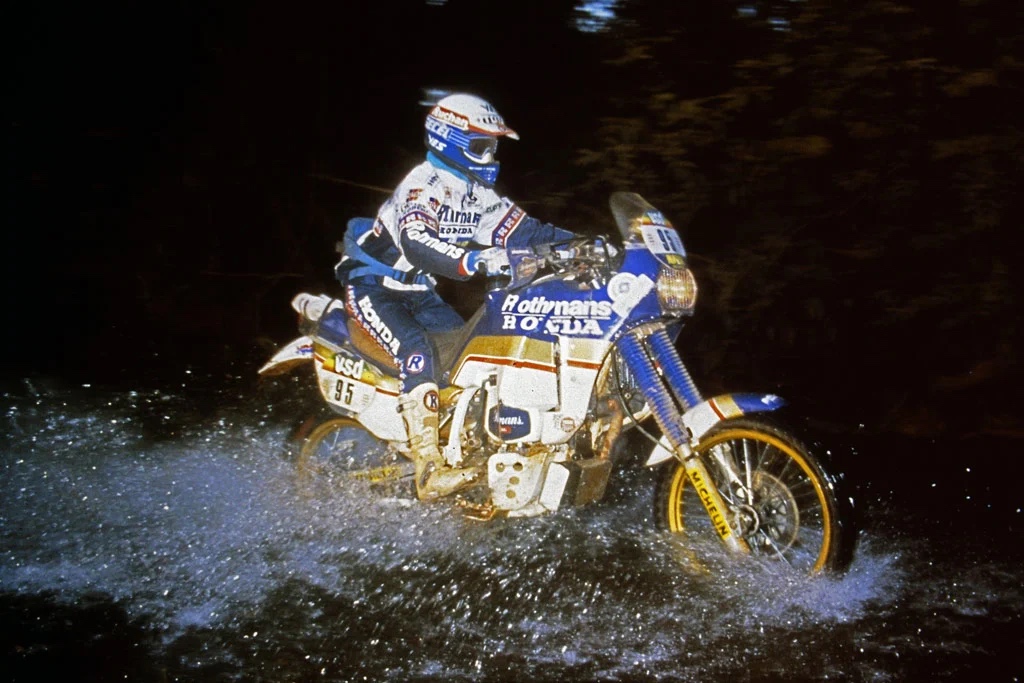 The NXR750 succeeded because it excelled in every area that mattered in rally racing:
- Exceptional reliability across thousands of miles
- Stable handling in deep sand and at high speed
- Manageable power delivery that reduced rider fatigue
- Robust cooling and mechanical durability
- Rider-focused ergonomics for multi-week competition
While other bikes might have been lighter or more powerful on paper, the NXR750 finished races — and finished first. Ridden by elite rally specialists such as Cyril Neveu and Edi Orioli, the NXR750 became synonymous with Dakar success. Its dominance forced competitors to rethink their designs and pushed rally technology forward as a whole.
From NXR750 to Africa Twin…
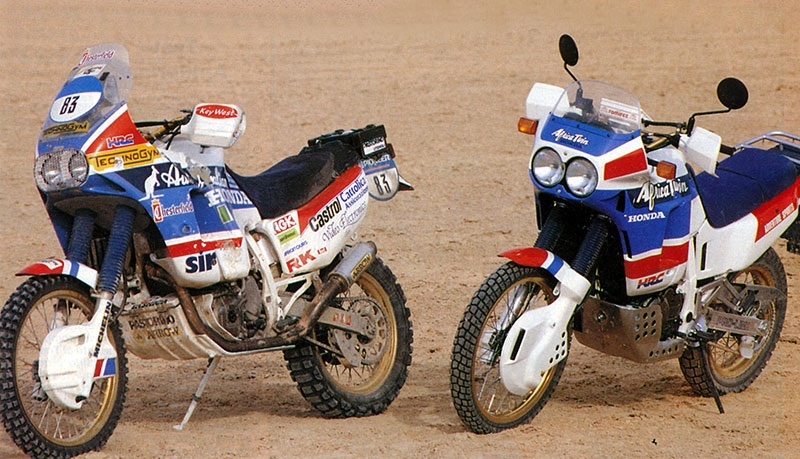 The NXR750 directly inspired Honda’s production adventure bikes, most notably the XRV650 and XRV750 Africa Twin. Technologies and concepts that transferred to production models:
- V-twin engine architecture
- Long-travel suspension philosophy
- Large fuel tanks and wind protection
- Emphasis on reliability and real-world usability
While no production Africa Twin was ever as extreme as the NXR750, the spirit of the Dakar racer lives on in every Africa Twin that followed.
Honda NXR750 Specs
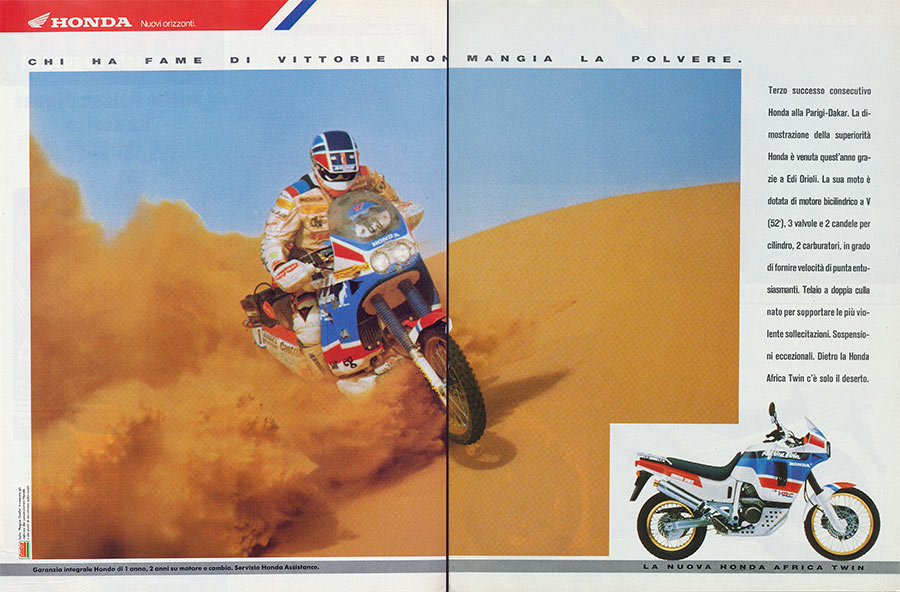
Exact specifications varied year to year as Honda refined the platform for evolving rally regulations, but here’s a general look at the NXR750’s specifications. Farther down, we have more year-by-year specifics.
- Engine: 779cc liquid-cooled V-twin
- Power: ~70 hp (race spec)
- Transmission: 5-speed
- Cooling: Liquid
- Fuel Capacity: 45+ liters (varies by configuration)
- Suspension: Long-travel rally suspension
- Brakes: Dual front disc / rear disc
- Purpose: Factory Paris–Dakar Rally prototype
NXR750: Year-by-Year
The Honda NXR program ran in several distinct phases. While the bikes are often collectively known as the “NXR750,” early machines were not yet 750cc, and later ones differed substantially from season to season.
1986: NXR630 (First True Prototype)
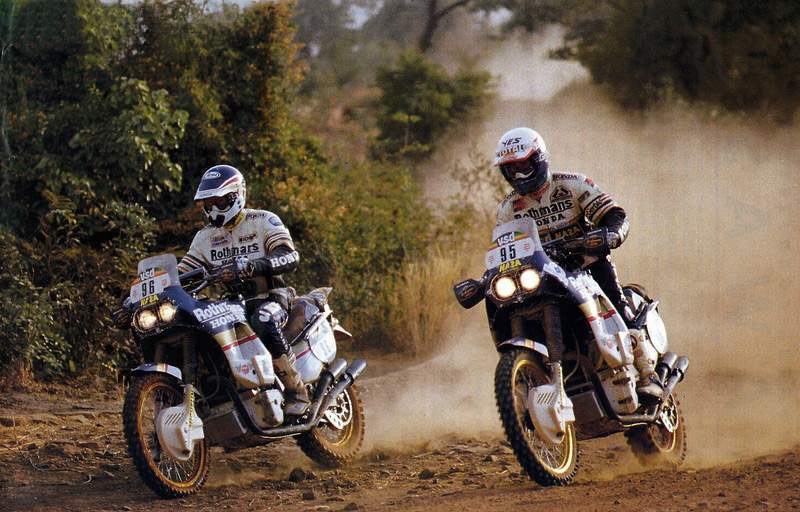 Honda’s first purpose-built Dakar prototype, replacing their modified XL/XR-based machines.
- Engine: ~628cc liquid-cooled SOHC V-twin (52°)
- Valvetrain: 3 valves per cylinder
- Power: ~60–65 hp (estimated)
- Transmission: 5-speed
- Cooling: Dual radiators
- Fuel Capacity: ~45–50 liters (~12–13 gal)
- Frame: Aluminum twin-spar (early prototype form)
- Front Suspension: Long-travel Showa forks (~300mm)
- Rear Suspension: Pro-Link monoshock
- Front Wheel: 21 in
- Rear Wheel: 18 in
- Weight: ~195–205 kg rally-ready (430–450 lb, est.)
Notes
- This bike proved the V-twin rally concept.
- Much lighter and more powerful than European singles.
- Reliability was strong, but Honda wanted more speed.
1987: NXR680
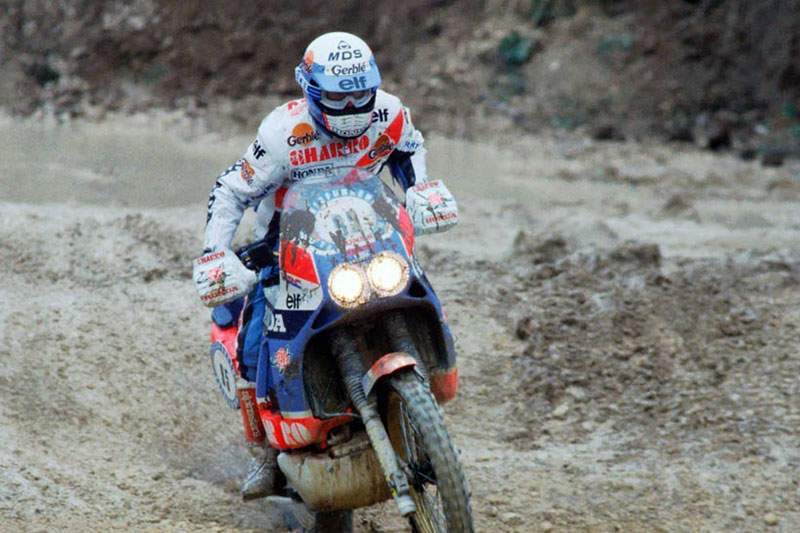 Honda increased displacement and refined the chassis after learning from 1986.
- Engine: ~680cc liquid-cooled V-twin
- Power: ~65–68 hp
- Fuel Capacity: ~50 liters
- Frame: Revised aluminum twin-spar
- Suspension: Improved Showa units with better heat control
- Navigation: Early integrated rally nav tower
- Weight: Slightly reduced despite larger engine
Notes
- Improved high-speed desert stability.
- Better cooling and long-distance reliability.
- Set the stage for full 750cc dominance.
1988: NXR750 (Definitive Dakar Weapon)
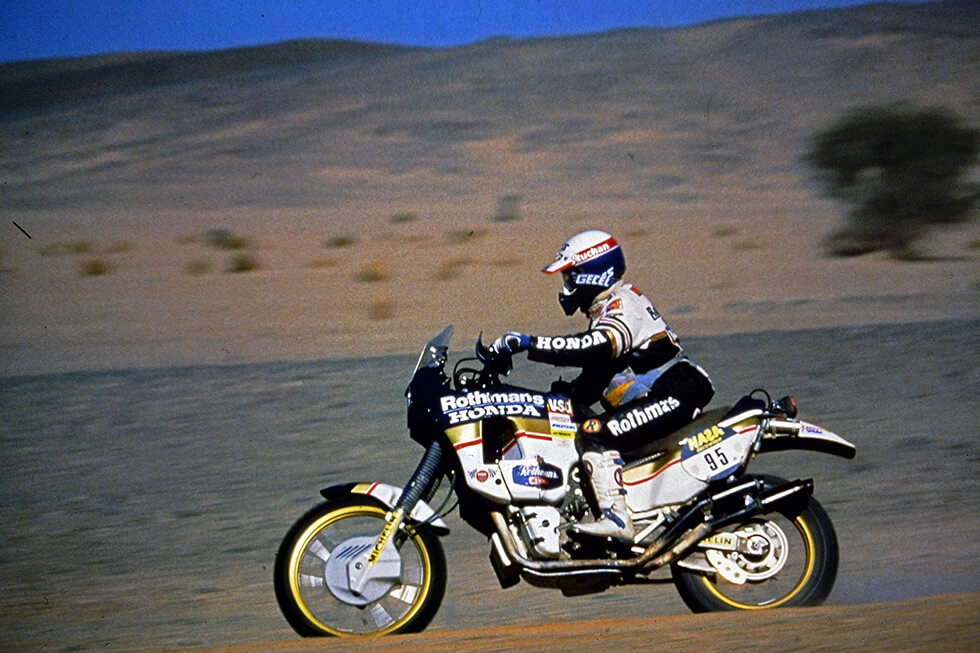 This is the iconic version most people mean when they say “NXR750.”
- Engine: 747cc liquid-cooled 52° SOHC V-twin
- Valvetrain: 3 valves per cylinder (6 total)
- Power: ~70–75 hp
- Transmission: 5-speed
- Fuel Capacity: ~55 liters (~14.5 gal)
- Frame: Aluminum twin-spar (production-ready race design)
- Front Suspension: Showa long-travel forks (~300mm)
- Rear Suspension: Showa Pro-Link
- Brakes: Dual front discs
- Weight: ~185–195 kg rally-ready (~410–430 lb)
Why This Version Matters:
- Dominated Dakar outright.
- Combined speed, reliability, and endurance better than anything before it.
- Direct blueprint for the Africa Twin.
1989: NXR750 (Final, Most Refined Version)
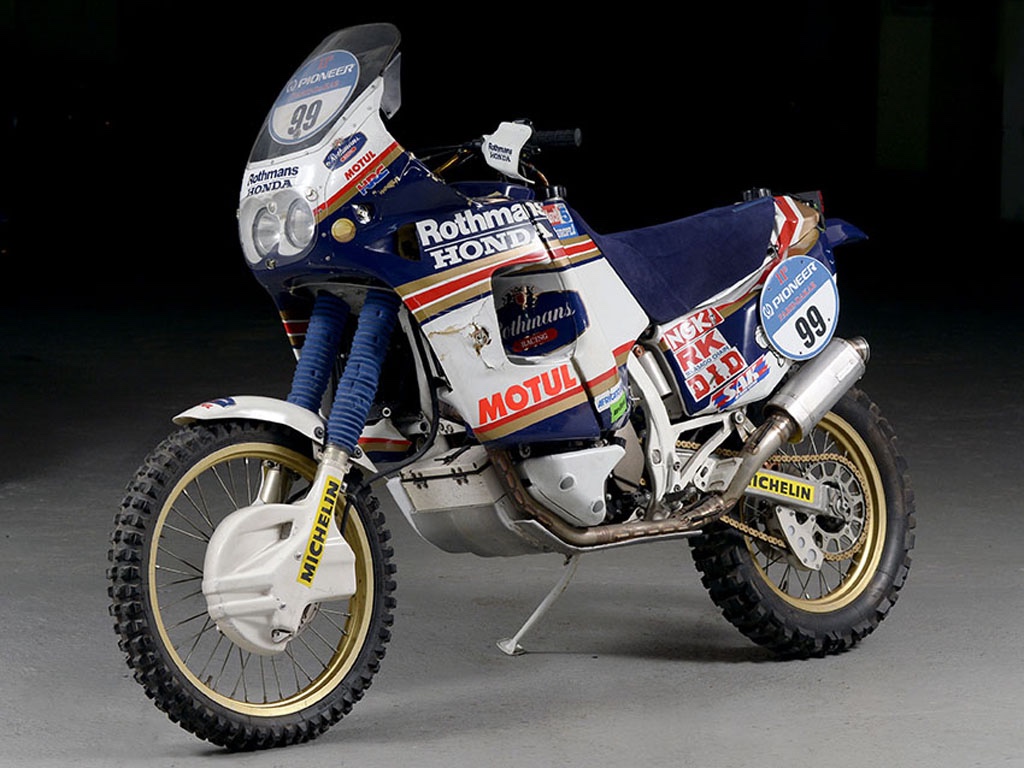 The ultimate evolution before Honda retired the platform.
- Engine: 747cc V-twin (refined internals)
- Power: ~75 hp (most consistent estimates)
- Fuel Capacity: ~55–60 liters depending on stage
- Electronics: Improved ignition reliability
- Suspension: Further refined damping for high-speed whoops
- Navigation: Fully integrated roadbook + compass tower
- Weight: Slightly lighter than 1988 version
Notes
- Peak of Honda’s rally dominance.
- Won Dakar again, cementing legend status.
- After 1989, Honda shifted focus toward production-based derivatives.
A Note about Specs…
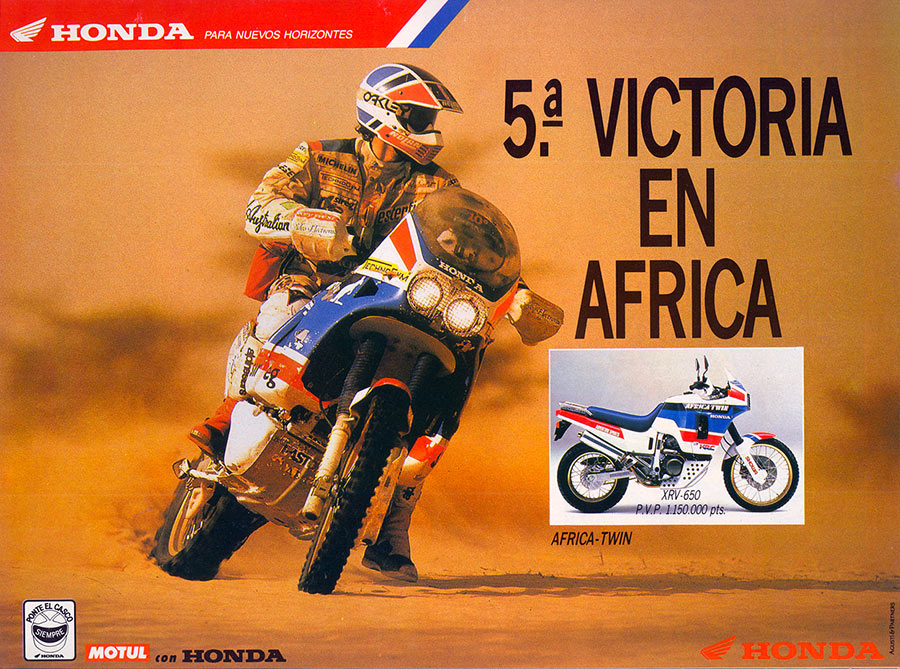
Honda never released full factory spec sheets because:
- These were pure prototypes
- Specs changed stage to stage
- Bikes were hand-built for individual riders
- Power figures were intentionally understated
So published numbers are best-supported estimates, but they’re fairly consistent across historians, former HRC engineers, and period race coverage.
Why Did Honda Quit Dakar at the Top?
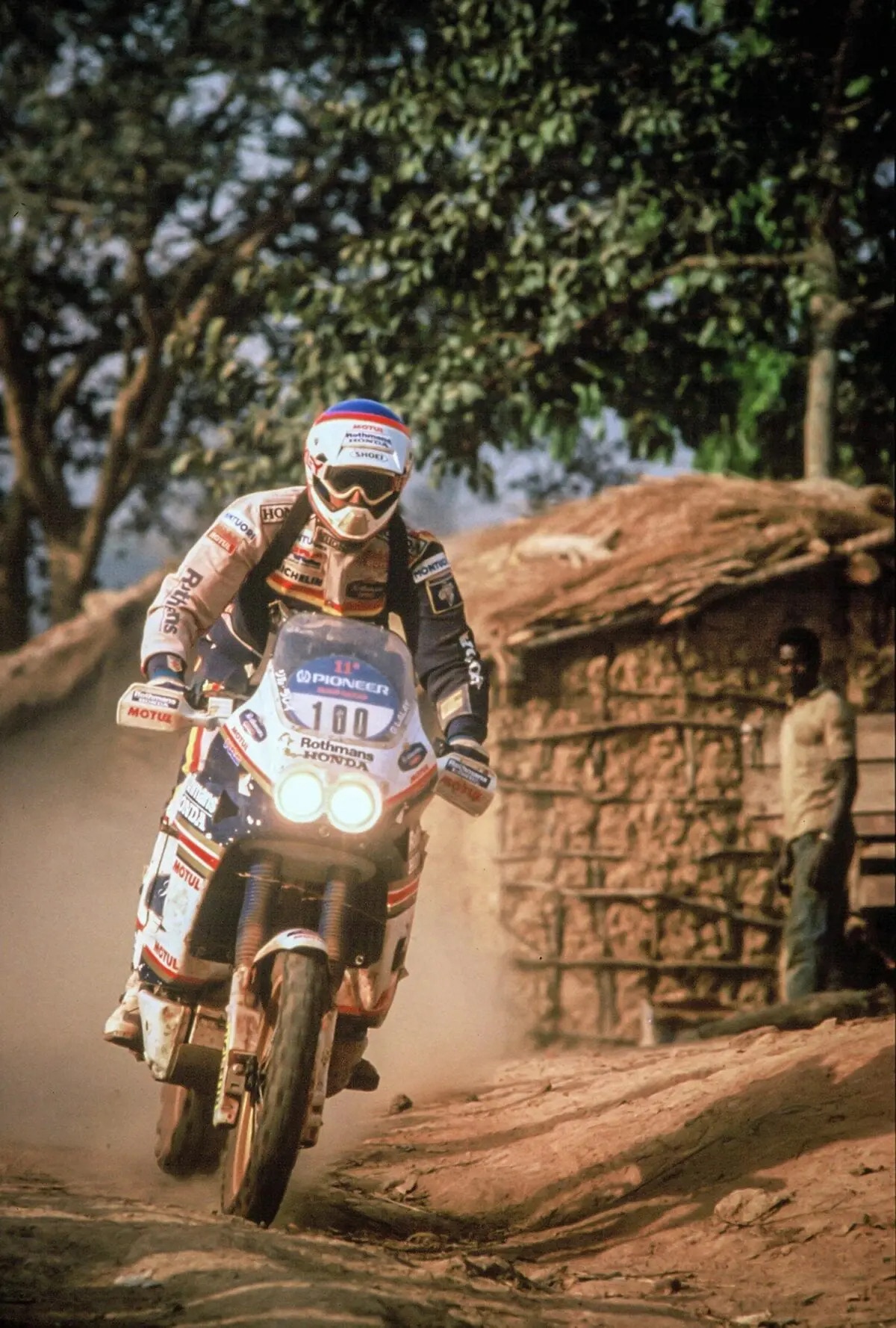
Honda withdrew from the Dakar Rally in 1989 not because they were losing, but because they’d already achieved its goals. They’d dominated Dakar, winning multiple overall titles and proving beyond doubt the reliability and performance of its V-twin rally platform.
The factory program was extremely expensive, and Honda shifted its focus toward production-based adventure motorcycles, using Dakar lessons to develop bikes like the XRV650 Africa Twin. At the same time, Honda’s broader motorsport priorities moved toward road racing and global championships.
In short, Honda left Dakar having nothing left to prove — its legacy firmly established as one of the most successful rally programs in history.
The NXR750 Today…
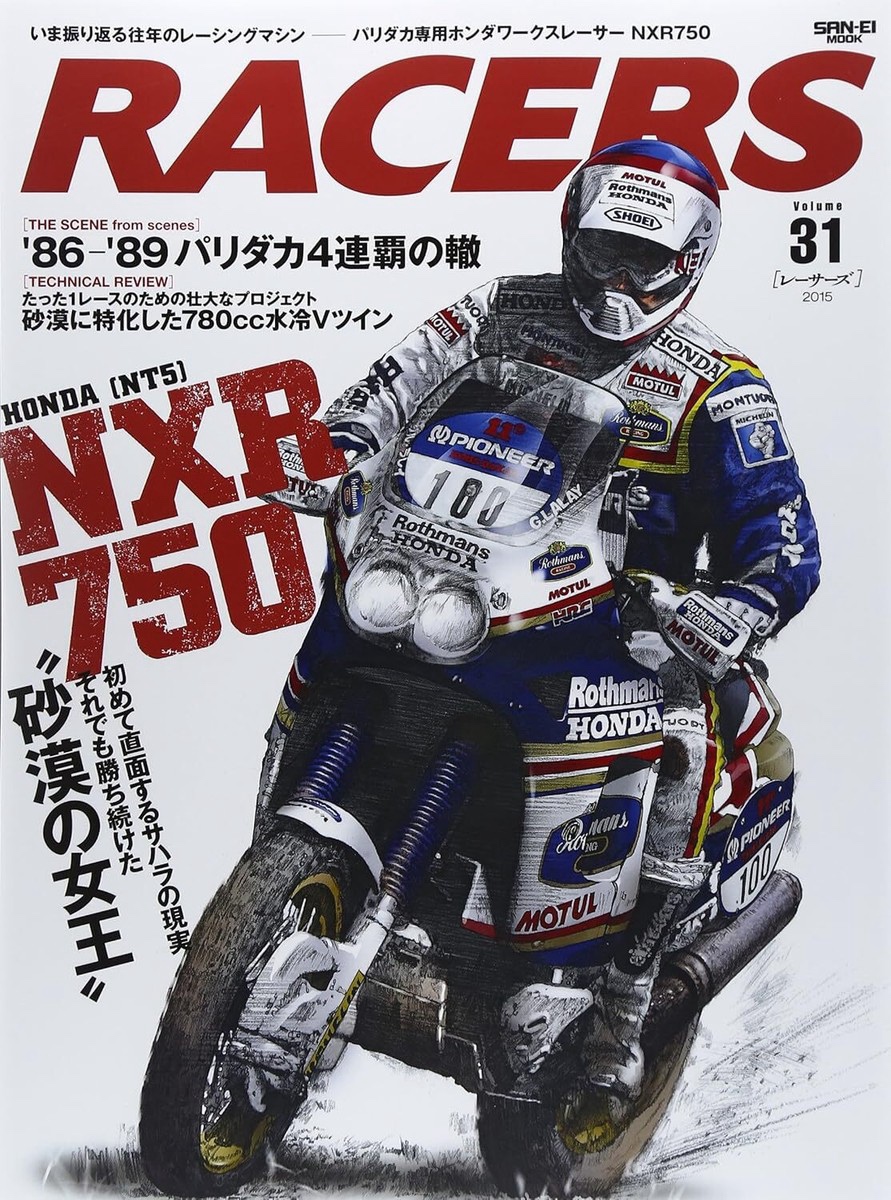
Original NXR750 machines are museum-grade artifacts. When they appear at auction or in private collections, they command extraordinary prices and reverence — not just as motorcycles, but as pieces of motorsport history. Replica builds based on Africa Twins or custom frames remain popular, but nothing quite matches the aura of the original factory machines.
The Honda NXR750 wasn’t just a rally bike — it was a statement of engineering philosophy from Big Red. Built to endure, built to win, and built to conquer the harshest race on earth, it stands among the greatest competition motorcycles ever created.
If the BMW R80G/S invented the adventure category, the Honda NXR750 perfected it in competition. Its legacy lives on not only in Dakar history books, but in every adventure motorcycle designed to cross continents without complaint. The NXR750 is not just a rally legend — it is the foundation of Honda’s adventure DNA.


