

MotoGP Bikes: The Fastest Racing Prototypes on Earth…
MotoGP is the pinnacle of motorcycle road racing — the two-wheeled equivalent of Formula 1. Every machine on the grid is a pure prototype, built not for the street but solely for the purpose of winning world championships. These motorcycles represent the absolute cutting edge of engineering: carbon-fiber everything, aerospace-level electronics, 300+ horsepower engines, and the highest lean angles in motorsport.
But what bikes are actually used in MotoGP? Below is a full breakdown of what motorcycles are used in MotoGP, how they’re built, and why they’re unlike anything else on two wheels.
Full Factory Prototypes: Not Production-Based
Unlike World Superbike (WSBK), which uses modified road-legal motorcycles, MotoGP bikes are purpose-built racing prototypes.
You cannot buy one.
You cannot register one.
You cannot compare them directly to your favorite 1000cc superbike.
They are all designed from the ground up for:
- Maximum corner speed
- Extreme power-to-weight ratios
- Aerodynamic efficiency
- Precise electronics integration
- Lap times on the world’s most demanding circuits
MotoGP Bike Specs: Top Speed, Weight, etc.

Current MotoGP regulations (2024–2025) specify:
- 1000cc four-stroke engines
- Maximum 4 cylinders
- Engine speed capped by fuel flow and air intake, not a hard RPM limit
- No turbochargers or forced induction
- No ride height devices from 2027 on (phasing out)
Typical specs:
- 260–300+ horsepower
- ~160 kg (352 lbs) minimum weight
- Top speeds exceeding 220+ mph
These are the most powerful naturally aspirated motorcycles ever raced.
Current MotoGP Bikes
Here are the official MotoGP constructors and the motorcycles they race:
1. Ducati Desmosedici GP
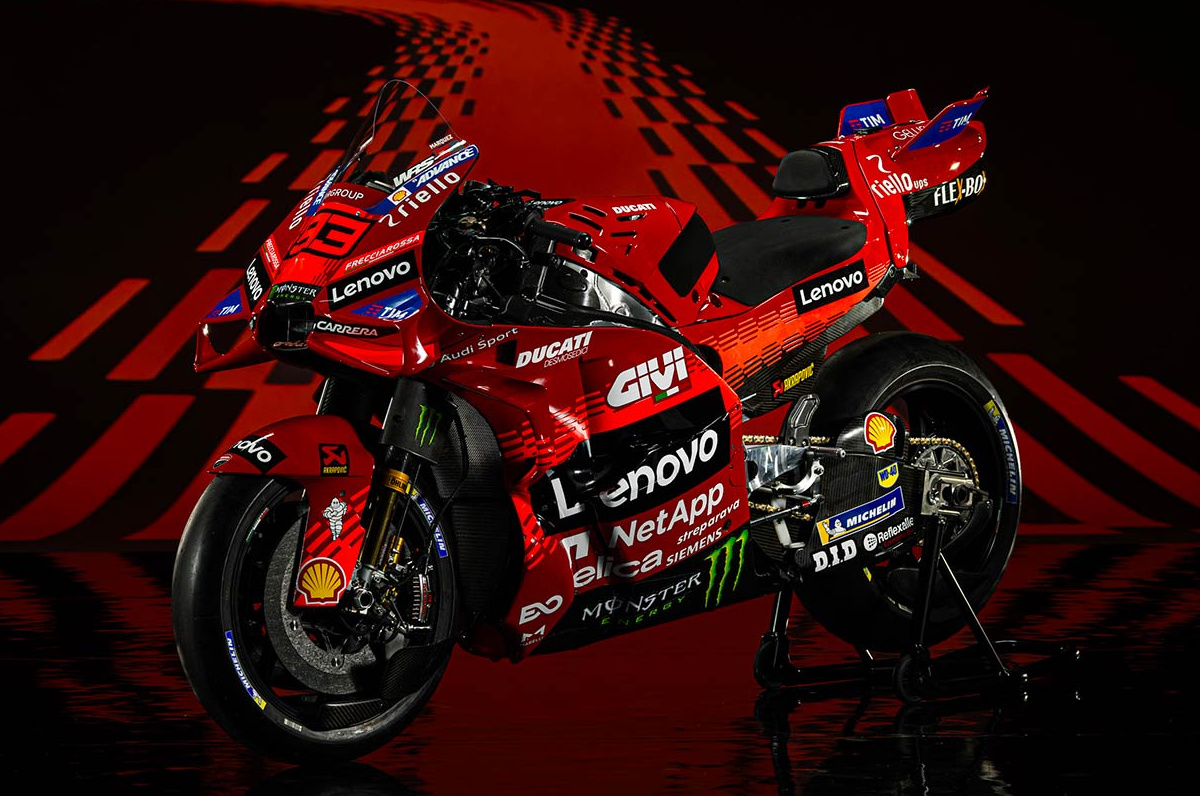
Ducati is the dominant force in modern MotoGP, known for its insane horsepower, advanced aerodynamics, and seamless gearbox technology.
Key Traits:
- V4 engine
- Industry-leading downforce aero
- Holeshot and ride-height innovations
- Tremendous top speed (often the fastest in the class)
Ducati currently fields multiple teams and sets the technological pace.
2. Yamaha YZR-M1
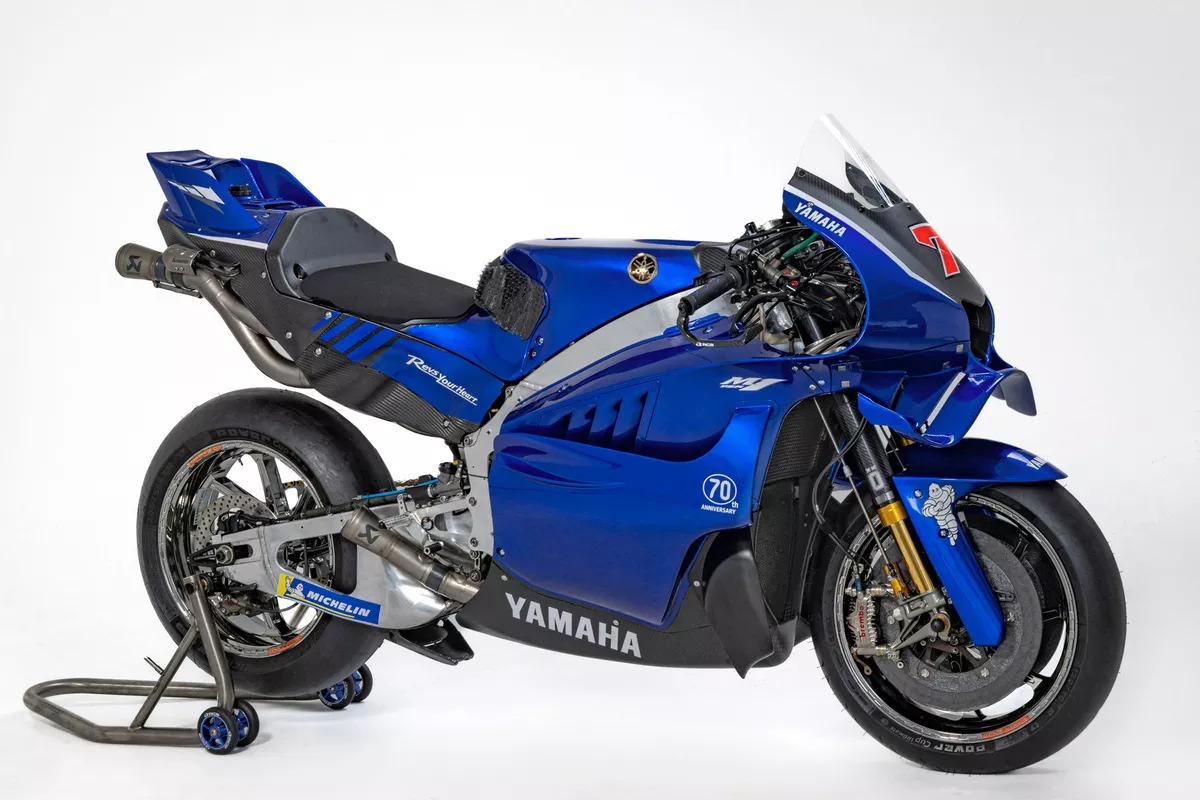
A classic inline-four contender, the YZR-M1 is known for its agility, neutral handling, and strong corner speed.
Key Traits:
- Inline-four engine (V4 from 2026)
- Smooth power delivery
- Excellent chassis balance
- Historically dominant under Rossi and Lorenzo
Yamaha has struggled with power deficits in recent years, but remains a core MotoGP manufacturer. They have officially confirmed they’ll switch the M1 to a V4 configuration starting with the 2026 season.
3. Honda RC213V
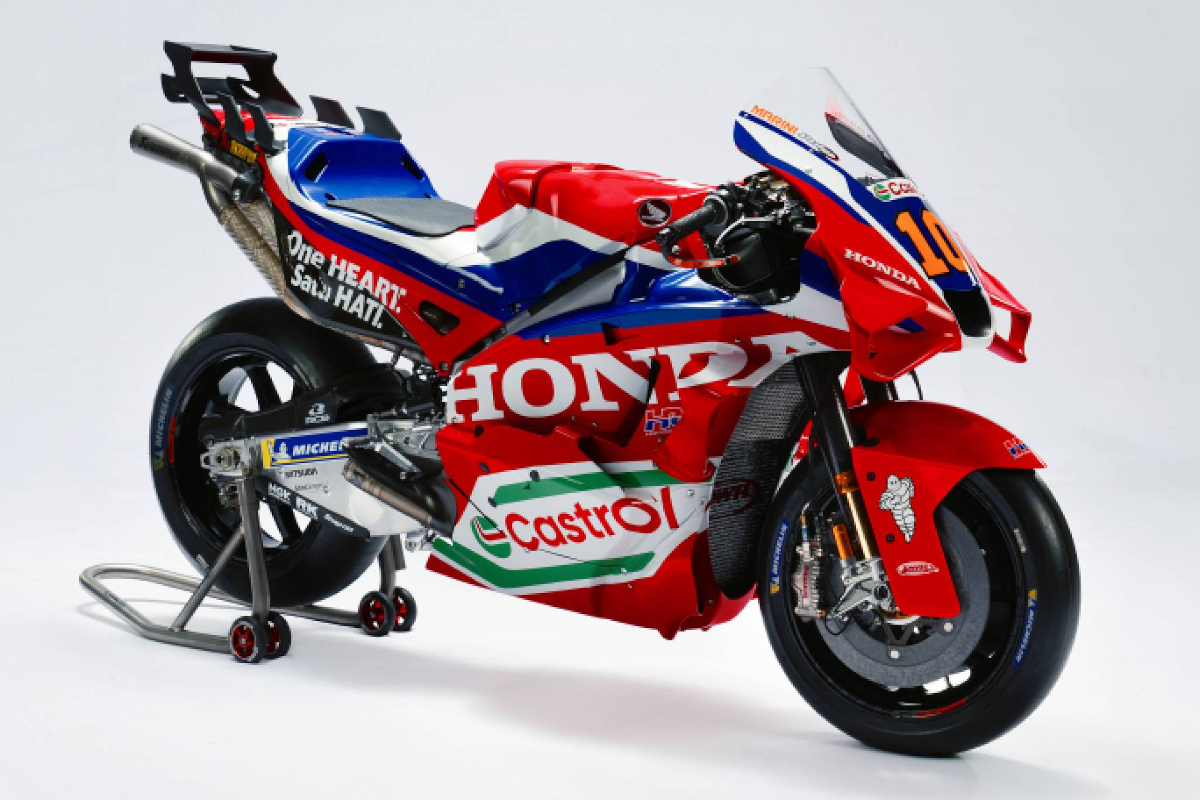
One of MotoGP’s most legendary machines, historically dominant under Marc Márquez.
Key Traits:
- V4 engine
- Extreme agility
- Aggressive chassis philosophy
- High peak performance but challenging to ride
Honda is currently rebuilding its program after major rule changes and rider injuries.
4. KTM RC16
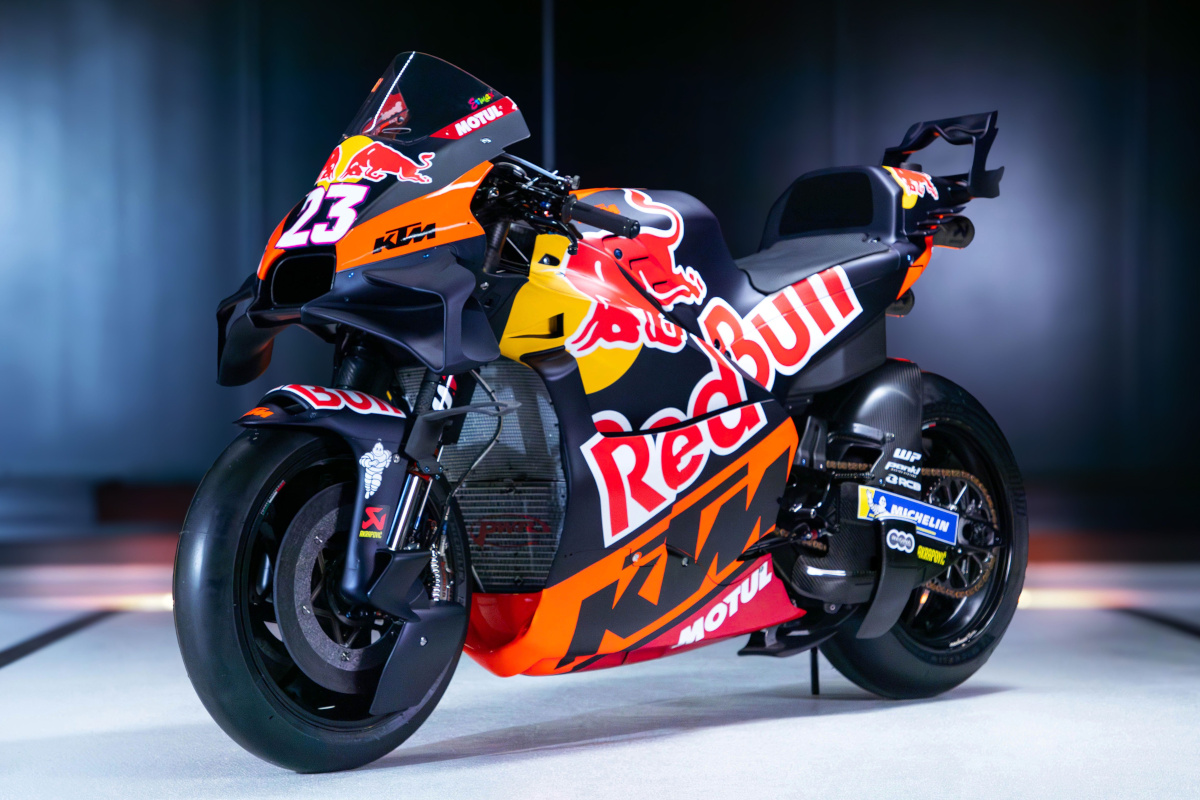
A rising powerhouse in MotoGP. KTM uses a steel trellis frame instead of the aluminum twin-spar favored by most manufacturers.
Key Traits:
- V4 engine
- Steel frame + WP suspension
- Strong acceleration and braking stability
- Rapid year-over-year development
KTM is now consistently fighting for podiums and wins.
5. Aprilia RS-GP
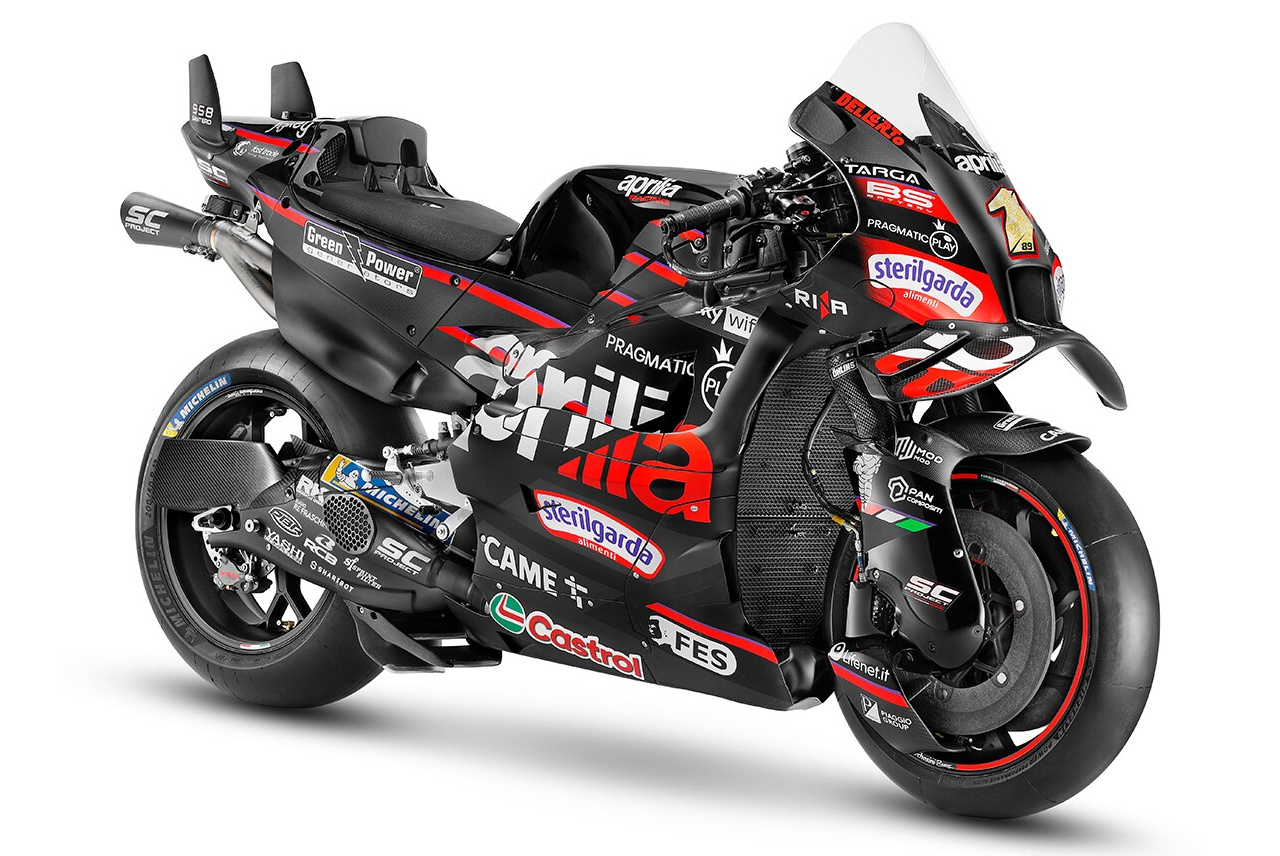
For years an underdog, Aprilia has transformed the RS-GP into a front-running race machine.
Key Traits:
- V4 engine
- Excellent mid-corner stability
- Featherweight chassis feel
- Strong straight-line speed
Aprilia’s RS-GP is now considered one of the most balanced prototypes on the grid.
MotoGP Horsepower & Top Speed Comparison
| Manufacturer | Model | Estimated Horsepower | Recorded Top Speed (mph) | Notes |
|---|---|---|---|---|
| Ducati | Desmosedici GP23 / GP24 | 285–300+ hp | 225.0 mph (Mugello) | Fastest bike in MotoGP; industry-leading aerodynamics and seamless gearbox. |
| Aprilia | RS-GP | 275–290 hp | 221.5 mph (Mugello) | Exceptional aero stability and one of the best chassis on the grid. |
| Honda | RC213V | 265–285 hp | 218.0 mph (Qatar) | High peak horsepower but difficult to control; setup-sensitive. |
| KTM | RC16 | 270–285 hp | 218.0 mph (Mugello) | Steel frame gives unique handling; rapidly improving top-end power. |
| GASGAS | RC16 (rebranded KTM) | Same as KTM: 270–285 hp | ~218 mph (track dependent) | Identical engine platform; performance matches KTM satellite team. |
| Yamaha | YZR-M1 | 255–270 hp | 214.5 mph (Mugello) | Traditionally strong in corner speed; improving straight-line performance. |
How MotoGP Bikes Differ from Street Motorcycles
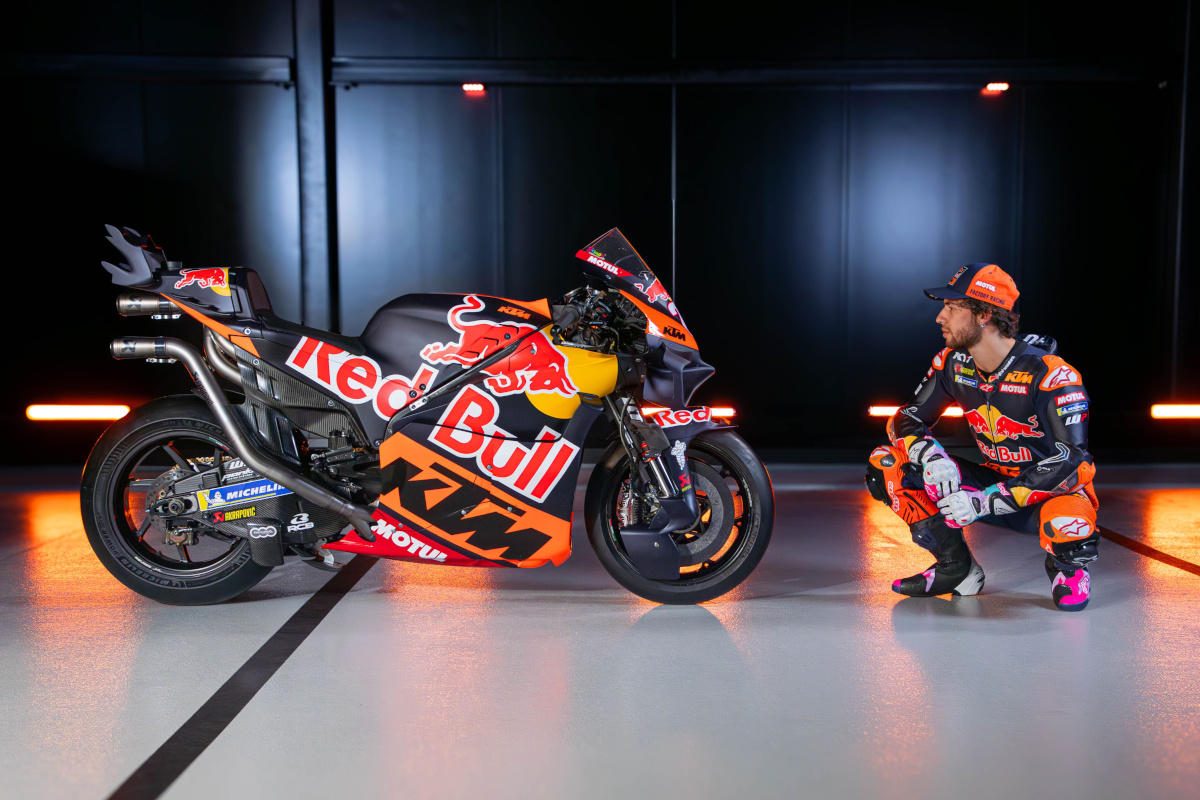
Even though some road bikes (Aprilia RSV4, Ducati Panigale V4, BMW M1000RR) draw inspiration from MotoGP, the real prototypes are far more exotic:
1. Unique Frames
- Carbon composite, aluminum beam, or steel trellis
- Entirely custom, not adapted from production bikes
2. Carbon Brakes
- Offer immense stopping power but only fully functional at high temperatures
- Not used on public roads due to heat requirements
3. Seamless-Shift Gearboxes
- Allow clutchless up/down shifts with zero power interruption
- Ultra-secretive technology never fully disclosed to the public
4. Advanced Aero Packages
- Winglets
- Diffusers
- Ground-effect bodywork
- Downforce for stability under acceleration and braking
MotoGP now resembles F1 in aerodynamic sophistication.
5. Electronic Control Systems
- Traction control
- Anti-wheelie
- Launch control
- Engine braking maps
- GPS-based corner-specific settings
Each team employs data engineers to adjust settings per corner of every track.
MotoGP Classes
MotoGP (Premier Class)
- 1000cc prototype motorcycles
- Multi-million-dollar machines
- Only a handful made each year
Moto2
- 765cc Triumph triple engines
- Identical engines; chassis vary by manufacturer (Kalex, Boscoscuro, etc.)
Moto3
- 250cc single-cylinder, lightweight prototypes
- Highly competitive entry class
MotoE
- All-electric spec class
- Represents the early development of electric racing technology
Why MotoGP Bikes Are So Fast
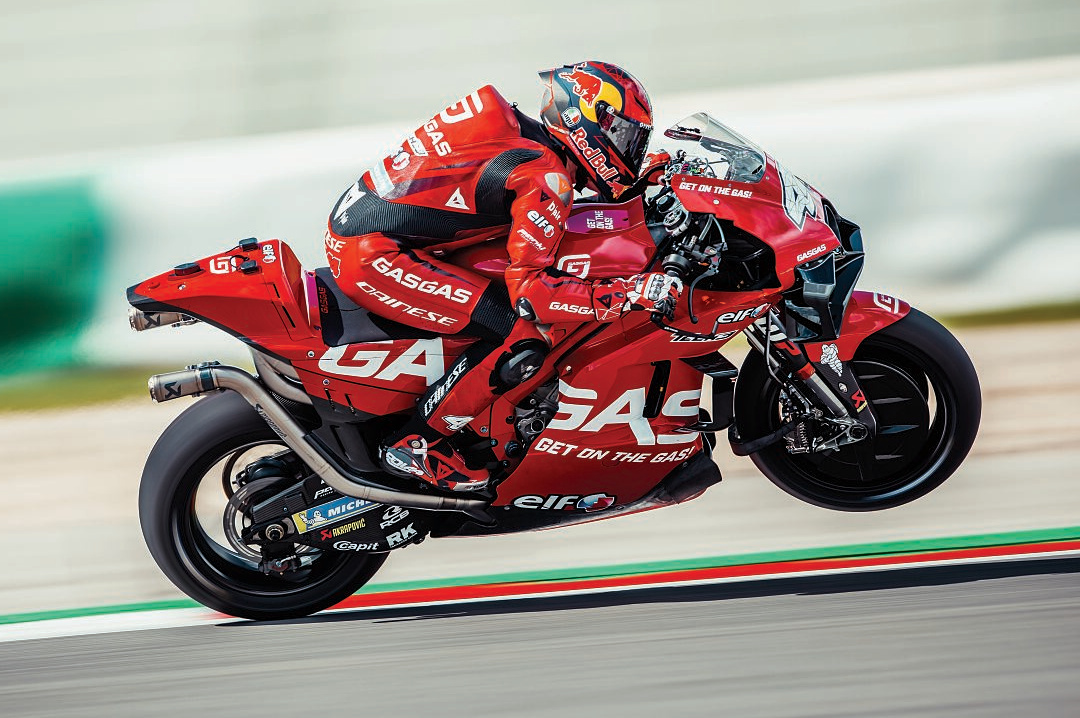
MotoGP prototypes achieve their speed through a combination of:
- Ultra-light weight
- Massive horsepower
- Cutting-edge aerodynamics
- Instantaneous throttle response
- Advanced electronics
- Seamless transmissions
- Perfect tires developed by Michelin specifically for racing
These are the most advanced racing motorcycles ever created.
2026: Relevant Developments & Potential Changes
| Change / Trend | Reason / What to Watch |
|---|---|
| Engine-spec freeze for 2025–2026 | To stabilize competition and costs ahead of a major 2027 regulation overhaul. Most teams are locked into their 2025 engine designs. (Reuters) |
| Industry-wide prep for 2027 regulation shift | MotoGP plans to implement major changes in 2027 (engine displacement reduction, aero or device restrictions, etc.) — 2026 will be a transition year for many designs. (Reuters) |
| Potential aero & electronics recalibration | As aero rules evolve and tyre/tyre-wear patterns shift, teams may adjust suspension geometry, electronics mapping, and chassis setups during 2026 to adapt — this may affect bike behavior compared to earlier seasons. |
| Yamaha’s R&D uncertainty | Early test feedback indicates advantages (braking, chassis behavior), but also “areas missing” (traction, engine-brake balance) with the new V4. (Motorsport Week) |
2027 MotoGP Rule Changes
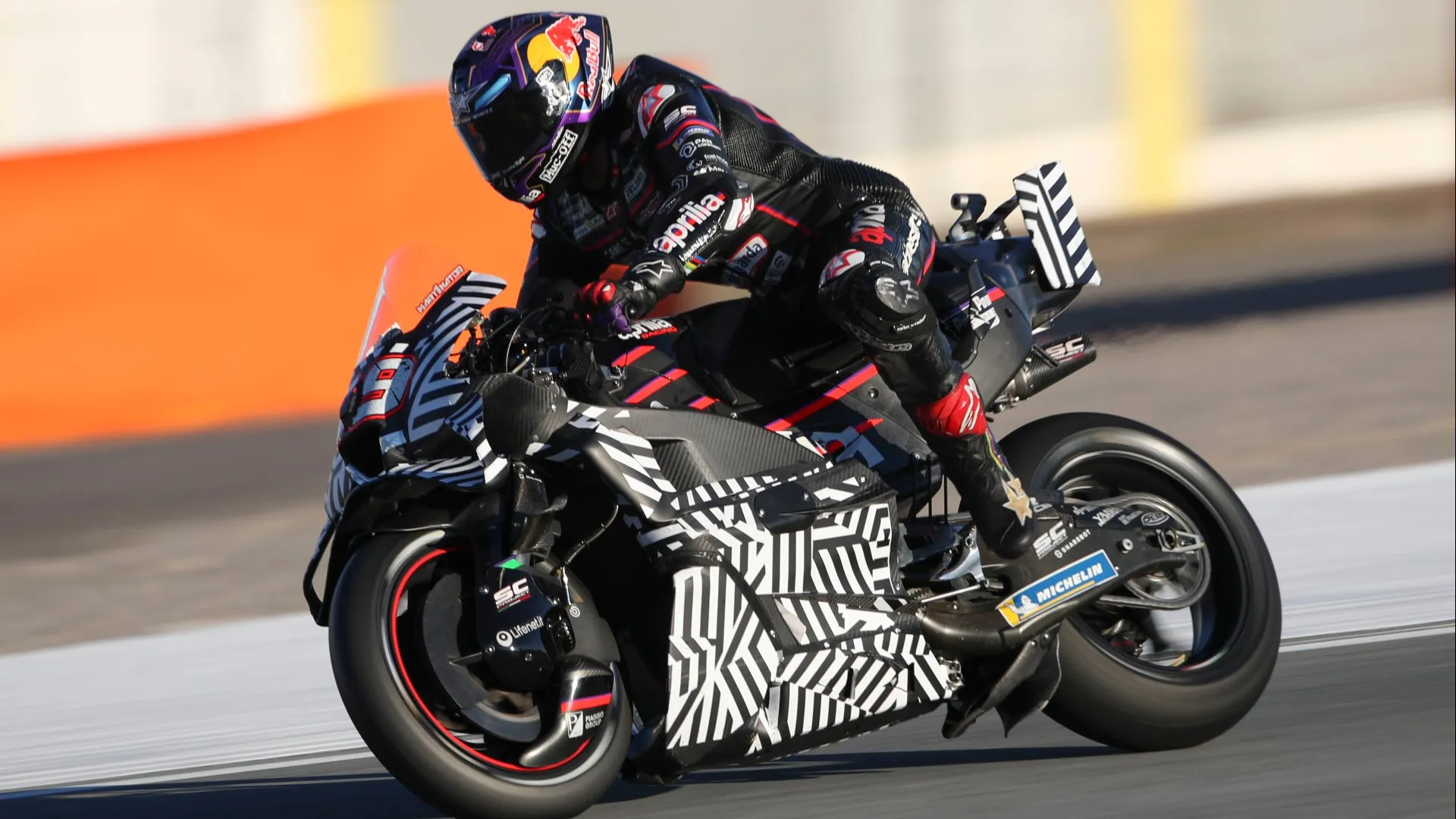
Starting in 2027, MotoGP will undergo a major rules overhaul that shifts the sport toward tighter, more rider-focused competition. Engine displacement will drop from 1000cc to around 850cc, reducing horsepower and emphasizing corner speed and chassis engineering over sheer acceleration.
Aerodynamic devices and ride-height/holeshot systems will be heavily restricted or eliminated, dialing back the aero arms race and returning more control to the rider. Sustainability targets will increase, with greater use of synthetic fuels, and overall cost-control measures will tighten.
In short, 2026 marks the final year of the current high-downforce, 1000cc era before MotoGP transitions into a more regulated, skill-centric, and efficiency-driven future.
MotoGP Bikes: Engineering Marvels…
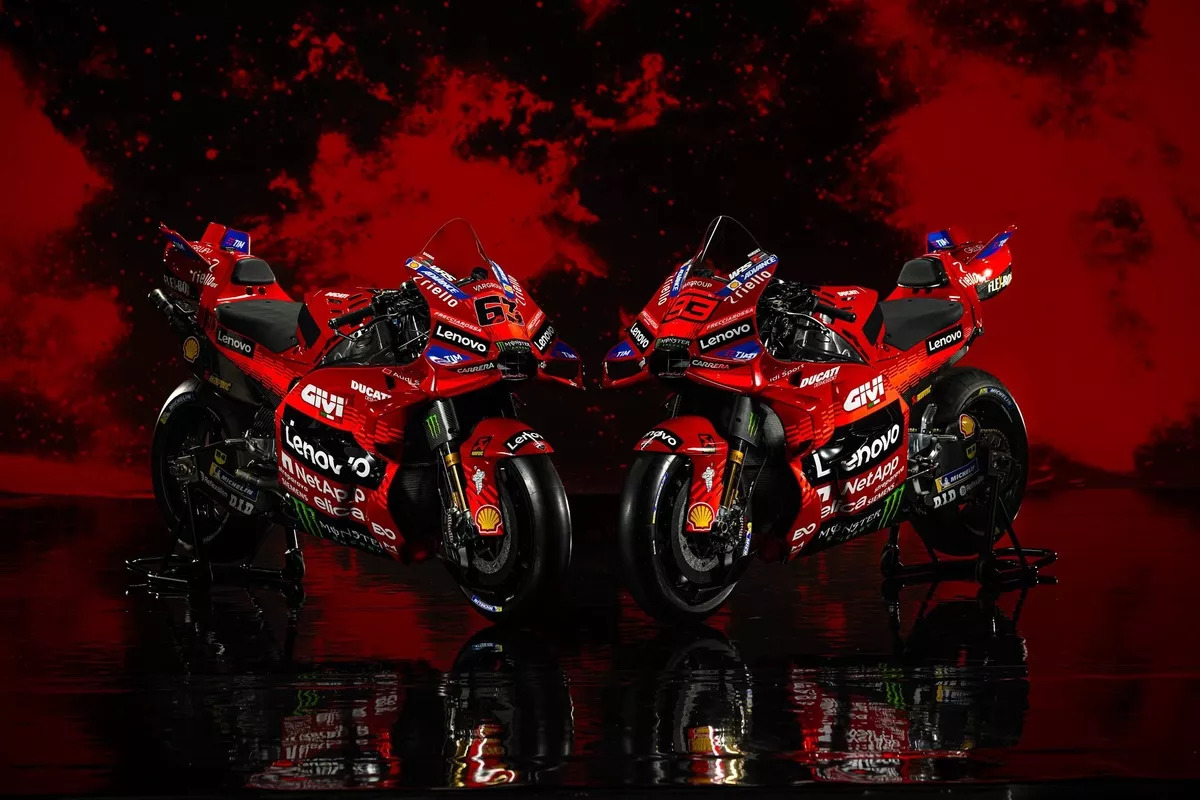
MotoGP motorcycles are pure engineering masterpieces — machines built solely for the pursuit of speed, agility, and precision at the highest level of competition.
They share almost nothing in common with production bikes beyond basic layout. Every component — from the carbon brakes to the mapping of the traction control — is bespoke, secretive, and optimized for world-class athletes.
If you want to understand the absolute edge of motorcycle performance, MotoGP is where the envelope gets pushed.


