
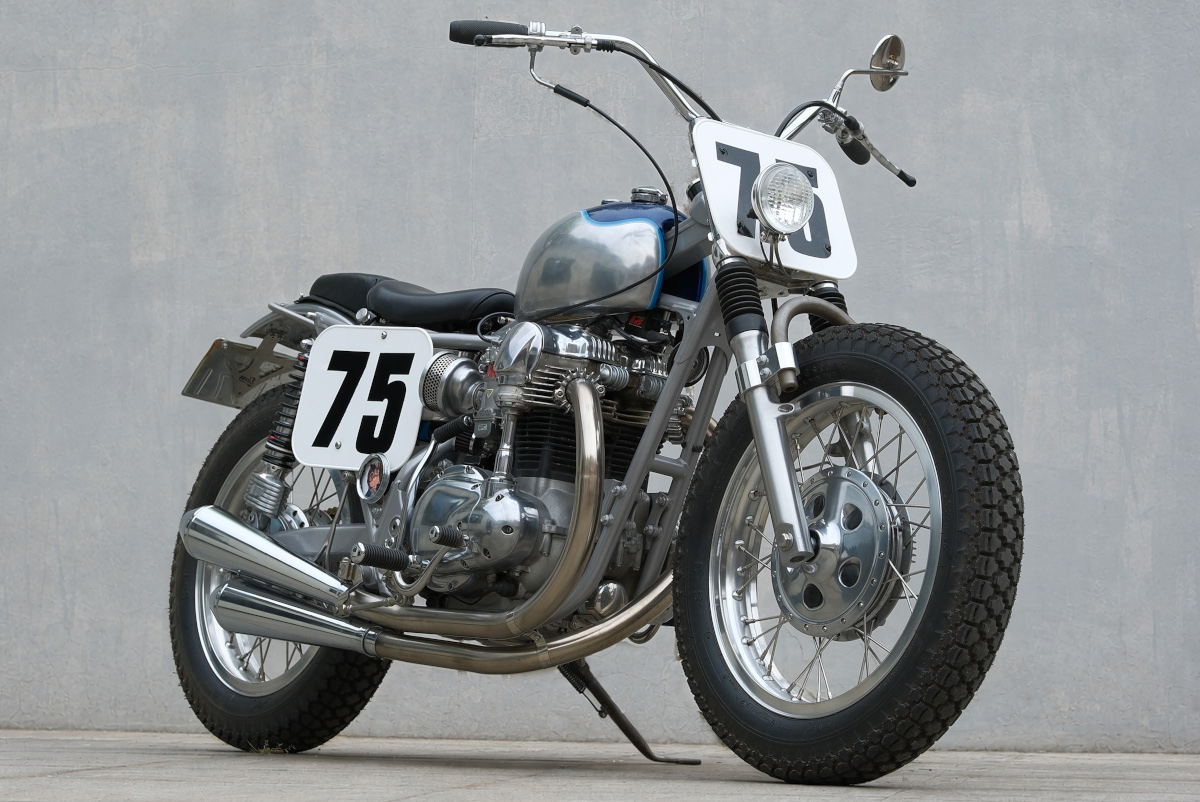
Built for the Next Generation: Jay Shang’s Kawasaki W650 Tracker…
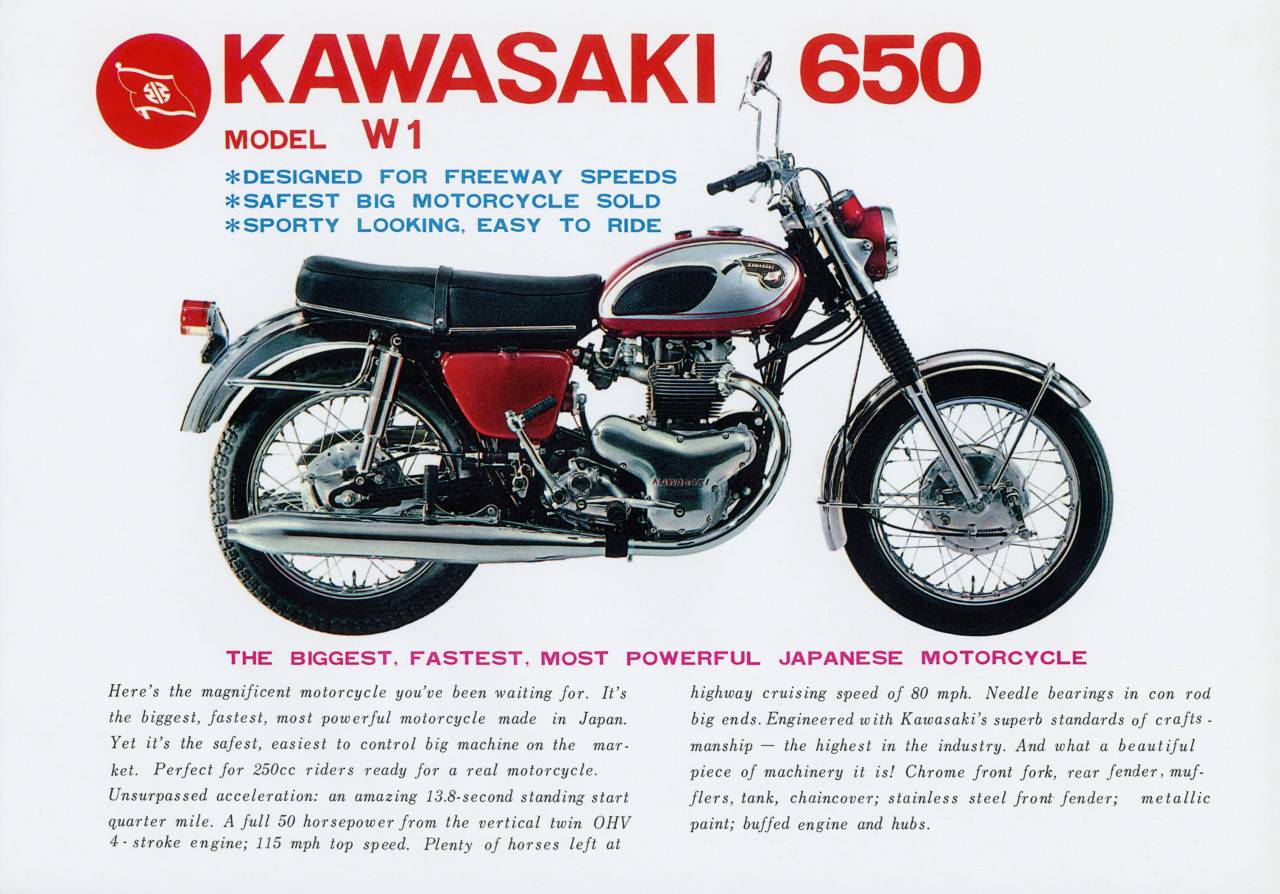
The Kawasaki W650 is one of our favorite “neo-classic” motorcycles of the modern era, even if it’s now over 25 years old itself. Introduced in 1999, the W650 took inspiration from two-wheeled forbears such as the Kawasaki W1, W2, and W3 of the 1960s, which were closely related to the BSA A7. A direct rival of retro machines like the Triumph Bonneville, the W650 offered one of the handsomest twins of the 21st century — a long-stroke 676cc parallel-twin with a bevel-gear single overhead cam design that recalls the bevel Ducatis of the 1970s.
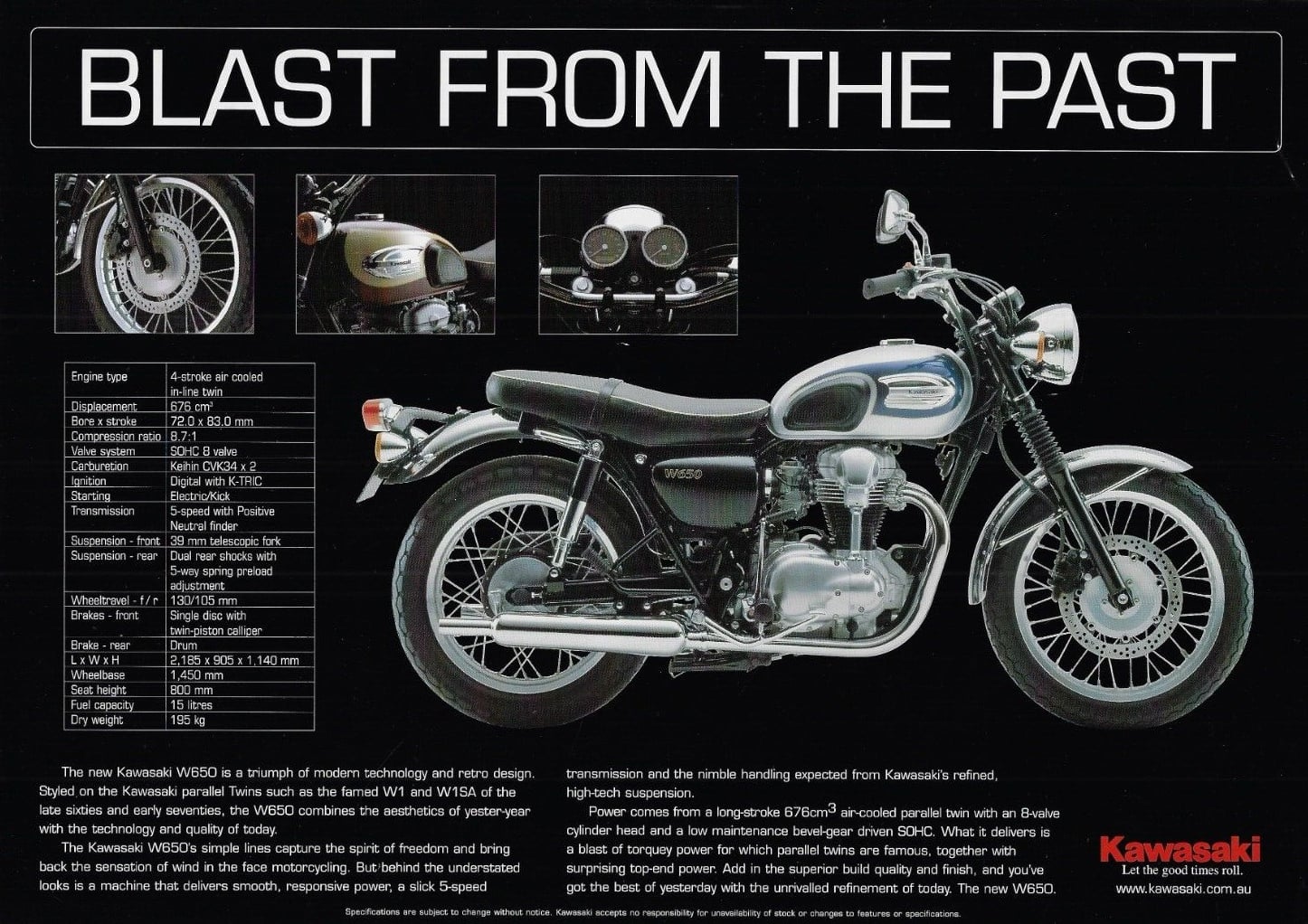
The words of Cycle Gear in 2000 are just as true now as they were a score and six years ago:
“Just right for a little slice of flab-free retro. If there’s an old-timey bike out there that deserves to be bought, it’s this one… The W650 is an honest, neo-vintage motorcycle that’s simple fun to ride. Nothing dated about that.” –CW
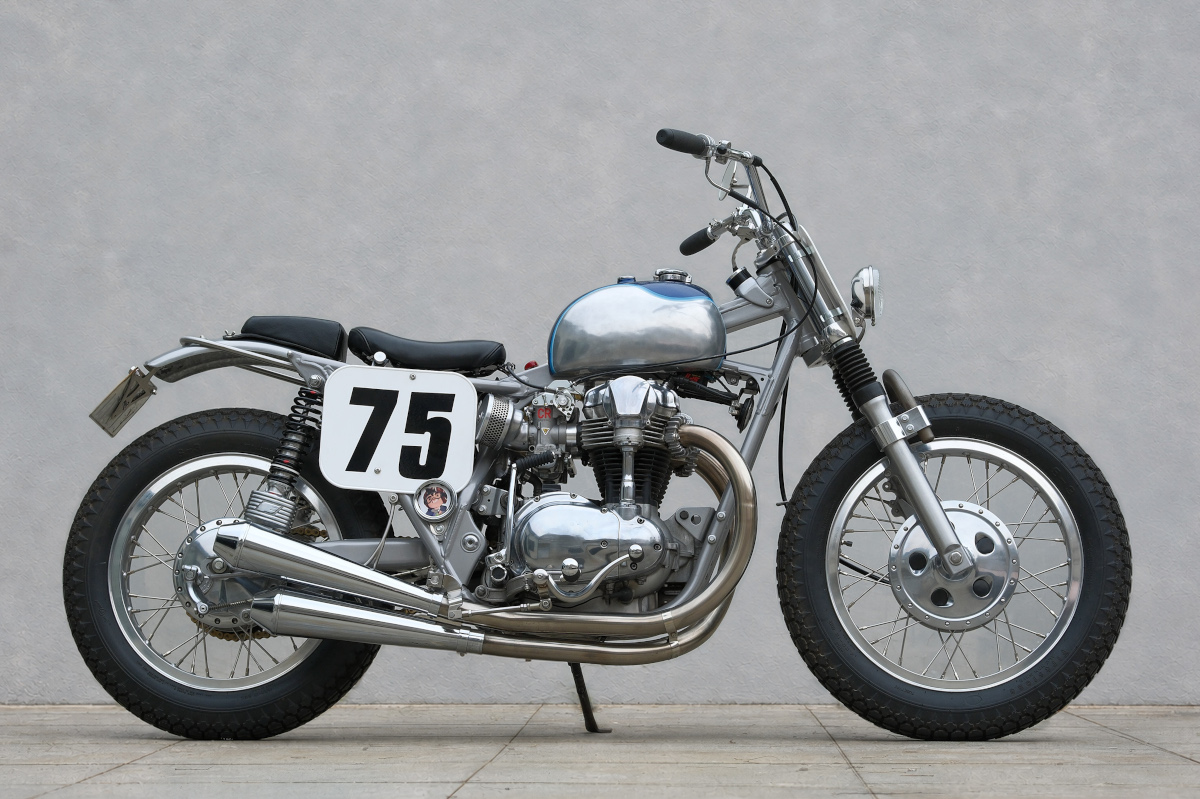
That back-to-basics design and gorgeous engine also make the W650 a great platform for customization. Our new friend Jay Shang is something of a W enthusiast:
“My garage houses a W800, a W650, and a W1. There’s something captivating about the design of these bikes. They’re elegant and understated, yet unmistakably distinctive.”
Growing up, Jay’s mother took him to school everyday on a little 50cc machine. His first experience riding a bike himself would stay with him for the rest of his life:
“The feeling I had that day is almost impossible to put into words. It was probably one of the purest forms of happiness a person could experience, even on such a small engine, moving at such a modest speed. I think many riders know exactly what I mean. Once you’ve experienced that feeling, you can never quite get it back. Especially after you become a father and find yourself caught up in the demands of everyday life, that kind of freedom seems to belong to another time.”
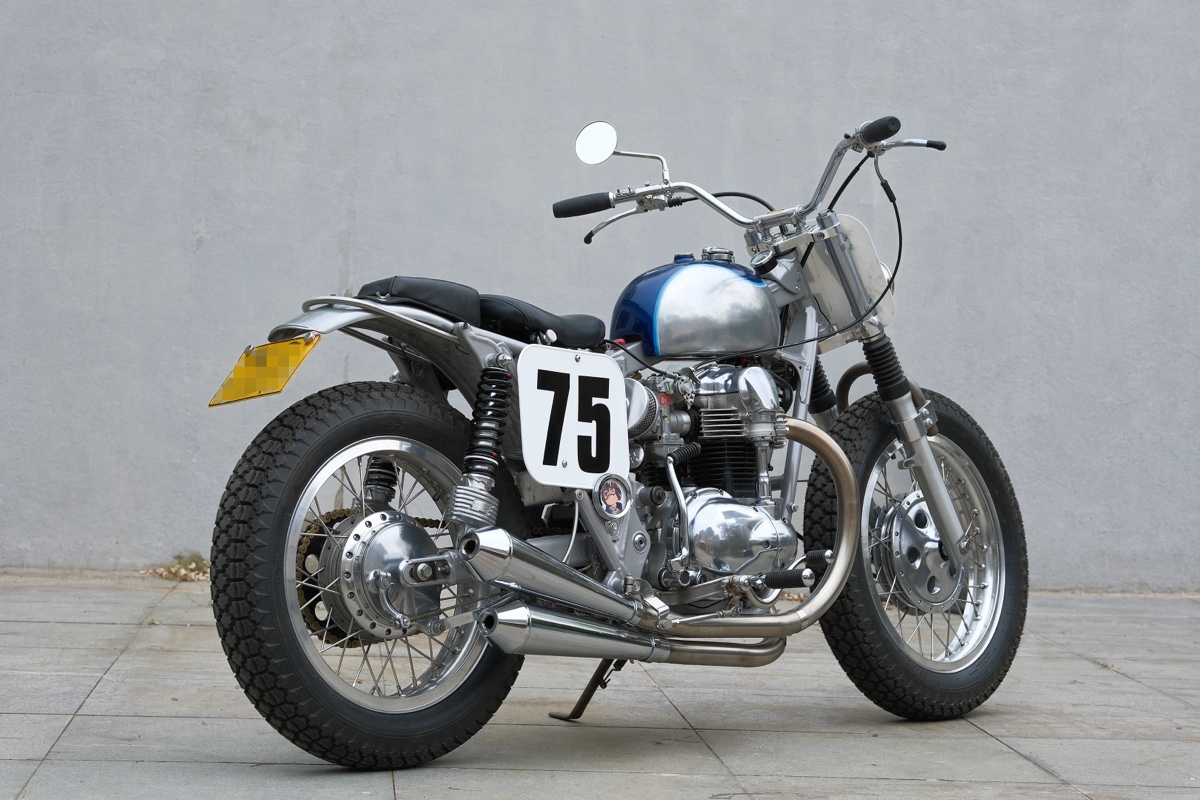
On a trip to the US a few years ago, Jay happened upon Dan Rouit’s Flat Track Museum, where he found the inspiration for this build. The vision was not for a run-of-the-mill street tracker, but a bike that truly recalls the vintage flat track machines of yesteryear:
“Vintage flat trackers are a niche breed, quite different from today’s street trackers. They’re simpler, rawer, and more aggressive. No front brake, oversized intake setups, an enormous rear sprocket, wide and aggressive handlebars, and a low-slung stance are among their defining features. After learning about the history of flat track racing and hearing Dan’s story, I returned home with one thought in mind: I was going to build a flat tracker of my own.”
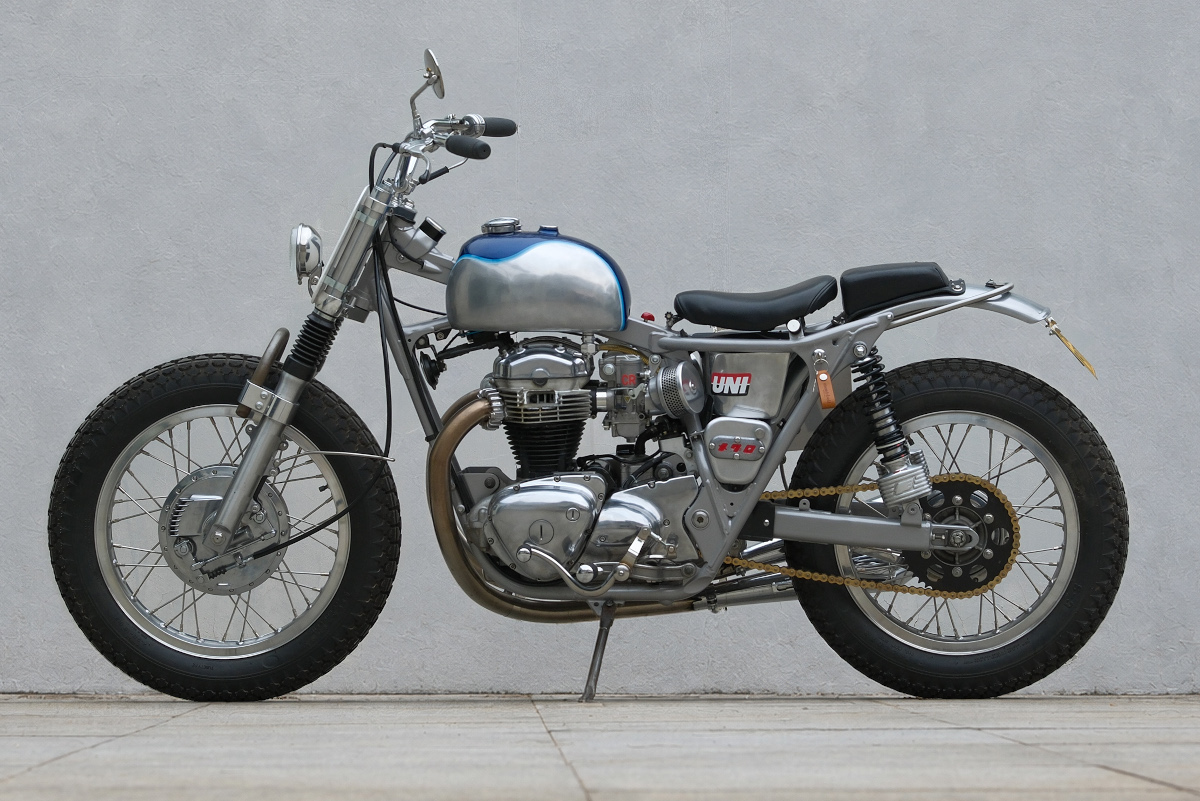
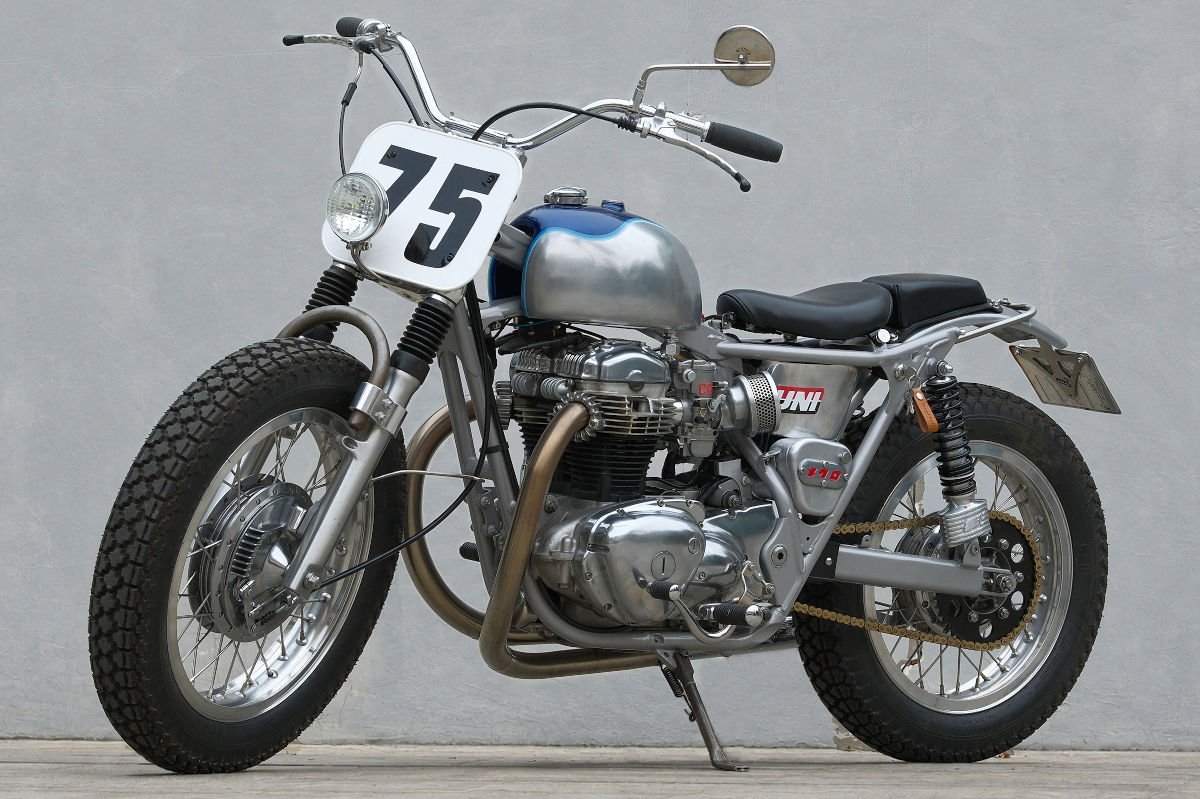
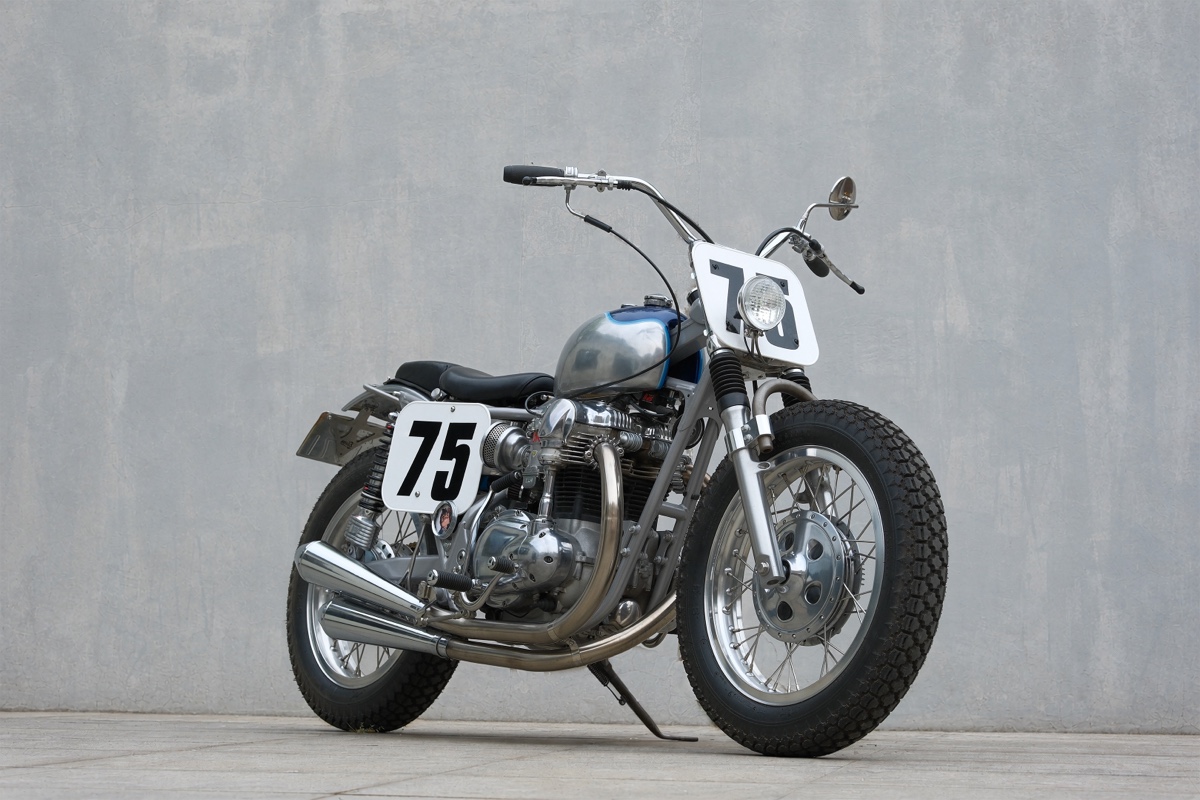
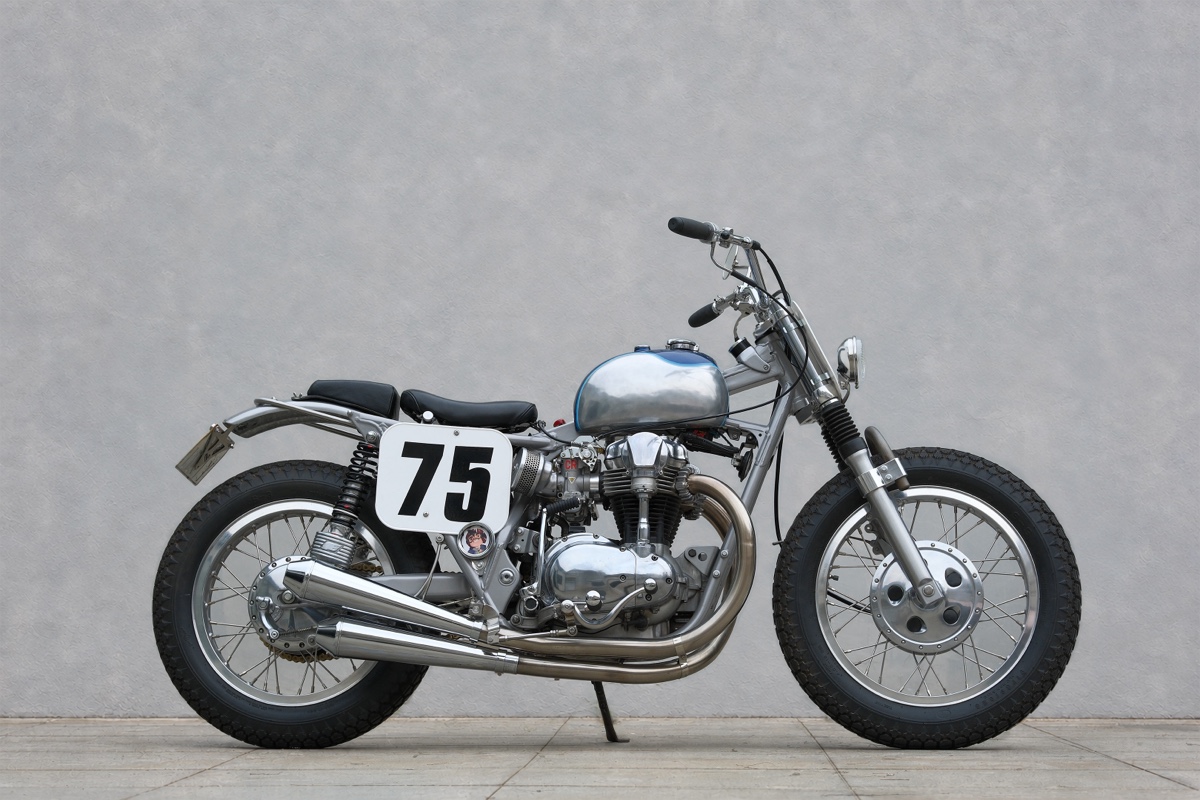
The build — “Moana” — would take him four years, and Jay carries us along for the journey below. The overall lines and finish of this W650 tracker are incredible, and it remains (barely) street-legal.
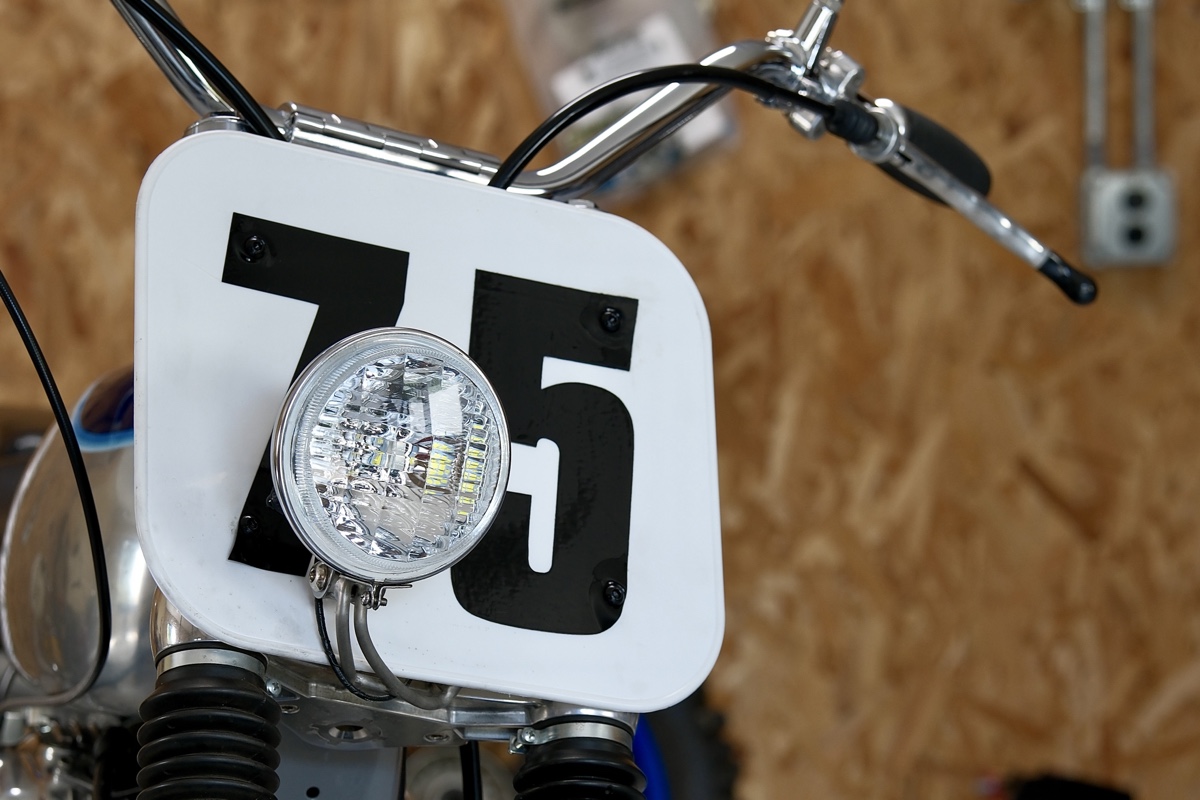
“The two main concessions to road use are the front brake and the headlight, both of which I might need on city streets. The headlight is quick-release and only fitted when I ride on the road.”
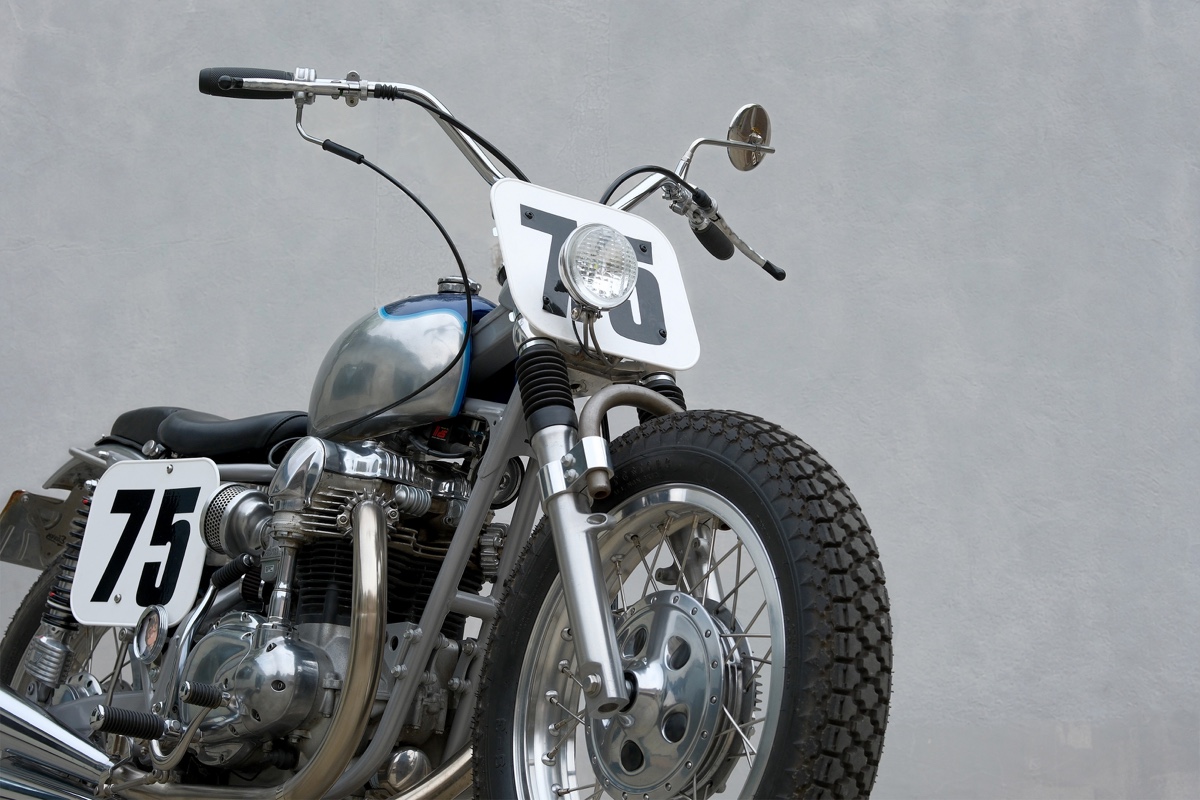
We absolutely love this build, and the motive for its creation goes far beyond just the machine itself.
“Moana is a gift I wanted to leave for my kid… I wanted to preserve something of this era for them — the roar of an engine, the smell of exhaust, the raw, mechanical feeling of a machine brought to life. I want them to have the chance to experience, even just once, the same kind of joy that was once given to me.”
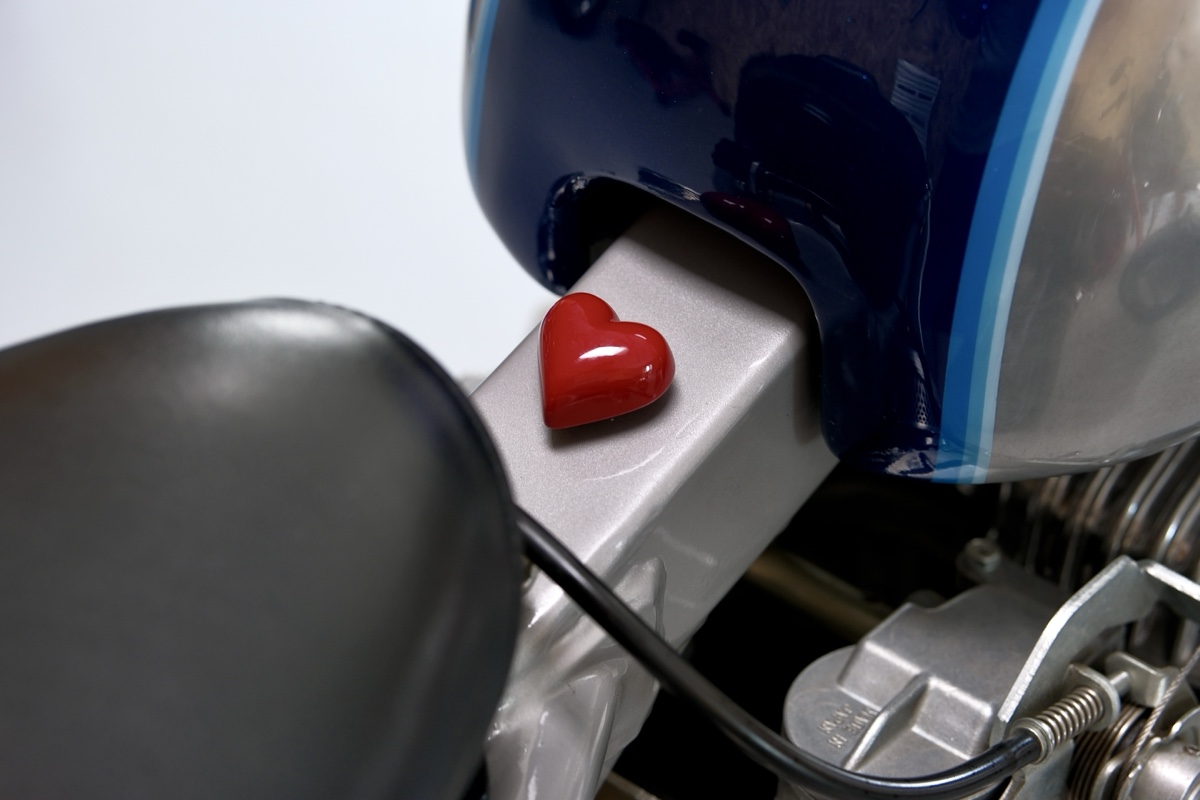
What an incredible way for a father to preserve a slice of shared happiness for the next generation. Bravo, Jay, we’re honored to showcase this build and the story behind it.
Below, you’ll find the full story of the build in Jay’s own words.
In the Builder’s Words…
If you’re into vintage motorcycles, Kawasaki’s W series is one of those bikes you simply can’t ignore, much like the classic Triumphs and Yamahas. My garage houses a W800, a W650, and a W1. There’s something captivating about the design of these bikes. They’re elegant and understated, yet unmistakably distinctive.
The decision to turn my W650 into a vintage flat tracker actually came about almost by chance. During a trip to California, I discovered a motorcycle museum called Dan Rouit’s Flat Track Museum. I can never resist the opportunity to visit a motorcycle museum, so of course I had to stop by.
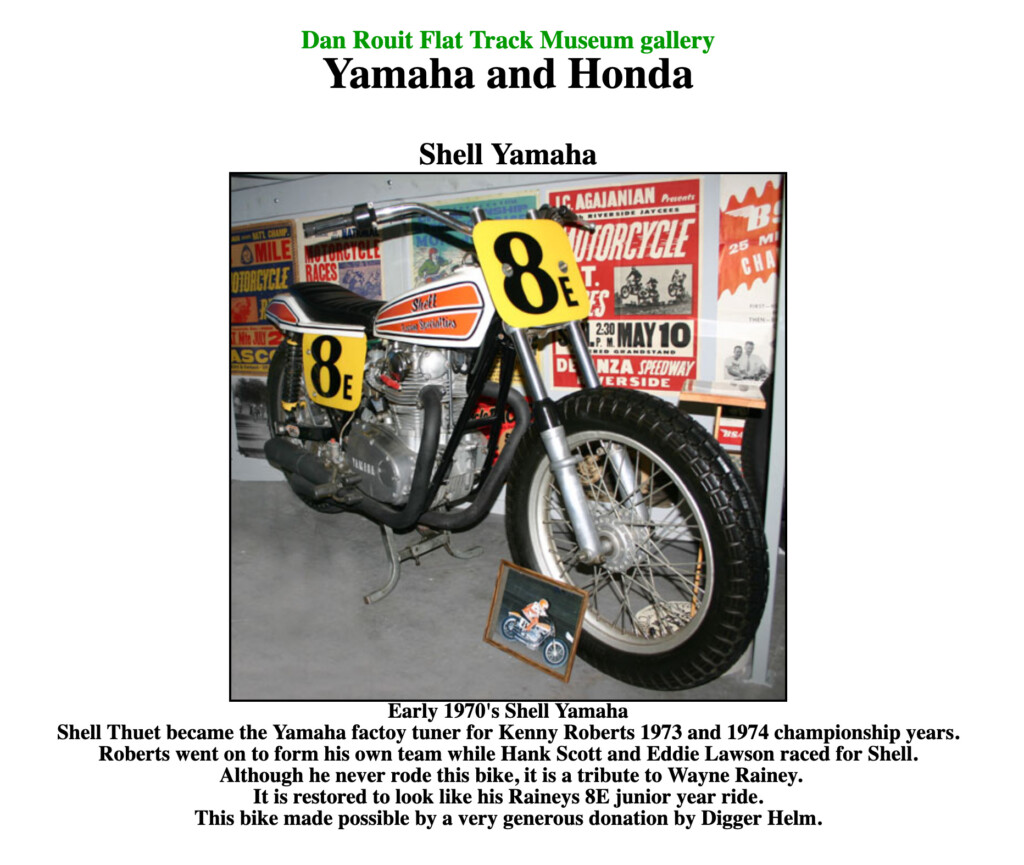
That was the first time I had ever seen so many vintage flat-track race bikes gathered in one place—more than a hundred of them, all beautifully preserved. Every one of those machines felt like a beast, sitting there silently, yet somehow still incredibly intimidating and awe-inspiring.
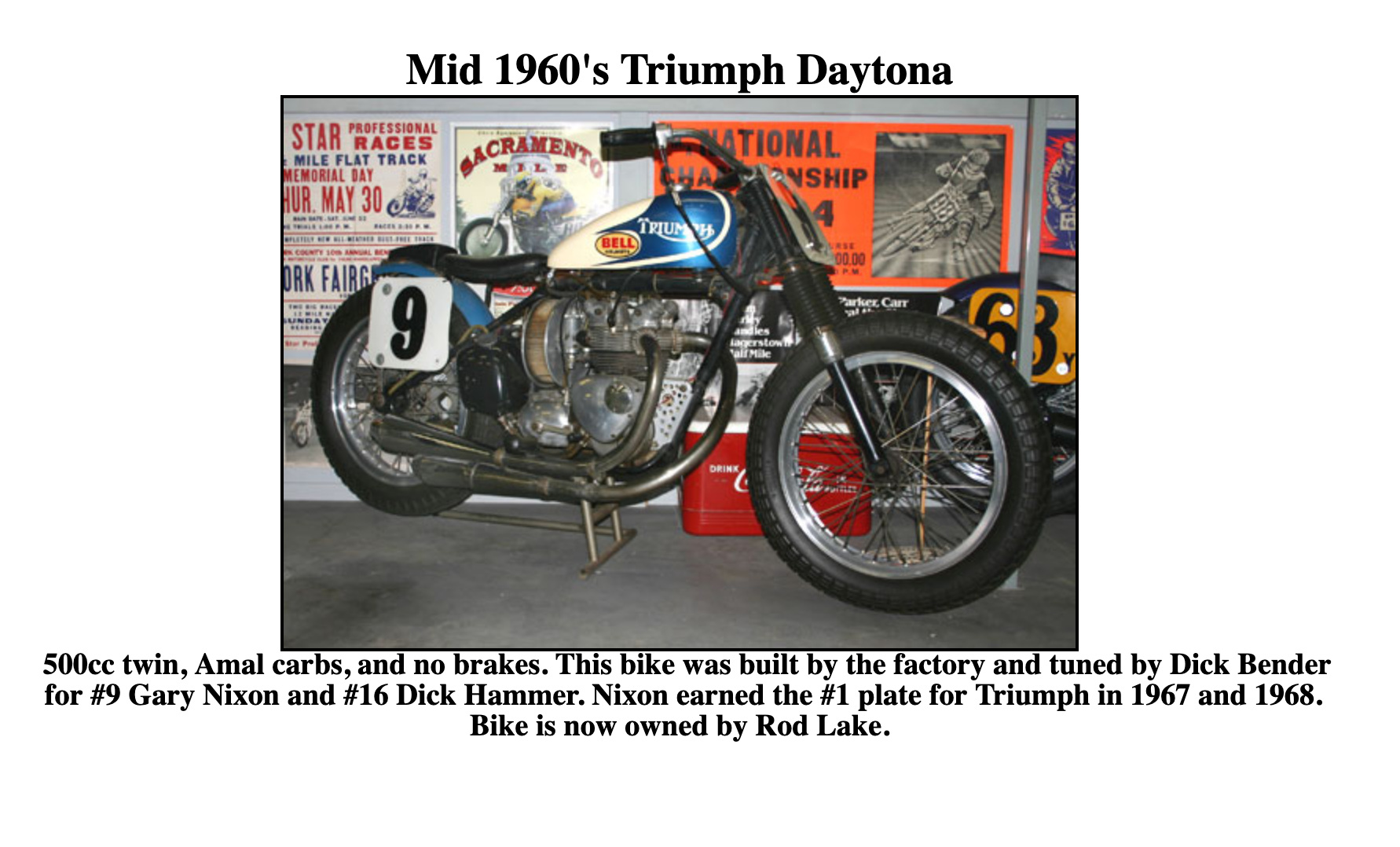
Vintage flat trackers are a niche breed, quite different from today’s street trackers. They’re simpler, rawer, and more aggressive. No front brake, oversized intake setups, an enormous rear sprocket, wide and aggressive handlebars, and a low-slung stance are among their defining features. After learning about the history of flat track racing and hearing Dan’s story, I returned home with one thought in mind: I was going to build a flat tracker of my own.
And so the process began—designing, sketching, fabricating, revising, and fine-tuning, over and over again. Four years later, the bike was finally born. Her name is Moana. The name evokes the ocean, and I’ve always loved the sea.
The Build
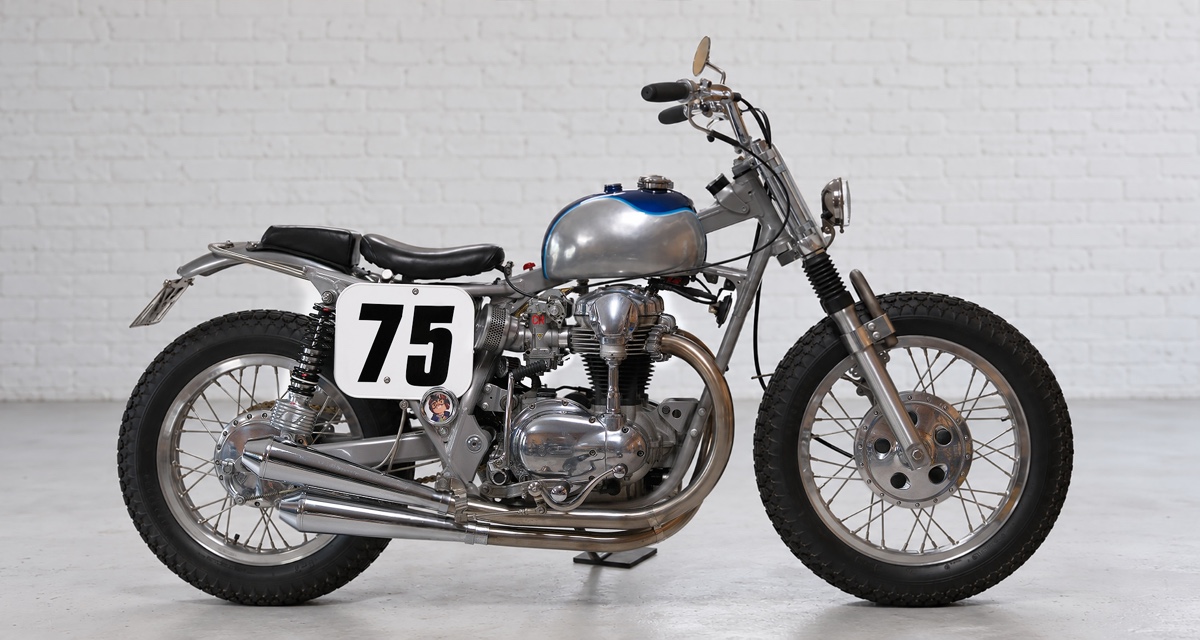
The idea behind Moana was simple: to recreate as many of the defining features and classic elements of vintage flat track racers as possible. The two main concessions to road use are the front brake and the headlight, both of which I might need on city streets. The headlight is quick-release and only fitted when I ride on the road.
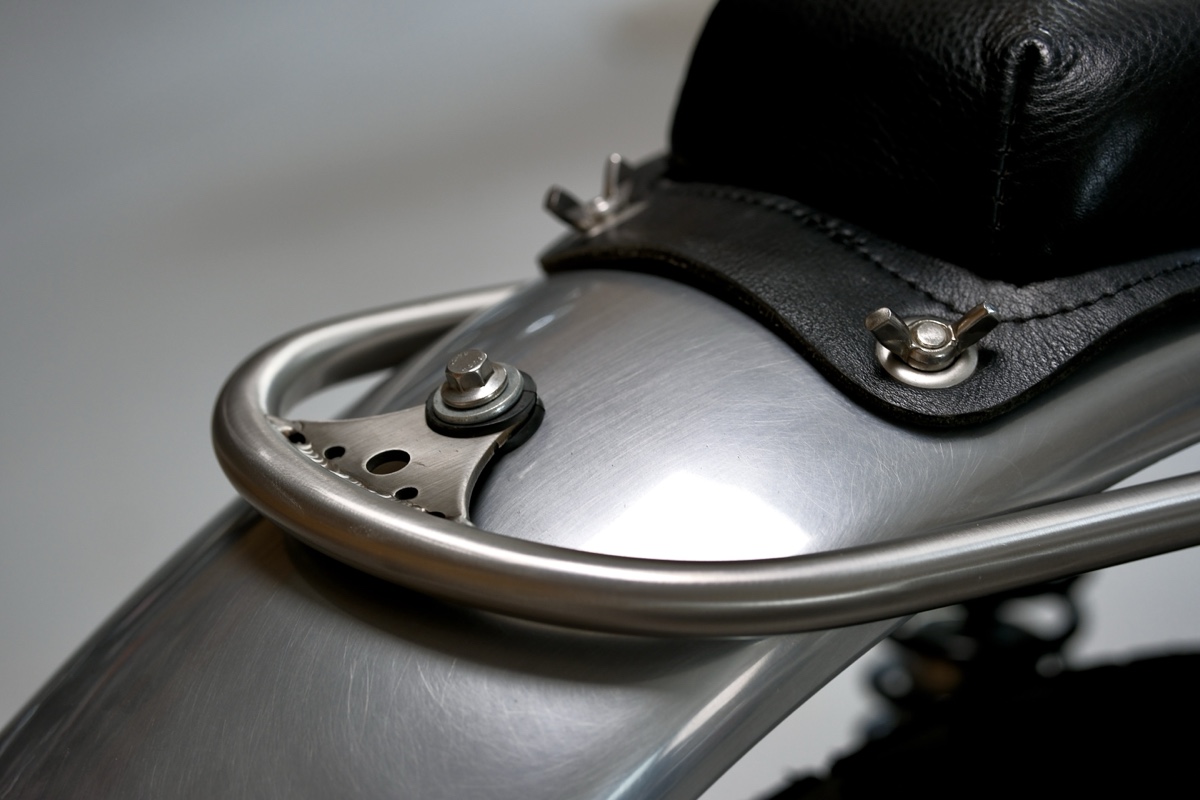
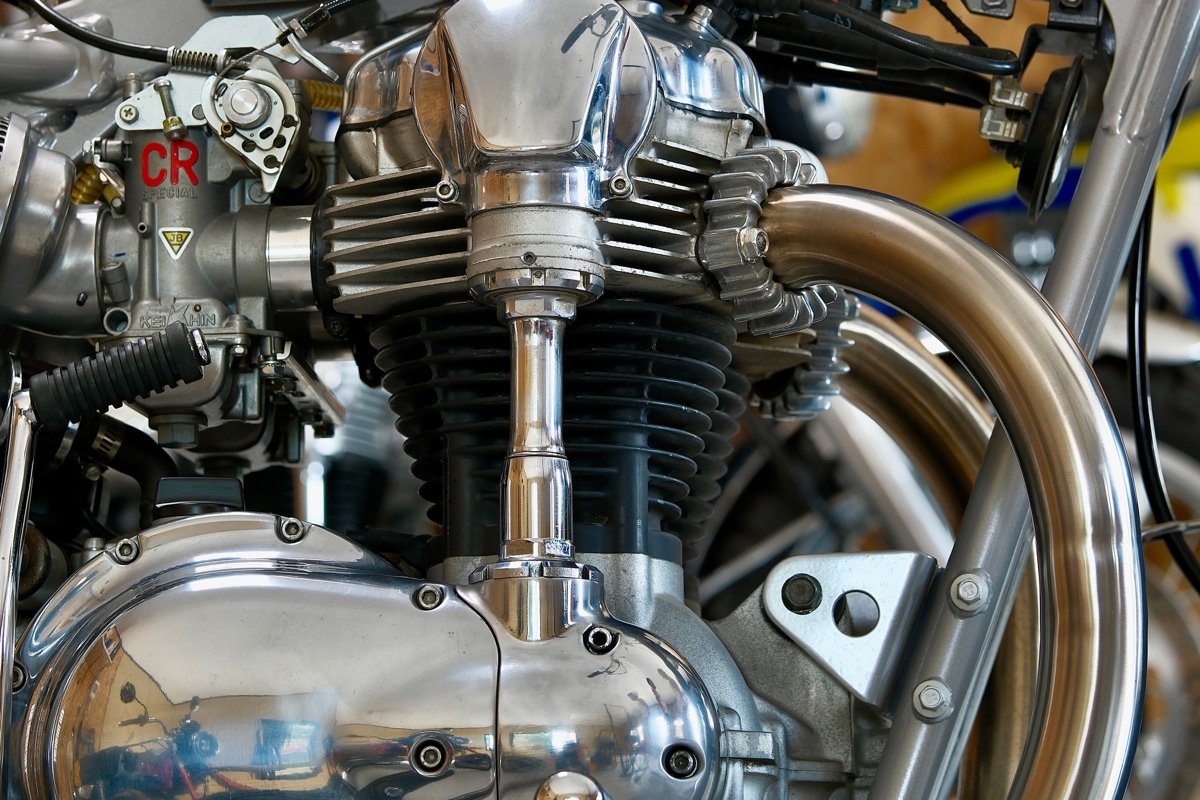
The frame and engine are from the original W650. Everything else is custom-made. To accommodate the new high-mounted rear fender, I cut off the rear section of the frame and fabricated and welded a completely new tail section.
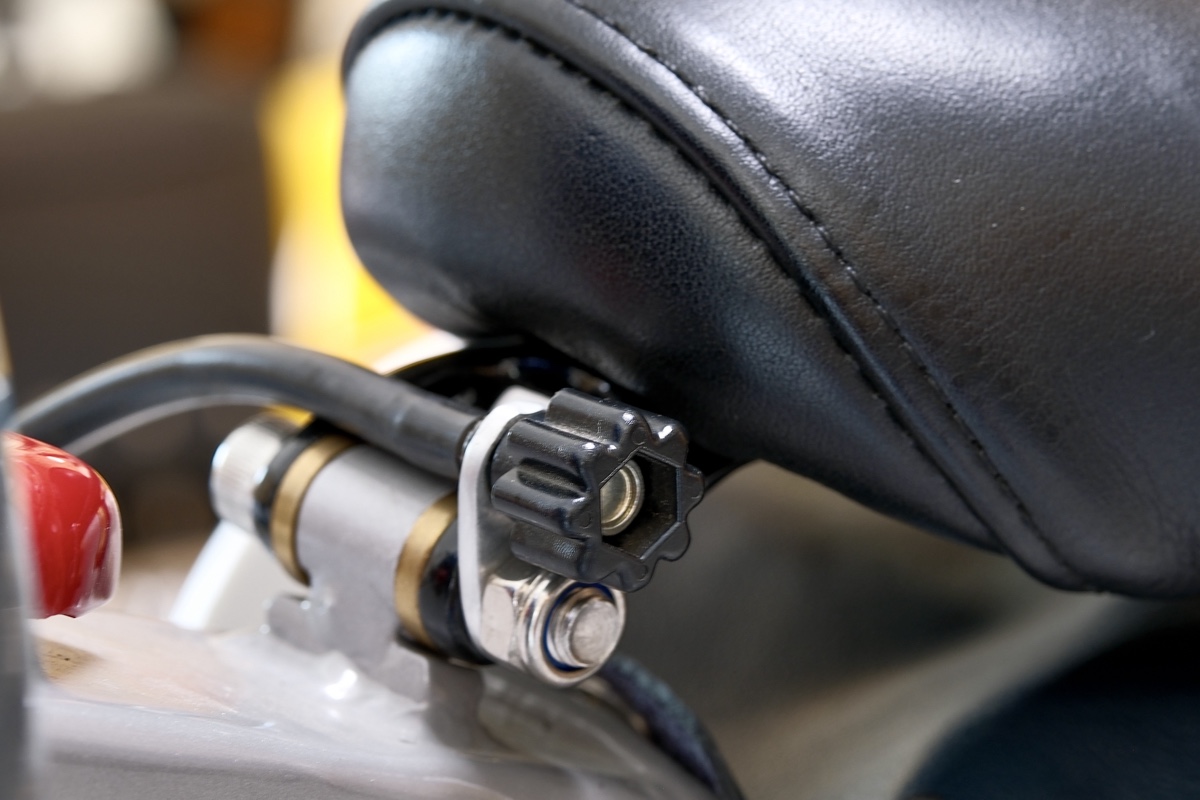
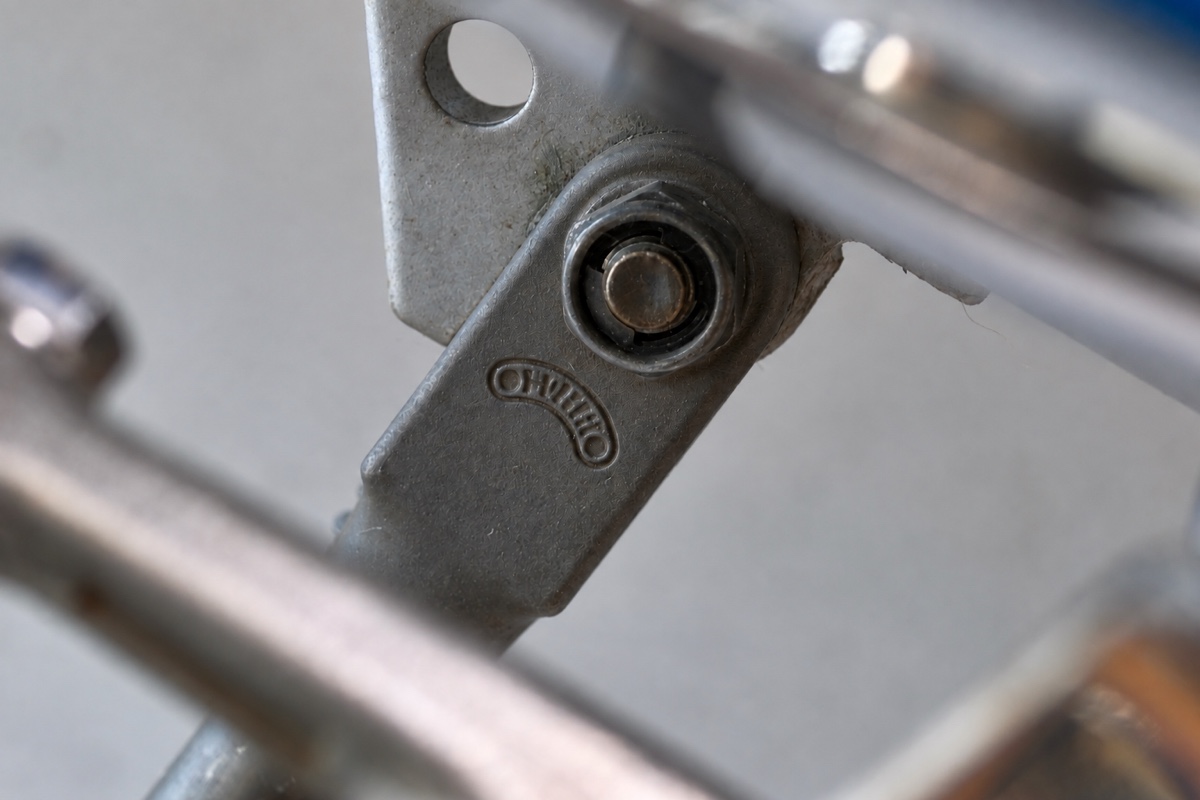
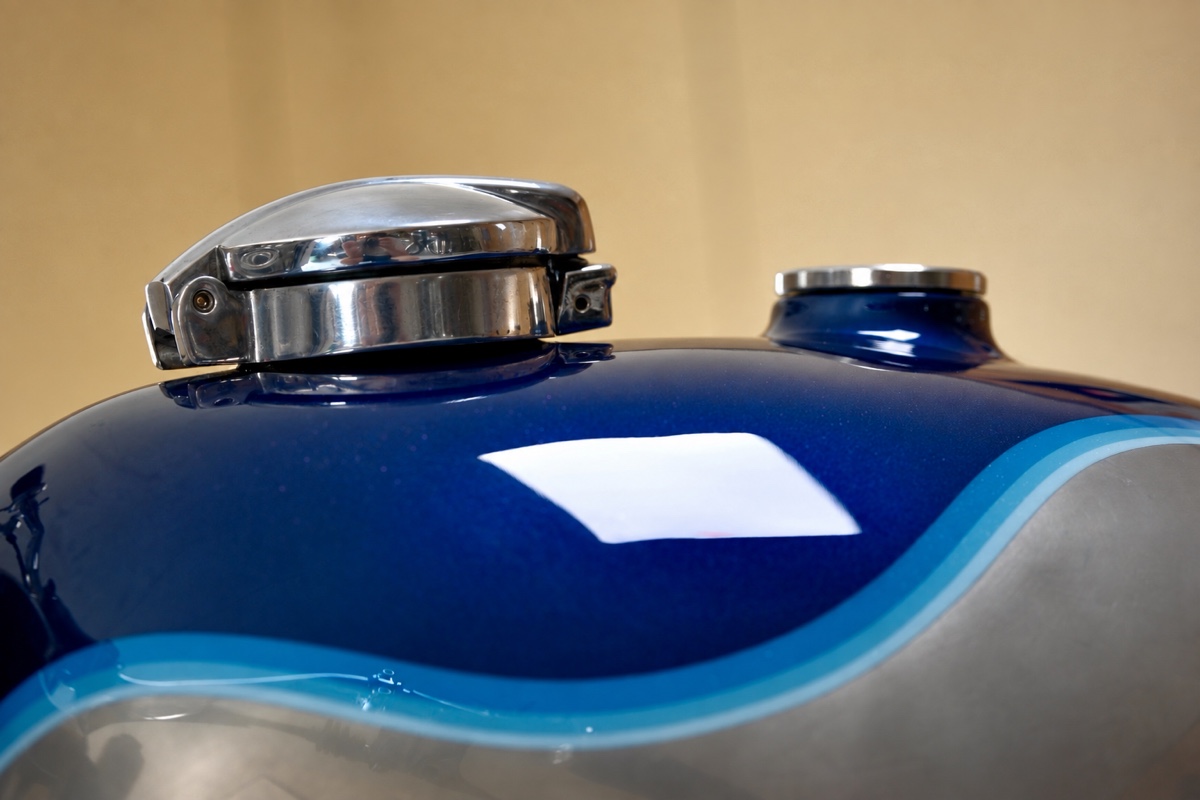
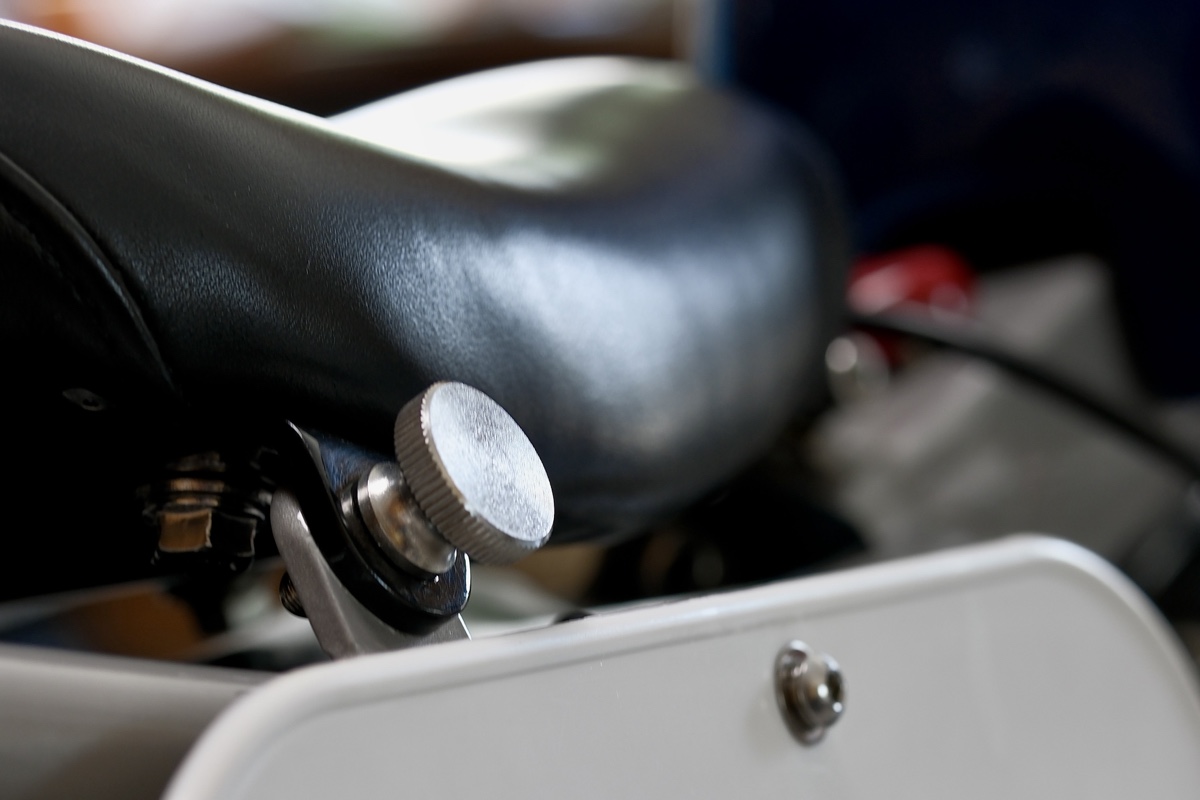
The fuel tank is shaped like a smooth, rounded stone, the kind you’d find along the shore. It’s secured using a threaded mounting system.
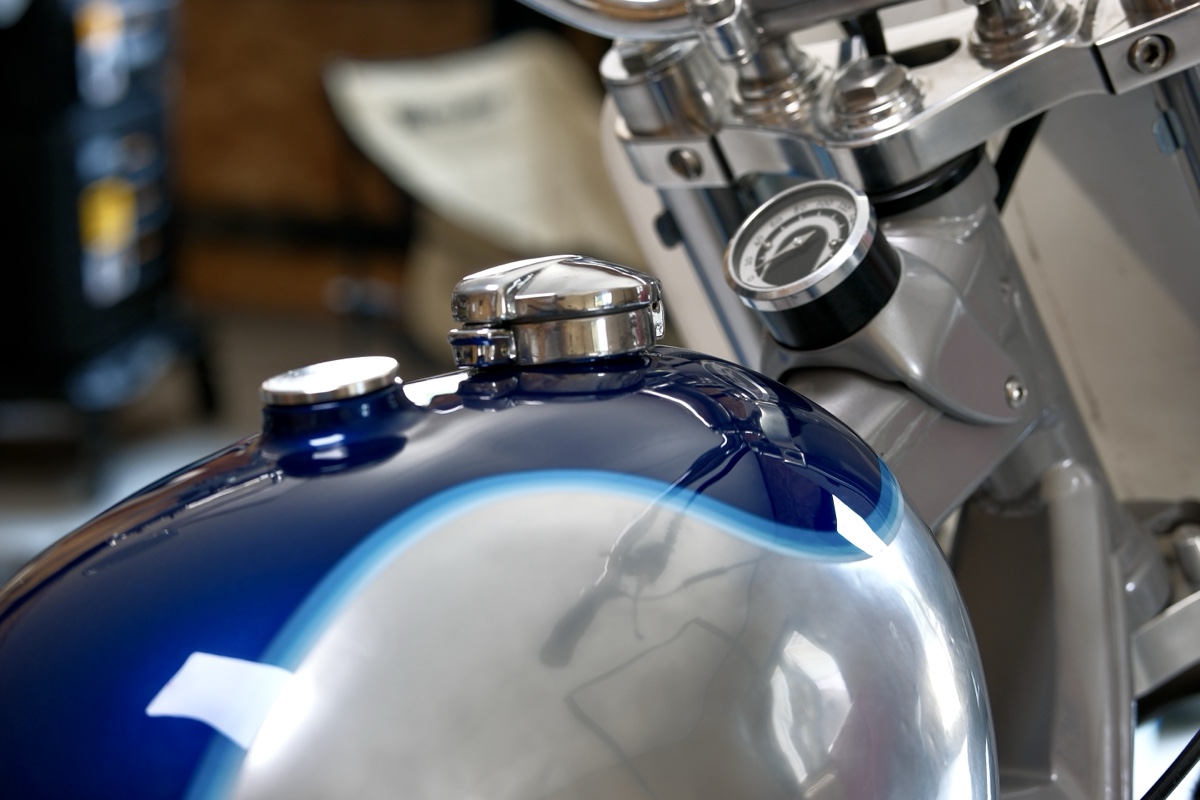
To simplify the electrical setup, I made the battery compartment extremely compact and fitted a tiny lithium battery. I also tried to keep the wiring and cable sheathing to an absolute minimum throughout the bike.
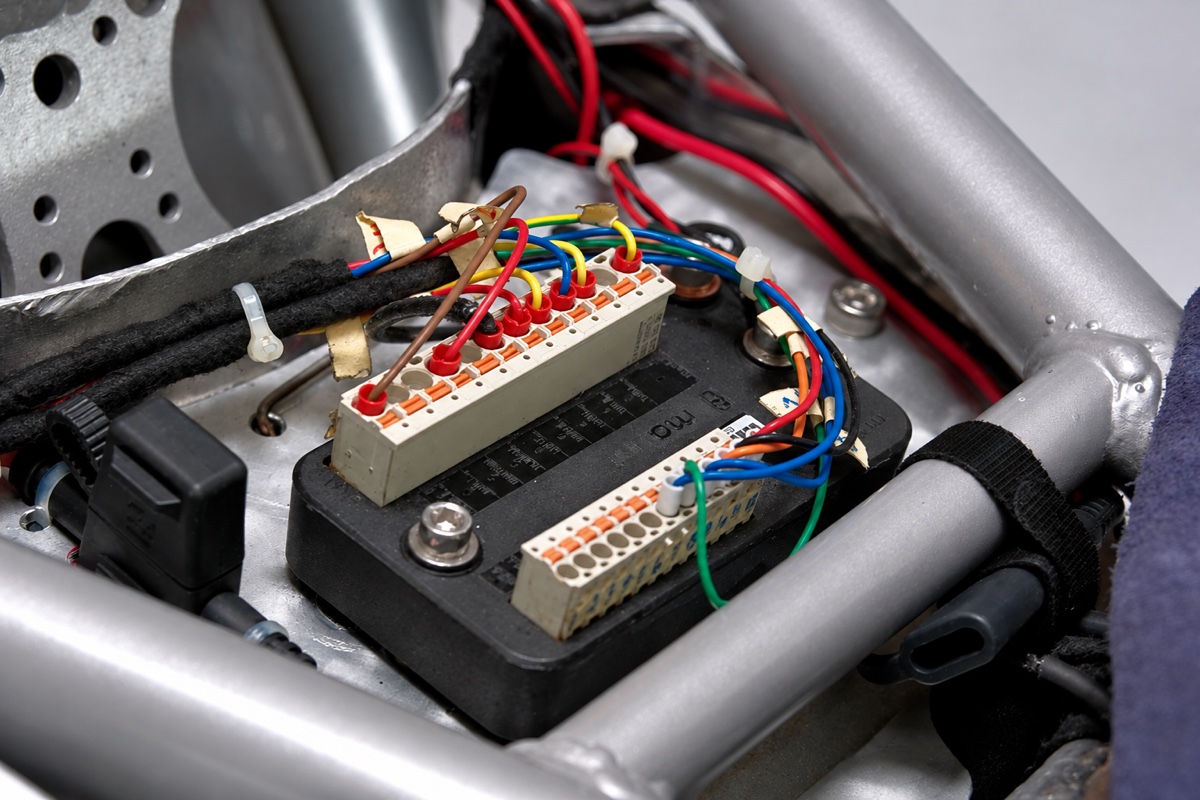
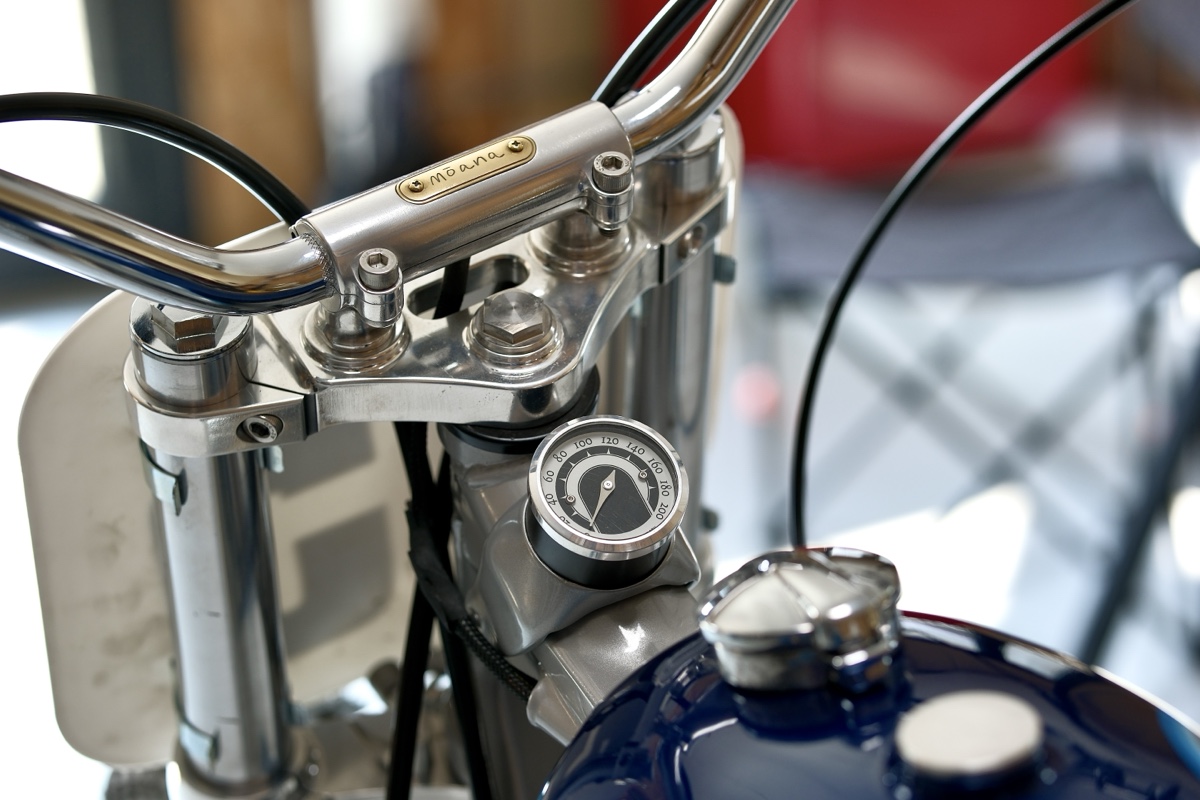
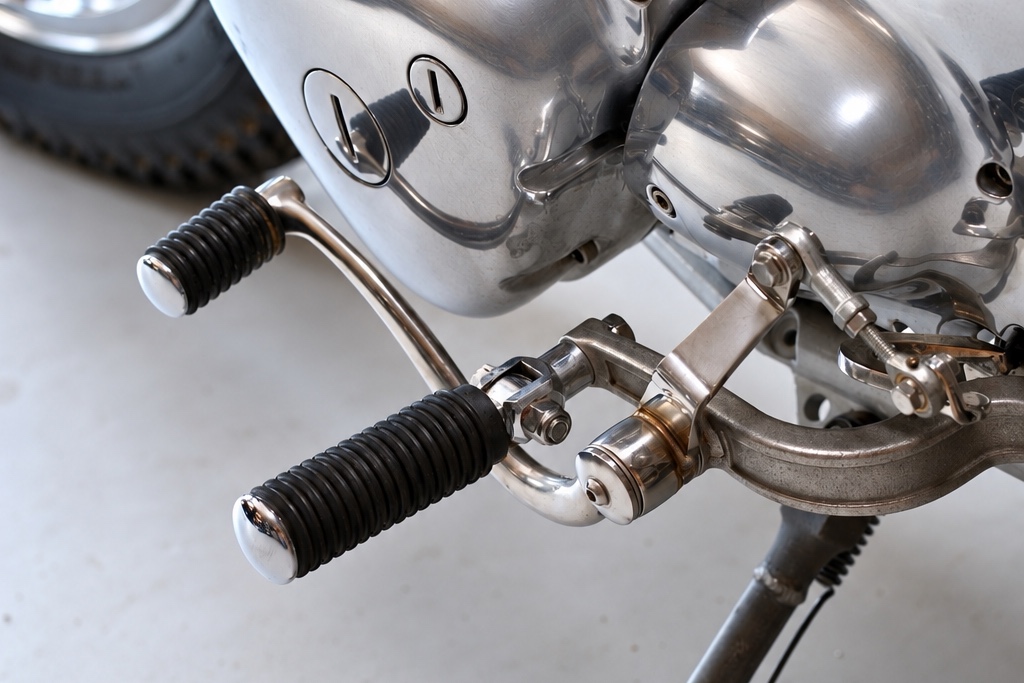
The upper and lower triple clamps were redesigned from scratch and CNC-machined. I brought the handlebar back with me from Brat Style. The handlebar switches, mirrors, side stand, and foot pegs are all from Motor Rock. Their products have a character and charm that I really love.
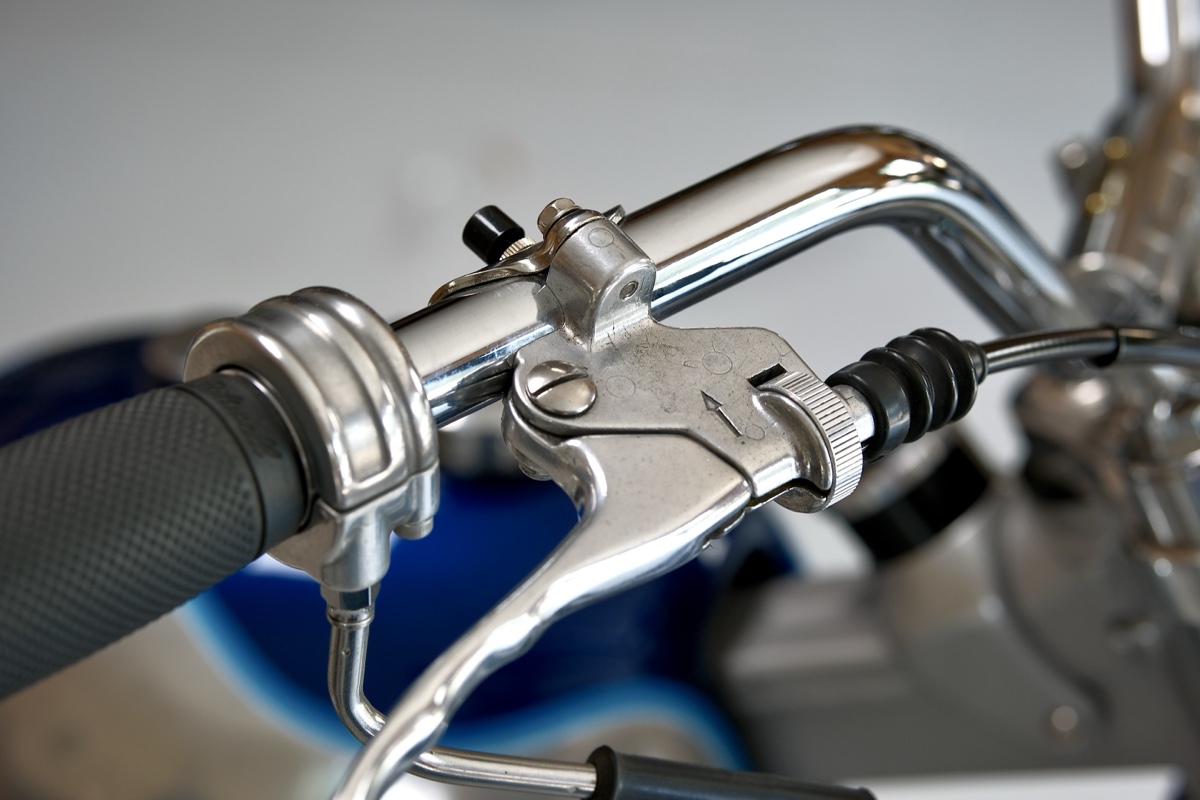
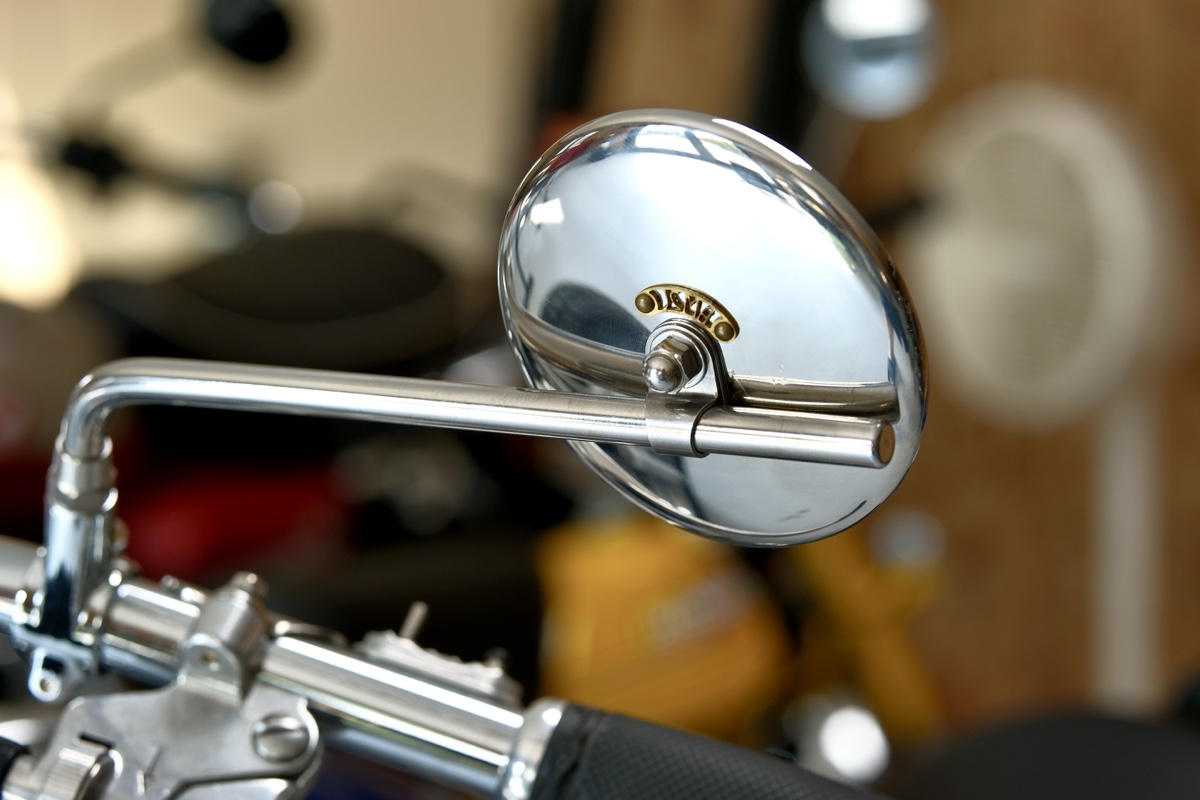
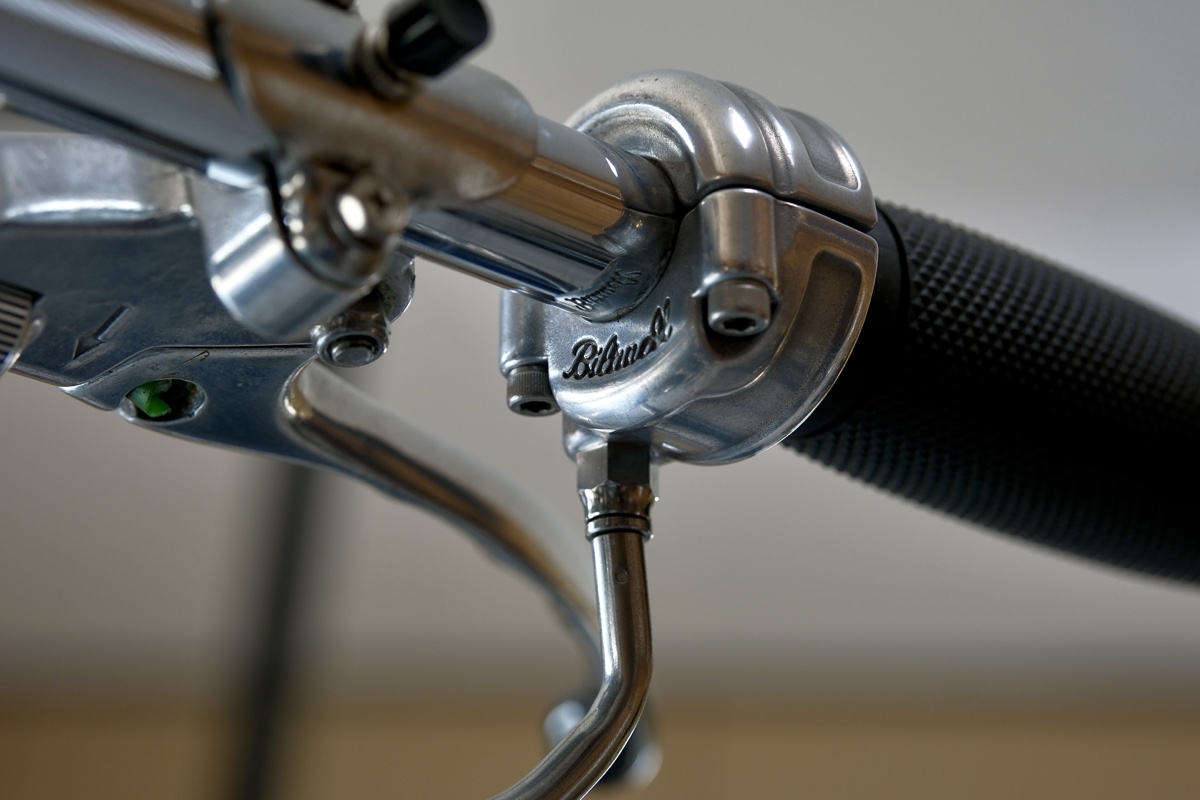
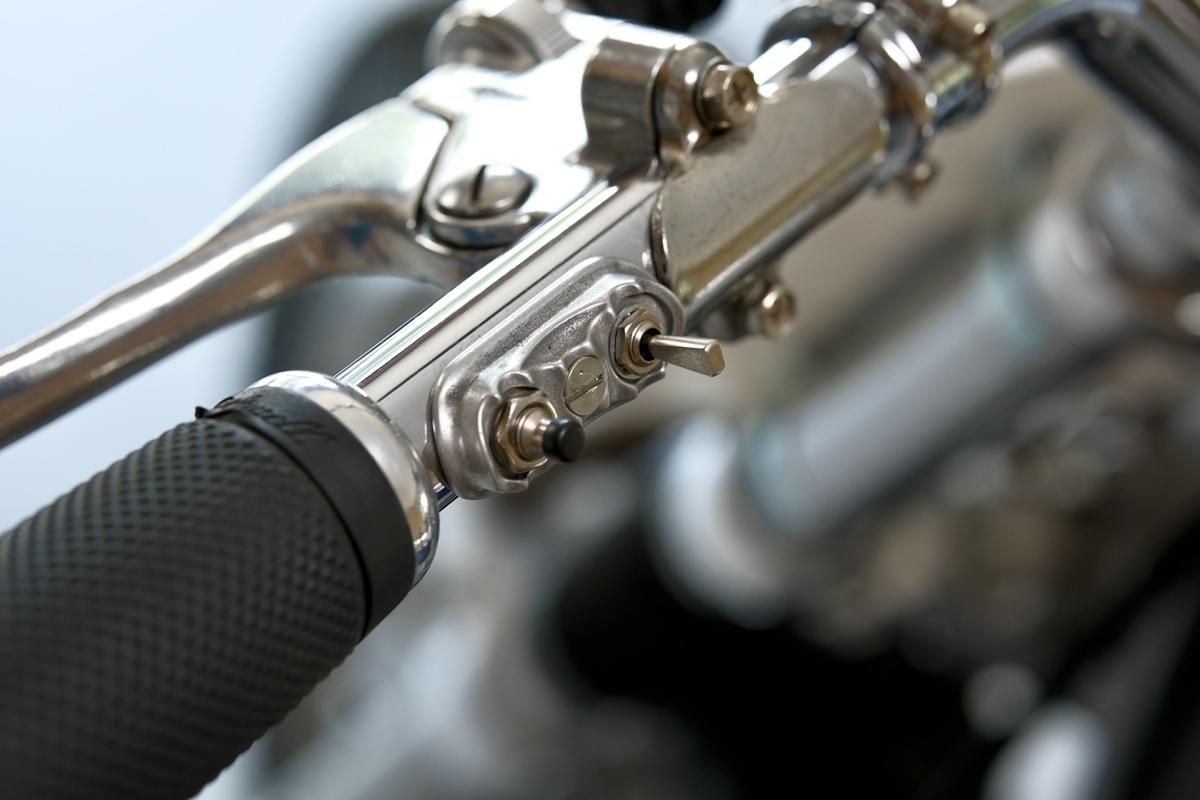
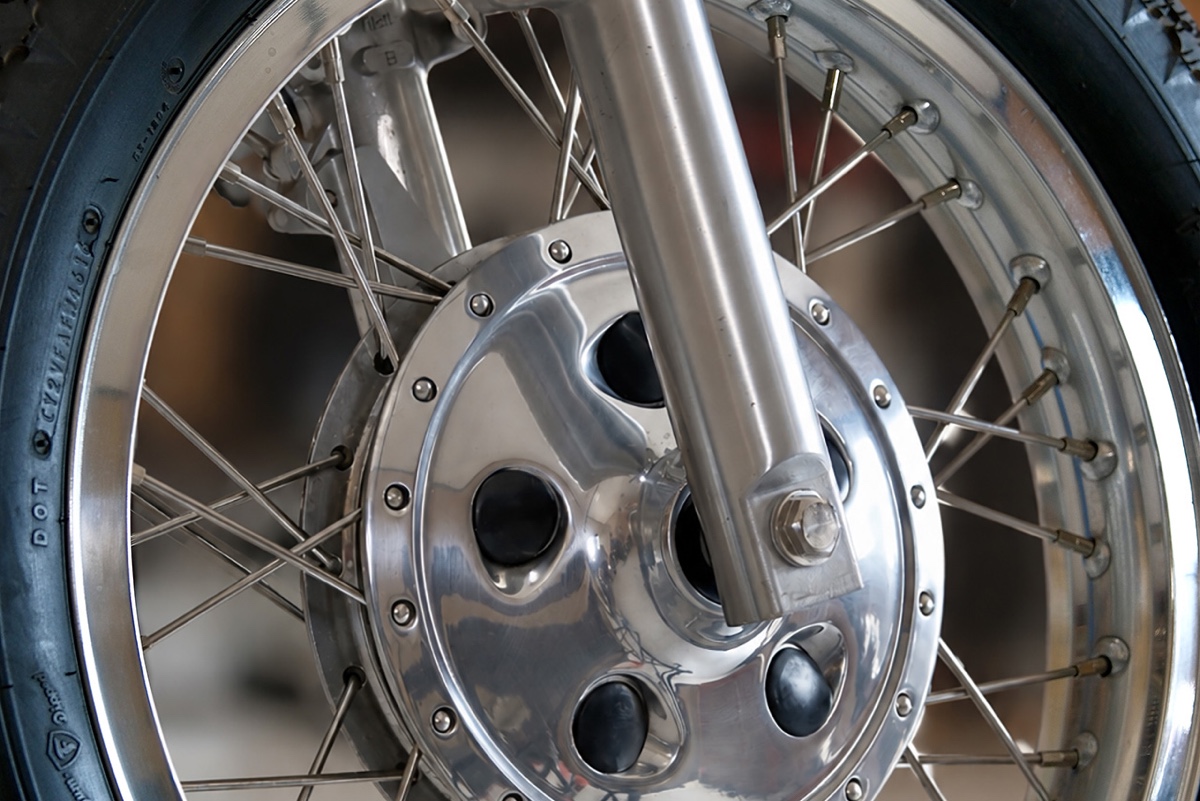
I’ve always had a soft spot for drum brakes, so I replaced the original front brake with an SR400 drum brake. The front and rear rims are custom H-profile rims made in Taiwan, paired with classic Firestone cross-pattern tires.
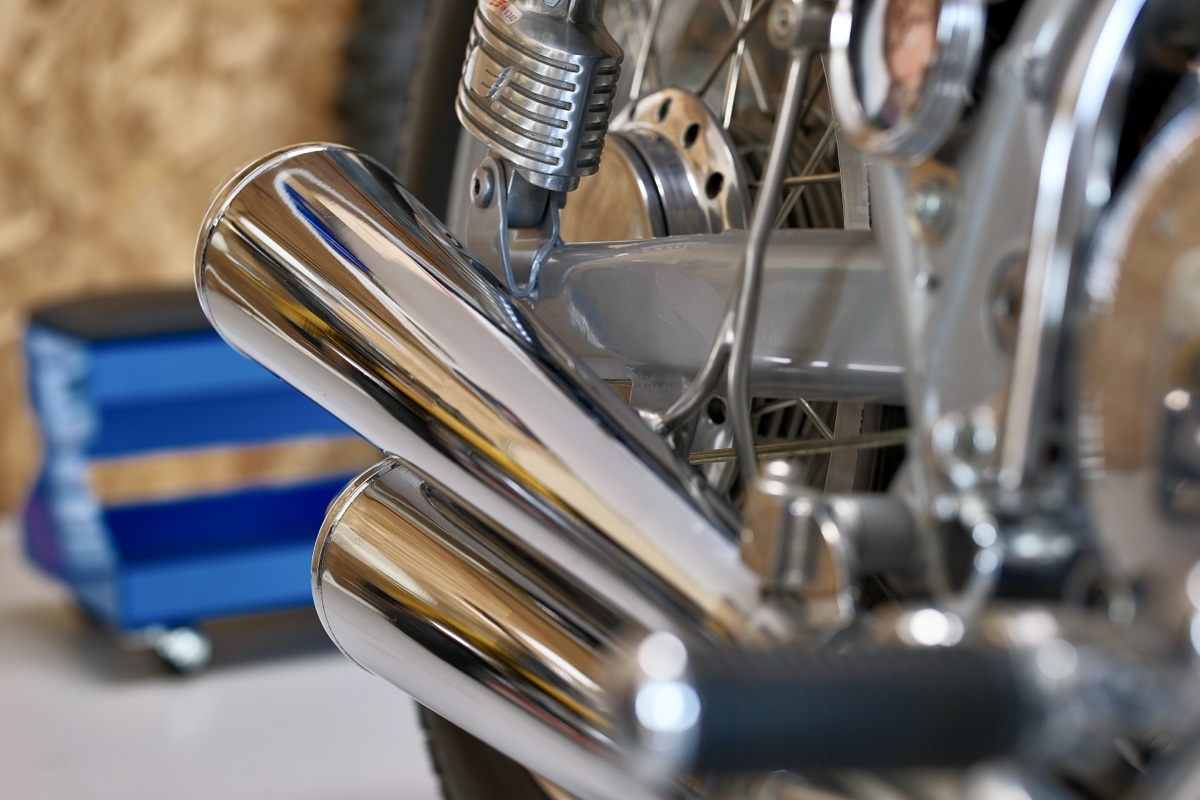
The exhaust was one of the most challenging parts of the build. I went through several revisions before settling on the shape I’m happy with today. It had to be a twin-outlet setup on one side, without compromising the overall lines of the bike. It sounds pretty good, too.
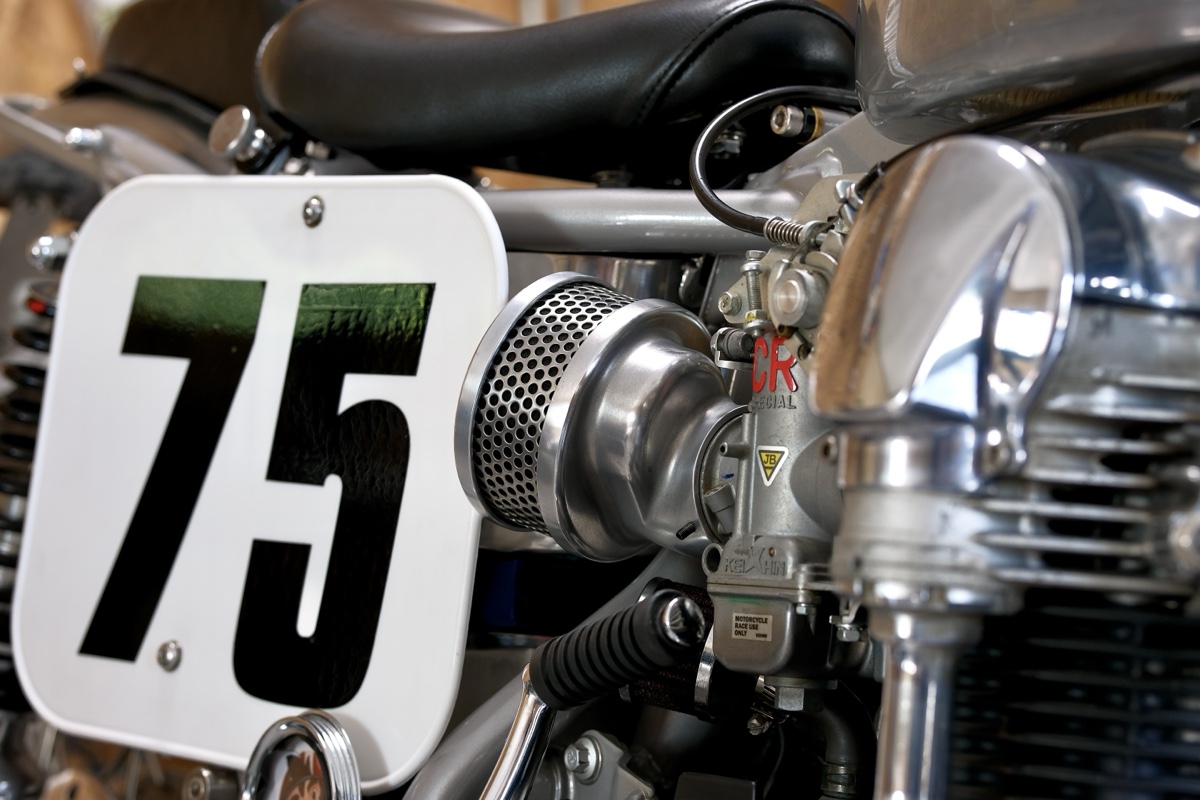
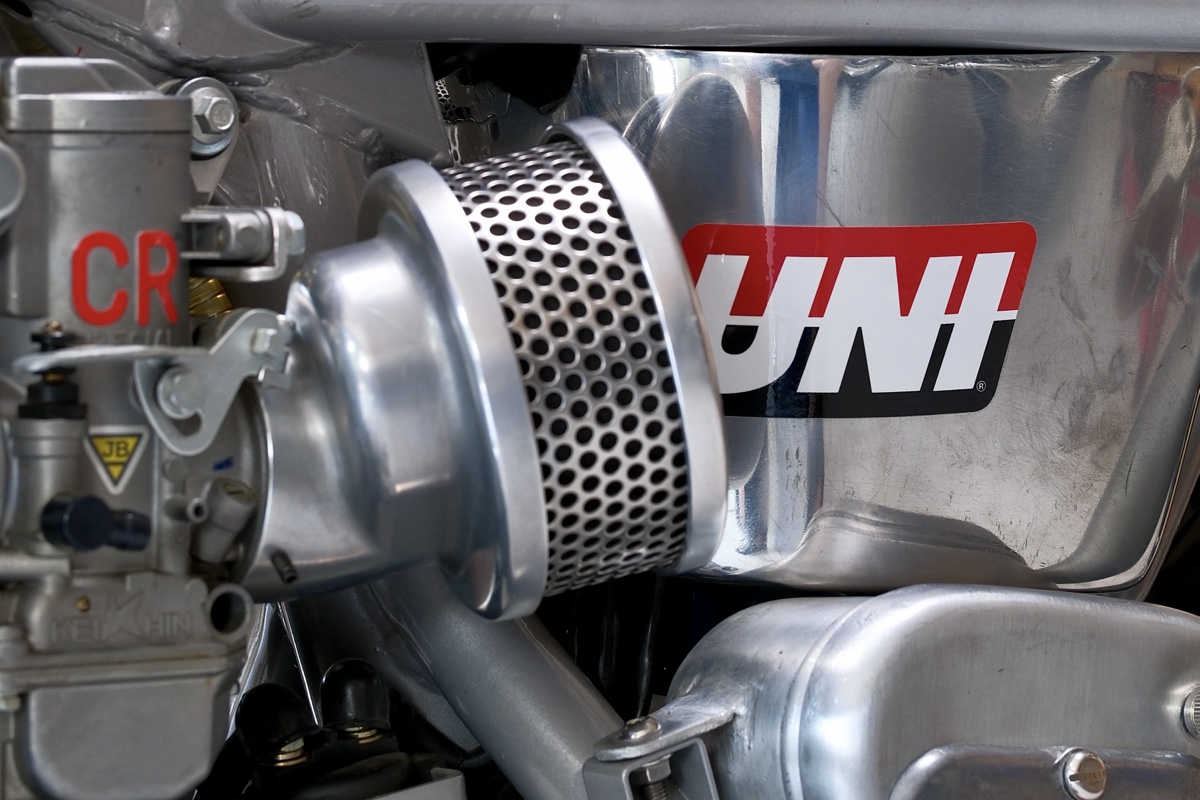
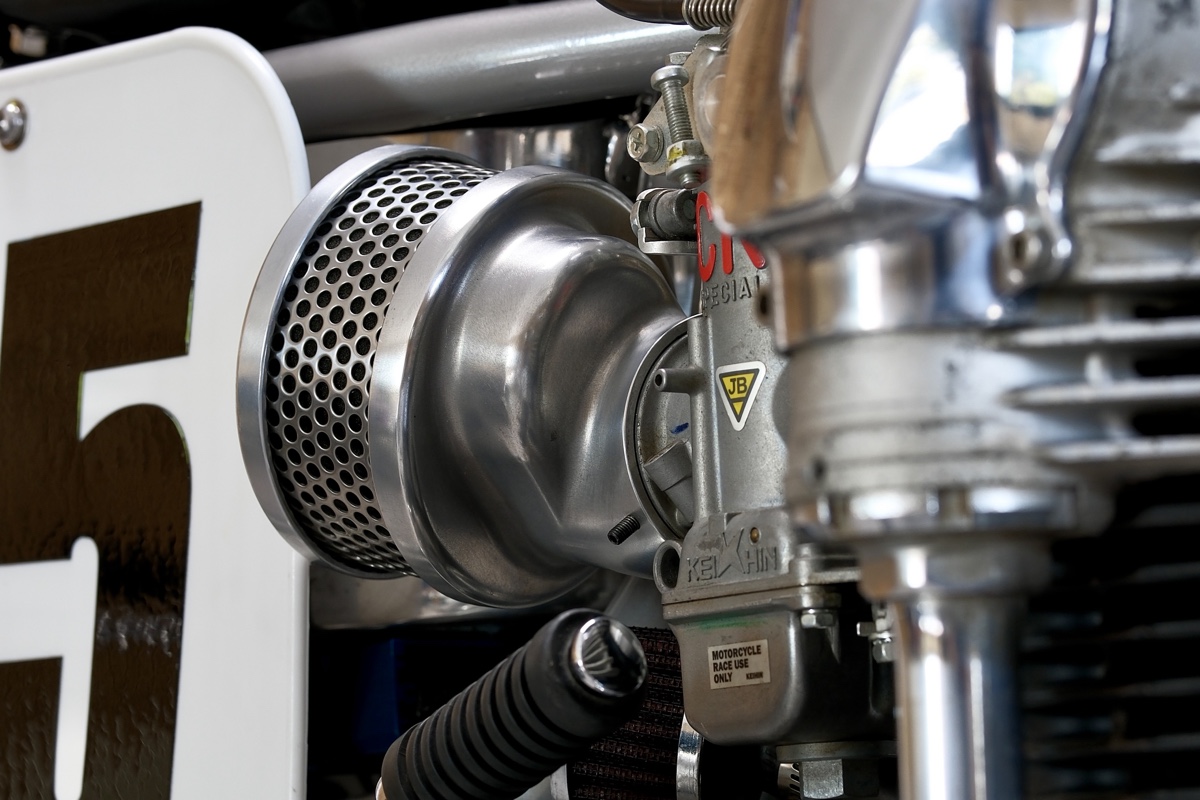
To improve throttle response while retaining that old-school throttle feel, I sourced a brand-new CR W650 Special carburetor setup from overseas. I designed a pair of air-filter housings specifically for it and had them machined, with the finish carefully worked to recreate the texture of cast metal as closely as possible.
For the electrics, I went with an extremely minimalist setup: motogadget’s mo.unit, their tiny gauge, and their three-in-one taillight, which combines the running light, brake light, and turn signals. I believe it’s one of the smallest and brightest taillights available. The entire unit is about the size of an M8 bolt.
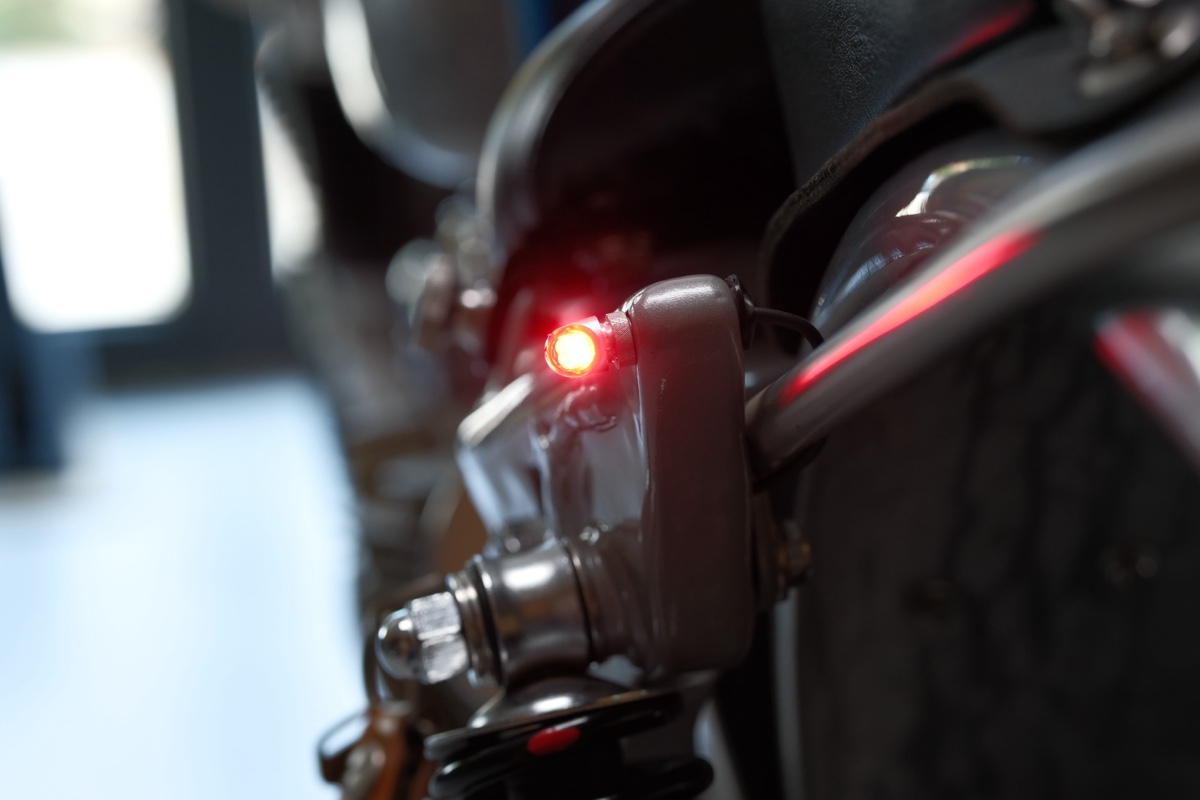
These three motogadget components cover all my electrical needs. I deliberately avoided using their other electronic products, though, because I didn’t want too much electronic equipment on this bike. I wanted to keep things simple.
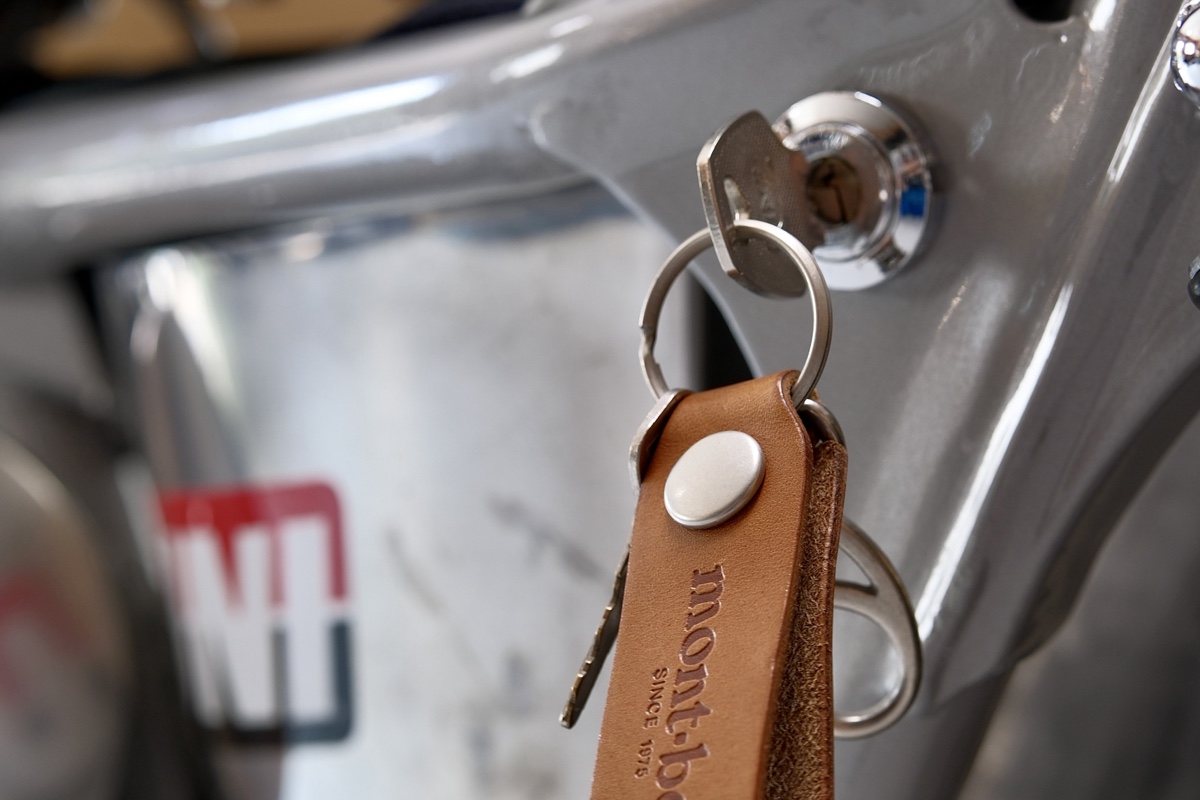
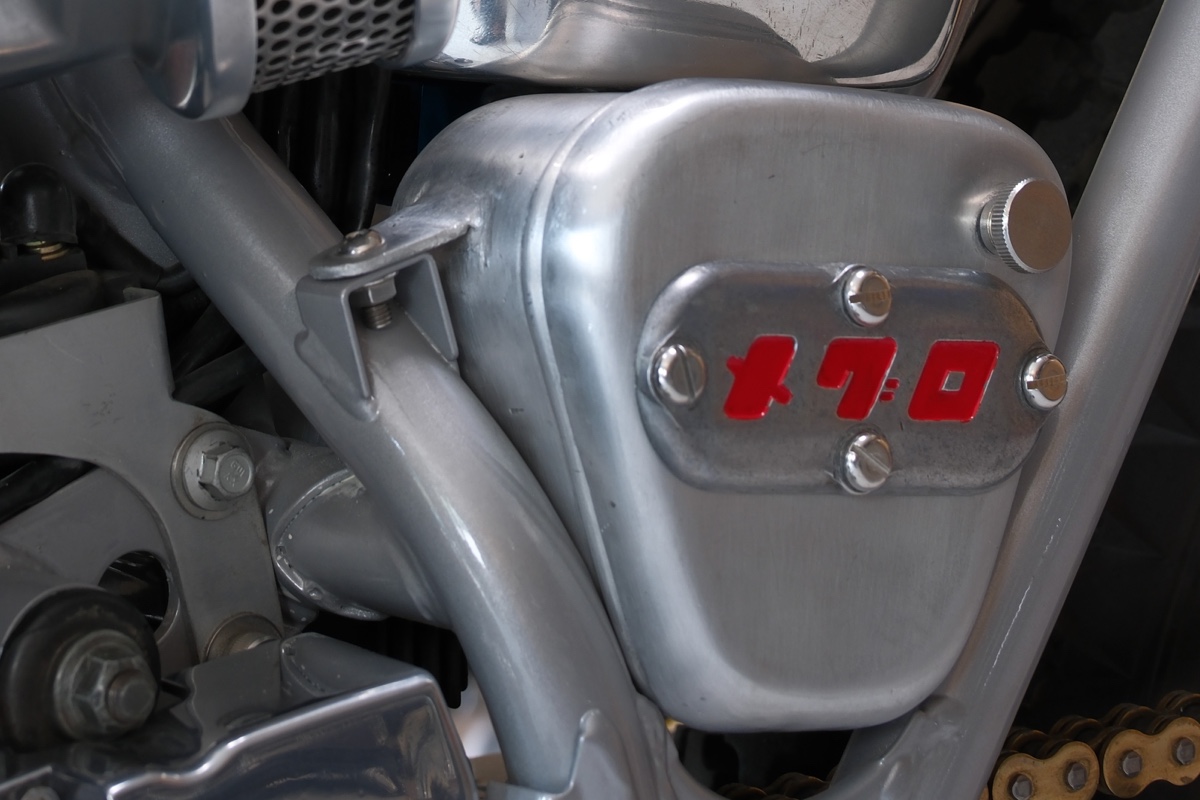
The ignition switch is from a Harley-Davidson Sportster, allowing me to retain a proper physical key. I also made a separate toolbox for the left side of the bike to carry essential tools. The box features a 170 emblem, which is actually a part from a Meguro Z7 engine. I picked it up at an auction, and it looks right at home there.
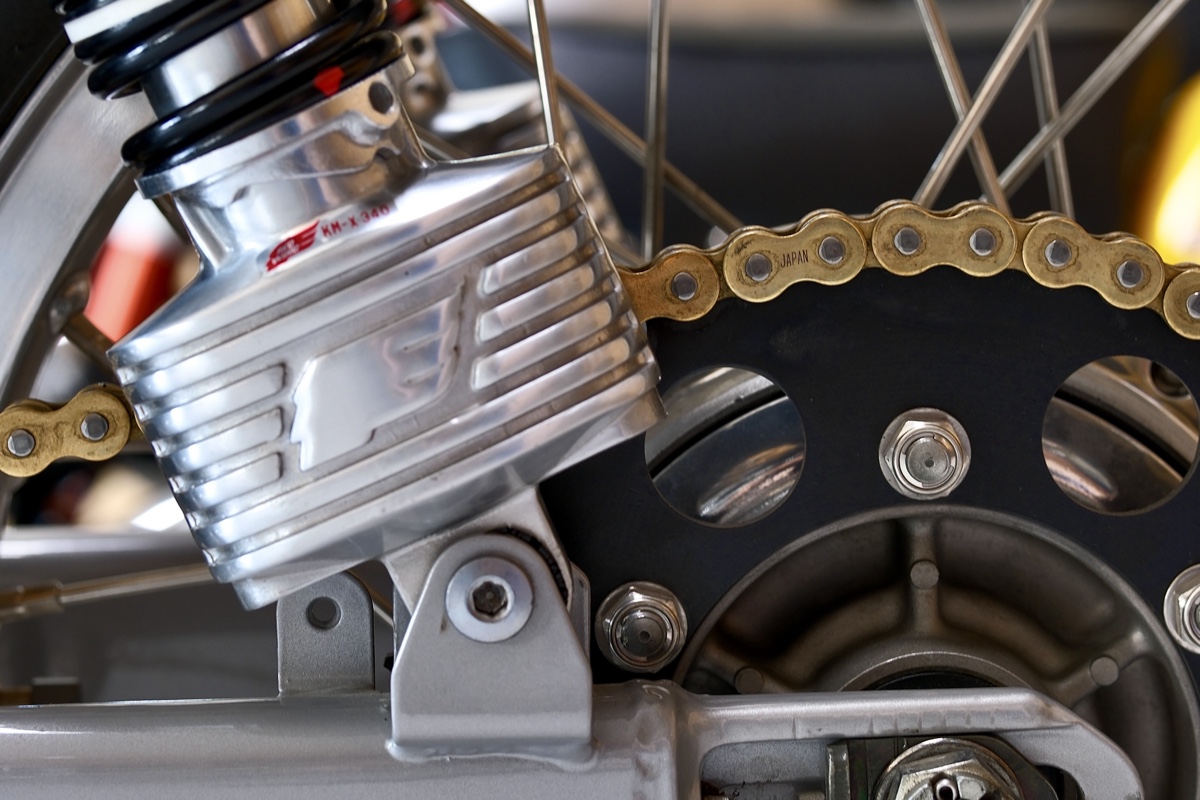
The rear shocks deserve a mention of their own. I originally used a set of Öhlins, but modern performance shocks didn’t feel right on a bike inspired by the flat trackers of an earlier era. Instead, I tracked down a rare set of 1970s Red Wing shocks. I’d been looking for them for years, and I suspect they’ve been out of production for a long time. When I finally found a set, they were still in new-old-stock condition.
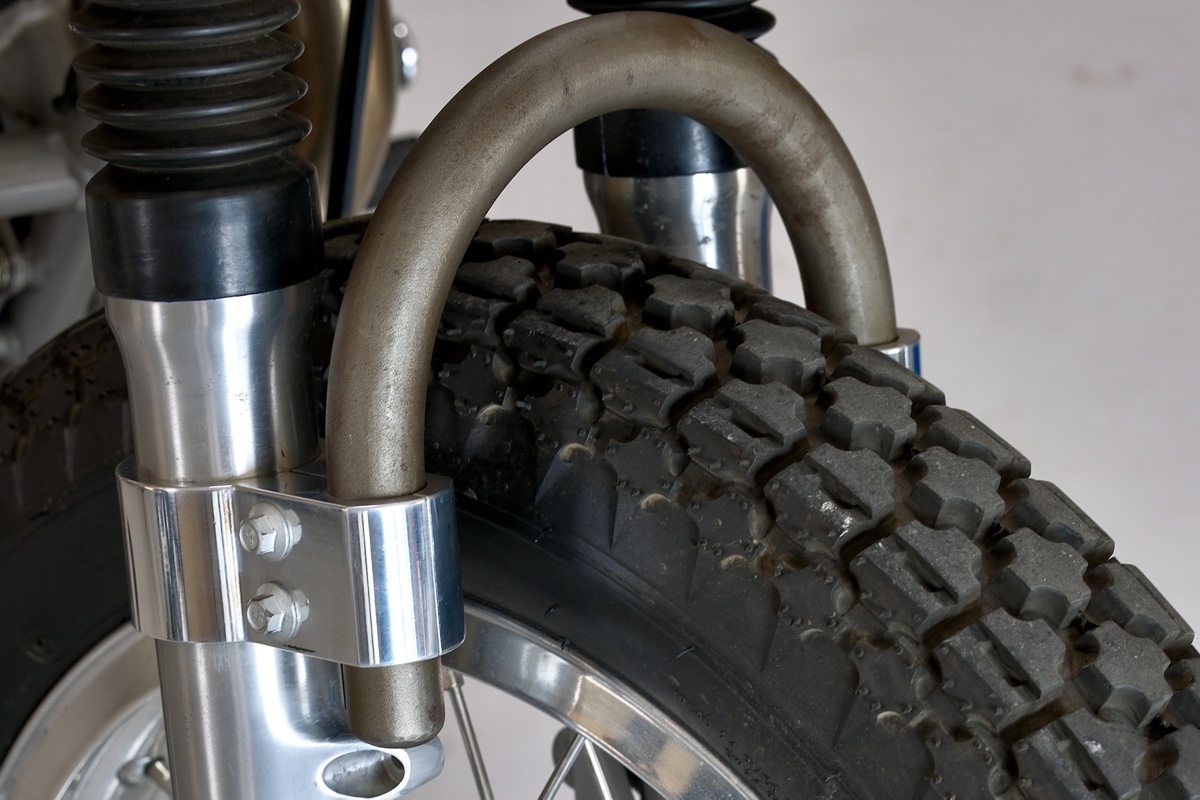
At the front, I fabricated a U-shaped fork brace and gave it a phosphate finish.
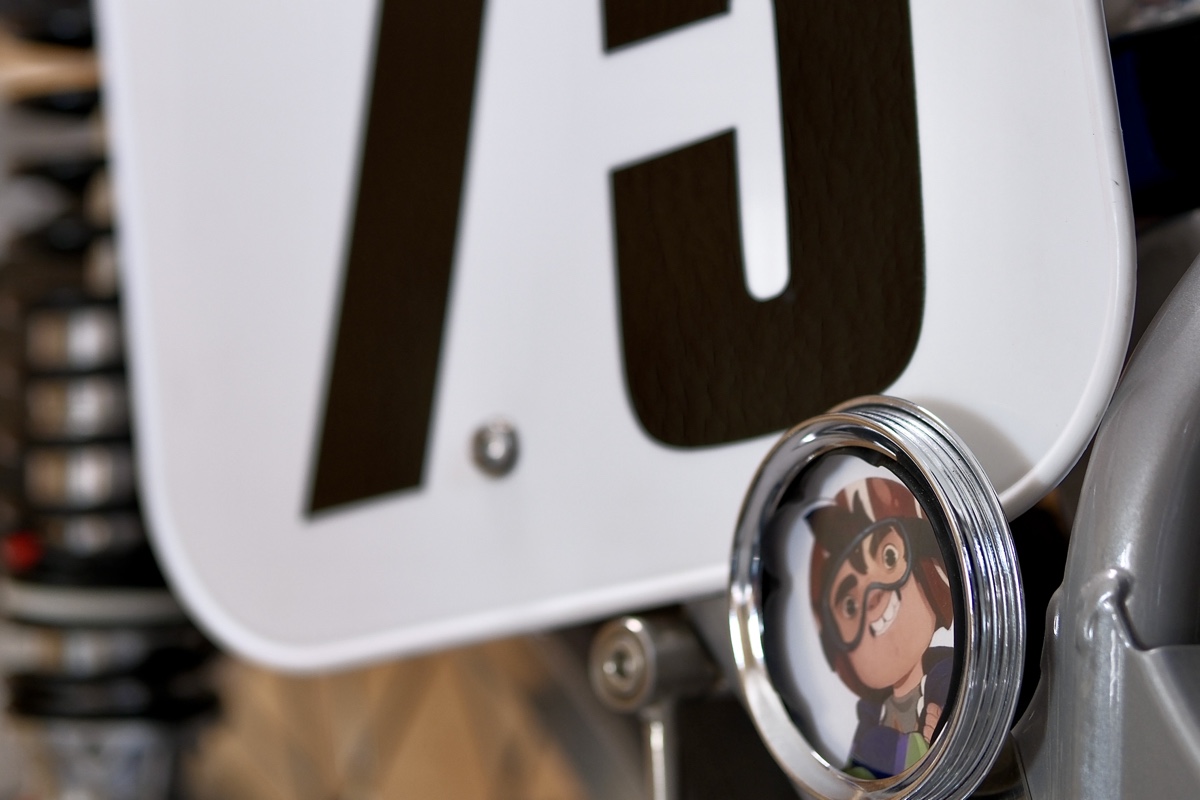
Finally, I had the frame e-coated and painted the tank in the ocean-inspired finish I’d envisioned from the beginning. I fitted a number plate in the traditional American flat-track racing style, along with a vintage-style tax disc, which is purely a personal touch.
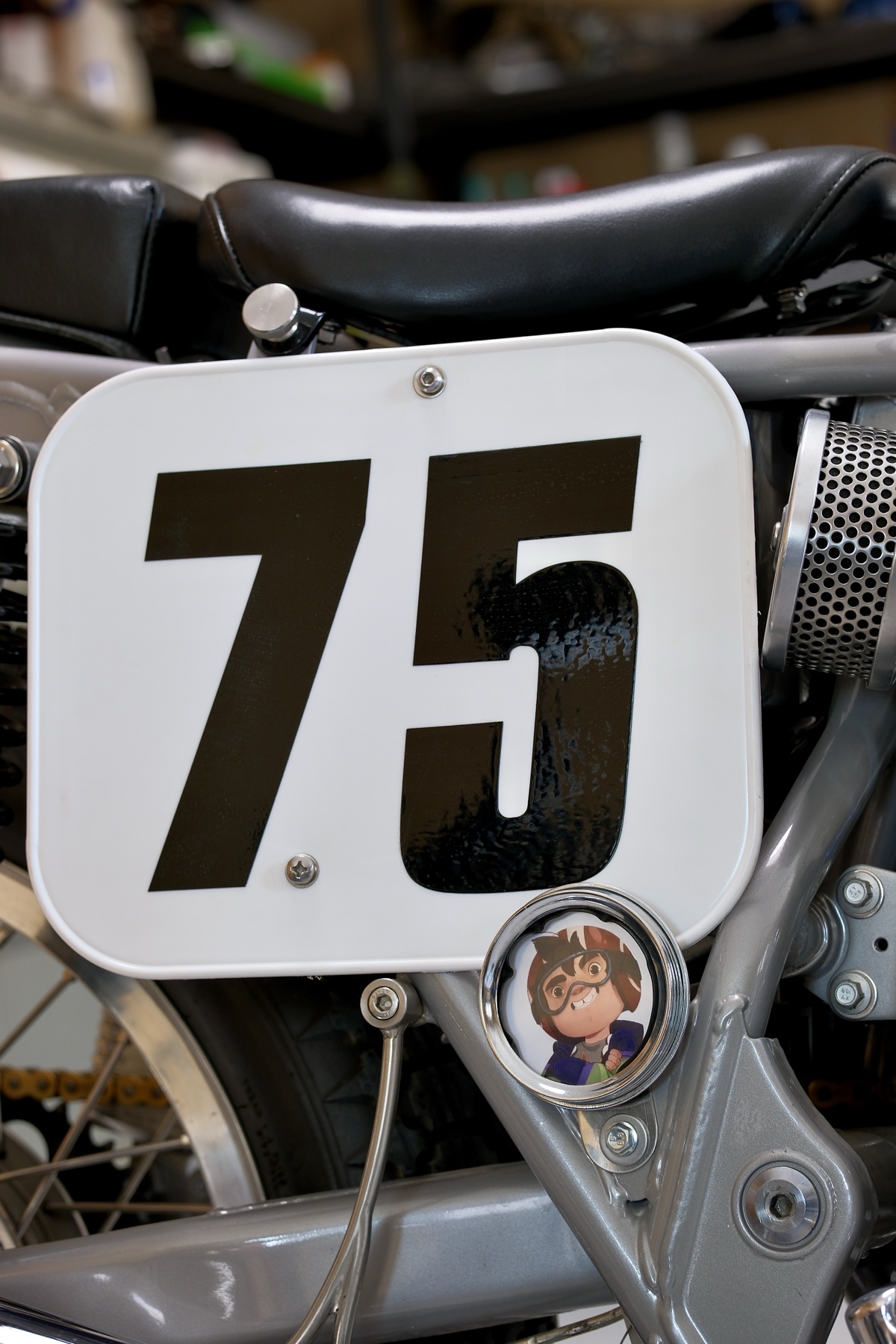
Inside the tax disc is a cartoon boy named Mateo, the main character from an indie game I created.
About the Builder
When I was a kid, my family had a 50cc. My mother rode it every day to take me to school. Perhaps that was where my connection with motorcycles began, shaped by the time and place I grew up in. In the past years, I’ve rode and collected a few bikes in the garage: Kawasaki W650, W800, W1, Suzuki DR650, Yamaha XS650, SR400, Husaberg FE450, and Monkey Z50. Most of them are restored over time for collection, while a few are ones I ride regularly.
The first time I ever rode a bike, I had never had any training and didn’t have a license. It was a friend’s bike, and he showed me how to start the engine and shift gears. The feeling I had that day is almost impossible to put into words. It was probably one of the purest forms of happiness a person could experience, even on such a small engine, moving at such a modest speed.
I think many riders know exactly what I mean. Once you’ve experienced that feeling, you can never quite get it back. Especially after you become a father and find yourself caught up in the demands of everyday life, that kind of freedom seems to belong to another time.
It started with restoring old motorcycles, then gradually moved on to making small parts of my own. I wanted to build the things I had in mind rather than settle for what was available, so I began teaching myself CAD, sheet-metal work, welding, restoration etc., and whatever else the work required.
Moana is a gift I wanted to leave for my kid. I sometimes wonder whether internal combustion engines, or even gasoline will still be around by the time they grow up. But I wanted to preserve something of this era for them — the roar of an engine, the smell of exhaust, the raw, mechanical feeling of a machine brought to life. I want them to have the chance to experience, even just once, the same kind of joy that was once given to me.
Follow the Builder
Instagram: @jayshang


