
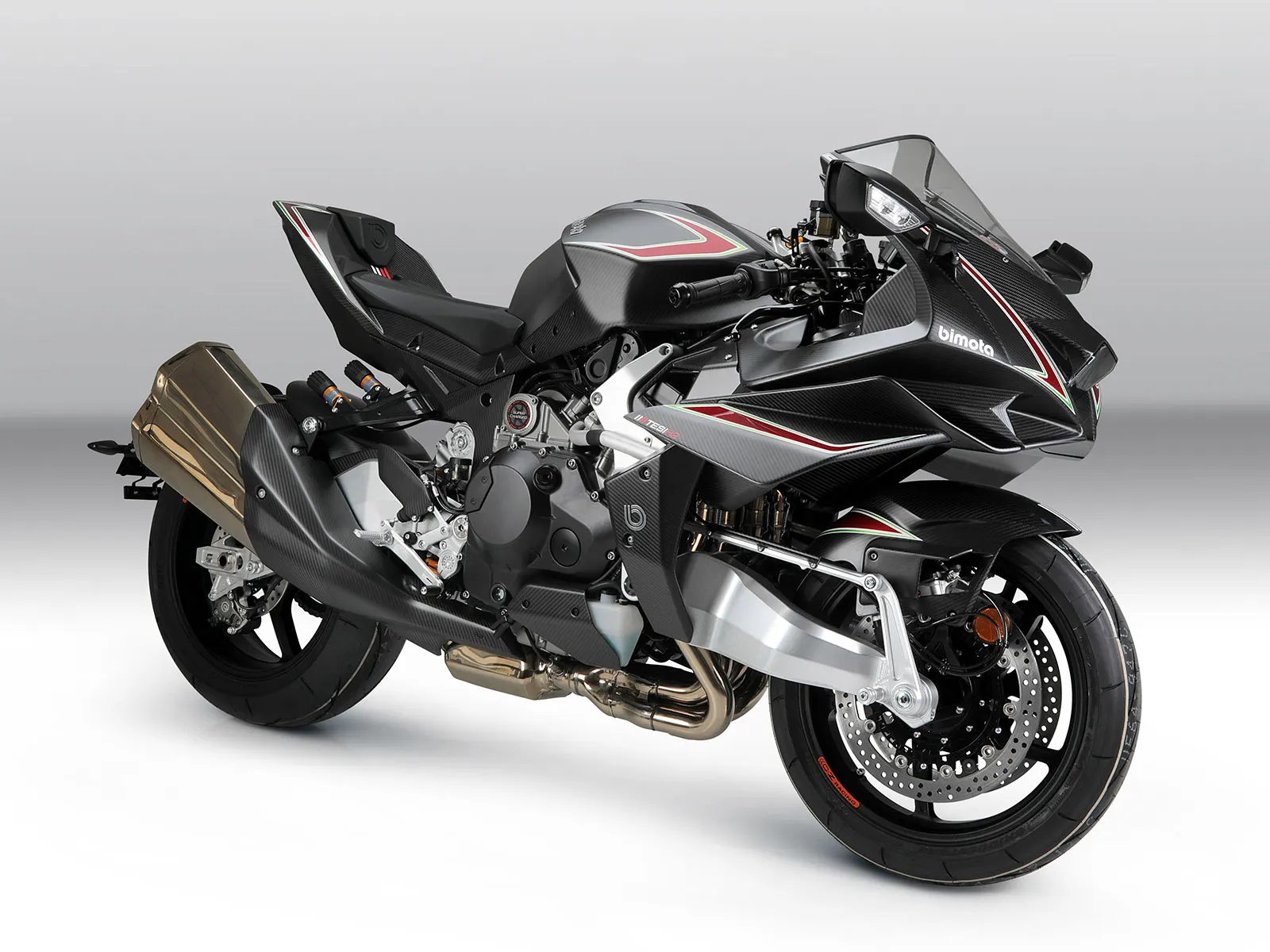
Bimota’s most radical chassis meets Kawasaki’s wildest engine…
For most of its history, Bimota has taken powerful engines from larger manufacturers and surrounded them with exotic Italian chassis engineering. In 2019, Kawasaki acquired a 49.9% stake in Bimota, reviving the iconic Italian brand. For their return, Bimota reached back to its most distinctive piece of technology: the Tesi hub-center-steering chassis. Then they installed Kawasaki’s 998cc supercharged Ninja H2 engine…
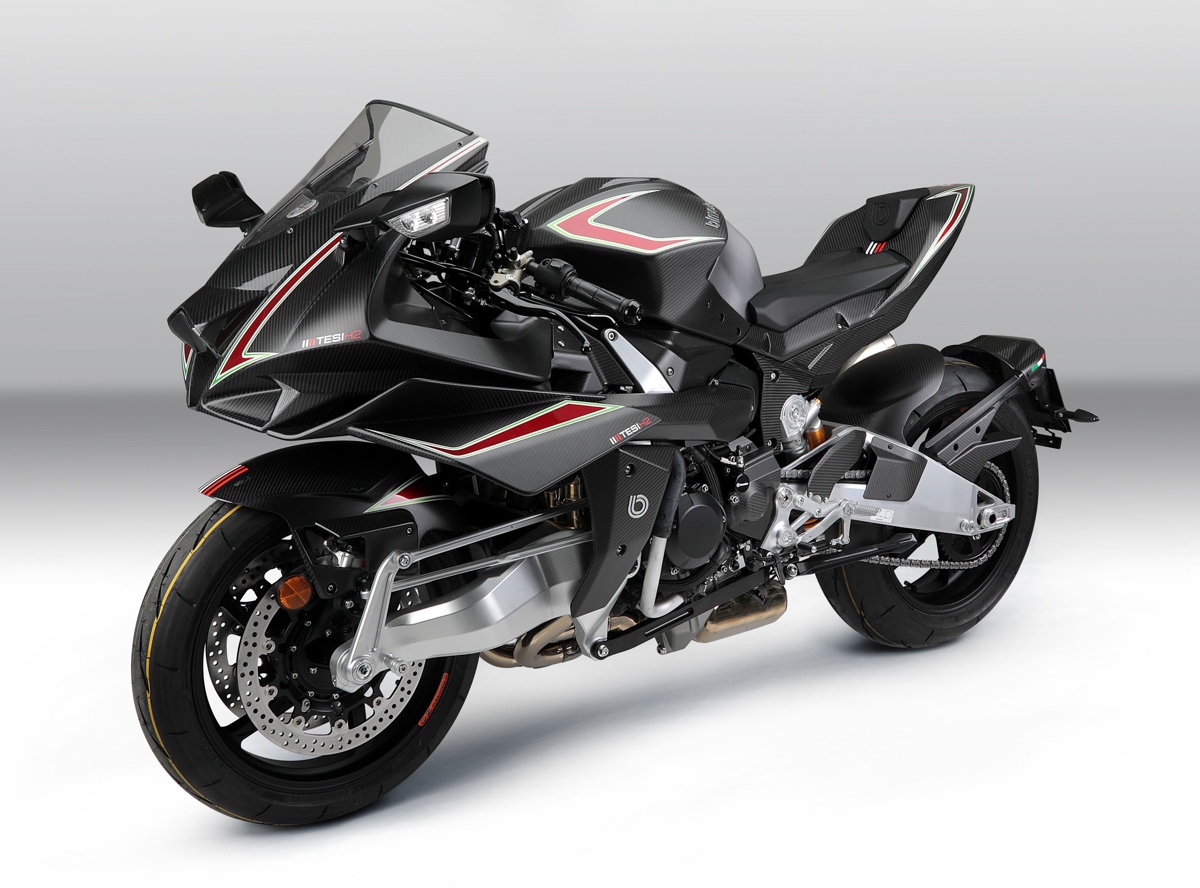
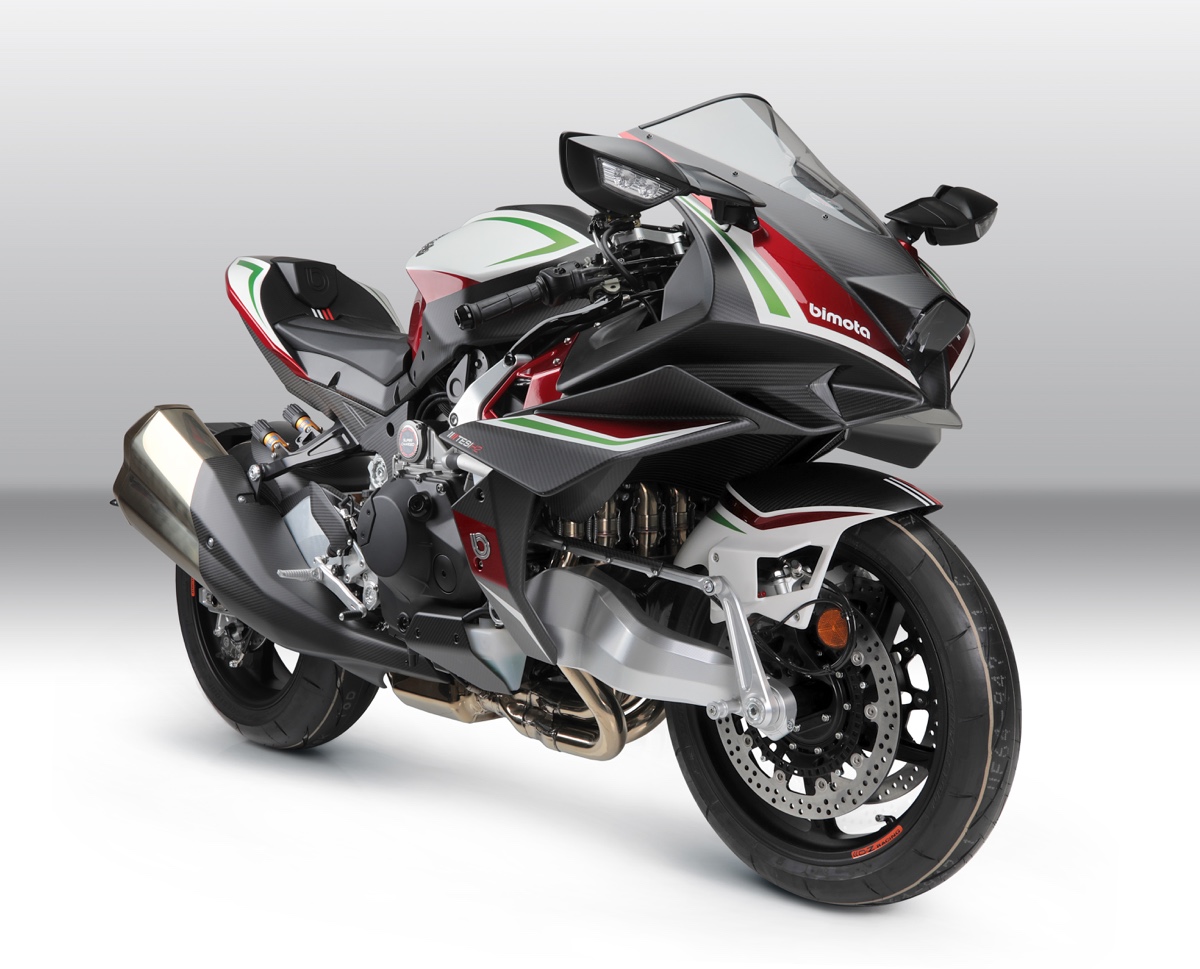
The resulting Bimota Tesi H2 produced 170 kW / 231 PS at 11,500 rpm — approximately 228 hp — rising to 178 kW / 239 hp under ram-air pressure. It made 141 Nm / 104 lb-ft of torque, weighed a claimed 207 kg / 456 pounds dry, and transmitted its power through one of the least conventional front suspension systems ever fitted to a production superbike.
Bimota built just 250 of these radical, supercharged machines.
The Motorcycle Called “Thesis”…
The Tesi concept predates the H2 by nearly four decades. Pierluigi Marconi developed his hub-center-steering design while studying at the University of Bologna in the early 1980s. The name tells the story: “Tesi” is Italian for “thesis.”
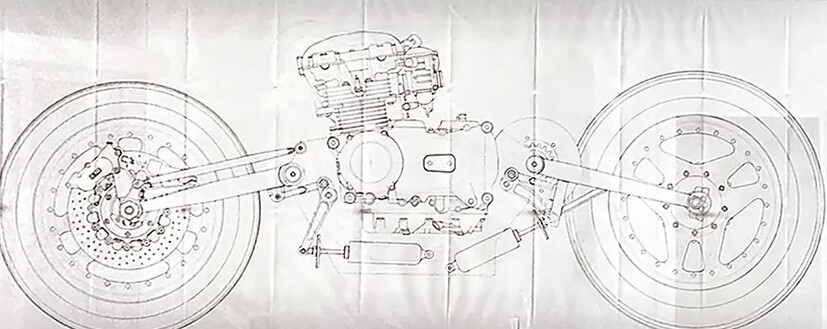
Marconi’s work drew upon earlier hub-center-steering concepts, including designs developed by Jack Difazio, but he pursued the idea as a complete alternative to the conventional telescopic motorcycle fork. He joined Bimota in 1983 and continued developing prototypes before the company unveiled the production Tesi 1D at the Cologne show in 1990.
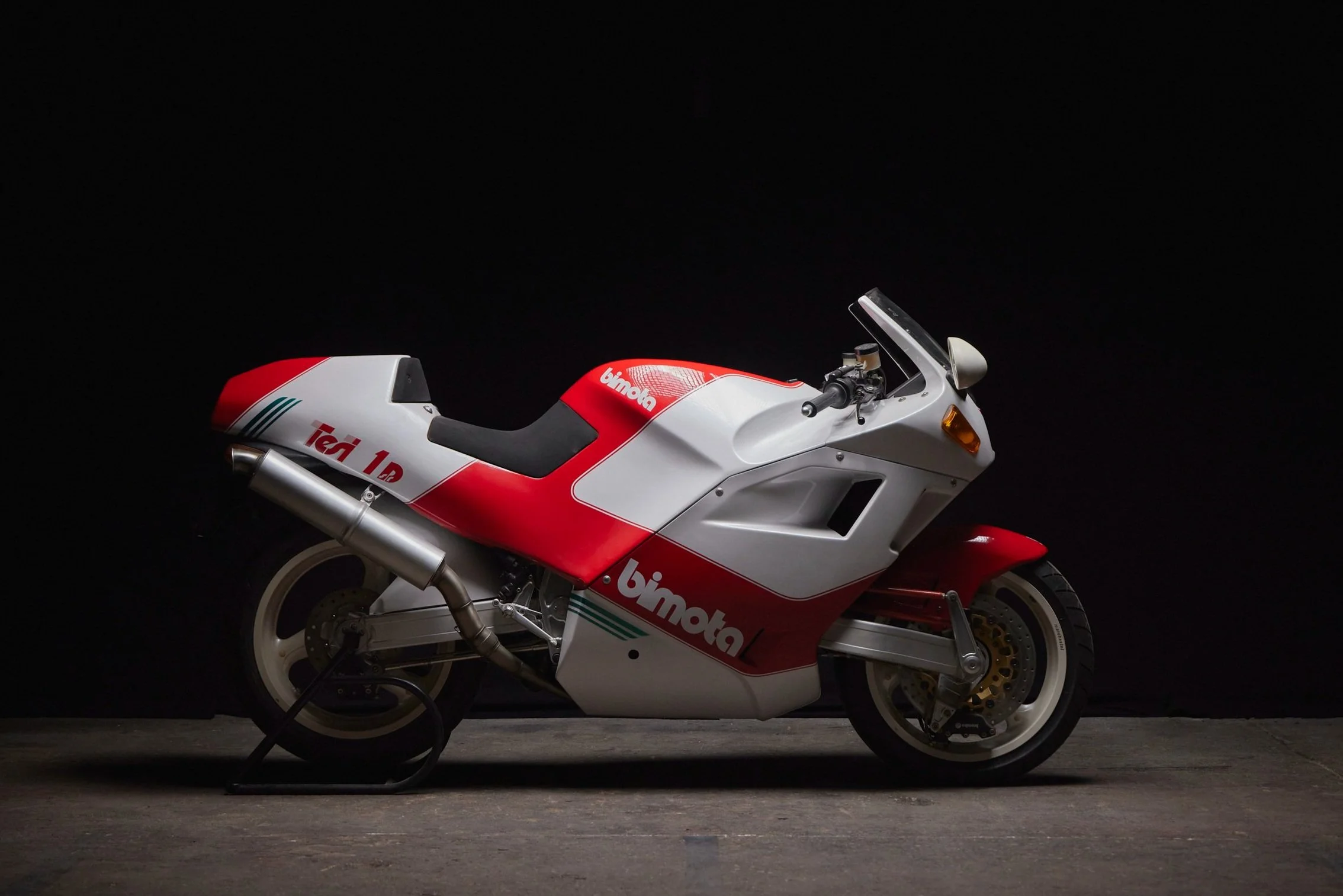
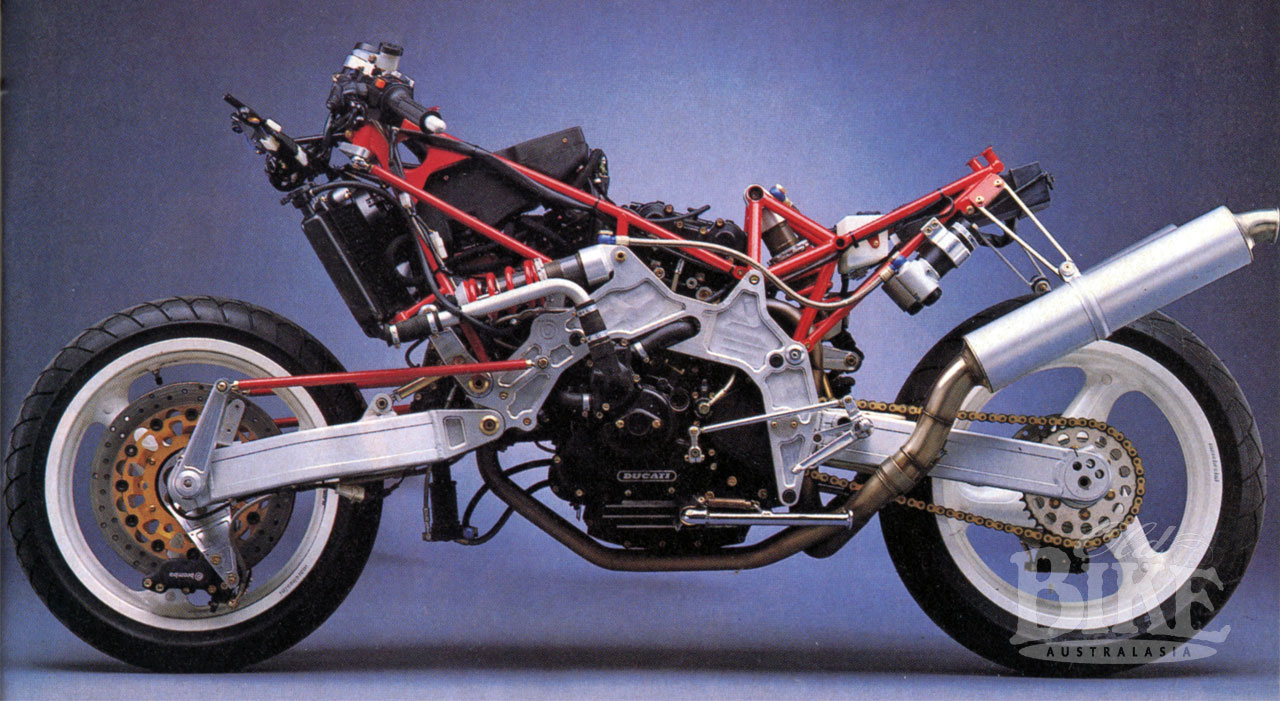
That motorcycle used a Ducati 851 V-twin. Instead of telescopic forks, the front wheel was carried by a swingarm and steered around an axis running through the hub. The engine sat between front and rear swingarms, supported by large aluminum chassis plates.
Subsequent Tesi models refined the concept without changing the central idea. Nearly 30 years after the 1D appeared, Bimota returned to it for perhaps the most appropriate engine imaginable.
Kawasaki Brings Bimota Back
By 2019, Bimota had endured decades of financial instability, ownership changes, and interrupted production. That year, Kawasaki entered into a new partnership intended to revive the Rimini marque. Kawasaki Motors Europe became a major shareholder and would supply engines, electronics, and other important components, while Bimota retained its Italian engineering, styling, and manufacturing operation.
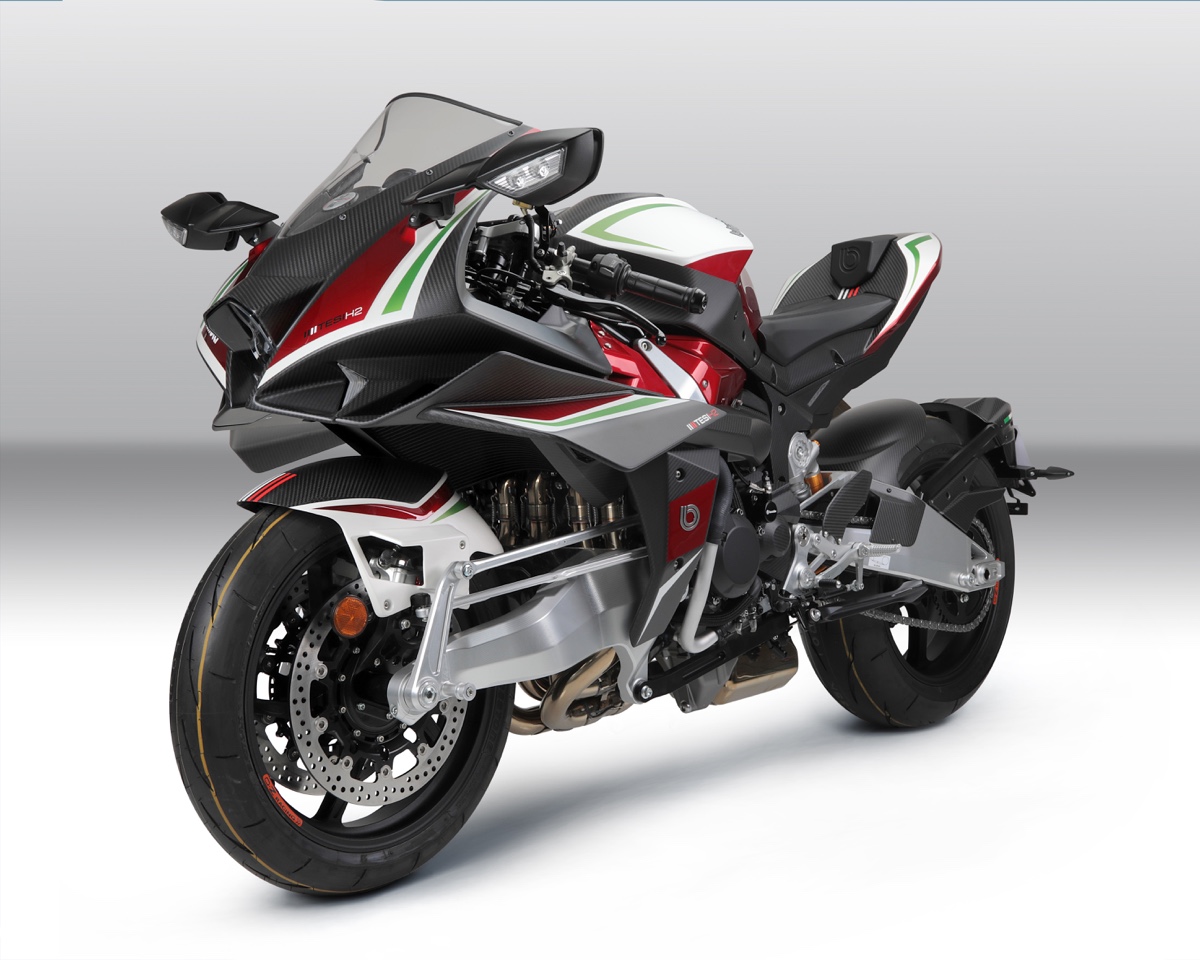
Kawasaki’s own announcement specifically identified Pierluigi Marconi — father of the Tesi — as one of the key figures in the revived company. The first motorcycle from the partnership debuted at EICMA in November 2019. There could hardly have been a clearer statement of intent. On one side was Kawasaki’s most technologically extravagant production engine. On the other was Bimota’s most unconventional chassis. The new bike was called simply the Tesi H2.
The Kawasaki H2 Engine
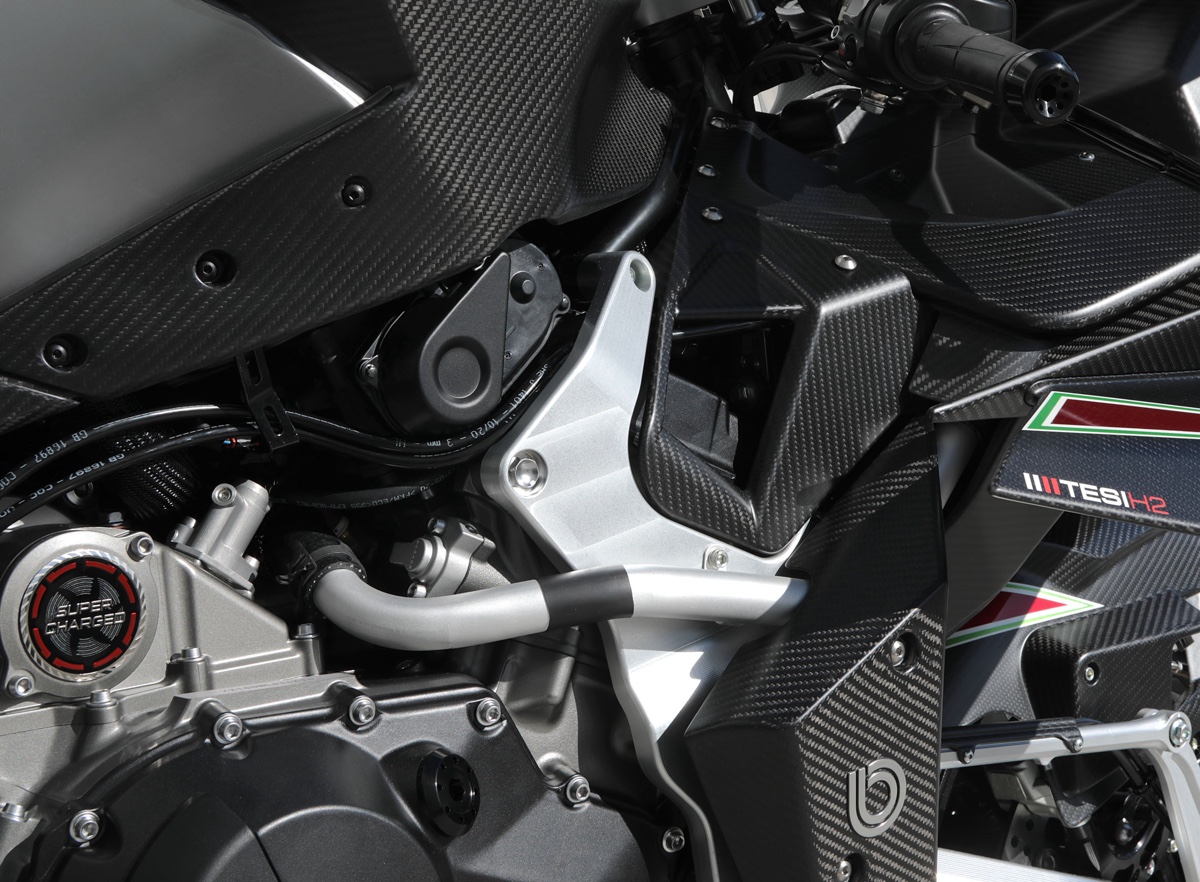
At its center sits Kawasaki’s 998cc liquid-cooled DOHC inline-four. More important is what sits beside the cylinders. The engine uses Kawasaki’s centrifugal supercharger, driven mechanically from the crankshaft rather than by exhaust gases as in a turbocharger. Kawasaki originally developed the system in-house for the Ninja H2 family, allowing the company to control the compressor, gearing, intake, engine management, and combustion system as a single package.
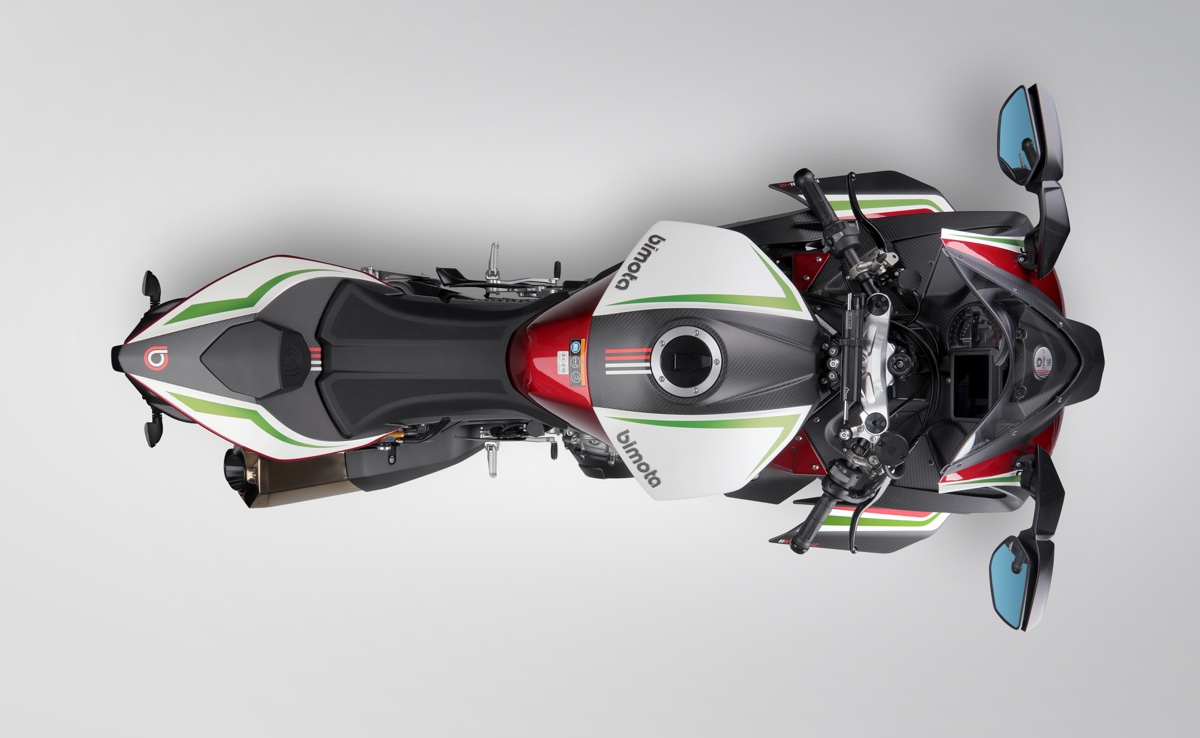
In the Tesi H2, the engine retained a 76 x 55mm bore and stroke and an 8.5:1 compression ratio. Bimota’s official specification gives 170 kW / 231 PS at 11,500 rpm and 141 Nm / 104 lb-ft at 11,000 rpm. With the ram-air system pressurized at speed, maximum output rises to 178 kW / 242 PS, or 238.7 horsepower.
A Supercharger Feeding Eight Injectors
Air enters through a ram-air duct on the left side of the motorcycle and travels directly toward the supercharger. Fueling uses 50mm throttle bodies with dual injectors per cylinder and full ride-by-wire control. Like the Ninja H2, the engine uses a six-speed dog-ring transmission — technology influenced by Kawasaki’s racing experience and designed to permit quick gear changes while minimizing movement of the transmission gears themselves. A wet assist-and-slipper clutch handles the power.
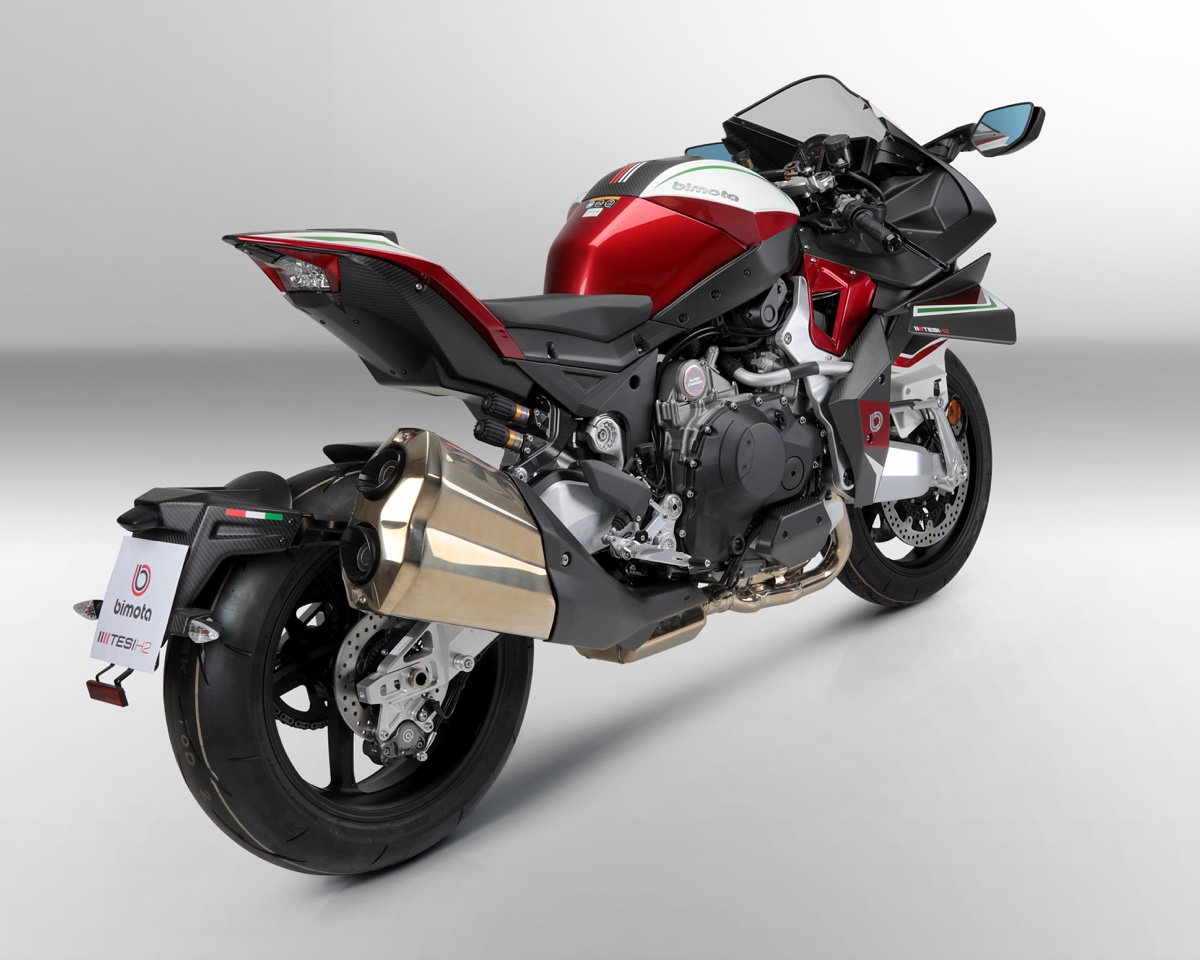
But although Kawasaki supplied the engine and much of the electronics, the motorcycle surrounding it bears little structural resemblance to a Ninja H2. That’s where Bimota took over.
No Telescopic Fork
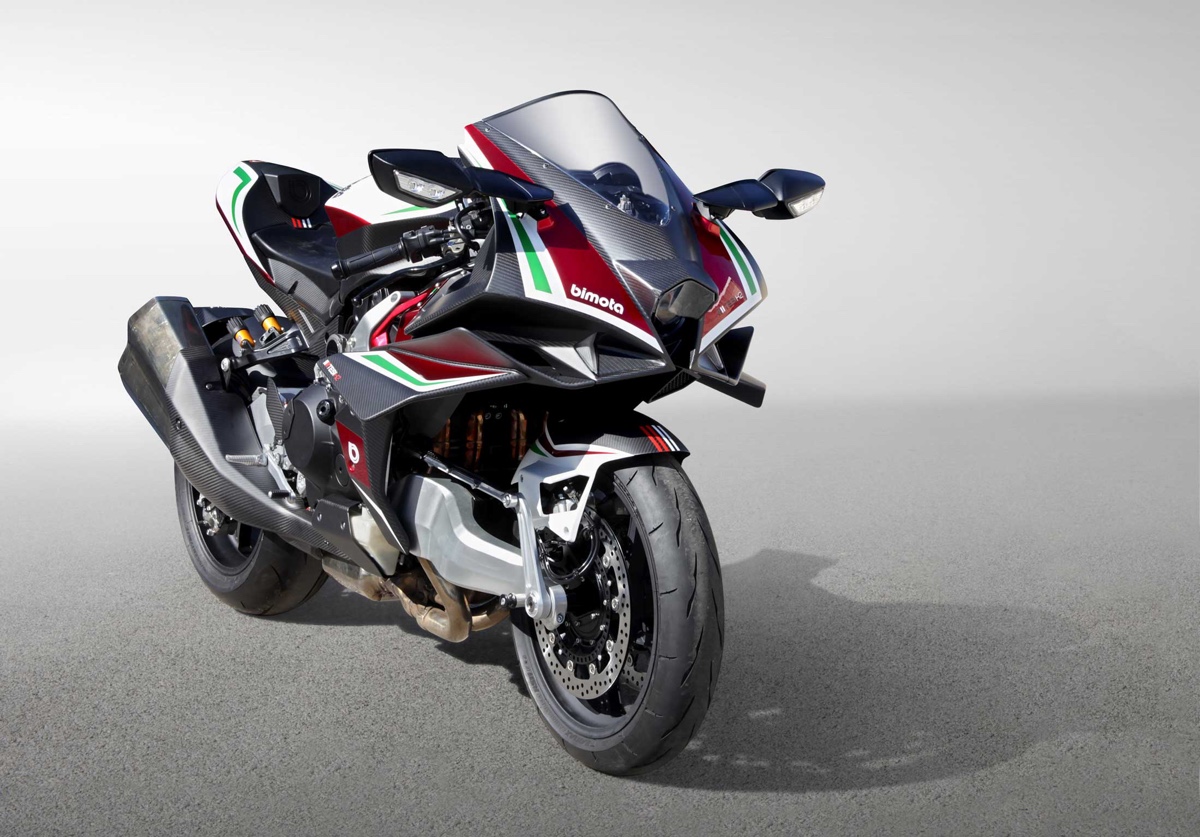
On a conventional motorcycle, the front fork performs several functions simultaneously. It locates the front wheel, allows it to move vertically over bumps, and it turns when the rider steers. Under braking, forces from the front tire act through the fork and chassis while the suspension compresses and the motorcycle pitches forward.
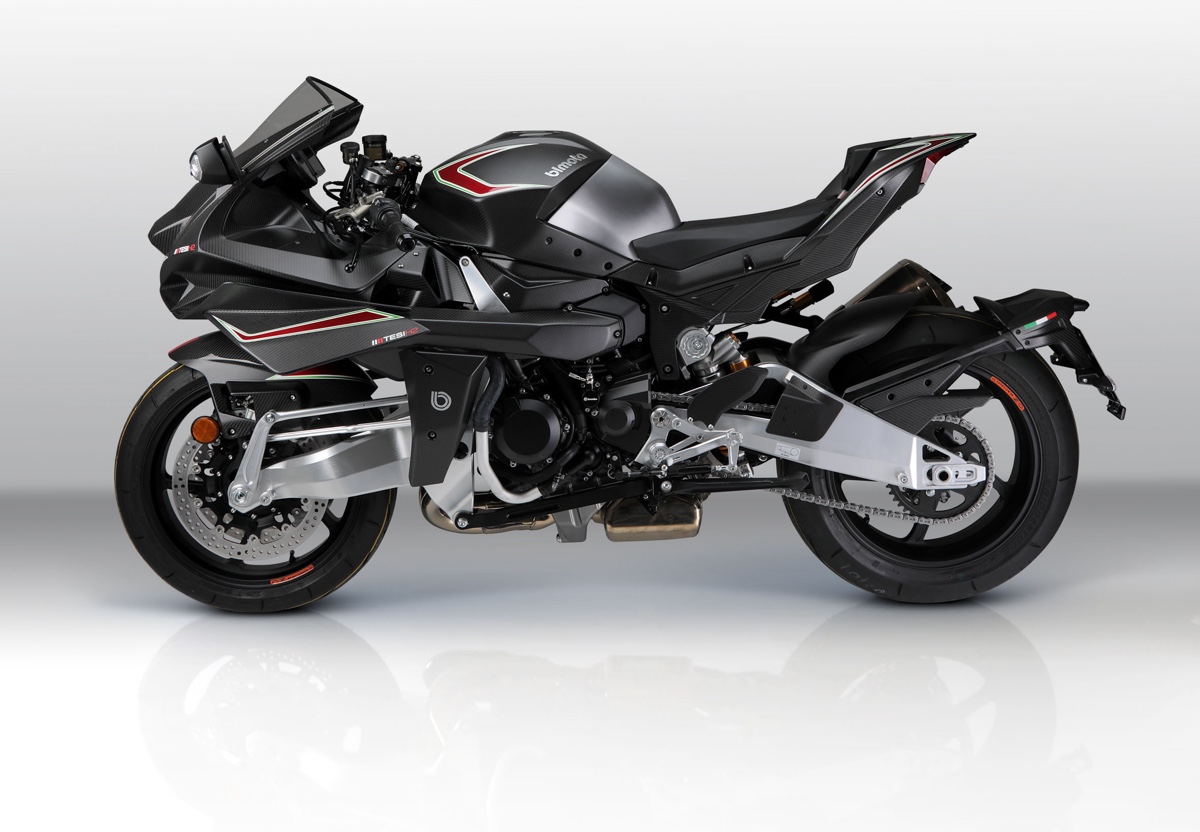
The Tesi separates those functions more thoroughly. Its front wheel is carried by a swingarm that pivots from the central portion of the motorcycle. The wheel turns around a steering axis contained within the hub and is controlled through mechanical steering linkages connected to the handlebars.
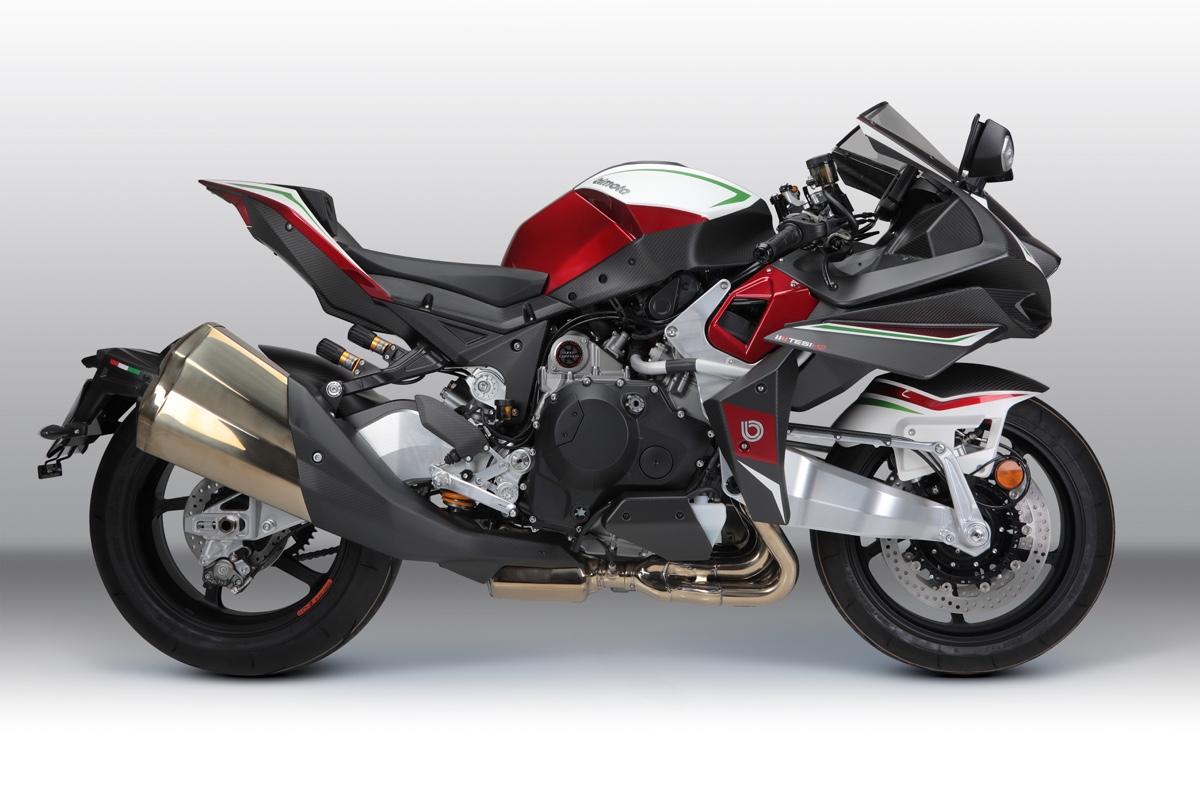
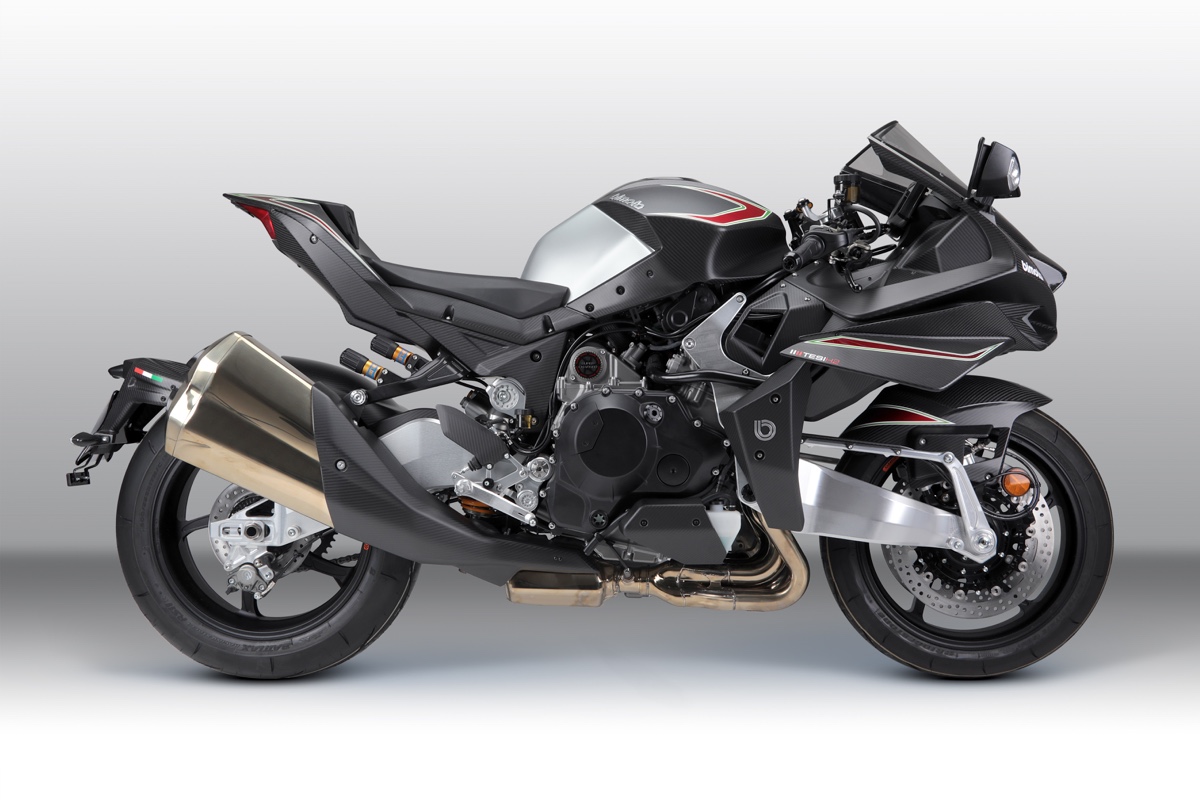
Suspension movement is handled through the swingarm and linkage rather than through telescoping fork tubes. The front shock itself isn’t even near the front wheel. Both the front and rear Öhlins TTX shock absorbers are positioned behind the engine, side by side.
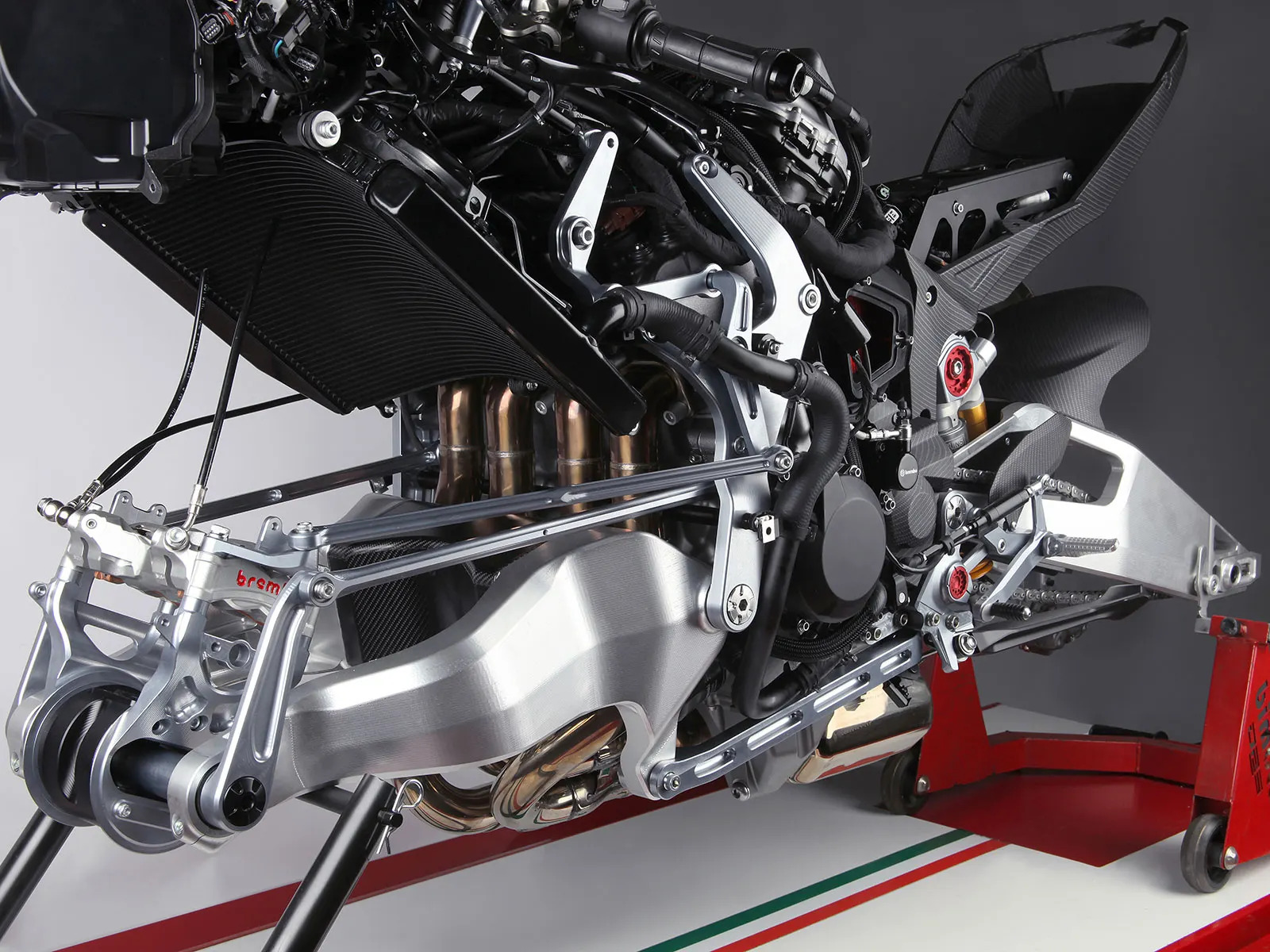
One of the most frequently repeated claims about hub-center steering is that it eliminates brake dive. That’s an oversimplification, as braking still transfers load toward the front tire because the laws of vehicle dynamics haven’t changed. What the Tesi architecture can greatly reduce is the chassis pitch and suspension compression normally associated with that load transfer.
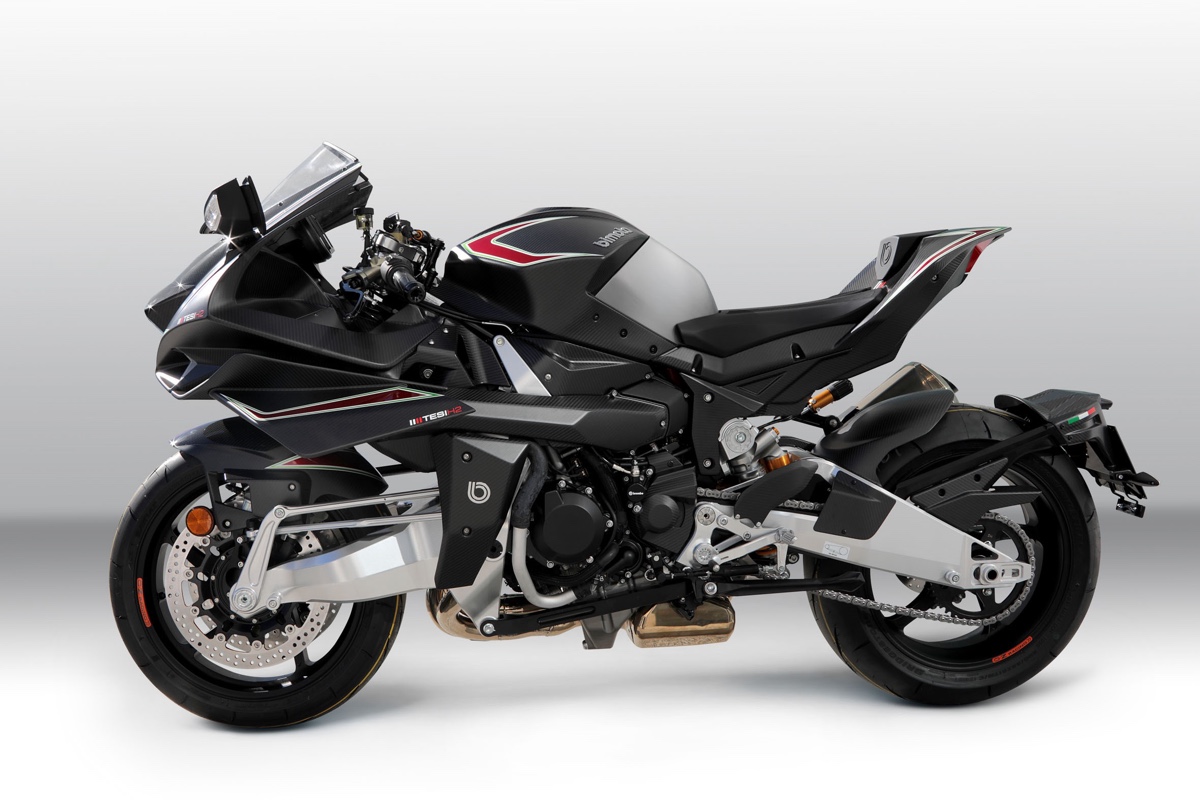
Braking loads are routed through the swingarm rather than directly through sliding telescopic fork tubes. That means the suspension can continue dealing with bumps without collapsing through its travel in the same manner as a conventional fork under hard braking.
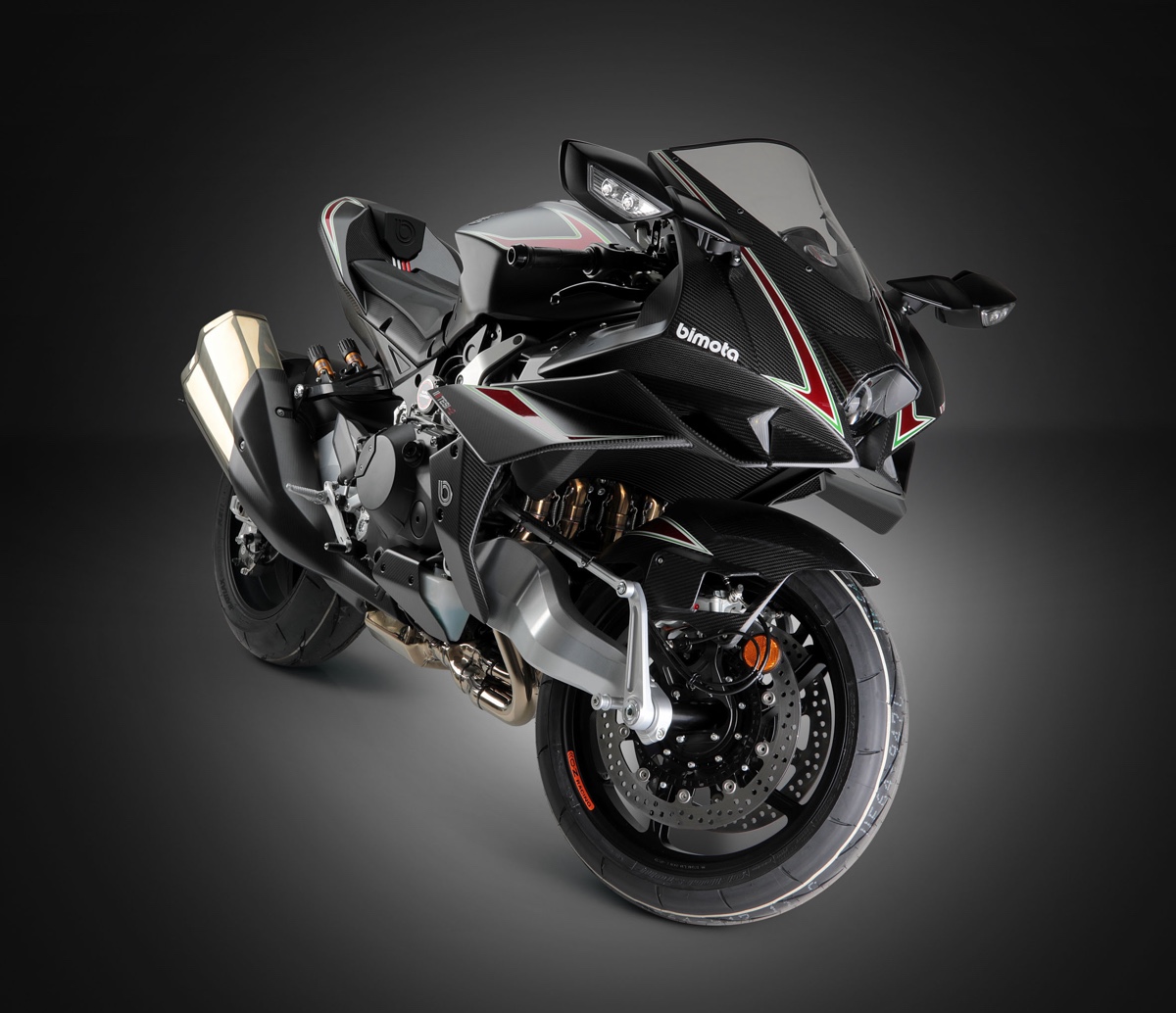
Bimota themselves describe the system in this way, saying the Tesi H2 reduces changes in vehicle attitude and front/rear wheel loading during braking. The theoretical payoff is greater geometric consistency, especially when braking deep into a corner. The price is mechanical complexity and a steering sensation much different from the telescopic forks that riders have spent their entire lives learning on.
Front Swingarm, Engine, Rear Swingarm
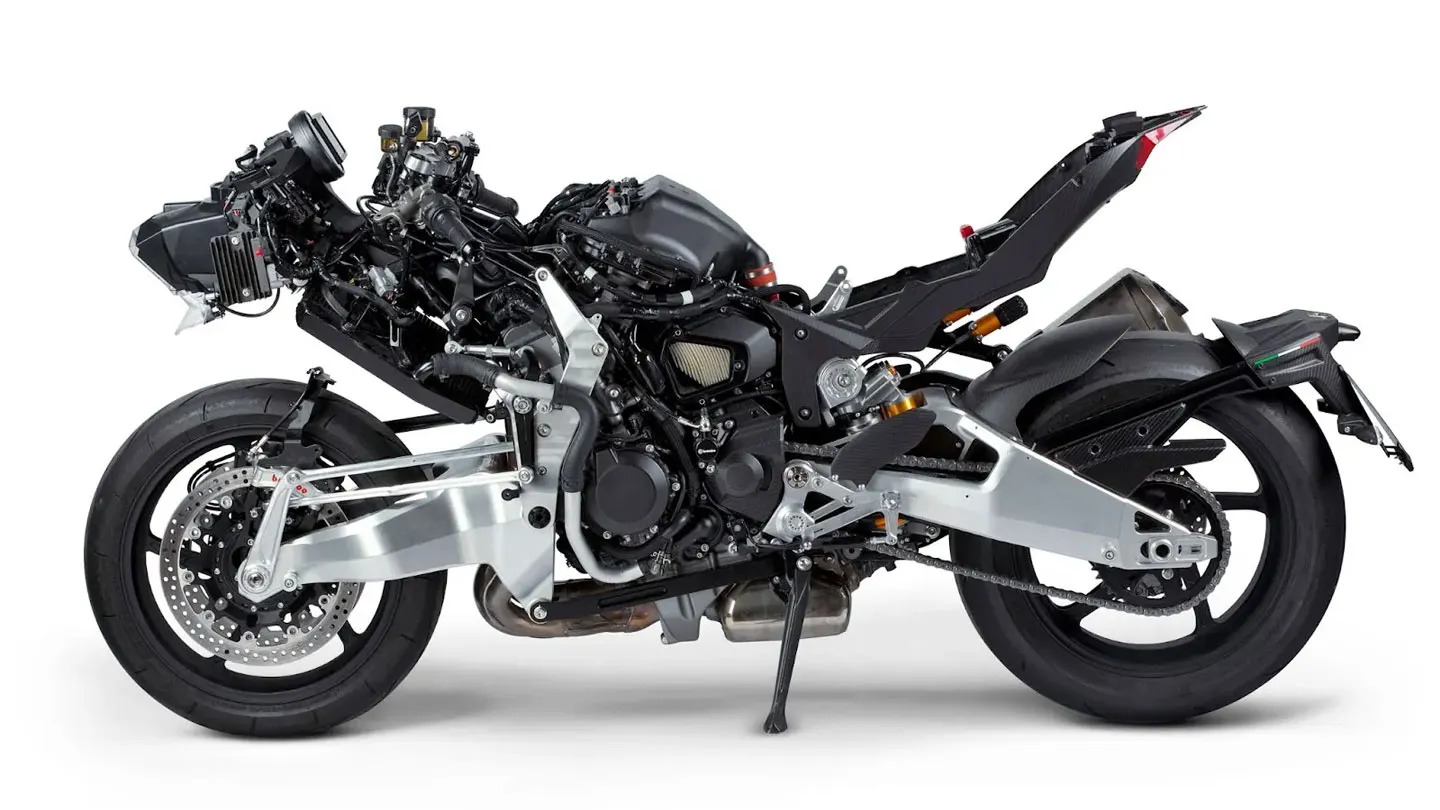
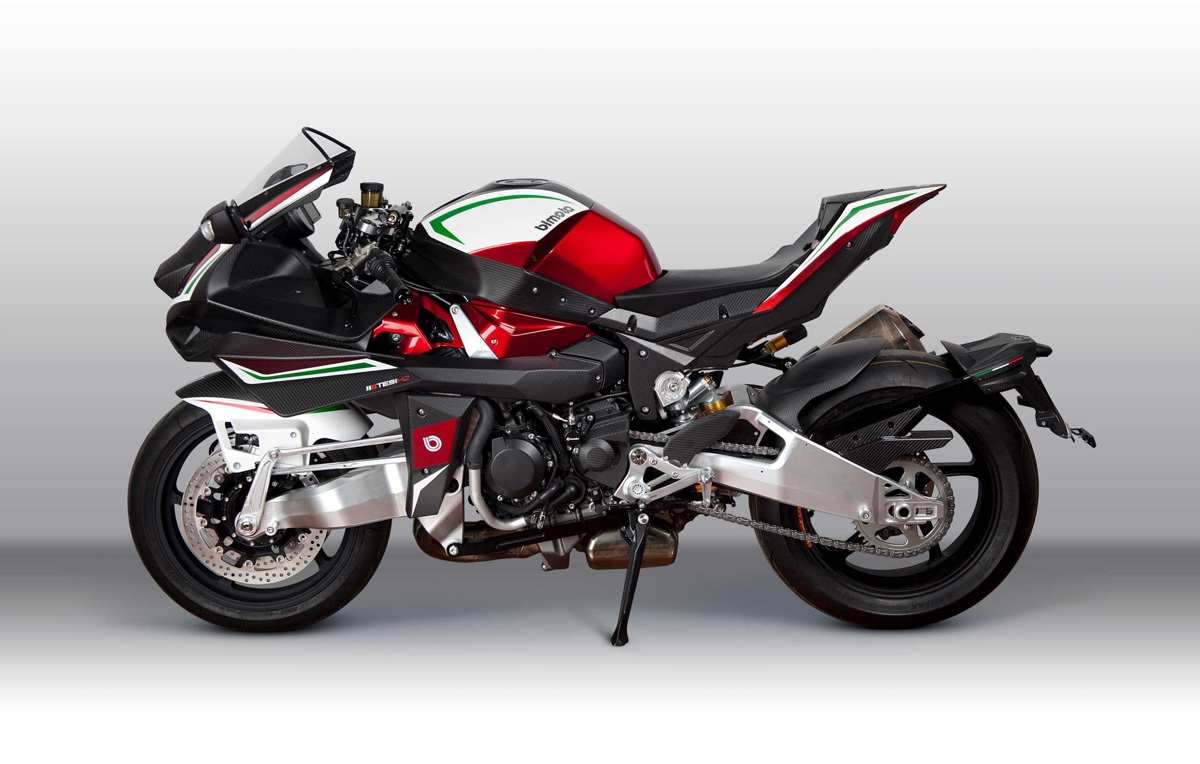
The rest of the chassis is nearly as unusual. There is no conventional twin-spar or trellis frame surrounding the engine. Instead, compact CNC-machined aluminum mounting structures attach to the front and rear of the Kawasaki four-cylinder engine. The powerplant becomes a central structural element, with the front and rear swingarms effectively extending outward from it.
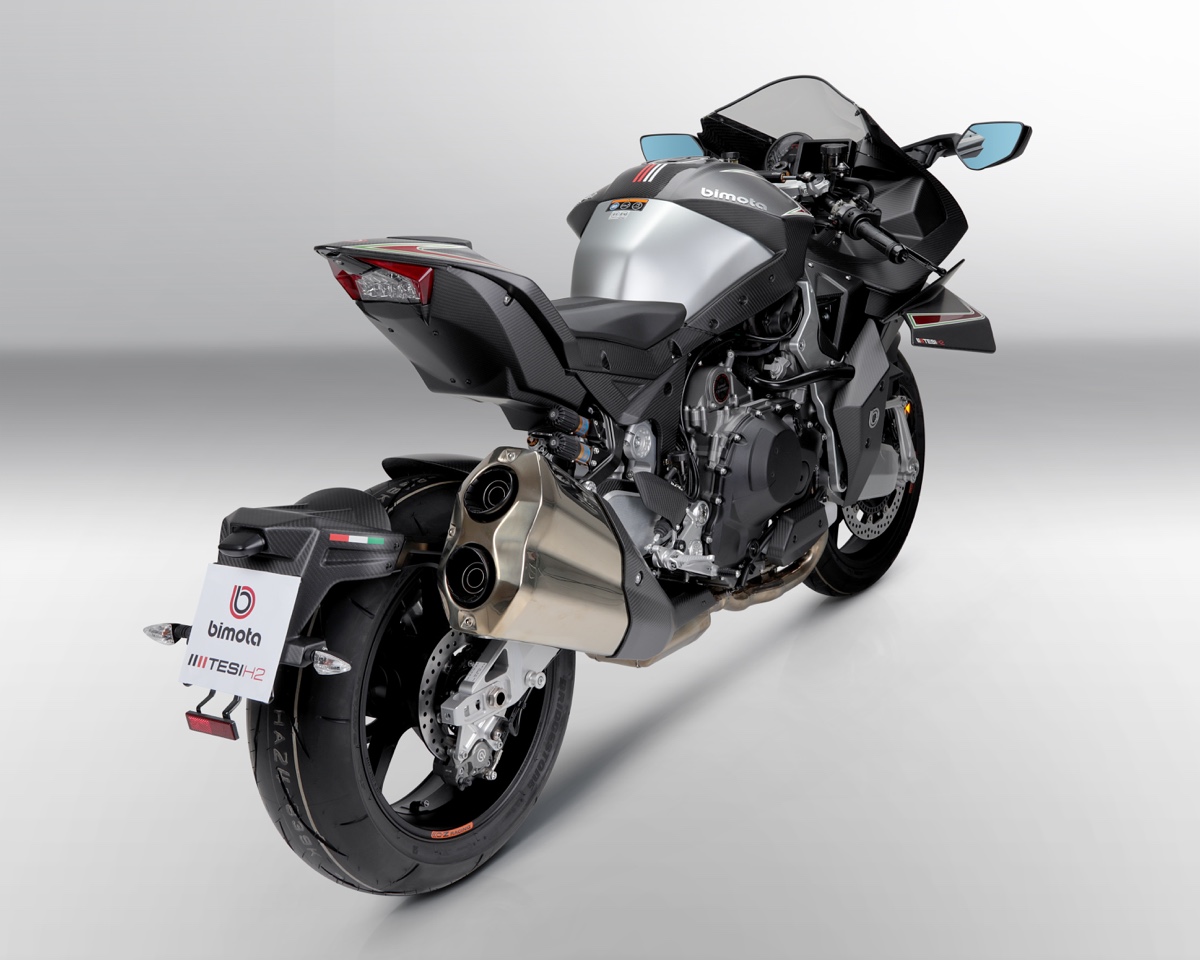
The front arm is particularly elaborate. Bimota constructed it from CNC-machined aluminum side members bonded to a carbon-fiber-reinforced central bridge using what the company describes as aerospace joining technology. The rear swingarm is machined aluminum, while a carbon-fiber structural section supports the rider and tail assembly. Visually, the layout makes the Tesi H2 appear to consist of an engine with a wheel attached to either end. In engineering terms, that’s not far removed from the truth.
Adjustable Geometry…
The unusual architecture also gave Bimota some useful setup possibilities. Seat height can be altered by ±10mm through eccentric shock mounts without producing the same geometry changes that would ordinarily accompany changing rear ride height. The footrests are similarly adjustable through eccentric mounting plates.
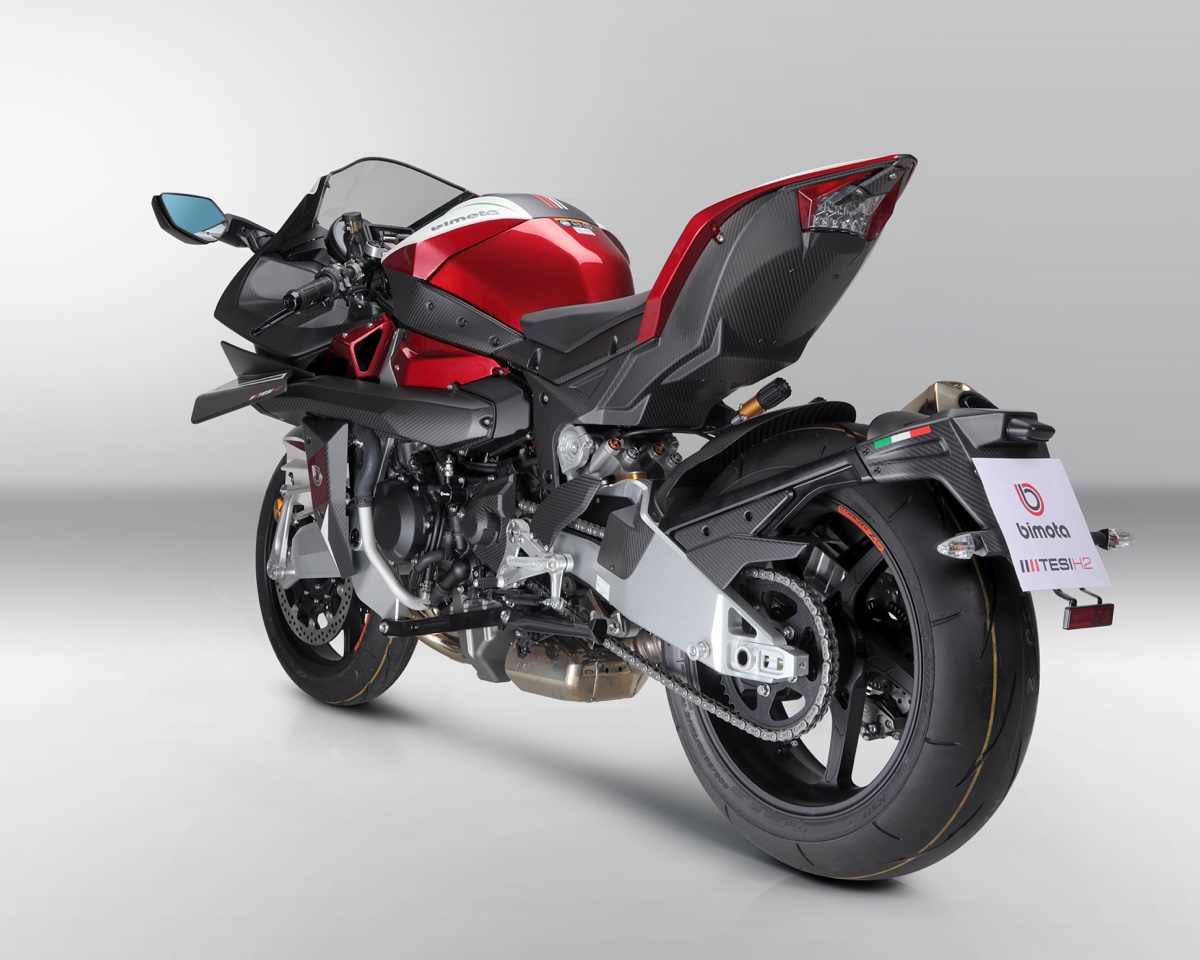
Standard seat height is 840mm / 33.1 inches. The wheelbase measures 1,455mm / 57.3 inches, while Bimota lists 21.3 degrees of caster and 117mm of trail. Front suspension travel is 100mm; the rear provides 130mm. OZ Racing forged aluminum wheels wear a 120/70ZR17 front tire and substantial 200/55ZR17 rear.
Kawasaki Electronics, Bimota Chassis
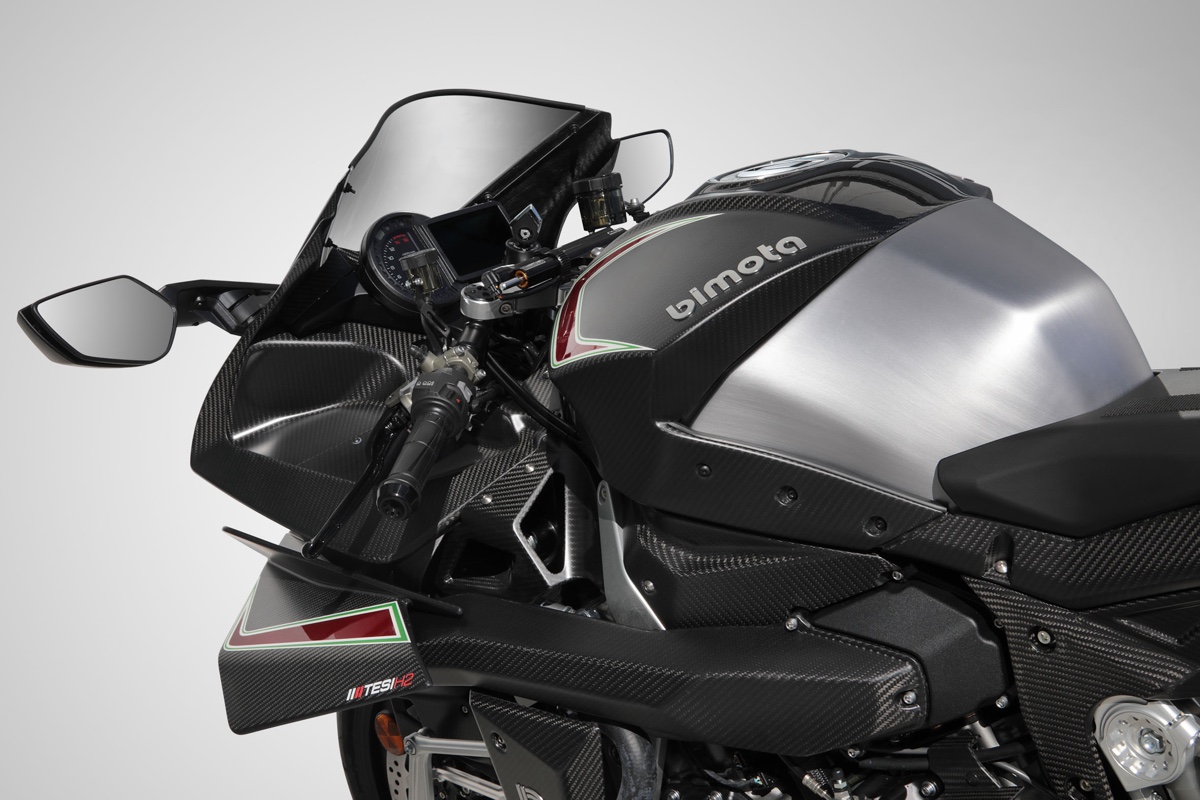
The partnership also spared Bimota from having to develop an entire modern electronics package independently. The Tesi H2 received Kawasaki’s sophisticated Bosch-IMU-based control systems, including cornering management, intelligent ABS, traction control, engine-brake control, launch control, and an up-and-down quickshifter.
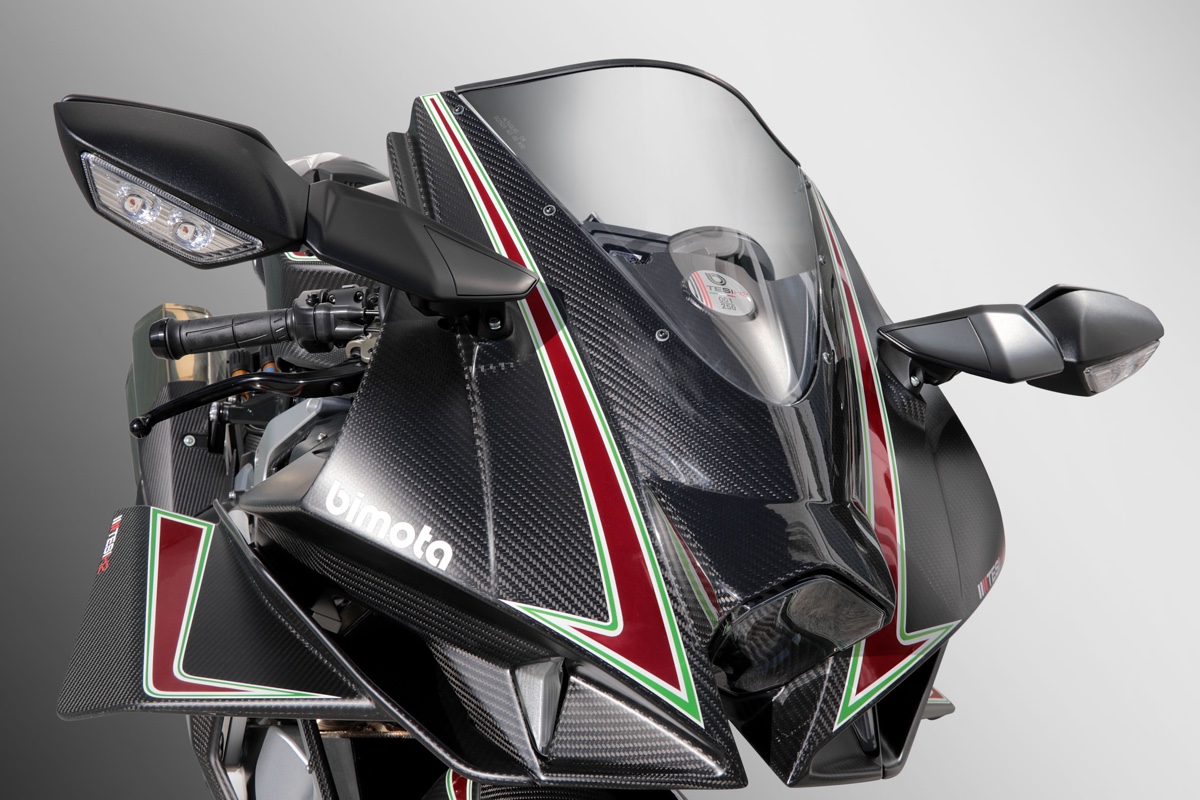
An electronically controlled Öhlins steering damper adjusts damping according to speed and acceleration. The instrument panel combines an analog tachometer with a TFT display and can show boost pressure, lean angle, gear position, intake temperature, and other data. Bluetooth integration connects the motorcycle to Kawasaki’s Rideology smartphone application.
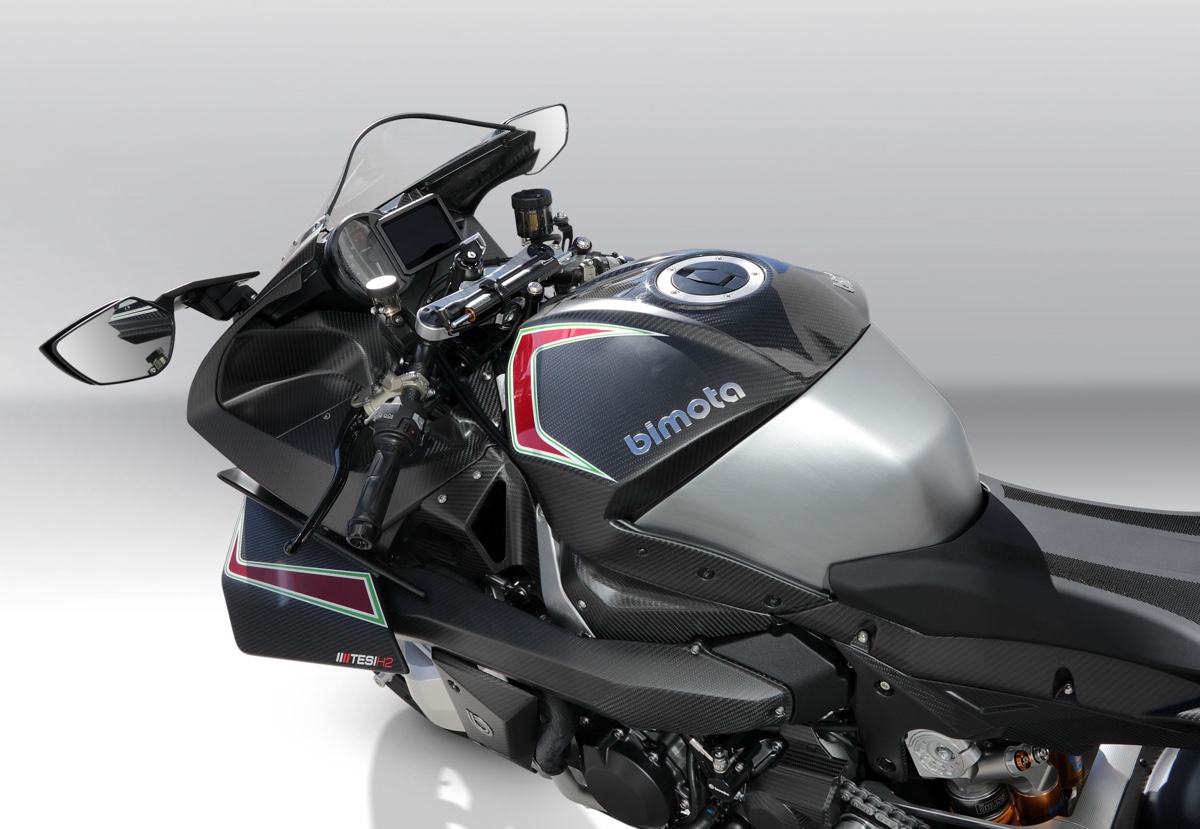
Braking is handled by Brembo Stylema radial four-piston calipers gripping twin 330mm semi-floating front discs. Nothing about the equipment suggests Bimota intended the Tesi merely as an engineering curiosity. It was meant to be ridden hard.
What Does It Feel Like?
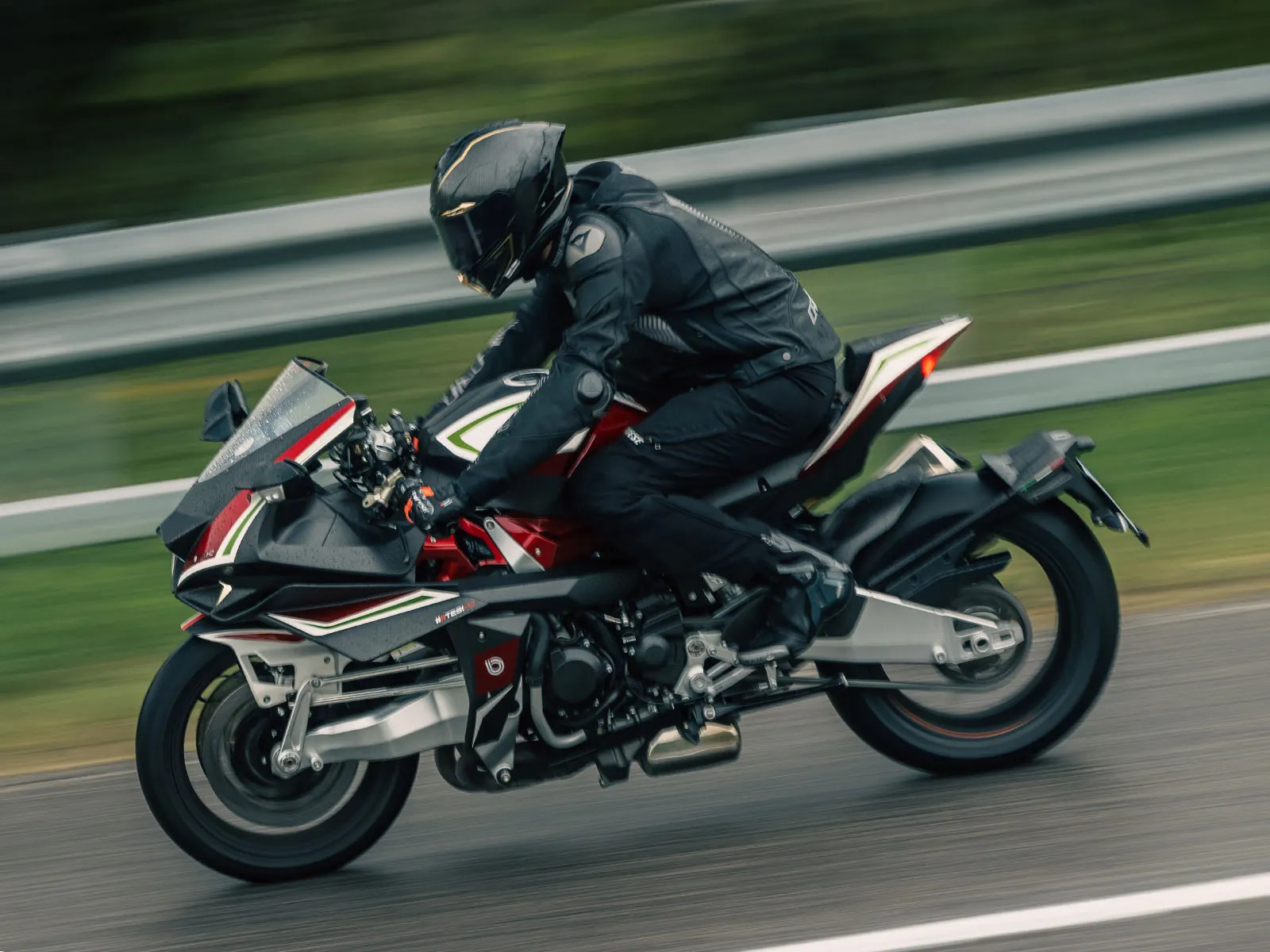
Contemporary road and track tests reveal one consistent theme: the front end initially feels unusual because it doesn’t provide the familiar cues of a telescopic fork. Riders accustomed to judging braking force partly through fork compression suddenly find the motorcycle remaining remarkably level.
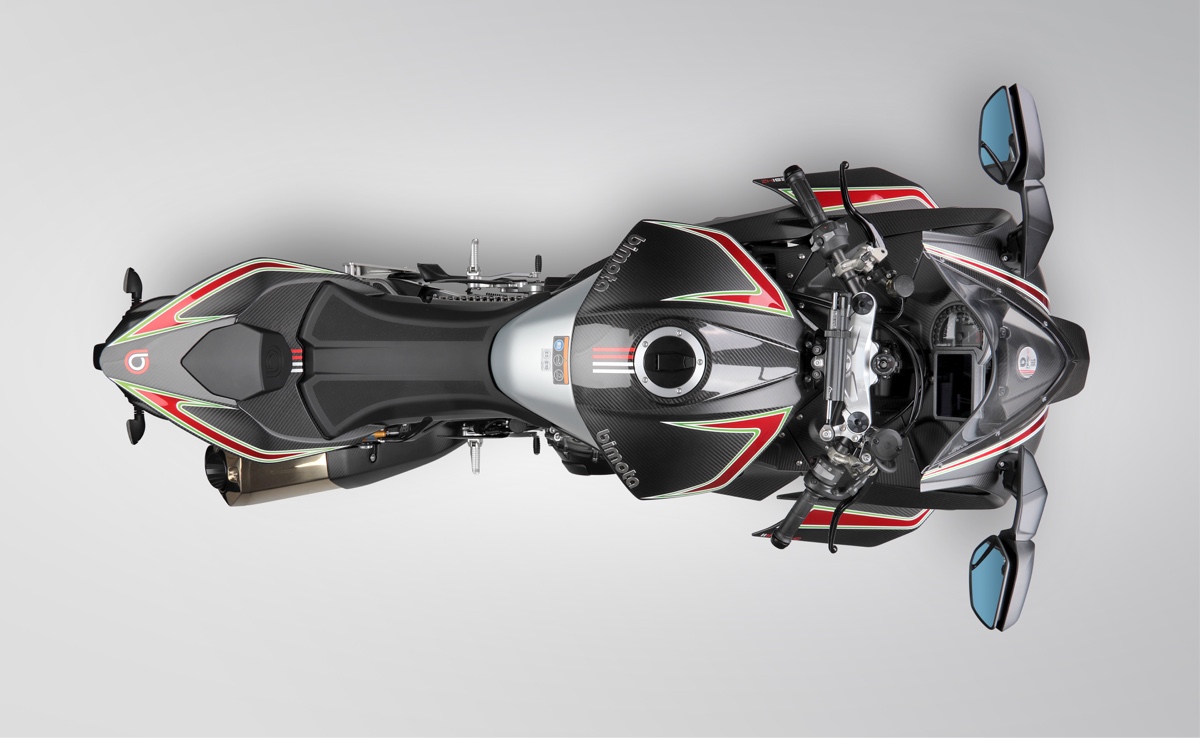
One Australian track tester described the bike as essentially refusing to dive under braking or squat dramatically under acceleration. He found the steering less immediately sharp than a conventional superbike, but quickly adapted to the system and was able to flick the Tesi through a tight circuit without difficulty.
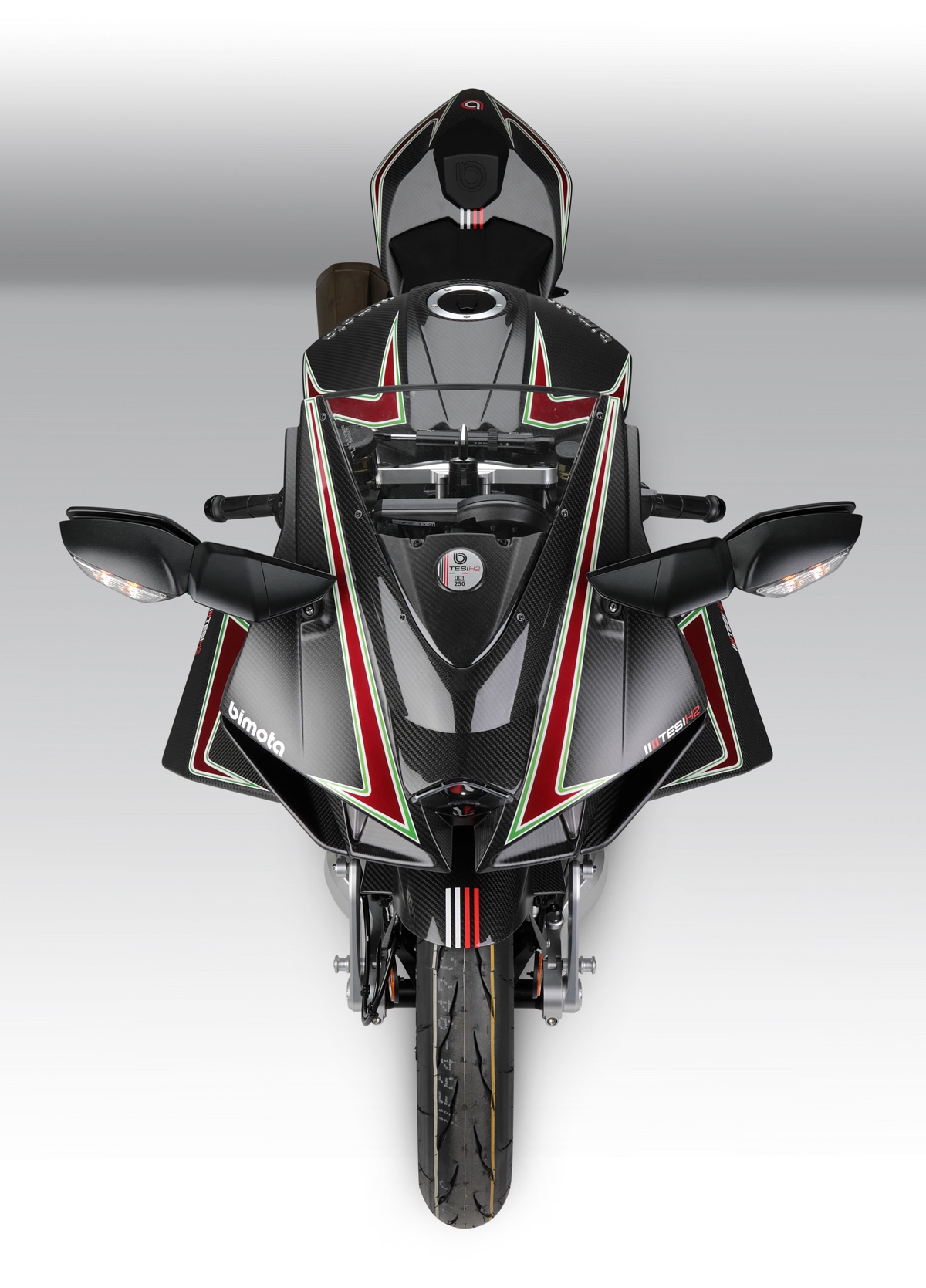
Another tester noted reduced feedback through the bars compared with a conventional front end, particularly while exploring the limit of front-tire grip. That has long been one of the central debates surrounding hub-center steering. A telescopic fork has theoretical disadvantages, but more than a century of development has made modern forks extraordinarily good — and the best riders are masters at interpreting their movement and feedback. The Tesi asks the rider to learn a different language.
239 BHP on the Track
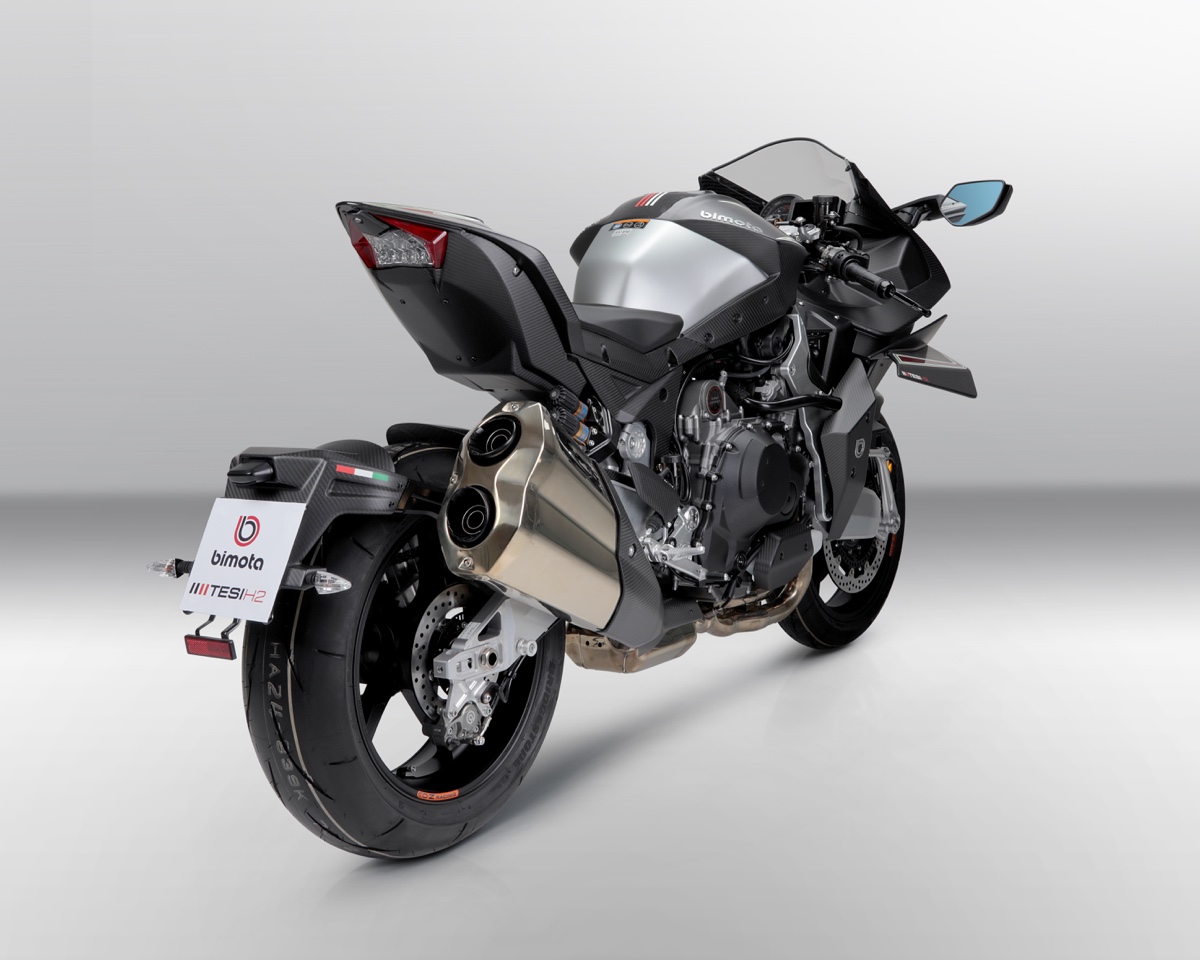
The engine, meanwhile, appears almost less exotic than the chassis simply because Kawasaki had already proved how effective it was. One test rider discovered that the supercharged four had so much torque that third gear was sufficient for almost an entire short circuit. Rather than constantly working the gearbox, he could roll off, brake, turn, and use the H2 engine’s broad thrust to drive away again.
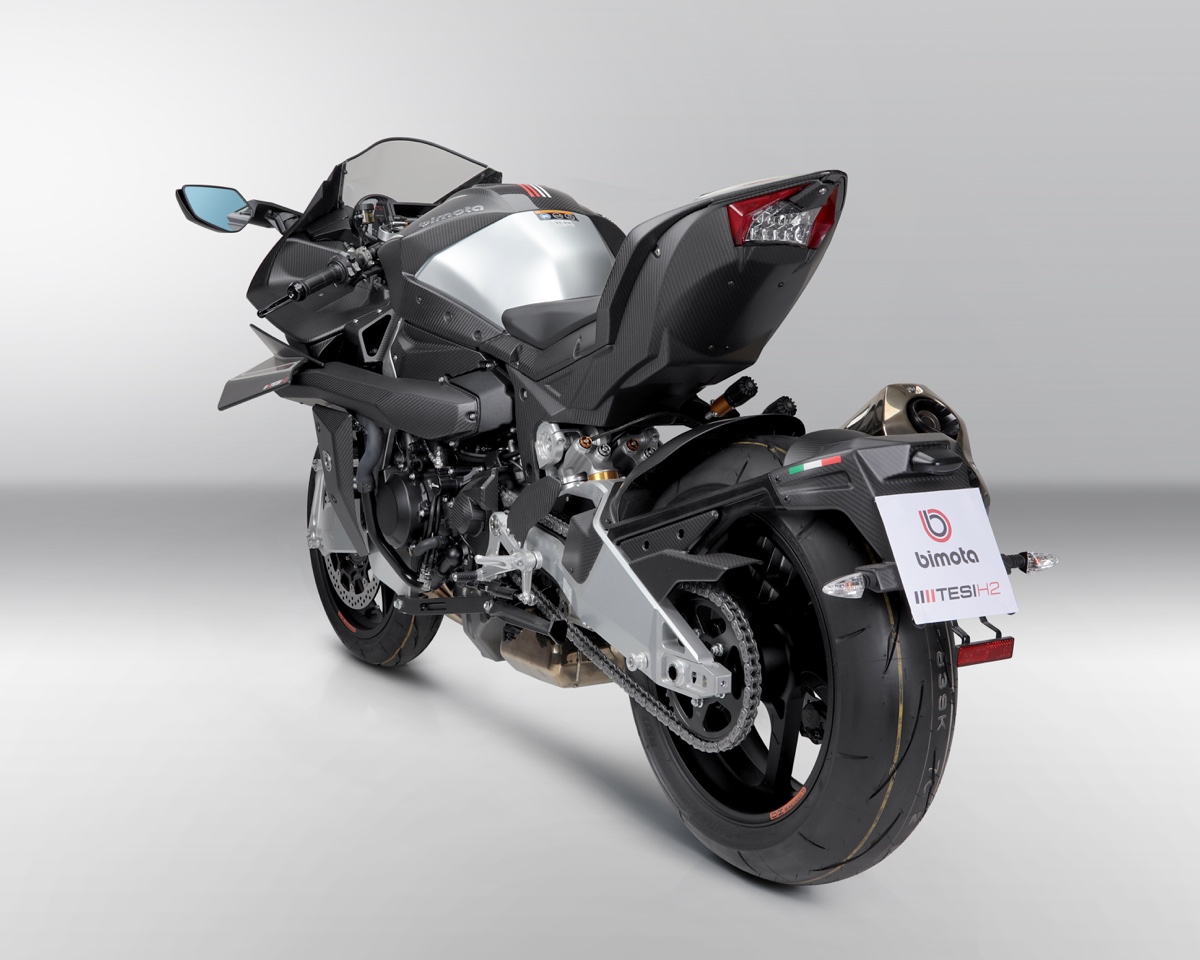
The front-end behavior arguably suits the engine. With more than 230 bhp available, keeping the chassis settled under hard acceleration and braking has obvious value. That doesn’t mean the Tesi makes the H2’s performance ordinary — it just means that Bimota has built an unusual chassis especially capable of dealing with this unusual engine.
250 Built in Rimini
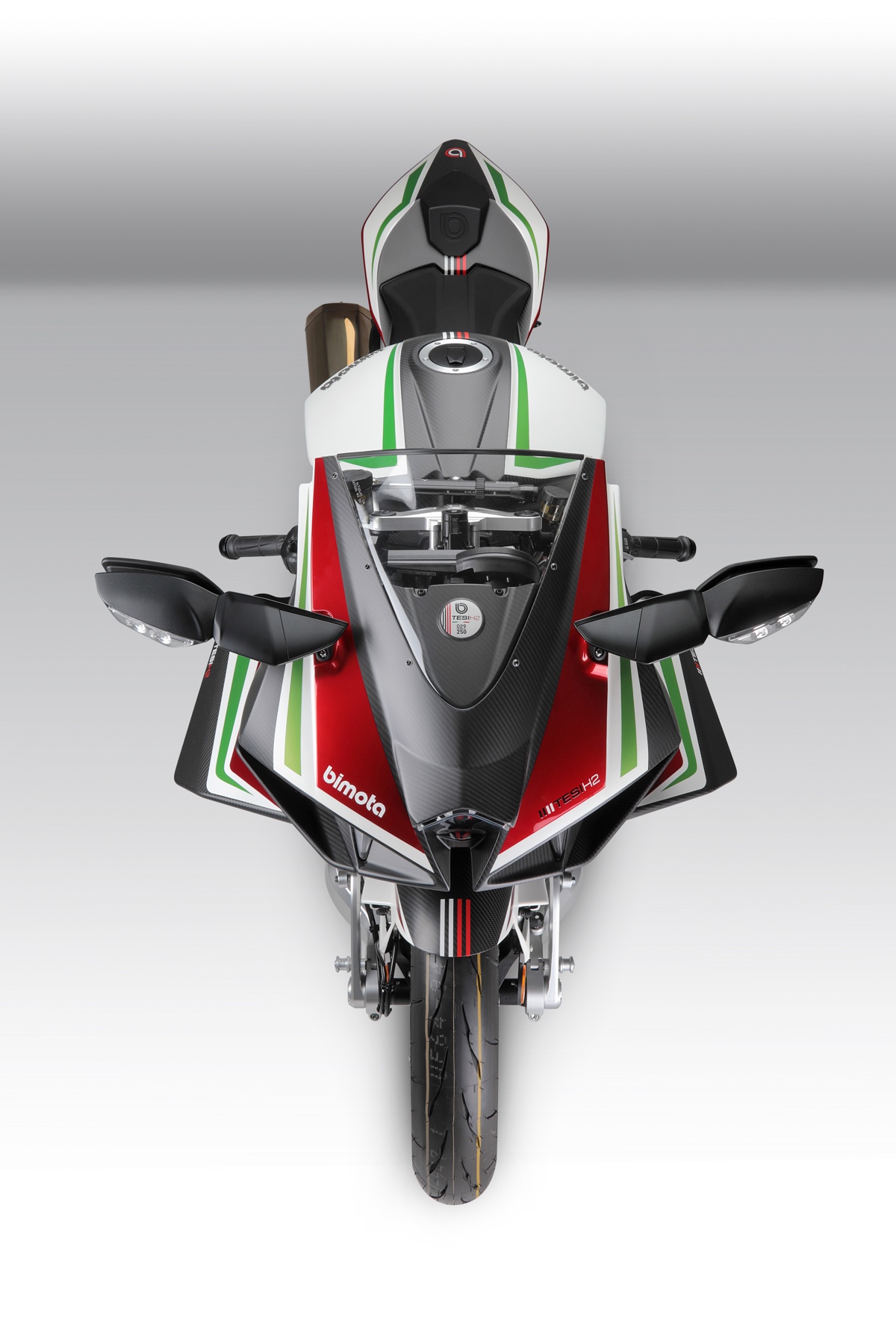
The production Tesi H2 went on sale in Europe beginning October 1, 2020, priced at €64,000. Bimota announced a limited production run of 250 individually numbered motorcycles, available in the company’s traditional white/red treatment or a darker Carbon version.
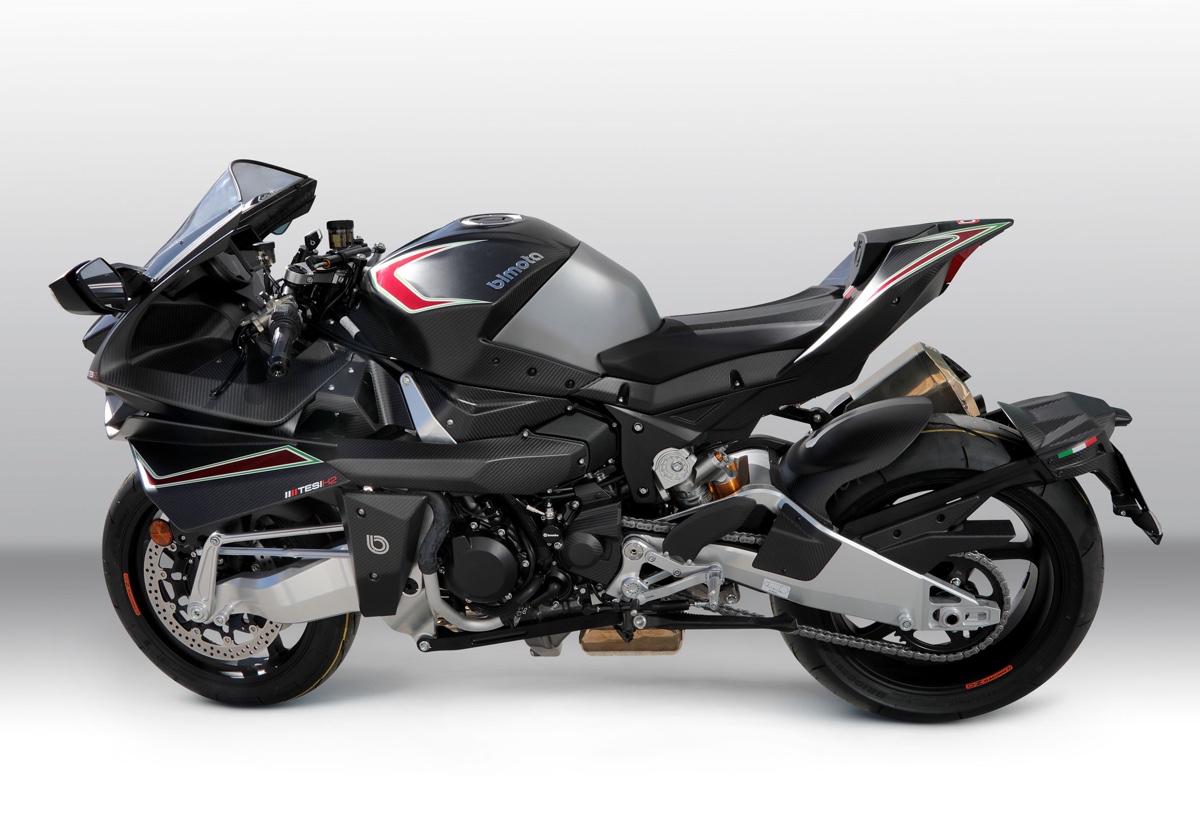
In this case, “250” wasn’t merely an announced maximum. Kawasaki later confirmed that Bimota’s Rimini factory actually built all 250 examples. Each motorcycle was assembled by hand in Italy. The UK market received bikes at approximately £59,000, and customers were supplied with specialty equipment including stands and dedicated tools for front-wheel removal and chassis adjustment.
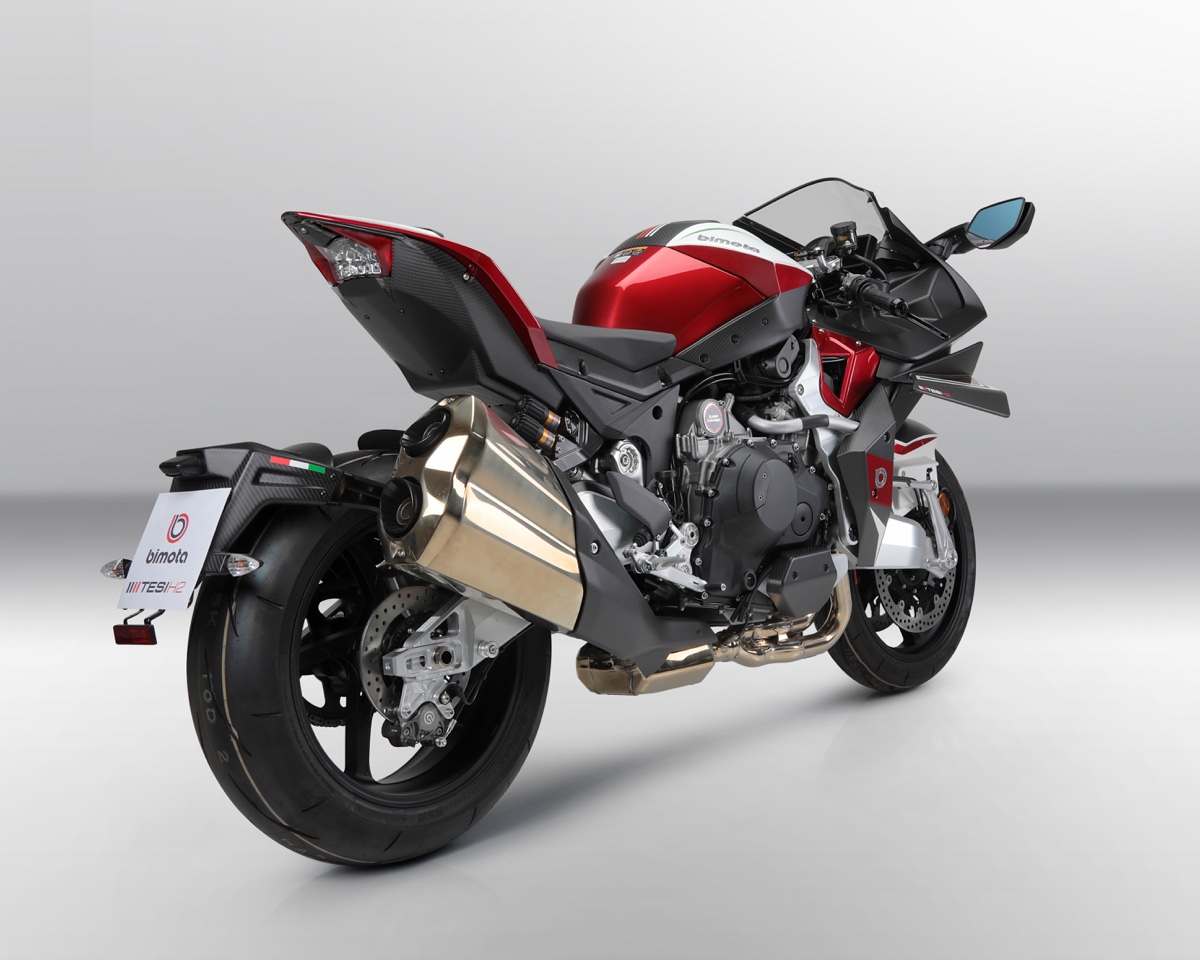
The Tesi H2 therefore occupies an interesting middle ground. It is far rarer and more manually assembled than an ordinary superbike, yet it isn’t a barely documented prototype or one-off special. It was a genuine series-production motorcycle — just a very limited one, very exotic one.
The Perfect Return
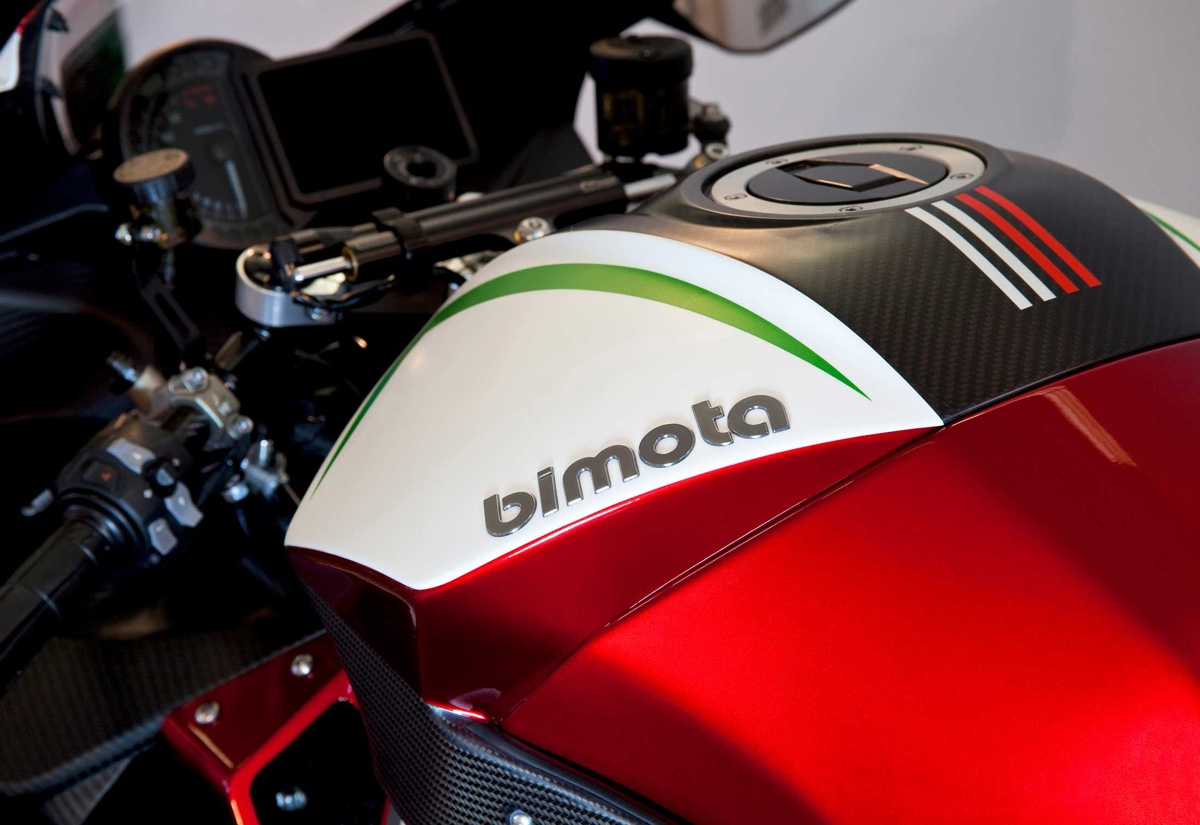
The Tesi H2 was arguably the ideal motorcycle with which to revive Bimota. Simply putting bodywork and suspension around a Kawasaki engine would have reproduced the company’s traditional business model without demonstrating why Bimota still needed to exist.
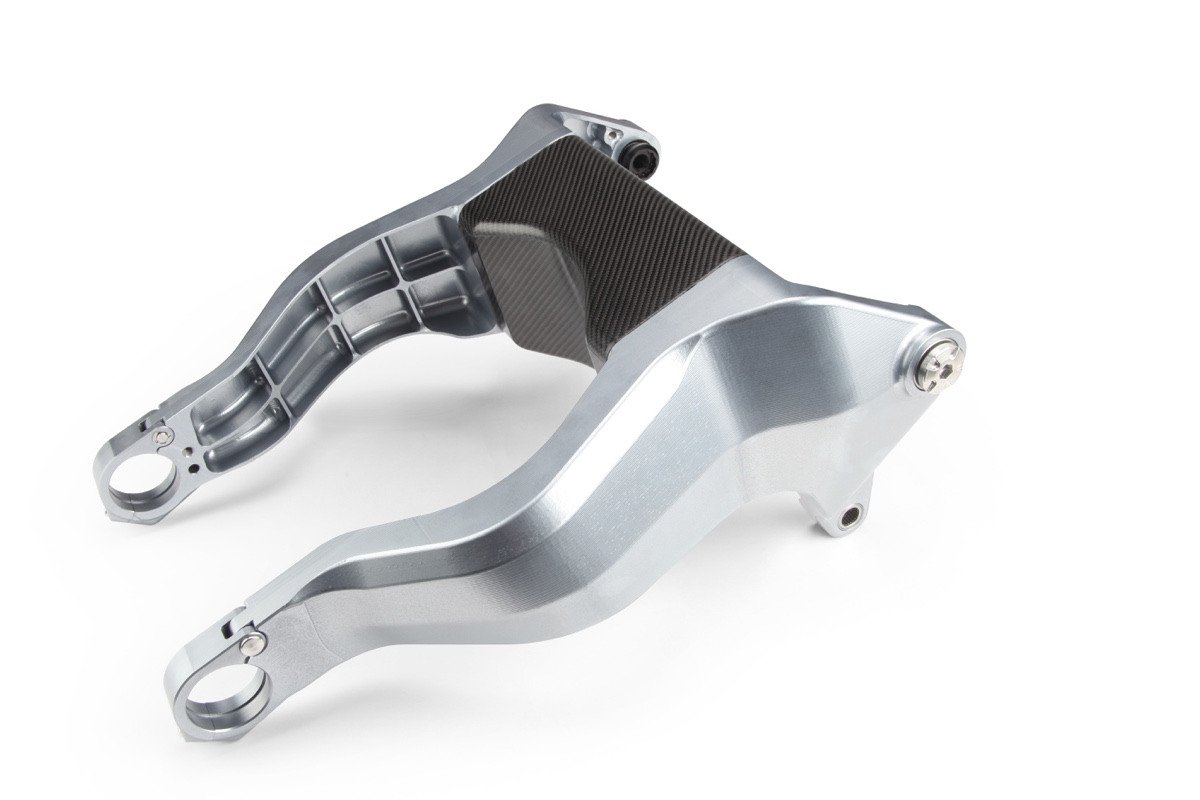
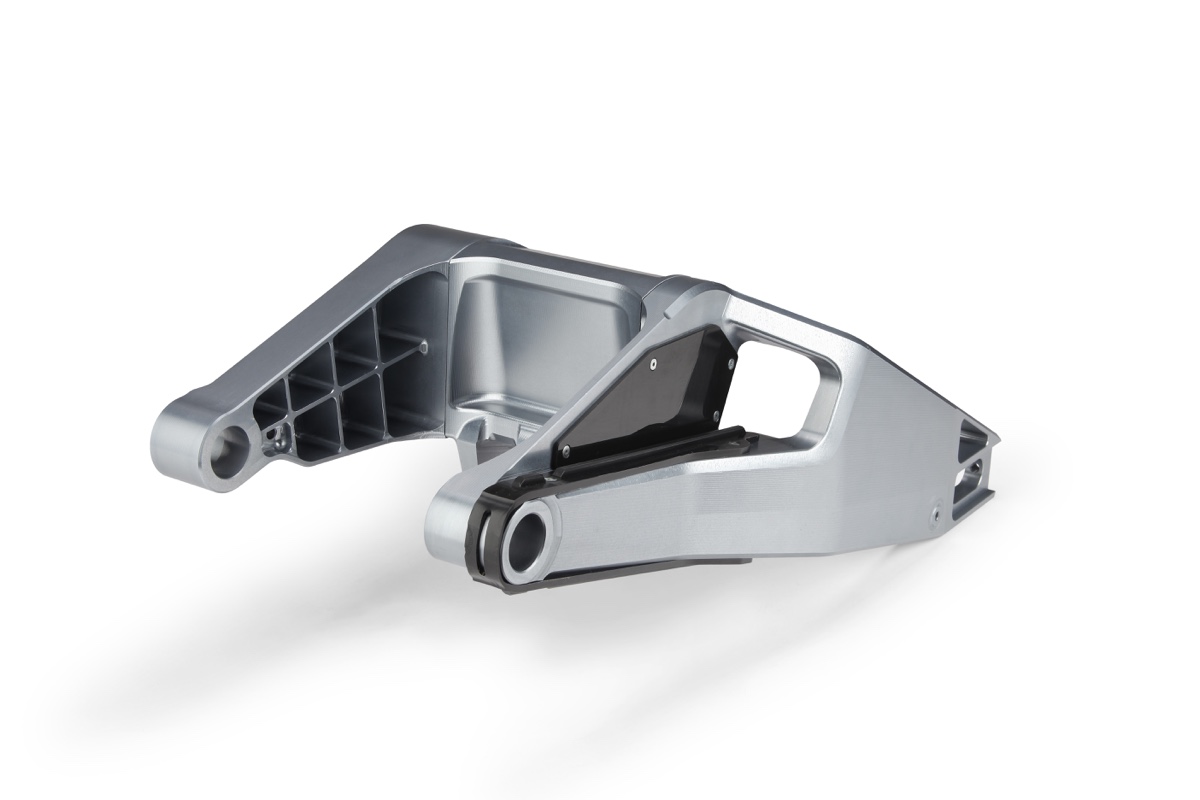
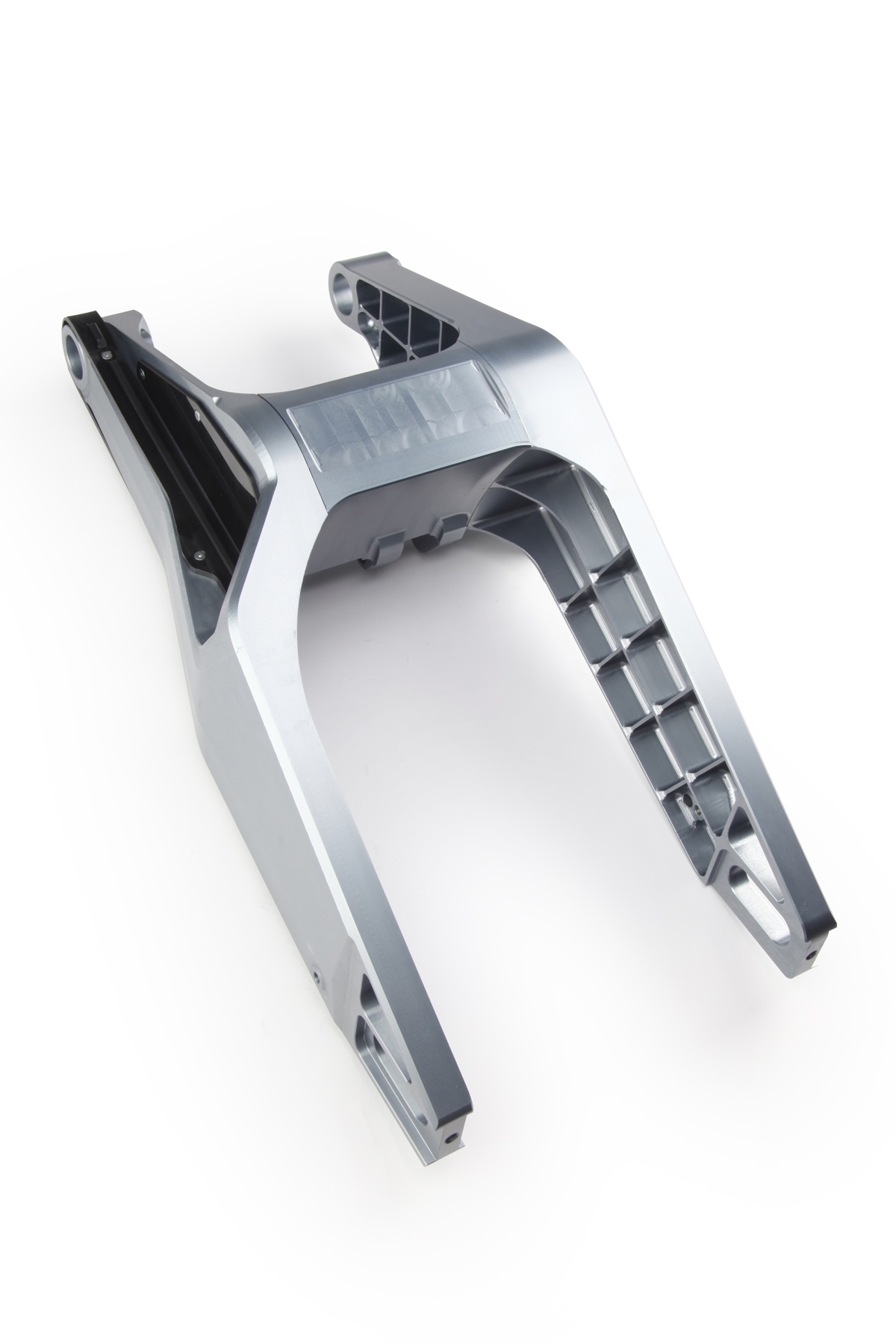
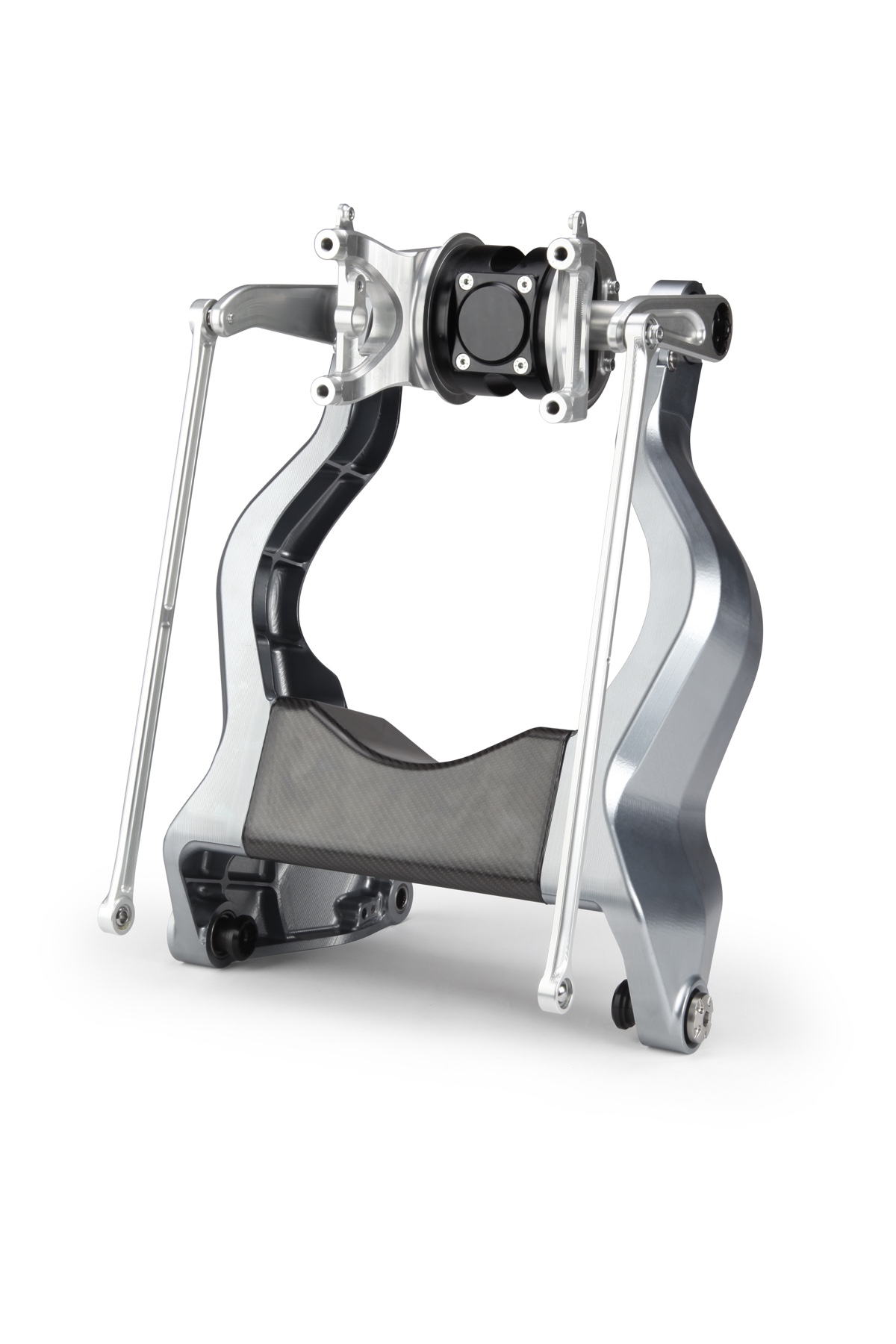
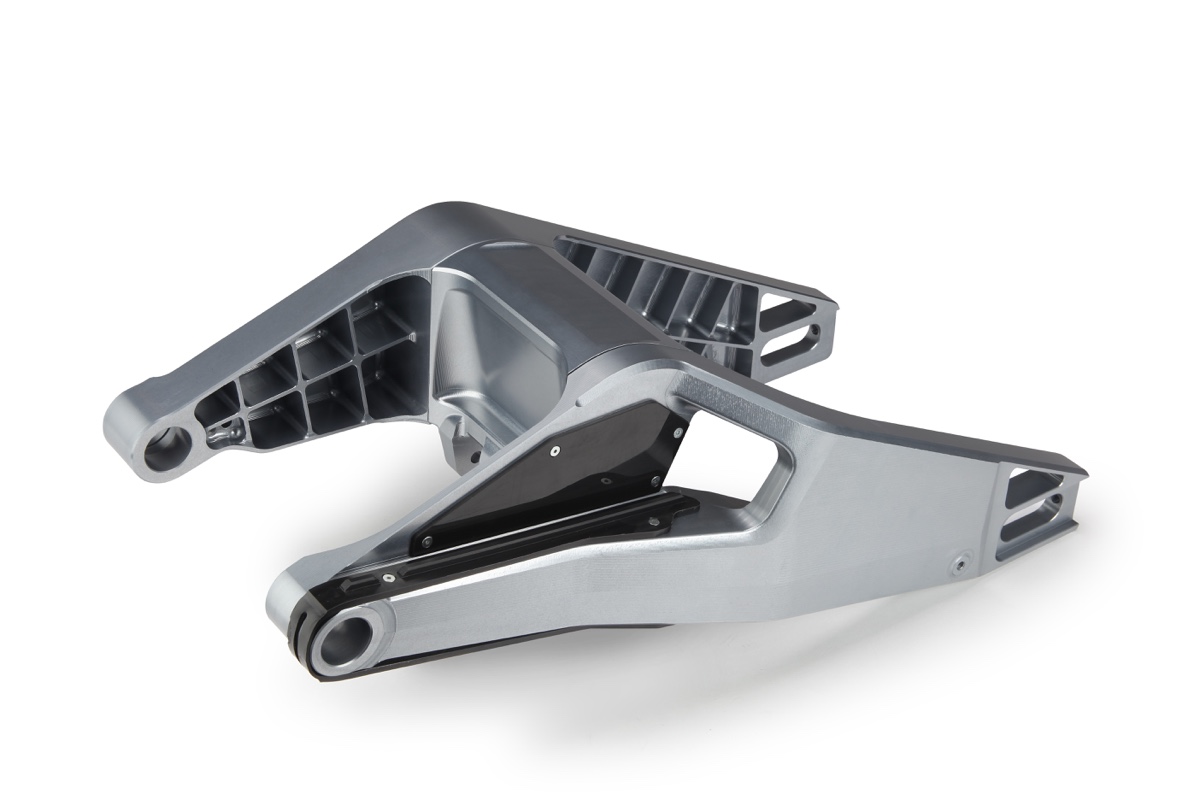
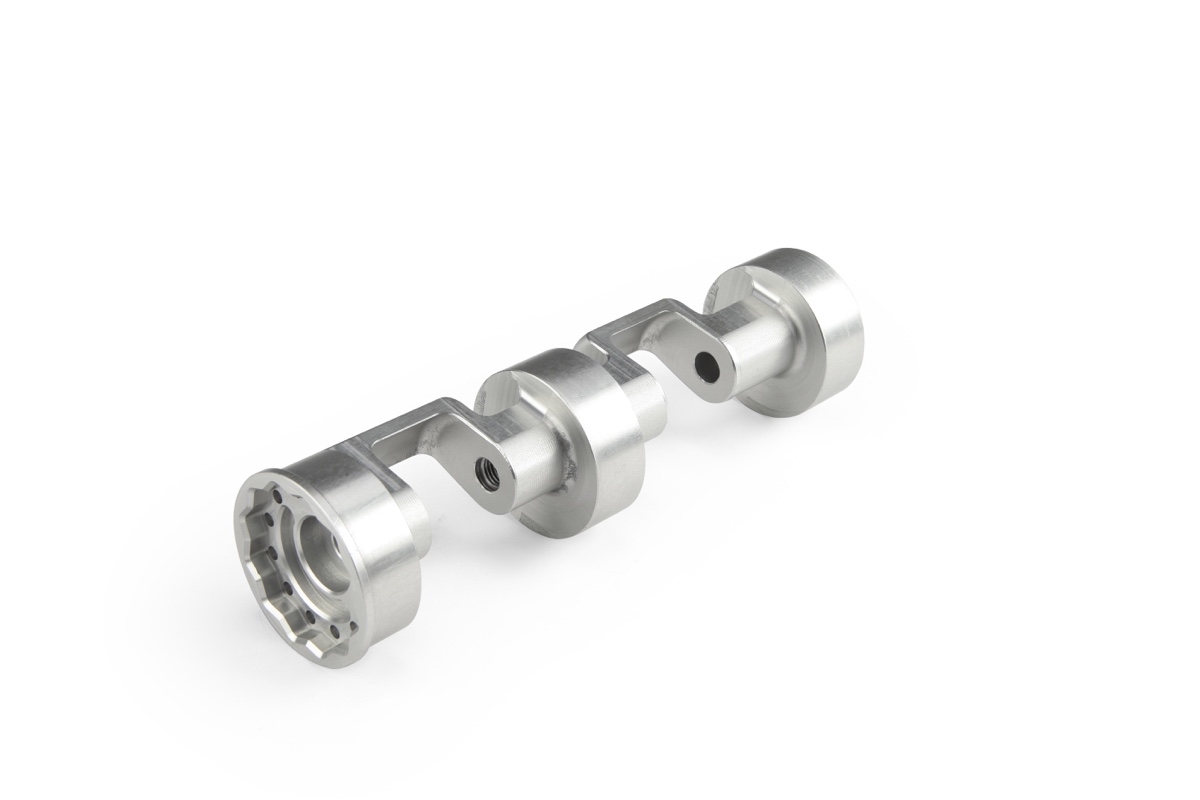
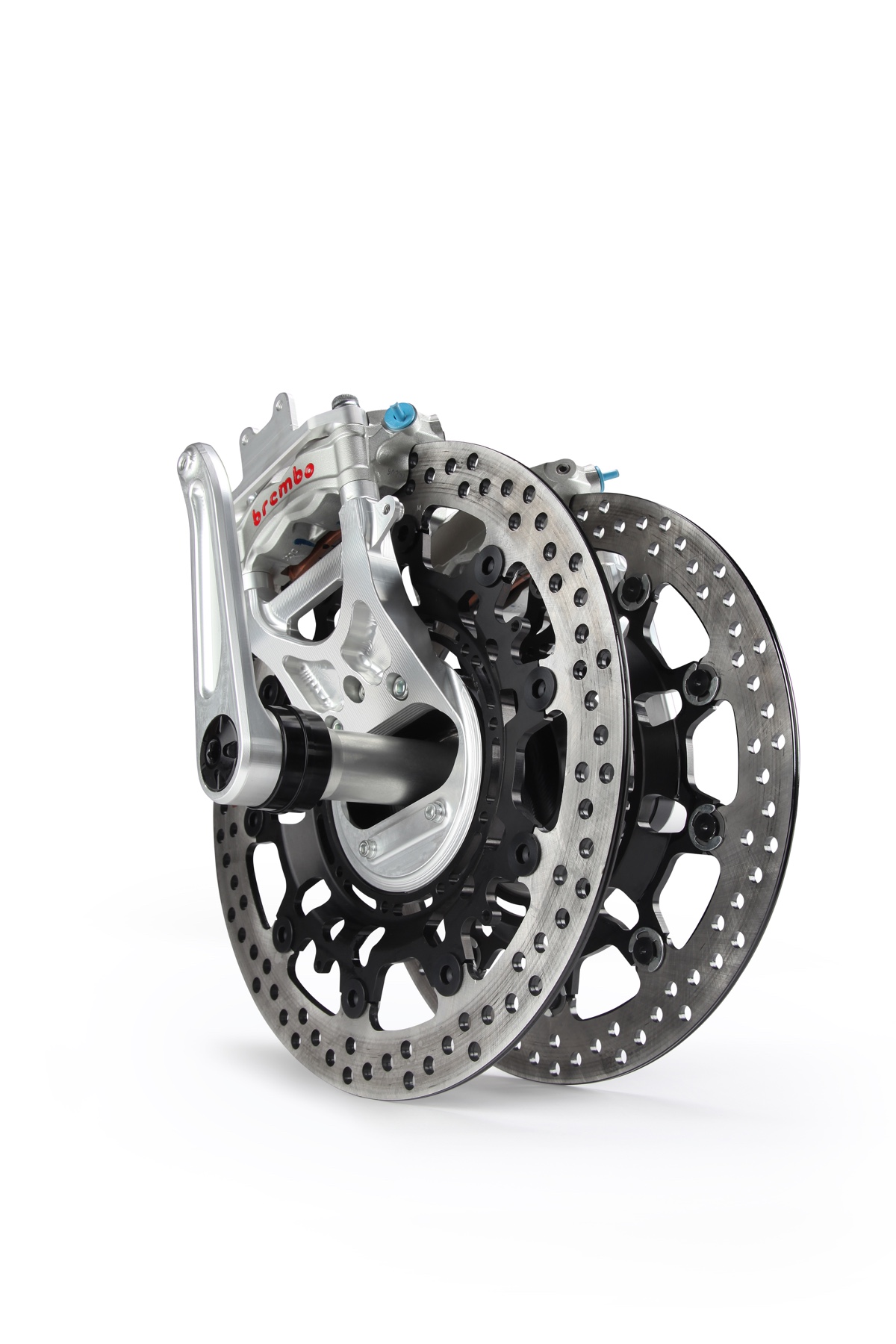
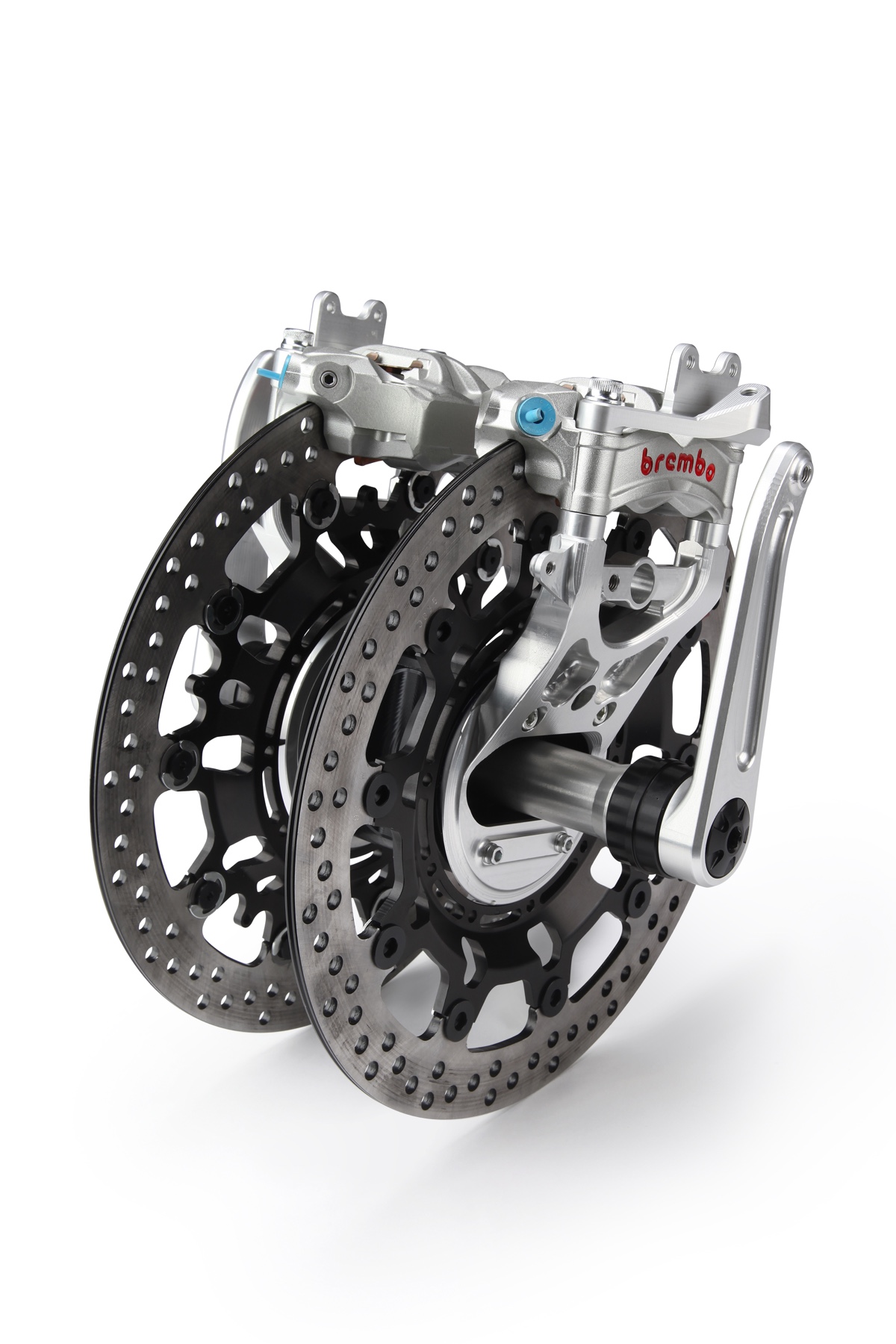
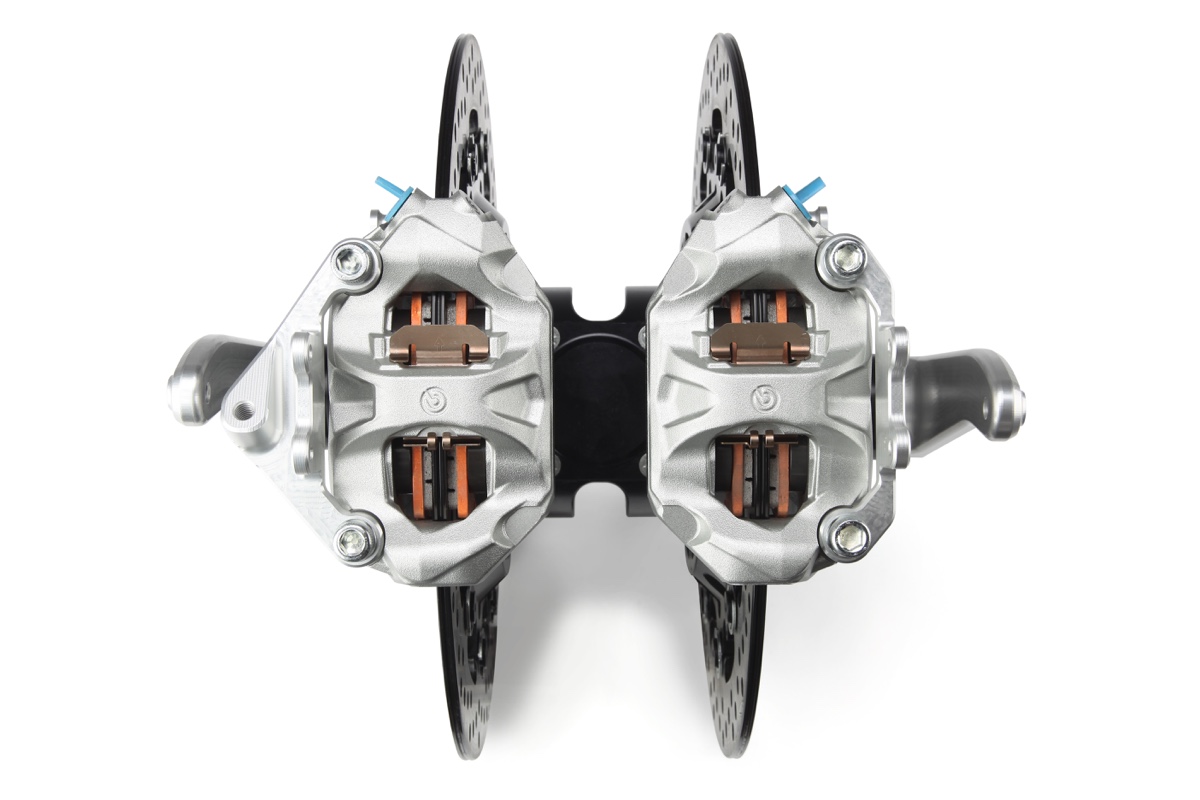
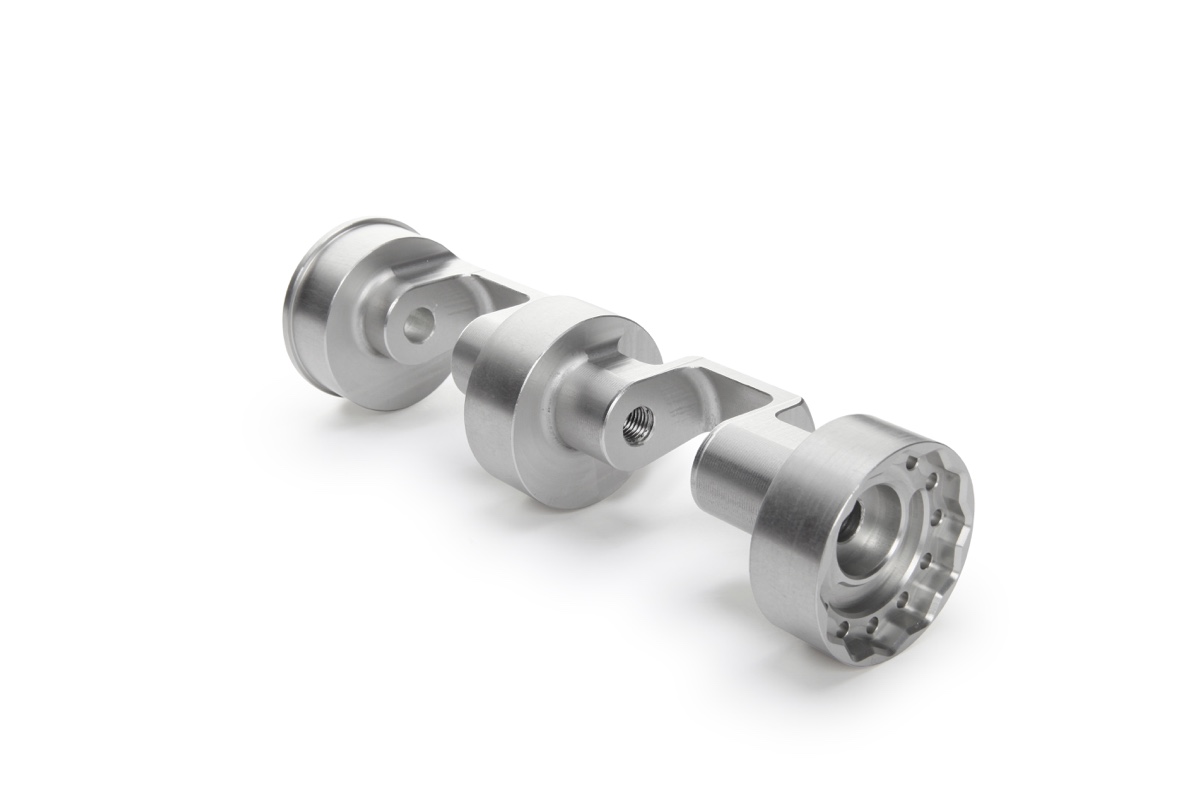
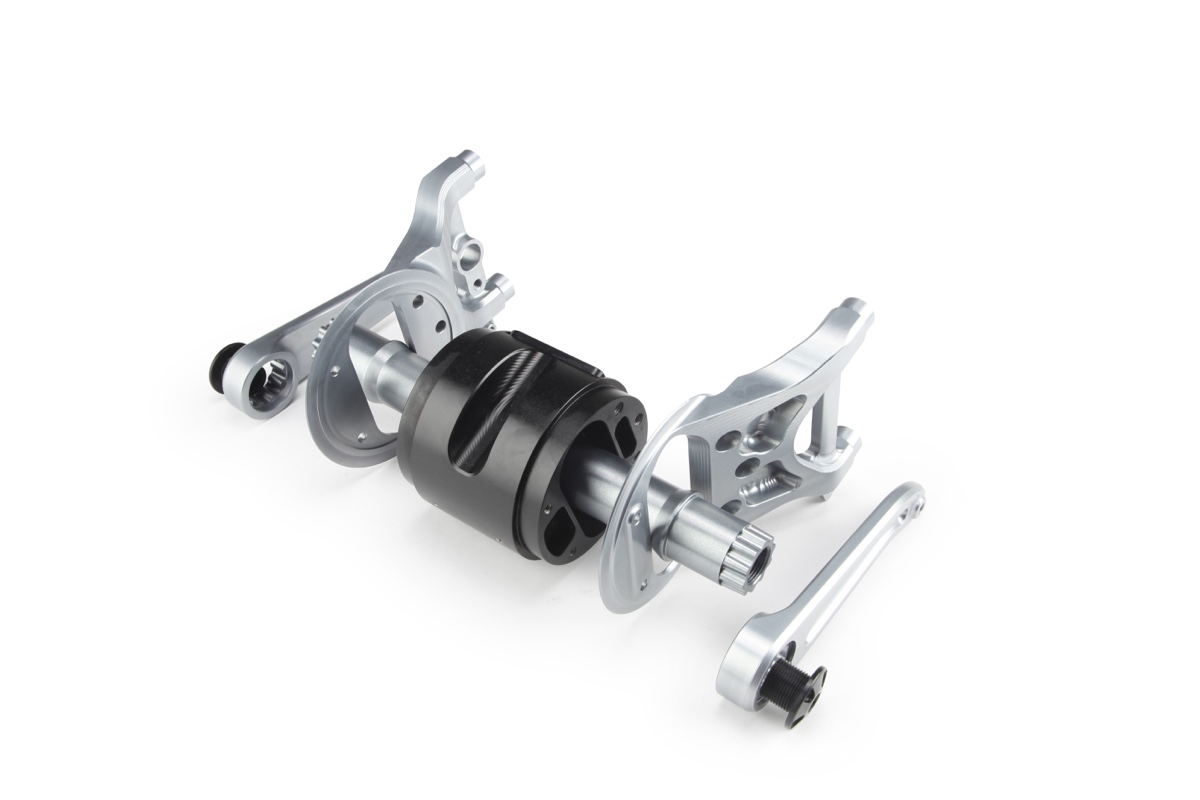
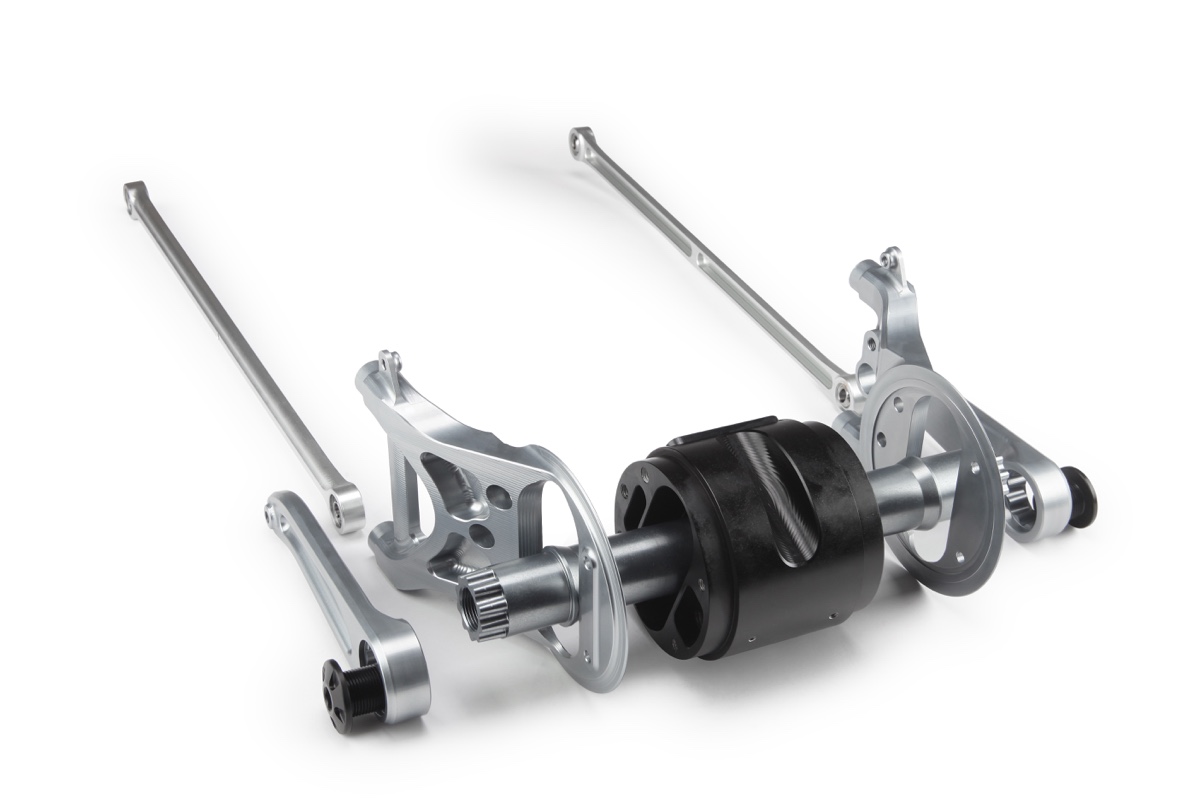
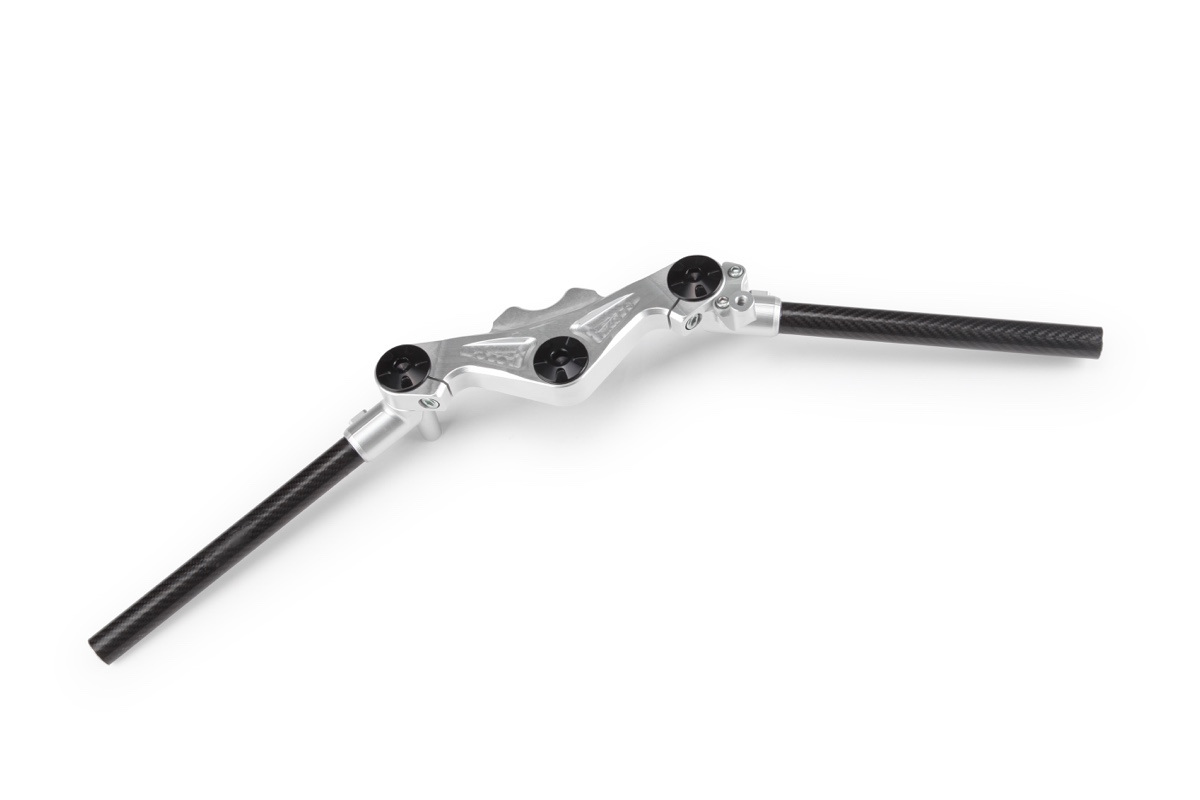
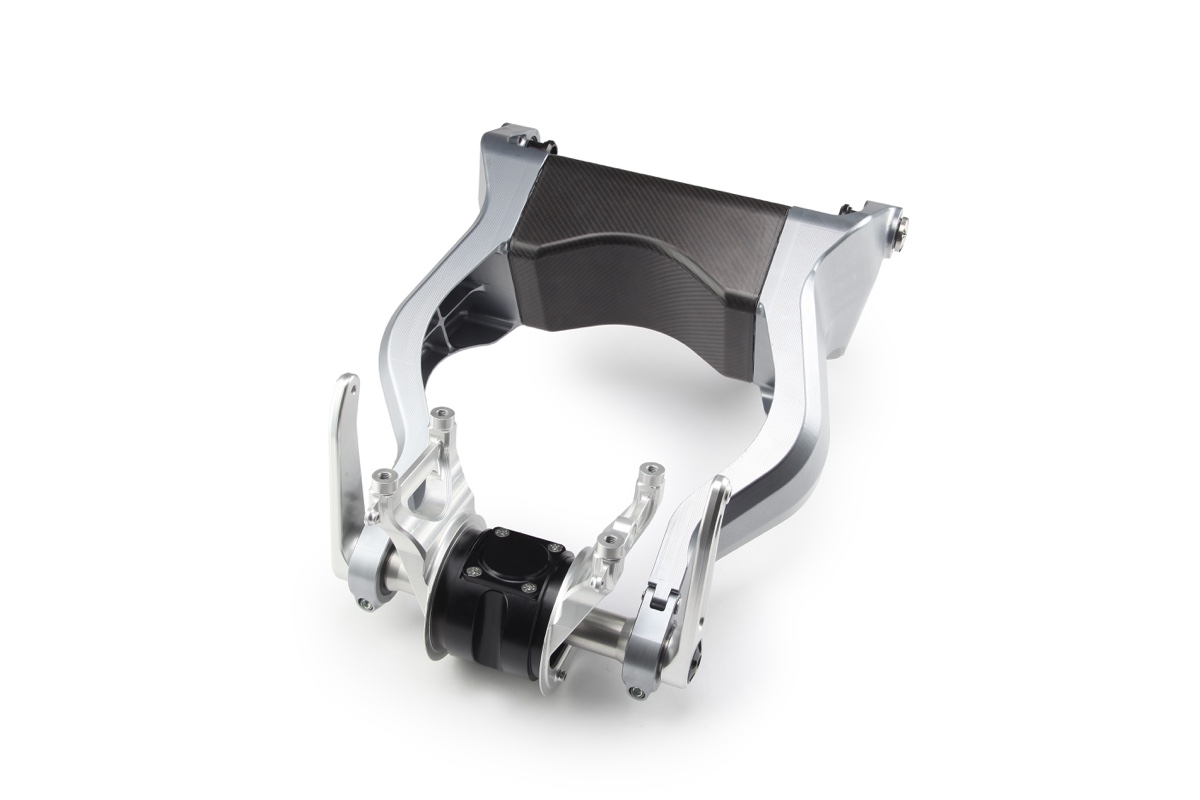
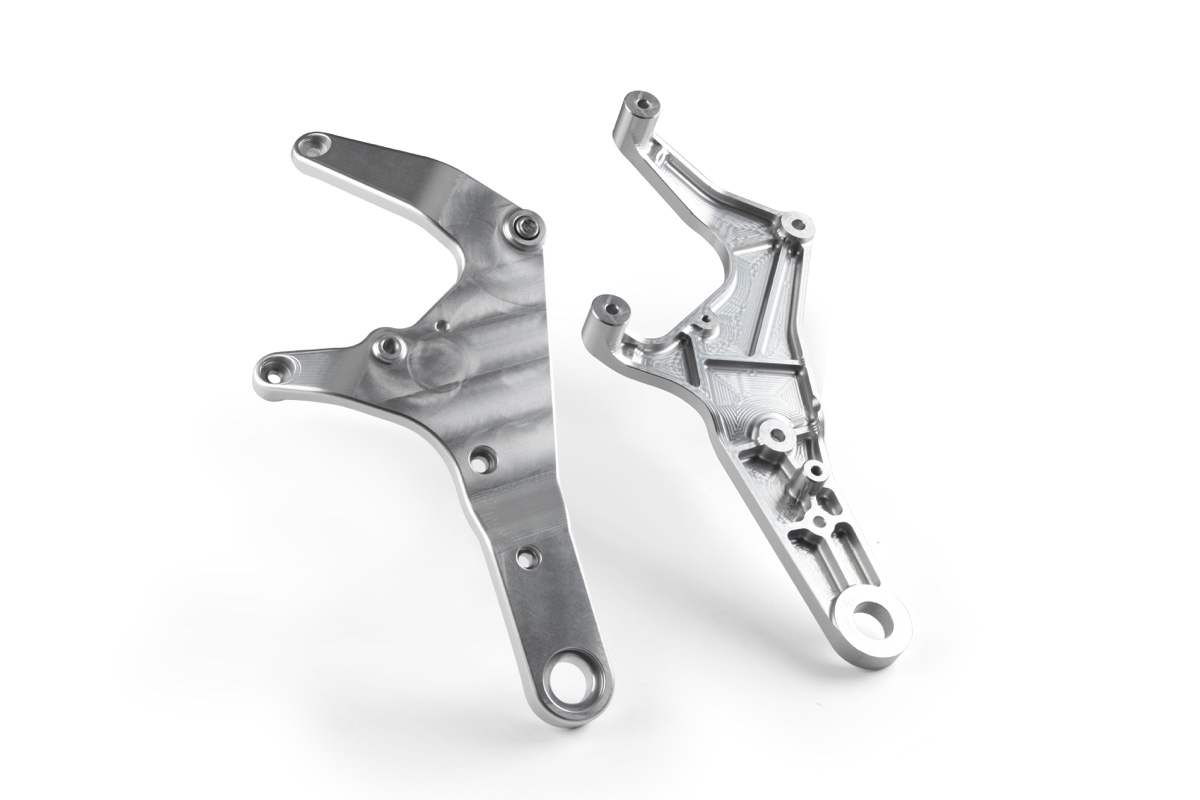
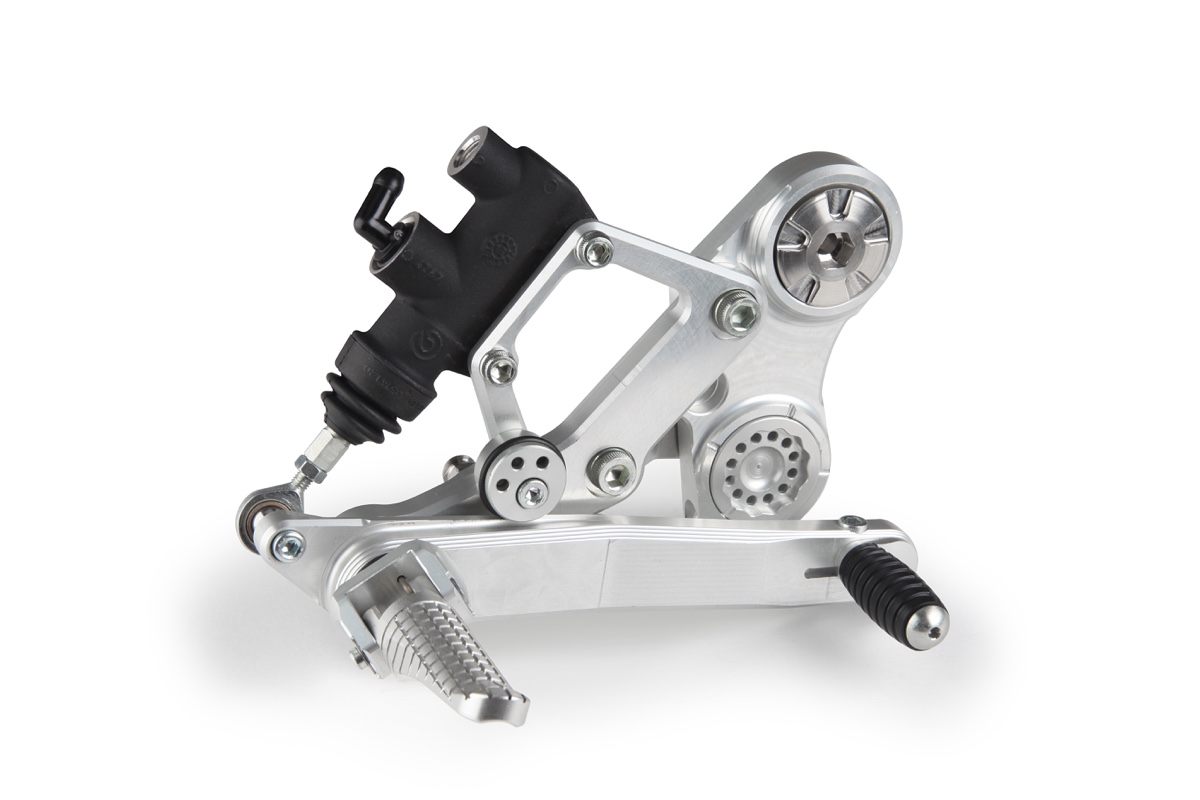
Kawasaki supplied one of the most technologically advanced production motorcycle engines available, along with proven electronics and drivetrain hardware. Bimota supplied the part no large manufacturer was likely to build: a hand-finished chassis using hub-center steering, front and rear swingarms, centrally mounted shocks, carbon-fiber structures, and extensive billet aluminum.
It joined two engineering philosophies that couldn’t have been much more different. Mass-produced Japanese forced-induction technology met tiny-volume Italian chassis experimentation.
The Revolution Continues
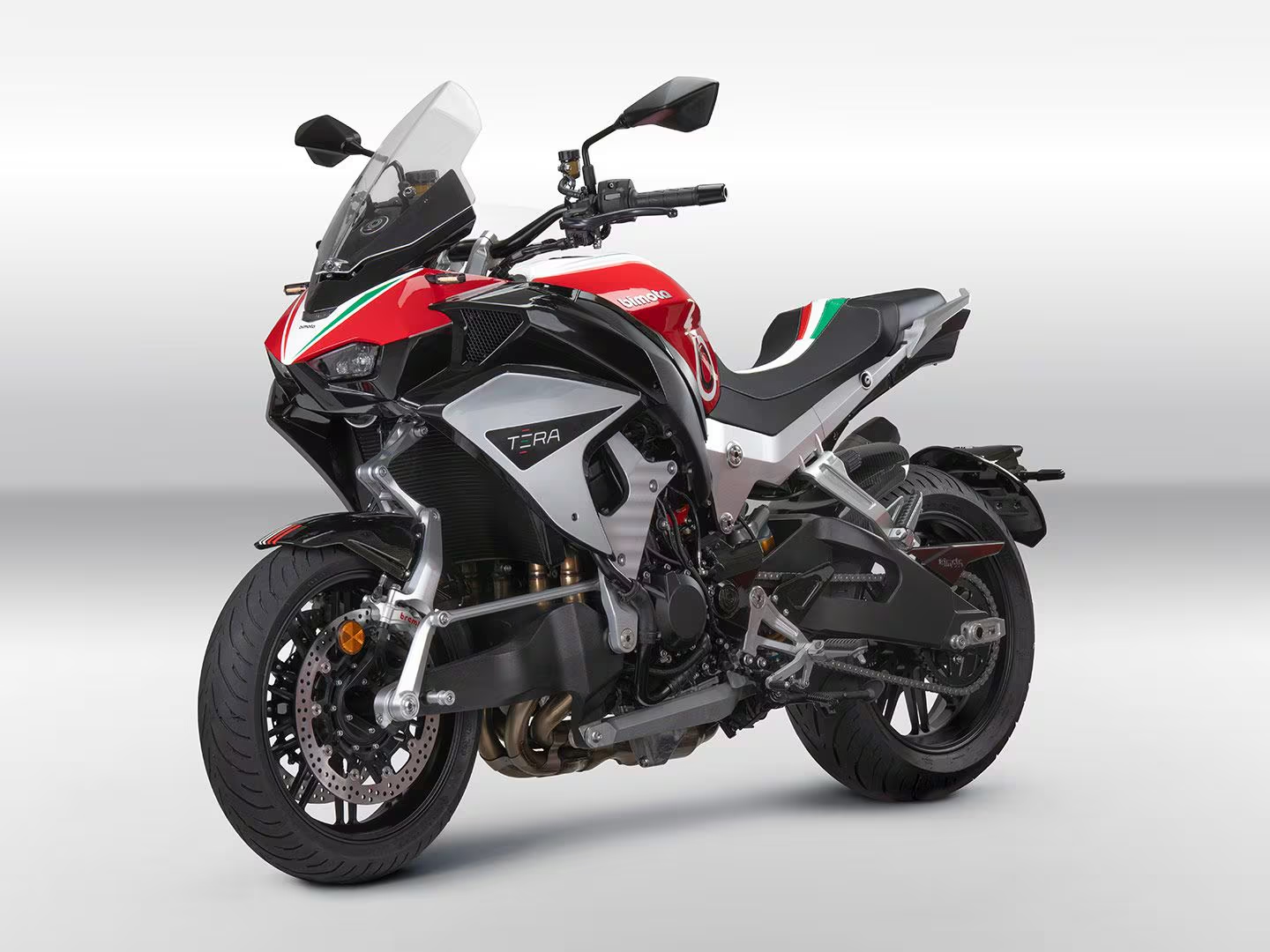
Bimota used the phrase “The Revolution Continues” when it launched the Tesi H2. For once, the marketing slogan fits The Tesi idea had begun as Pierluigi Marconi’s university thesis in the early 1980s, reached production with a Ducati V-twin in 1990, survived through several generations of one of motorcycling’s most financially turbulent companies, and eventually reappeared wrapped around a 239-hp supercharged Kawasaki four.
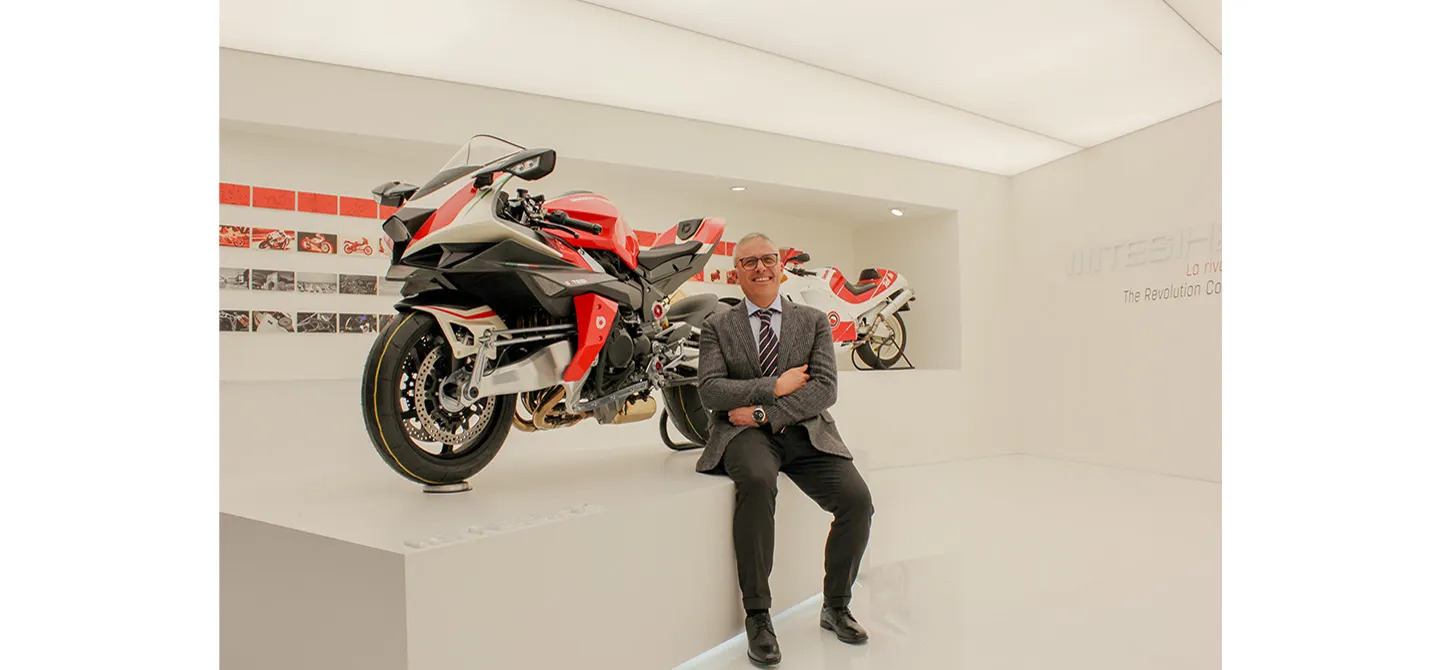
More than 40 years after Marconi began exploring the concept, Bimota is still developing it. The current Tesi H2 Tera carries hub-center steering into a more upright, road-focused machine, this time using the slightly less extreme supercharged H2 SX/Z H2 engine.
But the original Tesi H2 remains the purest expression of the Kawasaki-era idea. For a company whose reputation was built on taking someone else’s engine and asking whether the rest of the motorcycle could be radically better, it was difficult to imagine a more appropriate return.
Bimota Tesi H2 Specifications
| Engine | Liquid-cooled supercharged inline-four |
| Engine source | Kawasaki Ninja H2 |
| Displacement | 998cc |
| Bore x stroke | 76 x 55mm |
| Compression ratio | 8.5:1 |
| Maximum power | 170 kW / 231 PS @ 11,500 rpm |
| Ram-air maximum | 178 kW / 242 PS @ 11,500 rpm |
| Maximum torque | 141 Nm / 104 lb-ft @ 11,000 rpm |
| Fueling | Electronic fuel injection, 50mm throttle bodies, dual injectors |
| Transmission | Six-speed dog-ring |
| Clutch | Wet multi-plate assist/slipper |
| Chassis | CNC aluminum front/rear swingarm mounting structures; engine as structural element |
| Steering | Hub-center steering |
| Front suspension | Aluminum/carbon swingarm, Öhlins TTX shock |
| Rear suspension | CNC aluminum swingarm, Öhlins TTX shock |
| Front travel | 100mm |
| Rear travel | 130mm |
| Front brake | Twin 330mm discs, Brembo Stylema calipers |
| Rear brake | 220mm disc |
| Wheels | OZ Racing forged aluminum |
| Front tire | 120/70ZR17 |
| Rear tire | 200/55ZR17 |
| Caster / trail | 21.3° / 117mm |
| Wheelbase | 1,455mm / 57.3 in |
| Seat height | 840mm / 33.1 in, adjustable ±10mm |
| Fuel capacity | 17 liters / 4.5 gal |
| Claimed dry weight | 207 kg / 456 lb |
| Original price | €64,000 |
| Production | 250 motorcycles |
More Extreme Bikes…
 Bimota Tesi H2: 239-bhp Supercharged Hub-Center Superbike - Bimota’s most radical chassis meets Kawasaki’s wildest engine… For most of its history, Bimota has taken powerful engines from larger manufacturers and surrounded them with exotic Italian chassis engineering. In 2019, Kawasaki acquired a 49.9% […]
 334-hp PGM V8: “The World’s Most Powerful Production Motorcycle” - 2000cc, 334 horsepower, 534 lbs, and a V8 built from two Yamaha R1 engines… Most V8 motorcycles begin with an automobile engine. That approach has produced everything from Boss Hoss cruisers to one-off specials, […]
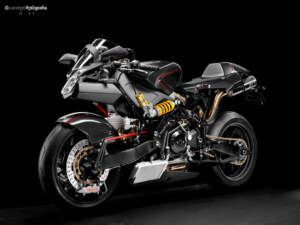 Vyrus 987 C³ 4V: 350-lb Ducati-Powered Hub-Center Superbike - Ducati 1098R power, 350 pounds, and hub-center steering… In 2009, the Ducati 1098R already represented an extreme interpretation of the Italian V-twin superbike. Its Testastretta Evoluzione engine (actually 1198cc despite the model name) had been […]
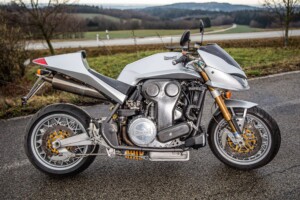 Münch Mammut 2000: The 260-hp Turbo Bike - Übermoto: 2000cc, Turbocharged, 260 horsepower, and 218 lb-ft of torque… At the turn of the millennium, the motorcycle world was engaged in an escalating superbike arms race. The Suzuki Hayabusa and Kawasaki ZX-12R were pushing […]
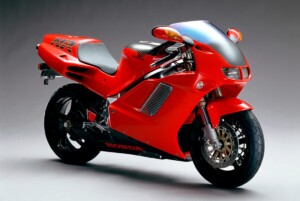 Honda NR750: The Oval-Piston Superbike - 32-Valve, 15,000-rpm V4: Honda’s attempt to build a V8…without technically building one… In 1992, Honda put one of the strangest engines ever developed for Grand Prix racing into a road-going motorcycle. The resulting Honda NR750 […]
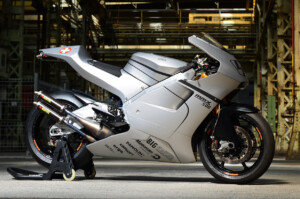 Suter MMX 500: 195-HP Two-Stroke GP Bike - 195 Horsepower, 280 Pounds, Two Strokes: The Spirit of the 500cc “Unrideables” Reborn… For a generation of motorcycle racing fans, the 500cc two-stroke Grand Prix bike represents something close to the ultimate racing motorcycle. The […]
 ATK 700 Intimidator: The 78-hp 700cc Two-Stroke Dirt Bike - 685cc, 78 Horsepower, 238 Pounds: One of the most outrageous production dirt bikes ever offered in America… There was a time when a 500cc two-stroke motocross bike was the king of the dirt. Honda’s CR500 […]
 Bimota Vdue: 500cc Two-Stroke GP Bike for the Road - Bimota’s first homegrown engine powered one of the wildest superbikes of the 1990s: a featherweight 500cc V-twin smoker with direct fuel injection, carbon bodywork, and GP aspirations… Imagine walking into a motorcycle dealership in the […]
 Crighton CR700W: 220-hp, 286-lb Rotary Superbike - The culmination of Brian Crighton’s four-decade obsession with rotary race bikes makes 220 horsepower from 690cc — and weighs less than a Yamaha R3… The Crighton CR700W is one of those motorcycles whose specifications make […]
 2WD Dakar Legend: Yamaha WR450F 2-Trac - Remembering Yamaha x Öhlins’ Hydraulic 2WD Enduro… Every so often, a motorcycle appears that seems to point toward an entirely different future. The Yamaha WR450F 2-Trac was one of those machines. At first glance, it […]
 Kinetic Art: Brough Superior RMB01 - Brough Superior and Watchmaker Richard Mille join forces on a work of kinetic art… One of the most striking machines at ArtRide 2026 in Biarritz, France, was the Brough Superior RMB01. Built in collaboration with […]
 Up for Auction: Allen Millyard’s 500-hp Viper V10 Motorcycle! - The 8000cc, 500-bhp Millyard Viper V10 crosses the auction block this month… There are custom motorcycles, and then there’s the Millyard Viper V10. Built by legendary British engineer Allen Millyard, this 8000cc V10-powered road-legal motorcycle […]
 Veloce Ethereal: 500cc Two-Stroke Café Racer - 145-hp 500cc Two-Stroke Ethereal from Veloce Motorcycles… In the modern world, a 500cc two-stroke intended for road use seems almost unthinkable. However, that’s exactly what Oxfordshire-based Veloce Motorcycles is promising with the Ethereal — a […]
 Veloce Aperion: 280-BHP 1000cc Two-Stroke Café Racer! - Veloce Motorcycles unveils a 1000cc X8 two-stroke café racer! Built by Oxfordshire-based Veloce Motorcycles, the Aperion is a 1000cc, eight-cylinder, two-stroke naked bike — or perhaps more accurately, an engineering provocation with lights, wheels, and […]


