
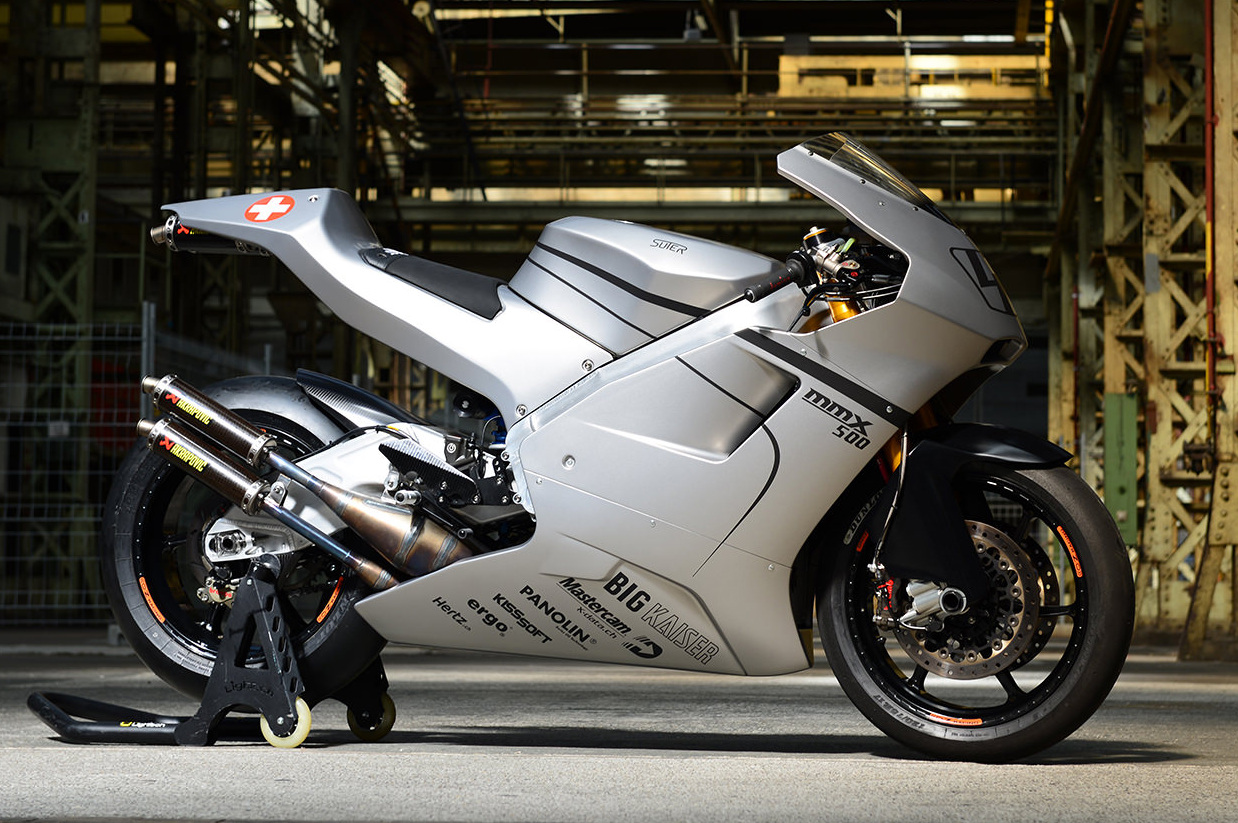
195 Horsepower, 280 Pounds, Two Strokes: The Spirit of the 500cc “Unrideables” Reborn…
For a generation of motorcycle racing fans, the 500cc two-stroke Grand Prix bike represents something close to the ultimate racing motorcycle. The great factory machines of Honda, Yamaha, Suzuki, and Cagiva were brutally light, phenomenally powerful, and notoriously difficult to ride. Their 500cc V4 engines eventually produced close to 200 horsepower in motorcycles weighing around 130 kilograms, with virtually none of the electronic intervention that makes today’s MotoGP machines remotely manageable.
These “Unrideables” produced some of the most dramatic, exhilarating racing ever seen on two wheels. Then, after the 2001 season, they were all but gone. The premier class moved to four-strokes, eventually becoming MotoGP, and the great two-stroke 500s disappeared into museums, factory collections, and the garages of exceedingly fortunate private owners.
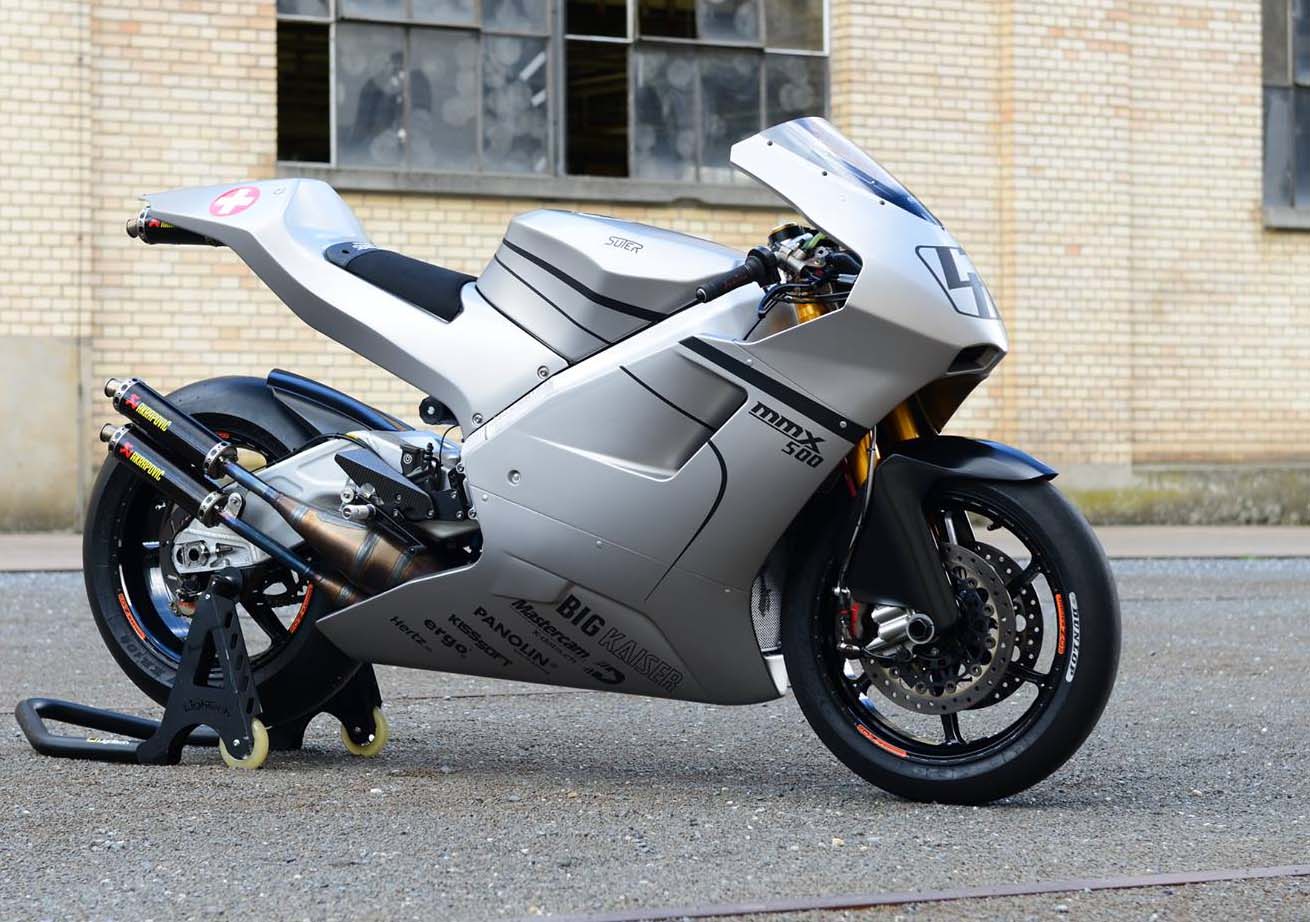
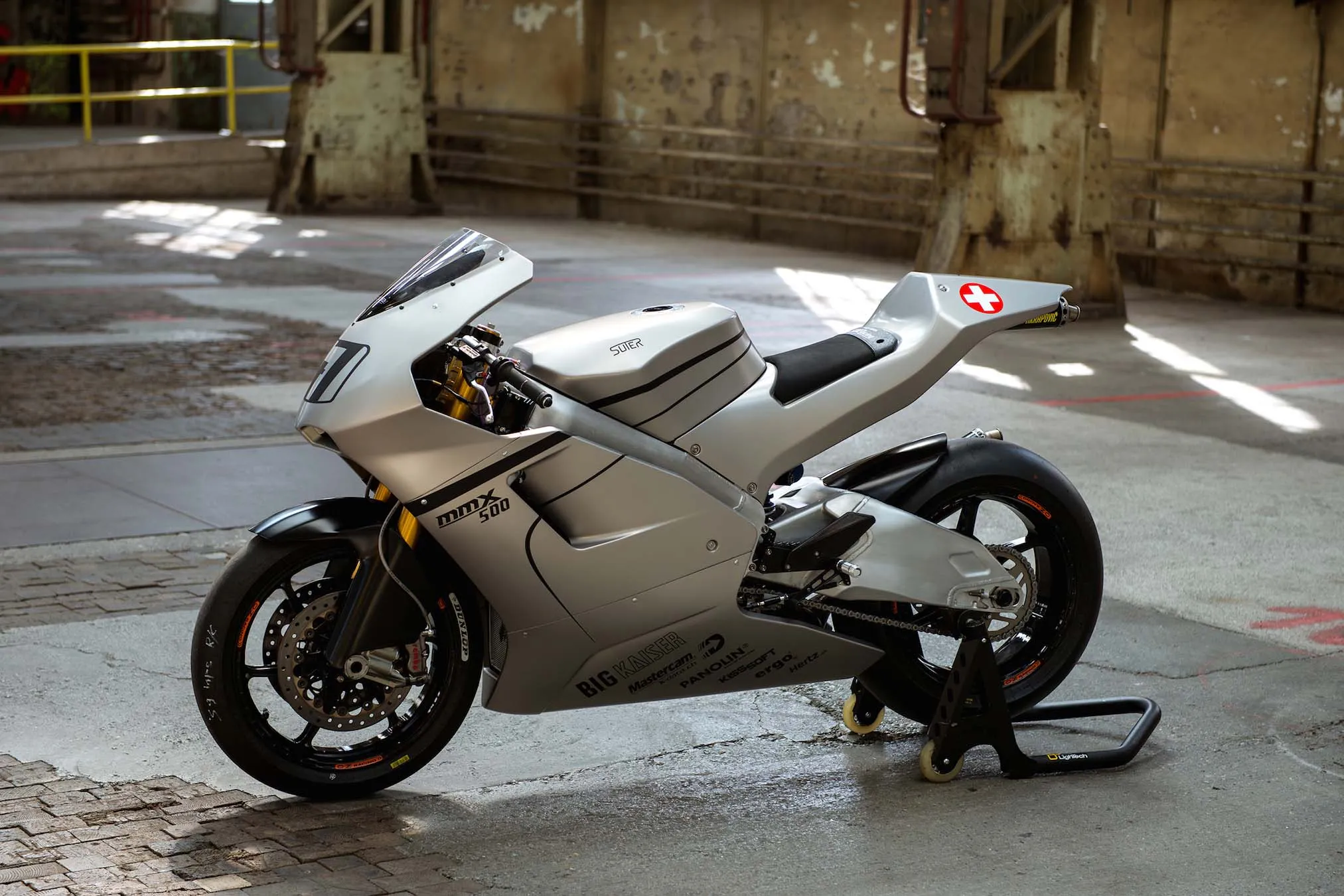
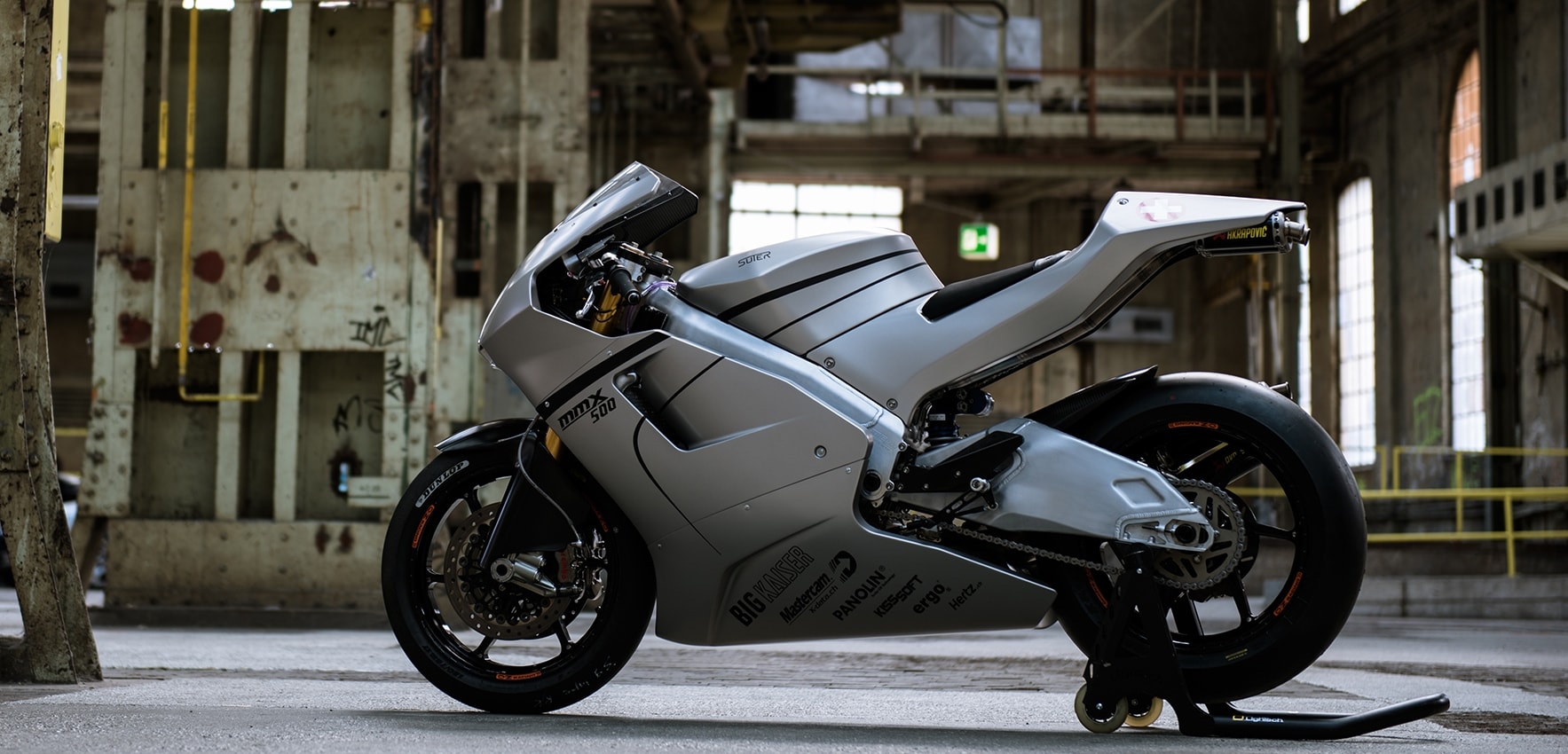
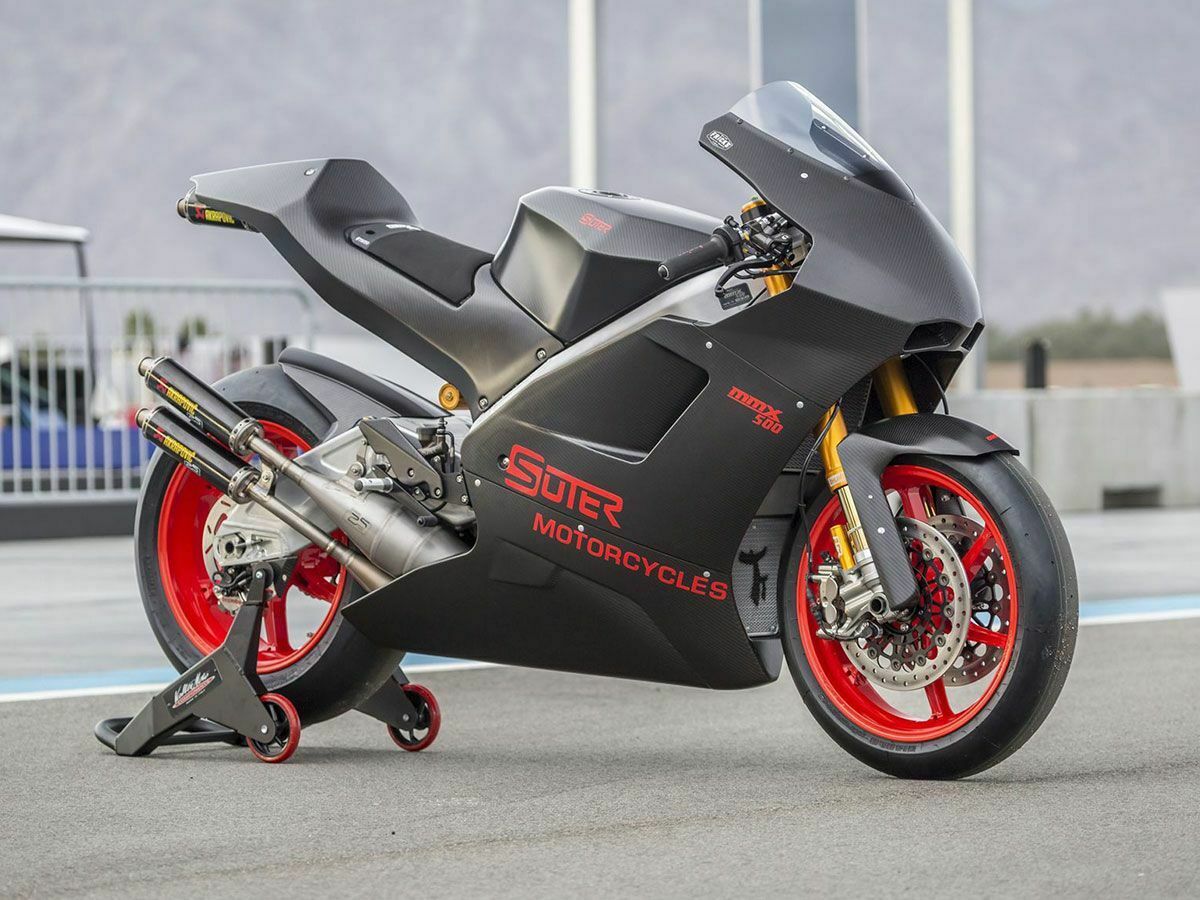
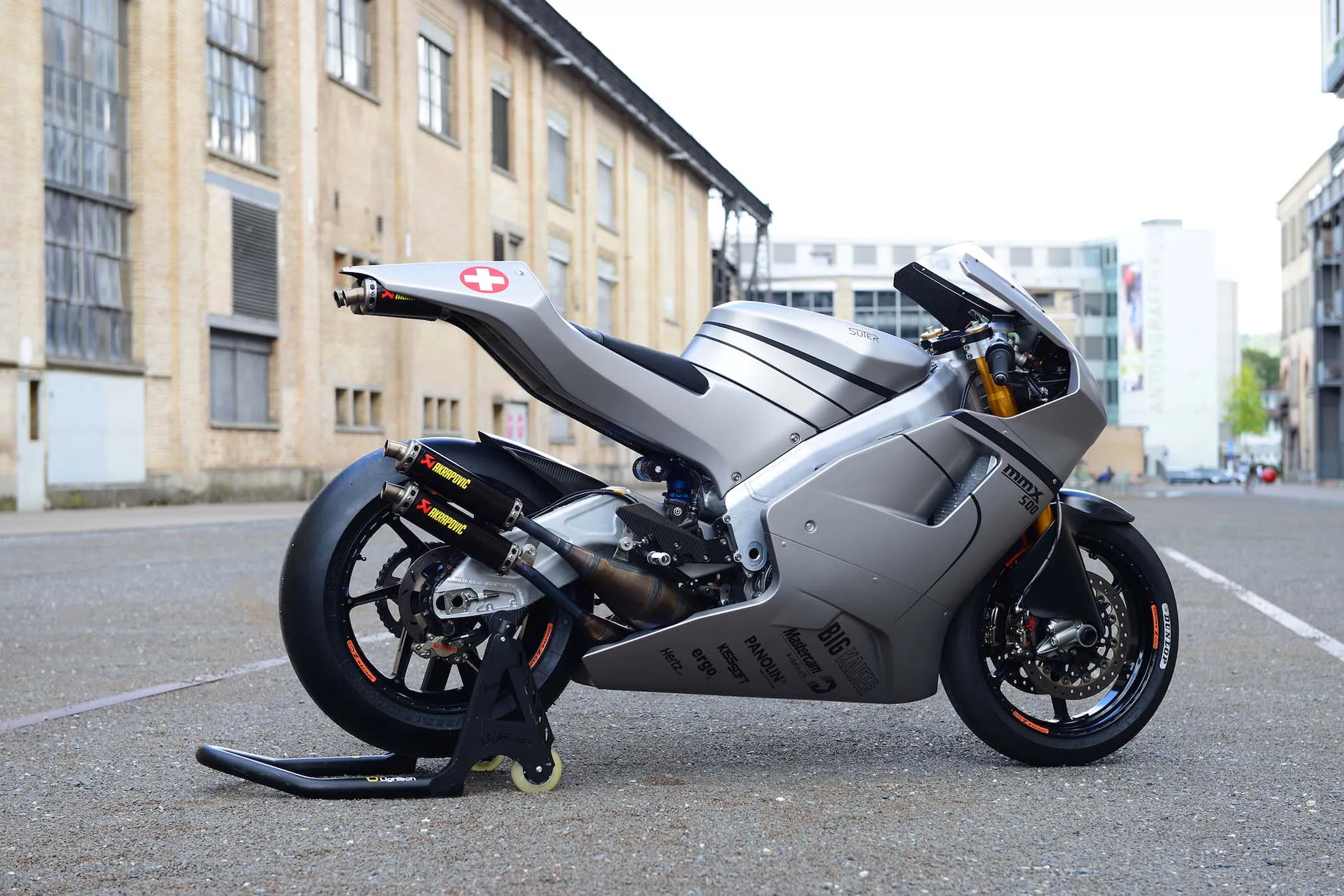
More than a decade later, Swiss race-bike specialist Suter Racing decided to bring the experience back. The result was the Suter MMX 500: a modern, fuel-injected V4 two-stroke producing a claimed 195 horsepower at 13,000 rpm, weighing only 127 kilograms / 280 pounds, and capable of more than 310 km/h / 193 mph. It wasn’t a restored old GP bike, a road motorcycle styled to resemble one, or a replica built around some ancient donor engine. Suter designed the whole thing from a blank slate.
Unlike an NSR500 or YZR500 from the factory racing era, an ordinary — albeit extremely wealthy — enthusiast could actually buy one. Suter originally announced a limited production run of up to 99 machines.
The 500cc Grand Prix Dream
The MMX 500 existed because Suter founder Eskil Suter knew exactly what the old GP machines were like. The Swiss rider competed in the 250cc and 500cc Grand Prix classes during the 1990s before establishing Suter Racing Technology in 1996. What began with the company’s racing clutch developed into a serious engineering operation involved in some of the highest levels of motorcycle competition.
Suter supplied chassis technology for the 500cc MuZ/Weber/Swissauto project in the late 1990s, worked with Kawasaki in MotoGP, and later became one of the dominant chassis manufacturers during Moto2’s early years. Suter won the Moto2 Constructors’ Championship three years running from 2010 through 2012, while Marc Márquez won the 2012 Moto2 World Championship on a Suter chassis.
In other words, this wasn’t a small fabrication shop deciding it would be fun to stuff a giant two-stroke into a modern chassis. Suter knew Grand Prix motorcycles better than just about anyone. Eskil Suter remained especially fascinated by the old two-strokes. As he later explained, he and his brother Simon realized they had enough pieces and expertise around the company to explore an idea that had largely vanished from modern racing: build a contemporary V4 two-stroke production racer for enthusiasts, using everything learned in the decades since the original 500cc GP era.
The motivation was simple. Almost nobody could buy a real factory NSR500, YZR500, or RGV500. Even if you somehow obtained one, keeping it alive would mean hunting irreplaceable parts for a priceless piece of racing history. Suter could build something new.
A Modern 500 GP Bike, Sort Of…
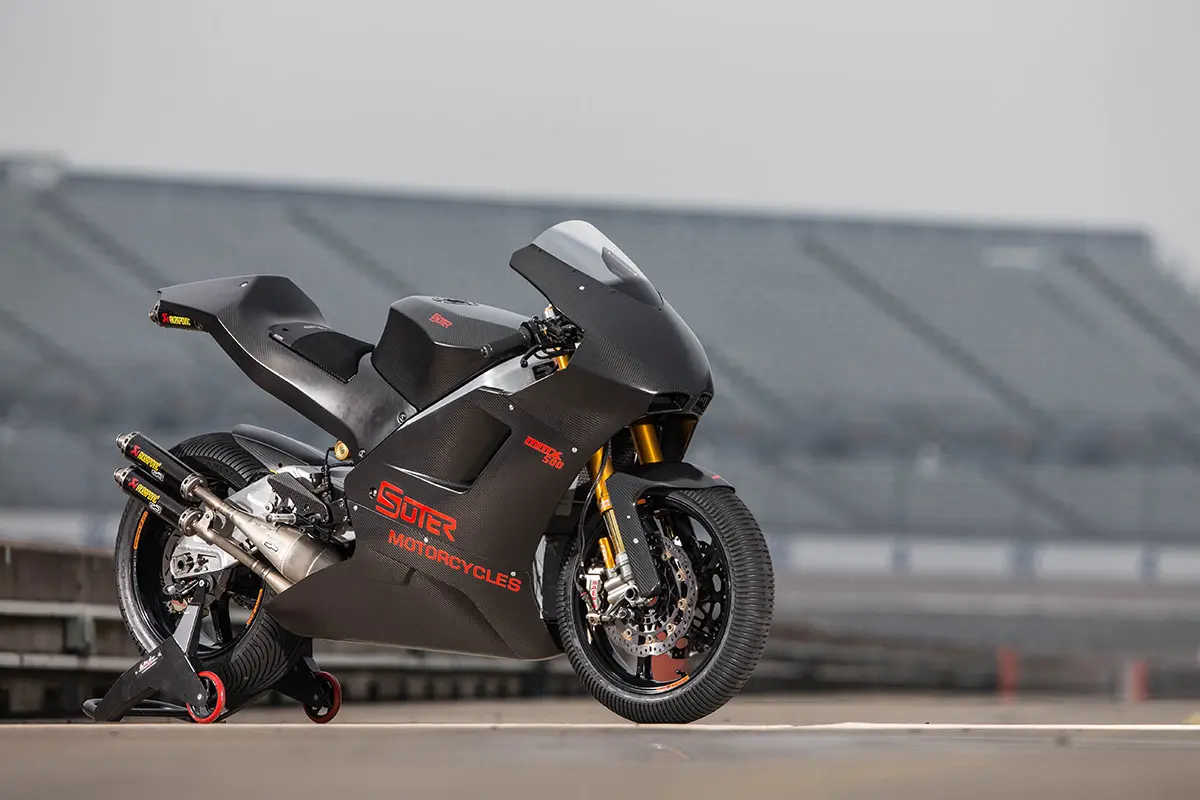
Despite the name, the MMX 500 isn’t 500cc — it’s actually 576cc! Suter was recreating the experience of a 500cc Grand Prix motorcycle, not building to a Grand Prix rulebook. That gave the engineers an advantage the original factory teams never had: there was no reason to stop at an arbitrary 500cc displacement limit.
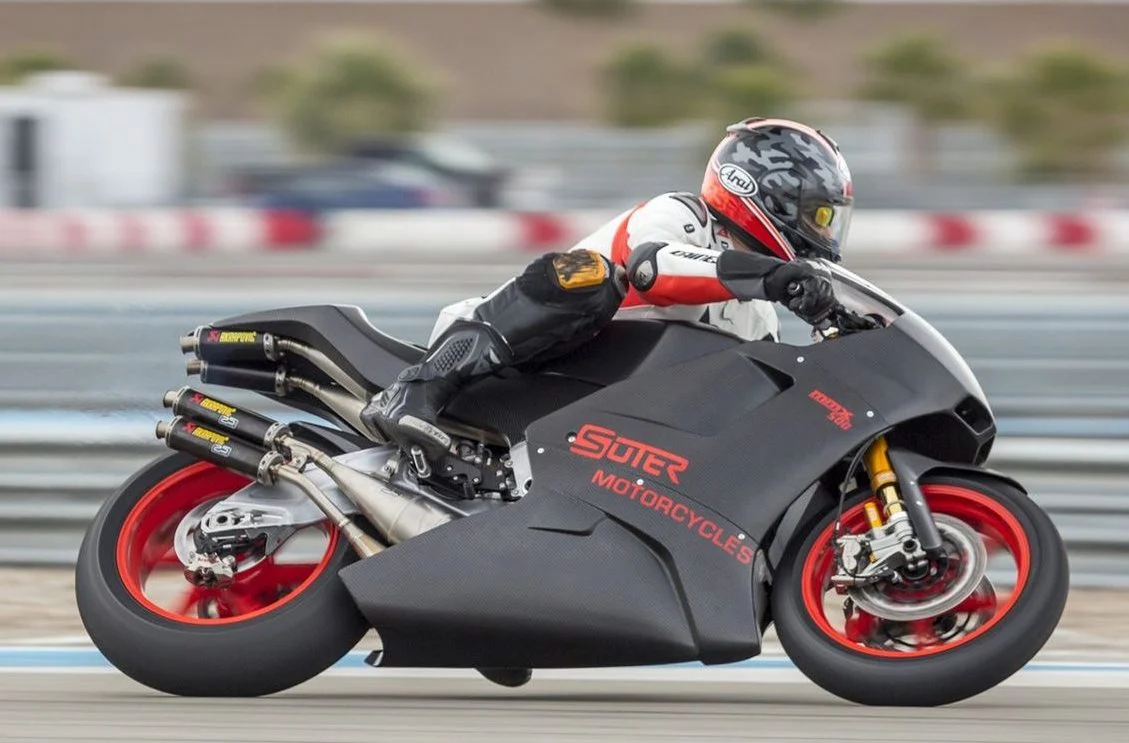
The Japanese manufacturers had converged on extremely oversquare 500cc engines late in the GP era, but Suter wanted greater torque and a more usable power delivery for private riders. The company settled on a 56mm bore and 58.5mm stroke, producing 576cc from four cylinders. But calling it the MMX 576 would’ve missed the point — the “500” refers to the era Suter wanted to resurrect. Beneath the bodywork sits an engine unlike virtually anything built in the 21st century.
576cc V4 Two-Stroke
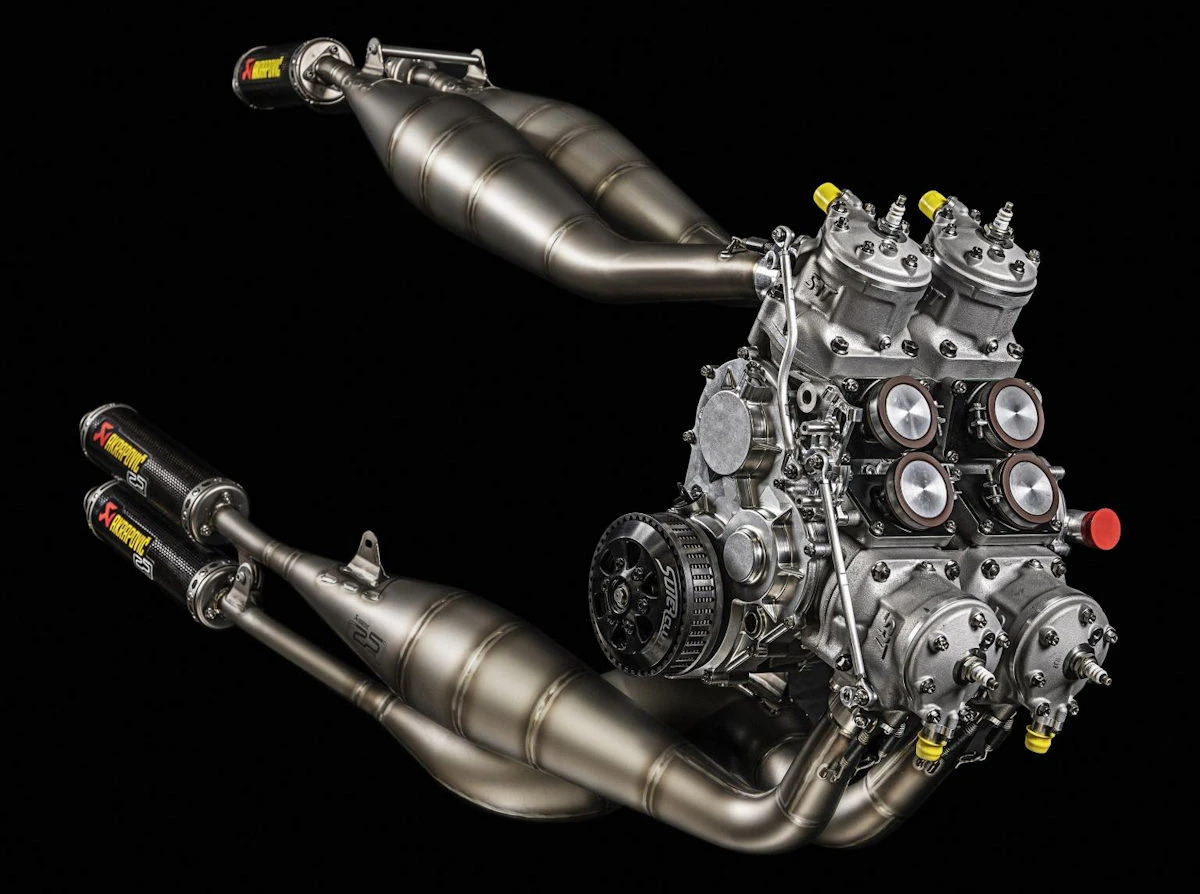
The MMX 500 engine is a liquid-cooled V4 two-stroke with two counter-rotating crankshafts geared together. That twin-crank arrangement helps keep the engine compact while reducing some of the gyroscopic effects produced by the rotating crank assemblies — a particularly useful characteristic in a motorcycle intended to change direction with GP-bike immediacy.
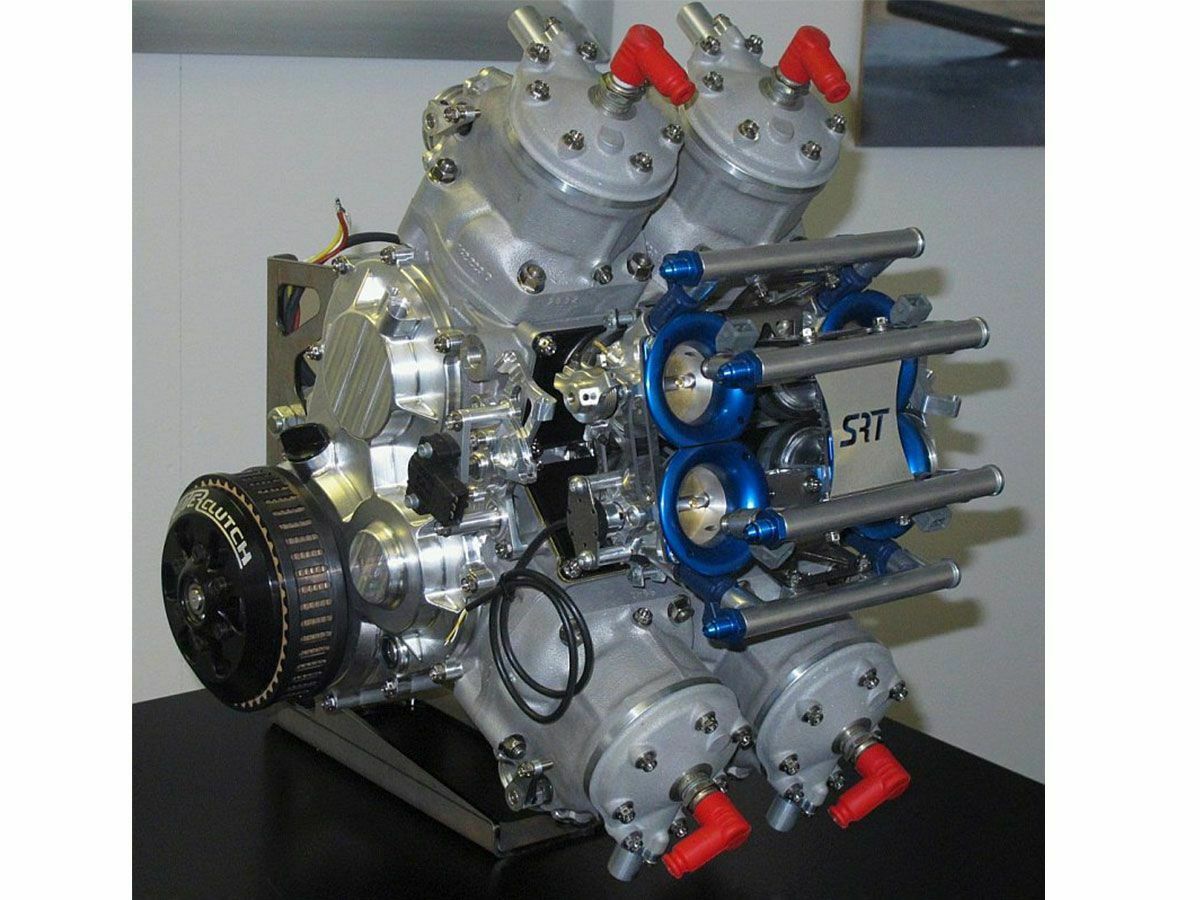
Each cylinder breathes through a carbon-fiber reed valve and its own throttle body. Unlike the carbureted 500 GP machines remembered from the Rainey, Schwantz, Doohan, and Lawson eras, however, the Suter uses electronic fuel injection controlled by a MecTronik ECU.
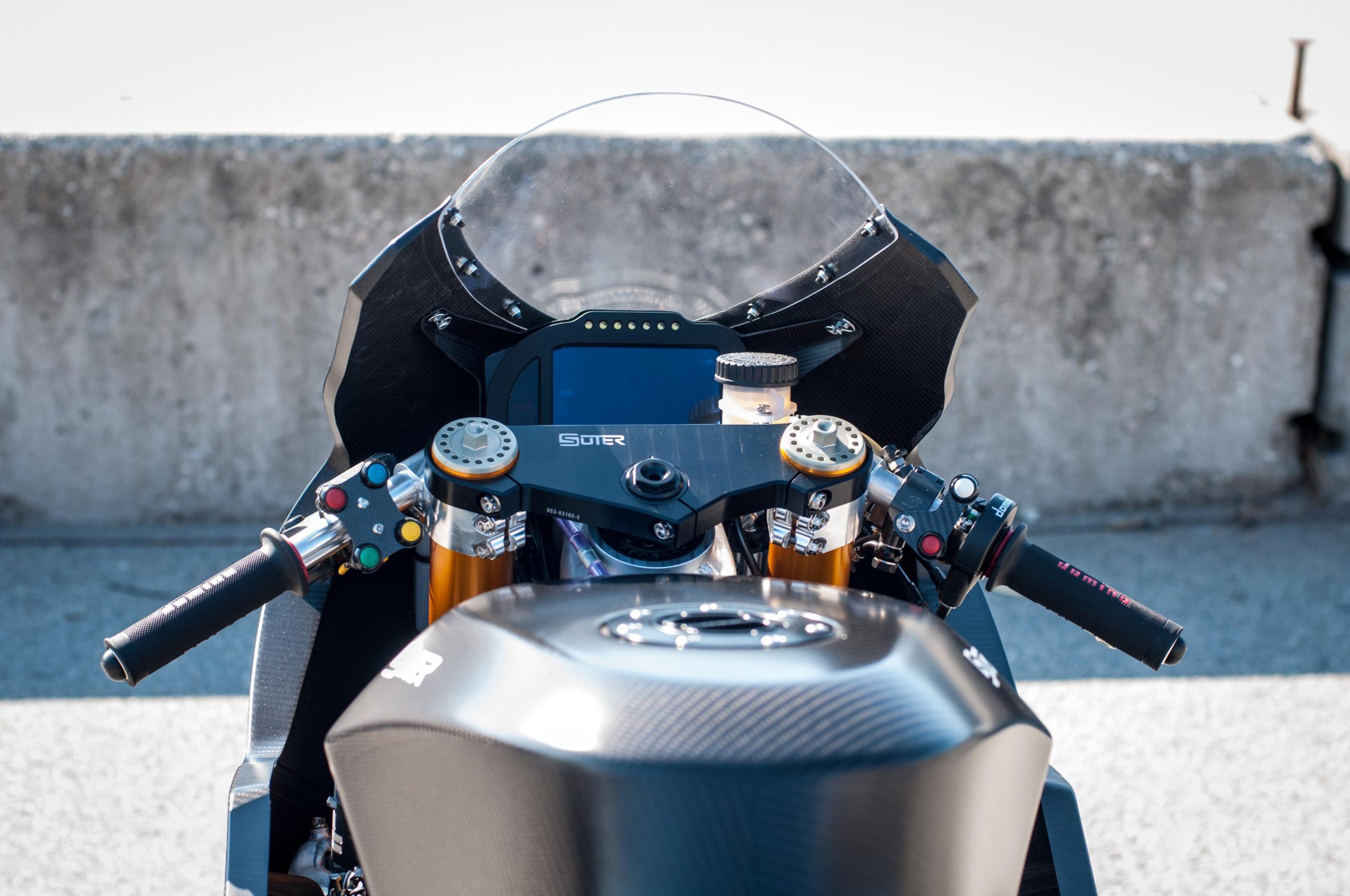
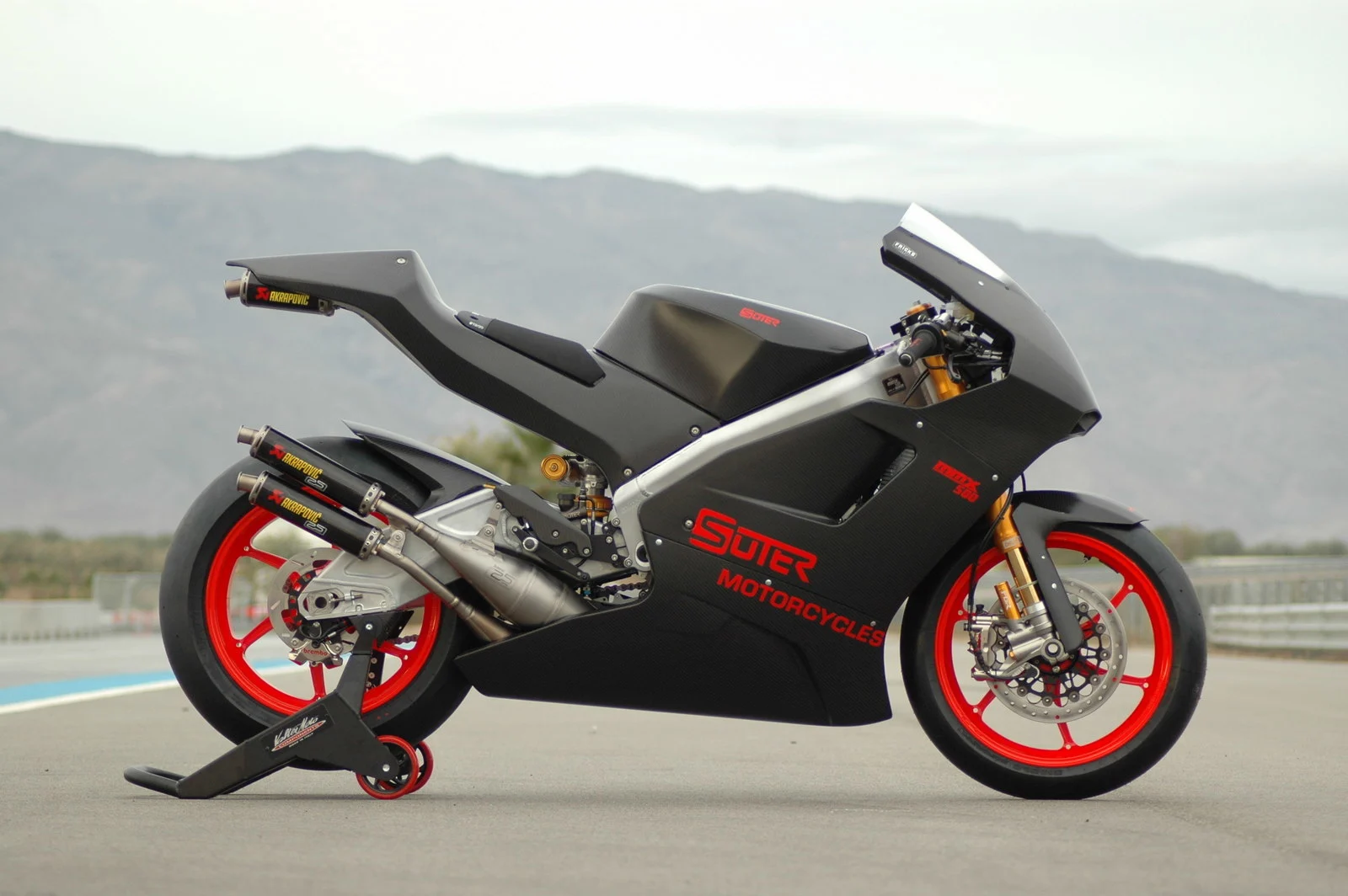
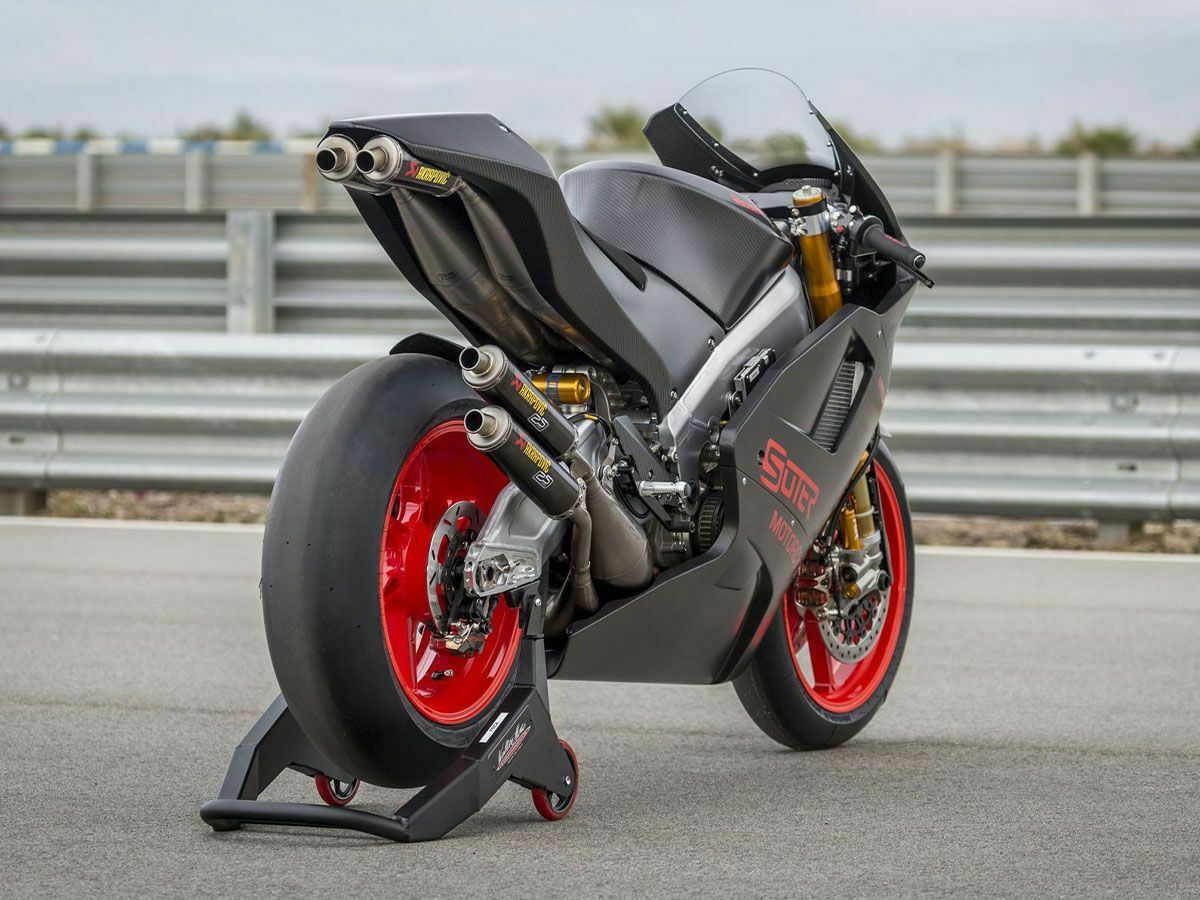
Electronically controlled double-flap exhaust valves help broaden the engine’s operating range, while four beautifully convoluted Akrapovič titanium expansion chambers handle the exhaust gases. The transmission is exactly what you’d expect from a genuine racing motorcycle: a six-speed cassette gearbox coupled to a Suter multi-disc dry clutch.
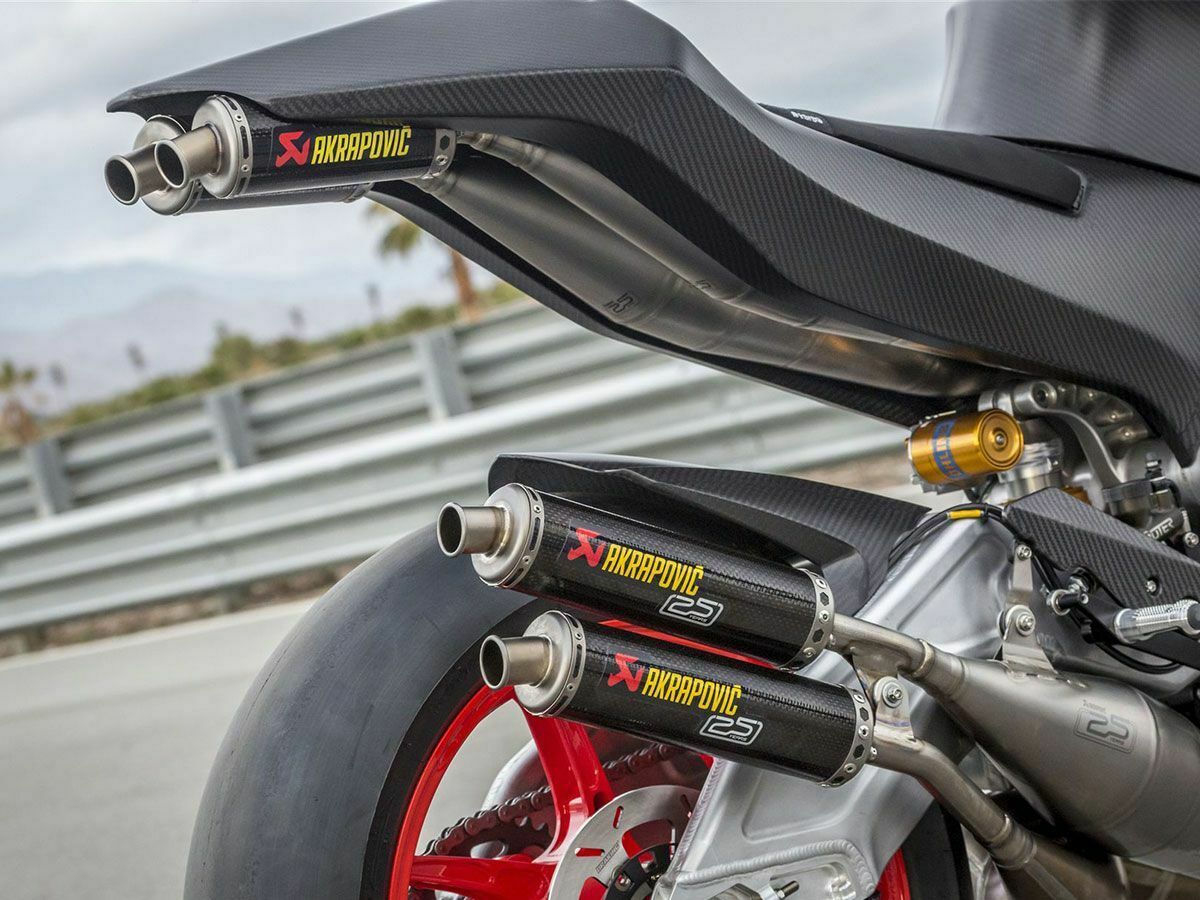
The result is a claimed 195 horsepower at 13,000 rpm from the 576cc engine…in a motorcycle weighing about 280 pounds.
195 Horsepower / 280 Pounds
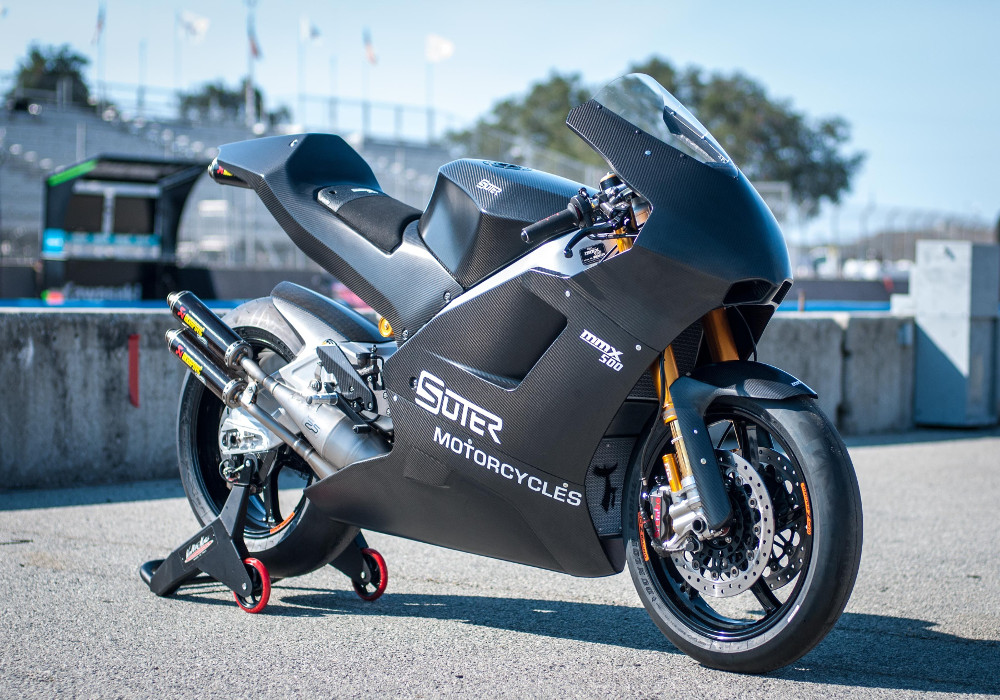
Those numbers remain extraordinary even beside today’s 200-plus-horsepower superbikes. A current liter-class road superbike can produce comparable peak power, but such machines generally weigh well over 400 pounds ready to ride. The Suter’s claimed dry weight is just 127 kg / 280 lb. That gives the MMX 500 a power-to-weight ratio of roughly 1.54 horsepower per kilogram, before accounting for fuel and rider.
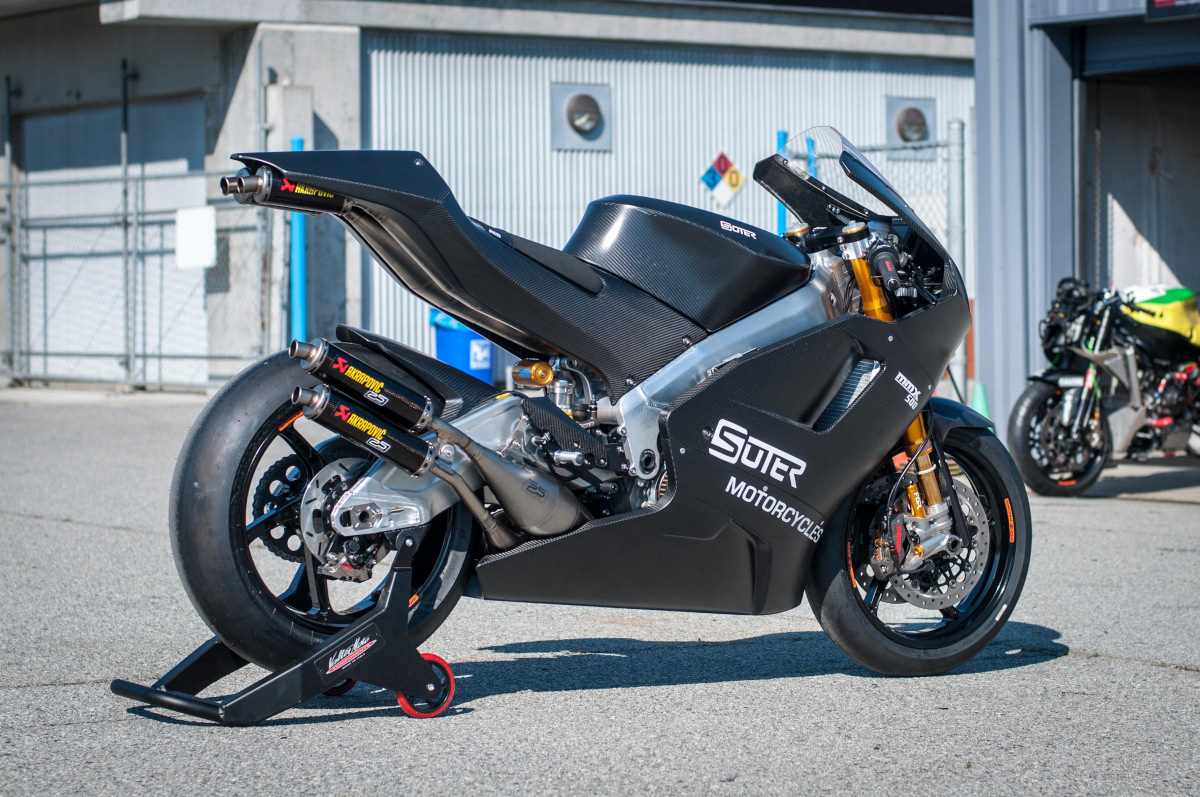
Moreover, there’s very little rotating or overall mass for the rider to manage. A two-stroke doesn’t carry the cylinder heads, camshafts, valves, timing drive, and other hardware of an equivalent four-stroke engine.
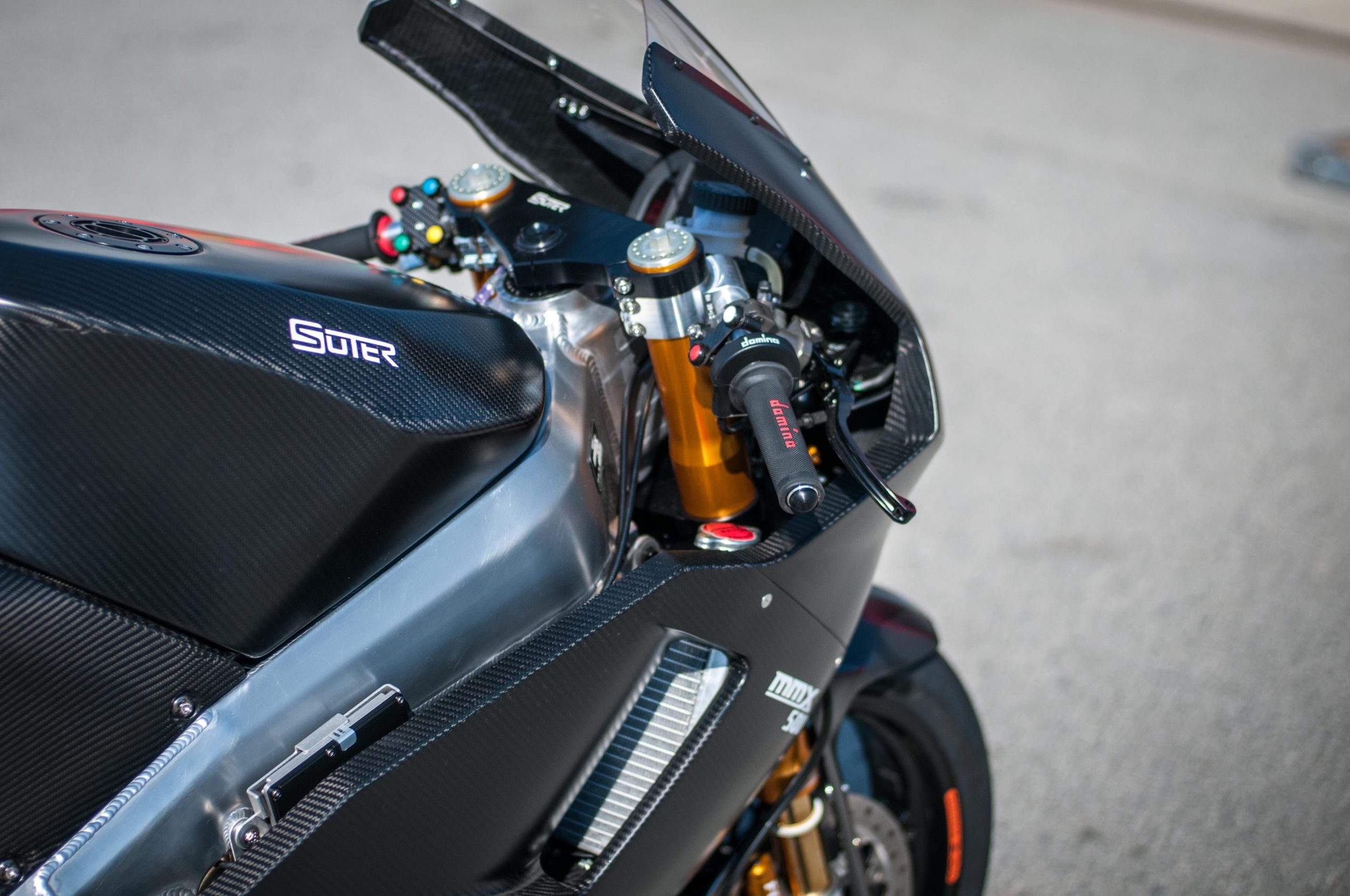
Suter claimed a top speed exceeding 310 km/h / 193 mph. But outright speed only explains part of the appeal. The MMX 500 was built to deliver something modern four-stroke superbikes fundamentally cannot: the sound, smell, lack of engine braking, and rapid transition into the powerband that defined the great two-stroke racing motorcycles.
No Traction Control. No Wheelie Control.
Interestingly, Suter combined modern electronics with a deliberately old-school riding experience.
- Fuel injection? Yes.
- Selectable engine maps? Yes.
- Sophisticated data acquisition? Available.
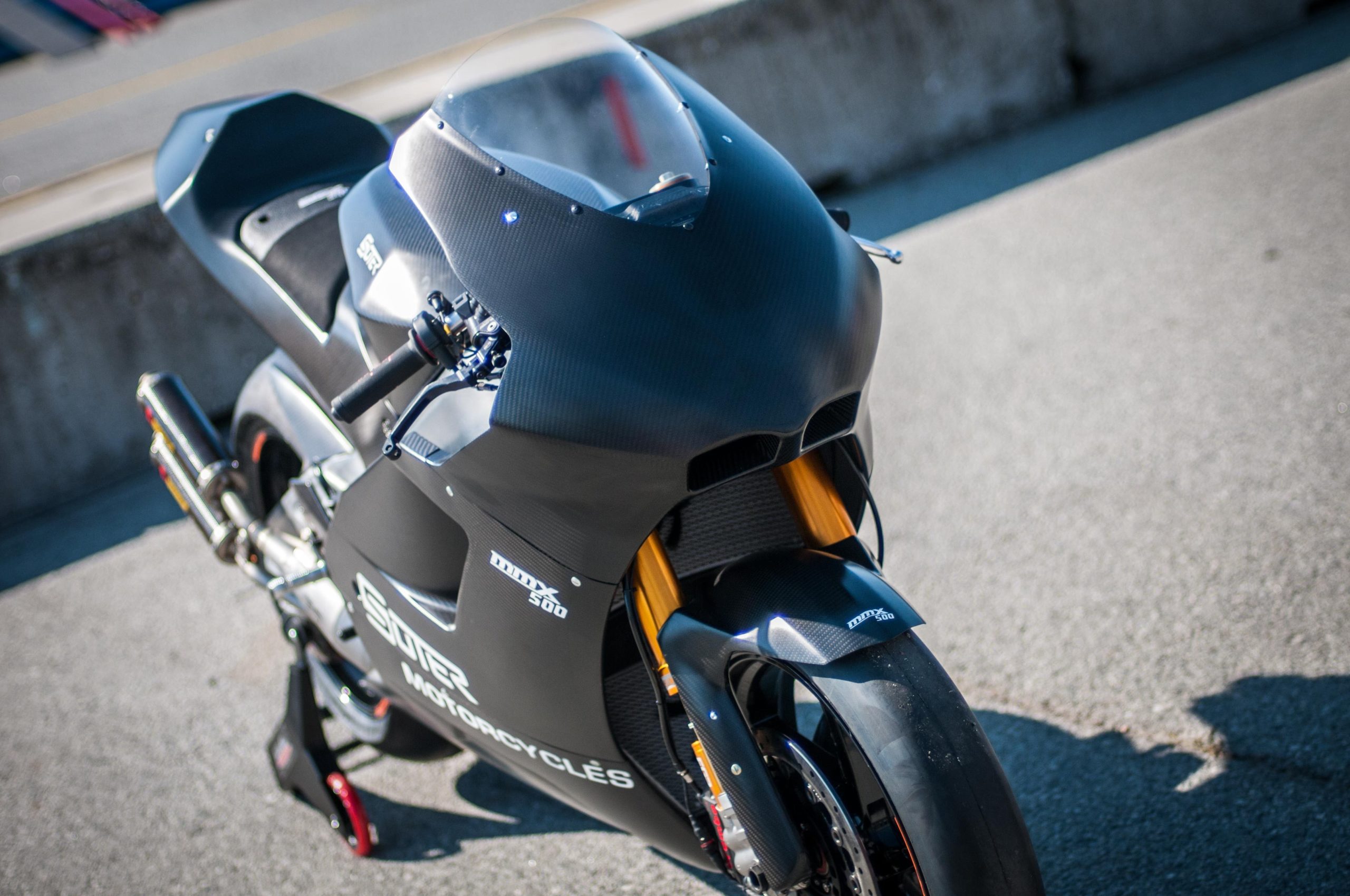
But traction control, wheelie control, and launch control were conspicuously absent from the original specification. Company representatives explained that controlling the power of a premix-lubricated high-output two-stroke presents difficulties that don’t exist on a modern four-stroke. Strategies such as aggressively cutting fuel can interfere with the lubrication supplied by that very fuel mixture, while other electronic interventions are similarly complicated.
But there was also a philosophical reason: Suter wanted riders to experience the hit. The MMX was supposed to provide some sense of what made the old GP 500s legendary — not electronically sanitize the experience until it behaved like a contemporary liter bike. Fortunately, everything surrounding the engine belonged firmly to the modern world.
A GP Chassis for Private Riders
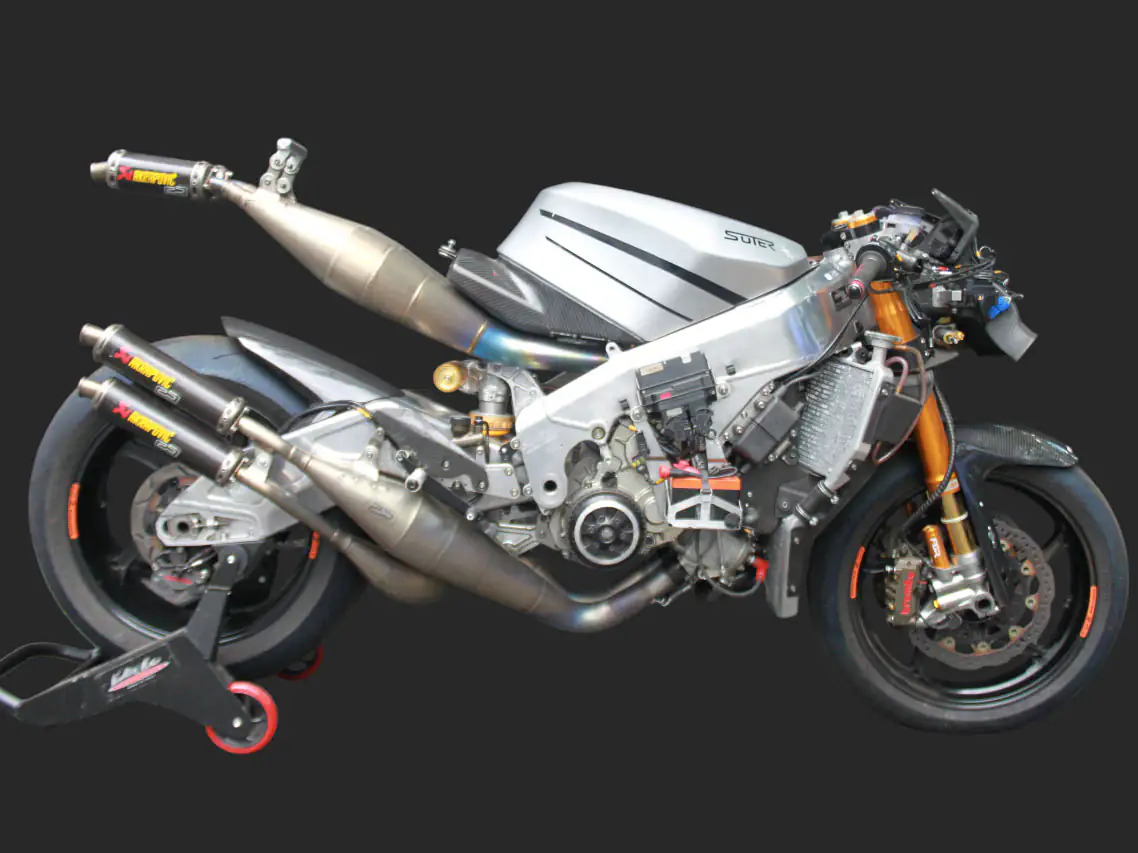
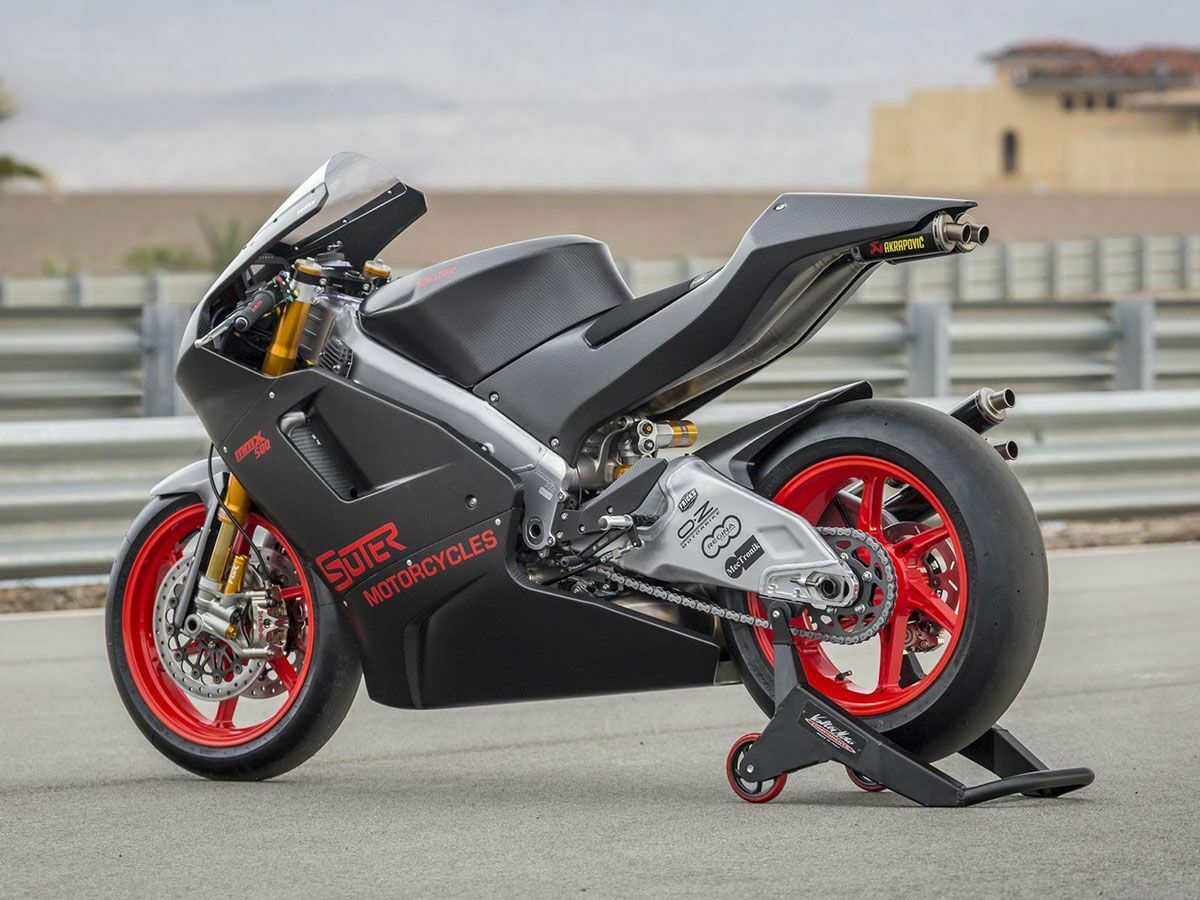
If there’s one thing Suter knows, it’s chassis design. The MMX 500’s aluminum twin-spar frame is made from CNC-machined sections welded into an extremely sophisticated adjustable structure. The aluminum swingarm receives similar treatment.
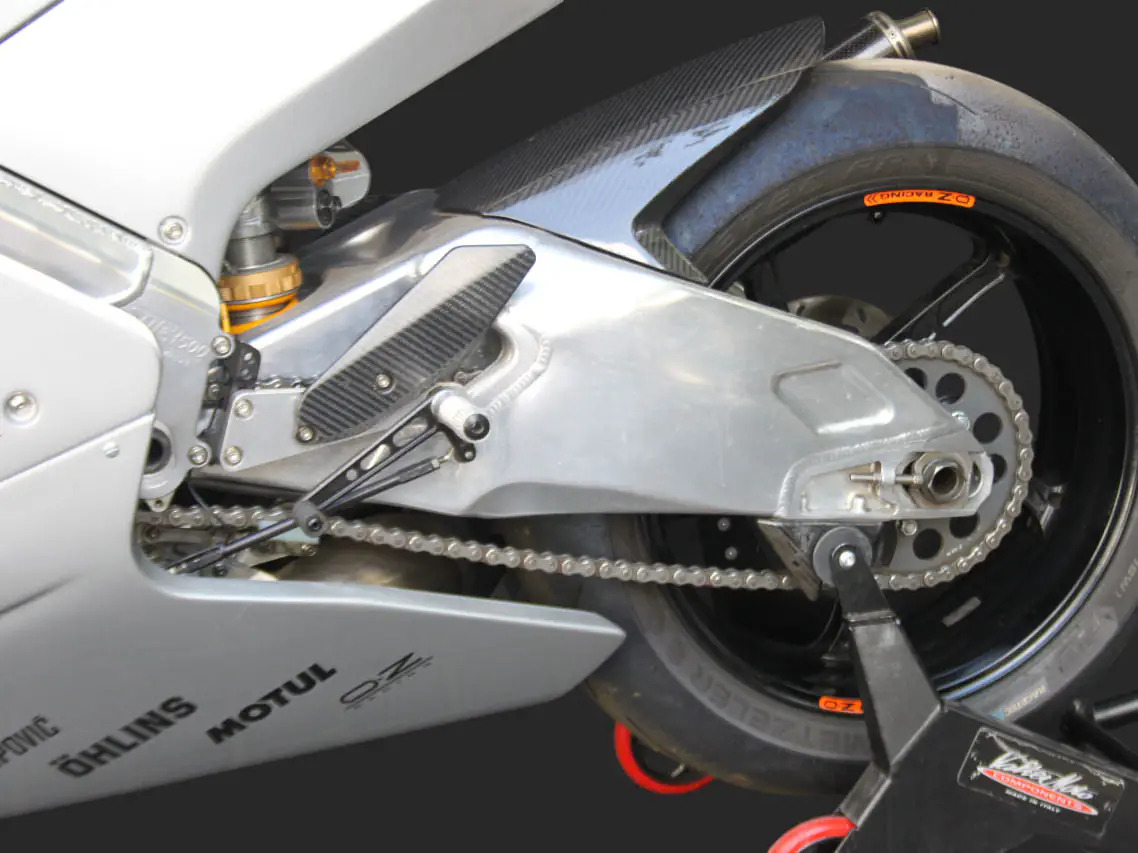
“Adjustable” means something quite different here than it does on an ordinary production sportbike. The owner can alter wheelbase, ride height, steering-head angle, steering offset, swingarm-pivot position, and riding position. Different rear suspension links are available as well. This is a racing chassis in the literal sense, meant to be configured around a rider, tire, track, and setup rather than delivered with fixed geometry chosen to satisfy thousands of street customers.
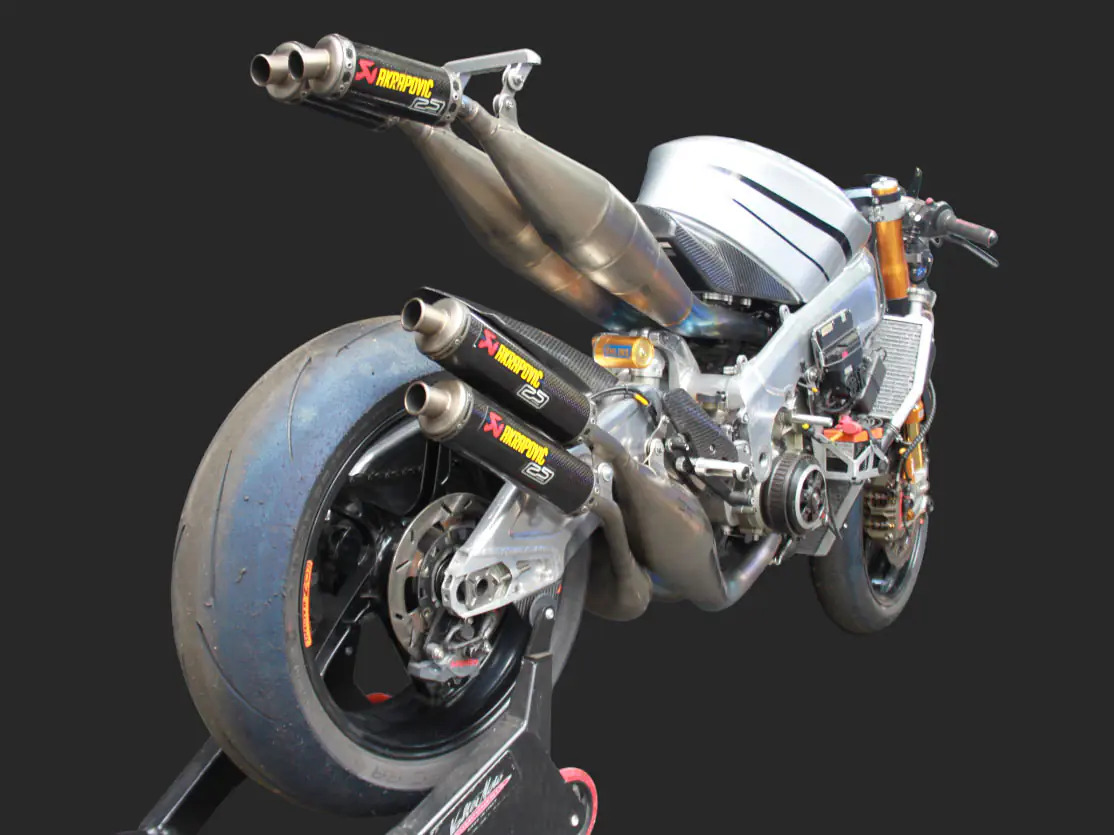
Öhlins supplies the fully adjustable suspension, while Brembo provides the brakes. Standard equipment included twin 320mm front discs with four-piston calipers and a 218mm rear disc. OZ supplied 17-inch wheels in aluminum or optional magnesium, and both the bodywork and fuel tank were constructed from carbon fiber.
Every component was chosen to make the Suter lighter, faster, and wildly adjustable.
What’s It Actually Like to Ride?
Given the reputation of genuine 500cc Grand Prix motorcycles, you might expect the Suter to be homicidal. Apparently, it’s a little more complicated than that. Journalists lucky enough to ride the MMX discovered that modern engineering had made the power considerably more manageable than the reputation of the old GP monsters might suggest — without making the motorcycle remotely tame.
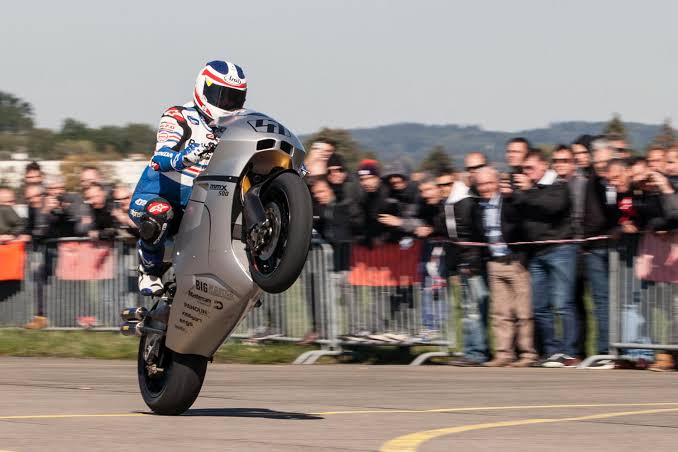
Roadracing World‘s Chris Ulrich rode one of the first MMX 500s delivered in the United States and found the power beginning to build strongly around 8000 rpm, but progressively rather than arriving as an uncontrollable light-switch explosion. He credited the fuel injection, modern chassis, tires, and geometry with making the bike surprisingly manageable.
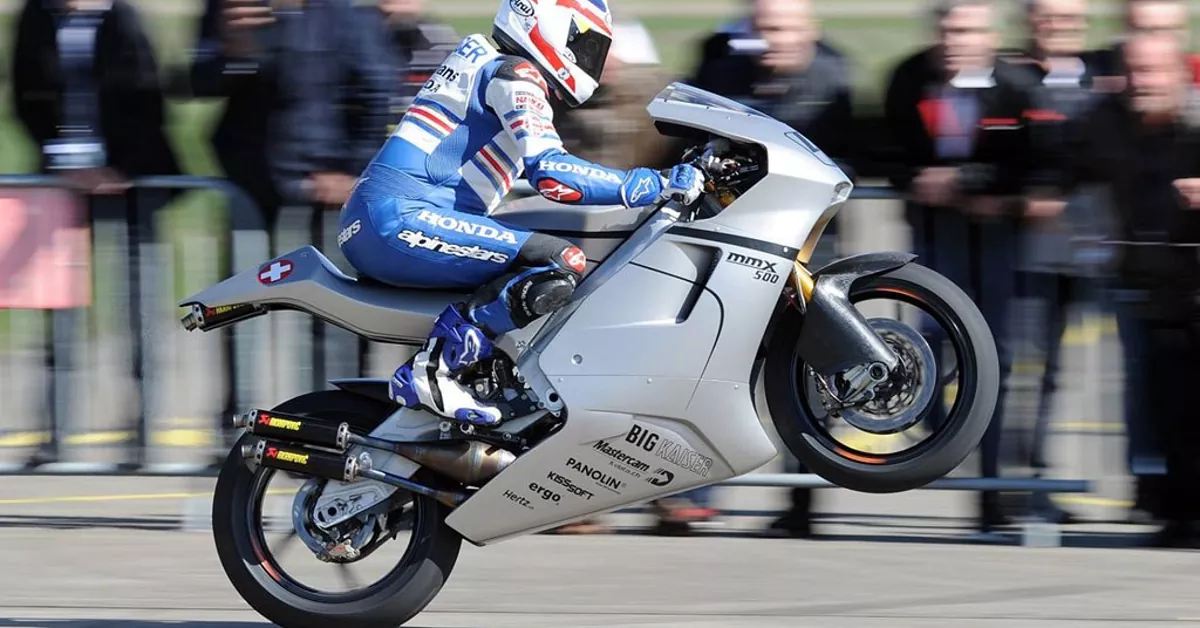
The tiny mass was even more noticeable. Ulrich had been accustomed to superbikes weighing roughly 100 pounds more. Changing direction on the Suter required almost no effort by comparison. The bike could simply be flicked from side to side in a way a large four-stroke superbike could not match.
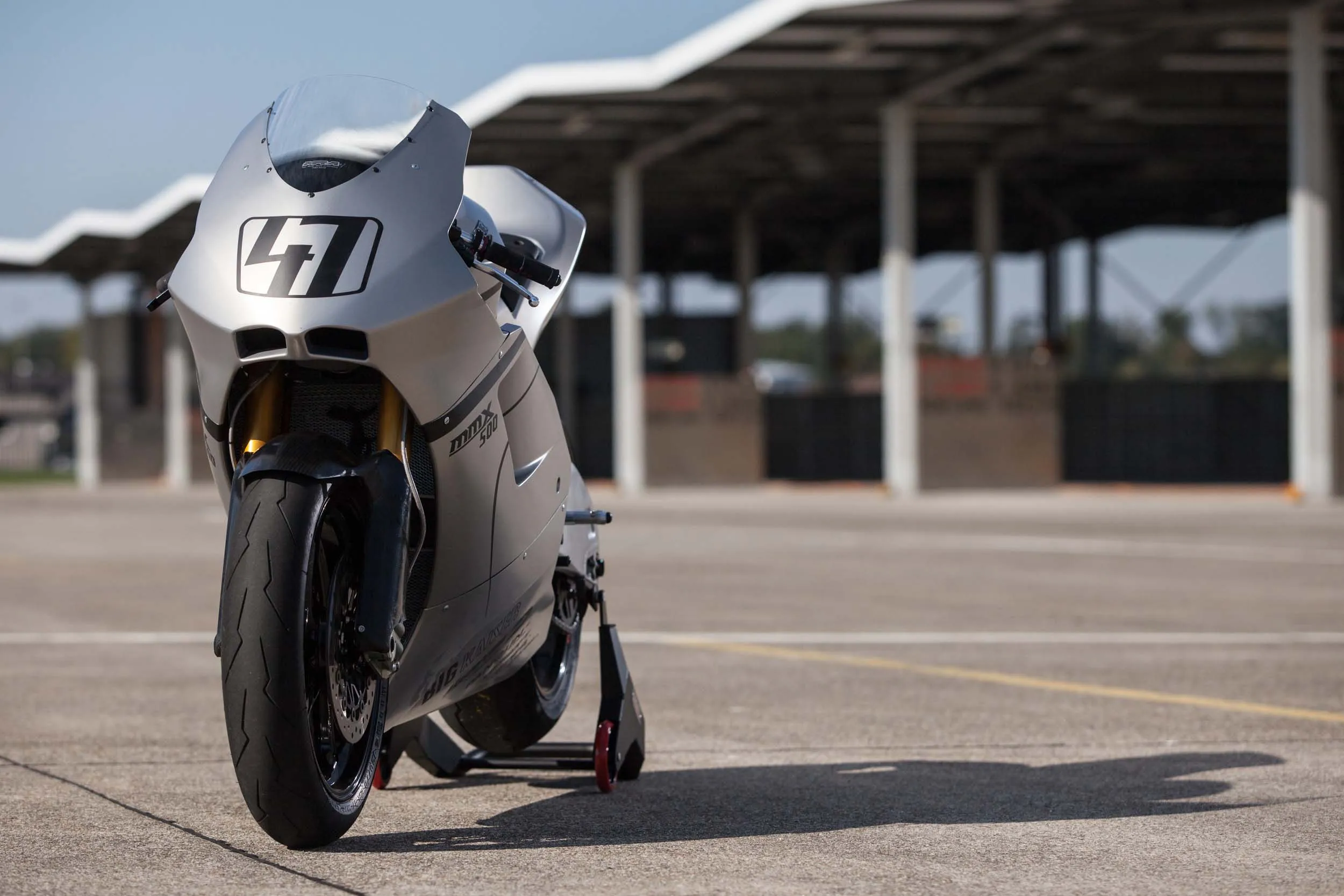
But there were still plenty of reminders that this wasn’t a conventional modern motorcycle: very little engine braking, a dry clutch that needed revs and slip simply to leave pit lane, the scent of premix, and nearly 200 horsepower waiting inside a 280-pound motorcycle.
Motorcyclist‘s Bruce Wilson had an even more memorable introduction: the bike initially coughed and stumbled before abruptly coming alive strongly enough to send the front wheel skyward and smack him in the face. He subsequently described it as one of the liveliest motorcycles he’d ridden. So perhaps “manageable” is relative.
Return of the Two-Stroke to the Isle of Man
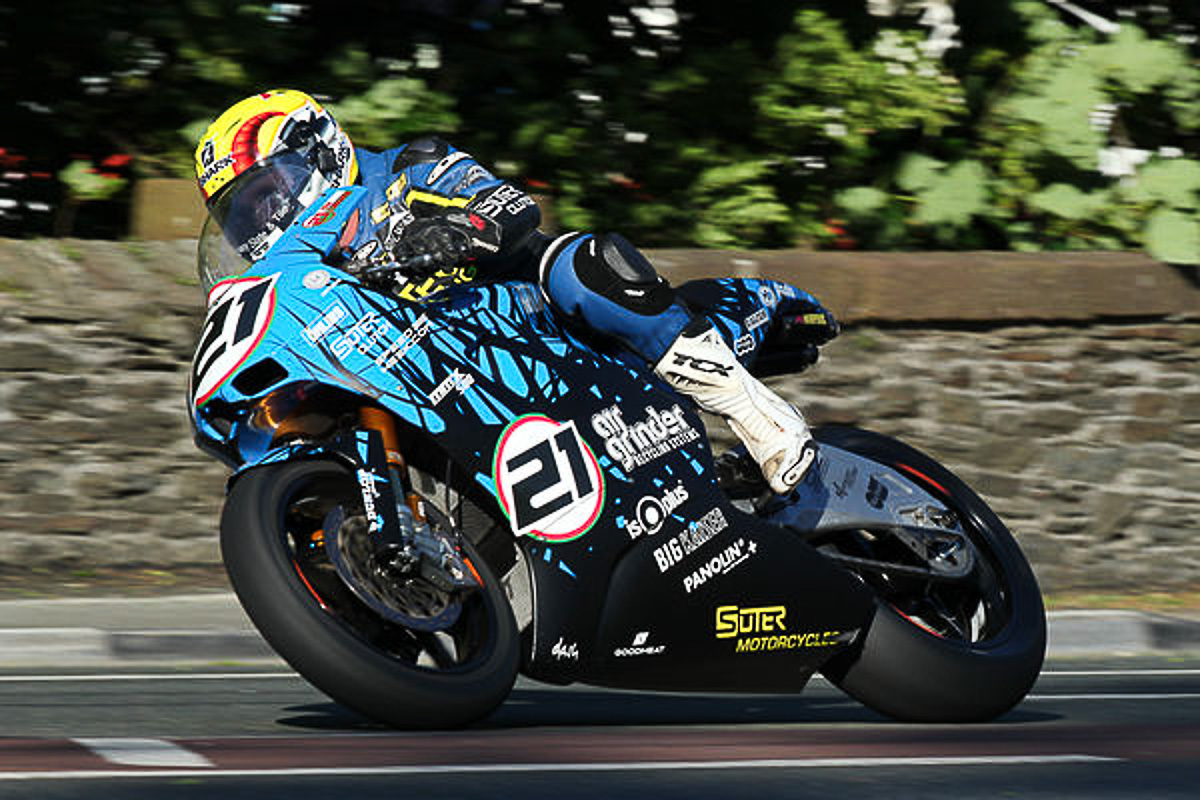
In 2016, Suter brought the MMX 500 to the Isle of Man TT, entering the bike in the Superbike and Senior races with ten-time TT winner Ian Lougher aboard. The appearance marked a remarkable return of the big two-stroke to the Mountain Course, long after four-stroke superbikes had taken over the premier racing classes.
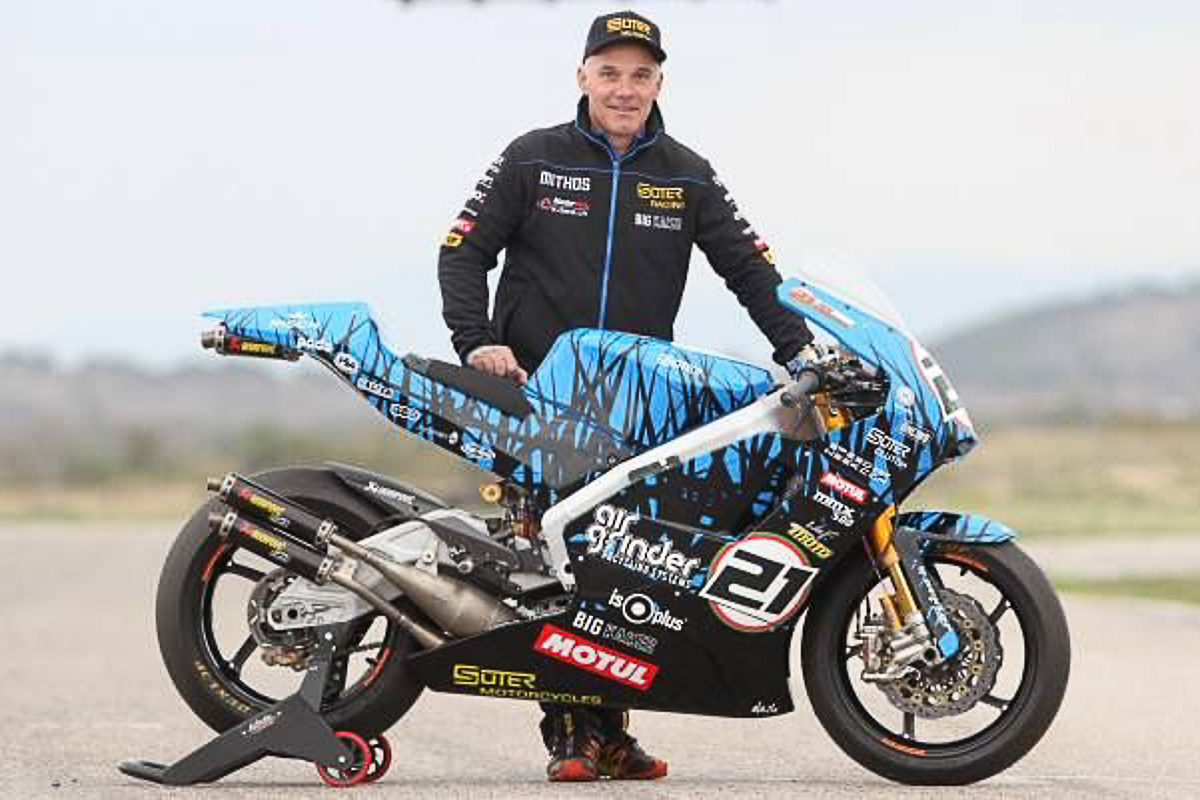
The project was ambitious. The MMX 500 was still a relatively new motorcycle, and the TT is one of the most demanding environments imaginable for developing an unfamiliar machine. Its 37.73-mile course combines sustained high speeds, severe bumps, changing elevations, and no run-off areas. On the Mountain Course, any mechanical failure can be fatal.
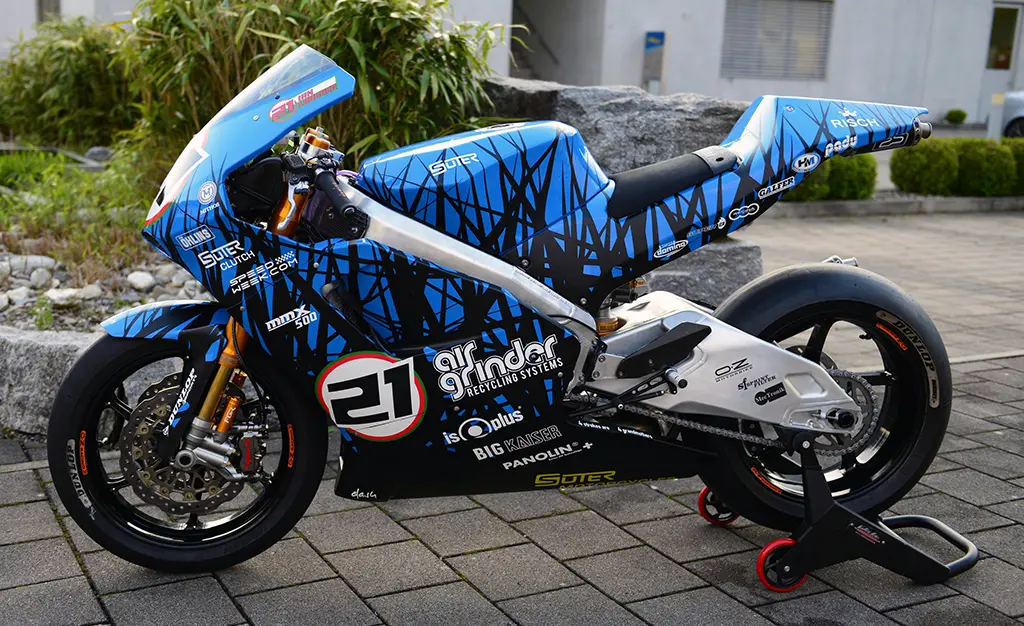
The debut was not without difficulty. Lougher retired from the 2016 Superbike race, but he brought the Suter home in the Senior TT, finishing 34th with an average race speed of 117.548 mph. The machine also recorded a lap exceeding 121 mph during the event.
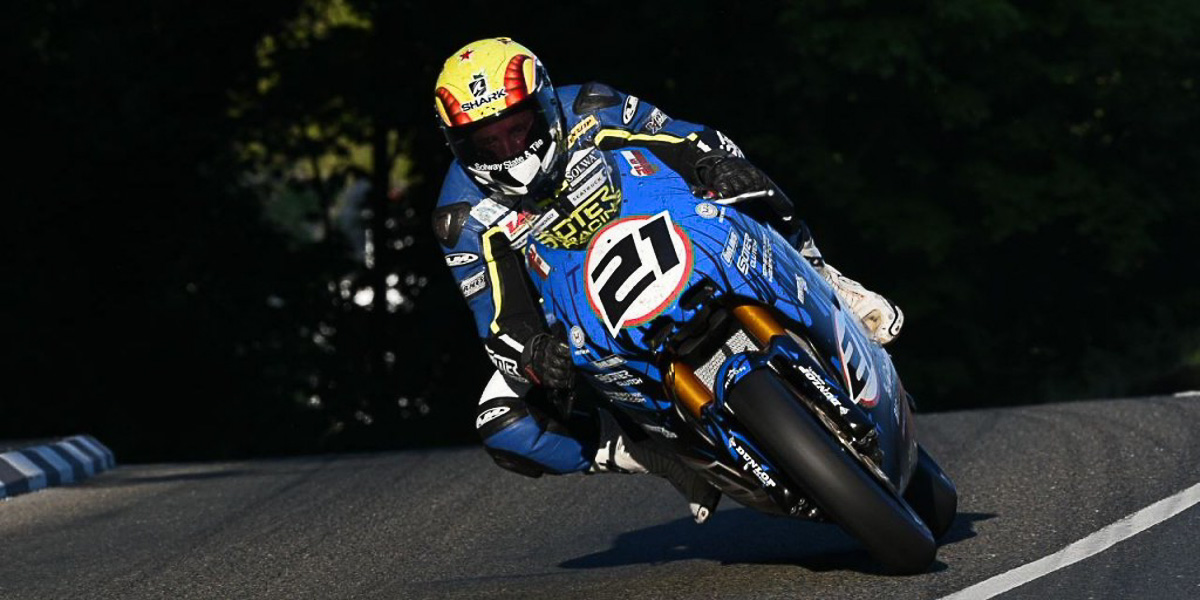
For a brand-new, privately developed two-stroke racing motorcycle, simply completing the Senior was a significant achievement. It demonstrated that the MMX 500 was more than a collection of exotic parts and spectacular performance claims.
Back for More in 2018
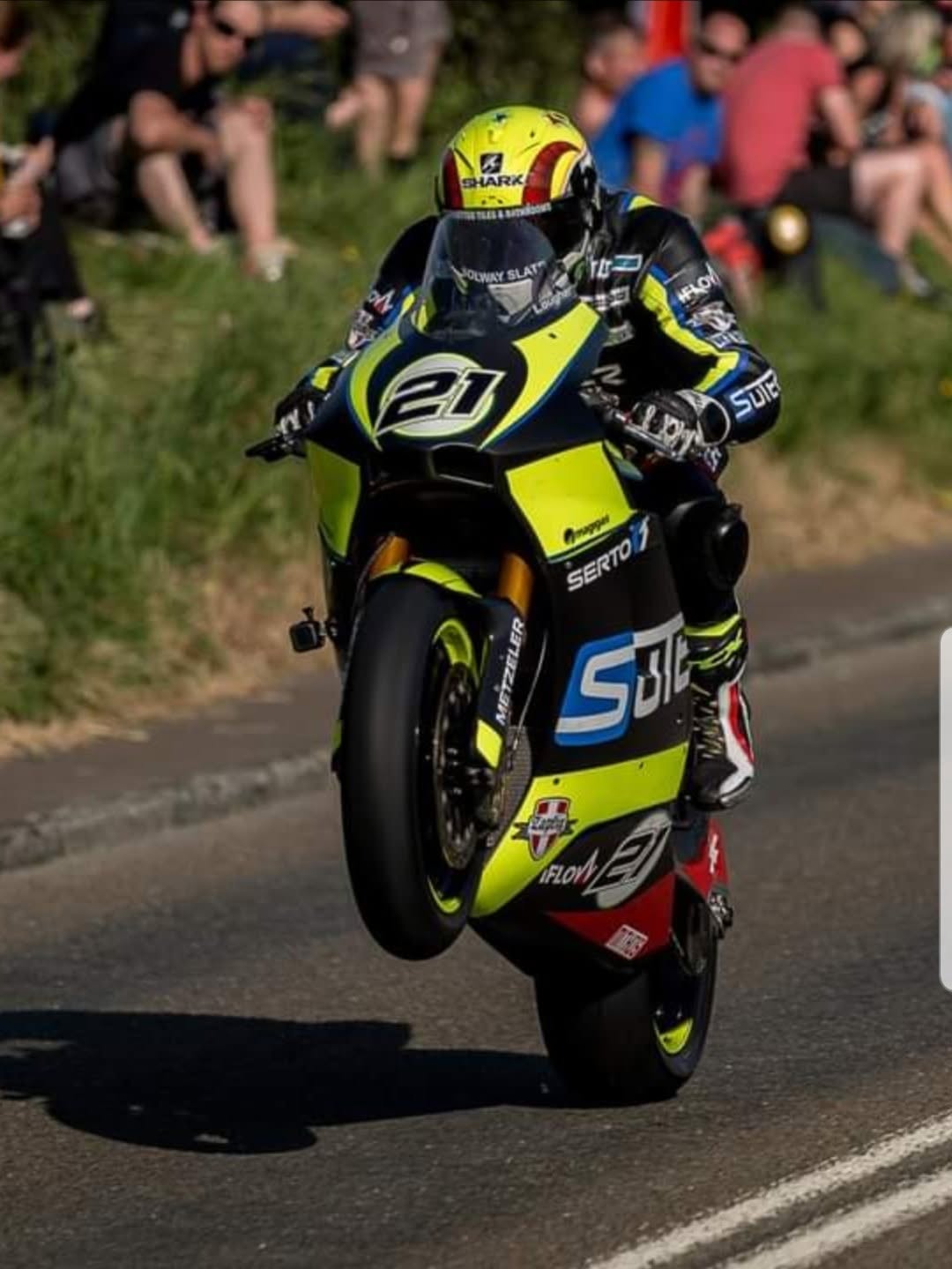
Suter returned to the TT in 2018 with Lougher once again riding the MMX 500. By then, the company had continued developing the engine and addressing the reliability issues encountered during its first appearance. The team entered both the Superbike and Senior races. Although the Superbike outing ended in retirement, Lougher finished the Senior in 21st place, averaging 120.807 mph over the race distance.
The result was a meaningful improvement over 2016 and another demonstration that a modern two-stroke could still compete on one of the world’s most demanding road-racing circuits. Suter had not returned to Grand Prix racing to challenge contemporary MotoGP prototypes, but the TT appearances gave the MMX 500 a genuine competition history of its own.
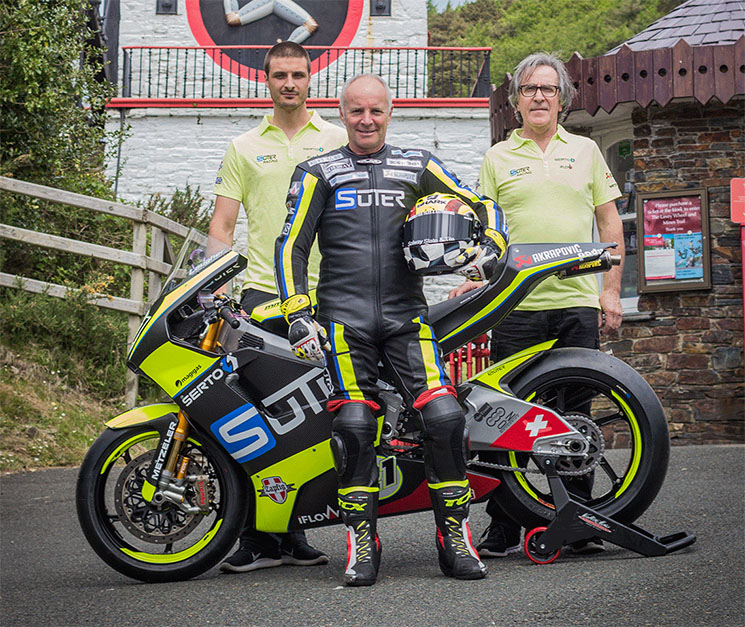
More importantly for spectators, the bike brought back a sound that had largely vanished from top-level motorcycle racing: a high-revving, four-cylinder two-stroke echoing through the hedges and villages of the Isle of Man.
A Real Customer Motorcycle
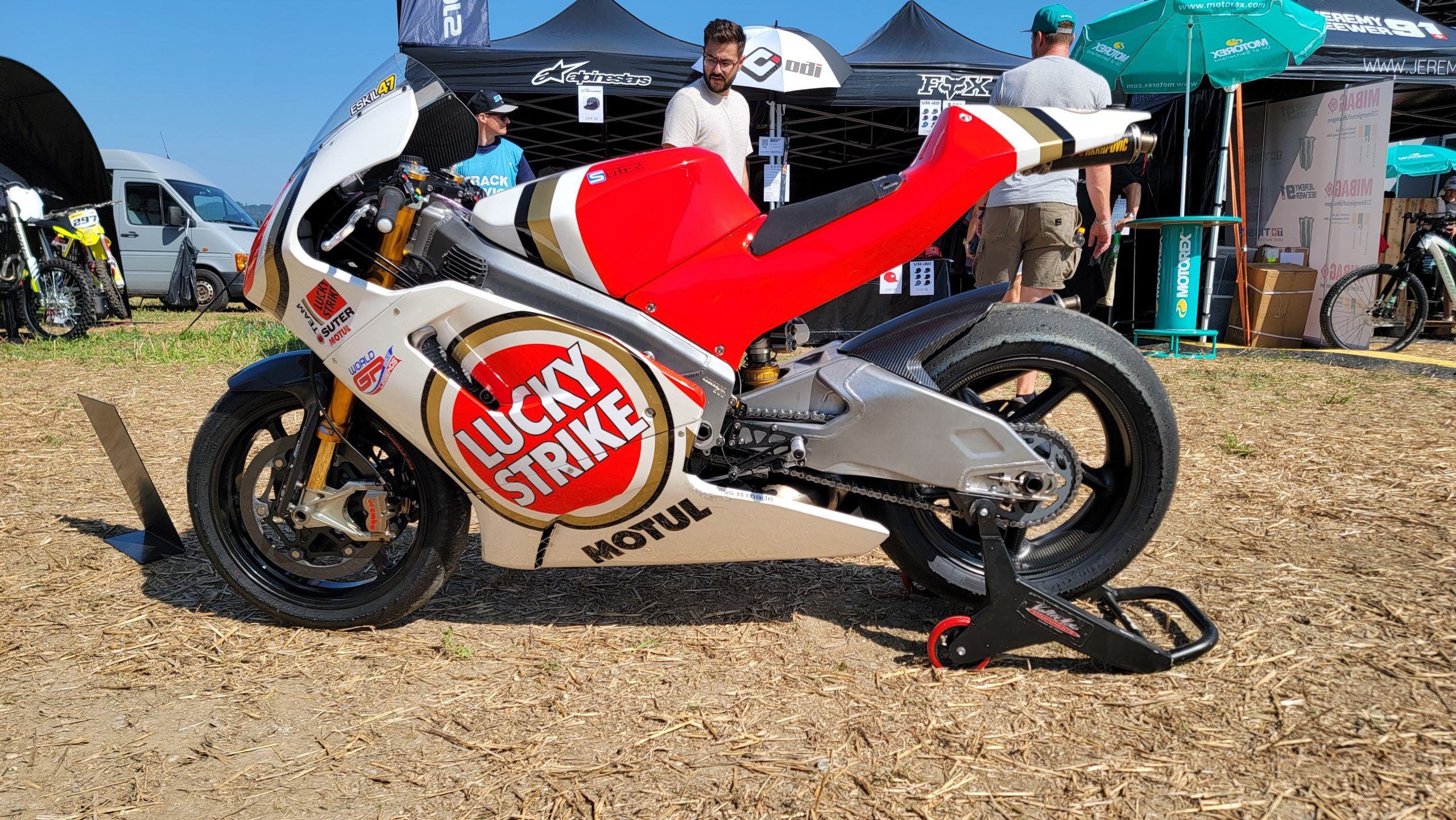
The MMX 500 was unveiled in 2015, but the project did not disappear after its initial publicity or the TT appearances. Suter continued building and delivering customer machines, with the motorcycle remaining part of the company’s specialist racing-product lineup.
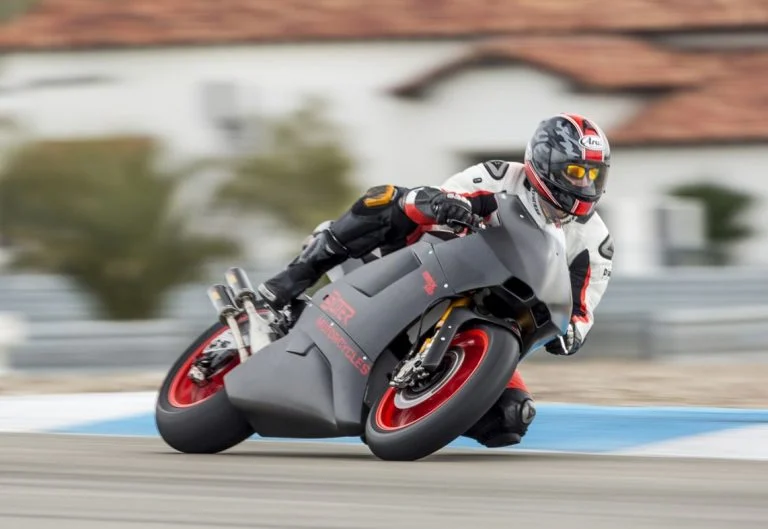
In 2018, Roadracing World documented the delivery of bike No. 19 to American enthusiast Dave Frick. The motorcycle was delivered at The Thermal Club in California, where Frick and former racer Chris Ulrich rode it on track. Frick was not a professional Grand Prix rider; he was an experienced track-day enthusiast and lifelong two-stroke fan who had previously owned machines such as the Yamaha RZ500 and TZ250. That was precisely the kind of customer Suter had envisioned: someone with the experience, financial means, and enthusiasm to own a genuine racing motorcycle and actually use it.
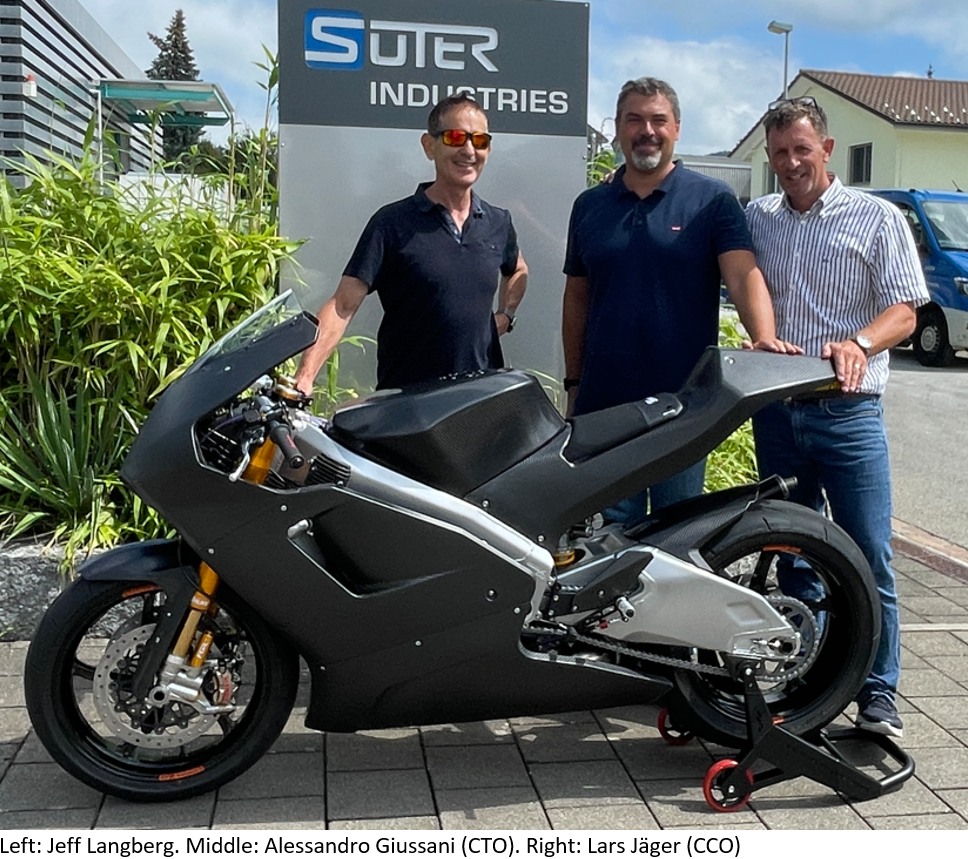
The project also remained active years later. In 2024, Suter Industries publicly documented the handover of MMX 500 No. 21 to customer Jeff Langberg after it rolled out of the factory in Turbenthal, Switzerland. The company’s current motorcycle lineup continues to feature the MMX 500, and a dealer listing published in March 2025 advertised the machine at 128,000 Swiss francs.
It is worth noting that the published 99-bike limit is a maximum production allocation. The documented customer deliveries establish that real bikes have been built and sold, but Suter does not publish a continuously updated production total. Prospective buyers would need to contact the company or an authorized dealer for current availability and pricing.
The Price of a Grand Prix Dream
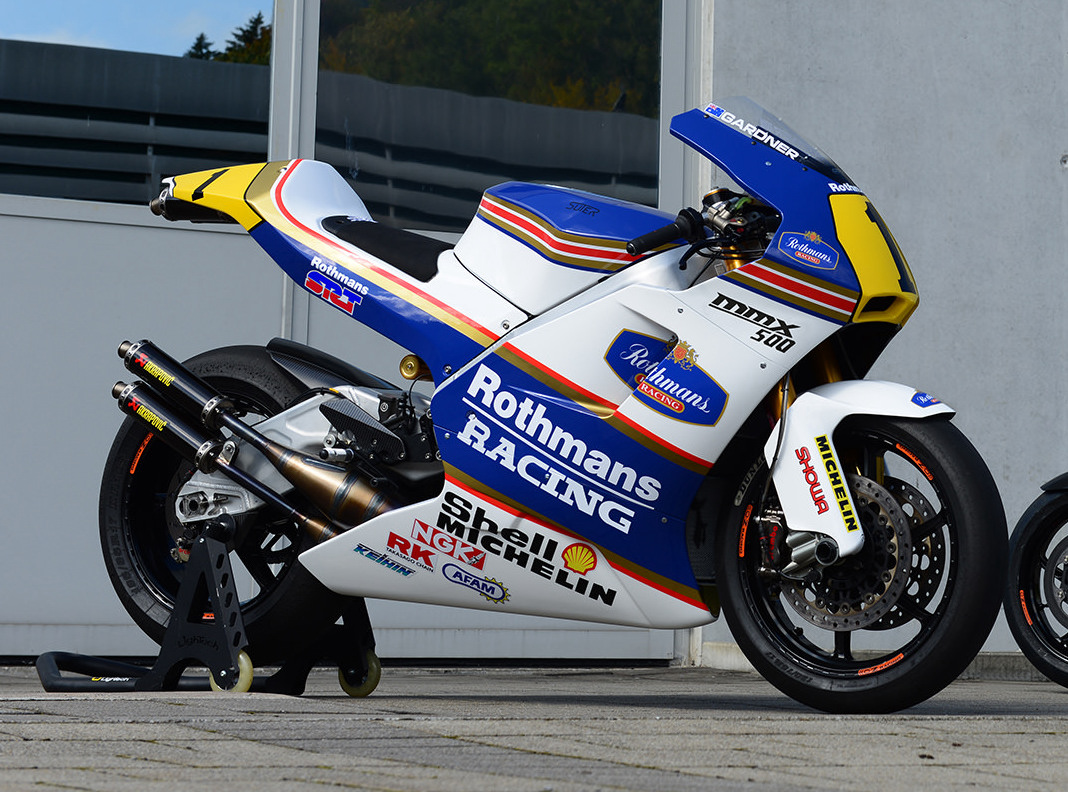
At 128,000 Swiss francs — roughly six figures in U.S. dollars, depending on exchange rates — the MMX 500 is obviously not a motorcycle for the average weekend track-day rider. Nor is it intended to be. The price reflects an extraordinarily specialized machine built in tiny numbers: a bespoke two-stroke V4, CNC-machined chassis, titanium exhausts, carbon-fiber bodywork, top-shelf racing components, and the engineering expertise of a company with multiple World Championship titles to its name.
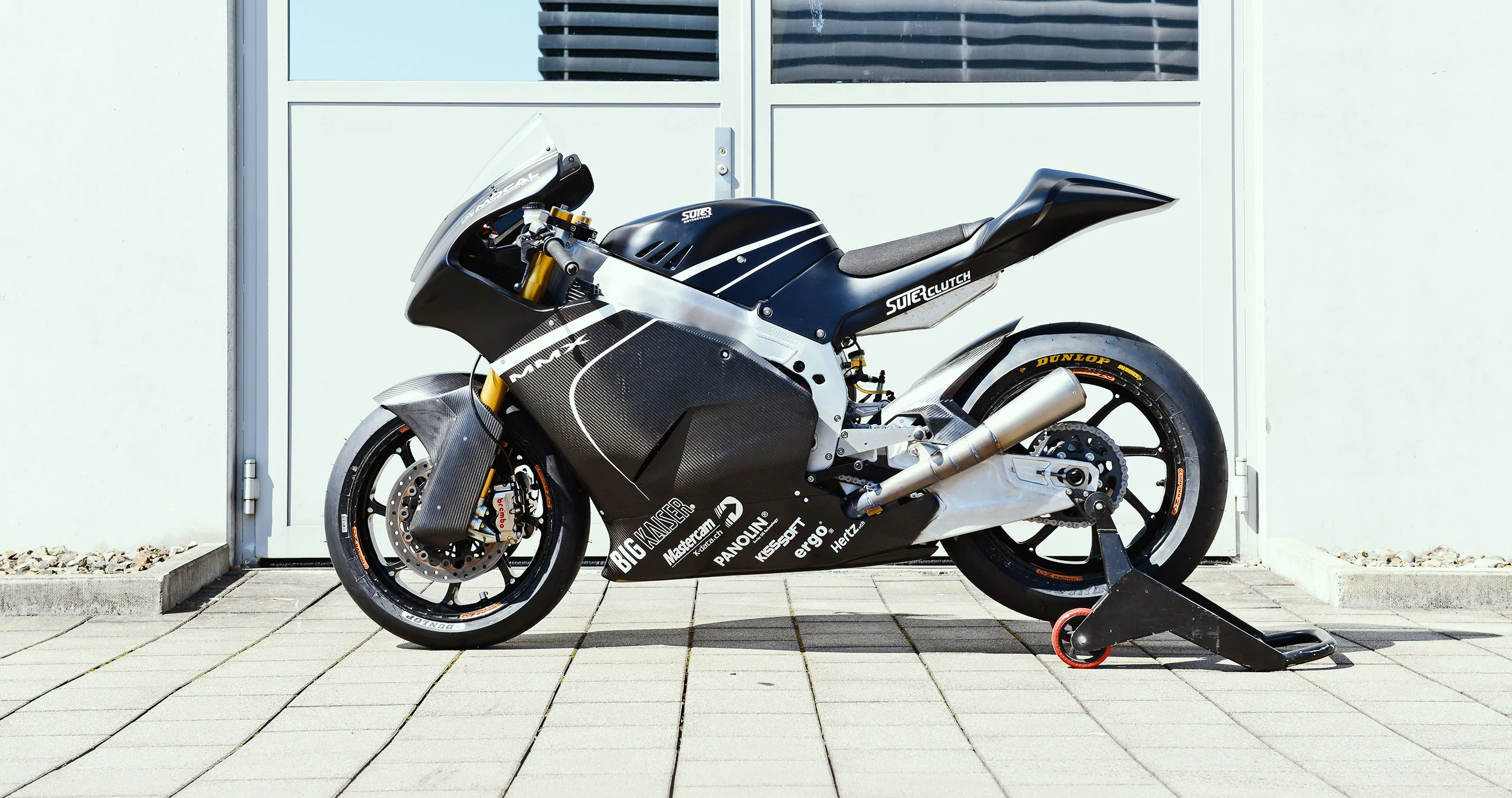
There are faster motorcycles available for considerably less money. A modern production superbike can deliver comparable or greater peak horsepower, sophisticated rider aids, and enough performance to overwhelm all but the most accomplished riders.
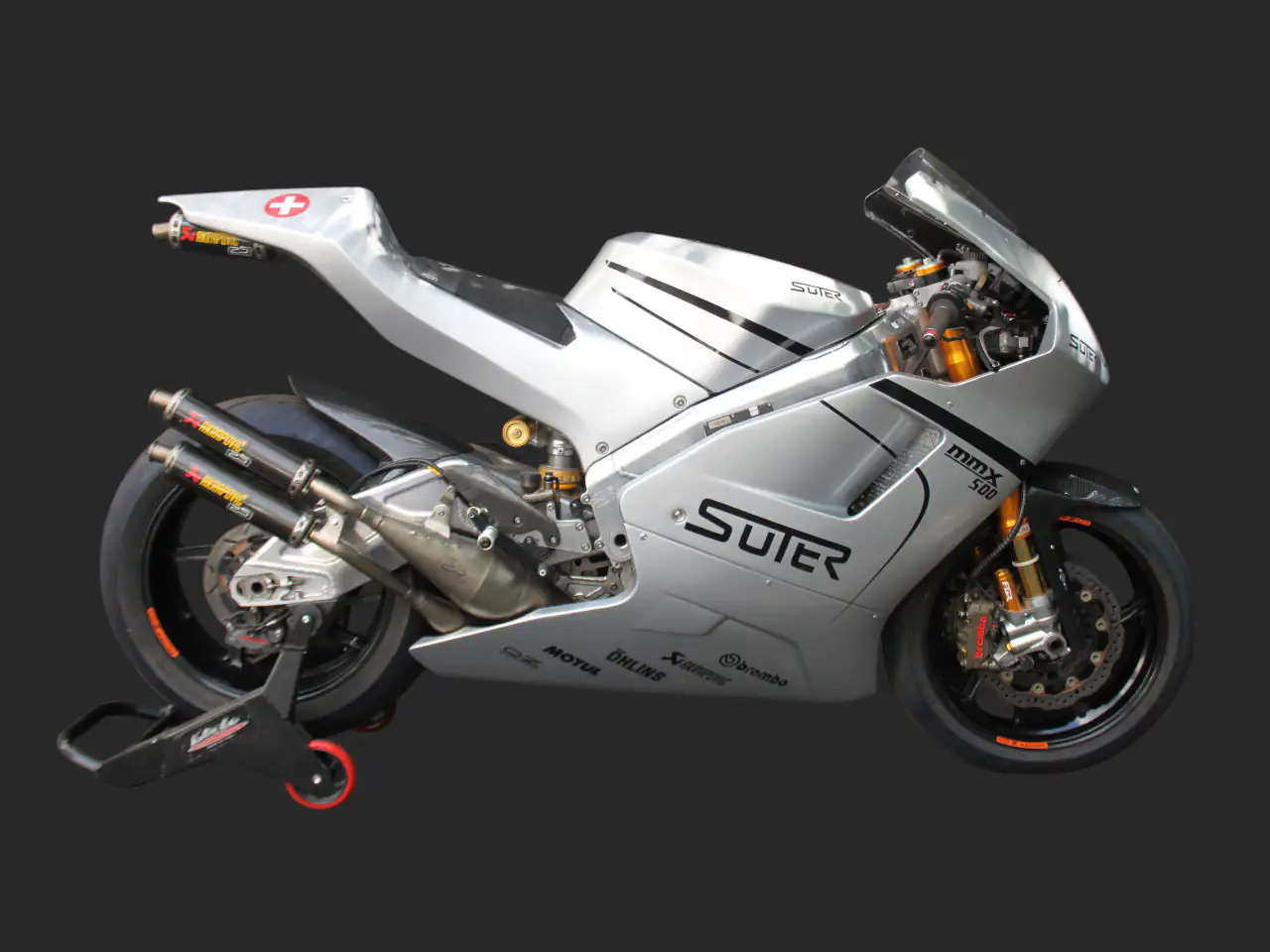
But that misses the point. You can buy another 200-horsepower four-stroke superbike. You cannot walk into a conventional motorcycle dealership and buy a newly manufactured 576cc two-stroke V4 that weighs 280 pounds and sounds like the 500cc Grand Prix paddock of the 1990s. The Suter is expensive because it offers an experience that scarcely exists anywhere else.
The Two-Stroke Dream Lives On
The MMX 500 occupies a unique place among the modern revival of exotic two-stroke motorcycles. The Ronax 500 recreated the visual and emotional appeal of a 500cc GP machine in a road-going package. The Langen Two Stroke approached the format as a lightweight, handcrafted street motorcycle. Other boutique manufacturers have since explored their own increasingly outrageous two-stroke concepts, most recently the 280-hp Veloce Aperion.
Suter took a different path. It built a modern racing motorcycle with a clean-sheet V4 engine, GP-level chassis adjustability, contemporary fuel injection, and no obligation to satisfy the compromises of road registration. The result was not intended to make the two-stroke practical again, but to make it extraordinary.
Unlike so many ambitious motorcycle projects that never progress beyond a prototype or a launch announcement, the MMX 500 has been raced at the Isle of Man, delivered to private owners, and ridden on circuits around the world.
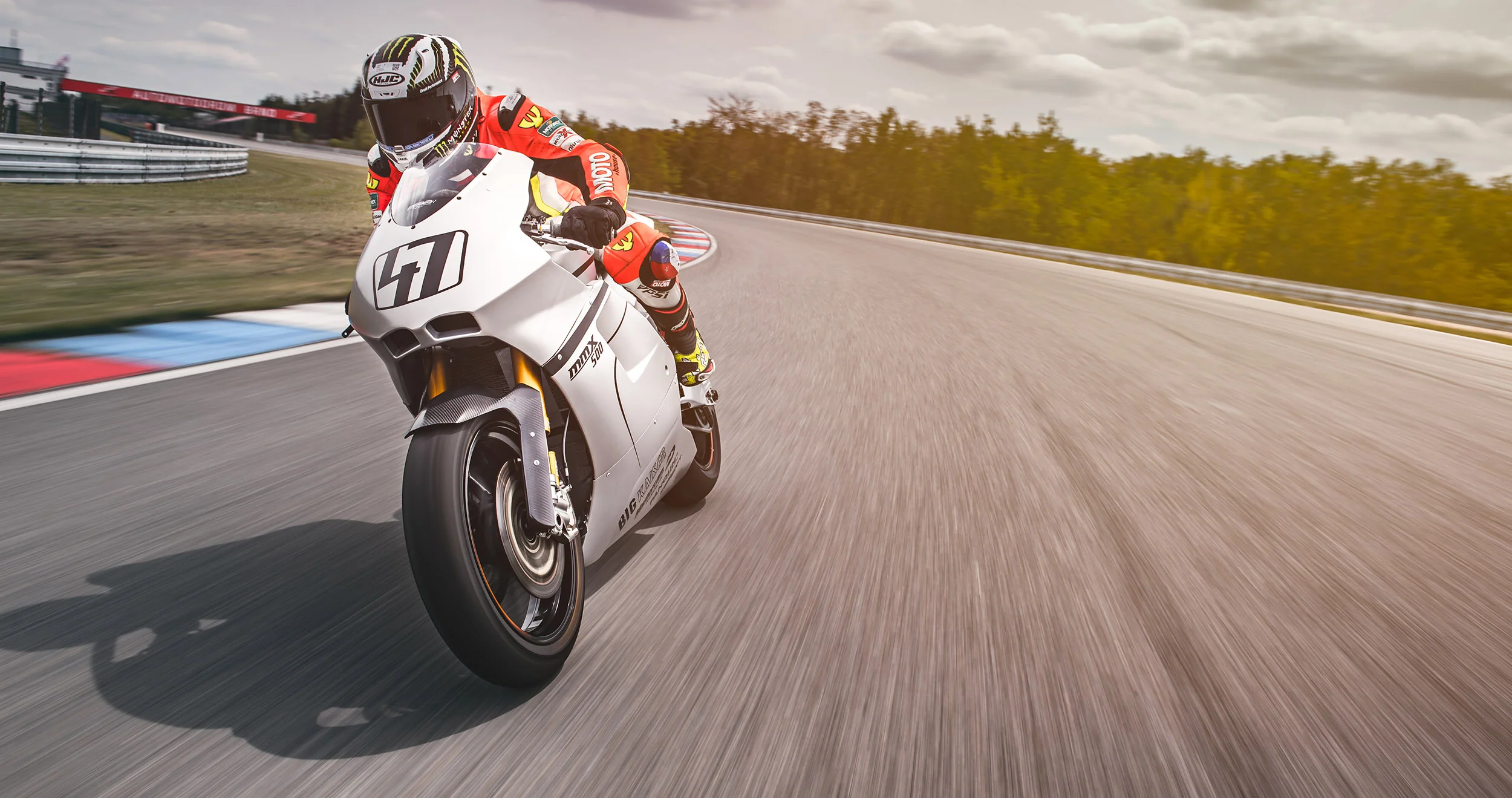
There’s something satisfying about that. After all, the great 500cc Grand Prix racers of the 1980s and ’90s became legendary partly because so few people could ever experience them. Their power, weight, sound, and explosive character belonged to a small group of the world’s best riders.
Suter has made that experience available to a few more people. Not many, admittedly. And certainly not cheaply. But for the enthusiast who has spent decades dreaming of an NSR500, YZR500, RGV500, or Cagiva V594, the MMX 500 offers something almost unimaginable: a brand-new, modern two-stroke V4 racing motorcycle that can actually be purchased, maintained, and ridden. That’s the Suter MMX: 195 horsepower, 280 pounds, four cylinders, two crankshafts, four titanium expansion chambers, and the sound of a lost Grand Prix era brought roaring back to life.
Suter MMX 500 Specifications
| Engine | 576cc liquid-cooled two-stroke V4 |
| Bore x stroke | 56 x 58.5mm |
| Crankshafts | Twin counter-rotating crankshafts |
| Power | Claimed 195 hp @ 13,000 rpm |
| Maximum rpm | 13,000 |
| Fueling | Electronic fuel injection, four throttle bodies |
| Intake | Four carbon-fiber reed valves |
| Exhaust | Four Akrapovič titanium expansion chambers |
| Exhaust valves | Electronically controlled double-flap valves |
| Transmission | Six-speed cassette gearbox |
| Clutch | Suter multi-disc dry clutch |
| Frame | CNC-machined aluminum twin-spar |
| Swingarm | Adjustable CNC-machined aluminum |
| Suspension | Fully adjustable Öhlins |
| Wheels | 17-inch OZ aluminum or optional magnesium |
| Front brakes | Twin 320mm discs, four-piston Brembo calipers |
| Rear brake | 218mm disc |
| Bodywork / fuel tank | Carbon fiber |
| Dry weight | Claimed 127 kg / 280 lb |
| Top speed | Claimed in excess of 310 km/h / 193 mph |
| Production | Limited to a maximum of 99 motorcycles |
| Published price | CHF 128,000; confirm current quotation |
| Road legal? | No — track-only racing motorcycle |
Follow Suter
Web: Suter Racing Products / Suter Industries / Suter 500
Instagram: @suter_racing
Facebook: Suter Racing
More Two-Stroke Superbikes
 Suter MMX 500: 195-HP Two-Stroke GP Bike - 195 Horsepower, 280 Pounds, Two Strokes: The Spirit of the 500cc "Unrideables" Reborn… For a generation of motorcycle racing fans, the 500cc two-stroke Grand Prix bike represents something close to the ultimate racing motorcycle. The… ...read more
 Bimota Vdue: 500cc Two-Stroke GP Bike for the Road - Bimota’s first homegrown engine powered one of the wildest superbikes of the 1990s: a featherweight 500cc V-twin smoker with direct fuel injection, carbon bodywork, and GP aspirations… Imagine walking into a motorcycle dealership in the… ...read more
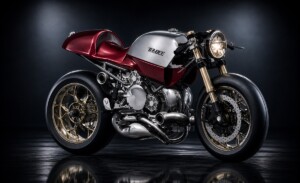 Veloce Ethereal: 500cc Two-Stroke Café Racer - 145-hp 500cc Two-Stroke Ethereal from Veloce Motorcycles... In the modern world, a 500cc two-stroke intended for road use seems almost unthinkable. However, that's exactly what Oxfordshire-based Veloce Motorcycles is promising with the Ethereal -- a… ...read more
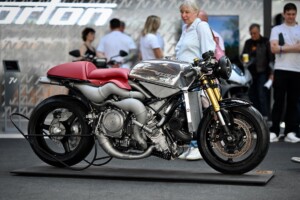 Veloce Aperion: 280-BHP 1000cc Two-Stroke Café Racer! - Veloce Motorcycles unveils a 1000cc X8 two-stroke café racer! Built by Oxfordshire-based Veloce Motorcycles, the Aperion is a 1000cc, eight-cylinder, two-stroke naked bike — or perhaps more accurately, an engineering provocation with lights, wheels, and… ...read more
 “Is Pepsi Okay?” Suzuki RGV250 Kevin Schwantz Tribute - Nabspeed Moto's Kevin Schwantz Pepsi RGV Replica... The legendary Kevin Schwantz earned the title of "Wheelie King" at the 1988 Macau Grand Prix, where he shaved an incredible 7 seconds off the outright lap record… ...read more
 Ronax 500: 500cc Two-Stroke GP Bike…for the Road - The Closest Thing to a 500cc GP Bike You Could Actually Buy... In an era dominated by electronically-managed four-stroke superbikes, the Ronax 500 arrived like a time machine, dragging the raw, violent soul of 1990s… ...read more
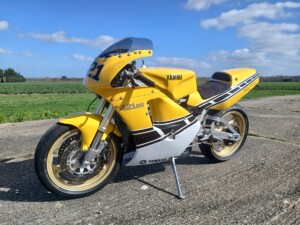 421cc Two-Stroke “YamaGamma” Hybrid - Smoke Show: Vic Shield's Dual-Livery 421cc YPVS Smoker... The Yamaha RD350 YPVS -- also known as the RZ350 or RD350LC II -- remains one of the last and most legendary two-stroke street bikes ever produced.… ...read more
 V4 Two-Stroke: Yamaha “RZ500RR” Restomod - 350-lb, 100+hp RZV500R from Championship Cycles... In 1984, Yamaha unveiled the world's first two-stroke V4 production motorcycle, the RD500LC -- a 500cc road-going replica of the YZR500 that King Kenny Roberts rode to the 1983… ...read more
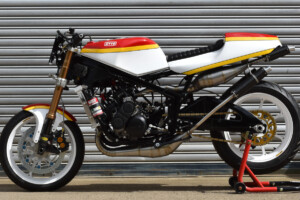 Naked Gamma: Custom Suzuki RG500 - "A screaming riot of two-stroke lunacy" from ETTO Motorcycles... Introduced in 1985, the Suzuki RG500 Gamma was closely patterned after Suzuki's 500cc Grand Prix bikes, which had earned four world titles and 50 GP victories… ...read more
 Ripsnorting Restomod: Suzuki RG500 Gamma - "The Dragon on an RG500 is the closest you can get heaven..." Introduced in 1985, the Suzuki RG500 Gamma was one of the most faithful two-stroke street-legal replica racers ever produced. It was derived directly… ...read more
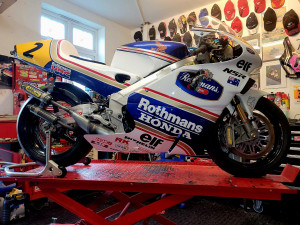 Honda NSR500: Street-Legal 500cc GP Bike! - Like Shaving with a Chainsaw: David Howard Racing builds a 500cc Grand Prix bike...for the road. In the modern era of Grand Prix motorcycle racing, nothing can compare to the dominance of the Honda NSR500,… ...read more
 Ultimate Two-Stroke: 421cc NSR-D Project! - 110-hp, 240-lb NSR-RD Hybrid... The Honda NSR250R remains one of the most legendary bikes of the 1990s, a street-legal two-stroke weapon built in the image of Honda's 250cc Grand Prix racers. Along with the Suzuki… ...read more
 Mythic 750 Triple: Denco CR90 Restomod - Street Dragster: Modernized tribute to the mythic Denco CR90... The Kawasaki H2 remains one of the most notorious motorcycles in history, a 750cc two-stroke triple that became known as the "Widowmaker" -- a moniker that… ...read more
 SRC 475 V3: A Modern Two-Stroke Sportbike - Sunday Ride Classic creates a 309-lb, 88-rwhp, two-stroke sportbike... By the 1980s, the days of street-legal two-stroke sportbikes were limited. A combination of emissions regulations, noise ordinances, and the continued evolution of four-stroke performance engines… ...read more


