
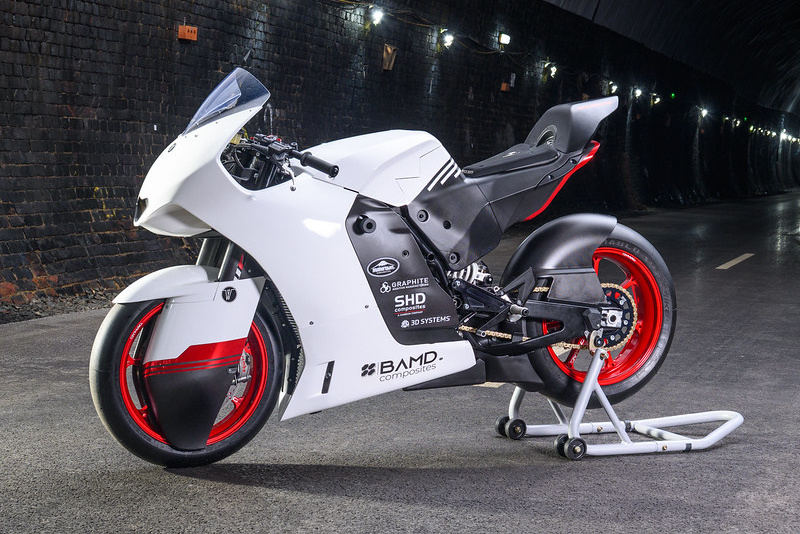
 A Supercharged 450 with an aerodynamic duct running right through the middle of the motorcycle…
Most high-performance motorcycles are designed around the engine. White Motorcycle Concepts, whose WMC250EV land speed bike we previously featured, approached its latest machine from almost the opposite direction. The British engineering company wanted to create more room for air to pass through the center of a motorcycle rather than forcing all of it around the rider, engine, and bodywork. To do that, the bike needed a substantially smaller powertrain. So WMC removed the 690cc single-cylinder engine from a Krämer EVO2 690R and replaced it with a 449cc Yamaha motocross engine…and then they added a supercharger.
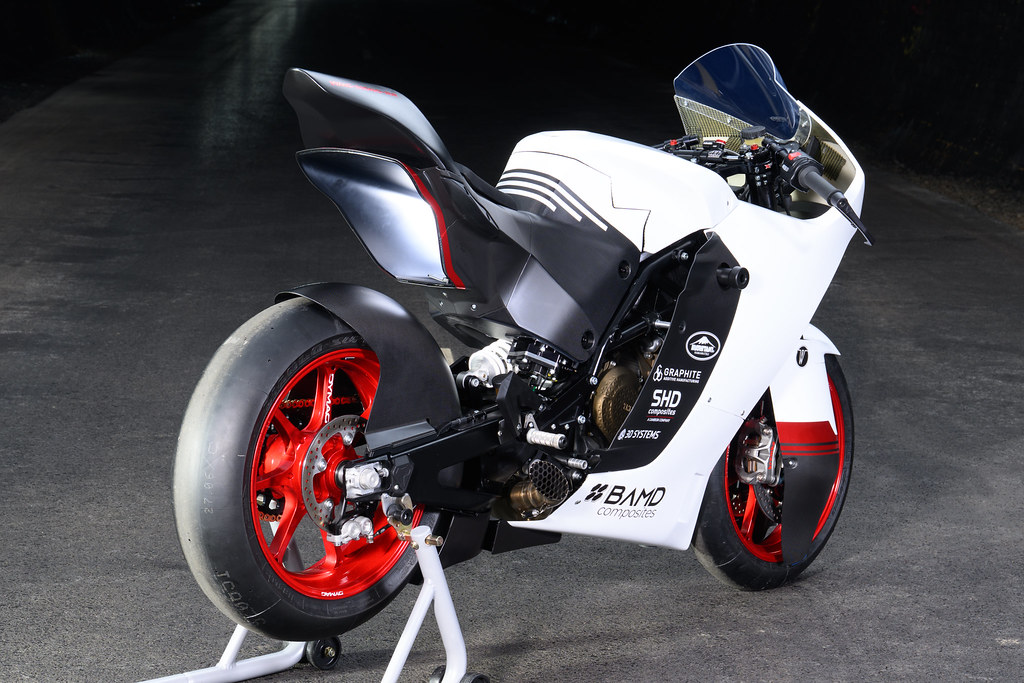
The resulting WMC Mono RR is a fully functioning technology demonstrator built around an unusual chain of engineering decisions: shrink the engine, recover horsepower through forced induction, use the newly available space for an internal aerodynamic duct, and see whether the complete motorcycle can become lighter, faster, and more efficient in the process. WMC’s ultimate targets are ambitious: 100 horsepower and 100 kilograms / 220 pounds.
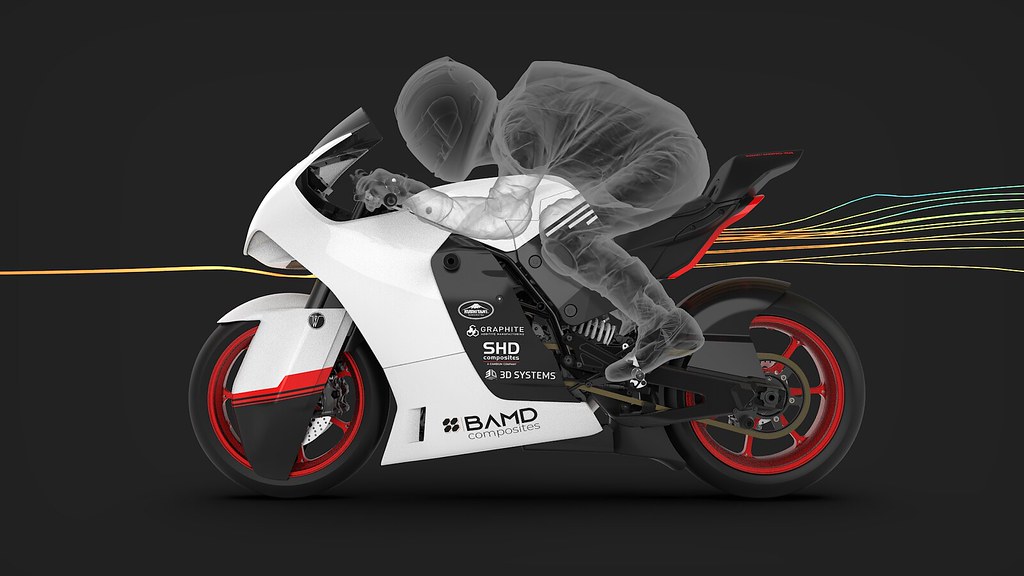
While those figures haven’t been achieved yet, the company does have an operational supercharged 450, a series of computational aerodynamic results showing a 16.4% reduction in drag, and a physical test program now underway in one of Britain’s most unusual automotive laboratories.
The Donor: Krämer EVO2 690R
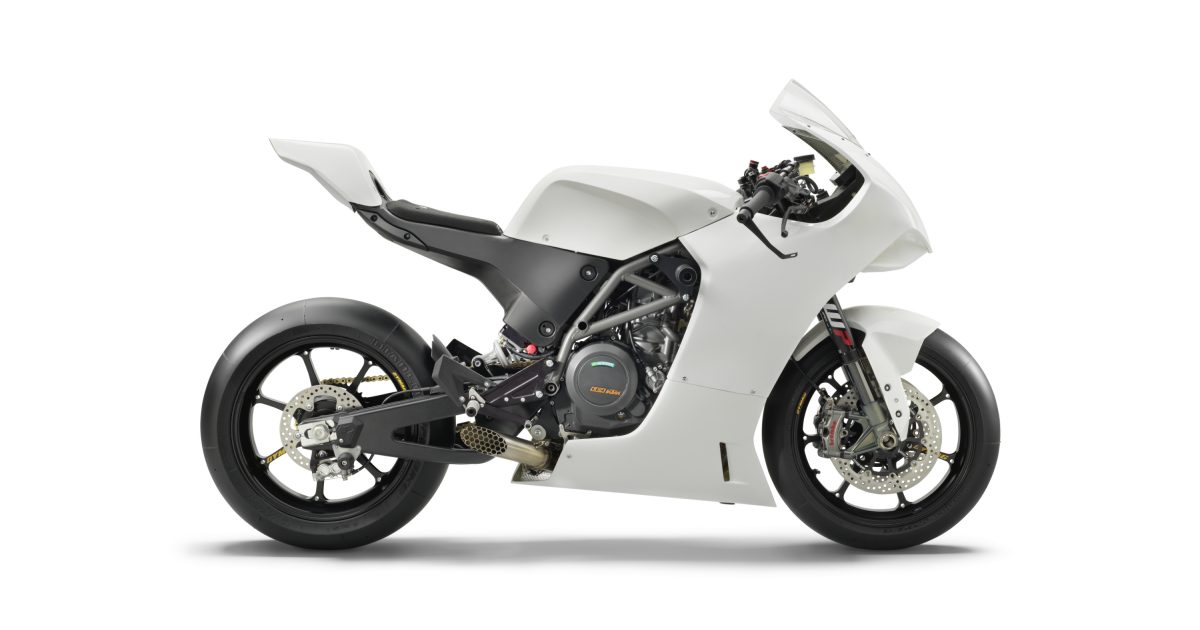
The Mono RR begins with one of the lightest dedicated track motorcycles currently available, the Krämer EVO2 690R. The German-built track machine uses a steel trellis frame, high-spec WP suspension, forged wheels, and a KTM LC4 single-cylinder engine. Krämer currently lists the machine at 125 kg / 276 lb and 80 hp.
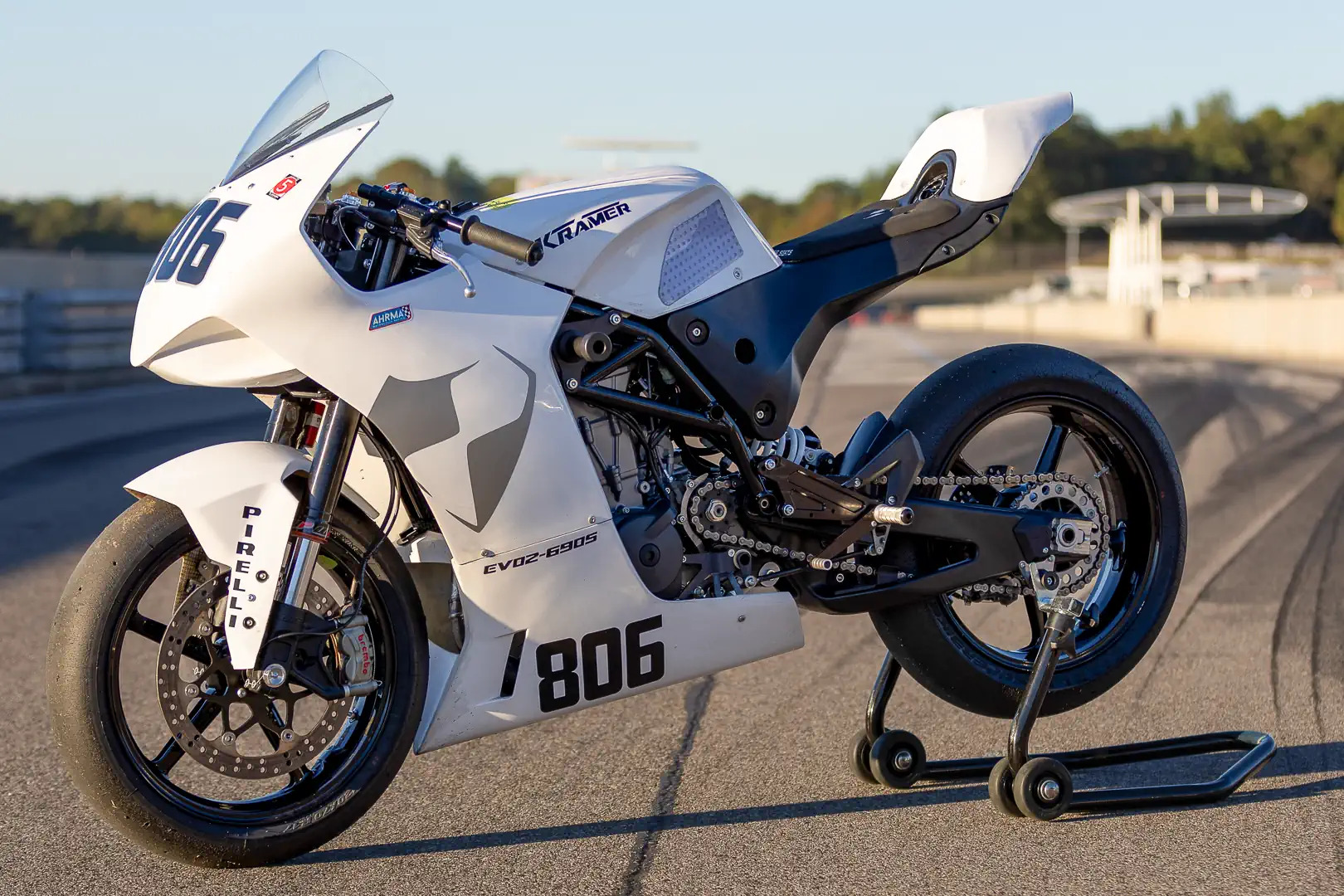
WMC selected it because it provided an unusually clean baseline. This wasn’t a heavy road bike that could be transformed dramatically simply by removing lights, emissions equipment, passenger accommodations, and street hardware. The Krämer was already a purpose-built lightweight race machine. WMC also wanted to preserve as much of that baseline as possible so the two configurations could be compared meaningfully.
The Mono RR retains the Krämer’s fundamental chassis geometry, rider position, seat height, suspension layout, and 12-liter fuel capacity. Even the final-drive sprocket location was maintained during the engine swap. That meant the aerodynamic improvements couldn’t simply be attributed to building an entirely different type of motorcycle.
Why Replace a 690 with a 450?
The engine swap initially appears backwards. The Krämer’s large single already produces substantial power while remaining compact by road-bike standards. Why replace 690cc with 449cc and then add the complexity of a supercharger just to regain the power you’ve lost? Because WMC wasn’t primarily trying to reduce displacement — they were trying to reduce volume.
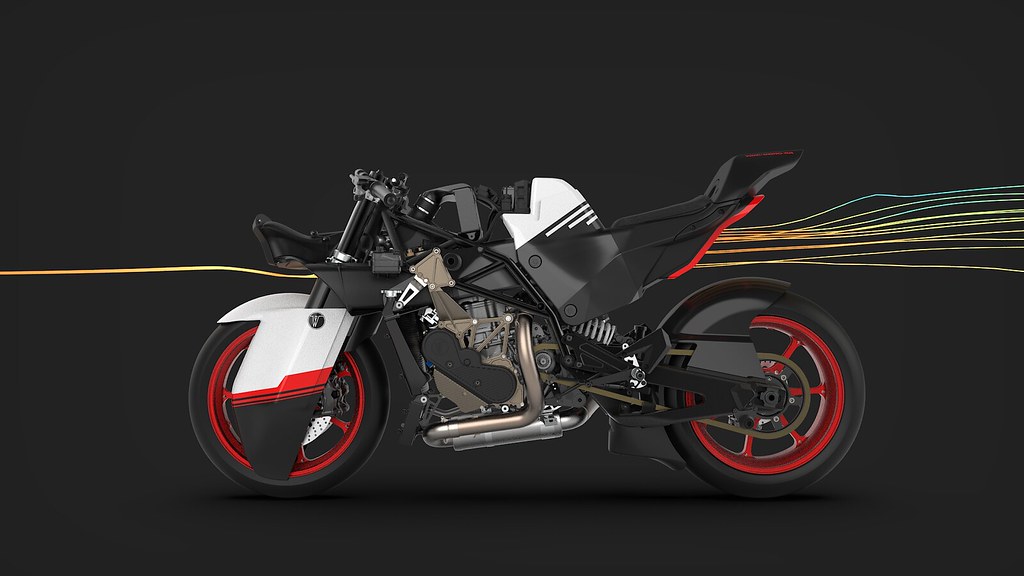
The shorter Yamaha engine occupies significantly less space inside the chassis. WMC says the complete powertrain is also around 20 kg lighter than the original arrangement. That empty space also becomes part of the aerodynamic system. In WMC’s terminology, the goal is greater “powertrain density” — extracting the necessary output from a smaller physical package so the volume no longer occupied by the engine can be used for something else. In this case, something else means air.
Yamaha YZ450F Power
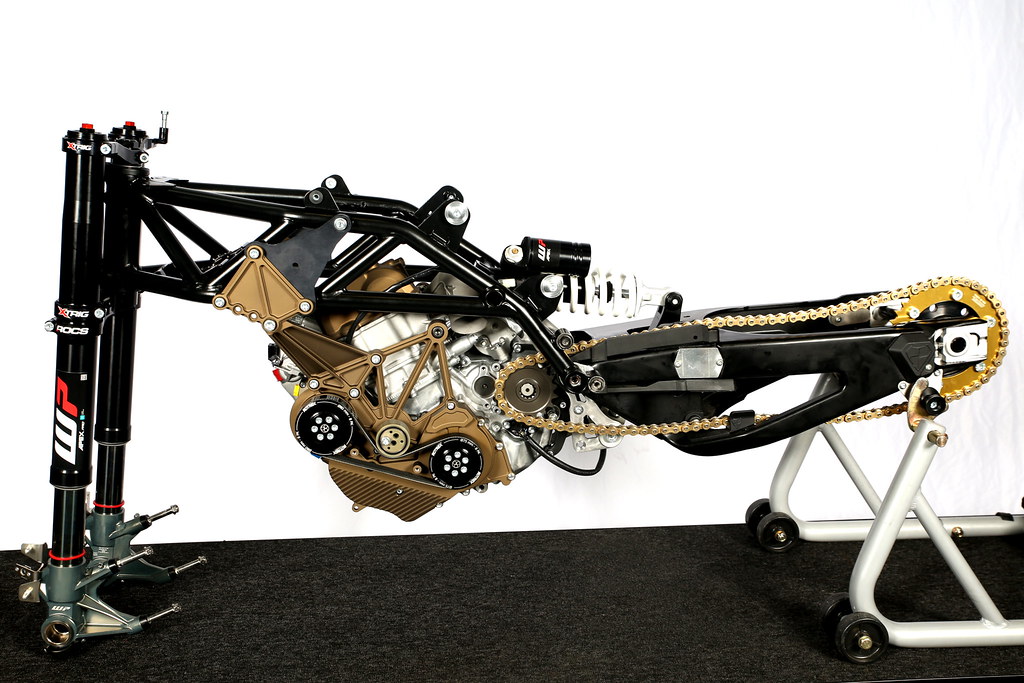
The Mono RR’s engine is based on the 449cc liquid-cooled single from Yamaha’s YZ450F motocross bike. The Yamaha was attractive for more than its size. Its cylinder head uses Yamaha’s reverse layout, placing the intake at the front of the engine and the exhaust toward the rear — an arrangement that works particularly well for WMC.
Cool intake air can approach from the front without having to cross the hot exhaust system, while the forward-facing throttle body can be packaged alongside the widest section of the aerodynamic duct. The basic engine was never going to match the Krämer’s larger KTM single in naturally aspirated form, so WMC developed a bespoke forced-induction system around it.
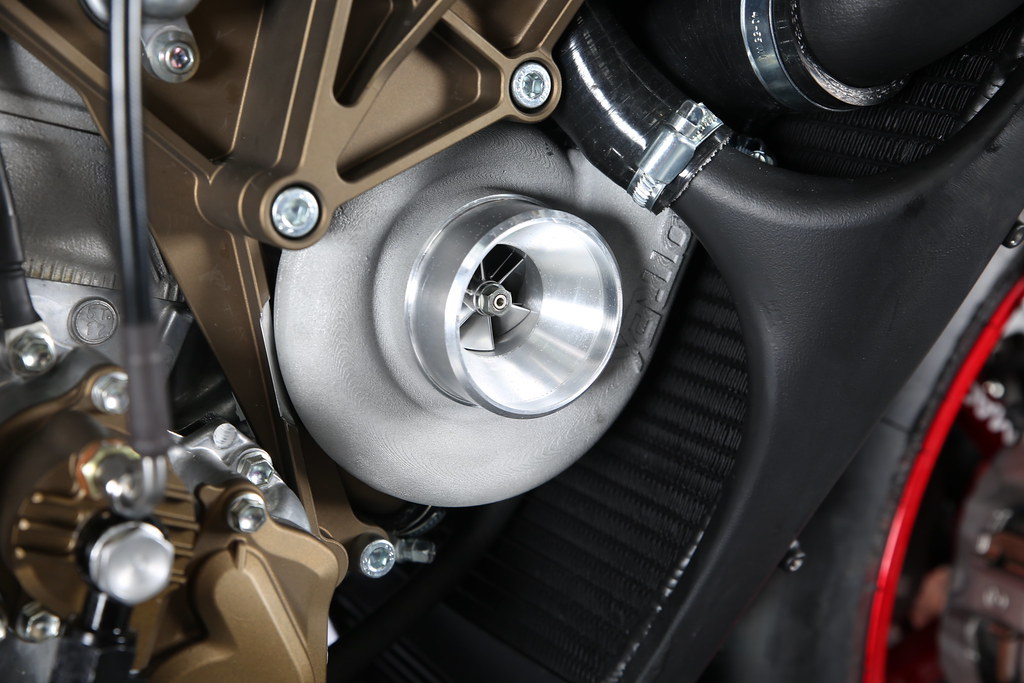
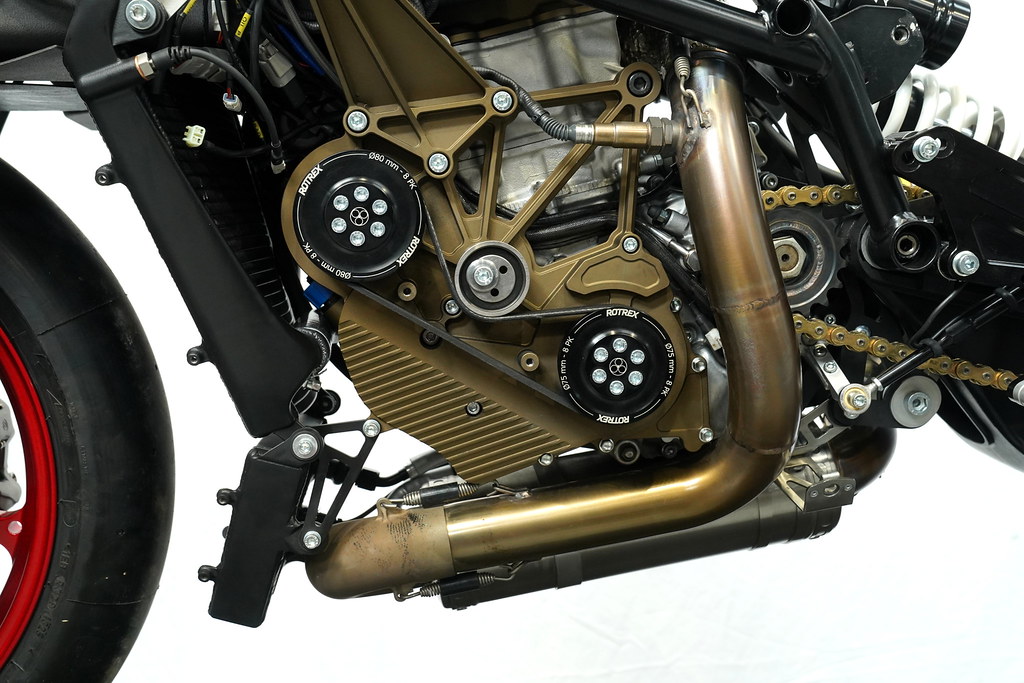
The company isn’t simply bolting a universal supercharger kit onto a stock motocross engine. The intake, exhaust, cooling, engine mounts, electronics, and forced-induction hardware have all been developed around the Mono RR installation.
A Rotrex-Supercharged Single
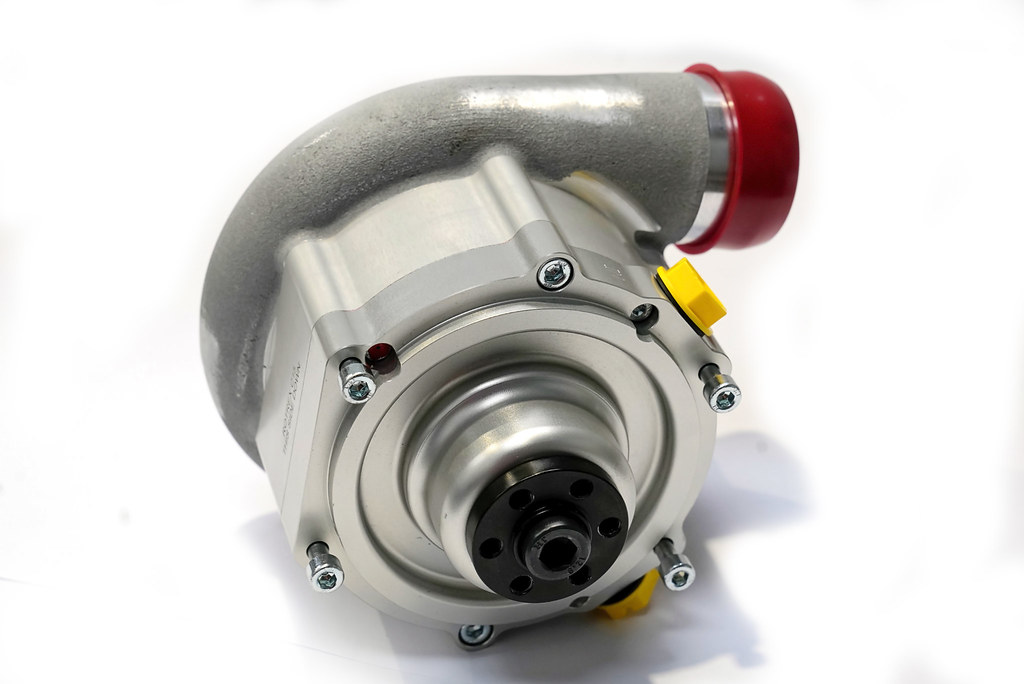
The centerpiece is a Rotrex C15-20 centrifugal supercharger. Unlike a turbocharger, which extracts energy from the exhaust stream, the Rotrex compressor is mechanically driven from the crankshaft. WMC mounts the unit ahead of the cylinder on a bespoke CNC-machined aluminum structure that performs several jobs simultaneously. It supports the engine, carries the supercharger, incorporates its belt drive, and contains the reservoir for the Rotrex traction fluid.
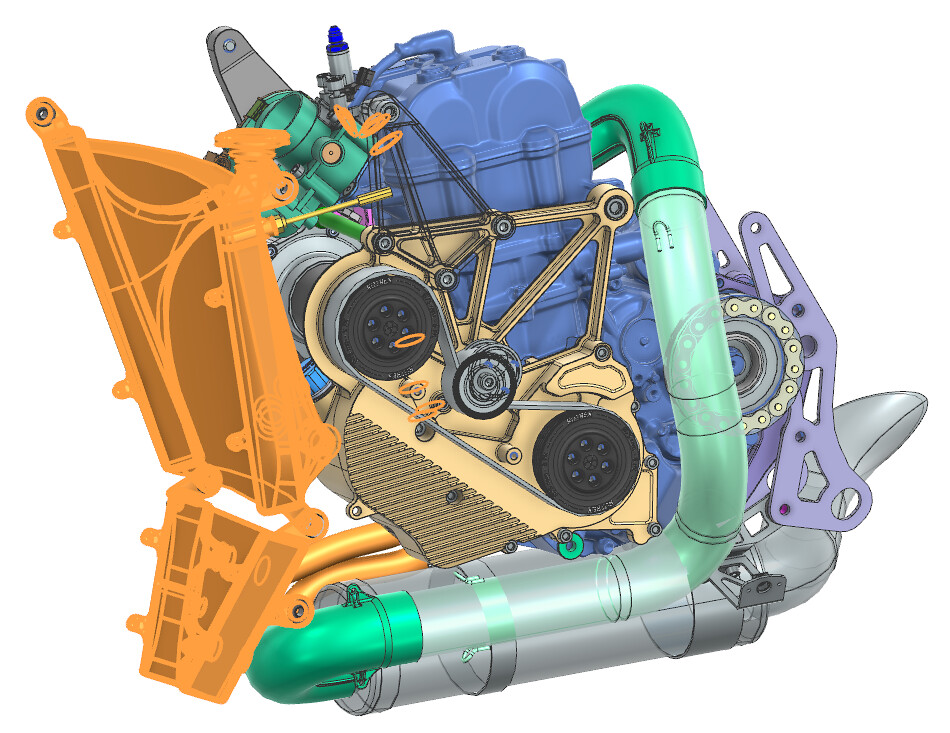
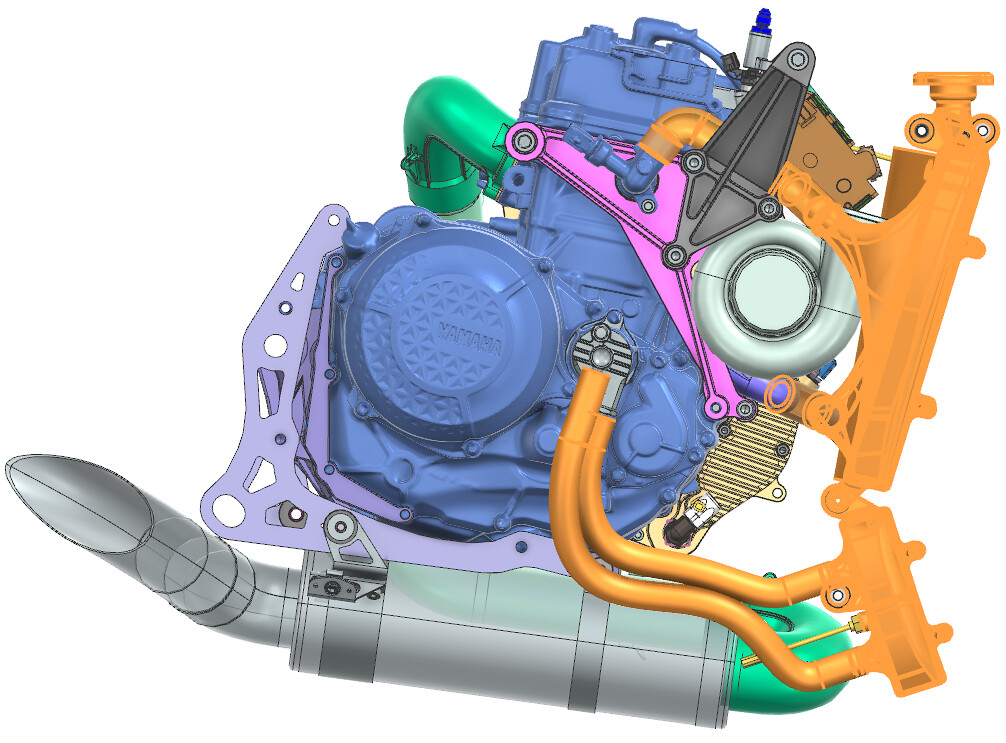
Air enters from the front of the motorcycle and passes through the compressor. From there, the pressurized charge travels through an intercooler and into a bespoke plenum before reaching a modified 44mm Bosch electronic throttle body. A MoTeC M130 ECU controls the engine, with closed-loop lambda feedback, knock monitoring, and extensive pressure and temperature instrumentation.
Initial bench and straight-line testing has confirmed that the system can generate the boost WMC requires while keeping intake temperature and plenum pressure within the intended operating range. What WMC has not published is a final current horsepower number….
76 HP First, 100 HP Later
WMC has divided the power development into phases. The first objective is to match or beat the roughly 76-hp output WMC uses as its baseline figure for the Krämer’s original engine. The longer-term Phase 2 target is 100 horsepower. That would be an impressive number from a 449cc four-stroke single, but it remains a development target rather than a verified output from the completed bike.
The same applies to the often-repeated 100-kg weight figure. WMC ultimately wants to produce 100 hp in a motorcycle weighing 100 kg / 220 lb. The company has not claimed that the current Mono RR already achieves either number. The existing demonstrator’s job is to provide proof of concept for the architecture and provide the data needed to move toward these weight and power targets.
The Hole Through the Motorcycle
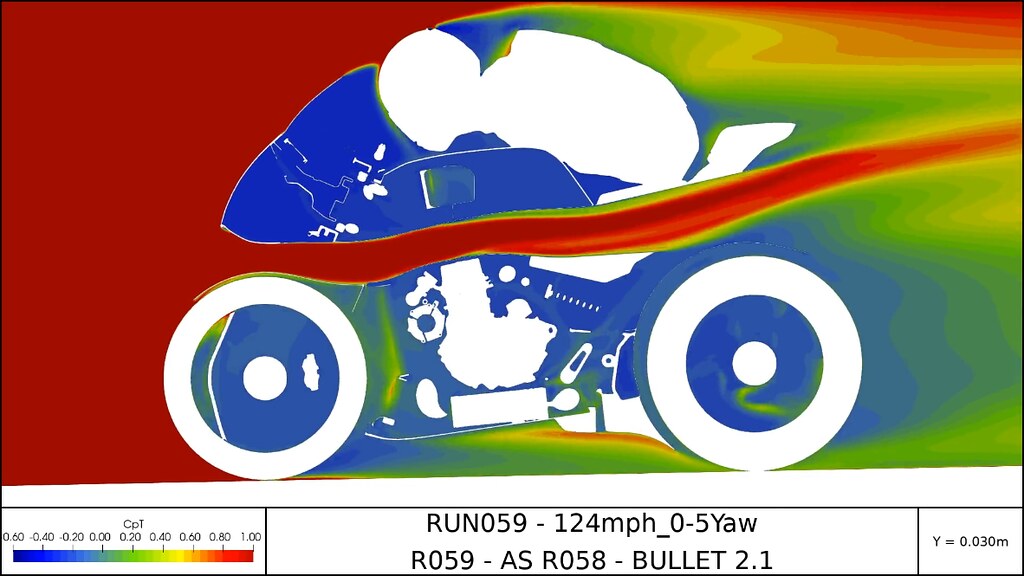
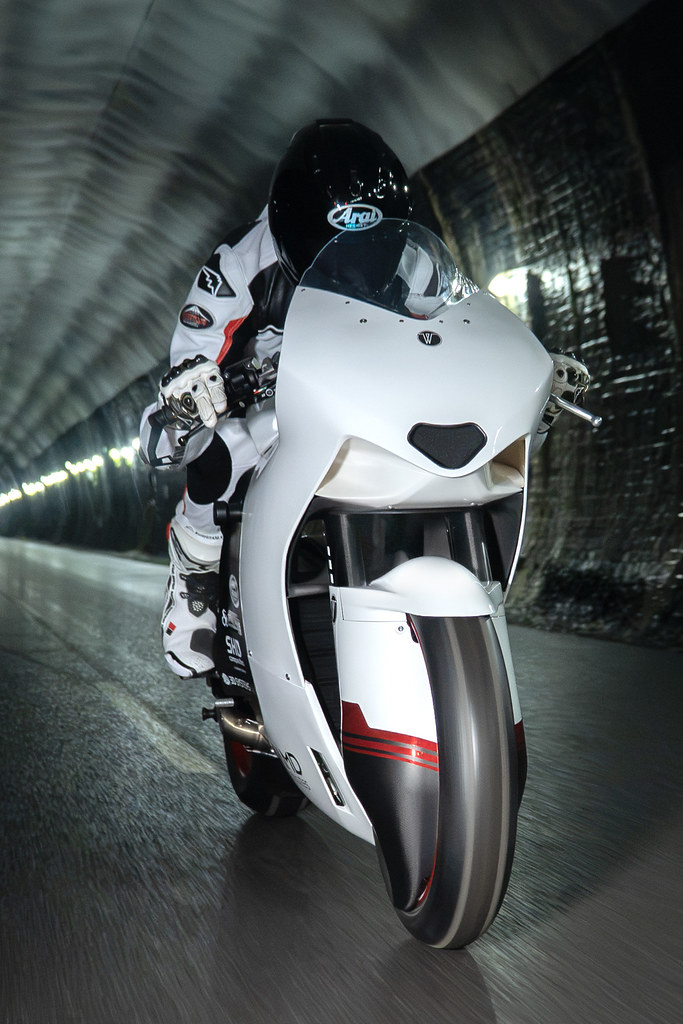
The Mono RR’s most distinctive feature is the large aerodynamic passage running through its center. WMC calls the concept its “V-Duct.” The principle is pretty straightforward: A conventional motorcycle strikes the air in front of it and must push that air around the combined motorcycle-and-rider shape. The rider in particular creates a large, irregular frontal area compared with the smooth enclosed body of a car.
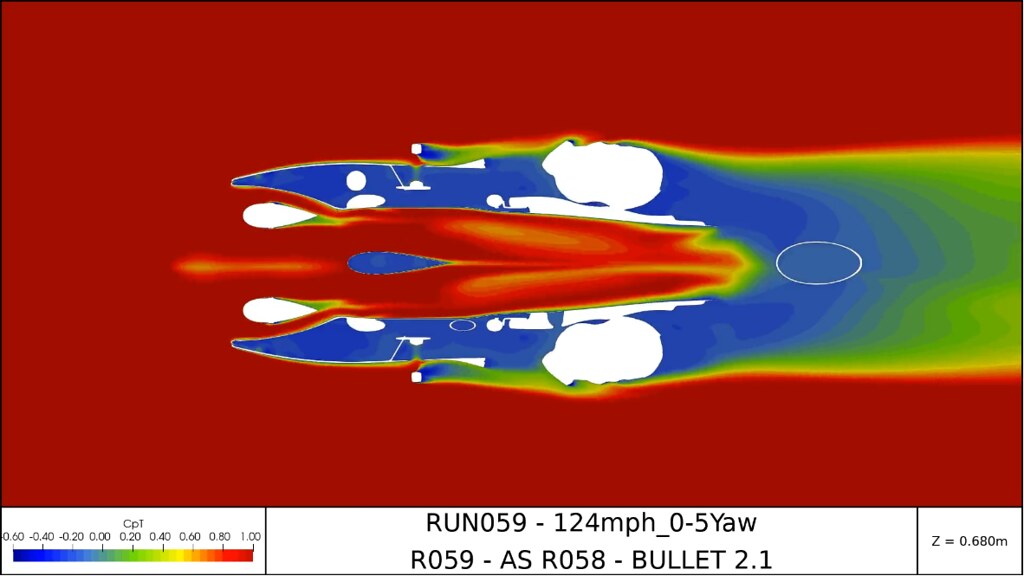
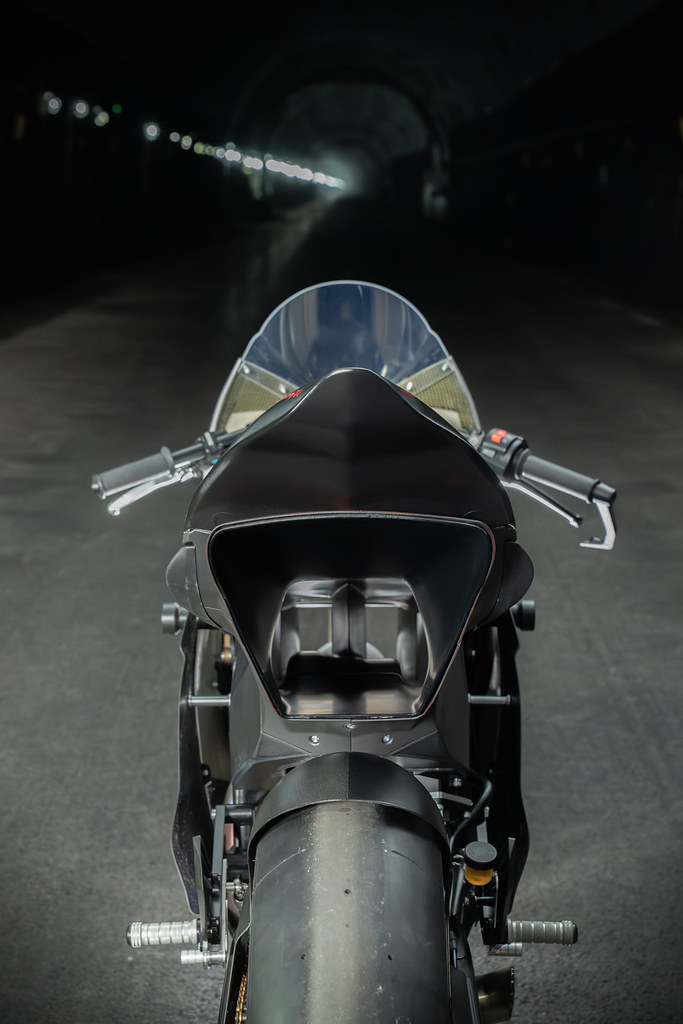
WMC creates another path. Air entering above the front wheel is guided into an internal duct running through the motorcycle and discharged toward the rear rather than being displaced entirely around the outside. That potentially attacks aerodynamic resistance in two ways. 1.) It can reduce the effective frontal obstruction presented to the airflow, and 2.) it can reduce how far the air must be displaced laterally to pass the motorcycle.
The idea isn’t new to the Mono RR. WMC previously demonstrated the concept on the WMC250EV electric land-speed project we featured in 2021.
But the Mono RR explores whether the same principle can be integrated into a recognizable combustion-powered track motorcycle without forcing the rider into an unusual position.
16.4% Less Drag
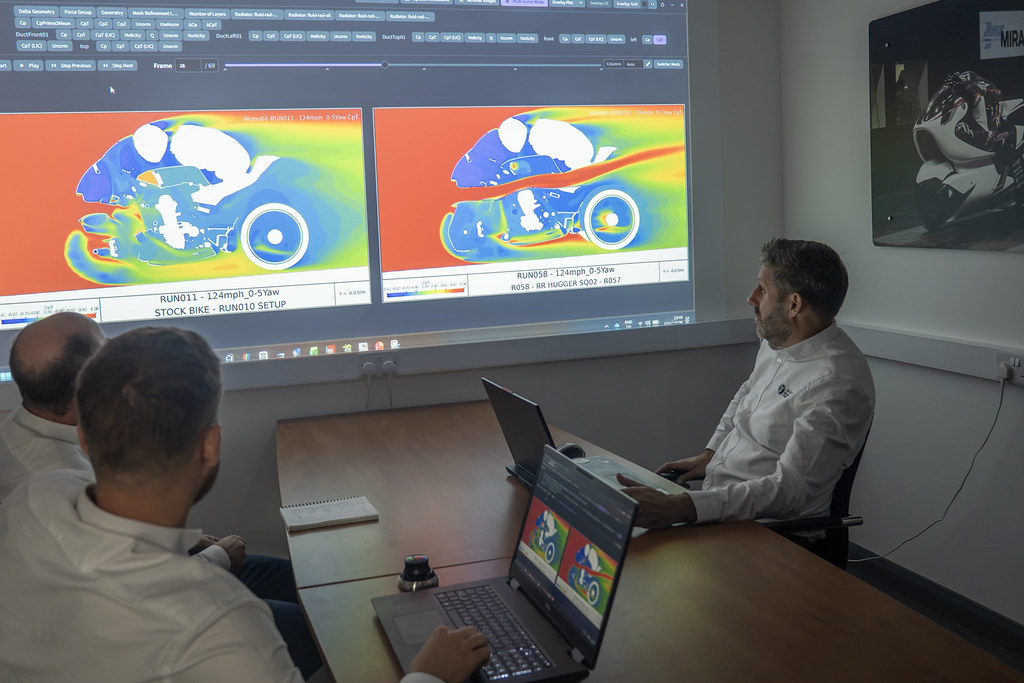
WMC’s computational fluid-dynamics work shows a 16.4% reduction in aerodynamic drag compared with the baseline configuration. That’s actually pretty substantial. Aerodynamic drag becomes increasingly important with speed because the power required to overcome it rises dramatically as velocity increases. Reducing drag therefore offers two possible benefits: less power is required to maintain a given speed, or the same power can produce greater speed.
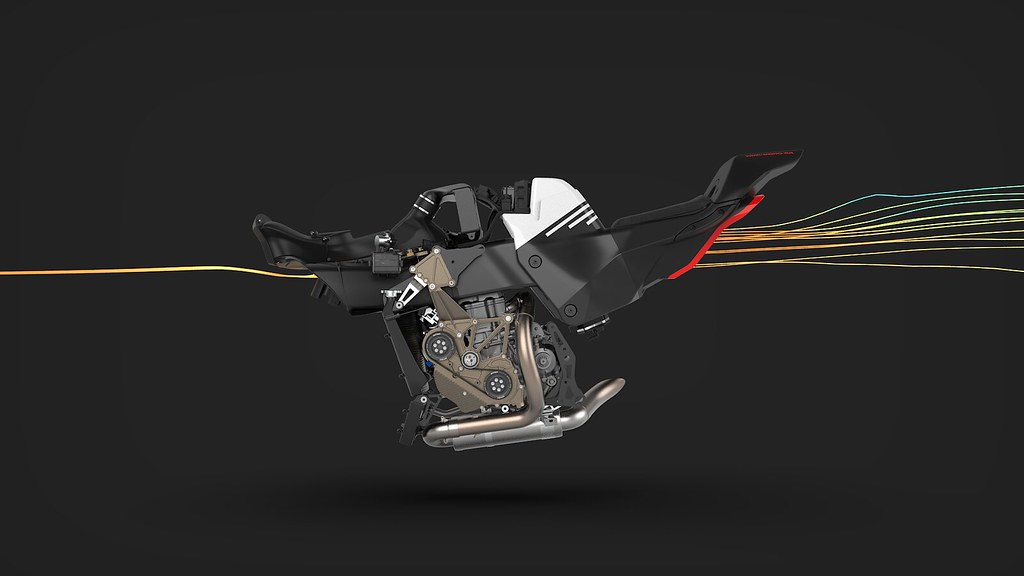
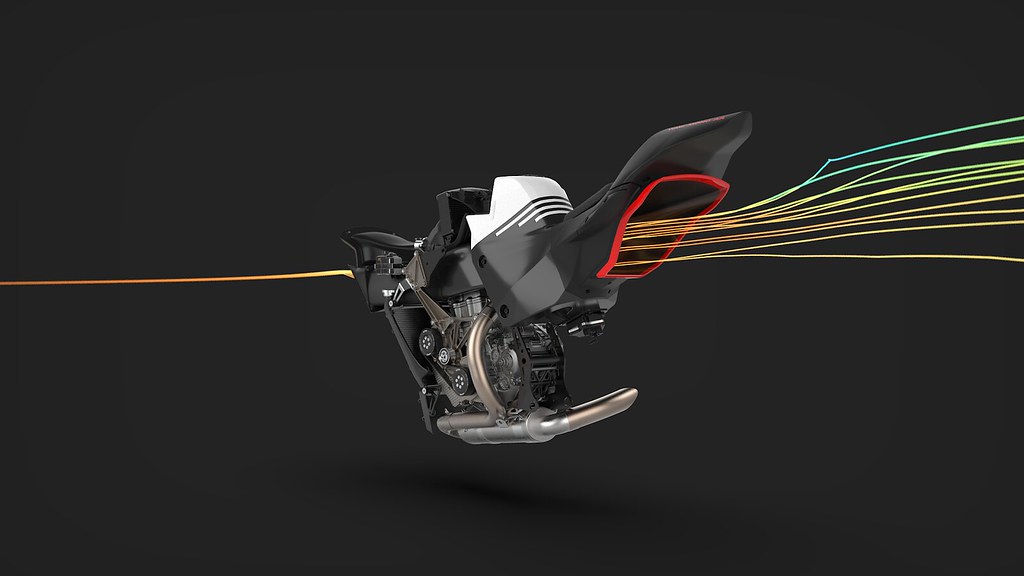
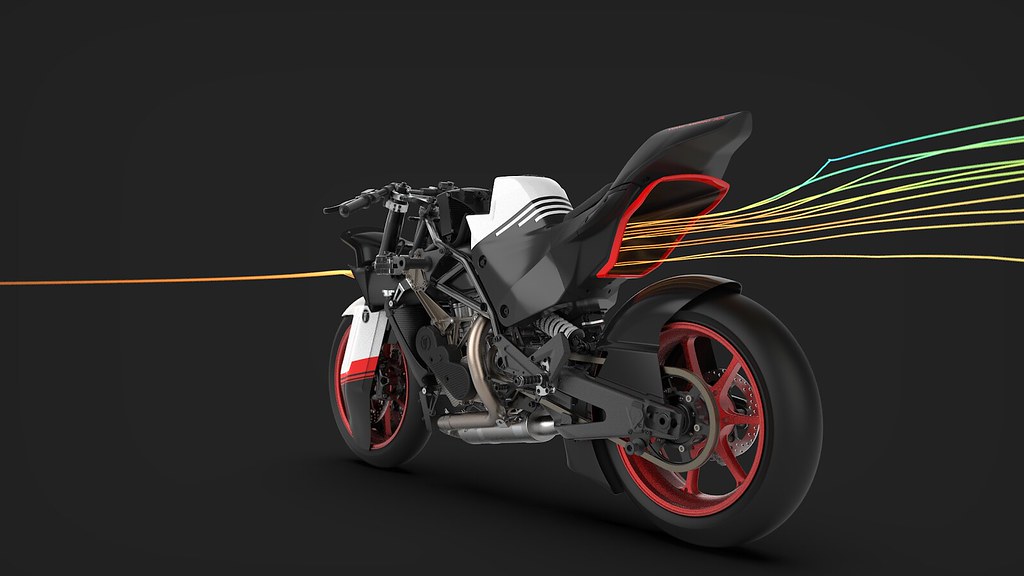
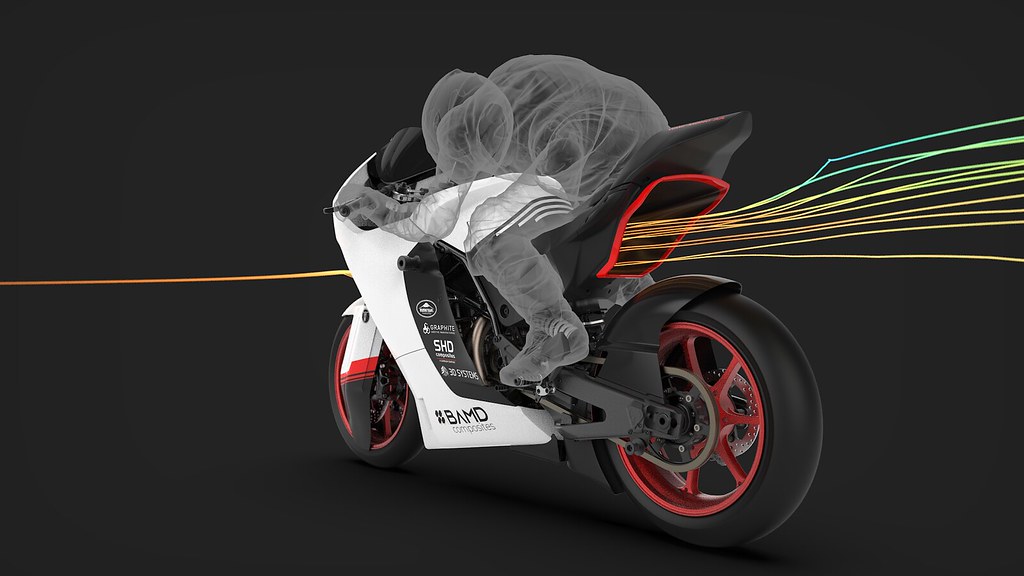
But WMC is looking beyond drag alone. Its simulations also show a 77% reduction in aerodynamic lift and a 111% improvement in lift-to-drag ratio. A 77% reduction in lift does not automatically mean “77% more downforce,” as some early coverage has described it. It means the simulations predict substantially less aerodynamic lift acting on the motorcycle. Whether the remaining force is positive lift, neutral, or actual negative lift/downforce depends on the precise operating condition. WMC itself sensibly describes the result as a reduction in lift.
The Rider Is Part of the Aerodynamics
Motorcycle aerodynamic development has one unavoidable problem: The rider. A designer can create beautifully controlled airflow around the motorcycle itself, only to have a human body sitting on top of it. WMC therefore developed the Mono RR’s fairing and duct as a complete system rather than treating the center passage in isolation.
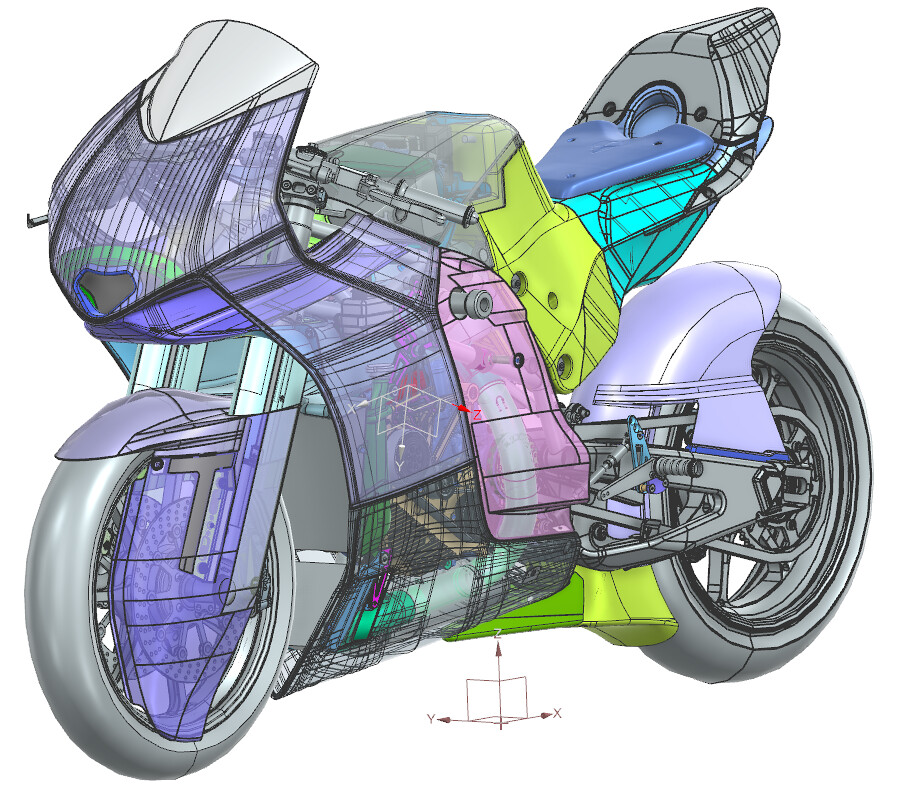
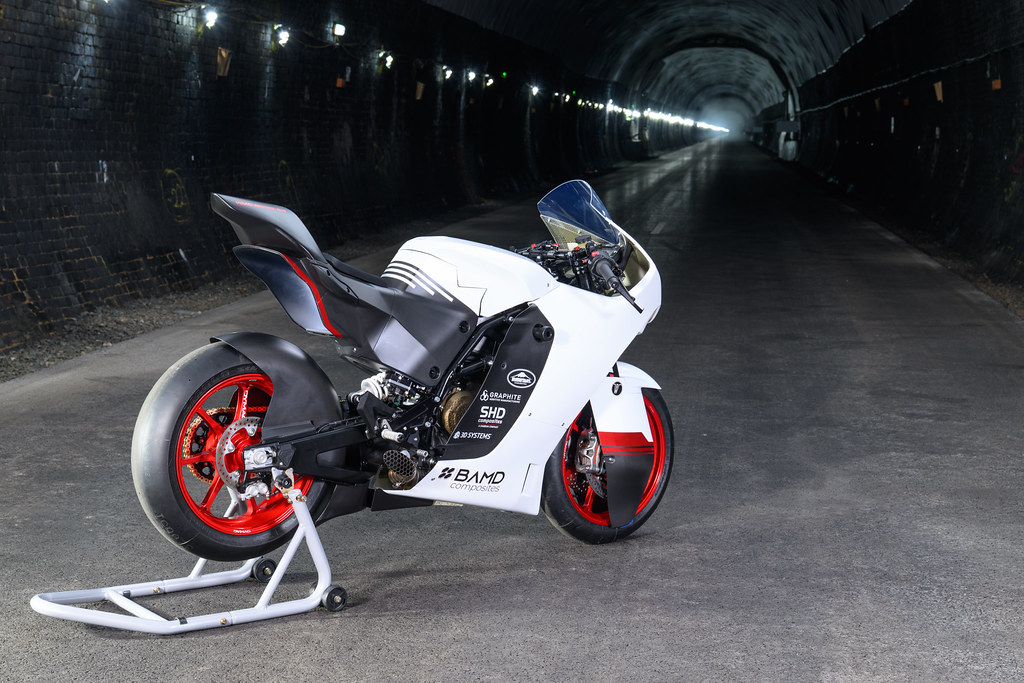
The front fender acts as part of the duct inlet. Fork shrouds and closing panels control air around the front wheel and suspension.
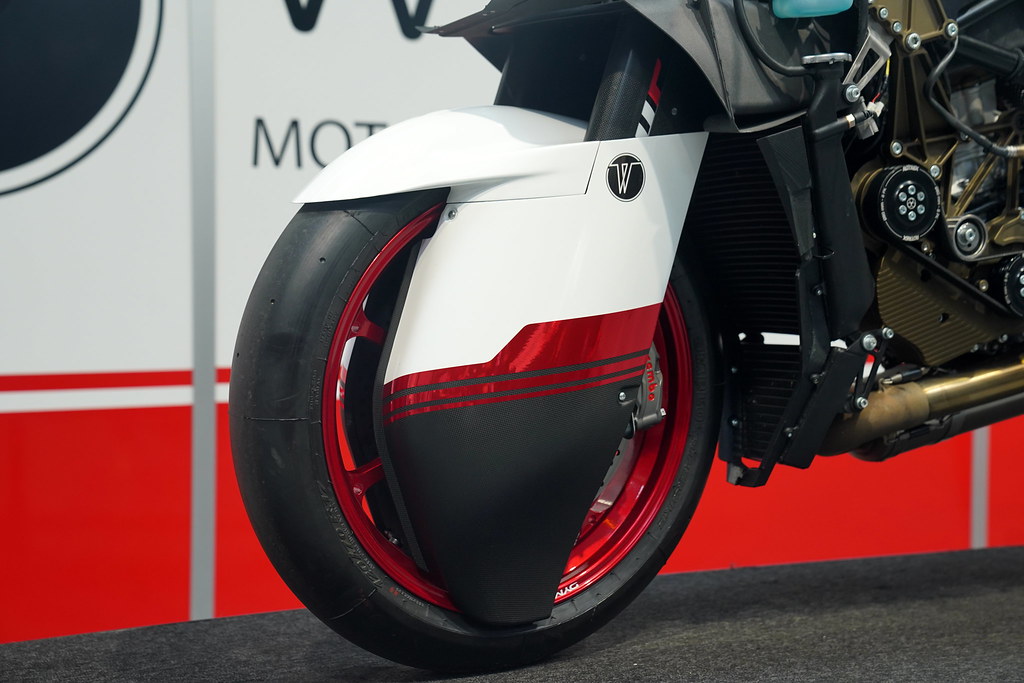
Additional fairing extensions attempt to manage the flow along the rider’s legs. At the rear, a wheel deflector, rear hugger, and duct outlet manage the air as it leaves the motorcycle.
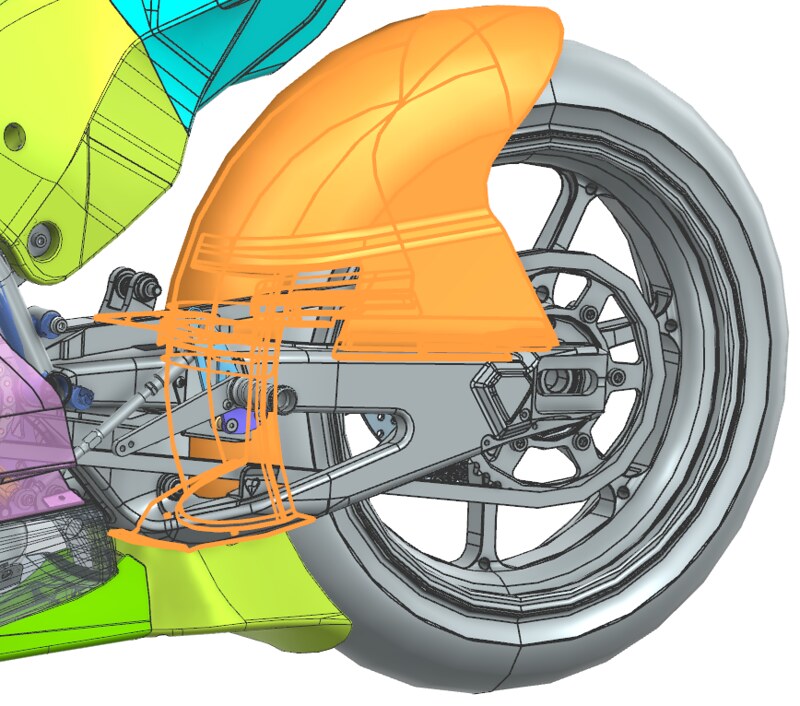
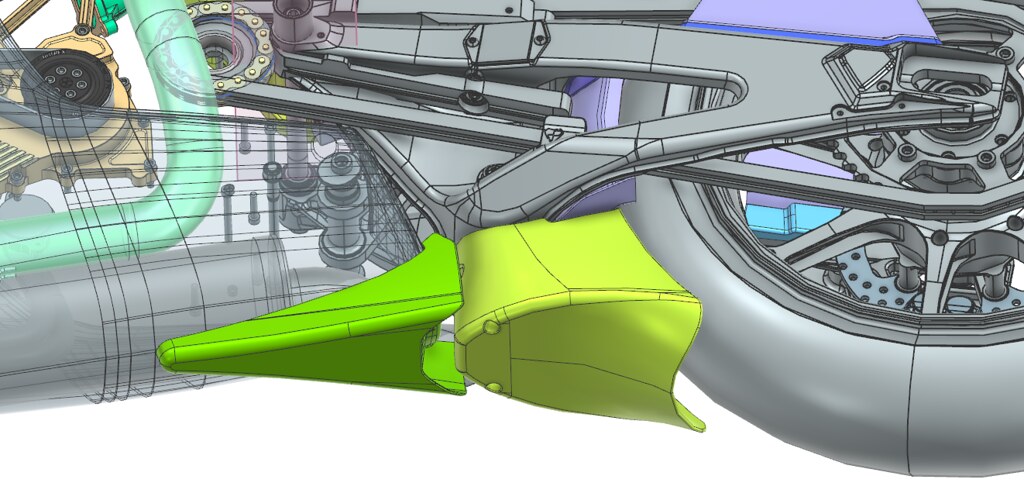
Cooling airflow was developed at the same time. The Mono RR requires radiators for the engine plus charge-air cooling for the supercharger, all while trying not to obstruct the passage that created the packaging challenge in the first place. WMC’s simulations indicate a 16% improvement in thermal-management performance compared with its baseline configuration.
The Fuel Tank Had to Move Too
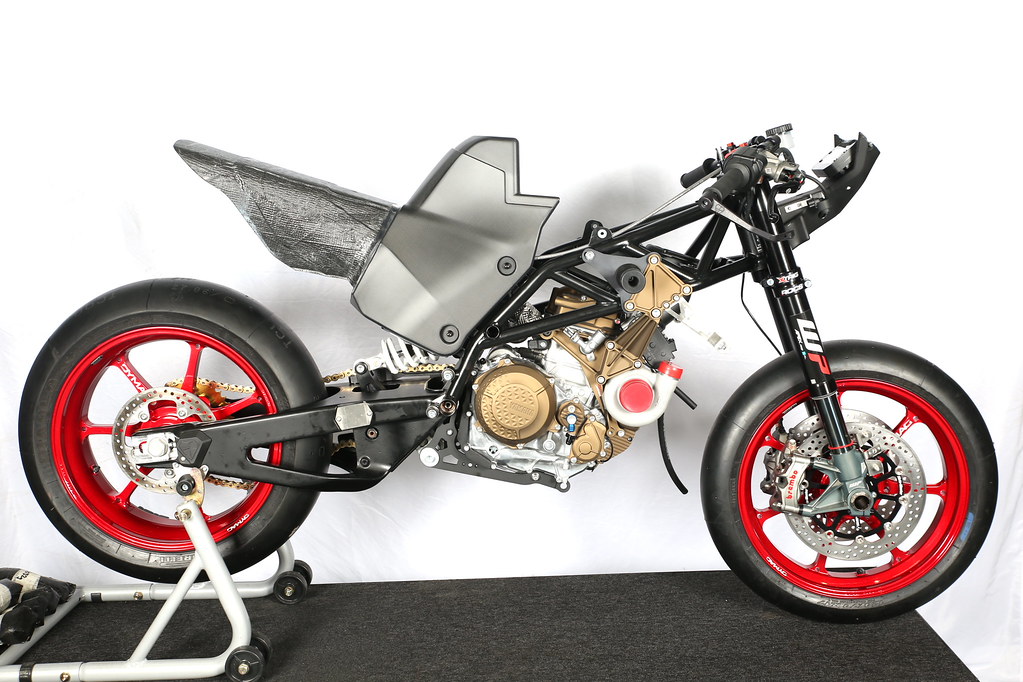
Creating a tunnel through the center of a motorcycle affects far more than the engine. The conventional fuel-tank area is prime real estate. WMC therefore created a composite structure that combines the fuel tank and rear seat support, allowing the motorcycle to retain the original 12-liter capacity while opening space farther forward.
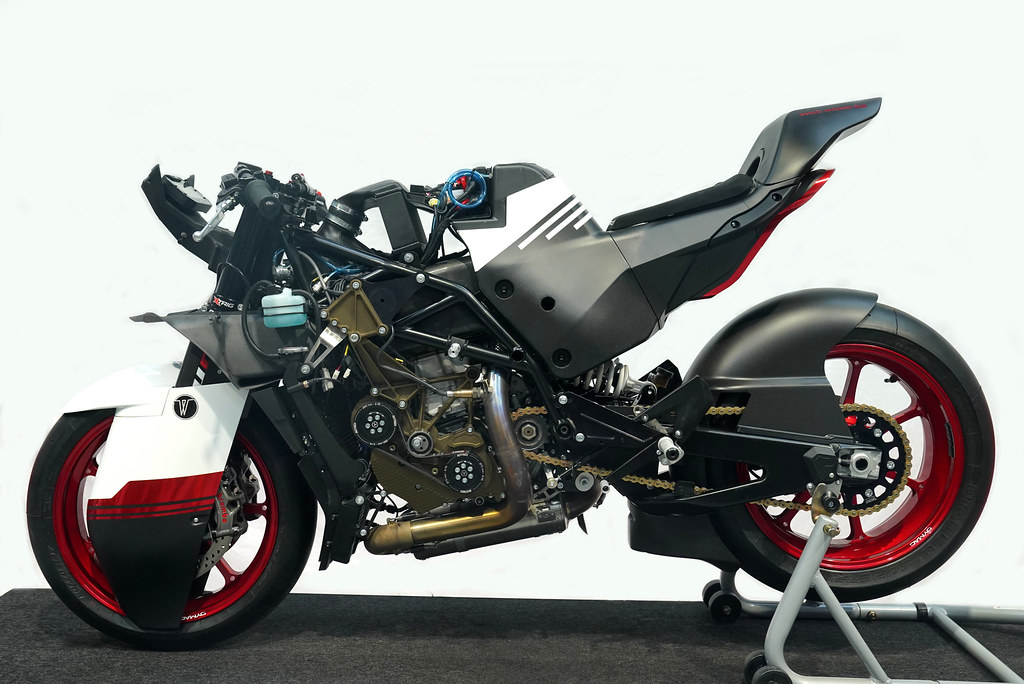
The central aerodynamic duct itself is split into front, middle, and rear sections to make manufacture and assembly possible. Those sections use a mixture of carbon-fiber composites, reinforced structures, and 3D-printed components. The exhaust is equally specialized, including a 3D-manufactured titanium header designed around the extremely limited available space.
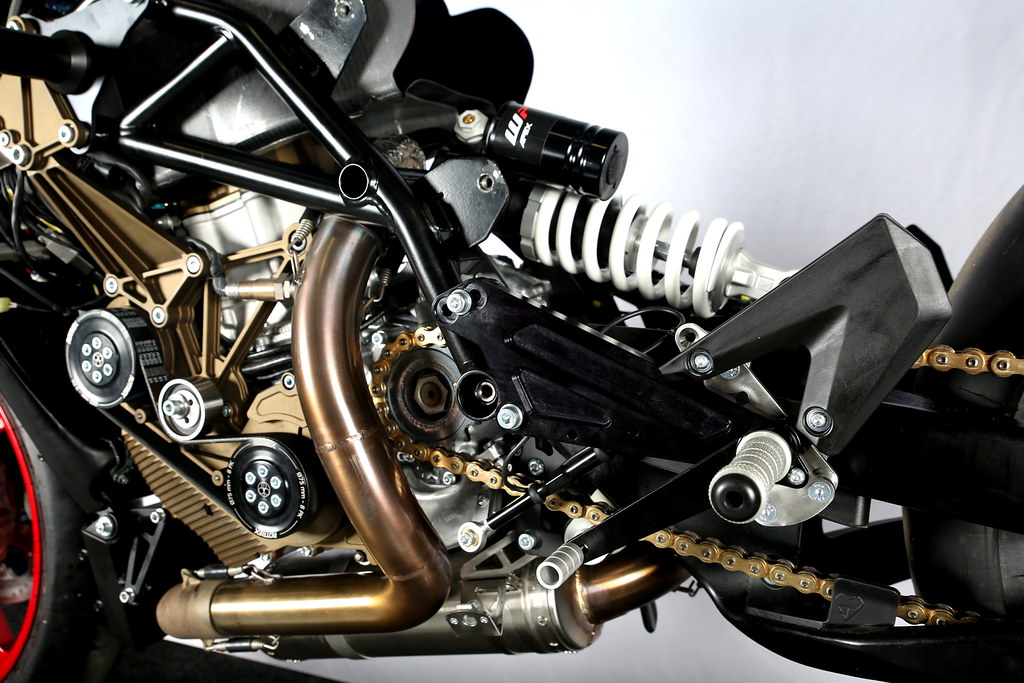
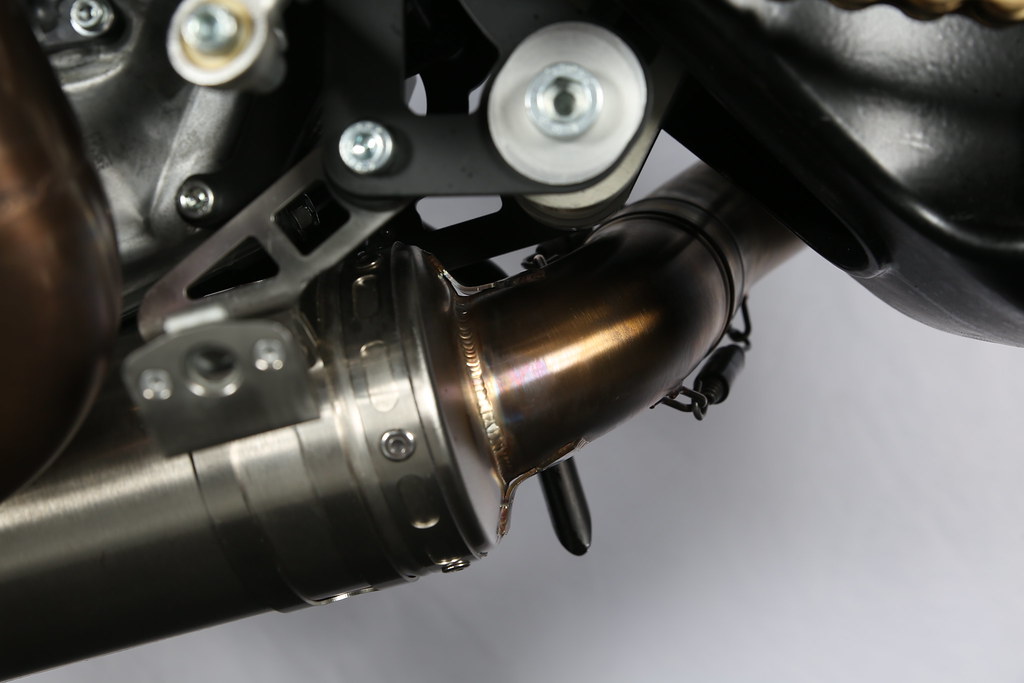
The result is less a standard motorcycle with aerodynamic bodywork attached than a packaging exercise in which engine, airflow, fuel, cooling, structure, and rider position have all been developed together.
Testing in the Catesby Tunnel
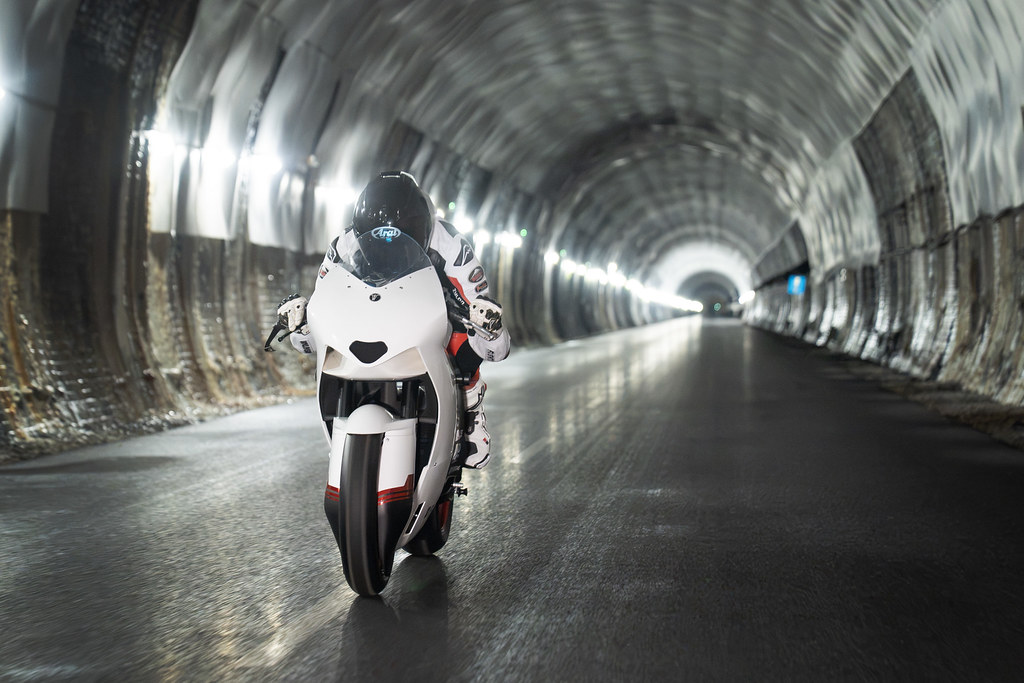
WMC is unusually clear about another important distinction. The impressive aerodynamic figures currently being publicized are principally CFD (Computational Fluid Dynamics) results. The bike itself is real and operational, but the physical test program is intended to determine how closely the real motorcycle matches the digital predictions.
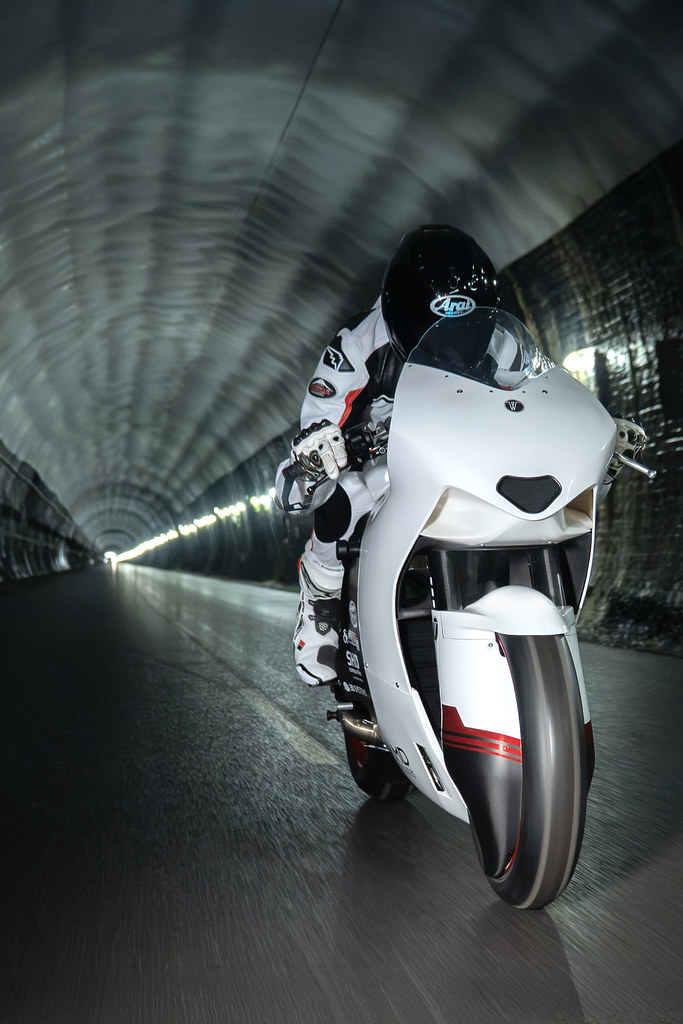
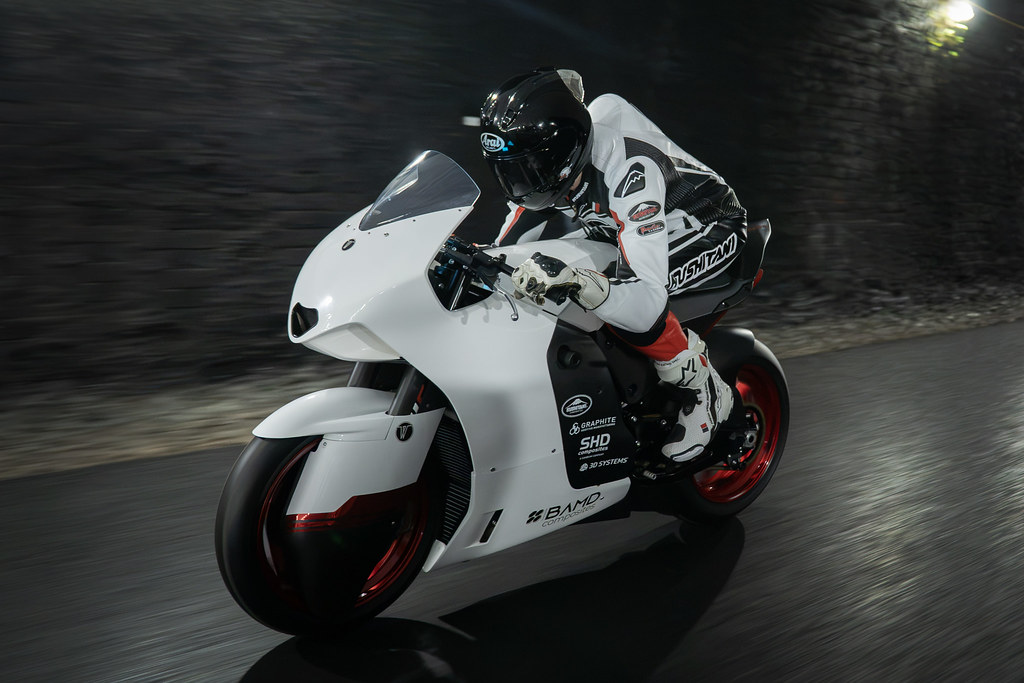
For that work, WMC has taken the Mono RR to Catesby Tunnel in Northamptonshire. The former railway tunnel is approximately 2.7 kilometers / 1.7 miles long and provides something difficult to obtain on an ordinary test track: repeatable high-speed conditions largely isolated from changing wind.
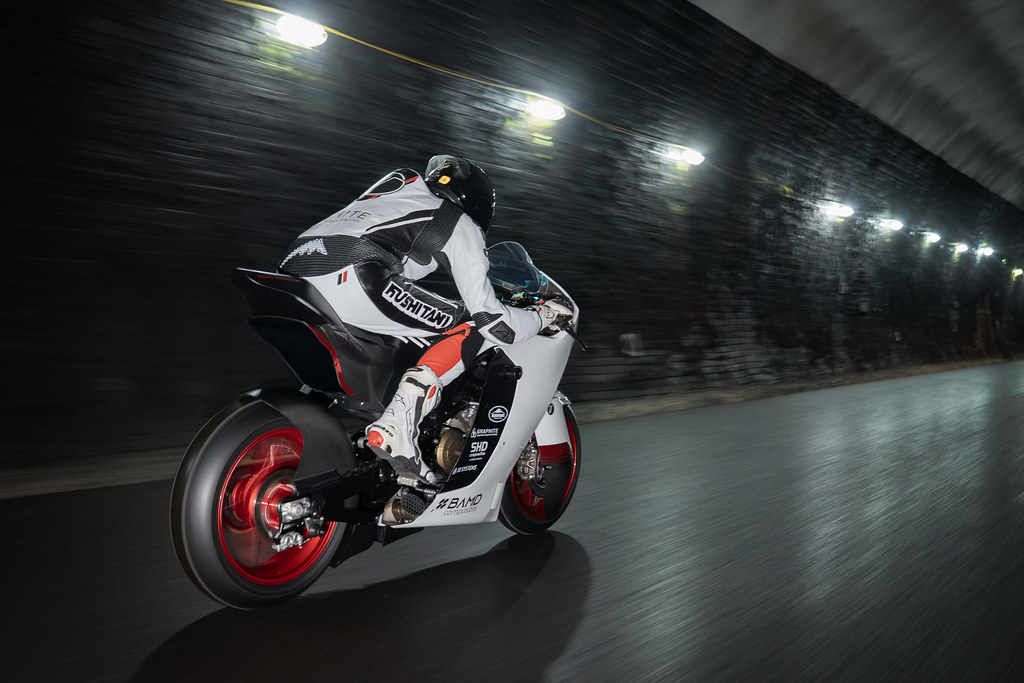
WMC is conducting coast-down testing to measure the motorcycle’s rate of deceleration and derive aerodynamic drag, along with suspension-load measurements intended to assess aerodynamic forces acting on the machine. The company also plans to examine weave, wobble, and capsize behavior as it investigates how the aerodynamic changes affect stability and vehicle dynamics. A motorcycle can look excellent in CFD and behave very differently once tires, suspension movement, steering, rider movement, crosswinds, and transient conditions enter the equation.
The Duct Changes as the Bike Moves
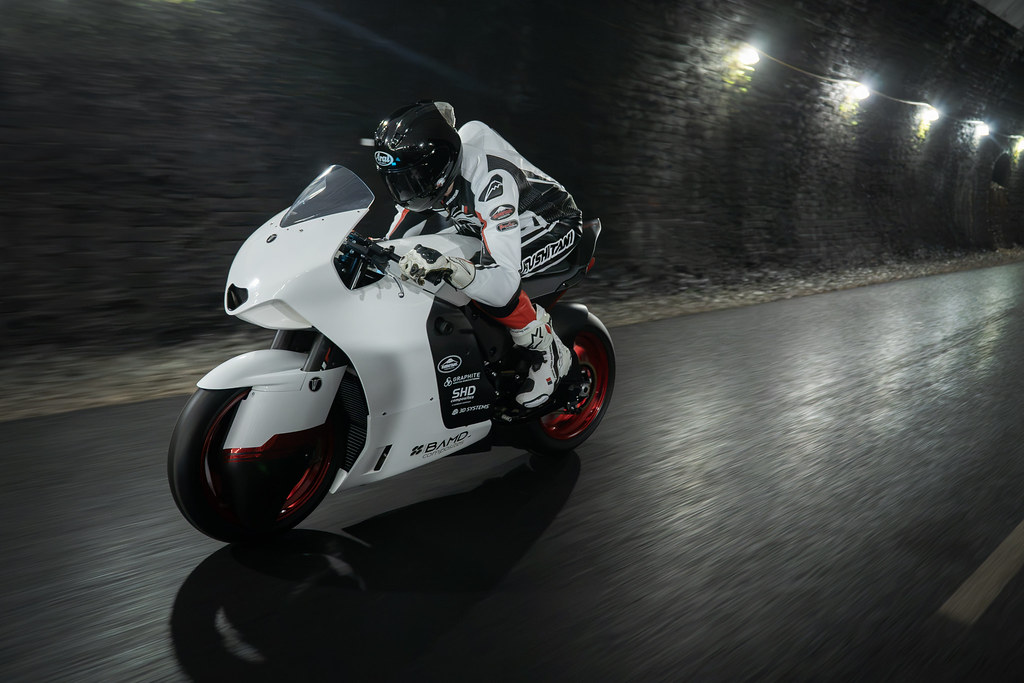
WMC’s own simulations already reveal some of those complications. The V-Duct works best with the motorcycle upright and traveling quickly in a straight line. Under braking, the fork compresses and changes the size and alignment of the front duct inlet. During cornering, the motorcycle sees different airflow direction and usually lower speed, reducing the duct’s effectiveness.
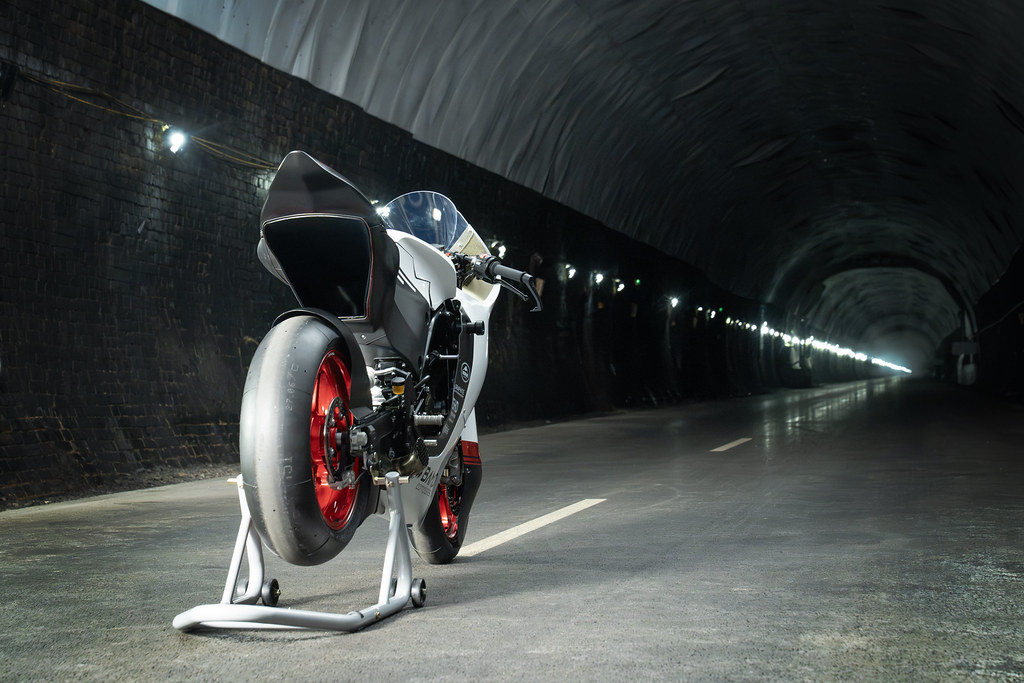
That is significant because it demonstrates the Mono RR isn’t simply chasing one favorable drag number. The company is trying to understand how the aerodynamic system behaves through the actual operating envelope of a motorcycle. The eventual result may involve compromises, as most useful engineering does.
Not a Production Motorcycle
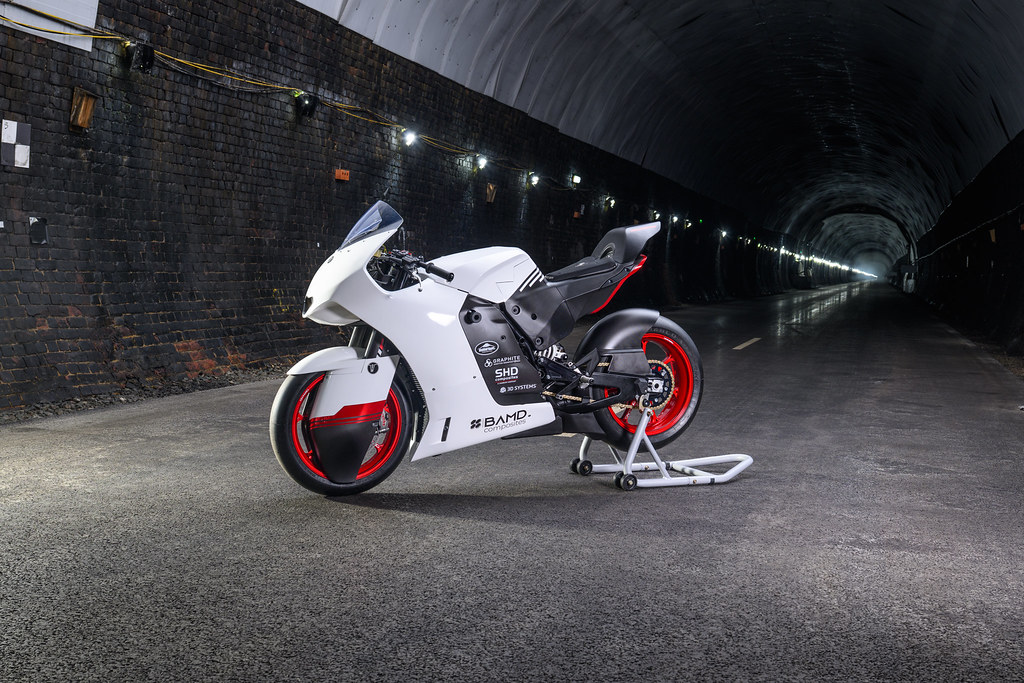
Despite the amount of work invested in it, WMC does not intend to manufacture the Mono RR for sale. It is a technology demonstrator. White Motorcycle Concepts’ business is based around engineering and intellectual property rather than becoming another low-volume motorcycle manufacturer. The company wants established manufacturers to evaluate and potentially license ideas such as the aerodynamic duct and integrated powertrain architecture.
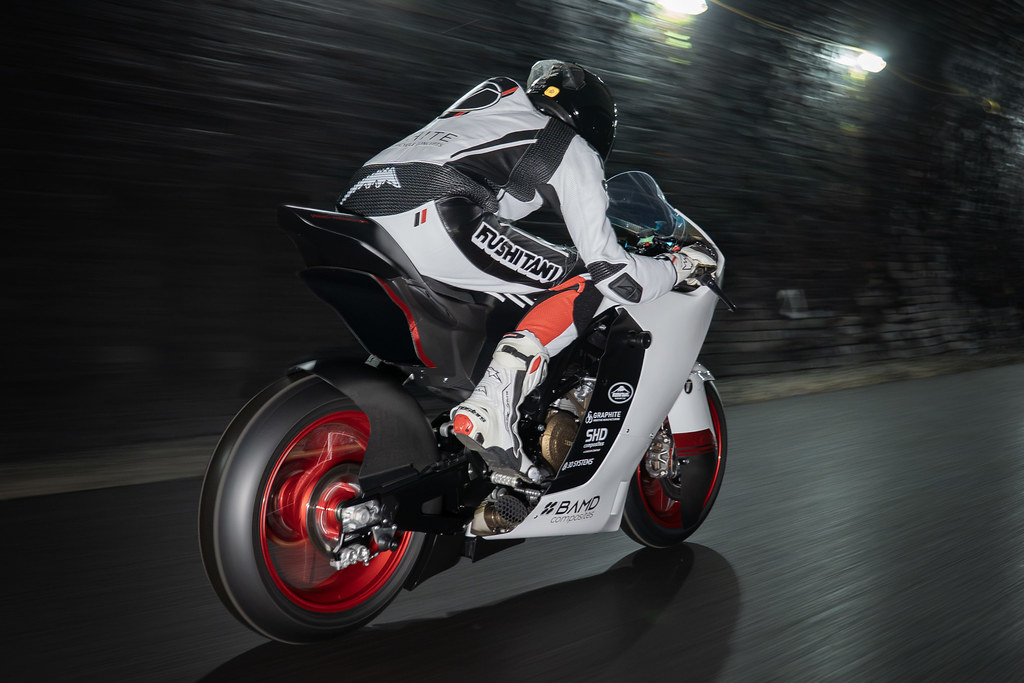
The Mono RR therefore exists to provide evidence.
- Can a smaller, forced-induction engine free enough space to produce meaningful aerodynamic gains?
- Can those gains be achieved without changing the normal riding position?
- Can the resulting machine outperform a larger-engine donor and be lighter and more efficient?
- And, can the whole system work outside a computer simulation?
Those are the questions the physical motorcycle is meant to answer.
The Supercharger Isn’t Really the Point
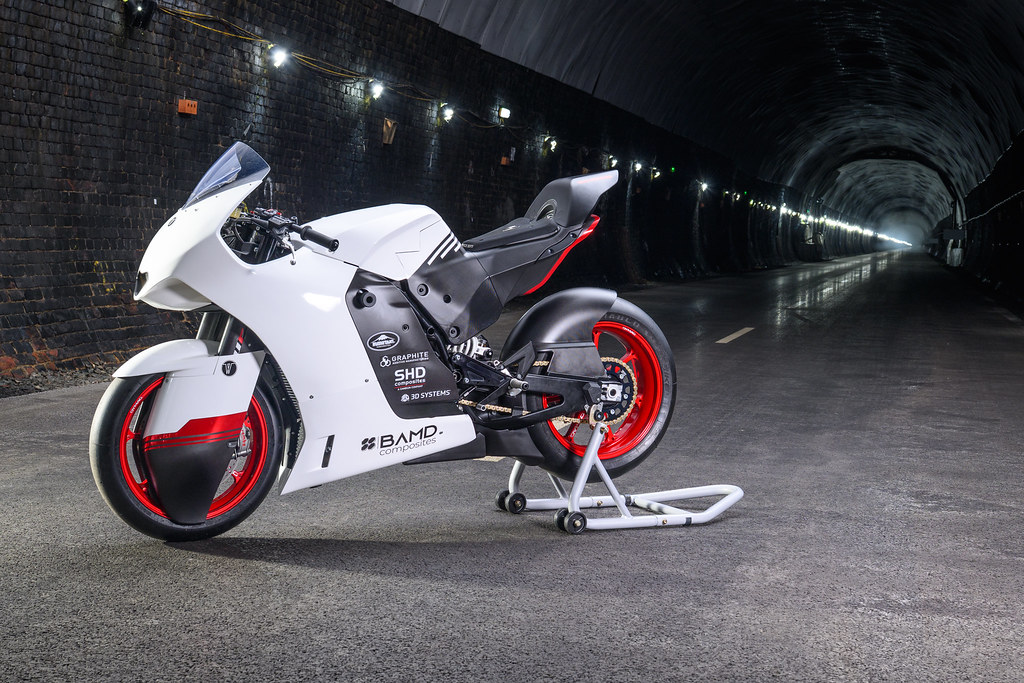
It’s tempting to look at the Mono RR and focus on the prospect of a 100-hp supercharged 450. And, admittedly, that would make a compelling motorcycle on its own. But the engine is actually an enabler for the larger experiment. WMC didn’t downsize from 690cc to 449cc because it believes smaller engines are automatically better. It did it because the Yamaha occupies less space.
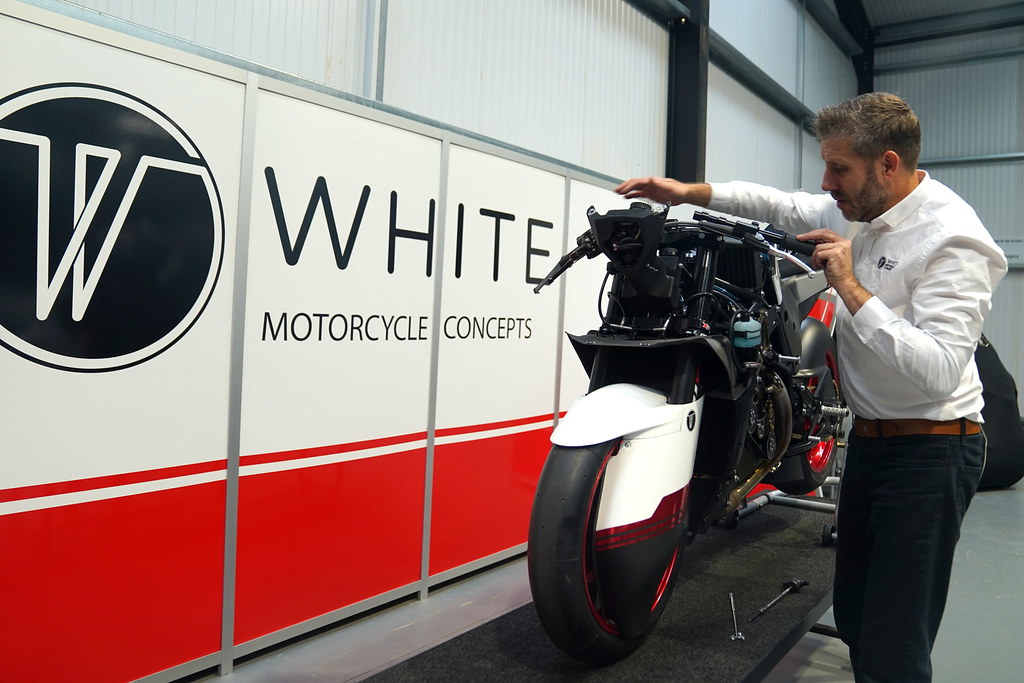
The supercharger attempts to return the performance lost through downsizing. That freed volume allows the aerodynamic duct to become larger. Better aerodynamics reduce the power required at speed. That in turn potentially allows further reductions in engine size, fuel consumption, cooling requirement, or vehicle mass.
WMC describes the process as a positive engineering feedback loop. That’s the real idea behind the Mono RR. Not simply more power, but more performance from less motorcycle.
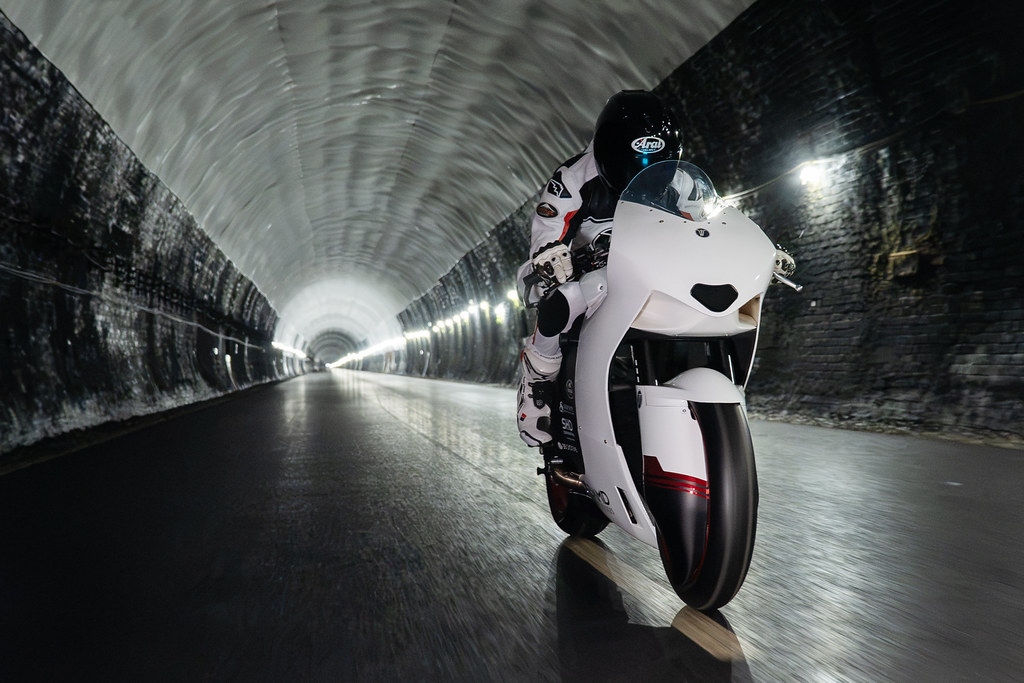
As of October 2026, the project is still in development. The current bike is operational, the supercharger system is functioning, CFD predicts a 16.4% drag reduction, and physical validation has begun. The next major public appearance comes at EICMA in Milan in next month, where WMC plans to display the Mono RR alongside its electric aerodynamic projects.
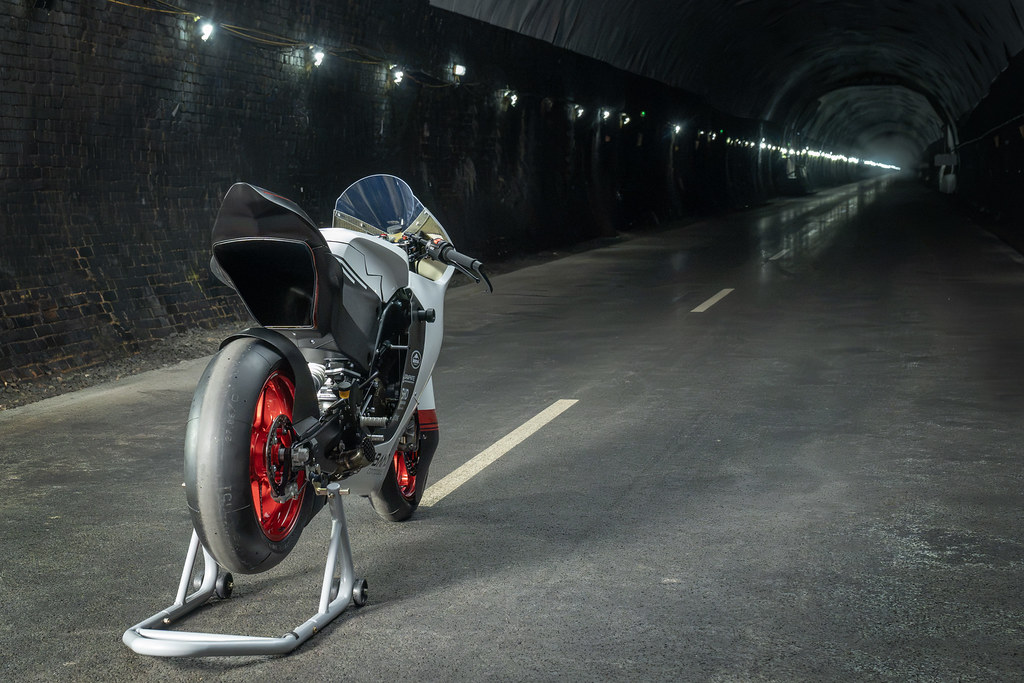
Whether a future manufacturer adopts the concept remains to be seen, but the Mono RR poses some very interesting engineering questions. Either way, blasting a supercharged 450 track bike through a former railway tunnel is enough to get our attention…
WMC Mono RR Specifications and Development Targets
| Model | WMC Mono RR |
| Type | Fully functioning technology demonstrator |
| Base motorcycle | Krämer EVO2 690R |
| Engine basis | Yamaha YZ450F single |
| Displacement | 449cc |
| Induction | Rotrex C15-20 centrifugal supercharger |
| Supercharger drive | Crankshaft-driven belt |
| Charge cooling | Intercooled |
| Throttle body | Modified 44mm Bosch electronic |
| Engine management | MoTeC M130 |
| Phase 1 power objective | Match or exceed WMC’s ~76-hp baseline benchmark |
| Phase 2 power target | 100 hp |
| Phase 2 weight target | 100 kg / 220 lb |
| Current actual power | Not publicly disclosed |
| Current actual weight | Not publicly disclosed |
| Chassis | Krämer steel trellis frame |
| Suspension | Krämer/WP architecture retained |
| Fuel capacity | 12 liters |
| Aerodynamics | WMC patented through-bike duct |
| CFD drag reduction | 16.4% |
| CFD lift reduction | 77% |
| CFD lift-to-drag improvement | 111% |
| CFD thermal-management improvement | 16% |
| Physical aero testing | Catesby Tunnel, UK |
| Production | None planned; technology demonstrator |


