
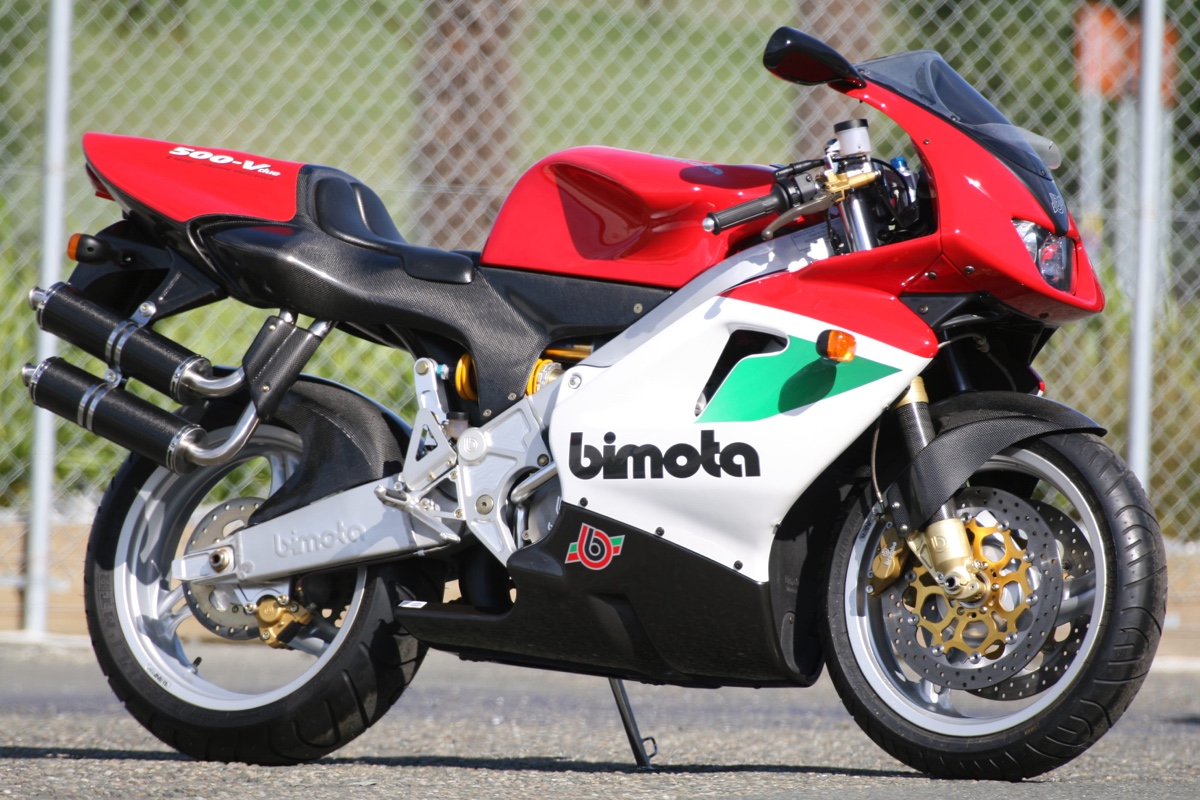
Bimota’s first homegrown engine powered one of the wildest superbikes of the 1990s: a featherweight 500cc V-twin smoker with direct fuel injection, carbon bodywork, and GP aspirations…
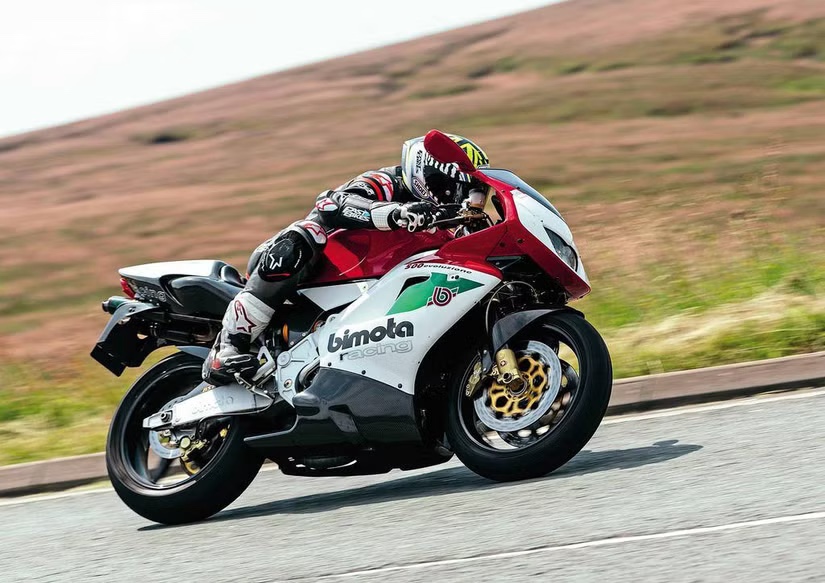
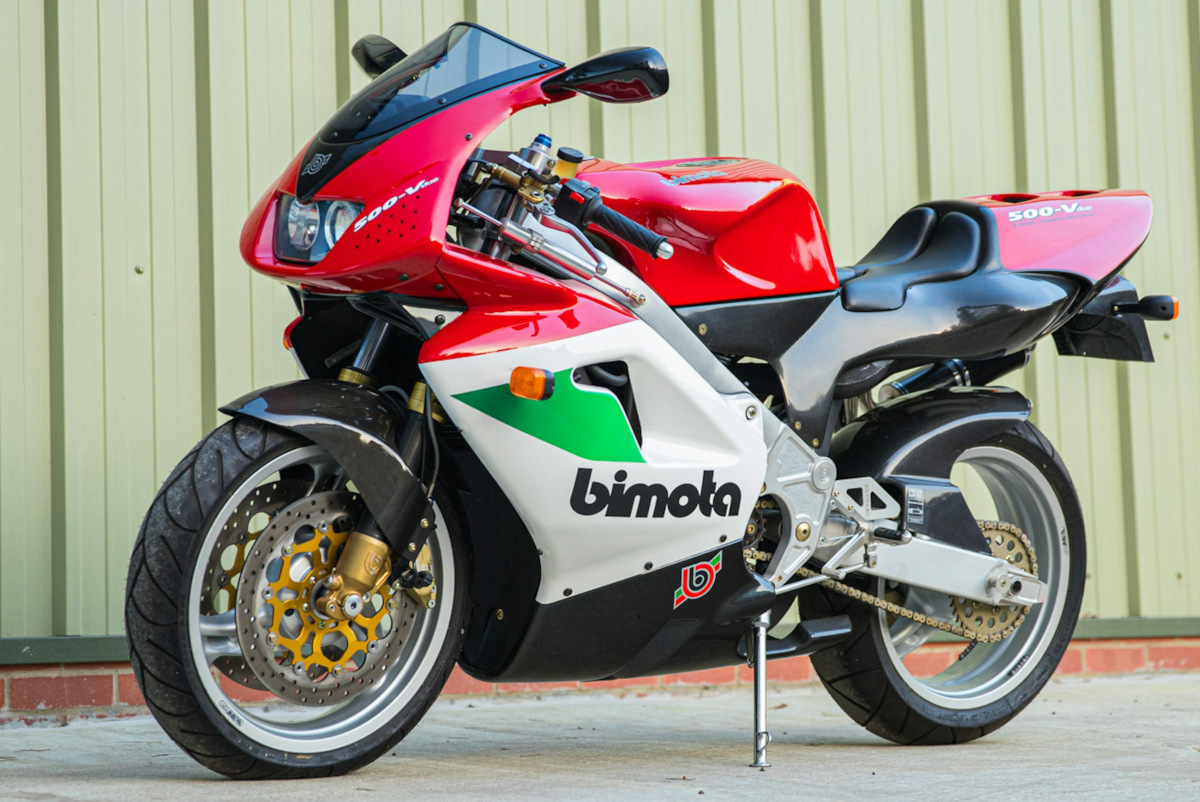
Imagine walking into a motorcycle dealership in the late 1990s and finding something that looked less like a road-going superbike than a refugee from the 500cc Grand Prix paddock. It had a compact 500cc two-stroke V-twin, carbon-fiber bodywork, Brembo brakes, Öhlins suspension, cassette gearbox, and most remarkably, electronic direct fuel injection intended to solve the emissions problem that was rapidly killing the road-going two-stroke. With more than 100 horsepower on tap, the bike weighed around 360 pounds dry. That motorcycle was the Bimota Vdue — sometimes known as the 500-Vdue or V-Due 500.
The Vdue would become infamous for its troubled development and disastrous early production run, but focusing solely on its problems misses what made the motorcycle so extraordinary in the first place. Bimota wasn’t simply building another exotic superbike; the tiny Italian manufacturer was attempting to create the next generation of the two-stroke road bike.And nearly 30 years later, nobody has really built anything else quite like it.
Bimota Builds Its Own Engine
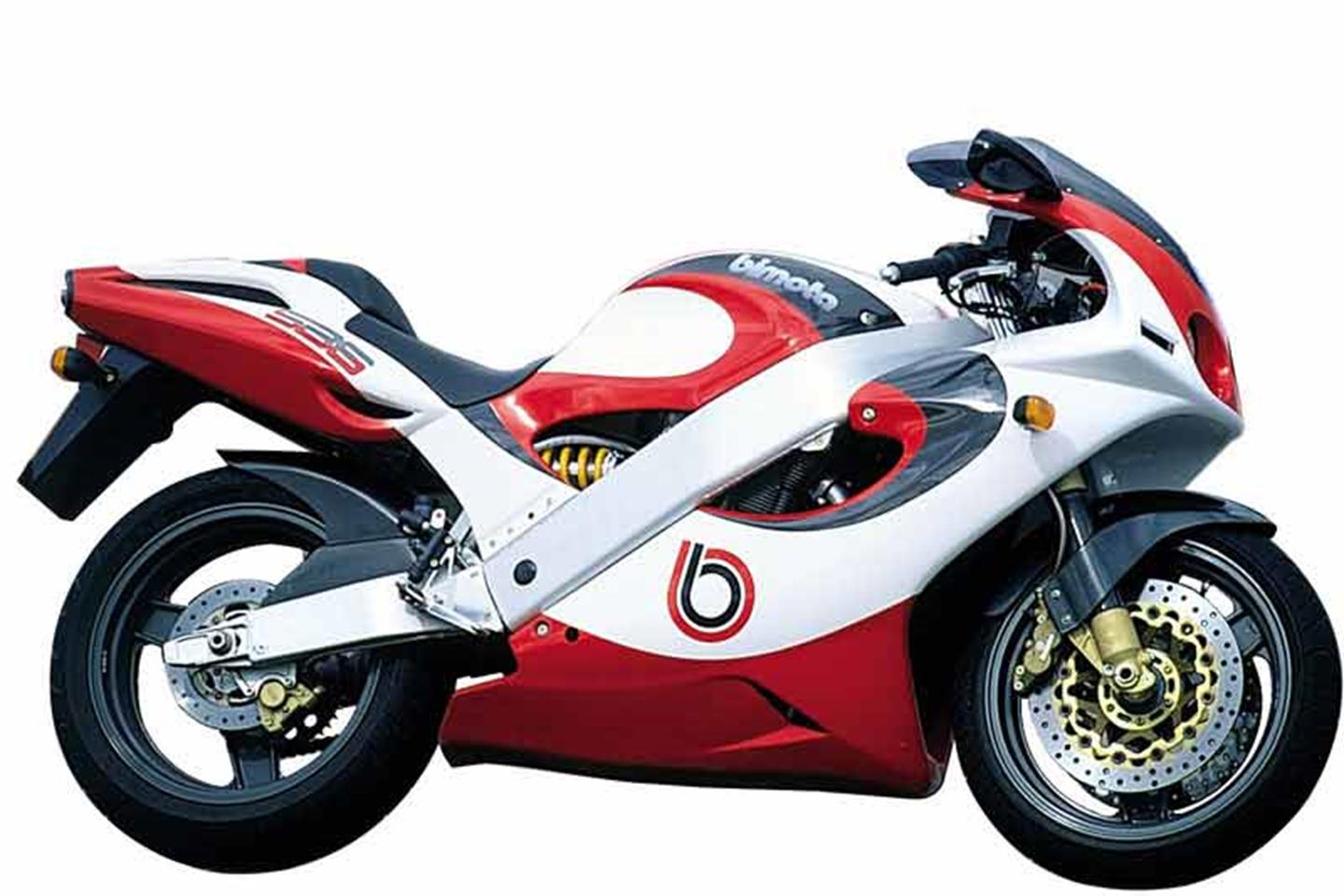
For most of its history, Bimota followed a simple but highly effective formula: Take an engine from a major manufacturer and build a better motorcycle around it. Bimota supplied the lightweight chassis, exotic suspension, race-bred geometry, bodywork, and obsessive attention to detail. The engine came from somewhere else.The initials in Bimota model names usually identified the engine supplier: SB for Suzuki-Bimota, YB for Yamaha-Bimota, DB for Ducati-Bimota, KB for Kawasaki-Bimota, and so on.
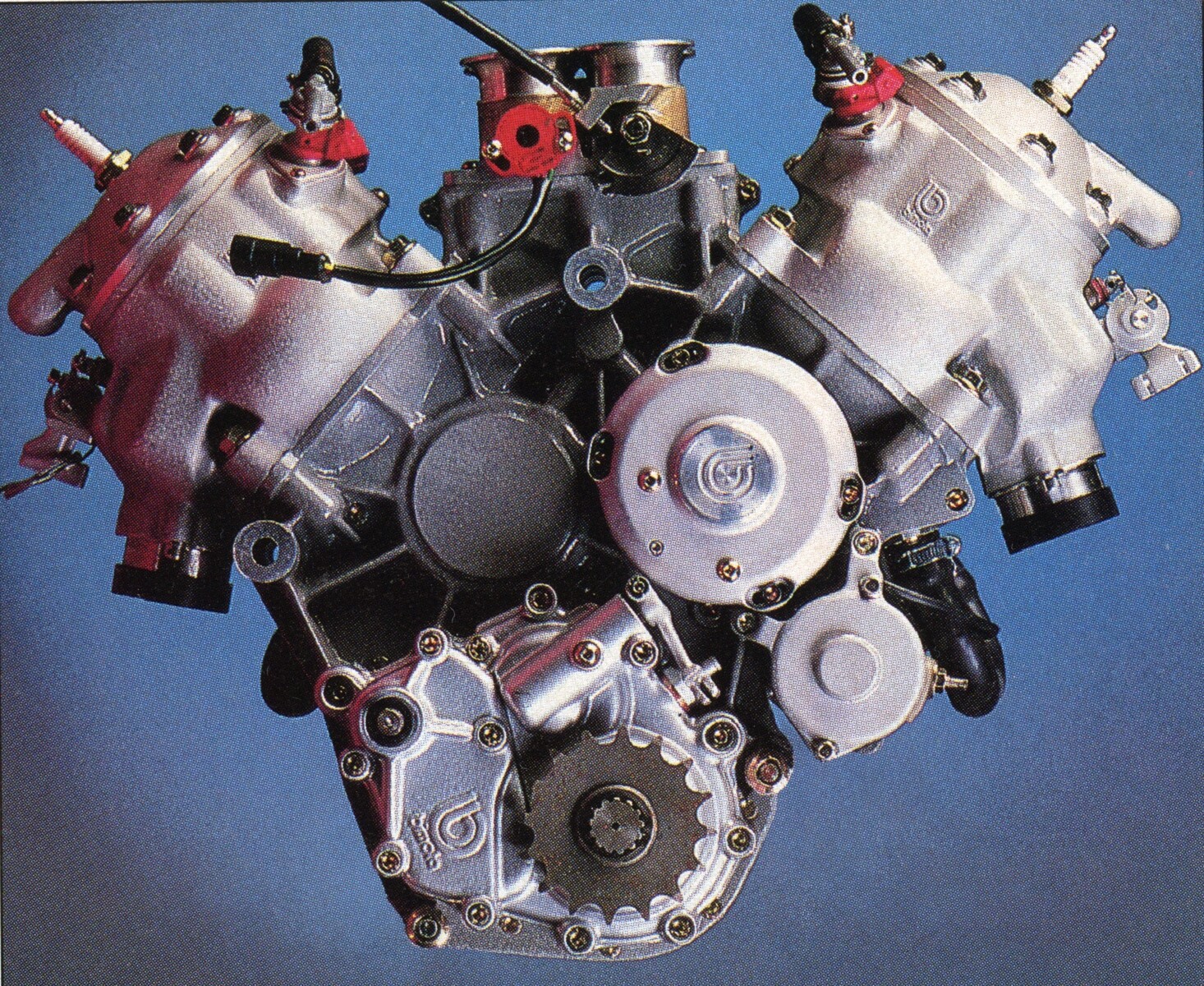
The Vdue changed all of that. For the first time, Bimota would design and manufacture the motorcycle’s engine as well as its chassis. And naturally, the company didn’t start with something easy. It built a 500cc two-stroke V-twin.
Born from Grand Prix Ambition
The roots of the Vdue stretched back to Bimota’s desire to enter 500cc Grand Prix racing. At the time, the premier class belonged to fearsome two-stroke machines from Honda, Yamaha, Suzuki, and Cagiva. These were incredibly light motorcycles making enormous power from compact engines.
Rather than try to replicate the V4 architecture favored by the factory giants, Bimota pursued a twin-cylinder design. Period GP regulations offered weight advantages to bikes with fewer cylinders, meaning a 500cc twin could potentially be considerably lighter than a four-cylinder rival.
Bimota worked with two-stroke specialist TAU Motori on the engine, while technical chief Pierluigi Marconi developed the motorcycle around it. Early prototypes even incorporated Bimota’s radical hub-center-steered Tesi chassis concept. The project appeared in Italian competition in the early 1990s, but taking on the Japanese factories in Grand Prix racing required resources far beyond those of a tiny manufacturer in Rimini.
So Bimota redirected the project. Instead of building a 500cc GP racer, the company would build something arguably even more interesting: a 500cc GP-inspired two-stroke superbike for the street.
A 500cc Two-Stroke V-Twin
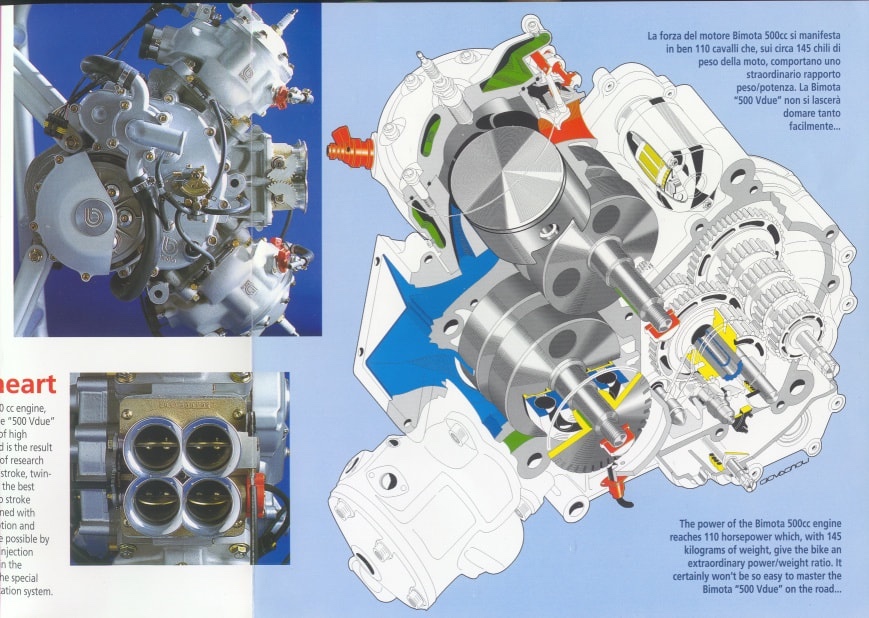
At the heart of the Vdue was a 499cc liquid-cooled, 90-degree two-stroke V-twin. The design was highly unusual even by two-stroke standards. Rather than sharing a conventional crankshaft arrangement, the Vdue used two crankshafts geared together, helping keep the engine extremely compact.
Electronic exhaust powervalves broadened the powerband, while a cassette-style six-speed transmission allowed rapid gearbox servicing in racing fashion. Output from the original injected road engine was generally quoted around 101 to 105 horsepower, with roughly 66 lb-ft of torque.
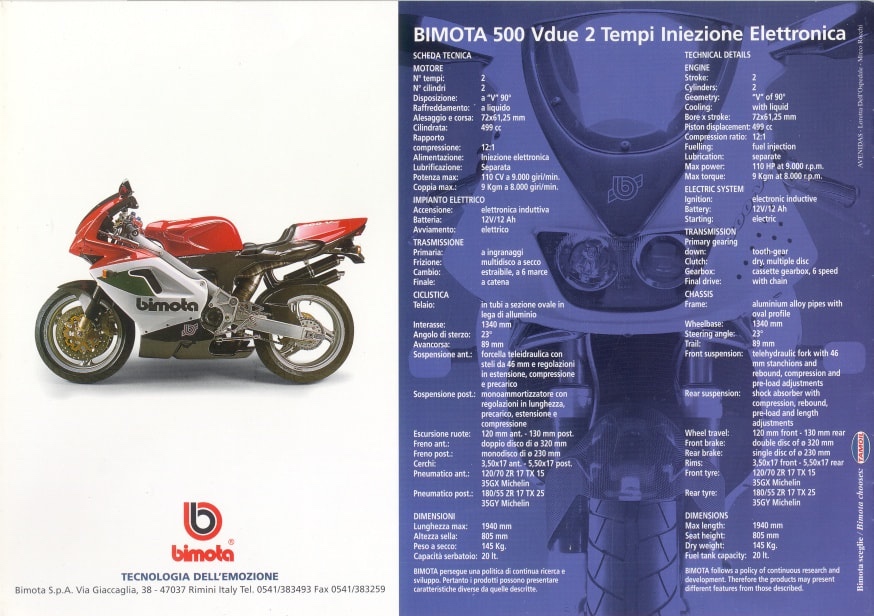
Those figures may seem modest alongside today’s 200-horsepower liter bikes, but the Vdue belonged to a very different weight class. Dry weight was approximately 164 kilograms / 362 pounds. That put the Bimota closer in mass to a lightweight middleweight than a contemporary superbike.
And unlike a high-revving four-stroke four-cylinder, the Vdue delivered its performance with the sudden, urgent character of a large-capacity two-stroke. On paper, it was exactly the sort of motorcycle enthusiasts had been dreaming about since the disappearance of the great 500cc two-stroke road bikes of the 1980s.
Direct Injection: Bimota Tries to Save the Smoker
The biggest obstacle wasn’t power. It was emissions. Traditional two-strokes suffer from an inherent problem during the scavenging process. Fresh mixture enters the cylinder while the exhaust port is still open. Because the fuel has already been mixed with the incoming air, a portion of that mixture can escape directly into the exhaust before combustion ever occurs. That produces the familiar smoke, smell, and high hydrocarbon emissions associated with traditional two-strokes.
By the 1990s, increasingly strict emissions regulations were pushing performance two-strokes out of showrooms around the world. Bimota’s solution was remarkably ambitious: direct fuel injection. Instead of mixing fuel with the air before it entered the crankcase, the Vdue moved essentially pure air through the engine. Fuel would then be injected directly into the combustion chamber only after the piston had risen far enough to close the exhaust port. In theory, that meant unburned fuel could no longer escape during scavenging.
The Vdue could retain the light weight and extraordinary specific output of a two-stroke while producing dramatically cleaner exhaust emissions. That was the theory, at least.
An Extremely Difficult Problem…
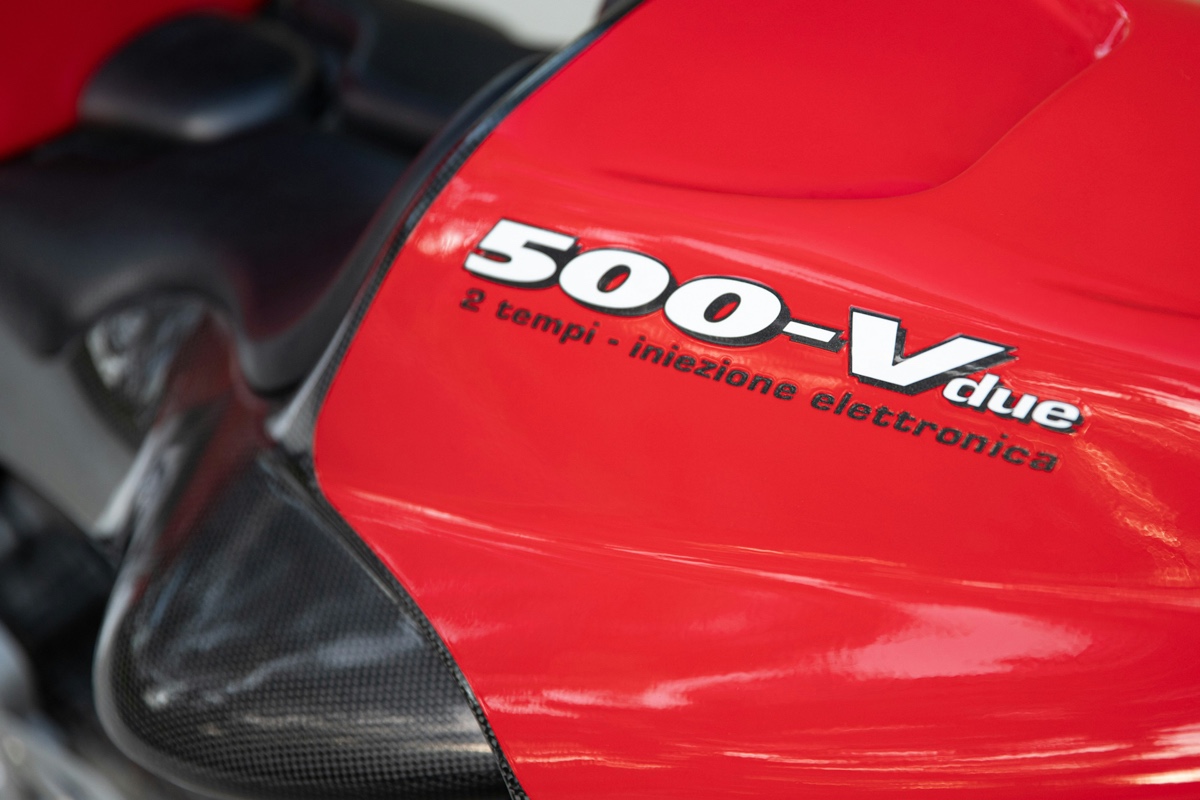
Direct injection into a high-performance two-stroke presented a formidable engineering challenge. The injector had only a tiny window in which to deliver the required amount of fuel after the ports closed but before ignition. The fuel then had to atomize, vaporize, mix with the incoming air, and burn properly at engine speeds approaching 10,000 rpm.
Bimota’s system sprayed fuel toward the rising piston crown, using the piston itself to help break up and distribute the charge. The engine management system monitored parameters including throttle position, rpm, coolant temperature, road speed, and airbox pressure to calculate fueling. For a small motorcycle manufacturer in the mid-1990s, it was astonishingly advanced technology. If it had worked reliably, the Vdue might have pointed toward an entirely different future for high-performance two-strokes.
A Tiny Italian Superbike
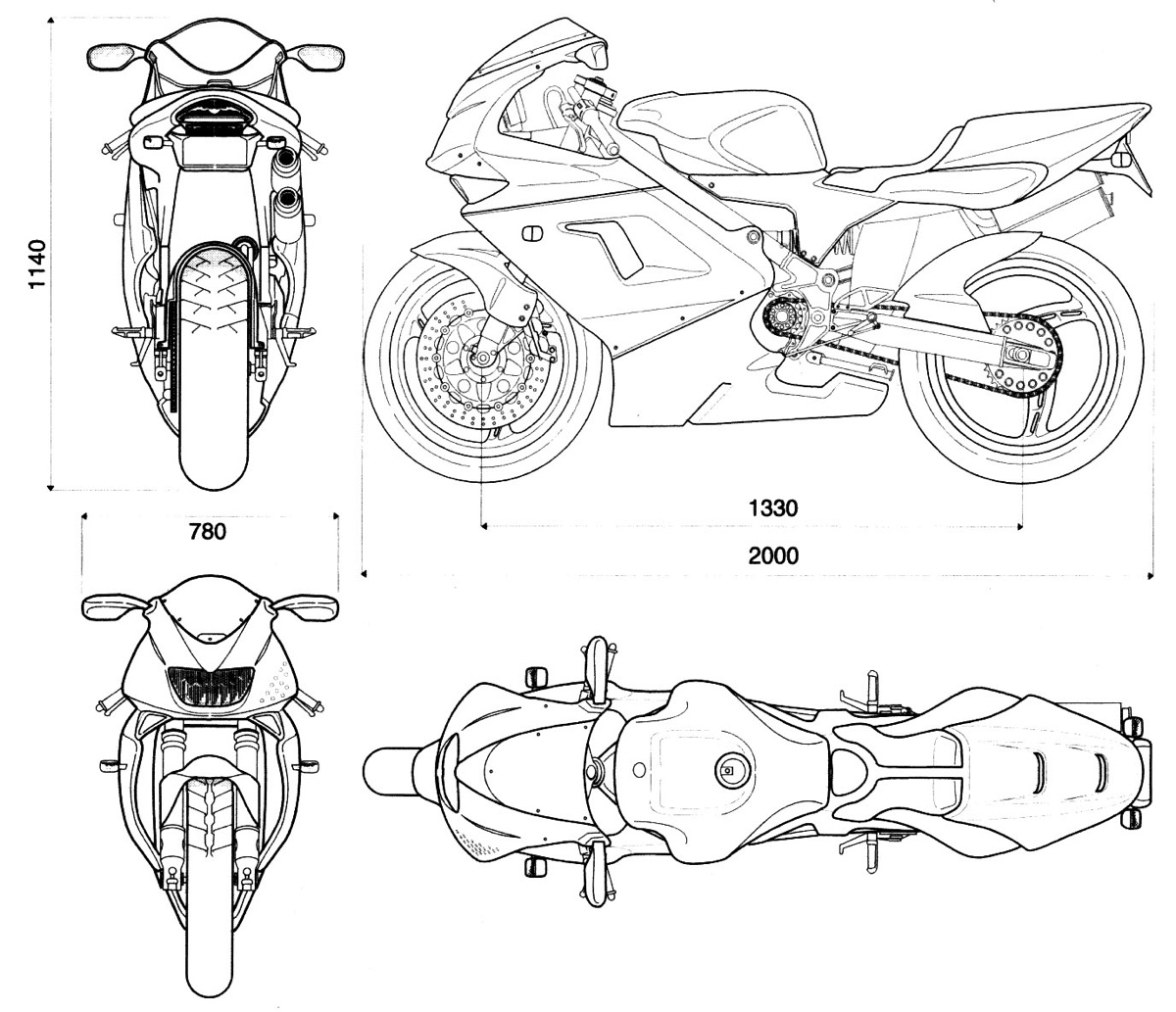
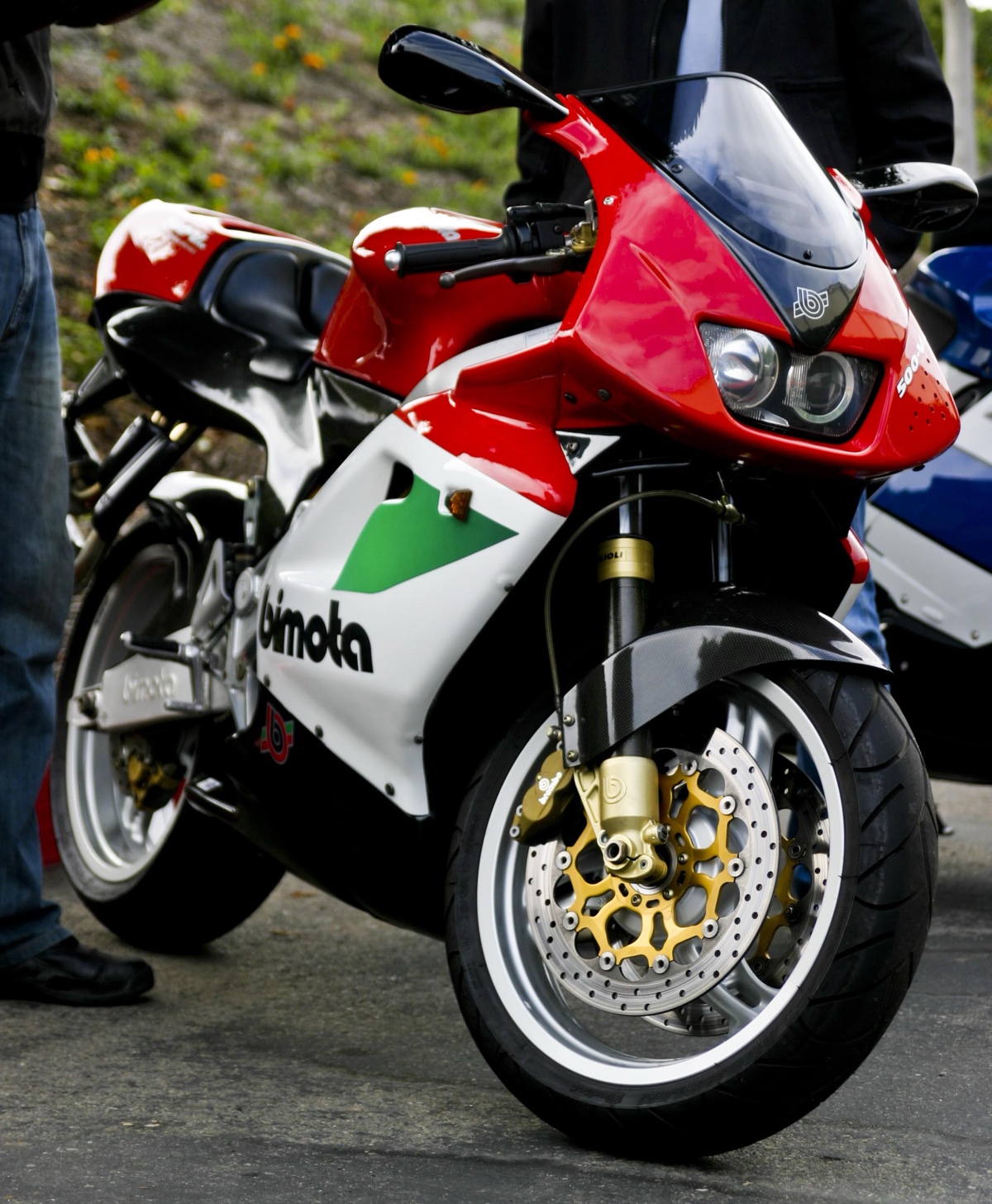
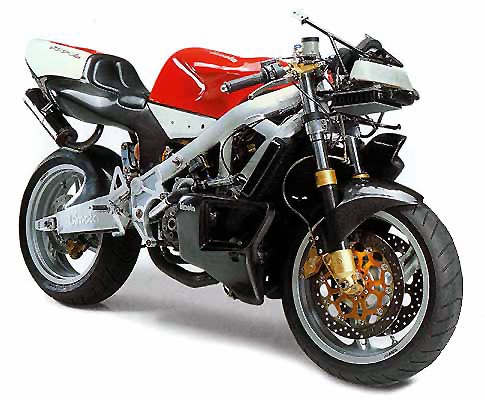
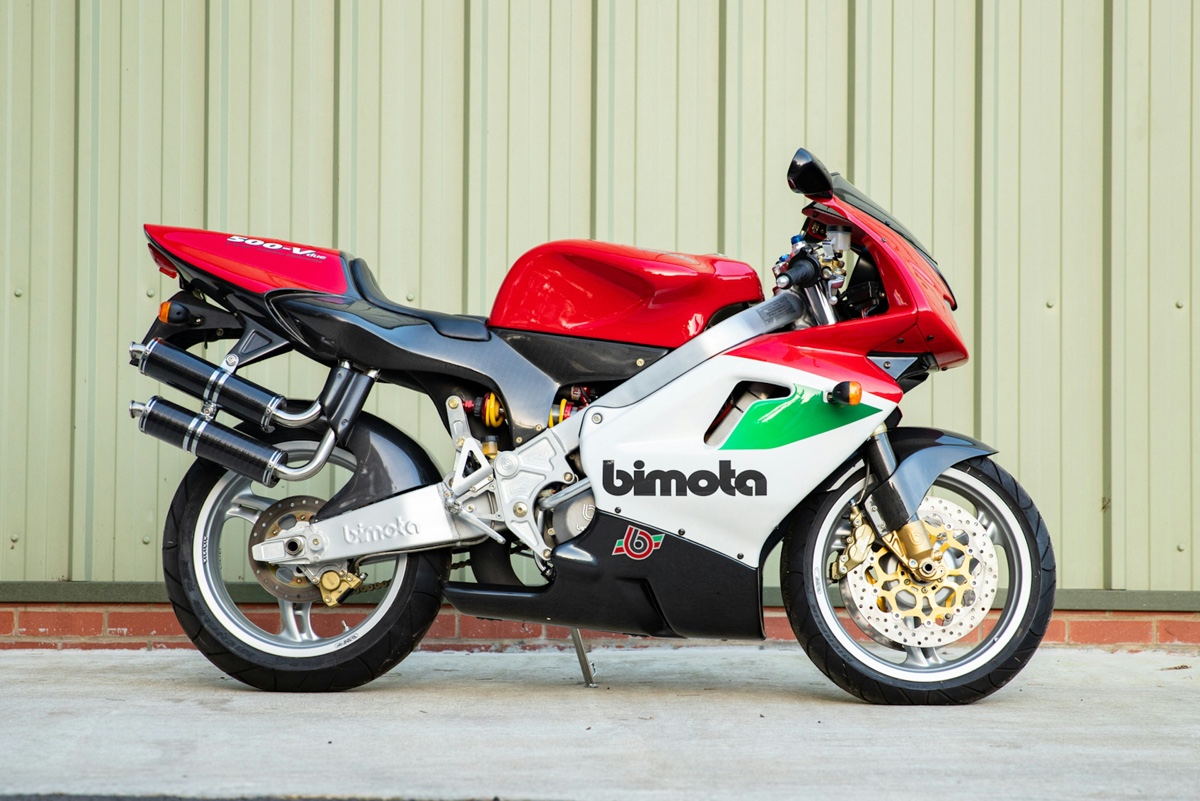
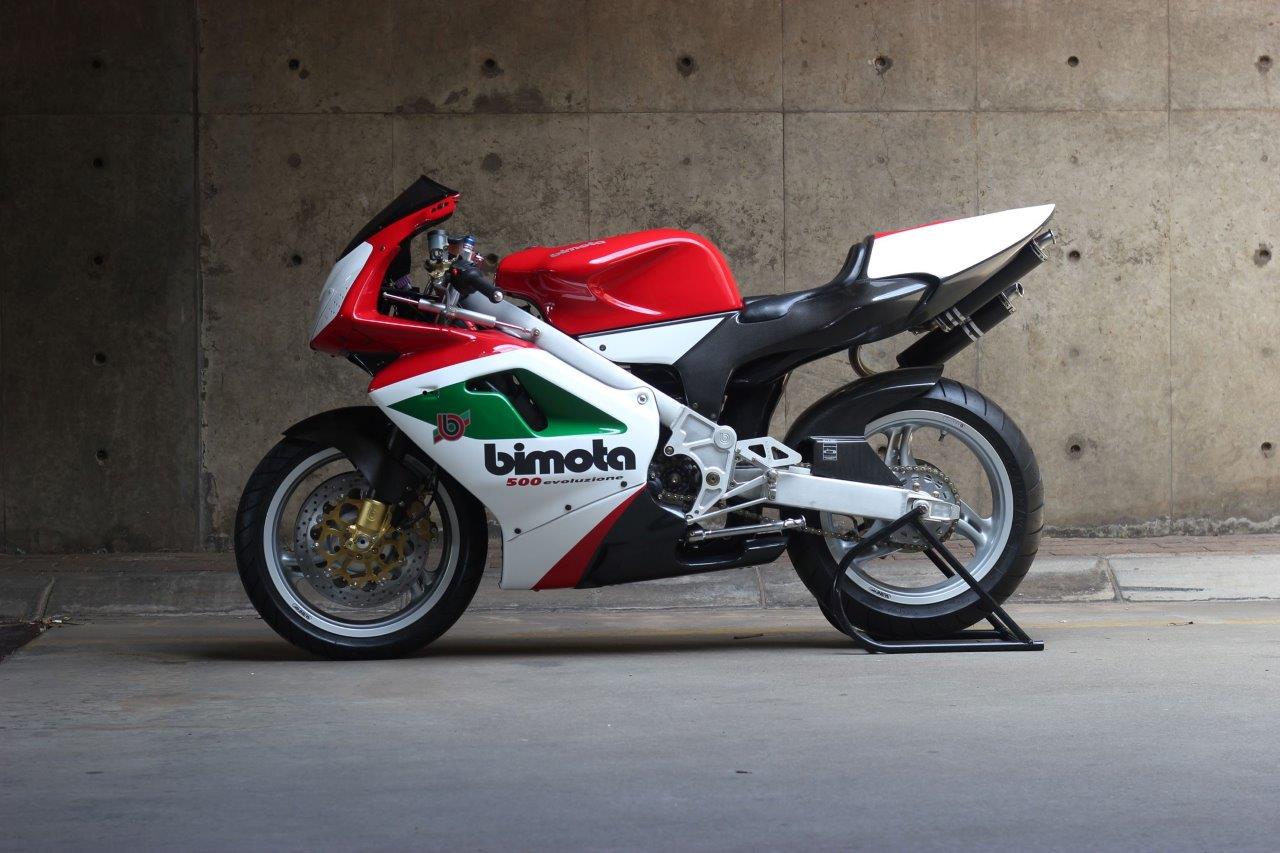
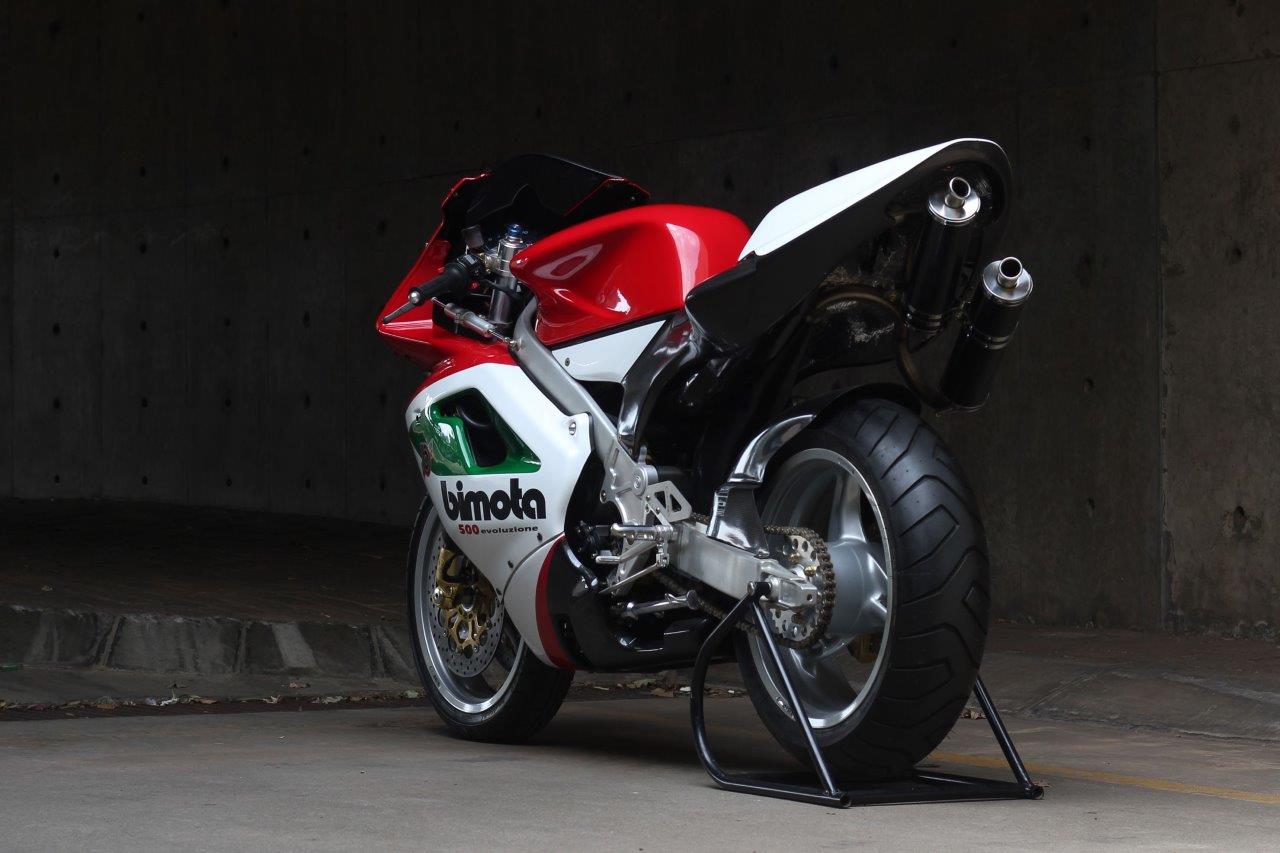
The rest of the motorcycle was every bit as exotic as the engine. Bimota constructed the chassis from large oval-section aluminum spars joined to machined pivot plates, with the engine functioning as a stressed member. A massive 46mm Paioli fork handled front suspension duties, while an Öhlins shock controlled the rear. Brembo supplied the brakes, including twin 320mm front discs.
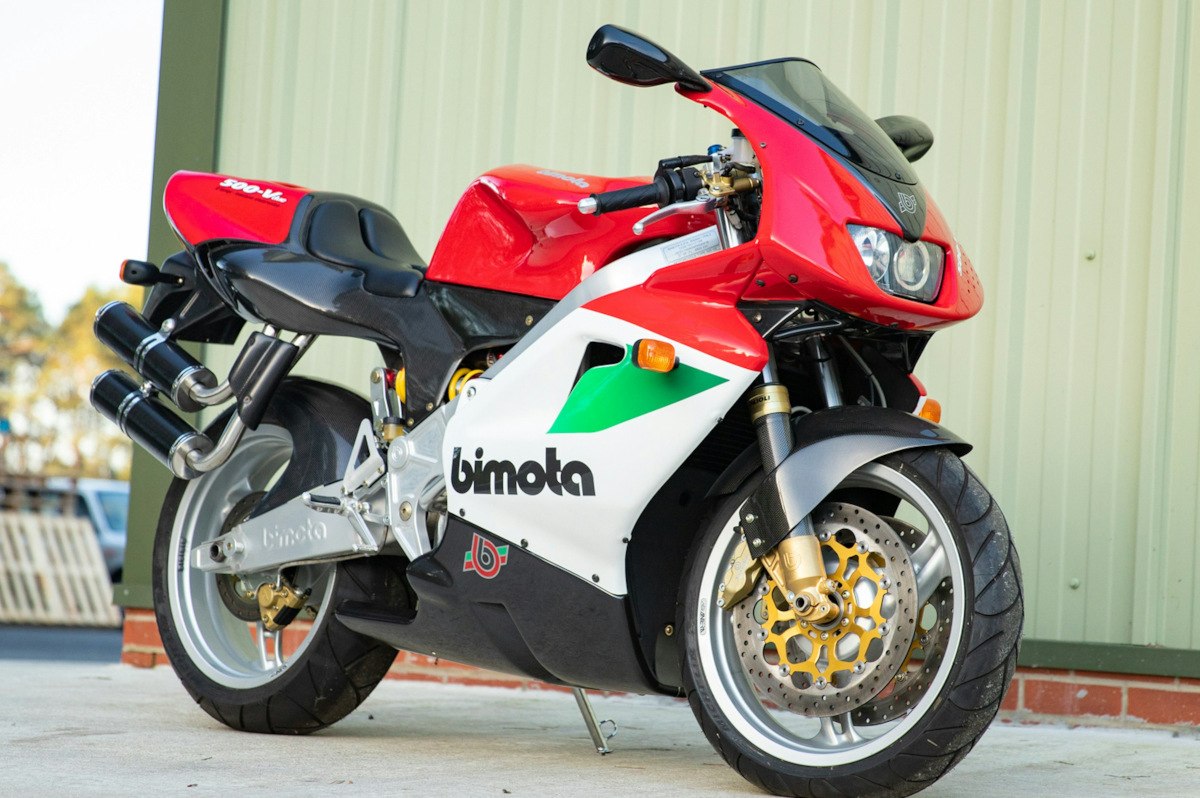
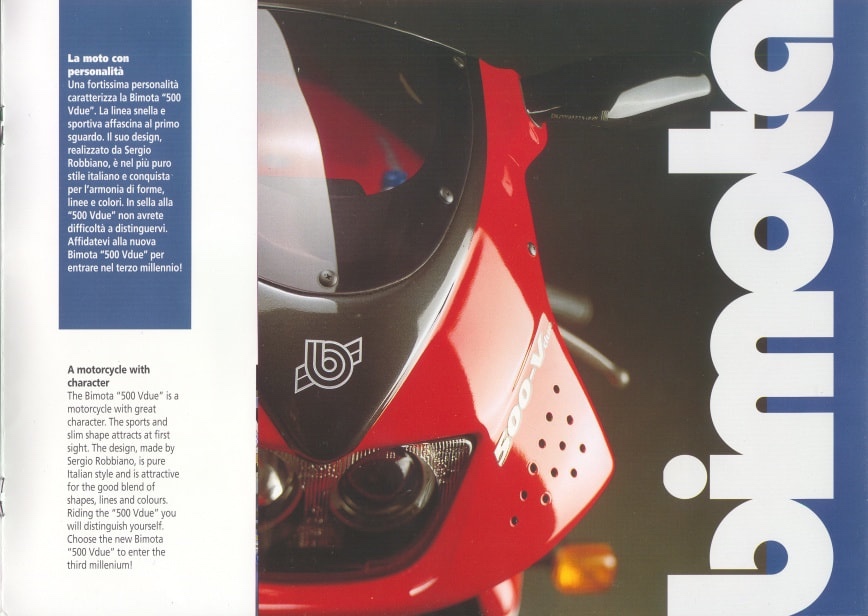
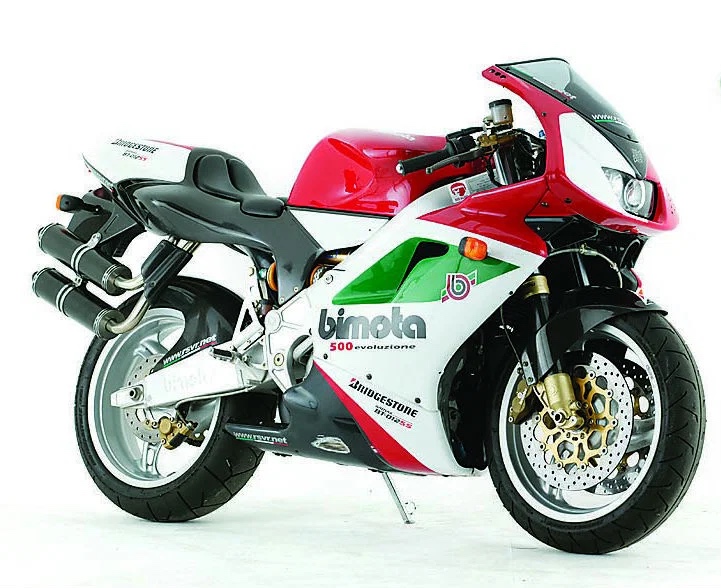
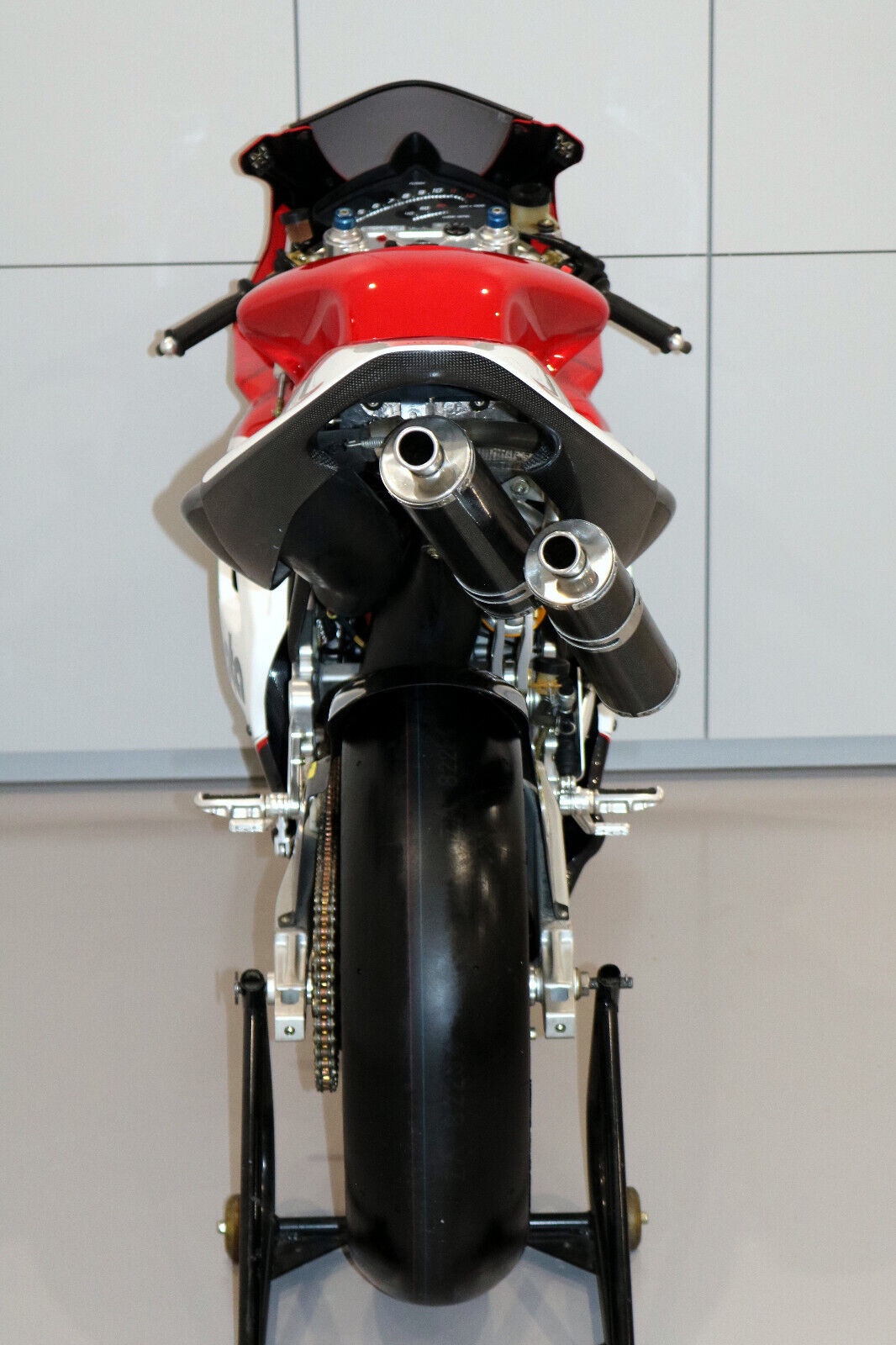
The wheelbase was extraordinarily short — roughly 52.5 inches — helping give the Vdue the proportions and agility of a much smaller motorcycle. Carbon fiber appeared throughout the machine. Designer Sergio Robbiano wrapped everything in beautifully sculpted bodywork with twin headlights, a narrow waist, a high tail, and huge expansion chambers winding through the motorcycle beneath the fairings.
Even today, the Vdue looks exotic. In 1997, it must have looked like something from another planet.
The Closest Thing to a GP Bike?
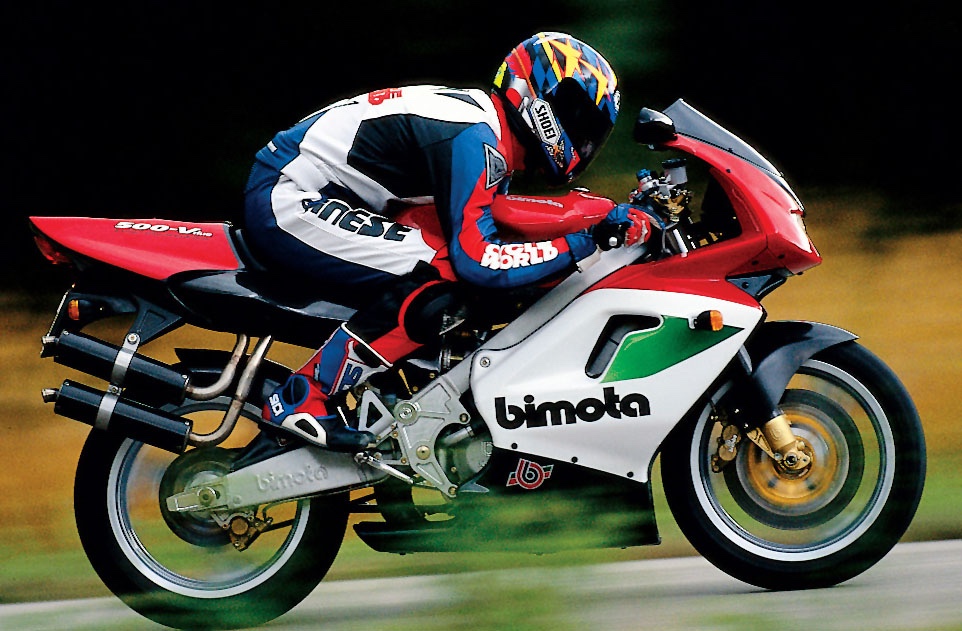
Early journalists were enormously impressed. And this part of the Vdue story sometimes gets lost beneath the later mechanical disaster. The chassis was reportedly superb. Period testers praised the motorcycle’s extraordinary steering precision, incredibly low effort, and ability to change direction almost instantly.
That makes sense given the specifications. The engine was compact. The motorcycle was extremely light. The wheelbase was short. The riding position was uncompromising. And there was very little excess mass anywhere on the machine.
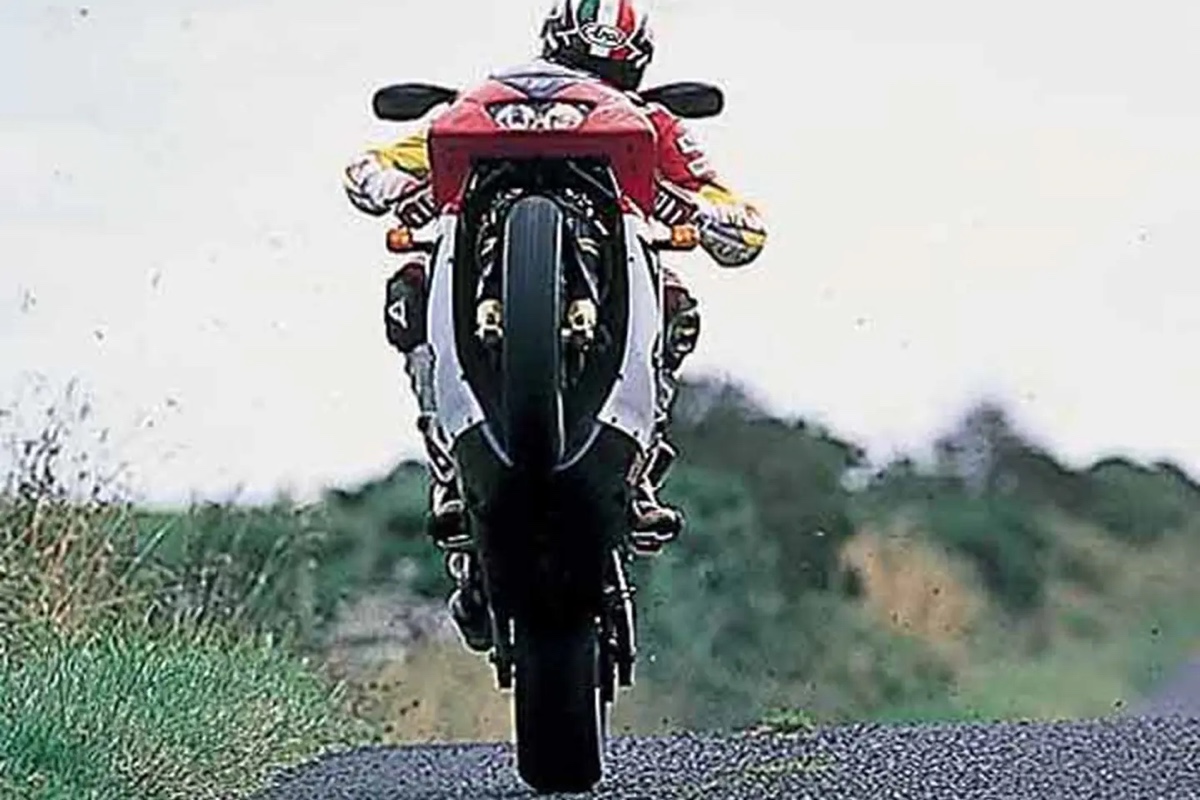
Once the electronic powervalves opened at higher rpm, the engine came alive with exactly the sort of hard two-stroke rush riders expected from a serious racing machine. In early tests, the Vdue seemed poised to become one of the most exciting road motorcycles ever built. There were fueling irregularities and flat spots, but these appeared to be development issues rather than fundamental flaws.
“Big respect here, a superb chassis, probably over-engineered for the 500cc motor, but super-lightweight and possessed of outstanding suspension and brake. It made the Bimota V-Due a sweet thing to razz around corners, when in the right gear/rpm combo…” –MCN
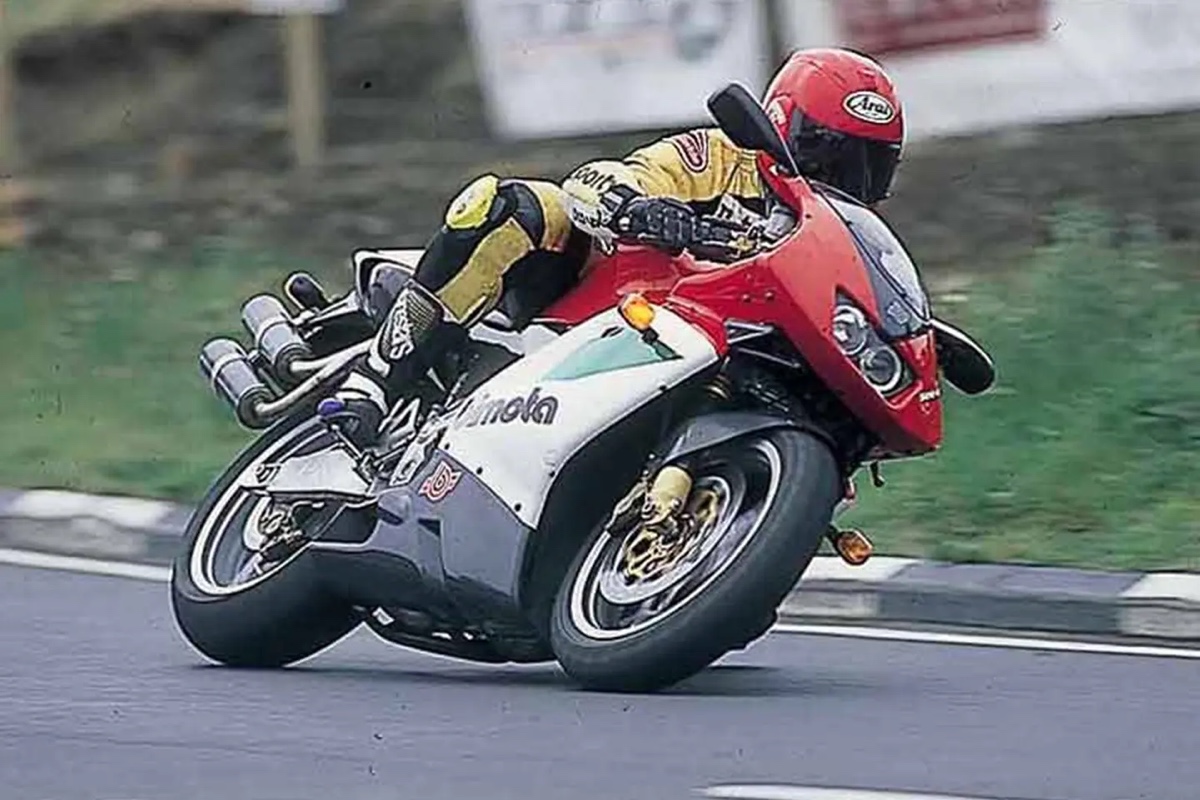
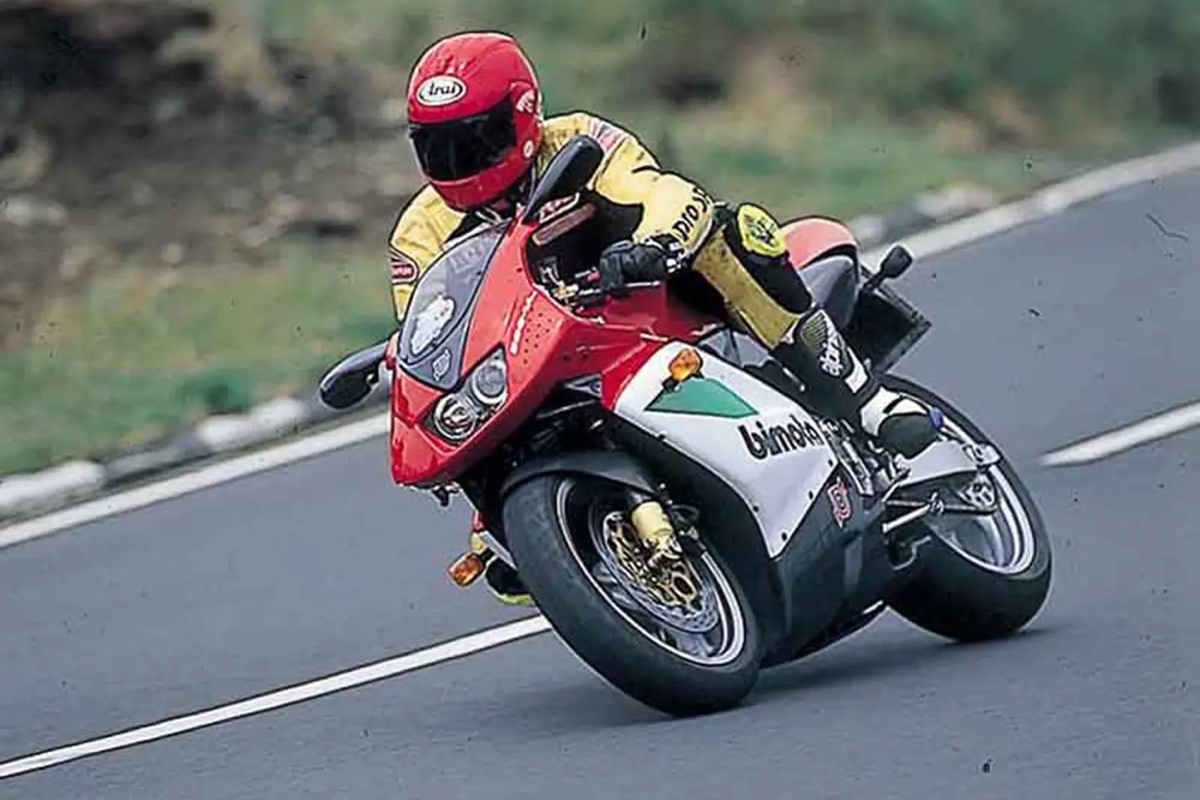
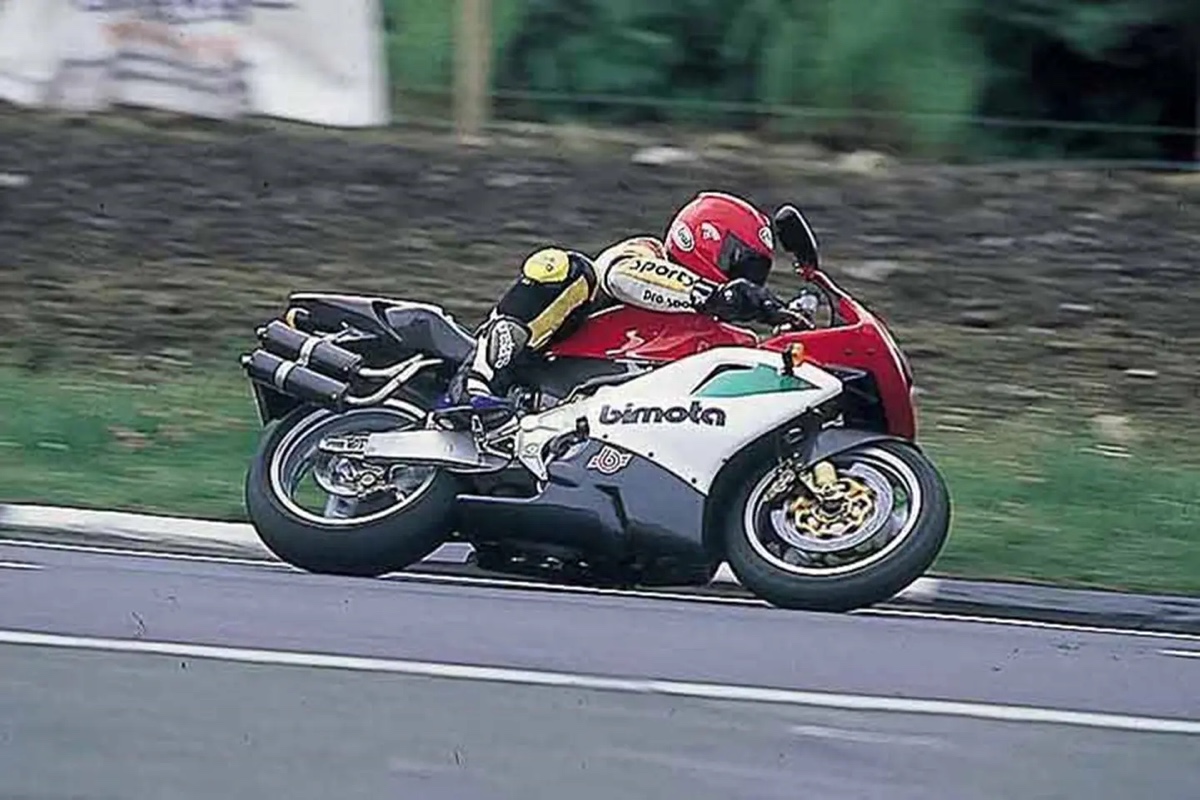
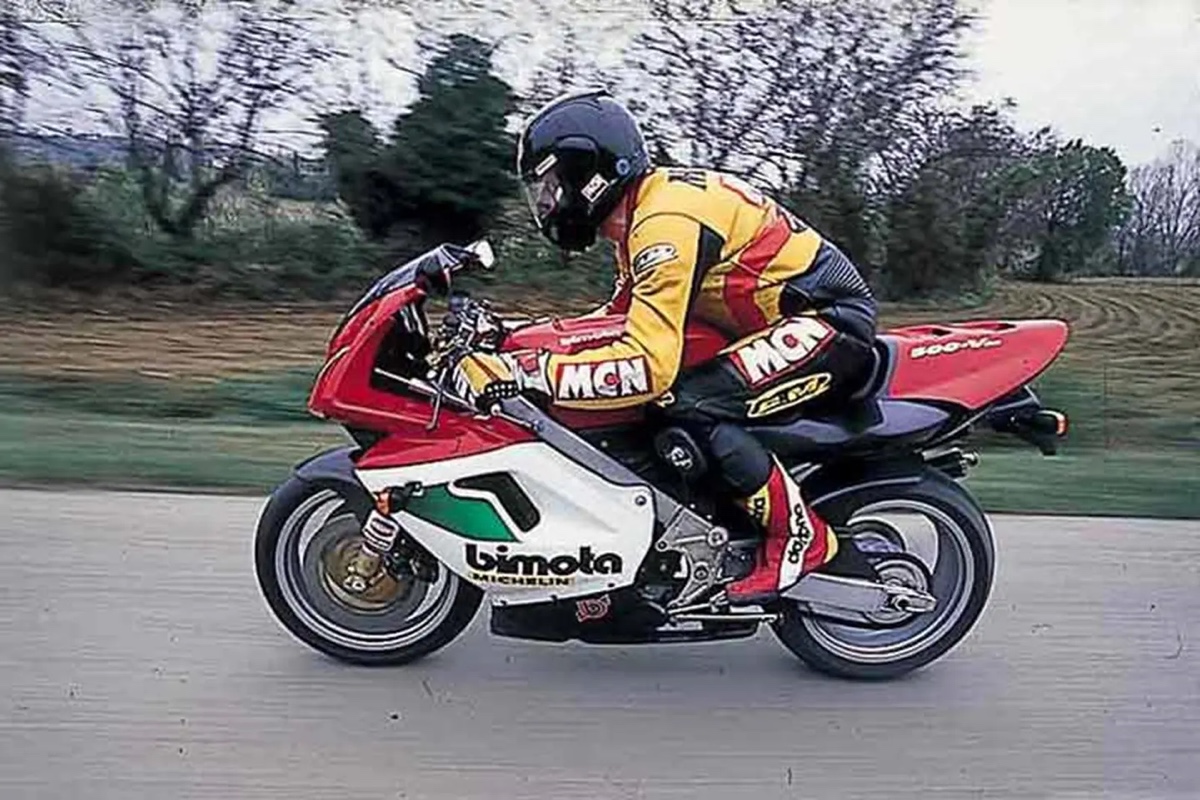
Bimota continued refining the injection mapping as production approached. Unfortunately, production approached faster than the solutions did.
When the Dream Reached Customers
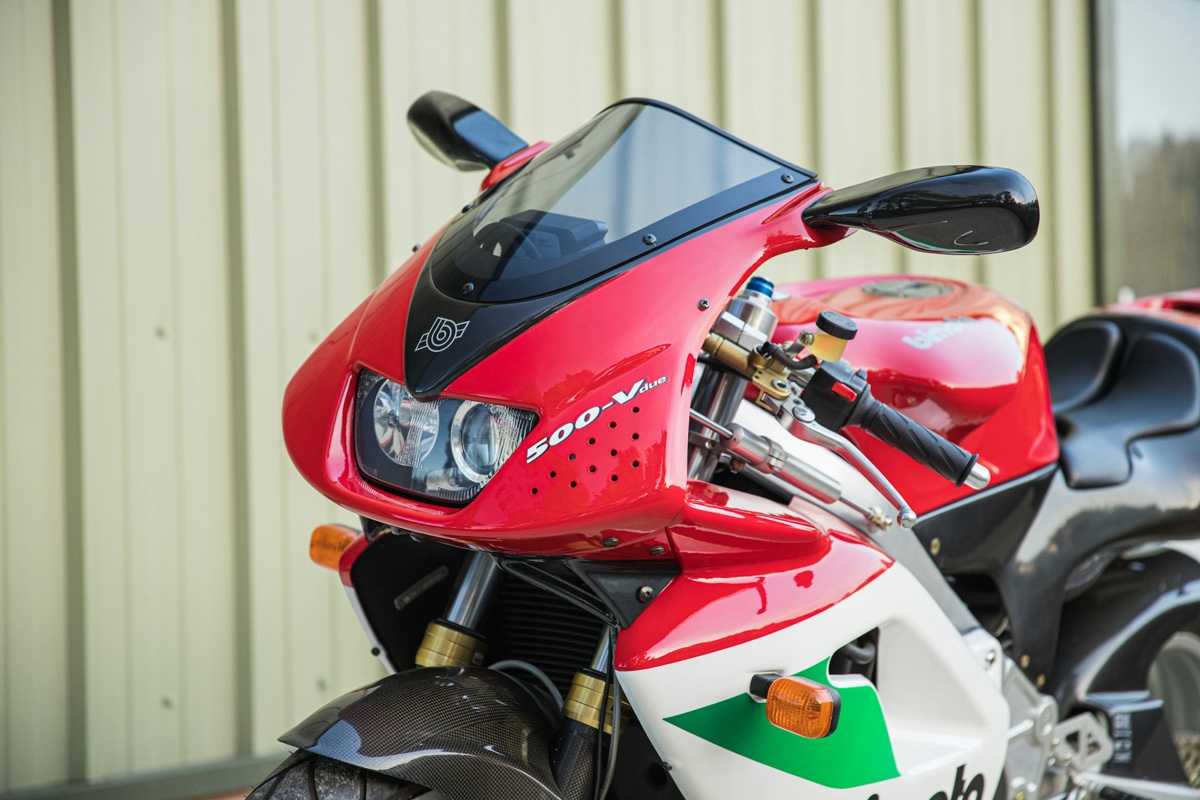
The motorcycles delivered to customers proved far less cooperative than the carefully prepared development machines. Owners reported misfires, fouled plugs, inconsistent throttle response, cylinders cutting out, and in some cases engine seizures.
The sophisticated injection system naturally received much of the blame. But the underlying problems went deeper than software. Some engines suffered from incorrectly machined or misaligned transfer ports. Crankshaft sealing also became a major issue.
Air leaking into a two-stroke crankcase can dramatically alter the effective mixture, producing a problem that no amount of electronic fuel mapping can reliably correct. That helps explain why different Vdues could behave so differently. An injection map that worked on one engine might not work properly on another if uncontrolled air leaks were changing its fueling requirements.
So the problem wasn’t simply that Bimota had created an overly complicated injection system. Production inconsistencies and fundamental engine-sealing issues were sabotaging that system before it had a chance.
Bimota Calls Them Back
The situation quickly became serious enough that Bimota began taking motorcycles back from customers. Some owners were offered other Bimota models in exchange. Production was suspended while engineers attempted to resolve the problems. For a tiny manufacturer producing motorcycles in very small numbers, the consequences were enormous. The Vdue project had consumed considerable development money, and now motorcycles were returning to the factory instead of generating revenue.
The crisis contributed heavily to Bimota’s financial problems and forced a corporate rescue in 1998. The company would survive for a while longer before encountering further financial trouble around its World Superbike effort several years later. But the Vdue’s commercial failure had already done tremendous damage. Ironically, however, the motorcycle itself was about to become much better.
The Radical Solution: Carburetors
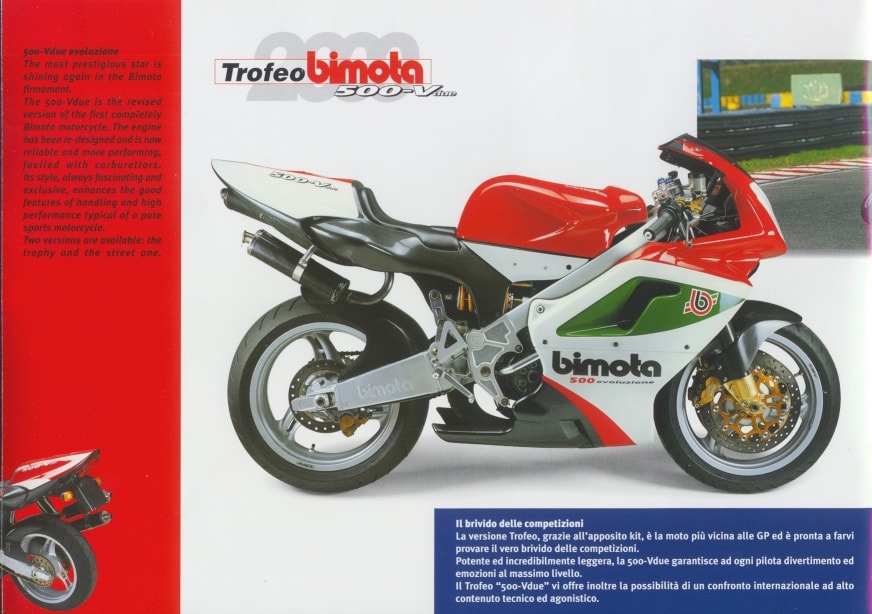
The simplest solution to the Vdue’s revolutionary fuel-injection system turned out to be the most old-fashioned one imaginable: throw it away and install carburetors. The direct-injection system was replaced by a pair of 39mm Dell’Orto carbs. Engineer Fabio Naldi also revised the transfer ports and combustion chambers, modified the reed-valve and intake arrangements, enlarged the airbox, and upgraded the ignition. The resulting machine became the Vdue Trofeo, intended for a one-make racing series.
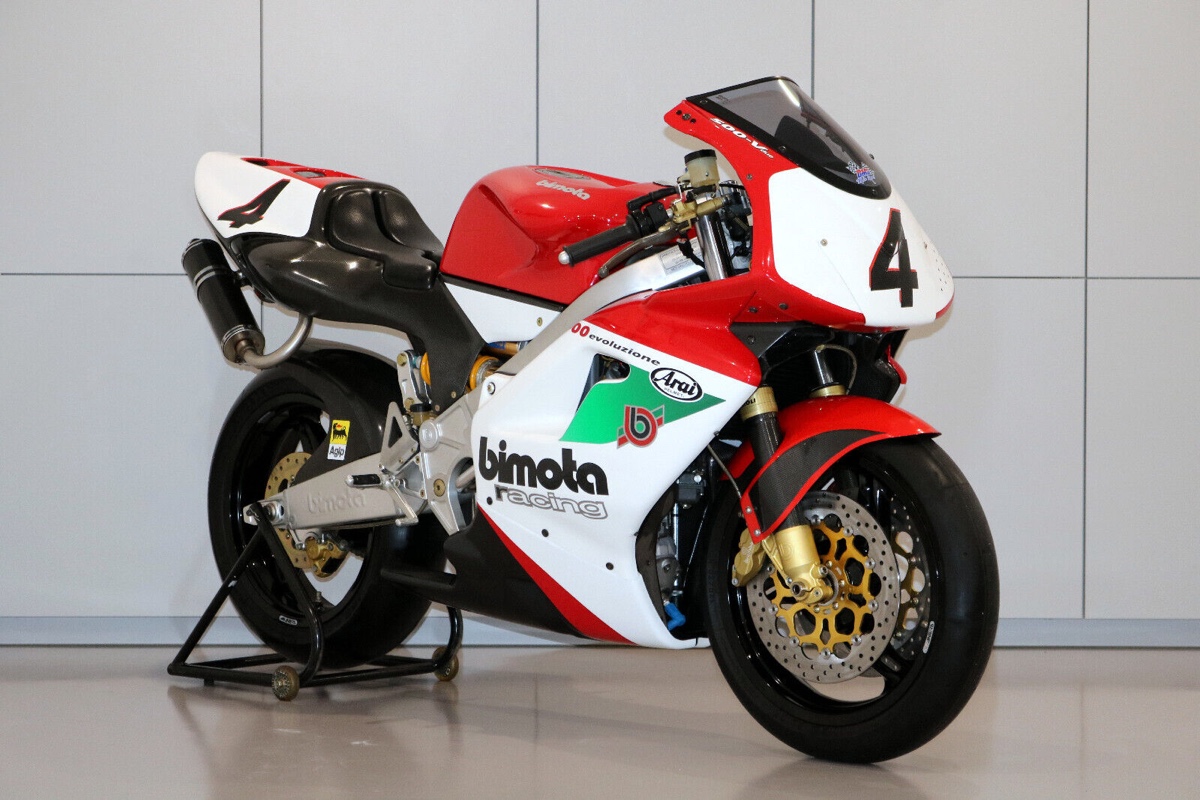
Without road equipment, weight fell to roughly 348 pounds, while power climbed to approximately 110 horsepower in standard form. With a freer exhaust, output reportedly approached 120 horsepower. More importantly, the motorcycle finally ran properly. Period testers described the carbureted Vdue as an exhilarating, incredibly responsive machine with the character Bimota had promised from the beginning.
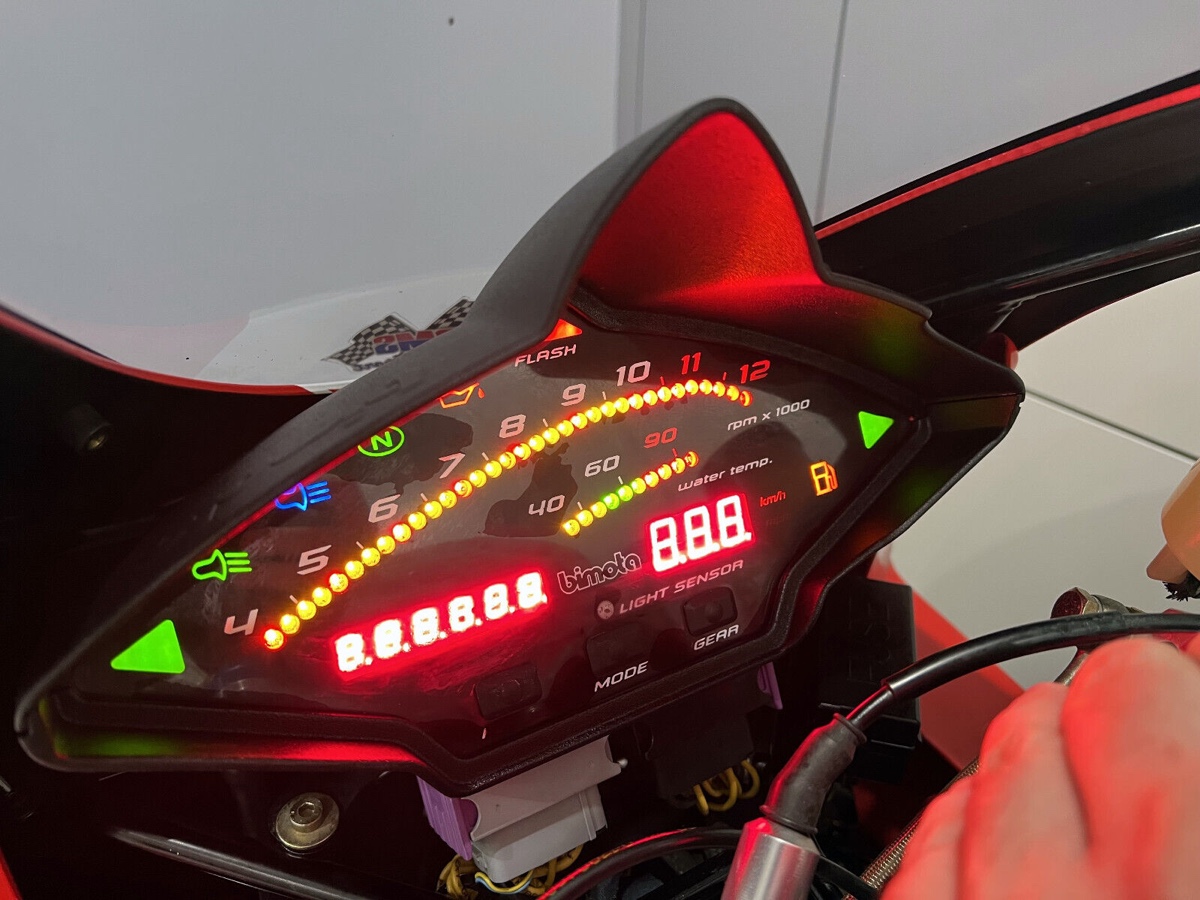
The irony was extraordinary. The Vdue had been designed around direct injection specifically to make a modern street-legal two-stroke possible. Once engineers removed the direct injection, the motorcycle became much better.
Evoluzione
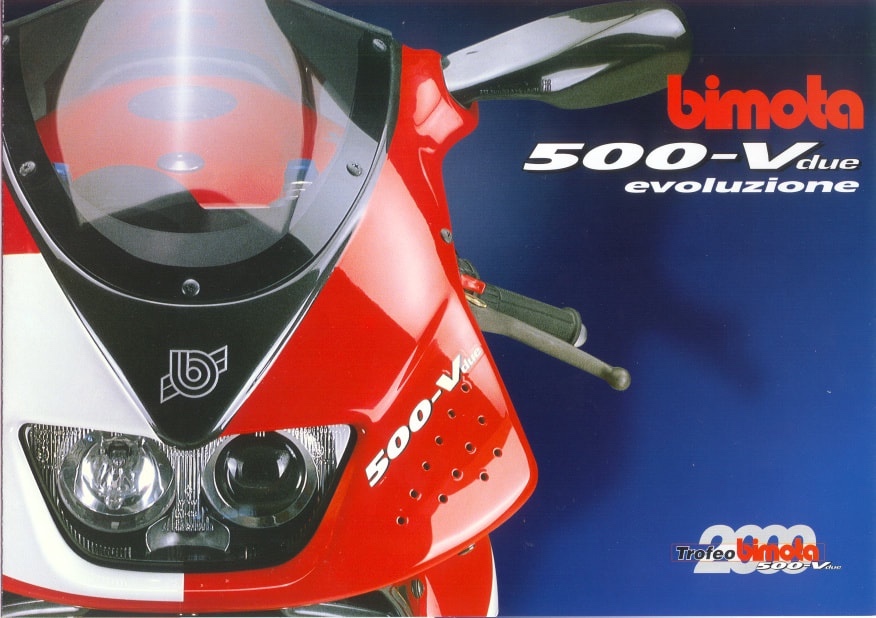
The Vdue story didn’t end when Bimota’s original project collapsed. Engineer Piero Caronni, who had worked on the motorcycle, eventually acquired the Vdue project along with intellectual property, spare parts, unsold motorcycles, and returned machines.
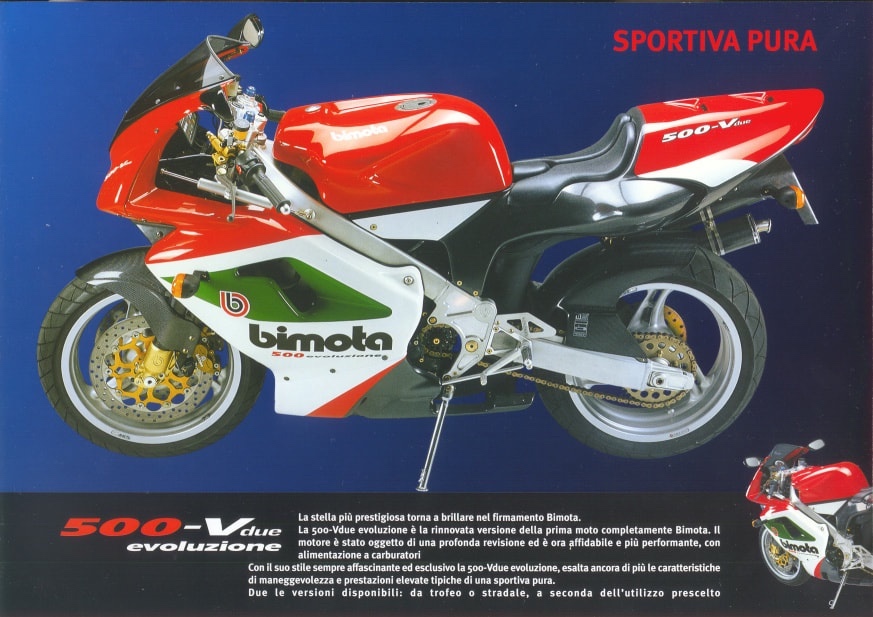
Caronni continued developing the bike. Later versions used carburetors and improved engine components, including revised crankcases capable of accepting better crankshaft seals. These became the Vdue Evoluzione models. By addressing some of the fundamental mechanical problems as well as abandoning the troublesome injection system, the later motorcycles came much closer to realizing the original idea.
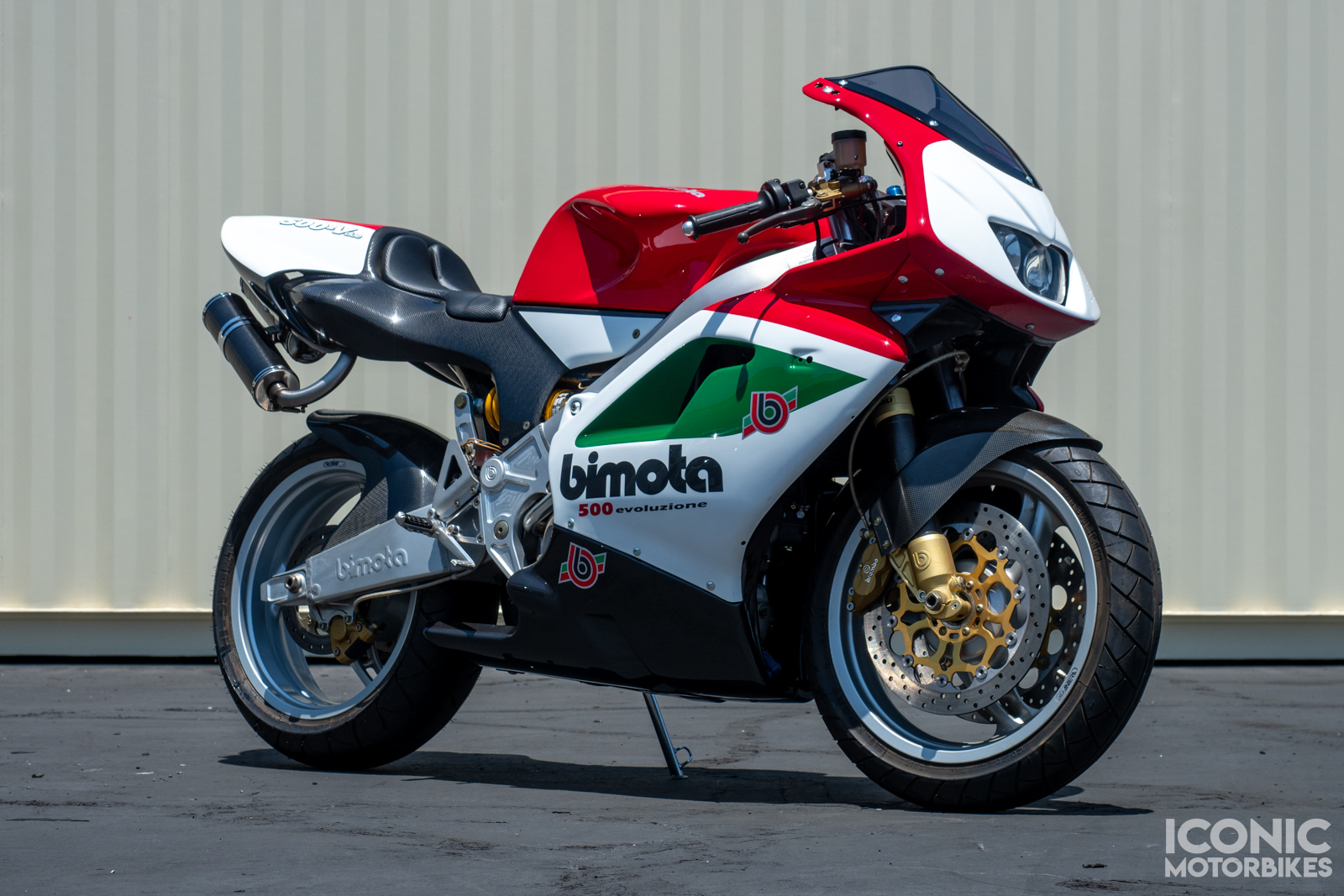
Ultimately, the Edizione Finale represented the most developed version of the platform. These track-focused machines reportedly produced around 130 horsepower from a naturally aspirated 500cc two-stroke V-twin…in a motorcycle weighing well under 400 pounds. That’s an extraordinary recipe even today.
The 500-Vdue Versus the Great 500cc Two-Strokes
The Vdue also occupies an unusual place among the legendary large-displacement two-stroke road bikes. Machines such as the Yamaha RZ500 / RD500LC, Suzuki RG500 Gamma, and Honda NS400R had brought Grand Prix-inspired two-stroke performance to the street during the 1980s. But by the time Bimota unveiled the Vdue, that era was essentially over. The Japanese manufacturers had moved toward four-strokes. Emissions restrictions were tightening. Even the smaller 250cc race replicas were disappearing from many markets.
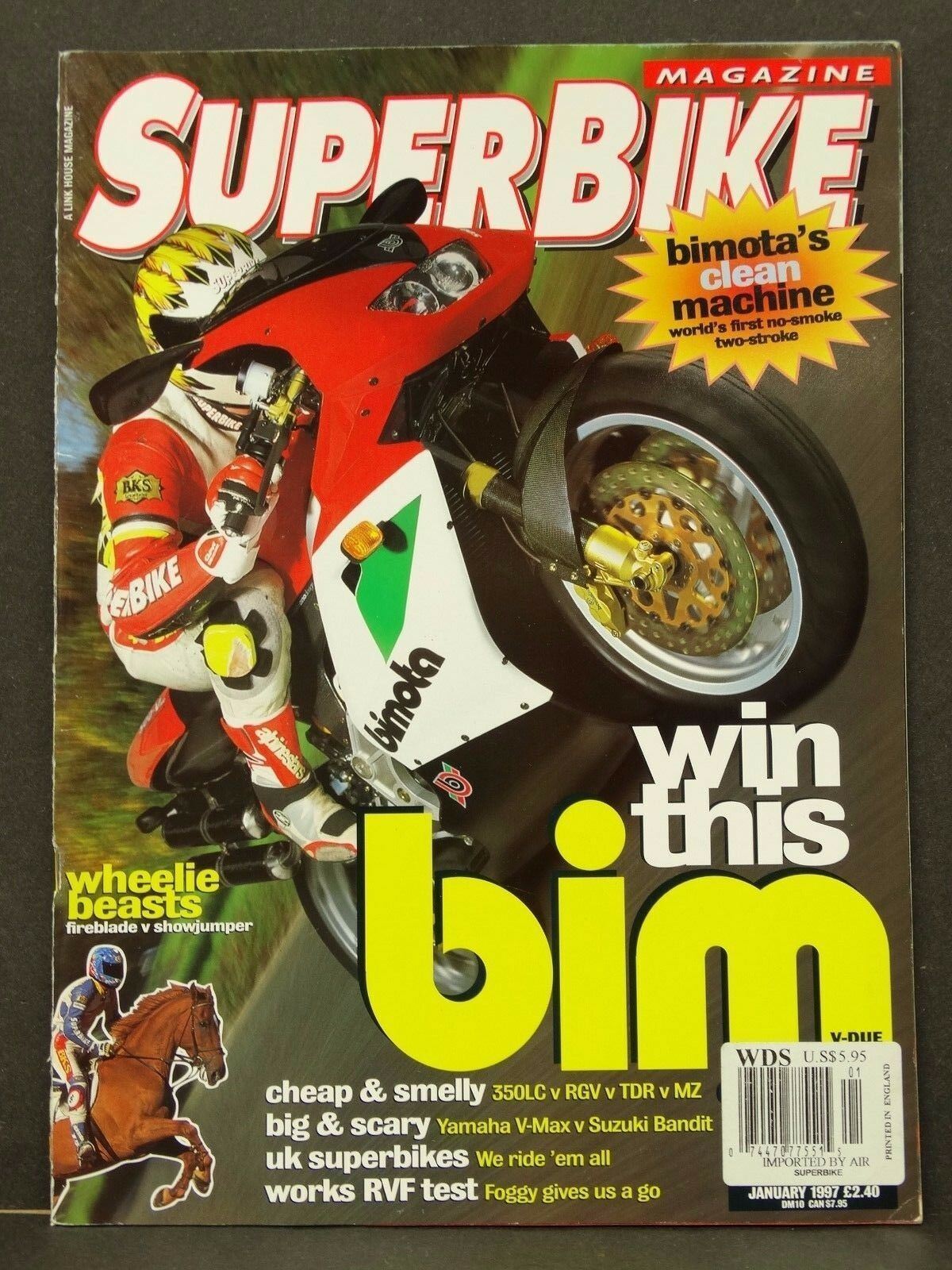
So the Vdue wasn’t simply another entry in the old 500cc two-stroke category. It was an attempt to restart the category using new technology. Bimota wanted to prove that the two-stroke wasn’t inherently obsolete — it simply needed to evolve.
What Might Have Been
This is perhaps the most fascinating part of the Vdue. Imagine if it had worked? Imagine Bimota had successfully launched a clean-burning, direct-injected, 500cc two-stroke making more than 100 horsepower while weighing around 360 pounds. Other manufacturers would have noticed. The technology would have improved. Injection systems would’ve become faster and more sophisticated, materials and sealing technology would’ve advanced, and electronic engine management would’ve progressed at lightning speed.
Honda itself was already experimenting with cleaner-burning two-strokes through machines such as the EXP-2, which raced in both the Baja 1000 and Paris-Dakar Rally with respectable results. There was no fundamental law stating that high-performance two-strokes had to disappear, but the business case was becoming increasingly difficult. And the spectacular failure of one of the most ambitious attempts to save them certainly didn’t help. Instead, four-strokes became dominant in both road racing and production motorcycles. The 500cc GP class disappeared. Road-going two-stroke sportbikes became collectibles.
Ahead of Its Time — and Not Ready for It
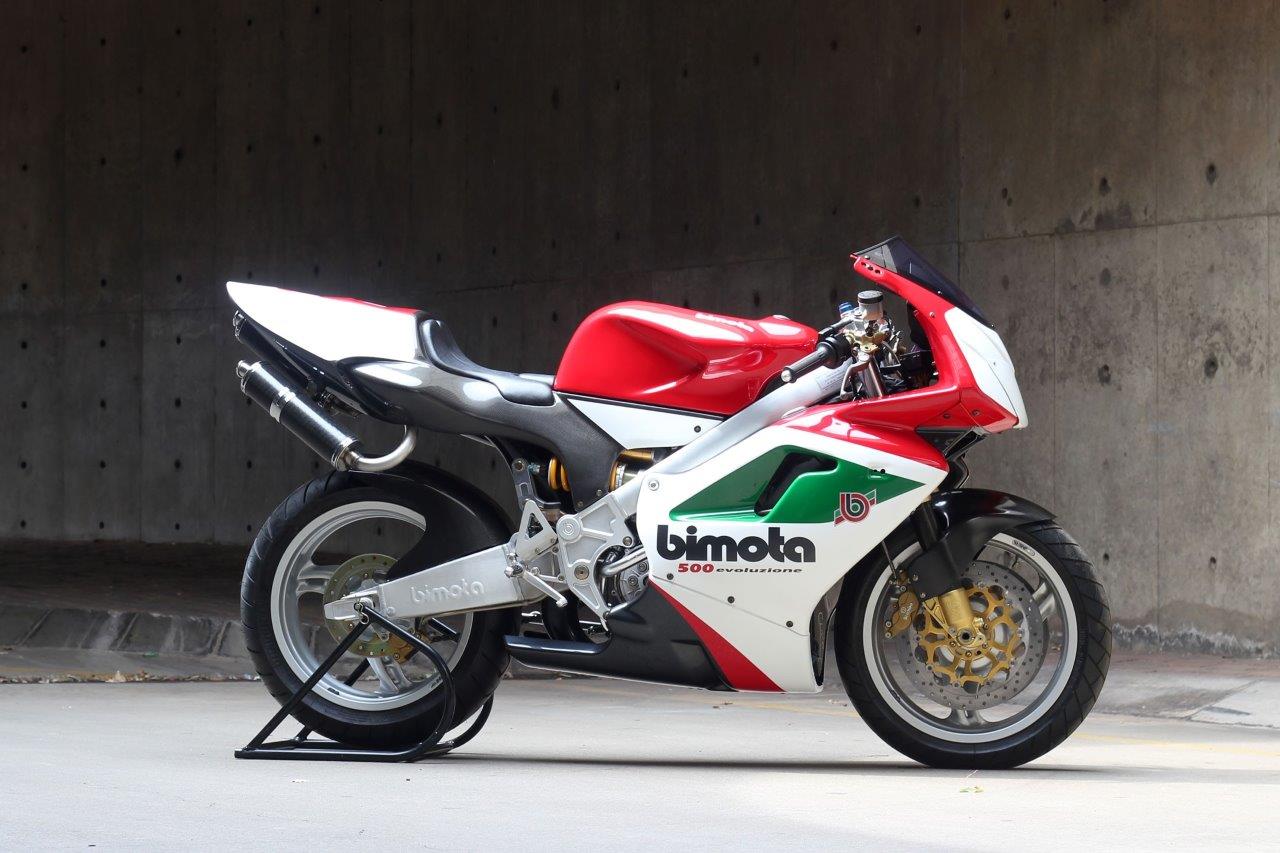
Calling the Vdue merely a failure doesn’t quite capture it. It certainly failed as a production motorcycle: Customers received machines that weren’t properly developed. Bimota suffered financially, and the revolutionary injection system was eventually abandoned.
But underneath those problems was something extraordinary. A tiny manufacturer had designed its own 500cc two-stroke V-twin, developed direct injection for it, packaged it inside an ultralight aluminum chassis, covered it in carbon fiber, and tried to sell enthusiasts something resembling a road-going Grand Prix machine.
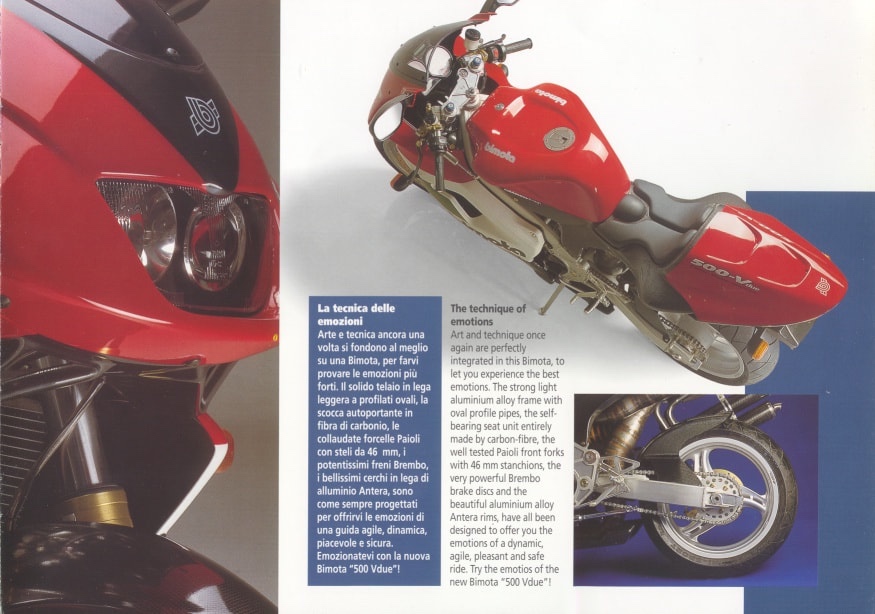
Even the later carbureted motorcycles proved that the basic package had tremendous potential. Once properly sorted, the Vdue really was extremely fast, extremely light, and extraordinarily exciting. The concept wasn’t absurd. It simply arrived before Bimota could make it work.
A Two-Stroke Superbike Unlike Any Other
Today, exotic manufacturers have begun rediscovering the idea that made the Vdue so compelling. The Ronax 500 recreated the experience of a 500cc GP machine for the road. Langen built a modern two-stroke café racer, and Veloce seems set to push the concept into even more outrageous territory with the 280-hp Aperion.
Boutique two-strokes have once again become objects of fascination precisely because mainstream manufacturers no longer build anything remotely comparable. But Bimota was attempting this almost three decades ago. And unlike many modern specials built around externally sourced engines or race-derived powerplants, Bimota designed the heart of the Vdue itself. The result was compact, powerful, lightweight, technologically ambitious, and deeply flawed.
It was also magnificent. Very few production machines have ever combined 500cc Grand Prix inspiration, two-stroke power, direct injection, Italian exotica, and genuine technological ambition quite like the Bimota Vdue. It wasn’t the future of the superbike, but if it had just a little more development time, it might have been.
Bimota Vdue Specifications
| Engine | 499cc liquid-cooled 90° two-stroke V-twin |
| Induction | Electronic direct fuel injection |
| Power | Approx. 101–105 hp |
| Torque | Approx. 66 lb-ft / 90 Nm |
| Transmission | Six-speed cassette gearbox |
| Frame | Aluminum twin-spar |
| Front suspension | 46mm fully adjustable Paioli fork |
| Rear suspension | Öhlins monoshock |
| Front brakes | Twin 320mm discs with Brembo calipers |
| Wheelbase | Approx. 52.5–52.8 in |
| Dry weight | Approx. 164 kg / 362 lb |
| Original U.S. price | $20,275 |
| Original injected production | Approx. 185 motorcycles |


