 Honda’s 400cc “Experimental 2-Stroke” Baja 1000 / Dakar Rally Bike…
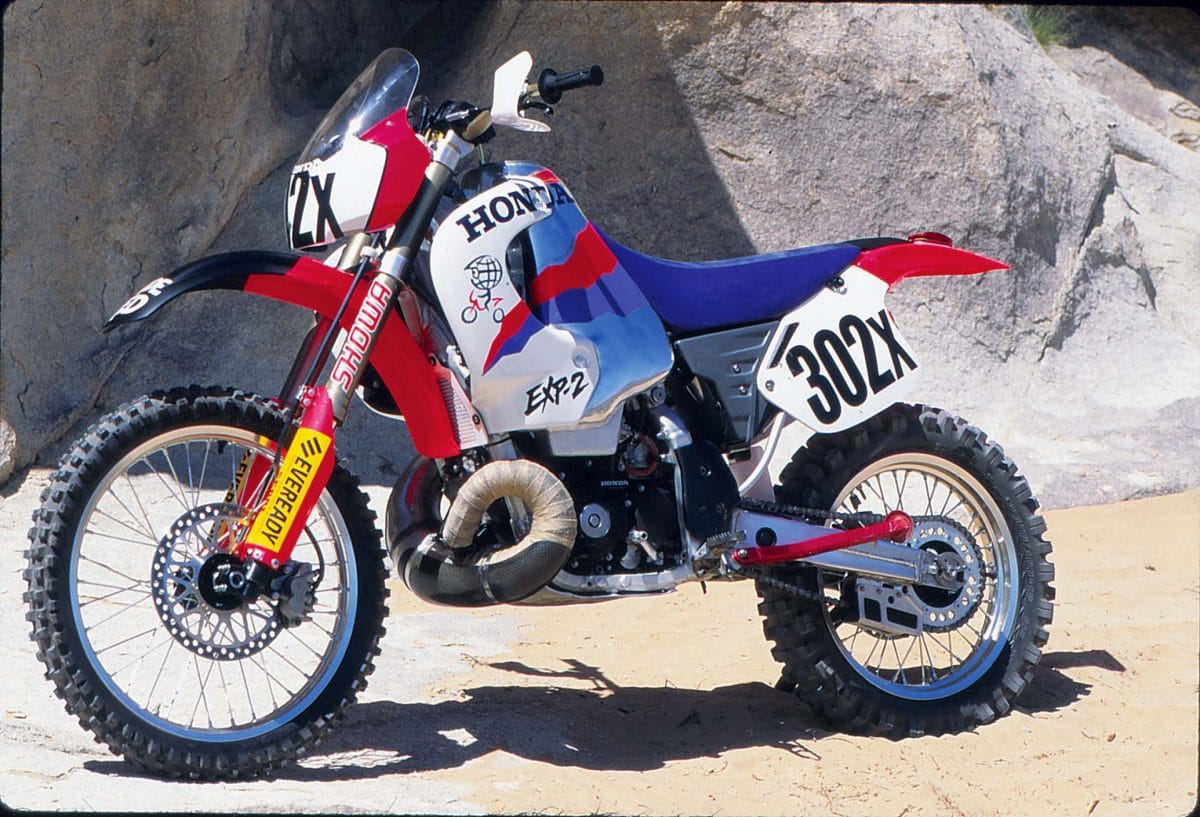
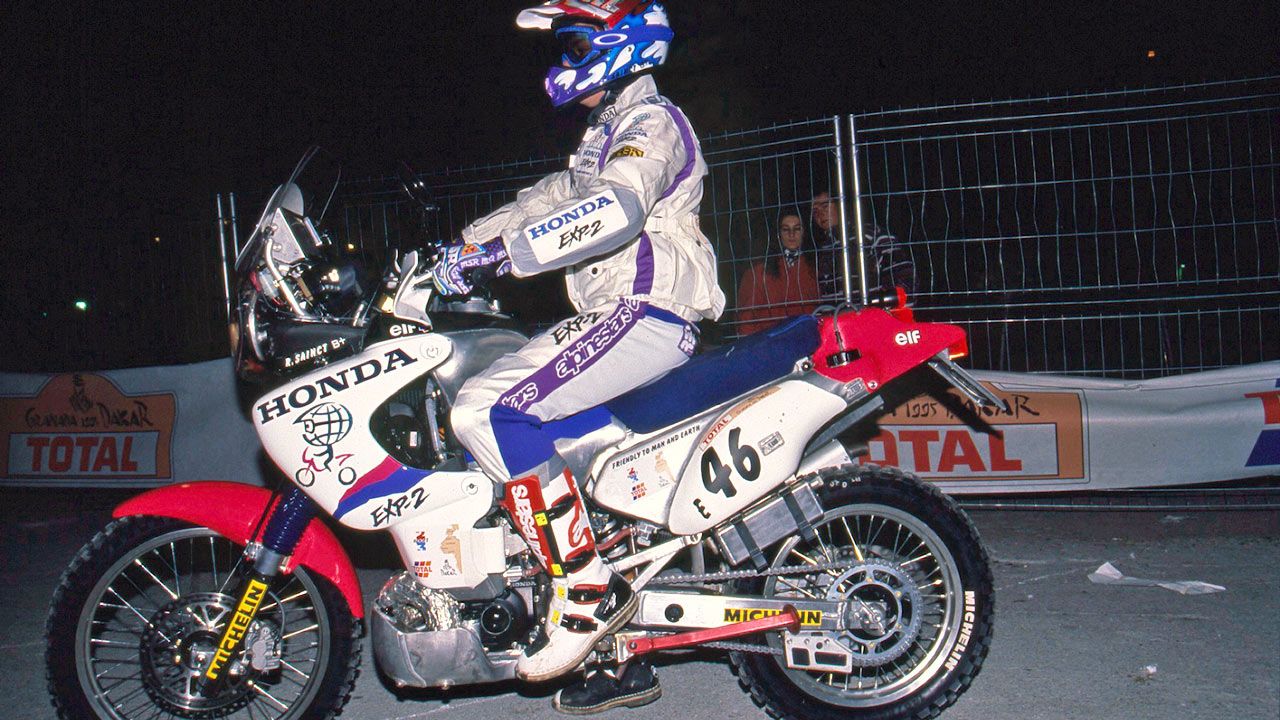
In the mid-1990s, as emissions regulations tightened worldwide and the future of two-stroke off-road bikes looked increasingly uncertain, Honda did something nobody expected: it built a high-tech, fuel-injected two-stroke rally prototype and took it desert racing. That motorcycle was the Honda EXP-2 — “Experimental 2-Stroke” — and it remains one of the most fascinating “what if” machines in both Dakar and Baja 1000 history.
 The Honda EXP-2 wasn’t a homologation special or marketing stunt. It was a rolling engineering experiment — an attempt to prove that a two-stroke engine could be made cleaner, more efficient, and more usable under the harshest conditions Honda could find. Honda’s longer-term goal wasn’t just a rally result — it was proving that a two-stroke could be made to run cleaner than anyone expected.
That’s what makes the EXP-2 so unusual in the Dakar canon. It’s a rally-raid bike built not to chase trophies for their own sake, but to validate a technology package: advanced combustion, electronic control, and a modernized two-stroke concept aimed at surviving an emissions crackdown. And yet, when Honda finally took it racing, the bike didn’t just “participate.” It performed.
“Save the Smoker” — Emissions, Regulation, and a Two-Stroke Crisis
To understand the EXP-2, you have to understand the 1990s context. Regulators were tightening emissions rules, and two-strokes — already banned from street use in the U.S. — were increasingly under pressure in off-road riding as well. The fear wasn’t theoretical: if major markets began restricting off-road two-strokes, the entire category could collapse.
For U.S. street riders, two-strokes over 100cc had already been effectively pushed out by emissions regulations as early as 1985, underscoring just how long the category had been under regulatory pressure.
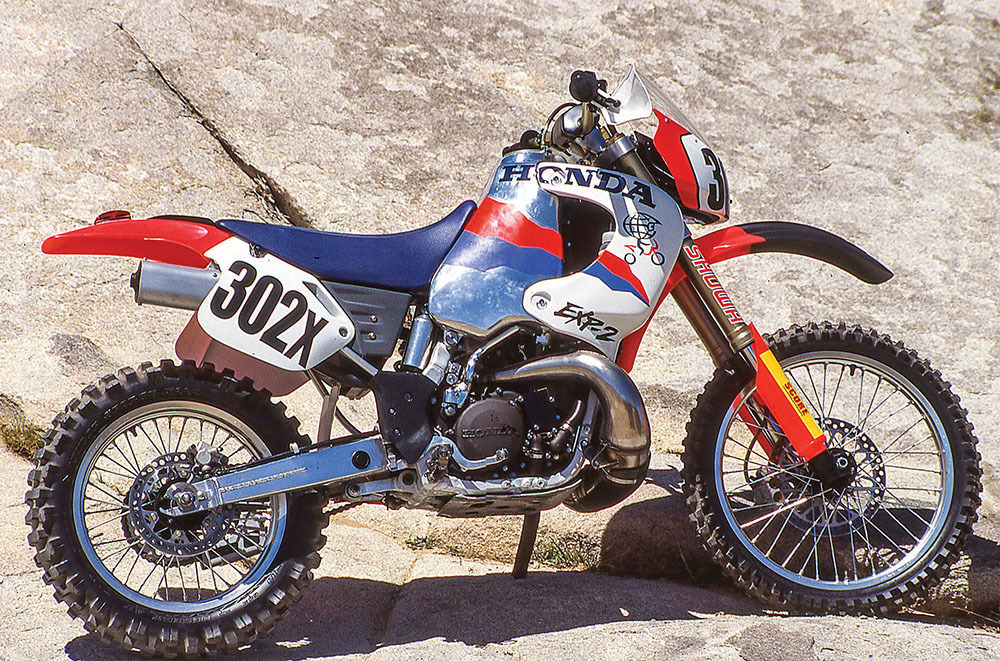
Honda, with massive global market exposure, had a problem. Two-strokes were still commercially important, and (at the time) Honda estimated that roughly half of the world’s motorcycle engines were still two-strokes. If those engines became unsellable, that was not only a racing issue — it was a business issue.
As some of you know, Soichiro “Mr. Honda” himself was known as a strong proponent of four-stroke technology over that of two-strokes, but in this case, Honda went all-in on an engineering effort to “save the smoker” by making it run cleaner, with no performance disadvantages. The EXP-2 became the most visible proof-of-concept.
The Core Idea: Activated Radical Combustion (ARC)
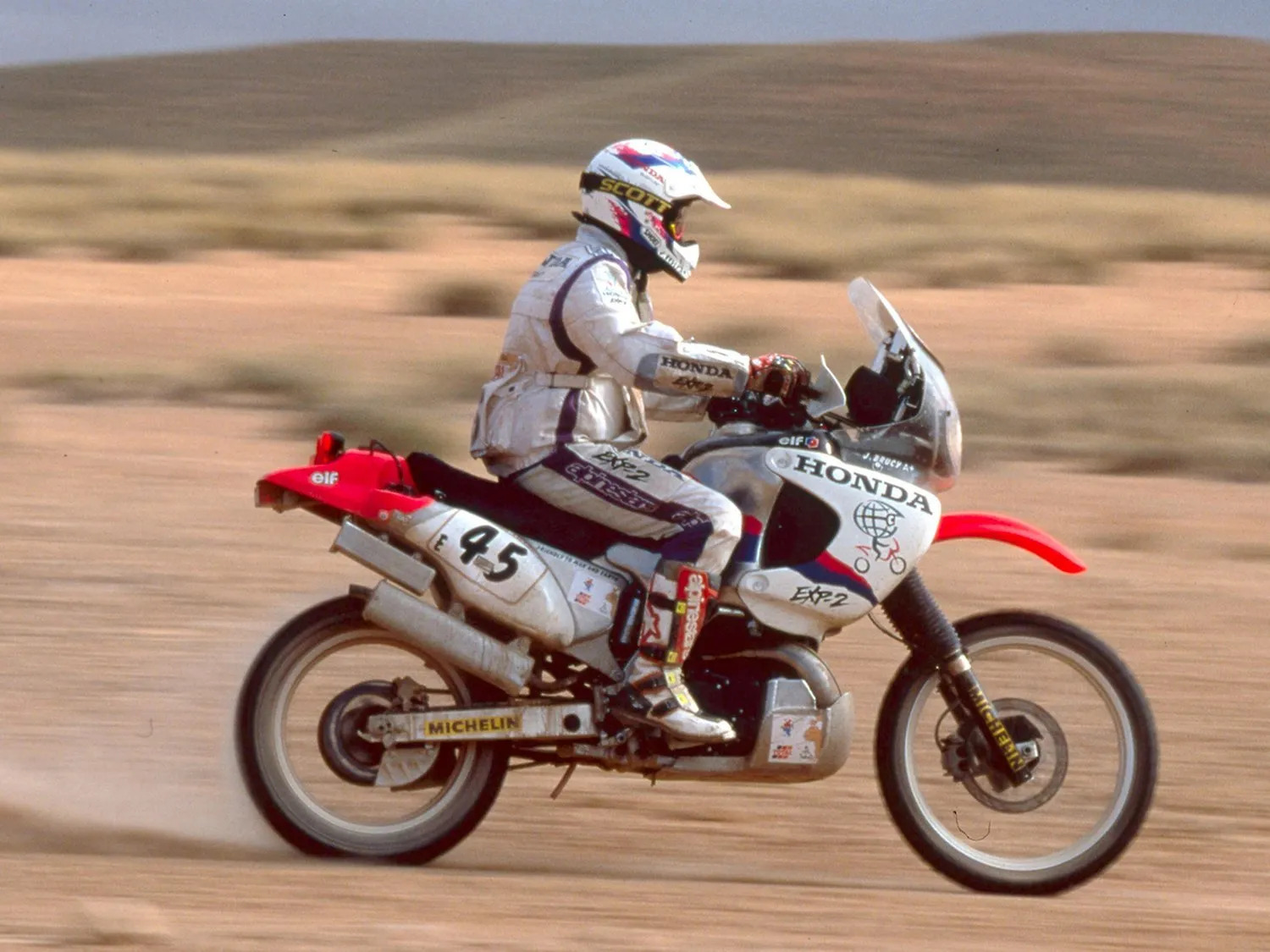 ARC (Activated Radical Combustion) is the heart of the EXP-2 story. Honda’s engineers identified one of the major two-stroke problems in terms of emissions: incomplete combustion at low engine loads. ARC primarily targeted incomplete combustion by exploiting a phenomenon normally considered undesirable: auto-ignition (“knock”).
Honda engineer Yoichi Ishibashi’s achievement was controlling and timing this reaction so it became a tool rather than a failure mode. Under the right pressure and temperature, fresh mixture can auto-ignite at a lower temperature than a normal air-fuel mix. Instead of a flame front traveling from the spark plug, combustion can occur in many points throughout the mixture, producing a more complete burn.
Motorcycle.com‘s technical editor explained it thusly:
“With a computer controlled exhaust valve, pressure in the combustion chamber can be precisely controlled, so pre-ignition can be timed as precisely as an ignition spark. The engine control unit relies on throttle position and engine speed sensors, and uses a knock sensor to detect low-octane fuel. The EXP-2 uses two electronic fuel injectors but engineers at Honda say carburetors would work just as well.”
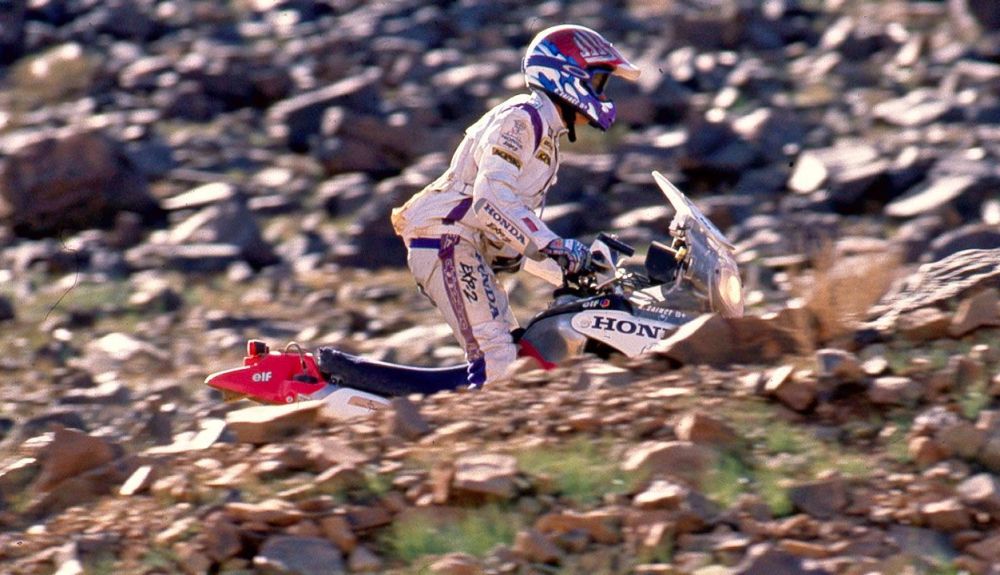
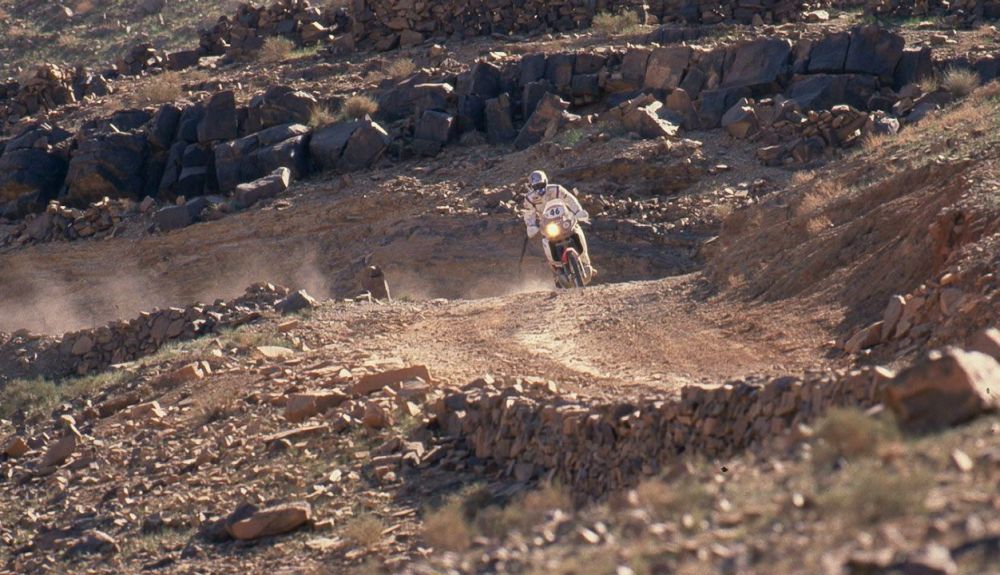
One of the clearest practical benefits of ARC was how it addressed the classic low-throttle two-stroke “dirty zone.” At small throttle openings, a conventional two-stroke can fall into a repeating misfire cycle: unburned fuel and oil are pumped into the exhaust until the mixture finally ignites, then the cycle repeats. By enabling consistent combustion without relying solely on the spark plug in that operating range, ARC helped eliminate this misfire pattern and dramatically reduce unburned hydrocarbons exiting the exhaust.
The Enabler: A Power-Valve-Like Exhaust Valve
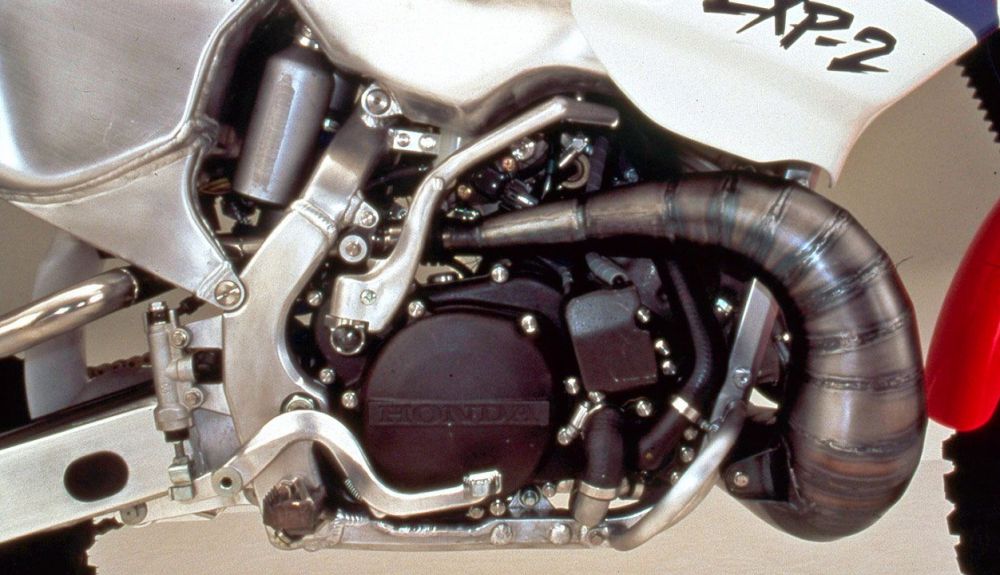
A key mechanical element was a large exhaust-port valve, similar in concept to a power-valve but significantly larger. The valve could raise or lower the effective height of the exhaust port, dramatically regulating its opening. The valve’s position was actively set based on engine speed and throttle position, allowing Honda to control cylinder pressure precisely and achieve the pressure conditions needed for correctly timed ARC auto-ignition.
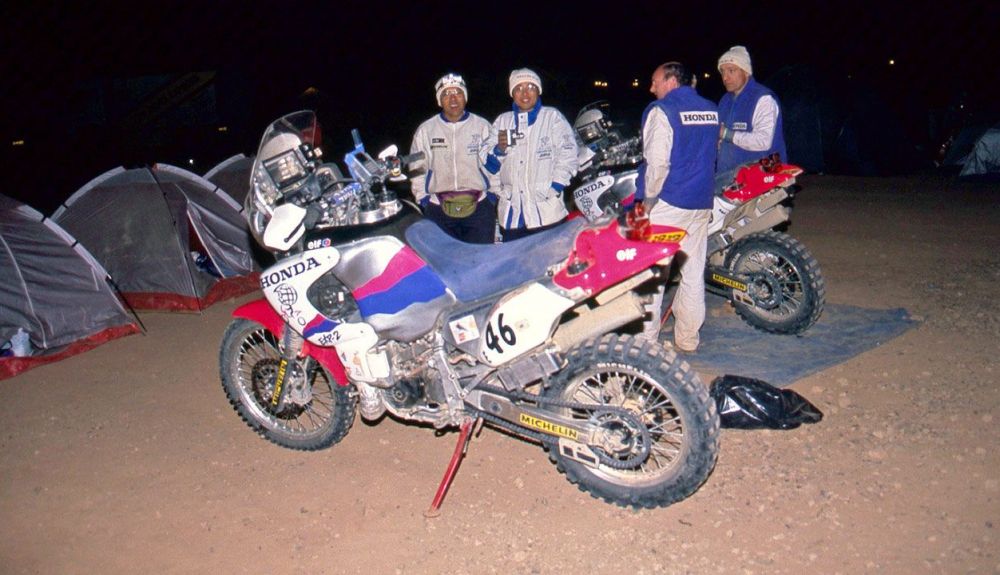 ARC wasn’t active all the time. It operated across a mid-load band (roughly 5–60% engine load, with its optimal range narrower), while a conventional spark plug handled idle, very low load, and high-load conditions. Honda claimed ARC delivered substantial emissions improvements:
- Carbon monoxide / dioxide: ~15% lower
- Hydrocarbons: ~80% lower
- NOx: ~90% lower
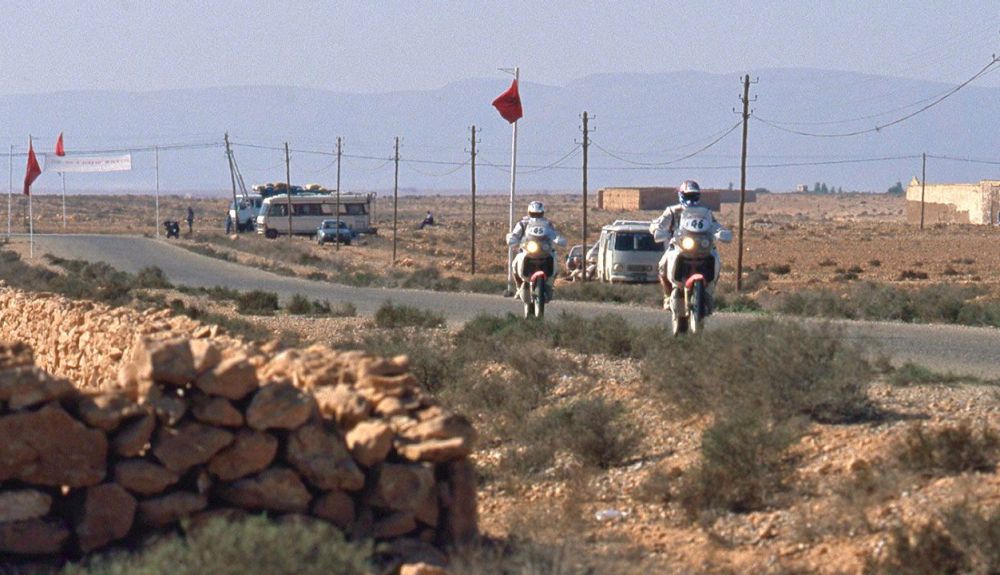
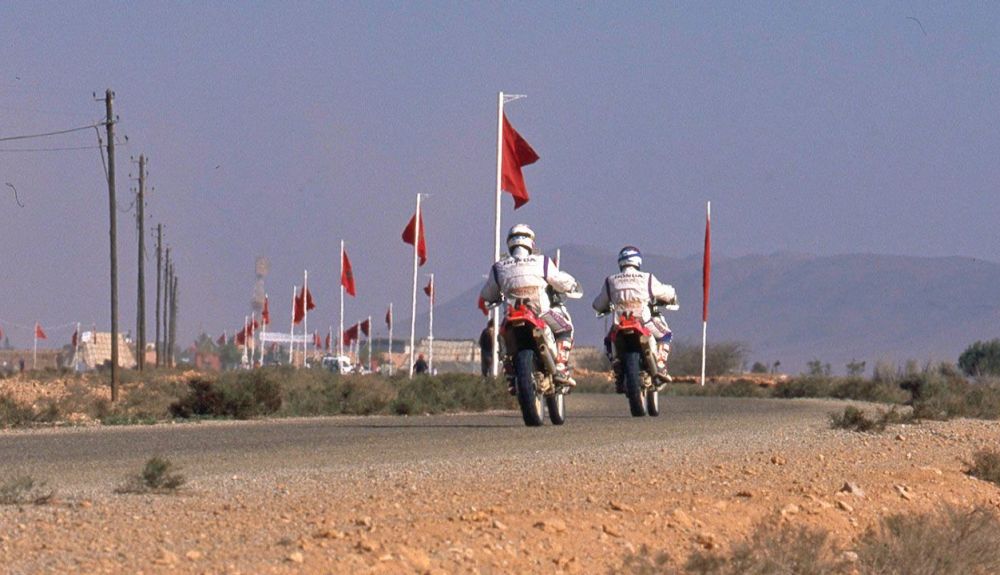
Whether or not every number holds across every test regime, the point is clear: Honda believed ARC could make a two-stroke behave far more like a four-stroke in emissions terms — at least in the most problematic operating range — and like most things Honda sets it mind to, they accomplished the feat.
Honda had managed to tame auto-ignition via computer control, enhancing performance and massively reducing pollution on a two-stroke engine.
The Honda EXP-2: High-Tech Two-Stroke Rally Racer
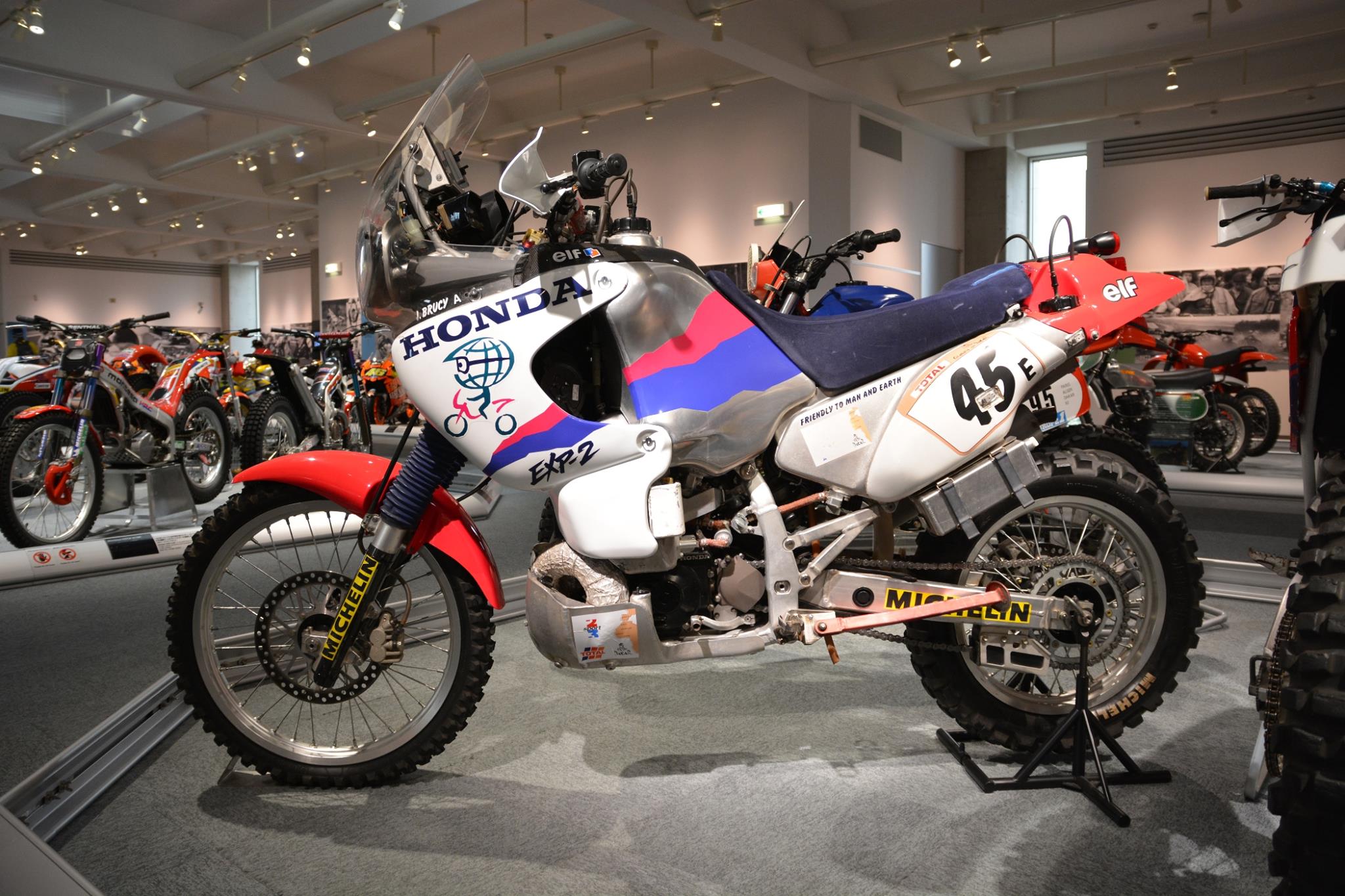 For Honda, a rally bike was a deliberately brutal test mule. They chose a ~400cc configuration because cleaning up a larger combustion chamber with high piston speed and difficult burn characteristics would be harder — and that was the point. If ARC could work there, it would be easier to apply elsewhere.
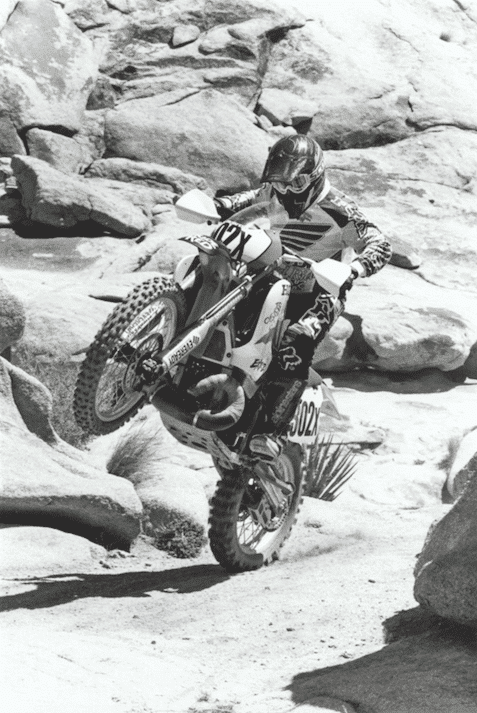
And Dakar-style endurance racing offered the ultimate reliability test: days on end, extreme heat, dust, high load, and little mercy. In other words: Honda chose the most punishing environment possible to prove the concept. The EXP-2 was introduced in 1995, and here’s what we know about the specs.
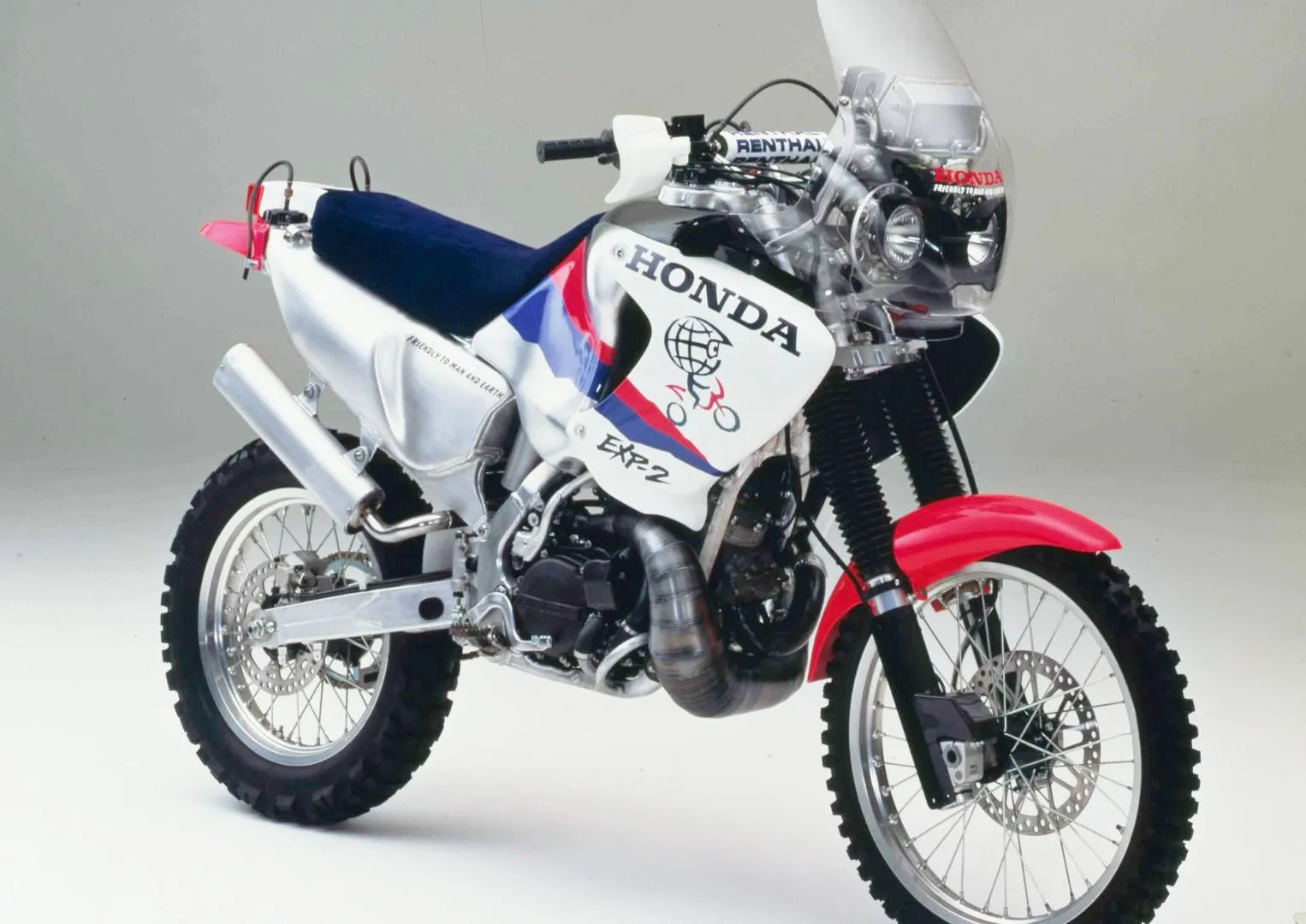
* Engine: 402cc two-stroke (purpose-built for desert/endurance)
* Fuel injection: yes — and notably advanced for 1995
* Counterbalancer: yes, to reduce vibration and fatigue
* Frame: hand-built aluminum tube and sheet construction
* Bodywork: CR500 subframe/seat/fenders used as donors
* Suspension: Showa
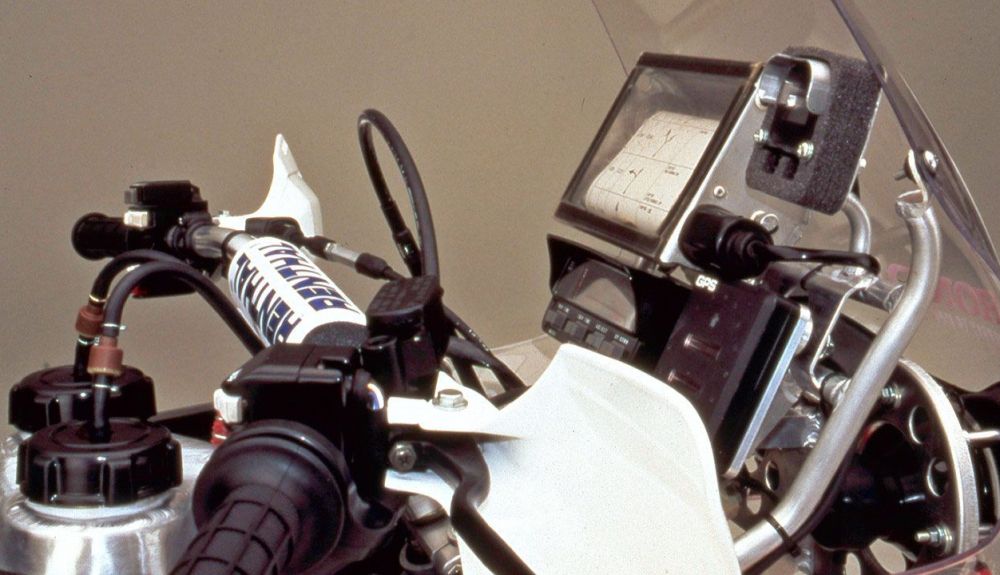
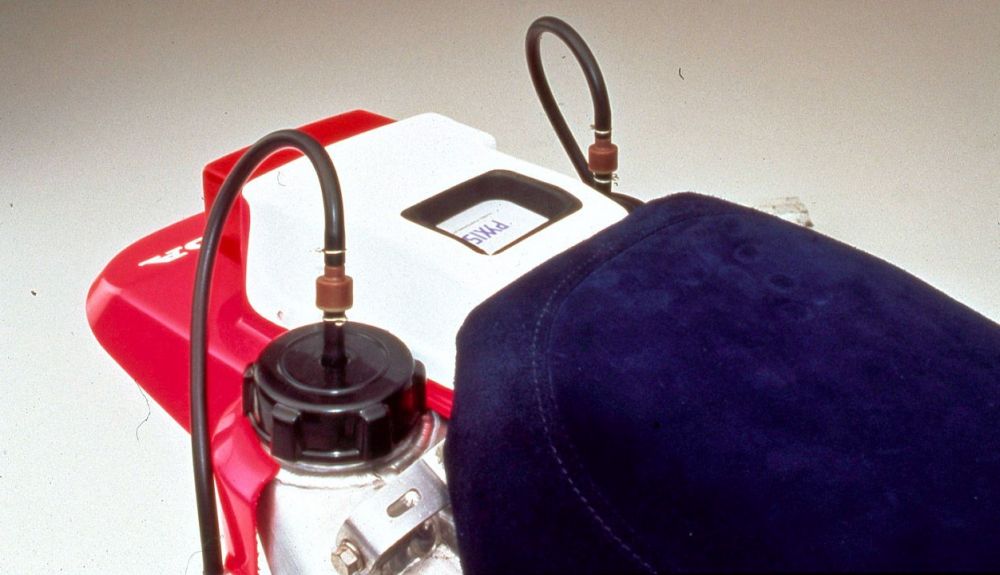
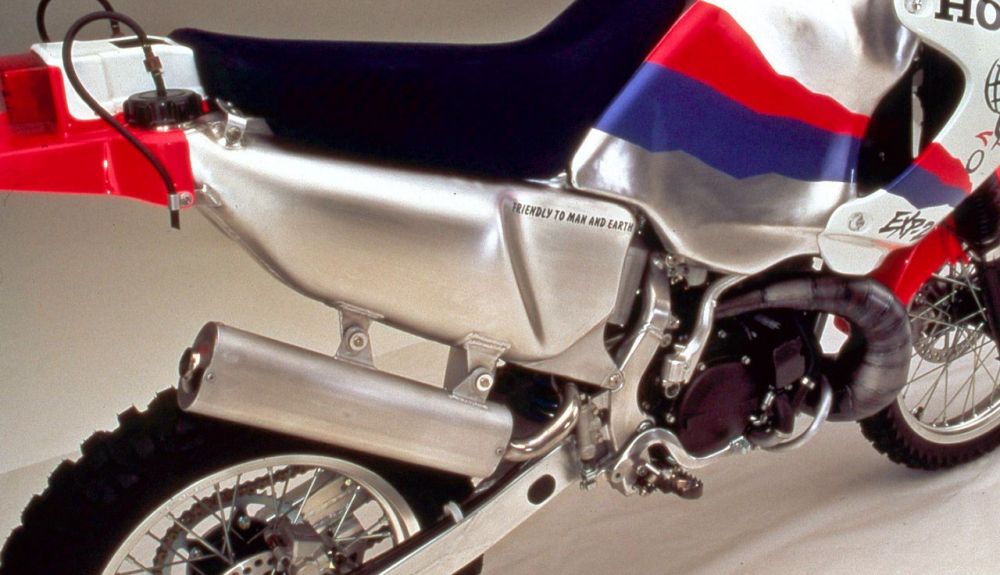
The electronics package was highly advanced for the time. The same brain controlling the exhaust valve also required precise control over fueling, using multiple sensors (throttle position, engine speed, knock, etc.) and dual injectors. For a 1990s two-stroke off-road machine, this was a remarkable leap.
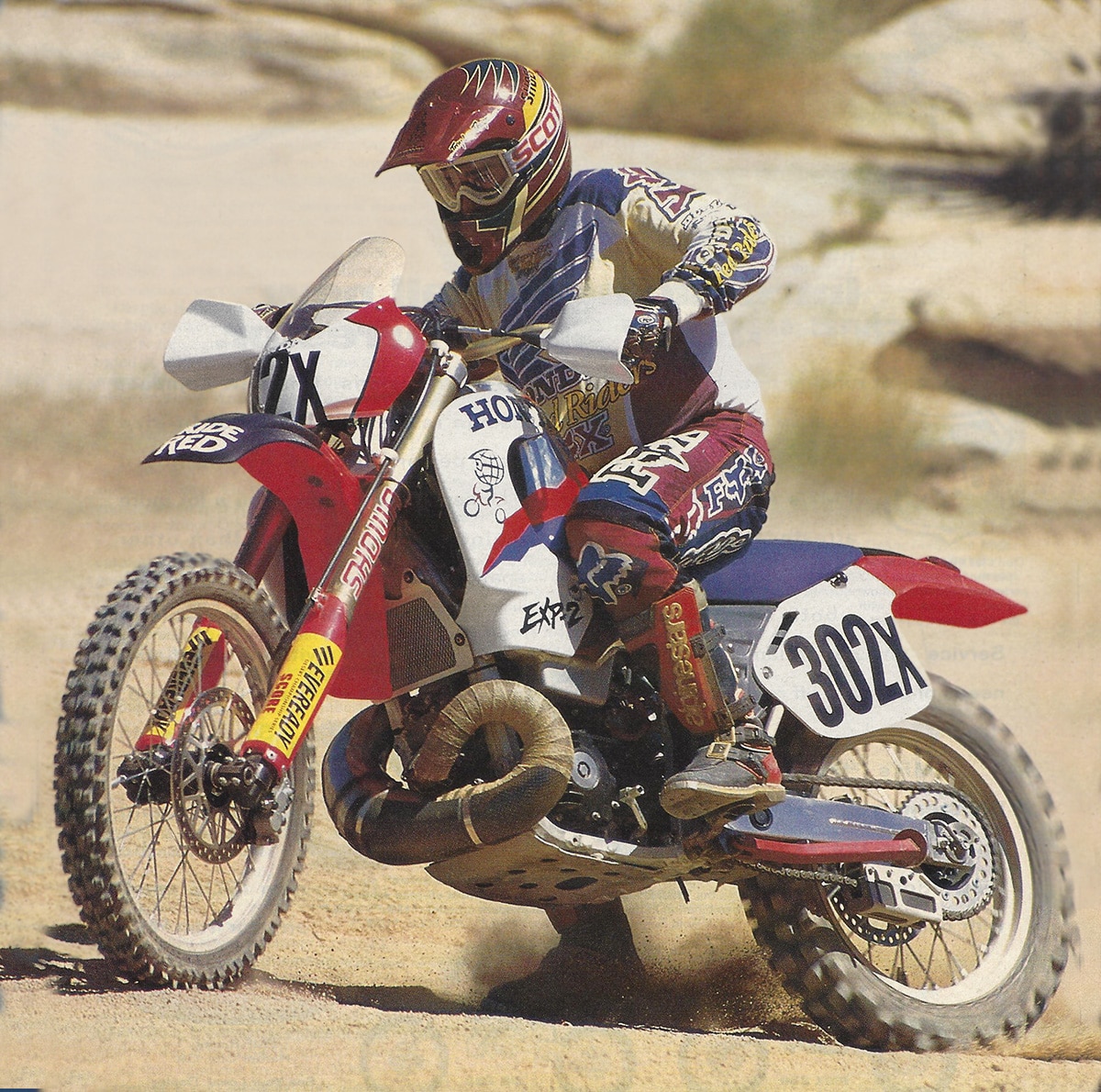
A group of motorcycle journalist was allowed to test-ride the bike with Bruce Ogilvie in the Mojave Desert:
“Flip the ignition switch hidden in the radiator shroud and the powervalve motor whines as it cycles the valve to the starting position and the fuel pump charges the fuel injection system. The bike kicks over easily for a 400cc single and fires right up. The motor has a mildly-tuned low-end, and top-end similar to an open-class MX bike. In between there’s no sudden hit to the powerband, just more power when the rider twists the throttle.” -Eric Murray, Motorcycle.com
It’s interesting to hear their description of the bike’s auto-ignition in effect.
“What’s different about the EXP-2 is the weird, muted note to the exhaust — like a watercraft — and the clattering noise of pre-ignition (commonly referred to as knocking or pinging) at low- to medium-throttle openings and engine RPM.” –Motorcycle.com
You can hear the bike briefly at the pre-selected point in the video below:
Honda EXP-2 vs NXR750
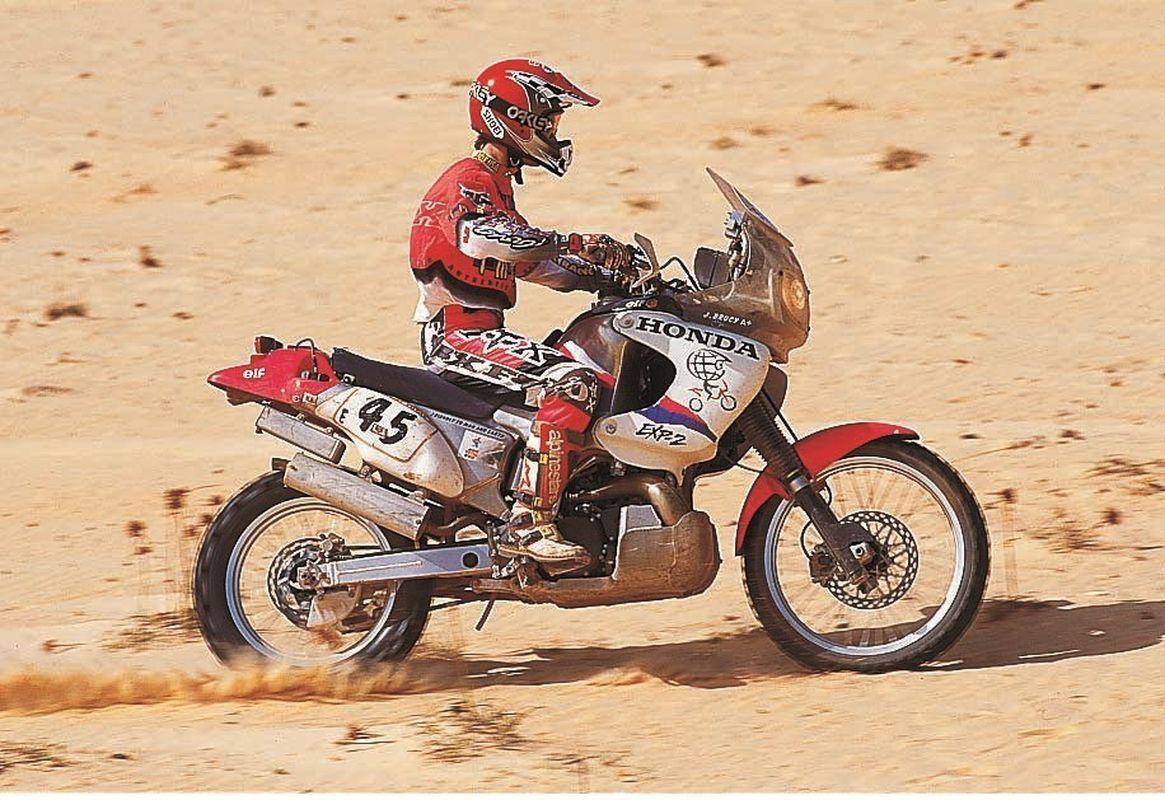 Honda didn’t benchmark the EXP-2 against a convenient target — they benchmarked it against the NXR750 Rally, the company’s own Dakar icon.
EXP-2 vs NXR750
- Displacement: 402cc vs 750cc
- Power: ~54 hp vs ~71 hp
- Torque: ~50 lb-ft (both)
- Weight: EXP-2 ~50 kg lighter
That weight delta is the turning point. Honda’s claim was that the EXP-2 could achieve a similar power-to-weight outcome to the NXR, while also improving fuel consumption and emissions enough to carry smaller tanks for the same distance — further improving agility.
Honda EXP-2 Race Results
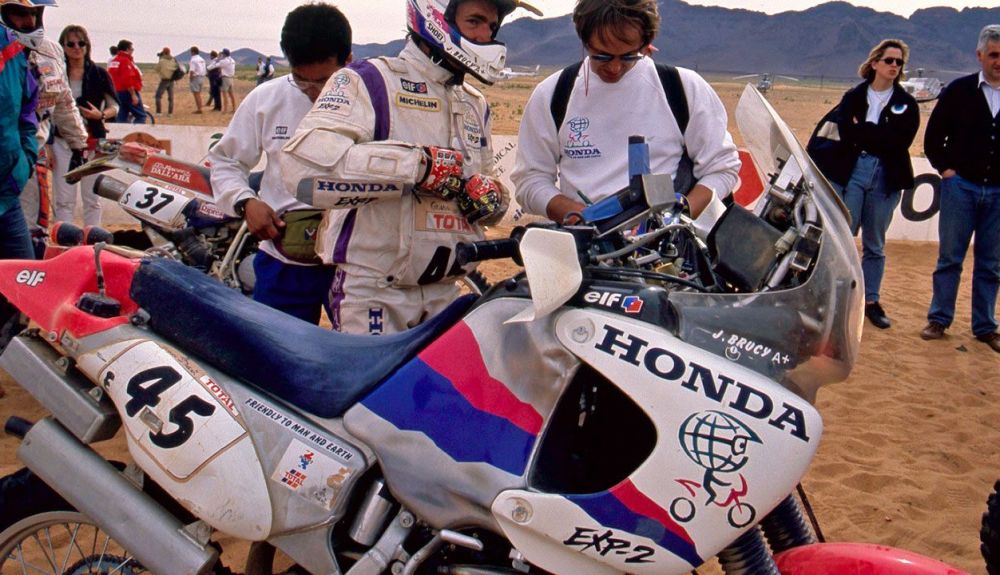 Honda didn’t keep the EXP-2 as a quiet lab project. It unleashed the bike in several real-world competitive tests with strong outcomes:
- Dakar / 1995 rally campaign: won the sub-500cc class and finished 5th overall
- Rider: Jean Brucy
- Baja 1000: won its class and finished 7th overall
- Riders: Chuck Miller, Paul Ostbo, and Greg Bringle
- Nevada Rally: won the two-stroke class and finished 8th overall
- Rider: Bruce Ogilvie
The EXP-2 wasn’t just “interesting” — it was highly competitive.
So Why Did Honda Stop?
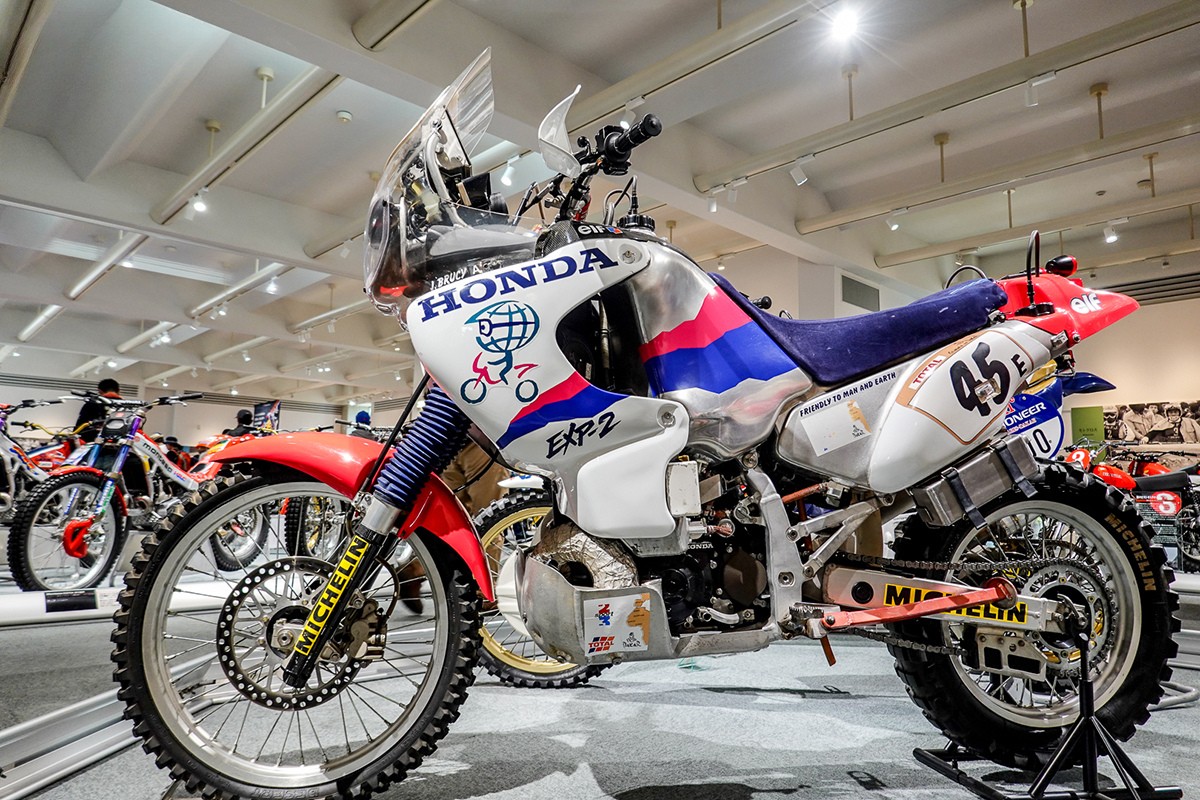 This is the haunting twist in the EXP-2 story: after proving the concept in public, Honda stopped.
The bike was frighteningly complex for its time and extraordinarily expensive. ARC improved emissions, but regulations tightened faster than expected, and what looked “clean” by one standard could still become “dirty” by the next. At the same time, the success of modern four-stroke off-road bikes — notably Yamaha’s YZ400F — reduced the commercial urgency of saving two-strokes at any cost.
In short, the EXP-2 may have proven a point — but Honda judged that point too expensive and too risky to commercialize at scale.
Honda EXP-2: Technical Specs
| Specification | Details |
|---|---|
| Year | 1995 |
| Engine | 402cc two-stroke single (ARC / AR-Combustion concept) |
| Fueling | Fuel injection (computer-controlled) |
| Power | ~54 hp |
| Torque | ~50 lb-ft |
| Balancing | Counterbalancer |
| Frame | Hand-built aluminum tube + sheet structure |
| Suspension | Showa (rally/endurance focus) |
| Bodywork donors | CR500 subframe/seat/fenders |
| Noted outcomes | Class win + 5th overall (Dakar); class win + 7th overall (Baja 1000); class win + 8th overall (Nevada Rally) |
| Status | Factory prototype / test mule (non-production) |
The Honda EXP-2 Legacy…
 The EXP-2 proved that a two-stroke could be cleaner, more efficient, and more controllable than anyone expected — and it did so while delivering real rally results. ARC represented a genuine leap, transforming controlled auto-ignition into a tool for cleaner combustion in the exact low-load zone where traditional two-strokes were at their worst.
But the EXP-2 also showed how even a revolutionary solution can be overtaken by economics and regulation. In the Dakar Legends canon, it isn’t remembered for winning everything — it’s remembered for showing just how far Honda was willing to go to save the two-stroke.
More Dakar Legends
 2WD Dakar Legend: Yamaha WR450F 2-Trac - Remembering Yamaha x Öhlins’ Hydraulic 2WD Enduro… Every so often, a motorcycle appears that seems to point toward an entirely different future. The Yamaha WR450F 2-Trac was one of those machines. At first glance, it […]
 Dakar Legends: Gilera RC600 & RC750 Rallye - Italy’s Big Thumper in the Twin-Cylinder Era… By the late 1980s, the Paris-Dakar Rally was no longer a romantic expedition but an escalating arms race among the major manufacturers. Twin-cylinder prototypes were growing larger and […]
 Desert Bomber: BMW R80G/S Paris-Dakar Rally Bike - The Boxer That Changed the Desert Forever… In 1981, the Paris-Dakar Rally was still raw — more expedition than sport, more survival than spectacle. Riders crossed the Sahara on machines that were barely adapted from […]
 Desert Boxer: BMW R900RR Dakar Rally Bike - Dakar Legends: Last Roar of the Desert Bombers… In the late 1990s and early 2000s, BMW found itself at a turning point in rally-raid racing. The boxer twin had already written one of the most […]
 The Honda EXP-2: The Two-Stroke Desert Racer - Honda’s 400cc “Experimental 2-Stroke” Baja 1000 / Dakar Rally Bike… In the mid-1990s, as emissions regulations tightened worldwide and the future of two-stroke off-road bikes looked increasingly uncertain, Honda did something nobody expected: it built […]
 Dakar Legends: BMW F650RR Rally Bike - BMW F650RR: Grandfather of the Modern Rally Bikes… In the late 1990s, BMW quietly executed one of the most important strategic pivots in rally history. They developed and unleashed the BMW F650RR — a lean, […]
 The Four-Cylinder Dakar Bike: Yamaha FZ750 Ténéré - The Yamaha FZ750 Ténéré (0U26): Yamaha’s Radical Dakar Experiment… Before Super Ténéré, before big twins ruled the desert, before Dakar logic fully settled in, there was the sportbike-powered FZ750T. The 1986 Yamaha FZ750 Ténéré (0U26) […]
 Lucky Explorer: Cagiva Elefant Paris-Dakar Rally Bike - The Italian Powerhouse That Conquered Dakar… The Cagiva Elefant occupies a unique place in Paris-Dakar history. Where other manufacturers leaned on clinical efficiency or engineering conservatism, Cagiva brought Italian audacity to the table: massive V-twin […]
 Dakar Legends: Yamaha YZE750T Super Ténéré - The Bike That Built a Dakar Dynasty… The Yamaha YZE750T Super Ténéré is one of the most important motorcycles in rally-raid history. Purpose-built from the ground up for the Paris-Dakar Rally, it was the machine […]
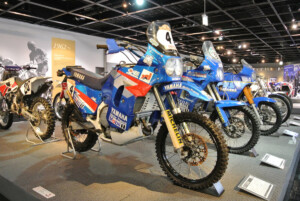 Desert Freight Train: Yamaha XTZ850R Paris-Dakar Rally Bike - The big twin that ruled the desert at the height of the Paris-Dakar era… In the early and mid-1990s, Yamaha dominated the Paris-Dakar Rally, the toughest off-road endurance race on the planet. At the heart […]
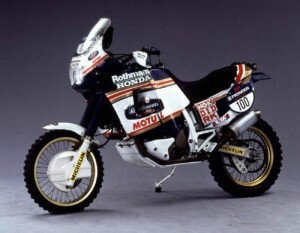 Desert Queen: Honda NXR750 Paris-Dakar Rally Bike - Honda’s NXR750: Queen of the Desert… Few motorcycles in history can claim to have dominated the most brutal race on earth the way Honda’s NXR750 did. Built specifically to conquer the Paris-Dakar Rally, the NXR750 […]


I rented a street legal 250 twostroke version of this Honda in Koh Tao Thailand. They had a couple and said they were Japanese only bikes that were imported. It worked very well and was a pleasure to ride.