 The Italian Powerhouse That Conquered Dakar…
The Cagiva Elefant occupies a unique place in Paris-Dakar history. Where other manufacturers leaned on clinical efficiency or engineering conservatism, Cagiva brought Italian audacity to the table: massive V-twin power, striking Lucky Explorer colors, and a willingness to challenge the established order. And it worked. The Elefant didn’t just compete at Dakar — it won twice, becoming one of the most iconic non-Japanese machines of the rally’s golden era.
The Elefant proved that Dakar wasn’t only about restraint and range — brute force, when properly harnessed, could go the distance.
Big Displacement, Bold Ambition…
 By the late 1980s and early 1990s, Dakar had evolved into a high-speed endurance test across vast deserts, rocky pistes, and endless liaison miles. Stability, fuel range, and mechanical toughness mattered more than lightweight agility. Cagiva’s answer was unapologetic: more displacement, more torque, more presence.
They combined the power and thrust of their 90º Desmo V-twin — the same engine that powered the 900SS and later the original Monster M900 — with expertise gained from endurance racing to create a long-range weapon capable of surviving the brutal route from Paris to Senegal.
 At a time when Yamaha and Honda were refining parallel-twin and V-twin strategies for endurance, Cagiva leaned fully into the advantages of a large-capacity V-twin, delivering relentless thrust across long stages and exceptional straight-line speed in open desert.
Origins: From Elefant to Dakar Weapon
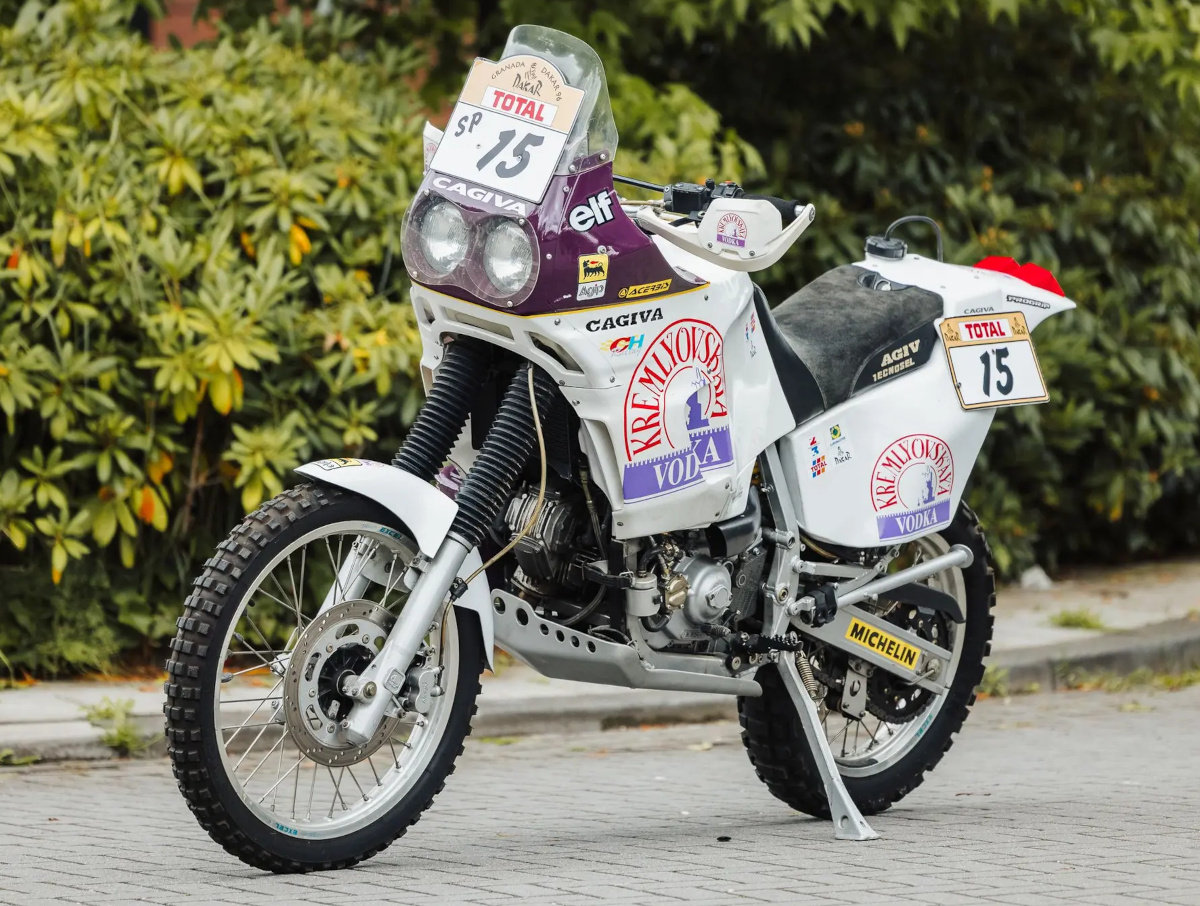
The Elefant’s rally success was deeply tied to Cagiva’s ownership of Ducati, whose air-cooled L-twin engines provided the foundation for the Dakar machines. Rather than adapting a lightweight enduro bike, Cagiva developed purpose-built rally Elefants — factory machines engineered to carry massive fuel loads, maintain stability at speed, and survive weeks of punishment.
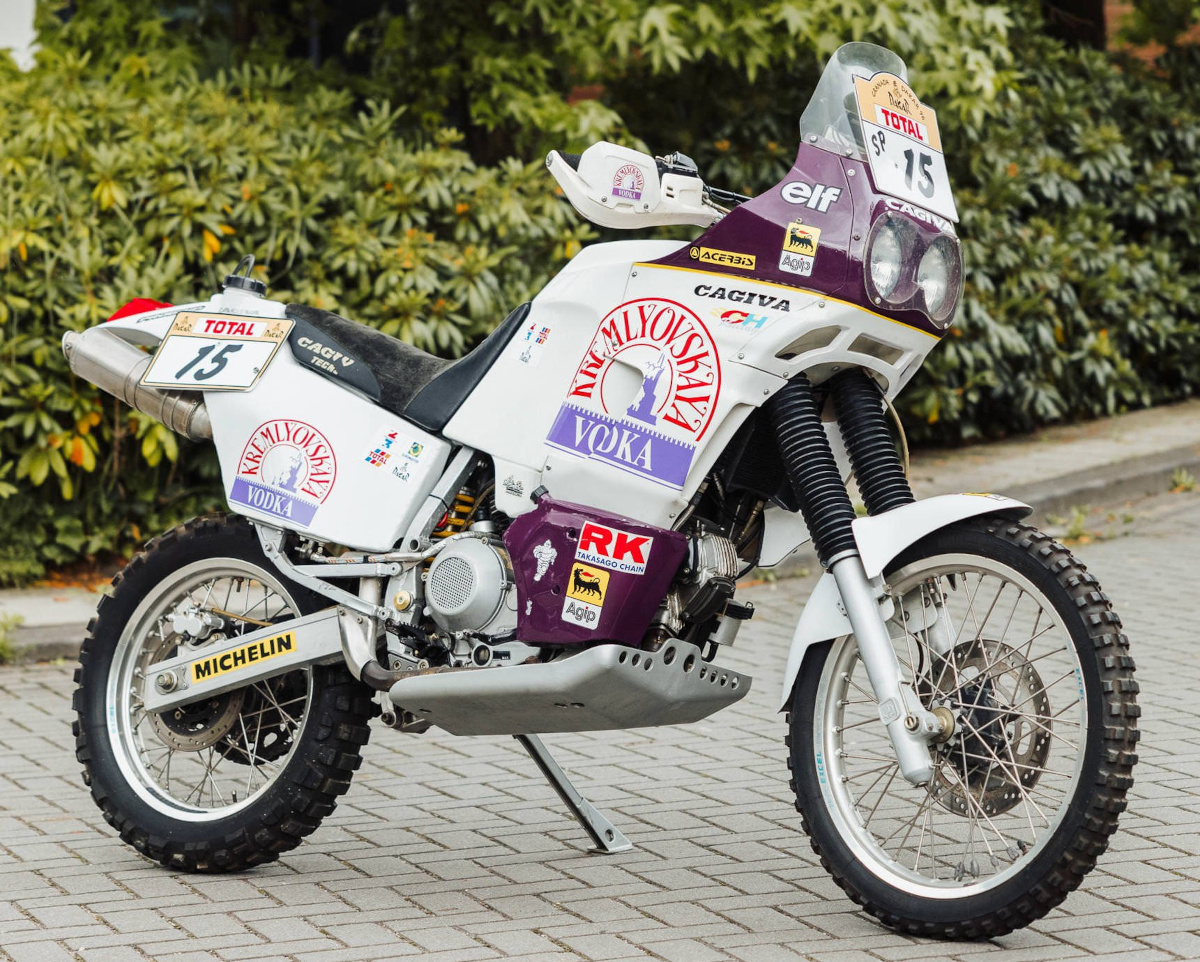 The result was a motorcycle that looked and felt enormous, but rewarded commitment and confidence with devastating pace.
Cagiva Elefant: Technical Overview
Exact factory specifications were never fully published, but the Elefant’s defining traits are well established.
Cagiva Elefant — Key Specs (Approximate)
| Specification | Details |
|---|---|
| Engine | 944cc cc air-cooled L-twin (Ducati-based) |
| Valve Train | Desmodromic |
| Fuel Capacity | Large multi-tank setup |
| Weight (Rally Trim) | Heavy, but stable |
| Transmission | 5-speed |
| Chassis | Reinforced rally frame with long-travel suspension |
| Status | Factory prototype → limited production influence |
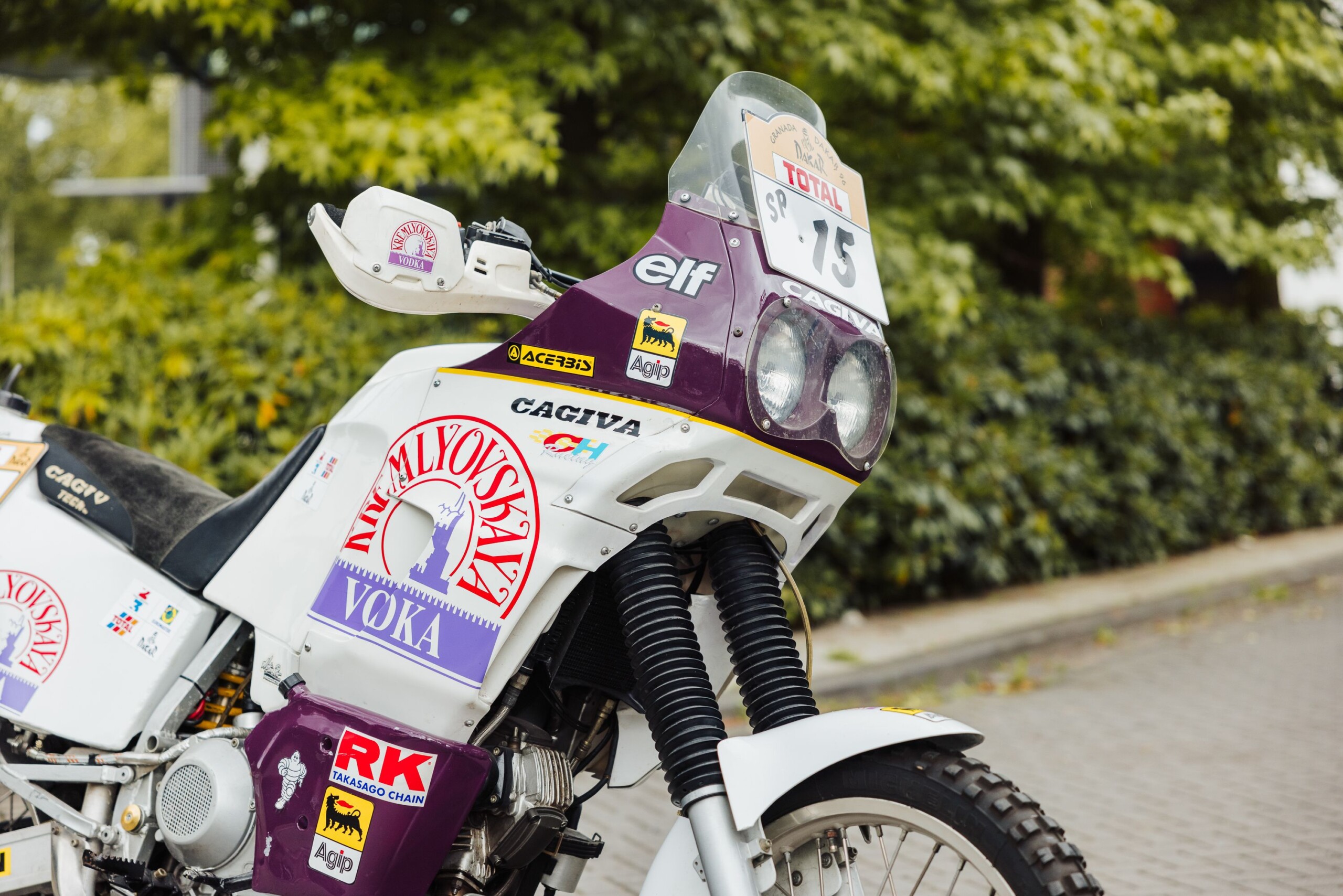
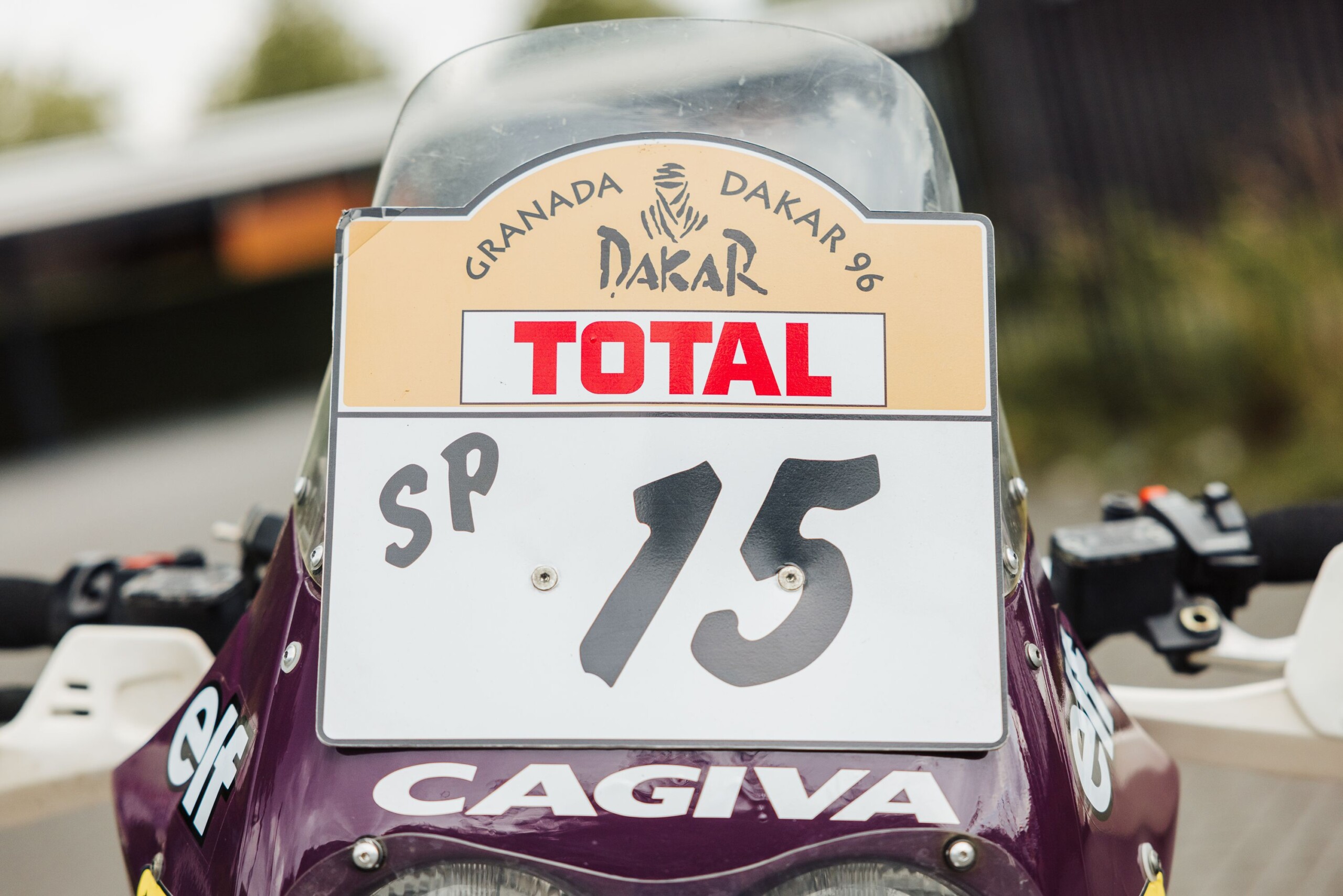
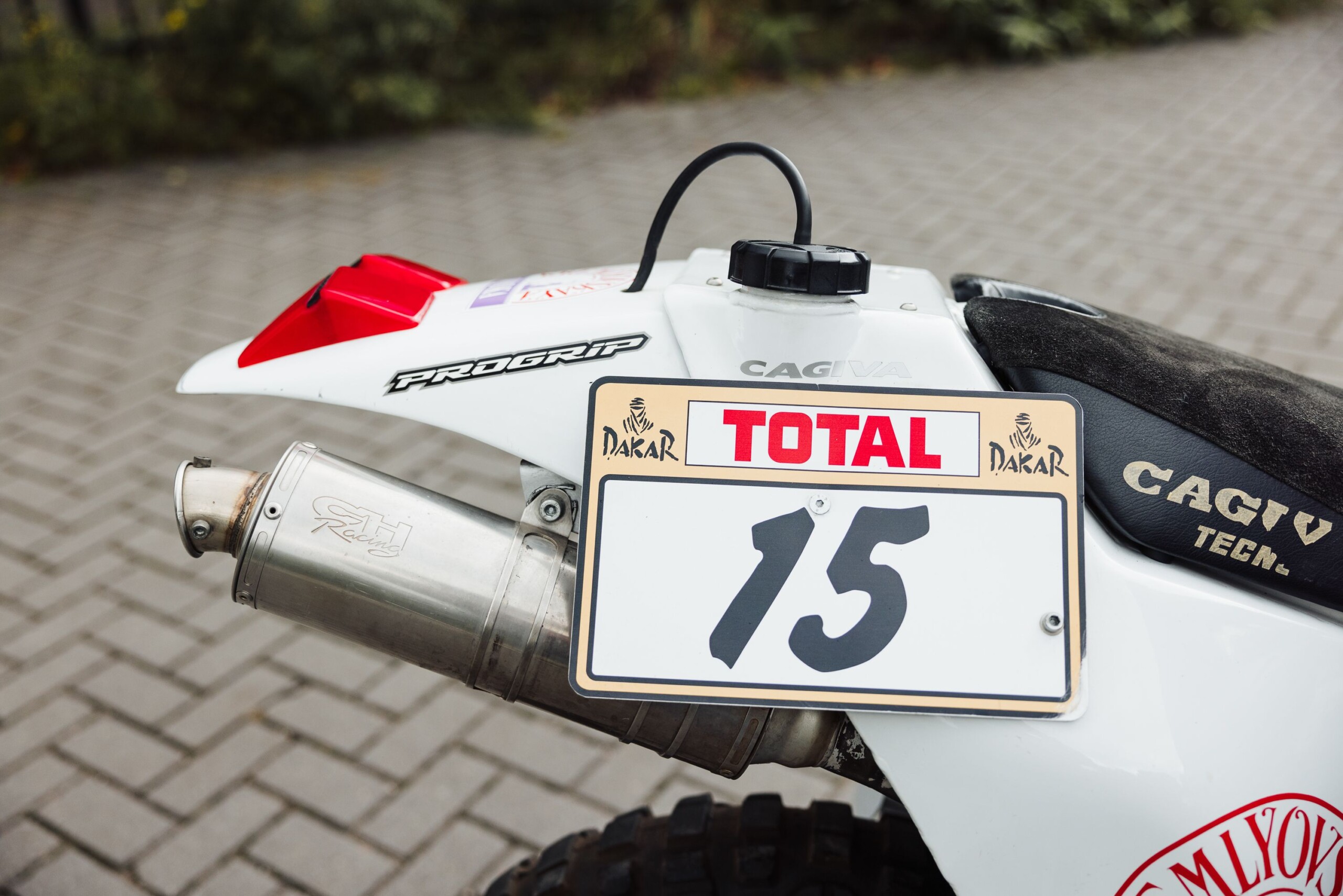
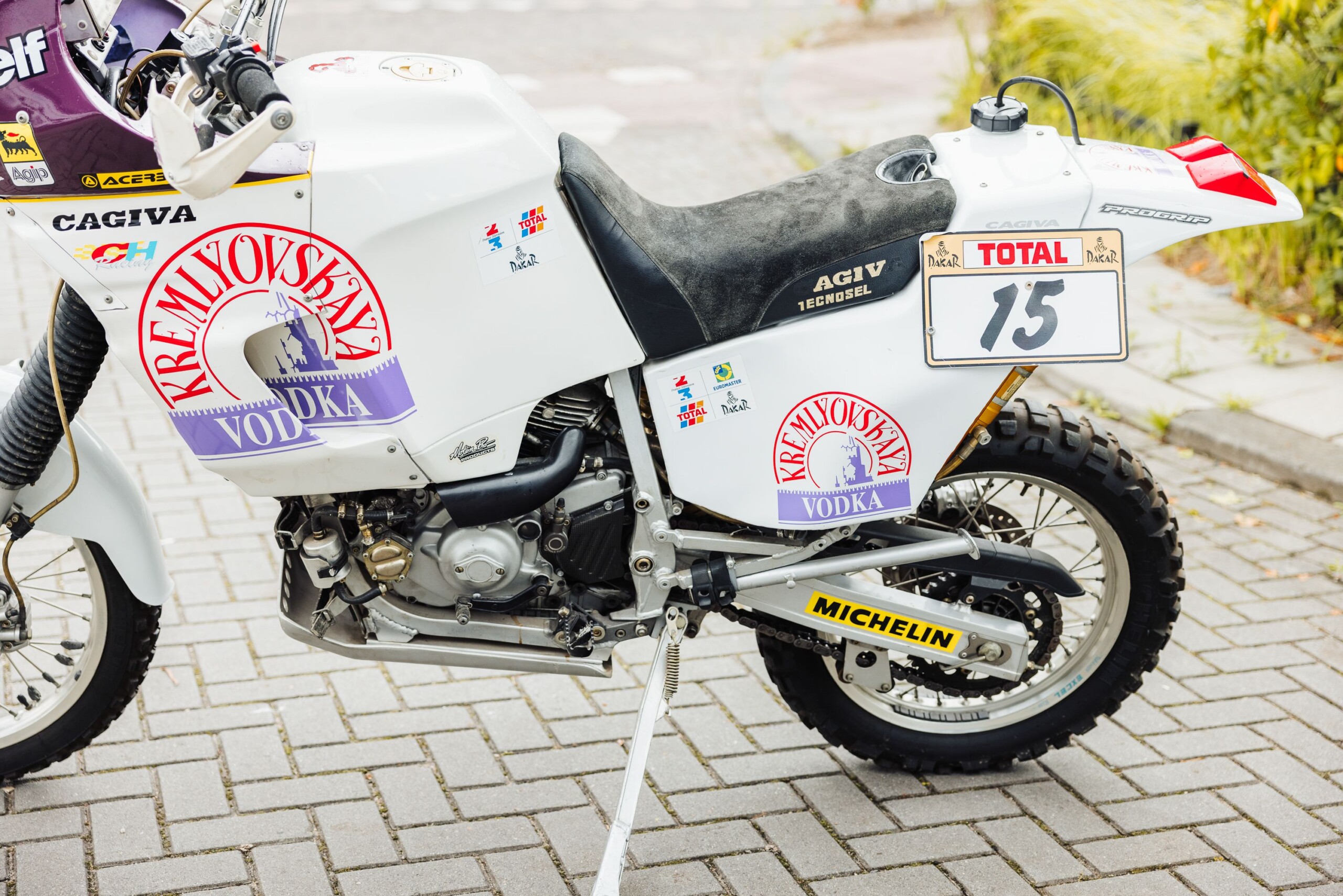
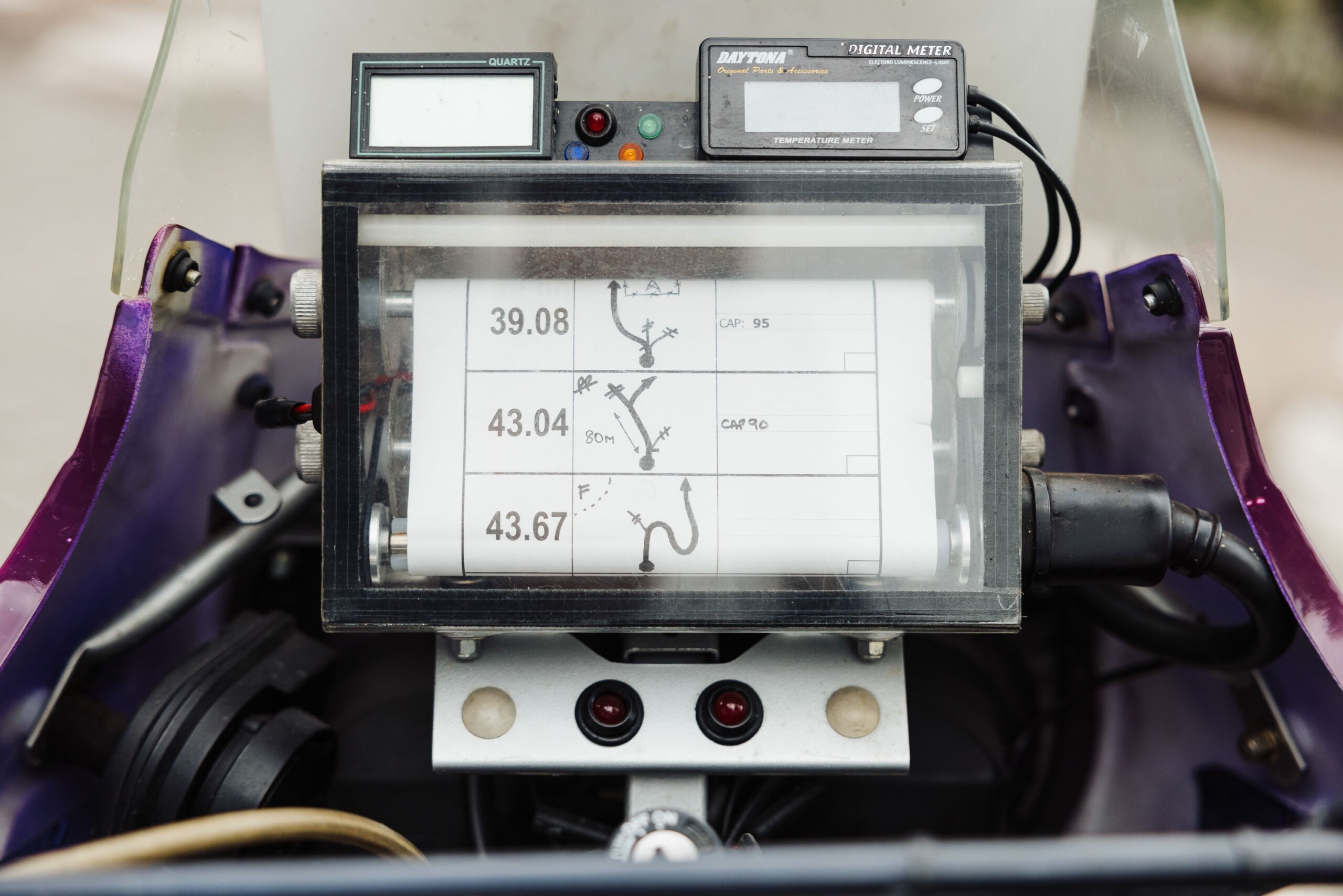
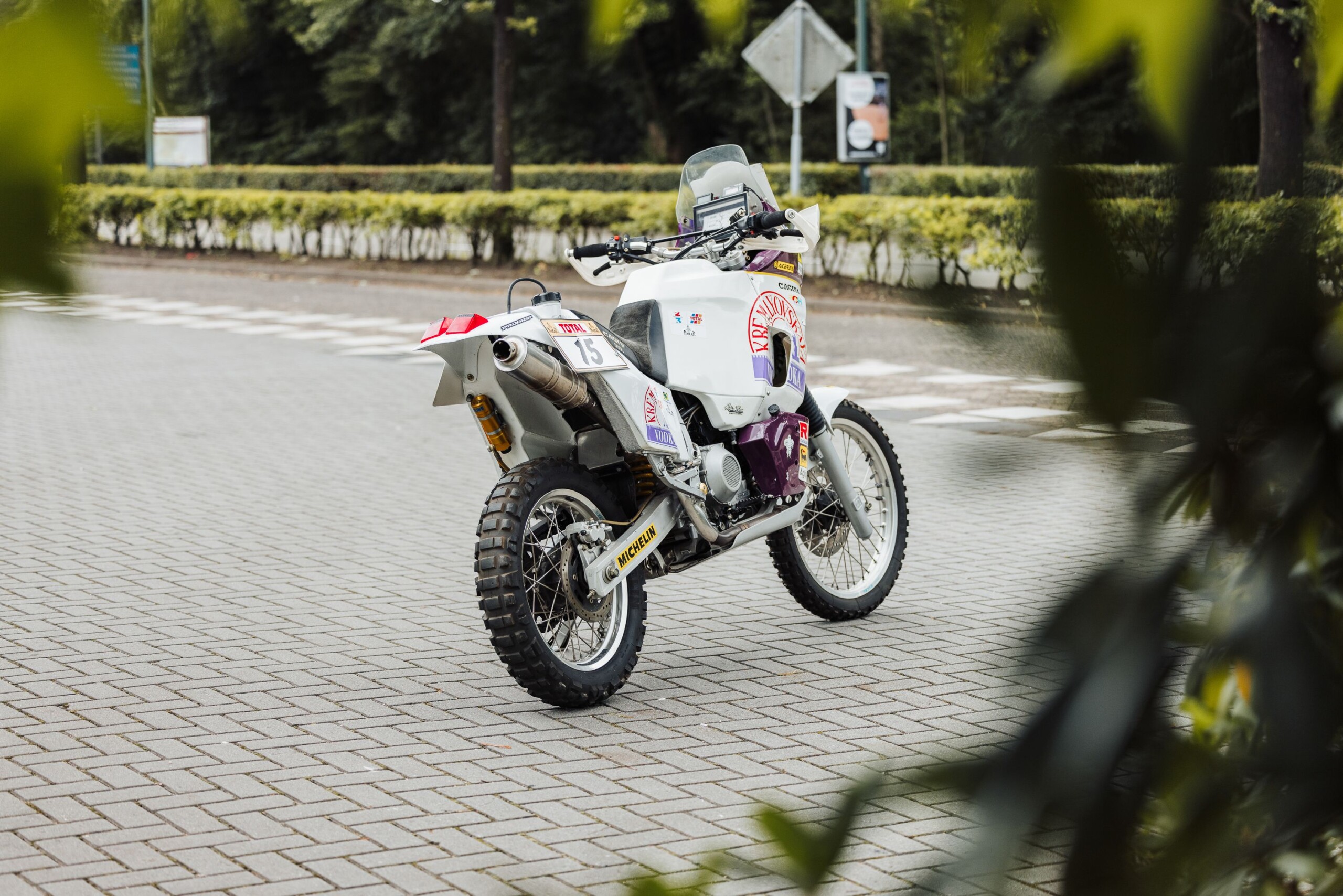
The engine’s immense torque made the Elefant devastating on fast stages, while its long wheelbase and mass delivered exceptional stability — particularly in deep sand and high-speed desert crossings.
Inside the Dakar-Winning Elefant: Engineering to Win
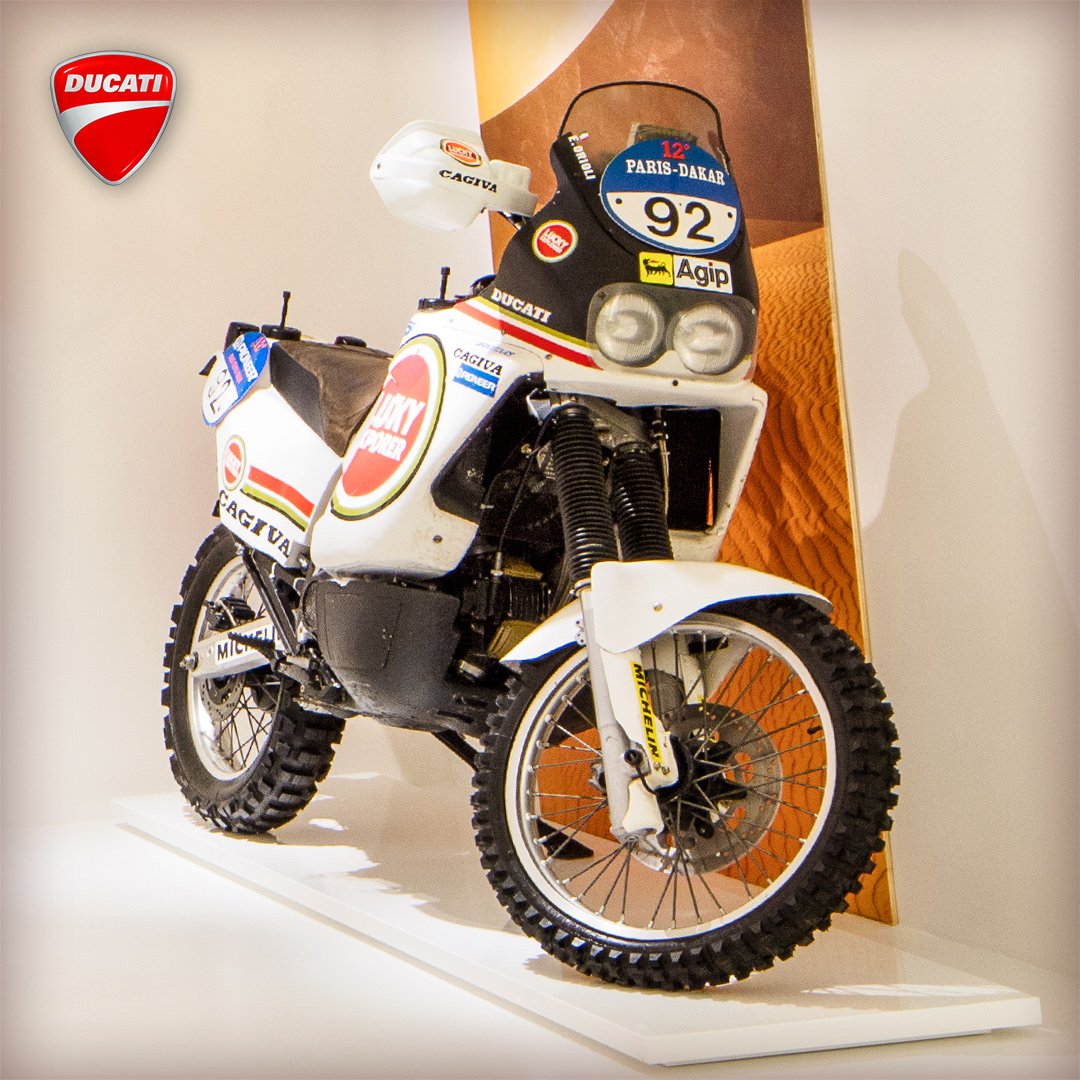
The Cagiva Elefant’s Dakar success came not just from big displacement, but from a well-executed engineering package that blended power, durability, and desert-proven design.
Engine and Power Delivery
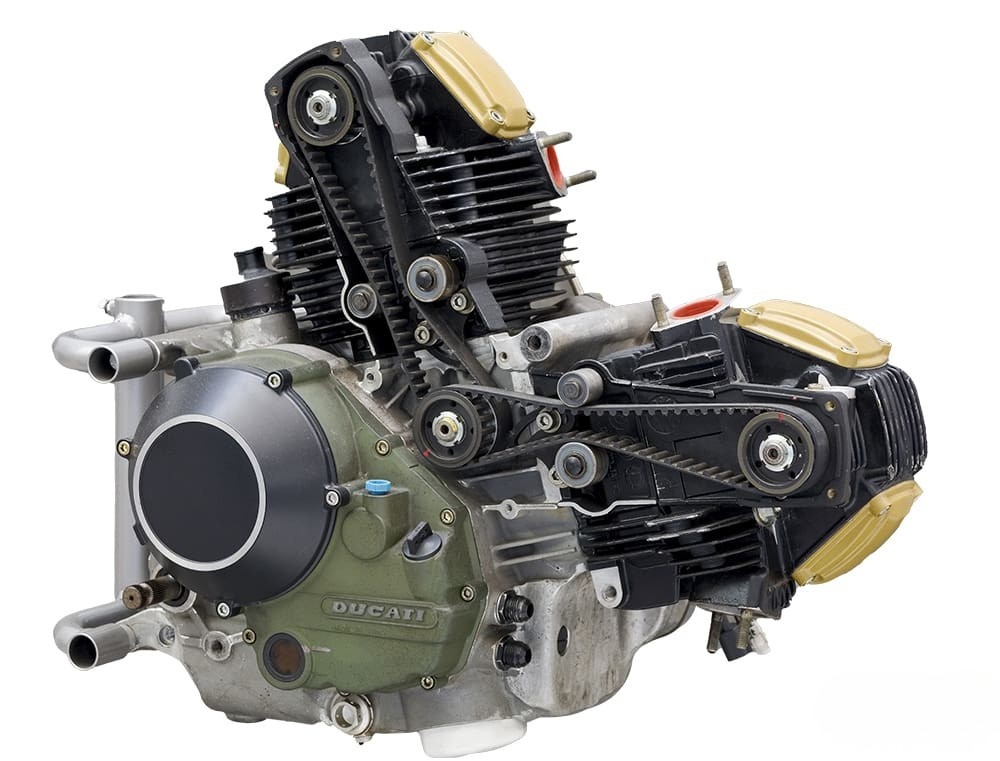
Edi Orioli’s 1990 Paris-Dakar winner was powered by a heavily modified Ducati-based L-twin with a race-oriented tune that reflected close collaboration between Cagiva, Ducati, and CH Racing.
- The base engine was increased to 944 cc by boring the Ducati 900SS blocks 2 mm over standard.
- Compression was slightly reduced from 9.2:1 to 9:1 to handle inconsistent rally fuels.
- Power output was tuned to roughly 67 hp at ~8000 rpm, and peak torque was around 70.6 Nm at ~5000 rpm — figures chosen for usable torque rather than peak power.
Rather than using the standard 900SS five-speed gearbox, the Elefant’s engine drove through a robust 5-speed cluster with closer ratios in second and third, improving tractability in varied terrain and reducing stress on the drivetrain.
Advanced fuel injection and ignition management came via a Weber/Marelli system adapted from Ducati’s 851 Superbike project, giving the engine more responsive fueling and spark control under rally conditions — a notable advantage over simple carburetion.
Weight and Chassis
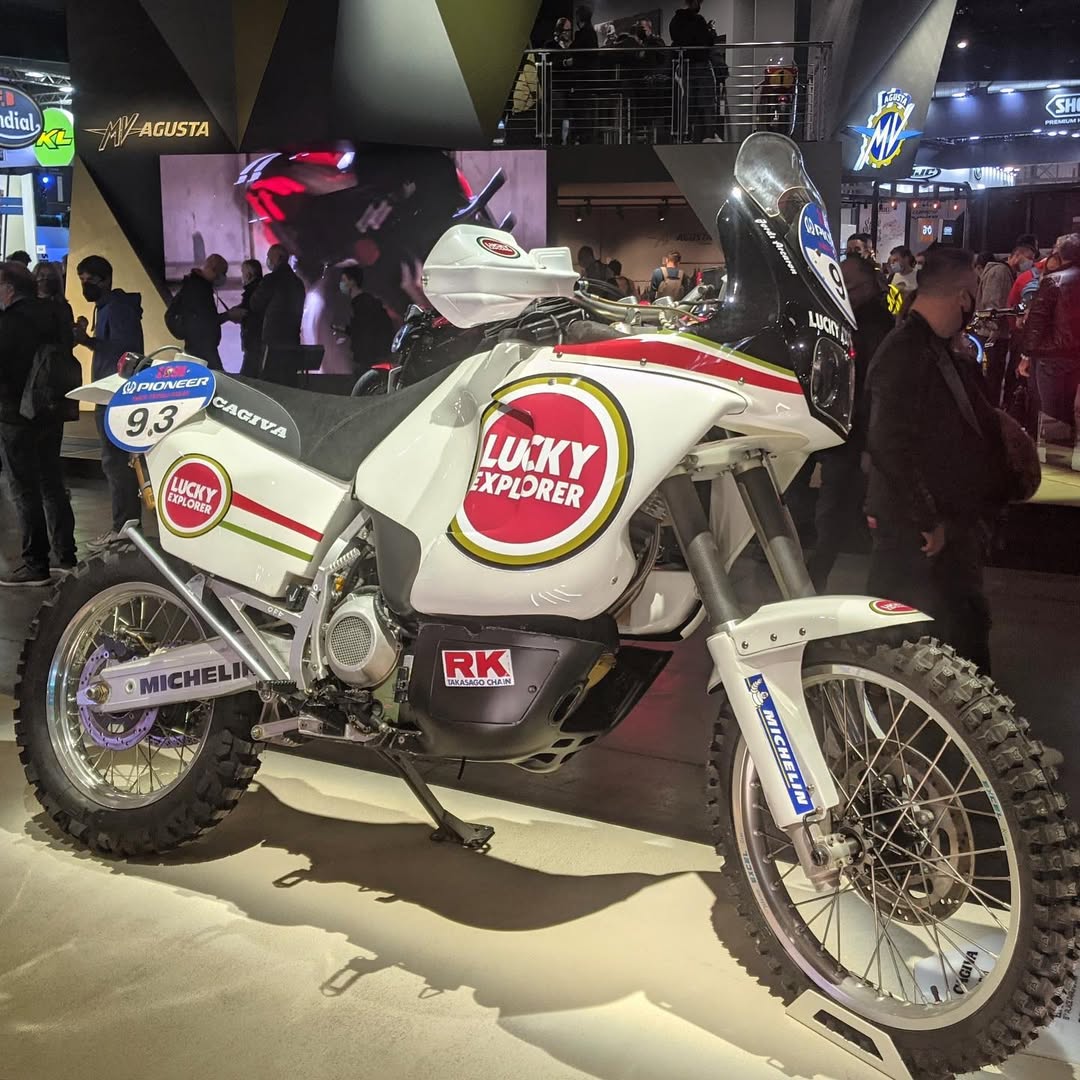
Despite its size and power, the Elefant weighed in the region of 180 kg dry, thanks to careful component choices including magnesium engine covers and the omission of street-oriented accessories. With fuel (~65 L capacity) and rally gear aboard, total weight could climb by another ~45 kg, but the bike remained competitive in its displacement class.
The frame itself was bespoke rally design, featuring a large 30 mm box-steel backbone with machined aluminum brackets and a square-section swingarm, tuned for both rigidity and long-distance endurance.
Suspension and Running Gear
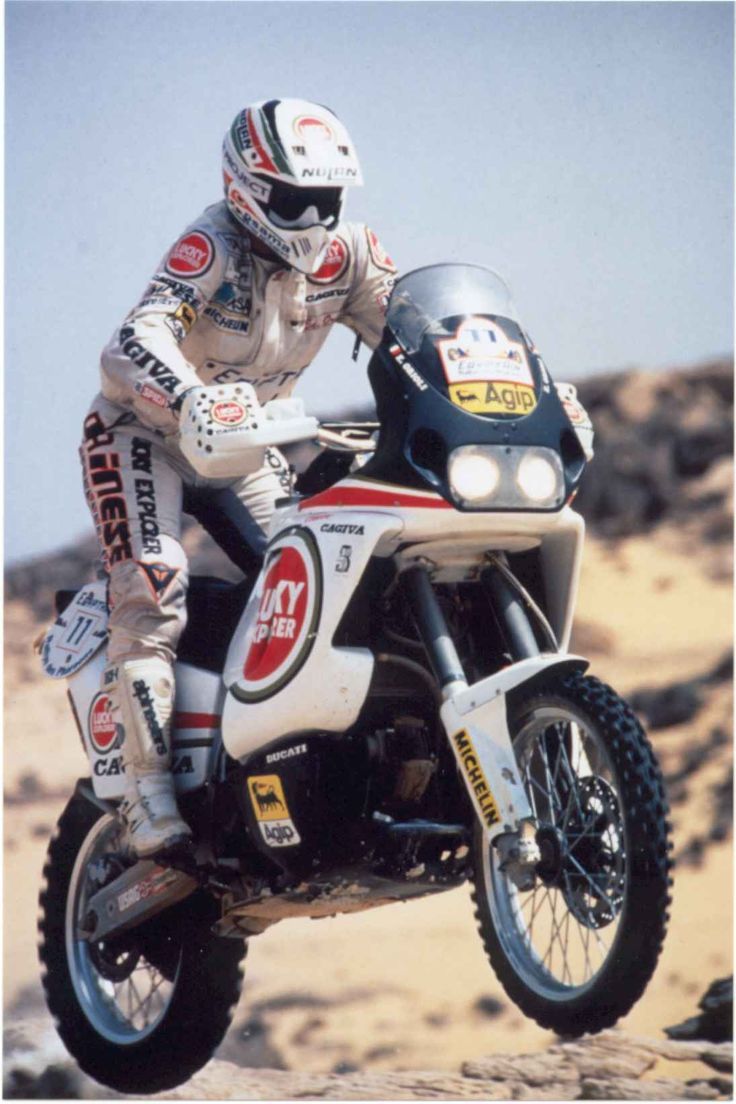
Top-tier components were used where it mattered most:
- Marzocchi off-road forks with 45 mm stanchions and ~290 mm travel
- Öhlins rear shock with ~290 mm travel
- Excel aluminum rims (21″ front / 18″ rear) on Michelin rally tyres
- Nissin disc brakes front and rear tailored for sand and high-heat environments
This combination gave the bike exceptional high-speed composure — a necessity on the vast Africa deserts — while still allowing it to soak up thousands of competitive kilometres.
Fuel Range and Endurance
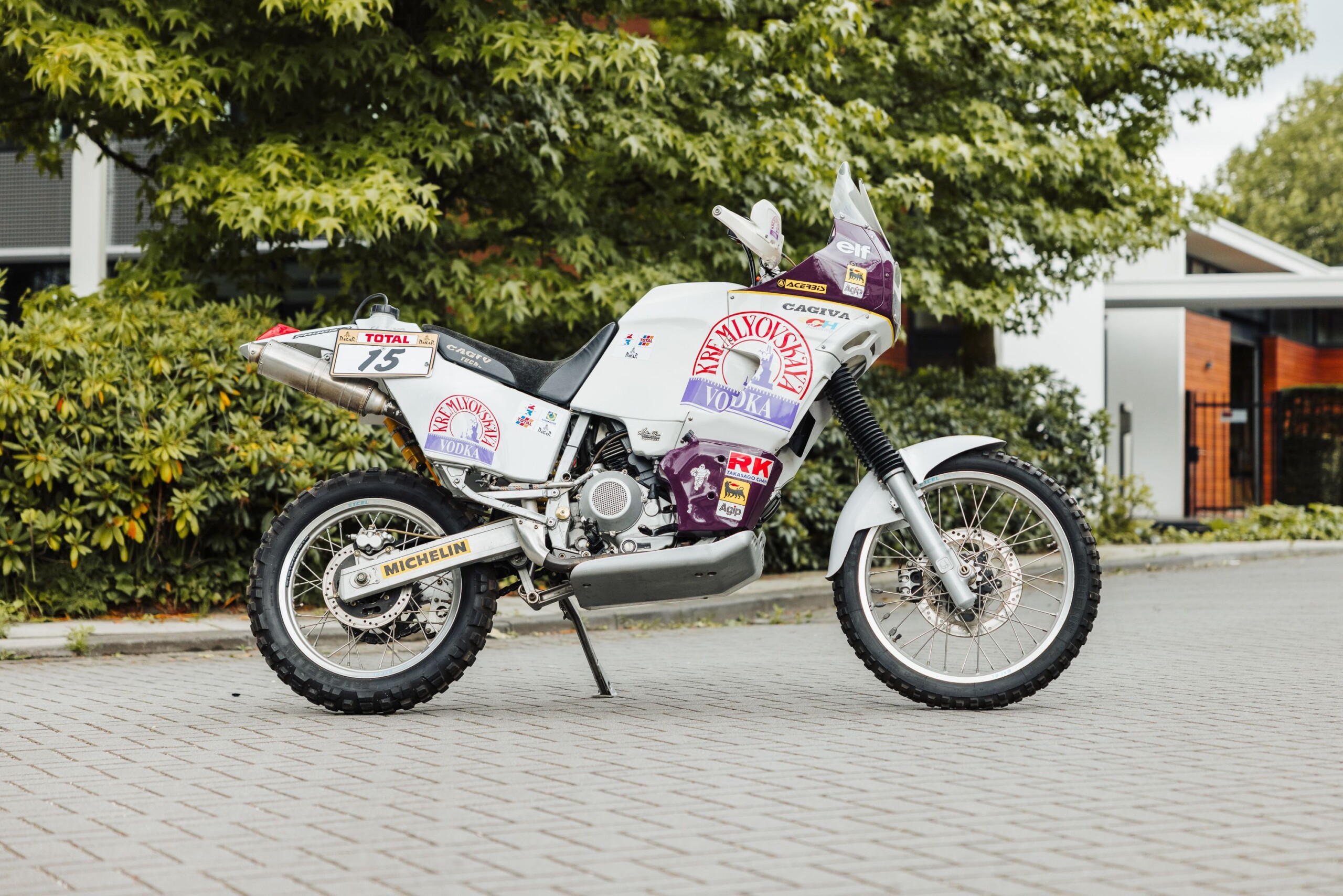
Beyond chassis and engine, the Elefant’s fuel strategy was a key contributor to its win. With ~65 L of fuel aboard in rally guise, the bike could tackle some of Dakar’s longest stages — nearly 450 km between refuels — without sacrificing balance. A pulse vacuum pump helped maintain consistent fuel delivery regardless of attitude or terrain.
In the hands of Edi Orioli, this engineering translated into a machine resilient enough to survive Dakar’s brutal demands and fast enough to consistently challenge for stage wins, ultimately delivering Cagiva’s first overall victory.
Cagiva Elefant Rally Record & Legendary Riders
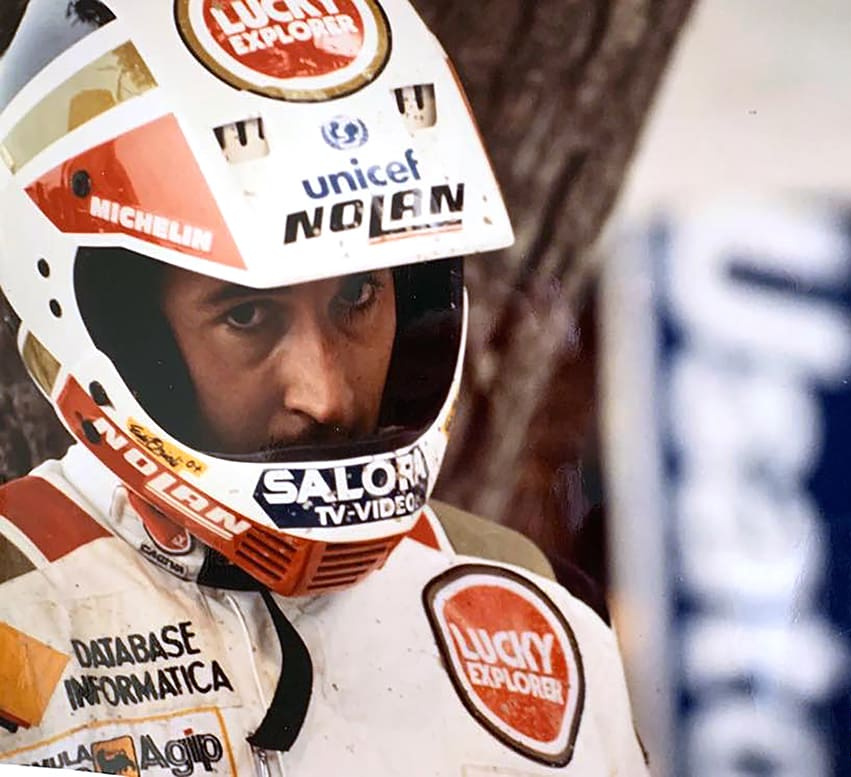
The Elefant’s success is inseparable from one man, Edi Orioli.
Paris-Dakar Rally Wins Timeline
- 1990 Winner: Edi Orioli: Cagiva’s breakthrough Dakar victory; the Elefant proves big V-twin power can survive and win.
- 1994 Winner: Edi Orioli: A second Dakar triumph confirms the Elefant as one of the era’s great rally machines.
These victories placed Cagiva in rare company and cemented the Elefant as a genuine Dakar legend.
Riding the Elefant: Strengths and Tradeoffs
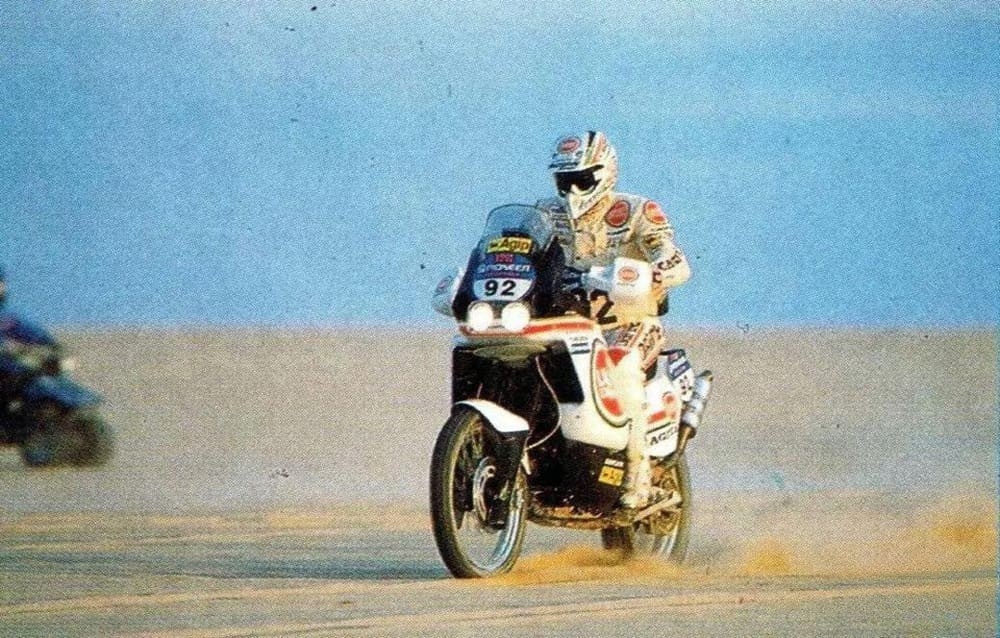
The Elefant was never subtle…and that was part of its appeal.
Strengths
- Massive torque and top-end speed
- Exceptional high-speed stability
- Strong mechanical character and durability
Tradeoffs
- Physically demanding to ride
- Heavy in tight or technical terrain
- Required confidence and commitment from the rider
Where Yamaha refined endurance and Honda perfected balance, Cagiva embraced controlled aggression.
Lucky Explorer: The Livery That Became a Legend
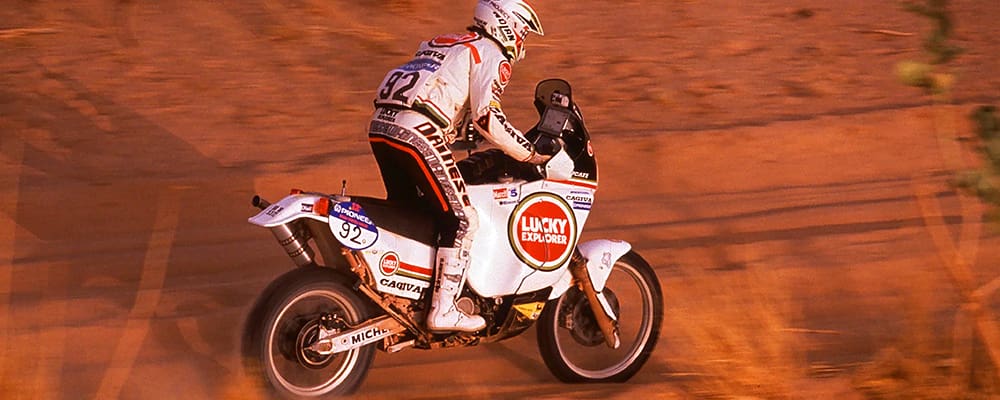
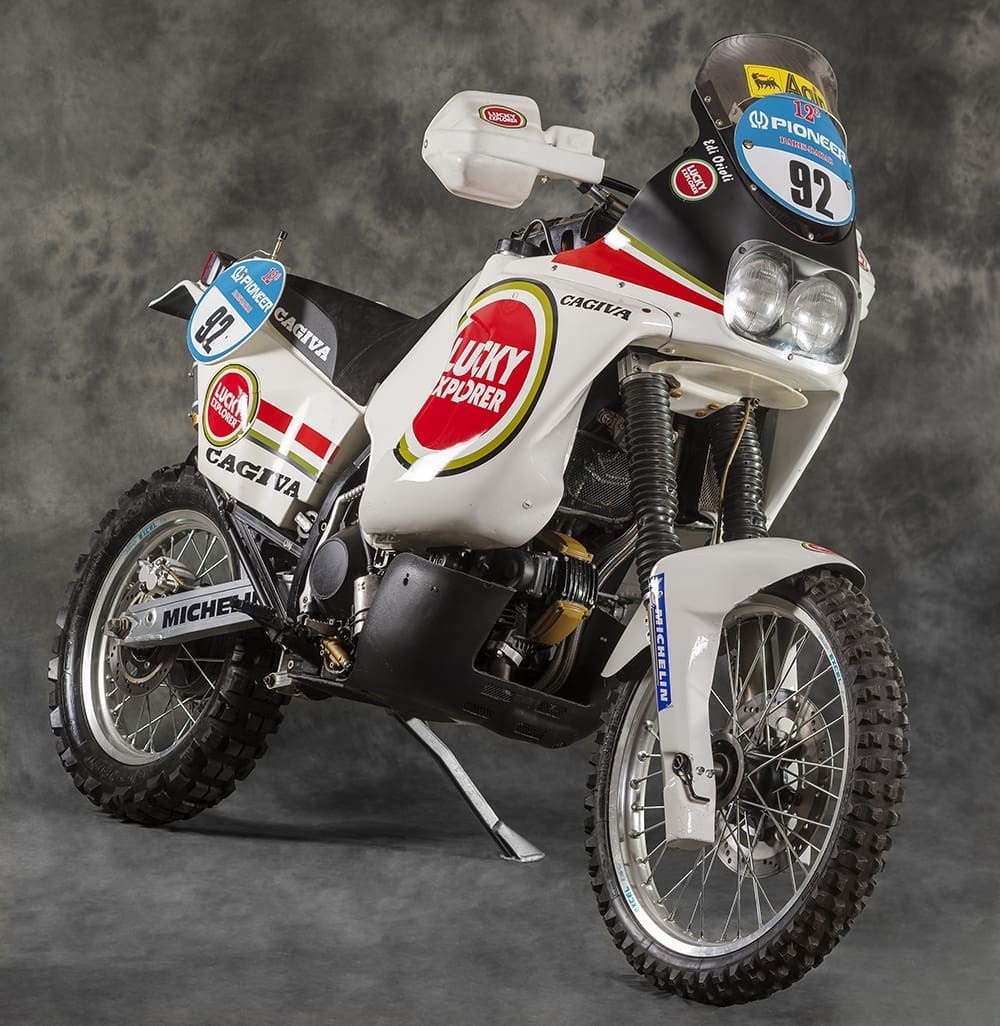
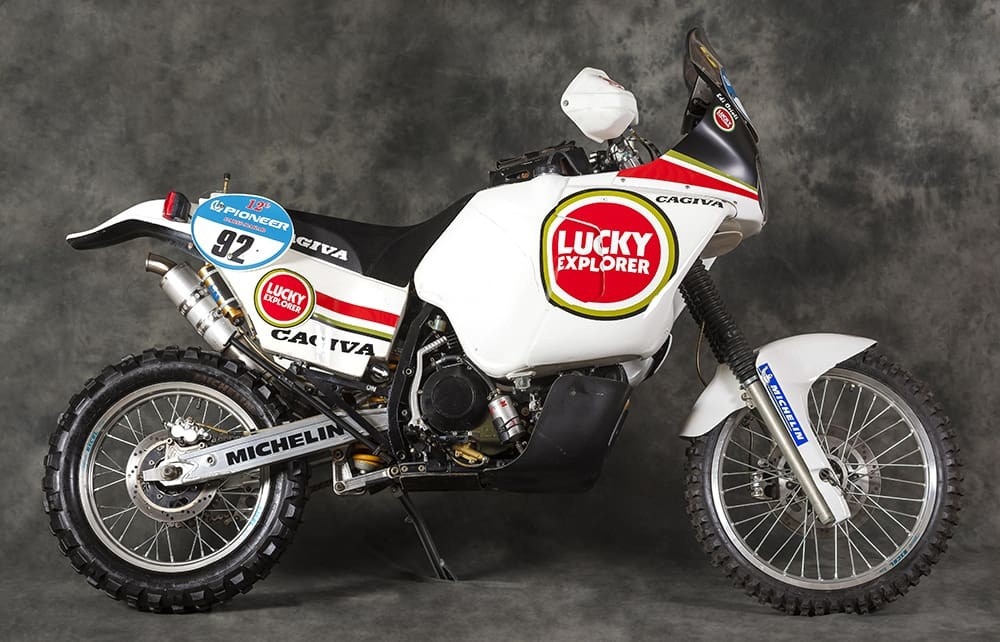
Few racing liveries are as instantly recognizable as the Lucky Explorer colors worn by the Cagiva Elefant. Although branded as Lucky Explorer, the livery was underwritten by Lucky Strike, drawing directly from the tobacco giant’s red-white-and-black (with gold trim) motorsport identity.
The Elefant’s look belongs firmly to Lucky Strike’s racing lineage, adapted through an Italian adventure-travel lens. The result was a visual identity that felt bold, purposeful, and unmistakably competitive — perfectly suited to Dakar’s vast, unforgiving landscapes.
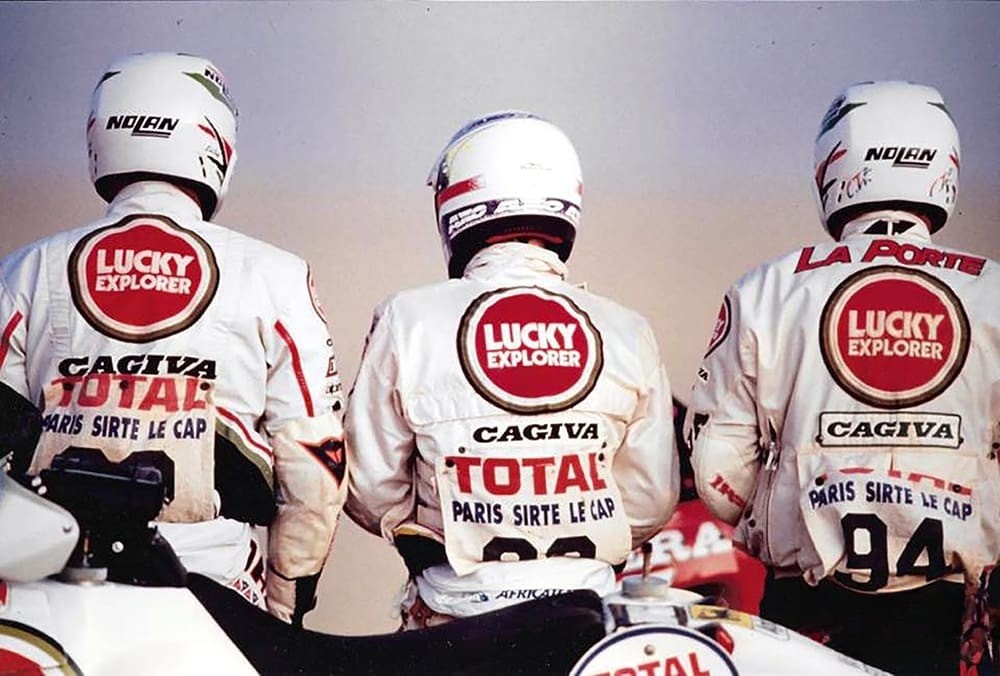
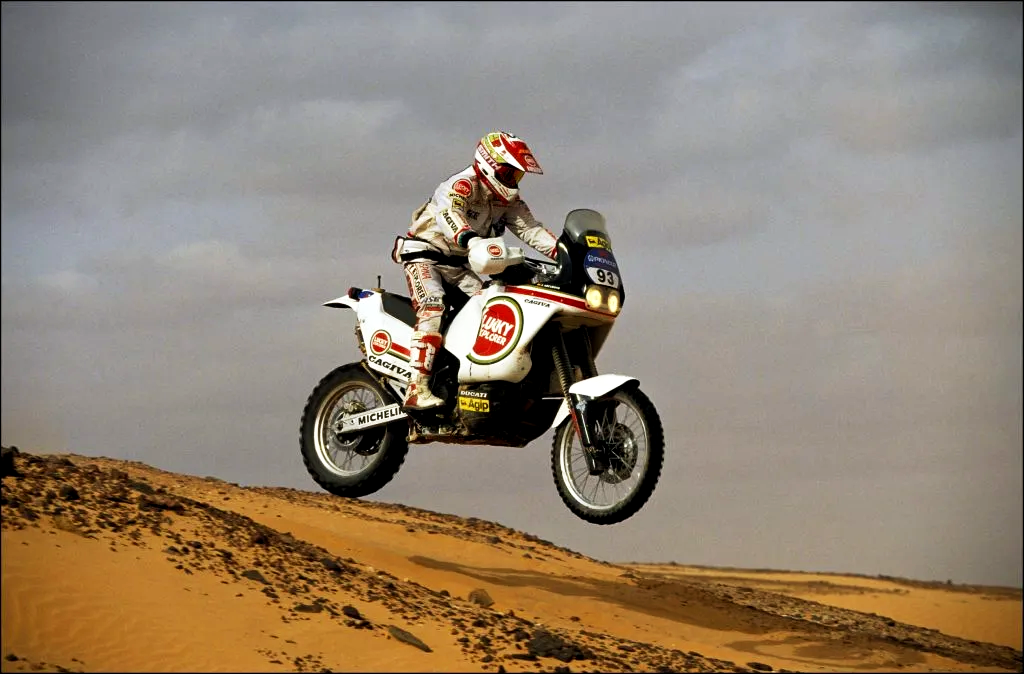
The bold red, white, and black graphics gave the bike a visual presence that matched its mechanical aggression. In the vast emptiness of the desert, the Elefant didn’t just perform, it announced itself. More than any other Dakar bike before or since, the Elefant resembled a two-wheeled trans-African beast more than a mere machine.
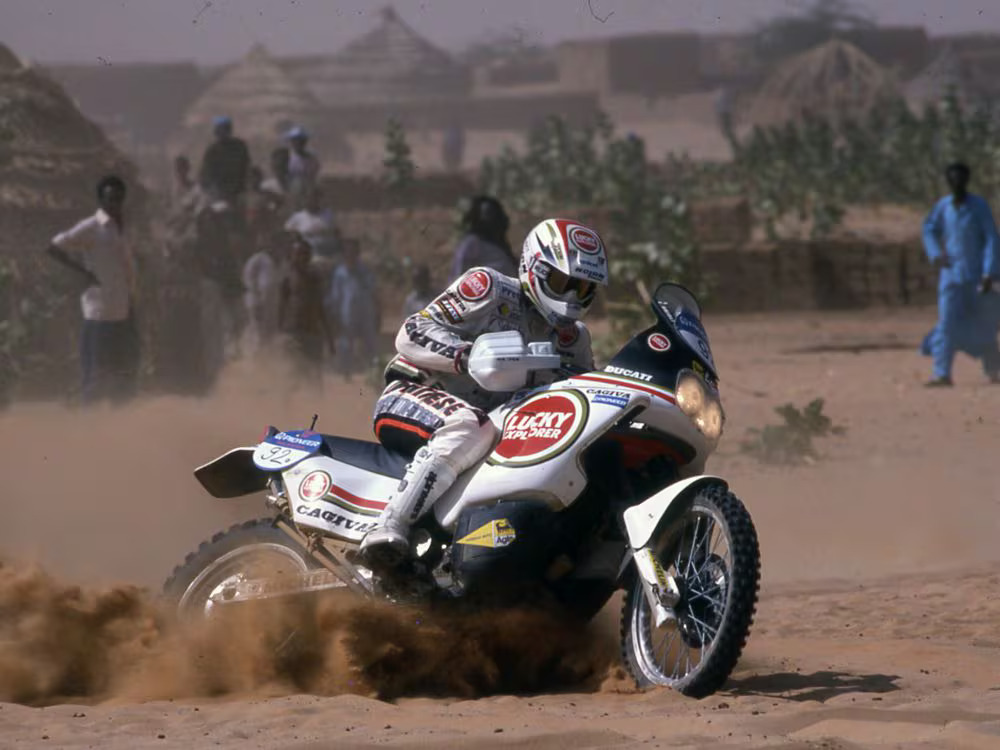 Unlike many corporate liveries of the era, Lucky Explorer aligned naturally with Dakar’s spirit: exploration, endurance, and adventure. The partnership felt authentic, reinforcing the idea that the Elefant wasn’t merely a race bike, but a symbol of long-distance ambition.
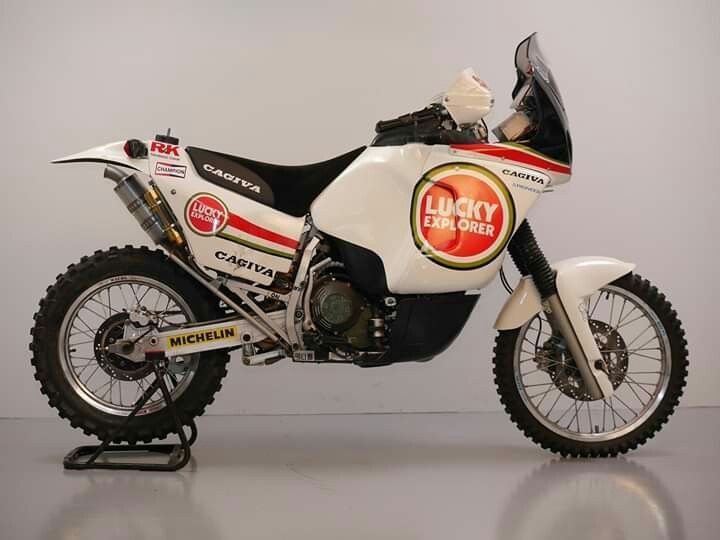
Decades later, the Lucky Explorer Elefant remains one of the most photographed and fondly remembered Dakar motorcycles, proof that iconic design can elevate racing success into legend.
Wearing its iconic Lucky Explorer livery, the Cagiva Elefant became one of the most visually recognizable machines in Dakar history — a bold design that perfectly matched the bike’s raw power and ambition.
Dakar’s Big-Twin Icons
| Feature | Cagiva Elefant | Yamaha YZE750T | Honda NXR750 |
|---|---|---|---|
| Engine Layout | L-twin | Parallel-twin | V-twin |
| Displacement | ~900+ cc | ~750 cc | ~780 cc |
| Philosophy | Power & speed | Endurance & range | Balance & control |
| Riding Style | Aggressive | Methodical | Precise |
| Dakar Wins | 1990, 1994 | 1991–1993 | 1986–1989 |
The Elefant was Dakar’s wild card: less refined, more visceral, and brutally effective when ridden at full commitment.
The Production Elefant: Cagiva Elefant 900ie
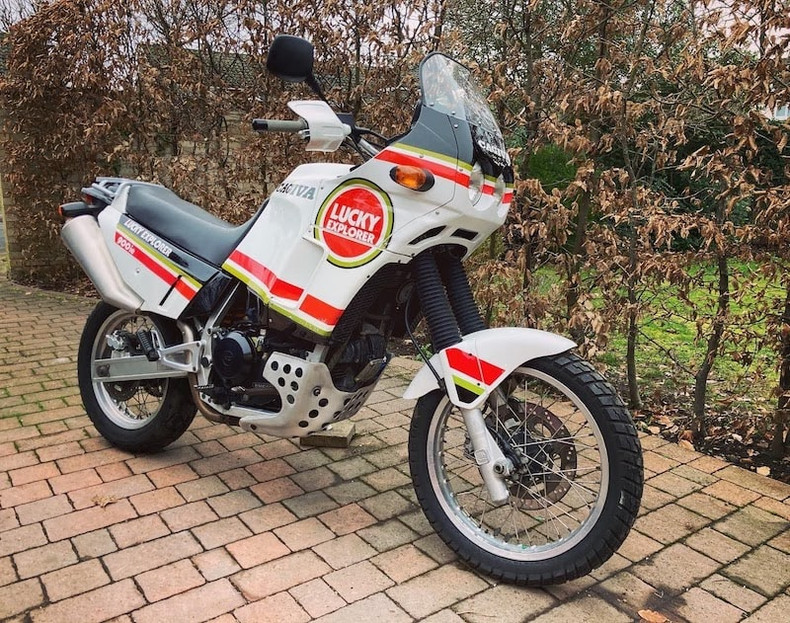 While the Paris–Dakar victories were achieved by factory-built rally machines, Cagiva also translated that success into a road-going adventure bike: the Cagiva Elefant 900ie. Introduced in the early 1990s, the 900ie featured a fuel-injected Ducati-based L-twin, rally-inspired styling, and long-travel suspension suitable for real-world adventure riding.
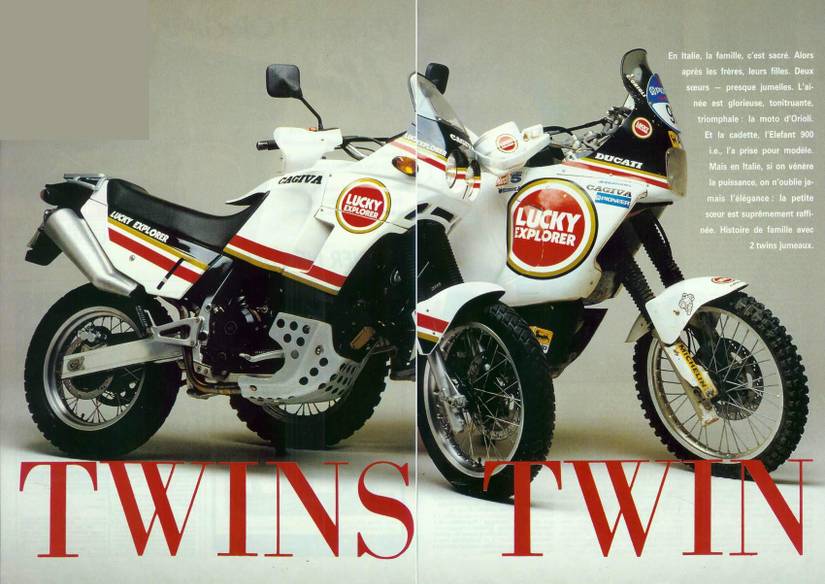
It carried the visual DNA of the Dakar racers — most famously the Lucky Explorer livery — but was engineered for durability, emissions compliance, and everyday usability.
The Elefant 900ie was inspired by the Dakar winners, not derived directly from them — a genuine adventure motorcycle shaped by racing success rather than a detuned race bike.
This distinction mirrors the broader Dakar era: factory prototypes conquered the desert, while production models carried the legend onto public roads.
Legacy and Influence…
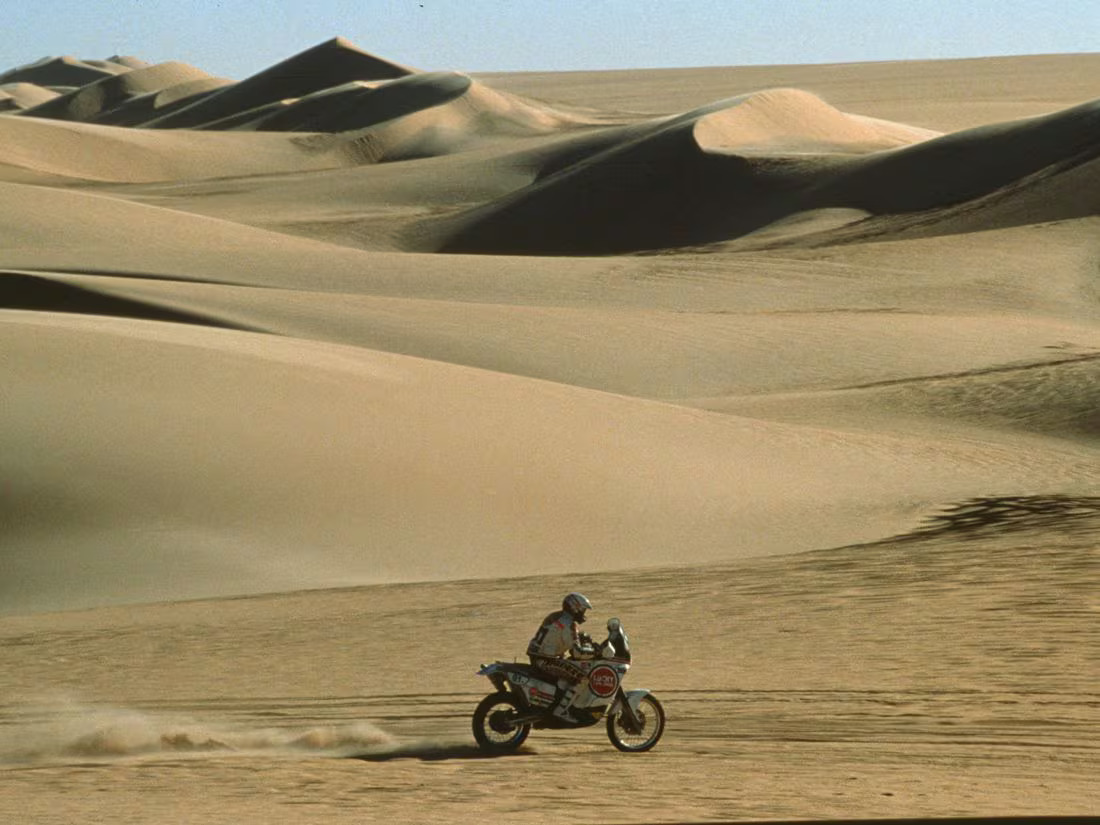 Although Cagiva eventually exited Dakar competition, the Elefant left a lasting imprint:
- Iconic Livery: The Lucky Explorer colors remain among the most recognizable in rally history
- Proof of Concept: Demonstrated that large-displacement V-twins could win Dakar
- Production Influence: Inspired road-going Elefant models that bridged rally and adventure touring
The Elefant represents one of the last great European victories of Dakar’s big-twin era, before lighter singles and stricter regulations reshaped the rally.
Power and Style…
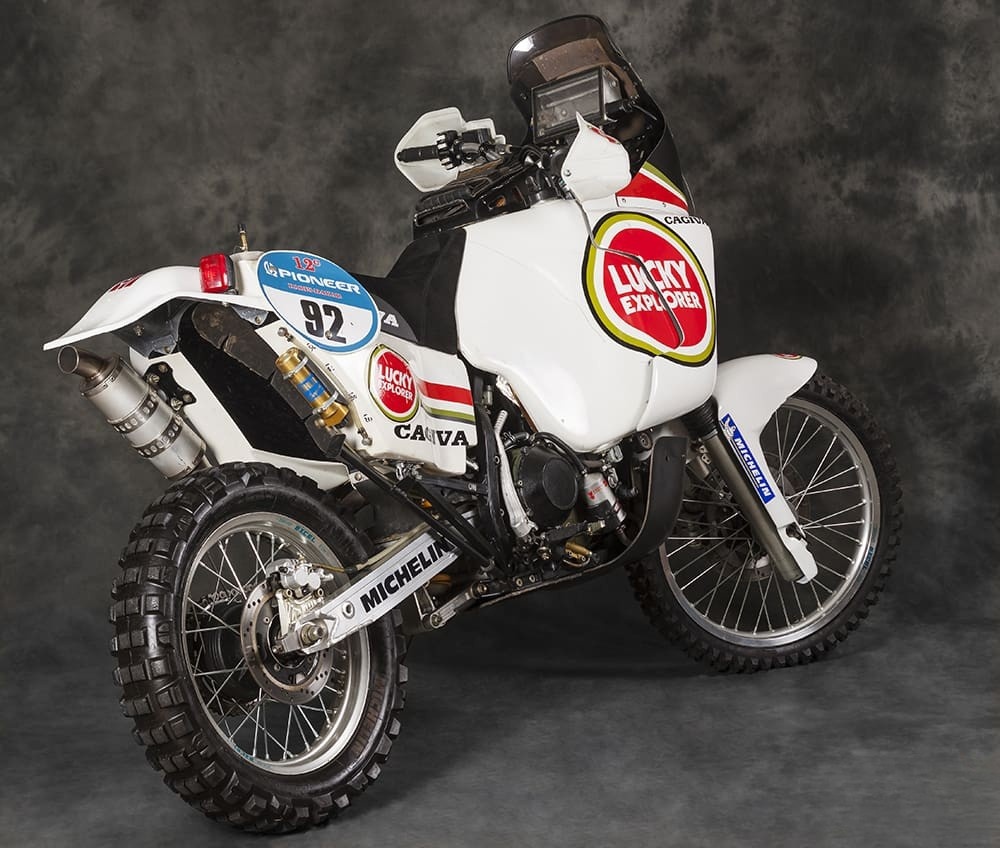 The Cagiva Elefant stands as one of the most charismatic and unlikely Dakar champions. Big, loud, and demanding, it rewarded bravery with speed and carved its place into rally history through brute power and sheer force. In the Dakar Legends canon, the Elefant isn’t just remembered for winning — it’s remembered for how it won.
More Dakar Legends…
 2WD Dakar Legend: Yamaha WR450F 2-Trac - Remembering Yamaha x Öhlins’ Hydraulic 2WD Enduro… Every so often, a motorcycle appears that seems to point toward an entirely different future. The Yamaha WR450F 2-Trac was one of those machines. At first glance, it […]
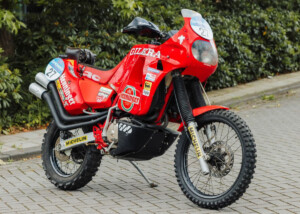 Dakar Legends: Gilera RC600 & RC750 Rallye - Italy’s Big Thumper in the Twin-Cylinder Era… By the late 1980s, the Paris-Dakar Rally was no longer a romantic expedition but an escalating arms race among the major manufacturers. Twin-cylinder prototypes were growing larger and […]
 Desert Bomber: BMW R80G/S Paris-Dakar Rally Bike - The Boxer That Changed the Desert Forever… In 1981, the Paris-Dakar Rally was still raw — more expedition than sport, more survival than spectacle. Riders crossed the Sahara on machines that were barely adapted from […]
 Desert Boxer: BMW R900RR Dakar Rally Bike - Dakar Legends: Last Roar of the Desert Bombers… In the late 1990s and early 2000s, BMW found itself at a turning point in rally-raid racing. The boxer twin had already written one of the most […]
 The Honda EXP-2: The Two-Stroke Desert Racer - Honda’s 400cc “Experimental 2-Stroke” Baja 1000 / Dakar Rally Bike… In the mid-1990s, as emissions regulations tightened worldwide and the future of two-stroke off-road bikes looked increasingly uncertain, Honda did something nobody expected: it built […]
 Dakar Legends: BMW F650RR Rally Bike - BMW F650RR: Grandfather of the Modern Rally Bikes… In the late 1990s, BMW quietly executed one of the most important strategic pivots in rally history. They developed and unleashed the BMW F650RR — a lean, […]
 The Four-Cylinder Dakar Bike: Yamaha FZ750 Ténéré - The Yamaha FZ750 Ténéré (0U26): Yamaha’s Radical Dakar Experiment… Before Super Ténéré, before big twins ruled the desert, before Dakar logic fully settled in, there was the sportbike-powered FZ750T. The 1986 Yamaha FZ750 Ténéré (0U26) […]
 Lucky Explorer: Cagiva Elefant Paris-Dakar Rally Bike - The Italian Powerhouse That Conquered Dakar… The Cagiva Elefant occupies a unique place in Paris-Dakar history. Where other manufacturers leaned on clinical efficiency or engineering conservatism, Cagiva brought Italian audacity to the table: massive V-twin […]
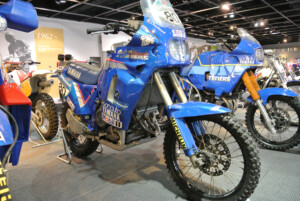 Dakar Legends: Yamaha YZE750T Super Ténéré - The Bike That Built a Dakar Dynasty… The Yamaha YZE750T Super Ténéré is one of the most important motorcycles in rally-raid history. Purpose-built from the ground up for the Paris-Dakar Rally, it was the machine […]
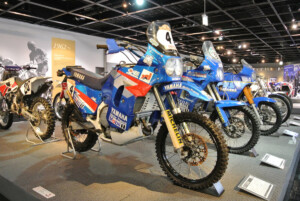 Desert Freight Train: Yamaha XTZ850R Paris-Dakar Rally Bike - The big twin that ruled the desert at the height of the Paris-Dakar era… In the early and mid-1990s, Yamaha dominated the Paris-Dakar Rally, the toughest off-road endurance race on the planet. At the heart […]
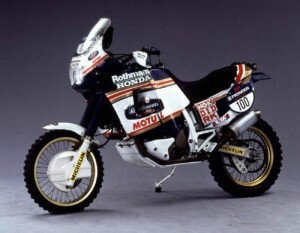 Desert Queen: Honda NXR750 Paris-Dakar Rally Bike - Honda’s NXR750: Queen of the Desert… Few motorcycles in history can claim to have dominated the most brutal race on earth the way Honda’s NXR750 did. Built specifically to conquer the Paris-Dakar Rally, the NXR750 […]


