
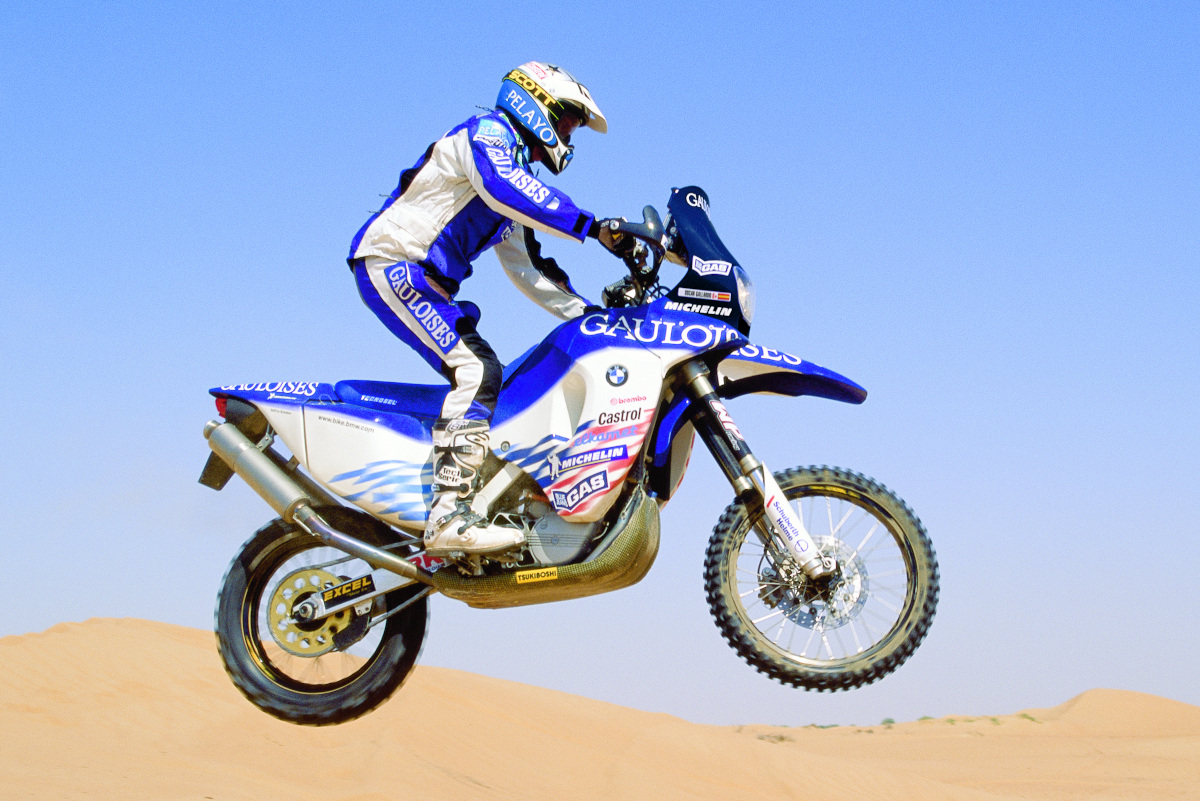
BMW F650RR: Grandfather of the Modern Rally Bikes…
In the late 1990s, BMW quietly executed one of the most important strategic pivots in rally history. They developed and unleashed the BMW F650RR — a lean, high-performance single-cylinder machine that carried them back to the top step of Dakar and strengthened the brand’s off-road identity for decades to come.
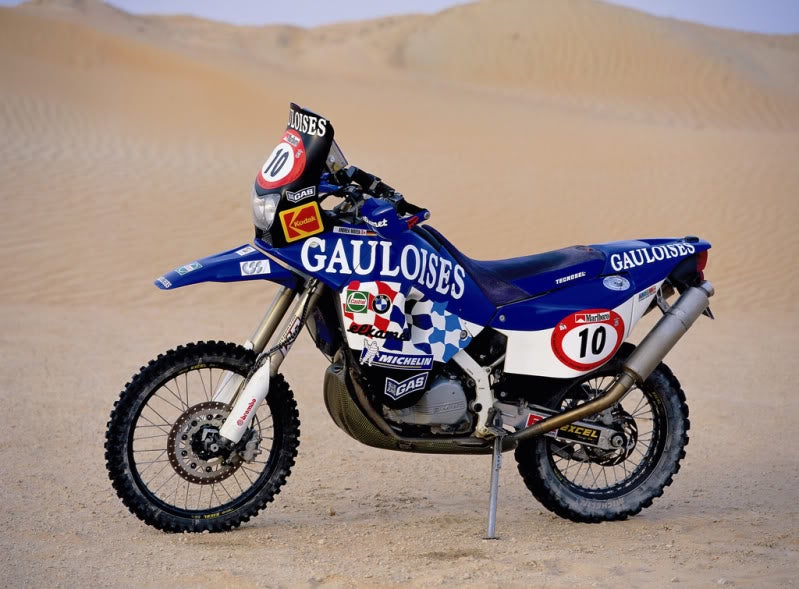 Whereas the previous decade had been dominated by massive twin-cylinder rally bombers and brute-force solutions, BMW’s late-1990s approach emphasized efficiency, balance, and reliability. The F650RR wasn’t designed to overpower the desert, but survive it faster and longer than anything else on the course.
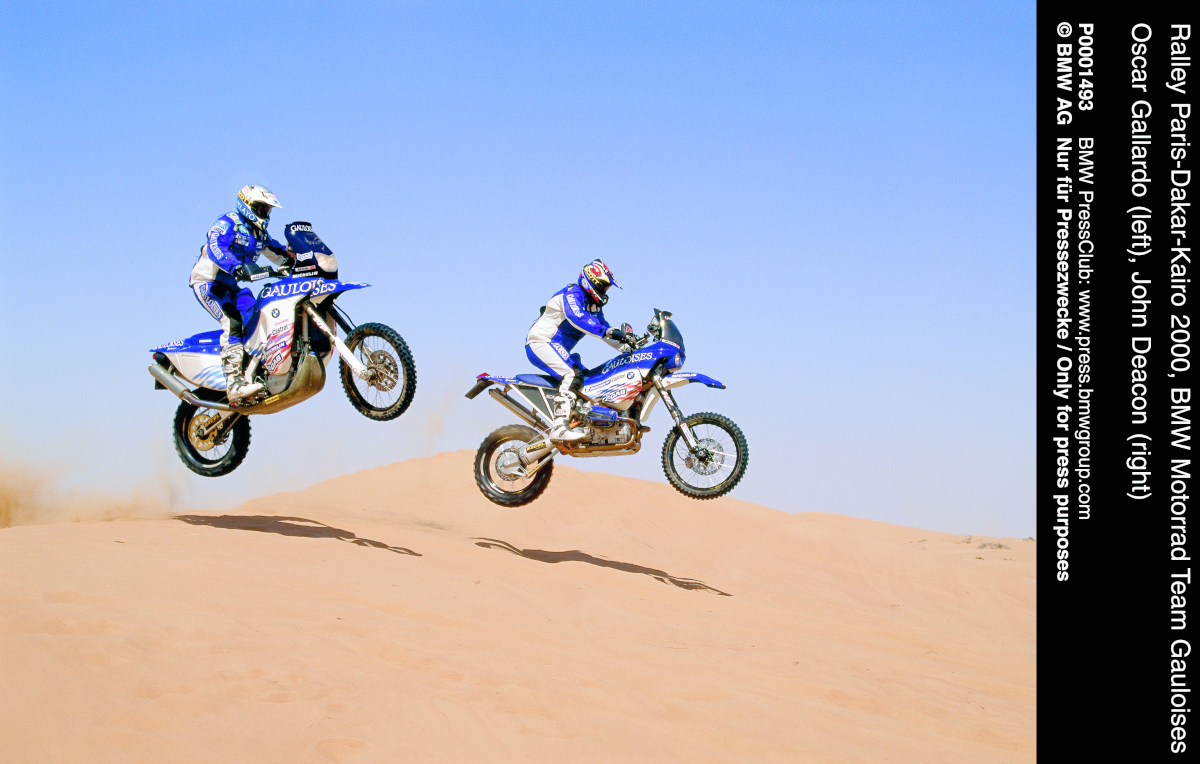 That philosophy paid off. In 1999 and 2000, the F650RR delivered back-to-back Paris-Dakar victories, firmly establishing BMW’s modern rally credentials and proving that a properly engineered single-cylinder machine could dominate the world’s toughest rally.
Why BMW Went Single-Cylinder…
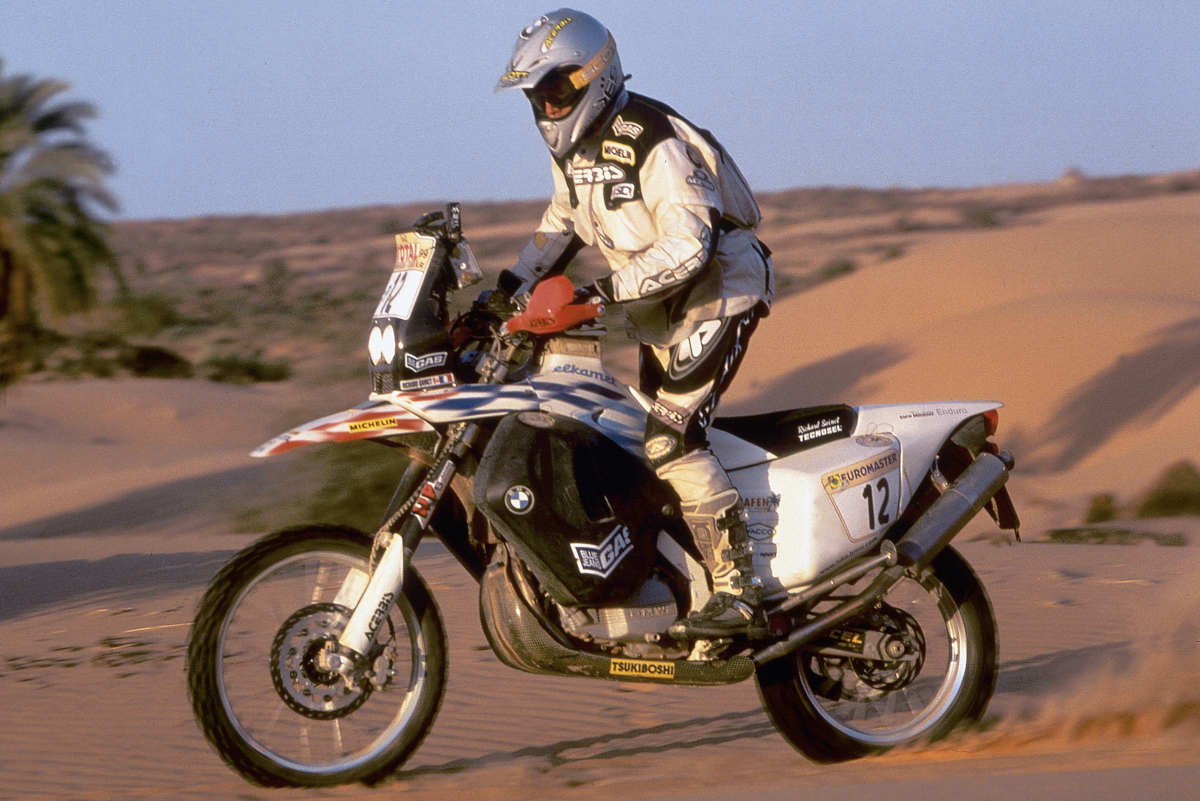
BMW’s decision to pursue a single-cylinder Dakar platform was both strategic and pragmatic. By the late 1990s, Dakar success increasingly favored lighter motorcycles with manageable power delivery, easier maintenance, and reduced rider fatigue over thousands of kilometers. Singles offered clear advantages: less mass, fewer moving parts, and simpler packaging for fuel and suspension.
What’s more, as multi-cylinder Dakar bikes became faster and faster, with machines like the FZ750 Ténéré topping 120 mph on rough ground, BMW placed at bet: They gambled that the rally organizers, for safety’s sake, would try to decrease average speeds with twistier, more technical sections. These tracks would favor lighter, more agile machines…and spell the end of big-twin dominance.
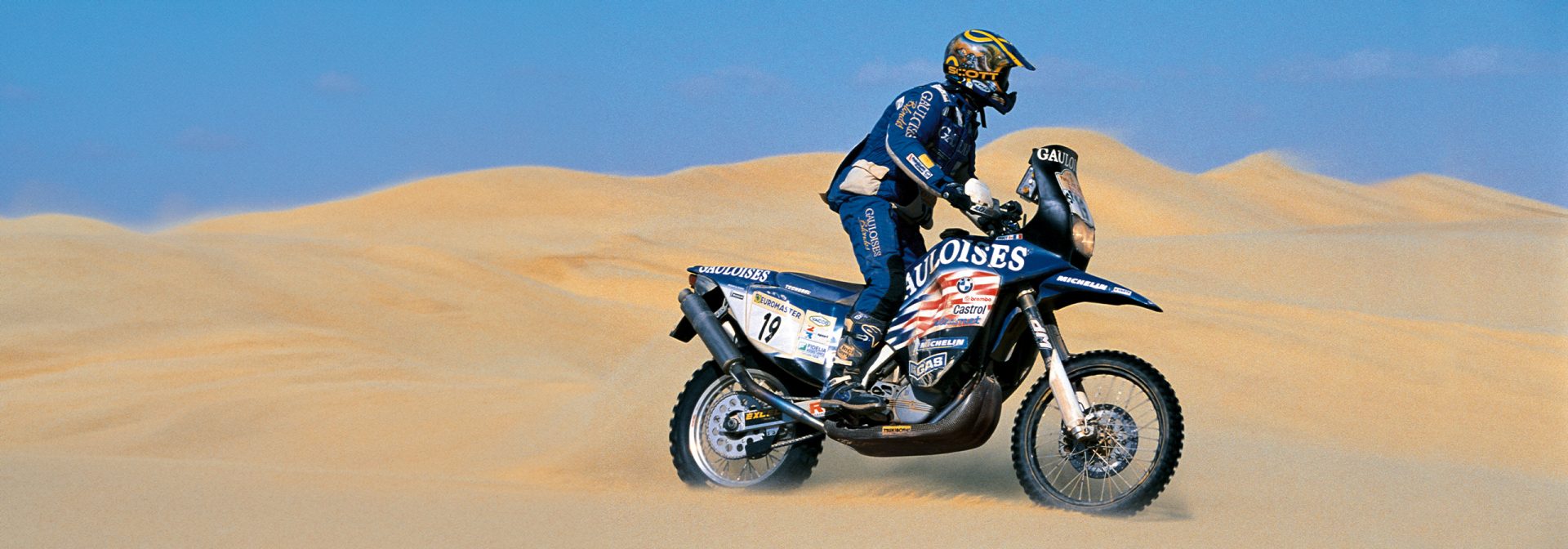 At the time, however, BMW didn’t have a modern single-cylinder engine program developed in-house. Rather than delay the project, they leveraged an existing partnership with Rotax, whose proven liquid-cooled single formed the foundation of BMW’s F650 platform. This was not a stopgap solution — it was a calculated move that allowed BMW to focus resources on chassis, suspension, fuel management, and rally-specific durability.
In effect, Rotax provided the muscle; BMW supplied the architecture, integration, and rally engineering expertise.
Production First, Rally Second…
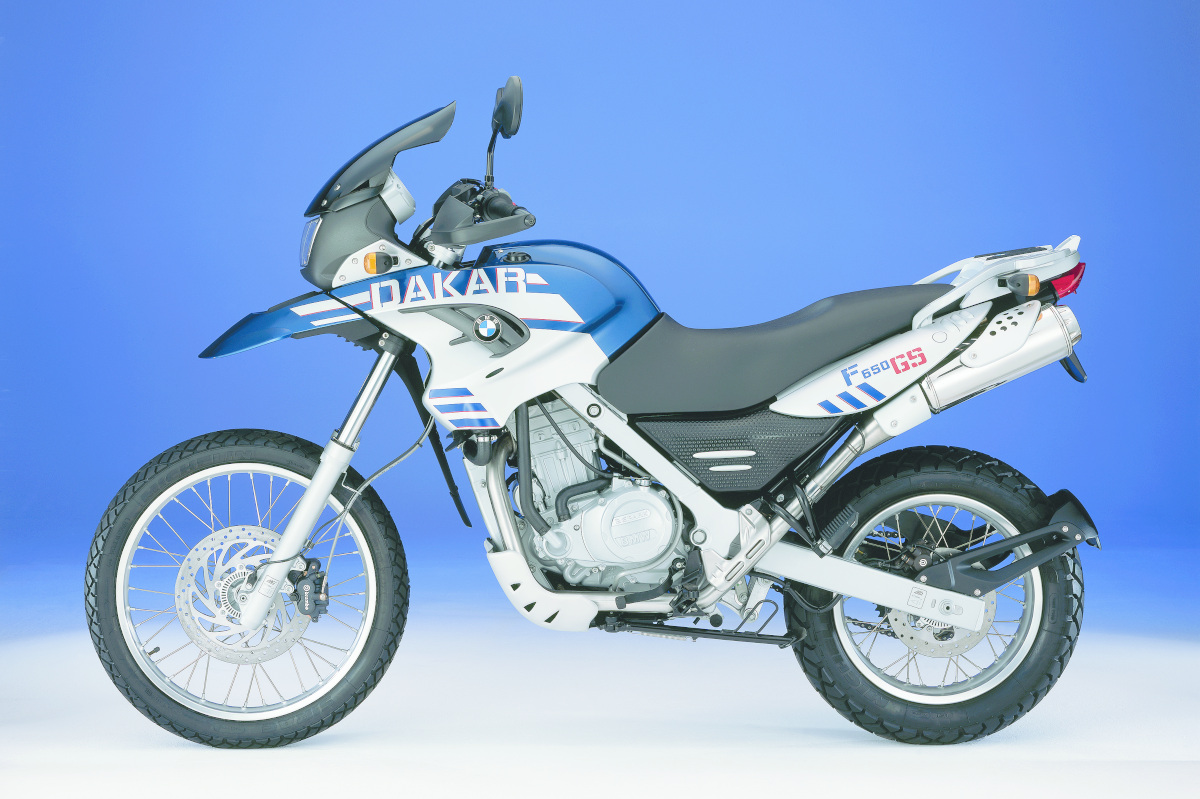
The production BMW F650 platform came first. BMW introduced the F650 single-cylinder road and dual-purpose models in the early 1990s, well before the factory Dakar program reached maturity. The F650RR was not a prototype that later became a street bike — it was a factory racing machine developed from an existing production platform.
However, the F650RR’s rally success elevated BMW’s reputation in the adventure and dual-sport space and directly contributed to the credibility and popularity of later F650GS models. Basically, the production F650 enabled the F650RR rally program, whose Dakar victories validated and strengthened BMW’s adventure-bike identity, leading to production machines the F650GS Dakar.
Inside the Dakar-Winning F650RR
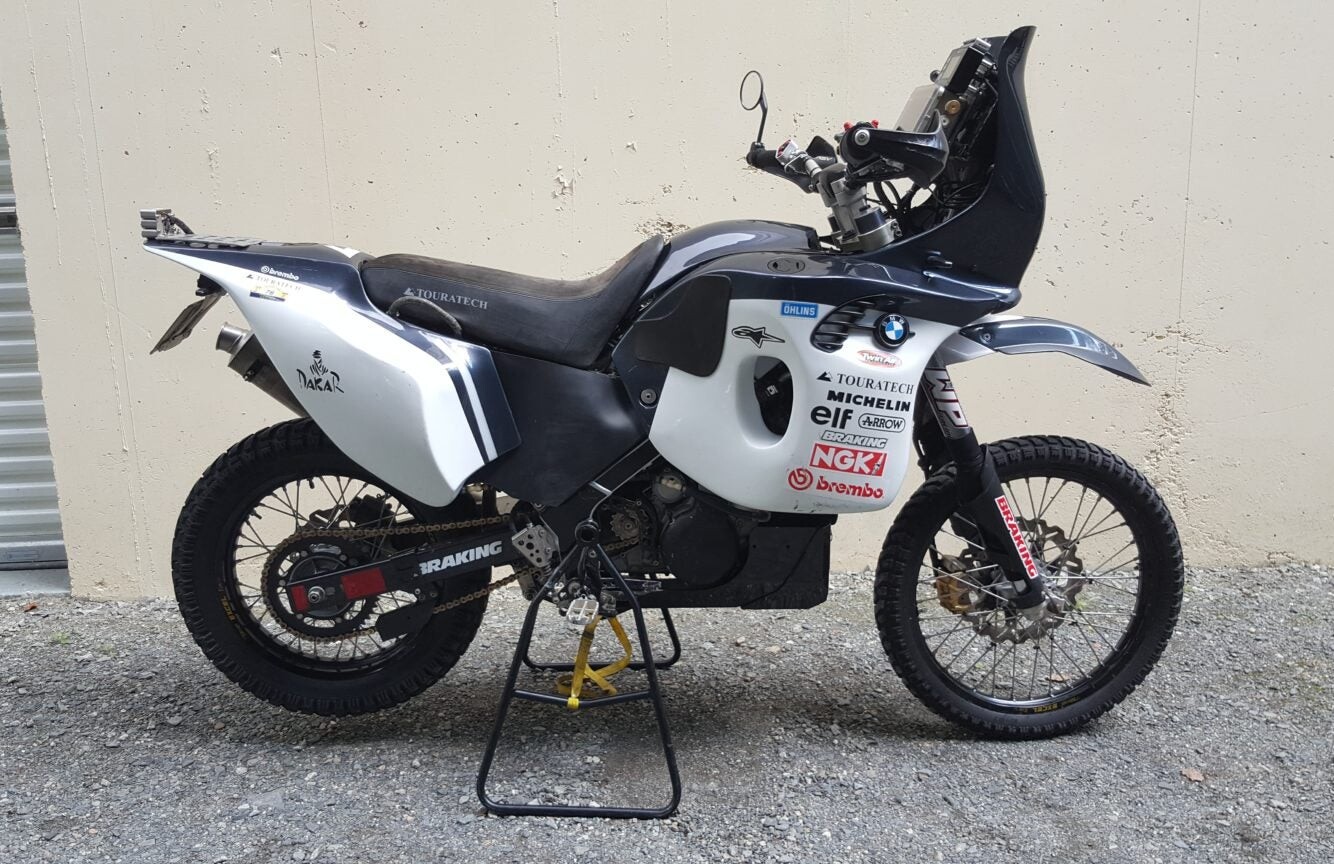
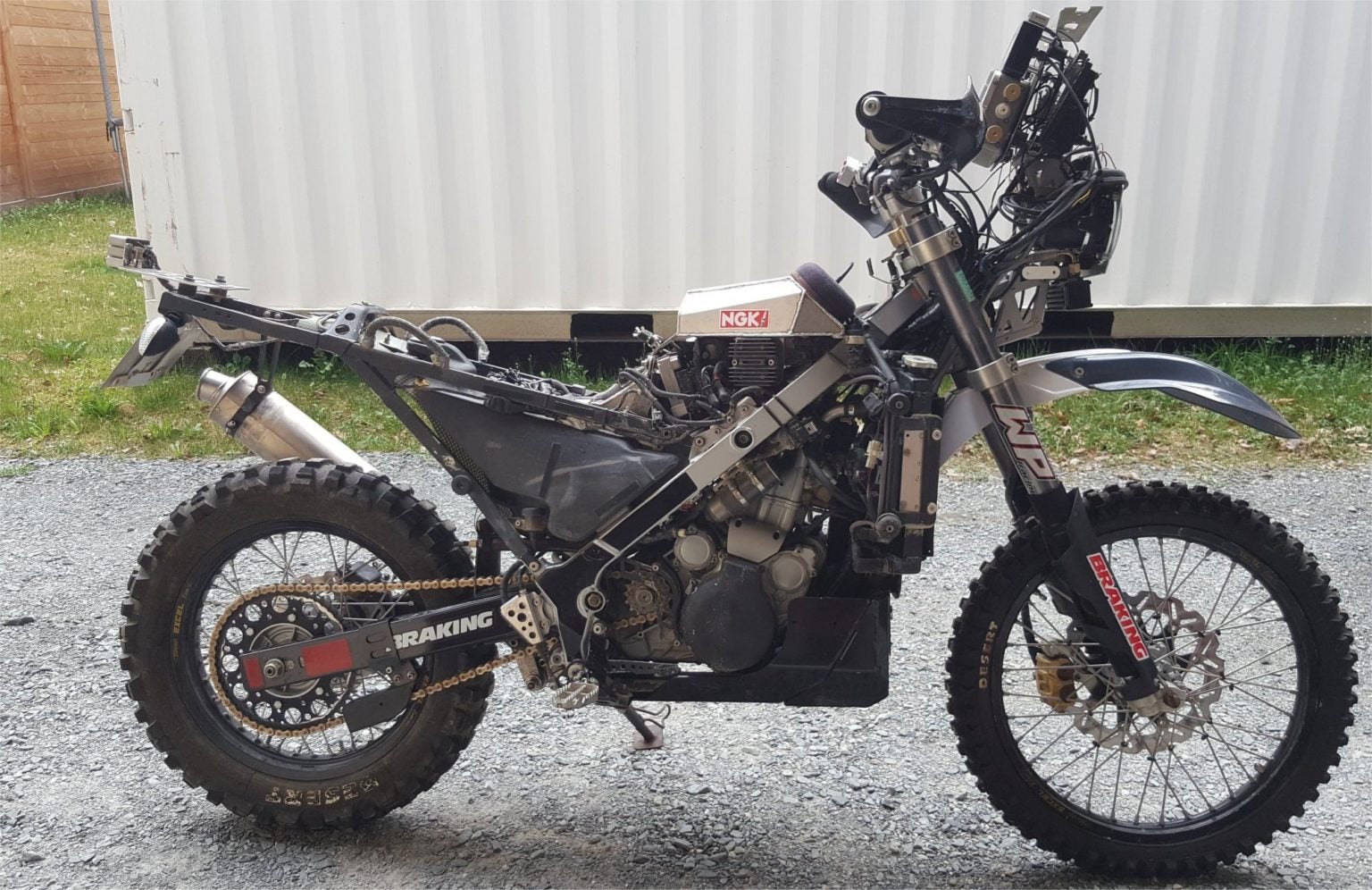
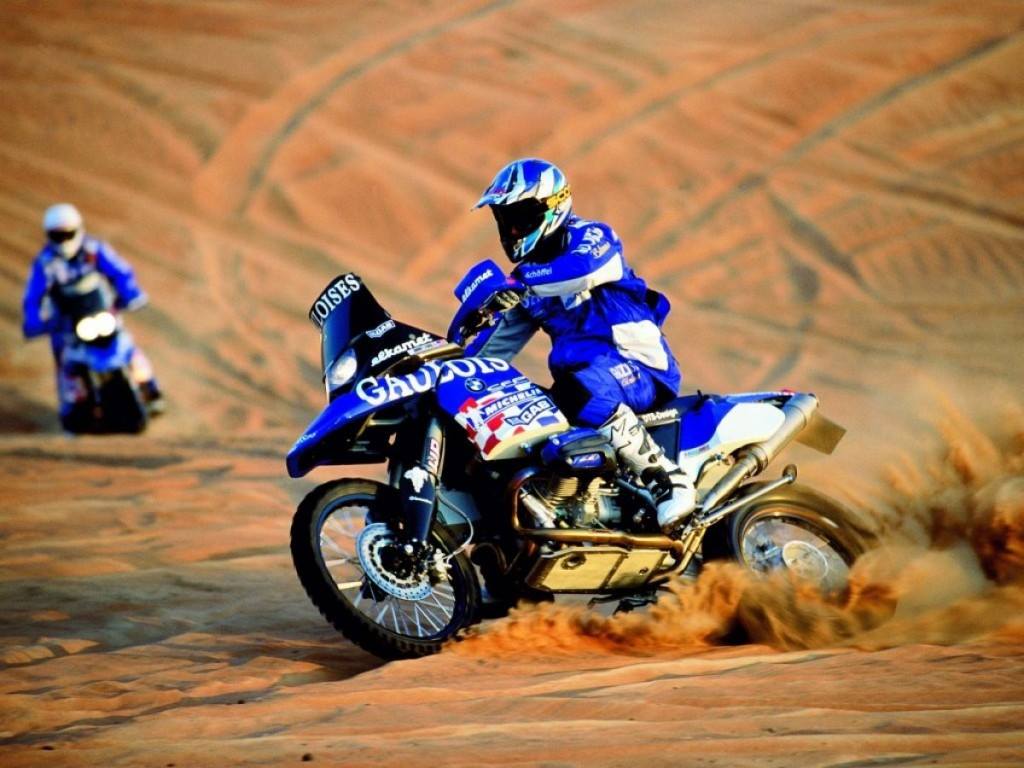 Though it had roots in the production F650 Funduro, the F650RR was highly modified. BMW had to engineer a machine that could run at high speeds for weeks at a time, carrying enormous fuel loads and absorbing relentless punishment. They developed a chromoly main frame and titanium subframe for maximum strength and lightness. For suspension, they turned to off-road specialists WP, mounting their inverted forks and a PDS (Progressive Damping System) rear shock direct-mounted to the rear swingarm to avoid complex linkage systems.
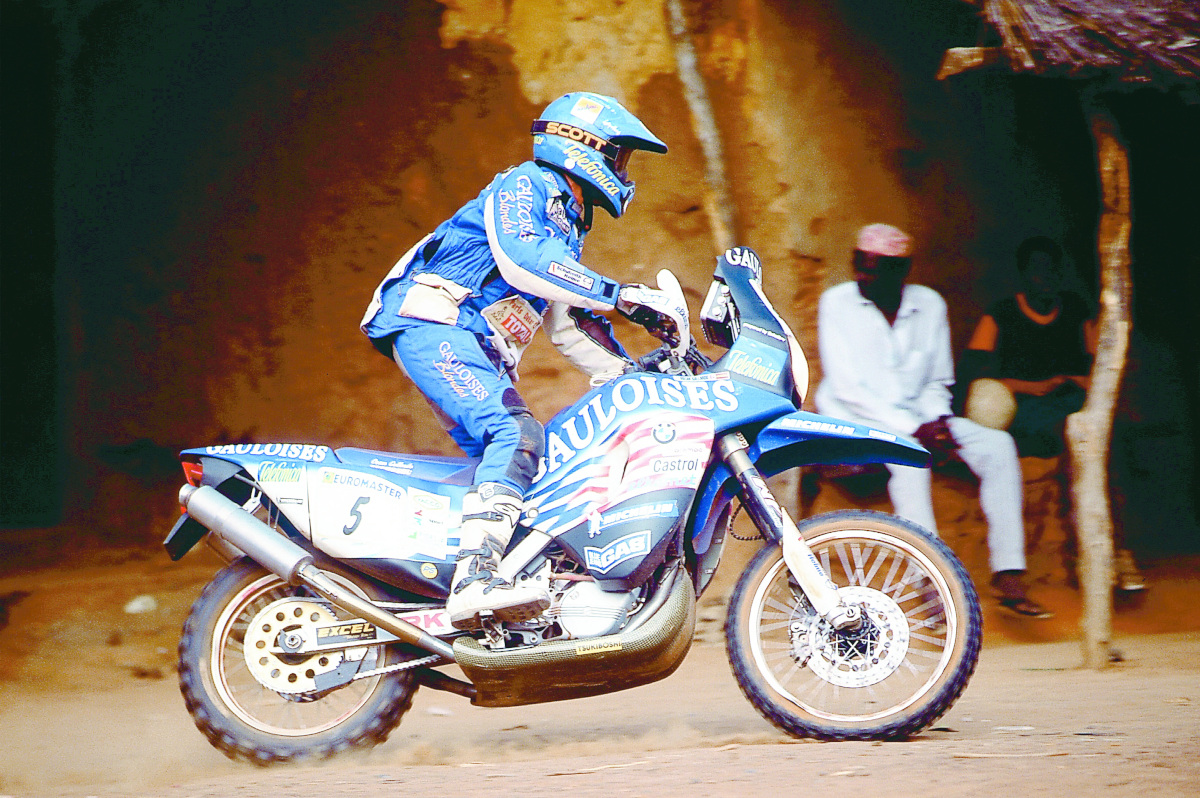
The bike remained carbureted, as carburetors are easier to fix in the field than fuel injection, and the bike featured four separate fuel tanks spread out for better balance and weight distribution. The skidplate was made of kevlar and housed the water tank, which could be used for emergency coolant or drinking water. The radiator guards were titanium, the airbox carbon fiber, and the bodywork a blend of the two.
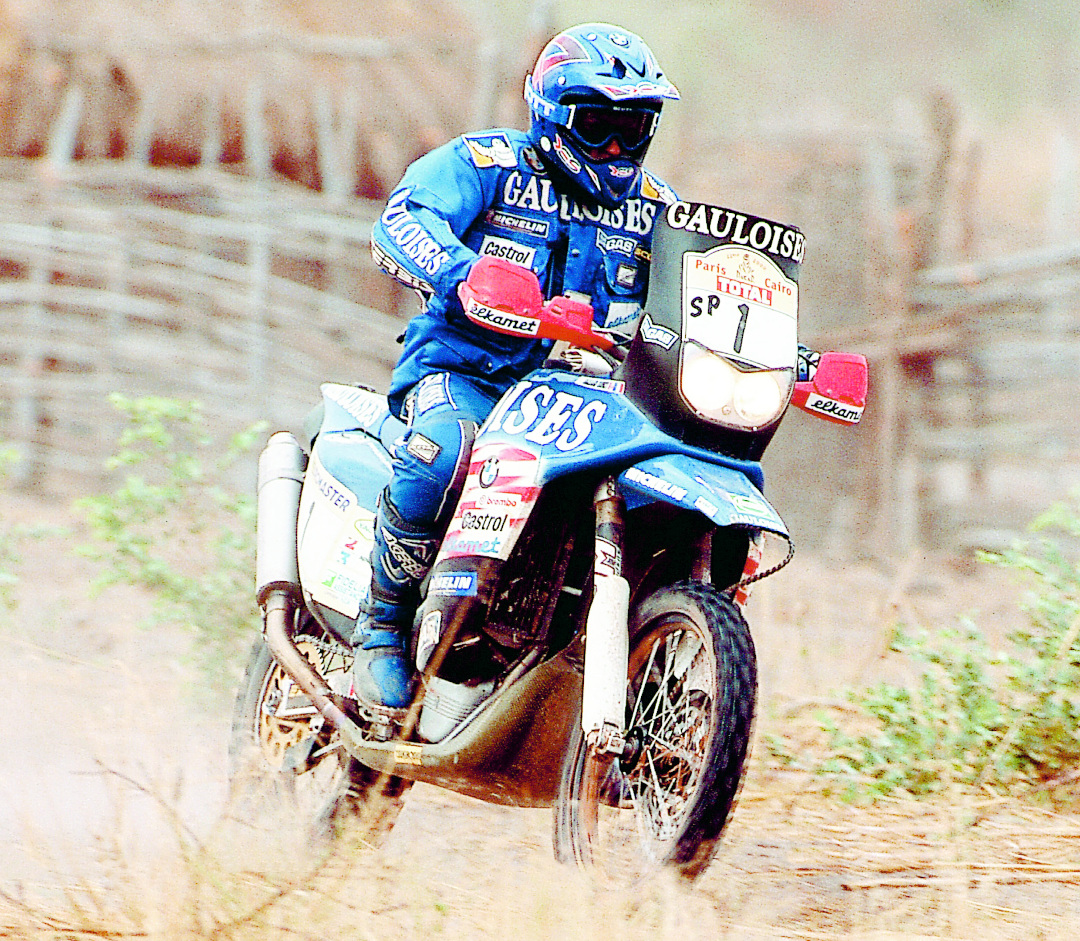
According to KRANKit, the resulting bike weighed 168 kilograms (370 lbs) — a featherweight compared to some of the big multi-cylinder bikes, but no lighter than the rival KTM machines. Still, it was more more powerful and stable than the Kato singles. For 1999, the F650RR also had the advantage of ex-KTM rider Richard Sainct as a pilot…and the rest is history.
BMW F650RR: Factory Rally Specs
| Specification | Details |
|---|---|
| Engine | Liquid-cooled single-cylinder, DOHC |
| Displacement | 678 cc |
| Power Output | ~75 hp @ 8,500 rpm |
| Top Speed | ~180 km/h (112 mph) |
| Suspension Travel (F/R) | ~300 mm / 300 mm |
| Fuel Capacity | ~54 liters (multi-tank rally configuration) |
| Seat Height | ~980 mm |
| Dry Weight | ~168 kg |
| Transmission | 5-speed |
| Status | Factory Dakar rally prototype |
Fuel, Range, and Endurance Engineering
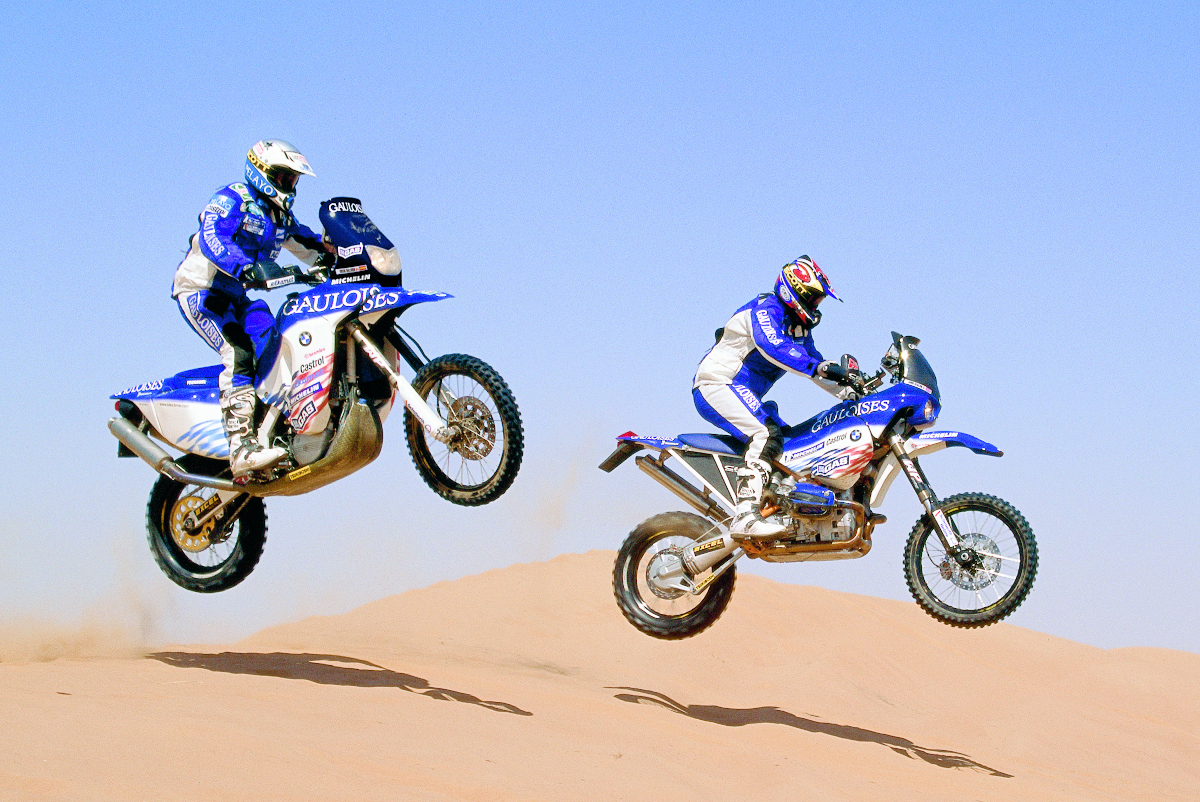
A defining feature of the F650RR was its sophisticated fuel system. Rather than relying on a single massive tank, BMW distributed fuel across multiple rally tanks positioned to preserve balance as fuel load decreased. This allowed the bike to carry more than 50 liters of fuel without the unwieldy handling penalties that plagued earlier Dakar machines.
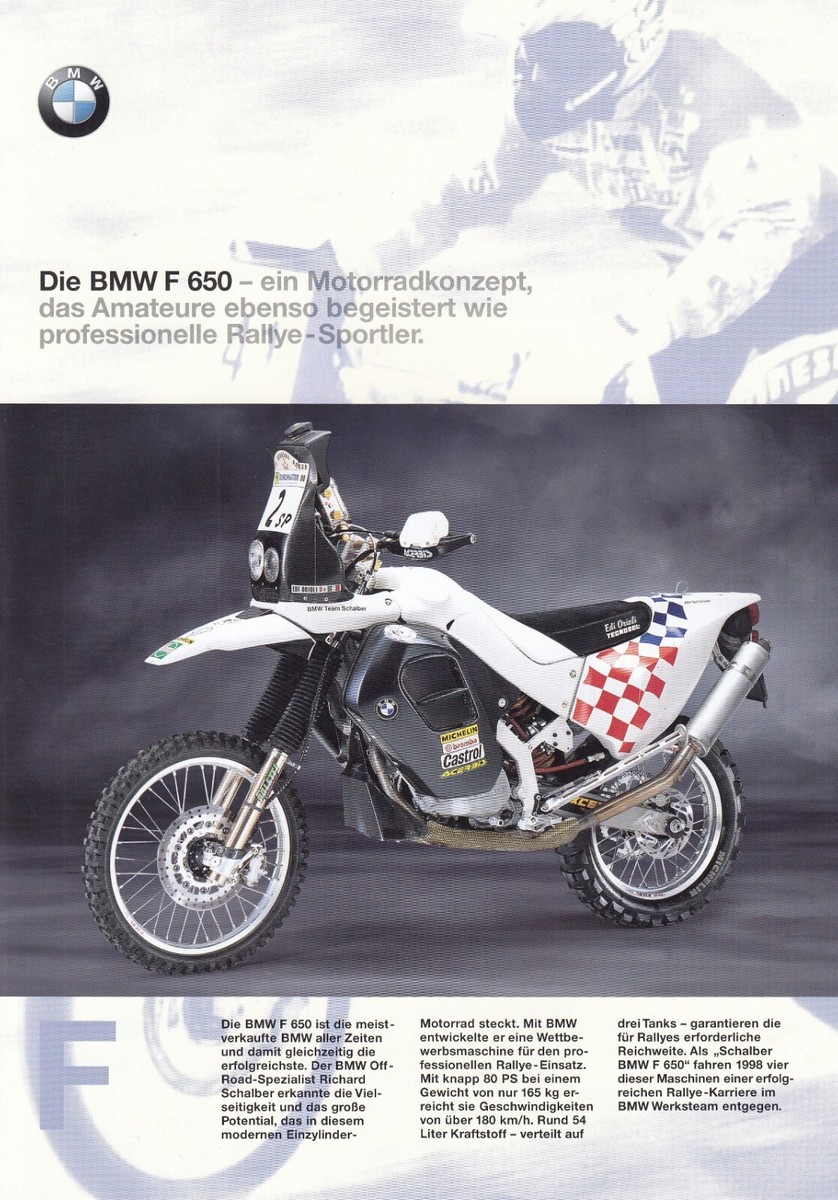
Combined with the single-cylinder engine’s fuel efficiency and manageable torque delivery, the F650RR could maintain competitive stage speeds while reducing mechanical strain — a decisive advantage over the course of a multi-week rally.
Fast forward 25 years, and this type of multi-tank design is standard for today’s Dakar rally bikes.
Riders and Results
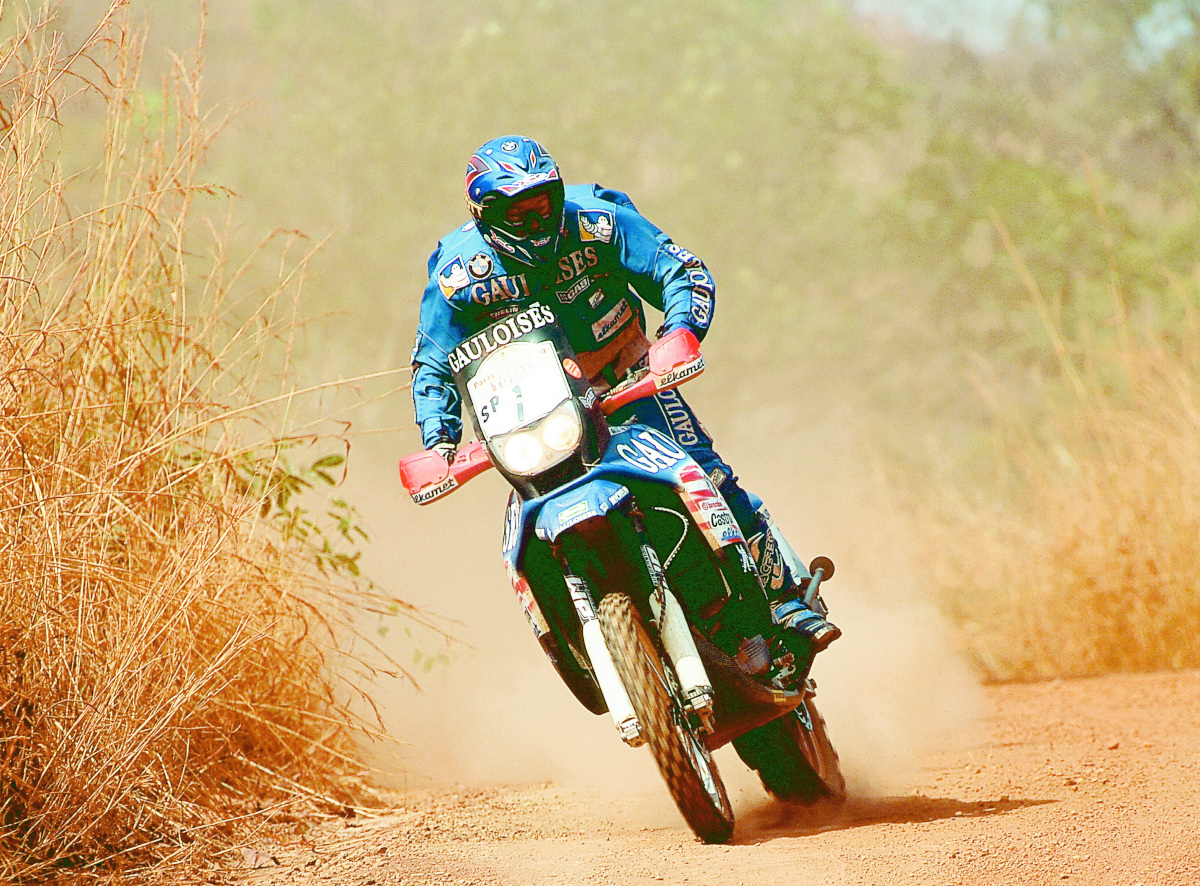
The F650RR’s success is inseparable from its riders, most notably Richard Sainct, whose precision and endurance perfectly matched the bike’s philosophy.
Paris–Dakar Rally Wins
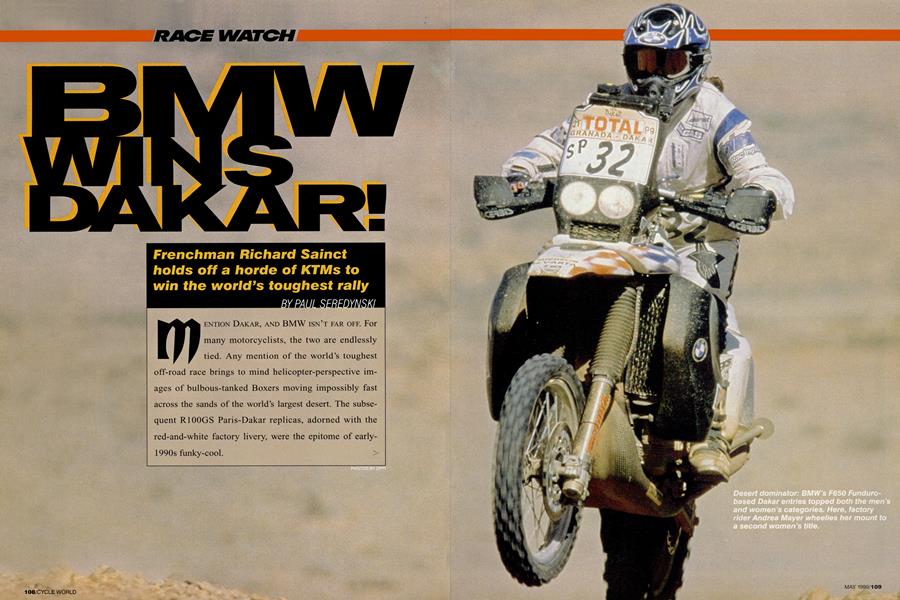
- 1999 Winner: Richard Sainct — BMW returns to Dakar victory with a single-cylinder strategy
- 2000 Winner: Richard Sainct — Back-to-back wins confirm the F650RR’s dominance
- 2001 Winner (Women’s Class): Andrea Meyer
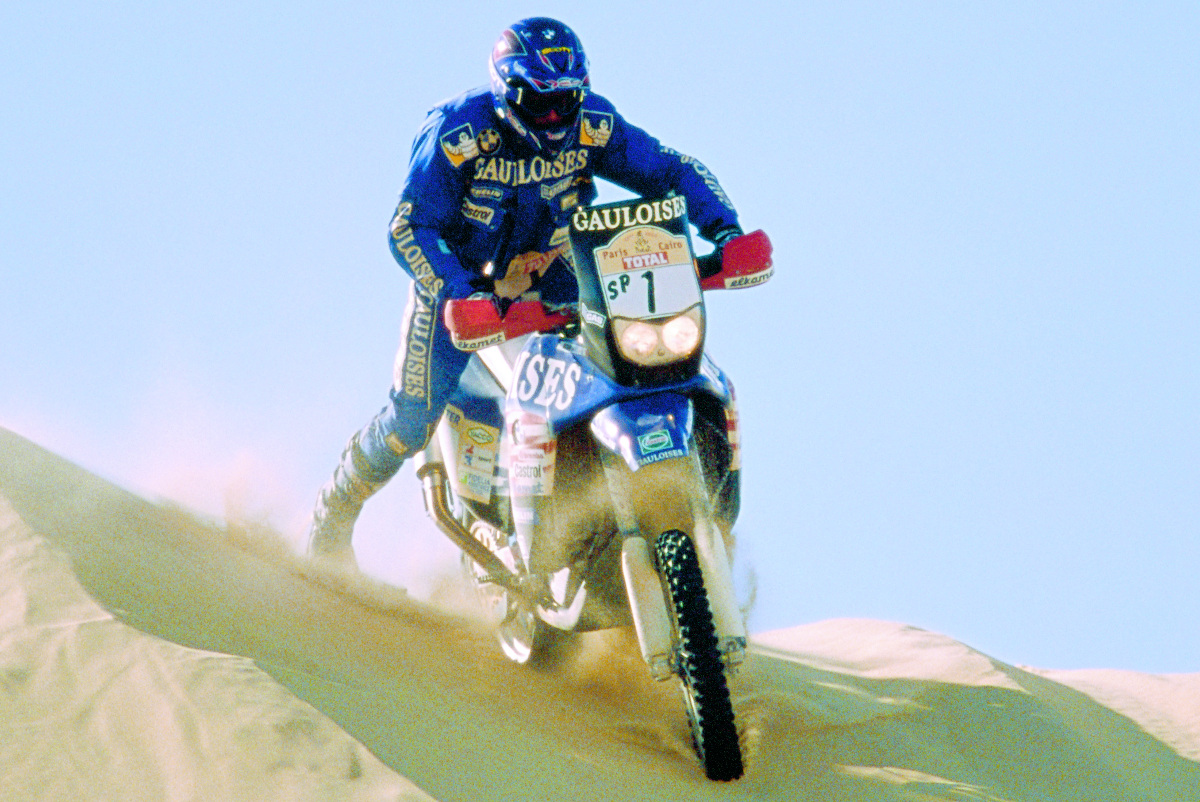
These victories placed BMW squarely at the forefront of modern rally engineering and marked one of the most successful periods in the brand’s off-road competition history.
Where the F650RR Fits in Dakar History
The F650RR represents a turning point in rally design:
- Excess to efficiency: Lighter, faster, more sustainable rally machines
- Brute force to balance: Power that could be used all day, every day
- Experimentation to production: Rally success reinforcing showroom credibility
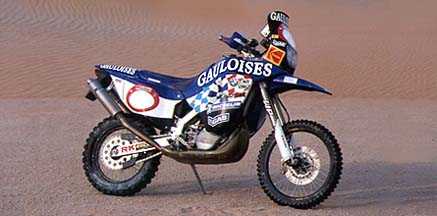
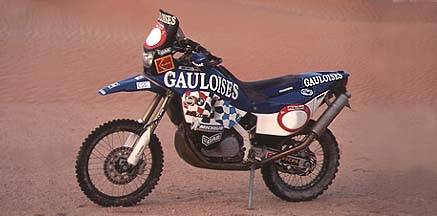
In contrast to earlier twin-cylinder behemoths and later ultra-specialized factory racers, the F650RR struck a rare balance — a true competition machine rooted in real-world motorcycle architecture.
Popular Culture: The F650RR in Race to Dakar
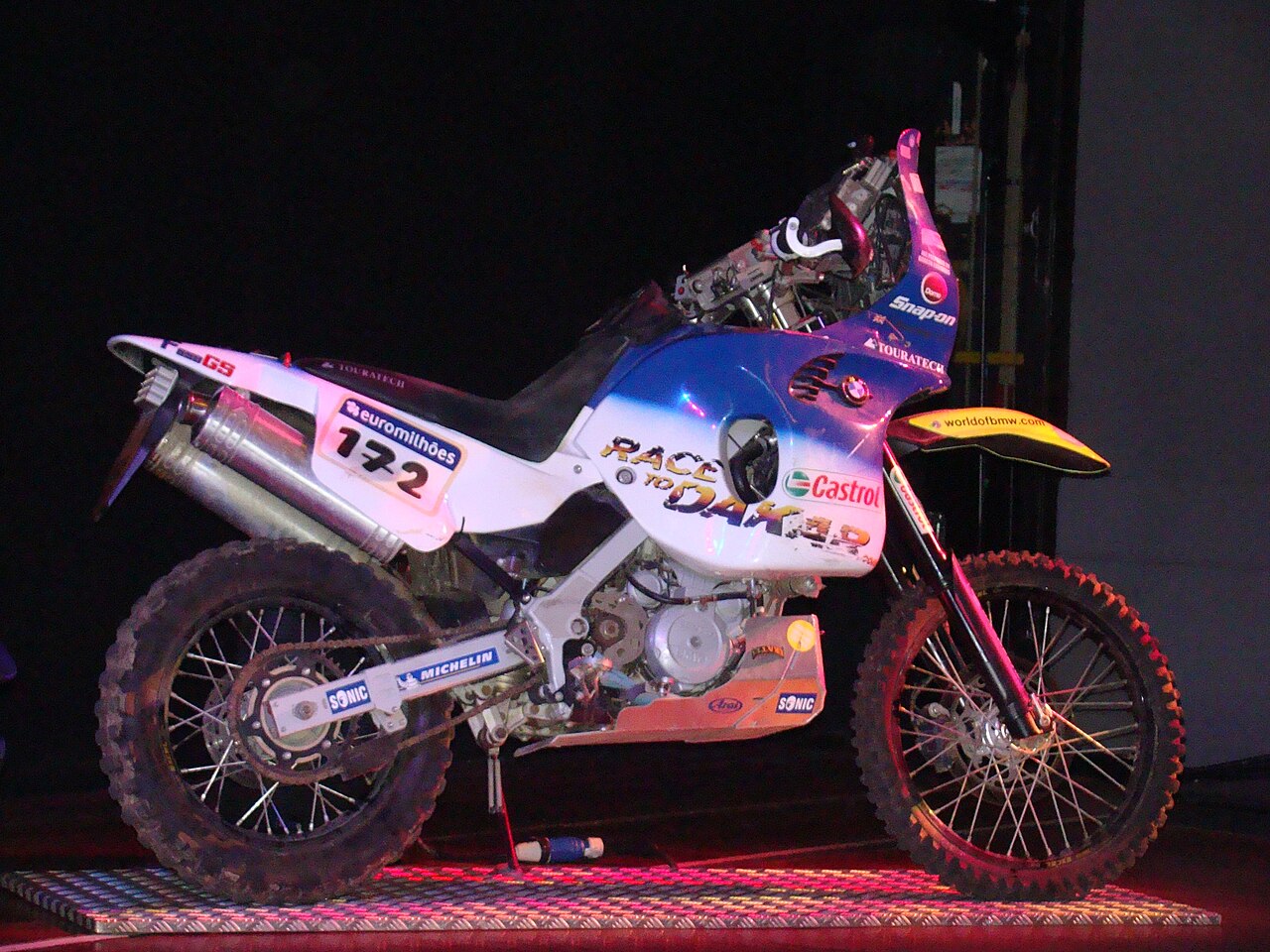
Beyond its factory victories, the BMW F650RR also entered popular motorcycling culture through the television series Race to Dakar, which followed Charley Boorman and Simon Pavey as they prepared for and competed in the Paris–Dakar Rally. Boorman rode a BMW F650RR as part of BMW’s rally effort, giving viewers an unusually candid look at what it took to manage a full-spec factory Dakar machine under real rally conditions.
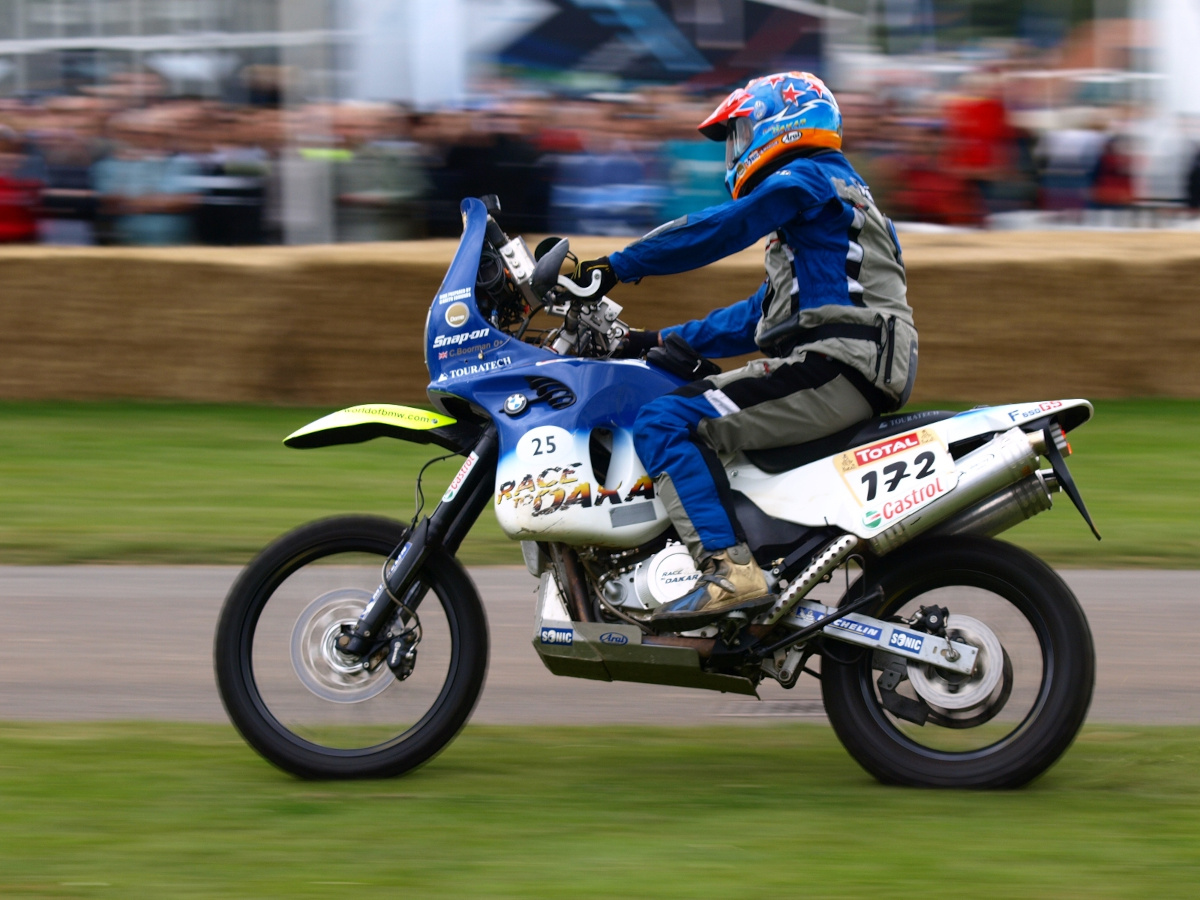
The series highlighted both the strengths and the brutality of the F650RR: its speed and stability across open terrain, but also the physical and mental demands of riding a near-200 kg rally bike day after day. For many riders, Race to Dakar was their first glimpse behind the scenes of modern rally racing — and it cemented the F650RR’s reputation not just as a winner, but as a machine that demanded total commitment from its rider.
The F650RR’s Legacy…
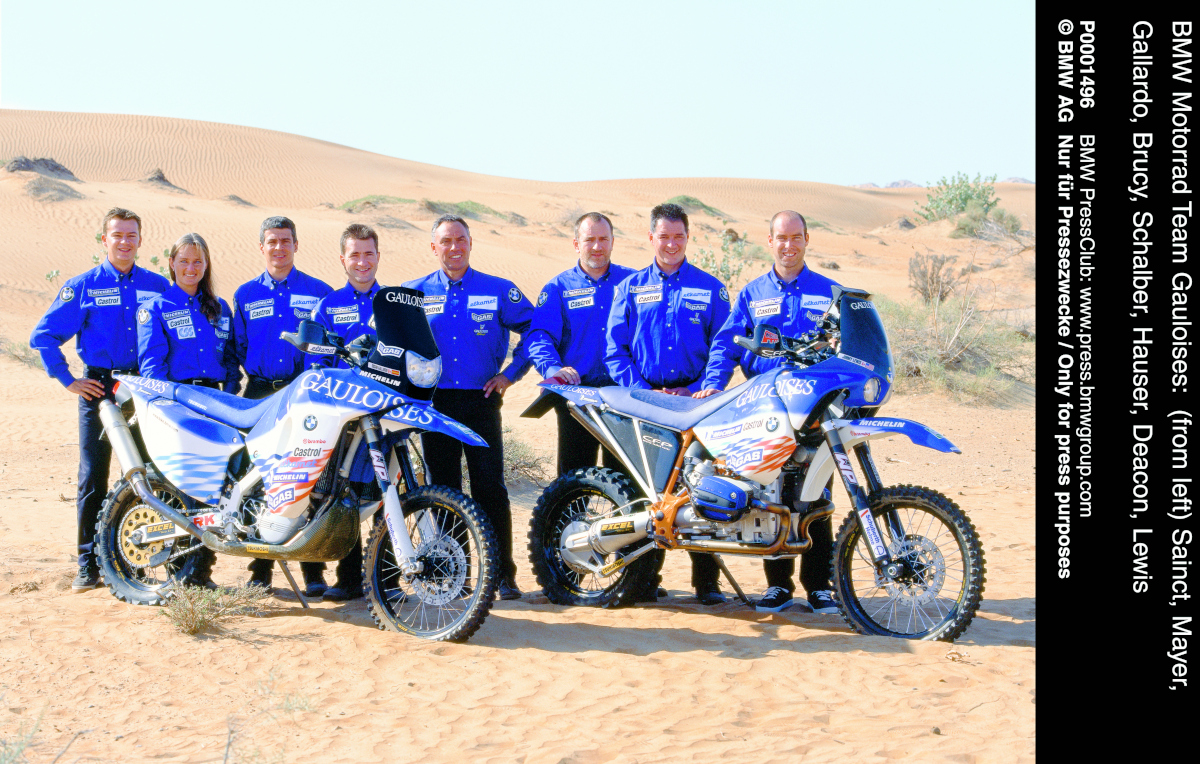 The BMW F650RR’s influence extends far beyond its two Dakar wins. It helped redefine what a BMW adventure motorcycle could be, paved the way for the F650GS and later GS models, and demonstrated that intelligent engineering could outperform brute displacement in the harshest racing environment on earth.
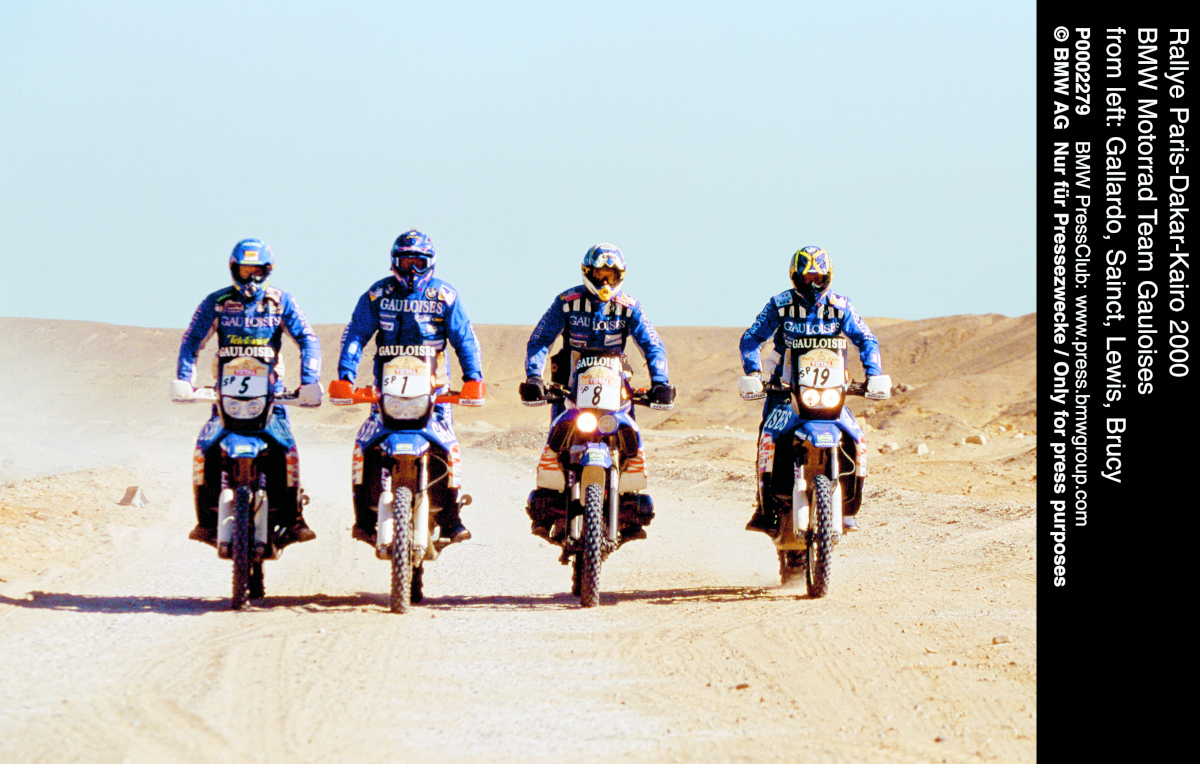
The Paris-Dakar Rally has always rewarded innovation as much as bravery. The BMW F650RR remains one of the clearest examples of how a carefully chosen philosophy — executed without compromise — can conquer the desert.
Today, we can look back at the F650RR and see a machine that could be called the “grandfather” of today’s liquid-cooled single-cylinder 450 Dakar Rally bikes.
More Dakar Legends
 2WD Dakar Legend: Yamaha WR450F 2-Trac - Remembering Yamaha x Öhlins’ Hydraulic 2WD Enduro… Every so often, a motorcycle appears that seems to point toward an entirely different future. The Yamaha WR450F 2-Trac was one of those machines. At first glance, it […]
 Dakar Legends: Gilera RC600 & RC750 Rallye - Italy’s Big Thumper in the Twin-Cylinder Era… By the late 1980s, the Paris-Dakar Rally was no longer a romantic expedition but an escalating arms race among the major manufacturers. Twin-cylinder prototypes were growing larger and […]
 Desert Bomber: BMW R80G/S Paris-Dakar Rally Bike - The Boxer That Changed the Desert Forever… In 1981, the Paris-Dakar Rally was still raw — more expedition than sport, more survival than spectacle. Riders crossed the Sahara on machines that were barely adapted from […]
 Desert Boxer: BMW R900RR Dakar Rally Bike - Dakar Legends: Last Roar of the Desert Bombers… In the late 1990s and early 2000s, BMW found itself at a turning point in rally-raid racing. The boxer twin had already written one of the most […]
 The Honda EXP-2: The Two-Stroke Desert Racer - Honda’s 400cc “Experimental 2-Stroke” Baja 1000 / Dakar Rally Bike… In the mid-1990s, as emissions regulations tightened worldwide and the future of two-stroke off-road bikes looked increasingly uncertain, Honda did something nobody expected: it built […]
 Dakar Legends: BMW F650RR Rally Bike - BMW F650RR: Grandfather of the Modern Rally Bikes… In the late 1990s, BMW quietly executed one of the most important strategic pivots in rally history. They developed and unleashed the BMW F650RR — a lean, […]
 The Four-Cylinder Dakar Bike: Yamaha FZ750 Ténéré - The Yamaha FZ750 Ténéré (0U26): Yamaha’s Radical Dakar Experiment… Before Super Ténéré, before big twins ruled the desert, before Dakar logic fully settled in, there was the sportbike-powered FZ750T. The 1986 Yamaha FZ750 Ténéré (0U26) […]
 Lucky Explorer: Cagiva Elefant Paris-Dakar Rally Bike - The Italian Powerhouse That Conquered Dakar… The Cagiva Elefant occupies a unique place in Paris-Dakar history. Where other manufacturers leaned on clinical efficiency or engineering conservatism, Cagiva brought Italian audacity to the table: massive V-twin […]
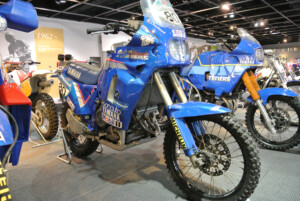 Dakar Legends: Yamaha YZE750T Super Ténéré - The Bike That Built a Dakar Dynasty… The Yamaha YZE750T Super Ténéré is one of the most important motorcycles in rally-raid history. Purpose-built from the ground up for the Paris-Dakar Rally, it was the machine […]
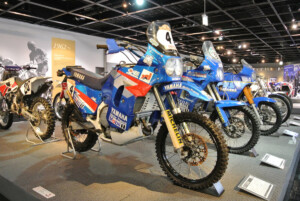 Desert Freight Train: Yamaha XTZ850R Paris-Dakar Rally Bike - The big twin that ruled the desert at the height of the Paris-Dakar era… In the early and mid-1990s, Yamaha dominated the Paris-Dakar Rally, the toughest off-road endurance race on the planet. At the heart […]
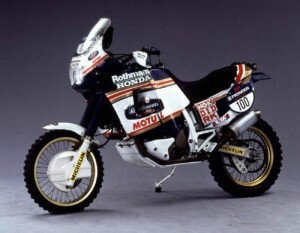 Desert Queen: Honda NXR750 Paris-Dakar Rally Bike - Honda’s NXR750: Queen of the Desert… Few motorcycles in history can claim to have dominated the most brutal race on earth the way Honda’s NXR750 did. Built specifically to conquer the Paris-Dakar Rally, the NXR750 […]


