
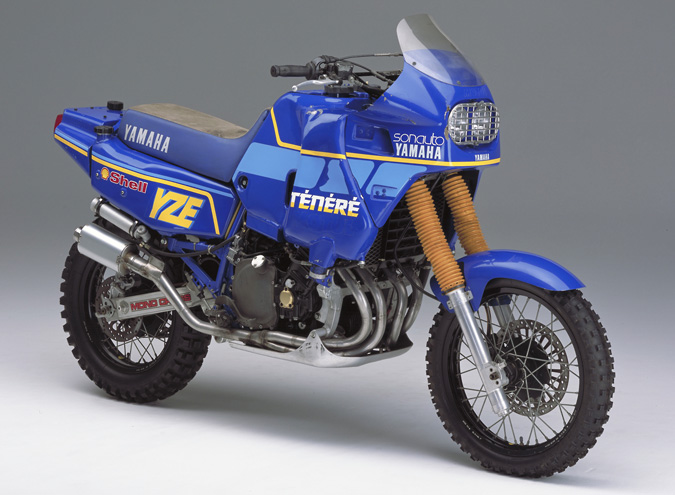
 The Yamaha FZ750 Ténéré (0U26): Yamaha’s Radical Dakar Experiment…
Before Super Ténéré, before big twins ruled the desert, before Dakar logic fully settled in, there was the sportbike-powered FZ750T.
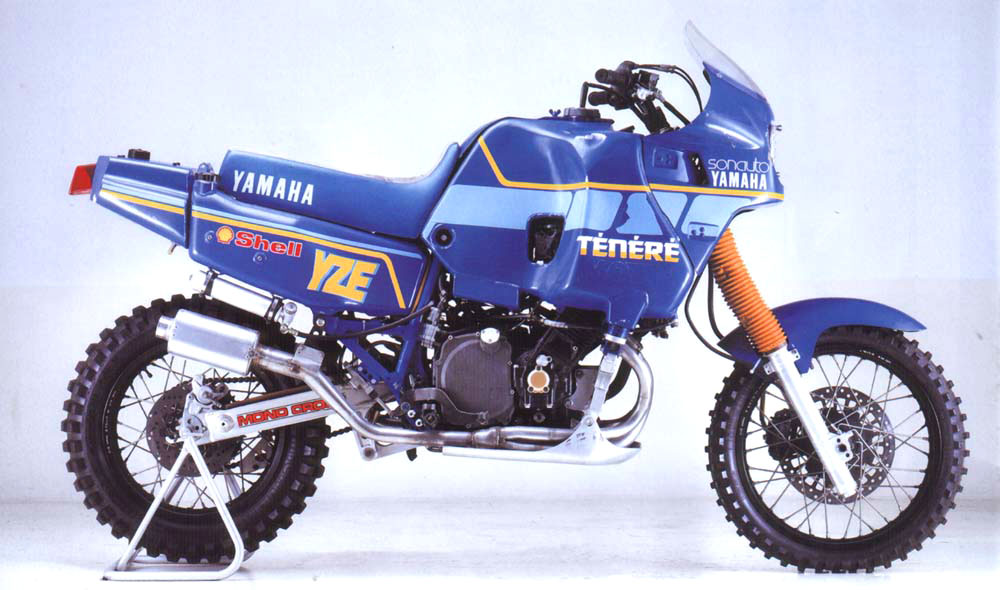
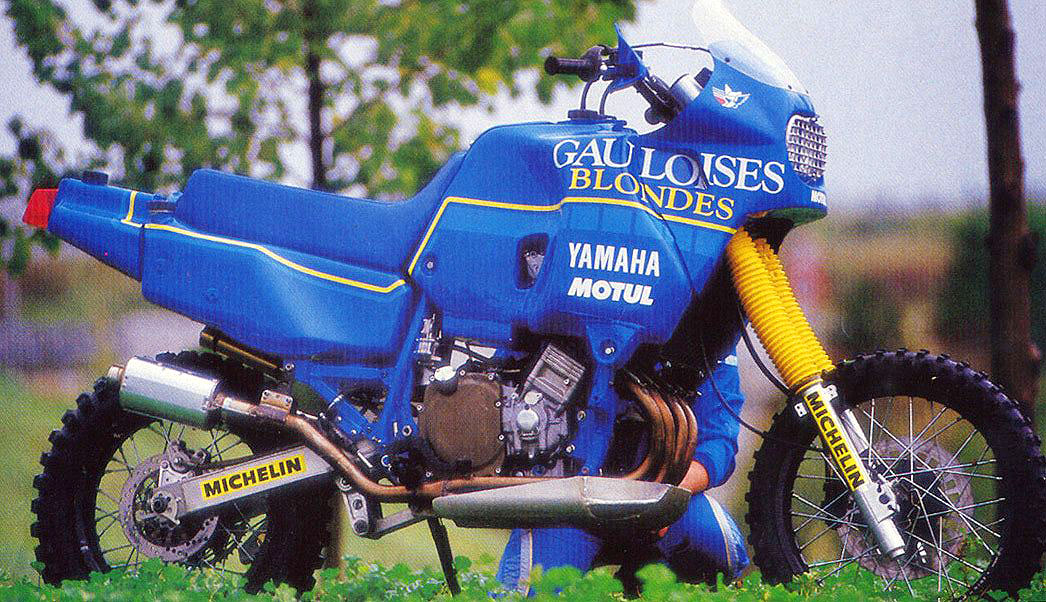
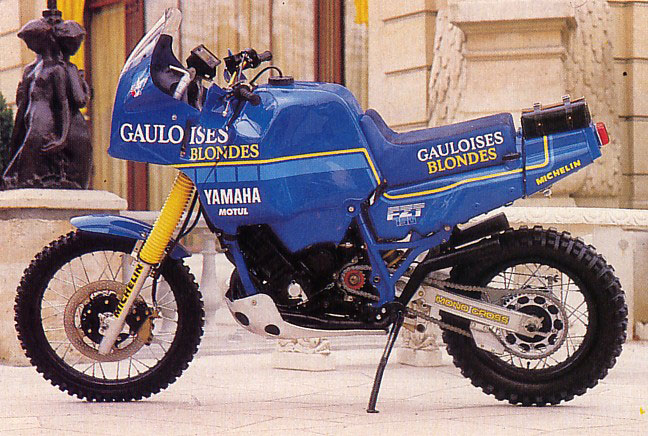
The 1986 Yamaha FZ750 Ténéré (0U26) — sometimes known as the FZ750T or FZT 750 — remains one of the most fascinating and unconventional machines in Paris-Dakar history. Equal parts ambition and experimentation, it represents a brief but important moment when Yamaha explored whether sport bike-derived multi-cylinder performance could be adapted to the world’s harshest rally.
 It wasn’t a factory engineering experiment — it was a personal project driven by the bold vision and relentless will of one of the most influential figures in Yamaha’s European history: Jean-Claude Olivier. While the FZ750 Ténéré didn’t rewrite Dakar history, it helped Yamaha learn how to do exactly that a few years later. Dakar legends aren’t always born from success; sometimes they’re forged through bold failure.
Why the FZ750 Ténéré Existed
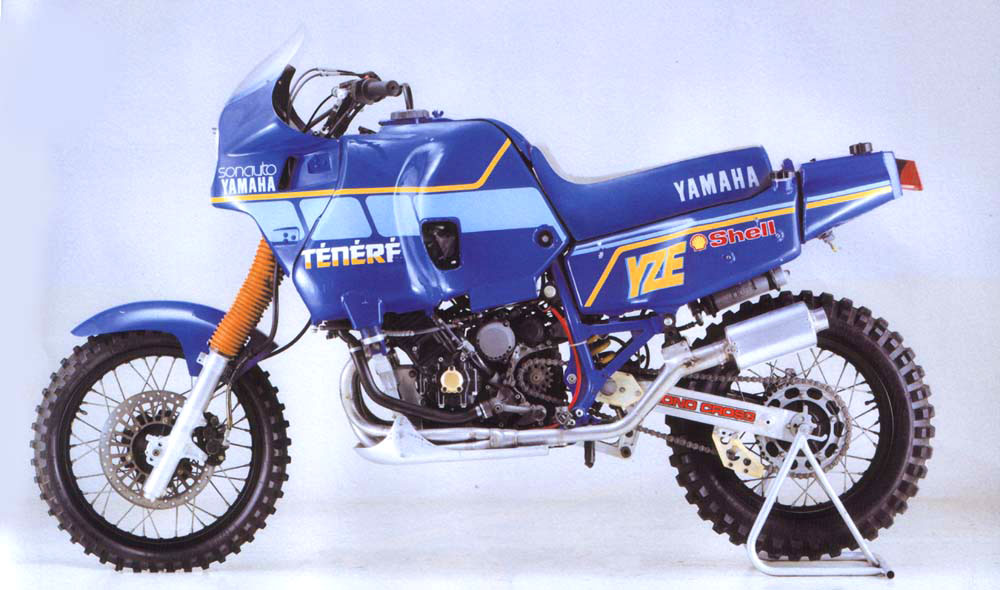 By the mid-1980s, Dakar was evolving rapidly. What had begun as a rough adventure rally was becoming a true high-speed endurance race, with longer stages, faster average speeds, and increasingly professional factory teams. Yamaha was relatively successful with their YZE series of factory-backed single-cylinder rally machines, but a bigger question loomed:
Could multi-cylinder performance deliver an advantage in the desert?
Jean-Claude Olivier: The Man Behind the Machine
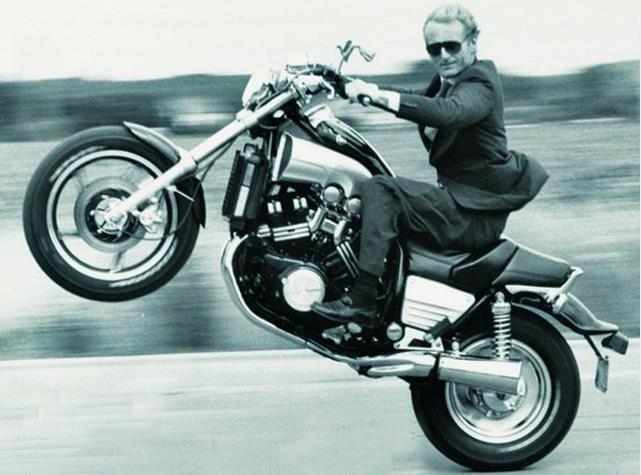
One man, one radical idea, and one of the boldest experiments in Dakar history…
Jean-Claude Olivier — known universally as JCO — was far more than a Yamaha executive. As the head of Yamaha Motor France, he was deeply involved in racing, product development, and market strategy. Crucially, he was a world-class rider himself.
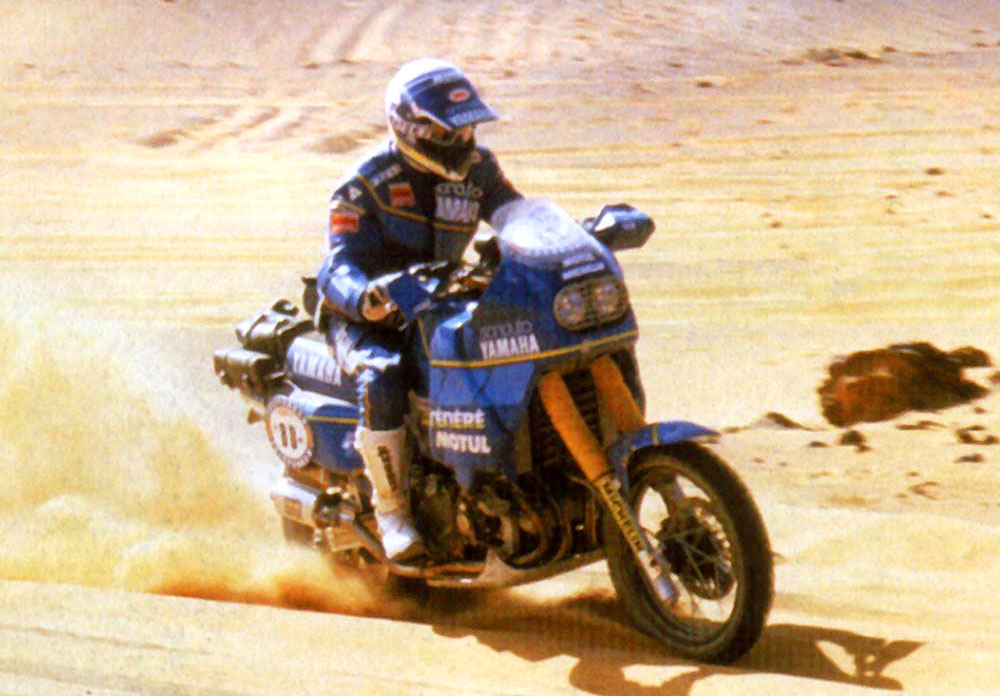 Olivier believed that Yamaha needed to explore alternatives to large single-cylinder rally bikes, especially as Dakar stages became faster and more demanding. Smoothness, stability, and sustained high-speed performance were becoming increasingly important, and Olivier saw potential in Yamaha’s cutting-edge FZ750 Genesis inline-four platform.
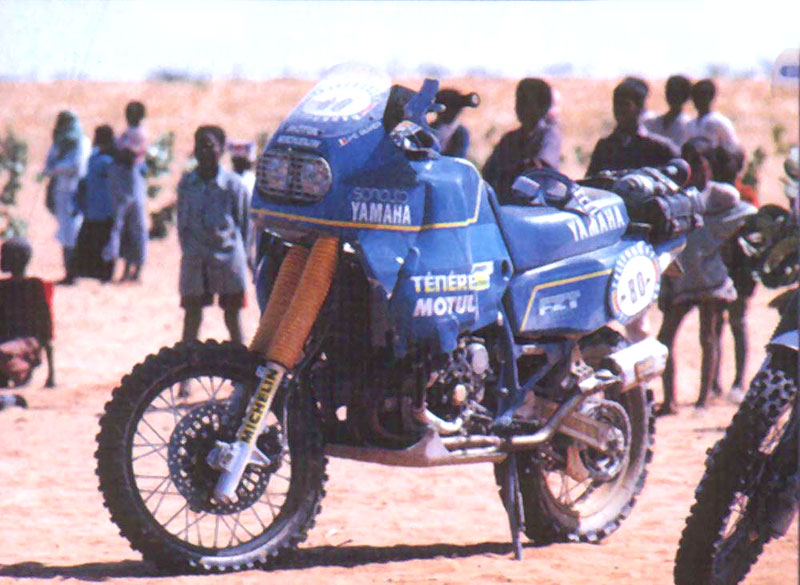 Rather than waiting for Japan to deliver a solution, Olivier pushed forward in Europe. He took an existing high-performance platform — the FZ750 — and attempted something radical: turn a road-derived four-cylinder engine into a Dakar contender.
The Production FZ750: An Unlikely Starting Point
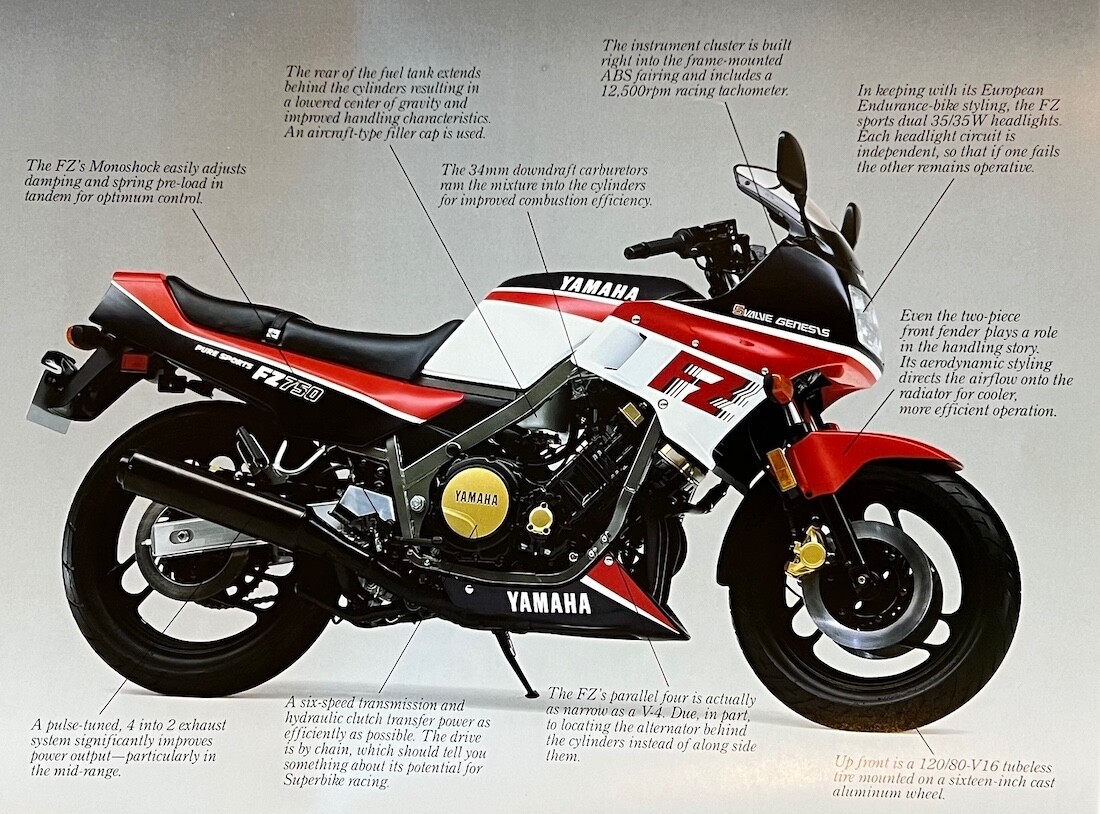
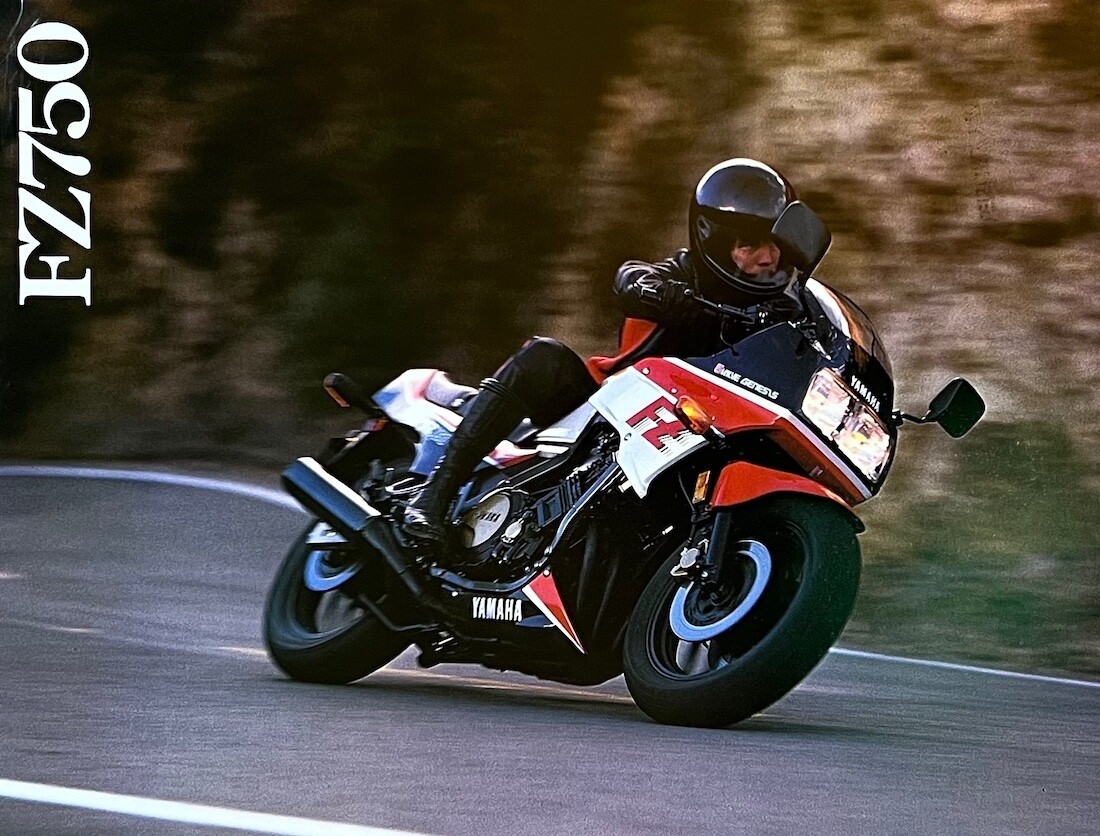 The rally prototype was based on the production Yamaha FZ750, one of the most advanced sport motorcycles of its era. Introduced in the mid-1980s, the FZ750 was Yamaha’s technological flagship, built to showcase innovation rather than tradition. It featured:
- A liquid-cooled inline-four engine
- Yamaha’s pioneering five-valve Genesis cylinder head
- A reputation for smooth power delivery and high-speed stability
 On the road, the FZ750 was a sophisticated, high-revving sport machine — almost the opposite of what Dakar traditionally demanded. That contrast is exactly what made Jean-Claude Olivier’s decision to adapt it for the desert so radical.
The FZ750 wasn’t chosen because it made sense for Dakar — it was chosen because it represented the cutting edge of Yamaha engineering at the time.
Origins: From Sportbike to Sand
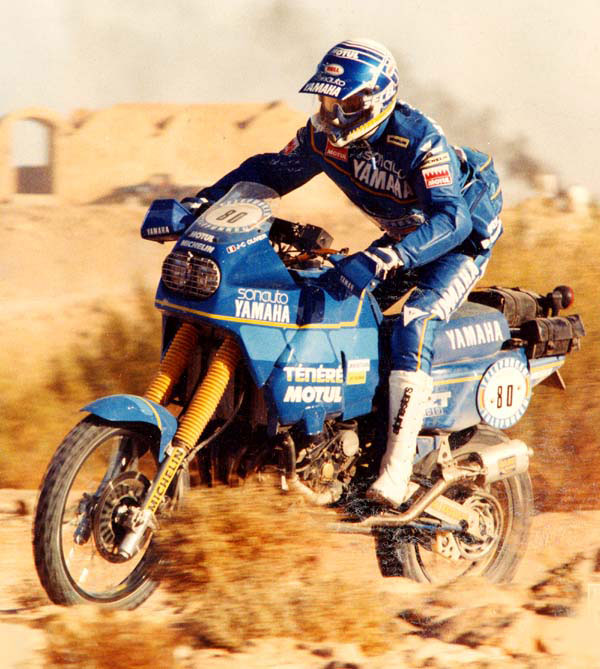 For Dakar, JCO and team took the FZ750’s high-revving inline-four and five-valve Genesis cylinder head and built a factory rally prototype around it. While JCO initiated the project from France, Yamaha developed a special chassis for him in Japan. The result was the FZ750 Ténéré (0U26).
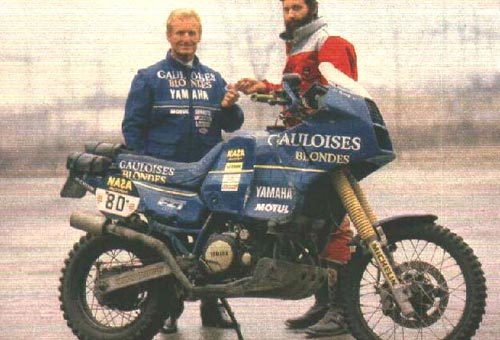
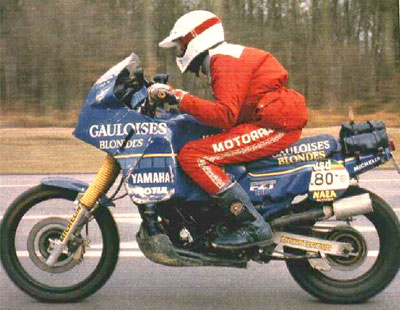
The FZ750-derived Dakar bike visually striking and mechanically complex: a large, multi-cylinder rally bike designed to carry massive fuel loads while maintaining the smoothness and top-end stability of a road-racing engine. It was a bold move…and a risky one.
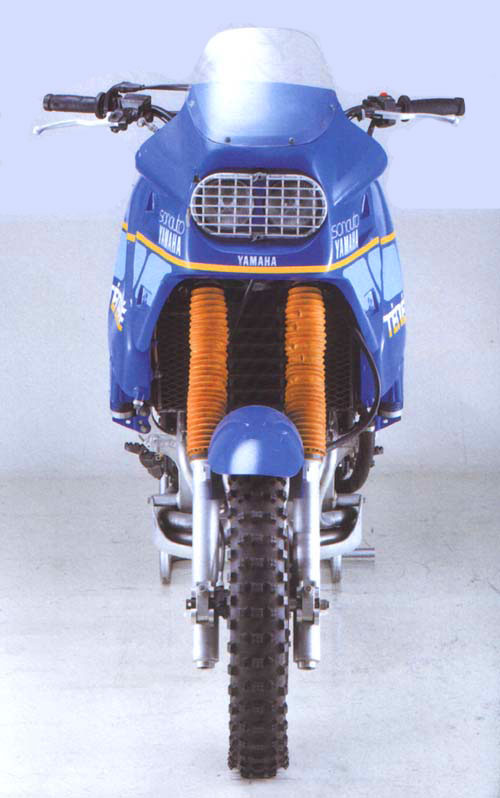
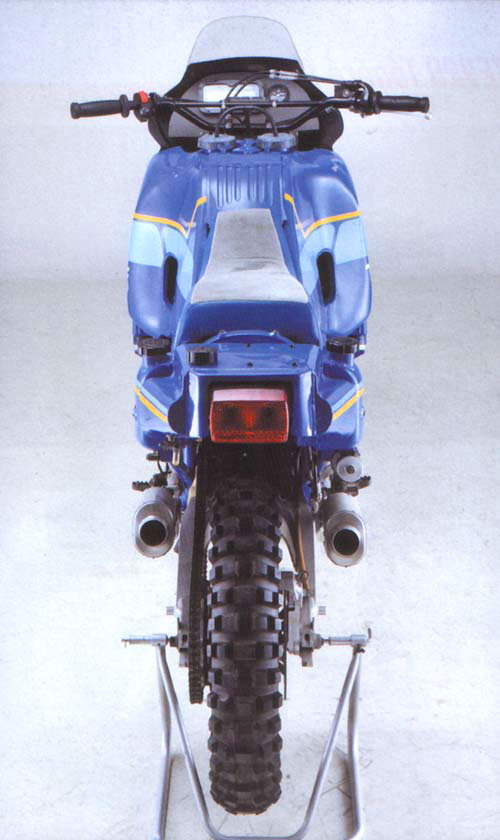
While it shared its engine architecture with the production FZ750, nearly everything else was reworked for Dakar:
- A reinforced rally frame
- Massive multi-tank fuel capacity
- Long-travel suspension
- Cooling and durability modifications for desert conditions
It was a serious, if unconventional, attempt to redefine what a Dakar motorcycle could be.
Technical Overview
As with many Yamaha factory prototypes of the era, full specifications were never officially published. However, period documentation and surviving machines provide a clear sense of intent.
Yamaha FZ750 Ténéré (0U26): Key Specs (Approximate)
| Specification | Details |
|---|---|
| Engine | Liquid-cooled 4-stroke DOHC inline-4 with five valves per cylinder, 749.6 to 911cc |
| Transmission | 6-speed |
| Fuel Capacity | 37 L main + 25 L auxiliary (total ~62 L) |
| Weight | 197 kg (rally specification) |
| Suspension Travel | Front / Rear: 300 mm / 300 mm |
| Seat Height | 980 mm |
| Top Speed | ~195 km/h (120 mph) |
| Chassis | Purpose-built rally frame |
| Status | Factory Dakar rally prototype |
| Era | 1986–1987 Paris–Dakar development |
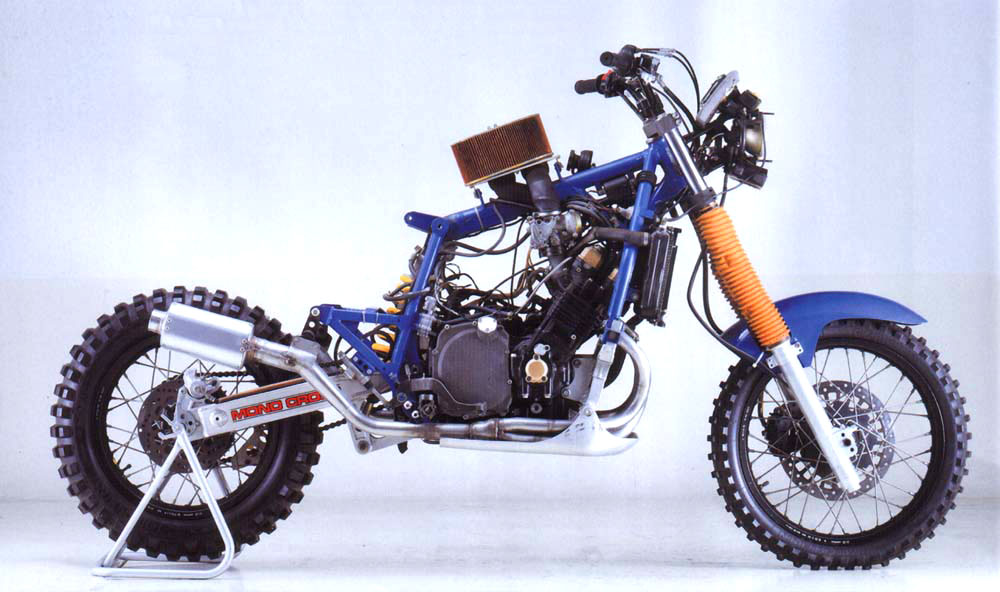
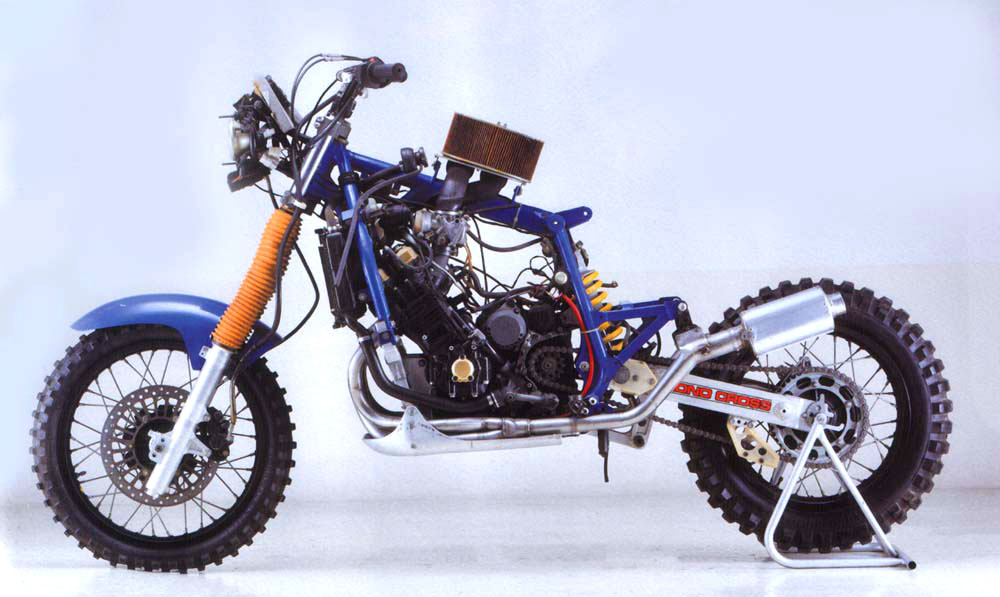
The inline-four delivered exceptional smoothness and high-speed composure, but it also brought weight, complexity, and cooling challenges in extreme desert conditions.
On the Rally: Promise and Problems
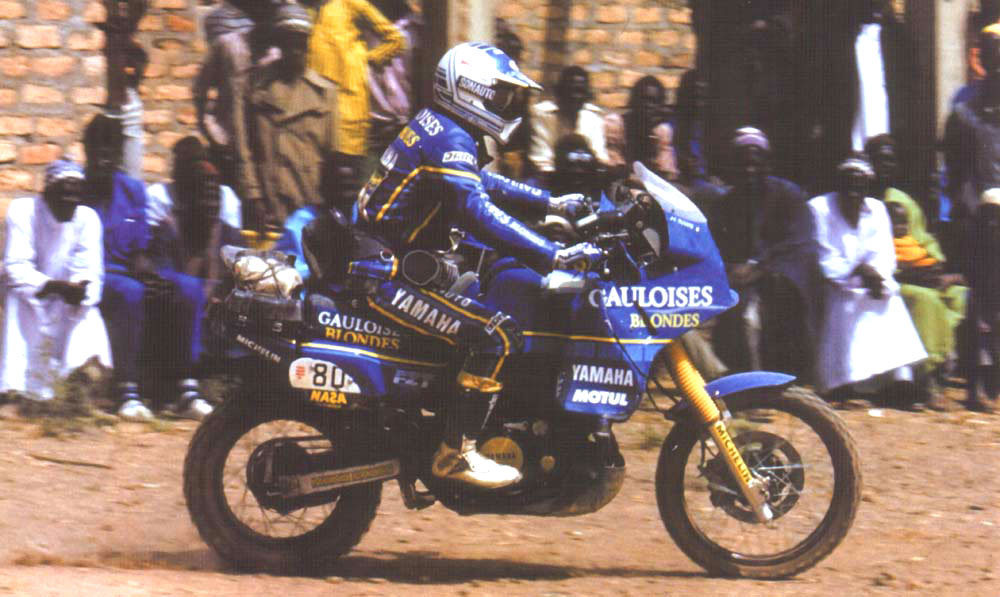
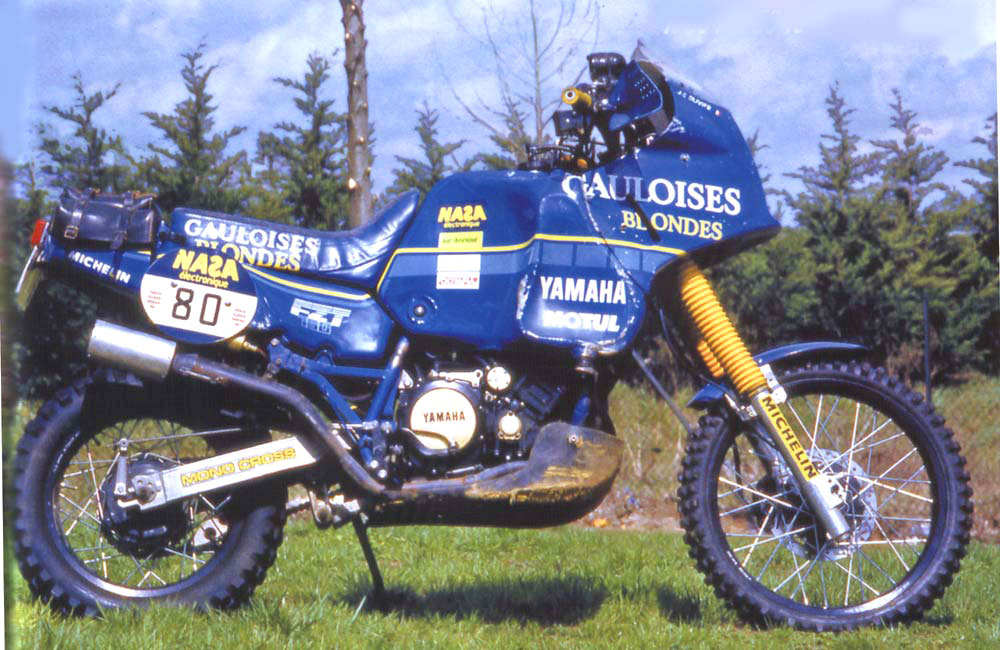
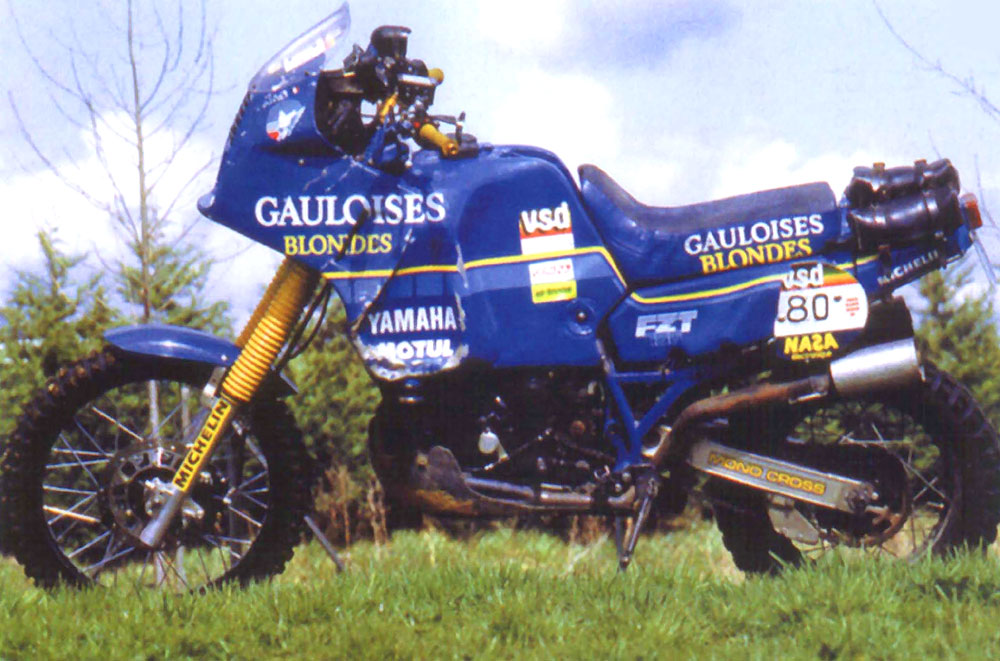
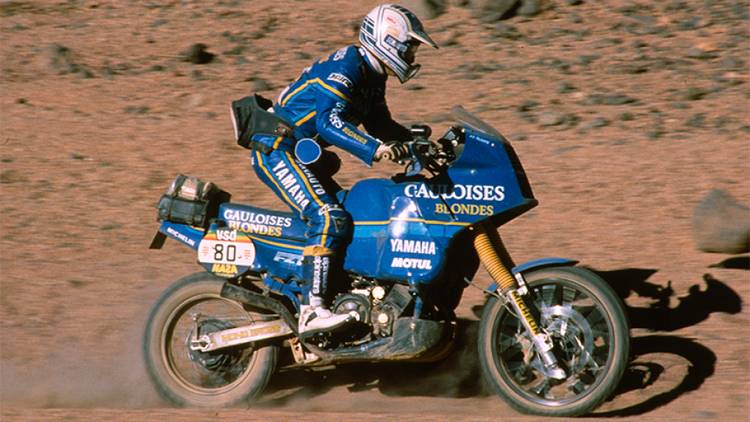 The FZ750 Ténéré was entered in the 1986 Paris-Dakar Rally with Jean-Claude Olivier himself piloting the bike. In competition, the FZ750 Ténéré proved fast and stable on open stages, particularly at sustained high speeds where smooth power delivery mattered.
- Exceptional smoothness at speed
- Strong stability on fast, open desert sections
- Impressive road-like composure over long liaisons
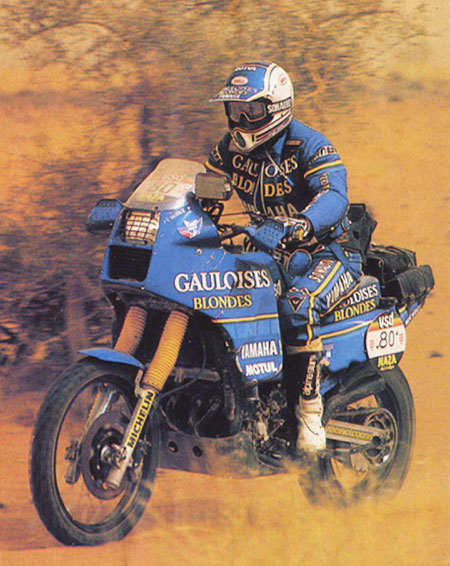
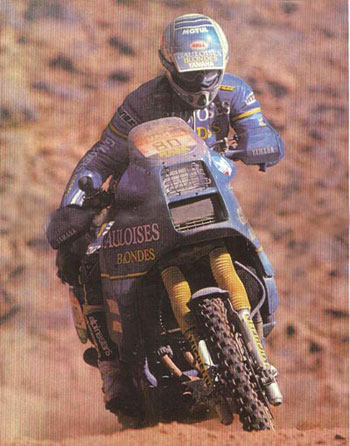
But Dakar has a way of exposing weaknesses just as brutally. The FZ750 Ténéré struggled with:
- Weight and mass centralization
- Mechanical complexity in harsh conditions
- Heat management at low speeds and in deep sand
- Increased difficulty in field repairs compared to singles
These challenges limited the platform’s long-term viability, especially as rival manufacturers doubled down on simpler, more rugged rally solutions.
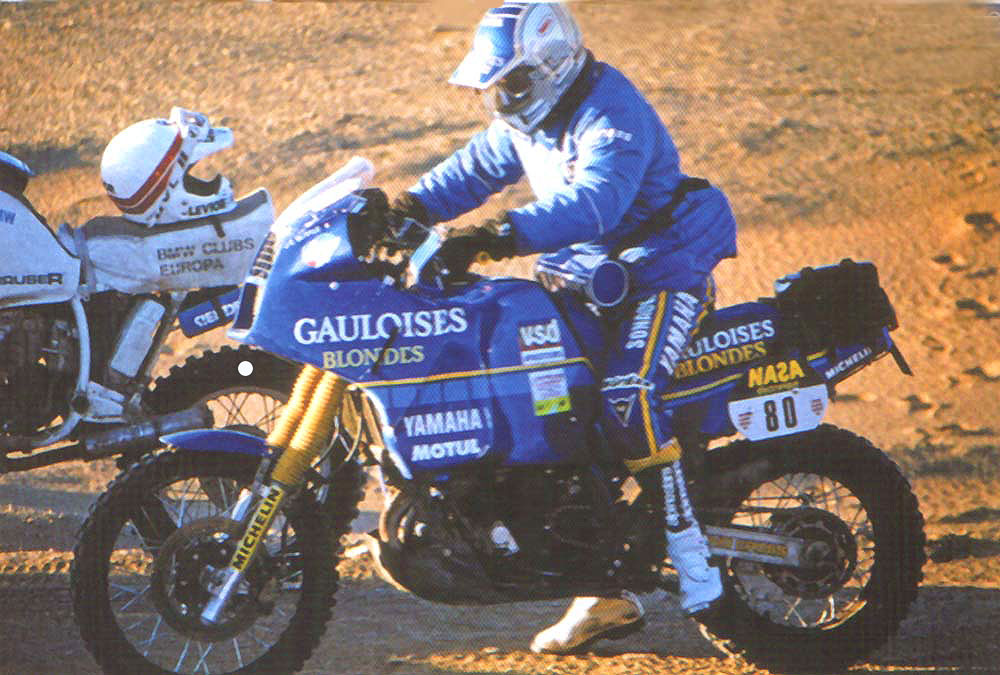 While the bike showed promise and completed significant portions of the rally, it failed to achieve a competitive overall result.
“It’s big power advantage of 94 hp was almost completely cancelled out by the lack of traction in the soft sand it had to ride on and its nearly 200 kg weight. Olivier only managed to finish the rally in 12th place.” –Yamaha
1987 Yamaha FZ920 Ténéré (0U26G)
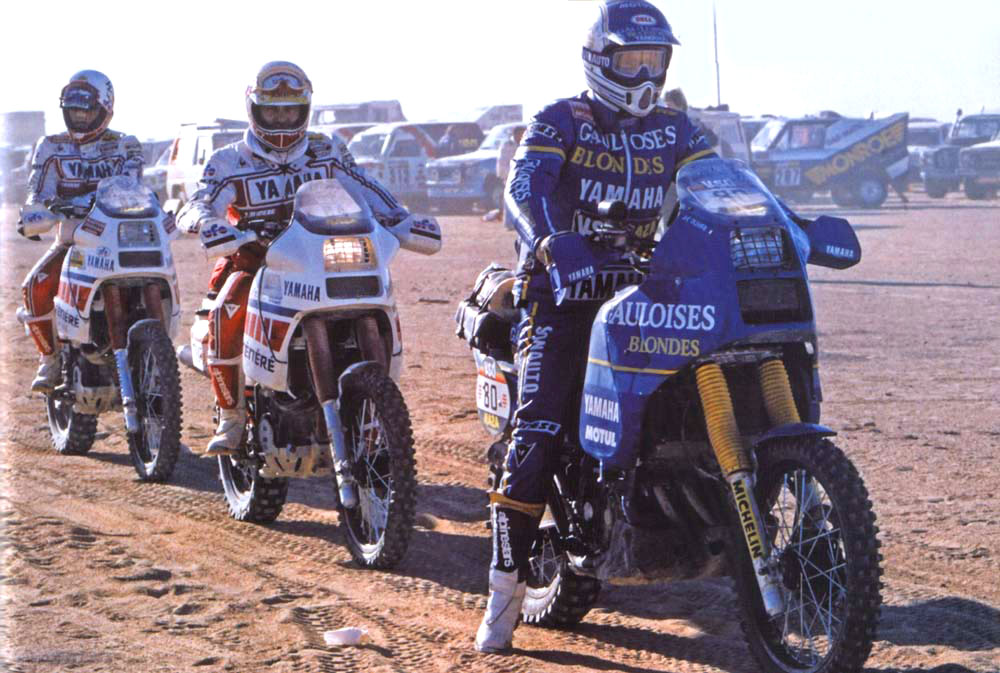
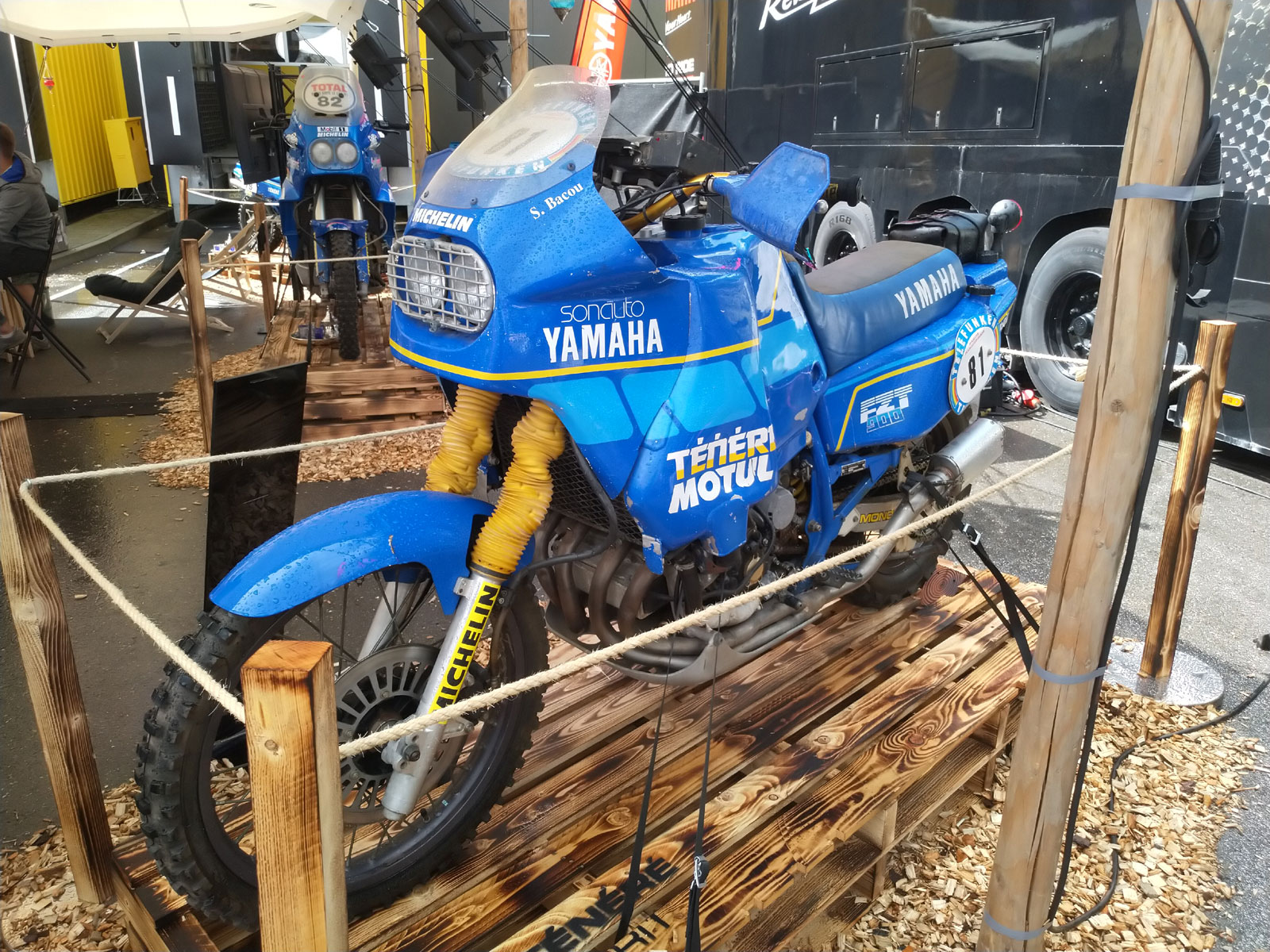 Jean-Claude Olivier returned to the Paris-Dakar Rally in 1987 aboard a 911cc variant known as the FZ920 Ténéré, FZT920, FZ920T, or YZE920 (900 nomenclature was also used, as on the race bike above). Though the engine had been bored to 911cc, it only produced around 80 hp…but crucially, it had much better torque.
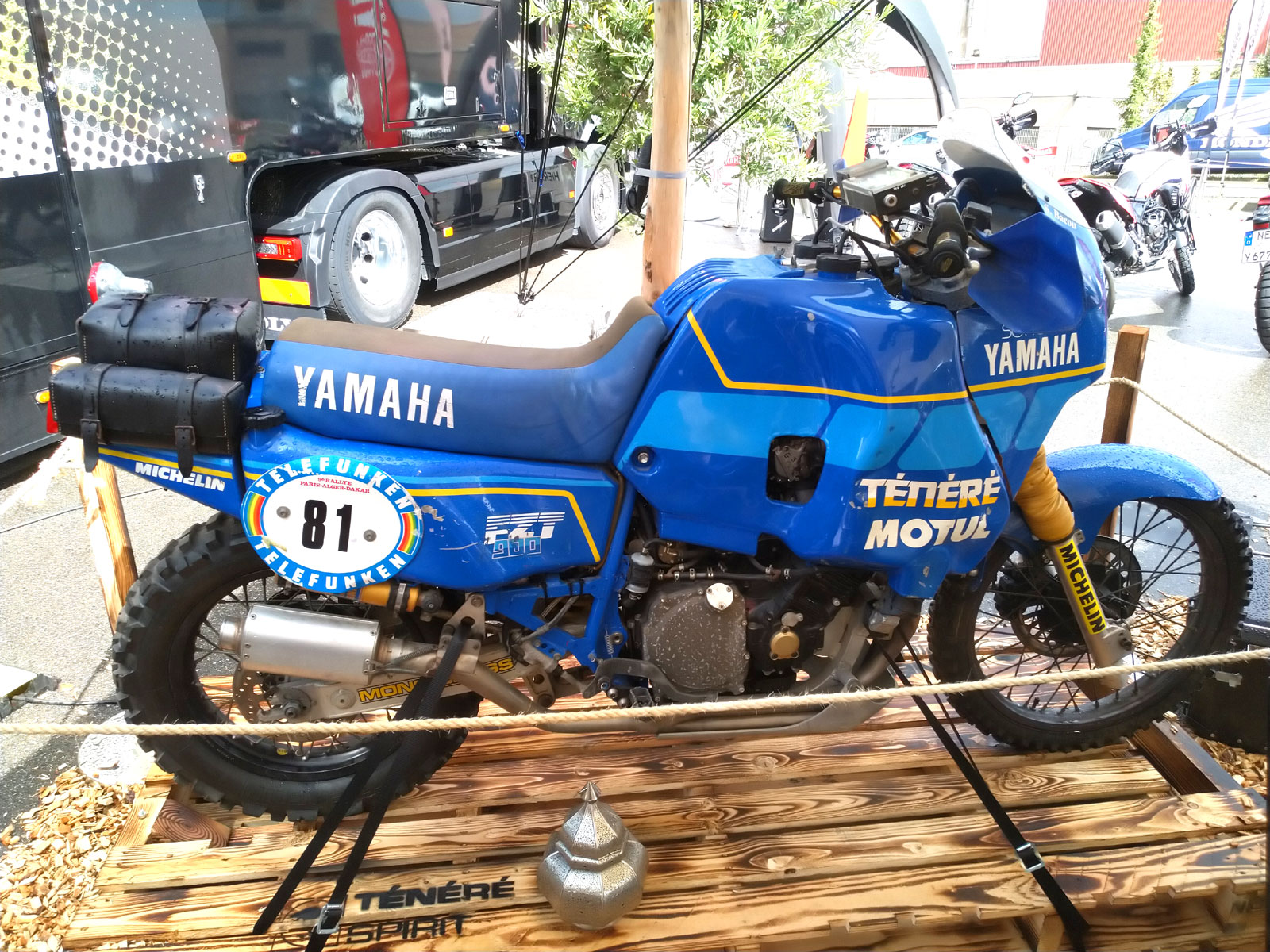
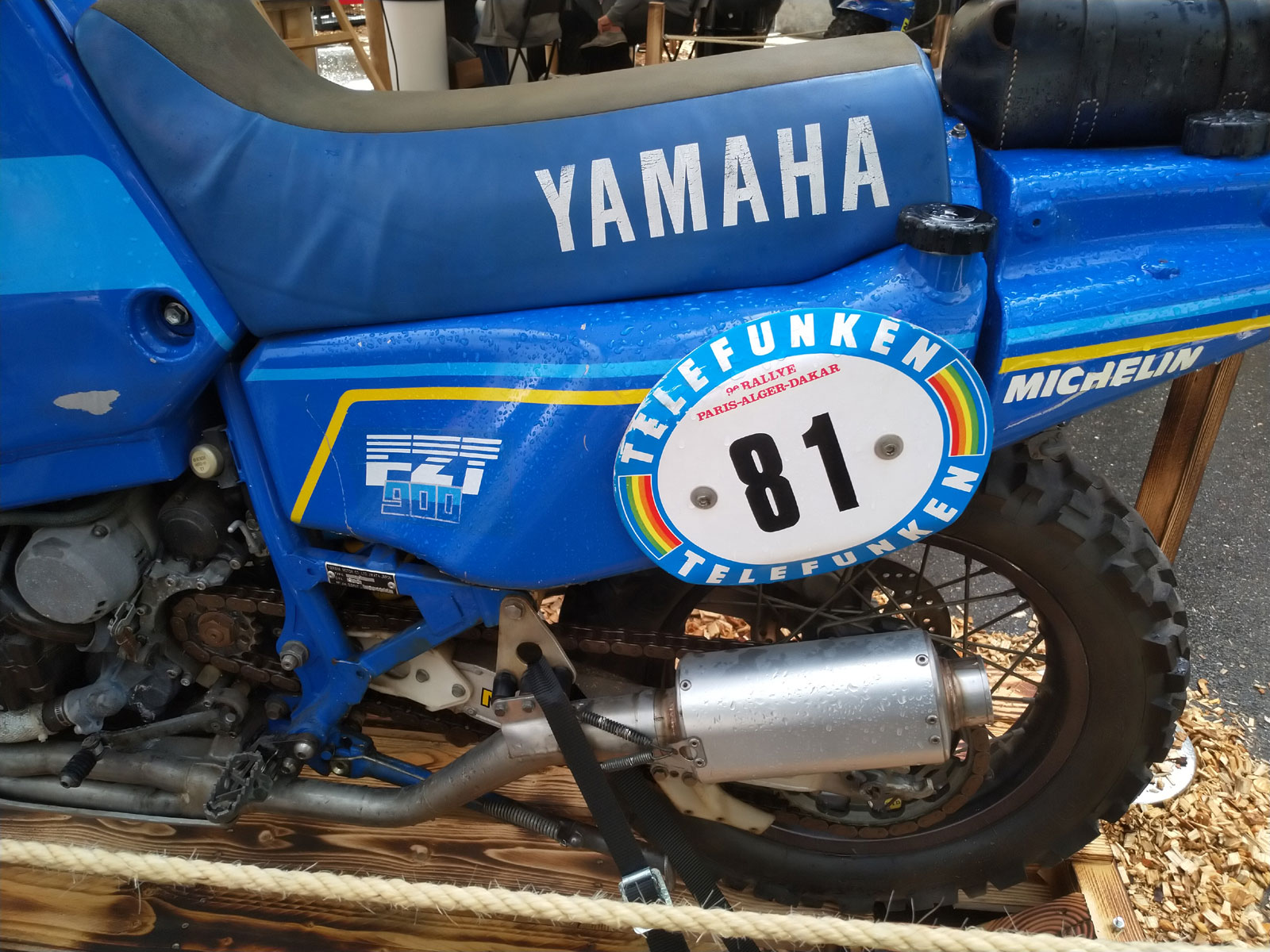
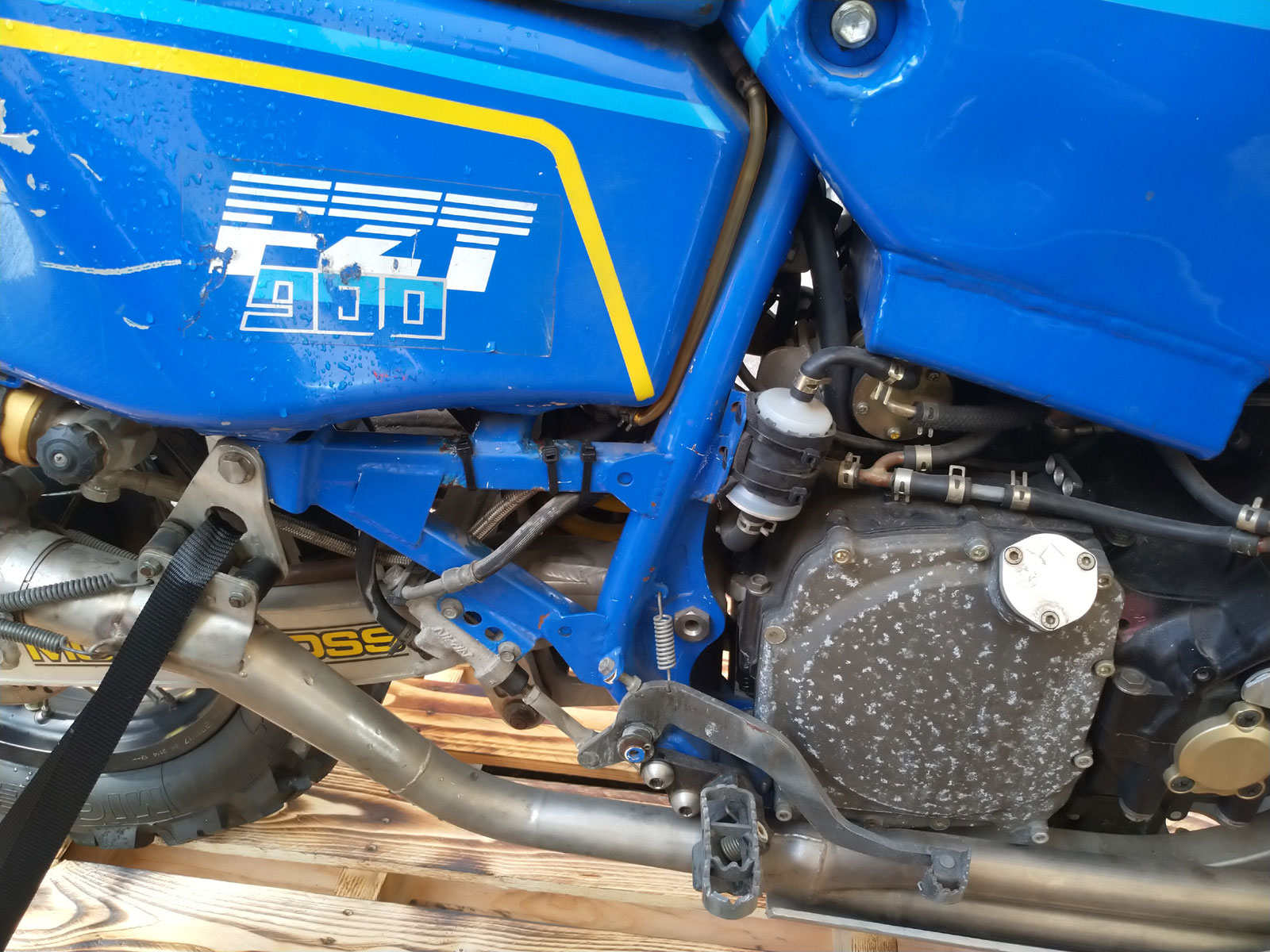
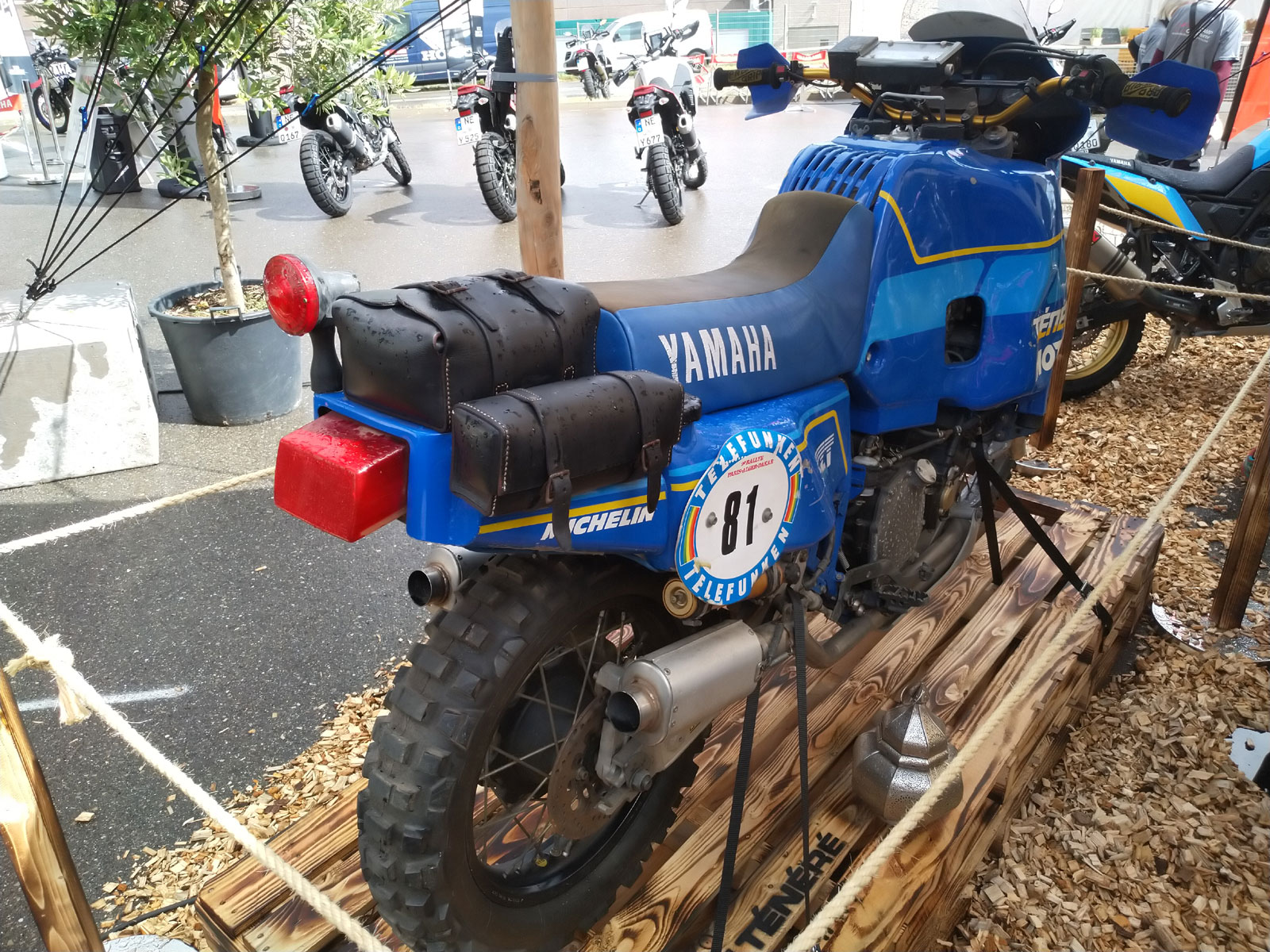
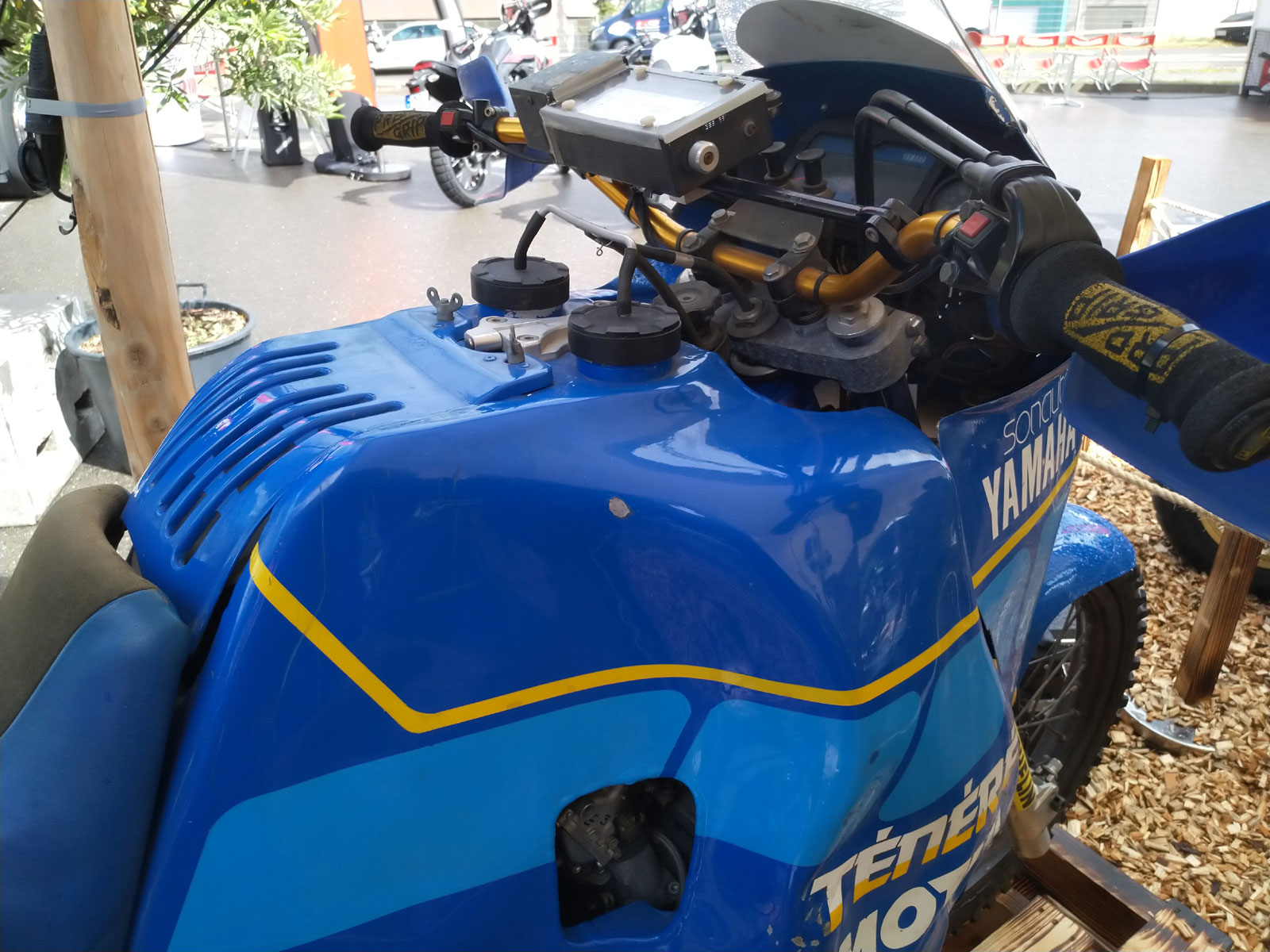
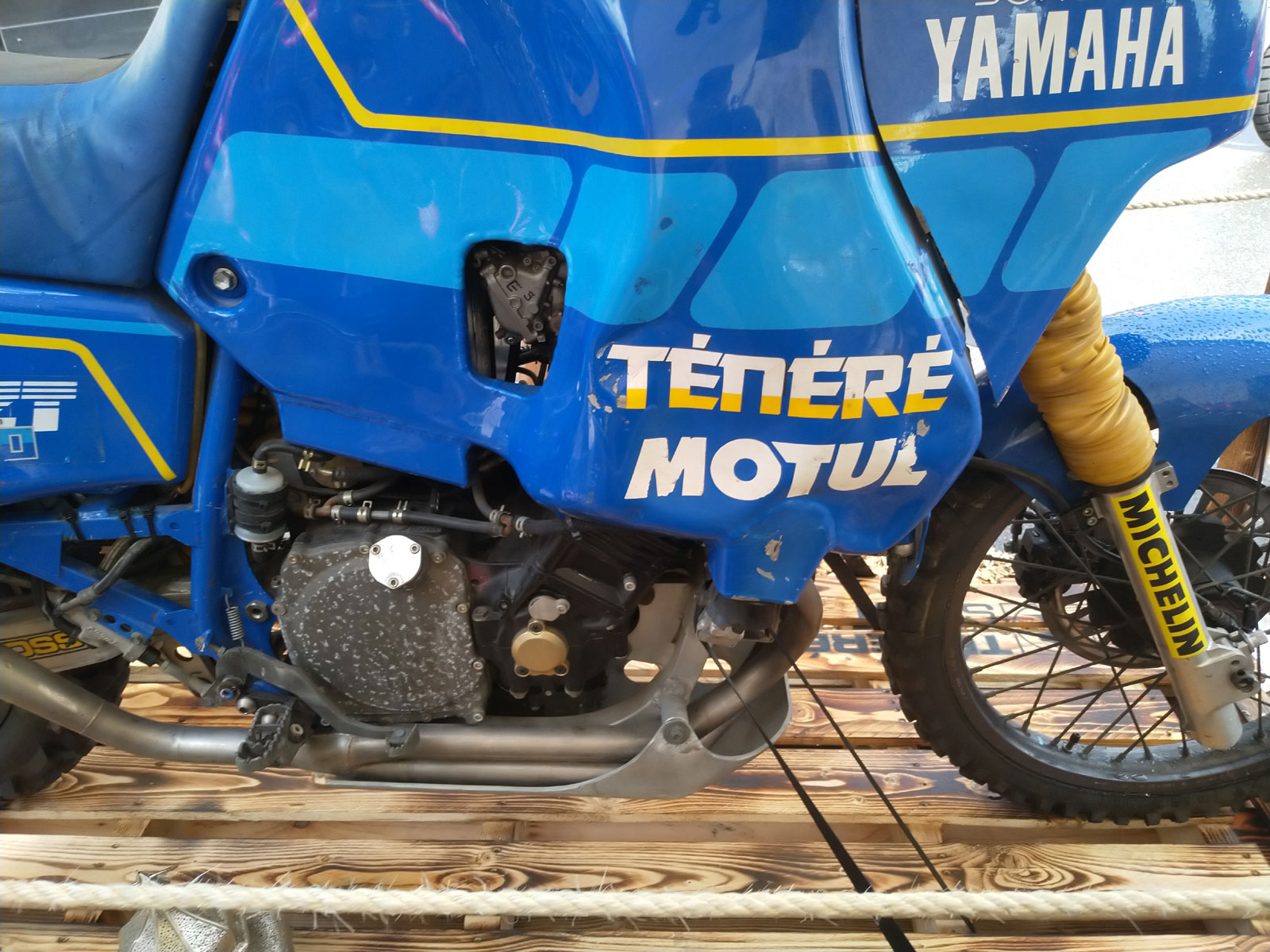
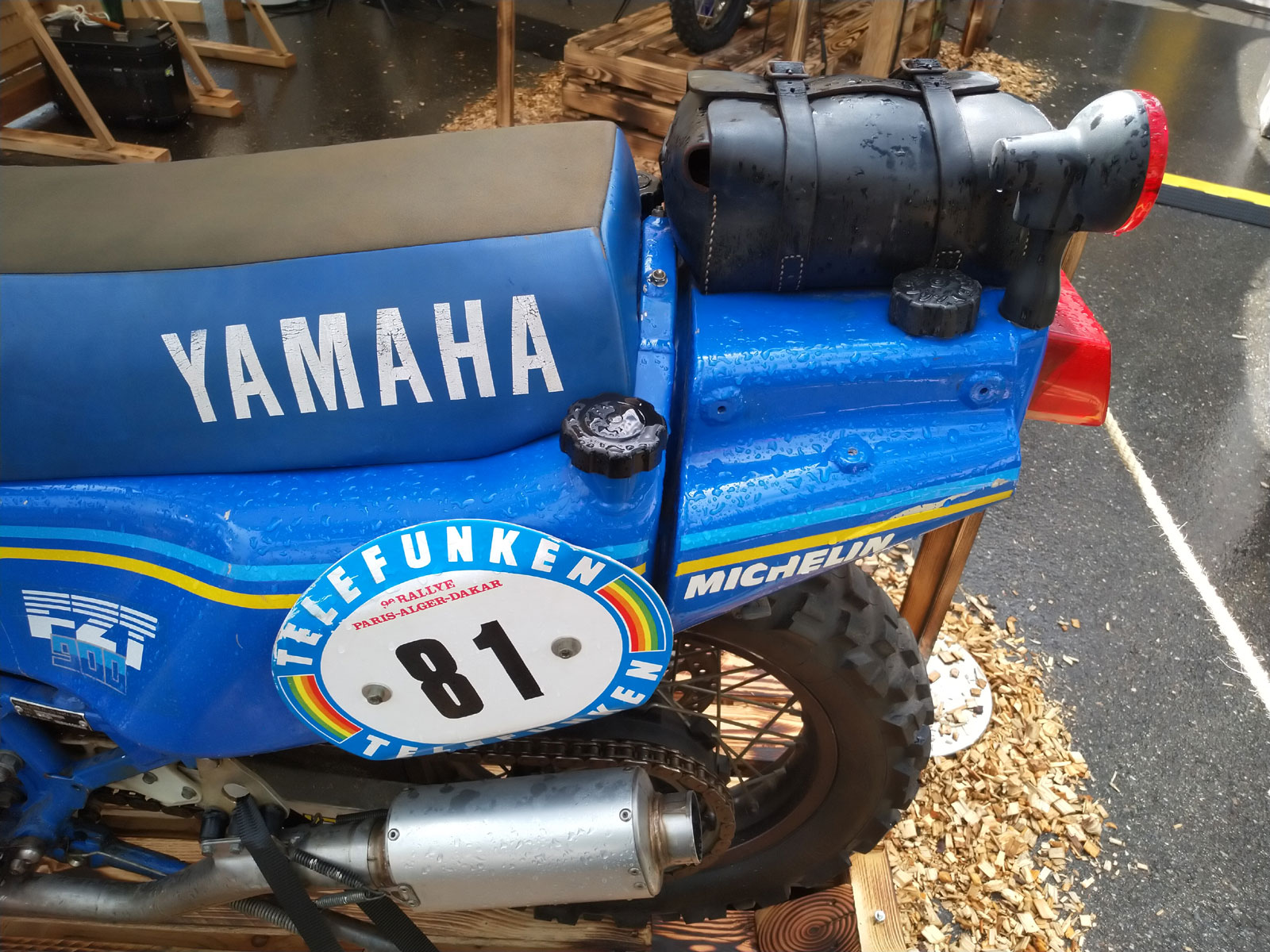
This second version was also lighter. Two prototypes were used by Olivier and Bacou in 1987.
“Their roar clearly signaled their arrival beforehand – they were true monsters among the rally motorcycles of their time, the likes of which have never been seen since.” –Rally-Tenere.net
Bacou finished a very respectable 7th in the 1987 Dakar Rally on the Yamaha 920 FZT #81.
Was the Experiment a Success?
 Measured purely by results, the FZ750 Ténéré might seem like a dead end, as it never achieved a Dakar podium and Yamaha transitioned to the parallel-twin concept in short order. Measured by impact, however, it was a turning point. The project taught Yamaha several critical lessons:
- Multi-cylinder engines could work at Dakar — but not as inline-fours.
- Smoothness and stability mattered deeply.
- Weight, serviceability, and simplicity still ruled.
 These lessons fed directly into Yamaha’s next decisions:
- Abandoning the inline-four concept.
- Moving toward parallel-twin rally engines
- Ultimately creating the YZE750T Super Ténéré, which would dominate Dakar in the early 1990s, and the still dominant XTZ850R that followed.
In that sense, the FZ750 Ténéré was a necessary failure.
Yamaha Paris-Dakar Bikes: 1, 2, and 4 Cylinders
| Feature | FZ750 Ténéré | YZE Singles | YZE750T | XTZ850R |
|---|---|---|---|---|
| Engine Type | Inline-four | Single-cylinder | Parallel-twin | Parallel-twin |
| Complexity | Very high | Low | Moderate | High |
| Strength | Smooth high-speed running | Simplicity & durability | Stability & endurance | Power, refinement & outright speed |
| Dakar Outcome | Experimental | Competitive | Dominant | Winning evolution |
| Legacy Role | Technical exploration | Foundation | Breakthrough | Ultimate factory expression |
Legacy in the Dakar Legends Story
The Yamaha FZ750 Ténéré is a reminder that Dakar success isn’t always linear. Before Yamaha perfected the Super Ténéré formula, it tested the limits of what a rally bike could be, even if that meant adapting a sportbike engine to the Sahara.
 In the Dakar Legends canon, the FZ750 Ténéré earns its place not for trophies, but for audacity. You might say the machine helped Yamaha understand what Dakar demanded…by briefly showing them what it didn’t. And it never would’ve happened without “Mr. Yahama” himself, Jean-Claude Olivier.
More from Dakar…
 2WD Dakar Legend: Yamaha WR450F 2-Trac - Remembering Yamaha x Öhlins’ Hydraulic 2WD Enduro… Every so often, a motorcycle appears that seems to point toward an entirely different future. The Yamaha WR450F 2-Trac was one of those machines. At first glance, it […]
 Dakar Legends: Gilera RC600 & RC750 Rallye - Italy’s Big Thumper in the Twin-Cylinder Era… By the late 1980s, the Paris-Dakar Rally was no longer a romantic expedition but an escalating arms race among the major manufacturers. Twin-cylinder prototypes were growing larger and […]
 Desert Bomber: BMW R80G/S Paris-Dakar Rally Bike - The Boxer That Changed the Desert Forever… In 1981, the Paris-Dakar Rally was still raw — more expedition than sport, more survival than spectacle. Riders crossed the Sahara on machines that were barely adapted from […]
 Desert Boxer: BMW R900RR Dakar Rally Bike - Dakar Legends: Last Roar of the Desert Bombers… In the late 1990s and early 2000s, BMW found itself at a turning point in rally-raid racing. The boxer twin had already written one of the most […]
 The Honda EXP-2: The Two-Stroke Desert Racer - Honda’s 400cc “Experimental 2-Stroke” Baja 1000 / Dakar Rally Bike… In the mid-1990s, as emissions regulations tightened worldwide and the future of two-stroke off-road bikes looked increasingly uncertain, Honda did something nobody expected: it built […]
 Dakar Legends: BMW F650RR Rally Bike - BMW F650RR: Grandfather of the Modern Rally Bikes… In the late 1990s, BMW quietly executed one of the most important strategic pivots in rally history. They developed and unleashed the BMW F650RR — a lean, […]
 The Four-Cylinder Dakar Bike: Yamaha FZ750 Ténéré - The Yamaha FZ750 Ténéré (0U26): Yamaha’s Radical Dakar Experiment… Before Super Ténéré, before big twins ruled the desert, before Dakar logic fully settled in, there was the sportbike-powered FZ750T. The 1986 Yamaha FZ750 Ténéré (0U26) […]
 Lucky Explorer: Cagiva Elefant Paris-Dakar Rally Bike - The Italian Powerhouse That Conquered Dakar… The Cagiva Elefant occupies a unique place in Paris-Dakar history. Where other manufacturers leaned on clinical efficiency or engineering conservatism, Cagiva brought Italian audacity to the table: massive V-twin […]
 Dakar Legends: Yamaha YZE750T Super Ténéré - The Bike That Built a Dakar Dynasty… The Yamaha YZE750T Super Ténéré is one of the most important motorcycles in rally-raid history. Purpose-built from the ground up for the Paris-Dakar Rally, it was the machine […]
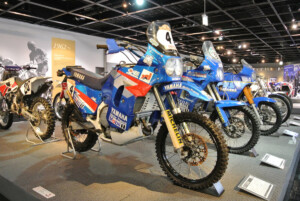 Desert Freight Train: Yamaha XTZ850R Paris-Dakar Rally Bike - The big twin that ruled the desert at the height of the Paris-Dakar era… In the early and mid-1990s, Yamaha dominated the Paris-Dakar Rally, the toughest off-road endurance race on the planet. At the heart […]
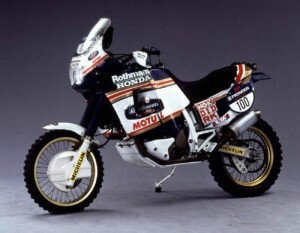 Desert Queen: Honda NXR750 Paris-Dakar Rally Bike - Honda’s NXR750: Queen of the Desert… Few motorcycles in history can claim to have dominated the most brutal race on earth the way Honda’s NXR750 did. Built specifically to conquer the Paris-Dakar Rally, the NXR750 […]


