
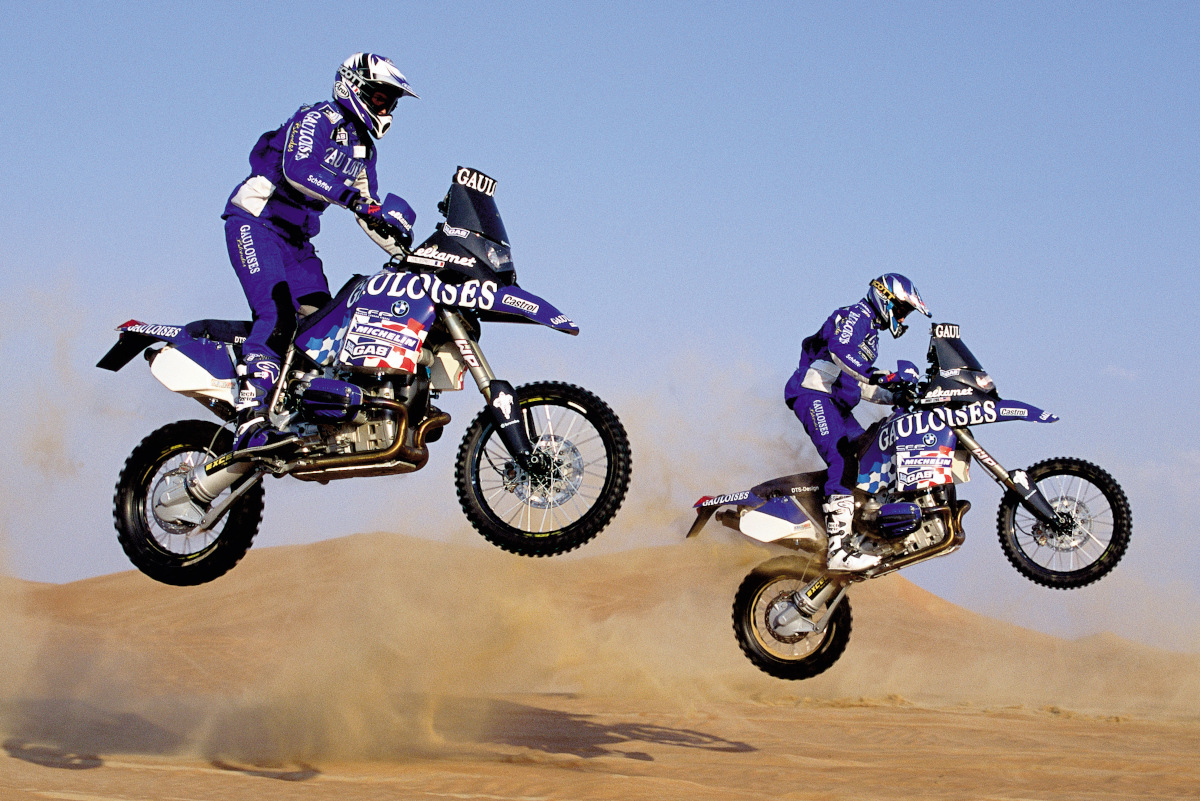
 Dakar Legends: Last Roar of the Desert Bombers…
In the late 1990s and early 2000s, BMW found itself at a turning point in rally-raid racing. The boxer twin had already written one of the most successful chapters in Dakar history, but the landscape of the event — and the motorcycles competing in it — was changing rapidly.
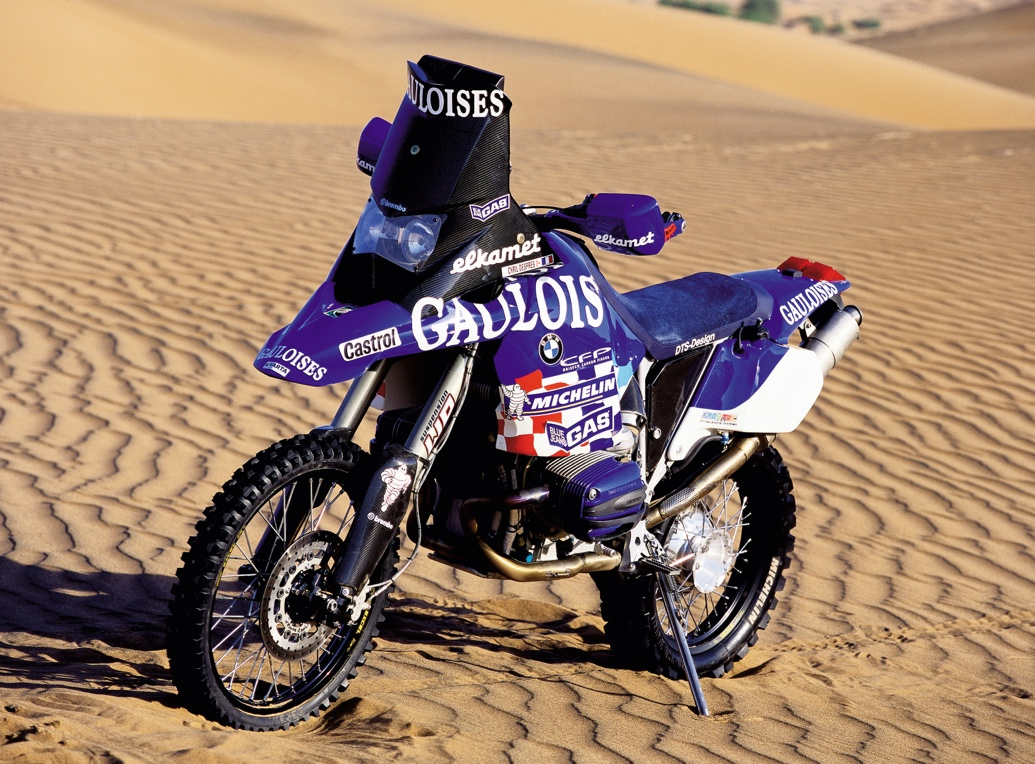 Lighter machines, single-cylinder engines, and increasingly aggressive riding styles were redefining what it took to survive and compete in the world’s toughest rally. Against this backdrop, BMW unleashed one final, radical boxer-powered prototype: the R900RR.
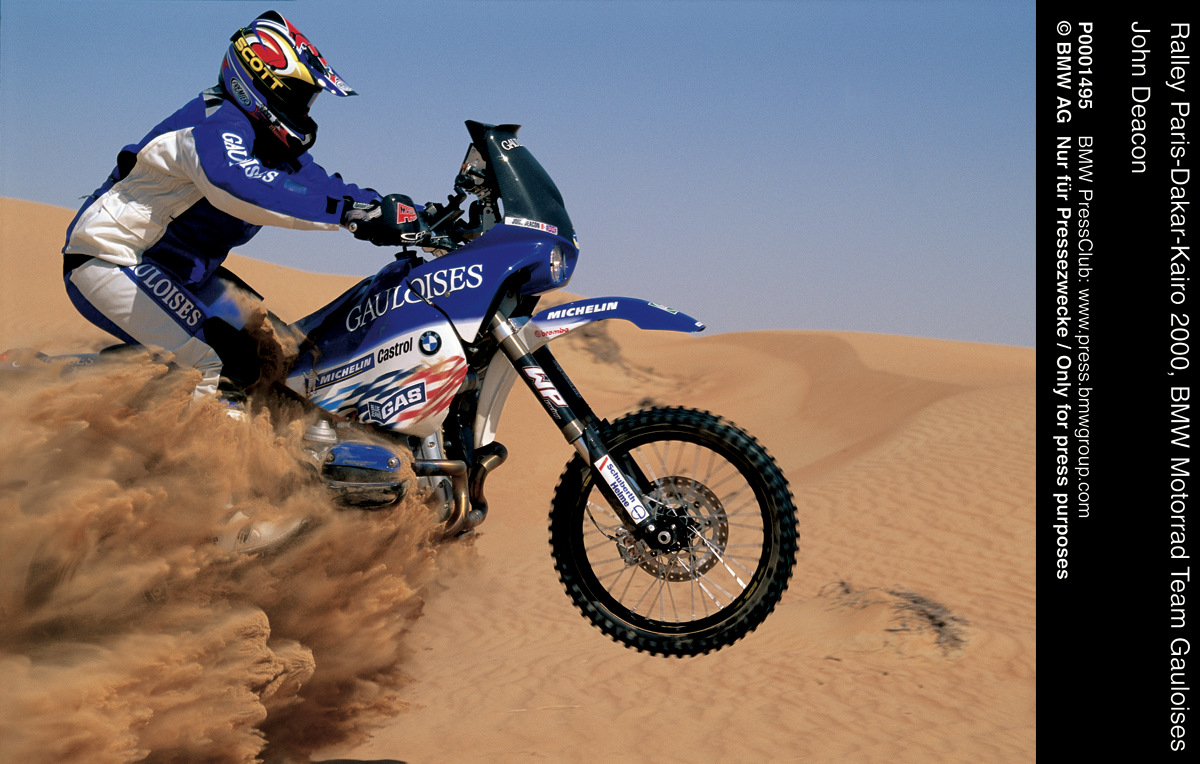 This was not a nostalgia piece or private experiment hidden from competition. The R900RR was a factory-backed Dakar machine developed with the help of HPN and ridden in full rally campaigns by some of the best riders in the world. It represents BMW’s last serious attempt to push the boxer platform into the modern Dakar era — part of BMW’s broader evaluation of rally technology at the turn of the millennium.
A Boxer at the Crossroads
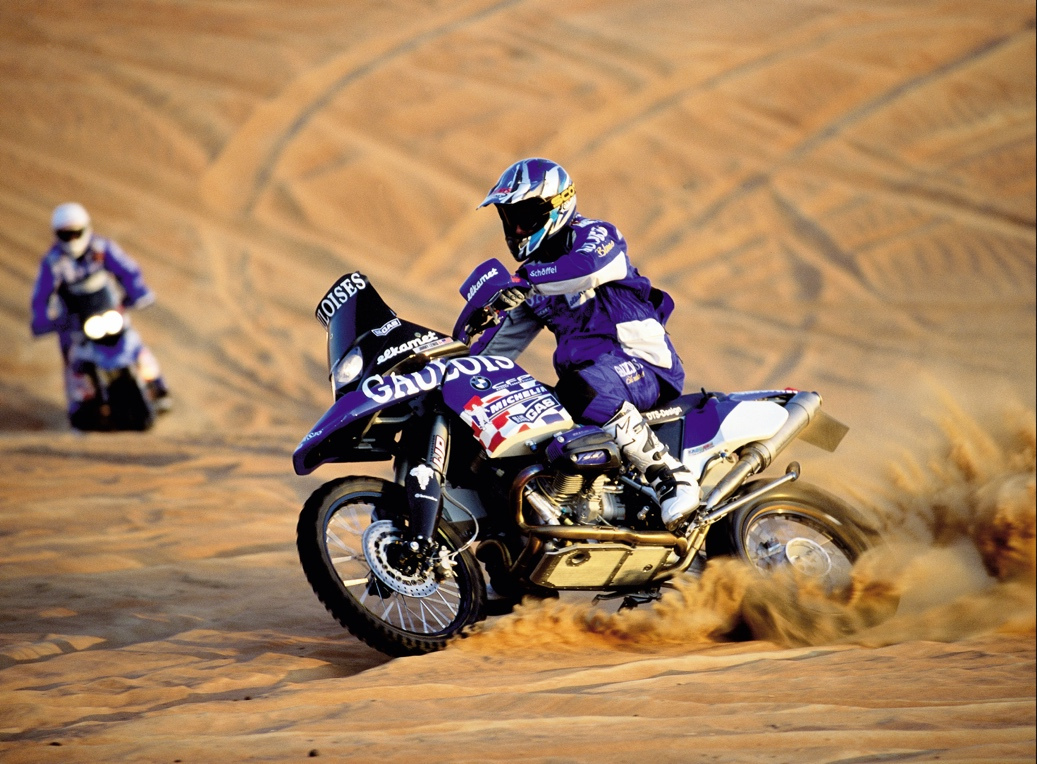 By the time the R900RR appeared, BMW had already proven everything there was to prove with large-capacity boxer twins in rally racing. From the R80G/S through the R100GS, the architecture had delivered multiple Dakar victories and defined the very concept of the “adventure bike.”
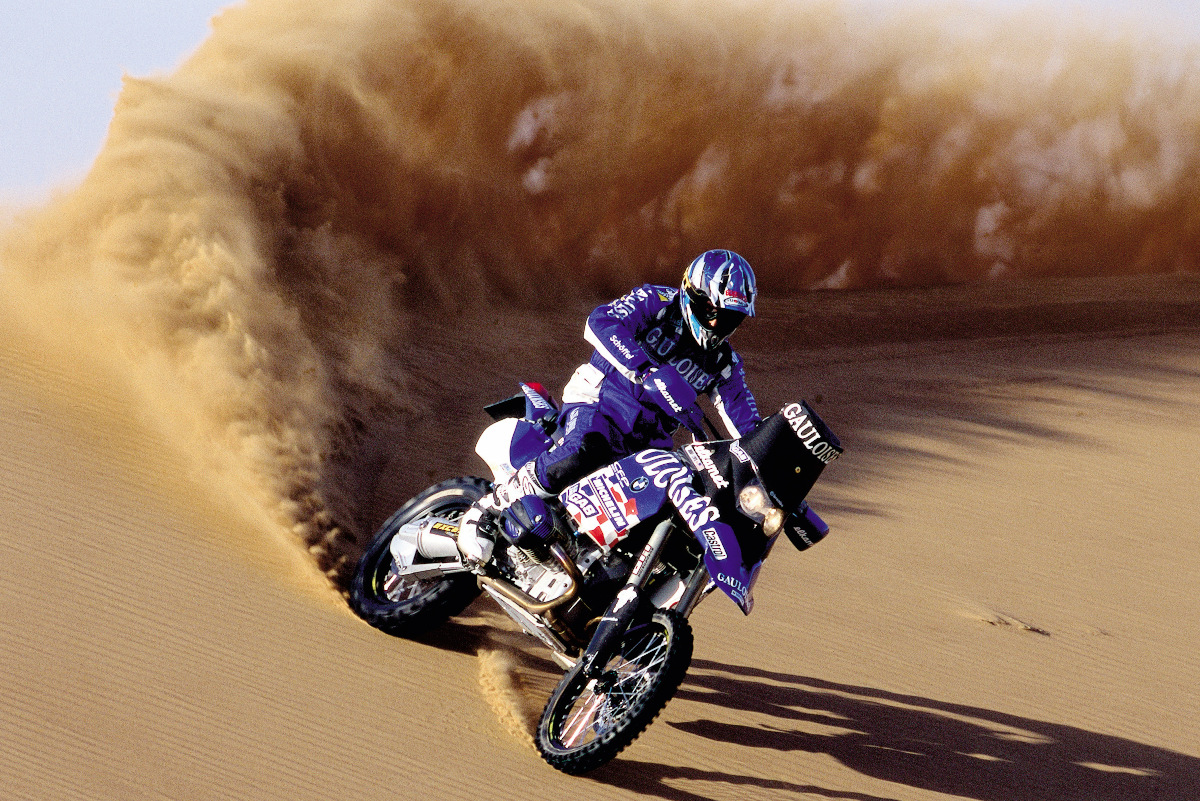 But Dakar was no longer the event it had been in the 1980s. Stages were faster. Navigation more complex. Weight and agility mattered more than brute endurance. Rival manufacturers were embracing lighter singles, and BMW itself was already developing what would become their Dakar-winning F650RR single-cylinder rally bike.
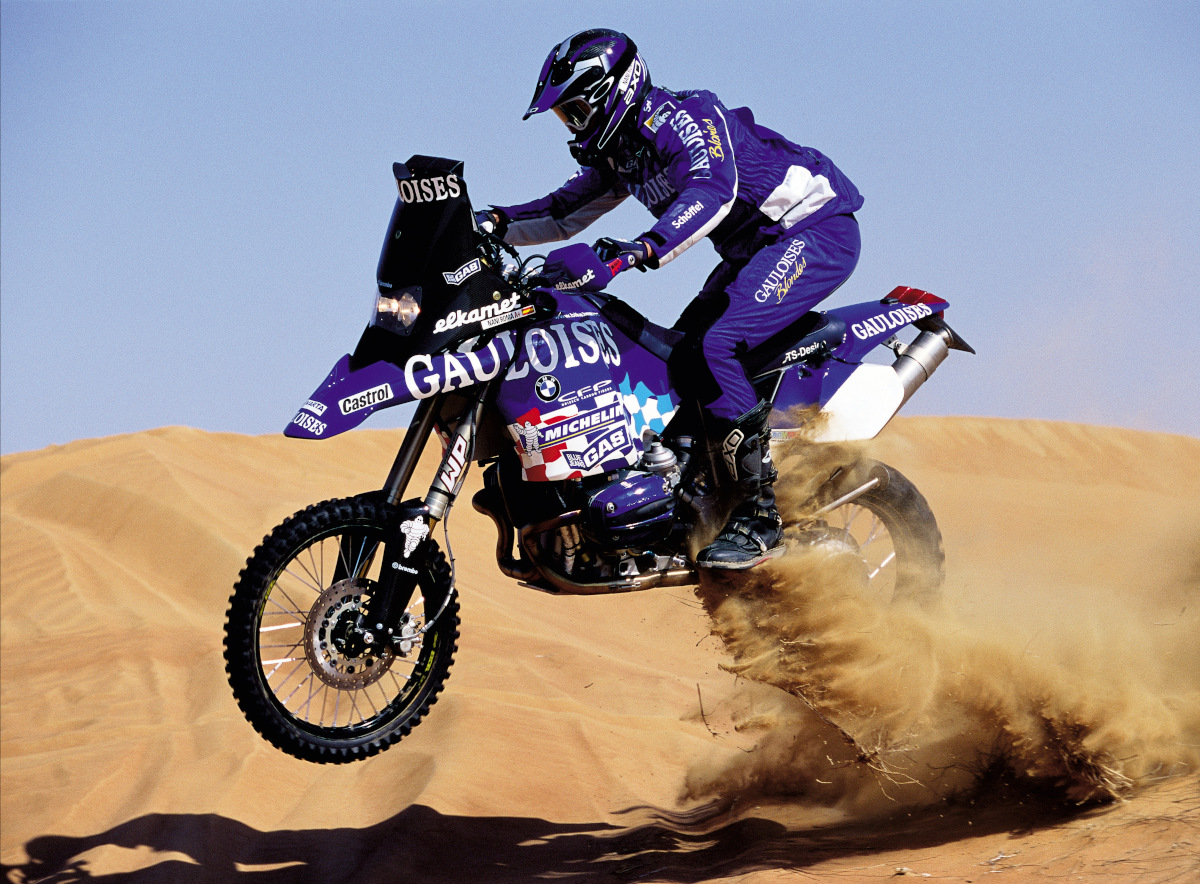 The R900RR was born out of this tension. Rather than abandoning the boxer outright, BMW chose to answer a difficult question the hard way: Could a modernized, lighter, purpose-built boxer still compete at the highest level of Dakar racing?
BMW Motorrad decided in 1998 that they would run their boxer twins alongside their Rotax-powered F650RR singles in rally racing, effectively comparing the two design concepts.
The Team: BMW Motorrad Team Gauloises
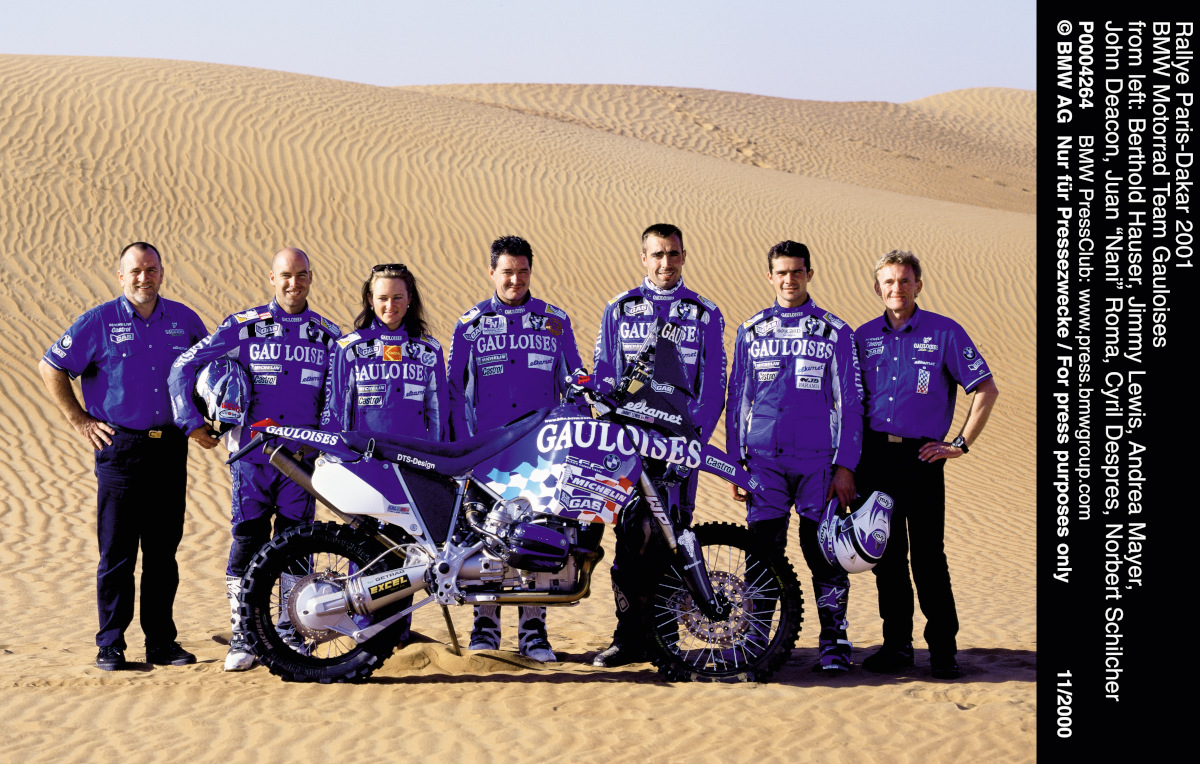 The R900RR was campaigned by BMW with factory support and a Gauloises-backed team. Riders would include:
- Cyril Despres
- Jimmy Lewis
- Juan Roma
- John Deacon
- Oscar Gallardo
- And more…
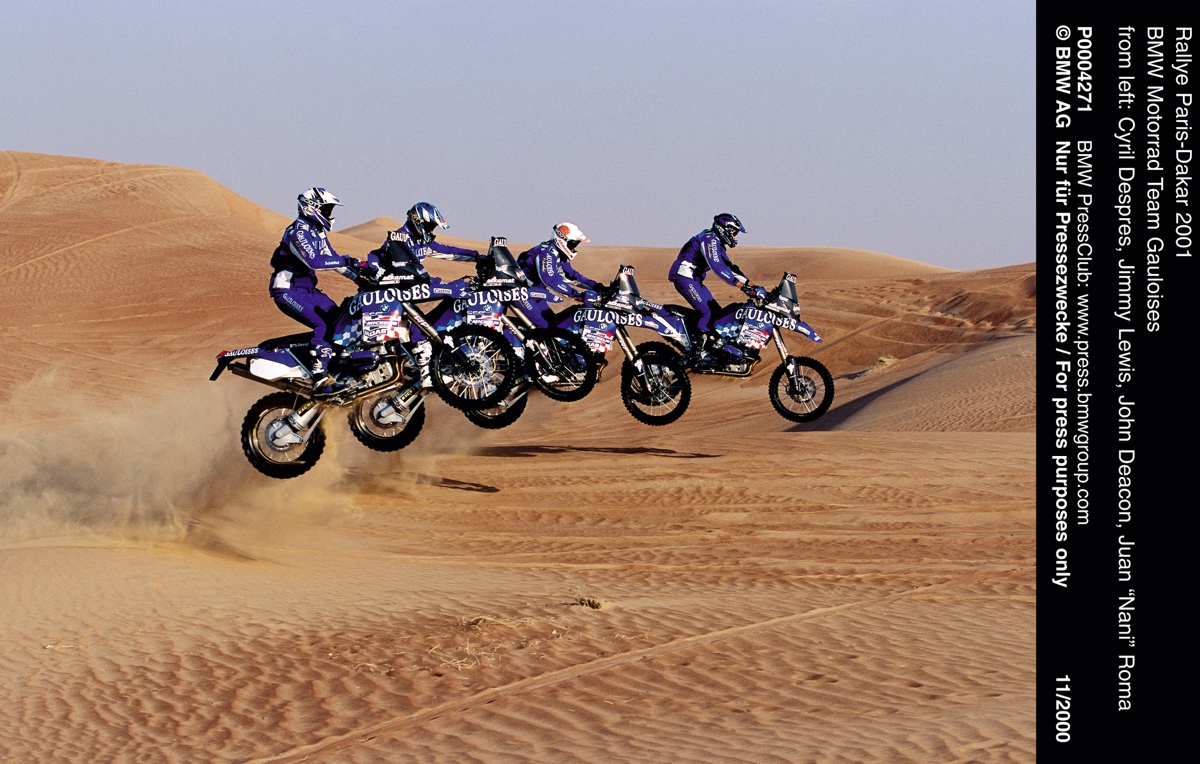 These were not development riders or marketing appearances. They were elite competitors riding the R900RR in full Dakar conditions — dunes, liaison stages, navigation, and mechanical attrition included. BMW was not protecting the bike from scrutiny, but deliberately exposing it.
HPN: The Builders Behind the Machine
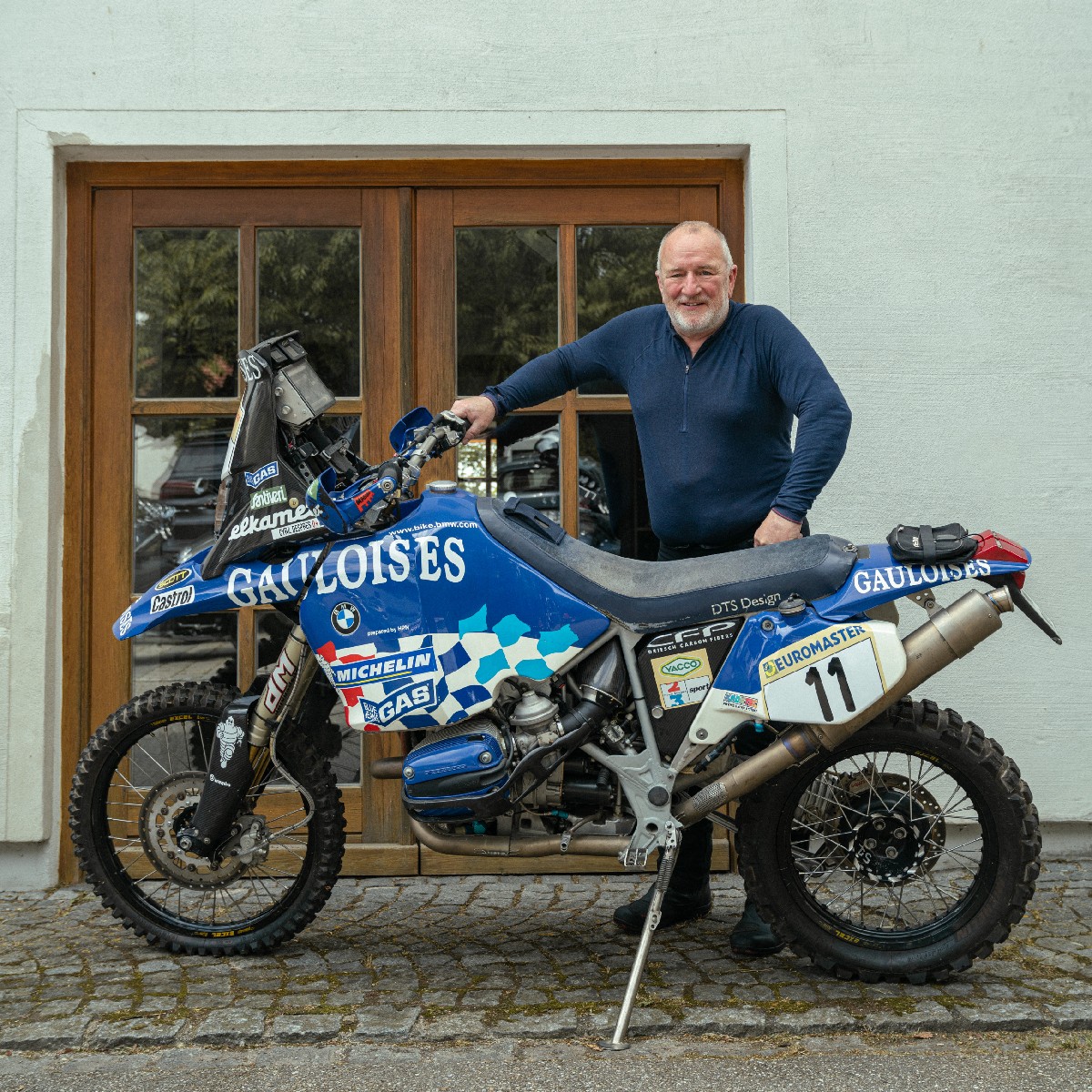 The R900RR was developed and constructed with heavy involvement from HPN — the Bavarian engineering firm whose name is inseparable from BMW’s rally and endurance racing history.
HPN had been founded decades earlier by the Bavarian BMW rally specialists who gave the company its name — Alfred Halbfeld, Klaus Pepperl, and Michael Neher (HPN). The later R900RR Dakar program represented the culmination of HPN’s long-running BMW rally development work.
HPN’s involvement went far beyond fabrication. They adapted BMW’s oilhead boxer architecture for modern rally competition. Drawing on years of Dakar experience, HPN refined the chassis, fuel systems, and suspension geometry to cope with increasingly technical stages, effectively turning a large-capacity boxer twin into a purpose-built rally prototype rather than a modified production GS.
HPN’s fingerprints are evident throughout the bike:
- Reinforced, rally-specific frame construction
- Revised geometry for high-speed desert stability
- Weight reduction wherever possible without sacrificing durability
- Long-travel suspension designed to cope with dunes and repeated impacts
- Purpose-built bodywork, fuel systems, and navigation equipment
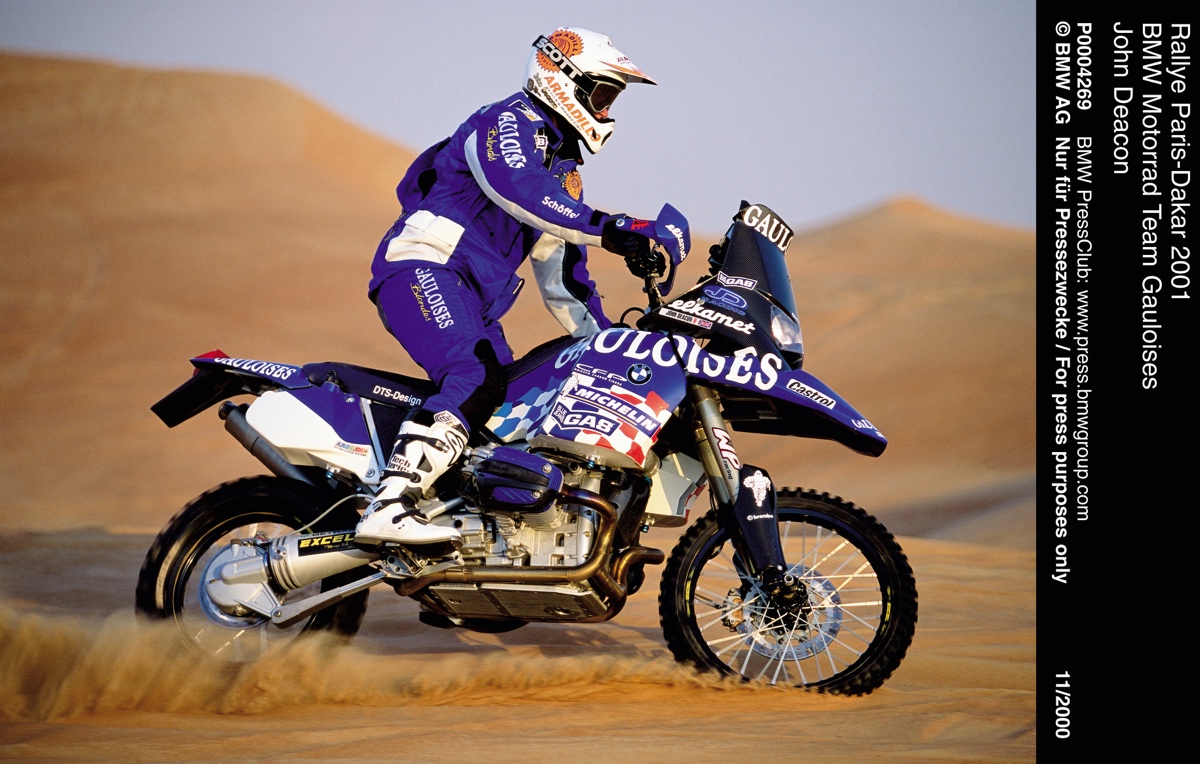 This was far from just a modified production GS. It was a heavily re-engineered rally chassis and engine derived from BMW architecture, but developed singlemindedly to survive and win at Dakar.
Technical Philosophy
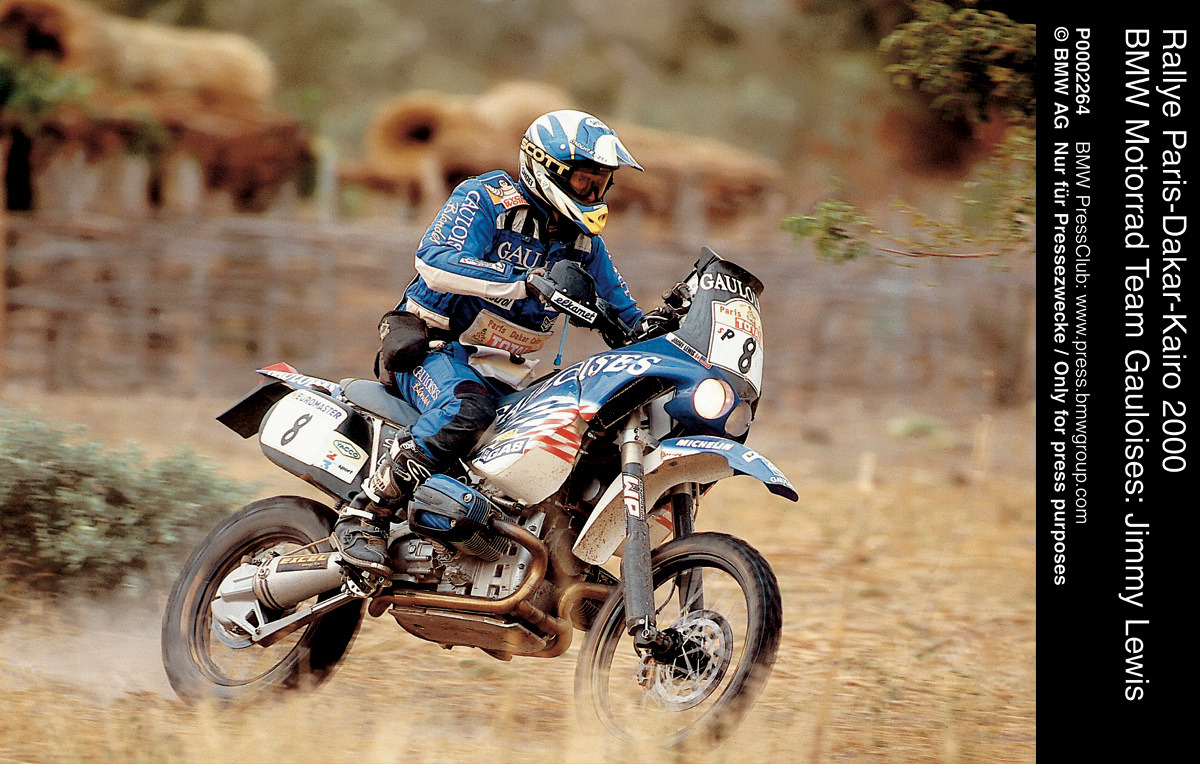 Rather than chasing outright displacement, BMW and HPN adapted their existing four-valve-per-cylinder oilhead engine architecture to meet evolving rally regulations. The result was a 900cc version of the engine — smaller than the production 1100/1150cc models, but still retaining the boxer’s low center of gravity and mechanical durability. Reportedly, it produced a healthy 90 hp with good torque and a broad powerband.
Dakar’s changing rules were nudging manufacturers toward lighter machines, and the R900RR represented BMW’s attempt to keep the boxer competitive within that shifting framework.
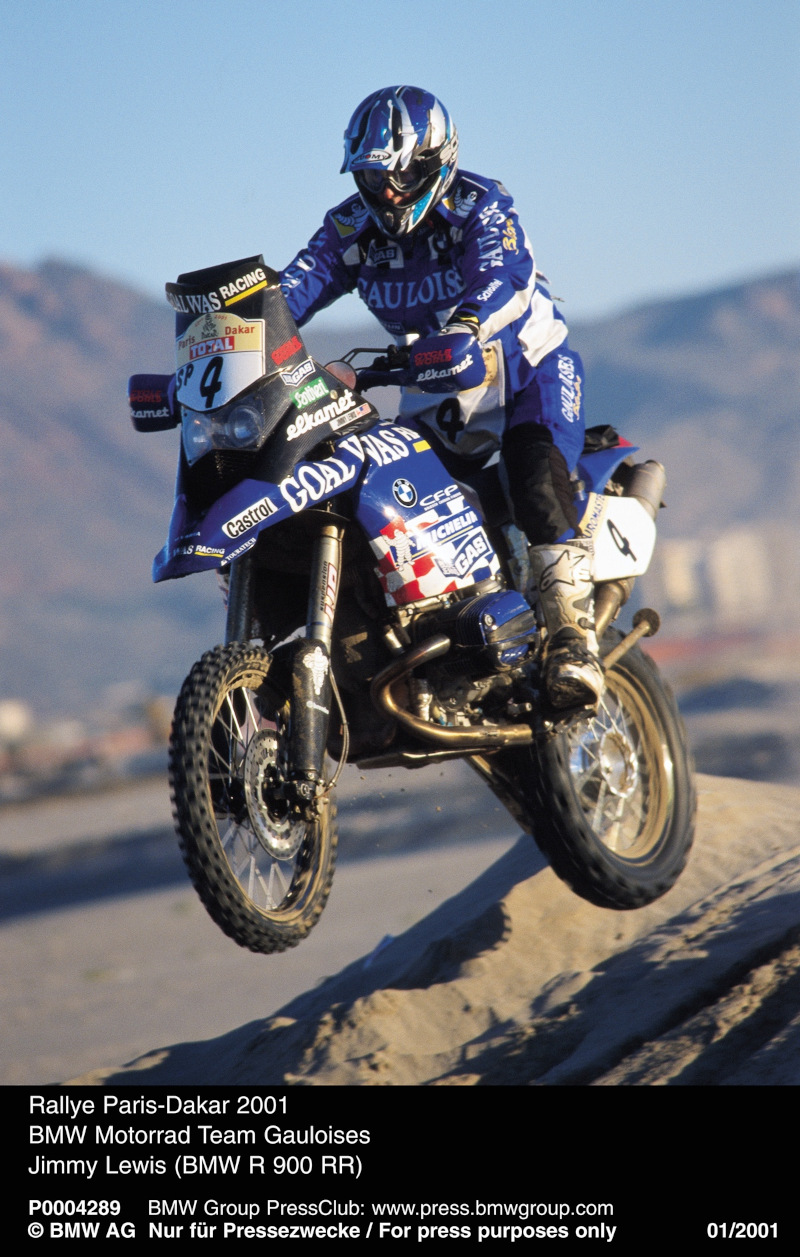
Key technical characteristics (compiled from period references and enthusiast research):
- Engine: ~900cc air/oil-cooled boxer twin
- Valvetrain: OHV, four valves per cylinder
- Fueling: Dual Bing carbs
- Transmission: 5-speed manual
- Final Drive: Shaft
- Frame: HPN-built rally chassis
- Suspension: Long-travel rally suspension (WP/Öhlins depending on build)
- Suspension Travel: 300mm / 11.8″
- Front Wheel: 21-inch
- Rear Wheel: 18-inch
- Fuel Capacity: Multi-tank rally setup (exact capacity varies by stage configuration)
- Main front: 30 L / 7.9 gallons
- Side (right): 10 L / 2.6 gallons
- Underseat: 3 L / 0.8 US gallons (water)
- Dry Weight: 419 lbs
- Horsepower: 90 hp at 8200 rpm
BMW’s engineers weren’t trying to outgun the competition on paper. They were testing whether refinement, balance, and durability could offset the boxer’s inherent weight disadvantage.
Results: and the Answer BMW Received
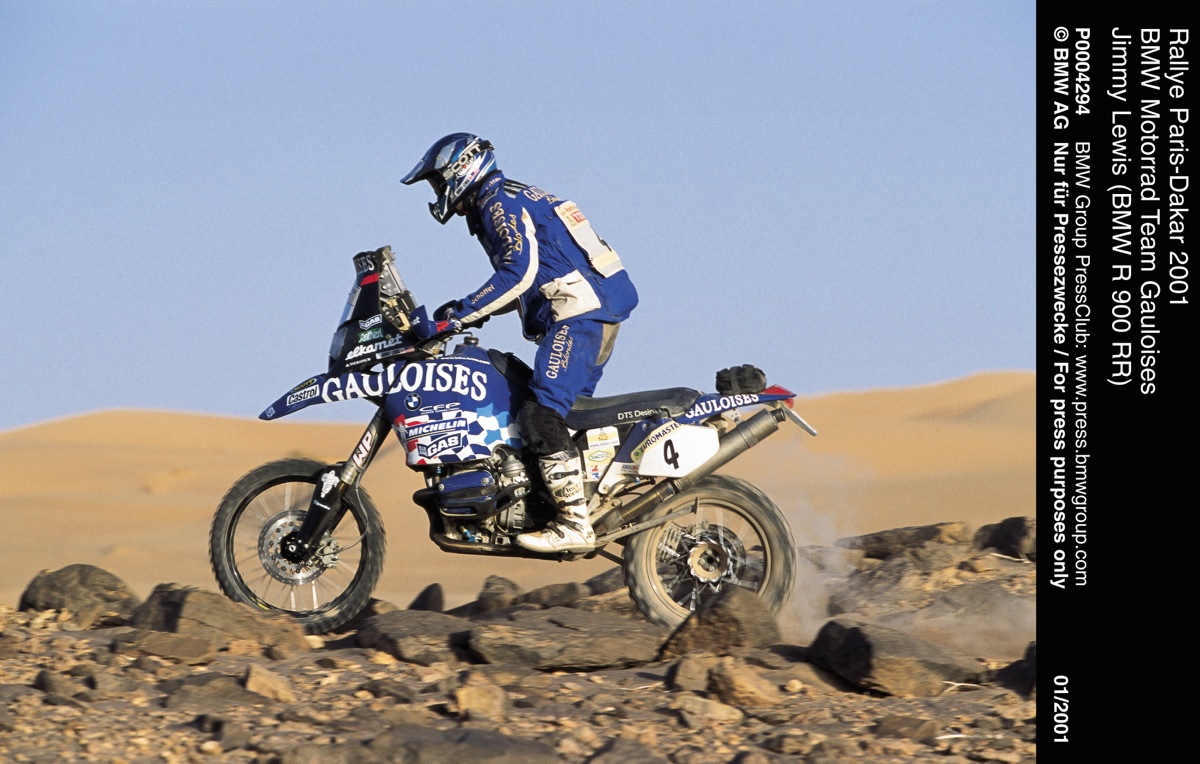 The R900RR demonstrated that BMW’s boxer platform could still compete at a high level in modern rally conditions. However, Dakar itself was evolving toward lighter, more agile machines. The organizers, worried about the number of accidents as machines grew faster and faster, effectively slowed down the tracks with more technical routes. The big boxers could shine in wide open country at high speed, but they weren’t as nimble in the rocks and camel grass.
Meanwhile, BMW was already achieving major success with a different philosophy. The company’s single-cylinder F650RR program — lighter, more agile, and better aligned with the evolving demands of Dakar — was delivering strong results, including overall victories in 1999 and 2000.
Rather than representing a failure of the boxer concept, the R900RR became part of BMW’s broader transition — a bridge between decades of twin-cylinder rally heritage and the new generation of lightweight single-cylinder factory machines that continue to dominate the Dakar Rally today.
Legacy: The Last Factory-Backed Boxer Rally Bike
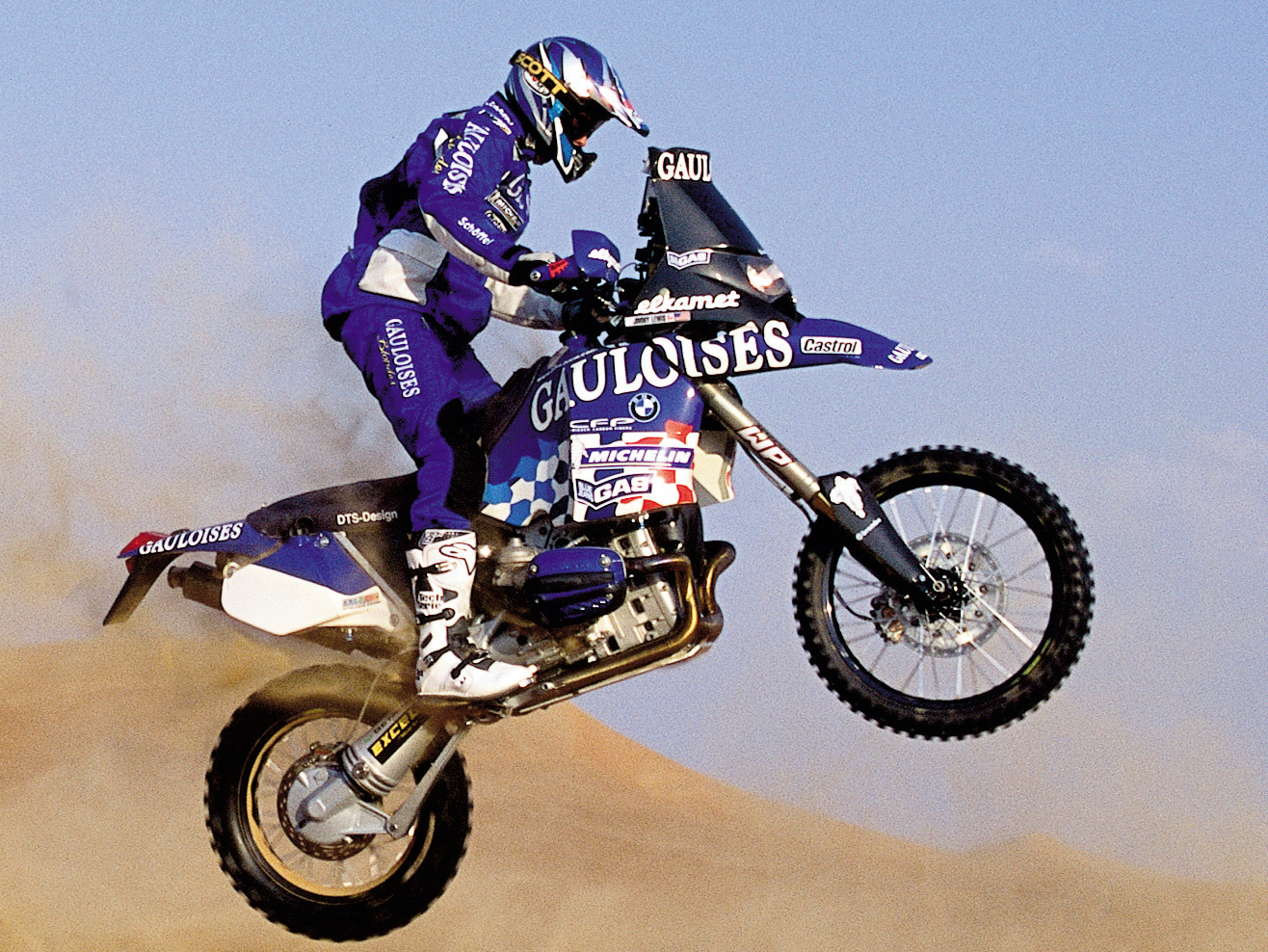 The R900RR occupies a unique place in Dakar history, as it was BMW’s last major factory-backed boxer-powered Dakar campaign machine. As such, it’s one of the most rugged, capable, and aggressive boxers ever built. HPN developed it, champions raced, and while it didn’t win any Dakar victories, it performed admirably in a changing rally landscape.
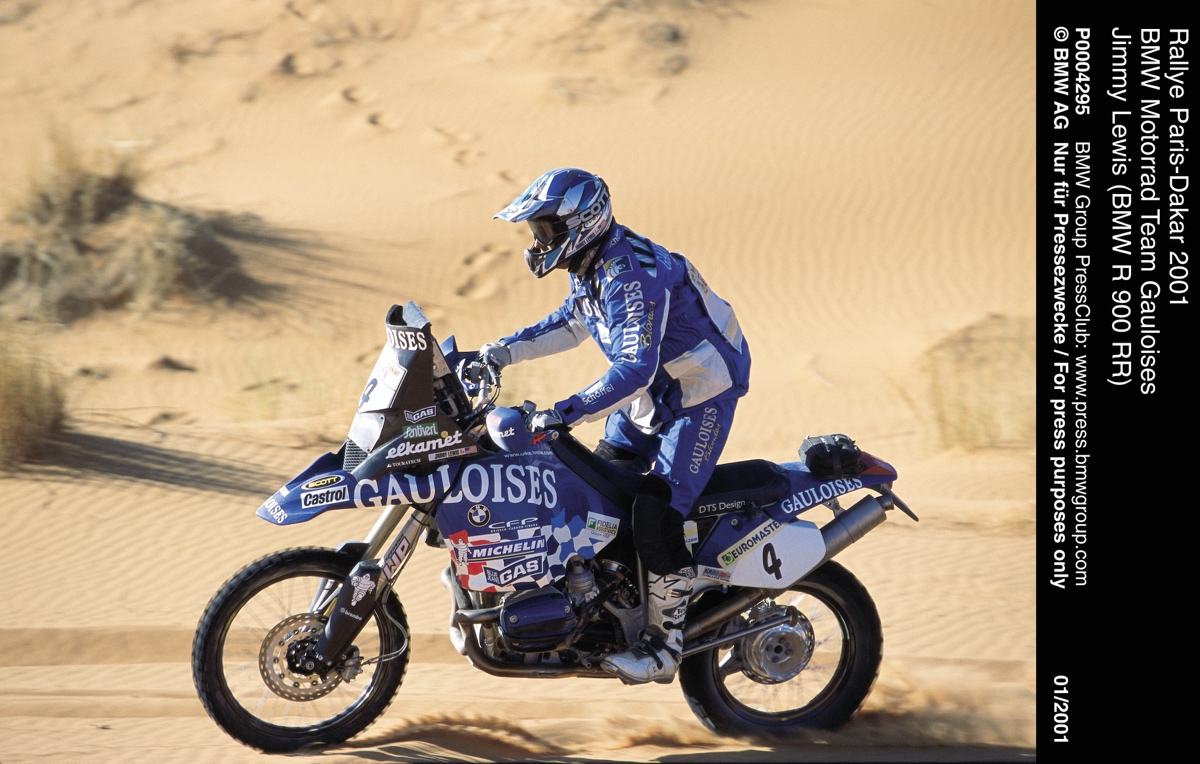 It wasn’t developed to relive old victories. It was designed to answer hard questions…and BMW asked them at full speed, under Dakar skies, with the best riders they could find.
In the Dakar Legends canon, the R900RR stands as a symbol of transition: the final roar of the boxer twin in the desert, even as BMW turned the page toward a single-cylinder future.
More Dakar Legends
 2WD Dakar Legend: Yamaha WR450F 2-Trac - Remembering Yamaha x Öhlins’ Hydraulic 2WD Enduro… Every so often, a motorcycle appears that seems to point toward an entirely different future. The Yamaha WR450F 2-Trac was one of those machines. At first glance, it […]
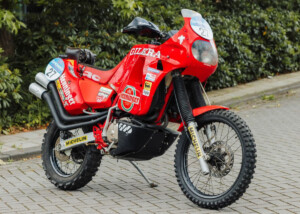 Dakar Legends: Gilera RC600 & RC750 Rallye - Italy’s Big Thumper in the Twin-Cylinder Era… By the late 1980s, the Paris-Dakar Rally was no longer a romantic expedition but an escalating arms race among the major manufacturers. Twin-cylinder prototypes were growing larger and […]
 Desert Bomber: BMW R80G/S Paris-Dakar Rally Bike - The Boxer That Changed the Desert Forever… In 1981, the Paris-Dakar Rally was still raw — more expedition than sport, more survival than spectacle. Riders crossed the Sahara on machines that were barely adapted from […]
 Desert Boxer: BMW R900RR Dakar Rally Bike - Dakar Legends: Last Roar of the Desert Bombers… In the late 1990s and early 2000s, BMW found itself at a turning point in rally-raid racing. The boxer twin had already written one of the most […]
 The Honda EXP-2: The Two-Stroke Desert Racer - Honda’s 400cc “Experimental 2-Stroke” Baja 1000 / Dakar Rally Bike… In the mid-1990s, as emissions regulations tightened worldwide and the future of two-stroke off-road bikes looked increasingly uncertain, Honda did something nobody expected: it built […]
 Dakar Legends: BMW F650RR Rally Bike - BMW F650RR: Grandfather of the Modern Rally Bikes… In the late 1990s, BMW quietly executed one of the most important strategic pivots in rally history. They developed and unleashed the BMW F650RR — a lean, […]
 The Four-Cylinder Dakar Bike: Yamaha FZ750 Ténéré - The Yamaha FZ750 Ténéré (0U26): Yamaha’s Radical Dakar Experiment… Before Super Ténéré, before big twins ruled the desert, before Dakar logic fully settled in, there was the sportbike-powered FZ750T. The 1986 Yamaha FZ750 Ténéré (0U26) […]
 Lucky Explorer: Cagiva Elefant Paris-Dakar Rally Bike - The Italian Powerhouse That Conquered Dakar… The Cagiva Elefant occupies a unique place in Paris-Dakar history. Where other manufacturers leaned on clinical efficiency or engineering conservatism, Cagiva brought Italian audacity to the table: massive V-twin […]
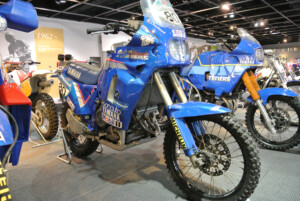 Dakar Legends: Yamaha YZE750T Super Ténéré - The Bike That Built a Dakar Dynasty… The Yamaha YZE750T Super Ténéré is one of the most important motorcycles in rally-raid history. Purpose-built from the ground up for the Paris-Dakar Rally, it was the machine […]
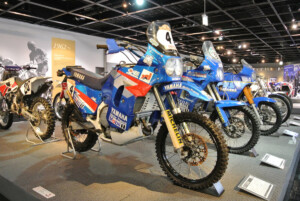 Desert Freight Train: Yamaha XTZ850R Paris-Dakar Rally Bike - The big twin that ruled the desert at the height of the Paris-Dakar era… In the early and mid-1990s, Yamaha dominated the Paris-Dakar Rally, the toughest off-road endurance race on the planet. At the heart […]
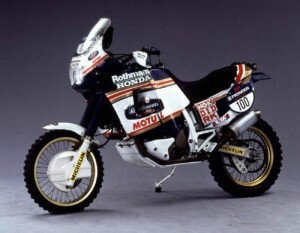 Desert Queen: Honda NXR750 Paris-Dakar Rally Bike - Honda’s NXR750: Queen of the Desert… Few motorcycles in history can claim to have dominated the most brutal race on earth the way Honda’s NXR750 did. Built specifically to conquer the Paris-Dakar Rally, the NXR750 […]


Hallo Leute,
auch ich bin ein riesen Fan der BMW R 900 RR und an allen interessiert was mit diesem Bike in Zusammenhang steht!
Wurde HPN tatsächlich von Hans-Peter Niedermayer, Heinz Pütz und Sepp Huber gegründet?
Das ist mir neu und ich konnte keinen Nachweis dafür im Internet finden.
Wenn das so war, war es ein riesen Zufall das die Namen der Nachfolger Halbfeld, Pepperl und Neher genauso passten.
Ich Bitte um Aufklärung.
Danke und Grüße
Norman
Good catch! Correction issued!