
 The Boxer That Changed the Desert Forever…
In 1981, the Paris-Dakar Rally was still raw — more expedition than sport, more survival than spectacle. Riders crossed the Sahara on machines that were barely adapted from production bikes, navigating by compass and roadbook across terrain that punished both man and machine. And then BMW showed up with a twin-cylinder boxer.
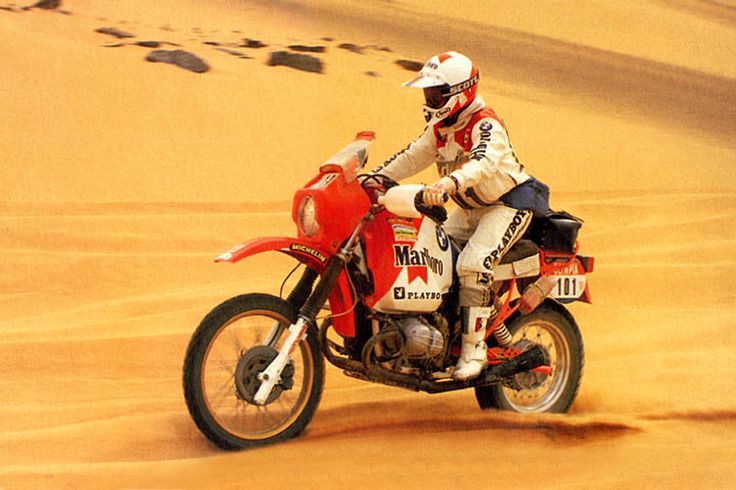 At a time when most competitors favored lighter single-cylinder machines, BMW entered the desert with a modified R80G/S — a shaft-driven, air-cooled flat twin derived from its production dual-sport platform. On paper, it looked heavy. Overbuilt. Almost absurd. In practice, it changed Dakar forever.
Birth of the Big Twin Rally Bike
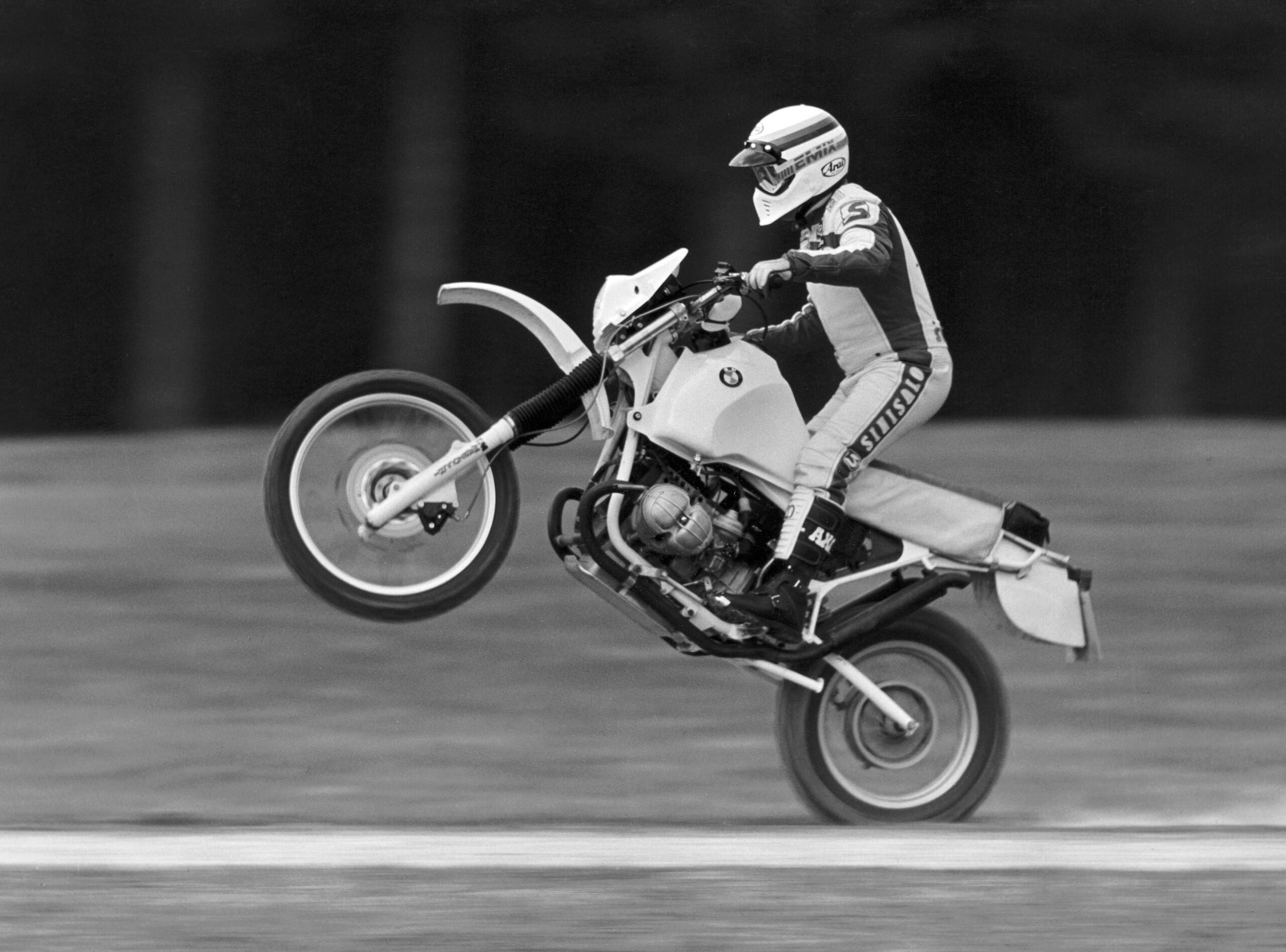
The “G/S” designation stood for Gelände / Straße — “off-road / street.” Introduced in 1980, the production R80G/S was already revolutionary: a large-displacement dual-sport that combined long-travel suspension with BMW’s 797.5cc boxer twin and shaft drive.
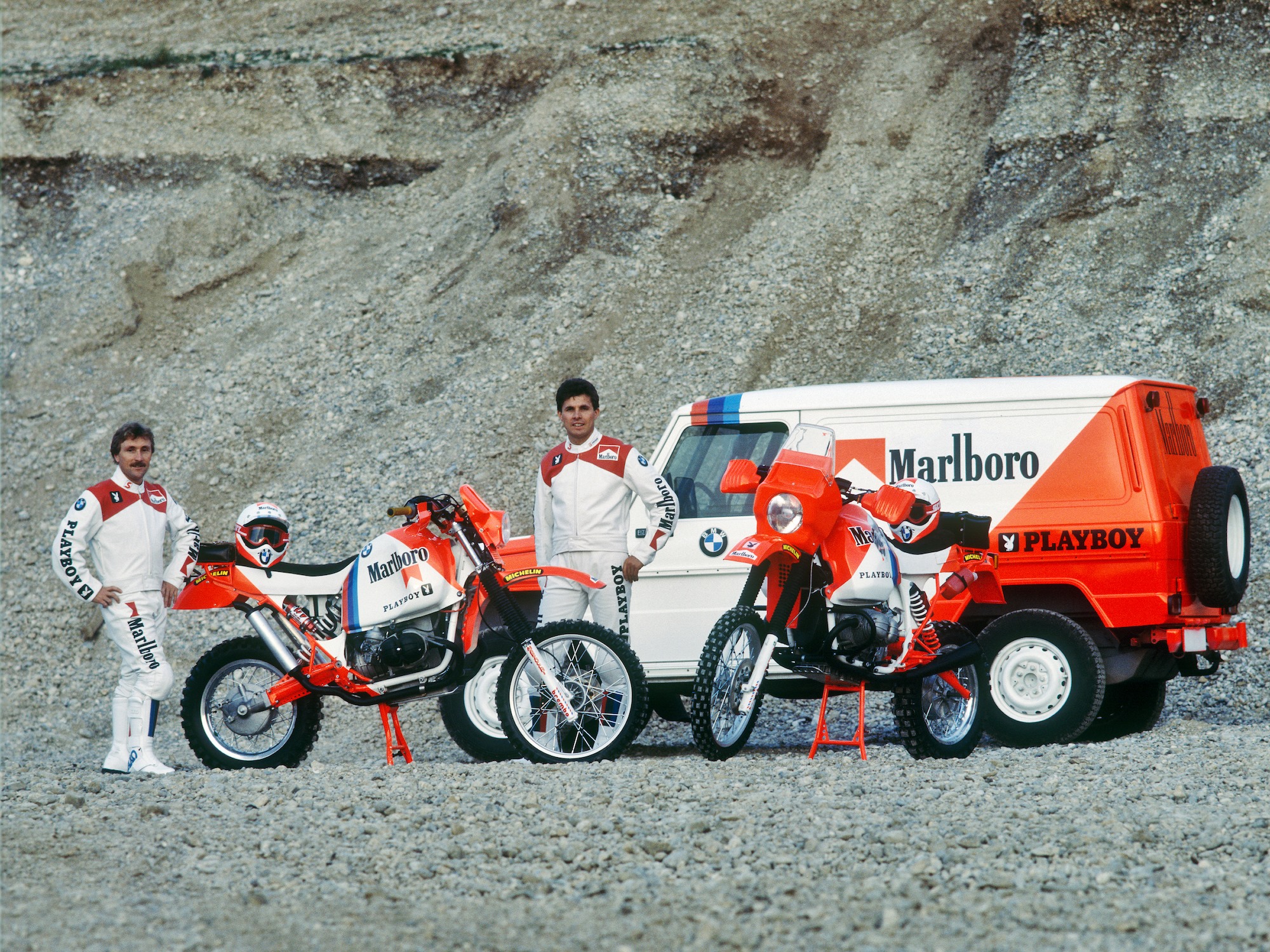
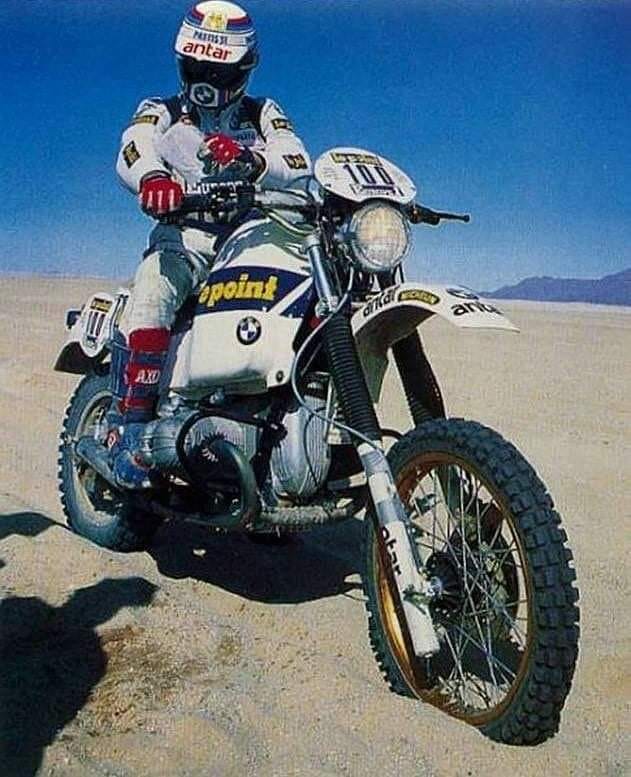 For Dakar competition, BMW and HPN (Hönig, Popp, and Nerger — the German engineering trio who became instrumental in rally development) transformed the platform into something far more focused. The rally bikes featured:
- Enlarged fuel tanks (often exceeding 30 liters, and later far more)
- Reinforced frames and swingarms
- Longer suspension travel
- Lightweight alloy subframes
- Weight reduction wherever possible
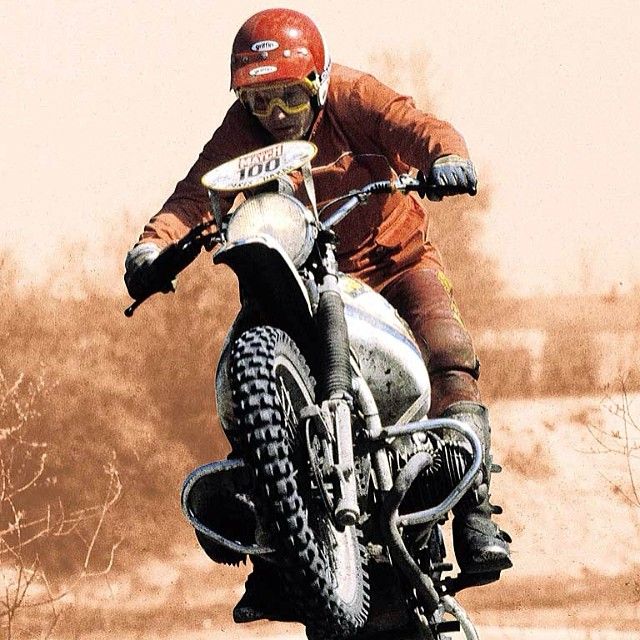 The result was a machine that retained the torque-rich, bulletproof character of the boxer twin but gained the durability required for thousands of desert kilometers.
Hubert Auriol and the First Breakthrough
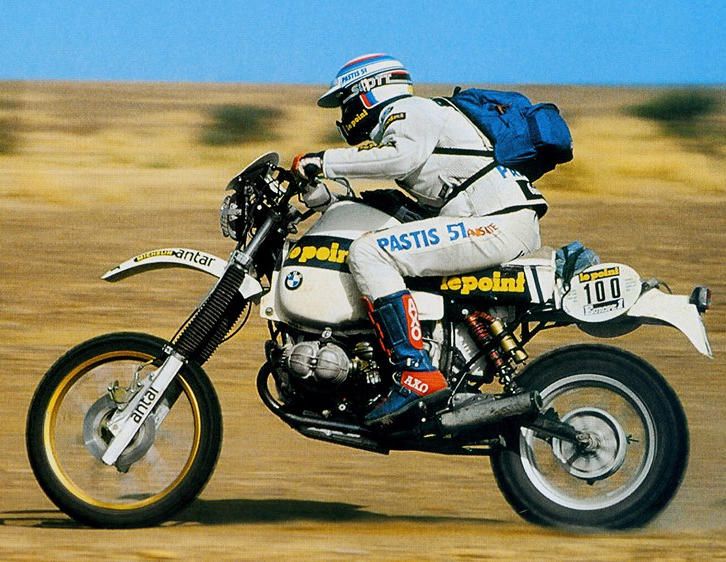 BMW’s gamble paid off quickly. In 1981, French rider Hubert Auriol piloted the R80G/S to overall victory in the Paris-Dakar Rally — the first win for a multi-cylinder motorcycle in the event. The desert had been conquered by a twin.
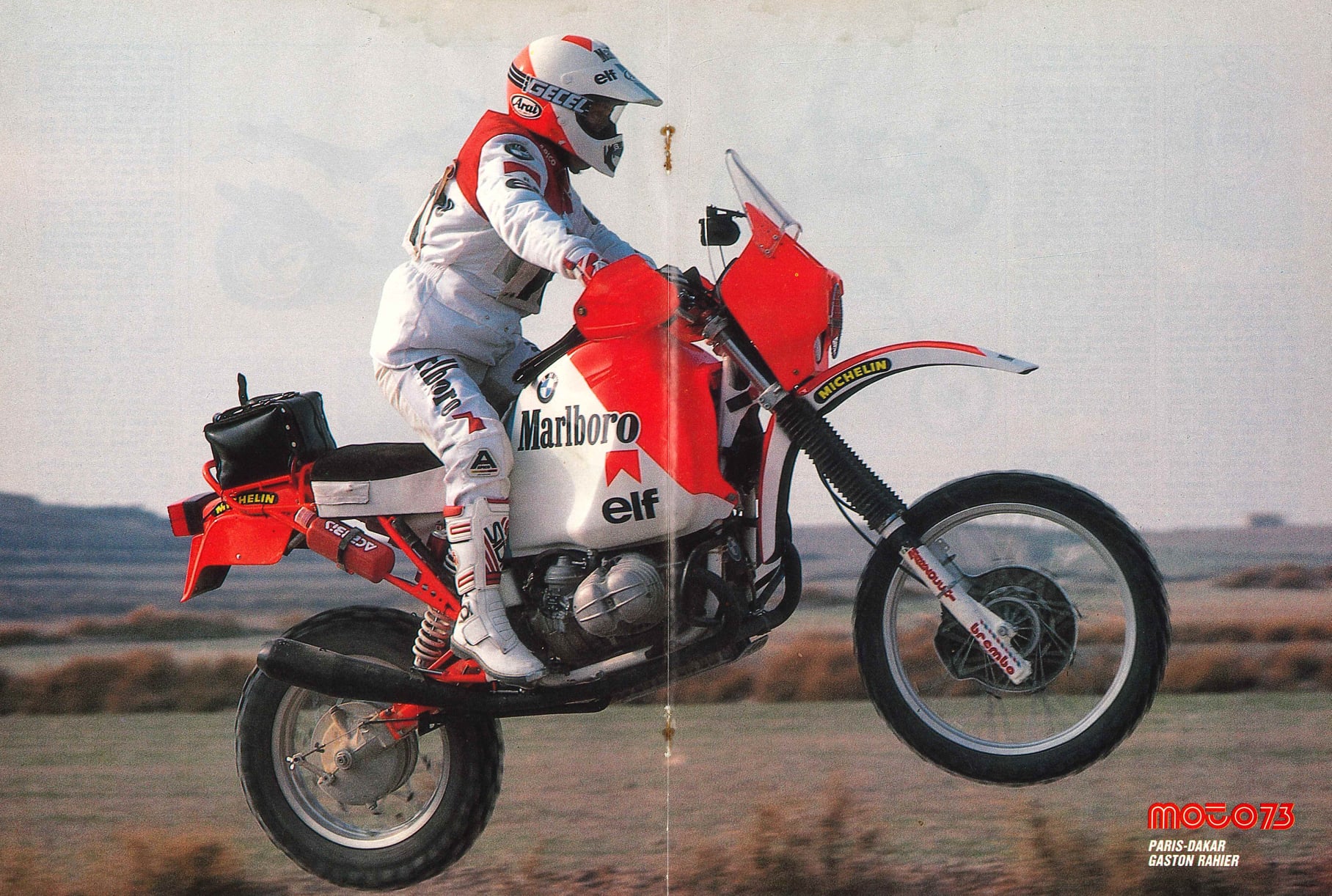
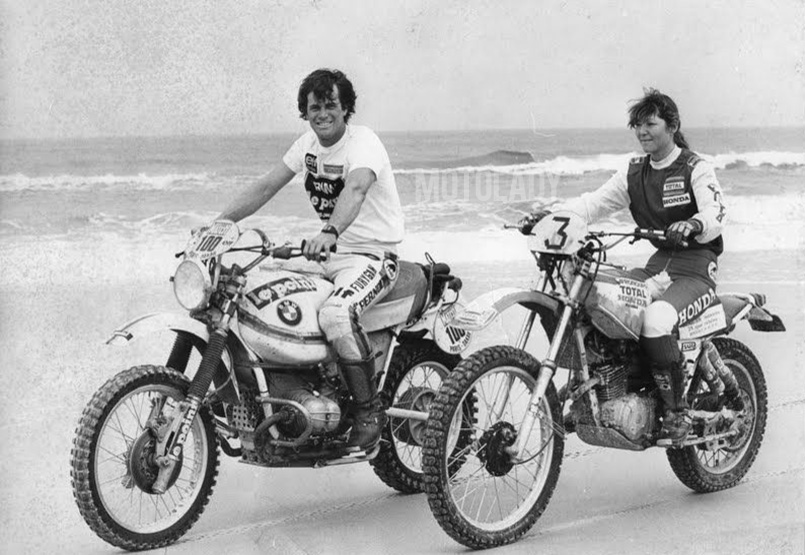 Two years later, in 1983, Auriol repeated the feat. Then in 1984 and 1985, Belgian rider Gaston Rahier — standing just 5’4″ — took back-to-back Dakar victories aboard the BMW, proving that the big boxer could be both competitive and dominant.
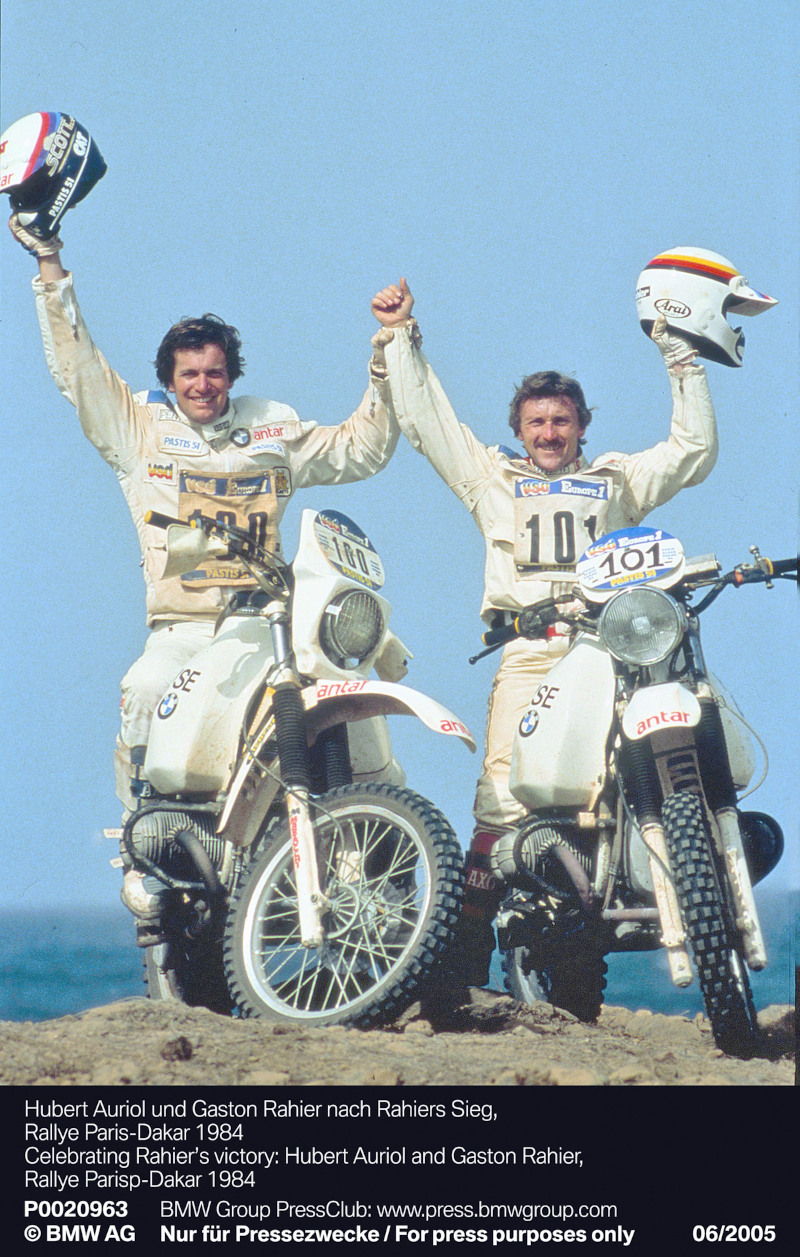 Rahier’s wins cemented the R80G/S as a legend. Photographs of BMW’s mammoth boxer with its massive tank and boxer heads jutting into the desert air became some of the defining images of early Dakar history.
Deep Dive: Gaston Rahier’s 1985 Works BMW
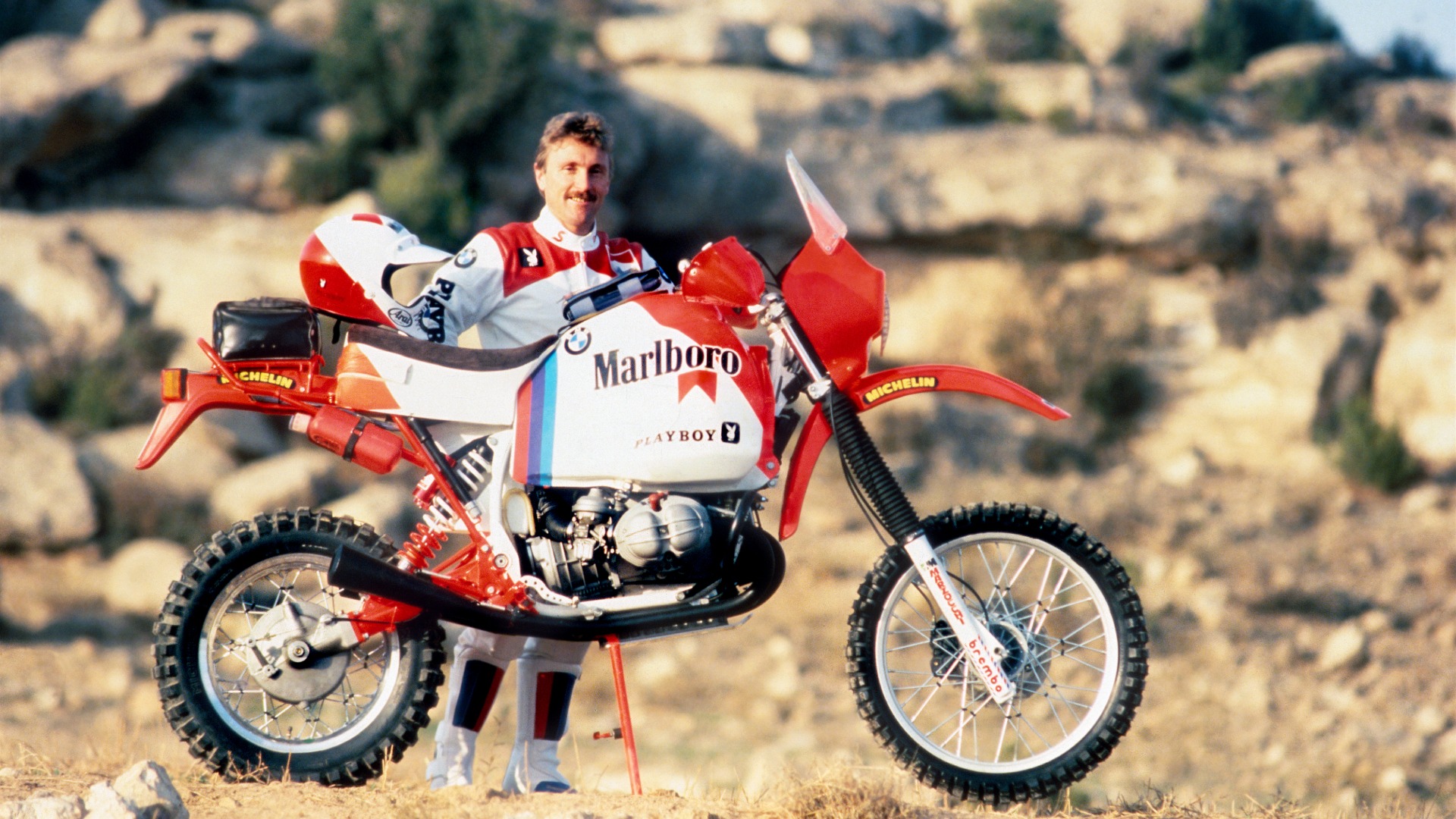 By 1985, the BMW rally program was no longer an experiment. It was a fully developed factory effort — and Gaston Rahier’s works machine incorporated many upgrades from the boxer twin’s Dakar evolution.
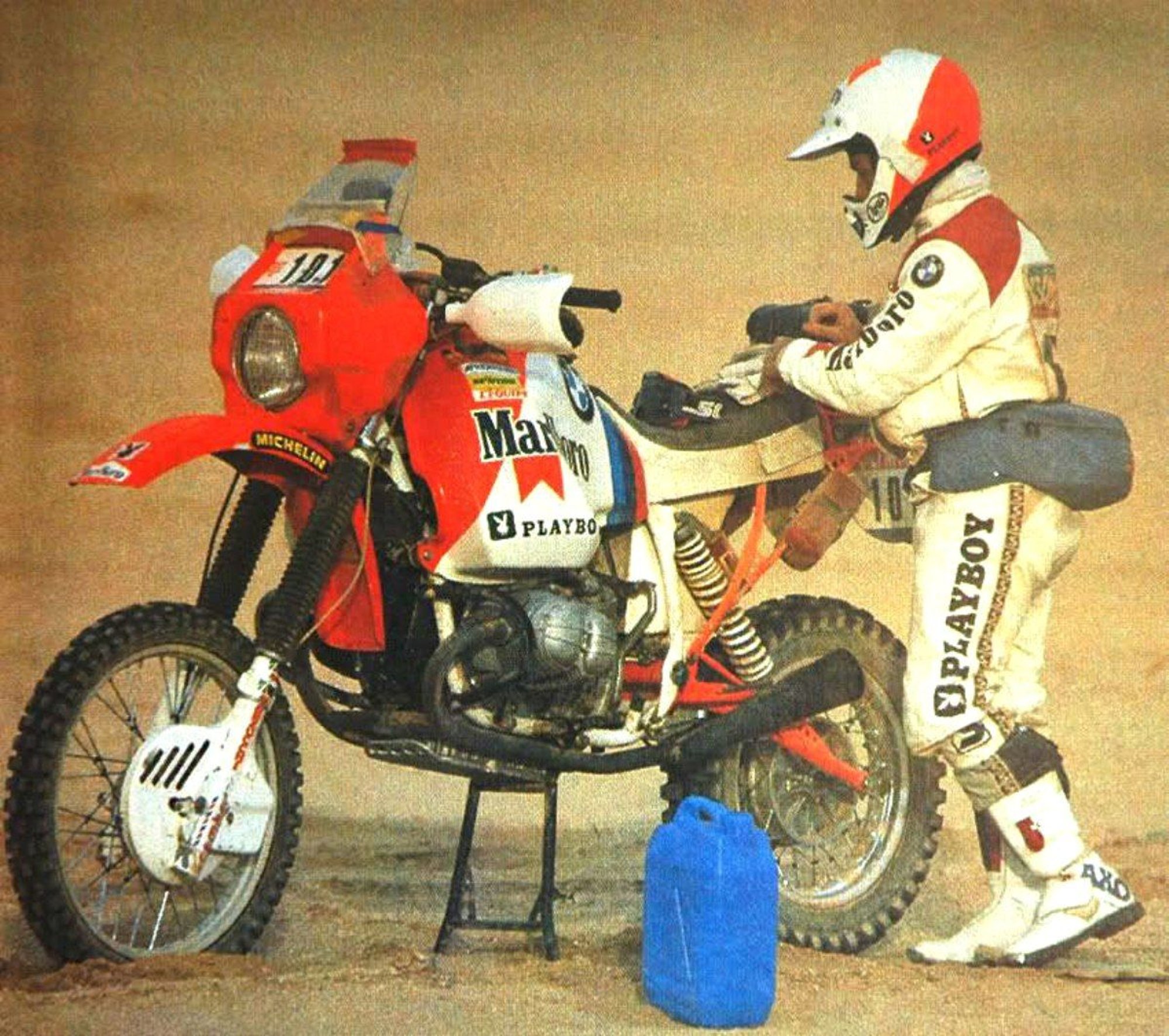 Though still based conceptually on the R80G/S platform, Rahier’s 1985 bike was far removed from the original production model. By that stage, BMW’s factory rally engine had grown to approximately 1043cc, a substantial increase over the original 797.5cc displacement.
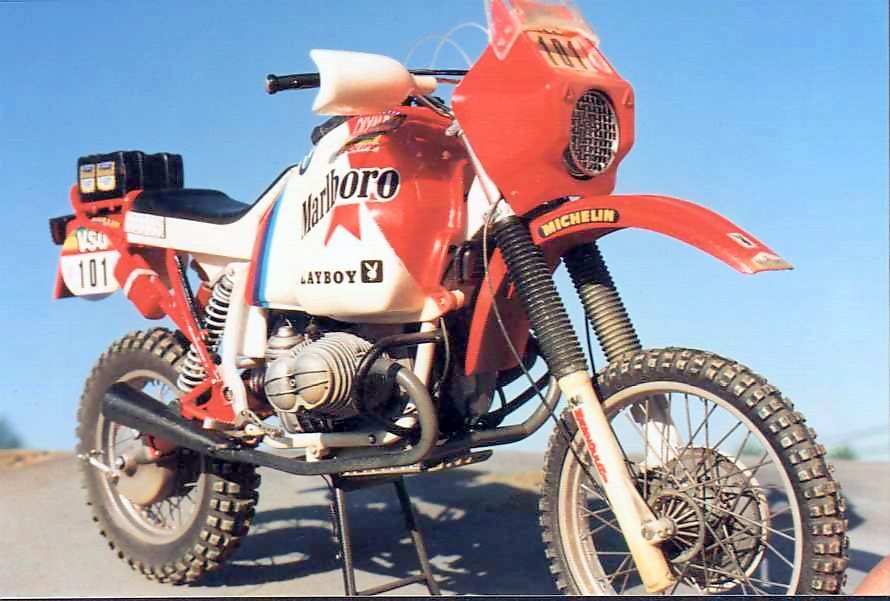 The enlarged boxer delivered significantly greater torque and improved high-speed durability, with output estimated in the 75 horsepower range — tuned not for peak numbers, but for relentless desert stages. The top speed was reported at 180 km/h (112 mph).
(Note: Although enlarged to approximately 1000+cc, BMW’s factory Dakar machines of 1984–85 were still based on the R80G/S platform and predate the later R100GS production model introduced in 1987.)
The chassis, heavily modified by HPN, featured reinforced geometry and strengthened mounting points to withstand the punishment of African stages. The Monolever rear suspension remained — a defining feature of the early GS era — but with revised damping and longer travel. Up front, upgraded forks offered more compliance than the early 1981 machines, reflecting the rally’s increasingly brutal terrain.
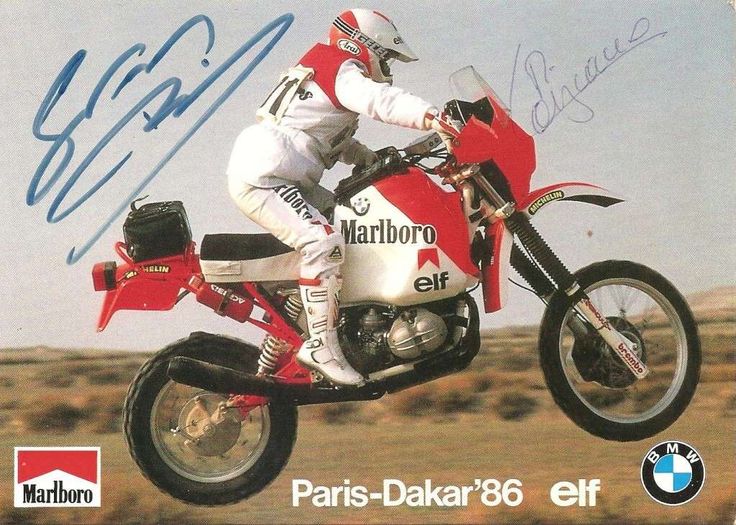
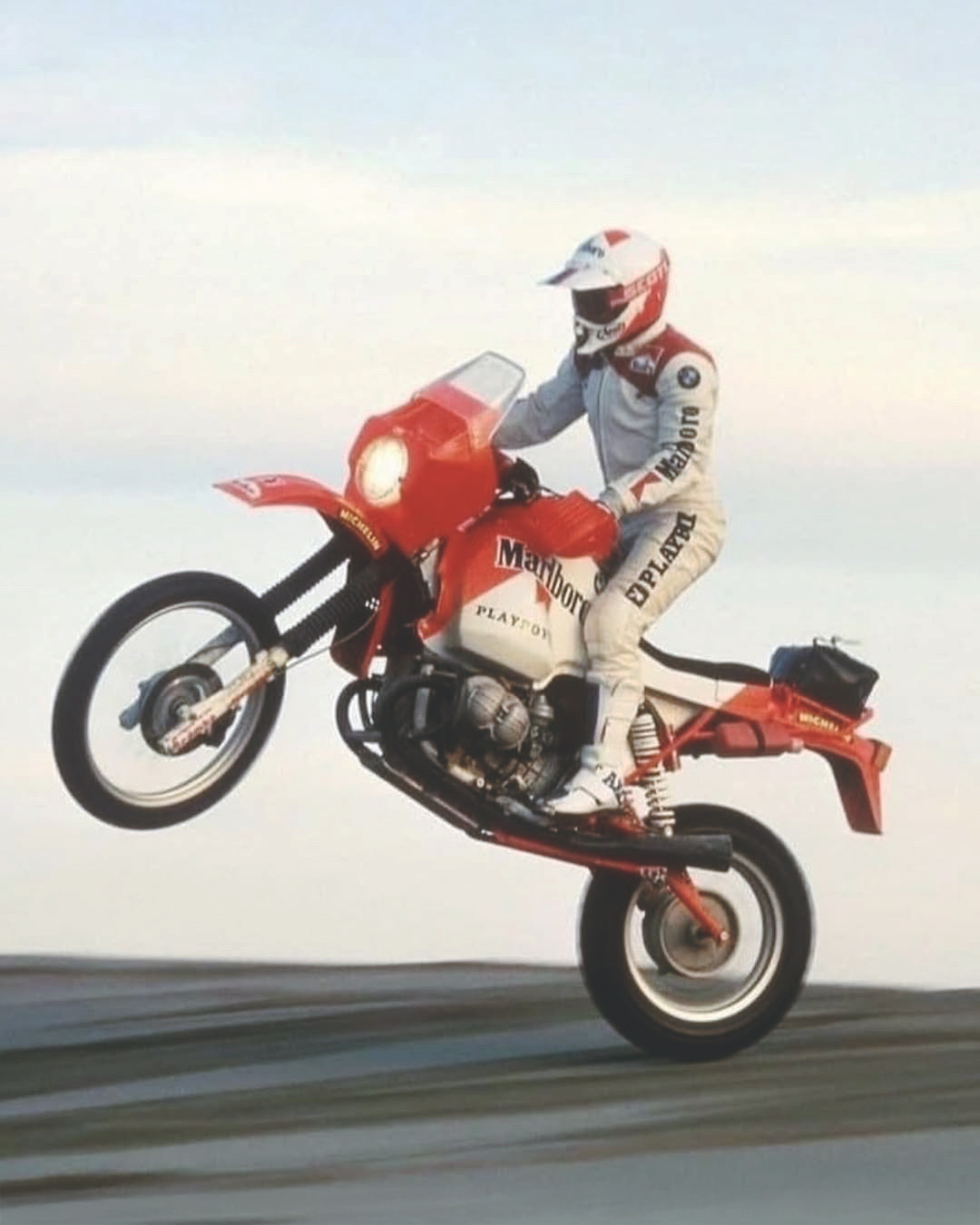
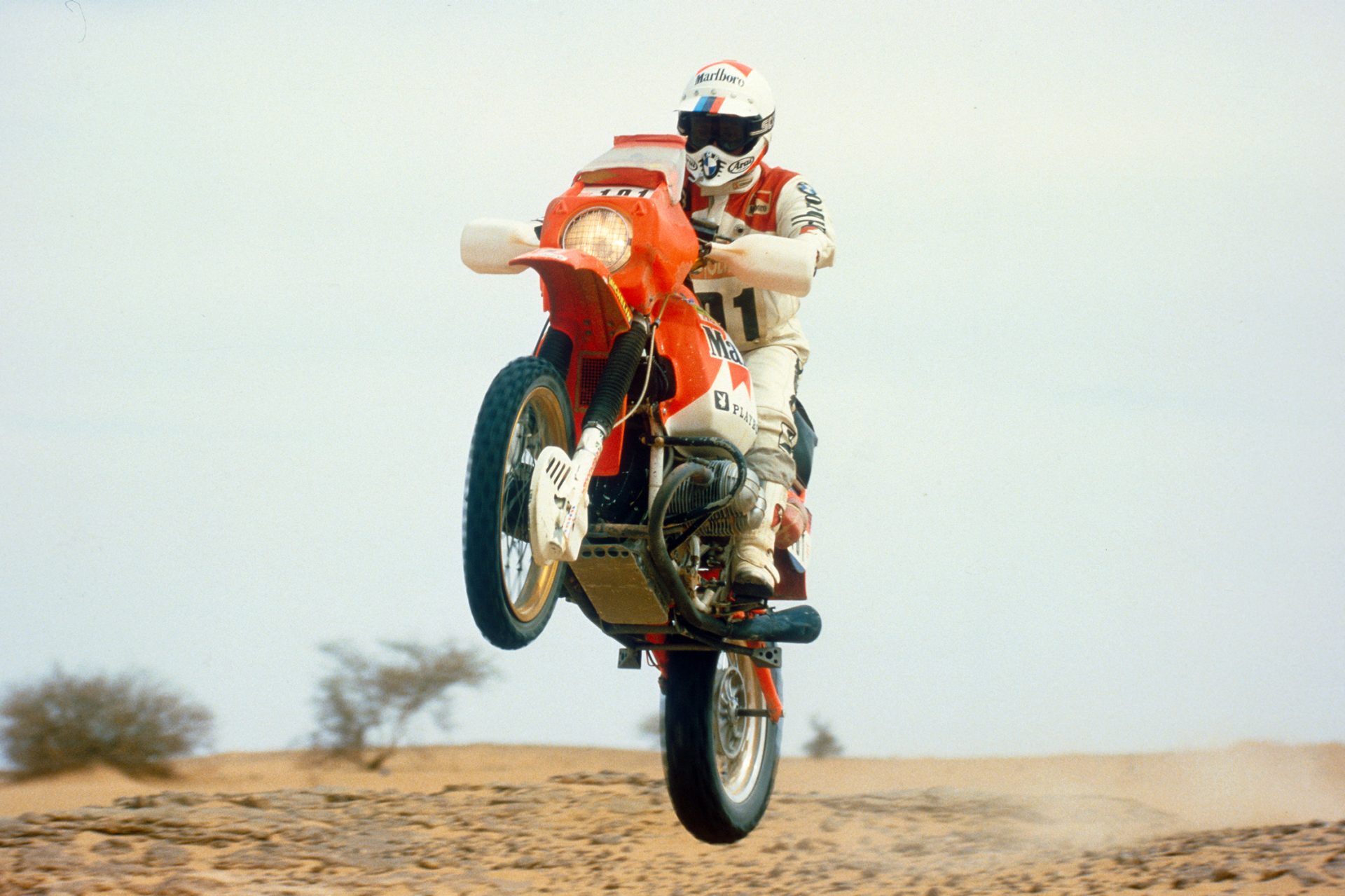 Fuel capacity was massive. By the mid-1980s, factory bikes carried well over 40 liters across multiple tanks, allowing Rahier to attack long stages without constant refueling concerns. The distinctive oversized tank and wide rally fairing gave the bike its unmistakable silhouette — boxer heads jutting outward beneath red and white Marlboro bodywork.
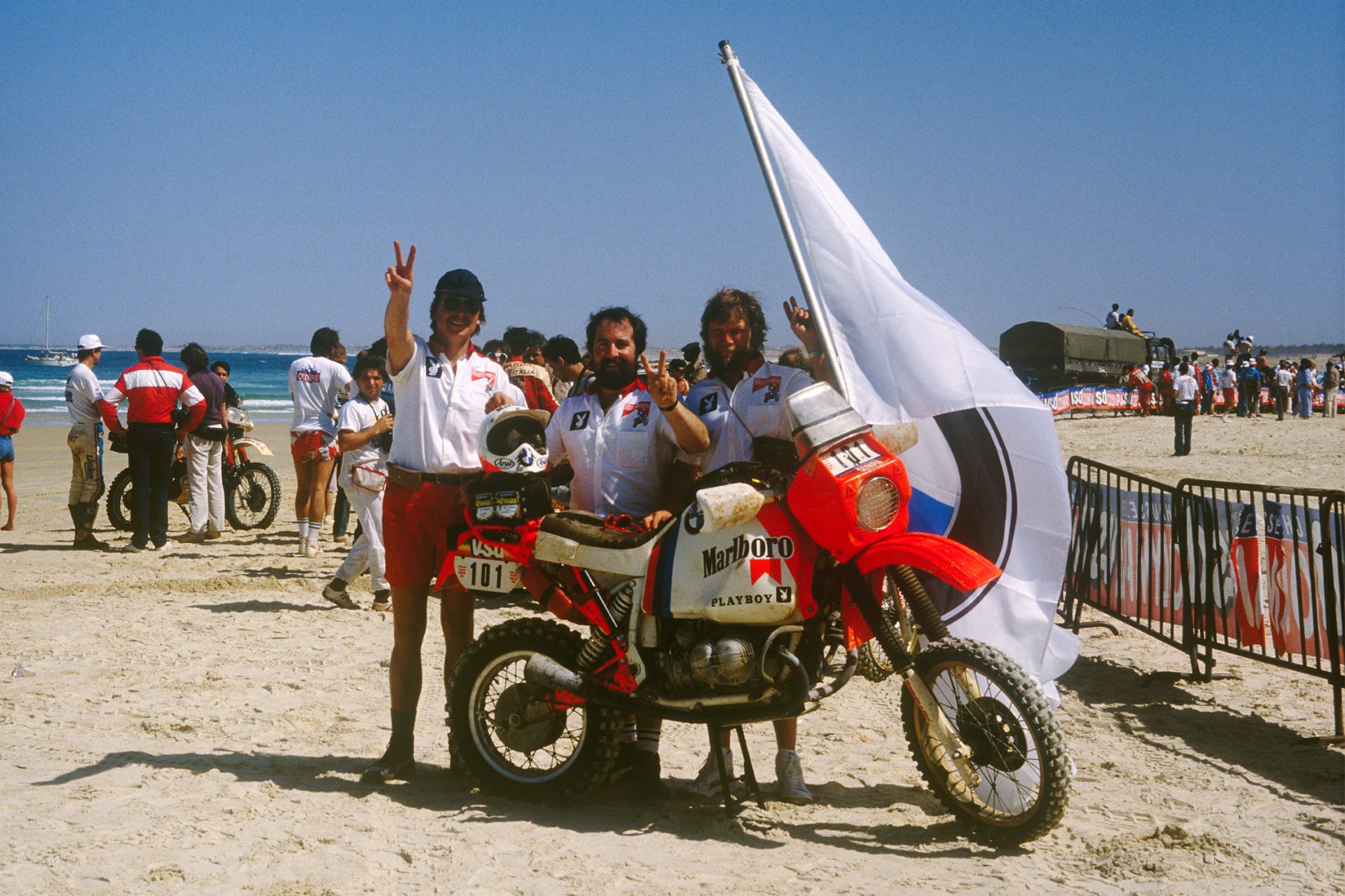
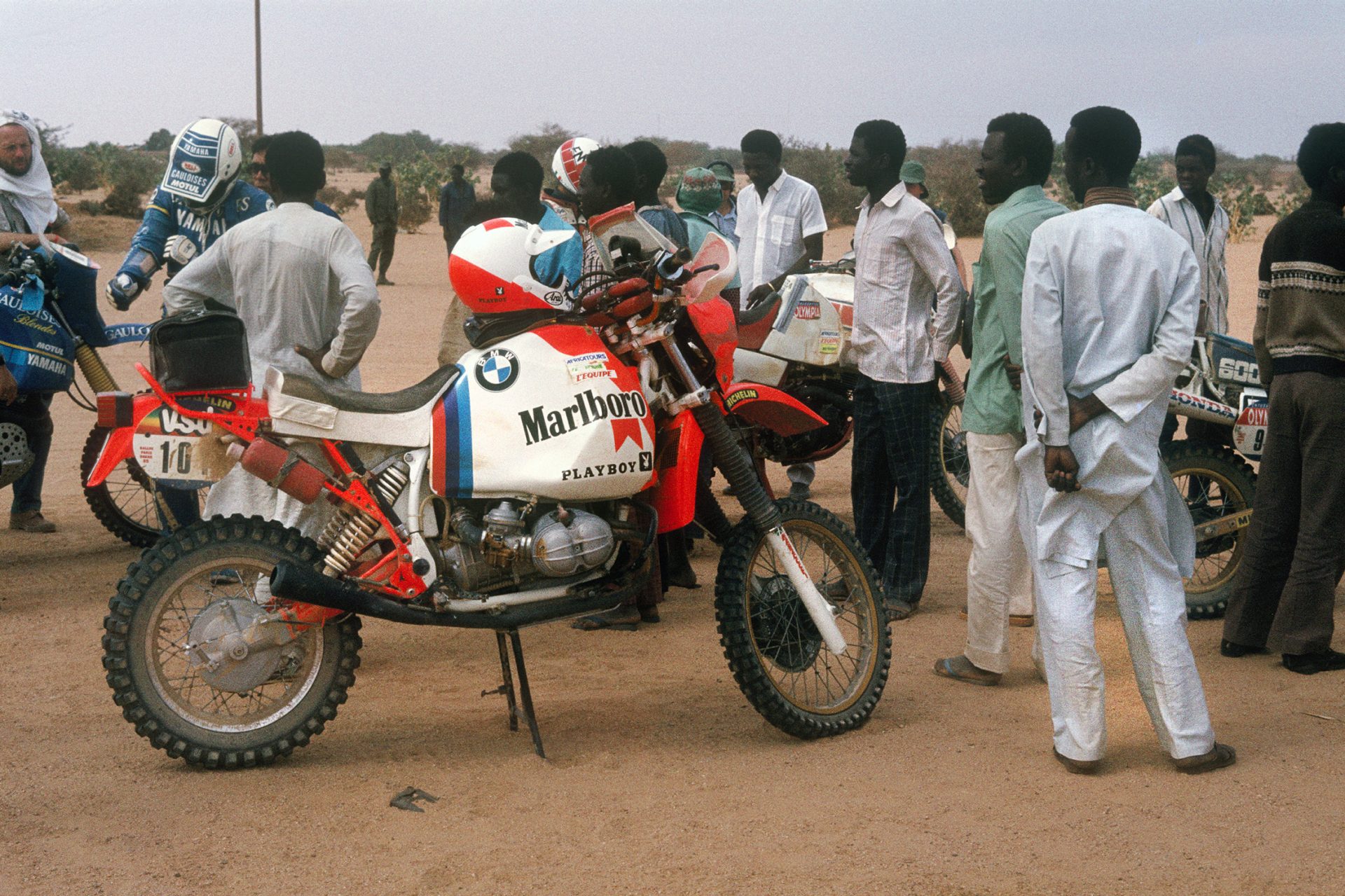
And then there was Rahier himself. At just 5’4” (1.63m), the three-time motocross world champion seemed an unlikely match for a near-liter rally twin that dwarfed many of its competitors.
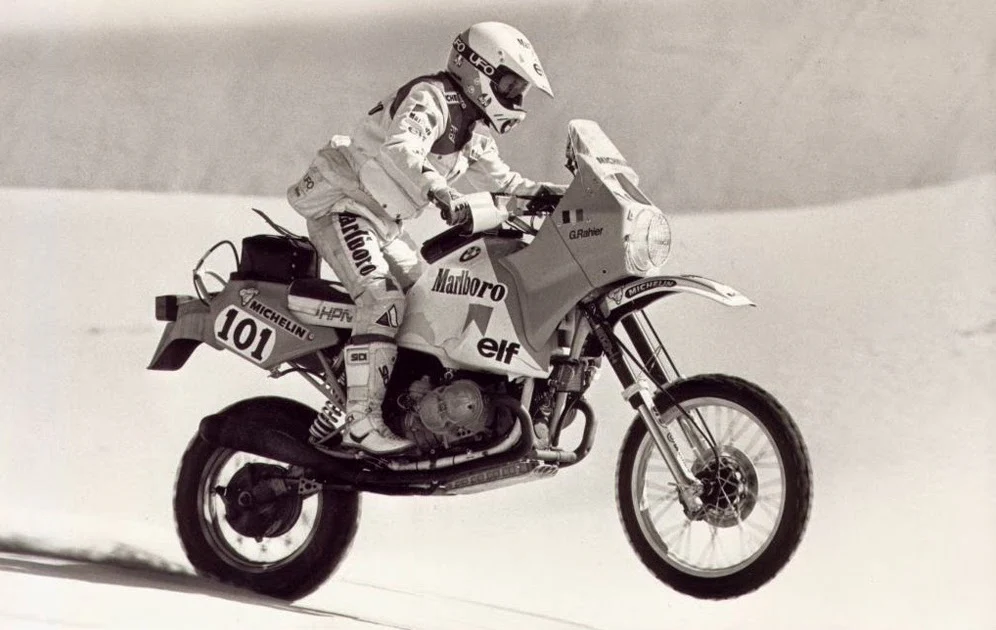 Yet his smaller stature may have been an advantage in the sand — able to shift weight dynamically and wrestle the machine with surprising precision. Photographs from 1985 show Rahier standing tall on the pegs, the big BMW bucking beneath him across open desert flats.
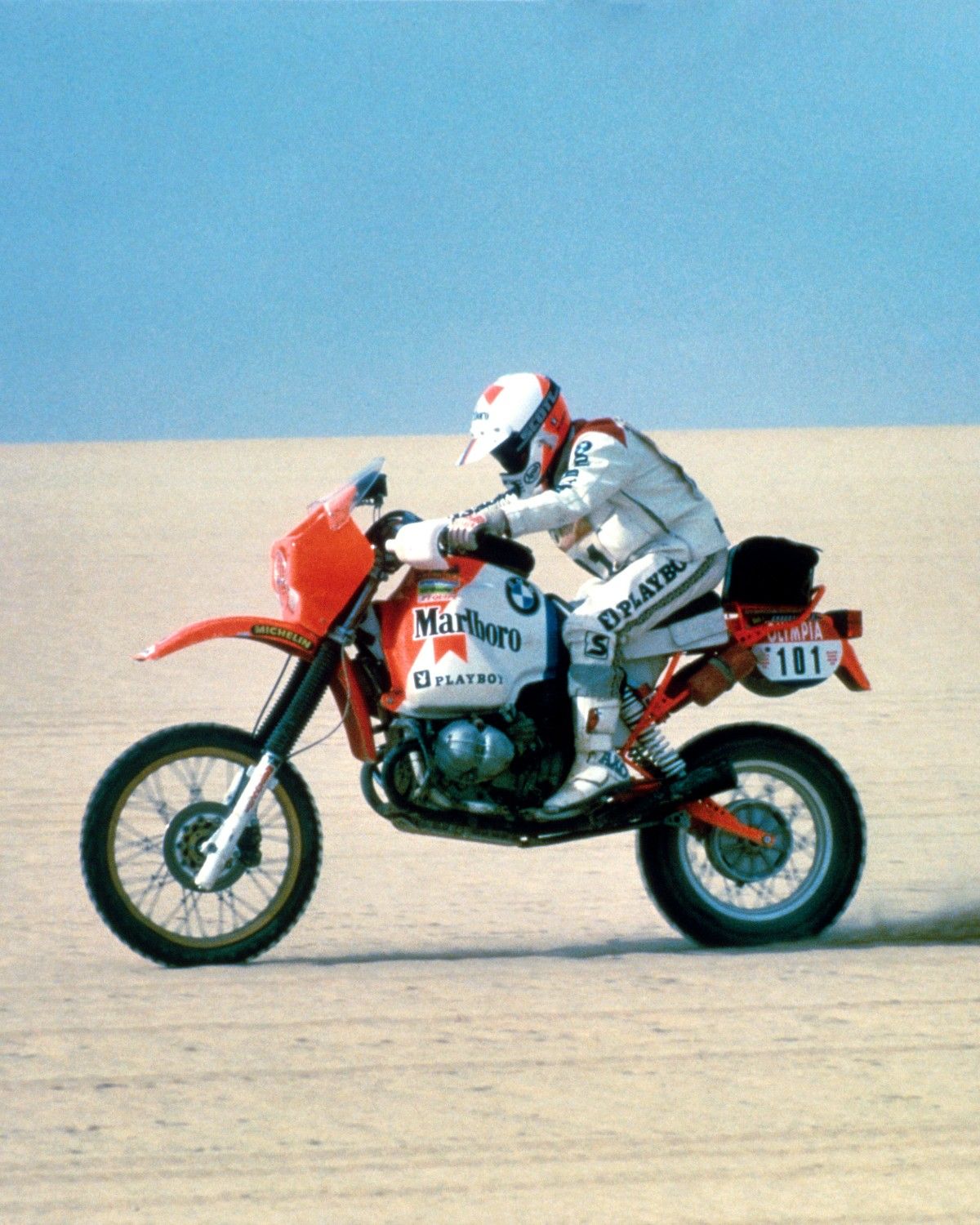 The 1985 victory was not simply another win — it was validation. By that point, Japanese manufacturers were intensifying their efforts, and the Dakar field was becoming more competitive and more professional. Rahier’s second consecutive victory confirmed that the boxer twin platform had matured into a dominant force.
 Soon, however, the rally arms race would escalate further. Honda’s purpose-built NXR machines were looming. Cagiva and Yamaha were developing increasingly aggressive twins. The era of large-displacement factory rally prototypes was just beginning.
 But in 1985, the desert still belonged to the boxer.
Why the Boxer Worked in the Desert
 On tight European enduro tracks, the BMW would have felt hugely cumbersome. But Dakar wasn’t an enduro. The long, fast African stages rewarded:
- Stability at speed
- Massive fuel range
- Mechanical reliability
- Broad, tractable torque
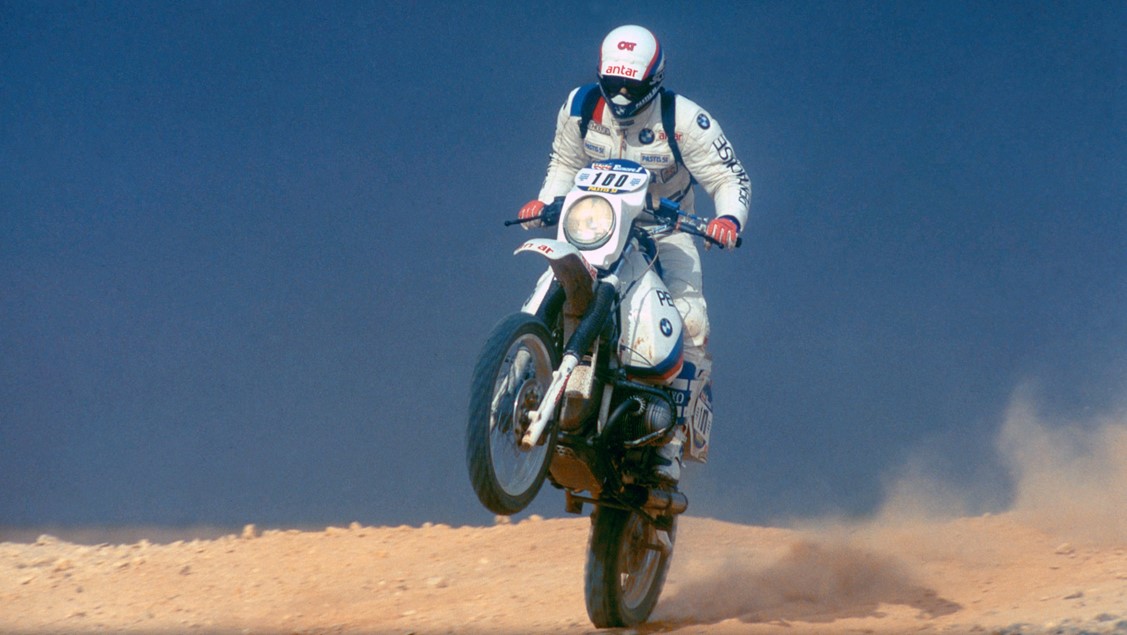 The air-cooled boxer twin delivered exactly that. Its low center of gravity improved stability in sand, and the shaft drive eliminated the need for chain maintenance in brutal conditions.
Weight remained a challenge — the rally-prepped machines were still significantly heavier than the singles — but over long distances, durability often mattered more than outright agility.
The HPN Factor
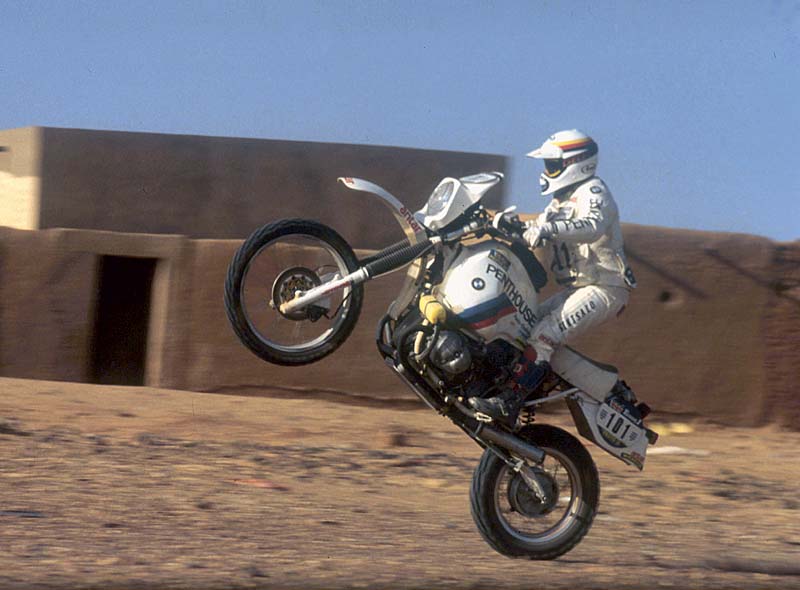 Behind BMW’s Dakar dominance was HPN, the German tuning and development firm that evolved the R80 platform into a true rally weapon. HPN modifications included:
- Frame bracing and geometry tweaks
- Suspension upgrades
- Strengthened driveline components
- Custom tanks, bodywork, and toolkits
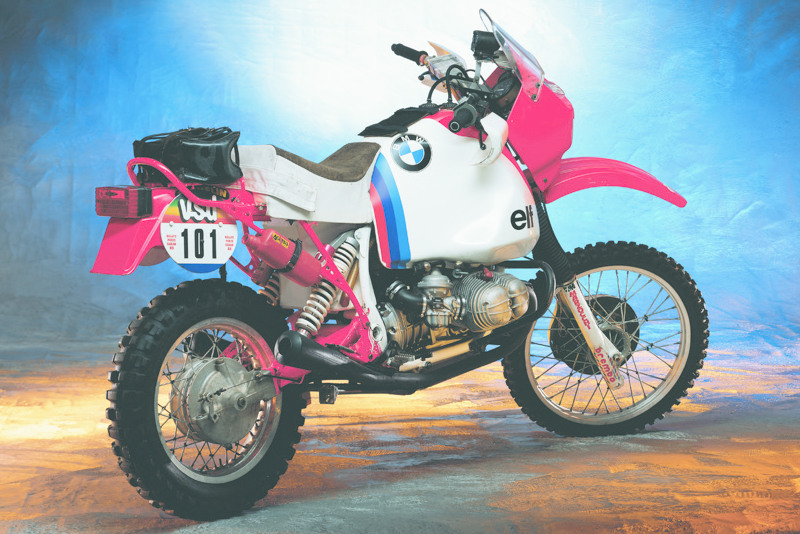 These bikes were not showroom machines with bigger tanks — they were heavily engineered race platforms built around a production foundation. Many of today’s surviving “HPN Dakar” builds trace directly back to this development era.
The Legacy: The Birth of the Adventure Bike
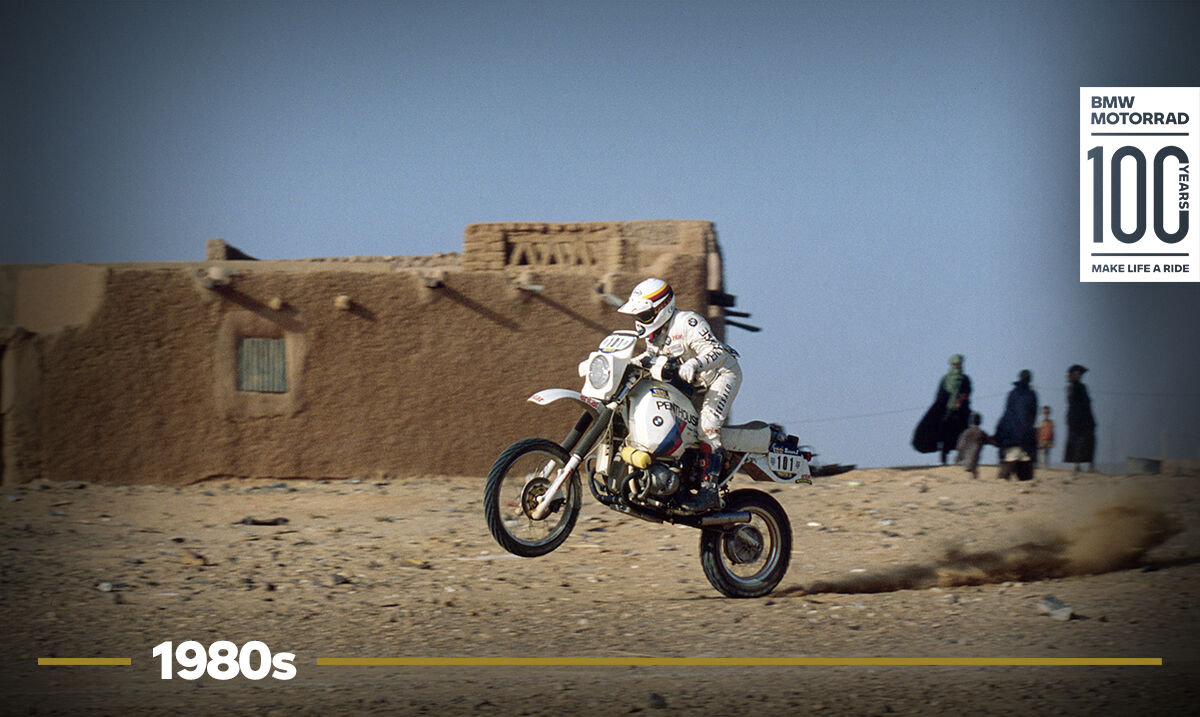
The R80G/S didn’t just win rallies — it created a template. Its success directly influenced:
- The later BMW R100GS
- The growth of the “Paris-Dakar” edition GS models
- The eventual explosion of the modern adventure segment
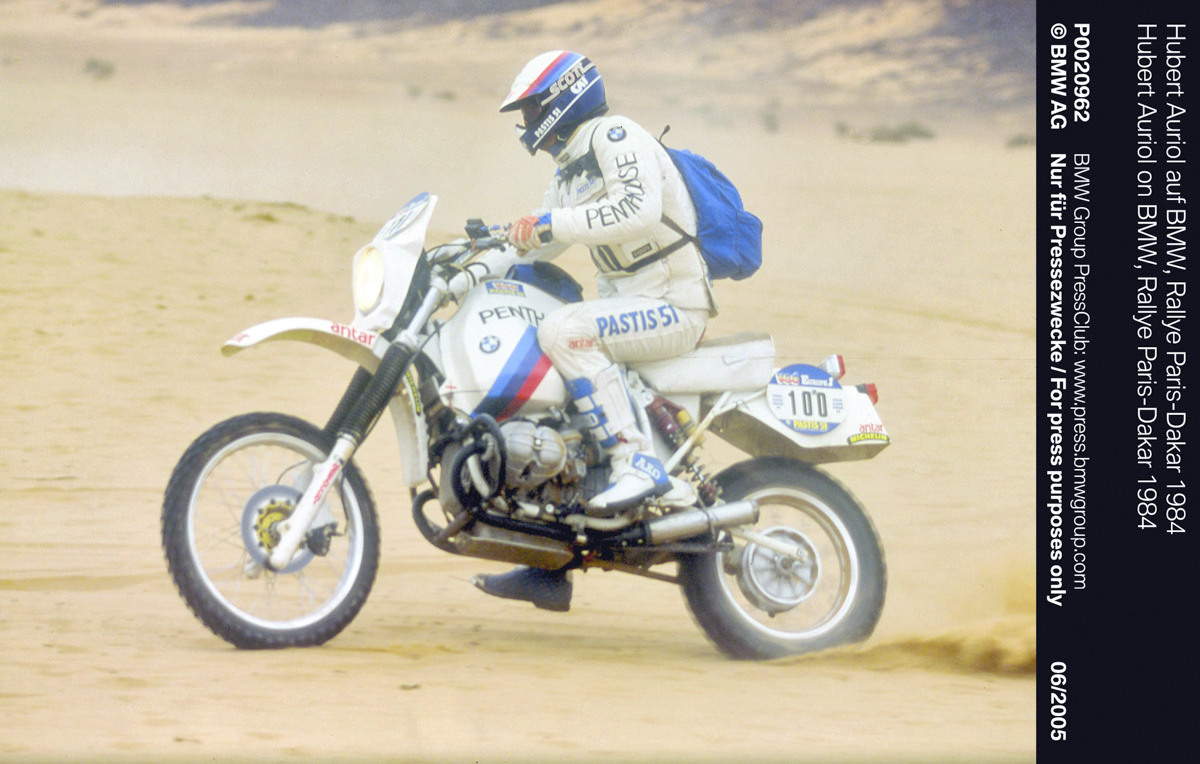 When riders today talk about crossing continents on a 1200cc or 1300cc ADV bike, they’re following a path that began in the Sahara in the early 1980s. Before the Cagiva Elefant. Before the Honda NXR750. Before the Yamaha twin wars. There was the boxer.
BMW R80G/S Dakar Rally Bike: Key Specs
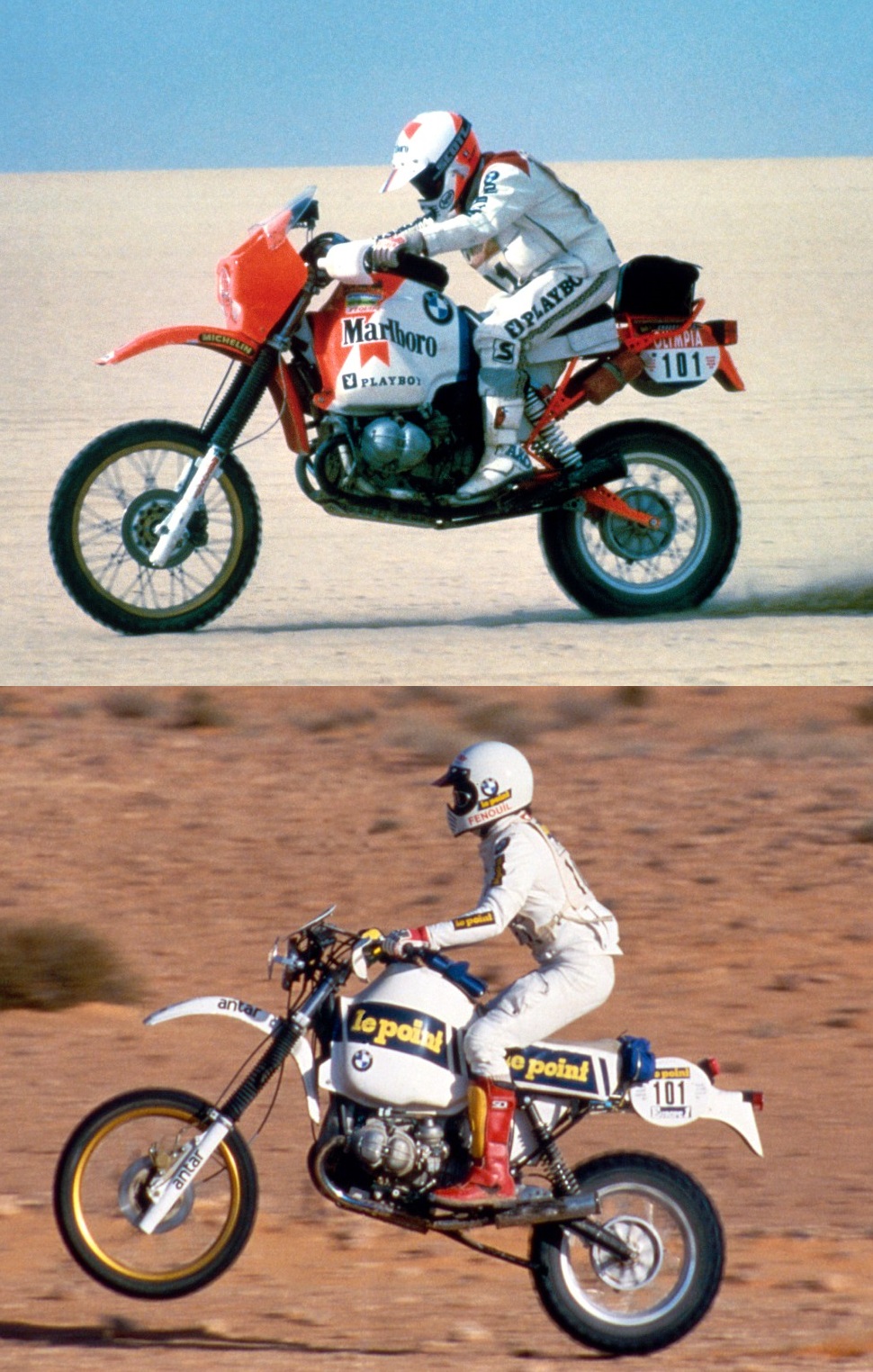 Base Model: BMW R80G/S
Engine: 797.5cc (early rally) / 1043cc (1985 factory works)
Power (approx.): ~50–75 hp depending on displacement / tune
Transmission: 5-speed
Final Drive: Shaft
Frame: Modified steel double-cradle (HPN reinforced)
Front Suspension: Telescopic forks (upgraded travel for rally use)
Rear Suspension: Monoshock (BMW Monolever system)
Fuel Capacity (Rally): Often 30+ liters, up to 40+ liters larger in later factory versions
Dry Weight (Rally Trim): Approximately 180–200 kg depending on configuration
Dakar Victories: 1981, 1983 (Hubert Auriol); 1984, 1985 (Gaston Rahier)
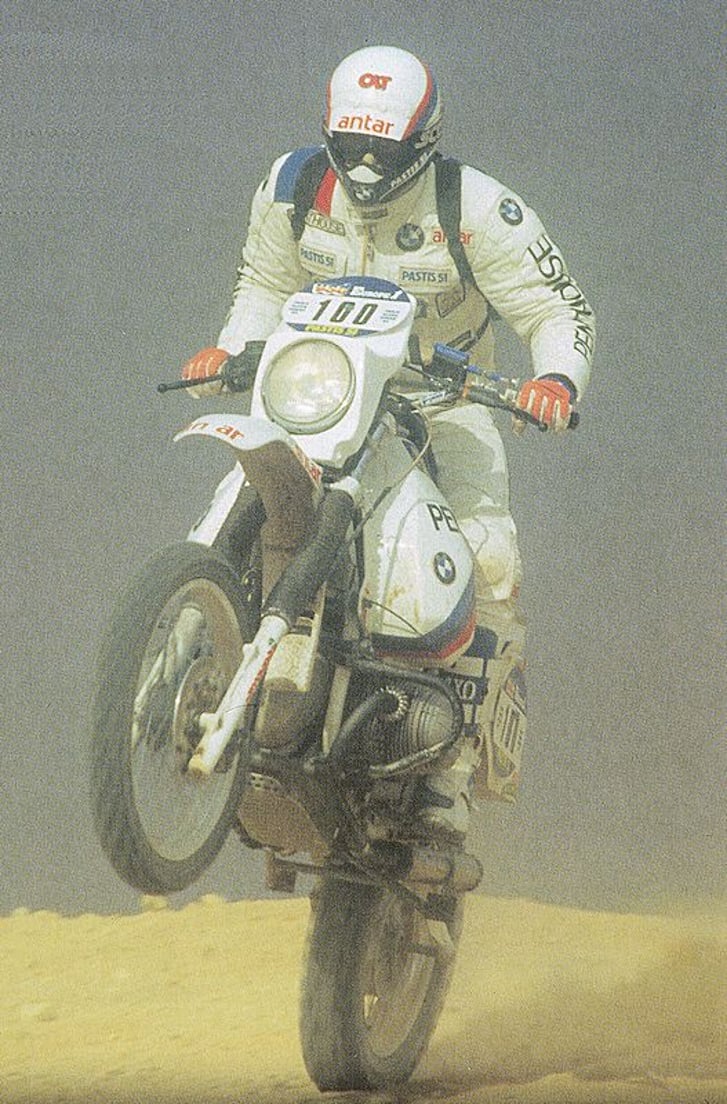
More Dakar Legends
 2WD Dakar Legend: Yamaha WR450F 2-Trac - Remembering Yamaha x Öhlins’ Hydraulic 2WD Enduro… Every so often, a motorcycle appears that seems to point toward an entirely different future. The Yamaha WR450F 2-Trac was one of those machines. At first glance, it […]
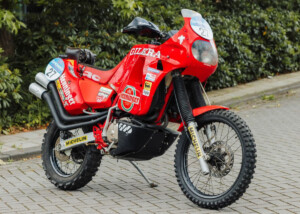 Dakar Legends: Gilera RC600 & RC750 Rallye - Italy’s Big Thumper in the Twin-Cylinder Era… By the late 1980s, the Paris-Dakar Rally was no longer a romantic expedition but an escalating arms race among the major manufacturers. Twin-cylinder prototypes were growing larger and […]
 Desert Bomber: BMW R80G/S Paris-Dakar Rally Bike - The Boxer That Changed the Desert Forever… In 1981, the Paris-Dakar Rally was still raw — more expedition than sport, more survival than spectacle. Riders crossed the Sahara on machines that were barely adapted from […]
 Desert Boxer: BMW R900RR Dakar Rally Bike - Dakar Legends: Last Roar of the Desert Bombers… In the late 1990s and early 2000s, BMW found itself at a turning point in rally-raid racing. The boxer twin had already written one of the most […]
 The Honda EXP-2: The Two-Stroke Desert Racer - Honda’s 400cc “Experimental 2-Stroke” Baja 1000 / Dakar Rally Bike… In the mid-1990s, as emissions regulations tightened worldwide and the future of two-stroke off-road bikes looked increasingly uncertain, Honda did something nobody expected: it built […]
 Dakar Legends: BMW F650RR Rally Bike - BMW F650RR: Grandfather of the Modern Rally Bikes… In the late 1990s, BMW quietly executed one of the most important strategic pivots in rally history. They developed and unleashed the BMW F650RR — a lean, […]
 The Four-Cylinder Dakar Bike: Yamaha FZ750 Ténéré - The Yamaha FZ750 Ténéré (0U26): Yamaha’s Radical Dakar Experiment… Before Super Ténéré, before big twins ruled the desert, before Dakar logic fully settled in, there was the sportbike-powered FZ750T. The 1986 Yamaha FZ750 Ténéré (0U26) […]
 Lucky Explorer: Cagiva Elefant Paris-Dakar Rally Bike - The Italian Powerhouse That Conquered Dakar… The Cagiva Elefant occupies a unique place in Paris-Dakar history. Where other manufacturers leaned on clinical efficiency or engineering conservatism, Cagiva brought Italian audacity to the table: massive V-twin […]
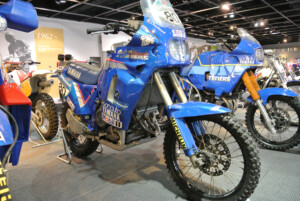 Dakar Legends: Yamaha YZE750T Super Ténéré - The Bike That Built a Dakar Dynasty… The Yamaha YZE750T Super Ténéré is one of the most important motorcycles in rally-raid history. Purpose-built from the ground up for the Paris-Dakar Rally, it was the machine […]
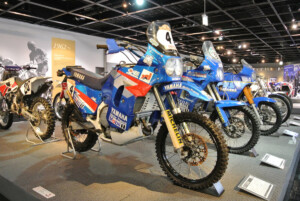 Desert Freight Train: Yamaha XTZ850R Paris-Dakar Rally Bike - The big twin that ruled the desert at the height of the Paris-Dakar era… In the early and mid-1990s, Yamaha dominated the Paris-Dakar Rally, the toughest off-road endurance race on the planet. At the heart […]
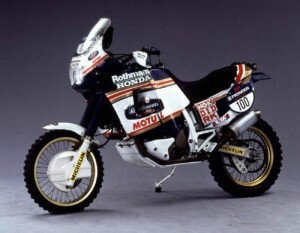 Desert Queen: Honda NXR750 Paris-Dakar Rally Bike - Honda’s NXR750: Queen of the Desert… Few motorcycles in history can claim to have dominated the most brutal race on earth the way Honda’s NXR750 did. Built specifically to conquer the Paris-Dakar Rally, the NXR750 […]


In the vintage photo with Auriol, unmentioned, let’s not forget Christine Martin – one of the pioneering women to compete in this gruelieng desert race.
https://motolady.com/daring-dames-the-first-women-who-raced-in-the-dakar-rally/