
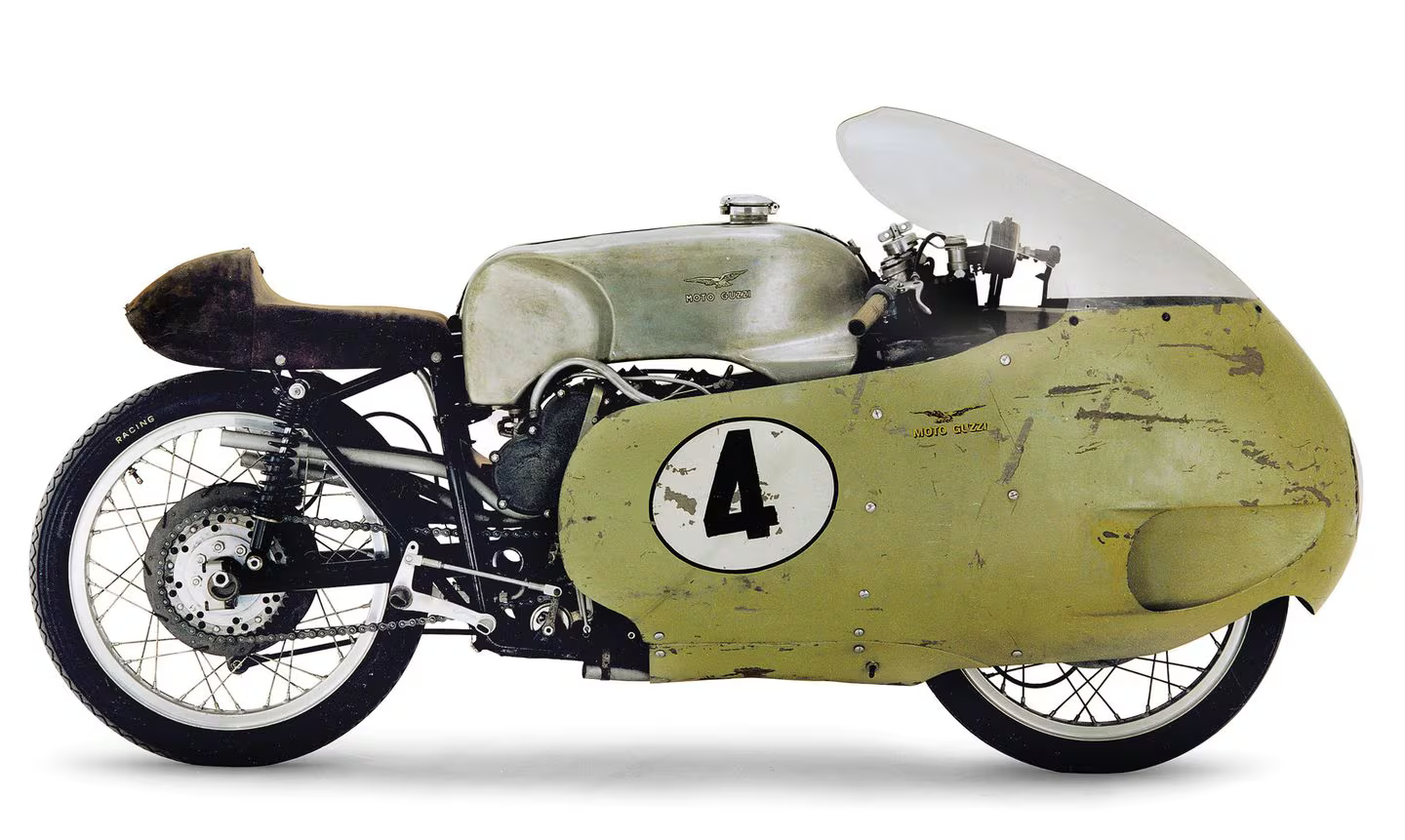
Eight cylinders, eight carbs, four overhead cams: One of the most ambitious Grand Prix motorcycles ever built…
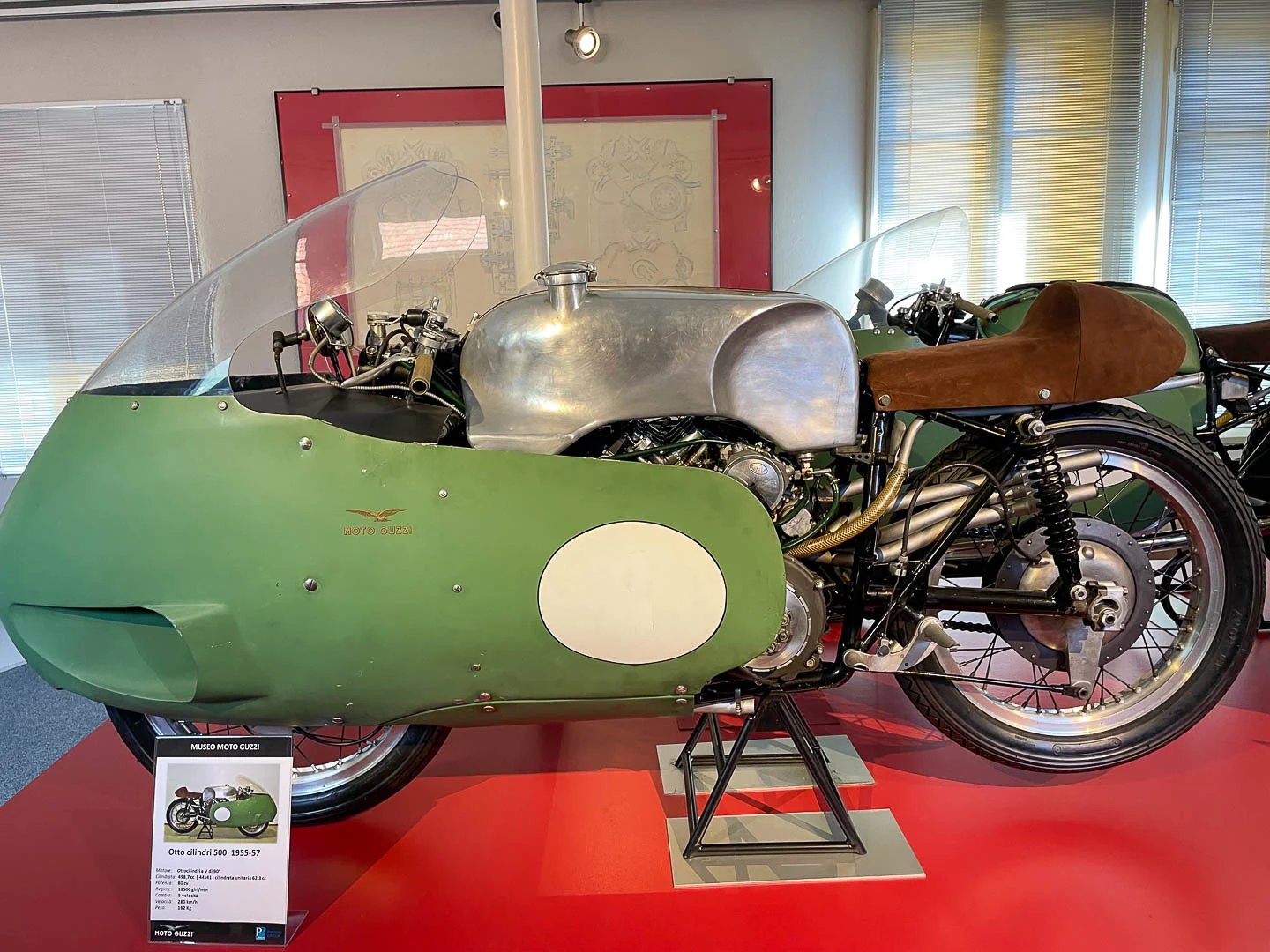
If you divide 498.5 cubic centimeters among eight cylinders, each one displaces just over 62cc. That was the starting point for the Moto Guzzi V8 — better known in Italy as the Otto Cilindri — a liquid-cooled four-stroke Grand Prix racer conceived in late 1954 and first tested the following year. Its 90-degree V8 used four overhead camshafts, 16 valves, eight individual Dell’Orto carburetors, and an ignition system capable of firing eight cylinders at engine speeds exceeding 12,000 rpm. The complete engine weighed roughly 45 kilograms / 99 pounds.
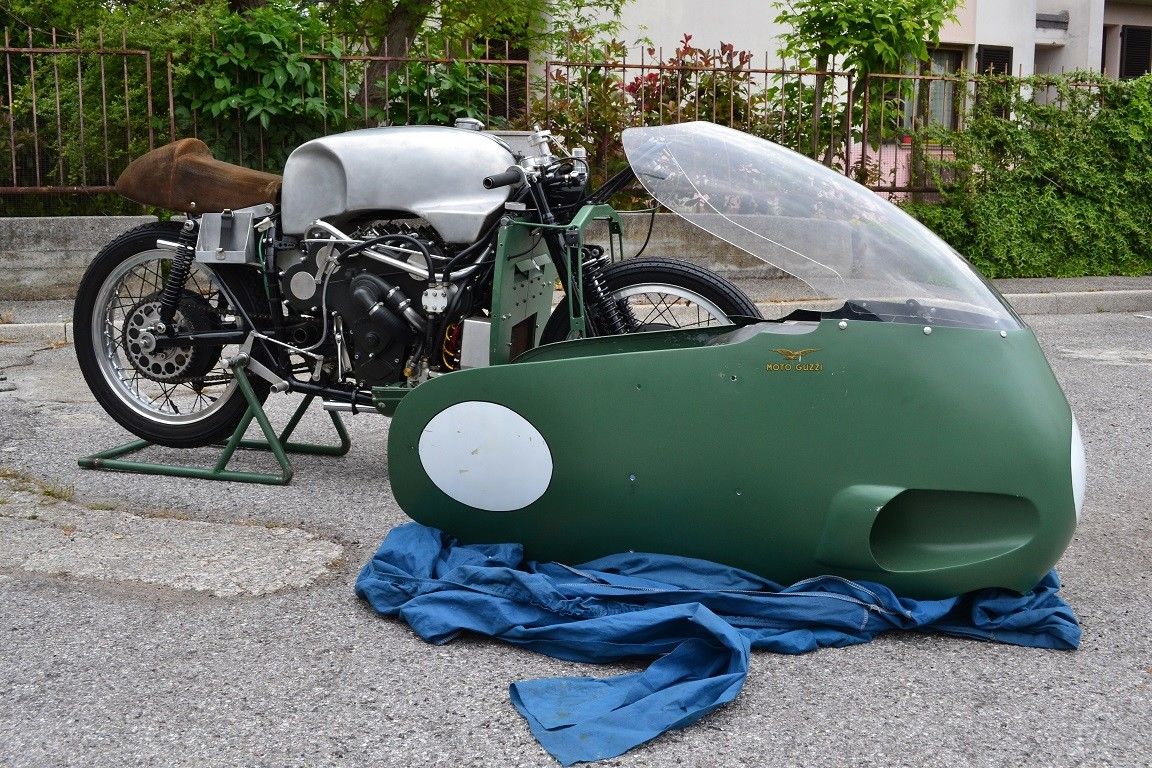
By the final stage of development, the 500cc machine could produce nearly 80 horsepower and reach approximately 275 km/h / 171 mph...in 1957.
Moto Guzzi Needed a 500
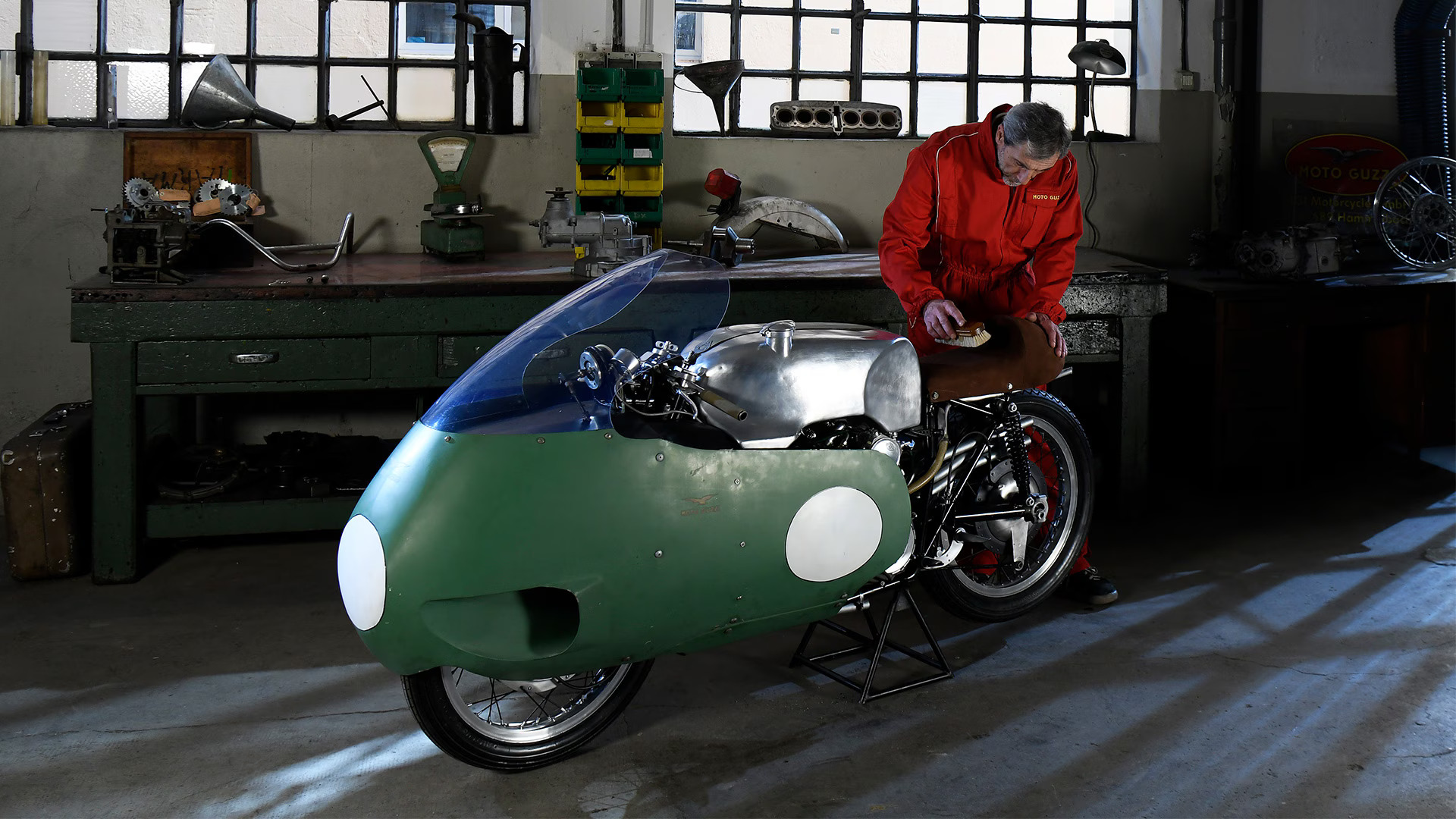
Moto Guzzi entered the 1950s as one of Grand Prix racing’s great technical powers. The company was particularly successful in the smaller classes and would dominate the 350cc World Championship through much of the decade. Bill Lomas won the 350 title for Guzzi in both 1955 and 1956.
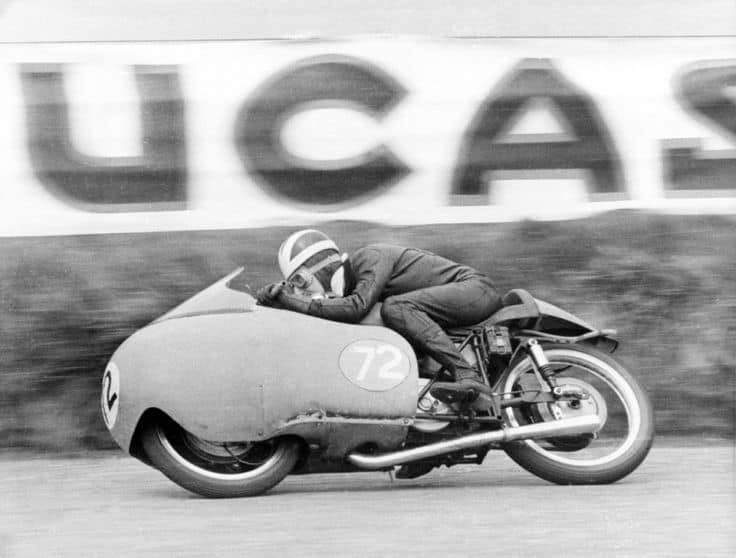
The premier 500cc category was another matter. Gilera and MV Agusta had demonstrated the advantages of sophisticated multi-cylinder engines, and Moto Guzzi’s older 500cc machinery was no longer competitive. An earlier liquid-cooled longitudinal four-cylinder Guzzi had proved troublesome and achieved little success.
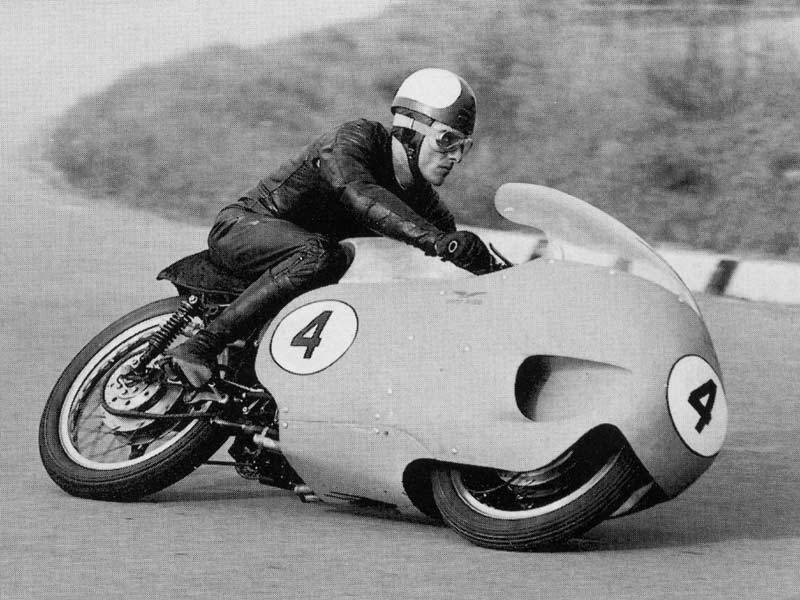
Chief engineer Giulio Cesare Carcano wanted something capable of beating the Italian fours. His answer wouldn’t be another four, but a V8. The project was approved in late 1954. According to Cycle World‘s Kevin Cameron, just five months elapsed between approval and the first engine running, with the first track test following roughly a month later. Carcano was assisted principally by Umberto Todero and Enrico Cantoni. For a clean-sheet Grand Prix engine unlike anything Moto Guzzi had previously produced, the development speed was pretty extraordinary.
498.5cc V8
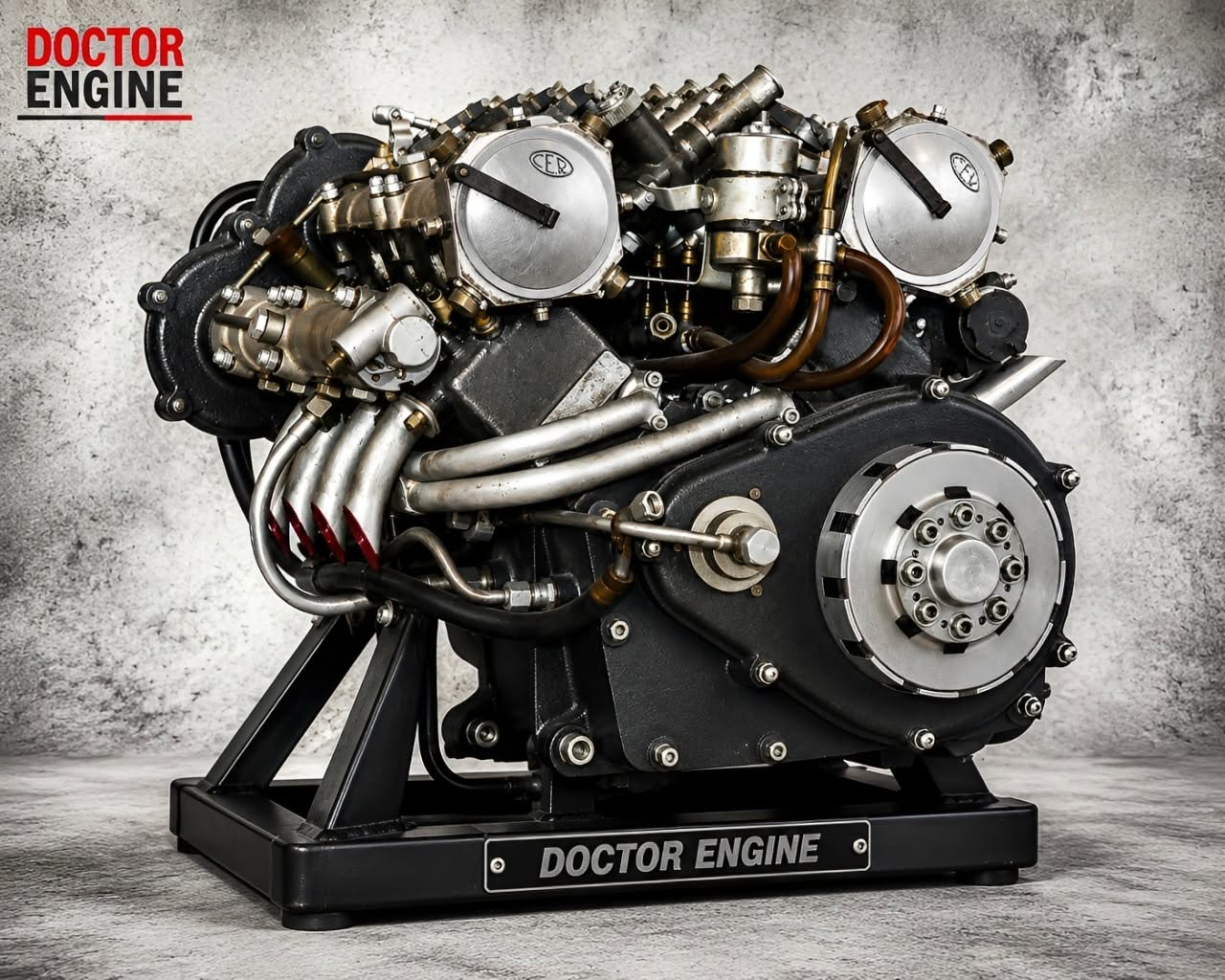
The engine displaced 498.5cc from a 44mm bore and 41mm stroke. The cylinder banks were arranged at 90 degrees, giving the V8 good inherent balance while keeping the engine remarkably compact. Each bank used double overhead camshafts operating two valves per cylinder. The result was four camshafts and 16 valves in total.
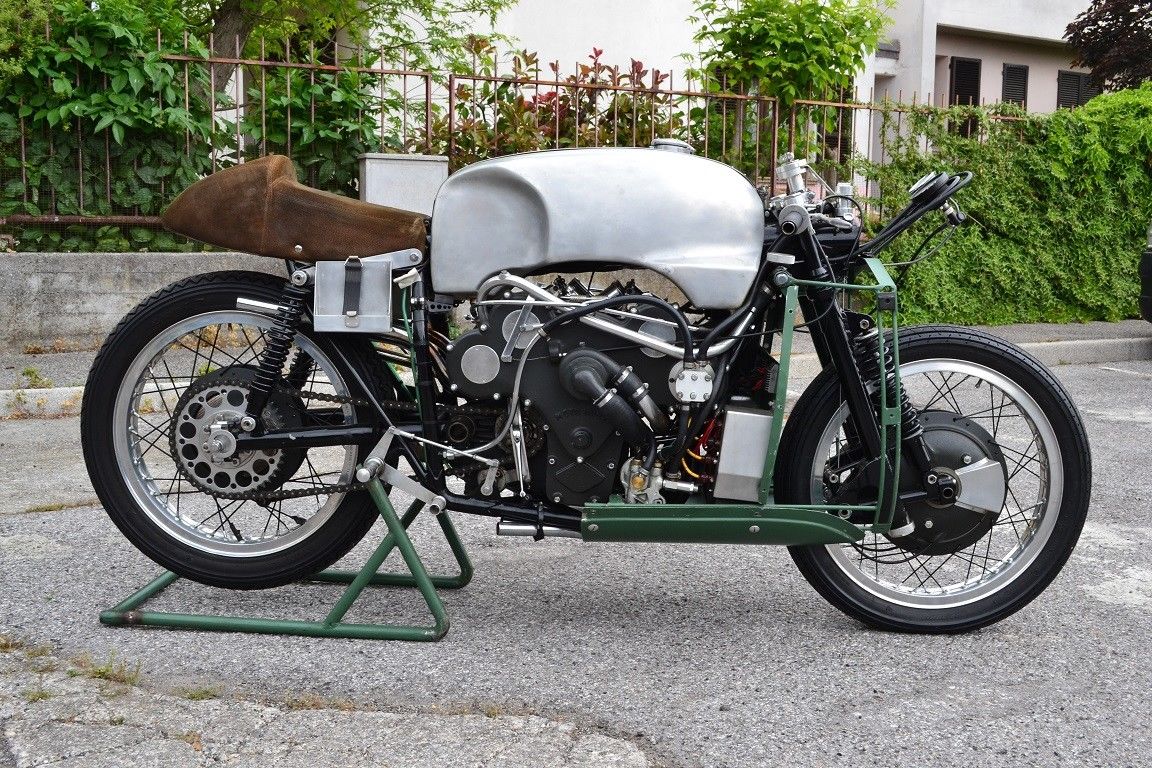
Eight specially developed Dell’Orto carburetors supplied the mixture — one carburetor for each cylinder — while liquid cooling helped control temperatures inside the tightly packaged engine. The crankcases made extensive use of magnesium to keep mass down. The complete powerplant reportedly weighed just 45 kg / 99 lb.
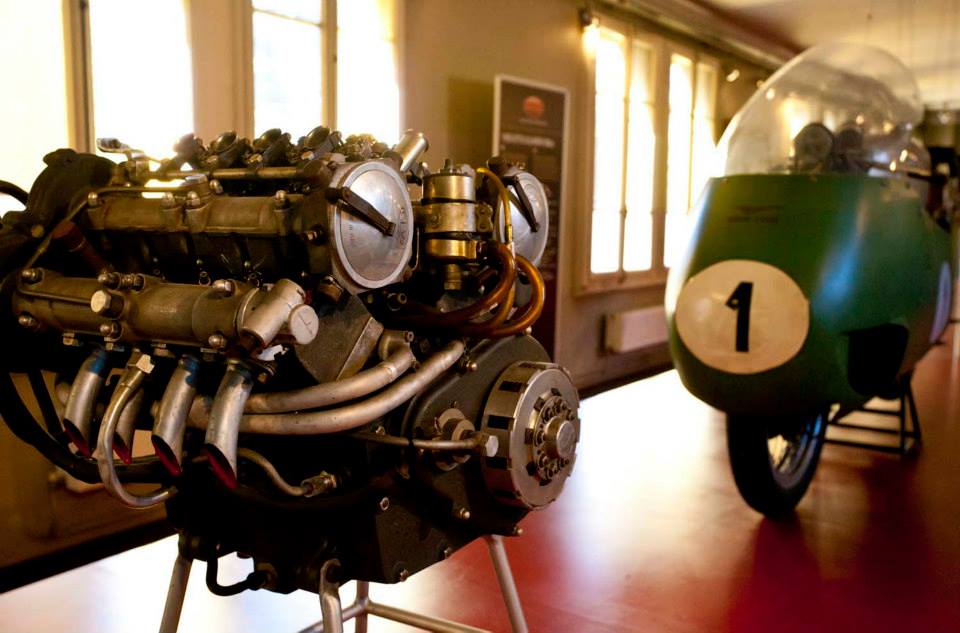
One of Carcano’s achievements was making an eight-cylinder engine fit inside a racing motorcycle without creating something enormously wide. The individual cylinders were tiny, the bore only 44mm, and the entire engine was packaged transversely across the chassis. Contemporary photographs can be deceptive. The eight intake trumpets and mass of plumbing make the engine look large, but the actual V8 was remarkably compact.
Why Eight Cylinders?
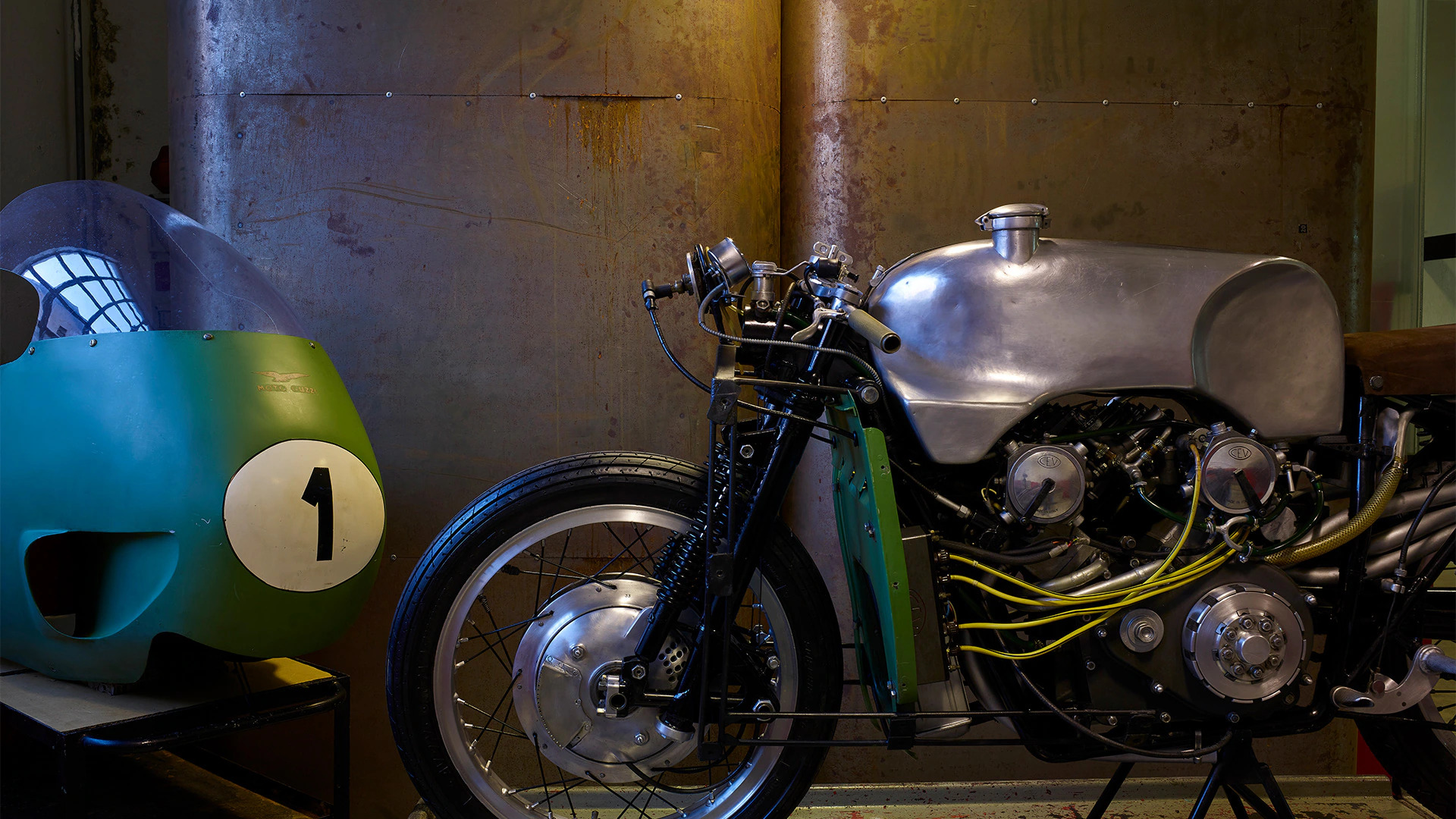
Building eight cylinders instead of four added considerable complexity, but it offered an important advantage. For a given total displacement, dividing capacity among more cylinders allows each piston to become smaller and lighter. Smaller reciprocating components can tolerate higher engine speeds, while a greater total valve area allows the engine to breathe effectively at those speeds.
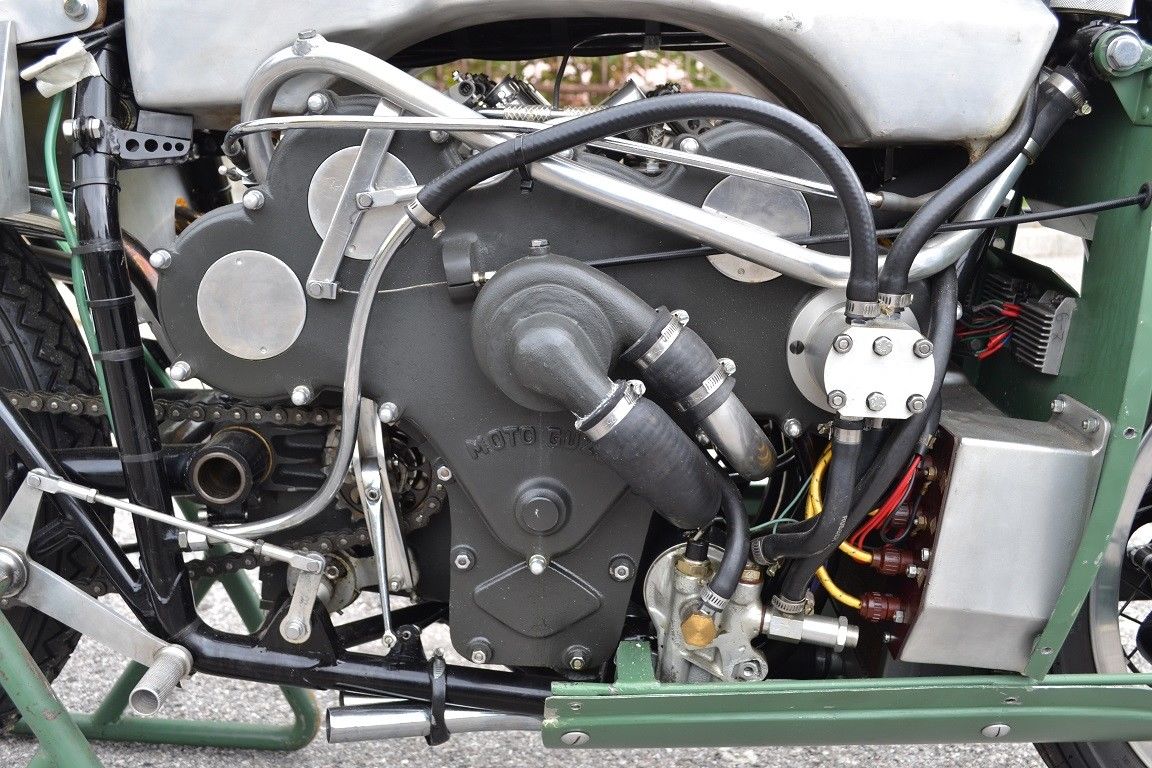
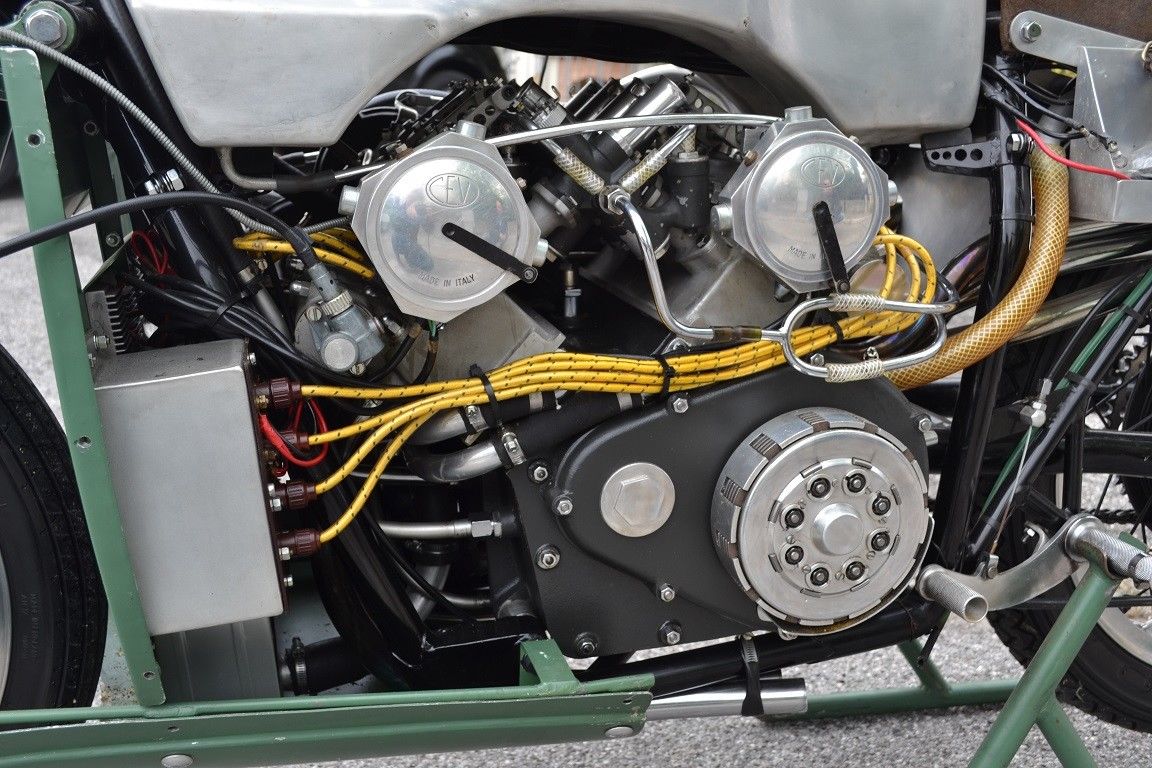
That was particularly important in an era before modern valve materials, computer-aided port design, pneumatic valves, and sophisticated electronic engine management. Rather than asking two or four relatively large pistons to produce more power, Carcano divided 500cc into eight very small cylinders and made the engine rev. Early versions produced approximately 68 CV / 67 hp at around 12,000 rpm.
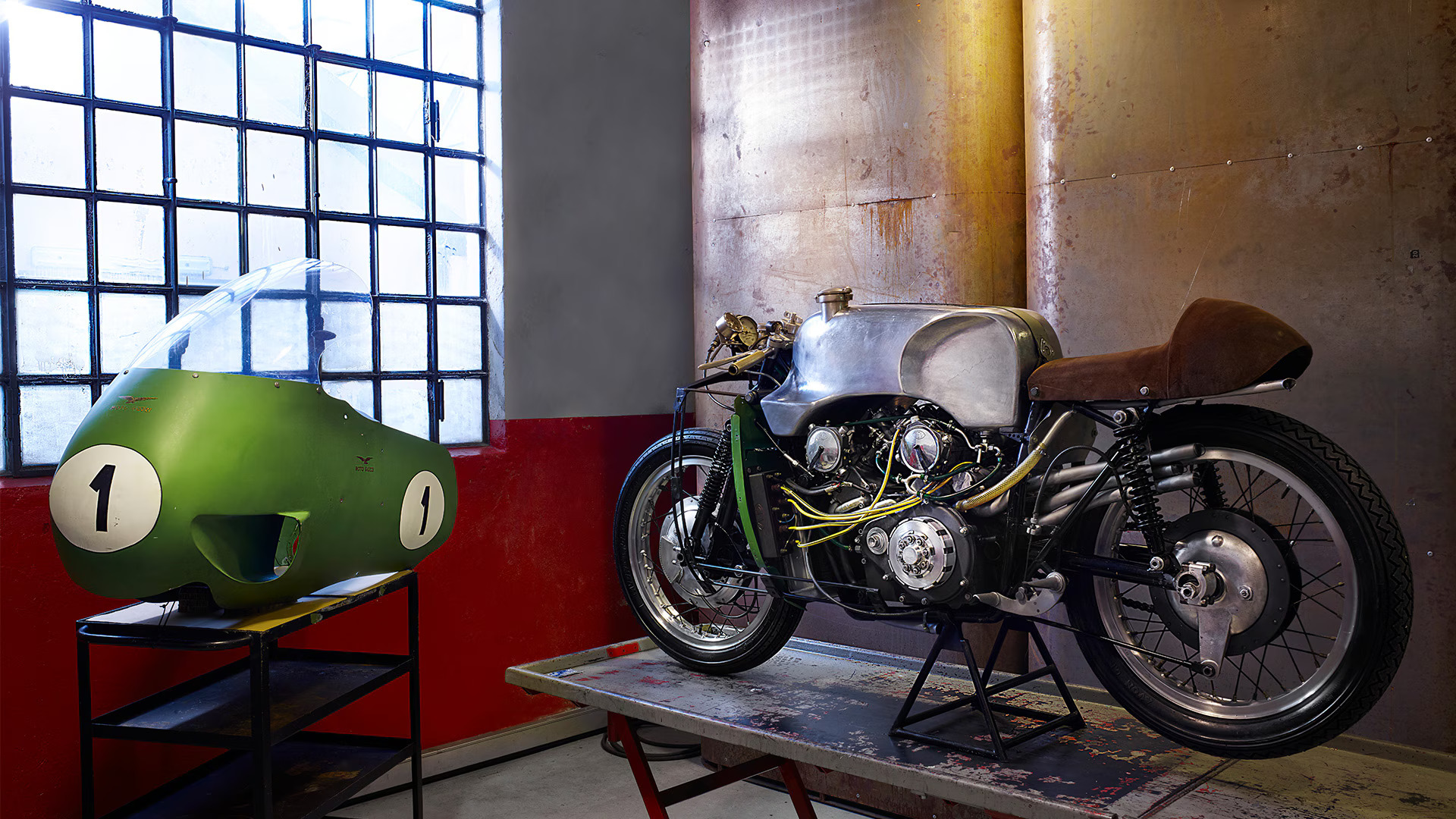
Development continued. By late 1956, the engine was producing approximately 72 horsepower at the rear wheel and pulling usefully from roughly 7,000 rpm. Later specifications are commonly quoted at around 78–79 CV, with some sources placing peak output at 12,000 rpm and others at 12,500. The oft-quoted “78 hp” figure represents the highly developed V8, not necessarily the motorcycle that first appeared in 1955.
Eight Cylinders, Eight Ignition Systems
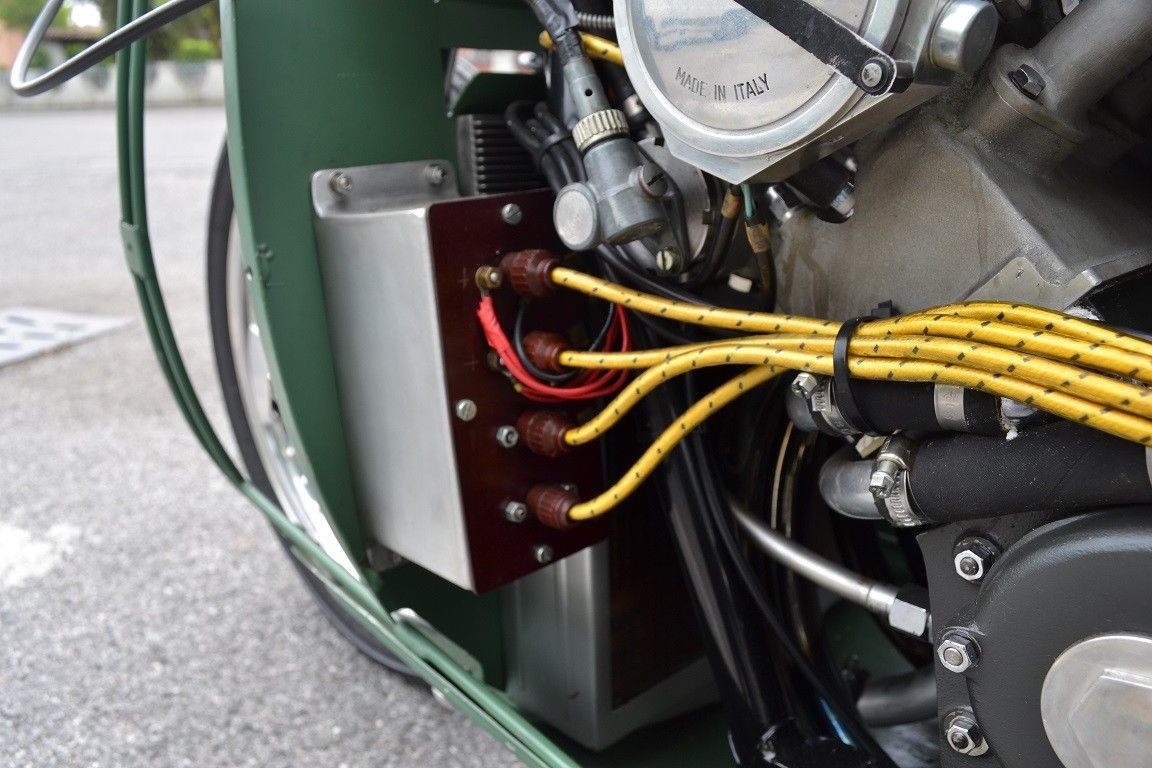
High engine speed created problems beyond pistons and valves. The ignition system had to deliver sparks to eight cylinders reliably at a rate that was extraordinary for the period. At 12,000 rpm, the four-stroke V8 required approximately 800 ignition events every second.
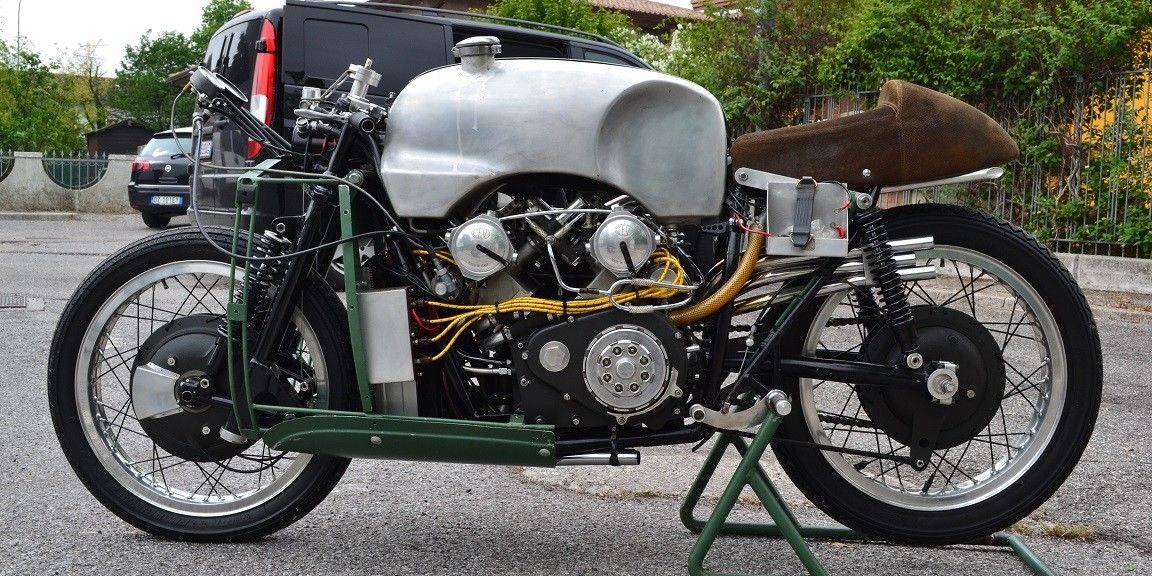
Contemporary magnetos struggled with that requirement, so Moto Guzzi used battery-and-coil ignition. Two distributor-like assemblies incorporated four sets of contact breakers apiece, controlling eight ignition circuits. The arrangement looks complicated because it was.
Fueling created similar development challenges. Early versions grouped the carburetors around common remote float chambers, but inconsistent mixture delivery led Moto Guzzi and Dell’Orto to develop individual float arrangements for the cylinders.
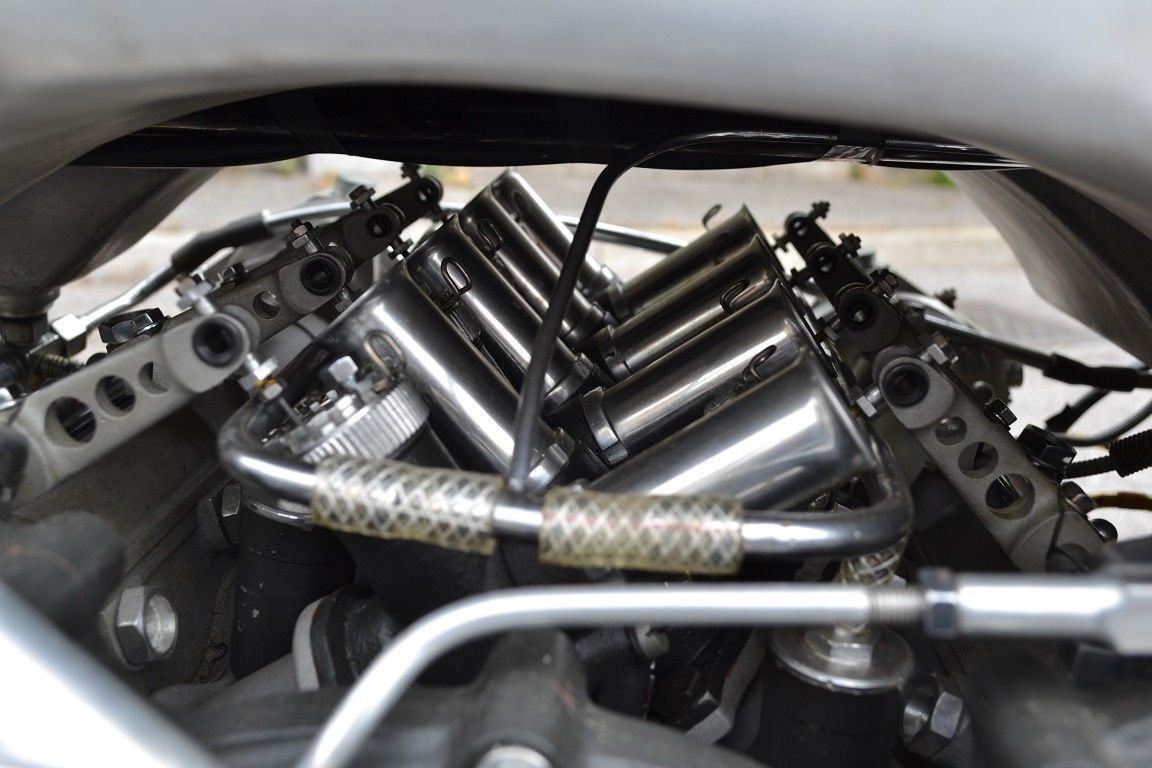
The V8 was not difficult merely because it had eight cylinders — every supporting system had to keep pace with eight tiny combustion chambers operating at unprecedented speeds.
Four, Five, or Six Gears
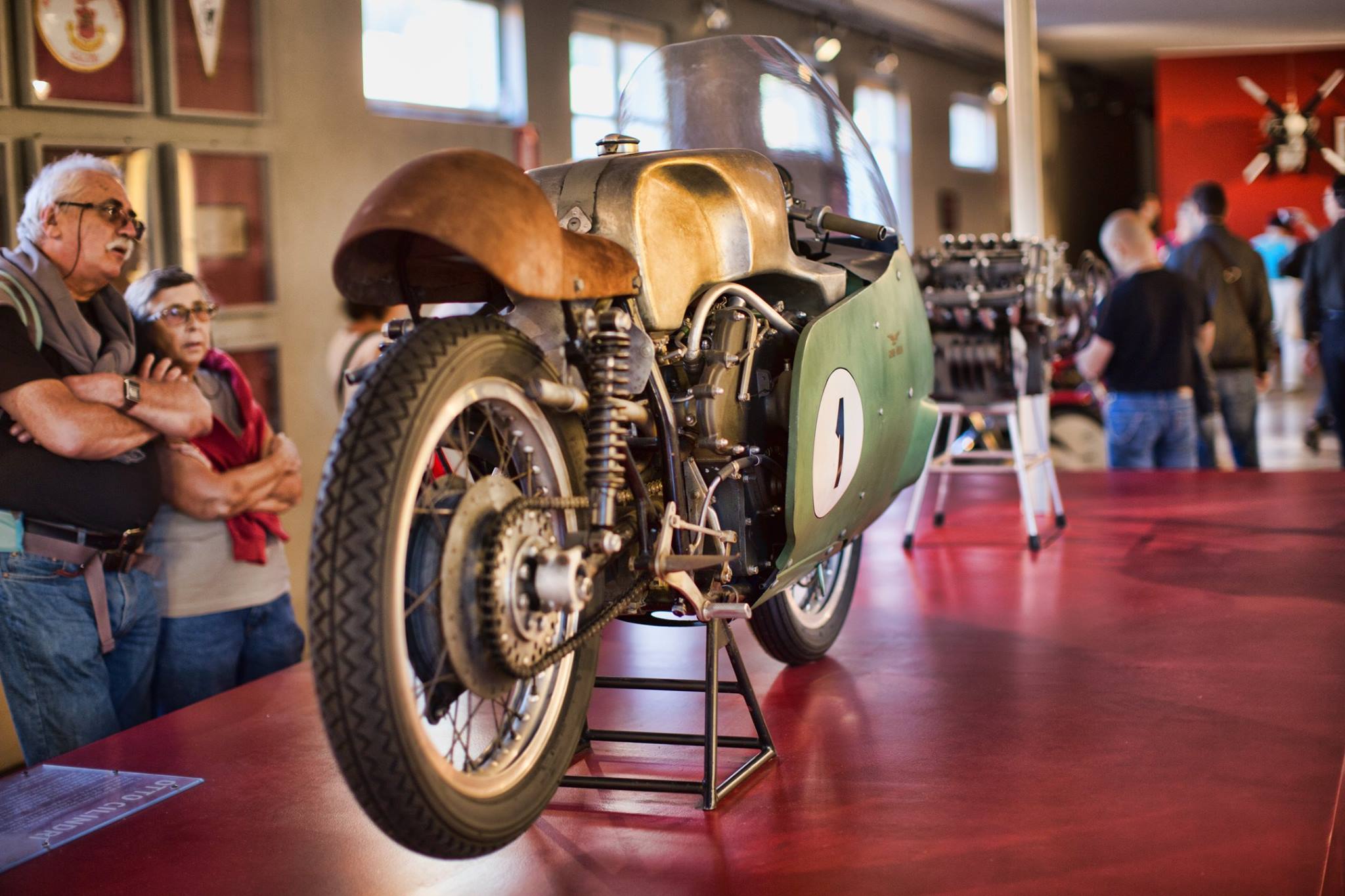
Moto Guzzi initially expected the high-revving engine to have a very narrow useful powerband. Accordingly, versions of the transmission were developed with as many as six ratios, allowing gearing to be tailored to individual circuits. But testing revealed something unexpected. The V8 was far more flexible than anticipated.
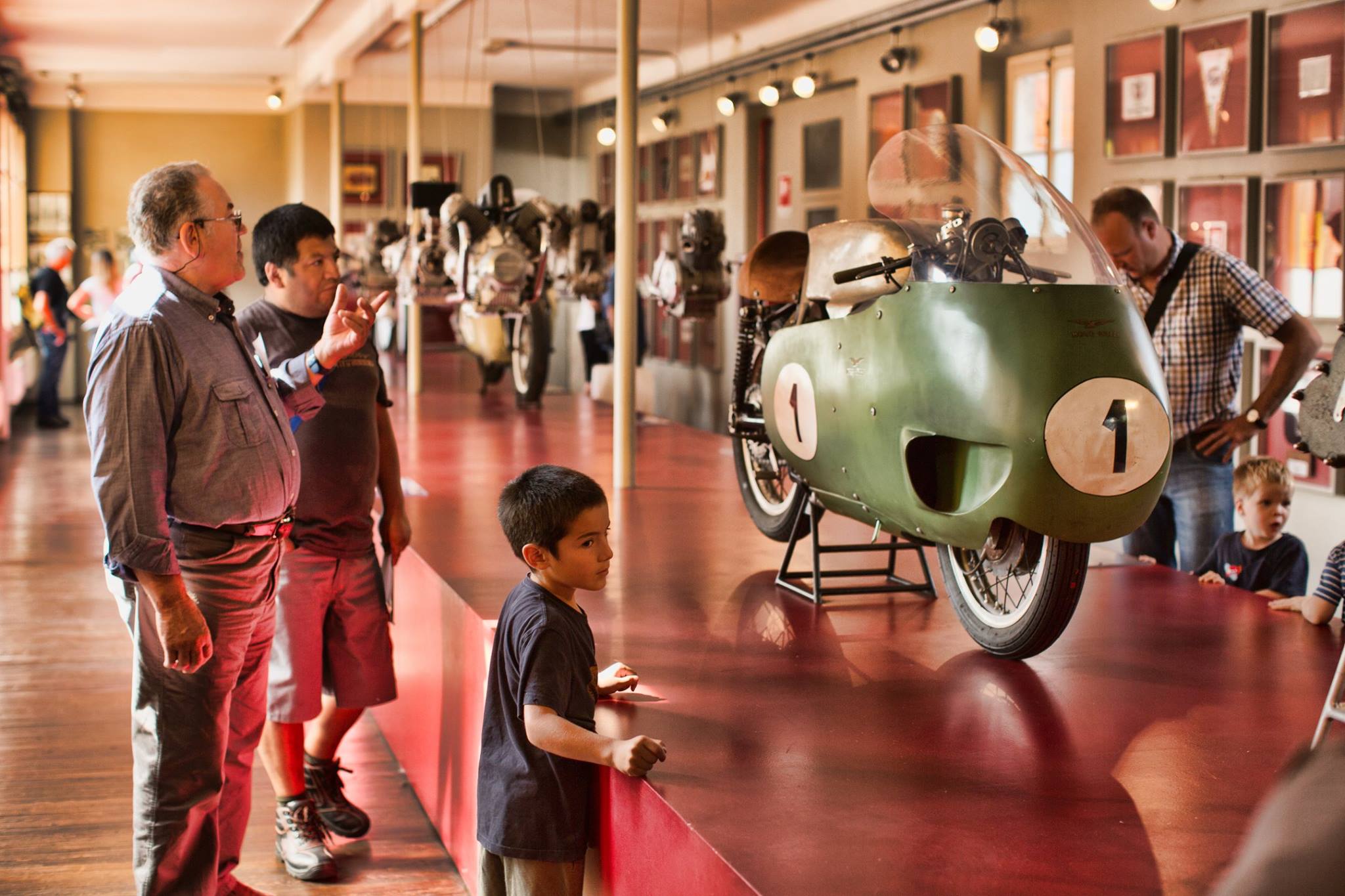
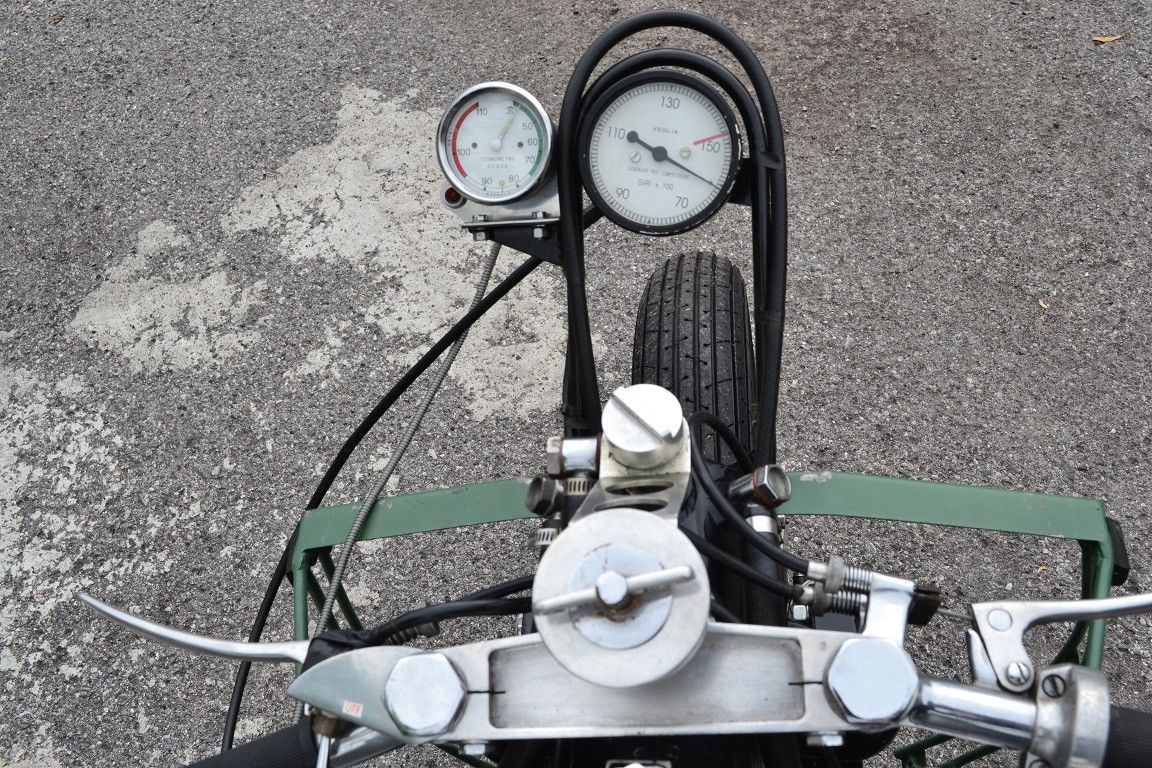
Later development engines could pull effectively from around 7,000 rpm to beyond 12,000, reducing the need for an extremely close-ratio six-speed box. Four- and five-speed configurations could therefore be used depending upon the track and stage of development. That broad power delivery would become one of the V8’s most promising characteristics. Reliability, however, was another matter…
Moto Guzzi’s Secret Weapon: The Wind Tunnel
Engine power was only half of Moto Guzzi’s approach to speed. The company was one of the world’s pioneers in motorcycle aerodynamics. Moto Guzzi constructed the first wind tunnel specifically for motorcycle development at its Mandello del Lario factory, officially opening the facility in 1954. Instead of developing fairings primarily through intuition and track testing, engineers could study aerodynamic drag and stability systematically.
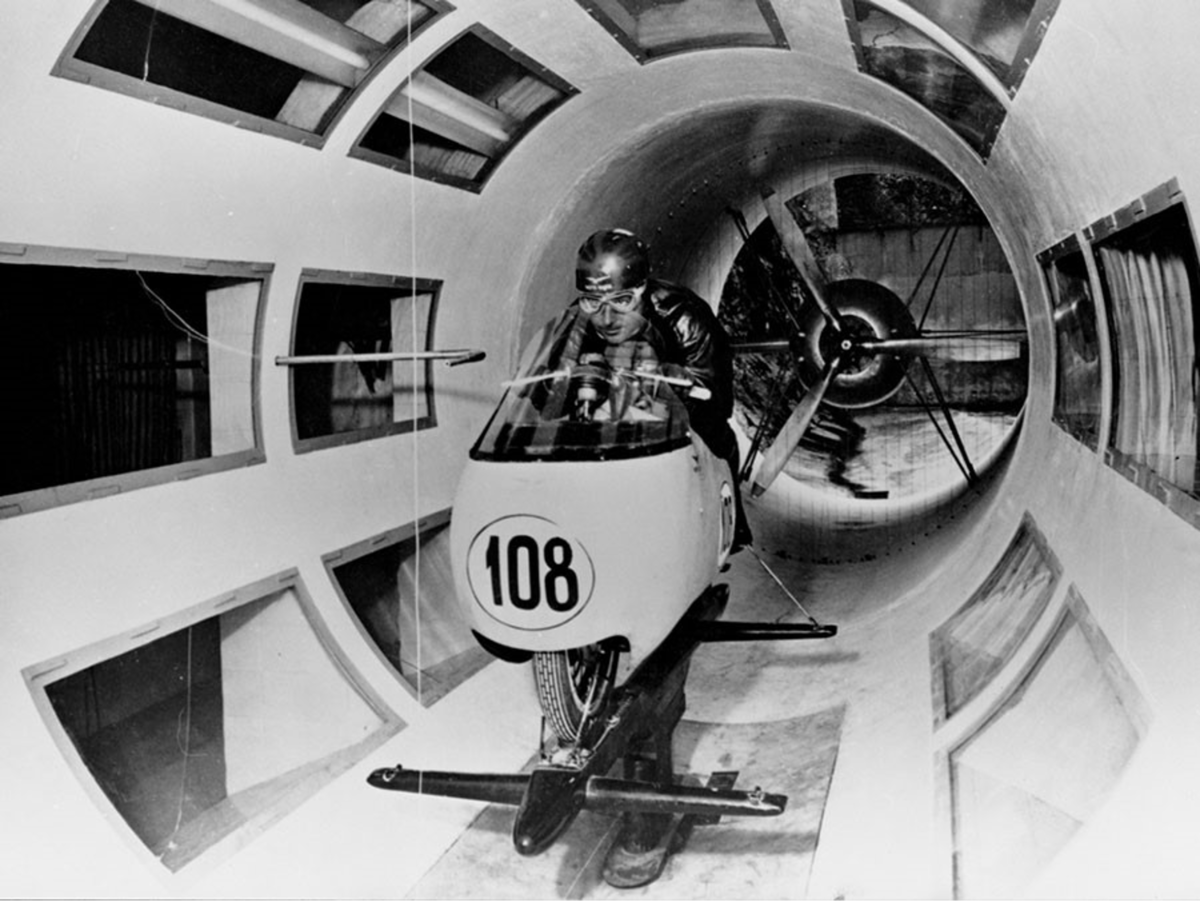
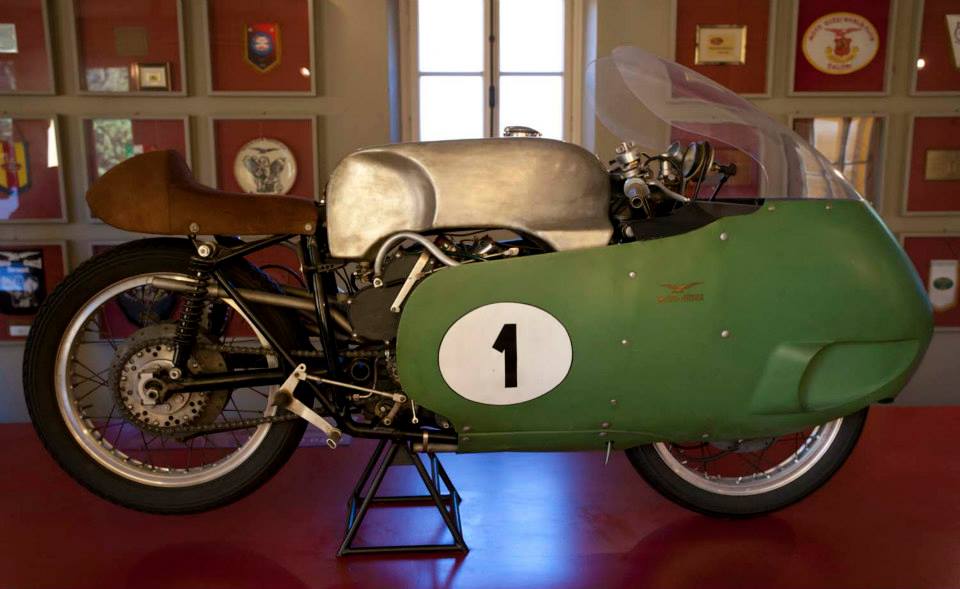
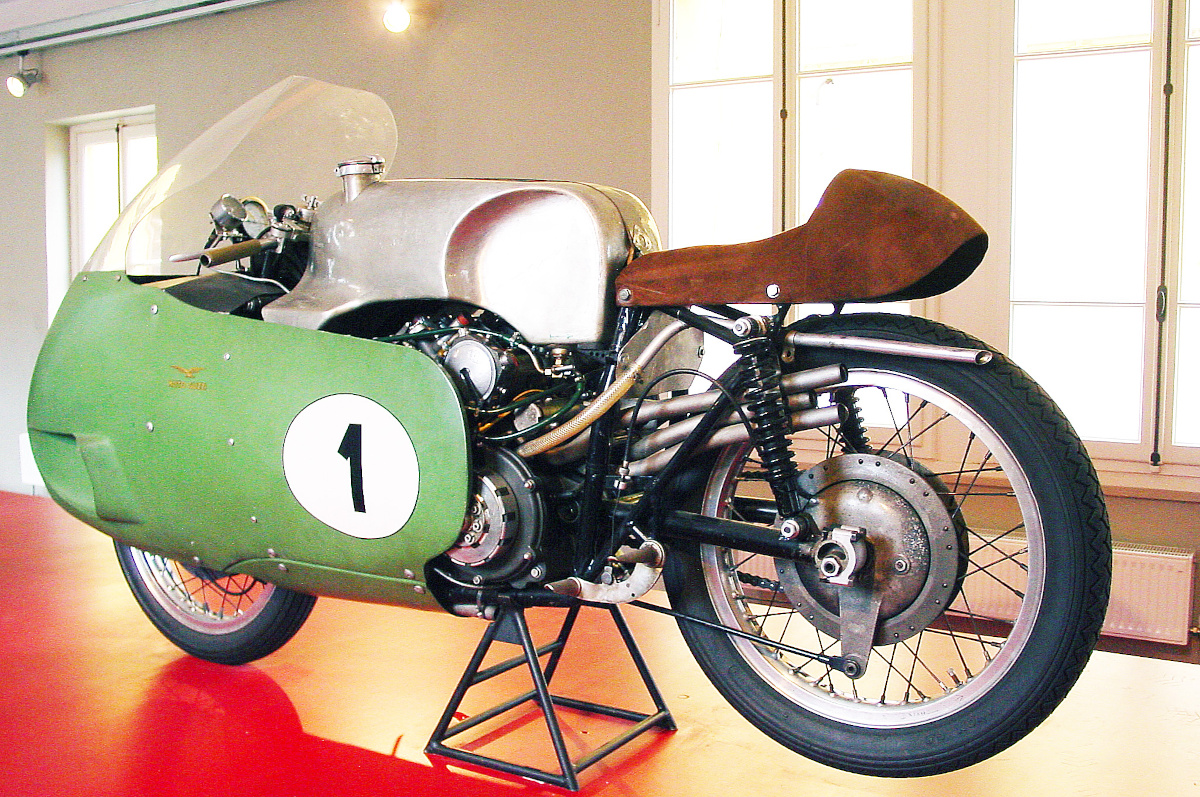
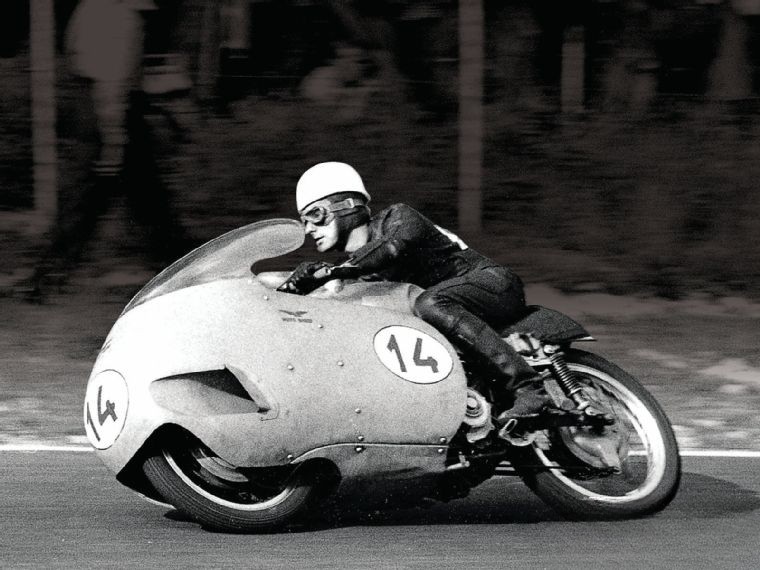
The V8 benefited from that work. Its full “dustbin” fairings enveloped the front of the motorcycle and substantially reduced aerodynamic drag. Despite containing the V8 and its cooling equipment, the machine remained strikingly narrow. That streamlining helps explain how less than 80 horsepower could produce speeds around 275 km/h / 171 mph. Moto Guzzi’s own historical material quotes a 275-km/h top speed for the final V8.
Claims of considerably higher speeds have long circulated, but the 275-km/h figure is factory-supported… Either way, for a 500cc motorcycle in the mid-1950s, it was extraordinary.
1955: Testing Begins
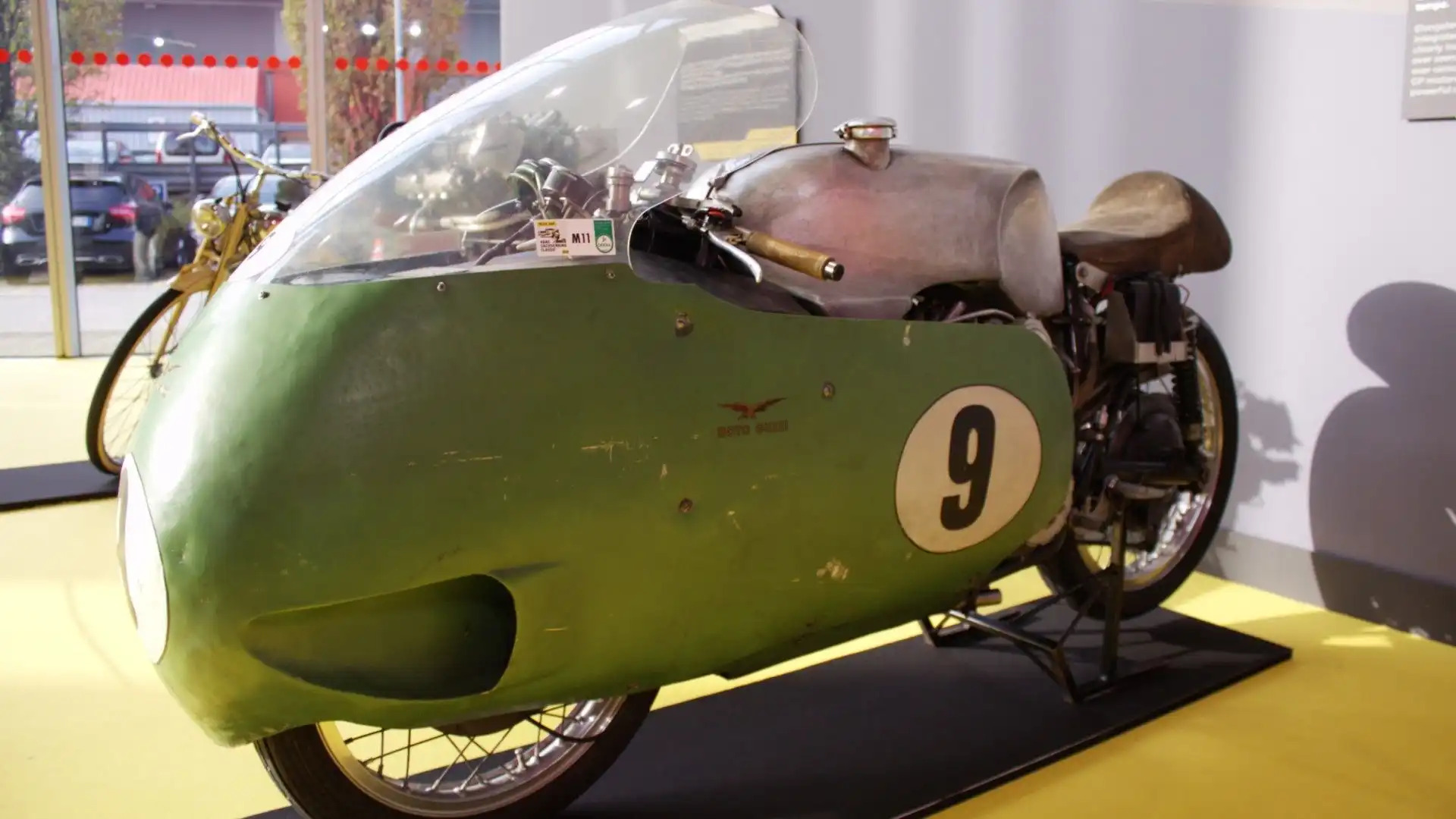
Although usually identified as a 1955 motorcycle, the Otto Cilindri did not immediately enter a full Grand Prix campaign. The project began taking shape at the end of 1954, and the complete machine began appearing at circuits during 1955 for testing and practice. Its first proper race start came at the 1956 Coppa d’Oro at Imola. Ken Kavanagh set the fastest lap but retired when coolant temperature became excessive. The pattern would become familiar…
At Assen, Bill Lomas demonstrated the bike’s speed in practice but the V8 failed to deliver a race result. At the German Grand Prix on the Solitude circuit, Lomas took pole position and was leading before a cooling-system failure ended his race. Ahead of Monza, private testing produced an especially tantalizing result: Lomas completed a full simulated race distance in a time that would have been good enough to win. He then took pole during official practice.
Unfortunately, Lomas crashed while racing Moto Guzzi’s 350 earlier in the day and could not contest the 500cc race. The V8 was becoming fast enough to win, but it simply wasn’t finishing often enough.
Making the V8 Reliable
Moto Guzzi spent the winter of 1956–57 attacking the weaknesses. Crankshaft design was revised. Endurance testing took place at Montlhéry in France and Oulton Park in Britain. Carcano later recalled that the team eventually ran approximately 900 kilometers at Monza without trouble.
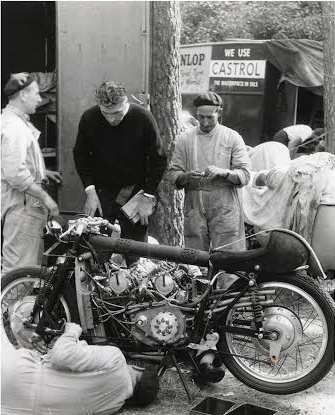
The motorcycle also began collecting speed records. In late 1956, Dickie Dale set standing-start kilometer and mile records at Montichiari. In February 1957, Bill Lomas rode the V8 to a standing-start 10-kilometer record at approximately 243 km/h / 151 mph average. Development was finally catching up with the original concept. In 1957, the V8 finally began winning races.
It Did Win — Just Not a World Championship GP
The Moto Guzzi V8 is sometimes described as a motorcycle that never won, but that’s not quite accurate. Giuseppe Colnago won an Italian Championship race at Syracuse aboard the V8 early in 1957. Dickie Dale then won the Coppa d’Oro at Imola, setting the fastest lap along the way. What the V8 never won was a World Championship Grand Prix.
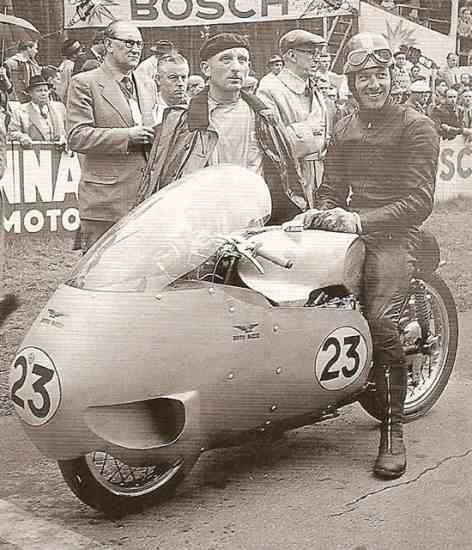
Dale finished fourth in the 1957 Senior TT on the Isle of Man, one of the bike’s best World Championship results. Remarkably, Cycle World reports that he covered roughly 240 miles of the event with only seven cylinders operating.
At other races, the V8 continued to demonstrate speed through pole positions and lap records only to be stopped by failures that could be frustratingly minor. The concept had ceased to be the main problem. Execution and development time were…
The Chassis Was Developing Too
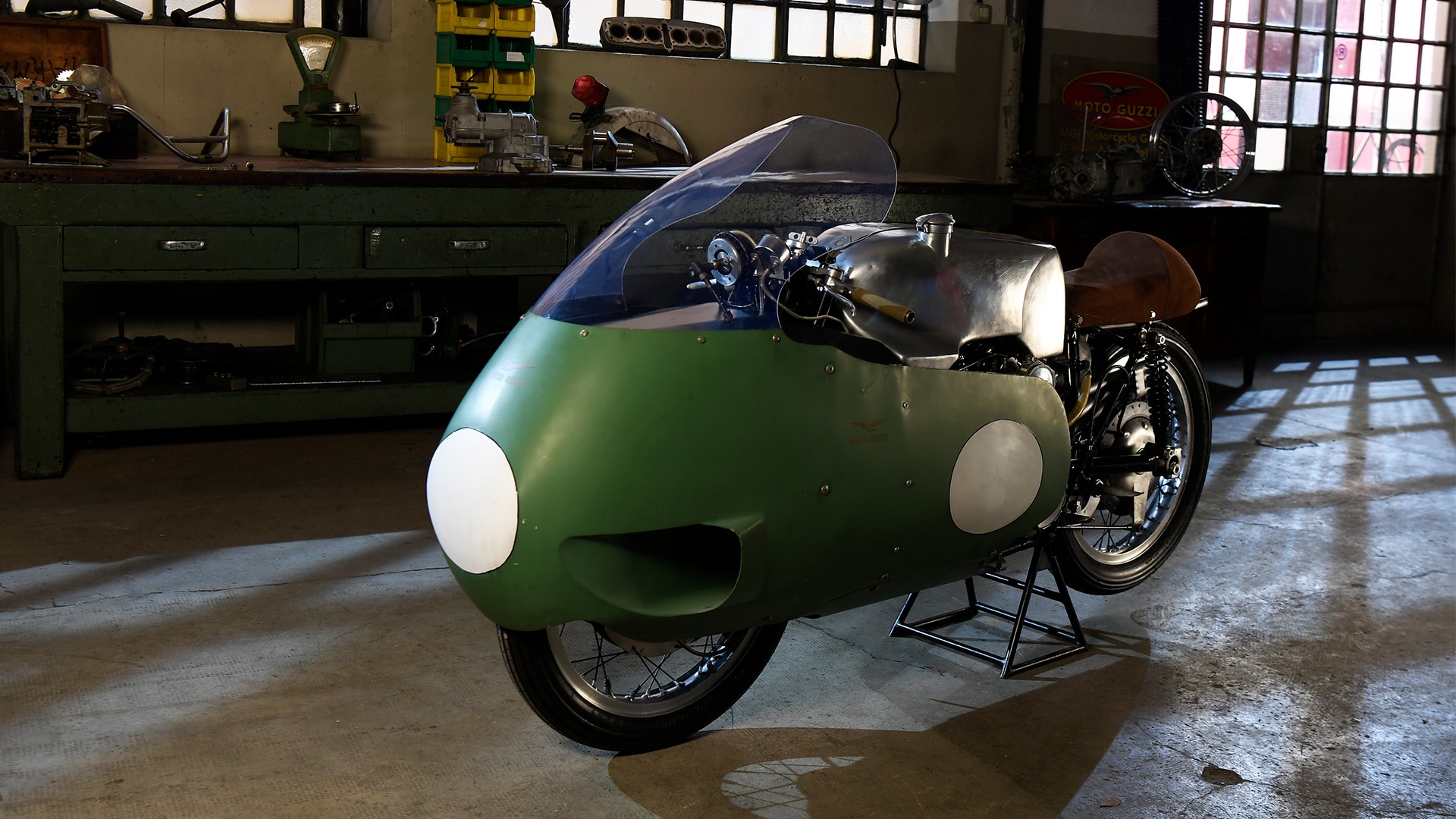
Engine reliability was not the only challenge. The motorcycle itself evolved significantly during its short life. Early machines used a tubular double-cradle chassis and Moto Guzzi’s characteristic leading-link front suspension. Later development altered swingarm length and geometry in an attempt to improve stability and handling.
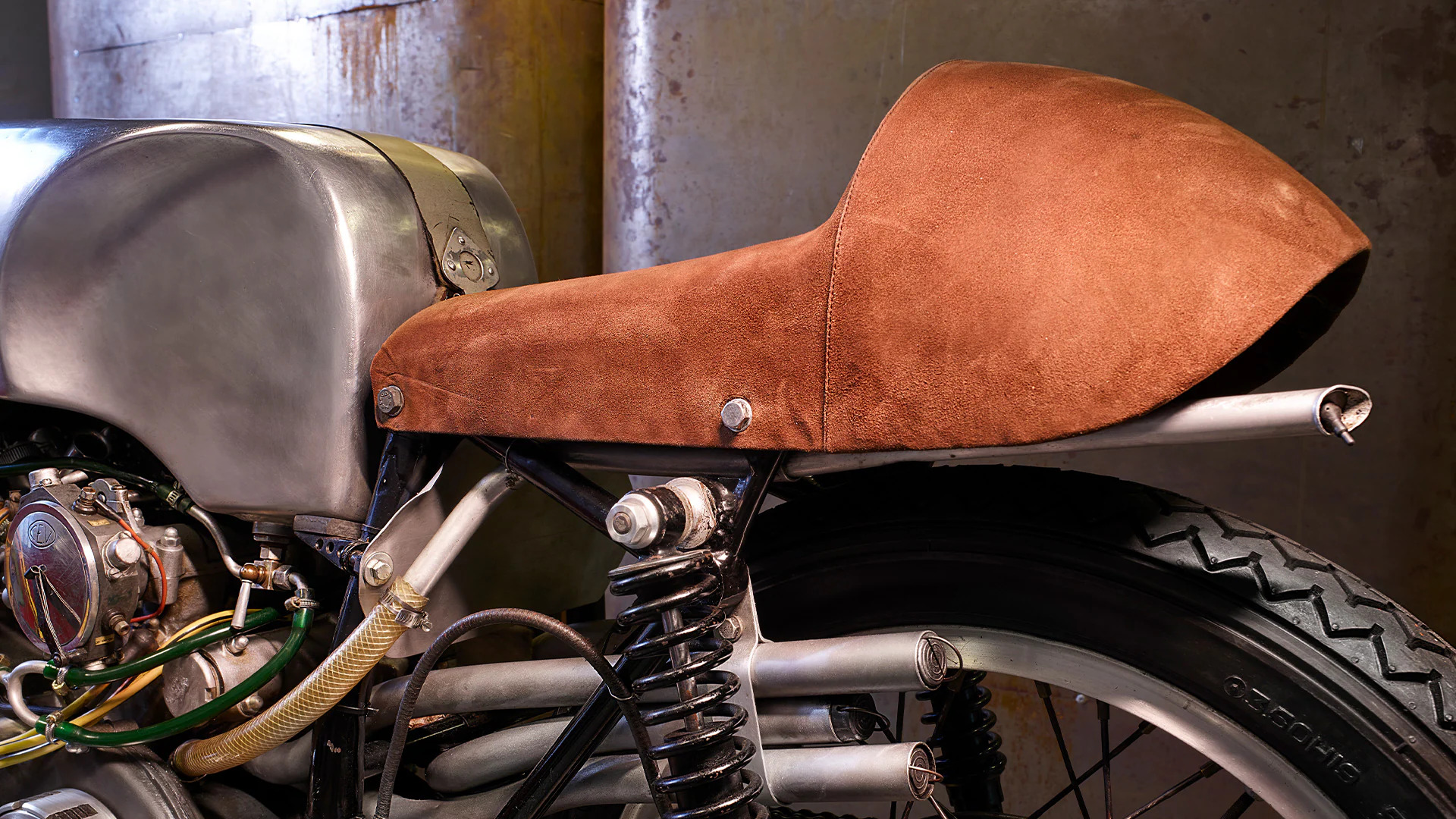
Moto Guzzi’s own archive describes the final 1957 version as adopting a new single-spar frame that freed space around the engine and allowed smaller oil and coolant reservoirs. Reported dry weights vary from roughly 137 to 150 kg / 302 to 331 lb depending on version and source… Keep in mind, the Otto Cilindri was a development program rather than a single production specification — it wasn’t frozen in time. By 1957, virtually every major element had been refined. Then the program abruptly stopped…
The Italian Withdrawal
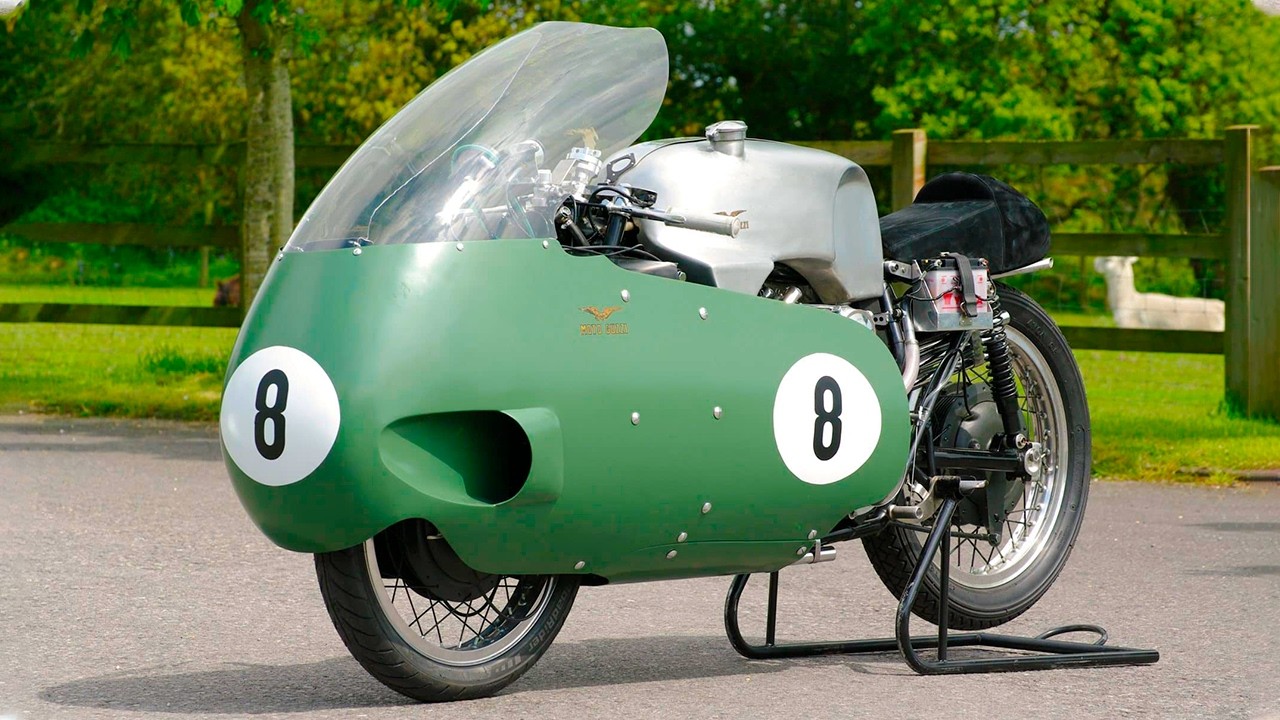
At the end of the 1957 season, Moto Guzzi withdrew from Grand Prix racing along with Gilera and Mondial. Racing had become enormously expensive, while the Italian motorcycle market itself was changing as inexpensive automobiles became increasingly accessible. For Moto Guzzi, that decision ended development of the V8 almost immediately.
The timing was particularly unfortunate. After two years spent solving crankshaft, cooling, ignition, fueling, and chassis problems, the machine had finally begun winning non-championship events and demonstrating meaningful reliability. Whether it eventually could have beaten Gilera and MV Agusta consistently can never be known. It never received the additional development needed to find out.
A 500cc V8 Before Honda’s Six
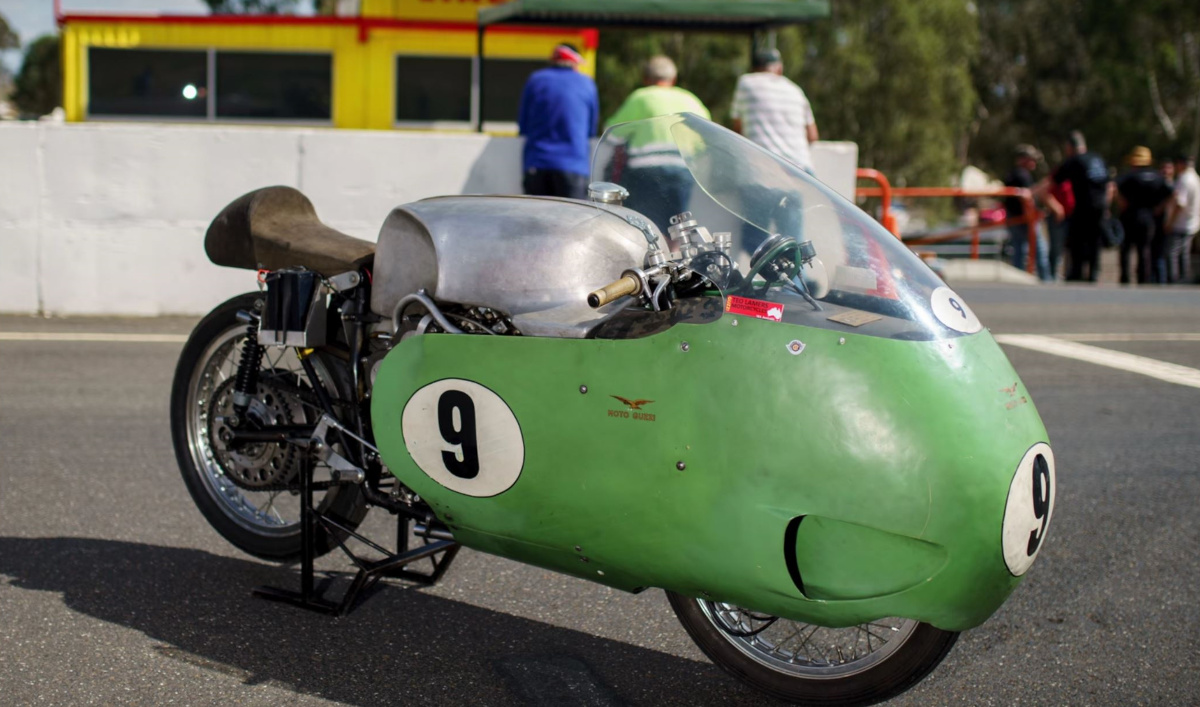
The V8’s significance is easier to appreciate when placed in context. Honda’s celebrated six-cylinder RC-series racing motorcycles were still a decade away. Four-cylinder Grand Prix machines were considered sophisticated. Electronic ignition, modern tires, computer-controlled fueling, and contemporary materials did not exist. Moto Guzzi nevertheless built a 500cc V8 weighing about 99 lbs, equipped it with eight carburetors and four overhead camshafts, made it turn beyond 12,000 rpm, and installed it in a motorcycle capable of approximately 171 mph. And the company did most of the initial design work in a matter of months.
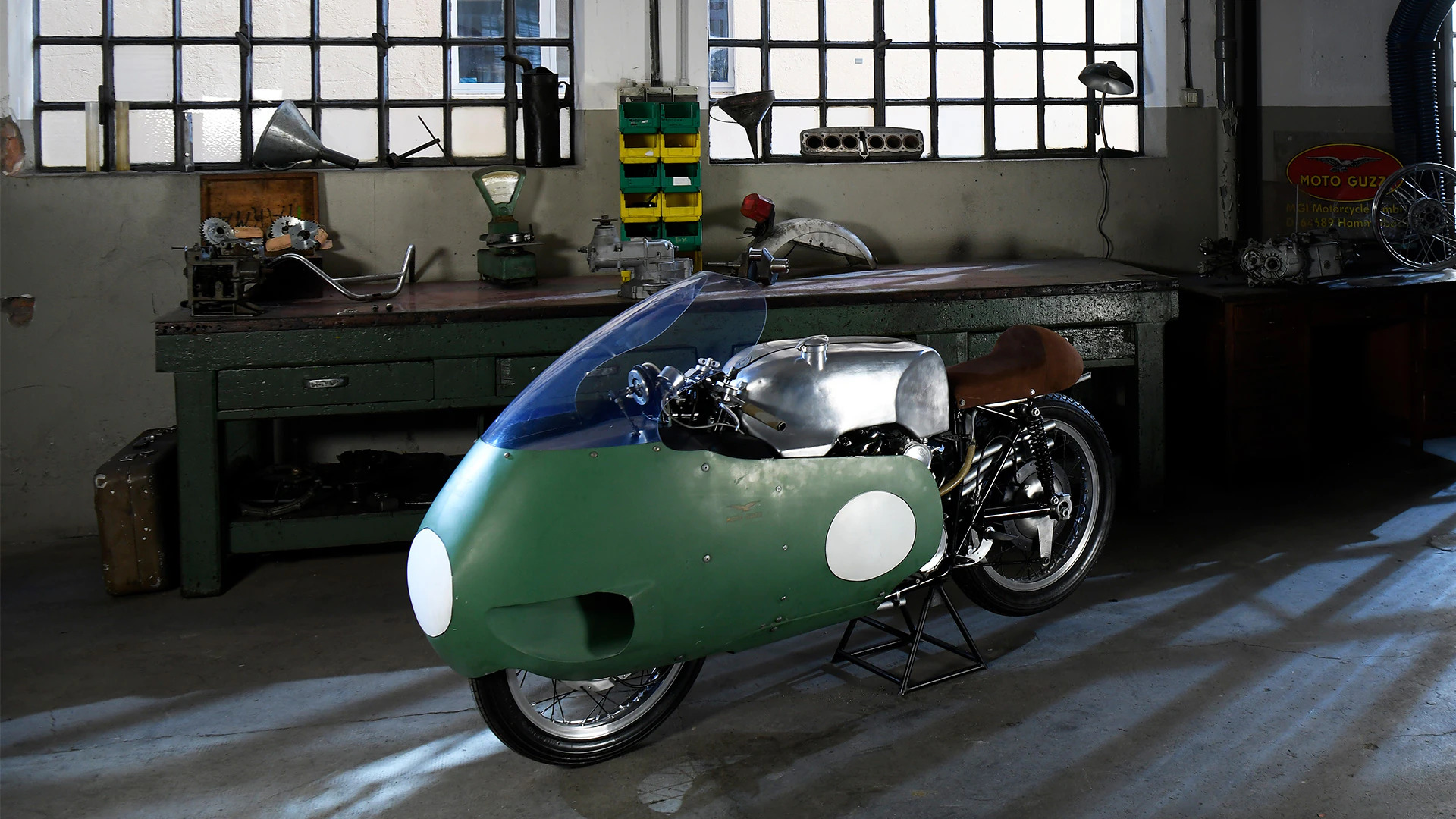
The machine wasn’t perfect, as its GP record makes clear. But calling the V8 merely an engineering curiosity misses the important part of the story. By 1957, it had won races, set records, completed lengthy endurance tests, and demonstrated the speed necessary to compete at the front of the premier Grand Prix class.
Moto Guzzi simply ran out of time — or, more accurately, decided that racing was no longer worth the cost. Nearly 70 years later, we have to wonder what the Otto Cilindri might have achieved if given just a little more development time — one of the lasting “What Ifs” of GP history.
Moto Guzzi 500 V8 Specifications
| Model | Moto Guzzi 500 V8 / Otto Cilindri |
| Development | 1954–1957 |
| Engine | Liquid-cooled 90° four-stroke V8 |
| Displacement | 498.5cc |
| Bore x stroke | 44 x 41mm |
| Valvetrain | DOHC per bank, two valves per cylinder |
| Total valves | 16 |
| Carburetion | 8 x Dell’Orto carburetors |
| Cooling | Liquid |
| Lubrication | Dry sump |
| Engine weight | Approx. 45 kg / 99 lb |
| Early output | Approx. 68 CV @ 12,000 rpm |
| Developed output | Approx. 72 hp at rear wheel; roughly 78–79 CV quoted at final development stage |
| Transmission | 4-, 5-, or 6-speed configurations depending on development/circuit |
| Front suspension | Leading-link |
| Rear suspension | Swingarm, twin dampers |
| Brakes | Drum |
| Dry weight | Approx. 137–150 kg depending on version/source |
| Factory-quoted top speed | 275 km/h / 171 mph |
| Best World Championship result | 4th, 1957 Senior TT |
| Notable wins | 1957 Syracuse Italian Championship; 1957 Coppa d’Oro, Imola |
More Extreme Bikes…
 Otto Cilindri: The 500cc Moto Guzzi V8 GP Bike - Eight cylinders, eight carbs, four overhead cams: One of the most ambitious Grand Prix motorcycles ever built… If you divide 498.5 cubic centimeters among eight cylinders, each one displaces just over 62cc. That was the […]
 Bimota Tesi H2: 239-bhp Supercharged Hub-Center Superbike - Bimota’s most radical chassis meets Kawasaki’s wildest engine… For most of its history, Bimota has taken powerful engines from larger manufacturers and surrounded them with exotic Italian chassis engineering. In 2019, Kawasaki acquired a 49.9% […]
 334-hp PGM V8: “The World’s Most Powerful Production Motorcycle” - 2000cc, 334 horsepower, 534 lbs, and a V8 built from two Yamaha R1 engines… Most V8 motorcycles begin with an automobile engine. That approach has produced everything from Boss Hoss cruisers to one-off specials, […]
 Vyrus 987 C³ 4V: 350-lb Ducati-Powered Hub-Center Superbike - Ducati 1098R power, 350 pounds, and hub-center steering… In 2009, the Ducati 1098R already represented an extreme interpretation of the Italian V-twin superbike. Its Testastretta Evoluzione engine (actually 1198cc despite the model name) had been […]
 Münch Mammut 2000: The 260-hp Turbo Bike - Übermoto: 2000cc, Turbocharged, 260 horsepower, and 218 lb-ft of torque… At the turn of the millennium, the motorcycle world was engaged in an escalating superbike arms race. The Suzuki Hayabusa and Kawasaki ZX-12R were pushing […]
 Honda NR750: The Oval-Piston Superbike - 32-Valve, 15,000-rpm V4: Honda’s attempt to build a V8…without technically building one… In 1992, Honda put one of the strangest engines ever developed for Grand Prix racing into a road-going motorcycle. The resulting Honda NR750 […]
 Suter MMX 500: 195-HP Two-Stroke GP Bike - 195 Horsepower, 280 Pounds, Two Strokes: The Spirit of the 500cc “Unrideables” Reborn… For a generation of motorcycle racing fans, the 500cc two-stroke Grand Prix bike represents something close to the ultimate racing motorcycle. The […]
 ATK 700 Intimidator: The 78-hp 700cc Two-Stroke Dirt Bike - 685cc, 78 Horsepower, 238 Pounds: One of the most outrageous production dirt bikes ever offered in America… There was a time when a 500cc two-stroke motocross bike was the king of the dirt. Honda’s CR500 […]
 Bimota Vdue: 500cc Two-Stroke GP Bike for the Road - Bimota’s first homegrown engine powered one of the wildest superbikes of the 1990s: a featherweight 500cc V-twin smoker with direct fuel injection, carbon bodywork, and GP aspirations… Imagine walking into a motorcycle dealership in the […]
 Crighton CR700W: 220-hp, 286-lb Rotary Superbike - The culmination of Brian Crighton’s four-decade obsession with rotary race bikes makes 220 horsepower from 690cc — and weighs less than a Yamaha R3… The Crighton CR700W is one of those motorcycles whose specifications make […]
 2WD Dakar Legend: Yamaha WR450F 2-Trac - Remembering Yamaha x Öhlins’ Hydraulic 2WD Enduro… Every so often, a motorcycle appears that seems to point toward an entirely different future. The Yamaha WR450F 2-Trac was one of those machines. At first glance, it […]
 Kinetic Art: Brough Superior RMB01 - Brough Superior and Watchmaker Richard Mille join forces on a work of kinetic art… One of the most striking machines at ArtRide 2026 in Biarritz, France, was the Brough Superior RMB01. Built in collaboration with […]
 Up for Auction: Allen Millyard’s 500-hp Viper V10 Motorcycle! - The 8000cc, 500-bhp Millyard Viper V10 crosses the auction block this month… There are custom motorcycles, and then there’s the Millyard Viper V10. Built by legendary British engineer Allen Millyard, this 8000cc V10-powered road-legal motorcycle […]
 Veloce Ethereal: 500cc Two-Stroke Café Racer - 145-hp 500cc Two-Stroke Ethereal from Veloce Motorcycles… In the modern world, a 500cc two-stroke intended for road use seems almost unthinkable. However, that’s exactly what Oxfordshire-based Veloce Motorcycles is promising with the Ethereal — a […]
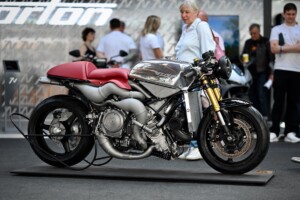 Veloce Aperion: 280-BHP 1000cc Two-Stroke Café Racer! - Veloce Motorcycles unveils a 1000cc X8 two-stroke café racer! Built by Oxfordshire-based Veloce Motorcycles, the Aperion is a 1000cc, eight-cylinder, two-stroke naked bike — or perhaps more accurately, an engineering provocation with lights, wheels, and […]


