
Remembering Yamaha x Öhlins’ Hydraulic 2WD Enduro…
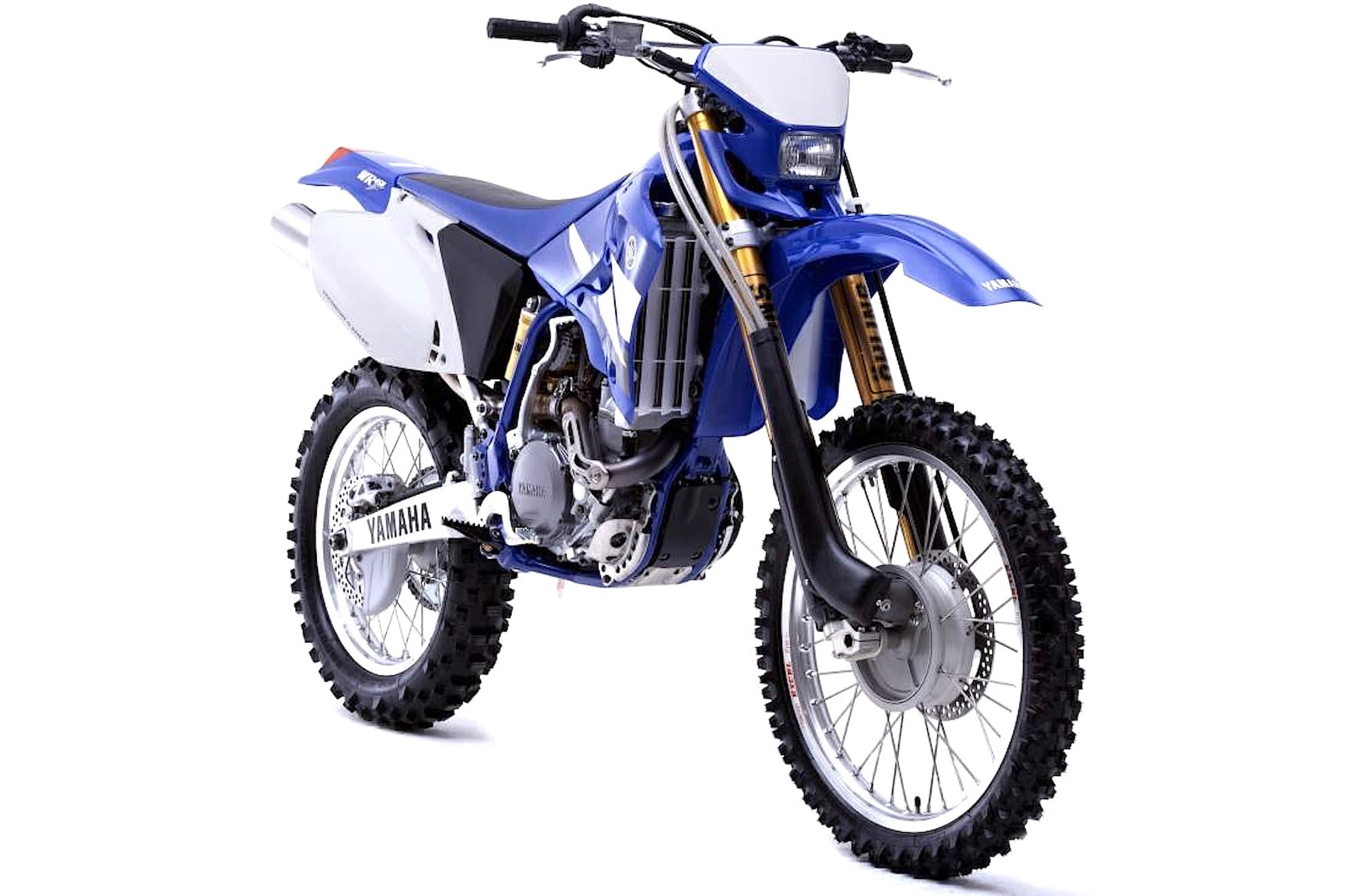
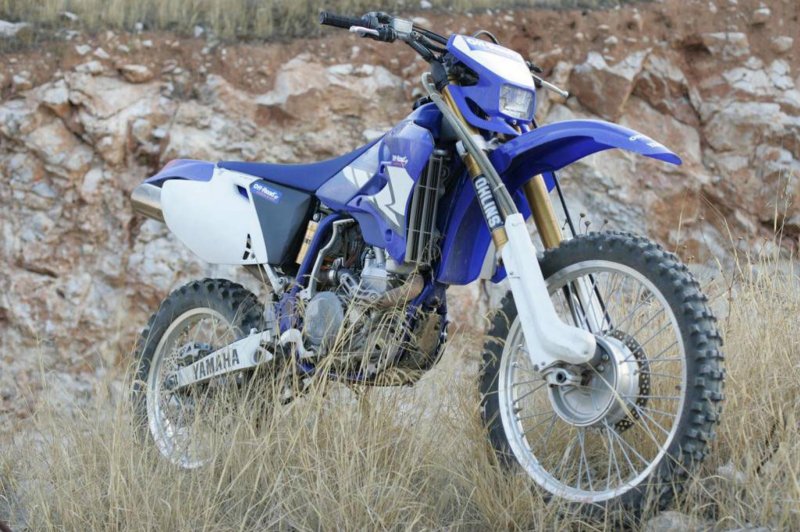
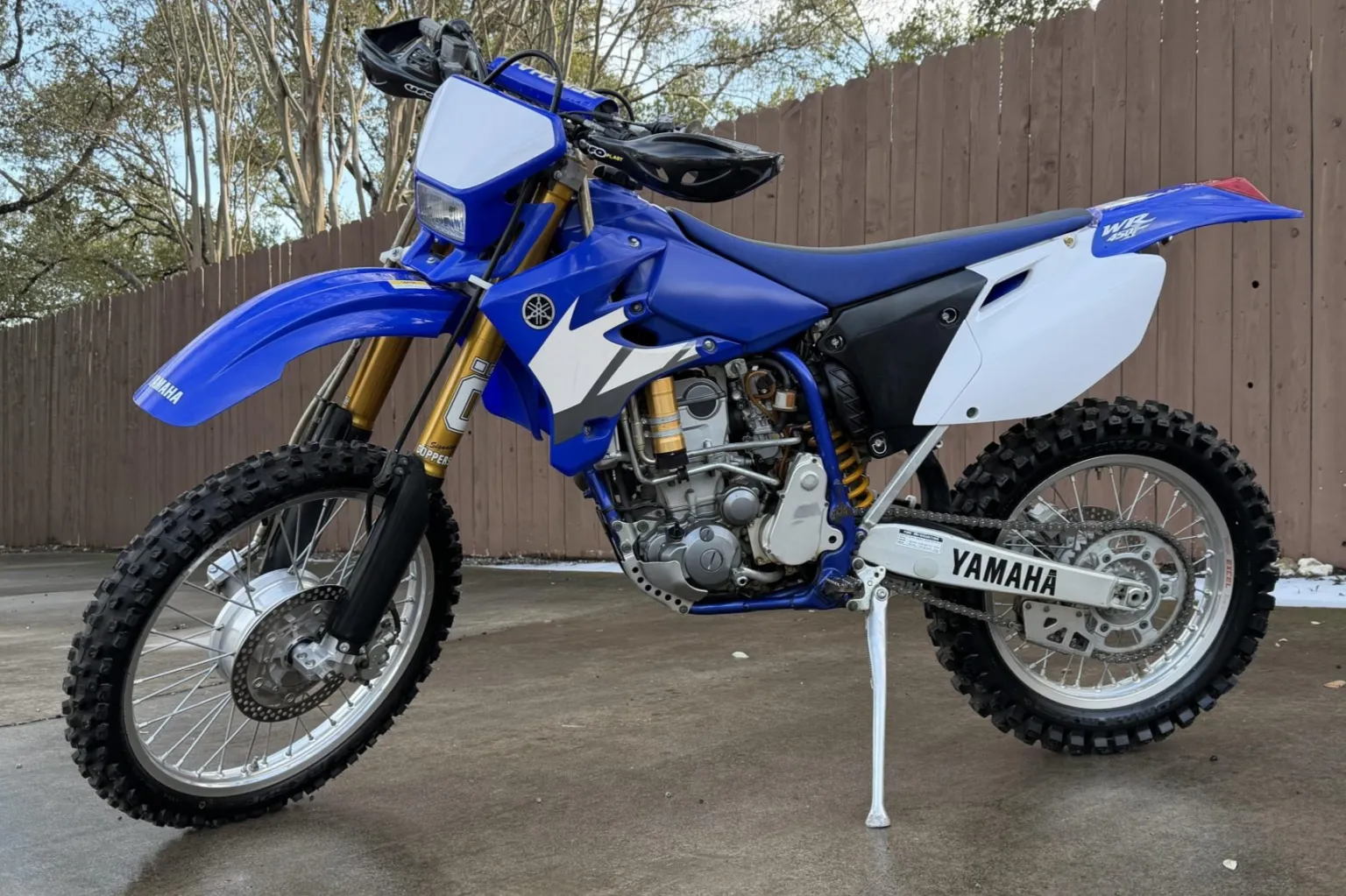
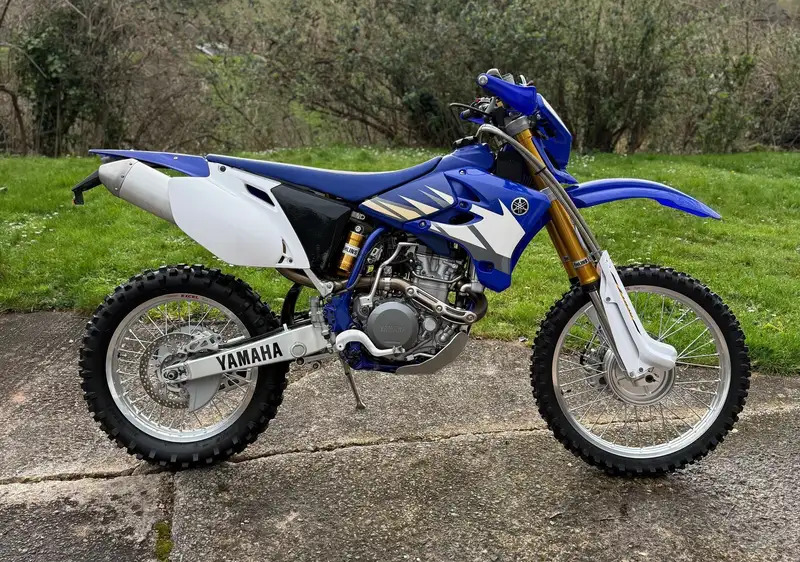
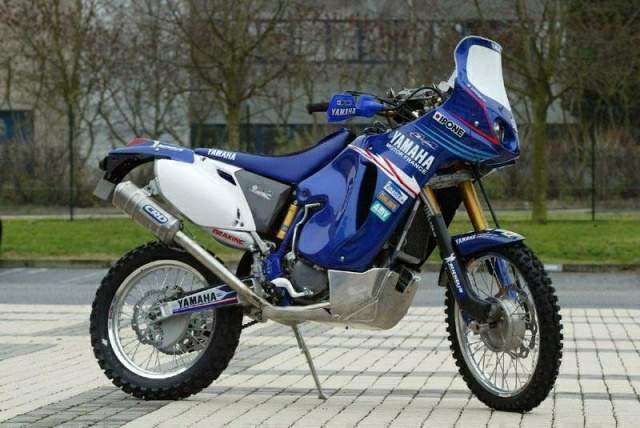
Every so often, a motorcycle appears that seems to point toward an entirely different future. The Yamaha WR450F 2-Trac was one of those machines. At first glance, it looked like a regular WR450F enduro: blue plastics, high fender, 21-inch front wheel, knobbies, and the familiar lean silhouette of Yamaha’s big four-stroke dirt weapon. But look closer and you noticed something odd. Hydraulic lines ran down to the front hub. The front wheel was not merely being pushed through the terrain — it was helping pull the bike through it!
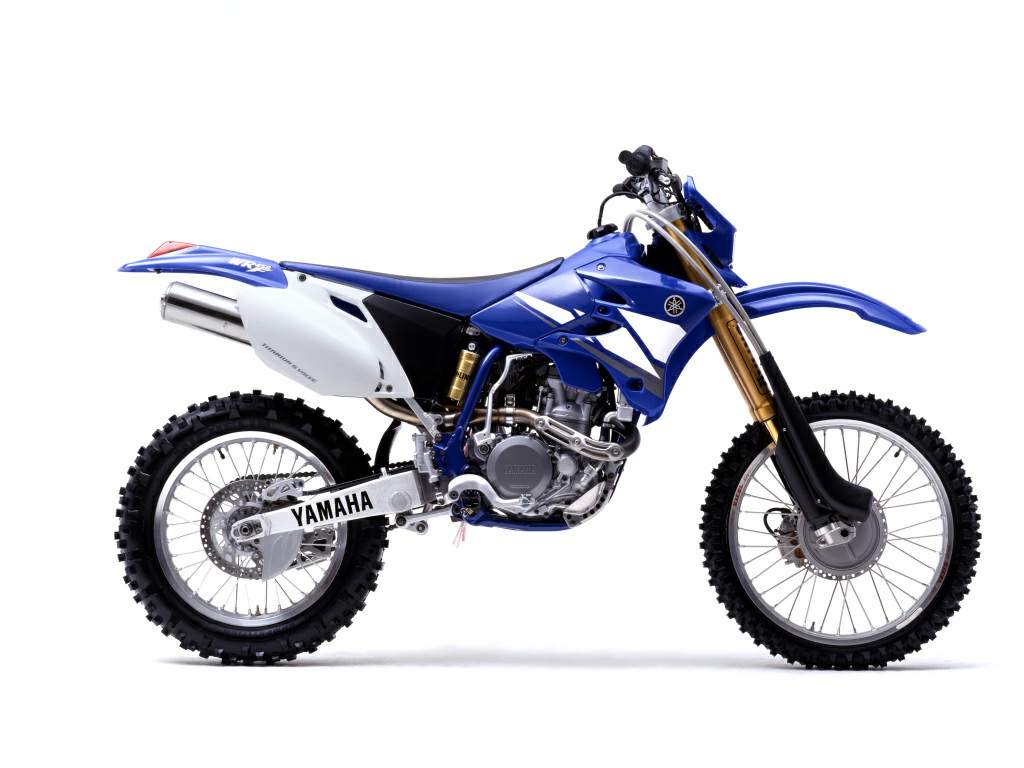
This was Yamaha and Öhlins’ great two-wheel-drive experiment: a production WR450F fitted with a self-regulating hydraulic front-wheel-drive system designed to make the bike faster, easier, and more stable in loose terrain. And it worked. It even won races. And then it disappeared.
The Problem with One-Wheel Drive
Off-road, especially in sand, mud, snow, and loose rock, rear-wheel drive has obvious limitations. A dirt bike’s rear wheel often spends enormous energy spinning, digging, sliding, and roosting rather than driving the machine forward. The rider then has to manage the consequences: fishtailing, lost momentum, buried rear tires, washed-out fronts, and endless corrections.
Four-wheel-drive rally cars had already shown what happens when more driven wheels meet loose terrain. Yamaha and Öhlins wondered whether some of that same thinking could be applied to motorcycles without destroying what makes a bike feel like a bike. The answer was 2-Trac.
Yamaha, Öhlins, and a Very Long Experiment
The WR450F 2-Trac did not appear out of nowhere. Yamaha and Öhlins had been experimenting with two-wheel-drive motorcycles for years before the production WR450F version appeared. Development work reportedly began as far back as 1985, with Yamaha and Öhlins testing mechanical and hydraulic systems on a range of machines, including off-road bikes and even road-bike prototypes.
The first serious prototype work eventually led to rally competition. A 2WD Yamaha made its race debut on the TT600R at the UAE Desert Challenge, and the system continued evolving through Yamaha Motor France’s rally-raid program.
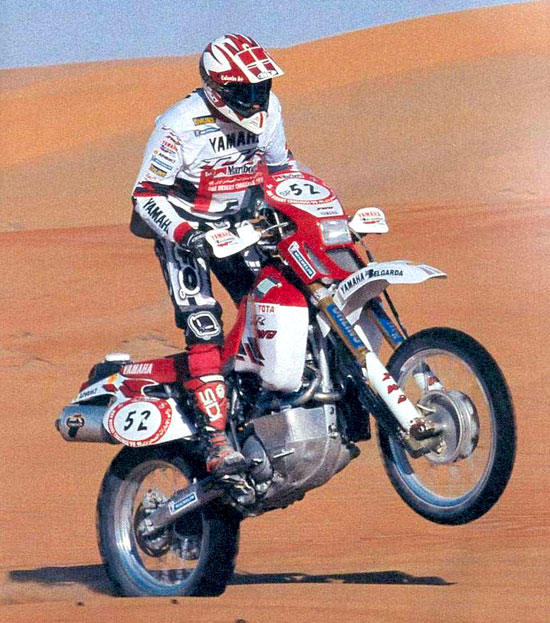
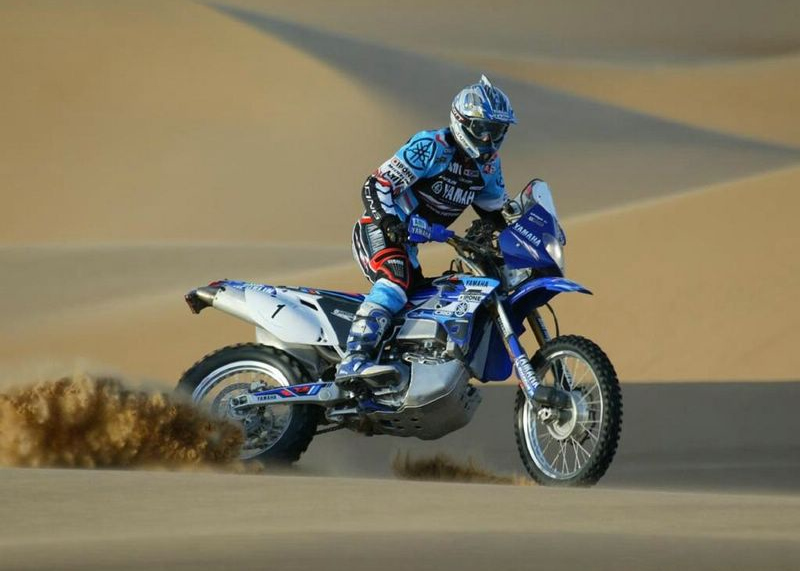
By the early 2000s, the technology had matured enough for public competition success. David Frétigné and Jean-Claude Olivier used 2-Trac-equipped Yamaha rally machines in Moroccan desert events, proving the concept in the kind of deep sand where a driven front wheel could make a real difference. Then came Dakar.
David Frétigné and the 2004 Dakar
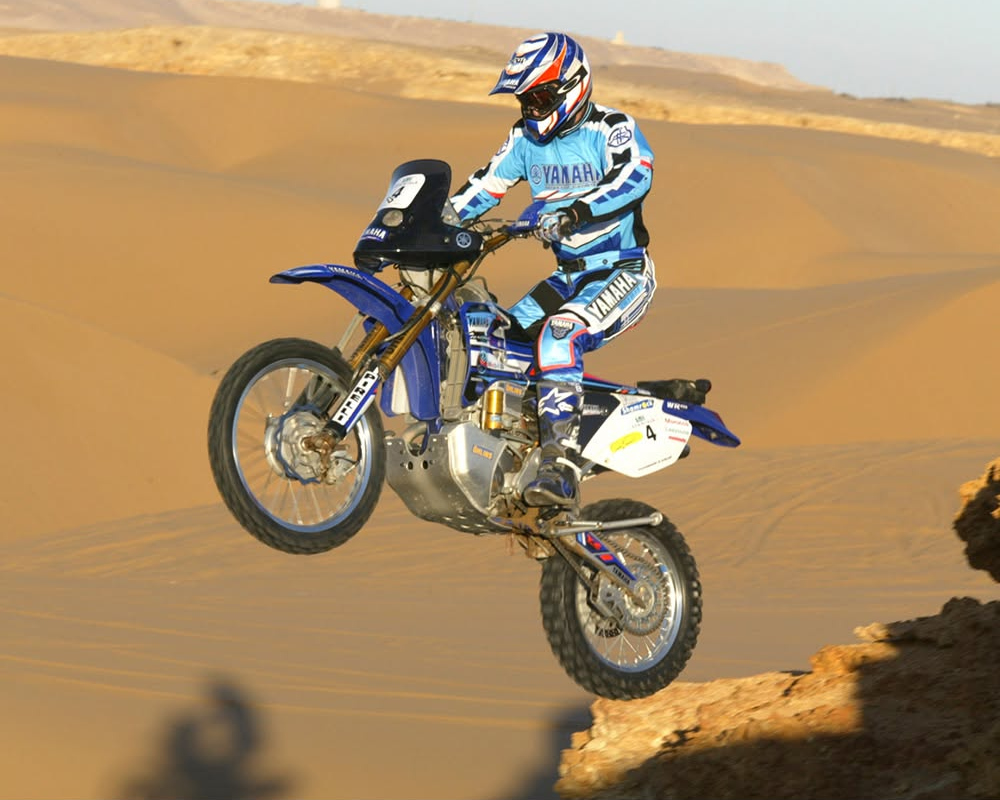
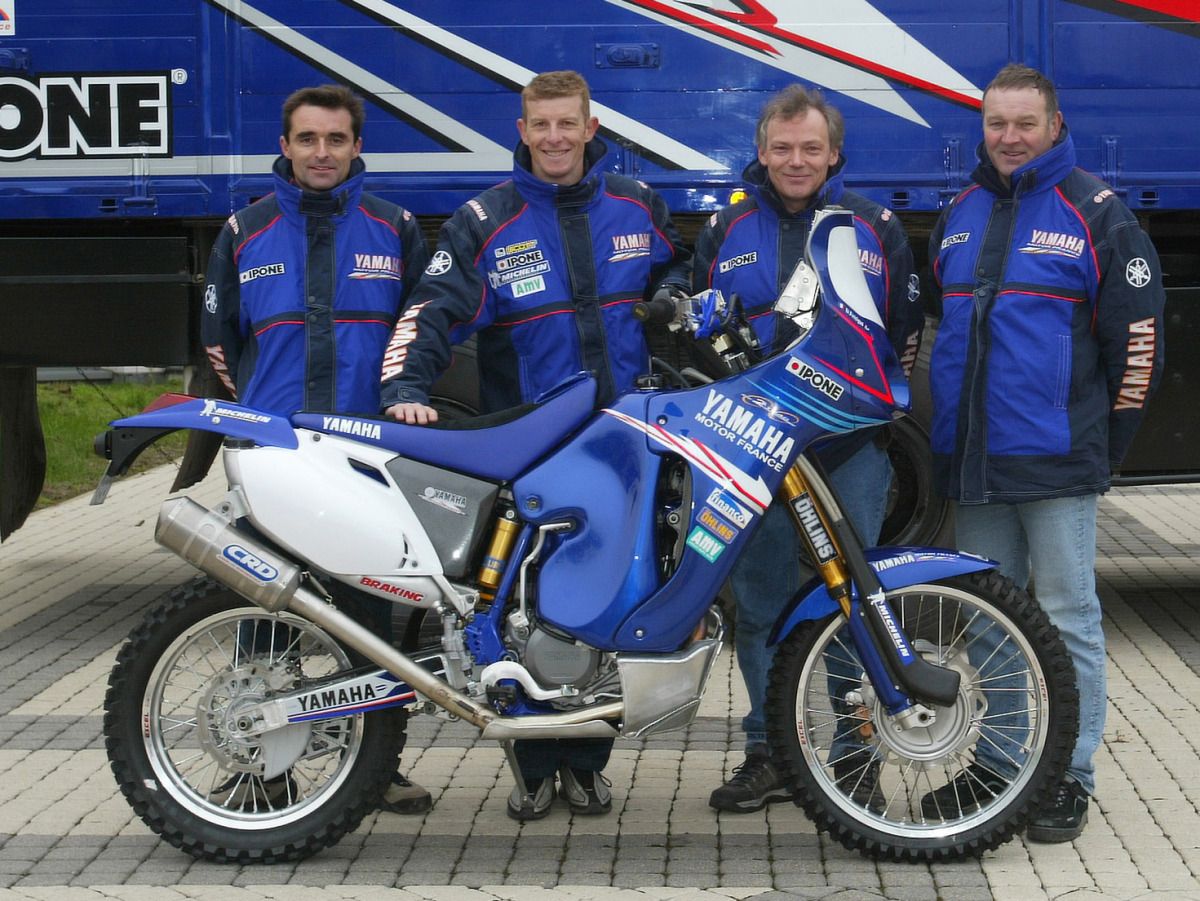
The 2004 Dakar Rally was where the WR450F 2-Trac became famous. Yamaha Motor France entered David Frétigné on the 2-Trac-equipped WR450F in the 450cc Super Production class. On paper, it looked like a brave but slightly quixotic effort. Frétigné was a Dakar rookie, the bike was only 450cc, and the rally was dominated by larger 660cc singles and 950cc twins. Then the little two-wheel-drive Yamaha started winning stages…
Frétigné won the 450cc class, finished seventh overall, and beat much larger machines on three stages outright. For a first-time Dakar rider on a 450cc machine, that was extraordinary. For an experimental two-wheel-drive motorcycle, it was a proof of concept in front of the entire rally world.
The bike’s advantage was obvious in soft terrain. The driven front wheel helped it claw through deep sand, reduce wasted rear-wheel spin, and maintain direction where conventional bikes could dig themselves in or knife the front end. In the hands of a rider like Frétigné, it proved the concept was not a gimmick.
How the 2-Trac System Worked
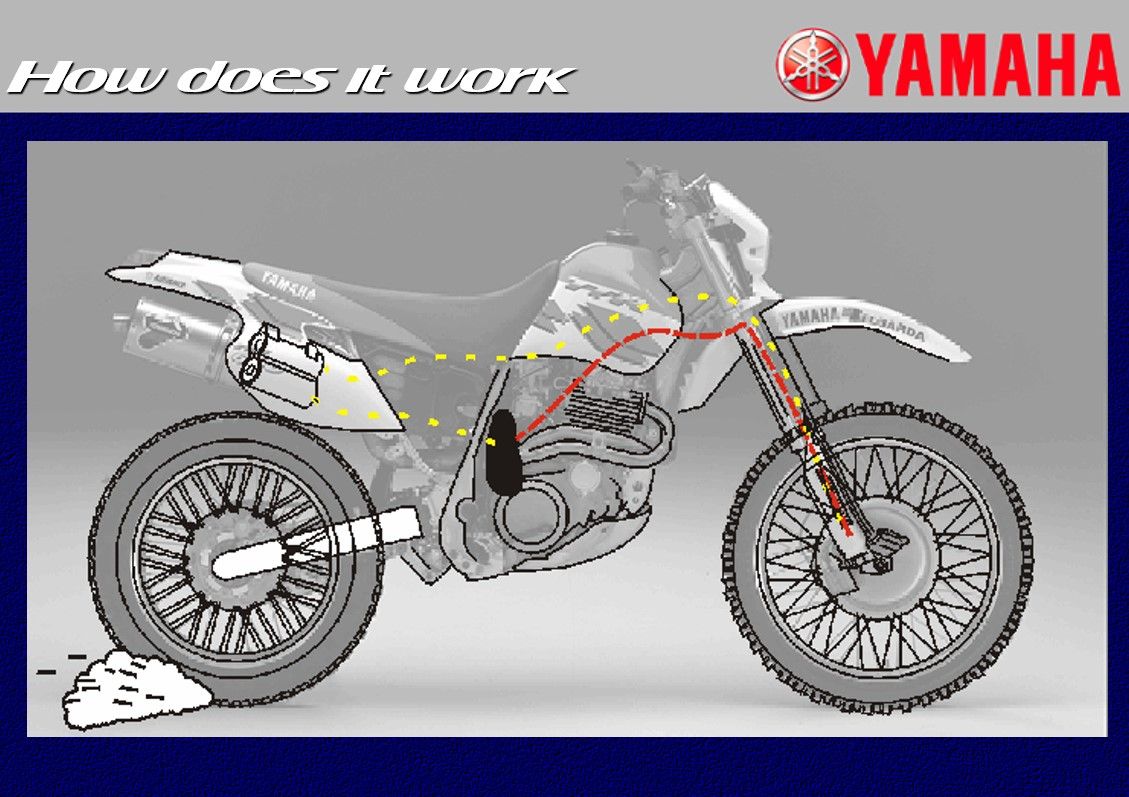
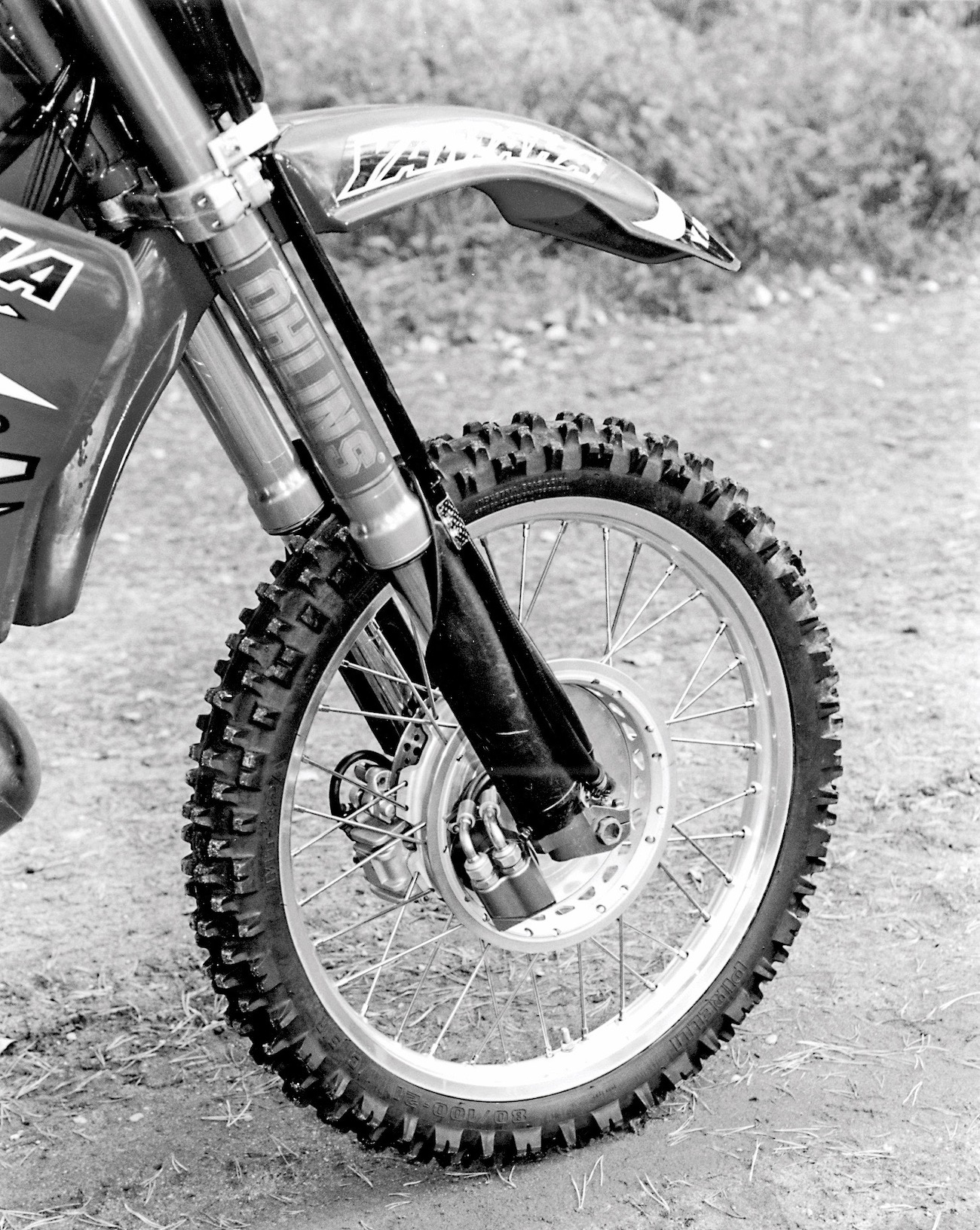
The genius of the WR450F 2-Trac was that it did not require a chain, shaft, or complex mechanical linkage running to the front wheel. Instead, Yamaha and Öhlins used hydraulics. A small hydraulic pump was mounted above the gearbox and driven by a chain running in an oil bath. From there, high-pressure lines carried fluid forward to a hydraulic motor built into the front hub. After passing through the motor, the fluid returned through a parallel line and filter to the pump.
The system was self-regulating. Under normal traction, the bike behaved mostly like a conventional rear-wheel-drive WR450F. But as rear-wheel spin increased, hydraulic pressure rose and more drive was sent to the front wheel. Yamaha described the system as delivering up to around 15% of engine power to the front wheel, in a constantly changing ratio.
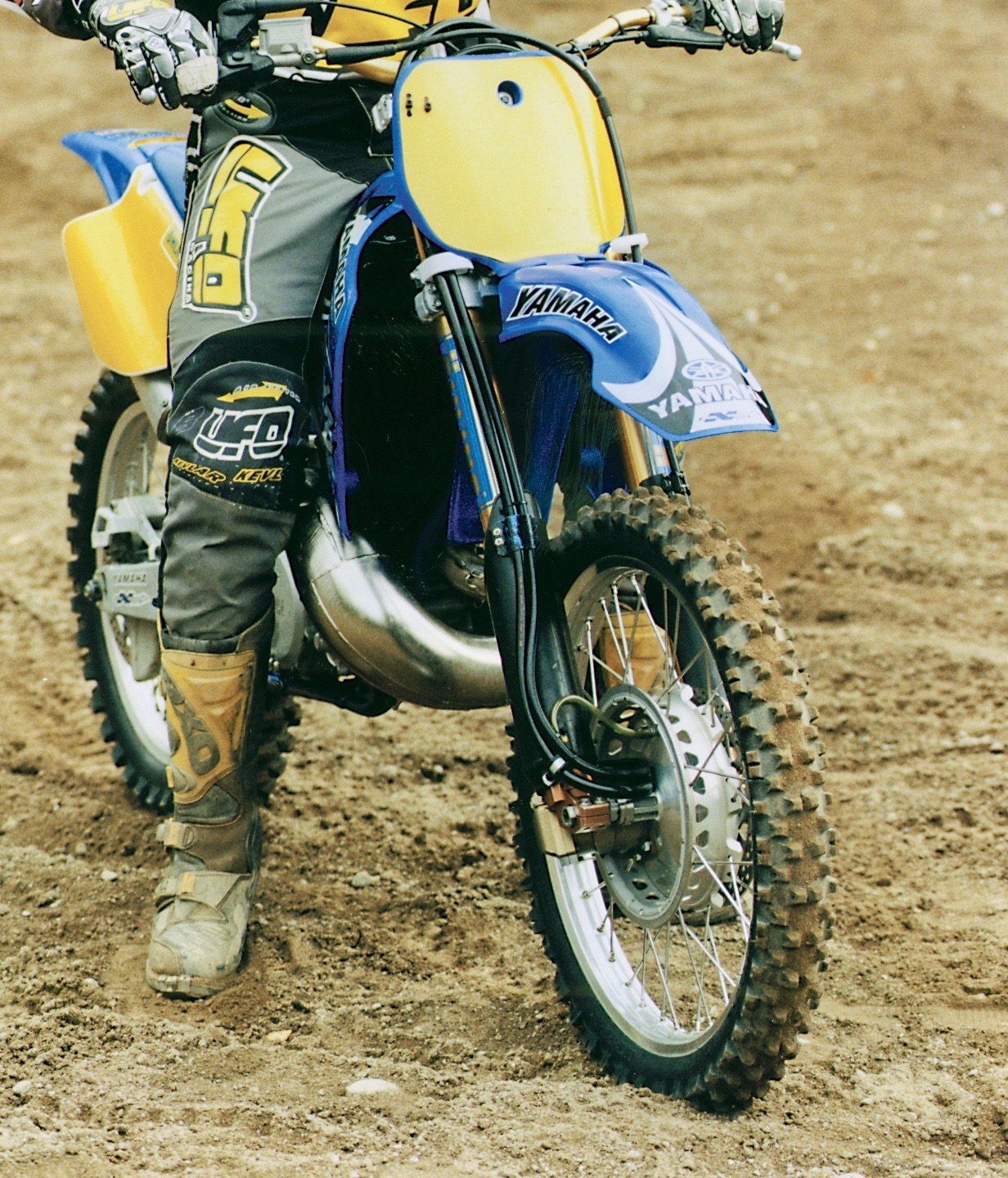
So the WR450F 2-Trac was not a locked 50/50 two-wheel-drive motorcycle. It was not like a 4×4 truck with both axles mechanically coupled. The front wheel could not simply spin faster than the rear. Instead, the system added pull when the rear lost traction. In other words, it was closer to traction assistance than brute-force all-wheel drive.
That made it elegant. The system could be adapted to a relatively conventional motorcycle without completely redesigning the engine, chassis, or steering. Hydraulic hoses were much easier to package than mechanical shafts or chains, and the front-wheel drive only became significant when conditions demanded it.
Video: 2-Trac in Action
What It Felt Like to Ride
Riders who tested the WR450F 2-Trac often described the same surprising sensation: less wheelspin, more forward motion, and a front end that seemed to pull itself where it was pointed. Instead of the rear tire digging in while the front tire plowed or deflected, the front wheel helped keep the bike tracking forward. Riders could climb dunes with less run-up, turn tighter in soft conditions, and get on the throttle earlier without the front washing away.
It also felt calmer than expected. A conventional dirt bike often converts wheelspin into noise, roost, and drama. The 2-Trac converted more of that energy into motion. That could make the bike feel less spectacular, even when it was covering ground quickly.
But there were tradeoffs. The system added weight. Some of that weight was in the front hub, where it affected steering feel and unsprung mass. Riders also noted that the front end could require more effort, and that lofting the front wheel over obstacles was harder than on a standard WR450F. Expert riders who liked steering with the rear wheel sometimes found the system less natural, because the bike did not slide and spin in the familiar way.
That was the paradox of 2-Trac. It made the bike easier, safer, and more stable for many riders in difficult terrain, but it also changed some of the habits that fast off-road riders used to control a conventional machine.
First Production Two-Wheel-Drive Motorcycle?
Yamaha described the WR450F 2-Trac as a production two-wheel-drive motorcycle, and contemporary coverage often called it the first production motorcycle offered with such a system.
But that claim should be qualified. This wasn’t a mass-market trail bike sitting on every dealer floor. It was a limited-production competition machine offered primarily through Europe, particularly Yamaha Motor France. It was expensive, rare, and never officially sold in the United States. Some reports quote production at around 250 units, while others cite a larger planned or test-production run. Either way, the numbers were small.
Still, Yamaha did make the WR450F 2-Trac available to customers, complete with Öhlins suspension components and the hydraulic 2-Trac drive system. French reports at the time listed a 2004 price of around €12,195, with the bike intended for serious off-road and rally competitors. It was a real motorcycle you could buy — assuming you were in the right market, had the money, and understood what you were buying.
Why It Didn’t Take Over
Given the Dakar result, the technology, and the hype, why didn’t every dirt bike become two-wheel drive? Cost, weight, complexity, and rider preference. The WR450F 2-Trac was significantly more expensive than a standard WR450F. It added hydraulic components, a special front hub, additional lines, Öhlins suspension pieces, and maintenance considerations that most riders simply did not need.
In the terrain where it worked best — deep sand, mud, snow, loose climbs — it could be superb. But in tighter enduro terrain, motocross conditions, or ordinary trail riding, the benefits were not always enough to offset the extra mass and mechanical complication.
There was also a cultural barrier. Dirt riders are deeply sensitive to feel. They learn to manage wheelspin, body position, slides, front-end lofting, and throttle steering. A system that makes the bike more stable and less prone to wheelspin can feel brilliant to one rider and restrictive to another. The WR450F 2-Trac solved a real problem, but not a universal one. That may be why it remained a fascinating branch of motorcycle evolution rather than the start of a new mainstream category.
The Öhlins Connection
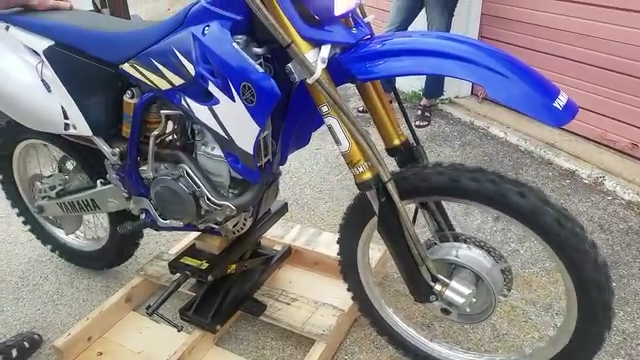
We know Öhlins for their suspension components, but the 2-Trac project showed the company’s broader engineering ambition. The production WR450F 2-Trac didn’t just use an Öhlins-developed hydraulic front-wheel-drive system. It also came with premium Öhlins suspension components: fork, shock, steering damper, and hydraulic accumulator elements related to the drive system. It was a WR450F, yes, but with a level of Swedish engineering weirdness that separated it from almost everything else on the market.
The system was also tested beyond the WR450F. Yamaha and Öhlins experimented with 2WD concepts on other platforms, including road bikes, and the idea wasn’t limited to rally raid. The dream was bigger: a hydraulic two-wheel-drive system that could be adapted to many types of motorcycles without requiring an entirely new engine or chassis layout. For a brief moment in the early 2000s, that future seemed plausible.
Yamaha WR450F 2-Trac Specs
Model: Yamaha WR450F 2-Trac
Years: 2004 limited production
Base Model: Yamaha WR450F
Engine: 449cc liquid-cooled four-stroke single
Valvetrain: DOHC, five valves
Transmission: Five-speed
Rear Drive: Chain
Front Drive: Öhlins / Yamaha hydraulic 2-Trac system
System Layout: Gearbox-driven hydraulic pump, high-pressure lines, hydraulic motor in front hub
Front-Wheel Power: Up to approximately 15 percent of engine power, self-regulated according to rear-wheel slip
Suspension: Öhlins fork and shock
Steering Damper: Öhlins
Use: Enduro / rally raid competition
Notable Result: David Frétigné won the 450cc class and finished seventh overall at the 2004 Dakar Rally
Availability: Limited-production European competition model; not officially sold in the United States
Original Price: Approximately €12,195 in France, according to period reports
Custom Yamaha 450 2-Trac?
Back in 2018, Deus Italy, who’d already whet their 2WD appetite on the rare Yamaha TT600R 2-Trac, managed to obtain a WR450F 2-Trac that an Italian privateer had raced the Dakar Rally. They rebuilt and customized the machine, and we ran a full feature of the bike, which you can see here: Yamaha WR450F 2-Trac Custom.
The Future That Almost Happened
Today, two-wheel-drive motorcycles remain a niche. Christini continued the mechanical AWD idea in production off-road machines, and various companies have explored front-wheel electric assist, hybrid systems, and other traction concepts. But no major manufacturer has returned to hydraulic 2WD in quite the same way Yamaha and Öhlins did with the 2-Trac.
For most motorcycles, one driven wheel is enough. For a brief moment, Yamaha gave us two.


