
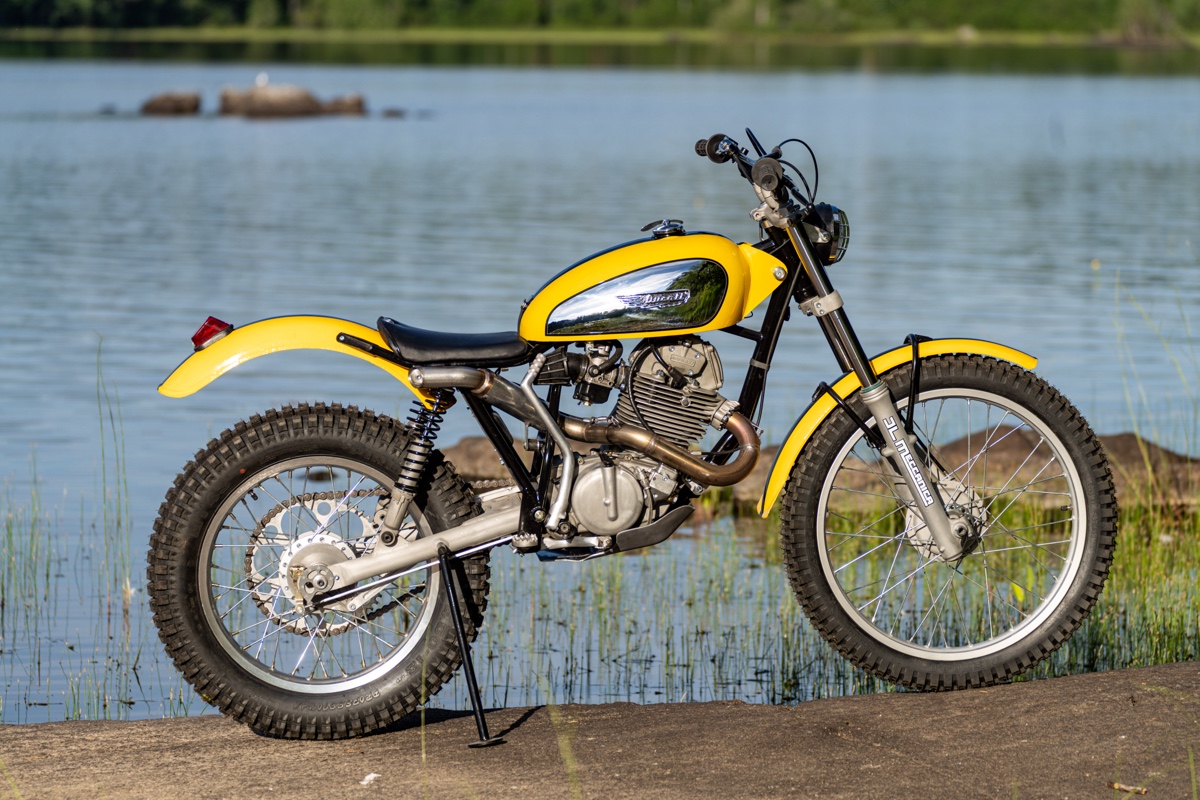
Finno-Italian Featherweight: JL Meccanica builds a 192-lb (wet) twin-shock trials bike…
We’ve said it before, but it begs restating: Some custom bikes are “built,” but only a few are truly built from the ground up. That’s certainly the case with the creations of Janne Leiman of Finland’s JL Meccanica — a man who specializes in one-off classic racing frames and suspension. Earlier this year, we featured Janne’s supercharged GSX-R1100 tracker and his Yamaha XVS950 scrambler, both of which feature custom-fabricated frames and highly-modified engines.
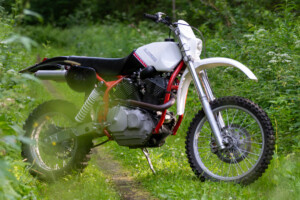
Now Janne is back with this 308cc twin-shock trials bike. This time, there’s really no particular donor bike you can name. Janne built the bike and engine from the ground up as a “personal toy”…and for a bit of company promotion, of course!
“I have made frames and conversions for customers bikes to comply with classic twin shock (pre-85) trial rules. I think this kind of bike would be fun to play with, even though it’s unlikely that I will ever participate in any competitions with it.”
“Another build which I have wanted to do a long time was making a four-stroke engine from a two-stoke bottom end. So I thought it might be good idea make both of them together.”
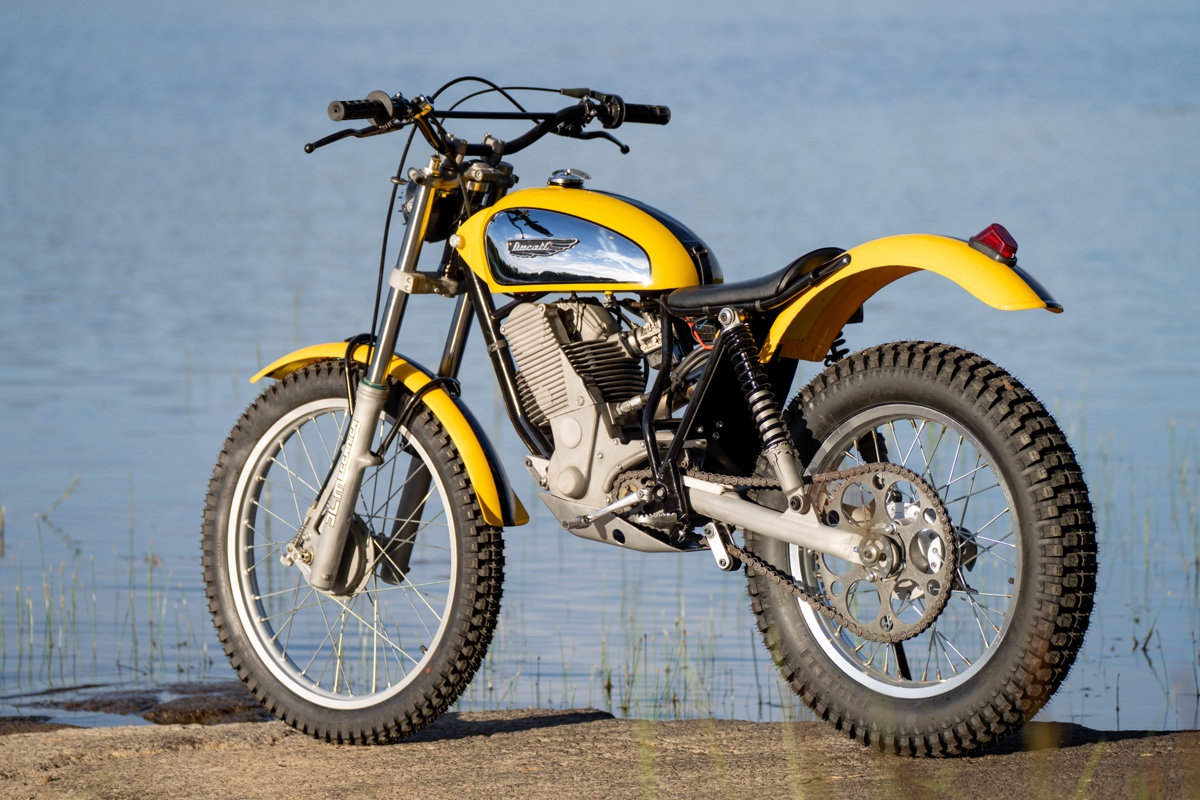
In Finland, Pre-85 Classic Trials (often called Twinshock) use pre-1985 bikes featuring original-style twin rear shock absorbers, air-cooled engines, and drum brakes. Governed locally via guidelines aligned with the Suomen Moottoriliitto (Finnish Motorcycling Federation) framework, the rules forbid liquid-cooling and power-valve engine designs, and most bikes are either two- or four-strokes in the 125-350cc range.
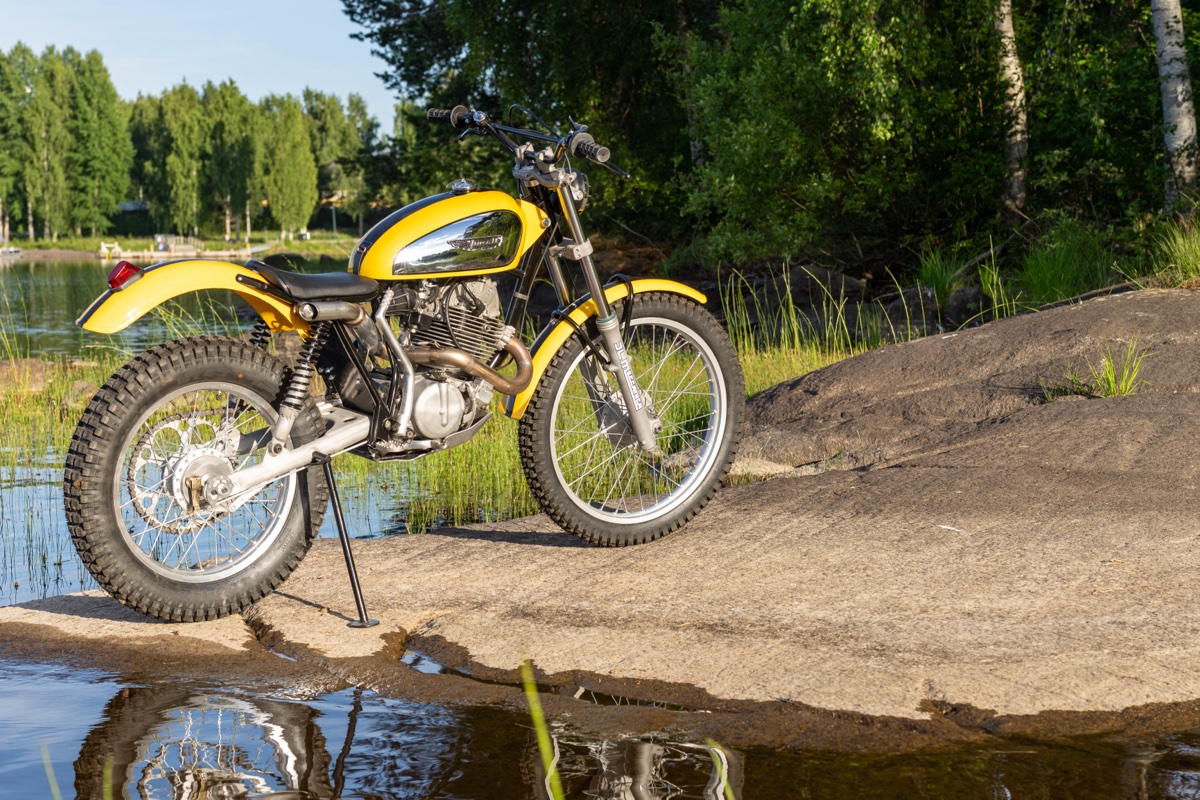
If you’ve ever followed pre-65 trials events in the UK, then you know these “classic” trials machines are quite exotic, built to the maximum within the given parameters. Janne’s build is certainly no exception. Let’s start with the engine.
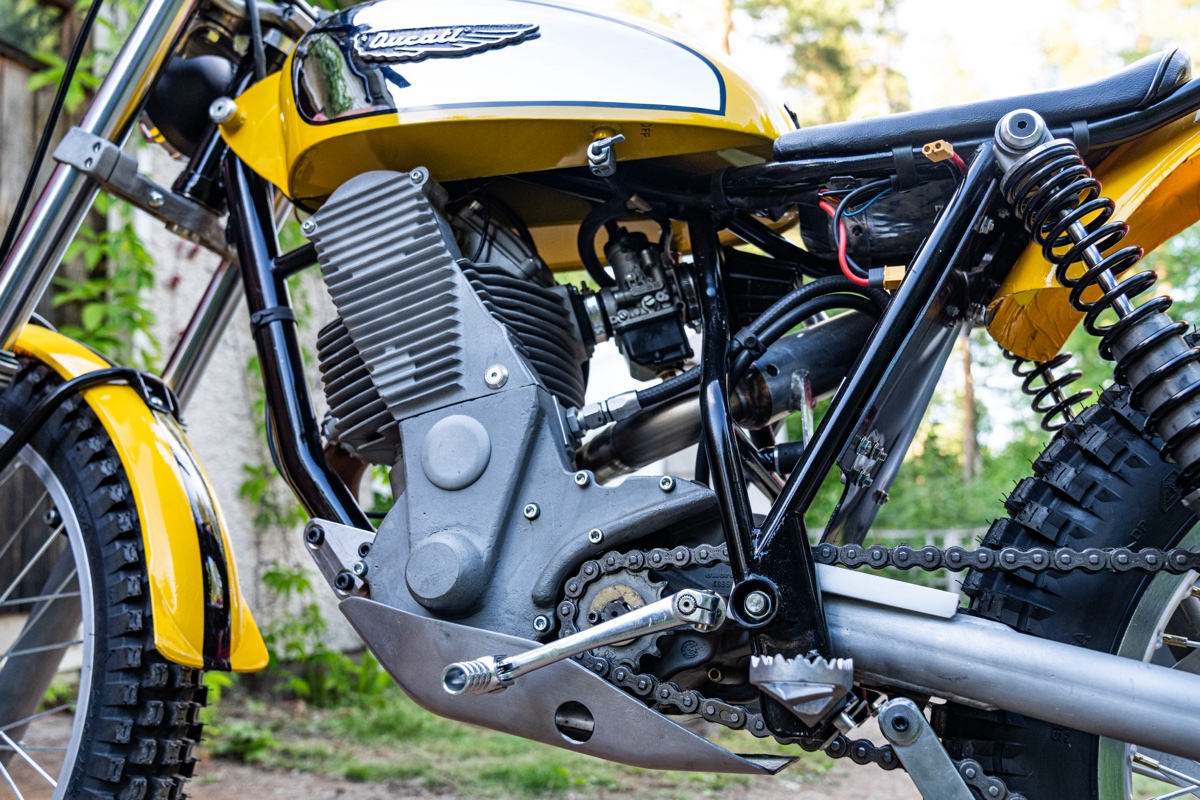
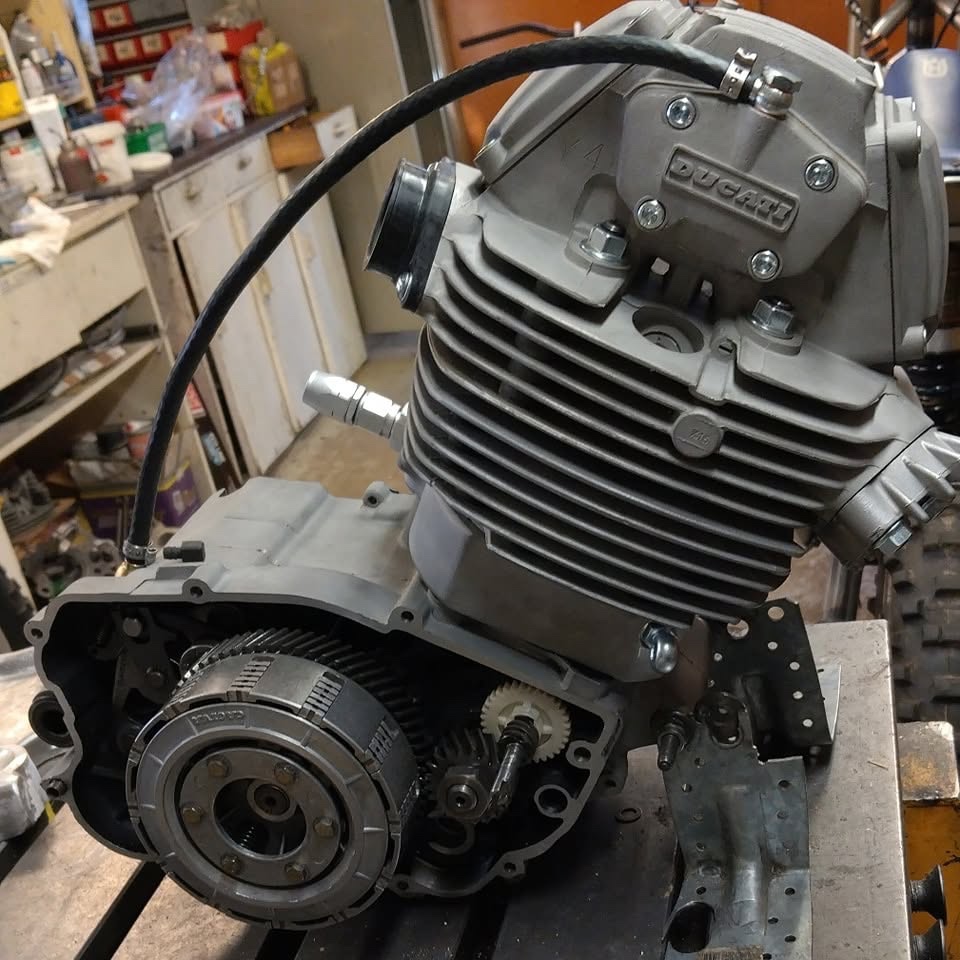
The bottom end is from a Cagiva Mito 125cc two-stroke Janne already had lying around the workshop. To this he added the wide-ratio gearbox and clutch from a Cagiva Elefant 125, which wasn’t a straight swap — some modifications were required.
“After that, the Mito crankshaft was dismantled and a Rotax 550 con-rod from a Lynx snowmobile was machined to fit in. Crank balancing and oil channel drillings were made at this stage too.”
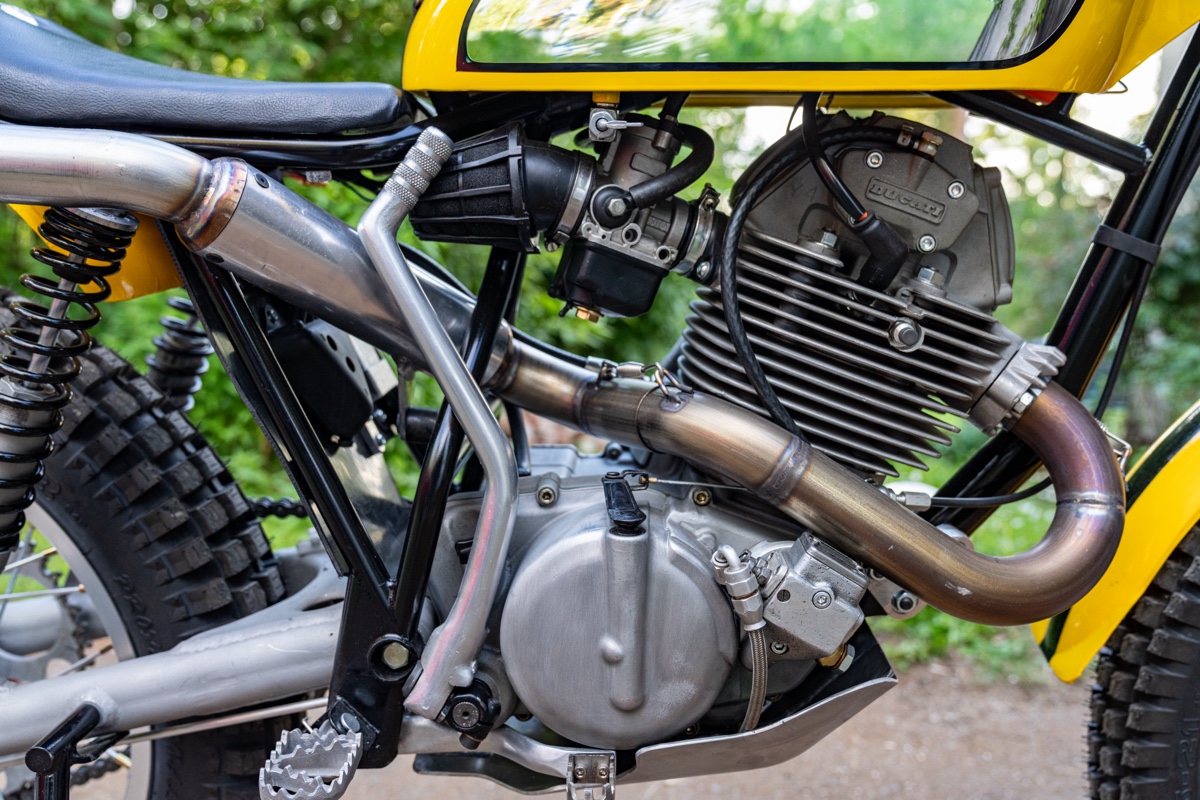
How about the top end? It started with another “dust collector” from Janne’s workshop: a Ducati 750 Supersport rear head, to which he added a Ducati Monster 695 cylinder and piston. The rest of the parts — for example, the flywheel, cylinder adapter, sand-cast left side and belt covers, oil pump shaft, oil filter screen, and more — were made in Janne’s workshop. The 88mm x 50.6mm bore and stroke gives a total displacement of 308cc.
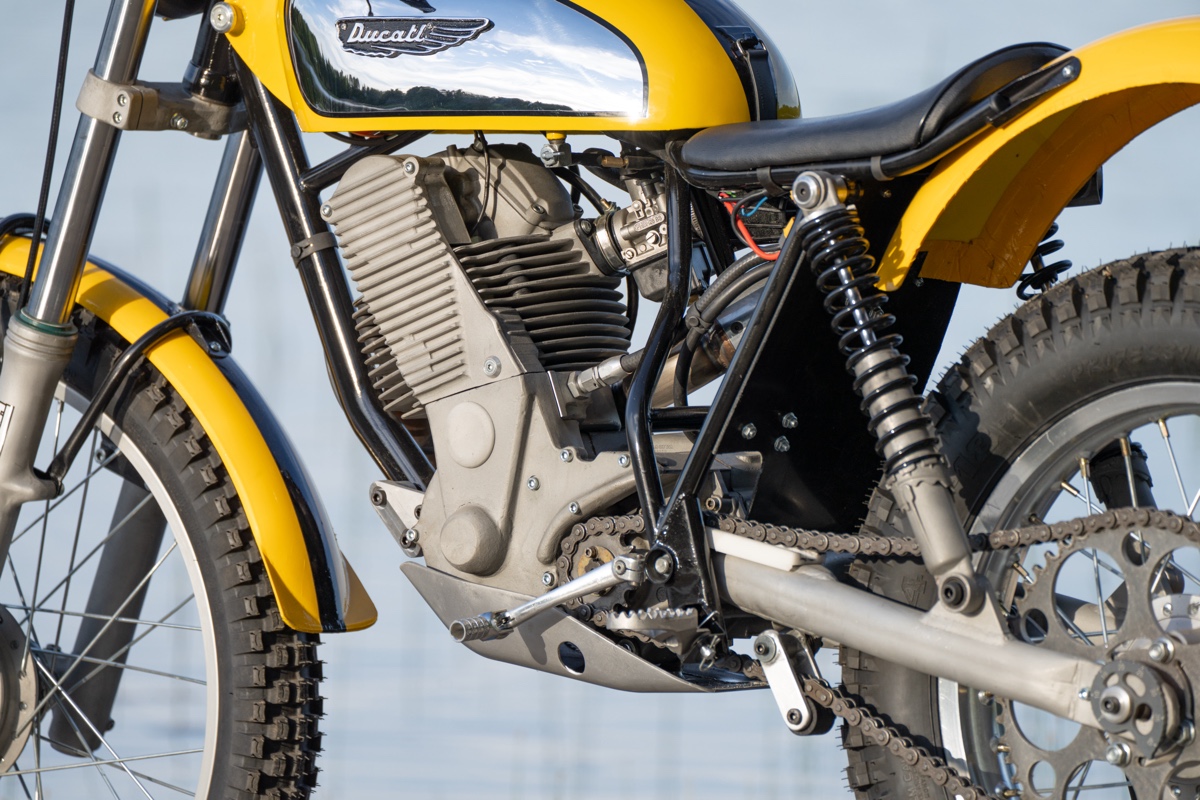
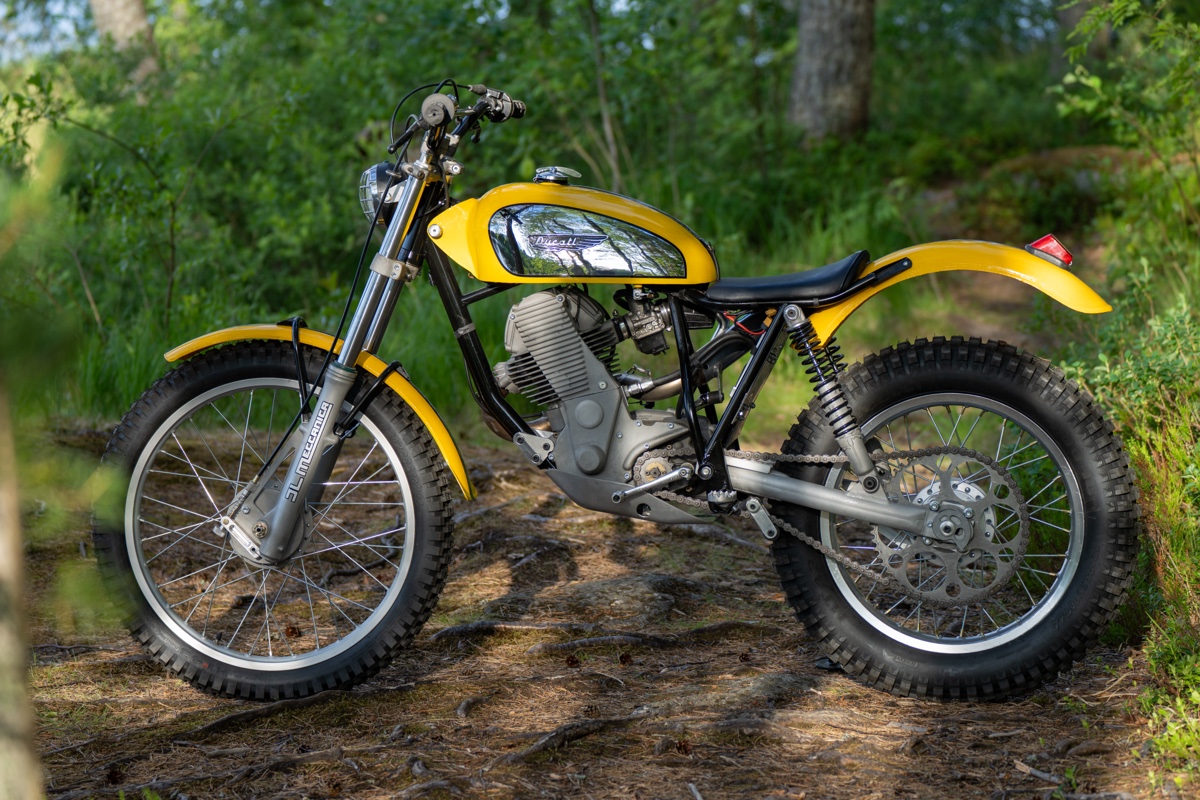
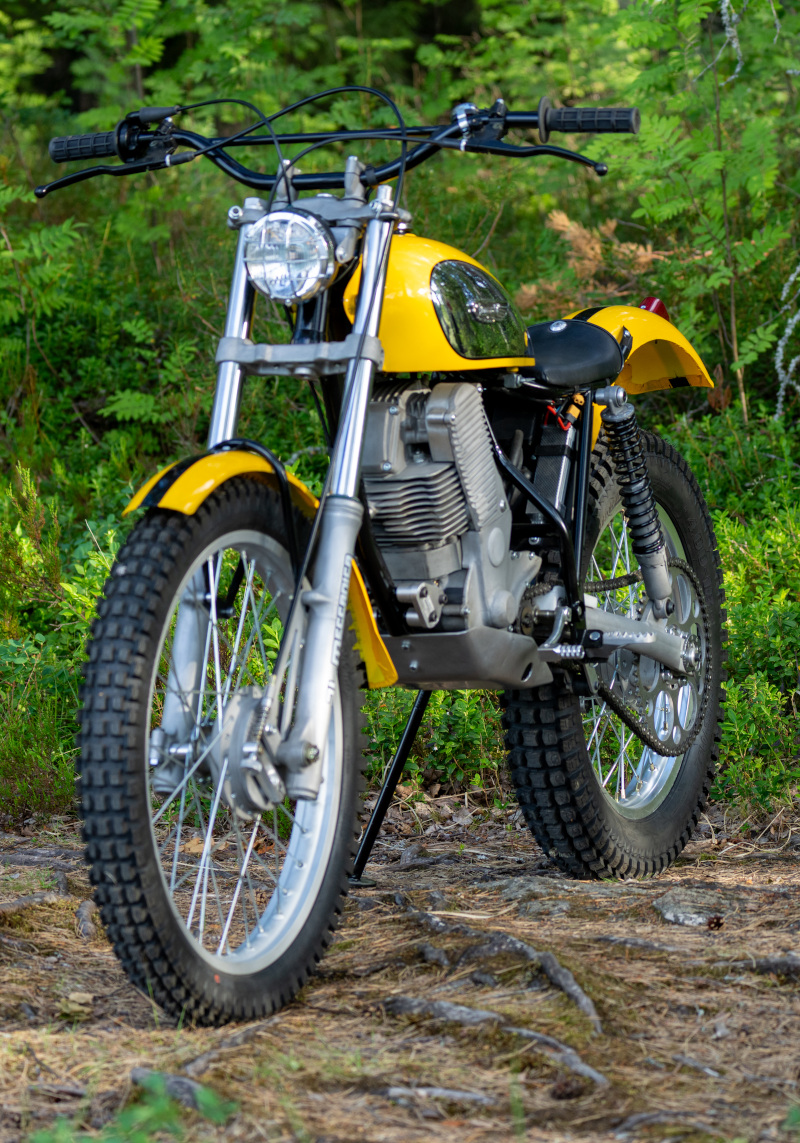
This newly converted four-stroke Italian engine was rounded out with a DellOrto PHBH 28 carb, Ignitech CDI ignition, and custom exhaust. Janne then designed and built his own frame from 25CD4 chromoly tube. All told, the frame weighs just under 4.5 kg (9.92 lbs). Meanwhile, the swingarm was fabricated from oval 6082 aluminum tube with sheet metal reinforcement.
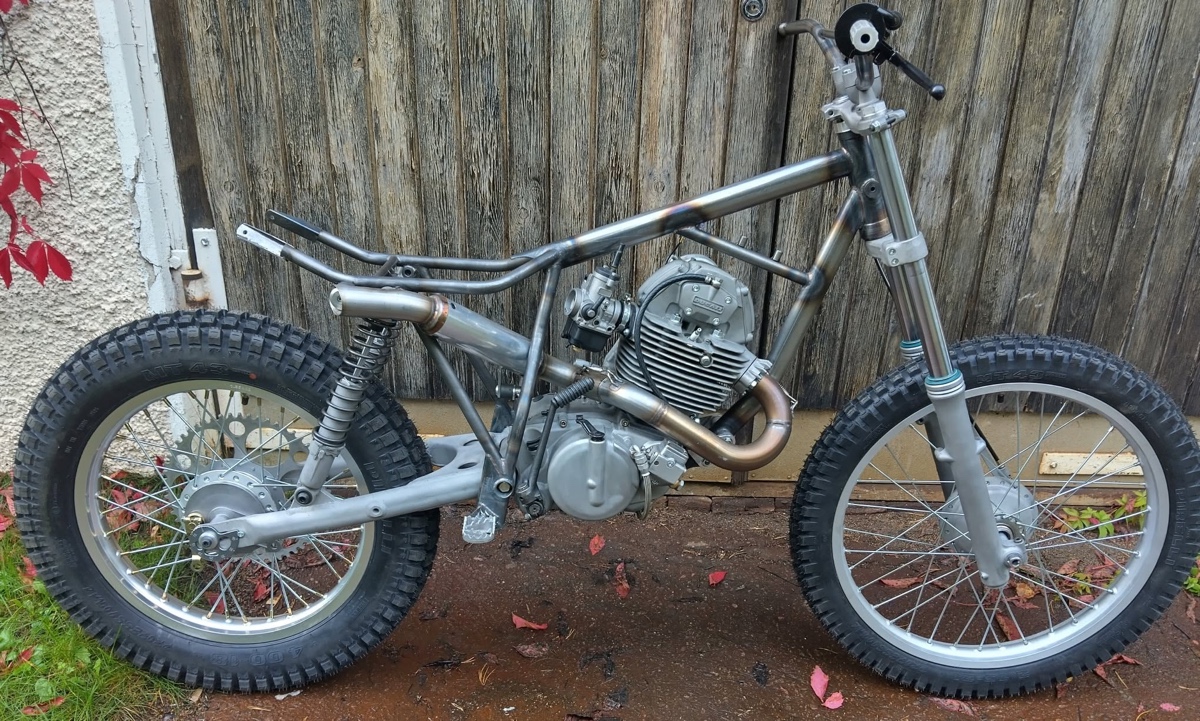
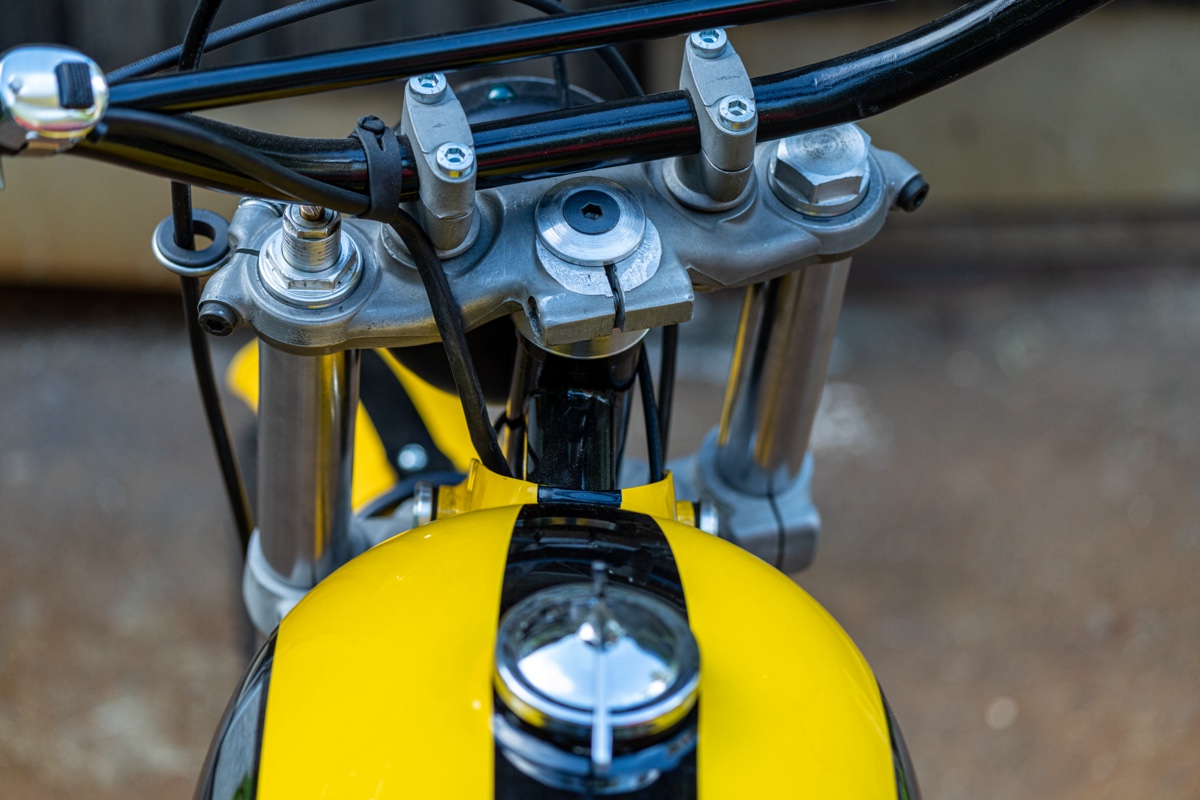
Up front, the lower fork legs are from a Yamaha XV750, but everything else is one-off or radically modified: the left leg houses an adjustable cartridge, the right one HFS-style two-stage springs. The lower triple tree was sand-cast, while the upper yoke is a highly modified Yamaha unit. The rear shocks are no less exotic, featuring period-correct aluminum Marzocchis bodies with modern YSS internals — trick!
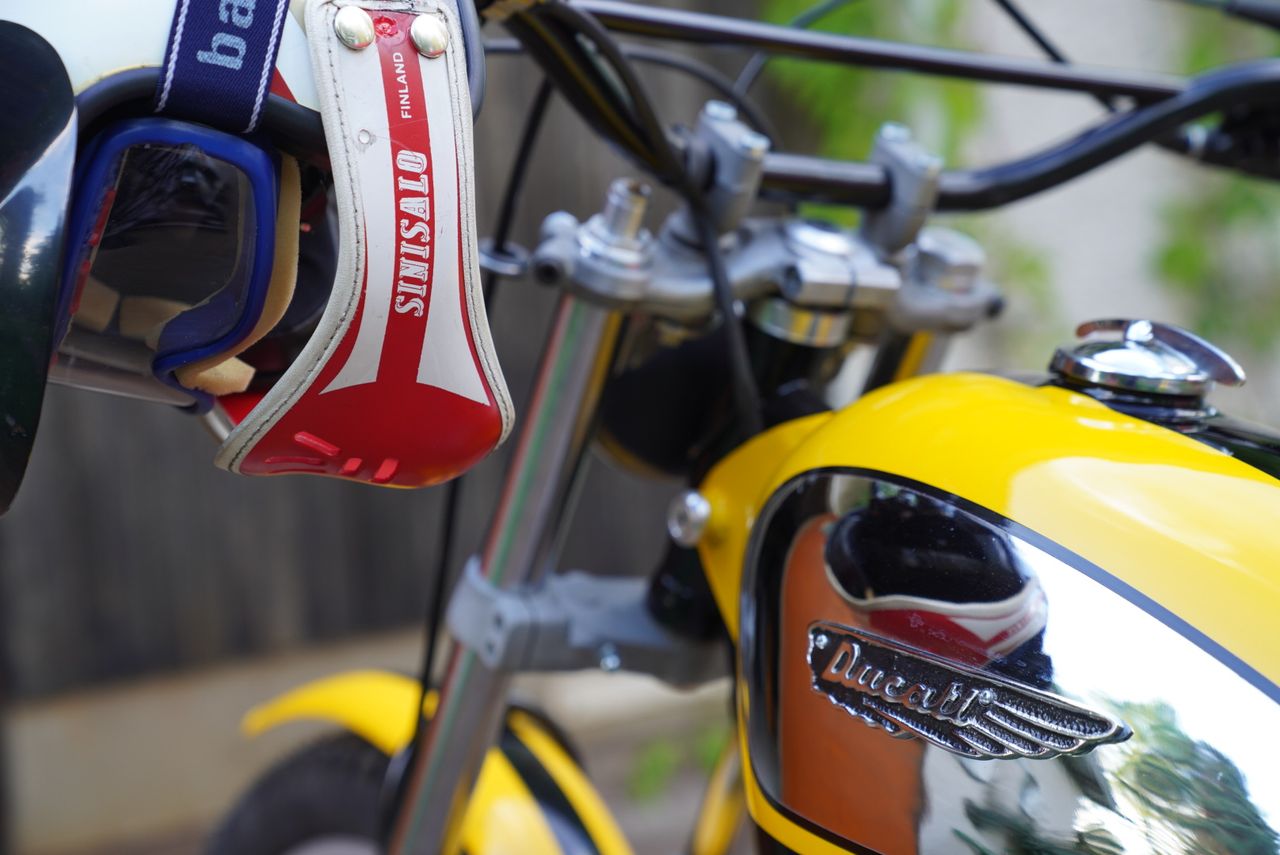
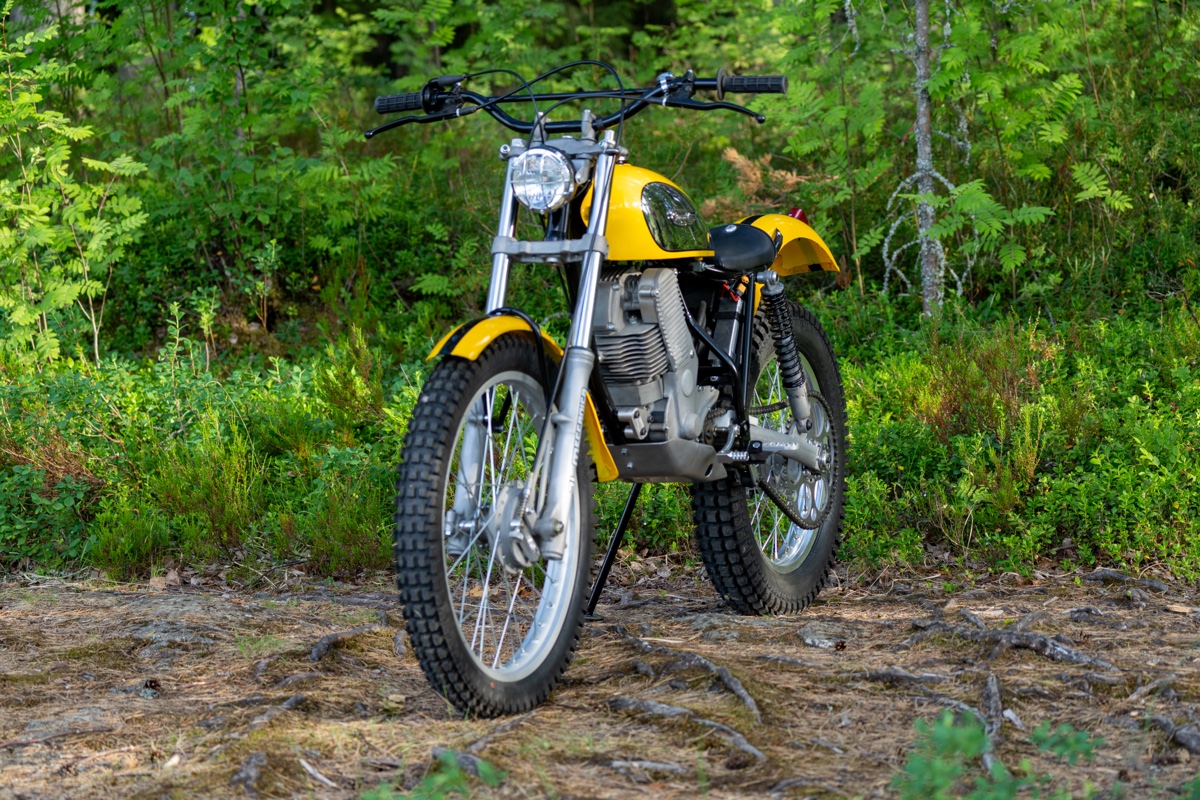
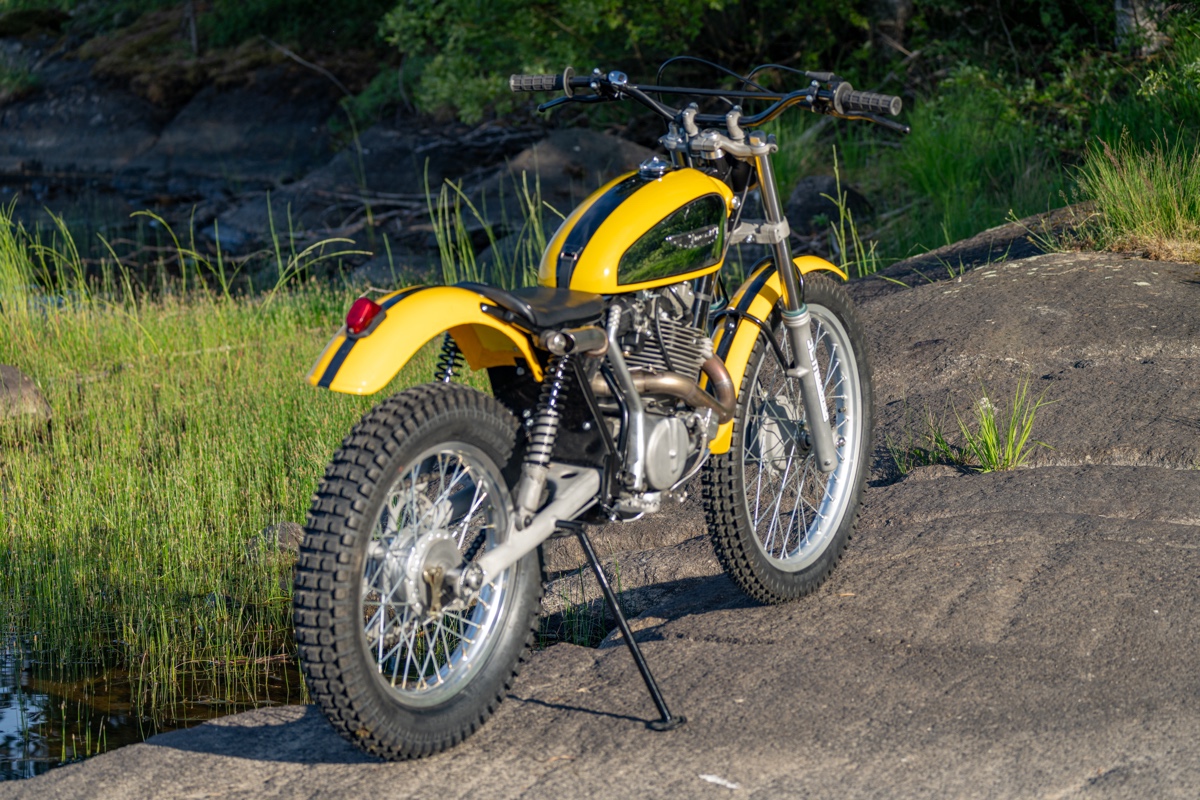
The wheelset includes 21″ / 18″ rims laced to drum brake hubs with Pirelli Trials rubber. The fenders are from Goneli, the lights from Bosatta, and Janne made the seat pan from fiberglass. The fuel tank is a slight indulgence, at least weight-wise:
“The fuel tank is a steel one from a Ducati 350 Scrambler, which is altogether too heavy, but I find it so beautiful that I cannot resist it.” -Janne
Janne hasn’t put the bike on the dyno yet, but with a wet weight of just 87 kilograms (192 pounds!), this 308cc machine is an absolute featherweight for a twin-shock, drum-brake machine — lighter than the Montesa machines of the 1980s. Janne says it may even be a bit too powerful — he’s considered switching to a milder cam and heavier flywheel to soften the power delivery.
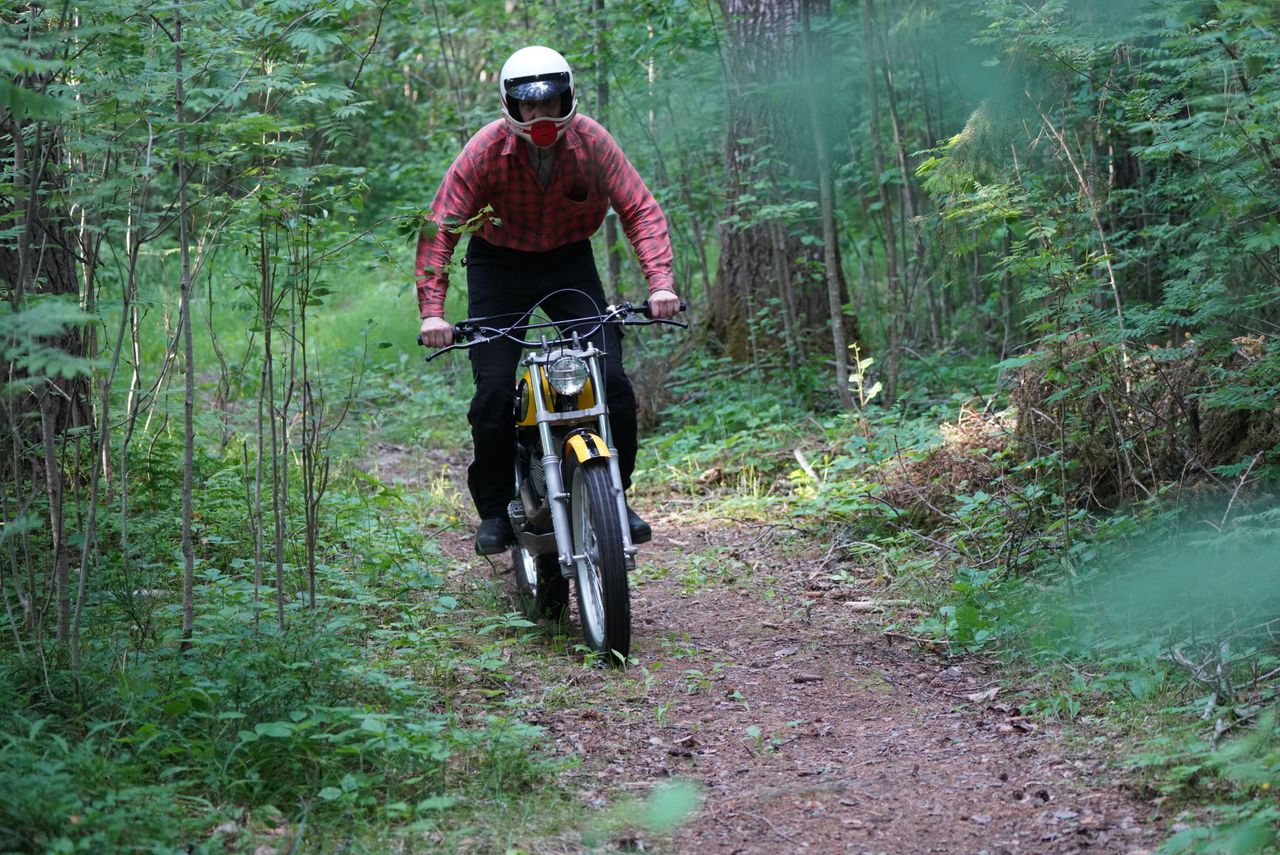
We’re incredibly impressed by the design, fabrication, and problem-solving this “Ducati” required. It’s certainly the first two-stroke to four-stroke engine conversion we’ve ever featured. Not only that, it looks incredible, and it’s light, agile, and fun-as-hell on the trails. Bravo to Janne for another amazing build. We can’t wait to see what this Finn cooks up next!
Ducati Twin-Shock Trials Bike: Builder Interview
• Please tell us a bit about yourself, your history with motorcycles, and your workshop.
My name is Janne Leiman, I live in Finland, little town called Mänttä. I have owned and ridden motorcycles from 13 years old, so over 40 years now. My workshop is named JL Meccanica, which has been my day job since 2007. Main products are one-off classic race frames and suspensions. Occasional custom bike work too.
• What’s the make, model, and year of the donor bike?
No particular donor, bike was made ground up.
• Why was this bike built?
Bike is built partly for company promotion, and partly for my personal toy.
• What was the design concept and what influenced the build?
I have made frames and conversions for customers bikes to comply with classic twin shock (pre-85) trial rules. I think this kind of bike would be fun to play with, even though it’s unlikely that I will ever participate in any competitions with it.
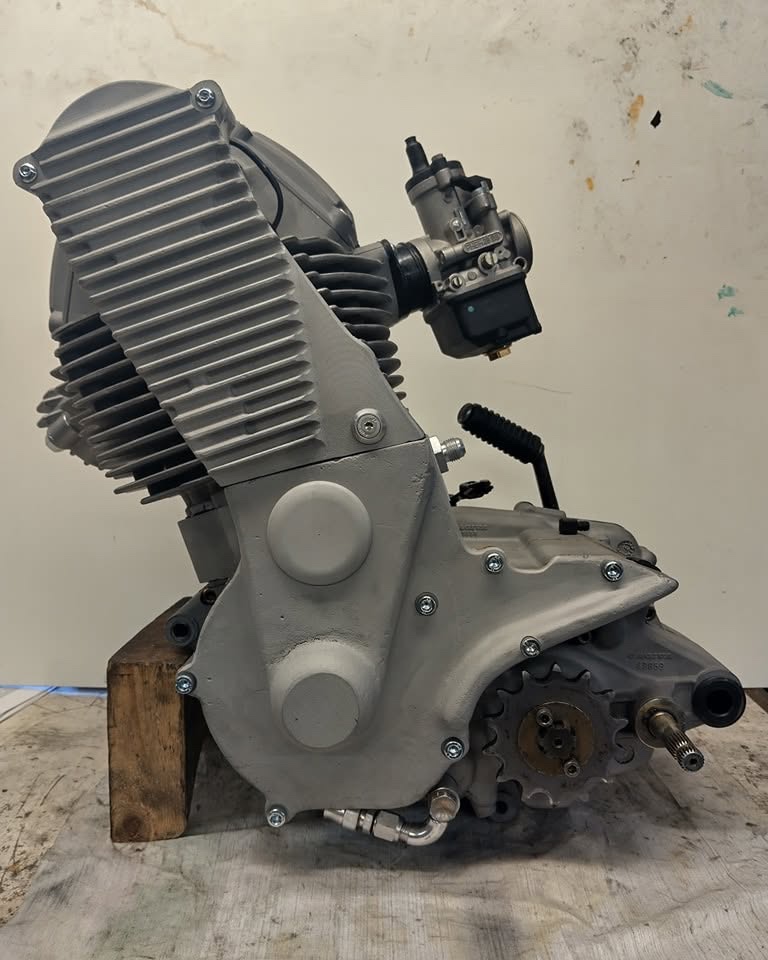
Another build which I have wanted to do a long time was making a four-stroke engine from a two-stoke bottom end. So I thought it might be good idea make both of them together.
• What custom work was done to the bike?
The engine was made from a Cagiva Mito 125cc bottom end, which had been lying in the workshop. Or that was the original plan — a little later a Cagiva 125 Elefant engine came on sale in Italy, and it had a kick starter, wide ratio gearbox, etc., so of course it had to be bought.
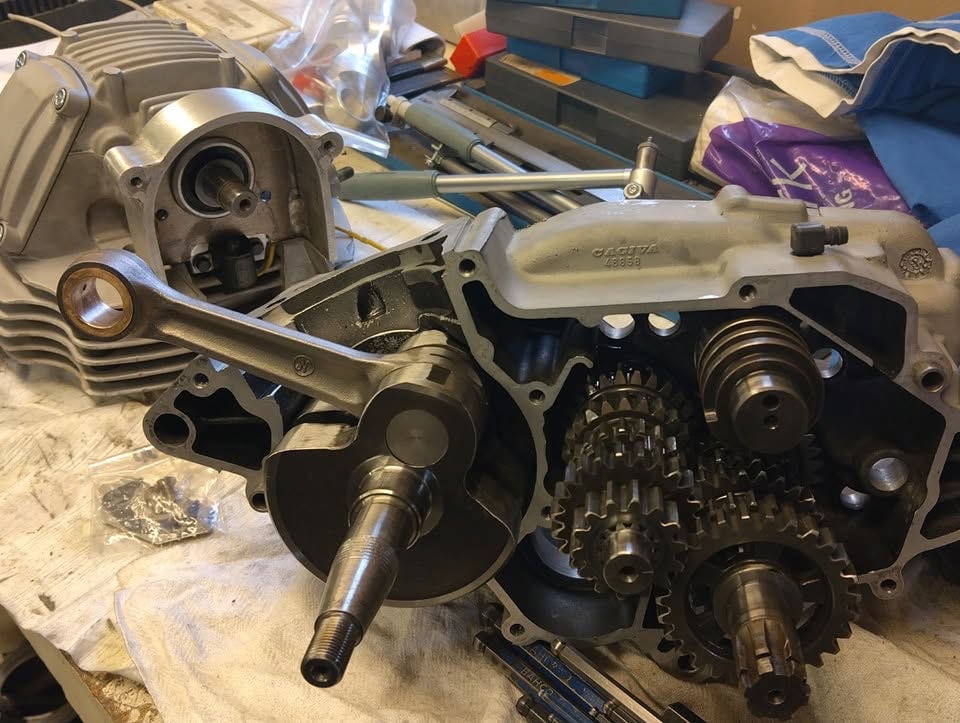
A little adaptation work later, the Mito cases had taken the Elefant gearbox and clutch. After that, the Mito crankshaft was dismantled and a Rotax 550 con-rod from a Lynx snowmobile was machined to fit in. Crank balancing and oil channel drillings were made at this stage too.
The top end is another dust collector from the workshop, a Ducati 750 Supersport rear head. A cylinder and piston had be bought, as nothing proper could not be found in the company’s own stocks, so Ducati Monster 695 parts came from another Italian bike breaker: 88mm bore and 50.6mm stroke gives the total displacement 308cc. Additionally I had to purchase a toothed belt and pulleys from an industrial shop, and an oil pump from a Jawa speedway bike.
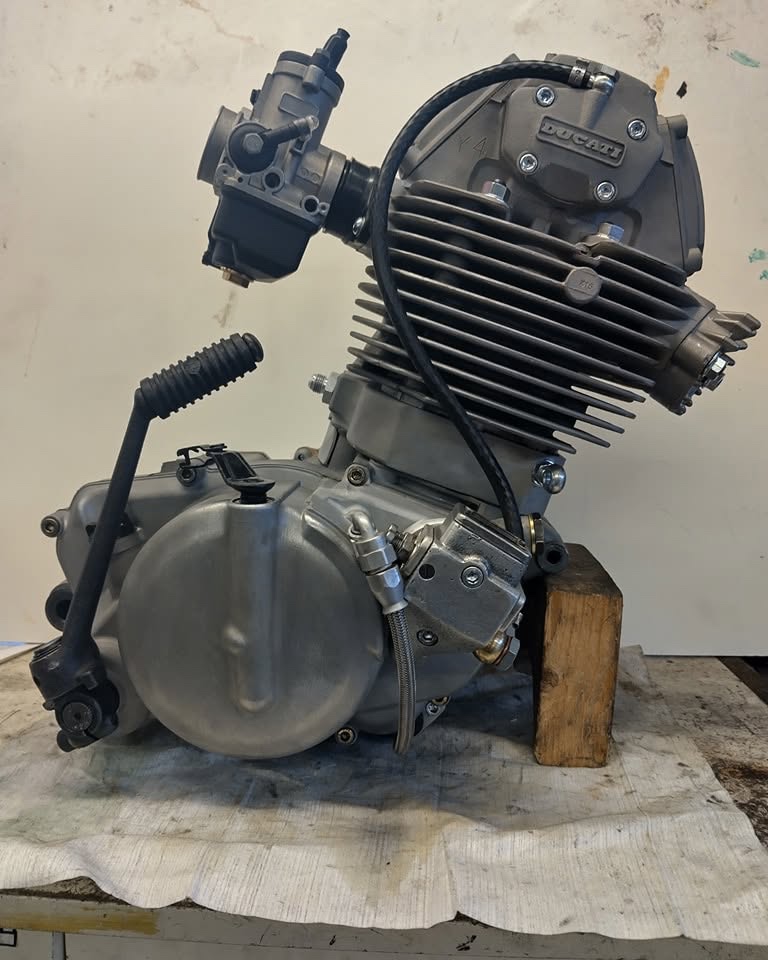
The rest of the parts were made by my company, which include for example the flywheel, cylinder adapter, sand-cast left side and belt covers, oil pump shaft, oil filter screen, and so on. Carburetor is a DellOrto PHBH28, Ignitech CDI ignition, and exhaust including the silencer is custom-made.
The frame is my own design and was made from 25CD4 tube. It weighs under 4.5 kg, of which I am quite satisfied. The swingarm material is oval 6082 aluminium tube with sheet metal reinforcements.
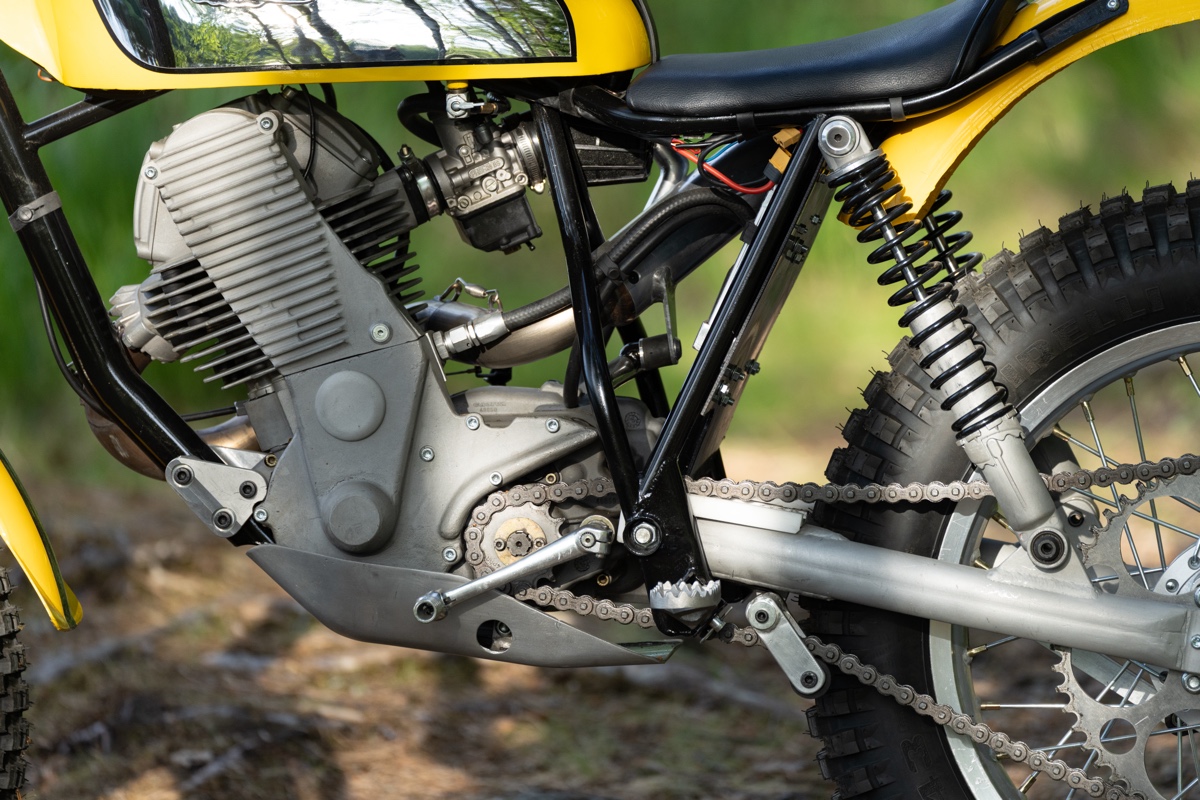
The front forks were another custom job; lower legs are from a Yamaha XV750, everything else is either one-offs or radically modified. Left leg has adjustable cartridge, and right one HFS style two-stage springs.
The lower triple tree was again sand-cast, while the upper one is an original Yamaha part welded and machined for different bearing tube dimensions.
Rear shocks are made from period-correct aluminium body Marzocchis, with all internals changed to modern YSS parts.
Rims are laced to drum brake hubs as rules dictate. Front one is from a Suzuki PE175 and rear some unknown, probably Honda. 21” front, 18” rear, and the tires are Pirelli Trials.
The mudguards are Goneli classic trial versions, wrapped with yellow vinyl. The fuel tank is a steel one from a Ducati 350 Scrambler, which is altogether too heavy, but I find it so beautiful that I cannot resist it. Simple seat made from a glassfibre base with minimal padding covered in some black vinyl. Lights came from the Italian firm Bosatta.
• Any idea of horsepower, weight, and/or performance numbers?
Bike has not visited the dyno, but it feels quite powerful. Maybe a little too powerful for intended use; I may try changing the camshaft from a Supersport to something milder, like one from a 350 Pantah. Another update might be heavier crankshaft/flywheel, but space is already tight. Maybe the primary side would have some room.
• Can you tell us what it’s like to ride this bike?
It feels light and agile as you can expect. Quite like an average twin-shock trial, but a little more powerful.
• Was there anything done during this build that you are particularly proud of?
Weight of the bike is what I like most, 87 kg with oil and fuel and everything. Not remarkably light compared to modern trials bikes, but not even the Spanish professionals could make a comparable four-stroke lighter in 1980s. Montesa Portus weighed 95 kg back in the day.
• Is there anyone you’d like to thank?
Hakala Service for rear shock parts and Juha Tanila for sponsoring ignition parts.
Follow the Builder
Facebook: JL Meccanica
Instagram: JL Meccanica
Photos: Lea Antola
More from JL Meccanica…
 Two-Stroke to Four: 308cc Ducati Twin-Shock Trials Bike - Finno-Italian Featherweight: JL Meccanica builds a 192-lb (wet) twin-shock trials bike… We’ve said it before, but it begs restating: Some custom bikes are “built,” but only a few are truly built from the ground up. […]
 Twinduro: Yamaha XVS950 Scrambler - 80s ISDE Style: 1300cc V-Twin Yamaha Scrambler from Finland’s JL Meccanica… The Yamaha XVS950 — also known as the DragStar or V Star 950 — was introduced in 2009, with a 942cc fuel-injected four-valve 60° […]
 Supercharged Flat Tracker: JL Meccanica FT900SC - Blown Superbike-Powered Flat Tracker from Finland… There must be something in the water in Finland. Maybe it’s the dark winters, the sisu culture of grit and resilience, or the long history of racing on dirt, […]


