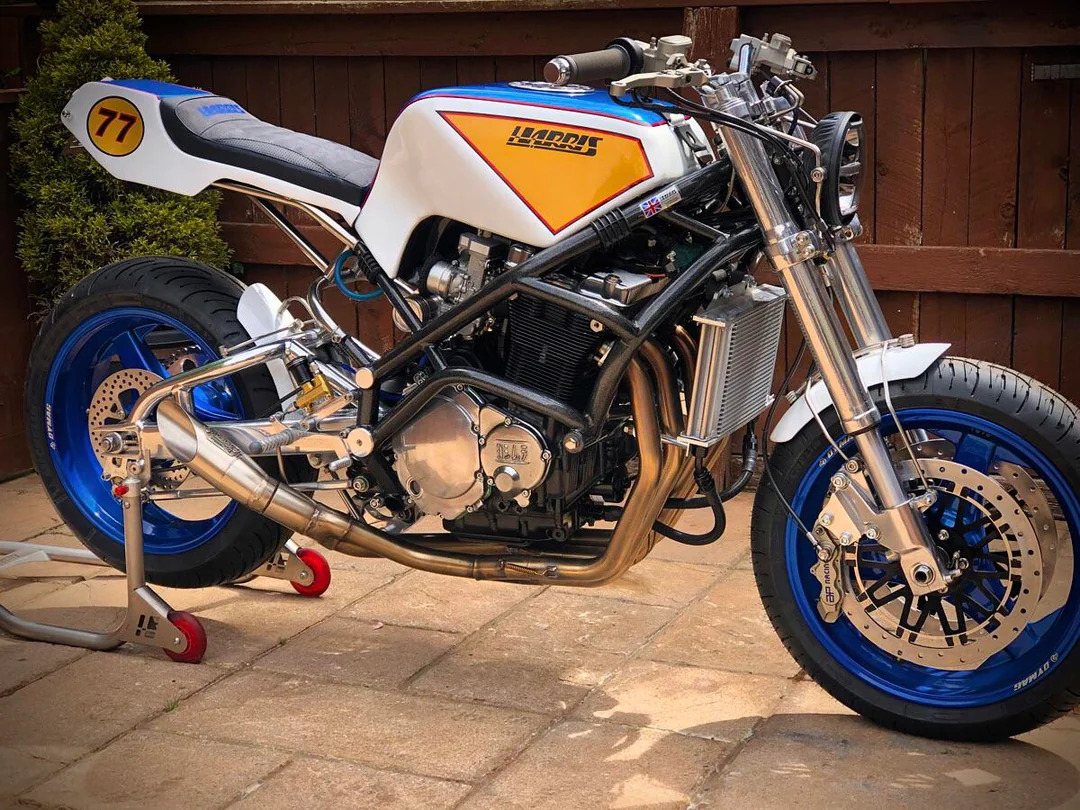
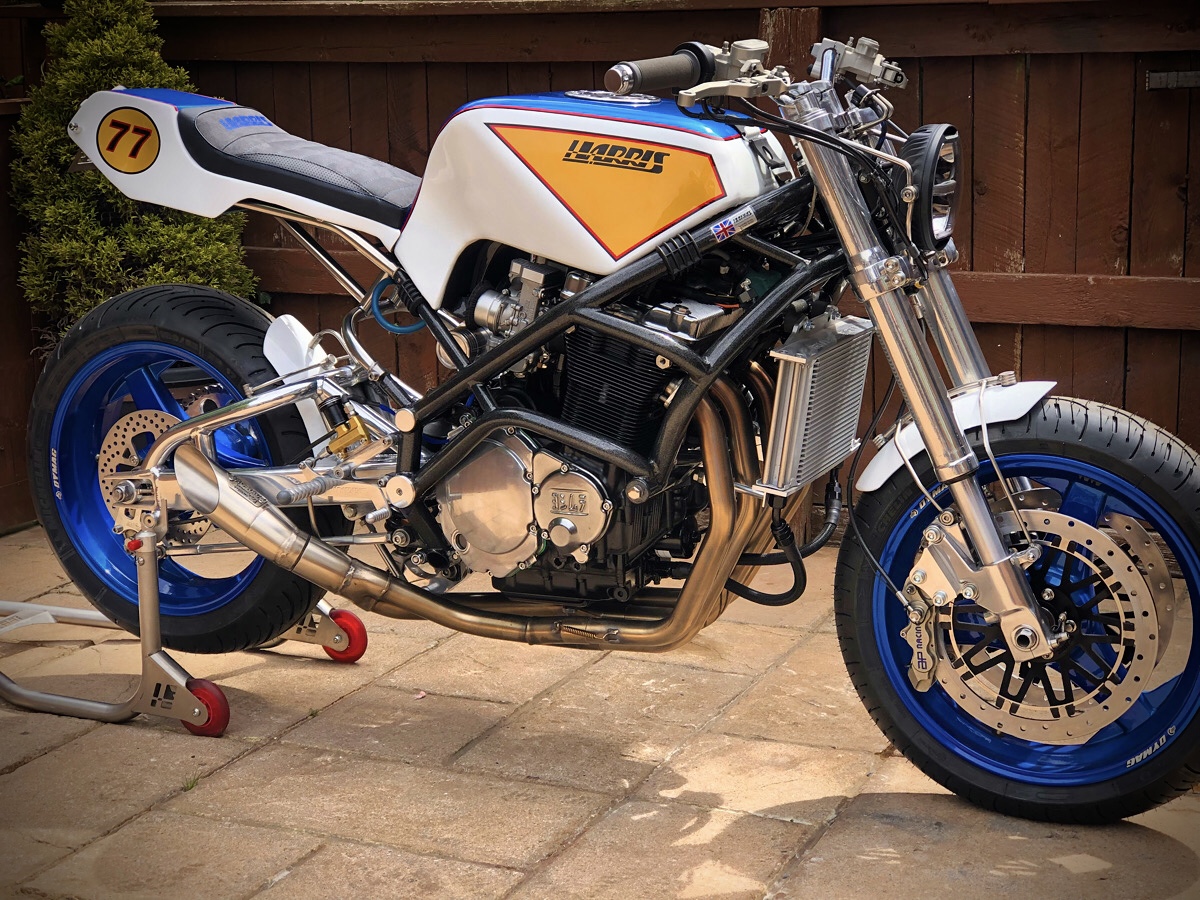
 1216cc Harris Magnum 4 from Wolf 77 Custom Motorcycles…
In 1979, the original Harris Magnum chassis kit hit the scene, designed to house the most powerful superbike engines on the market. Before the aluminum-frame revolution of the mid-1980s, these burly, tubular steel frames set the standard for superbike stiffness and handling.
While everyone loves the big air/oil-cooled Japanese superbikes of the era, the horsepower arms race had succeeded in producing machines whose power output could overwhelm their stock chassis designs, leading to handling woes. Thus, many racers and go-fast enthusiasts chose to swap their spaghetti-like OEM frames for the boutique, racing-developed designs coming from workshops like Bakker, Bimota, Moto Martin, and Harris Performance.
Over time, the Hertfordshire-based Harris brothers continued to develop and tweak the Magnum design to keep up with the standards of the day. Finally the Magnum 4 appeared, designed to cradle the mighty GSX-R750 and GSX-R1100 powerplants. The main frame was made from 1-3/8″ Reynolds 531 tubing, with a deltabox-style swingarm and geometry very similar to a stock 750 GSX-R.
“It’s designed to be macho; to look mechanical and aggressive, not smooth and pretty-pretty. It’s over-engineered and brutal, sort of like a two-wheeled AC Cobra… It’s as beefy and as bold as ever…designed to cope with 1991-style motive power and cycle-parts, not to mention opposition…” -InsideBikes
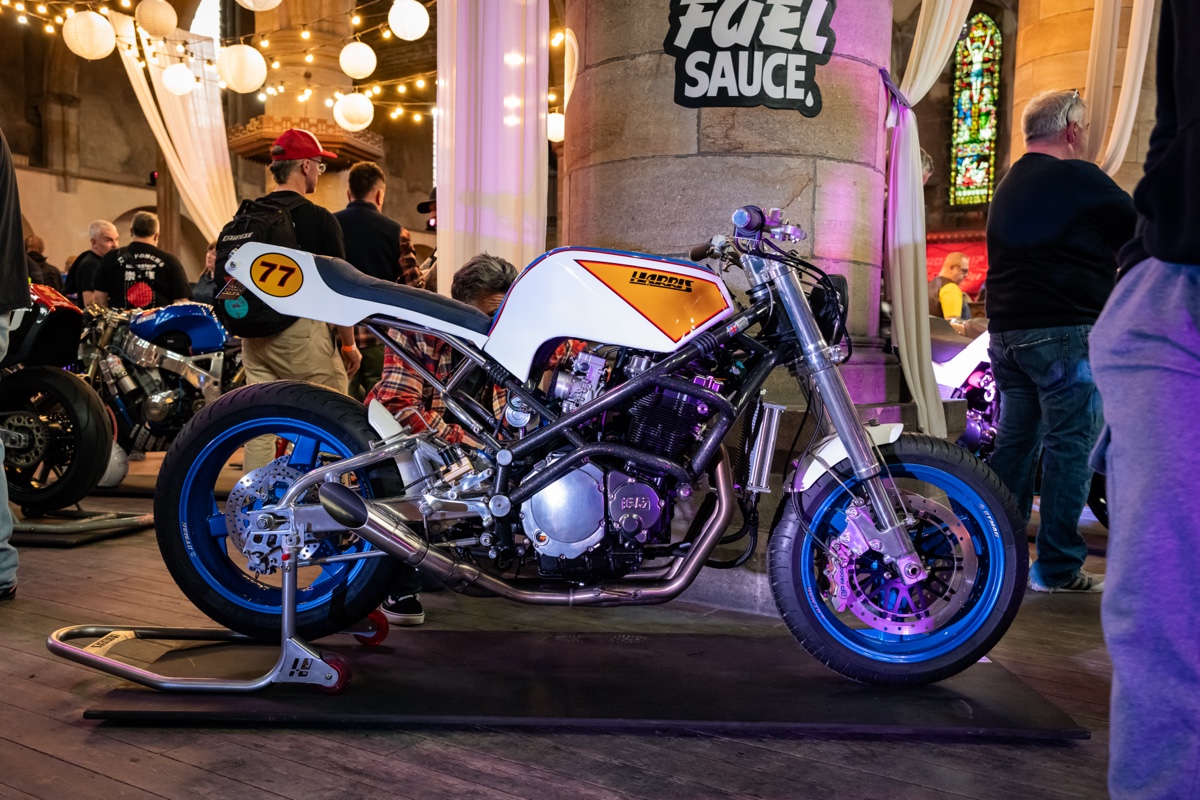
This Magnum 4 special comes from our old friend Garry Wolf of the UK’s Wolf 77 Custom Motorcycles. Dubbed the “Wolf 77,” it was built for one of Garry’s good buddies.
“He handed me a tired old Harris with a badly deteriorated nickel-plated frame, along with a GSF1200 Bandit that was already something of a Frankenstein custom and running a built GSX-R1100K engine. His only real request was to transplant the engine into the Harris. Beyond that, he gave me complete freedom to take the bike in whatever direction I wanted. Complete trust.
That’s really how I like to build. I build for my own creativity rather than following a particular formula, so having that level of freedom made this a very special project.”
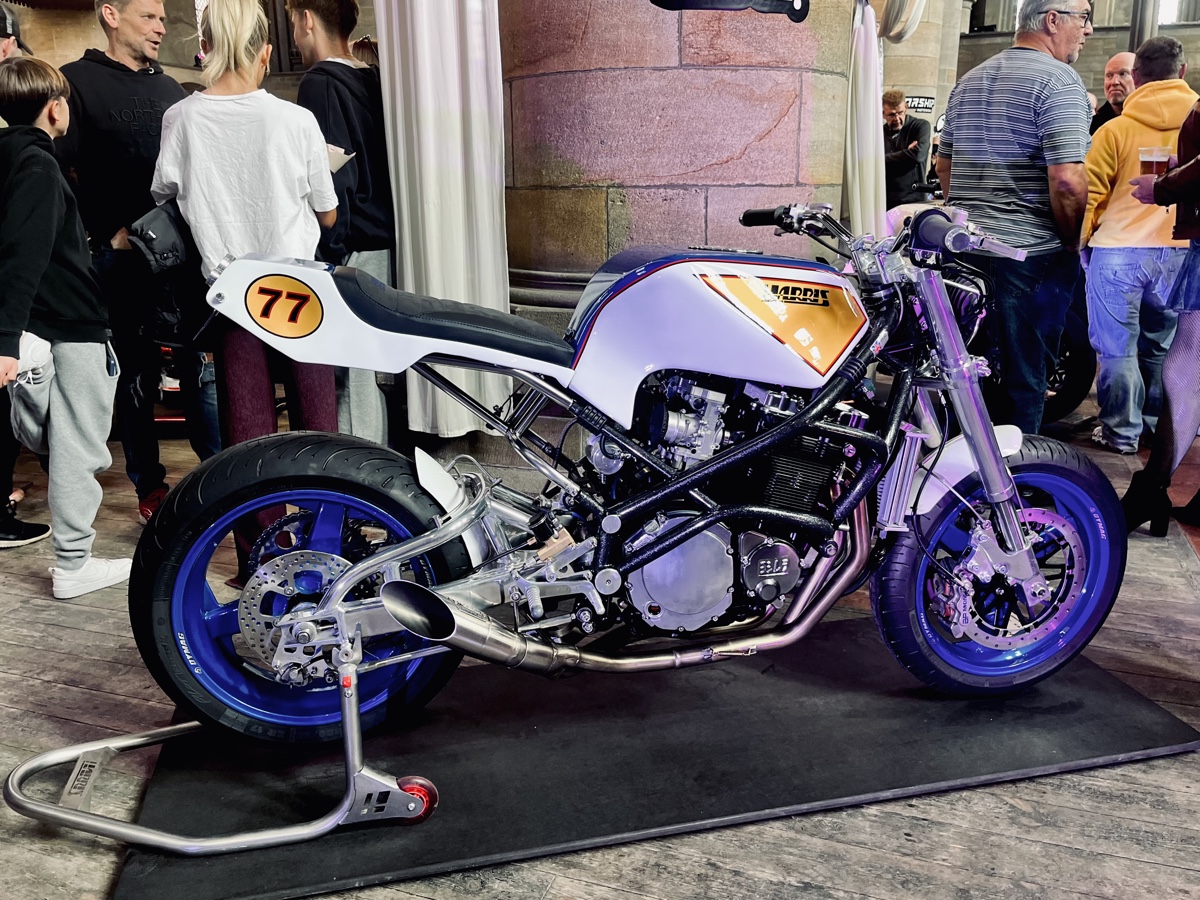
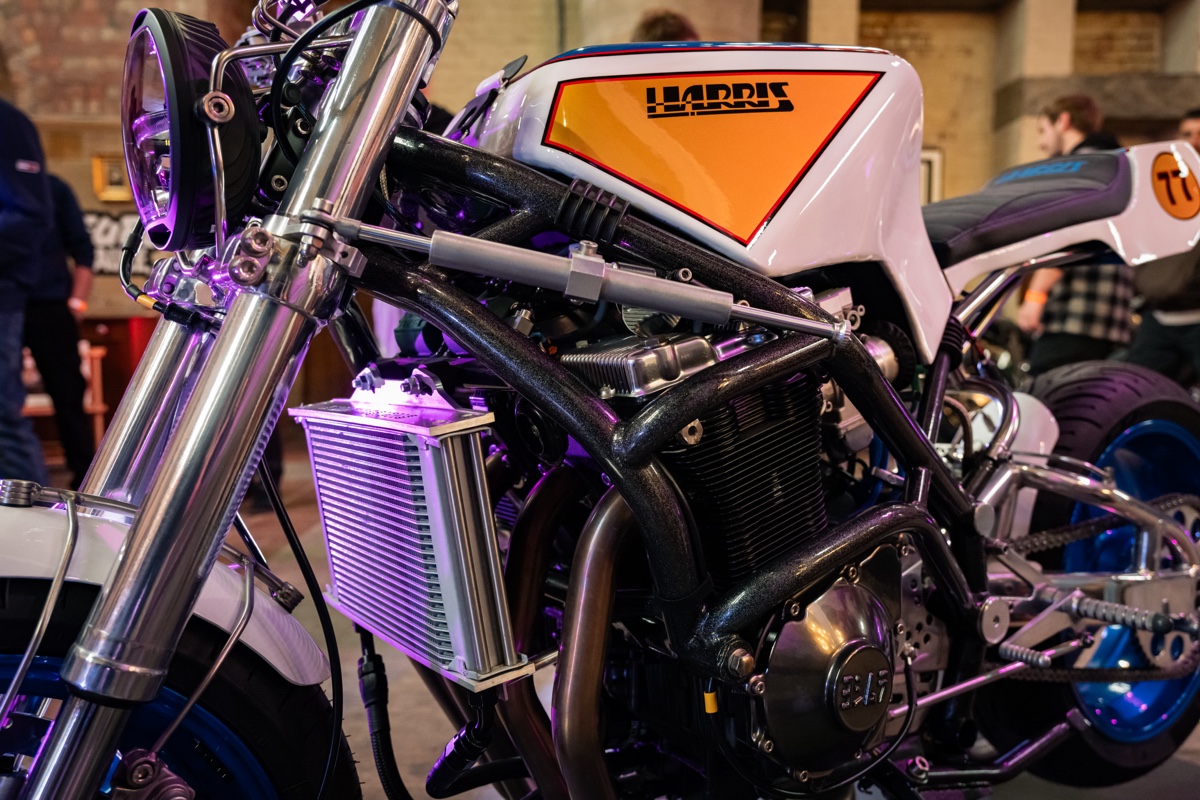
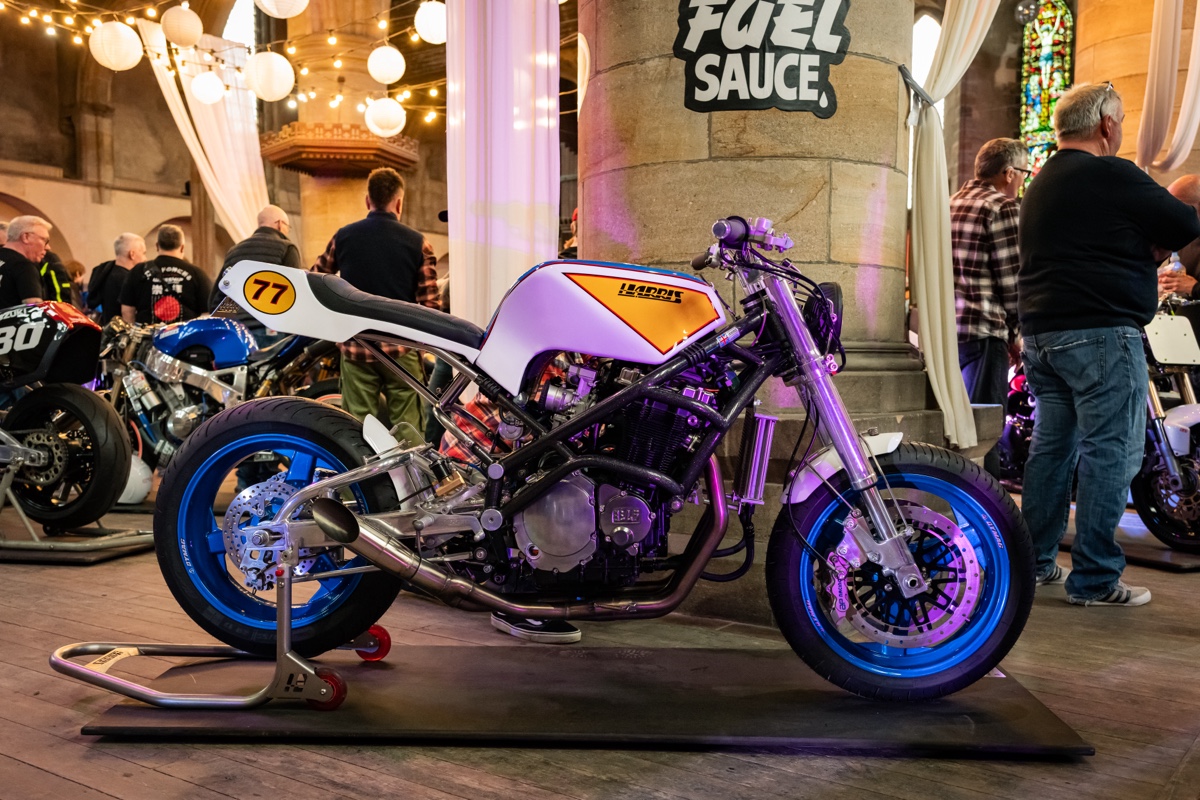
The engine was no slouch — a fully-built 1216cc unit with Wiseco pistons, profiled cams, and ported head, just begging for one hell of a bike to be built around it. The Magnum frame already had a large, aggressive, angular tank, which Garry and the owner knew should stay.
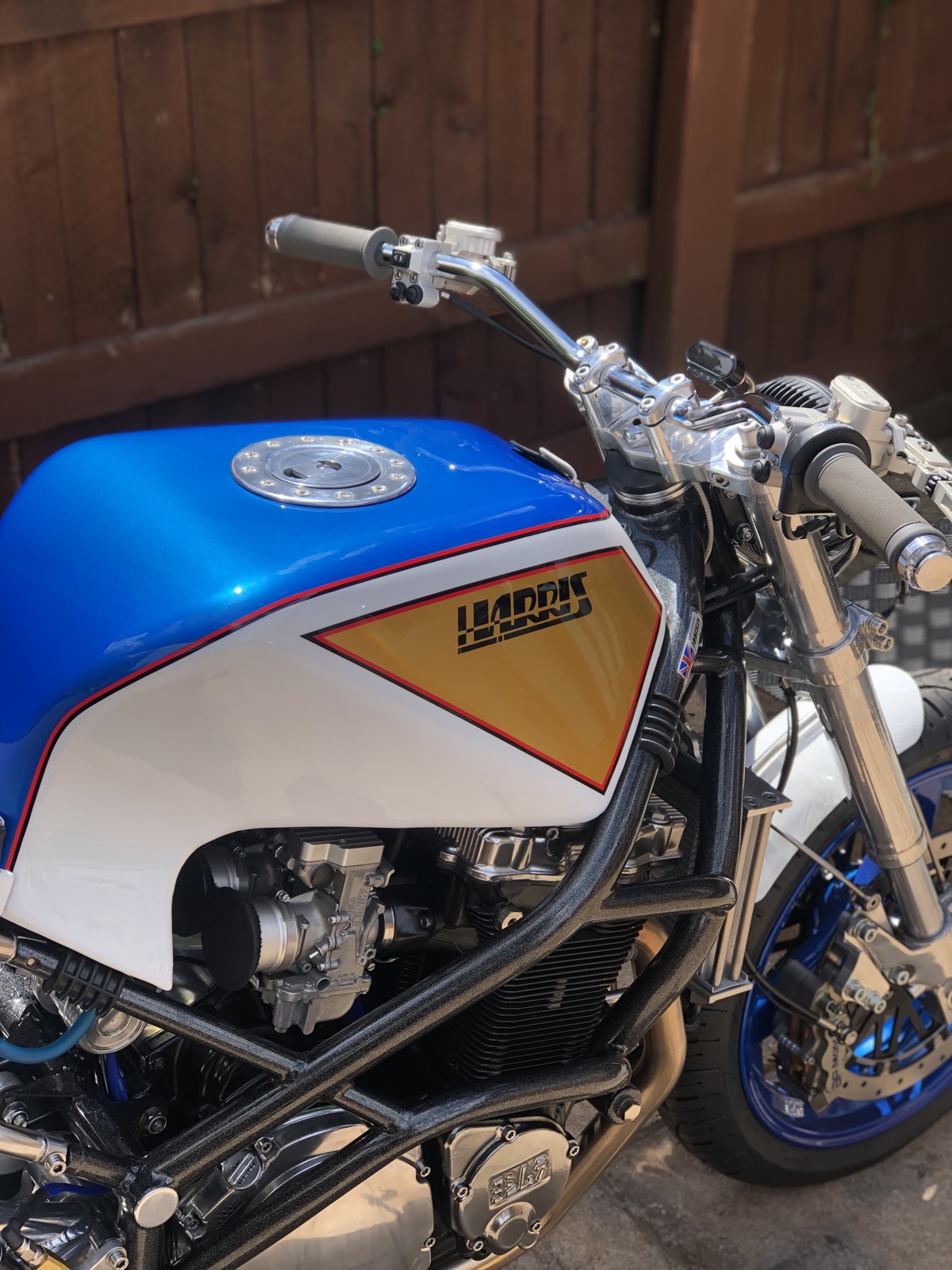
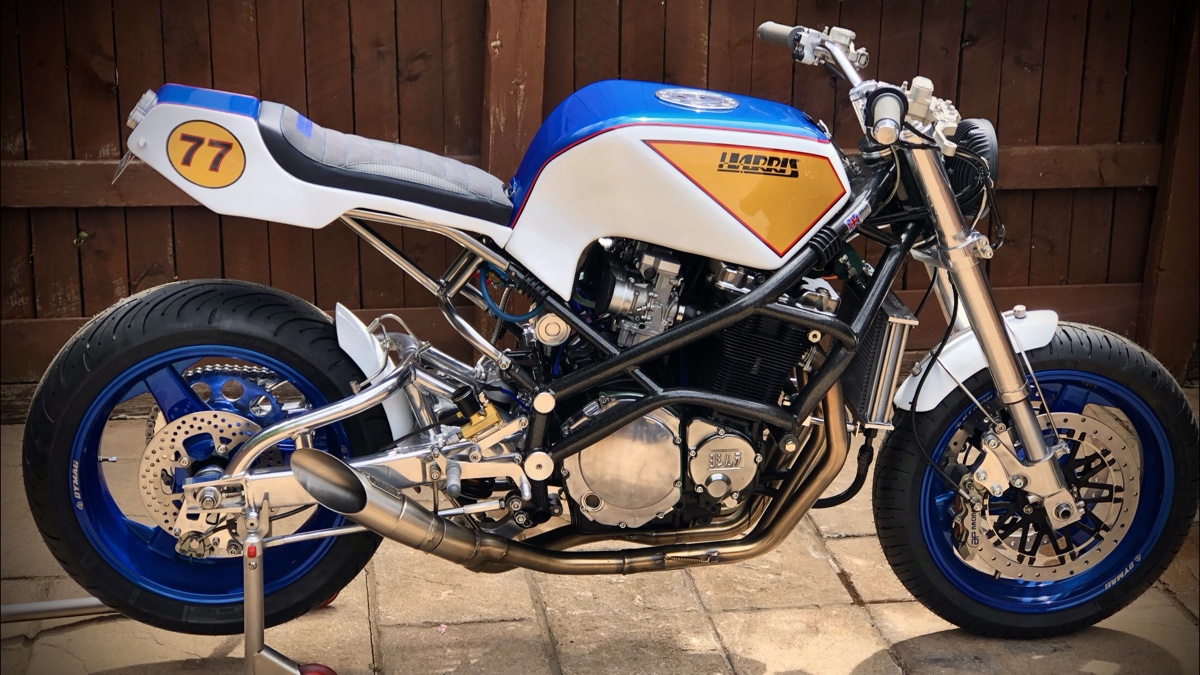
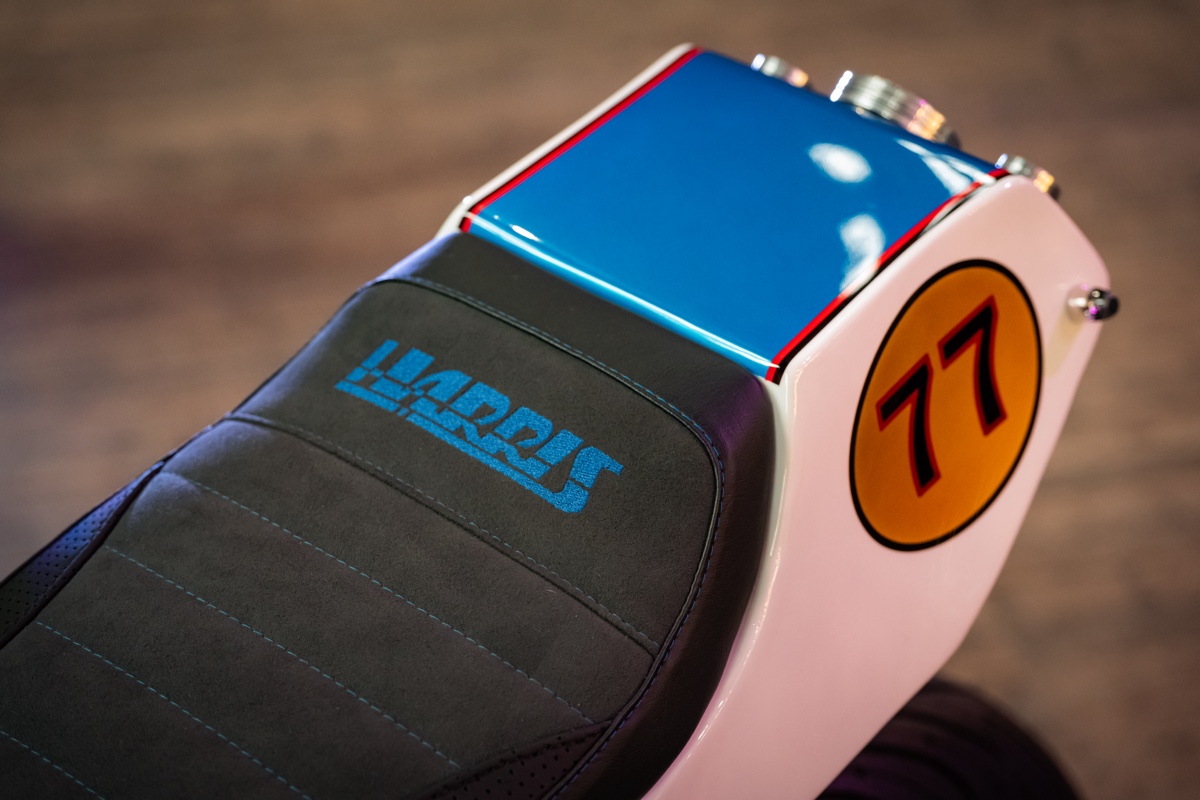
But first things first, the rear end of the bike needed a completely redesign. Garry custom-built a stainless steel subframe and used some very sophisticated “CAD” to design the one-off aluminum tail section…
“It was a case of using CAD — cardboard-aided design — to create a completely bespoke seat unit with lines that married the tank and frame.”
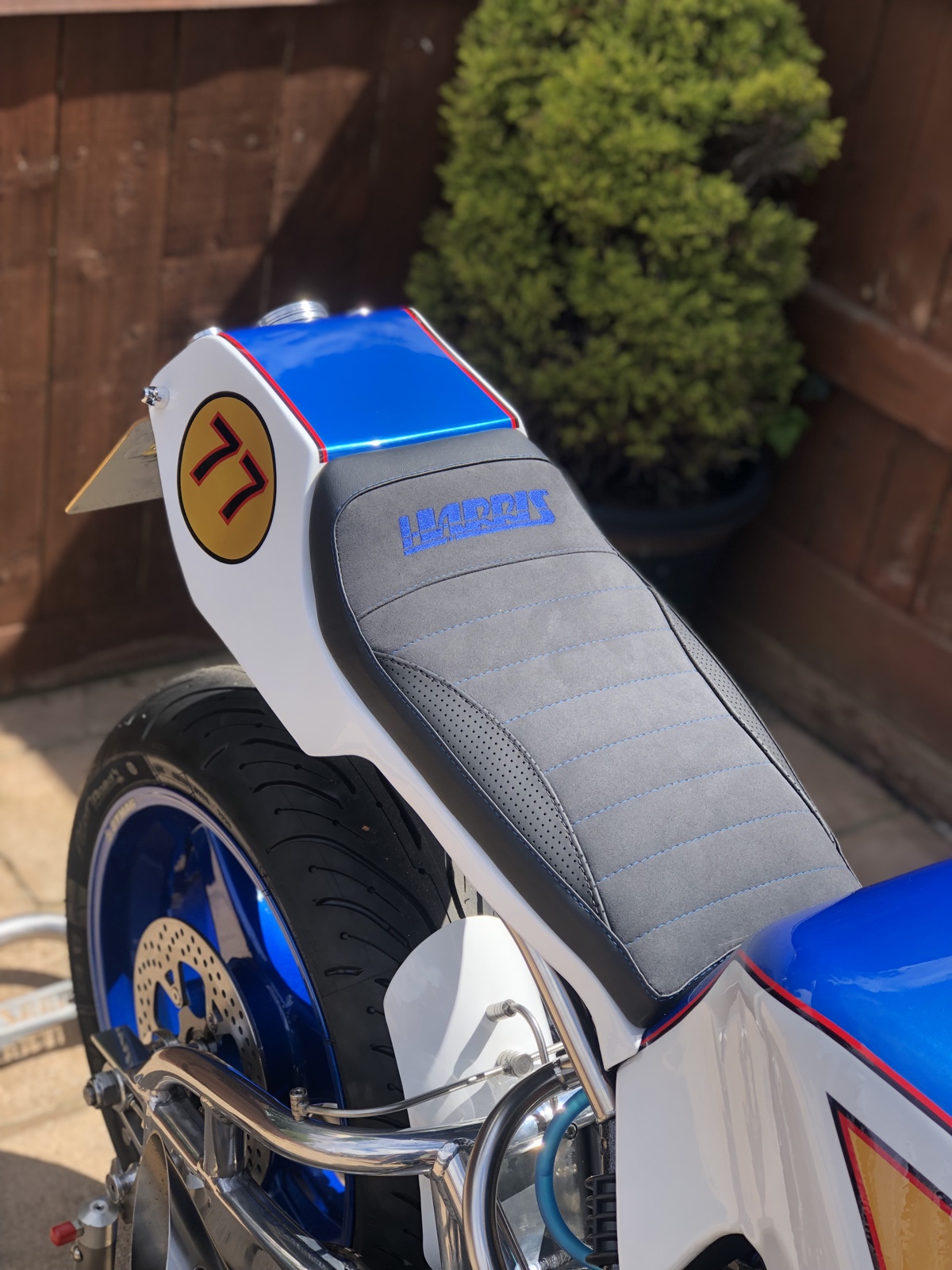
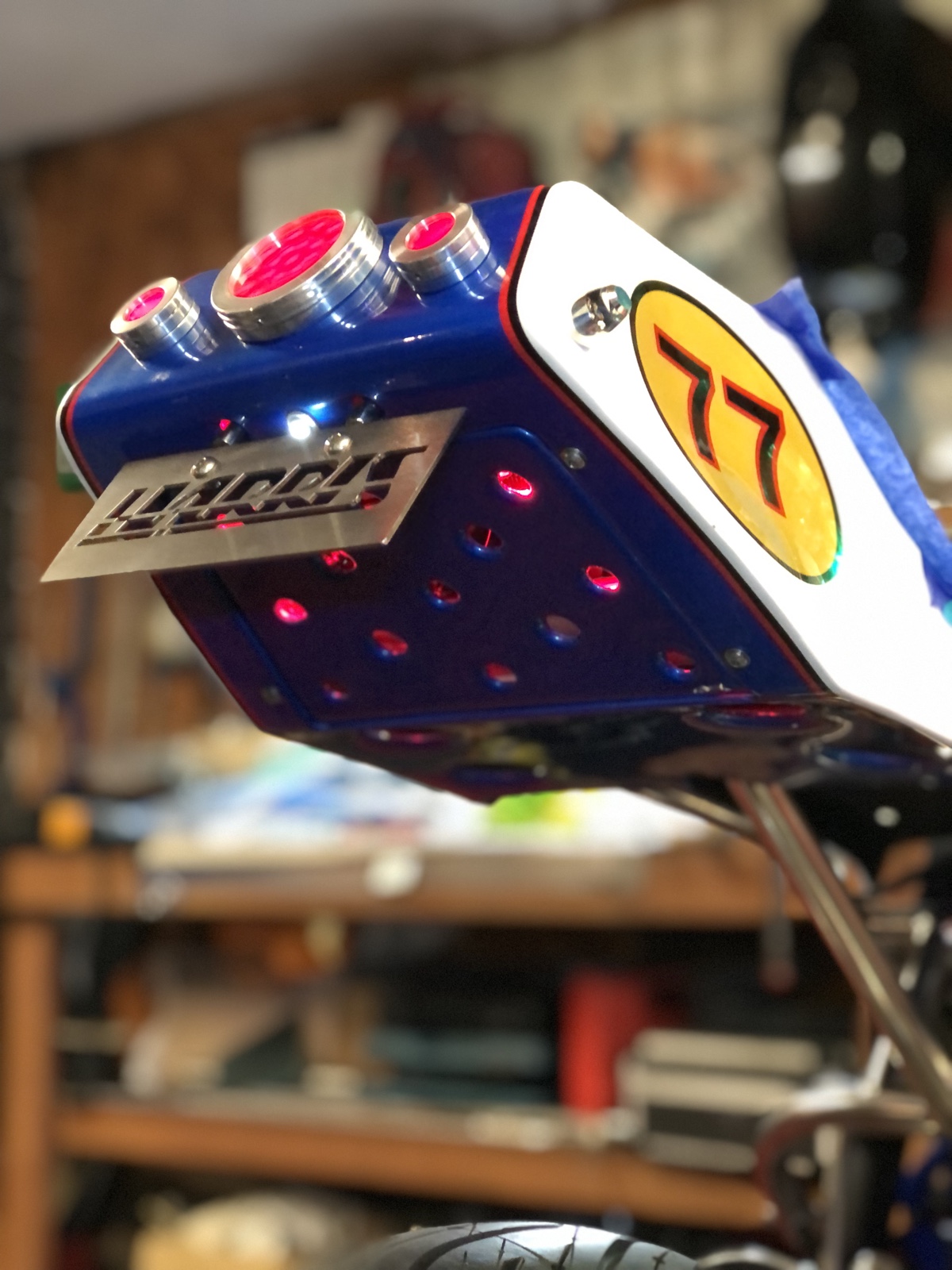
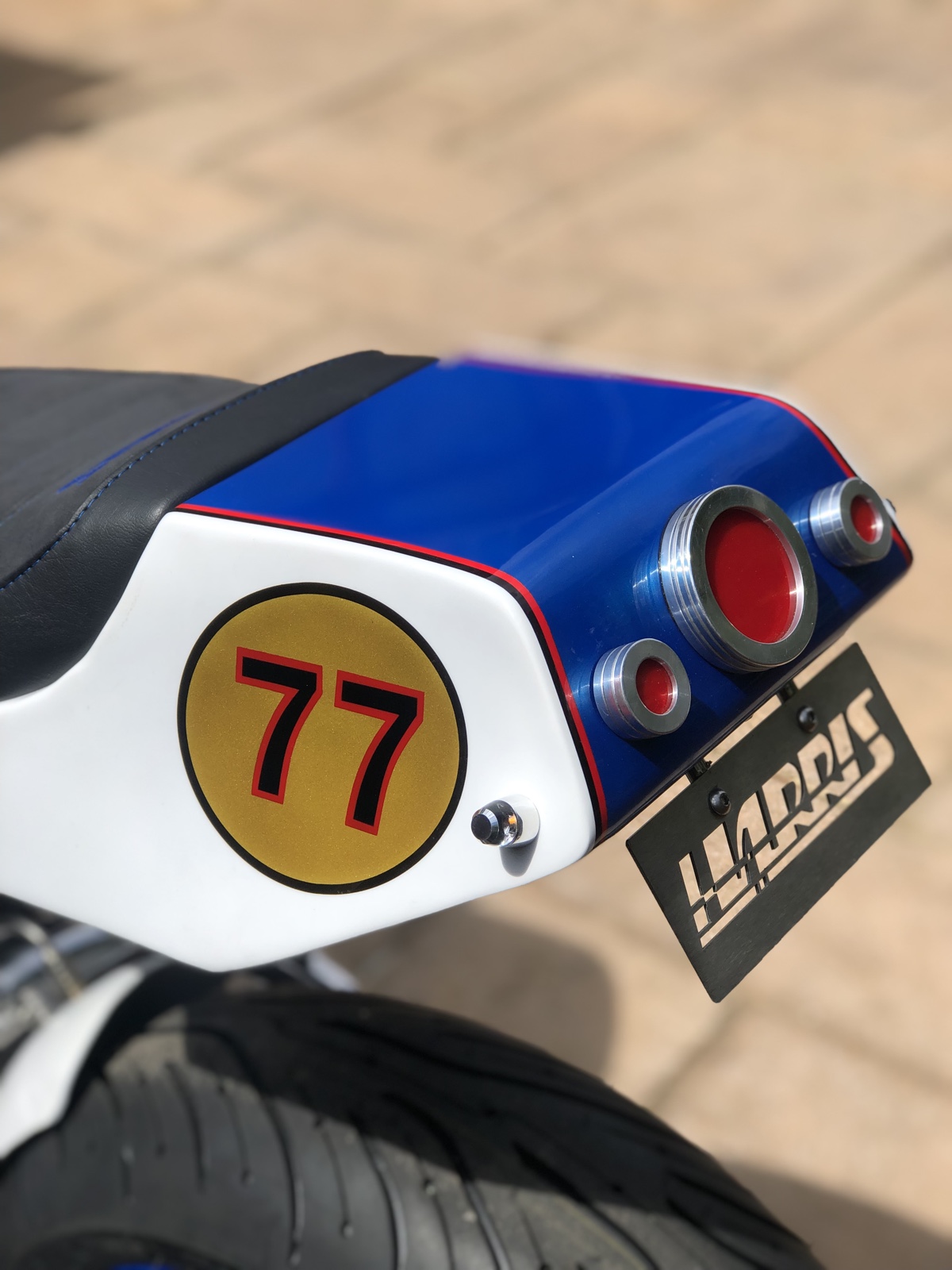
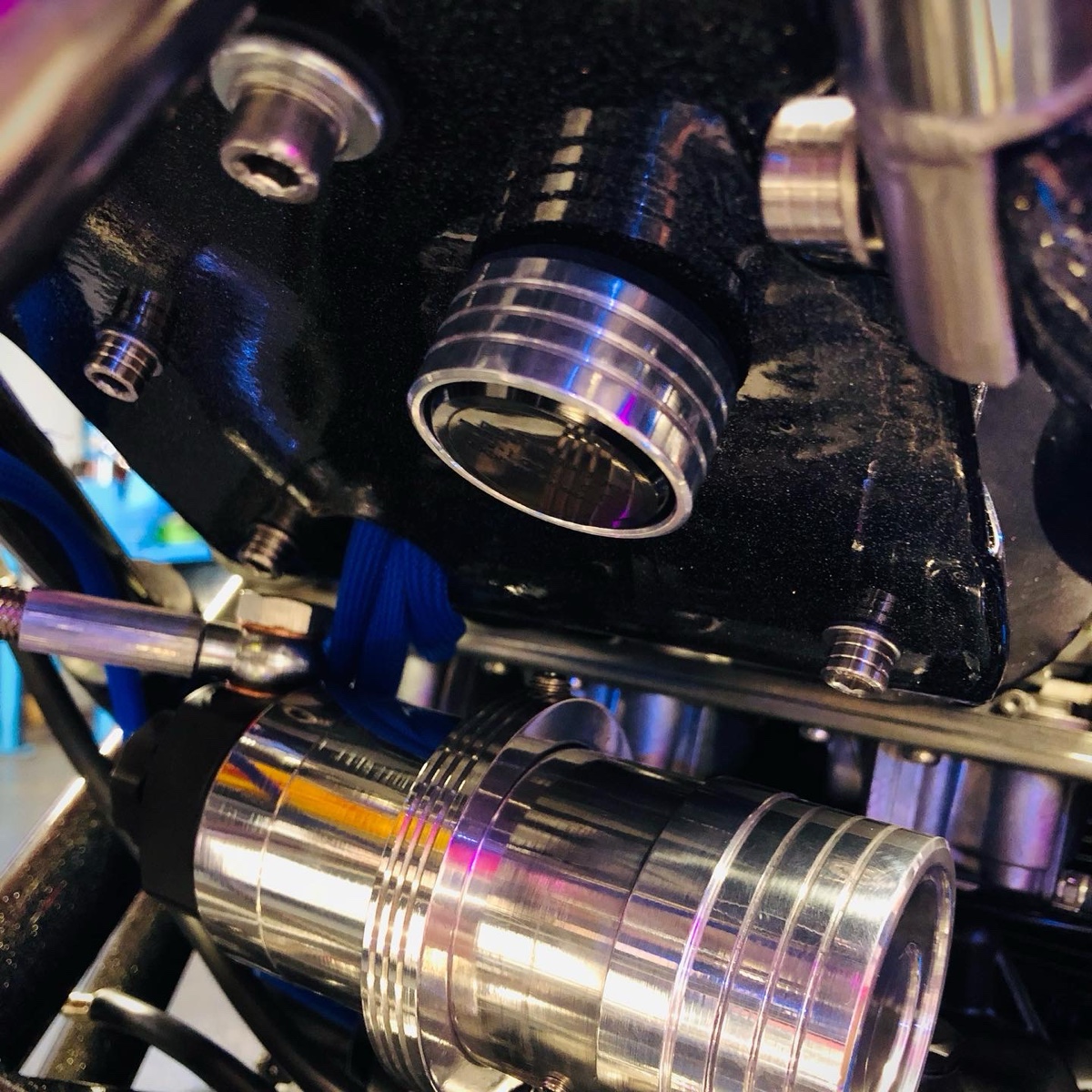
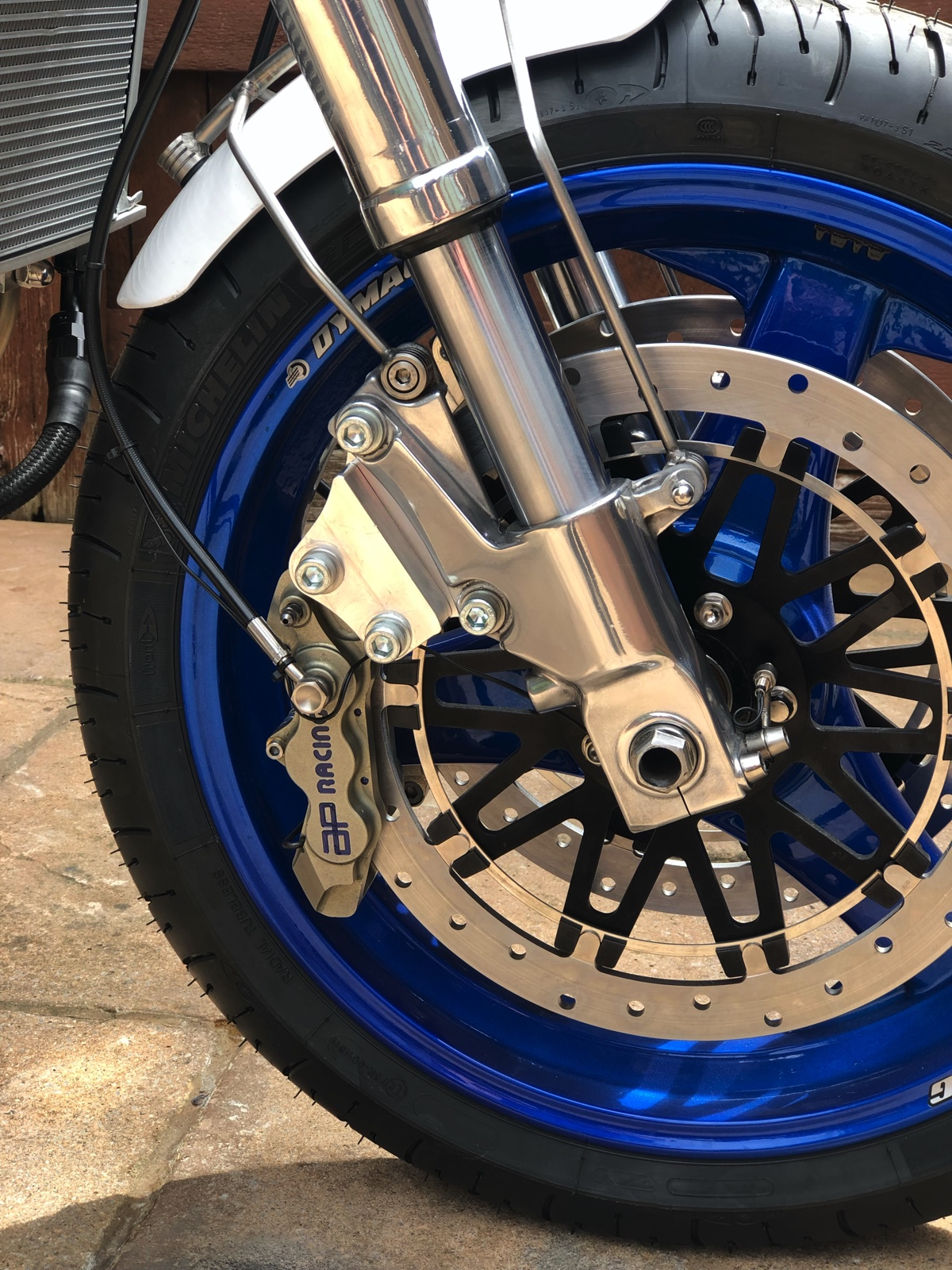
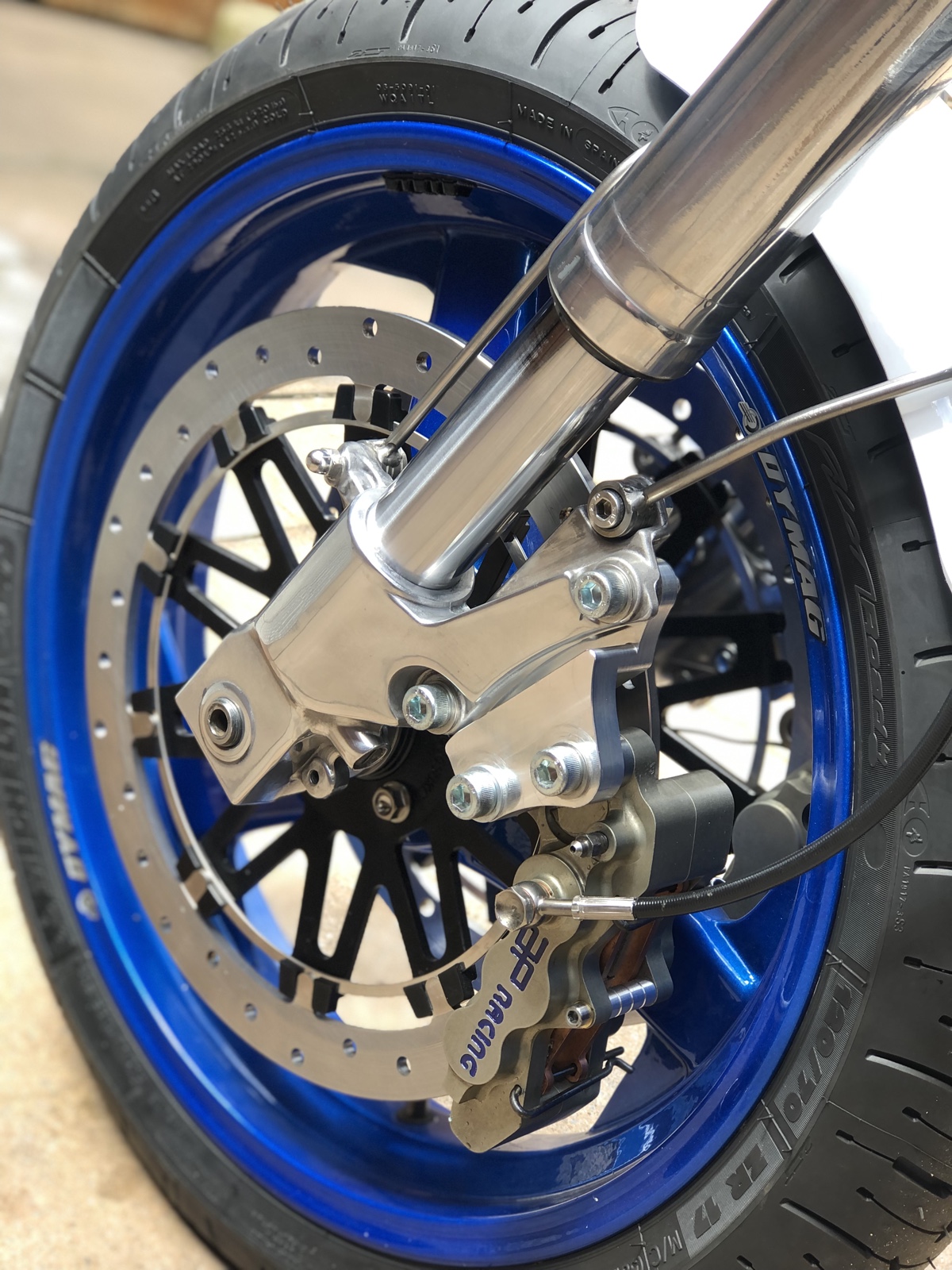
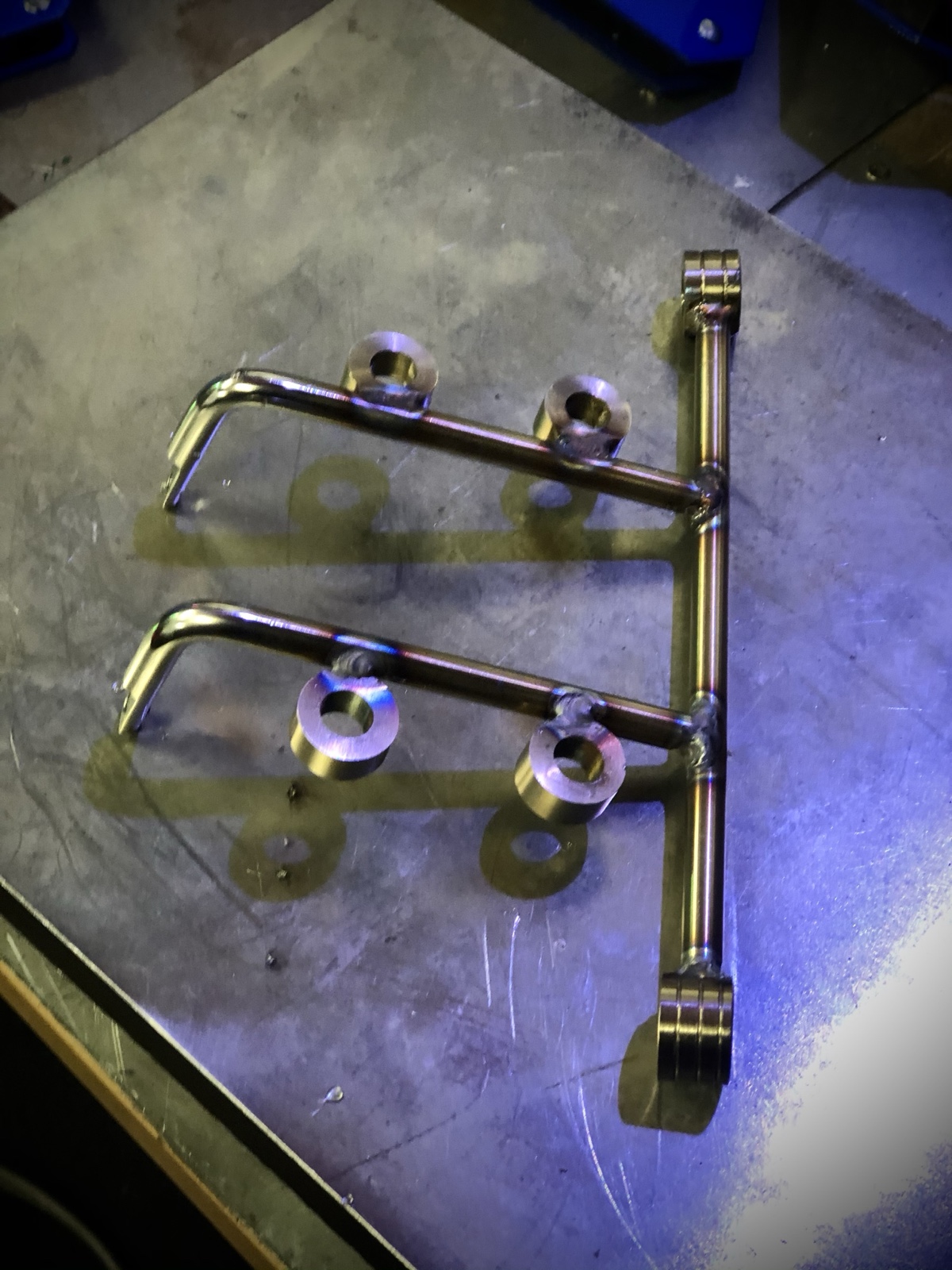
Garry also fabricated the headlight and speedometer mounts, fenders and supports, and numerous smaller stainless and machined aluminum parts throughout the bike: an afterburner-style brake/tail light assembly, a machined aluminum cover and support for the rear shock’s remote reservoir, and CNC-machined front brake hanger adapters for the AP Racing calipers…even the stainless-steel bolts have individually-machined detailing!
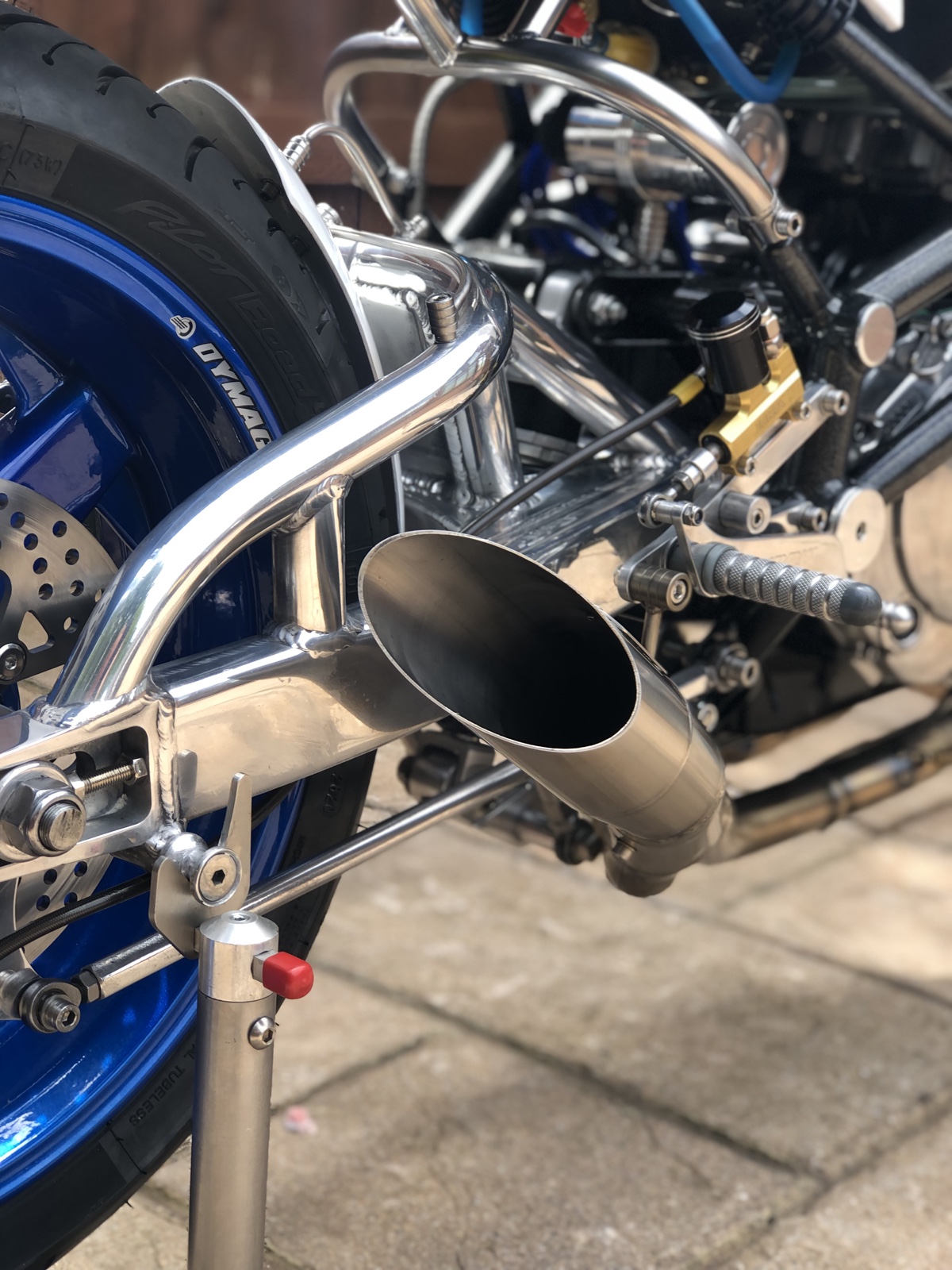
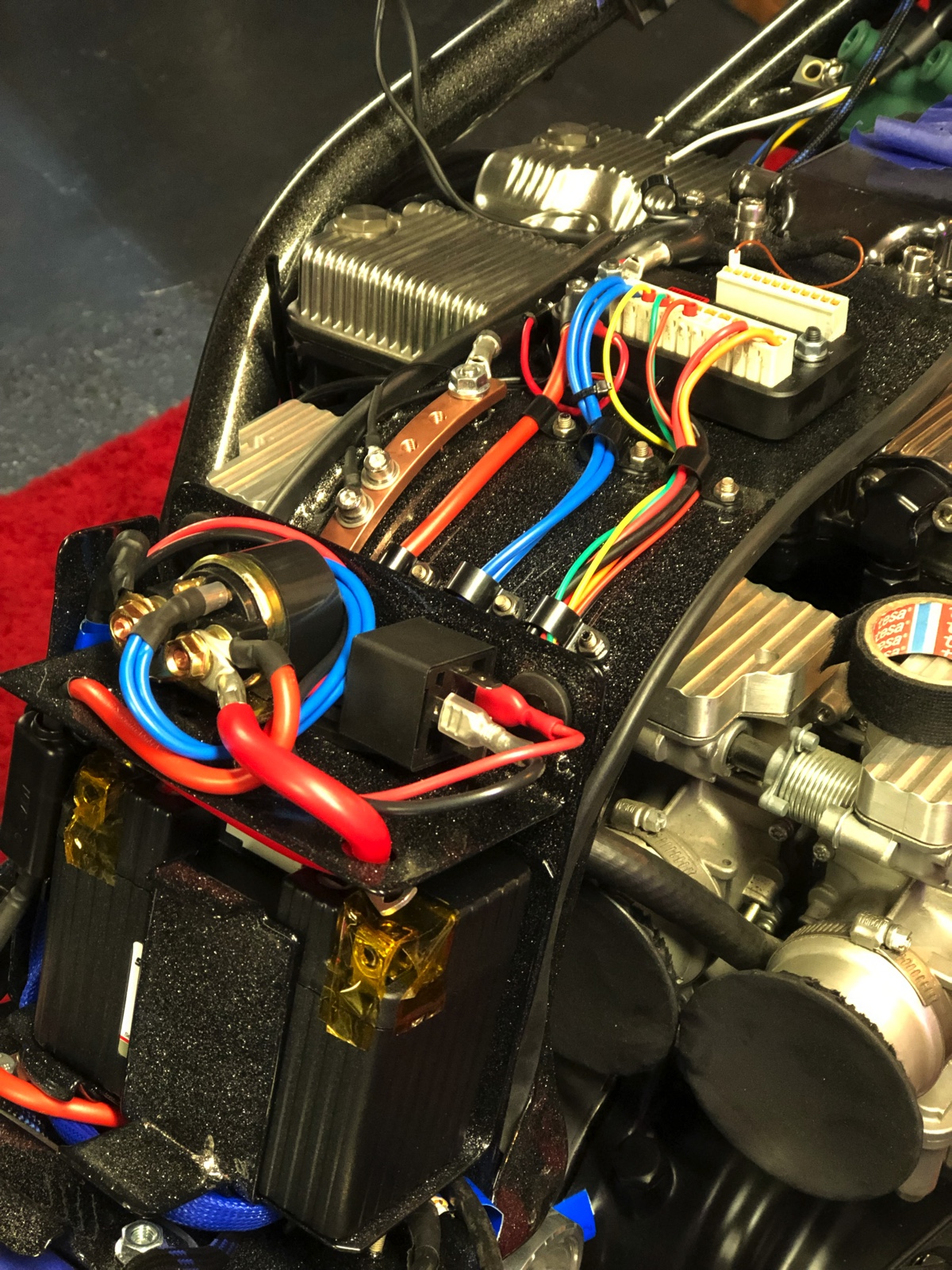
He also made the electrical system all but invisible, hiding the battery and Motogadget m.unit in a cavity under the tank along with a custom-fabricated earth rail. Other highlights include Dymag magnesium wheels, AP Racing brakes, ISR controls, Mikuni RS flat-slide carbs, and a Pro-Race exhaust.
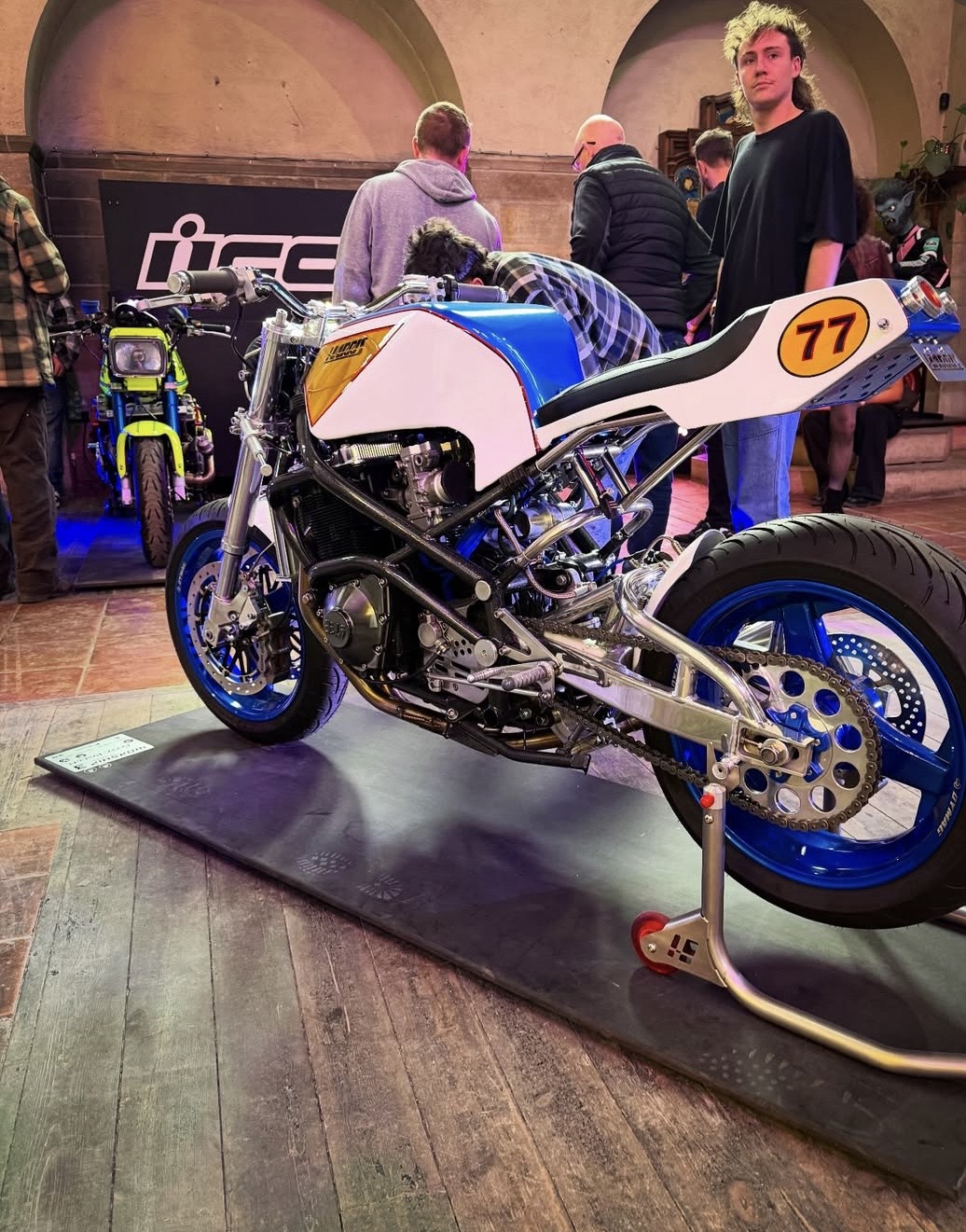
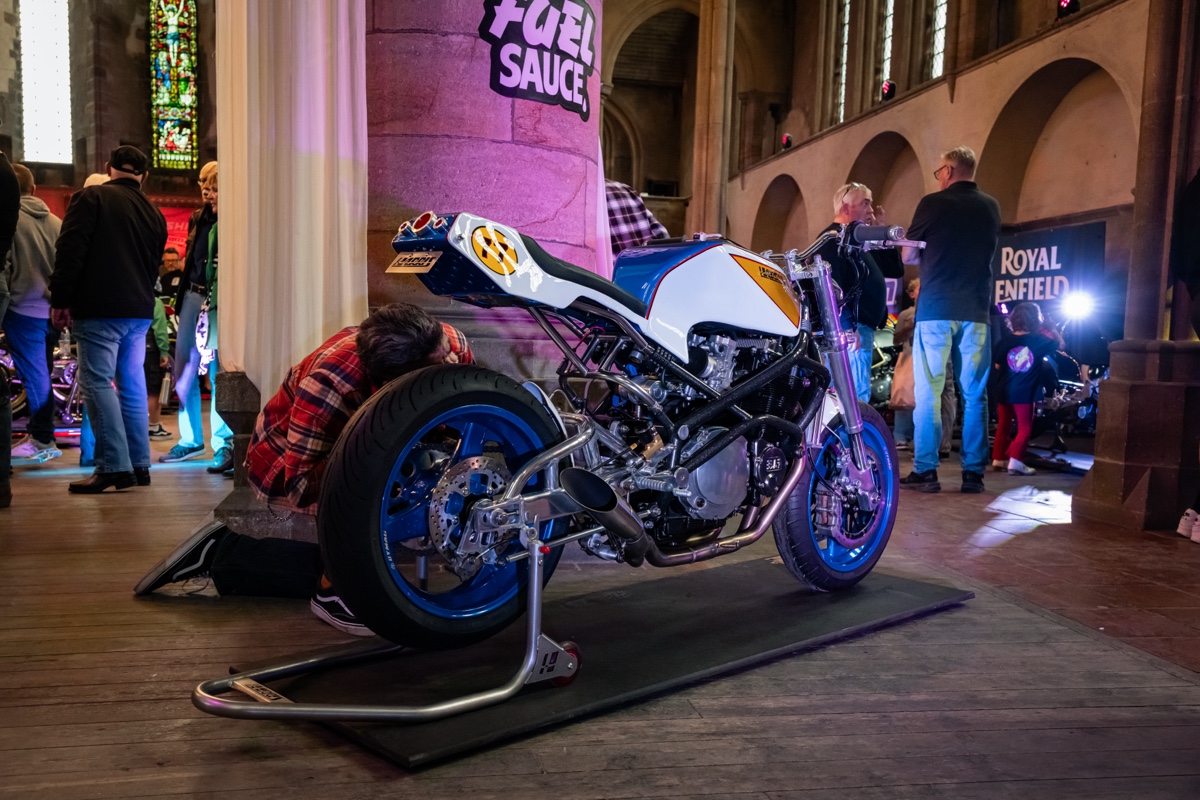
Adrian at Bulldog Custom Paints handled for the paintwork, while Les at SaddleCraft upholstered the seat. Estimated at 130+ hp, the Wolf 77 was one of the standout builds at the 2026 Worship Moto Show — an event dedicated to muscle bikes, vintage superbikes, and performance machines of this kind.
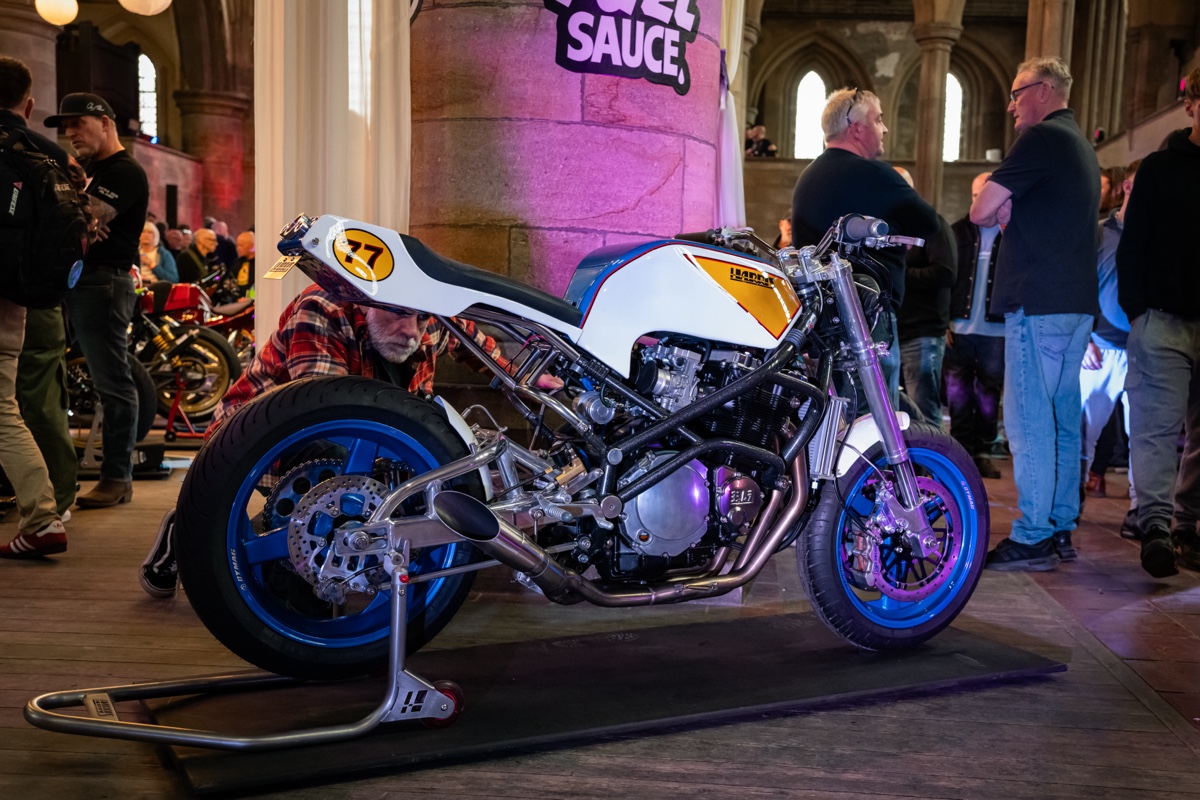
We’re so happy to another one of Garry’s builds back on BikeBound. Below is our uncut interview with the man himself, along with many more details and images. And stay tuned for more bikes and coverage from Worship Moto Show.
Harris Magnum 4: Builder Interview
• Please tell us a bit about yourself, your history with motorcycles, and your workshop.
I’ve been building bikes for around 12 years now, purely as a creative endeavour and as a way of continually improving my skills. I’ve honestly lost count of how many I’ve built over the years. I’ve always just enjoyed creating and riding something a little different.
I’m fortunate to have access to a workshop that I share with my good friend Gary Carr at GC Custom Bikes. Over the years I’ve slowly added more equipment as my skills have developed, which has allowed me to take on more of the work myself and keep pushing what I’m capable of.
• What’s the make, model, and year of the donor bike?
It’s a Harris Magnum 4 frame fitted with a built Suzuki GSX-R1100K engine.
• Why was this bike built?
The Harris was built for a good friend of mine. He handed me a tired old Harris with a badly deteriorated nickel-plated frame, along with a GSF1200 Bandit that was already something of a Frankenstein custom and running a built GSX-R1100K engine. His only real request was to transplant the engine into the Harris. Beyond that, he gave me complete freedom to take the bike in whatever direction I wanted. Complete trust.
That’s really how I like to build. I build for my own creativity rather than following a particular formula, so having that level of freedom made this a very special project.
• What was the design concept, and what influenced the build?
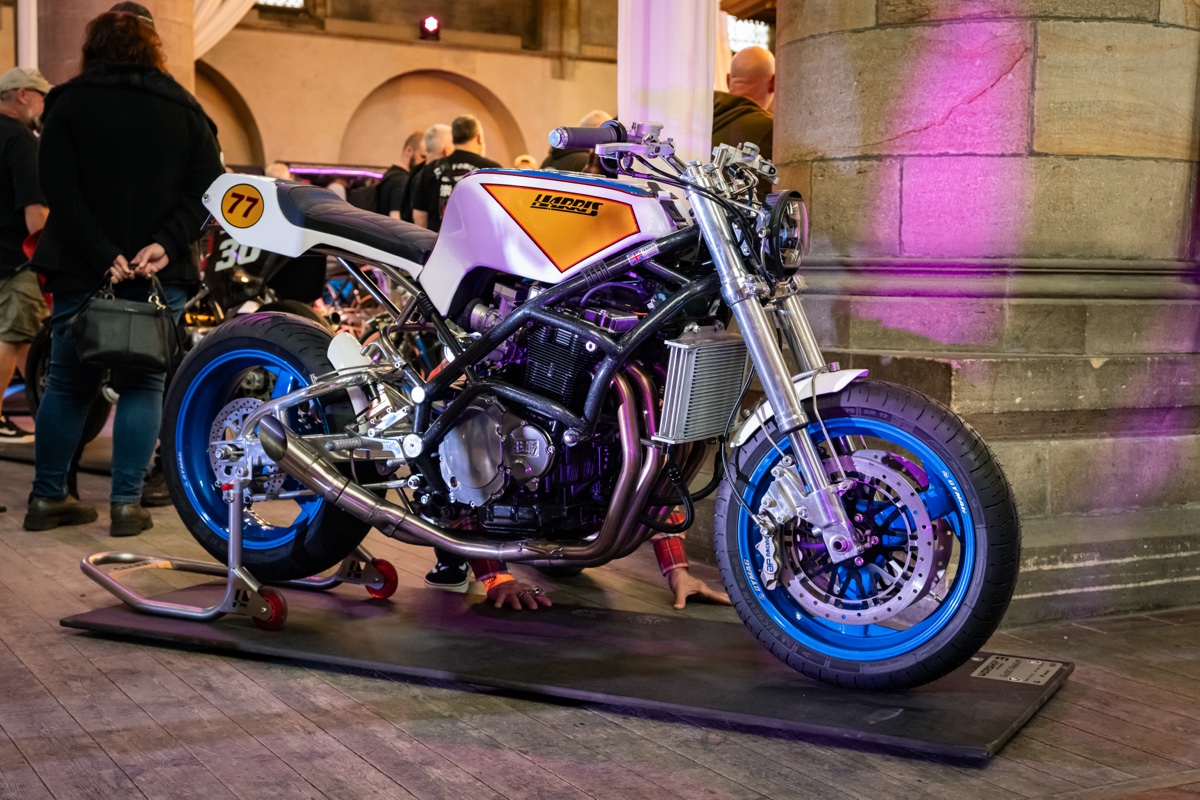
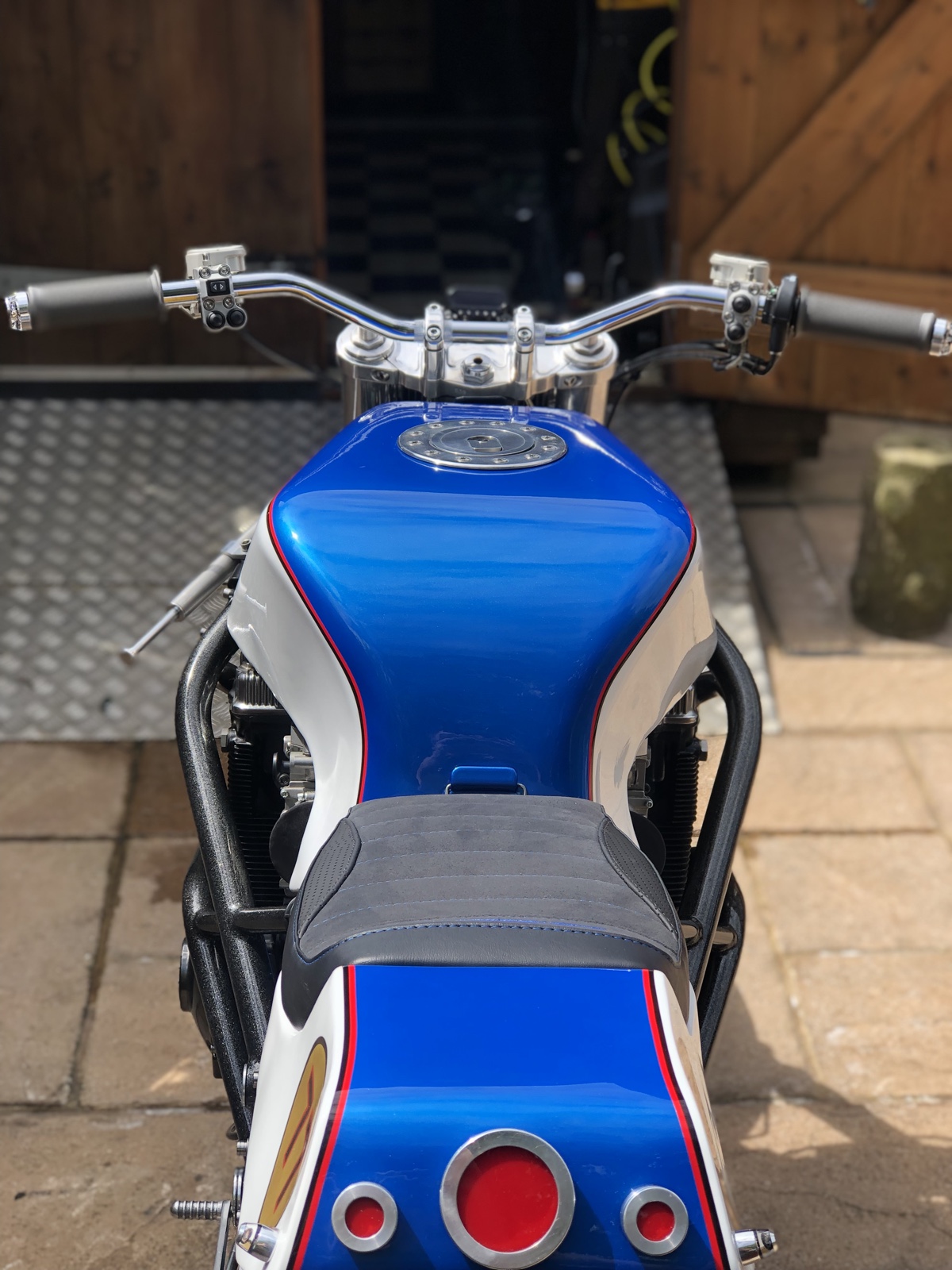
The tired Harris came with a very large-capacity tank which had a really aggressive, angular look, and we agreed from the start that it had to stay. It was clear, though, that the rear of the bike would need to be completely reworked to balance the design.
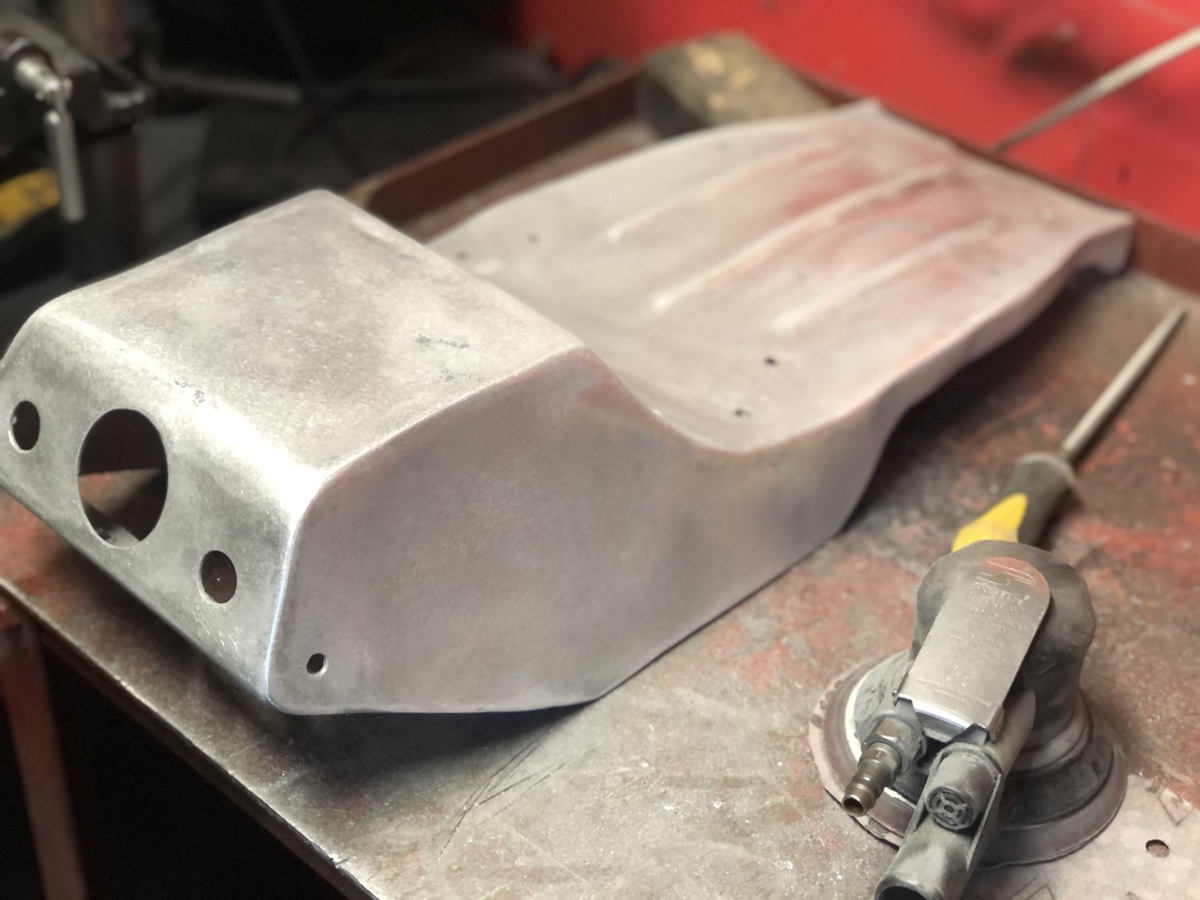
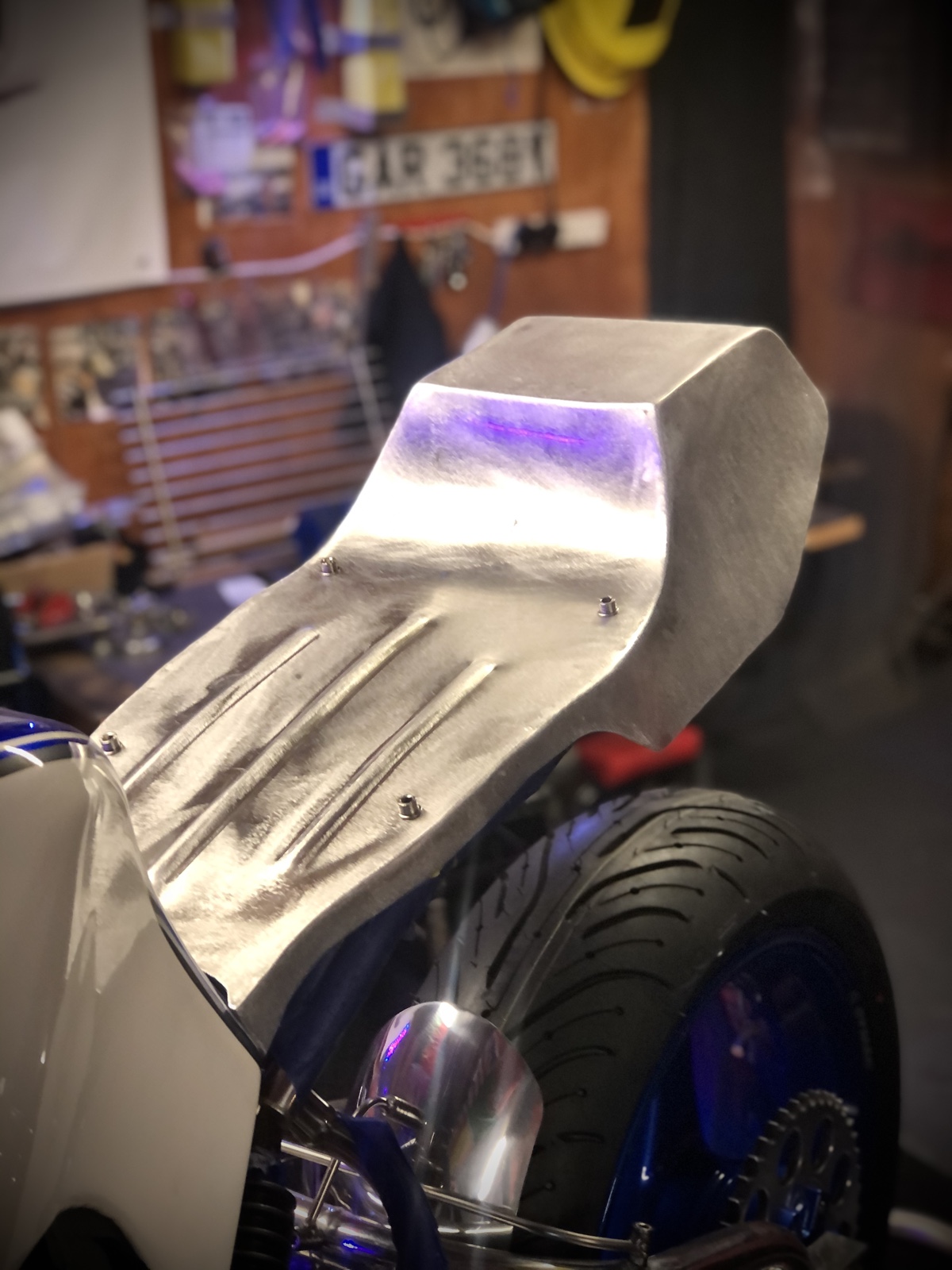
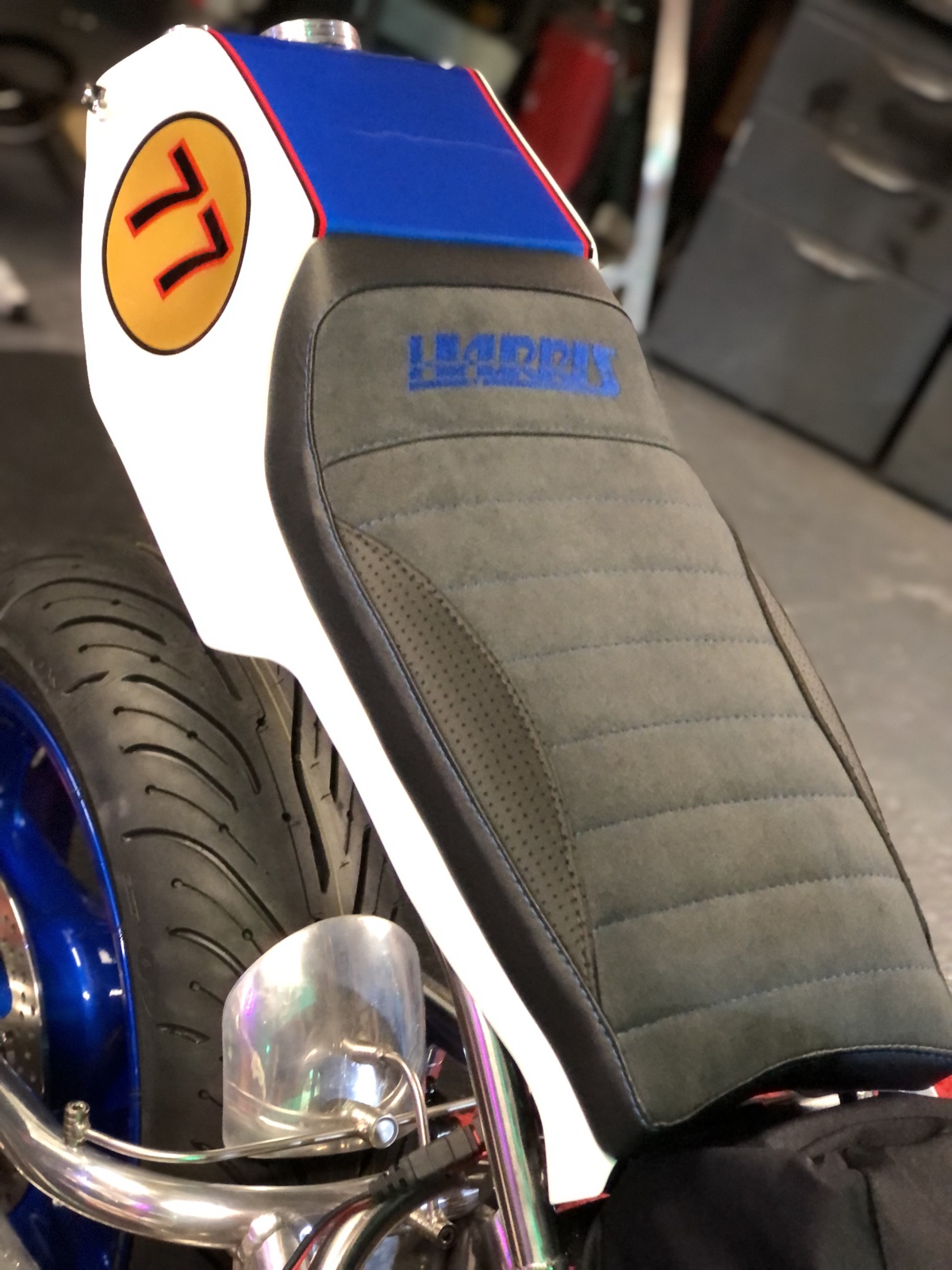
I’d seen plenty of special-framed customs using seat units and subframes transplanted from other bikes, with varying degrees of success in my opinion, and I really didn’t want to go down that route. So it was a case of using CAD — cardboard aided design — to create a completely bespoke seat unit with lines that married the tank and frame.
• What custom work was done to the bike?
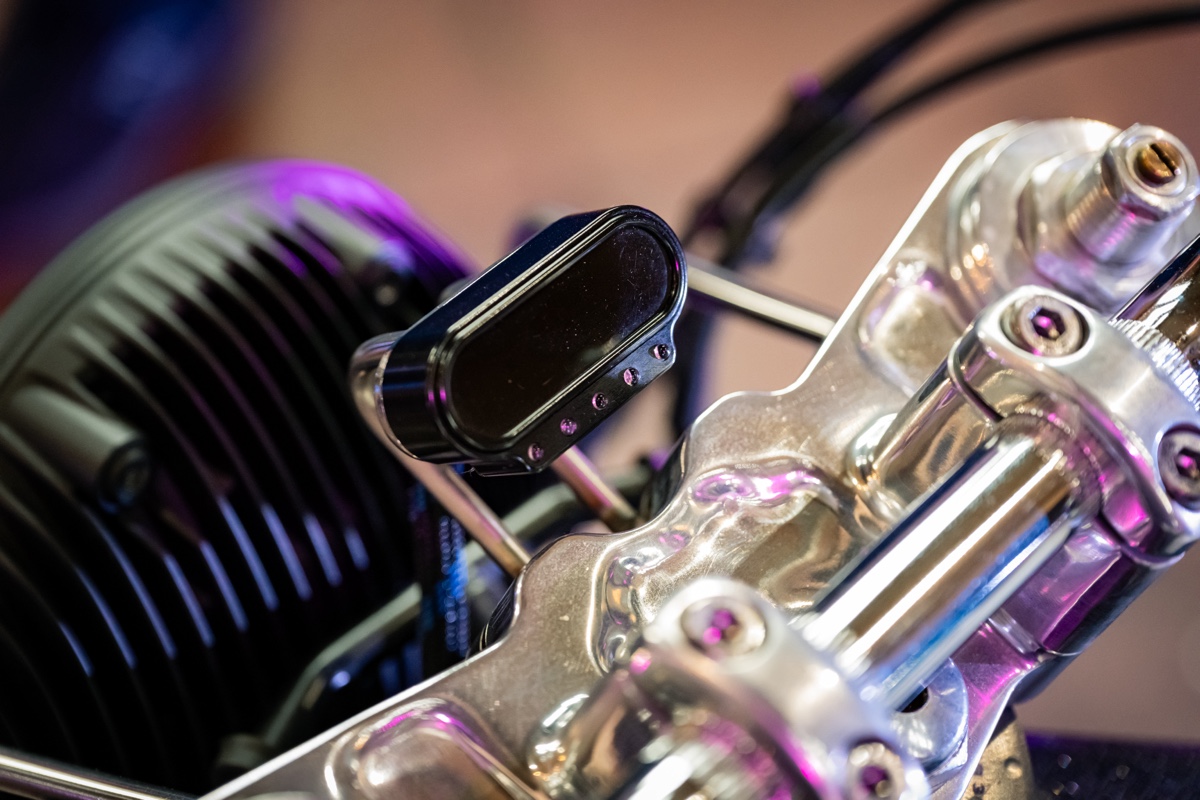
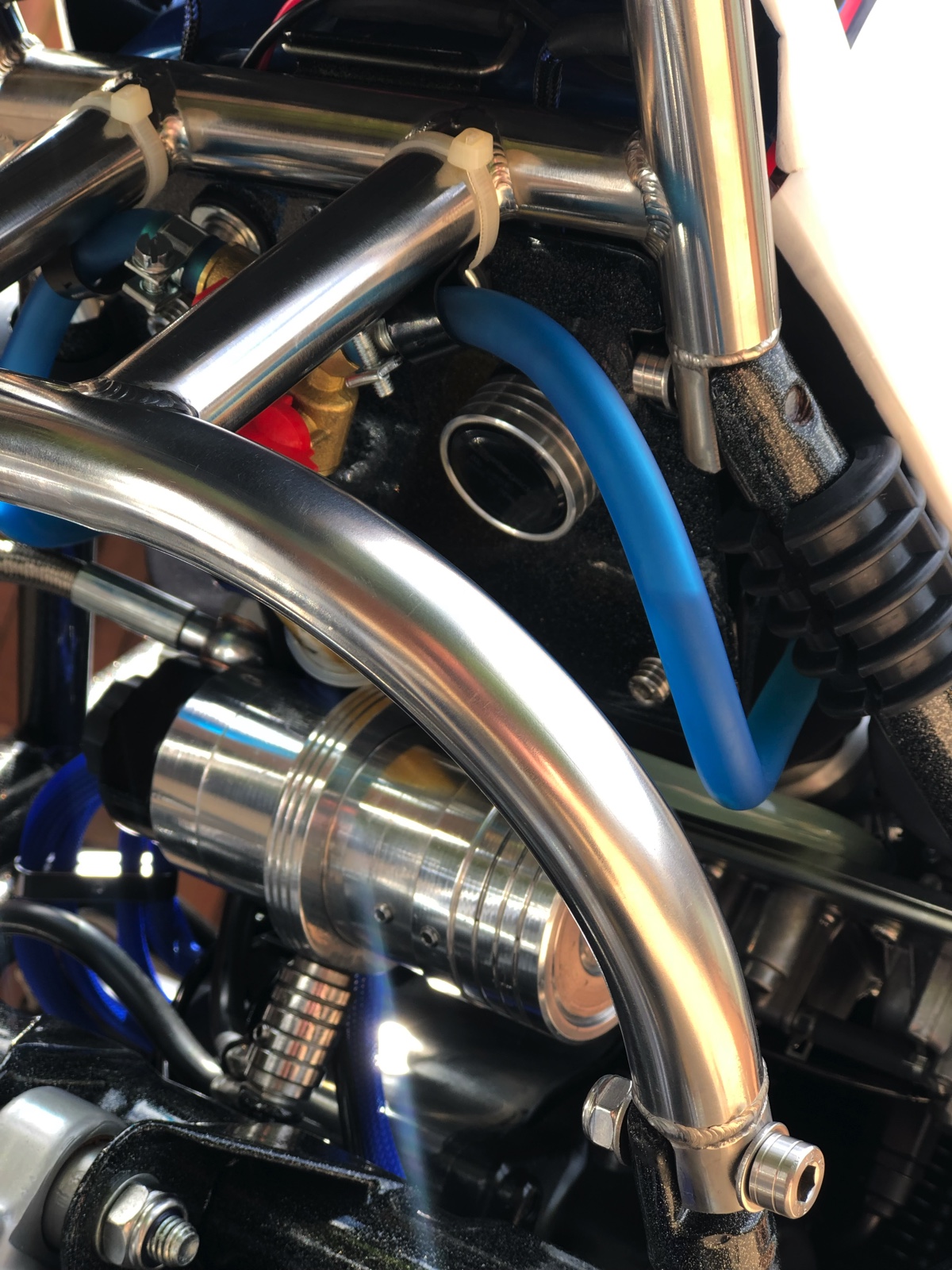
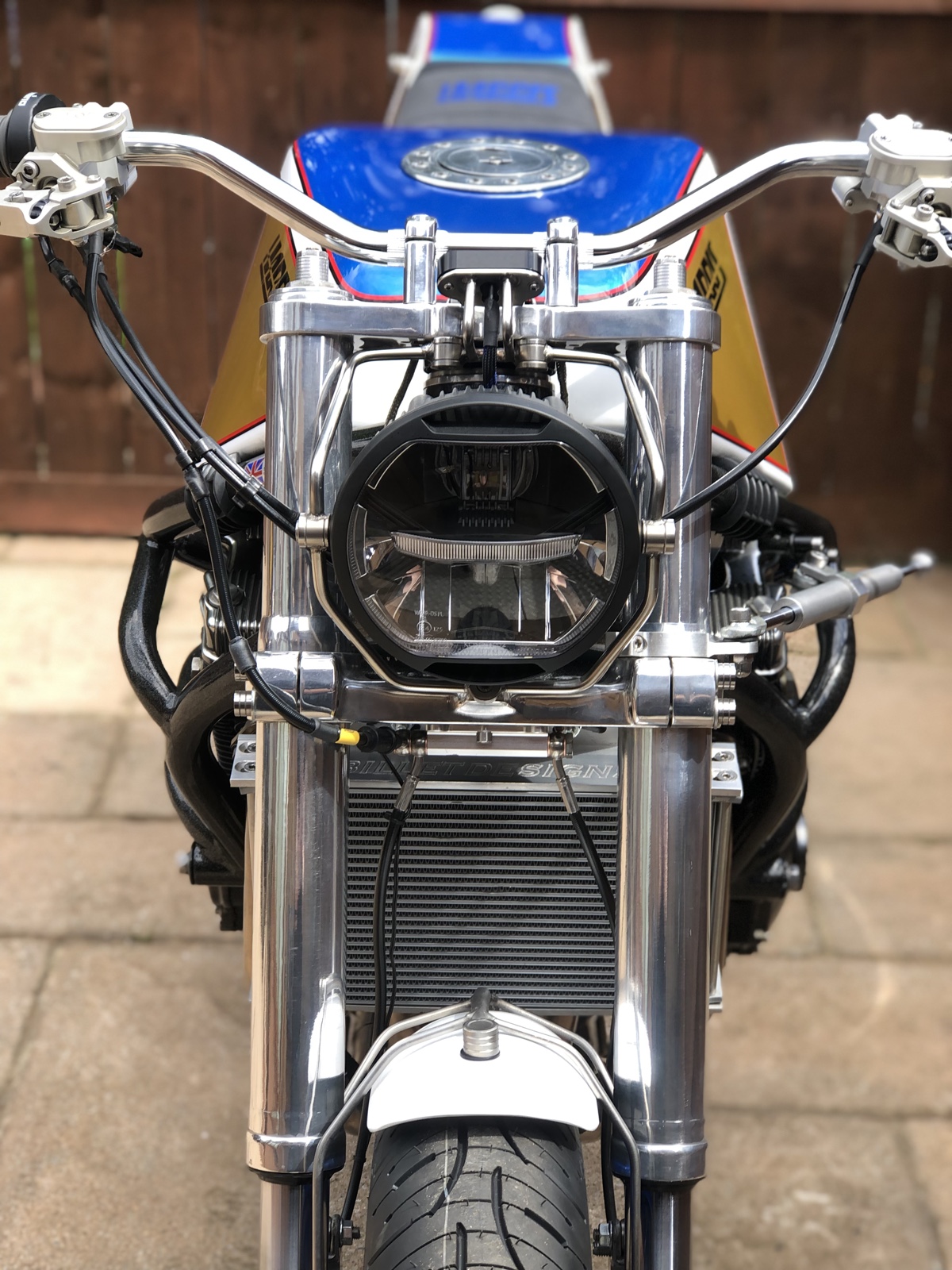
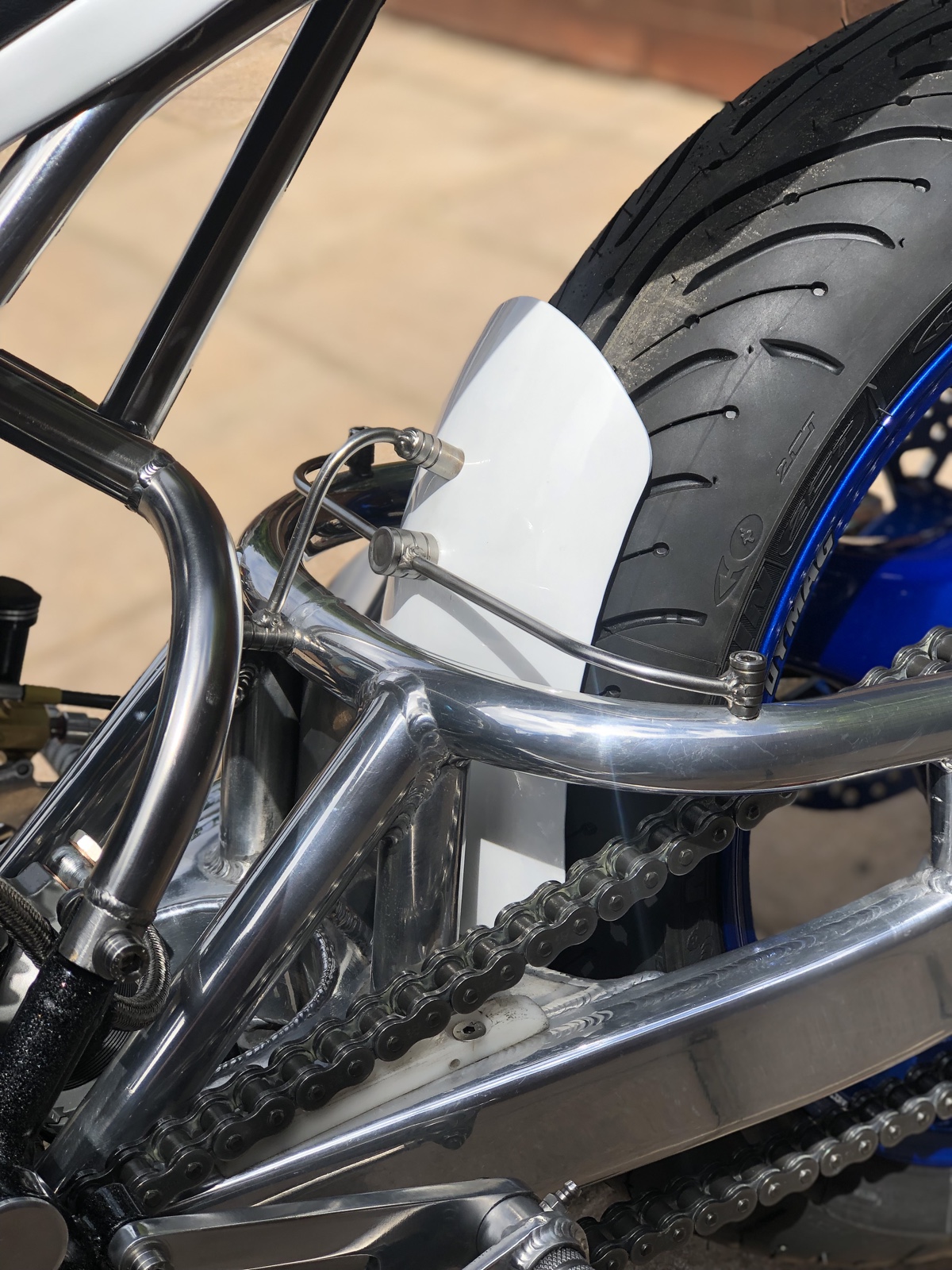
A huge amount of the bike was fabricated specifically for the build. The entire rear end was designed from scratch, with a one-off aluminium tail and seat base supported by a custom stainless-steel subframe. I also fabricated the headlight and speedometer mounts, custom mudguards with stainless-steel supports, and numerous smaller stainless and machined aluminium parts throughout the bike.
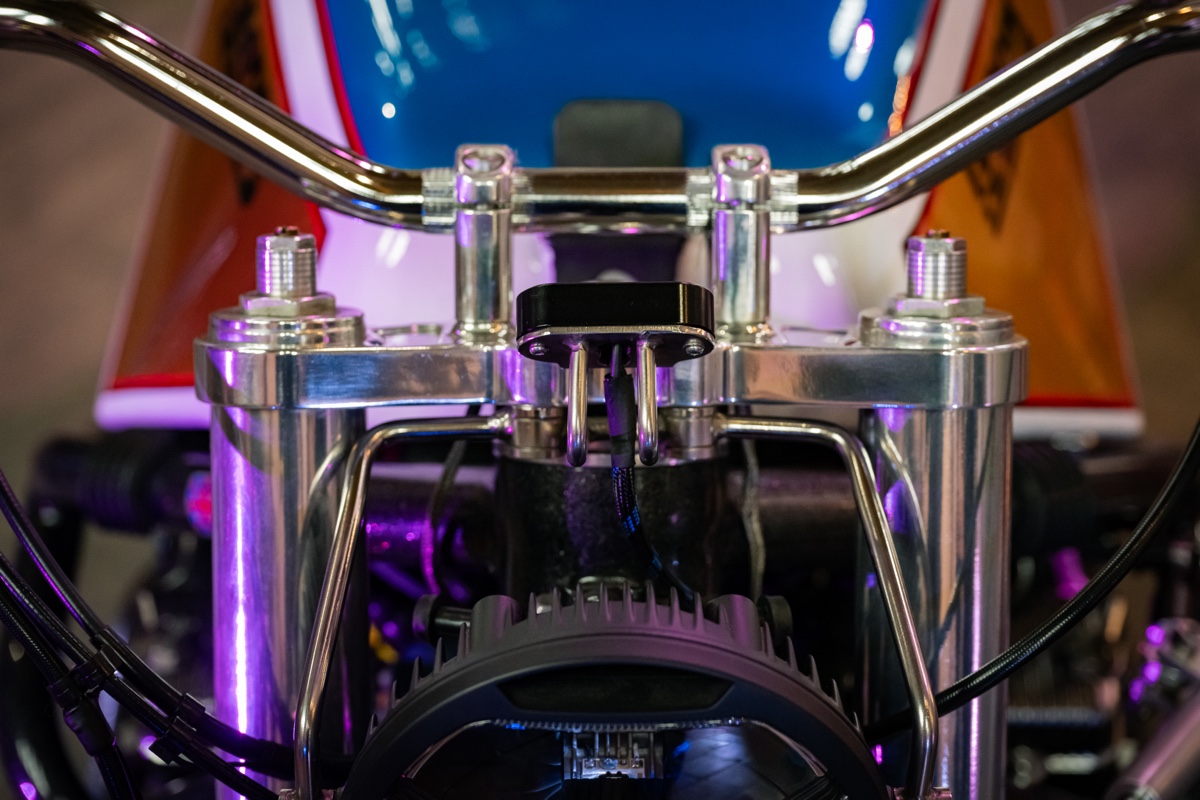
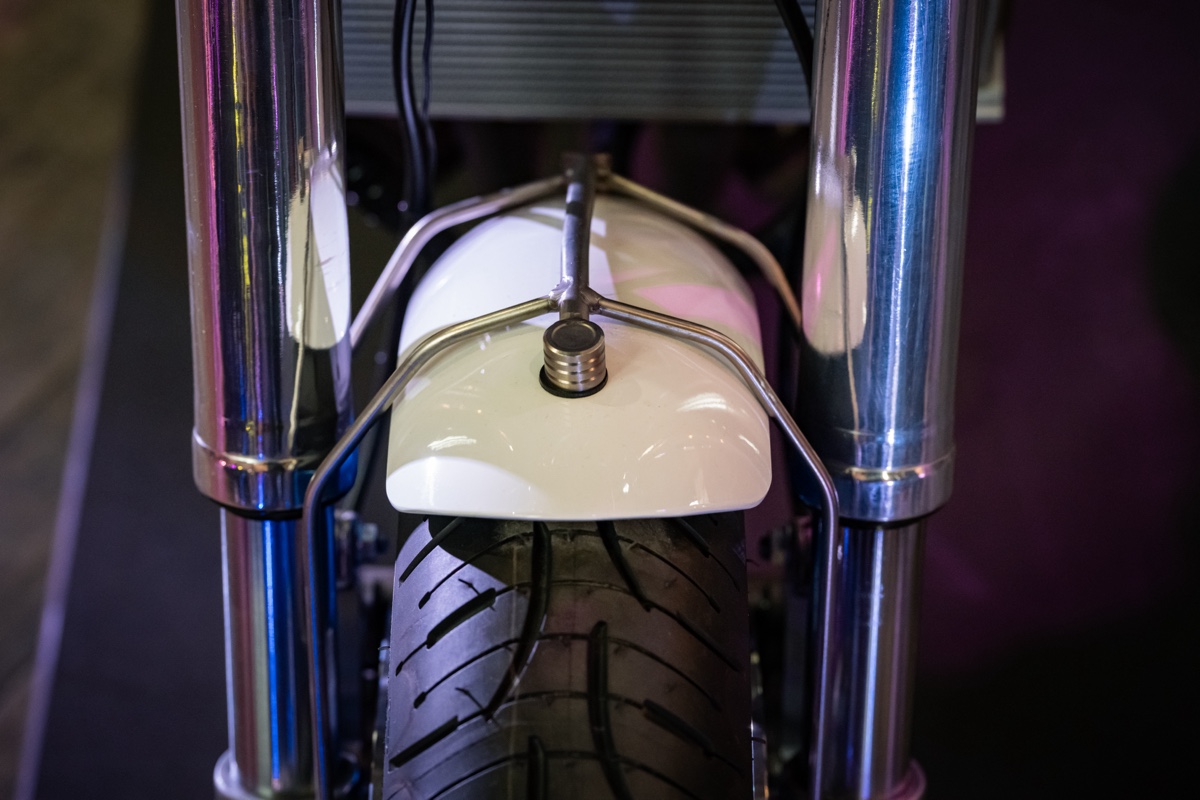
The rear features an in-house custom-fabricated aluminium afterburner-style brake/tail light.
I also made a machined aluminium cover and support for the rear shock remote reservoir, along with CNC-machined front brake hanger adapters for the AP Racing calipers. Even the stainless-steel bolts have individually machined detailing.
One of the bigger challenges was hiding all of the modern electrics. I repurposed a cavity within the Harris tank to house the battery and the complete Motogadget m.unit Blue installation, including a fabricated earth rail, so virtually none of the electrical system is visible.
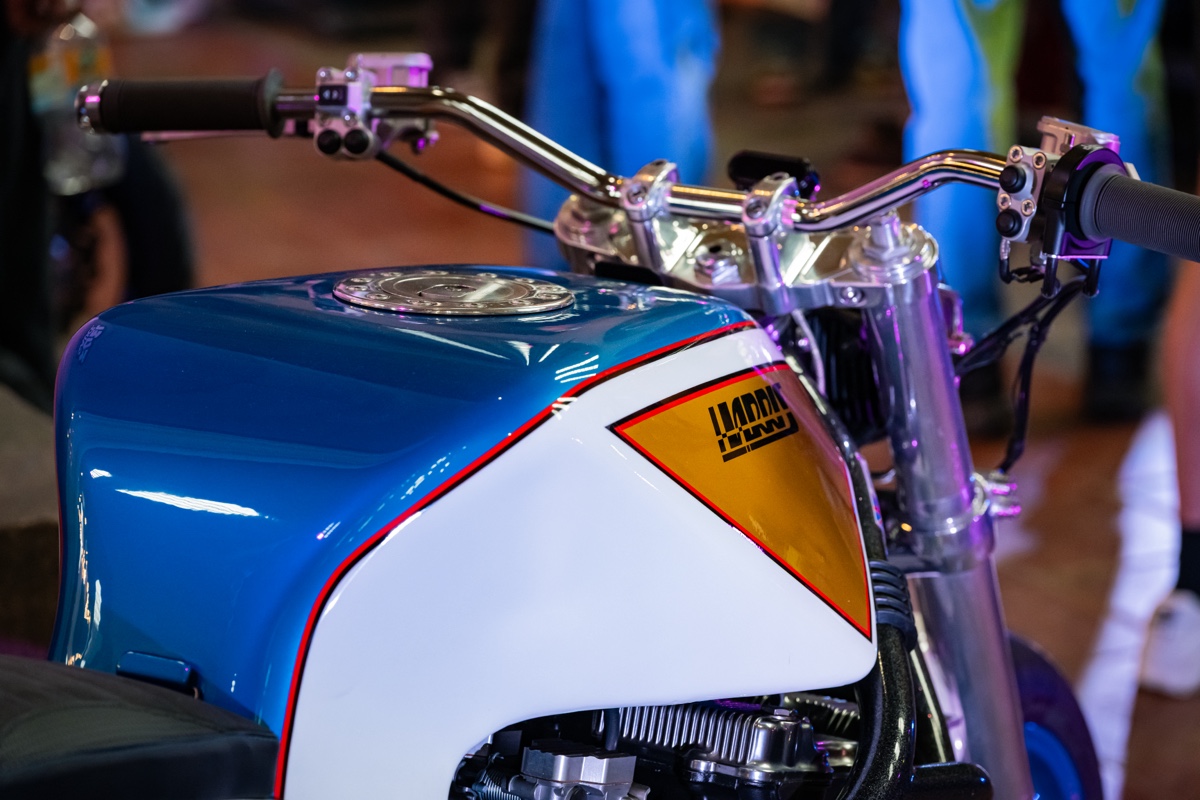
The bike runs Dymag magnesium wheels, AP Racing brakes, ISR controls, Mikuni RS flatslides, and a Pro-Race exhaust.
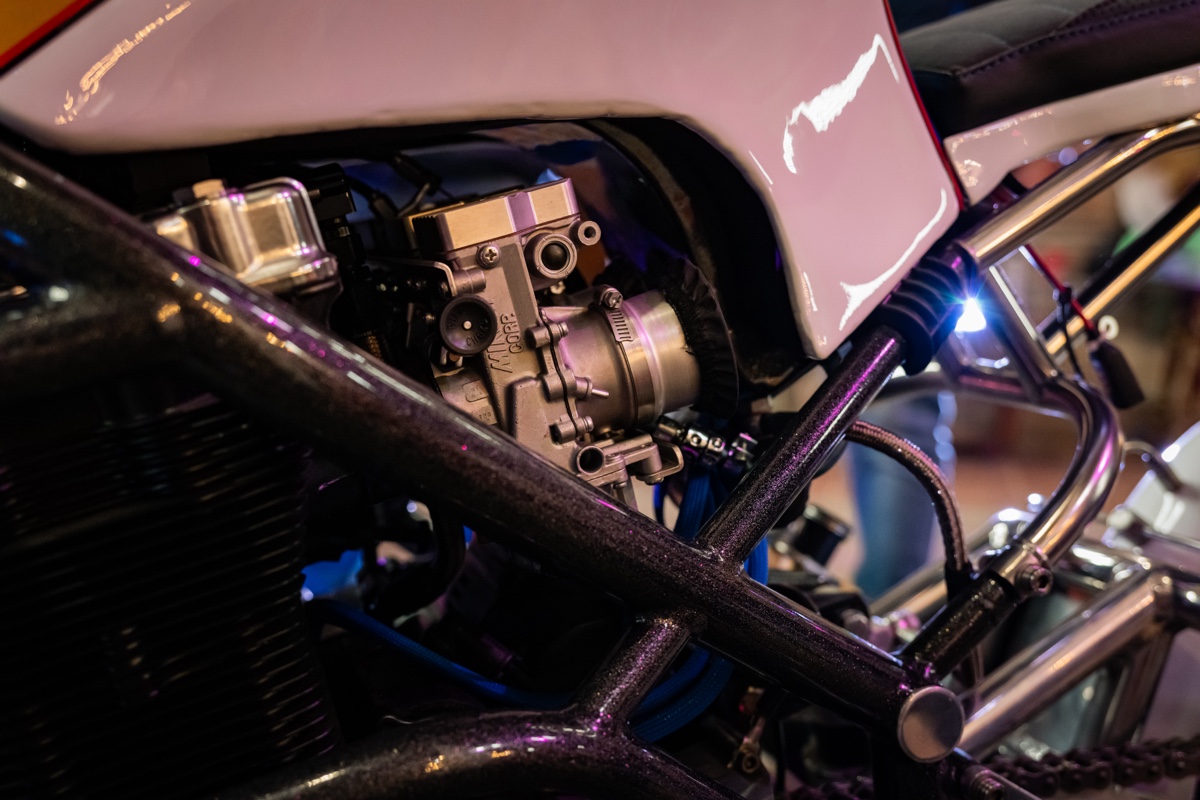
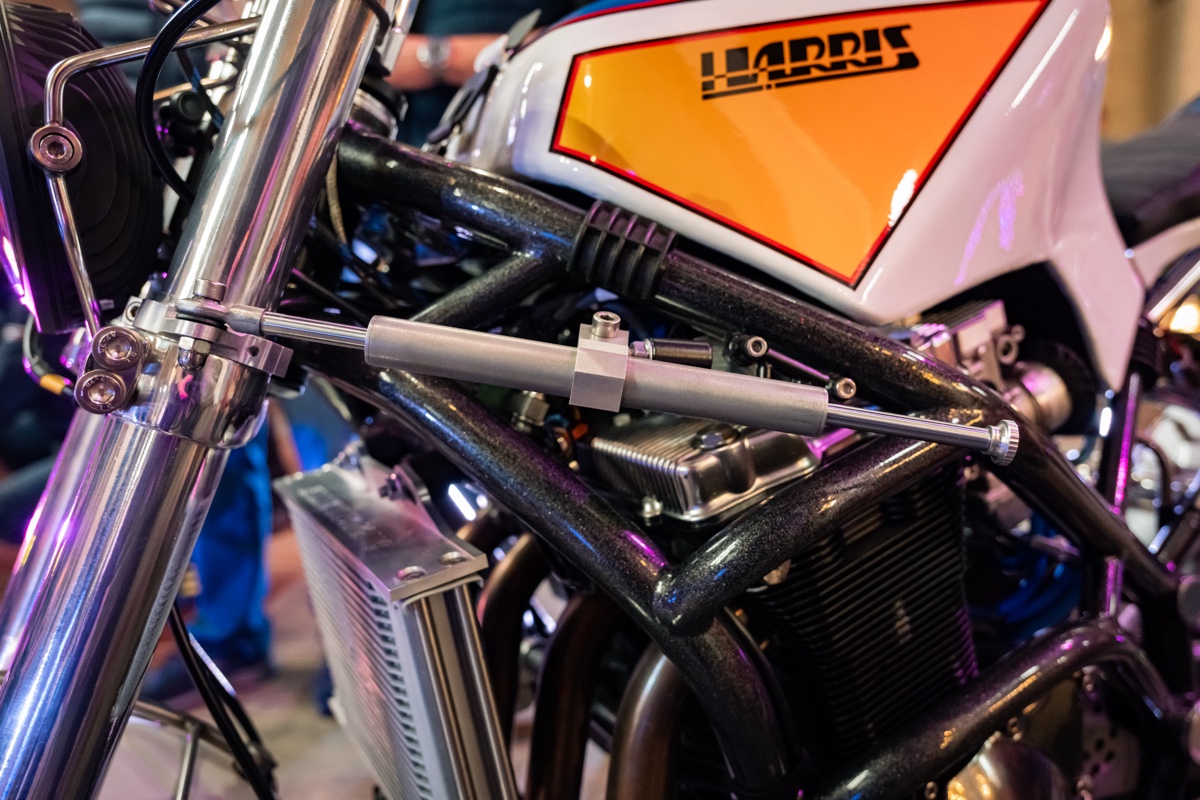
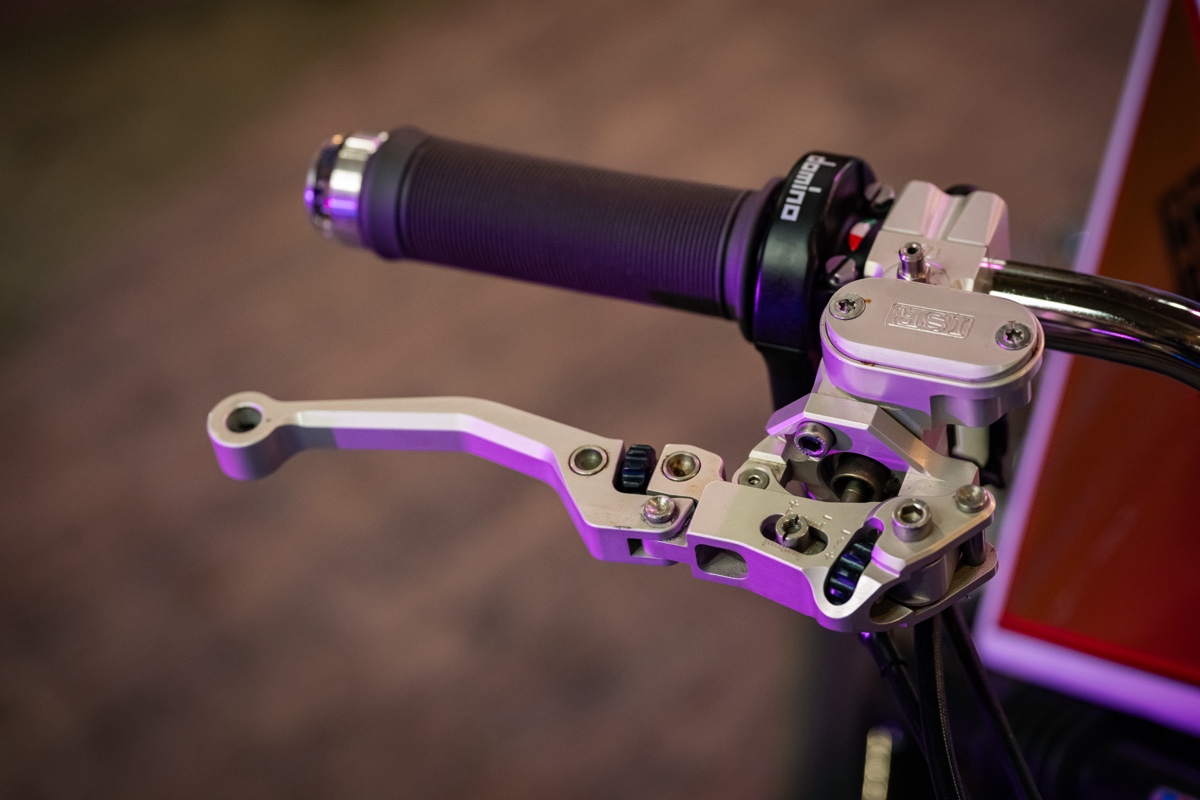
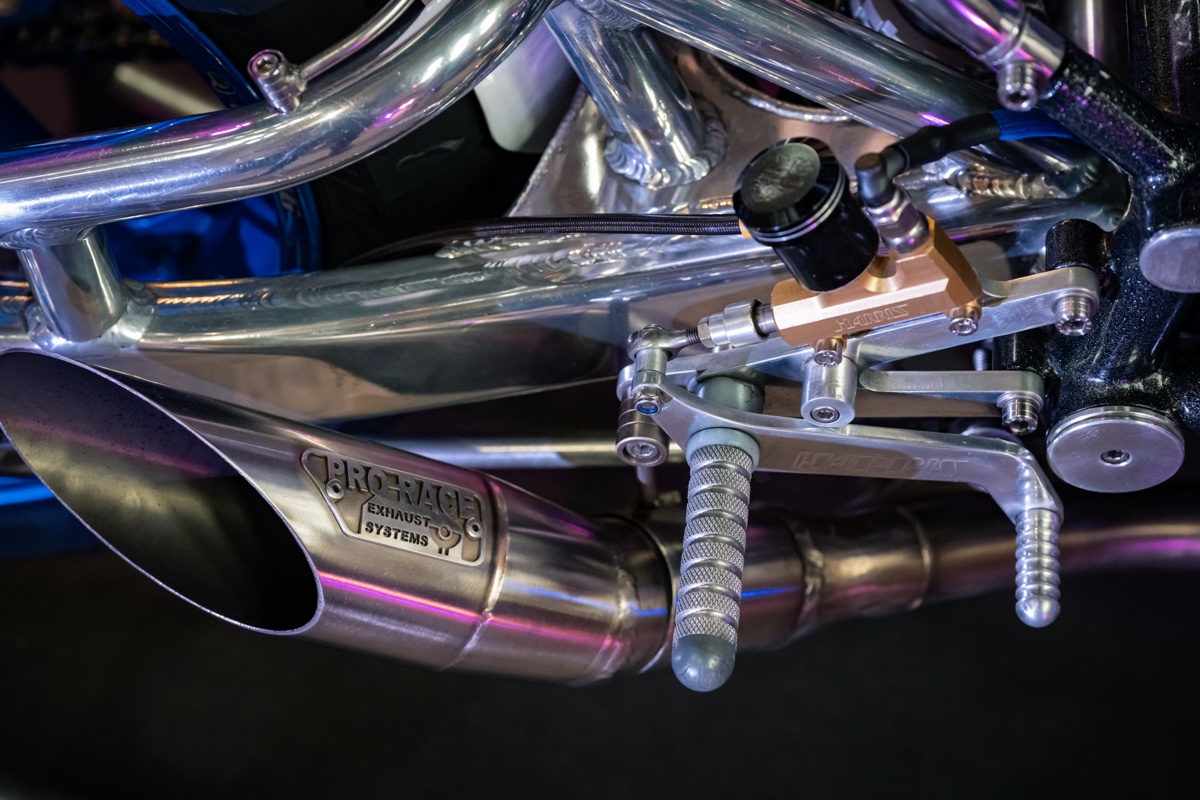
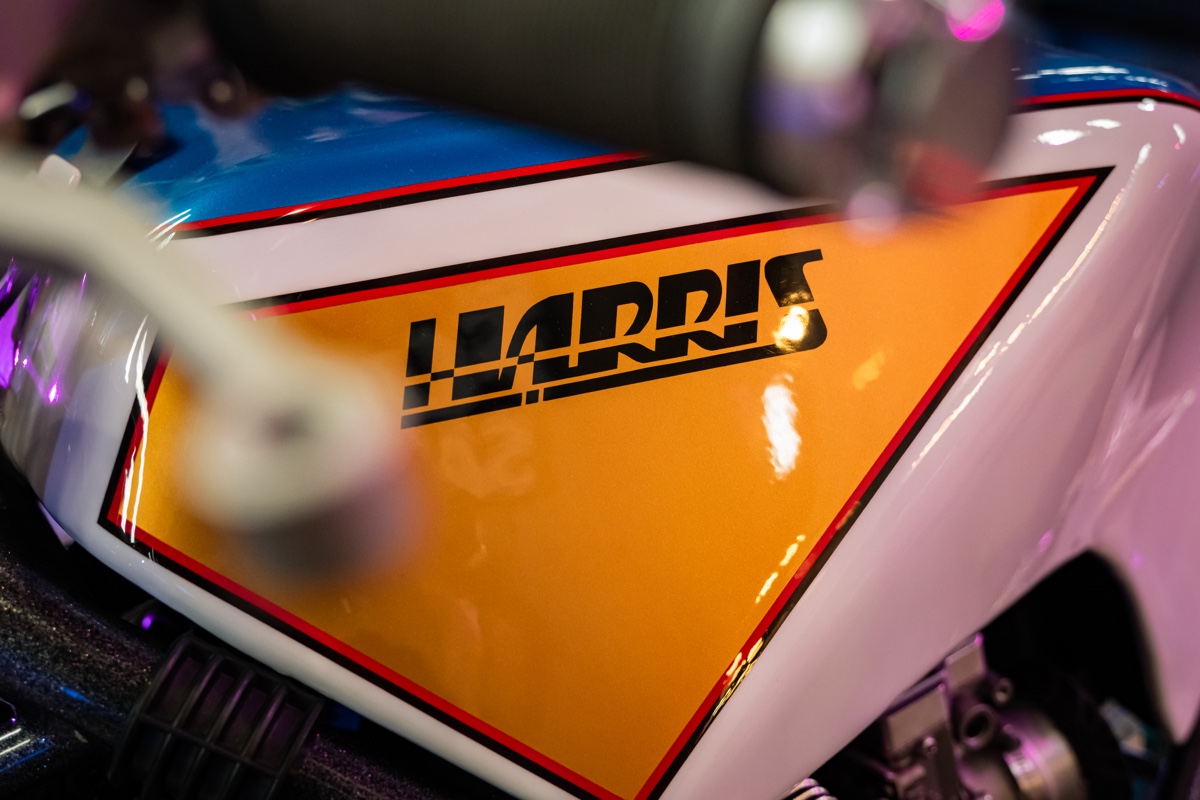
The GSX-R1100K engine had already been heavily built to 1216cc, so the rest of the bike was really designed around that engine and the Harris chassis.
• Does the bike have a nickname?
Harris 77.
• Can you tell us the horsepower, weight, and/or performance?
No dyno figures, but estimated at 130 bhp+.
• What’s the bike like to ride?
It actually hasn’t been ridden yet. It’s currently kept empty of fuel and has spent its life since the build as something of a garage ornament. The owner has access to numerous other bikes, so the Harris has never really needed to come out. Although I’m reliably informed that he plans on changing that!
• Is there anything about the build that you’re particularly proud of?
A huge amount of work went into hiding the entire electrical system inside the tank cavity, and I’m particularly proud of that. It gives the bike a really clean look on close inspection. Most people would probably assume everything is hidden beneath the seat, but there’s actually very little there.
I’m also really pleased with the stainless-steel subframe. It wasn’t the easiest thing to fabricate and, if I’m honest, I probably wouldn’t want to make another one! It was one of those challenges I fancied taking on and almost regretted halfway through, but I’m really pleased I stuck with it. It’s heavy, yes, but it doesn’t tarnish and looks great on close inspection.
• Is there anyone you’d like to thank or give credit to for the build?
A big thank you to Adrian at Bulldog Custom Paints for the paintwork, and Les at SaddleCraft for the seat and upholstery. Both did a fantastic job bringing their parts of the build together.
Follow the Builder
Instagram: @wolf77_custom_motorcycles
Photography: Wolf 77 and Roberto Garagarza (@roga______)
More from Wolf 77 Customs…
 Harris 77: Magnum 4 GSX-R1100 Streetfighter - 1216cc Harris Magnum 4 from Wolf 77 Custom Motorcycles… In 1979, the original Harris Magnum chassis kit hit the scene, designed to house the most powerful superbike engines on the market. Before the aluminum-frame revolution […]
 Wolf Special: CCM Spitfire Cafe Racer by Wolf 77 Customs - Wolf 77 Customs builds a custom Spitfire for Motorcycle Live… Clews Competition Machines, better known as CCM, was founded back in 1971 by Alan Clews, a successful off-road racer who began building BSA-powered motocross bikes […]
 Kawasaki 750 Zephyr Café Racer by Wolf 77 Customs - The Kawasaki Zephyr series harked back to the mighty Zed of old — a line of air-cooled, dual-shock inline fours with 70s styling and 90s tech. This made for quite a solid combination, though some […]