
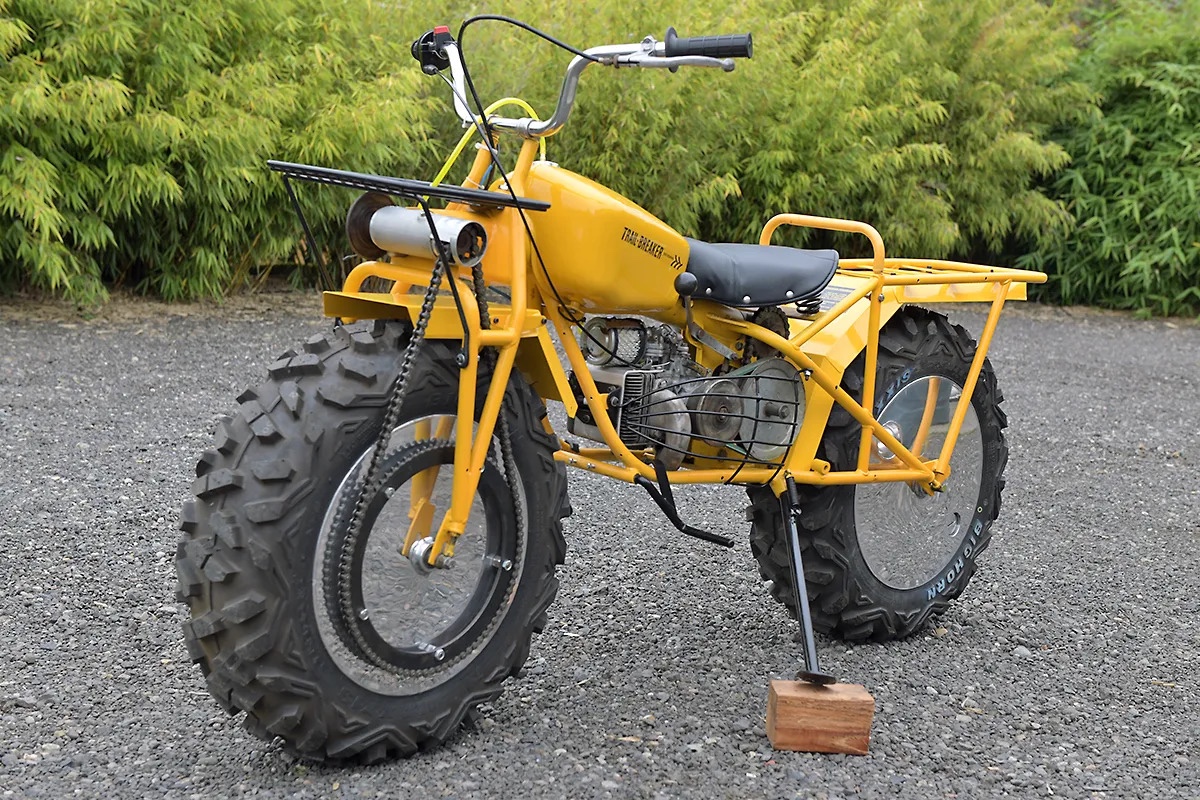
Two-wheel drive. Hollow drum wheels. Seven horsepower. More than 60 years after Charles Fehn conceived it, the Rokon Trail-Breaker is still being built in New Hampshire…
Most motorcycles are designed around some combination of speed, handling, comfort, and style. The Rokon Trail-Breaker was designed around a different question: How deep into the woods can a motorcycle possibly go? Its answer includes full-time drive to both wheels, enormous low-pressure tires, exceptional ground clearance, gearing low enough for walking-speed travel, and hollow aluminum wheels that can serve as reservoirs for fuel or water. Leave those wheels empty and they provide enough buoyancy for the motorcycle to float.
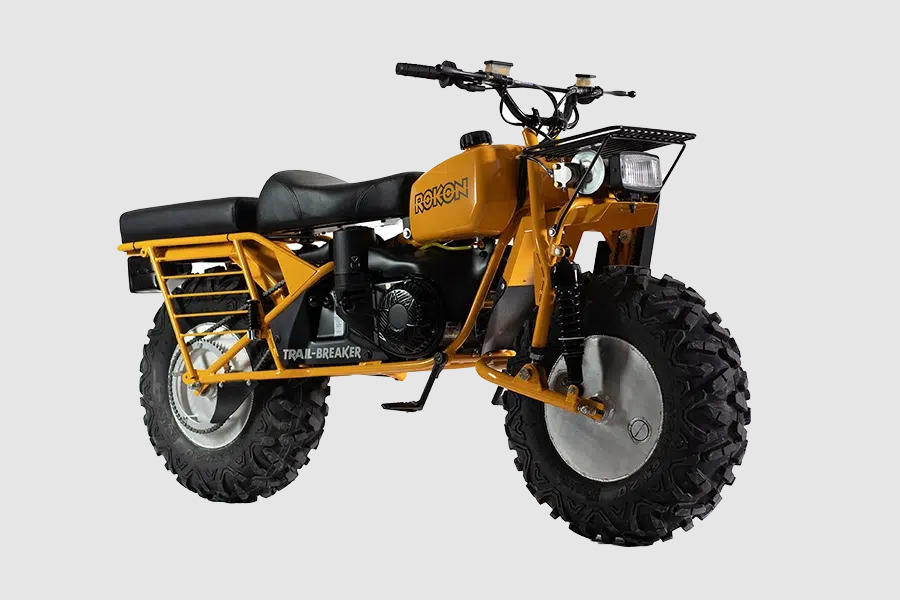
That last claim sounds like vintage advertising hyperbole, but Cycle World confirmed it during a 1970 test. The magazine drove a Trail-Breaker through two-foot-deep water and simply noted: “It floats.” More than half a century later, Rokon still lists flotation as one of the model’s defining features…and the motorcycle itself is still available too.
Charles Fehn’s Two-Wheel-Drive Motorcycle
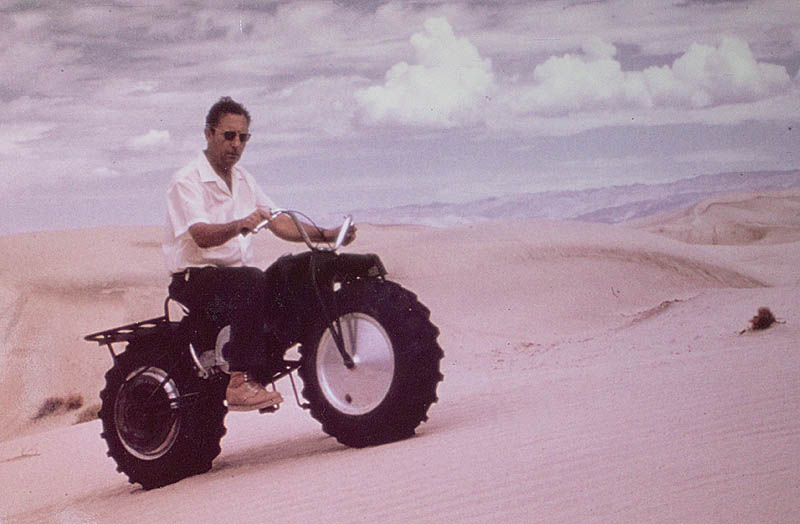
The Trail-Breaker traces its origins to California inventor Charles Fehn, who began developing a two-wheel-drive motorcycle around 1958. Fehn’s objective was unusually specific. Early patent filings described a motorcycle intended for slow cross-country travel over obstacles, mountainous terrain, snow, and soft ground. Speed was never the priority. Traction was.
Fehn called his early machine the Trailmaker. Nethercutt Industries acquired the design around 1960 and renamed it the Trail-Breaker, beginning a lineage that eventually became Rokon. Fehn filed his definitive patent application for a “Motorcycle Having Two Driven Wheels” in 1963; the patent was granted in 1966. Although many details have changed, the fundamental drivetrain architecture remains remarkably recognizable today.
How Do You Drive the Front Wheel?
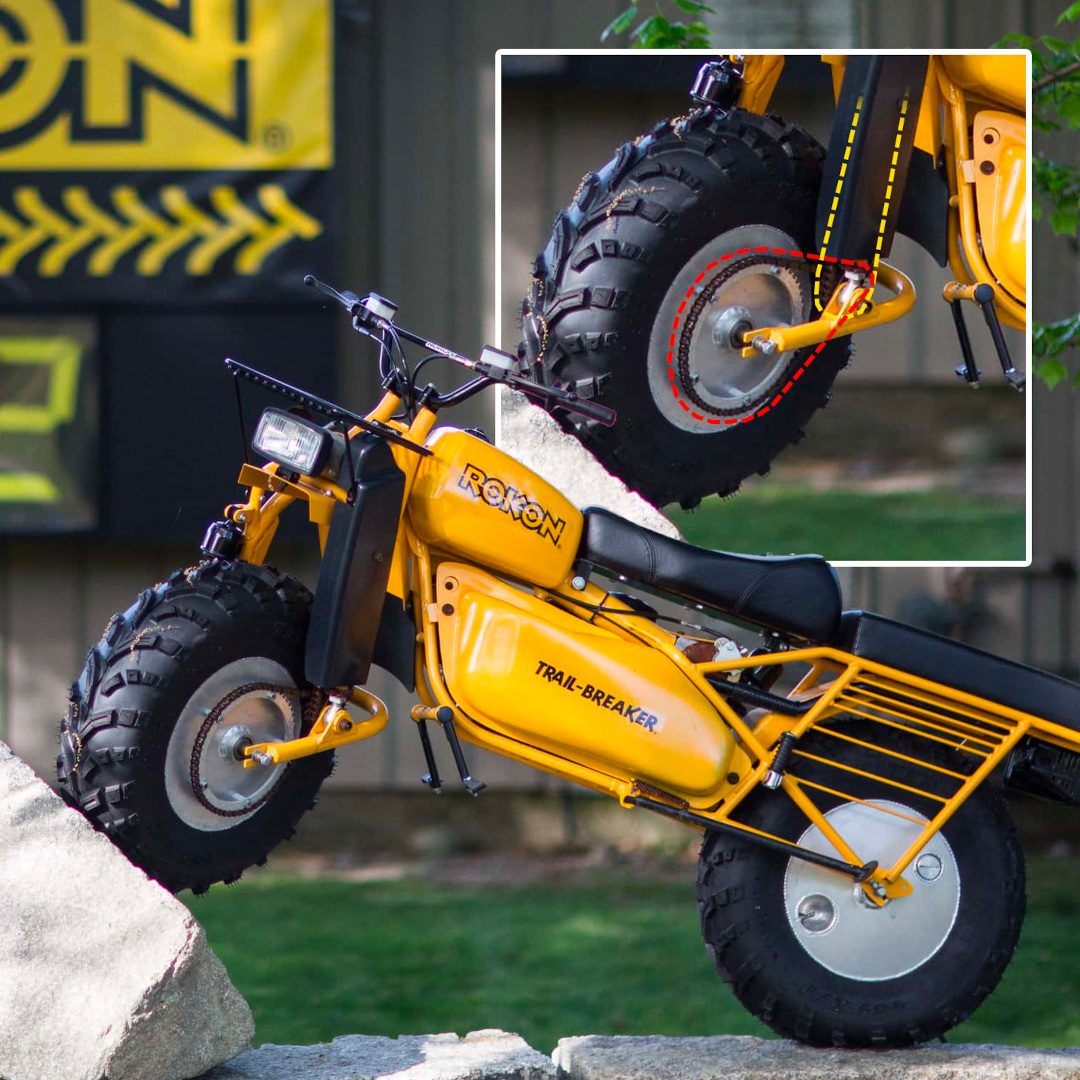
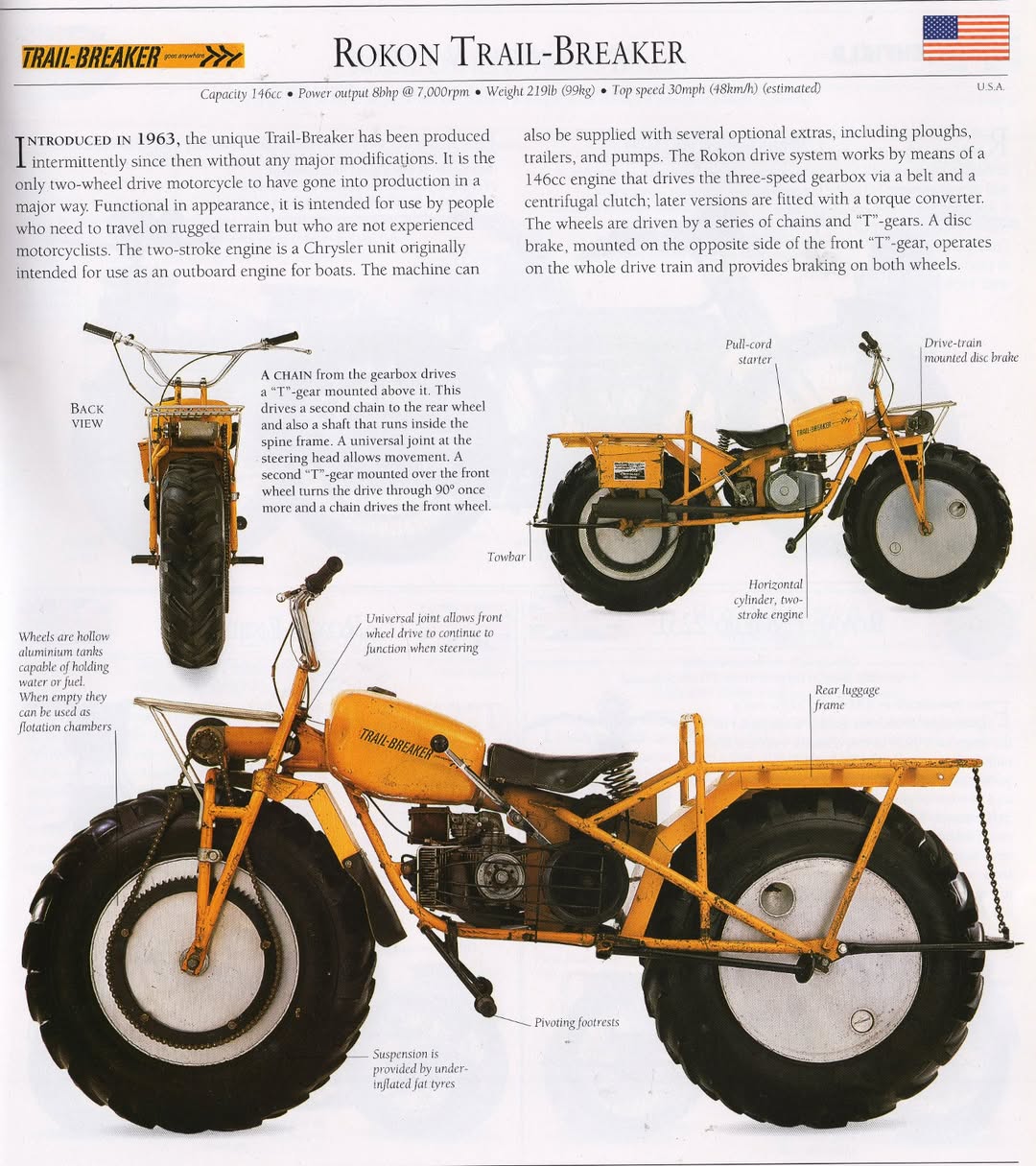
Driving the rear wheel of a motorcycle is easy. Driving the front wheel while still allowing it to steer is considerably more complicated. The Trail-Breaker’s solution uses mechanical drive rather than hydraulics or electricity. In the classic arrangement tested by Cycle World, power traveled through right-angle miter gearboxes connected by a chromoly driveshaft running forward along the motorcycle. Sprockets and chains then transmitted power to the wheels.
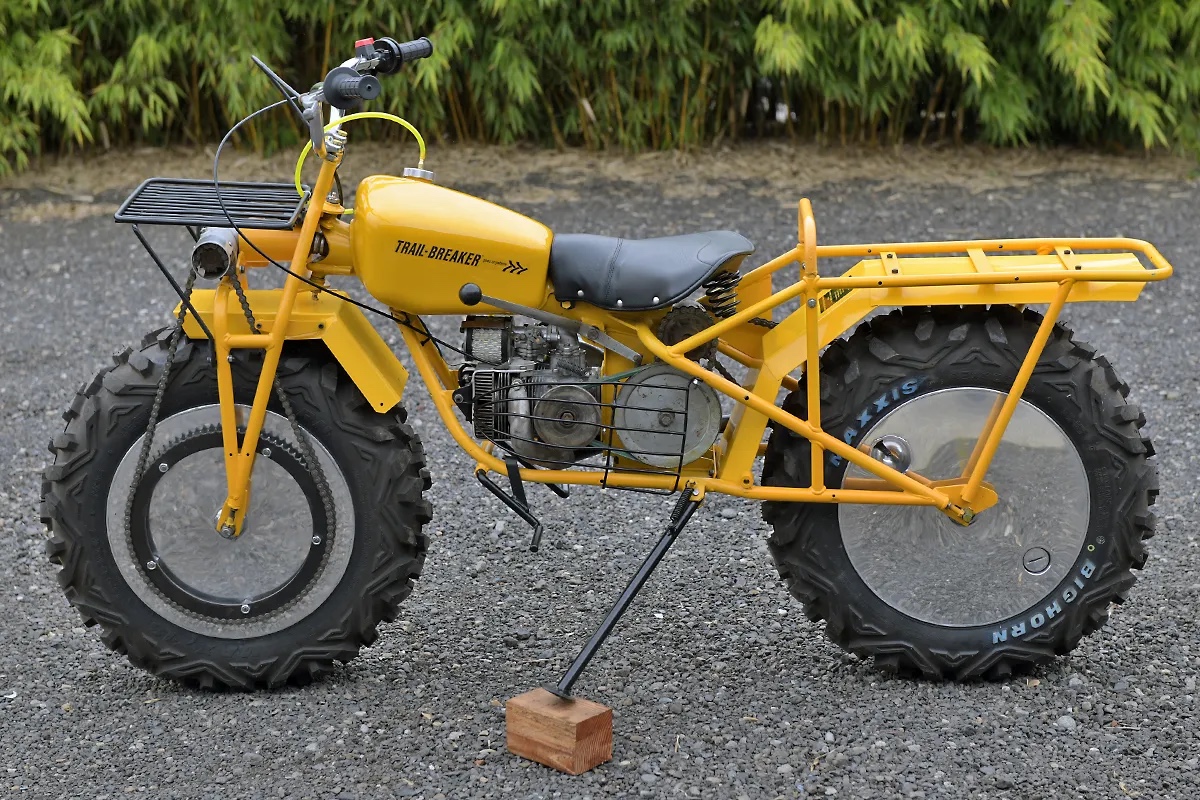
The modern bike retains the same basic principles. The transmission drives the rear wheel conventionally while another driveline runs forward through a universal joint and miter gearbox. A chain then transfers power to the front-wheel sprocket.
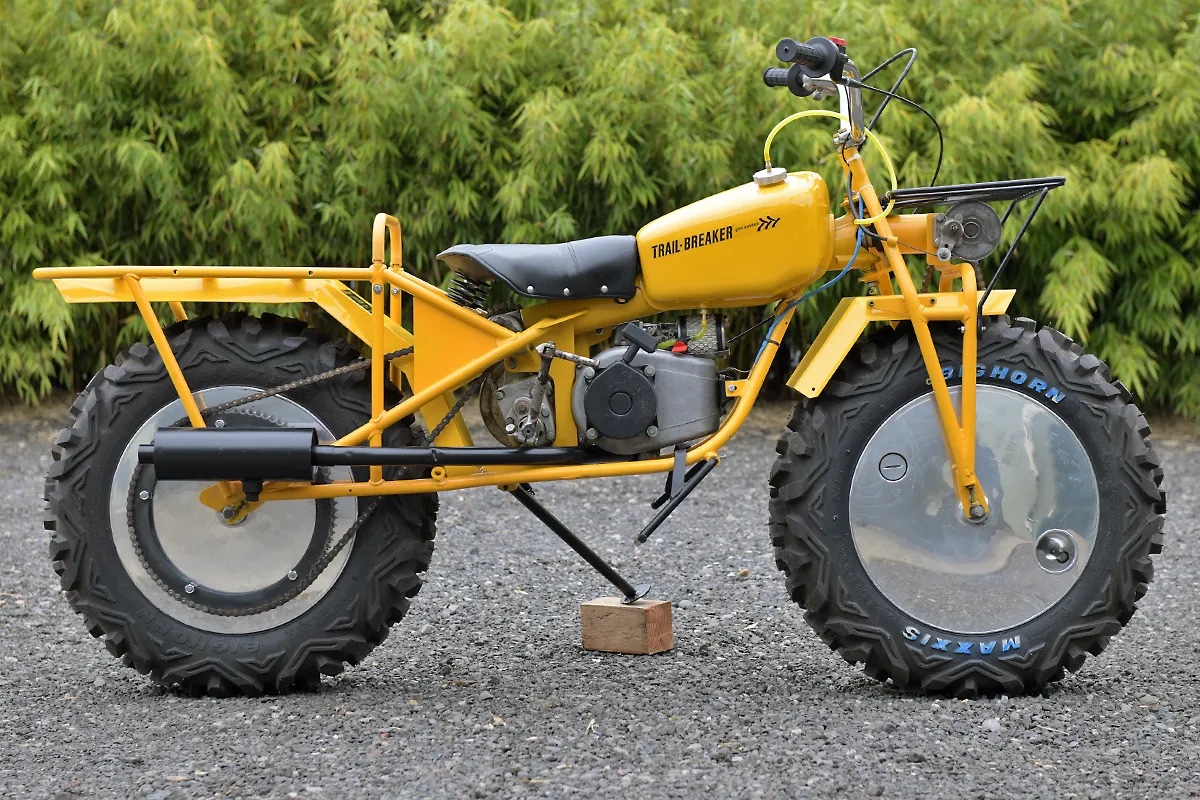
An overrunning clutch in the front driveline allows the front wheel to rotate faster than the rear when necessary, particularly while turning. Without some provision for different wheel speeds, a mechanically linked two-wheel-drive motorcycle could experience drivetrain wind-up and difficult steering. The result is elegantly mechanical: the rear tire pushes while the front tire pulls.
Built to Go Slow…
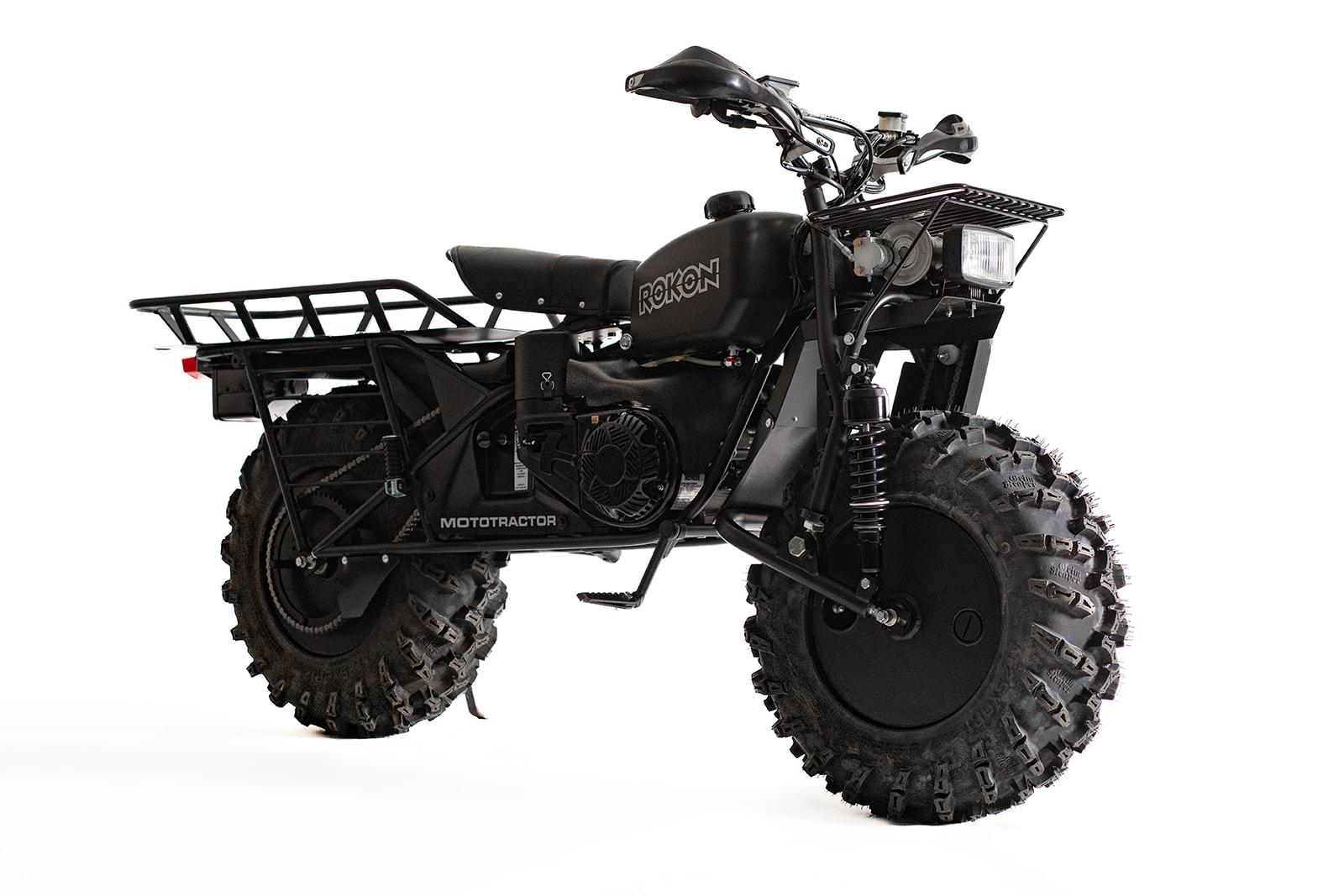
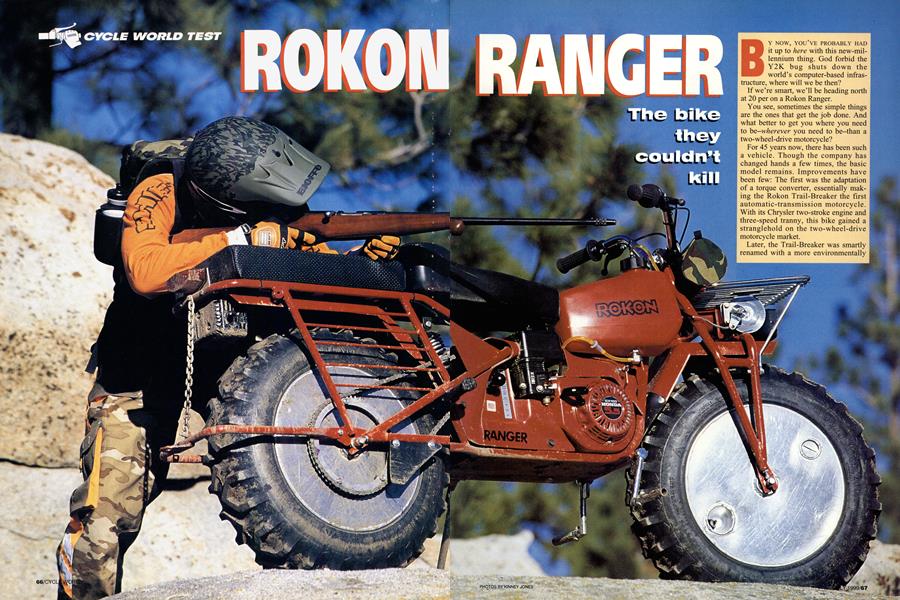
That drivetrain makes more sense once you understand how a Rokon is intended to be ridden. A Trail-Breaker is not a conventional trail bike with extra traction. It’s closer to a two-wheeled tractor. When Cycle World tested one in 1970, its 8-horsepower Chrysler West Bend two-stroke drove through an automatic clutch and three-speed transmission. Maximum speed was only 20 mph, while the lowest gearing allowed the motorcycle to creep along at roughly half a mile per hour.
CW concluded that discussing its high-speed handling was almost beside the point.
“You can’t even talk about its handling, because at 20 mph there is no handling consideration to speak of.” –Cycle World
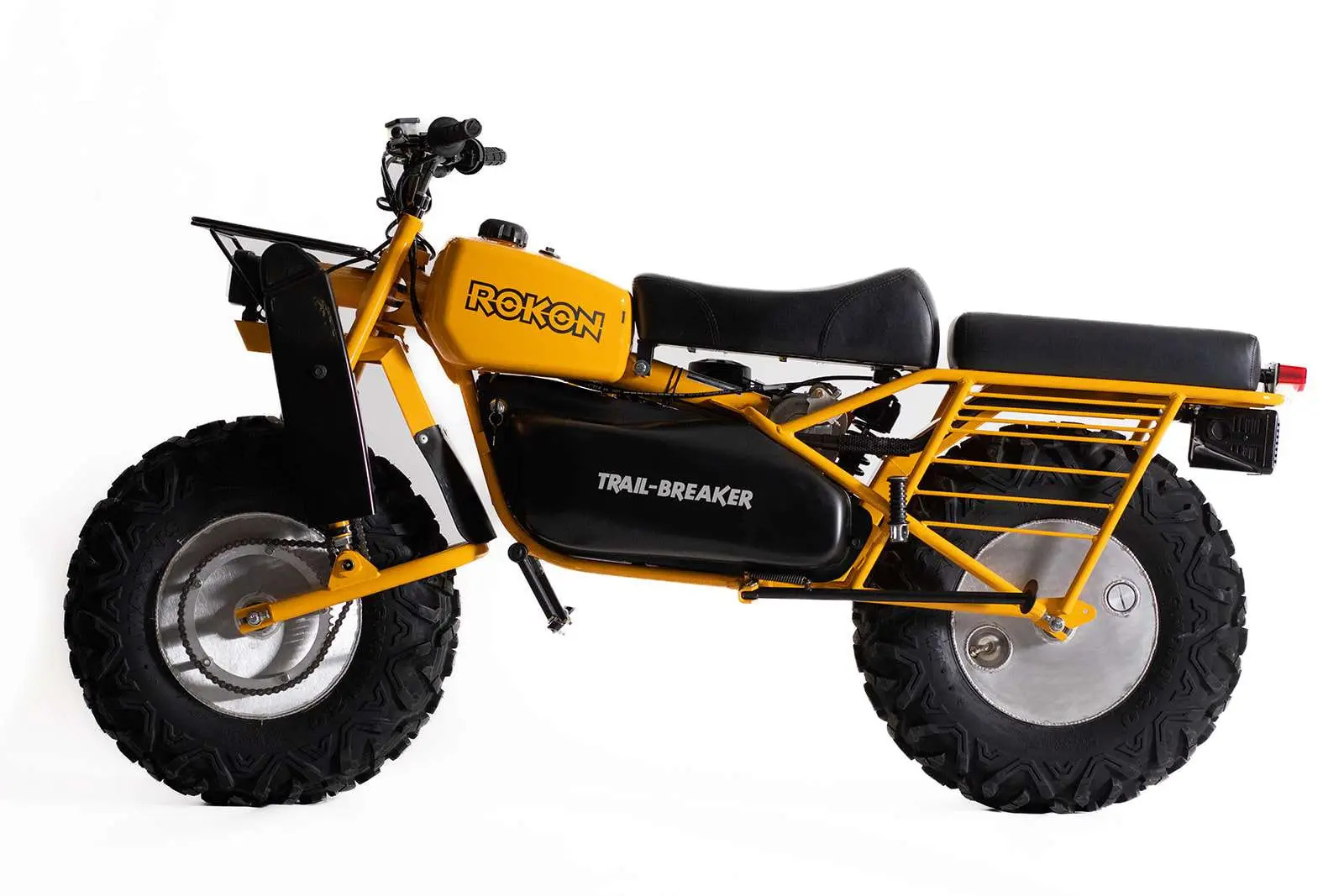
The current Trail-Breaker follows the same philosophy. Its 208cc Kohler air-cooled four-stroke produces only 7 horsepower at 3,600 rpm and 9.1 lb-ft of torque at 2,800 rpm. An automatic torque converter feeds a three-range transmission. First gear covers approximately 0-10 mph, second reaches 20 mph, and third extends the top speed to about 35 mph. Seven horsepower doesn’t sound remarkable because horsepower isn’t what the Trail-Breaker is about.
Traction Before Power
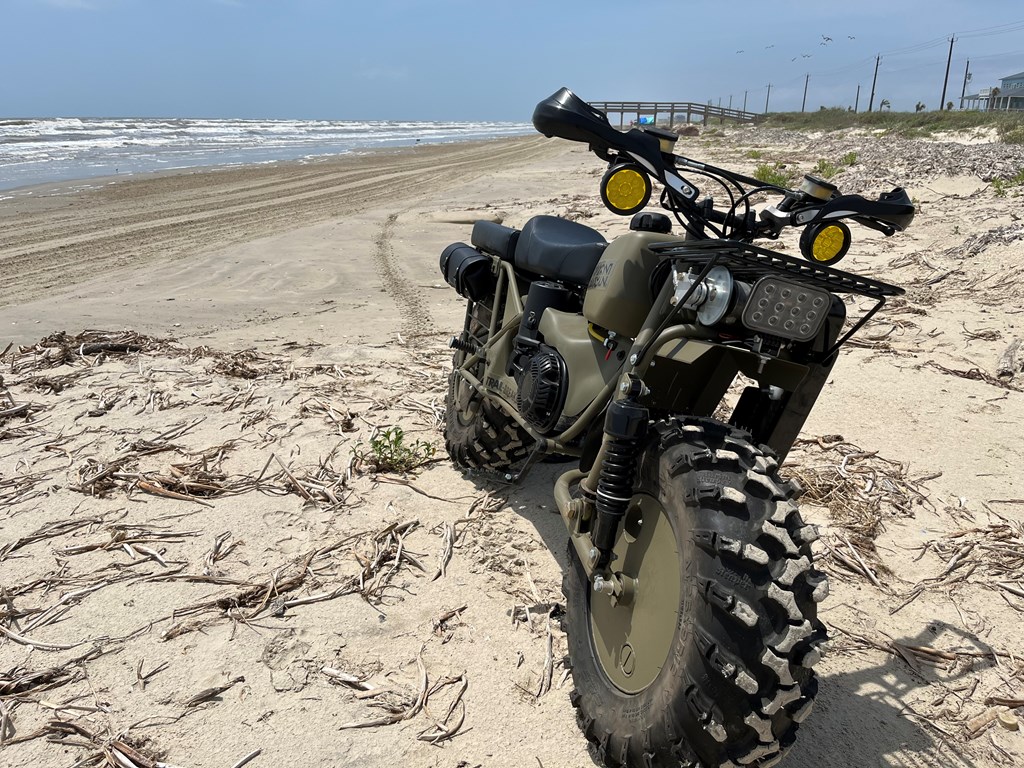
Modern off-road motorcycles routinely produce five or ten times the Rokon’s output, but additional horsepower is useful only if the tire can transmit it into the ground. The Trail-Breaker attacks that problem from the opposite direction. Its enormous 25-inch-tall, 8-inch-wide tires run at very low pressure, creating a large contact patch over mud, snow, sand, loose soil, and rock. Full-time drive at both wheels further reduces the amount of traction each tire must provide individually.
The result is a machine designed to crawl forward rather than spin its rear tire. Current Trail-Breakers weigh a claimed 218 pounds dry and offer 15 inches of ground clearance. Rokon rates them for a 60% grade — roughly 31 degrees — assuming sufficient traction.
“Trail-Breaker is an appropriate name for this revolutionary vehicle. It is a mechanical mountain goat. Three-foot-high obstacles are child’s play; it will climb a 60-degree slope if traction is available. It floats, and can ford two-foot-deep streams with ease. The TrailBreaker exerts only 1.5 lb. per square inch of contact pressure on the ground. This enables the vehicle to traverse snow, mud and marsh land without sinking and bogging down.” -CW
Importantly, a 60-percent grade and a 60-degree incline are very different things, so that’s probably a mistake on Cycle World’s part. Still, there’s no doubt this little wheeler can tackle some serious terrain.
The Wheels Are Tanks
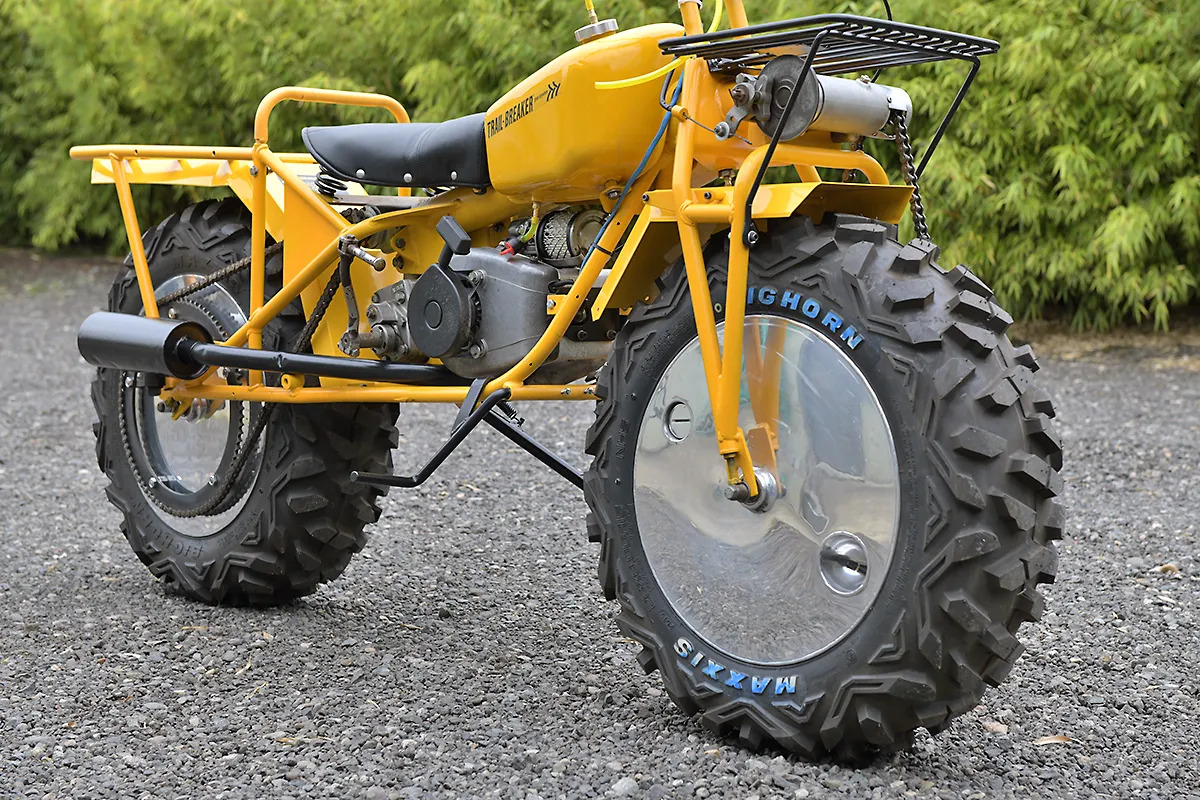
Then there are the wheels. Instead of conventional spoked or cast motorcycle rims, the Trail-Breaker uses sealed aluminum drums. Those drums serve two purposes: They can carry extra liquids — Rokon currently advertises storage for up to 2.5 gallons of additional fuel or water, or, when left empty, provide additional flotation.
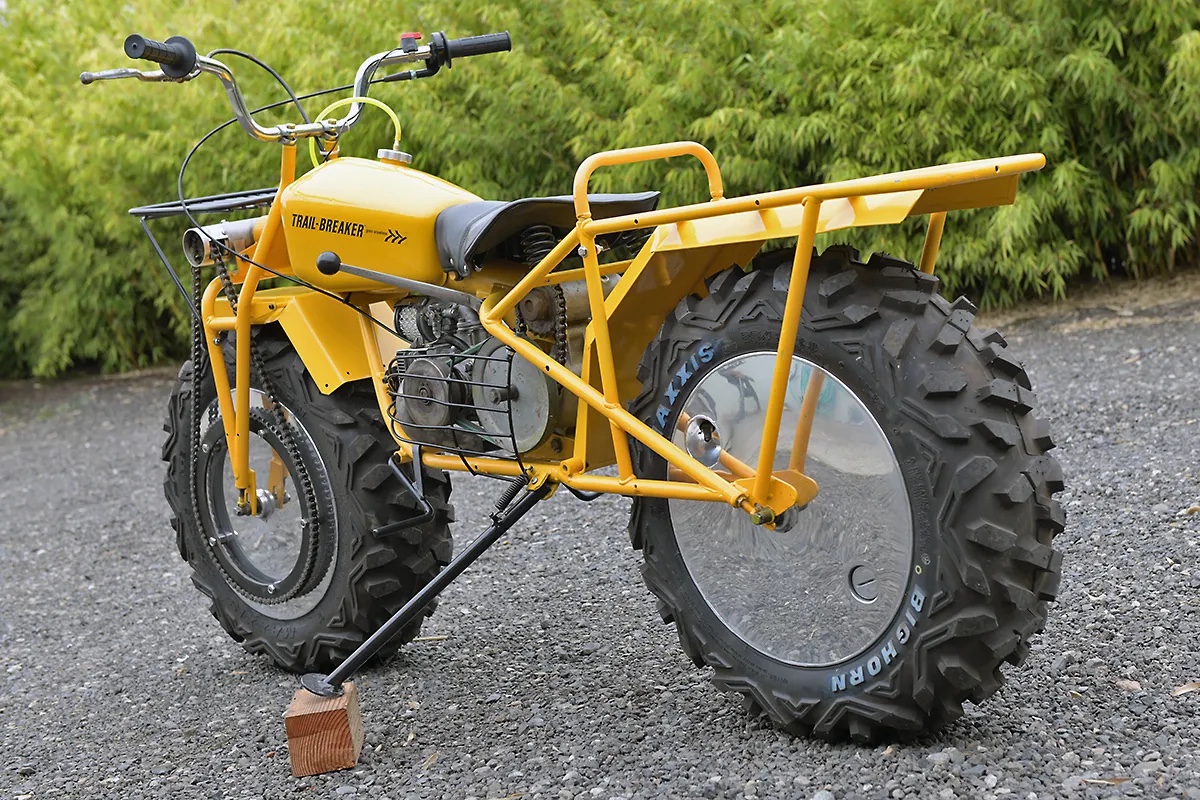
It’s difficult to imagine another motorcycle component performing such radically different jobs depending upon how the owner uses it. Going deep into the backcountry? Carry fuel. Camping somewhere dry? Carry water. Need maximum buoyancy? Leave the drums empty.
Yes, It Really Floats…
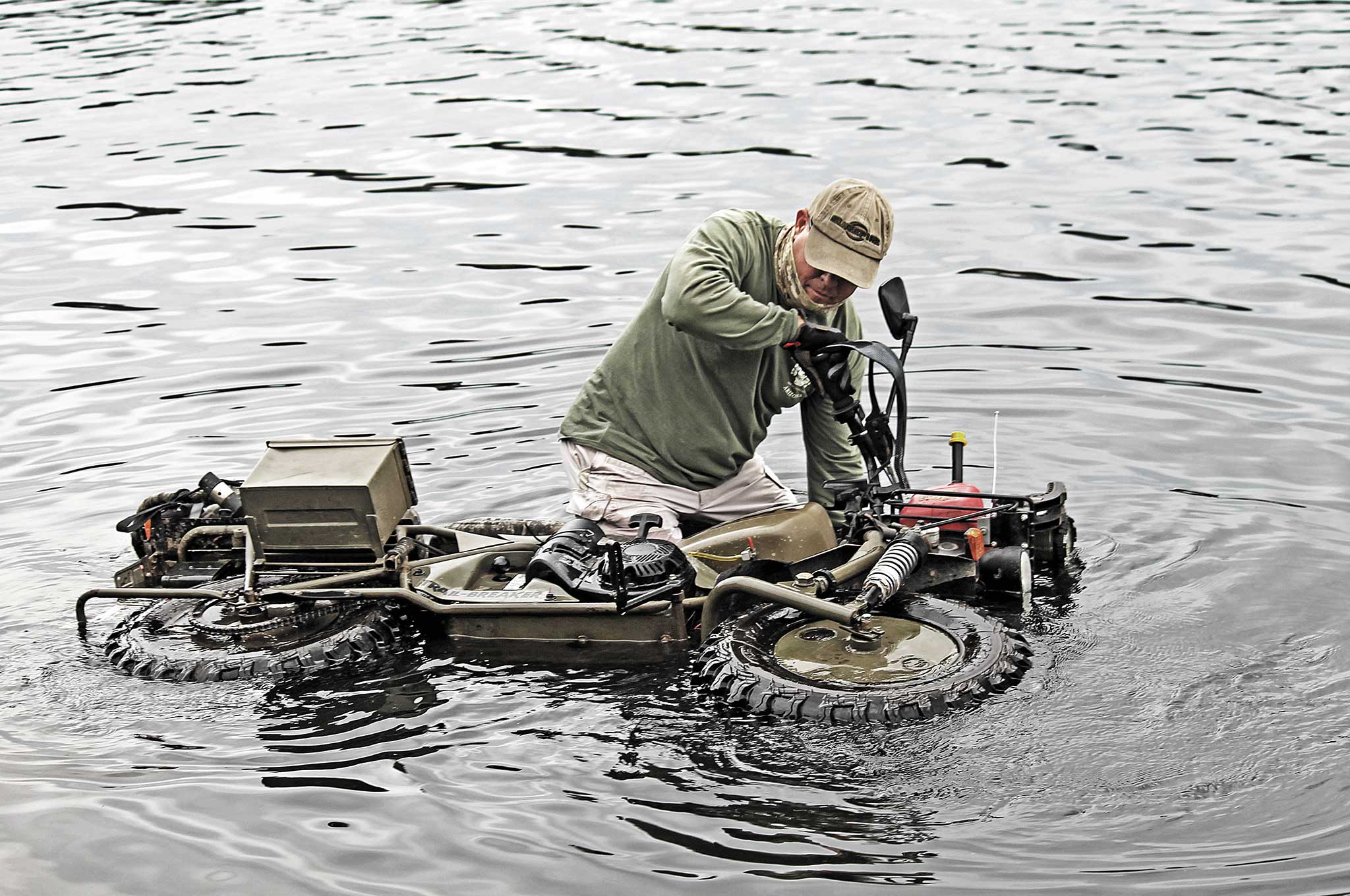
A Trail-Breaker is not an amphibious motorcycle in the sense of a vehicle that can drive itself through open water. There is no marine propeller or water-jet propulsion. Instead, the large tires, sealed drum wheels, and relatively low vehicle weight provide sufficient buoyancy to support the motorcycle when water becomes too deep for the tires to remain on the bottom.
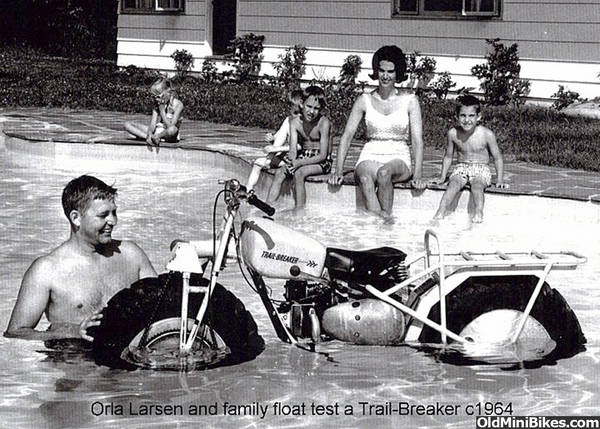
That makes flotation useful for maneuvering or recovering the bike during deep-water crossings. For actual riding, the current machine is officially rated to ford water approximately 24 inches deep.
No Rear Suspension Required
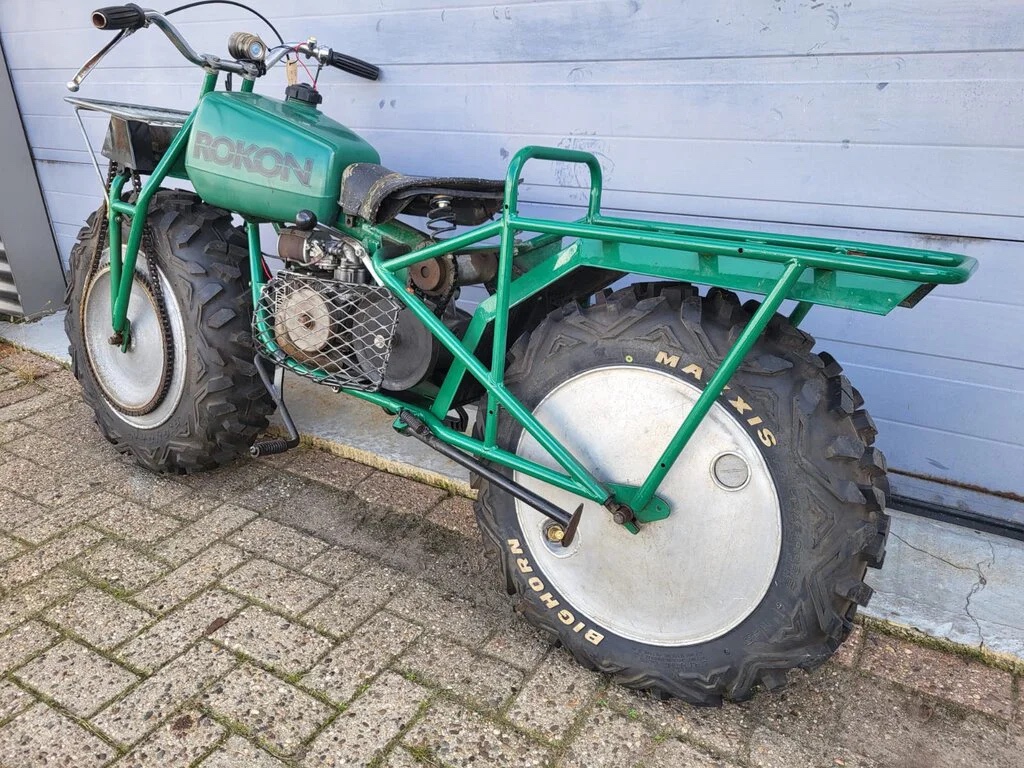
Early Trail-Breakers didn’t have conventional suspension. They largely relied on their enormous low-pressure tires and sprung saddle to absorb terrain. Again, that sounds primitive until you remember the intended operating speed. At 5-10 mph over rocks, roots, snow, or marsh, tire compliance matters enormously.
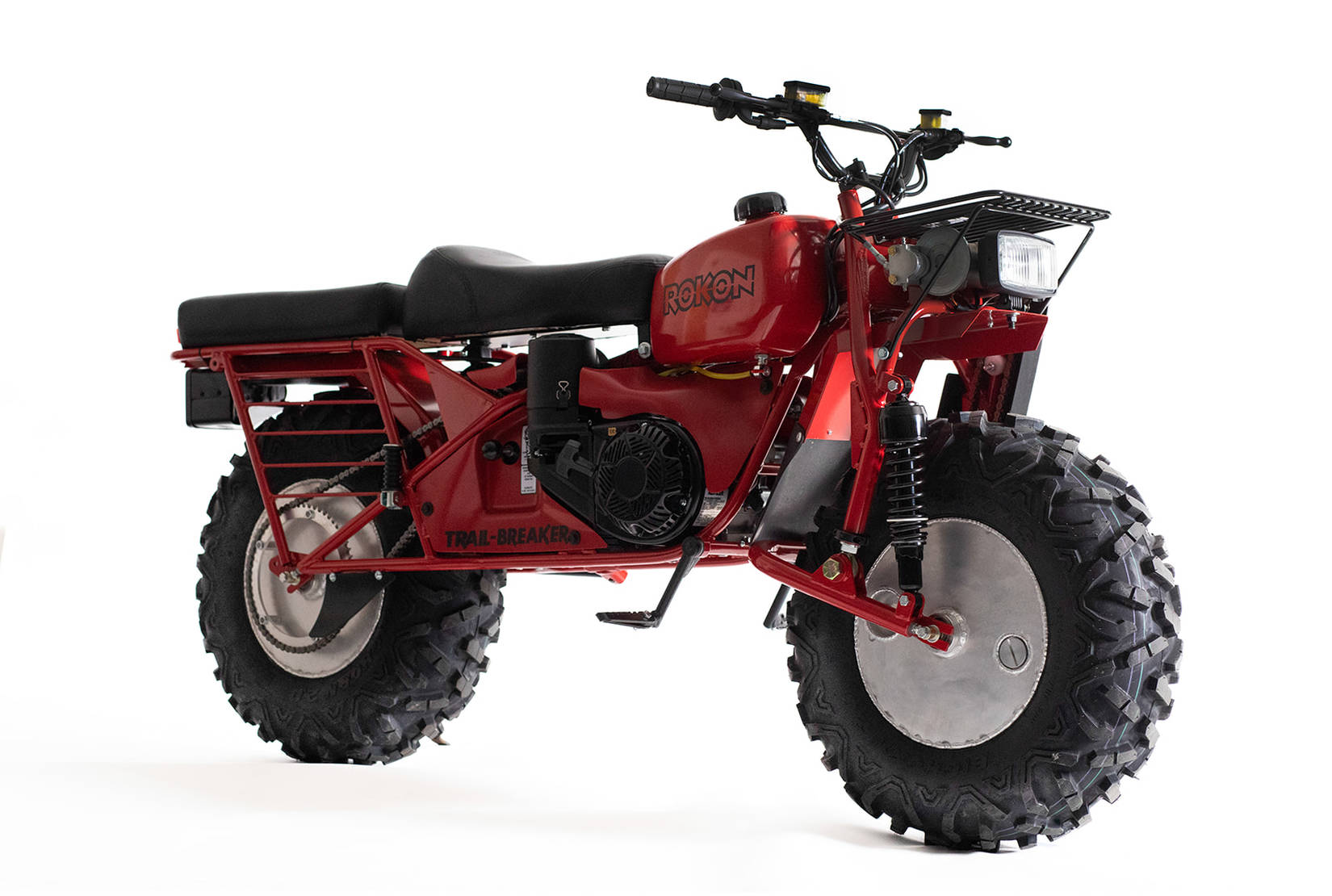
Modern Trail-Breakers retain a rigid rear end but add Rokon’s AutoGrab front suspension. The company’s manual lists approximately six inches of front travel. The configuration still looks more agricultural than sporting, but that’s intentional.
A Motorcycle or a Power Tool?
Perhaps the best way to understand the Trail-Breaker is as a portable engine and traction system that happens to have handlebars. The modern machine includes a power take-off capable of delivering the engine’s rated 7 hp to auxiliary equipment. Rokon also rates the motorcycle to tow as much as 2,000 pounds under appropriate conditions.
The company has offered accessories for hauling, towing, trail building, hunting, agriculture, and forestry. Rokon says Trail-Breakers have been used by branches of the U.S. military, the Forest Service, game officers, farmers, ranchers, hunters, and trail crews. That may explain why the machine has survived while so many other unconventional motorcycles disappeared. The Trail-Breaker doesn’t have to compete with ordinary motorcycles because it does a different job.
From Two-Stroke to Four-Stroke
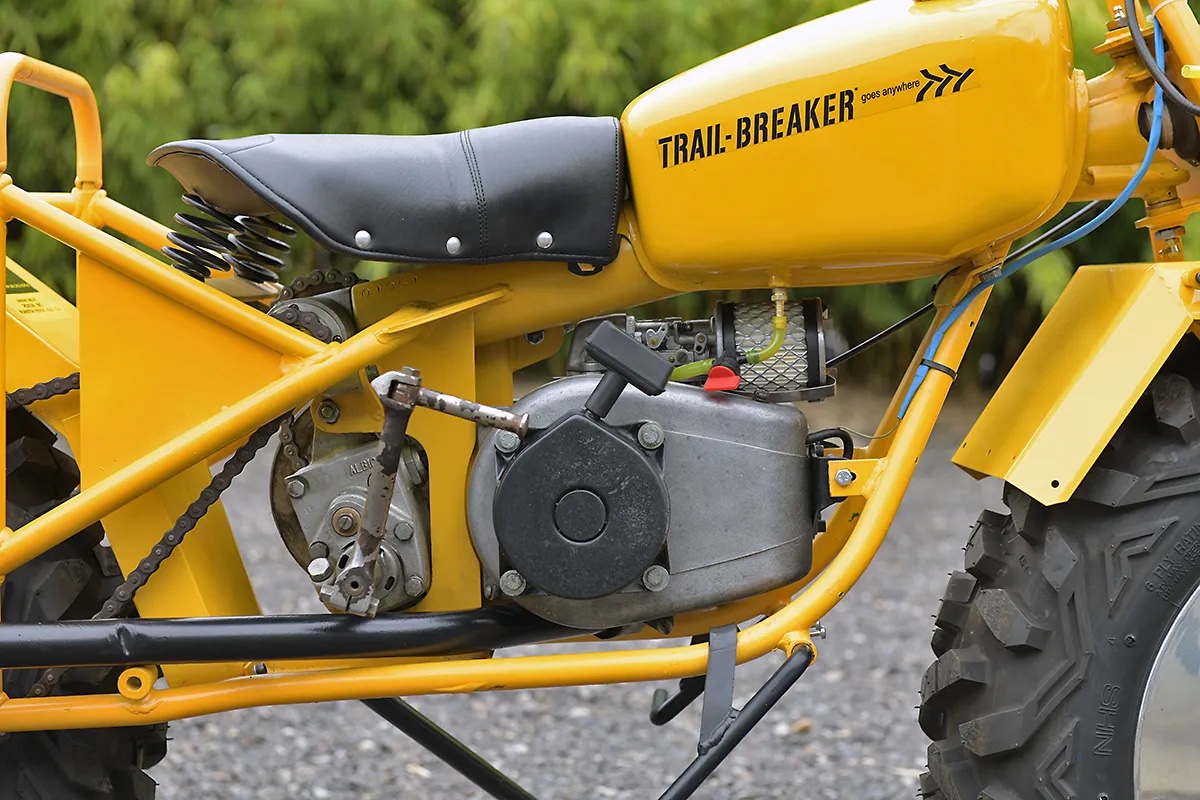
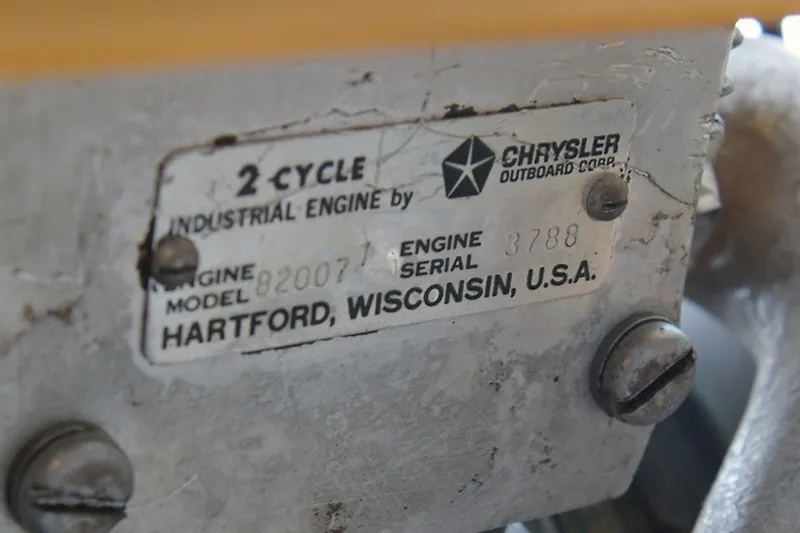
The engine has changed repeatedly over the decades. The 1970 test bike used a 134cc Chrysler West Bend two-stroke producing approximately eight horsepower. Versions of that basic two-stroke arrangement remained part of the Rokon story for years.
Rokon introduced Honda four-stroke power on the Ranger in 1994. In 1999, the Trail-Breaker itself moved to a Kohler four-stroke. Today’s 208cc Kohler single arrived after further development, and the current 7-hp version became standard during the 2010s.
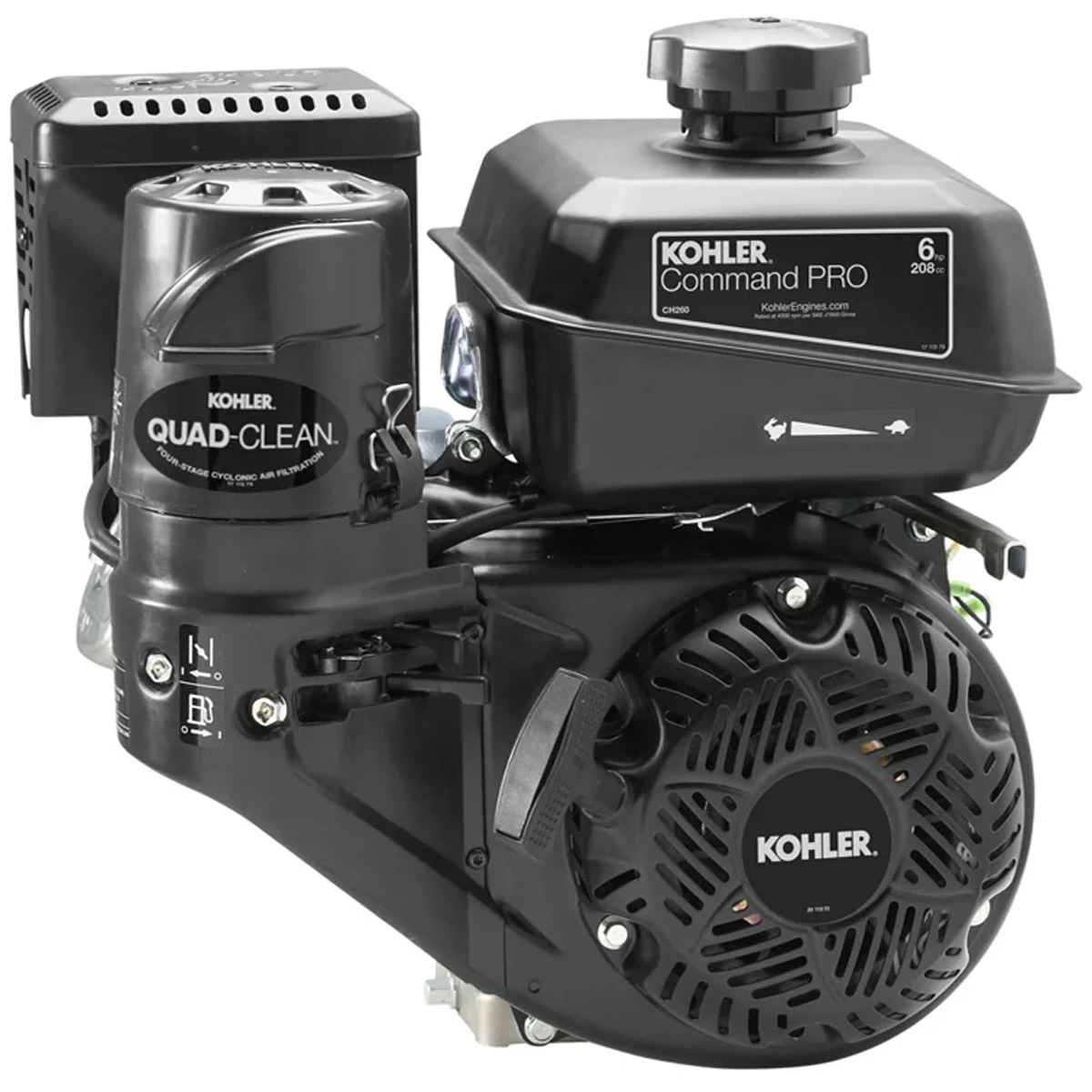
The transformation from two-stroke to four-stroke added refinement, emissions compliance, electric starting, and easier everyday operation. The basic purpose of the motorcycle remained unchanged.
More Than 60 Years Later
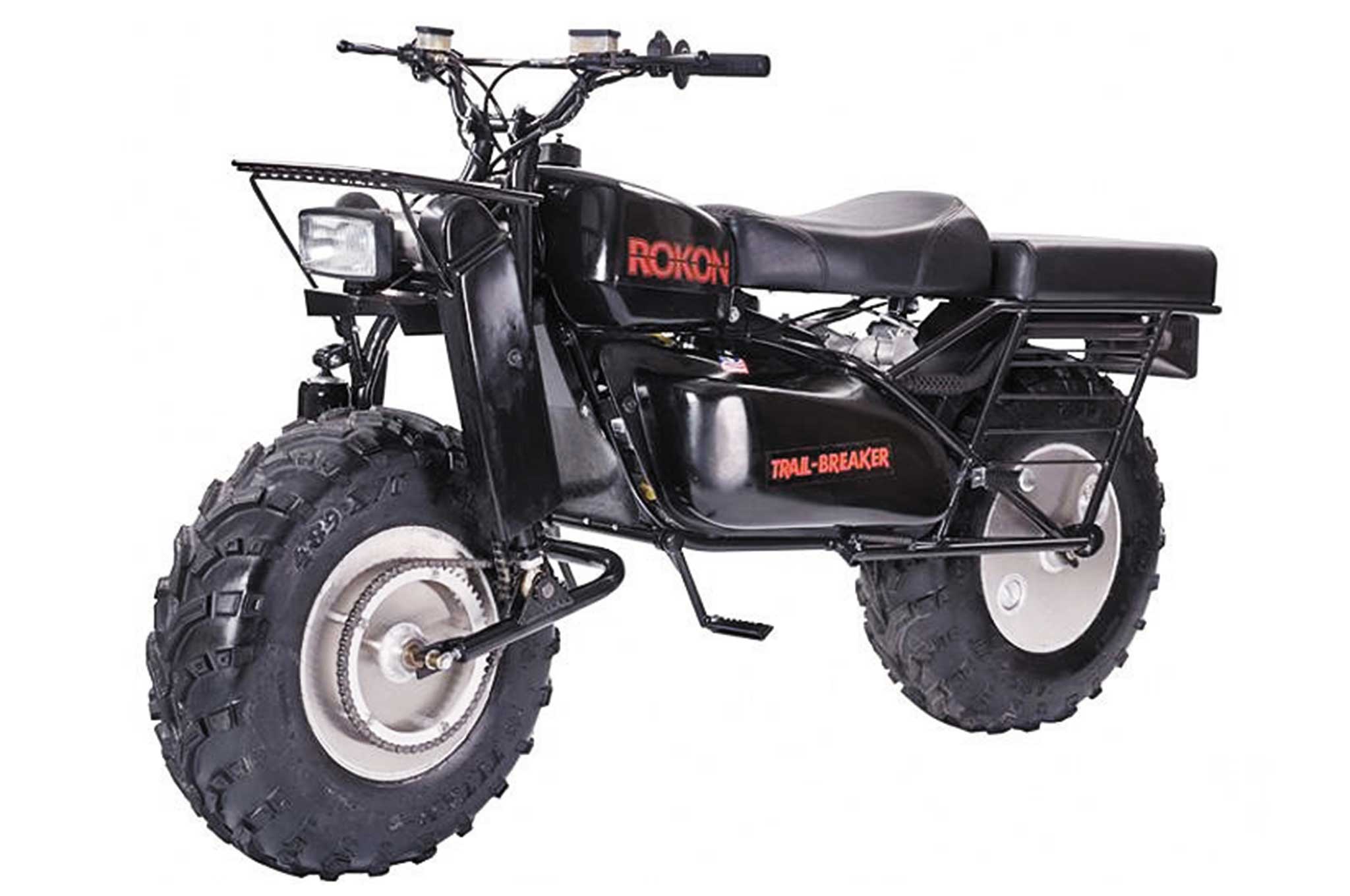
Most unconventional motorcycles enjoy brief lives. They appear at a motorcycle show, attract attention for a few years, then disappear when customers prove less adventurous than their designers.
The Trail-Breaker did the opposite. Its basic form has survived since the early 1960s. Rokon moved through several owners and locations before eventually settling in Rochester, New Hampshire, where the motorcycles are still manufactured today. Rokon currently lists the Trail-Breaker at $9,575 before options. So you can still get a bike with full-time two-wheel drive, hollow drum wheels, and giant tractor-like tires. It still isn’t particularly fast…and it still floats.
Rokon’s Current Model Lineup
Although the Trail-Breaker remains the best-known Rokon, the company currently offers three basic models along with several specialized factory packages built largely around the Trail-Breaker platform.
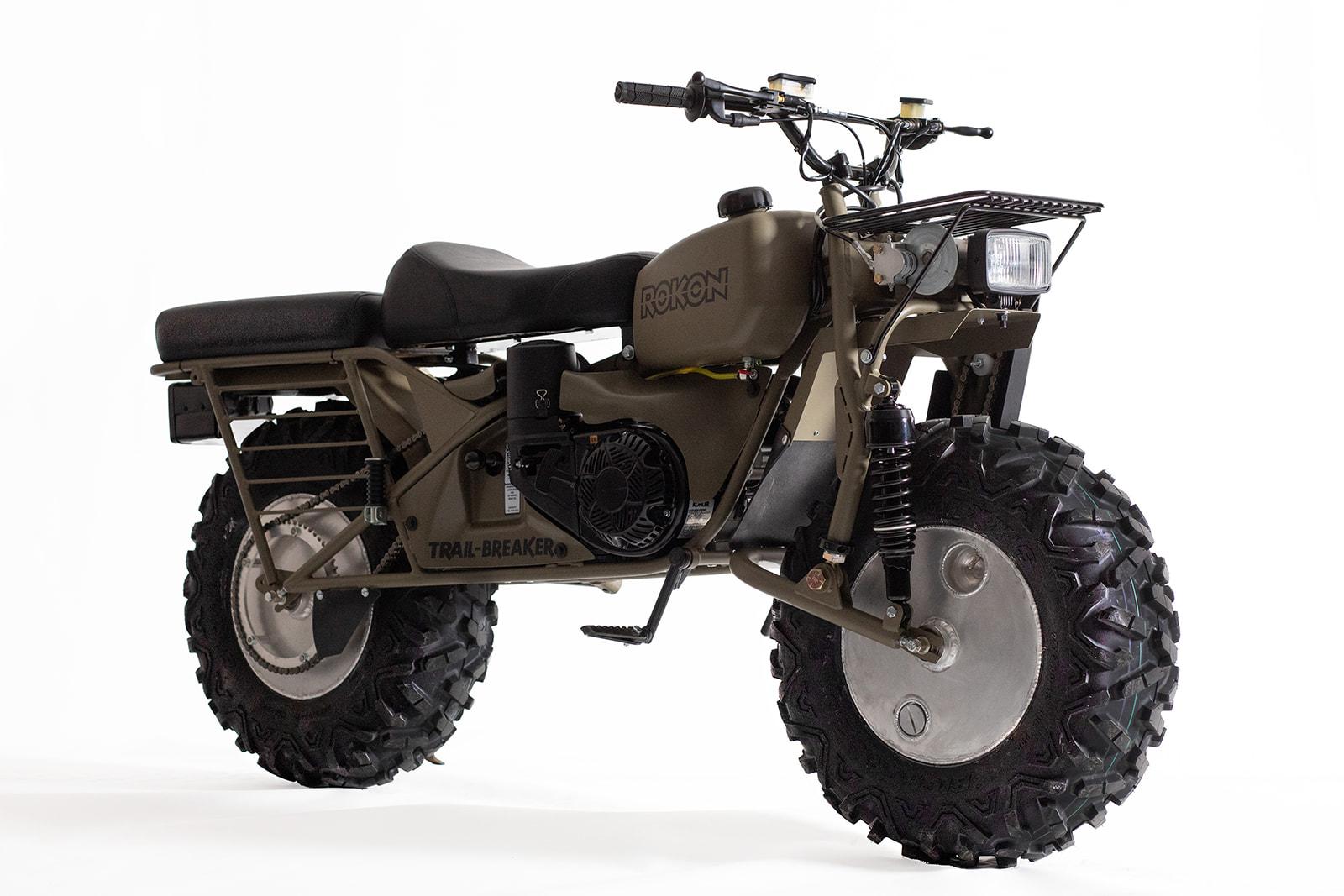
The Trail-Breaker is the classic off-road Rokon, combining full-time two-wheel drive with AutoGrab front suspension and hollow aluminum drum wheels that can carry additional fuel or water — or provide flotation when left empty.
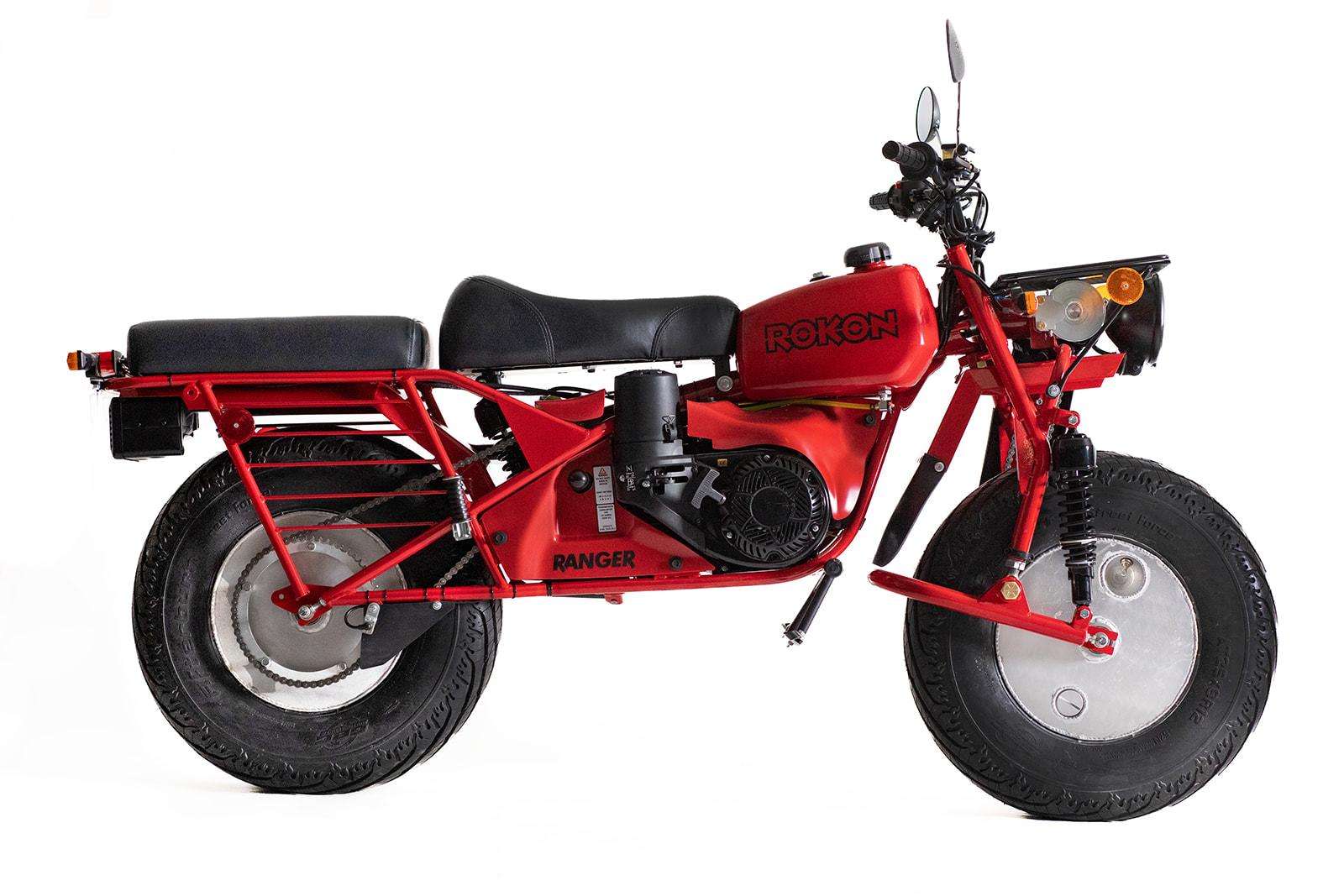
The Ranger is Rokon’s dual-sport version. It retains the two-wheel-drive system, front suspension, and hollow drum wheels but adds equipment for road registration, including DOT-approved tires. Rokon says the Ranger is intended for legal on-road use in all 50 states, subject to local registration requirements.
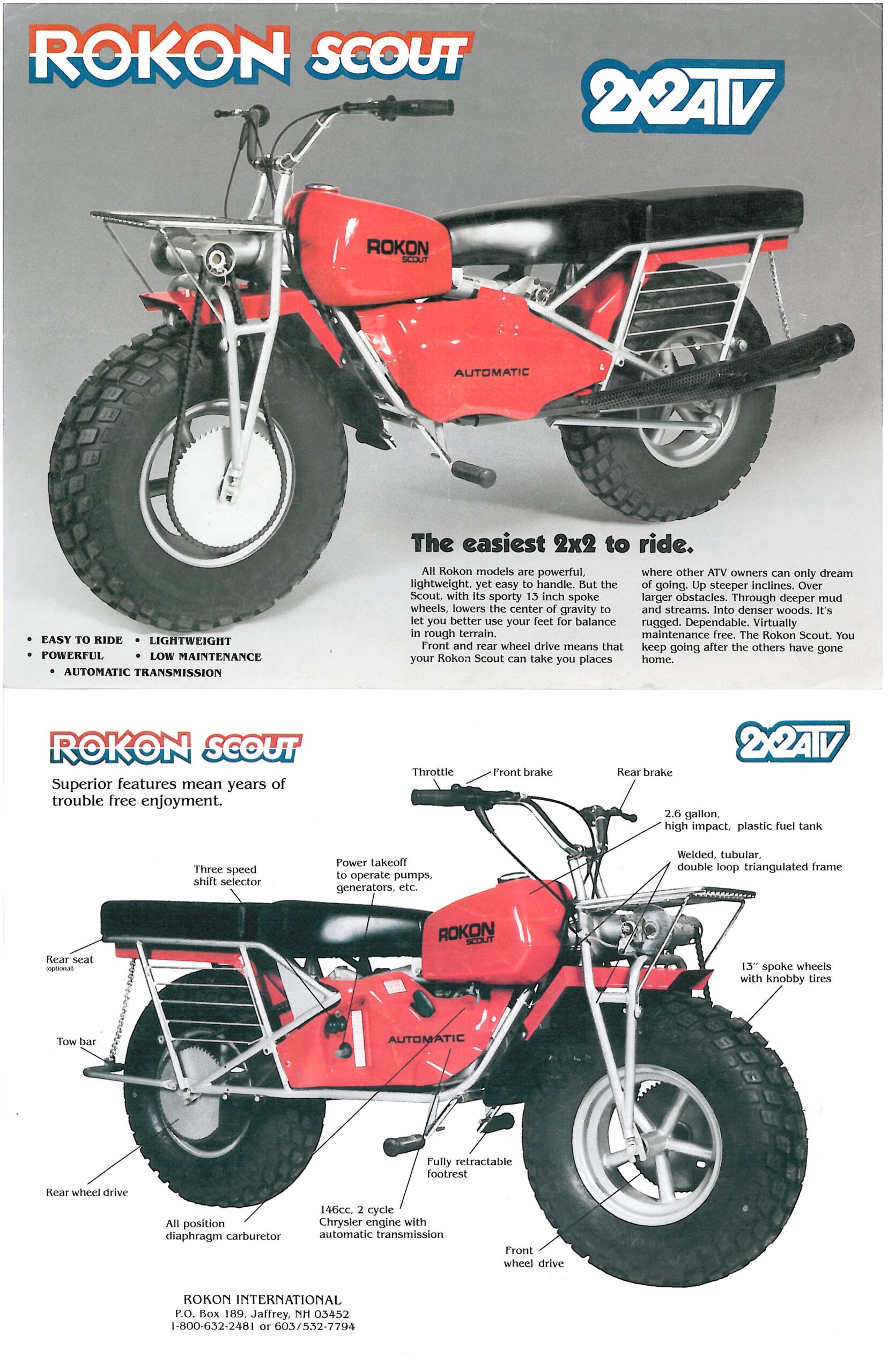
At the opposite end of the range is the Scout, a simpler and less expensive off-road model. It uses the same basic engine and two-wheel-drive system as the Trail-Breaker but substitutes a rigid front end and conventional steel spoked wheels for the Trail-Breaker’s suspension and hollow drums.
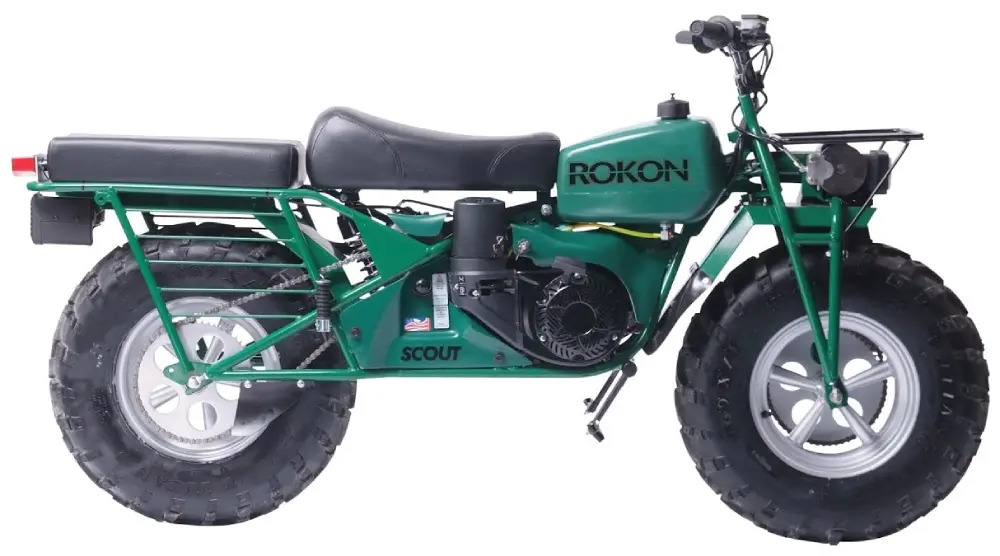
Rokon also offers several specialized variations. The Mototractor emphasizes cargo and utility work, while the Fire-Ranger is configured for search-and-rescue duties.
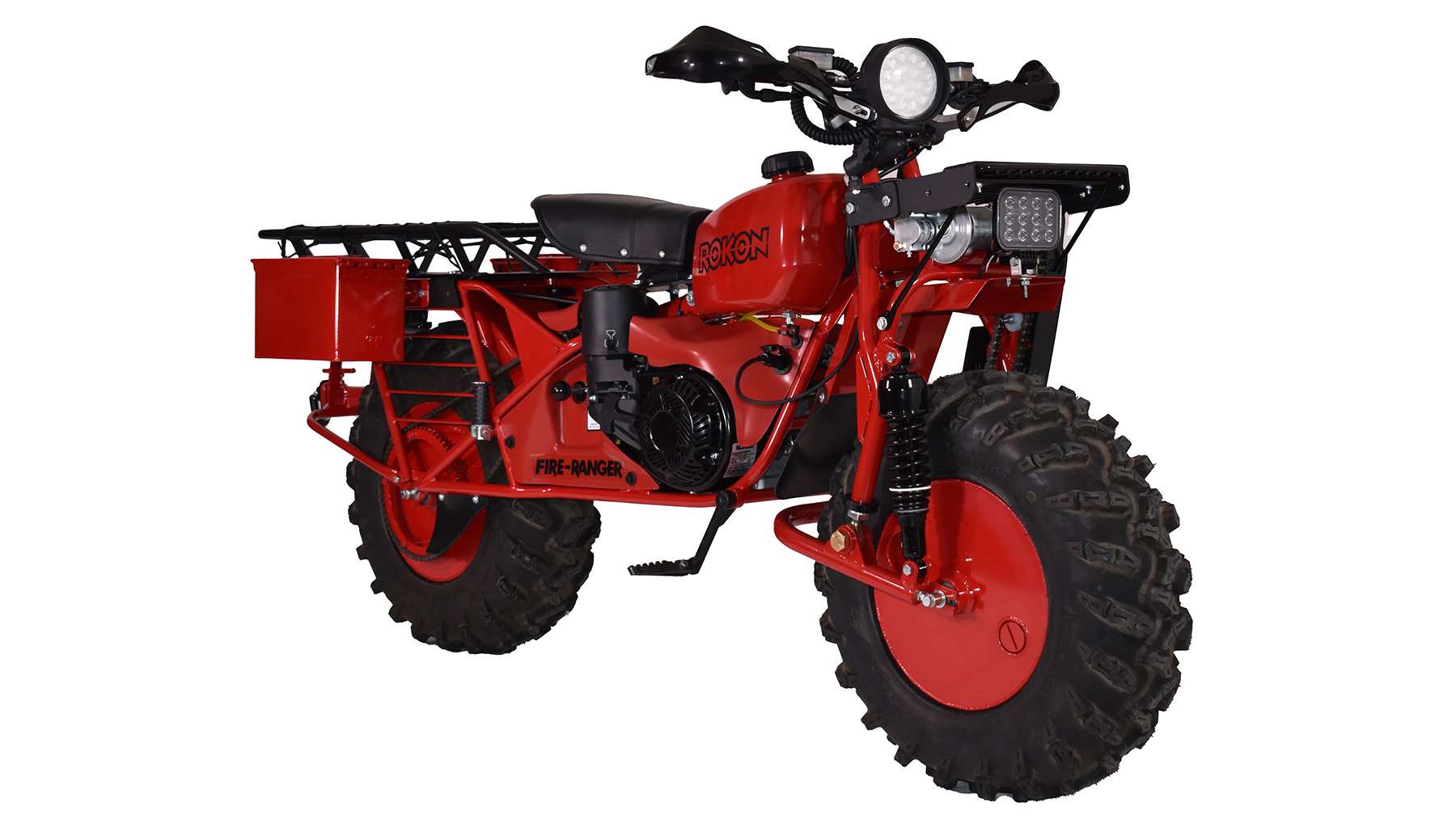
The Rokon for Hunters adds hunting-oriented equipment, and the Rokon for Preppers packages additional storage, lighting, tools, and auxiliary electrical power.
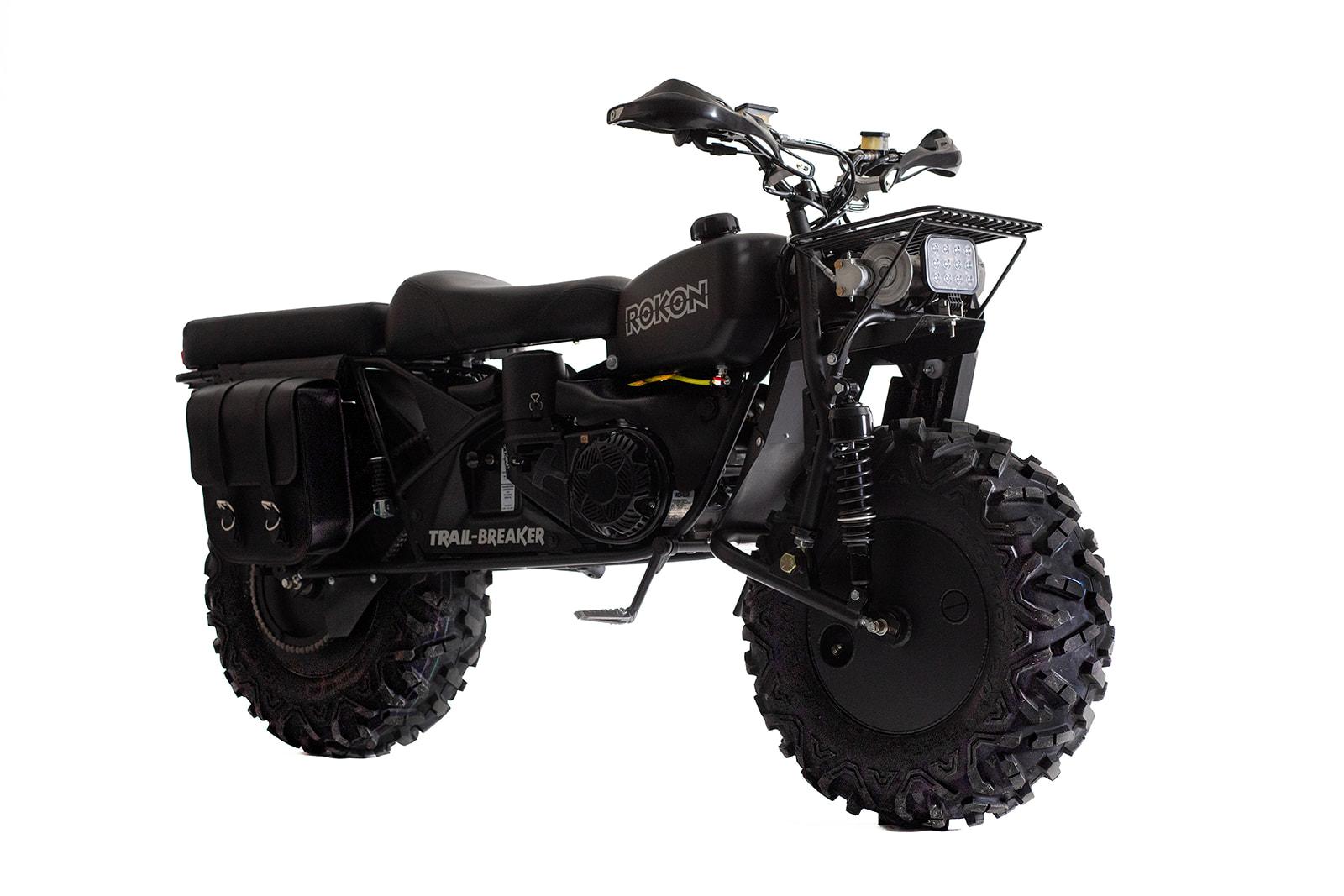
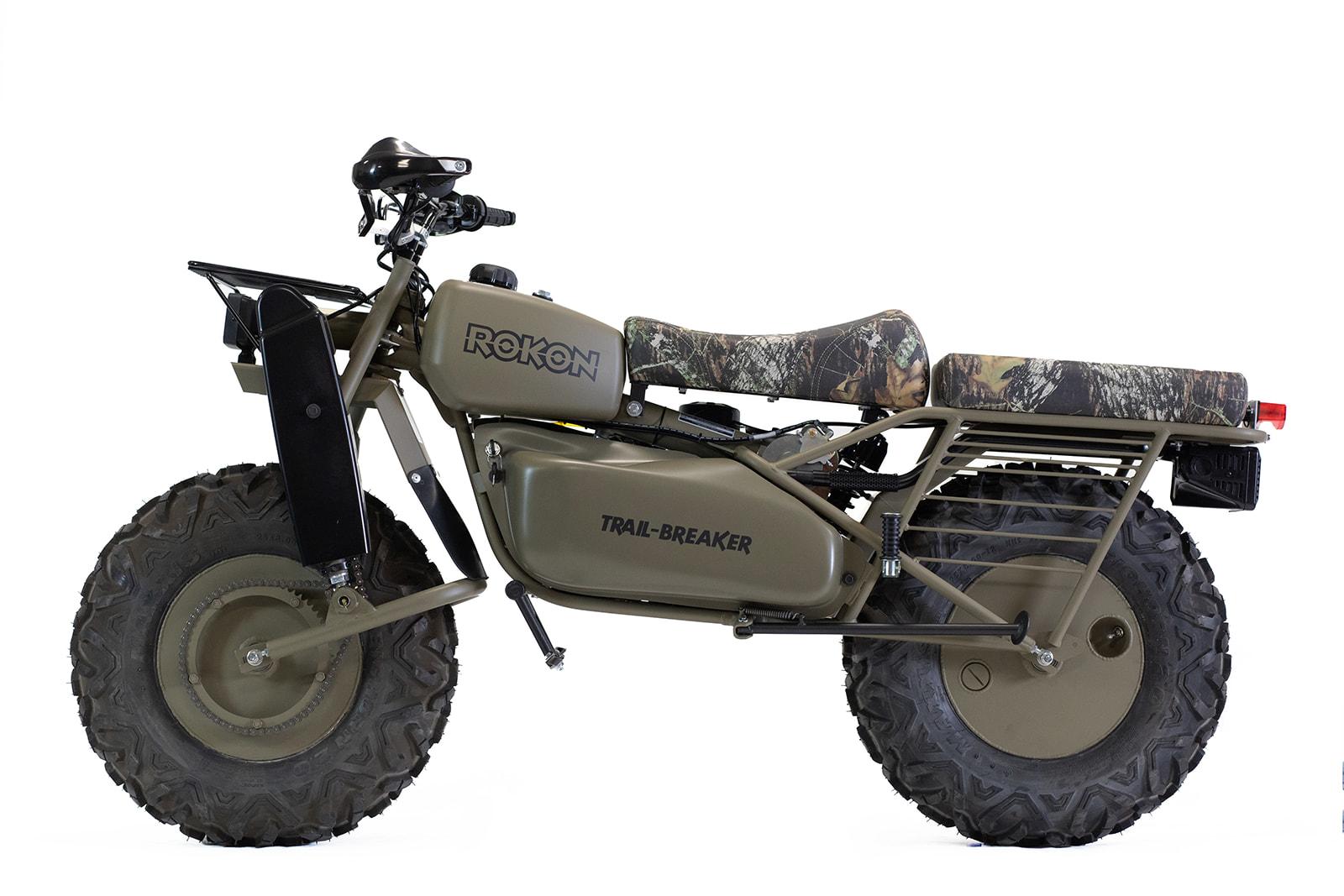
In short, the Scout is the stripped-down Rokon, the Trail-Breaker is the classic off-road model, and the Ranger adds street legality. The remaining versions are purpose-built packages based largely on the Trail-Breaker.
The Motorcycle That Refused to Evolve Normally
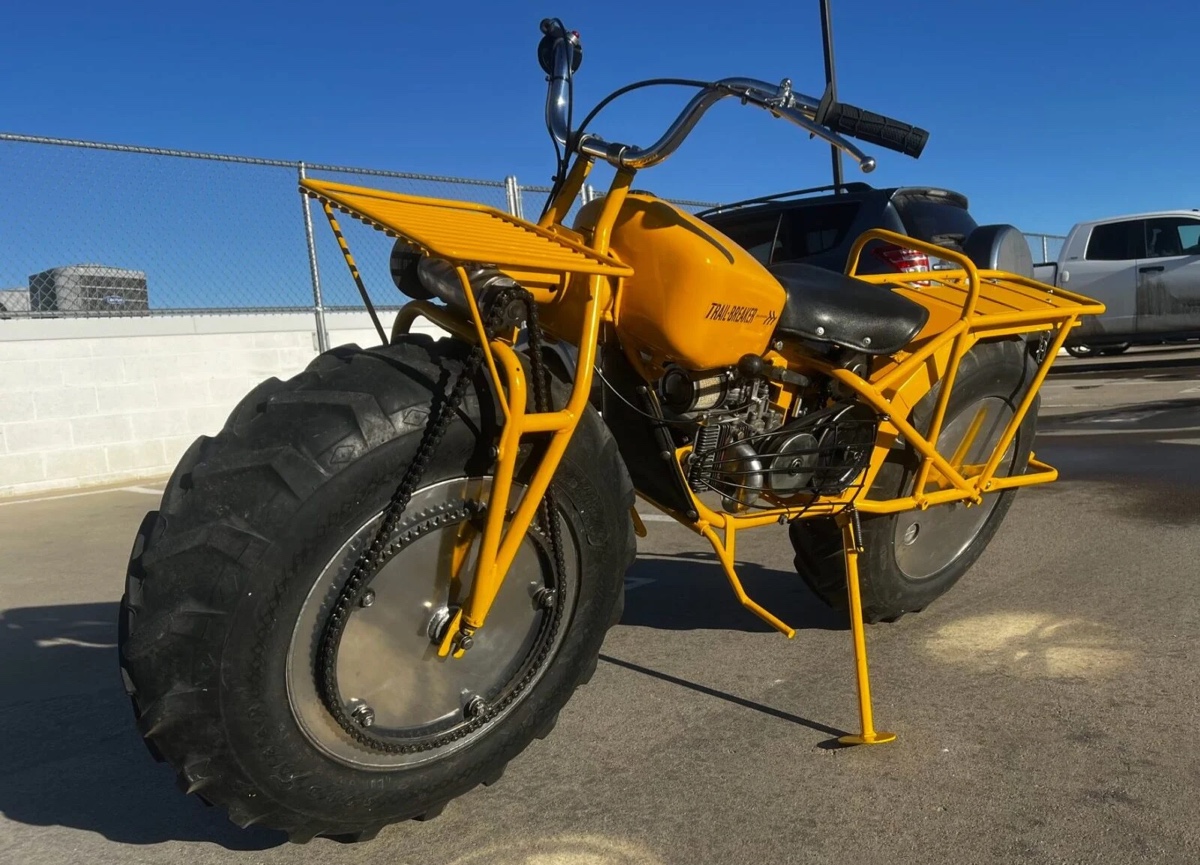
Motorcycle development usually follows a familiar trajectory: more power, more suspension, more speed, better brakes, lower weight. The Rokon Trail-Breaker evolved along a different axis. Its job was never to cover ground quickly. Its job was to keep moving after an ordinary motorcycle couldn’t.
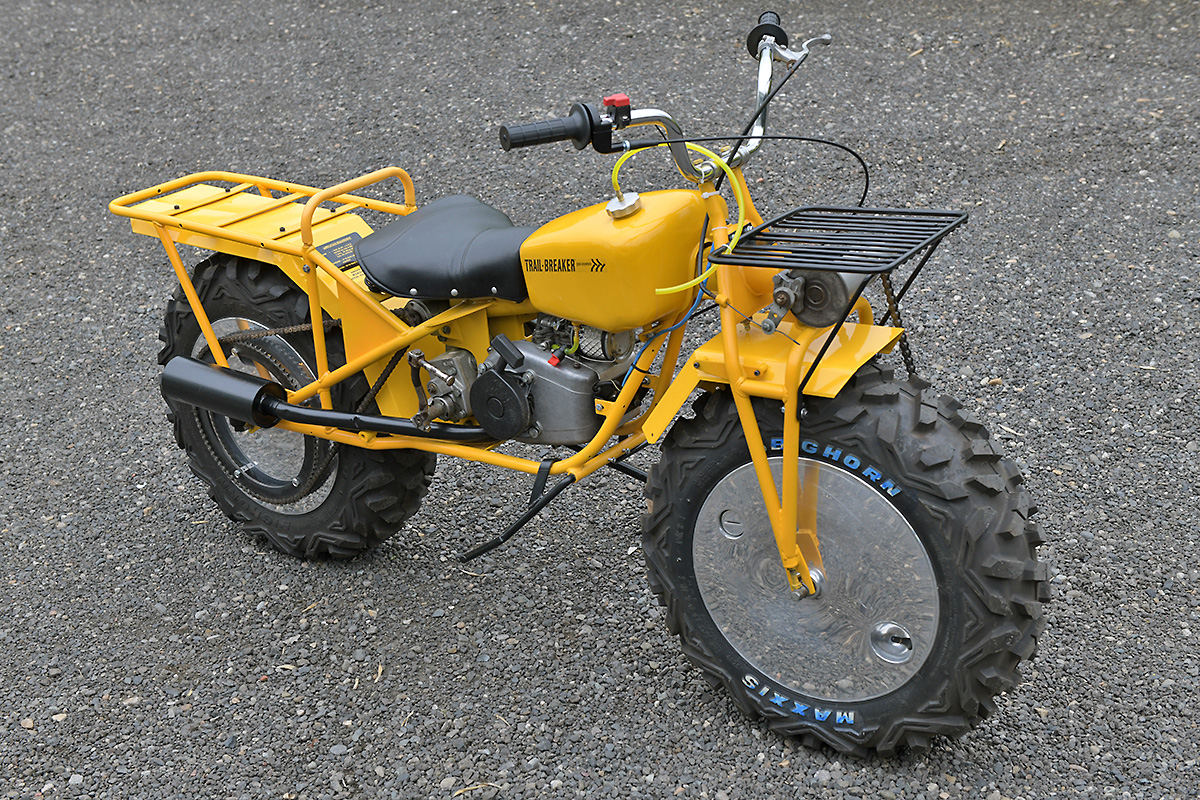
That led Charles Fehn toward mechanical two-wheel drive, huge low-pressure tires, extreme gearing, high ground clearance, and hollow wheels more than six decades ago. Those decisions produced a machine so specialized that very little has ever directly competed with it.
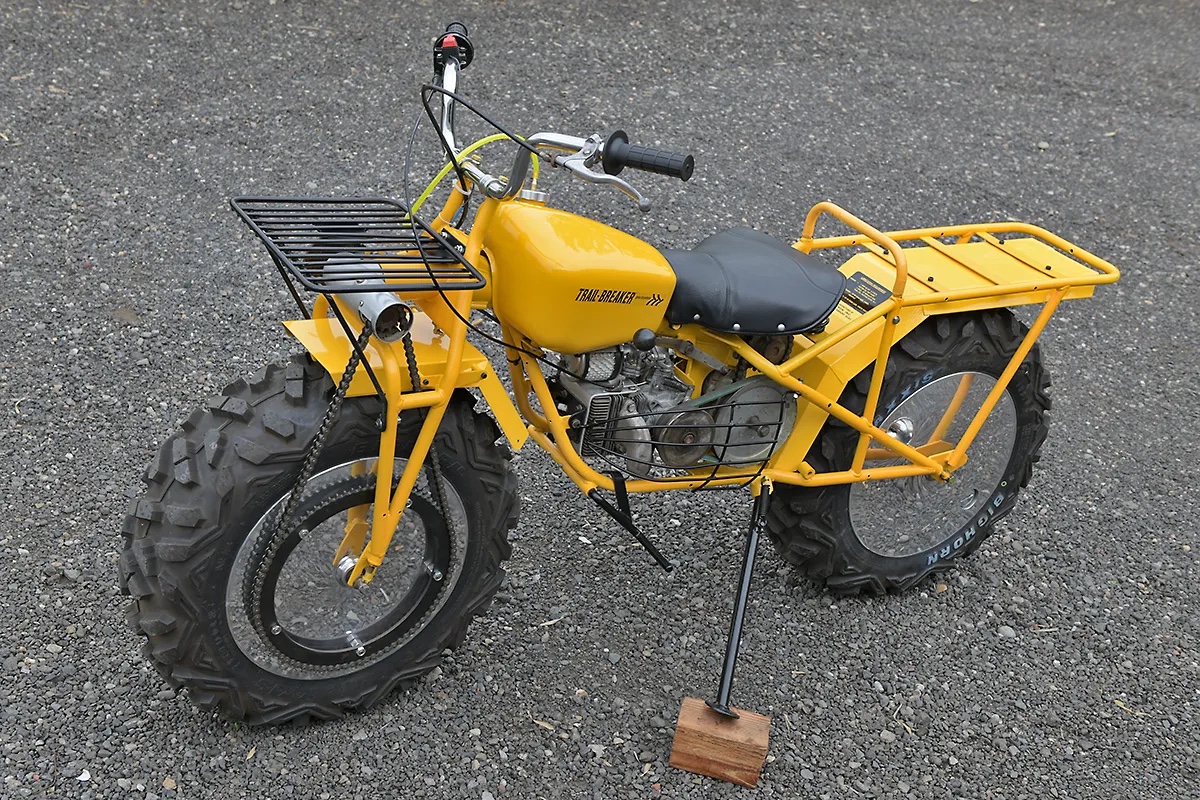
Today’s Trail-Breaker is unquestionably more civilized than the one tested in 1970. It has a four-stroke engine, electric starting, hydraulic disc brakes, and front suspension. But look at them side by side and the lineage is unmistakable.
The engine, brakes, and suspension have changed, but the basic idea hasn’t. When the trail disappears completely, the Rokon will keep going where no other motorcycle can.
2026 Rokon Trail-Breaker Specifications
| Engine | Kohler air-cooled four-stroke single |
| Displacement | 208cc |
| Power | 7 hp @ 3,600 rpm |
| Torque | 9.1 lb-ft / 12.4 Nm @ 2,800 rpm |
| Drive | Full-time front and rear wheel drive |
| Transmission | Automatic torque converter, three-range selector |
| 1st gear | 0-10 mph |
| 2nd gear | 0-20 mph |
| 3rd gear | 0-35 mph |
| Front suspension | Rokon AutoGrab |
| Rear suspension | Rigid |
| Brakes | Hydraulic discs, front and rear |
| Wheels | 12-inch hollow aluminum drums |
| Tires | 25 x 8 x 12 tubeless |
| Wheelbase | 51 in |
| Ground clearance | 15 in |
| Seat height | 32 in |
| Fuel capacity | 2.69 US gal |
| Dry weight | 218 lb |
| Grade rating | 60 percent |
| Fording depth | 24 in |
| PTO | Up to 7 hp |
| Rated towing capacity | Up to 2,000 lb |
| 2026 price | $9,575 before options |
More 2WD Motorcycles
 Rokon Trail-Breaker: The 2WD Motorcycle That Floats - Two-wheel drive. Hollow drum wheels. Seven horsepower. More than 60 years after Charles Fehn conceived it, the Rokon Trail-Breaker is still being built in New Hampshire… Most motorcycles are designed around some combination of speed, […]
 2WD Dakar Legend: Yamaha WR450F 2-Trac - Remembering Yamaha x Öhlins’ Hydraulic 2WD Enduro… Every so often, a motorcycle appears that seems to point toward an entirely different future. The Yamaha WR450F 2-Trac was one of those machines. At first glance, it […]
 2WD Hayabusa: Suzuki GSX-R1300 NUDA - A 2WD ‘Busa from Suzuki! Suzuki has announced plans to launch a production version of their two-wheel-drive GSX-R1300 NUDA for 2024, utilizing the 1340cc liquid-cooled inline four-cylinder engine from the Suzuki GSX1300R Hayabusa. The most […]
 Yamaha WR450F 2-Trac (2WD) by Deus Italy - In the mid-2000s, Yamaha produced a limited series of Yamaha WR450F 2-Trac rally bikes. These competition-only machines offered a 2WD system developed by Ohlins, which featured a patented hydraulic drive that could deliver up to […]


