
 XL-Size Enduro: Marc Pfaffl’s Retrofitted Transalp…
In the late 80s, Honda unveiled the XL600V Transalp as a “Rally Tourer” that could combine street performance, off-road capability, and long-distance touring comfort. At its heart was a 600cc liquid-cooled 52° V-twin of 55 bhp, which allowed more relaxed freeway cruising than the single-cylinder engines of rival globe-trotters such as the KLR, Ténéré, and Honda’s own NX650 Dominator. That same engine had been seen in various guises like the VT500 Ascot and VT500C Shadow.
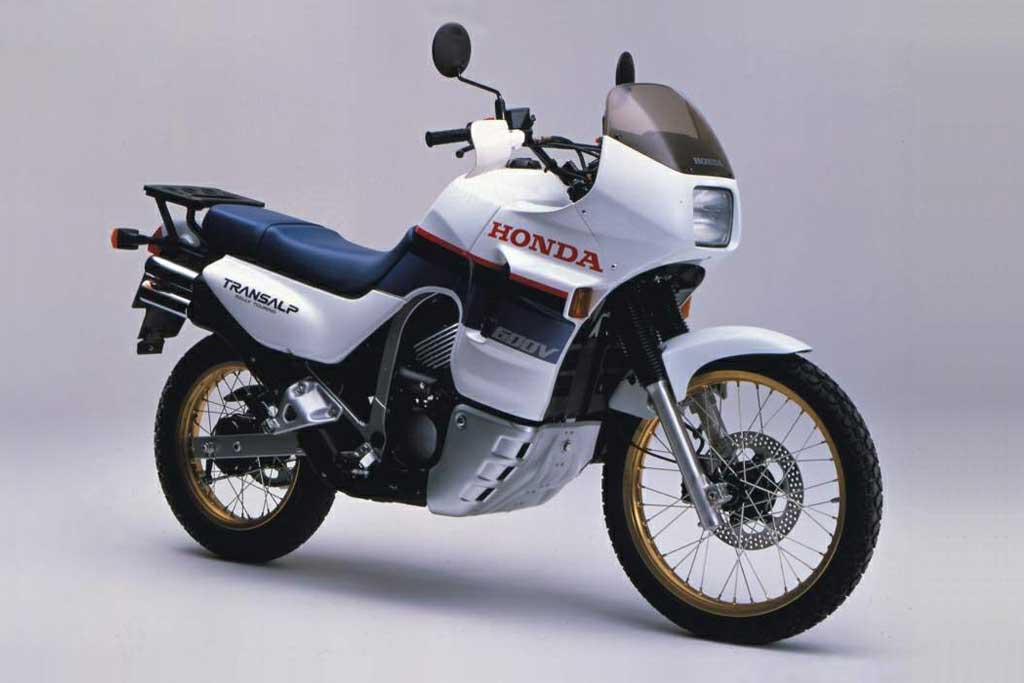 Besides the twin-cylinder engine, the biggest departure from the world’s existing trailies and adventure bikes was the full fairing bodywork, ostensibly designed to protect the rider from the alpine conditions of the Alps, which gave the model its name. The Transalp 600 was hailed as an ideal go-anywhere, do-anything globe-trotter. The Europeans, who’d asked for the bike from the beginning, received it all the way back in 1986, while it wasn’t available in North America until 1989.
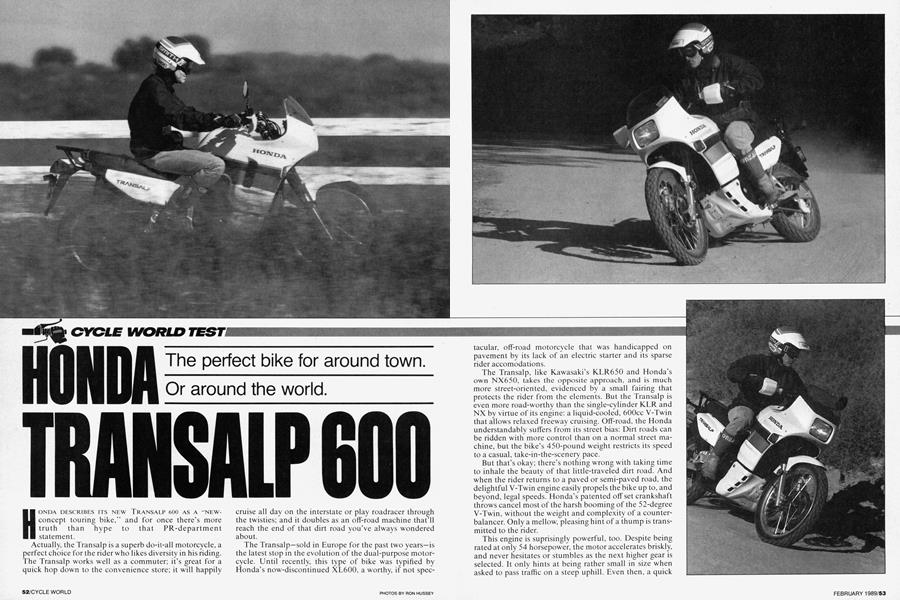
As neat as the Transalp was, it never quite caught on with many riders.
“But if you are…going dual-purpose, what is the point of all that plastic, with a big fairing, big side covers, big skid plate? A serious boonie-basher should be minimalist, so you can fall over, pick it up and continue. Heck, you’d hate to crunch all that pretty plastic; it would be expensive.” –Rider Magazine
 Fast forward nearly 40 years, and that logic is still hard to gainsay, especially as those fairings have become even rarer and more expensive to replace… But what if that V-twin engine and dual-purpose chassis were matched with more aggressive off-road suspension and minimalist enduro bodywork?
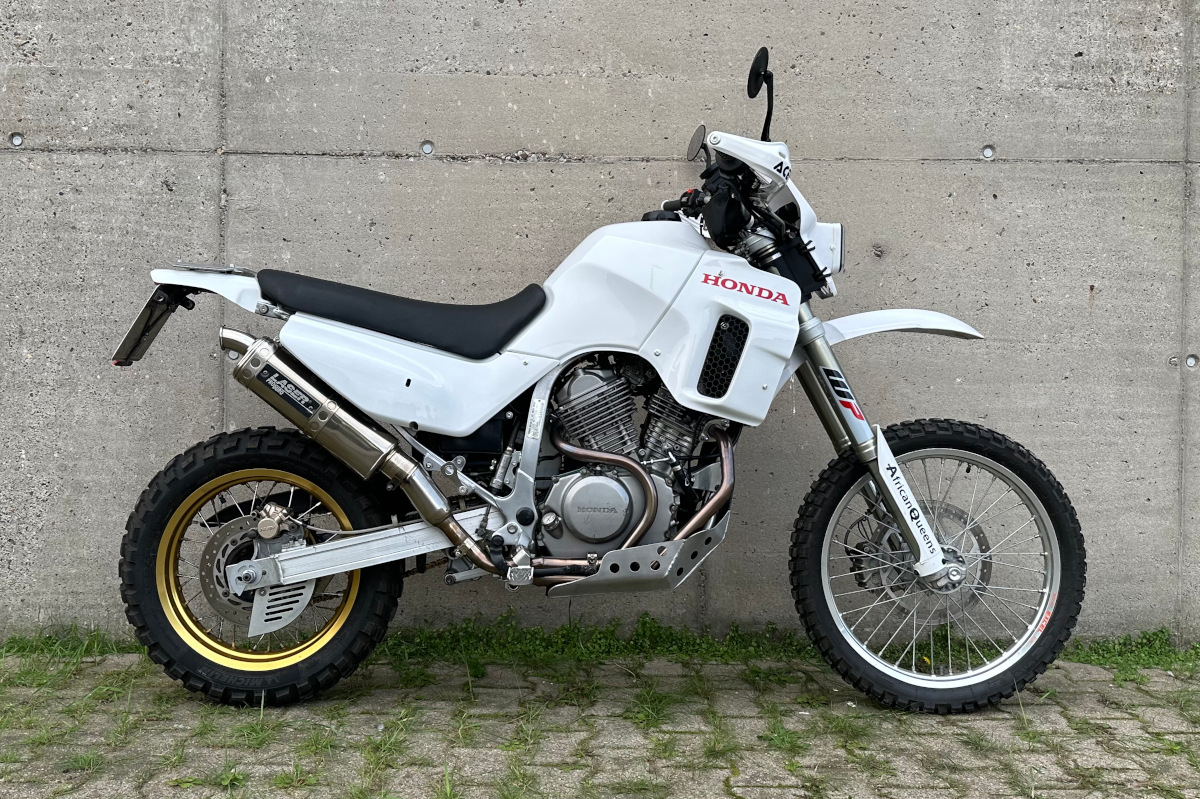
That’s exactly what our new friend Marc Pfaffl has created. Marc, a 26-year-old German carpenter and vocational instructor for people with disabilities, has been restoring and customizing scooters and cars since he was a teenager. Though his father has always owned and modified motorcycles, this is actually Marc’s first motorcycle.
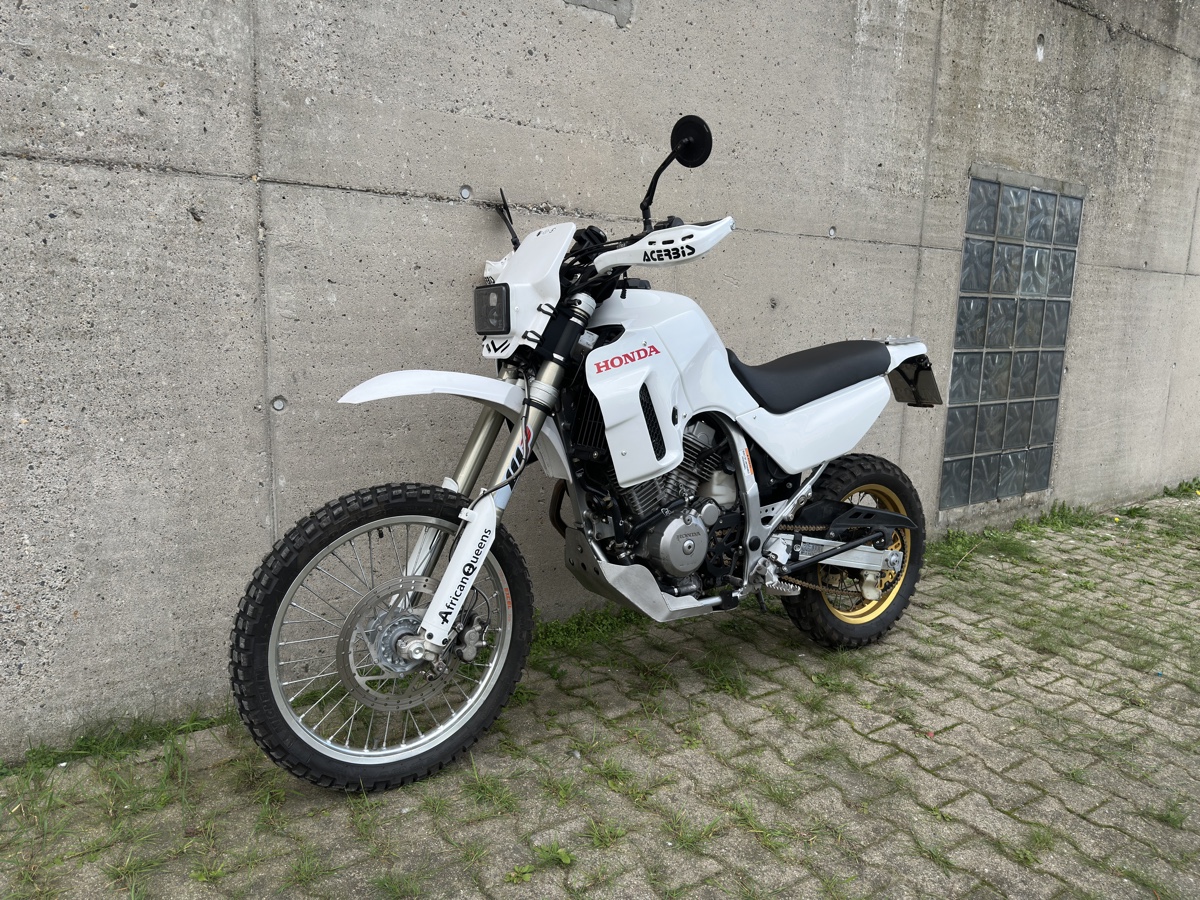
The donor is a 1992 Transalp XL600V PD06 he picked up from the original owner, in good shape but with busted side panels. Marc planned the Transalp as a project from the very beginning:
“On the day I bought it, I started taking it apart. Once it was partially disassembled, I carried it down to my basement and continued the build there. The basement became my workshop, where I completely stripped down, cleaned, modified, and rebuilt the bike.
Eventually, the bike had to leave the basement. My father, my brother, and I carried it back outside and moved it into the garage, where I completed the final stages of the build.”
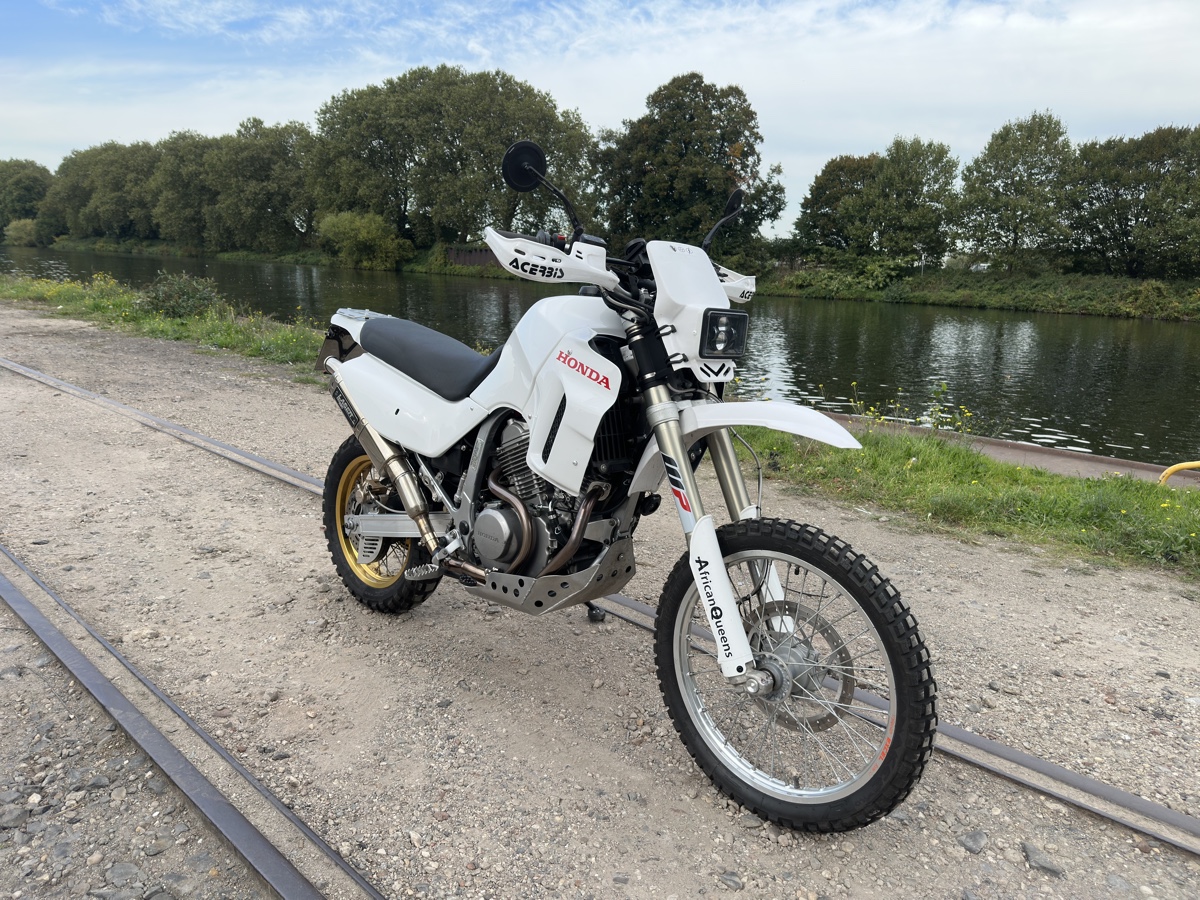
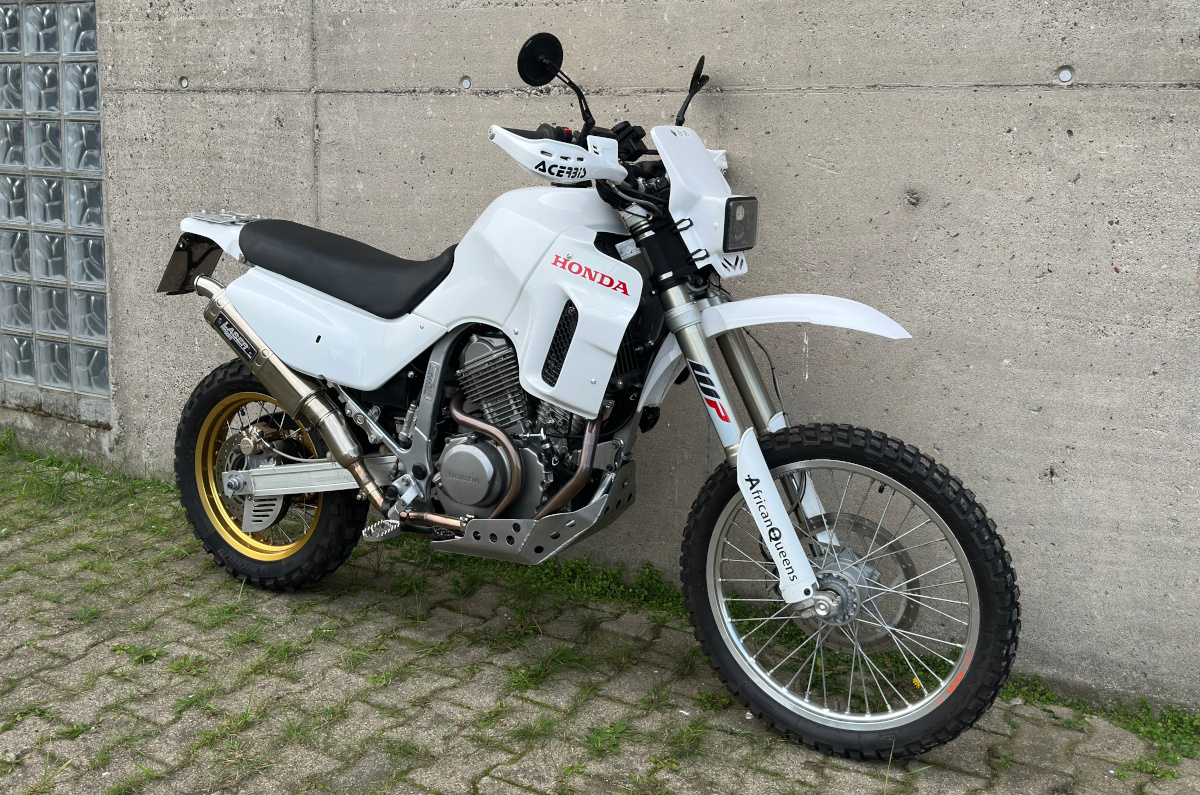
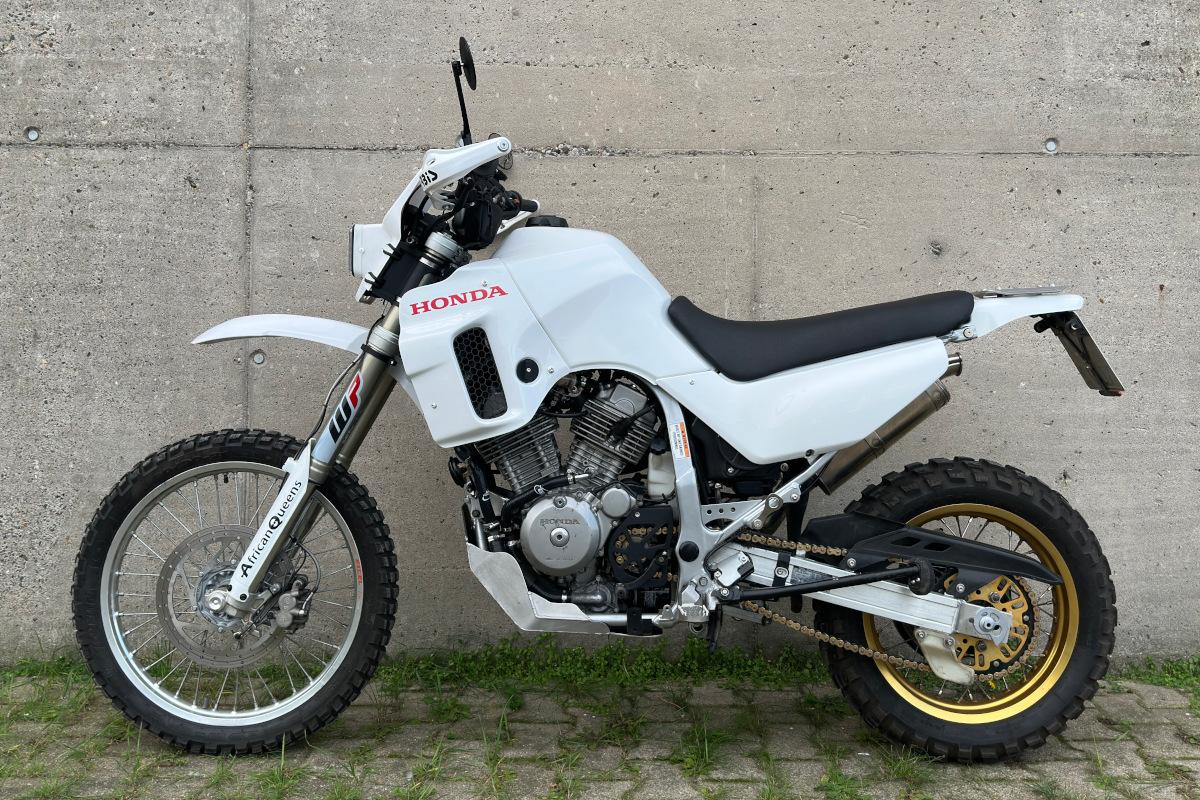
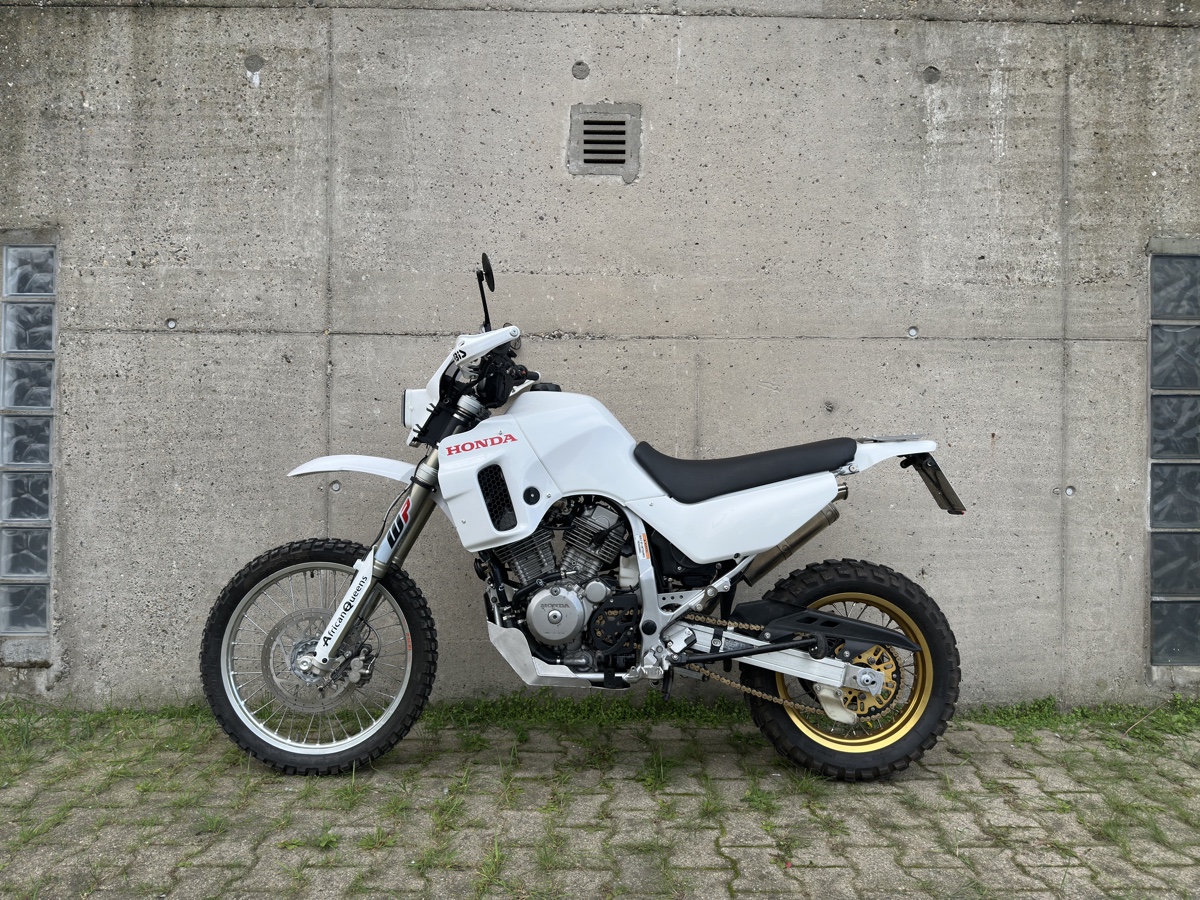
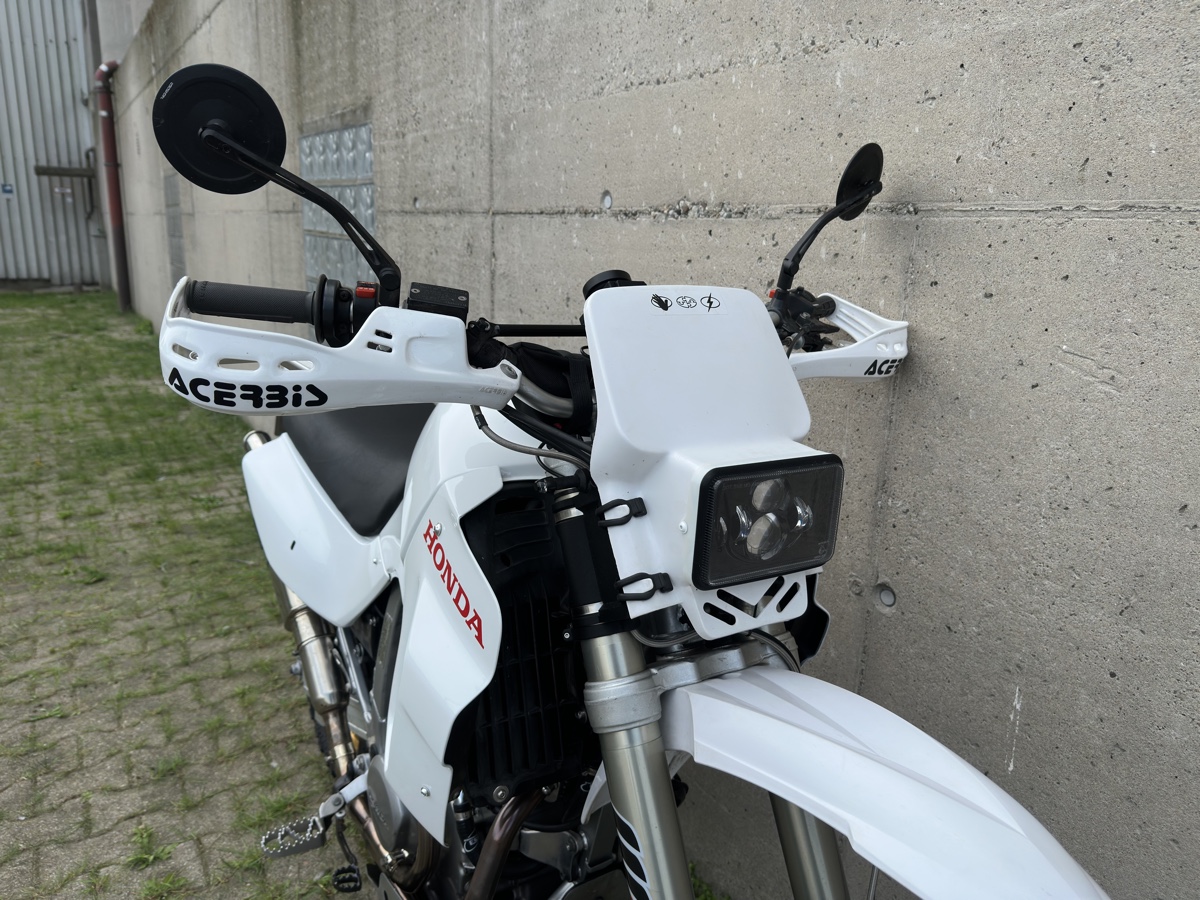
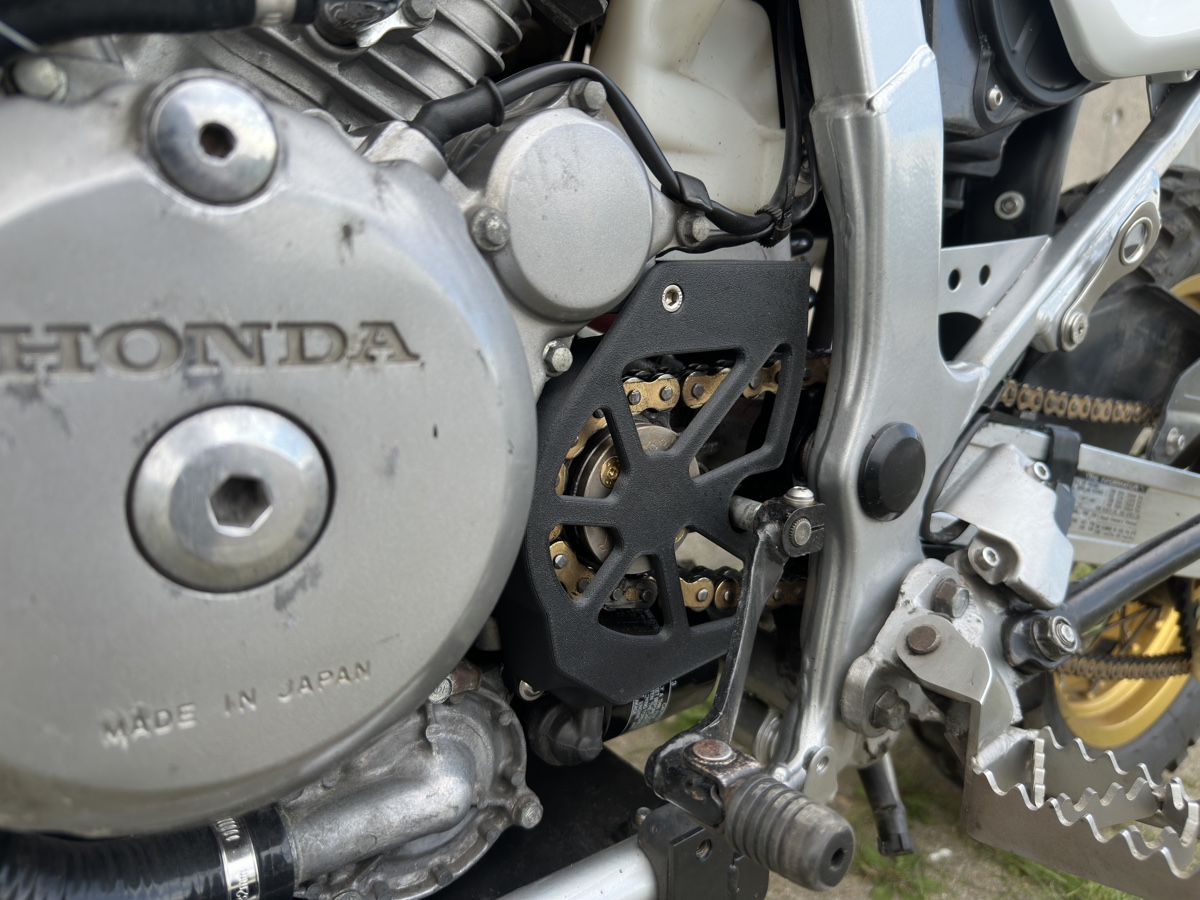
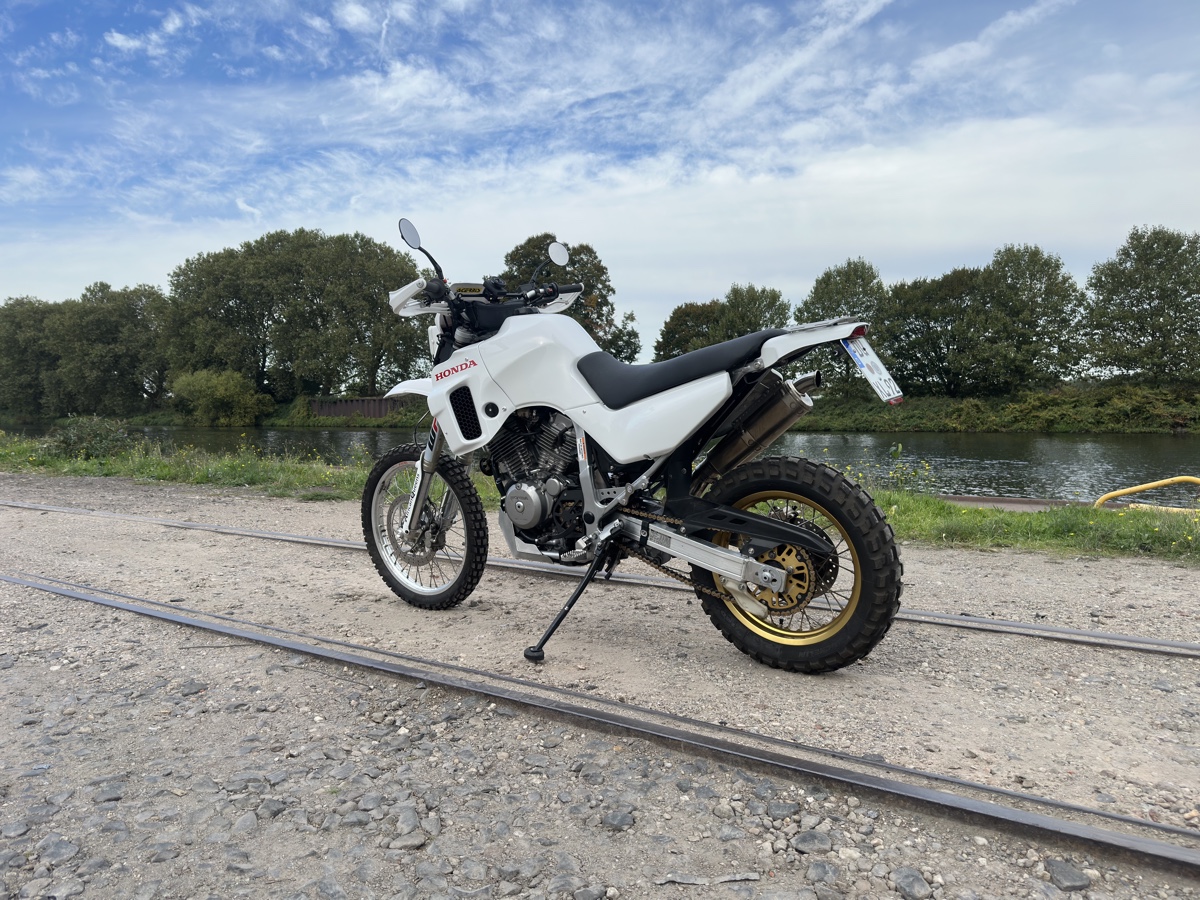
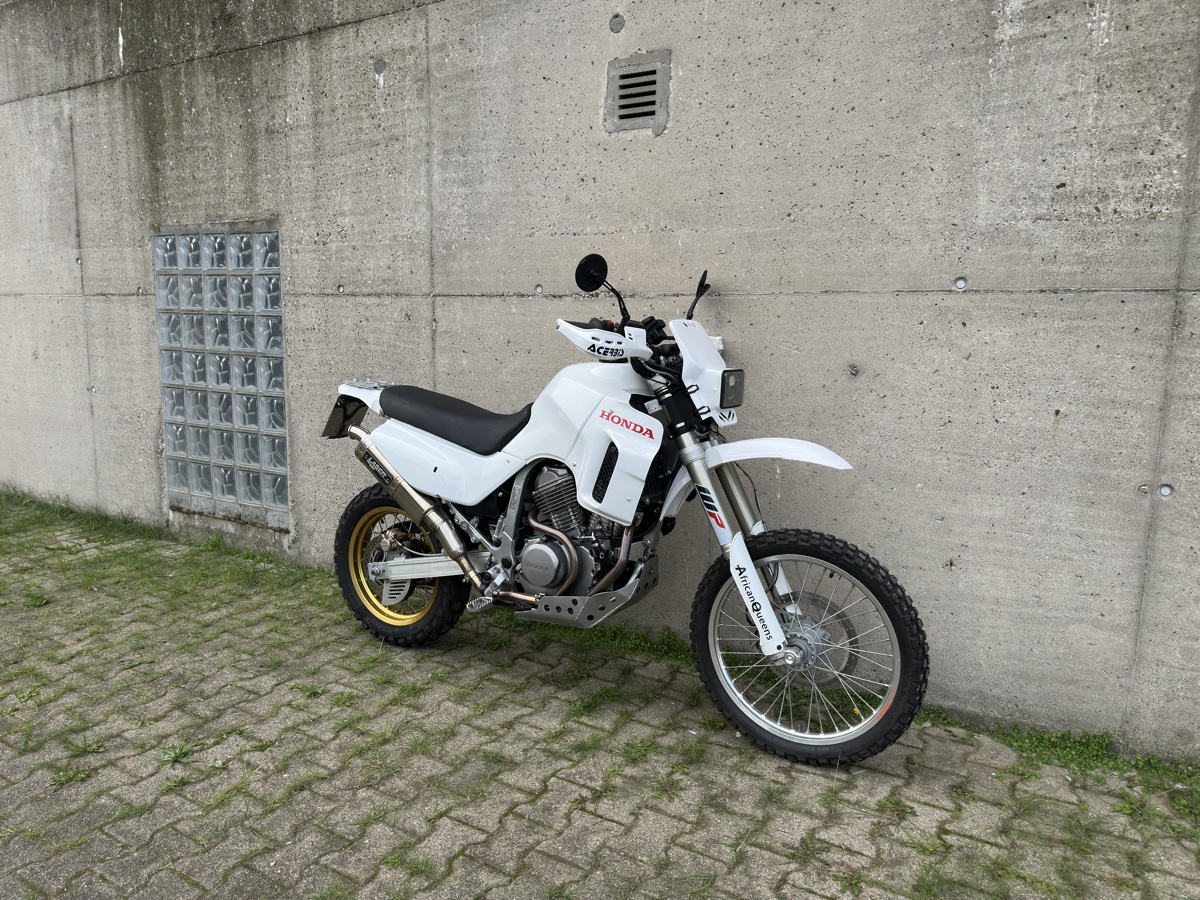
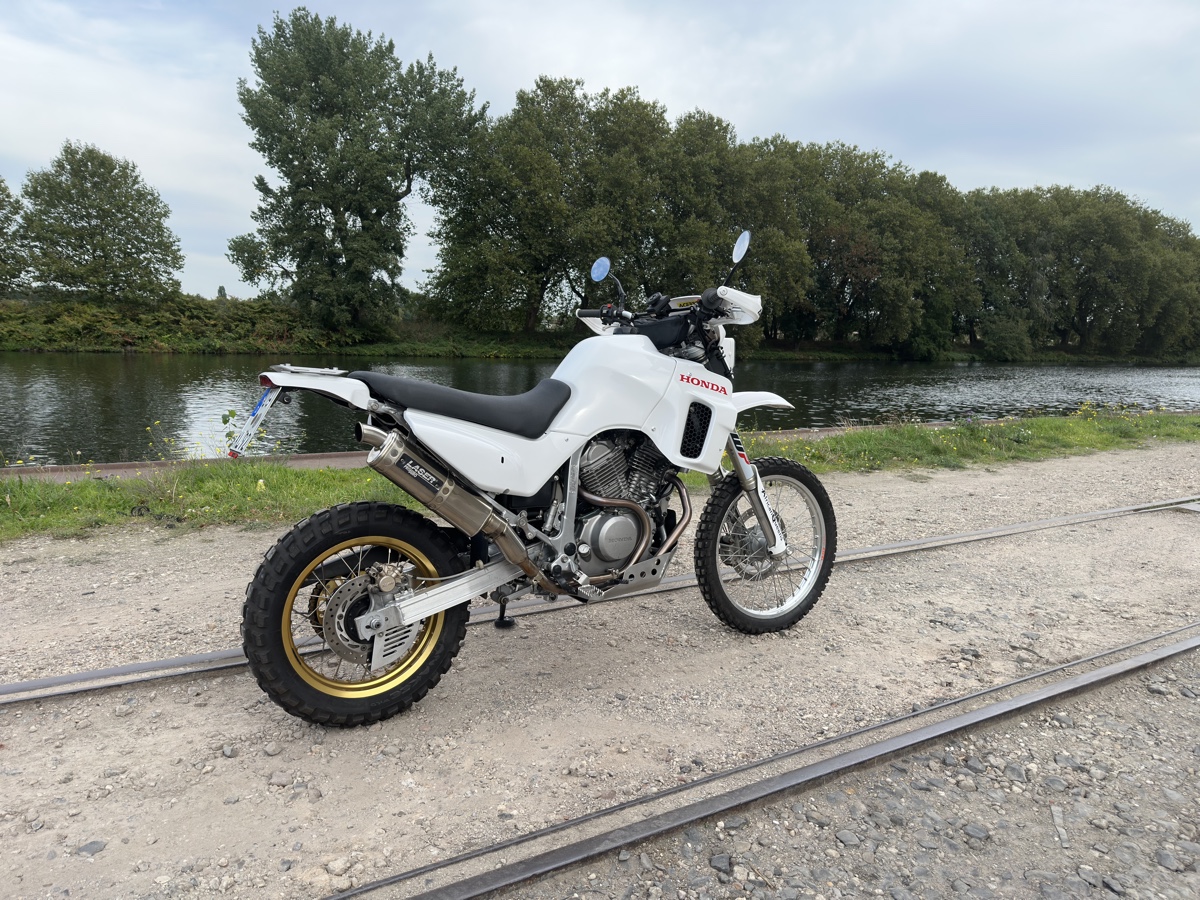
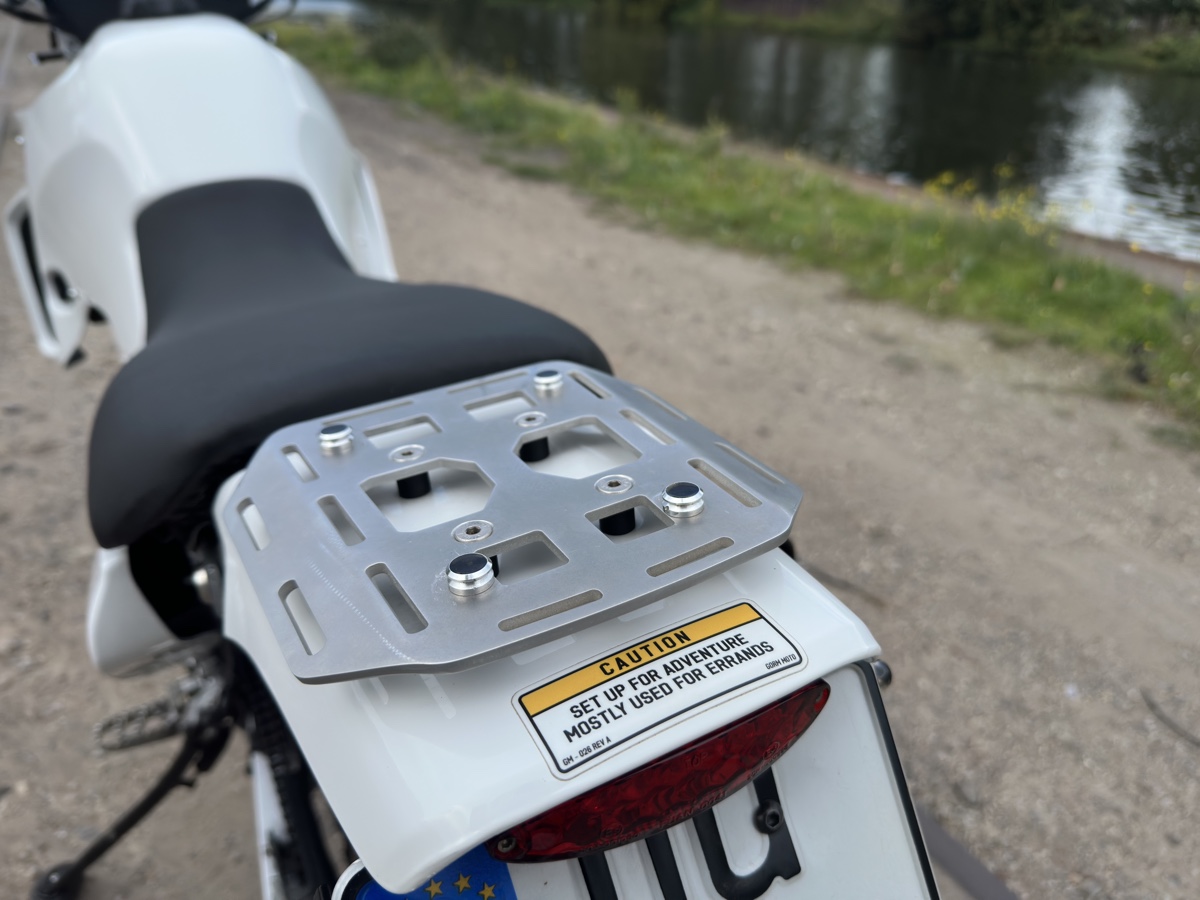
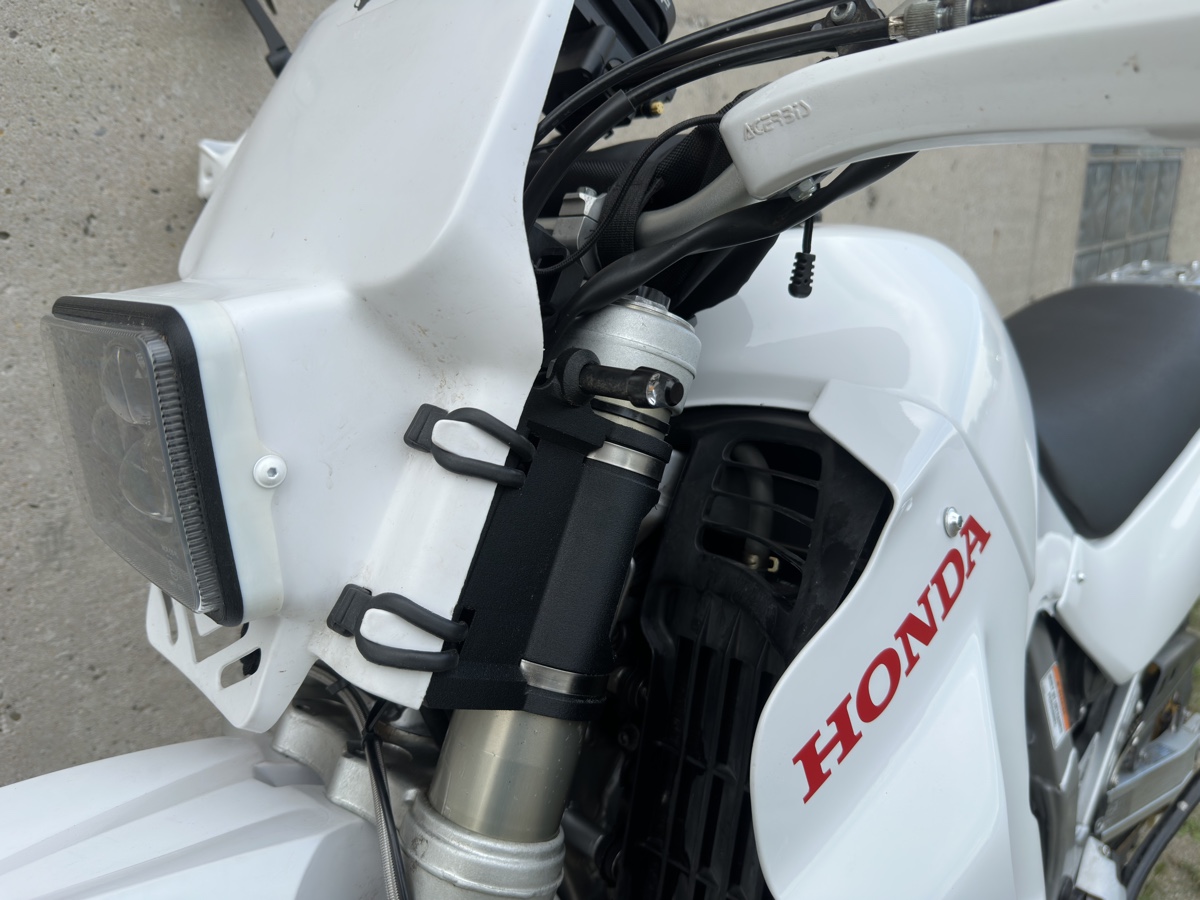
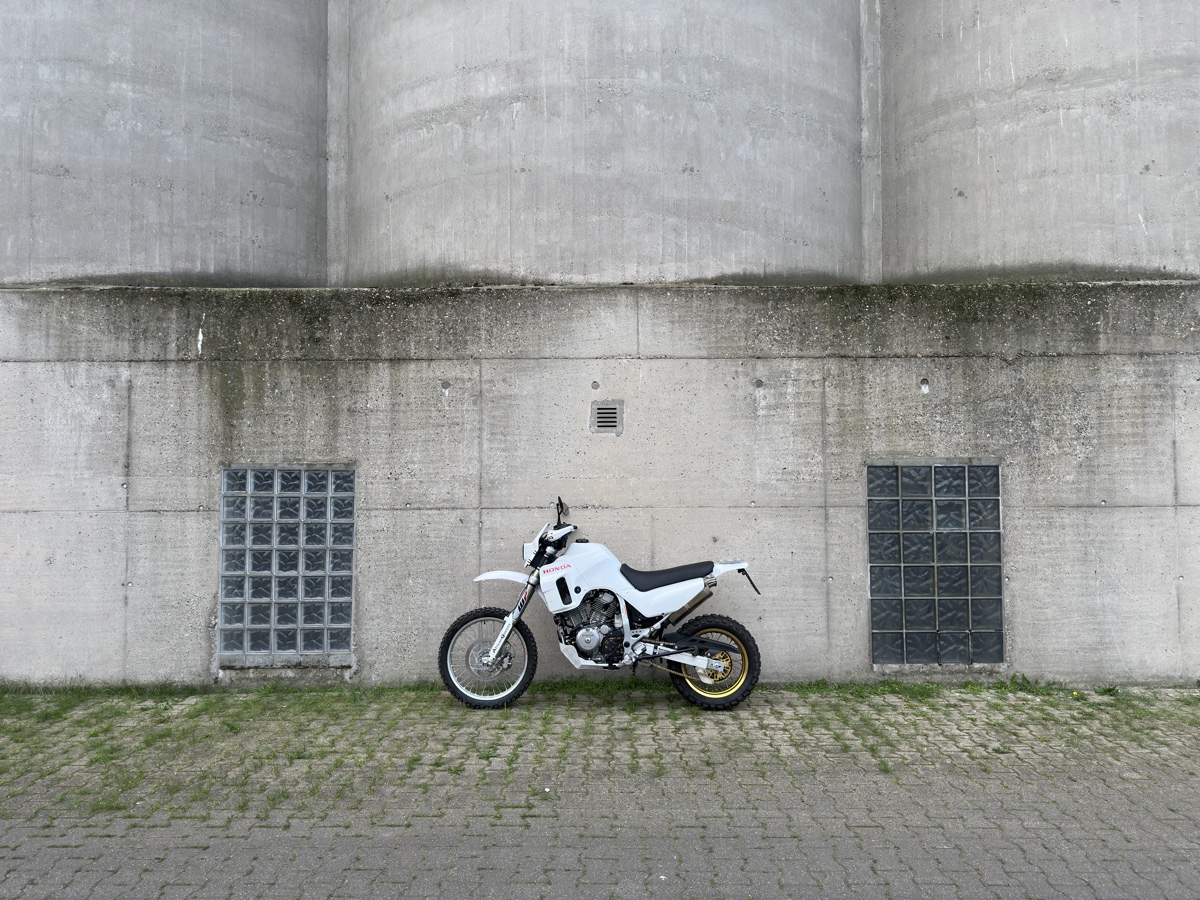
The modifications have completely transformed the bike into the XL-sized enduro you see here. The bodywork is the most striking change. The front fairing was removed in favor of a custom headlight mask and LED light. Marc 3D-printed the bracket for the new mask, which includes mounts for the Motogadget indicators, and he also 3D-printed the sprocket cover, fuse holder, speedometer mount, and several other components. The rest of the bodywork was trimmed to match the new headlight.
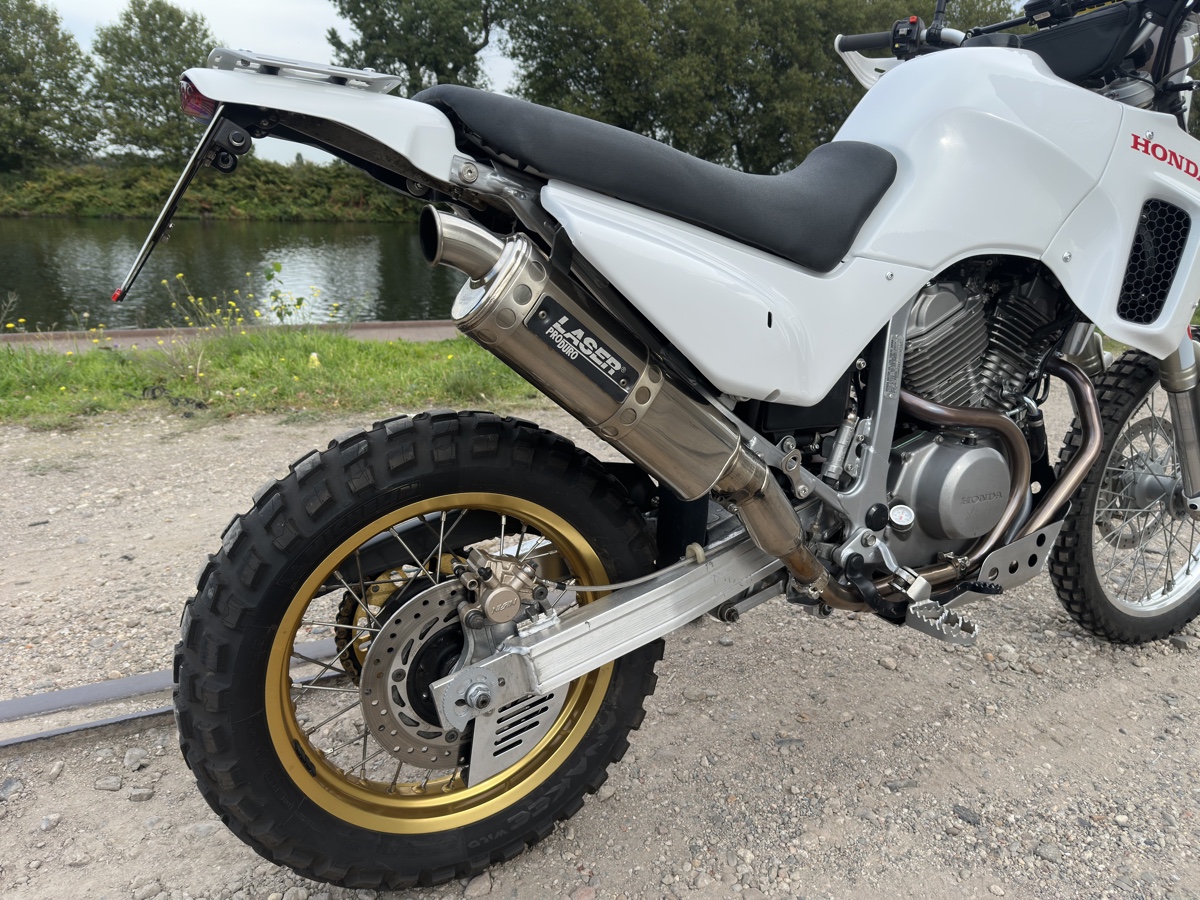
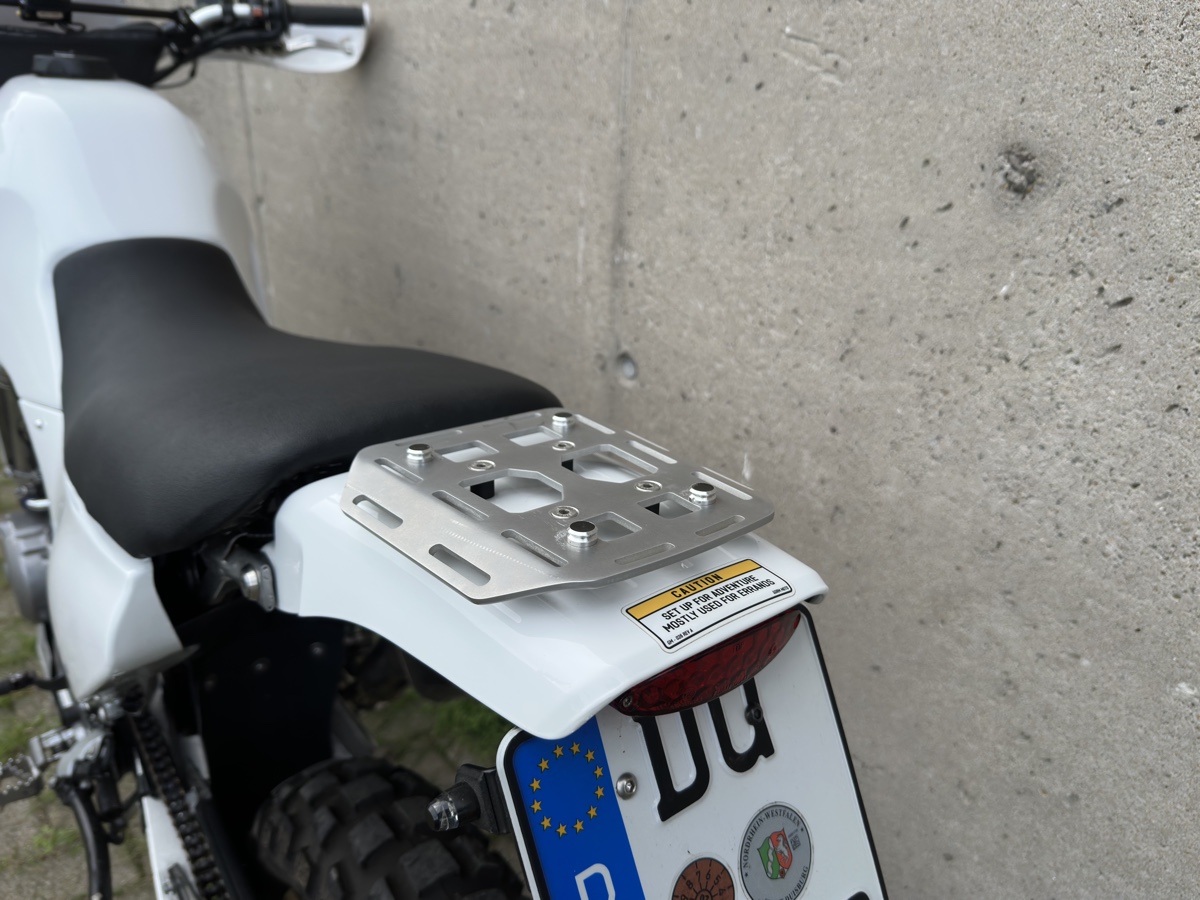
“I kept the original side panels and rear plastics but trimmed them down piece by piece until I was happy with the shape. The rear section was reinforced with aluminum, fitted with a quick-release seat modification, and finished with a minimalist license-plate holder.”
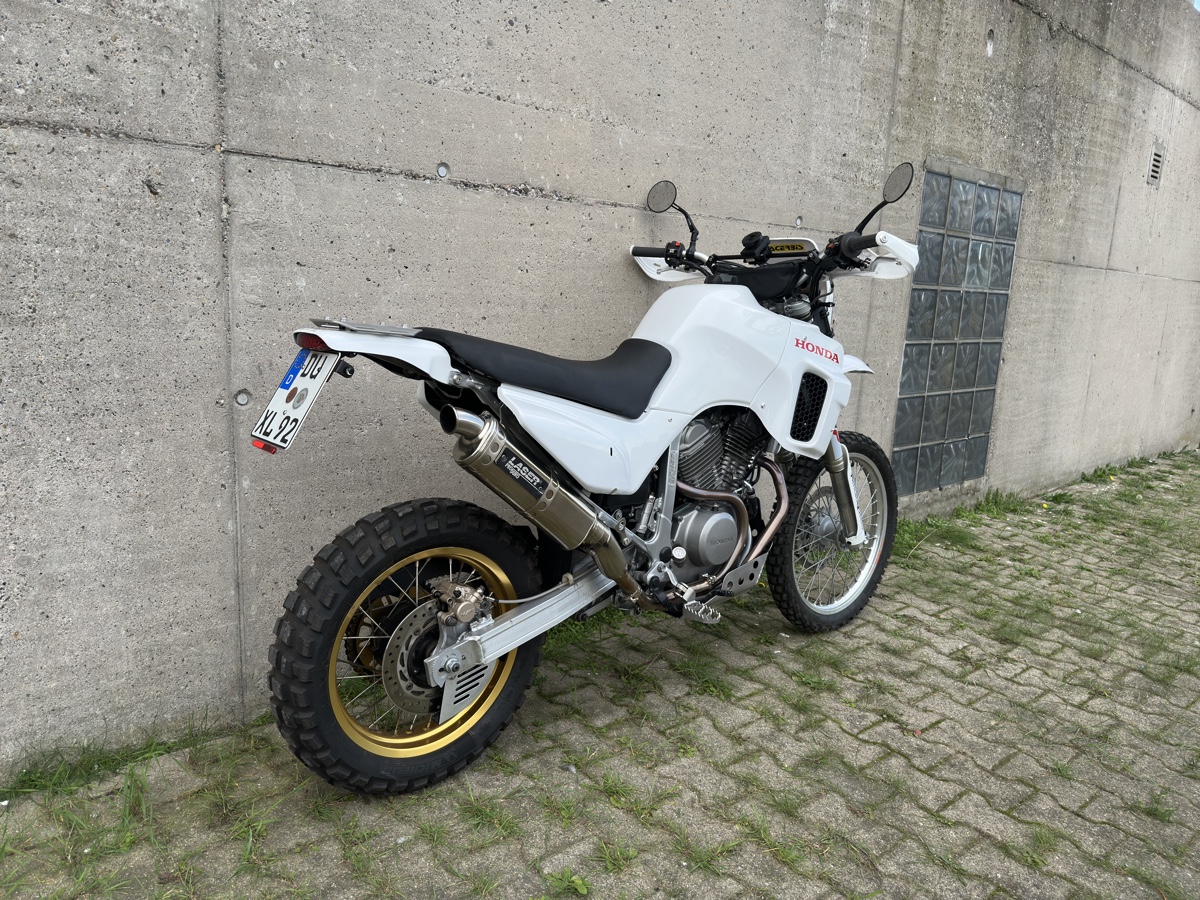
On the suspension front, Marc swapped out the stock front end for a set of WP 48 USD forks with KTM 640 Adventure yokes. Out back there’s an Africa Twin RD04 swingarm and linkage combined with a Wilbers rear shock — beefy! One of Marc’s points of pride is the one-finger clutch system he developed. With no bolt-on solution available, Marc created his own:
“It makes a huge difference when riding, especially on long trips or technical sections where you have to use the clutch frequently. Being able to operate the clutch with just one finger is a surprisingly big improvement and makes riding much less tiring.
For me, that’s what makes the project special: I didn’t just modify an existing motorcycle, but learned along the way and created solutions that didn’t exist for the bike before.”
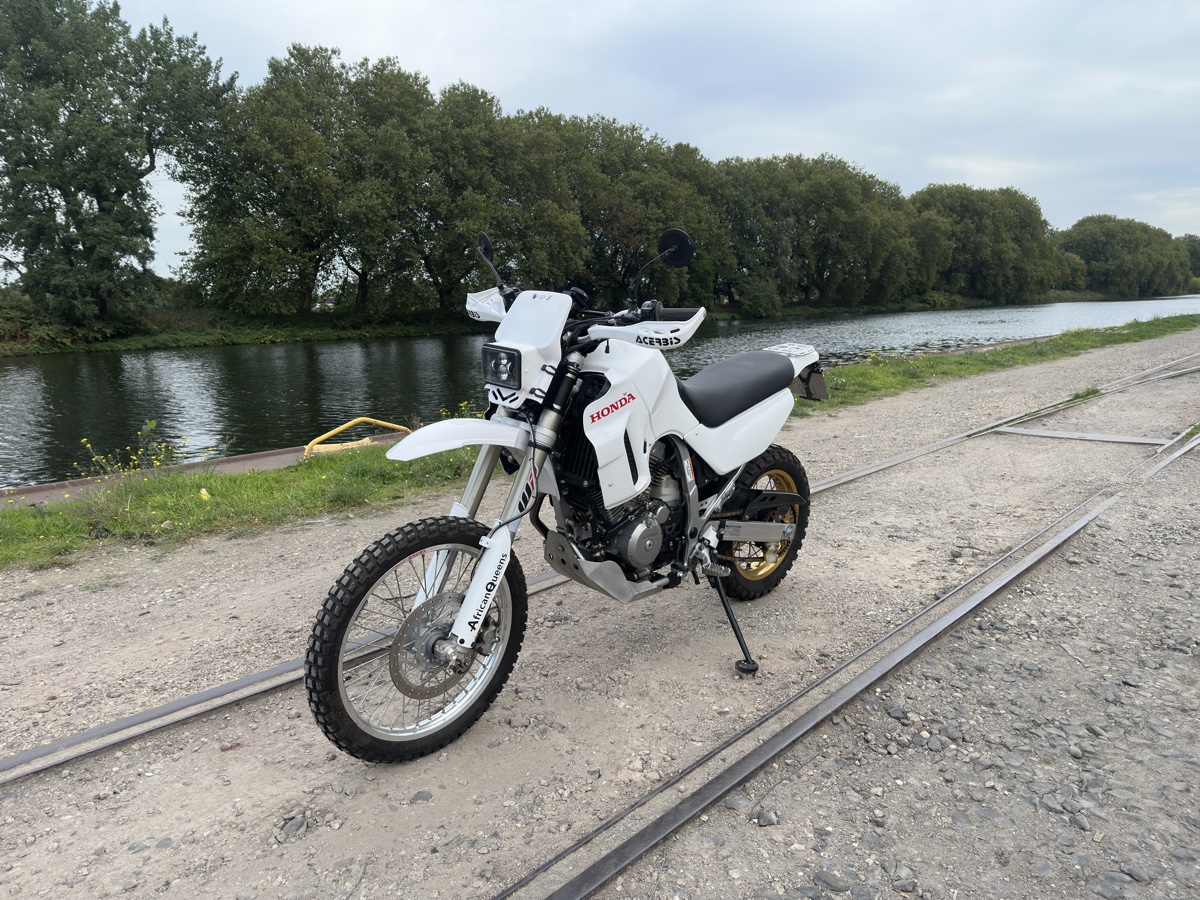
Marc estimates this Transalp has lost some 25 pounds in the process, and the modern suspension makes it stable and planted both on the tarmac and off. We first saw the bike when Marc visited our buddy Zoran at Amsterdam’s Rusty Gold MotorShop, and we had to learn more.
Thanks so much to Rusty Gold for bringing this build to our attention, and thank you to Marc for sharing this basement-built go-getter — we absolutely love it. The concept reminds us of Holy Moly’s Yamaha T7 Retro Kit, but based on one of Honda’s most interesting vintage rally / adventure platforms.
Hats off to Marc for such a cool build — this is one of those bikes we’d truly love to have in the stable as our go-anywhere, do-anything travel rig.
Honda Transalp Enduro / Restomod: Builder Interview
• Please tell us a bit about yourself, your history with motorcycles, and your workshop.
My name is Marc Pfaffl, I’m 26 years old, and I am a qualified carpenter and work as a vocational instructor in a supported workshop for people with disabilities in Germany.
My motorcycle story started when I was 16, when I bought my first project: a Simson Schwalbe KR51/1. I completely stripped it down and restored it from the ground up. After selling it, I quickly realized how much I missed working on motorcycles, so I bought another Schwalbe. This time, I went a bit beyond restoration and started making my own custom parts, including a handlebar, a carbon-fiber engine tunnel, and various smaller details.
After that, I became more interested in cars and owned several different vehicles. However, I was never completely satisfied with the modifications, mainly because I didn’t have the space or budget to do as much of the work myself as I wanted.
After selling my latest project, a Golf Mk2, I started missing the feeling of having a project to work on. My father has owned many motorcycles over the years and has always modified them in his own way. He was the inspiration for me to build and modify a motorcycle myself this time. That’s when I bought the motorcycle that would eventually become this build. Interestingly, it was also my very first motorcycle, even though I didn’t have a motorcycle license at the time.
On the day I bought it, I started taking it apart. Once it was partially disassembled, I carried it down to my basement and continued the build there. The basement became my workshop, where I completely stripped down, cleaned, modified, and rebuilt the bike.
Eventually, the bike had to leave the basement. My father, my brother, and I carried it back outside and moved it into the garage, where I completed the final stages of the build.
• What’s the make, model, and year of the donor bike?
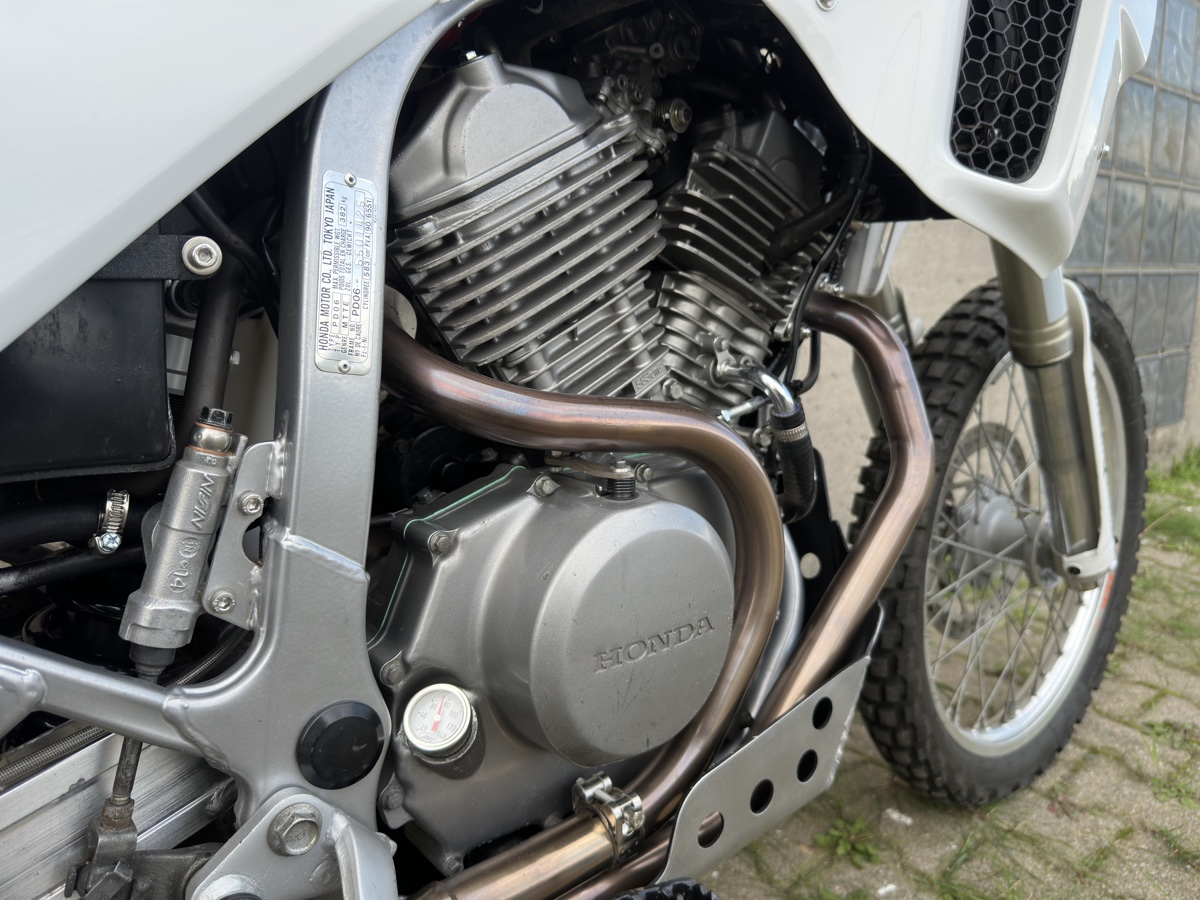
The donor bike is a 1992 Honda Transalp XL600V PD06. I bought it from its first owner with only 18,000 km on the clock.
It was completely original and, mechanically, a very good starting point for the build. The bike did show some signs of use and had broken side panels, but overall it was a solid and largely untouched base to start with.
• Why was this bike built?
I chose the Transalp for a few different reasons. First of all, I’m a tall guy, so I wanted a bike that would fit me well and still be comfortable for longer rides.
I also wanted to keep the project within a reasonable budget. I’ve always liked older vehicles because they are relatively simple and give you the opportunity to work on and modify things yourself rather than relying on complicated electronics or specialized equipment. The Transalp also seemed like a solid and reliable motorcycle, which made it a good foundation.
Most importantly, I was really drawn to the idea of traveling and riding off-road. I wanted a bike that wouldn’t be limited by the surface I was riding on — something I could take on the road, onto gravel and dirt tracks, and eventually on longer adventures. The Transalp seemed like a great starting point for exactly that.
• What was the design concept and what influenced the build?
The design was heavily inspired by old rally motorcycles, especially the Honda XL600 and Baja-style builds, as well as vintage motorcycle modifications in general. I wanted to give the Transalp a slimmer and more purposeful look while combining the character of an enduro with the capabilities of an adventure bike.
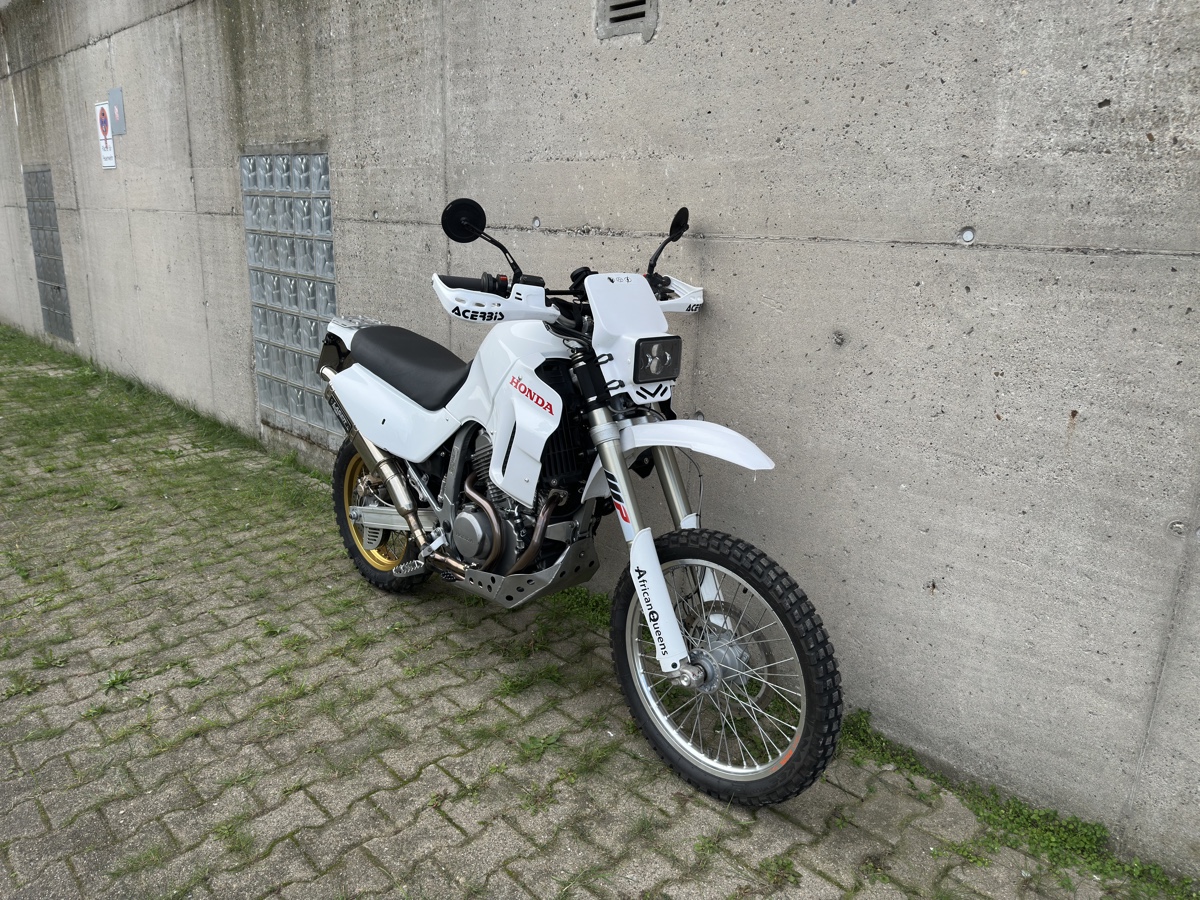
A clean and simple overall appearance was very important to me. I didn’t want to overload the bike with unnecessary parts or complicated styling. This also influenced the color choice — I went with a simple, understated color scheme that keeps the focus on the shape and details of the bike.
• What custom work was done to the bike?
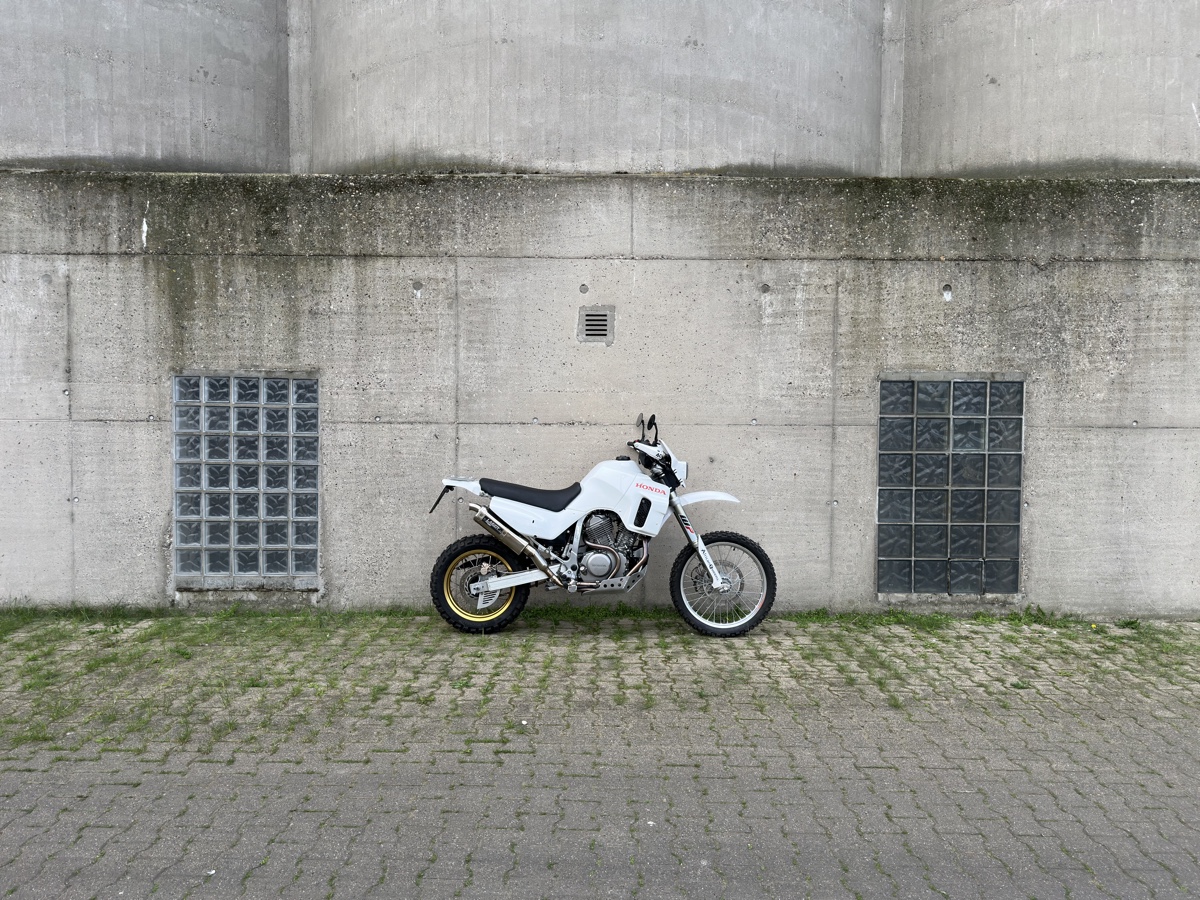
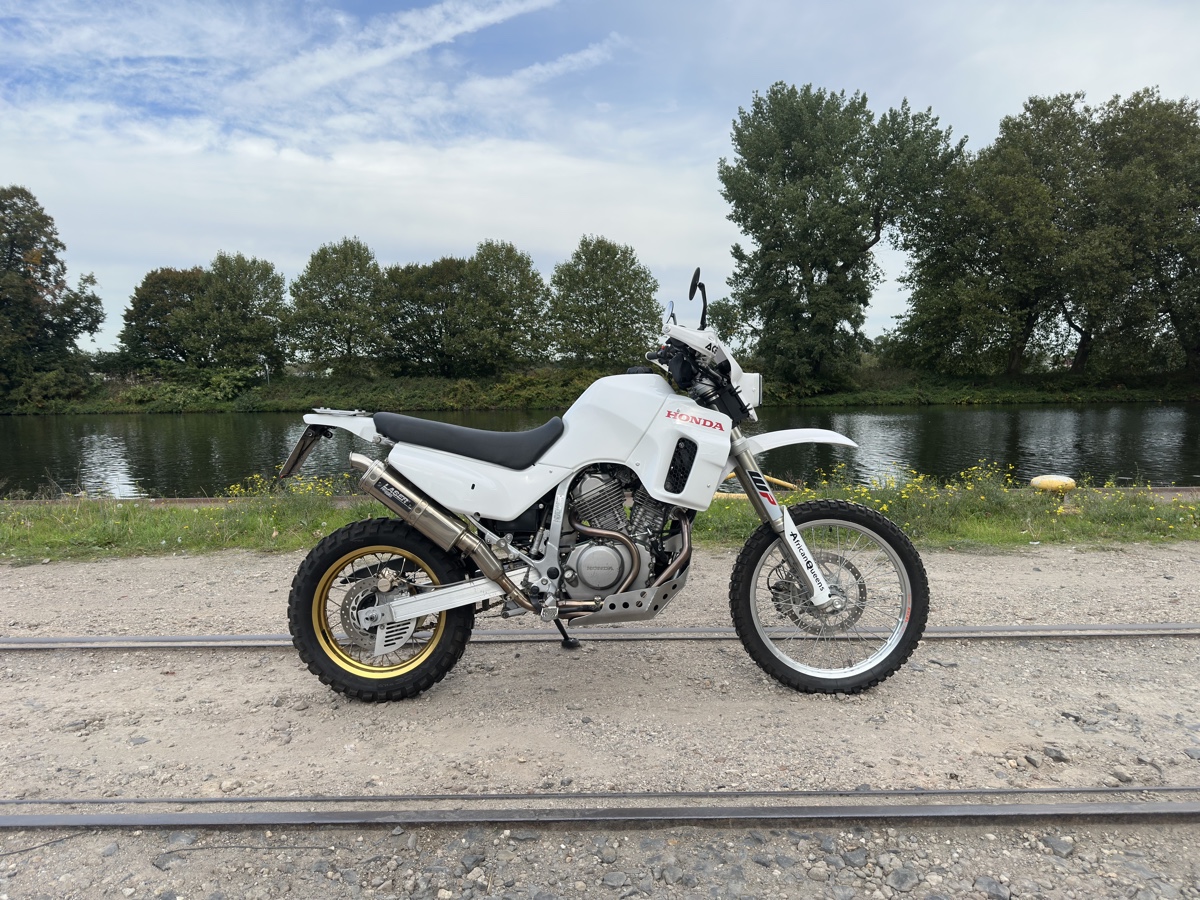
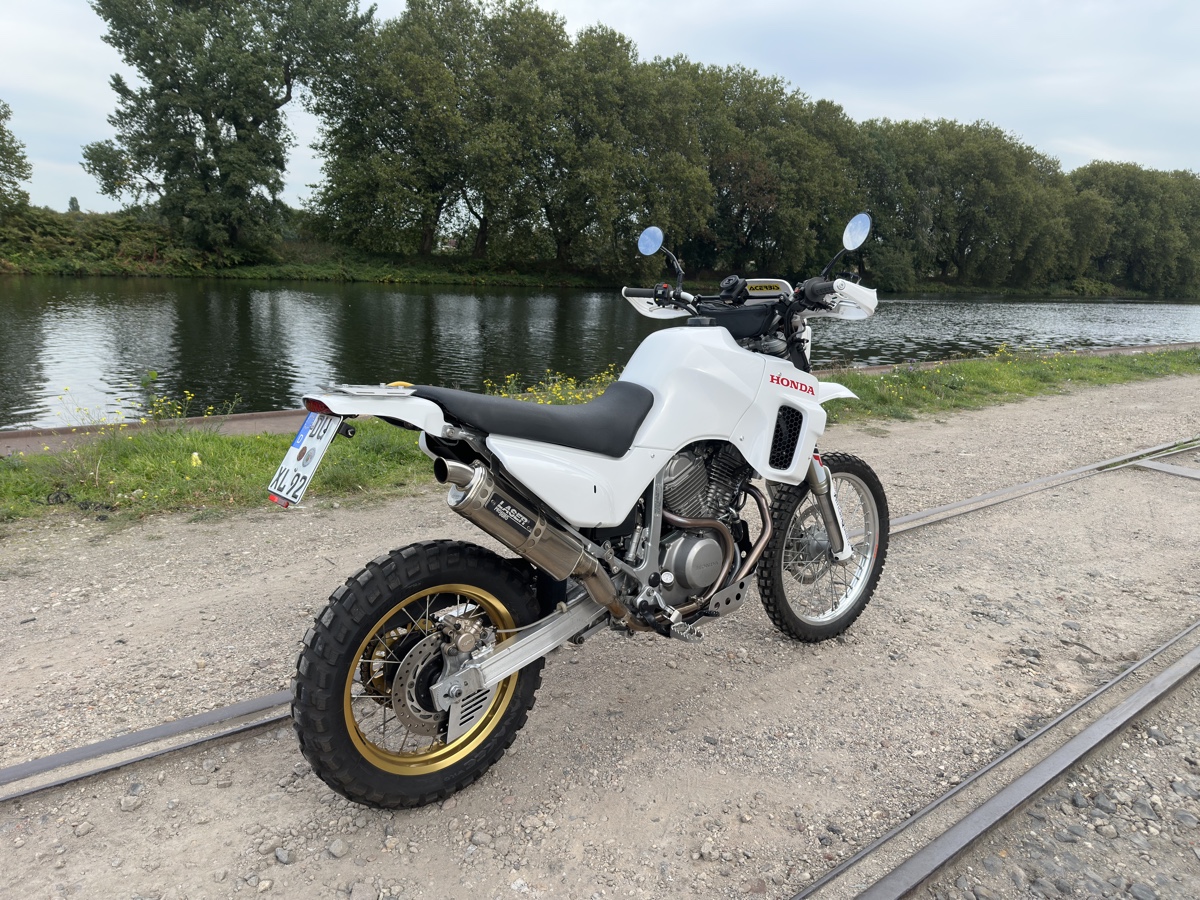
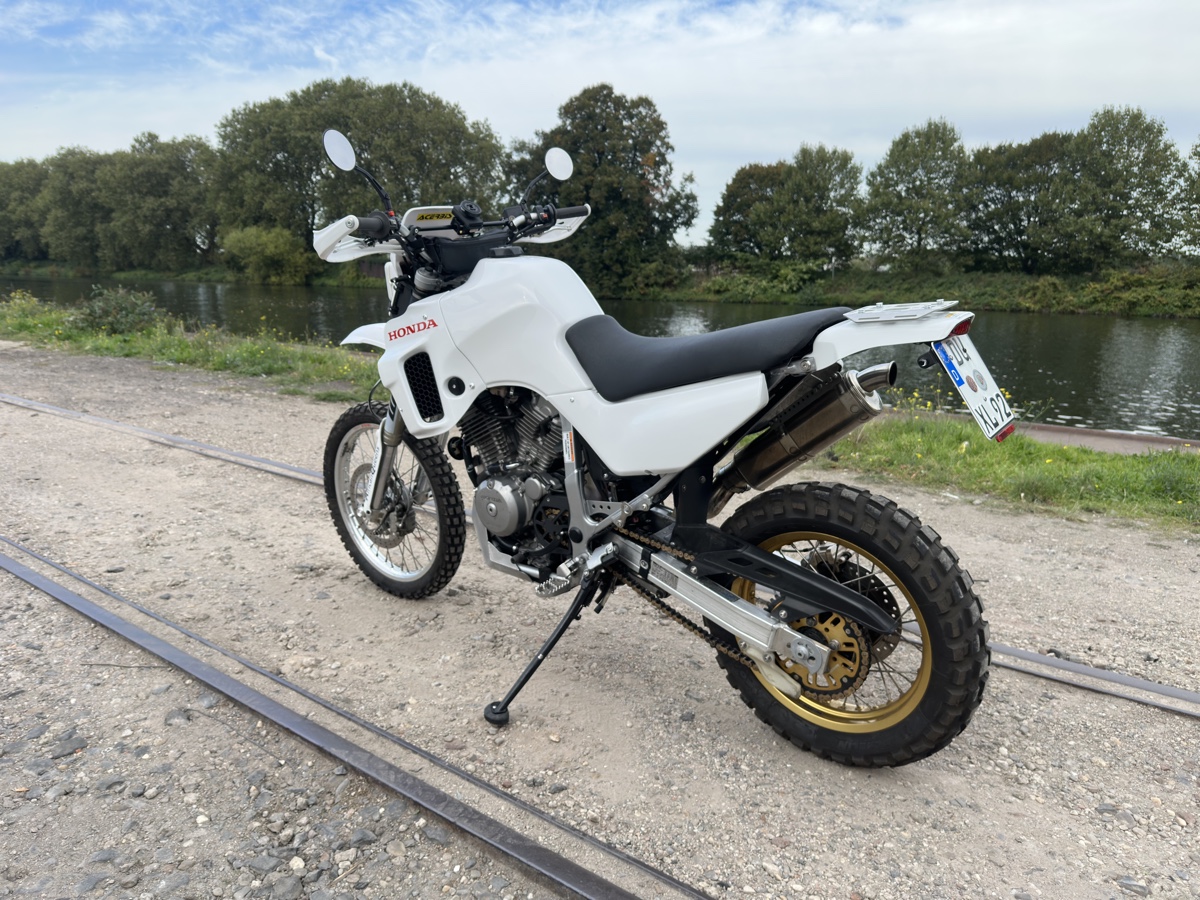
The bike has been extensively modified, with the main focus being on the chassis, suspension, and overall design. Up front, I fitted the triple clamps from a KTM 640 Adventure together with a WP 48 USD fork. At the rear, I used an Africa Twin RD04 swingarm and linkage combined with a Wilbers rear shock.
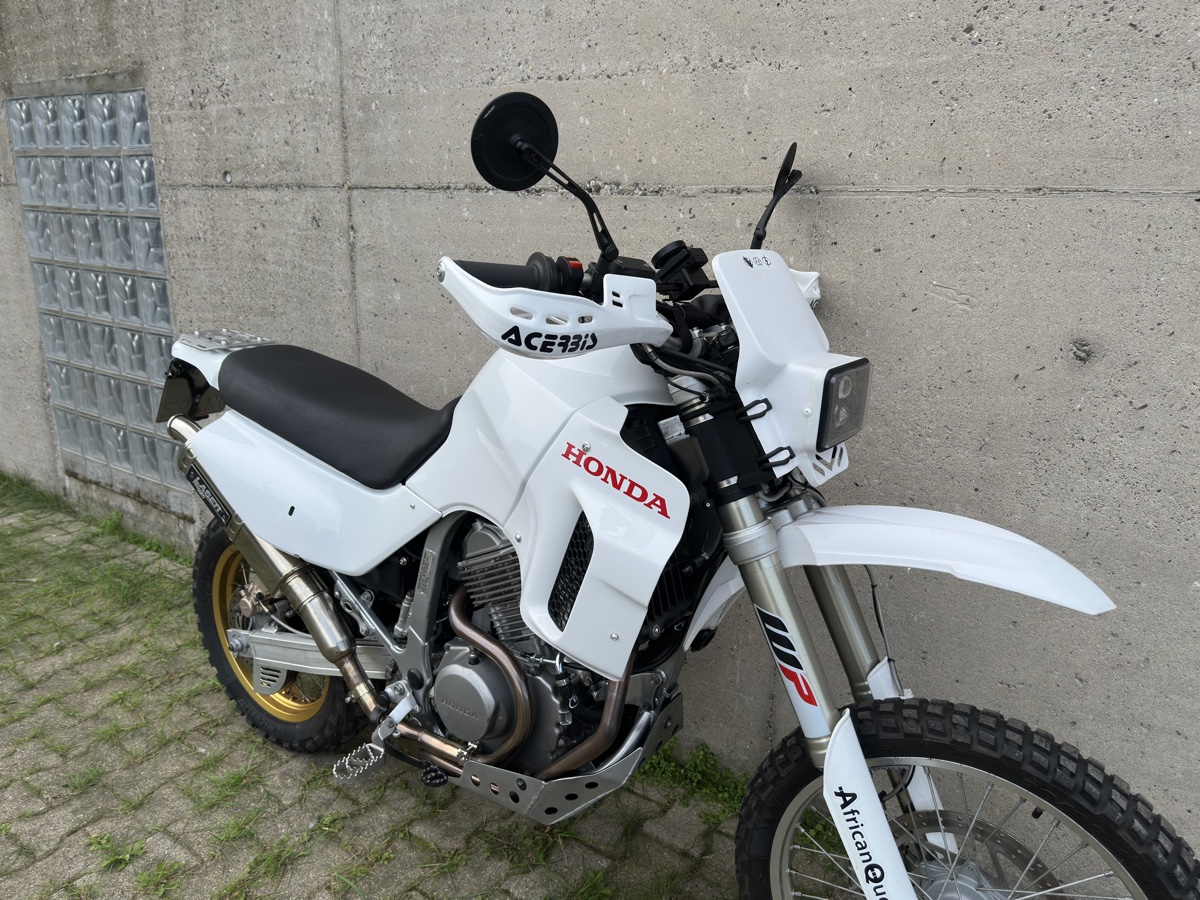
The front of the bike was completely redesigned around a custom headlight mask and LED headlight. I also designed and 3D-printed the headlight mask bracket, which incorporates mounts for the Motogadget turn signals.
Many smaller parts and details throughout the bike were also 3D-printed, including the sprocket cover, fuse holder, speedometer mount, and several other small brackets and components. I also designed and built a custom short shifter for the clutch, allowing the clutch to be operated with just one finger.
For the bodywork, I kept the original side panels and rear plastics but trimmed them down piece by piece until I was happy with the shape. The rear section was reinforced with aluminum, fitted with a quick-release seat modification, and finished with a minimalist license-plate holder.
The exhaust system consists of a Laser muffler and stainless-steel headers.
• Does the bike have a nickname?
The bike doesn’t have a nickname yet. Since the build isn’t completely finished, I haven’t found the right name for it so far.
• Any idea of horsepower, weight, and/or performance numbers?
The engine is still essentially stock, producing around 50 hp from the 583 cc V-twin. The original bike weighed around 202 kg ready to ride, and after the modifications and removal of some of the original parts, I estimate the finished bike to be around 190 kg.
I haven’t measured any specific performance figures yet, but the focus of the build was never outright speed. I wanted to make the bike lighter, more capable off-road, and better suited to long-distance adventure riding.
• Can you tell us what it’s like to ride this bike?
Since this is my first motorcycle, I don’t really have a comparison to other bikes. I also never rode this particular Transalp in its original form, so I can’t directly compare the finished bike to the stock version.
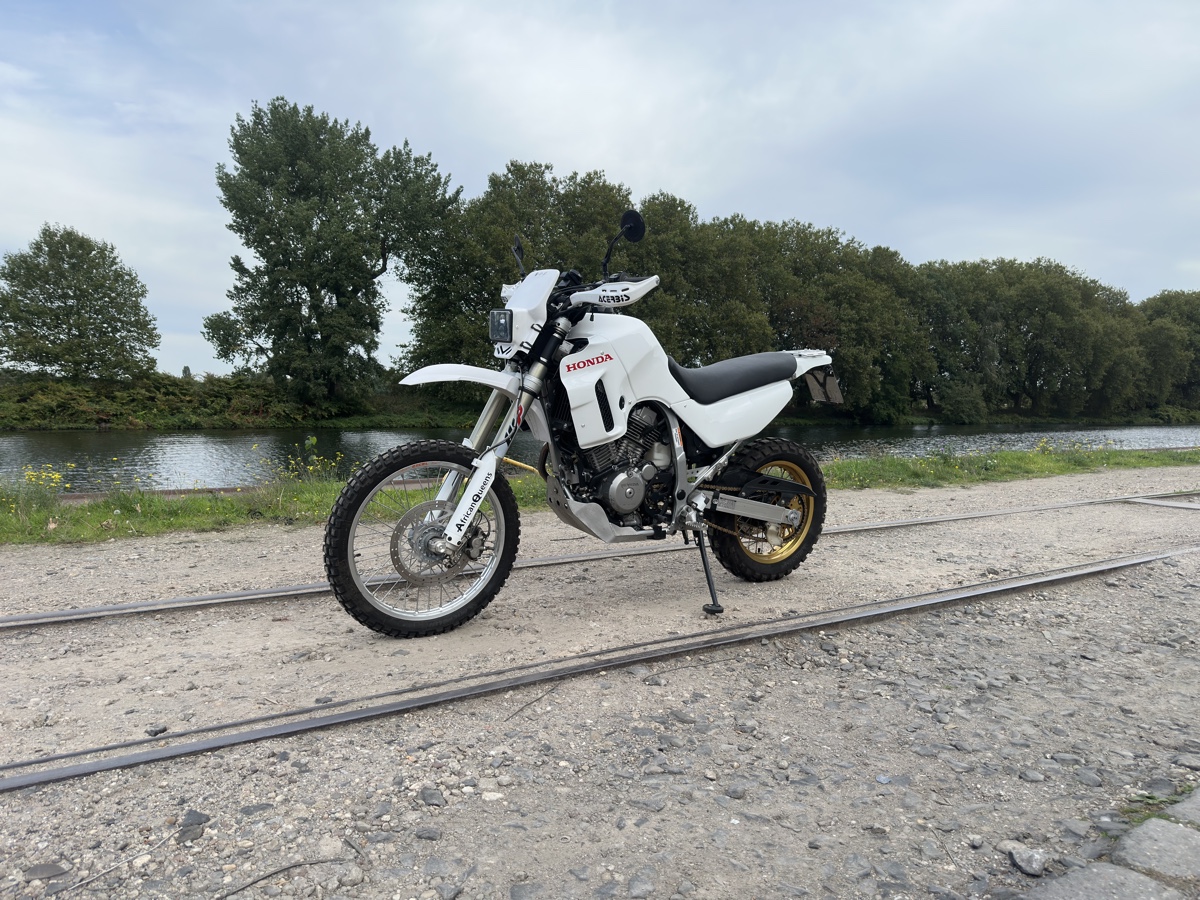
What I can say is that, after riding it with the new suspension setup, especially the WP front end, the bike feels noticeably more planted and composed. It feels much more like a modern motorcycle than I expected from a bike of this age, while still retaining the character of the original Transalp.
I’m still getting to know the bike and haven’t had the chance to fully explore its capabilities yet, but that’s part of the fun of the project.
• Was there anything done during this build that you are particularly proud of?
I’m particularly proud of the parts of the build that I developed myself. Throughout the project, I learned a lot about designing parts, 3D printing, and turning an idea into something that actually works on the motorcycle.
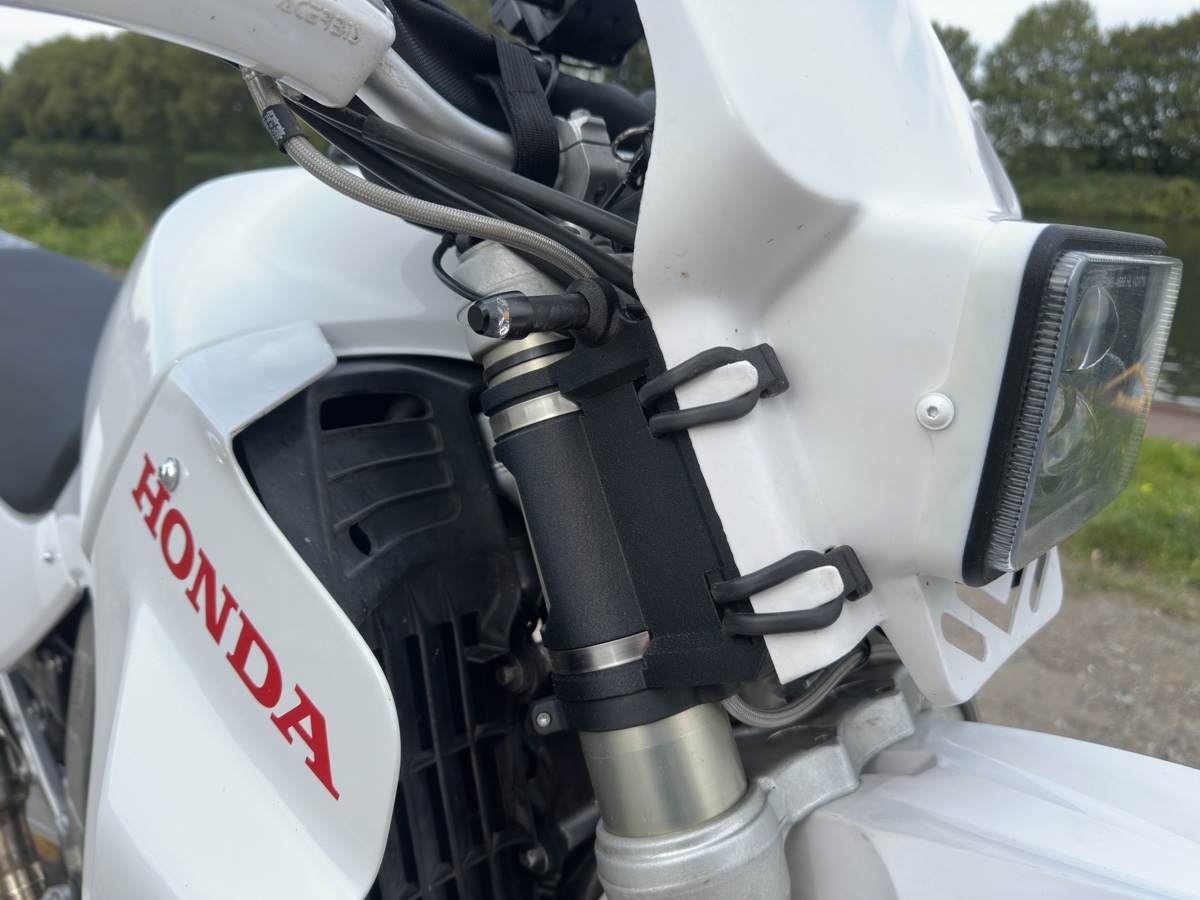
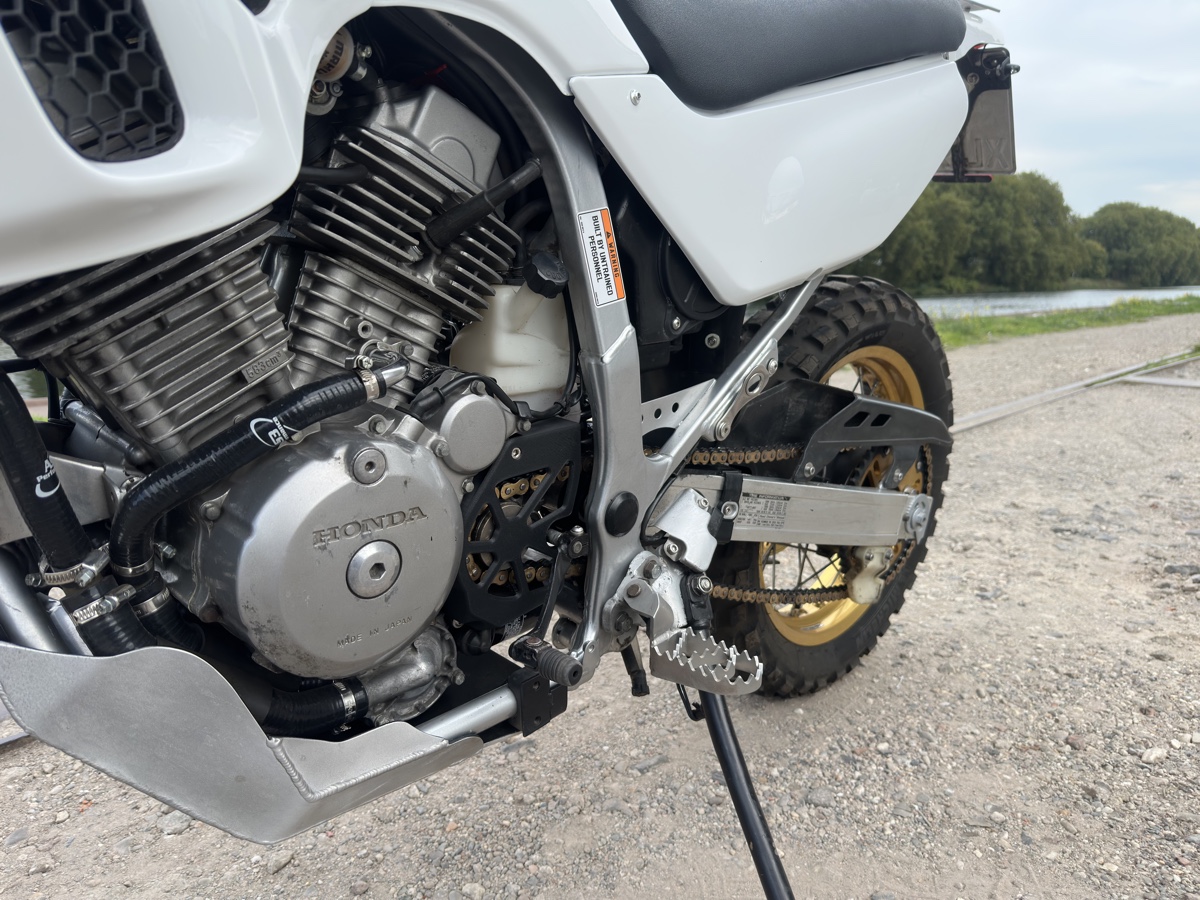
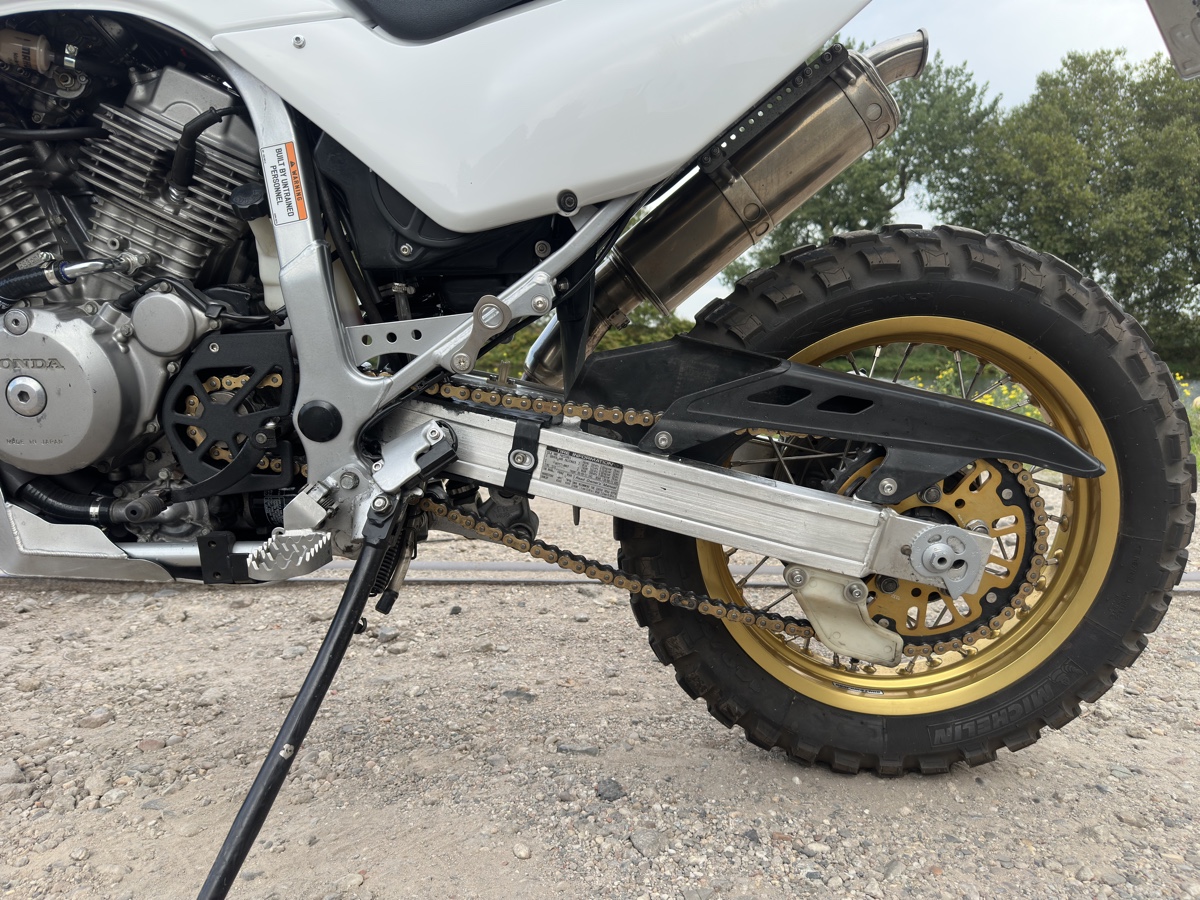
The part I’m probably most proud of is the short-shifter I developed for the One-Finger Clutch. As far as I know, there wasn’t anything like it available for the Transalp, so I designed my own solution. It makes a huge difference when riding, especially on long trips or technical sections where you have to use the clutch frequently. Being able to operate the clutch with just one finger is a surprisingly big improvement and makes riding much less tiring.
For me, that’s what makes the project special: I didn’t just modify an existing motorcycle, but learned along the way and created solutions that didn’t exist for the bike before.
• Is there anyone you’d like to thank?
I definitely want to thank my father and my brother for their support throughout the build. I did most of the work myself, but whenever I had a technical question or needed some advice, I could always turn to my father and draw on his experience and knowledge.
My brother and my father were also great to have around when it came to the visual side of the build — sometimes it helps to have another pair of eyes to decide whether a detail really works or should be changed. Their support, knowledge, and honest opinions helped me a lot throughout the project, and I’m very grateful for that.
Follow the Builder
Instagram: @marcpfffl
More Honda Transalp Customs…
 Basement-Built XL600V: Honda Transalp 600 Enduro - XL-Size Enduro: Marc Pfaffl’s Retrofitted Transalp… In the late 80s, Honda unveiled the XL600V Transalp as a “Rally Tourer” that could combine street performance, off-road capability, and long-distance touring comfort. At its heart was a […]
 Go Long: Honda XL600V Transalp Restomod - Upfitted Adventure Bike from Bolt Motor Company… In 1986, Honda unveiled the XL600V Transalp, mainly at the request of European riders whose desire for adventure bikes and Dakar-styled “trailies” was at an all-time high. […]
 Transalp Scrambler: Honda XL600V by Rusty Pipes Garage - The Honda Transalp was launched back in 1987 with the original Honda XL600V — a two-wheeled multitool of a machine boasting a 52-degree V-twin that made 50-55 hp. Styled after the Paris-Dakar racers of the […]
 Honda Transalp Brat Tracker by HIDE Brussels - A V-twin Brat Tracker from Brussels… The Honda Transalp is a series of V-twin dual-sport / ADV bikes in production since the late 1980s. We rarely get to see these bikes in the USA, as […]
 Honda Transalp Street Tracker by EEM - “It should seem like it can ride over a wall…” The Honda Transalp was the company’s V-twin dual-sport / adventure bike — a beastly, liquid-cooled machine built to take on a variety of climates and […]


