 New 743cc parallel-twin, adjustable Showa suspension, and serious touring capability for Royal Enfield’s largest Himalayan yet…
Ten years ago, Royal Enfield introduced a motorcycle that helped redefine affordable adventure riding. The original Himalayan 411 was neither particularly powerful nor technologically advanced, but that was part of its appeal. With its rugged construction, approachable dimensions, and uncomplicated single-cylinder engine, it offered a refreshing alternative to the increasingly large, expensive, and sophisticated adventure motorcycles dominating the market.
The Himalayan 450 took the formula considerably further, introducing a liquid-cooled engine, modern electronics, and a much more capable off-road chassis. Now, Royal Enfield is preparing to take another major step forward. Unveiled at EICMA 2026 in Milan, the Royal Enfield Himalayan 750 brings a new 743cc parallel-twin engine, premium Showa suspension, twin-disc front brakes, and an unprecedented level of electronic sophistication to the Himalayan family.
But the most interesting development may be the bike’s intended mission. With a 19-inch front wheel, greater emphasis on highway performance, and a host of touring-oriented features, the Himalayan 750 appears designed to complement the more dirt-focused 450 rather than replace it. For riders who love the Himalayan’s straightforward, go-anywhere character but want more power and comfort for long-distance adventures, it could be just what they’ve been waiting for.
A Decade of Himalayan Adventure
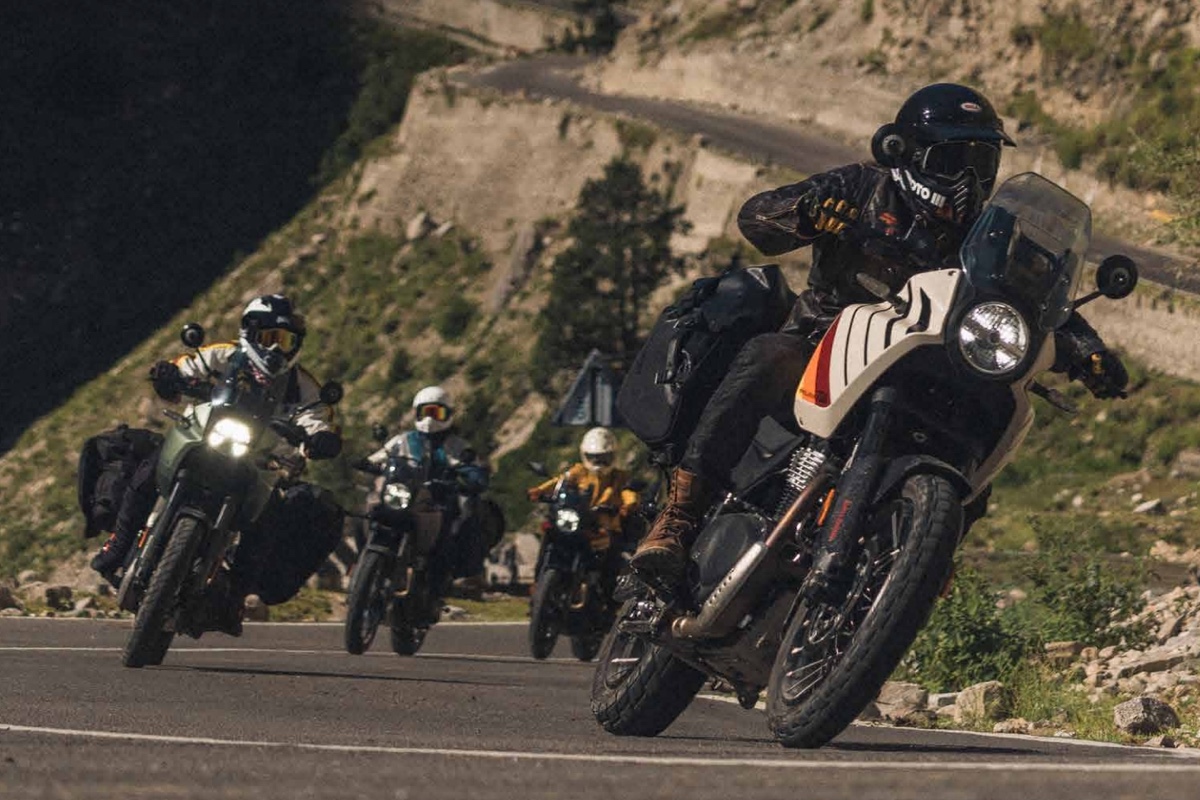
Royal Enfield launched the original Himalayan in 2016, introducing a purpose-built adventure motorcycle that emphasized rugged simplicity over outright performance. Powered by a 411cc air-cooled single producing approximately 24 horsepower, the original Himalayan wasn’t particularly fast, but it offered useful suspension travel, an upright riding position, and a sturdy chassis designed to handle the punishing roads and trails of the Indian Himalayas.
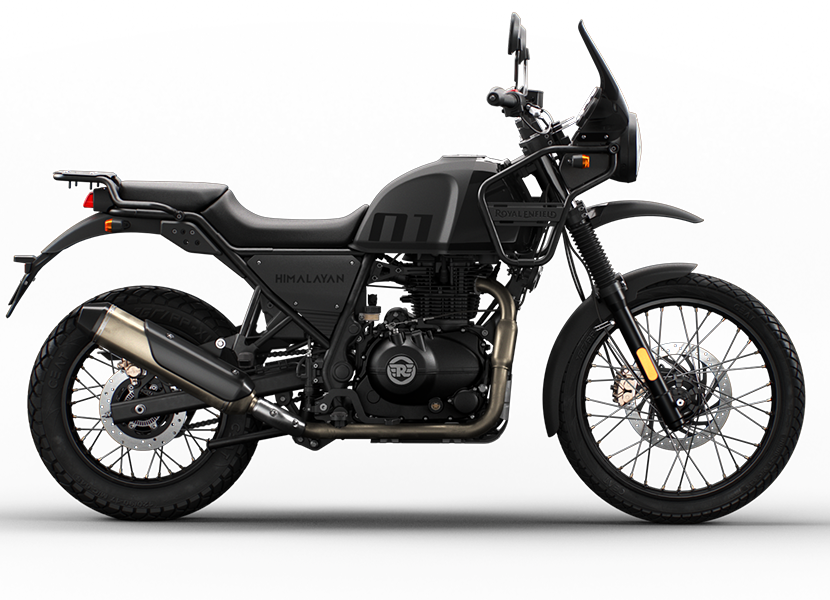
More importantly, it was affordable, approachable, and easy to live with. For many riders, the Himalayan represented an alternative to adventure motorcycles that seemed to grow heavier, taller, and more complicated with each passing generation.
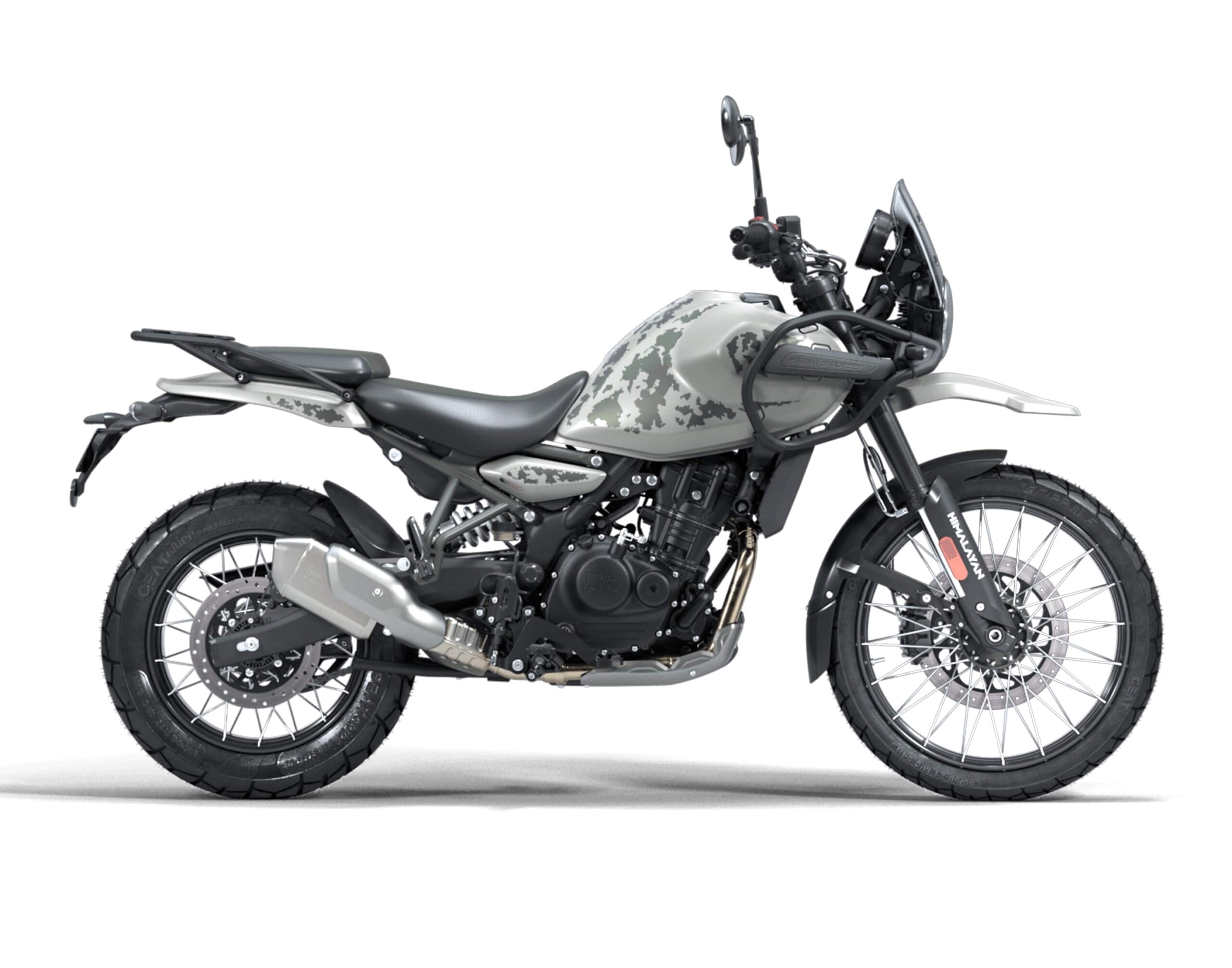
The second-generation Himalayan 450, introduced in 2023, marked a significant departure from the original formula. Its new Sherpa 450 liquid-cooled single produced approximately 40 horsepower, while a modern twin-spar chassis, 21-inch front wheel, long-travel suspension, and ride-by-wire electronics brought substantial improvements in performance and off-road capability.
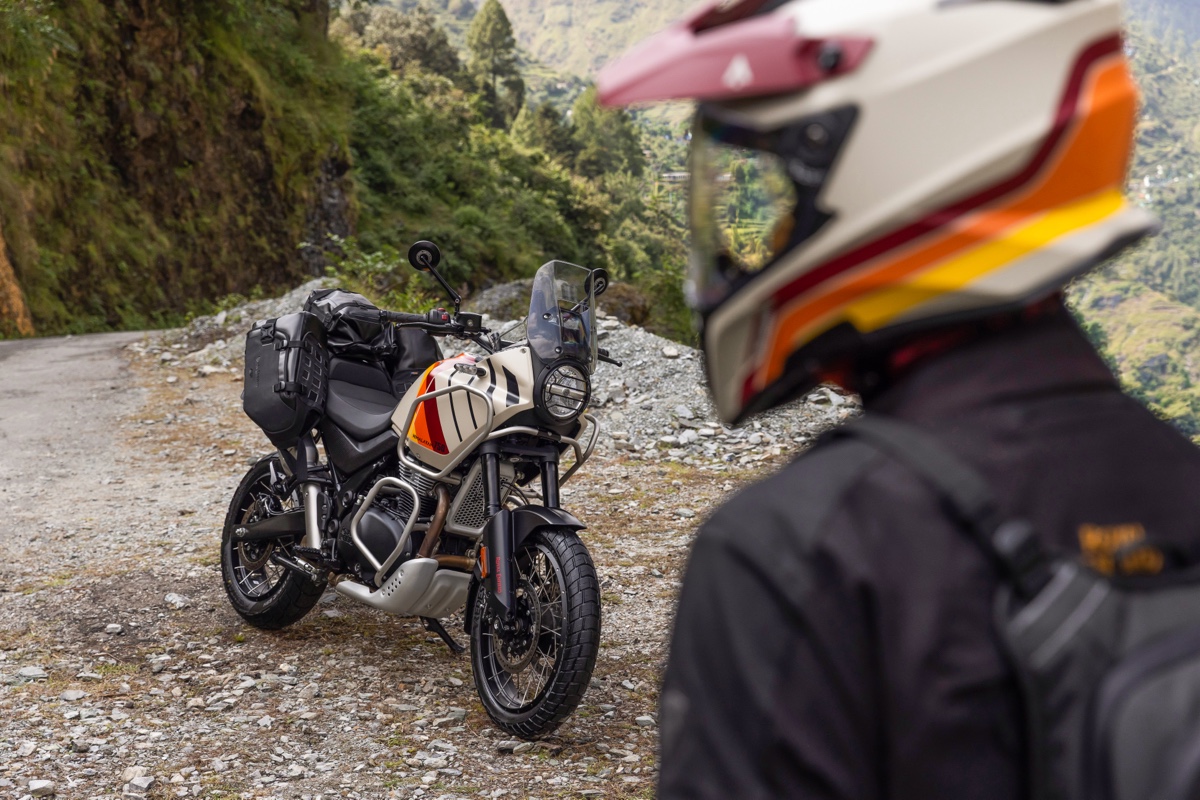
Now comes the Himalayan 750, the first twin-cylinder motorcycle in the Himalayan family and the first production Royal Enfield powered by the company’s new 743cc engine. The new machine represents another major evolution, but not necessarily in the direction some might expect. Rather than building a larger, more powerful enduro, Royal Enfield has developed an adventure tourer with an emphasis on comfort, versatility, and the ability to cover serious distances.
New 743cc Parallel-Twin Engine
At the heart of the Himalayan 750 is an all-new 743cc air/oil-cooled parallel-twin, producing a claimed 55 PS (approximately 54 horsepower) at 7000 rpm and 63 Nm (46.5 lb-ft) of torque at 5,000 rpm. Perhaps more importantly, Royal Enfield says 90% of peak torque is available from just 3500 rpm, suggesting an engine tuned for tractable, accessible performance rather than outright top-end power.
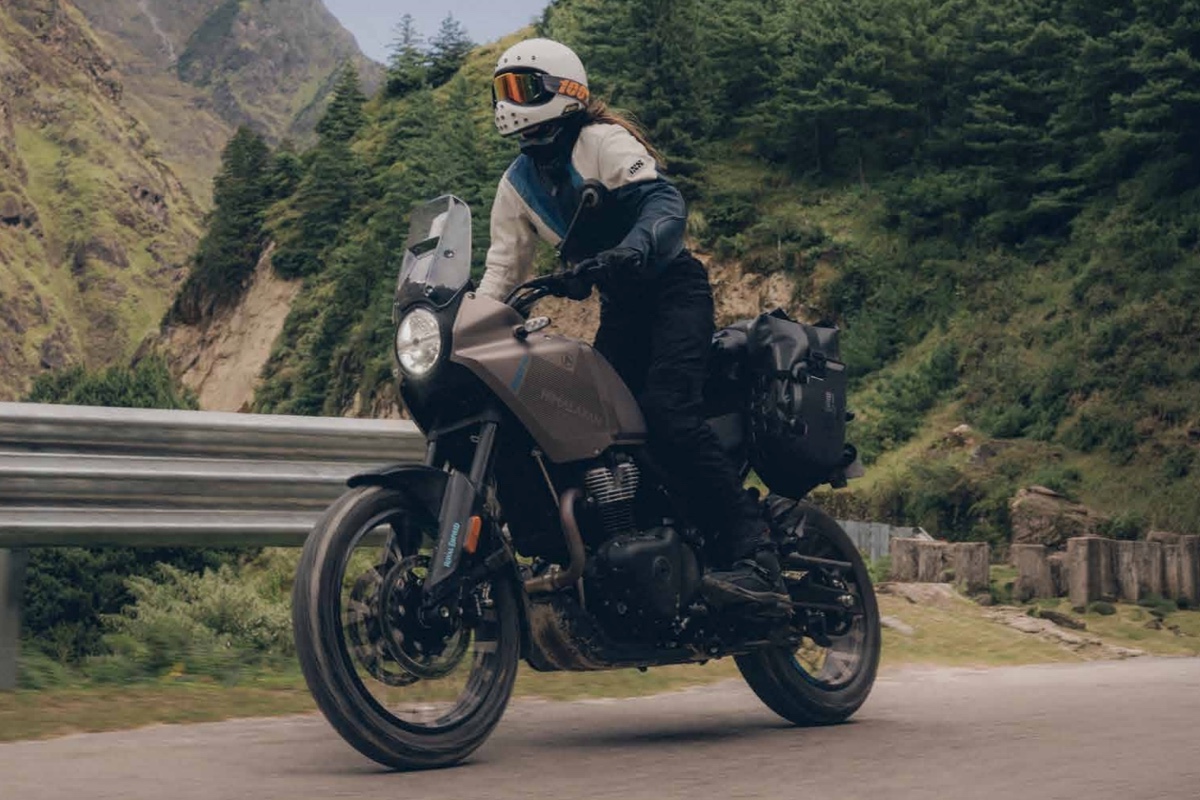
Of course, when climbing a steep mountain road, passing slower traffic with luggage aboard, or negotiating loose terrain at low speed, a broad spread of torque can be more useful than a headline-grabbing horsepower figure.
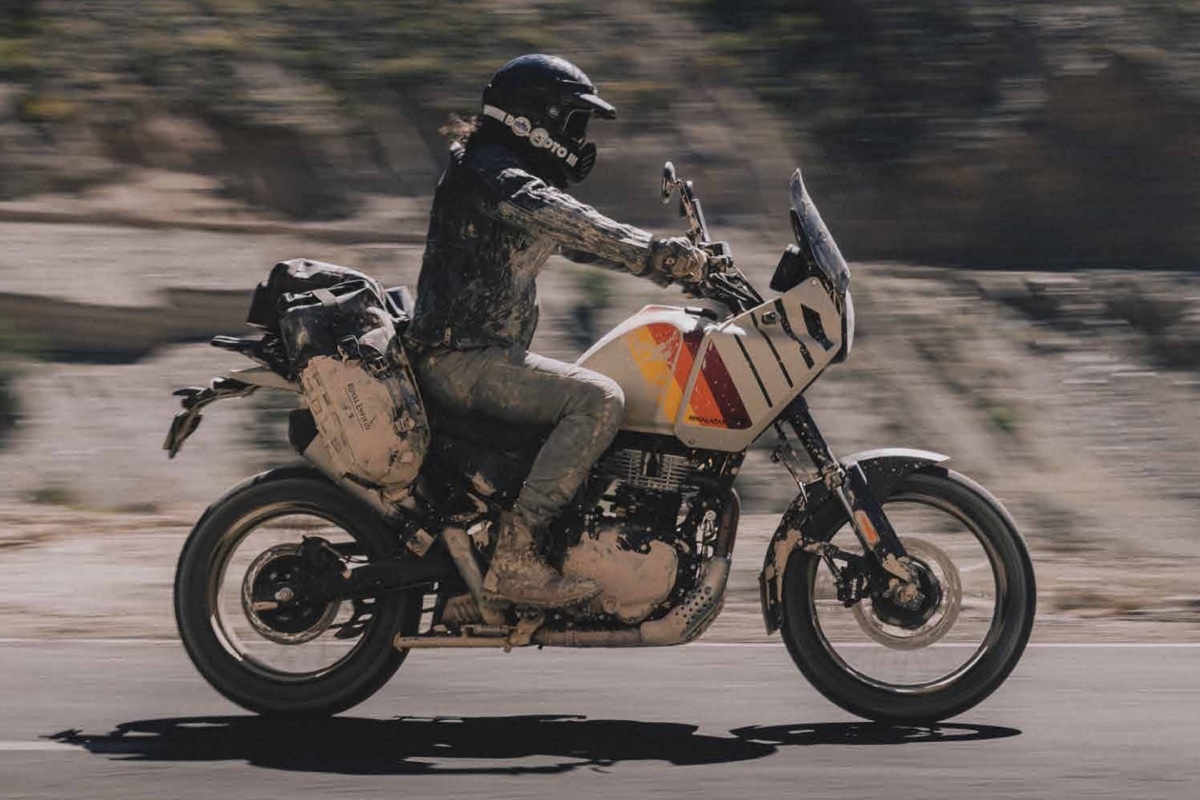
The new engine uses a single overhead camshaft configuration, with an 83.5mm bore and 67.8mm stroke, and drives through a six-speed gearbox. Unlike the Himalayan 450’s liquid-cooled single, the larger twin employs air/oil cooling. Compared with the 450, the performance increase is substantial. The smaller Himalayan produces approximately 40 metric horsepower and 40 Nm of torque, meaning the new twin delivers nearly 38% more peak power and 58% more peak torque. The larger engine should also offer more relaxed highway cruising, particularly when carrying a passenger or luggage.
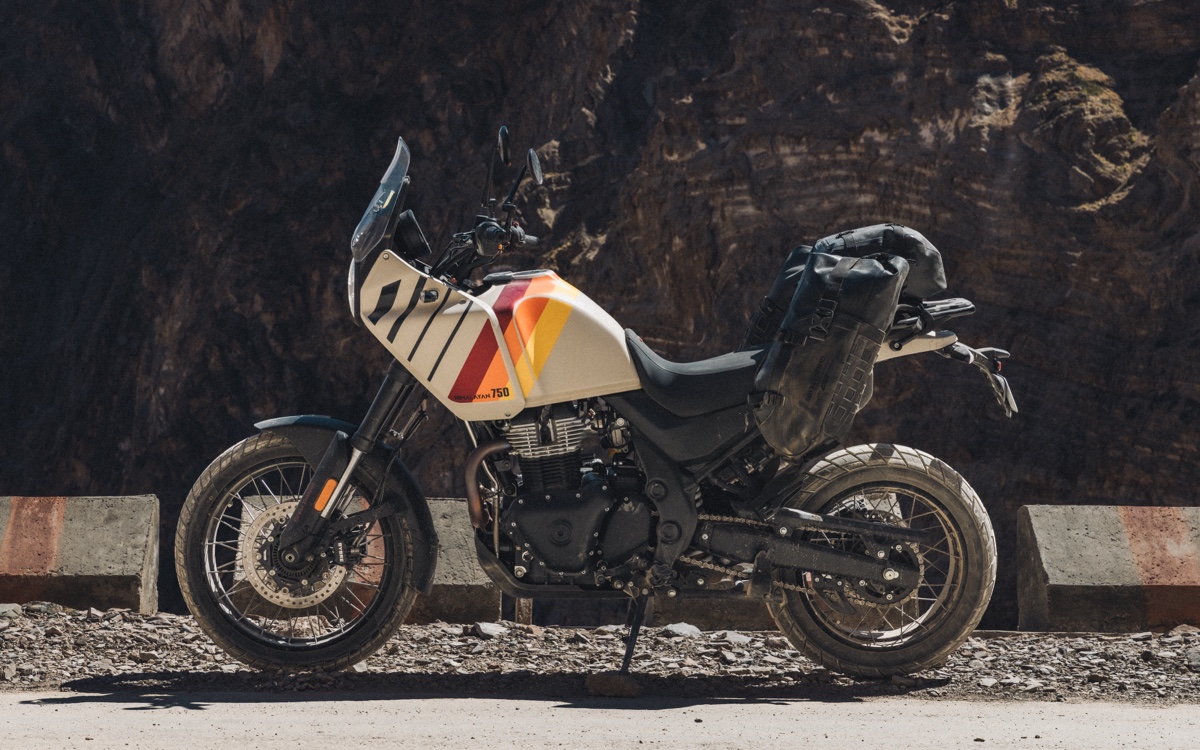
Of course, 54 horsepower isn’t especially impressive by modern middleweight adventure bike standards. Machines such as the Yamaha Ténéré 700 and Honda XL750 Transalp offer considerably more power. But Royal Enfield has never been particularly interested in winning horsepower competitions. The company’s appeal has traditionally rested on accessible performance, mechanical character, and a relatively uncomplicated riding experience.
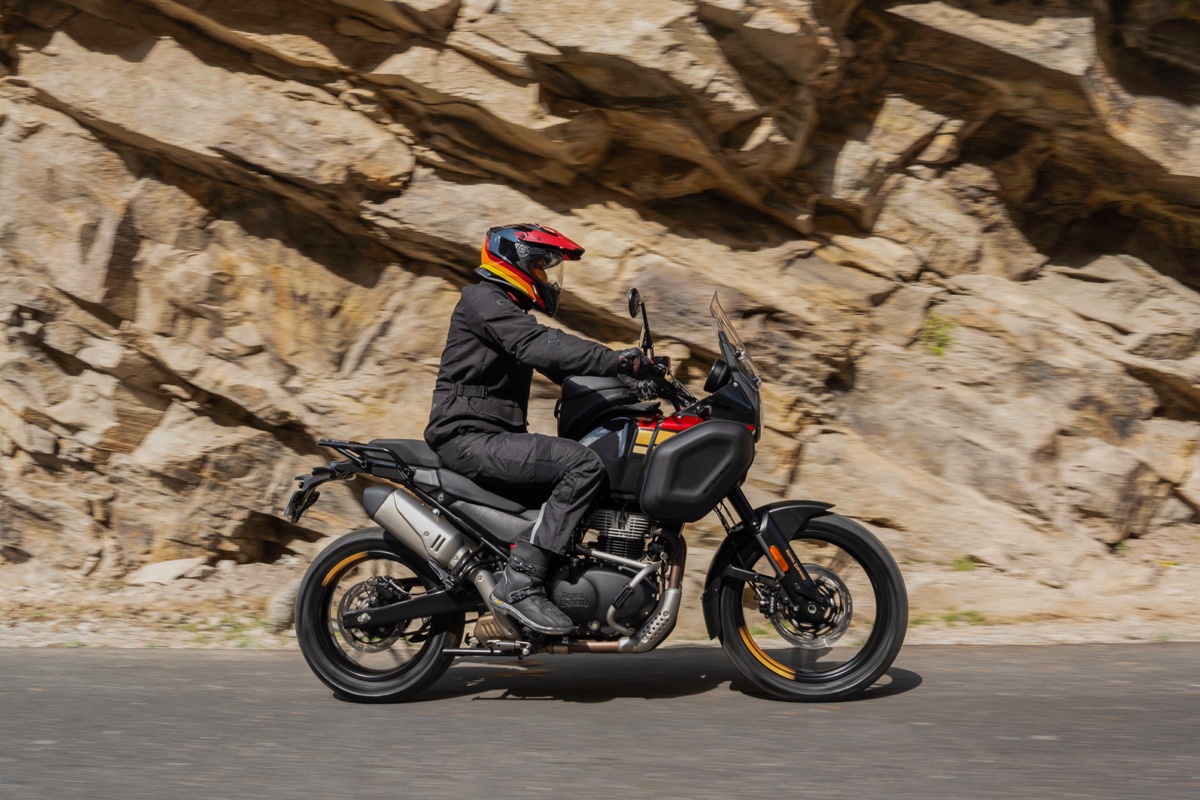
If the Himalayan 750 can deliver that familiar character with significantly improved long-distance performance, the engine should suit the motorcycle’s intended purpose very well. Interestingly, the new 743cc twin will also power the forthcoming Continental GT 750 café racer, although Royal Enfield says the GT will receive a more performance-oriented tune.
A New Chassis Built for Adventure Touring
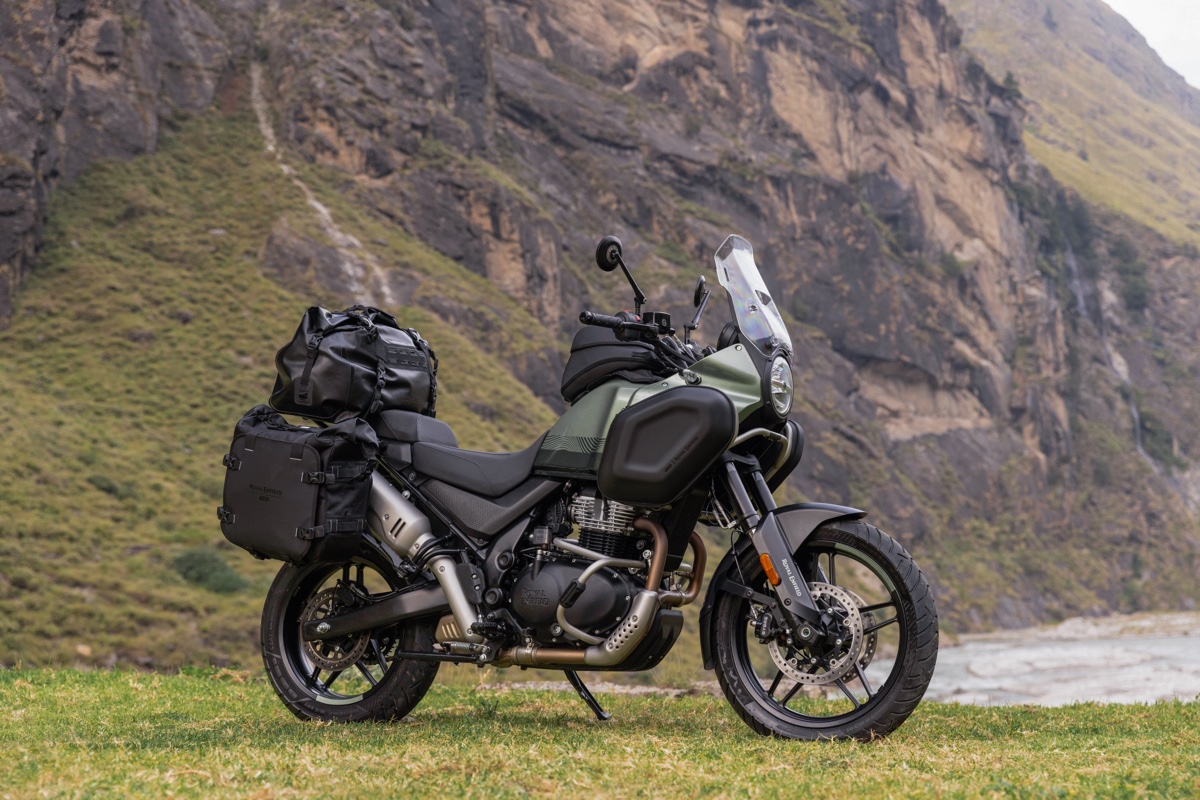
The Himalayan 750 isn’t simply a Himalayan 450 with a larger engine squeezed into the frame. Royal Enfield has developed a new box-section spine chassis with pressed-steel outriggers, using the engine as a stressed member. The design is intended to provide a balance of stability and agility for both paved roads and off-road travel.
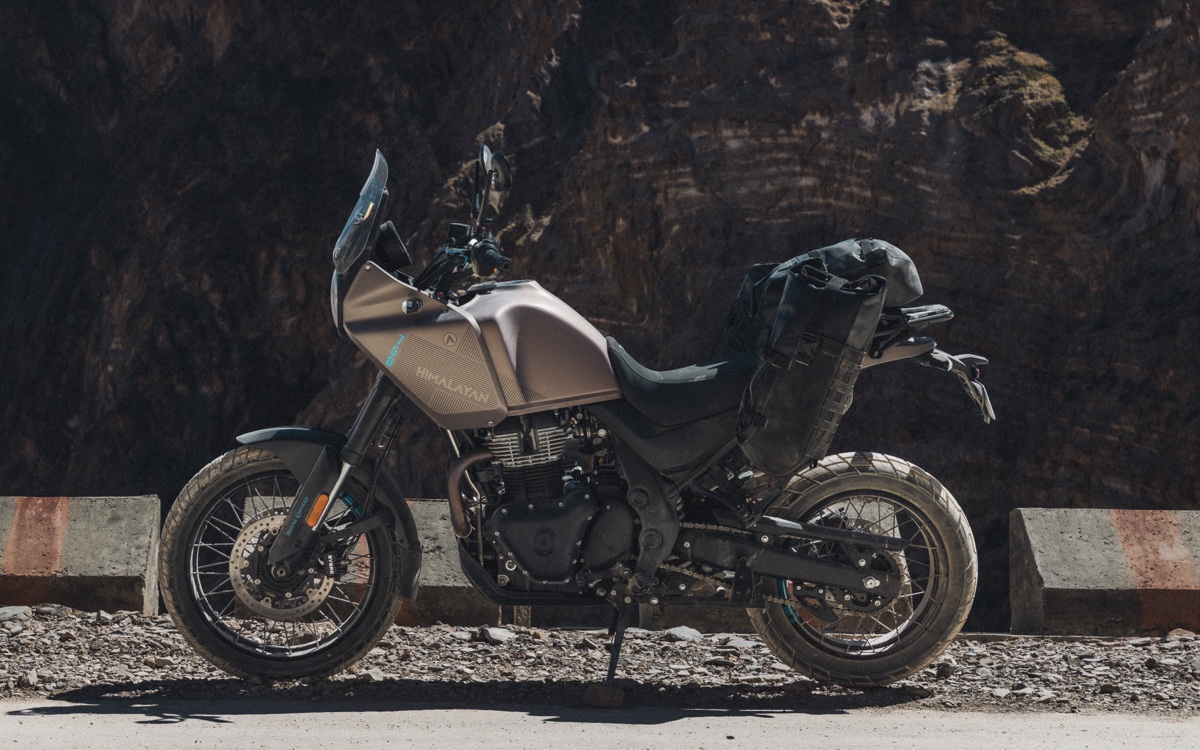
Suspension comes from Showa, with a fully adjustable 43mm upside-down fork offering 190mm (7.5 inches) of travel. At the rear, a linkage-mounted Showa monoshock provides 175mm (6.9 inches) of travel, with adjustable rebound damping and a remote preload adjuster. These are substantial suspension figures for an adventure tourer, although they’re actually slightly shorter than those of the Himalayan 450.
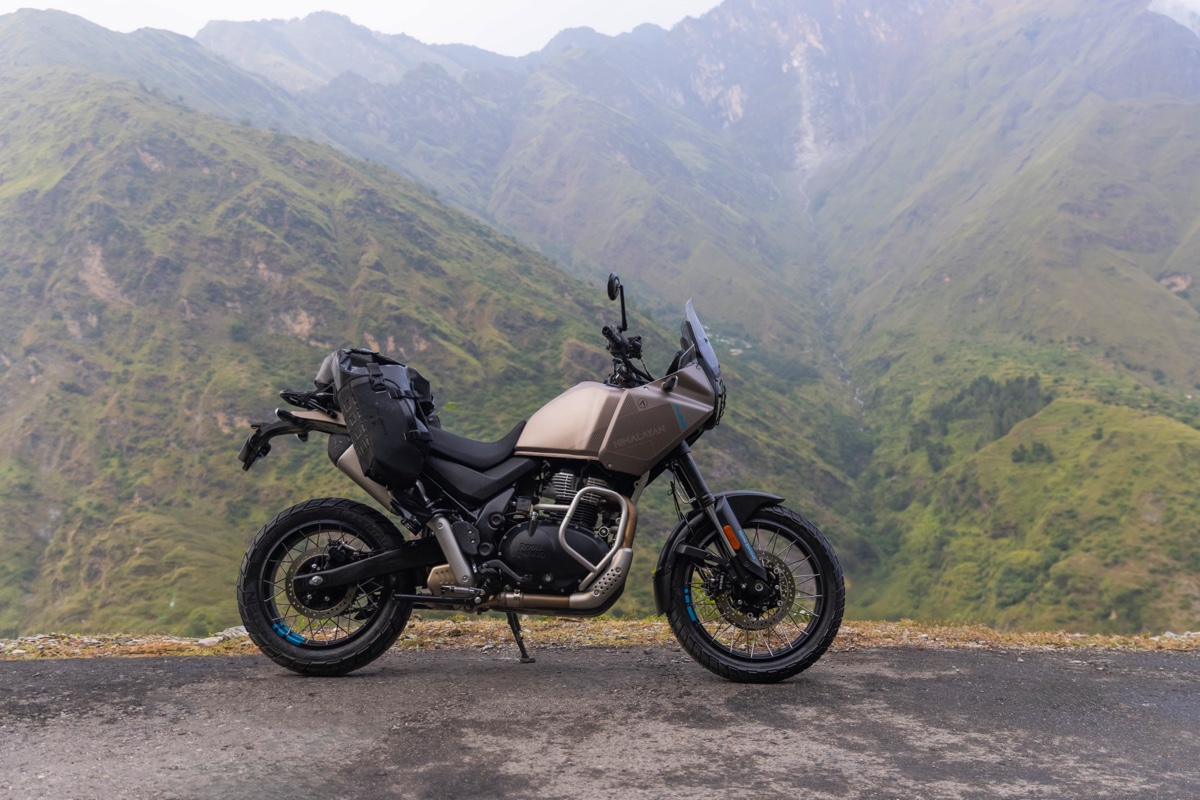
The wheel configuration tells a similar story. Whereas the 450 uses a dirt-oriented 21-inch front wheel, the Himalayan 750 rolls on a 19-inch front and 17-inch rear, available in either cast-alloy or tubeless wire-spoke configurations. That combination is commonly found on adventure motorcycles designed to spend more time on pavement while retaining the ability to explore gravel roads, rough tracks, and moderate off-road terrain.
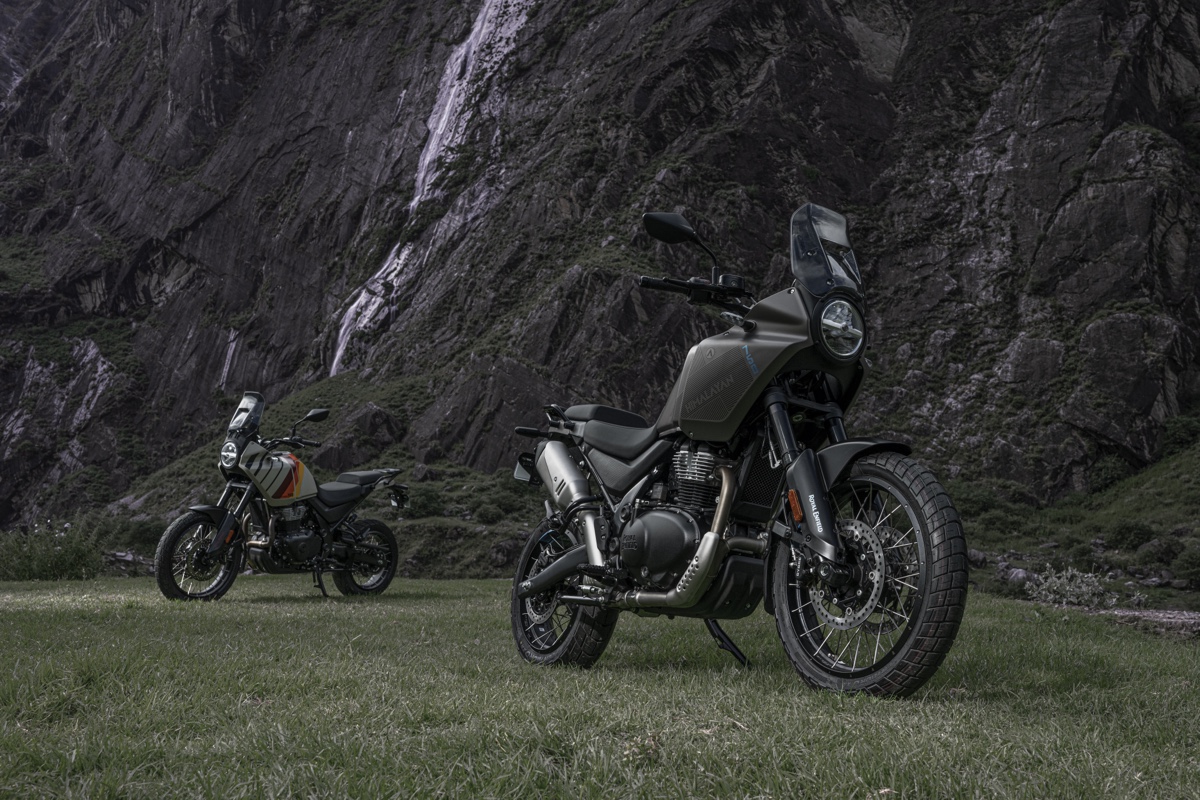
The 750 also gets a major braking upgrade, with twin 280mm front discs and two-piston calipers, replacing the single front disc used on the Himalayan 450. A 255mm disc handles braking duties at the rear.
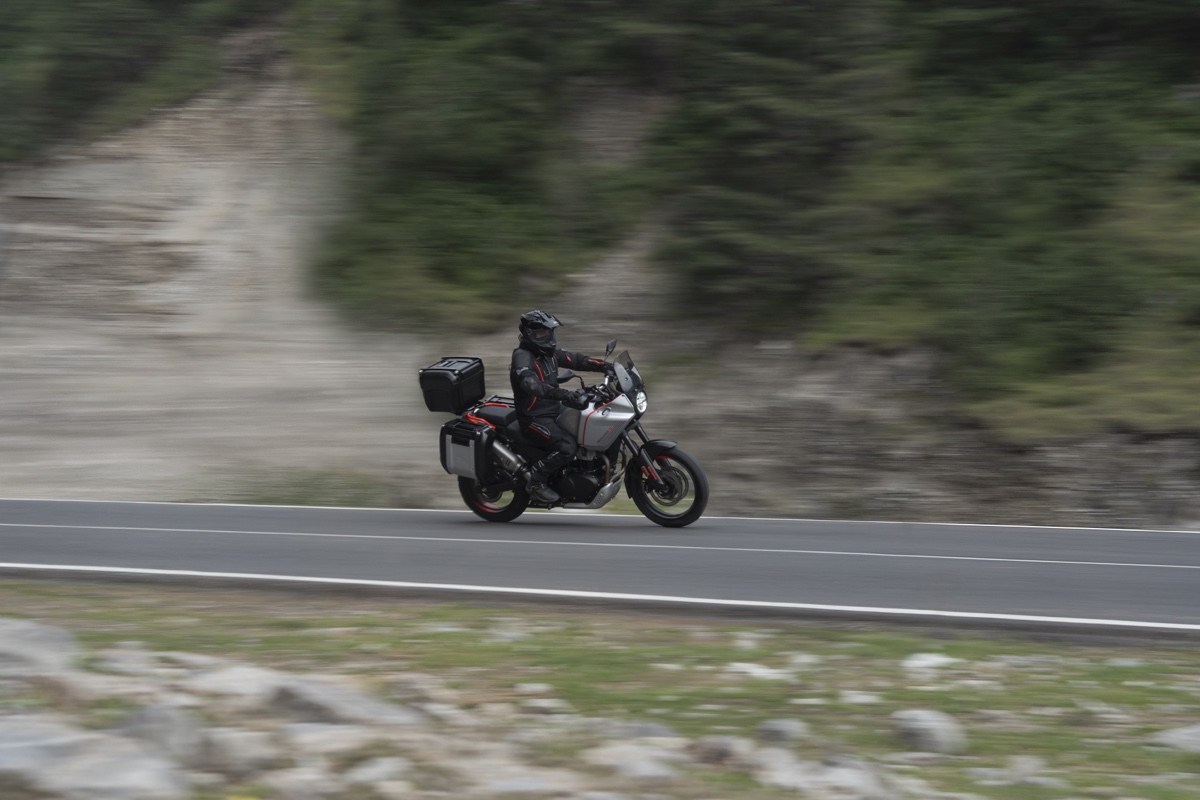
The result is a machine that seems particularly well suited to long-distance adventure travel: capable of tackling rough roads and trails, but with chassis geometry, wheel sizes, and braking equipment that favor confident road handling. For riders who prioritize challenging off-road terrain, the lighter Himalayan 450 may remain the better choice.
A More Sophisticated Himalayan
Royal Enfield has traditionally favored relatively simple motorcycles, but the Himalayan 750 introduces an impressive array of modern electronic equipment. For the first time on a Royal Enfield, a six-axis inertial measurement unit (IMU) enables cornering ABS and lean-sensitive traction control. The rear ABS can also be switched off for off-road riding.
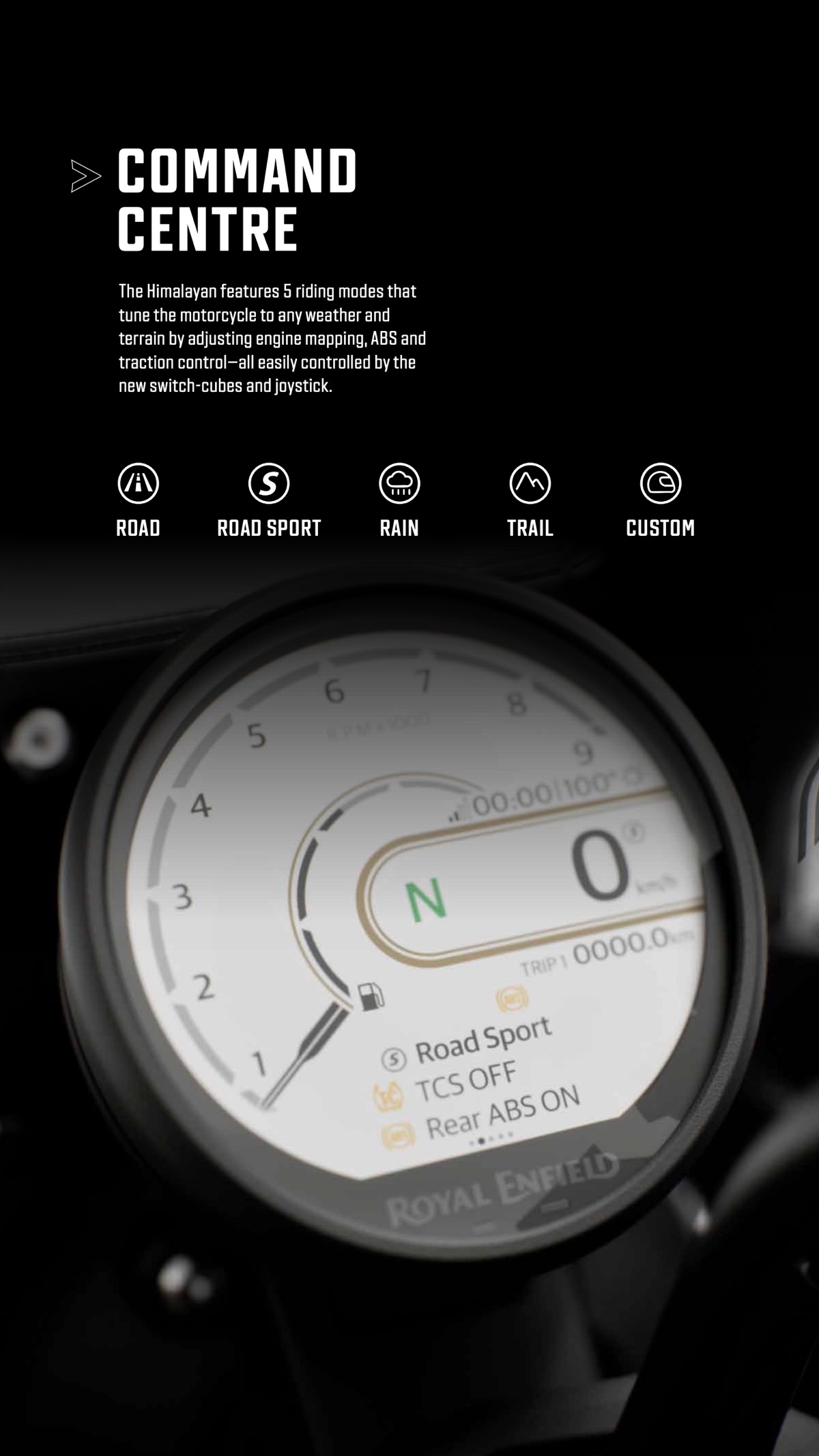
Five riding modes — Road, Road Sport, Rain, Trail, and Custom — allow riders to tailor the engine response and electronic interventions to their preferences and conditions. There’s also cruise control, another Royal Enfield first, which should be especially welcome on long highway stretches.
Other equipment includes:
- A circular 4-inch TFT instrument display with Google Maps navigation.
- Bluetooth connectivity and smartphone integration.
- Tire-pressure monitoring system (TPMS).
- Self-canceling turn signals.
- An adjustable windscreen.
- Twin USB-C charging ports.
- LED lighting.
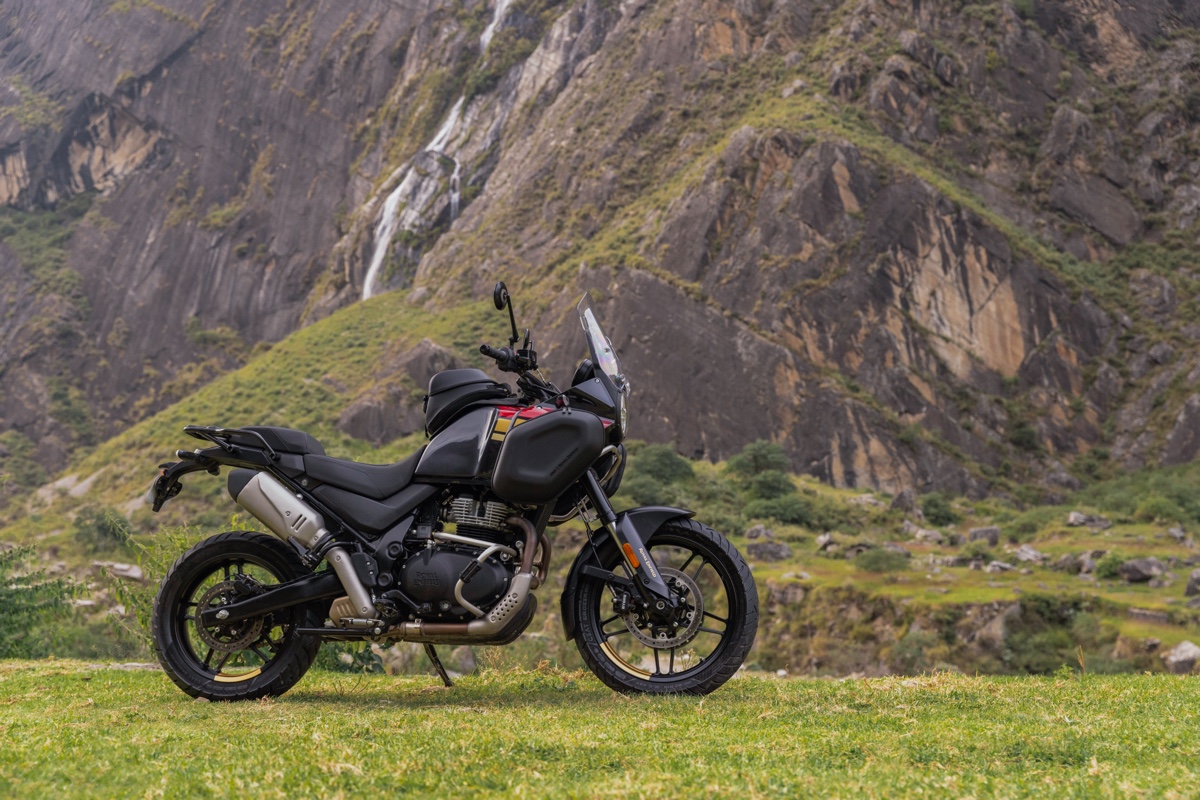
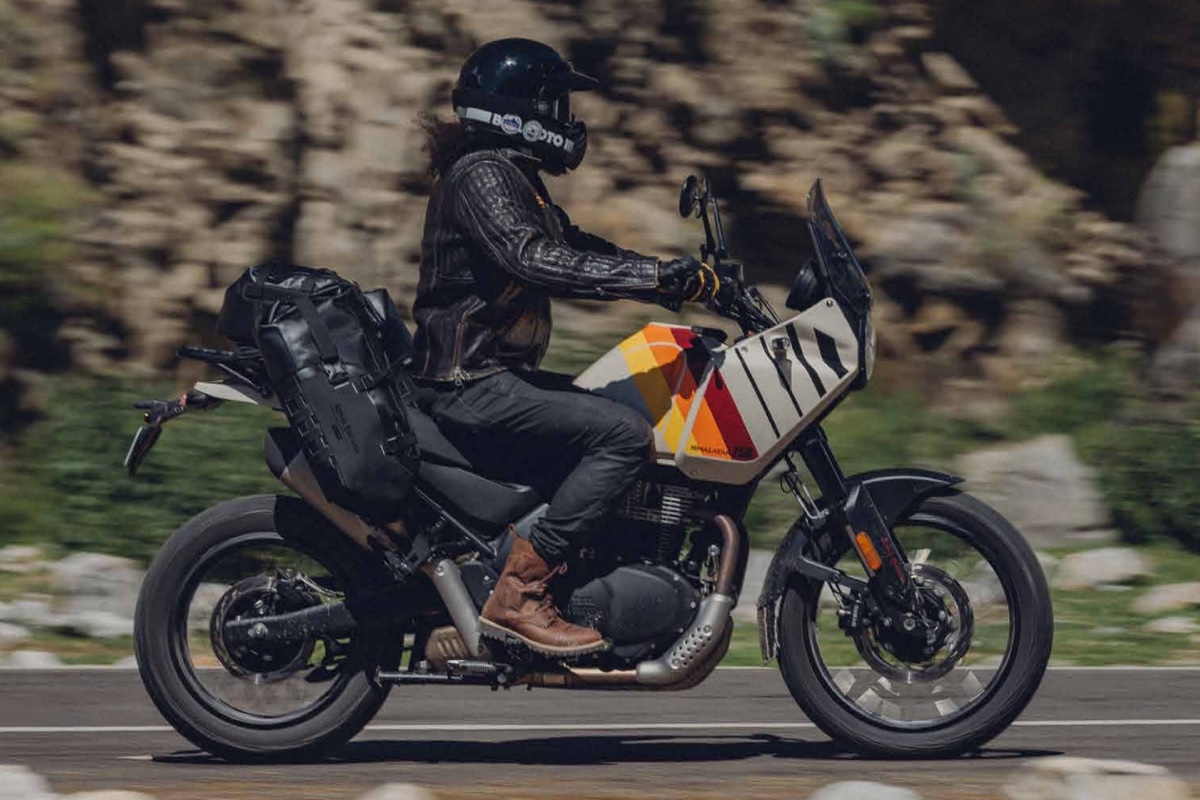
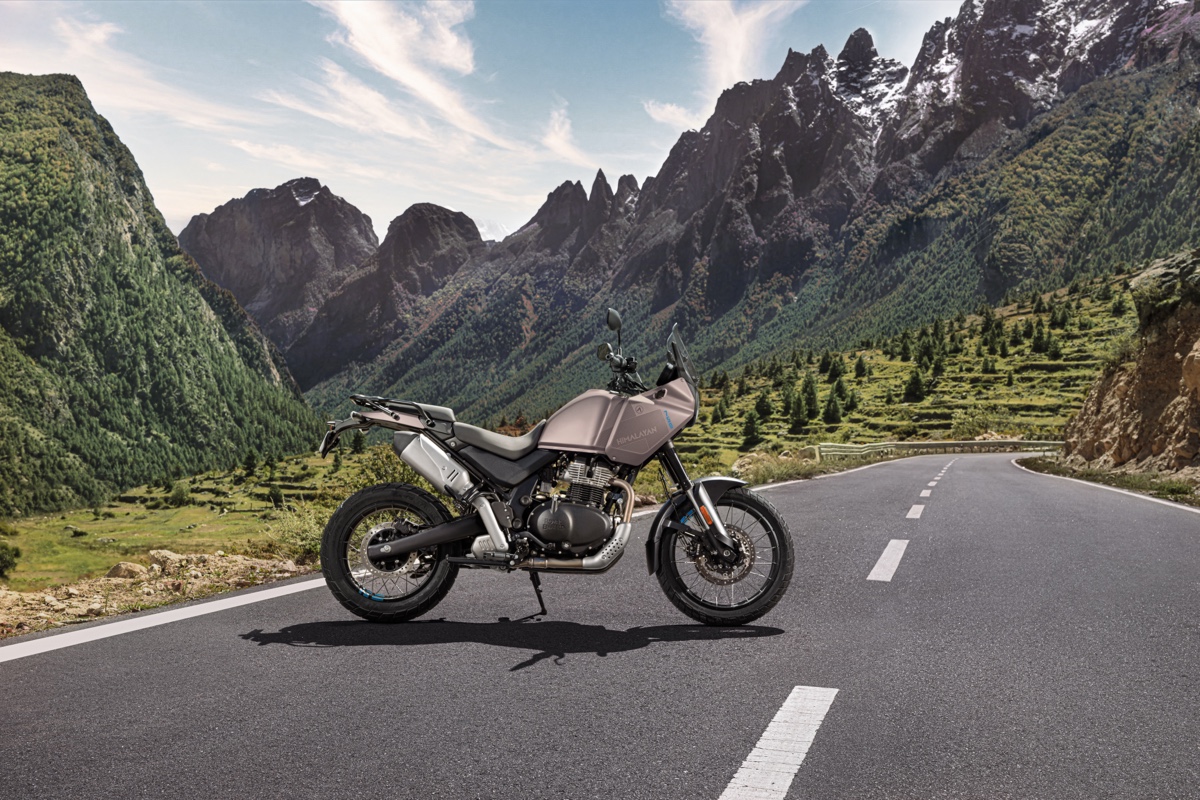
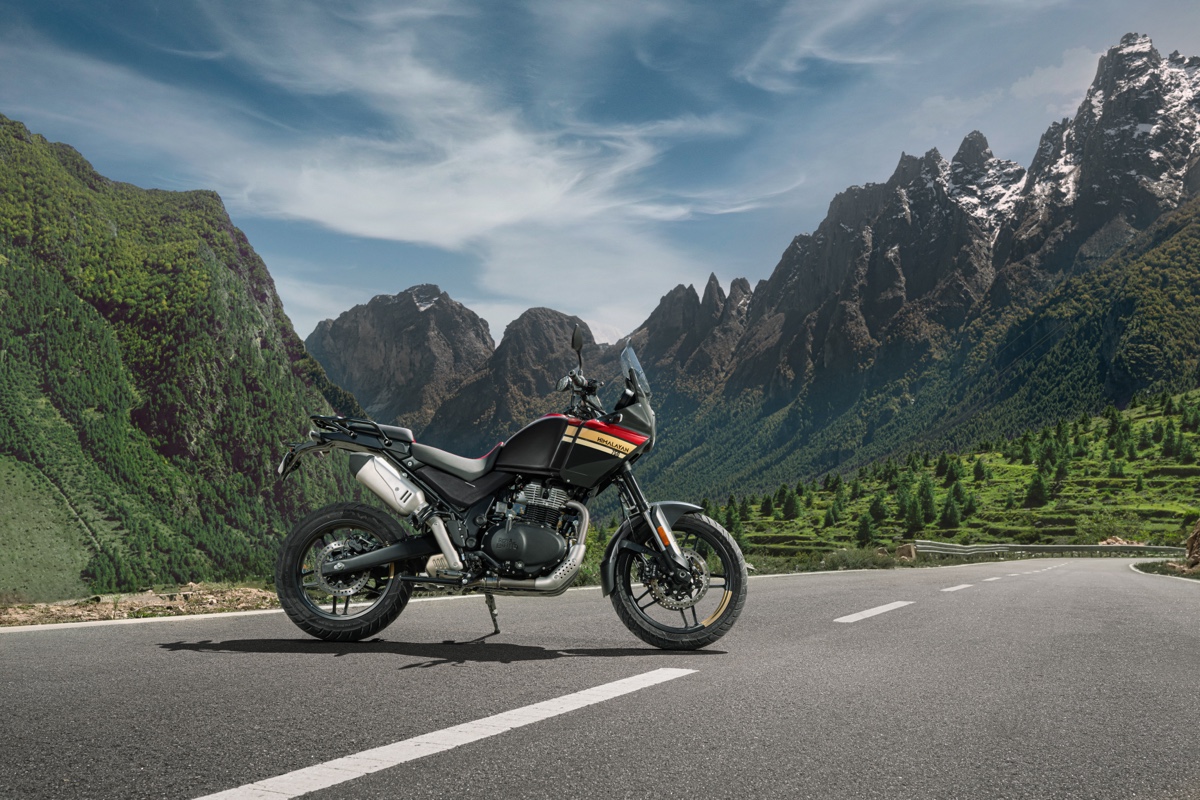
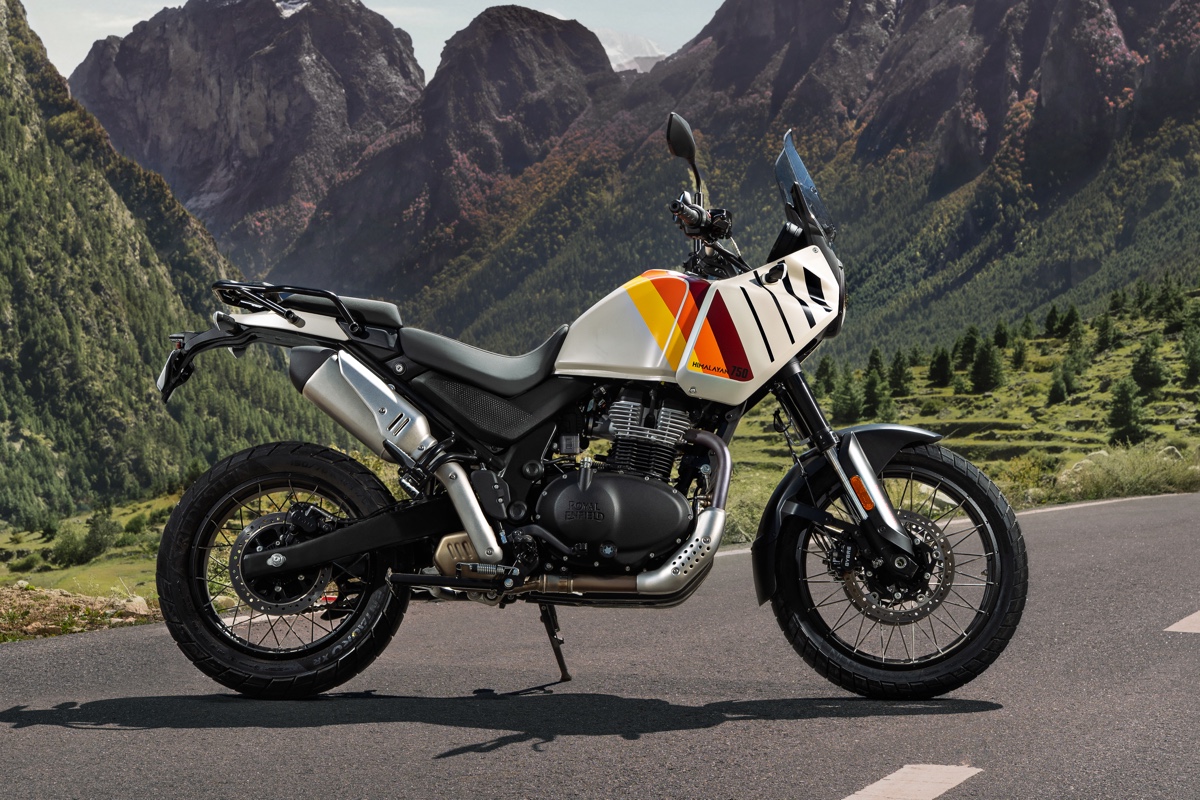
Taken together, these features represent a considerable technological leap for Royal Enfield. Yet the company insists that the technology has been incorporated to support the riding experience rather than dominate it. The Himalayan 750 offers a distinctly retro appearance, with a round headlight, exposed engine, and purposeful adventure-bike styling that reminds us of the Paris-Dakar Rally bikes of the 1990s.
Whether all those electronics work as intuitively as intended will become clearer as more production motorcycles reach riders’ hands, but there’s no question that the Himalayan 750 is among the most sophisticated motorcycles Royal Enfield has ever built.
Built for Long-Distance Travel
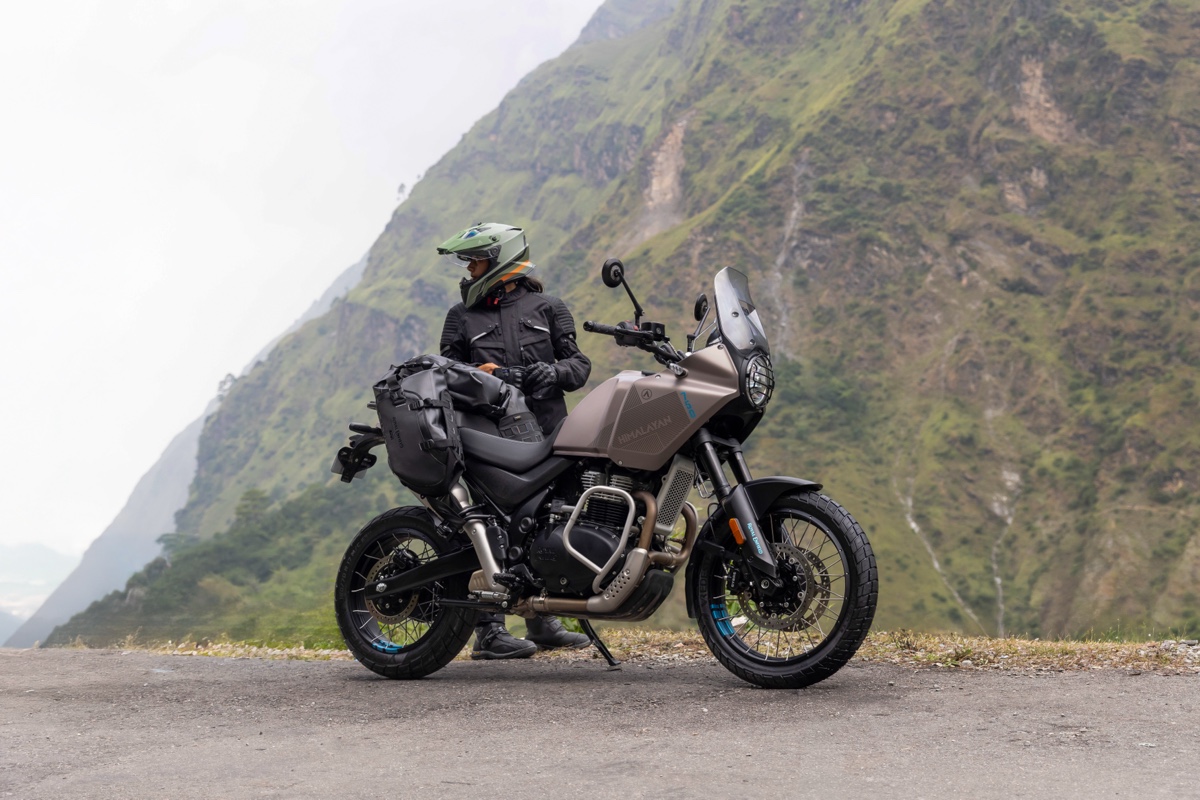
Touring capability appears to have been a major priority throughout the Himalayan 750’s development. The motorcycle features separate rider and passenger seats, a height-adjustable windscreen, and a substantial luggage-carrying capacity. Royal Enfield quotes a maximum payload of approximately 195kg (430 pounds), making the bike suitable for extended trips with camping equipment or a passenger.
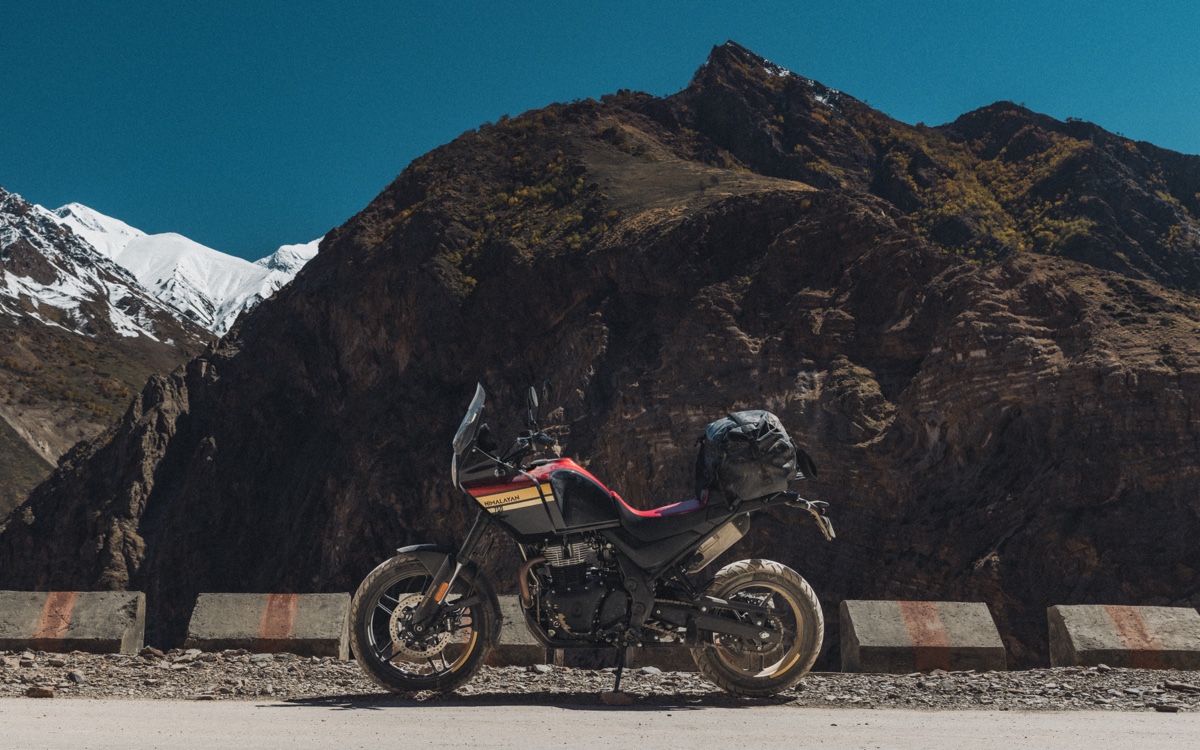
Fuel capacity is 17.8 liters (4.7 gallons), slightly larger than the Himalayan 450’s 17-liter tank. The standard seat height is 815mm (32.1 inches), with optional seats allowing riders to lower the height to approximately 795mm (31.3 inches) or raise it to 835mm (32.9 inches). That relatively low standard seat is notable for a middleweight adventure motorcycle, especially one offering nearly 7.5 inches of front suspension travel.
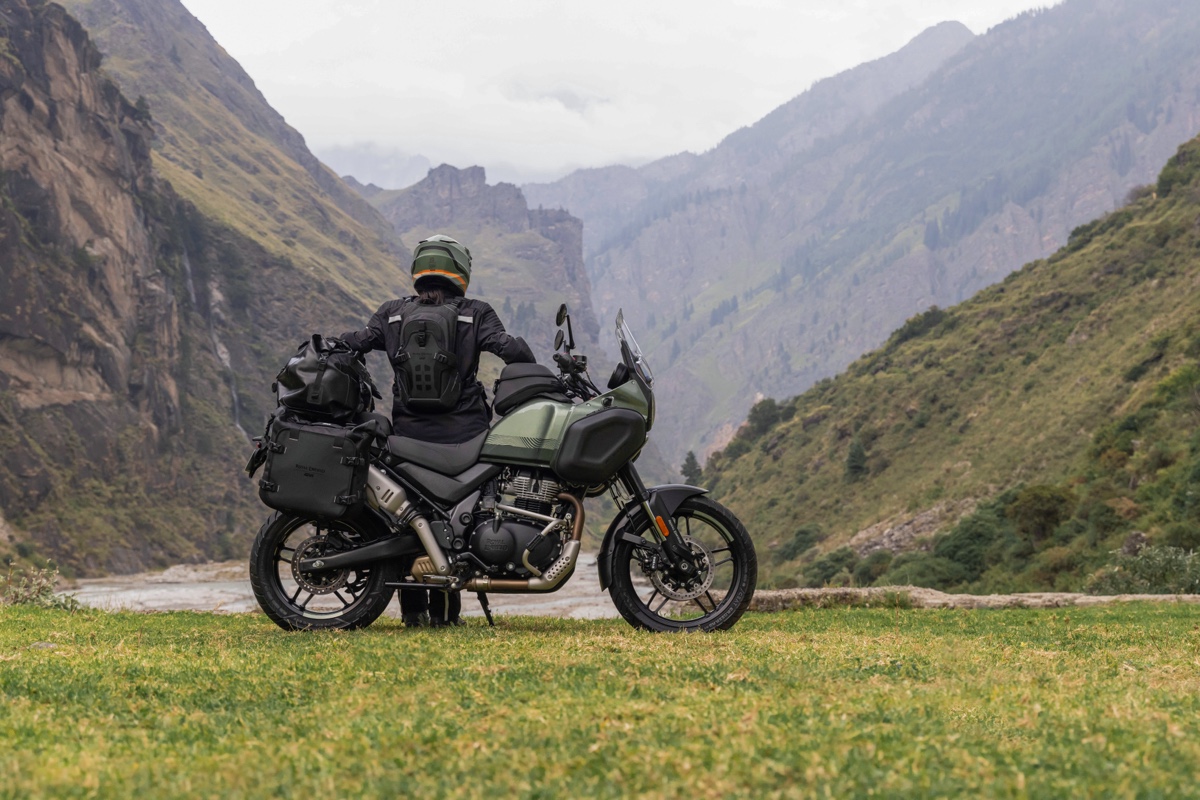
However, there’s one figure that may give off-road enthusiasts pause: weight. The Himalayan 750 weighs a claimed 224kg (494 pounds) ready to ride, compared with 196kg (432 pounds) for the Himalayan 450. That’s an increase of approximately 62 pounds.
The larger engine and increased touring equipment help explain the additional mass, but it also reinforces the distinction between the two motorcycles. The Himalayan 450 is a more dirt-oriented adventure bike, while the 750 appears designed to cover longer distances with greater comfort, power, and carrying capacity. Neither approach is inherently better. It simply depends on the type of adventure a rider has in mind.
Himalayan 750 vs Himalayan 450
Here’s how the new twin-cylinder Himalayan compares with its smaller sibling:
| Specification | Himalayan 750 | Himalayan 450 |
|---|---|---|
| Engine | 743cc air/oil-cooled twin | 452cc liquid-cooled single |
| Horsepower | 55 PS / ~54 hp | 40 PS / ~39.5 hp |
| Torque | 63 Nm / 46.5 lb-ft | 40 Nm / 29.5 lb-ft |
| Gearbox | 6-speed | 6-speed |
| Front Wheel | 19 inches | 21 inches |
| Rear Wheel | 17 inches | 17 inches |
| Front Travel | 190mm / 7.5 in | 200mm / 7.9 in |
| Rear Travel | 175mm / 6.9 in | 200mm / 7.9 in |
| Ground Clearance | 205mm / 8.1 in | 230mm / 9.1 in |
| Standard Seat Height | 815mm / 32.1 in | 825–845mm / 32.5–33.3 in |
| Curb Weight | 224kg / 494 lbs | 196kg / 432 lbs |
| Fuel Capacity | 17.8 L / 4.7 gal | 17 L / 4.5 gal |
Manufacturer-claimed specifications; curb weights are measured with 90 percent fuel and oil. Specifications may vary by market.
Perhaps the most interesting takeaway is that the Himalayan 750 gives up some of the 450’s ground clearance and suspension travel in exchange for more power, road-oriented handling, and touring capability. In other words, Royal Enfield hasn’t built a replacement for the Himalayan 450. It’s created a complementary motorcycle for riders who want to go farther, faster, and with more luggage.
Colors, Wheels, and Touring Equipment
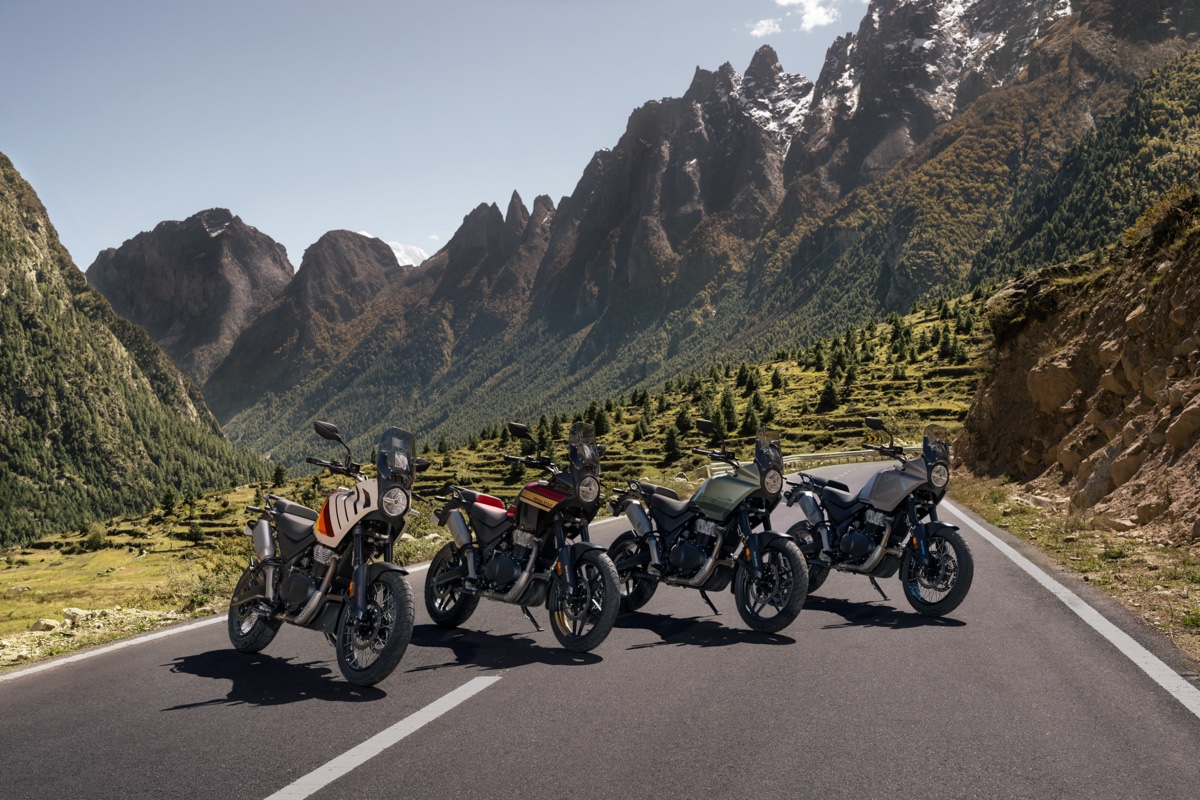
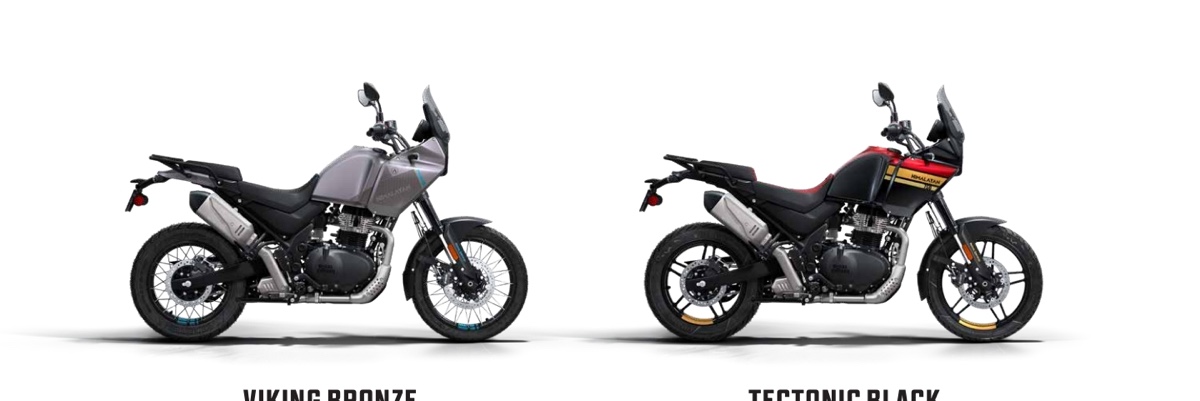
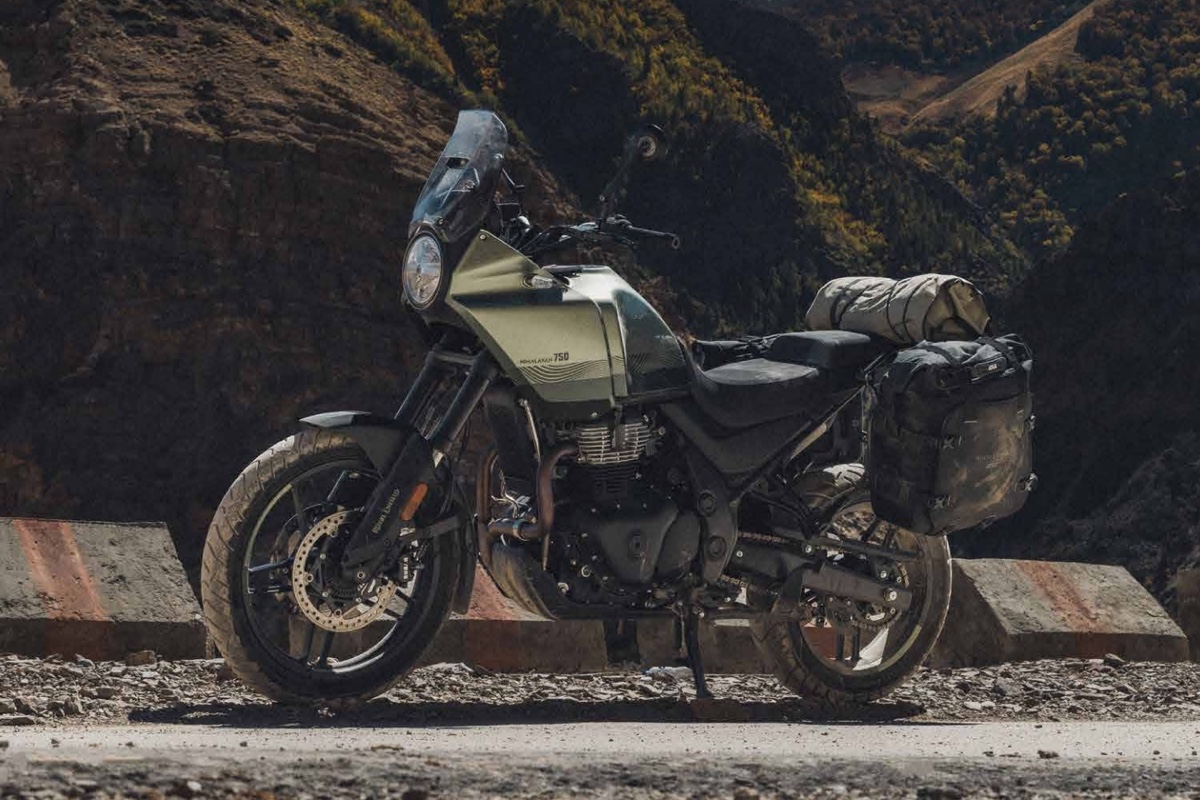
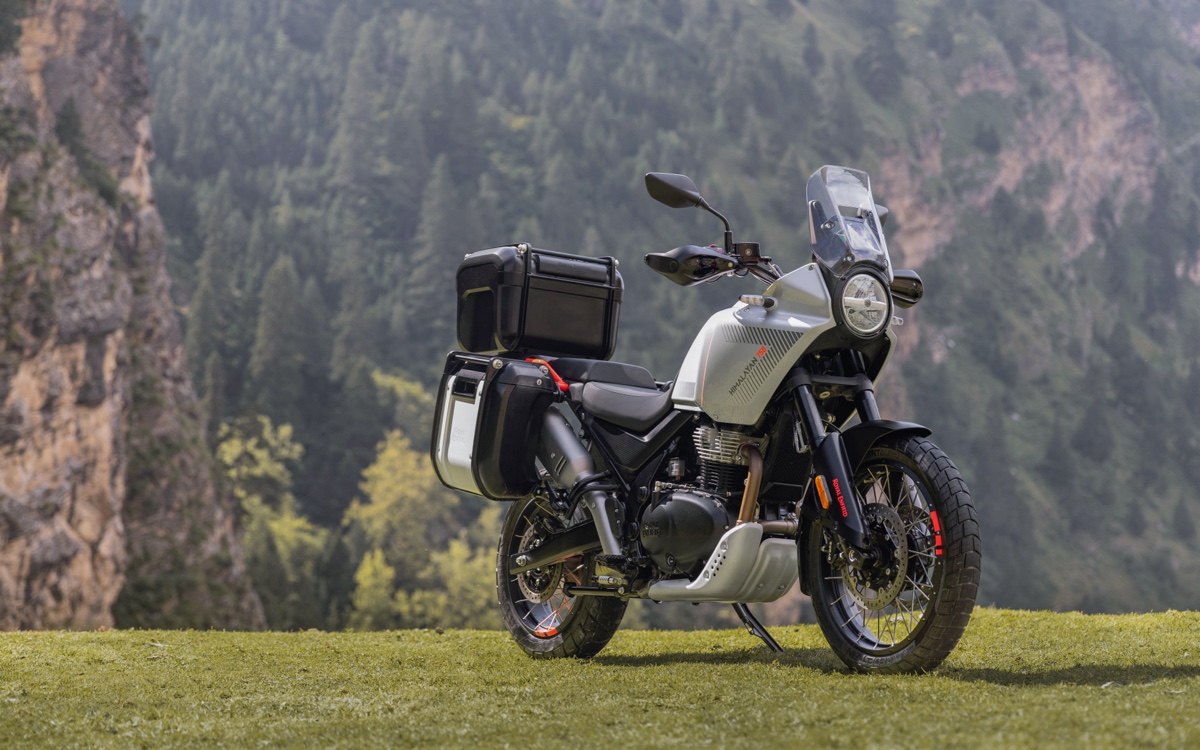
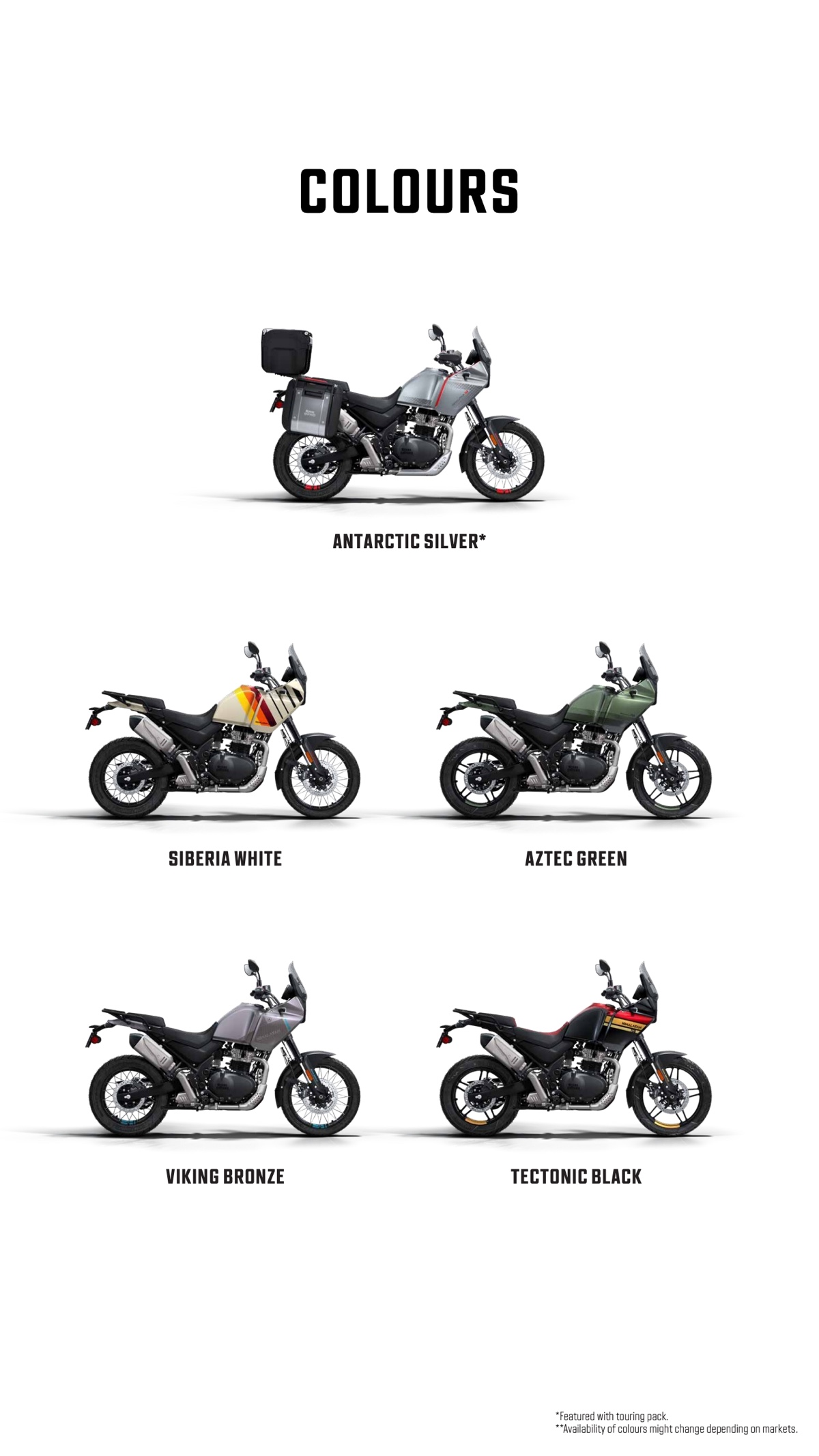
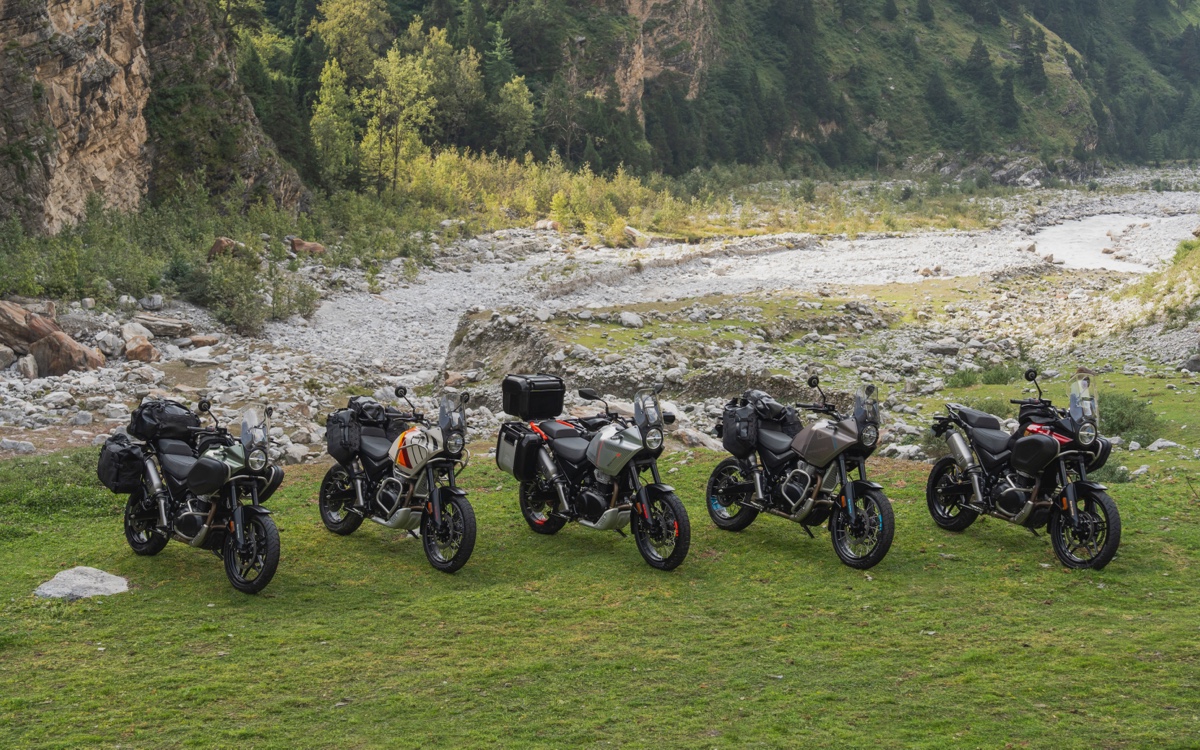
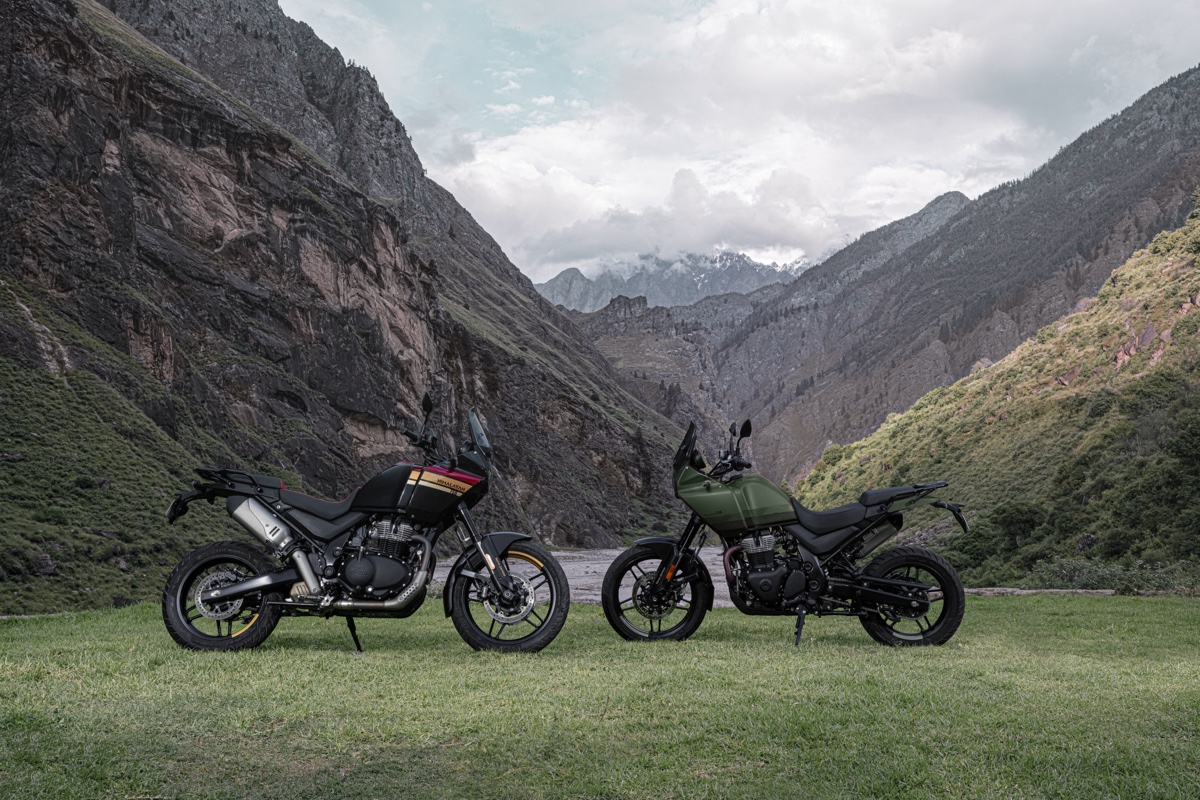
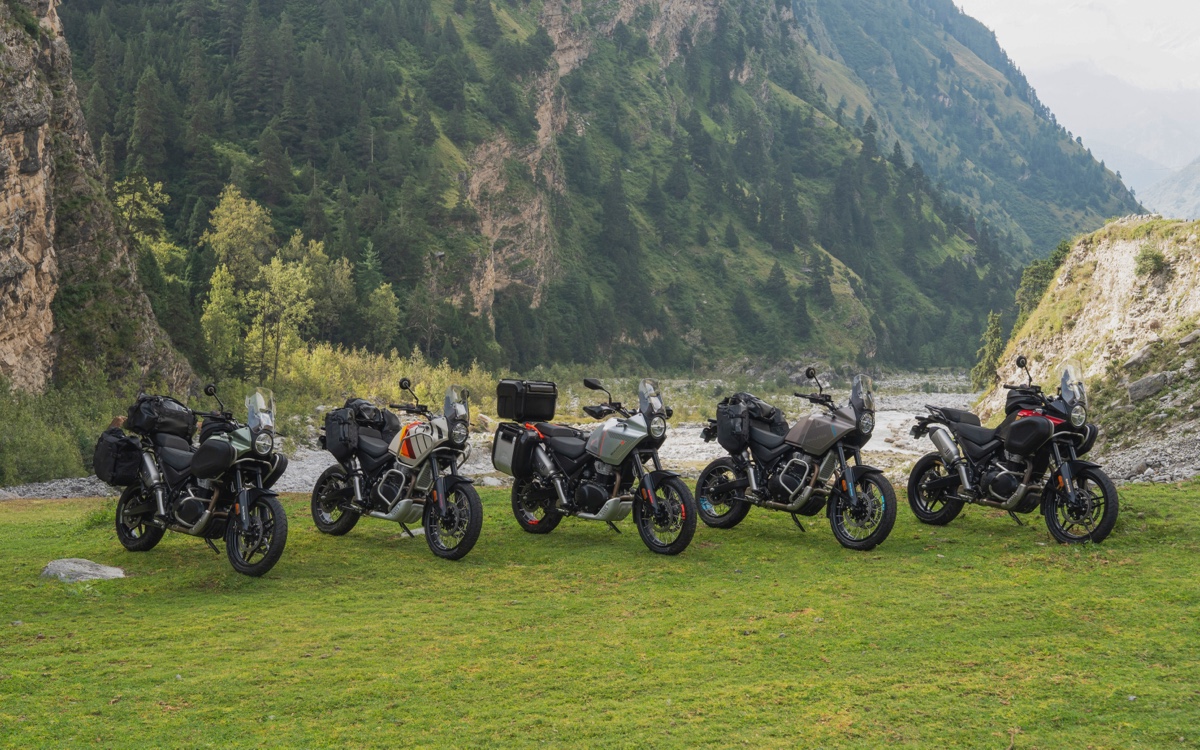
Royal Enfield has announced several distinctive color schemes for the Himalayan 750, including Aztec Green, Tectonic Black, Viking Bronze, Siberia White, and Antarctic Silver. The Aztec Green and Tectonic Black variants feature cast-alloy wheels, while the Viking Bronze and Siberia White versions are equipped with tubeless wire-spoke wheels. For riders planning more extensive off-pavement travel, the spoked-wheel versions will prove particularly appealing.
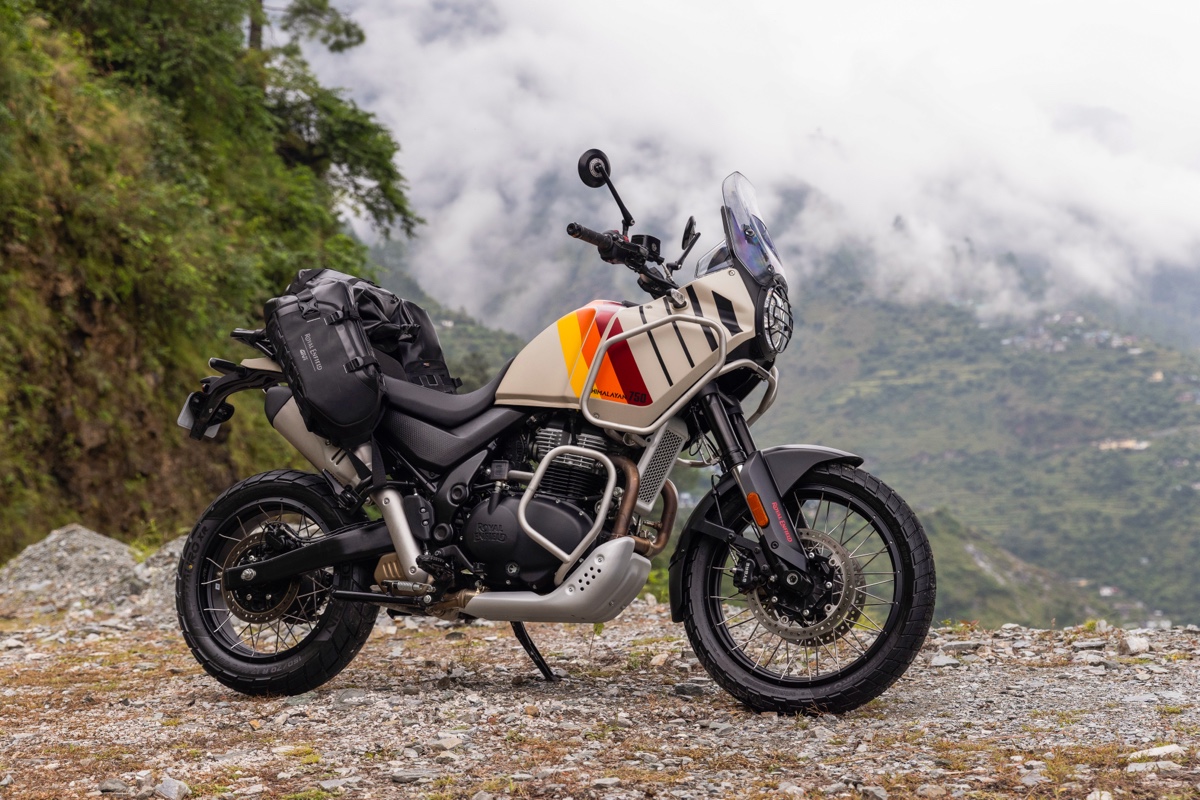
At the top of the range is the Antarctic Silver model, which comes equipped with a dedicated touring package developed in collaboration with Italian luggage manufacturer GIVI. The package includes aluminum luggage, heated grips, handguards, and an aluminum skid plate, transforming the Himalayan into a more comprehensive long-distance touring machine straight from the showroom.
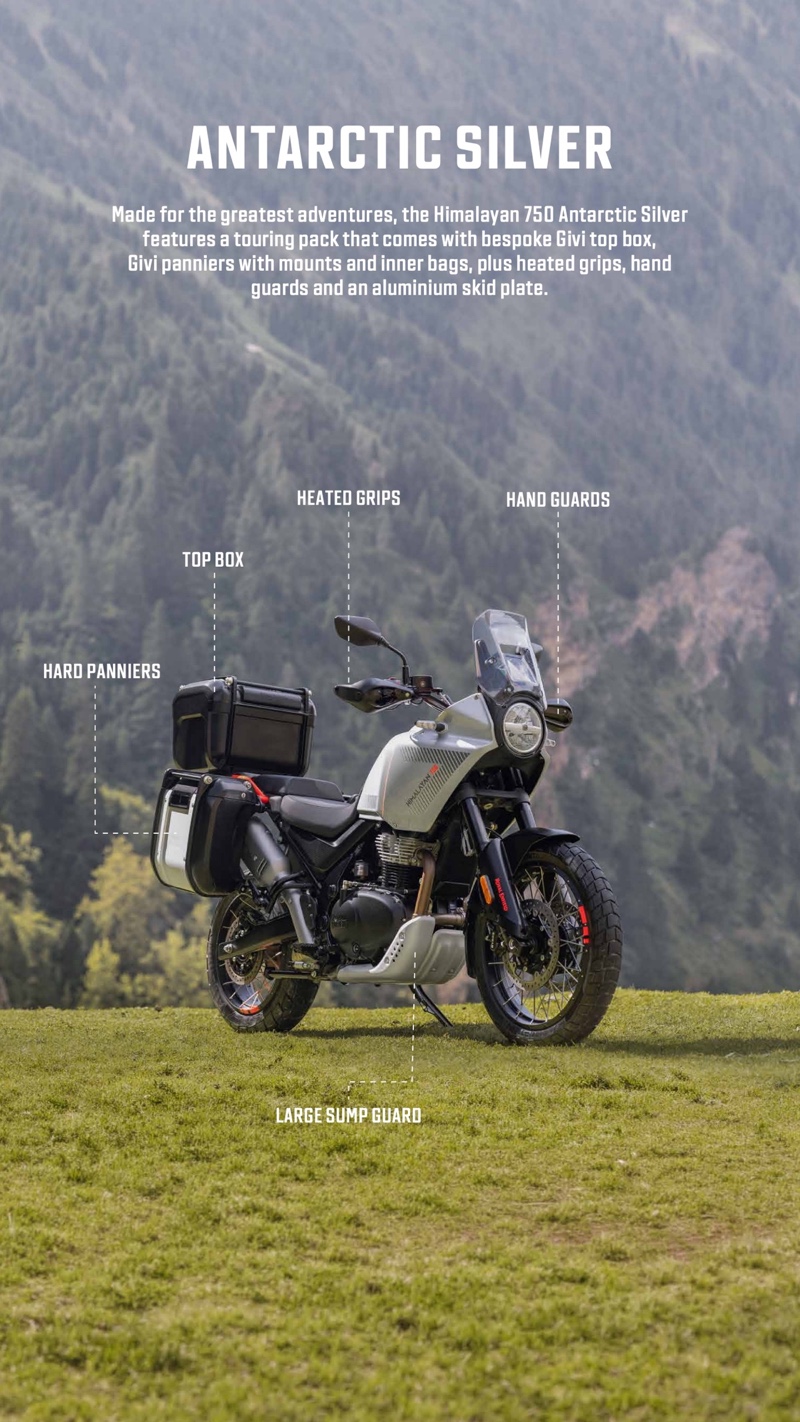
The factory touring accessories are particularly welcome, as luggage, protection, and comfort upgrades can add substantially to the cost of preparing a new adventure motorcycle for extended travel.
Himalayan 750 Price and Availability
Unlike the Continental GT 750, which was also unveiled at EICMA 2026, the Himalayan 750 has already received official European pricing, with bookings opening on November 3, 2026. In the United Kingdom, prices begin at £6,999 for the Aztec Green cast-wheel version. The Viking Bronze and Siberia White spoked-wheel variants start at £7,299, while the fully equipped Antarctic Silver touring model is priced at £8,699.
Meanwhile, Italian pricing begins at €7,390 for the cast-wheel version, €7,790 for the spoked-wheel models, and €9,290 for the flagship Antarctic Silver. These prices place the Himalayan 750 toward the affordable end of the middleweight adventure touring market, although direct comparisons will depend on local pricing and equipment levels.
Royal Enfield North America has indicated that the Himalayan 750 will arrive at U.S. dealerships in 2027, but American pricing and an exact launch date have not yet been announced. We’re interested to see that U.S. MSRP, as Royal Enfield has built much of its modern reputation on delivering motorcycles with distinctive character and useful capability at prices substantially below those of many established competitors.
If the Himalayan 750 follows that tradition, it could become an intriguing alternative to more expensive middleweight adventure bikes.
A New Direction for Royal Enfield Adventure Bikes
The original 411 made adventure motorcycling accessible to riders who didn’t need or want a large, expensive machine. The 450 improved that formula with more power, better suspension, and genuine off-road capability. Now, the 750 offers something different: a motorcycle intended for riders who want to cross countries, carry luggage, tackle mountain passes, and comfortably cover hundreds of miles before turning onto an unpaved road. It’s less of a big dirt bike and more of a traditional adventure tourer, designed around the realities of long-distance travel.
Of course, much will depend on how the finished motorcycle performs on the road and trail. With nearly 500 pounds to manage and a relatively modest 54 horsepower, the Himalayan 750 isn’t likely to challenge the quickest middleweight adventure motorcycles in outright performance.
But that has never been Royal Enfield’s approach. If the new twin delivers the accessible torque, straightforward handling, comfort, and value suggested by its specifications, the Himalayan 750 could prove to be one of the most appealing adventure motorcycles in the company’s history. For riders who appreciate the Himalayan philosophy but want a motorcycle with longer legs, the new 750 is certainly worth watching. What do you all think?
Royal Enfield Himalayan 750 Specifications
| Specification | Details |
|---|---|
| Engine | 743cc air/oil-cooled SOHC parallel-twin |
| Bore × Stroke | 83.5 × 67.8mm |
| Compression Ratio | 9.5:1 |
| Horsepower | 55 PS / ~54 hp @ 7,000 rpm |
| Torque | 63 Nm / 46.5 lb-ft @ 5,000 rpm |
| Transmission | 6-speed |
| Frame | Steel box-section spine, stressed-member engine |
| Front Suspension | 43mm adjustable Showa USD fork |
| Front Travel | 190mm / 7.5 inches |
| Rear Suspension | Linkage-mounted Showa monoshock |
| Rear Travel | 175mm / 6.9 inches |
| Front Brake | Twin 280mm discs |
| Rear Brake | 255mm disc |
| Front Wheel | 19 inches |
| Rear Wheel | 17 inches |
| Tires | Tubeless; cast or spoked wheels |
| Ground Clearance | 205mm / 8.1 inches |
| Seat Height | 815mm / 32.1 inches |
| Curb Weight | 224kg / 494 lbs |
| Fuel Capacity | 17.8 L / 4.7 gallons |
| Payload | Approximately 195kg / 430 lbs |
| Electronics | 6-axis IMU, cornering ABS, traction control, cruise control, five riding modes |
| U.S. MSRP | TBA |
| U.S. Availability | Expected in 2027 |
Figures are based on Royal Enfield’s published specifications. Equipment and specifications may vary by market.