
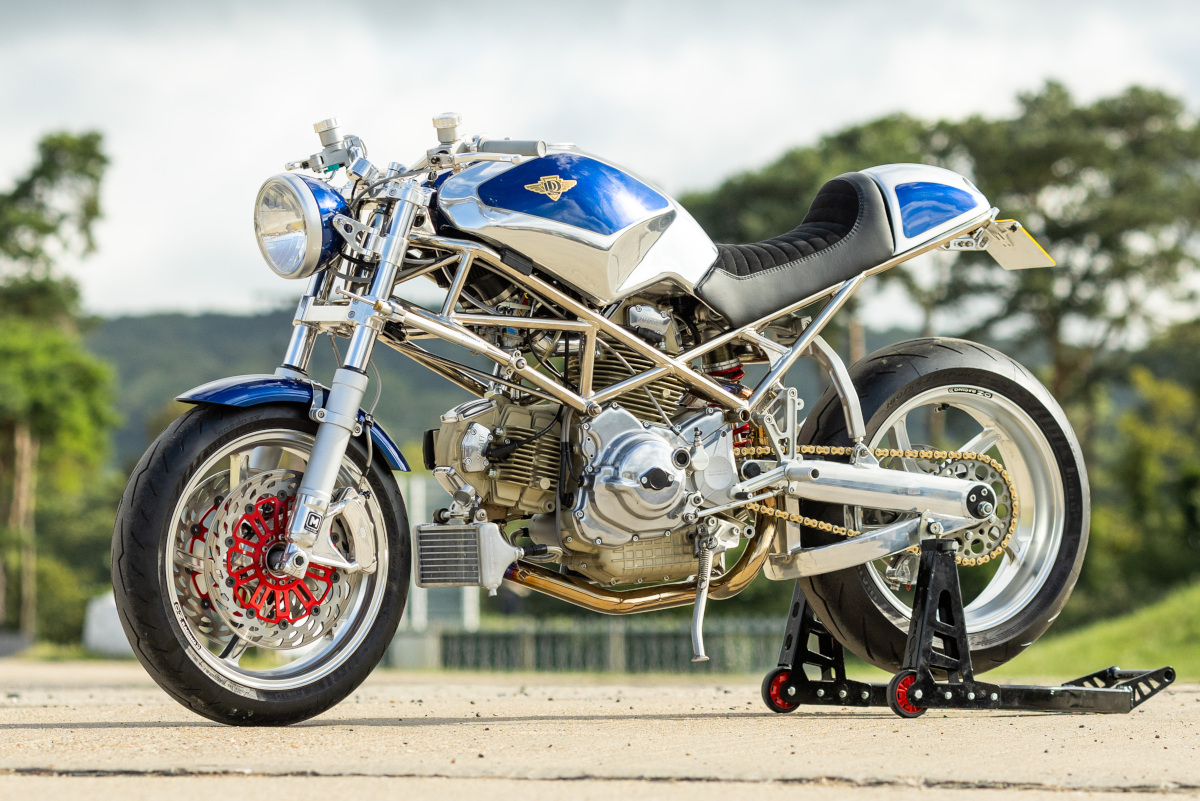
Better, Faster, More: The Final, No-Compromise Motorcycle from Dirty Dick’s Motos…
Rick Hannah of Dirty Dick’s Motos made a name for himself with a trio of Kawasaki W650 desert sleds whose design and execution were nothing of short extraordinary, earning him fans across the world. We were fortunate to showcase his “Posh Sled” and “Plush Sled” here at BikeBound, and last year, as Rick began shutting down his workshop for a transcontinental move, we featured “The Last Sled” — his final W650 build.
However, with a relocation to Dubai fast approaching, Rick had one more build to finish: his 1999 Ducati Monster M900S. It would be his DDM swan song, and that meant it would follow the main DDM design brief: Better, Faster, More.
“The Ducati turned into a rolling deadline. I had no idea when I’d next have a proper workshop, and the network of specialists I’d spent decades building was about to scatter… This was my version of Peak Monster… Make it lighter, sharper, cleaner, better looking, and a lot better to ride. Fix the weaknesses, leave the spirit alone. Lose weight, sort the suspension and brakes, modernise the electrics, tidy every line. And, because it’s DDM, make everything just a little bit Extra. The result is OEM+++.”
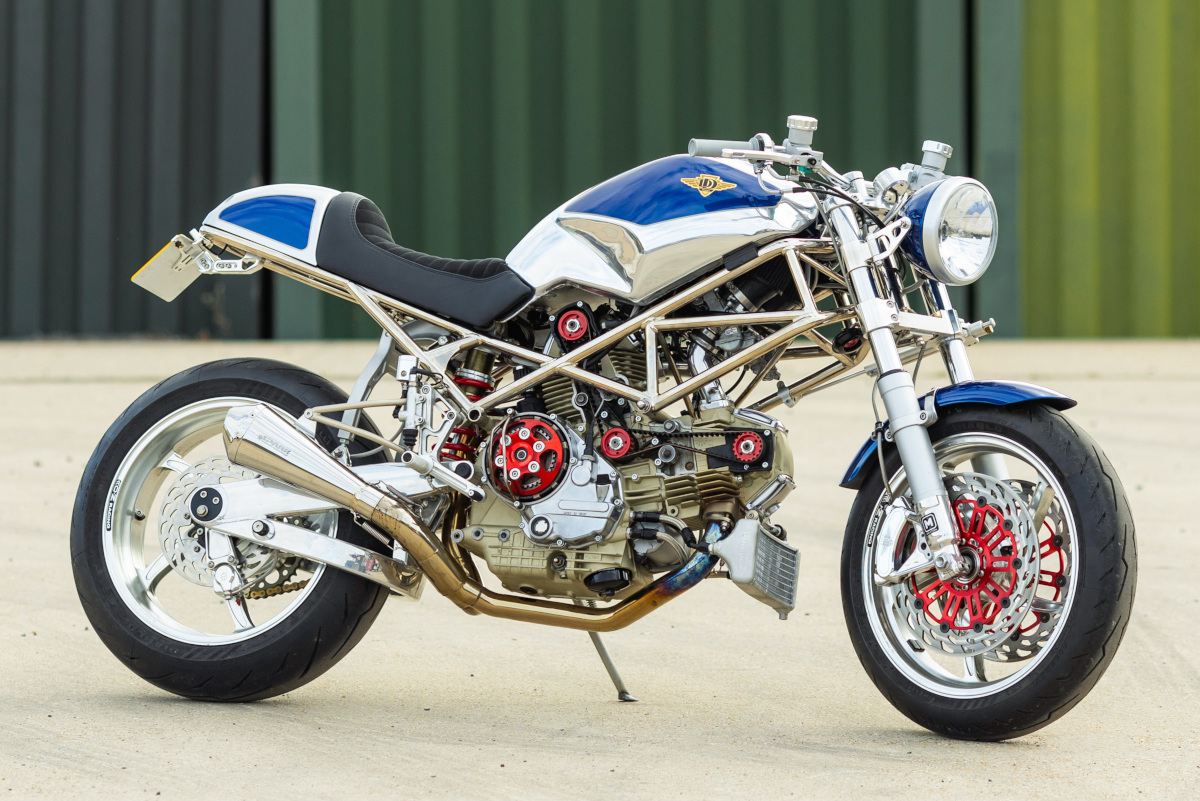
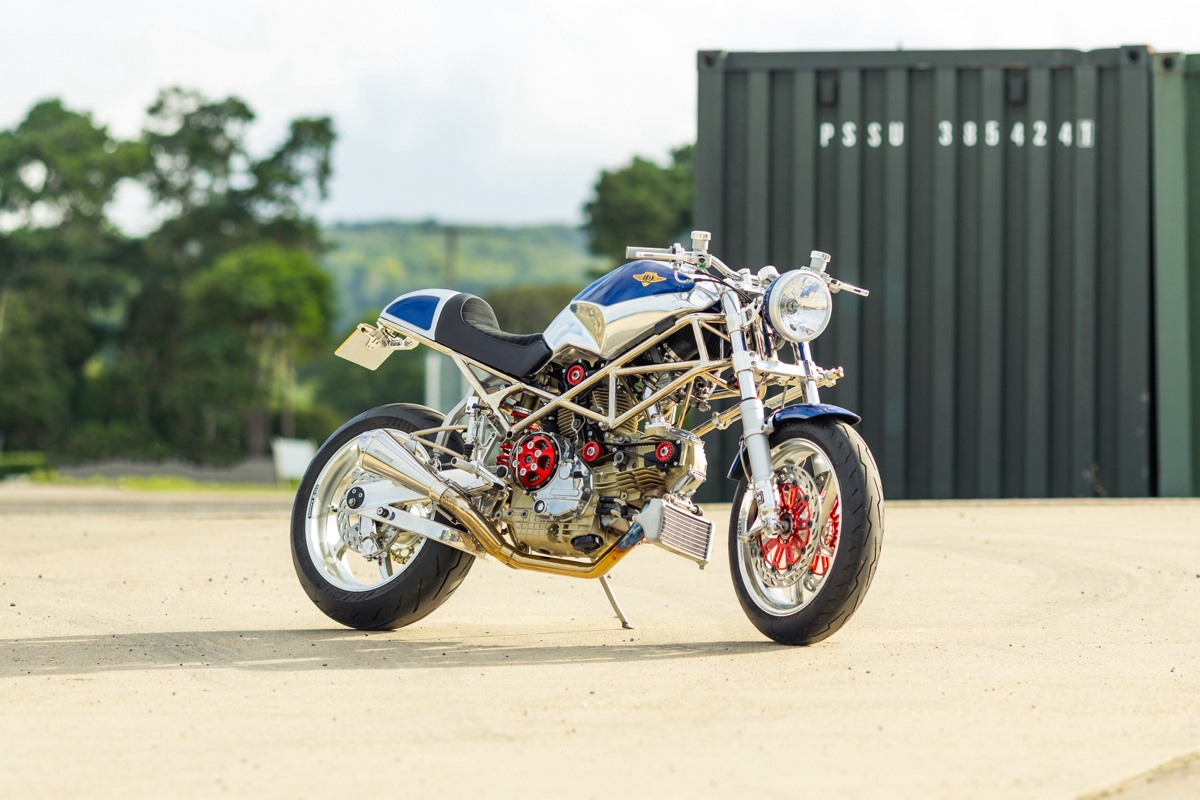
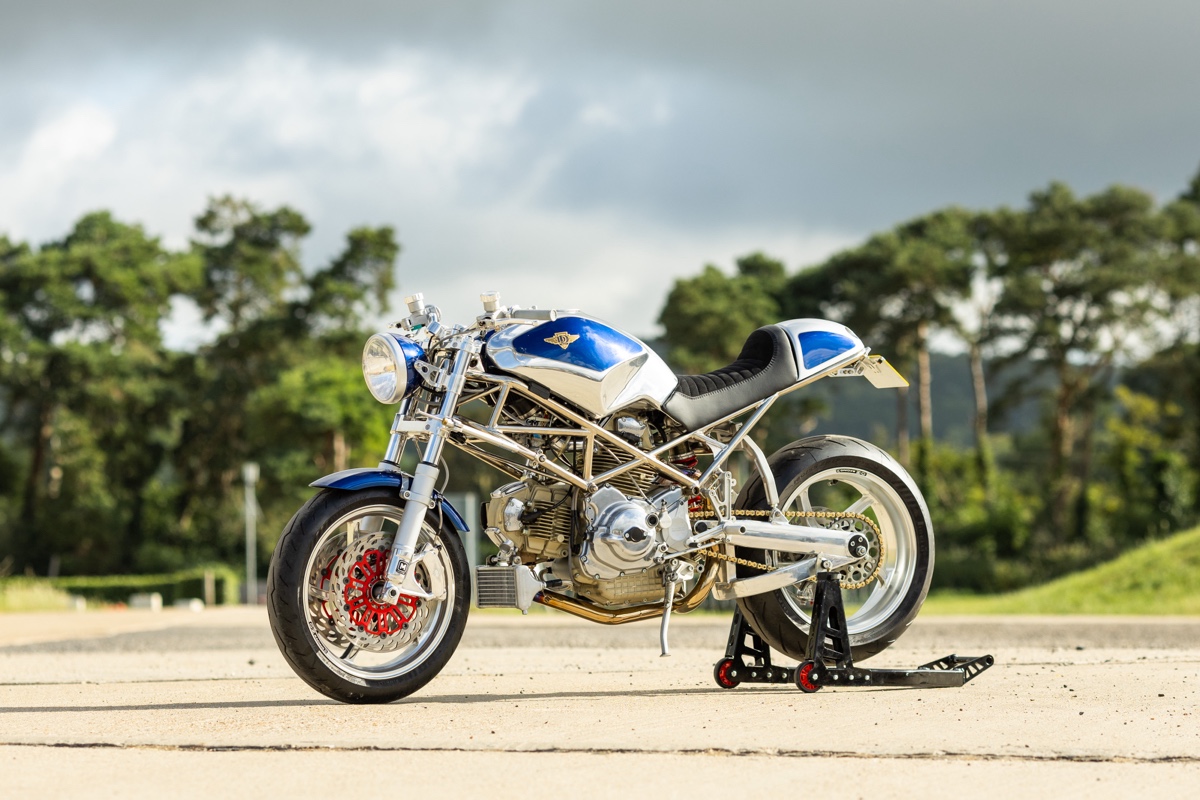
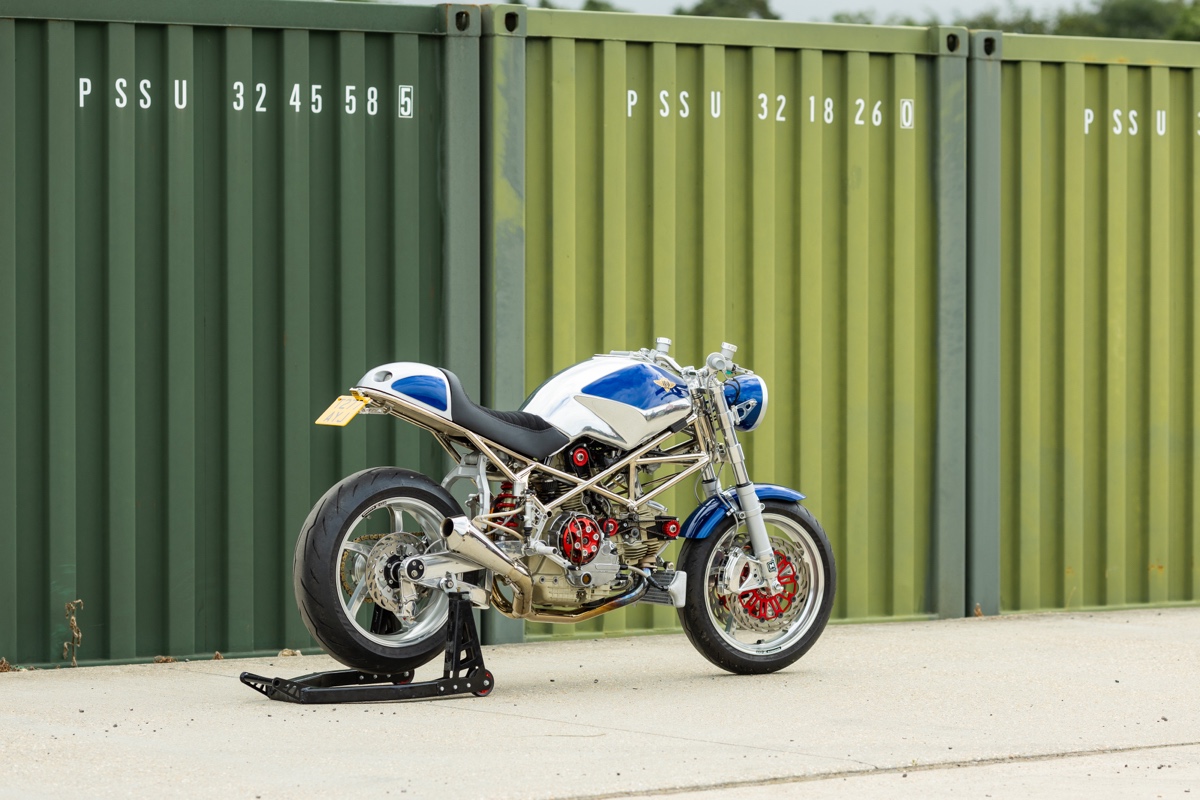
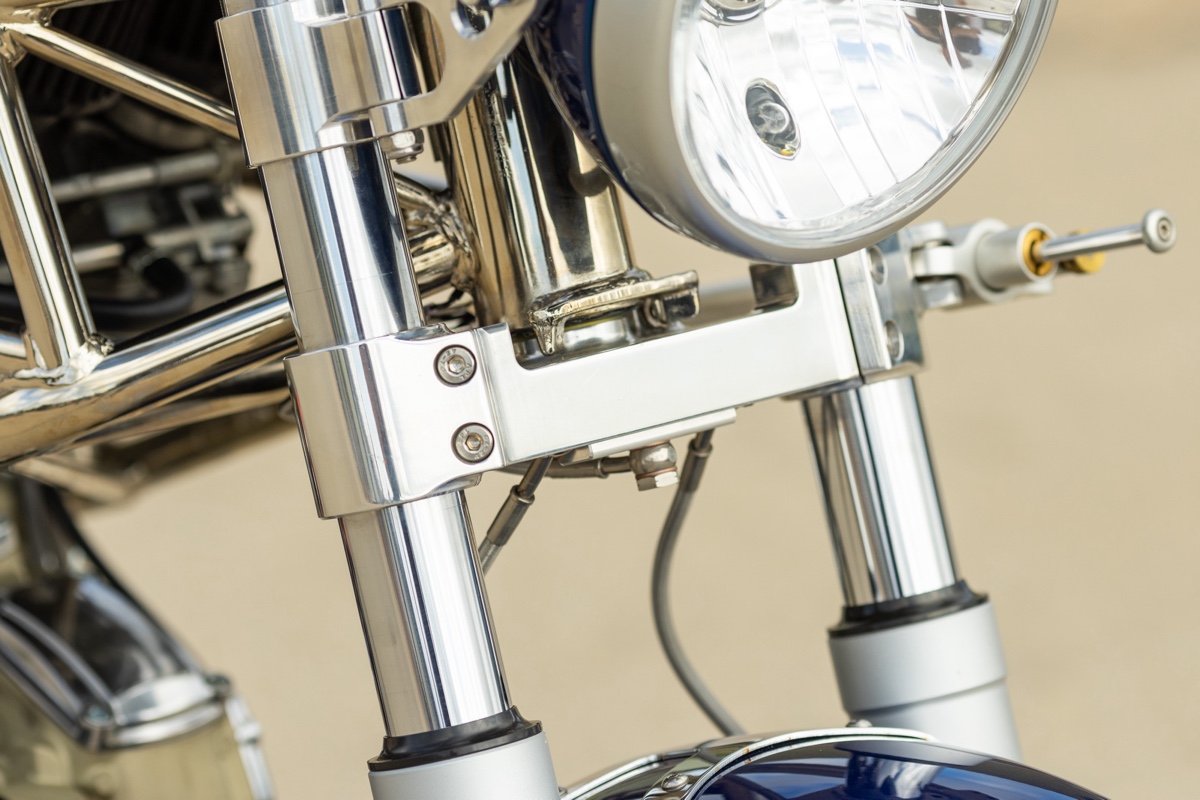
The result is “Talula” — one of the trickest, most stunning Monsters we’ve ever seen. Every last detail was worked out to jewel-like perfection, and there are components here you’re unlikely to find anywhere else, such as the handmade polished aluminum “peak-era” RoadRacing fuel tank and the conventional right-side-up forks sporting Maxton internals, four-piston radial billet calipers (custom-made by Harrison with DDM logos), and a custom-machined Fastec top yoke.
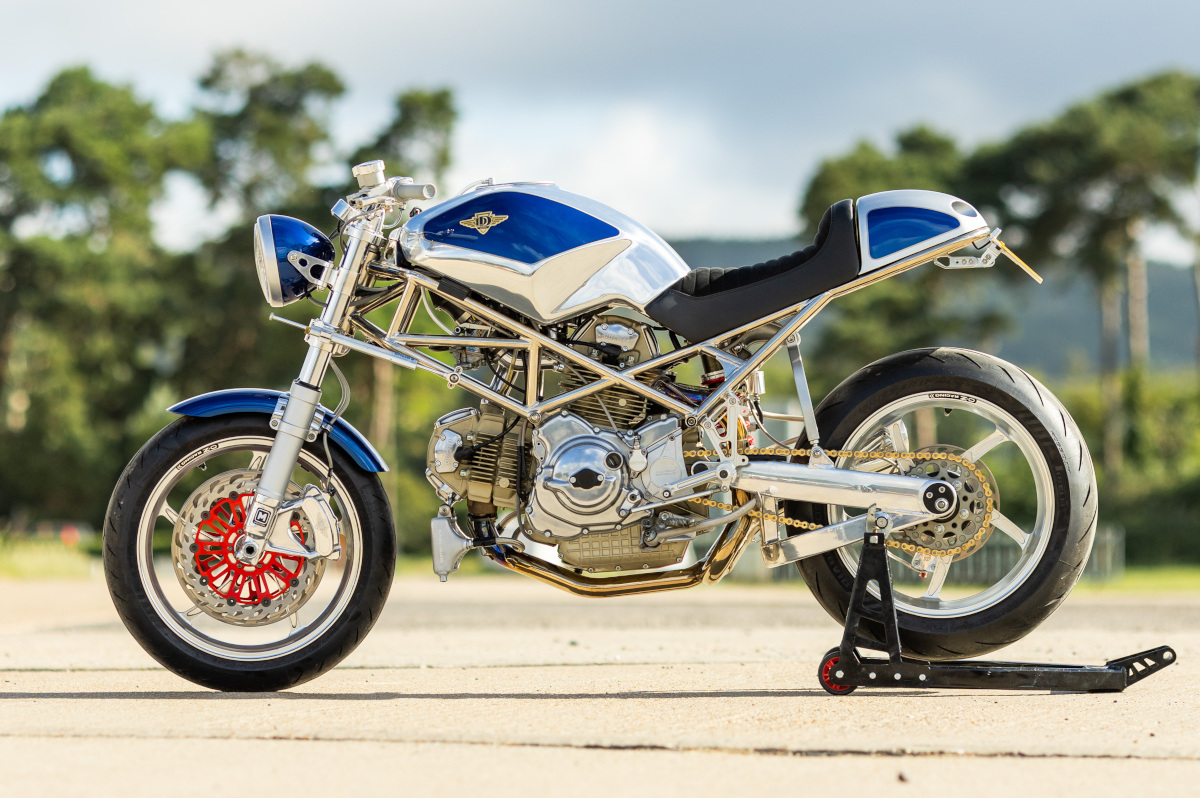
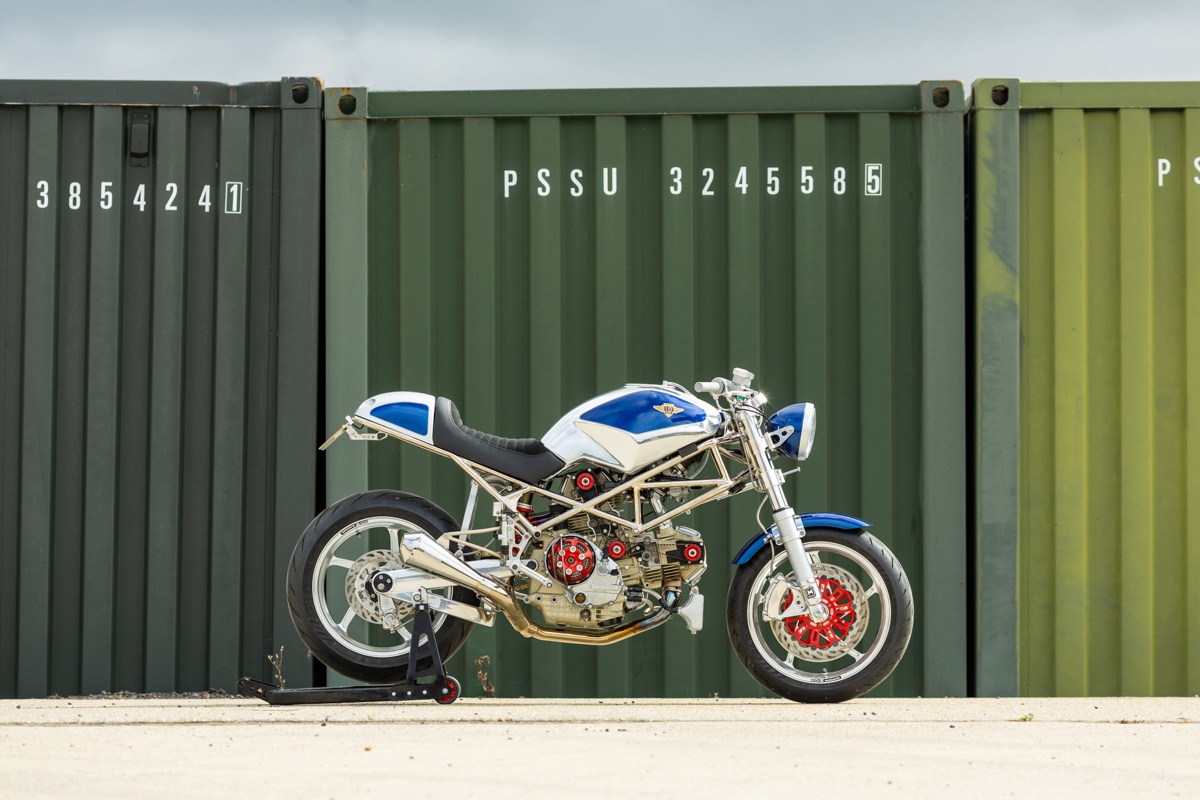
Despite the bling, Rick will tell you this 175-kg Monster was built to ride, not show.
Talula may be polished, colourful, and a bit bling, but she’s no show queen. She was built to be ridden… Talula is fast, light and ridiculously easy to ride…”
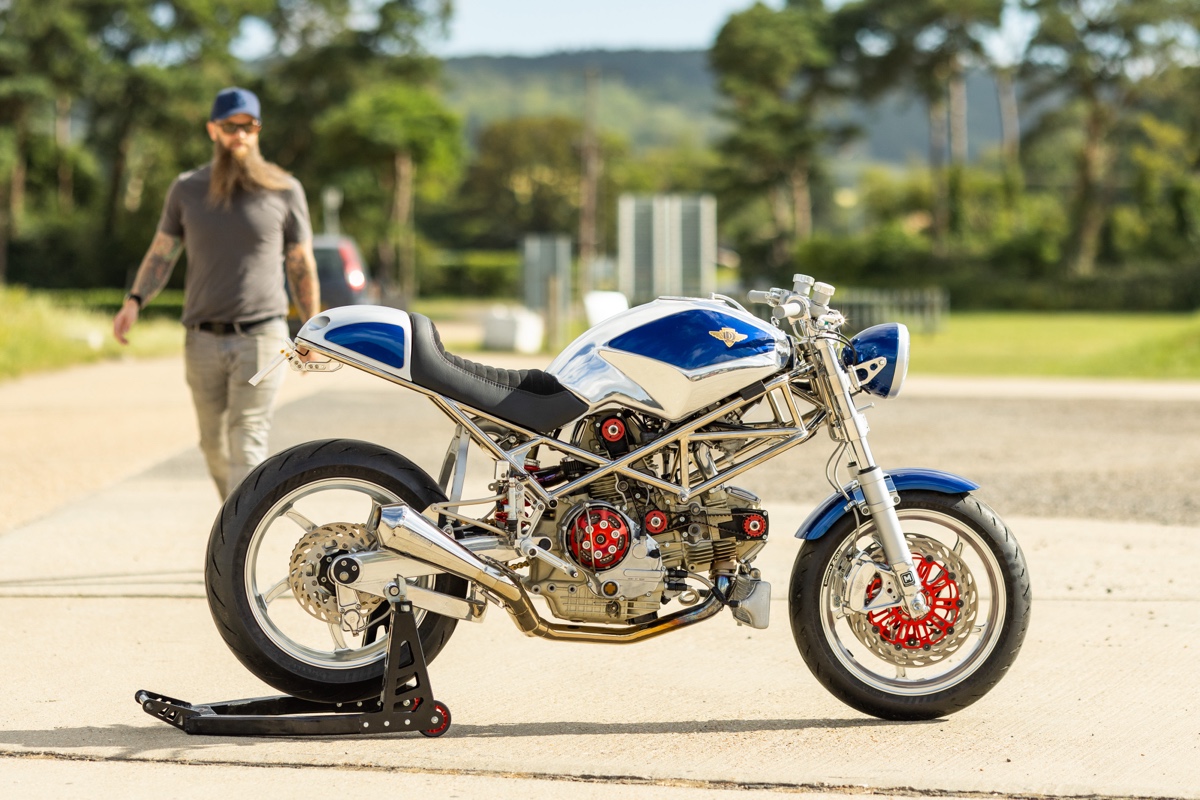
Ricks says DDM might pop up again in Dubai or beyond, but for now, this is the farewell and final hurrah for the workshop — and what a rock anthem of a swan song it is. Below, Rick gives us the full story of the build in his own words, with photography credits going to his long-time collaborator Mihael Jersov (@mjstudio_uk). Rick, we wish you good luck and godspeed in “The Pearl of the Gulf”!
In the Builder’s Words…
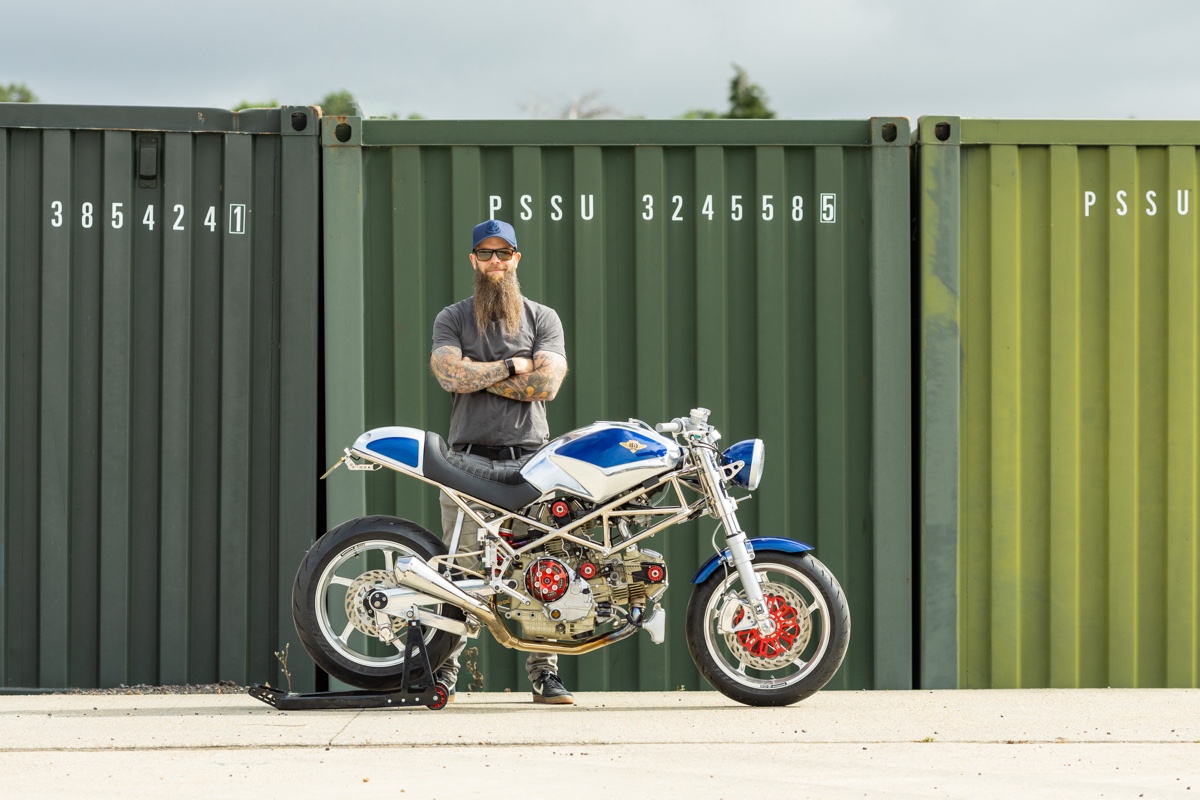
In 2010, after a few beers, I placed a cheeky £1,500 bid on a three-day eBay auction for a Ducati Monster. I didn’t expect to win it. On Saturday morning I discovered that I had, which prompted a rapid scramble for a helmet, gloves, and a train ticket to Eastbourne. The seller, Davy, was a bus mechanic who was moving to the United States the following Monday, so there was not much room for negotiation or leisurely collection arrangements. I handed over the cash money and rode the bike back to London.
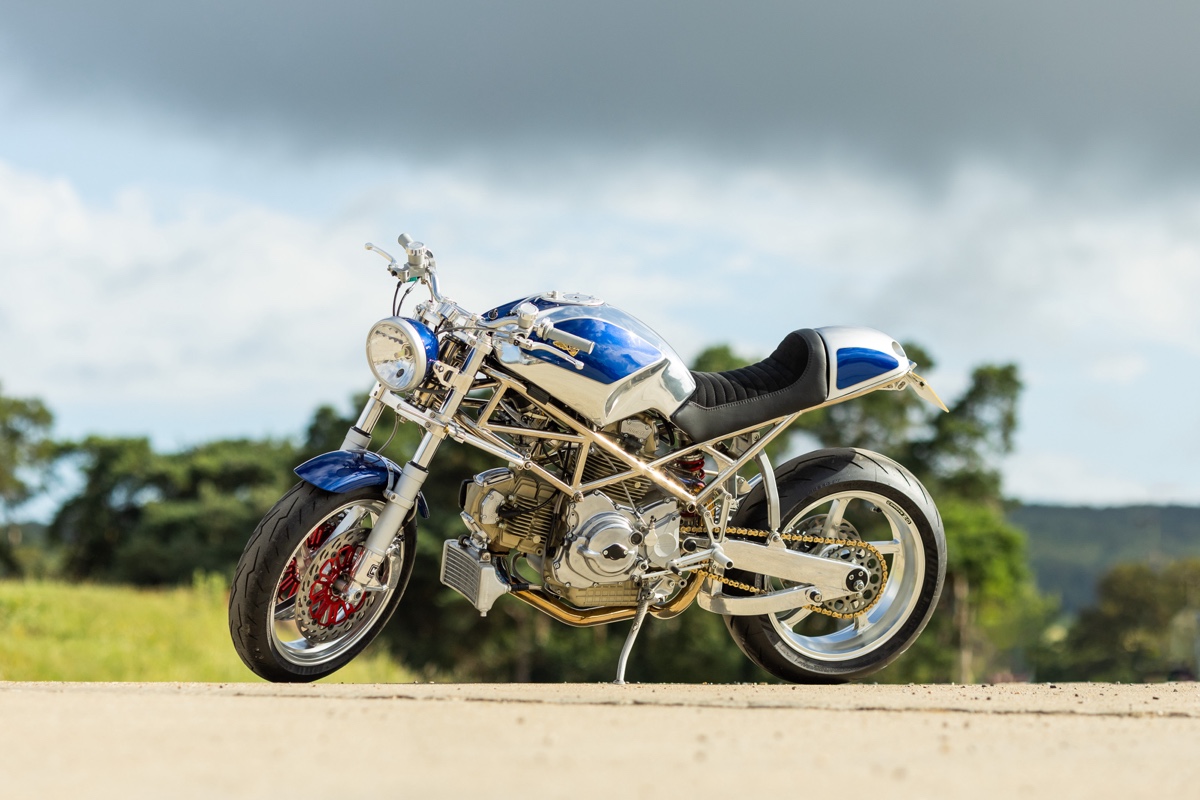
That was how I became the slightly surprised owner of a 1999 Ducati M900S, one of the last of the big carburetted Monsters. The bike was always going to be a keeper. Soon after buying it I serviced it, made a few mod,s and joined the Monster Club. That same year I rode it to Misano and back for the World Ducati Week festival. This was before smartphones and convenient GPS, so the journey was completed using a wet paper map, guesswork, and the general assumption that Italy was somewhere south-east.
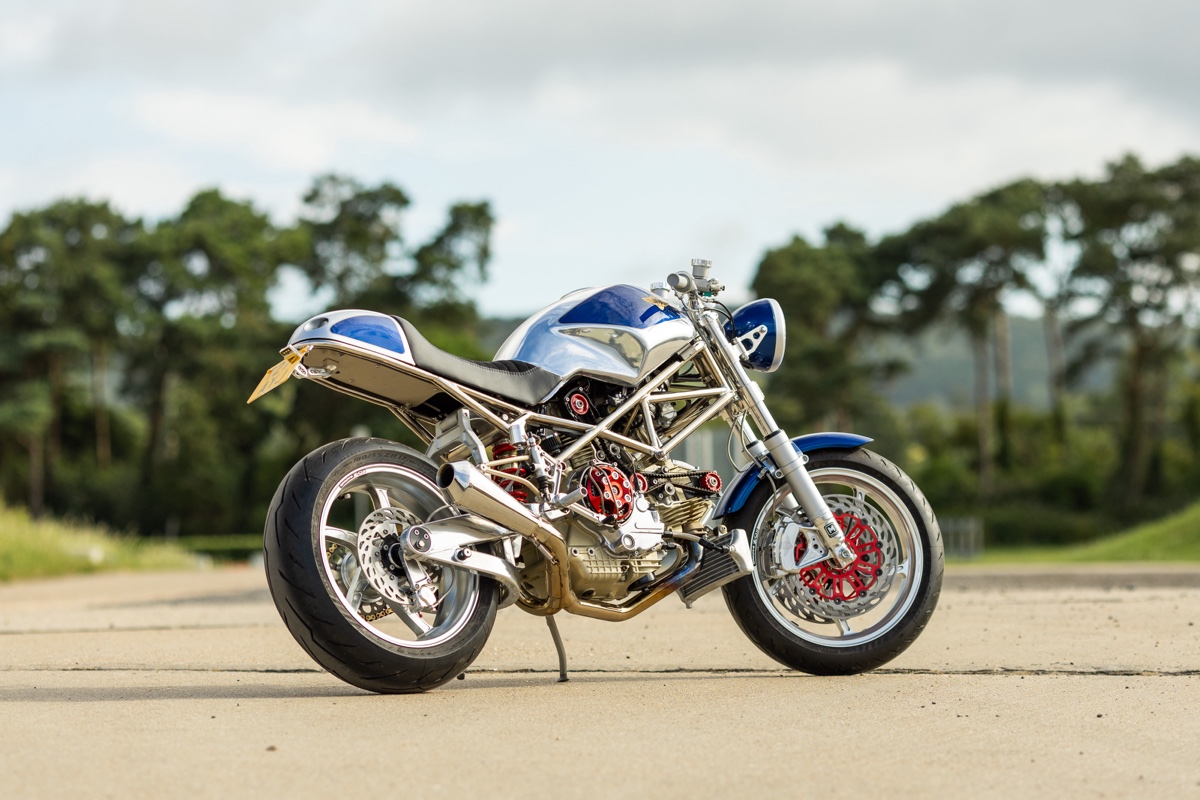
Over the following years the Monster followed me around the world. It travelled from the UK to South Africa and back again, lived for a while at 1,600 metres above sea level, and covered a considerable number of miles across Europe.
The mileage is unknown. A lot, I would guess.
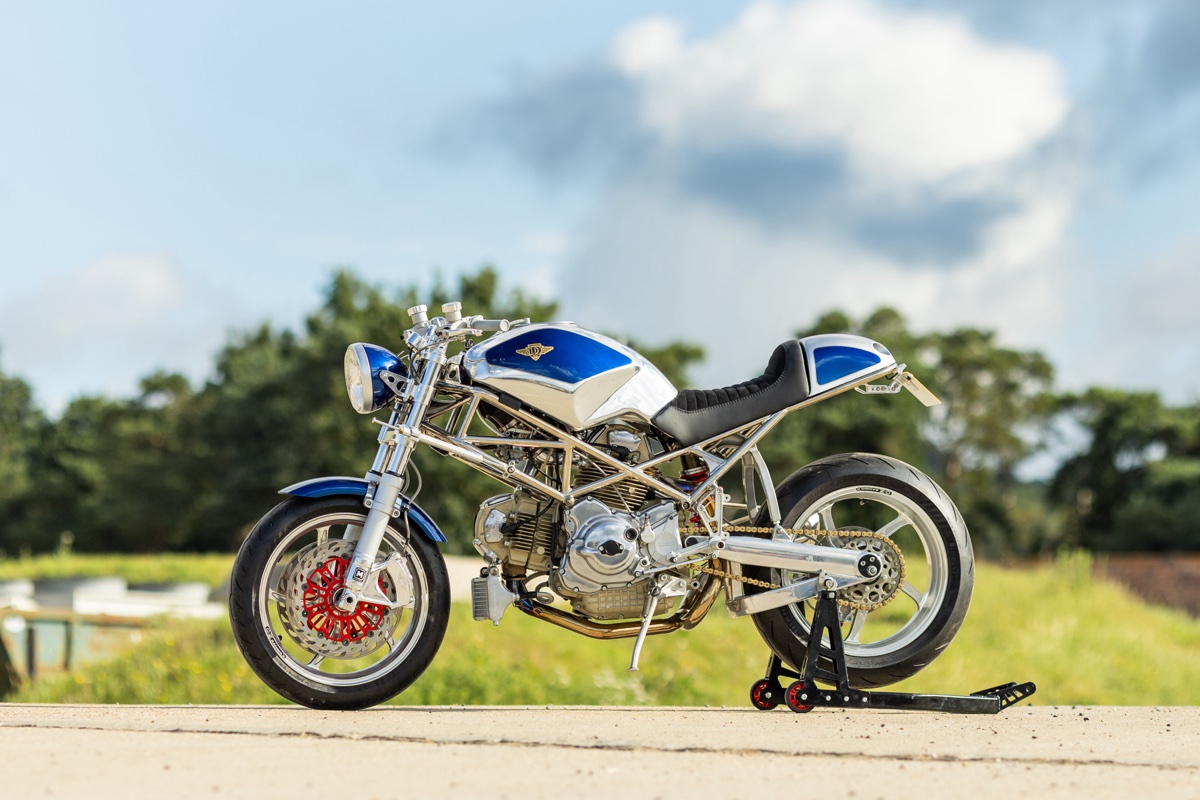
It also went through several incarnations, redesigns, and partial rebuilds. The problem was that it was my own bike, and my own bikes were always at the back of the workshop while I concentrated on customer projects and whatever else demanded immediate attention. The cobbler’s children have no shoes.
The DDM Swan Song
In 2024 I decided to shut Dirty Dick’s Motos and leave the UK. That meant finishing the last customer jobs, selling a brewery, trying to flog a workshop full of tools while the Monster still sat on the ramp, and the usual administrative carnage that comes with emigration.
The Ducati turned into a rolling deadline. I had no idea when I’d next have a proper workshop, and the network of specialists I’d spent decades building was about to scatter. These were people I trusted enough to drive the length of the country for a single job. If I didn’t finish the Monster properly now, there was a good chance it would never happen.
Final teardown started in March 2024 although I’d already been stockpiling parts for five years. The bike was finished in July 2026. This isn’t the end of Dirty Dick’s Motos, I’ll still be involved in whatever scene I land in, and there might be another workshop in Dubai one day. For now, though, this is the swan song.
Better, Faster, More
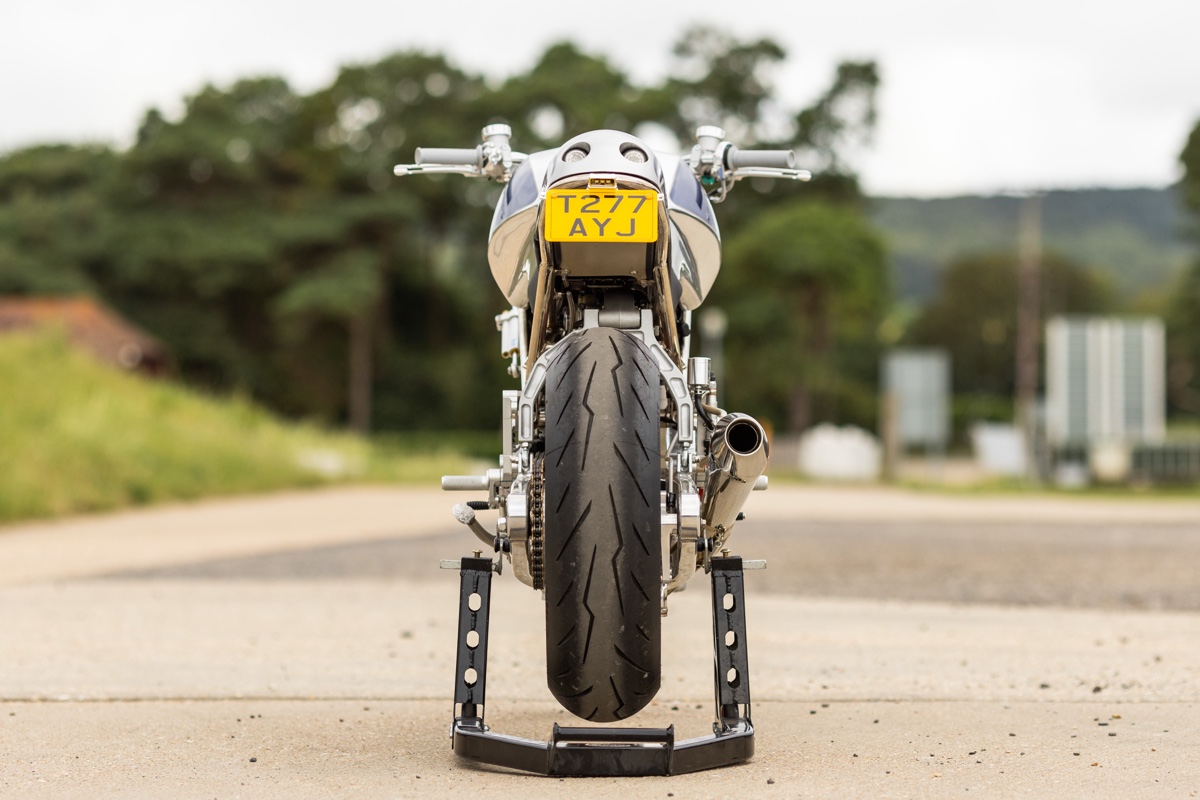
Anything with the DDM name gets the same brief: Better. Faster. More. This was my version of Peak Monster. Galluzzi’s original design was already right: the hunched 1990s café-roadster shape, the exposed engine, the trellis frame. Trying to turn a Monster into something else usually just makes it look confused.
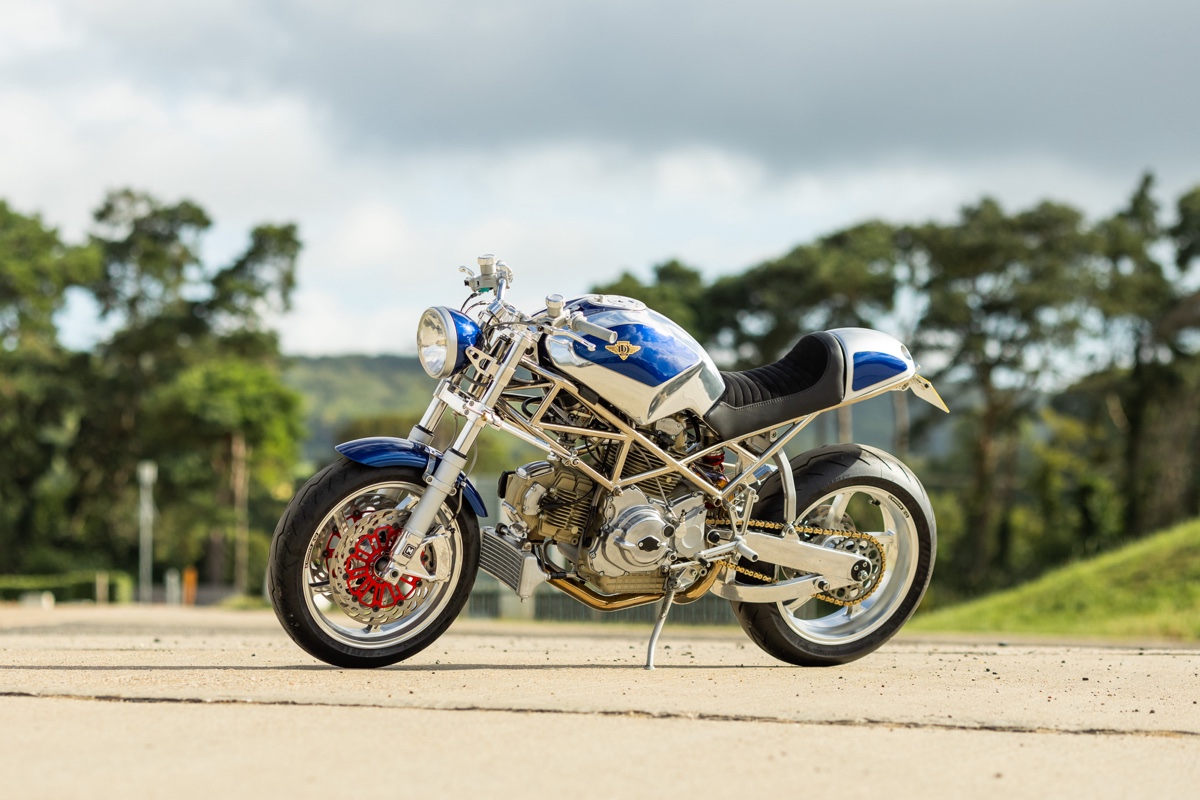
I wasn’t interested in building a café racer that happened to start life as a Monster. The Monster was already the idea.
Keep the shape. Make it lighter, sharper, cleaner, better looking, and a lot better to ride. Fix the weaknesses, leave the spirit alone. Lose weight, sort the suspension and brakes, modernise the electrics, tidy every line. And, because it’s DDM, make everything just a little bit Extra. The result is OEM+++.
The Tank That Started Everything…
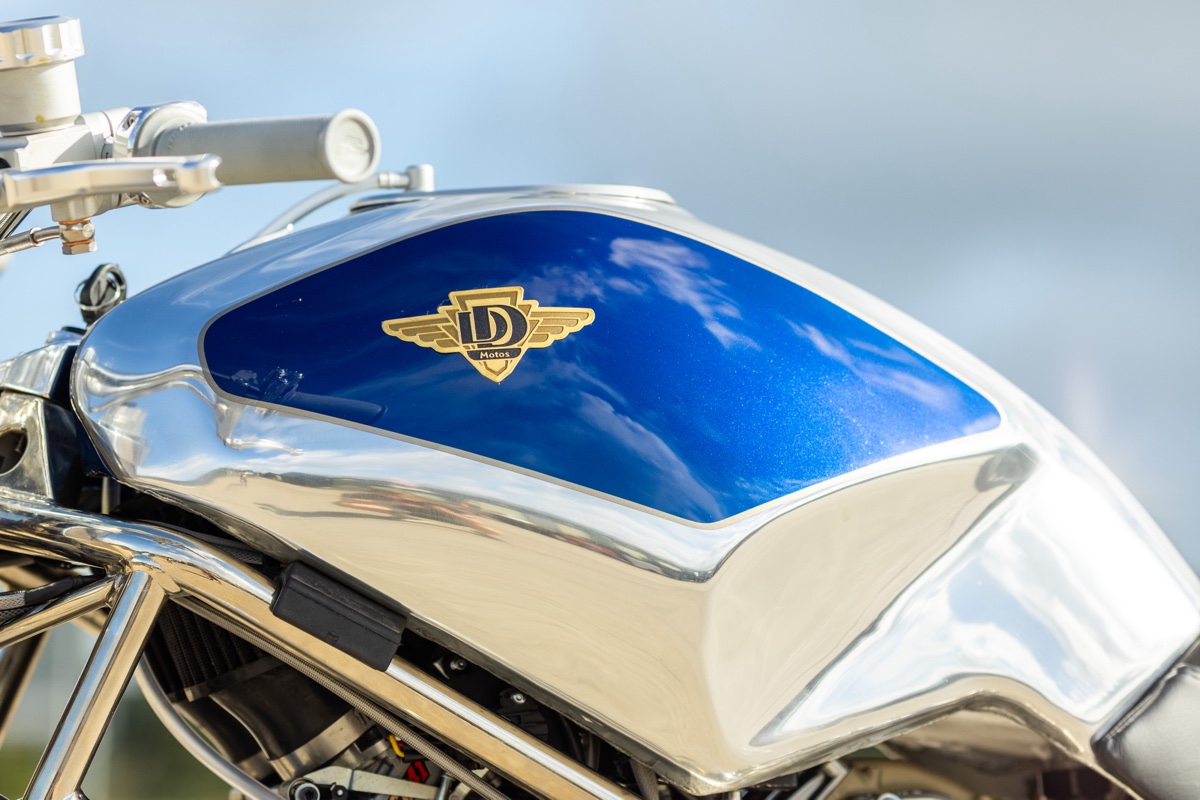
The whole build started with the tank. Years ago I saw a Monster in Scotland wearing a handmade aluminium RoadRacing tank, peak-era Monster aftermarket, already impossible to find. I knew it had to be on the future bike, so I paid the owner a stupid amount of money and posted him a standard tank in return; he could keep the rest of his bike.
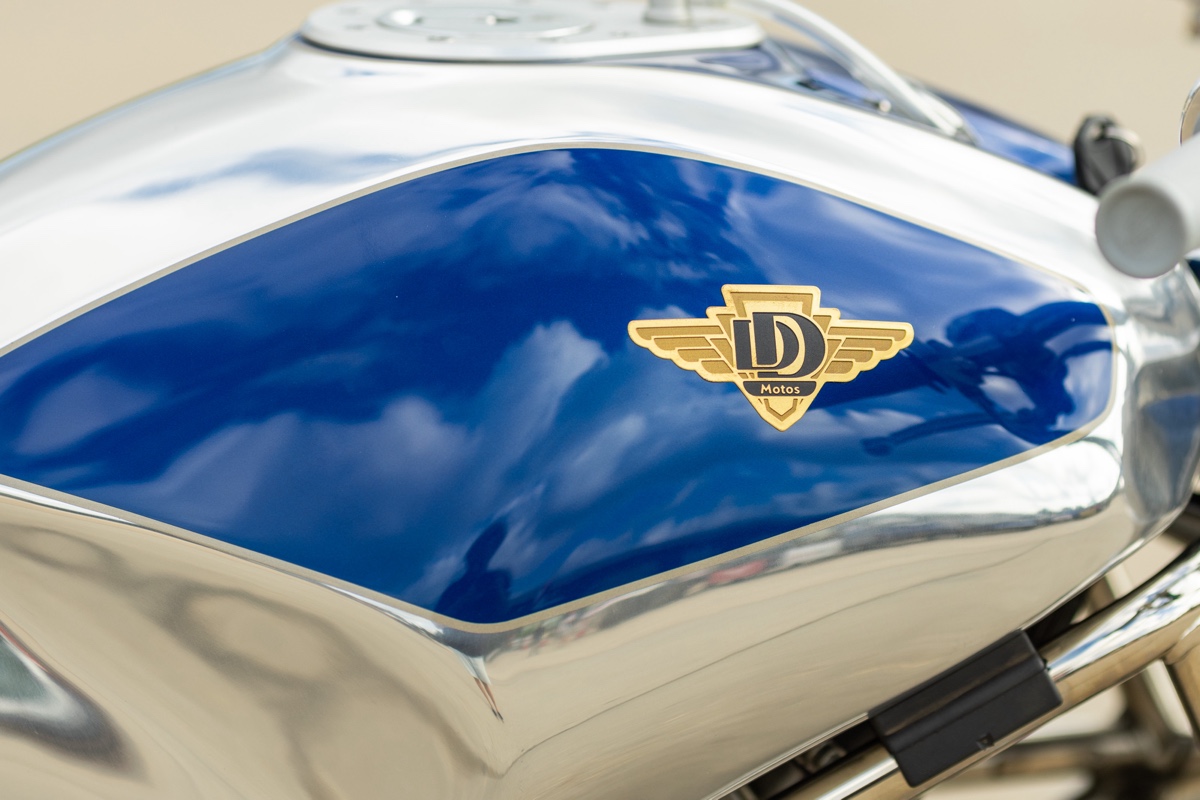
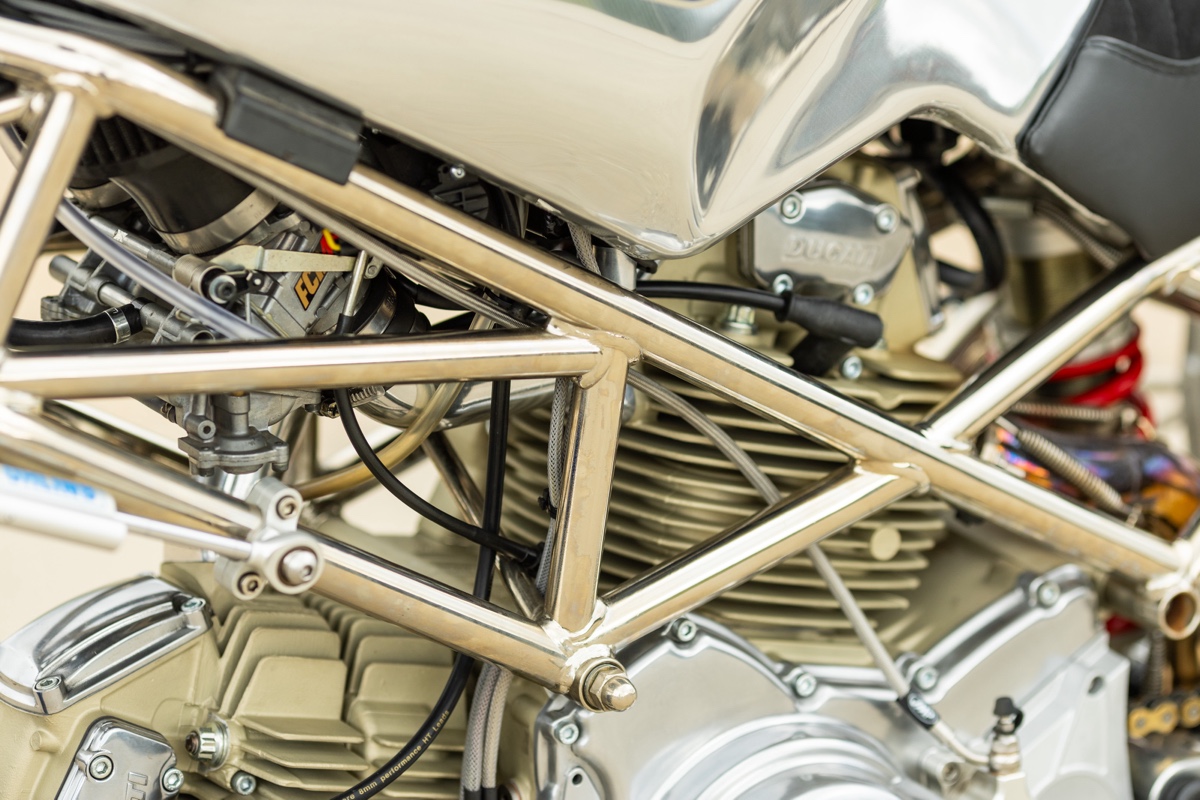
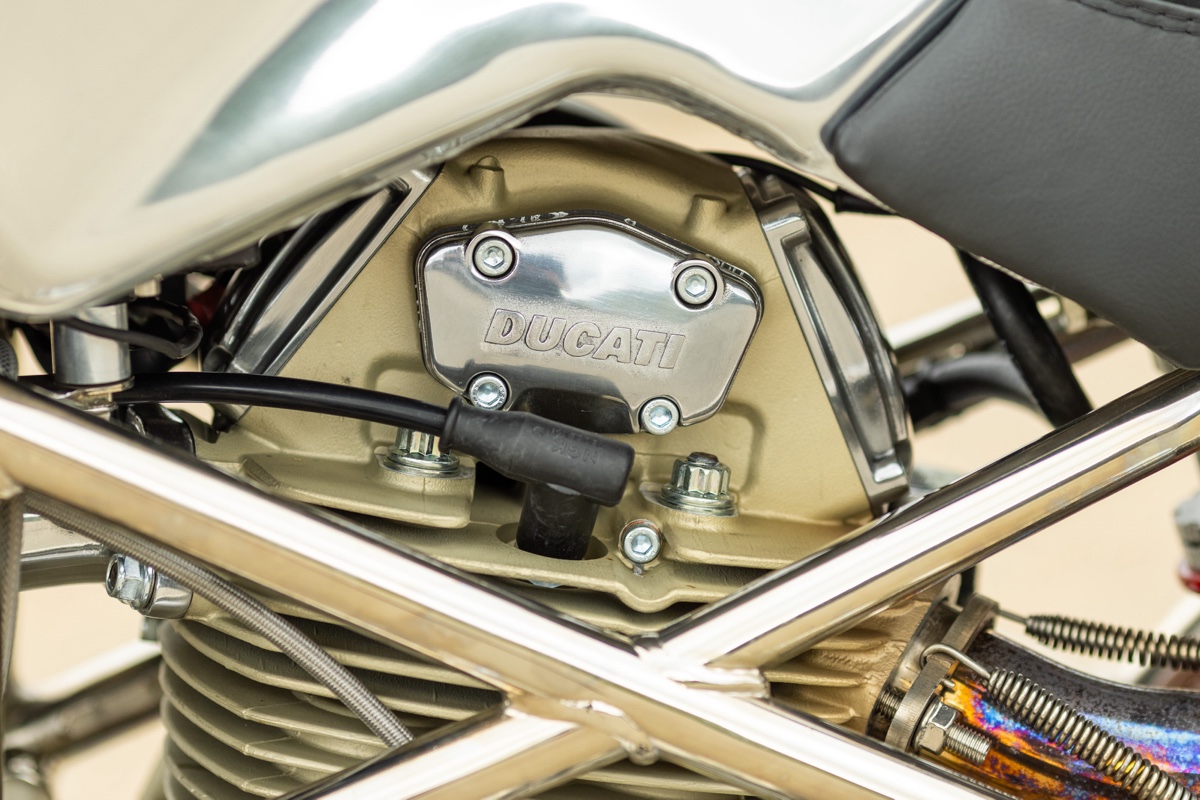
It’s lighter and slimmer than the steel original, with the entire lower section cut away so you can see the top of the vertical cylinder. Capacity is only a litre or two down, which is fine. Talula will get ridden, but she won’t be crossing continents again. I’ve always assumed these tanks were rolled and welded by Italian virgins. Rather charmingly it uses a Newton Equipment Aero cap all the way from Essex.
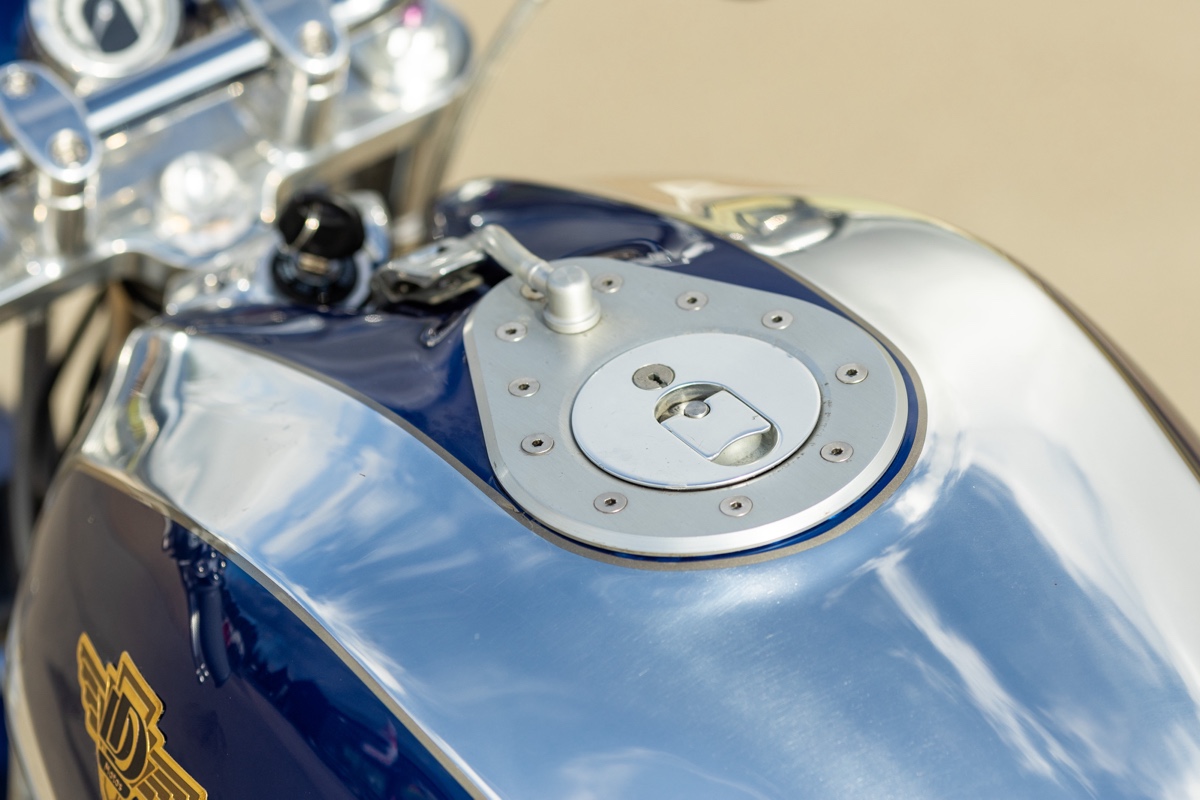
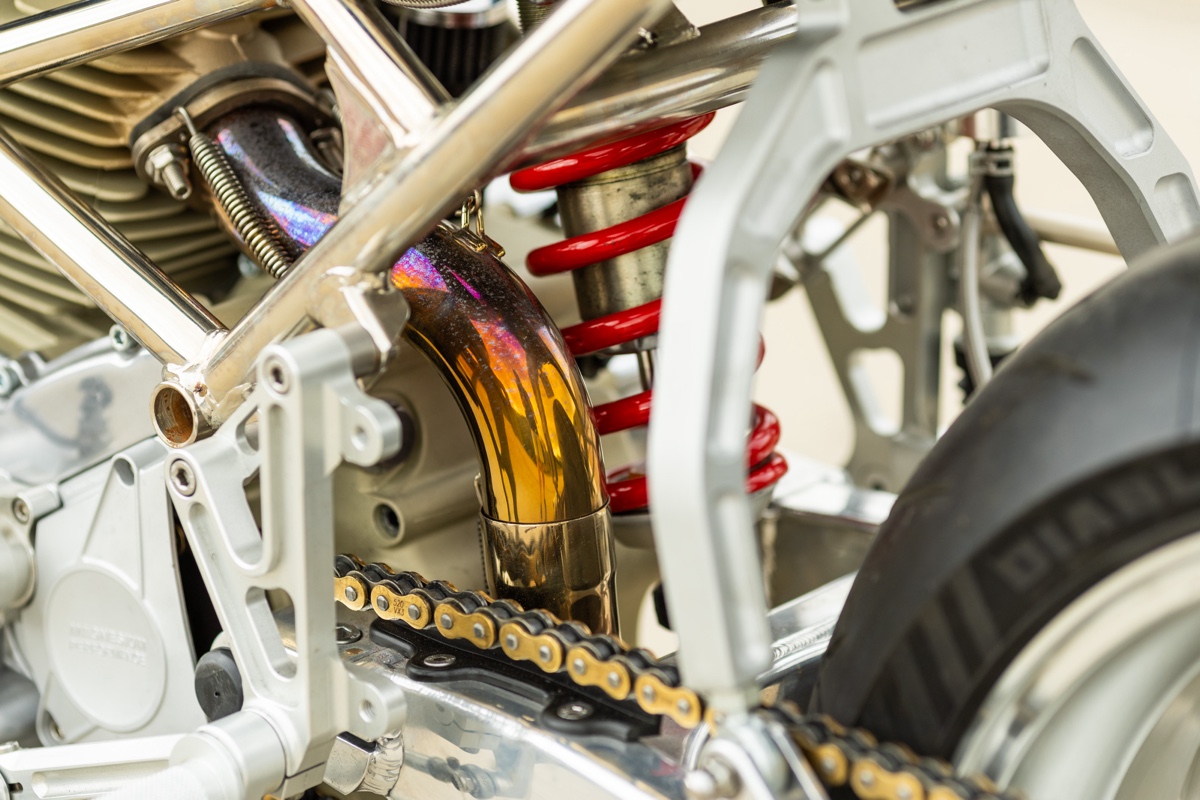
That polished aluminium tank became the first fixed point. The second was the nickel-plated frame. Every W650 Desert Sled I built had a nickel frame, so it felt natural to carry the same look onto the Ducati. The Monster chassis was stripped of every unnecessary bracket, blasted, polished, and nickel-plated. Apart from chopping and looping the rear, the geometry stayed original.
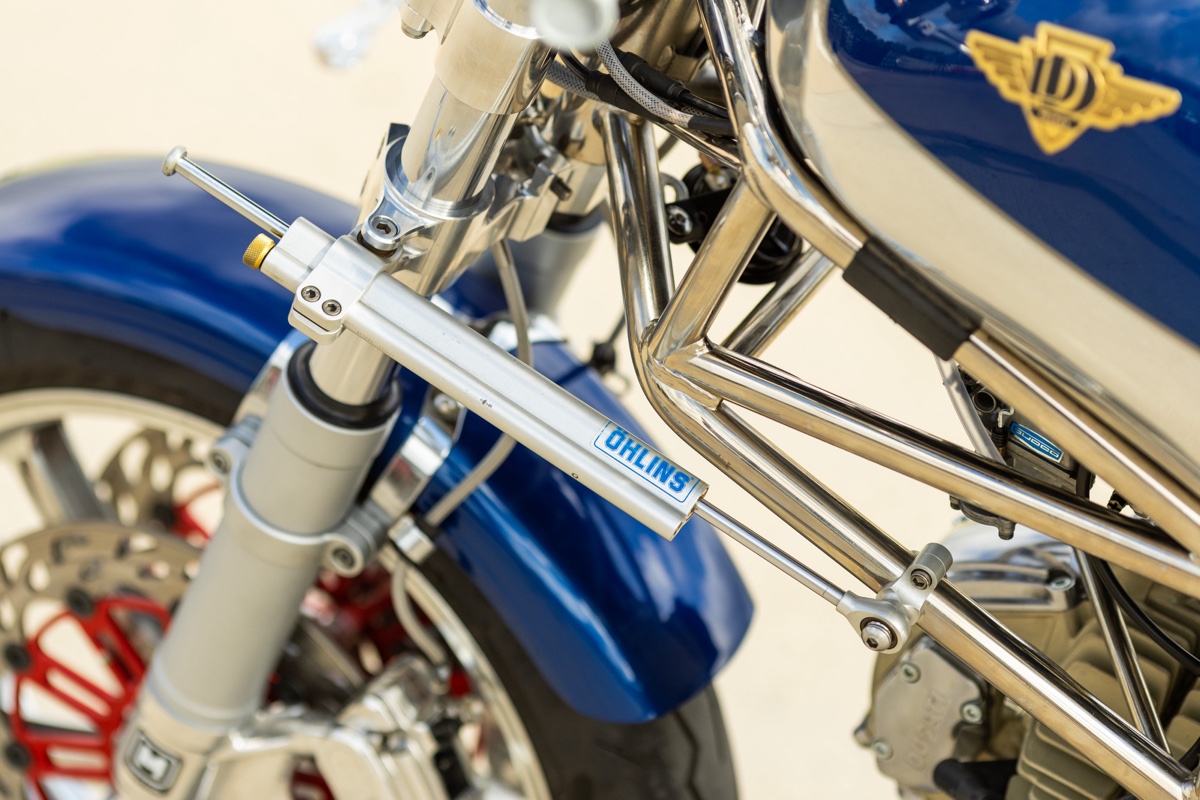
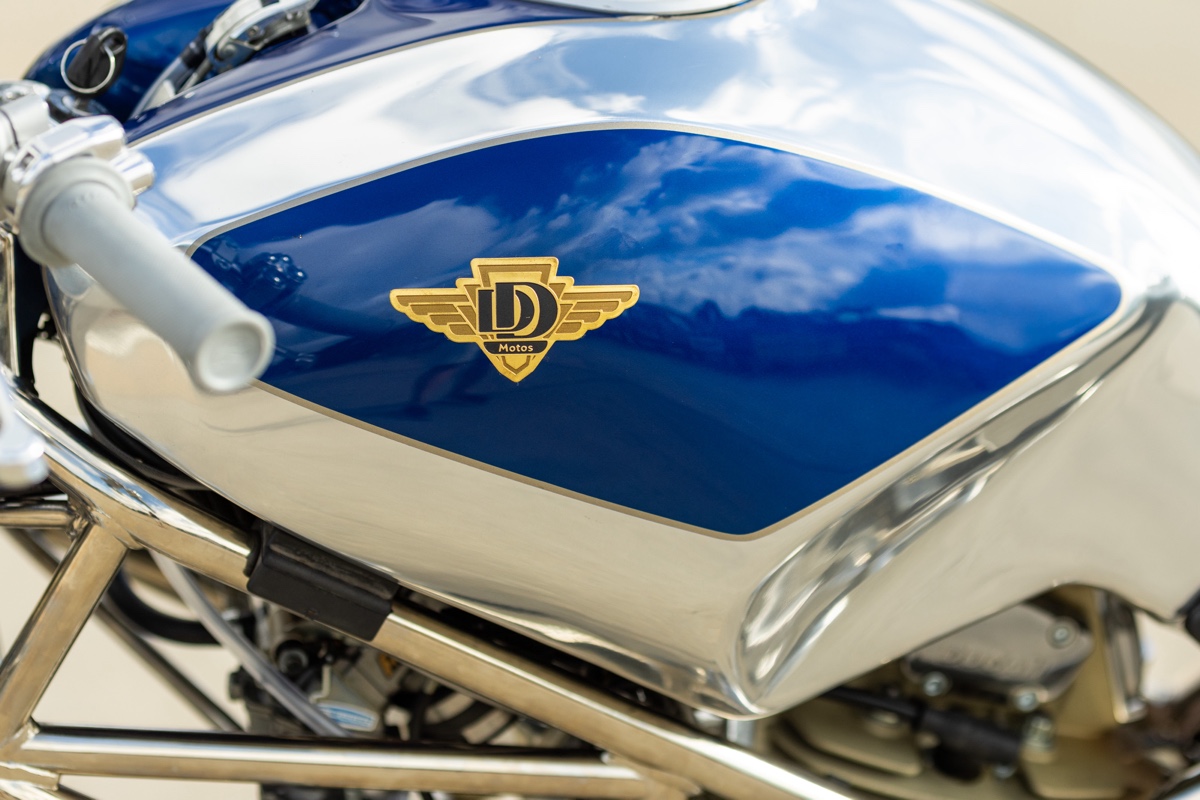
Everything else had to work around those two pieces. The paint was partly inspired by the MV Agusta 750S, but the actual brief I gave Arnie at Pro Kustom was simpler: Make it look like an expensive Italian espresso machine. He mixed a blue that sits perfectly against the polished aluminium and the warm nickel. The blue flashes on the tank are outlined in nickel so the paint ties straight back into the frame.
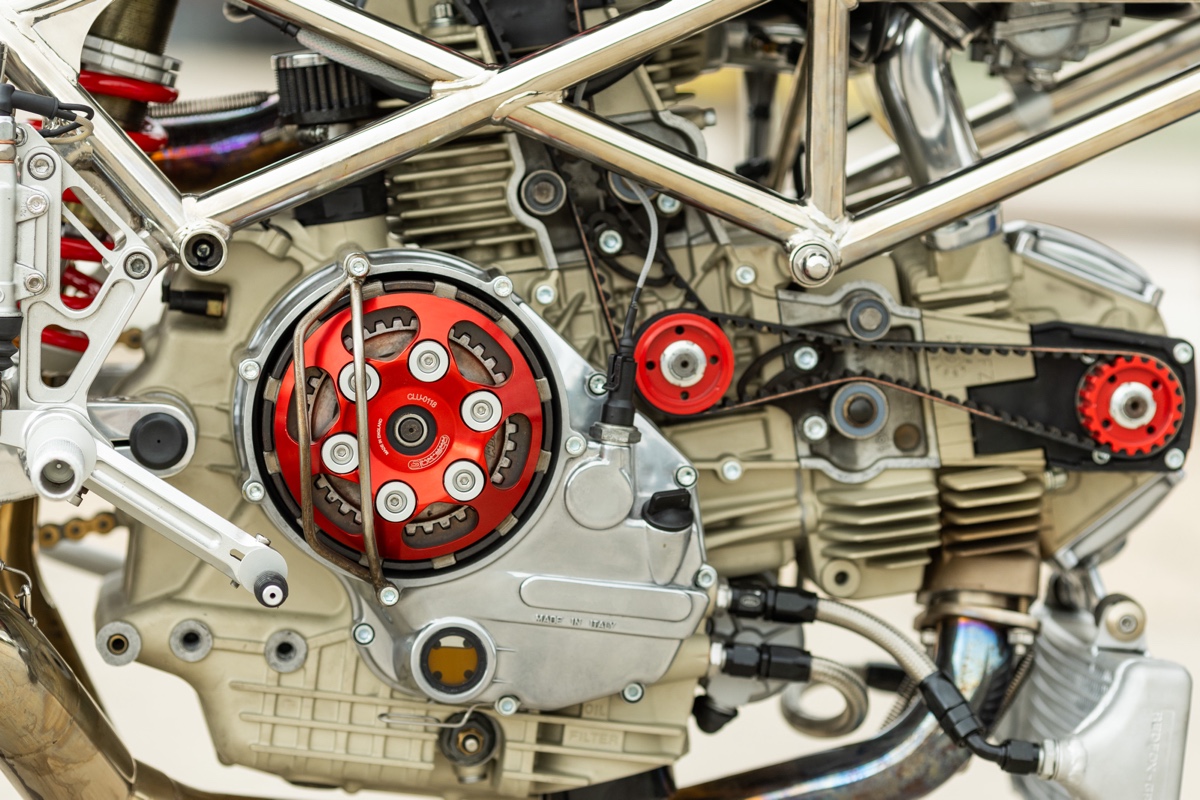
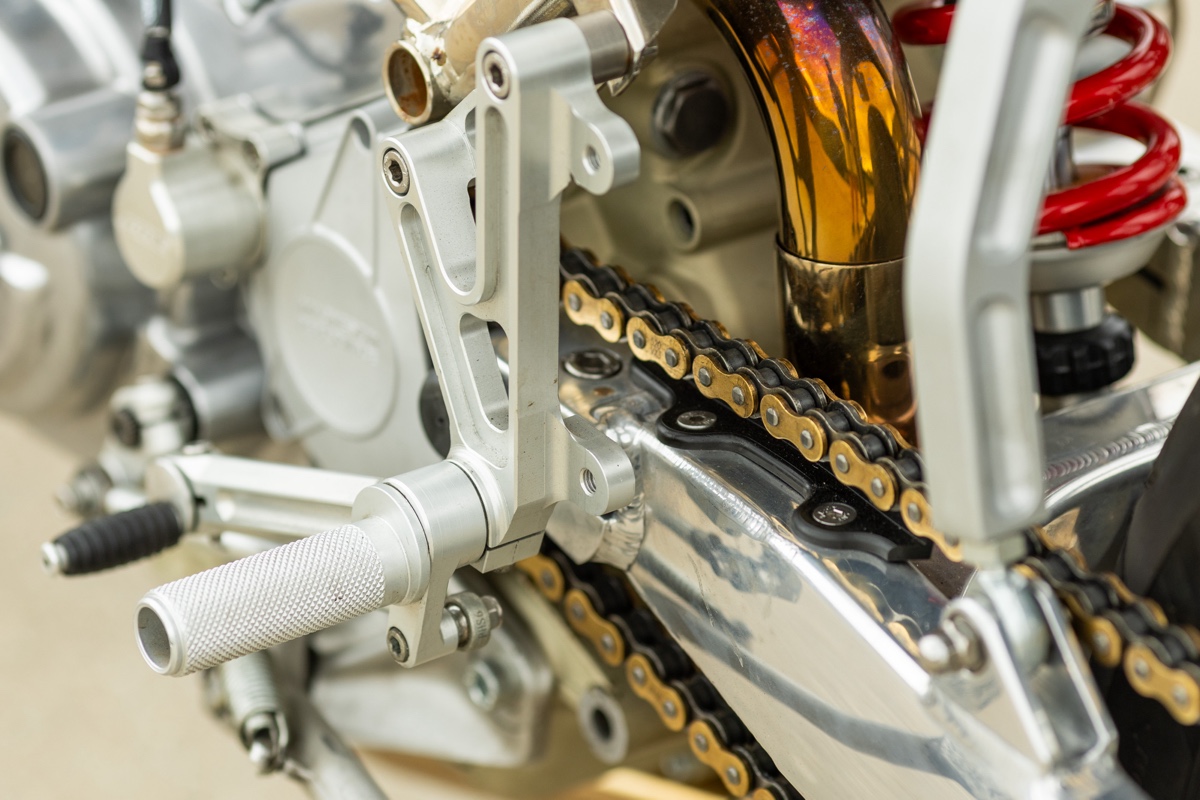
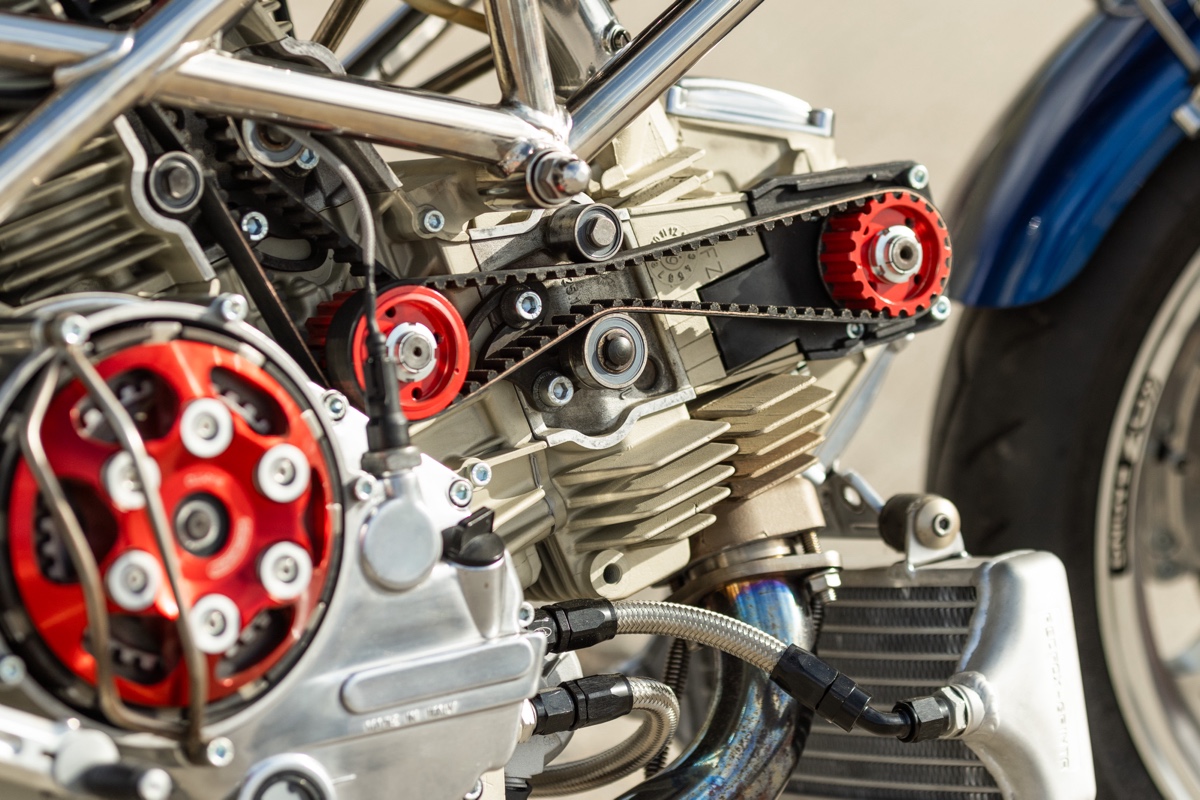
The engine got a ceramic coat in a bronze-and-nickel blend. After a few attempts, I settled on about 25 % nickel to soften the bronze and stop it fighting the frame. Red on the clutch pressure plate, belt pulleys, and rear spring gives the mechanical bits a lift.
Biggest fear was ending up with a Christmas tree. So a lot of the surrounding parts went into muted satin silver ceramic. The quieter finishes keep the polished tank, nickel frame, and bronze engine as the main events. It’s the most colourful bike I’ve ever built. I agonised over it for months. Still happy with how it turned out.
The Right Engine, Rebuilt Properly
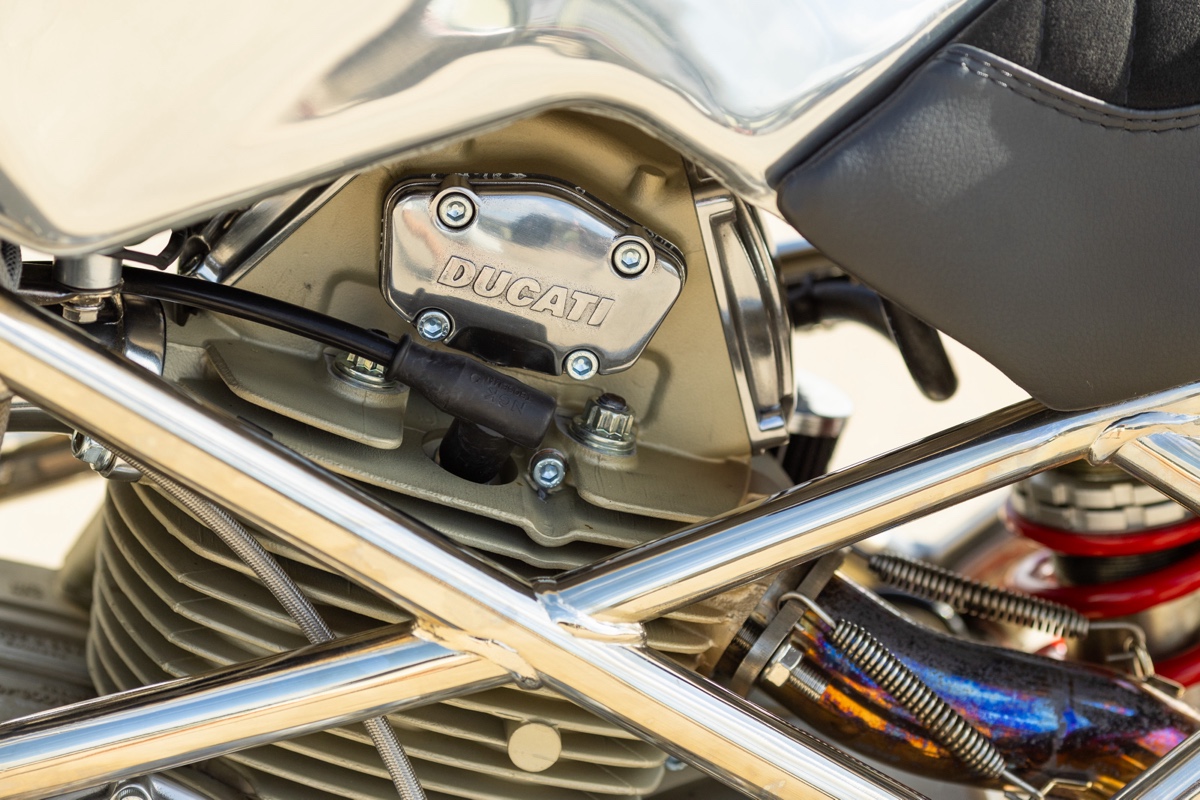
Ducati engine paint from this era is rubbish. Look at it hard and it flakes off. The state of the motor was one of the main reasons the whole project dragged on. I could have spent months cleaning and prepping it for paint, but by then I had neither the energy nor the patience. More importantly, I suspected a few of the original horses had done a runner since 1999.
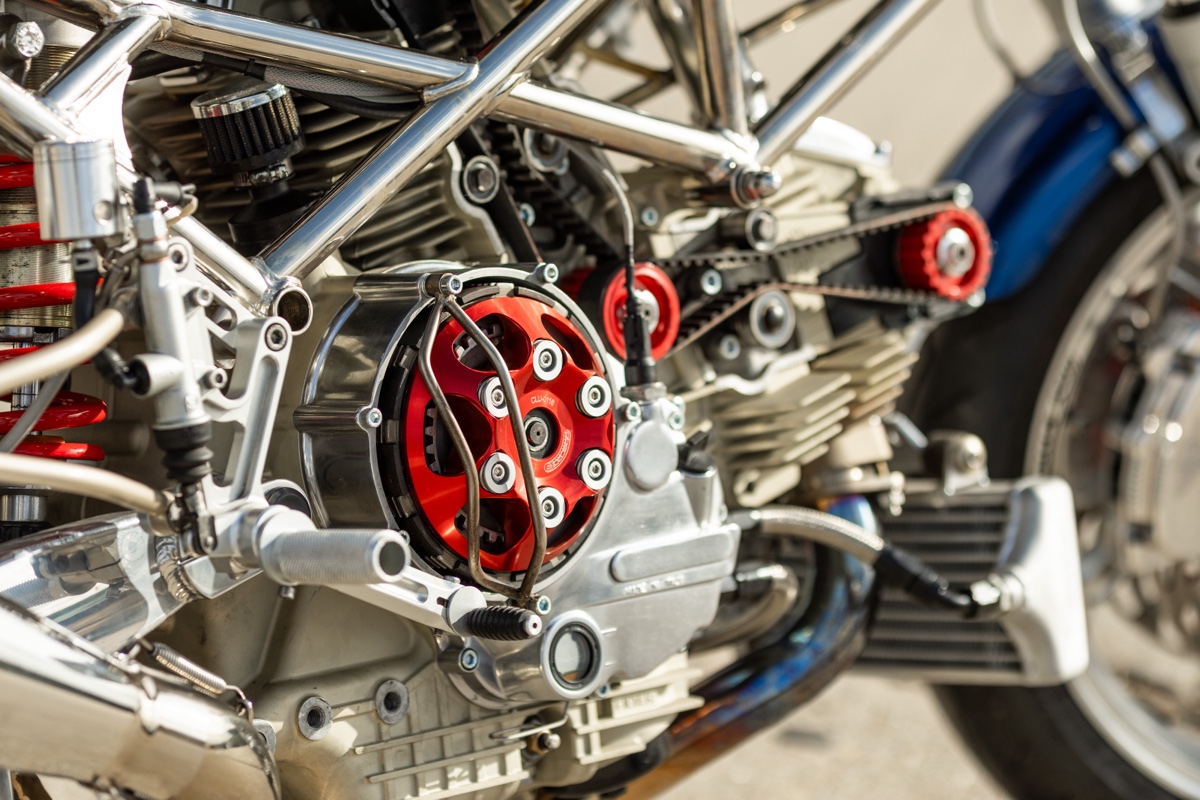
My own Ducati engine building experience is less than zero, so the motor went to Ray Petty for a proper ground-up rebuild. First time I’d ever let someone else build an engine for me, which meant Ray also had to put up with a constant stream of questions. We had a lively discussion about modifications. I wanted a 1000 cc big-bore kit, fast cams, bigger valves, and higher compression. Ray said no. That was the end of that.
Add Lightness. Balance the Spinny Bits
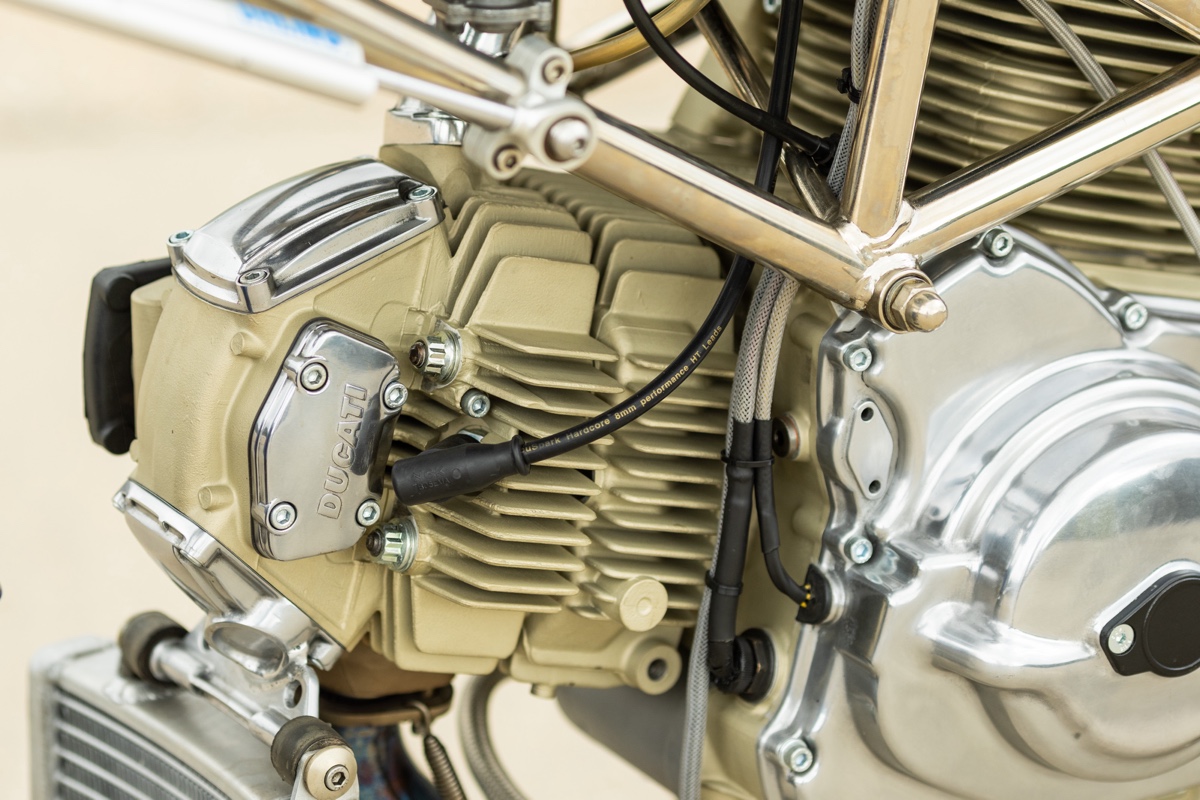
The engine already had a Nichols lightened flywheel and I did at least talk him into balancing the crank. Every big V-twin benefits from balancing the spinny bits; it makes a huge difference to response and how pleasant the thing is to live with.
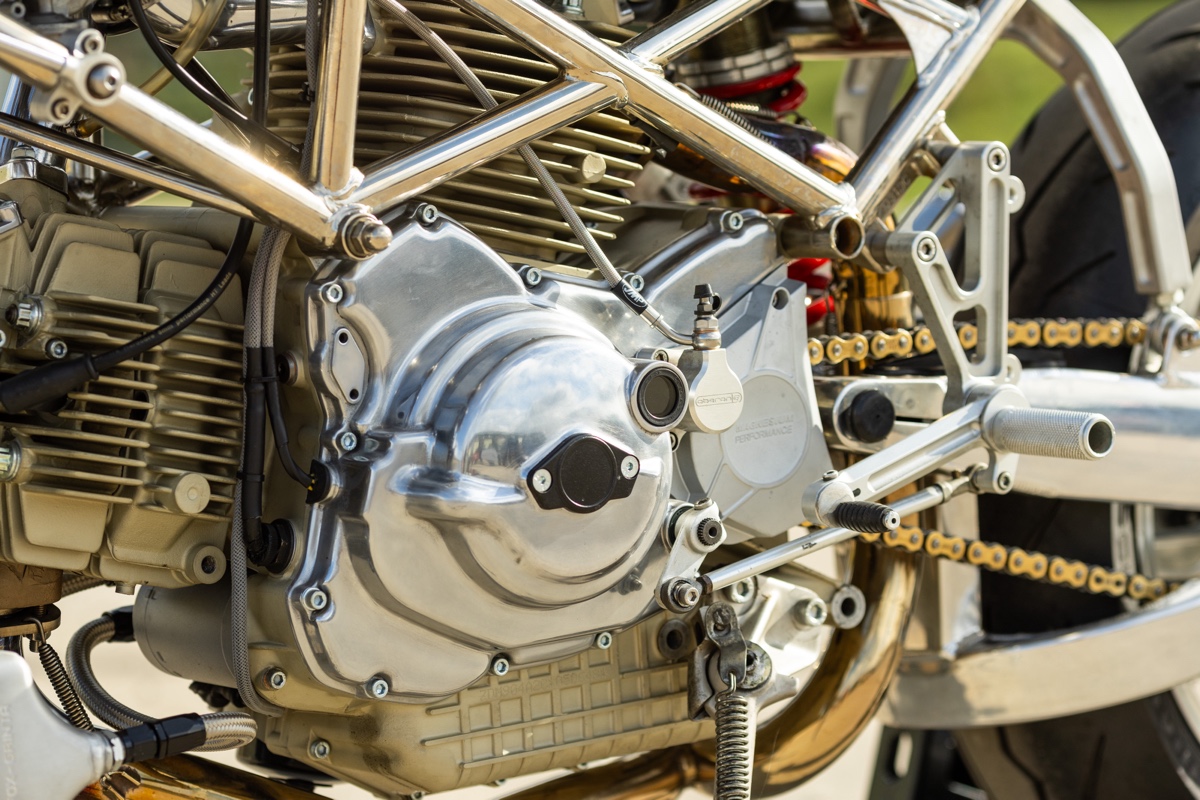
Ray was right about leaving the engine spec alone. I was right about the crank. With the bike being so much lighter, the flywheel reduced, the crank balanced, and the engine back to full health, it’s an absolute joy. Power comes instantly from nowhere, it revs hard, and it pulls on a broad wave of torque.
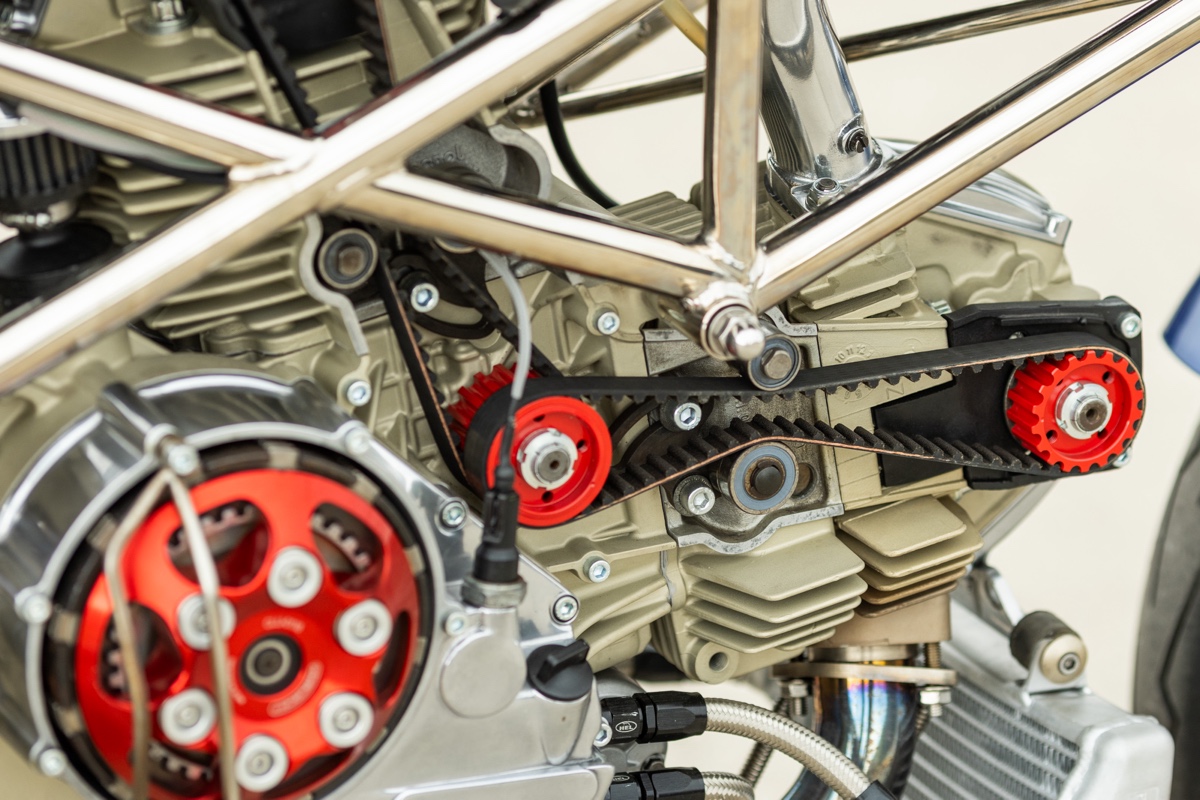
Fuelling is handled by 41 mm Keihin FCR flat-slide carburettors breathing through K&N pod filters. There are no vacuum diaphragms between the throttle and the engine. Your wrist operates the slides directly, with accelerator pumps supplying the additional fuel for instant response. The induction noise is glorious.
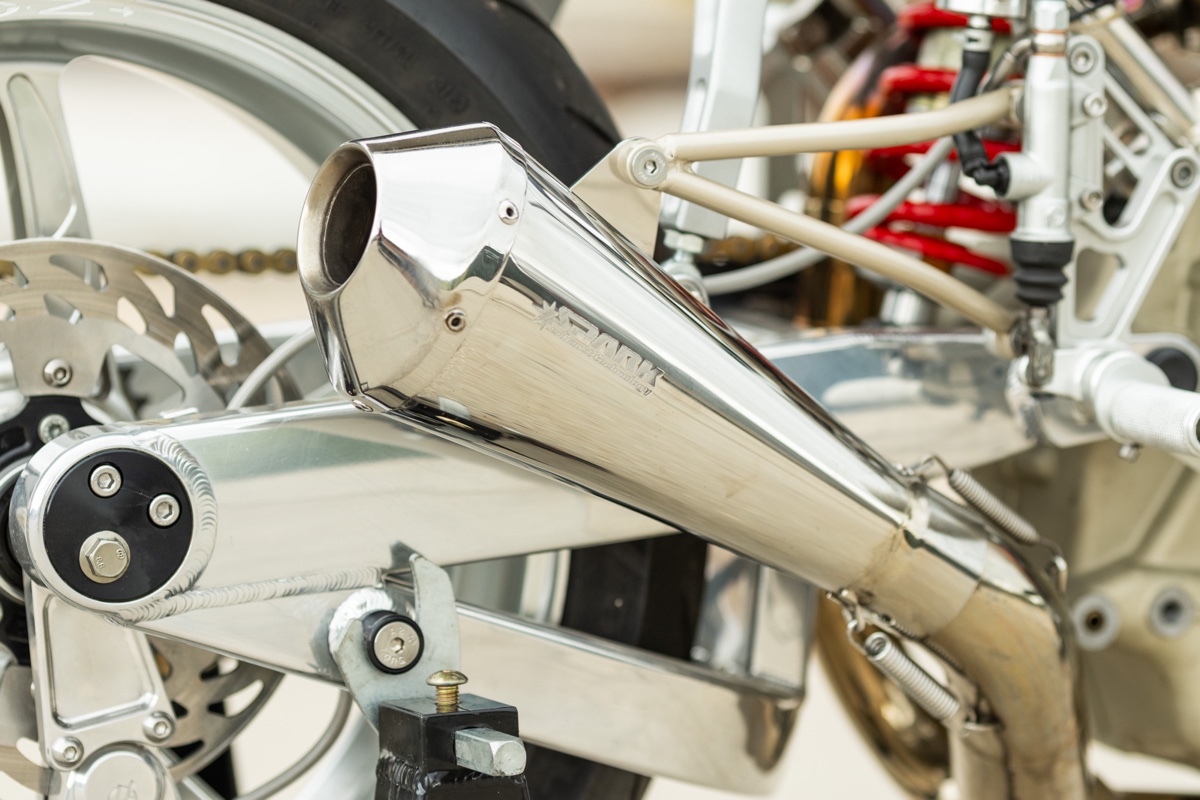
The exhaust is a 50 mm thin-wall polished stainless Sil-Motor two-into-one system with a Spark end can. The entire arrangement weighs around three kilograms and adds lightness and noise in roughly equal measure.
The Impossible Front End
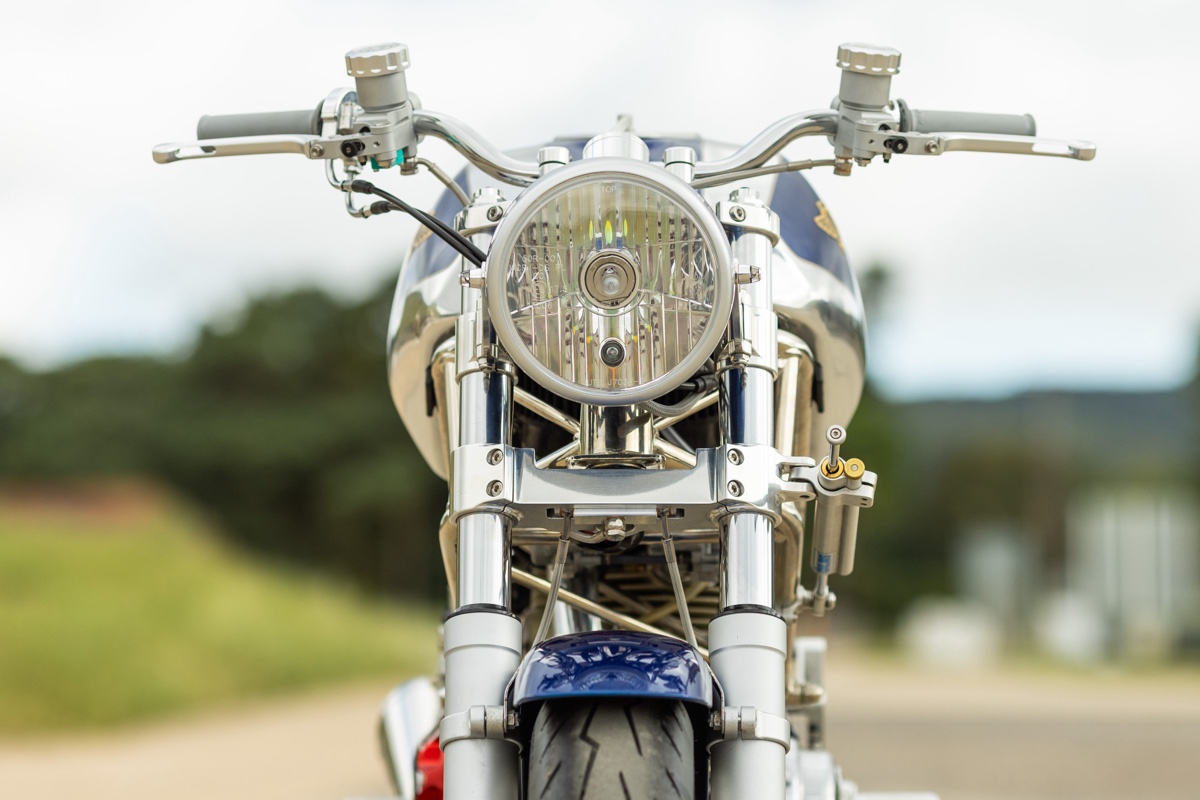
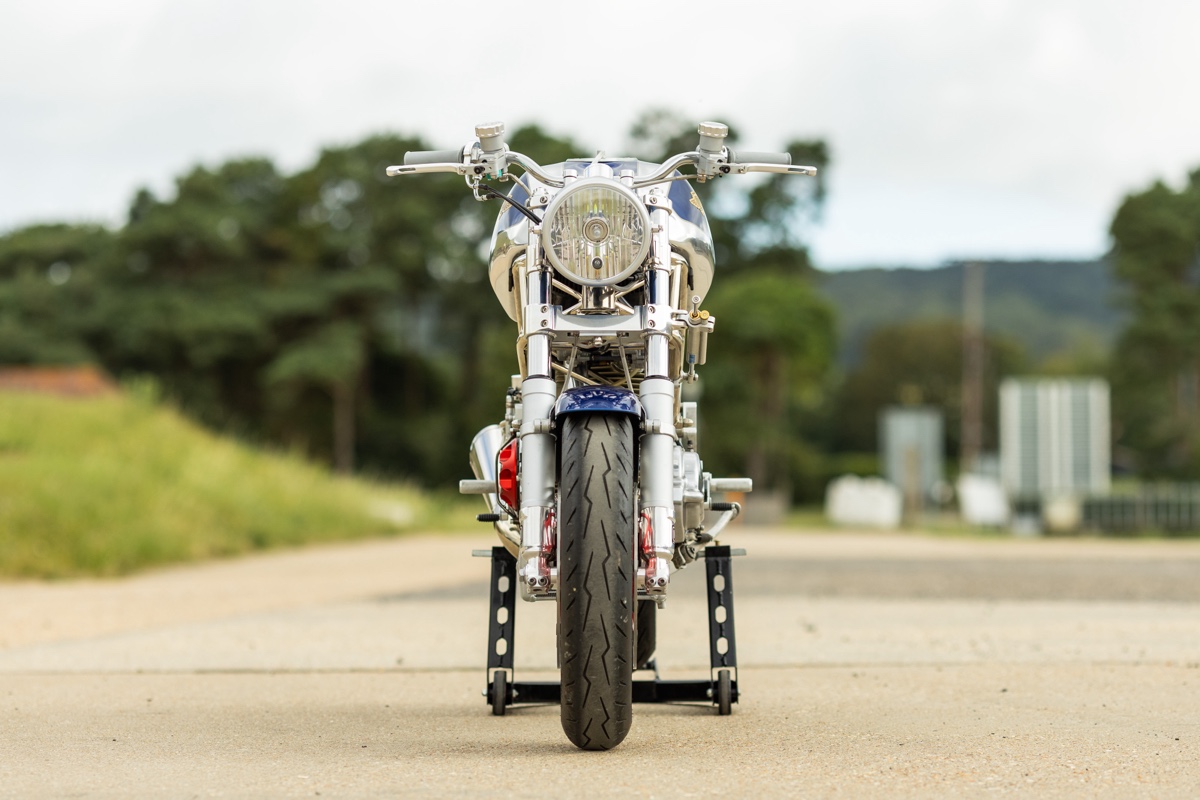
The front suspension was one of the most important parts of the build. By the late 1980s and early 1990s, performance motorcycles had largely moved towards upside-down forks. They eventually became the default choice for almost every modern custom build. I didn’t want them.
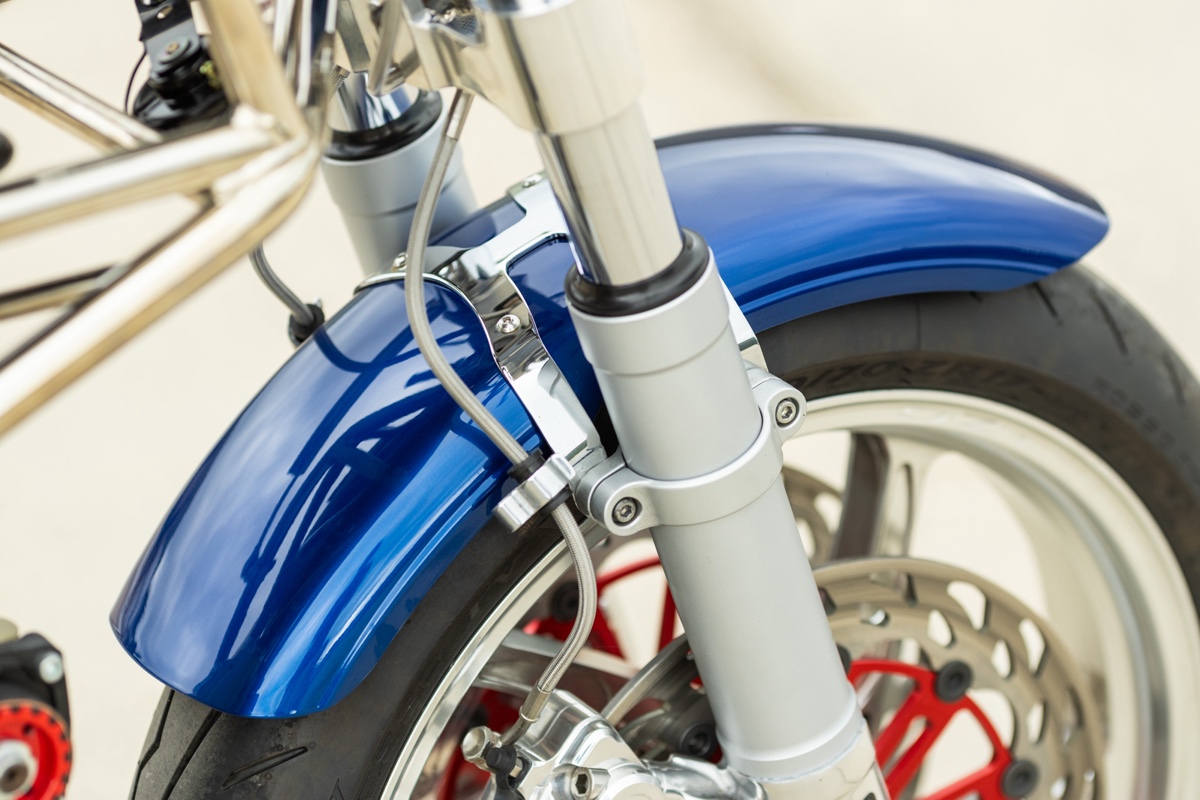
A conventional right-way-up fork better suited the expensive espresso machine aesthetic and retained the period roadster feel. An upside-down front end would have looked too modern and would have fought against the rest of the motorcycle. However, I was not willing to compromise braking performance; I wanted to upgrade the OEM axial Brembos and there was no way I was using shonky caliper brackets. I began looking for what appeared to be an impossible combination: a right-way-up fork with radial brake-caliper mounts.
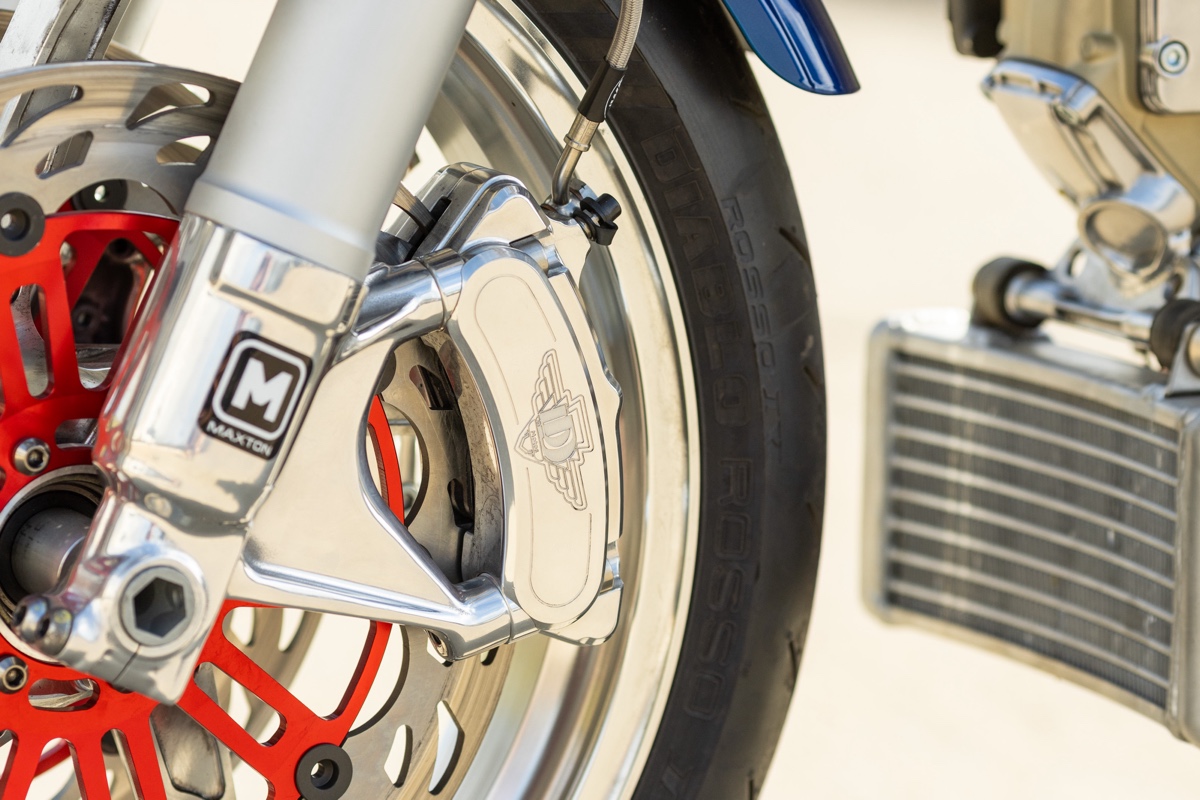
I found a set of eye-wateringly expensive carbon-tubed YSS forks in Japan that fit the bill, so kept searching. Eventually I discovered that Honda had briefly fitted the exact configuration I wanted to the CB1100RS. After about a year of saved eBay searches, I found a used pair.
Naturally, the stanchions were bent. I bought brand-new OEM stanchions, had them shortened by approximately one inch to match the Ducati’s required length, and commissioned Maxton to build a custom, fully adjustable cartridge system for them. The fork lowers were then finished half-polished and half ceramic-coated. The polished bottom of the forks to match the front calipers. It ultimately cost about the same as buying the YSS forks in the first place. Naturally.
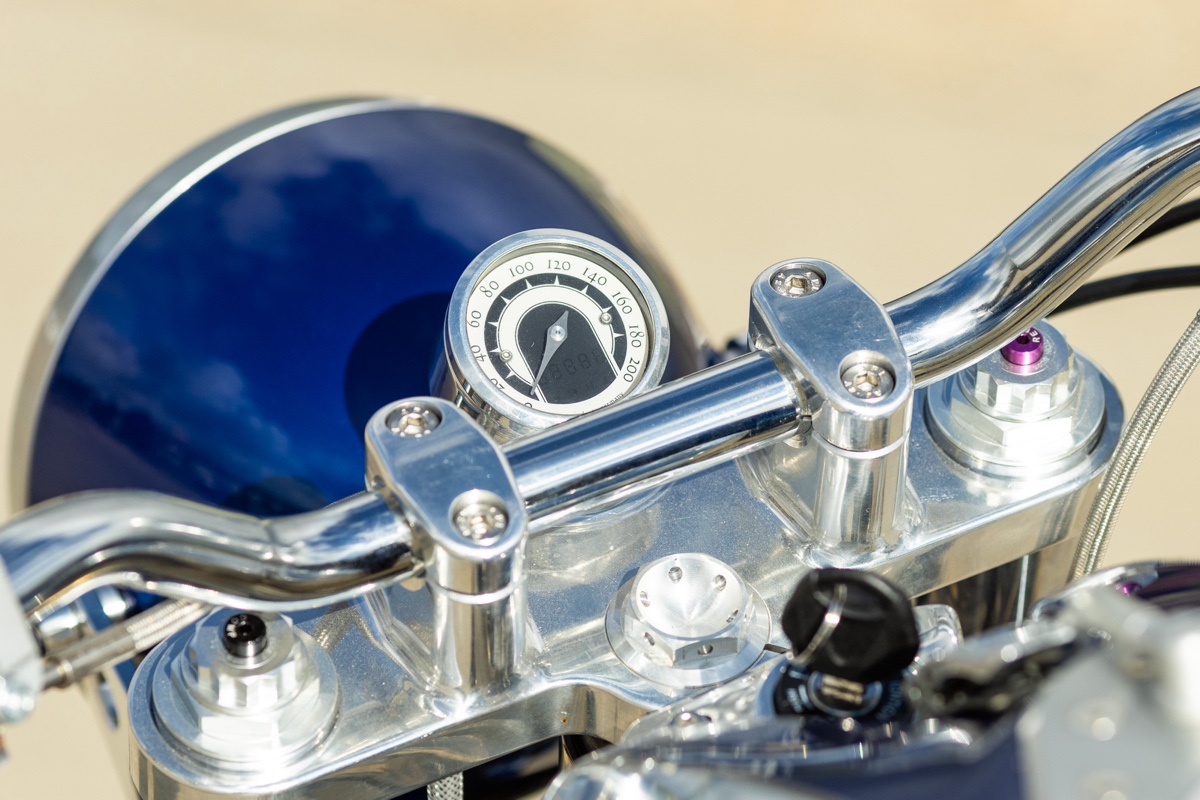
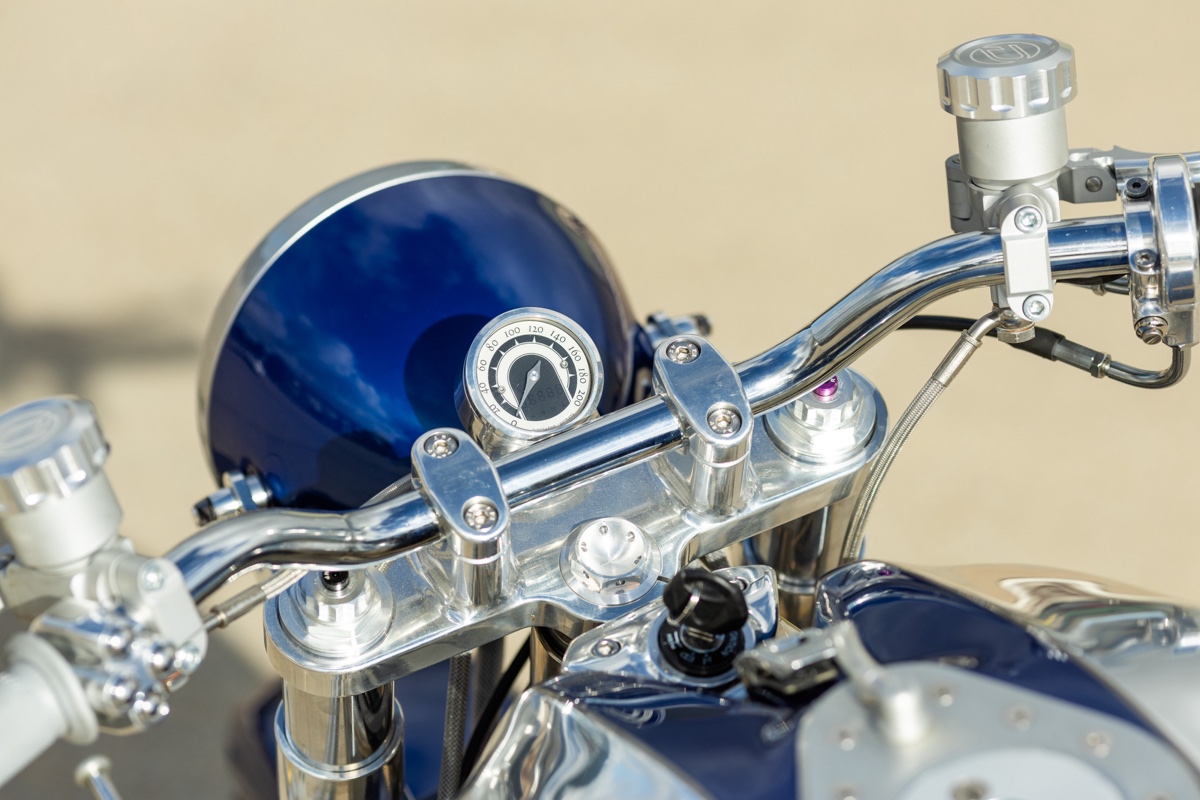
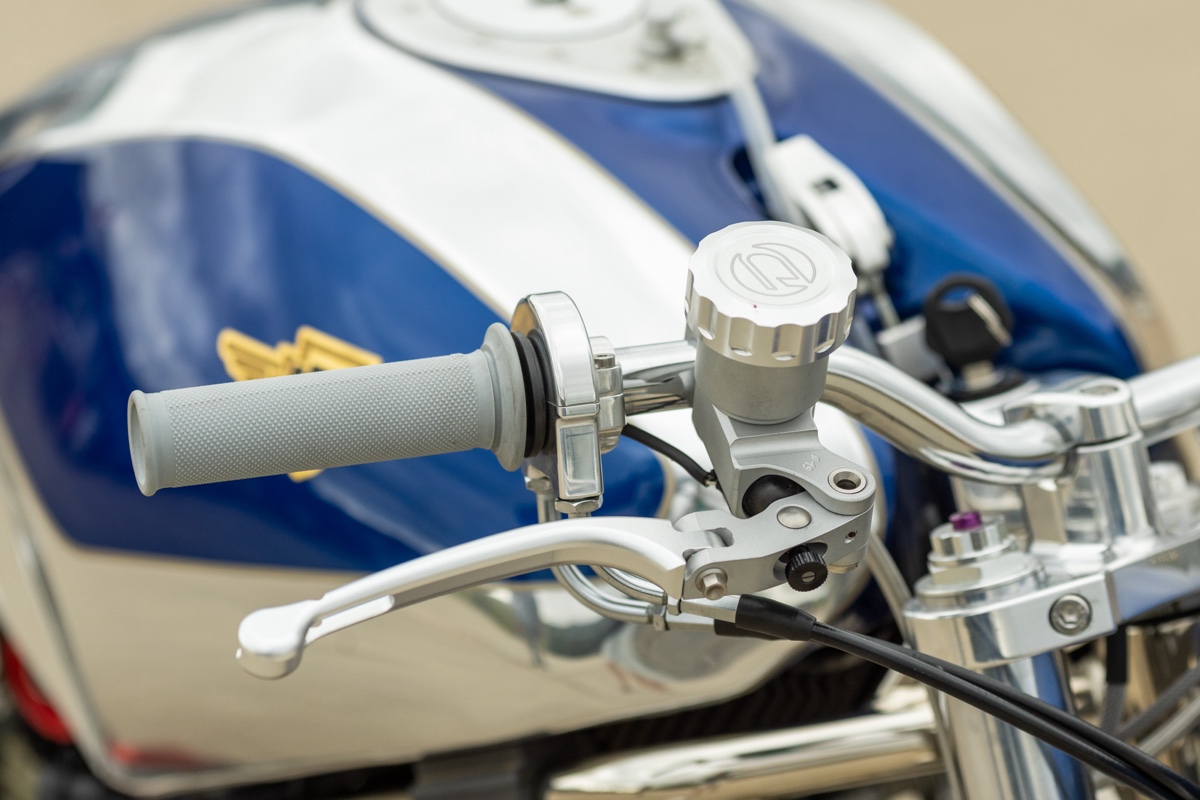
The Fastec machined top yoke is a work of art, cut from solid billet with the handlebar risers and Motogadget speedometer housing integrated into it. The lower yoke incorporates the steering-damper mount and hides the front brake-line splitter. From the rider’s seat, there is almost no visible wiring. The cockpit is simple, clean, and resolved. You could not make it any cleaner or better.
Braking by DDM
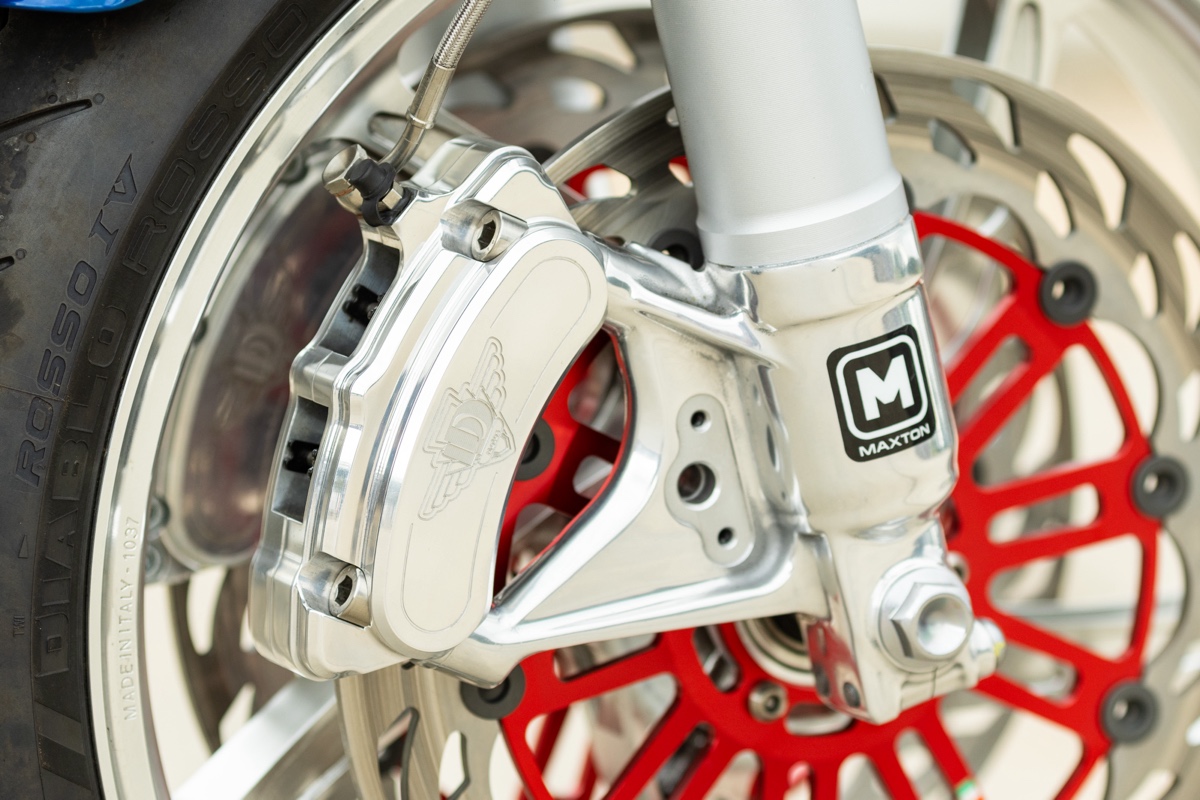
The original Brembo system is good. It provides progressive feel, excellent modulation, and suits the character of a standard M900. Talula is not a standard M900. The front brakes are 4-piston radial billet calipers custom made for me by Harrison. Their construction is more rigid than the original Brembos, and the unusual one-pad-per-piston arrangement delivers a firmer, sharper, and much more immediate response. They are also noticeably lighter than the original calipers, reducing unsprung mass as well as improving braking performance.
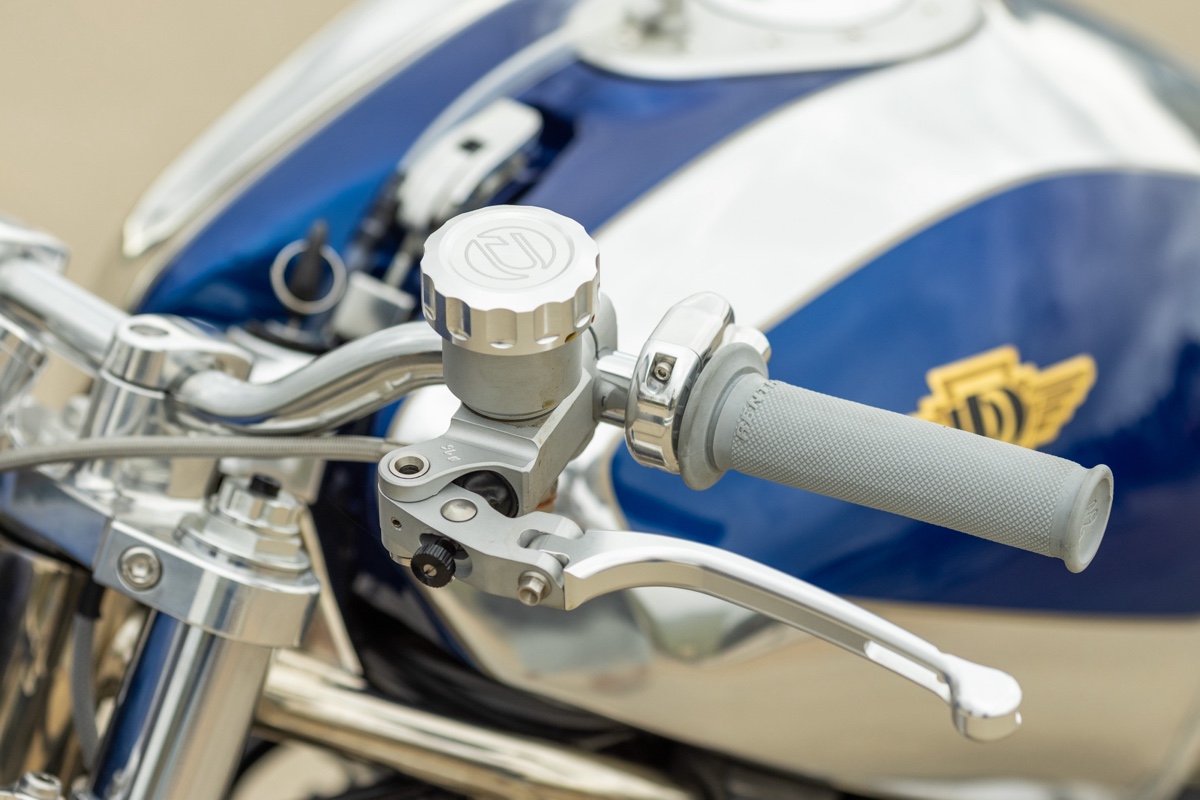
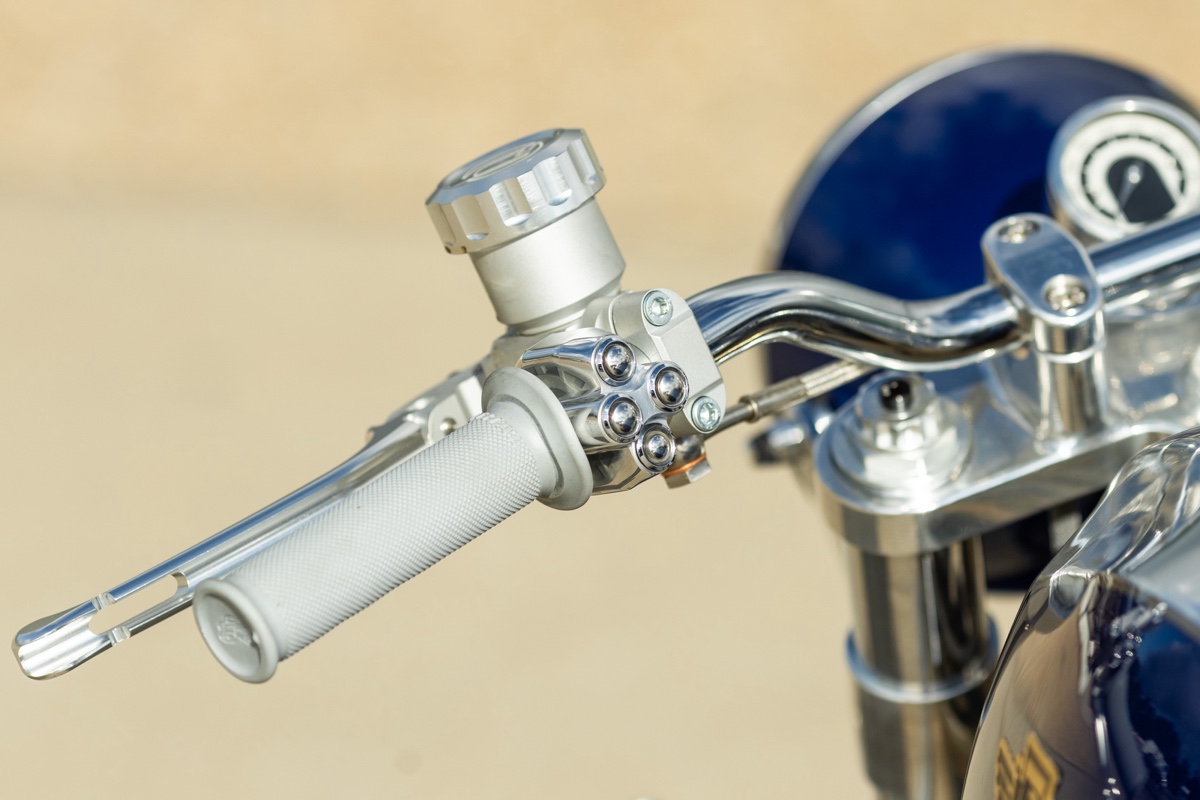
The most important difference is the feel. One-finger braking bleeds off speed terrifyingly quickly. Discacciati discs are fitted front and rear. I have used Discacciati components for years because they work extremely well and, equally importantly, look fantastic. Both master cylinders are Discacciati radial items. I dismantled them and had them ceramic coated in the same satin silver used elsewhere on the bike. Uniform colours matter.
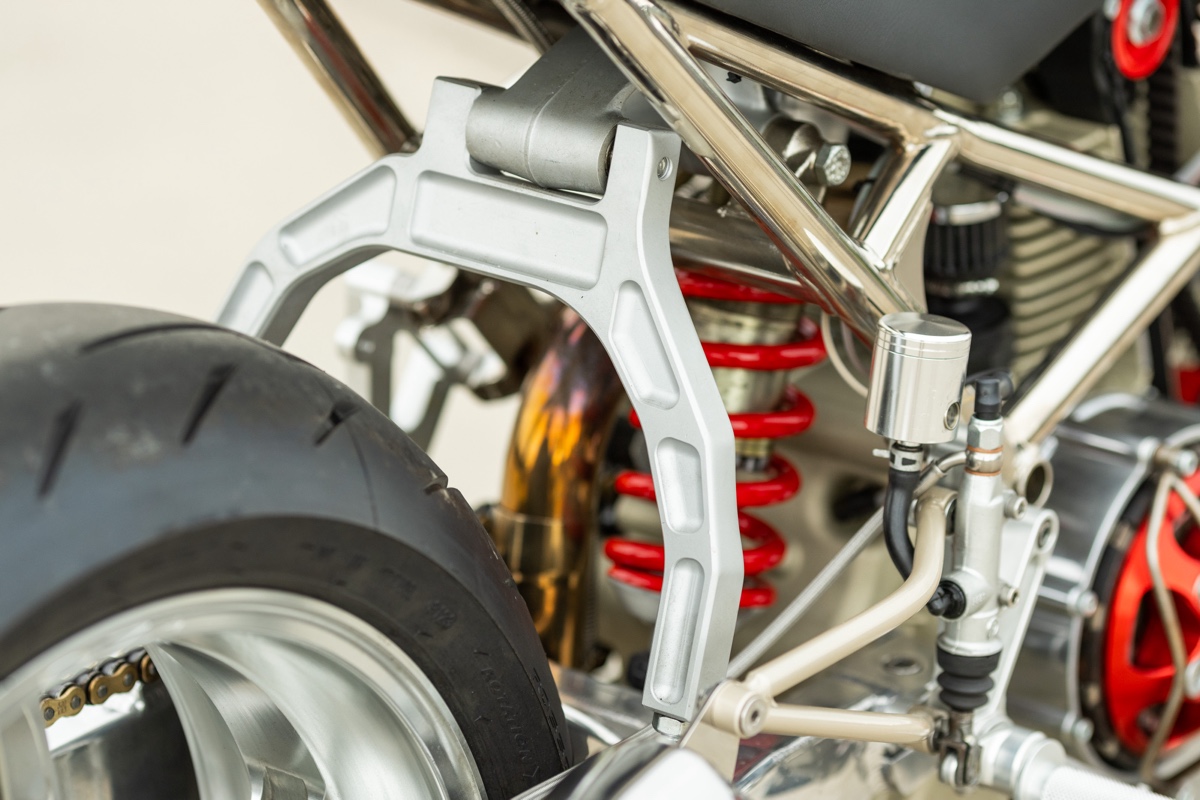
The rear brake uses a custom Fastec billet hanging bracket and a tiny two-piston Harrison caliper. My favourite parts on the completed motorcycle are still the front calipers.
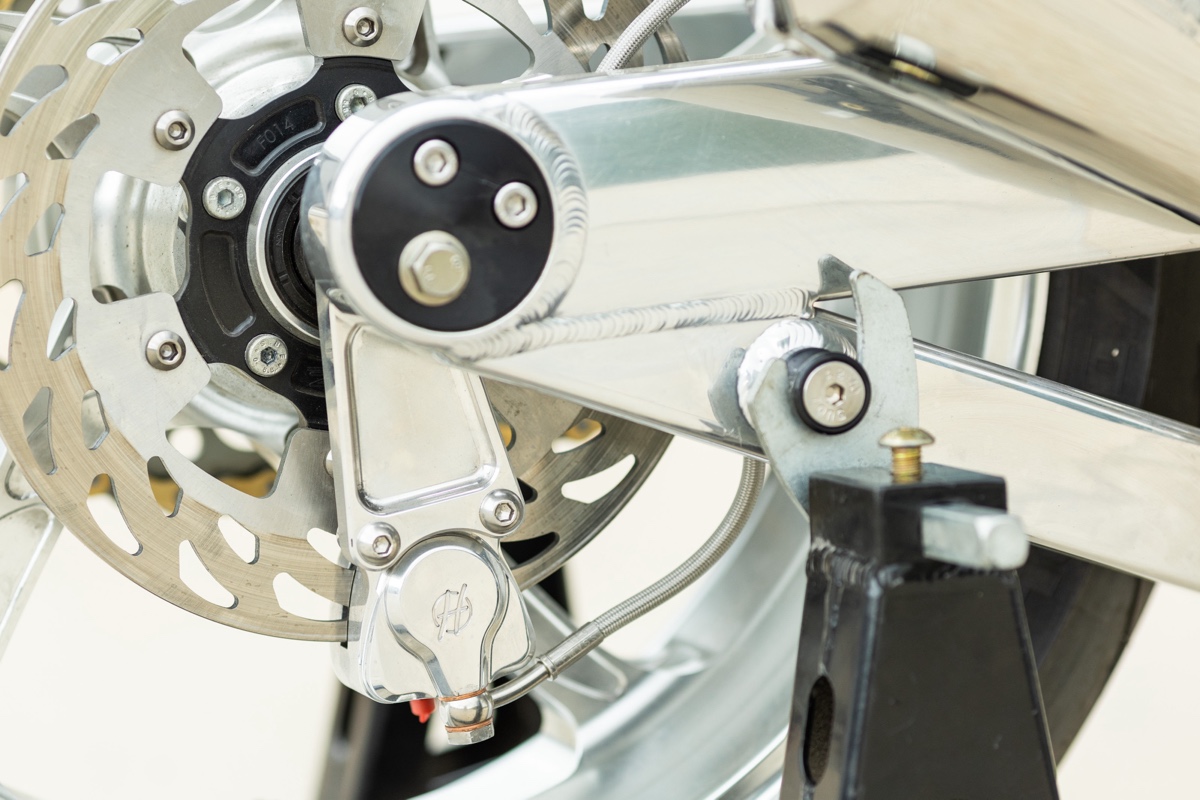
They are great slabs of polished aluminium, technically better than the originals, and they have my logo machined into them. They summarise the entire project rather well.
Three Kilograms That Changed Everything
The standard three-spoke Brembo wheels weigh about 11 kg as a pair. The forged aluminium OZ Piega wheels weigh about 8 kg, saving 3 kg of rotating and unsprung mass. The choice was straightforward, even if finding a silver set took a long time.
Kineo wire wheels might have looked more classical, but they were considerably heavier. Rotobox carbon wheels would have saved another kilogram, but there is no carbon anywhere else on Talula. Introducing it for that final saving would have disrupted the language of the build. The OZ wheels were the right answer.
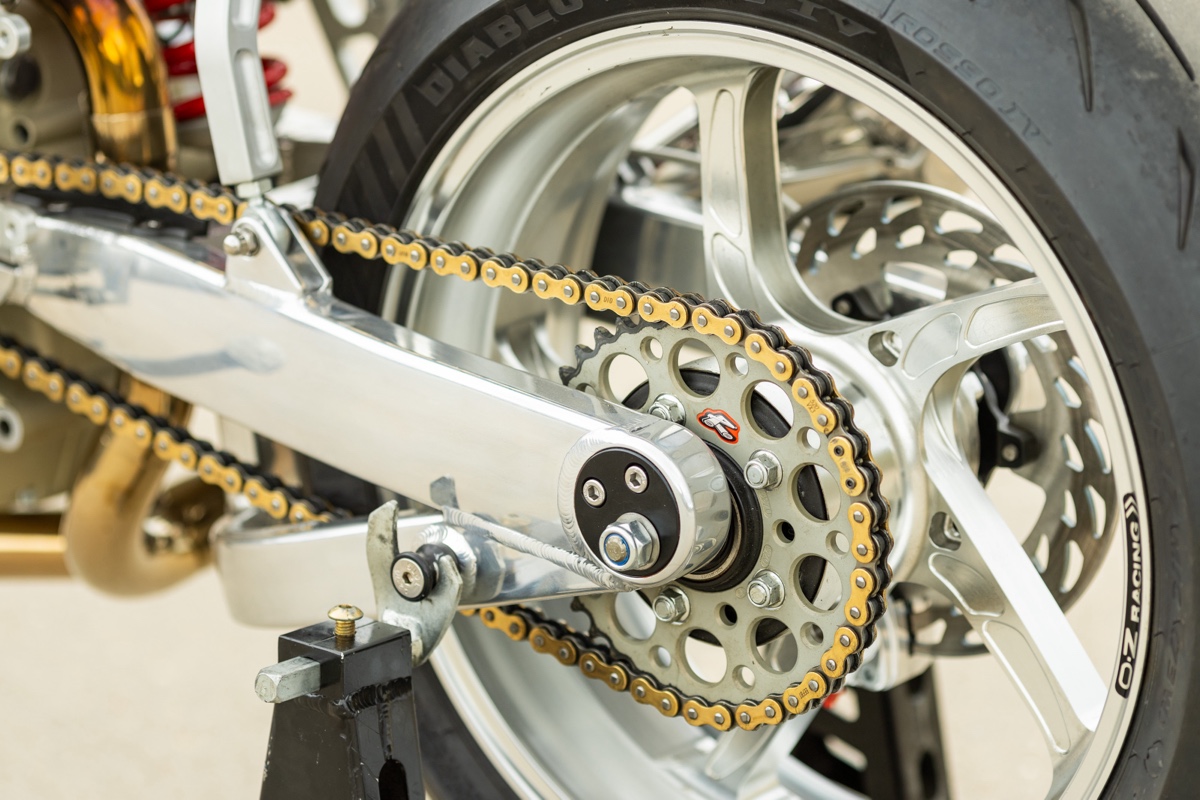
Removing three kilograms from the wheels makes an extraordinary difference. Everything becomes easier. The steering is lighter, the suspension responds more freely, and the whole motorcycle changes direction almost telepathically.
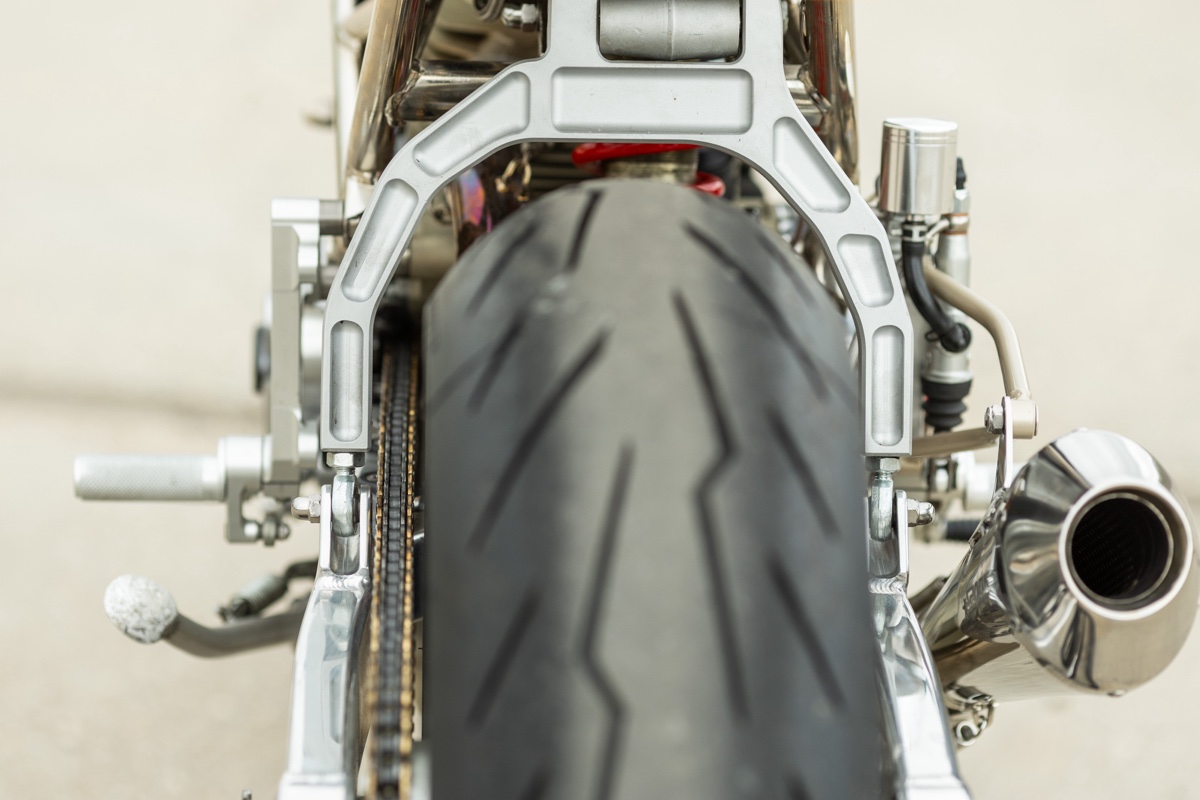
The wheels wear Pirelli Diablo Rosso IV tyres in 120/70 R17 and 180/55 R17 sizes. There was only one tyre choice. They look fantastic, handle fantastically, and are Italian. The rear tyre is wider than the seat.
Slimming the Monster
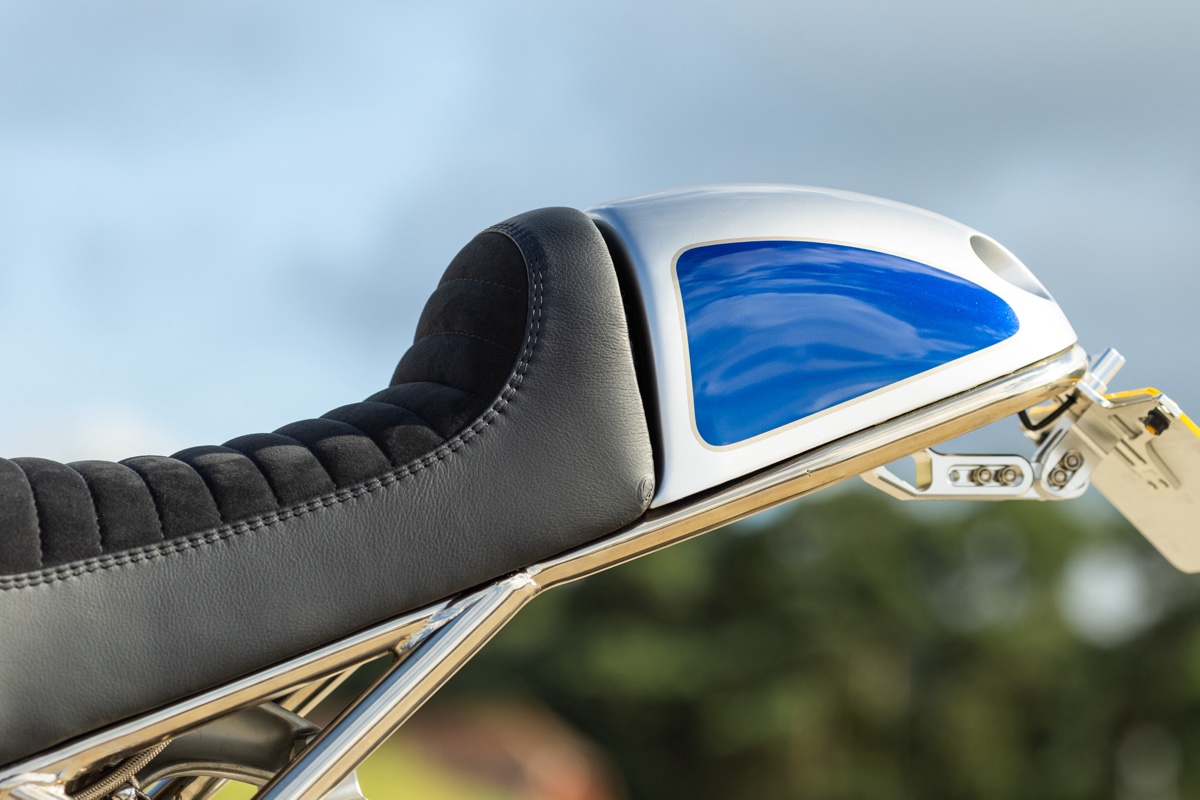
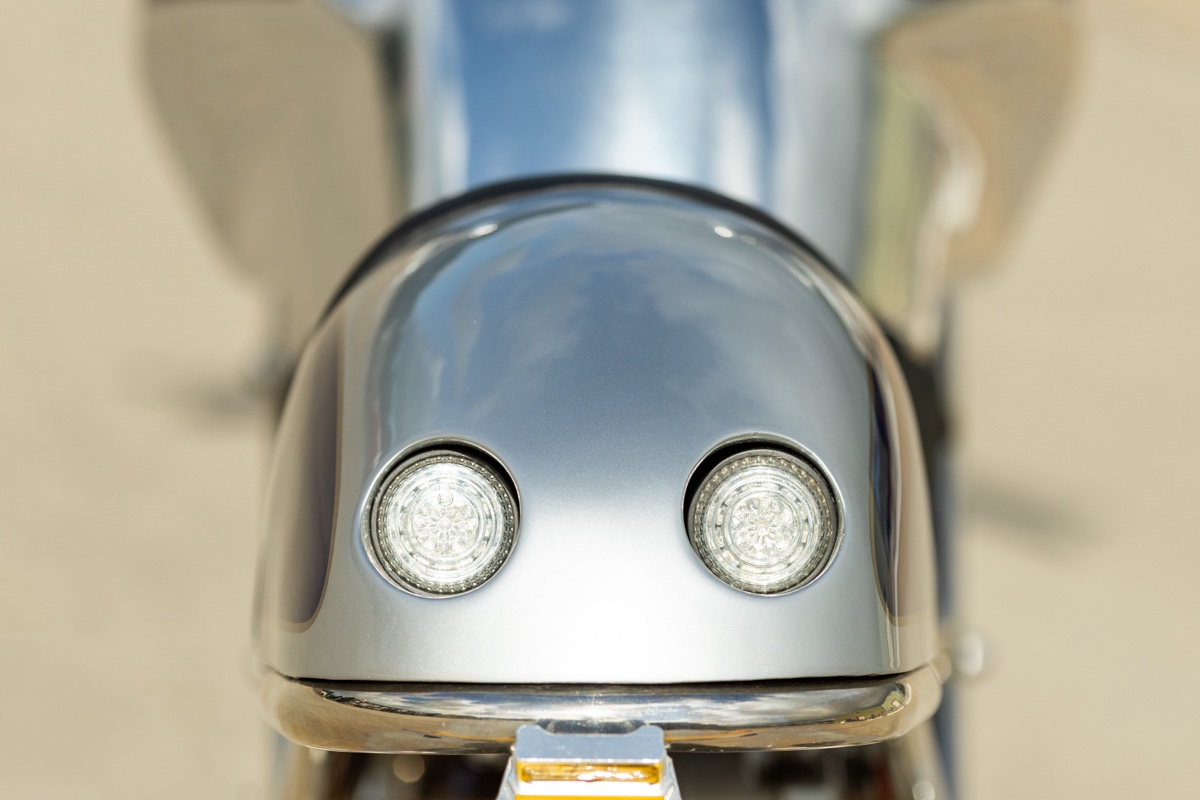
The rear of the frame was chopped and looped, and the fibreglass tail hump was made to match the width of the frame.
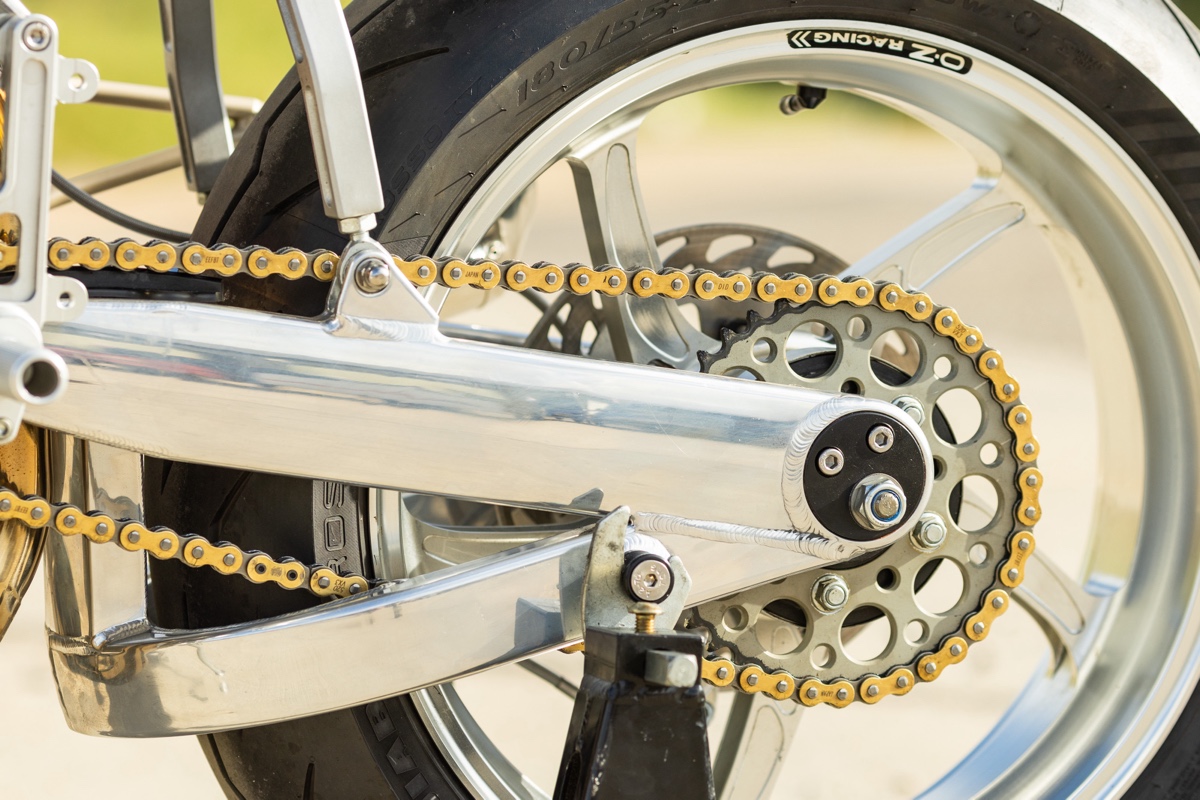
A standard Monster broadens towards the rear to accommodate a passenger. I don’t carry passengers, so there was no reason to preserve that visual bulk. The slimmed tail massively cleans up the motorcycle. With no rear mudguard, the polished Metmachex swingarm and wide rear wheel remain fully exposed.
The Metmachex arm weighs about the same as the original aluminium Ducati swingarm. It wasn’t chosen as a weight-saving exercise; I chose it because it looks so good and has a cleaner, simpler chain-adjustment mechanism with fewer moving parts.
At the rear, the bike retains the Öhlins shock that came with it in 1999. It was fully serviced, its spring painted red, and its reservoir hose extended so the reservoir could be hidden inside the tail. A period-correct 1990s Rizoma aluminium suspension hoop provides a slight increase in ride height.
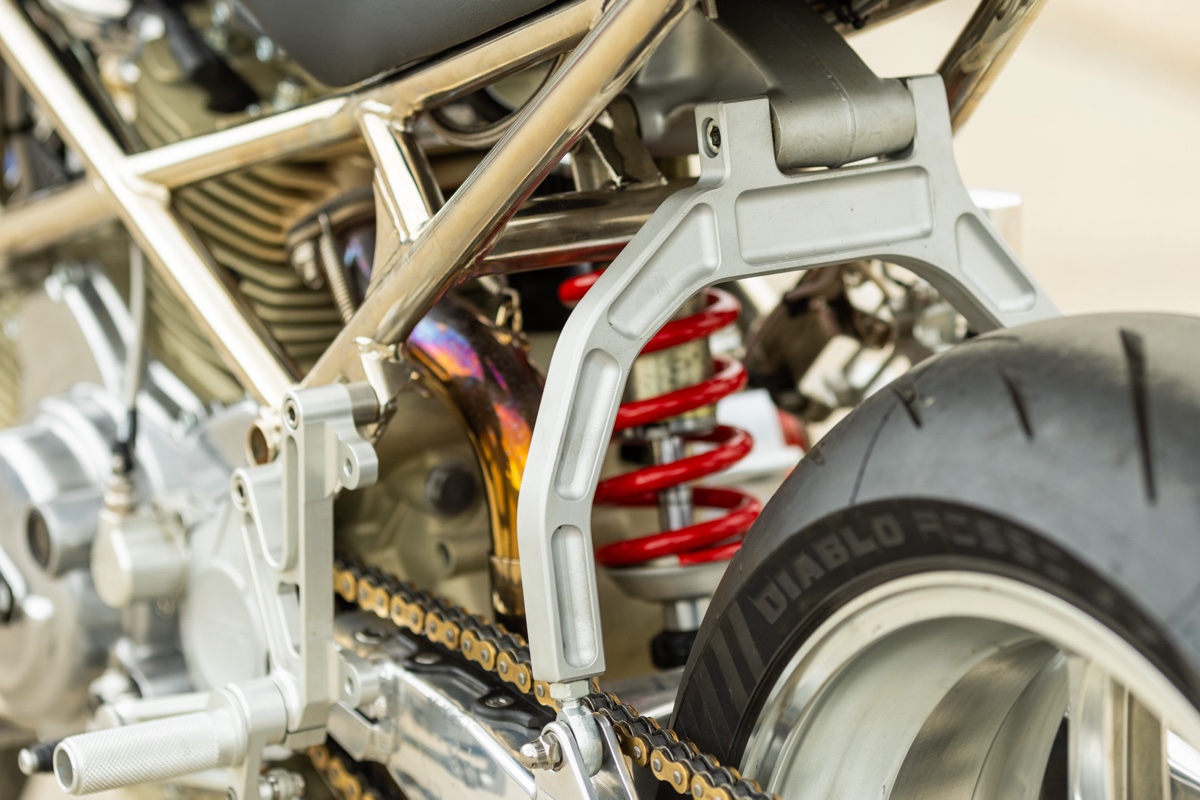
Tom at Hurley Custom Seats was originally instructed to make the seat a boring, plain black leather affair. I was still concerned about the Christmas-tree problem. Tom persuaded me to add restrained tuck-and-roll stitching and use a combination of leather and Alcantara. He was right. A totally plain seat would have looked out of place against the rest of the motorcycle.
The front mudguard comes from the CB1100EX family that provided the basis for the forks.
Old Ducati Noise, Modern Ducati Electrics
Old Ducatis are renowned for diabolical electrical systems. Even now, under VW ownership, the reputation lingers. Mine had always been reliable, but the loom itself was degraded, untidy, rubbish, and 27 years old. Replacing it was a no-brainer.
Dan and Katy at Mono Cycles built an entirely new loom from scratch. By design the wiring runs internally through the handlebars and top yoke, then follows the inside of the frame. Everything remotely extraneous was removed. There is no clutch switch, sidestand switch, or other unnecessary complication.
The new electrical system includes modern plasma coils, an Ignitech programmable ignition with throttle-position input from the FCRs, a Joost B-Box, a lightweight Antigravity battery, and an upgraded MOSFET regulator-rectifier. All the electrical components are consolidated beneath the fuel tank in a custom-made battery box.
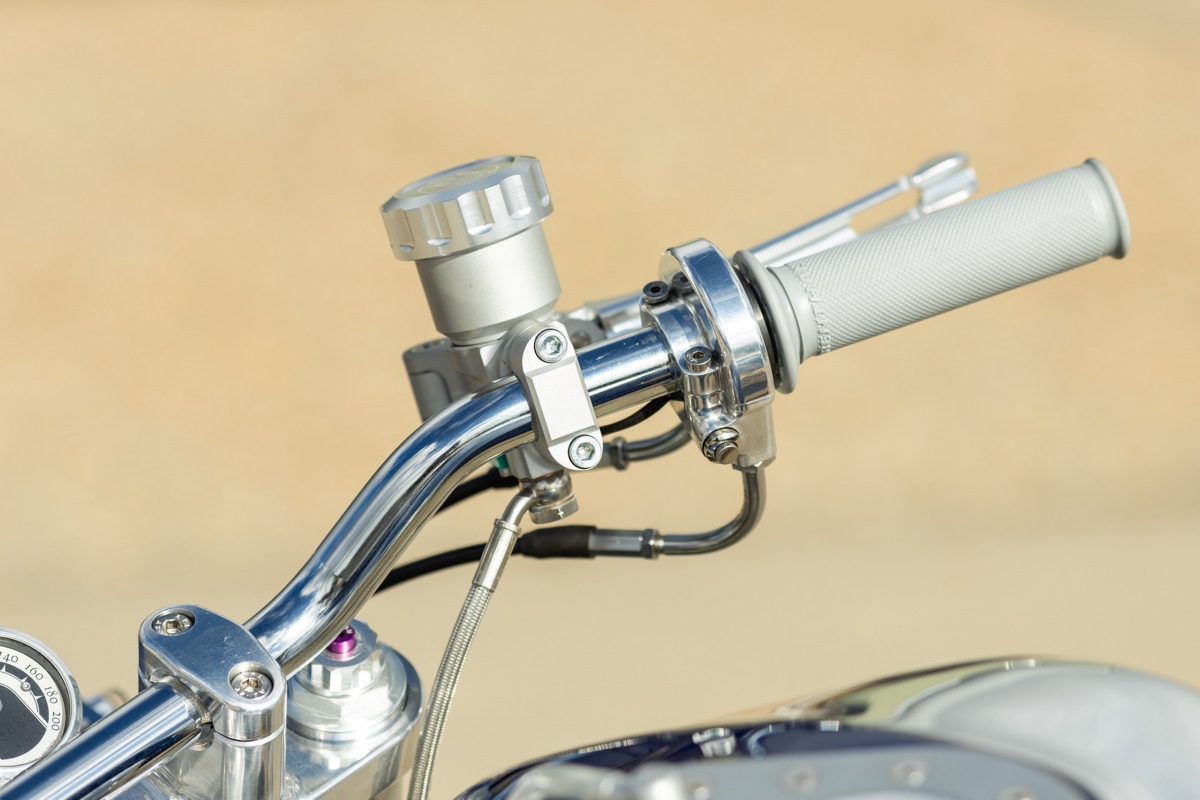
The starter button is integrated into the billet throttle housing. A discreet four-button switch on the left controls everything else. Dan also had the excellent idea of illuminating the horn button in orange to serve as the low-fuel warning light.
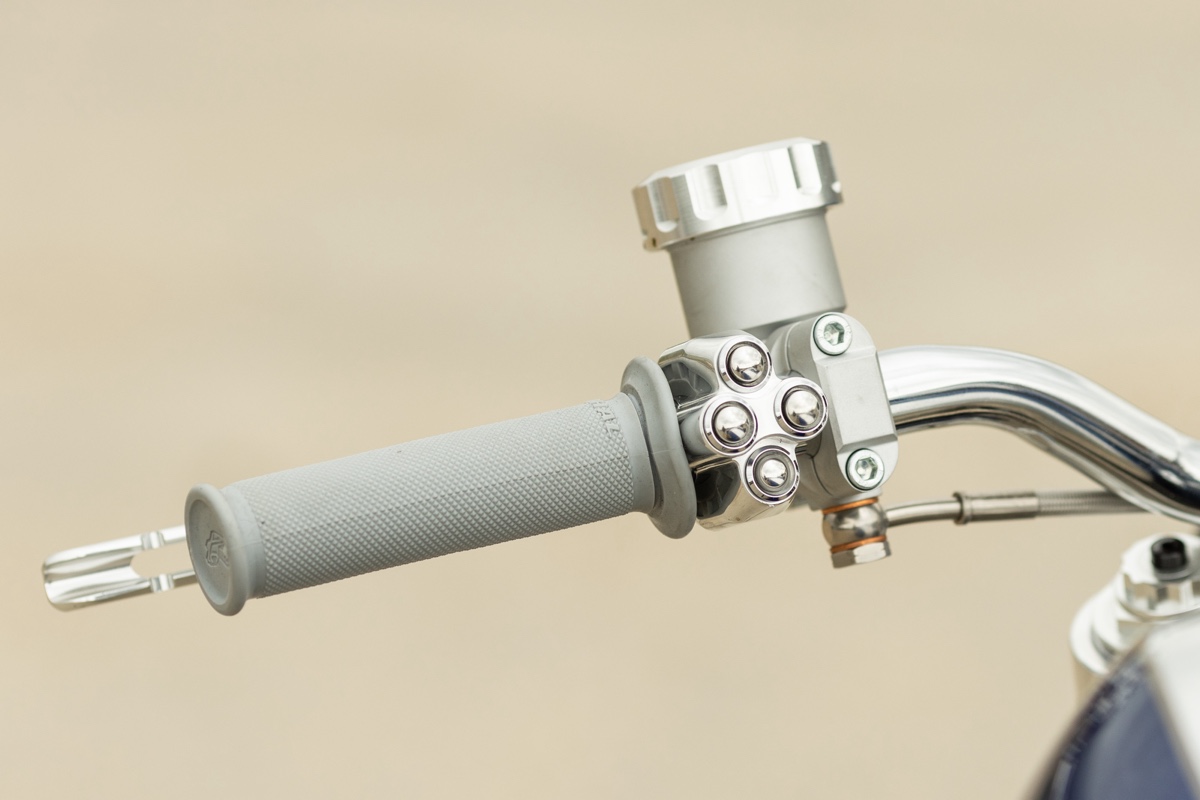
The speedometer is a tiny Motogadget unit using a GPS sensor. The original mechanical speedometer cable could be removed, further reducing clutter and wiring. With the new electrics, the bike starts on a quarter turn.
Comfort for the Older Hooligan
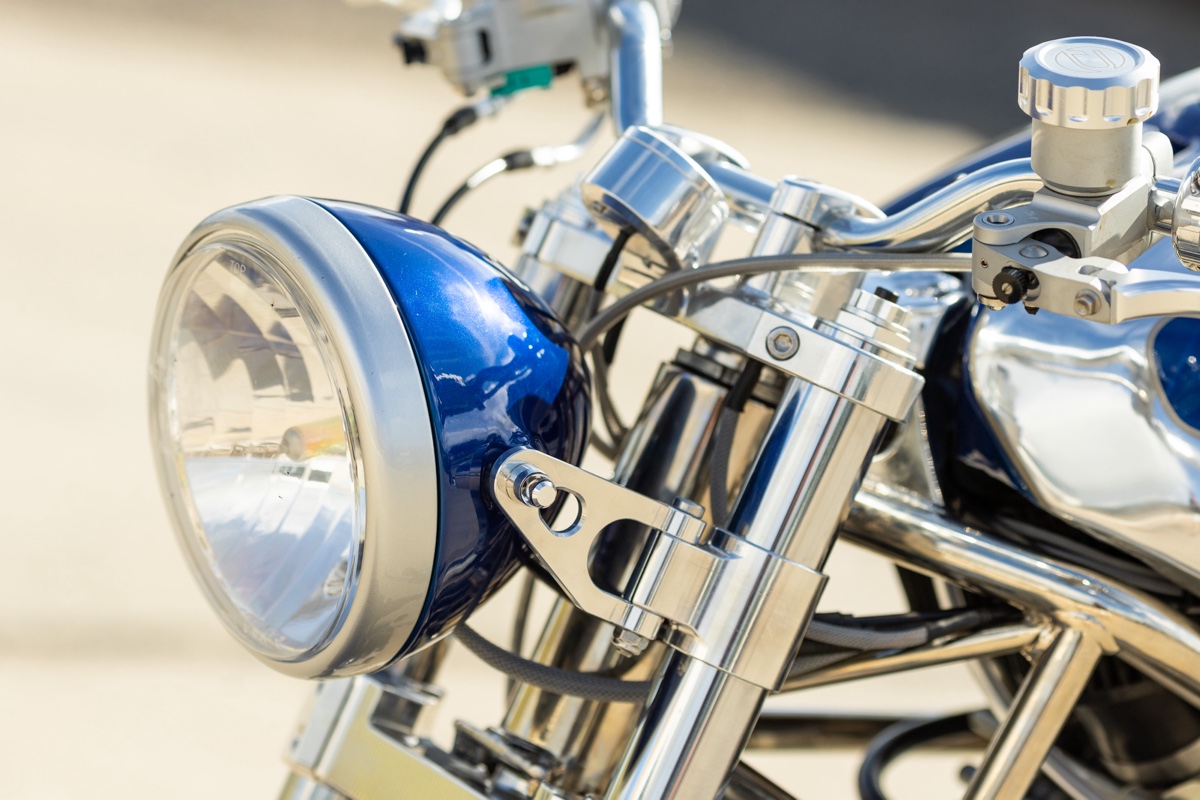
The standard Monster riding position is fairly relaxed, as you would expect from a roadster. Mine had always used clip-ons mounted beneath the top yoke and S&P rearsets. It was aggressive and enormous fun when I was younger. I covered long distances and crossed several countries like that, but that was all done by a younger man.
For this build I returned to handlebars mounted on risers. They are still lower and more aggressive than standard, but the 100 mm rise and increased width make the motorcycle massively more comfortable. The rearsets remain. Talula still looks purposeful, but no longer requires a physio appointment after every ride.
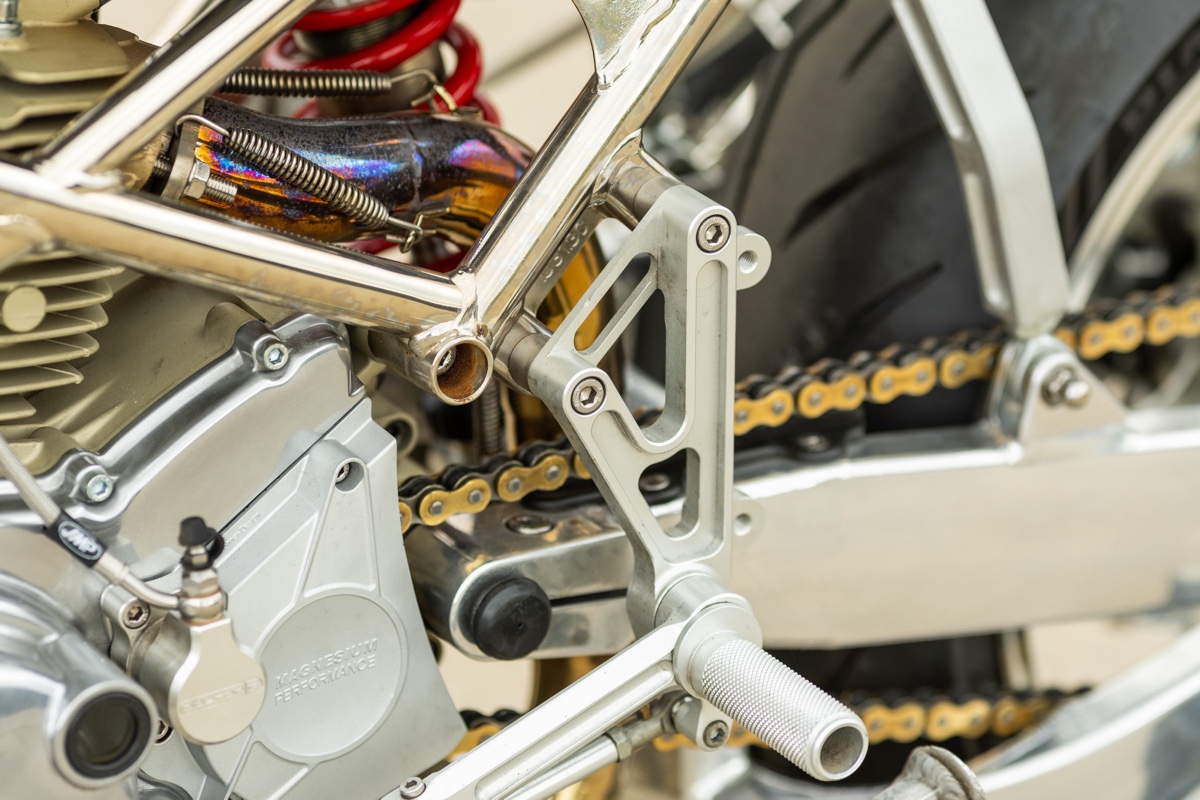
The old Ducati clutch was another ergonomic problem. Anyone who has spent years riding these bikes will understand what they can do to your left wrist. A 16 mm Discacciati radial clutch master and larger Oberon slave cylinder substantially reduce the lever effort.
The dry clutch is completely exposed, displaying the Oberon pressure plate and springs. A small stainless-steel bar offers limited protection for your toes, although the arrangement remains emphatically unfriendly towards loose shoelaces.
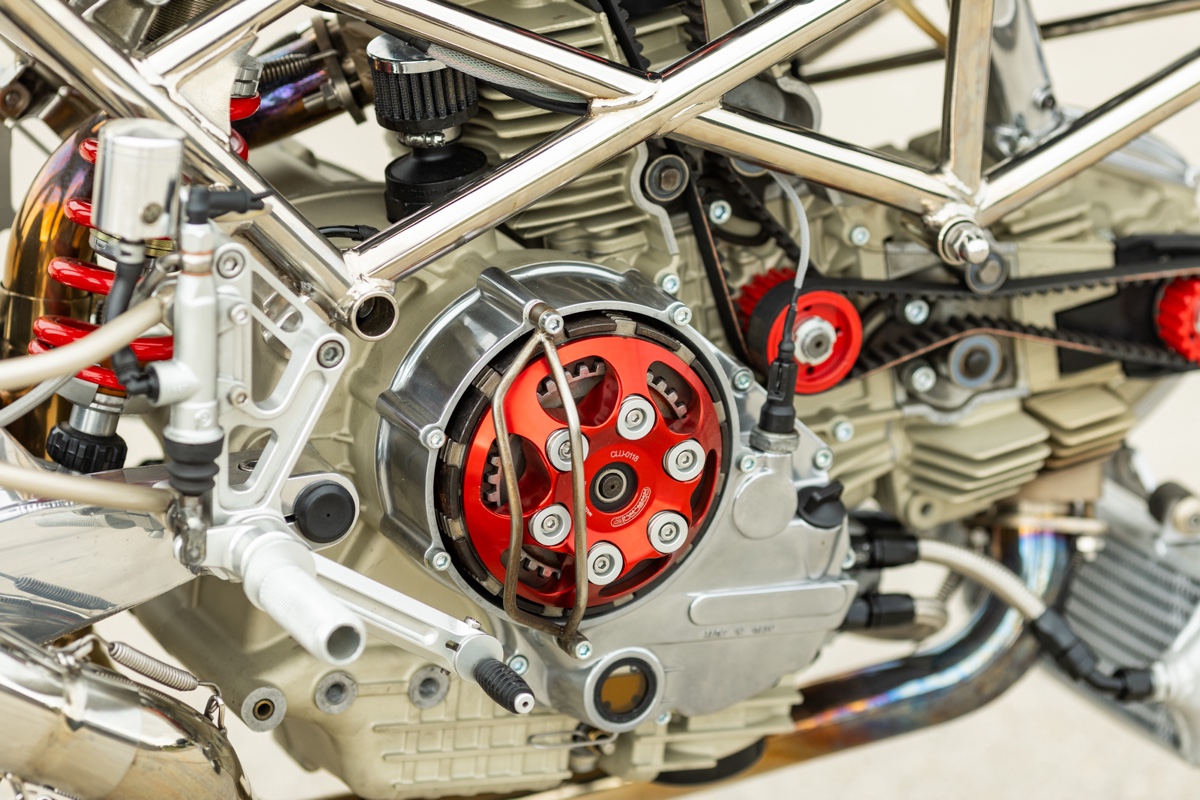
I deliberately kept the clutch loud. The dry-clutch rattle is a Marmite subject, but I consider it an iconic part of an old Ducati’s character. Combined with the FCR slide clatter and the unbaffled exhaust, it produces a wonderful mechanical cacophony. Quiet was never in the brief.
Removing the Clutter
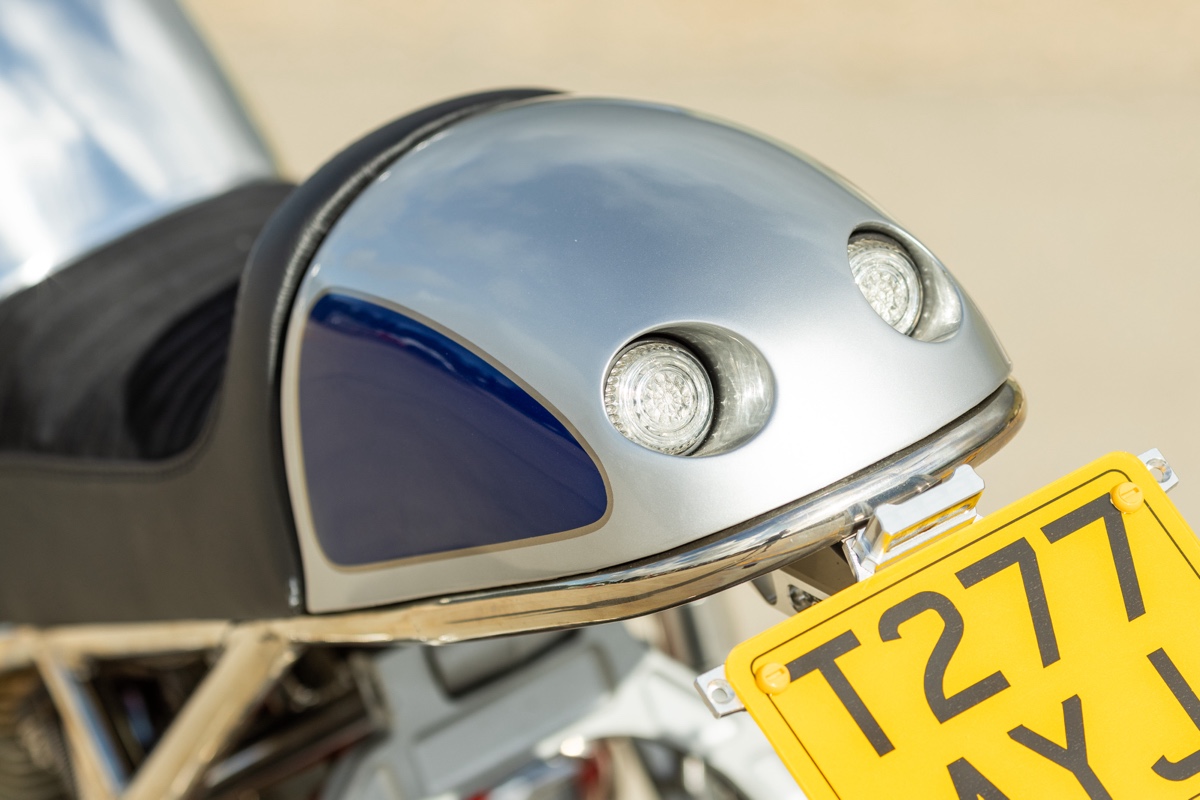
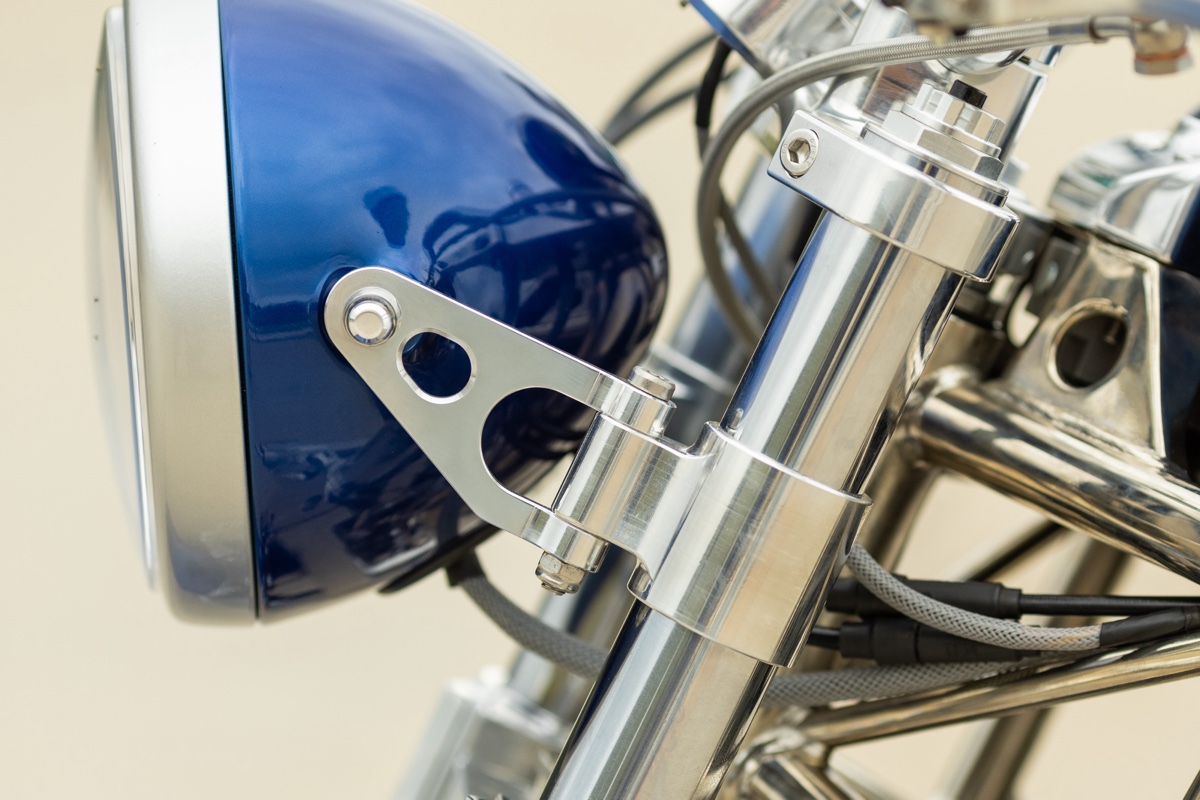
The rear indicators are frenched into the tail hump and operate in conjunction with the brake lights. At the front, tiny Motogadget indicators double as the headlight mounting bolts. The headlight itself is a Triumph unit, the same egg-cup-shaped light I used on all the W650 builds. It has a classical shape that seems to work on almost any motorcycle.
The number plate is mounted on a billet bracket tucked beneath the tail hump. The motorcycle carries virtually no external branding. This was deliberate. Supplier logos and stickers would have quickly turned it into the Christmas tree I had spent the entire build trying to avoid. The only visible branding is the DDM logo on the tank and on the two front brake calipers, with a little leeway for Maxton because fancy. That is enough.
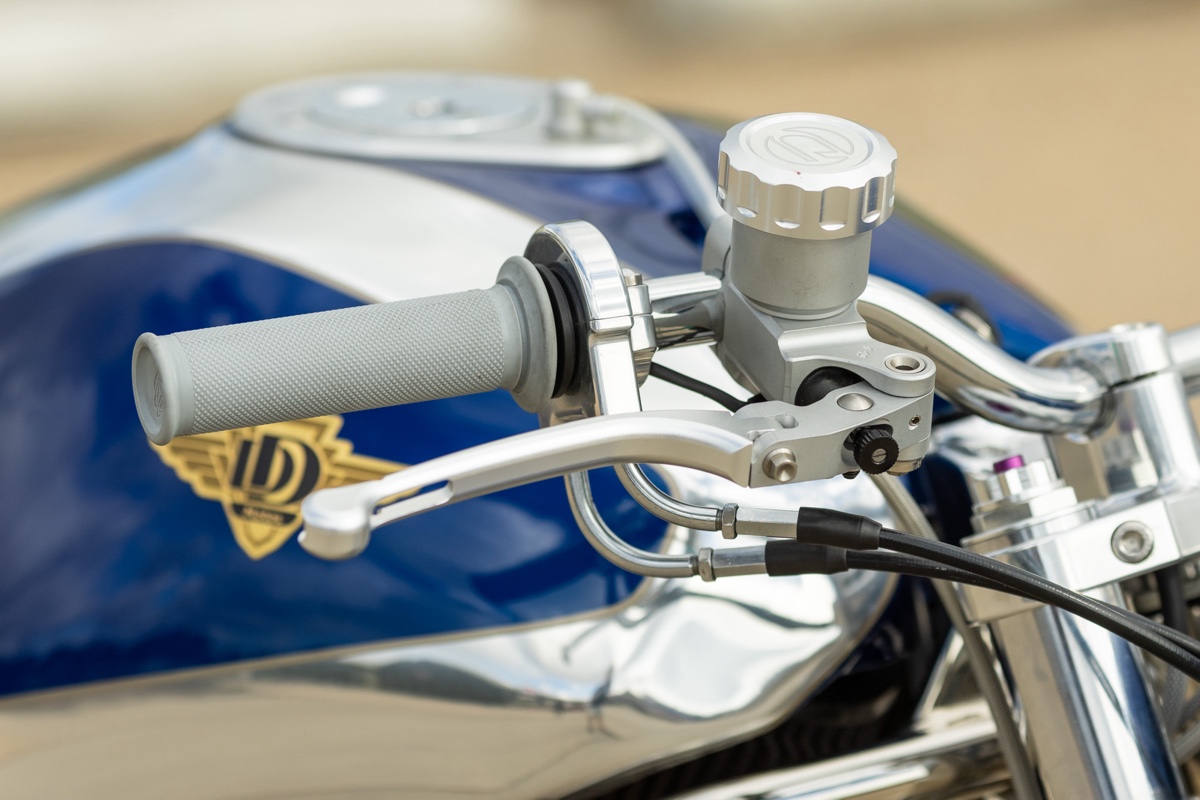
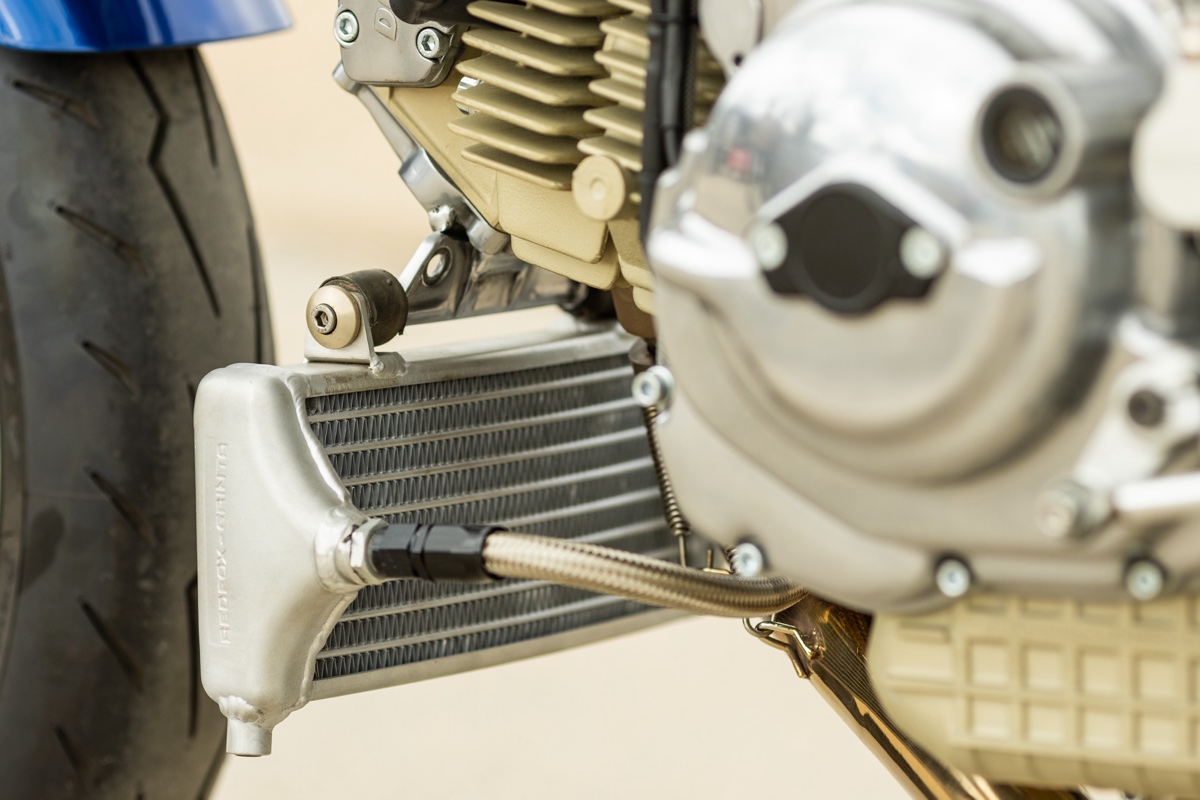
All brake and clutch lines are silver braided stainless steel. The colour matches the rest of the motorcycle while providing the required performance. Cooling is handled by a substantially enlarged RedFox Grinta racing oil cooler. It is mounted low on the horizontal cylinder head, shortening the hose runs, reducing visual clutter and exposing more of the engine. It should also prove useful in Dubai.
The First Ride
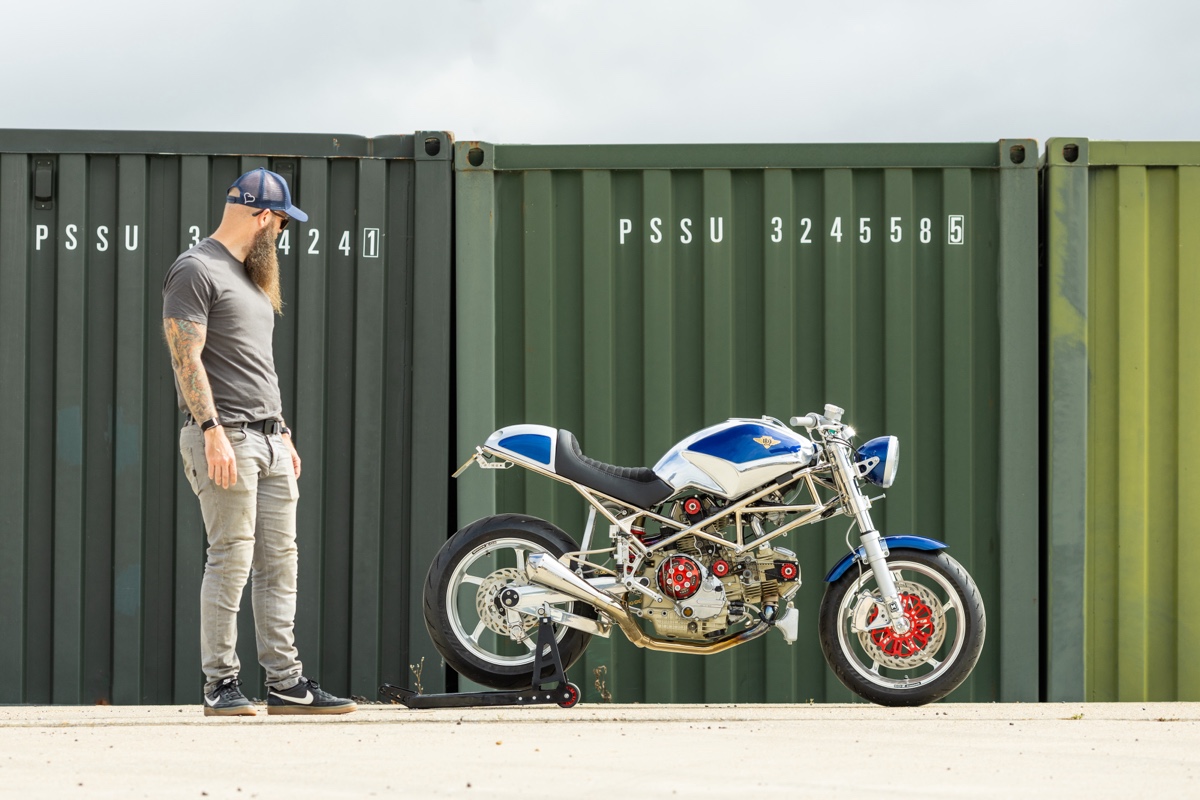
I was nervous the first time I rode the finished bike. It had swallowed an obscene amount of money, and the only major original pieces left were the frame and the core of the engine. Years of careful part selection still didn’t guarantee the whole thing would work as a coherent motorcycle.
It was sublime. Everything worked. There’s a lot to be said for planning a build properly, even when it takes years. Talula is fast, light and ridiculously easy to ride. Wet weight is somewhere around 175 kg.
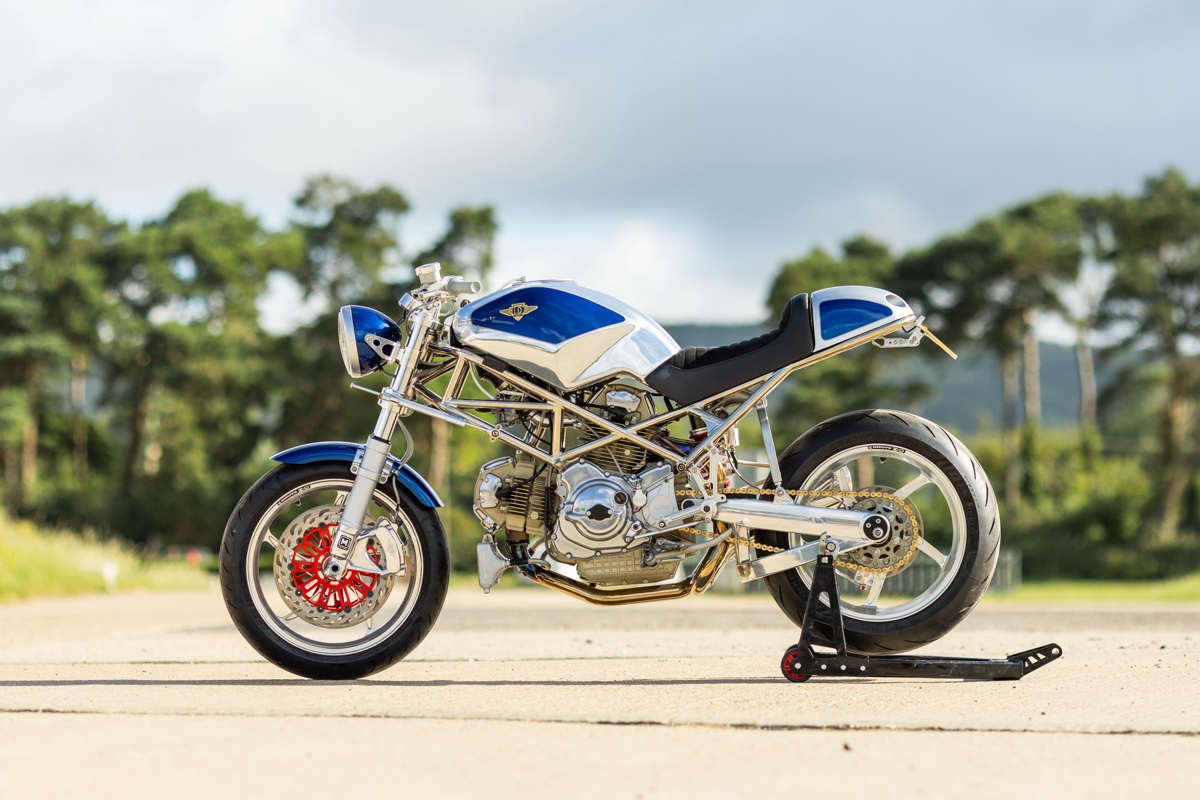
Precise, nimble, holds the road properly, and snicks through the gears without drama. The standard gearing that can feel a bit long on a normal M900 is now perfect on a lighter, healthier bike with more urgency. Ride the torque or short-shift as you like.
On the lumpy, broken roads around Chichester, the Maxton front end and rebuilt Öhlins simply ate everything. The brakes are effortless, but a lot of the time the engine does the work. You can roll on and off the throttle in fourth or fifth through the bends and just use the engine braking and the broad torque curve instead of constantly chasing gears. It’s a joy. Talula may be polished, colourful, and a bit bling, but she’s no show queen. She was built to be ridden.
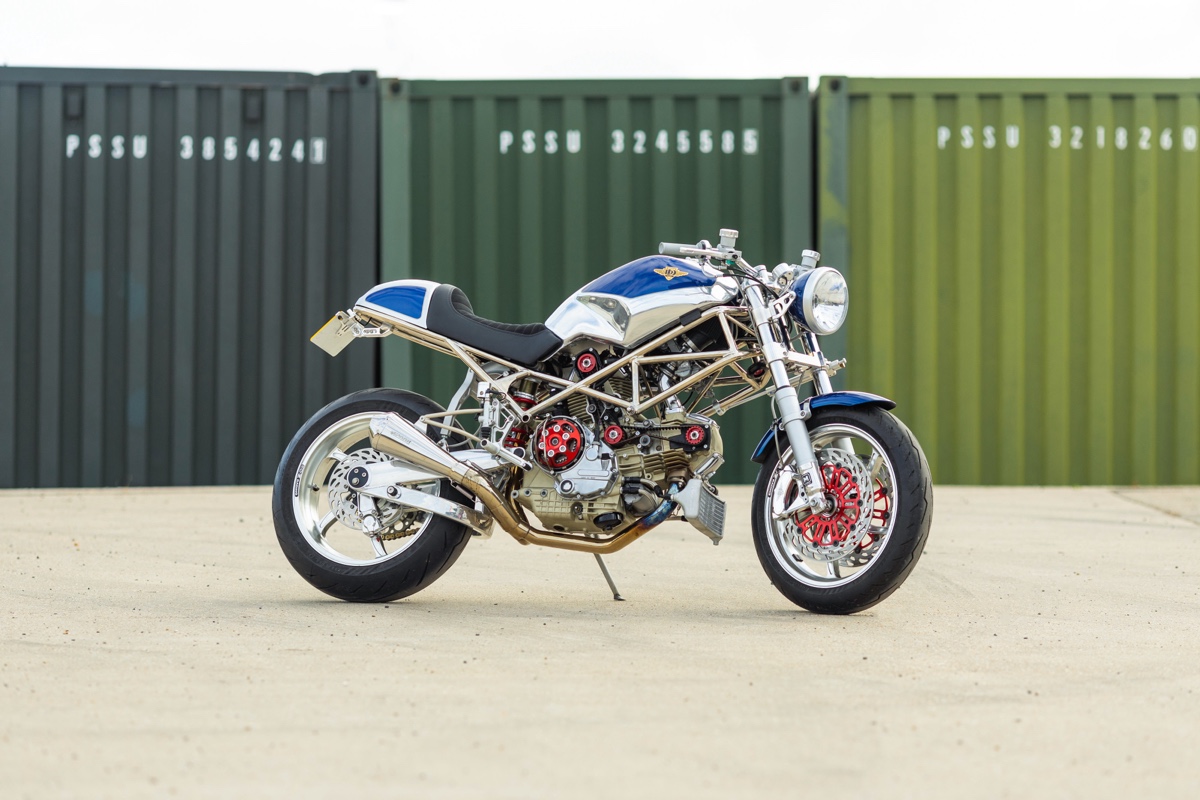
The closer you look, the more you see how much thought went into every single part. Nothing is there just because it was expensive or fashionable. Improve the Monster, stay true to what it is, then add the usual DDM flair. I think I got there.
Talula will now be shipped to Dubai, where she will continue to be used. This bike has already followed me from the UK to South Africa, back to the UK, and across Europe. There is no reason for her to stop moving now. The build is finished, at least for the moment.
Tech Spec and Parts
Base motorcycle
• 1999 Ducati Monster M900S
• Rear frame shortened, de-tabbed and looped
• Frame blasted, polished and nickel plated
• Estimated finished wet weight: 175 kg
• Standard final-drive gearing
Engine and fuelling
• Original 904 cc air-cooled Ducati V-twin
• Complete ground-up engine rebuild by Ray Petty
• Balanced crankshaft
• Lightened flywheel
• Bronze and nickel ceramic-coated engine finish
• 41 mm Keihin FCR flat-slide carburettors
• Ignitech ignition
• K&N individual pod filters
• Plasma Pulse Race coils
• Open dry-clutch
• Oberon pressure plate and springs
• Oberon oversized clutch slave cylinder
• Discacciati 16 mm radial clutch master cylinder
Exhaust and cooling
• 50 mm thin-wall polished stainless Sil-Motor two-into-one headers
• Spark end can
• Enlarged RedFox Grinta racing oil cooler
• Oil cooler relocated to lower horizontal-cylinder position
Front suspension and steering
• Honda CB1100RS right-way-up radial-mount fork assembly
• New OEM fork stanchions shortened to suit Monster
• Custom fully adjustable Maxton cartridge system
• Half-polished, half ceramic-coated fork lowers
• CB1100EX front mudguard
• Fastec Racing billet top yoke with integrated risers and speedometer housing
• Fastec Racing billet lower yoke with integrated steering-damper mount and hidden brake-line splitter
• Öhlins steering damper
• Raised handlebars with internal wiring
Rear suspension and chassis
• Polished Metmachex braced aluminium swingarm
• Öhlins DU044 rear shock with red spring
• Period Rizoma aluminium suspension hoop
• S&P rearsets
Wheels and tyres
• Silver OZ Piega forged-aluminium wheels 17×3.5 and 17×5.5
• Front wheel: approximately 3.43 kg
• Rear wheel: approximately 4.65 kg
• Pirelli Diablo Rosso IV tyres
• Front: 120/70 R17
• Rear: 180/55 R17
Brakes
• DDM-Harrison billet 4-piston radial front calipers
• Discacciati front brake discs
• Discacciati 16 mm radial front brake master cylinder
• Custom Fastec Racing billet rear-caliper bracket
• Harrison two-piston rear caliper
• Discacciati rear brake disc
• Silver braided stainless-steel brake lines
• Hidden front brake-line splitter
Electrical system and controls
• Complete custom loom by Mono Cycles
• Internal handlebar and top triple wiring
• Joost B-Box electrical controller
• Lightweight Antigravity lithium battery
• Custom under-tank battery and electrical enclosure
• MOSFET regulator-rectifier
• Integrated starter button in billet throttle housing
• Four-button left-hand switch
• Illuminated orange low-fuel warning integrated into horn button
• Motogadget GPS speedometer
• Motogadget front indicators integrated into headlight mounts
• Frenched rear indicators integrated with rear lighting
• No clutch or sidestand safety switches
Bodywork and finish
• Hand-made RoadRacing polished aluminium fuel tank
• Custom fibreglass tail hump
• Hurley Custom Seats leather and Alcantara seat
• Triumph headlight
• No rear mudguard
• No mirrors
• Billet under-tail number-plate bracket
• Blue custom paint inspired partly by the MV Agusta 750S
• Nickel detailing and tank graphics
• Satin-silver ceramic-coated components
• DDM branding limited to tank and front calipers
Acknowledgements
Custom motorcycles like this are never the work of one person. I have spent years building a network of specialists who I consider among the best in the business, and the build would not have happened without them.
Arnie at Pro Kustom
Besides being an awesome bloke and laying down some of the best paint in England, Arnie has the unusual ability to translate my emotional and occasionally ridiculous descriptions of colour into actual paint. “Expensive Italian espresso machine” was not a normal paint code, but he understood it perfectly.
Danny at Fastec Racing (@fastecracing)
The only person I use for custom machining. Danny is willing to take the time to produce one-off billet parts for an individual motorcycle, and I trust him to get them right. The yokes, caliper bracket, and other machined details are central to the finished bike.
Tom at Hurley Custom Seats (@hurleycustomseats)
Always responsible for the tightest and best-fitting leather and Alcantara work. I asked for a boring black seat. Tom persuaded me not to make it quite that boring, and he was correct.
Wes at Hi-Spec
Fantastic ceramic-coating quality and, just as importantly, willing to indulge my strange colour combinations when many others would not.
Ray Petty at Ray Petty Meccanica (@raypettymeccanica)
A special thank you to Ray for rebuilding the engine properly and for tolerating my endless questions. It was the first time I had entrusted one of my engines to somebody else, so I was probably quite annoying. Ray was also sensible enough to prevent me from turning the motor into an unreliable big-bore grenade.
Dan and Katy at Mono Cycles (@monomotorcycles)
An extra-special thank you to Dan and Katy for producing a stellar wiring system, completing the long list of irritating final jobs and tolerating constant remote micromanagement from a desert location. They brought the entire motorcycle together when my own workshop was closing around it. I could not have completed Talula without them.
Photography: Mihael Jersov (@mjstudio_uk)
Lastly, a thank you to my long-time collaborator Mihael for braving the freezing weather for the perfect shot all these years. Photographed near Chichester at the Mono Cycles yard.
Follow the Builder
- Website: www.dirtydicksmotos.com
- Instagram: @dirtydicksmotos
- Facebook: www.facebook.com/dirtydicksmotos
More from DDM
 Peak Monster: ’99 Ducati M900S “Talula” - Better, Faster, More: The Final, No-Compromise Motorcycle from Dirty Dick’s Motos… Rick Hannah of Dirty Dick’s Motos made a name for himself with a trio of Kawasaki W650 desert sleds whose design and execution were […]
 Spitfire-like Howl: Kawasaki W650 “The Last Sled” - The Last Sled from Dirty Dick’s Motos — For Sale! Several years ago, Rick Hannah of Walton-on-Thames, England, picked up a pair of Kawasaki W650’s for a good price. He soon fell in love with […]
 Plush Sled: Kawasaki W650 Desert Sled II - DDM returns with one stunning desert sled… At the end of 2020, we featured a Kawasaki W650 desert sled from Rick Hannah of London’s Dirty Dick’s Motos, a semi-pro shed builder who said he got […]
 Posh Sled: Kawasaki W650 Scrambler - Dirty Dick’s Motos builds a fast & reliable modern desert sled… Produced from 1999 to 2007, the Kawasaki W650 was a retro throwback to the British twins of the 1960s, featuring a 50-hp parallel twin […]


