
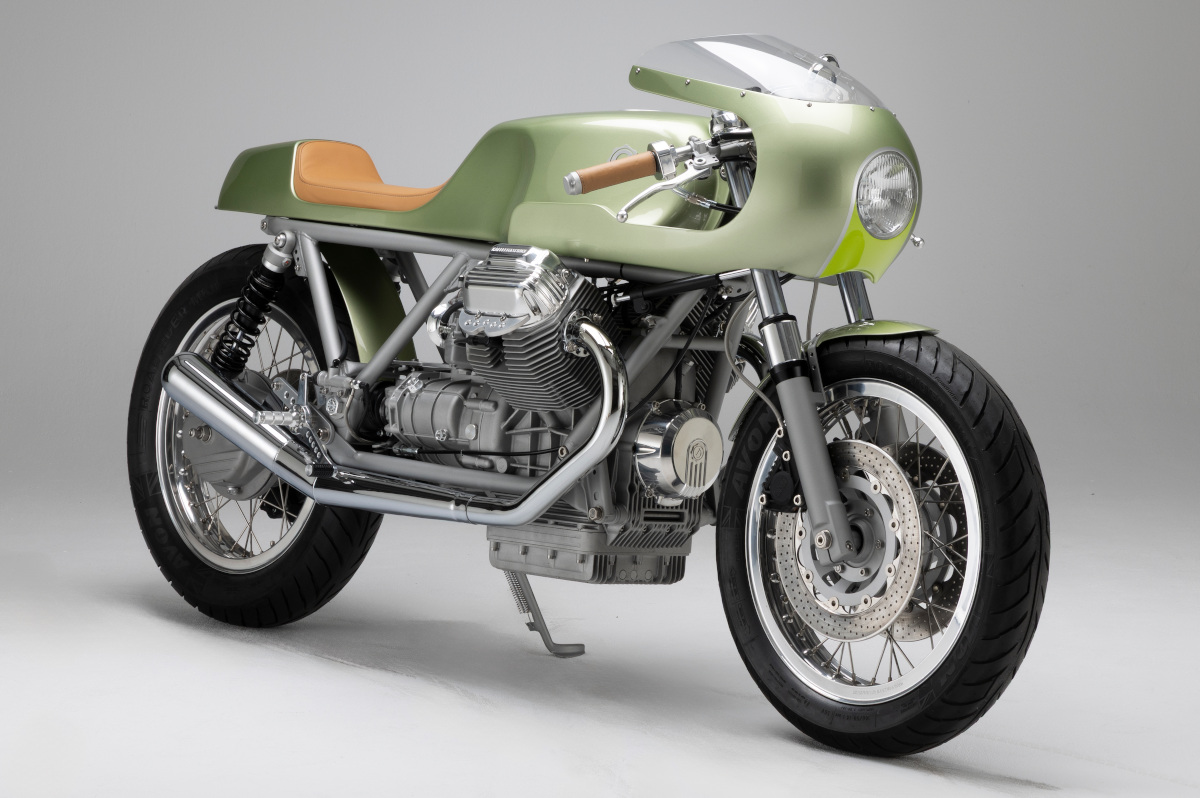
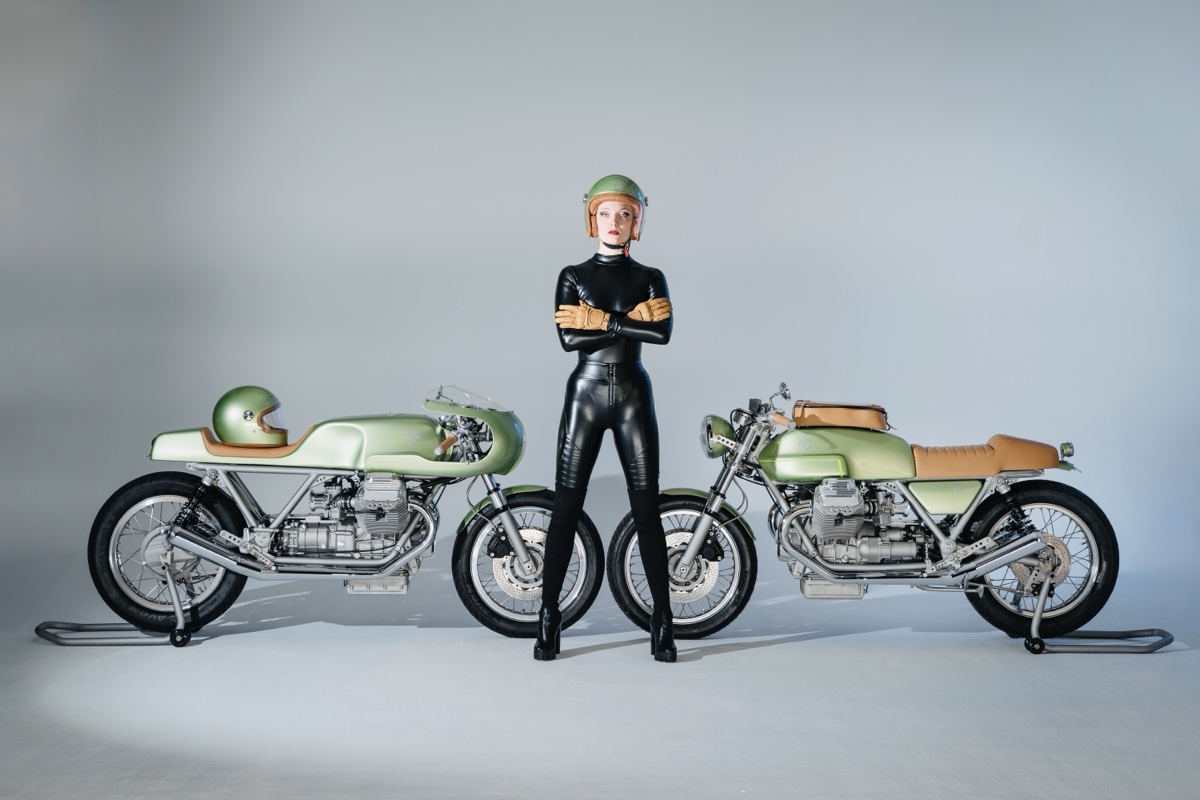
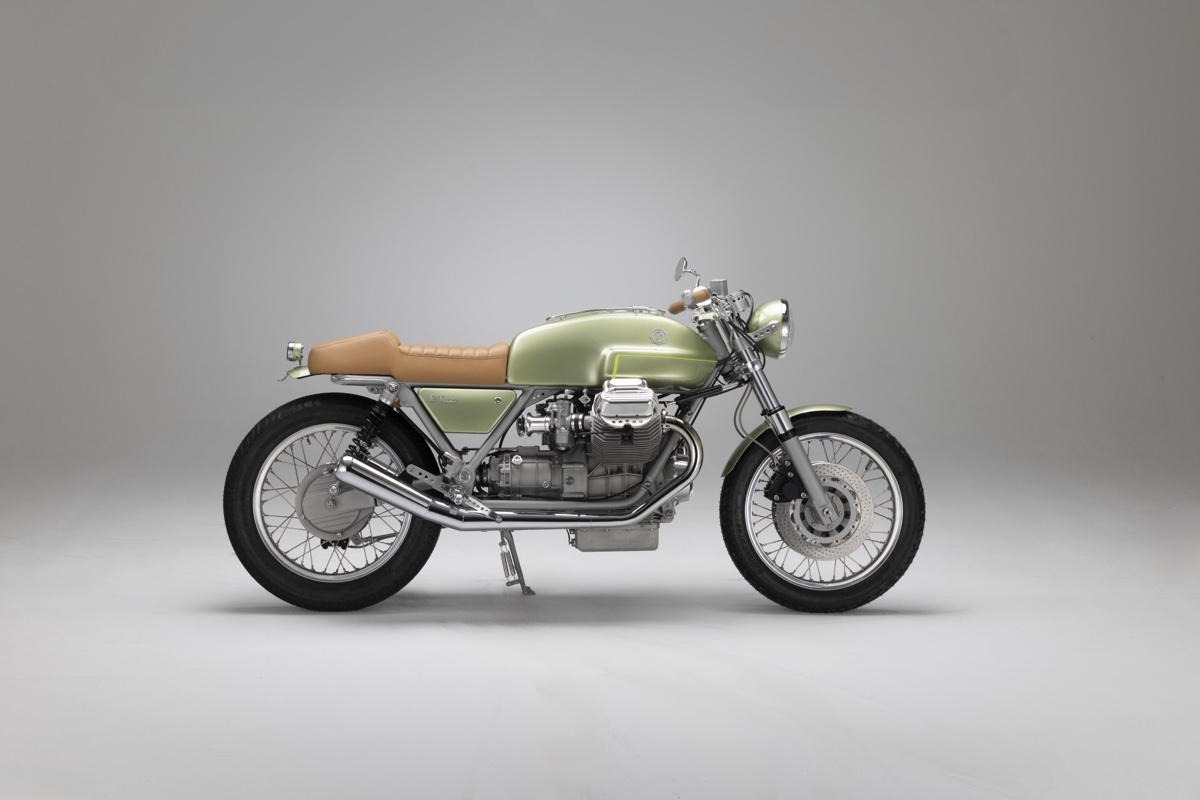
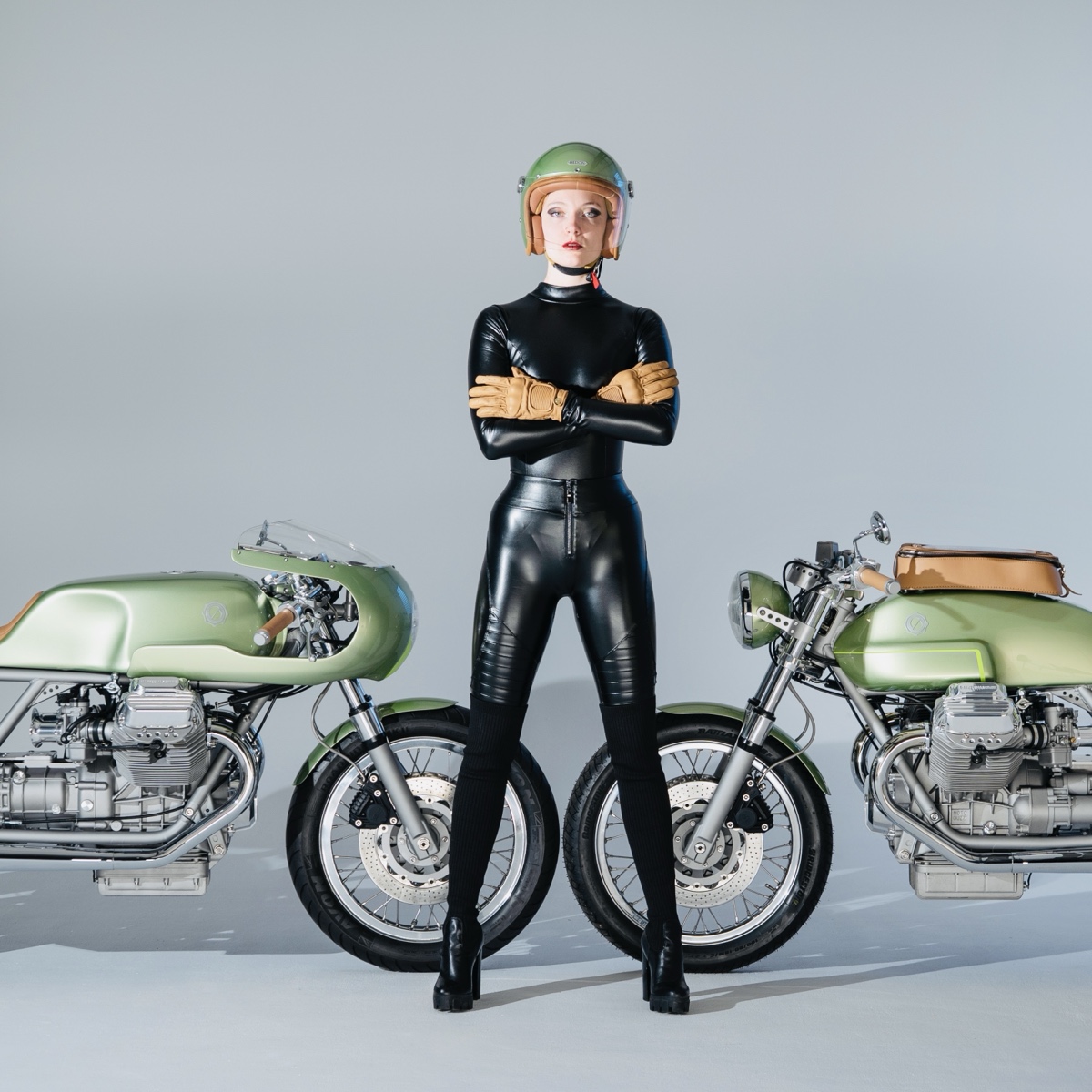
Axel Budde founded Kaffeemaschine Motorcycles (KMMC) in the Port of Hamburg 15 years ago. This year, in addition to the company’s 15th anniversary, the KMMC team is celebrating the creation of their 49th and 50th custom motorcycles:
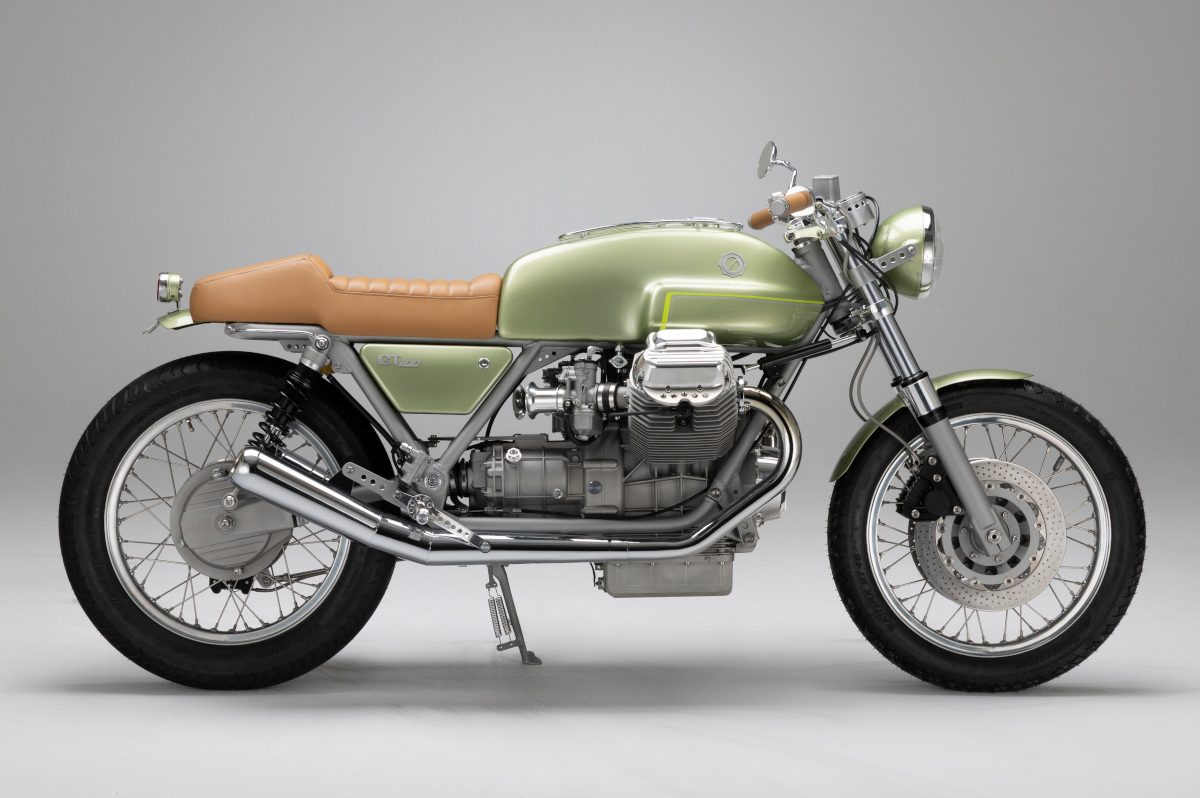
- Kaffeemaschine No. 49: Moto Guzzi GT
- Kaffeemaschine No. 50: Moto Guzzi Aerodinamica
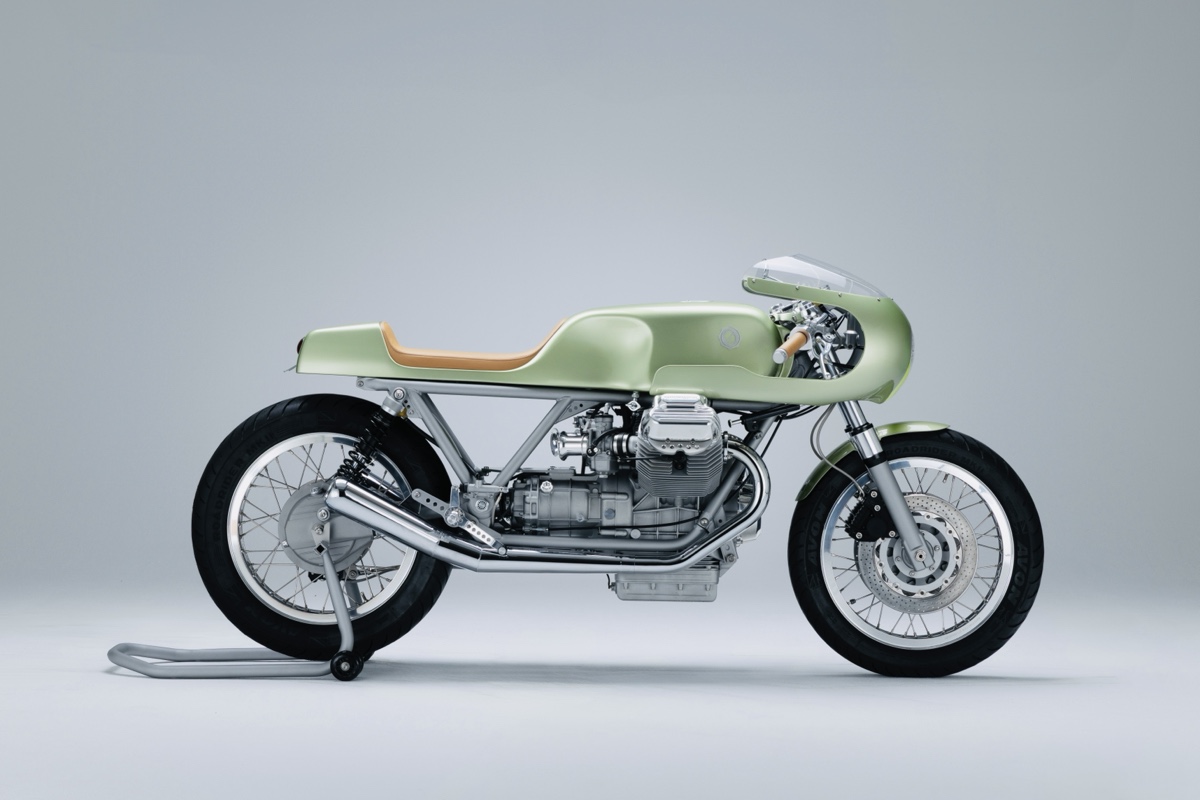
Axel fell in love with Moto Guzzi machines of the mid-1970s to 1980s because of their great riding potential, and his company has been continuously developing the platform over the years. Kaffeemaschine No. 50 is something of a showpiece that demonstrates the culmination of what the workshop has achieved with the Moto Guzzi base.
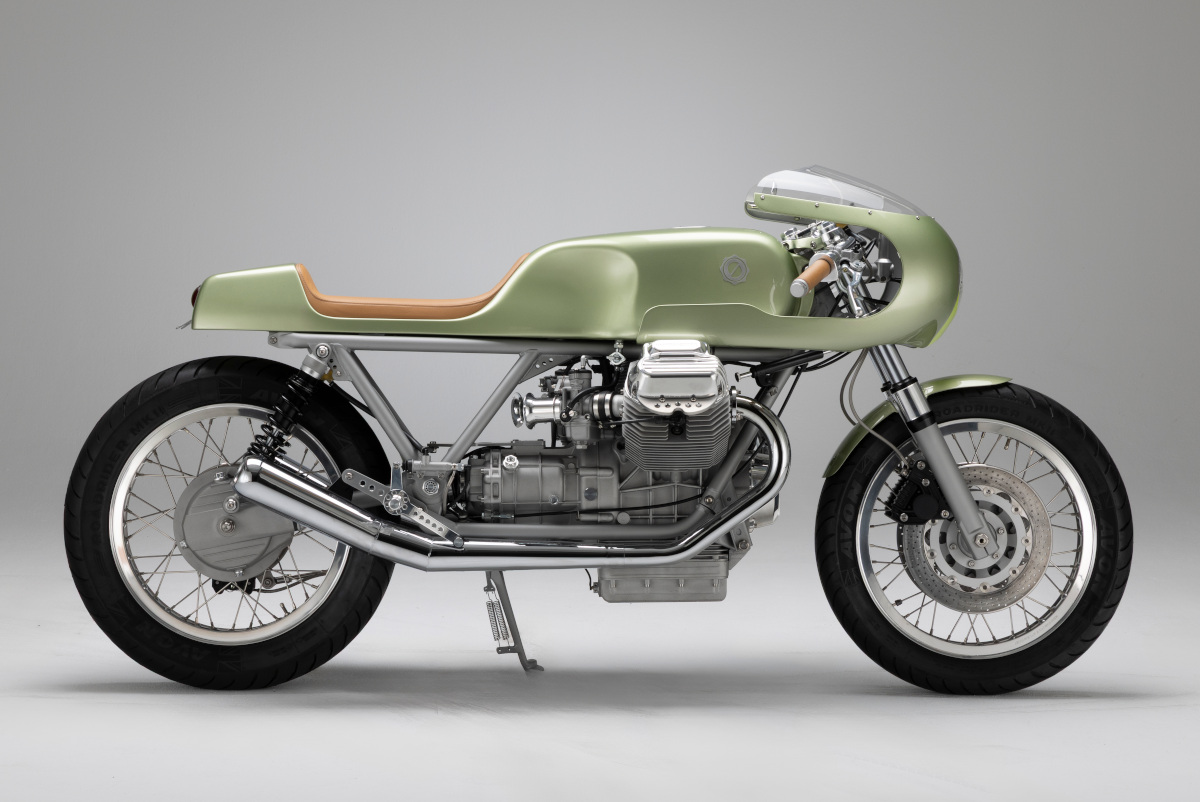
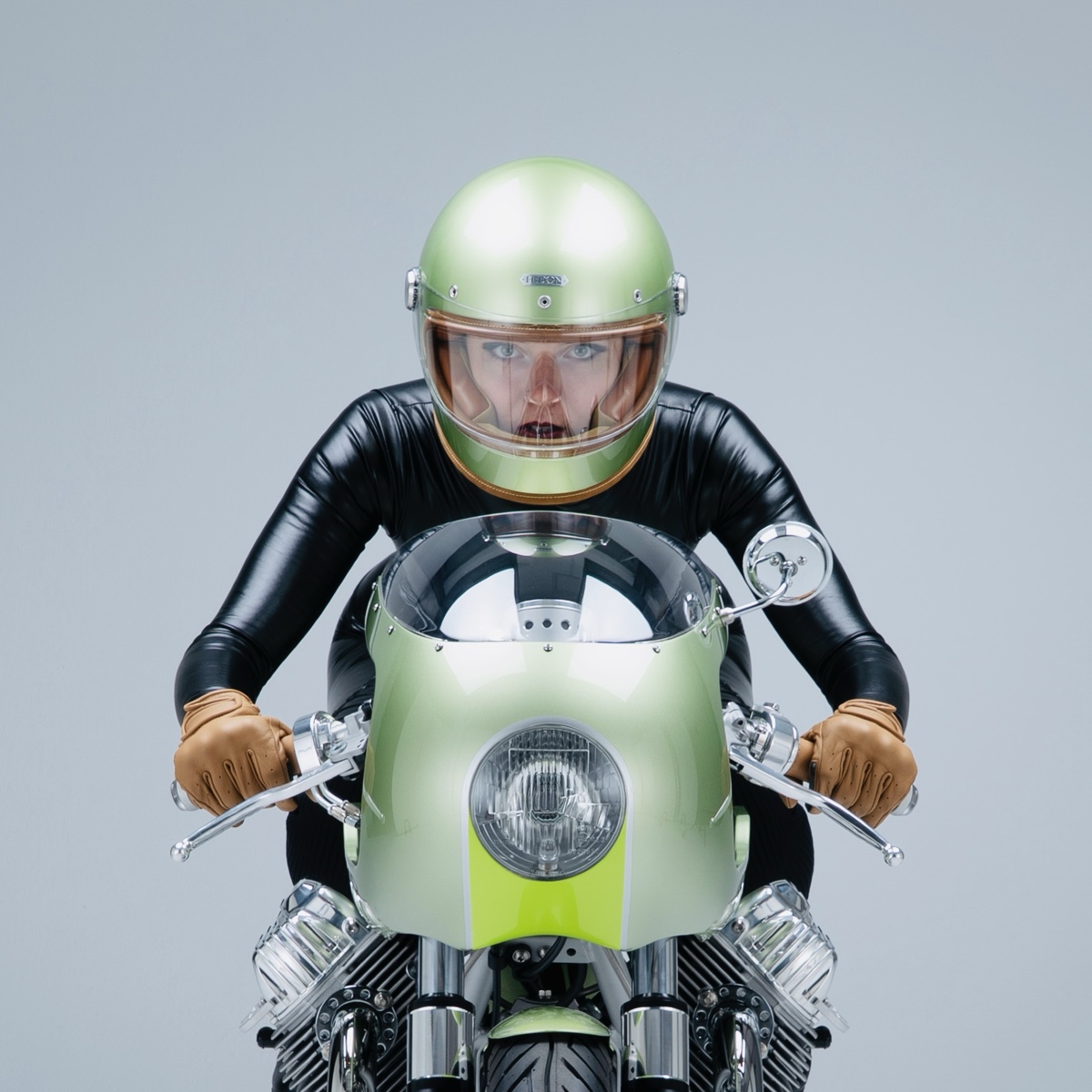
Kaffeemaschine No. 50 is number four in the workshop’s “Aerodinamica” series based on 70s Café Racer style. In parallel, they also build a Grand Touring series, the GT, which includes the 1100cc Kaffeemaschine No. 49. Axel says these bikes now have ~500 of KMMC’s own parts — in fact, the only things still original include the cast housings of the engine, transmission, and final drive.
The frames retain their basic geometry, steering head angle, and rear suspension; otherwise, they would lose compliance with the German TÜV. All the modifications, which are immensely extensive, are documented and permitted by the TÜV (German Technical Inspection Association). Fortunately, KMMC benefits from the original registration date of the base machine with regard to noise and emission regulations.
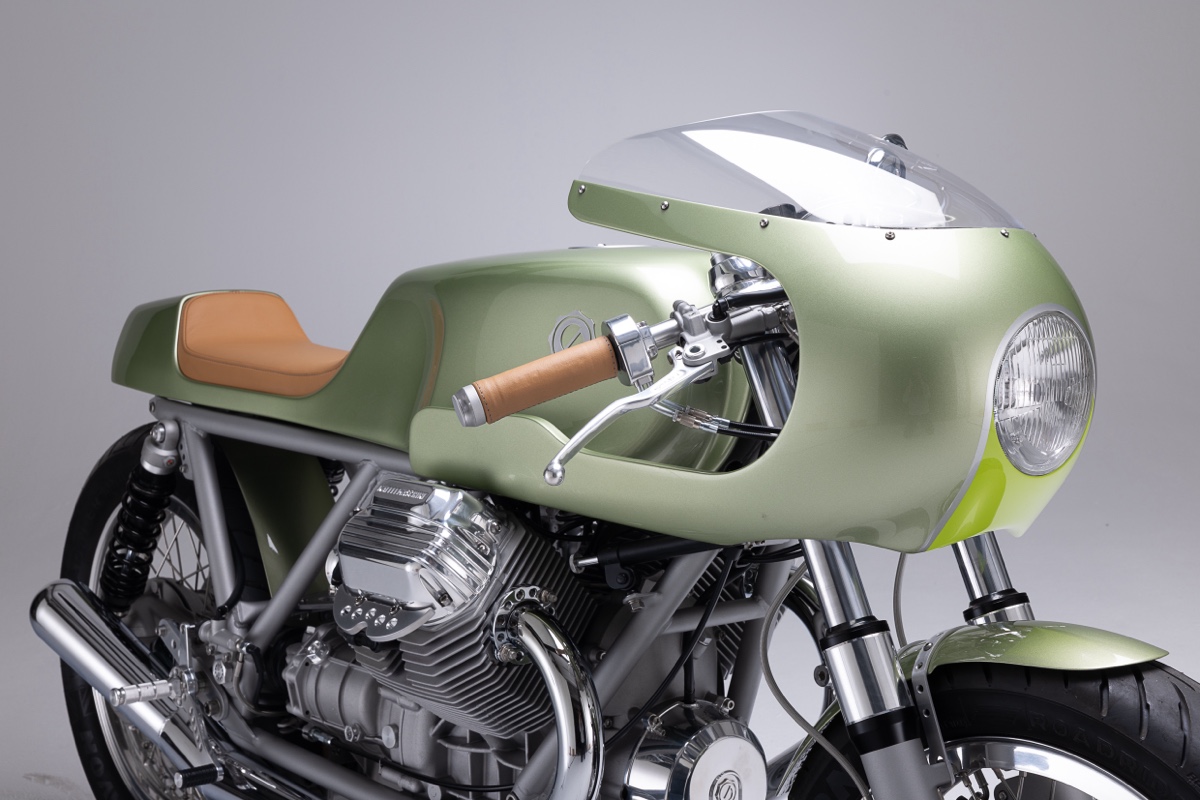
Many of the add-on parts — including, for example, the valve covers and fork legs — are milled from solid aluminum. Meanwhile, the carbon-fiber parts are designed using CAD. Their molds are machined from blocks of plastic tooling material using a five-axis mill, then the carbon fiber is laminated into the molds and cured in an industrial oven.
The result isn’t just a beautiful silhouette, but a motorcycle with a weight of just 180 kg (396 lbs), which is incredibly light considering an original Moto Guzzi Le Mans III weighs about 230 kg (507 lbs).
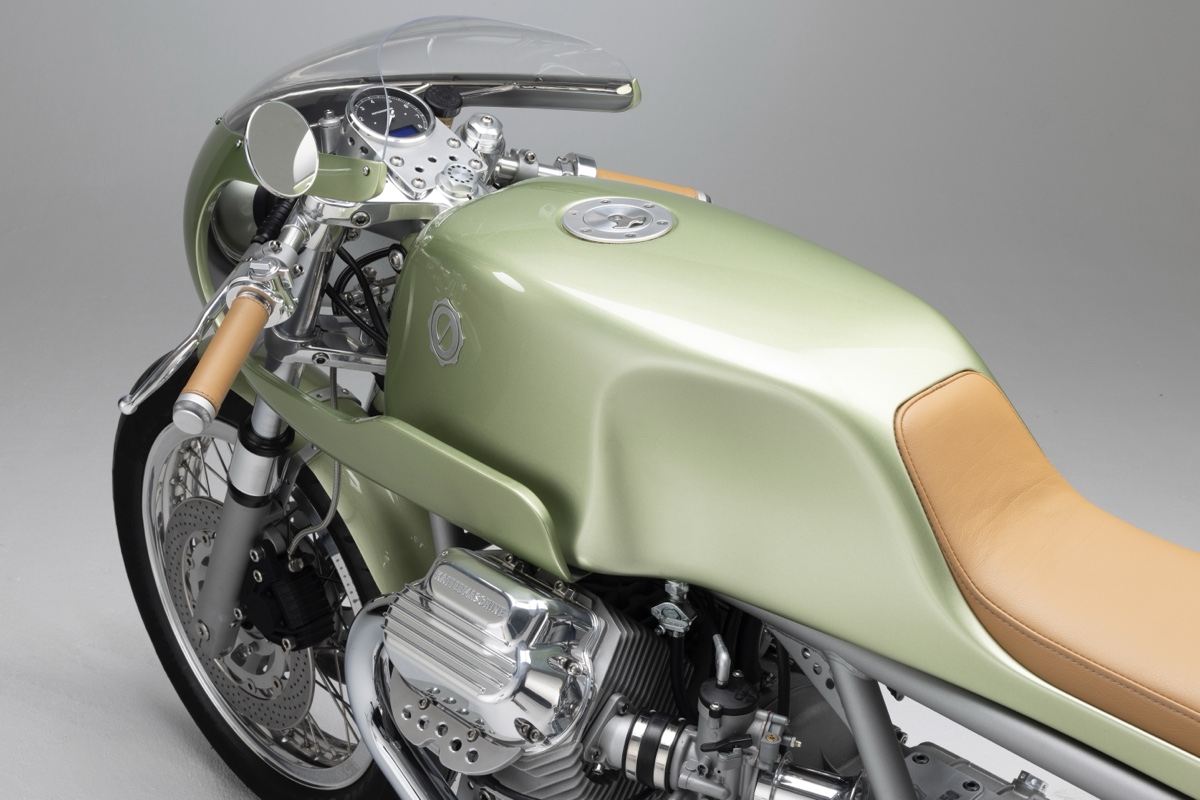
Axel says No. 50 all starts here with the key, which has an NFC chip that activates the motorcycle, allowing the ignition to be turned on. Up front is a set of KMMC’s own forks, with a classic high-shoulder aluminum rim made and stainless steel floating brake discs.
The triple clamps, handlebars, throttle, and fork tubes themselves were all milled in-house. Axel says there’s a significant improvement in handling thanks to this beefier front end.
The brakes were also upgraded with modern Brembo components, braided lines, and sintered brake pads,mresulting in a truly modern, very responsive braking system.
The engine, which began life as a standard 850cc Le Mans III unit, has been punched out to 1000cc with new pistons, cylinders, and KMMC’s own custom-ground camshaft:
“Each of our engines has our own camshaft. We have a custom profile, which allows for a significant increase in torque. So, we already have very high torque at 3000 rpm, relatively early. Nevertheless, we also wanted the engines to retain their sporty character and, of course, be able to rev up to 7500 rpm. To achieve this, it’s also necessary to reduce the flywheel mass. We do this with a significantly lightened starter ring gear and flywheel.”
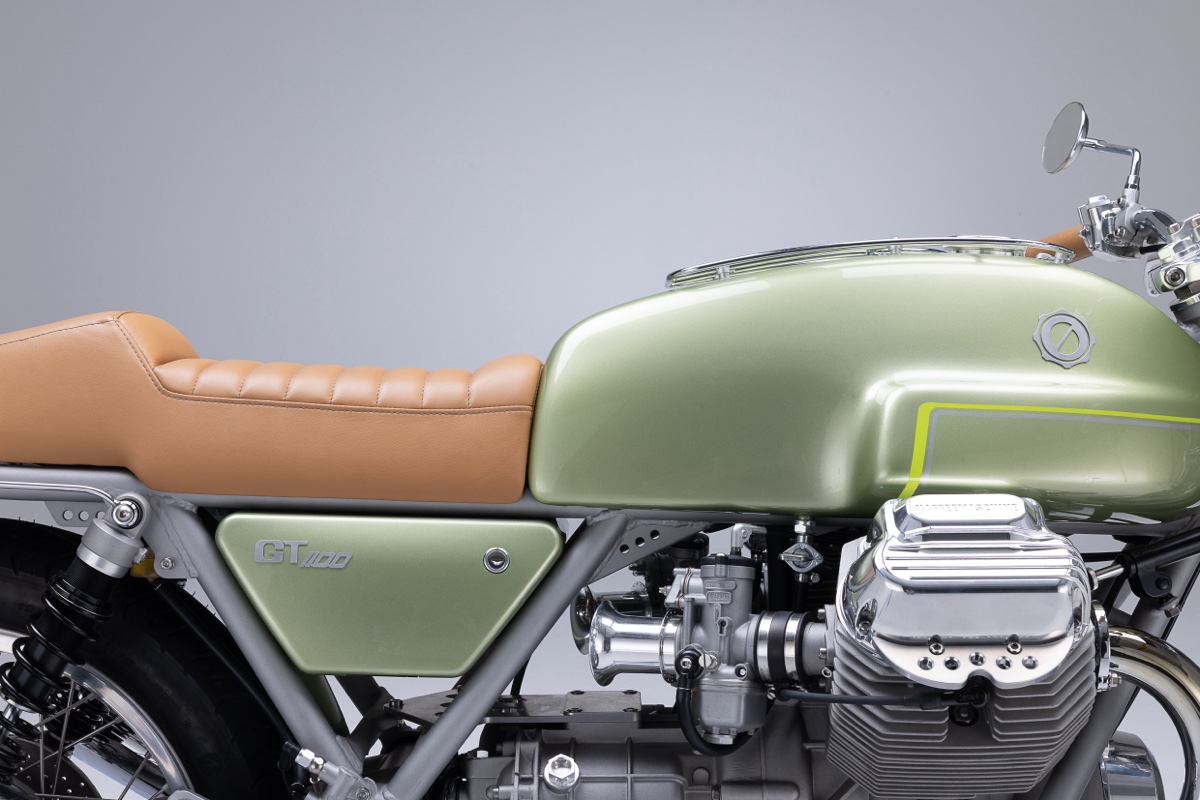
Axel says these components, as well as the crankshaft, are dynamically balanced. The heads are ported and given larger valves, and in the case of No. 50, KMMC opted for an electronic dual ignition system with a more modern alternator. The carbs are classic Dell’Ortos tuned with a Lambda sensor.
The battery is located under the swingarm pivot, while most of the electrical components are hidden under the tank. In fact, KMMC designed the tank specifically to allow this fitment, with specially welded frame mounts.
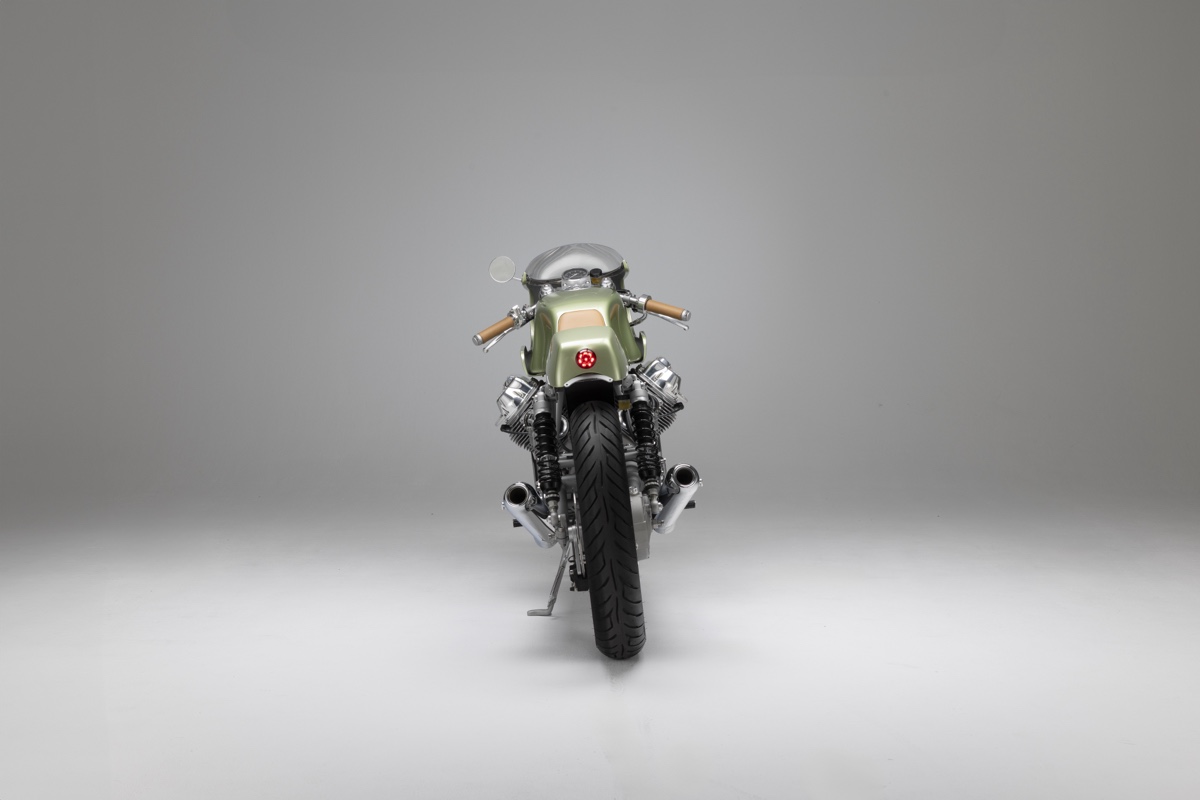
The rear shocks are Wilbers units, and the exhaust is a custom stainless steel system with removable baffles. Axel says they work on every single screw of these bikes on the lathe — turning them down slightly, chamfering them, and countersinking the internal hex. Talk about methodical!
The GT Series
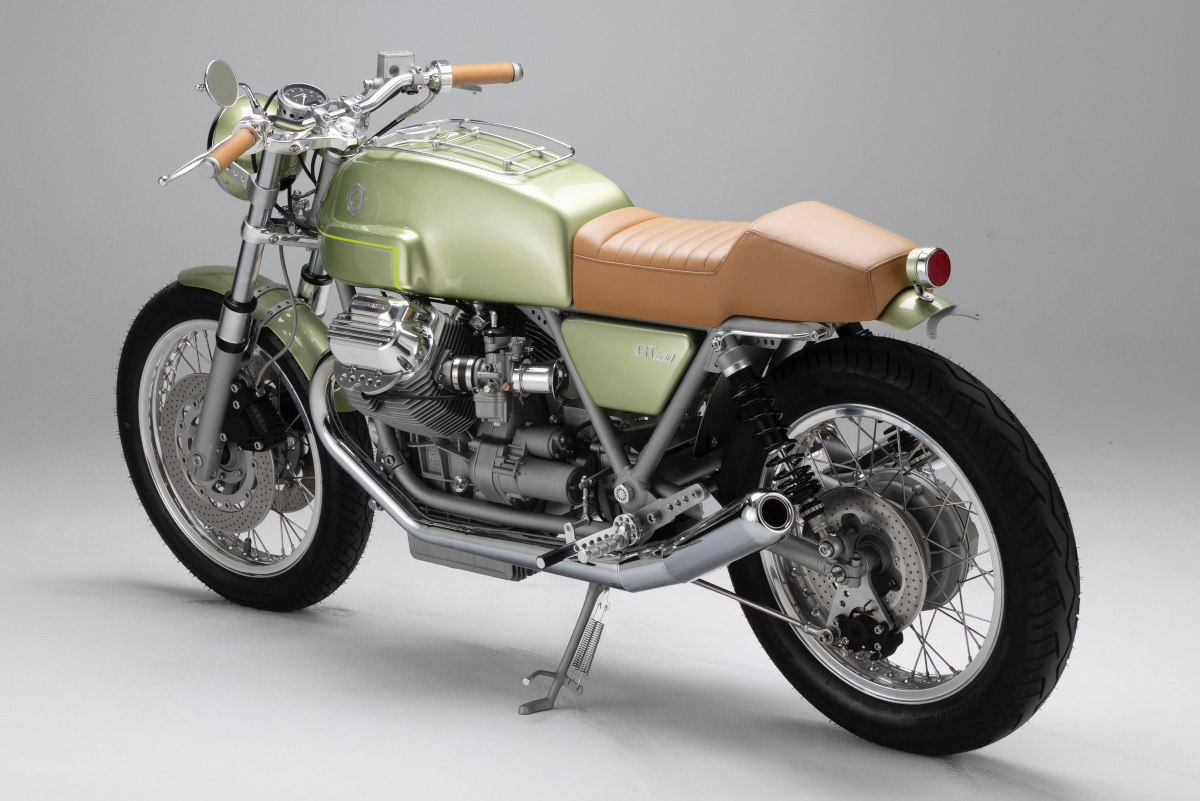
Kaffeemaschine’s GT series is their touring series. As Axel says, taking his café racers to the Alps always required a number of makeshift solutions: tank bags whose straps scratch the tank, the requirement for a custom frame bag to sit in the subframe triangle, a thin saddle, and ergonomics that were less than comfortable for touring…to say the least. The GT series was meant to solve many of these issues.
“Generally speaking, it was always important to me to create a motorcycle that I could use while still maintaining this sportiness and this minimalist feel… I still want to take the motorcycle that gives me so much riding pleasure on vacation and then ride with as little weight and luggage as possible. And it’s actually fun to reduce things and suddenly realize, wow, I need so little, just for a week or two, that can be real joy…”
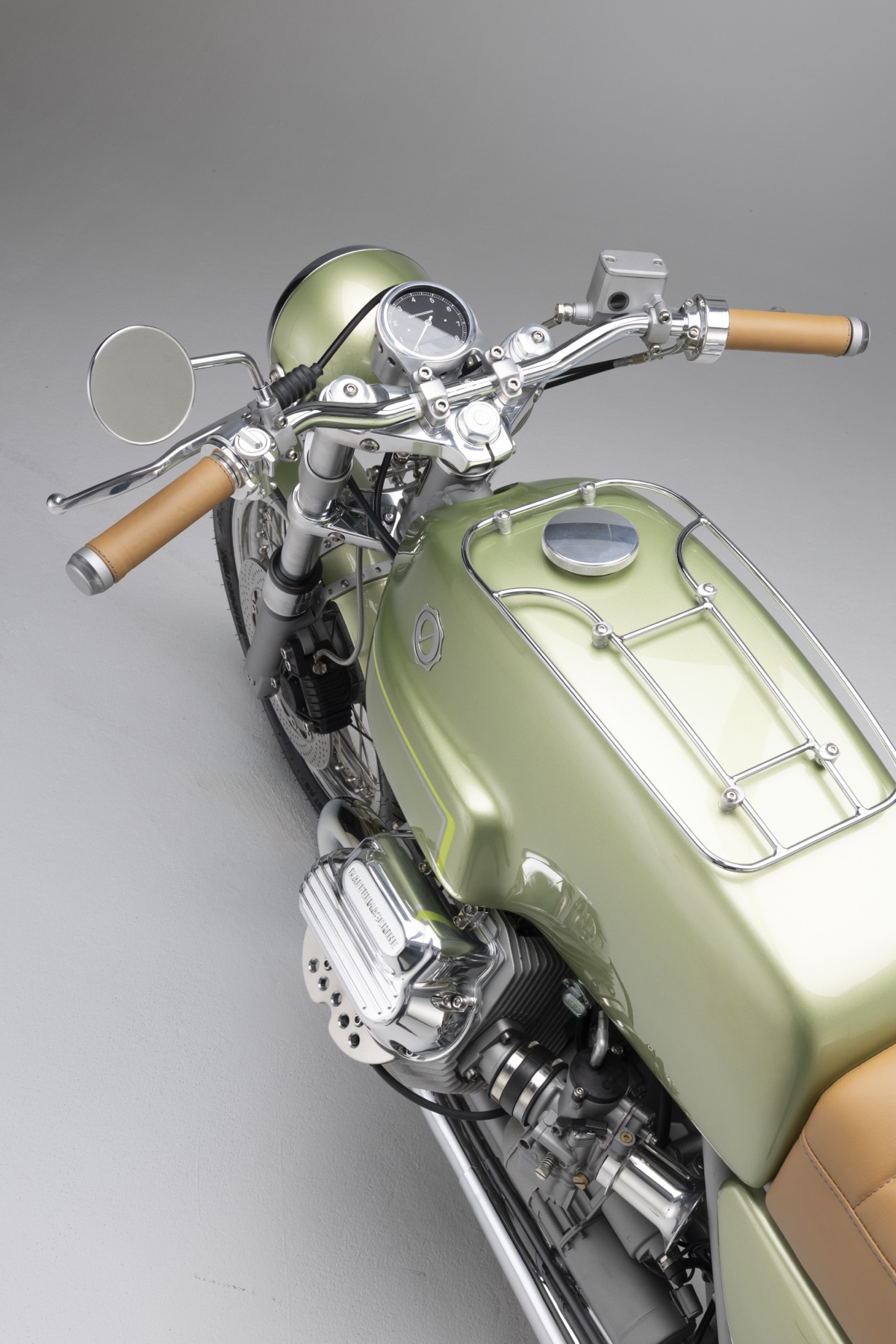
KMMC again uses carbon fiber for nearly every part that carries paint, reducing the bike’s weight immensely. The front end uses the same fork and braking components as the Aerodinamica. As for the powerplant, they wanted a “torquey, very very emotional engine.” Fortunately, the classic Guzzi two-valve engine is exactly that, and this one has been bored to 1100cc with custom porting, custom camshaft, lightened flywheel, electronic ignition, and more. It now produces around 100 Newton-meters (74 ft-lbs) of torque.
The custom rearsets are adjustable, allowing greater lean angle.
“You can put the tires completely on the sidewall and still not have the problem with these motorcycles of having to constantly tuck your feet in.”
The rear shocks are Wilbers 630 Series, which KMMC modifies aesthetically, and the rear brake caliper features a torque arm mount that ensures the suspension isn’t compressed when the rear brake is applied. The GT features a lockable, waterpoof compartment, which can a 1-liter bottle, sweatshirt, long underwear, valuables, etc.
“I was just in the Pyrenees for a week with my GT, doing a 3000 km trip…and I had to use our features every day. That means I always have my roll bag on here, which I then strap to our own luggage rack.”
Axel says he still likes to use real paper maps, but it’s hard to avoid using your phone for navigation in real-time. Of course, if you’re navigating with your phone all day, it runs out of battery pretty quickly, so the build has a steering head USB port. It extends at the turn of a hex knob, it’s waterproof, and it keeps your phone or GPS charged all day.
The throttle is milled from a solid block and matches the switch unit perfectly, and it’s quick-turn unit to boot — no more readjusting your hand position to hit wide open throttle. All in all, the GT has been designed to combine touring comfort with sporty handling and Guzzi character. As you can tell, Axel has tested his machines on the road, in all kinds of conditions, to produce a minimalist Guzzi tourer.
“That’s the philosophy behind our GT series. I hope you’ve gained the desire to conquer such beautiful, winding roads in southern climes with such a classic, beautiful, and very emotional motorcycle.”
Follow the Builder
Web: www.kaffee-maschine.net
Instagram: @kaffeemaschinemotorcycles
Facebook: Kaffeemaschine Motorcycles


The GT is nice. The non fairing one with side covers.
Both good looking bikes although I would go for the GT it has the higher bars, have never liked clipons even when I was much younger, well done to the guys for turning out a pair of bikes that anyone would like to have in their garage, would be fun to have a ride on the GT, excellent enginering as well, typicall German high standards.