
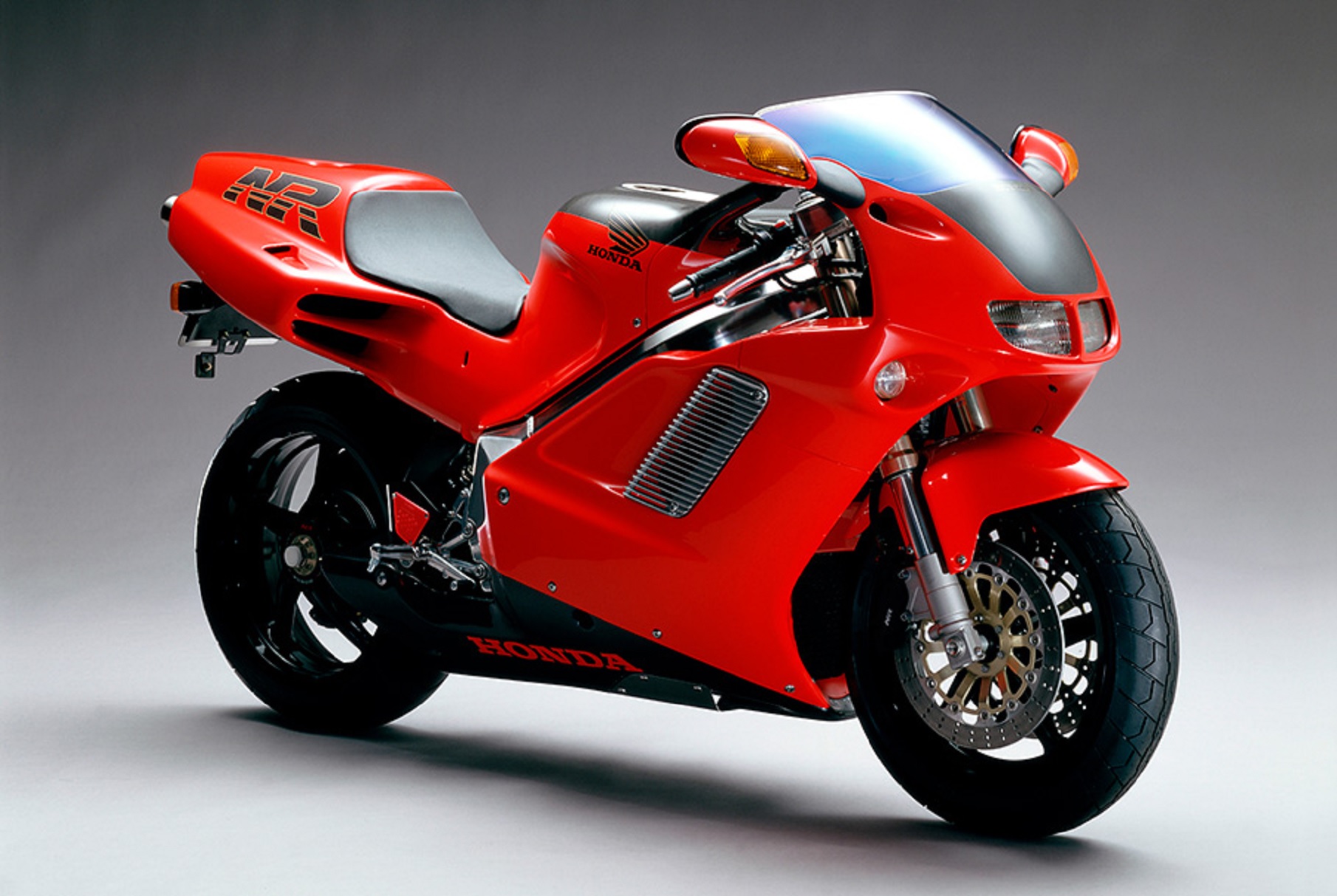
Eight valves per cylinder. Two connecting rods per piston. A 15,000-rpm V4 that was really Honda’s attempt to build a V8 without technically building a V8…
Every internal-combustion engine has pistons, and pistons are round. Except when Honda decides they aren’t. In 1992, Honda put one of the strangest engines ever developed for Grand Prix racing into a road-going motorcycle. The resulting Honda NR750 — often known simply as the NR — had a 748cc V4 with elongated oval pistons, eight valves per cylinder, two connecting rods per piston, and 32 valves in total.
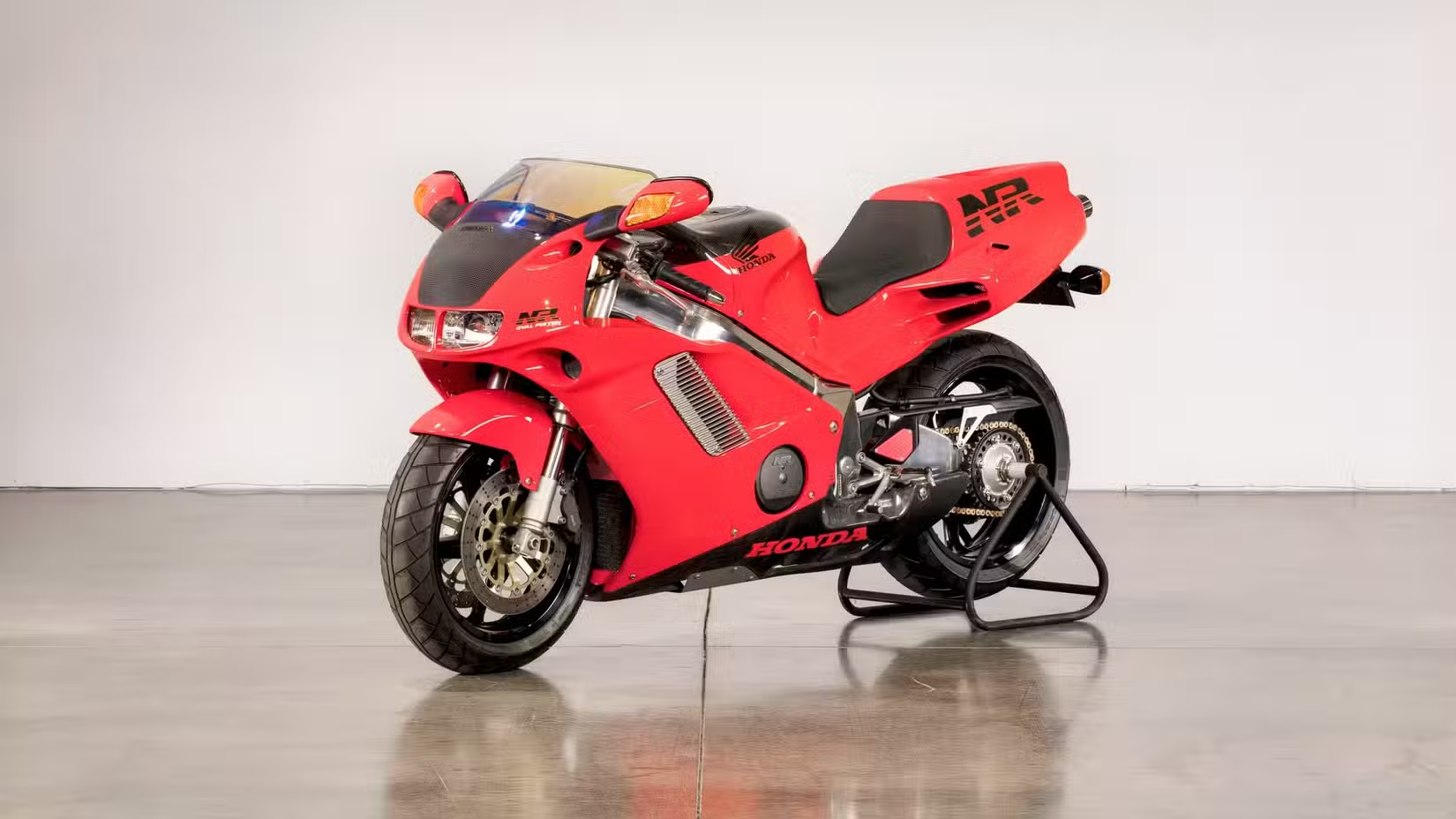
It revved to around 15,000 rpm and produced approximately 125 horsepower. Carbon-fiber bodywork, fuel injection, a single-sided swingarm, inverted forks, and twin underseat exhausts completed a machine that looked like it had arrived from several years in the future.
But the oval pistons weren’t designed simply to make Honda’s most expensive motorcycle more exotic. They existed because, more than a decade earlier, Honda had been trying to solve an apparently impossible problem: How do you build an eight-cylinder racing engine when the rules say you’re only allowed four cylinders? Honda’s answer was essentially: Make each cylinder wide enough to be two.
Honda Returns to Grand Prix Racing
To understand the NR750, we have to go back to 1979. Honda had withdrawn from motorcycle Grand Prix racing in the 1960s after an extraordinary period of success. When the company decided to return to the premier 500cc class more than a decade later, the racing world had changed dramatically.
Two-strokes ruled. Suzuki and Yamaha had demonstrated that compact, lightweight two-stroke engines were ideally suited to Grand Prix motorcycle racing. They made enormous power for their size without the cylinder heads, camshafts, valves, and complex timing systems required by a four-stroke.
Honda nevertheless decided to return with a four-stroke. That was partly philosophical. Honda had built its racing identity around extraordinarily sophisticated four-stroke engines, and the company wanted to demonstrate that four-stroke technology could still defeat the dominant two-strokes.
There was just one problem. A conventional four-cylinder four-stroke couldn’t breathe well enough or rev high enough to match a contemporary two-stroke of the same displacement. Honda needed more valve area, more combustion-chamber area, and more revs. What Honda really wanted was a V8, but the rules wouldn’t allow one.
Four Cylinders…or Eight?
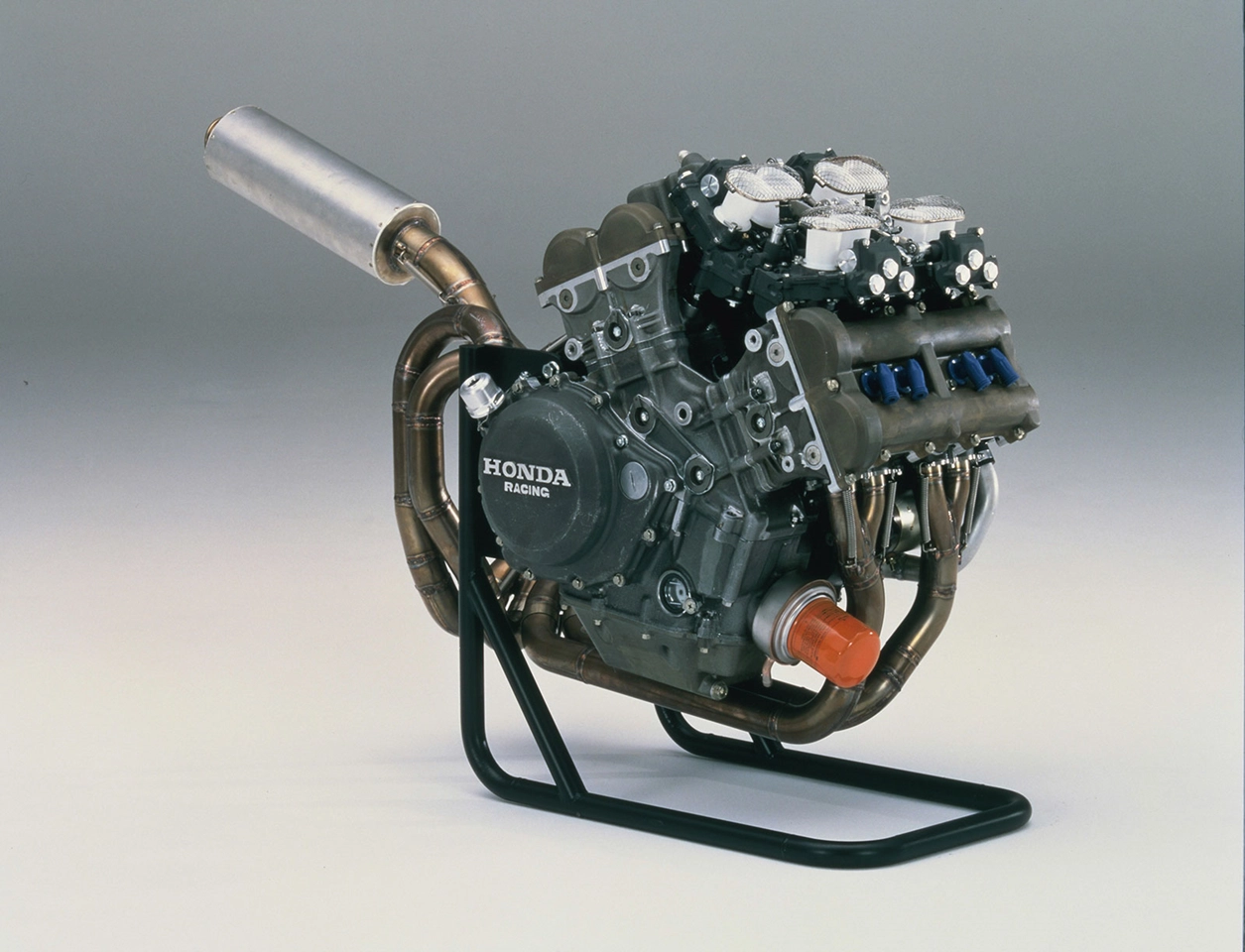
Grand Prix regulations restricted 500cc machines to a maximum of four cylinders. That sounds fairly definitive. Honda’s engineers found some room for interpretation. The regulations limited the number of combustion chambers, but they didn’t specify that a piston had to be circular.
So Honda imagined what would happen if two neighboring cylinders in a hypothetical V8 were effectively joined together. Instead of two round pistons, you would have one elongated piston shaped something like a racetrack: straight along the sides with rounded ends.
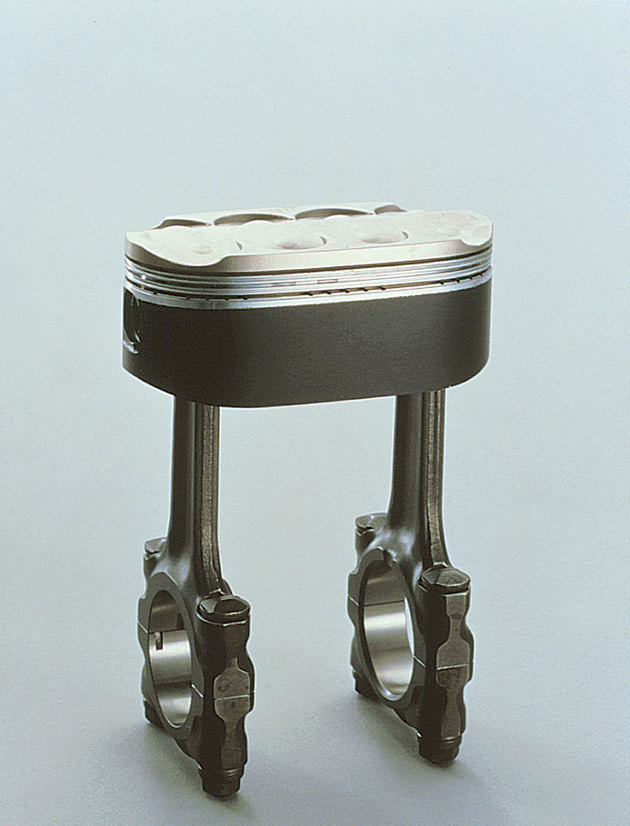
It would still technically be a single piston operating in a single combustion chamber, but that enormously widened combustion chamber would have room for eight valves instead of four. Two intake tracts could feed it. Two exhaust ports could empty it. Two connecting rods could stabilize the huge piston. Do that four times and Honda could build an engine that was officially a V4 but breathed much more like a V8.
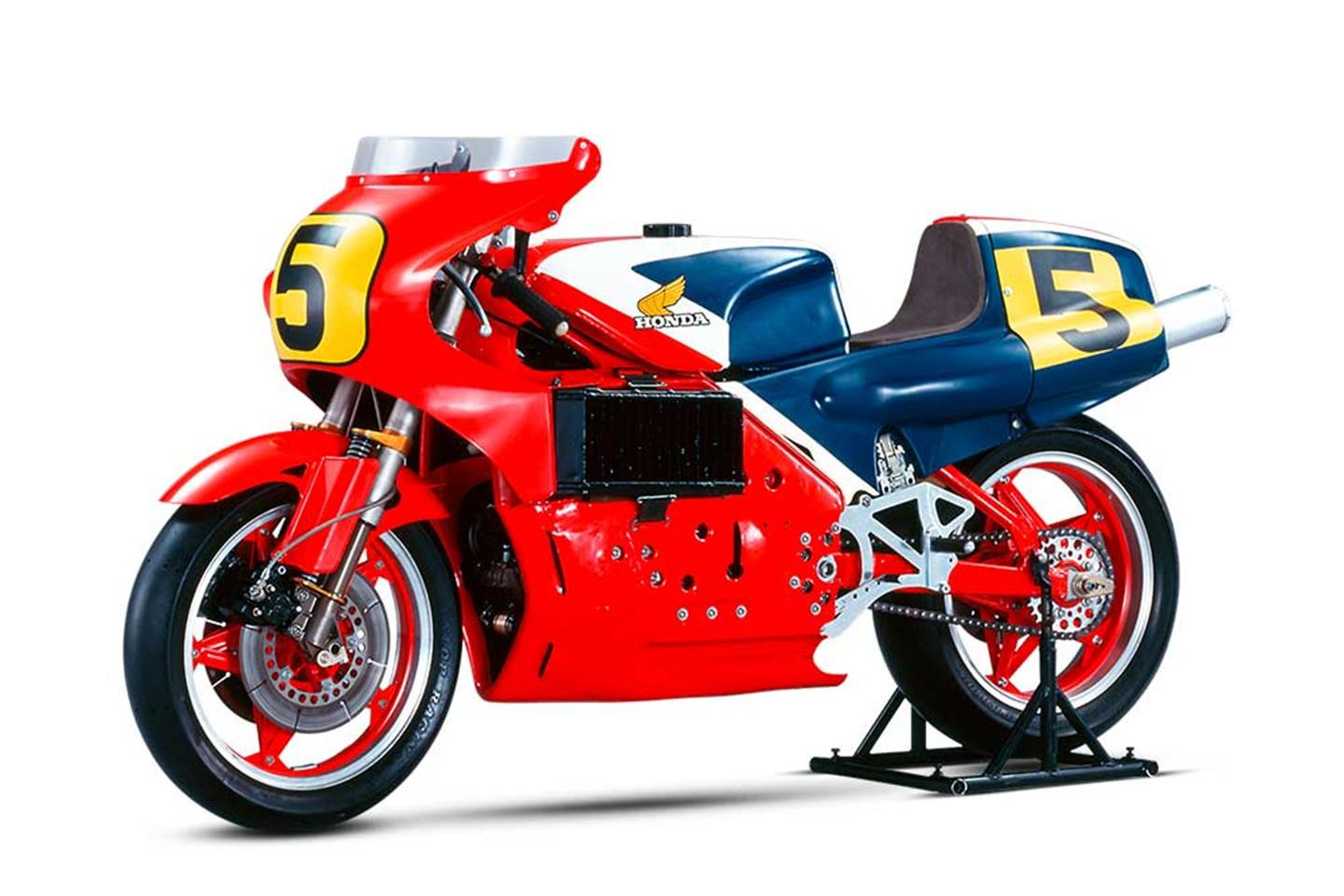
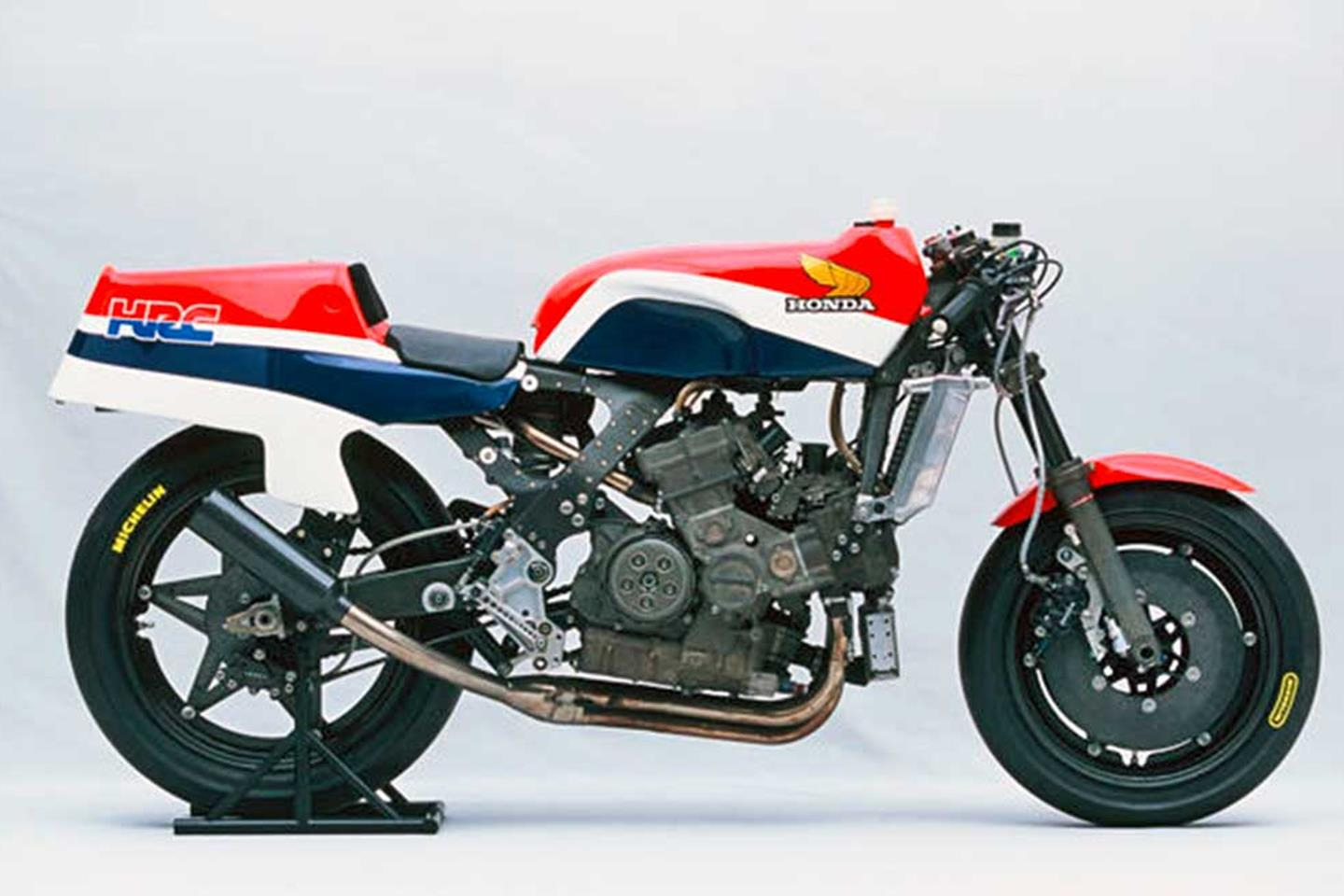
The concept became the heart of the Honda NR500. NR stood for New Racing. Few names have ever understated the engineering involved quite so spectacularly.
The Oval Piston
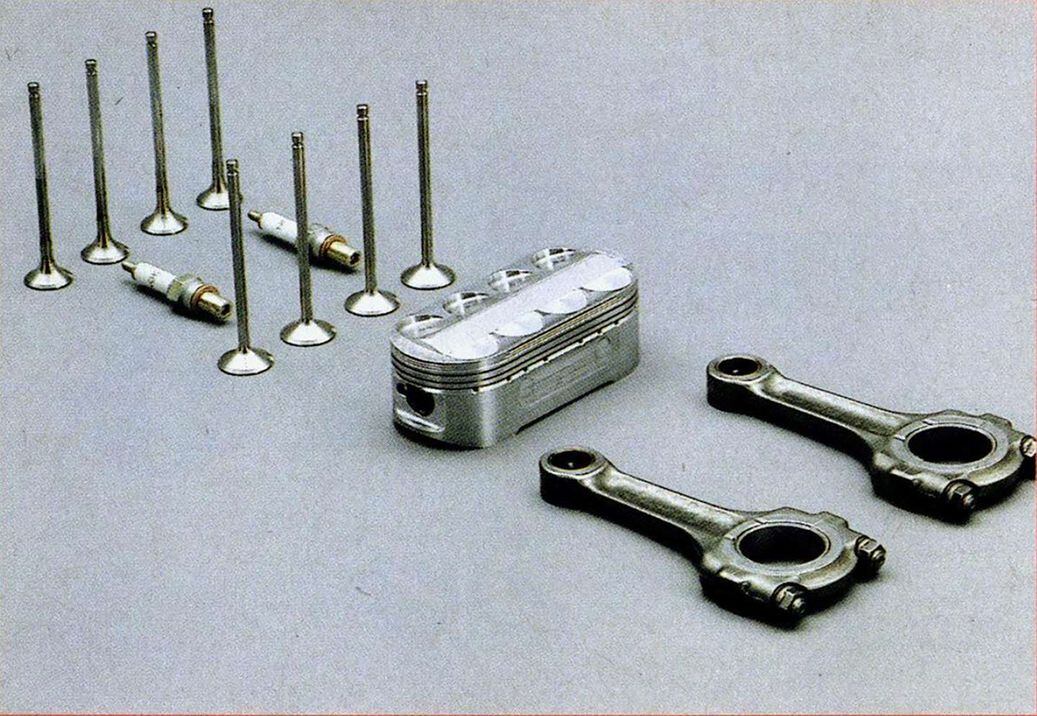
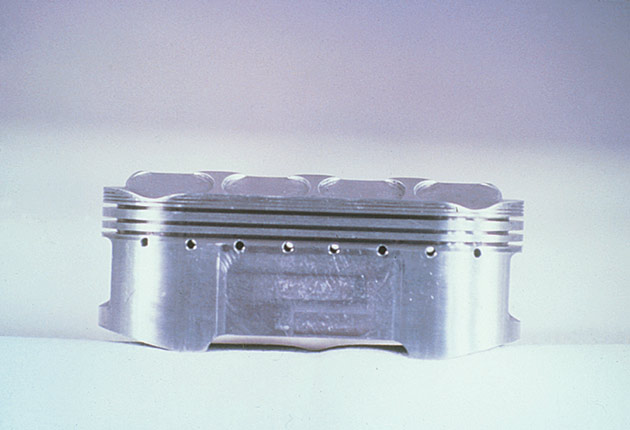
Calling the NR piston “oval” is convenient, though it isn’t really shaped like a conventional ellipse. It is closer to an elongated capsule or racetrack shape.
Each enormous piston needed two connecting rods to prevent it from rocking in the bore. Above it sat eight valves — four intake and four exhaust — creating a 32-valve V4. In functional terms, each cylinder behaved remarkably like a pair of conventional cylinders fused together. That gave Honda the valve area it needed to chase extremely high engine speeds. And high rpm was essential.
A two-stroke produces a power stroke every revolution. A four-stroke fires only once every two revolutions. To compete at the same displacement, Honda needed its four-stroke to breathe exceptionally well and spin exceptionally fast. The theory was brilliant. Manufacturing it was another matter entirely.
Making the Impossible Piston
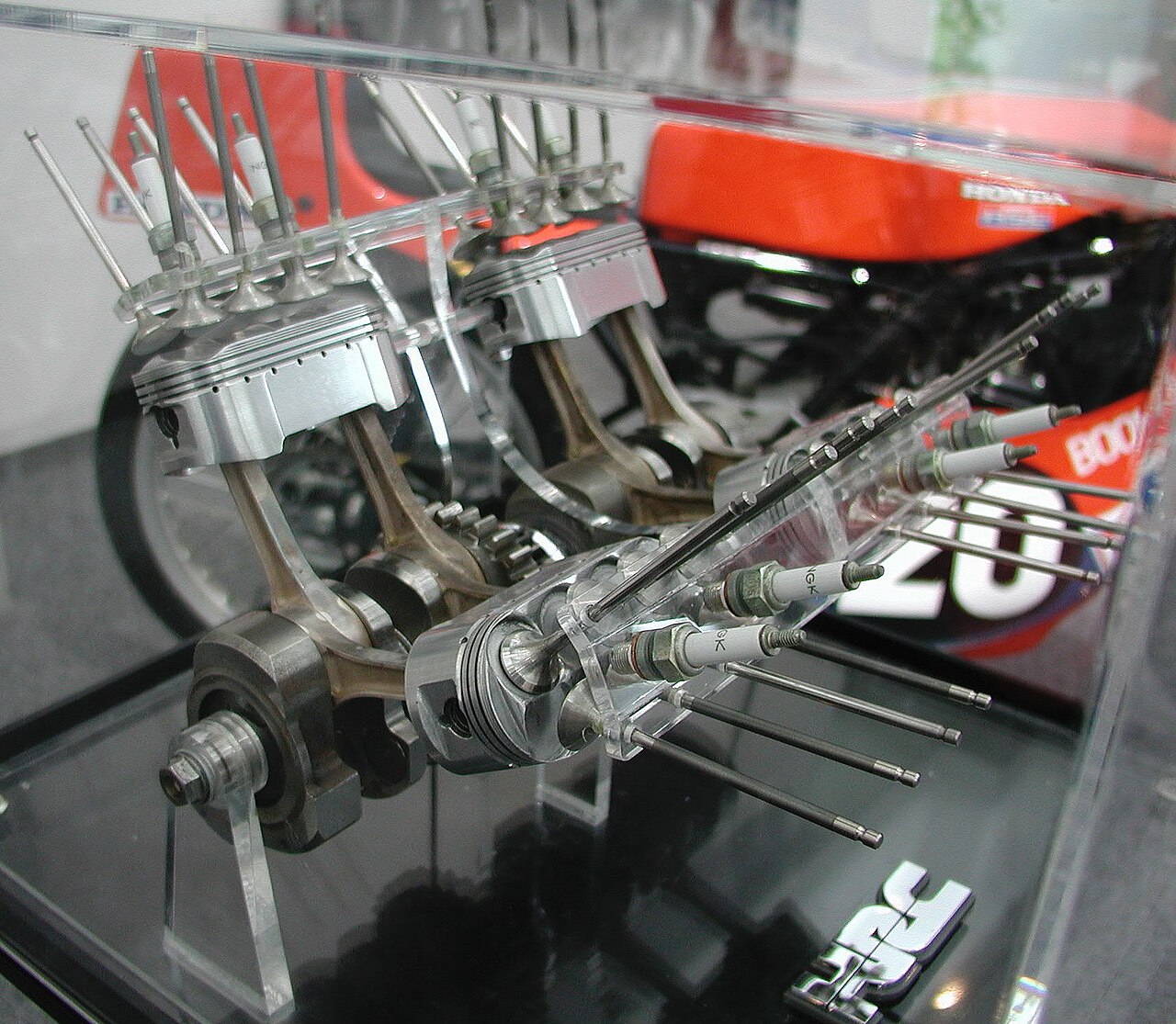
The rings had to follow an elongated bore precisely while maintaining an effective seal at enormous engine speeds and temperatures. Manufacturing tolerances that would be challenging on a conventional racing engine became extraordinarily difficult when almost every basic component had an unfamiliar shape.
The pistons themselves were difficult to manufacture. So were the rings, cylinder bores, and heads. Even achieving a reliable seal around the entire perimeter of the oval piston became an enormous engineering exercise.
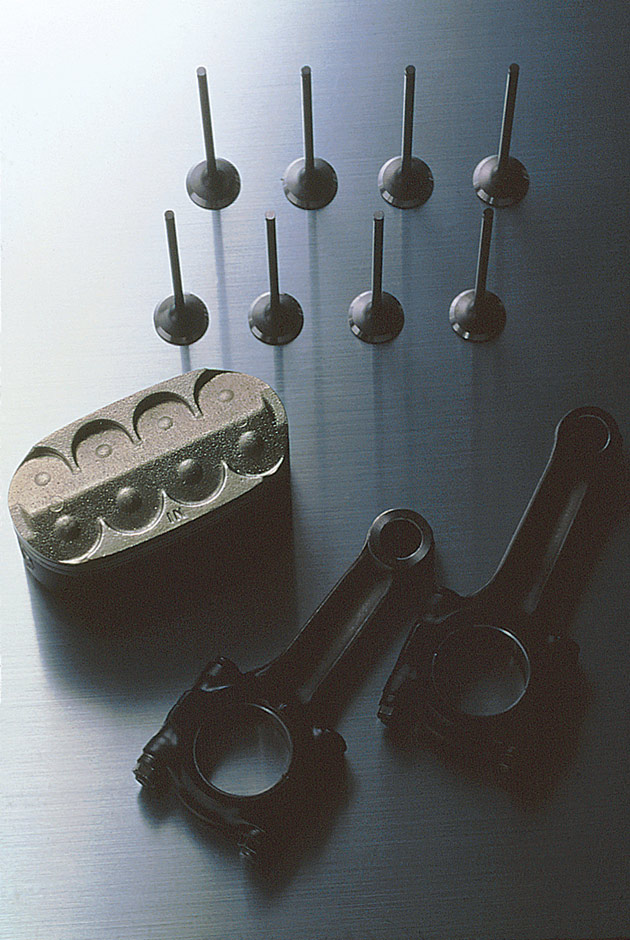
Honda reportedly developed specialized manufacturing techniques simply to make the concept viable. And remember: this was happening in the late 1970s, without the CAD, simulation software, CNC capabilities, materials technology, and modern rapid-prototyping tools available to today’s engineers. Honda wasn’t merely designing an unusual engine. It was developing ways to manufacture one at the same time.
The NR500: Magnificent Failure
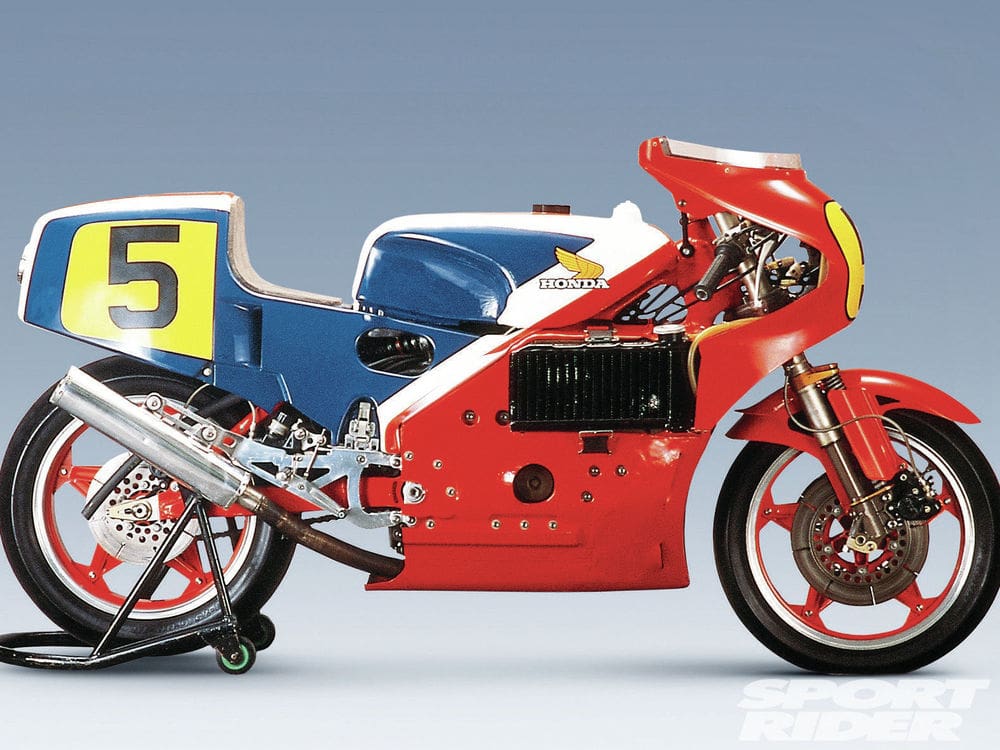
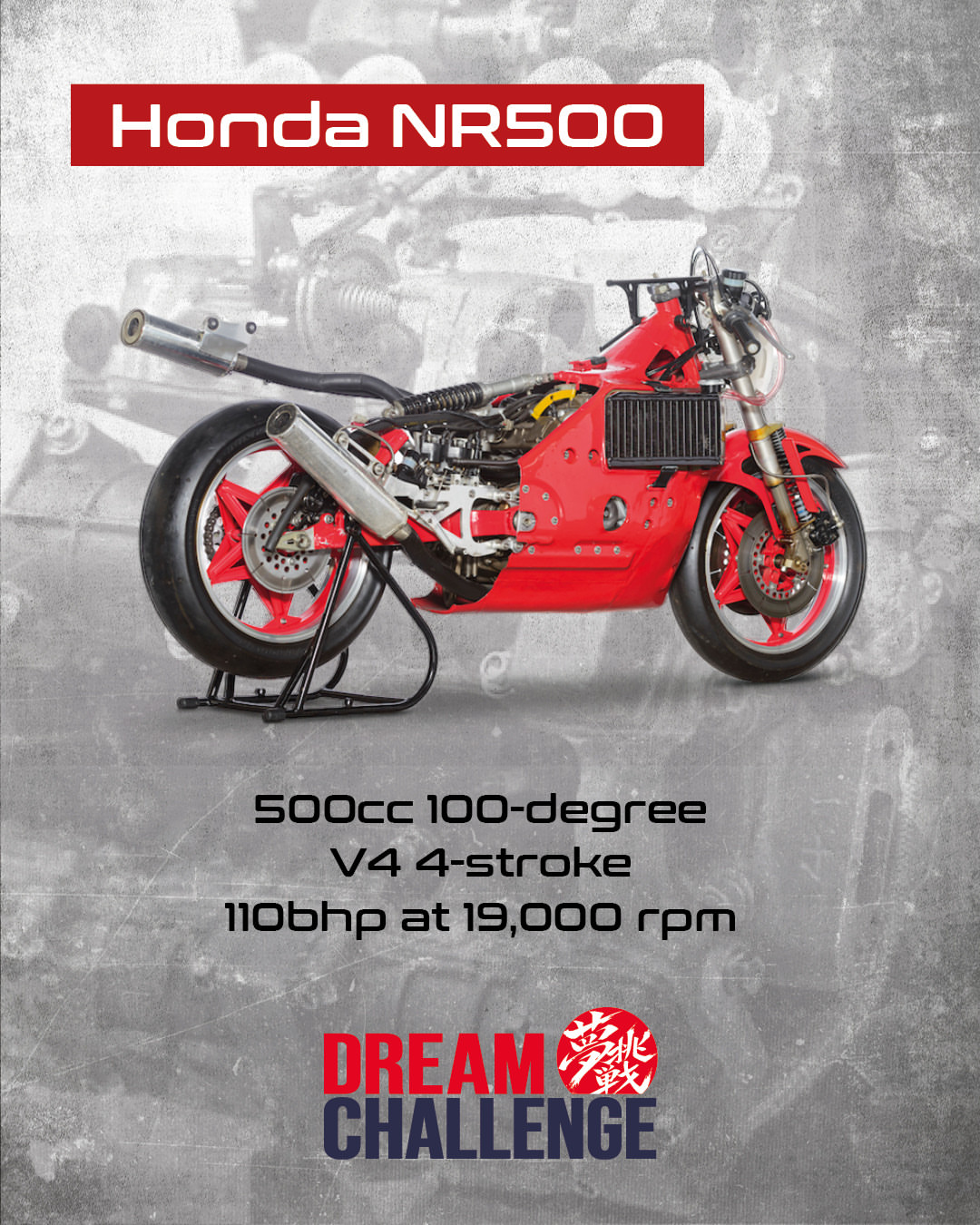
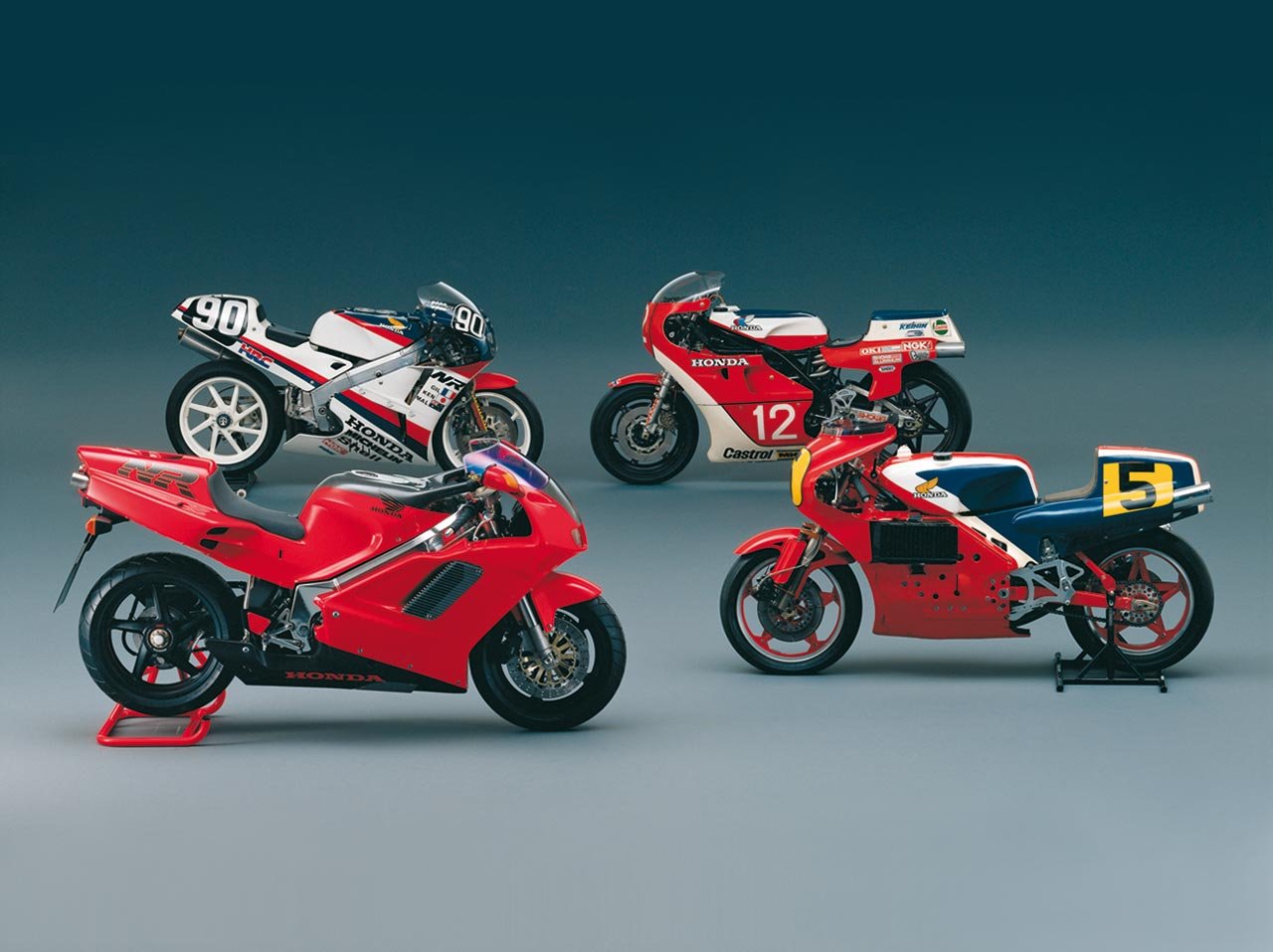
The resulting NR500 is one of the most famously unsuccessful racing motorcycles ever built. Honda debuted the bike during the 1979 Grand Prix season. The early machine was radical far beyond its engine, incorporating ideas such as a monocoque chassis and unconventional wheels.
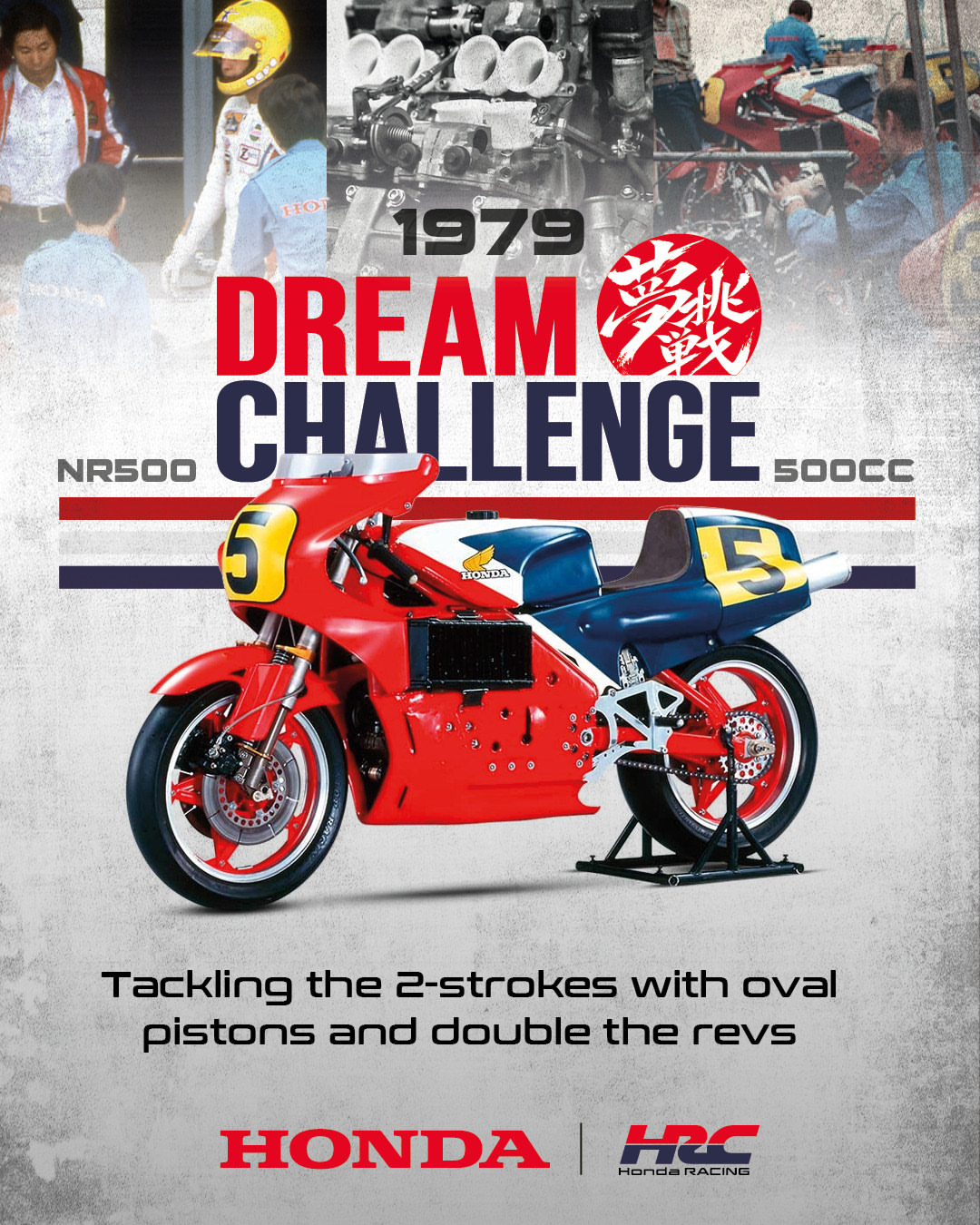
It was also nowhere near ready to beat the established two-strokes. The engine lacked the required power and reliability, and the chassis created problems of its own. But Honda continued refining the concept, eventually replacing some of the most radical early chassis ideas with more conventional racing solutions and extracting considerably more performance from the oval-piston engine. But the NR500 never became the dominant Grand Prix weapon Honda envisioned.
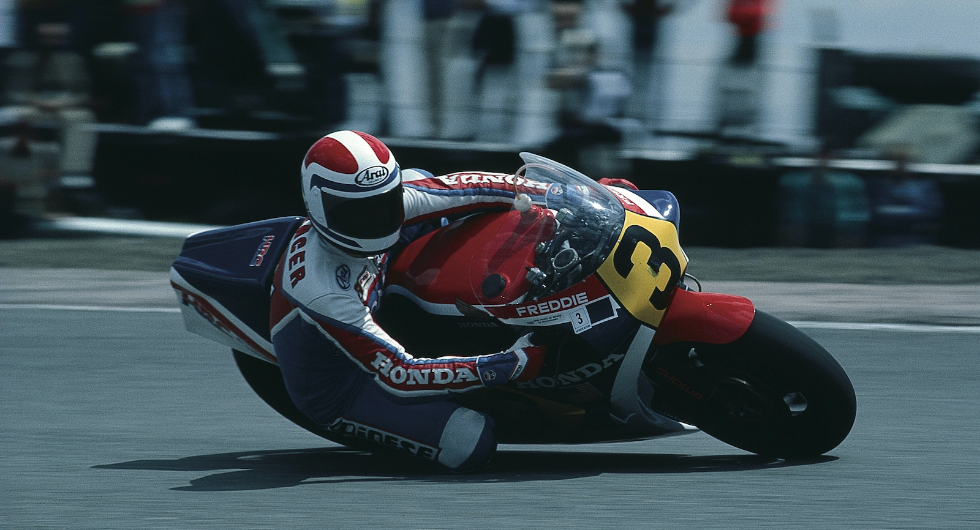
Honda eventually accepted the obvious. If two-strokes were the best tool for winning 500cc Grand Prix races, Honda would build a two-stroke. The result was the NS500, whose compact V3 two-stroke engine helped Freddie Spencer win the 1983 500cc World Championship.
The NR experiment could easily have ended there. Most manufacturers would probably have put the engine in a museum, congratulated the engineers for trying, and moved on. Honda did not.
Honda Refuses to Kill the Oval Piston
The NR500 had failed at its original objective, but the engineering itself remained fascinating. Honda had proven that the oval-piston concept could work. More importantly, years of development had gradually solved many of the problems that had plagued the early engines. The company continued experimenting with the technology after abandoning the original GP project.
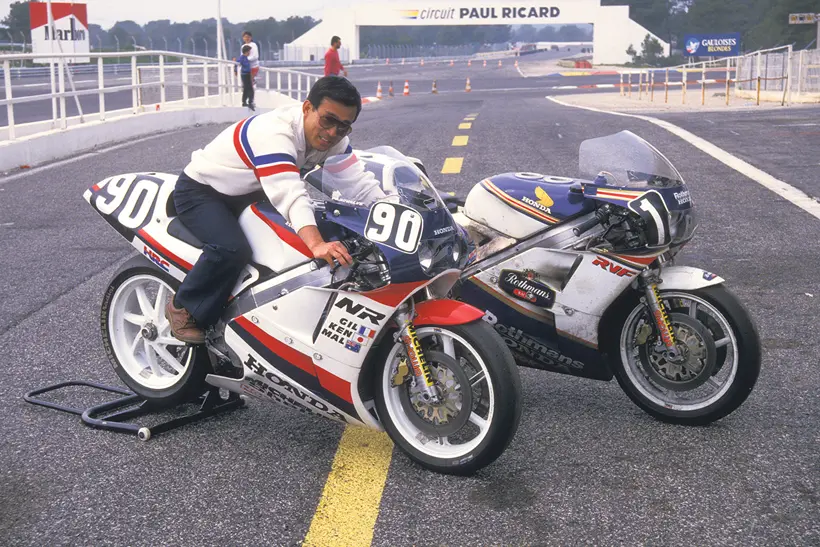
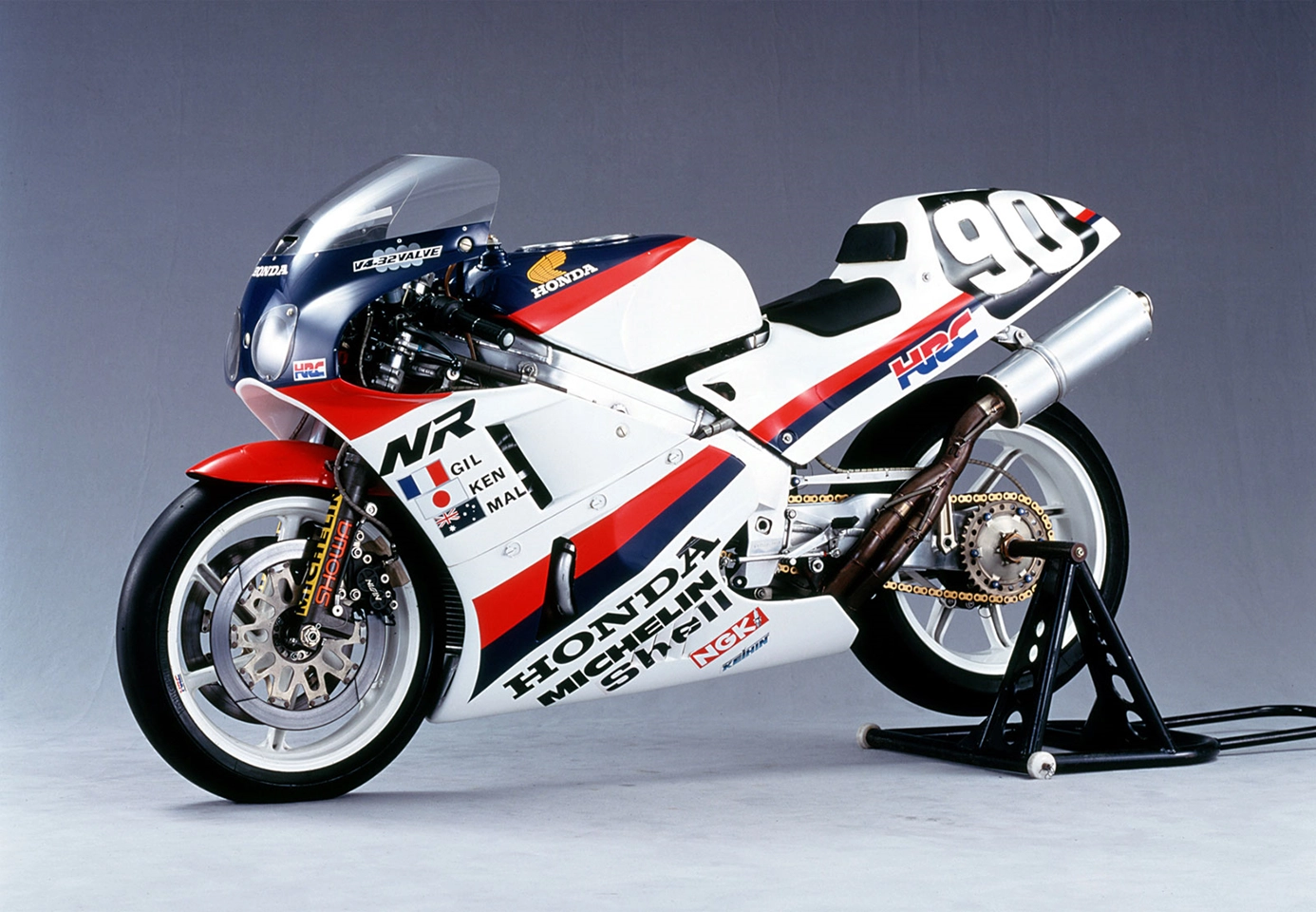
In the late 1980s, the oval piston returned in a larger form as the NR750 racing engine. Increasing displacement from 500 to approximately 750cc allowed Honda to extract serious power without pushing every component quite as close to the limits imposed by Grand Prix racing.
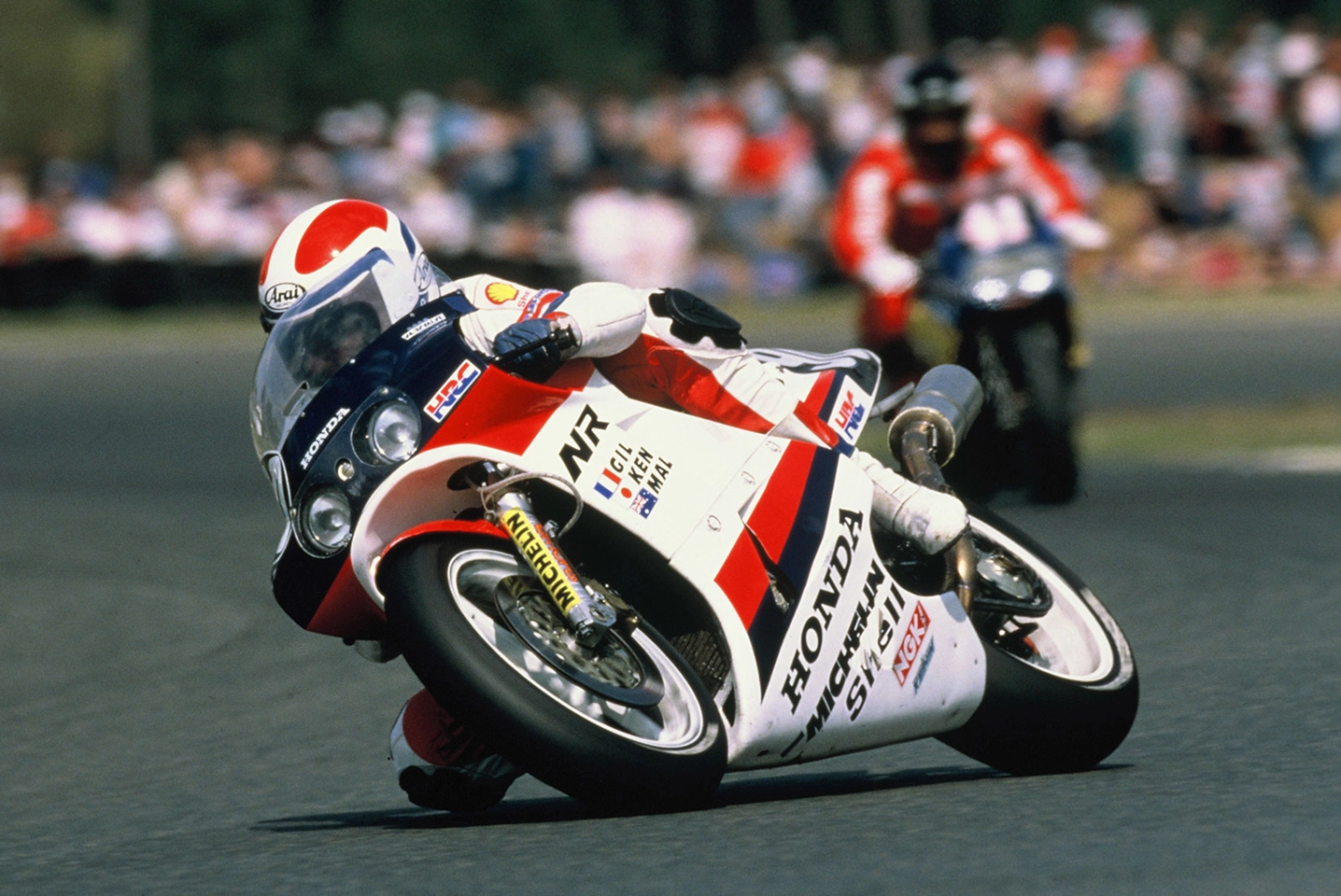
The company developed an oval-piston NR750 endurance racer and competed with it in events including the 24 Hours of Le Mans. The racing NR750 still wasn’t destined to rewrite the record books, but by now something important had changed. The oval-piston engine had evolved from an experimental concept into a mature piece of engineering. Honda could have stopped. Instead, they decided to put the thing on the street.
The Honda NR750
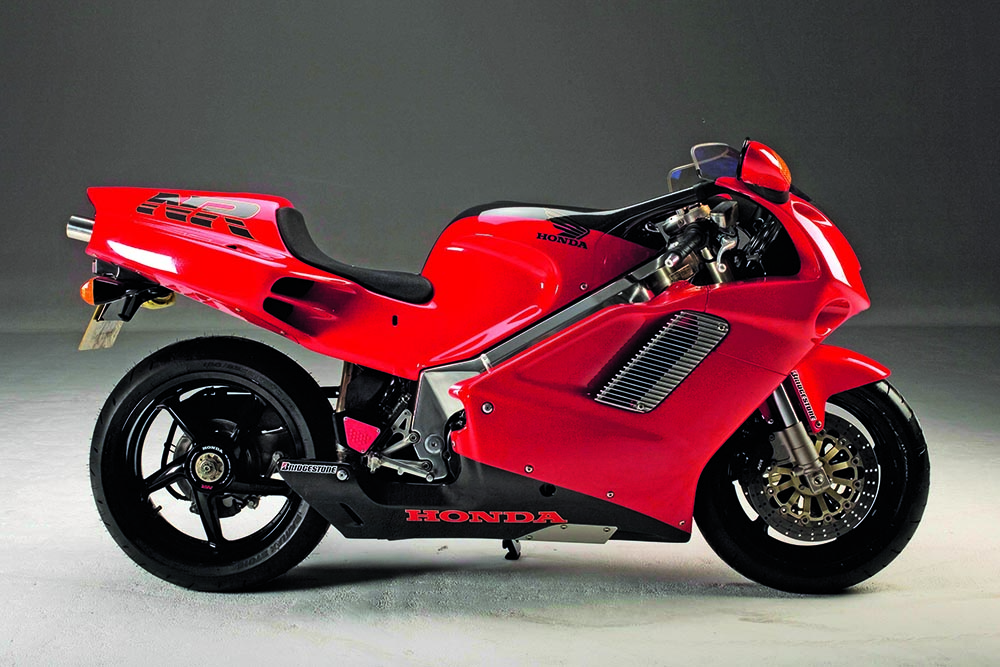
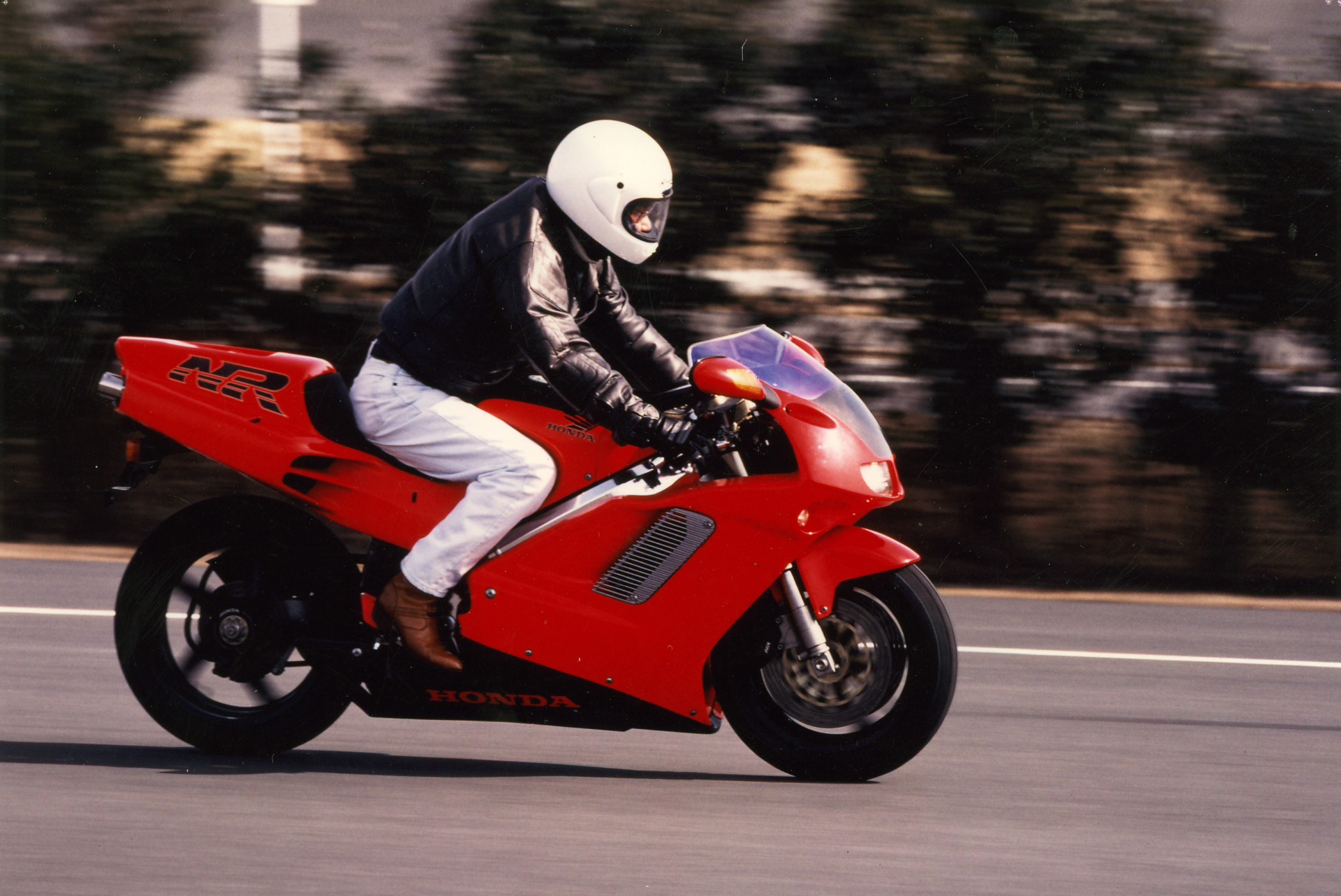
The production Honda NR arrived for the 1992 model year. This wasn’t a homologation special created because Honda needed to sell a few hundred examples to qualify some race bike, nor was Honda chasing a mass-market superbike category. The NR was essentially a technological showcase — a chance for Honda to demonstrate what its engineers could accomplish when normal production economics were pushed aside.
At its center was a 747.7cc, liquid-cooled, 90-degree V4 employing the same fundamental oval-piston architecture Honda had spent more than a decade developing. Each piston had eight valves. Each piston had two connecting rods. Four pistons meant 32 valves and eight connecting rods. Even written out nearly 35 years later, it sounds ridiculous.
32 Valves, Eight Connecting Rods
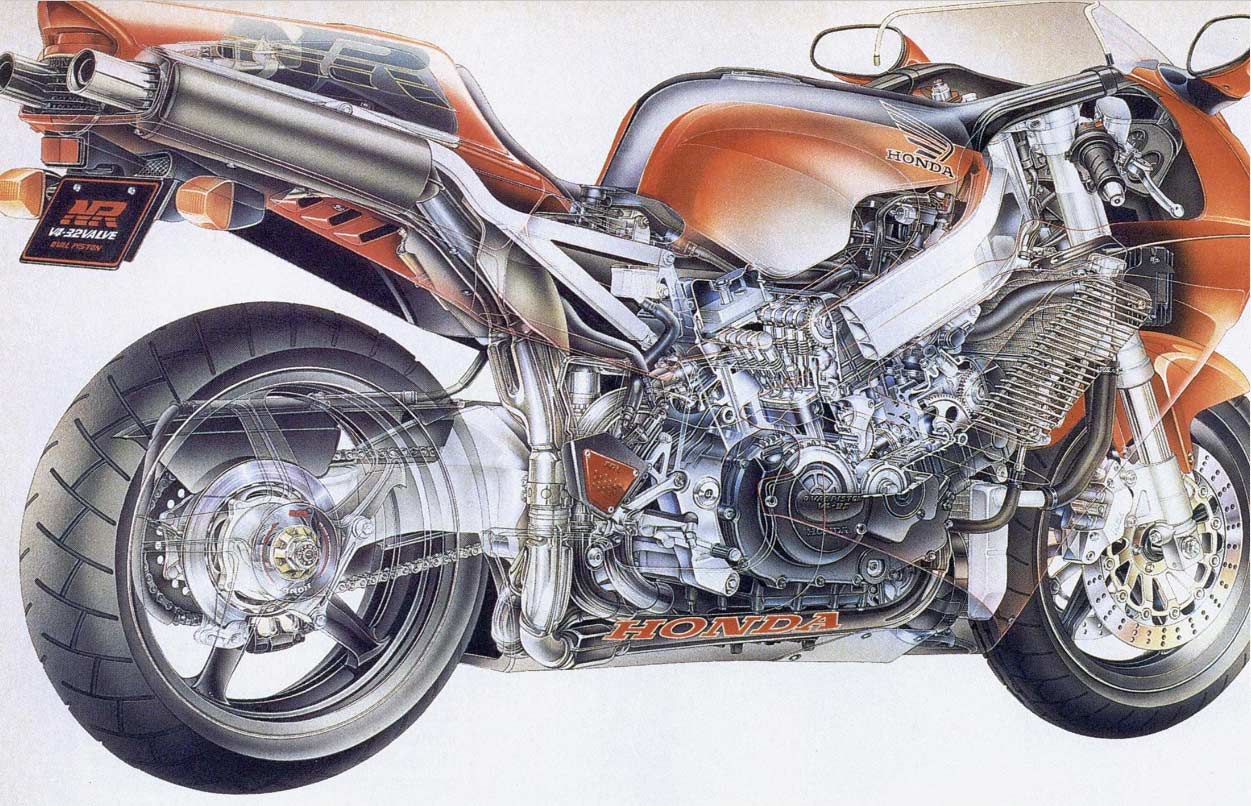
Imagine rebuilding a conventional four-cylinder motorcycle engine. You’d expect to find four pistons and four connecting rods. Open an NR750 and you’d find four pistons…and eight rods. Each piston spans so much area that a single central connecting rod would have difficulty controlling it properly. Honda therefore divided the load between two rods attached beneath each elongated piston.
Above each piston sat eight tiny valves operated by dual overhead camshafts. The enormous total valve area gave the engine exceptional breathing capability at high rpm.
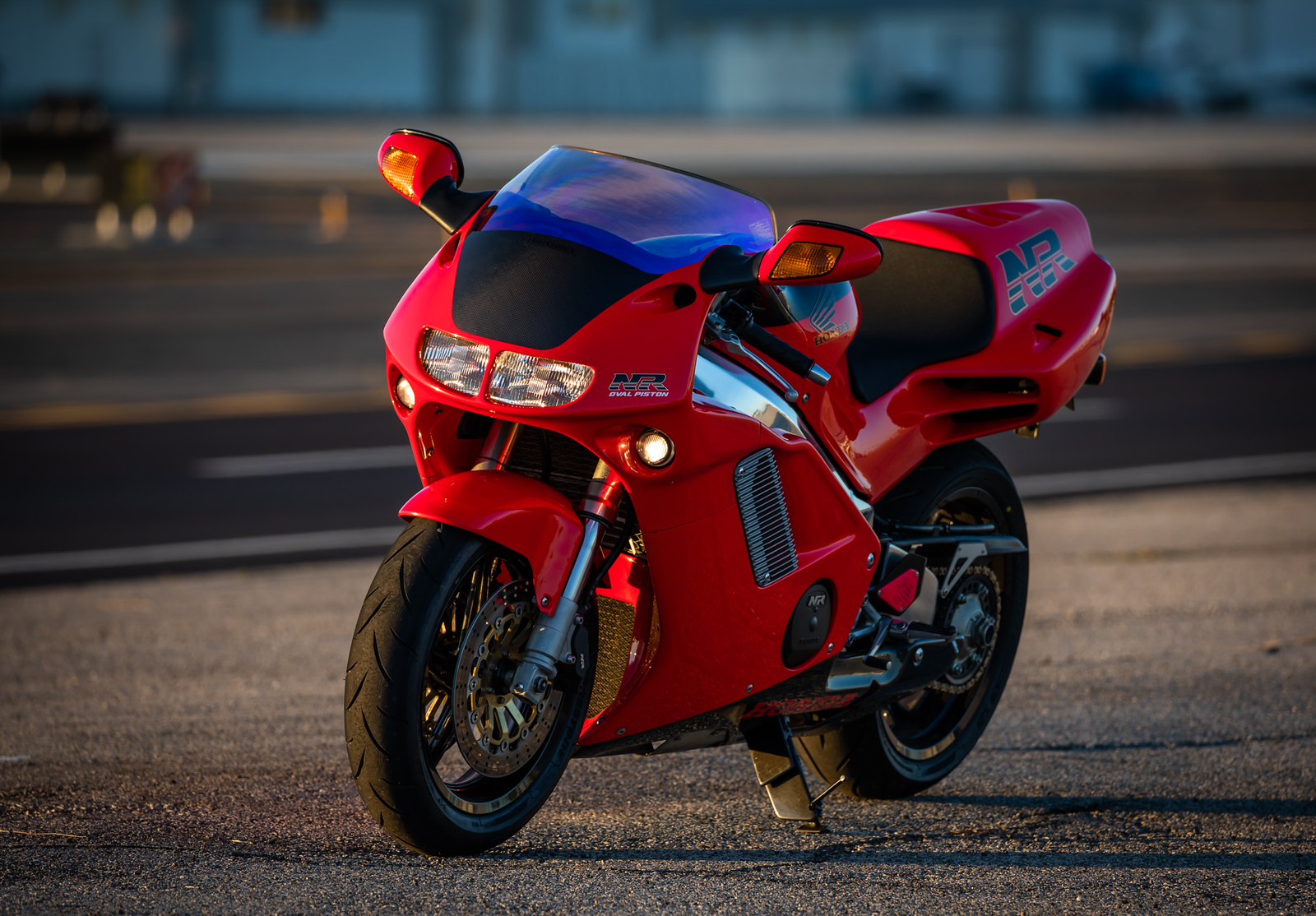
Electronic fuel injection handled the mixture rather than carburetors, and twin spark plugs per combustion chamber helped ignite the broad charge efficiently. The architecture had evolved enormously since the troublesome NR500. The underlying idea, however, remained exactly the same: Create the breathing characteristics of an eight-cylinder engine while technically building a four-cylinder one.
125 Horsepower at 14,000 RPM
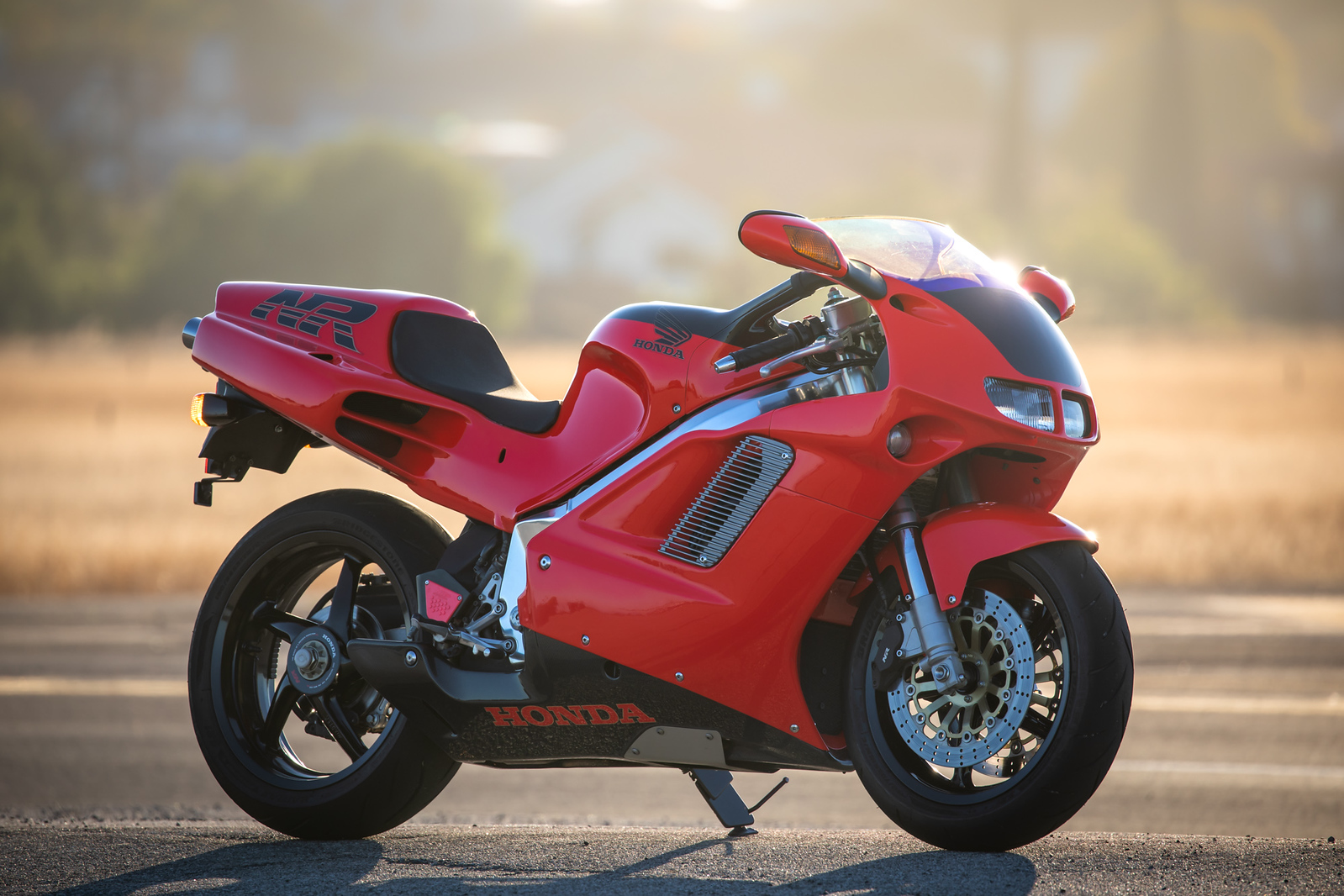
Honda rated the production NR at approximately 125 horsepower at 14,000 rpm. Its redline sat around the 15,000-rpm mark. Today, 125 horsepower from a 750cc motorcycle won’t make anyone drop their coffee. Modern middleweights can approach similar territory, while superbikes have long since passed 200 horsepower.
But peak output isn’t what makes the NR remarkable. Consider what Honda was asking a production engine to do in 1992. Four enormous non-circular pistons were traveling up and down thousands of times per minute. Thirty-two valves were opening and closing at extraordinary speed. Eight connecting rods were controlling four pistons inside an engine architecture unlike anything being mass-produced by another manufacturer. And Honda was willing to sell it to private customers.
The NR wasn’t particularly light, either. Dry weight was roughly 222 kg / 489 pounds, making it substantially heavier than the pure racing motorcycles that inspired its engine. This was not a stripped-down GP replica. It was a rolling technology demonstrator, and Honda made sure virtually everything surrounding the engine communicated that fact.
Carbon Fiber and Underseat Exhausts
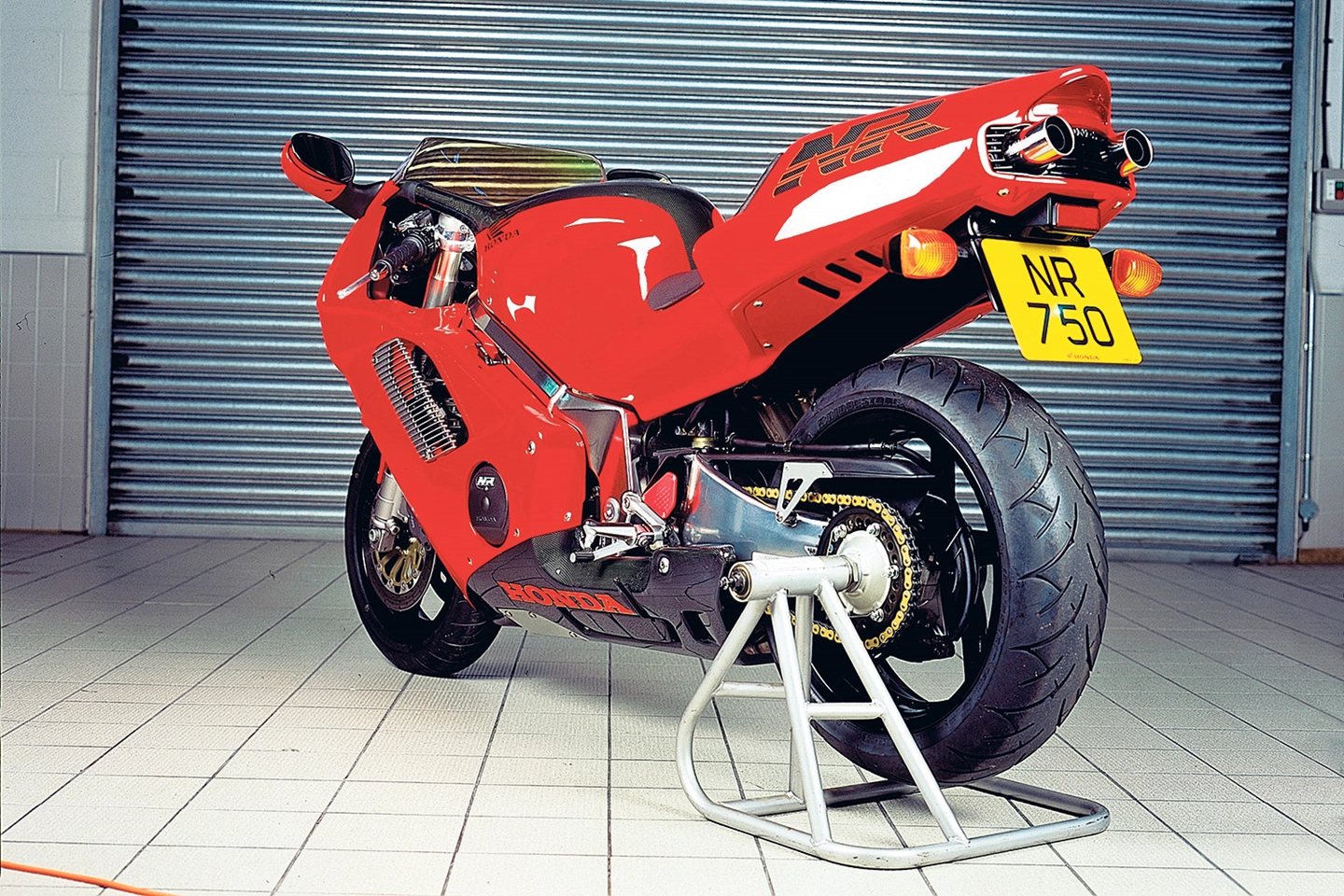
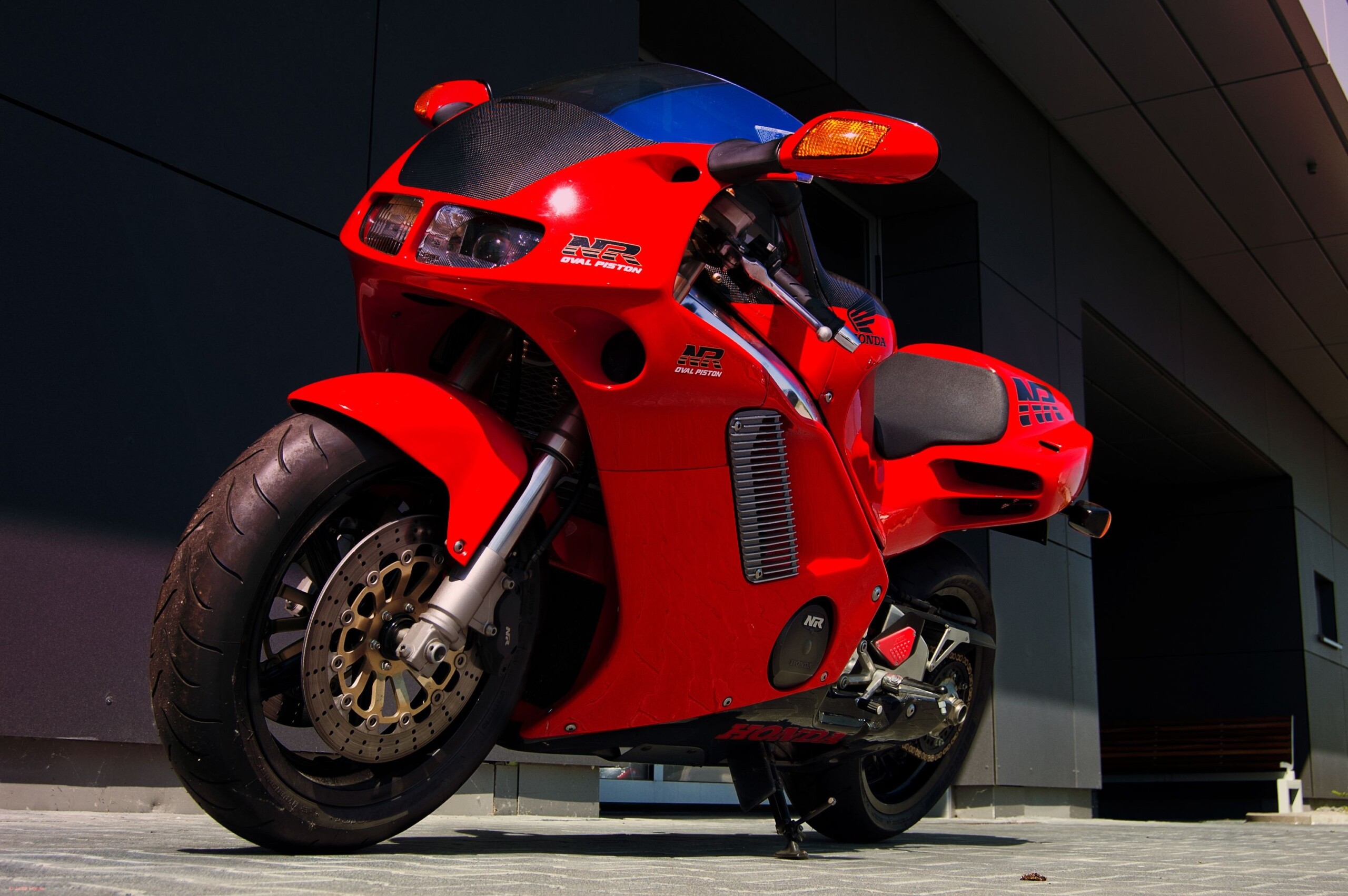
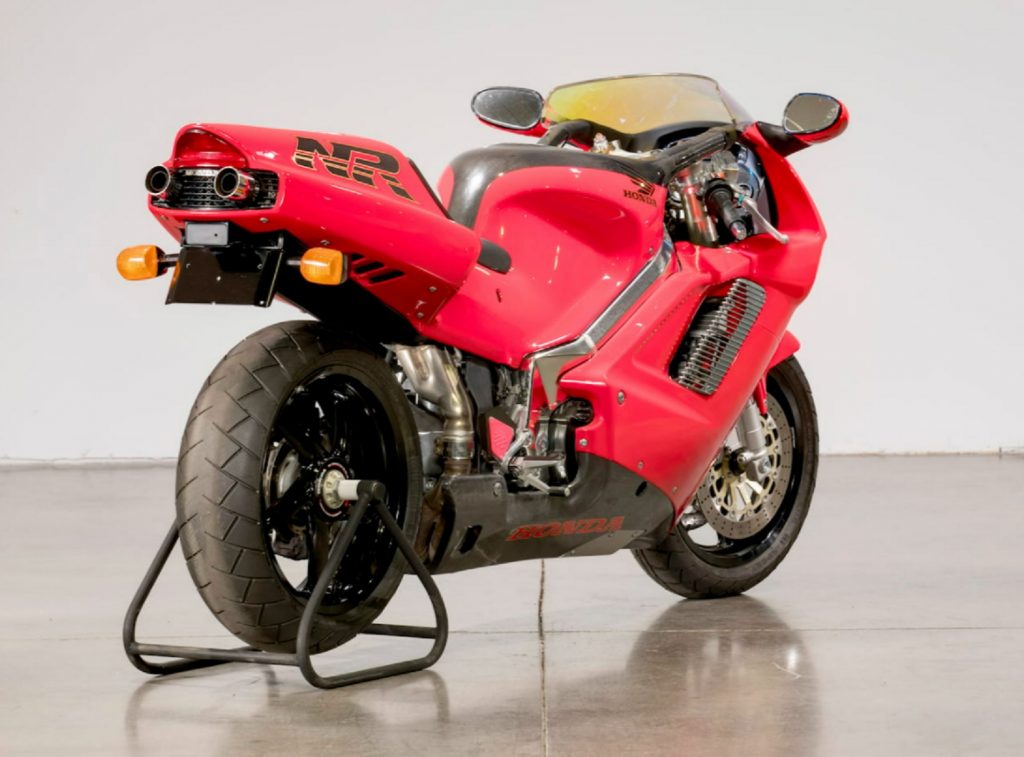
Look at the NR750 today and it still doesn’t resemble an ordinary early-1990s Japanese superbike. The bodywork was extensively constructed from carbon-fiber-reinforced material and finished in a deep candy red that made the exotic weave nearly invisible. The twin exhaust silencers exited beneath the tail. The rear wheel hung from a beautiful single-sided Pro-Arm swingarm. Large inverted forks carried the front end. Fuel injection was standard.
The fairing wrapped tightly around the engine, while its paired headlights and smoothly integrated shapes gave the motorcycle an almost concept-bike appearance. Several of these features would become familiar on exotic superbikes as the 1990s progressed. In 1992, seeing them combined on one road motorcycle was extraordinary. The NR looked every bit as expensive as it was. Which was fortunate, because it was extremely expensive.
The $50,000 Honda
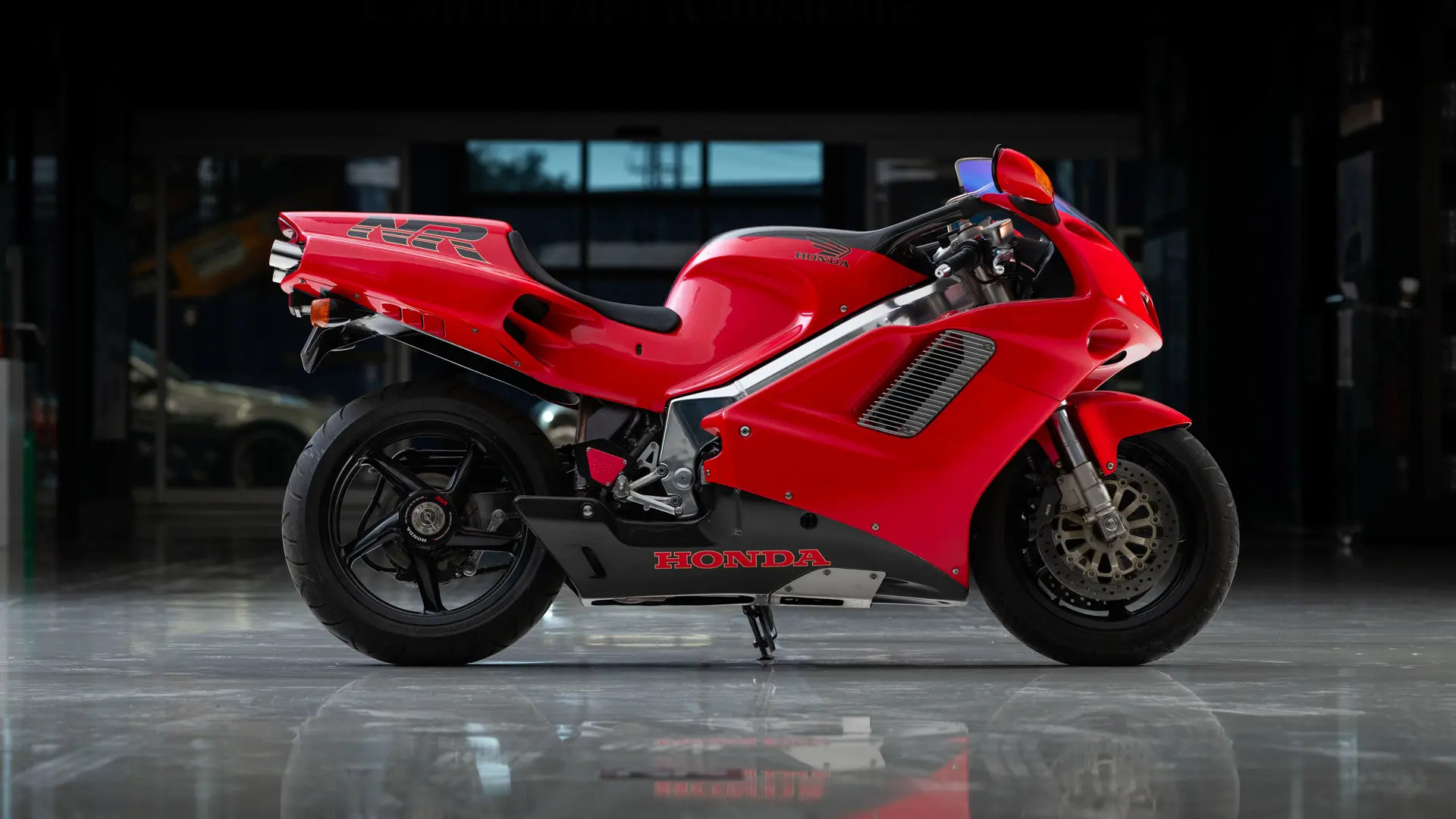
The NR750 reportedly carried a U.S. price of around $50,000 when new…in 1992. For comparison, contemporary Japanese superbikes cost a fraction of that amount. Even Honda’s own RC30 — itself an exotic hand-built homologation machine with titanium connecting rods and serious World Superbike pedigree — had been dramatically cheaper.
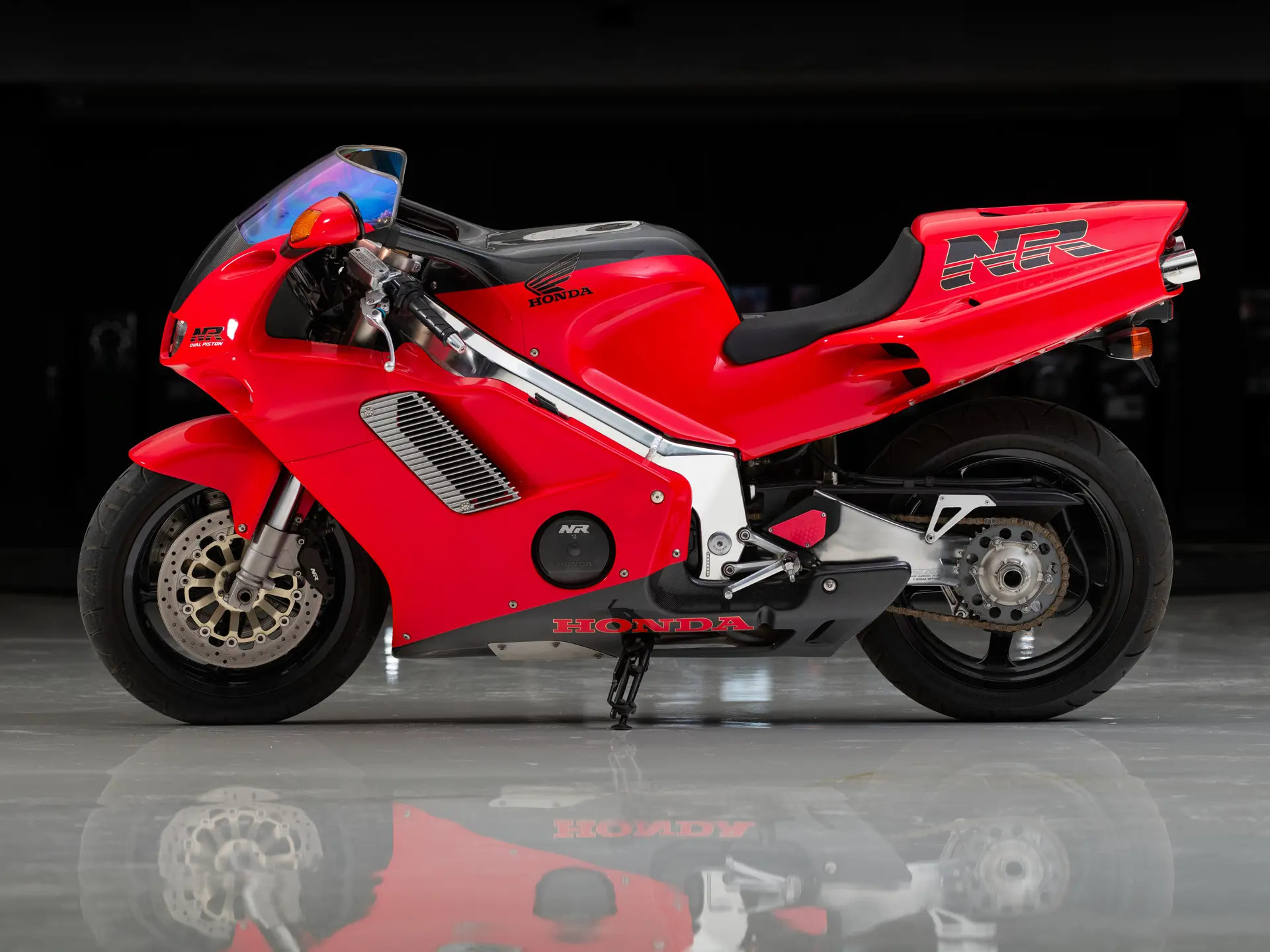
The NR’s price wasn’t really meant to make conventional economic sense. Honda was selling manufacturing complexity, exclusivity, engineering history, and the chance to own an engine unlike anything else on Earth. Production was correspondingly tiny. Approximately 300 examples are generally reported to have been built, though exact figures for production and public sales vary depending on the source and market. Whatever the precise number, the NR was never intended to become a common sight outside the local café.
Not the Fastest Superbike
Perhaps the strangest thing about the NR750 is that all this technology did not make it the fastest production motorcycle in the world. Contemporary superbikes could challenge it in outright performance while costing dramatically less. The Kawasaki ZXR750R, Yamaha OW01, Ducati 888, Honda RC30 and later RC45 all existed because manufacturers wanted to win races. The NR existed because Honda wanted to prove something.
Its 125 horsepower had to propel nearly 500 pounds of dry motorcycle, so its straight-line performance was impressive rather than otherworldly. Honda would later demonstrate the engine’s potential with a specially prepared NR ridden by Grand Prix star Loris Capirossi, setting high-speed records that pushed the machine close to the 300-km/h threshold.
But the road-going NR’s real performance statistic was never its top speed. It was the fact that you could turn the key and ride away on an oval-piston motorcycle at all.
Why Didn’t Oval Pistons Catch On?
If Honda successfully made oval pistons work, why don’t modern motorcycles use them? Because the original reason for their existence disappeared. Honda had created the oval piston to circumvent a specific racing restriction. The company wanted the breathing capability of more cylinders while complying with a four-cylinder maximum.
Outside that rules environment, the same result is vastly easier to achieve by simply building more conventional cylinders — or by improving conventional combustion chambers, materials, electronics, and valvetrain technology. And oval pistons are extraordinarily complicated and expensive to manufacture.
Every conventional piston engine benefits from more than a century of accumulated manufacturing knowledge built around round bores. Piston rings, honing processes, machining tools, coatings, testing procedures, and production equipment are all optimized around a circle.
Honda essentially chose to discard much of that advantage. It proved the alternative could work. There simply wasn’t much reason for anyone else to follow.
An Engineering Exercise With License Plates
Viewed purely rationally, the Honda NR750 makes very little sense. Round pistons work perfectly well. A four-cylinder motorcycle does not require eight connecting rods. A 750cc engine does not require 32 valves. Nobody needed carbon-fiber bodywork and oval cylinders simply to produce 125 horsepower. And there were far cheaper ways to build a motorcycle capable of similar speeds.
But rationality isn’t why the NR exists. It exists because Honda’s engineers once faced a rule stating that they could only have four cylinders and responded by questioning what, exactly, a cylinder had to look like. From that loophole came one of the most ambitious racing engines ever attempted, an unsuccessful Grand Prix campaign, years of stubborn development, an endurance racer, and finally one of the strangest production motorcycles ever offered to the public.
The NR750 wasn’t Honda’s fastest motorcycle. It wasn’t its most successful race bike. And it certainly wasn’t profitable. But perhaps no Honda better demonstrates what the company could produce when its engineers were allowed to pursue an idea simply because conventional wisdom said it shouldn’t work.
Four oval pistons. Thirty-two valves. Eight connecting rods. Fifteen thousand rpm. And a license plate. The Honda NR750 shouldn’t exist. We’re very glad it does.
Honda NR750 Specifications
| Model | Honda NR / NR750 (RC40) |
| Engine | 747.7cc liquid-cooled 90° V4 |
| Pistons | Four oval / elongated pistons |
| Connecting rods | Two per piston; eight total |
| Valves | Eight per cylinder; 32 total |
| Valvetrain | DOHC |
| Fueling | Electronic fuel injection |
| Power | Approx. 125 hp @ 14,000 rpm |
| Maximum rpm | Approx. 15,000 rpm |
| Transmission | Six-speed |
| Rear suspension | Honda Pro-Arm single-sided swingarm |
| Bodywork | Carbon-fiber-reinforced construction |
| Dry weight | Approx. 222 kg / 489 lb |
| Production | Approximately 300 commonly reported |
| Model year | 1992 |
| Original U.S. price | Approx. $50,000 |


