 996cc / Six cylinders / 140 horsepower / Shaft drive: The Laverda V6…
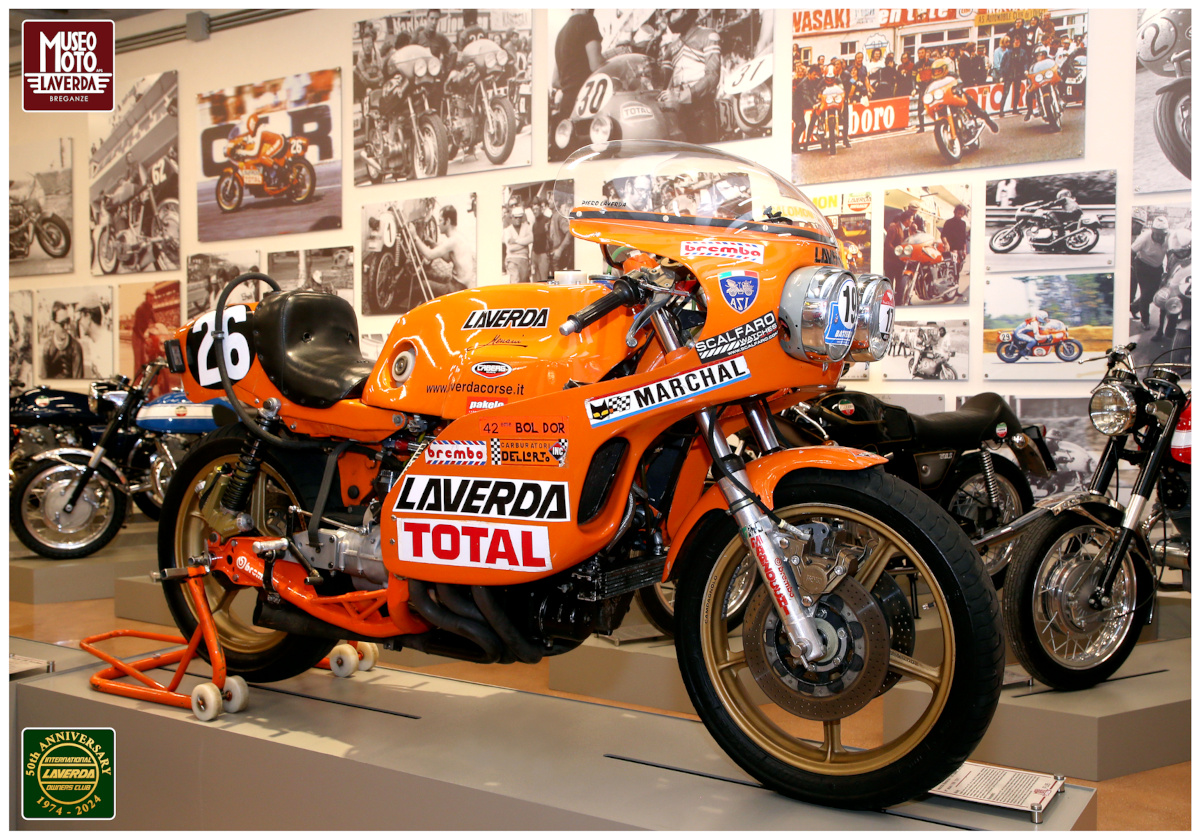
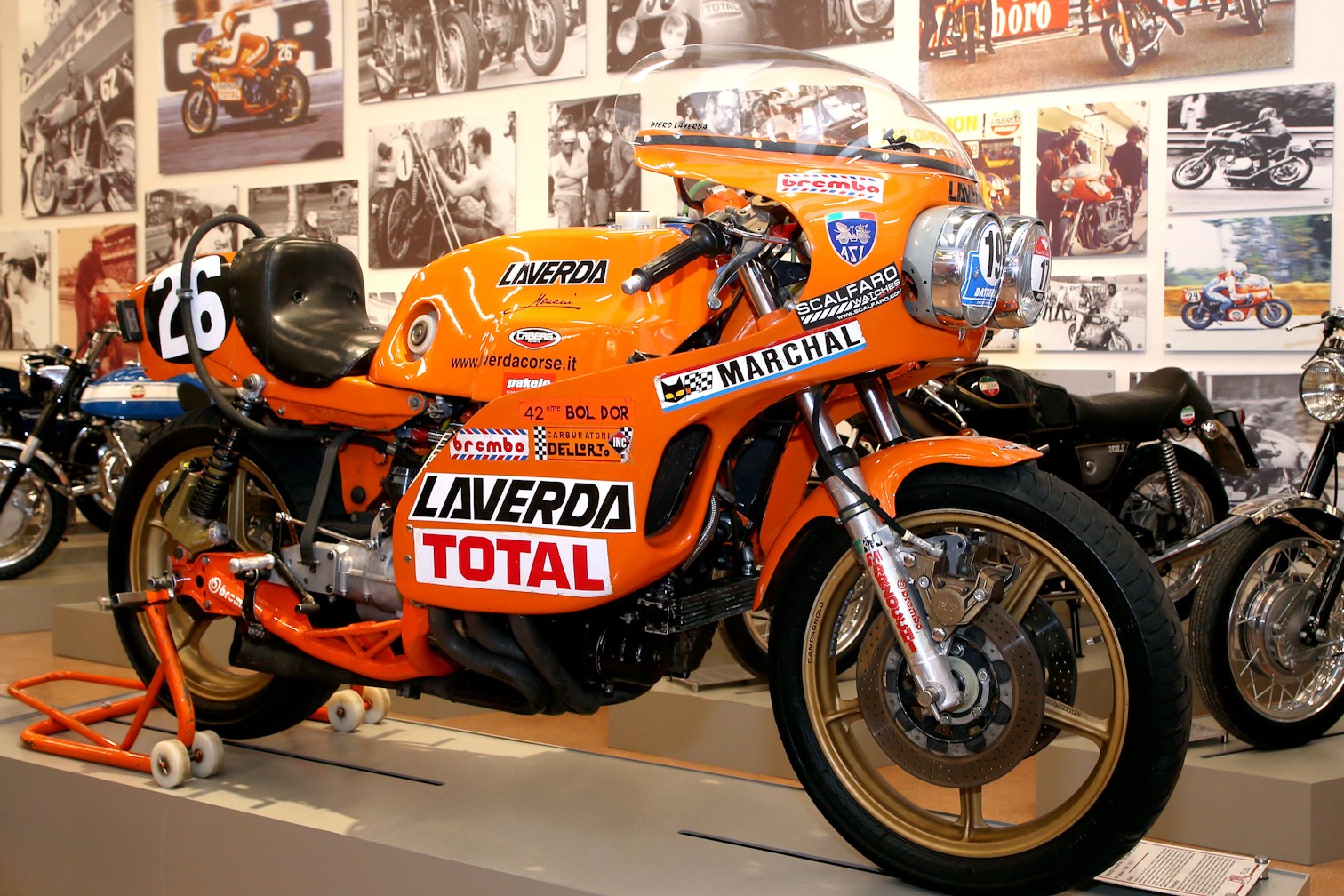
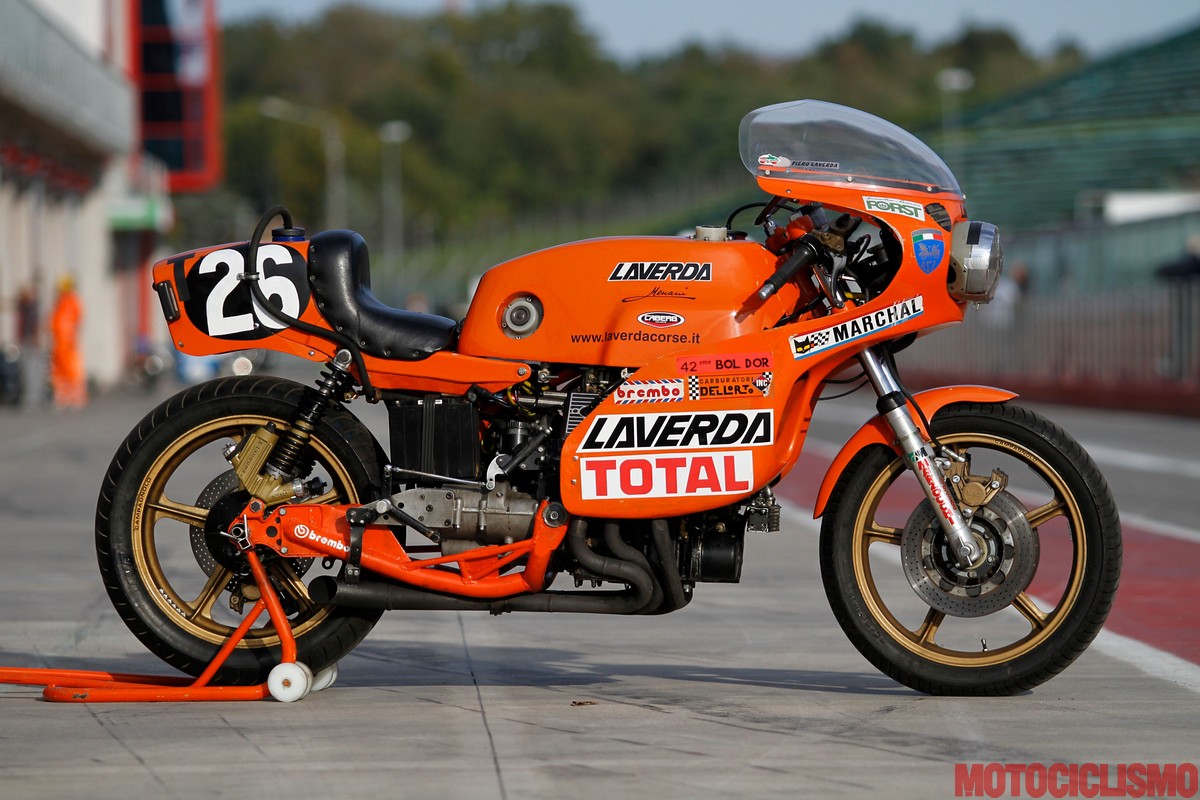
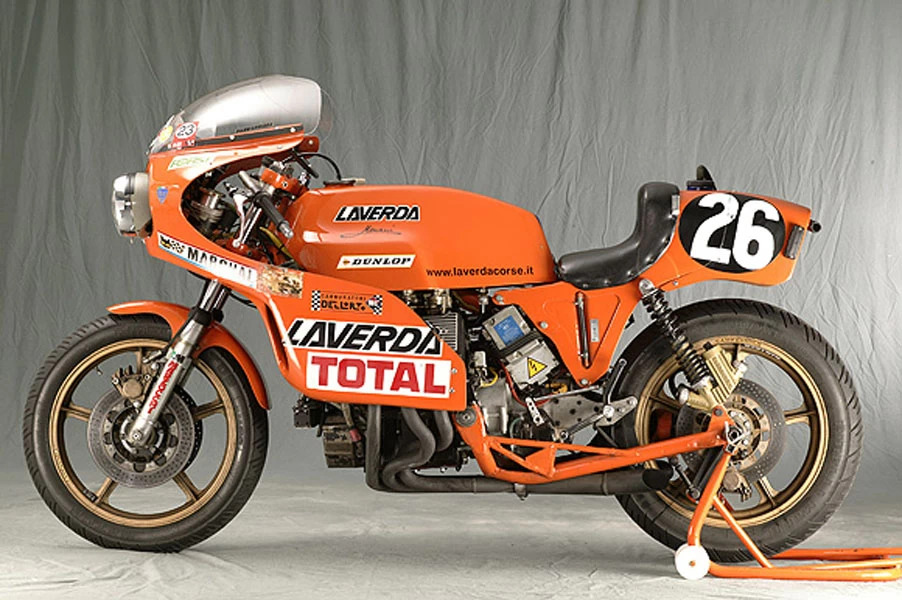
At the 1978 Bol d’Or, the fastest motorcycle on the Mistral Straight wasn’t one of Honda’s factory endurance racers — it was a Laverda. The orange Italian prototype reached approximately 283 km/h / 176 mph at Paul Ricard, roughly 20 mph faster than anything else in the field. Its liquid-cooled 996cc V6 produced around 140 horsepower, breathed through six downdraft Dell’Orto carburetors, and sent its power to the rear wheel through a five-speed gearbox and shaft final drive.
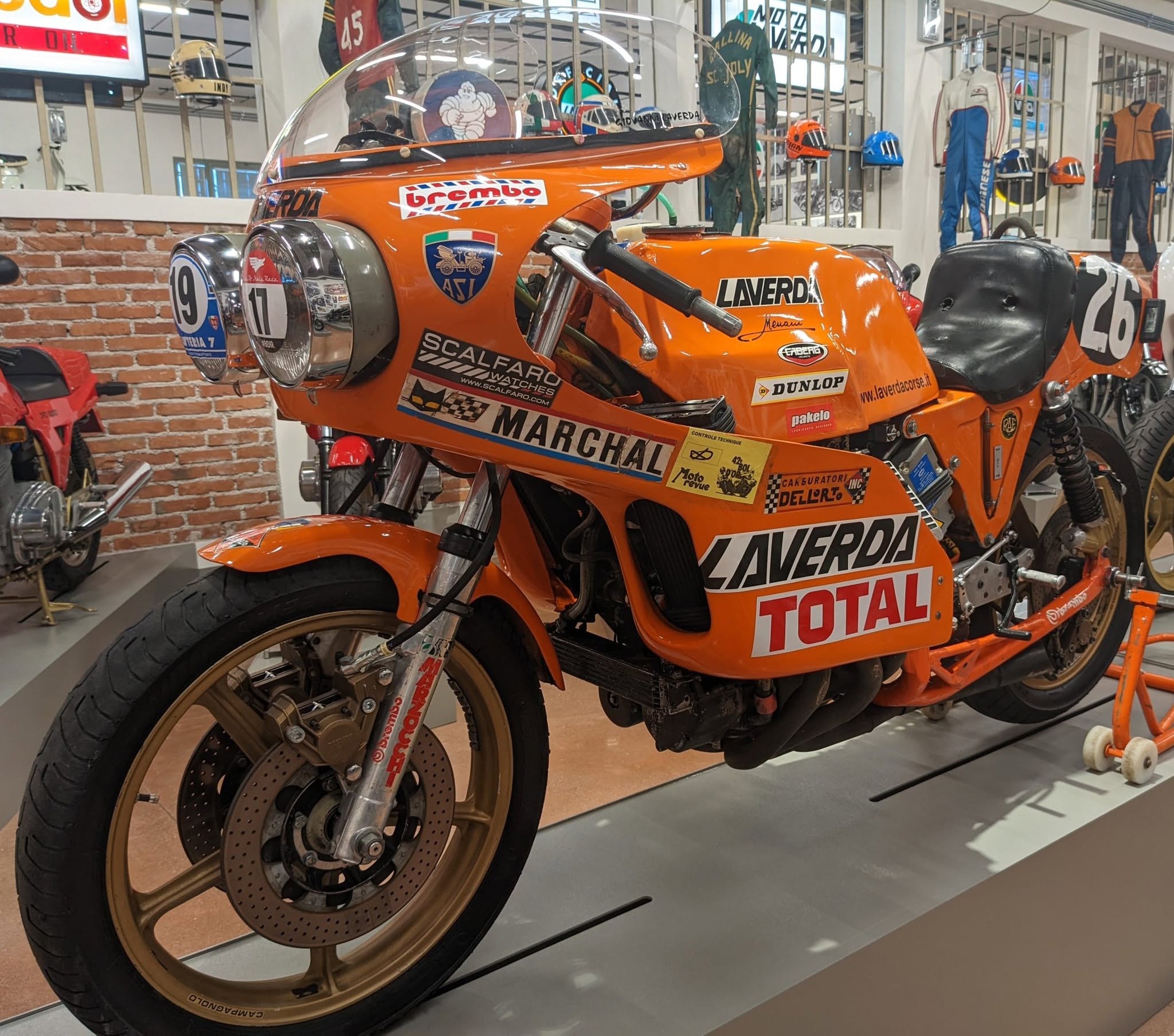
The engine was designed by Giulio Alfieri, one of the great Italian automotive engineers of the period. The motorcycle raced for approximately eight and a half hours until a universal joint in the driveshaft failed. The Laverda V6 would never race again. Yet describing it simply as a failed endurance racer misses much of the story. The V6 began as something more ambitious: a rolling laboratory intended to explore what the next generation of Laverda motorcycles might become.
Beyond the Laverda Triple
By the middle of the 1970s, Laverda had established itself as one of Europe’s most serious manufacturers of large sporting motorcycles. Its 750cc parallel twins had built an enviable reputation in endurance racing, while the company’s 1000cc three-cylinder machines evolved into some of the fastest production motorcycles of the decade. The British-developed Jota became particularly famous for combining substantial power with the ruggedness that had become a Laverda trademark.
But Massimo Laverda understood that the existing air-cooled engines could not remain competitive forever. Japanese manufacturers were advancing quickly. Multi-cylinder engines, liquid cooling, four-valve cylinder heads, and increasingly sophisticated chassis designs were reshaping the high-performance motorcycle.
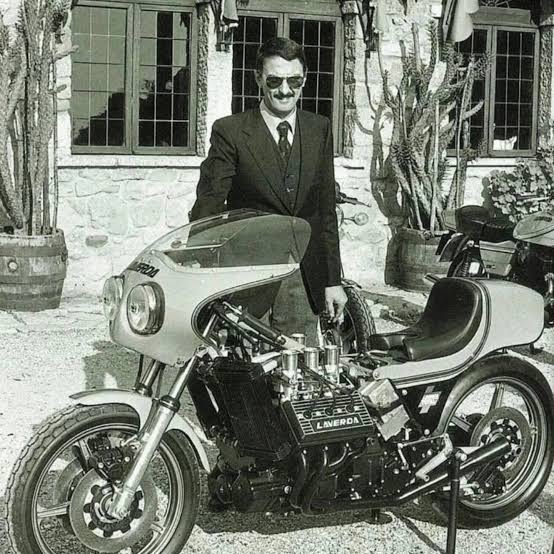
Laverda needed to think beyond the triple. The company turned to an engineer whose background was primarily in automobiles rather than motorcycles. Giulio Alfieri had spent more than two decades at Maserati, where his work included some of the company’s most important engines and cars. He was closely associated with the Maserati V6 that powered the Citroën SM and Maserati Merak, along with numerous racing and road-car projects. After Alejandro de Tomaso took control of Maserati in 1975, Alfieri left the company, and Massimo Laverda brought him in as a consultant.
A New Family of Engines
Alfieri and Laverda technical director Luciano Zen began developing the new engine in the mid-1970s. The V6 was not simply intended as an exotic race motor. Massimo Laverda later described the motorcycle as a laboratory for technologies that might eventually form the basis of future production machines. Plans discussed around the project included modular V6, V4, and possibly smaller V-twin derivatives.
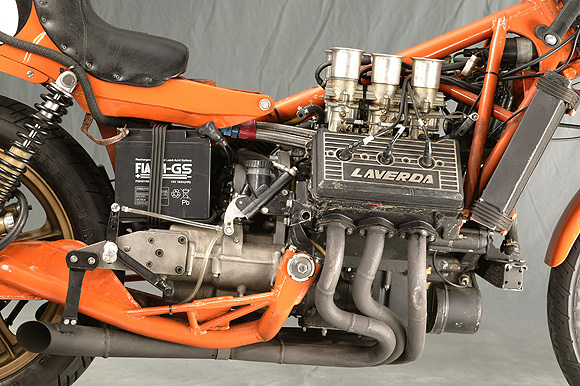
Piero Laverda has likewise emphasized that the project was not originally created specifically for endurance competition. The concept was ambitious but logical: Develop a modern liquid-cooled engine architecture with four-valve heads and strong performance, test it under extreme conditions, and potentially derive a new generation of Laverda road bikes from the work. The centerpiece would be a one-liter V6.
996cc, 24 Valves
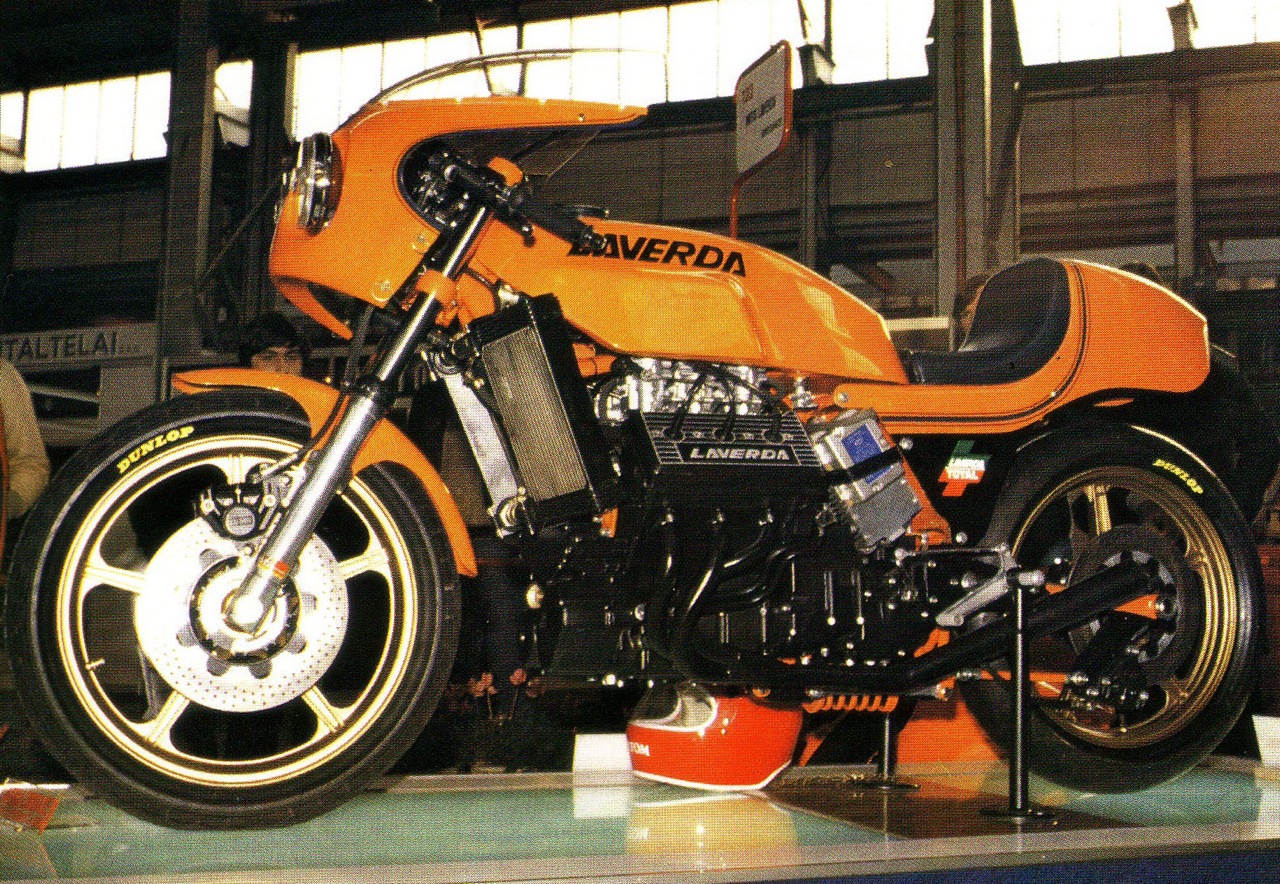
The resulting engine displaced 996cc from a 65 x 50mm bore and stroke. Its six cylinders were arranged at 90 degrees around a longitudinal crankshaft. Each cylinder bank used dual overhead camshafts operating four valves per cylinder, giving the engine 24 valves in total. Chain drive operated the camshafts. Lubrication was dry-sump, with approximately five liters of oil circulated through the engine by two pumps.
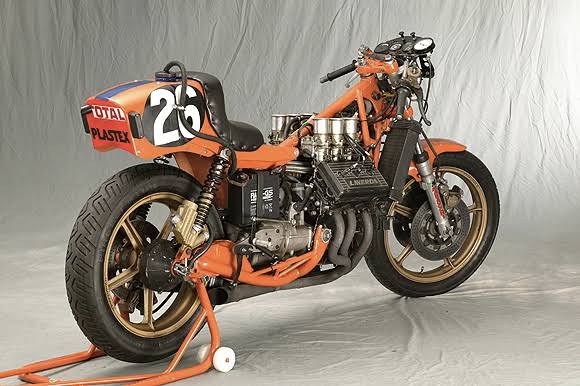
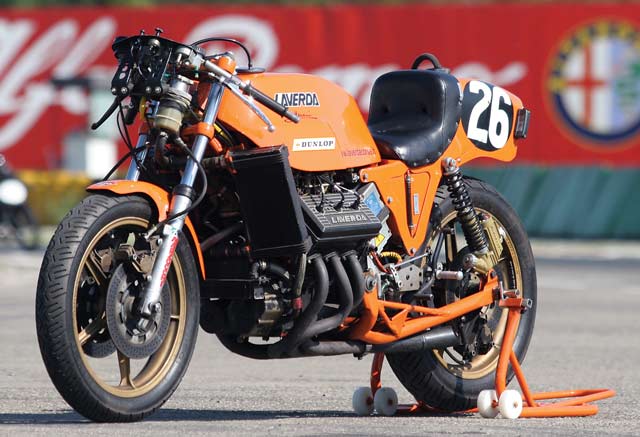
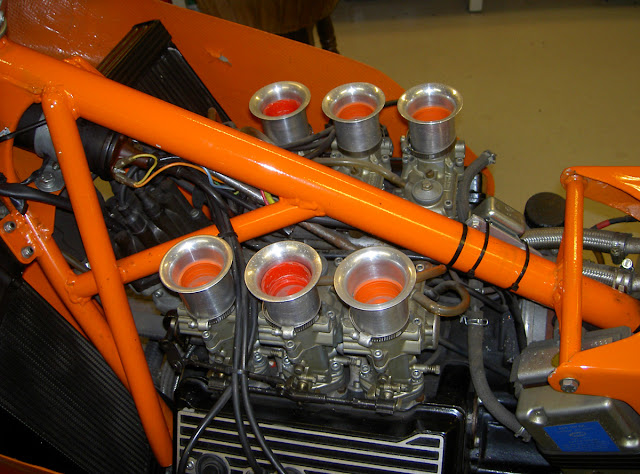
Cooling was equally substantial. Roughly six liters of coolant passed through the engine and a pair of radiators mounted on either side of the motorcycle. Six individual downdraft Dell’Orto carburetors fed the cylinders. The prototype shown at Milan in 1977 used 30mm carburetors; development continued, and the Bol d’Or version reportedly ran larger 34mm units.
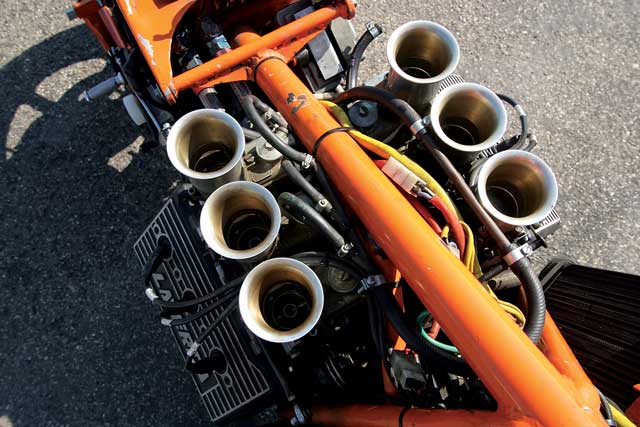
Despite Alfieri’s automotive background, this was not simply a reduced car engine. It was a purpose-built motorcycle V6.
Nearly 140 Horsepower
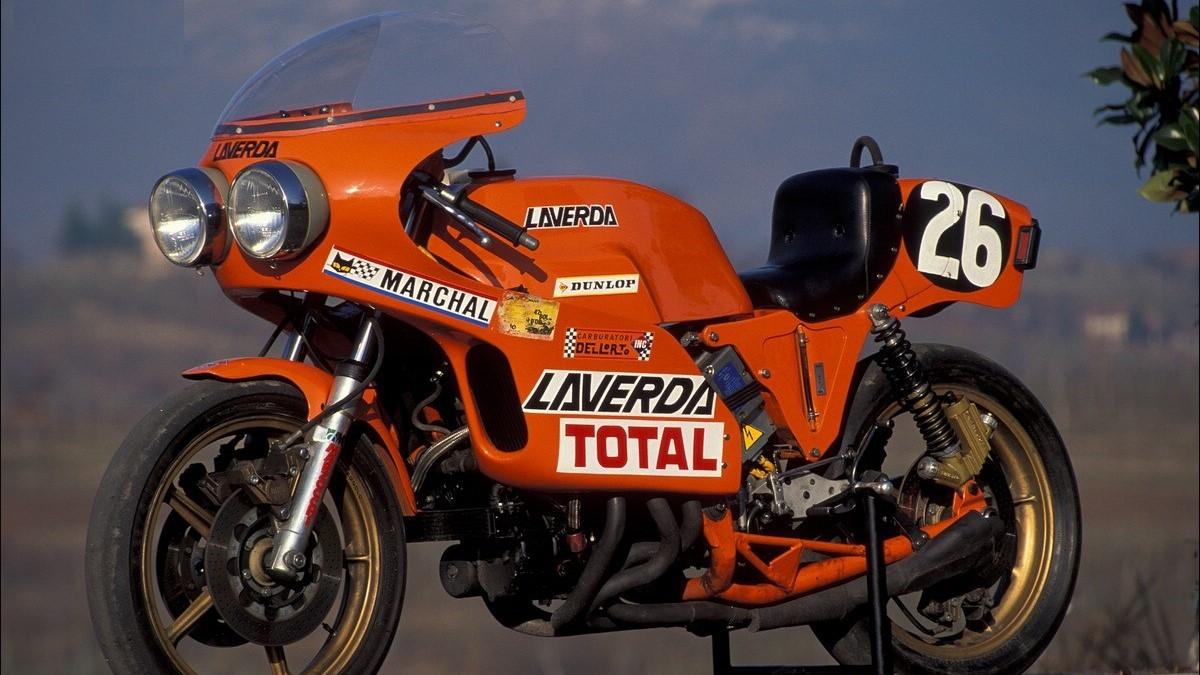
The engine showed considerable promise almost immediately. Accounts of the first dyno runs place output just below 120 horsepower. Further development pushed the figure toward 140 hp. As with many prototypes, published figures vary according to development stage. A dyno sheet dated September 4, 1978 — just days before the Bol d’Or — reportedly showed 138.7 bhp at 10,500 rpm and 95.5 Nm / 70.5 lb-ft of torque at 9,500 rpm.
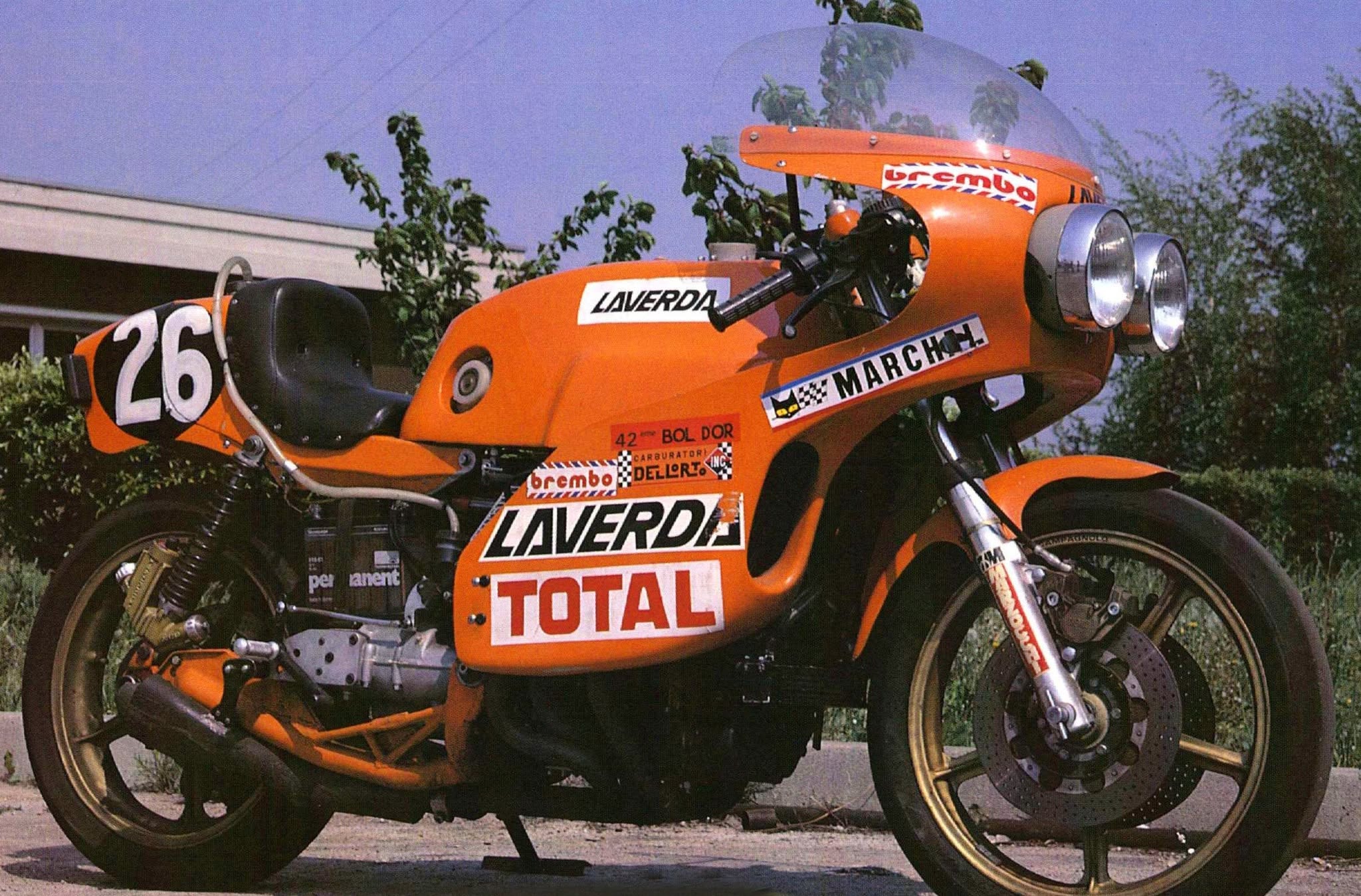
Just as important for endurance racing, the engine could pull usefully from around 4,000 rpm. This was not a peaky experimental motor that produced one impressive number at the top of the tachometer. Laverda and Alfieri had developed an unusually broad spread of power for such an exotic engine.
Other specifications quote approximately 140 hp at 11,800 rpm, reflecting the engine’s continuing development. Either figure was formidable in 1978…
Why Shaft Drive?
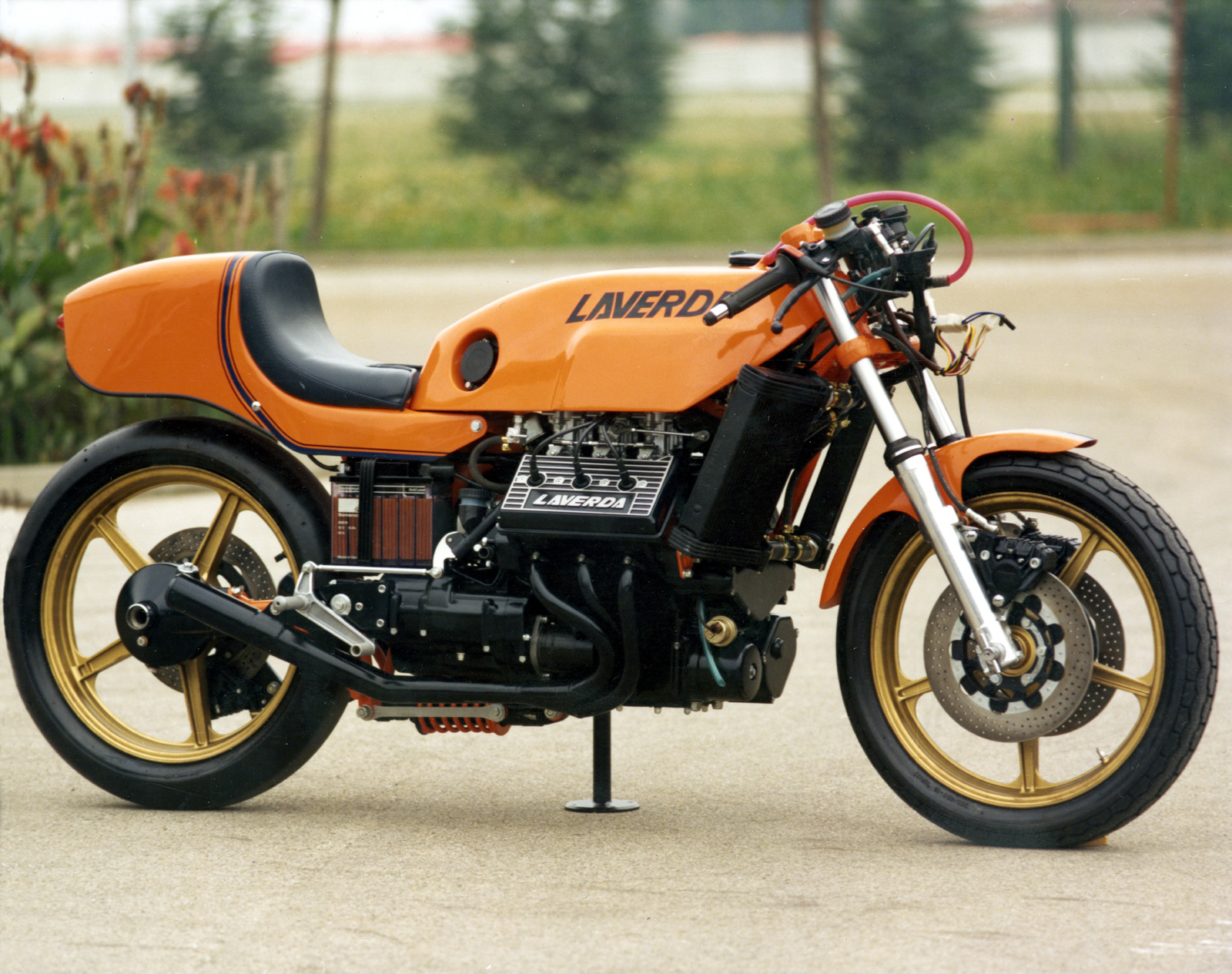
One of the strangest aspects of the Laverda V6 was its final drive — it used a shaft. That makes much more sense when the V6 is understood as a development platform for future road motorcycles rather than as a clean-sheet endurance racer.
With its crankshaft running longitudinally in the chassis, shaft drive provided a logical way of transmitting power toward the rear wheel without turning the drive through 90 degrees at the gearbox. The five-speed transmission sat behind the engine and fed a driveshaft running rearward.
For a fast sporting road motorcycle, the arrangement promised cleanliness and durability. For a 140-hp endurance racer, it created a new set of engineering challenges…and those challenges would ultimately determine the motorcycle’s fate.
The First Chassis Didn’t Work
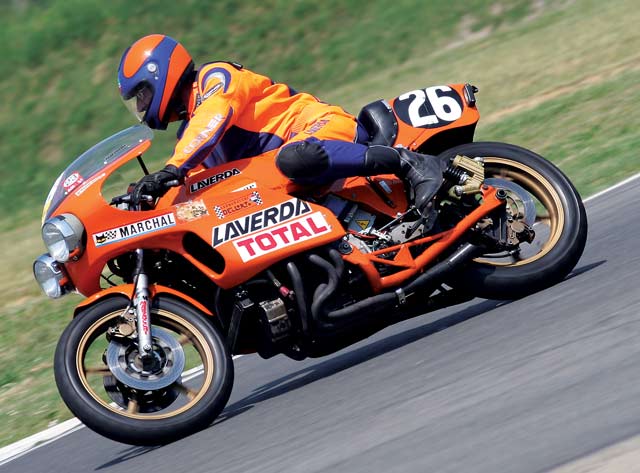
The original V6 prototype shown at the 1977 Milan motorcycle show used a tubular spaceframe, 38mm Marzocchi forks, and an unusual cantilever rear suspension with a single shock positioned beneath the motorcycle. The engine acted as a stressed structural member.
On paper, the concept was sophisticated. On the track, however, the chassis wasn’t sufficiently rigid or predictable. Testing exposed serious handling problems, forcing Laverda to rethink the rear half of the motorcycle. The team abandoned the original monoshock arrangement, substantially lengthened and reinforced the swingarm, and returned to a more conventional twin-shock layout.
The driveshaft was revised as well. Instead of a simple arrangement, the race bike used a two-piece shaft connected by a universal joint. The revised machine handled considerably better, but development time was running out.
From Laboratory to Endurance Racer
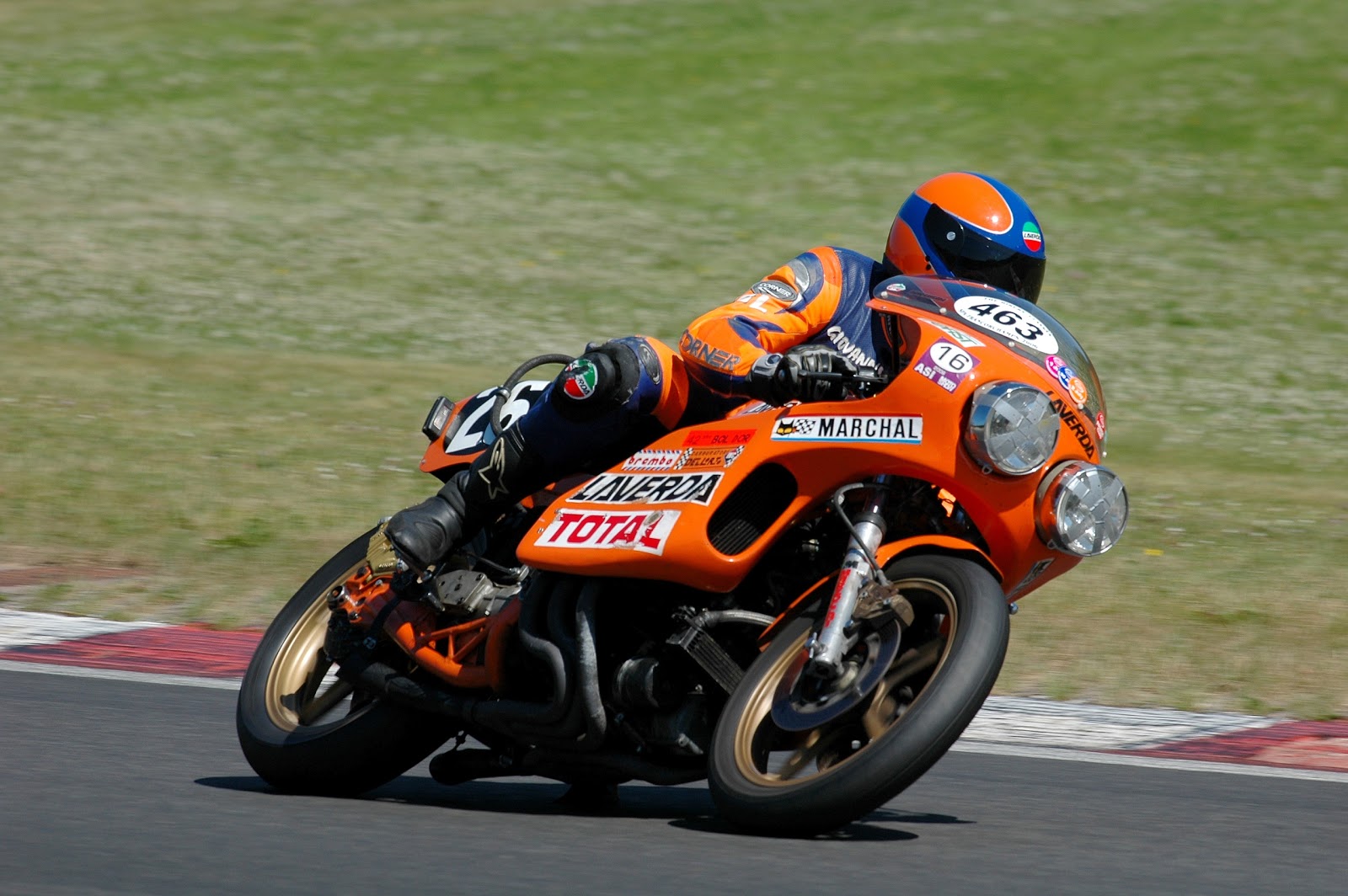
By 1978, Laverda decided the Bol d’Or would provide the ultimate test. The 24-hour race at Paul Ricard would subject the V6 to sustained high speeds, repeated braking, rider changes, heat, vibration, and mechanical loads that no ordinary development session could reproduce.
Nico Cereghini and Carlo Perugini were chosen to ride. Cereghini later recalled testing the V6 at Mugello in the months before the race. His description makes clear that the machine was still immature and required substantial work before Paul Ricard.
The final race motorcycle differed substantially from the 1977 show bike. It had the revised twin-shock rear suspension, Campagnolo magnesium wheels, altered bodywork, a larger fuel tank, revised chassis components, and the developed engine. Ready to race, it weighed roughly 236-238 kg / 520-525 lb. It wasn’t light, obviously. It was, however, extraordinarily fast.
176 MPH at Paul Ricard
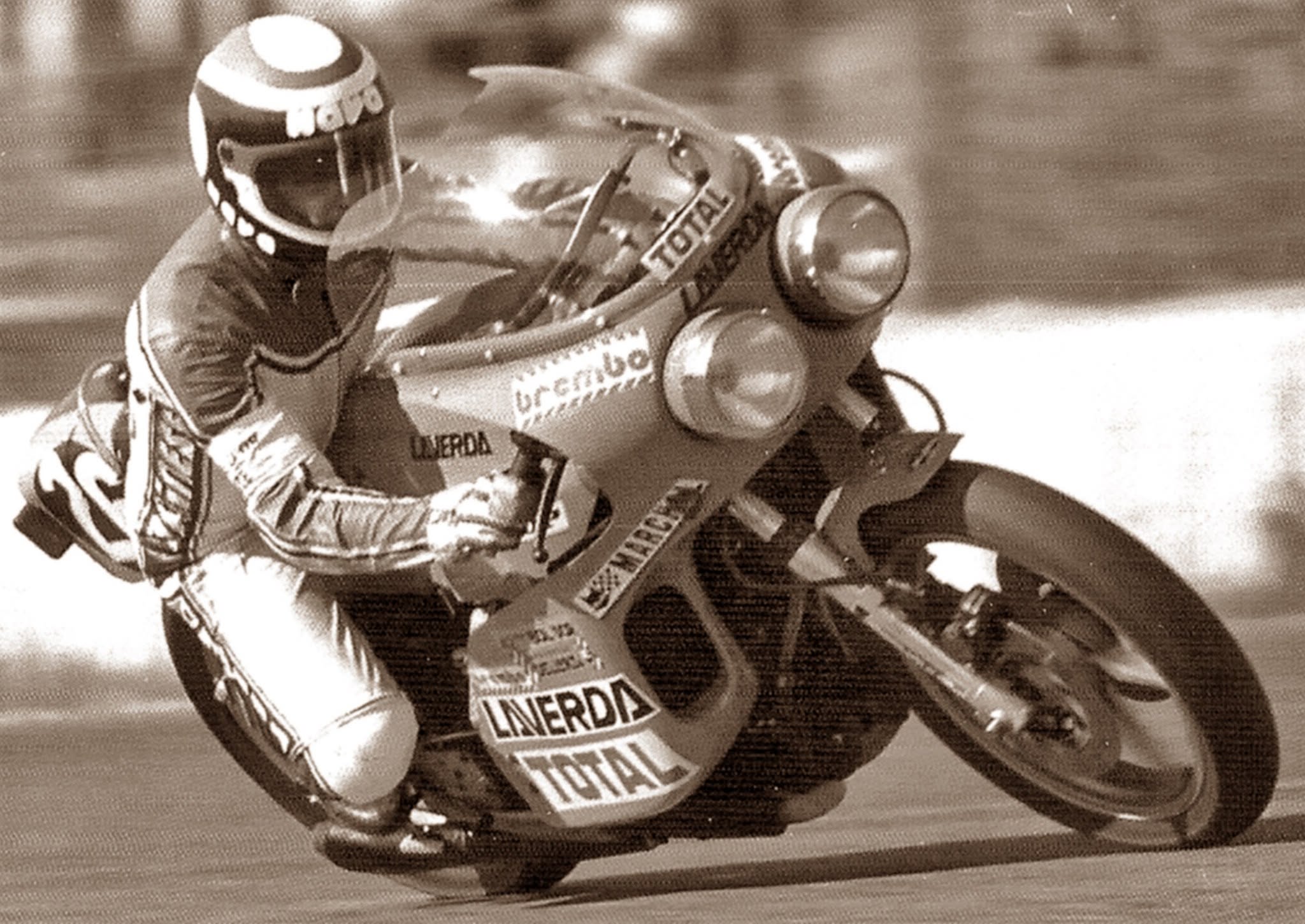
Paul Ricard’s Mistral Straight was almost tailor-made for demonstrating the V6’s advantage. Approximately 1.8 kilometers long in its original configuration, it allowed powerful motorcycles to stay at full throttle for an unusually long time. The Laverda was reportedly clocked at 283 km/h / 176 mph.
Roadracing World, using a period Laverda photograph, describes the bike as having roughly a 20-mph top-speed advantage over the rest of the field. Other Laverda histories put the difference over the fastest factory Honda at roughly 31-38 km/h. Whichever comparison is used, the conclusion is the same: Nothing else at the race was close in a straight line.
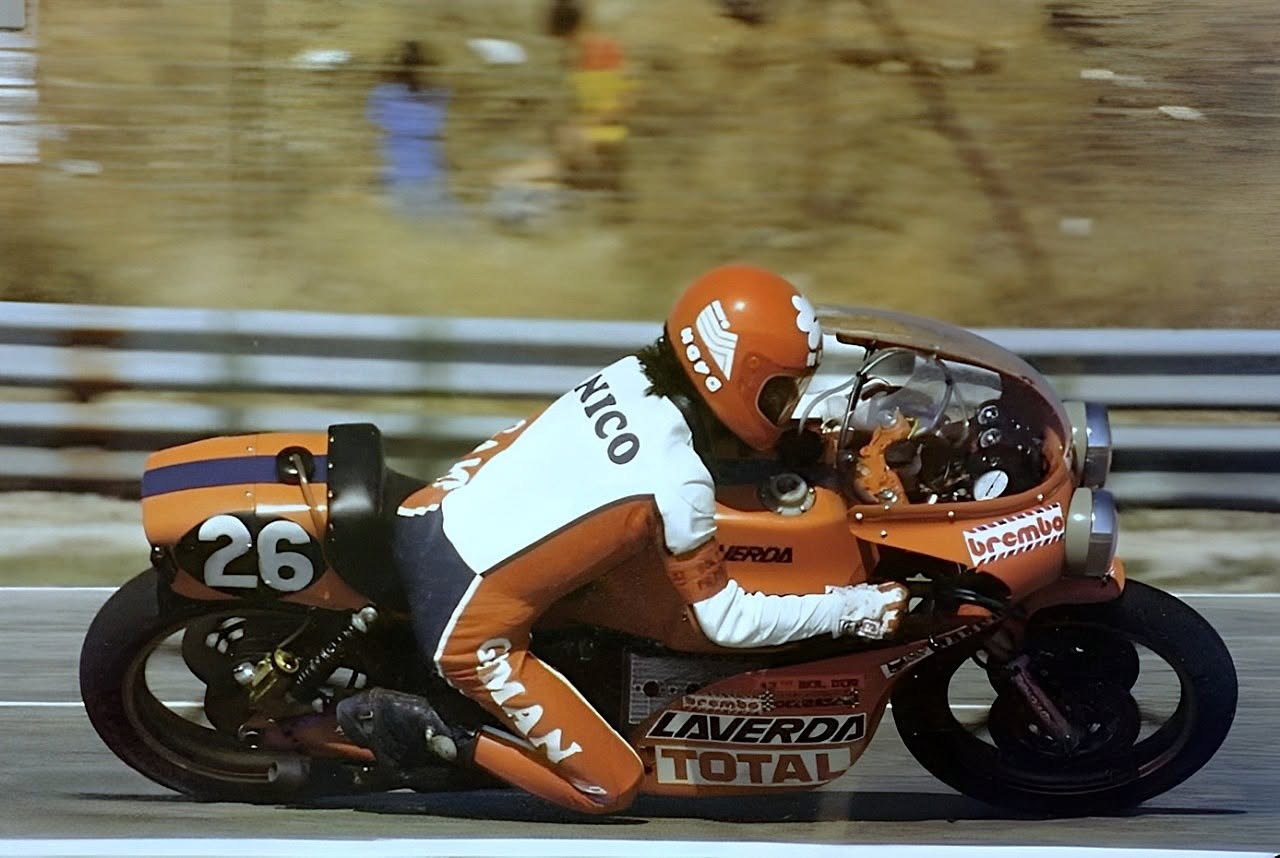
Cereghini later remembered approximately 278 km/h on the Mistral during the event, which gives a useful first-person confirmation of the scale of the performance. The problem was everything between the straights.
Fast Engine, Unfinished Motorcycle
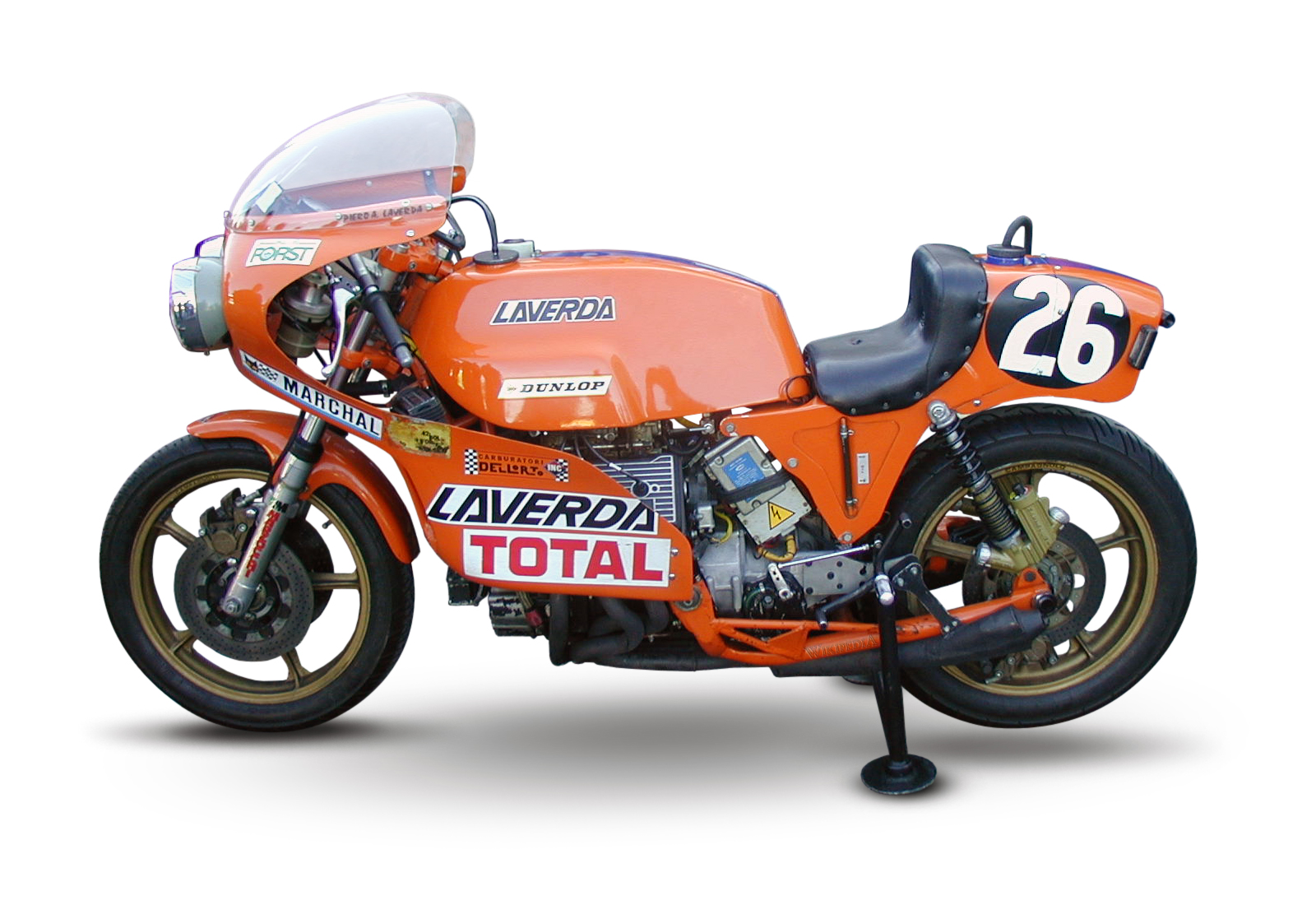
The Laverda was heavy, long, and still inadequately developed. Its riders struggled particularly with rear-end behavior. Under braking, the back of the motorcycle could hop, while rear-tire wear was excessive. The V6’s tremendous straight-line speed therefore didn’t automatically translate into competitive lap times.
The motorcycle wasn’t 20 mph faster because Laverda had somehow created a complete race bike a generation beyond Honda and Kawasaki. Rather, they’d built an exceptional engine and put it in a chassis that still needed significant development.
During the Bol d’Or, Cereghini and Perugini gradually settled into the race. After roughly eight and a half hours, the V6 was running in 23rd position among a field of approximately 80 starters…then the final drive failed.
The Part They Knew Might Break
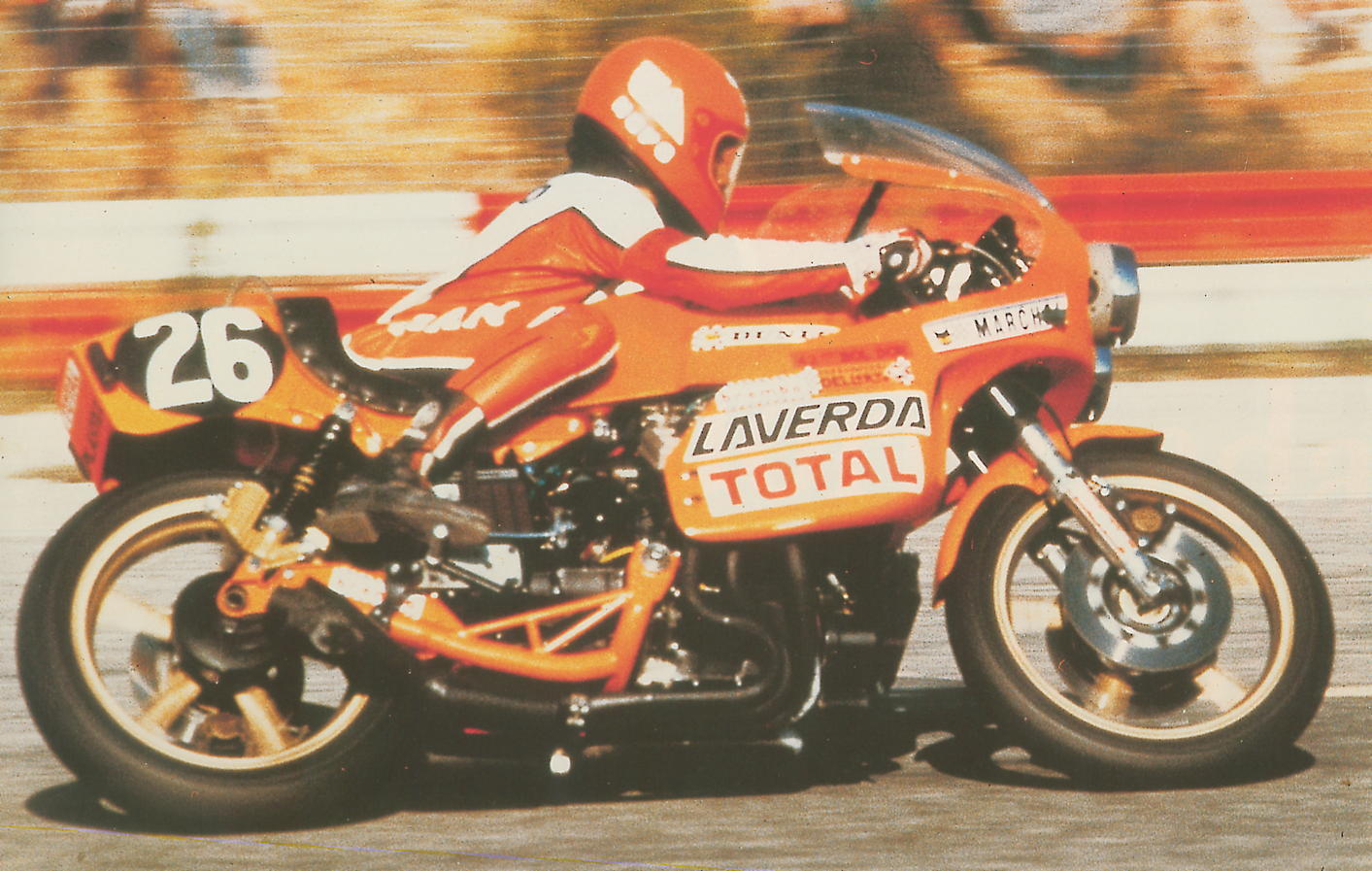
The failure wasn’t the engine, gearbox, or main driveshaft — the universal joint connecting the two sections of the revised shaft drive broke at the gearbox output. Remarkably, the team apparently knew it was a marginal component. According to detailed Laverda histories, testing had suggested that the joint’s life expectancy was around nine hours. No stronger suitable component had been available in time for the race.
It lasted approximately eight and a half hours. In principle, the team could have replaced it, but replacing one joint with another identical component would only postpone the same failure. Laverda withdrew the motorcycle. The V6’s only competitive race was over.
What Might Have Happened in 1979?
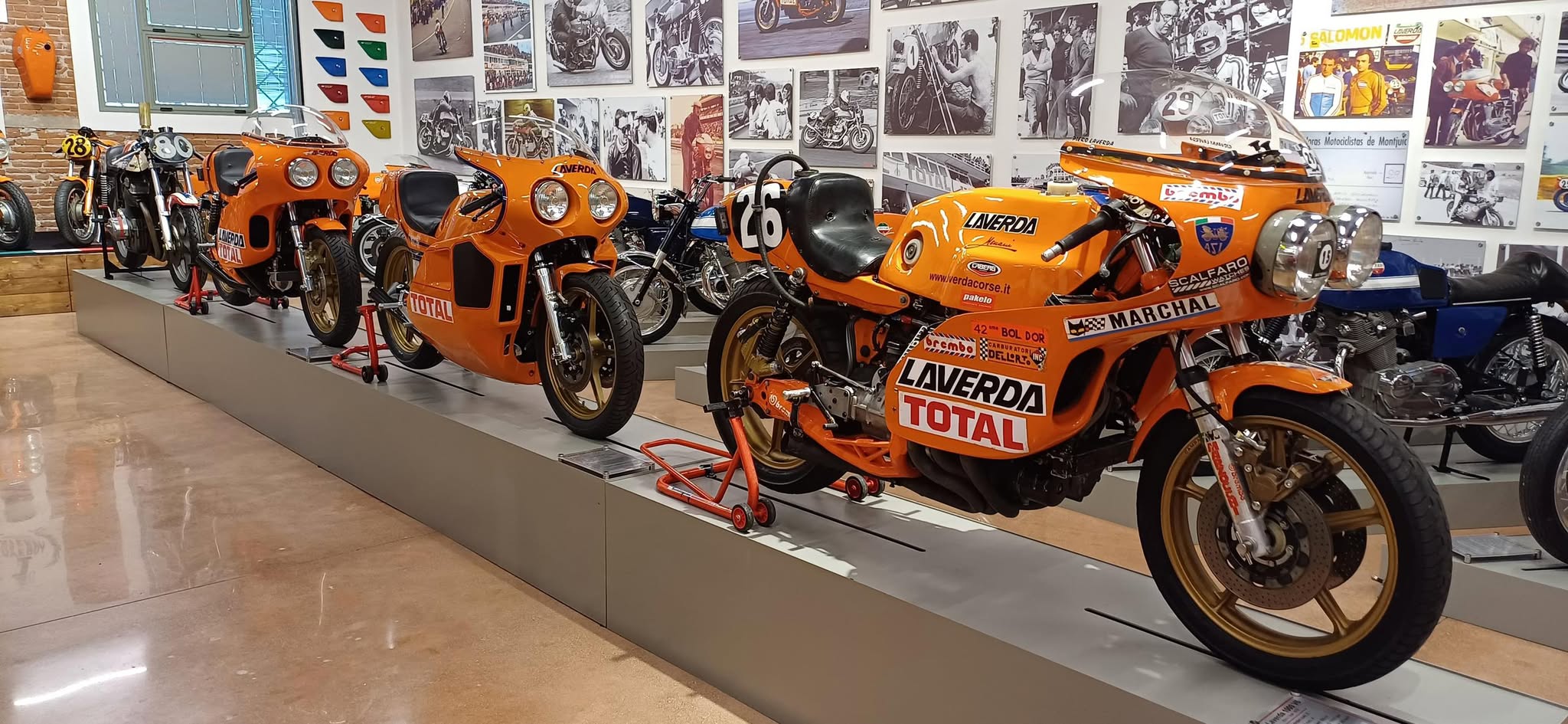
The obvious next step was further development. The engine had survived, the chassis problems were understood, and the drivetrain weakness had revealed itself rather dramatically. Laverda intended to revise the motorcycle and return.
Then the regulations changed. For the following endurance season, machines with more than four cylinders were excluded, effectively making the V6 ineligible. Whatever the precise motivation behind the rule change, the result for Laverda was straightforward: the company’s most ambitious racing project no longer had a class in which to compete.
At the same time, Laverda was a relatively small manufacturer facing increasing financial pressure. Continuing to spend heavily on an exotic six-cylinder development program became difficult to justify. The V6 project stopped.
Only One Race Bike
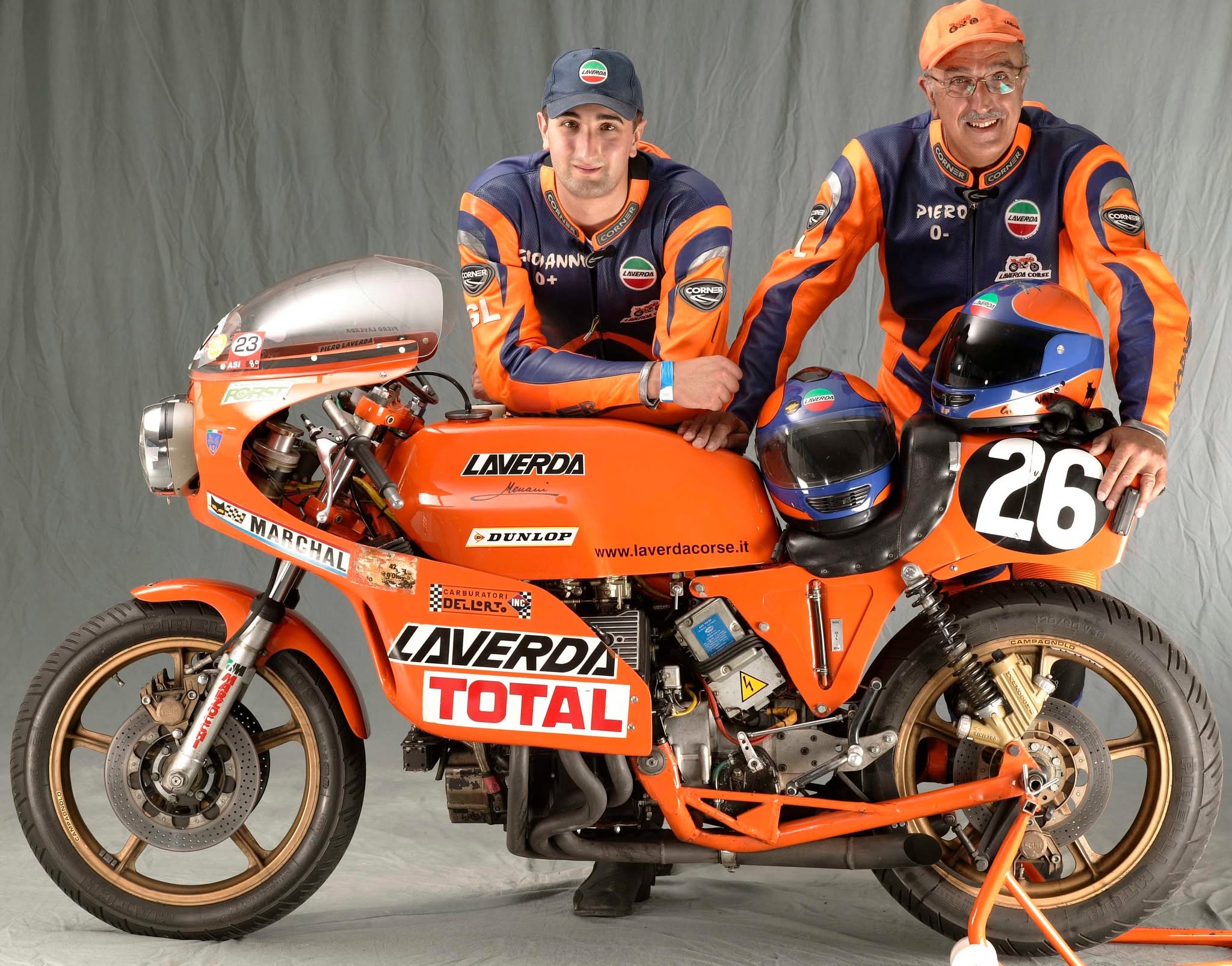
Only one complete original V6 raced at the Bol d’Or. Four engines were reportedly constructed during the program, while additional components remained after development ended. Years later, those spares created some confusion about how many complete V6 motorcycles exist.
A second machine was assembled from surviving factory parts in 1991 during an attempt to revive the idea of a road-going V6. Plans were reportedly discussed for a series of 25 motorcycles, but the economics again proved prohibitive and the production proposal went nowhere.
The second motorcycle was eventually completed to running condition by Dutch Laverda specialist and collector Cor Dees. The original Bol d’Or machine has also continued to run at historic events, often with Piero Laverda aboard. So although only one V6 competed in period, the sound of Alfieri’s six-cylinder engine hasn’t disappeared completely.
The Road Bike That Never Was
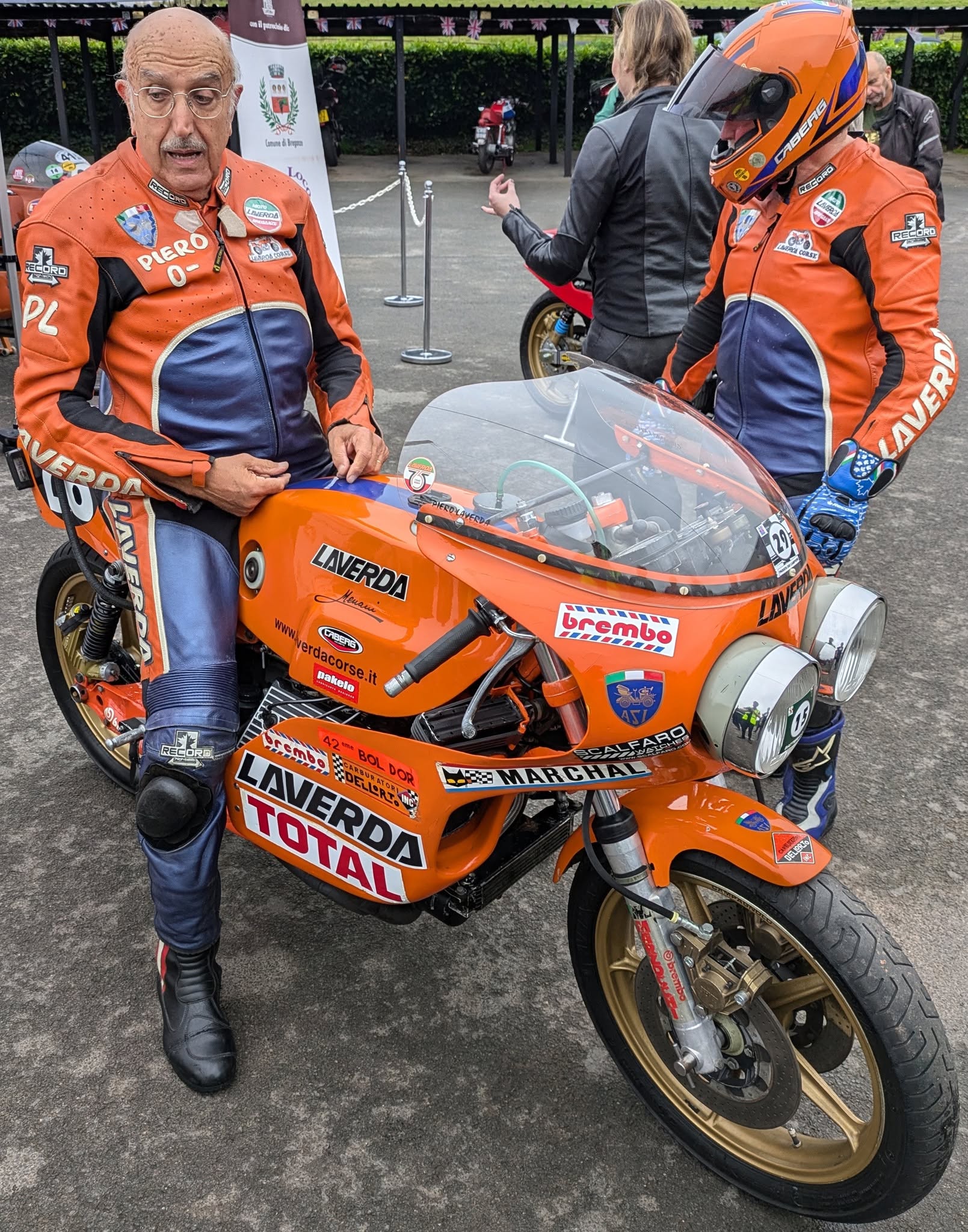
It is tempting to imagine what might have happened if Laverda had found the money to continue. The V6 was not necessarily intended to become a mass-production 1000cc road bike in precisely its race form. Massimo Laverda later stressed that its primary purpose was to develop technologies that could be transferred to future motorcycles.
A modular family was discussed, potentially including a V4 derived from the same architecture. Those motorcycles never materialized, of course. Laverda entered the 1980s relying largely on further development of its existing air-cooled triples and smaller twins, while the Japanese manufacturers accelerated into liquid-cooled, four-valve, multi-cylinder machines. In hindsight, the V6 looks like a glimpse of the technological transition Laverda knew was coming but lacked the resources to pursue.
More Than a 176-MPH Curiosity
The Laverda V6 is easy to reduce to three facts:
- Six cylinders.
- 176 mph.
- Broken driveshaft.
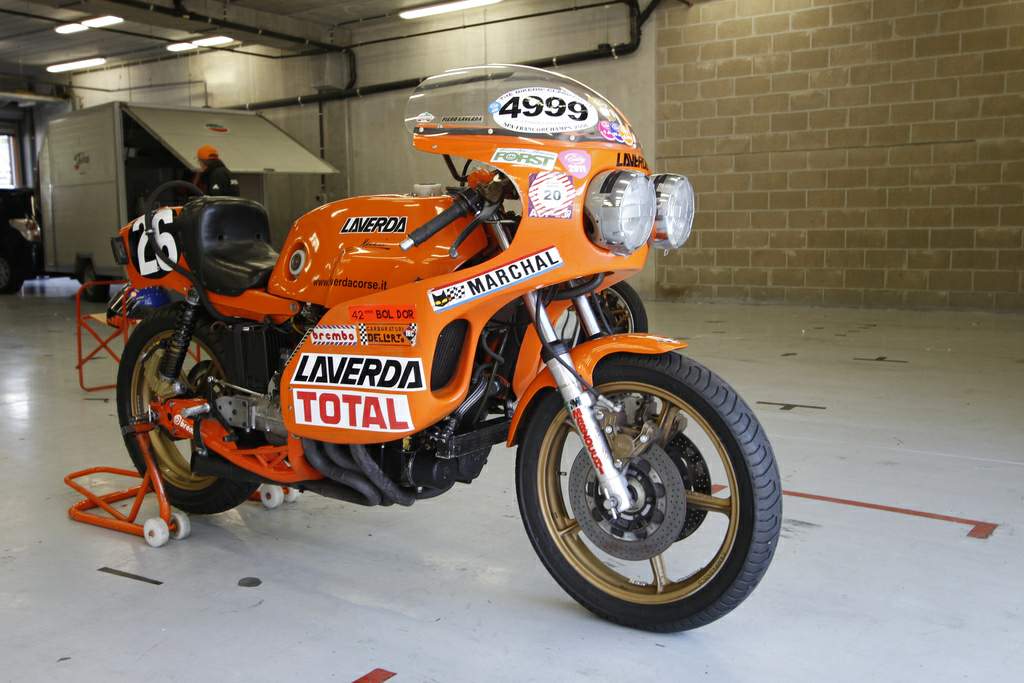
But that version makes the project sound more frivolous than it really was. The V6 was a serious attempt by a small European manufacturer to develop an entirely new generation of motorcycle technology. Laverda commissioned one of Italy’s most accomplished automotive engineers, created a compact 996cc engine with liquid cooling and 24 valves, developed nearly 140 horsepower with a broad powerband, and then subjected the entire machine to one of the most demanding races in motorcycling.
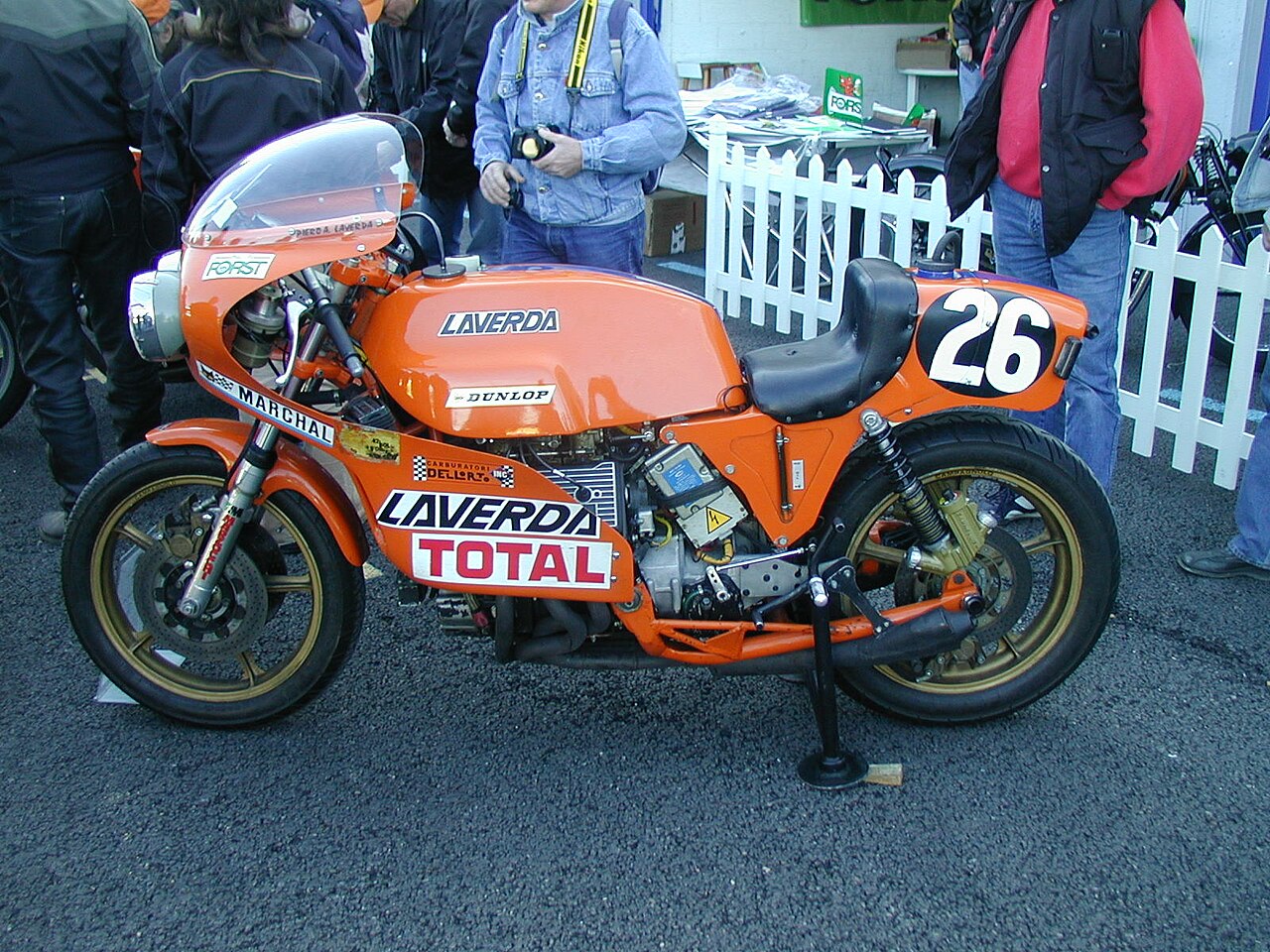
Some parts worked extraordinarily well — others didn’t. That’s exactly what development is supposed to reveal. The frustrating part is that Laverda never received the opportunity to apply what it had learned. After eight and a half hours at Paul Ricard, the V6 had demonstrated both its potential and its weaknesses. With another year of chassis and drivetrain work, it might have become a genuinely formidable endurance racer.
Instead, the rulebook changed and the money ran short. Its racing career therefore consists of a single DNF. Yet more than four decades later, that one unfinished motorcycle remains considerably better remembered than many machines that actually won the Bol d’Or. Being 20 mph faster than everyone else probably helped…
Laverda 1000 V6 Specifications
| Model | Laverda 1000 V6 / 1000 Sei |
| Engine | Liquid-cooled four-stroke 90° V6 |
| Displacement | 996cc |
| Bore x stroke | 65 x 50mm |
| Crankshaft orientation | Longitudinal |
| Valvetrain | DOHC per cylinder bank, four valves per cylinder |
| Total valves | 24 |
| Carburetion | Six Dell’Orto downdraft carburetors |
| Lubrication | Dry sump |
| Cooling | Liquid, twin radiators |
| Race output | Approx. 139-140 bhp |
| Race torque | Approx. 95.5 Nm / 70.5 lb-ft |
| Transmission | Five-speed |
| Final drive | Shaft |
| Frame | Tubular spaceframe, engine as stressed member |
| Front suspension | 38mm Marzocchi telescopic fork |
| Rear suspension | Swingarm, twin Marzocchi shocks on Bol d’Or version |
| Front brakes | Twin Brembo discs |
| Rear brake | Single Brembo disc |
| Wheels | 18-inch magnesium Campagnolo |
| Race weight | Approx. 236-238 kg / 520-525 lb ready to race |
| Recorded top speed | Approx. 283 km/h / 176 mph |
| Riders | Nico Cereghini / Carlo Perugini |
| Race history | 1978 Bol d’Or, Paul Ricard |
| Result | DNF after approx. 8.5 hours, final-drive U-joint failure |
Photography
Images courtesy of laverdacorse.it, Cor Dees’ Laverda Museum, Museo Moto Laverda, My Classic Motorcycle, and more.