In the late 1990s, a tiny Swedish company built a 320-lb, 85-hp enduro…
In 1999, most large-capacity twin-cylinder motorcycles intended for unpaved roads were still fundamentally adventure-tourers. BMW had the R1150GS, Honda had the Africa Twin and Transalp, and Yamaha had the Super Ténéré lineage. But Sweden’s Highland Motorcycles had something rather different in mind: a V-twin Super Enduro.
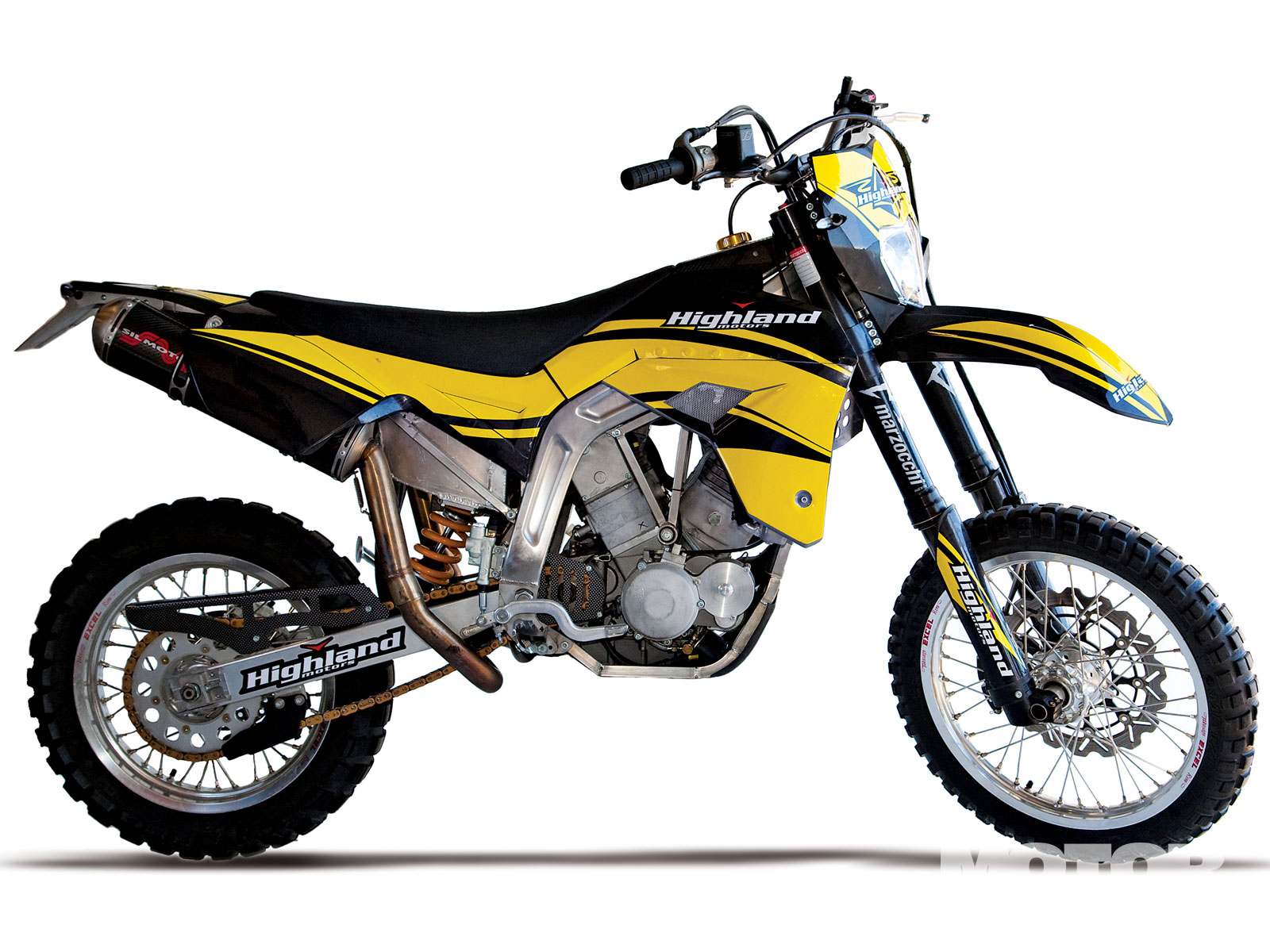
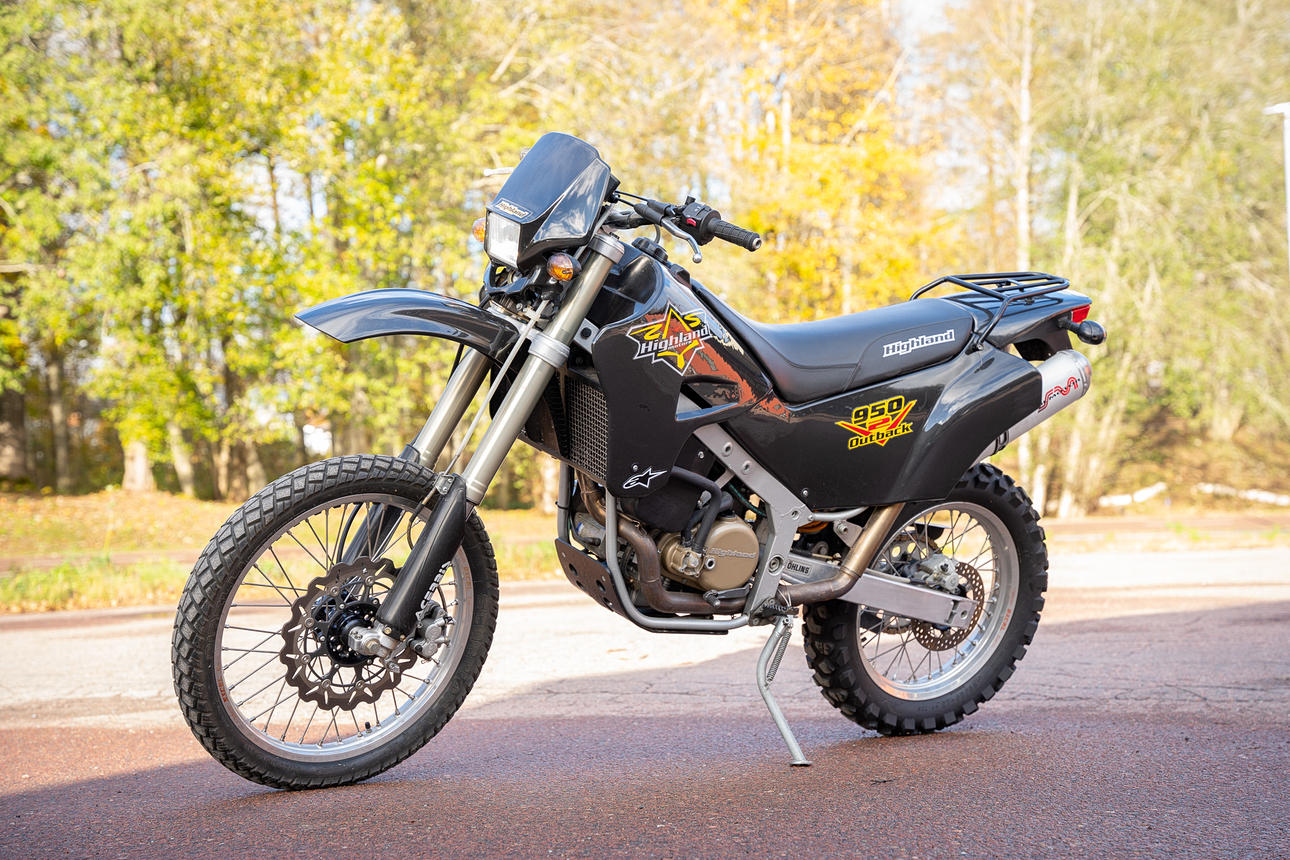
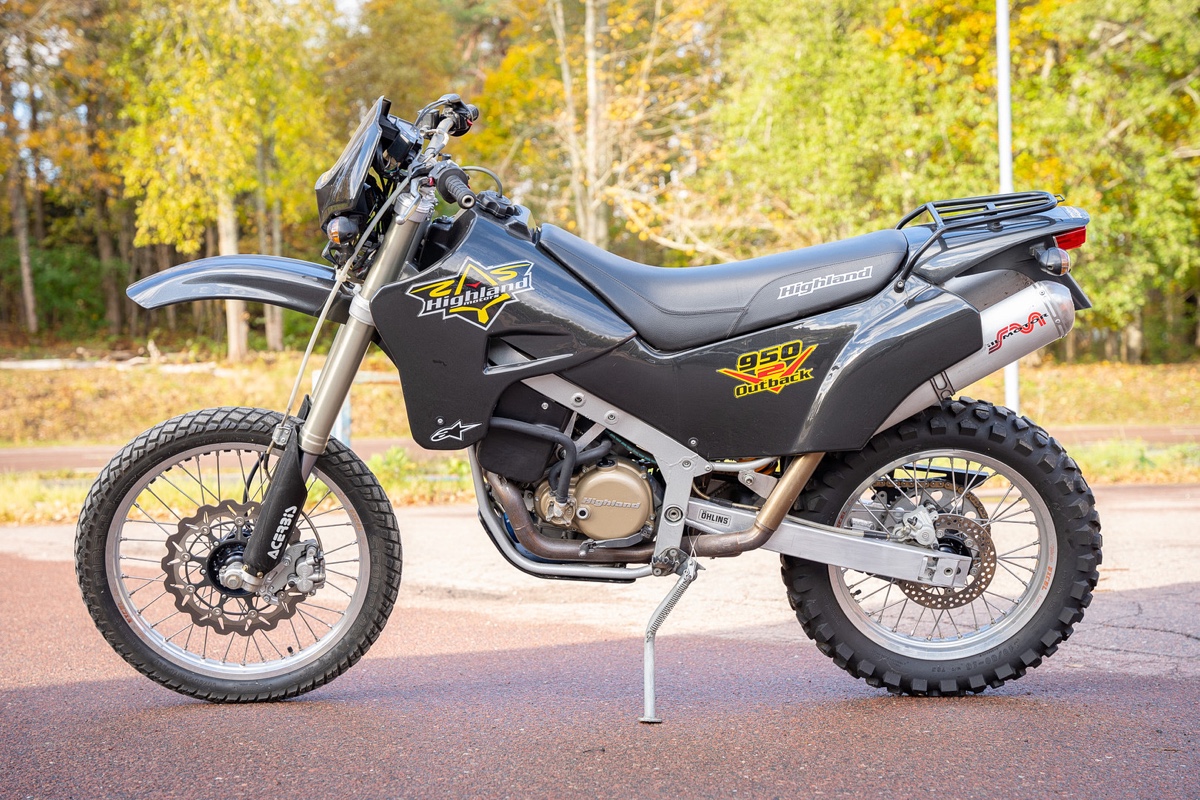
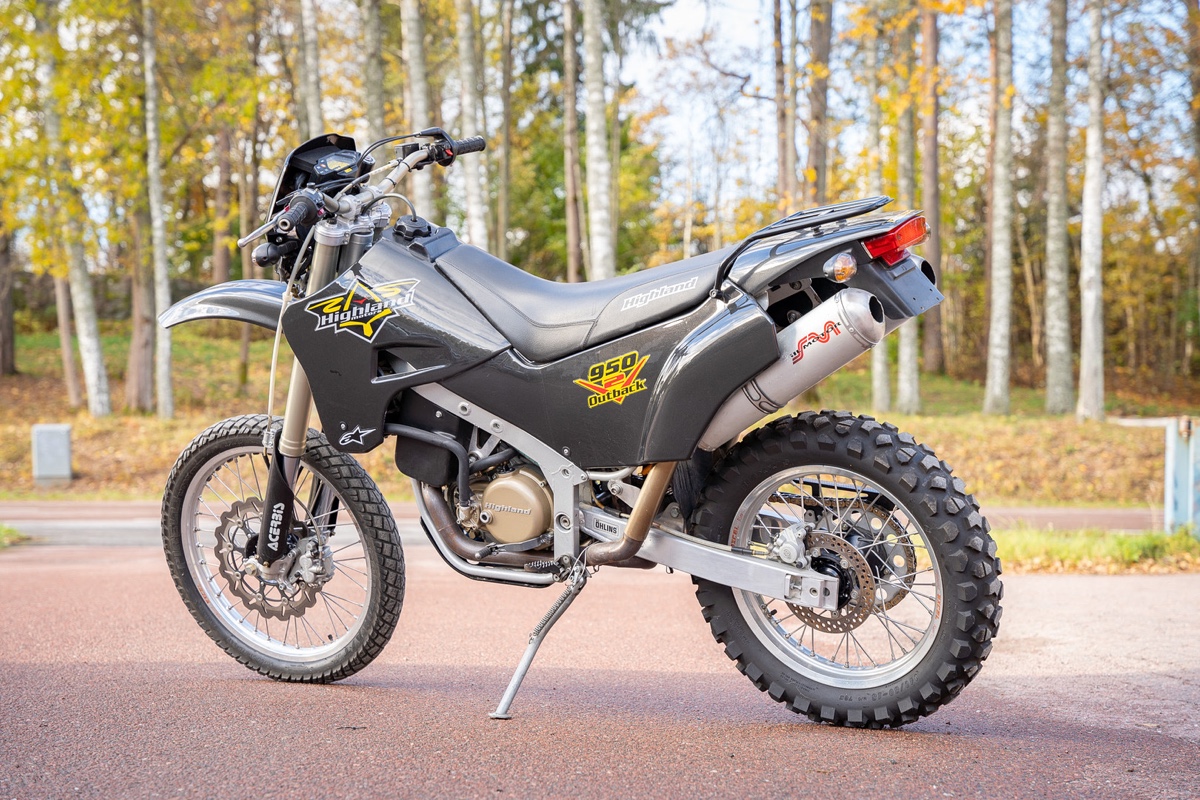
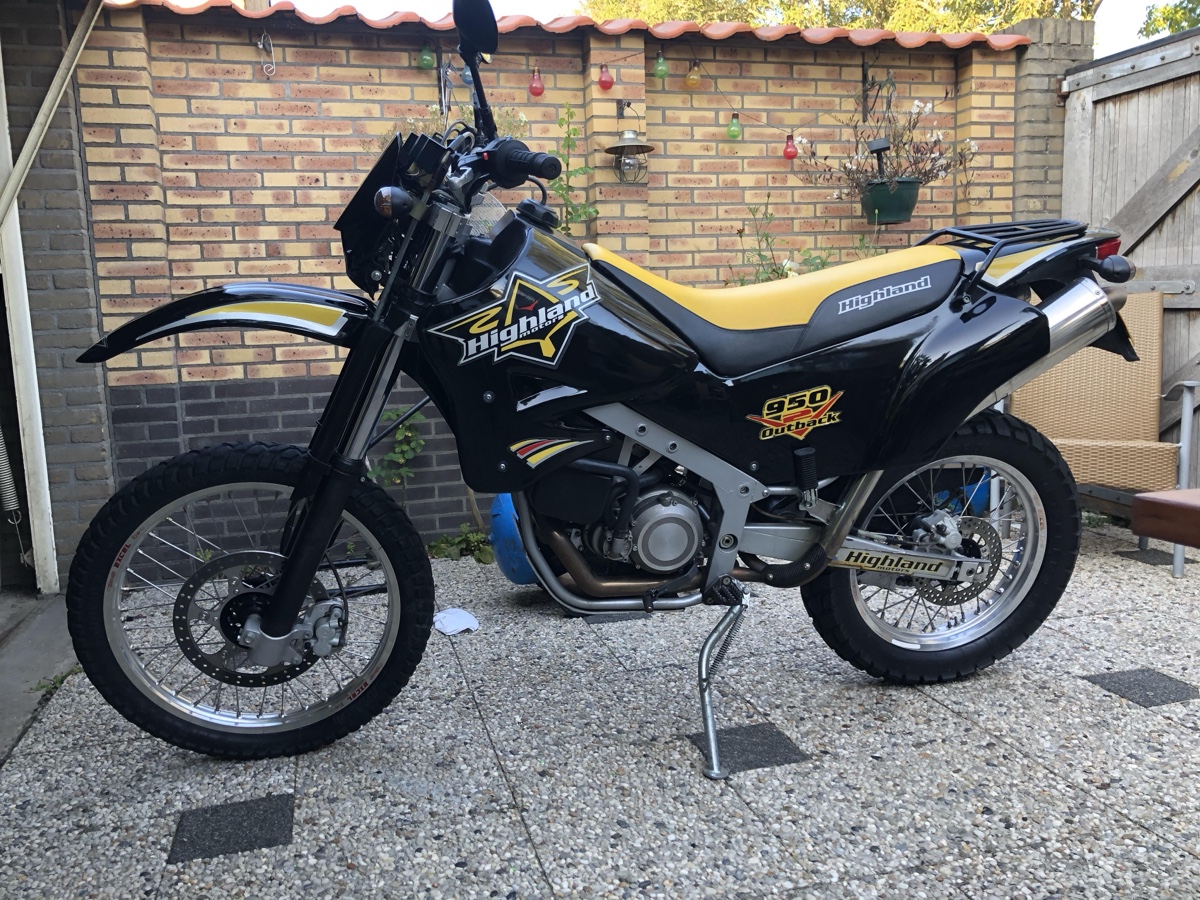
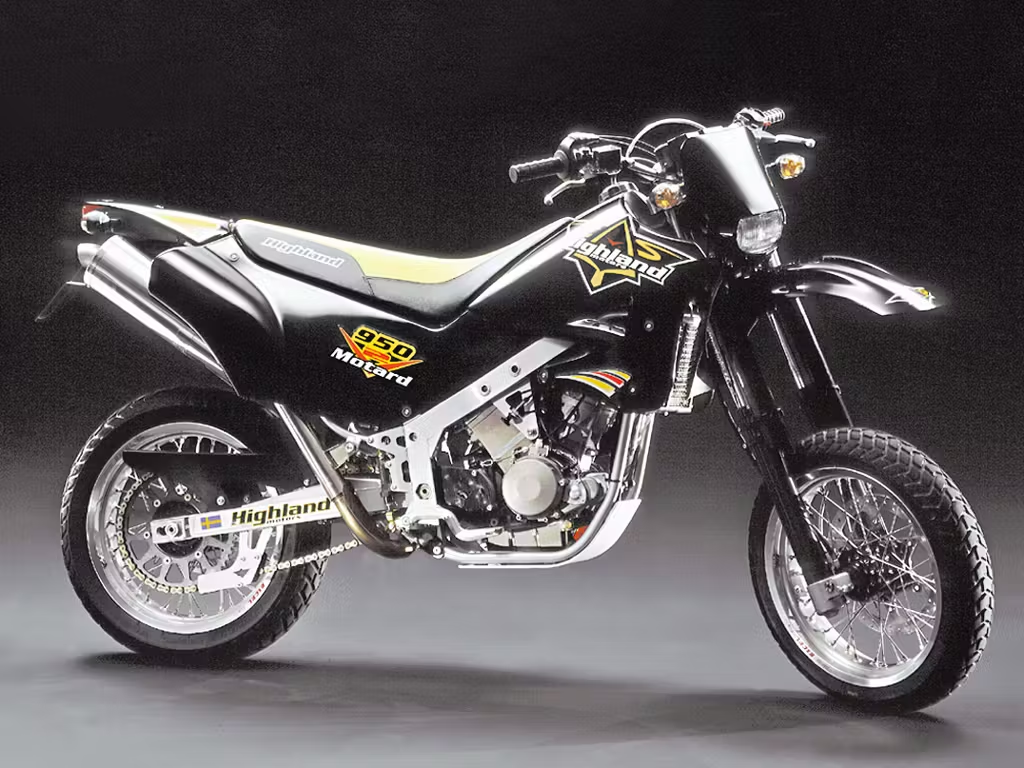
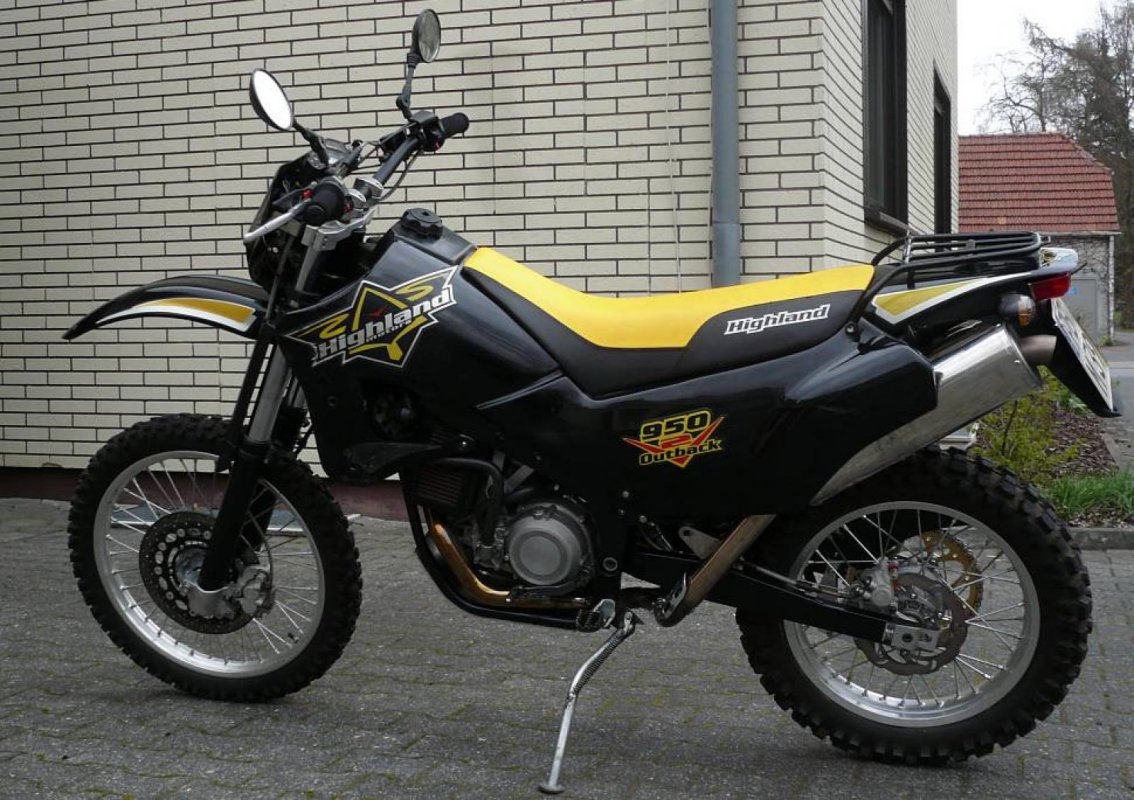
The Highland 950 V2 Outback used a compact 936cc liquid-cooled V-twin in a chassis that contemporary testers compared not with heavyweight adventure bikes, but with big single-cylinder enduros. It rolled on 21- and 18-inch wheels, offered nearly a foot of suspension travel, used a single front brake disc, and in its original production form weighed a claimed 145 kilograms / 320 pounds dry.
German magazine MOTORRAD summarized the concept neatly in 1999: this wasn’t comparable to the “big ships” from BMW or Honda. It behaved more like a sporting off-road single — except with the power of a large V-twin. Several years before KTM launched the 950 Adventure, Highland had arrived at something closer to a giant two-cylinder enduro…and almost nobody remembers it.
The Engine Came First
Highland’s story begins not with a motorcycle manufacturer, but with a Swedish engine company called Folan. During the early 1990s, Folan developed a family of compact four-stroke engines intended for racing and specialist applications. Among them was a lightweight 60-degree V-twin that attracted the attention of a small group of Swedish and American engineers.
In 1994, a team in California began constructing an adventure motorcycle around the Folan twin. Several members had recently worked on ATK projects in Utah, and they believed the light, powerful Swedish engine could form the basis of a very different kind of large-capacity off-road motorcycle.
Their prototype was called MCM, for Motorcycle Costa Mesa. Money became the problem. The California group could build a prototype but couldn’t secure the financing necessary for production. Swedish motorcycle enthusiast and former racer Mats Malmberg encountered the project and eventually obtained the rights to the concept.
Development shifted back toward Sweden, although the first Highland prototypes were actually constructed in California before being shipped across the Atlantic. By the late 1990s, Malmberg was attempting to turn the idea into a genuine Swedish motorcycle manufacturer.
The 100-HP Prototype
Highland showed its first proper prototype at the Milan motorcycle show in 1997. Its claimed specifications were pretty remarkable. The V-twin was said to produce approximately 100 horsepower, while the complete motorcycle weighed just under 130 kilograms / 287 pounds!
Those figures attracted plenty of attention…but they were prototype figures. Turning the concept into a homologated road motorcycle required considerably more hardware, noise suppression, durability, and engine development. The production machine that followed was heavier and less powerful.
However, it was still pretty exceptional. In MOTORRAD‘s 1999 test, the production Outback produced approximately 75 horsepower and weighed a claimed 145 kg / 320 lb dry. At a time when a large dual-purpose twin normally meant a motorcycle approaching or exceeding 200 kilograms, that was incredibly light. For comparison, a period Honda XR650L weighed 324 pounds and produced just 44 hp.
936cc, Not Quite 950
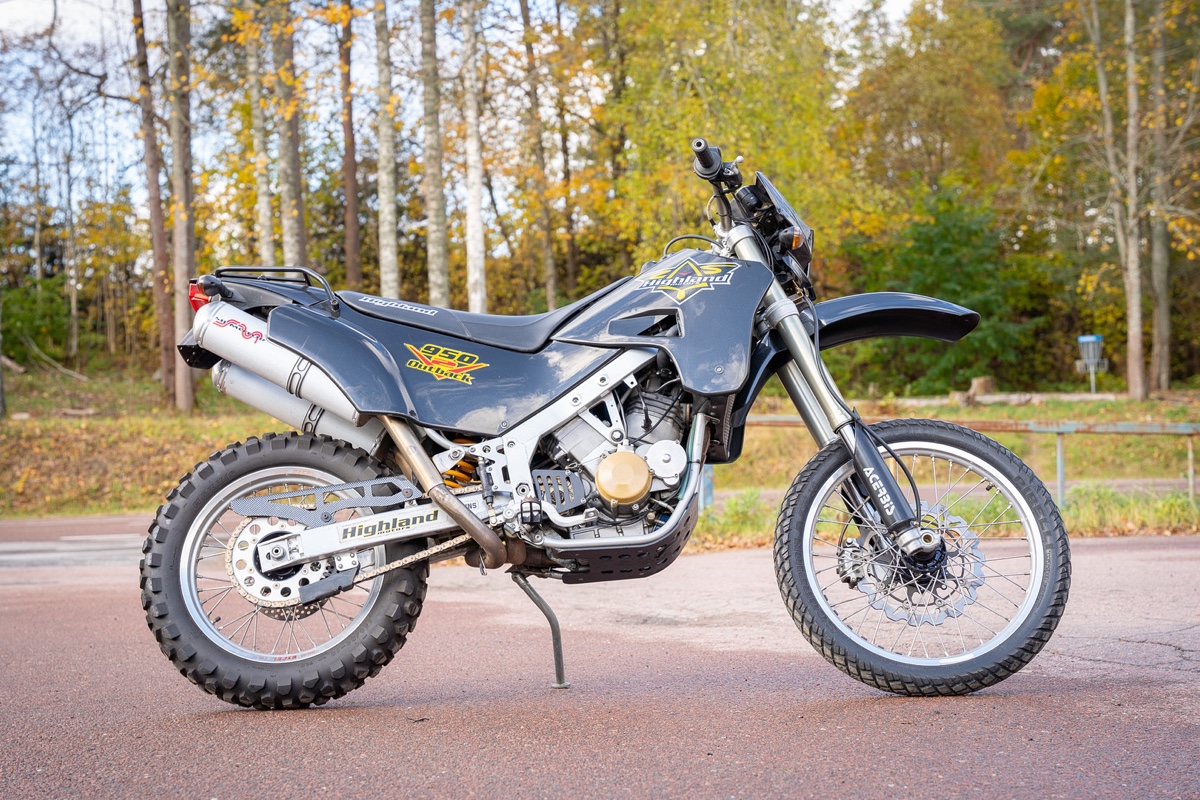
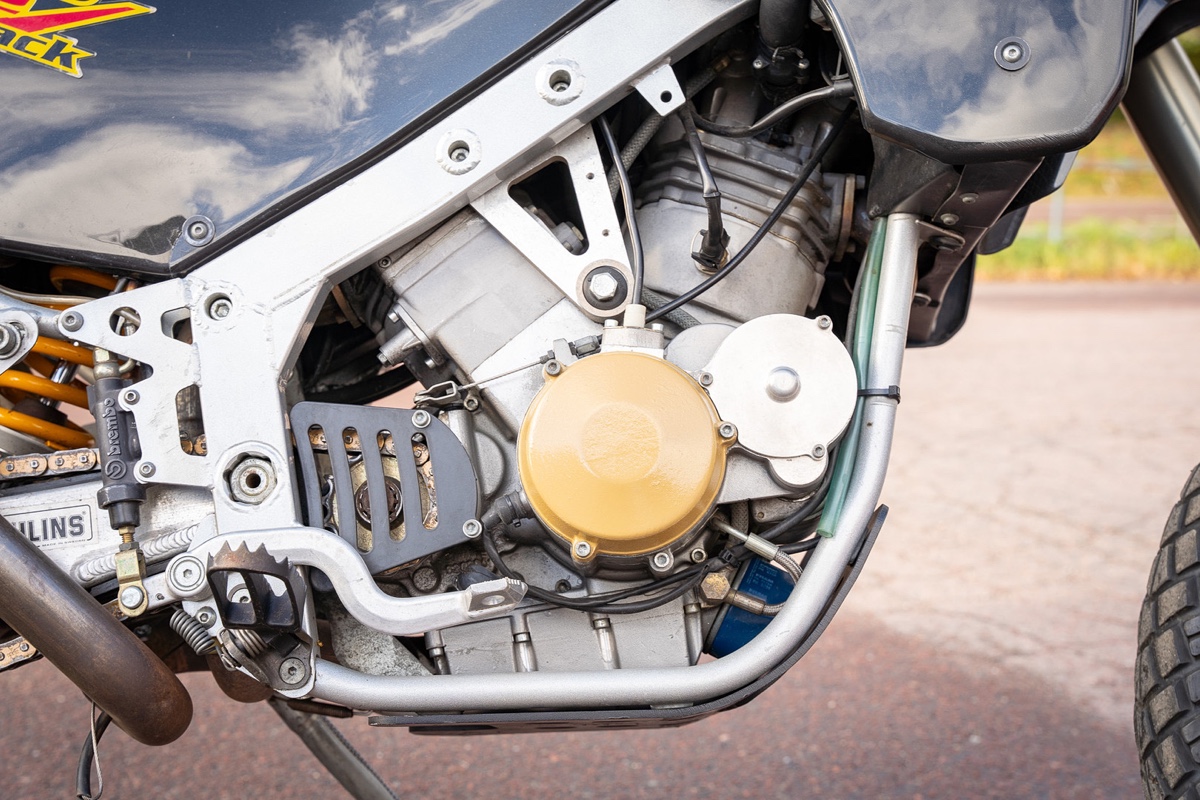
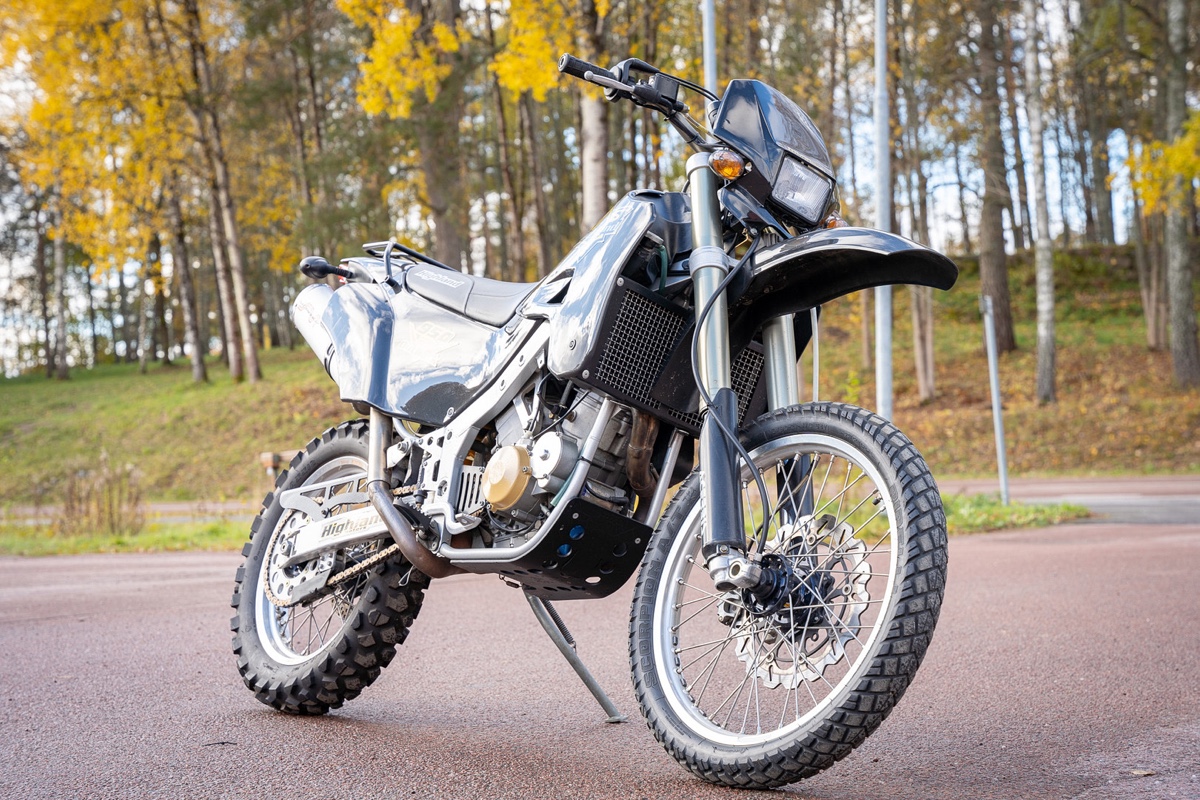
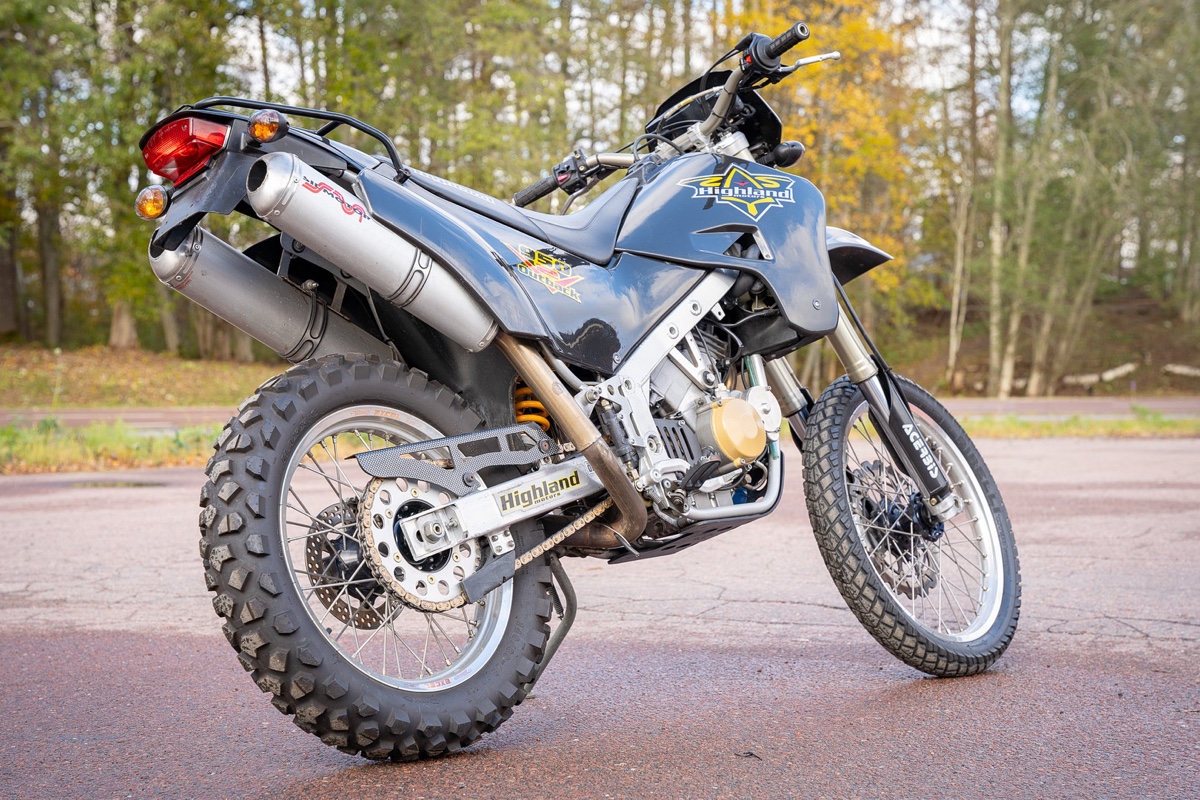
Despite the model name, the Highland 950 displaced 936cc. The liquid-cooled 60-degree V-twin used a 95mm bore and 66mm stroke, double overhead camshafts, and four valves per cylinder. The narrow 60-degree layout helped keep the engine compact — an essential quality in a motorcycle intended to behave more like a dirt bike than a road-going adventure tourer.
Early production versions used carburetors. Highland had experimented extensively with the induction system because the Folan engine had originally been conceived more as a competition powerplant than a polished street engine. That did cause problems. The starter drive could be damaged by kickback. Low-speed vibration was substantial, and carburetion proved difficult to refine. Highland eventually purchased the Folan engine rights outright and took responsibility for further development. The engine would continue evolving throughout the motorcycle’s production life.
Two Husabergs Joined Together
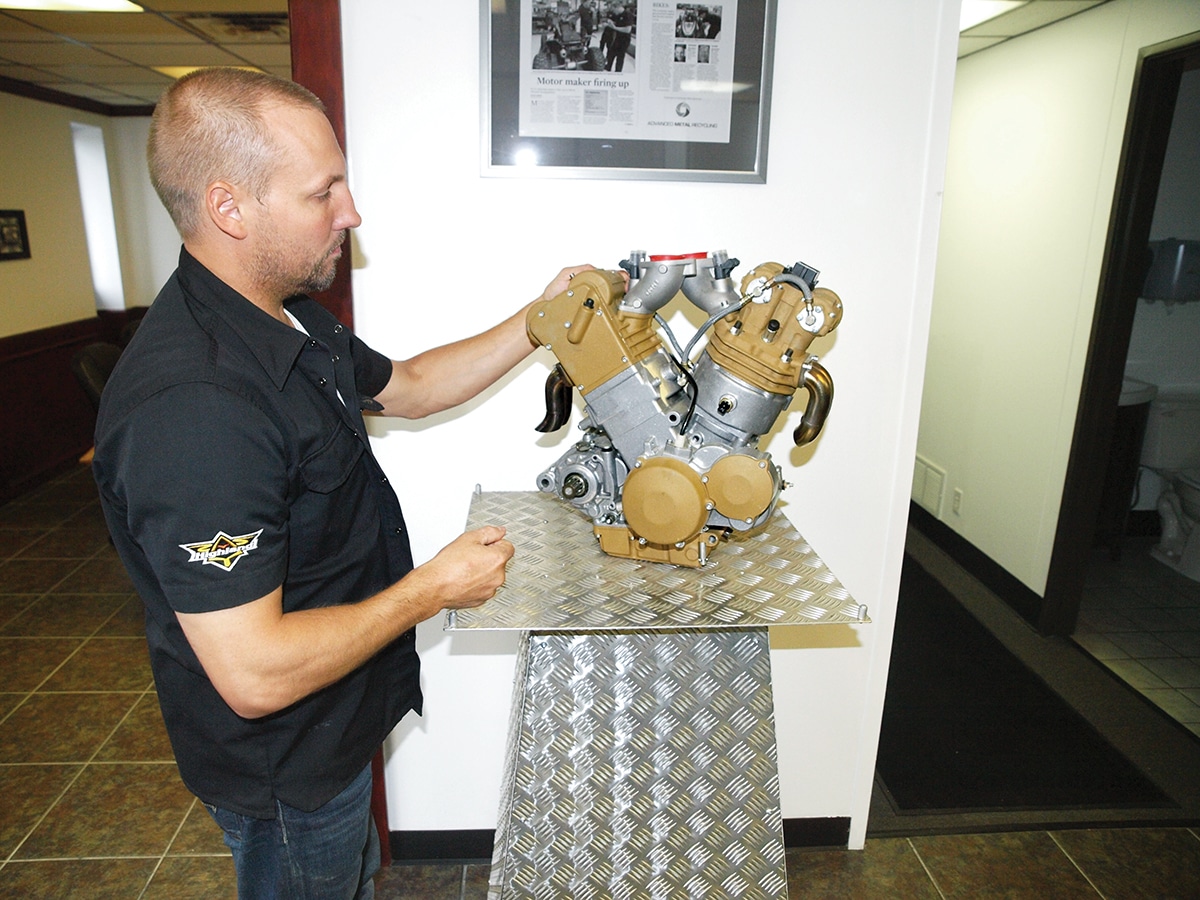
Period descriptions of the early engine are particularly entertaining. MOTORRAD noted that at low rpm the V-twin felt almost like two Husaberg singles beating slightly out of synchronization. That sounds about right given its origins. This was not a soft, heavy cruiser V-twin adapted to off-road use. It was a relatively light, highly tuned engine with a distinctly competition-oriented character. At higher engine speeds, the vibration smoothed out and the performance became the bike’s defining feature.
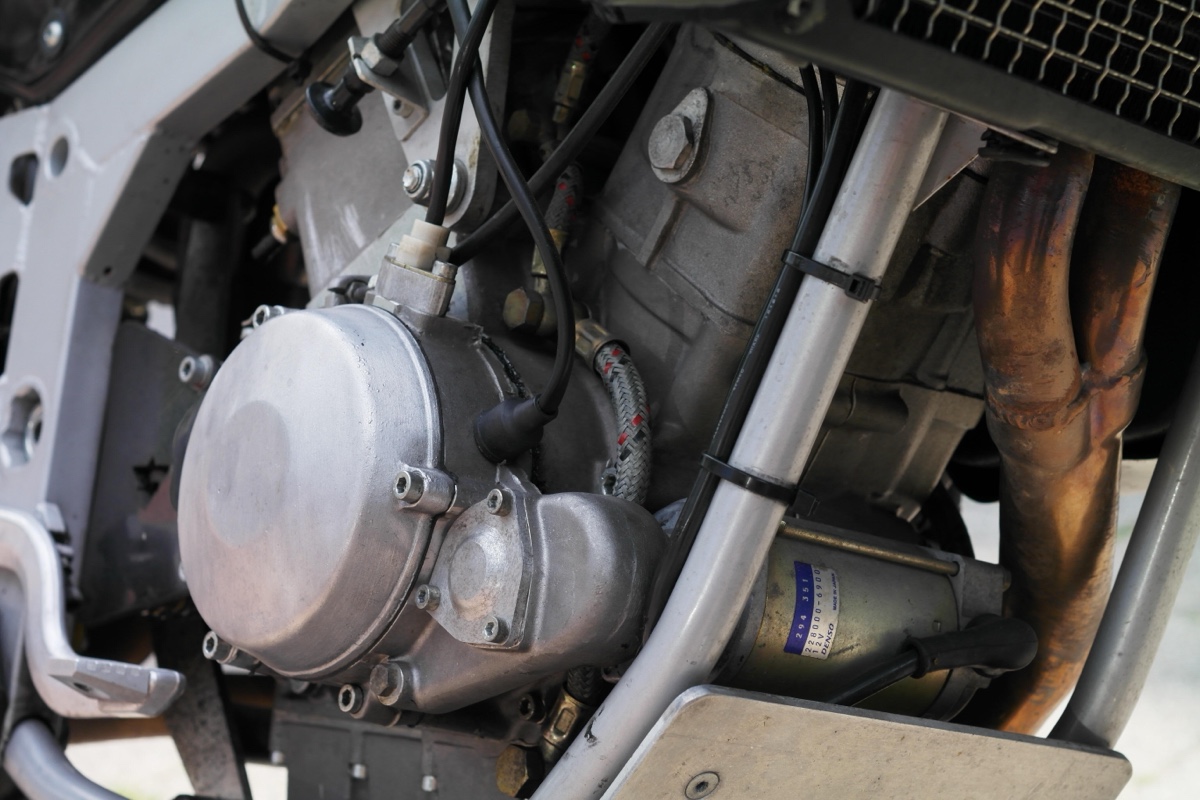
The tester reported strong torque from low rpm, followed by increasingly serious acceleration through the middle and upper range. Despite the engine’s capacity, it was happy to rev toward 10,000 rpm. Highland claimed a top speed around 190 km/h / 118 mph for the early motorcycle. The limiting factor was arguably not the engine but the tires: period 21- and 18-inch off-road rubber simply wasn’t designed for sustained autobahn speeds.
A V-Twin That Actually Worked Off-Road
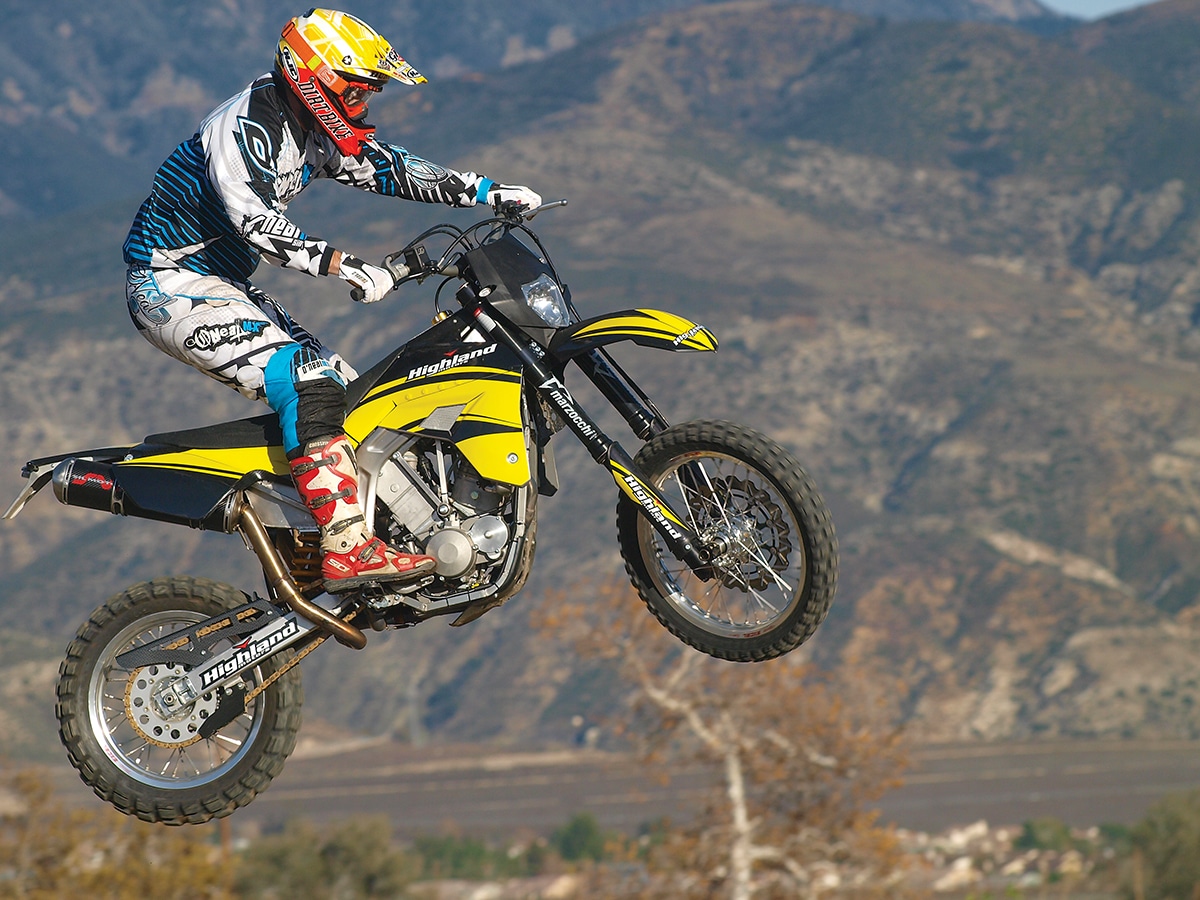
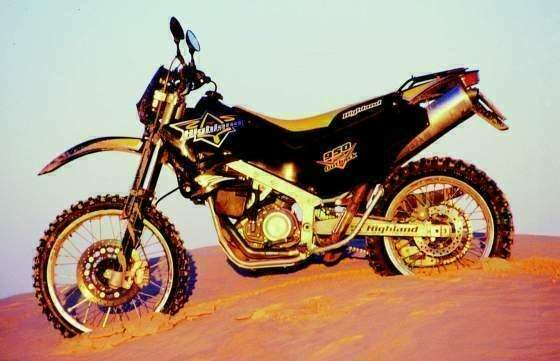
The real surprise came when the pavement ended. A 950cc V-twin with enough performance for nearly 120 mph doesn’t sound like an obvious technical enduro motorcycle. Yet contemporary riders found the Highland remarkably capable. Its relatively low mass mattered enormously. So did the way the twin delivered torque. On steep, rutted climbs, MOTORRAD found that the V2 maintained excellent traction, driving forward smoothly where a large single could sometimes make the rear tire hop and break grip.
The bike wasn’t as agile as a Husqvarna competition enduro, of course, but the magazine compared its handling favorably with machines such as KTM’s LC4 and Yamaha’s TT600R, which is pretty crazy when you think about it. The Highland was close enough in weight and chassis behavior to make meaningful comparisons to serious single-cylinder off-road machines.
Long-Travel Suspension and Dirt-Bike Wheels
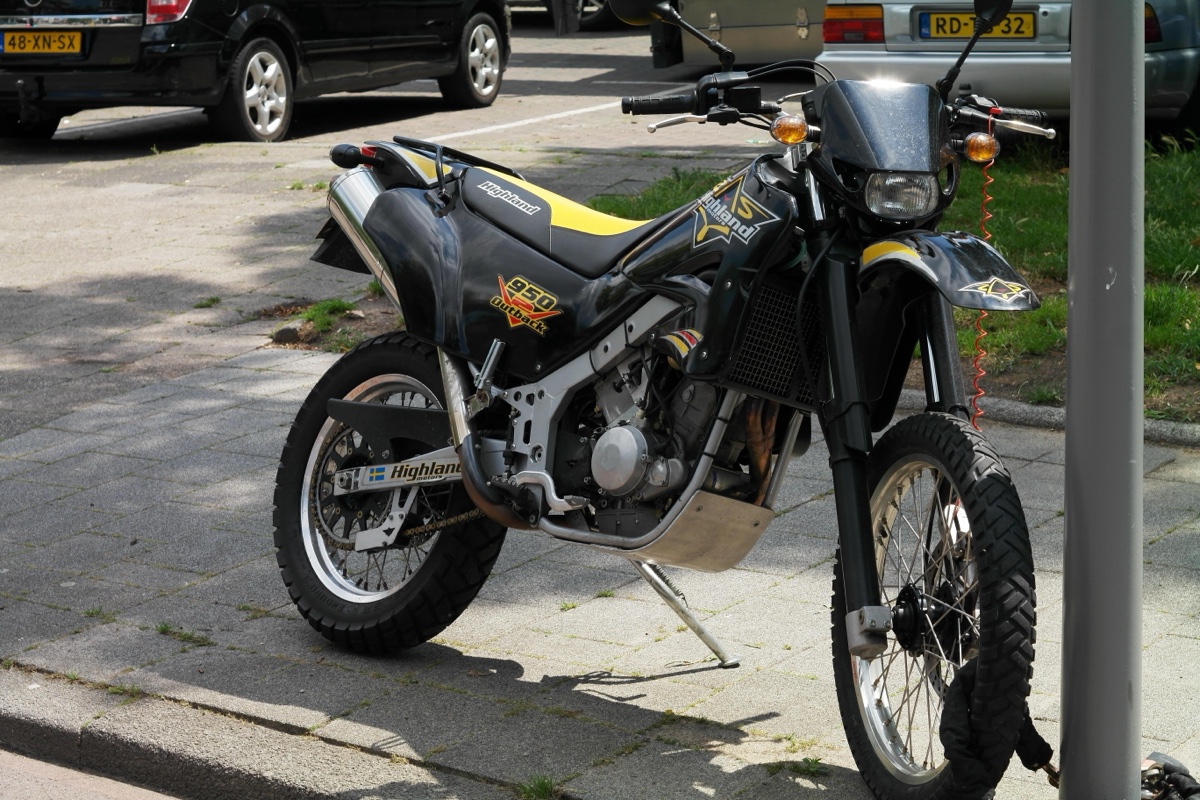 The chassis reinforced the point. The Outback used a chrome-molybdenum steel structure with serious off-road suspension and conventional enduro wheel sizes. Later versions offered approximately 280mm / 11 inches of front-wheel travel and 300mm / 11.8 inches at the rear. The wheels measured 21 inches front and 18 inches rear. Ground clearance was approximately 300mm / 11.8 inches.
A single large front disc provided braking rather than the dual-disc arrangement expected on a heavy road-oriented adventure bike. By the mid-2000s, higher-spec versions used a 50mm inverted fork and an aluminum swingarm with an Öhlins rear shock, depending on model year and configuration. Essentially, Highland was applying 450 enduro technology / architecture to a 950cc V-twin.
Before the KTM 950 Adventure
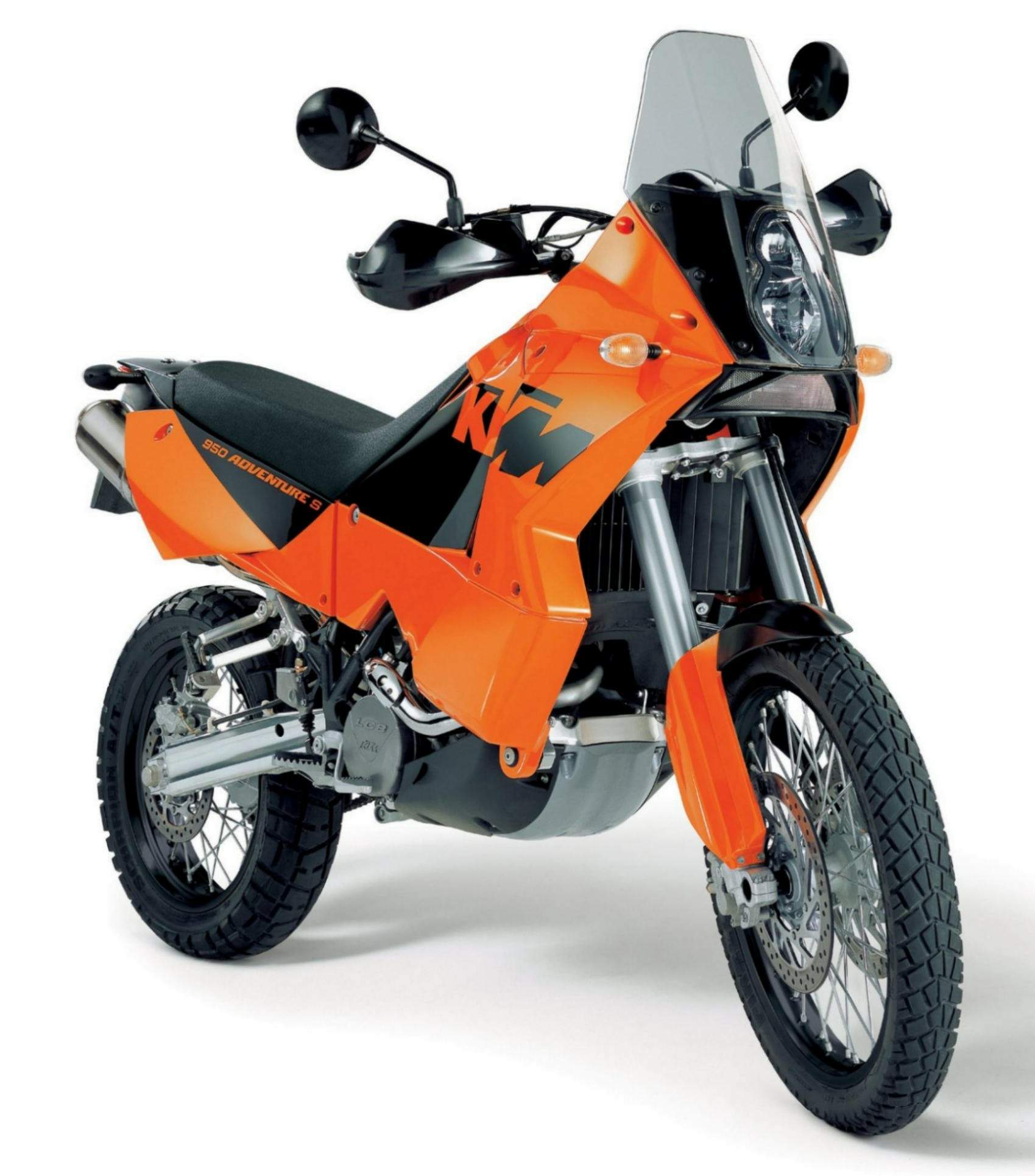
The timing is particularly interesting in retrospect. KTM’s 950 Adventure arrived for 2003 and quickly became one of the defining large-displacement off-road motorcycles of its generation. It used a 942cc V-twin and 21/18-inch wheels, and the Adventure S offered substantial suspension travel and serious off-road capability.
But even KTM’s machine was much larger than the Highland. KTM’s own 2003 documentation lists the 950 Adventure at 206 kg / 454 lb dry. The later Highland Outback was quoted around 165 kg / 364 lb dry, and the original carbureted Highland was lighter still, at a claimed 145 kg / 320 lb.
 The comparison shouldn’t be pushed too far. The KTM was a far more developed motorcycle with better dealer support, greater fuel range, extensive durability testing, passenger and luggage capability, and the resources of an established manufacturer behind it. But conceptually, Highland got there first: Take a large modern V-twin, put it in an actual off-road chassis, and keep the weight as close as possible to a big single. The rest of the industry eventually discovered there was a market for exactly that idea.
The Early Bikes Had Problems
Unfortunately, being early also meant being unfinished. Highland began delivering motorcycles in the late 1990s, with Germany becoming an important market. Then engines began failing. According to Gunnar Lindstrom’s detailed history of the company, a misunderstanding involving the piston supplier resulted in excessive piston clearances or sizing problems in early engines, and numerous motorcycles suffered seizures — particularly during prolonged high-speed autobahn use.
Only 16 motorcycles were sold in 1998. Approximately 110 followed in 1999, but Highland remained badly undercapitalized. Roughly 120-130 motorcycles were manufactured during the company’s initial Vrigstad production period before financial trouble forced another restructuring. The concept had impressed riders, but making it reliable and profitable was much harder.
The Fuel-Injected Highland
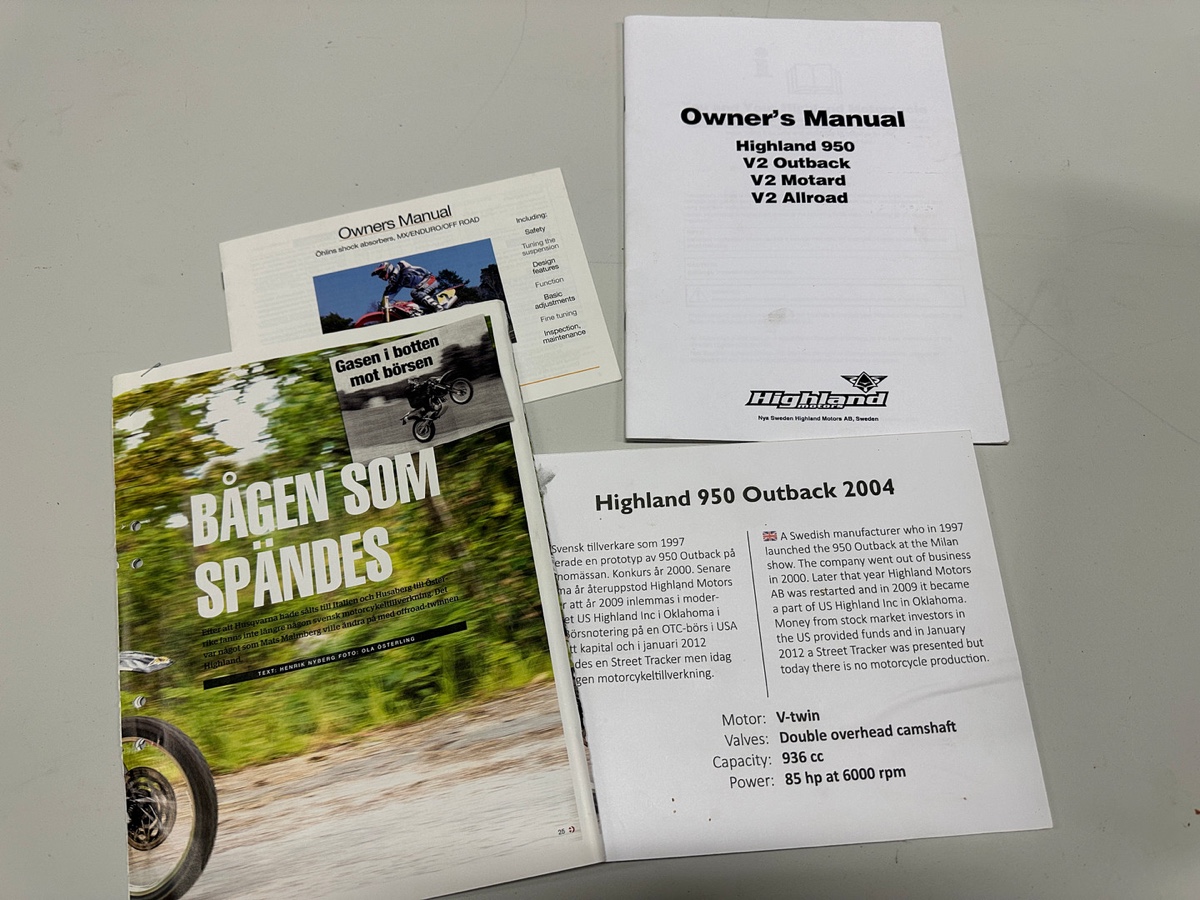
Malmberg refused to give up. After another reorganization, Highland spent nearly two years redesigning the motorcycle for renewed European approval. Production resumed in early 2003 with significant changes. Fuel injection replaced the troublesome carburetor setup. The starter system was strengthened. The engine received improved pressurized crankshaft lubrication, while the clutch and crankcase ventilation arrangements were revised.
The evolved 936cc V-twin was commonly rated at approximately 85 horsepower at 6,000 rpm and 104 Nm / 77 lb-ft of torque around 4,000-4,700 rpm. Dry weight had risen to approximately 165 kg / 364 lb. That was considerably heavier than the original 145-kg bike, but it remained remarkably light for a near-liter V-twin with road equipment, electric starting, a 20-liter fuel tank, and nearly a foot of suspension travel. Highland also expanded the platform into more models.
Outback, Motard, and Allroad
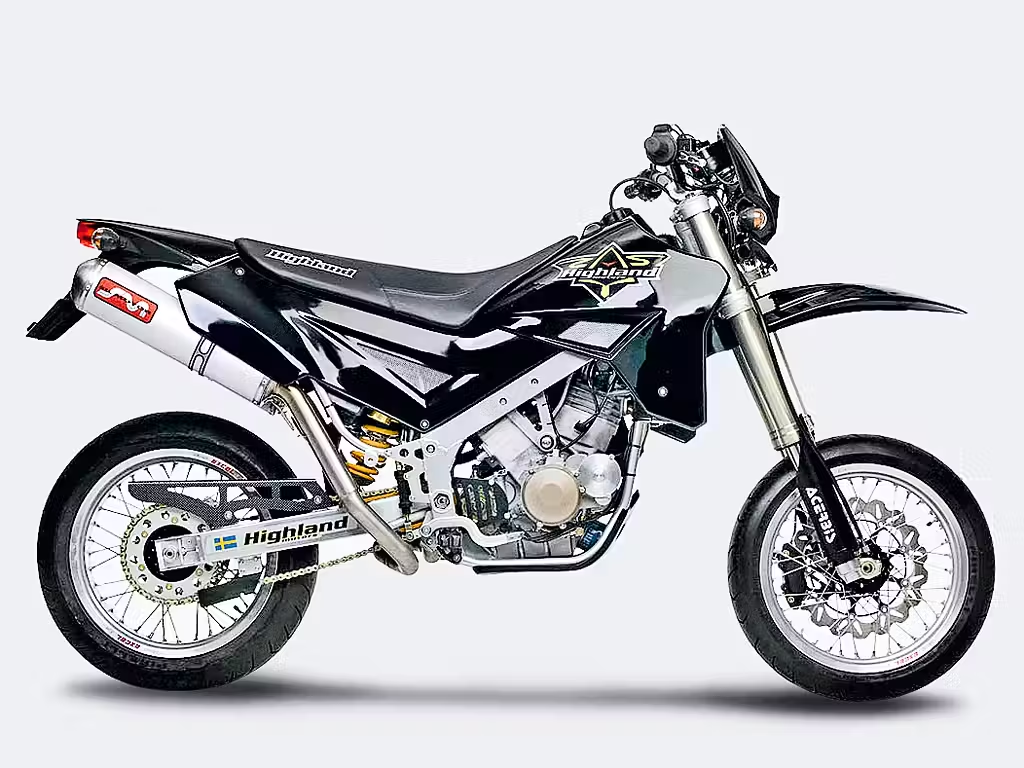
The 950 engine eventually appeared in several configurations. The Outback remained the serious off-road version with 21/18-inch wheels. The Motard used 17-inch wheels and road-oriented suspension and brake hardware. The Allroad moved the platform toward everyday street and adventure use, while Highland later showed the more rally-styled DesertStorm.
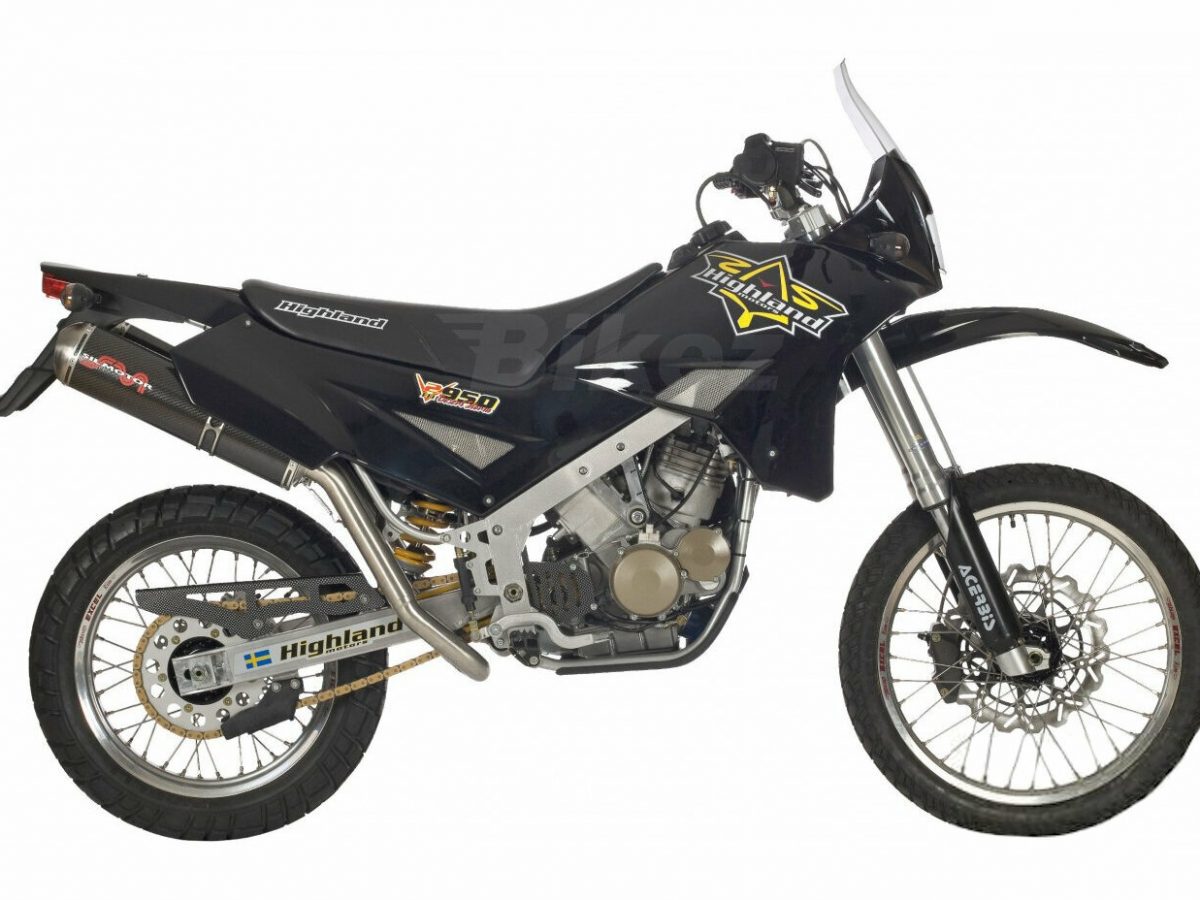
In some ways, this modular approach anticipated what larger manufacturers now routinely do with adventure-bike platforms. One engine and central chassis concept could support an enduro, supermoto, road-oriented adventure bike, or specialist racer. But Highland lacked the volume to make that strategy financially easy. Even after extensive improvements, sales remained small. Fewer than 150 V-twin motorcycles were sold between roughly 2005 and 2007, according to Lindstrom’s history.
How Many Were Built?
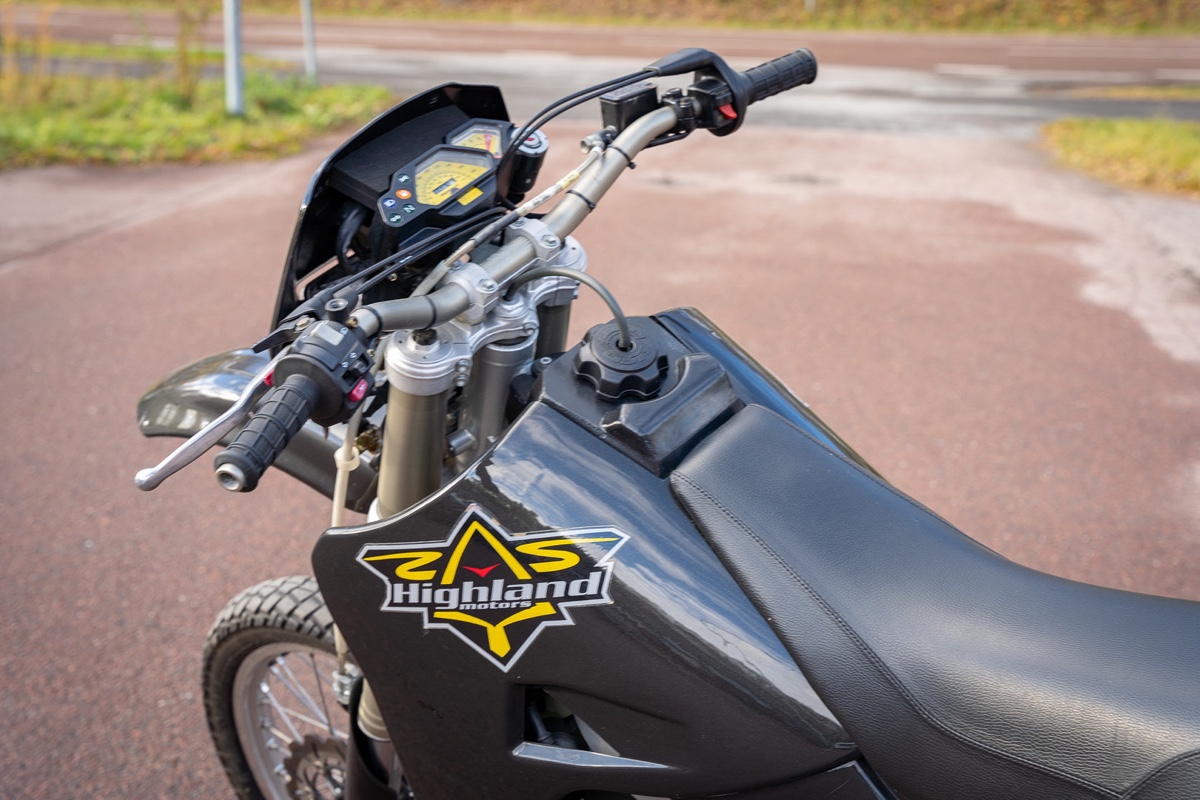
Highland production numbers are easier to estimate than those of some boutique manufacturers, but they still require qualification. The company’s original Vrigstad operation reportedly built around 120-130 motorcycles. Production resumed later at Skällinge following the major engine redesign. When Outback production finally ended in 2007, the last assembled motorcycle carried frame number 320.
That doesn’t necessarily prove exactly 320 retail motorcycles were completed, since prototypes and other variants complicate chassis-number sequences, but it establishes the correct scale. Highland didn’t build thousands — we’re talking about a few hundred motorcycles across the 950 V2 family.
125 Horsepower from the 950?
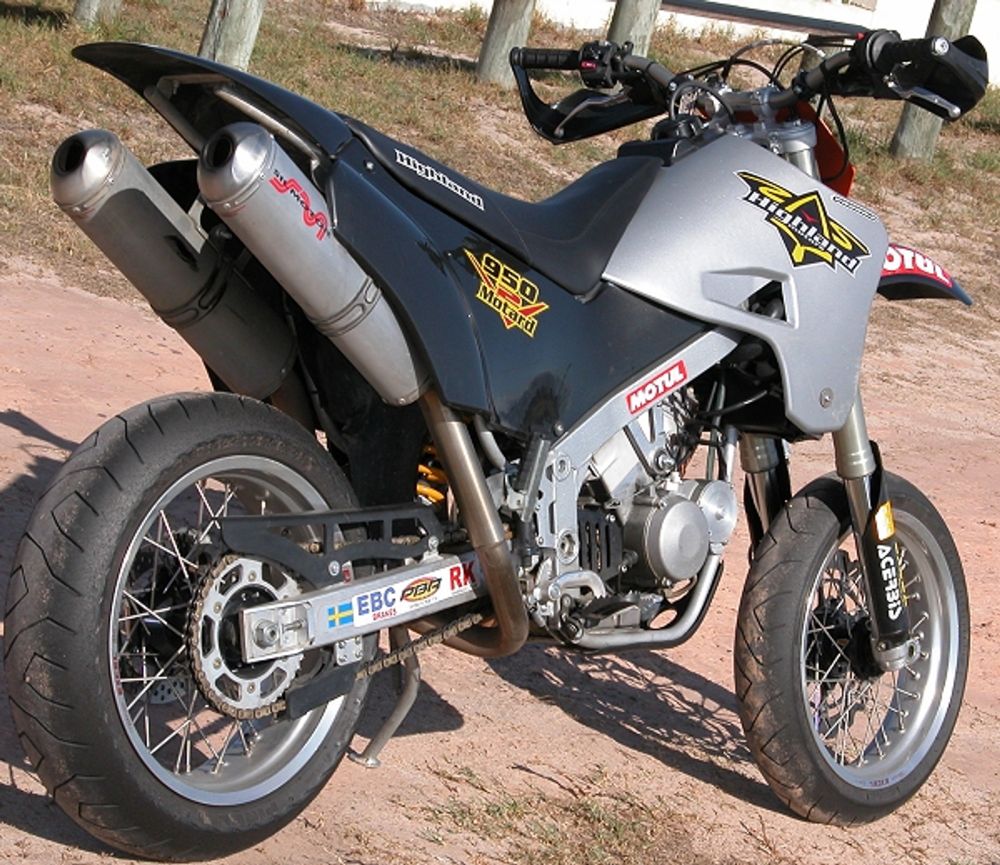
The engine still had considerable unrealized potential. While developing new fuel-injection hardware for its smaller competition motorcycles, Highland experimented with the same technology on the V-twin. With updated 35mm throttle bodies, the company reportedly achieved 125 horsepower on its own dyno.
The production motorcycle had been detuned and civilized because Highland needed a road-legal, usable machine, but the race-derived V-twin obviously had lots of performance potential.
From Sweden to Oklahoma
By the late 2000s, Highland’s business had become increasingly complicated. The company pursued manufacturing partnerships in China, developed single-cylinder race bikes, worked on an ATV project for Husqvarna’s outdoor-products division, and explored selling motorcycles in America through ATK.
Eventually the ATK arrangement fell apart and Highland itself moved toward the United States. In 2010, Mats Malmberg and Oklahoma businessman Chase Bales established a new operation near Tulsa with plans to revive production under the US Highland banner. Motorcyclist described the original 950 as a “950cc V-twin super-enduro” and noted that a few hundred had been produced during its earlier Swedish life.
A modernized 950 was planned, but it never reached meaningful production. In 2010, Malmberg, Bales, and company financial manager Damian Riddoch were killed when Bales’s aircraft crashed while approaching Tulsa following a business trip. The company attempted to continue afterward, but the momentum and leadership were gone. US Highland ultimately shut down.
The Super-Enduro Before the Super-Enduro Boom
Today the Highland 950 V2 looks a lot less strange than it did in 1999. That’s because the motorcycle market eventually moved in its direction. KTM built the 950 Super Enduro R, BMW produced the HP2 Enduro, and Ducati now sells the DesertX.
Manufacturers have increasingly come to understand that some riders want large twin-cylinder engines in motorcycles designed to function genuinely well away from pavement rather than simply resembling off-road machines. Highland understood that market earlier than just about anybody. Its execution was imperfect, but the central idea was remarkably prescient: a compact V-twin, serious suspension travel, 21/18-inch wheels, real ground clearance, and less weight than almost anything remotely comparable.
But more than 25 years later, the motorcycle industry is full of bikes pursuing variations on the same basic idea. Highland simply got there before almost everyone else.
Highland 950 V2 Outback Specifications — Later Fuel-Injected Version
| Engine | Liquid-cooled 60° V-twin |
| Displacement | 936cc |
| Bore x stroke | 95 x 66mm |
| Valvetrain | DOHC, four valves per cylinder |
| Compression ratio | Approx. 10:1 |
| Fueling | Electronic fuel injection |
| Starting | Electric |
| Claimed power | Approx. 85 hp @ 6,000 rpm |
| Claimed torque | Approx. 104 Nm / 77 lb-ft @ 4,000-4,700 rpm |
| Transmission | Six-speed |
| Final drive | Chain |
| Frame | Chrome-molybdenum steel / aluminum structure depending on version |
| Front suspension | Approx. 50mm inverted fork |
| Front travel | Approx. 280mm / 11.0 in |
| Rear suspension | Monoshock, aluminum swingarm on later versions |
| Rear travel | Approx. 300mm / 11.8 in |
| Front brake | Single disc |
| Front wheel | 21 in |
| Rear wheel | 18 in |
| Wheelbase | Approx. 1,530mm / 60.2 in |
| Seat height | Approx. 910mm / 35.8 in |
| Ground clearance | Approx. 300mm / 11.8 in |
| Fuel capacity | Approx. 20 liters / 5.3 gal |
| Claimed dry weight | Approx. 165 kg / 364 lb |
| Earlier production specification | Approx. 75 hp / 145 kg dry |
More Extreme Bikes…
 Highland 950 V2: The Swedish V-Twin Super Enduro - In the late 1990s, a tiny Swedish company built a 320-lb, 85-hp enduro… In 1999, most large-capacity twin-cylinder motorcycles intended for unpaved roads were still fundamentally adventure-tourers. BMW had the R1150GS, Honda had the Africa […]
 Otto Cilindri: The 500cc Moto Guzzi V8 GP Bike - Eight cylinders, eight carbs, four overhead cams: One of the most ambitious Grand Prix motorcycles ever built… If you divide 498.5 cubic centimeters among eight cylinders, each one displaces just over 62cc. That was the […]
 Bimota Tesi H2: 239-bhp Supercharged Hub-Center Superbike - Bimota’s most radical chassis meets Kawasaki’s wildest engine… For most of its history, Bimota has taken powerful engines from larger manufacturers and surrounded them with exotic Italian chassis engineering. In 2019, Kawasaki acquired a 49.9% […]
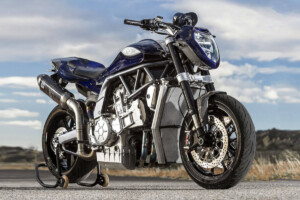 334-hp PGM V8: “The World’s Most Powerful Production Motorcycle” - 2000cc, 334 horsepower, 534 lbs, and a V8 built from two Yamaha R1 engines… Most V8 motorcycles begin with an automobile engine. That approach has produced everything from Boss Hoss cruisers to one-off specials, […]
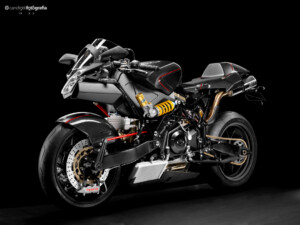 Vyrus 987 C³ 4V: 350-lb Ducati-Powered Hub-Center Superbike - Ducati 1098R power, 350 pounds, and hub-center steering… In 2009, the Ducati 1098R already represented an extreme interpretation of the Italian V-twin superbike. Its Testastretta Evoluzione engine (actually 1198cc despite the model name) had been […]
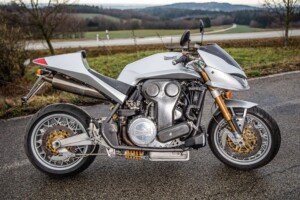 Münch Mammut 2000: The 260-hp Turbo Bike - Übermoto: 2000cc, Turbocharged, 260 horsepower, and 218 lb-ft of torque… At the turn of the millennium, the motorcycle world was engaged in an escalating superbike arms race. The Suzuki Hayabusa and Kawasaki ZX-12R were pushing […]
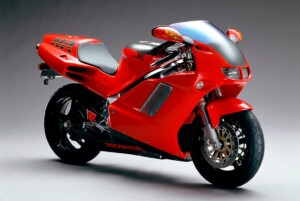 Honda NR750: The Oval-Piston Superbike - 32-Valve, 15,000-rpm V4: Honda’s attempt to build a V8…without technically building one… In 1992, Honda put one of the strangest engines ever developed for Grand Prix racing into a road-going motorcycle. The resulting Honda NR750 […]
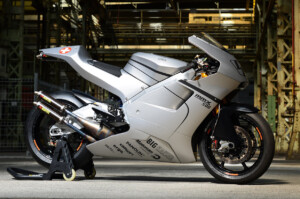 Suter MMX 500: 195-HP Two-Stroke GP Bike - 195 Horsepower, 280 Pounds, Two Strokes: The Spirit of the 500cc “Unrideables” Reborn… For a generation of motorcycle racing fans, the 500cc two-stroke Grand Prix bike represents something close to the ultimate racing motorcycle. The […]
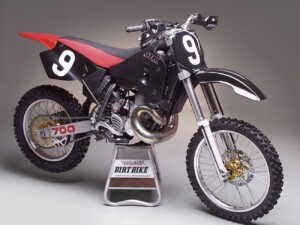 ATK 700 Intimidator: The 78-hp 700cc Two-Stroke Dirt Bike - 685cc, 78 Horsepower, 238 Pounds: One of the most outrageous production dirt bikes ever offered in America… There was a time when a 500cc two-stroke motocross bike was the king of the dirt. Honda’s CR500 […]
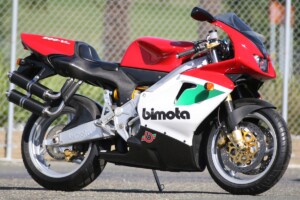 Bimota Vdue: 500cc Two-Stroke GP Bike for the Road - Bimota’s first homegrown engine powered one of the wildest superbikes of the 1990s: a featherweight 500cc V-twin smoker with direct fuel injection, carbon bodywork, and GP aspirations… Imagine walking into a motorcycle dealership in the […]
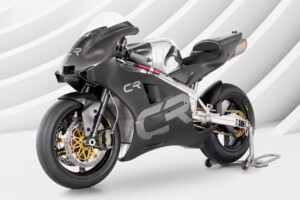 Crighton CR700W: 220-hp, 286-lb Rotary Superbike - The culmination of Brian Crighton’s four-decade obsession with rotary race bikes makes 220 horsepower from 690cc — and weighs less than a Yamaha R3… The Crighton CR700W is one of those motorcycles whose specifications make […]
 2WD Dakar Legend: Yamaha WR450F 2-Trac - Remembering Yamaha x Öhlins’ Hydraulic 2WD Enduro… Every so often, a motorcycle appears that seems to point toward an entirely different future. The Yamaha WR450F 2-Trac was one of those machines. At first glance, it […]
 Kinetic Art: Brough Superior RMB01 - Brough Superior and Watchmaker Richard Mille join forces on a work of kinetic art… One of the most striking machines at ArtRide 2026 in Biarritz, France, was the Brough Superior RMB01. Built in collaboration with […]
 Up for Auction: Allen Millyard’s 500-hp Viper V10 Motorcycle! - The 8000cc, 500-bhp Millyard Viper V10 crosses the auction block this month… There are custom motorcycles, and then there’s the Millyard Viper V10. Built by legendary British engineer Allen Millyard, this 8000cc V10-powered road-legal motorcycle […]
 Veloce Ethereal: 500cc Two-Stroke Café Racer - 145-hp 500cc Two-Stroke Ethereal from Veloce Motorcycles… In the modern world, a 500cc two-stroke intended for road use seems almost unthinkable. However, that’s exactly what Oxfordshire-based Veloce Motorcycles is promising with the Ethereal — a […]


