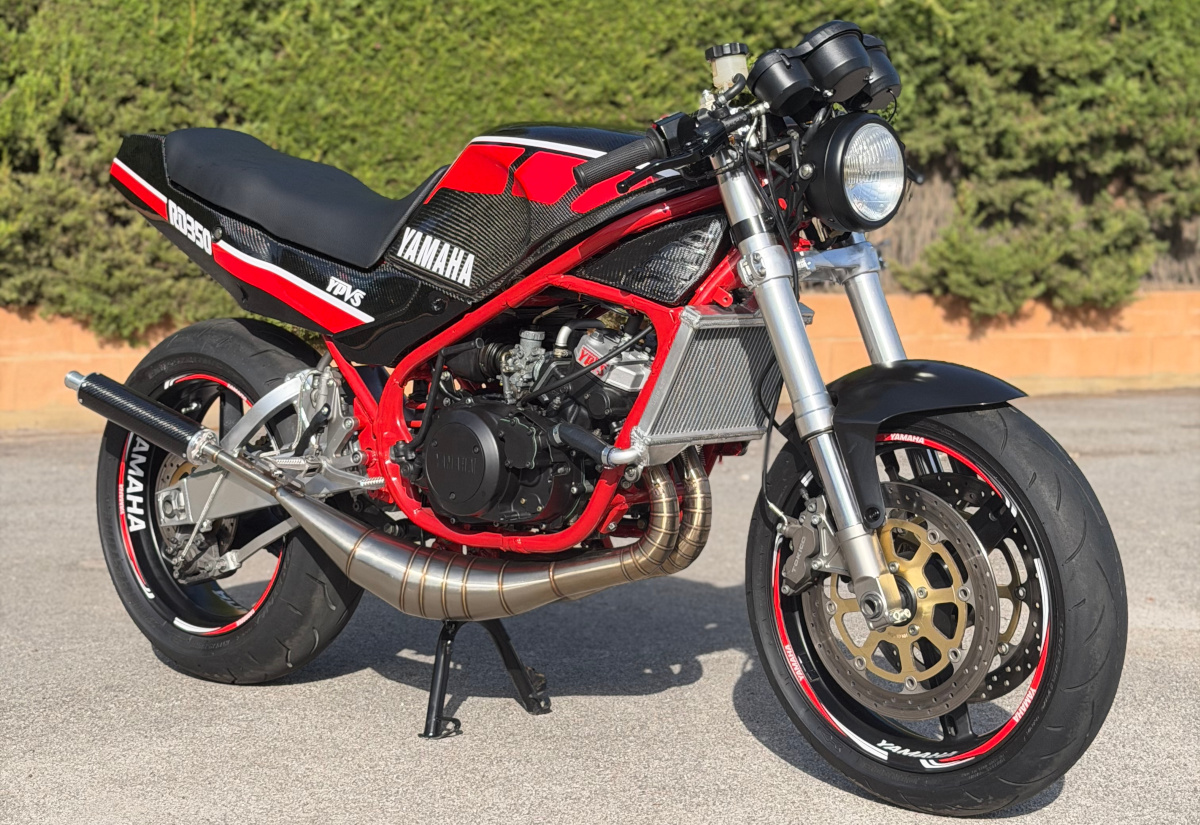
 From Brothers Garage: “Black Widow” 300-lb Yamaha RD350 Restomod…
In 1983, Yamaha released the RD350 YPVS — aka RZ350 or RD350LC II — a two-stroke giant-killer destined to become one of the most iconic, aggressive road-going smokers of all time. It was the culmination of years of Yamaha R&D and real-life racing experience, incorporating the Yamaha Power Valve System (YPVS) — a servo-actuated variable exhaust port valve that provided lower RPM torque while retaining high RPM power.
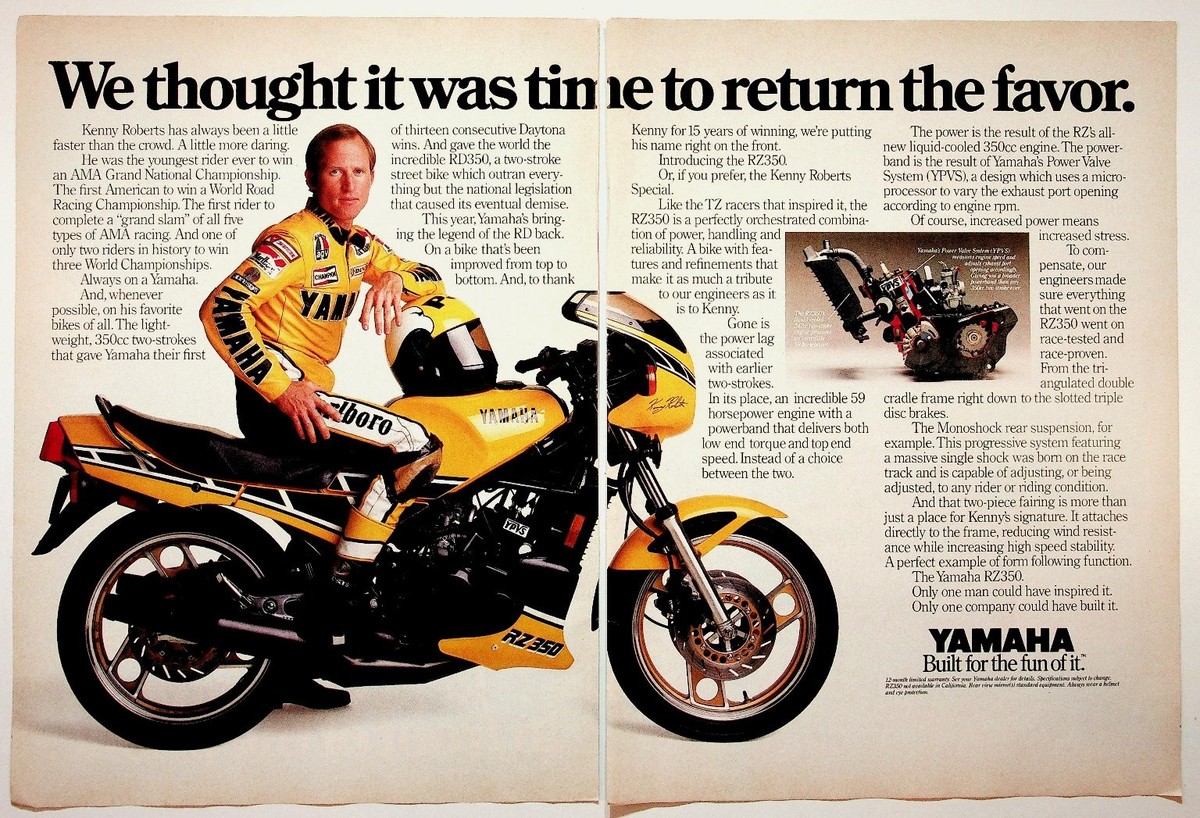
Known as the RZ350 in North America, the 370-lb, 55-hp two-stroker would embarrass many a 750 sport bike, on the road and track, and RZ Cups — single-make racing series — popped up in Europe and Canada. But there was more to this ultimate 350 than outright performance. It was a hooligan’s dream bike, all scent and sound and aura, and it looked as fast as it was.
“On a fun scale of one to 10, Yamaha’s RZ350 rates a perfect 10…”
“If good looks could kill, the RZ would be the atomic bomb of motorcycles…”
–Cycle World, 1984
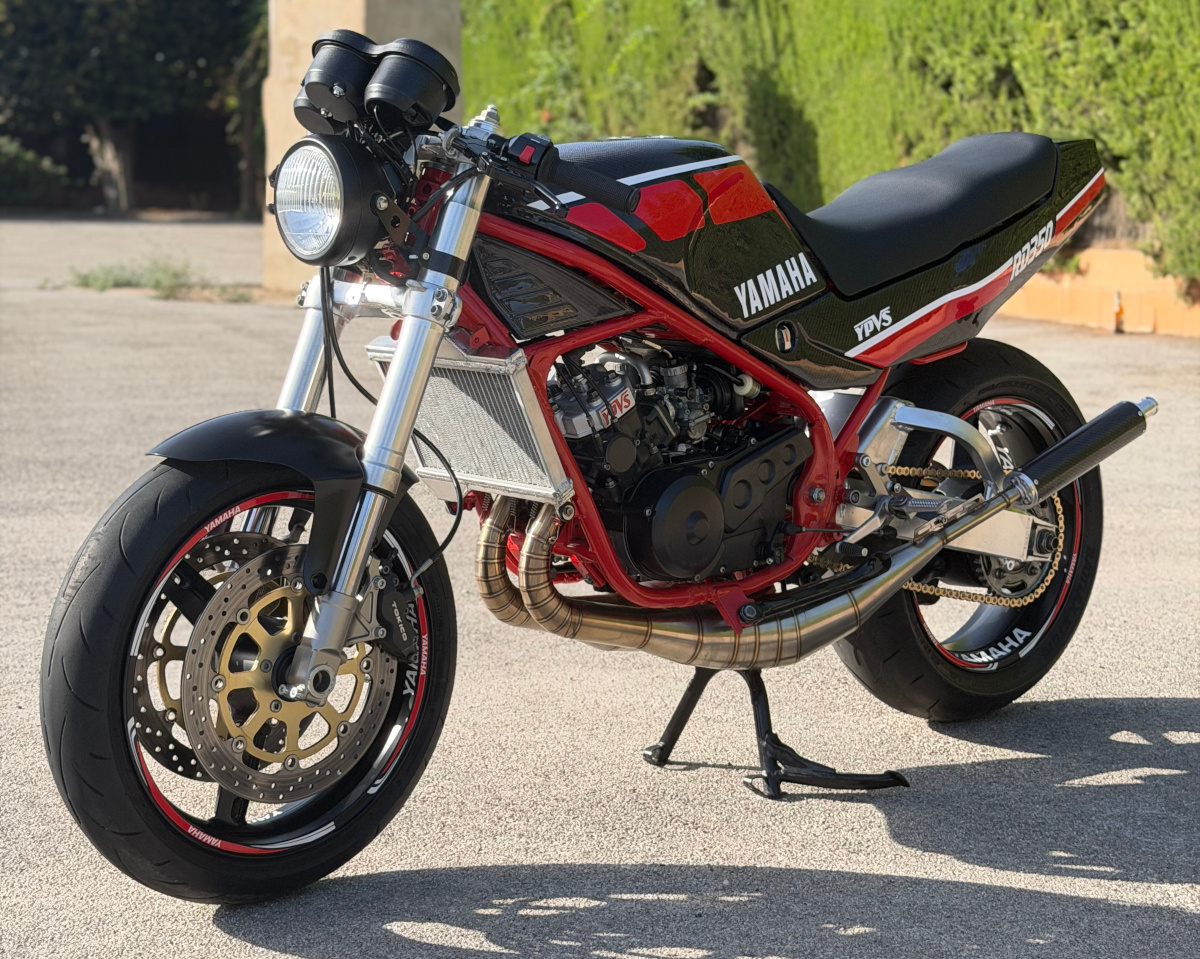
These YPVS-equipped machines have retained a cult following, and there’s a long history of modifying their brakes and suspension to modern standards. Today, we call these restomods, though enthusiasts in the UK have long called them “hybrids.” The impulse is especially logical in this case: the RZ350 / RD350-YPVS was the last of Yamaha’s great two-stroke sport machines, and so the model never enjoyed the advancements in suspension, braking, and materials technology that revolutionized the superbiking world.
This build comes from Tomas Gurrieri of Brothers Garage. A native Argentine, Tomas moved to Málaga, Spain three years ago and started his YouTube channel, which is has become wildly popular in a short time.
“I dedicate myself to restoring and reviving motorcycles and cars — vehicles that many might consider forgotten, but which I see as potential treasures.”
Tomas has dreamed of owning a RD350 YPVS since he was a boy. However, when he finally picked up a 1990 model (the YPVS was available until 1996 in some markets), a stock restoration wasn’t in the cards.
“I had wanted a Yamaha RD350 YPVS my whole life, and when I finally got one, it was so wrecked and had been abandoned for over 15 years that it was the perfect excuse to take the usable parts — the chassis and engine — and give the bike the aesthetics and functionality it never originally had.”
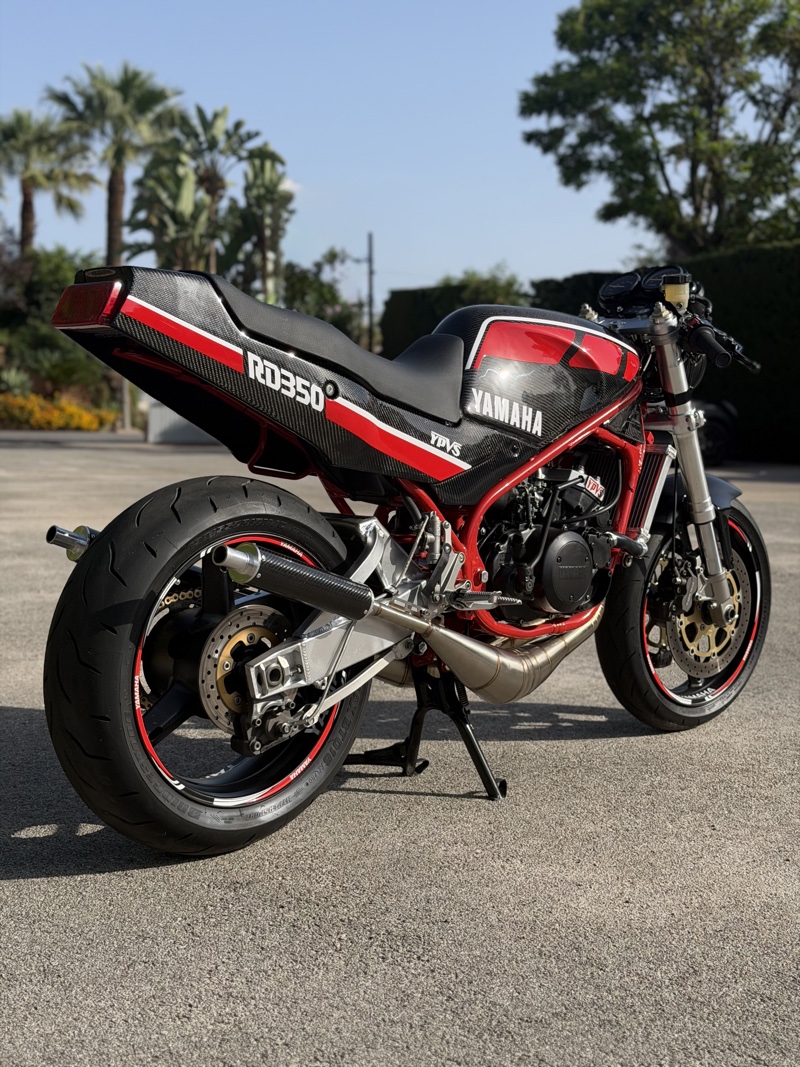
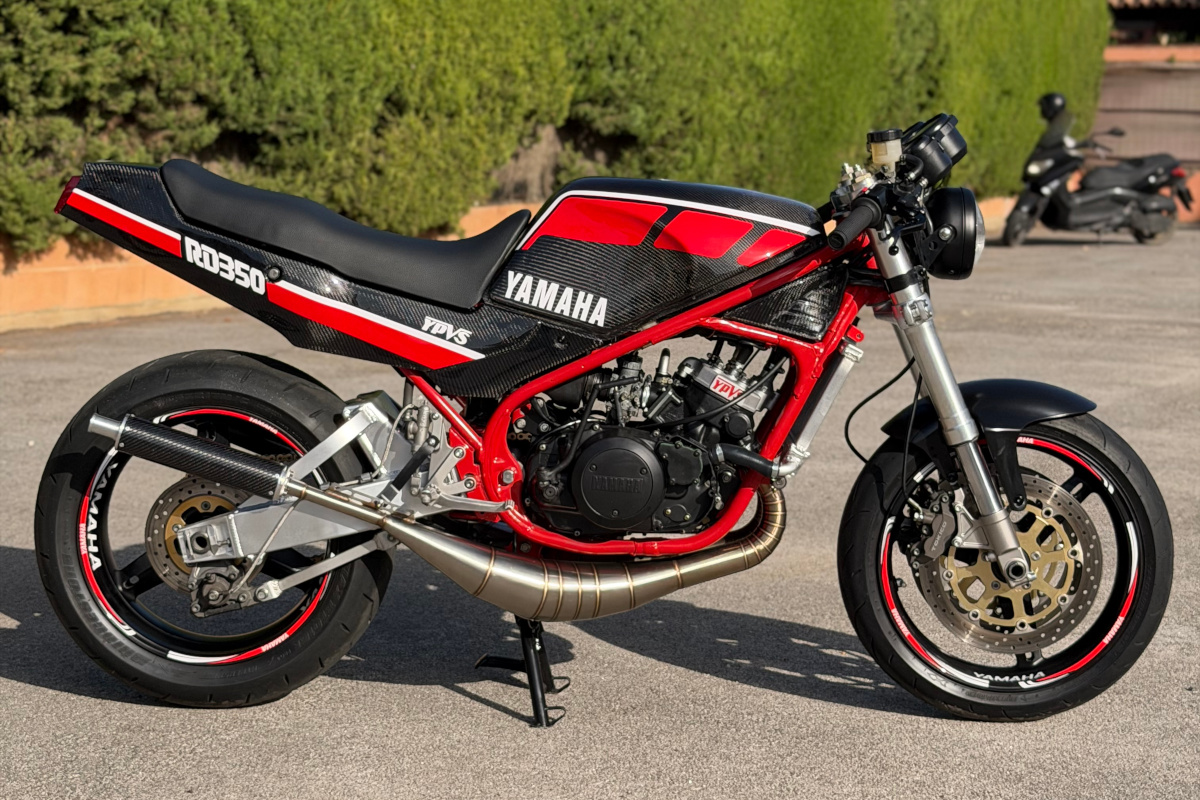
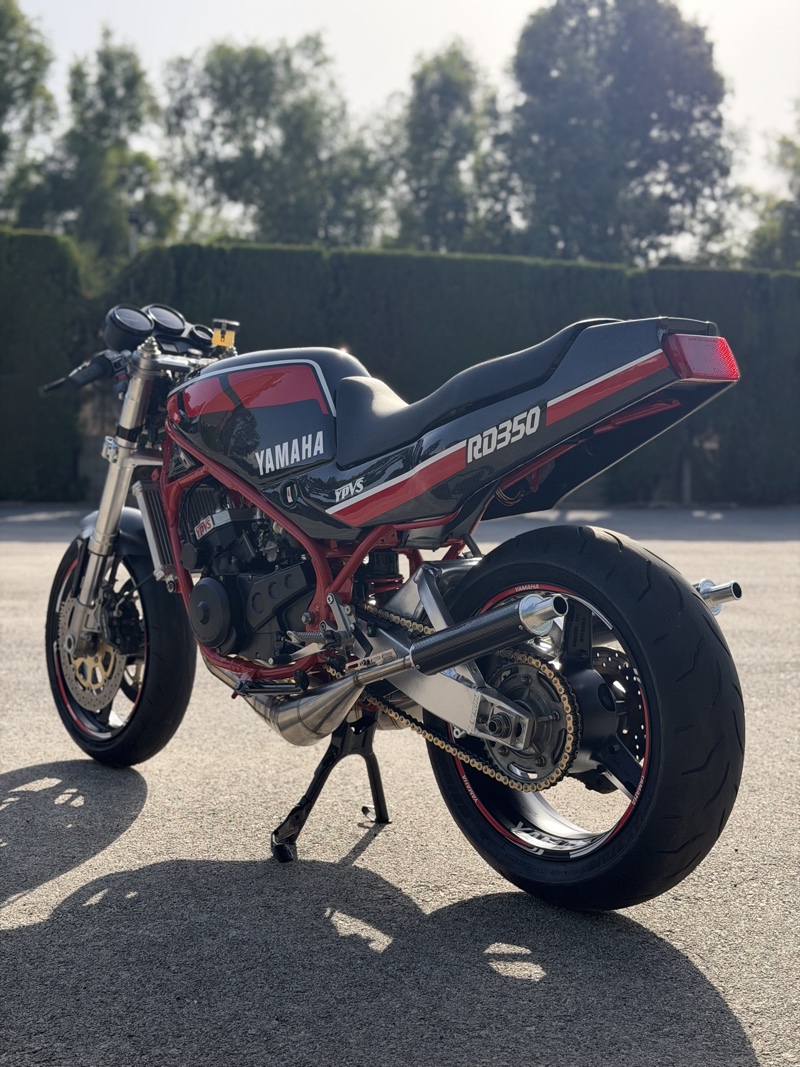
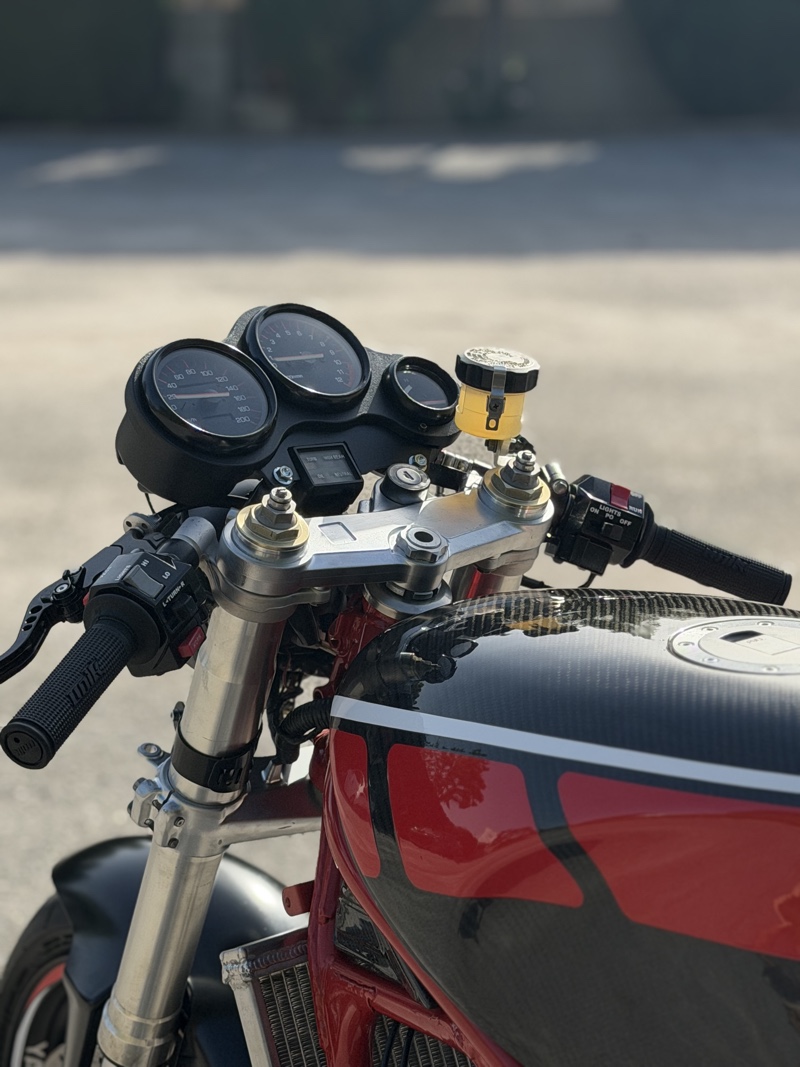
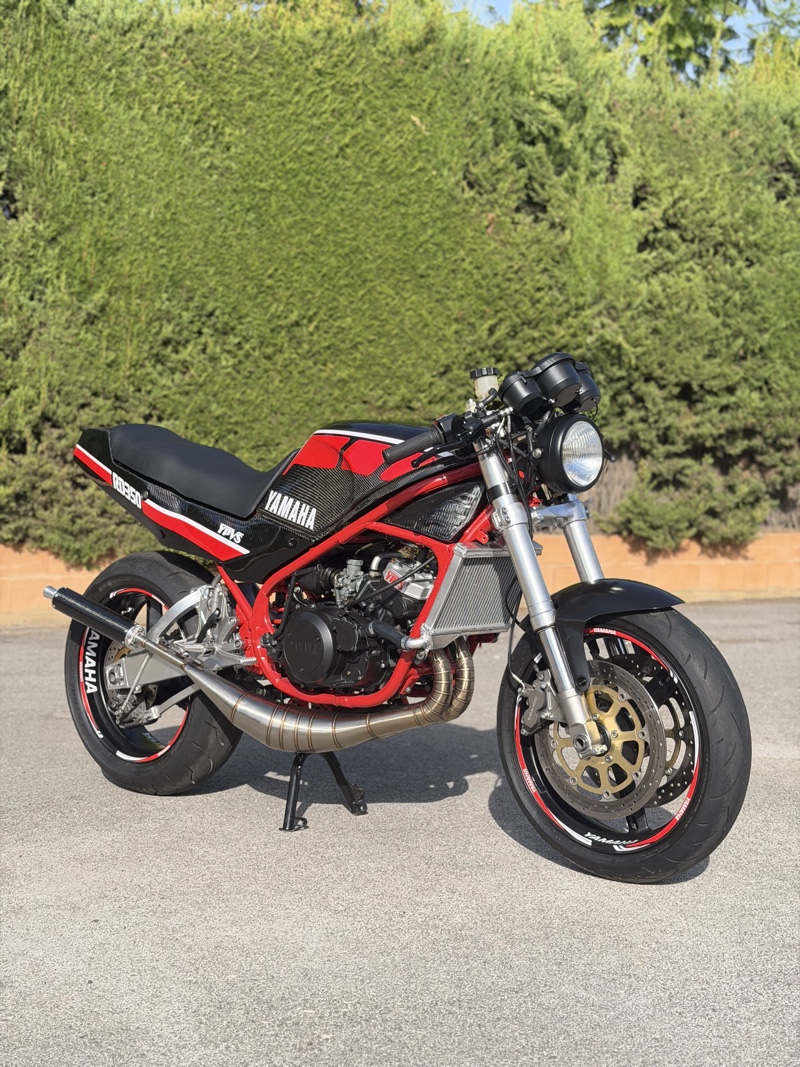
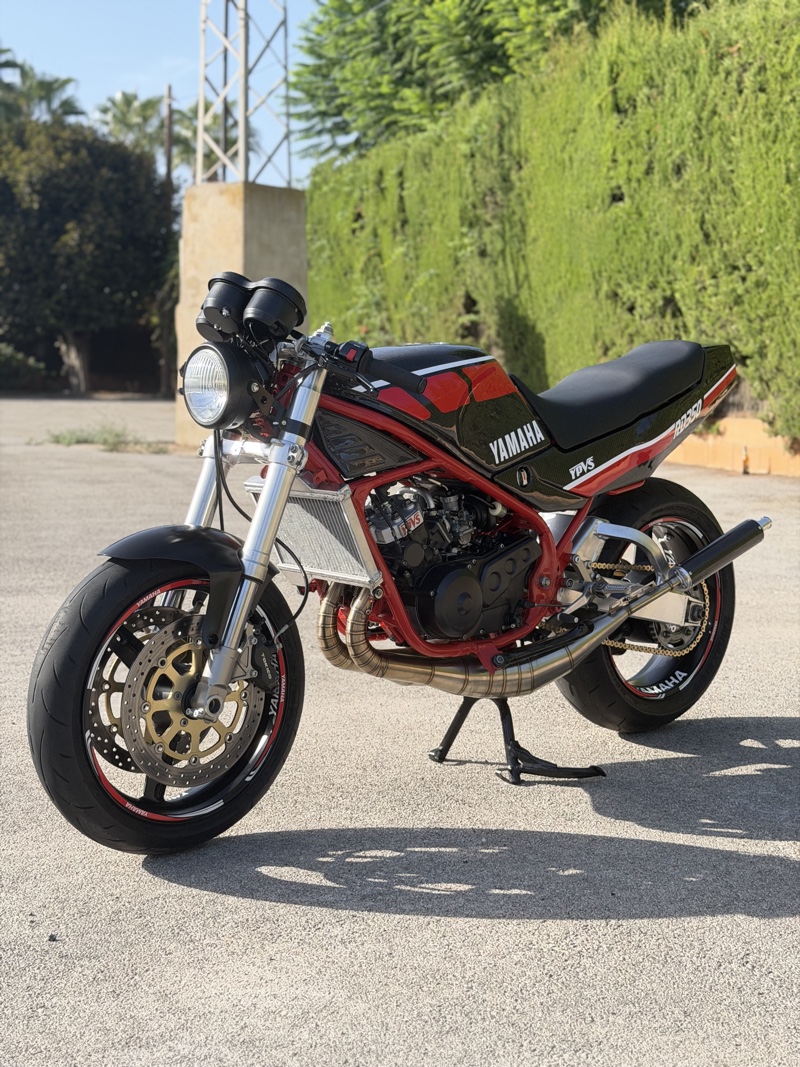
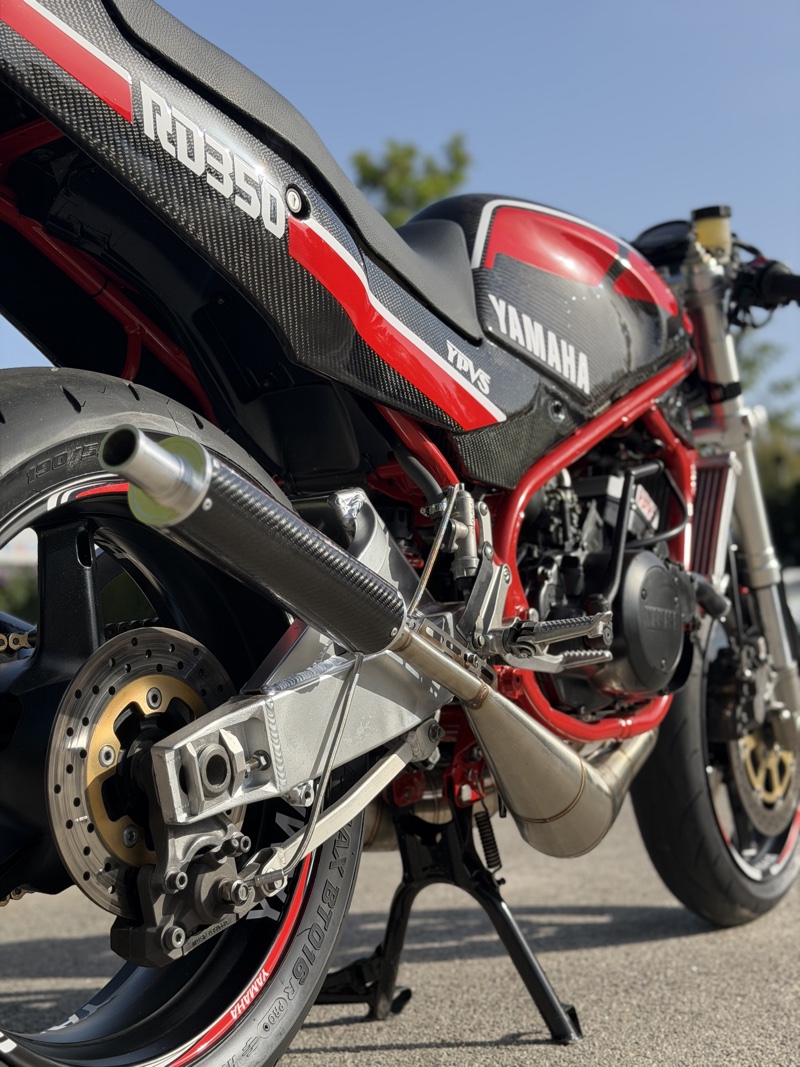
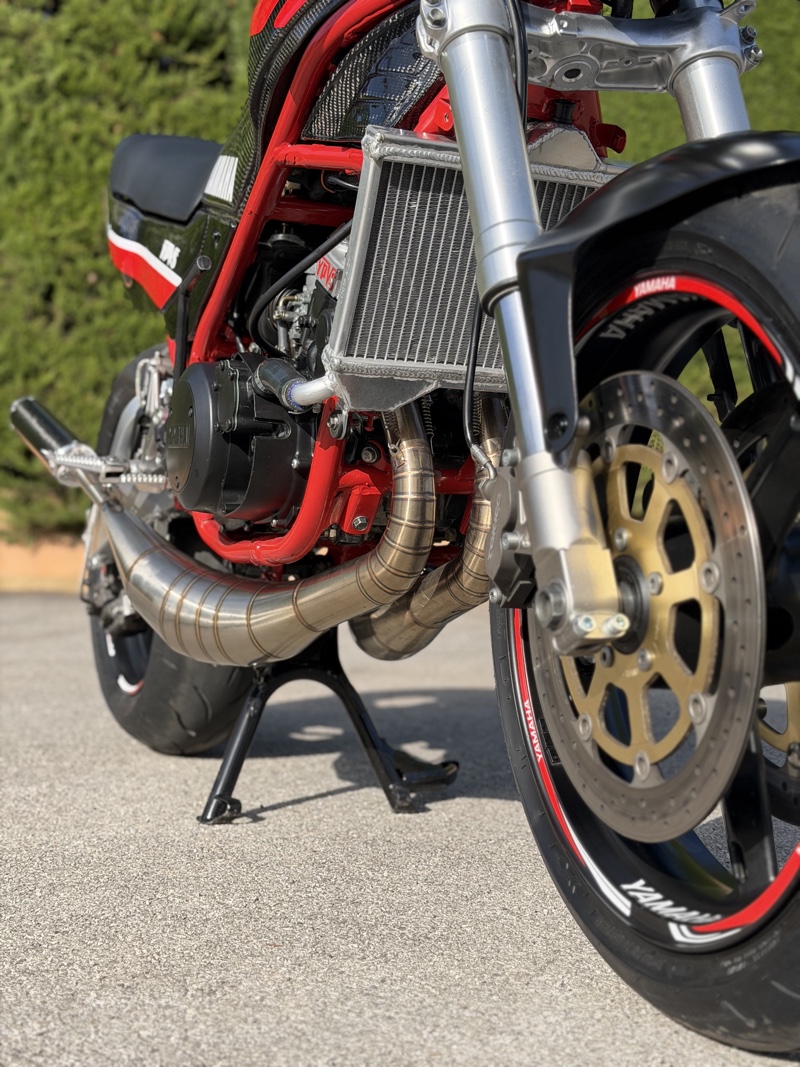
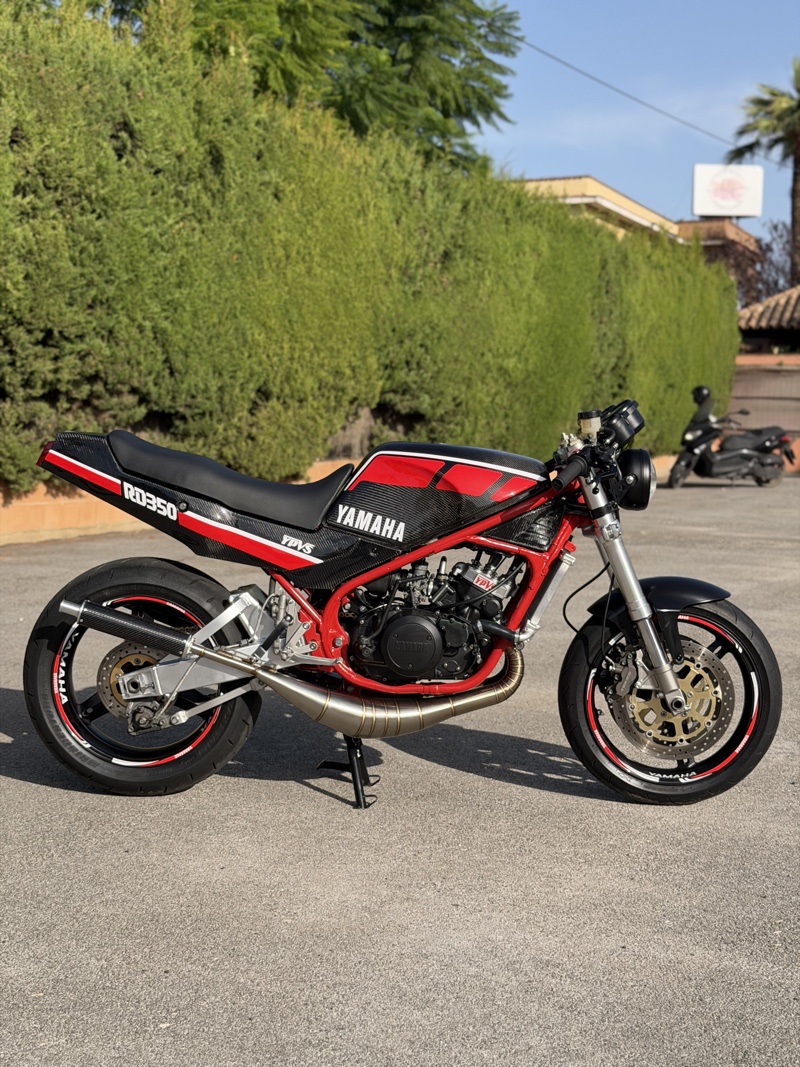
So Tomas picked up a 2001 GSX-R750 and set about mating the front and rear ends to the existing Yamaha engine and frame. That mean a new swingarm, rear wheel, and brake out back, and new USD forks, brakes, clip-ons, master cylinder, and wheel up front. He also added a larger aluminum radiator, modified GSX-R front fender, custom-built GPS speedo, and most significantly, full carbon bodywork: fuel tank, tail section, and front side fairings.
Put all those ingredients together, and this “Black Widow” is 25 kilograms (55 pounds) lighter than the stocker, coming in at just 140 kilograms (310 pounds)!
“With the larger tires and upgraded brakes from the GSX-R750, the riding experience is like that of a track bike, only much lighter. It has so much torque that the front wheel lifts off the ground in the first three gears. It’s dangerous — but the good kind of dangerous.”
We’re so happy that you finally have your dream bike, Tomas…and for sharing it with the rest of us! Below is our full interview with Tomas, which includes many more details about the build.
Yamaha RD350 YPVS Restomod: Builder Interview
• Please tell us a bit about yourself, your history with motorcycles, and your workshop.
My name is Tomas Gurrieri. I am Argentine and have been living in Málaga, Spain, for three years; I also started a YouTube channel (Brothers Garage) three years ago, where I dedicate myself to restoring and reviving motorcycles and cars — vehicles that many might consider forgotten, but which I see as potential treasures.
• What’s the make, model, and year of the donor bike?
The donor bike I used for the swap on my 1990 Yamaha RD350 YPVS is a 2001 Suzuki GSX-R750.
• Why was this bike built?
I had wanted a Yamaha RD350 YPVS my whole life, and when I finally got one, it was so wrecked and had been abandoned for over 15 years that it was the perfect excuse to take the usable parts — the chassis and engine — and give the bike the aesthetics and functionality it never originally had.
Owning this modified Yamaha RD350 means owning the bike I always dreamed of.
• What was the design concept and what influenced the build?
There wasn’t a specific concept or idea to follow; I simply modified the bike to my liking and exactly as I had always dreamed of.
• What custom work was done to the bike?
The only original components remaining on the bike are the frame and the engine. Apart from that, the entire rear assembly (swingarm, wheel, and brakes) and the entire front assembly (suspension, brakes, clip-on handlebars, master cylinder, and wheel) are from the Suzuki GSX-R750.
- I also used the Suzuki GSX-R 750 footpegs along with the rear brake master cylinder.
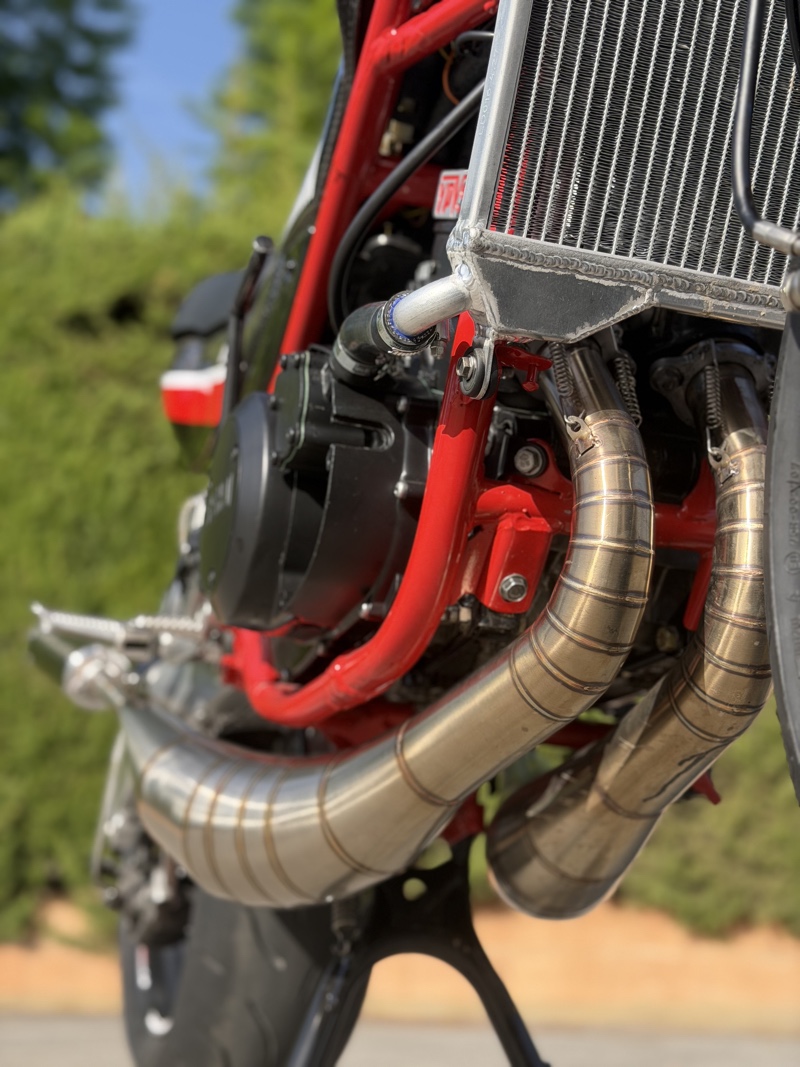
- The exhaust system is custom-made and modified.
- The radiator is aluminum and slightly larger to improve cooling.
- The front fender is the original unit from a Suzuki GSX-R750, but modified and adapted to the RD350’s aesthetic.
- The speedometer has been custom-built from scratch; it retains the original gauge housing but converts the mechanism from mechanical to digital, using GPS for speed measurement.
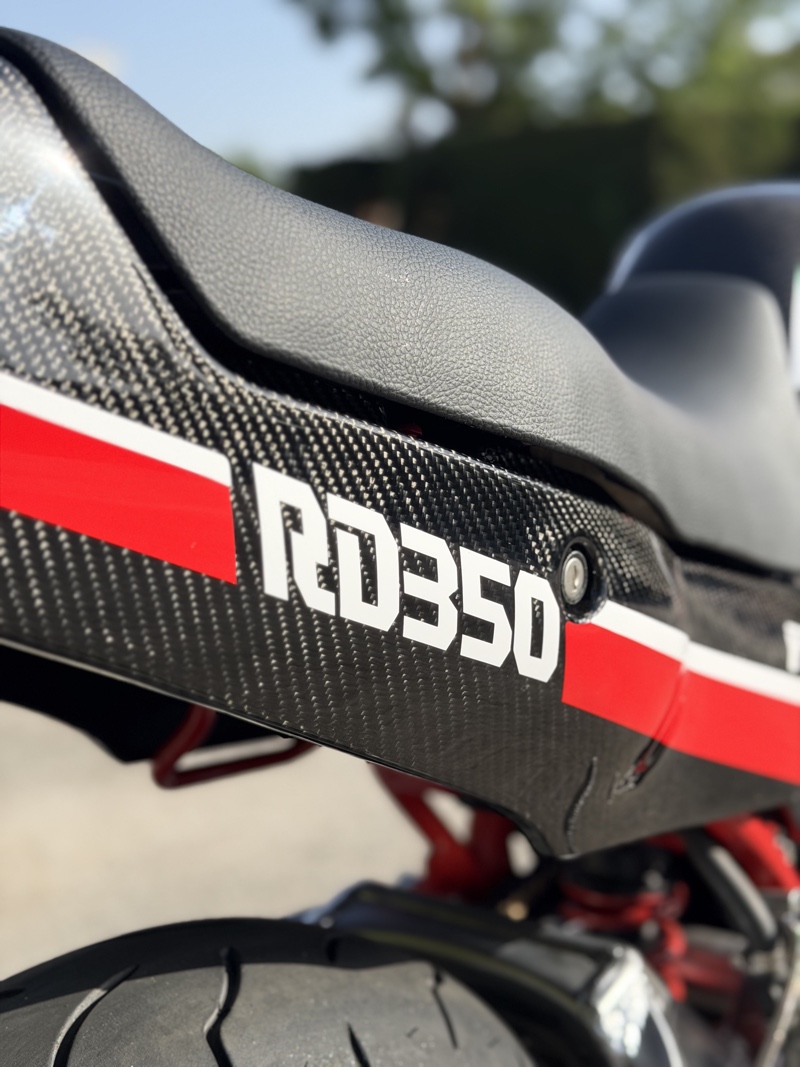
- And finally — and most importantly — the bodywork is full carbon fiber, including the fuel tank, tail section, and front side fairings.
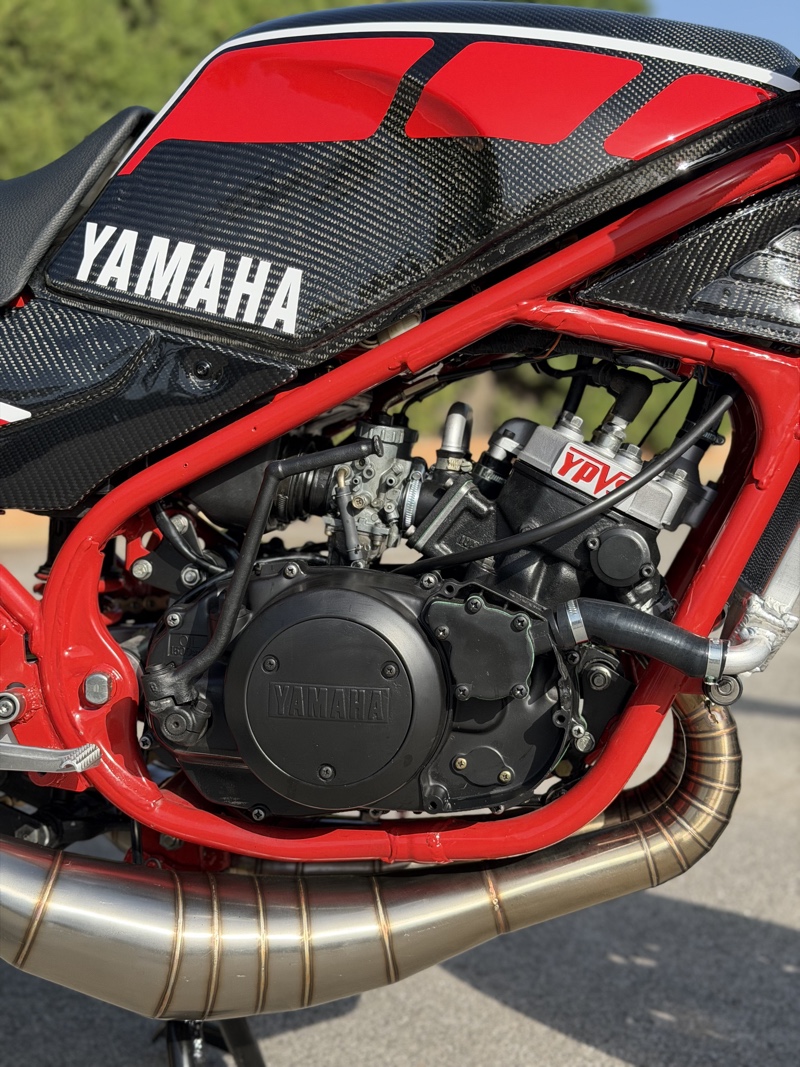
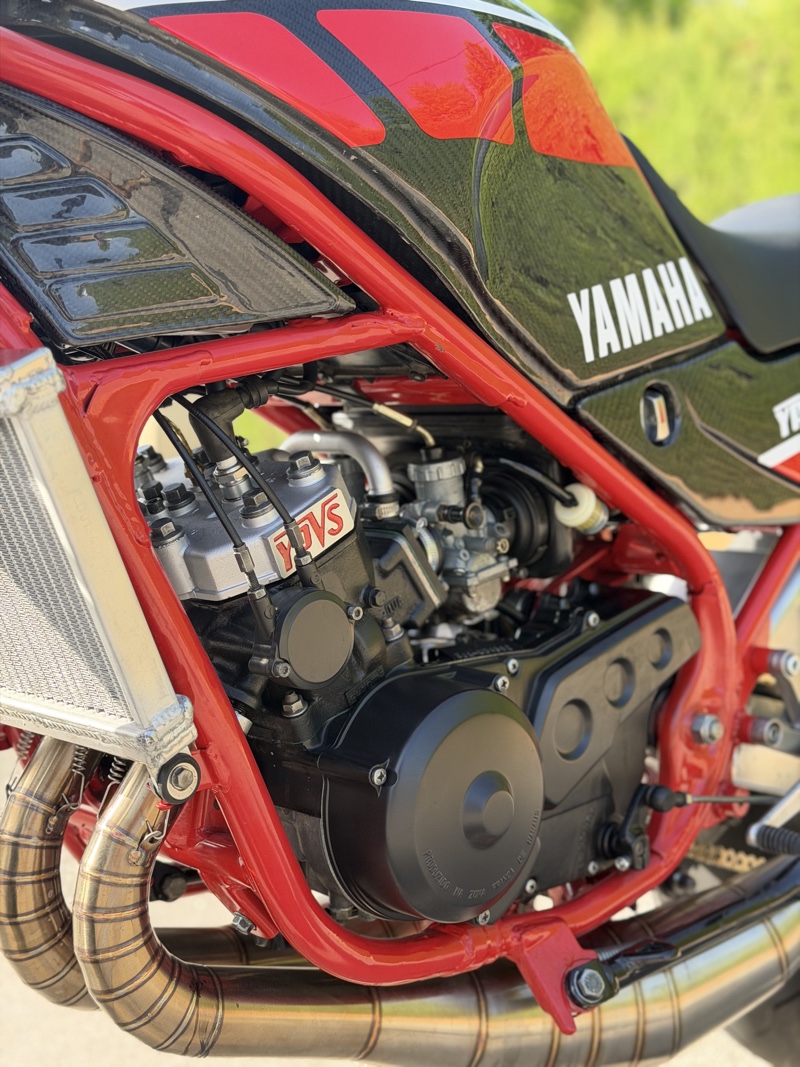
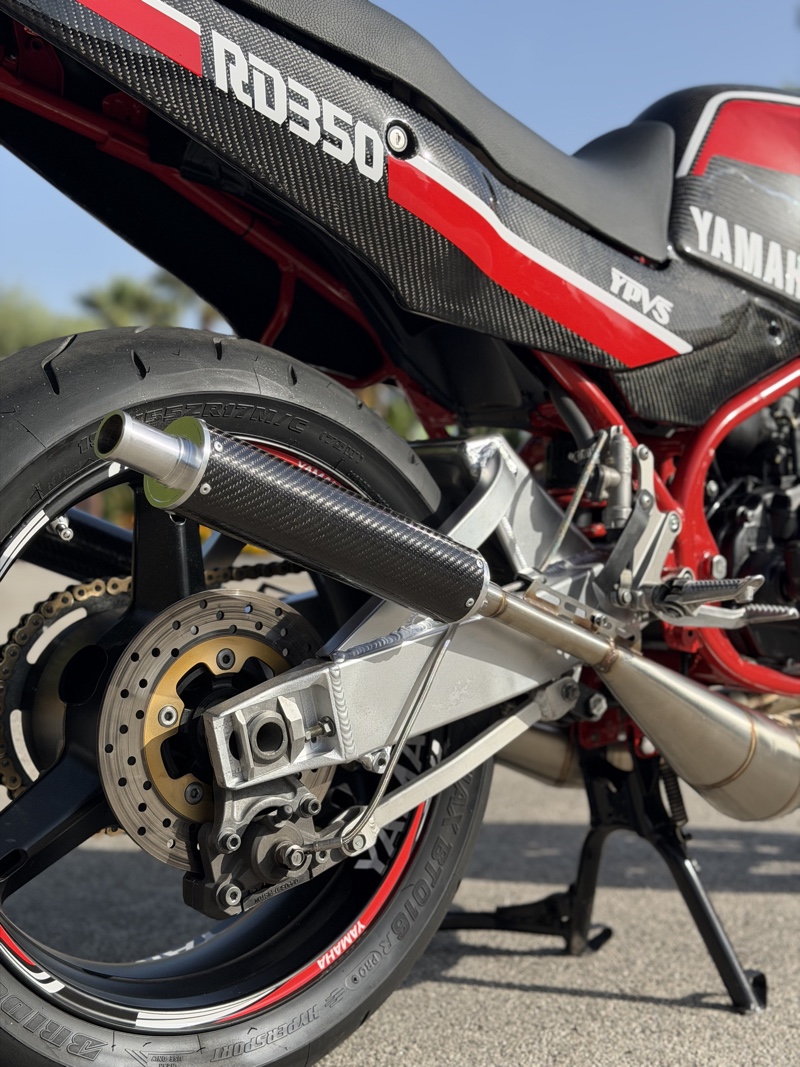
Thanks to all the carbon fiber and aluminum, the bike weighs 25 kilograms less than the factory model.
• Does the bike have a nickname?
No, I like the nickname she is known by worldwide, and I think it suits her perfectly (Black Widow).
• Any idea of horsepower, weight, and/or performance numbers?
The engine remains original; only the gaskets and clutches were replaced, and routine maintenance was performed. It might produce an extra 4 or 5 horsepower due to the modified exhaust, but in terms of rated power, it is the same as the factory spec. As for the weight, it weighs 140 kg.
• Can you tell us what it’s like to ride this bike?
It’s my first time ever riding a Yamaha RD 350, but I know what people say about them — that they aren’t easy bikes to handle. The upside is that, with the larger tires and upgraded brakes from the GSX-R750, the riding experience is like that of a track bike, only much lighter. It has so much torque that the front wheel lifts off the ground in the first three gears. It’s dangerous — but the good kind of dangerous.
But if I had to highlight one thing, it would be the sound and the feel of the brakes; that’s basically the best part of this swap.
• Was there anything done during this build that you are particularly proud of?
Yes, absolutely everything. It might sound a bit boastful coming from me, but I know that both I and my audience — since the final video already has 750,000 views — love the end result.
Adapting a track bike setup onto a Yamaha RD350 wasn’t just a simple modification; it was about putting a track bike inside a classic motorcycle. The RD was born to be this way, and through a lot of hard work, I was able to make it what it truly should have been.
• Is there anyone you’d like to thank?
- To my brother (Lucio Gurrieri), who is always part of all my projects
- To my friends, and to everyone involved in the project.
Follow the Builder
YouTube: @BrothersGarageGu
Instagram: Brothers Garage | @tomigurrieri
TikTok: @brothers.garage.arg


