
 A 10-Year Odyssey: The ZeroVector S1 MANTA…
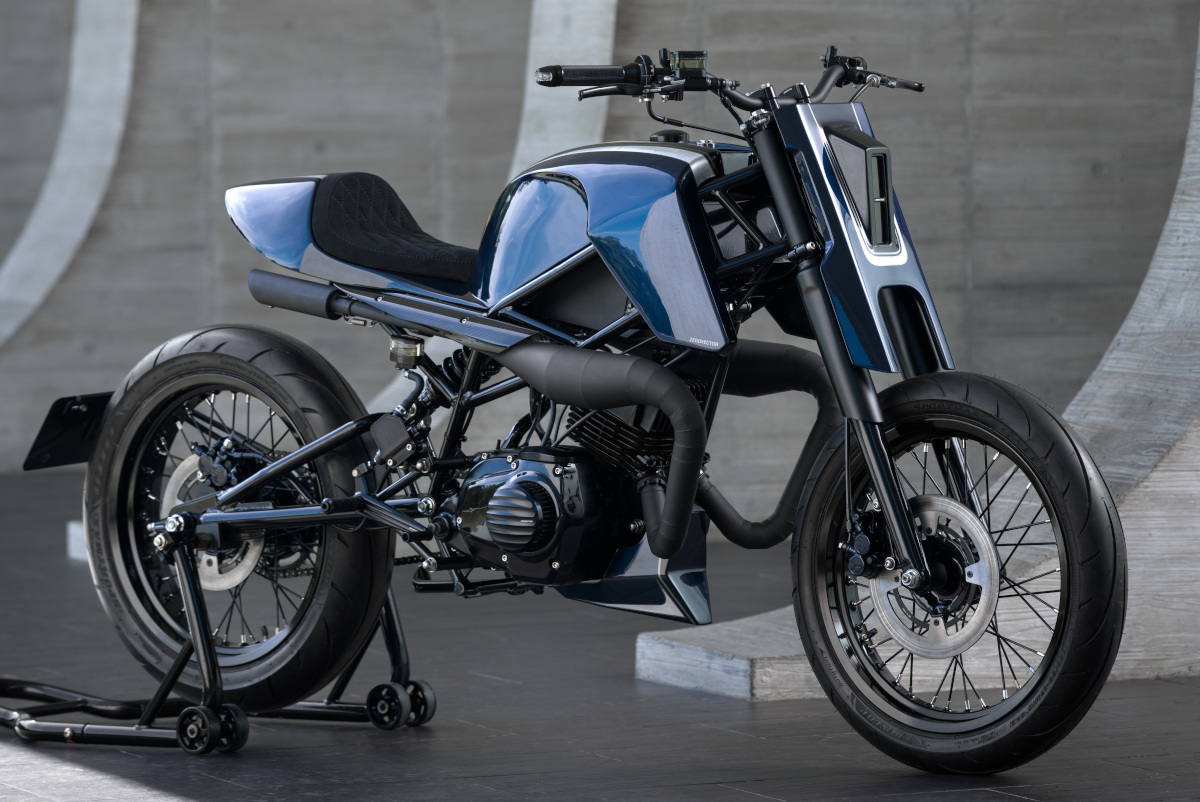
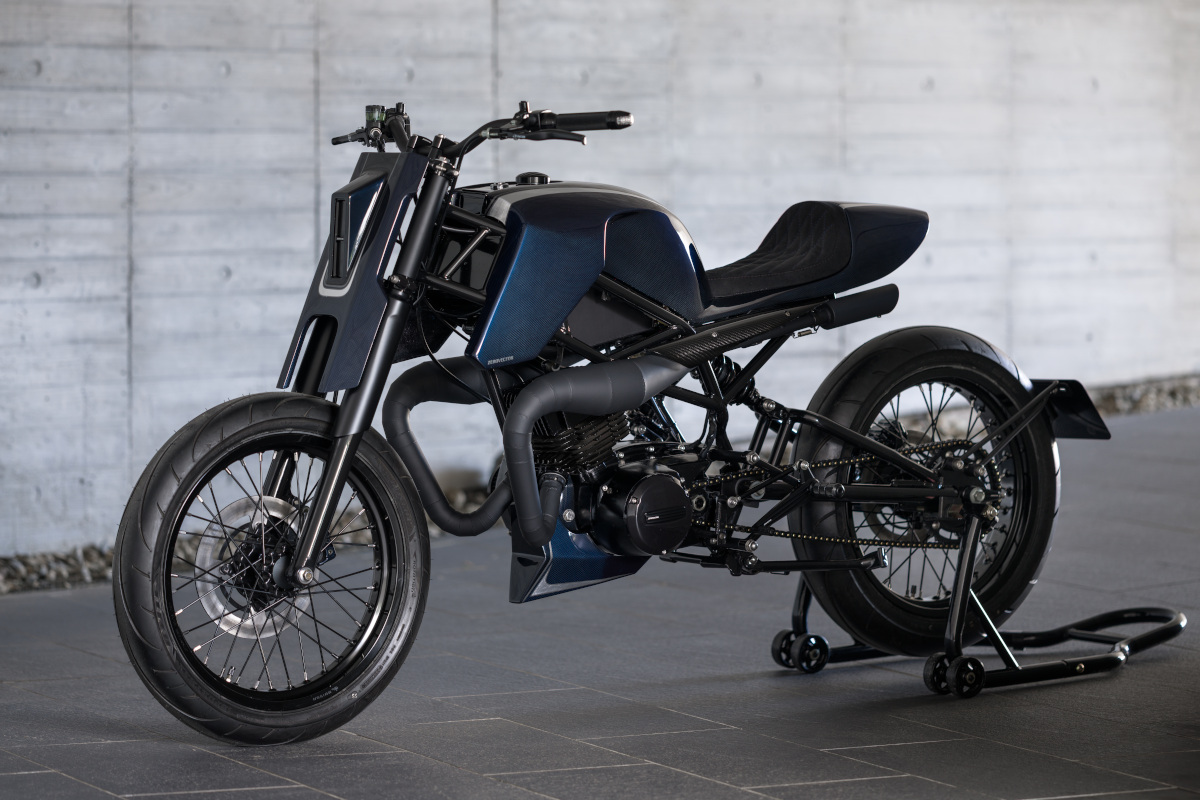
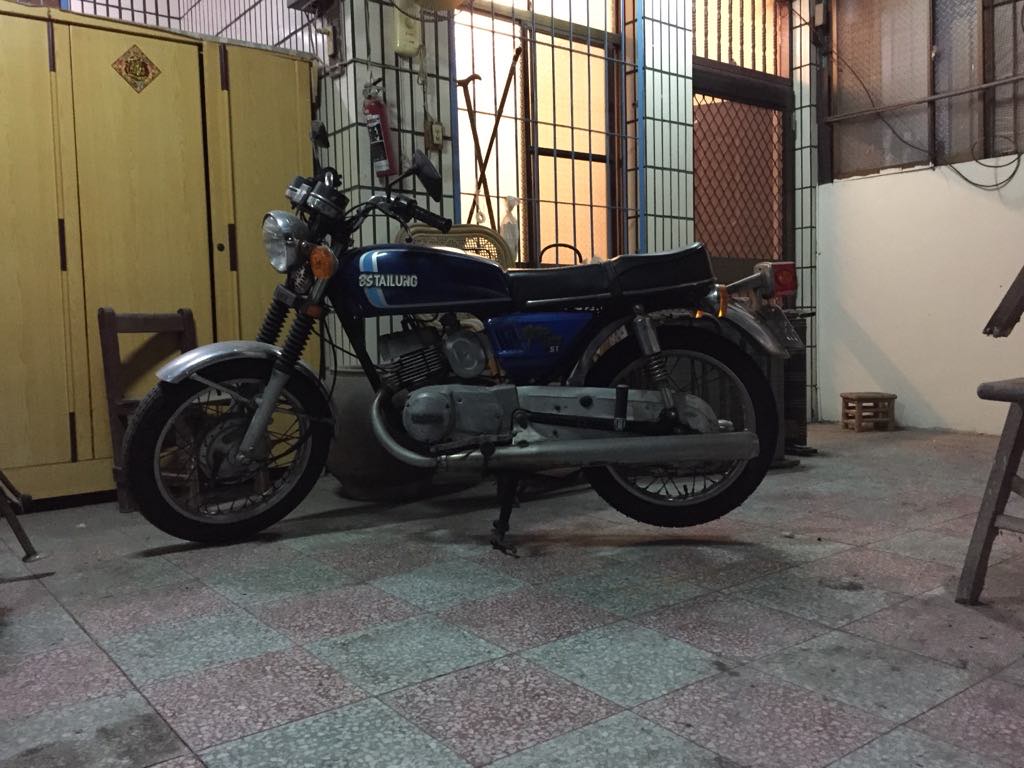
We love seeing a somewhat forgotten, unexpected platform targeted for a full transformation. That’s certainly the case with this Suzuki BS125, a single-cylinder two-stroke that was made and sold in Taiwan. It’s the work of Rui-Ming Chiu, an Industrial Designer and Development Engineer at Fangster who runs the design studio ZEROVECTOR as his own personal side venture.
The story of his bike actually goes back more than a decade to Chiu’s college days.
“Back in 2014, I wanted to design and customize my own bike for my industrial design thesis. As soon as I had the idea, the BS125 was the first model that came to mind. I’ve always loved two-stroke motorcycles, and I saw a lot of creative possibilities with the dual exhaust design. Plus, dual-exhaust bikes were pretty rare in Taiwan at that time, so I thought there was a lot of potential for modifications.”
Chiu put a ton of work into the project, using the skills he’d learned in his studies. He spent more than 300 hours with modeling clay to perfect the design, created fiberglass molds for the bodywork, and then produced lightweight, high-strength body panels out of a composite of carbon fiber and fiberglass.
“The overall design conveys a sense of speed and dynamics, inspired by the manta ray. I integrated the imagery of the manta’s cephalic fins and pectoral fins into the body design.”
Unfortunately, when he commissioned a custom workshop to produce more parts he’d designed and assemble the bike, they completely botched the job. Not to be dissuaded from his vision, Chiu would spend the next decade rebuilding the bike according to his original design.
“After graduating, I persisted with my vision and embarked on a 10-year modification journey to realize the ideal design I had in mind. I disassembled the bike and remade all the unsatisfactory parts. To improve the bike’s completeness, I redesigned many one-off parts, including brake discs, risers, foot controls, fork covers, grips, gas cap, air cleaner cover, and chain tensioner.”
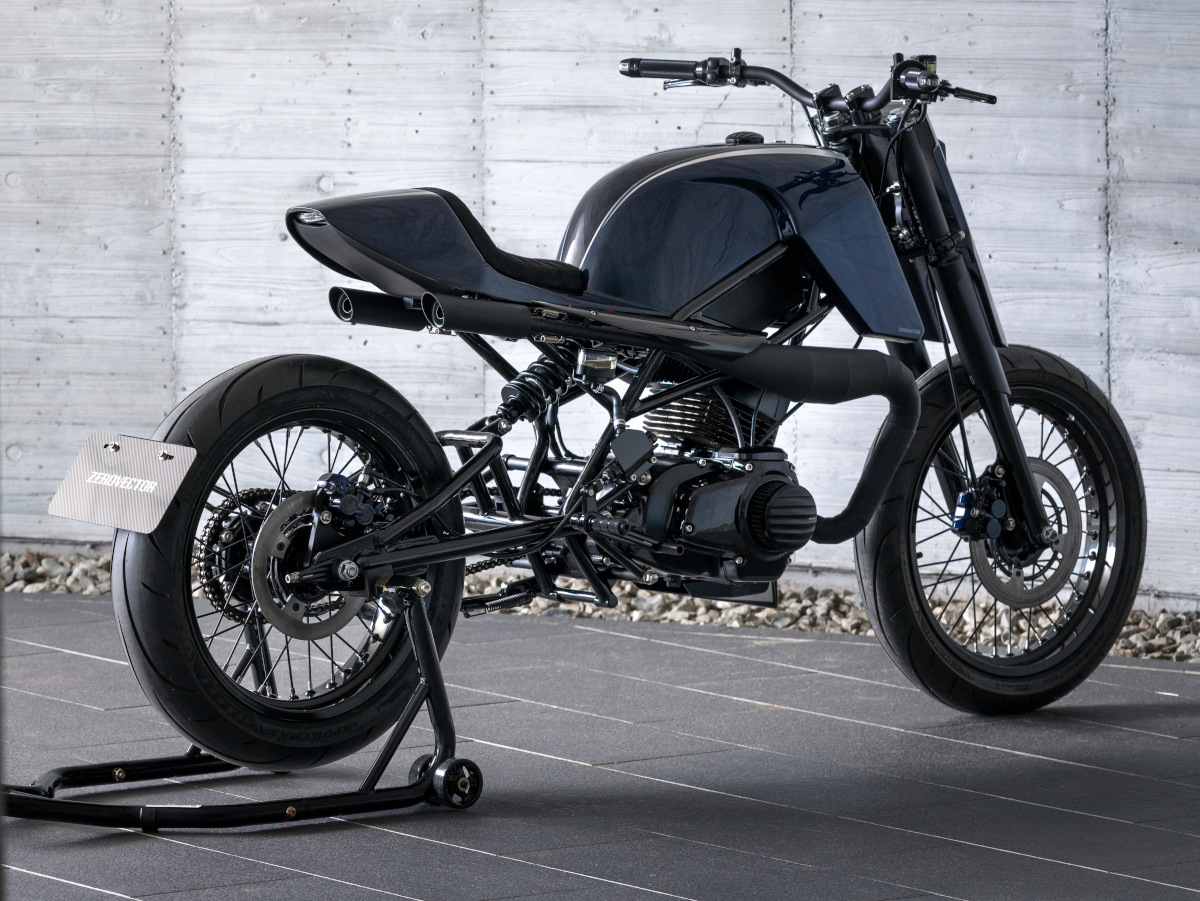
Along the way, he leveraged Taiwan’s close-knit community of fabricators and craftsmen.
“Working with these local masters — who are true experts in their respective crafts — allows us to achieve a level of quality I could never reach alone.”
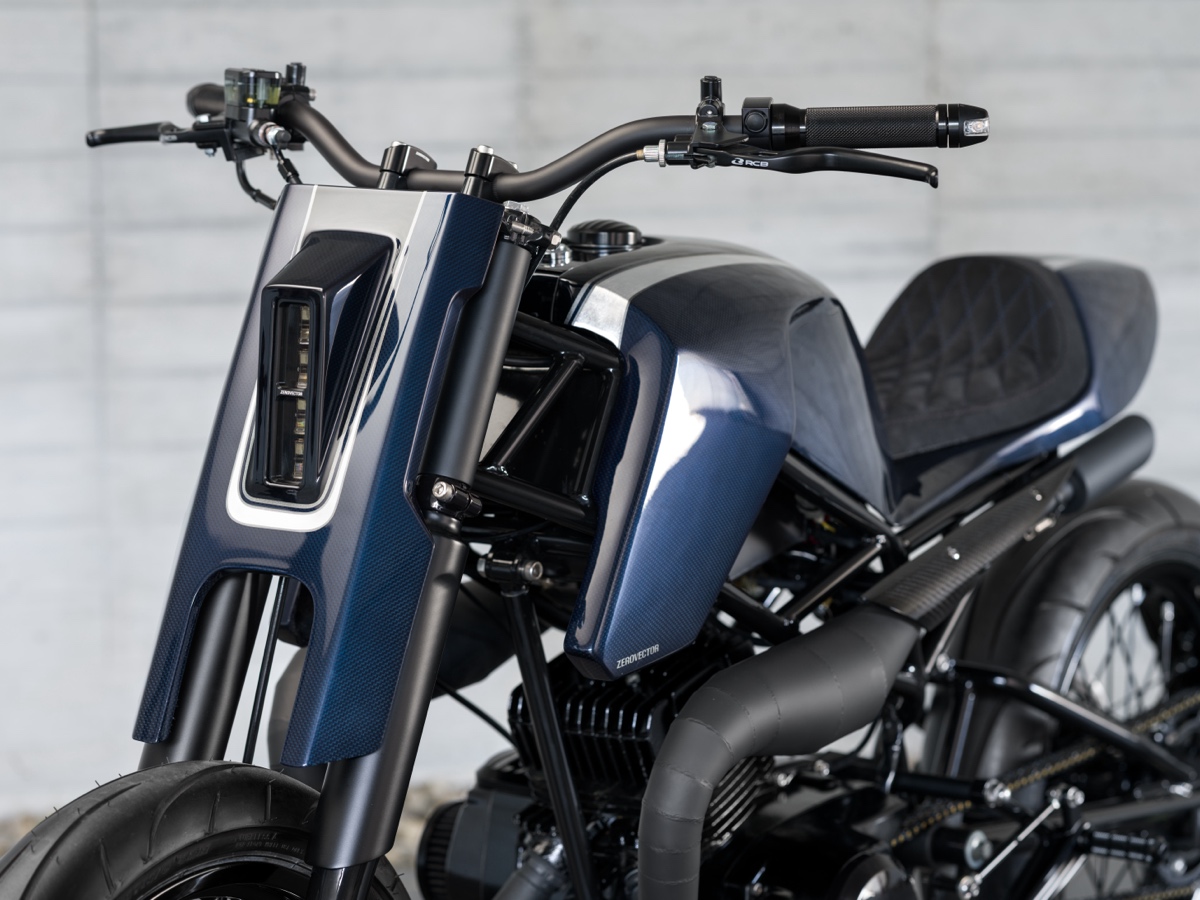
Banai fabricated the twin-exit expansion chambers and exhaust, while our friends at HideWork produced many of the aluminum parts. Simon Fiber Craft wrapped the original body panels in carbon fiber, while Jeffrey’s Finishing Touch laid down the manta ray-inspired paint.
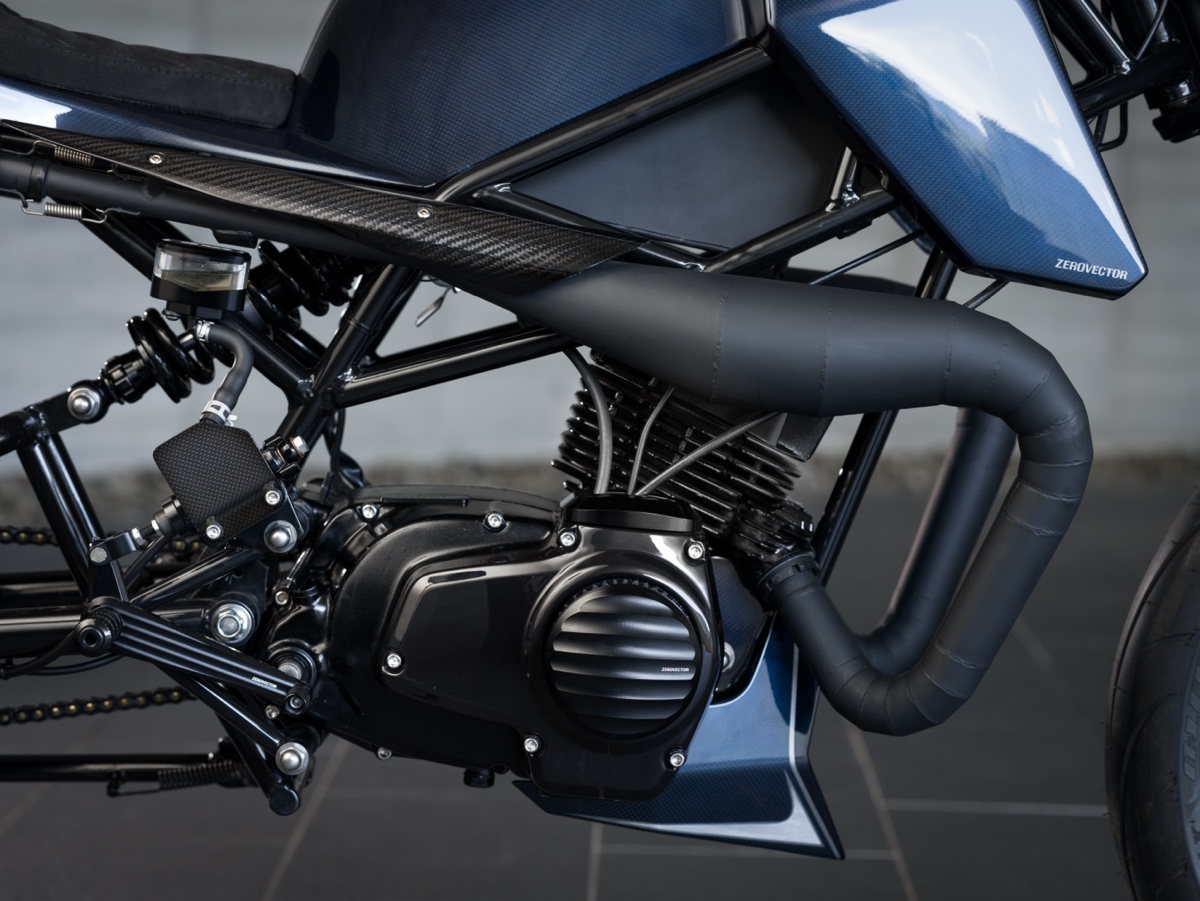
CHIRUI Leather Custom upholstered a custom alcantara seat, while triroad.moto.co handled the final assembly. As you can see, the ZeroVector S1 “Manta” is more than a single man’s vision — it’s a testament to the power of the Taiwanese custom community.
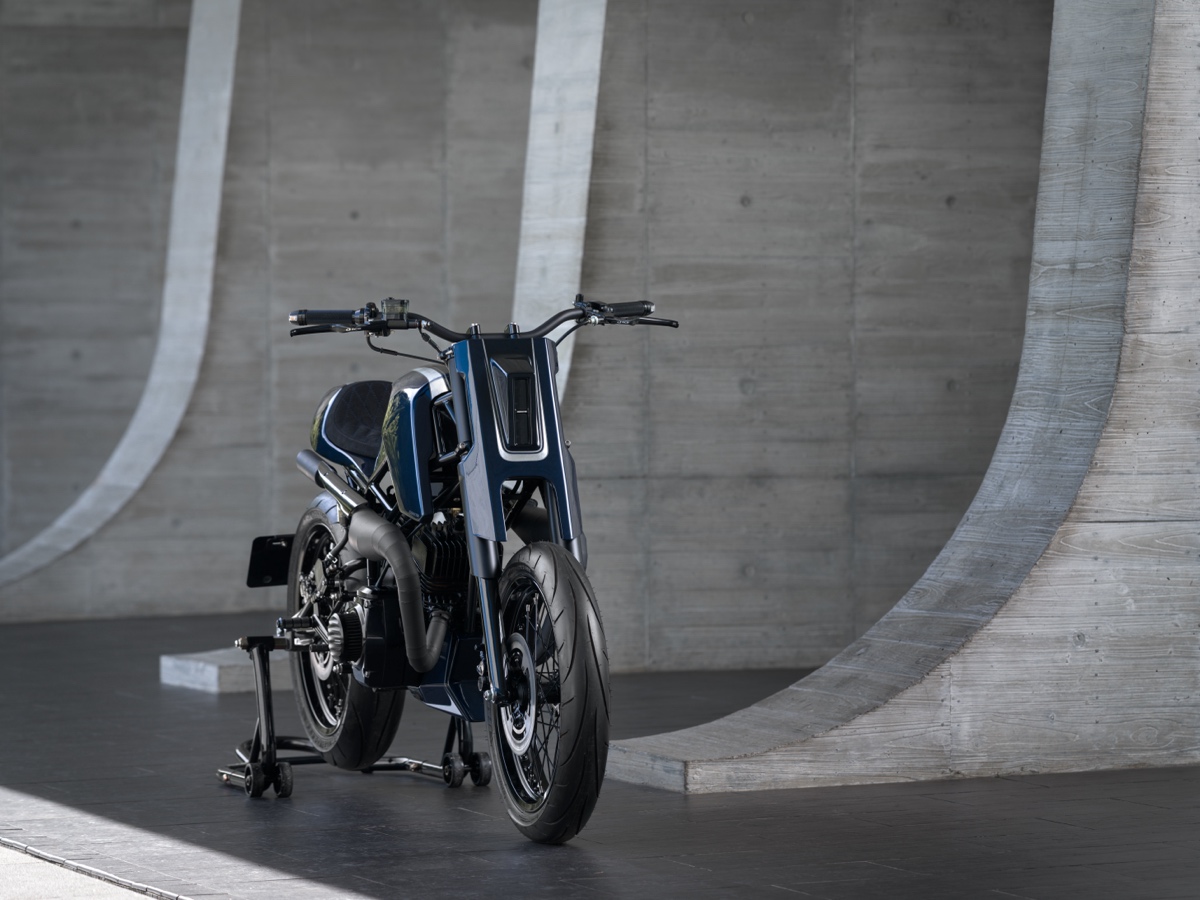
Finally, more than ten years after embarking on the project, Chiu present the bike at the prestigious Speed & Crafts show, where it took 4th place in the Free Style Class and received two special picks, the Gear Up and SYM Pick.
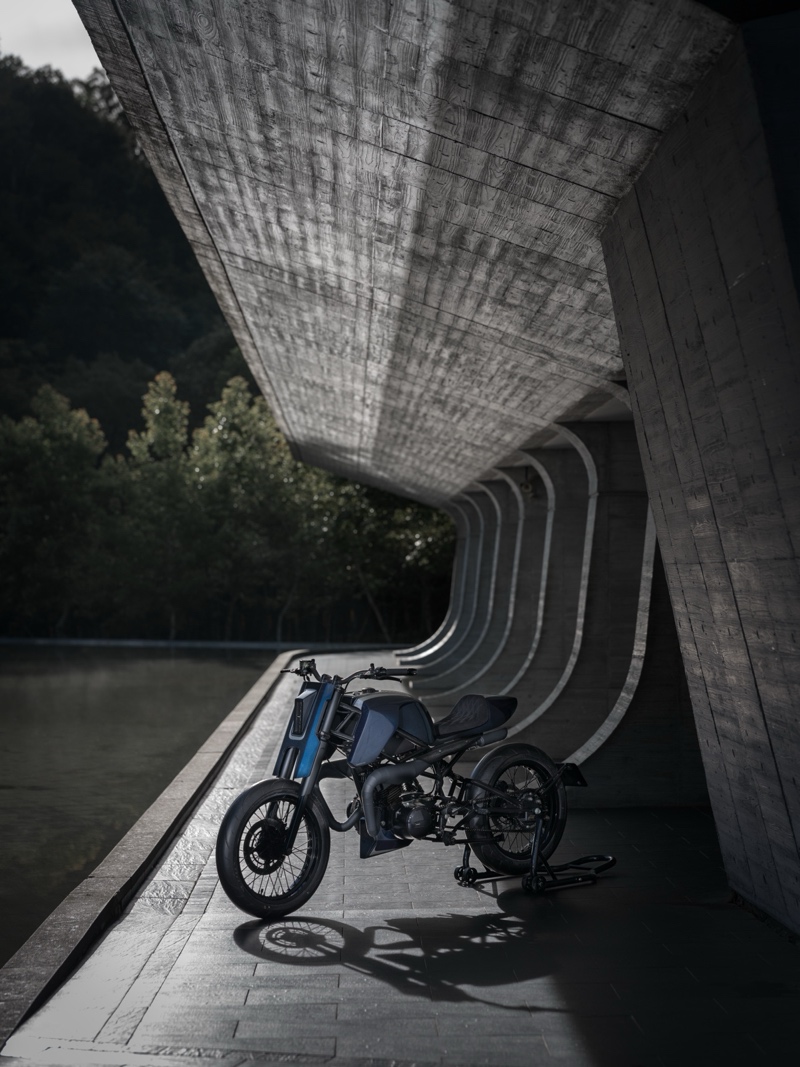
Chiu says it isn’t the fastest bike, at only 125cc, but it’s incredibly meaningful to ride a machine you spent so much time and work to create.
“I set up the riding position to be very sporty, so it’s still a lot of fun to ride and runs very smoothly.”
Hats off to Chiu for having the grit and dedication to bring this dream reality despite the early setbacks, and congratulations on the well-deserved recognition. Below you’ll find our full interview with him about the project, a full build sheet, and more photos from YHLAA. As you’ll read below, even the shoot location is significant to this build.
ZV S1 MANTA: Builder Interview
• Please tell us a bit about yourself, your history with motorcycles, and your workshop.
My name is Rui-Ming Chiu, and I am an industrial designer. My passion for custom motorcycles was ignited at 18 when I first came across Free Biker magazine. At that time, I wasn’t sure how to become a builder myself, but I noticed that many influential masters had backgrounds in industrial design. This realization came at a pivotal moment when I was choosing my university major, leading me to commit fully to industrial design with the sole ambition of entering the custom motorcycle industry. Now 31, I have been part of this world for years and currently serve as an Industrial Designer and Development Engineer at Fangster.
I don’t really have my own workshop, and I don’t physically “build” the motorcycles myself. Instead, I lead the process as a designer — translating concepts into sketches, 3D models, and precise technical drawings for custom components. My role is to be the integrator: I collaborate with specialized experts in fields like sheet metal, custom paint, and leatherwork to ensure the final build aligns perfectly with the vision in my mind.
Taiwan’s small geography and close-knit industry make this collaborative model ideal. Working with these local masters — who are true experts in their respective crafts — allows us to achieve a level of quality I could never reach alone. I believe in the power of professional synergy over individual labor.
• Please tell us about the bike.
The ZV S1 #MANTA began as my university graduation project. It took me 10 years to finally complete it, and in 2025, it competed in 2025 Speed & Crafts, where it placed fourth in the Freestyle Class.
ZEROVECTOR originally started as a handcrafted longboard brand, but later evolved into a design service studio. I currently work full-time as a designer at FANGSTER (since 2023), while ZEROVECTOR remains my personal side venture.
The BS125 is a single-cylinder, dual-exhaust two-stroke motorcycle that’s only made and sold in Taiwan. It’s really popular among delivery people, especially those who transport gas cylinders. Back in 2014, I wanted to design and customize my own bike for my industrial design thesis. As soon as I had the idea, the BS125 was the first model that came to mind. I’ve always loved two-stroke motorcycles, and I saw a lot of creative possibilities with the dual exhaust design. Plus, dual-exhaust bikes were pretty rare in Taiwan at that time, so I thought there was a lot of potential for modifications.
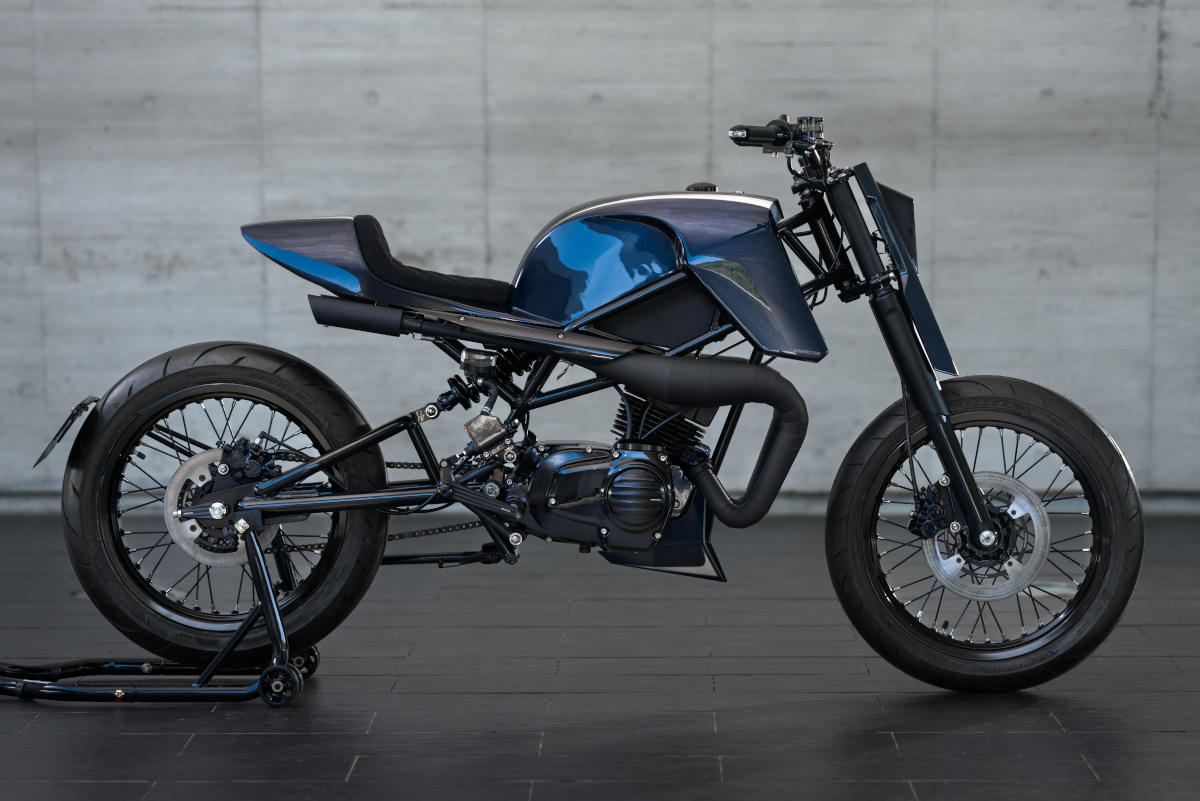
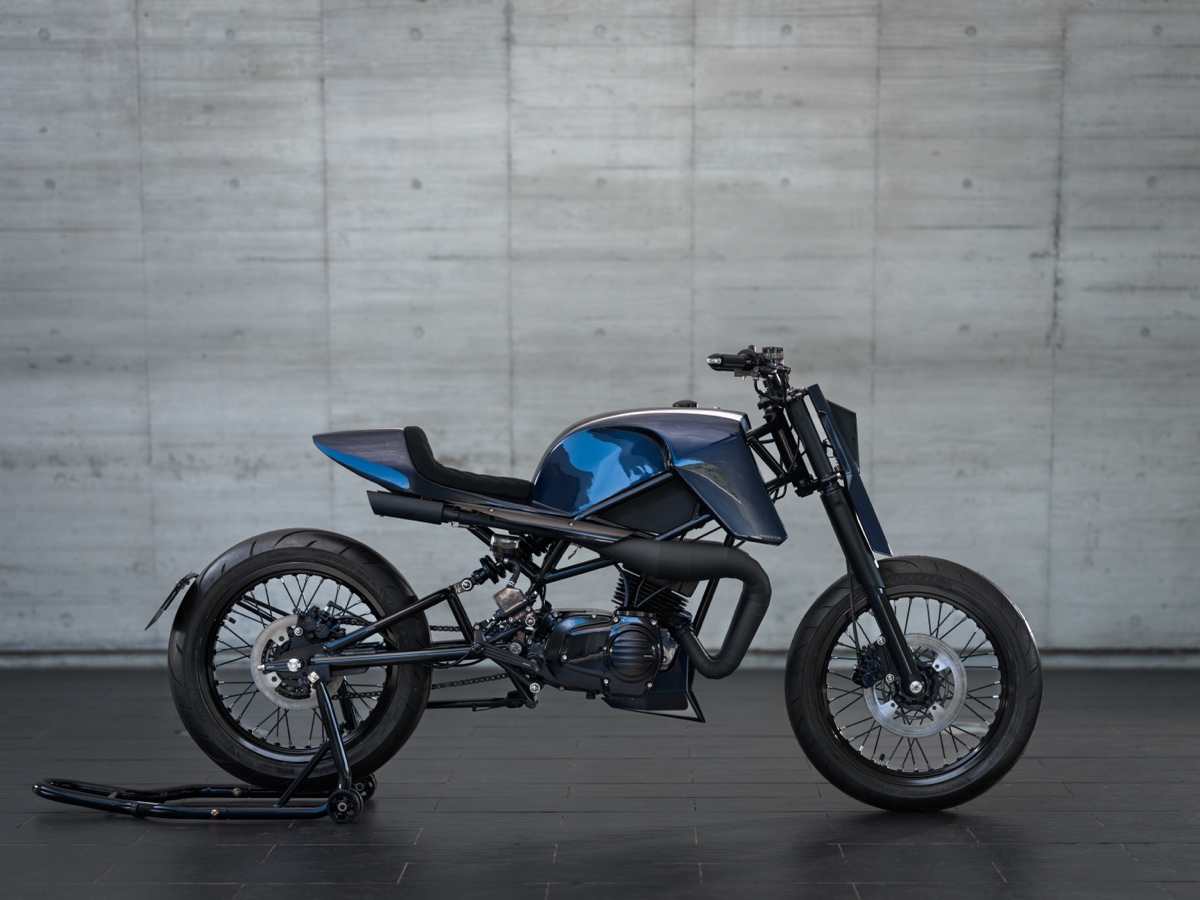
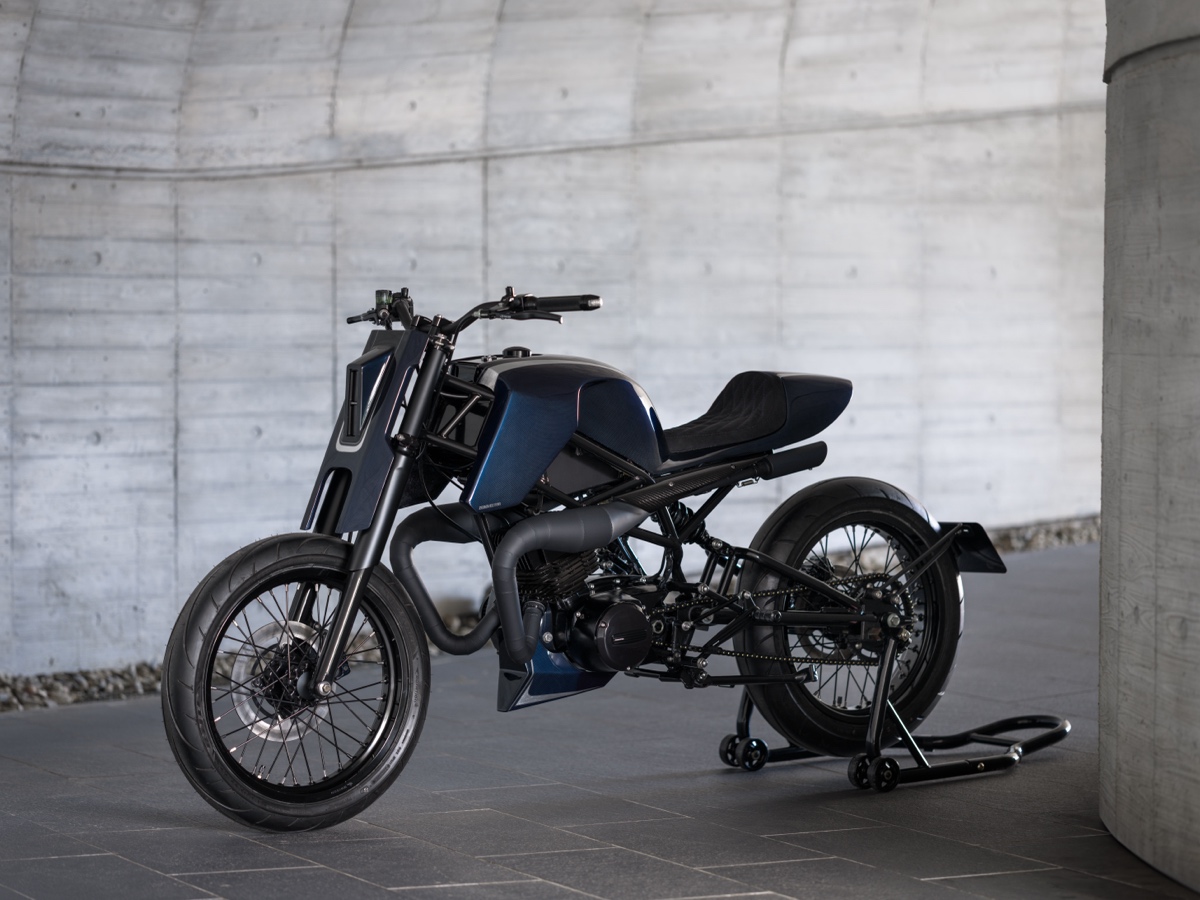
To create a completely different style, I reconfigured the rider’s triangle and designed a trellis frame to give it a more modern and sporty foundation. From there, I was excited to unleash my creativity.
After the frame was completed, I used the design sketches as a basis to sculpt a 1:1 clay model on the frame without any digital tools. The skill of sculpting clay models is something I learned during my studies in industrial design. Clay models not only help designers see and touch their designs in three-dimensional space but also allow for a more precise control of curves and shapes. Although creating clay models is quite time-consuming, it remains an indispensable part of the design process. The 1:1 clay model can serve as the foundation for future body manufacturing, using fiberglass mold production techniques to turn it into a functional bodywork.
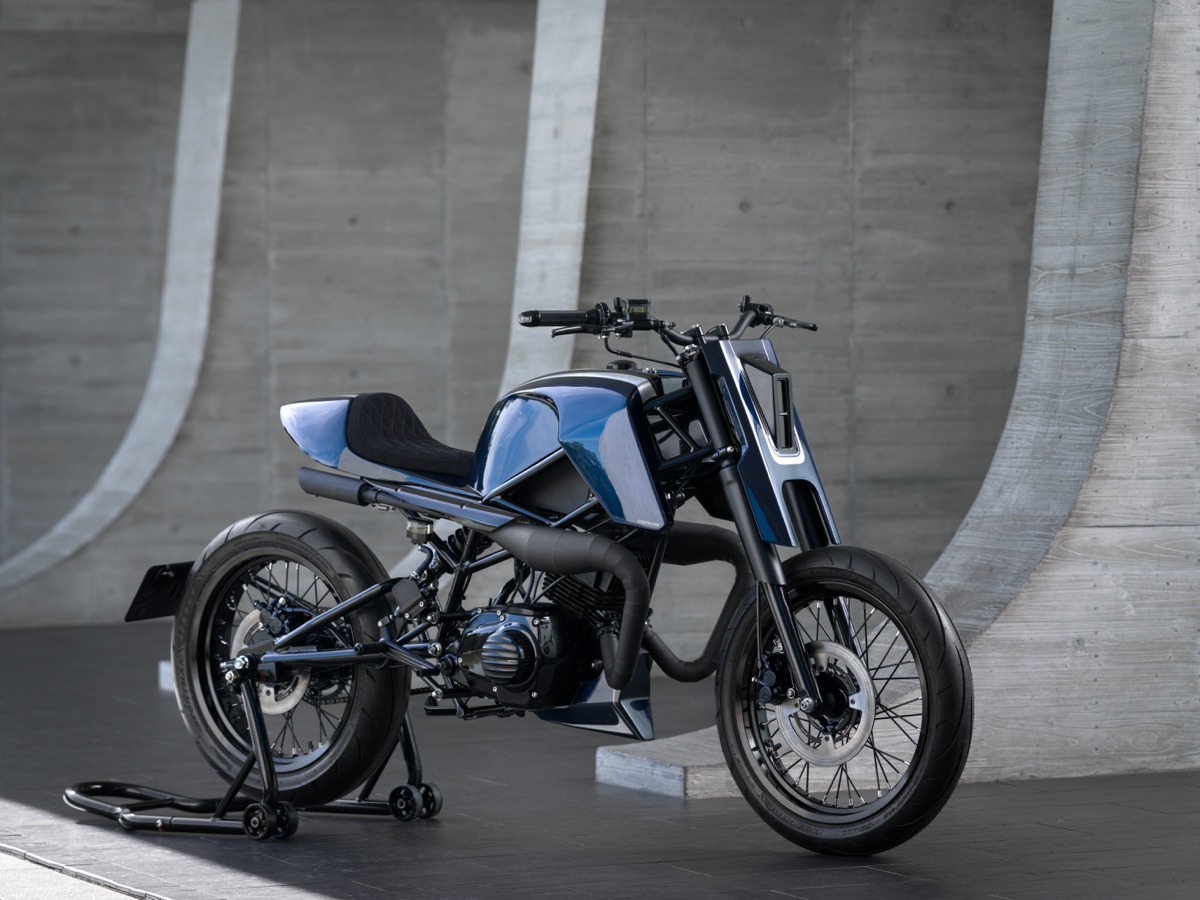
After spending 300 hours working with clay, I was extremely satisfied with the final design. The overall design conveys a sense of speed and dynamics, inspired by the manta ray. I integrated the imagery of the manta’s cephalic fins and pectoral fins into the body design. The next step was to transform this design into a usable chassis body. I created molds using fiberglass on the clay model, and then manufactured a lightweight, high-strength bodywork using composite materials of carbon fiber and fiberglass.
Once the body was completed, I commissioned a custom shop to produce and assemble parts according to my design. However, communication with the shop was not ideal, and the result was very disappointing — it was far from my original vision. The bike couldn’t even stand on its own or start.
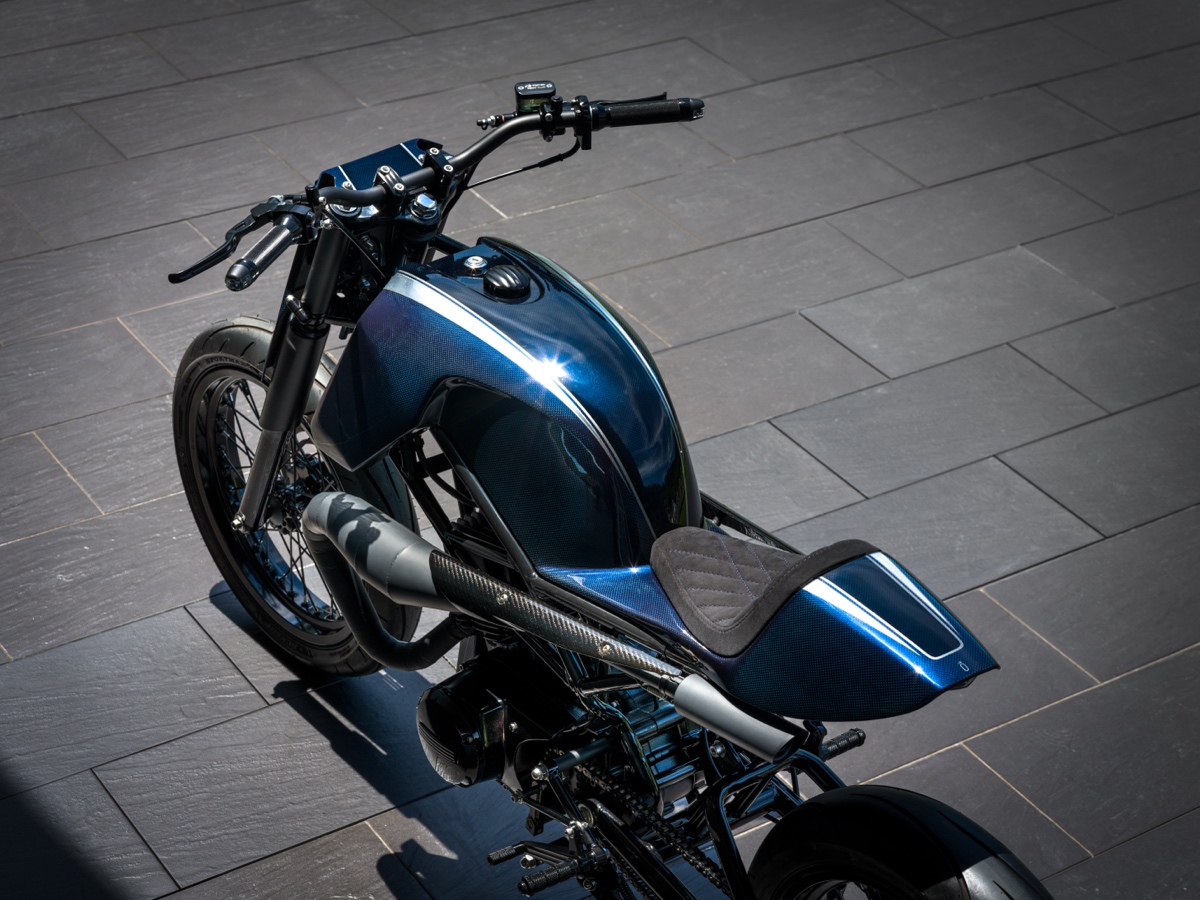
Therefore, after graduating, I persisted with my vision and embarked on a 10-year modification journey to realize the ideal design I had in mind. I disassembled the bike and remade all the unsatisfactory parts. To improve the bike’s completeness, I redesigned many one-off parts, including brake discs, risers, foot controls, fork covers, grips, gas cap, air cleaner cover, and chain tensioner.
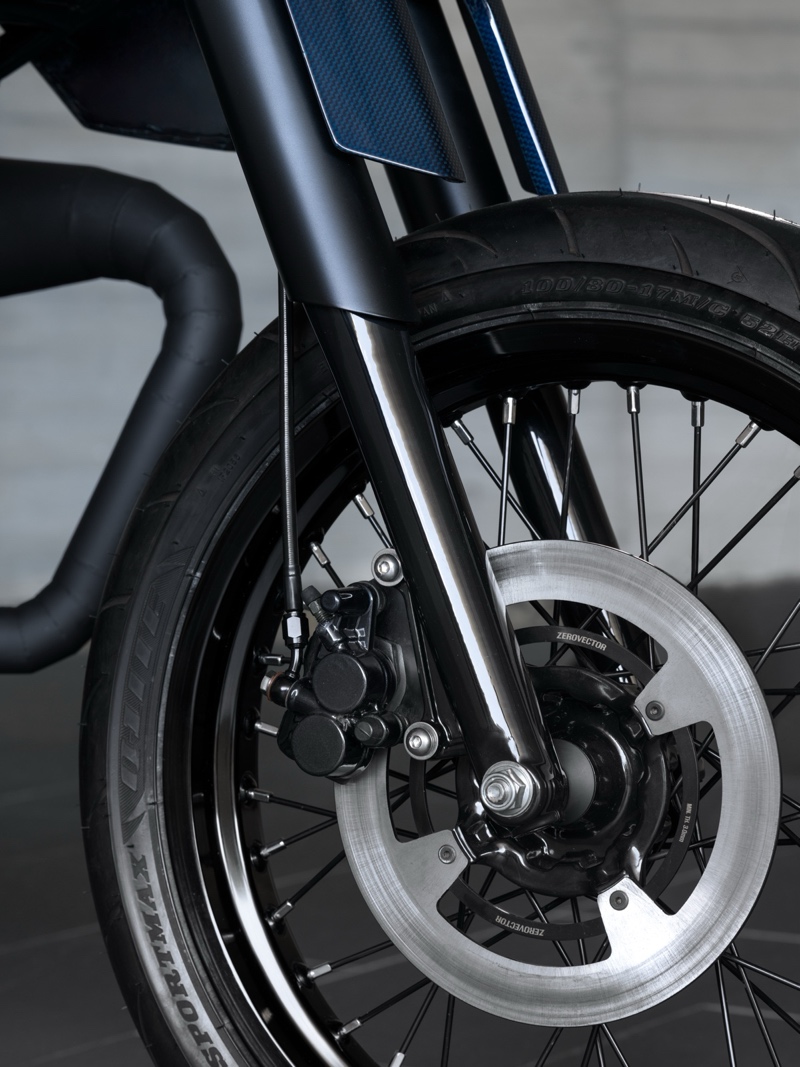
The new twin-exit expansion chamber exhaust was commissioned from Banai; the new headlight cover, lower guard, and other metalworks were made by HideWork; the Alcantara seat was crafted by CHIRUI Leather Custom; the original composite body panels were wrapped with a layer of carbon fiber by Simon Fiber Craft; and the paintwork was done by Jeffrey’s Finishing Touch, inspired by the manta ray.
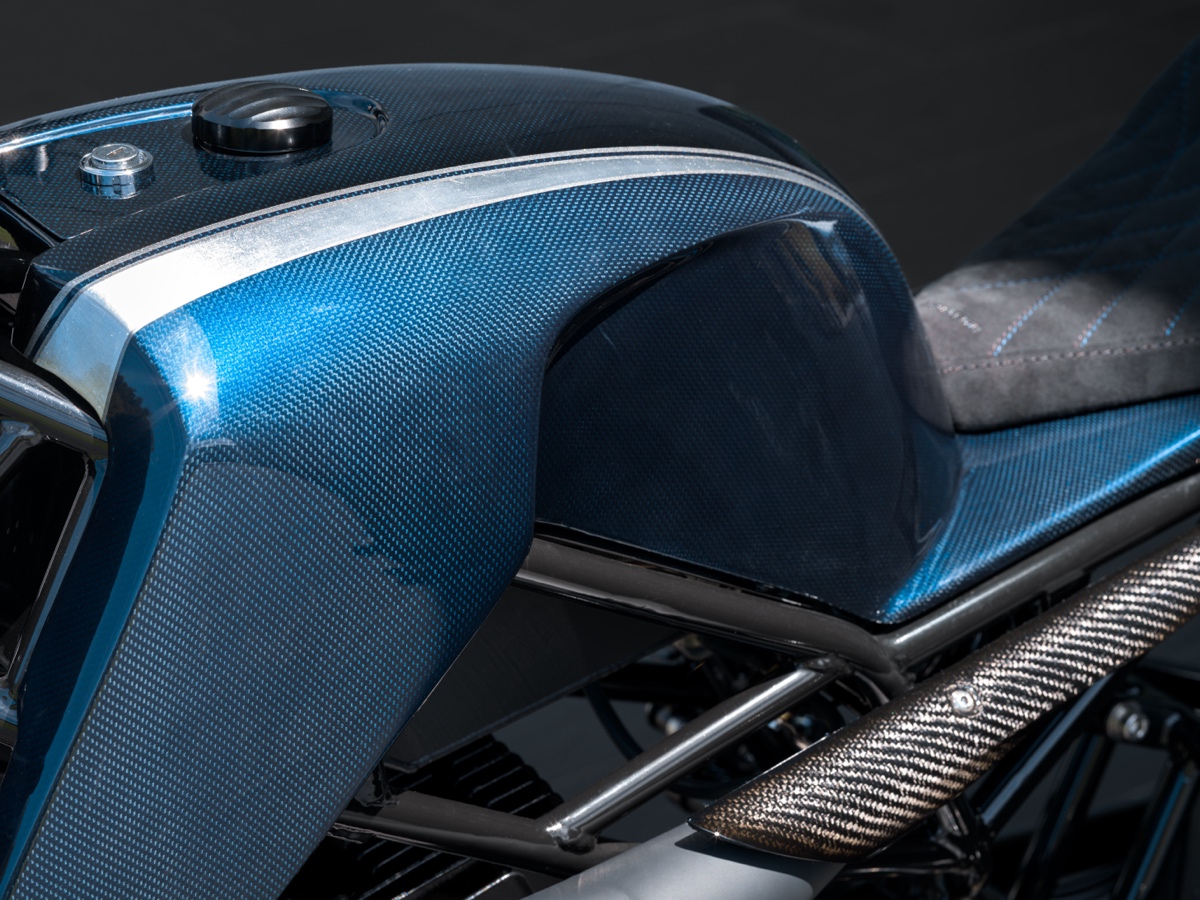
The blue color was specially mixed to show different shades under varying lighting, revealing the carbon fiber texture beneath, paired with silver leaf stripes mimicking the manta ray’s patterns. Finally, the final assembly was completed by triroad.moto.co.
We finished the bike two weeks before Speed & Crafts. After 10 years, I started it up again, watching it emit clouds of smoke.
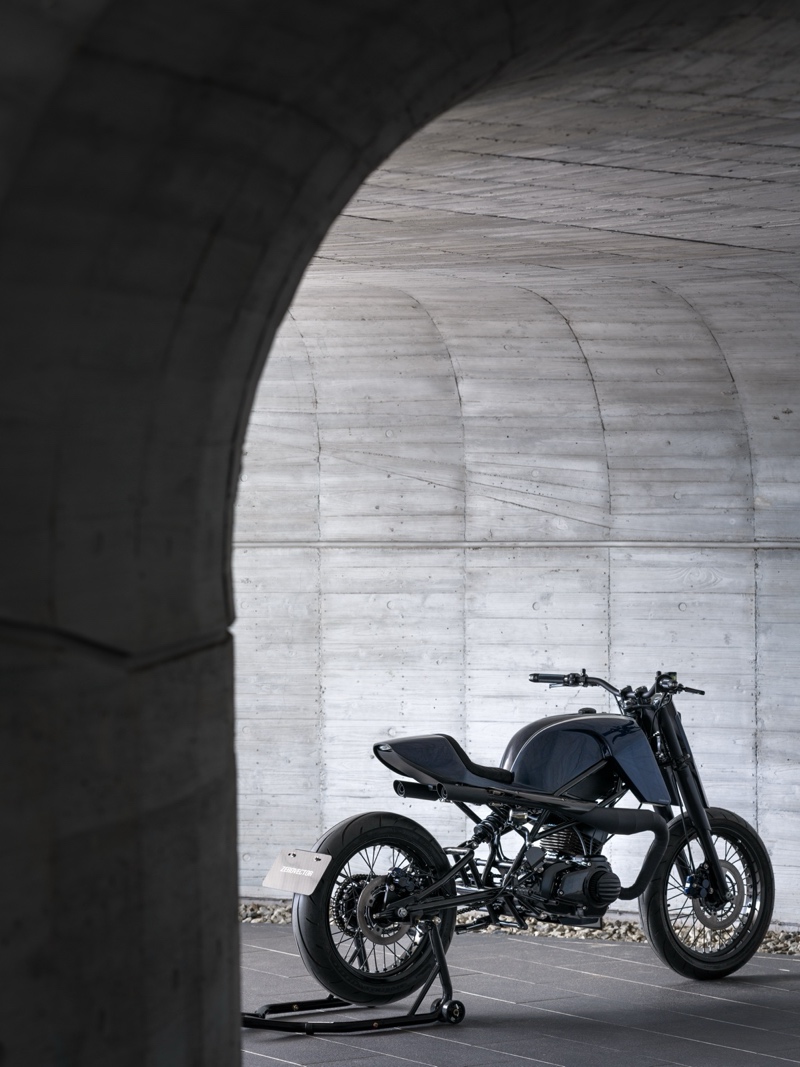
As the original designer and concept initiator, I spent a lot of time discussing and planning each manufacturing step with these Taiwanese professionals, allowing the vision in my mind to gradually take shape. Working with these artisans was very enjoyable; we have known each other for a long time and share close relationships. I am very satisfied with the result.
Ultimately, the ZV S1 #MANTA won 4th place in the Free Style Class at Speed & Crafts and received two special picks (Gear Up Pick & SYM Pick).

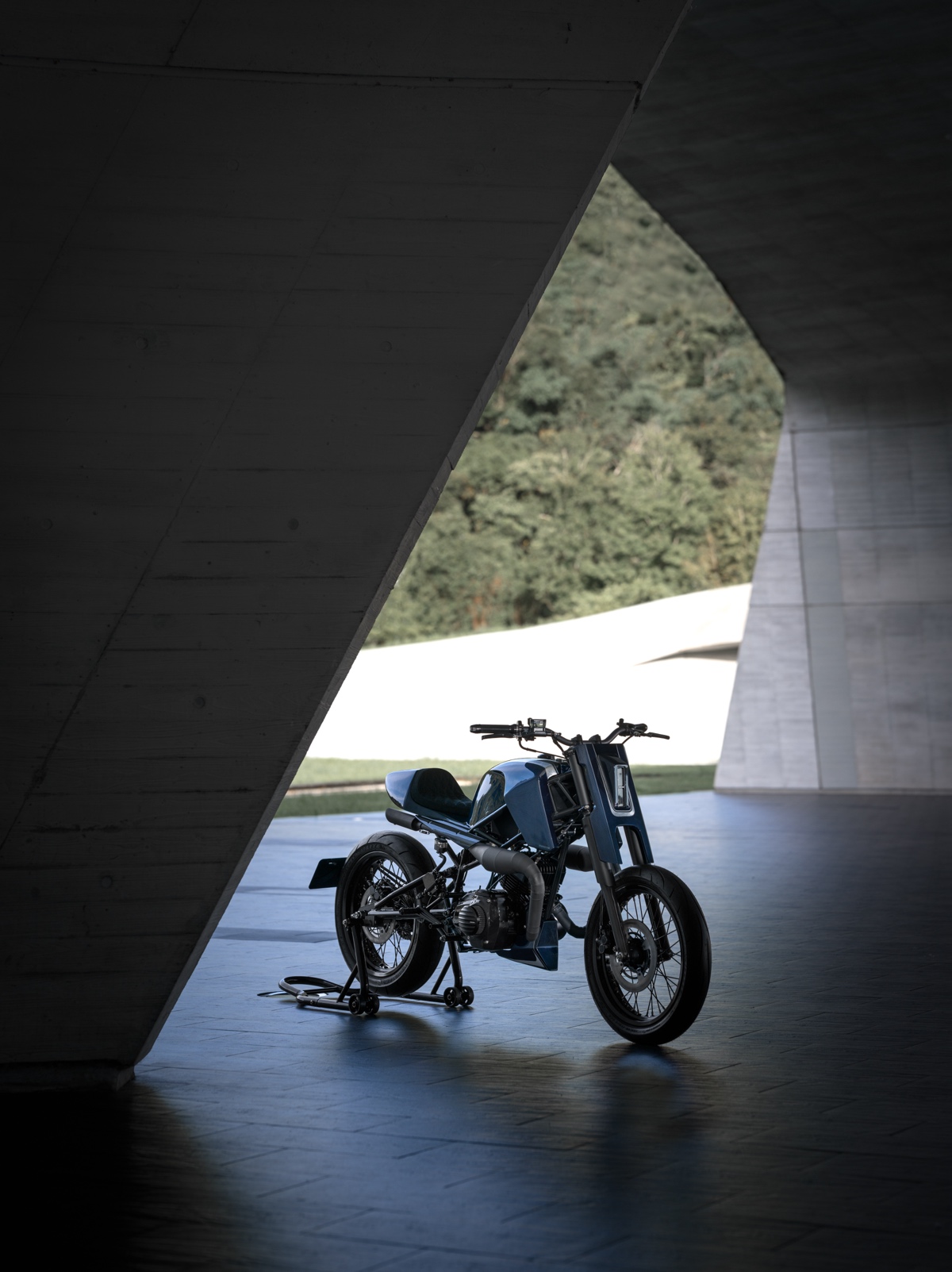
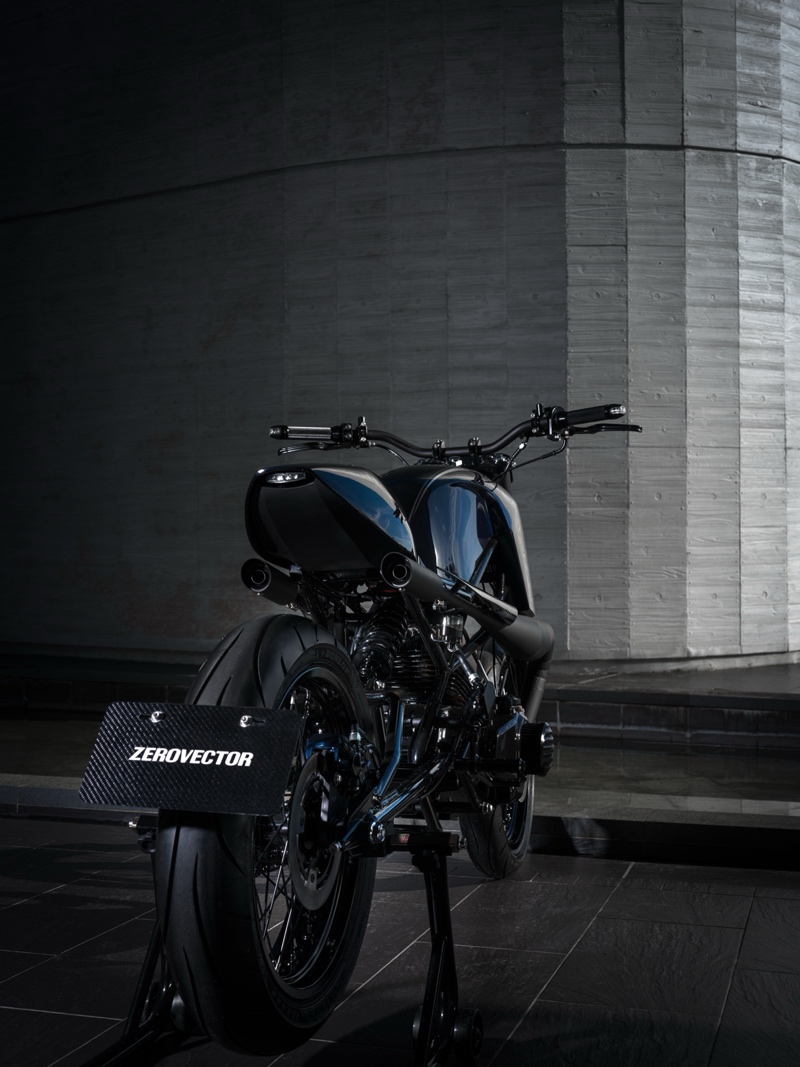
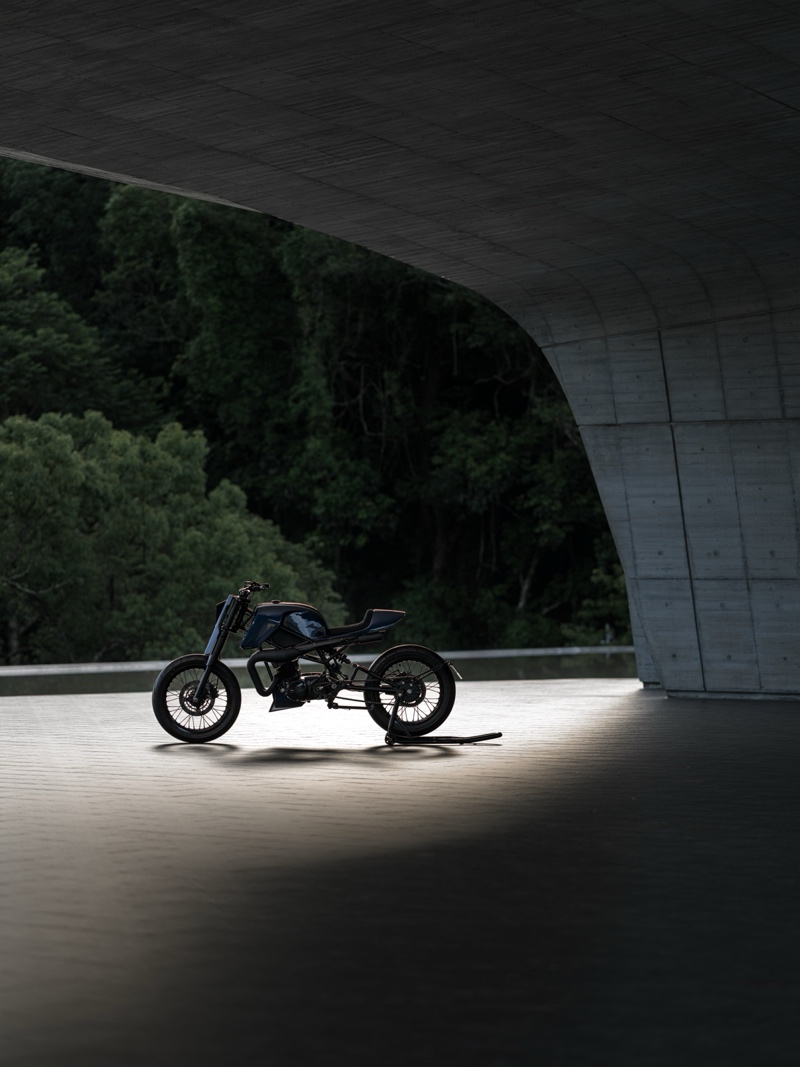
Finally, I commissioned YHLAA, an architectural photographer whom I greatly admire and who has won numerous awards, to photograph the bike. We deliberately chose the Xiangshan Visitor Center at Sun Moon Lake as the shooting location. Designed by architect Norihiko Dan, the Xiangshan Visitor Center is one of the most beautiful buildings in Taiwan. Its design philosophy closely aligns with my own, as we both draw inspiration from nature in our design approach.
Build Sheet
Front End: Kymco KTR trees & forks
Rear Shock: DNM MT-AR
Chains: RK BL428 XSO
Exhaust: ZEROVECTOR / Banai
Wheels F: Wire Spoked Wheel / 17 x 2.50”/ Mike’s garage stainless nipple
Wheels R: Wire Spoked Wheel / 17 x 3.50”/ Mike’s garage stainless nipple
Tires F: DUNLOP SPORTMAX Q-LITE 110/70 R 17
Tires R: DUNLOP SPORTMAX Q-LITE 130/70 R 17
Brakes F: ZEROVECTOR discs / Hartford calipers / RCB E3
Brakes R: ZEROVECTOR discs / Hartford calipers / RCB A2
Sprocket: Hartford
Chassis: ZEROVECTOR / Hide Work / B.W.S.
Painter: Jeffrey’s Finishing Touch
Carbon Fiber Veneer: Simon Fiber Craft
Bodywork: ZEROVECTOR / Hide Work
Seat: ZEROVECTOR / ChiRui Leather Custom
Foot controls: ZEROVECTOR / WIZH
Assembly: Oscar / Faber
Switches: Motogadget
Turn Signals: Rizoma
Gas cap: ZEROVECTOR
Grips: ZEROVECTOR
Fork covers: ZEROVECTOR
Risers: ZEROVECTOR
Air cleaner cover: ZEROVECTOR
Chain tensioner: ZEROVECTOR
Nameplate: ZEROVECTOR

• Can you tell us what it’s like to ride the completed bike?
To be honest, it’s not fast — after all, it’s only 125cc. However, I set up the riding position to be very sporty, so it’s still a lot of fun to ride and runs very smoothly. The only thing is, the exhaust is extremely loud. Taiwan currently has very strict noise regulations, so I rarely take it out for a spin. I’d probably get in trouble with the police.
Follow the Designer / Craftsmen
Instagram: @vec0_official
Facebook: ZEROVECTOR
Metalwork: HideWork
Carbon Fiber: Simon Fiber Craft
Paint: Jeffrey’s Finishing Touch
Seat: CHIRUI Leather Custom
Exhaust: Banai
Final Assembly: Triroad Moto Co
Photography: YHLAA


Jayzusssss‼️This build? Waaaayyy beyond being merely impressive ‼️‼️
Good things in small packages ⁉️Absolutely ‼️
Incredible craftsmanship ‼️