

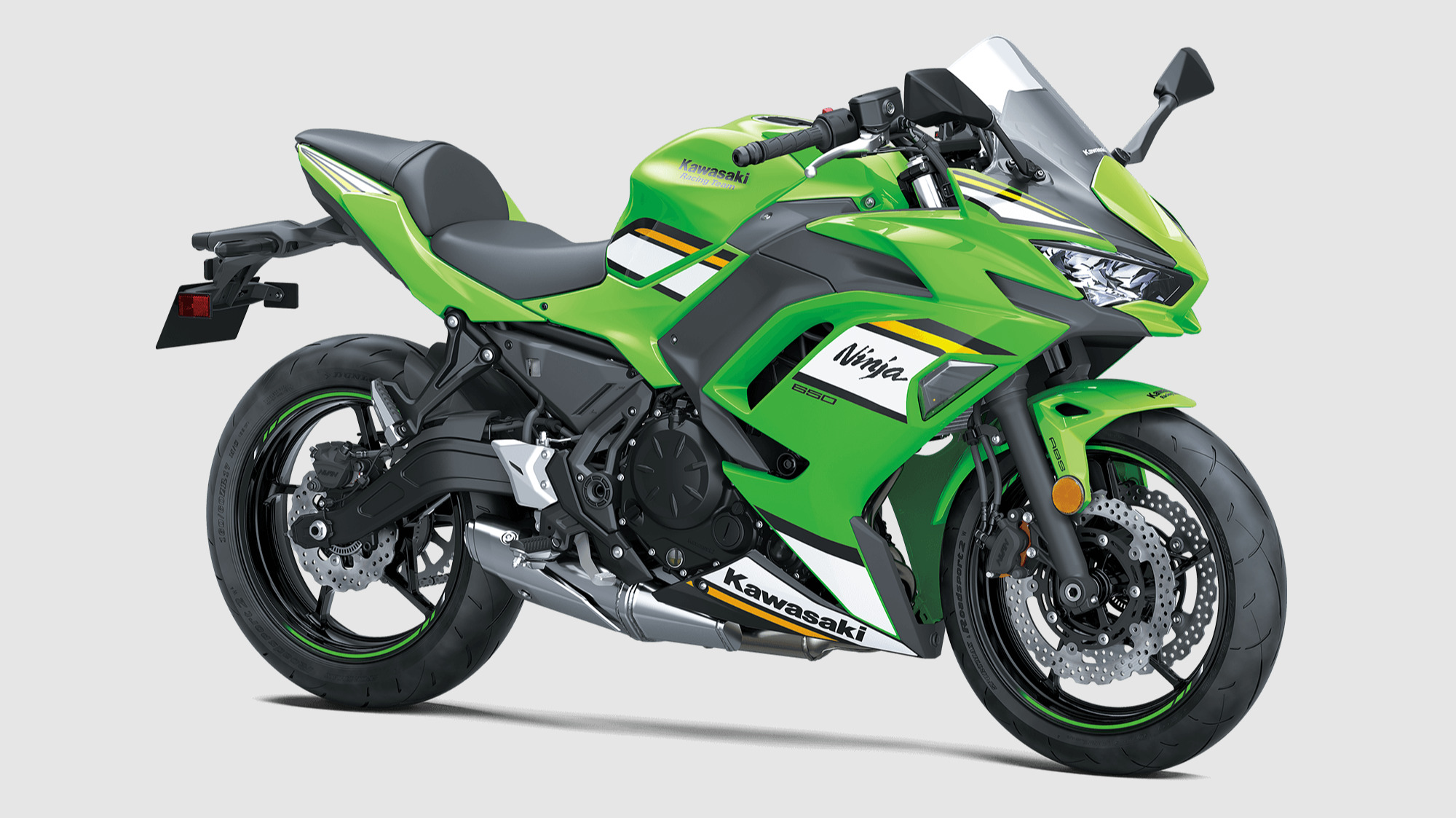
The Kawasaki Ninja 650 blends sporty styling and middleweight performance with everyday practicality. This bike is designed to appeal to riders who want a “real” sportbike feel without jumping into liter-class commitment — making it a very strong choice for both commuting and spirited riding.
Design & Build
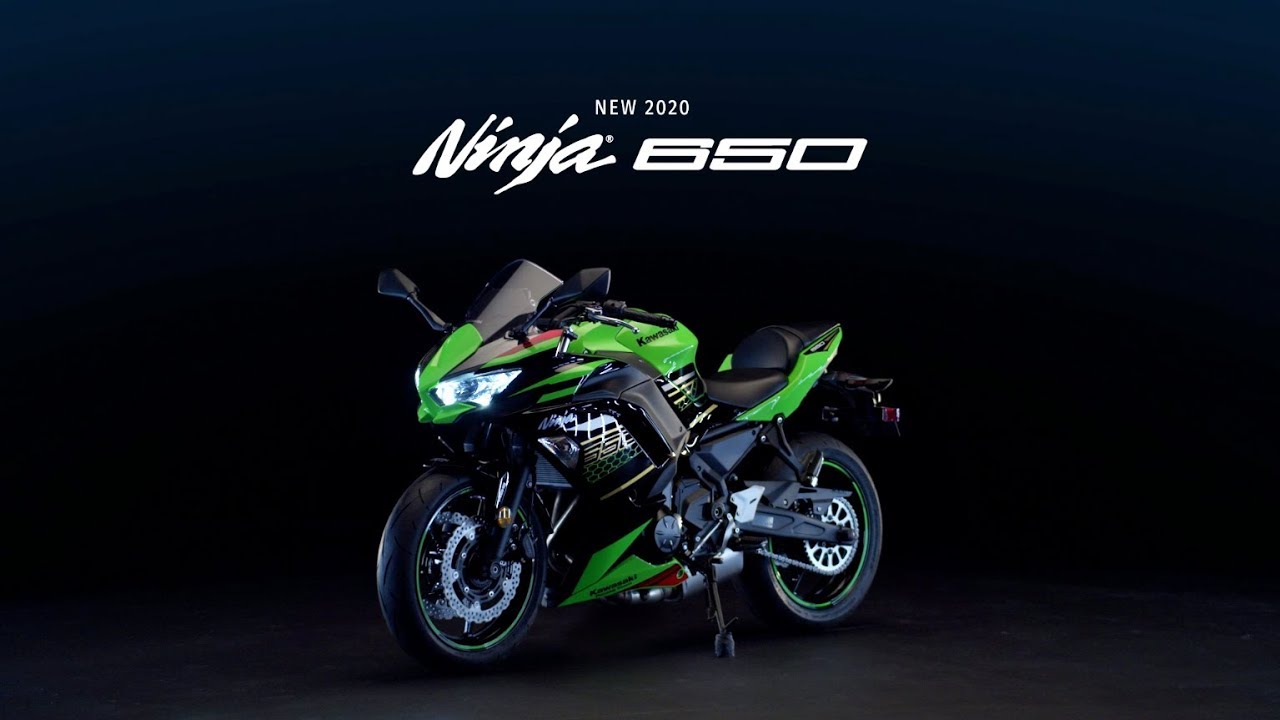
Visually, the Ninja 650 adopts sharp “Ninja family” styling with aggressive front fairings, twin LED headlights, and sculpted tank and tail sections. The looks clearly lean toward sportbike DNA rather than purely commuter styling.
The chassis uses a high-tensile steel trellis (or trellis-inspired) frame, giving the bike good rigidity while maintaining manageable weight. The ergonomics strike a balance: sporty stance, but not so aggressive that everyday riding becomes uncomfortable. The rider sits a bit forward but not in an extreme crouch.
Engine & Performance
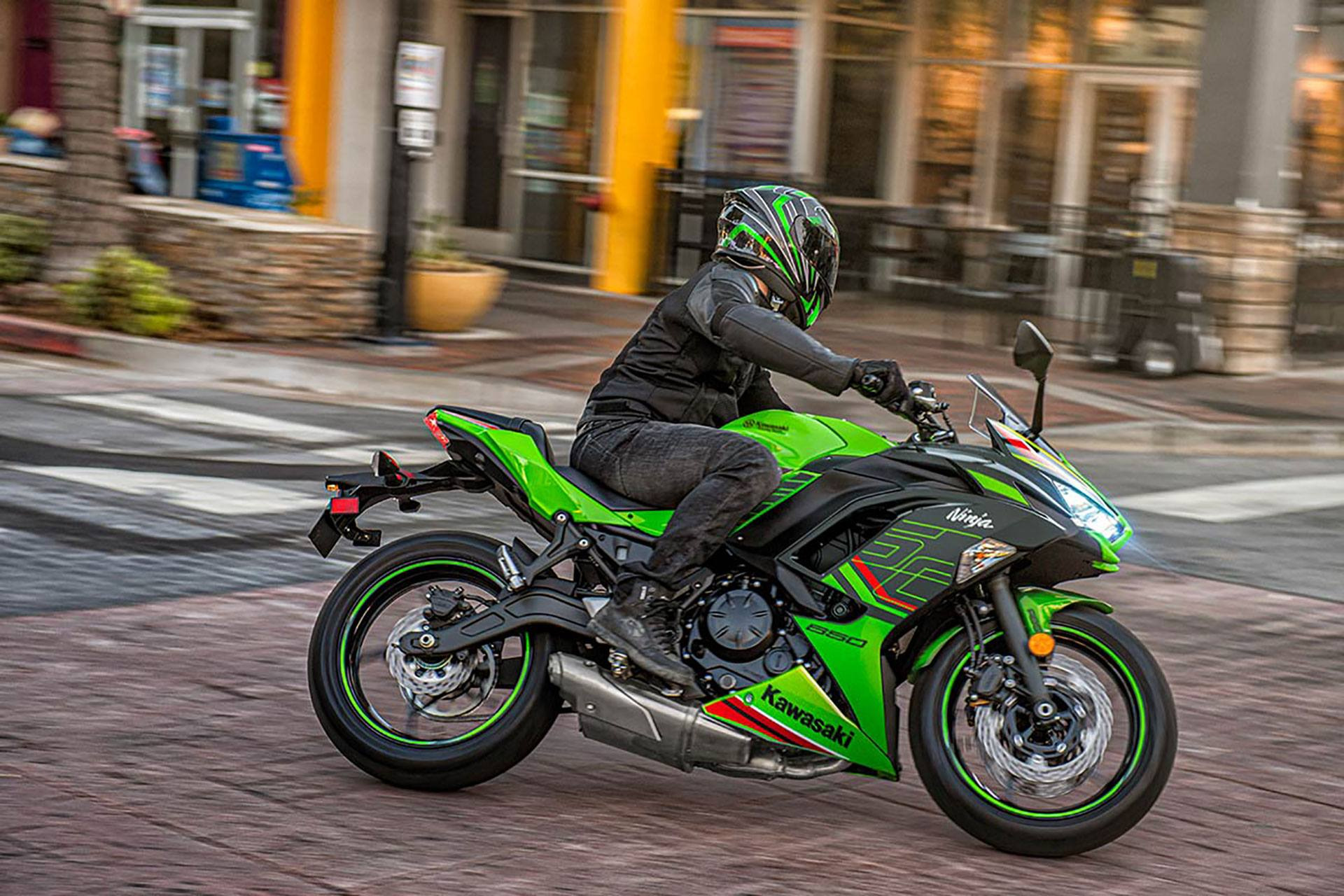
At the heart of the Ninja 650 is a 649 cc liquid-cooled parallel-twin engine. According to 2025 specs, it produces around 67 hp @ 8,000 rpm and 66 Nm (≈ 49 lb-ft) @ 6,700 rpm.
This gives the bike a strong mid-range punch, which is more useful for real-world riding than pure peak numbers. Reviews note that the engine is smooth, responsive, and friendly — offering usable power from relatively low rpm, which is great for city and light touring use.
Transmission is a 6-speed manual, with chain final drive. The bike also features an Assist & Slipper clutch, helping smoother downshifts and lighter clutch pulls.
Chassis, Suspension & Brakes
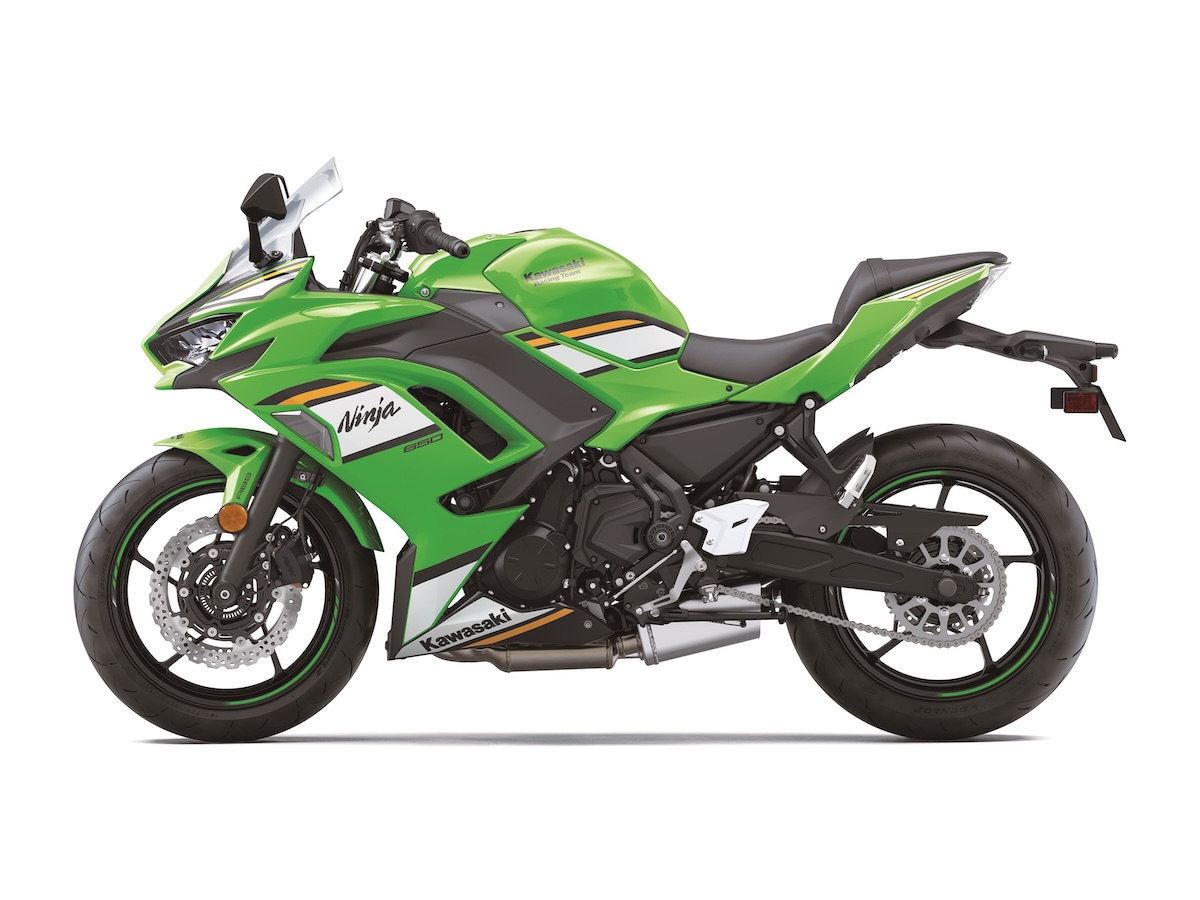
The Ninja 650’s handling components are well judged for the class:
- Front Suspension: 41 mm hydraulic telescopic fork (124 mm travel for 2025 model).
- Rear Suspension: Horizontal back-link monoshock, adjustable preload (and in some markets rebound) with about 130 mm travel.
- Brakes: Dual 300 mm petal-shaped discs at the front, two-piston calipers; single 220 mm petal disc at rear. ABS available.
- Frame: Lightweight steel frame, optimized for tight handling and reduced weight.
Reviews mention that the chassis feels stable and agile, though some critique previous versions for budget suspension when pushed hard.
Practicality & Daily Use
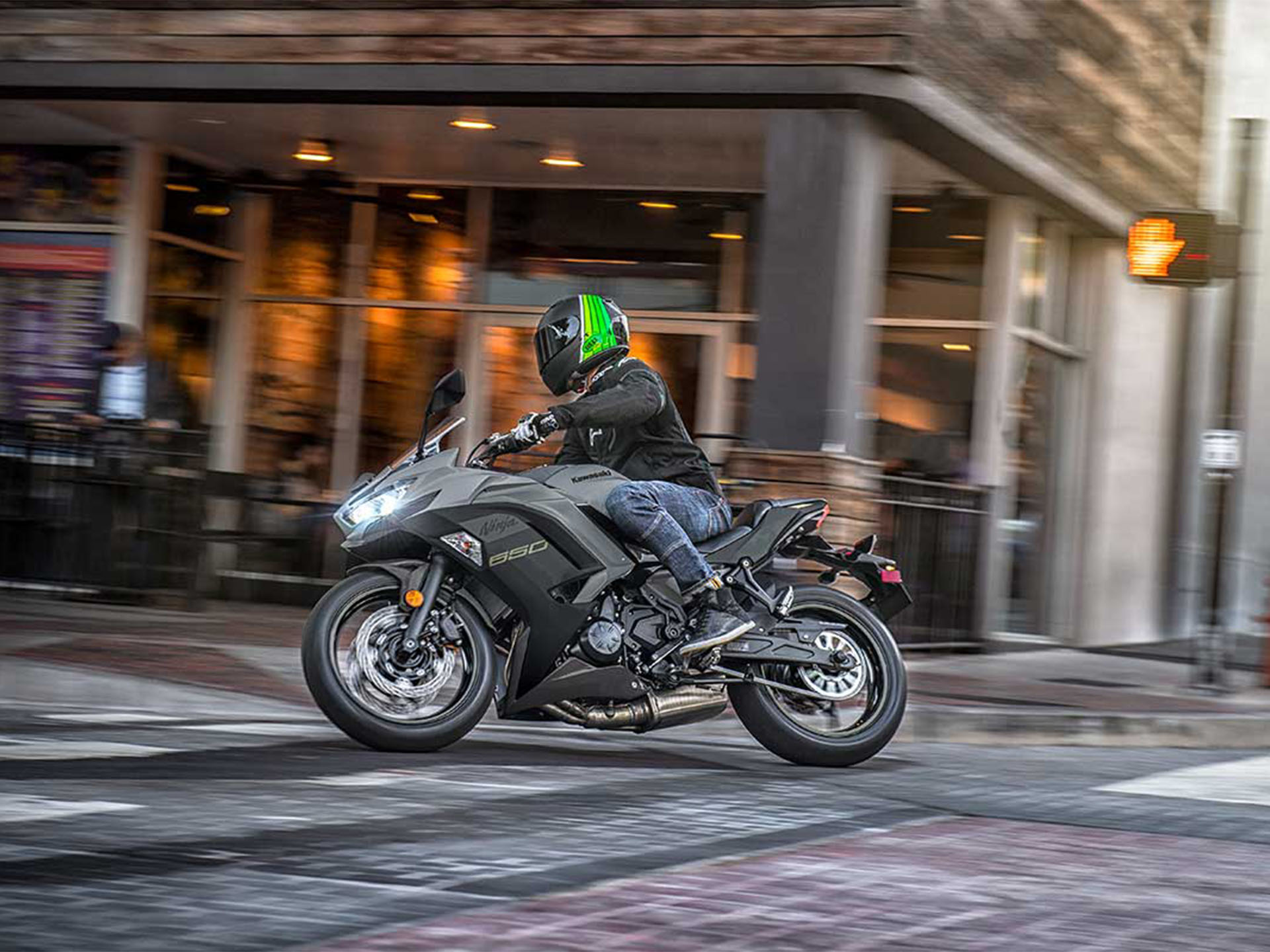
The Ninja 650 is very practical for everyday use:
- The riding position is sporty but reasonably comfortable for commuting or moderate touring.
- With its mid-twin engine, the bike has enough torque to make highway rides and overtakes comfortable.
- The seat height is about 31.1 in (790 mm) for 2025 model.
- Fuel capacity is listed at about 15.1 L (~4 gallons) for the 2025 model.
- Electronics for the 2025 version include: full-color TFT display, smartphone connectivity via Kawasaki RIDEOLOGY app, twin LED headlights, riding mode or traction control (KTRC) in some spec.
So if you do both daily rides and weekend blasts, the Ninja 650 does a very good job of being a versatile sport machine.
Rider Feedback & Real-World Impressions
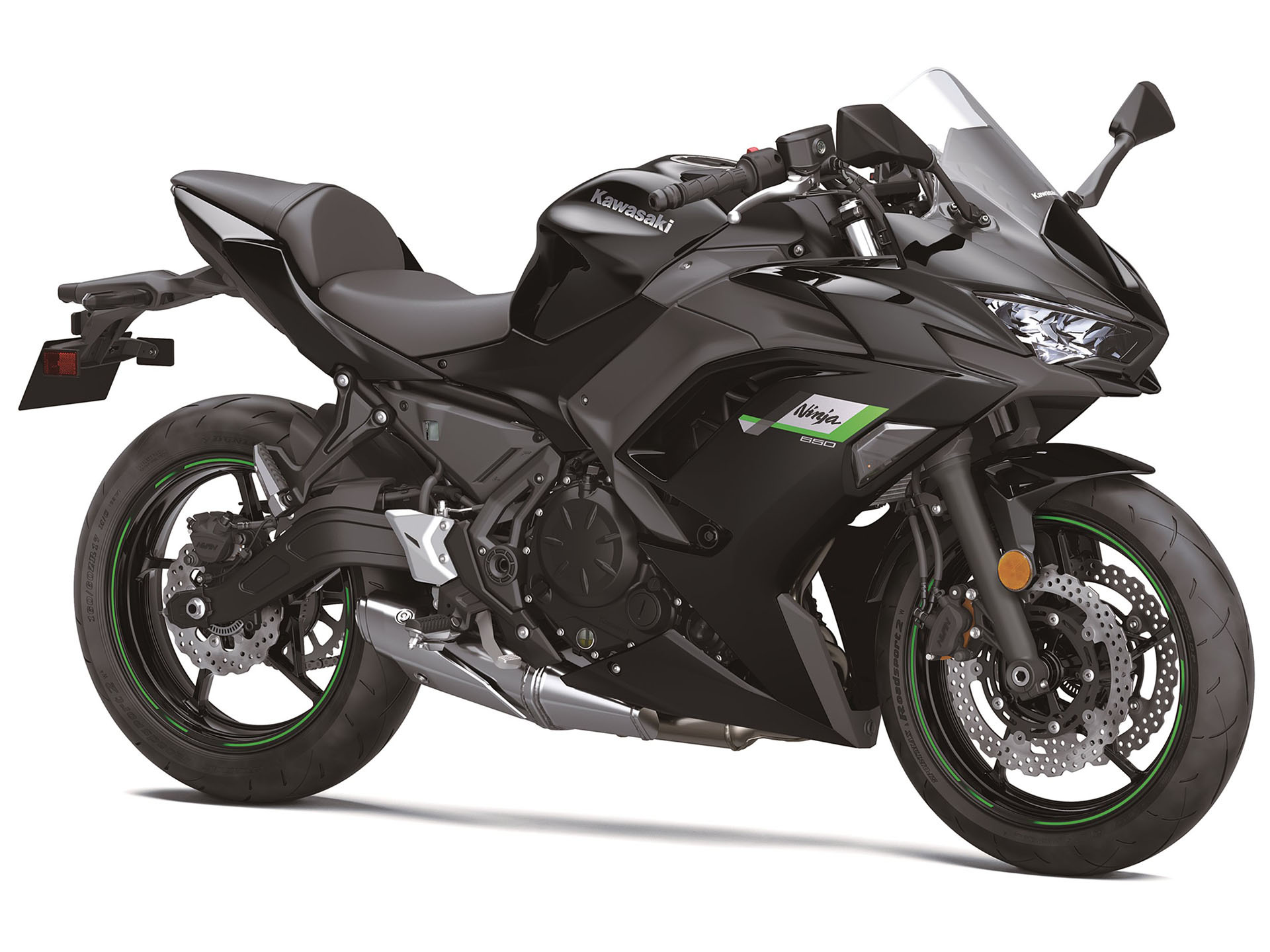
- Many riders appreciate how accessible the Ninja 650 is. From a review: “The smooth spread of torque makes itself known from just under 5,000 rpm … the engine gives its best from there until the shift-light starts blinking.” (Visordown)
- Some mention the suspension isn’t as plush as higher-end bikes when on rough roads or when pushed hard.
- The Ninja 650 is praised for its friendly handling, making it a good option for intermediate riders or those moving up from smaller bikes.
Who Is It For?
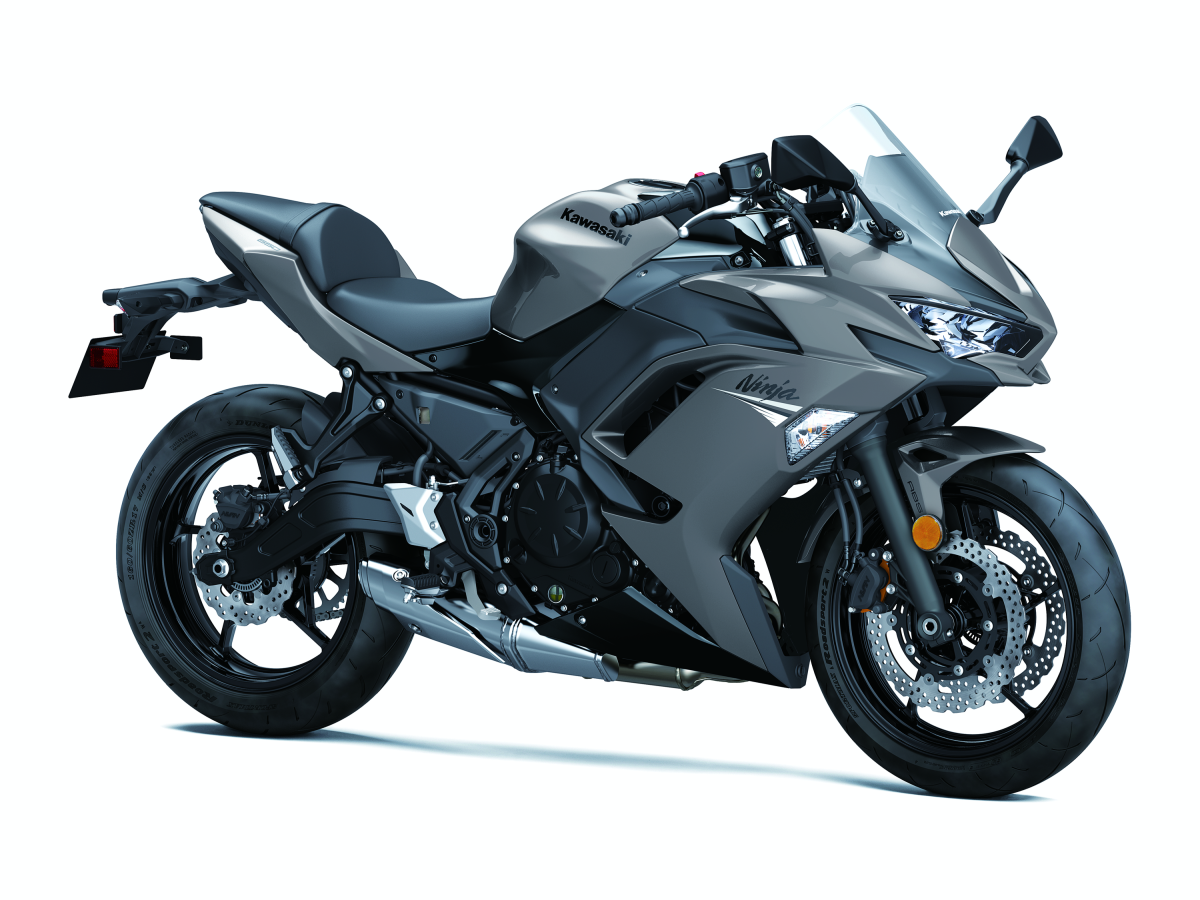
Great For:
- Riders who want a real sport-bike feel but not the cost or intimidation of a liter bike.
- Intermediate riders, or newer riders who anticipate growing their skills.
- Commuters who also want to do spirited weekend rides — the bike has enough performance for both.
- Riders who value a stylish sport-bike design with usable everyday ergonomics.
Less Ideal For:
- Riders whose primary goal is extreme track performance — there are more dedicated track bikes if that’s the sole focus.
- Riders who prioritize ultra-low weight and ultra-compact size above everything — the Ninja 650 is middleweight, so it’s a bit larger than entry small-displacement bikes.
- Hardcore touring riders — while practical, the tank size, wind protection, and ergonomics still lean sport-bike rather than full touring comfort.
Kawasaki Ninja 650 Specs
Engine: 649 cc liquid-cooled parallel twin
Power: ~67 hp (varies by market)
Torque: ~48.5 lb-ft @ ~6,700 rpm
Transmission: 6-speed manual
Weight (ready to ride): ~421 lb (~191 kg) (varies by region and ABS)
Frame: Trellis-style steel frame
Suspension:
• Front: 41 mm telescopic fork, ~4.9 in travel
• Rear: Horizontal back-link mono-shock, spring preload adjustable, ~5.1 in travel
Brakes:
• Front: Dual 300 mm petal-type discs
• Rear: Single ~220 mm petal-type disc
• ABS available/standard in many markets
Electronics & Features:
• LED lighting (in newer versions)
• Assist/slipper clutch in recent models
• Upright yet sporty riding posture
Seat Height: ~31.1 in
Fuel Capacity: ~4.0 gal
Wheelbase: ~55.5 in
Performance:
• Top Speed: ~120 mph (estimated)
• 0–60 mph: ~5-6 seconds (market & rider dependent)
• Fuel Economy: ~45–55 mpg (varies widely)
Options & Packages:
• Colour/graphics packages vary by year and region
• Accessories: windscreens, frame sliders, performance tires
• Some versions: upgraded instrument cluster, smartphone connectivity
Pros & Cons
Pros:
- Strong, usable engine with mid-range punch.
- Sport-bike styling and performance credentials.
- Good balance between everyday usability and performance.
- Modern electronics (for 2025 spec) including TFT display, smartphone connect, KTRC.
- Upright enough for commuting but sporty enough for fun.
Cons:
- Some earlier feedback indicates the suspension could be better in more demanding riding.
- Fuel capacity is moderate — more frequent fill-ups if used aggressively.
- While it handles well, serious track riders might find it less specialized than full supersports.
- The middleweight class means insurance, maintenance, and fuel costs are higher than entry models.
Good question — yes, the Kawasaki Ninja 650 does have several strong rivals in the middleweight sport-bike class. Here are a few of its main competitors, and how they compare:
Key Rivals
- Yamaha YZF‑R7: The R7 offers a sportbike feel with a 689 cc twin engine and strong performance across the rev range. Many riders compare its mid-range torque and overall capability to the Ninja 650.
- Honda CBR650R: Though slightly higher spec, the CBR650R often gets compared to the Ninja 650. Reviews and rider forums mention how the Ninja may be more user-friendly for some rides. (Reddit)
- Other bikes in the same segment: there are other middleweight sport machines that also challenge the Ninja 650 in features, ergonomics and value. For example, the Ninja 650 was described as “the most practical sport bike you can buy in 2025” in one review, highlighting how its competitors are also being considered for “middleweight sport” roles. (Top Speed)
How They Compare
- The Ninja 650 tends to be more relaxed and user-friendly than some of its more “track-focused” rivals. For example, one forum user said the Ninja was better for everyday use while the Honda offered a more aggressive ride.
- Rivals like the R7 often have more outright performance (especially top speed, torque and rev range) whereas the Ninja trades some of that for comfort, usability and perhaps lower ownership cost.
- The choice often comes down to what you value: pure sport performance vs a balanced machine that you can live with every day, commute on, and still have fun with.
Verdict
The Kawasaki Ninja 650 is a standout middleweight sport bike that hits a sweet spot: It offers more performance than entry-level machines, better tech and ergonomics than many “beginner bikes,” yet doesn’t demand the budget, gear, or commitment of a liter-class machine.
If you’re looking for a bike that can do the commute, shine on weekend rides, and still feel spirited without being overwhelming, the Ninja 650 is a very smart choice. It’s one of those bikes that genuinely balances everyday practicality with sporty character — and for many riders, that’s a rare and valuable combo.


