
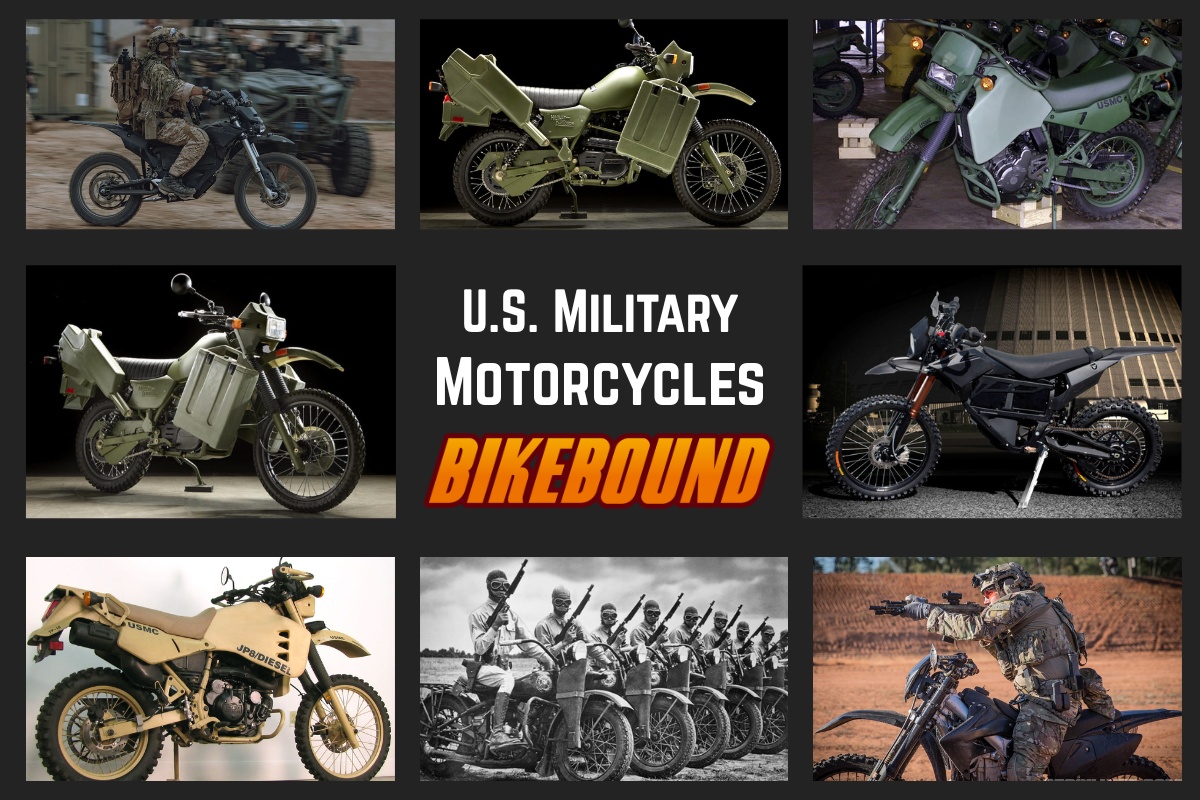
What Motorcycles the U.S. Military Uses (Past & Present)…
Motorcycles have played an important — though often overlooked — role in U.S. military history. From messenger bikes in World War I to reconnaissance machines in World War II, and later to specialized tactical motorcycles for airborne and special operations units, two-wheeled mobility has long offered speed, agility, and stealth advantages unavailable to larger vehicles.
Today, motorcycles still appear in U.S. military service, but their role is much more specialized. Modern missions rely heavily on drones, lightweight ATVs, and armored vehicles, so motorcycles are reserved primarily for rapid mobility, reconnaissance, and special operations where stealth and off-road agility matter most.
Below is a comprehensive look at what motorcycles the U.S. military uses today, what they’ve used in the past, and why certain models continue to be favored for tactical applications.
Modern U.S. Military Motorcycles
1. Kawasaki KLR650 (M1030B1 / M1030M1 Diesel Variant)
For nearly three decades, the U.S. Marine Corps used modified Kawasaki KLR650 motorcycles known as the M1030 series.
M1030B1 (Gasoline, 1990s–2000s)
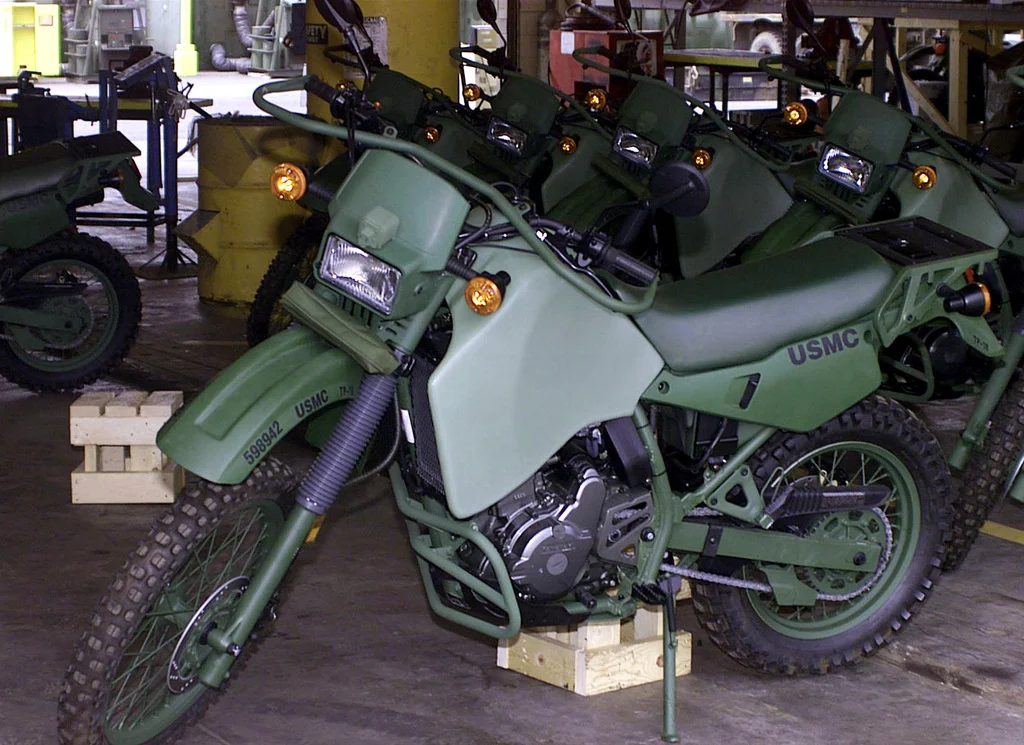
A ruggedized KLR650 adapted for military use with:
- Reinforced subframe
- Heavy-duty luggage racks
- Brush guards
- Infrared (IR) headlight filters
- Blackout switches
- Military spec tires
M1030M1 (JP8 / Diesel, 2004–2010s)
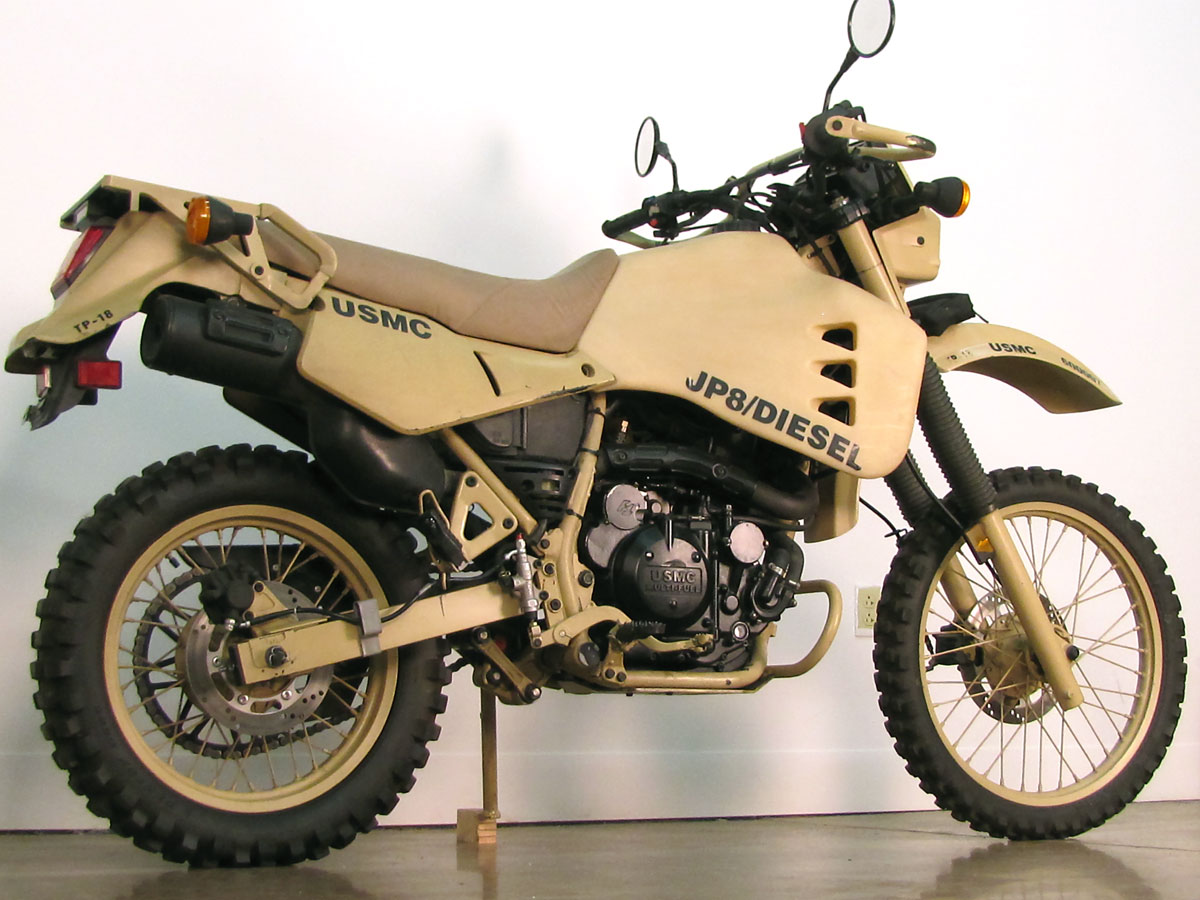
The rarest and most interesting variant. The U.S. military wanted a motorcycle that could run on JP8 jet fuel or diesel, like the rest of the vehicle fleet. Hayes Diversified Technologies (HDT) developed the now legendary diesel KLR, capable of:
- ~120 mpg fuel efficiency
- Running on multi-fuel variants
- Low infrared signature
- Long-range scouting
Although officially retired, these machines remain iconic in modern military motorcycle history.
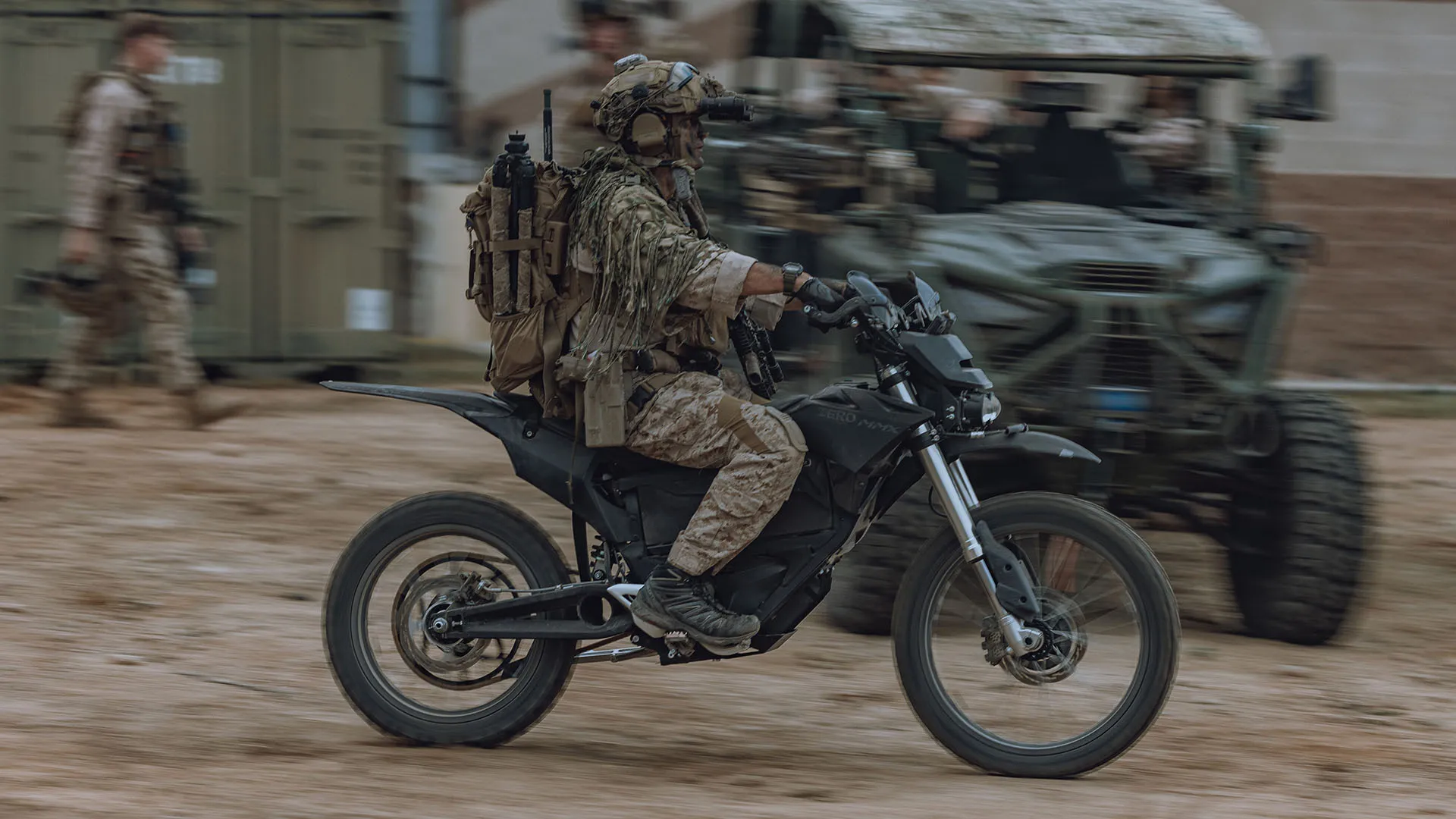
2. Zero MMX (Electric Special Forces Motorcycle)
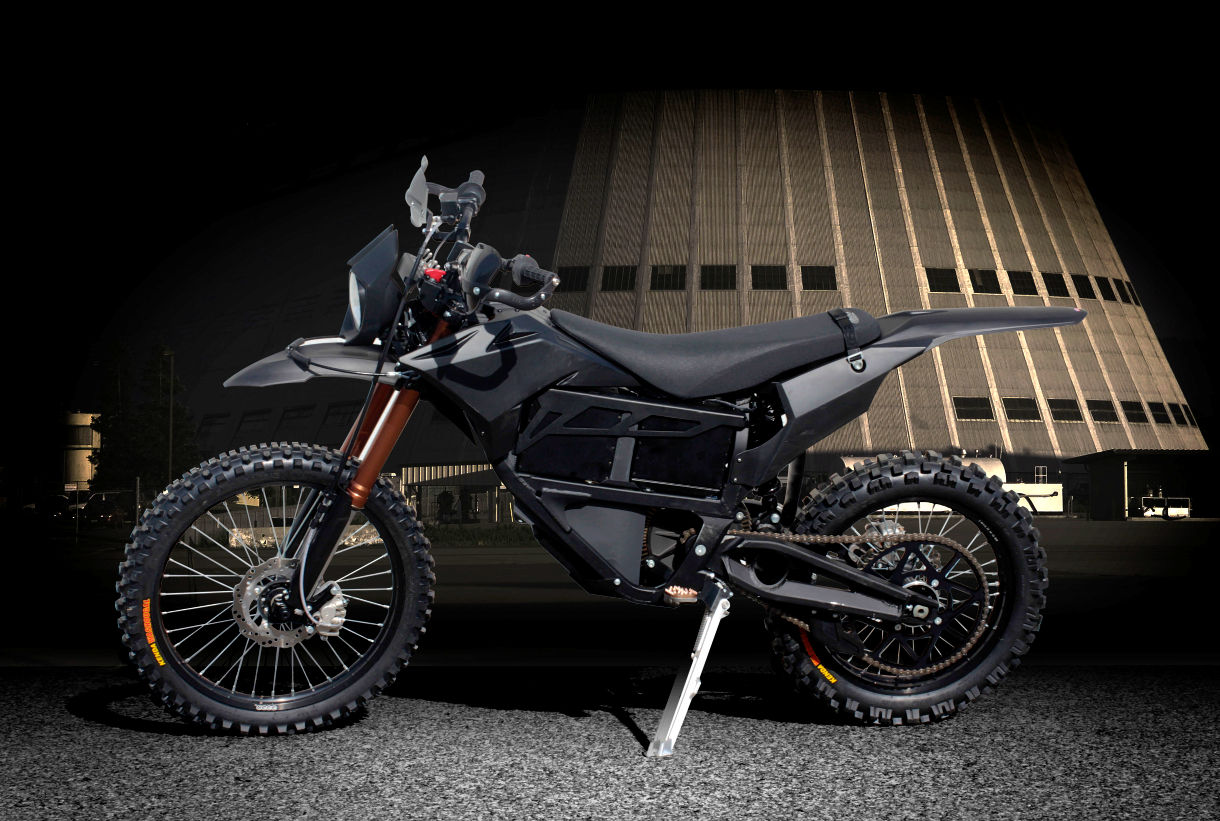
One of the newest additions to U.S. military mobility is the Zero MMX electric dual-sport motorcycle. Designed for SOCOM (U.S. Special Operations Command), it offers several tactical advantages:
- Near-silent operation
- Minimal thermal signature
- No fumes or hot exhaust (reduced traceability)
- Instant torque for off-road maneuvering
- Ability to operate in sealed areas without ventilation
The MMX is based on Zero’s production electric motorcycles but includes military upgrades such as:
- Blackout lighting
- IR switches
- Quick-swap battery modules
- Waterproofing for river crossings
- Reinforced frame and suspension
It is used primarily for stealth reconnaissance, rapid insertion, and special operations mobility.
3. Christini AWD 450 Military Motorcycle
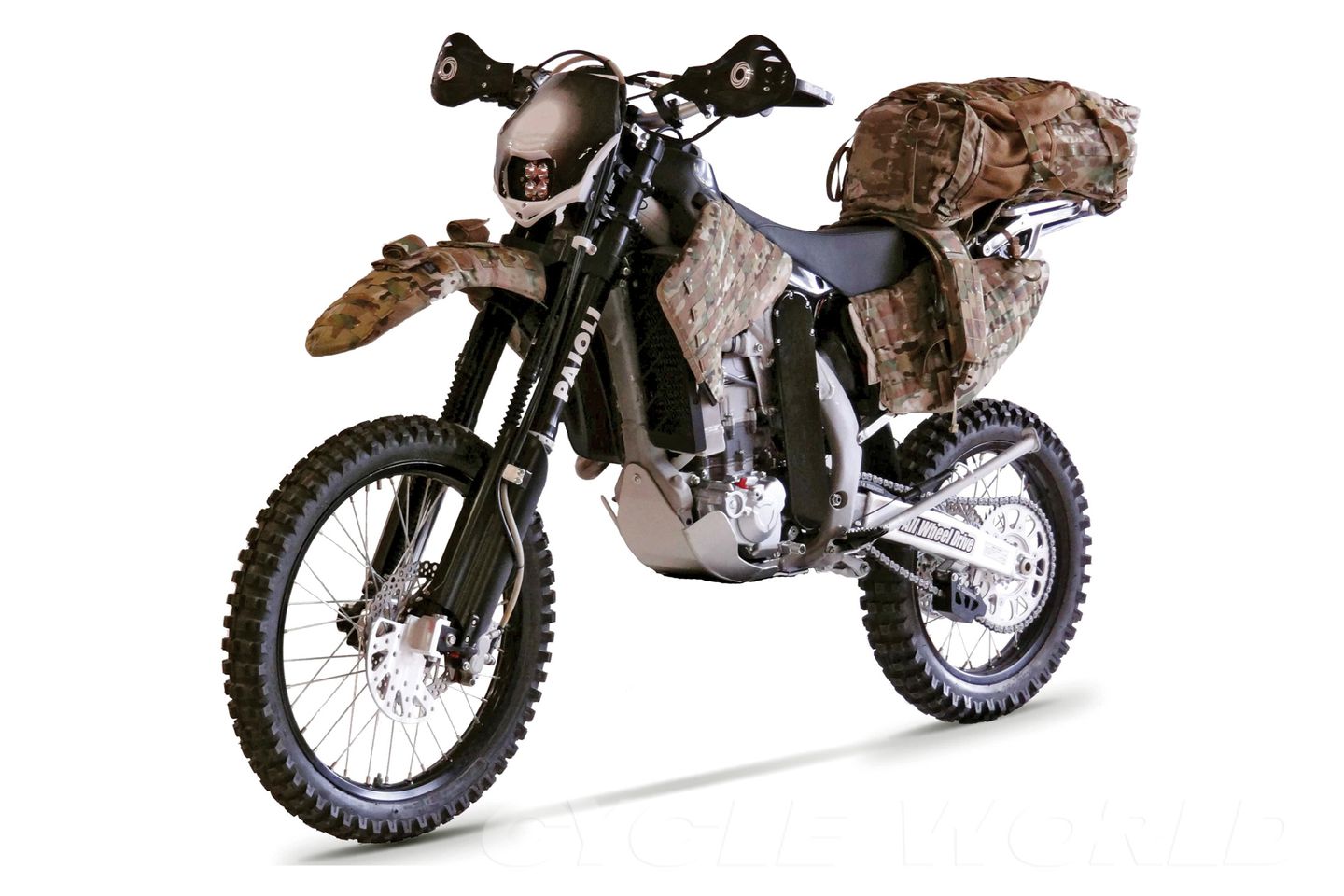
Christini’s all-wheel-drive dirt bikes have been tested and used in limited capacity by the U.S. military, particularly by special operations communities needing maximum off-road capability.
Key benefits of Christini’s 2WD system:
- Up to 80% more front-wheel traction
- Superior control in sand, mud, snow, or steep climbs
- Reduced rider fatigue
- Higher stability on loose surfaces
Military versions include features such as:
- IR lighting
- High-capacity stator for electronics
- Run-flat tires
- Reinforced skidplates and guards
Though produced in small numbers, they remain one of the most capable tactical off-road motorcycles available.
4. Kawasaki Minibikes Used by AFSOC
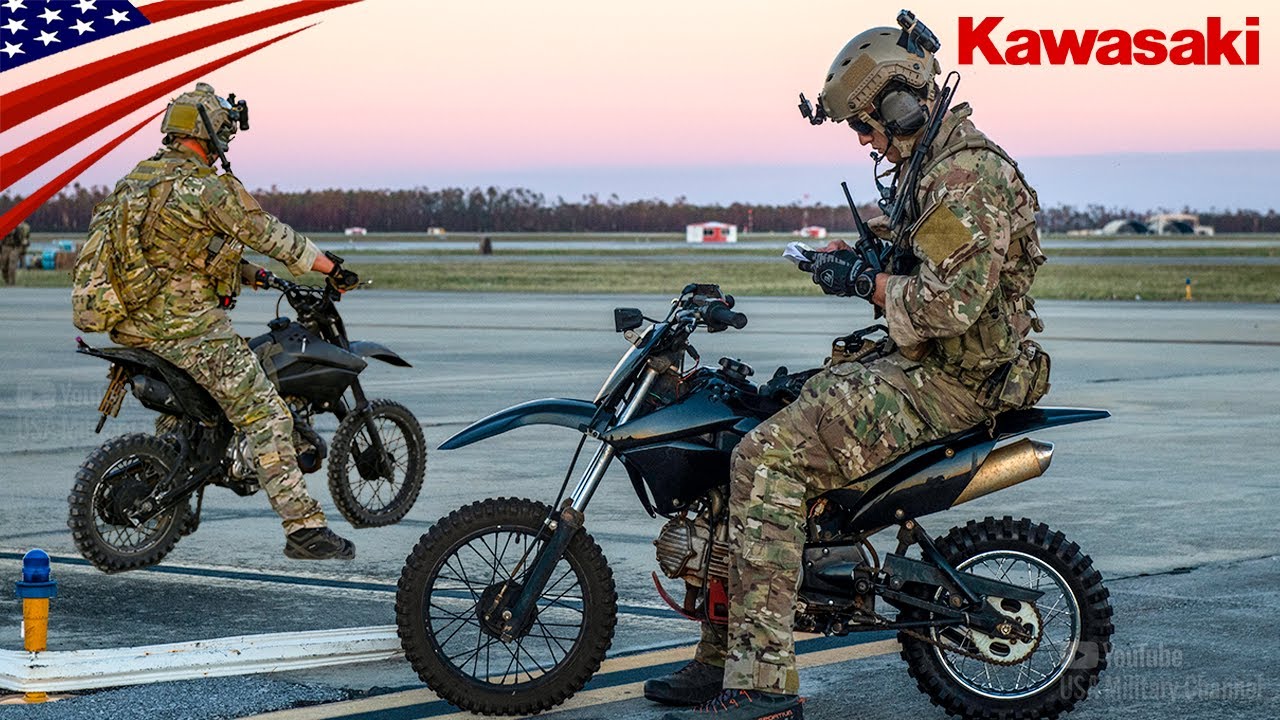
AFSOC (Air Force Special Operations Command) makes limited use of compact Kawasaki minibikes such as the KLX110 and KLX140. These small, lightweight machines serve a niche role in special operations mobility, particularly during landing zone (LZ) reconnaissance, airfield assessment, and short-range movement in austere environments. Their advantages are simple but mission-critical:
- Extremely light and portable — can be loaded into small aircraft like the CV-22 Osprey.
- Low noise footprint — useful for discreet movement.
- Easy to maneuver in tight or rugged terrain.
- Minimal maintenance and high reliability.
AFSOC teams often use these minibikes to rapidly survey improvised runways, move equipment between remote points, or shuttle personnel along long landing zones. While not “combat motorcycles,” their portability and simplicity make them valuable tools for specific special operations tasks where larger dual sports or tactical bikes would be impractical.
Historical U.S. Military Motorcycles
Motorcycles played a much larger role in earlier eras of American military history:
World War I & II
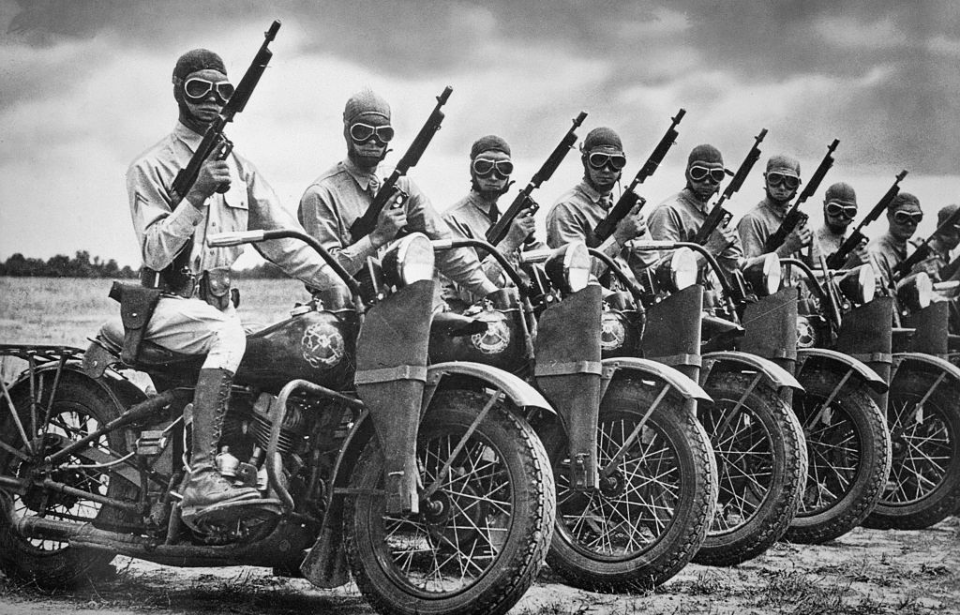
Harley-Davidson WLA (“The Liberator”)
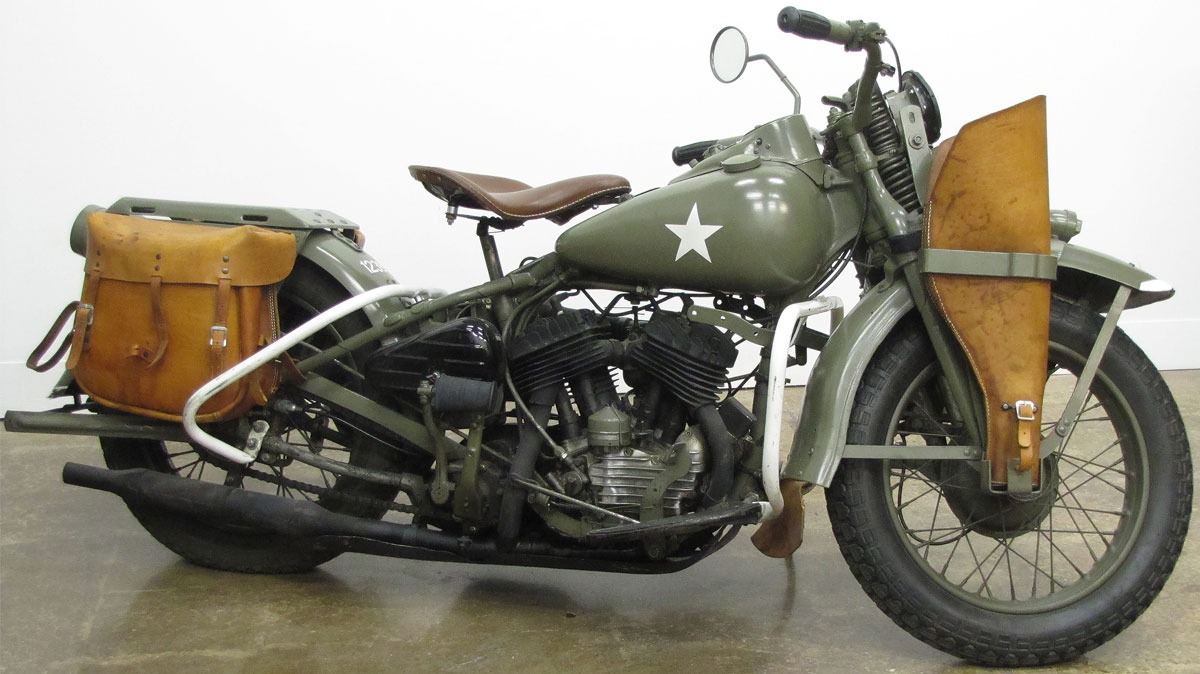
The most iconic U.S. military motorcycle. Used extensively in WWII for:
- Messenger duties
- Escort roles
- Recon missions
- Military police operations
The WLA featured blackout lights, leather scabbards for rifles, and rugged suspension.
Indian Scout & Chief Military Models
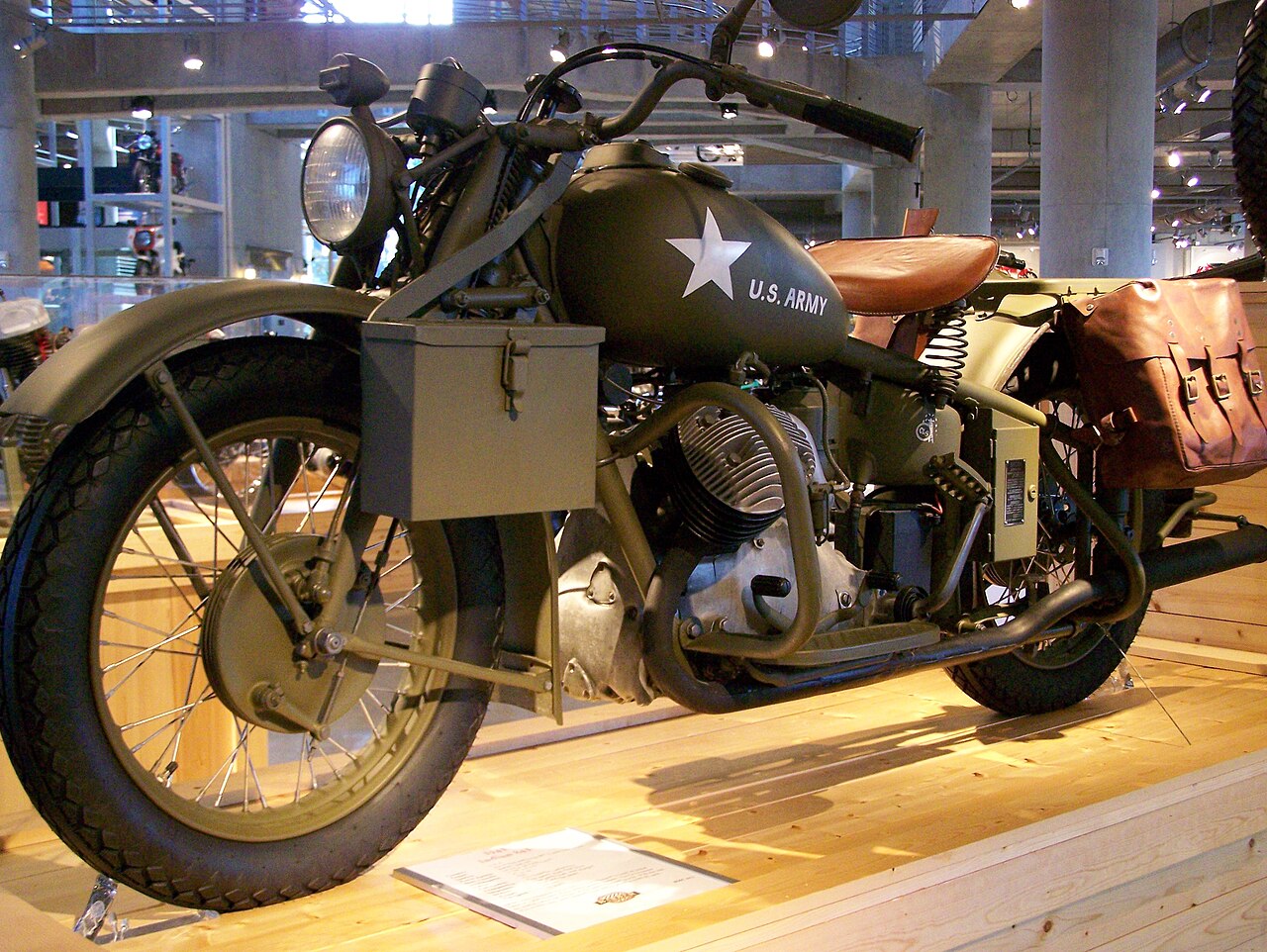
Indian produced thousands of military bikes, including the desert-capable 841, designed as a response to BMW’s shaft-drive desert machines.
Cold War to Modern Era
Harley-Davidson MT350/MT500 (1980s–early 2000s)
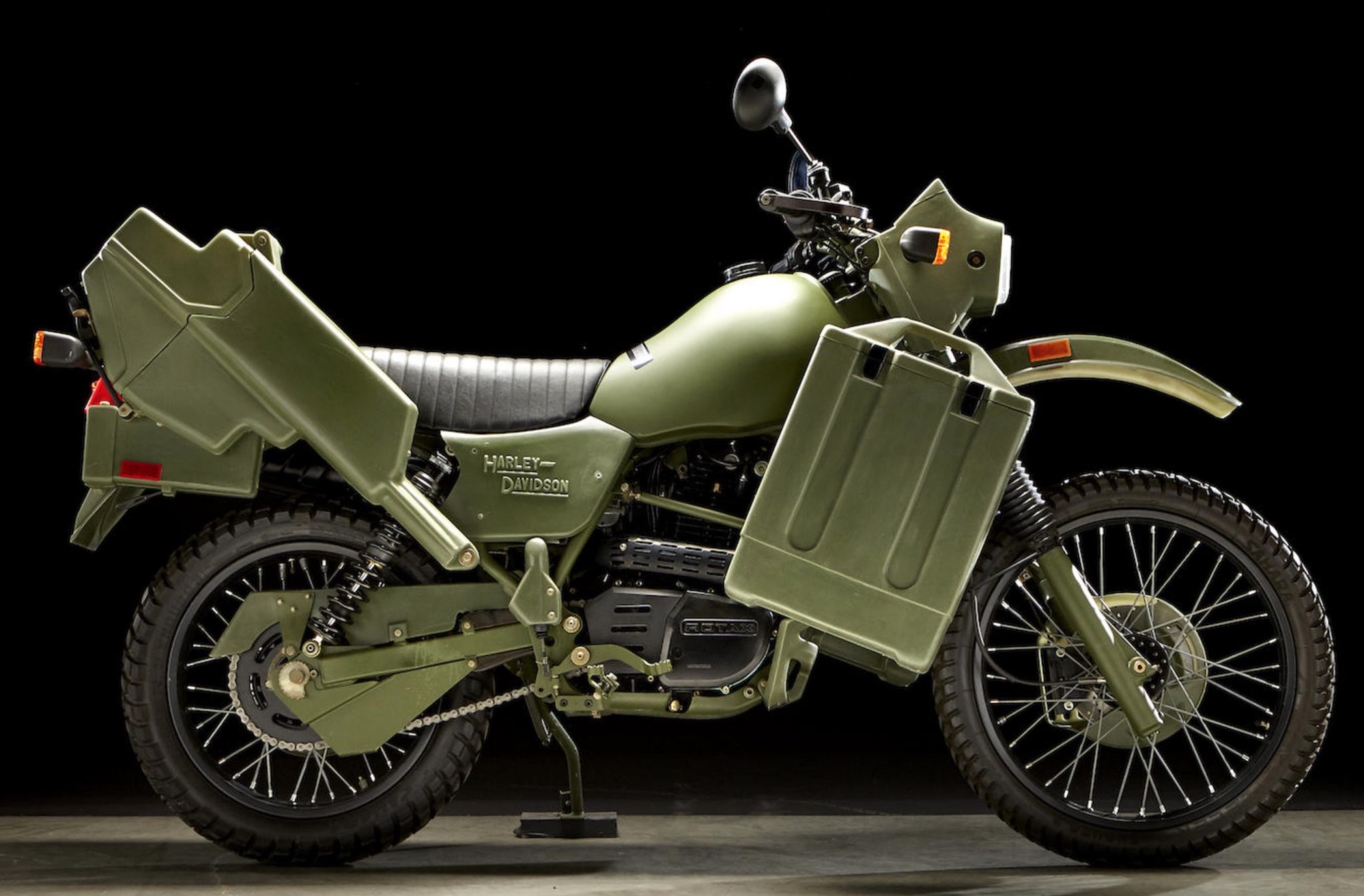
Licensed versions of Armstrong military motorcycles, these 350cc and 500cc four-strokes were used primarily by:
- U.S. Marines
- NATO partners
They were eventually replaced by lighter, more modern Japanese-derived dual sports.
Why Motorcycles Are Rare in Today’s Military
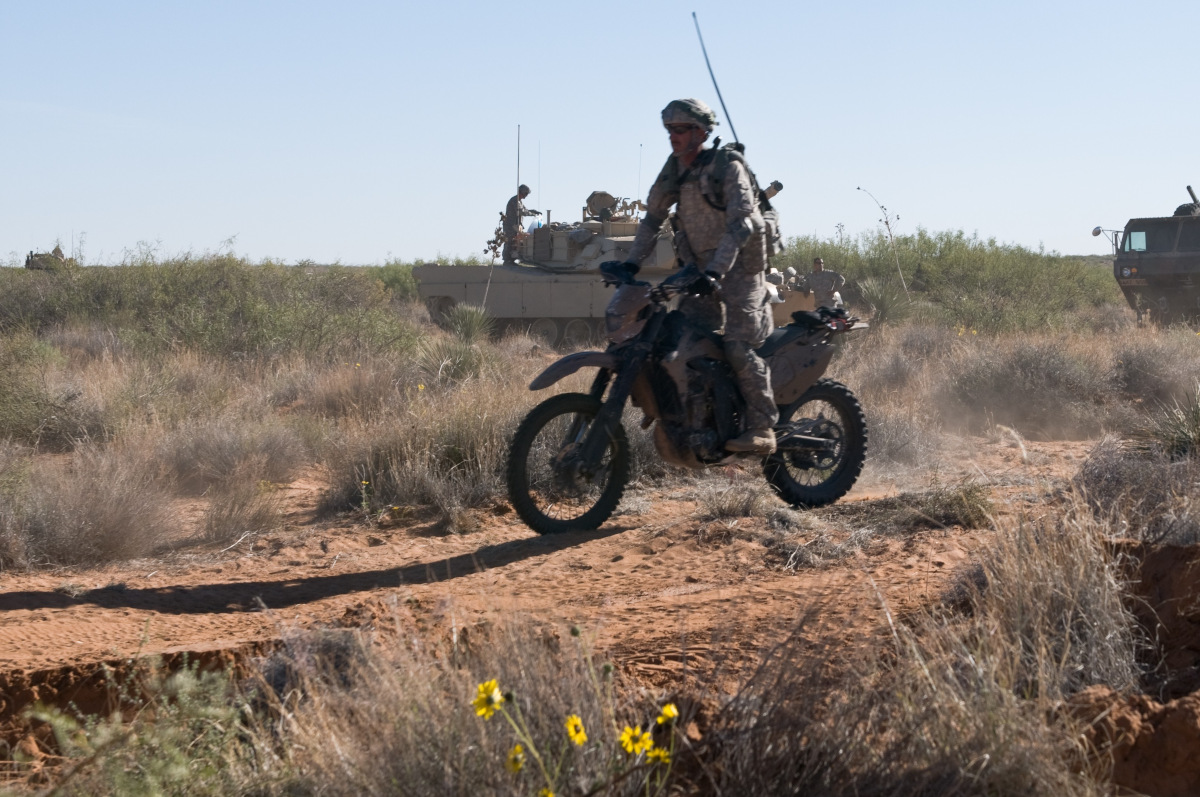
While motorcycles remain useful, several factors have reduced their prevalence:
- Drones replaced many reconnaissance roles: Small UAVs can survey large areas more safely and effectively
- ATVs and UTVs offer greater carrying capacity: Side-by-sides and quads are easier to operate, carry more gear, and provide more stability.
- Increased IED and roadside explosive threats: Light vehicles like motorcycles offer no blast protection.
- Training and logistical complexity: Few soldiers are proficient motorcyclists; maintenance is specialized.
As a result, modern military motorcycles tend to be specialty tools for special forces, base security, or rapid-spec recon, rather than widespread transportation platforms.
Do U.S. Special Forces Still Use Motorcycles?
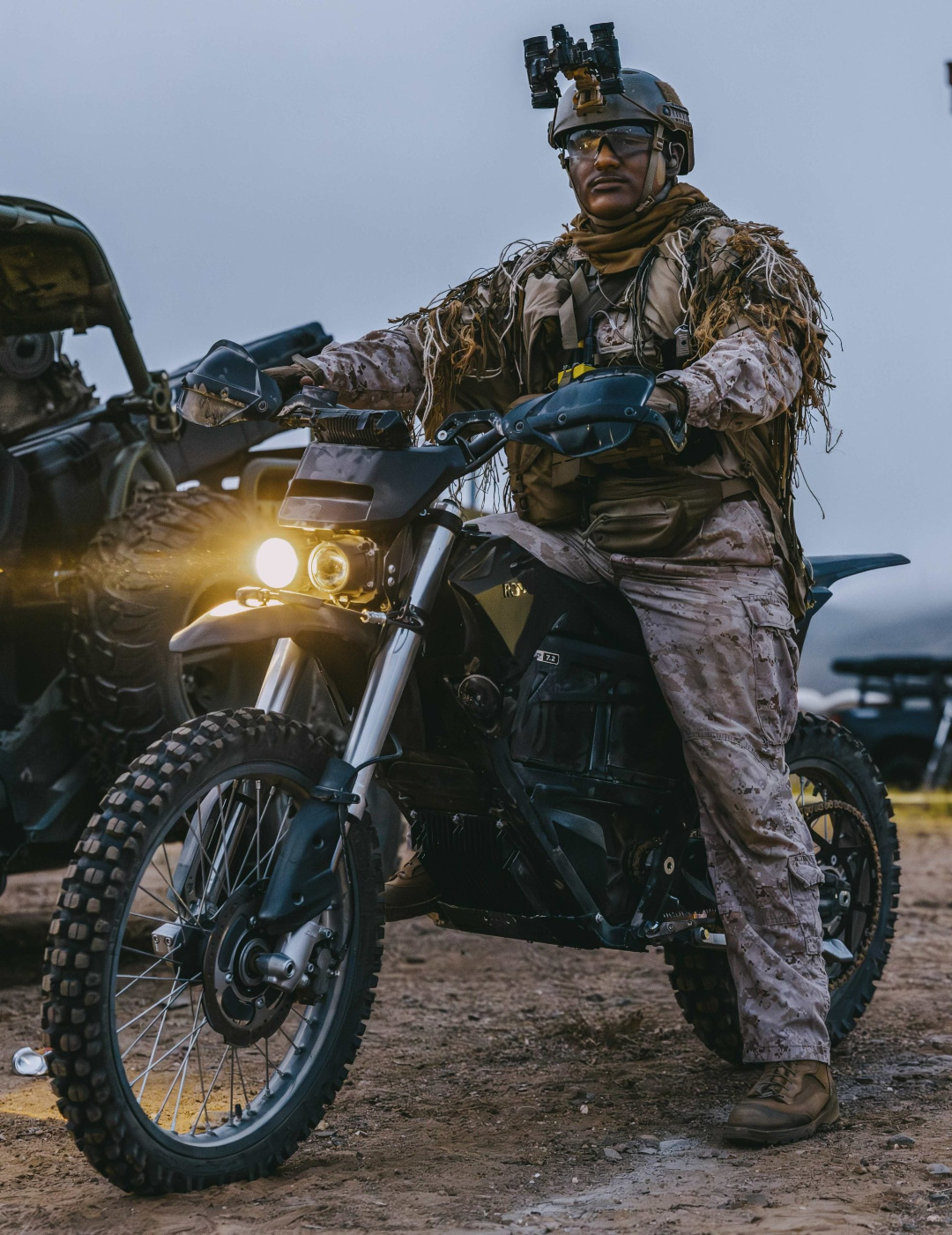
Yes — but selectively. Current and recent use includes:
- Zero MMX electric dual-sports for silent mobility
- Christini AWD 450s for extreme off-road access
- Occasional use of KLR650-based tactical bikes in training or reserve roles
However, deployment frequency varies and is highly mission-specific.
Will Future U.S. Military Motorcycles Be Electric?
Almost certainly. Electric tactical motorcycles offer advantages uniquely suited to modern warfare:
- Near-silent operation
- Low heat signature
- Minimal maintenance
- Instant torque
- Ability to operate indoors or in enclosed spaces
- Rechargeable from portable solar or field generators
The Zero MMX was the first step — and more advanced electric tactical bikes are already under development by several companies.


