
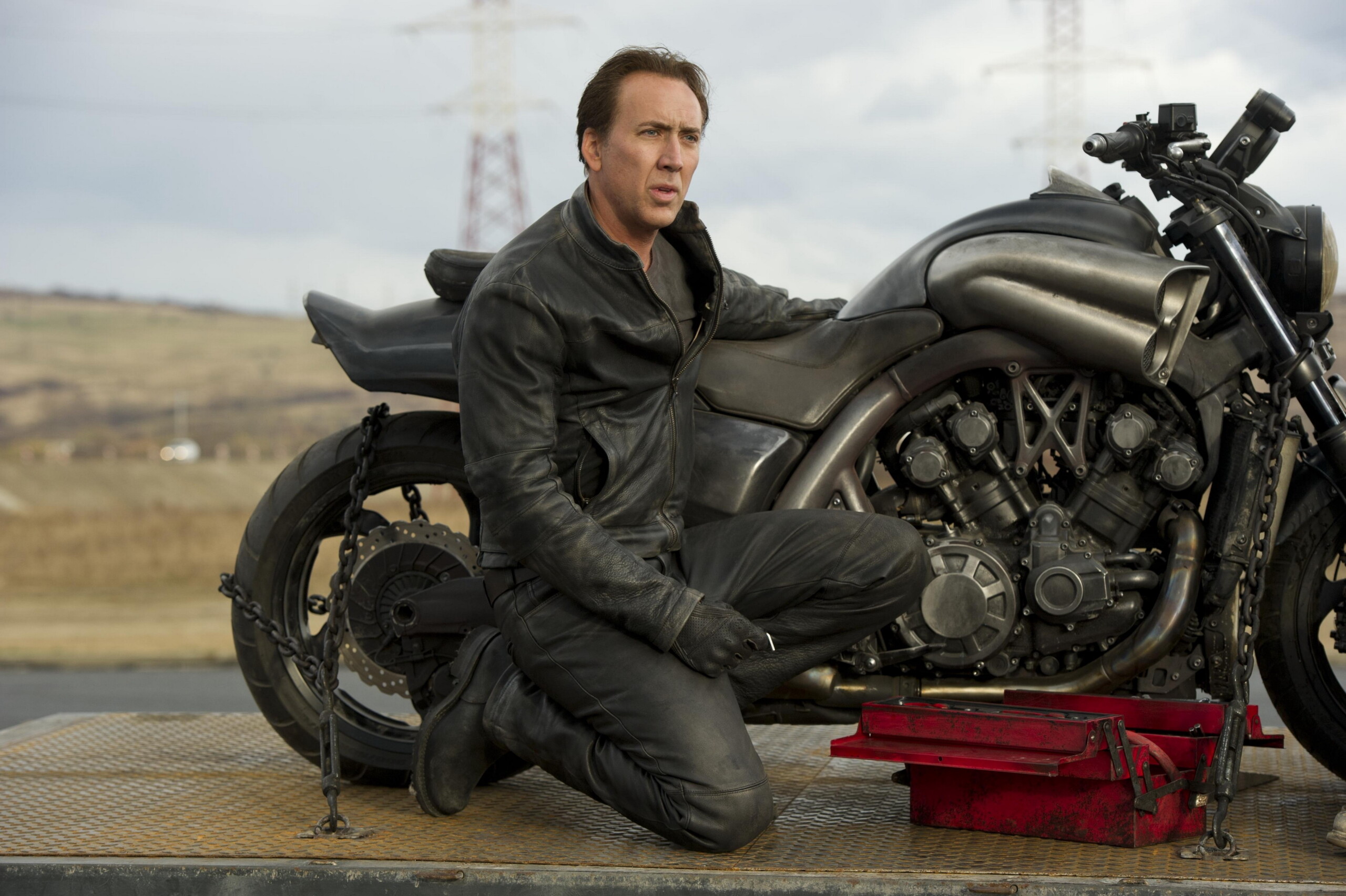
The Flaming Host Machine of the Sequel, Explained…
In the first Ghost Rider film (2007), Johnny Blaze’s hellfire motorcycle was famously turned into a demonic, skeletal version of a Harley-Davidson Panhead chopper — a supernatural transformation of the bike he rides in his stunt shows.

But in the sequel, Ghost Rider: Spirit of Vengeance (2011), the filmmakers made significant changes to the tone, visuals, and yes, the motorcycle itself. The bike in Ghost Rider 2 is not a Harley chopper at all, but a far more aggressive, modern machine chosen to better reflect the film’s grittier look and faster pacing.
The Motorcycle in Ghost Rider 2: Yamaha VMAX 1700
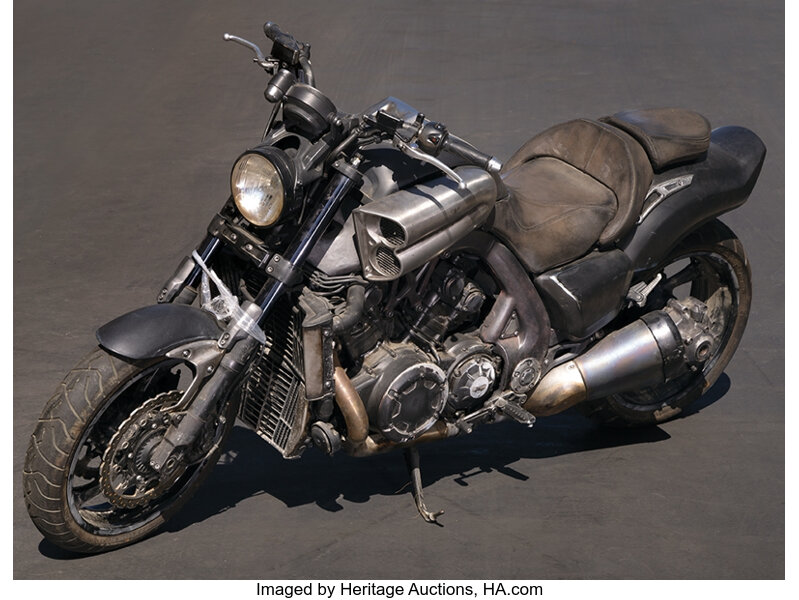
In Spirit of Vengeance, Johnny Blaze rides a heavily customized Yamaha VMAX, the second-generation 1679cc power-cruiser known for its outrageous acceleration and muscular stance.
The VMAX is already one of the most intimidating, fastest cruiser motorcycles ever built — a brutish V4 monster designed to deliver straight-line violence more than traditional handling finesse. The aggressive silhouette, massive V4 engine, and muscular proportions made it the perfect platform for a supernatural “Hell Bike.”
Why the VMAX Was Chosen…
The production team selected the VMAX for several key reasons:
- Powerful visual presence – Wide air scoops, a huge frame, and a hulking V4 engine look fearsome on screen.
- Modern, industrial style – Better matched the darker reboot tone than a classic chopper.
- Large frame for CGI augmentation – Plenty of real estate to digitally “set on fire.”
- Extreme personality – The VMAX’s real-world performance (200+ rear-wheel horsepower when tuned) suits the idea of the Ghost Rider barely containing a demonic machine.
When transformed by hellfire in the film, the VMAX becomes a molten, volcanic creature — dripping lava and belching flame — a CGI evolution befitting a more chaotic Ghost Rider.
Was Any Other Motorcycle Used?
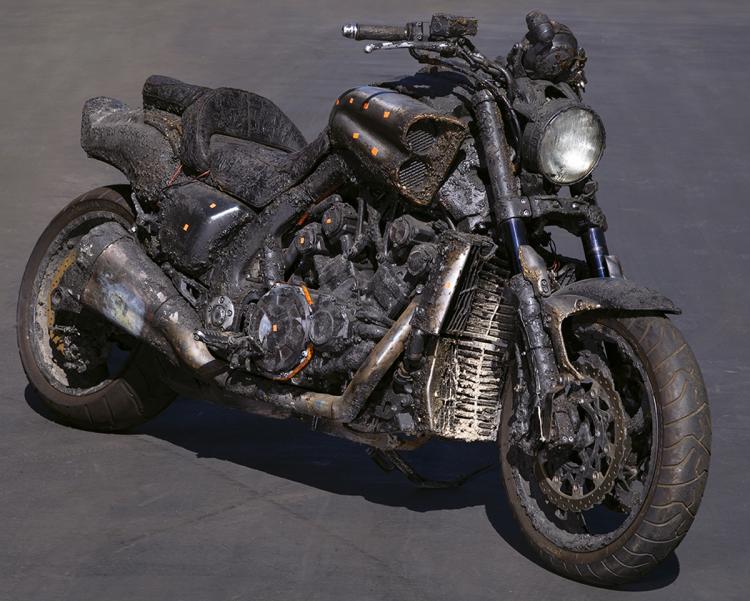
No alternate live-action motorcycle appears as a stunt platform in the film. Unlike the first movie, where the Panhead chopper was a core part of Blaze’s stuntman identity, the sequel abandoned the stunt-riding backstory and thus required only one primary hero bike: the VMAX.
Several VMAX units were built for filming:
- “Beauty” bikes for close-up detail shots
- Stunt bikes with modified suspension and strengthened subframes
- Partial mock-ups used for CGI enhancements
However, all were based on the 2009+ Yamaha VMAX platform.
VMAX vs. the Ghost Rider Hell Bike
In its supernatural form, the VMAX transforms with:
- Lava-textured frame and tank
- Hellfire exhaust
- Charred, cracked tires
- Melting metal and volcanic debris textures
- A skeletal, organic aesthetic reminiscent of burning stone
This “lava bike” design was a dramatic departure from the first film’s flaming chopper and was meant to give Spirit of Vengeance its own visual identity.
About the Real Yamaha VMAX
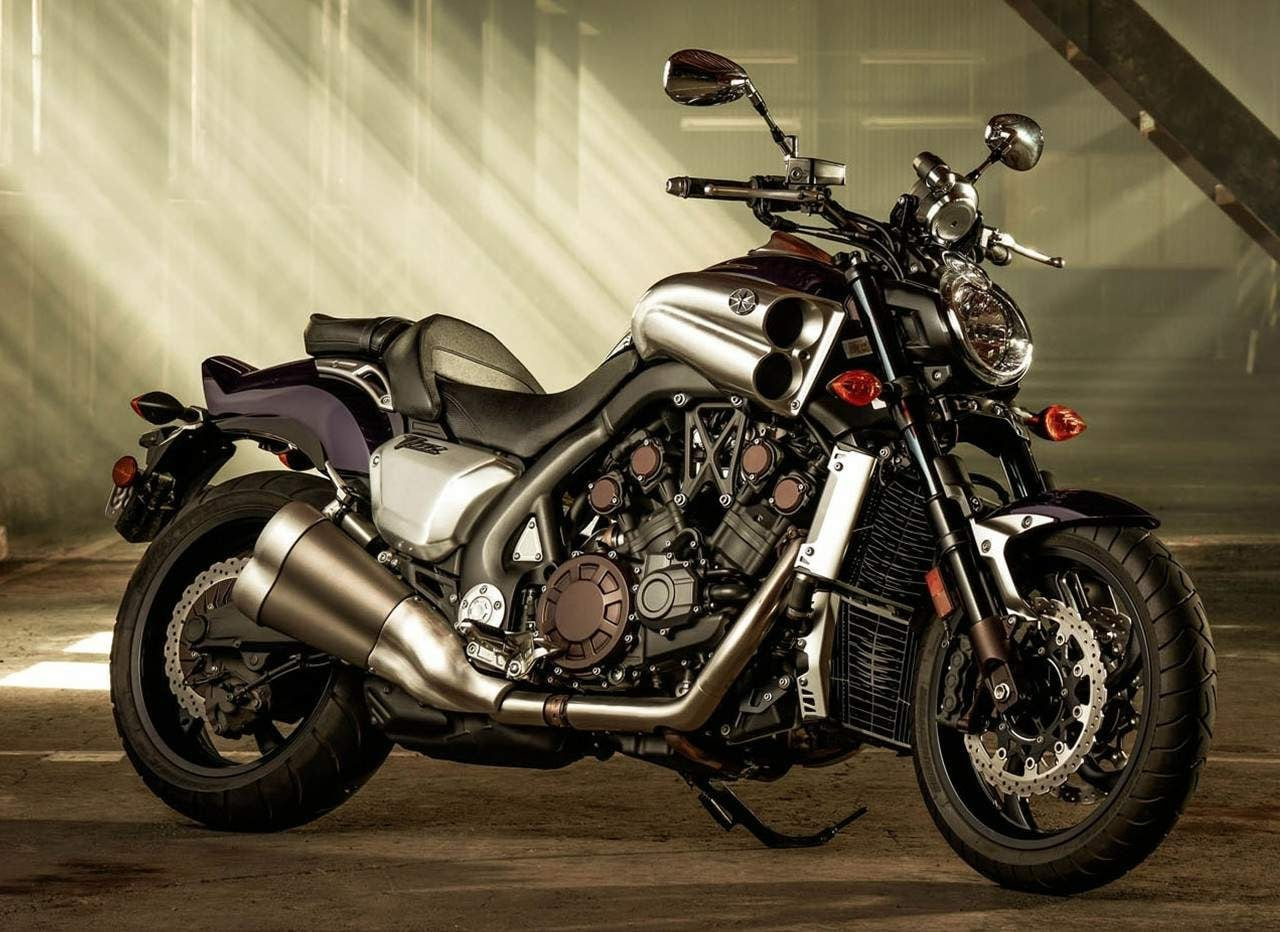
The real-world machine behind the movie.
Key Specs (Production Model)
- Engine: 1679cc liquid-cooled V4
- Horsepower: ~197 hp
- Torque: ~123 lb-ft
- 0–60 mph: ~2.6 seconds
- Top Speed: ~143 mph
- Dry Weight: ~640 lbs
The VMAX is a cult legend known for its drag-strip dominance and outrageous power-to-weight ratio — traits that translate well to a demonic antihero.
The VMAX Legacy: From V-Max 1200 to VMAX 1700
The Yamaha VMAX didn’t appear out of nowhere — it has one of the most iconic lineages in power-cruiser history. The bike’s reputation for outrageous straight-line performance was established long before Ghost Rider: Spirit of Vengeance ever put it on film.
V-Max 1200 (1985–2007): The Original Muscle Bike

The story begins in 1985, when Yamaha introduced the V-Max 1200, a motorcycle that instantly redefined the idea of a power cruiser. With its radical V-Boost system, aggressive styling, and drag-bike stance, the original V-Max became a cult phenomenon. Its hallmarks included:
- 1198cc V4 engine with explosive midrange
- V-Boost intake that opened additional intake runners at high RPM for a surge of power
- A reputation for being fierce, raw, and untamed
- A look unlike anything else on the road — wide scoops, low seat, long wheelbase
For over 20 years, the V-Max 1200 remained largely unchanged because its formula was so effective. It was the bike people pointed to when discussing “too much power” in the 1980s and 1990s.
The Second Generation: VMAX 1700 (2009–2020)
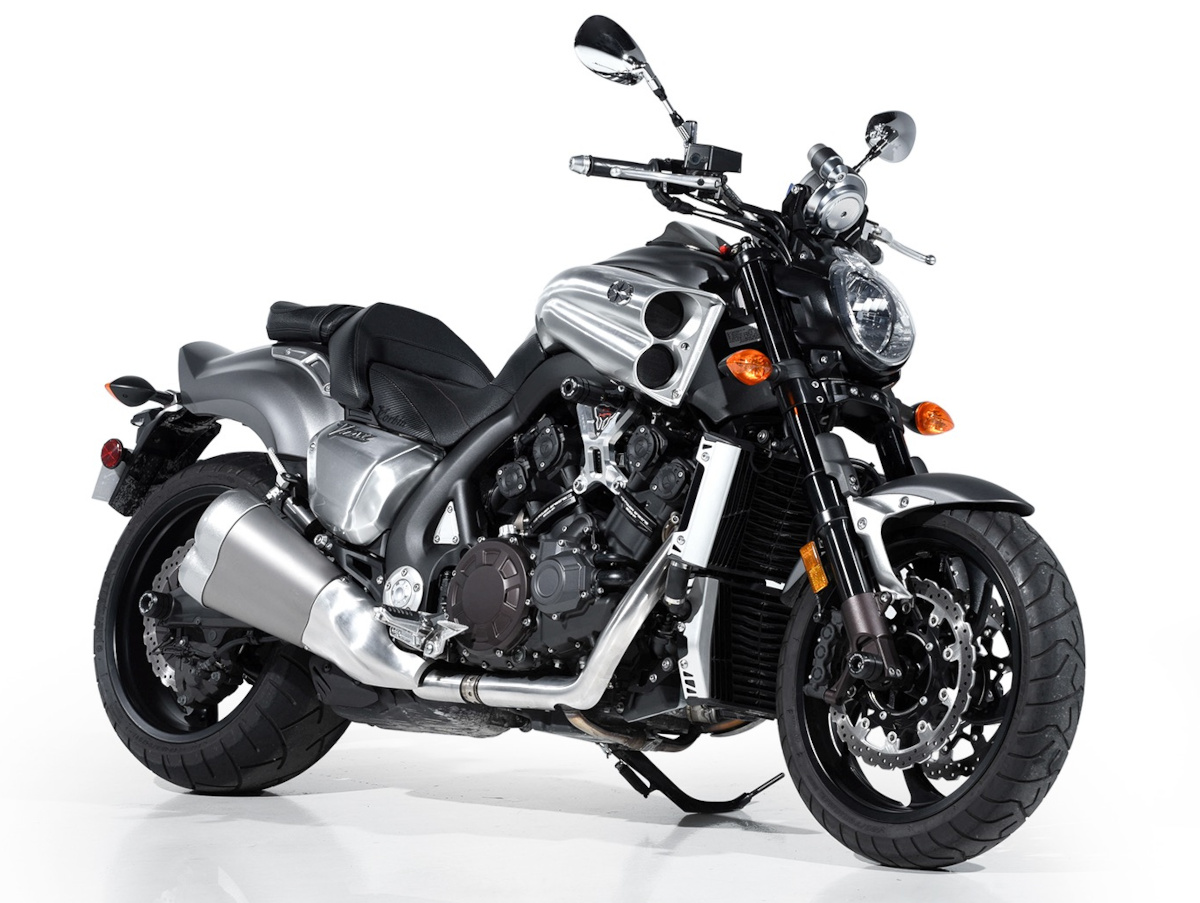
By the mid-2000s, Yamaha began developing a successor worthy of the V-Max legend. The result was the second-generation VMAX, launched in 2009:
- 1679cc liquid-cooled V4
- Nearly 200 horsepower
- Massive torque and arm-stretching acceleration
- Advanced electronics for the time (YCC-T, ride-by-wire, precise fuel mapping)
- A dramatically updated frame and brakes to handle the new engine’s force
This was the model used as the base motorcycle in Ghost Rider 2. Its silhouette — muscular, mechanical, unmistakably VMAX — made it ideal for a cinematic transformation into a lava-spewing Hell Bike.
Why the VMAX Was Perfect for Ghost Rider
Across both generations, the VMAX built its reputation as:
- Motorcycling’s definitive muscle bike
- A machine known for sheer power and straight-line violence
- A visually imposing motorcycle that already looks half-supernatural
The second-gen VMAX captured the spirit of the old V-Max 1200 but elevated it into modern territory — making it the ideal choice for the Ghost Rider’s demonic steed.
Why a Cruiser, Not a Superbike?
Some fans expected the sequel to give Johnny Blaze a superbike or dirtier hooligan machine, but the VMAX’s silhouette carries mythic weight:
- A long wheelbase (visually closer to a chopper than a supersport)
- A brutal, mechanical presence
- A sense of unstoppable forward momentum
The filmmakers specifically wanted something that still felt like a “power cruiser,” but darker, heavier, and more threatening than a traditional Harley.
The VMAX was the perfect foundation for the film’s volcanic, apocalyptic Hell Bike — and remains one of the most memorable screen motorcycles of the 2010s.


