
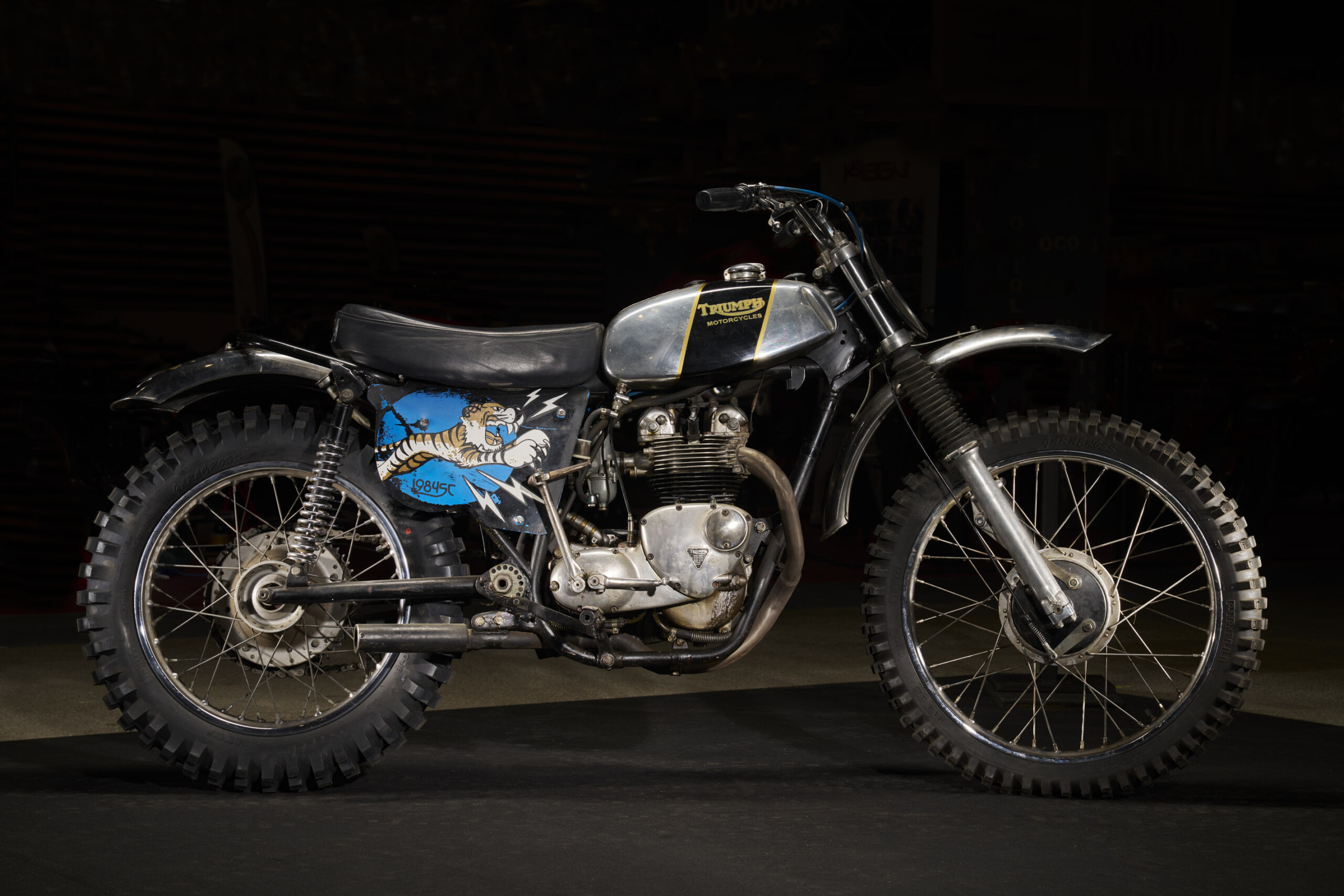
 Trophy Trail Desert Sled from France…
Triumph produced the original TR5 Trophy from 1949 to 1958, a 500cc Speed Twin-based machine named in honor of the manufacturer’s team trophy that Triumph brought home (along with three individual gold medals) from the 1948 International Six Day Trial (ISDT). The name was resurrected in 1973 for the TR5T Trophy Trail, which helped the British team earn individual gold medals and second overall in the ’73 ISDT.
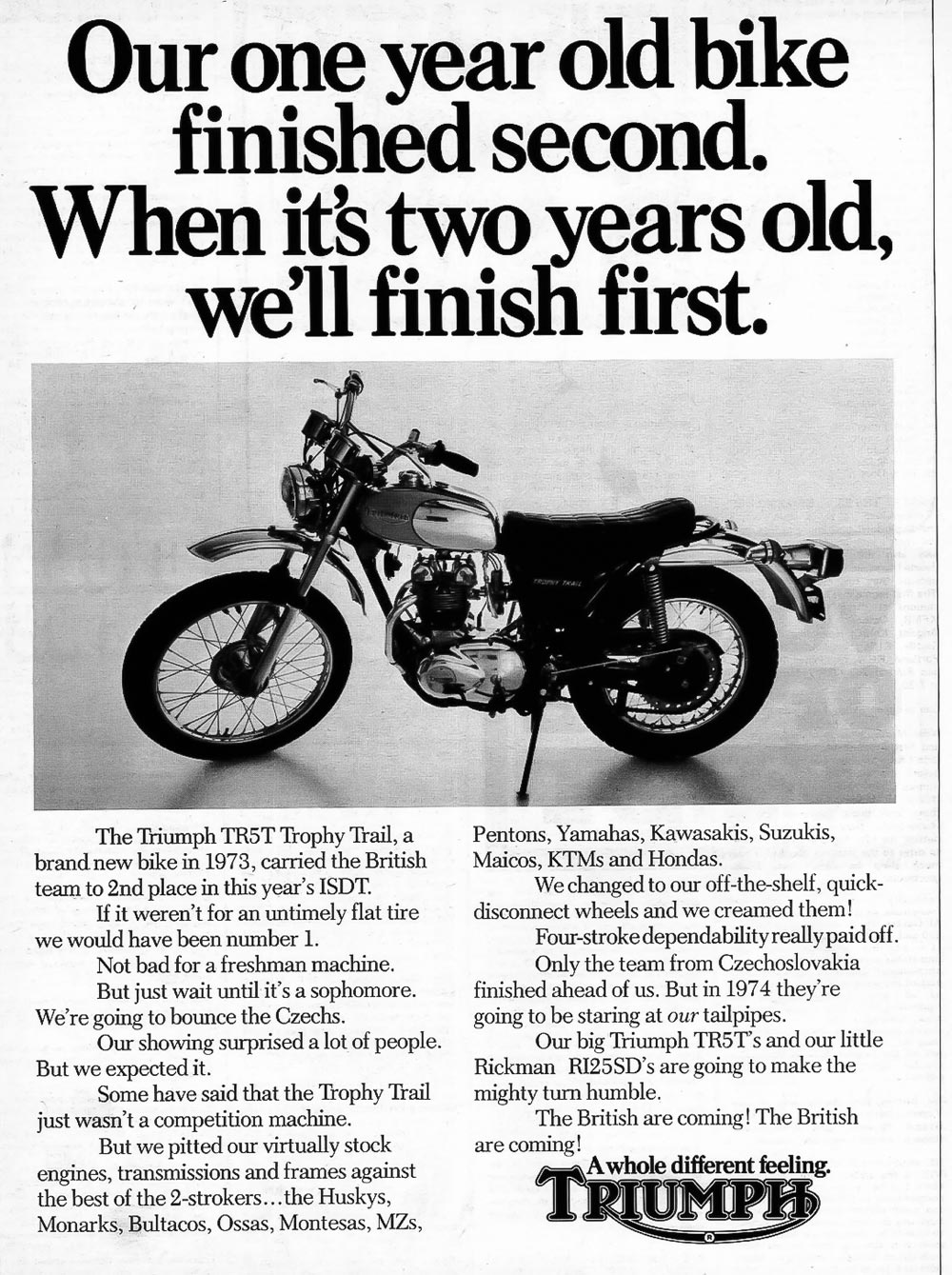
But the Trophy Trail wasn’t just a pure off-roader. It was a street-legal parallel-twin that could cruise the highway, cut up a motocross track, climb hills, and blast across the desert.
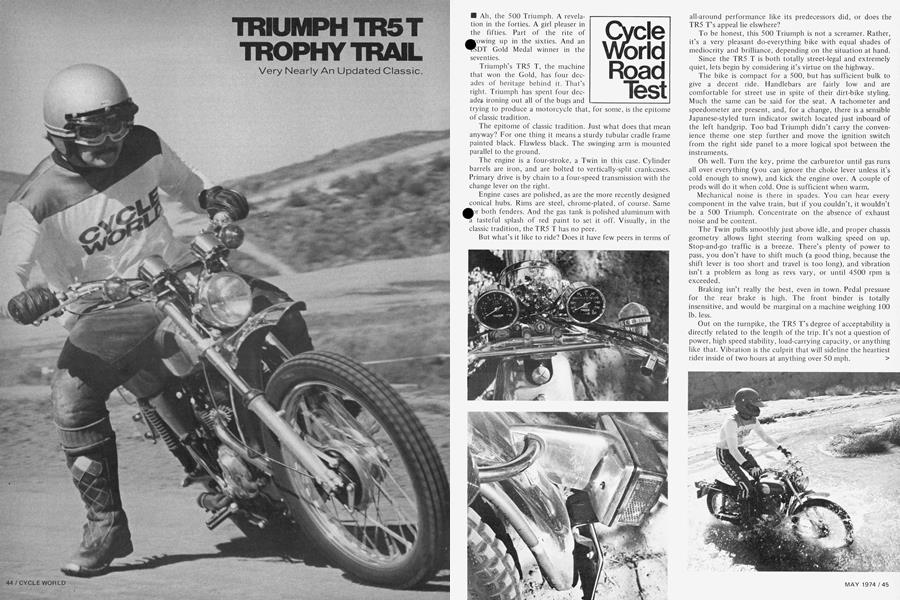
“To be honest, this 500 Triumph is not a screamer. Rather, it’s a very pleasant do-everything bike…” –Cycle World, 1974
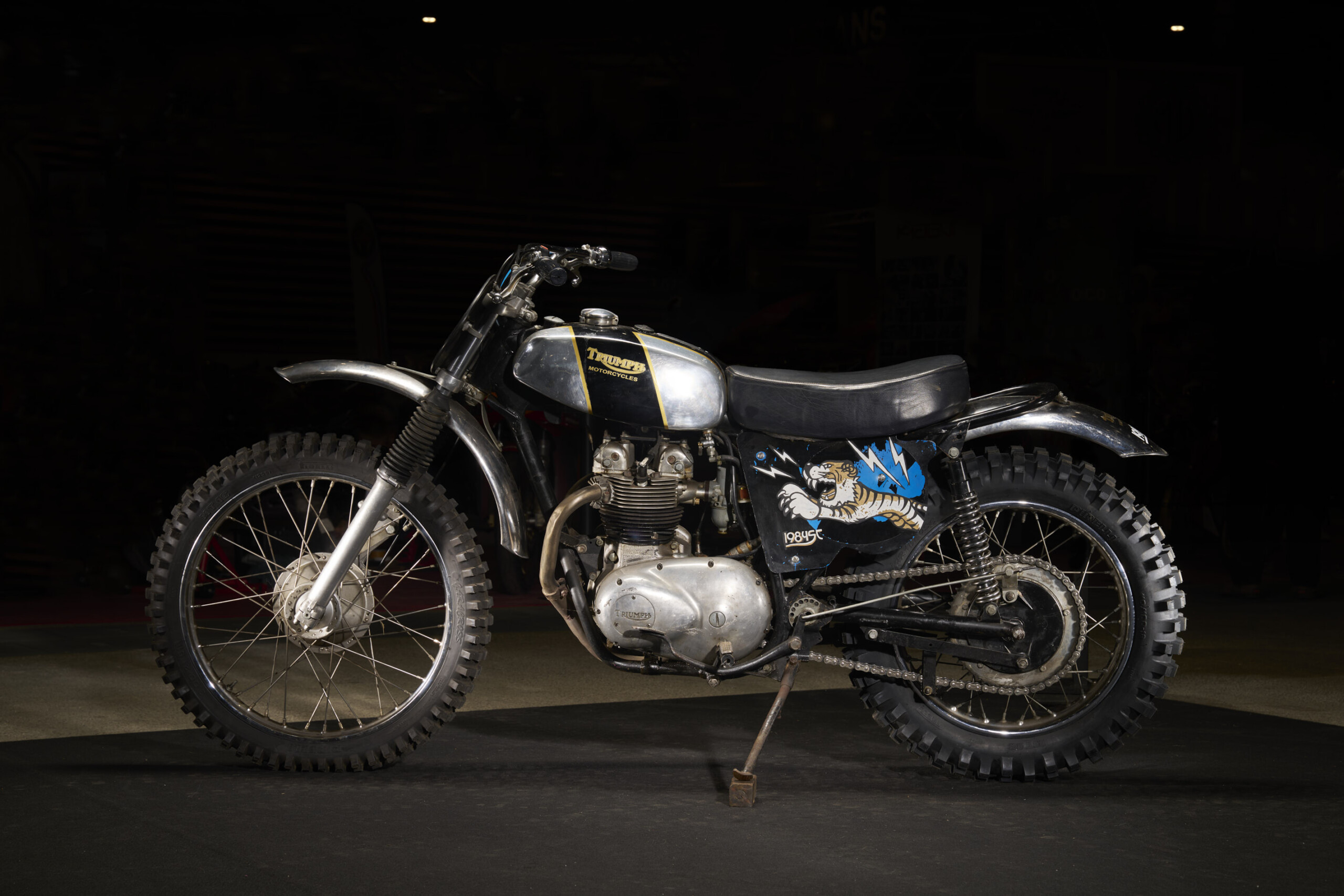
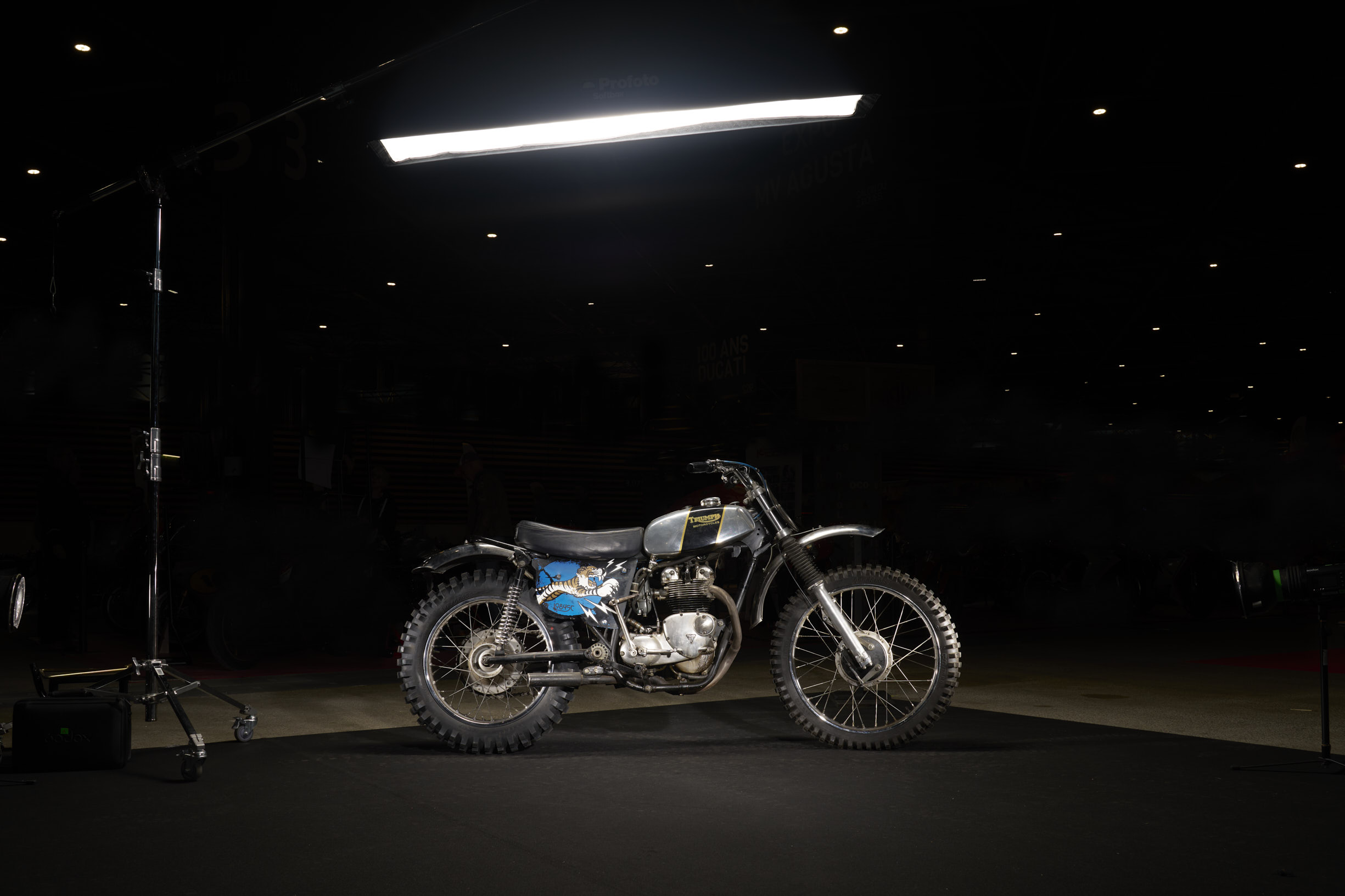
The 1973 TR5T Trophy Trail desert sled you see here — nicknamed “The Tiger” — comes from 1984sc of Lyon, France. Workshop founder Jonathan “Nejo” Terzian has one of the most endearing two-wheeled origin stories we’ve heard in quite some time:
“It all started with my late father, when I bought a wrecked Honda CB250G and decided to turn it into a scrambler, despite having no mechanical knowledge at the time. The unknown was exciting. We worked together in a garage in the basement of an apartment building, with no electricity, using only headlamps. I learned by making mistakes, feeding my curiosity, and teaching myself along the way.”
Later, Nejo set up a workshop at home, still balancing a day job in an entirely unrelated field.
“During that time, I met Gilles, a former motorcycle racer who has since passed away, from whom I learned a tremendous amount. We restored bikes for ourselves, friends, and occasional clients — mainly 1970s Japanese machines such as Suzuki GTs, Yamaha RDs, Honda Fours, and Yamaha TZs. My passion kept growing and taking more space in my life, so I eventually decided to dedicate myself to motorcycles full-time.”
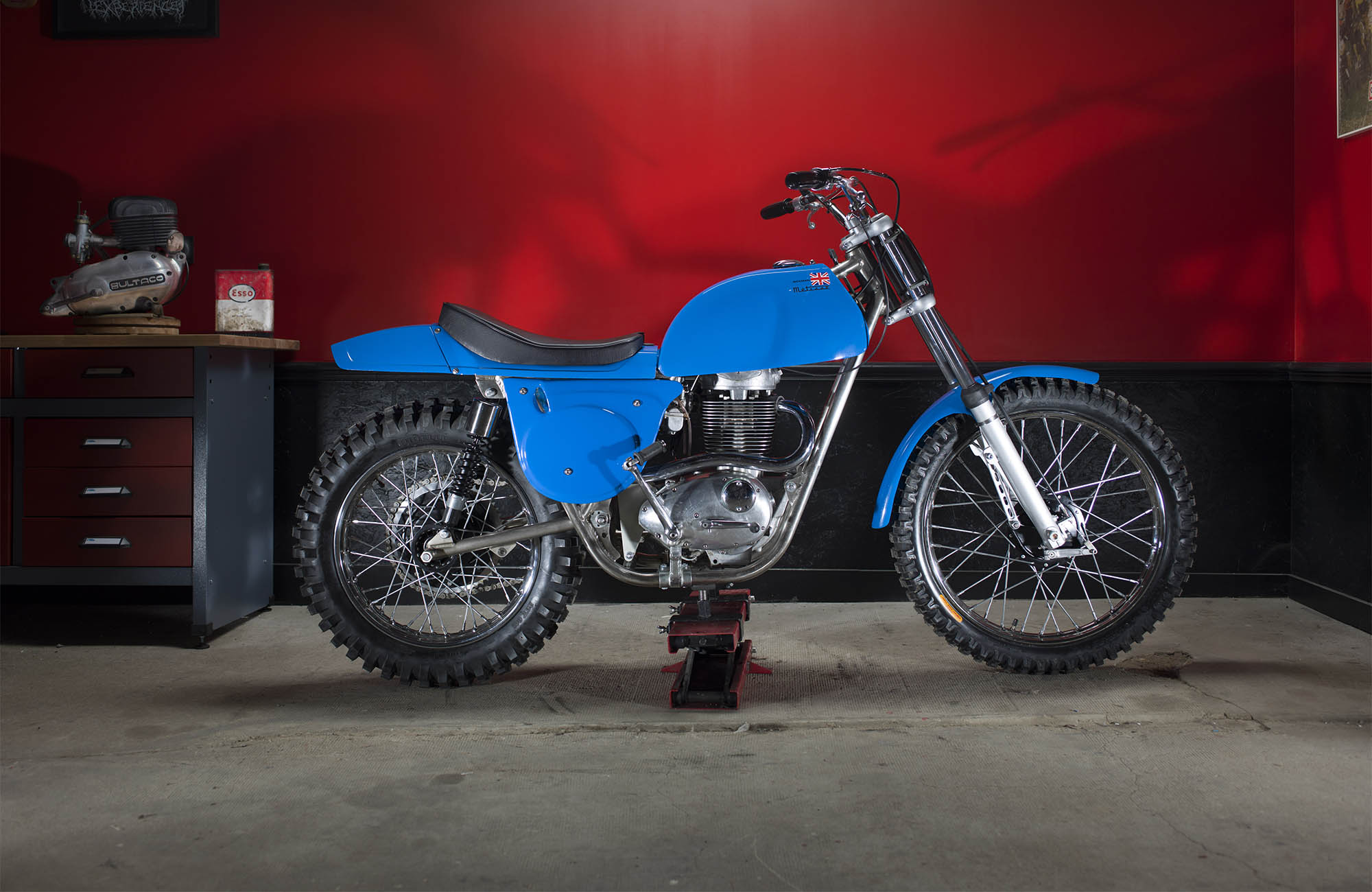
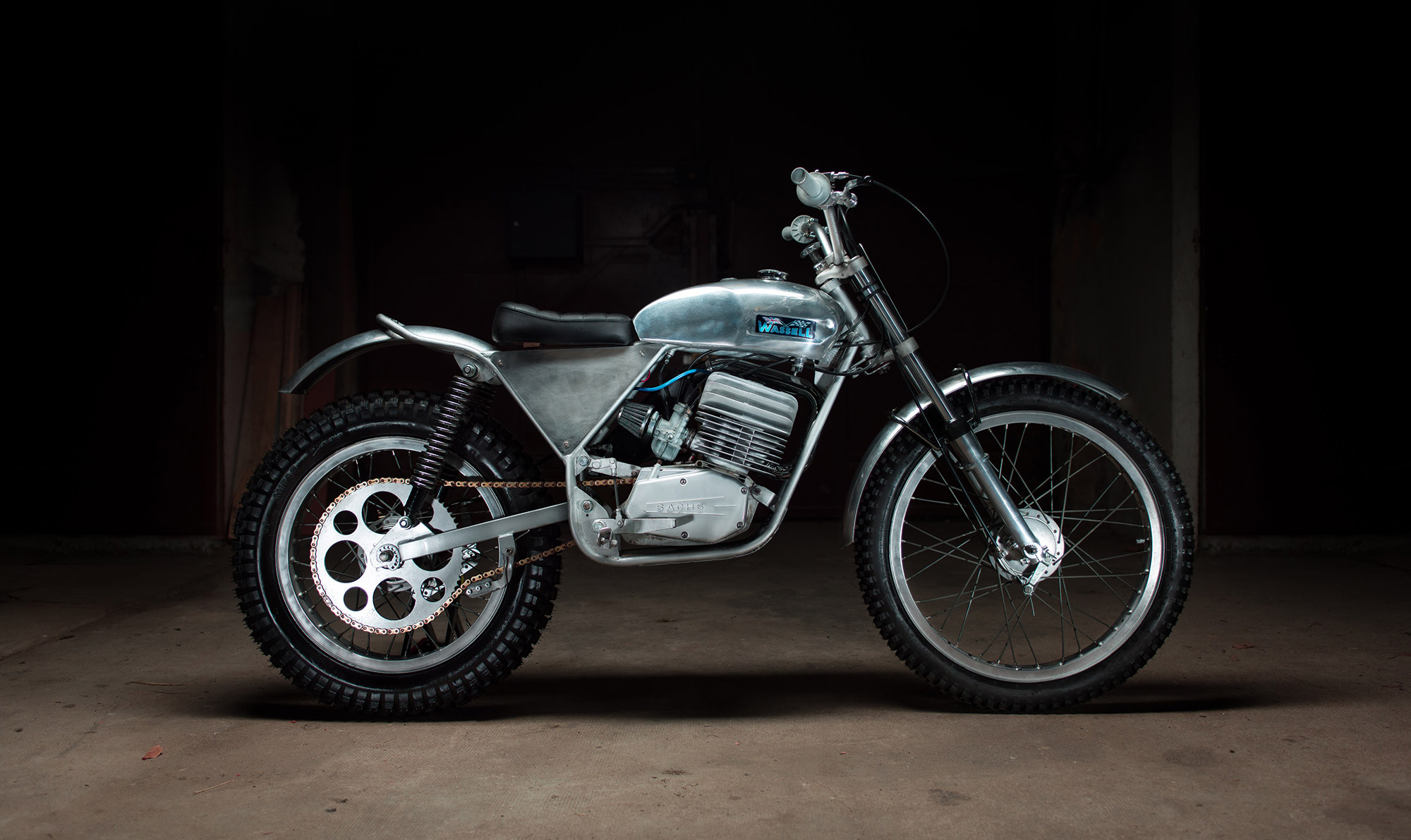
Later Nejo met Jean, an off-road enthusiast who entrusted him with the restoration of several iconic machines, including a very rare Wassell. Today, Nejo is surrounded by many experts and veterans, and he and his team member Pierre both ride 1974 Honda CR250M Elsinores.
Nejo came across a ’73 TR5T for sale in Belgium and decided to give it the desert sled treatment.
“The concept was to strip the bike down to its bare essentials, following the rules of the Desert Sled style. The goal was to highlight clean lines, functional simplicity, and the rugged character that defines this type of build.”
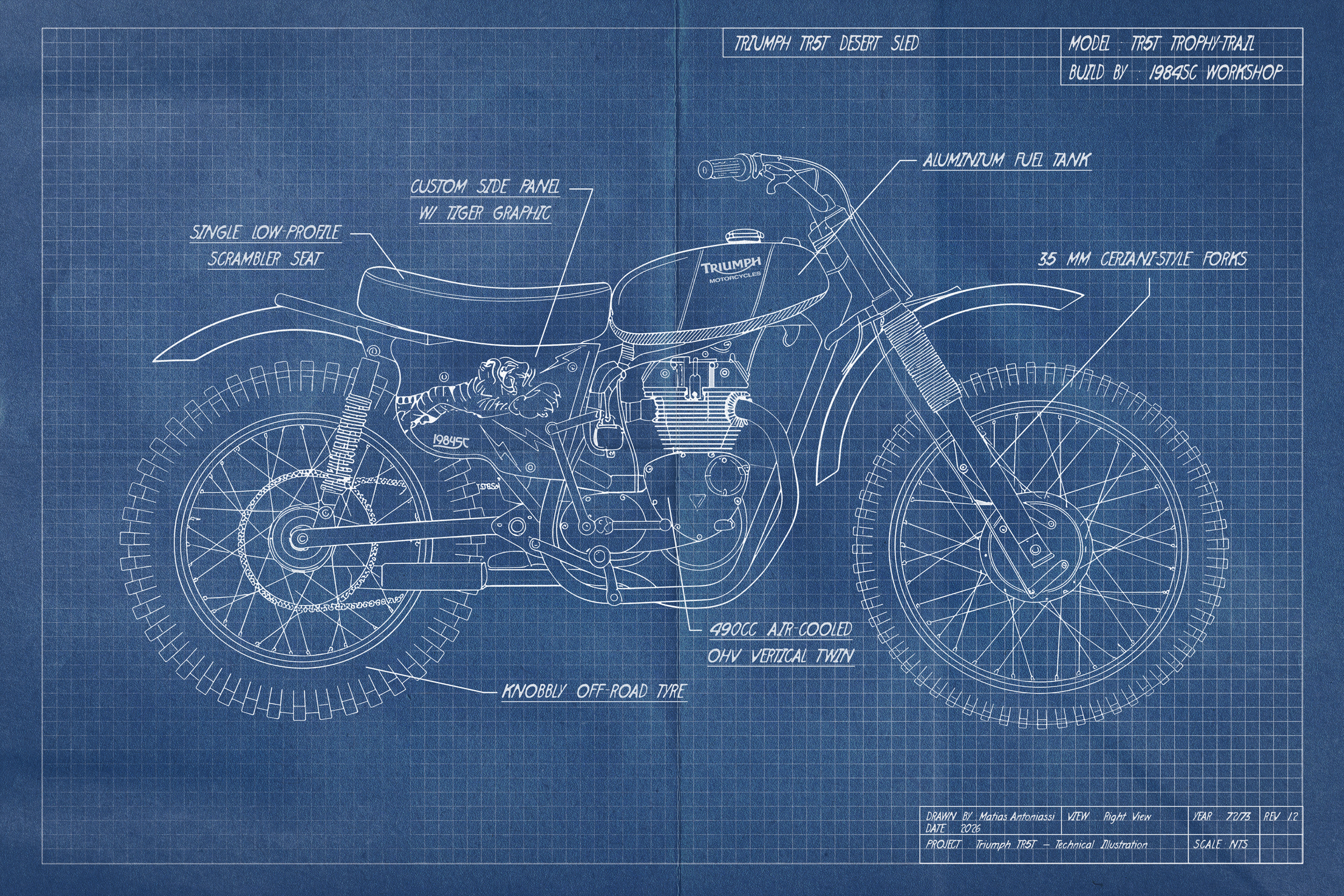
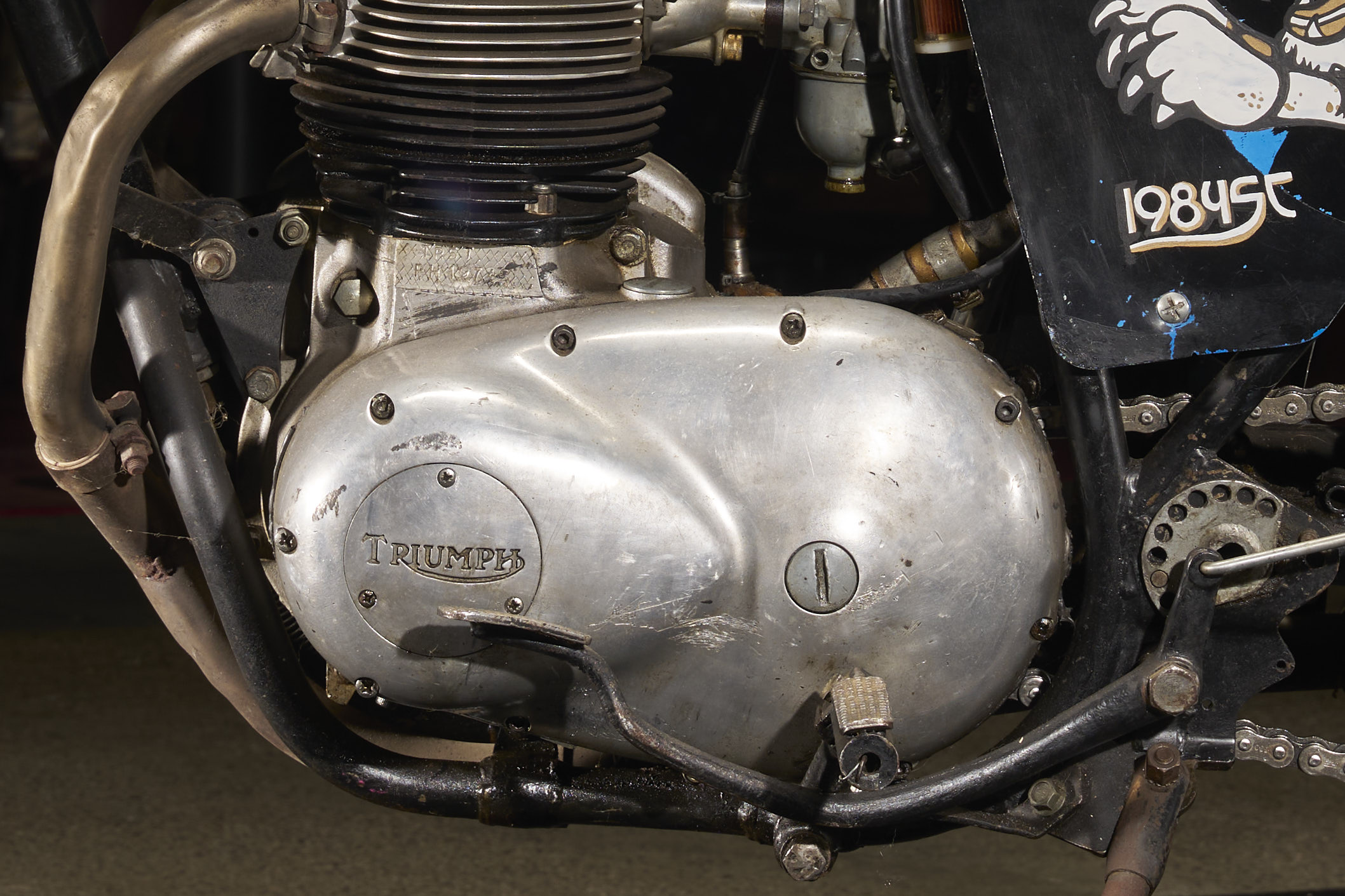
They sought to preserve as much of the bike’s original patina and componentry as possible. The custom work mainly went toward the “rider’s interface” (new handlebars, controls, grips), as well as aluminum fenders, a BSA B50MX solo saddle, electronic ignition, rebuilt forks, and new tires.
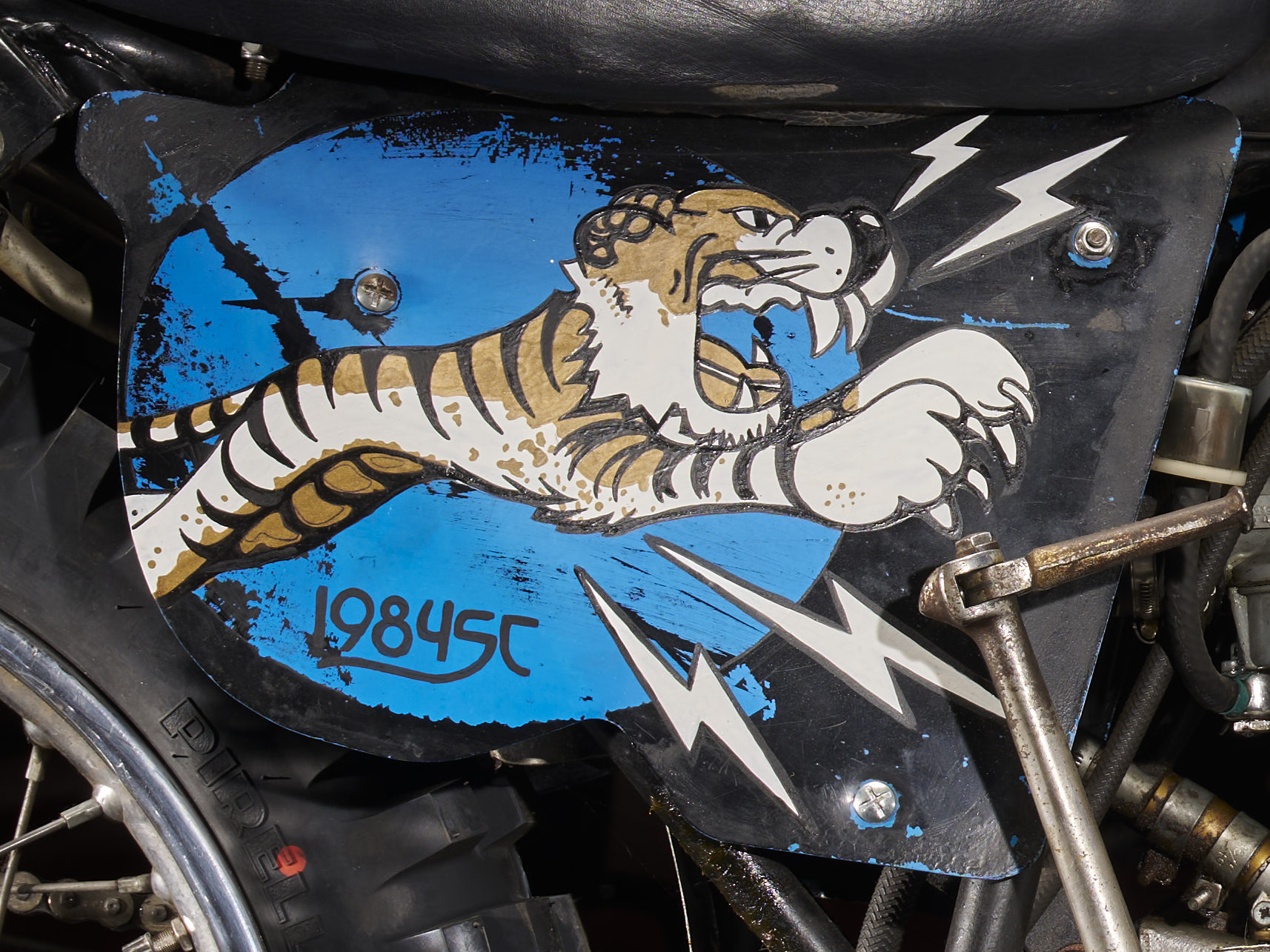
Then there are the side panels, which were hand-painted with the iconic Tiger Triumph badges, giving the bike a personal touch that looks straight out of the 1970s. The result is a vintage-style ‘Sled that’s a ball to ride, with old-school off-road chops and a twin Trumpet soundtrack:
“It’s a very fun bike to ride. The engine is smooth and responsive, and while it’s a bit heavy, you don’t really feel it when riding. The sound of the twin engine is absolutely delightful — a real treat for the senses.”
Anyone who’s ridden a twin off-road knows the unique fun of wrestling a heavier, torque-rich machine through the dirt. We can hardly imagine a bike we’d have more fun ripping through the nearest woods. We look forward to featuring more bikes from this Lyon-based workshop — perhaps the Wassell Bantam next?
Triumph Trophy Trail Desert Sled: Builder Interview
• Please tell us a bit about yourself, your history with motorcycles, and your workshop.
My name is Jonathan, I was born in 1984 in Lyon, France, and our workshop is based in the Lyon area. For the past twelve years, I’ve been restoring and modifying motorcycles, with a particular focus on vintage machines of all types and brands.
It all started with my late father, when I bought a wrecked Honda CB250G and decided to turn it into a scrambler, despite having no mechanical knowledge at the time. The unknown was exciting. We worked together in a garage in the basement of an apartment building, with no electricity, using only headlamps. I learned by making mistakes, feeding my curiosity, and teaching myself along the way.
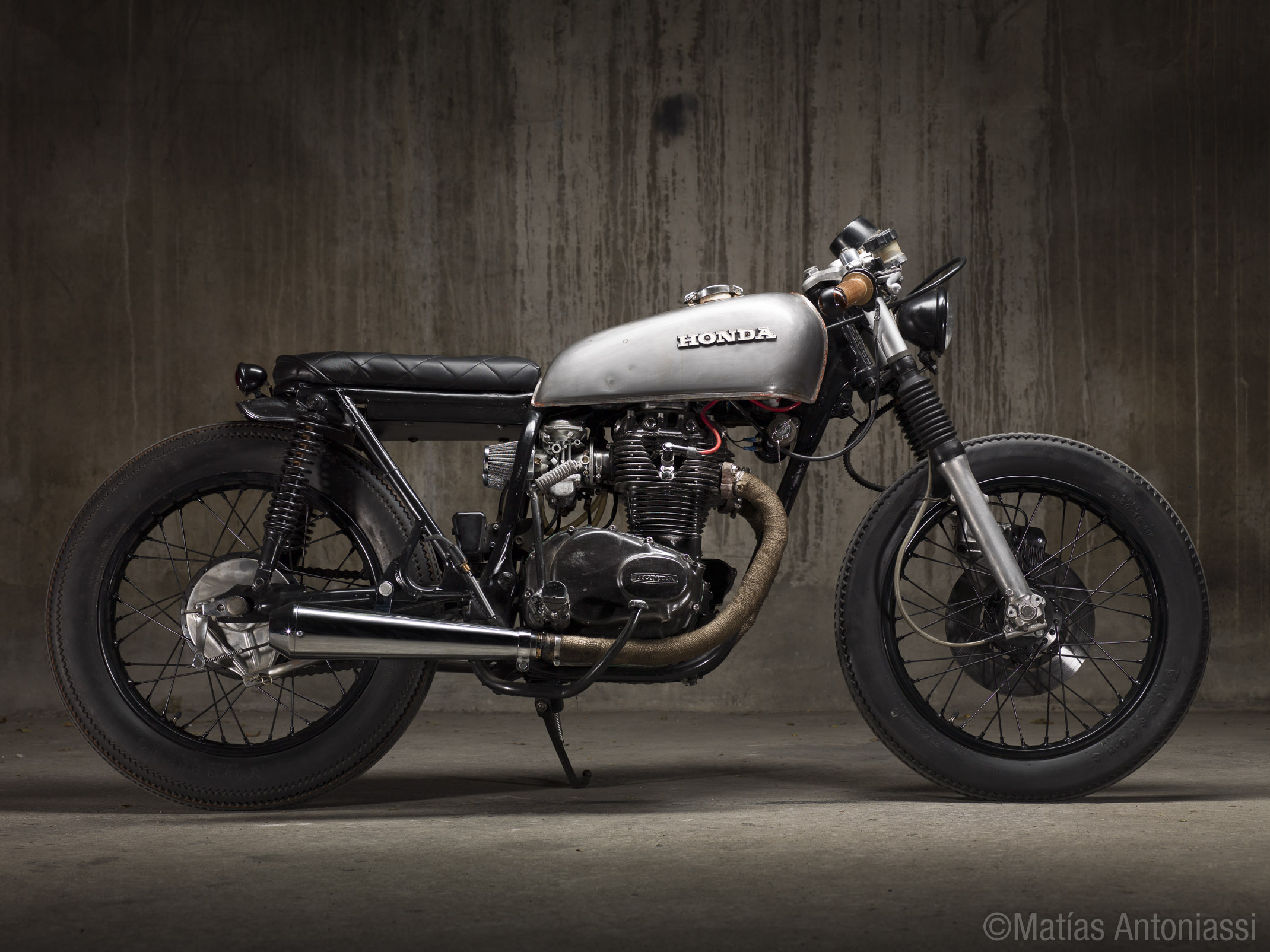
During that period, I began sharing my work with the help of photographer Matias Antoniassi and filmmaker Charles Tardif. At the time, I was working in a completely different field and would only go to the garage in the evenings and on weekends — it was also a great opportunity to spend time with my father.
Later on, I moved and set up a workshop at home, still balancing my day job and my passion. During that time, I met Gilles, a former motorcycle racer who has since passed away, from whom I learned a tremendous amount. We restored bikes for ourselves, friends, and occasional clients — mainly 1970s Japanese machines such as Suzuki GTs, Yamaha RDs, Honda Fours, and Yamaha TZs. My passion kept growing and taking more space in my life, so I eventually decided to dedicate myself to motorcycles full-time.

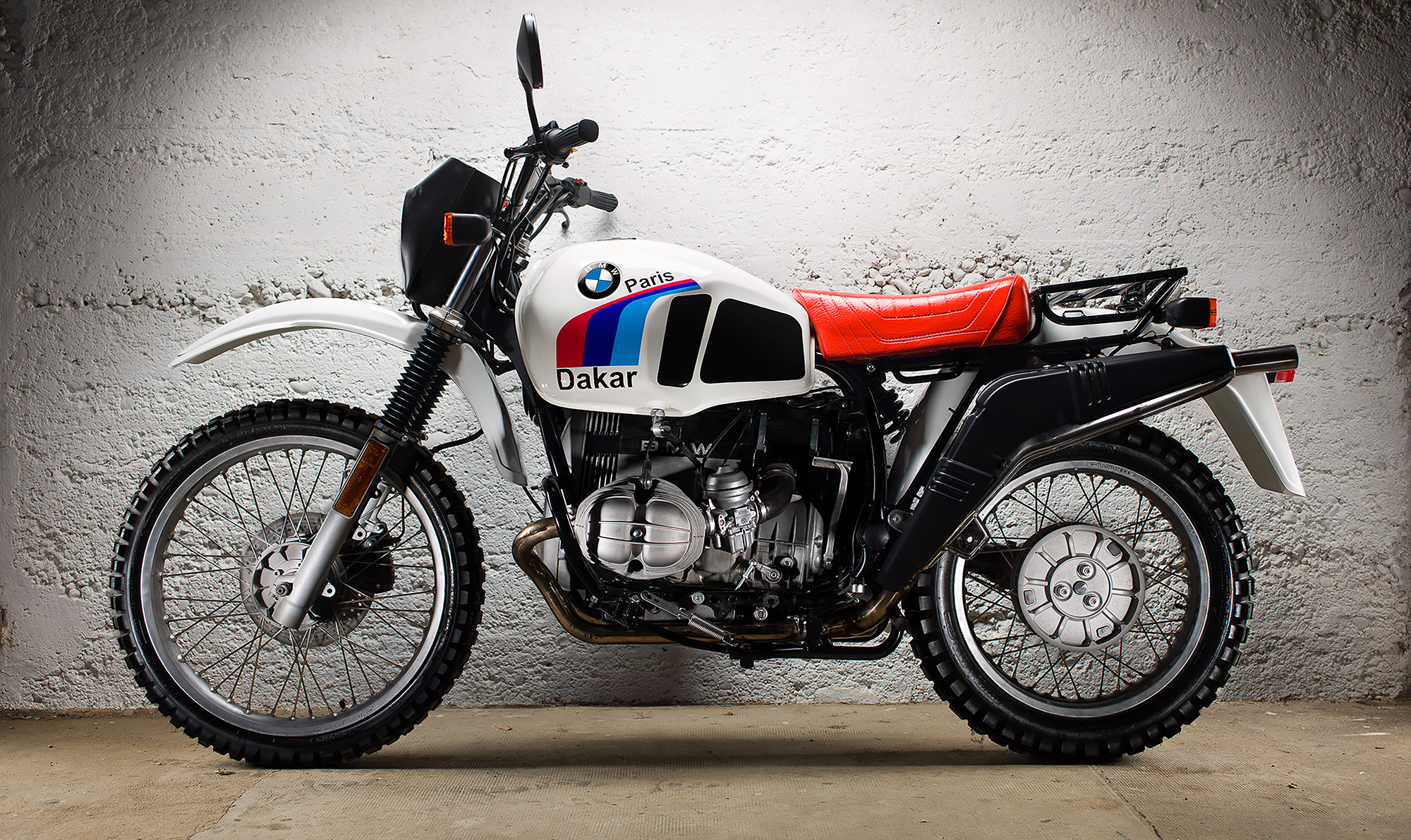
Later, I met Jean, who was deeply into off-road motorcycles. We connected immediately, and he entrusted me with the restoration of several machines, including a very rare Wassell Bantam. This allowed me to learn even more and, above all, to work on exceptional bikes such as Rickman-framed machines, Elsinores, and even a BMW R80GS Dakar.
Today, I’m surrounded by passionate people and experienced veterans, without whom this level of quality would not be possible. Around fifteen motorcycles pass through the workshop each year to be restored, made more reliable, or modified.
Upcoming projects include a 1965 Bultaco Metisse, a 1974 Maico 250 GP, and a BSA B44 Victor Enduro, among others.
• What’s the make, model, and year of the donor bike?
The donor bike is a 1973 Triumph TR5T.
• Why was this bike built?
This was a personal project. The bike was sitting in Belgium when I first came across it, and I was immediately drawn to its lines and overall design.
• What was the design concept and what influenced the build?
The concept was to strip the bike down to its bare essentials, following the rules of the Desert Sled style. The goal was to highlight clean lines, functional simplicity, and the rugged character that defines this type of build.
• What custom work was done to the bike?
This Triumph was a fantastic base to work from: we could preserve its original condition and many of its components, without going through a full restoration, which is usually rare.
All custom work focused on the rider’s interface: new handlebars, levers, and grips. We added aluminum fenders, a single-seat BSA B50MX saddle, electronic ignition, new tires, and rebuilt the front fork. Every component was cleaned and lubricated just enough to keep it running, preserving its original patina.
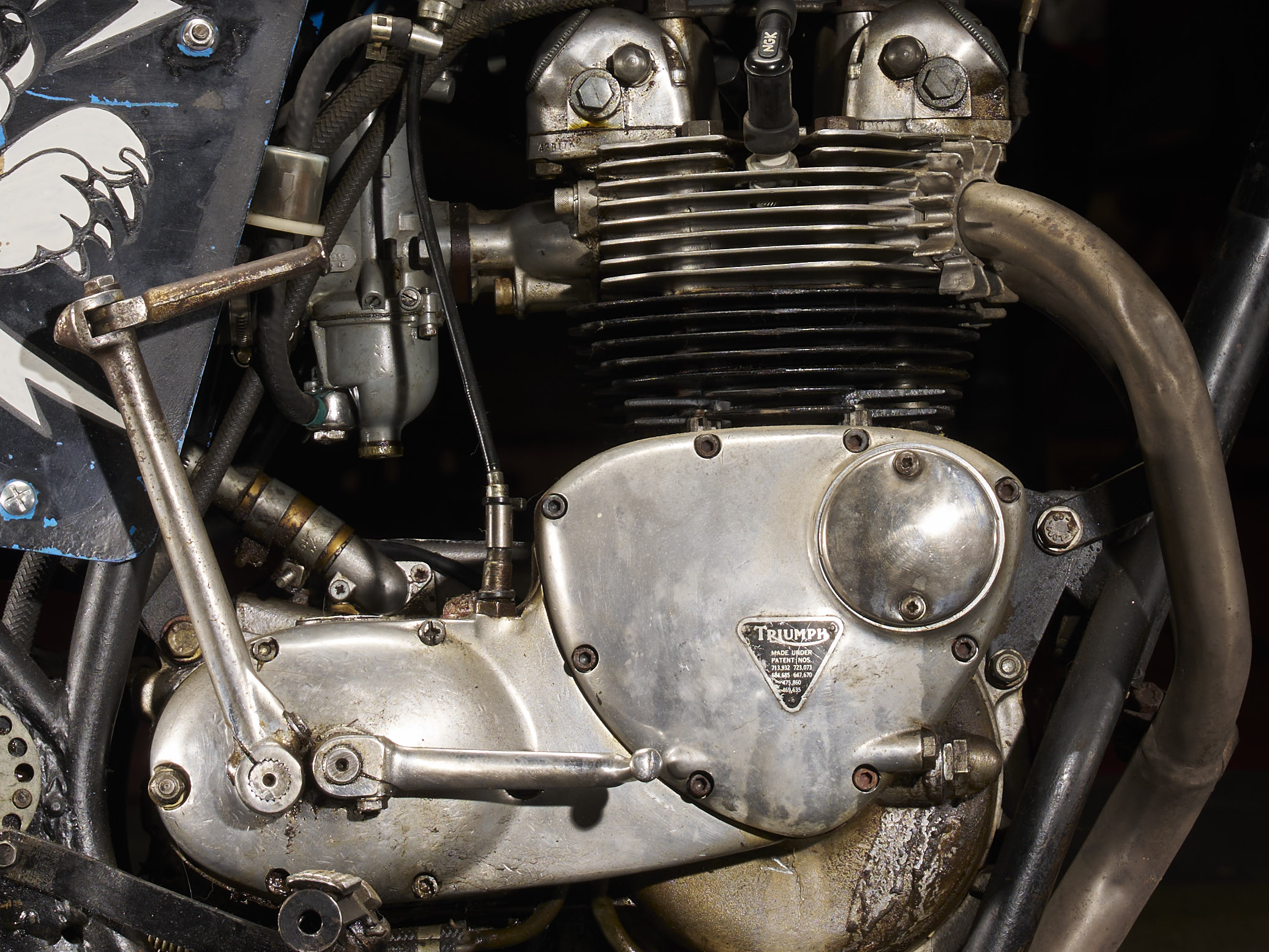
The side panels were hand-painted, including the iconic Tiger Triumph badges, adding a subtle personal touch while respecting the bike’s character.
Whenever possible, we aim to keep our personal bikes in their original condition. Pierre — who works with me — and I both ride 1974 Honda CR250M Elsinore motorcycles, maintaining that same spirit.
• Does the bike have a nickname?
THE TIGER! — a name that reflects its sharper, more aggressive character compared to the Triumph T120R Bonneville we previously modified.
• Any idea of horsepower, weight, and/or performance numbers?
Approximately 30 HP and a weight of 145 kg.
• Can you tell us what it’s like to ride this bike?
It’s a very fun bike to ride. The engine is smooth and responsive, and while it’s a bit heavy, you don’t really feel it when riding. The sound of the twin engine is absolutely delightful — a real treat for the senses.
• Was there anything done during this build that you are particularly proud of?
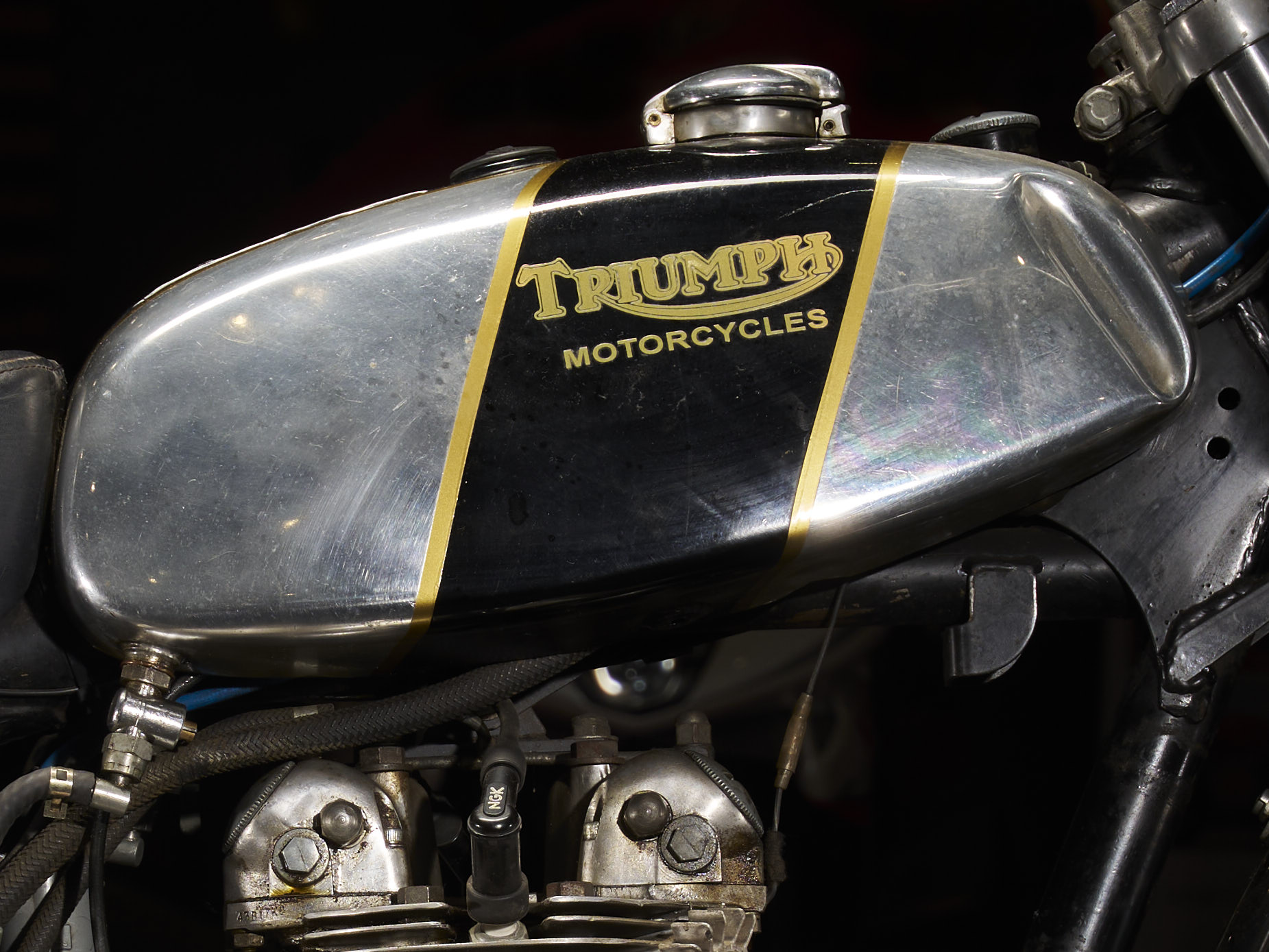
We focused on keeping things simple, avoiding unnecessary modifications, and preserving the classic English charm. I’m particularly proud of the use of quality components, like the aluminum fuel tank, and the overall balance of the bike.
• Is there anyone you’d like to thank?
I’d like to thank everyone who supports me on a daily basis and puts their trust in me — my clients, some of whom have become friends, my family, my friends… and of course, you!
Follow the Builder
Web: www.1984sc.com
Instagram: @1984sc
Facebook: 1984sc
Photography / Blueprint: @matiasantoniassi


That’s not a Wassel bantam