
 From Davmomoto: 1955 Norton Dominator Meets 1974 Kawasaki S3 Mach II…
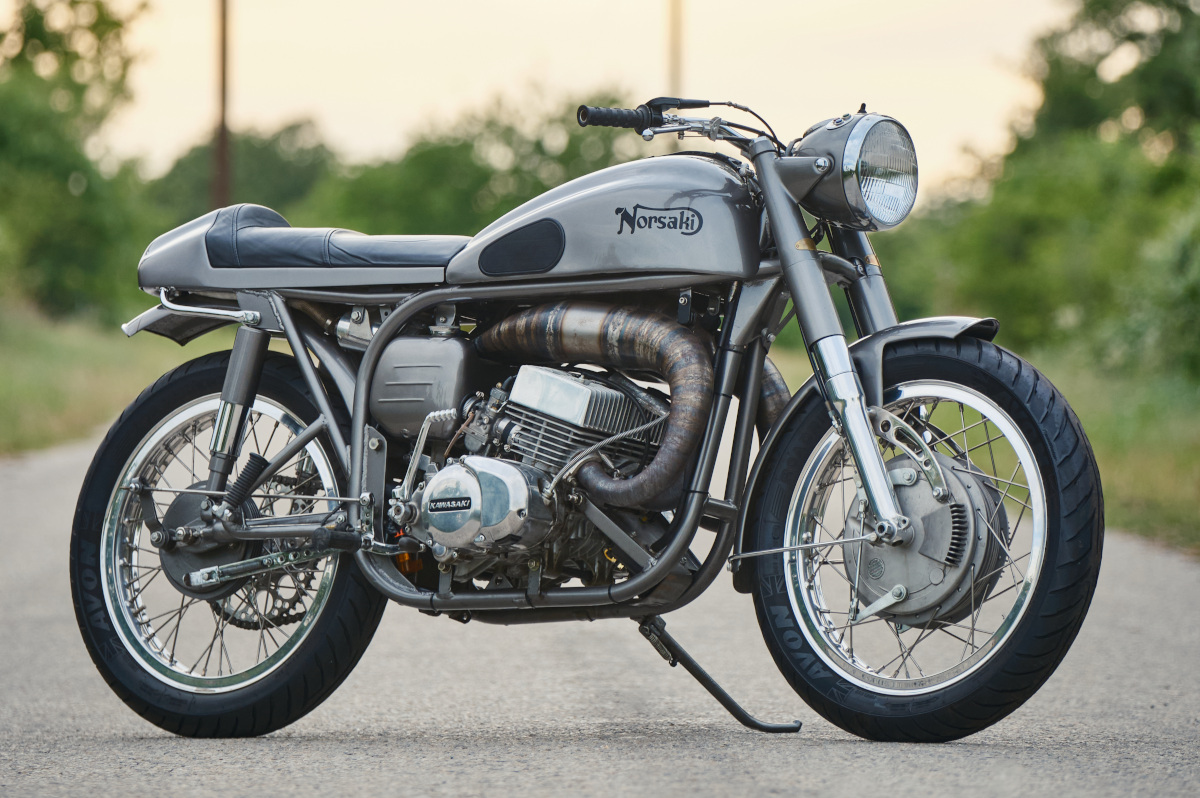
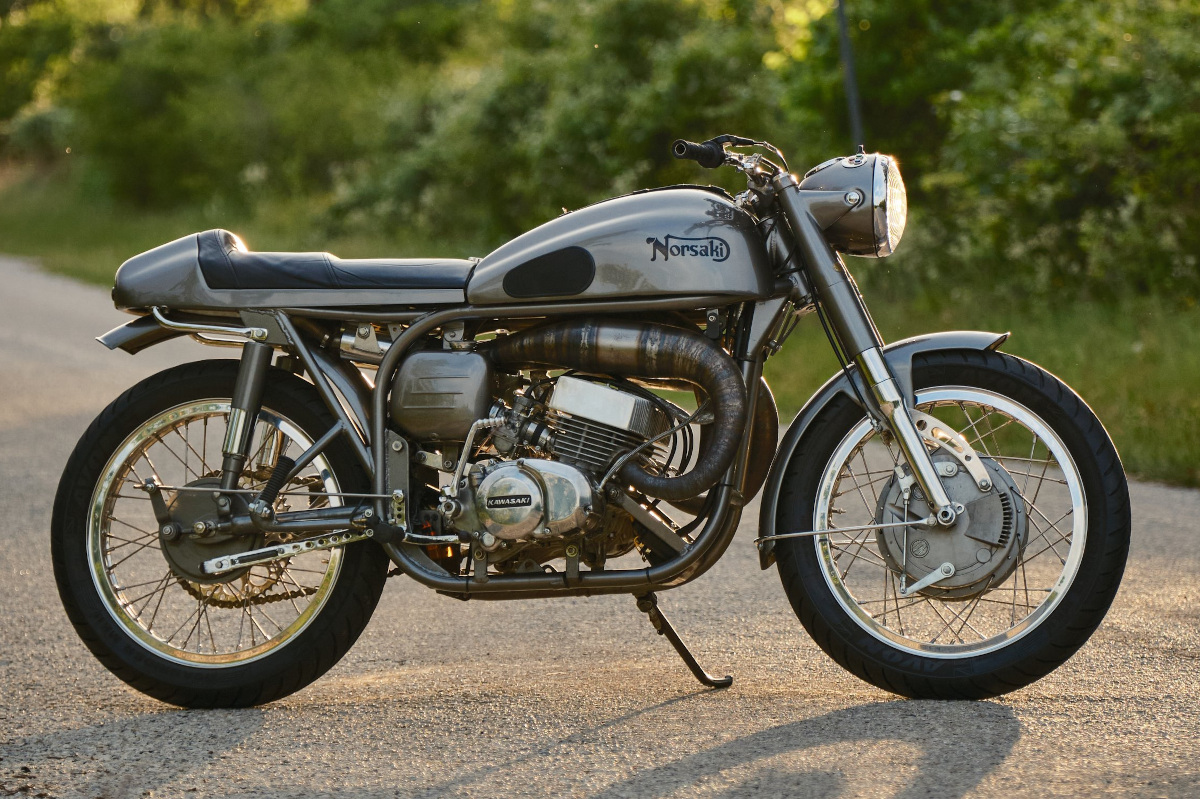
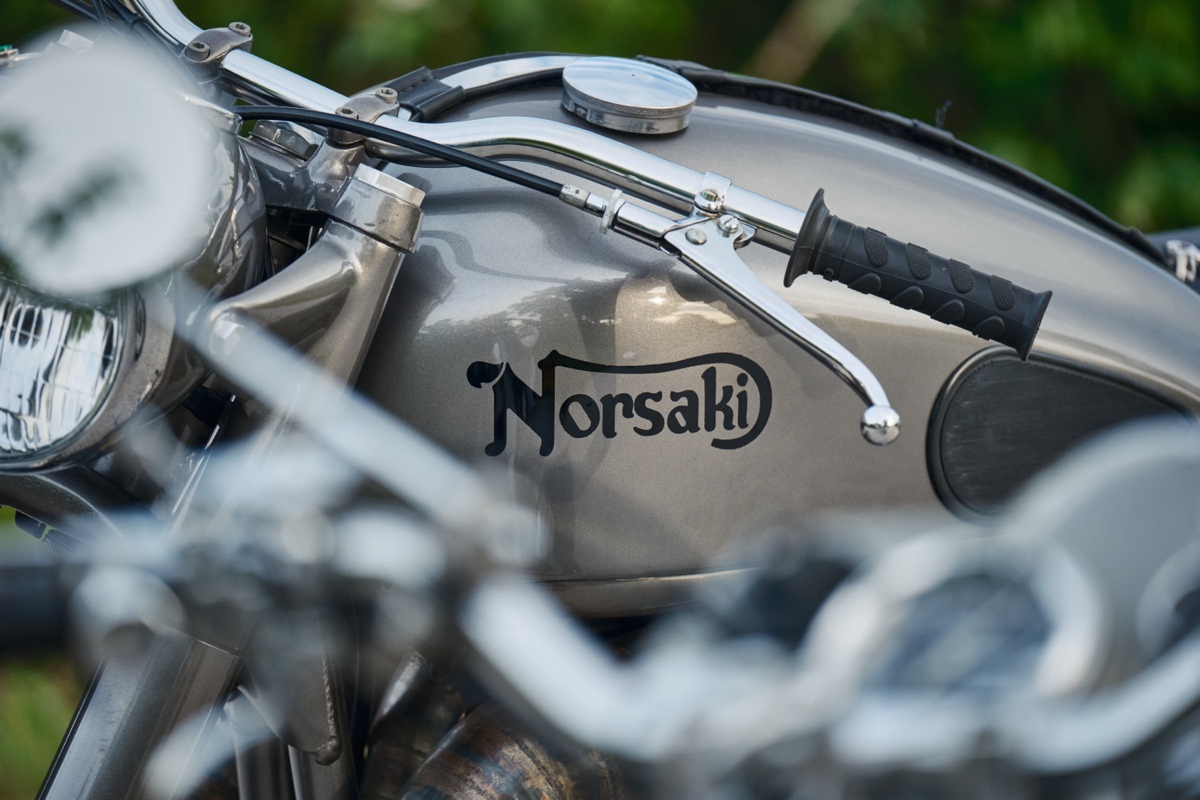
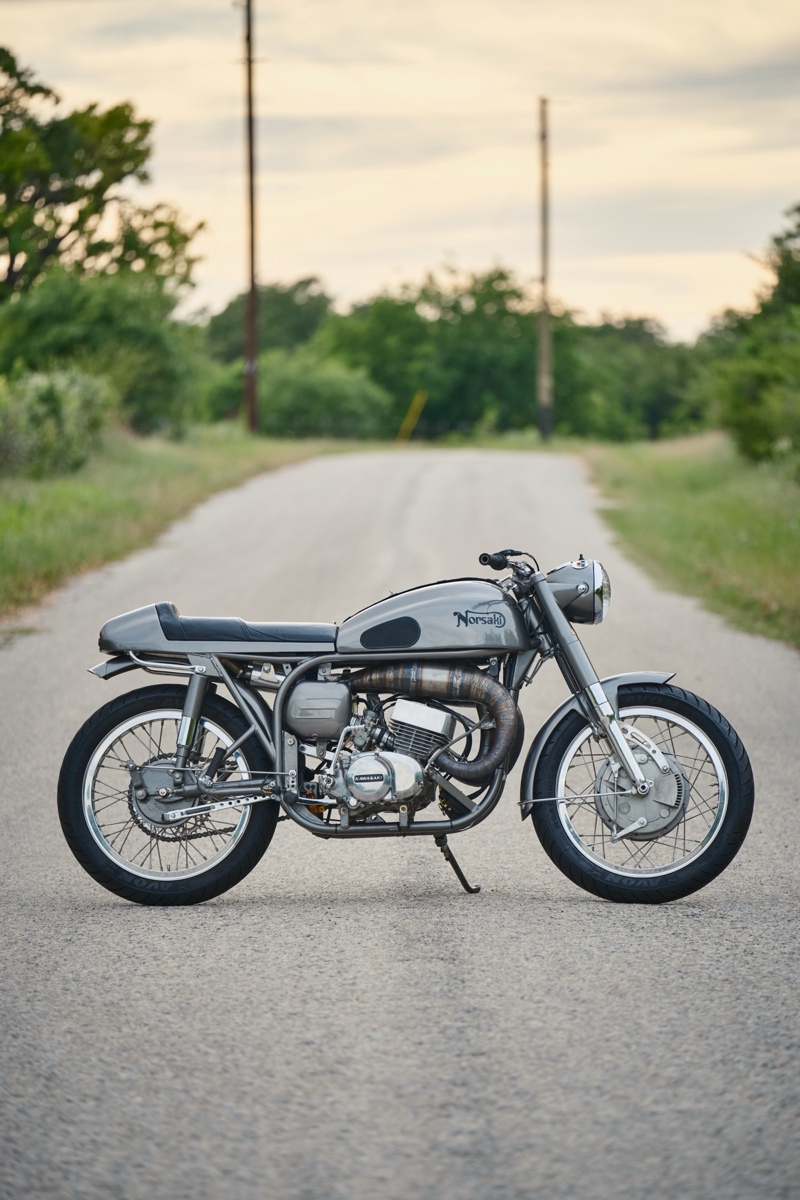
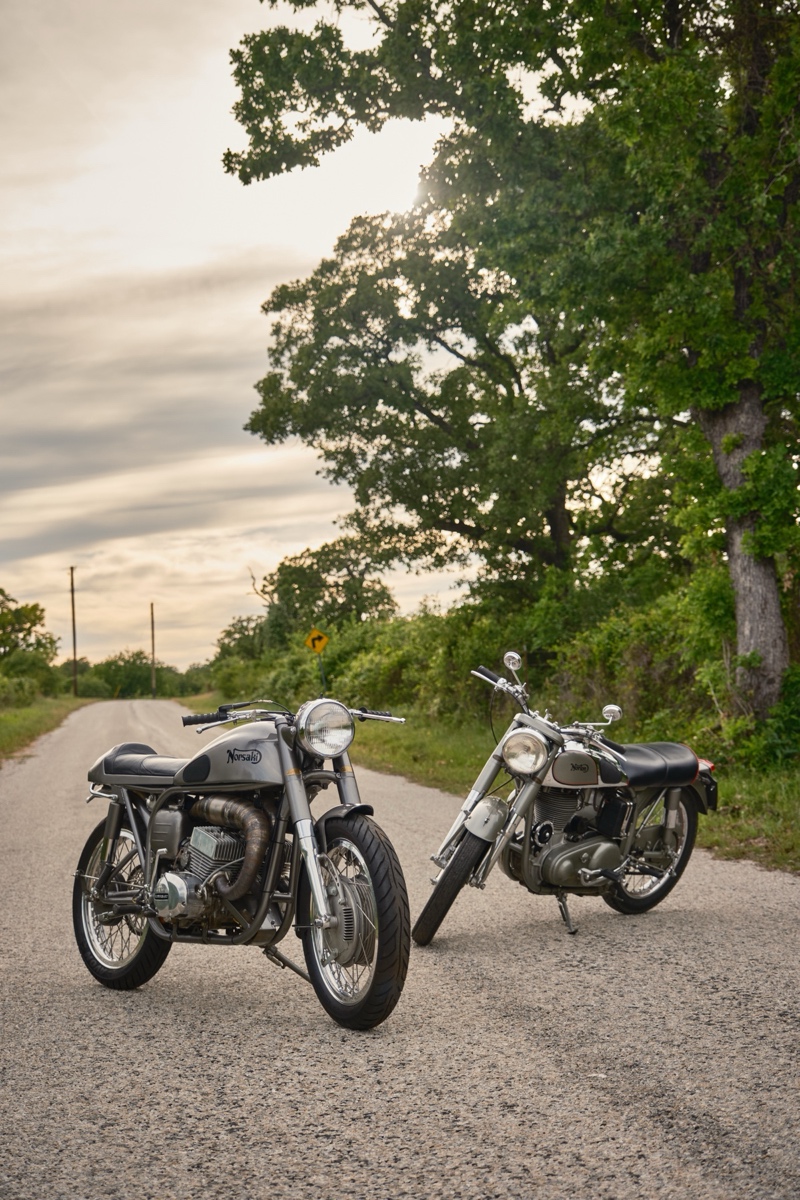
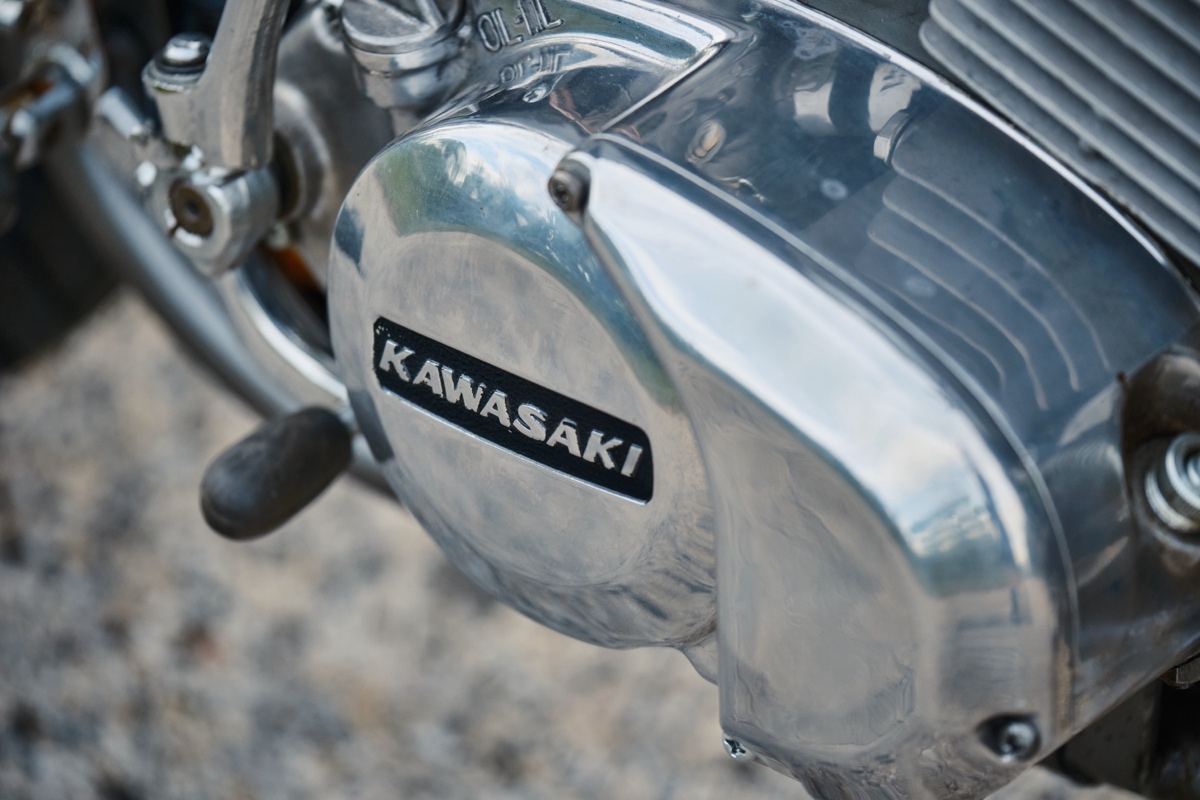
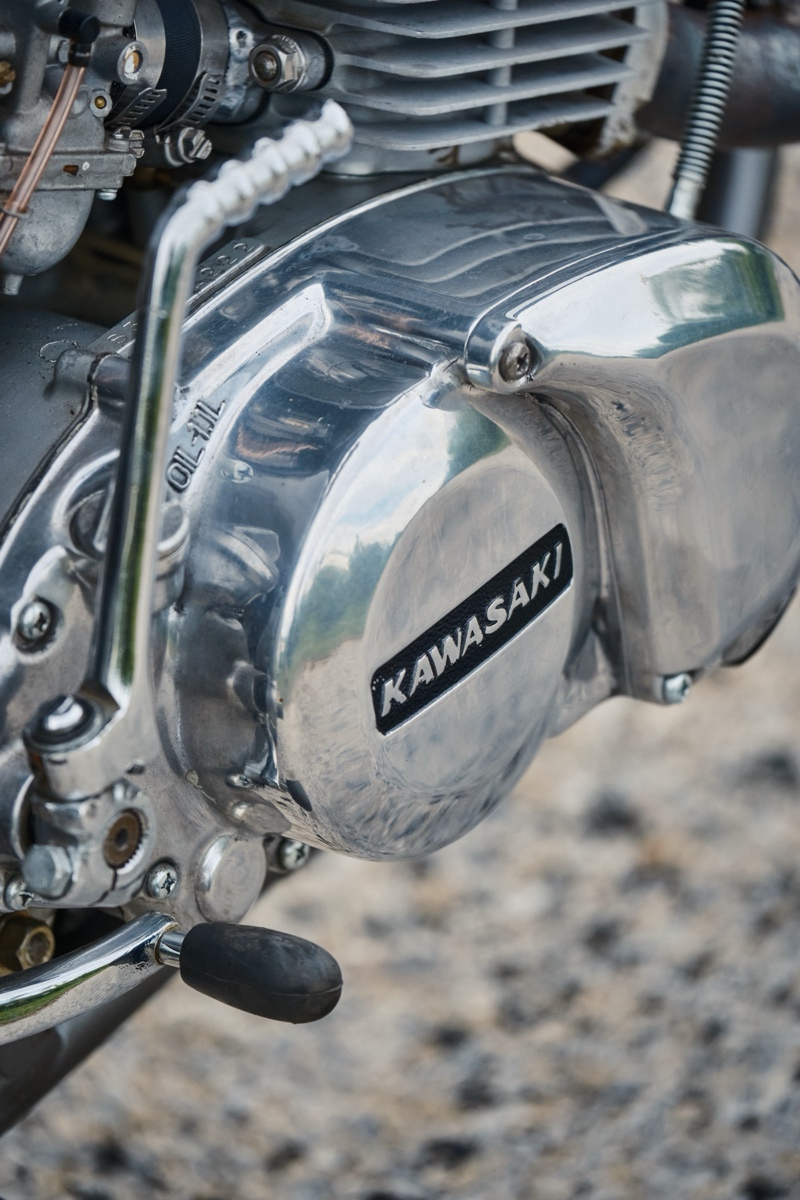
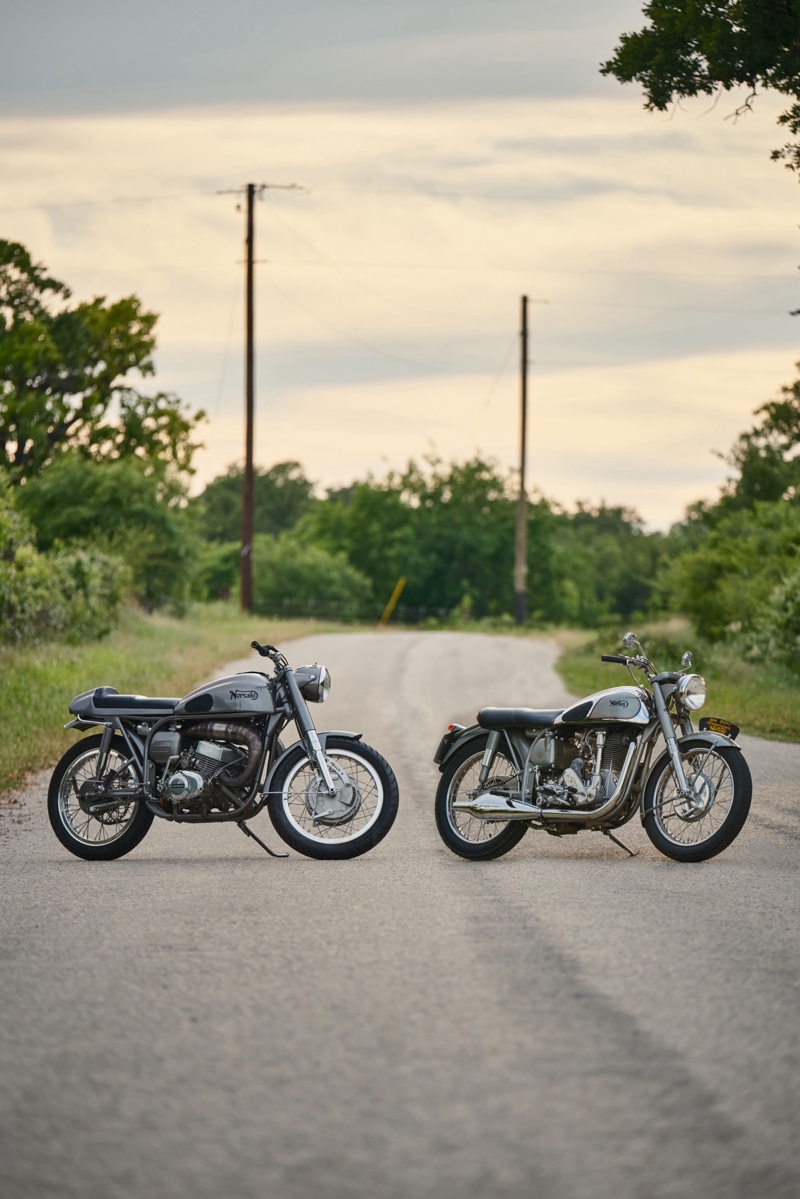
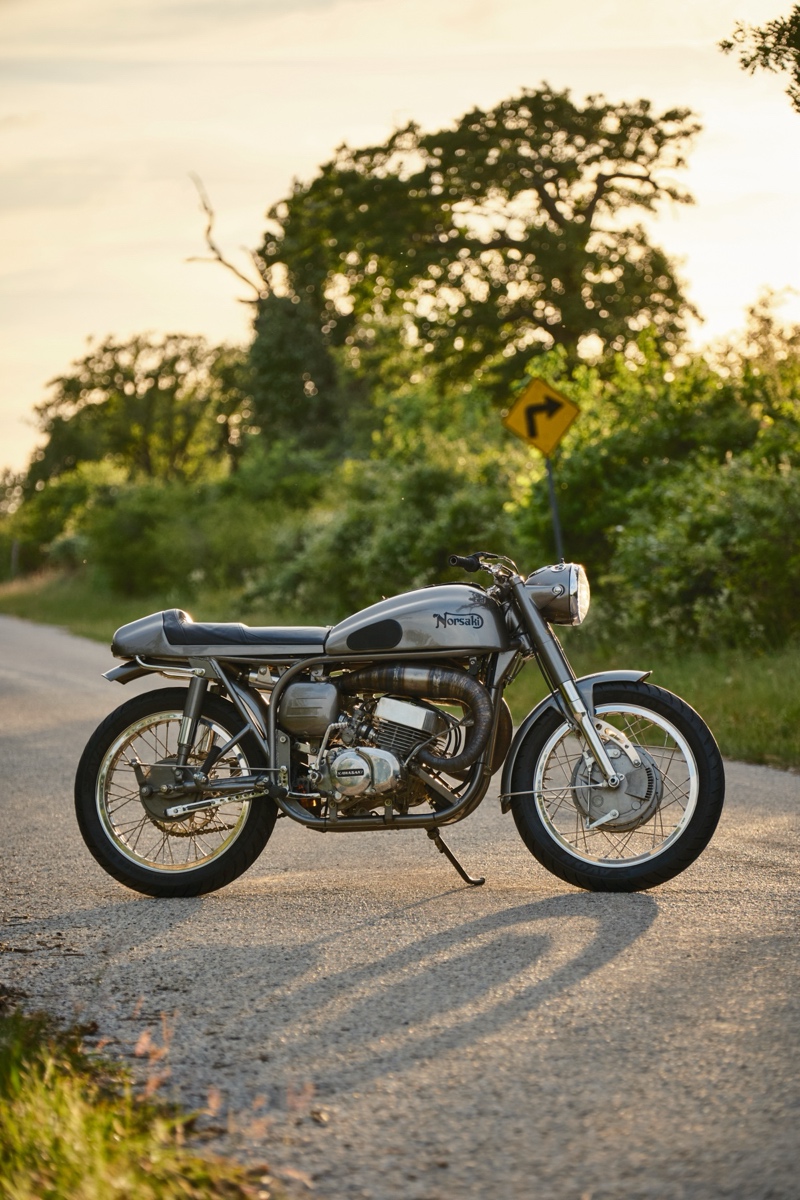
Yes, you can believe your eyes. What you see before you is a 1955 Norton Dominator with a featherbed frame mated to a 1974 Kawasaki Mach II 400cc two-stroke triple, decked out with a custom bodywork. It’s the work of David Morales of Davmomoto, who spent his teen years building hot rods and custom vans in 1970s West Texas. Today, David creates big sculptures, boutique electronics, and custom bikes both big and small.
 David is a great admirer of Japanese art and culture. In fact, a story attributed to Japan, which he read as a child, has come to define his artistic and bike-building approach:
“A man came to an artist’s studio and asked him to paint a particular fish. The artist agreed, telling the man to return in one year to pick up his work. At the end of the year, the man returned to the studio to claim his painting. The artist sat him down, went to his easel, and proceeded to flawlessly and swiftly paint the requested fish in a matter of minutes. The man was amazed but also annoyed: ‘If you could have done this in just a few minutes, why did you make me wait a whole year for it?’ The artist said nothing, but opened a cabinet door, and a thousand paintings of the fish fell out.”
In the case of the “Norsaki,” the client was Richard Aspery, an avid rider and collector who’d been amassing parts for the build for years. He wanted a bike for his annual trips to the stellar riding roads of the Texas Hill Country.
“Despite the crazy combination of frame and motor, the goal was to keep some of the original elegance of a 1950’s Norton, and try to break some rules with the rest.” -David
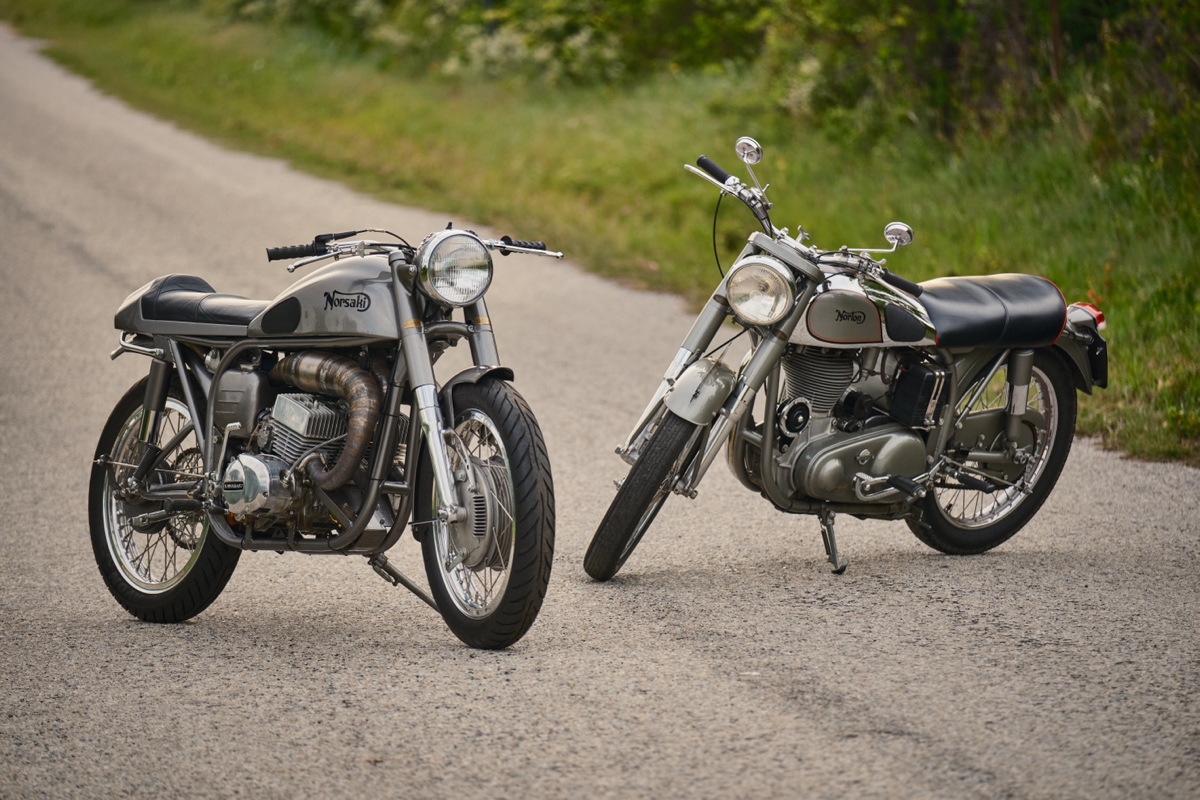
When we saw “Norsaki” at the 2026 Handbuilt Show, we had to learn more. As you know, the legendary featherbed frame was ahead of its time from a handling perspective, and thus became popular racers who mounted Triumph, BSA, and even Vincent engines to create Triton, Tribsa, and Norvin hybrids.
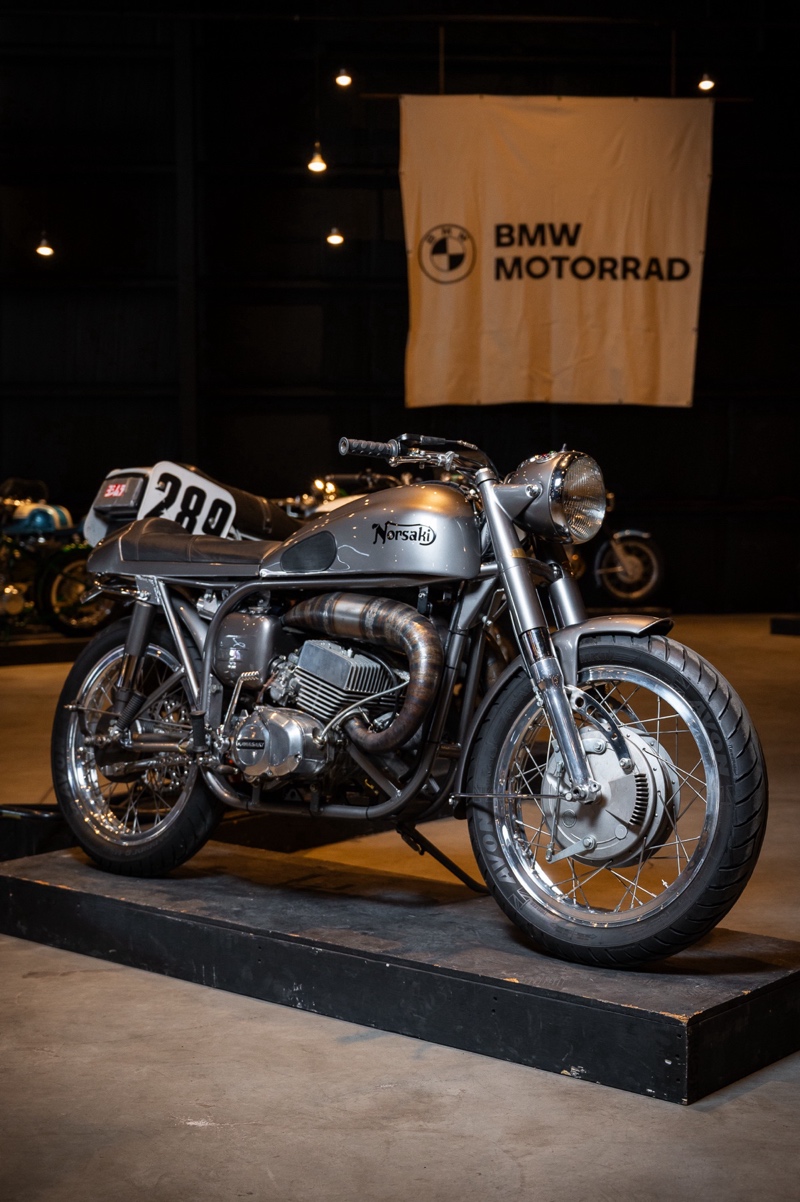
What we didn’t know was that there was a racing precedent for a two-stroke triple in Norton featherbed frame, which helped inspire the impressive pipes tucked under the frame.
“Richard started imagining a bike he could take for his annual trips to the Texas Hill Country, with the handling of a Norton featherbed and an engine better suited for digging out of the corners. Remembering that an Isle of Man TT racer with a similar configuration of engine and frame had to drop out of the 1969 race due to exhaust pipes dragging through the corners, Richard came up with the notion to fit them inside the frame.” -David
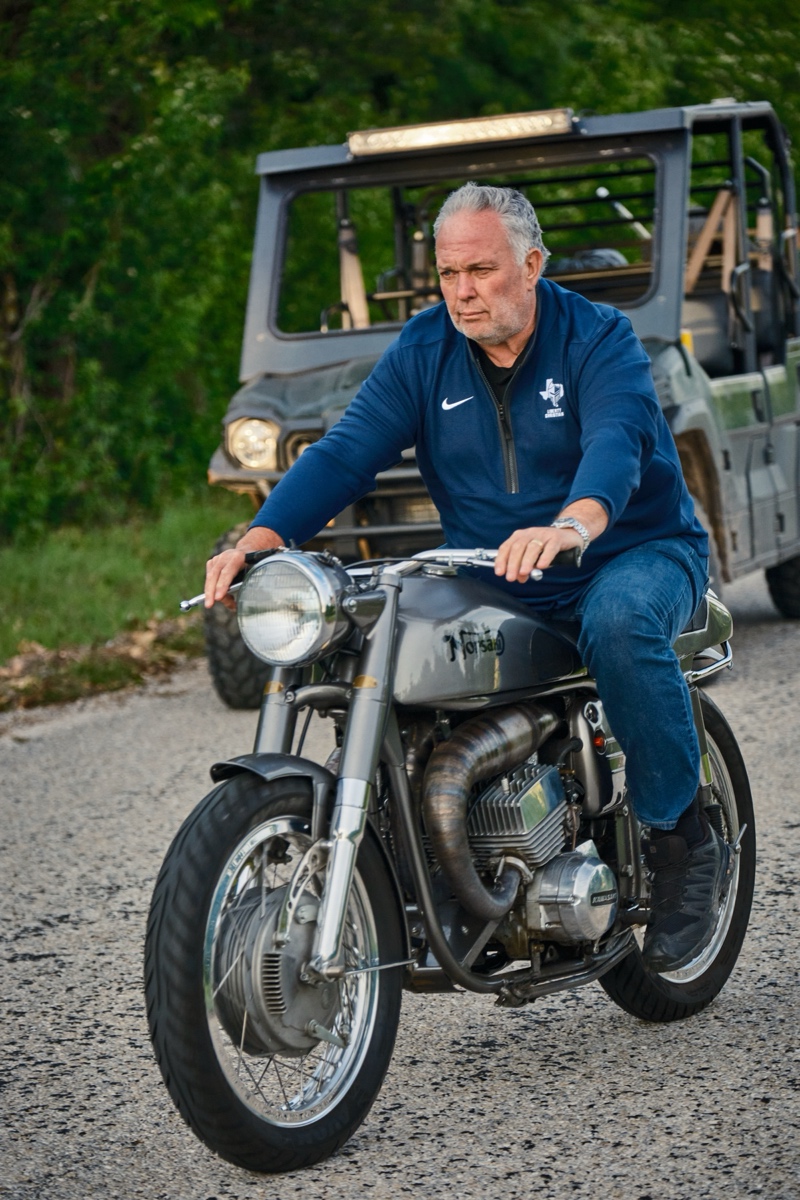
David has provided an in-depth and well-written account of the rest of the build, so we’re going to let him tell you about the bike directly. The indoor shots of the bike come from our Handbuilt photographer Kody Melton, while the outdoor shots are from Taylor Collins.
Norsaki: In the Builder’s Words…
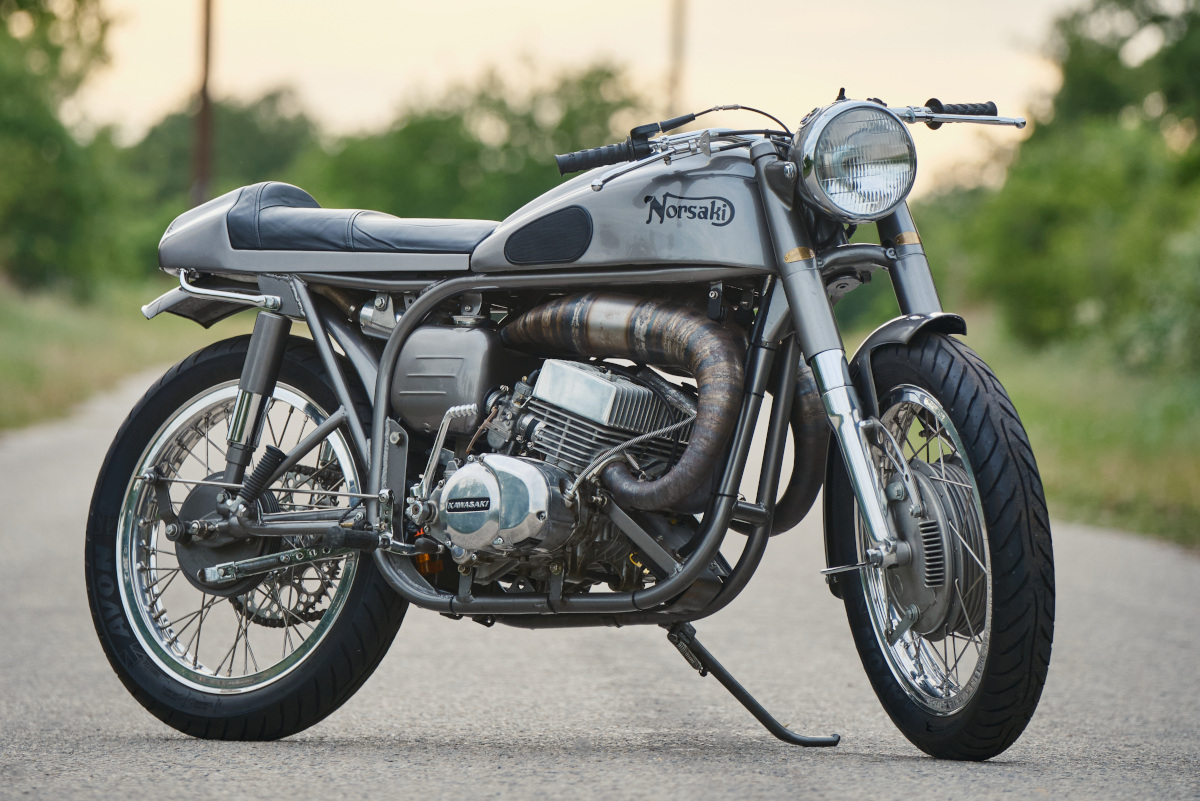
The story of this bike starts and ends with avid motorcycle rider and collector, Richard Aspery. A huge fan of bikes of all sorts, but with an obvious love for the fast and British ones. A good deal of the parts on the Norsaki were collected over many years, including the frame, tank, front wheel hub, and engine.
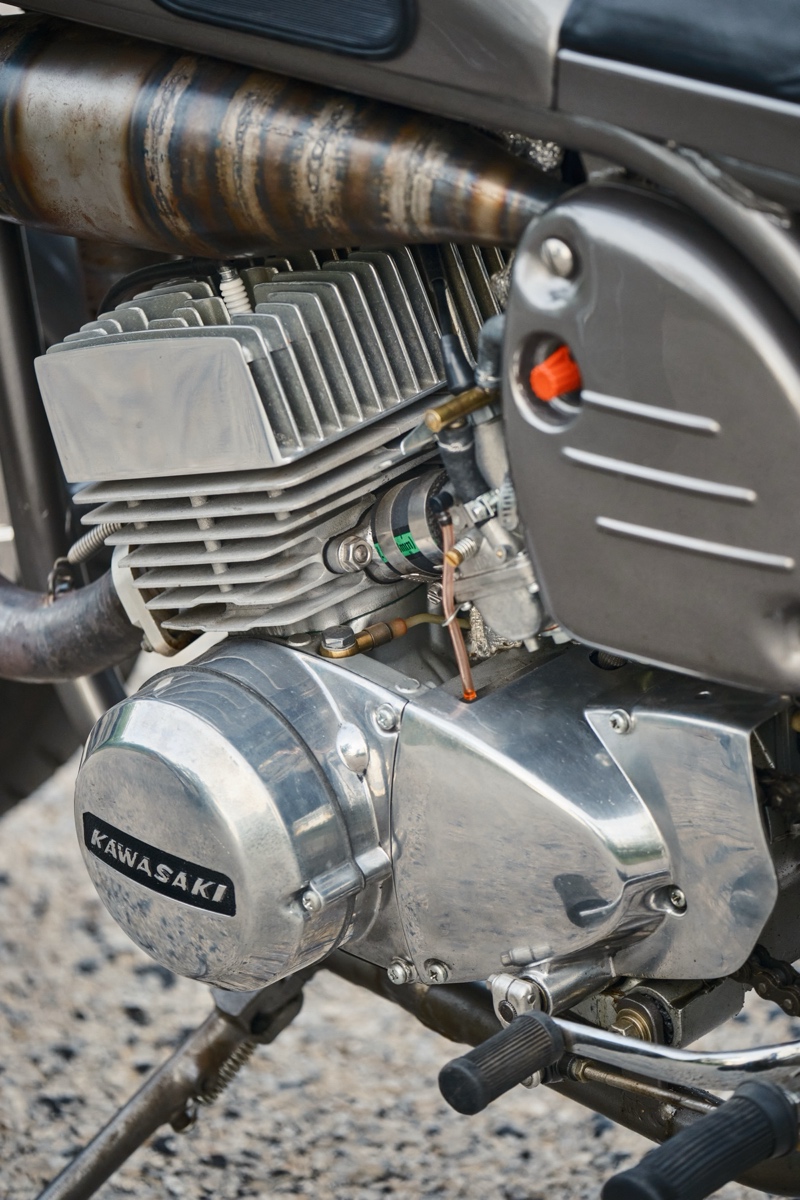
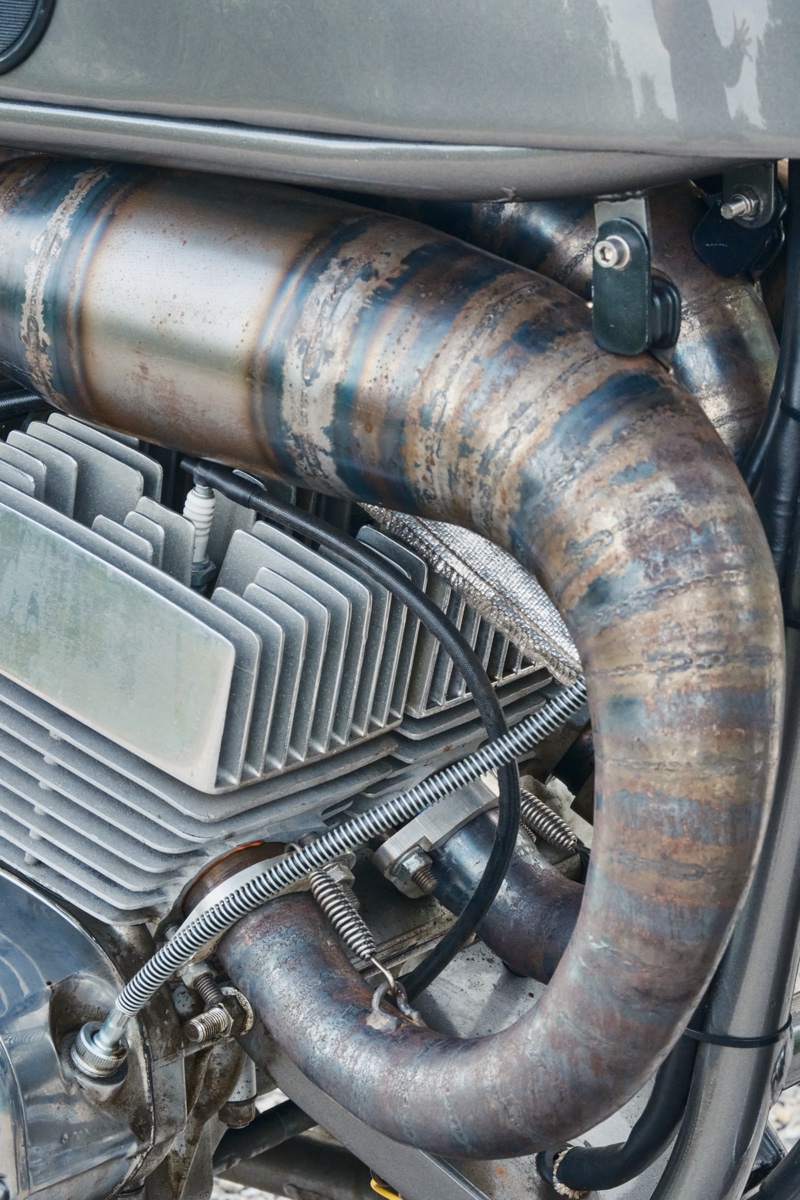
A friend, James Simonelli, alerted Richard to the Kawasaki Mach ll engine being sold by engine builder Bob Mazolli of New Jersey. After securing the engine, Richard started imagining a bike he could take for his annual trips to the Texas Hill Country, with the handling of a Norton featherbed, and an engine better suited for digging out of the corners. Remembering that an Isle of Man TT racer with a similar configuration of engine and frame had to drop out of the 1969 race due to exhaust pipes dragging through the corners, Richard came up with the notion to fit them inside the frame.
When I first learned of the project, James had fabricated and lined up the motor mounts, and the engine was already secured in place, with an impressive amount of space available above the engine. I was called in to do the body kit and some frame changes.
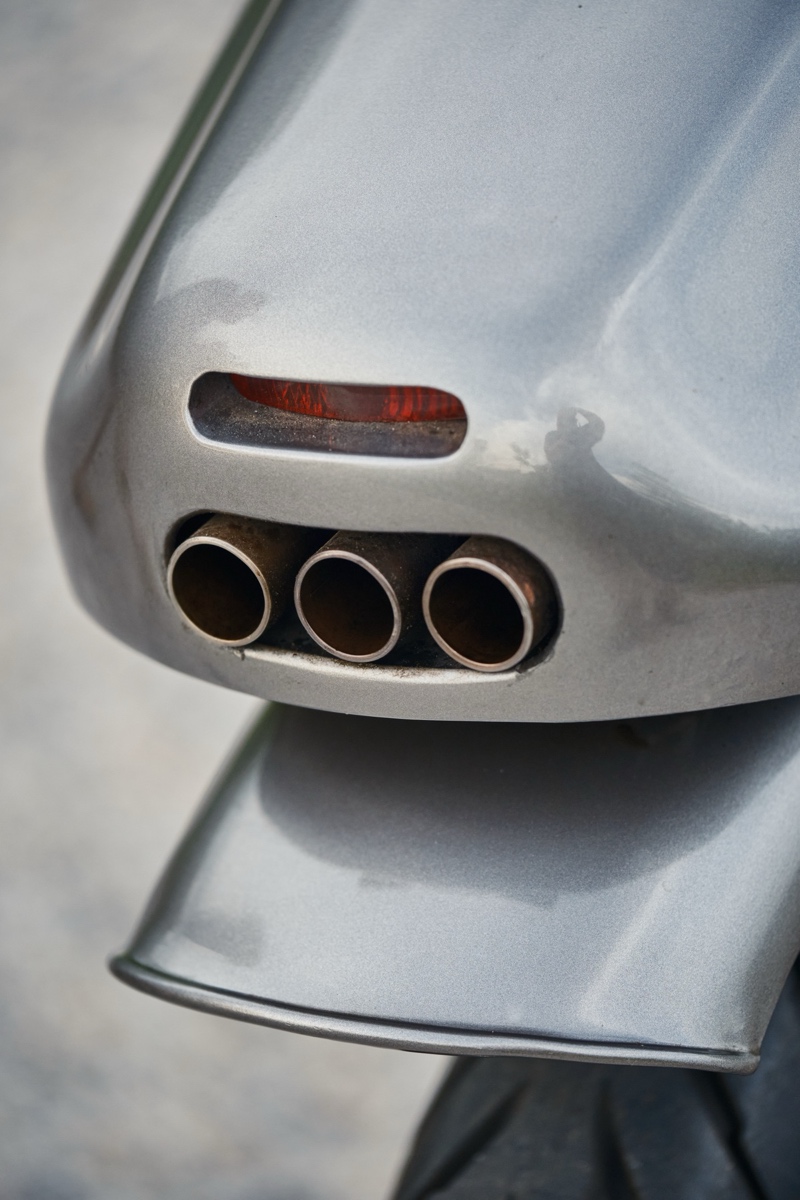
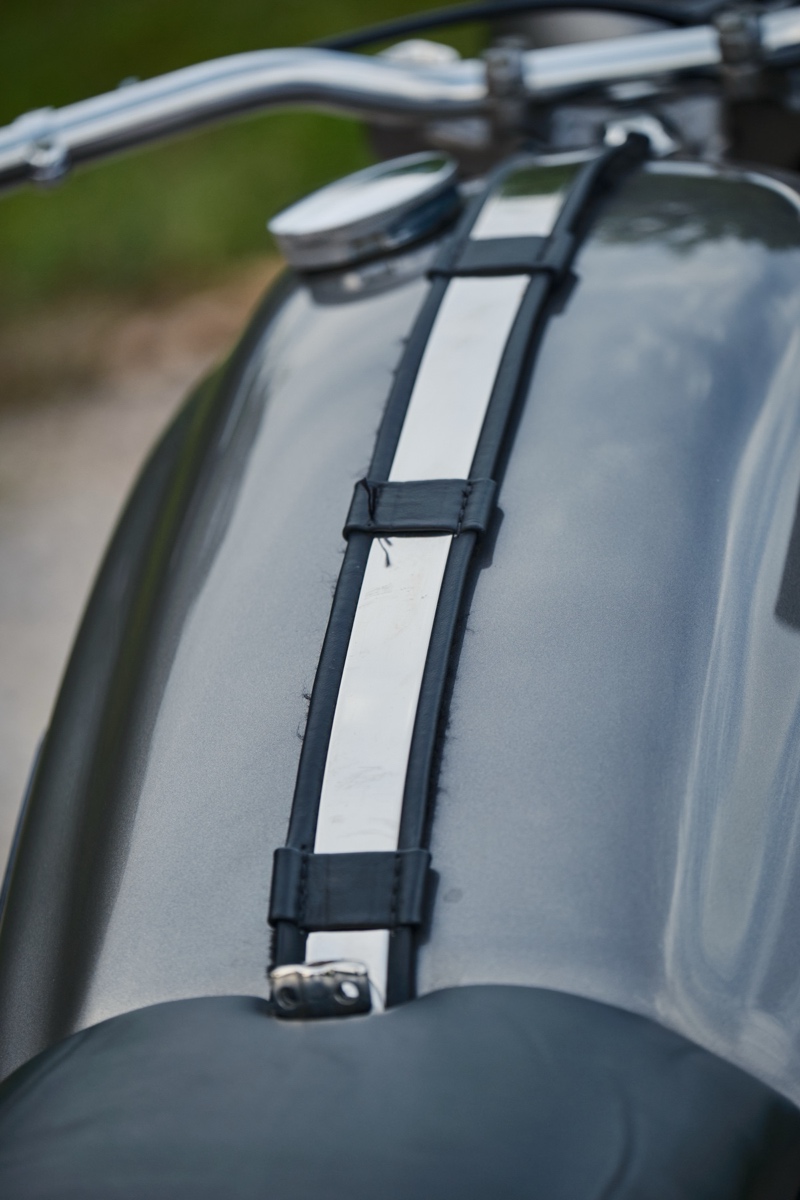
Besides the tank, frame, and headlight shell that he favors, Richard suggested other styling cues such as the rear cover for the seat and the exhaust stingers exiting through its rear, the lambskin padded tank strap, the two-tiered seat cushion, and the classic Norton gray paint, and the largest challenge, the faux air box cover.
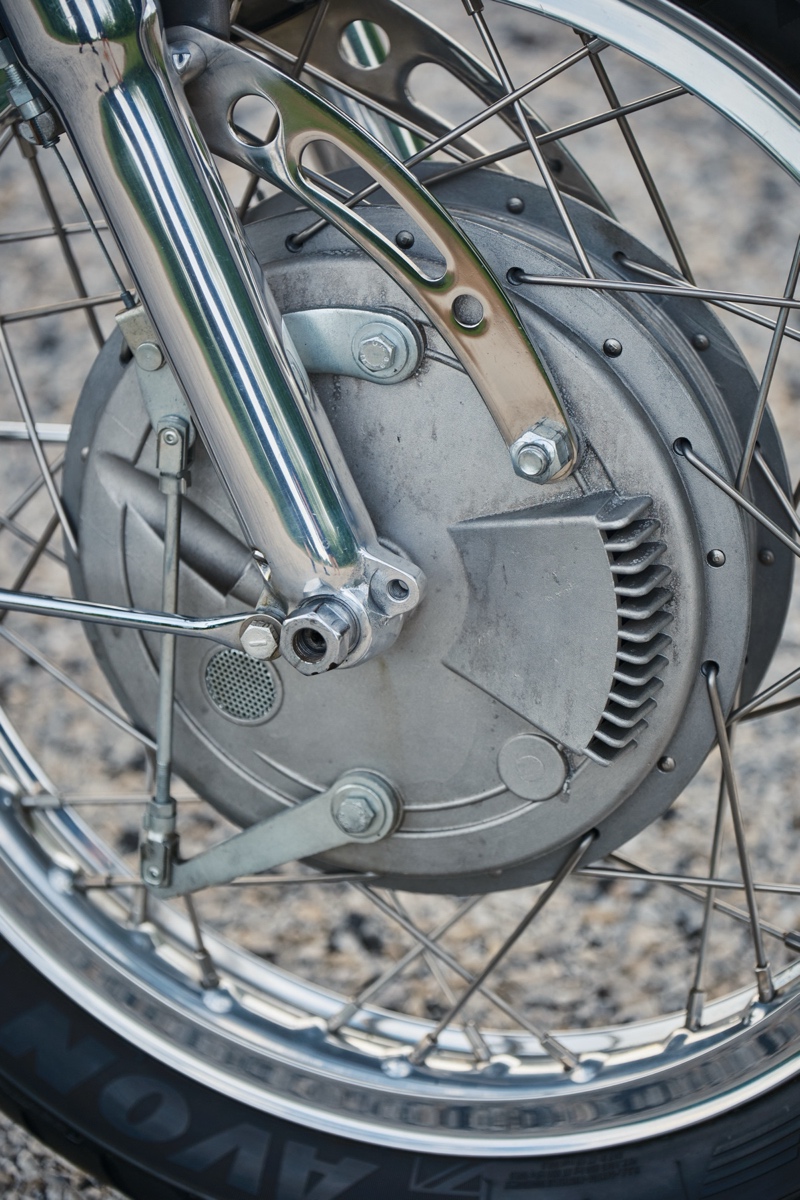
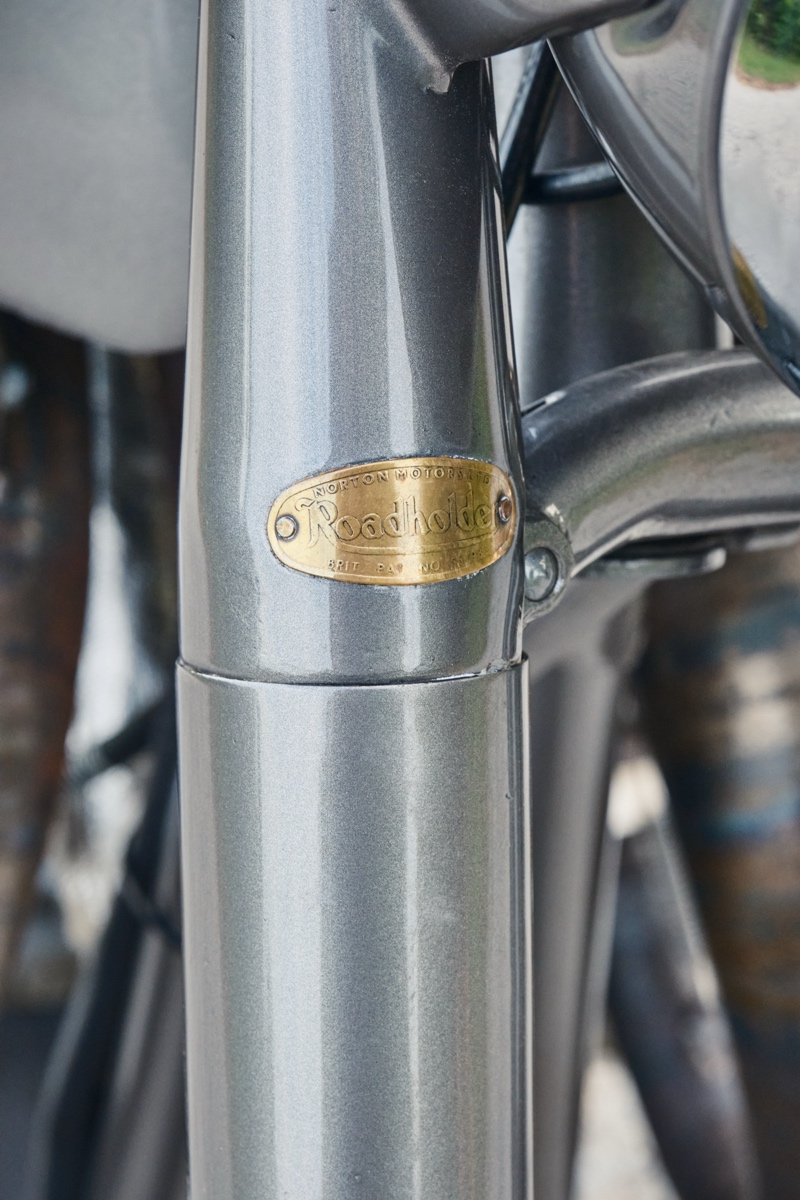
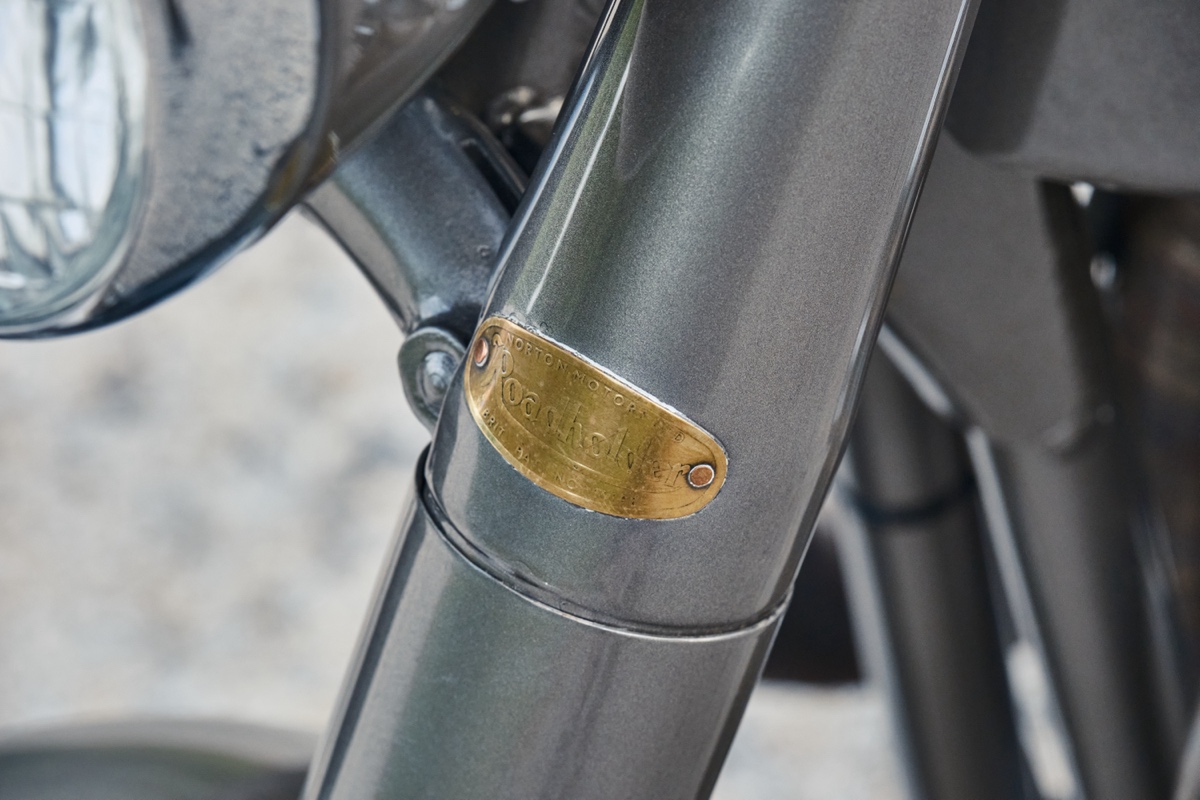
The original Norton Roadholder forks were given Costentino internals, which use a modern Showa cartridge for a better ride. The front brake is a Grimeca Richard collected years ago. The rear wheel hub and brake are from a Vincent Black Lightning, a super rare bike of which only 32 were said to have been built.
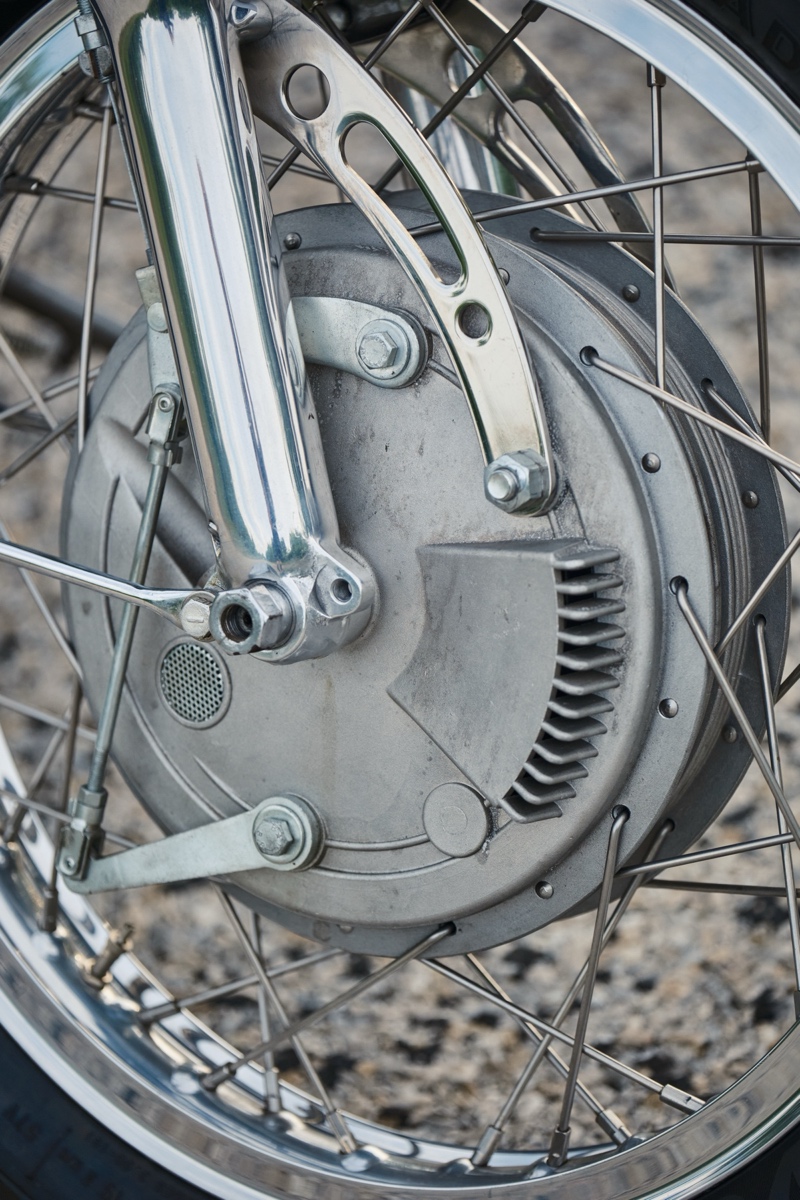
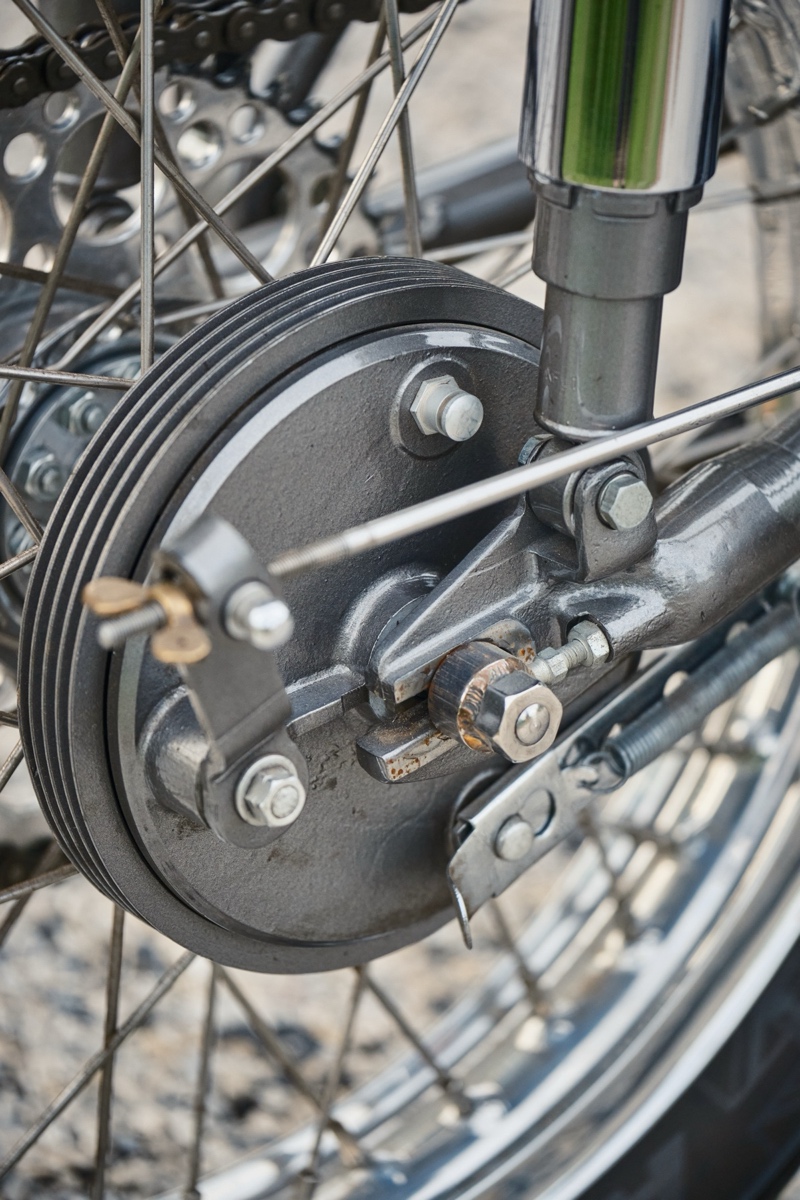
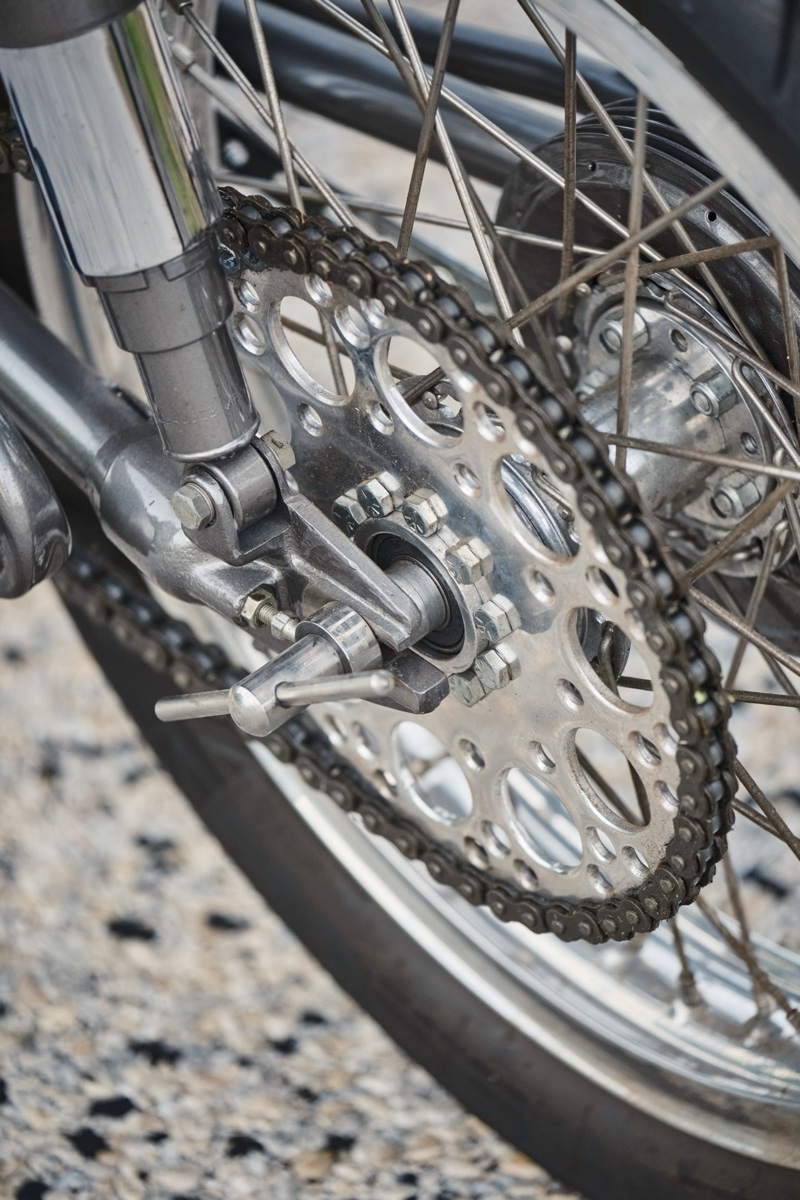
Big D Cycle in Dallas built the suspension, brakes, foot and hand controls, and supplied the rare hub. Kennie Buchanan built the wheels using the famed Buchanan stainless spokes and Akront rims, and the wheel set was finished off with modern Avon rubber. The paint was done by Jason Small, of Dallas, Texas. The tank logo was created by local pinstripe legend, Alton Gillespie.
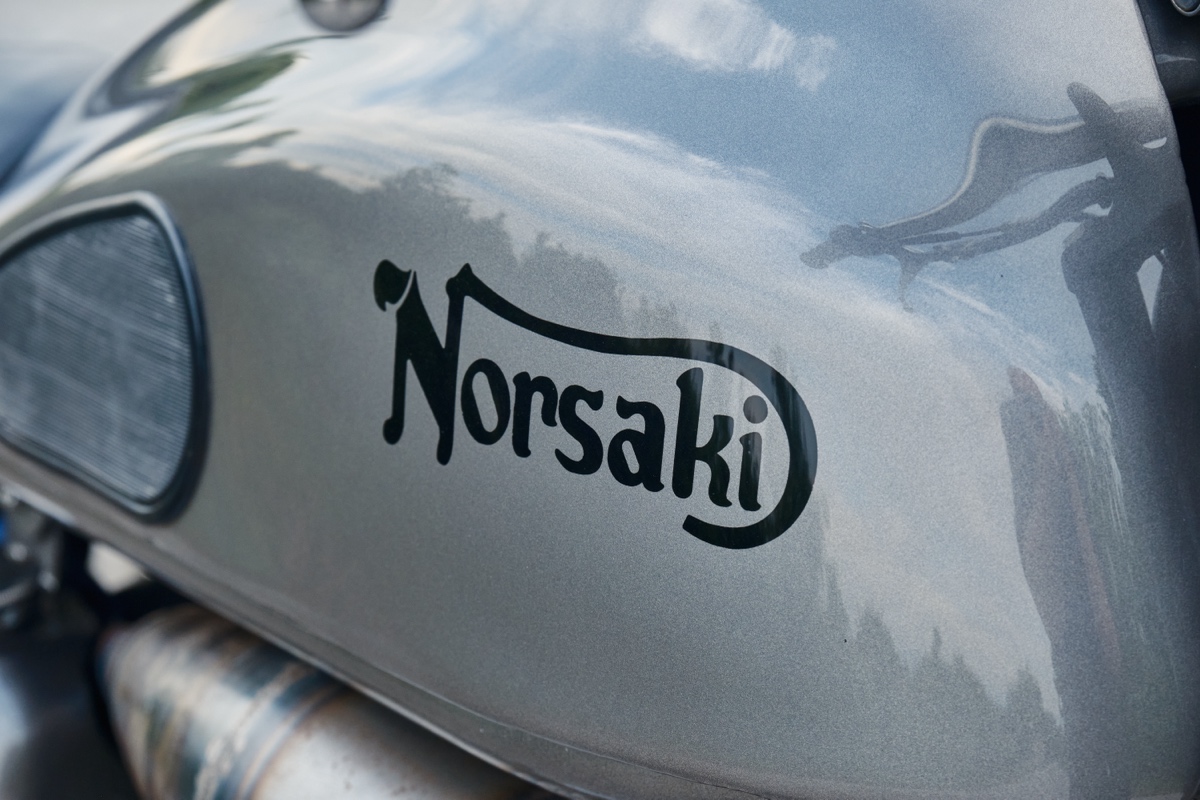
The tank was raised an inch to allow for a custom heat shield to be mounted beneath it. Normally, the tank is fitted to the frame in such a way that the frame rails are all but covered by the tank bottom edges hanging over them. This fitment makes for a very secure mounting.
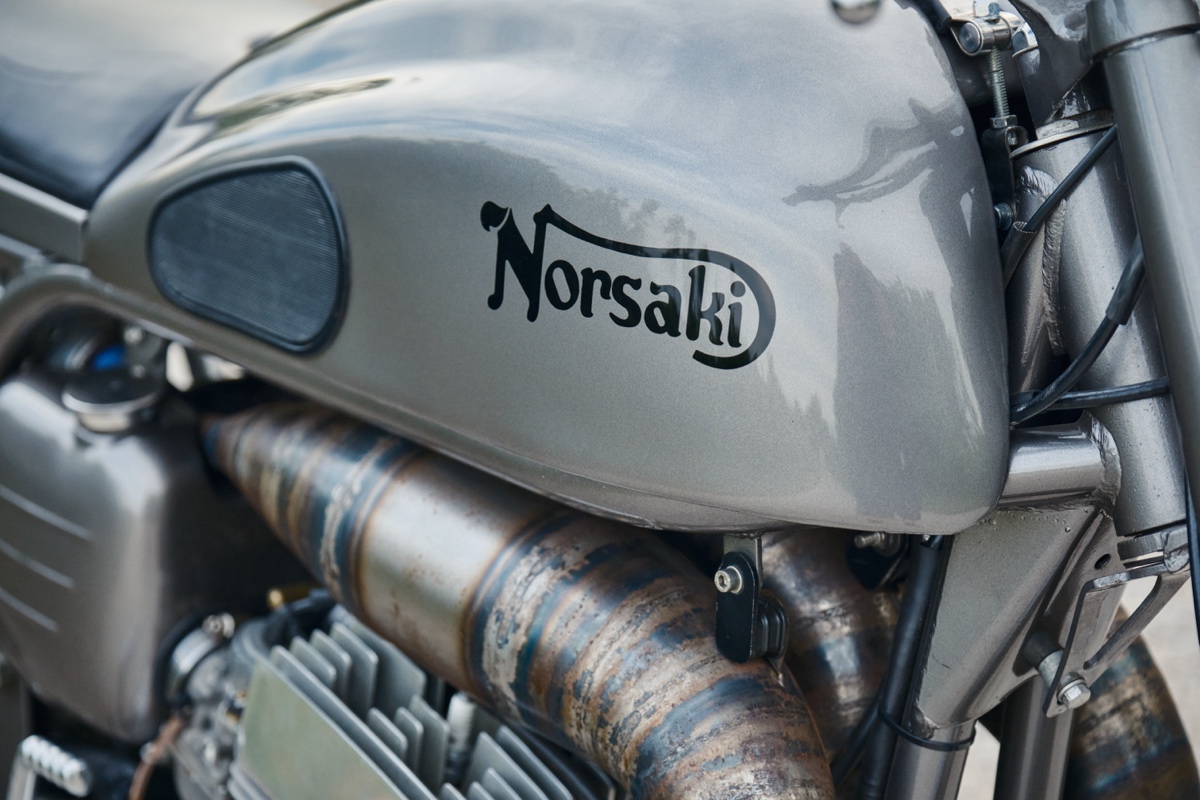
To achieve a similar fit with the lifted tank, the heat shield, made from .090 thick aluminum sheet, was shaped to the bottom tank recess, and rubber cushions designed for a Honda CB750 seat to frame fit were used to get an inch of lift. A custom stainless steel strap lies on a leather and sheepskin pad, securing the tank.
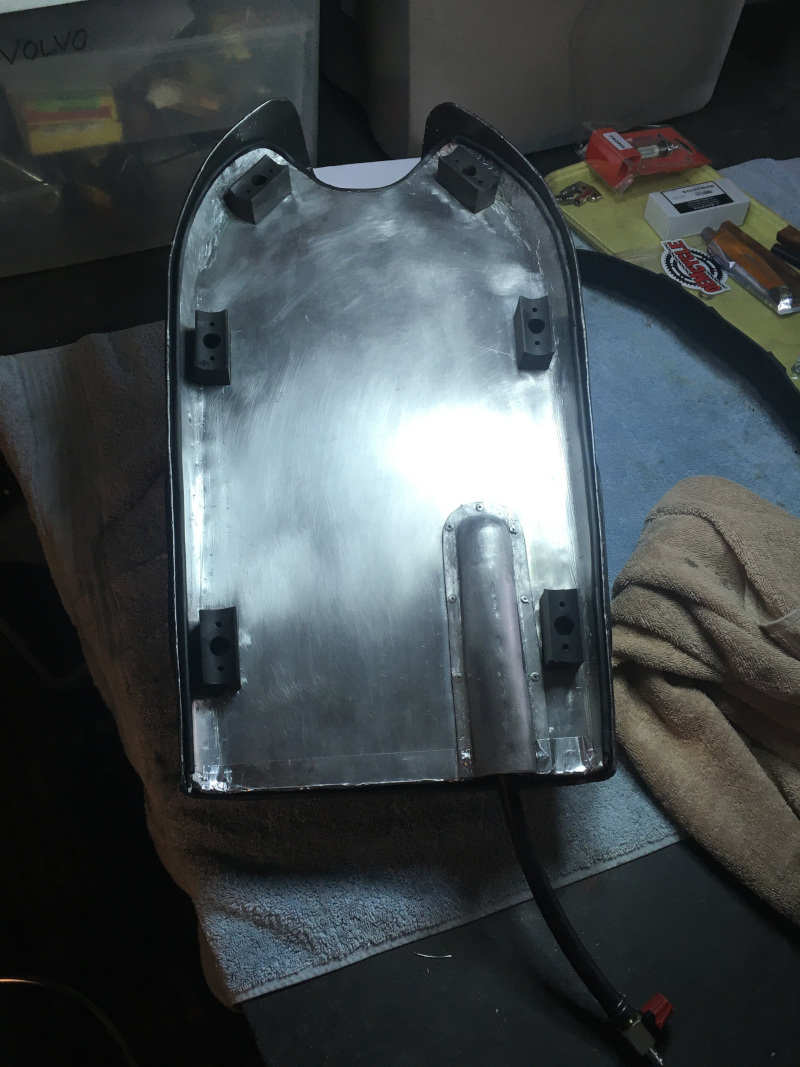
The underside of the tank heat shield with the CB750 seat cushions and fuel pipe tunnel. The stock petcock location would have placed it square in the middle of the exhaust pipe, so the tunnel was made to route it back toward the battery box. The inside of the tunnel and top of the shield are insulated with Dynamat to keep things from heating up.
 Raising the tank was necessary not just for heat issues, but also to align with the seat and get a pleasing tank-seat line. The seat was raised to allow the exhaust tail pipes to be routed underneath.
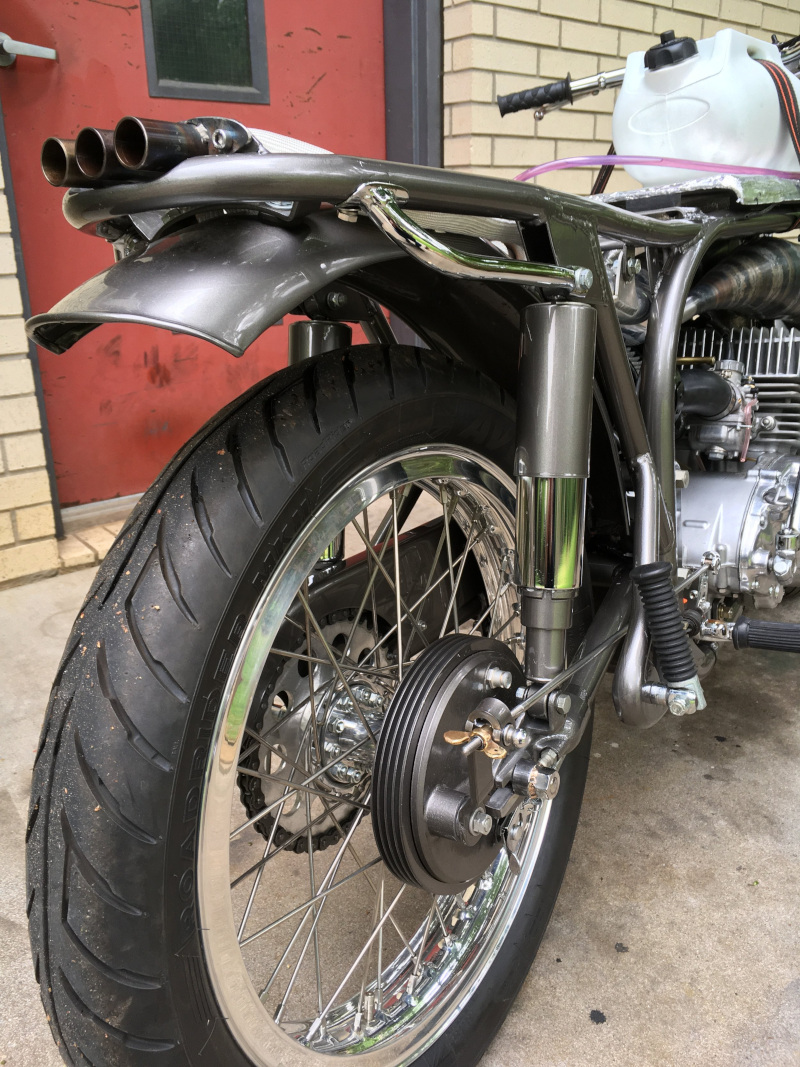
 Designing the seat assembly to be removable was a little tricky. In the end, it slides over the opening for the stingers, and is held in place at the rear shock bolts and the tank strap screw. The rear shock mounts were lowered an inch, making for more wheel travel. The original rear grab handles were shortened, rotated, and re-chromed.
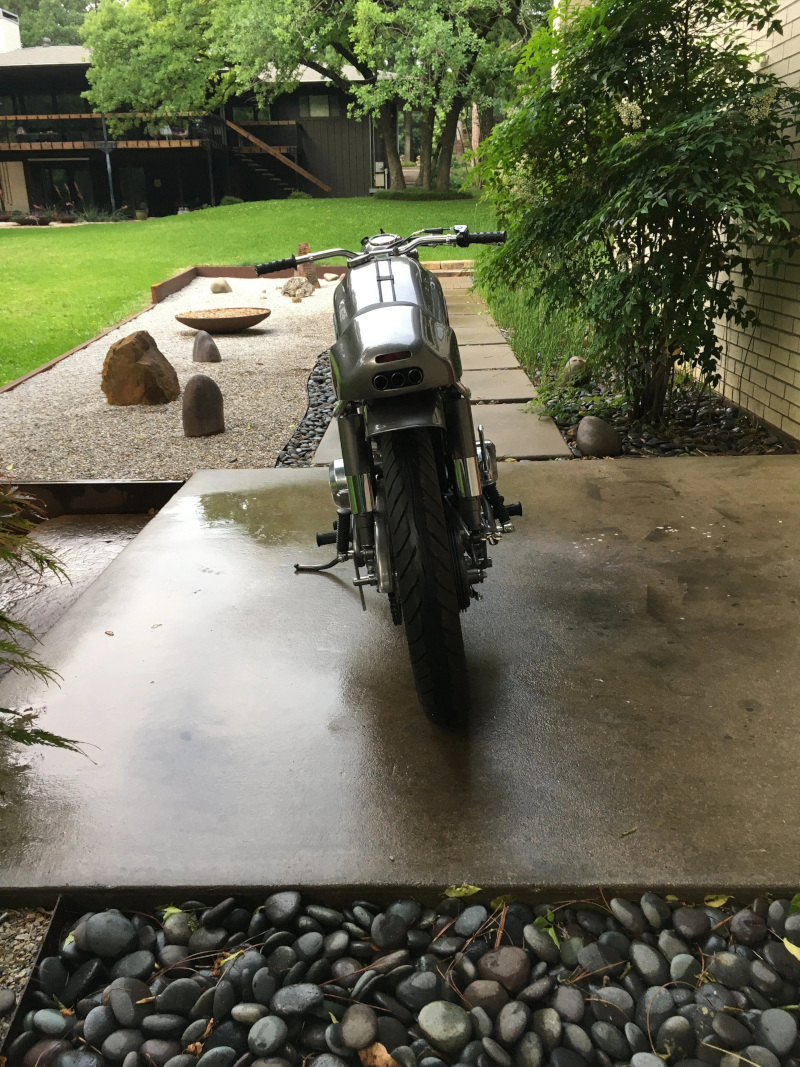
The rear seat cover was formed from steel, and made to match the complex curves of the tank. A brake light is recessed in, just above the exhaust outlet.
The Vincent Black Lightning rear wheel hub, brake and brake stay. One of the wonderful things about Vincent design, the brake stay can be removed from the hub quickly, sans tools. Rear loops were added to the frame to mount passenger pegs.
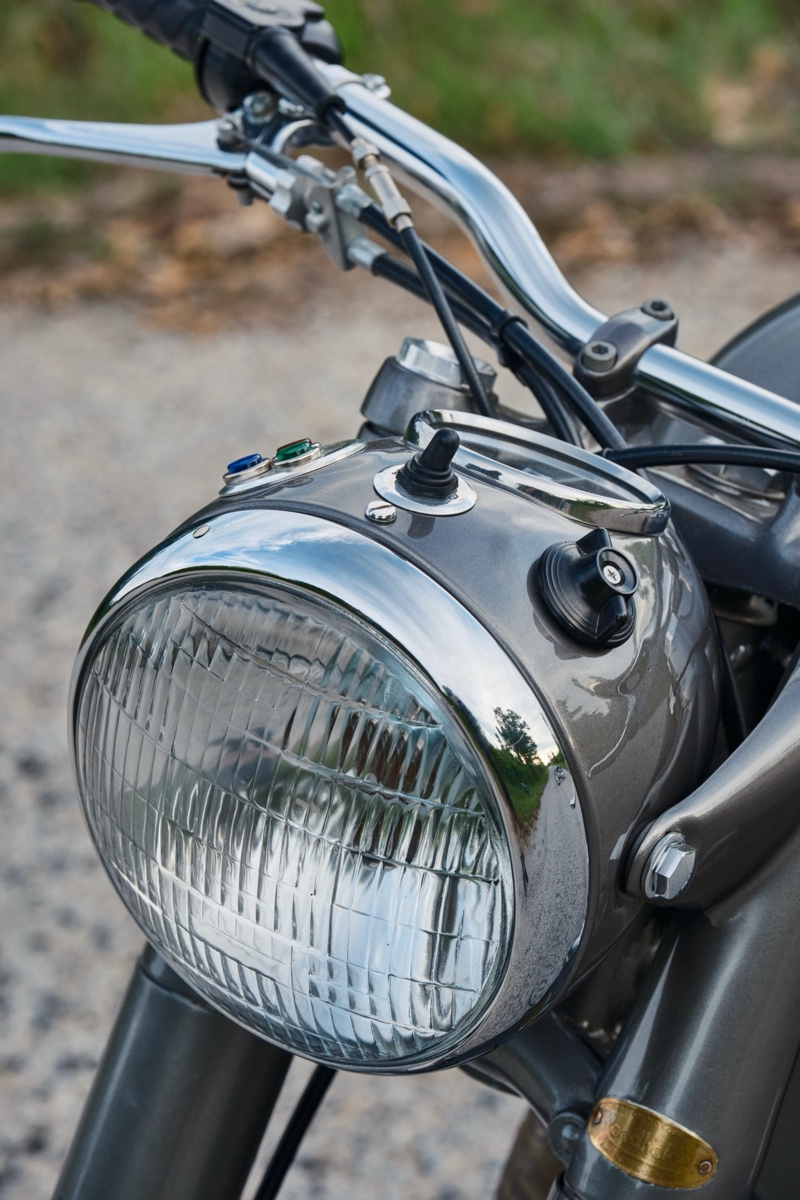
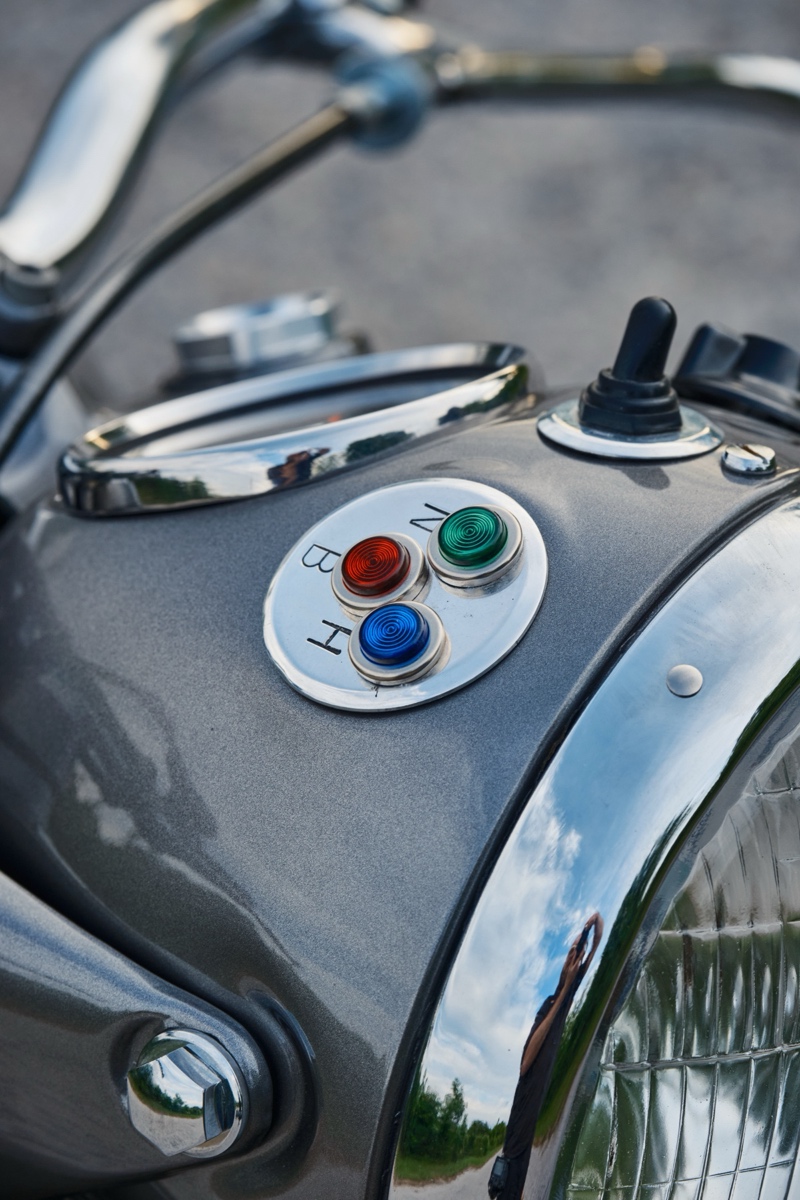
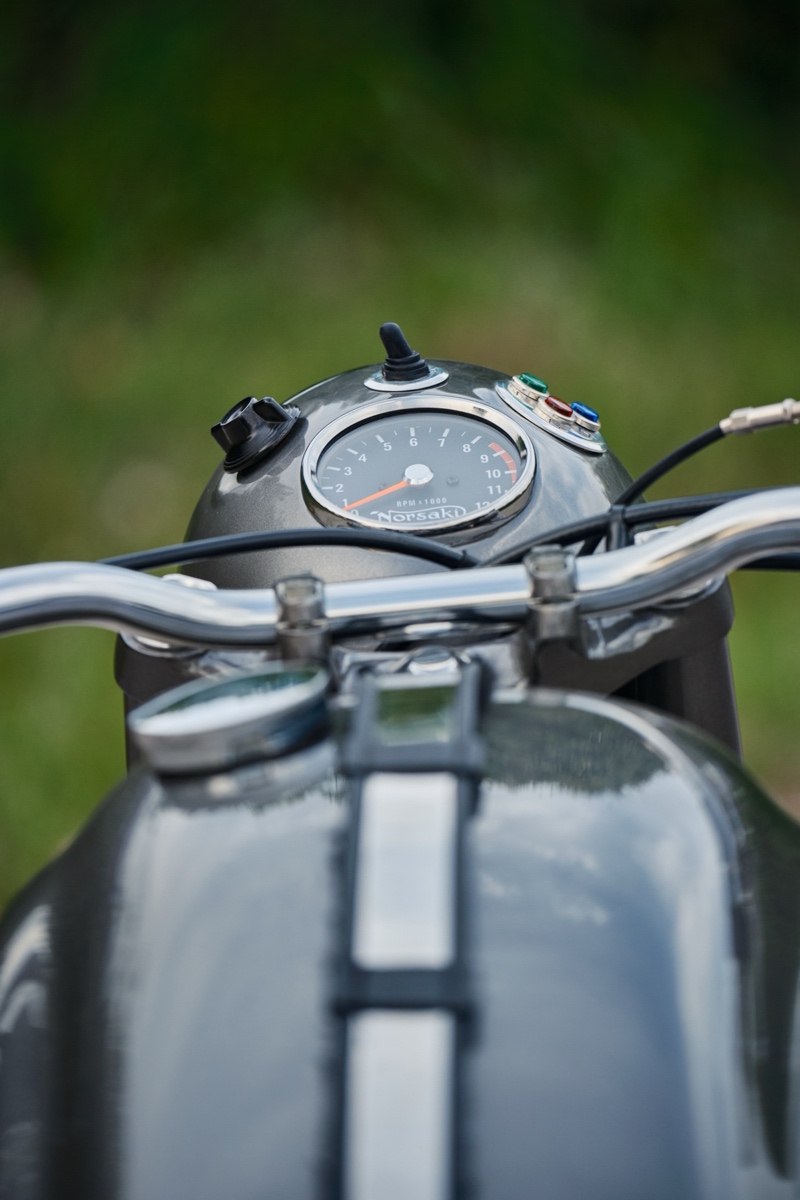
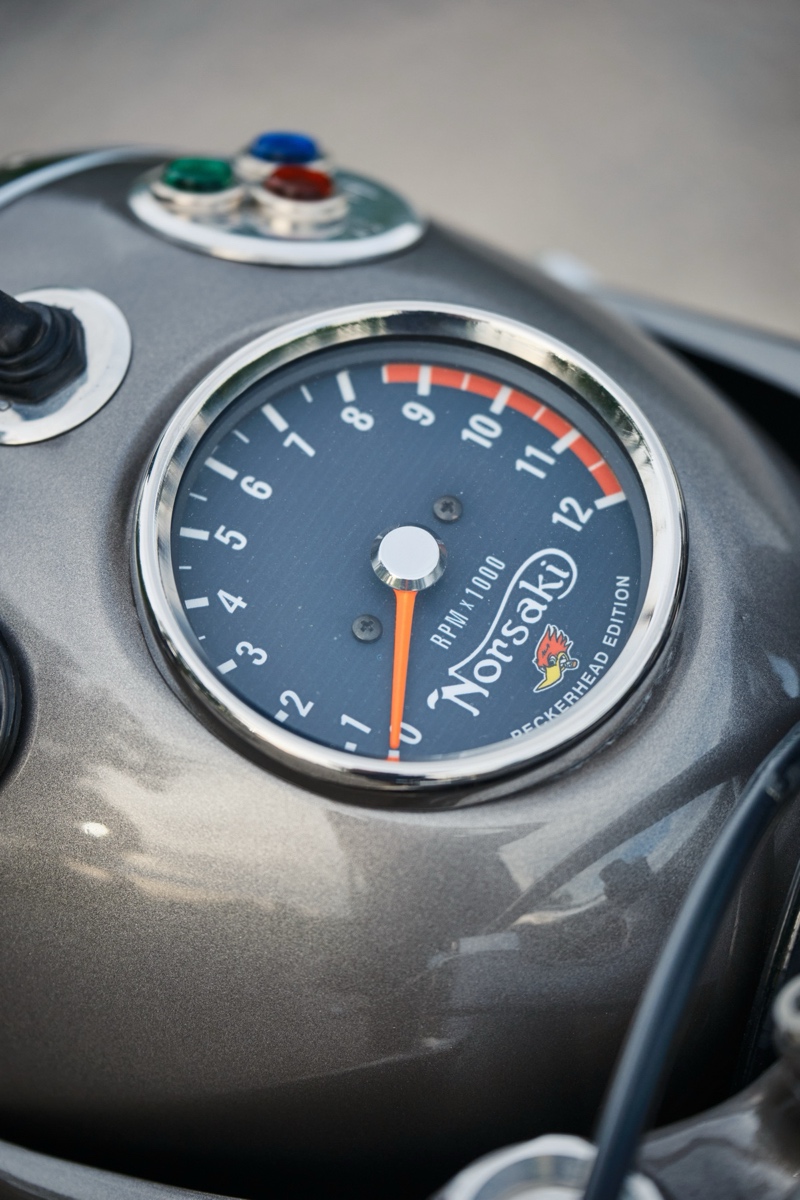
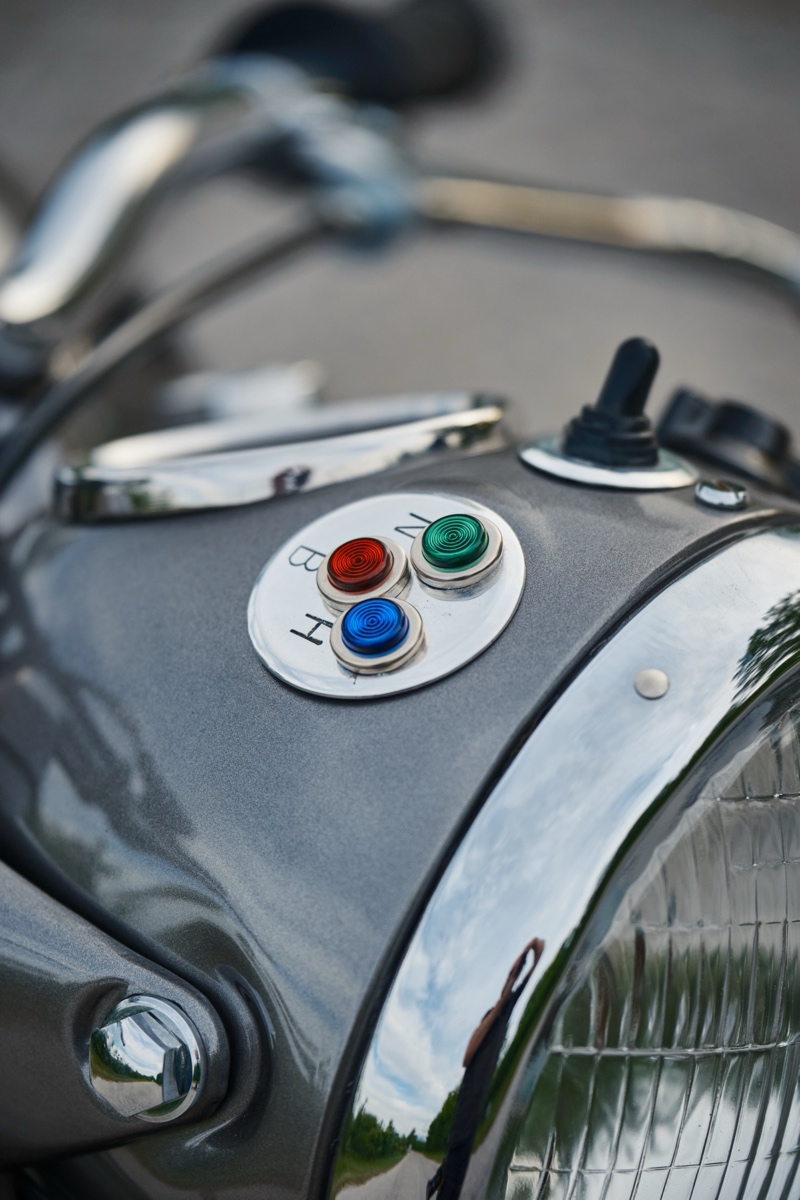
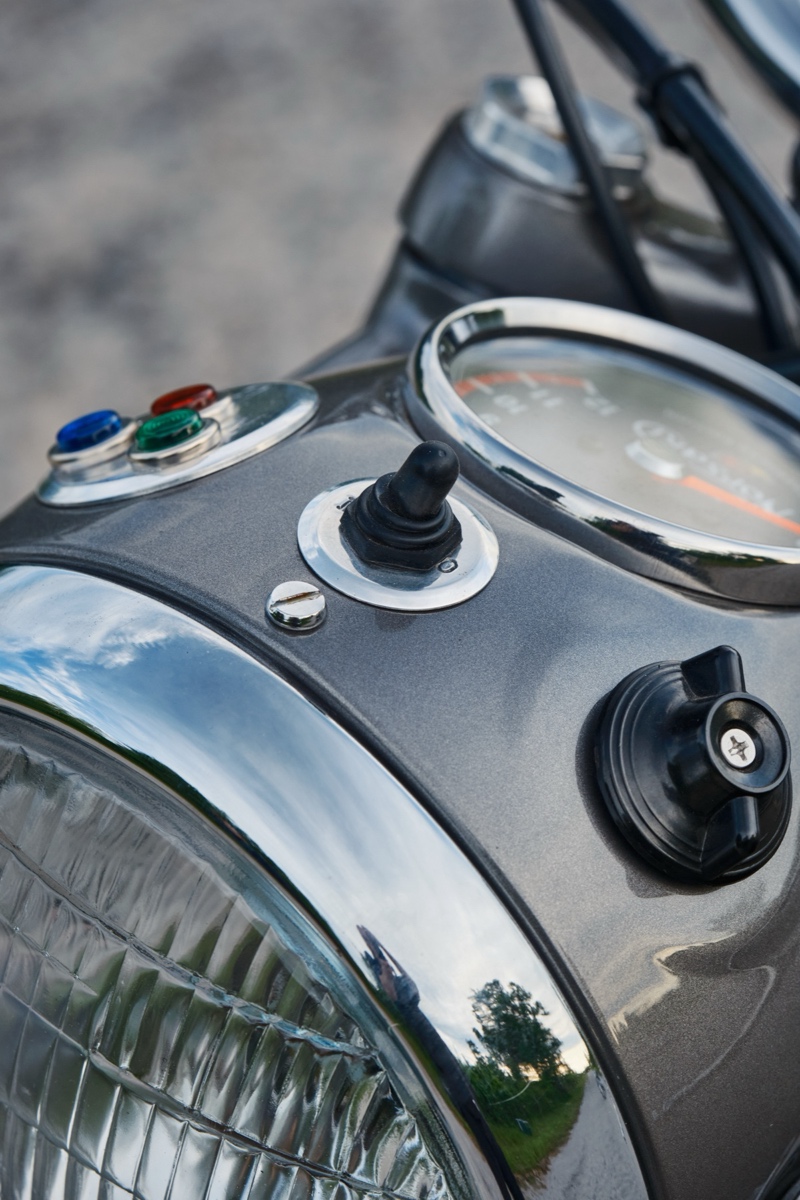
An original Kawasaki tachometer was placed in the Lucas headlight shell, along with a simple ignition toggle switch, light switch, and a custom instrument light cluster using Lucas jeweled indicators. Three original tachs were used to assemble a single working unit.
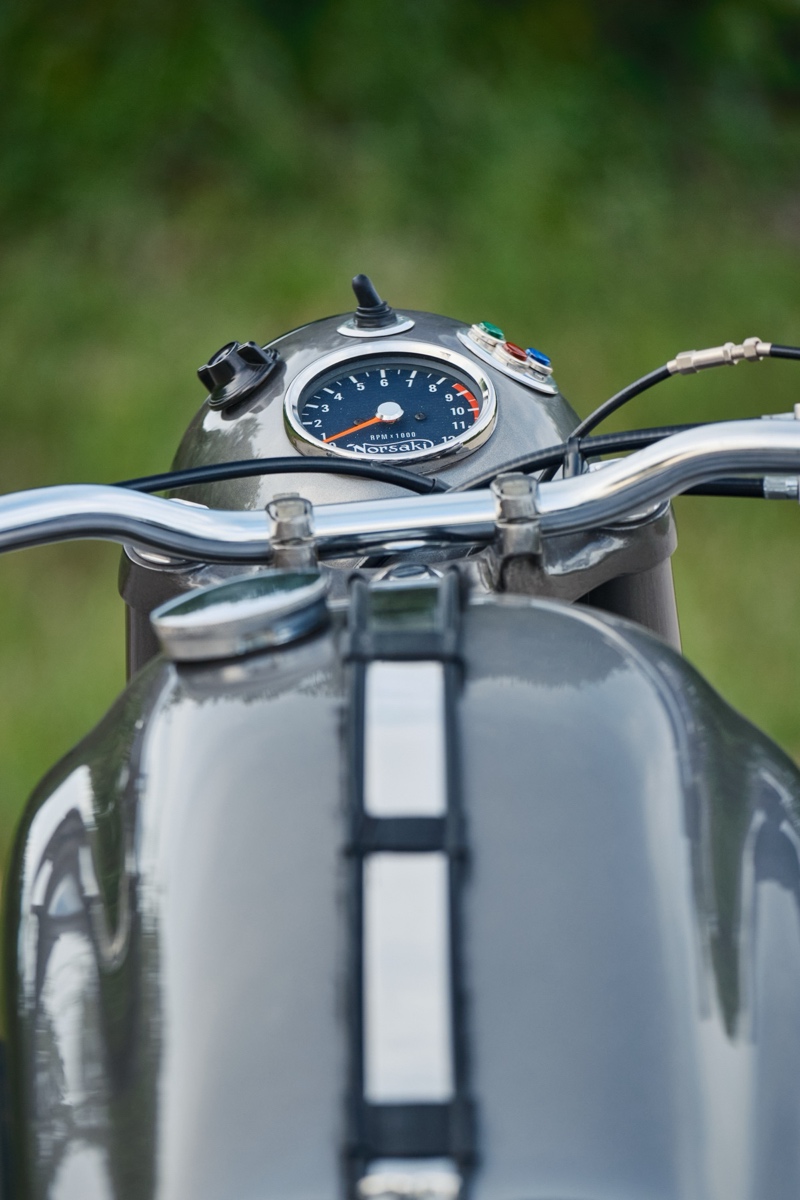
The custom face was made by John Green of Denton, Texas. The Peckerhead is the insignia for a group of motorcycle racers, riders, builders, and lovers in the Dallas area, more than just a few whom were involved in this build.
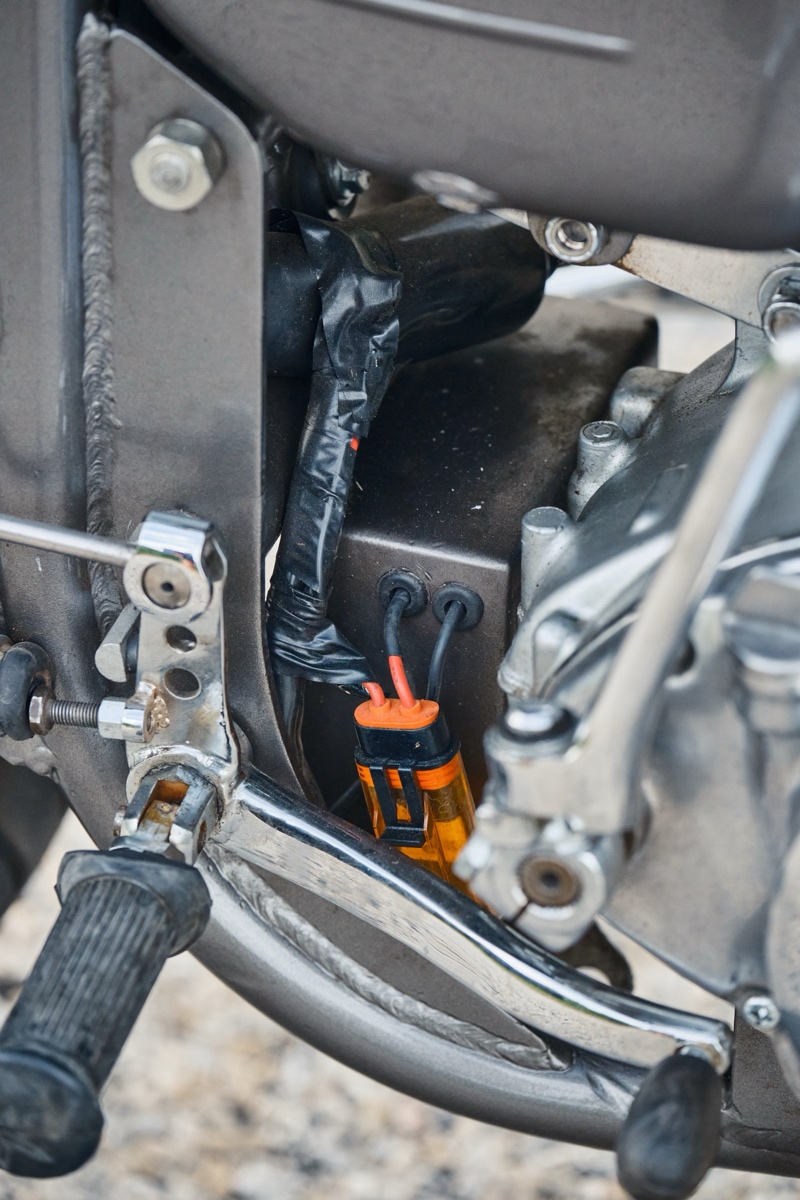
I also built a wire harness for the bike, with a bit of thought going into routing and insulation where it has to be in close proximity to the pipes. A small case behind the engine houses a lithium battery.
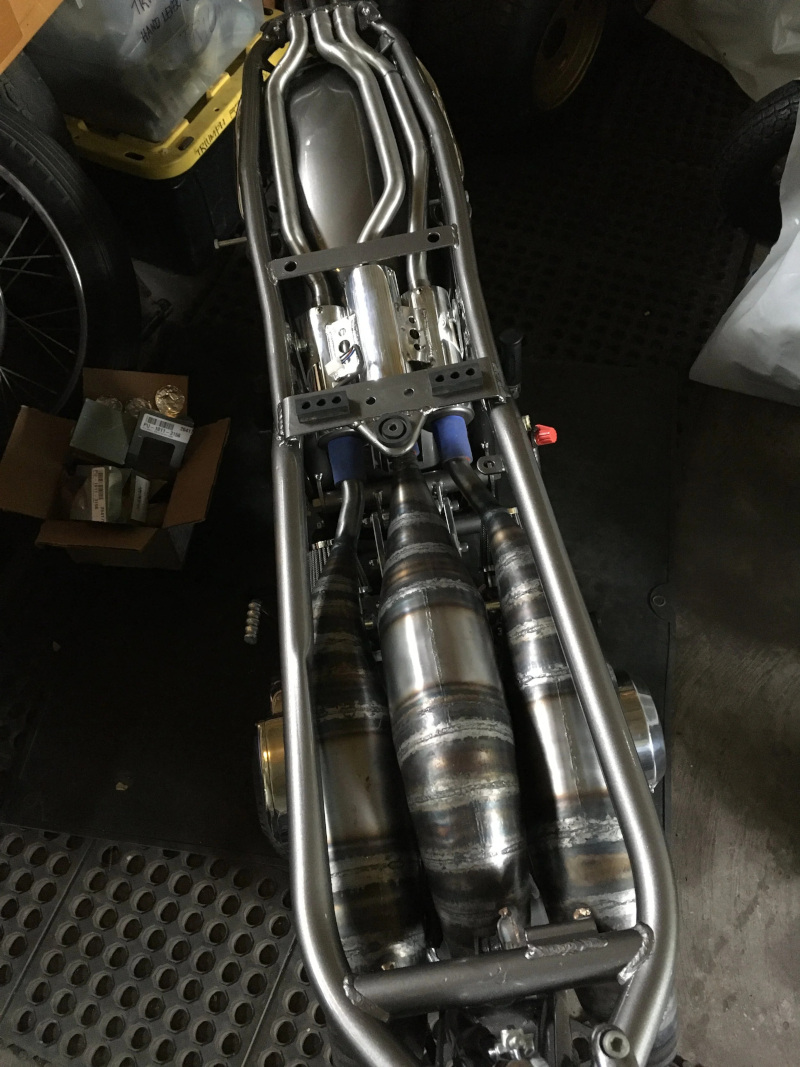
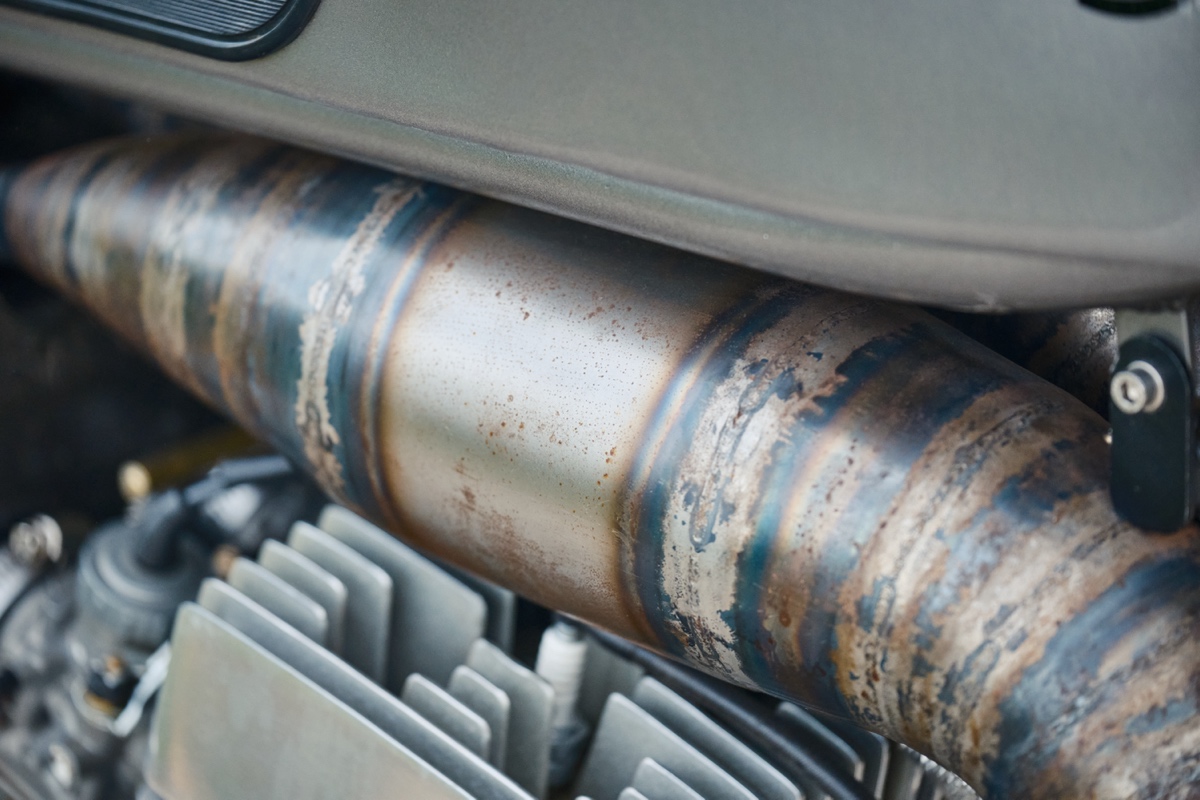
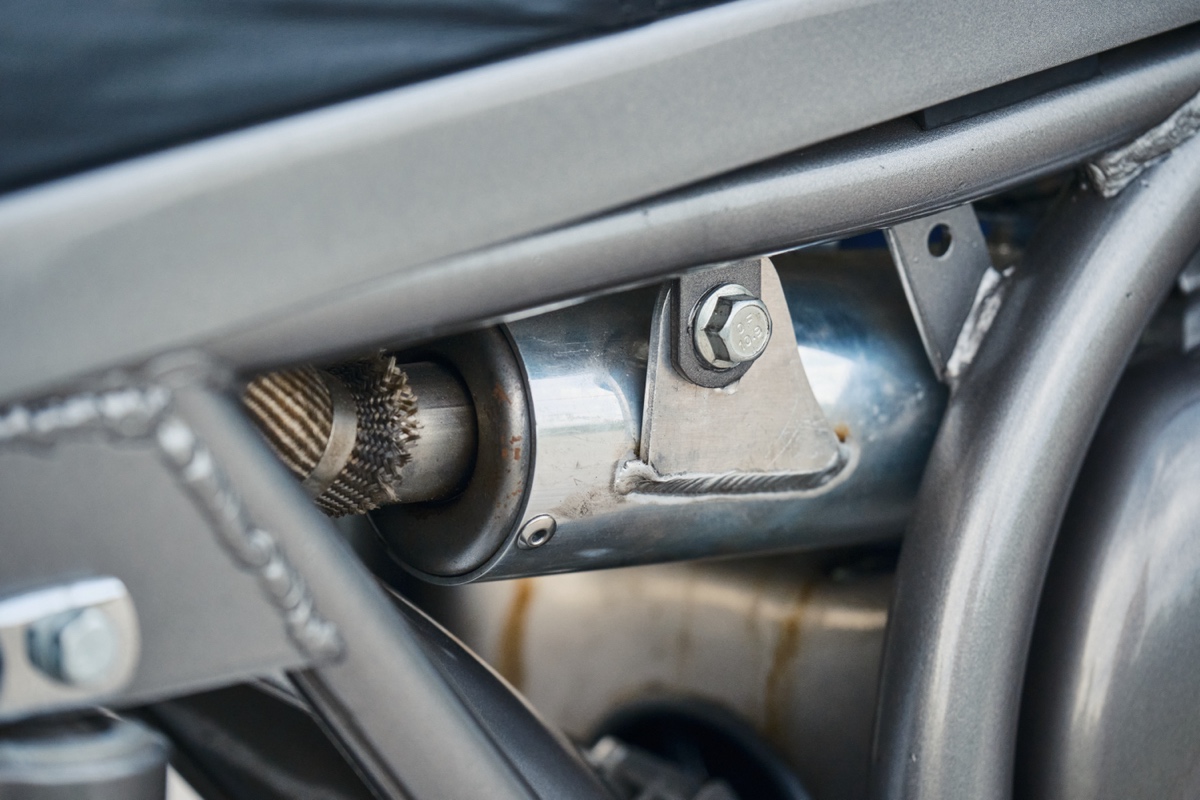
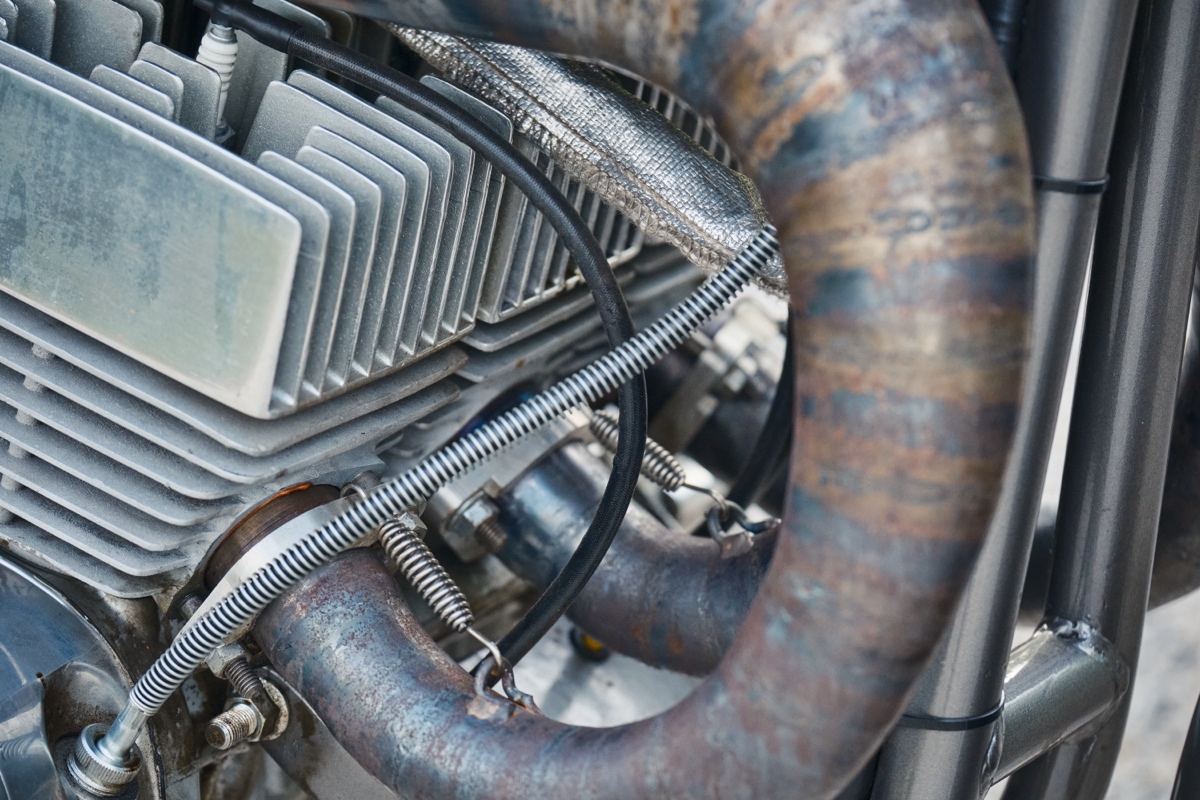
Once the seat was built, and frame issues were worked out, the bike was sent to Randy Blevins in California, to build the custom pipes. Randy Blevins’ pipes are a bit of sculpture. In order to make the intricate fit, the seat needed to be built and in place, with a dummy set of pipes poking through the seat rear cover. It was then shipped to California, and the pipes were built from scratch. They are surprisingly easy to take off (not a bad thing, since it makes spark plug changes a lot easier). A crossbar was made in the middle of the frame for the seat and tank mounting anchor. Randy mounted the mufflers to the frame, and the expansion chambers are slip-fit into them.
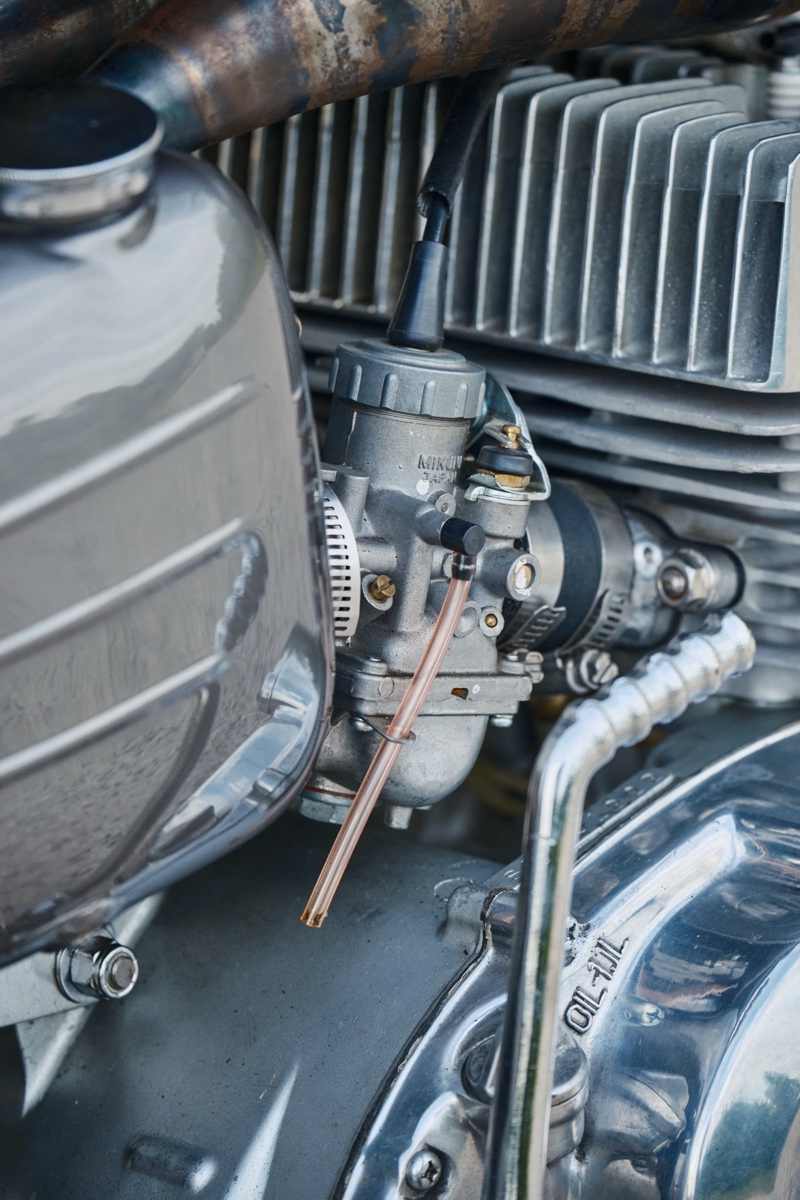
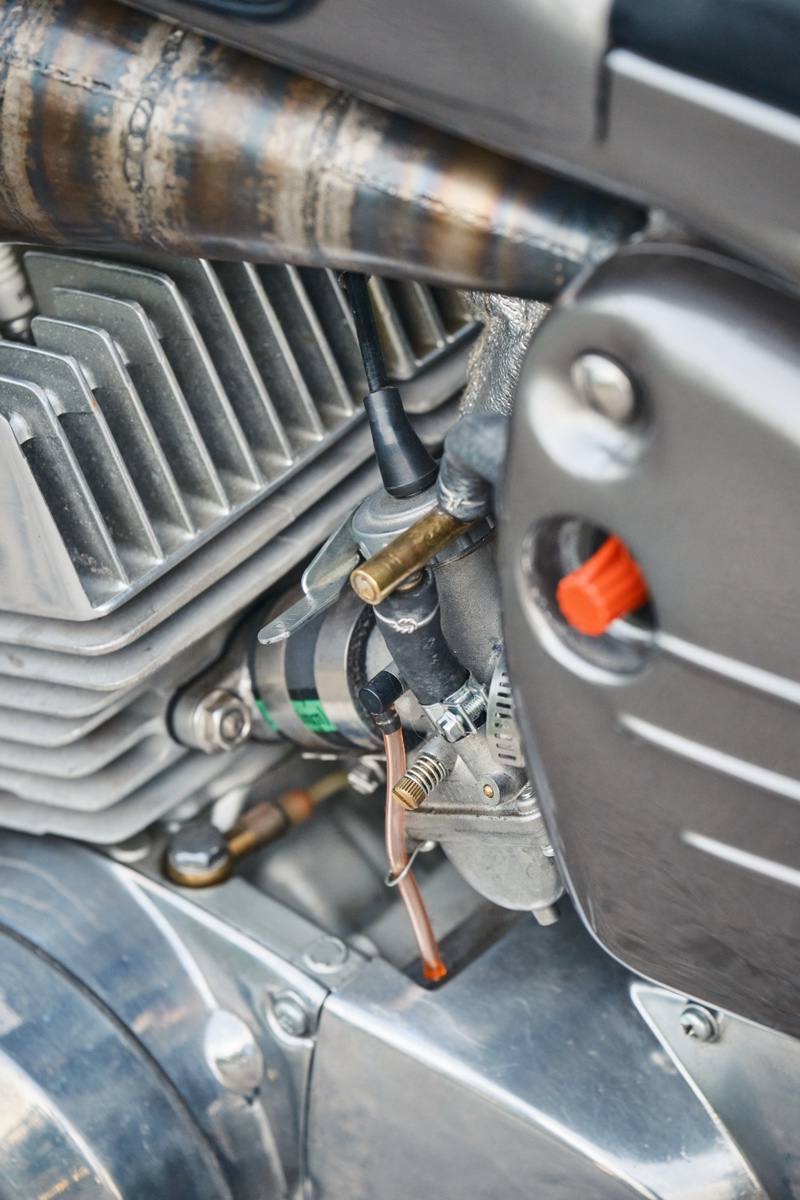
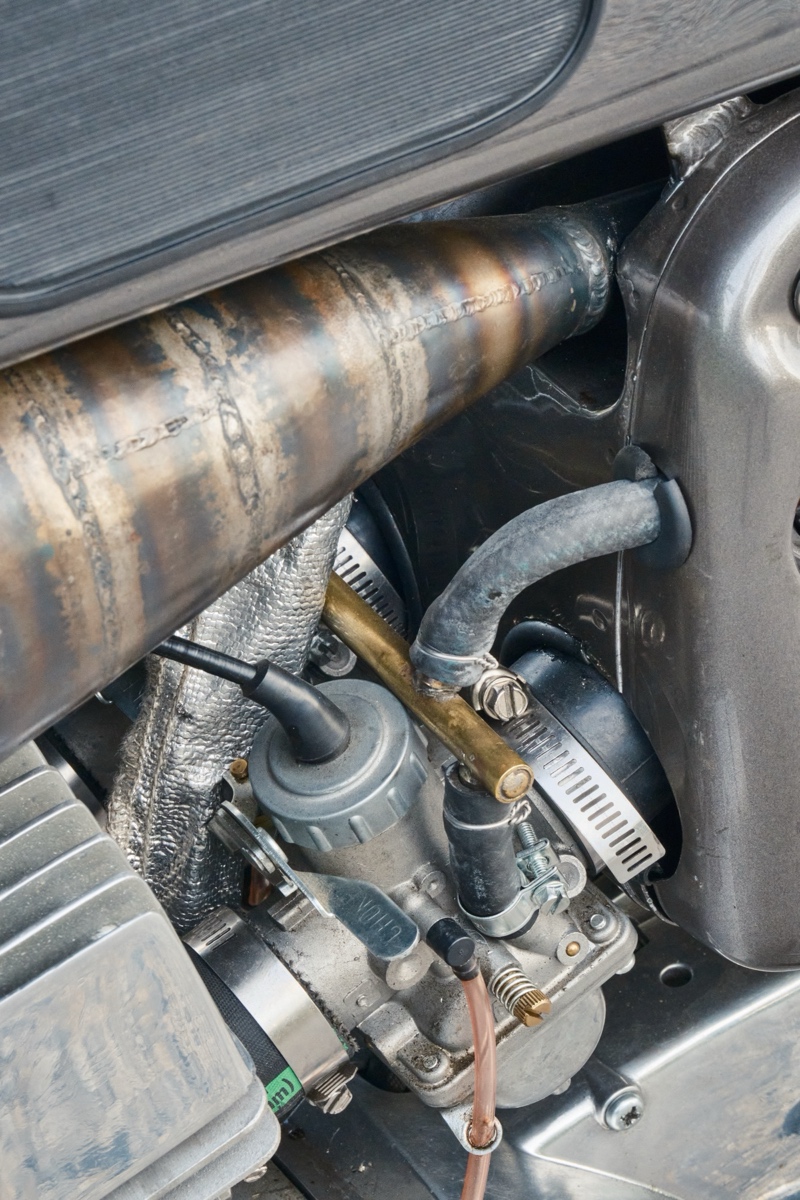
The cylinder and head mating surfaces getting re-worked to get a good seal. Oddly enough, I had the correct original airbox in my spares. The outer mounting flanges were trimmed off, and a custom cap and screw were made. Stock intake tubes fit perfectly to the carbs. This assembly was later stuffed inside a custom box.
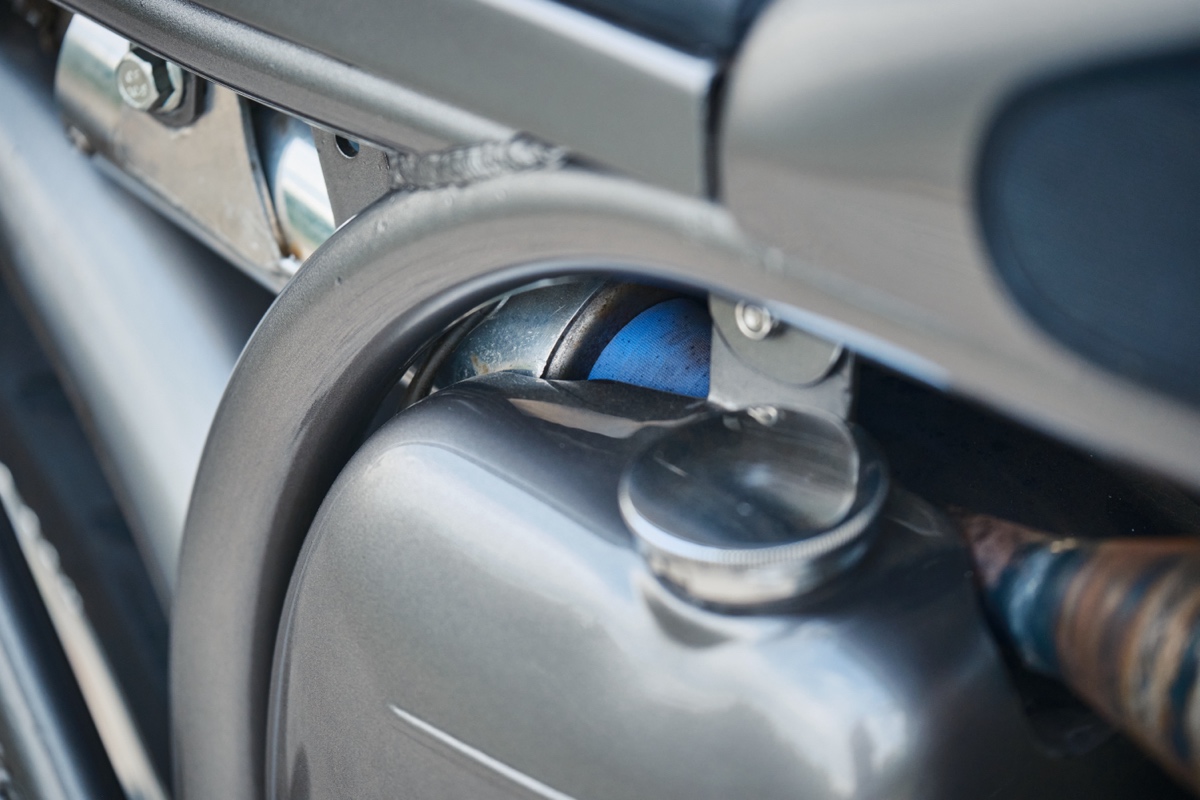
The tail pipe routing and custom frame loop exposed. The original frame ends at the shock mounts, without a loop or crosspiece, making a rear loop necessary to hold the two-up seat, as well as the exhaust tips and fender mounts. The insulation on top of the tank heat shield and the fuel line tunnel can be seen at the left side of the picture. The tail pipes are wrapped in a fiberglass sock. The rear fender was indented a little bit to make some room for the pipes.
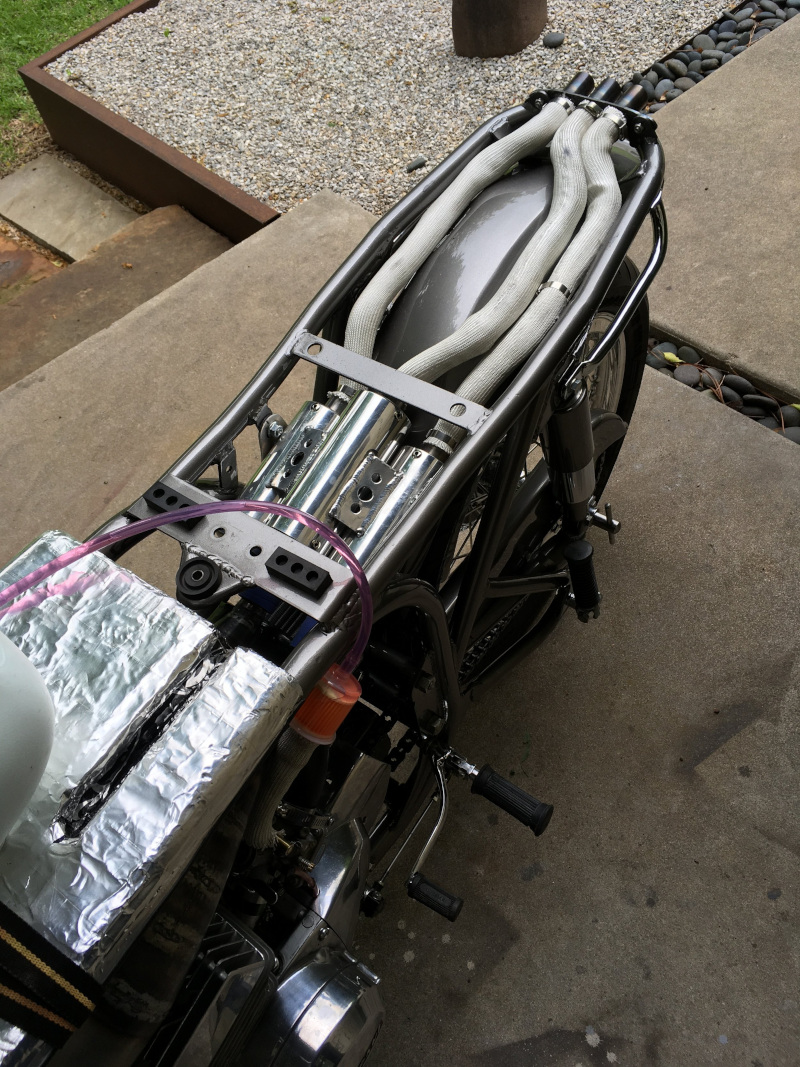
The custom airbox, made months after the original build was finished, was one of the more difficult parts of the body kit to build. Because the fit is so tight between the exhaust, air filter, carbs, fuel hose, and frame, the custom steel airbox has to dance through some precise locations to get the alignment right.
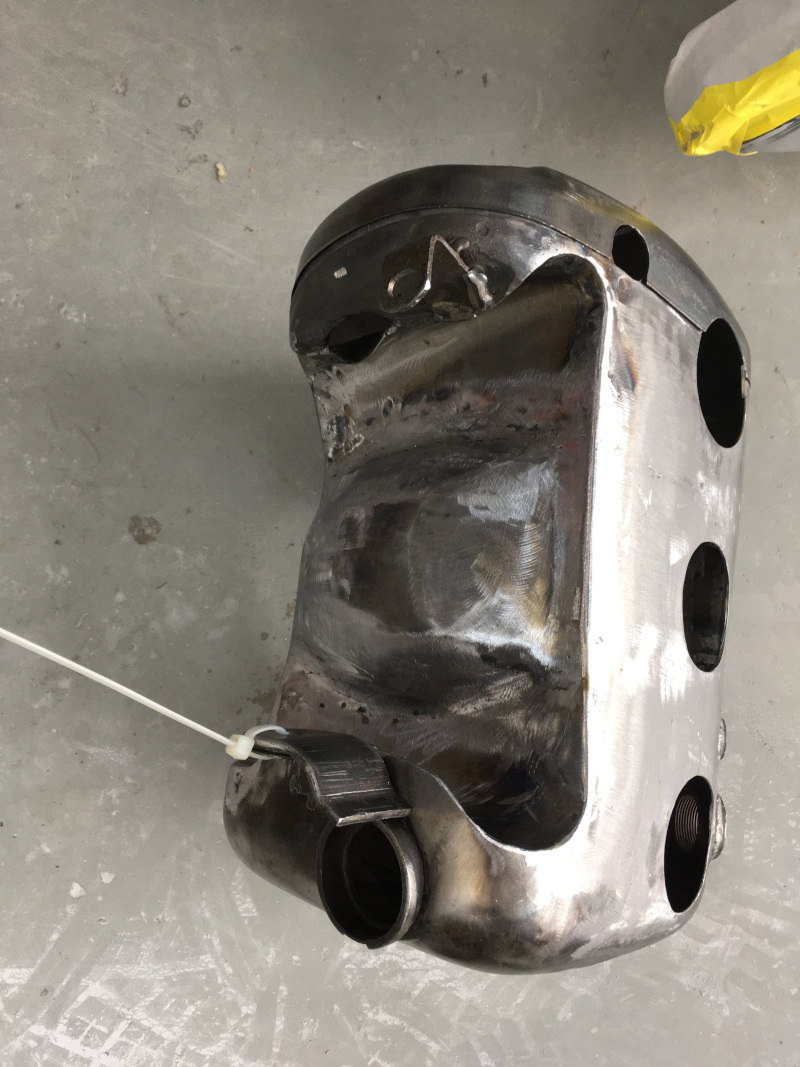
It took the better part of a day, working at Big D Cycles, to get the airbox mounted. The seat, pipes, inner airbox, and tank have to come off to get this ten-pound ham stuffed into a five-pound sack.
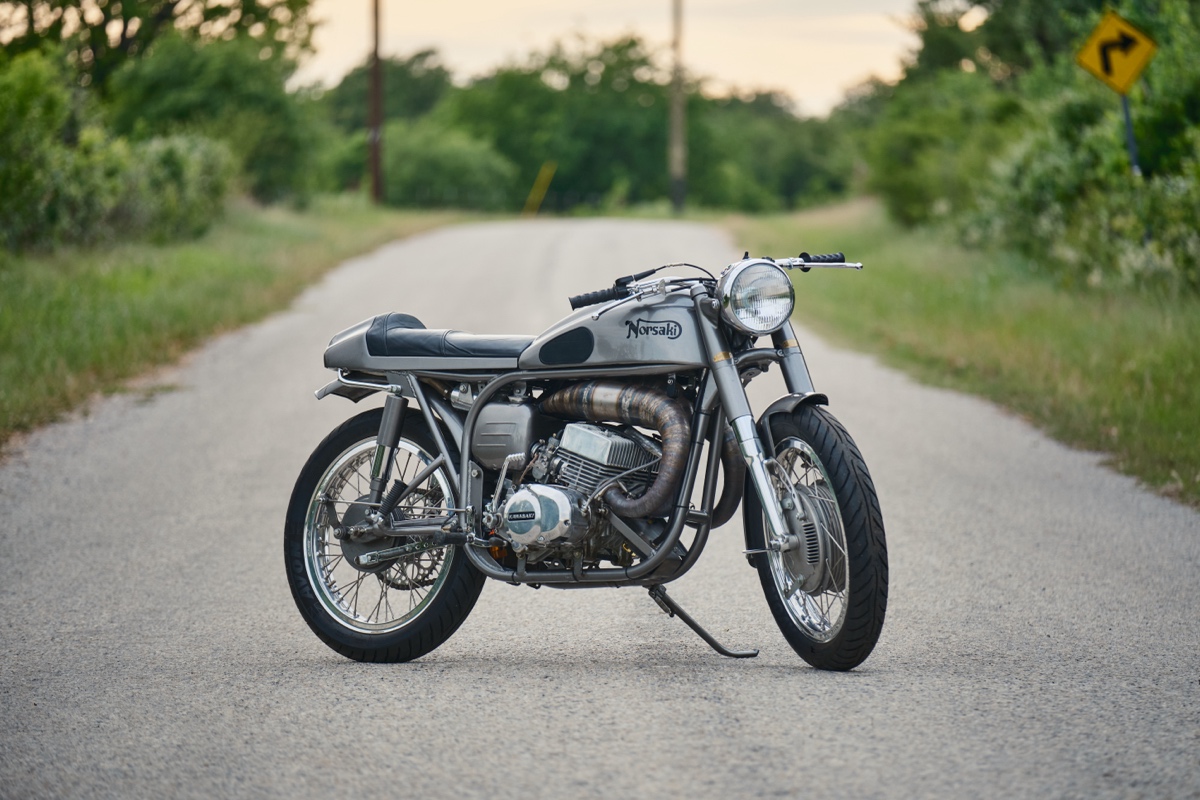
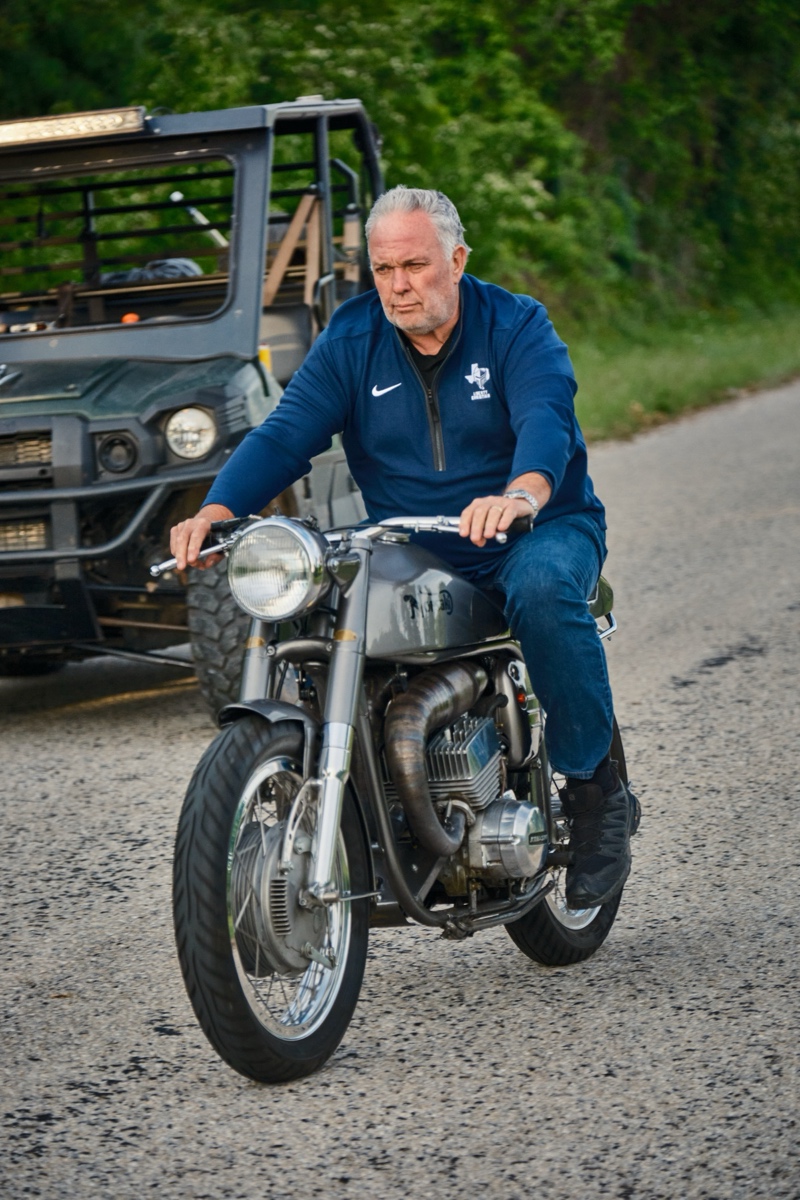
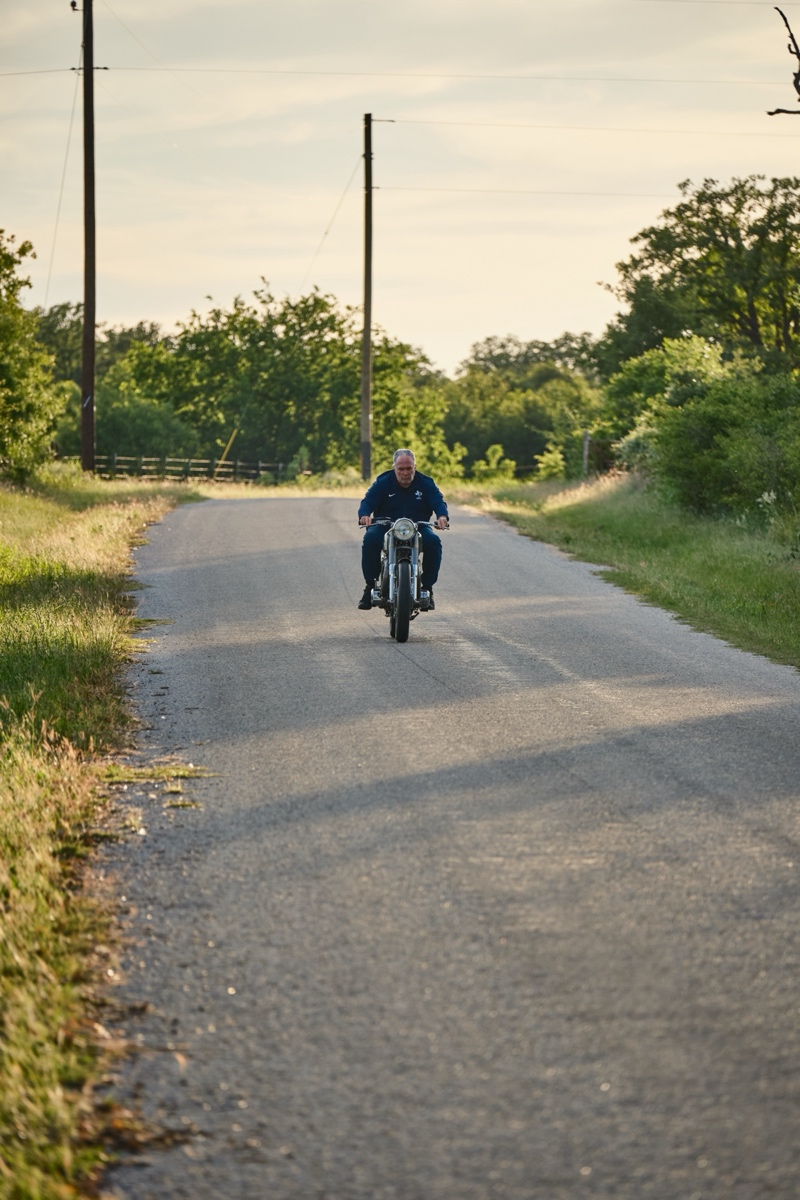
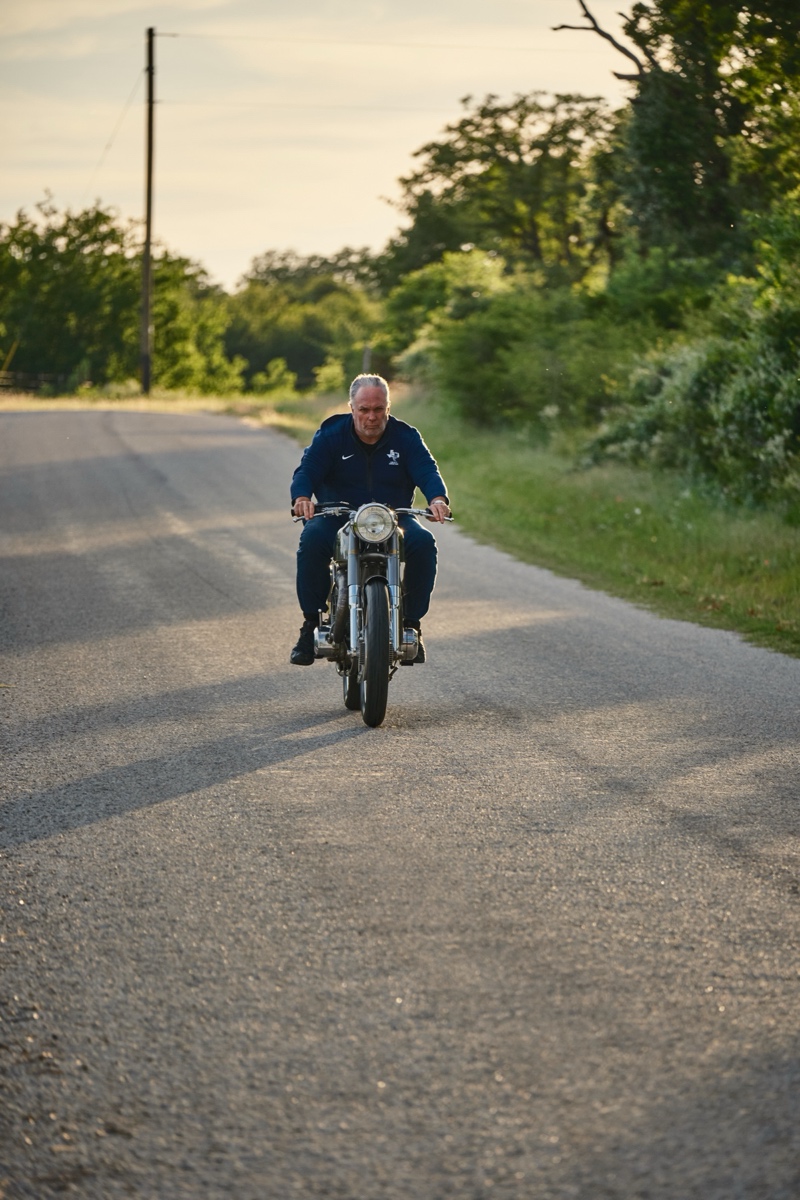
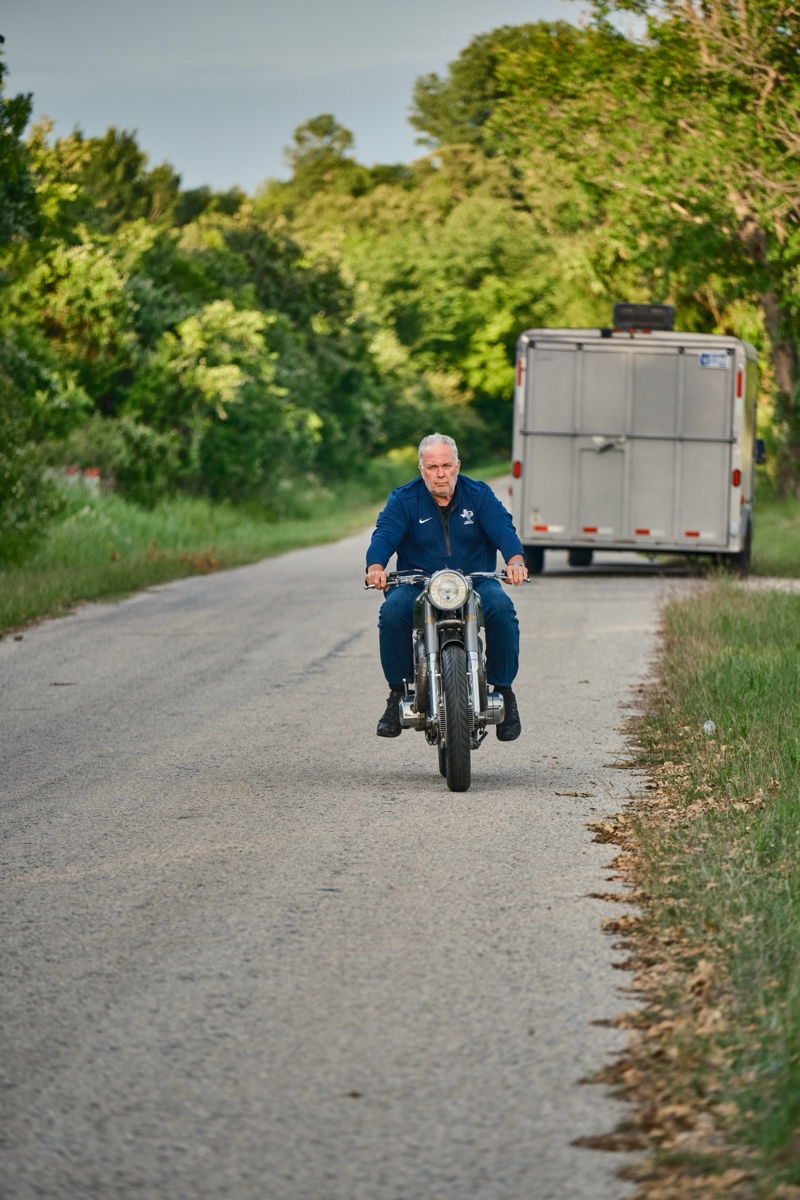
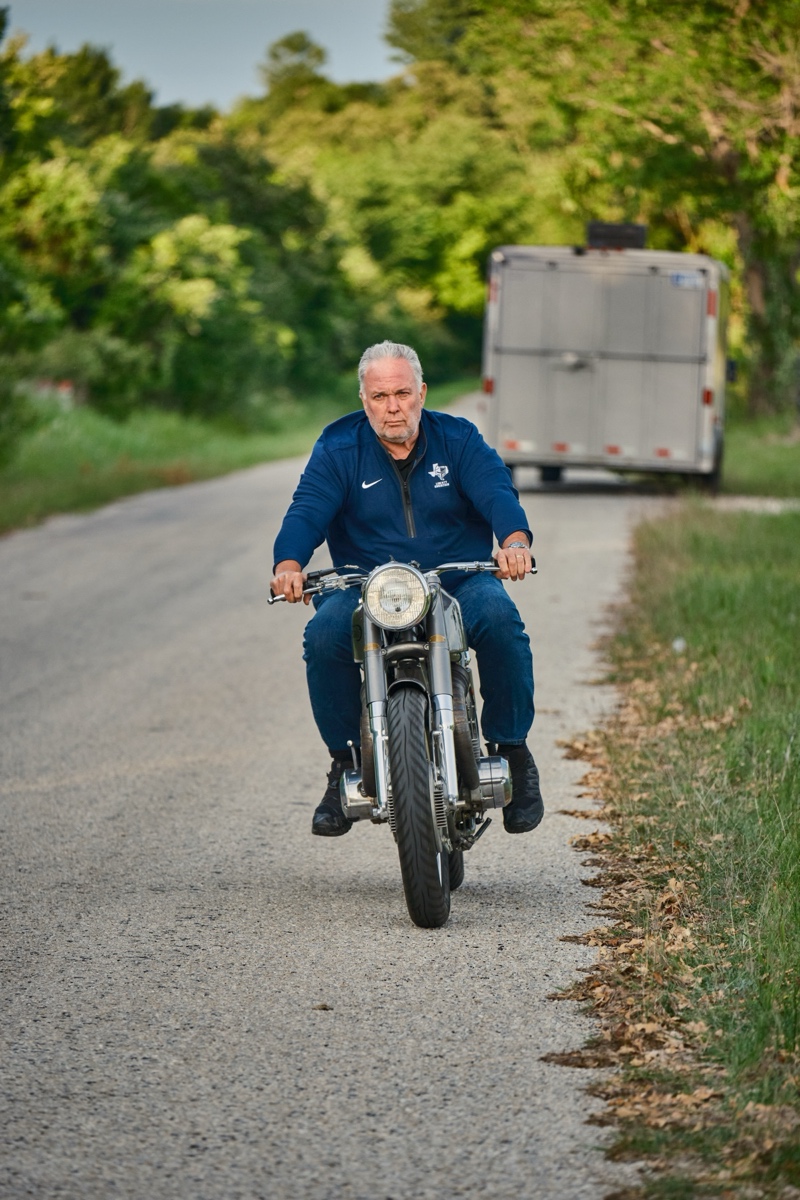
After resurfacing of the cylinder and head mating surfaces, the heads were sealed. She starts easy and sounds raspy. Here’s Richard riding the bike on a Texas backroad.
More Photos
Follow the Builder
Website: www.davmomoto.com
Instagram: @davmomoto
Also: Big D Cycle, Randy Blevins (@racedog134), and John Green (@rotajg)


Beautifully done so much WOW factor bet it sounds a smells orsum pulution it’s it best form I believe proud to own such a machine excellent build
Wow, what detail. Very cool, Love it.
It’s funny to see what a grown boy will sacrifice to fulfill his dream. Another inspiration that almost anything is possible. Boys don’t age, they just change their toys throughout their lives.