
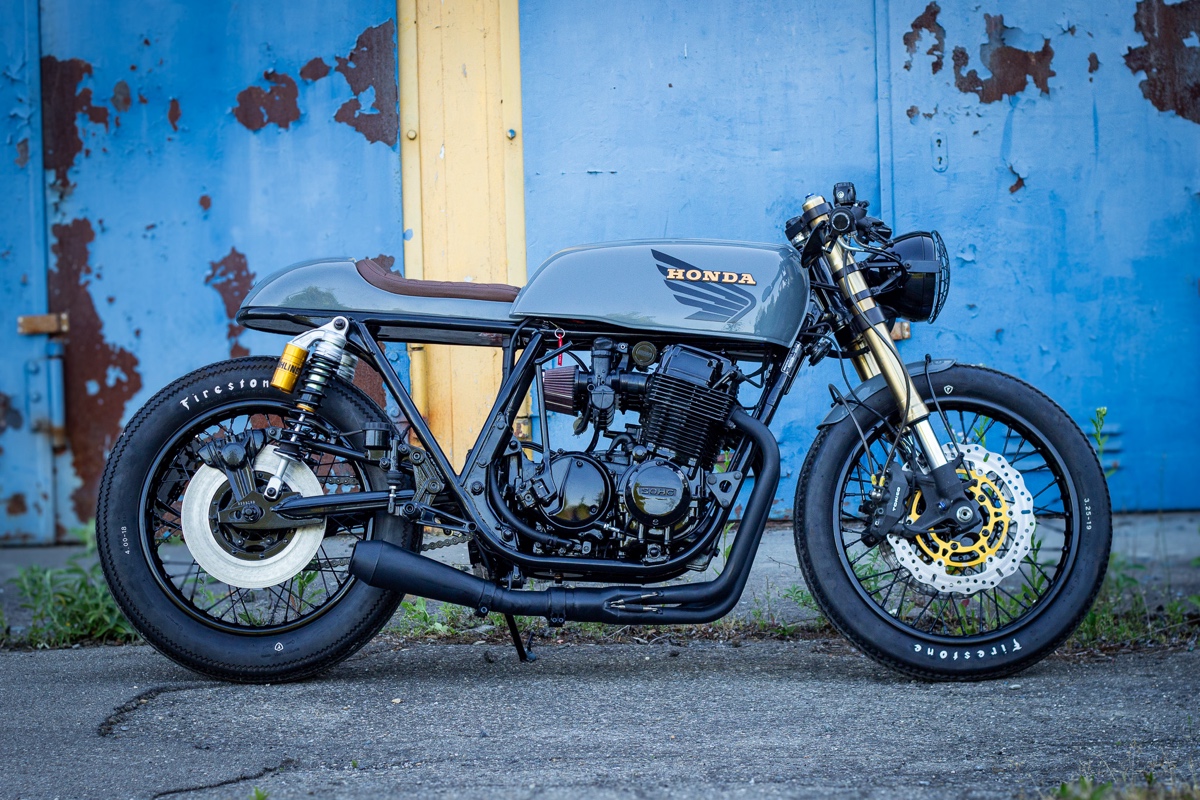
 “Two steps forward, one step back” — Matthias Ebenhoch’s 1978 Honda CB750F Super Sport…
In the customs world, it can often be said that bikes are built of other bikes. Both in a material sense, as so many custom motorcycles bear parts from wholly different machines, but also in an inspirational sense. Often, one bike serves as the inspiration for a builder to create a machine of their own — one that almost always evolves into a very different creation than its spiritual progenitor.
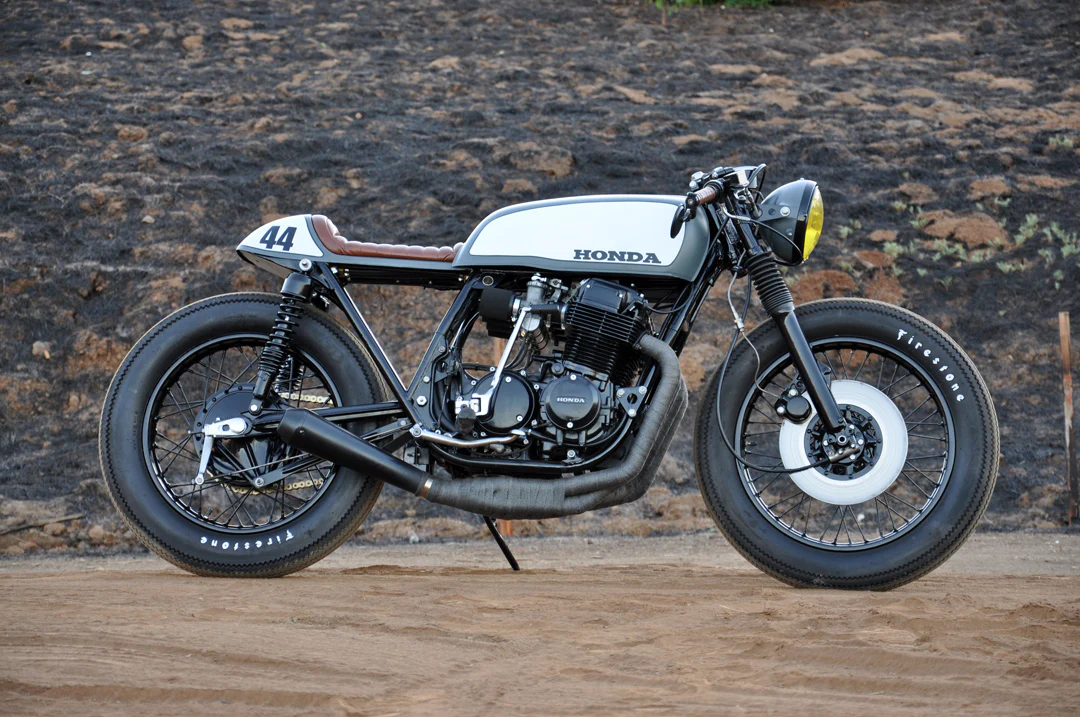
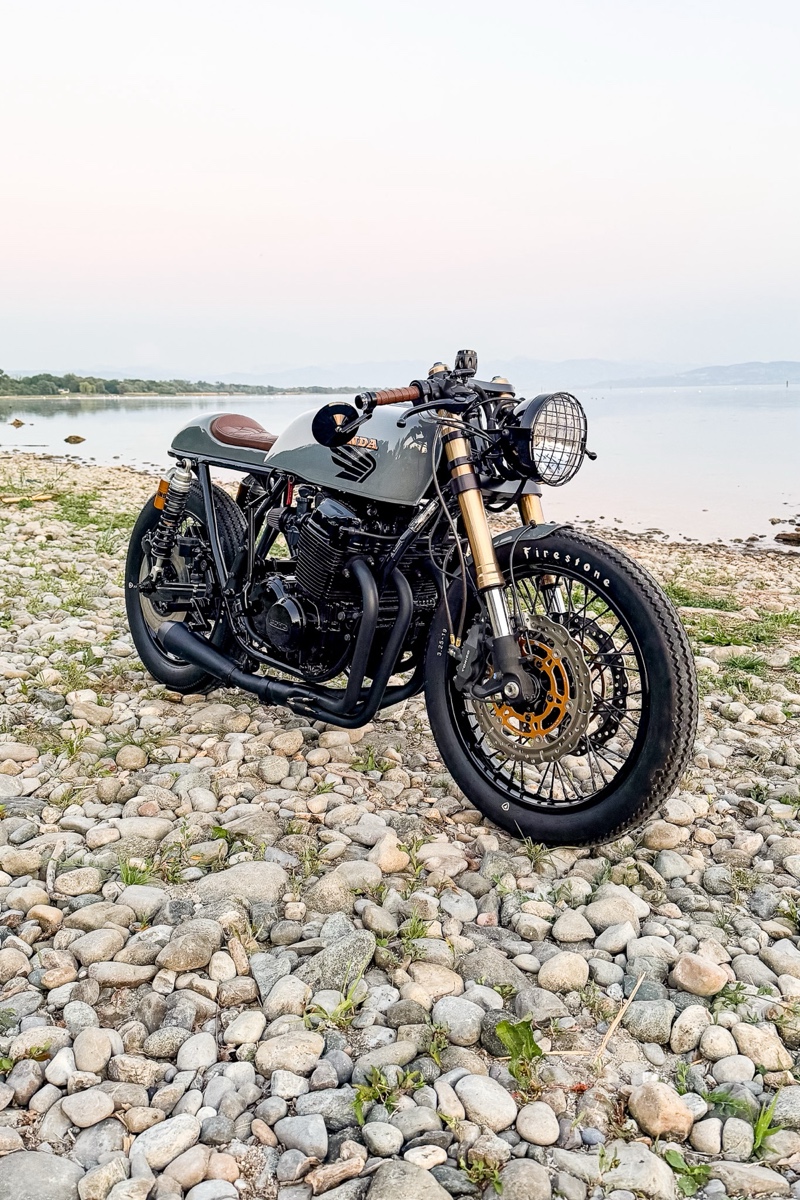
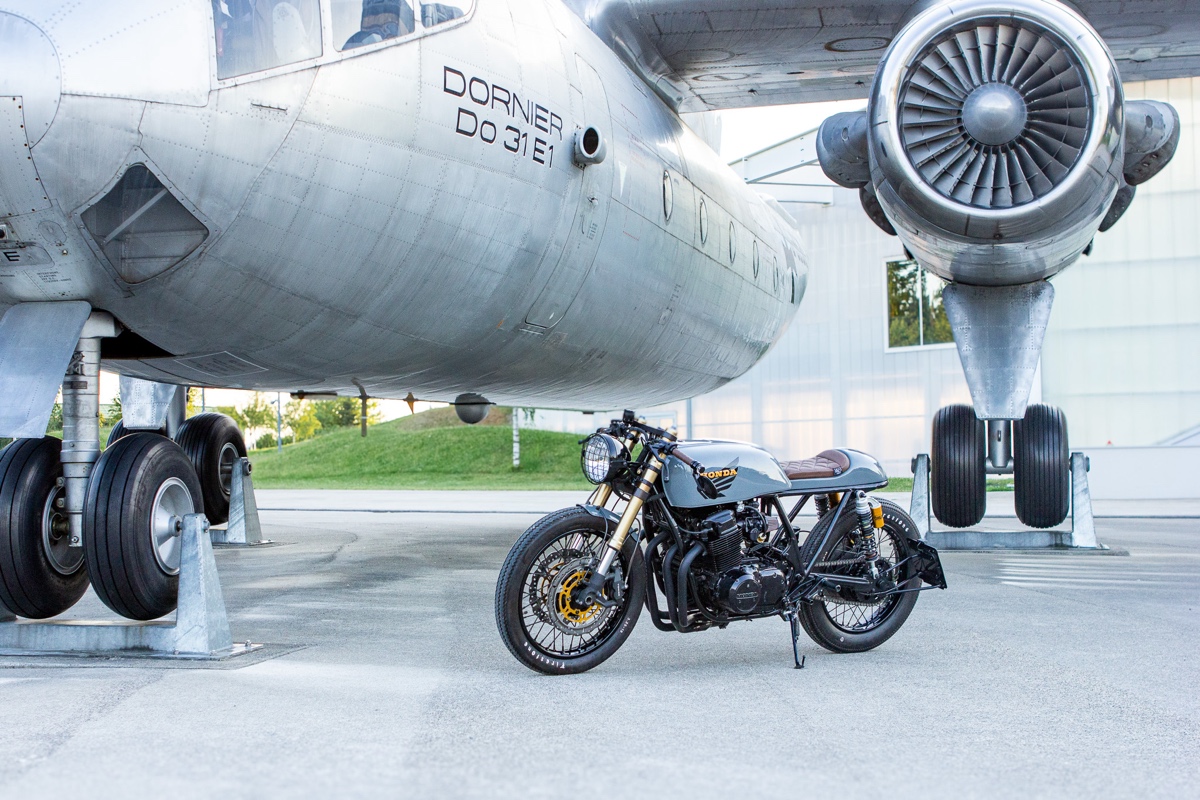 That’s very much the case with this 1978 Honda CB750F1 from Germany’s Matthias Ebenhoch, an engineer who fell in love with Jarred DeArmas’s CB750 Seabass nearly a decade ago and decided to build a cafe racer of his own.
For Matthias, whose engineering job requires him to sit in front of a computer most of the day, the project would give him the satisfaction of building something with his own hands.
“The goal: a 3-year timeline and a €10,000 budget. My ambition was to build the bike 100% with my own two hands — from the welding (up until then, I didn’t even own a welding machine) right down to the paintwork.”
 As is so often the case, the timeline and budget both went out the door as career changes, moves, and the renovation of a century-old house delayed the process. However, Matthias has finally finished the project he conceived so many years ago.
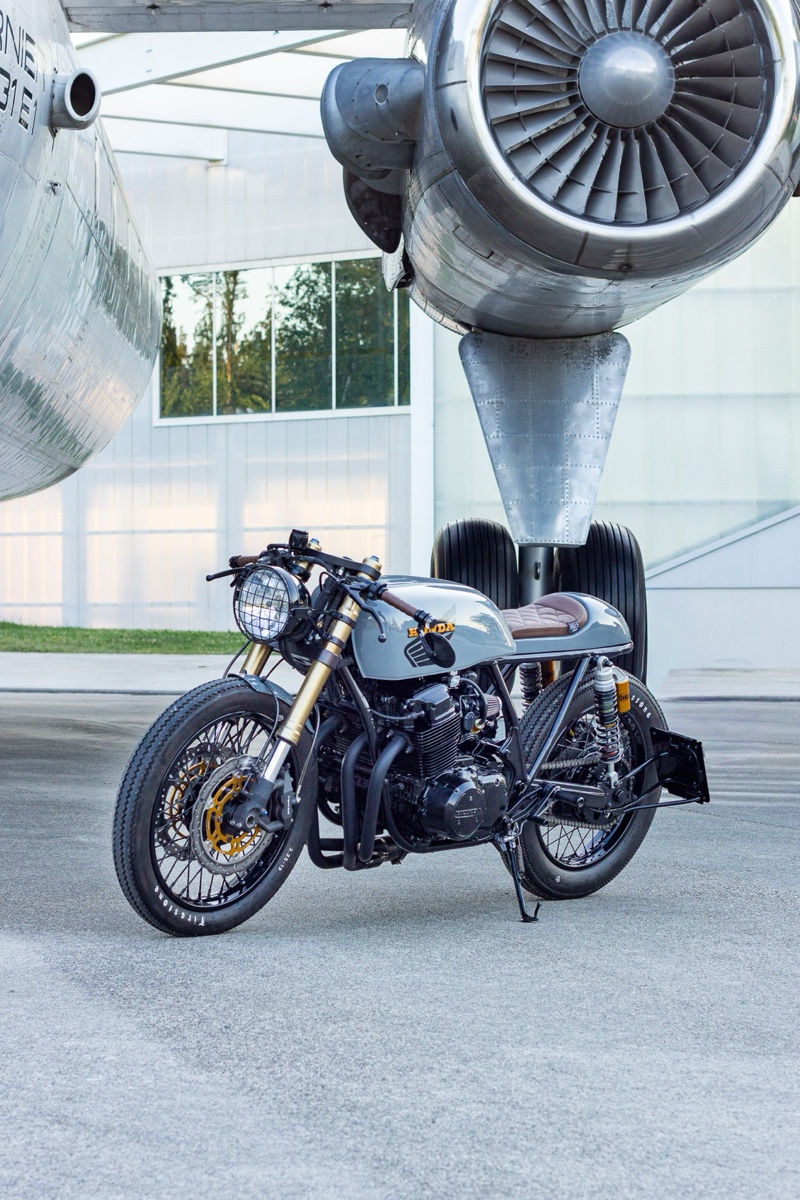 It was a crucible in which Matthias developed his fabrication skills, assembled a comprehensive set of tools, and overcame innumerable setbacks. The bike’s nickname tells much of the story:
“Unofficial: “Damned Bitch — Two steps forward, one step back”
Official: MAEB #1”
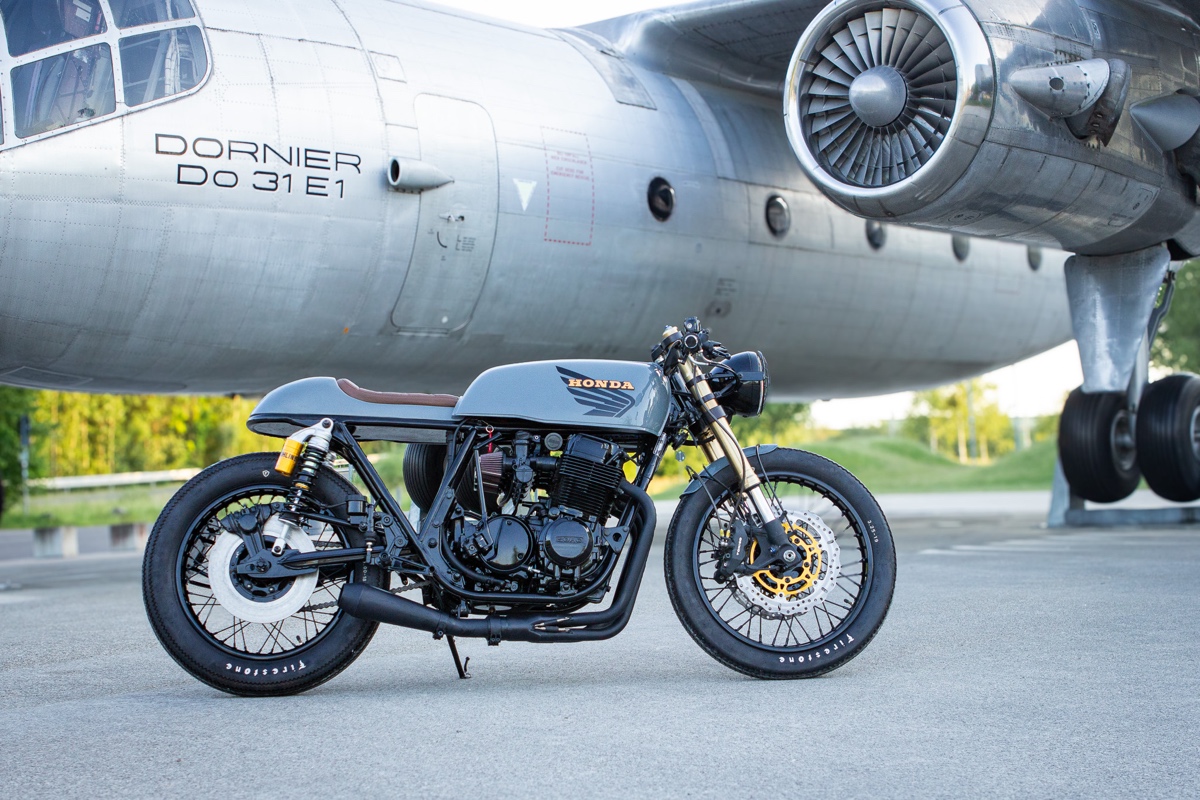
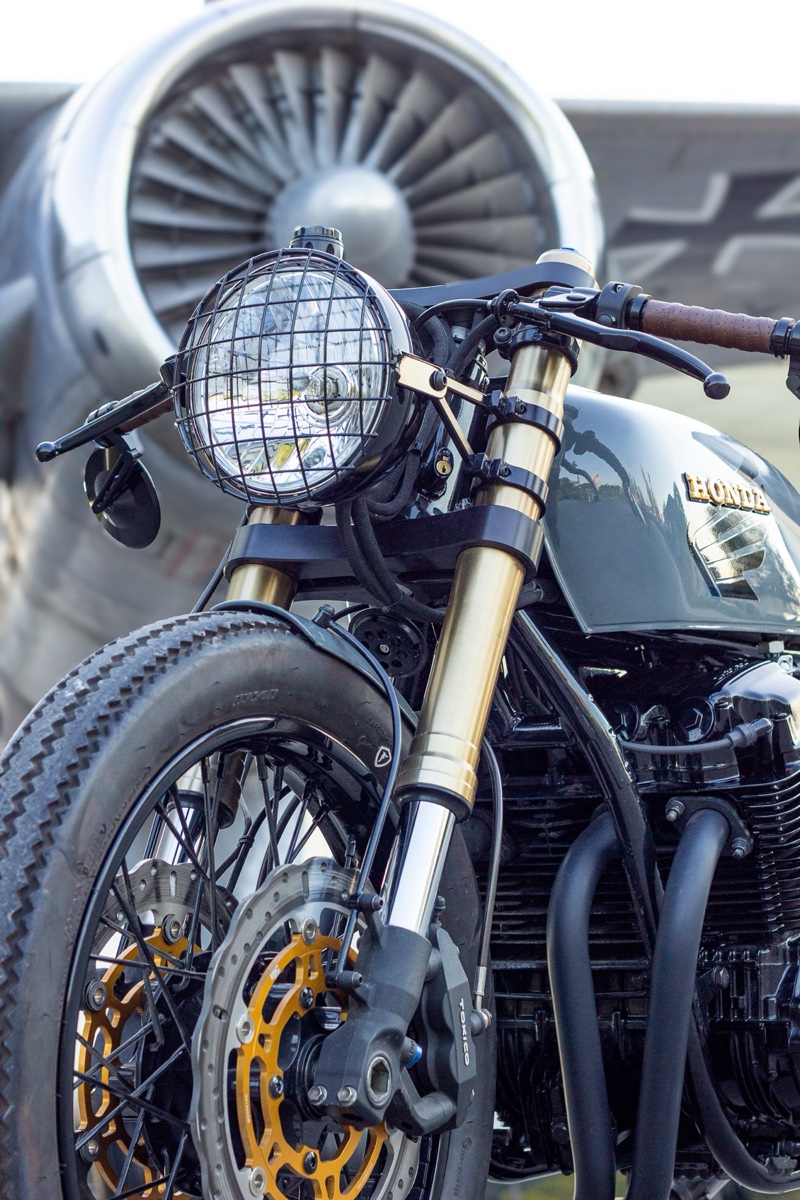
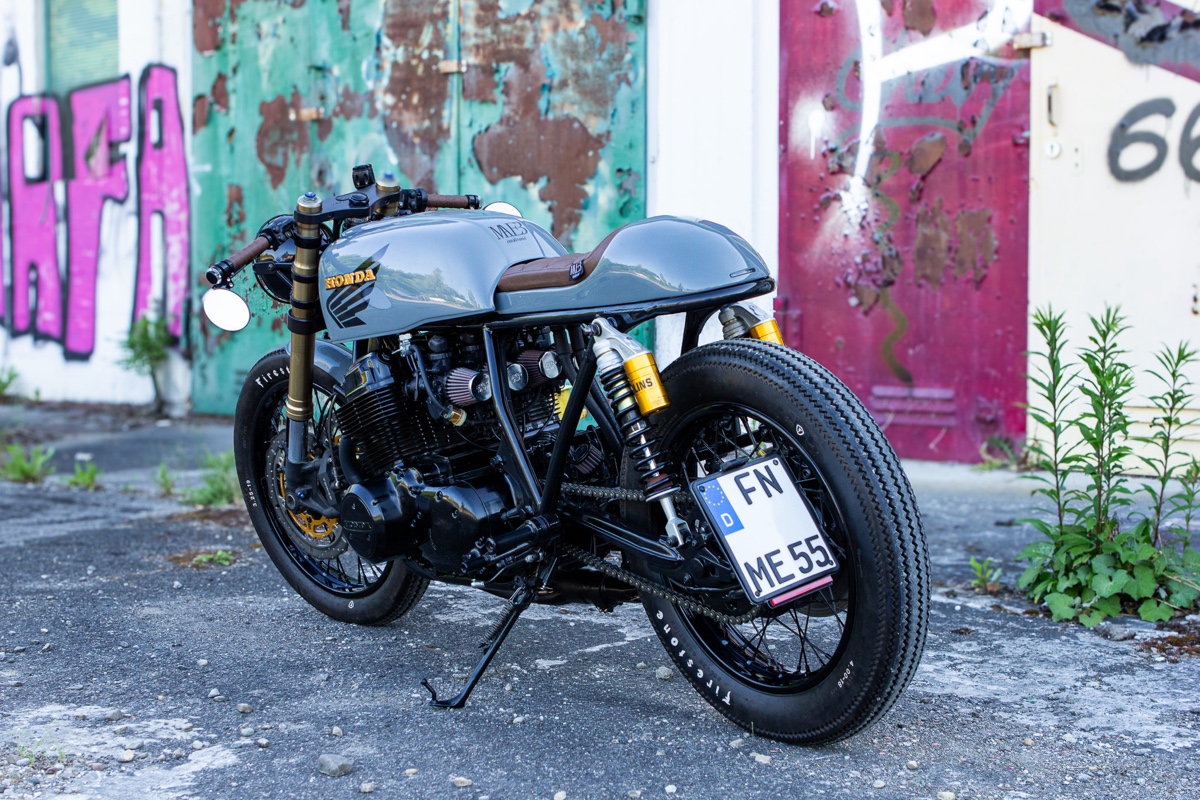
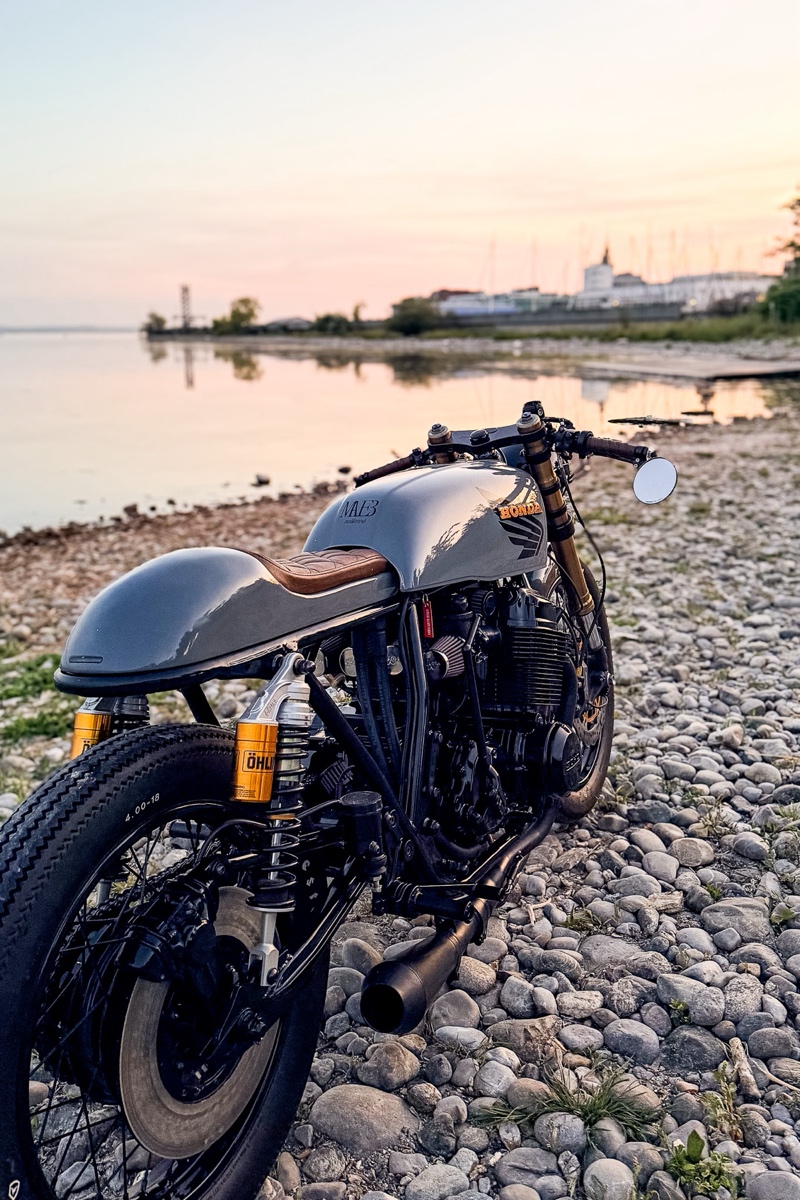
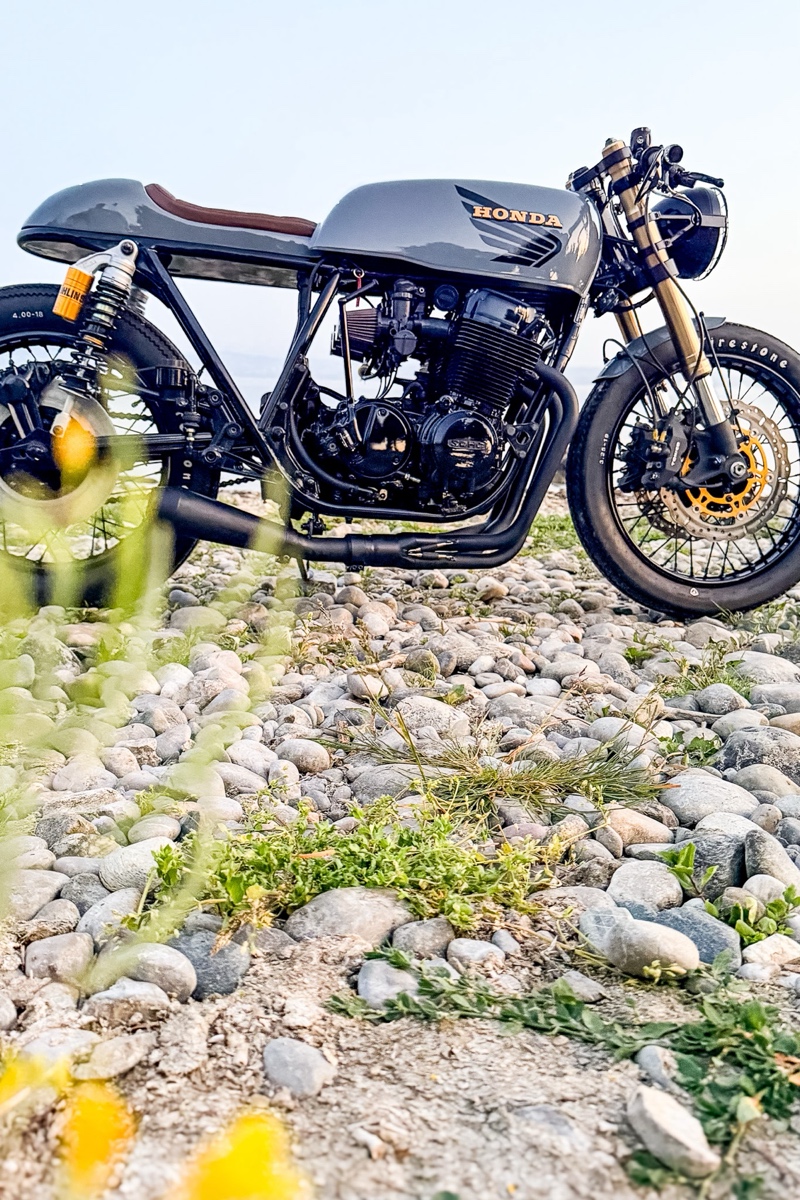
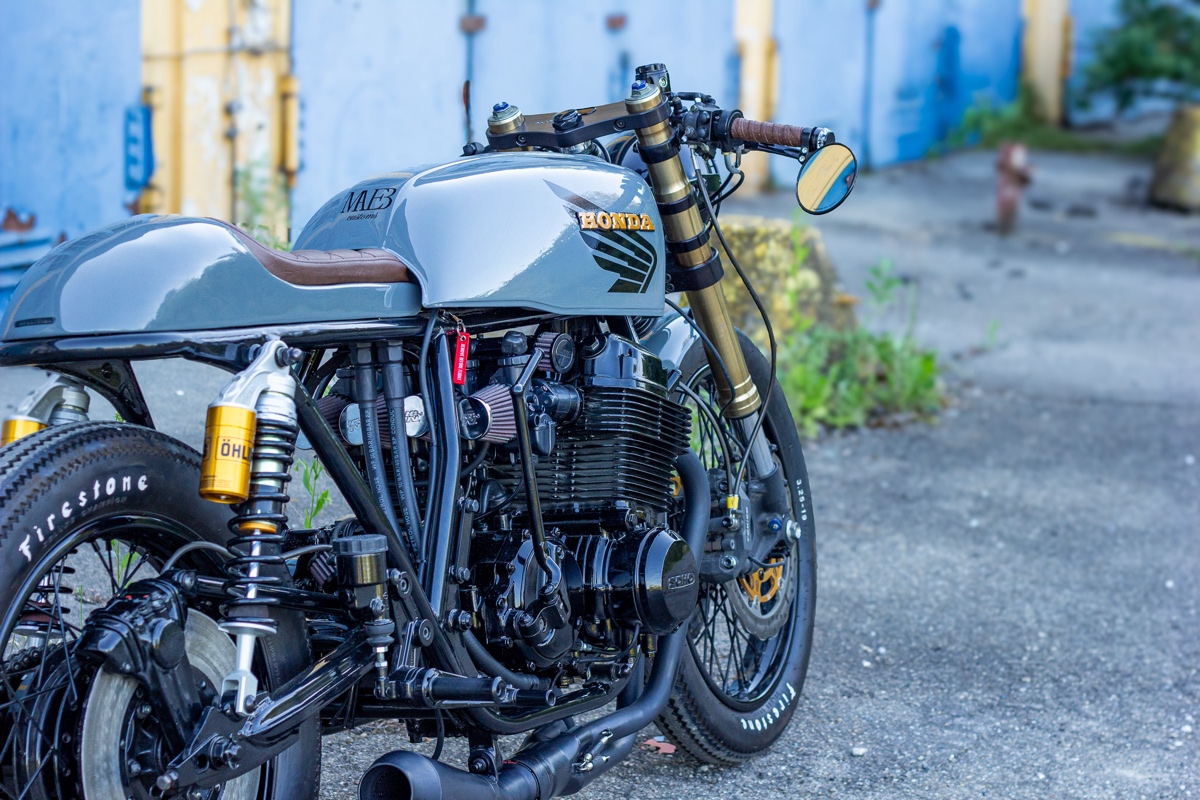
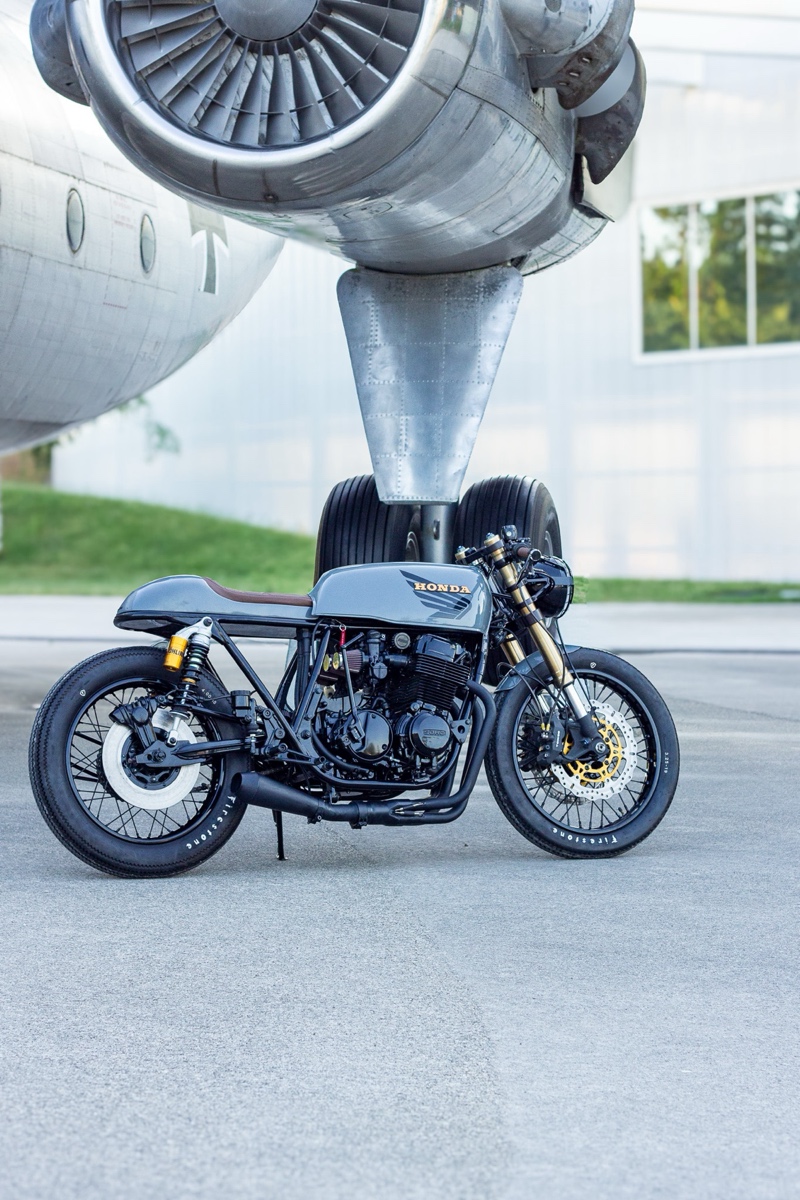 Matthias says he’s recorded some 1300 hours working on the build. Highlights include the GSX-R front end, custom-made subframe and FRP tail cowl, custom-built oil tank, overhauled engine and F1 Super Sport tank, Öhlins rear shocks, spoked wheels that Matthias laced himself, one-off wiring loom (Matthias’s is on the 17th version!), custom-built footrests / license plate holder / front fender, and much more. Importantly, all modifications have been approved and registered by the German TÜV, making the bike fully street-legal.
 Matthias outlines many of the challenges in our interview below, from a failed header design to his self-built spray booth and paint setup to those 17 iterations of the wiring loom. Add in a LiPo battery that combusted inside their apartment and the lingering stench of rust remover in the bathtub, and Matthias is quick to thank his very understanding wife, Cristina, for putting up with the project from the first day to the last.
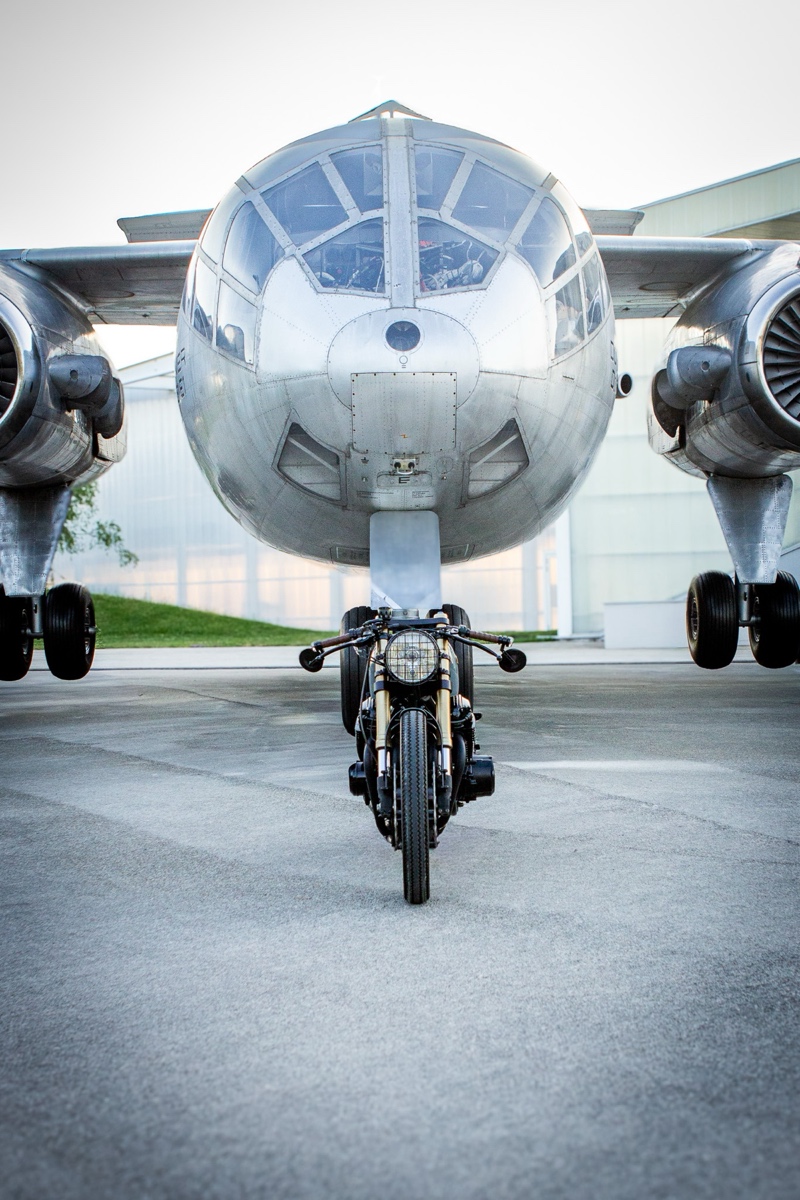 In spite of — or more likely because of — the many challenges, Matthias acquired innumerable skills, a whole suite of tools (sandblasting cabinet, 20-ton press, TIG and MIG welders, motorcycle lift, etc.), and the ability to build more bikes in the future. In fact, MAEB #1 is now for sale to make room for future projects.
 Hats off to Matthias for the grit and perseverance it took to make this bike a reality, and for learning to do so much of the work himself. Below you’ll find our full interview with Matthias about the build, with many more details and backstories, and there’s also a full build sheet.
If you’re interested in purchasing this bike, you can find Matthias on Instagram (@matthias.ebenhoch) or drop us a message requesting his email address.
Honda CB750F Café Racer: Builder Interview
• Please tell us a bit about yourself, your history with motorcycles, and your workshop.
My name is Matthias Ebenhoch, I am 36 years old, and I live in Friedrichshafen on Lake Constance. When I saw Jarred DeArmas’s CB750 Seabass back in 2017, it was love at first sight. I knew I had to have a bike like that.
After a quick make-or-buy analysis, the project was born. The goal: a 3-year timeline and a €10,000 budget. My ambition was to build the bike 100% with my own two hands — from the welding (up until then, I didn’t even own a welding machine) right down to the paintwork.
As a trained mechatronics technician, I was looking for a fulfilling change of pace from my job as an engineer, where I sit in front of a computer all day. After nine years, three moves including a career change, buying a 100-year-old house (which included a year-and-a-half-long gut renovation done entirely by ourselves), and completely blowing the budget, the project is finally on the home stretch. My goal was to combine modern technology with a cool aesthetic, and ultimately get it street-legal for German roads.
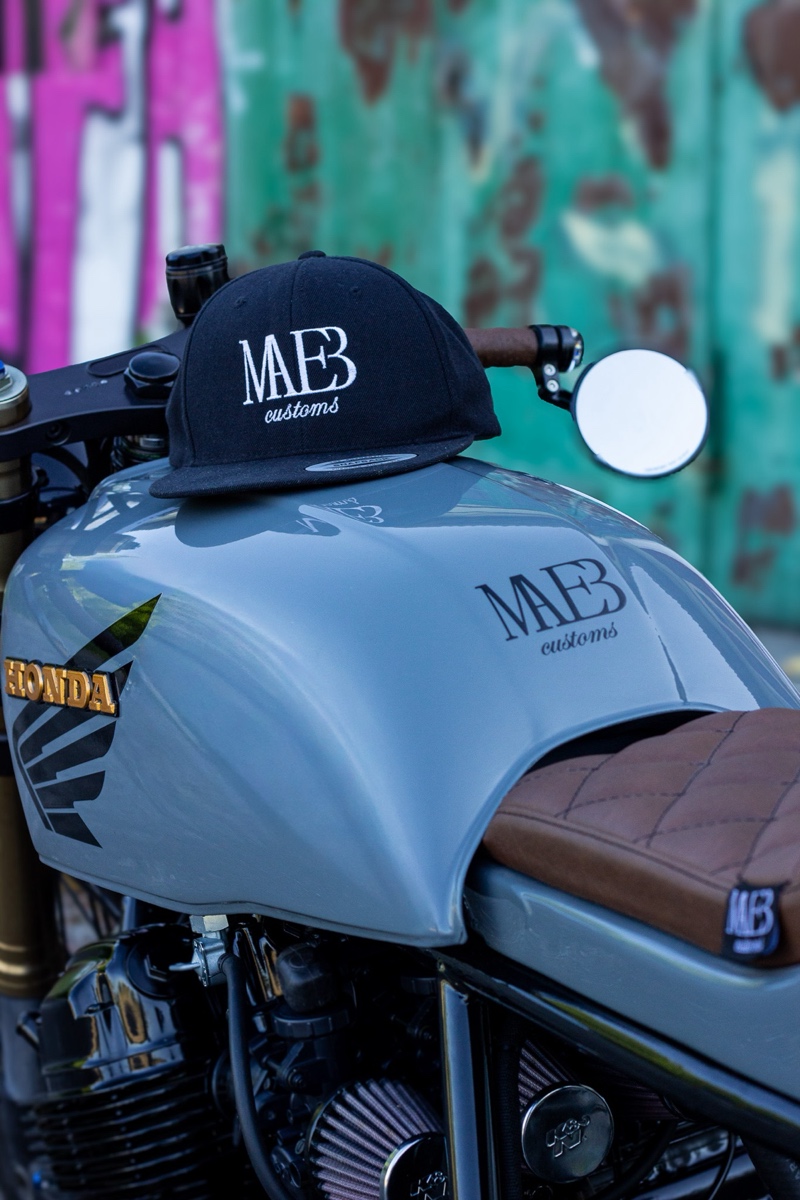
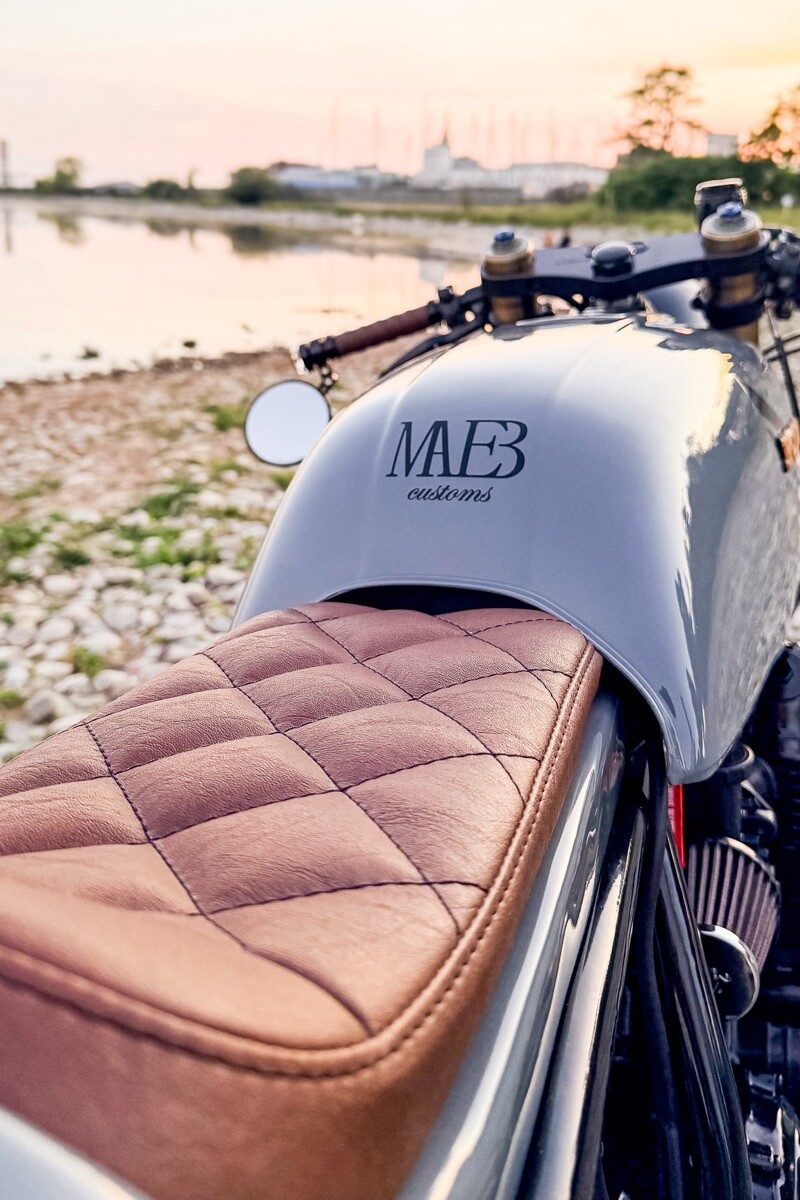
Every hour I spent in the workshop was meticulously tracked in 15-minute increments, and every single expense and income was documented down to the last cent… I guess my MBA is shining through there. Naturally, any self-respecting bike builder needs a label, so the “MAEB Customs” logo was born on a night bus in Malaysia.
• What’s the make, model, and year of the donor bike?
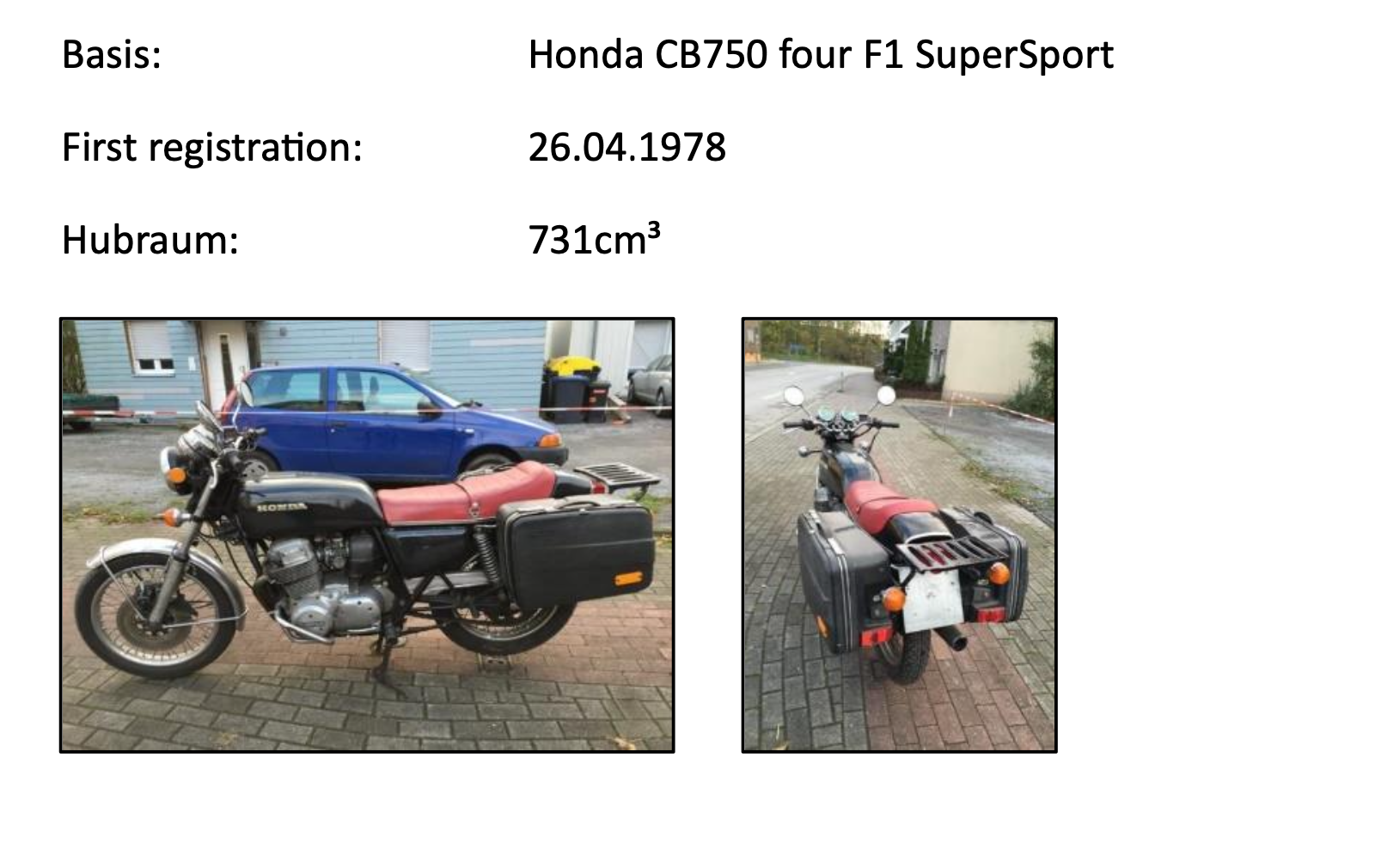
Honda CB750 Four F1 SuperSport, April 1978.
• Why was this bike built?
Personal motivation. But I’ve realized — especially now that I own all the necessary equipment, such as a sandblasting cabinet, 20-ton presses, TIG and MIG/MAG welders, a motorcycle lift, etc. — that the MAEB #1 wasn’t the last bike I’ll build. Incidentally, the MAEB #1 is for sale… I’m running out of space with three motorcycles.
• What was the design concept and what influenced the build?
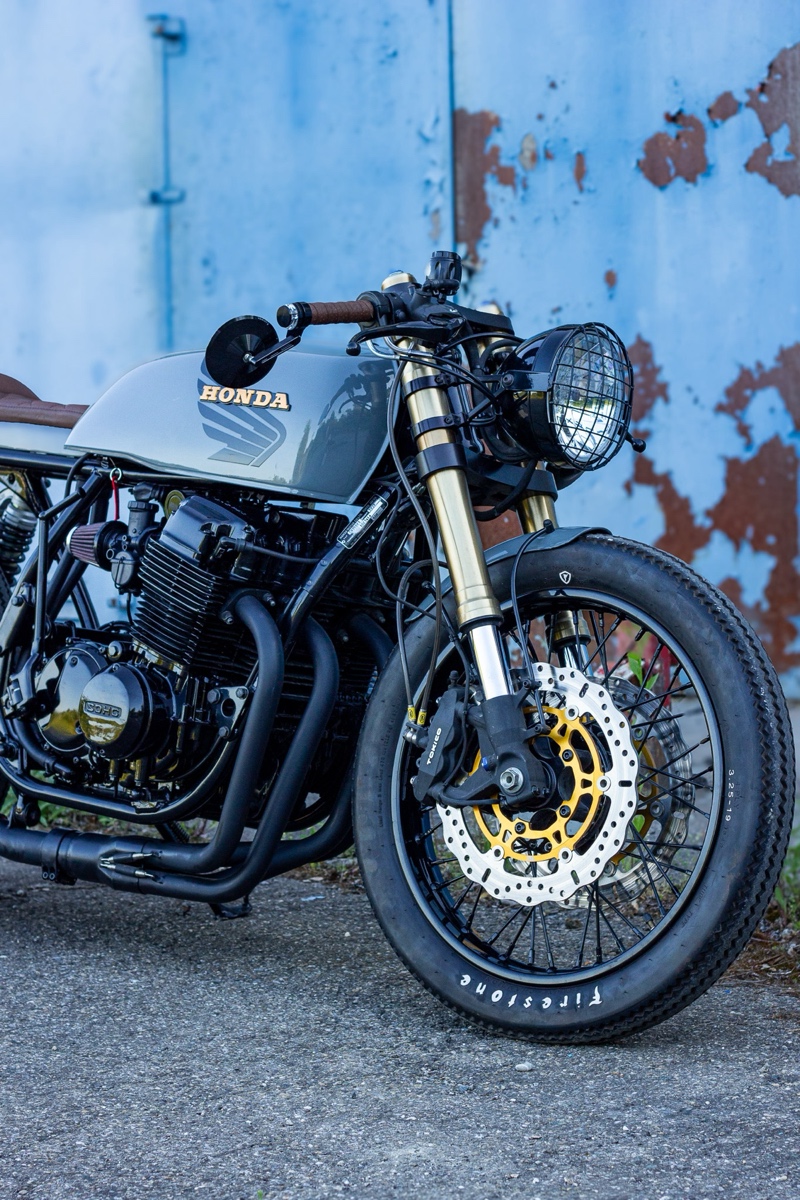
A combination of modern technology (m.unit blue, etc.) and classic design. As previously mentioned, the initial inspiration was the Seabass by DeArmas. Besides, I didn’t want to make any compromises, which is why the budget was exceeded.
• What custom work was done to the bike?
Preamble: All modifications have been approved and registered by the German TÜV, and the vehicle is street-legal in Germany.
1. Front end
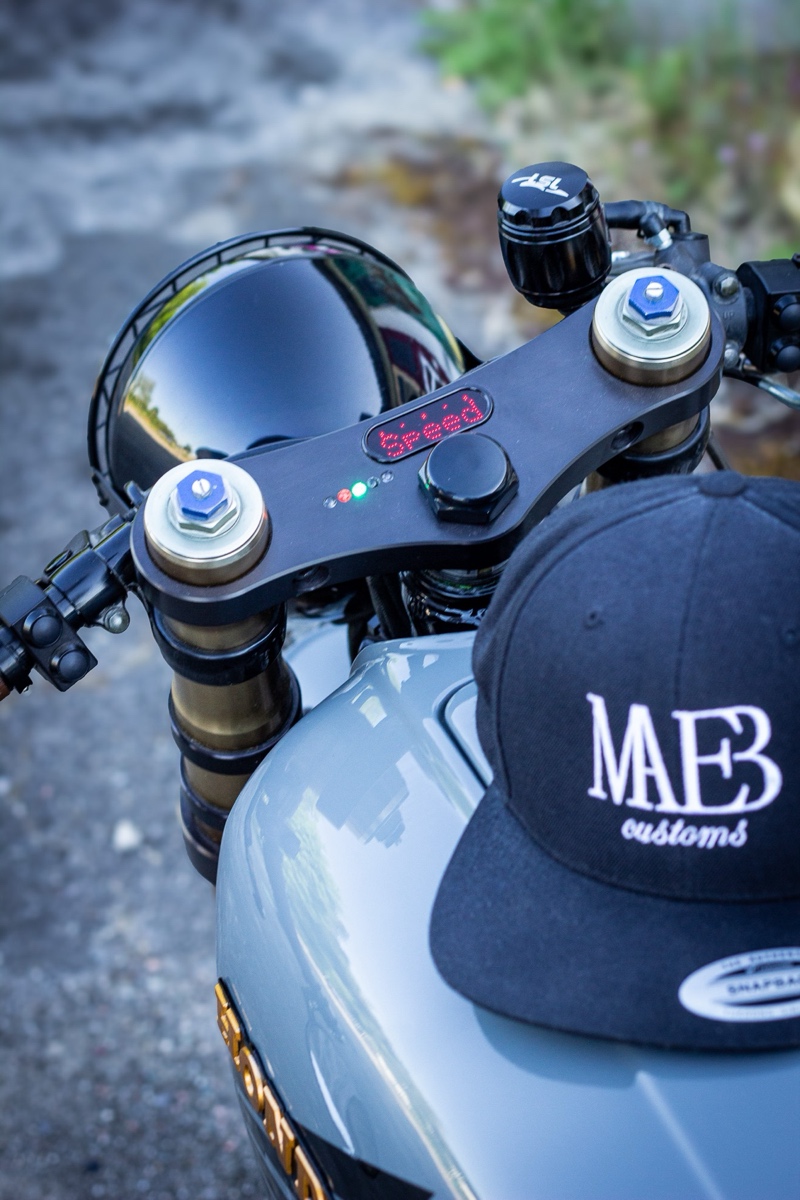
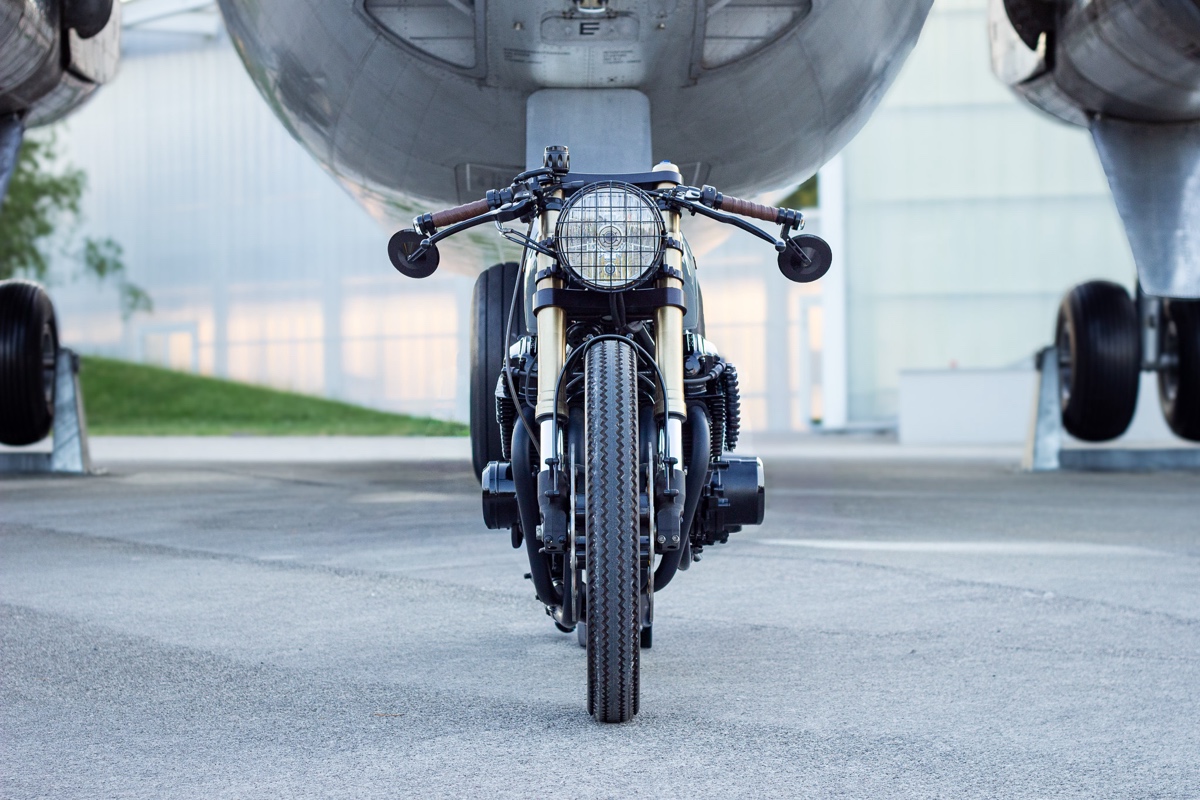
▪ Upside down fork Suzuki GSX-R K7
▪ OEM Tokico brake calliper, OEM Nissin brake master cylinder
▪ Top + Lower Clamp, Conversion Stem, Conversion front hub by Cognito Moto, USA
▪ 310mm waver brake discs, Model “MD3091XC” by EBC Brakes
▪ Customized front and rear stainless steel braided brakes hoses by HEL
2. Tail section and seat / Removal of passenger seat
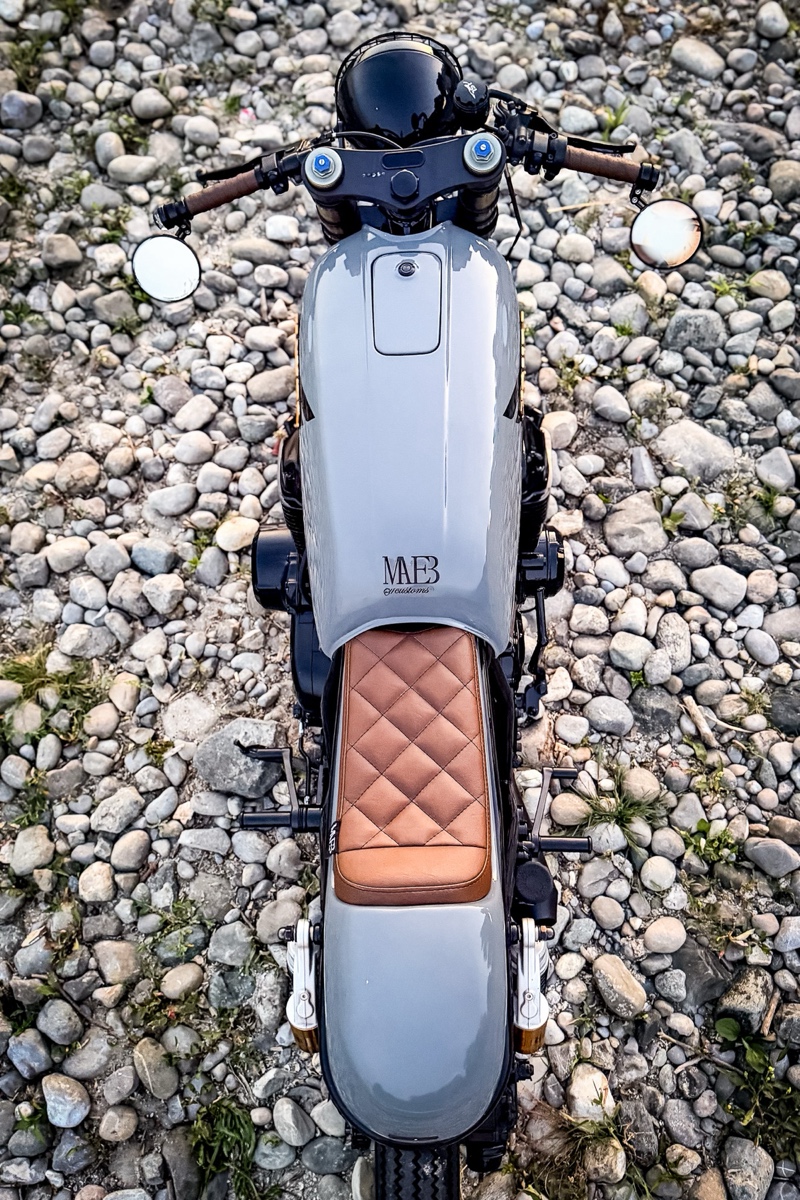
▪ Custom-built, Fiber reinforced plastic, Upholstery work was carried out externally
3. Engine, Tank
▪ OEM, completely overhauled, new cylinder bank, new cylinders, honed, coated with matte black 2K engine paint
▪ SuperSport F1 Tank, OEM, Lock replaced with a push-button, Colour Code RAL7012 “Basaltgrau”
4. Oil tank
▪ Custom-built, 3mm stainless steel, Pressure test verified in accordance with DIN EN 1779 and DVGW 469 06/2010 standards
5. Exhaust system
▪ Exhaust Header (Stainless Steel) – Model “HDR000V” by Delkevic, UK
▪ Silencer / Muffler (Stainless Steel) – Model “Sidefire” by Cycle X, USA
▪ Cerakote Ceramic Coating (Matte Black)
6. Subframe modification
▪ Custom-built
7. Rear shock absorbers
▪ Shock absorber Model “HO1400” / Product family “STX 36 Twin” by Öhlins
8. License plate holder
▪ Custom-built license plate holder, Reflector 12x122mm by Detlev Louis
9. Footrest assembly
▪ Custom-built, Model “03-0019” by Tarozzi, Italy
10. Fender
▪ Front: Custom-built, Rear: Removed
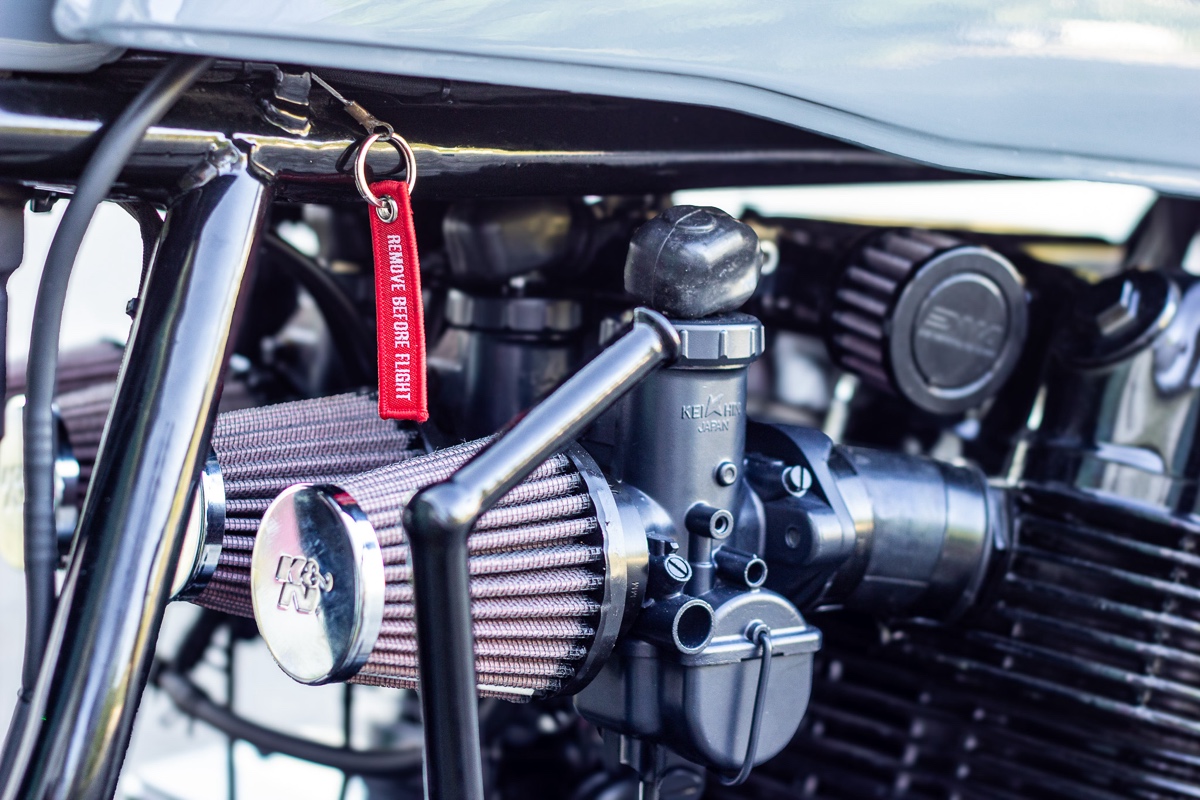
11. Carbs + Air filters
▪ OEM, Keihin, Teflon-coated (Matte Black)
▪ Open air filters, Model “RC-2314” by K&N Filters
12. Electrical system
▪ Wiring harness custom-built
▪ Speedometer “motoscope mini”, digital ignition lock “m.lock”, push-button switches “m.swich” and digital control unit “m.unit blue” by Motogadget
▪ Electronic ignition Model “ELZ2coil” by AC-Motorradteile, Germany
▪ Custom-built LiFePo4 Battery (4S, 12V, 5Ah) with DALY BMS 4S 100A with balancer (live monitoring via APP)
13. Lights
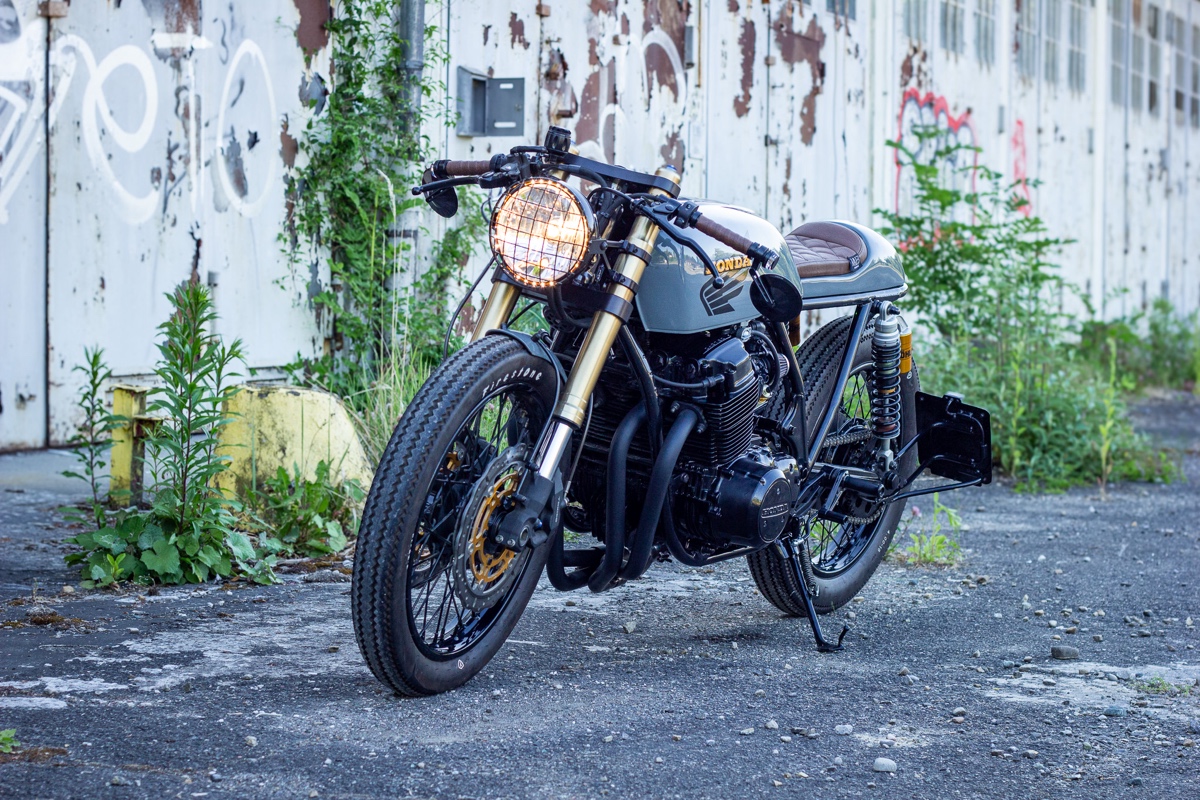
▪ 7” Model “Reno 2” with LED position light by Shin Yo, Germany
▪ Rear inclusive brake light “Stripe” by Highsider
▪ Rear turn signals removed, Model “m.blaze disc” by Motogadet
▪ LED license plate light Model “L001” by Koso
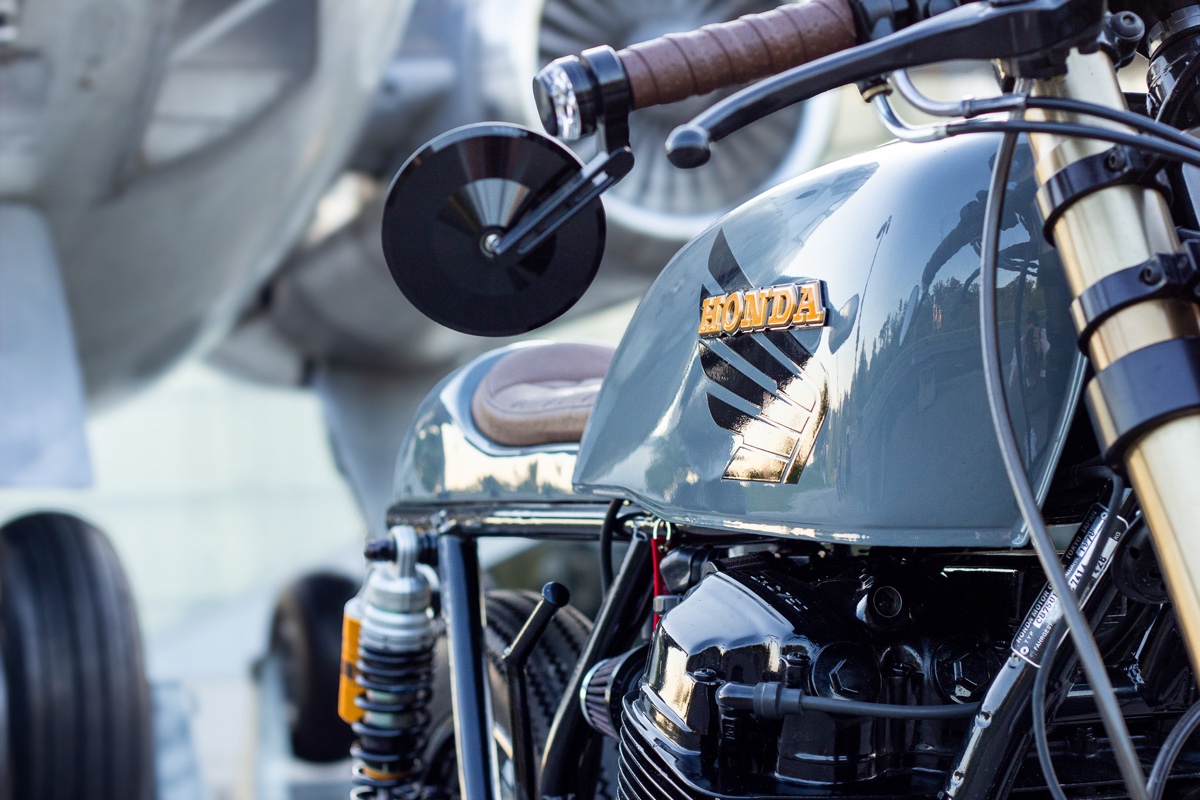
14. Mirrors
▪ Model “Montana 2” by Highsider
15. Tires
▪ Front: 3.25×19, Rear: 4.00×18, Model “Champion Deluxe” by Firestone
• Does the bike have a nickname?
Unofficial: “Damned Bitch – Two steps forward, one step back,”
Official: MAEB #1
• Any idea of horsepower, weight, and/or performance numbers?
Horsepower close to stock: 49 kW… perhaps a little more thanks to the open K&N air filters and
the exhaust system. ~210 kg dry weight.
• Can you tell us what it’s like to ride this bike?
Awful. Thanks to the clip-on handlebars, the very limited steering angle, and the seat with barely 1 inch of foam… it’s very uncomfortable. You just have to love the bike… it’s all about the lifestyle.
• Was there anything done during this build that you are particularly proud of?
You need an immense amount of staying power, and you’re basically always just waiting for the next setback or problem… My wife, friends, and family thought I was crazy. To name just four examples:
1) Header (see Instagram post 2020-06-19 + 2026-02-03)
I spent over 60 hours fabricating a mock-up of the manifold from individual wastewater pipe segments, which I then recreated in stainless steel and tack-welded. I wanted to leave the final welding to a professional to ensure a flawless look. Unfortunately, right after the test welds, it became clear that the quality did not meet my vision, and the whole thing was a total waste of time and materials.
2) Paint Job and Spray Booth (see Instagram post 2024-05-13)
My goal was to do the paint job myself. I even built a custom spray booth for this purpose, converting a camping pavilion. Wool blankets soaked in water served as overspray catchers, and I built an extraction system using a chicken coop blower. Despite a trial run on my Suzuki SV, the final result on the Honda was—I’d say “not bad”—but it just didn’t meet my standards. In the end, I had to bite the bullet, spend €600, and take it to a professional painter.
3) Wiring Diagram / Electrical Schematic (see Instagram post 2020-12-03).
Despite using wiring diagrams from the internet, I had to create my own completely customized schematic. I am currently on “final” version 17.
4) Second Fuel Tank (see Instagram post 2026-03-04)
Since the project has been dragging on for a few years now, the tank — which was actually ready for installation — suffered for it. All the prep work, like stripping the paint, brazing holes, my own DIY painting attempt, and the professional paint job, including having custom MAEB stickers made, was all for nothing. Despite using a dirt-expensive rust sealer, the tank rusted through again. This means I have to look for a new tank and pay a lot of money to have it painted all over again. Talk about two steps forward, one step back.
• Is there anyone you’d like to thank?
A very special thanks goes to my wife, Cristina. She really had to put up with a lot from me and this project.
It all started right with the delivery of the donor bike. I bought it sight unseen because I knew I was going to tear it completely apart anyway. I had to work, so Cristina drove to my rented garage to meet the transport guy “Jesus”. Unfortunately, there was no cell reception, and Jesus showed up two hours late. I definitely caught a lot of flak from my wife that evening!
Another example was the 24-hour rust removal process inside the fuel tank (Insta post), which took place in our bathtub. The rust remover smelled so incredibly bad that our entire apartment stank for a whole week afterward.
Or laced wheels (Insta post)… I asked my wife if I could do that job at home on the couch. At that point, of course, neither of us knew that this would turn into a three-week process.
Lastly, I’d like to mention the fire caused by my first LiFePO4 battery (Insta post). The entire ground floor was filled with smoke, and all the smoke detectors went off. Fortunately, we were working from home and the battery was sitting on the stone kitchen countertop, rather than being built into the motorcycle, or tucked away in the basement or garage.
Follow the Builder
Instagram profile: @matthias.ebenhoch


Great stuff! Especially impressed with the attention to detail.
That wing on the tank? Terrific, but then I just might be a bit biased 😉
Kudos 👏👏👏
The 1910 pattern Firestones should be consigned to the dregs of history. This is a Cafe’ ‘Racer’. Only the best tires needed here, not these!
Rear disc could mimic the fronts, but 2″ smaller.
Edges of cyl head fins could be polished for contrast.
Overall, nice effort!
Cheers!
Nice, but needs side covers.
Yes, agree with Noah, a great build, but why would you use those tyres.