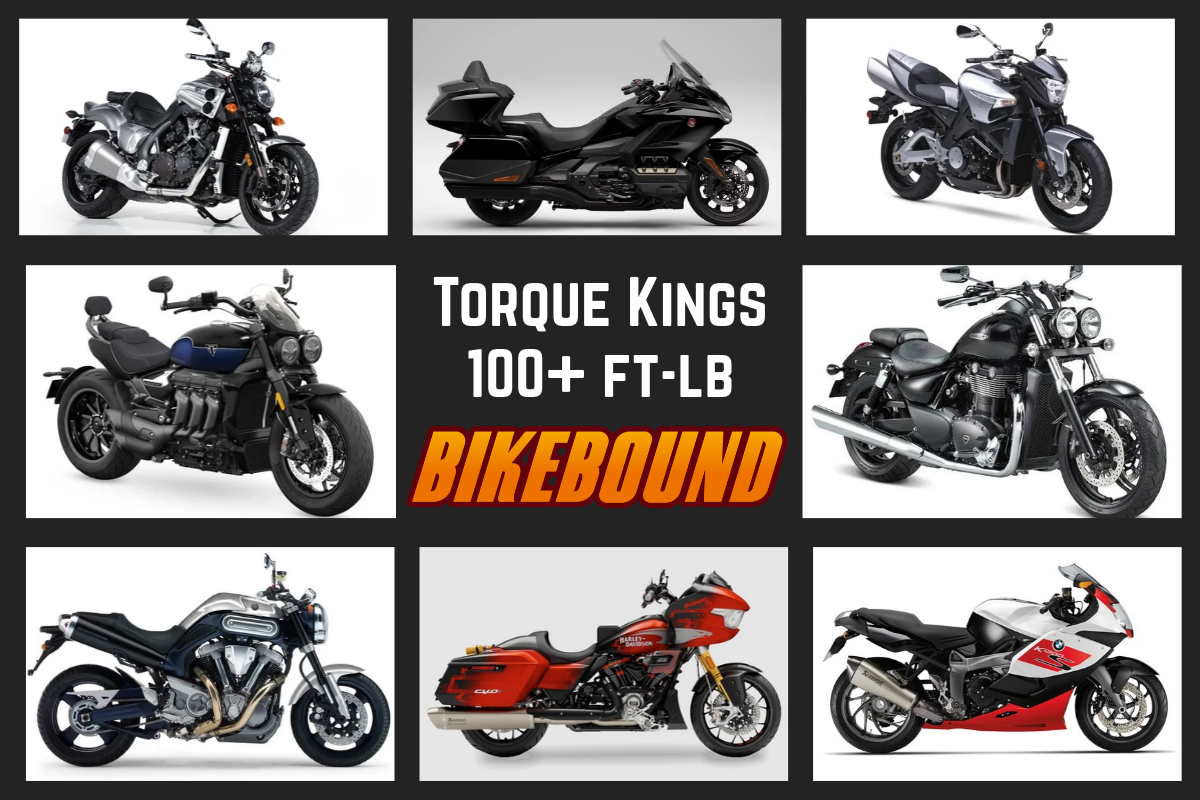
From the Triumph Rocket 3 and Harley CVO baggers to the VMAX, Gold Wing, Hayabusa, and old-school muscle cruisers, these are the biggest-torque production motorcycles ever sold…
Horsepower gets the headlines, but torque wins the traffic light. Ask most riders what makes a motorcycle feel brutally fast in the real world and they will describe something that does not always show up in peak horsepower figures. They’ll talk about effortless roll-on acceleration, instant drive out of corners, passing without a downshift, and that satisfying shove in the back when the throttle is cracked open. That, friends, is torque.
While 200-horsepower superbikes dominate magazine covers, many of the motorcycles with the biggest torque numbers are cruisers, baggers, touring bikes, and giant-capacity muscle machines. They may not rev to 14,000 rpm, but they don’t need to. They make their power low in the rev range, and they make a lot of it.
So which production motorcycles produce the most torque? For this list, we’re focusing on street-legal production motorcycles — current and discontinued — with manufacturer-claimed or widely published crankshaft torque figures of at least 100 lb-ft. We’re excluding trikes, prototypes, race-only machines, and one-off customs. We’re also separating electric, turbine, and V8-powered outliers, as most of them are not truly “mass-production.”
Torque vs Horsepower
Horsepower tells you how much work an engine can do over time. Torque tells you how much twisting force the engine produces. The two are inseparable, but they create very different riding experiences. A high-revving superbike might produce incredible horsepower while making comparatively modest torque. A big V-twin, giant triple, or flat-six, meanwhile, can produce enormous torque at half the engine speed, making the bike feel stronger everywhere below the redline. That’s why a Triumph Rocket 3 feels like a freight train at 4000 rpm, while many superbikes need another several thousand revs before they really come alive.
Asterisk Class: The Outliers
Before we get to the mainstream production bikes, we need to acknowledge the monsters that break the scale. The Boss Hoss BHC-3 502 and MTT Y2K Turbine Superbike both qualify as production motorcycles in a broad sense, but they exist so far outside mass-produced motorcycle design they deserve their own category. The Boss Hoss uses a Chevrolet-based V8, while the MTT uses a gas-turbine powertrain. Their torque figures make even the Triumph Rocket 3 look modest.
Electric motorcycles are another special case. Bikes like the Energica Ego / Eva Ribelle and Zero SR/F quote enormous motor or wheel torque figures, but those numbers are not directly comparable with crankshaft torque from internal-combustion motorcycles.
Boss Hoss BHC-3 502
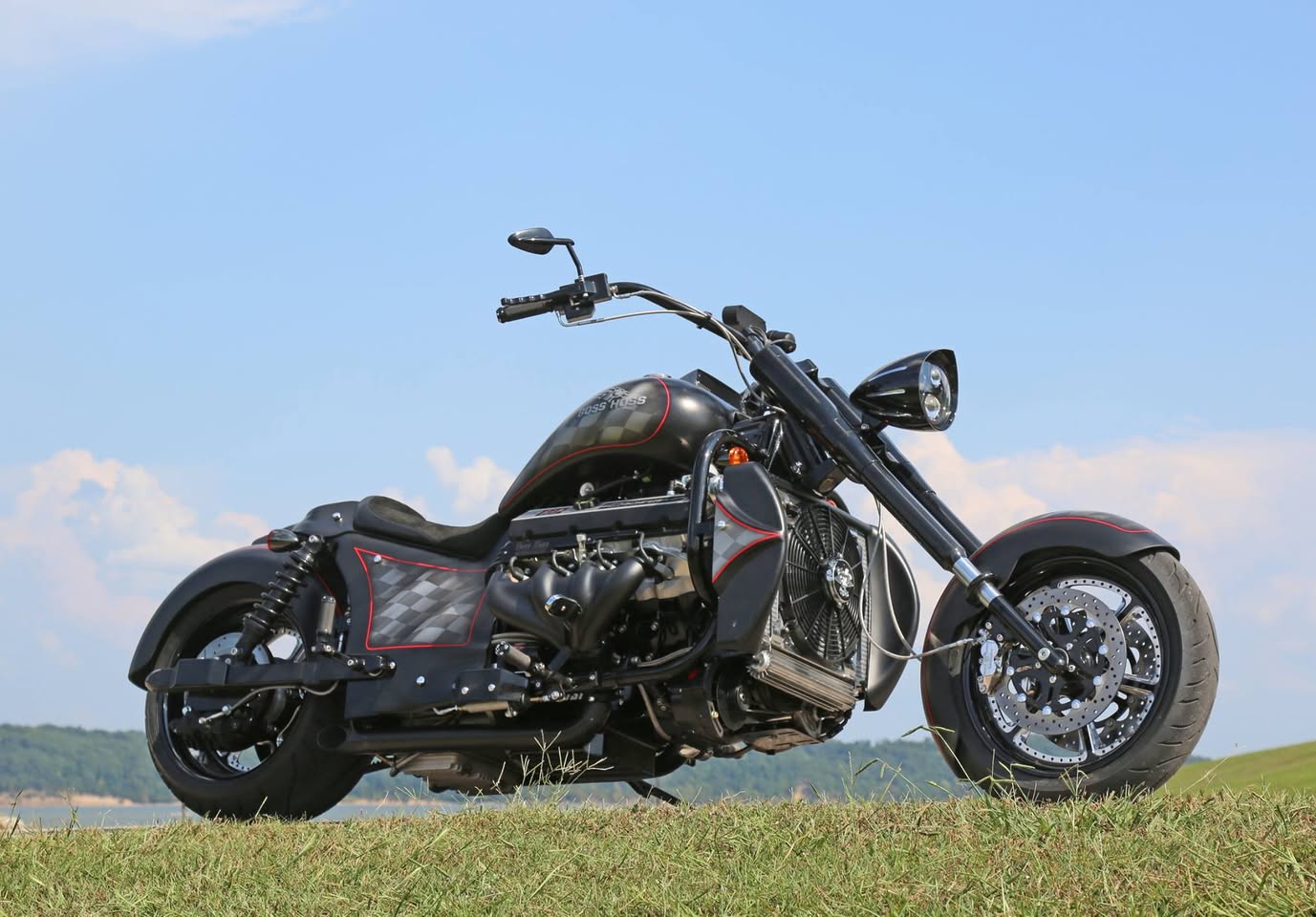
Claimed Torque: Up to 567 lb-ft
Chevrolet big-block V8 boutique-production motorcycle
MTT Y2K Turbine Superbike
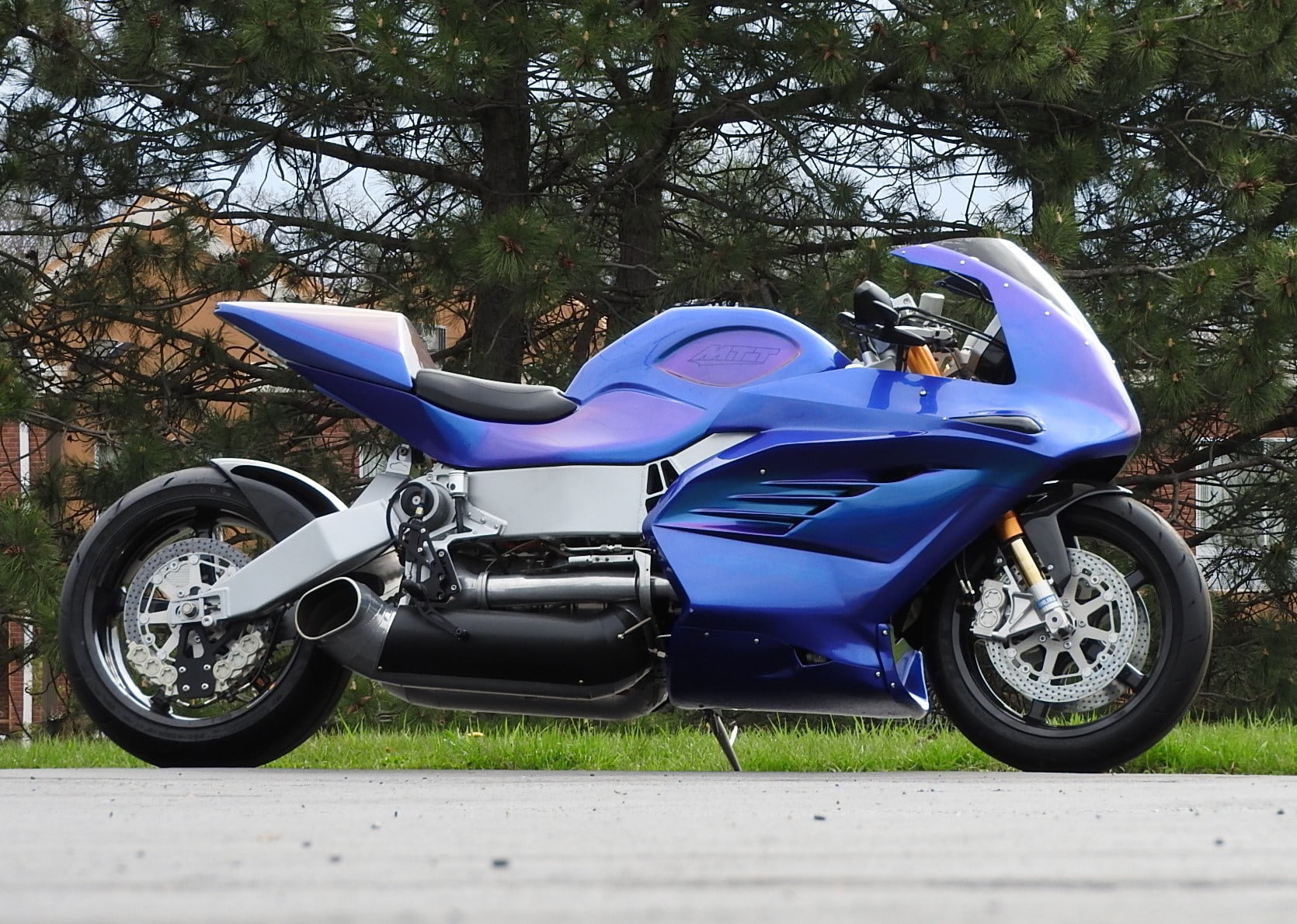
Claimed Torque: 425 lb-ft
Street-legal turbine-powered limited-production motorcycle
Energica Ego / Eva Ribelle
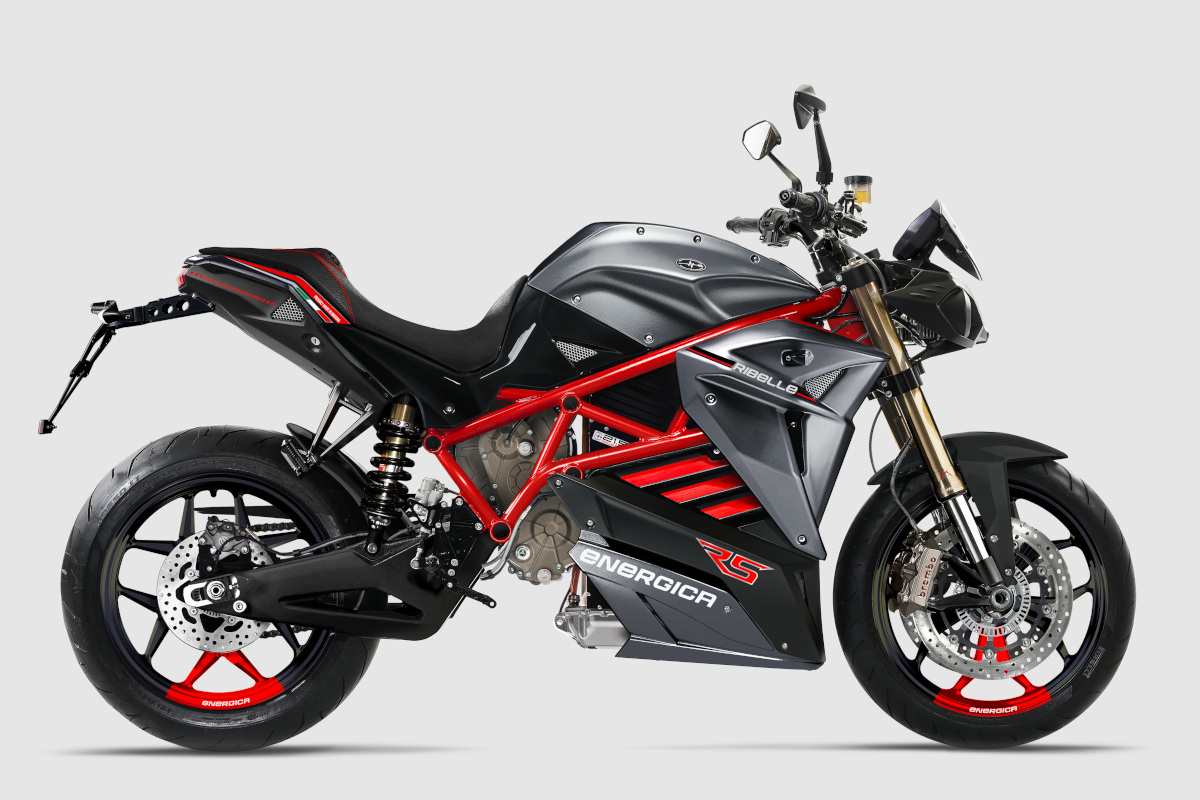
Claimed Torque: 164 lb-ft / 222 Nm
Electric motorcycle; motor/wheel torque figures are not directly comparable
Zero SR/F / SR/S
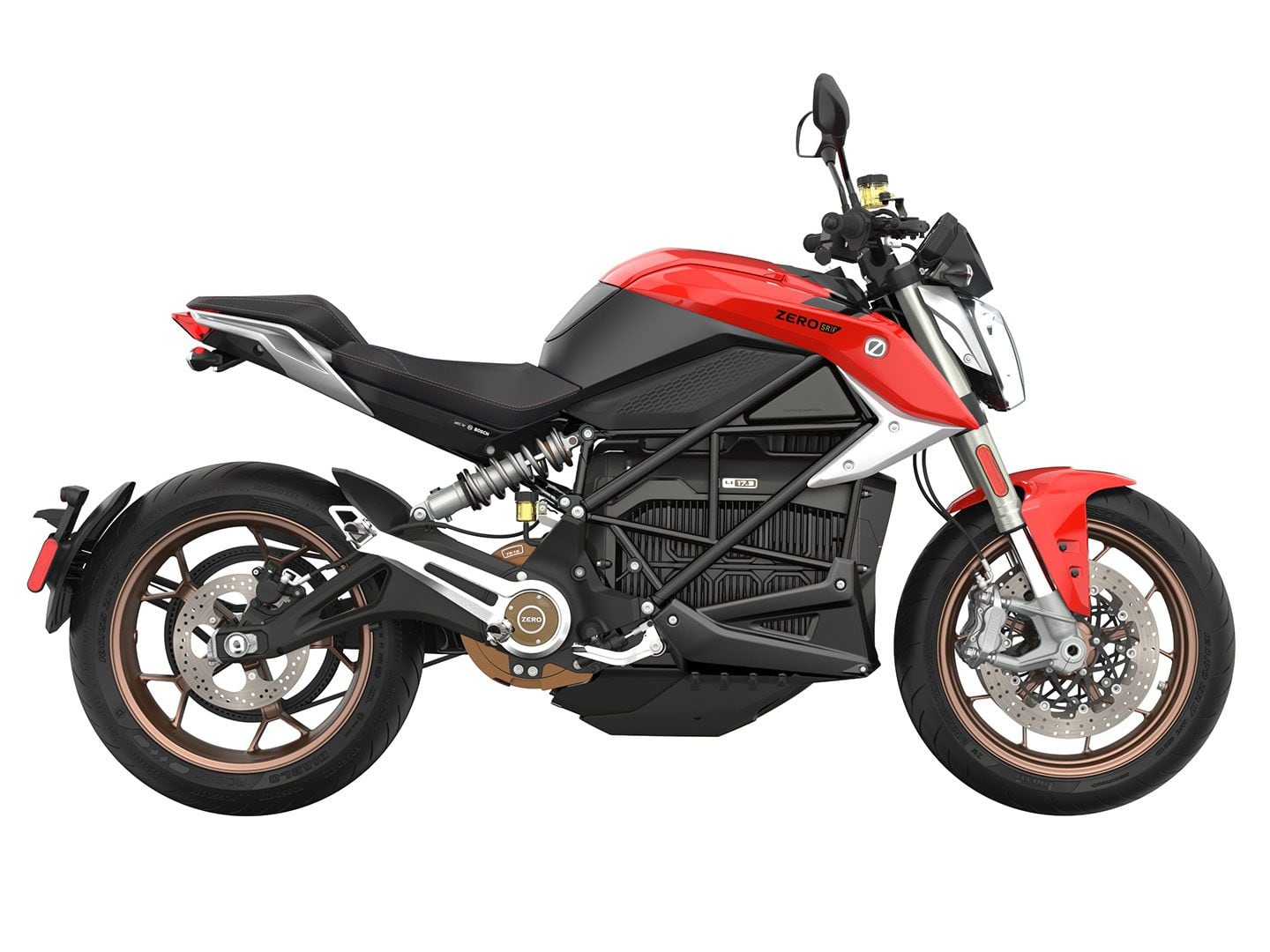
Claimed Torque: 140 lb-ft / 190 Nm
Electric motorcycle; motor torque is not directly comparable
Now, on to the production gasoline motorcycles most riders will actually recognize.
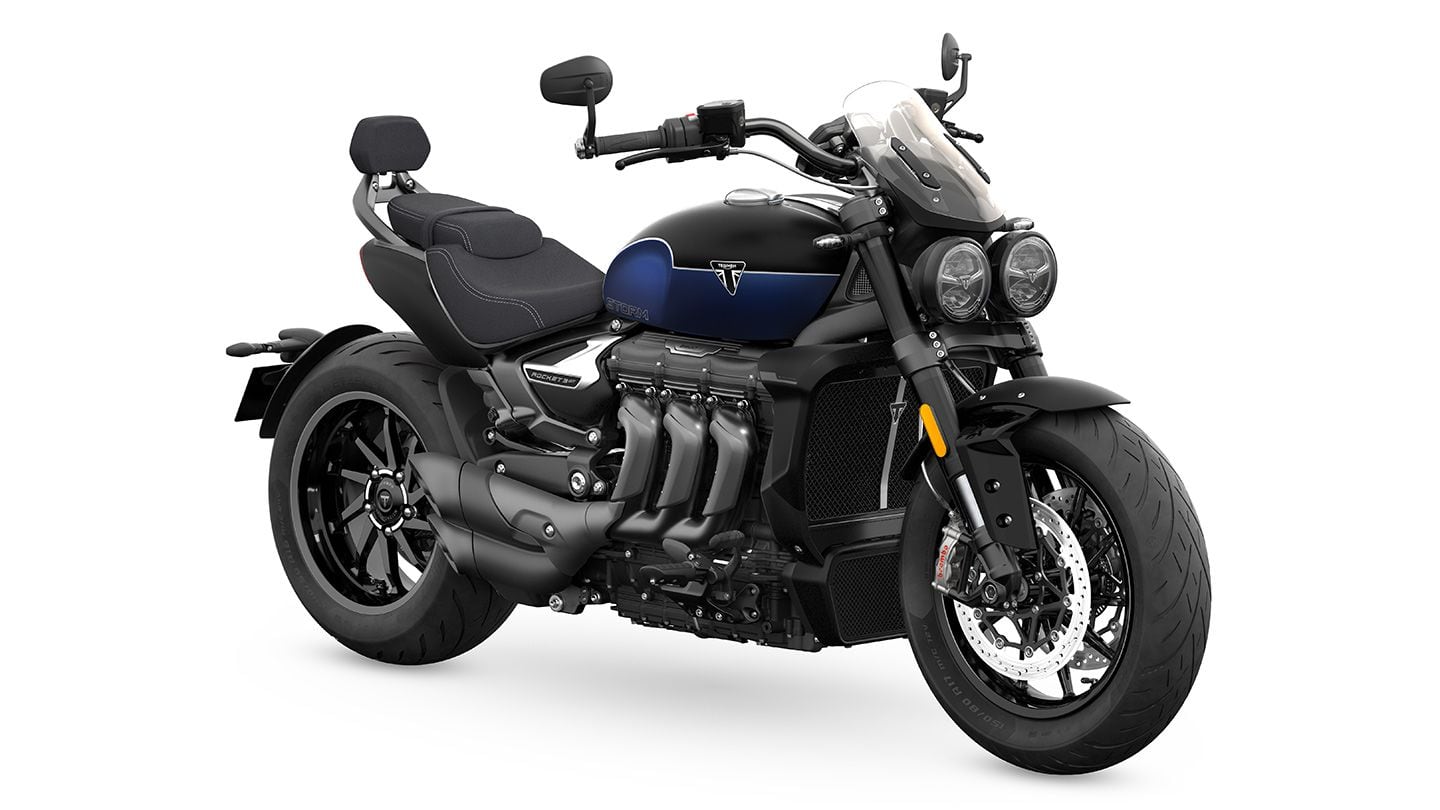
1. Triumph Rocket 3 Storm
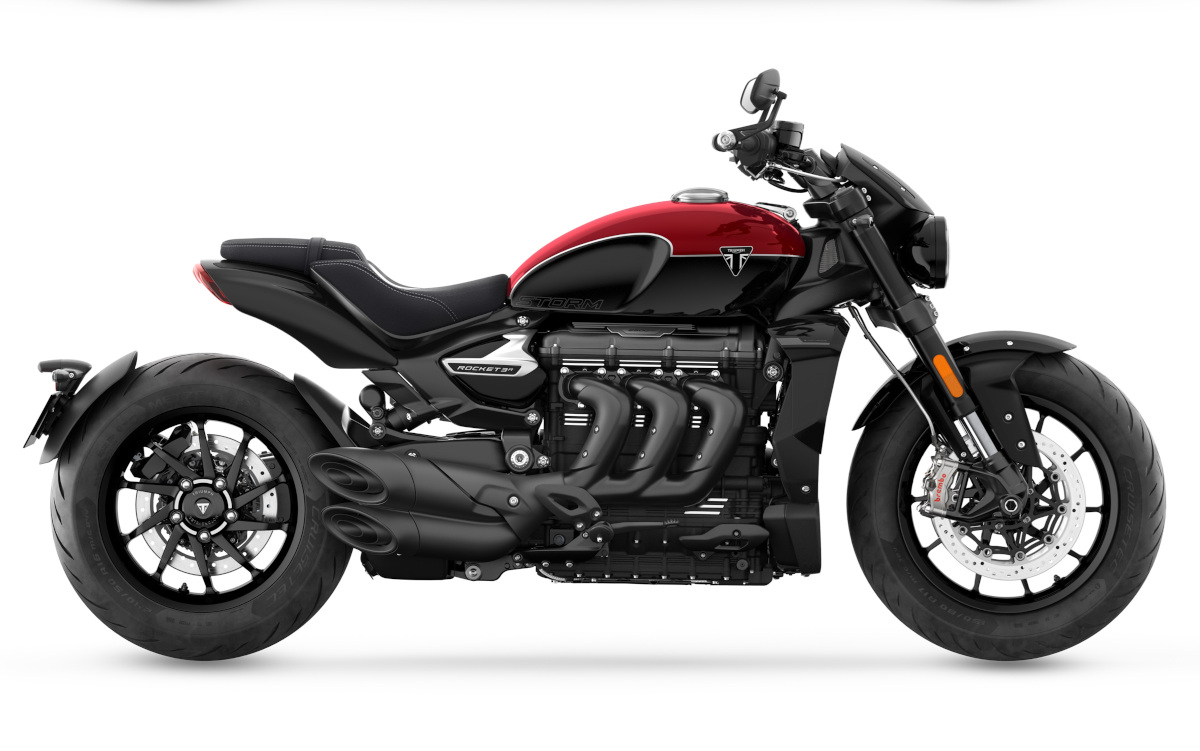
Claimed Torque: 166 lb-ft / 225 Nm
There is no real contest at the top of the mainstream production list. Powered by an enormous 2458cc inline-three, the Triumph Rocket 3 Storm produces a claimed 166 lb-ft of torque at just 4000 rpm. That is more torque than many small cars, and it arrives with the smooth, muscular delivery that has defined the Rocket line since 2004.
What makes the Rocket especially remarkable is not just the number itself, but the way it delivers it. This is not a peaky engine with one violent hit. It is a giant-capacity triple with a huge torque curve, effortless roll-on acceleration, and the kind of instant drive that makes gear choice almost optional. For conventional production motorcycles, the Rocket 3 Storm is the modern torque king.
2. Triumph Rocket 3 / Rocket III Roadster
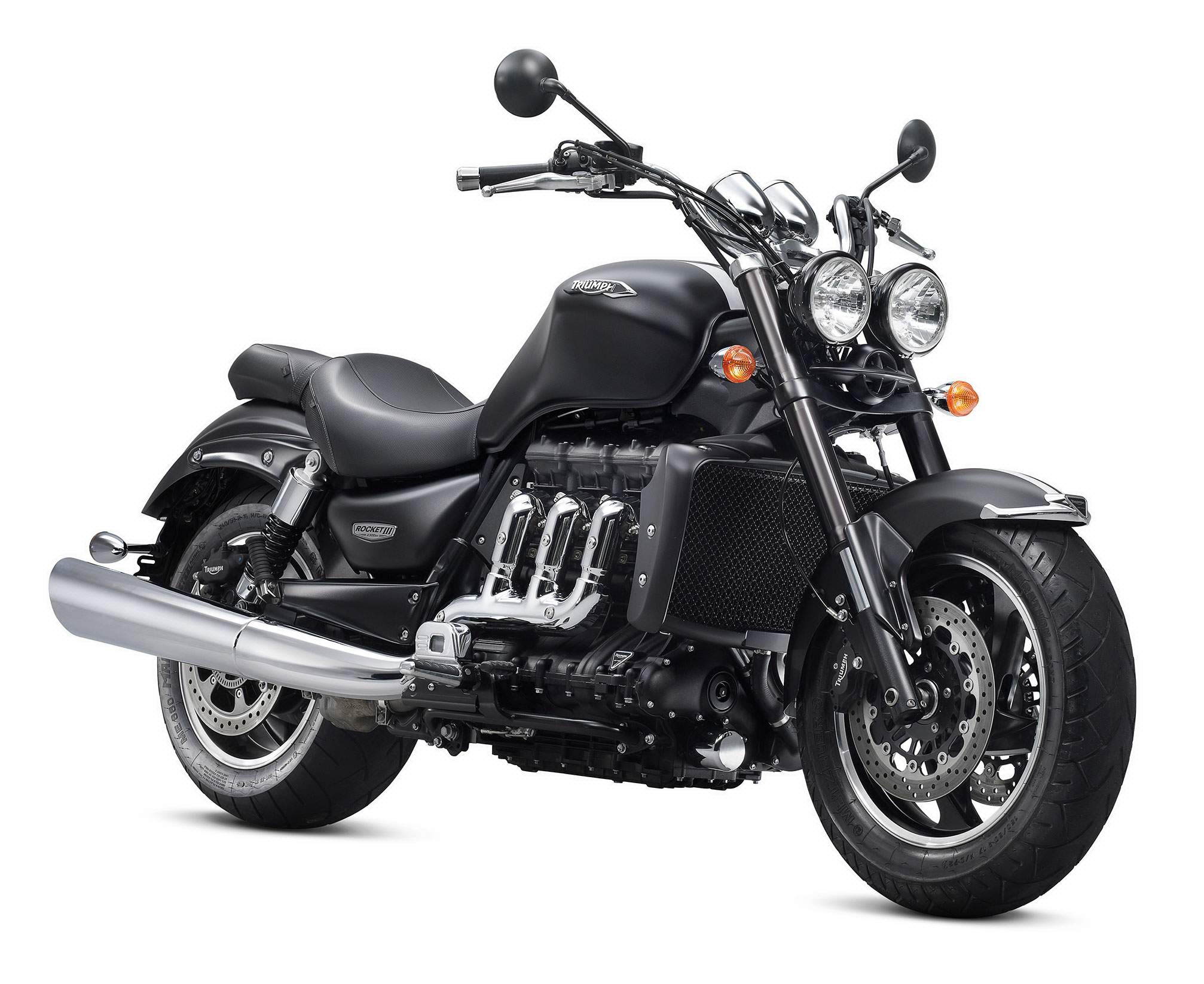
Claimed Torque: 163 lb-ft / 221 Nm
Before the Storm, the Rocket was already the bike to beat. The modern 2458cc Rocket 3 R and GT produced a claimed 163 lb-ft of torque, while the earlier Rocket III Roadster was also quoted at 221 Nm. Whether you are looking at the late-model 2500cc Rocket or the older 2300cc Roadster, the formula is the same: giant displacement, three cylinders, huge flywheel effect, and torque everywhere.
The Rocket has always felt less like a cruiser and more like a muscle roadster from an alternate timeline — one where the answer to every engineering question was “more engine.”
3. Triumph Rocket III Touring
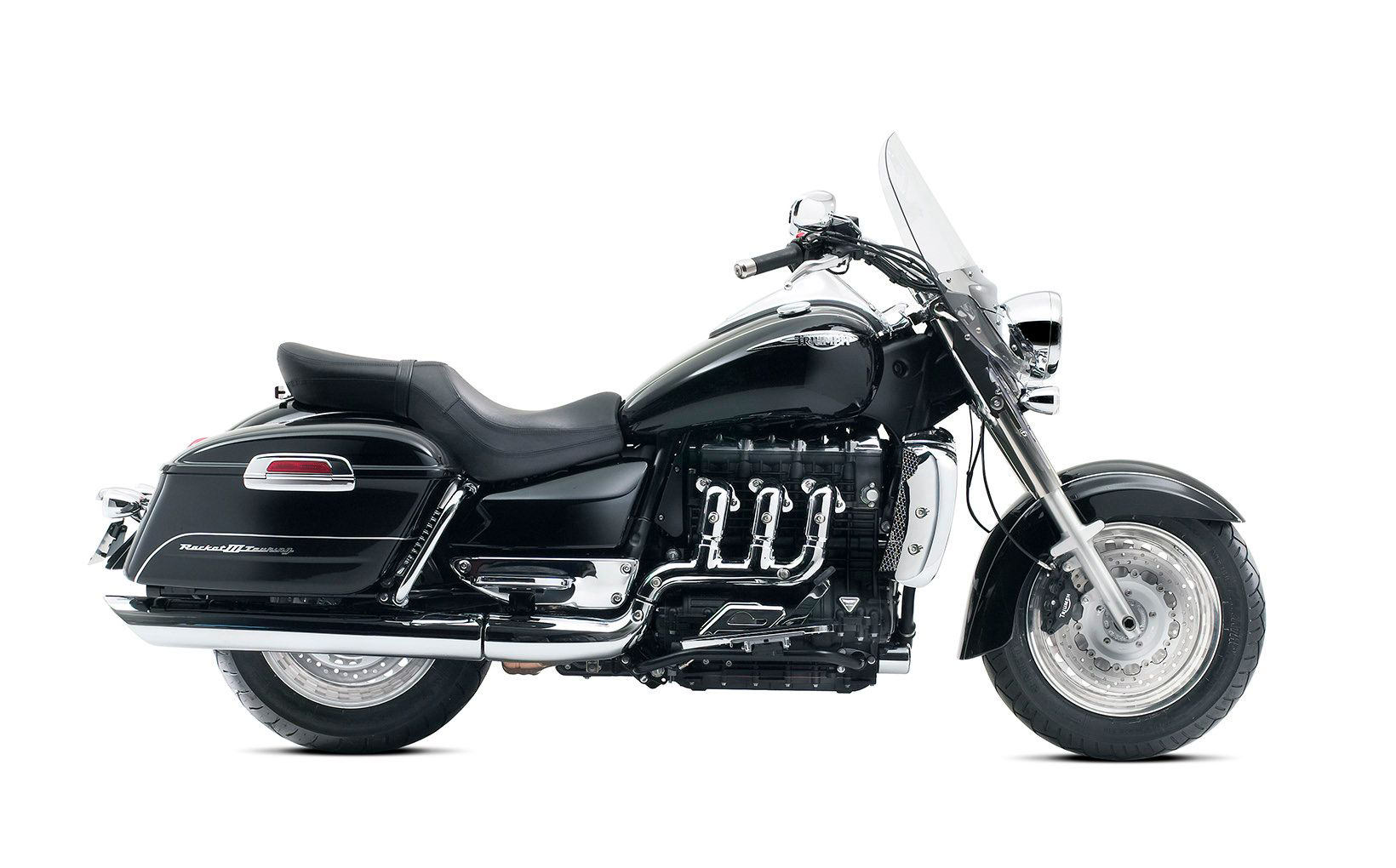
Claimed Torque: 154 lb-ft / 209 Nm
The Rocket III Touring deserves special mention because Triumph retuned the big triple specifically for low-rpm thrust. While the Roadster chased a more aggressive muscle-bike feel, the Touring version made its torque ridiculously early, giving it the kind of lazy, overwhelming drive that suits a long-distance cruiser.
It gave away top-end performance compared with the sportier Rocket variants, but in exchange it delivered one of the most massive low-rpm torque figures ever put into a production motorcycle. In real-world riding, that is exactly where torque matters most.
4. Harley-Davidson CVO Road Glide RR
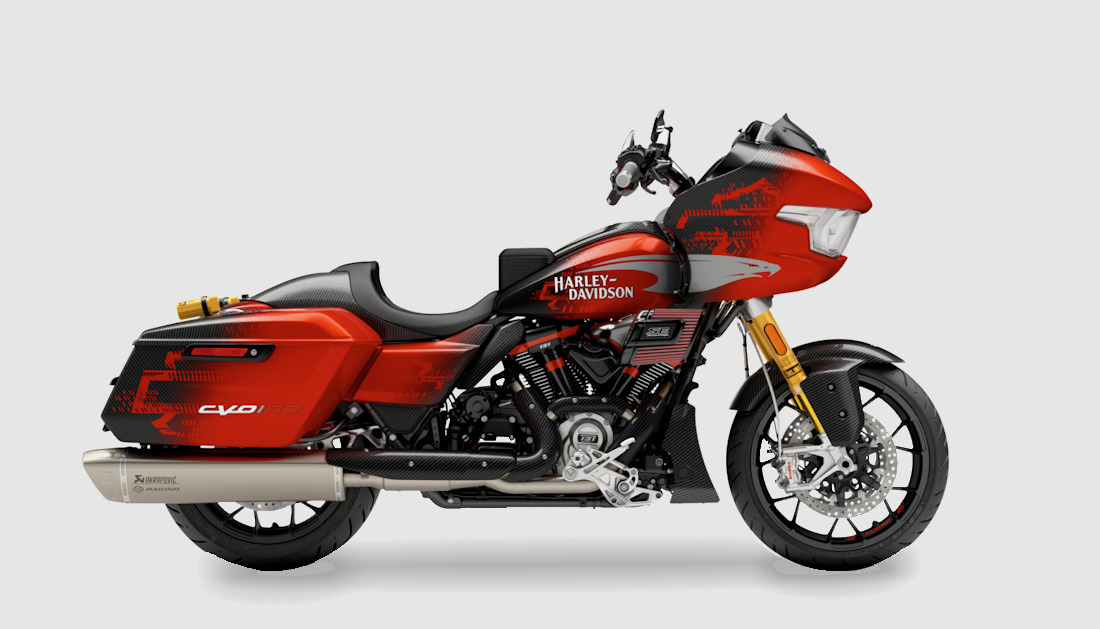
Claimed Torque: 150 lb-ft / 203 Nm
Harley-Davidson’s CVO Road Glide RR is a special case, but it is still a factory production motorcycle. Powered by a Screamin’ Eagle 131-cubic-inch Milwaukee-Eight engine, the RR brings Harley’s King of the Baggers influence to a limited-production road machine. With a claimed 150 lb-ft of torque, it is one of the torquiest factory Harleys ever sold.
It is also a reminder of how far performance baggers have come. Not long ago, a 150-lb-ft bagger sounded like aftermarket fantasy. Now it is a factory-built halo model.
5. Harley-Davidson CVO Road Glide ST / CVO Street Glide ST
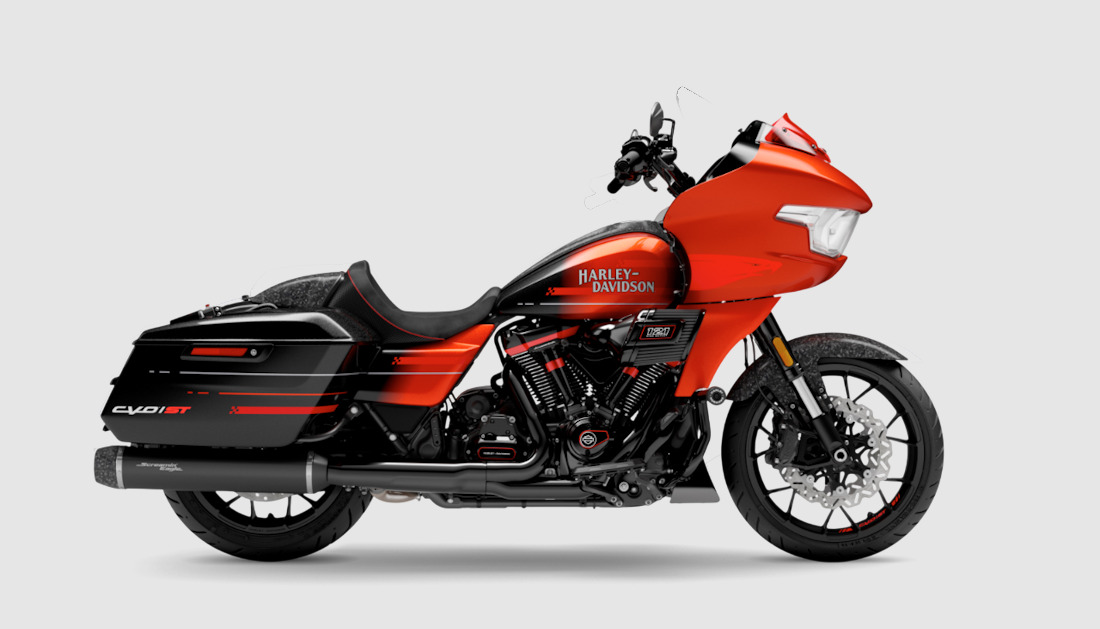
Claimed Torque: 145 lb-ft / 197 Nm
Harley’s CVO ST baggers are not far behind the RR. The Milwaukee-Eight 121 H.O. engine is tuned for harder performance than the standard CVO 121 VVT models, producing a claimed 145 lb-ft of torque and giving these bikes serious roll-on authority. The result is a luxury bagger with real muscle-bike credentials.
The modern CVO ST is not just about paint, audio, and chrome. It is also about big torque, big speed, and the growing performance-bagger arms race.
6. Kawasaki Vulcan 2000
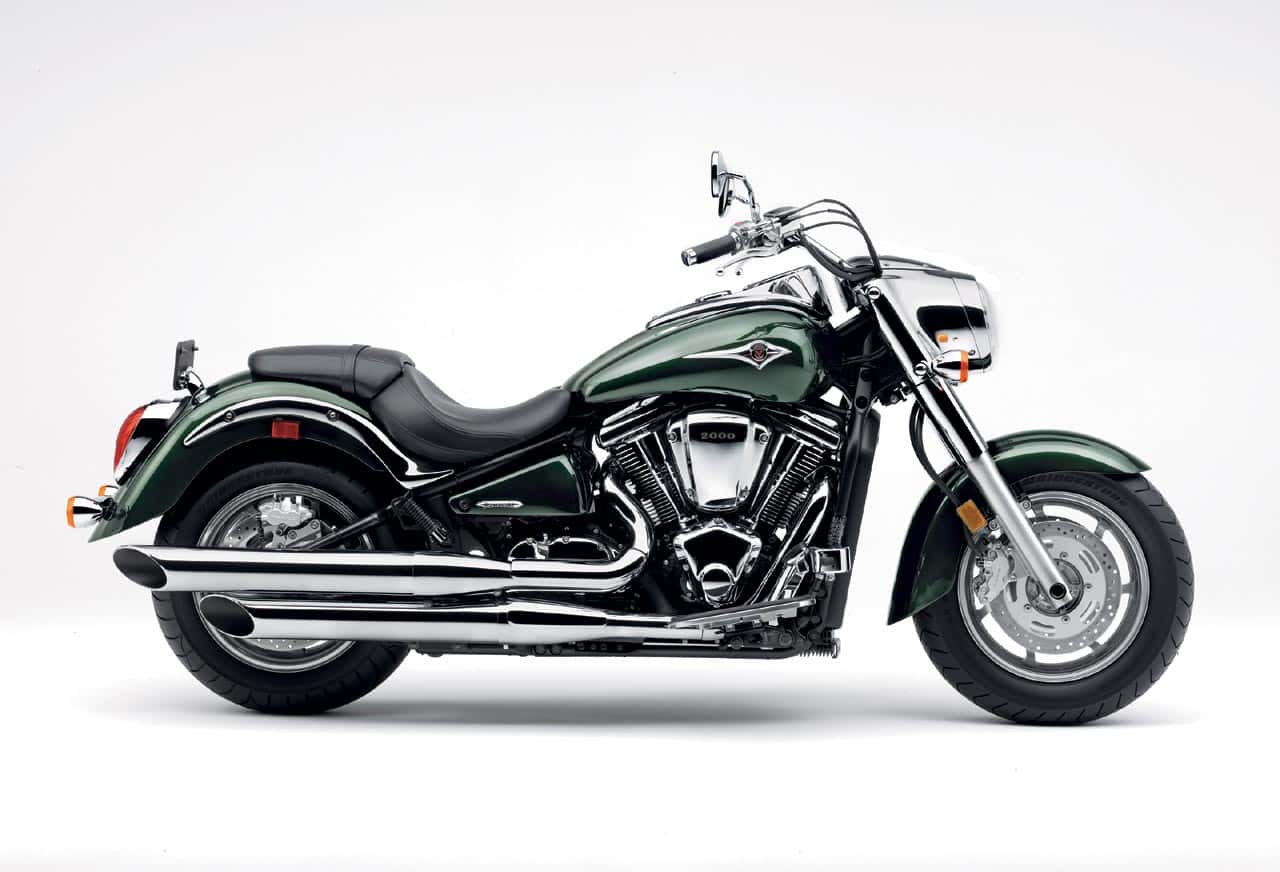
Claimed Torque: 141 lb-ft / 191 Nm
Before the Rocket 3 took the displacement crown, the Kawasaki Vulcan 2000 was one of the most outrageous production cruisers on the planet. Its 2053cc V-twin was briefly the largest-displacement production motorcycle engine from a major manufacturer, and Kawasaki claimed as much as 141 lb-ft of torque from the big twin. Even allowing for different quoted figures across markets and sources, the Vulcan 2000 easily belongs in the 100+ lb-ft club.
It was massive, long, heavy, and unapologetic — exactly the kind of machine that made sense in the early-2000s displacement wars.
7. Harley-Davidson CVO 121 VVT Touring Models
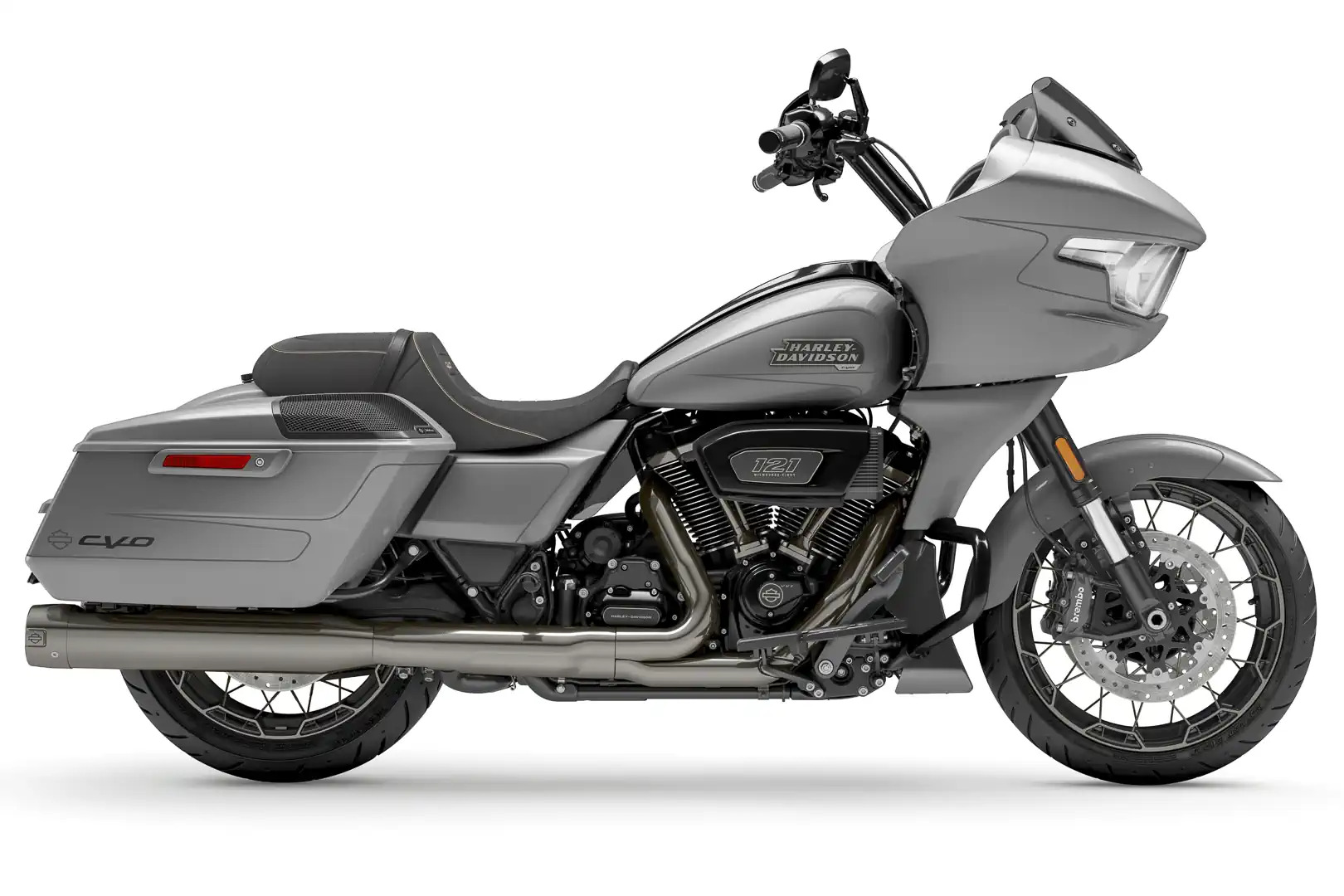
Claimed Torque: 139 lb-ft / 188 Nm
Harley’s Milwaukee-Eight VVT 121 engine gives the modern CVO touring line a huge torque figure without the more aggressive state of tune used in the ST models. With a claimed 139 lb-ft, bikes like the CVO Road Glide and CVO Street Glide sit near the top of the mainstream torque chart. They are not meant to feel frantic. They are meant to feel effortless — big, smooth, and ready to pull hard in any gear.
That is exactly what a premium Harley touring bike should do.
8. Indian PowerPlus 112 Models
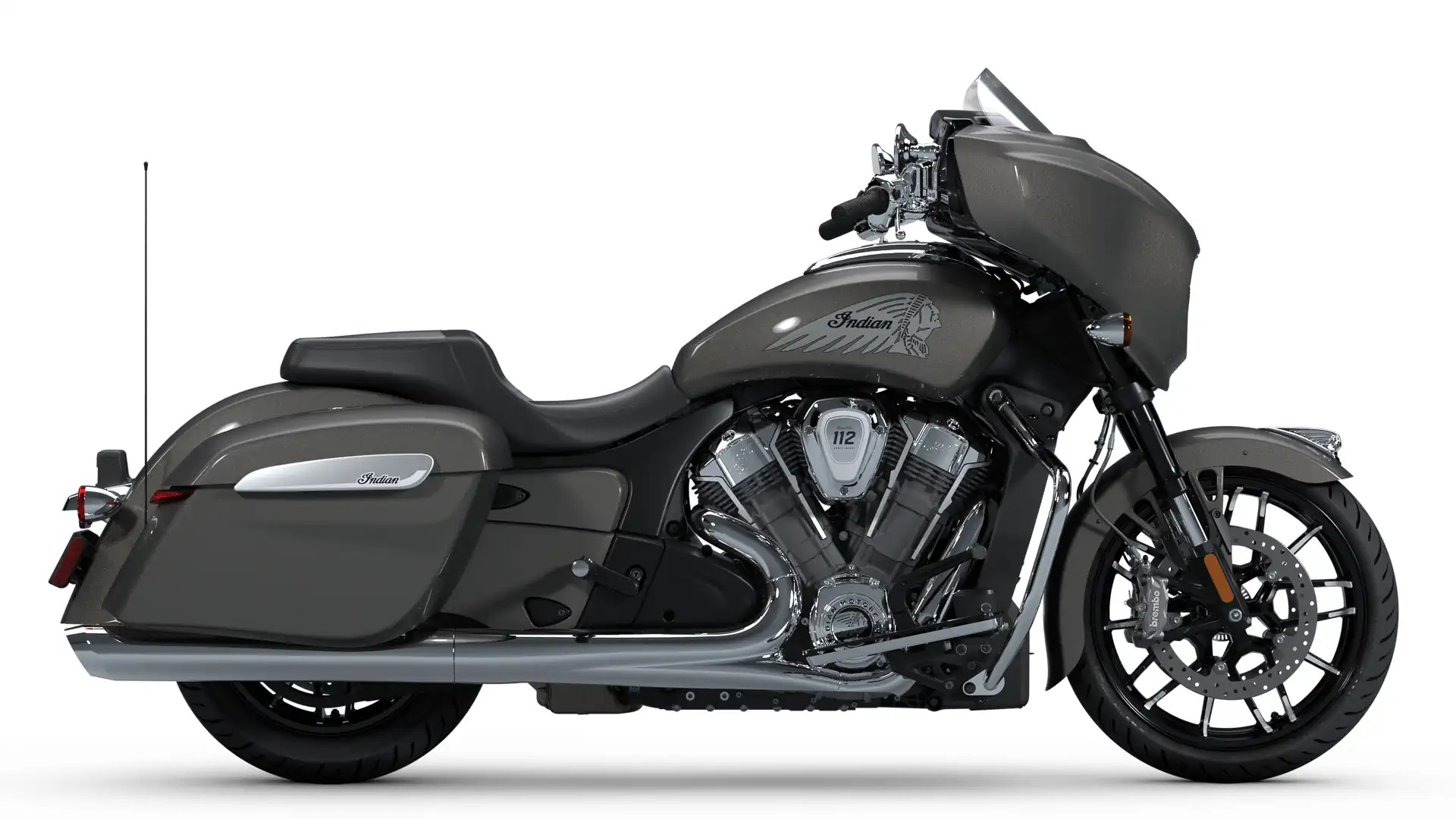
Claimed Torque: 133 lb-ft / 180 Nm
Indian’s liquid-cooled PowerPlus 112 engine brings serious modern V-twin muscle to the bagger and touring world. With 126 horsepower and 133 lb-ft of torque, the PowerPlus 112 gives bikes like the Chieftain PowerPlus and Roadmaster PowerPlus a strong claim among the highest-torque American production motorcycles.
Unlike Indian’s air-cooled Thunderstroke models, the PowerPlus has a more modern, revvier character, but it still delivers the big midrange shove riders expect from a heavyweight American V-twin.
9. BMW K 1600 Family
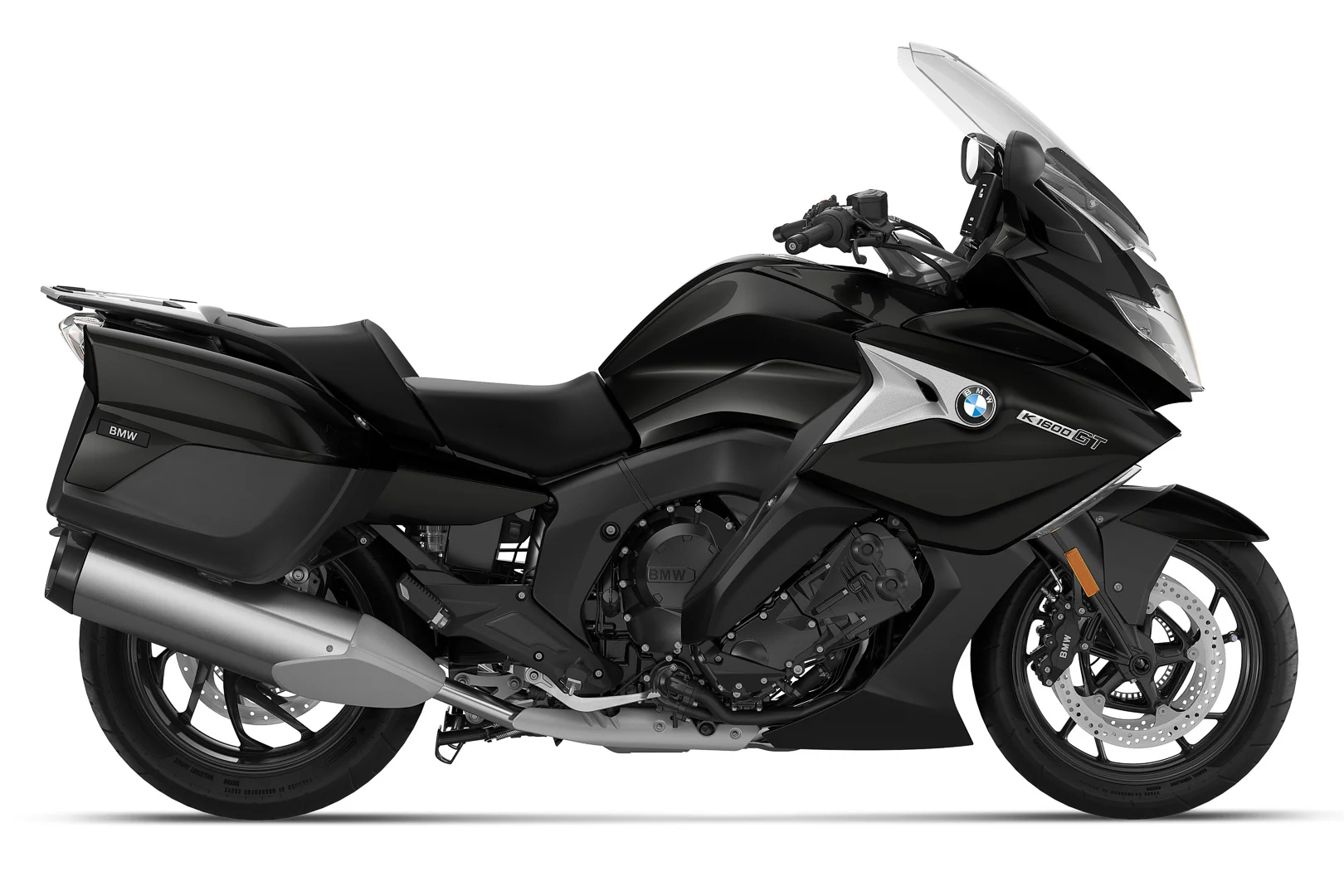
Claimed Torque: 133 lb-ft / 180 Nm
The BMW K 1600 family proves that torque is not only for V-twins and cruisers. BMW’s 1649cc inline-six is one of the great motorcycle engines: smooth, powerful, cultured, and flexible. In current form, the K 1600 GT, GTL, B, and Grand America produce a claimed 180 Nm of torque, or about 133 lb-ft.
The result is not the blunt-force shove of a Rocket 3, but something different: turbine-smooth thrust from an engine that feels impossibly refined for a motorcycle.
10. Harley-Davidson Street Glide / Road Glide 117
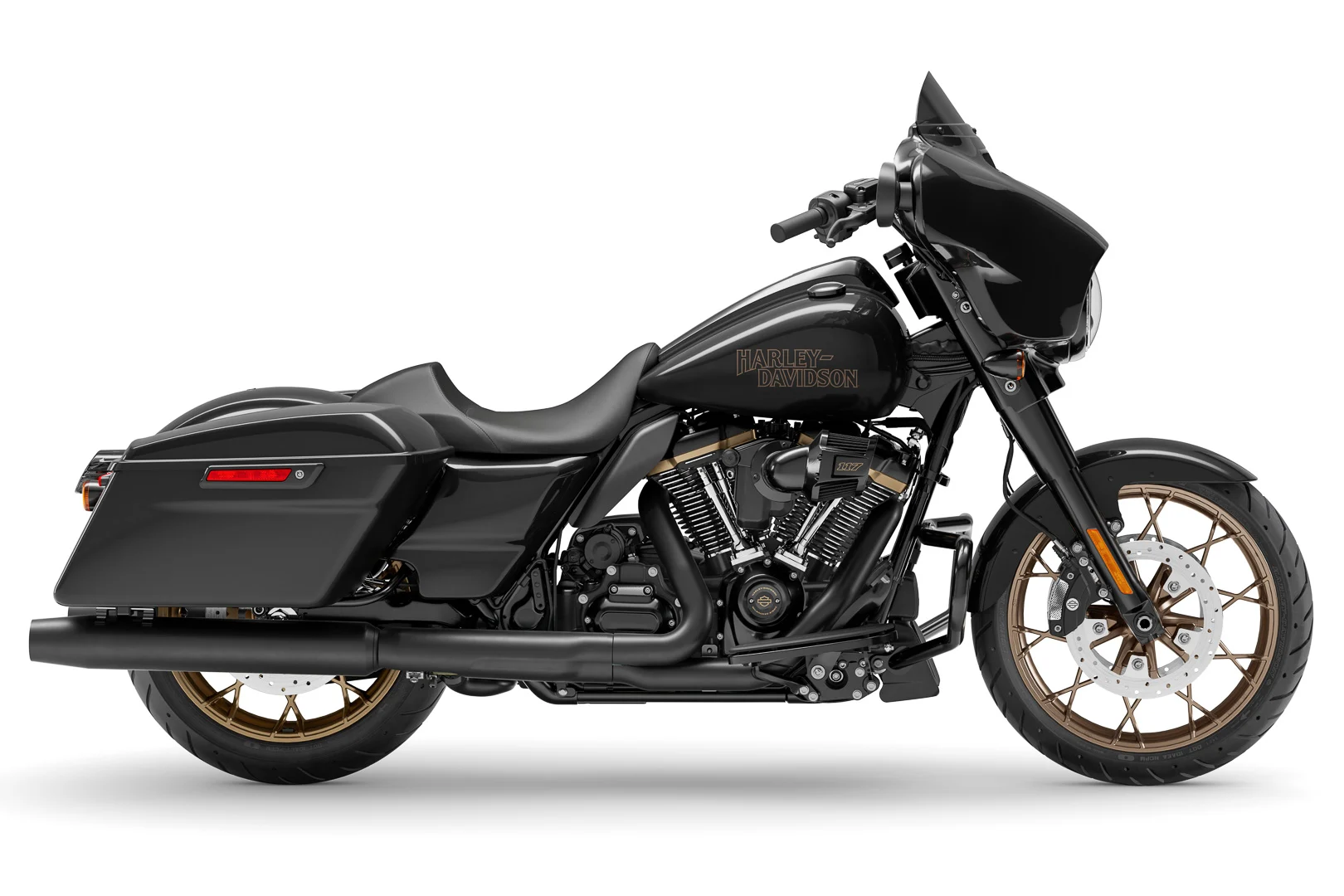
Claimed Torque: 130 lb-ft / 176 Nm
Harley’s current non-CVO Street Glide and Road Glide models also clear the 100-lb-ft bar with room to spare. Their Milwaukee-Eight 117 engine produces a claimed 130 lb-ft of torque, which would have been elite cruiser territory not long ago. Today, it is the standard-bearer for Harley’s mainstream touring line. That says a lot about how far the torque wars have moved.
11. Indian PowerPlus 108 Models
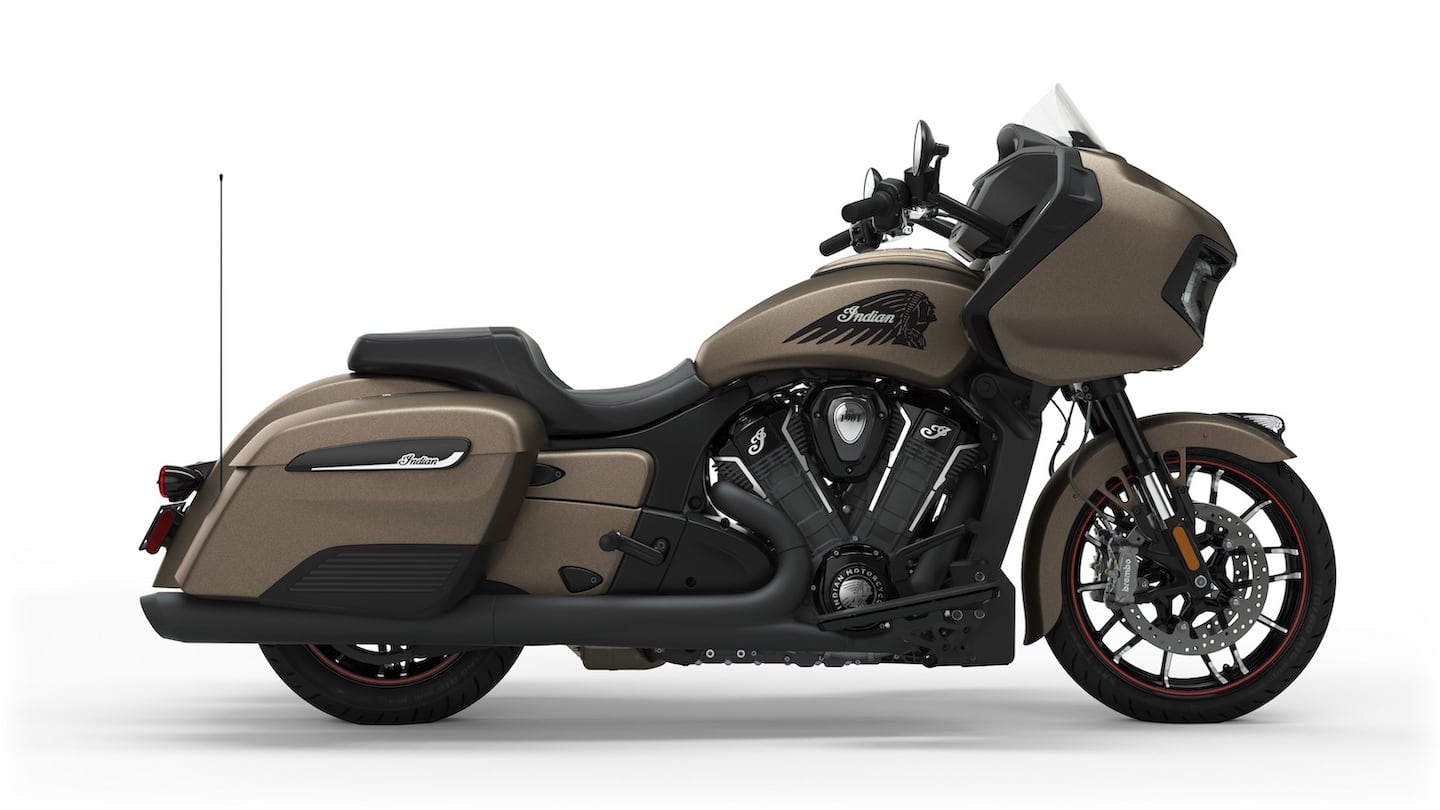
Claimed Torque: 128 lb-ft / 174 Nm
Before the PowerPlus 112, Indian’s 108-cubic-inch liquid-cooled V-twin already produced a stout 128 lb-ft of torque. Used in models like the Challenger and Pursuit, the PowerPlus 108 brought Indian into the modern performance-bagger fight with a very different personality from the Thunderstroke. It was smoother, more powerful up top, and still full of the low- and midrange pull bagger riders demand.
12. Harley-Davidson Low Rider S / Low Rider ST
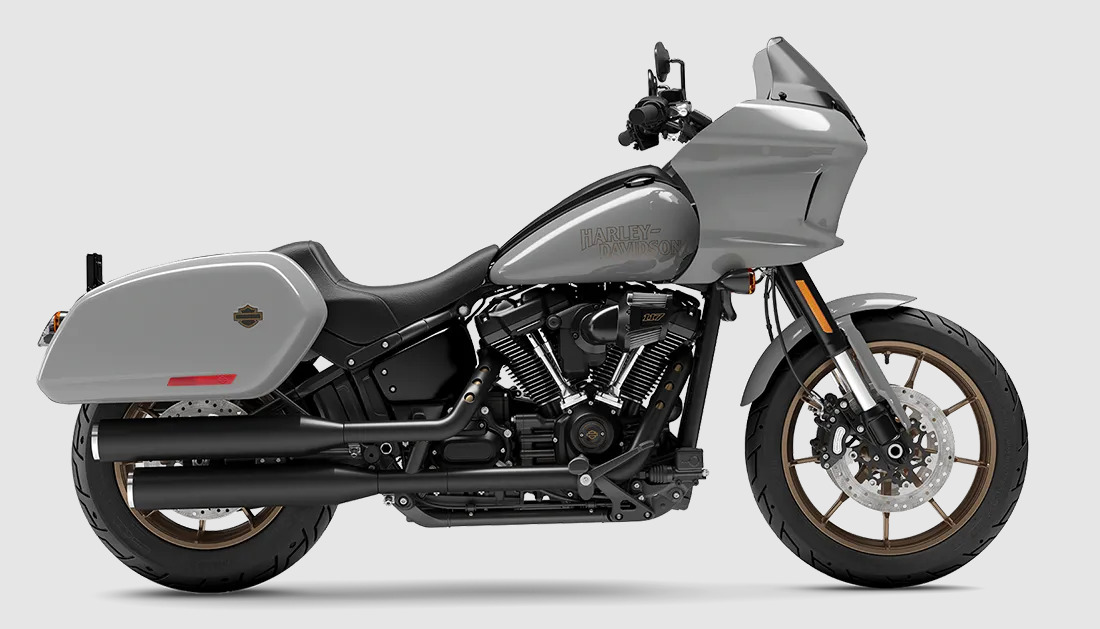
Claimed Torque: 128 lb-ft / 174 Nm
The Low Rider S and Low Rider ST bring Harley’s 117 High Output engine to a lighter, more aggressive Softail platform. With a claimed 128 lb-ft of torque, these bikes are not just stylish factory customs. They are some of the strongest factory performance cruisers Harley has built, especially in the real-world roll-on zone where torque matters most.
The Low Rider ST in particular has become a favorite among riders who want bagger-adjacent performance without the full touring-bike bulk.
13. Indian Thunderstroke 116 Models
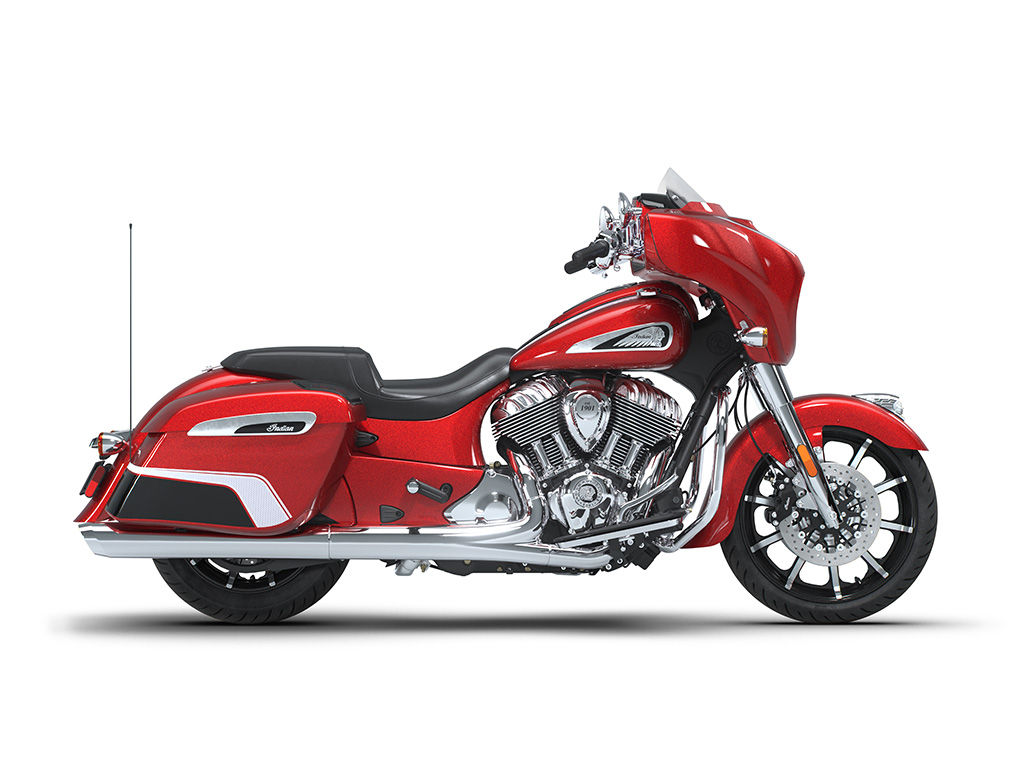
Claimed Torque: 126 lb-ft / 171 Nm
Indian’s air-cooled Thunderstroke 116 engine produces a claimed 126 lb-ft of torque in many Chief, Springfield, Chieftain, and Roadmaster variants. This is torque delivered the old-fashioned way: big air-cooled displacement, long-stroke feel, and a powerband tuned for low-rpm authority rather than high-rpm drama. It is a very different engine from Indian’s PowerPlus, but equally central to the brand’s identity.
14. Yamaha Star Venture / Star Eluder
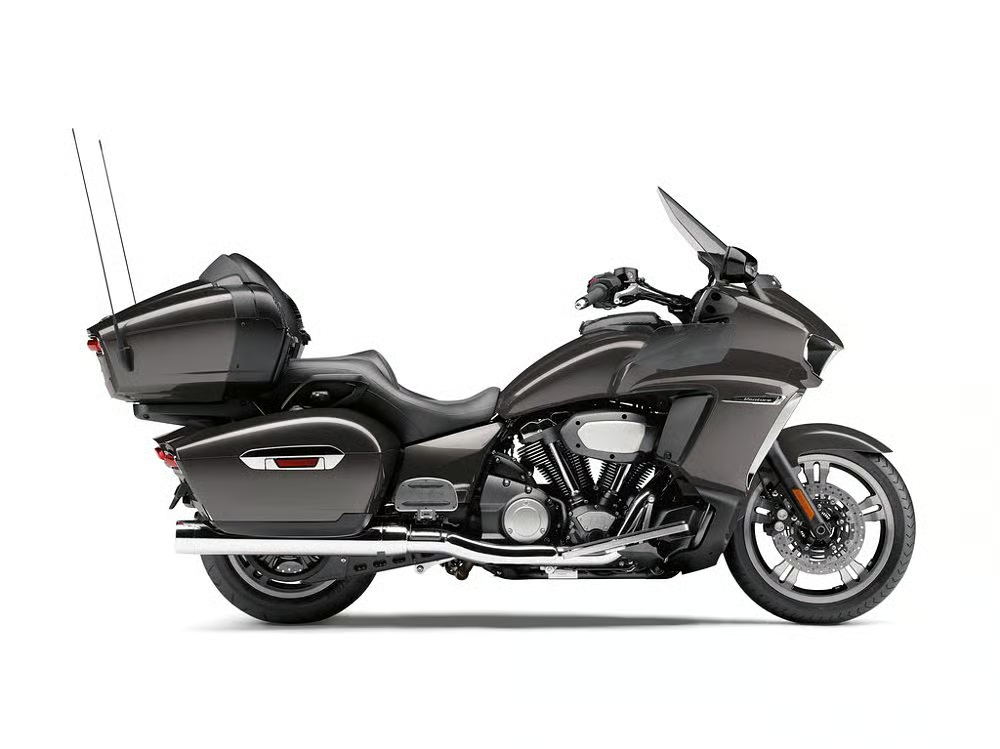
Claimed Torque: 126 lb-ft / 171 Nm
The Yamaha Star Venture and Star Eluder were Yamaha’s answer to the full-dress American touring world, and they brought serious torque to the fight. Their 1854cc air-cooled V-twin produced a claimed 126 lb-ft, putting them right alongside heavyweight Indian and Harley touring bikes. Add features like Yamaha’s Sure-Park electric assist system and a massive touring package, and the Star Venture remains one of the most interesting modern Japanese takes on the American luxury tourer.
15. Honda Gold Wing 1800
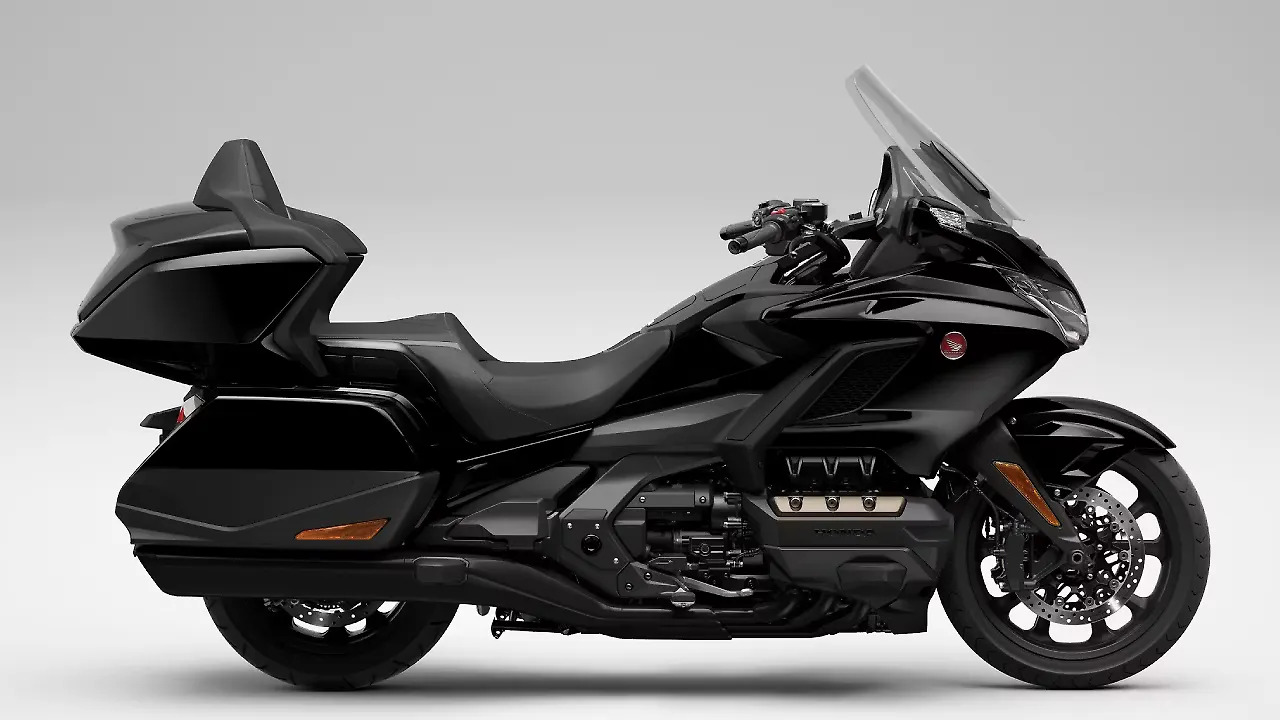
Claimed Torque: 125 lb-ft / 170 Nm
The Gold Wing has never been about chest-beating torque claims. It’s about smoothness. Still, Honda’s 1833cc flat-six produces a claimed 170 Nm of torque, or about 125 lb-ft, which places it firmly among the torquiest production motorcycles ever built. The delivery is so refined that the number almost hides itself. There is no big V-twin pulse, no muscle-bike drama, and no cruiser theatrics. Just seamless, luxurious thrust. That’s the Gold Wing’s genius.
16. Yamaha VMAX 1700
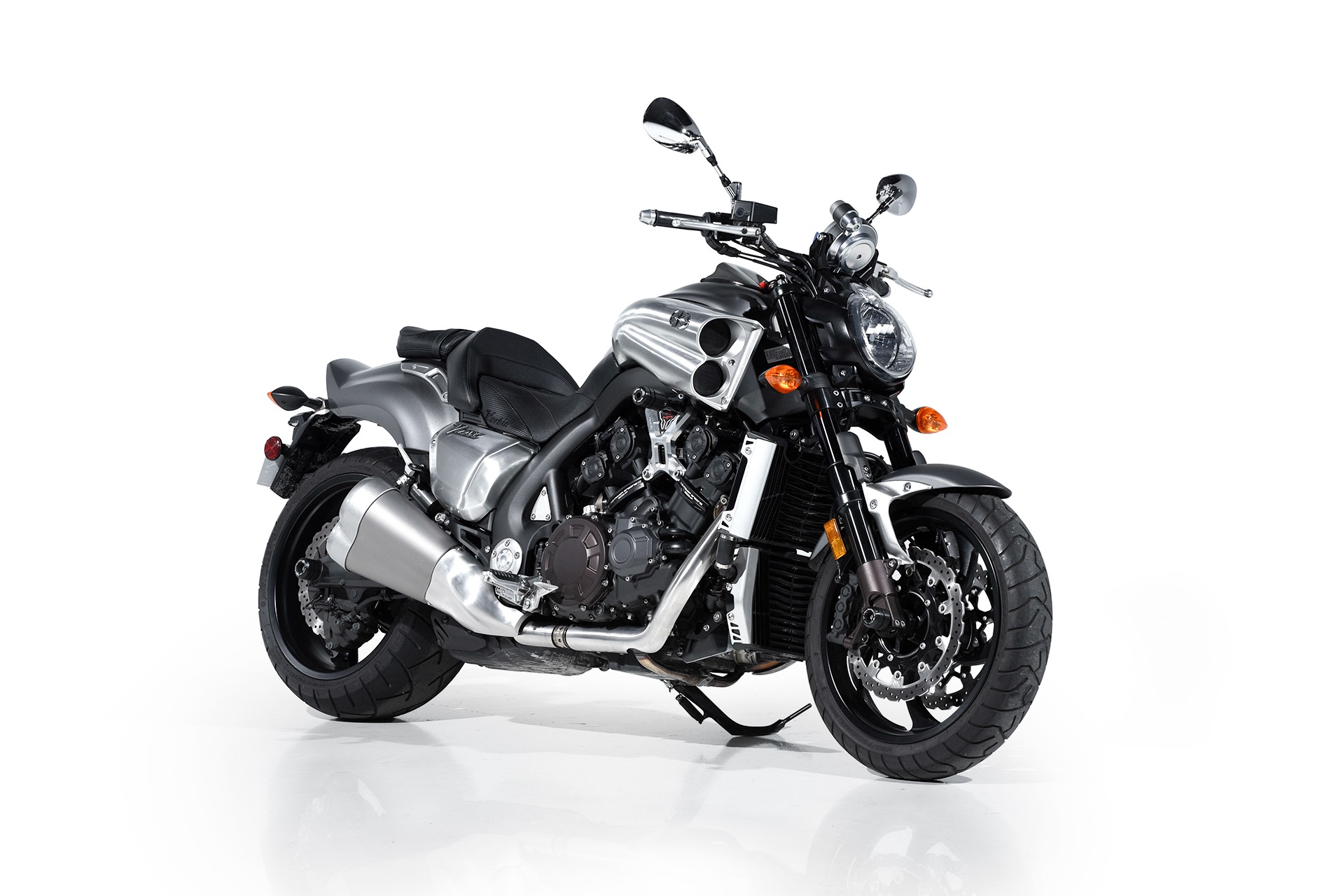
Claimed Torque: 123 lb-ft / 166.8 Nm
The second-generation Yamaha VMAX was a monster. With a 1679cc V4, 200 horsepower, and 166.8 Nm of torque, it was one of the defining muscle bikes of the modern era. Unlike the heavyweight cruisers on this list, the VMAX was designed around acceleration and drama. It did not just pull hard — it lunged. The original V-Max was already a legend, but the 1700 turned that legend into something even more excessive.
17. Honda Valkyrie Rune
Claimed Torque: 123 lb-ft / 167 Nm
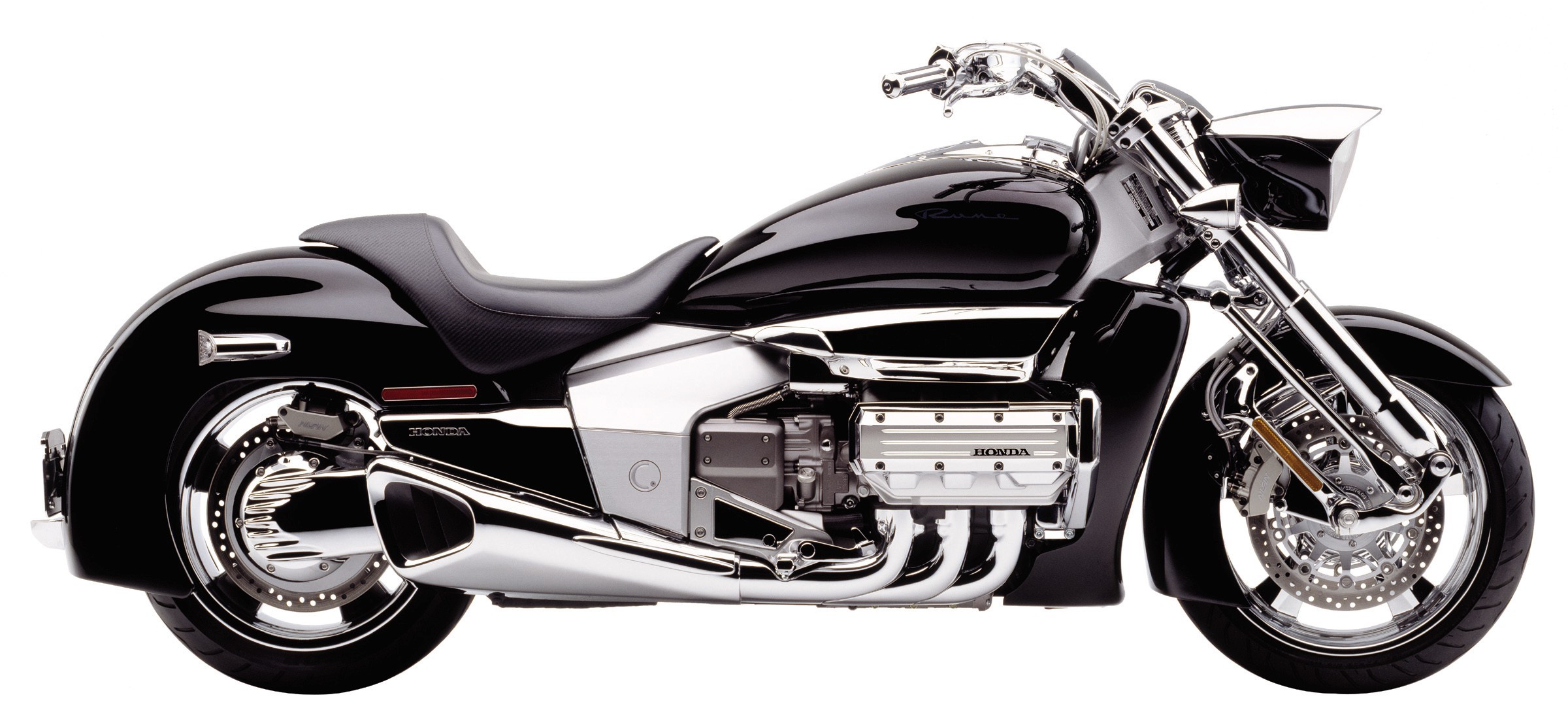
The Honda Valkyrie Rune was less motorcycle than rolling concept art. Based around the 1832cc Gold Wing flat-six, the Rune delivered a widely published 123 lb-ft of torque, wrapped in one of the most extravagant production-motorcycle designs Honda ever attempted. It was long, low, sculptural, and expensive — a cruiser from a company that normally avoided that kind of excess. It remains one of Honda’s strangest and most fascinating production bikes.
18. Honda VTX1800
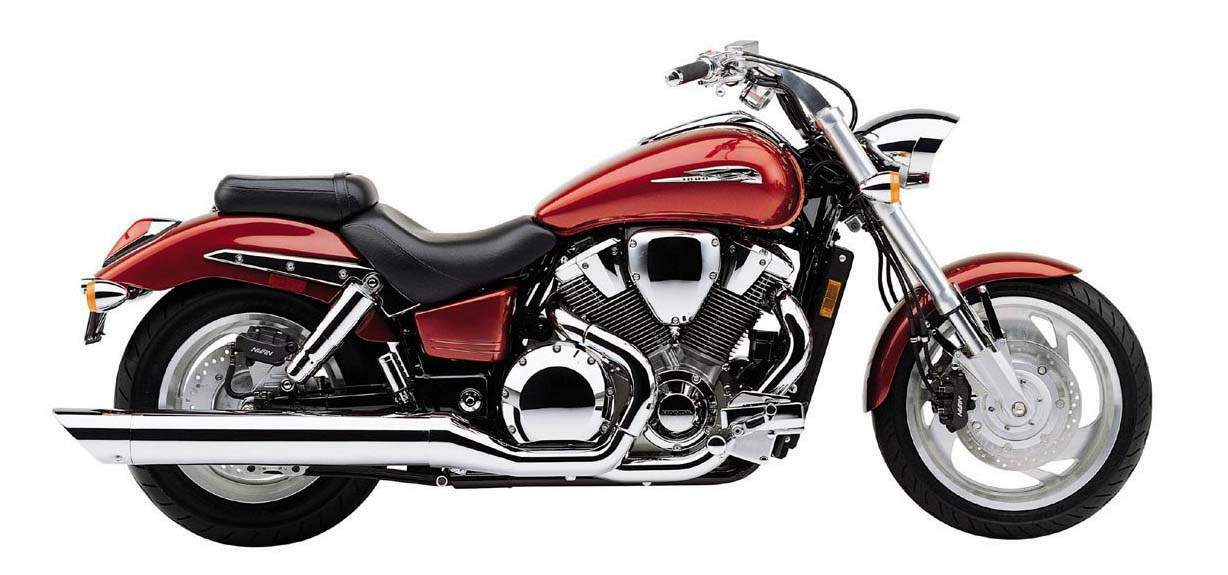
Claimed Torque: 120 lb-ft / 163 Nm
The Honda VTX1800 was Honda’s entry in the early-2000s giant-cruiser war. Its 1795cc liquid-cooled V-twin produced a claimed 120 lb-ft of torque, making it one of the strongest production cruisers of its day. Like the Vulcan 2000, the VTX1800 belonged to an era when manufacturers were trying to out-displace one another with ever-bigger V-twins. For Honda, a company often associated with polish and restraint, the VTX1800 was a rare flex.
19. Indian Thunderstroke 111 Models
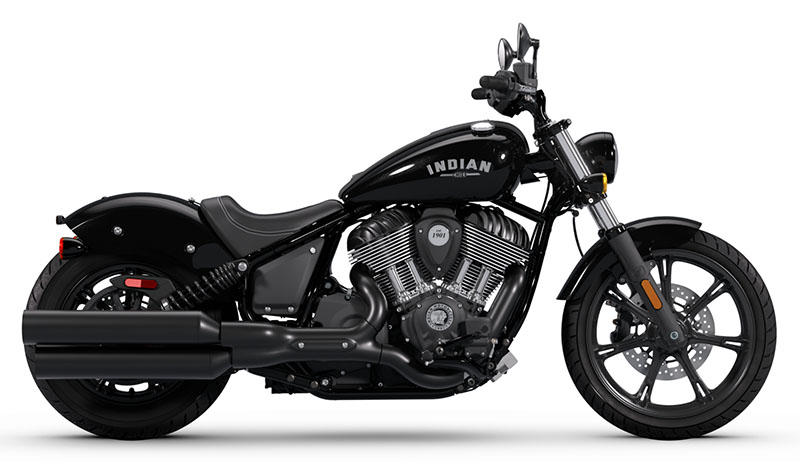
Claimed Torque: 119 lb-ft / 161 Nm
The Thunderstroke 111 was the engine that announced Indian’s modern return under Polaris ownership. With 119 lb-ft of torque, it immediately gave bikes like the Chief, Chieftain, and Roadmaster the big, lazy pull riders expected from a heavyweight American cruiser. Later Thunderstroke 116 models would move the number higher, but the 111 remains important because it set the tone for the revived brand.
20. Suzuki Boulevard M109R / Intruder M1800R
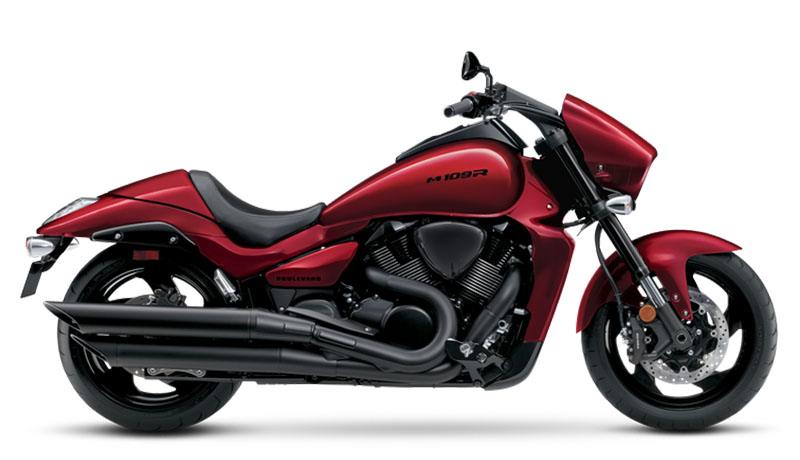
Claimed Torque: 118 lb-ft / 160 Nm
Suzuki’s M109R is one of the great Japanese muscle cruisers. Its 1783cc DOHC V-twin produces a claimed 160 Nm of torque and backs it up with one of the most aggressive cruiser silhouettes ever put into mass production. The M109R has been around for years, but it still looks wild: huge rear tire, long tank, slammed stance, and an engine that feels more sport-cruiser than traditional boulevard machine. It is the kind of bike that makes a simple roll-on feel like an event.
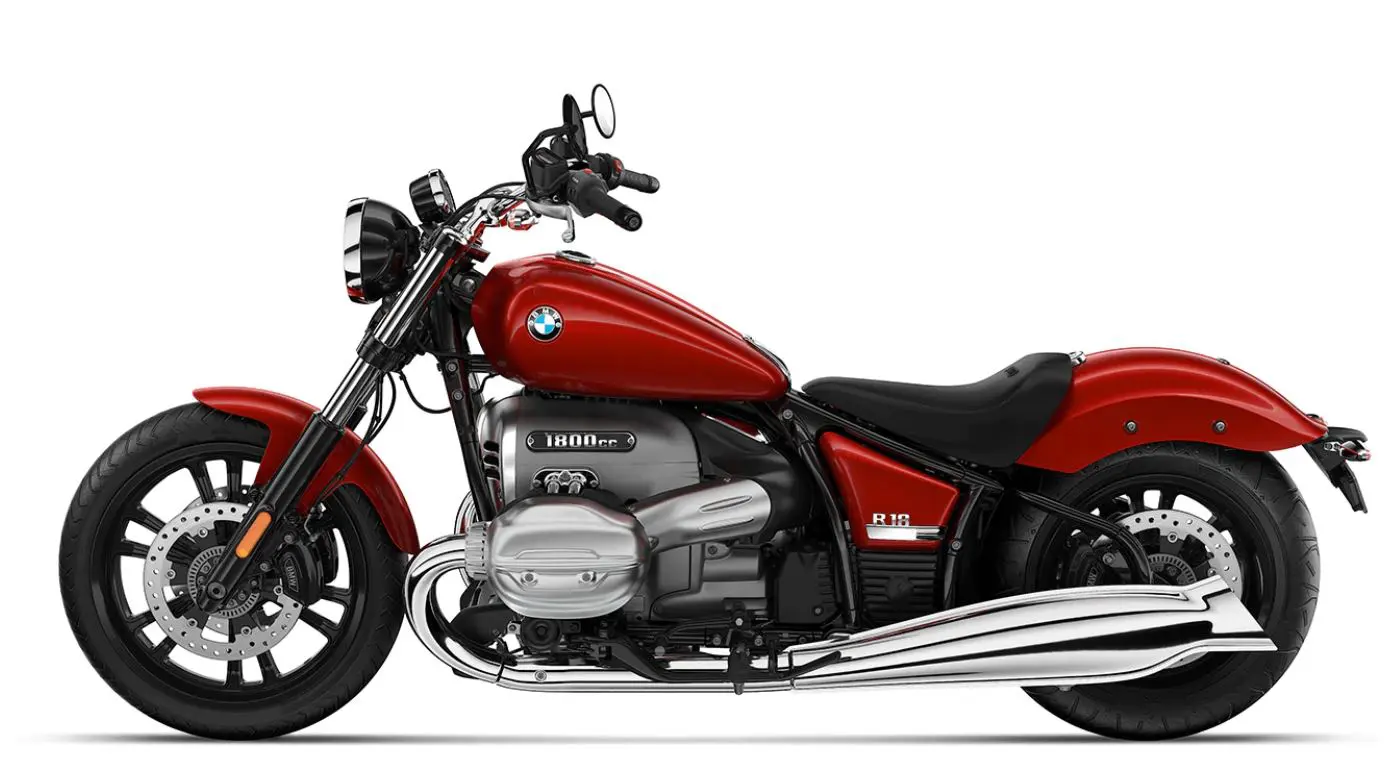
21. BMW R 18
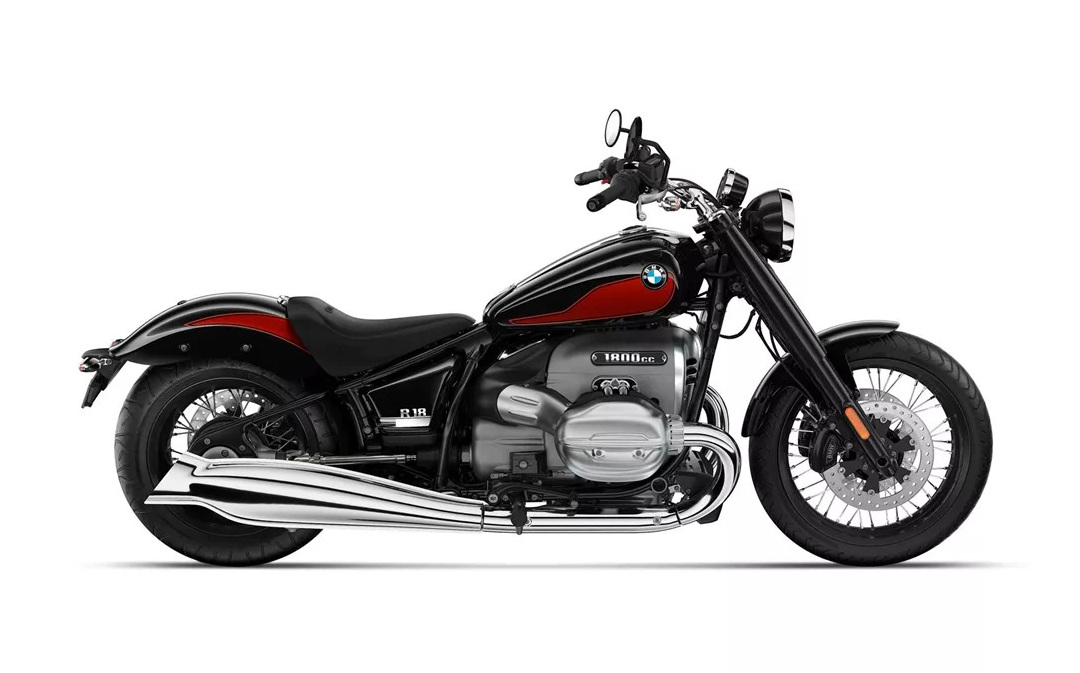
Claimed Torque: 117 lb-ft / 158 Nm
BMW’s R 18 was designed around its engine.
The 1802cc “Big Boxer” produces a claimed 158 Nm of torque, delivered with the distinctive feel of a massive air/oil-cooled boxer twin. It is not the fastest bike here, nor the most powerful, but it has one of the most memorable powerplants in modern cruiser production. The torque rocks the bike sideways. The exposed cylinders dominate the visual profile. The whole machine exists to celebrate that engine.
22. Kawasaki Ninja ZX-14R / ZZR1400
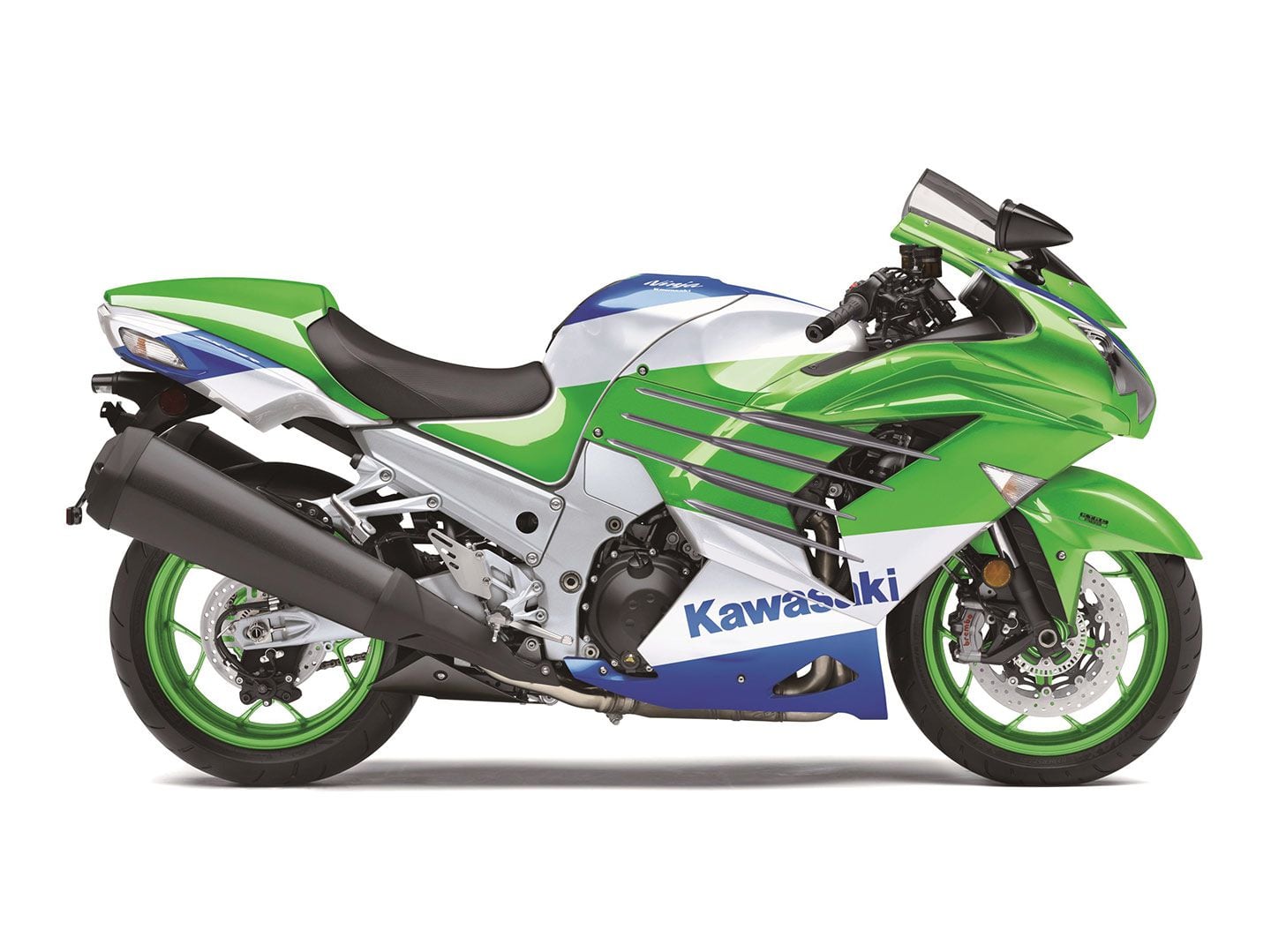
Claimed Torque: 116.5 lb-ft / 158 Nm
The Kawasaki ZX-14R is one of the great reminders that huge torque is not just a cruiser thing. Its 1441cc inline-four produces a claimed 116.5 lb-ft of torque, giving the big Ninja a devastating real-world powerband. The ZX-14R has always lived in the Hayabusa’s shadow and alongside it, but on claimed torque, the Kawasaki edges the Suzuki. It is one of the torquiest sportbikes ever sold.
23. Triumph Thunderbird Storm 1700
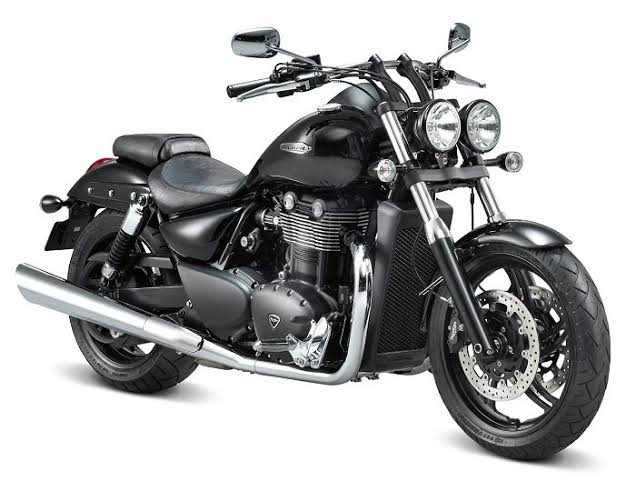
Claimed Torque: 115 lb-ft / 156 Nm
The Thunderbird Storm was Triumph’s big parallel-twin cruiser turned up to eleven. Its 1699cc engine produced a claimed 115 lb-ft, giving it a much stronger midrange than the standard Thunderbird and a darker, more aggressive personality. It was not as outrageous as the Rocket, but it was still a serious torque machine — and one of the strongest parallel twins ever sold in production form.
24. Victory Freedom 106 Stage 2 Models
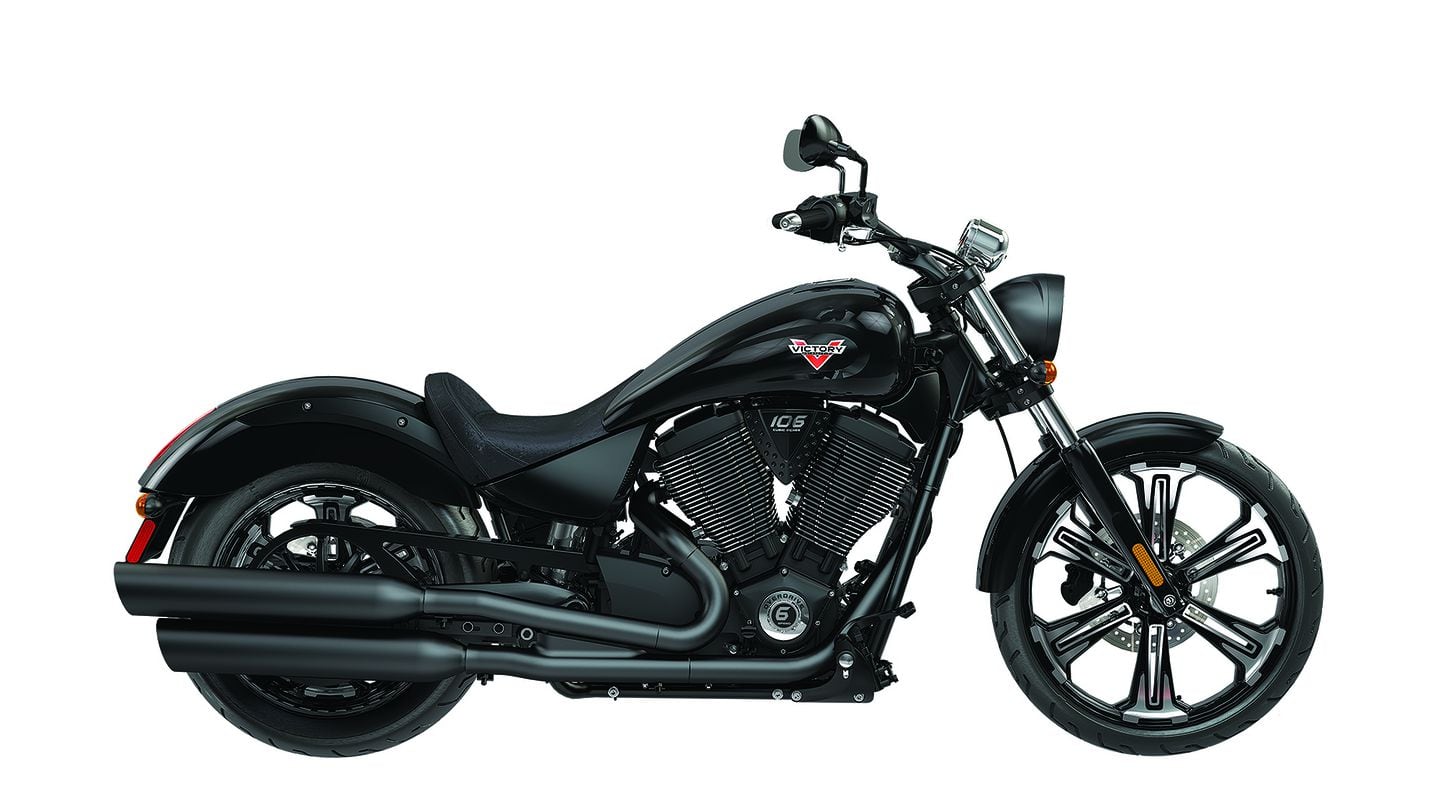
Claimed Torque: 113 lb-ft / 153 Nm
Victory’s Freedom 106 engine helped make the now-defunct American brand a serious alternative to Harley and Indian. In Stage 2 tune, used in various muscle-cruiser applications, the 106-cubic-inch V-twin was widely quoted at 113 lb-ft of torque. Models like the Hammer S and High-Ball offered a sharper, more performance-oriented take on the American cruiser formula. Victory is gone, but its big twins still belong in the 100+ lb-ft conversation.
25. Triumph Thunderbird Commander / LT
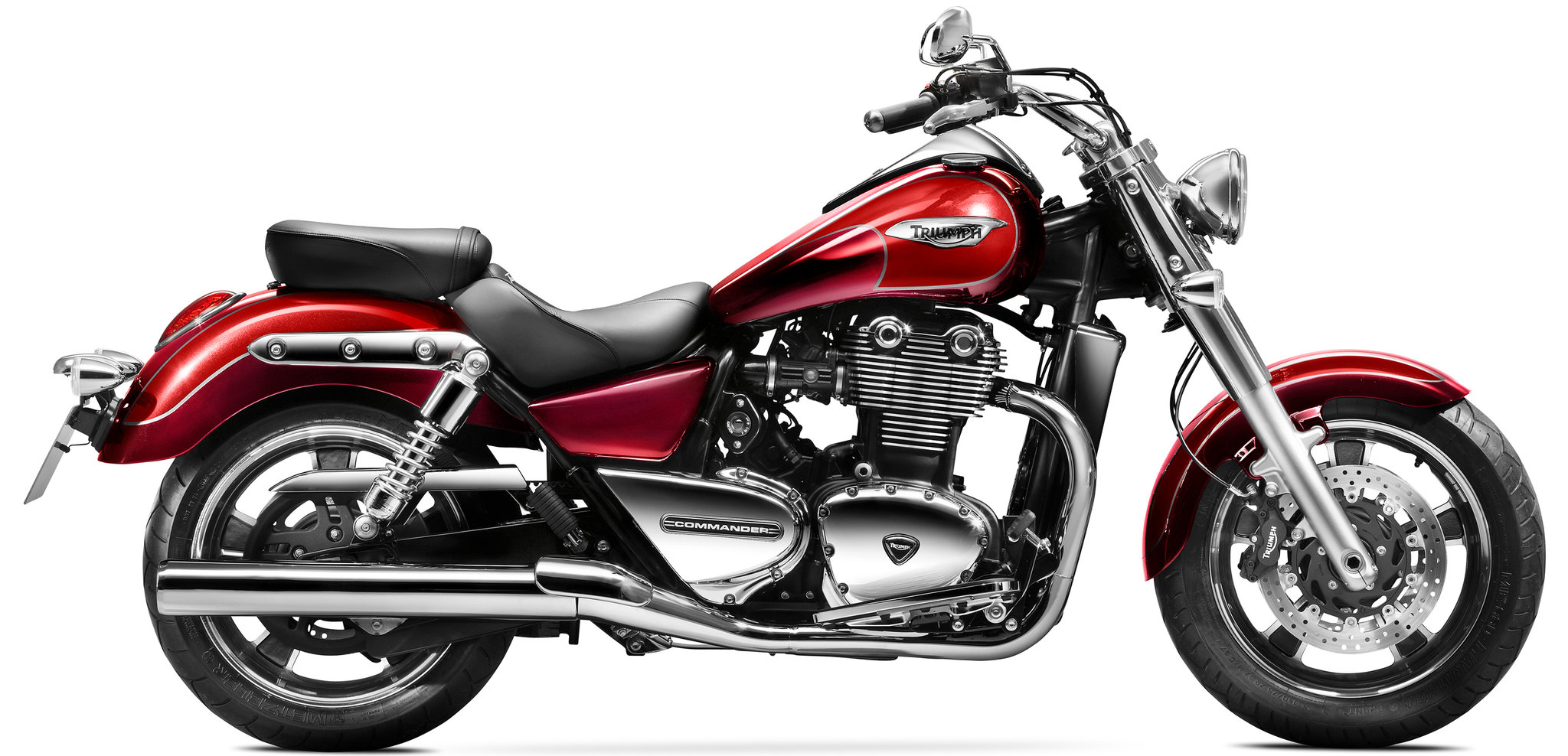
Claimed Torque: 111 lb-ft / 151 Nm
The Thunderbird Commander and LT used a 1699cc version of Triumph’s big parallel twin, tuned for relaxed cruiser and touring duty. With 111 lb-ft of torque, they were not as aggressive as the Storm, but they offered a strong, characterful alternative to the American V-twin norm. They also show how unusual Triumph’s cruiser lineup was before the company fully centered its big-torque identity around the Rocket.
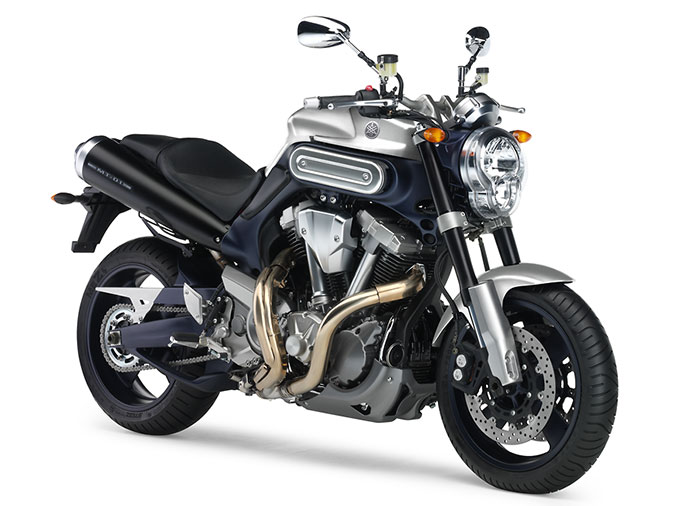
26. Yamaha MT-01
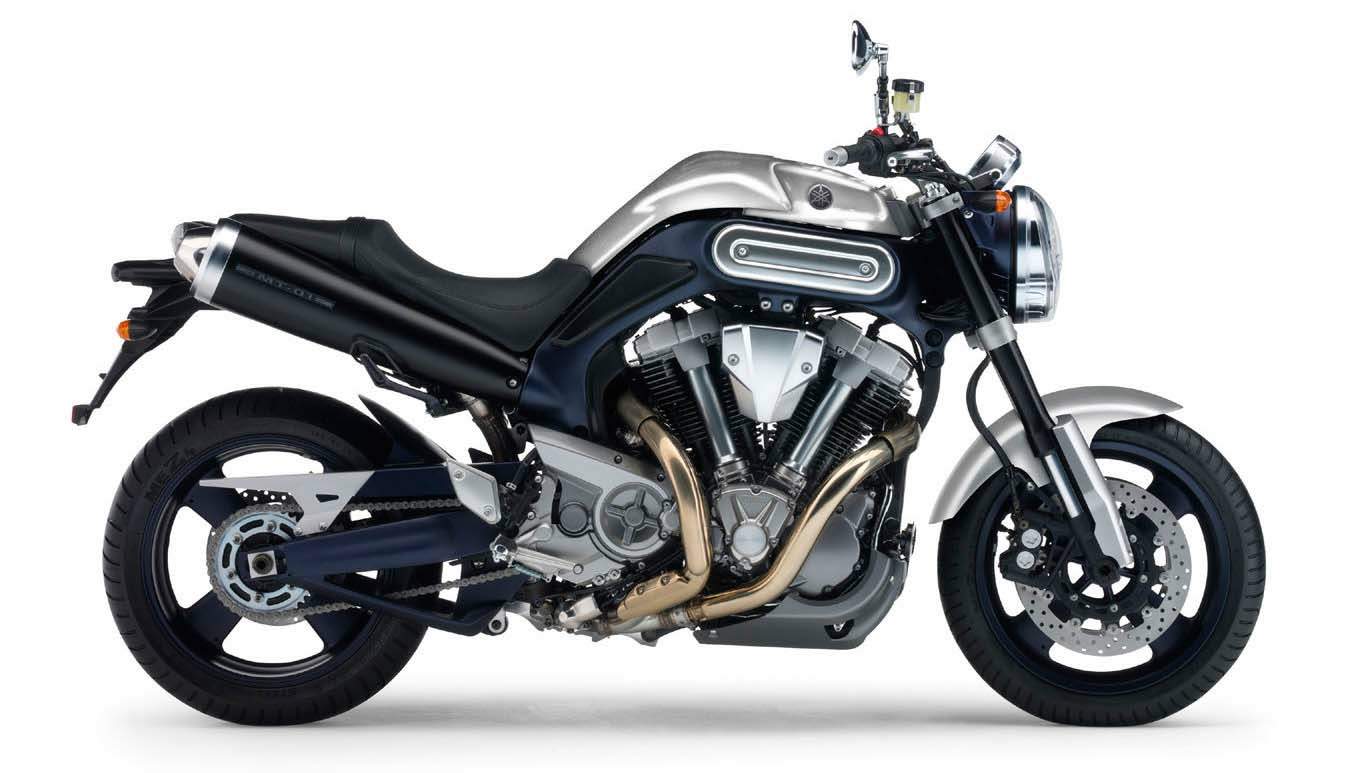
Claimed Torque: 110 lb-ft / 150 Nm
The Yamaha MT-01 was one of the strangest production motorcycles of the 2000s. It combined a massive 1670cc pushrod V-twin with a naked-bike chassis and styling that looked like a concept bike escaped from a motor show. Yamaha called it a “torque sports” machine, and that phrase still fits. The MT-01 was not chasing top speed or peak horsepower. It was about huge pulses, low-rpm thrust, and mechanical drama. It remains a cult bike for good reason.
27. Suzuki Hayabusa
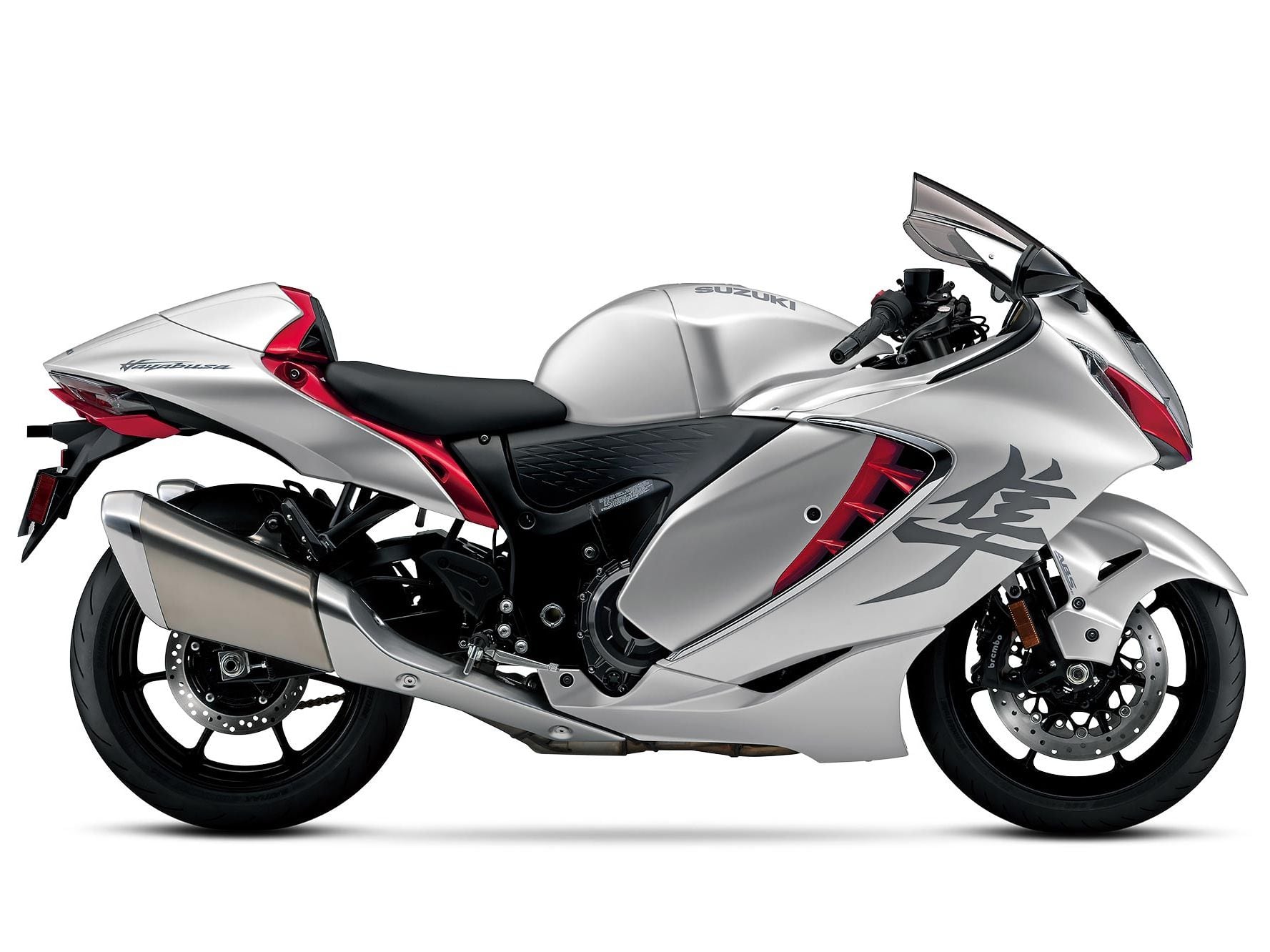
Claimed Torque: 110 lb-ft / 150 Nm
The Hayabusa is famous for speed, but torque has always been a major part of its appeal. The current 1340cc inline-four produces a claimed 150 Nm of torque, and it does so with a broad, smooth delivery that makes the bike devastating on real roads. It does not need to be screaming at redline to feel fast. It simply pulls, then keeps pulling. That is why the Hayabusa has remained relevant for more than a quarter-century.
28. BMW R 1300 GS
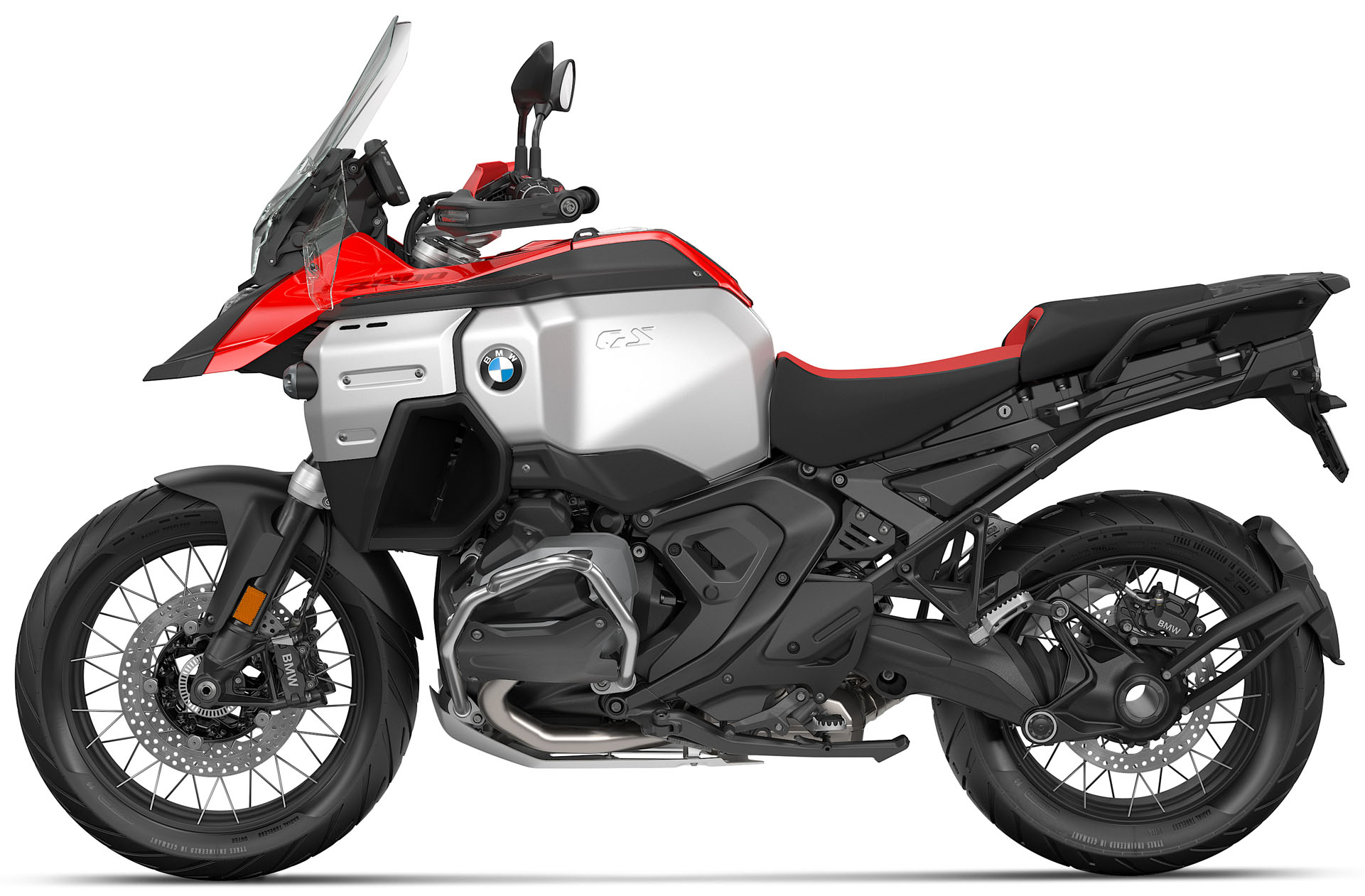
Claimed Torque: 110 lb-ft / 149 Nm
Adventure bikes do not always get mentioned in torque discussions, but the BMW R 1300 GS deserves its place here. Its 1300cc boxer produces a claimed 149 Nm of torque, giving the GS huge real-world flexibility. Whether climbing a mountain road, carrying luggage and a passenger, or overtaking traffic, the big boxer’s torque is central to the bike’s all-road personality. Few bikes combine this much torque with this much versatility.
29. Suzuki B-King
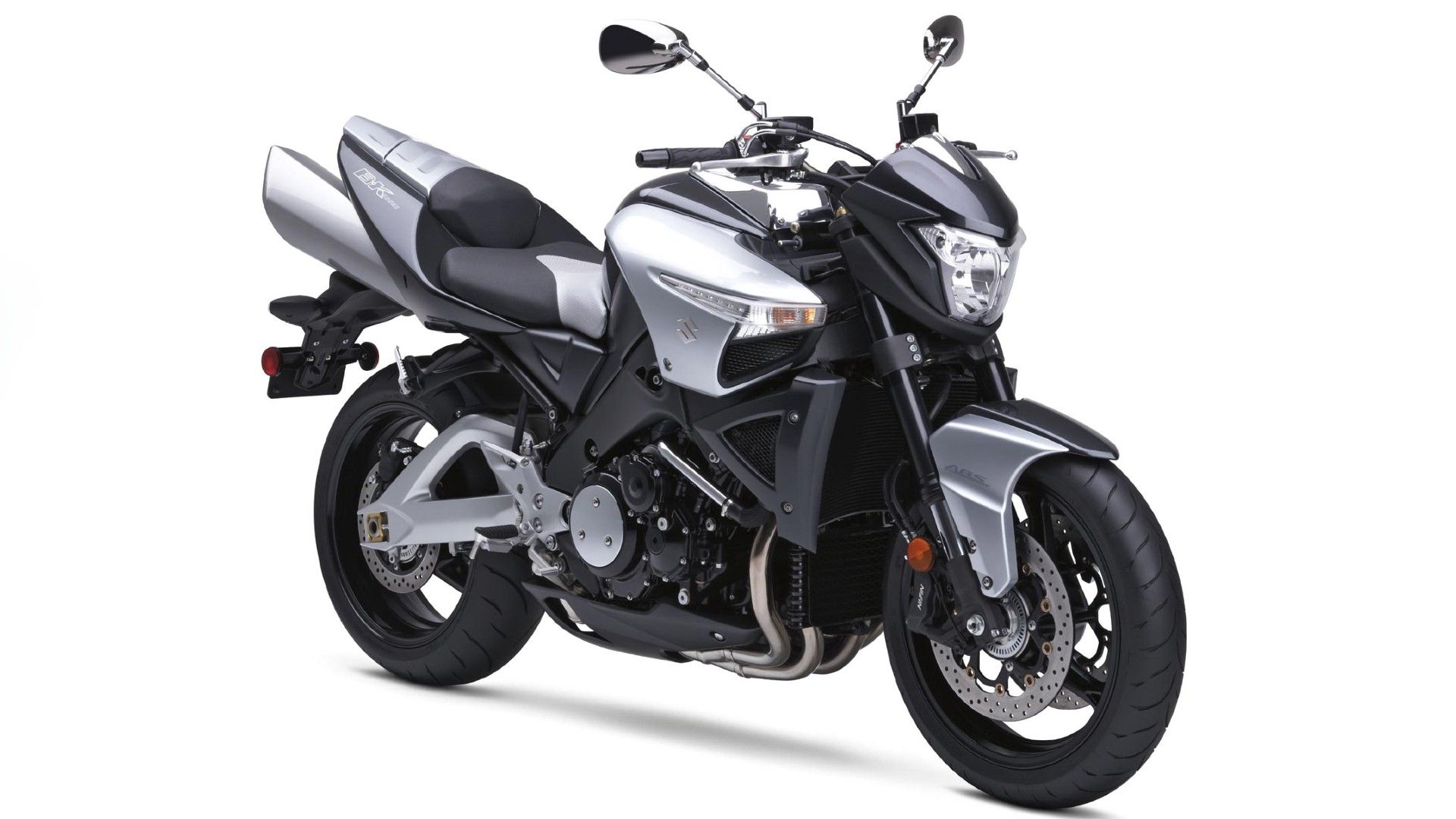
Claimed Torque: 108 lb-ft / 146 Nm
The Suzuki B-King was the Hayabusa engine in naked-bike form, wrapped in styling that was either brilliant, ridiculous, or both. Its 1340cc inline-four produced a claimed 146 Nm of torque, giving the B-King superbike-level thrust without superbike bodywork. It was not subtle, and it was not a sales smash, but it remains one of the most memorable hyper-nakeds ever built.
30. KTM 1390 Super Duke R / 1390 Super Adventure
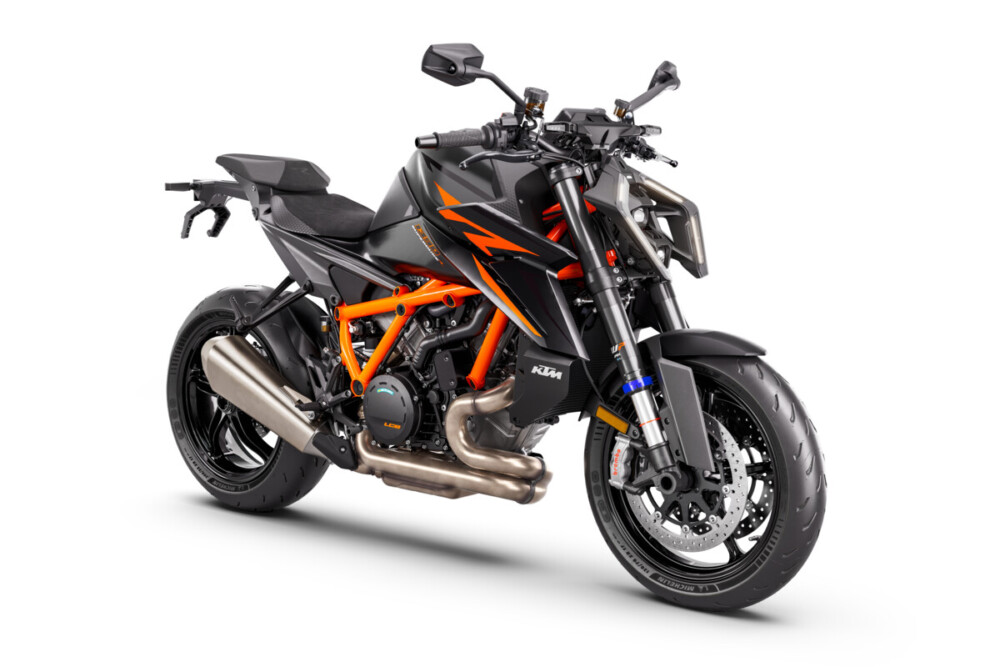
Claimed Torque: 107 lb-ft / 145 Nm
KTM’s 1390 LC8 V-twin family deserves a place in the club. The 1390 Super Duke R and 1390 Super Adventure models produce a claimed 145 Nm of torque, combining big-twin punch with modern electronics and serious chassis capability. The Super Duke delivers that torque like a naked superbike with a bad attitude, while the Super Adventure turns it into long-distance, all-road shove. Either way, this is a very different kind of torque from the cruiser class.
31. BMW R 1250 Boxer Family
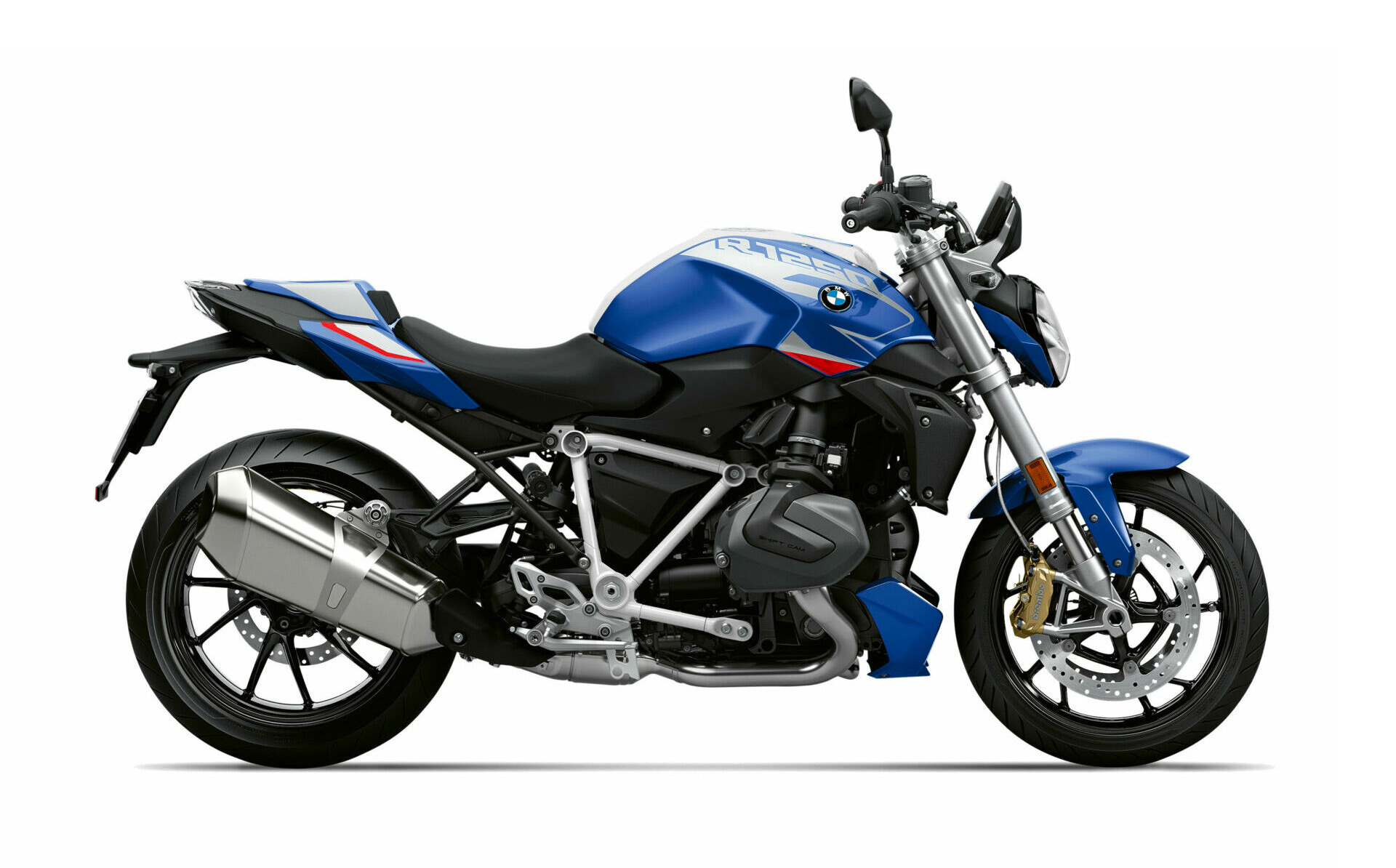
Claimed Torque: 106 lb-ft / 143 Nm
Before the R 1300, BMW’s ShiftCam-equipped R 1250 boxer family raised the torque bar for modern adventure and sport-touring motorcycles. The R 1250 GS, RT, R, and RS all shared the same basic 1254cc boxer architecture, with a claimed 143 Nm of torque. The result was a flexible, muscular powerband that made the 1250 series feel strong almost everywhere.
32. Kawasaki Ninja H2
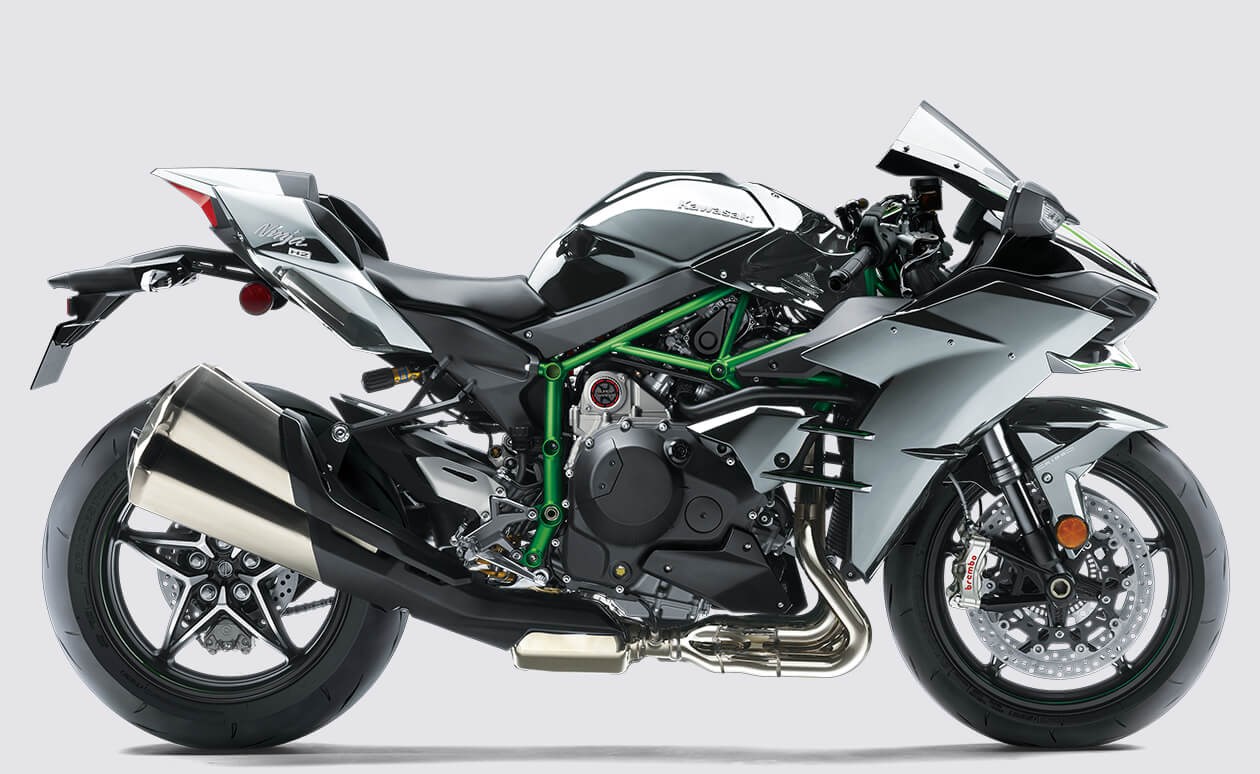
Claimed Torque: 105 lb-ft / 142 Nm
The Ninja H2 makes this list despite having “only” 998cc of displacement. That is the magic of forced induction. Kawasaki’s supercharged inline-four produces a claimed 104.9 lb-ft of torque, along with the kind of horsepower figure that made the H2 one of the most sensational production motorcycles of the modern era. It does not have cruiser-like low-end torque, but it has enormous midrange and top-end violence.
33. BMW K 1300 S / K 1300 R
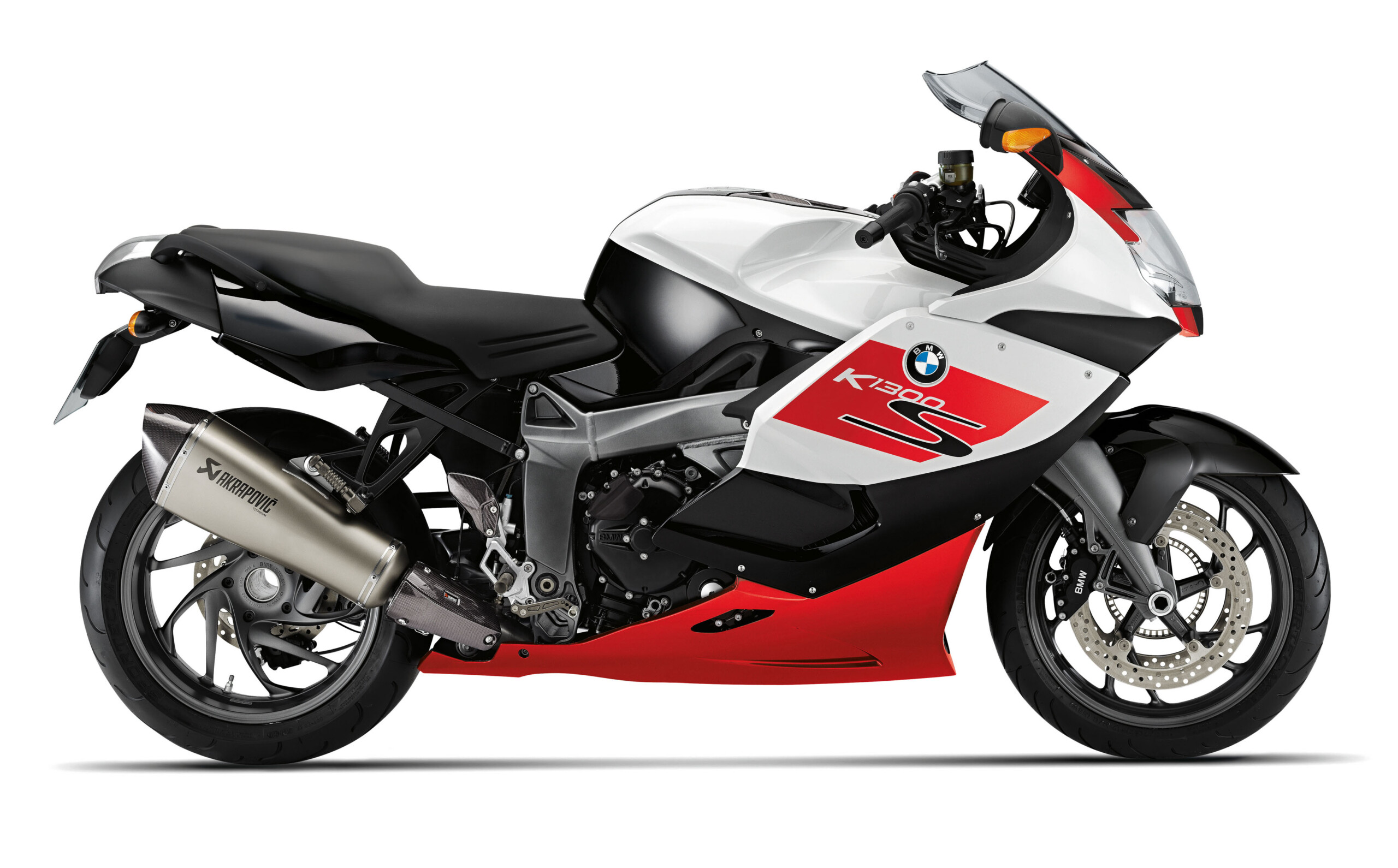
Claimed Torque: 103 lb-ft / 140 Nm
The BMW K 1300 S and K 1300 R were torque-rich inline-four machines from BMW’s pre-S1000RR performance era. With a claimed 140 Nm, the K 1300 family delivered big sport-touring thrust and high-speed composure. The K 1300 S in particular was one of BMW’s great autobahn weapons: long, stable, fast, and deceptively strong.
34. KTM 1290 Super Duke R / 1290 Super Adventure
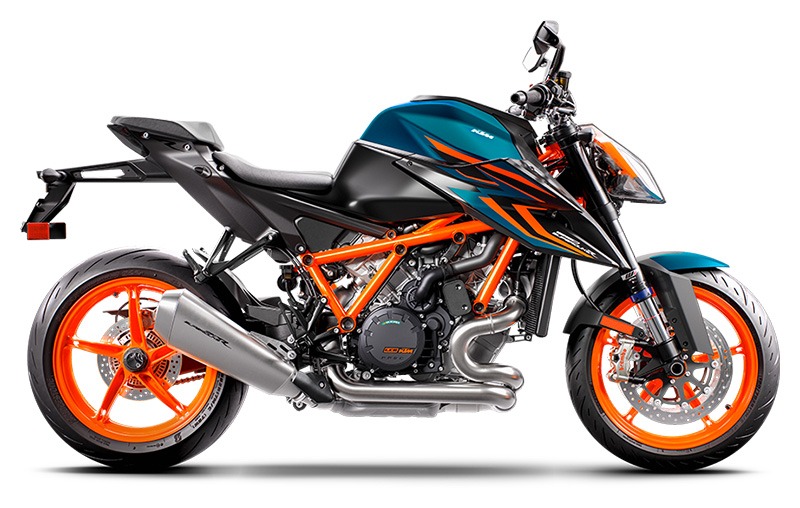
Claimed Torque: 102–103 lb-ft / 138–140 Nm
KTM’s earlier 1290 LC8 bikes still qualify for the 100-lb-ft club. The 1290 Super Duke R was quoted at around 140 Nm, while the 1290 Super Adventure produced around 138 Nm depending on model year and variant. These bikes helped define KTM’s modern big-twin identity: light for their power, sharp in response, and absolutely loaded with midrange torque.
35. Yamaha FJR1300
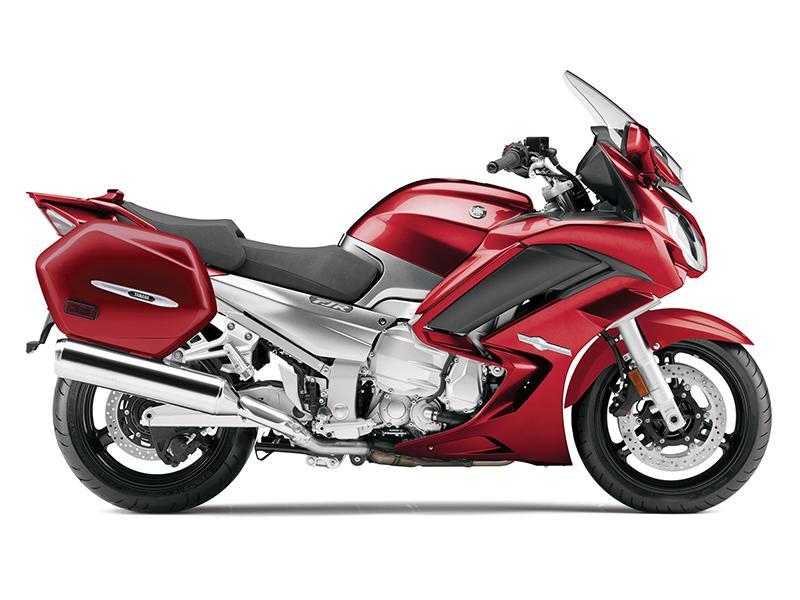
Claimed Torque: 102 lb-ft / 138 Nm
The Yamaha FJR1300 sneaks onto the list depending on model year and market specification. Later FJR1300 figures are widely quoted at 138 Nm, or about 102 lb-ft, which puts Yamaha’s long-running sport-tourer just over the line. That suits the bike’s character perfectly. The FJR was never about spec-sheet theater. It was about smooth, durable, shaft-driven speed over serious distances.
36. EBR 1190RX / 1190SX
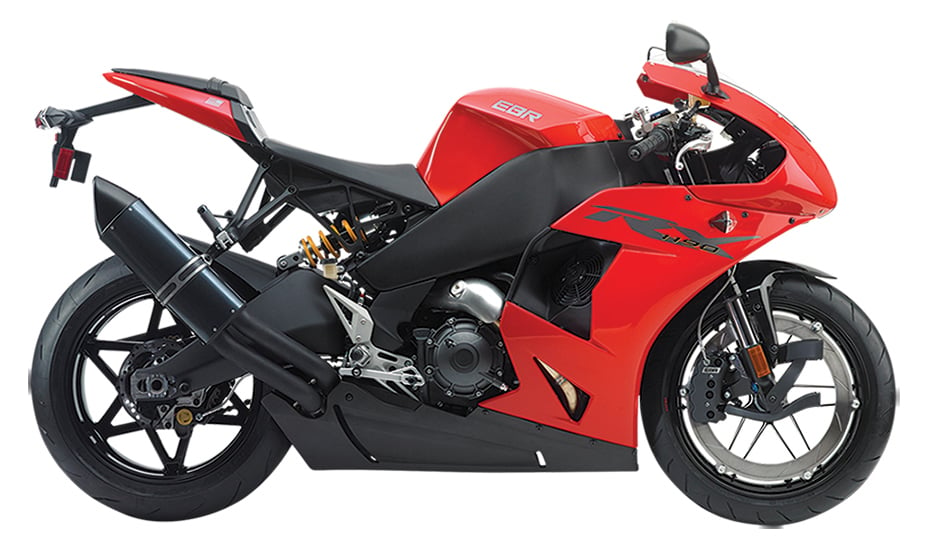
Claimed Torque: 101.6 lb-ft / 138 Nm
The EBR 1190RX and 1190SX barely clear the 100-lb-ft cutoff, but they deserve recognition. These American V-twin sportbikes produced a claimed 101.6 lb-ft of torque, pairing big-twin drive with Erik Buell’s unconventional chassis thinking. They were rare, short-lived, and fascinating — exactly the kind of machines that make a list like this more interesting than a simple cruiser ranking.
37. Kawasaki Z H2 / Ninja H2 SX
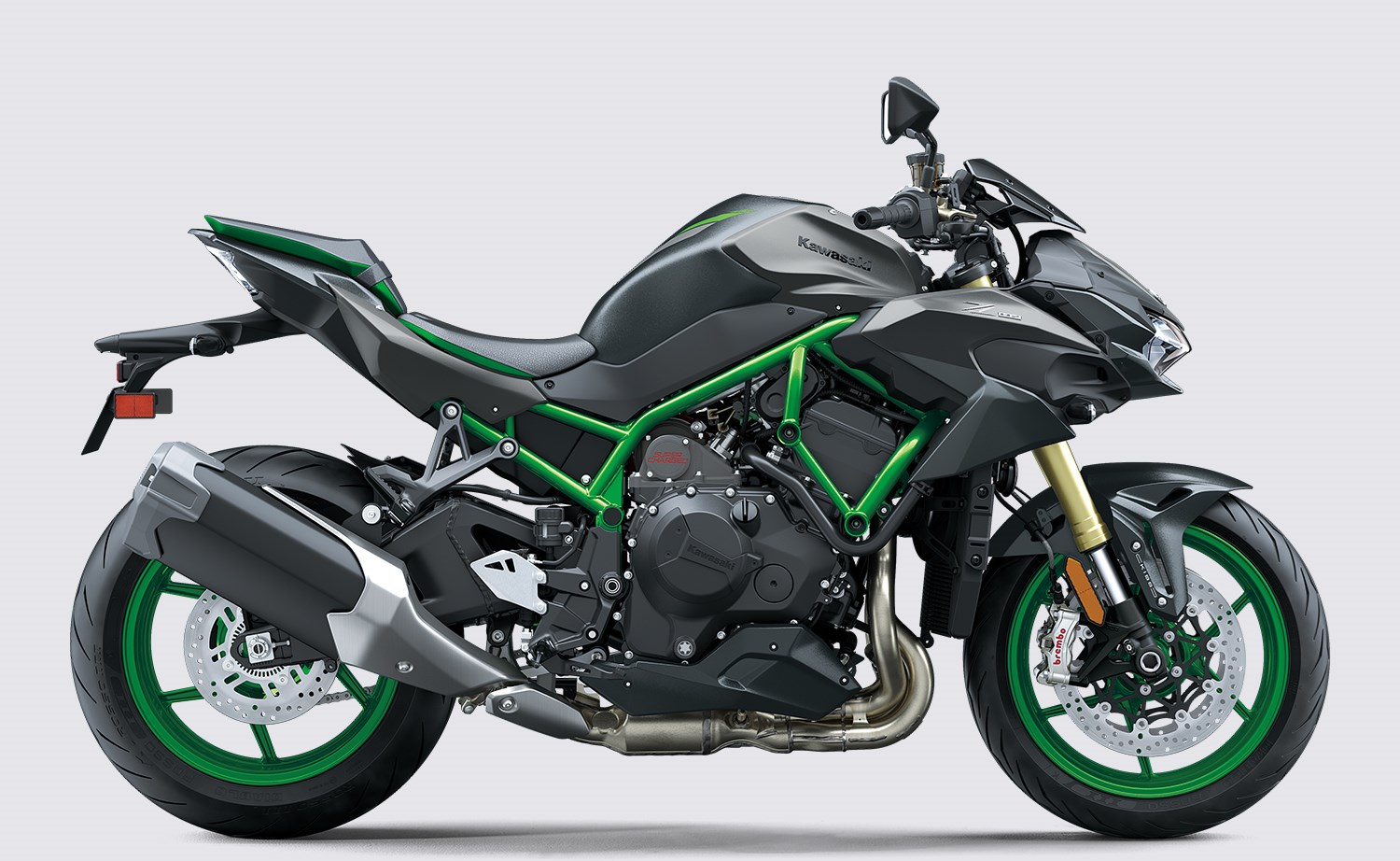
Claimed Torque: 101 lb-ft / 137 Nm
Kawasaki’s supercharged Z H2 and H2 SX make just over 100 lb-ft, with a claimed 101 lb-ft of torque. The H2 SX turns that into high-speed sport-touring thrust, while the Z H2 delivers it in naked-bike form. Neither feels like a traditional torque monster, but the numbers are real — and the forced-induction character makes them unlike anything else in the class.
38. Kawasaki Concours 14 / GTR1400
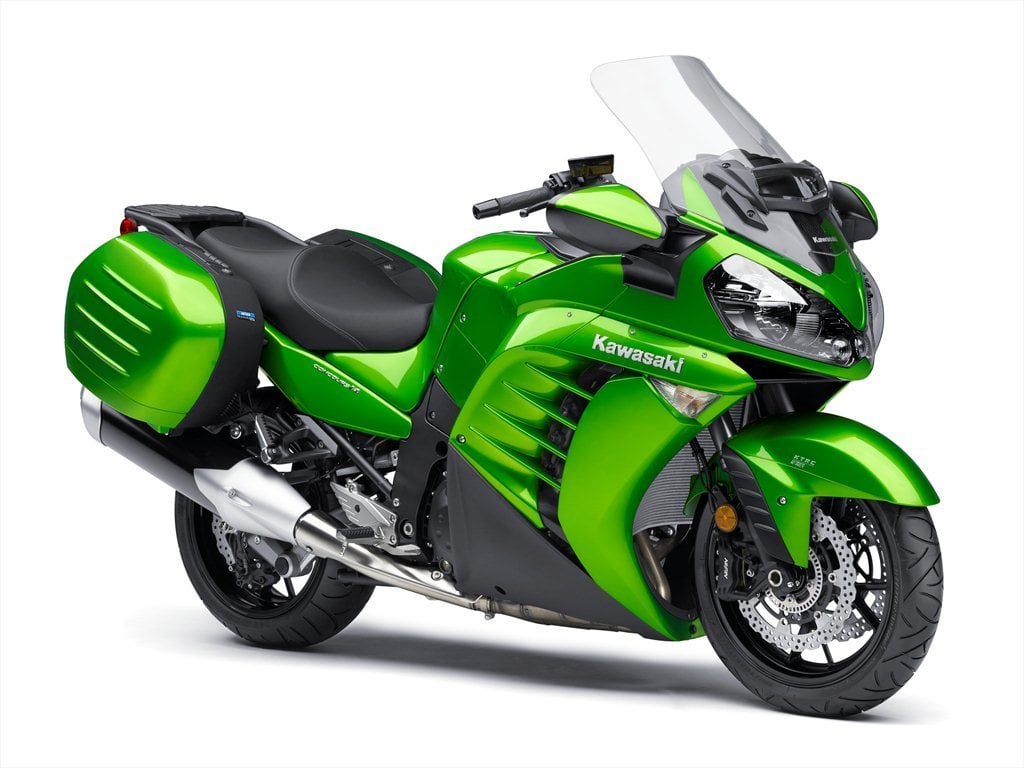
Claimed Torque: 100.5 lb-ft / 136 Nm
The Kawasaki Concours 14 just clears the 100-lb-ft threshold. Based around a 1352cc inline-four related to the ZX-14 platform, the Concours 14 combined sportbike bloodlines with shaft drive, luggage, wind protection, and long-distance comfort. It was big, fast, and smooth — a proper sport-tourer from an era when that category still had serious horsepower and torque.
The 100+ lb-ft Production Motorcycle Club
| Rank | Motorcycle / Family | Claimed Torque |
|---|---|---|
| 1 | Triumph Rocket 3 Storm | 166 lb-ft / 225 Nm |
| 2 | Triumph Rocket 3 / Rocket III Roadster | 163 lb-ft / 221 Nm |
| 3 | Triumph Rocket III Touring | 154 lb-ft / 209 Nm |
| 4 | Harley-Davidson CVO Road Glide RR | 150 lb-ft / 203 Nm |
| 5 | Harley-Davidson CVO Road Glide ST / CVO Street Glide ST | 145 lb-ft / 197 Nm |
| 6 | Kawasaki Vulcan 2000 | 141 lb-ft / 191 Nm |
| 7 | Harley-Davidson CVO 121 VVT Touring Models | 139 lb-ft / 188 Nm |
| 8 | Indian PowerPlus 112 Models | 133 lb-ft / 180 Nm |
| 9 | BMW K 1600 Family | 133 lb-ft / 180 Nm |
| 10 | Harley-Davidson Street Glide / Road Glide 117 | 130 lb-ft / 176 Nm |
| 11 | Indian PowerPlus 108 Models | 128 lb-ft / 174 Nm |
| 12 | Harley-Davidson Low Rider S / Low Rider ST | 128 lb-ft / 174 Nm |
| 13 | Indian Thunderstroke 116 Models | 126 lb-ft / 171 Nm |
| 14 | Yamaha Star Venture / Star Eluder | 126 lb-ft / 171 Nm |
| 15 | Honda Gold Wing 1800 | 125 lb-ft / 170 Nm |
| 16 | Yamaha VMAX 1700 | 123 lb-ft / 166.8 Nm |
| 17 | Honda Valkyrie Rune | 123 lb-ft / 167 Nm |
| 18 | Honda VTX1800 | 120 lb-ft / 163 Nm |
| 19 | Indian Thunderstroke 111 Models | 119 lb-ft / 161 Nm |
| 20 | Suzuki Boulevard M109R / Intruder M1800R | 118 lb-ft / 160 Nm |
| 21 | BMW R 18 | 117 lb-ft / 158 Nm |
| 22 | Kawasaki Ninja ZX-14R / ZZR1400 | 116.5 lb-ft / 158 Nm |
| 23 | Triumph Thunderbird Storm 1700 | 115 lb-ft / 156 Nm |
| 24 | Victory Freedom 106 Stage 2 Models | 113 lb-ft / 153 Nm |
| 25 | Triumph Thunderbird Commander / LT | 111 lb-ft / 151 Nm |
| 26 | Yamaha MT-01 | 110 lb-ft / 150 Nm |
| 27 | Suzuki Hayabusa | 110 lb-ft / 150 Nm |
| 28 | BMW R 1300 GS | 110 lb-ft / 149 Nm |
| 29 | Suzuki B-King | 108 lb-ft / 146 Nm |
| 30 | KTM 1390 Super Duke R / Super Adventure | 107 lb-ft / 145 Nm |
| 31 | BMW R 1250 Boxer Family | 106 lb-ft / 143 Nm |
| 32 | Kawasaki Ninja H2 | 105 lb-ft / 142 Nm |
| 33 | BMW K 1300 S / K 1300 R | 103 lb-ft / 140 Nm |
| 34 | KTM 1290 Super Duke R | 103 lb-ft / 140 Nm |
| 35 | KTM 1290 Super Adventure | 102 lb-ft / 138 Nm |
| 36 | Yamaha FJR1300 | 102 lb-ft / 138 Nm |
| 37 | EBR 1190RX / 1190SX | 101.6 lb-ft / 138 Nm |
| 38 | Kawasaki Z H2 / Ninja H2 SX | 101 lb-ft / 137 Nm |
| 39 | Kawasaki Concours 14 / GTR1400 | 100.5 lb-ft / 136 Nm |
Torque: The Real Story…
Peak torque figures only tell part of the story. Where that torque arrives, how broadly it is spread across the rev range, and how much weight the engine has to move often matter more than the maximum number itself. That is why a Rocket 3 feels unstoppable at 4000 rpm, a Gold Wing feels effortlessly smooth with two people and luggage, and a Hayabusa can feel stronger on the road than many higher-horsepower superbikes.
The Torque Kings
If we exclude turbine, V8, and electric outliers, the answer is clear: the Triumph Rocket 3 Storm is the highest-torque production motorcycle in the mainstream gasoline-powered world, with a claimed 166 lb-ft. But the broader 100+ lb-ft club is more interesting than a single winner. It includes baggers, muscle cruisers, sport-tourers, adventure bikes, hypernakeds, superbikes, and full-dress touring machines. It includes American V-twins, British triples, Japanese inline-fours, German boxers and inline-sixes, Italian-American sportbikes, and Austrian V-twins.
In other words, torque does not belong to one category. It belongs to any motorcycle built to make the world feel smaller with one twist of the throttle.


