 Built with Love: A Super Six Honda from Sven Kupfer of Motorrad Treffen…
In the long and storied history of the motorcycle, few machines can match the six-cylinder scream of the Honda CBX1000. It might be the most glorious song ever raised from the tailpipes of a production bike, akin to the high-powered howling of a 1960s Formula One car.
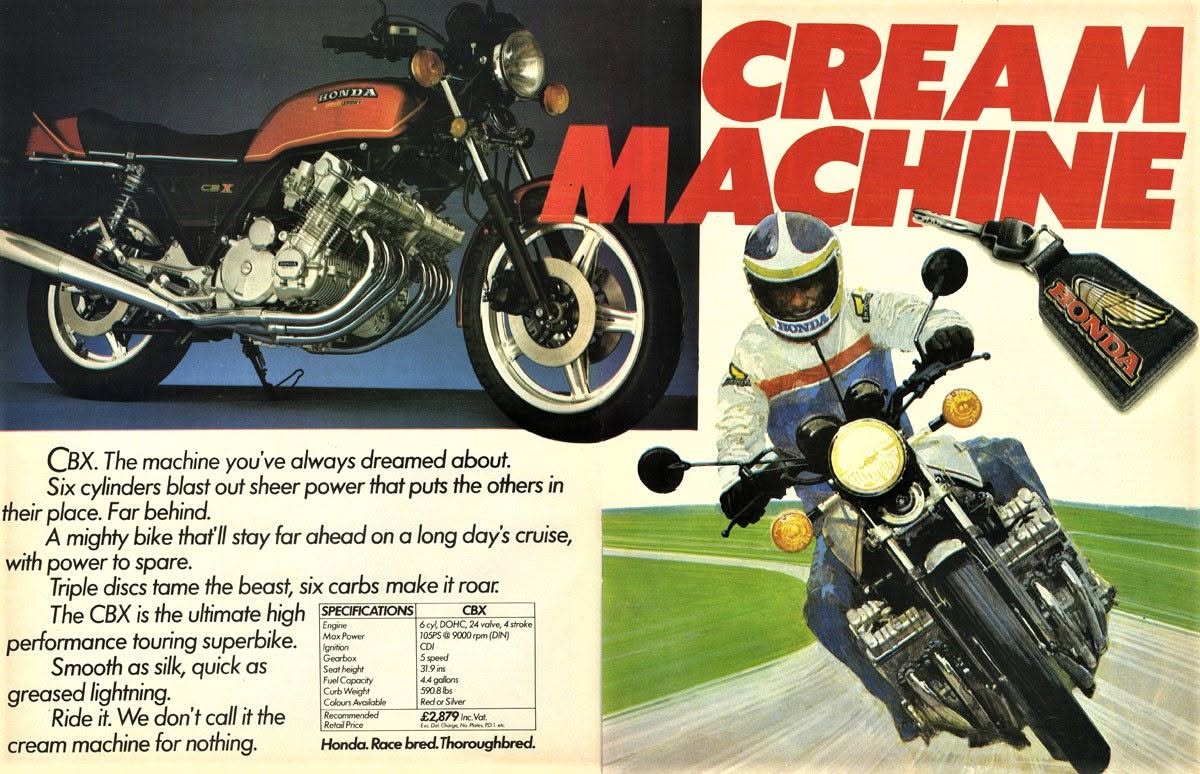
The original CBX appeared in 1978 as Honda’s first mass-produced six-cylinder machine, sporting a DOHC 24-valve engine that incorporated technology derived from the company’s 1960s RC-series Grand Prix bikes. While the CBX was a technological achievement, Honda’s own CB900F actually outperformed the CBX on the track and in the showroom.
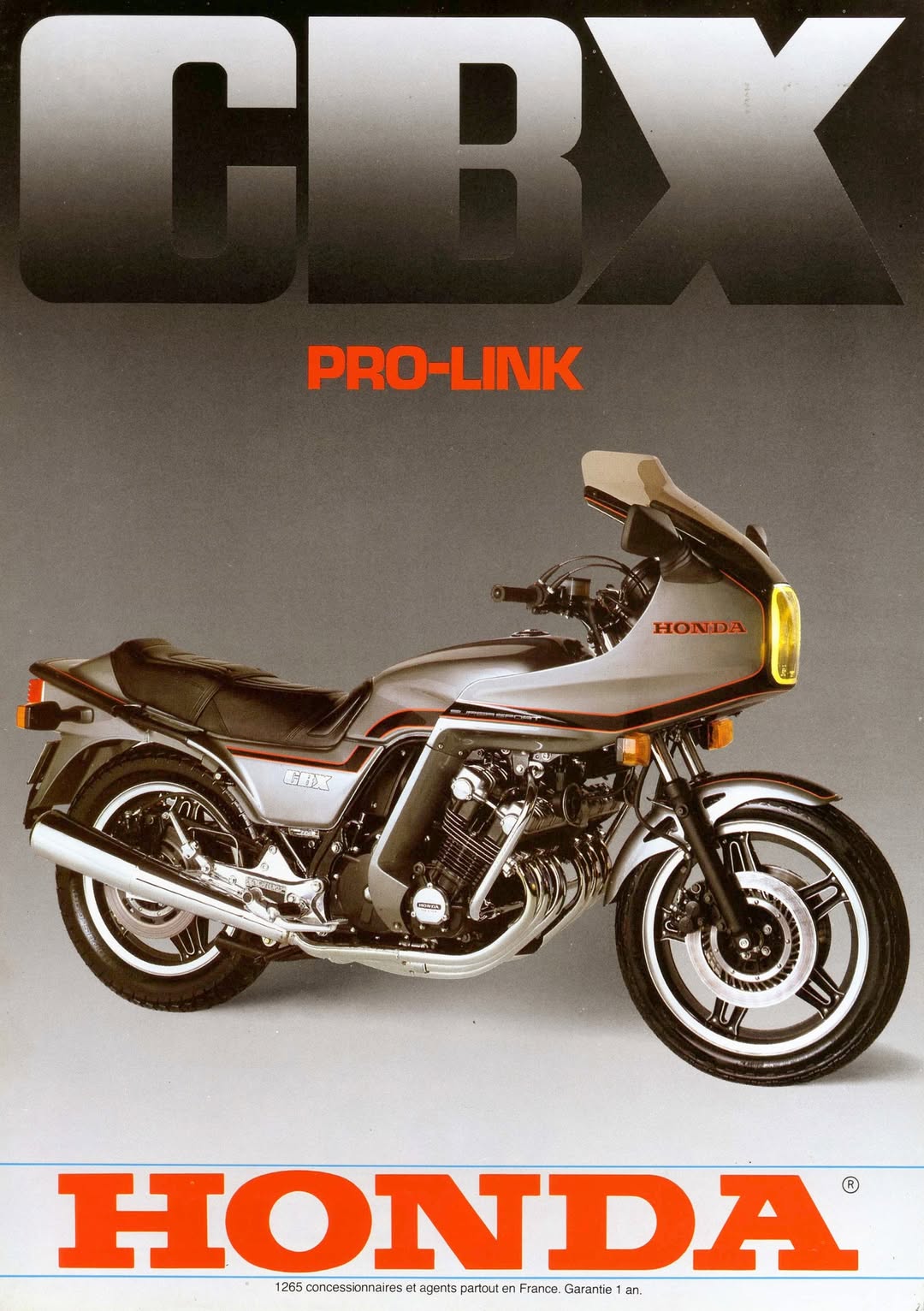
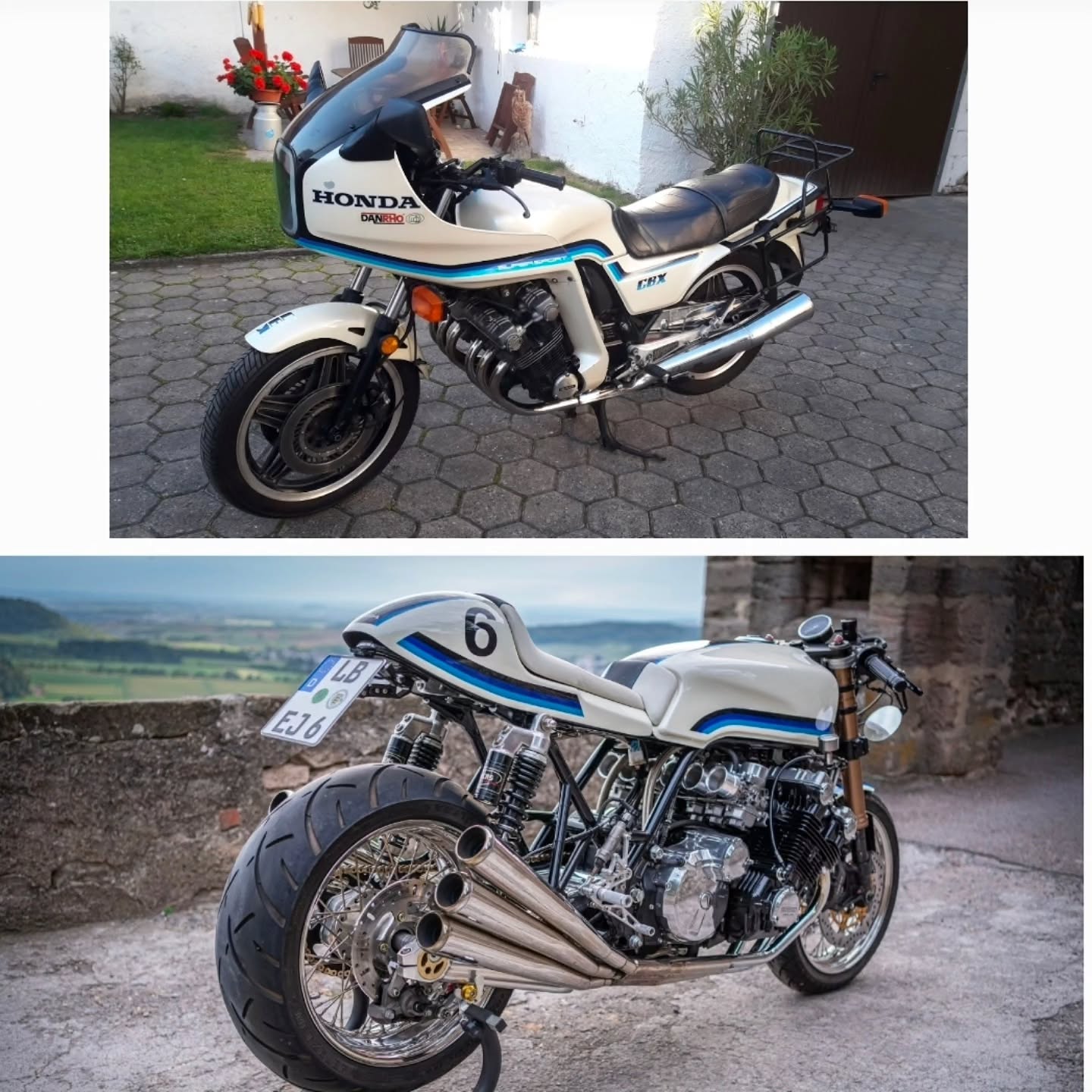
For the 1981 model year, the company reconfigured the big 1047cc six-banger as a sport-touring bike, outfitting the CBX with a Pro-Link rear monoshock, air-adjustable forks, a front fairing, optional panniers, and a stronger frame to support these additions. While the CBX was never the world-beating superbike the company originally intended, it remains one of the most iconic production machines ever available…and one of our favorite platforms for a custom build.
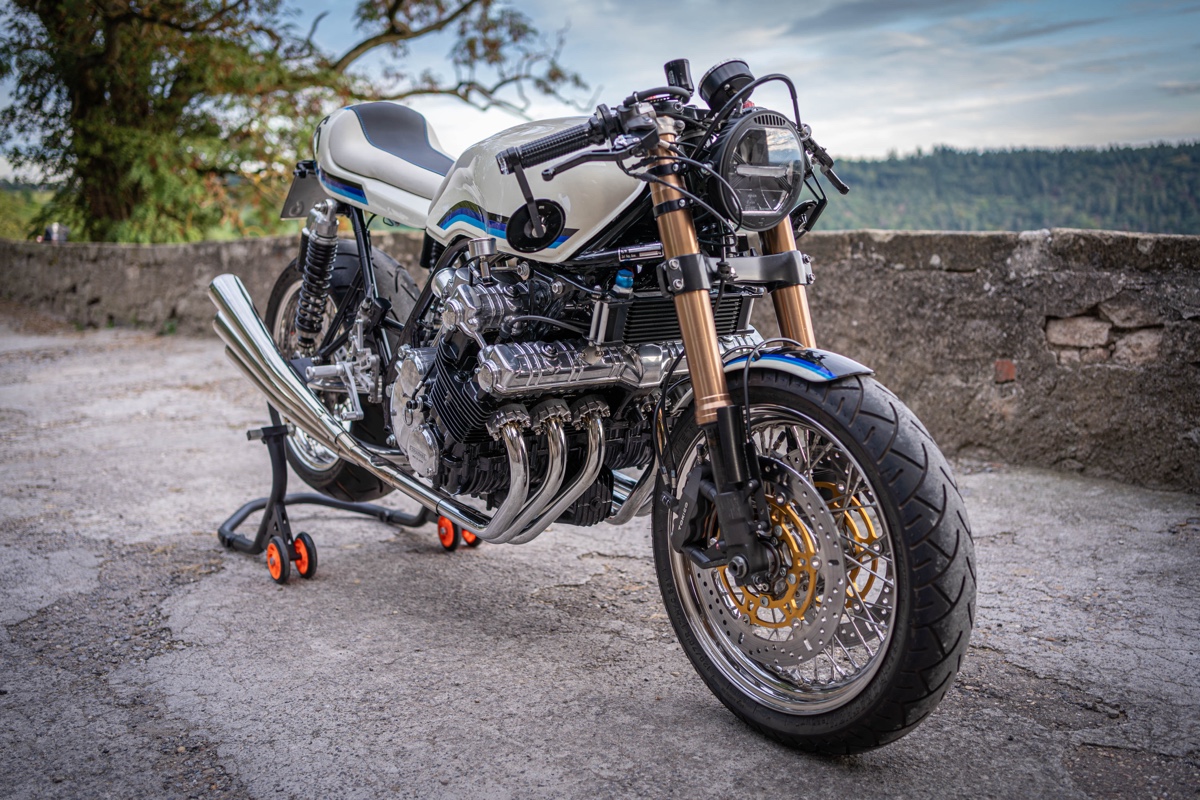
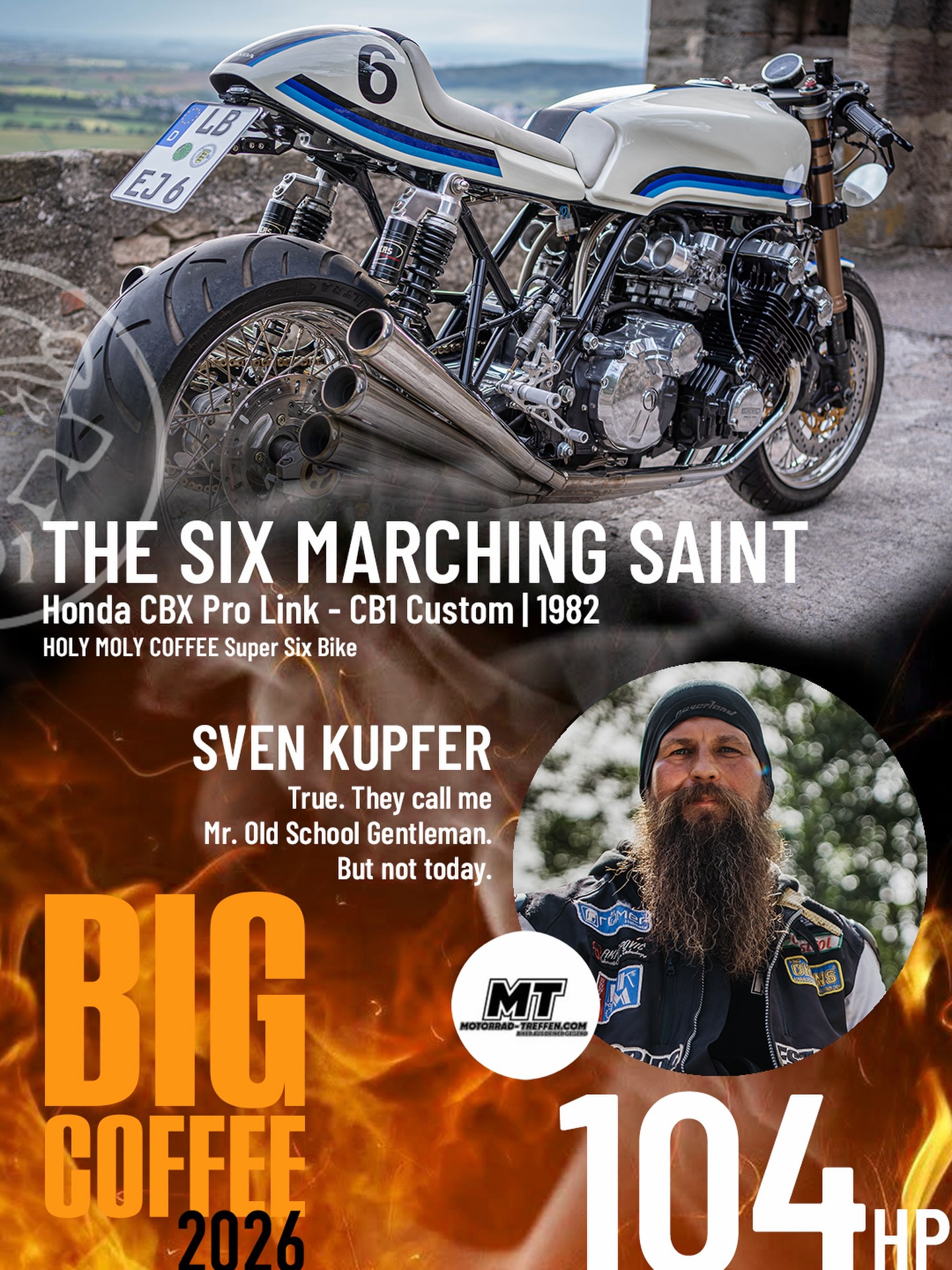
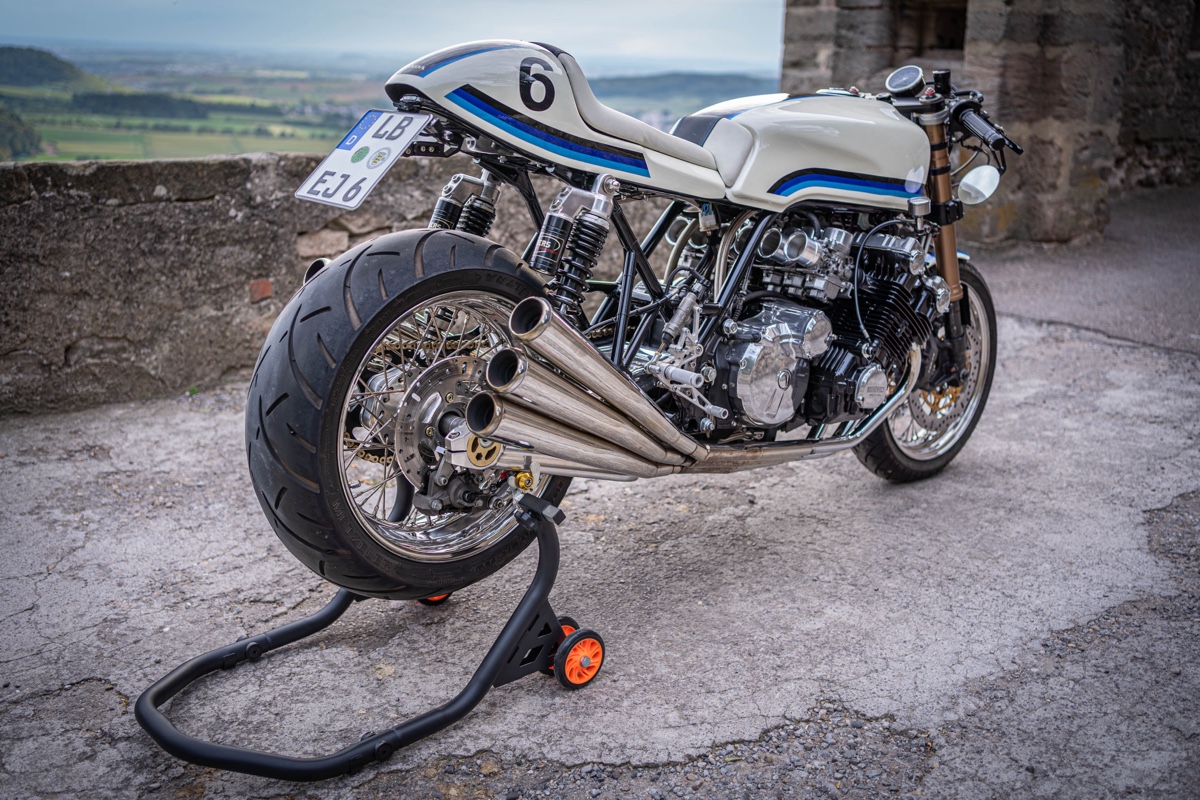 The CBX1000 café racer you see here is one of the best-known Honda sixes in Europe. It’s owned by Sven Kupfer, aka Mr. Old School Gentleman, who runs one of the largest motorcycle communities in Germany: Motorrad-Treffen.com, along with its various national affiliates and social channels. Sven was drawn to the CBX like many before him:
“Anyone who’s ever heard and ridden this bike will never want to be without it again.”
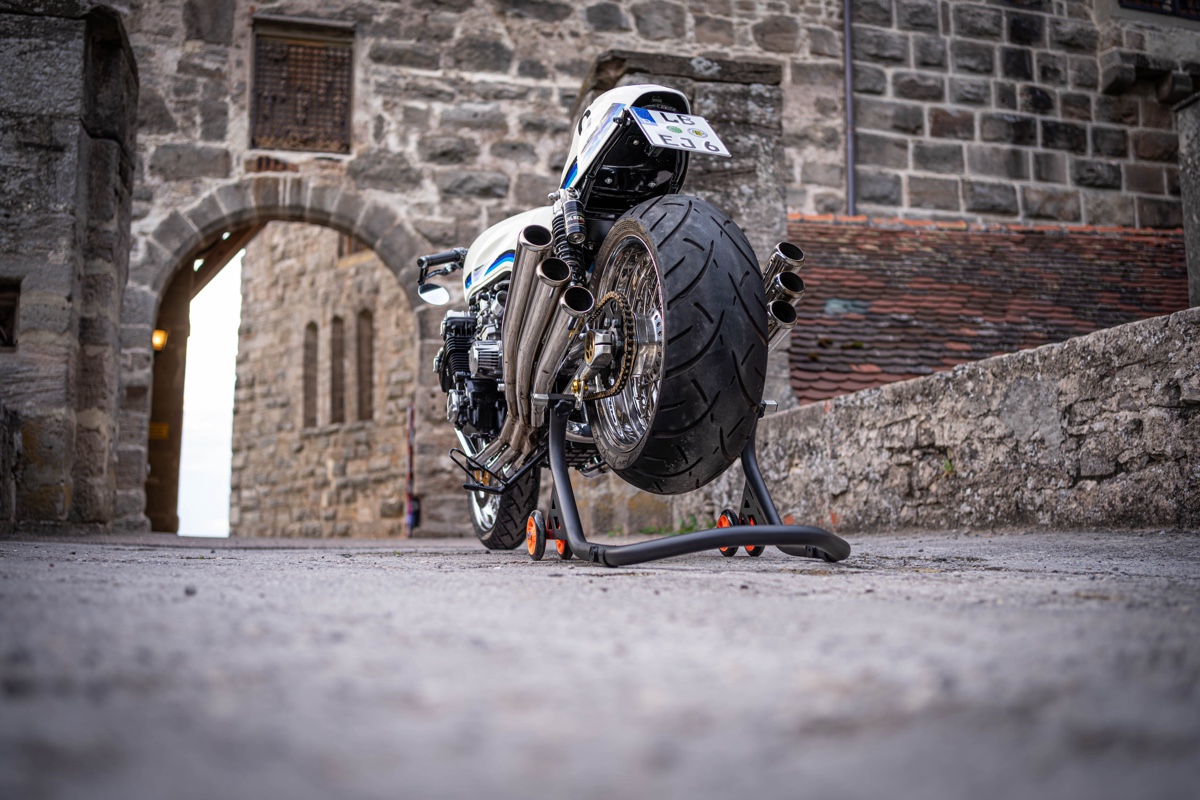
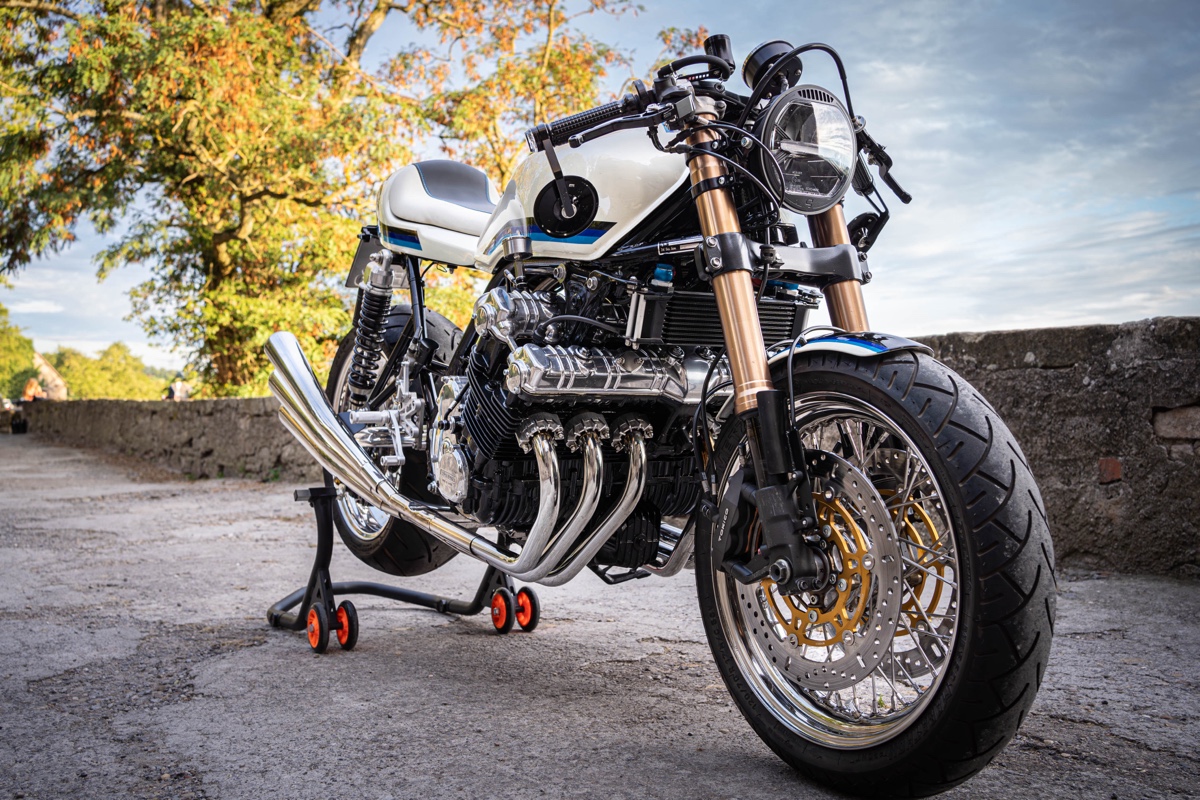
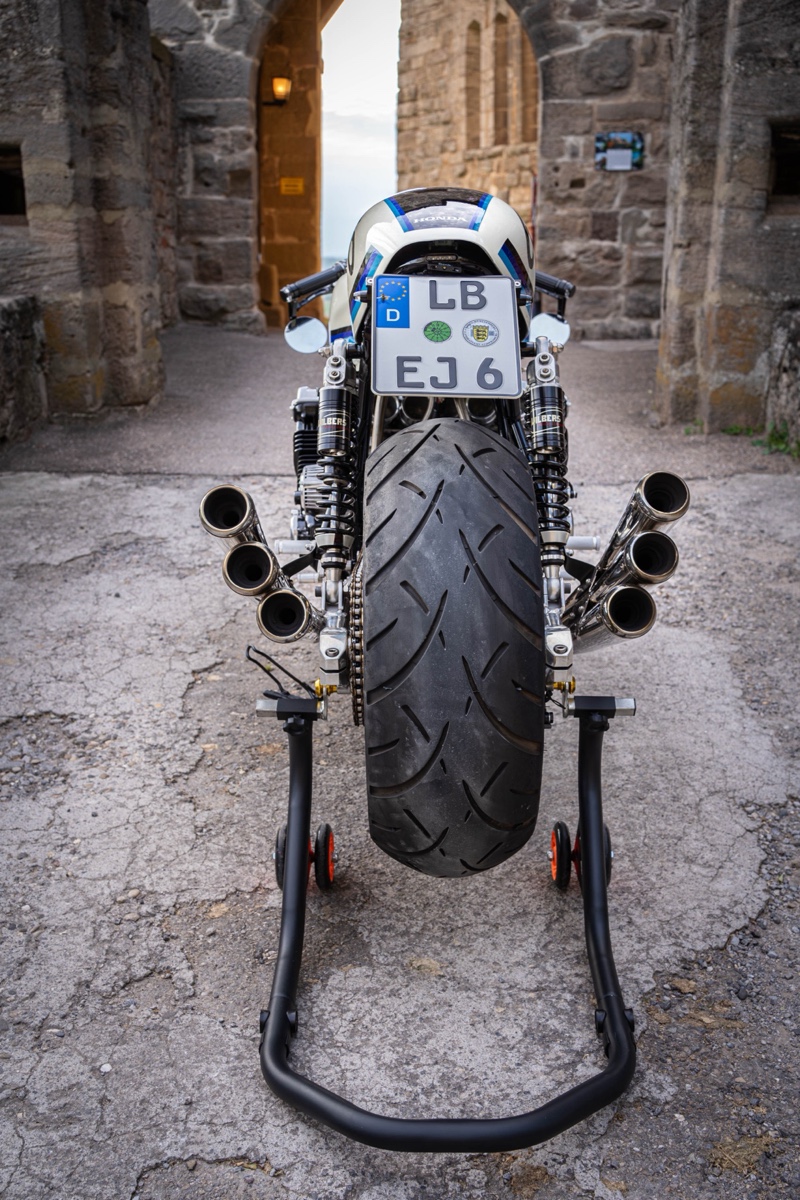
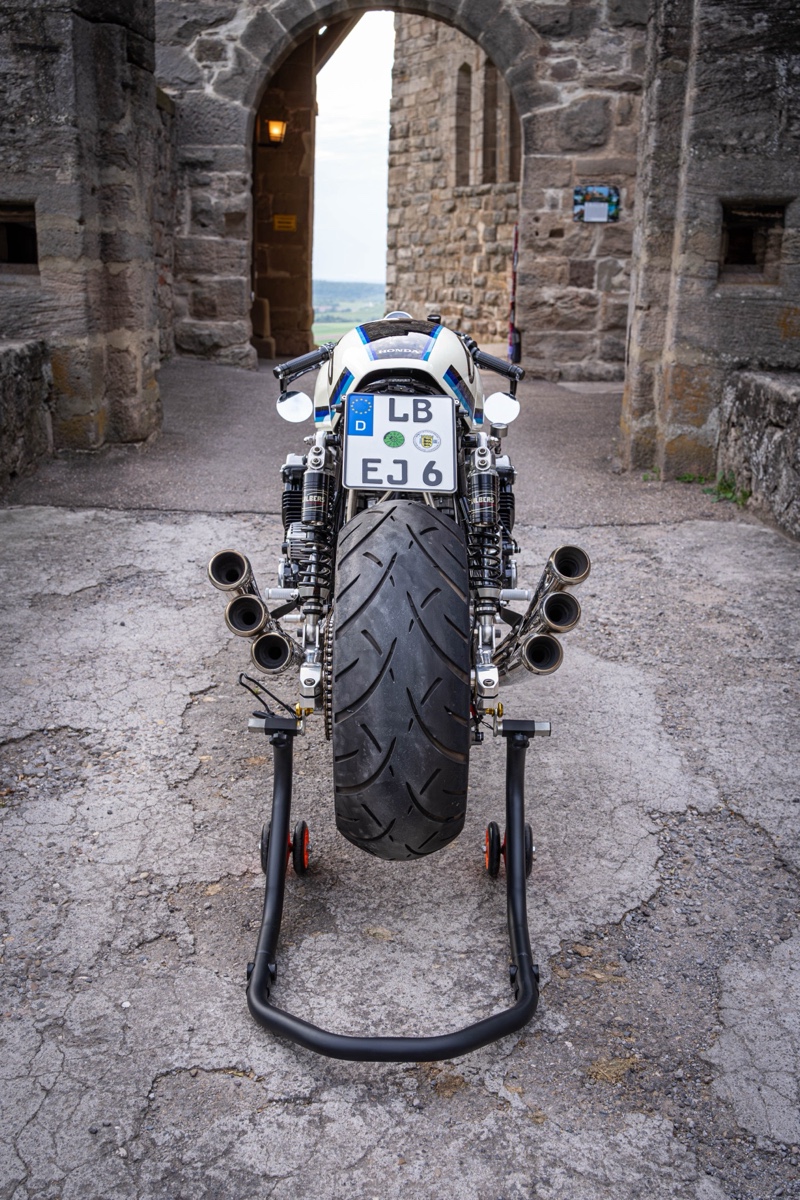
So he decided to create a CBX café racer built exactly to his own “specifications and desires.” He enlisted the help of Volker Eschbach, and the build took some five years from start to finish. The donor is a 1982 Pro-Link model, but you’ll notice the rear monoshock has converted to a more classic twin-shock setup.
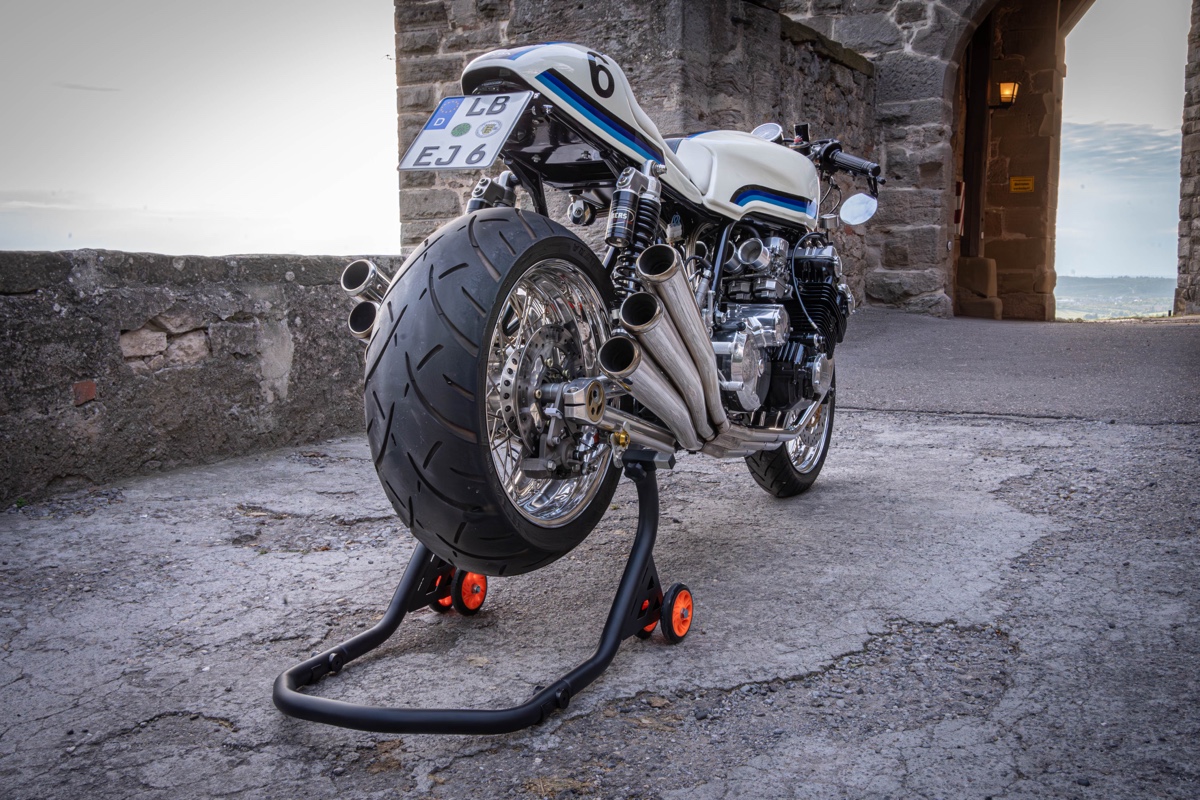
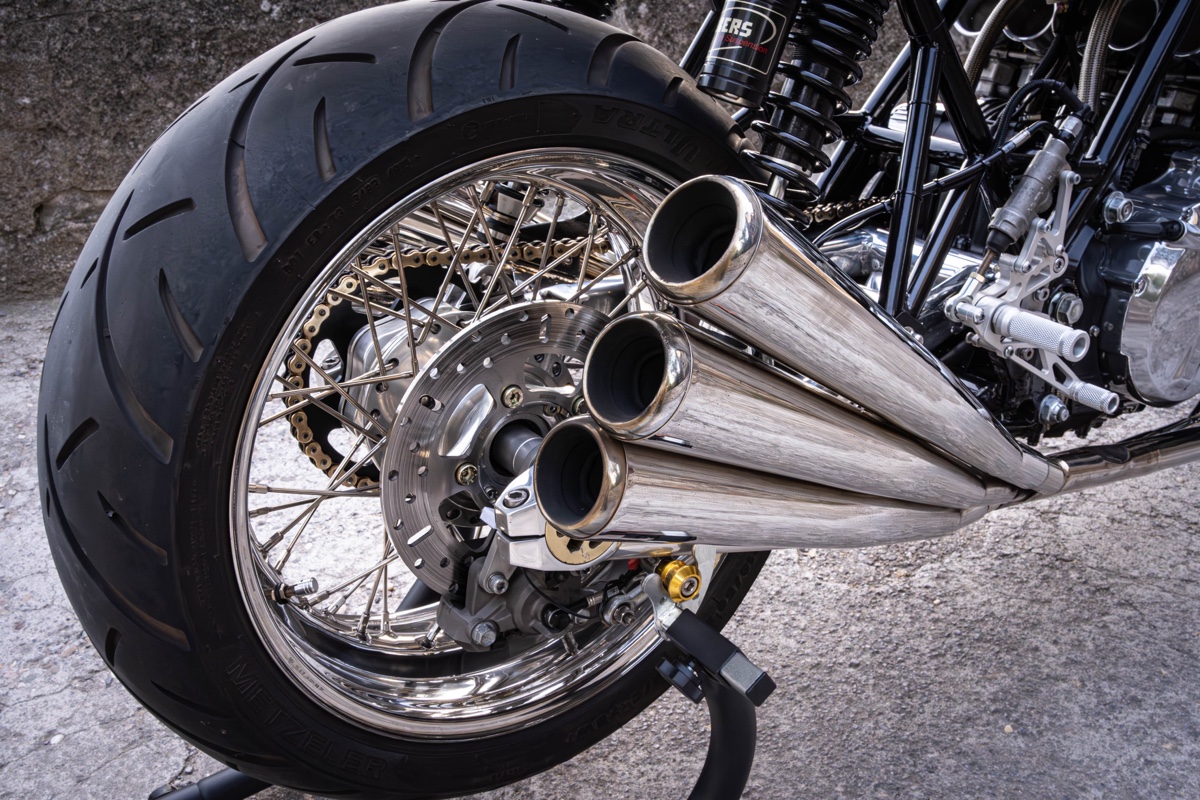
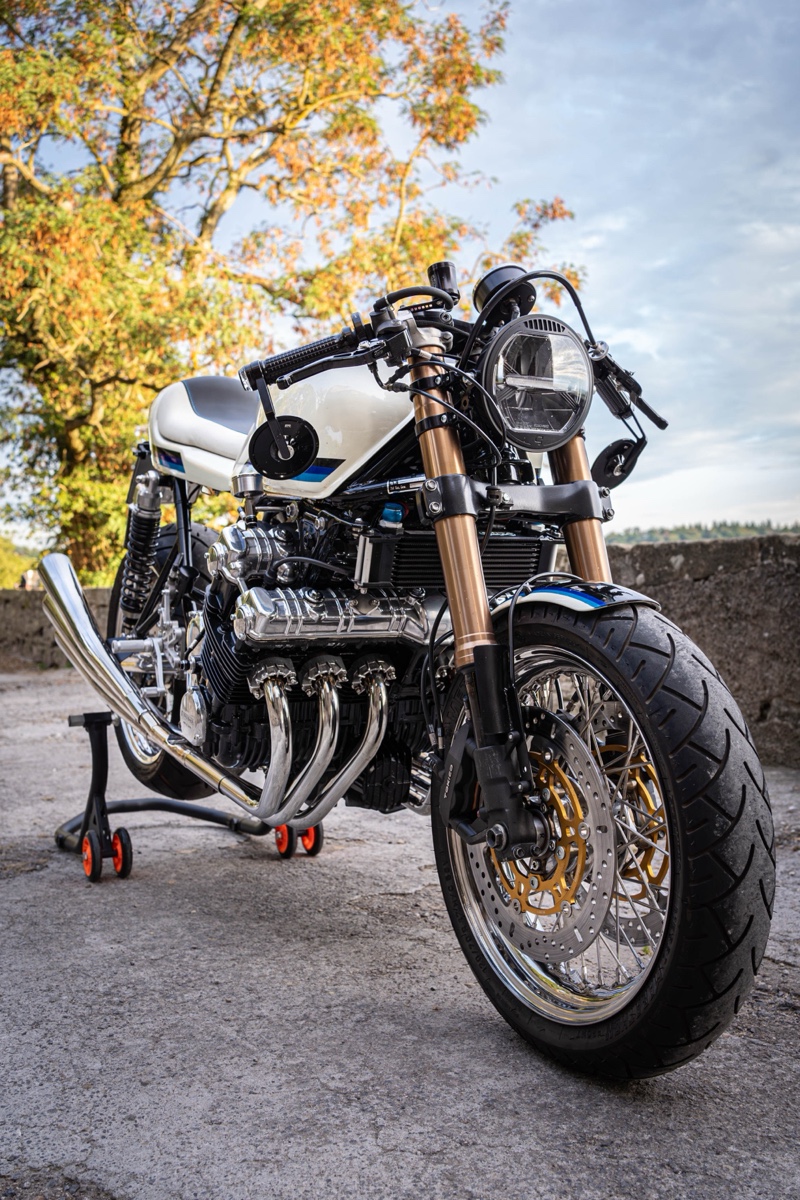
The mags were also destined for the dust bins. New hubs were machined from solid aluminum and laced to a set of aluminum rims, giving the bike more of a vintage look. However, other components are solidly modern, including the Suzuki GSX-R1000 forks and brakes, ZRX swingarm, Kawasaki alternator, and Motogadget electronics, speedometer, and lighting accessories.
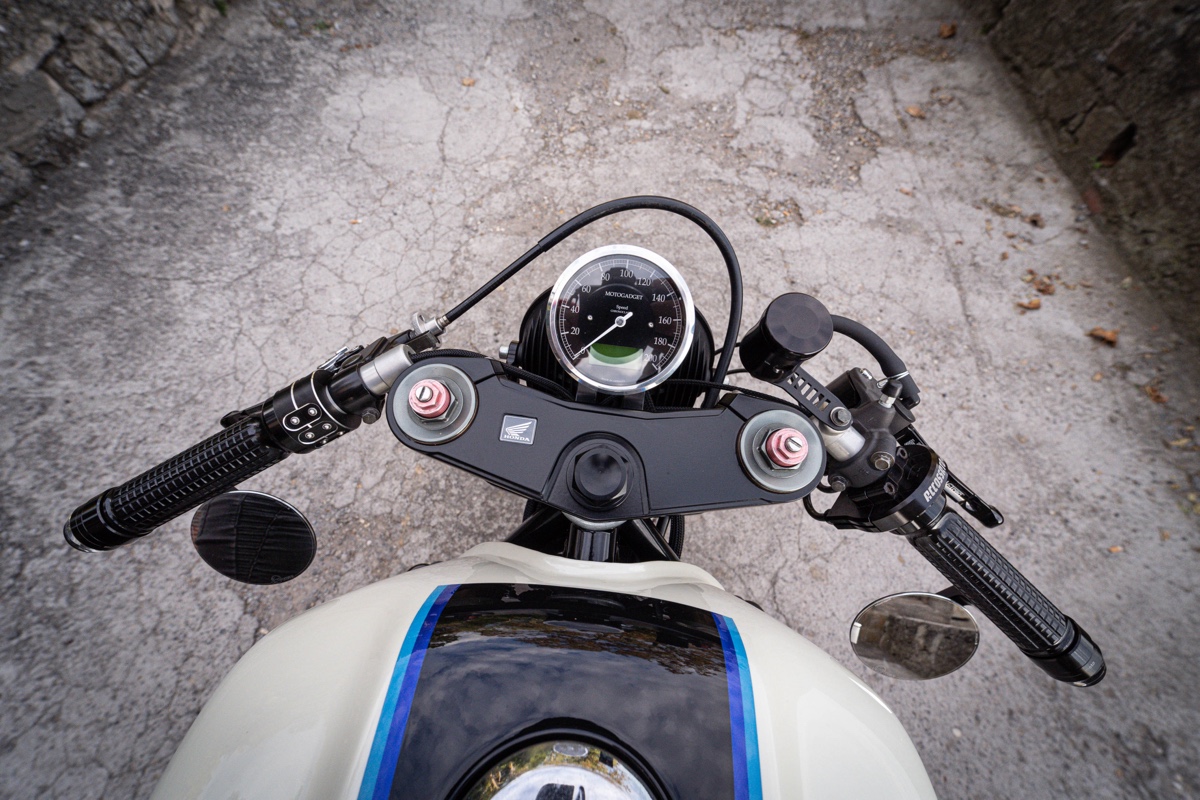
All in all, Sven says the weight dropped some 45 kilograms (nearly 100 pounds) from the stock machine. He’s nicknamed it the “Six Marching Saint.” In German, the word “Six” acts as a rigid identifier for the machine’s defining characteristic (the six cylinders), crowning the bike as a singular “Marching Saint” on the asphalt.
It was a half-decade journey that resulted in the stunning machine you see here.
“It was built with so much love, down to the smallest detail.”
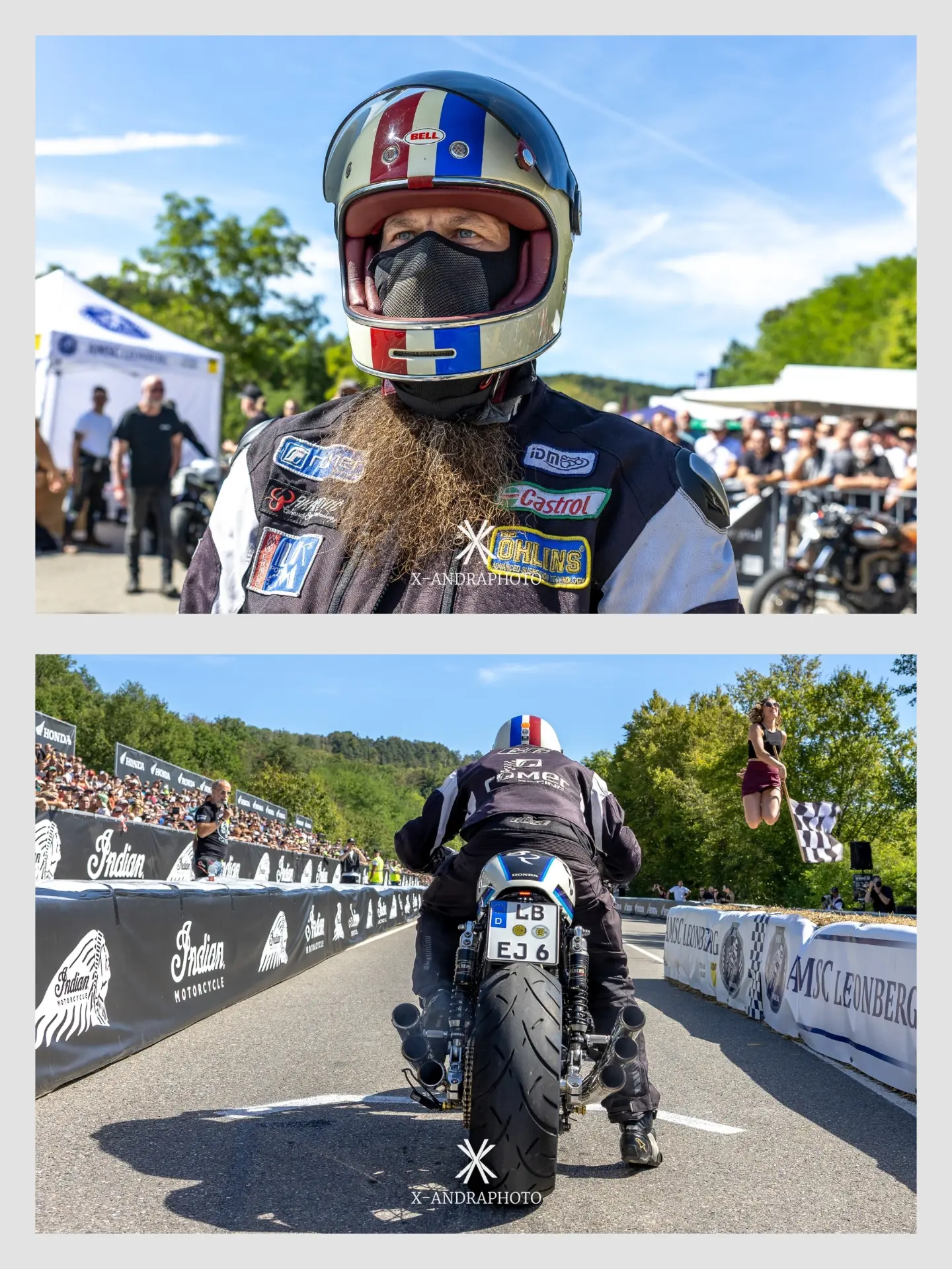
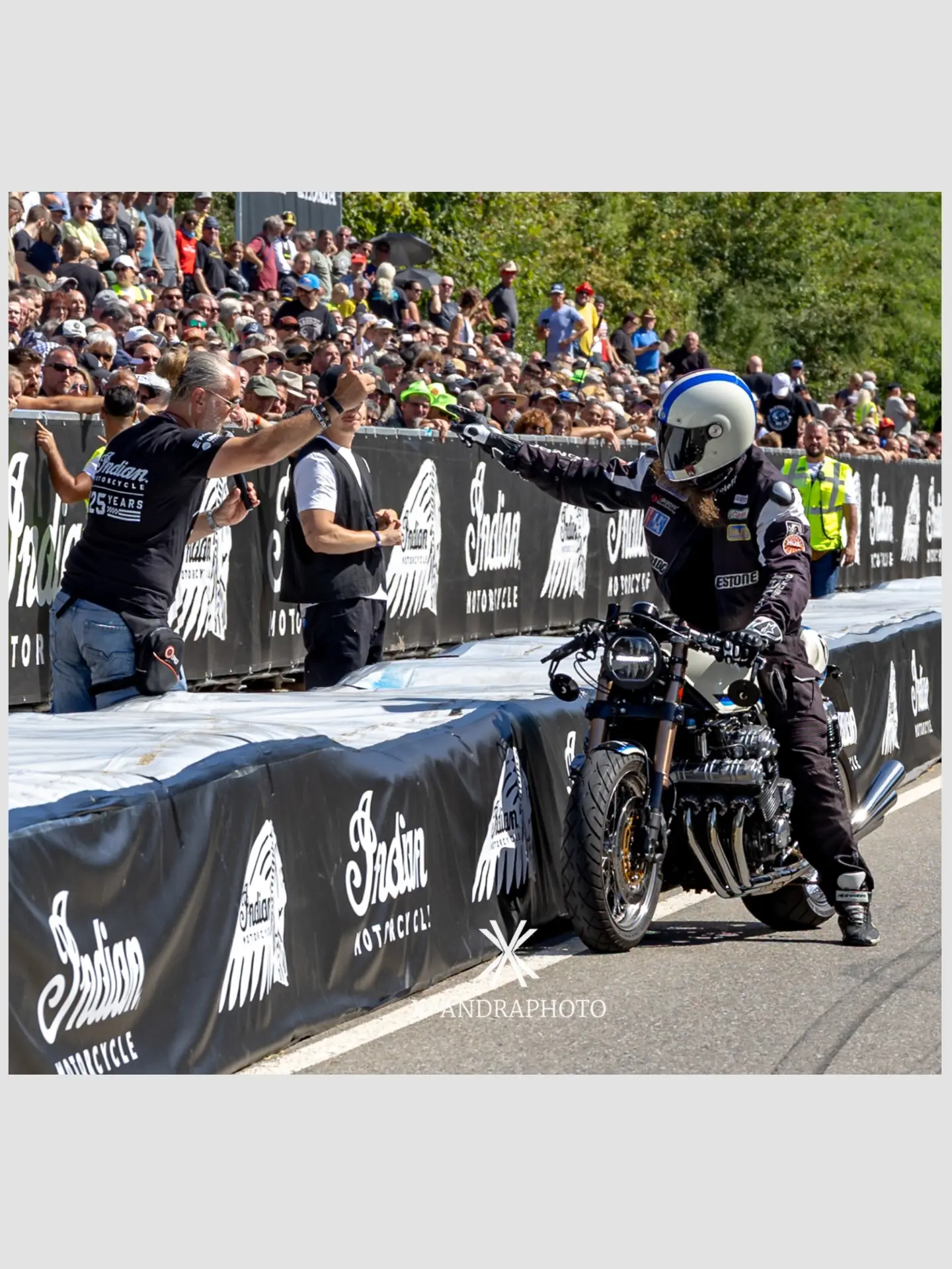
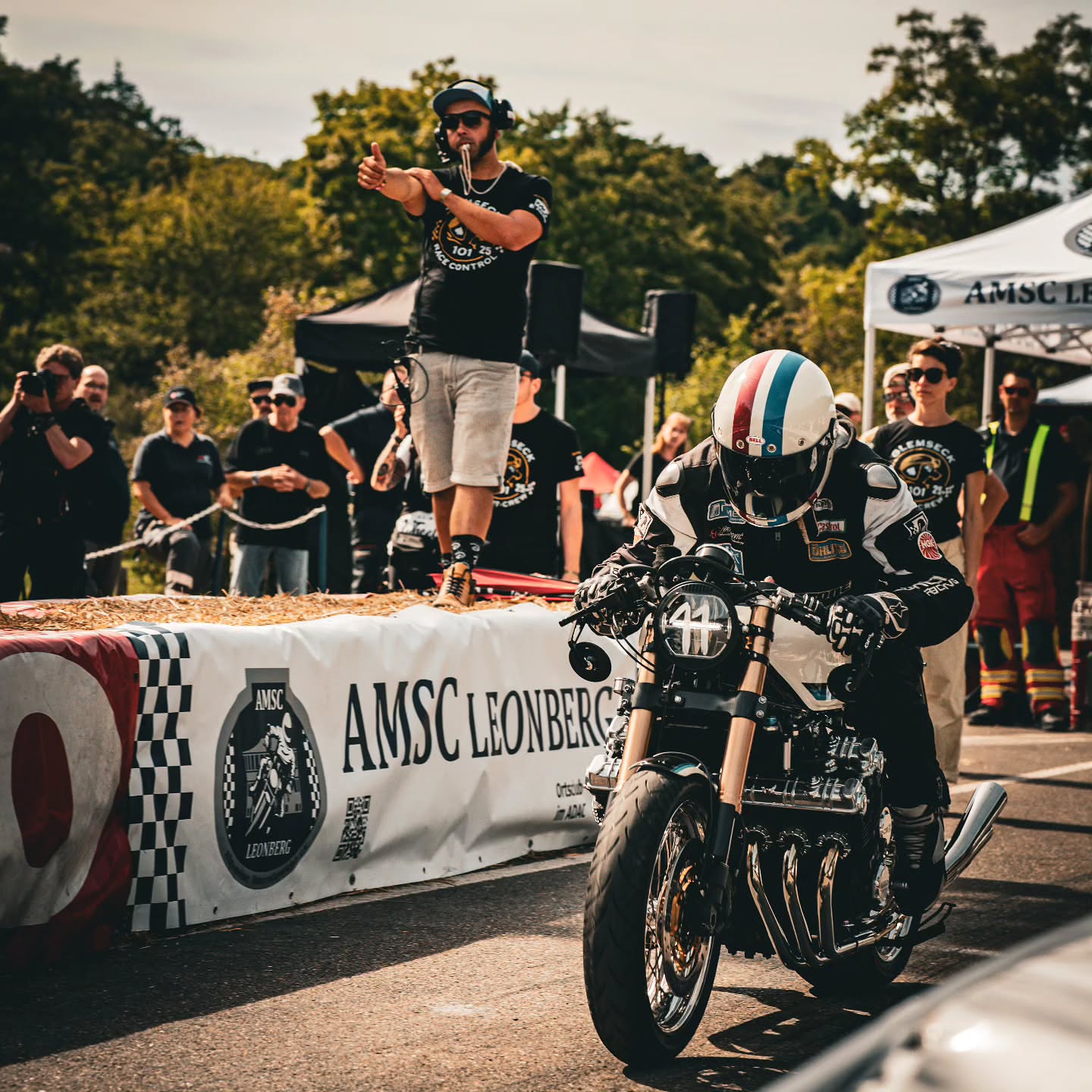
Sven has raced the bike multiple times at the Glemseck 101. He says the big six-cylinder is still a brute, but that’s part of the charm.
“It feels like driving a truck, but the sound and the grin on your face make it all worthwhile.”
We’re suckers for CBX builds, and this is one of the baddest around. Thanks to Sven for sharing the story of the six-cylinder beast. Be sure to follow him at @motorradtreffen and/or @mr.oldschoolgentleman. Below, you’ll find our full interview with Sven along with more photos from @hd_redhair_biker_model.
Honda CBX 1050 Café Racer: Owner Interview
• Please tell us a bit about yourself, your history with motorcycles, and your workshop.
I’m Sven Kupfer, and I run one of the largest motorcycle communities on Facebook in Germany with nearly 200,000 members on Motorrad-Treffen.com. I also have subgroups like Motorrad-Treffen.com – Switzerland with over 36,000 members, the Austria group with nearly 17,000 members, and an Instagram account with over 6,000 followers (Instagram is a recent addition). And much, much more.
I practically grew up with motorcycles, and it’s my life.
• What’s the make, model, and year of the donor bike?
Honda CBX1000 (1047cc) Pro Link, 1982 model, modified from a mono shock to twin shocks, the CB1 version.
• Why was this bike built?
It was my personal highlight. Anyone who’s ever heard and ridden this bike will never want to be without it again.
• What was the design concept and what influenced the build?
I really wanted to build a café racer… but not just any café racer, one exactly to my specifications and desires.
• What custom work was done to the bike?
There’s too much to list.
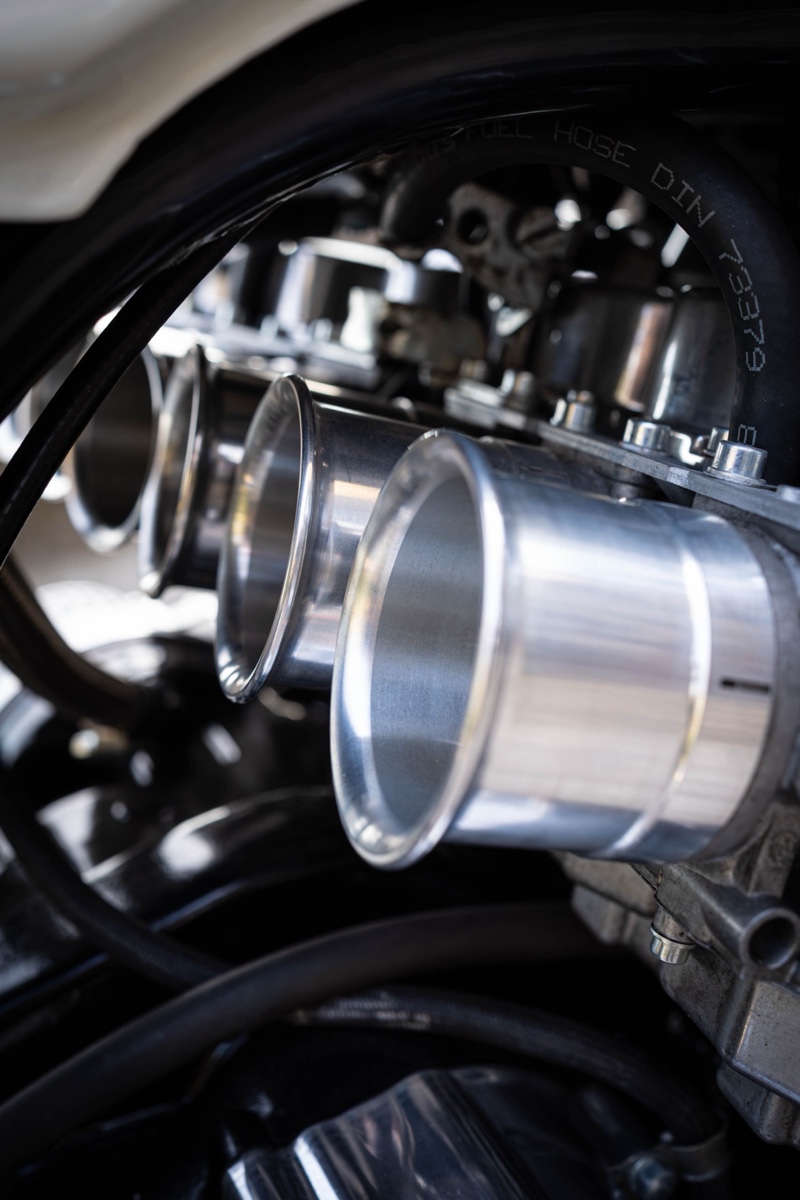
It was converted from a mono shock to twin shocks, and a Kawasaki alternator was installed. Wheel blanks were sourced and the hub was machined from solid aluminum and laced off-center. It came with parts from a Suzuki GSX-R1000 K4/K5, a Kawasaki ZRX 1200, and is fully equipped with Motogadget instruments and accessories.
• Does the bike have a nickname?
The Six Marching Saint.
• Any idea about horsepower, weight, and/or performance figures?
104 hp, air-cooled, 1050cc / reduced from 300 kg to 255 kg.
• Can you tell us what it’s like to ride this bike?
It feels like driving a truck, but the sound and the grin on your face make it all worthwhile.
• Was there anything done during this build that you are particularly proud of?
Everything… it was built with so much love, down to the smallest detail.
• Is there anyone you’d like to thank?
- Volker Eschbach for five years of working together on it until the finish.
- SK-Brush for the airbrushing.
Follow the Builder / Owner
Web: www.Motorrad-Treffen.com
Facebook: Sven Kupfer
Instagram: @motorradtreffen | @mr.oldschoolgentleman
TikTok: @auto_und_motorradtreffen
Youtube: @motorrad-treffen
Photography: @hd_redhair_biker_model


