
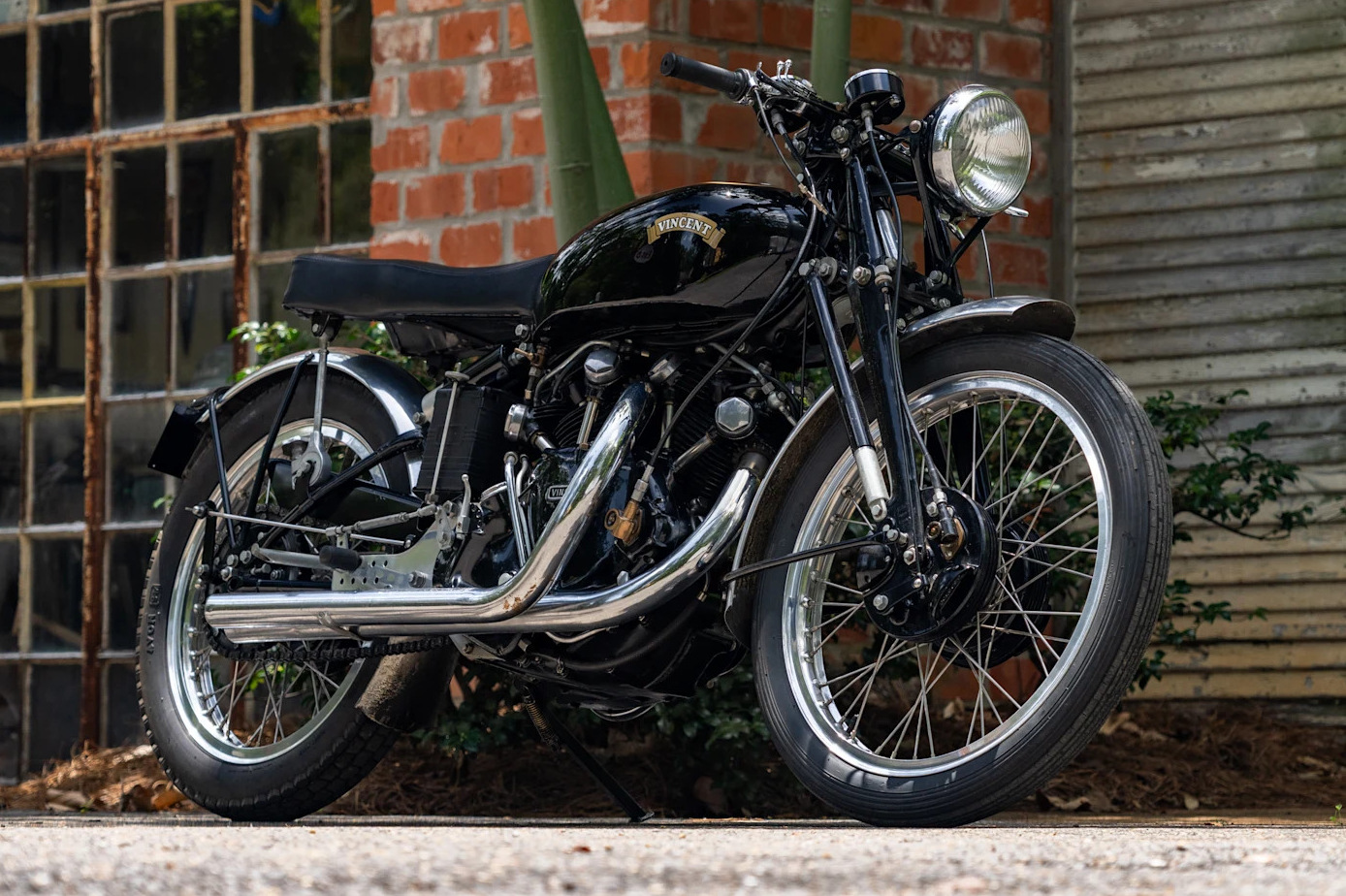
 One of just 34 built, this legendary 150-mph Vincent has a remarkable racing history of tragedy and triumph…
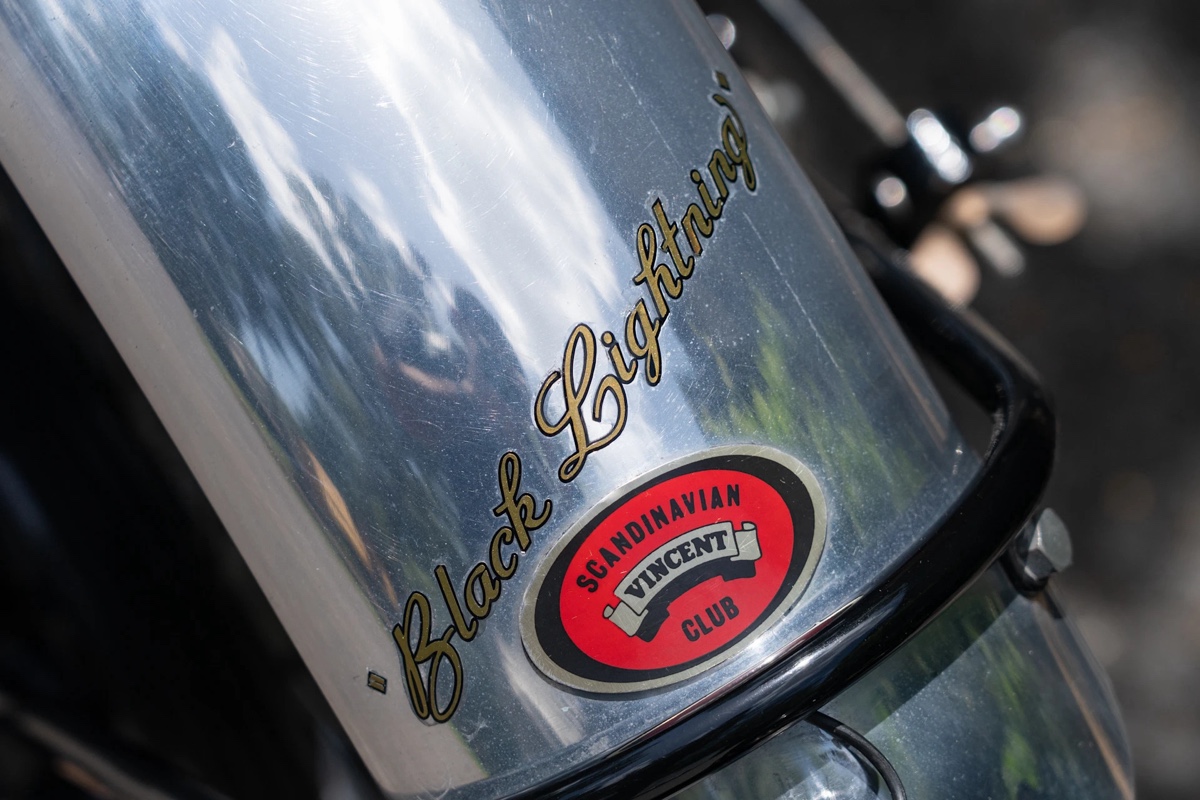
Few motorcycles occupy such a hallowed place in motorcycling history as the Vincent Black Lightning. Introduced in 1948 and built in exceedingly small numbers into the mid-1950s, the Black Lightning was the ultimate expression of Philip Vincent’s obsession with speed — a purpose-built racing machine capable of 150 mph in an era when most motorcycles struggled to reach the ton.
 The Black Lightning’s legend is inextricably linked to Rollie Free, whose 1948 speed-record run across the Bonneville Salt Flats produced one of the most famous photographs in motorcycle history. Wearing little more than a bathing suit and lying flat against his machine, Free averaged 150.313 mph aboard a specially prepared Vincent Black Shadow — a factory-built racing special that would serve as the prototype for the legendary Black Lightning.
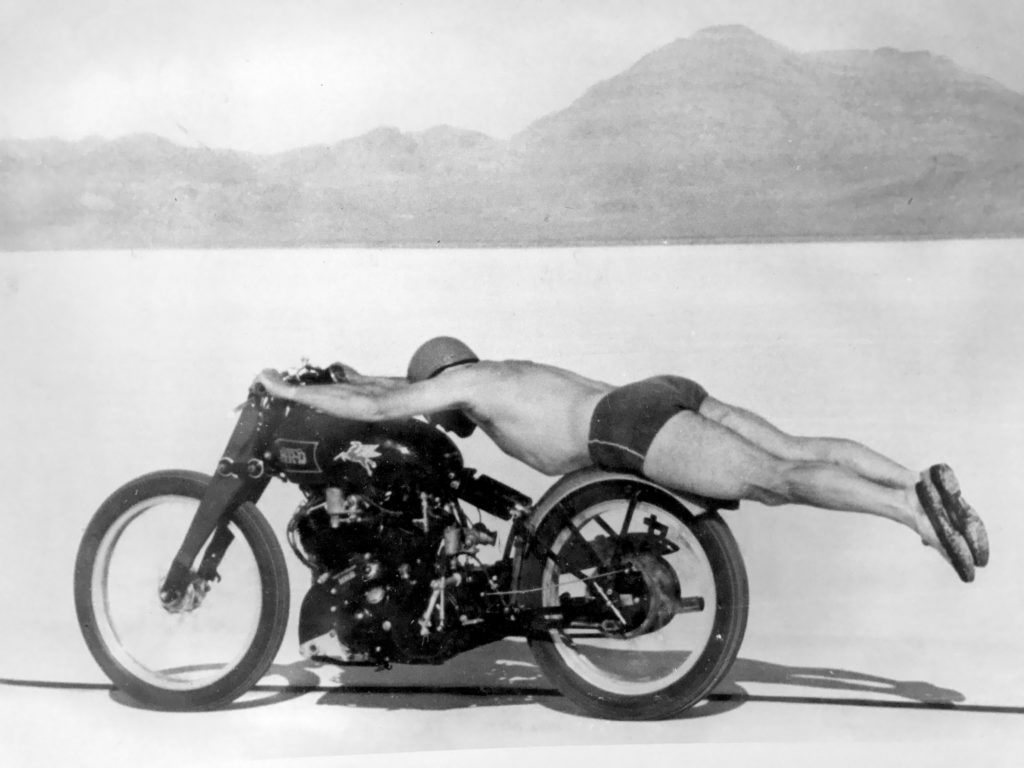
The machine had been prepared at the Vincent factory for American enthusiast John Edgar, and its extraordinary performance helped inspire the production Black Lightning — a machine that would bring many of the same racing modifications to a select group of well-heeled privateers.
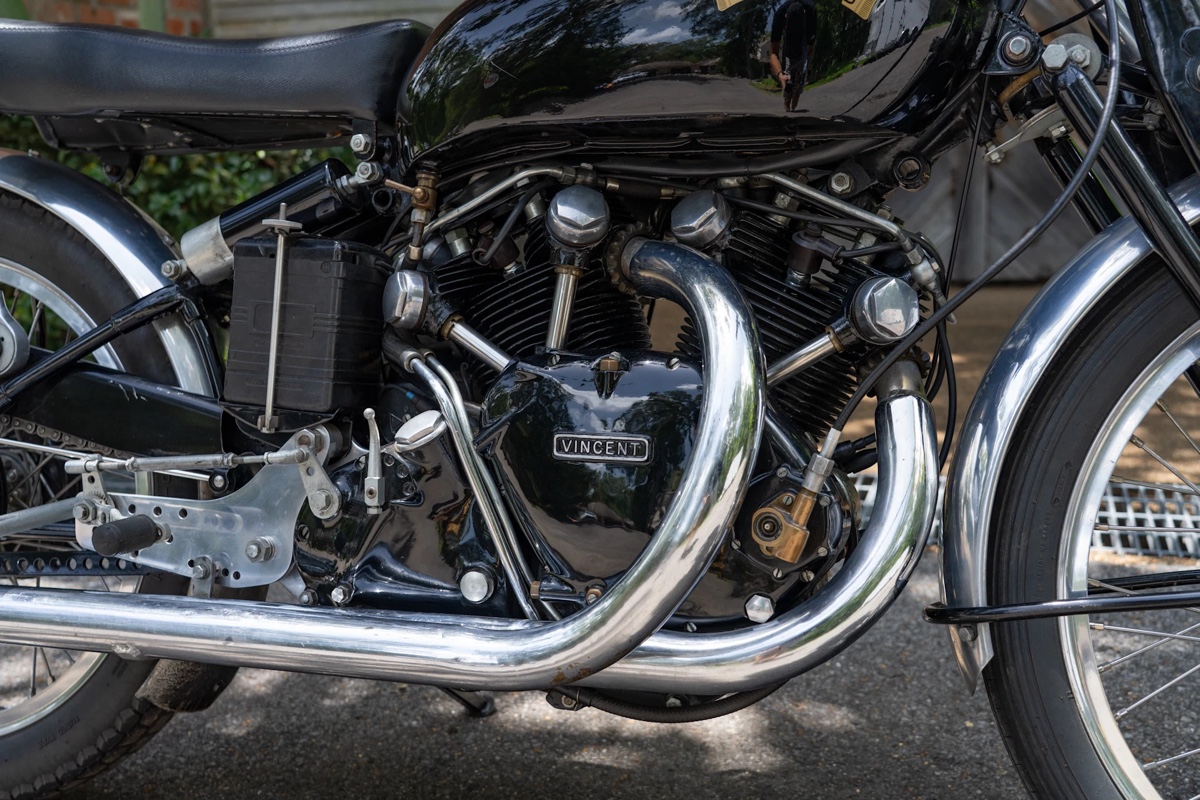
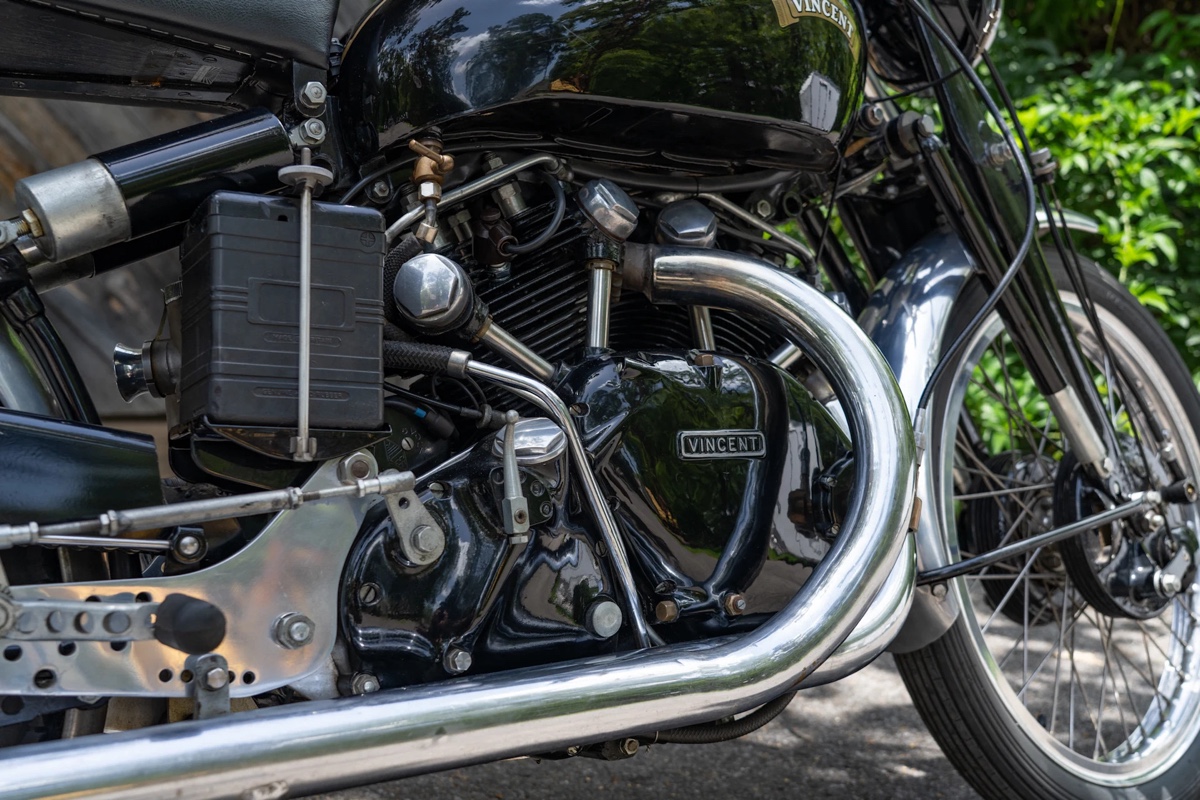
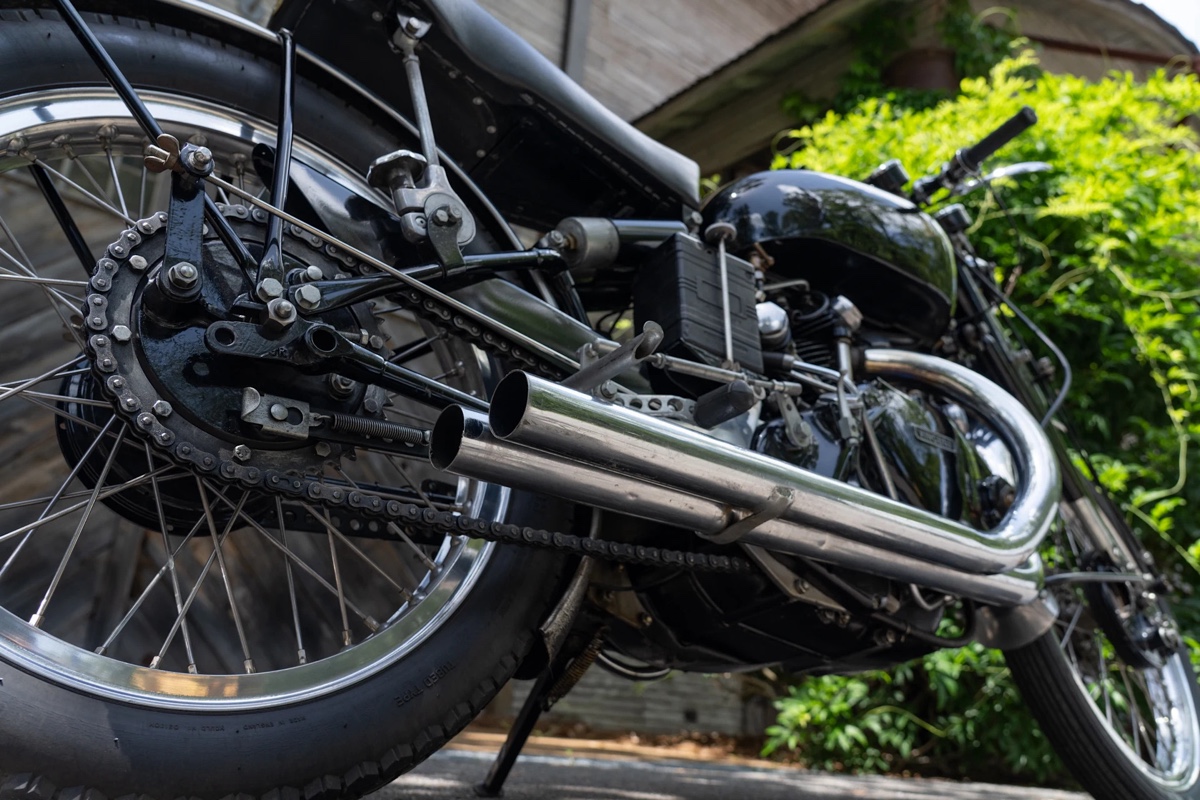
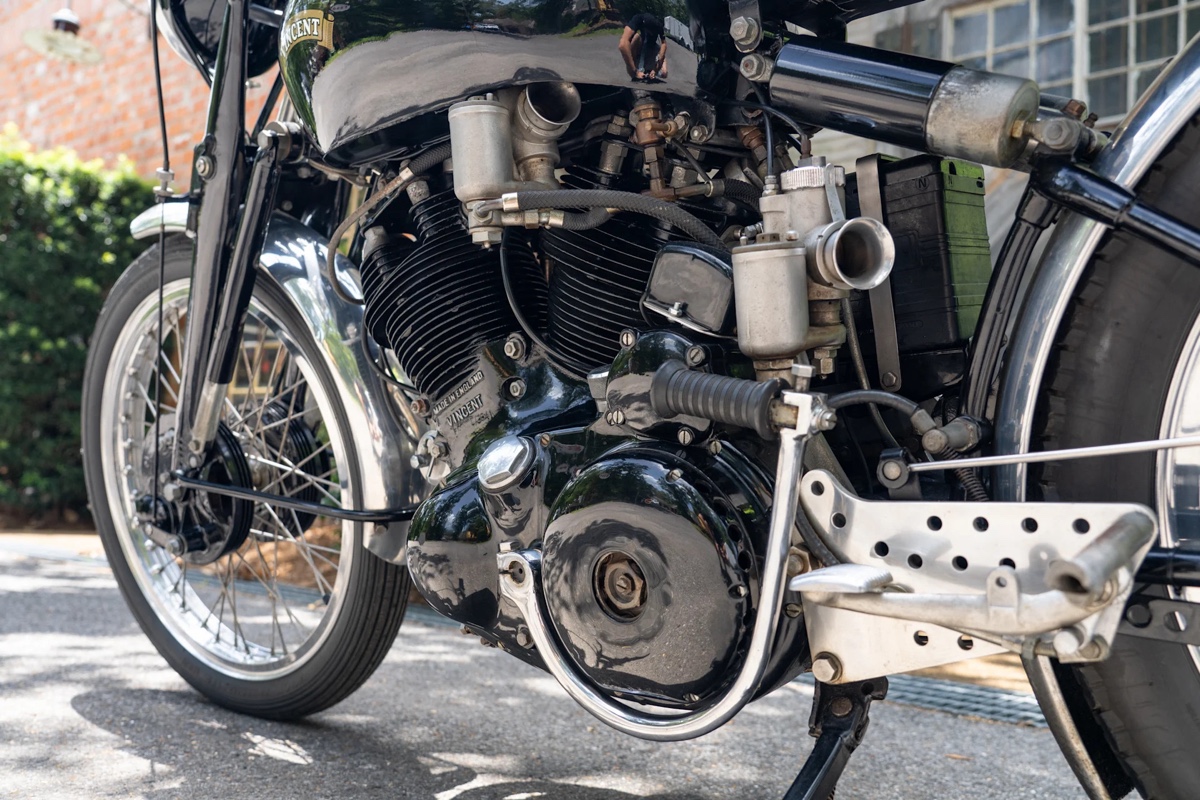
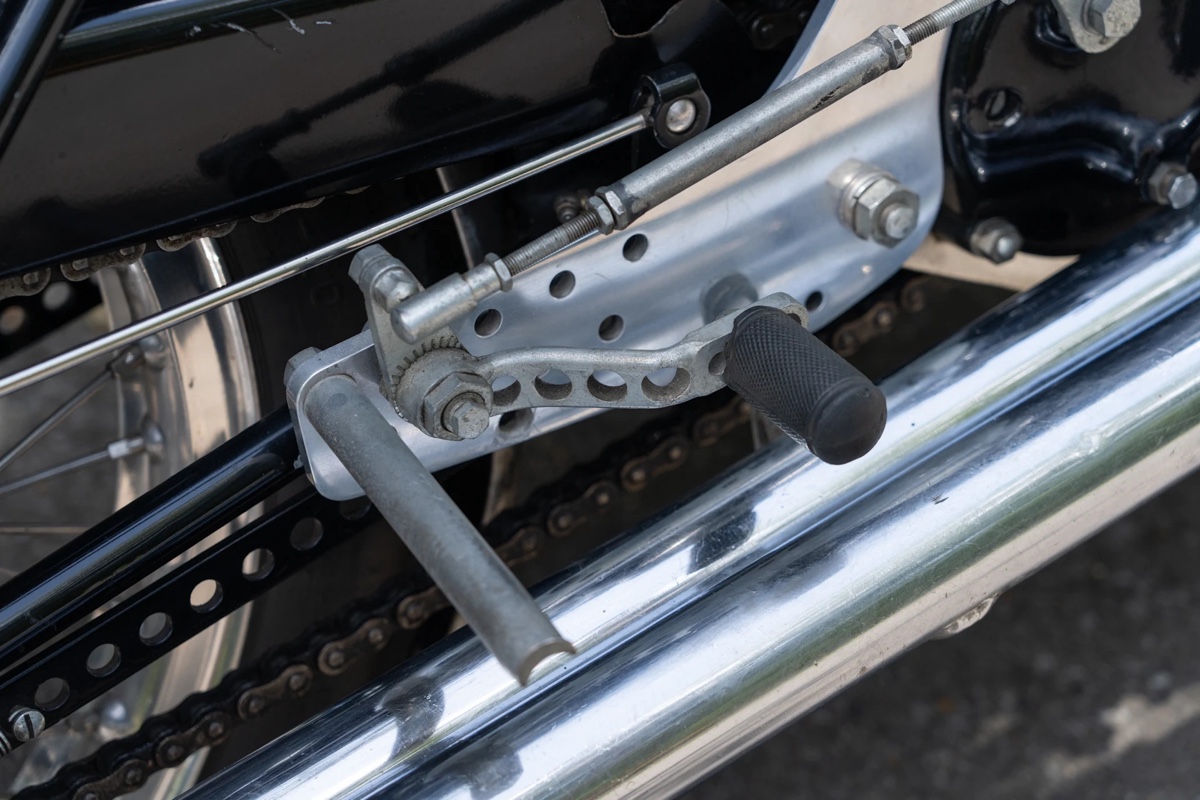
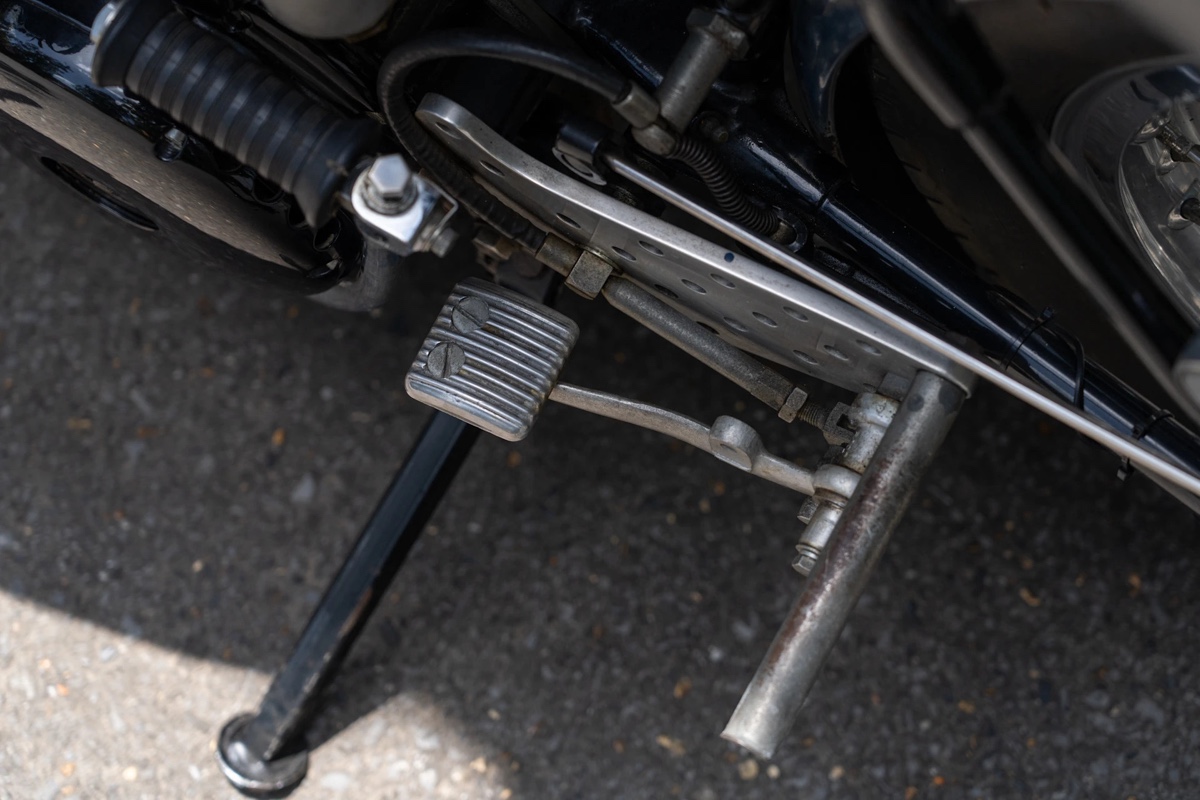
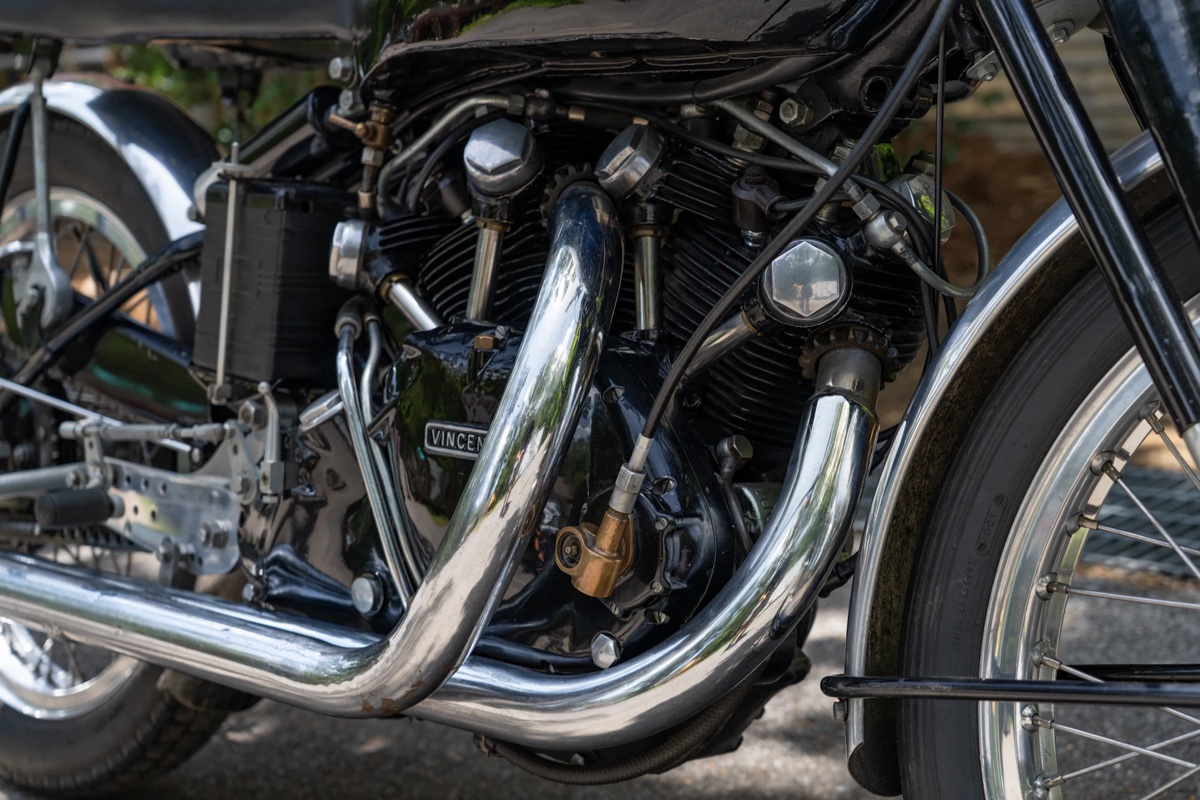
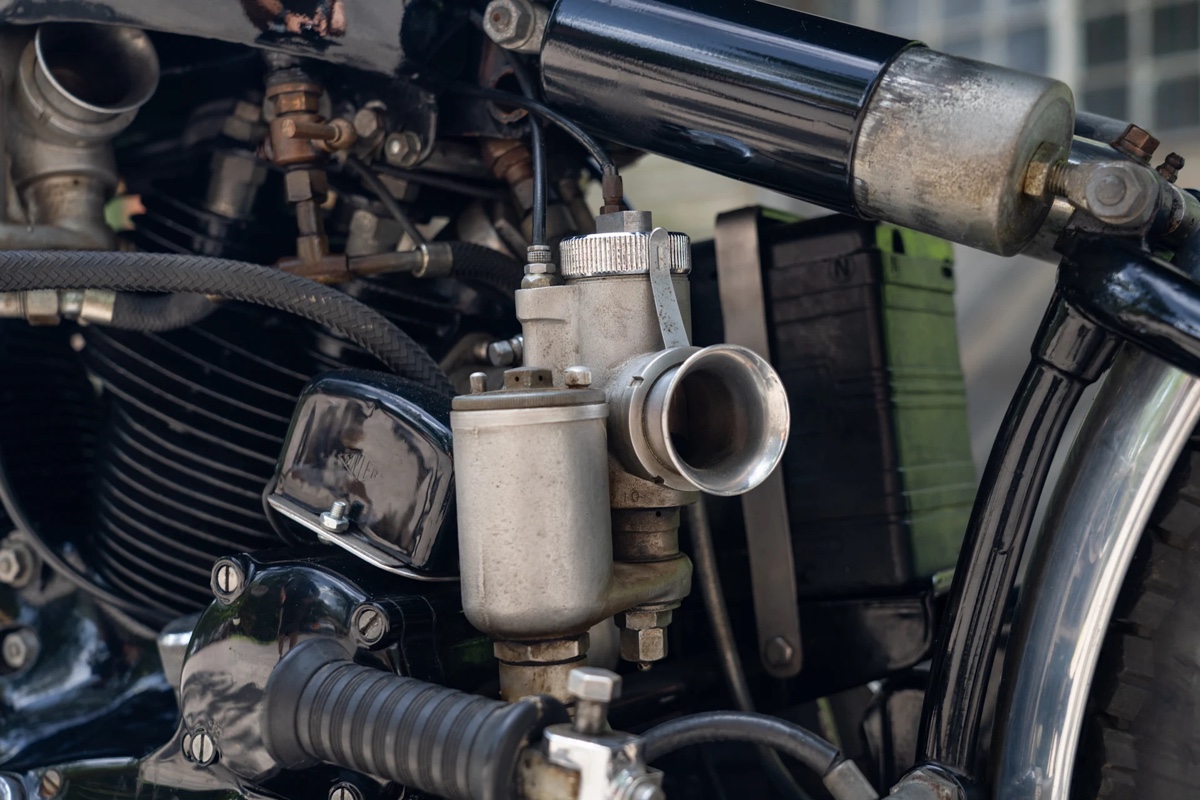
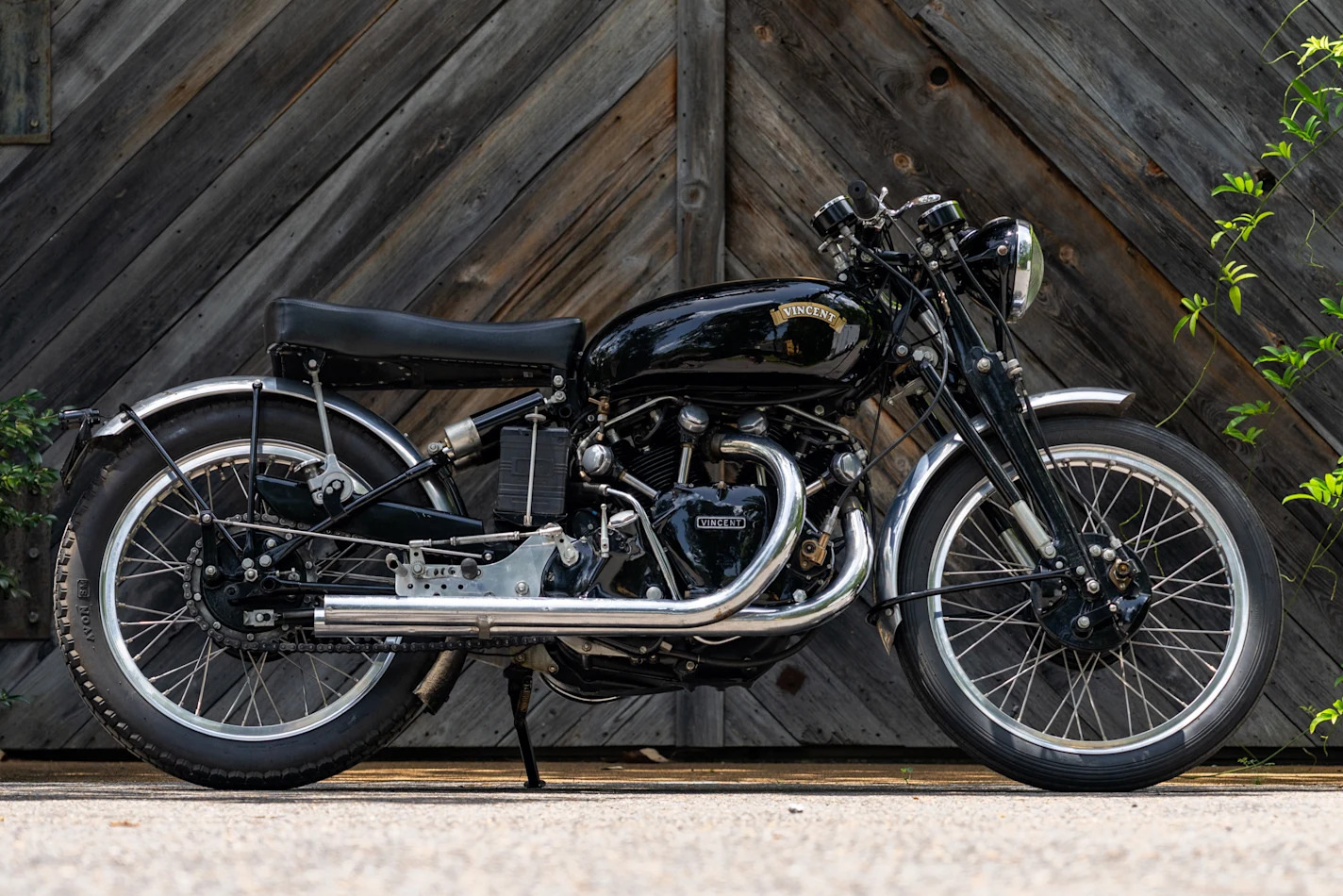 Whereas the Black Shadow produced approximately 55 horsepower, the Lightning’s 998cc, 50-degree OHV V-twin was tuned to deliver around 70 bhp. High-compression pistons, racing camshafts, enlarged ports, Amal TT racing carburetors, and free-flowing exhausts helped extract the additional power. Magnesium components, alloy rims, lightweight fenders, and stripped-down racing equipment also reduced weight considerably.
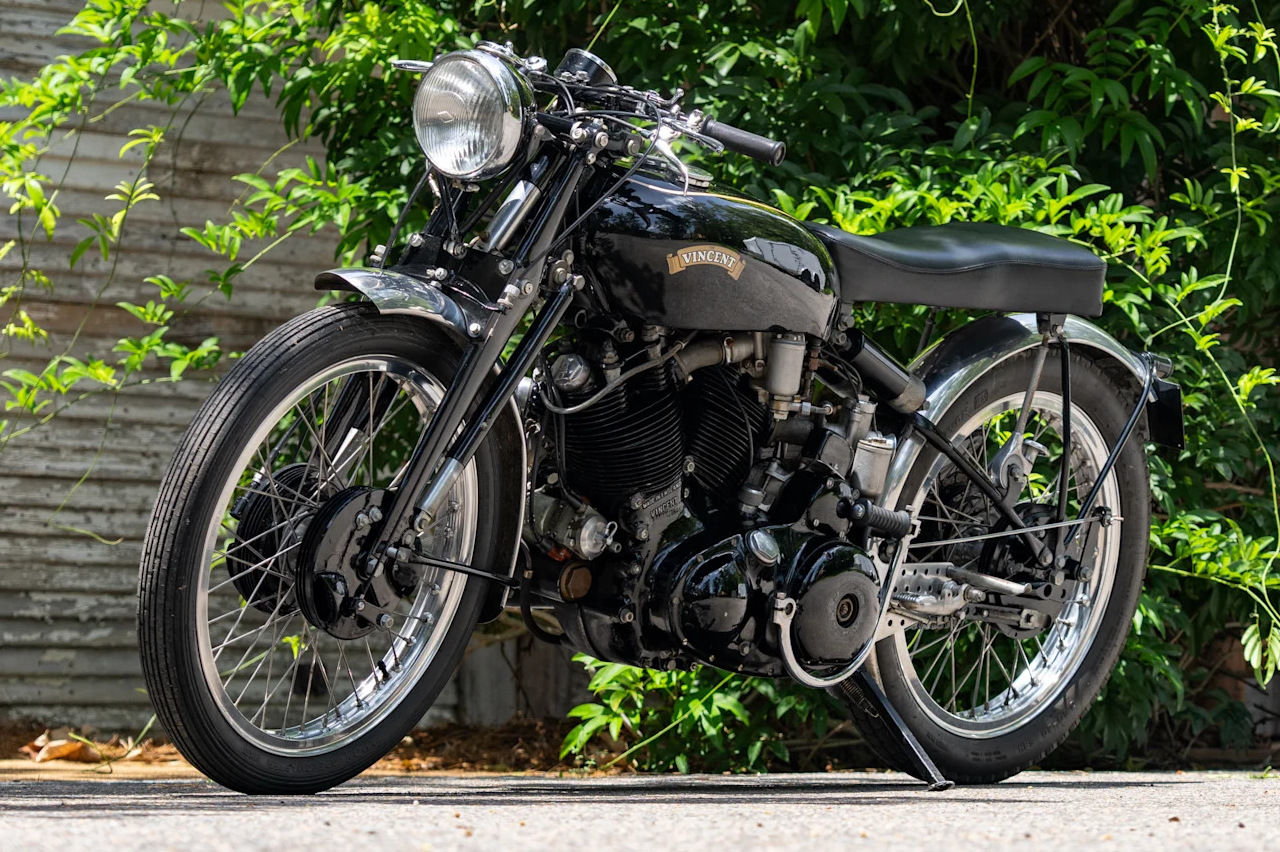 The resulting motorcycle was capable of a claimed 150 mph, making it one of the most fearsome machines of its era. Unlike the Black Shadow, the Lightning was primarily intended for racing and record attempts rather than everyday road use. Production was extremely limited. According to more recent research, approximately 34 complete Black Lightnings were built, making surviving examples among the most desirable British motorcycles in existence.
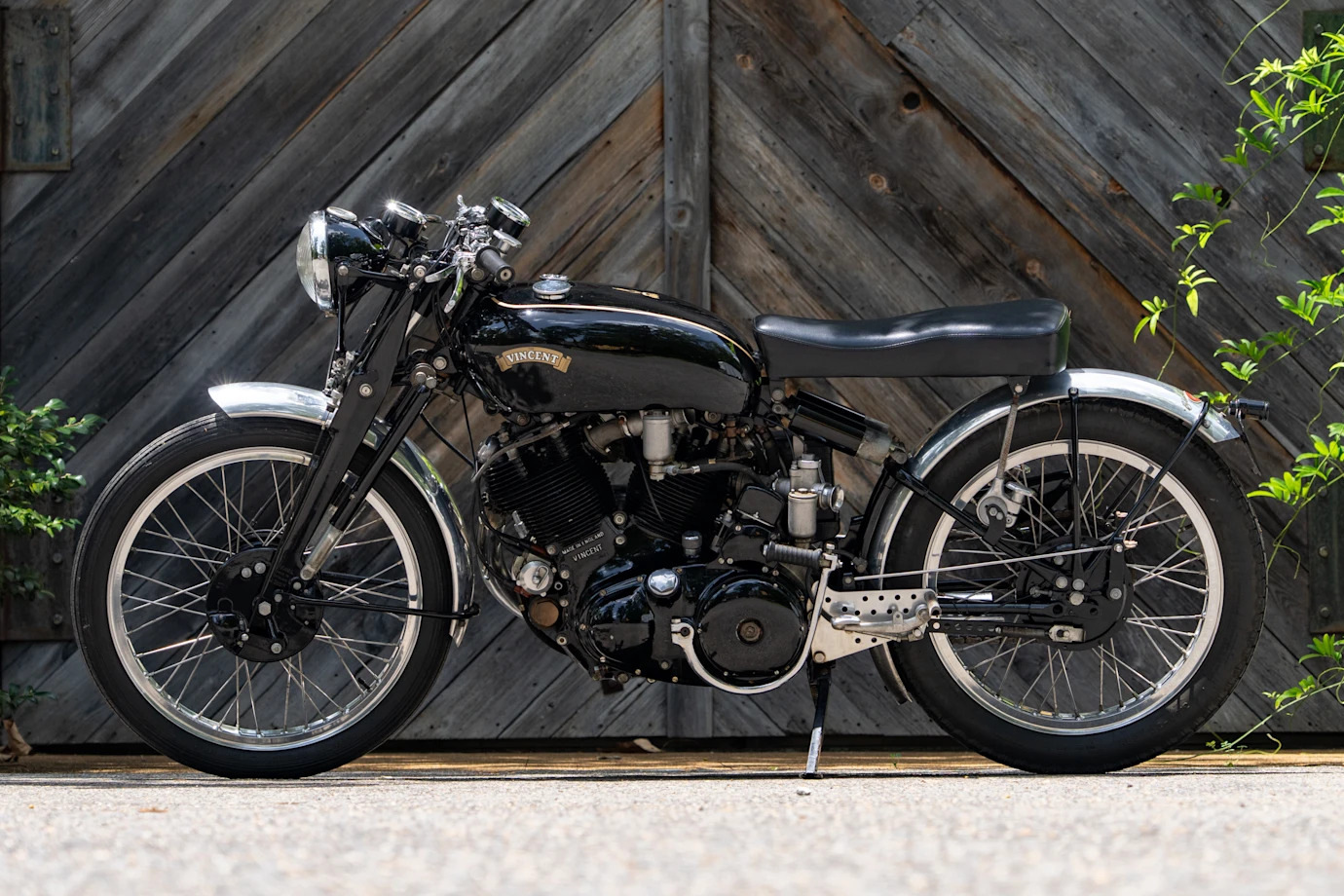
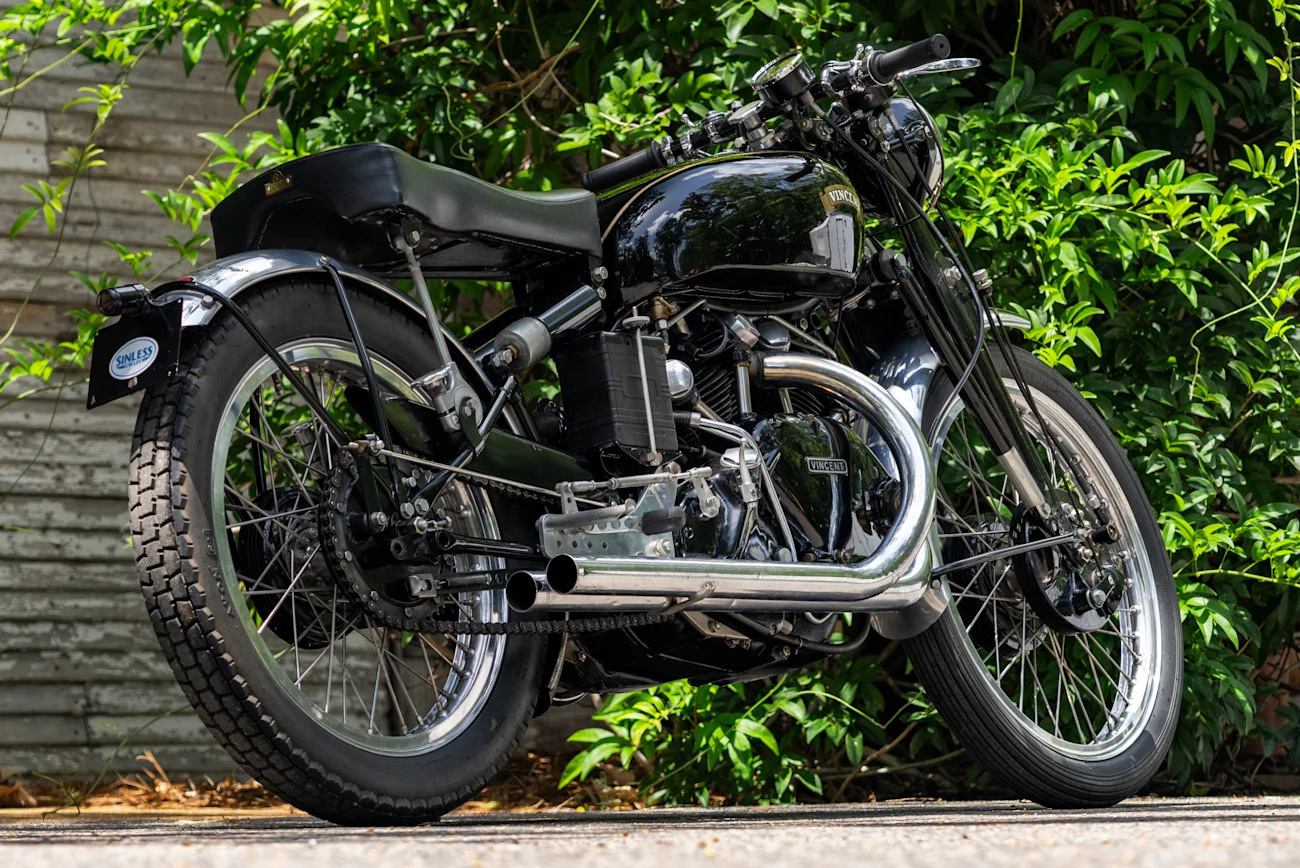 Now, one of these legendary machines is heading to auction: a 1950 Vincent Black Lightning from the Sinless Cycles Collection, scheduled to cross the block at Mecum’s Las Vegas motorcycle auction on February 6, 2027. And this particular machine has quite a story to tell.
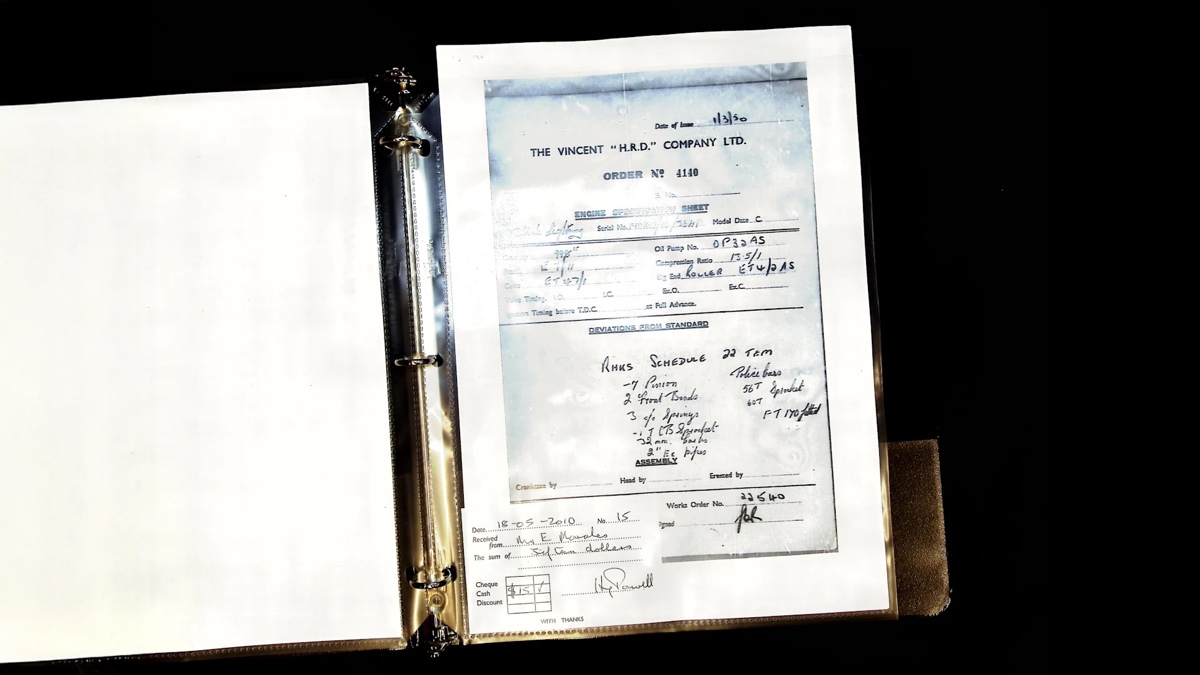
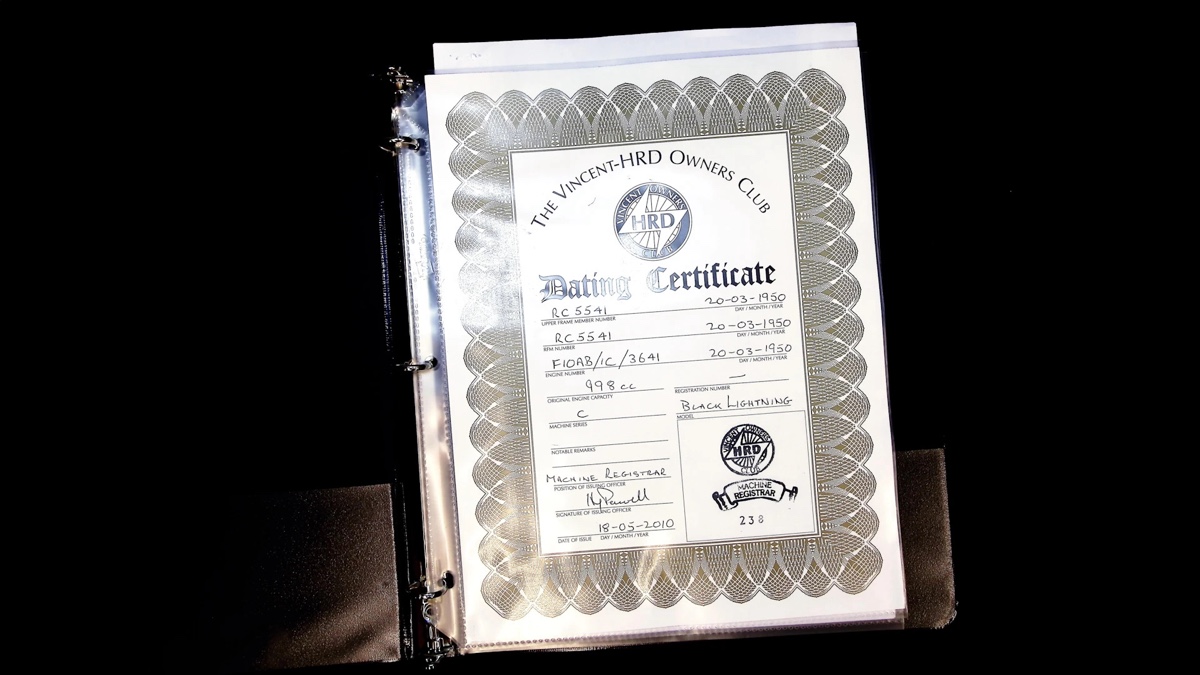
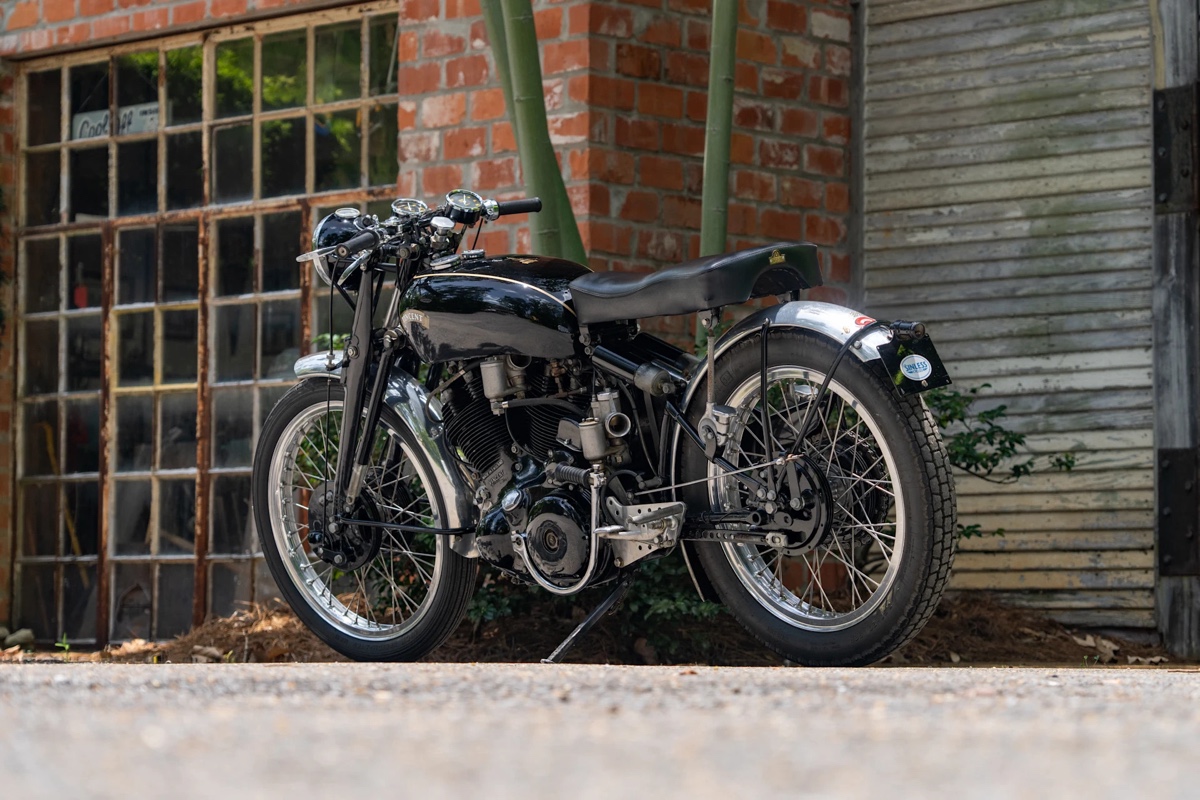 According to factory records, the Vincent — frame number RC5541, engine number F10AB/1C/3641 — was dispatched from England to Danish Vincent agent Villy Egen on March 20, 1950. It had been ordered by David Axelson, a Danish sidecar racing champion who intended to use the powerful British V-twin to defend his national title. Factory mechanic Denis Minett’s records indicate that the machine was originally equipped with 13.5:1 compression pistons, massive two-inch exhaust pipes, and steel wheel rims measuring 21 inches at the front and 20 inches at the rear.
Once in Denmark, the Vincent was fitted with a locally manufactured dirt-track racing sidecar. Unfortunately, the machine’s racing career got off to a disastrous start. Mechanical problems forced Axelson to retire from his first event. In his second race, he suffered a serious crash that killed his passenger, a personal friend. Devastated by the accident, Axelson abandoned motorcycle racing, and the Black Lightning was put into storage in a chicken coop. There it might have remained, had another Danish racing champion not taken an interest in the machine.
In July 1956, Carlo Sejer Jensen of Aarhus became involved in a dispute with a group of German racers who insisted that their BMW sidecar machines were unbeatable. Jensen maintained that a Vincent V-twin could outrun them, and he turned to Axelson to borrow the long-idle Black Lightning. The Vincent was retrieved from storage, refurbished, and prepared for competition. After spending time familiarizing himself with the powerful machine, Jensen took to the track on July 16, 1956.
 The result? According to contemporary Danish press reports cited in Mecum’s earlier auction history, Jensen defeated the BMW competition, winning both preliminary heats and the final. Six years after its tragic racing debut, the Black Lightning had returned to victory.
 Axelson retained the machine until 1965, when he sold it to fellow Vincent enthusiast and aircraft mechanic Kaj Weldingh. Rather than continuing to race the motorcycle, Weldingh carefully disassembled it, preserving the components in grease and individually boxing and labeling the parts. The Lightning remained in pieces for more than three decades before another enthusiast, Sivert Bomberg, finally persuaded Weldingh to sell it in October 1998.
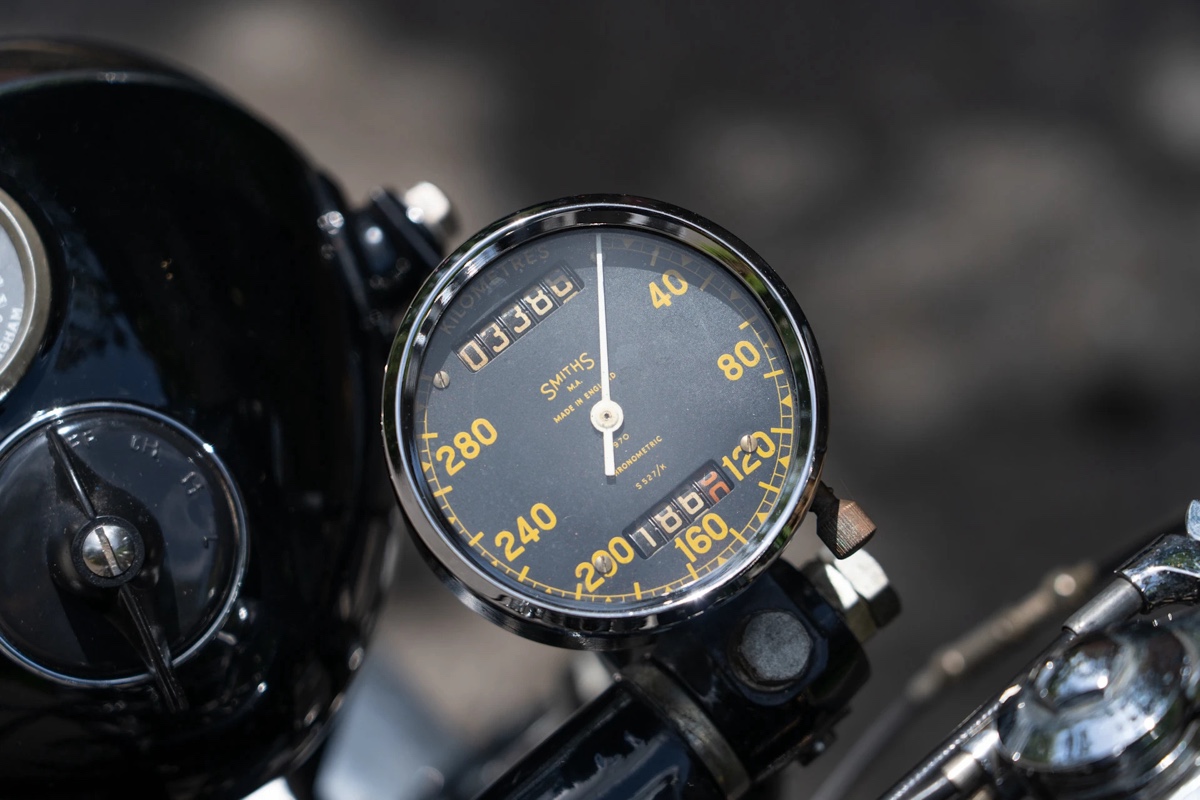
Bomberg undertook a meticulous restoration over the winter of 1998–99, reusing the carefully preserved original components wherever possible. The engine received new bearings, pistons, cylinder liners, valves, guides, and other necessary replacement parts. Remarkably, Bomberg estimated that the machine had covered just 83 miles during its original racing career, a figure reportedly consistent with its odometer reading of 133 kilometers at the time of restoration.
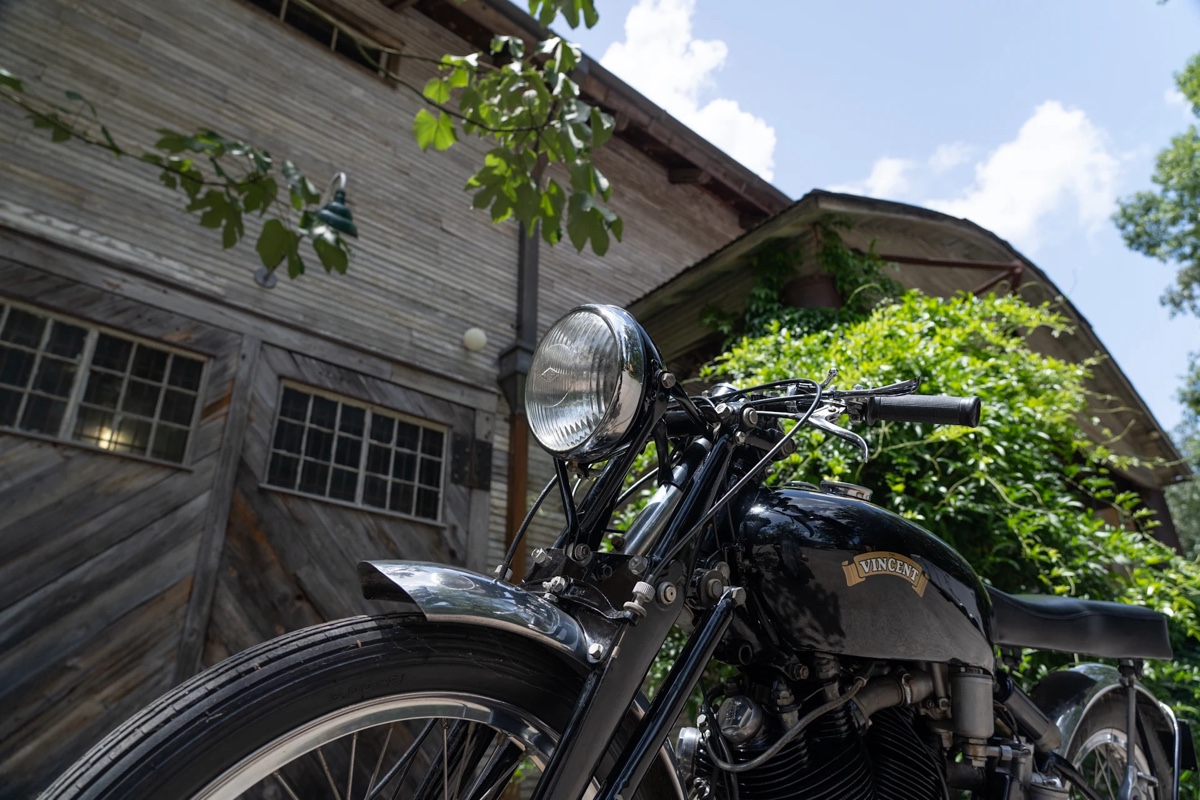
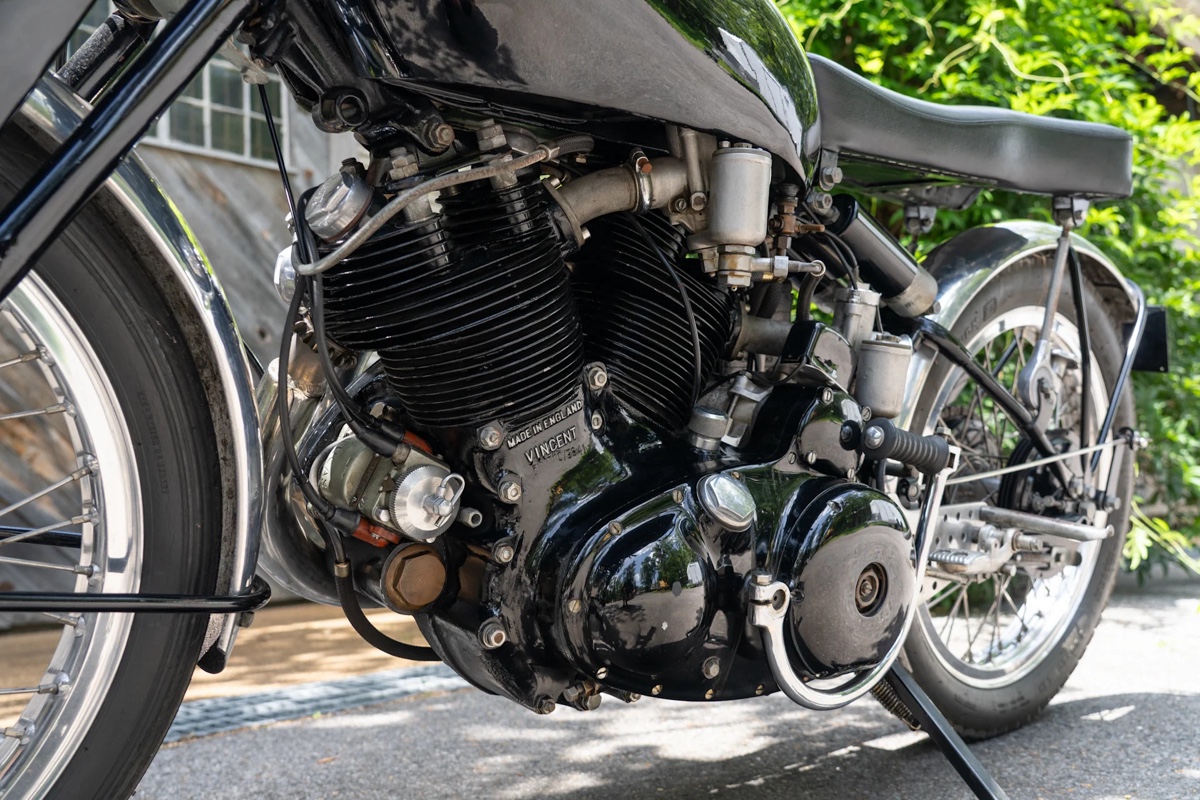 One particularly unusual aspect of this Black Lightning is its road-going specification. Unlike most examples, which left the Vincent factory as stripped-down racing machines, this motorcycle was reportedly one of an estimated three Black Lightnings supplied with factory lighting. Although conceived primarily for competition, the Black Lightning could be ordered with the necessary equipment for road use, making this example an exceptionally rare street-equipped survivor. Better still, it’s no mere static exhibit: the motorcycle has actually been ridden on public roads in recent years, most notably by motorcycle historian Paul d’Orléans.
The machine eventually found its way into the extraordinary collection of Bryan Bossier, proprietor of Sinless Cycles in Woodworth, Louisiana. Bossier is a third-generation gravel miner and highway contractor with a passion for historically significant motorcycles. His collection, housed in a purpose-built workshop constructed largely from reclaimed materials, encompasses some of the most celebrated motorcycles ever produced. Among the machines slated for the 2027 Mecum auction are a rare 1949 Indian-Vincent prototype, a 1939 Vincent-HRD Series A Rapide, and several remarkable Brough Superiors, including a 1937 MX100, a 1939 SS80 Deluxe, and a well-traveled 1933 11.50 that participated in the 2014 Motorcycle Cannonball.
 The collection also includes exceptional American machines, including a 1937 Harley-Davidson EL Knucklehead and a 1930 Indian 101 Scout, both restored to an impressive 99.5-point standard in Antique Motorcycle Club of America judging. Twenty motorcycles from the Sinless Cycles Collection are scheduled to be offered at Las Vegas, with the Black Lightning serving as one of the undisputed headliners.
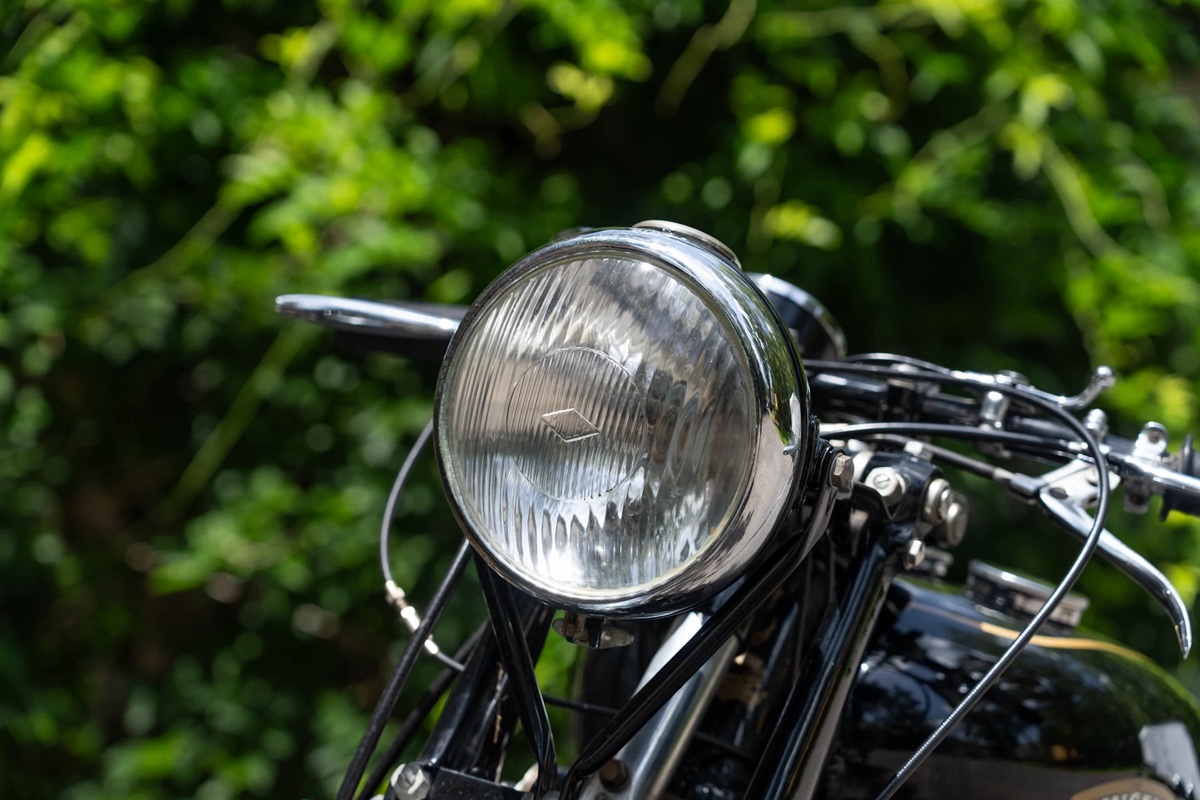
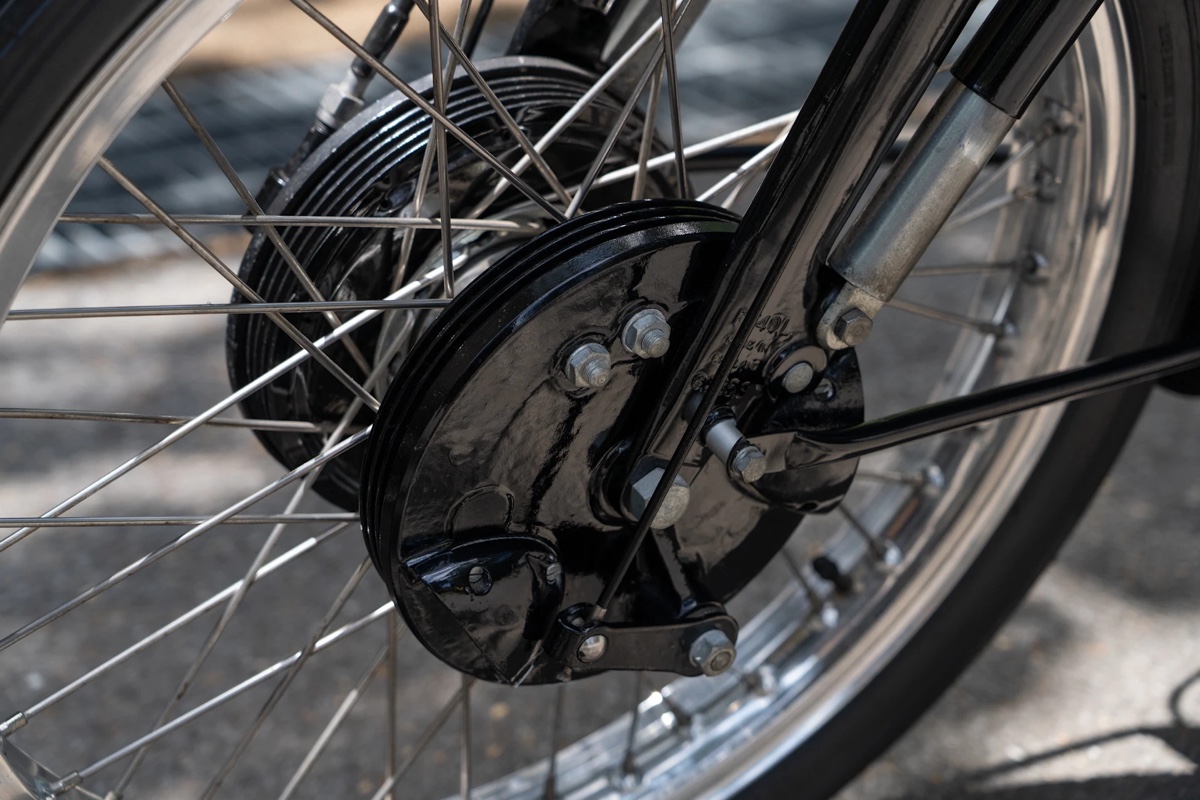
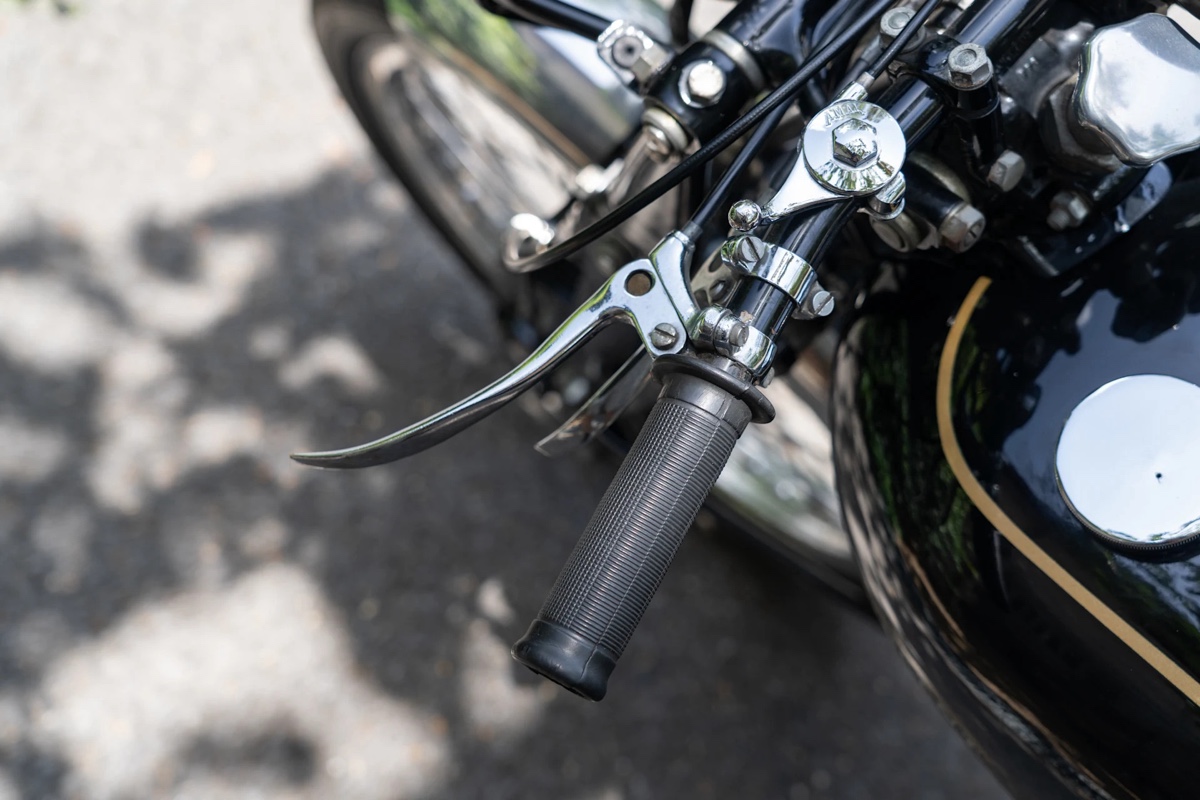
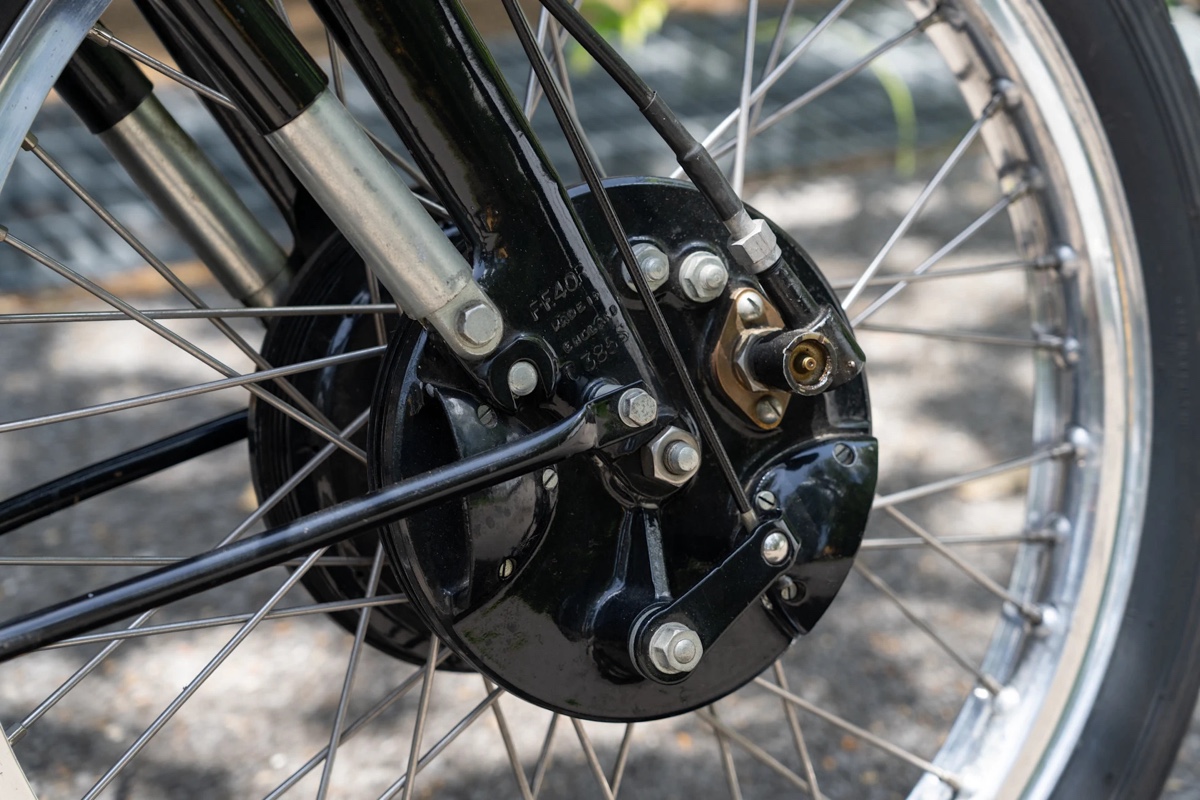
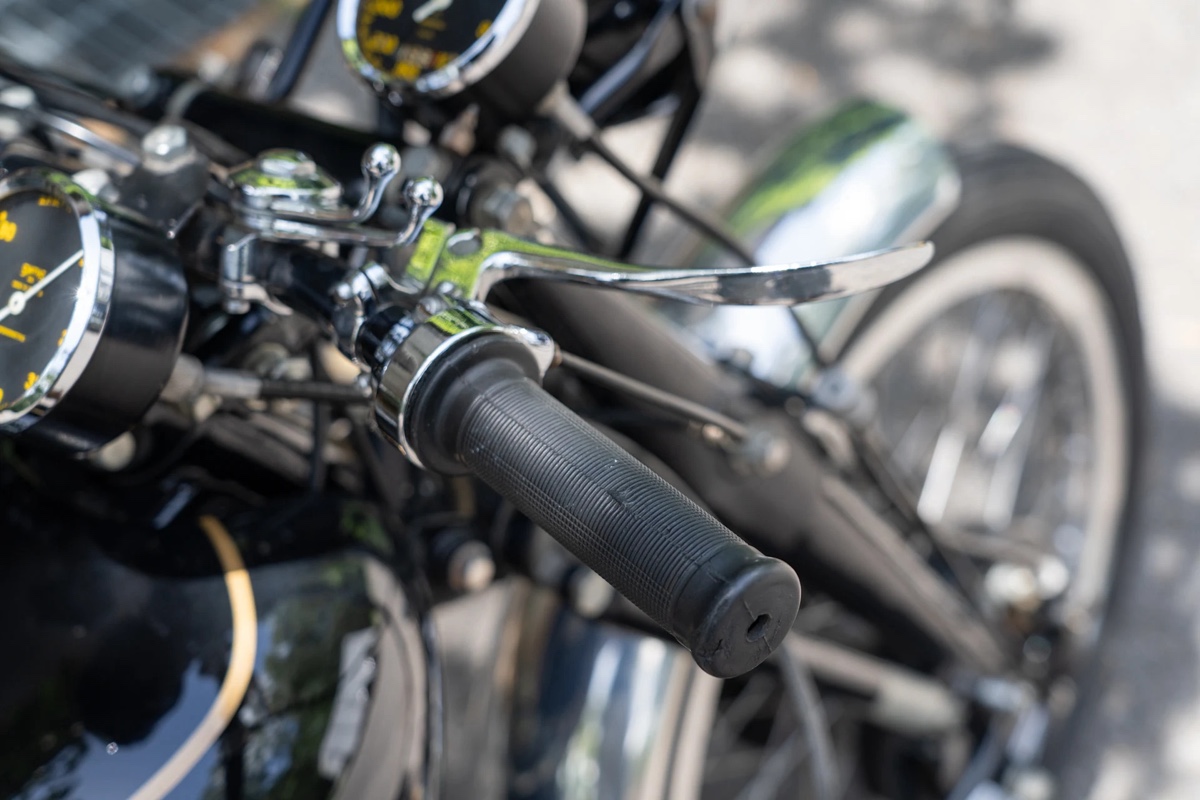
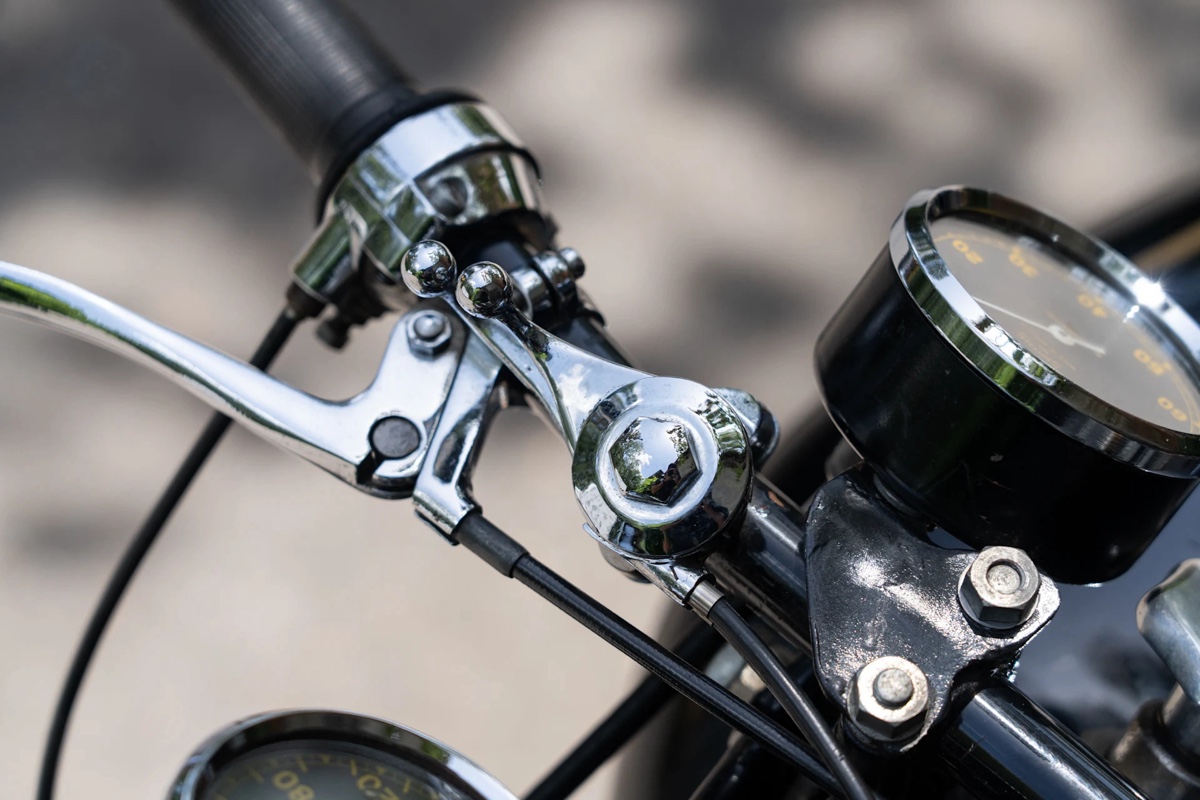
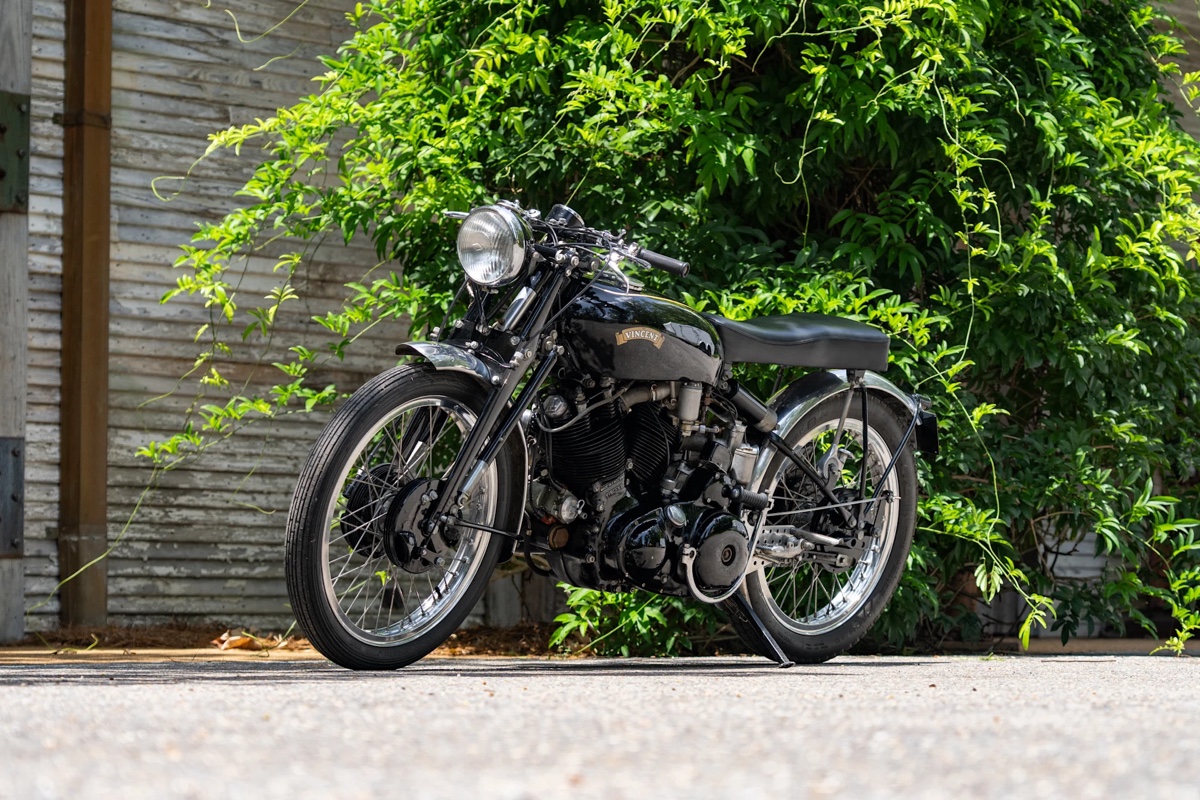
This particular Vincent has previously been exhibited at the National Motorcycle Museum in Anamosa, Iowa, and appeared at the 2019 Quail Motorcycle Gathering. It was also offered at Mecum’s Las Vegas motorcycle auction in 2021, where it went unsold. Among its most intriguing features are the Brampton girder forks and factory lighting equipment.
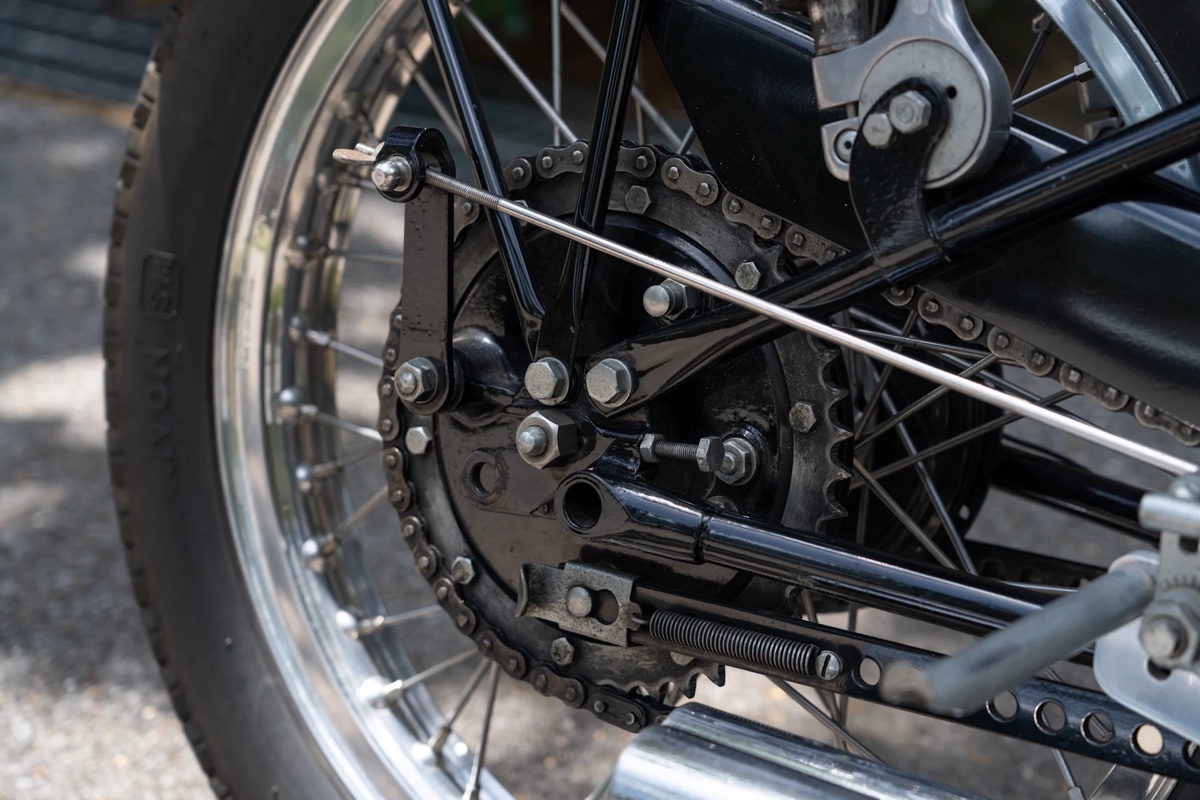
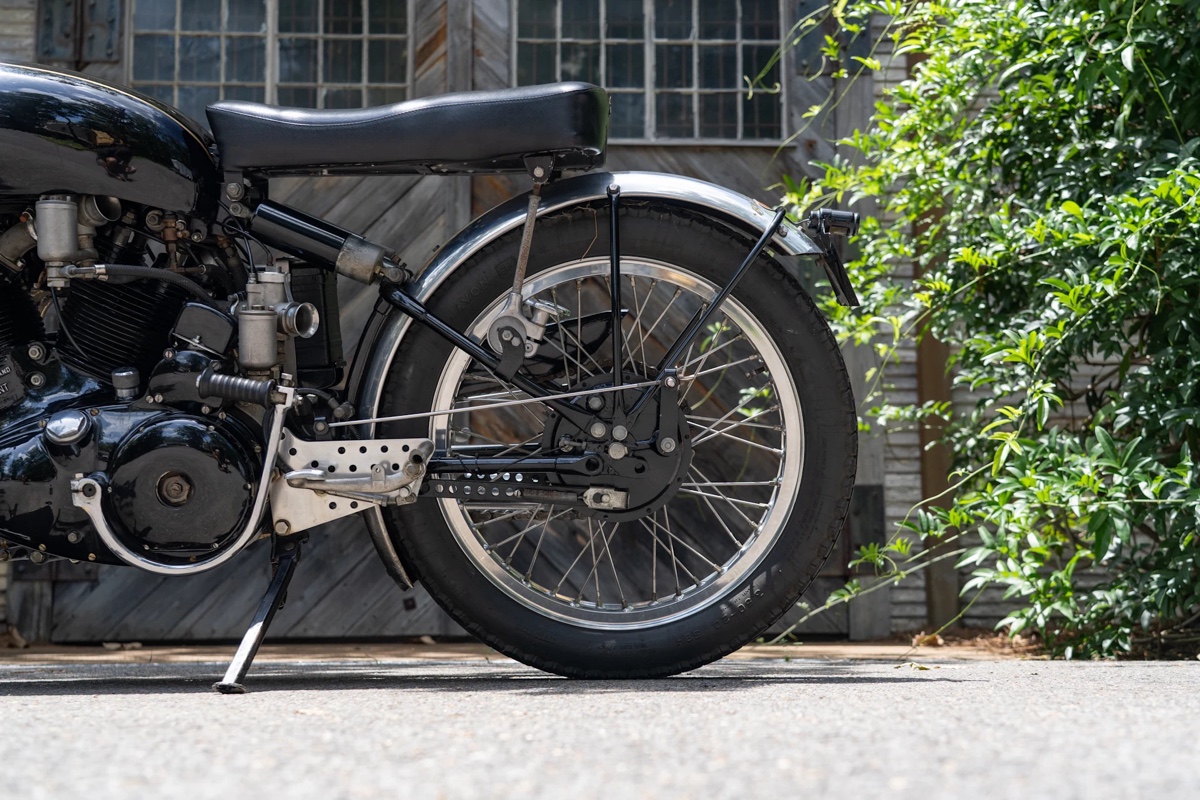
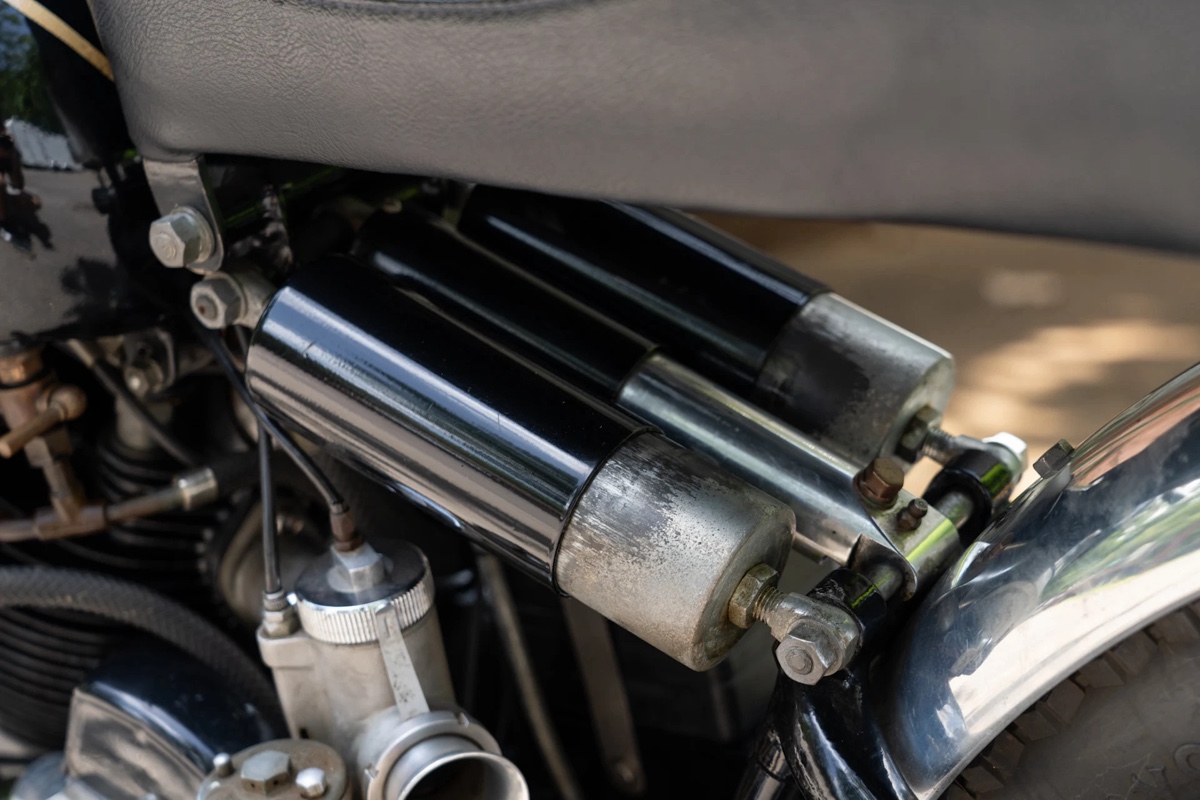
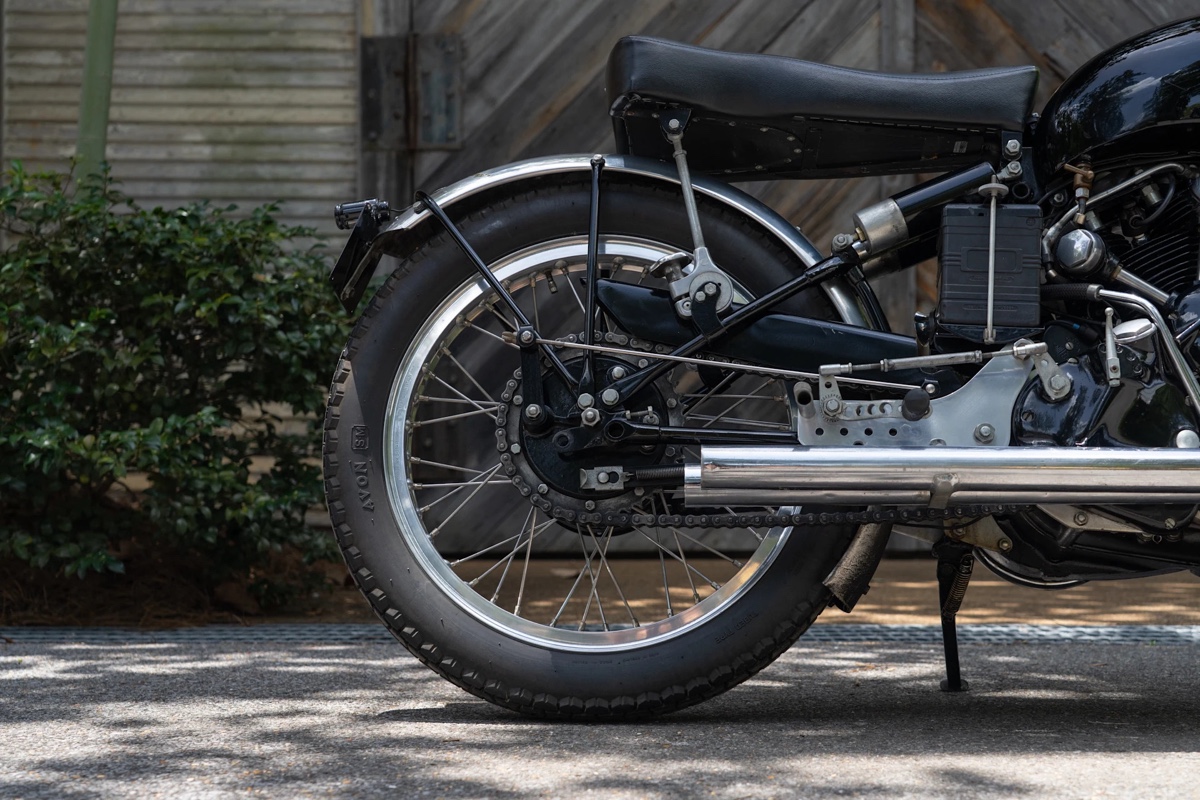
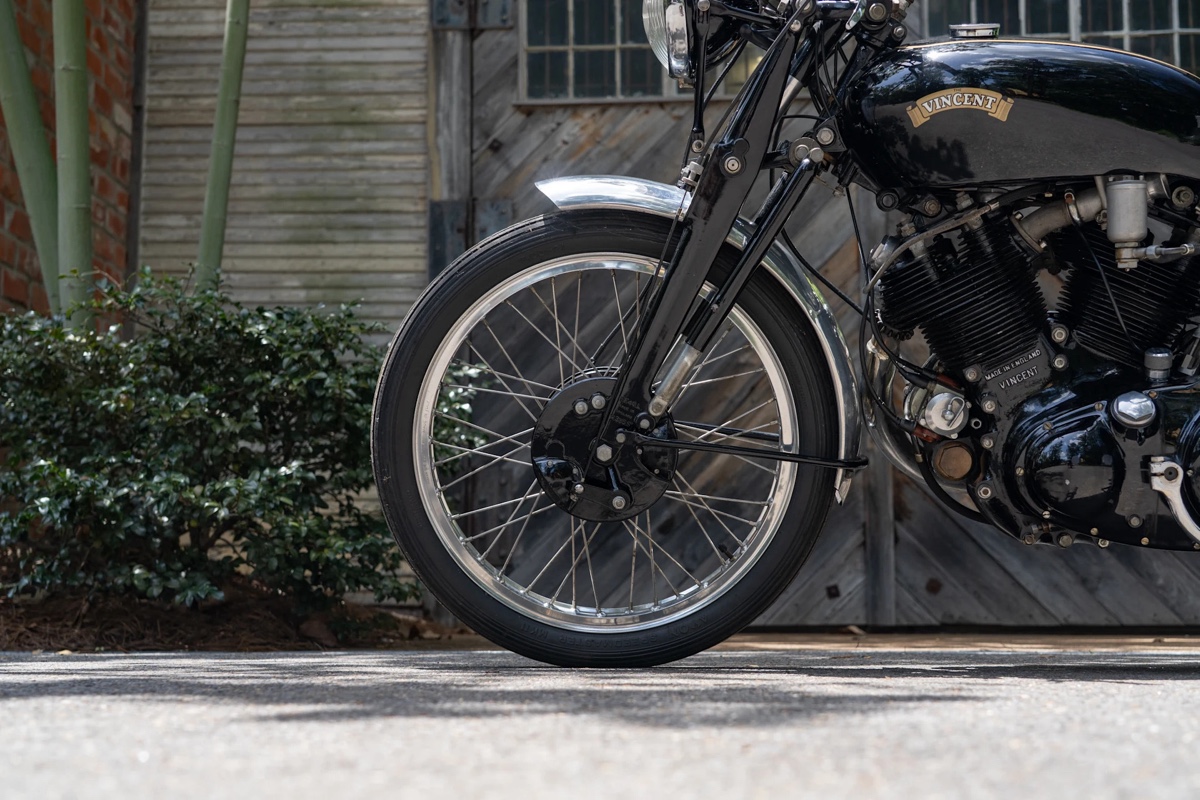 The bike also retains Vincent’s distinctive cantilever rear suspension with hydraulic damping. The sale includes a copy of the original factory works form and a Vincent-HRD Owners Club Dating Certificate, important documentation for such a rare and valuable machine.
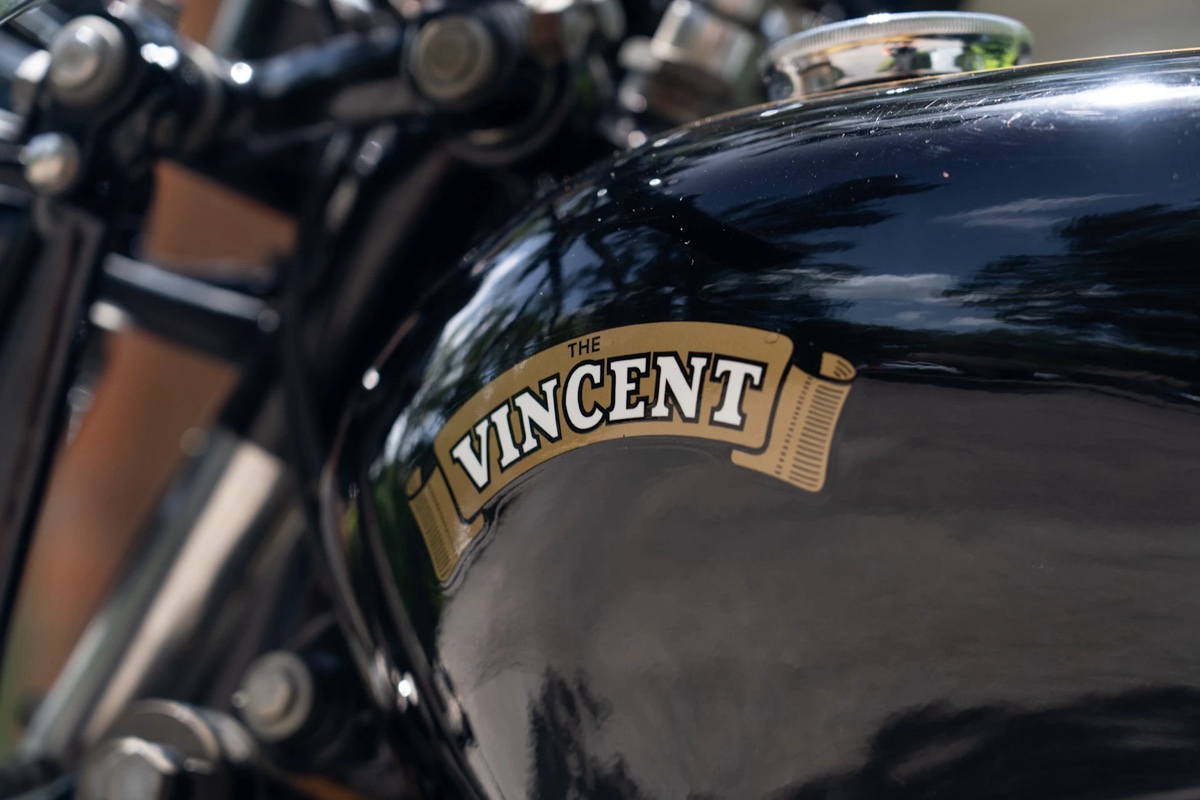
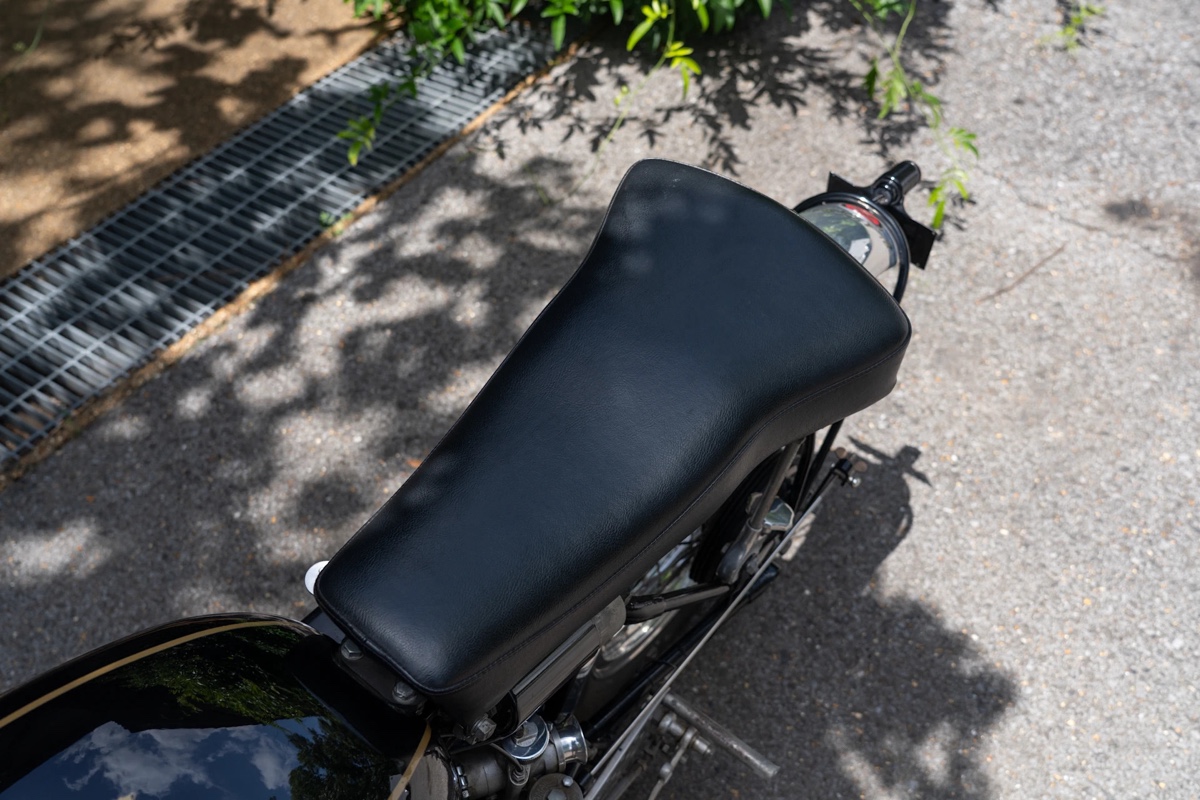
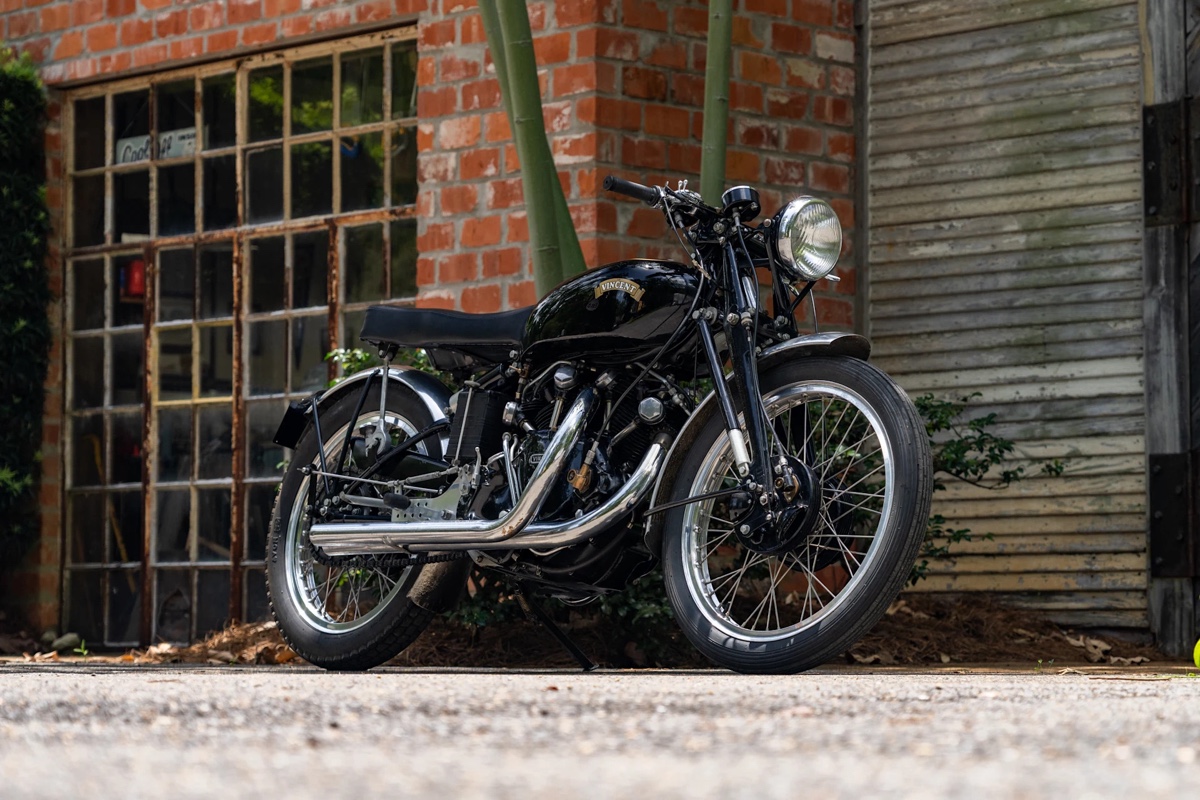
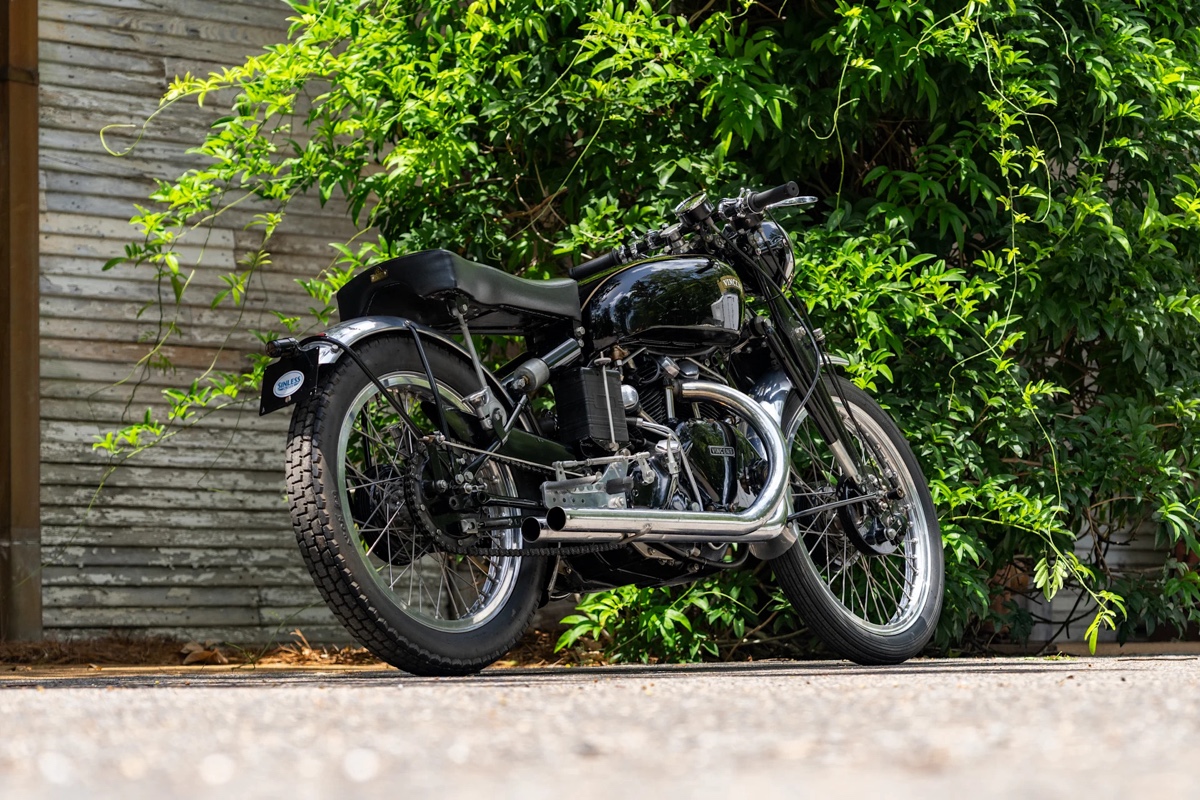
With its distinctive black tank, exposed V-twin, sweeping exhaust pipes, and purposeful racing stance, the Black Lightning looks every bit as formidable today as it must have appeared more than 75 years ago. Of course, the Black Lightning has achieved a kind of immortality beyond the racetrack. In 1991, British singer-songwriter Richard Thompson released his now-classic ballad 1952 Vincent Black Lightning, introducing the legendary motorcycle to generations of listeners who may never have encountered one in the flesh.
But perhaps the greatest appeal of this particular machine is that its history extends far beyond factory specifications and speed records. From a tragic racing accident in Denmark to an unlikely comeback against BMW rivals, decades of careful preservation, and a new life in one of America’s most remarkable motorcycle collections, this Black Lightning has lived a story worthy of its legendary name.
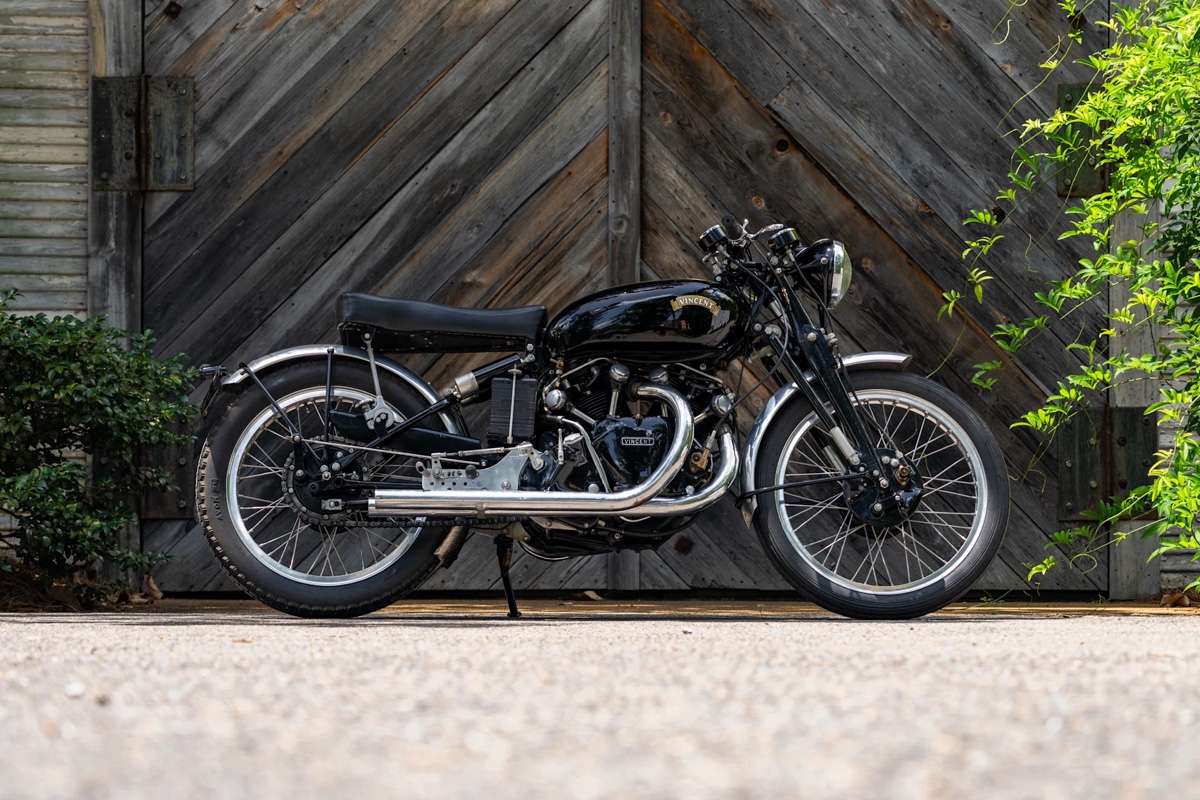
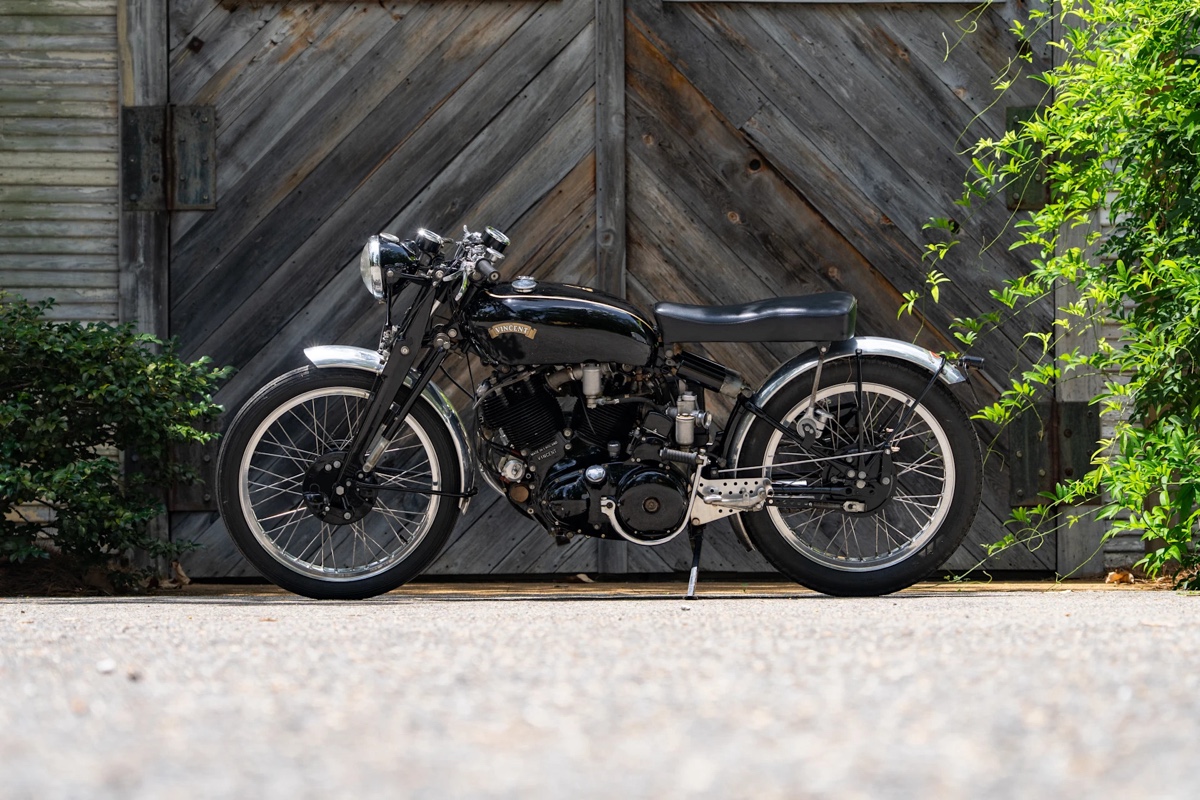
The 1950 Vincent Black Lightning will be offered as Lot R306 on Saturday, February 6, 2027, at Mecum’s Las Vegas motorcycle auction. For those fortunate enough to have the means, it represents an exceptionally rare opportunity to acquire not just one of the world’s most famous motorcycles, but a machine with a remarkable history of its own. The lightning strikes again.
Addendum: Vincent Black Lightning: The World’s Fastest Standard Motorcycle
Interestingly, this particular Black Lightning has also spent some quality time in the hands of motorcycle historian Paul d’Orléans, founder of The Vintagent. According to d’Orléans, the machine spent approximately a year in his San Francisco warehouse, where he performed some light mechanical fettling to prepare it for street use.
He subsequently put the legendary Vincent through its paces on the roads of Northern California, working with filmmaker David Martinez to produce a short documentary entitled Vincent Black Lightning: The World’s Fastest Standard Motorcycle. Released through The Vintagent in 2022, the six-minute film captures d’Orléans riding the machine through San Francisco and Marin County, discussing its extraordinary history and performance.
It’s a rare opportunity to see — and hear — an authentic Black Lightning in action rather than simply admire one in a museum or auction catalog. As d’Orléans later recalled, the machine ran like a beast and sounded like one, too.
Full Gallery
Auction Information
1950 Vincent Black Lightning — Lot R306
Auction: Mecum Las Vegas Motorcycles 2027
Date: February 6, 2027
Collection: Sinless Cycles Collection
Frame Number: RC5541
Engine Number: F10AB/1C/3641
Mecum Auction Listing — Photos and Details
Sinless Cycles Collection
Sinless Cycles Website


