
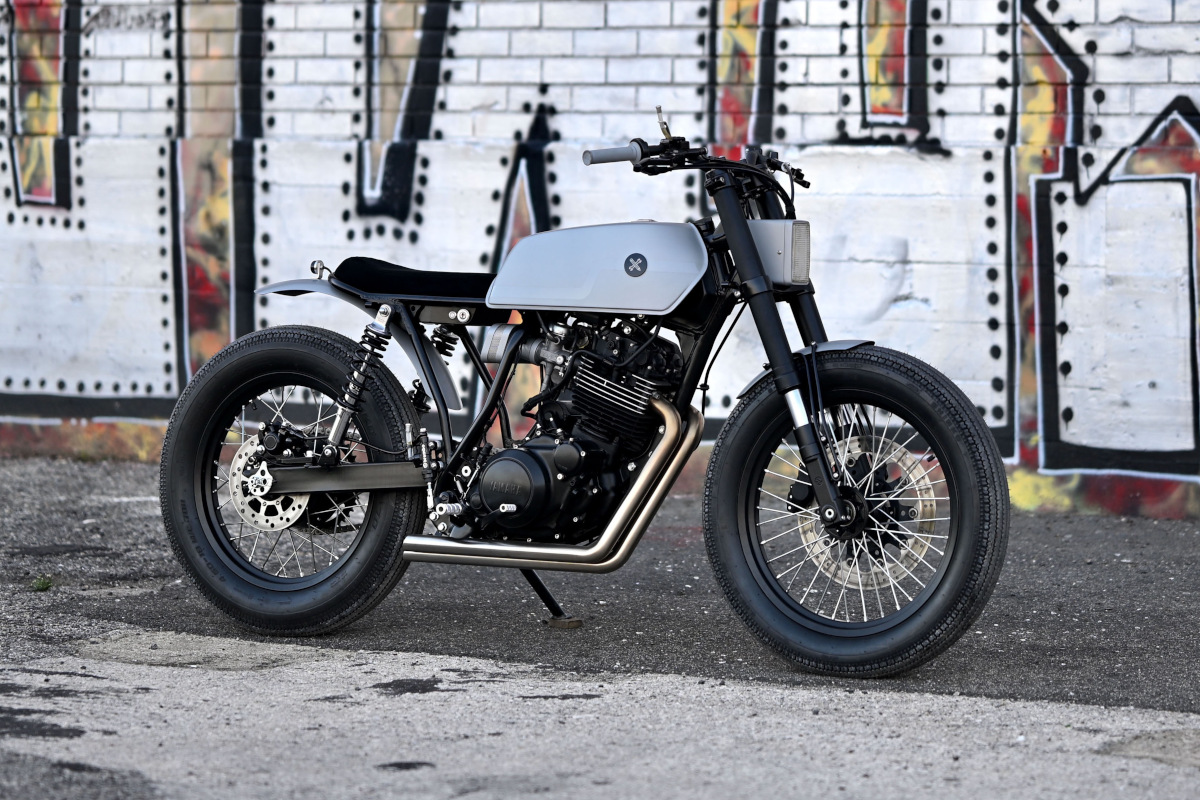
 Retro-futuristic XT600 from WKND Customs…
Introduced in 1984, the Yamaha XT600 was the last of the Yamaha single-cylinder four-stroke XT lineage that began with the legendary XT500, winner of the first running of the Paris-Dakar Rally. The 600 boasted disc brakes, “Monocross” mono-shock rear suspension, 12-volt electronics, and a four-valve head.
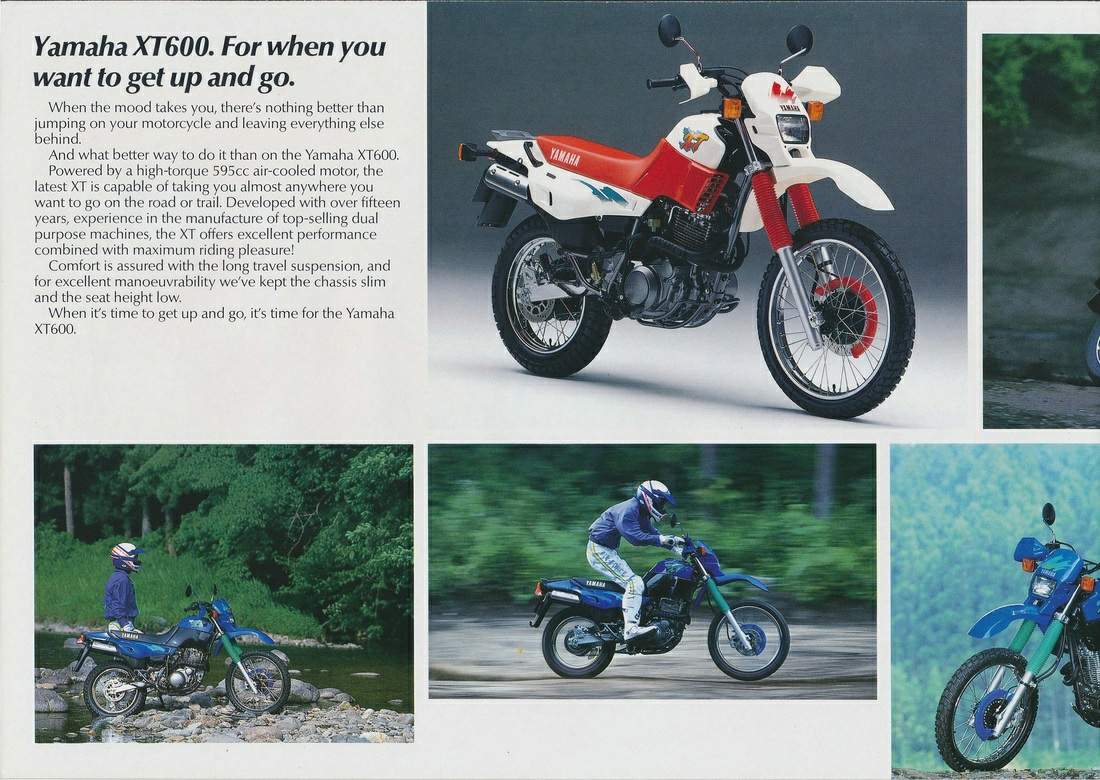
In 1990, the XT600E appeared, featuring electric start and a few other upgrades. While the rest of the world was moving to liquid cooling, fuel injection, and more valves, the big electric-start XT600 remained relatively unchanged until 2004, earning a reputation as a bulletproof trailie.
“The Yamaha XT600E is about as straightforward, reliable and solid as an old school trail bike gets… You won’t find a more honest workhorse than the Yamaha XT600E.” –MCN
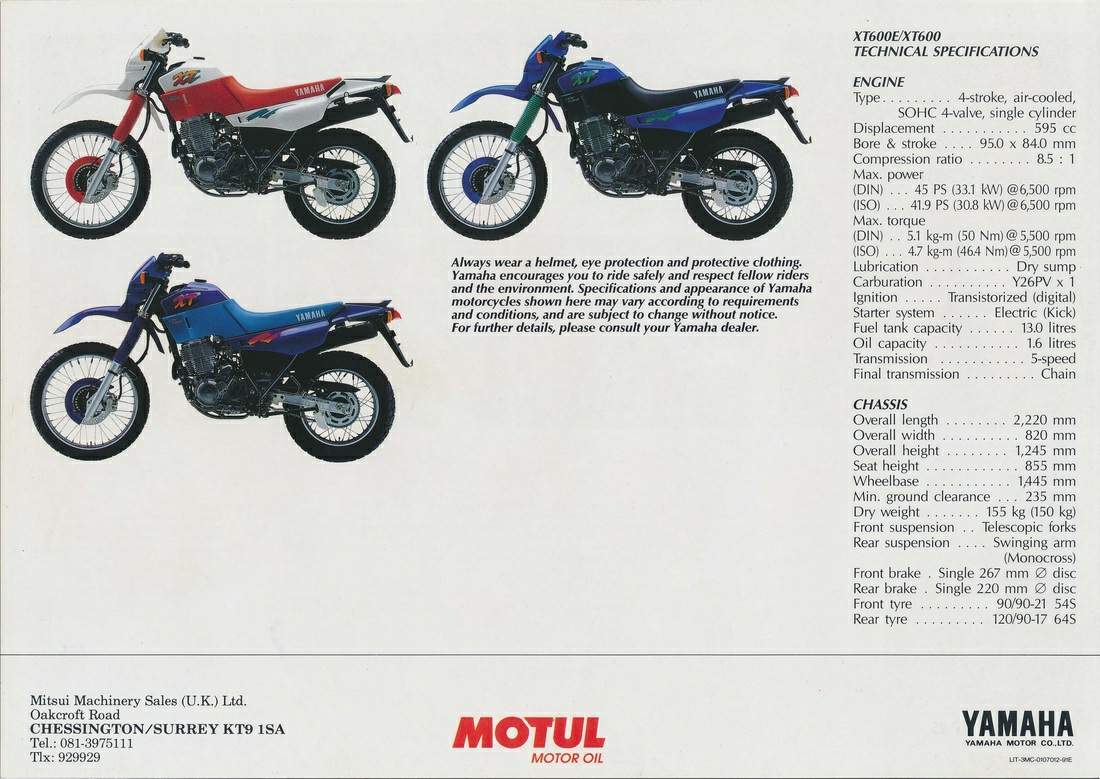
It’s safe to say the Yamaha designers could never have imagined this striking, completely transformed XT600E street tracker from our friend Sérgio Almeida of Porto, Portugal’s WKND Customs. As the name suggests, the workshop began as a weekend venture while Sérgio worked as a full-time designer. However, momentum continued to grow.
“Over time, word got out, and I began getting a steady flow of requests for bikes and custom parts. That’s when I knew it was time to lean in. I left my full-time job and took on a part-time role as an art director to free up more time for the workshop.”
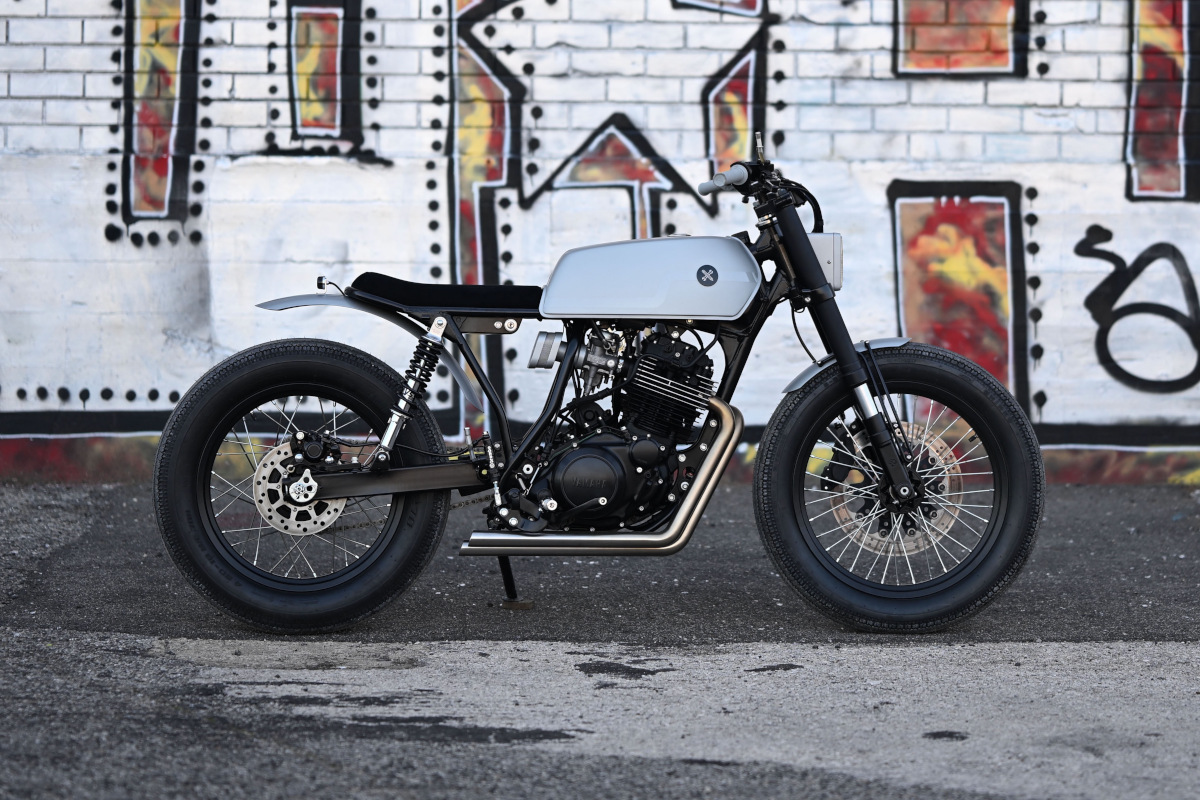 Today, Sérgio maintains the shop as a side business, building some truly incredible machines while preserving the pure joy and creativity of building bikes. This XT may well be his most impressive build yet, commissioned by a Paris native who already had a donor in hand.
“The first step was to put together a render and get the design approved by the client. That part was easy. The plan: a clean street tracker with a retro-futuristic vibe, packed with custom touches.”
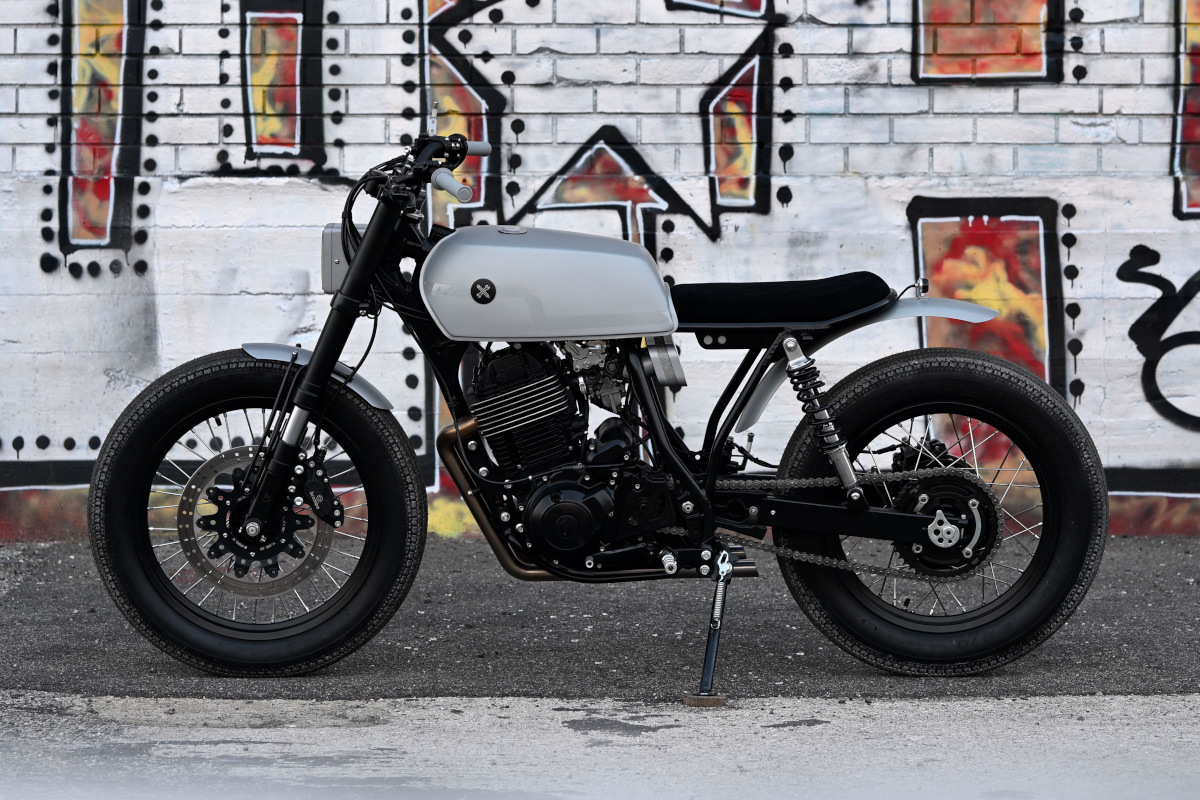 However, the execution would be much more difficult, especially since the donor XT showed signs of abuse. What’s more, it had already been customized to some extent…and poorly. But Sérgio was up to the challenge. Over a period of 3-4 years, he completely rebuilt and transformed the botched supermoto into the retro-futuristic street tracker you see here.
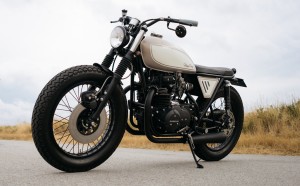
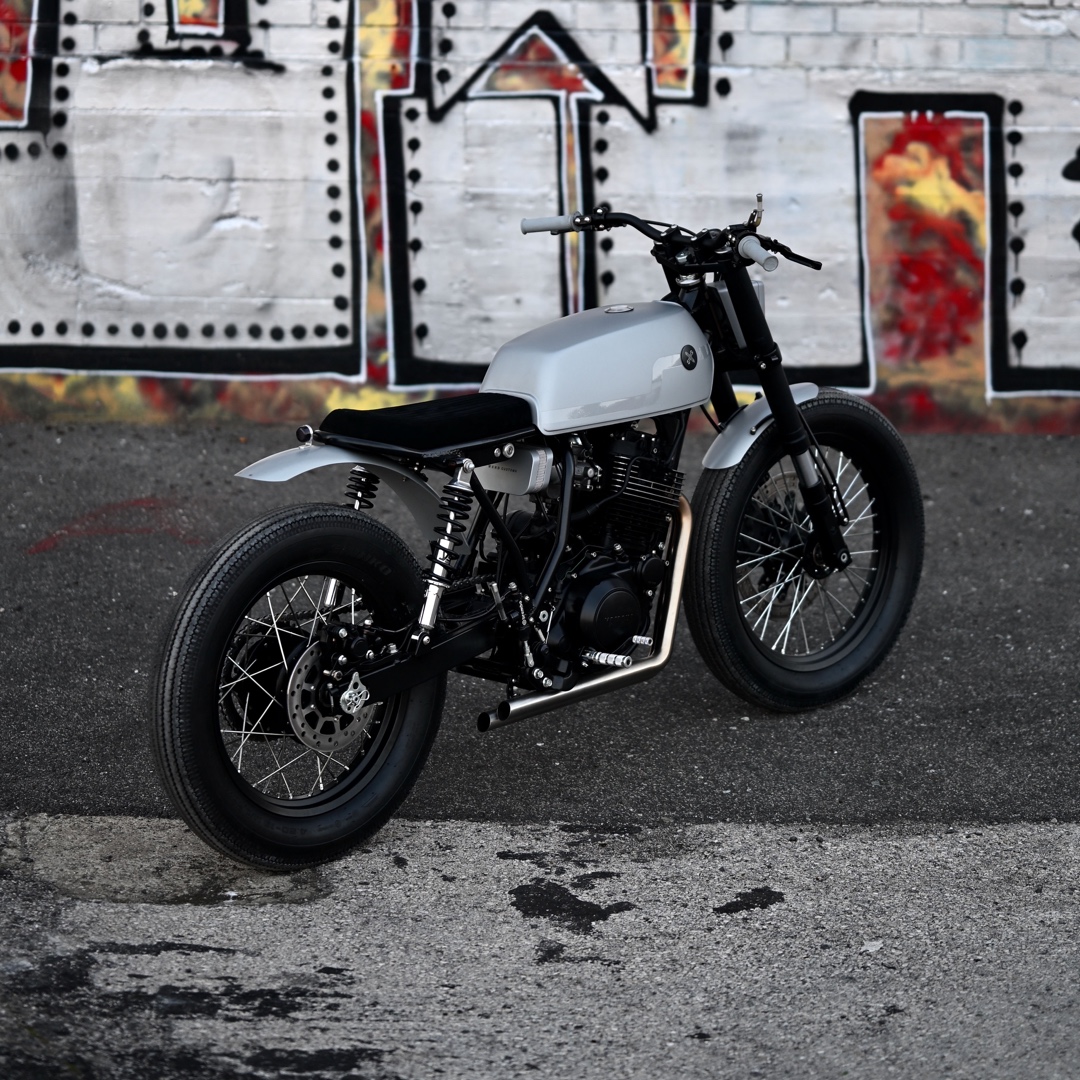 He gives us the full details on each element of the build below, but highlights include rebuilt and properly fitted Gilera Nordwest USD forks, twin-shock conversion, custom subframe (the original XT-E used the exhaust as a supporting subframe member), and 19″ / 18″ wheels with Shinko rubber.
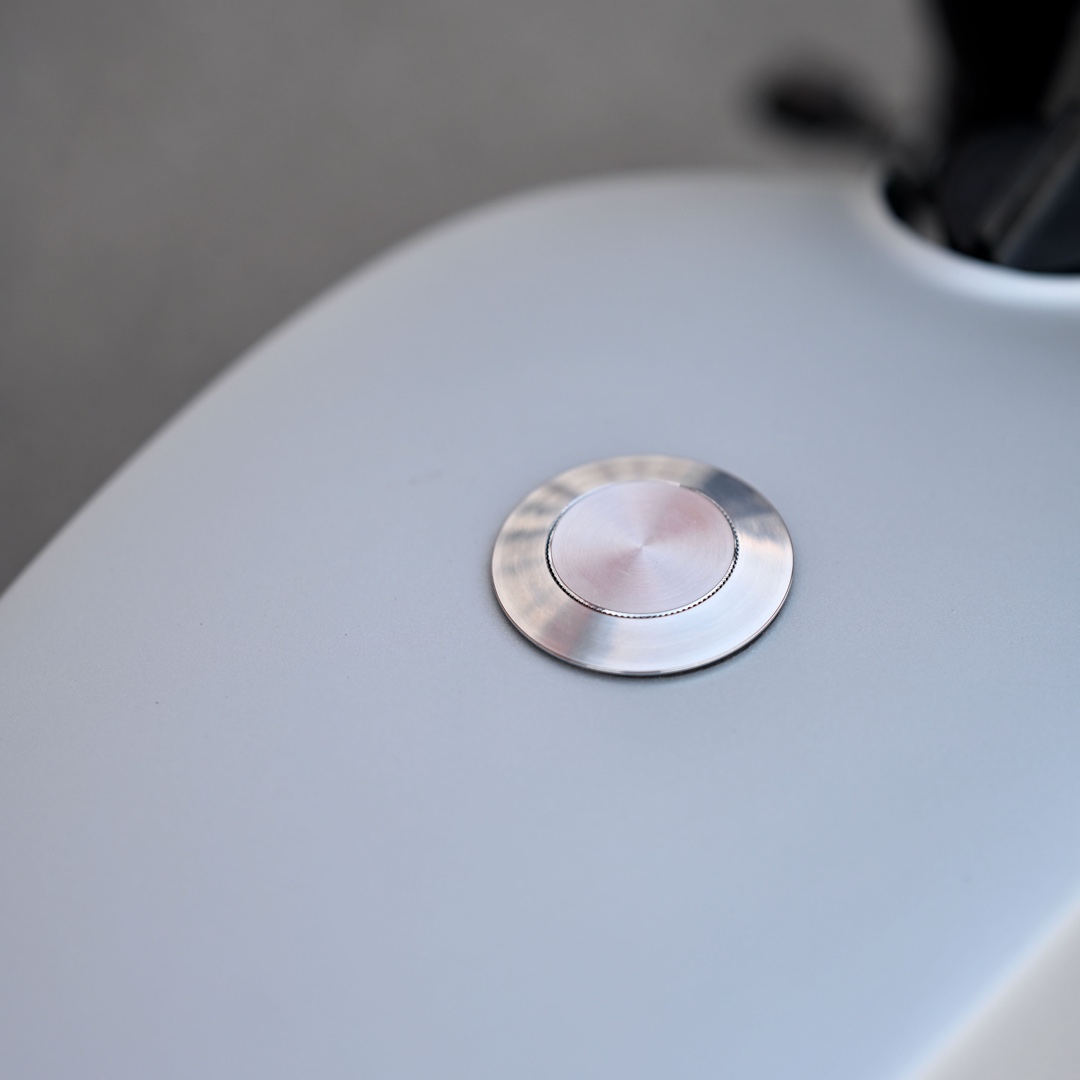
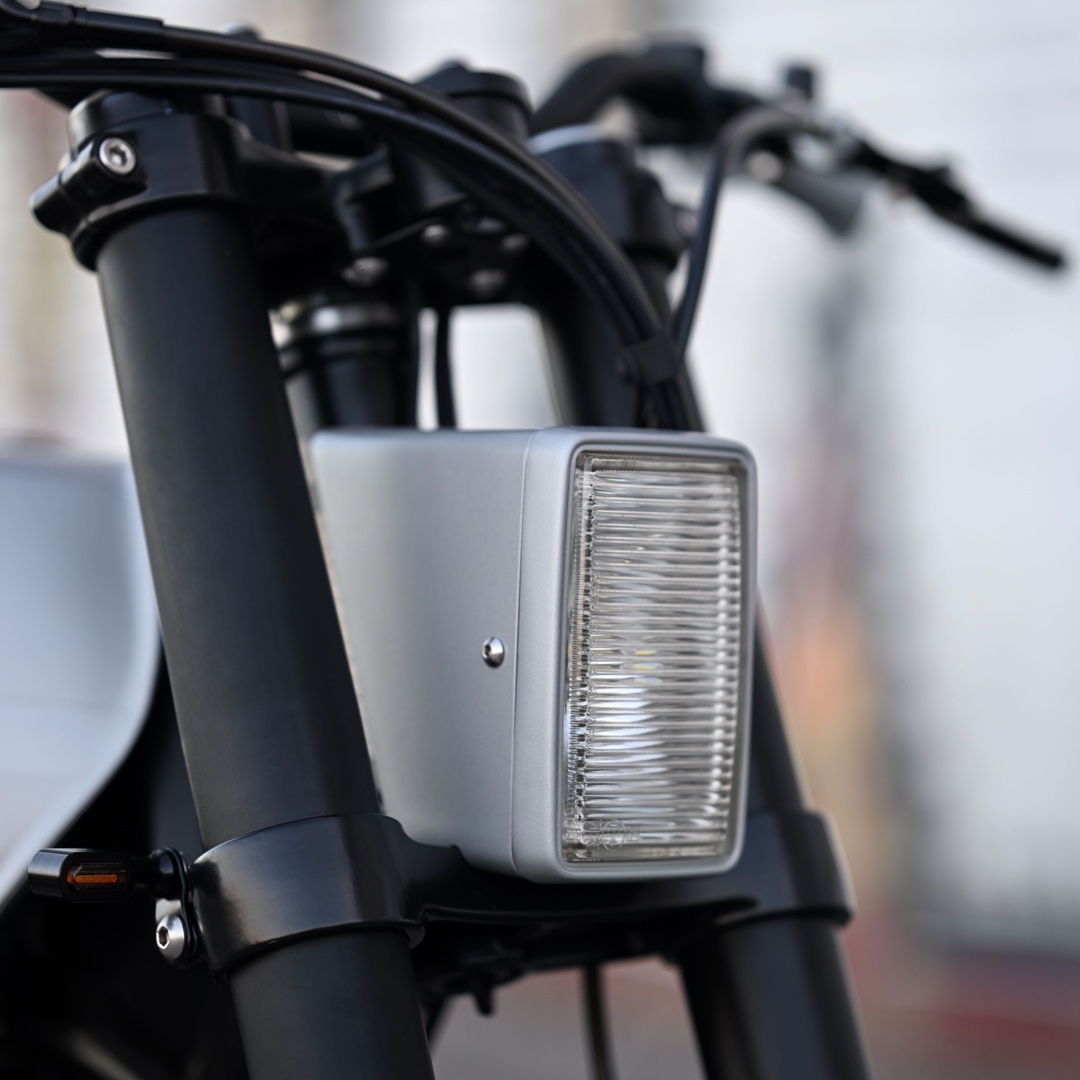
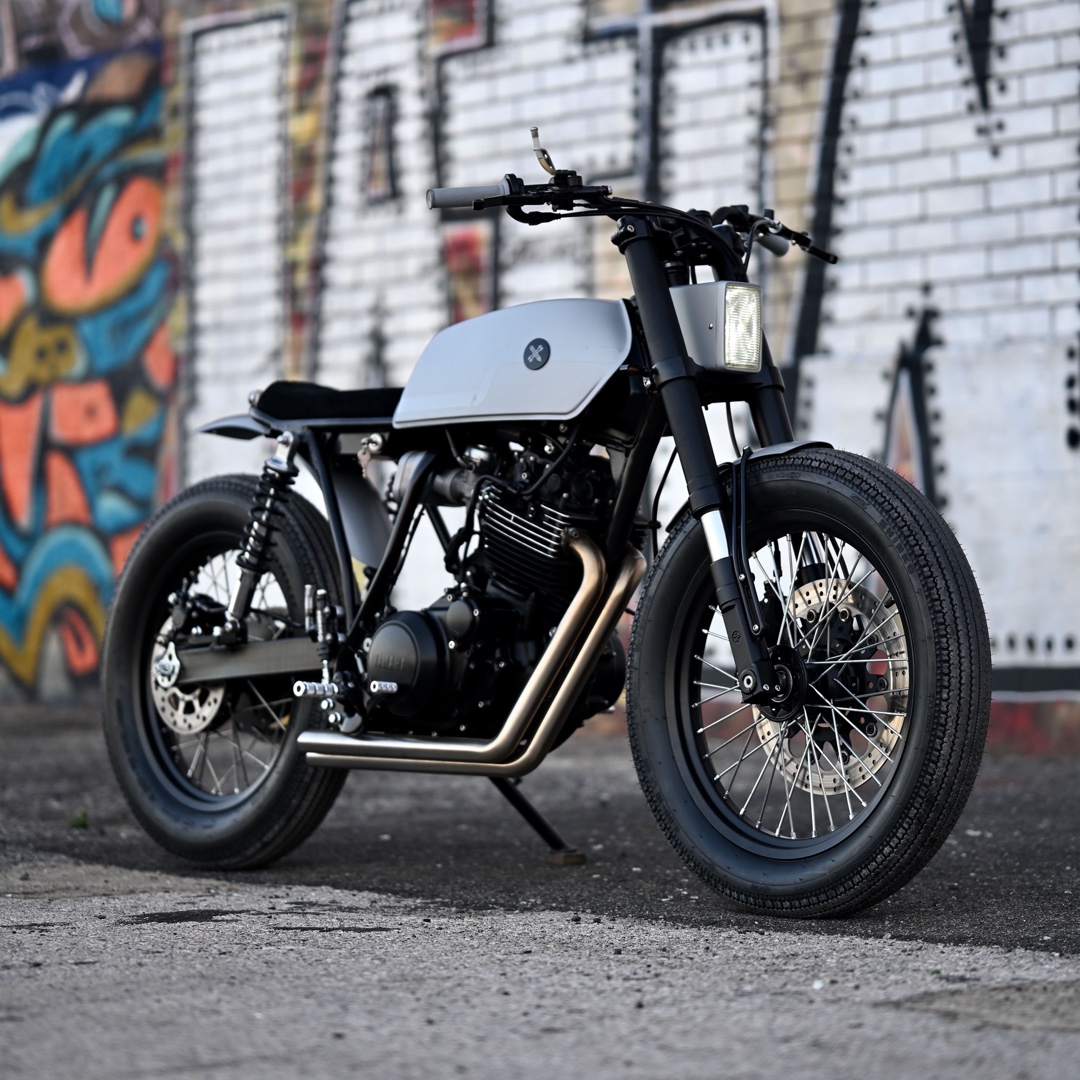 An XS400 tank was extensively modified to work with the XT600’s oil-in-frame setup, and rebuilt to include a flush pop-up fuel filler cap. The fenders, aluminum airbox, stainless exhaust, and electrical system are fully custom, including a custom control unit developed in-house to manage the lights and turn signals. The unique headlight is actually an XJ750 Seca fog light mounted vertically in a hand-fabricated aluminum body, with squared lines to match the tank!
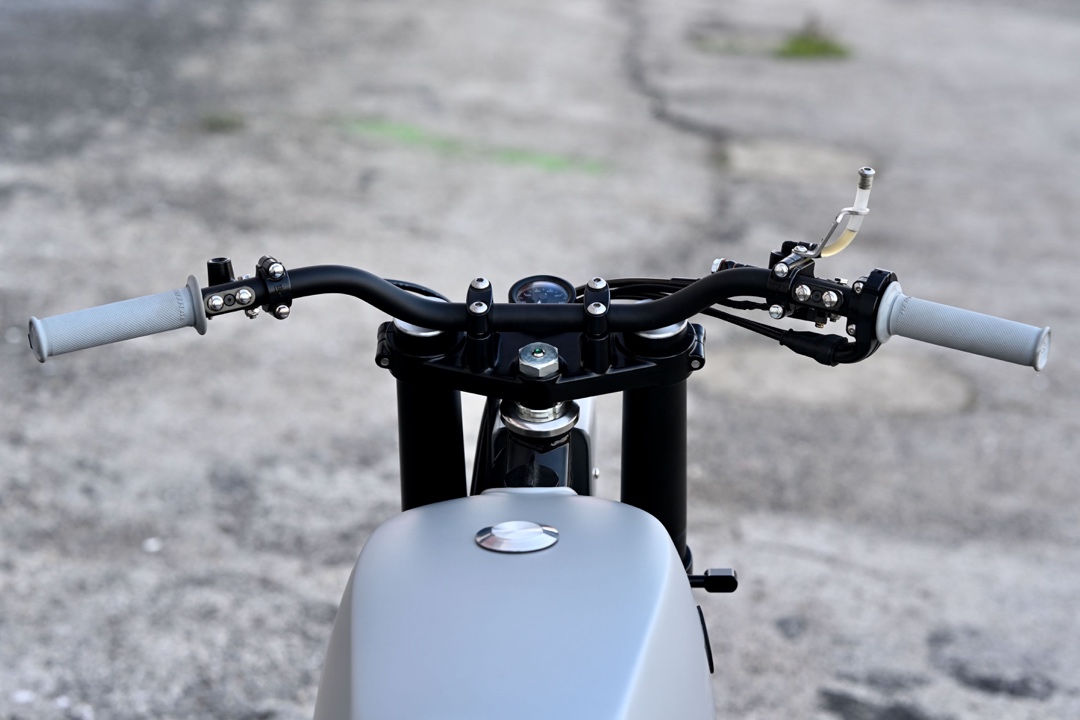 Originally, the bike was going to be mostly black, so Sérgio and the client dubbed the bike “Yasuke” after the first Black samurai. Though the color scheme evolved into a lighter motif, the name stuck.
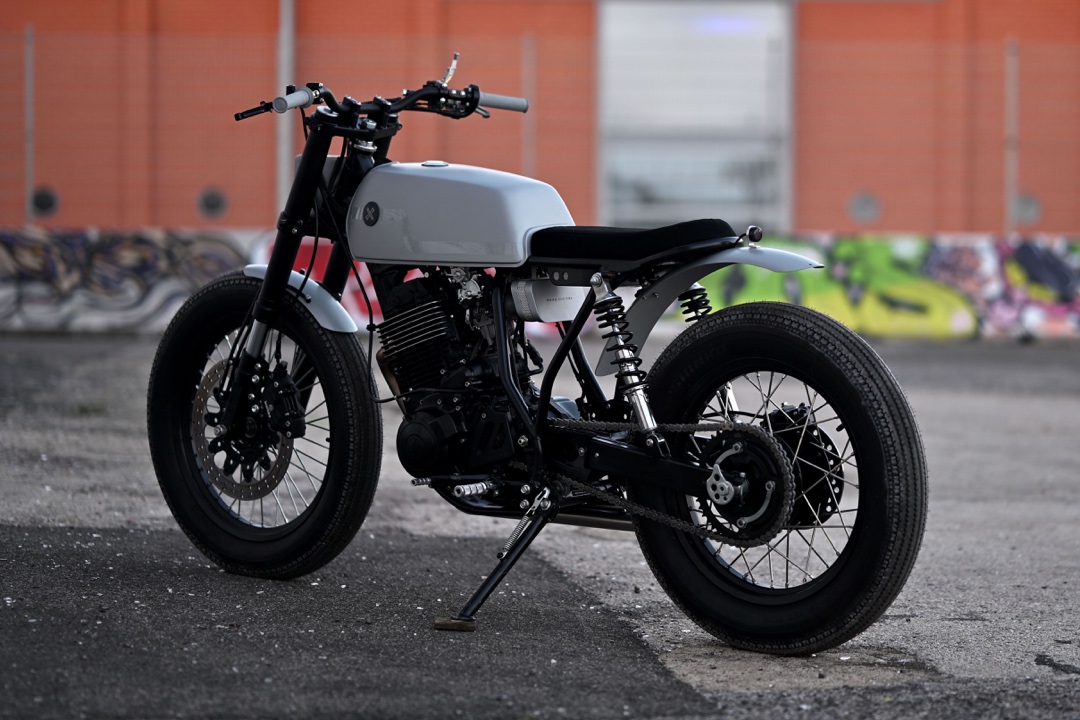
We could go and go, discussing the details, but we’ll let Sérgio himself take it from here — he’s given a very extensive rundown of the entire build, which you’ll find below. And a special thanks goes out to our friend Craig Stuart (@scrambler_ams), who photographed the bike at the inaugural Malle Canyon event outside Lisbon, where “Yasuke” was an invited build.
In the Builder’s Words…
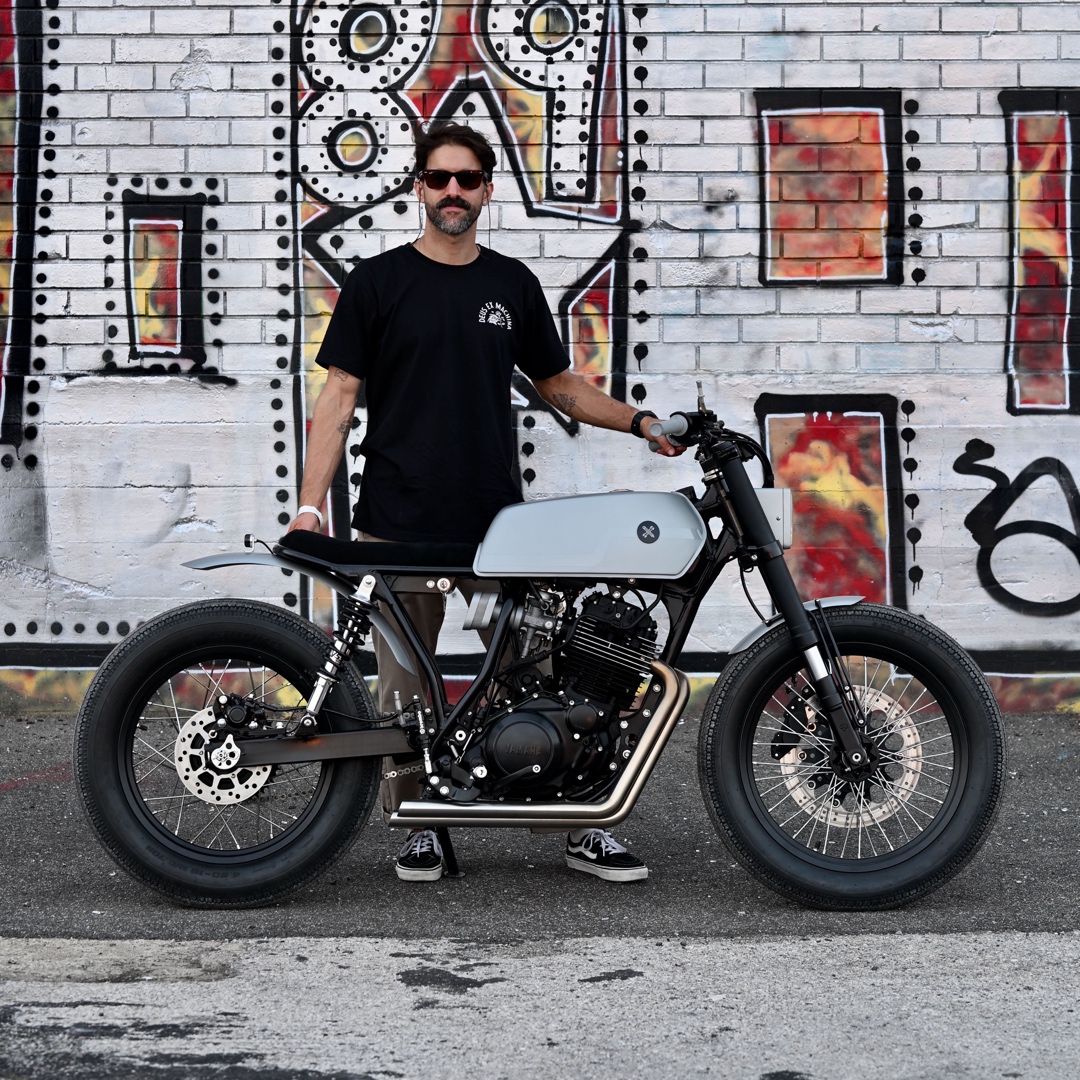
ABOUT WKND CUSTOMS
This is a small project—part business, part passion—that merges design and motorcycle fabrication. It’s about bringing ideas to life, from digital renders to fully built machines. It started on weekends and in spare hours—hence the name—while I was working full-time as a designer. Over time, word got out, and I began getting a steady flow of requests for bikes and custom parts. That’s when I knew it was time to lean in. I left my full-time job and took on a part-time role as an art director to free up more time for the workshop.
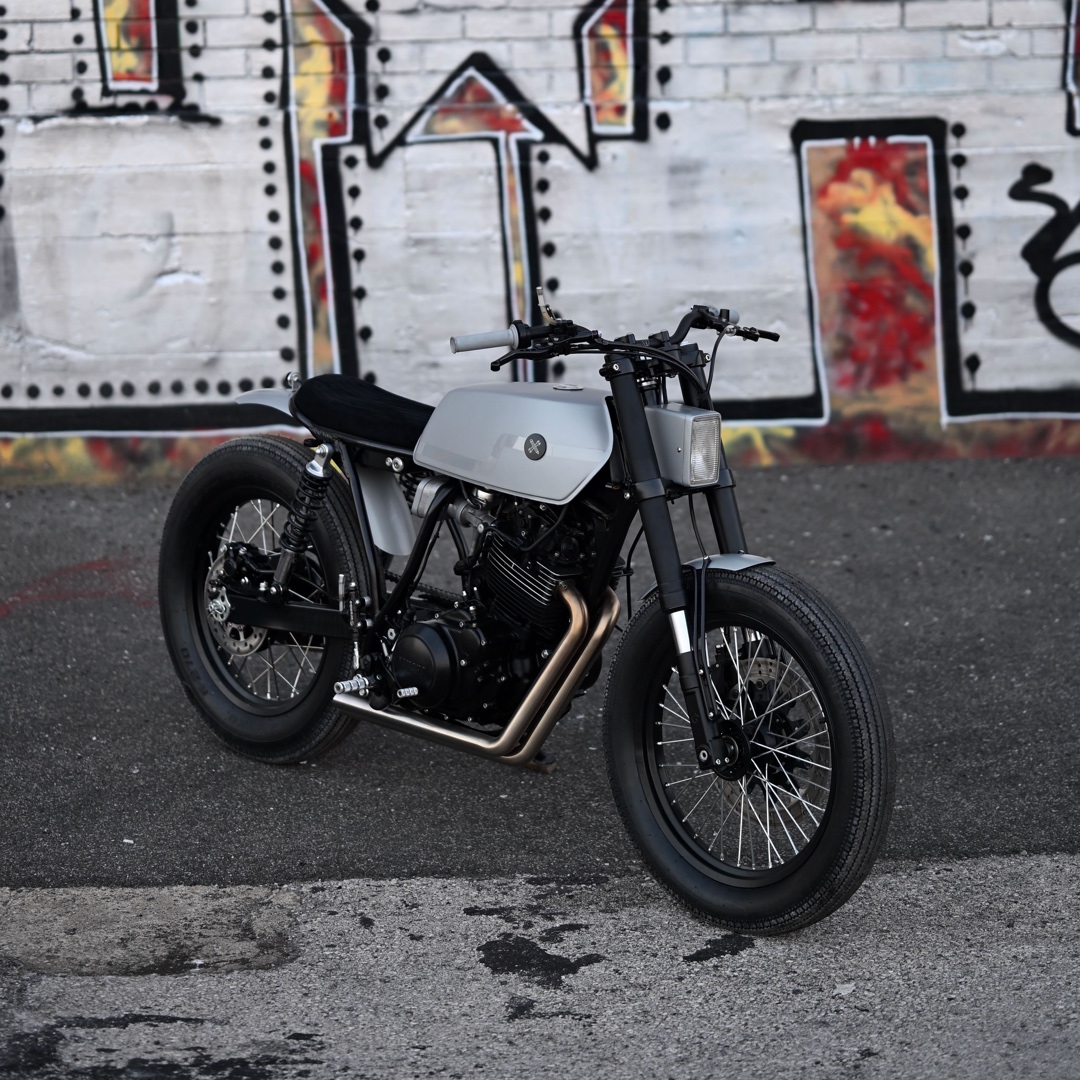
Based in Porto, my work is inspired by minimalist design—clean lines, purposeful details, and a focus on the essentials. For now, I’m not aiming to turn this into a full-time business. I want to keep the focus on creativity and the joy of building—without getting bogged down by profit margins or time sheets.
ABOUT THE BUILD: 1996 Yamaha XT600E
The start: It all started by chance. The client happened to be in Portugal, right where I was showing a freshly built Kawasaki KZ400 street tracker to someone else. In no time, he was sitting on the bike, snapping photos, and telling me he wanted to commission something of his own.
He was after a similar style, but the bike he had in mind was a whole different beast. I made the “mistake” of saying that anything’s possible with enough time and money—and a couple of days later, a Yamaha XT600 showed up at the workshop.
The bike was already far from stock: it had an upside-down fork swap, a set of supermoto wheels, and a mix of random parts, including a sportbike mudguard and a dual-headlight front fairing. It had already gone through a second engine, after blowing the first—clear signs of a rough past that showed throughout the bike.
The first step was to put together a render and get the design approved by the client. That part was easy. The plan: a clean street tracker with a retro-futuristic vibe, packed with custom touches.
Foundations: To make it happen, the bike was first cleaned up and stripped down. Then came the foundation: getting the stance right. The 17” supermoto wheels were swapped out for a new set of Morad aluminum rims, laced to the original hubs—19” up front and 18” in the rear—wrapped in Shinko E270s for that classic tracker look.
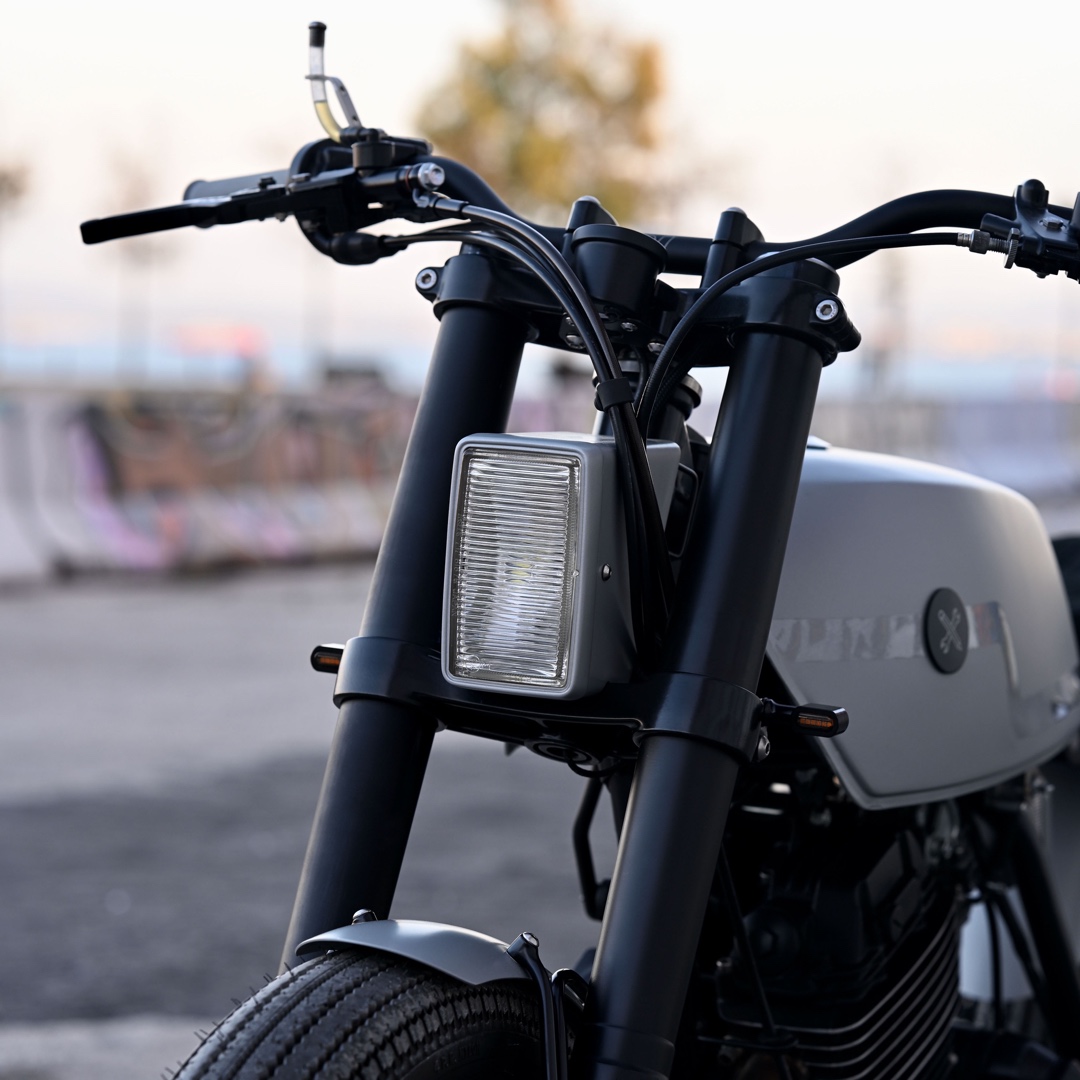
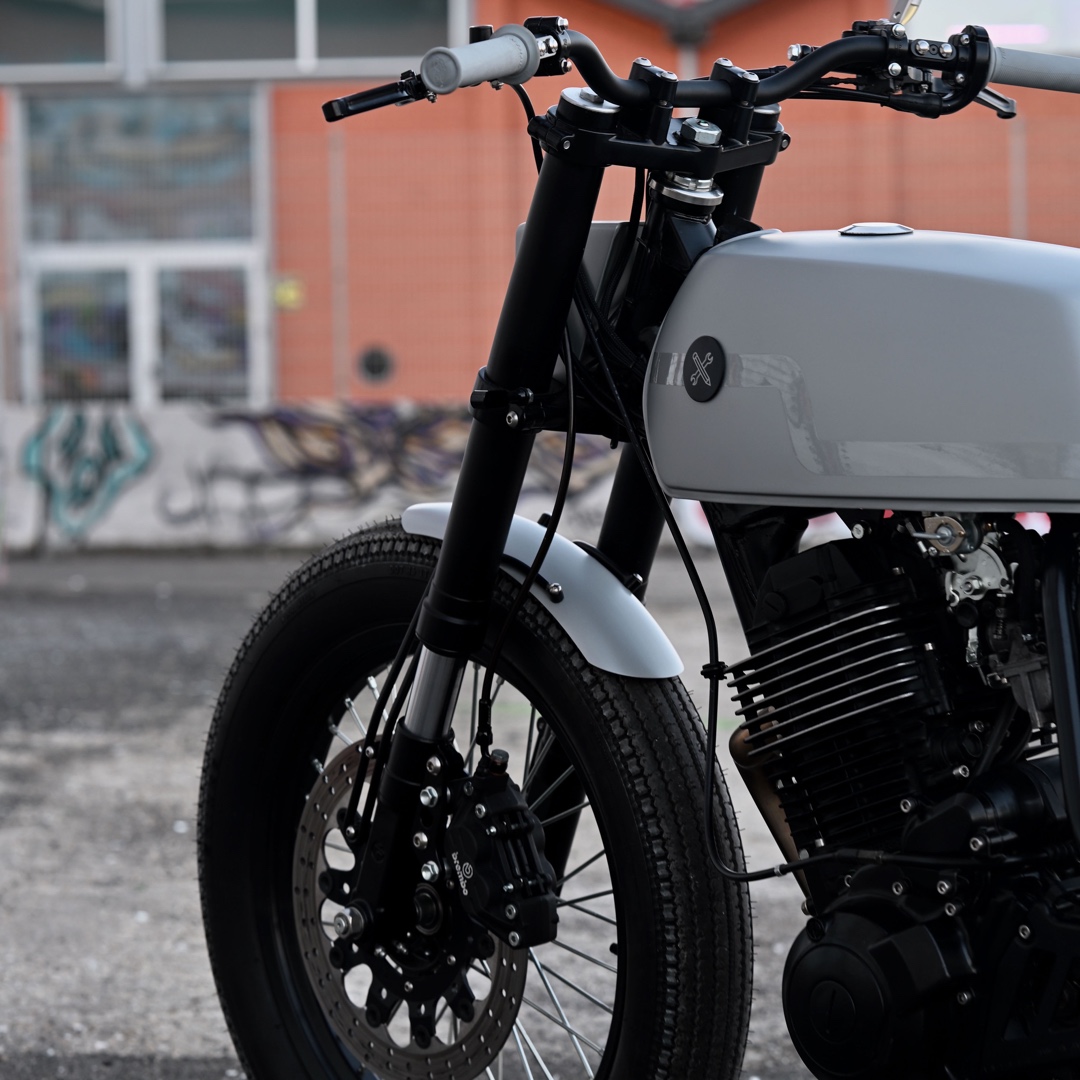 The origin of the front suspension was a mystery at first, but after some digging, it turned out to be from a Gilera Nordwest. It was already mounted, but the job had been poorly done. The steering stem had been cut in half and extended with a smaller diameter tube, welded in and left exposed—like an apple core, and far from straight. Spacers were everywhere. So, a new stem was machined from scratch to proper specs. To get the front lower, the fork internals were also modified—shortened by about 50mm. To complete the steering setup, a new set of low street handlebars was mounted.
Next up was the subframe. The original, quirky single-sided setup was completely cut off, and a new one was built from scratch. It featured a kicked-up loop and curved tubes on the sides to echo the lines of the original frame. Gussets were added at key joints—both to reinforce the structure and to add a bit of visual flair.
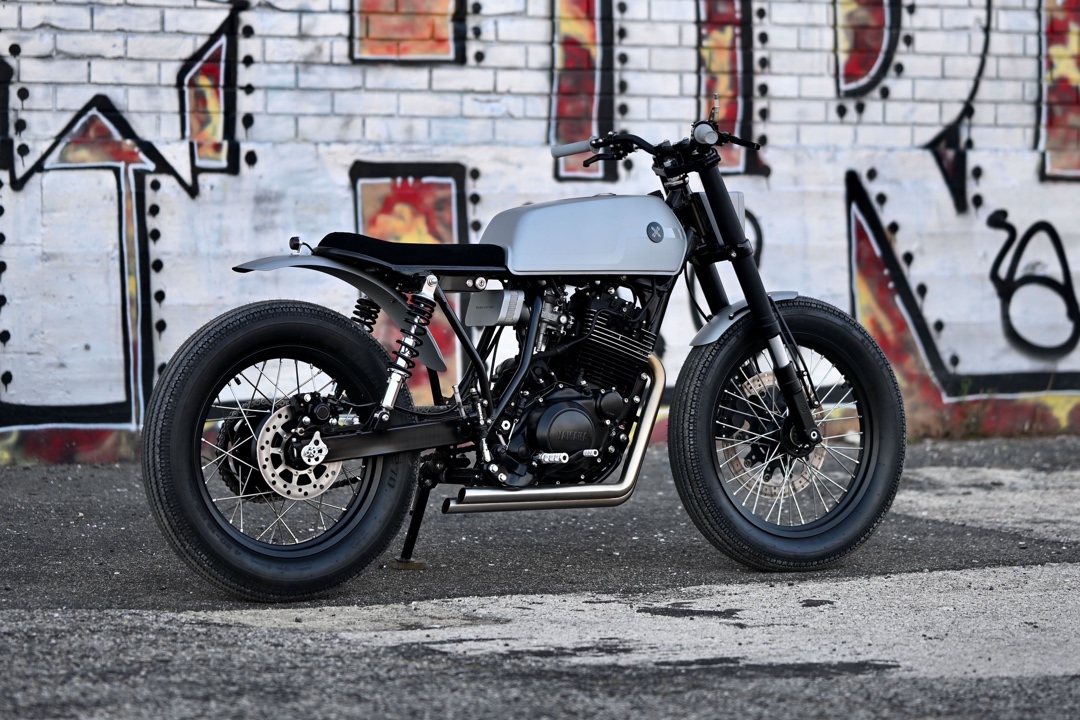
To clean up the look and open up the space under the seat, the monoshock setup was removed. Twin shock mounts were welded onto the frame and swingarm. The layout took some inspiration from the XT500, with a pair of YSS shocks mounted more forward and at a steeper angle than usual. This also had a practical benefit: the rear brake caliper position remained unchanged.
Bodywork: One of the central elements of this build is the fuel tank, sourced from a Yamaha XS400. Its size and angles suited the bike perfectly—but making it fit was another story. The XT600 uses an oil-in-frame system, and I didn’t want to interfere with that. So, the underside of the tank was extensively modified to clear the oil lines. New mounting points were added at the front and rear—on both the tank and the frame—allowing it to sit lower and further forward, just as it needed to.
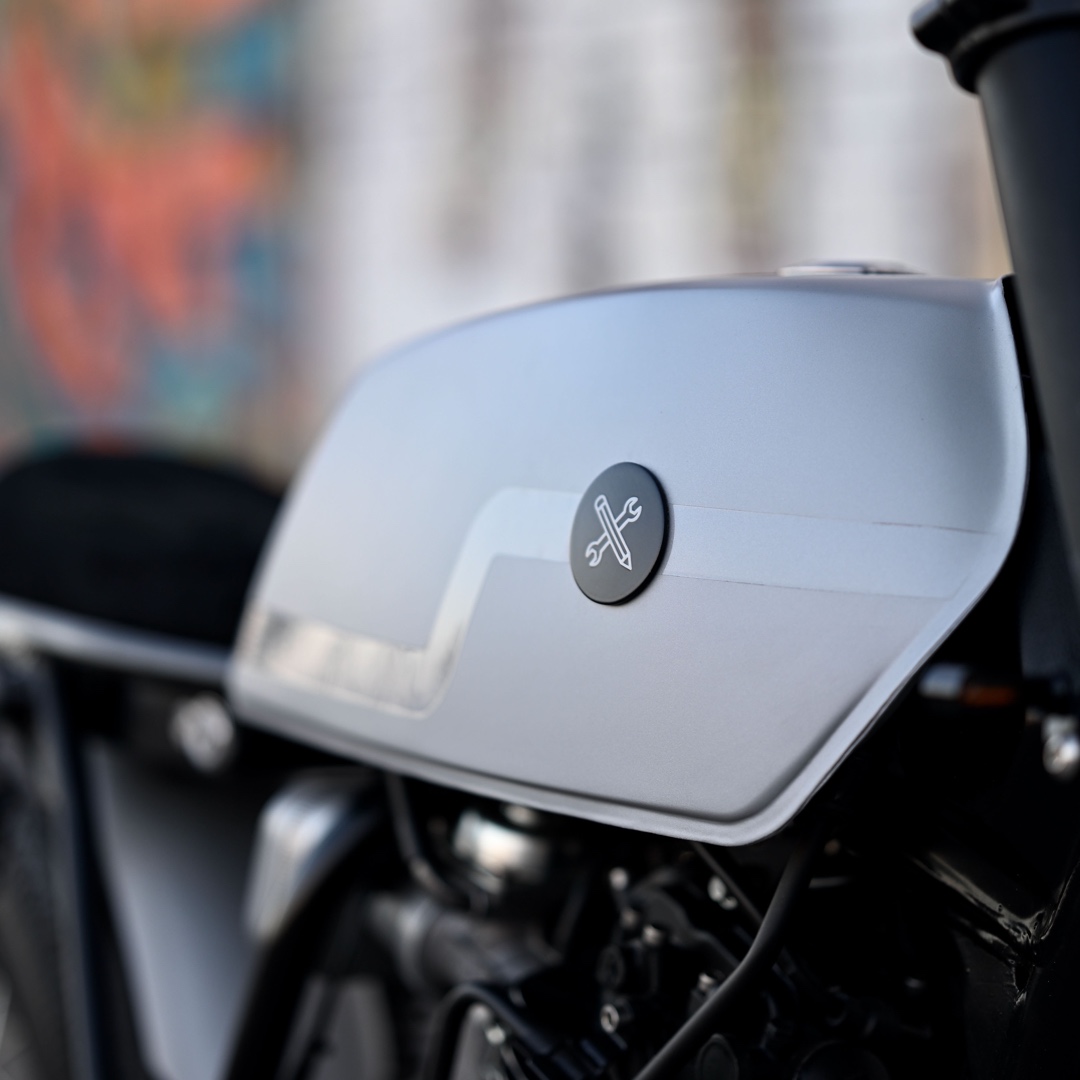
To keep the clean look, the original fuel cap area was removed. A new metal sheet was welded in to serve as a base to drill and weld a new mount for a flush pop-up cap, centered on the tank.
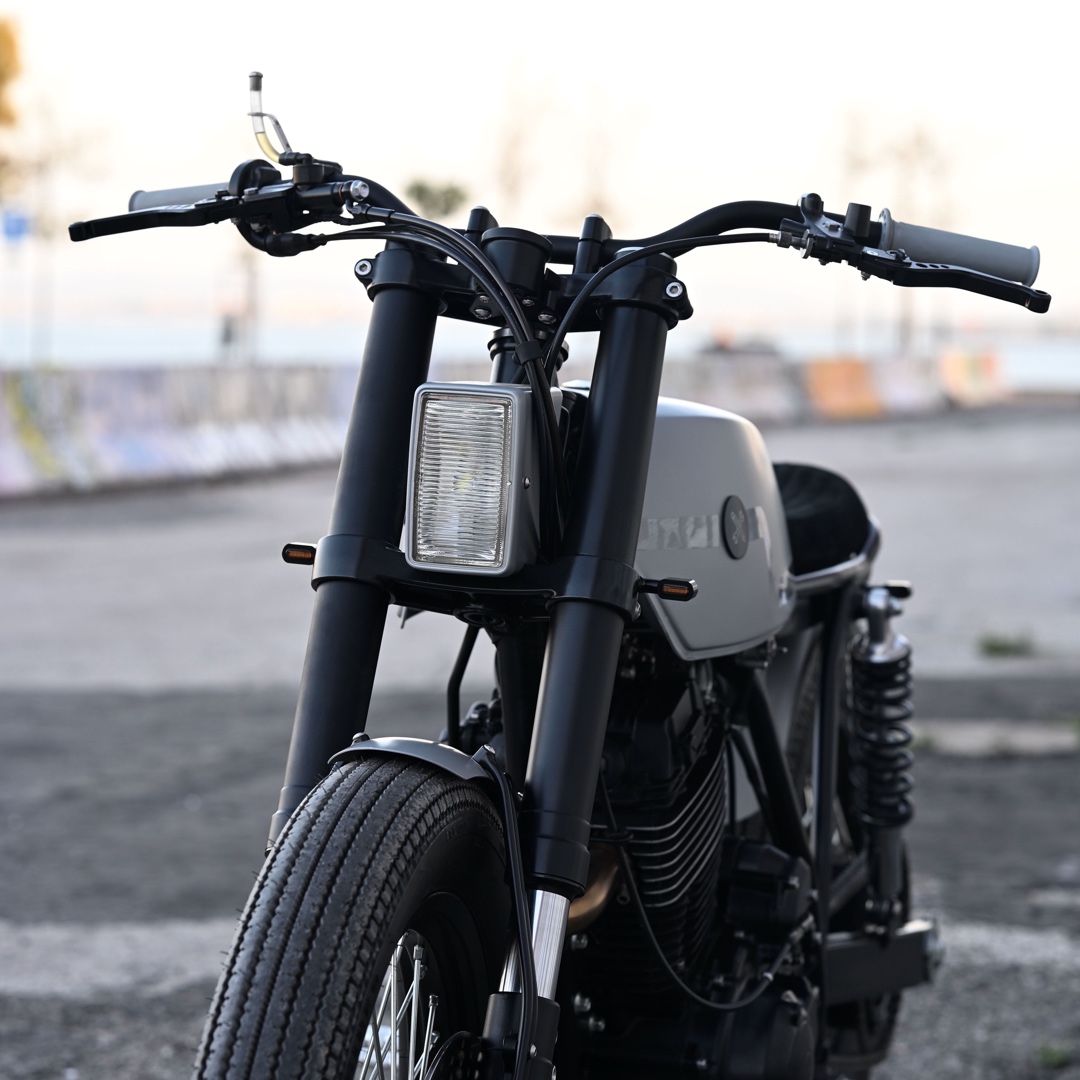
For the headlight, another classic Yamaha part was used: a fog light from an XJ750 Seca. It was mounted vertically, with the original front trim retained. The plastic housing, however, was replaced with a hand-fabricated aluminum body, shaped with squared lines to complement the new tank.
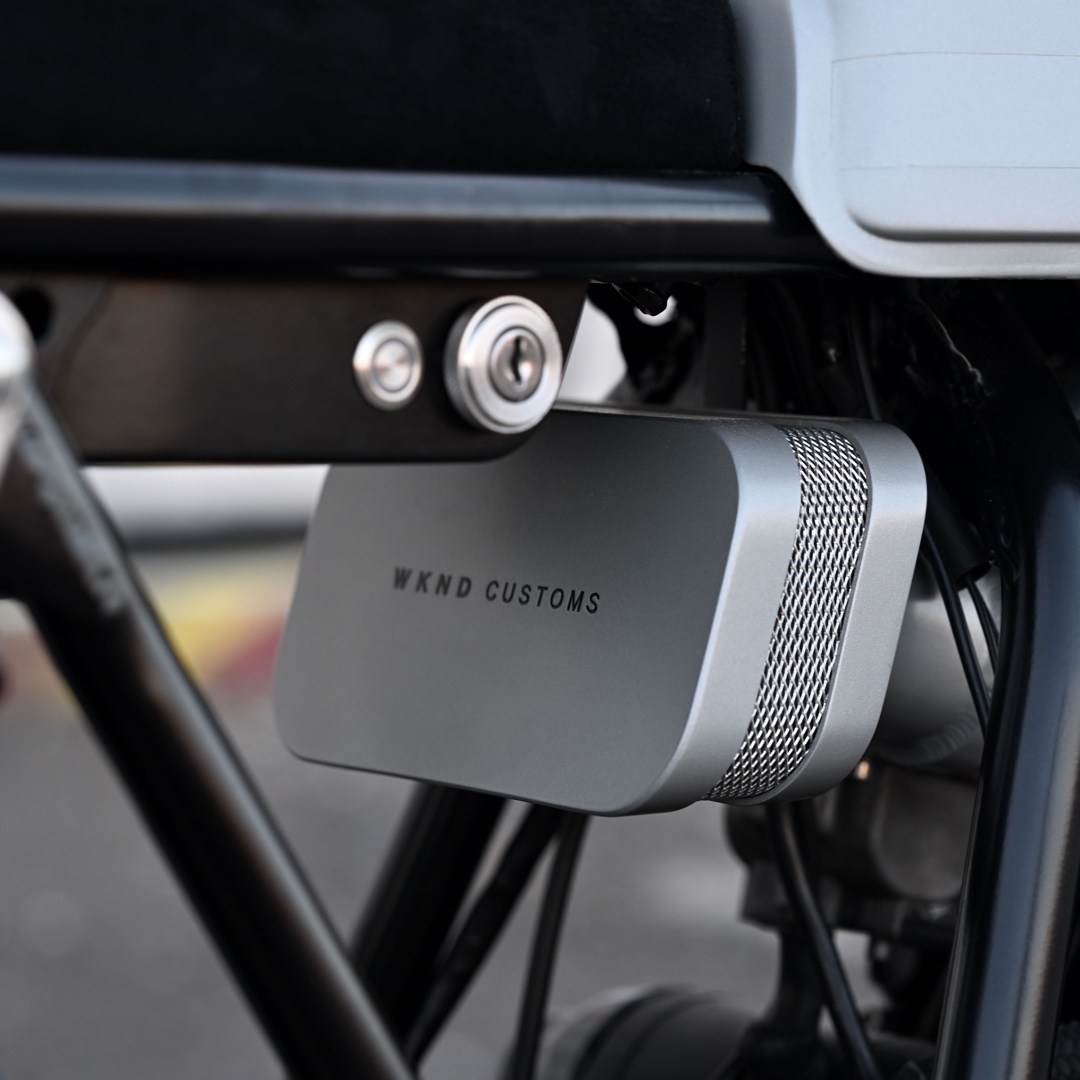
Another key custom piece—one I’m particularly proud of—is the aluminum airbox. It’s angled to match the bike’s lines and built around two machined fittings that connect directly to the carburetors. Inside, there’s a layer of foam sandwiched between two sheets of aluminum mesh. It can be opened for maintenance, but all mounts were designed to remain hidden, keeping the look clean and minimal.
A full stainless steel exhaust system was also fabricated. It features laser-cut flanges and hand-shaped bends, with all the welds blended smooth for a seamless look. The pipes exit on the same side in a slash-cut style, each with a long DB killer to reduce noise and improve performance. A small bracket supports the system at the rear, cleverly using the same mounting points as the DB killers.
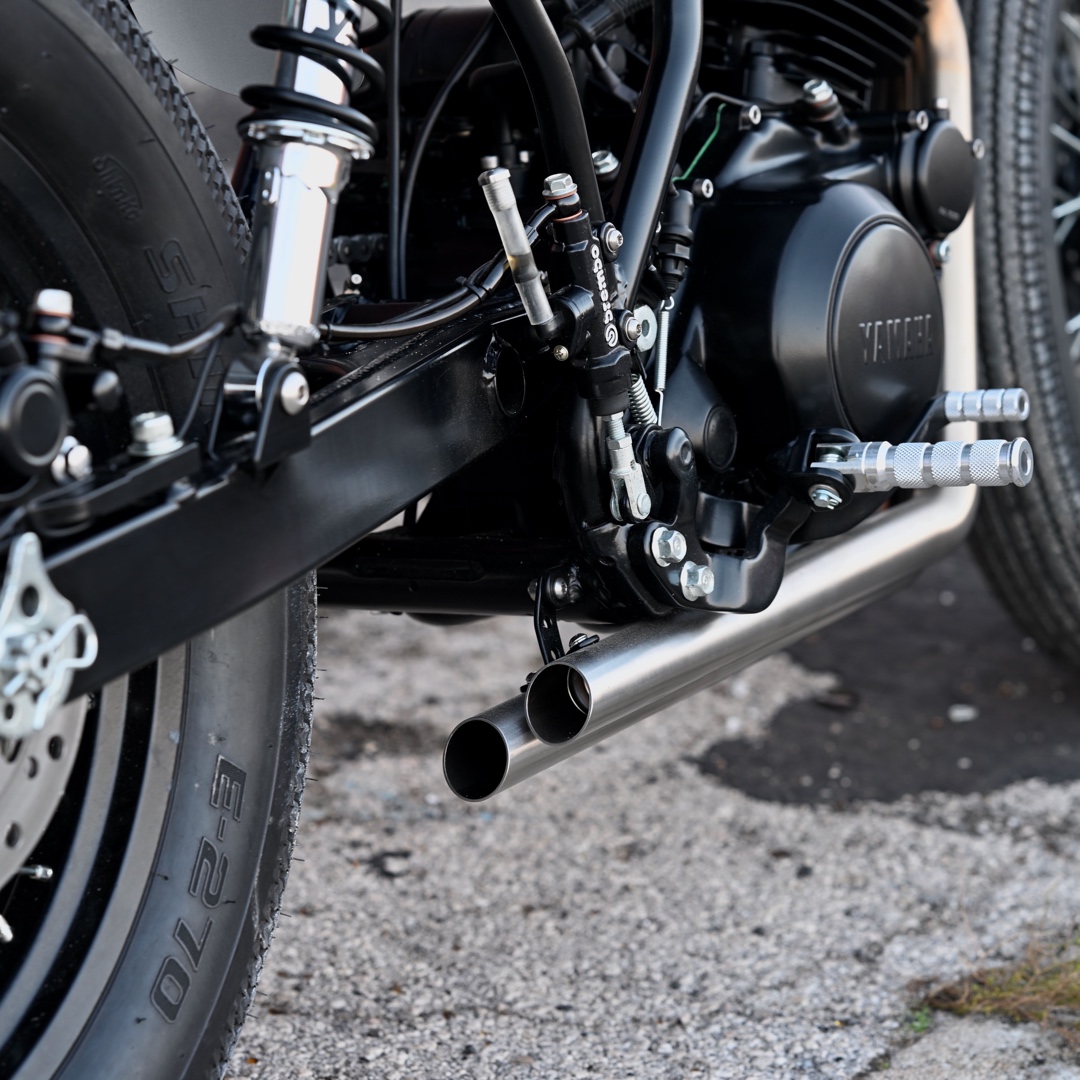
The original engine guard was retained, but trimmed down on the sides to better integrate with the new exhaust layout. The central section was kept intact to visually complete the frame while still offering protection for the engine.
To complete the bodywork, aluminum fenders were trimmed at the ends and along the sides for a sharper, cleaner look. The front fender is mounted using custom curved brackets.
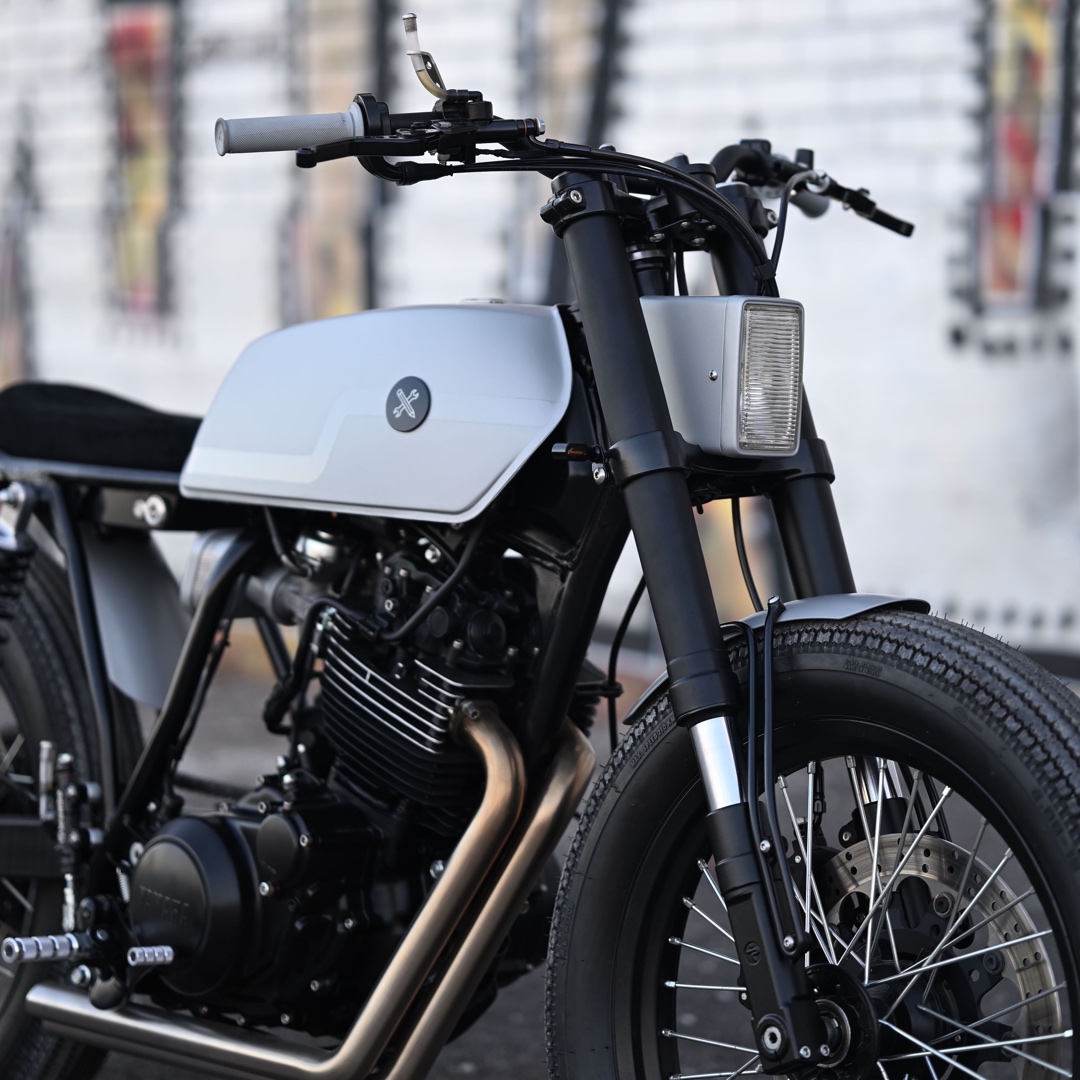
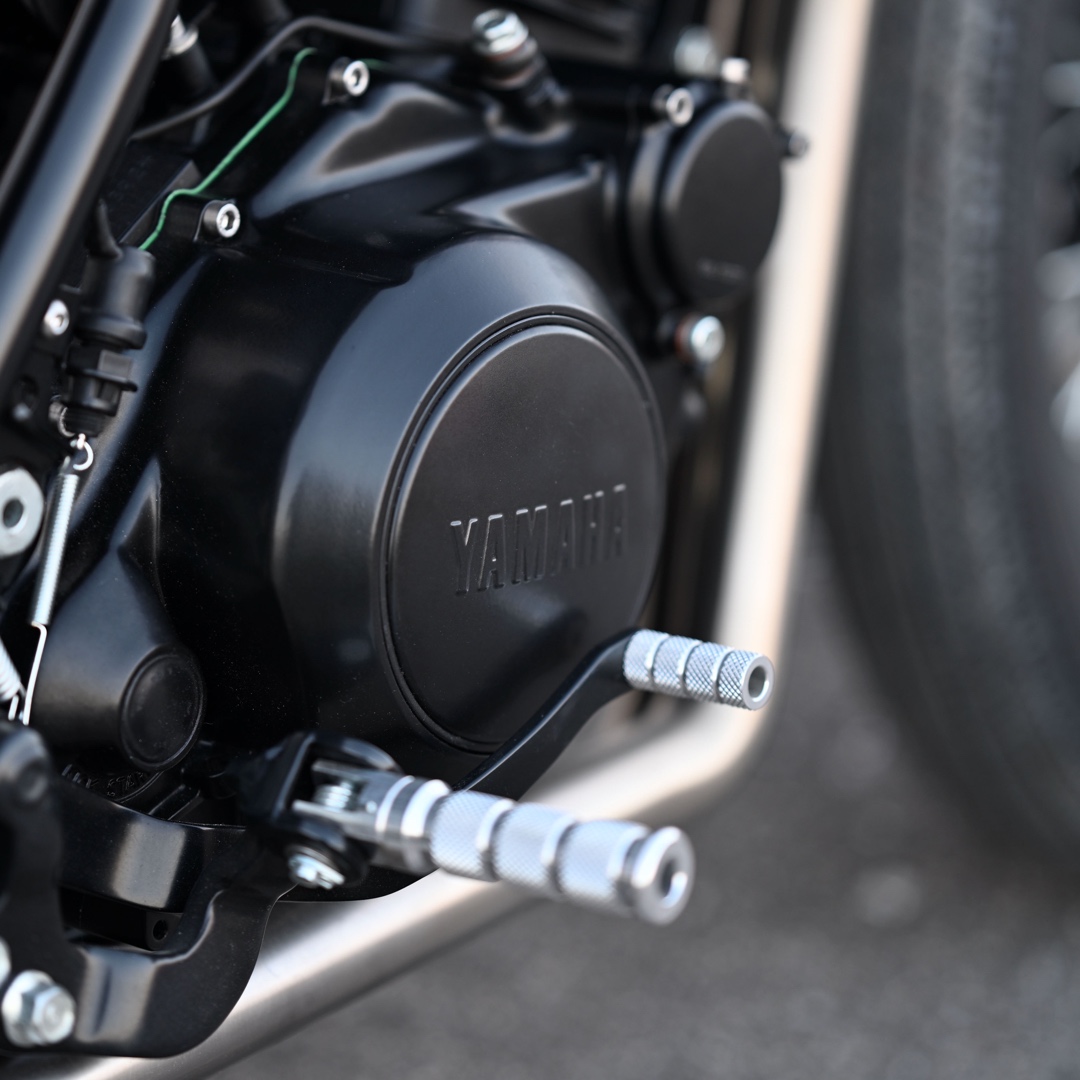
Many of the original parts were broken, bent, or missing, which meant a lot of repair and replacement work. For example, the engine guard was one of the damaged parts, so it was trimmed to integrate more seamlessly with the new exhaust system. In addition to that, some smaller upgrades were made, including new aluminum foot pegs, a custom Brembo rear master cylinder bracket, and a new front caliper mount.
Electronics: The taillight is an exposed disc mounted on a custom bracket, giving it a unique glowing effect when turned on. The fog light’s internals were modified to serve as a fully functional headlight, featuring parking, low, and high beams—all LED. The turn signals are compact LED units, chosen to match the square aesthetic of the other components.
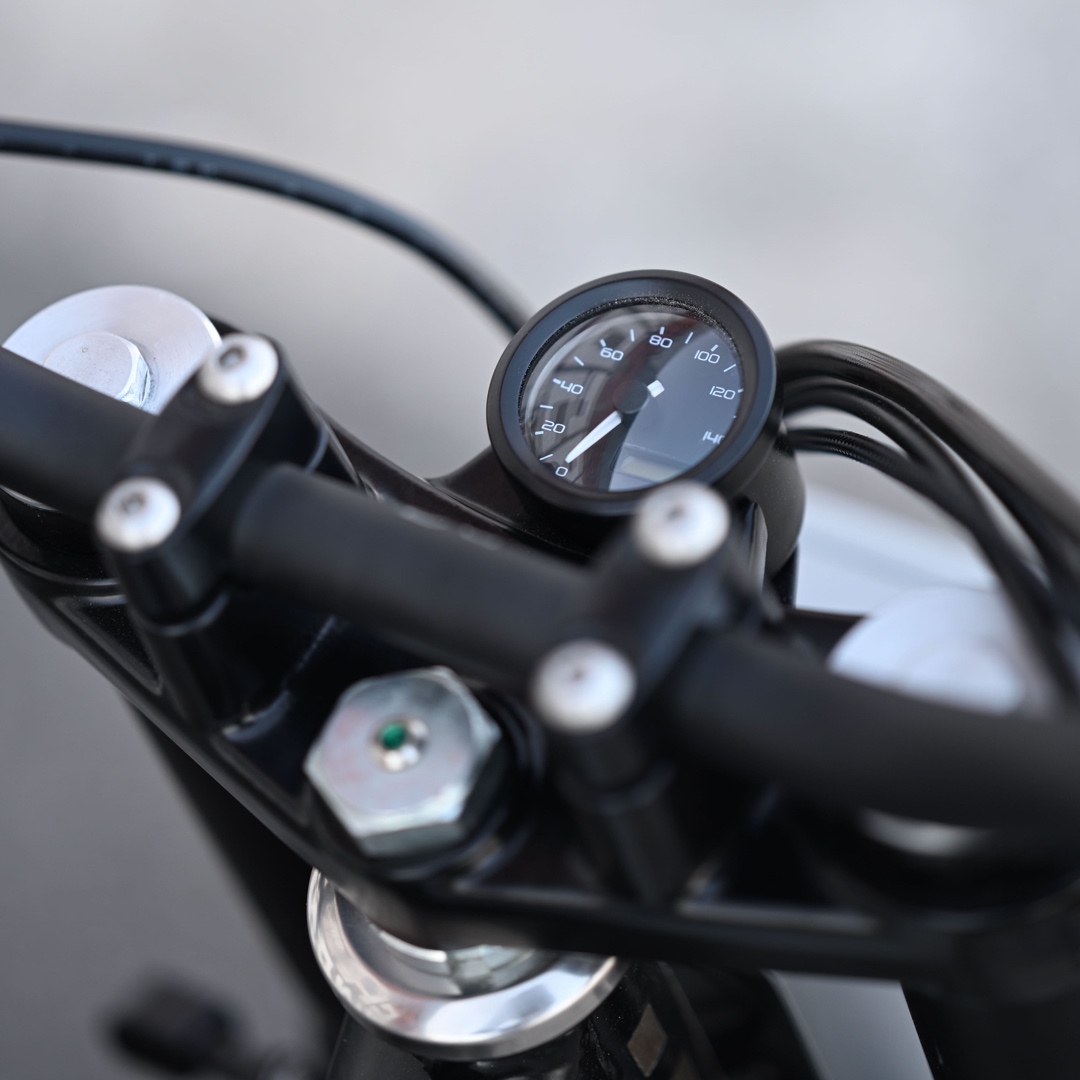
A small Daytona speedometer was mounted on the yoke, with the previous ignition mount machined for this setup.
A compact electronics tray was fabricated to match the angle of the airbox. Inside, it houses a small lithium battery along with all the necessary components, including a custom control unit developed in-house to manage the lights and turn signals. These are operated via minimalist push buttons mounted on the handlebars. On the outside, one side of the tray features the ignition switch and starter button, while the other has circular mesh-covered openings for ventilation—adding both function and a subtle visual detail.
The entire electrical system was completely reworked and simplified, with an emphasis on keeping everything as hidden and clean as possible.
Final treatment: Most of the components—from the frame and wheels to the swingarm and even the smallest brackets—were powder-coated in black. Except from the previously gold forks and the Brembo disc center, which were anodized black.
The hardware was replaced with stainless steel, except for some specific pieces that were zinc-plated for durability.
The forks were overhauled with new retainers, dust caps, and fresh oil. This setup, curiously, uses just one spring on the right fork, which made tuning a bit tricky to get just right.
The carburetors were fully disassembled, cleaned, and reassembled with zinc-plated hardware, replaced seals, and new admission flanges.
The engine received a full overhaul and tuning, with new seals, gaskets, and stainless hardware.
The engine covers were powder-coated, and the block was painted black.
The aluminum parts—such as the headlight bucket, airbox, and fenders—were microblasted to achieve a textured and uniform finish. To maintain that look, a matte clear coat was applied. The airbox also received subtle WKND Customs branding.
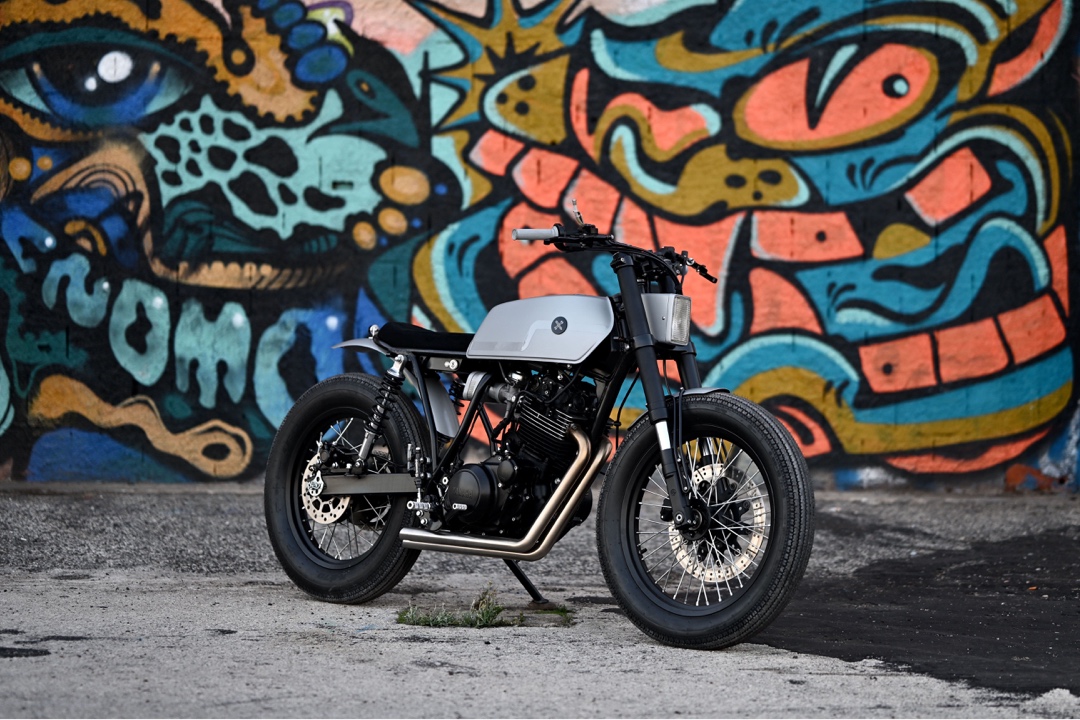
Initially, the bike was baptized Yasuke, after the first Black samurai in history, inspired by its Japanese roots, sharp look, and the intention to keep it mostly black. However, towards the end, the client decided to lighten things up after seeing a Honda CG125 I had built. As a result, the tank was painted to match the aluminum parts, with a subtle angular stripe in shiny clear coat, finished off with custom WKND Customs badges on each side. The color scheme is completed with a pair of Renthal grips that match.
The small seat is upholstered in black Alcantara, with vertical stitching to highlight the bike’s slim profile. It’s mounted with a quick-release switch underneath the electronics tray.
The bike also received several new parts: a rear brake disc, sprockets and chain, brake pads, stainless brake lines, new levers, and the brake reservoirs were swapped out for custom tygon clear hoses, mounted with custom brackets and machined bolts used as caps.
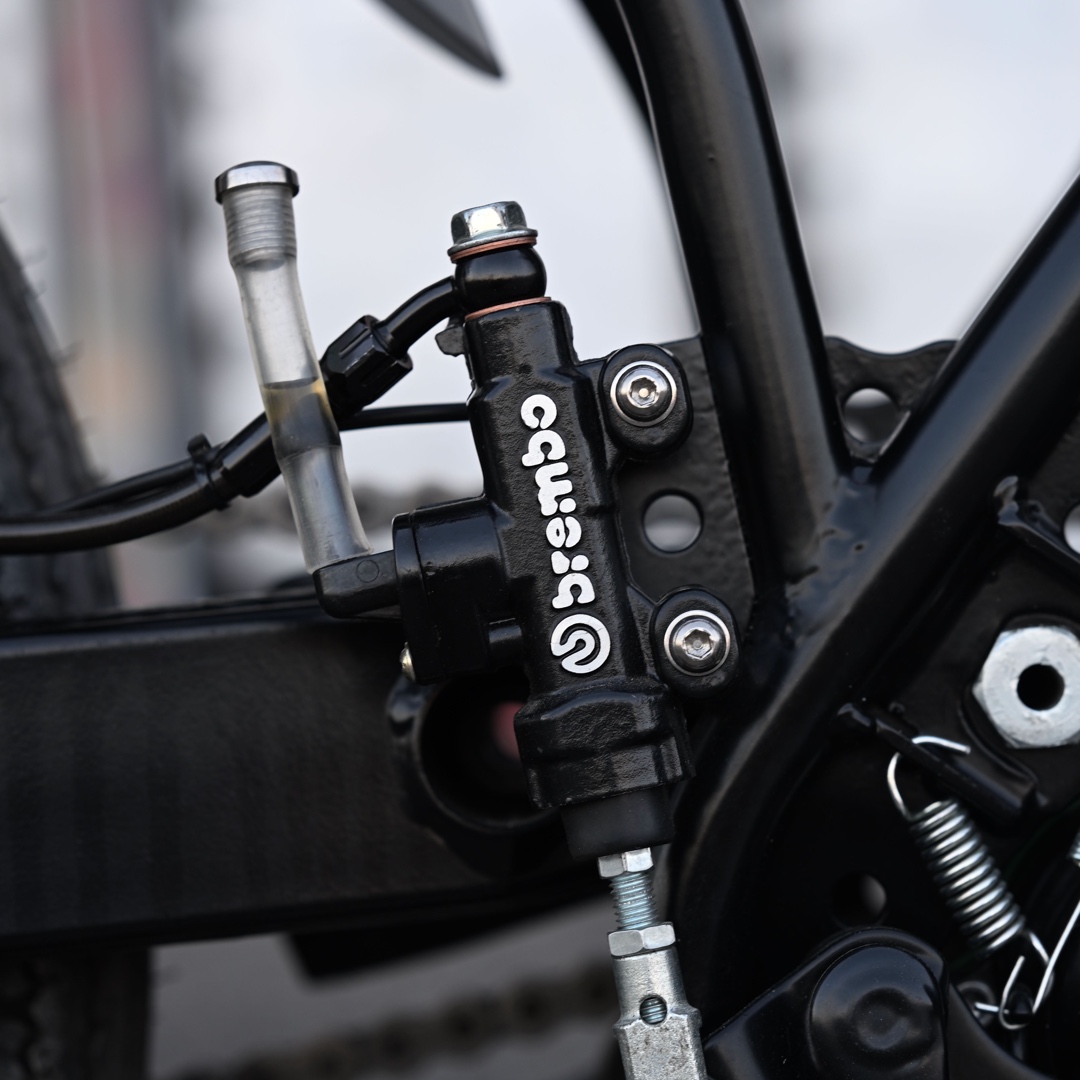
There’s so much work done on this bike that it’s hard to remember everything. It took a long time to complete—probably three or four years from start to finish. It was a stop-and-start project, interrupted by other builds like a Suzuki GS1100 for the same client. But, being one of the most challenging projects I’ve tackled to date, it gave me the chance to approach problems with a fresh perspective after stepping away from it a few times.
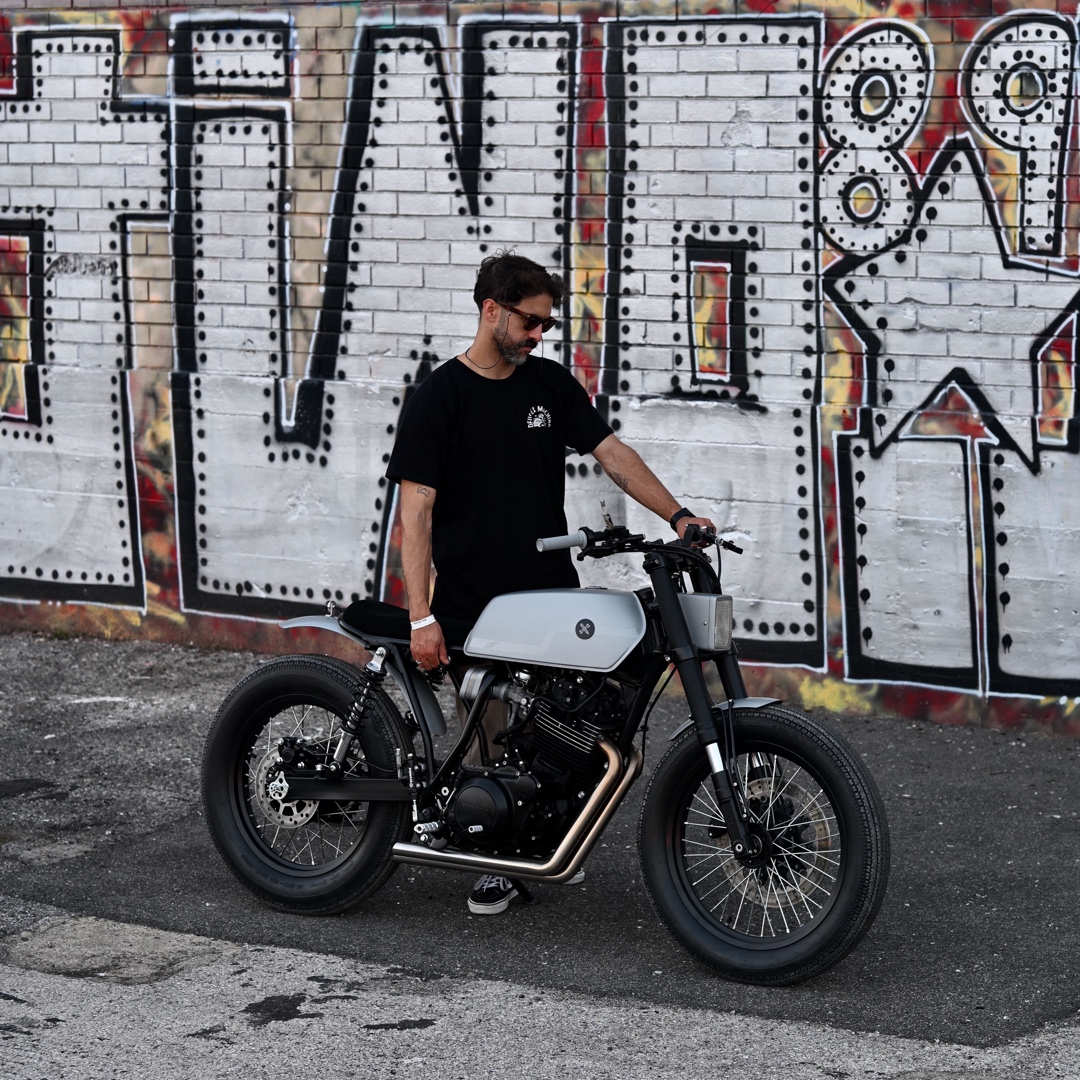
The end: After it was completed, I received an invitation from Malle London to showcase it at their first Malle Canyon event here in Portugal. So, I loaded the bike into a van and drove 300km to Lisbon. It was at the event, right after arriving, that I met Craig, a talented photographer from Amsterdam. A few days later, we were out shooting the bike on the streets of Lisbon before I made my way back to Porto.
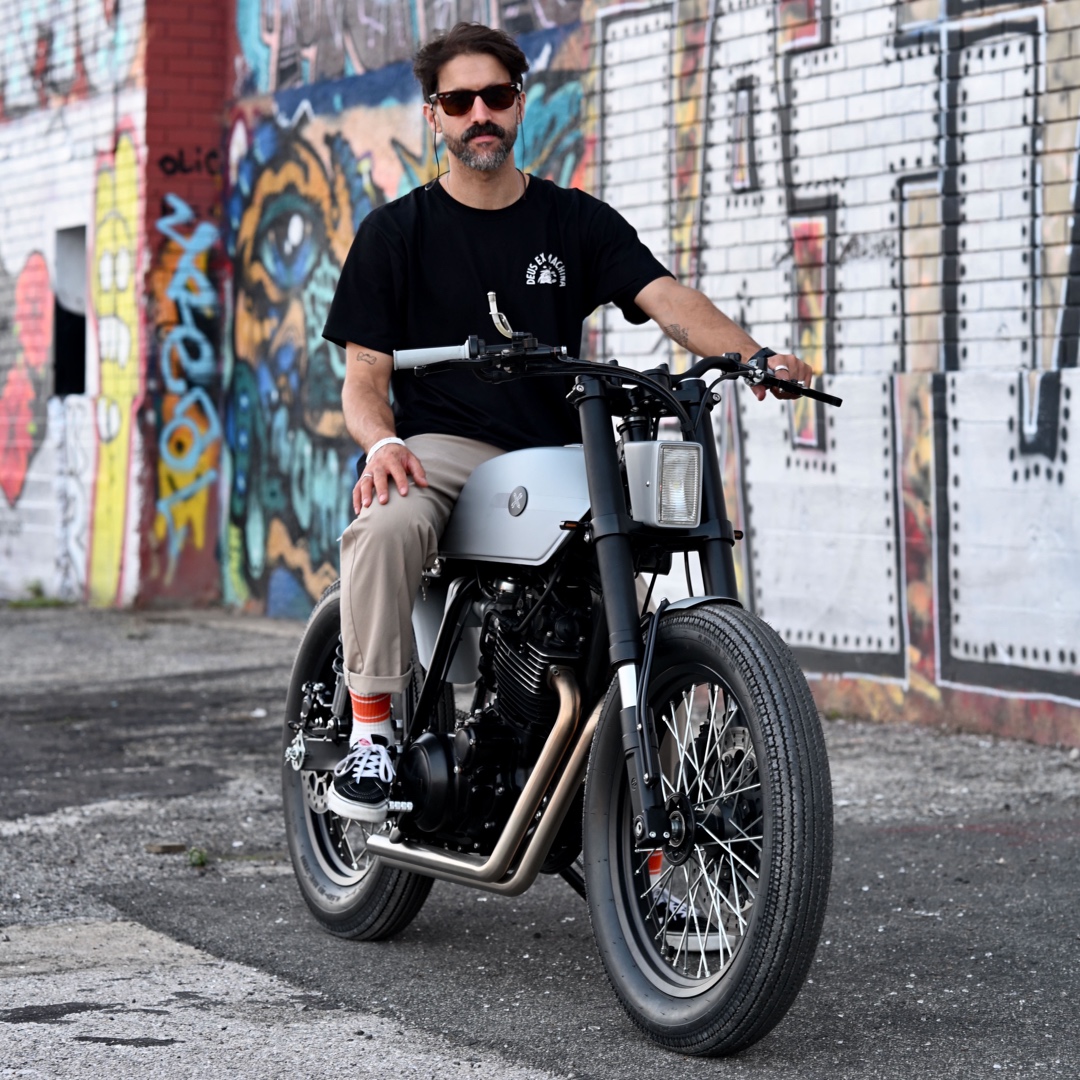
It was a great way to cap off such a challenging and lengthy build—showcasing it at such a cool event and capturing it with a new, talented friend. Not everything was perfect, though. The bike was far from pristine after crossing wet sands on the way to the exhibition tent and surviving some storms overnight. The battery was also drained from days of showing off the lights and electronics, so unfortunately, most of that wasn’t captured in the photos. I was also hoping for a more minimal and product style shoot to match the bike, but sometimes it’s more about the experience than the results. And this was an unforgettable one. Now, it’s time to say goodbye to the bike, which is heading to Paris to finally meet its owner.
Follow the Builder
Instagram: @wkndcustoms
Facebook: @wkndcustoms
Photos: Craig Stuart (@scrambler_ams)
More from WKND Customs
 Back in Black: Kawasaki W650 Scrambler - 2001 Kawasaki W650 from WKND Customs… The Triumph Bonneville may get the lion’s share of the attention as the world’s most popular “neo-classic” roadster, but we have a soft spot for the Kawasaki W650. This […]
 Yasuke: Yamaha XT600E Street Tracker - Retro-futuristic XT600 from WKND Customs… Introduced in 1984, the Yamaha XT600 was the last of the Yamaha single-cylinder four-stroke XT lineage that began with the legendary XT500, winner of the first running of the […]
 80s Muscle: Suzuki GS1100 Custom Roadster - WKND Customs builds a shaft-drive sled for the Parisian streets… In the 1980s, the Suzuki GS1100G was the company’s largest shaft-drive motorcycle, featuring an 8-valve DOHC inline four that produced 92 bhp and 62 lb-ft […]
 Honda CG125 “Thunder” by WKND Customs - Back in 2020, we featured one very sleek and clean Kawasaki KZ400 from Sérgio Almeida of Portugal’s WKND Customs. Dubbed “MoneyPenny,” the bike impressed us with its high level of execution and attention to detail. […]
 Kawasaki KZ400 “MoneyPenny” by WKND Customs - Built for a female air force officer… The original Kawasaki KZ400 twin, introduced during the oil crisis in 1974, was billed as a middleweight commuter, featured in magazine advertisements alongside a VW Beetle with the […]


