
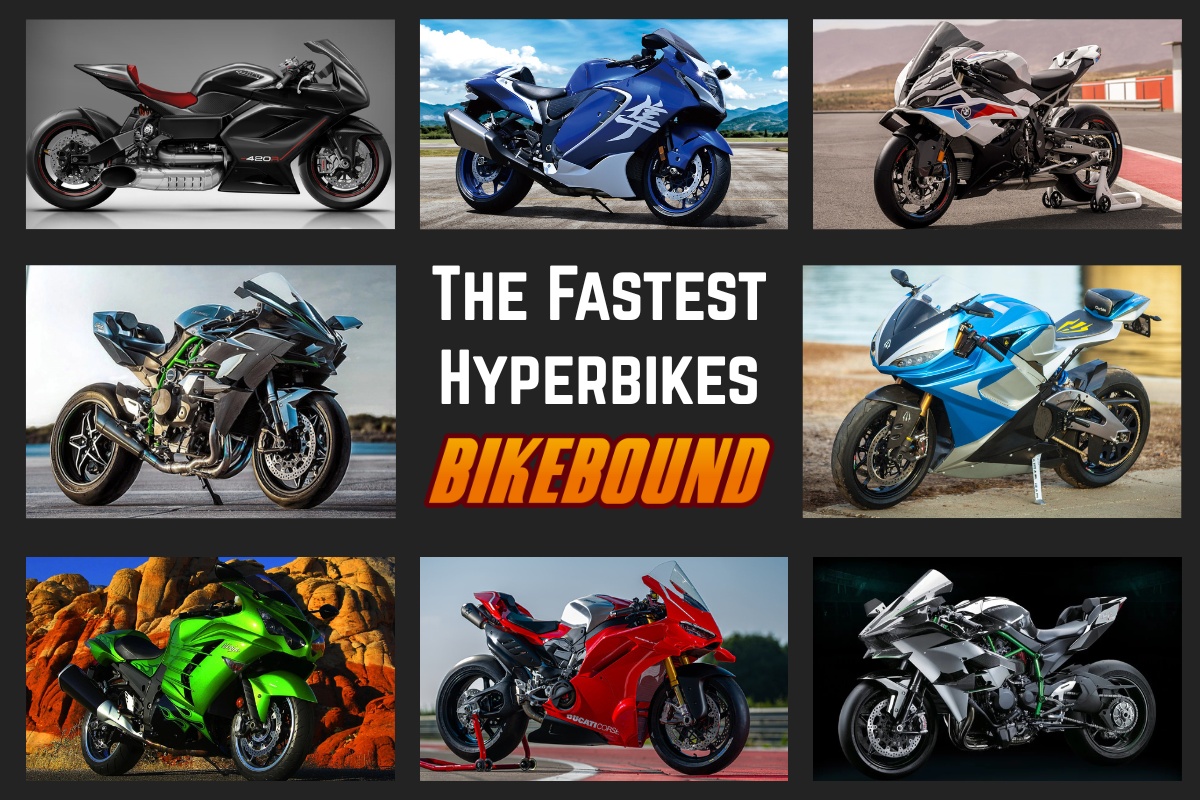
 The World’s Ultimate High-Velocity Motorcycles…
Motorcycling has always been about speed, but hyperbikes are something else entirely. These are the machines built not merely to be fast, but to push the very edge of physics — horsepower figures once considered impossible, aerodynamic engineering borrowed from aerospace, and performance envelopes so extreme they blur the line between road-legal motorcycle and full-blown race prototype.
The term “hyperbike” originally emerged in the late 1990s, when manufacturers entered an escalating top-speed war, sending motorcycles past 180 mph, then 190 mph, then flirting with 200 mph. Though the “gentleman’s agreement” later capped most production motorcycles at 186 mph, hyperbikes evolved into a category defined not just by top speed but by brutal acceleration, massive horsepower, and dragstrip-level performance.
Below is our deep dive into the fastest hyperbikes ever built, along with the wild limited-production machines that pushed the category into the stratosphere.
What Is a Hyperbike?
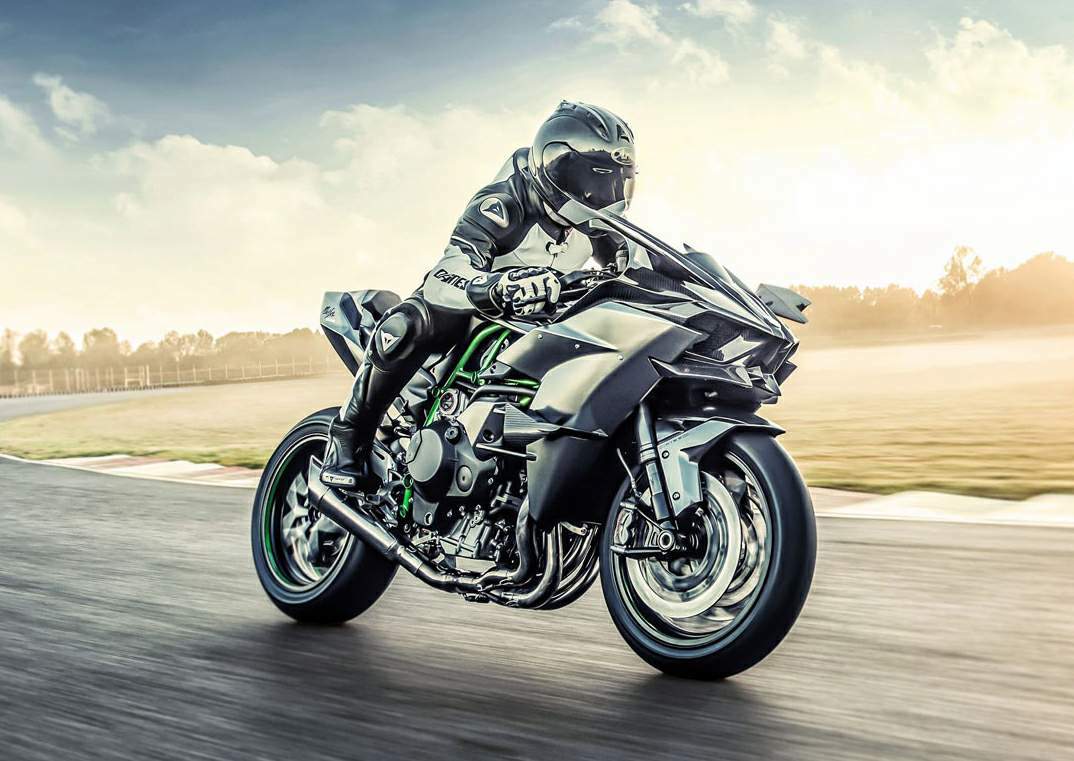
A hyperbike is more than a fast sportbike. The category refers to motorcycles that:
- Exceed typical superbike power figures
- Deliver extreme, near-supercar top speeds
- Produce explosive, effortless acceleration
- Often displace more than 1000cc
- Prioritize straight-line stability at very high speeds
- Typically weigh more than race-replica superbikes, providing stability
Hyperbikes are the apex predators of the street. Unlike liter bikes, these machines built for astonishing velocity rather than racetrack agility. Classic examples: The Suzuki Hayabusa, Kawasaki ZX-12R, Kawasaki ZX-14R, and more recently the supercharged Kawasaki Ninja H2 and H2R.
The Fastest Hyperbikes of All Time
Below are the motorcycles that define the pinnacle of two-wheeled speed, ranked by real-world top speed, quarter-mile performance, and horsepower.
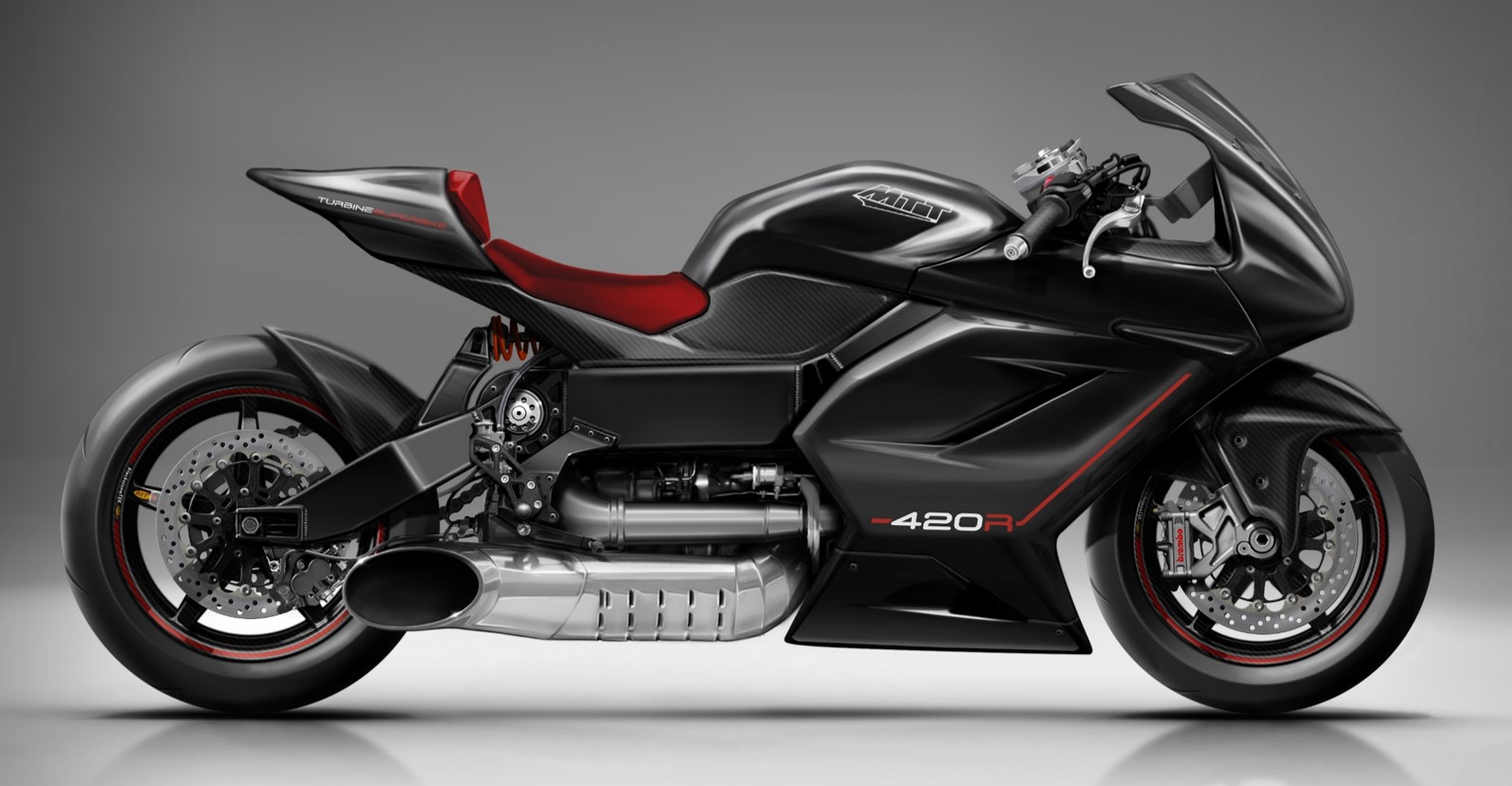
1. MTT 420-RR Turbine Superbike
Top Speed: 250-273+ mph (theoretical and reported)
Quarter Mile: ~9.0 sec (estimated)
Horsepower: ~420 hp
The most powerful production motorcycle ever offered to the public, the 420-RR uses a Rolls-Royce Allison turbine engine designed for aviation. It produces 420 horsepower with no mechanical redline and thrust that feels more like a jet than a motorcycle.
- Turbine power with ludicrous thrust
- Highest power-to-weight ratio of any production motorcycle
- Unmatched top-speed potential
The 420-RR sits in a class of its own — part motorcycle, part aerospace experiment.
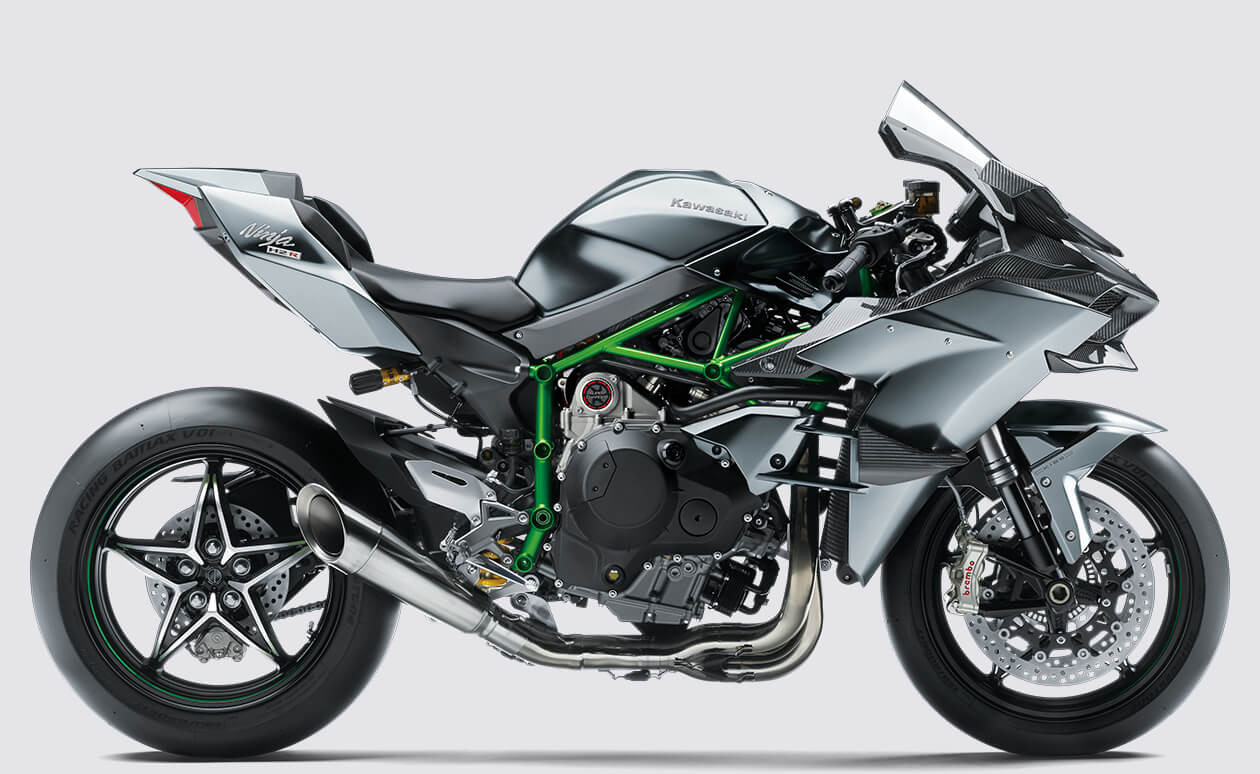
2. Kawasaki Ninja H2R (Track-Only)
Top Speed: 240–250+ mph (verified)
Quarter Mile: ~9.3 sec
Horsepower: 310 hp (326 hp with ram air)
The H2R is the most powerful mass-produced internal-combustion motorcycle ever built. Its supercharged engine, carbon-fiber winglets, and drag-strip geometry make it brutally fast in a straight line.
- Over 300 horsepower in a production chassis
- Supercharging delivers instant, relentless acceleration
- Aerodynamics specifically engineered for high-speed stability
If it were street-legal, it would dominate the hyperbike category outright.
3. Lightning LS-218 (Fastest Electric Production Motorcycle)
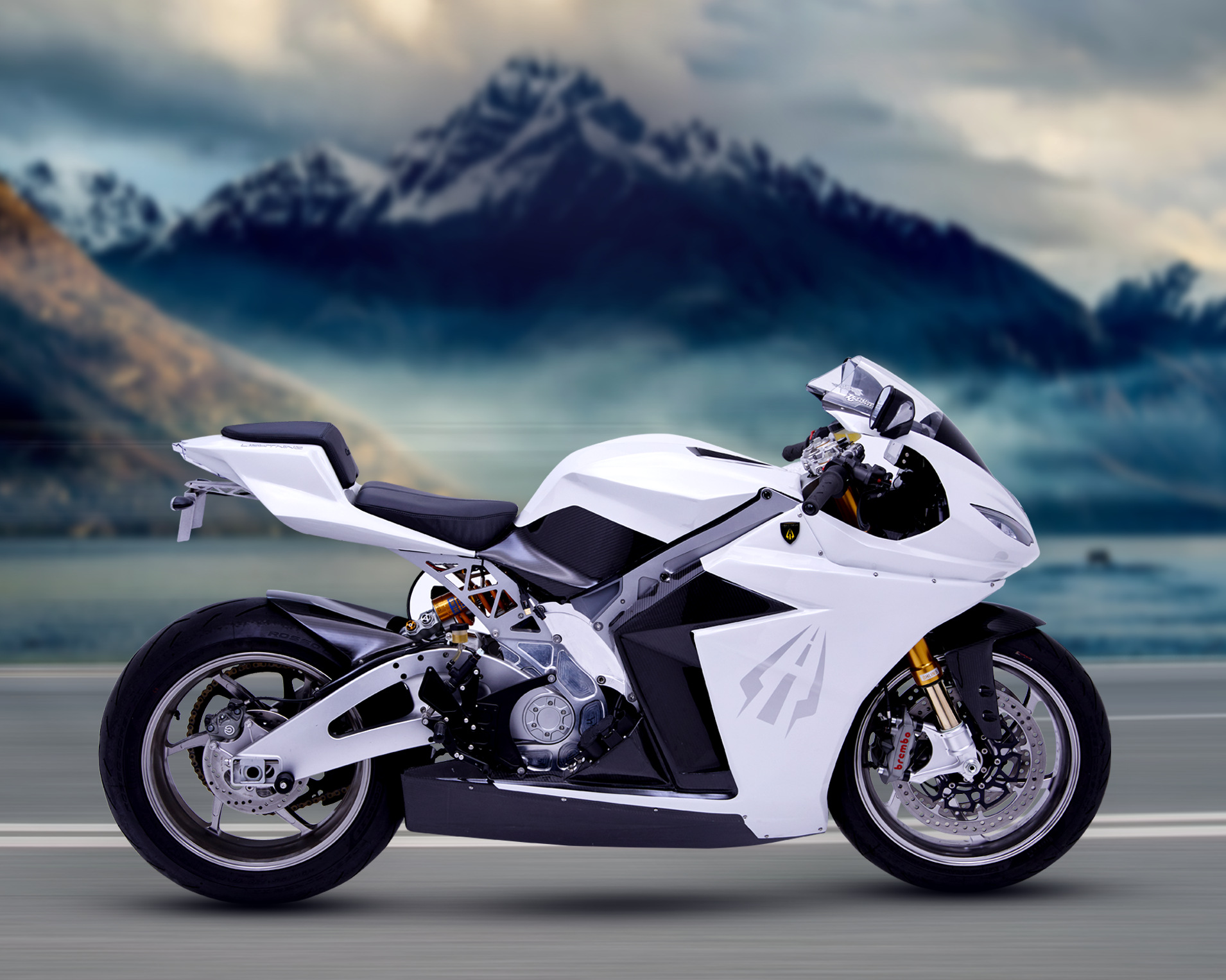
Top Speed: 218 mph (recorded)
Quarter Mile: ~9.9 sec (varies by gearing and tune)
Horsepower: ~200 hp
Torque: ~168 lb-ft (instant)
The LS-218 is the fastest electric motorcycle ever produced and the only EV to genuinely compete with gasoline hyperbikes for top-end speed. Its name comes from its measured 218-mph Bonneville record, and unlike many exotic machines, it’s street-legal.
Why it belongs among the hyperbike elite:
- Verified 218-mph top speed — faster than many gas hyperbikes
- Instant torque and fierce acceleration
- Pikes Peak winner, beating gas motorcycles outright
- No gears, no delay — pure electric thrust
The LS-218 proves that electric power has already arrived in hyperbike territory.
4. Kawasaki Ninja H2 (Street-Legal)
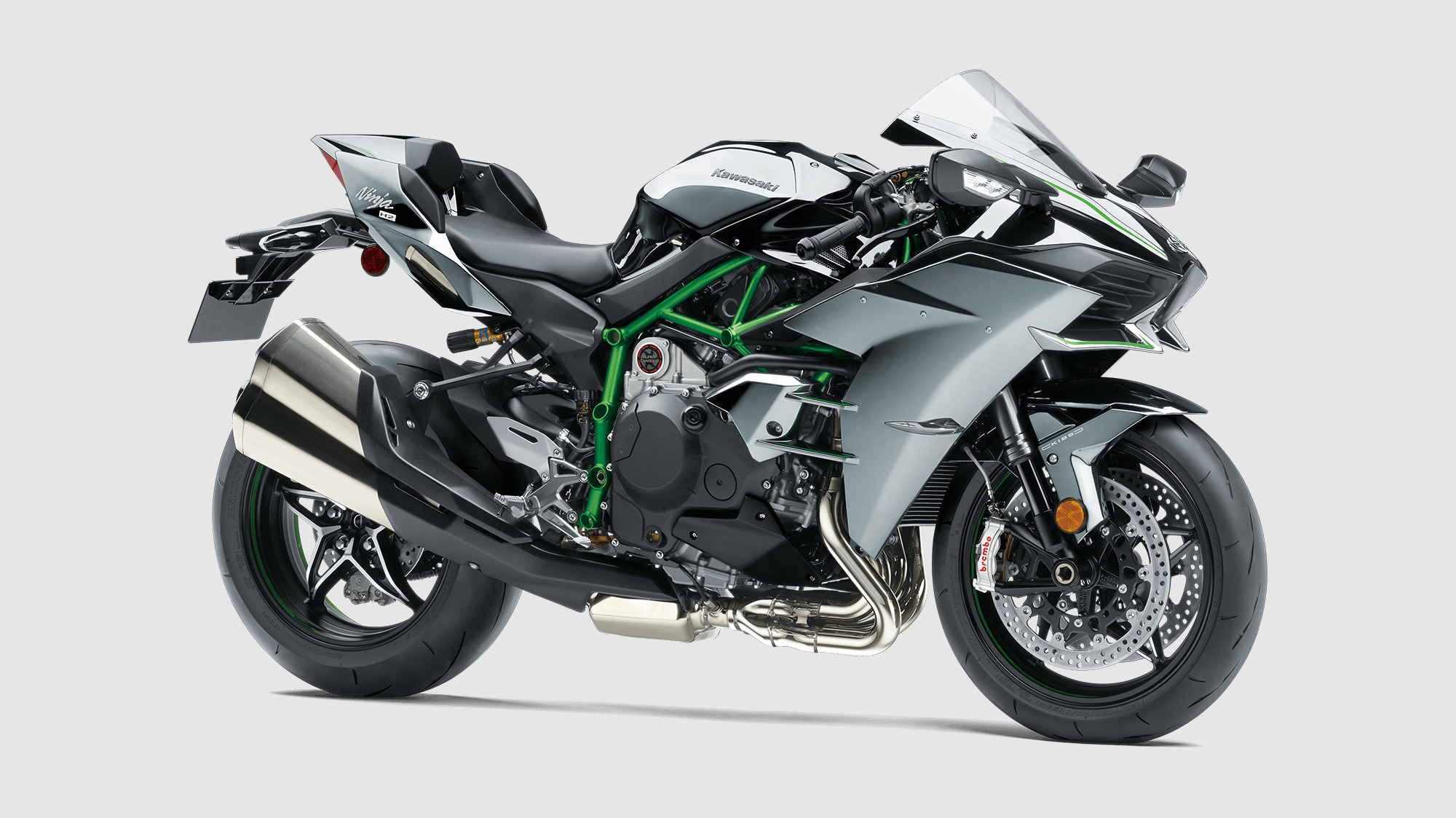
Top Speed: ~209 mph (derestricted)
Quarter Mile: ~9.6 sec
Horsepower: 228–231 hp
The H2 is the road-legal version of Kawasaki’s supercharged monster. While emissions limits reduce its peak power compared to the H2R, a derestricted H2 is still among the fastest street-legal motorcycles ever made.
- Forced induction gives unmatched midrange and top-end power
- Aerodynamically efficient for sustained high-speed runs
- Among the quickest motorcycles ever tested in real-world conditions
5. Suzuki Hayabusa (Gen 1 & Gen 2)
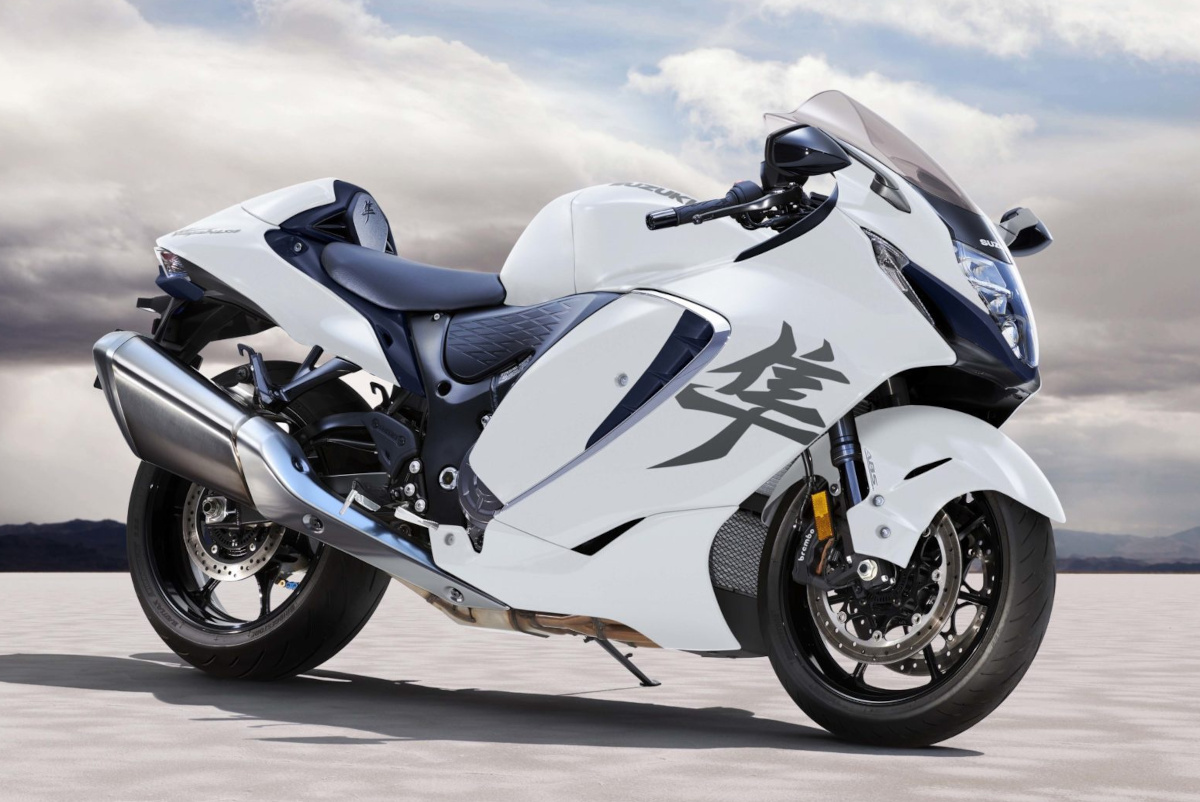
Top Speed:
- Gen 1 (1999–2007): 194–203 mph derestricted
- Gen 2: Electronically limited to 186 mph
Quarter Mile: 9.7–9.9 sec
Horsepower: 173–197 hp
The original Hayabusa is the bike that ended the top-speed wars. Before electronic limits, the Gen 1 Hayabusa routinely broke 194 mph and occasionally touched over 200 mph.
Why it’s iconic:
- Aerodynamic “egg” shape designed to minimize drag
- Immense midrange torque
- One of the most stable bikes at high speed
For many riders, the ’Busa is the hyperbike.
6. Kawasaki ZX-14R / ZZR1400
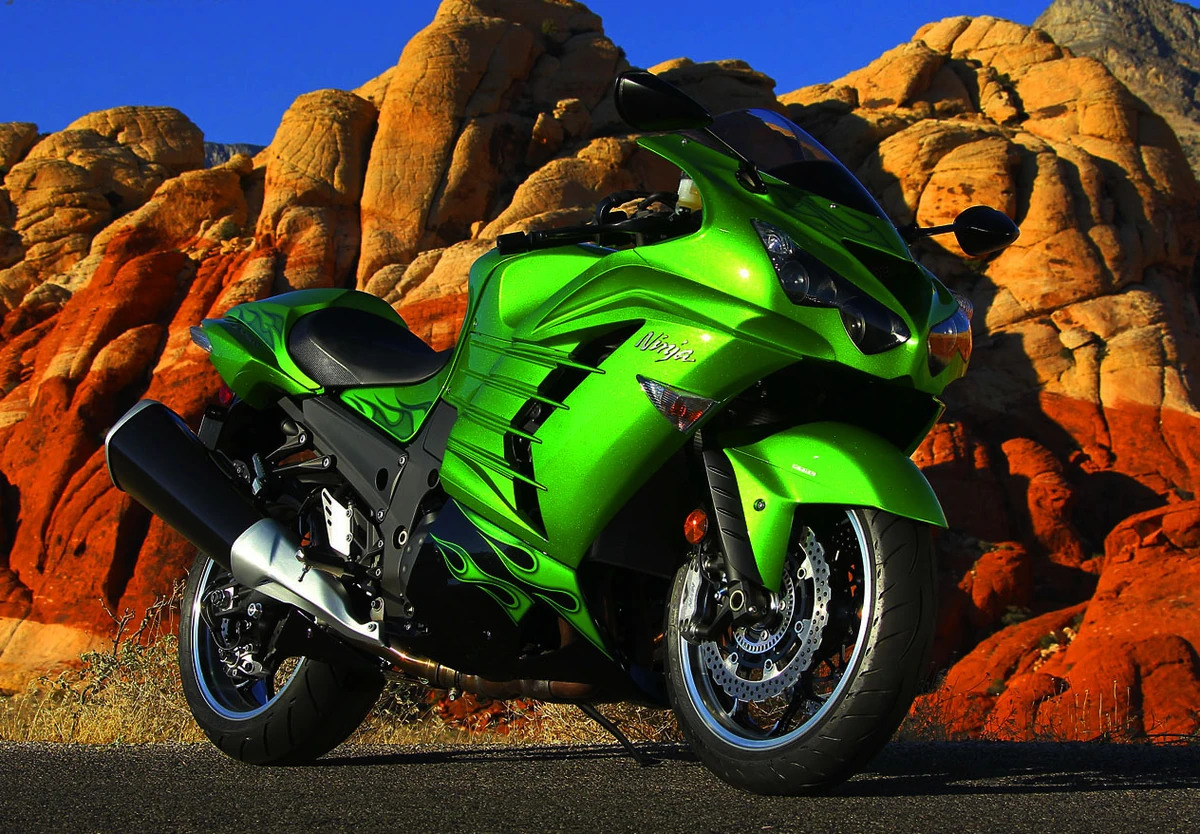
Top Speed: 186 mph (limited)
Derestricted: ~200–205 mph
Quarter Mile: 9.4–9.6 sec
Horsepower: ~200 hp
The ZX-14R is the Hayabusa’s natural rival — bigger, heavier, more planted, and capable of astonishingly fast quarter-mile passes. In drag racing, the ZX-14R often edges out the Suzuki.
What makes it a monster:
- Massive displacement and torque
- Excellent stability at extreme speeds
- One of the quickest 0–180 mph machines ever tested
7. Ducati Panigale V4 R (Hyperbike in Performance, Not in Weight)

Top Speed: ~202 mph
Quarter Mile: ~9.5–9.7 sec
Horsepower: 218 hp (240+ hp with race exhaust)
While technically a superbike, the V4 R makes hyperbike-level velocity thanks to MotoGP-derived engineering. Why it belongs on the list:
- One of the fastest mass-produced motorcycles ever sold
- Aerodynamic winglets aid high-speed stability
- Power-to-weight ratio rivaling the H2
8. BMW S1000RR / M1000RR
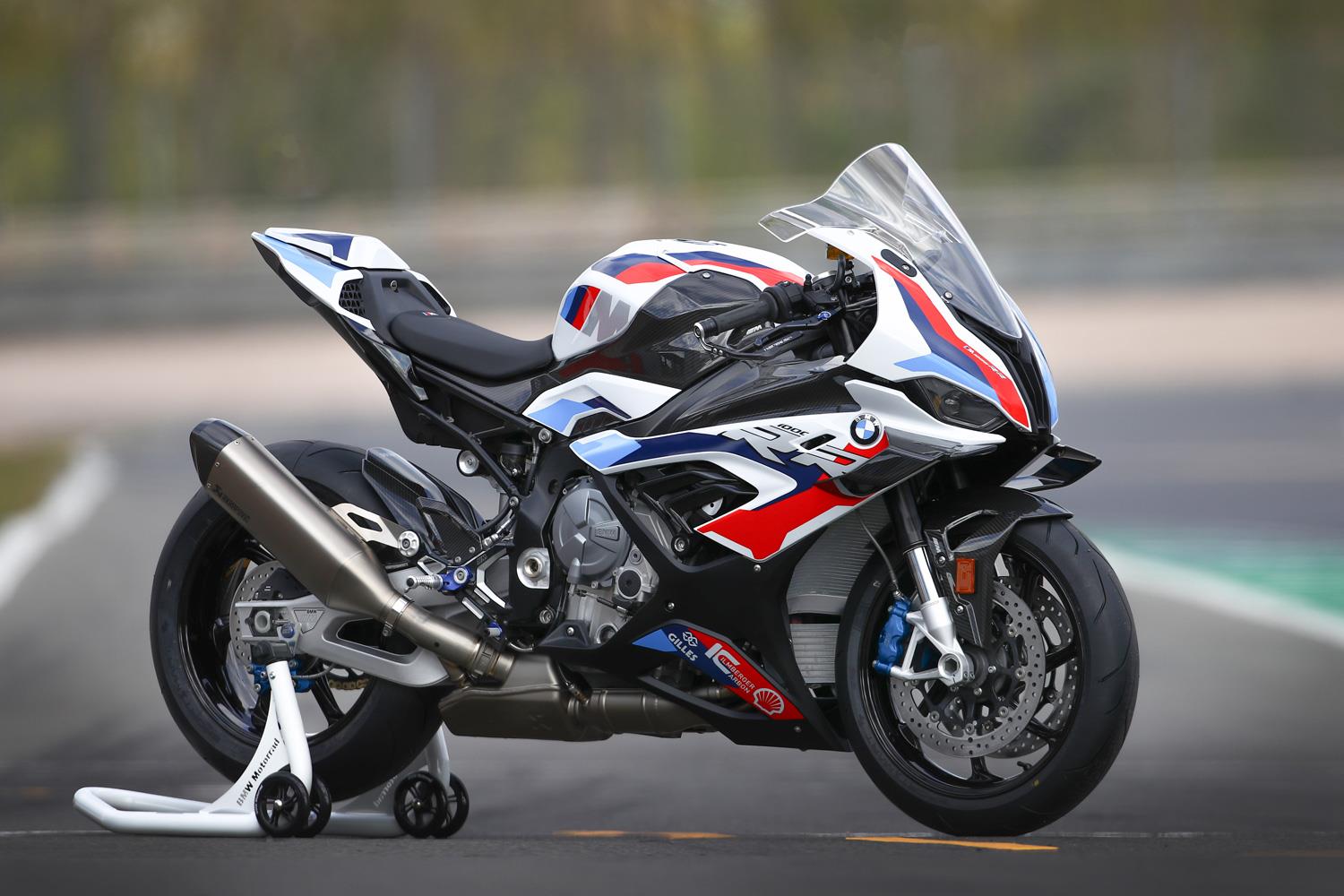
Top Speed: 193–199 mph (derestricted)
Quarter Mile: 9.5–9.8 sec
Horsepower: 205–212 hp
BMW’s superbikes aren’t hyperbikes by design, but their real-world speeds put them in the conversation. Why they’re included:
- Telemetry-confirmed near-200 mph capability
- Extreme acceleration
- Race-bike agility with hyperbike top-end
⚡ Are Electric Hyperbikes the Future?

Most electric motorcycles cannot sustain the airflow, cooling, or gearing needed for 200-mph top speeds — except the Lightning LS-218, which stands alone today. But electric technology continues to advance:
- Instant torque
- No shifting
- Simplified drivetrains
- Rapid development cycles
Within the next decade, multiple electric hyperbikes will likely break into the 200+ mph club.
The Fastest Hyperbike on Earth
By category:
- Fastest production motorcycle (overall):
MTT 420-RR: turbine power, 270+ mph potential. - Fastest track-only hyperbike:
Kawasaki Ninja H2R: 240–250+ mph. - Fastest street-legal ICE hyperbike:
Kawasaki Ninja H2 (derestricted). - Fastest electric motorcycle:
Lightning LS-218: 218 mph and a Pikes Peak victory. - Fastest naturally aspirated hyperbikes (derestricted):
Suzuki Hayabusa Gen 1
Kawasaki ZX-14R
Hyperbikes remain the ultimate expression of motorcycle speed — machines that test the limits of engineering, aerodynamics, and rider skill. Whether turbine-powered, supercharged, or electric, they represent the absolute peak of what two wheels can do. A hyperbike is the closest thing to owning a road-legal missile.


