
 Aluminum-Clad Vinduro from FONK Motorcycle…
In the mid 1970s, Yamaha’s market research showed that American ranchers and off-road riders were interested in a replacement for the British single-cylinder scramblers of yesteryear. BSA and the other once-mighty British marques had shuttered their factory doors, and the regulatory outlook for two-strokes was already dimming. Yamaha decided it was high time to develop a four-stroke flagship for the dirt.
“The plan was to build a full-sized, four-stroke, single-cylinder, dirt bike that was similar to the famous British BSA singles in performance but with better reliability.” –MXA
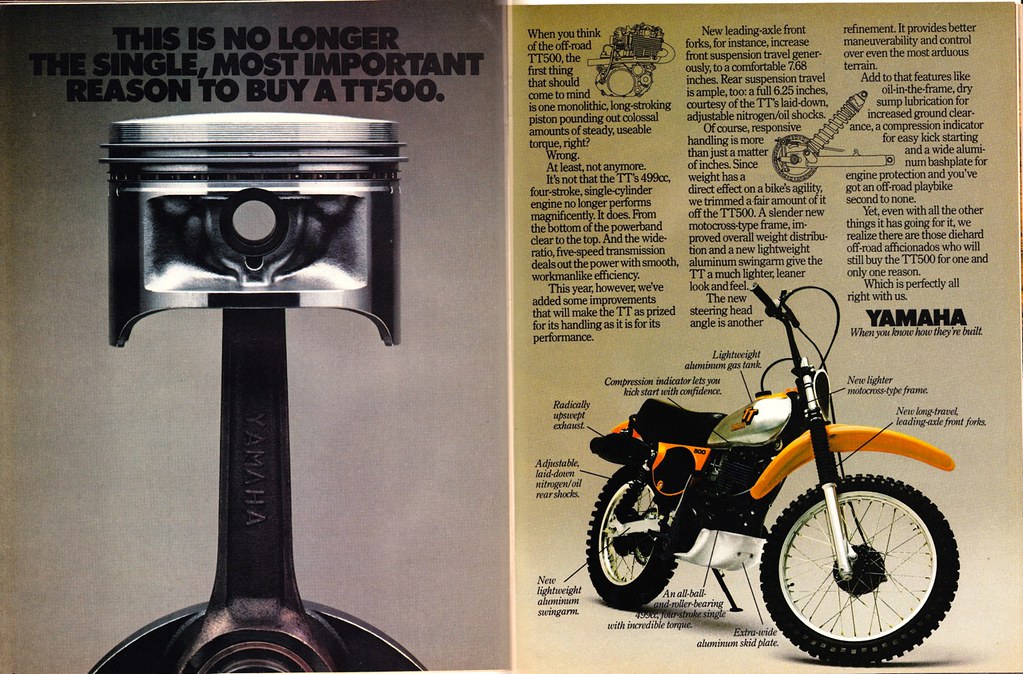
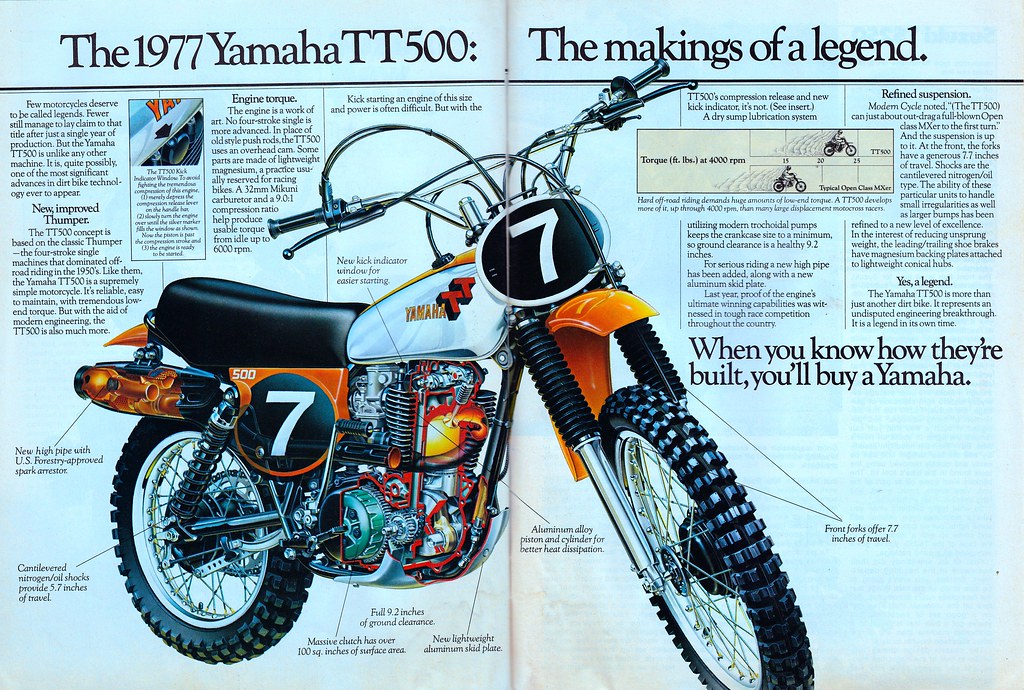 Designer Shiro Nakamura eschewed the temptations of dual overhead cams and oil coolers in order to keep the new bike as light, simple, and bulletproof as possible — basically an oil-tight version of the classic British 500 single. The design team’s motto was a “yen for every gram,” as the sought to make the 500cc single as light as possible.
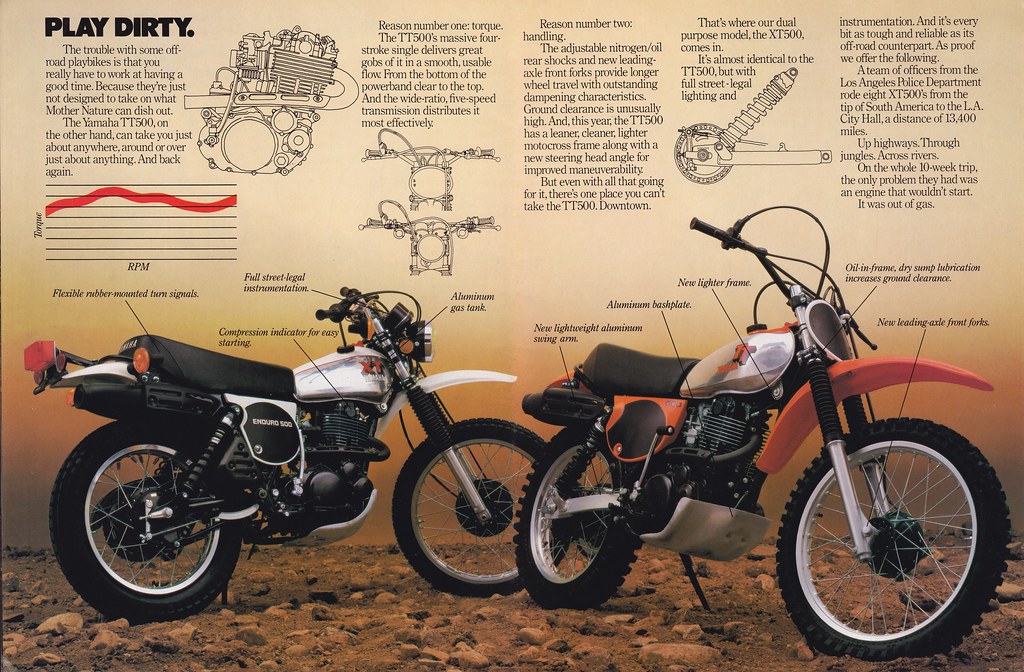 The result was the Yamaha XT500 dual-purpose bike, destined to become one of the most iconic “thumpers” of all time. A few months later, the 1976 TT500 appeared, a dirt-only version that was 15 pounds lighter than its street-legal sibling.
“People would race them up and down the Great Highway. The Yamaha TT500 has stump-pulling torque, and some people could wheelie a TT500 for blocks. It was the Wheelie King…” -Gordon Mizuhara, Motorcycle Classics
 We’ve always had a soft spot for the TT500 as the lighter, more dirt-centric sibling of the XT. What’s more, quite a few these models ended up being tagged for street riding with simplified lighting setups.
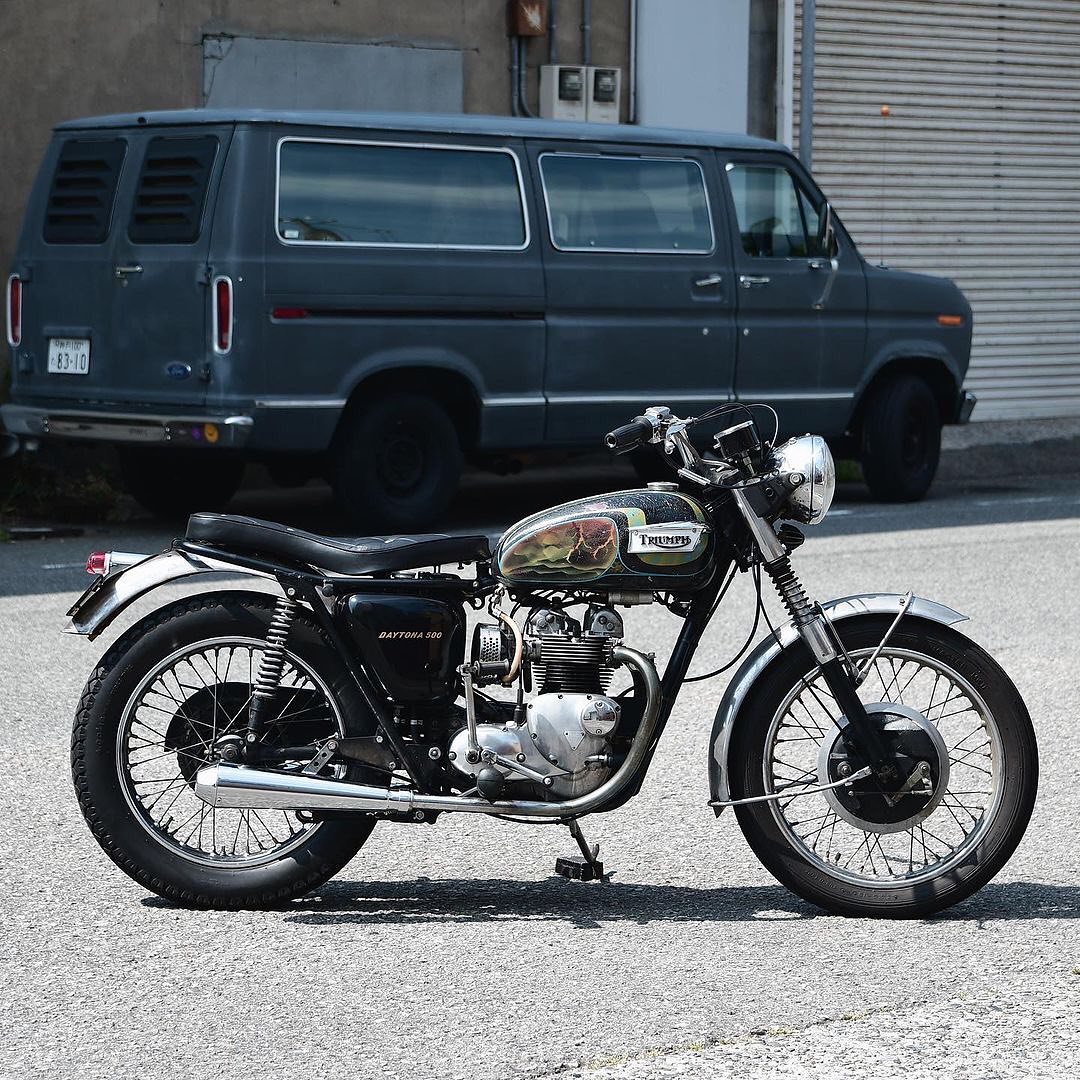
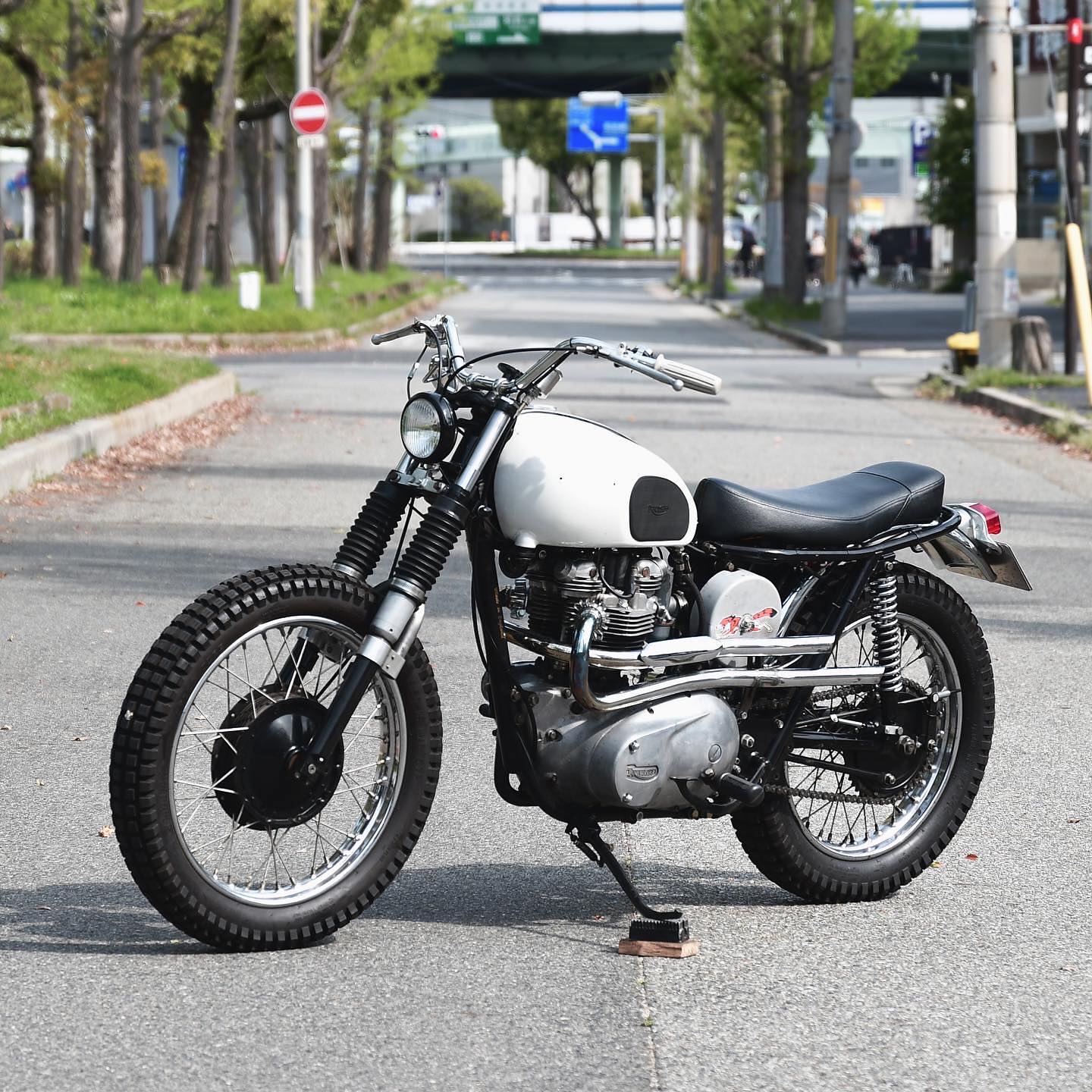
This gorgeous 1981 TT500 comes from Satoshi Awaji of Japan’s FONK Motorcycle, who’s been riding, wrenching, and building bikes for the last two decades. After five and a half years training at a motorcycle shop, he opened FONK in 2018. Though the workshop specializes in vintage Triumph machines, they work on all kinds of bikes, and Satoshi maintains strong ties to the US moto community.
“I regularly visit races, swap meets, and shows in the United States, where I learn about the culture directly from my American friends. Recently, in addition to building bikes, I’ve also been enjoying riding more — racing and taking Triumphs off-road — while continuing to run FONK.”
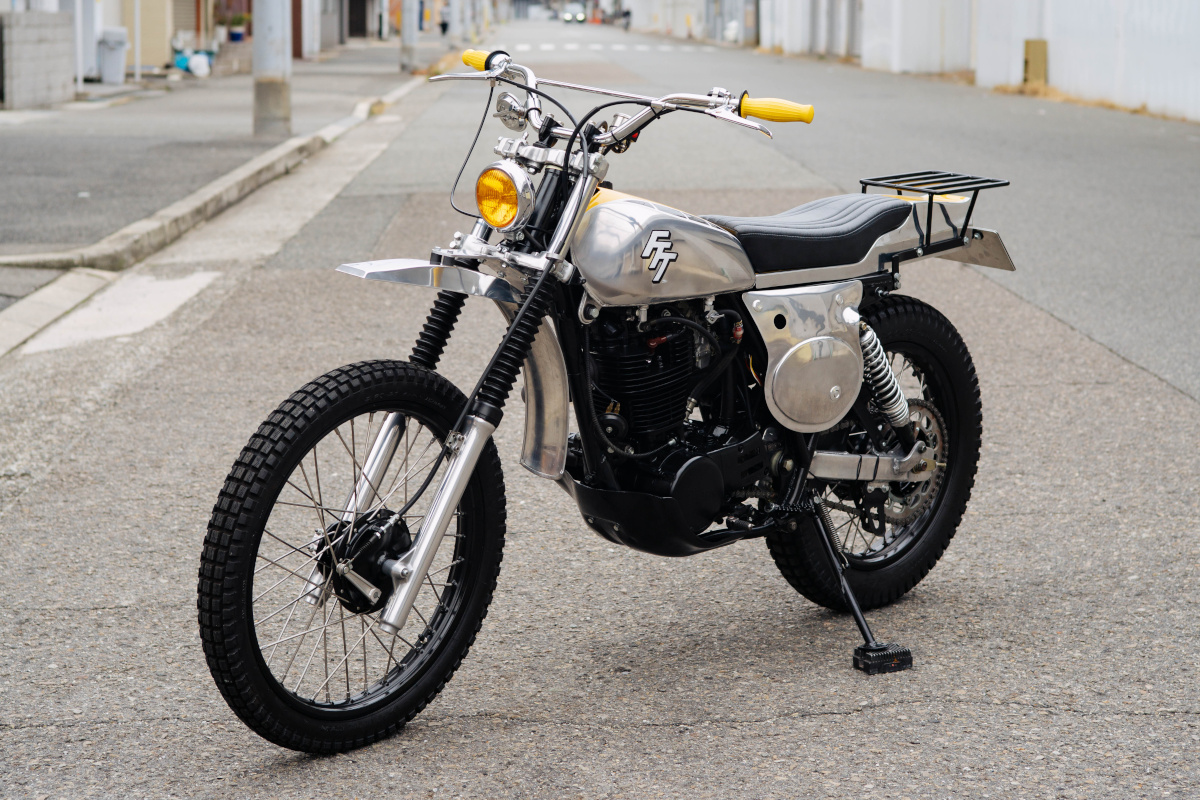 The donor motorcycle came from none other than Grant Peterson (@large_hands_grant), one of the founders of Southern California’s Born Free Show. Satoshi bought the bike from Grant and imported it to Japan for a customer.
“My friend rode it for a while, but eventually decided to let it go, so we sold it on consignment. The next owner then asked me to customize the bike using it as the base, and that’s how this build began.”
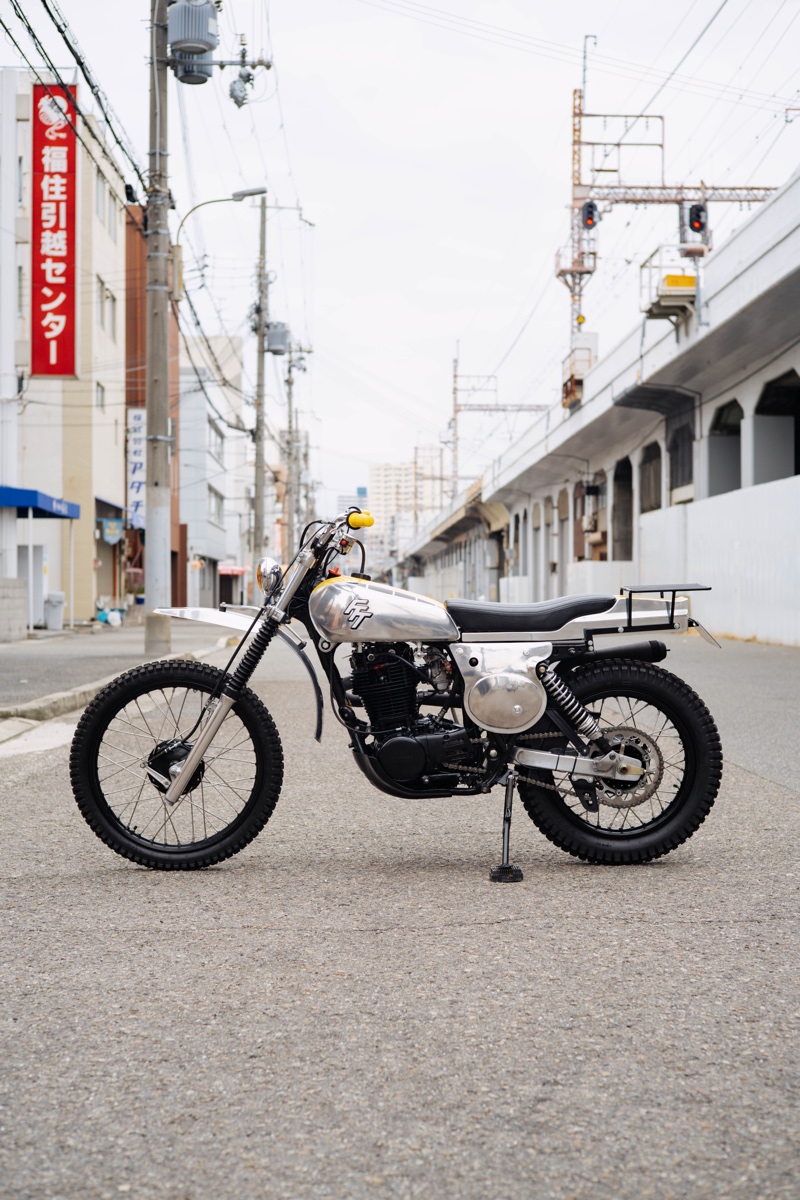
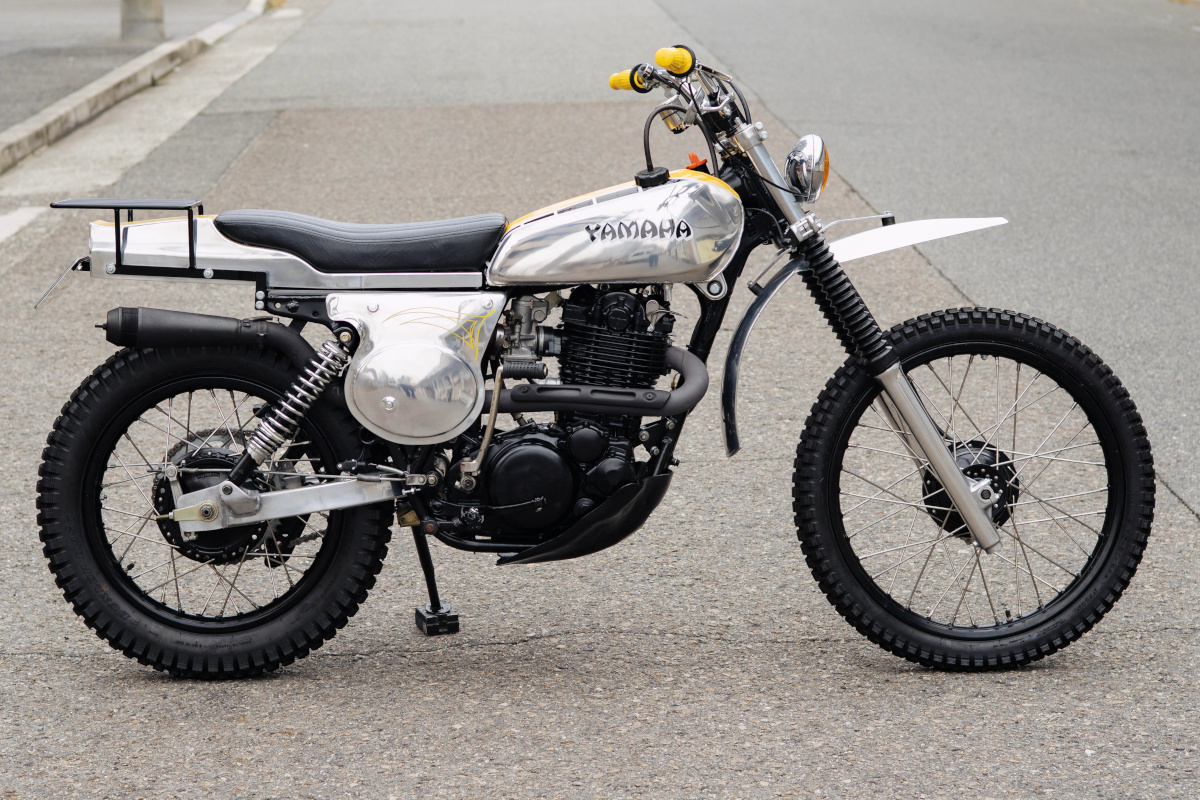 Both Satoshi and the new owner wanted to retain the old-school motocross mystique of the original bike, but with some FONK style and fabrication thrown in.
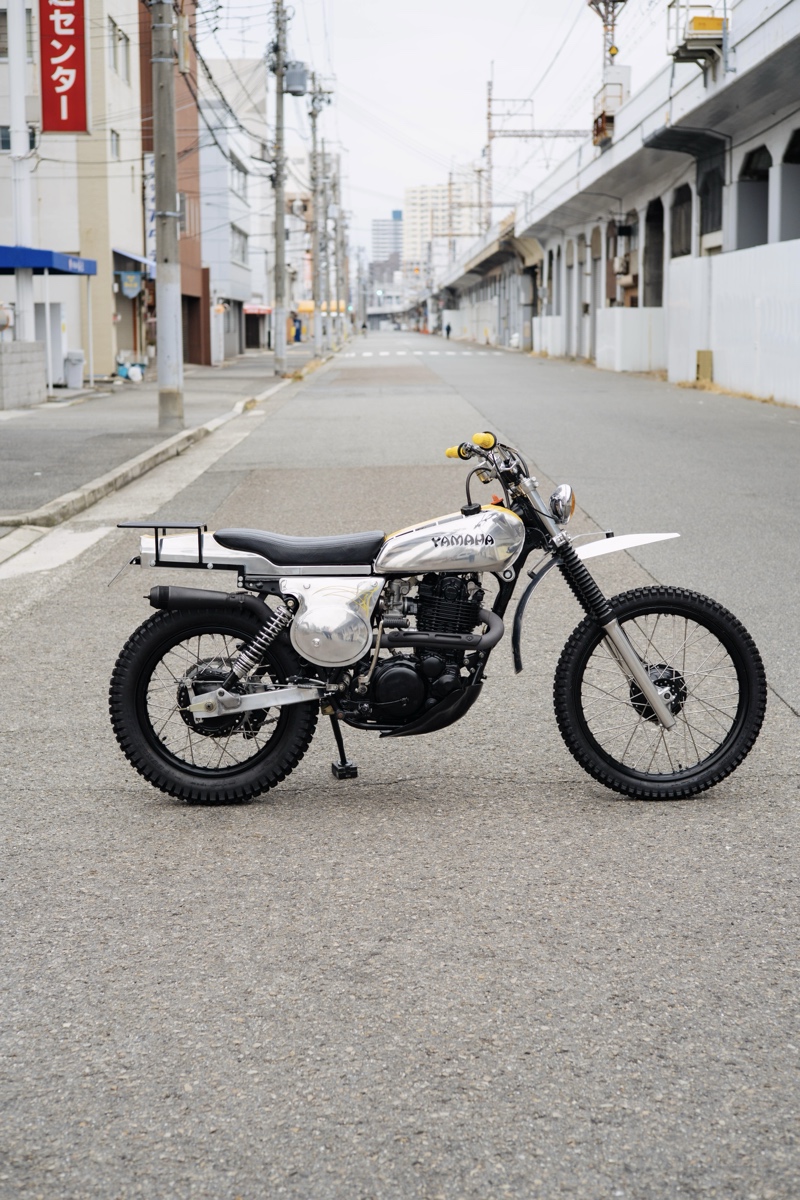
“While researching, I came across the Bultaco Pursang, and it immediately caught my eye. I decided to build this bike with that same spirit and presence in mind.” -Satoshi
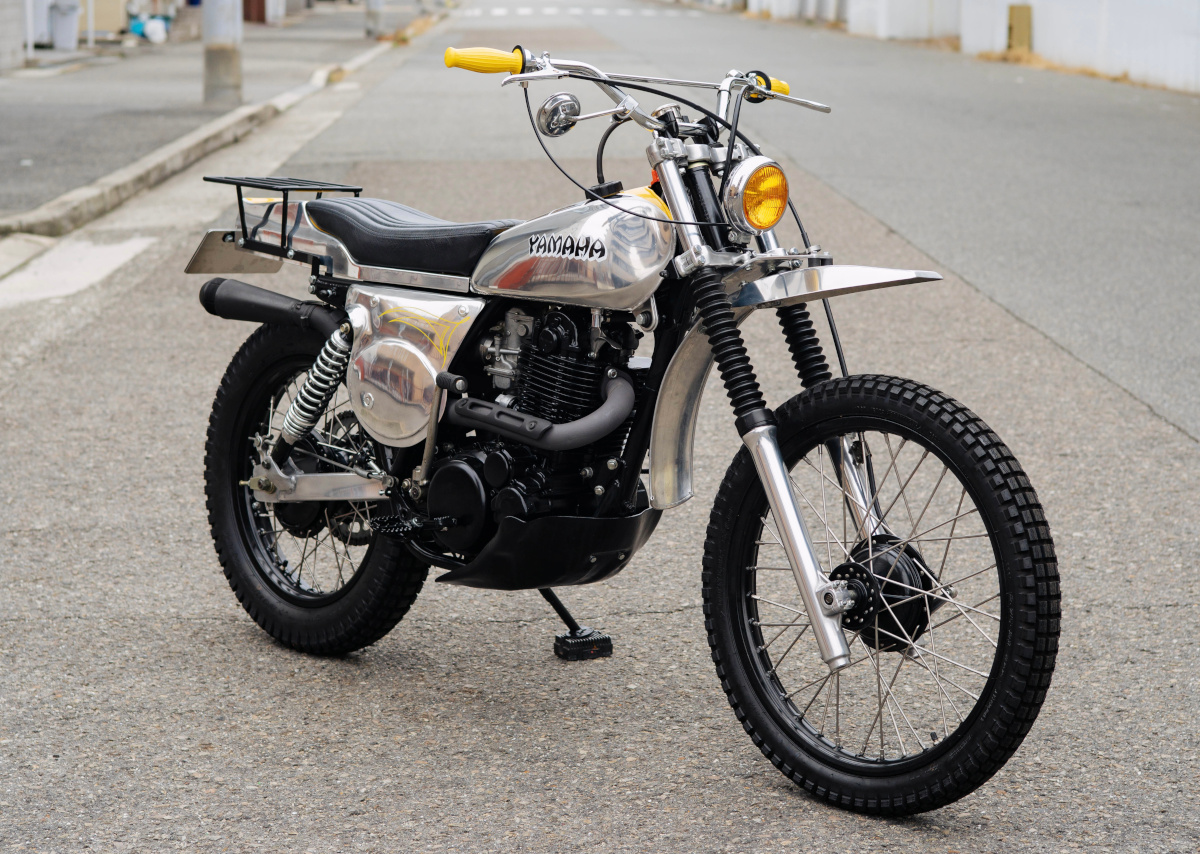
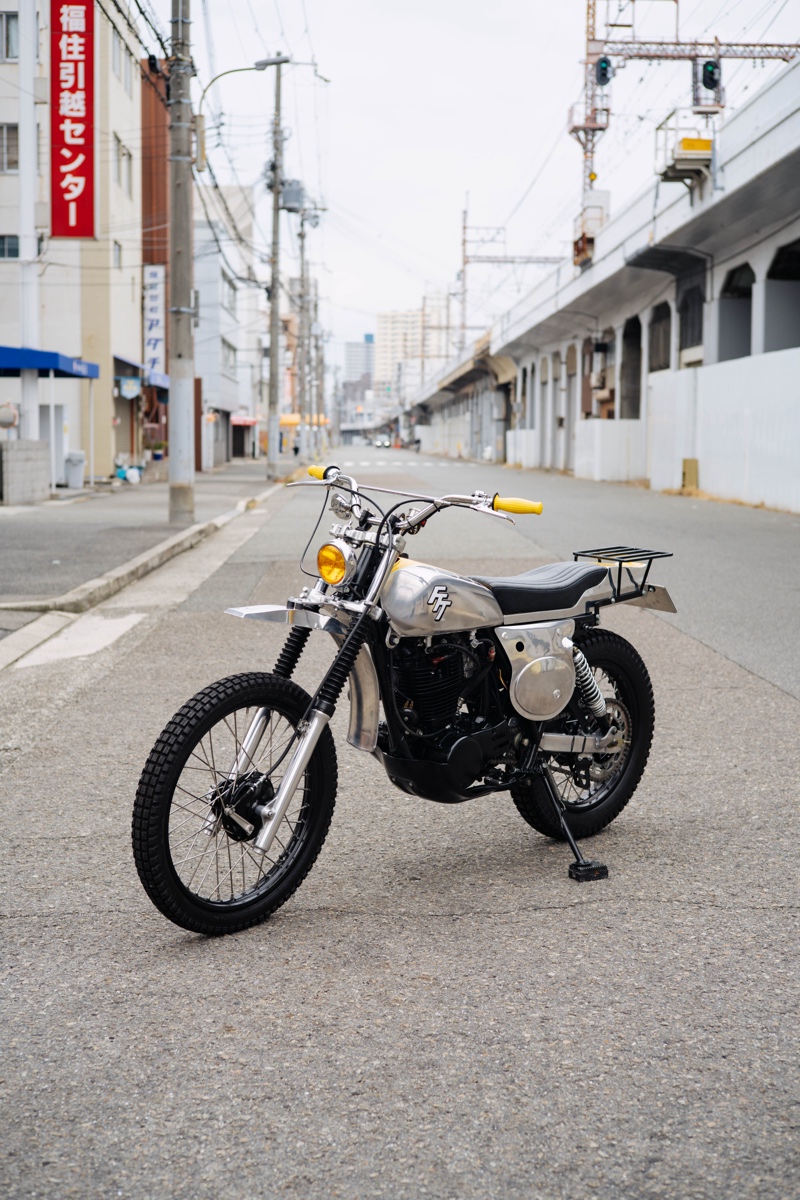
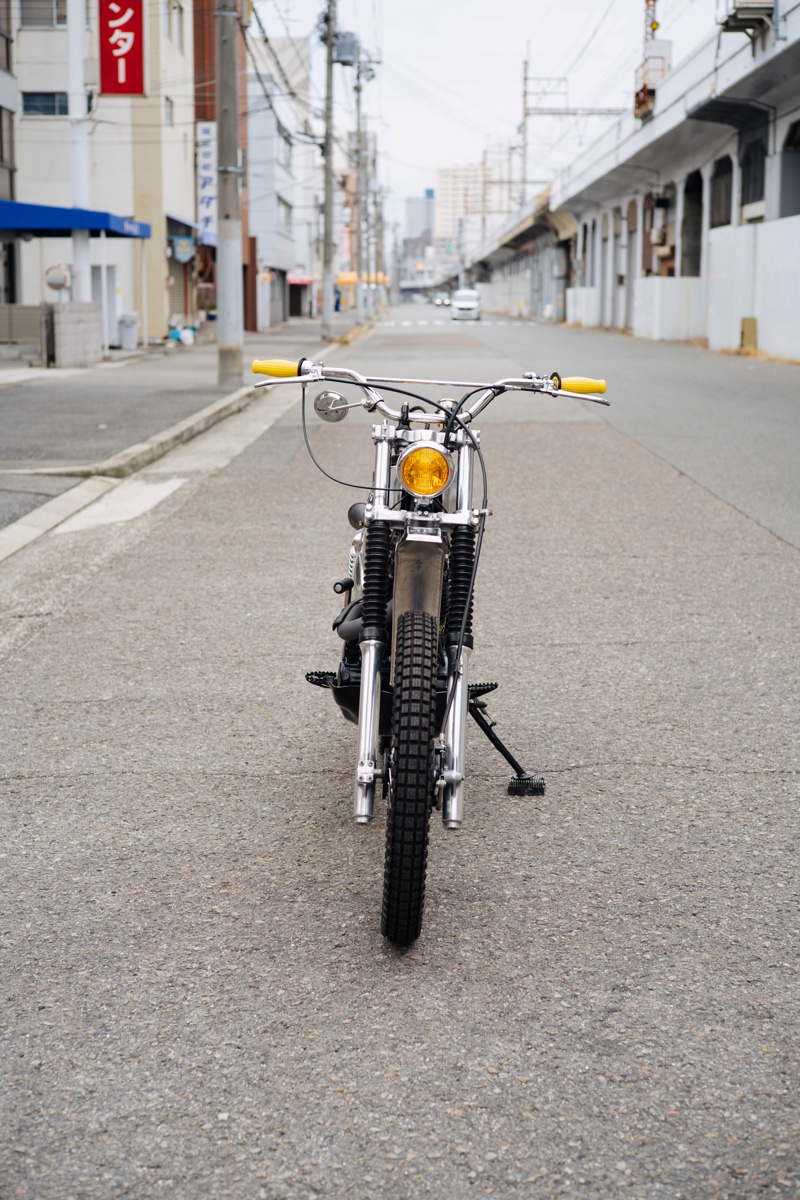
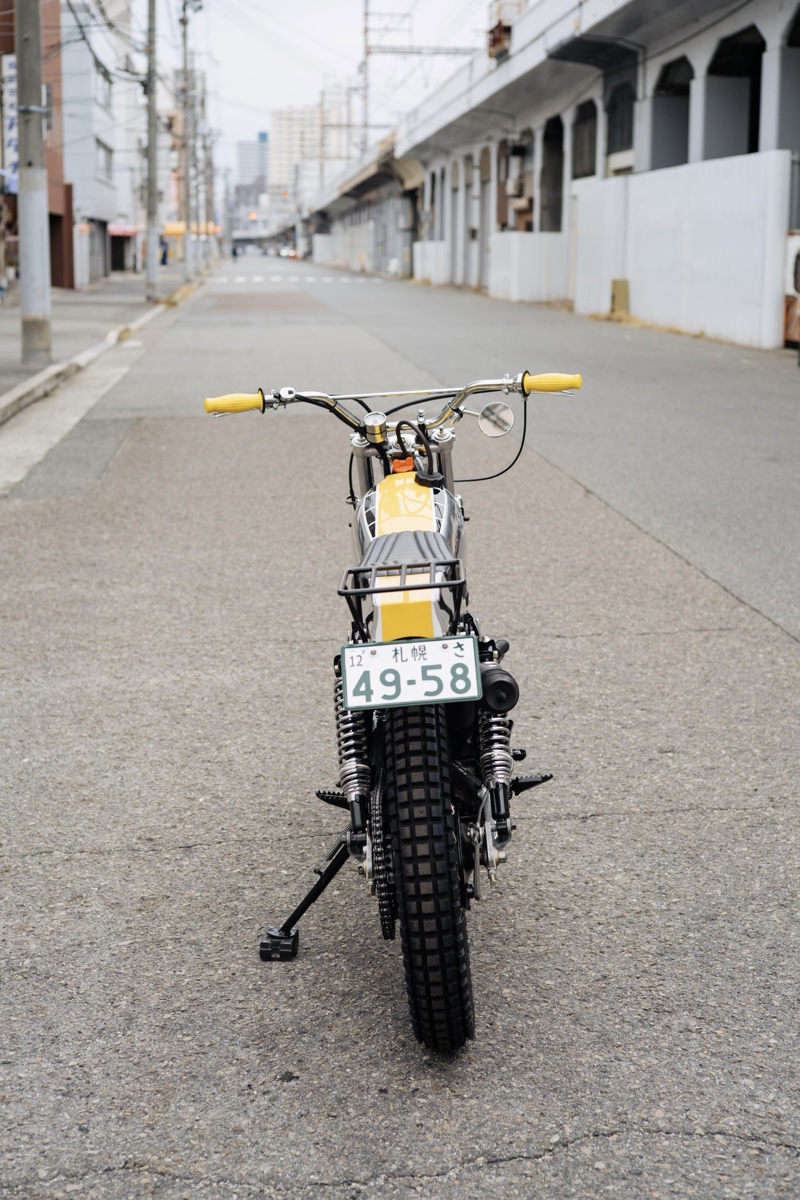
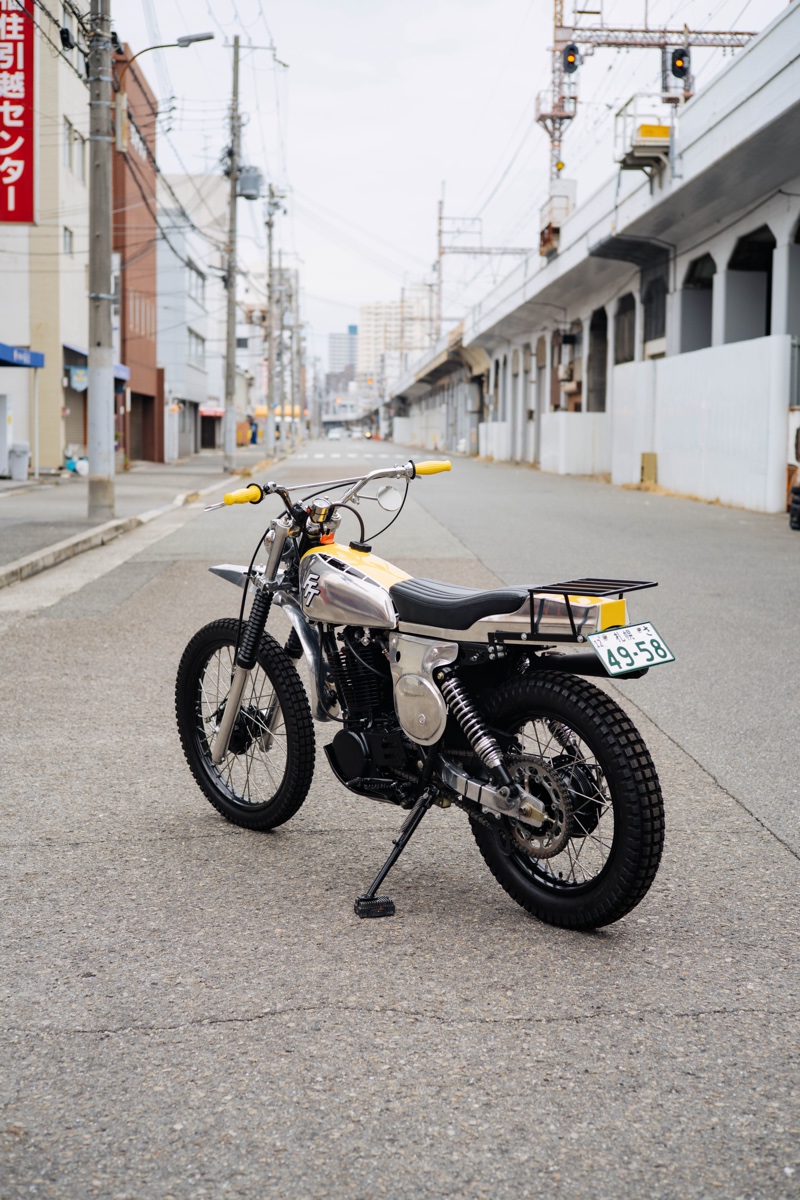
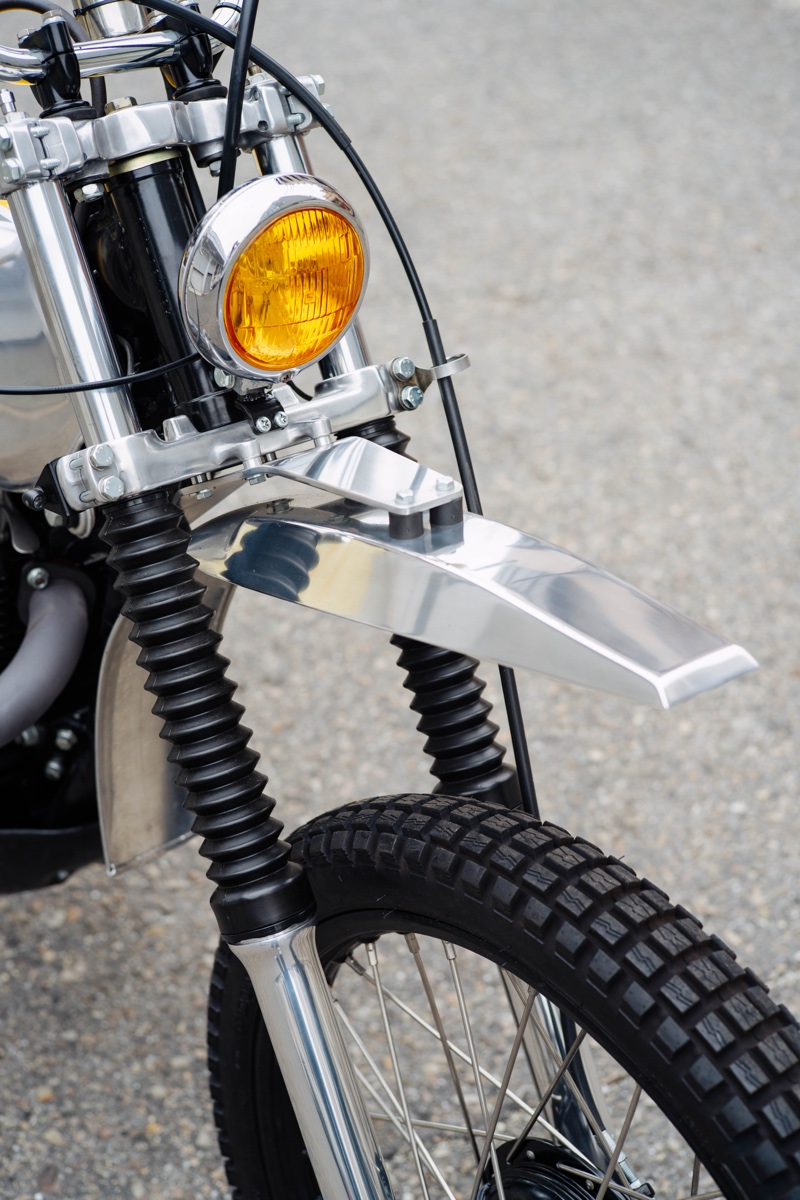
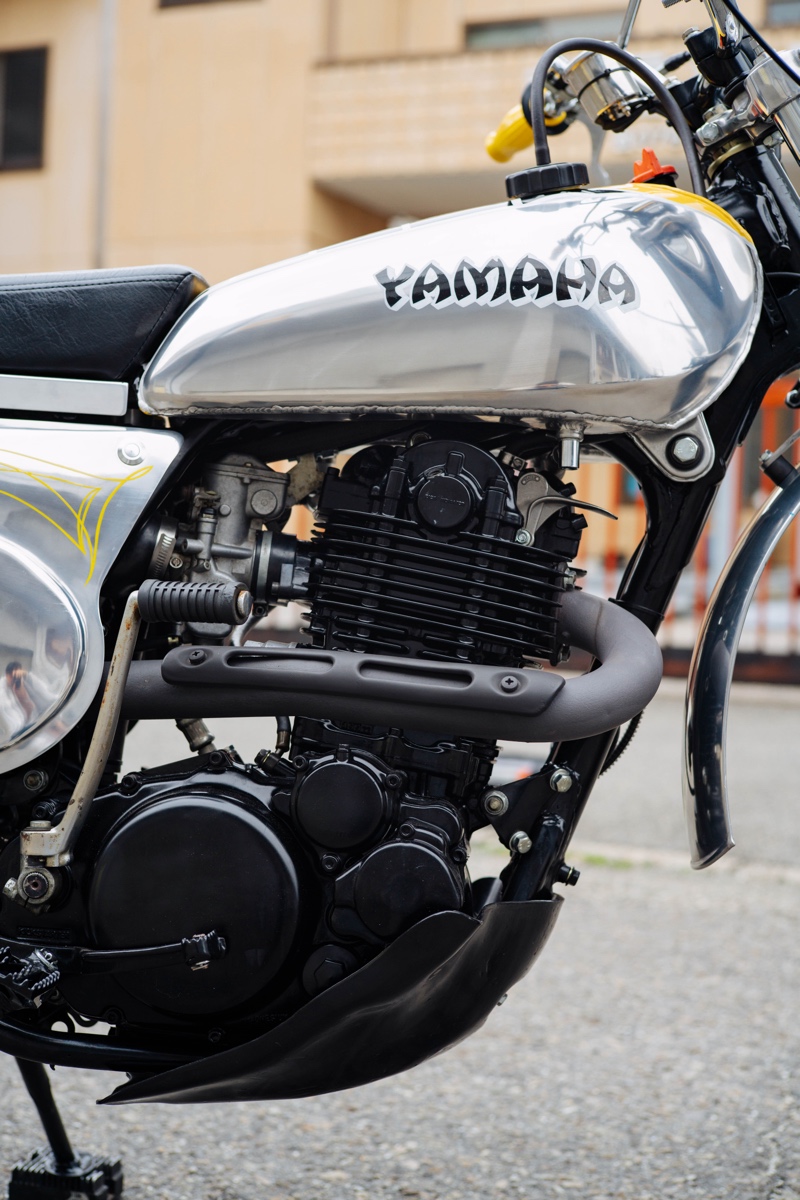
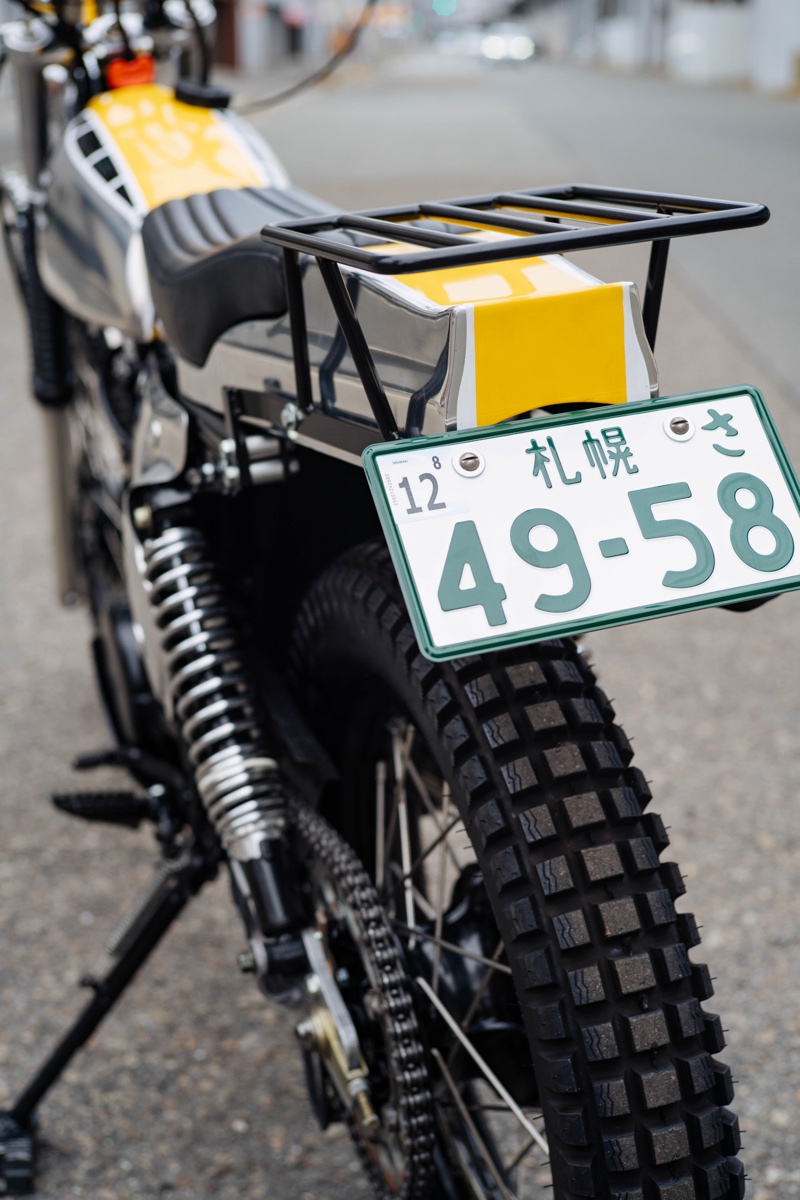
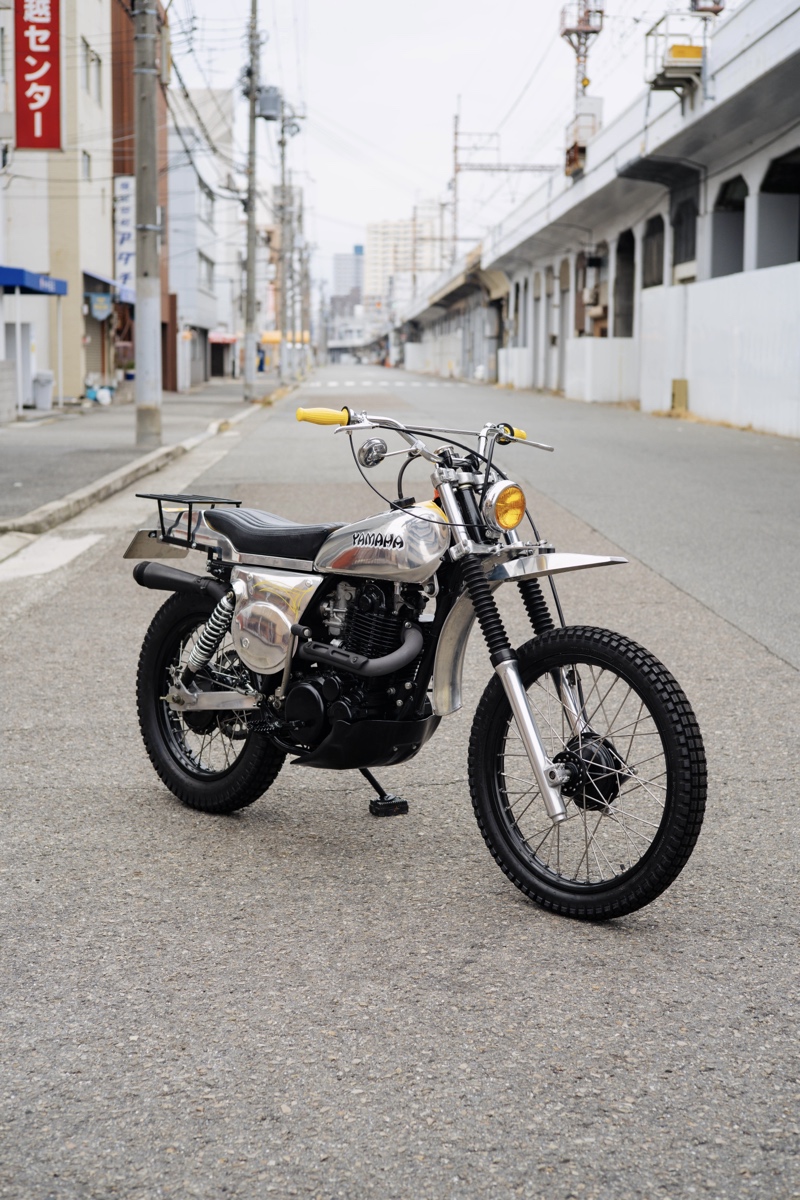 The front fender, rear tail cowl, and side covers were all hand-fabricated from aluminum sheet and rubber-mounted to reduce vibration. Satoshi also modified the stock tank so the lower edge sits perfectly horizontal, in-line with the frame and tail section.
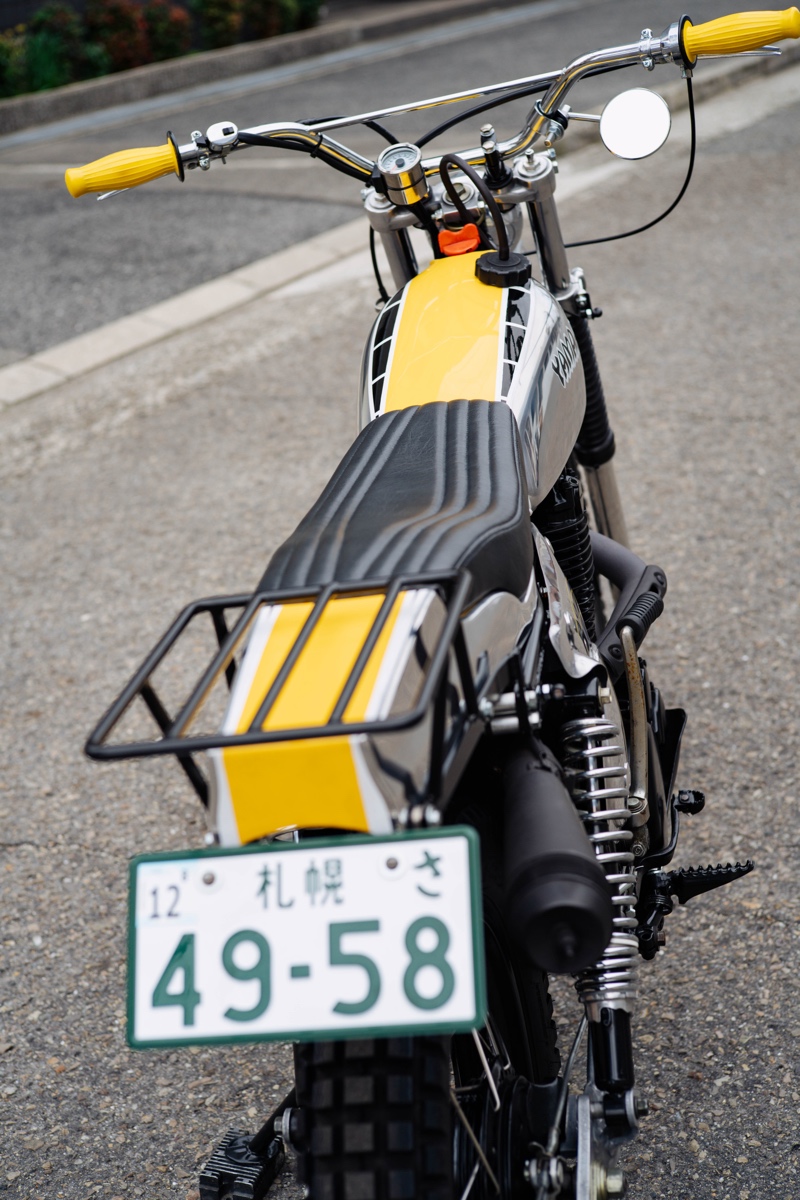
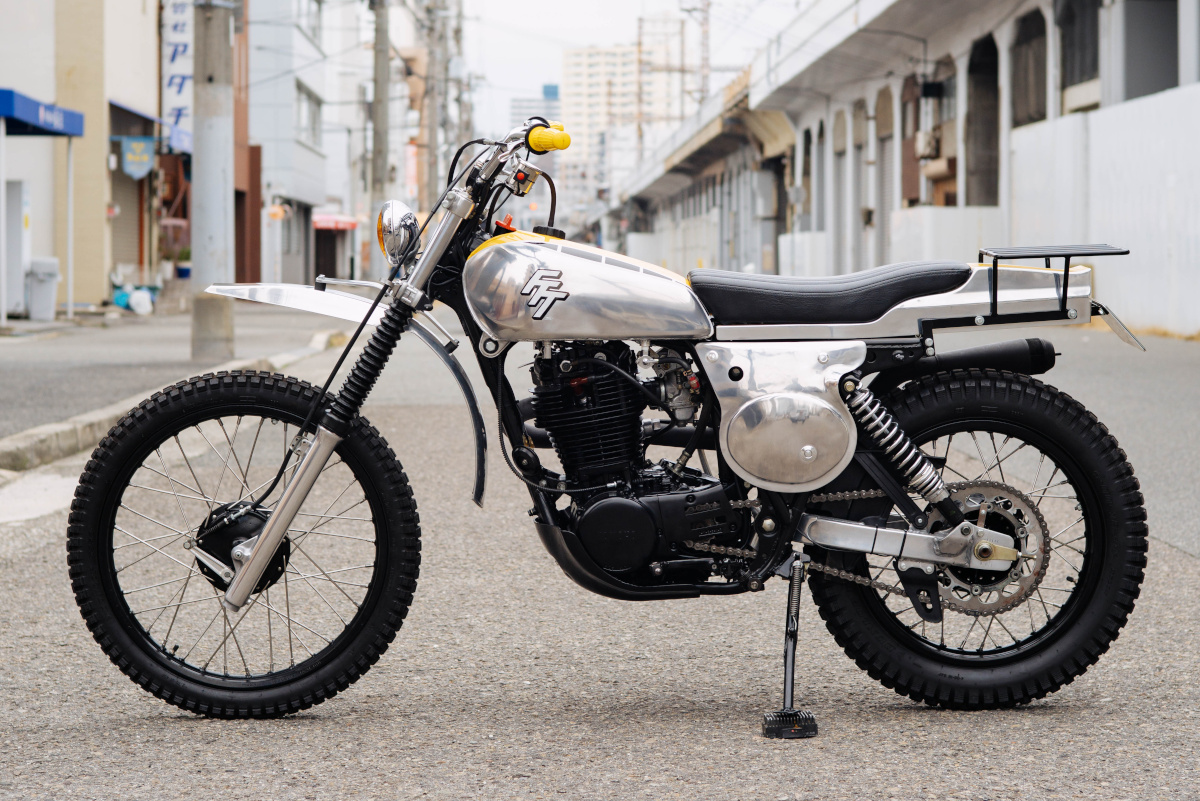 The handlebars are original FONK F-05 bars, which are produced in-house, and Satoshi built the seat from scratch.
“I carefully shaped the foam to create a smooth flow from the top of the gas tank to the tail cowl, while also considering proper riding position for off-road use.”
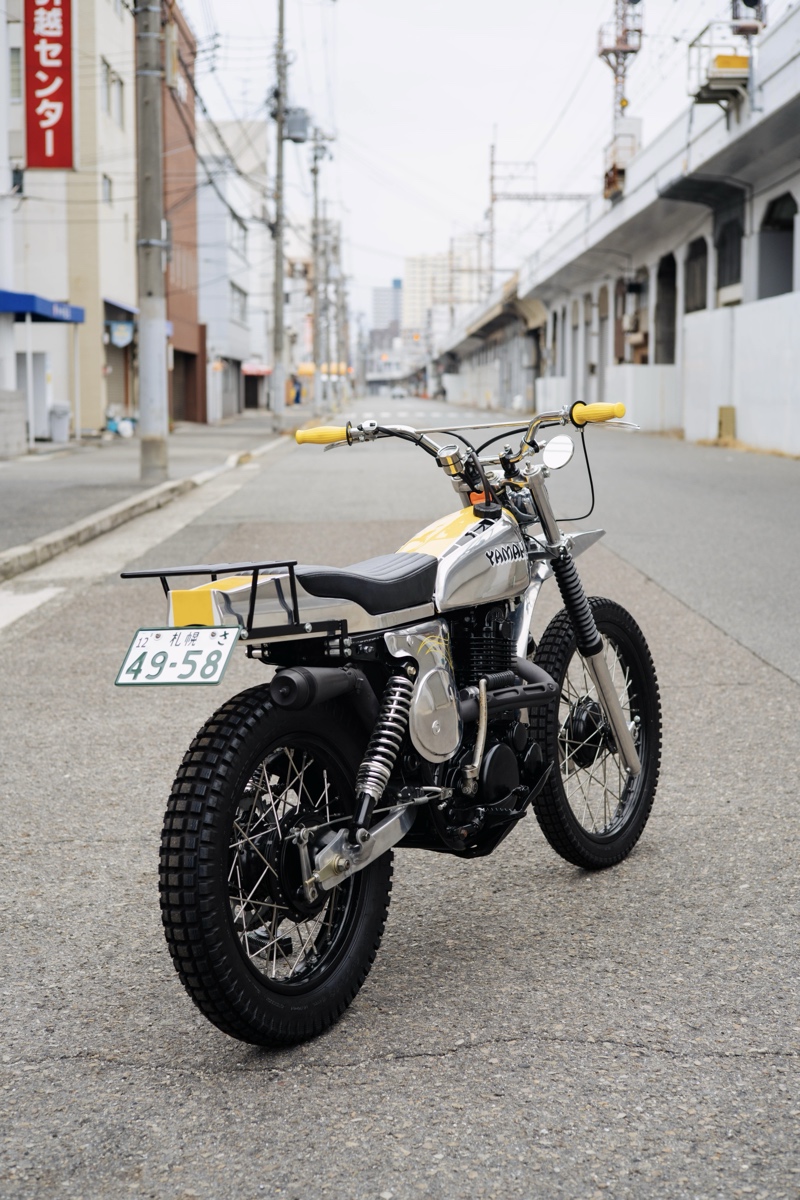 The frame, suspension components, and skid plate were all powder-coated for better durability, and Satoshi fabricated a rear rack so the customer can go touring. The lettering, pinstriping, and Yamaha-style speed-block graphics were done by Pots Design.
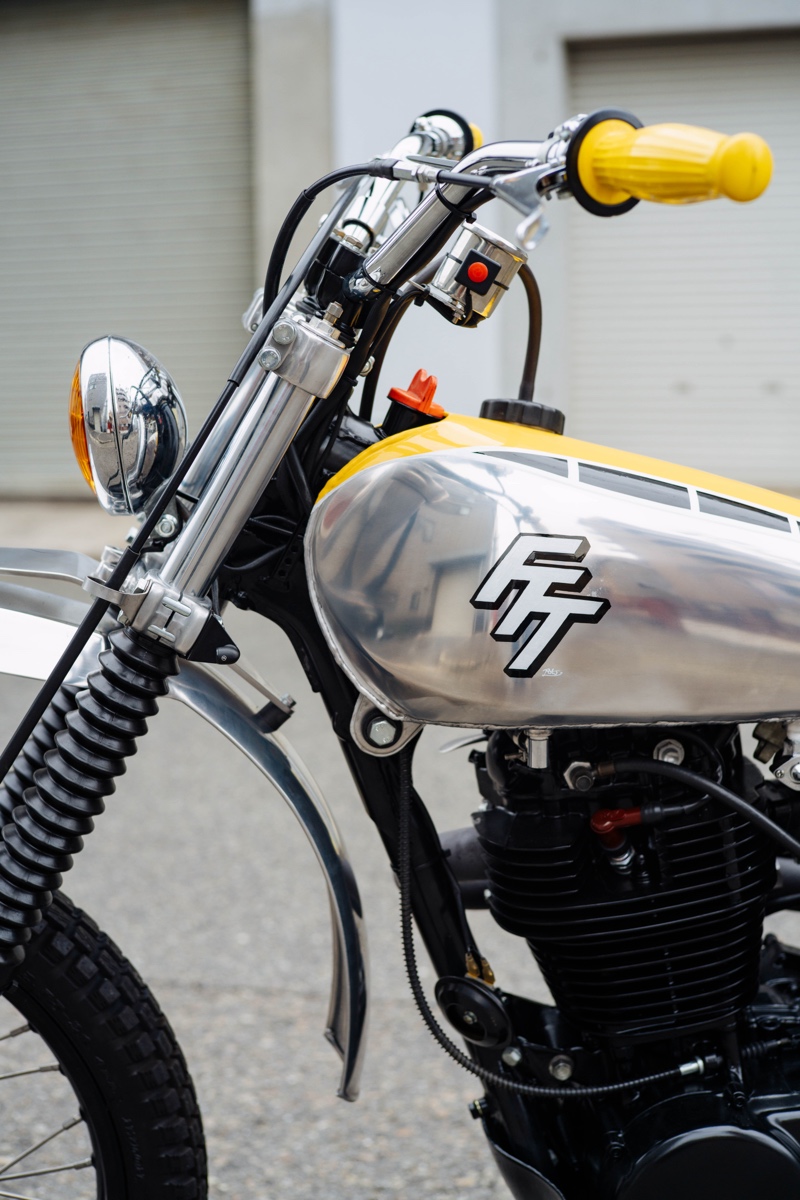 Satoshi says he doesn’t usually nickname his bikes, but if he had to, he’d christen this one “Killer Bee.” We think it’s a fitting name for the bike, given the sharp fender lines, yellow/black speed-block paint, and big-single sting.
“Back in the day, the TT had a strong reputation in racing and was known for performing really well. I like the idea of something sharp, aggressive, and full of momentum — that kind of energy fits this bike.” -Satoshi
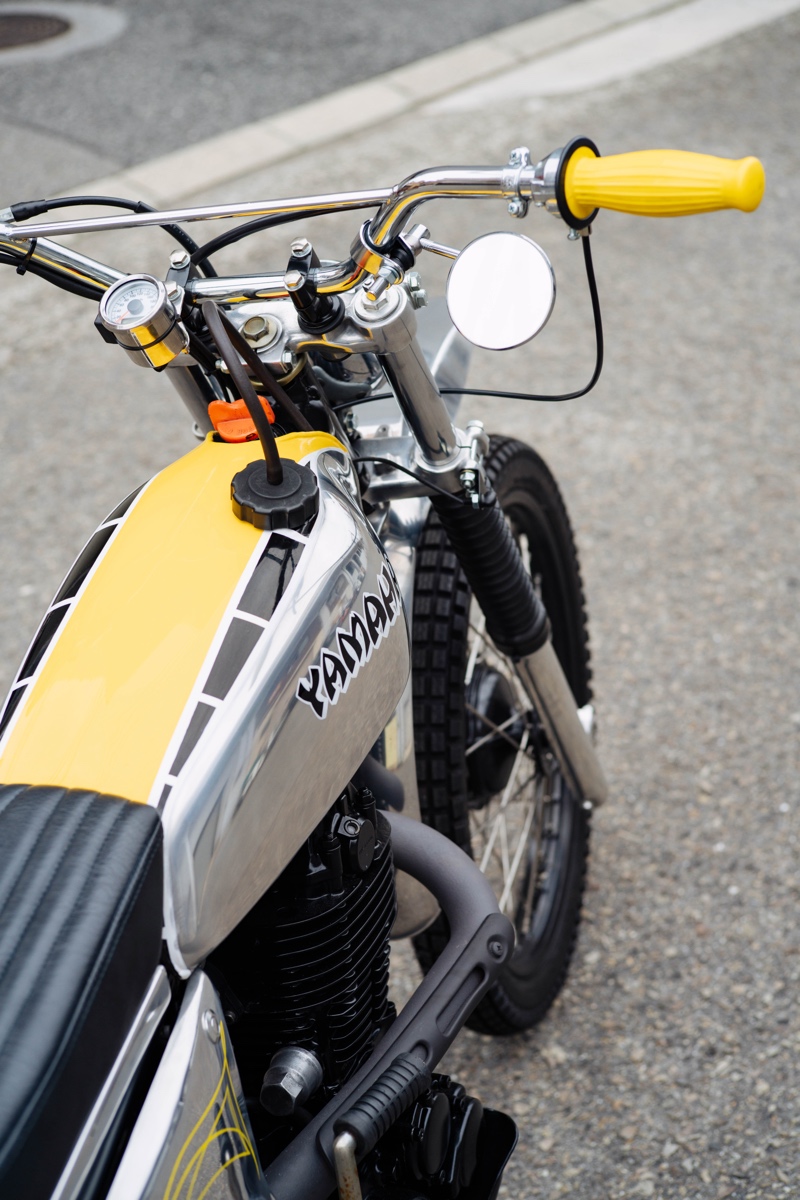 The result is a gorgeous, one-of-a-kind TT500 that’s incredibly versatile — a ready companion for all kinds of adventures.
“From the street to forest roads to camping trips, it’s a bike you can enjoy in so many different situations. It’s the kind of machine that sparks your imagination about how you want to ride and experience it.”
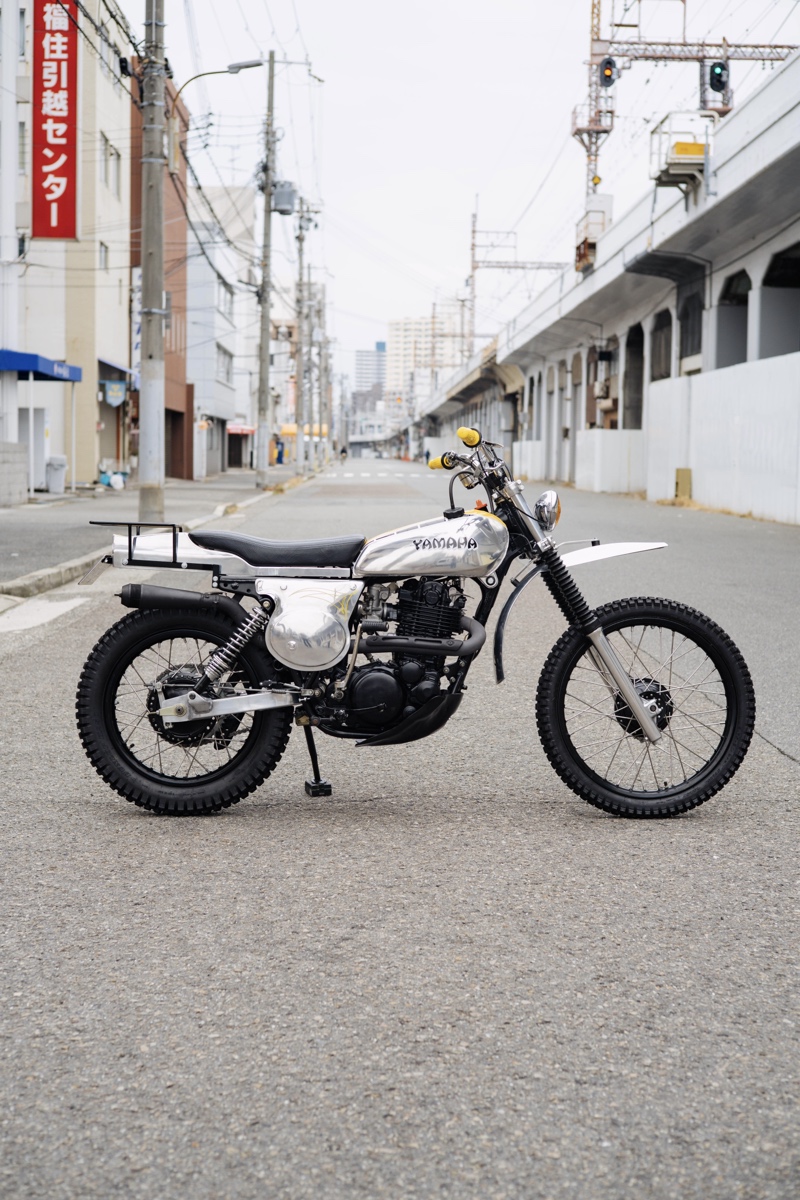 We’re honored to showcase this TT500 custom and the story behind it. Below you’ll find our full interview with Satoshi-san about the build, along with more photos from Hajime Hasegawa (@re_origin_1004). We look forward to featuring more builds from FONK Motorcycle in the future.
Yamaha TT500 Custom: Builder Interview
• Please tell us a bit about yourself, your history with motorcycles, and your workshop.
My name is Satoshi Awaji. I’m 37 years old. I got my first motorcycle, a Yamaha TW225, when I was 18. From there, I gradually became interested in building bikes. In my early twenties, I trained at a motorcycle shop for about five and a half years, and in 2018 I started FONK.
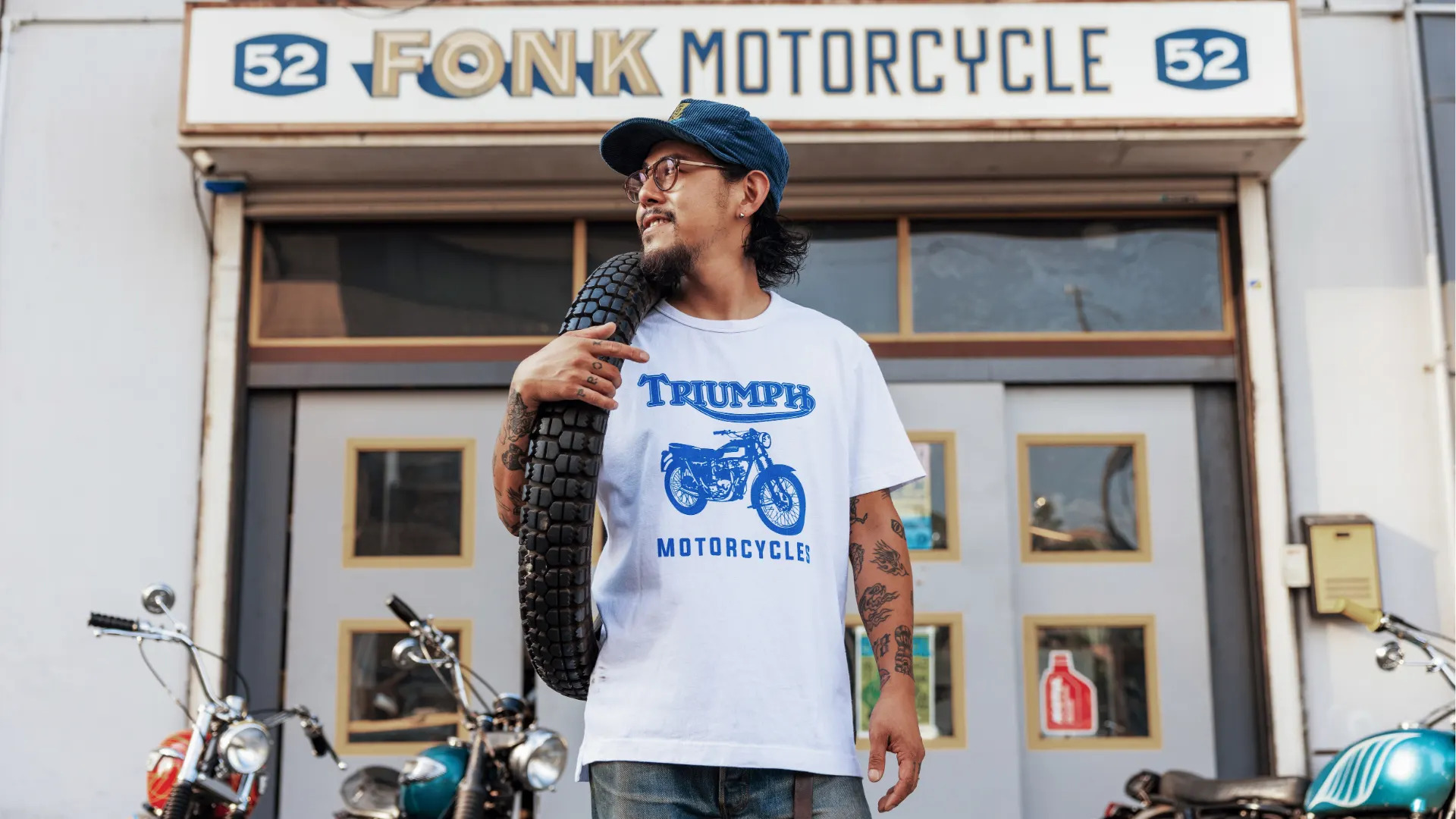
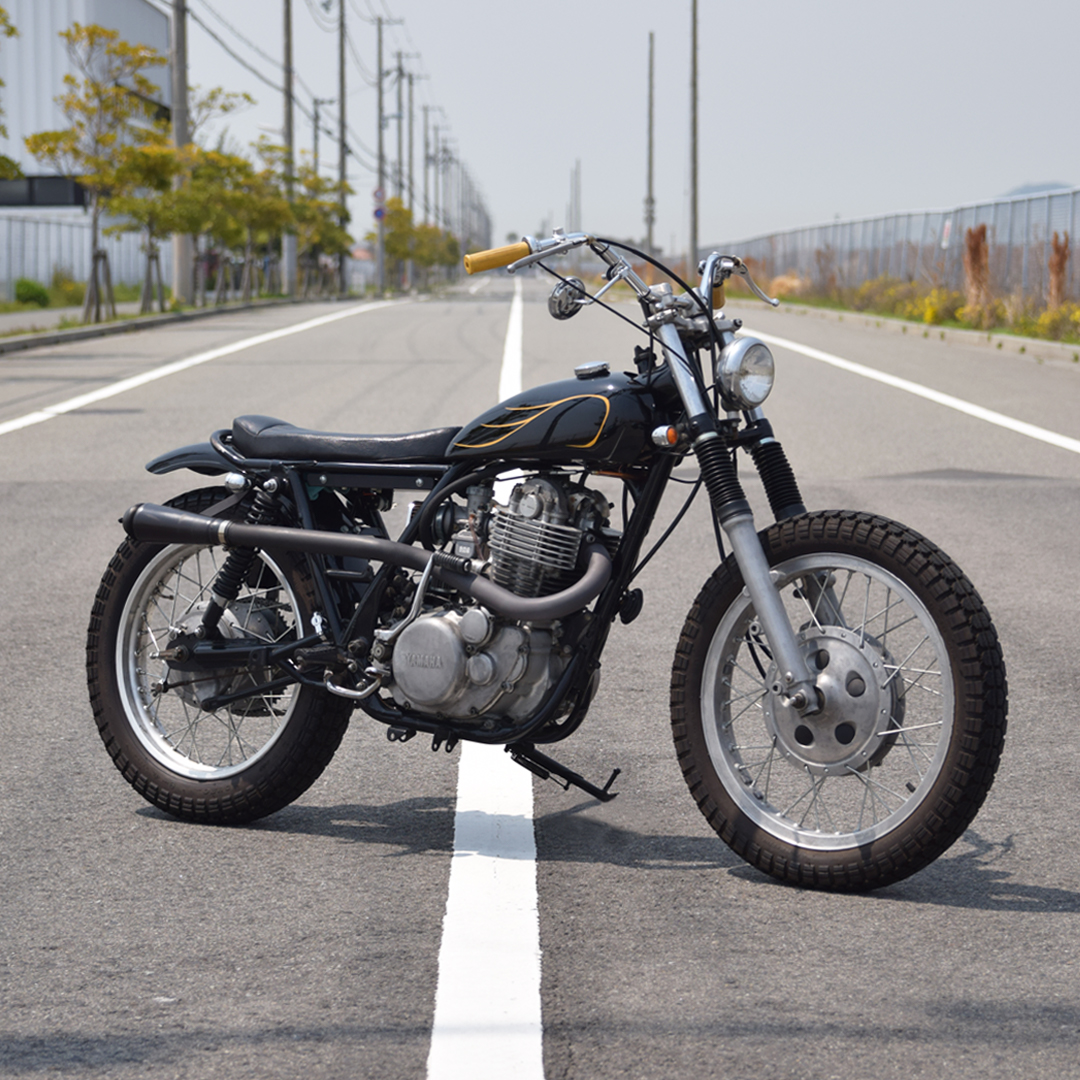
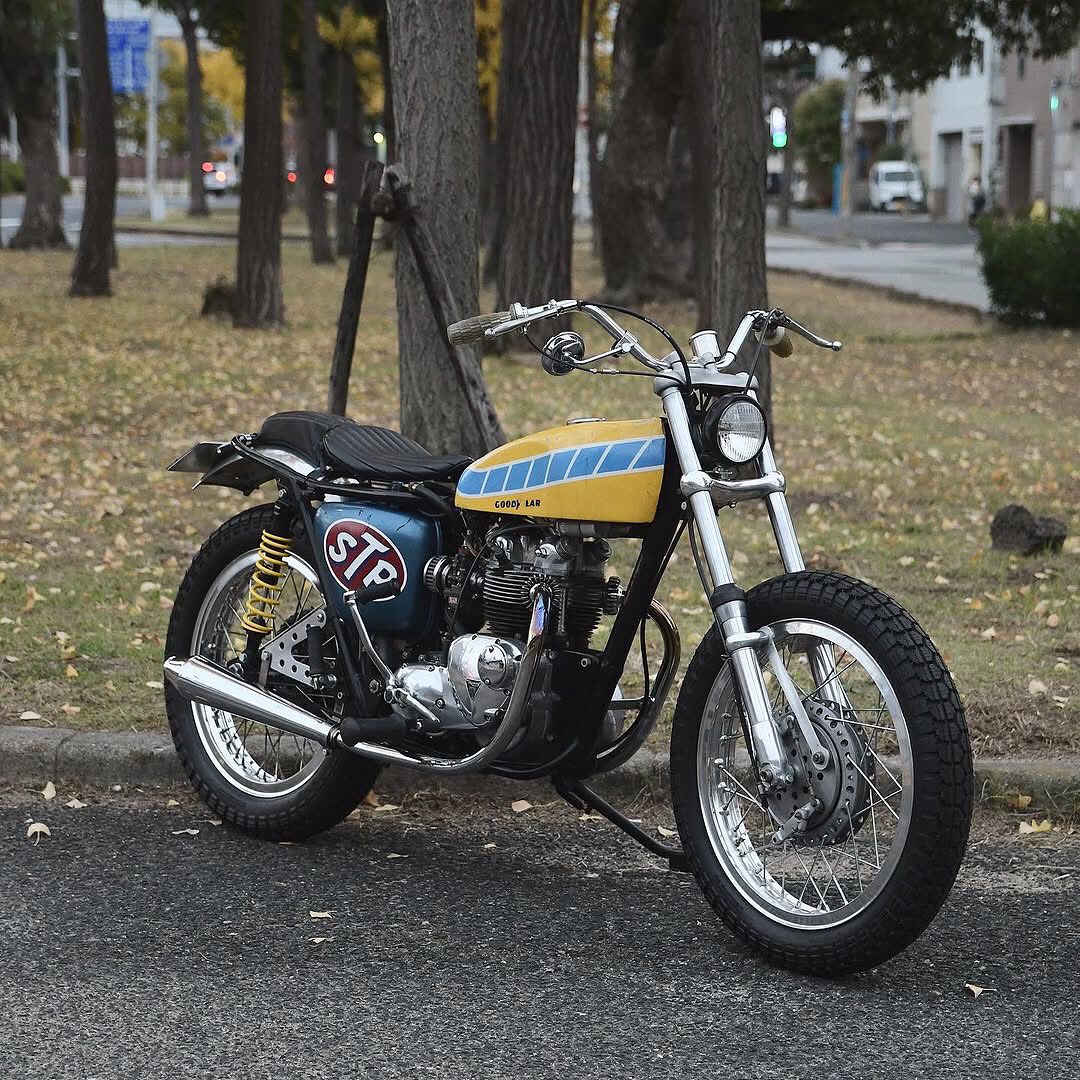
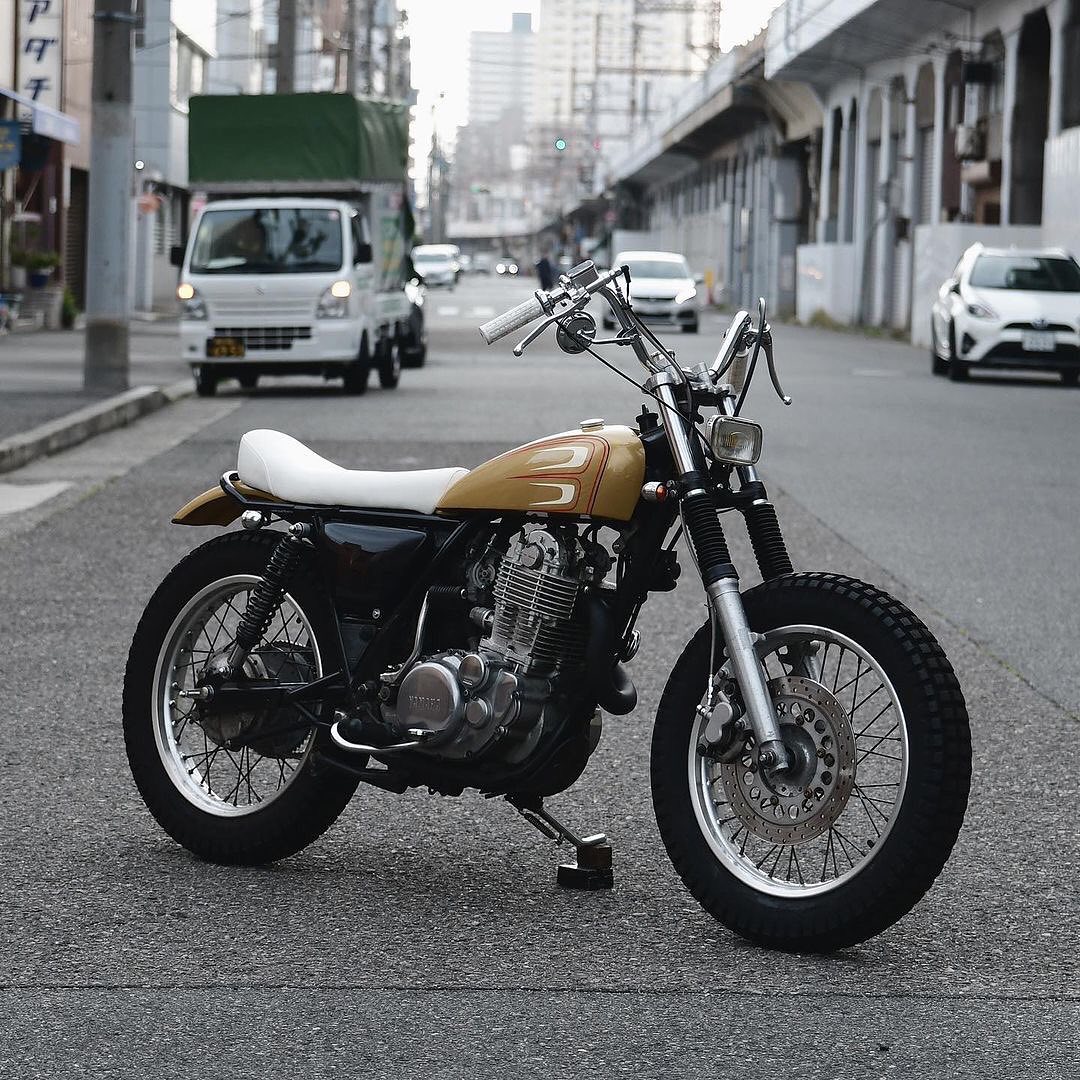
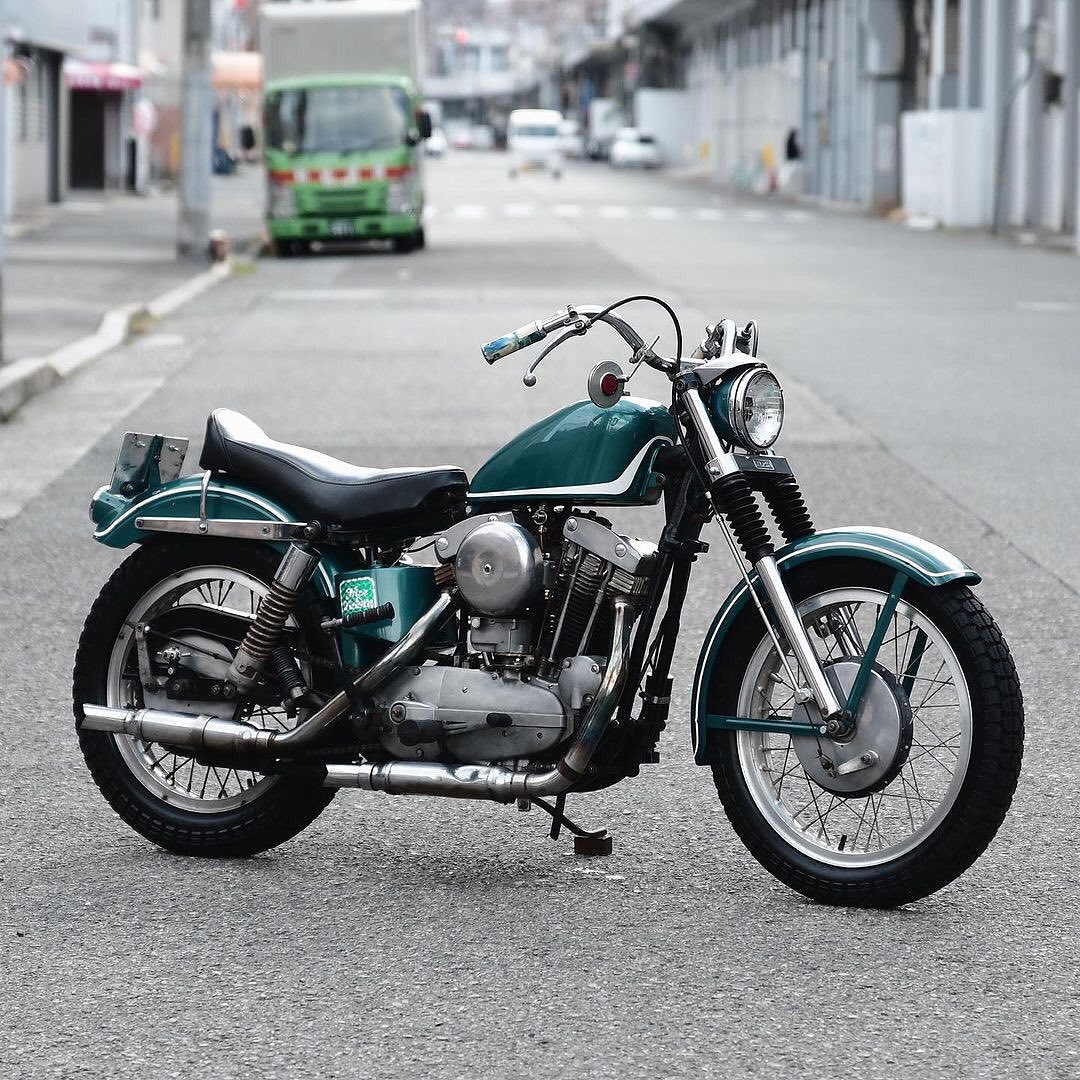
At FONK, we focus mainly on selling, servicing, and customizing vintage Triumph motorcycles. I’ve ridden many different bikes, but Triumph fit my body the best. That said, we’re not strictly a Triumph-only shop — we also work on Harleys, Yamaha SR400s and XS650s, and Japanese off-road bikes.
I regularly visit races, swap meets, and shows in the United States, where I learn about the culture directly from my American friends. Recently, in addition to building bikes, I’ve also been enjoying riding more — racing and taking Triumphs off-road — while continuing to run FONK.
• What’s the make, model, and year of the donor bike?
This bike is a 1981 Yamaha TT500.
• Why was this bike built?
Originally, a friend of mine told me he wanted to ride either a Yamaha XT500 or TT500. By good fortune, one was for sale by Grant Peterson, one of the founders of Born-Free, so I purchased it and imported it from the United States.
After servicing it, my friend rode it for a while, but eventually decided to let it go, so we sold it on consignment. The next owner then asked me to customize the bike using it as the base, and that’s how this build began.
• What was the design concept and what influenced the build?
As I recall, the owner didn’t give me specific design instructions. However, he did say he didn’t want to lose the atmosphere of an old-school motocrosser. So I started looking through vintage motocross reference books to explore what direction would be best.
While researching, I came across the Bultaco Pursang, and it immediately caught my eye. I decided to build this bike with that same spirit and presence in mind.
• What custom work was done to the bike?
I didn’t do anything extreme, but I paid very close attention to the overall balance of the bike.
The handlebars are our original FONK F-05 bars. The gas tank is the stock tank, modified so the lower line sits perfectly horizontal.
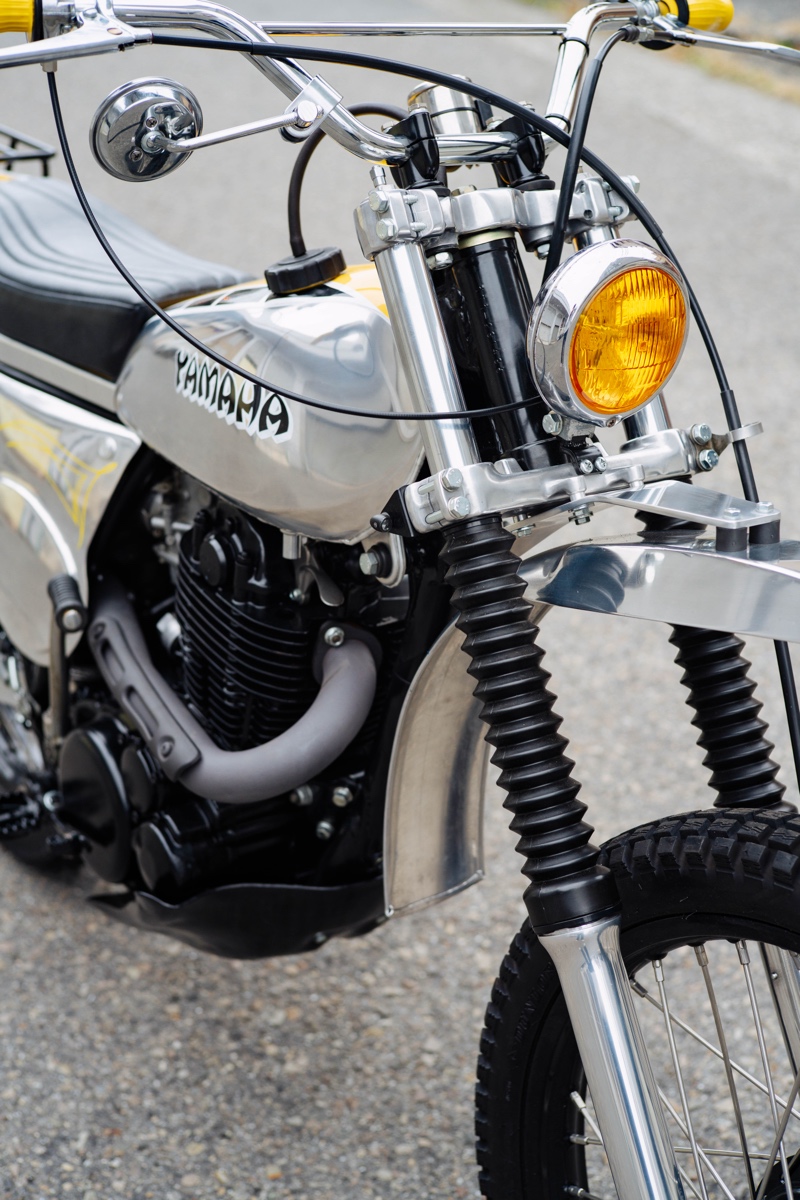
The front fender, rear tail cowl, and side covers were all hand-fabricated from aluminum sheet. Each piece is rubber-mounted to reduce vibration. I avoided anything flashy and focused on the lines, keeping the design as simple and clean as possible.
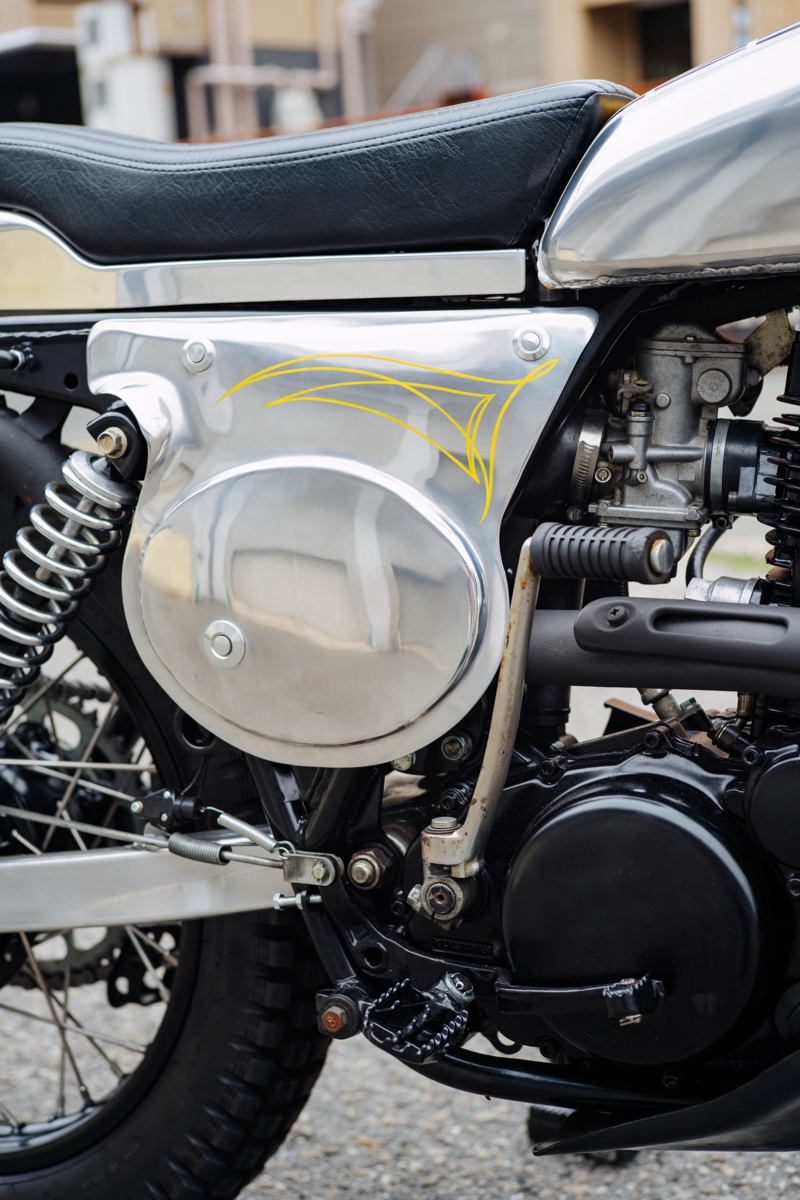
The seat was built from scratch as well. I carefully shaped the foam to create a smooth flow from the top of the gas tank to the tail cowl, while also considering proper riding position for off-road use.
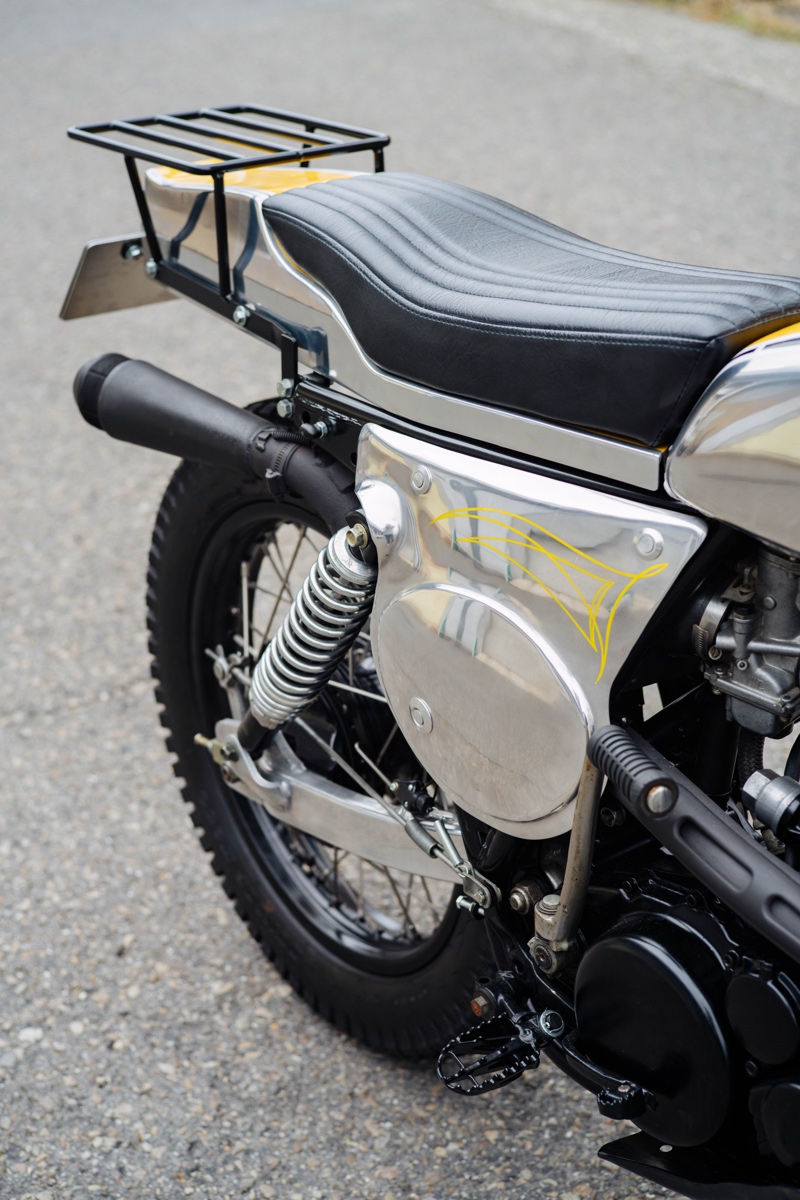
The frame, suspension components, and skid plate are powder-coated to better resist rock chips and damage.
Since the owner also wanted to go touring, I fabricated a rear rack, which is also finished in powder coat.
The lettering, pinstriping, and Yamaha-style strobe graphics were done by @potsdesign_.
• Does the bike have a nickname?
I’m not very good at naming bikes, so I usually don’t give them names. But if I had to call it something, maybe “Killer Bee.” Back in the day, the TT had a strong reputation in racing and was known for performing really well. I like the idea of something sharp, aggressive, and full of momentum — that kind of energy fits this bike.
• Any idea of horsepower, weight, and/or performance numbers?
I didn’t do any major performance tuning, so I don’t think the specs are significantly
different from a stock TT500.
• Can you tell us what it’s like to ride this bike?
The lightweight chassis and the riding position feel natural to the body. When you kick it over and head out, you feel that satisfying vibration and the strong, torquey engine. It makes you want to roll the throttle on.
From the street to forest roads to camping trips, it’s a bike you can enjoy in so many different situations. It’s the kind of machine that sparks your imagination about how you want to ride and experience it.
• Was there anything done during this build that you are particularly proud of?
More than pride, I’d say I was simply happy to receive an order where everything was left entirely up to me. That trust meant a lot.
What I enjoyed most was seeing the aluminum bodywork — something that existed only in my head at first — gradually take shape in real life. If you look closely, there are still some rough edges here and there, though (laughs).
• Is there anyone you’d like to thank?
Without a doubt, the person I’m most grateful to is the owner of this TT500. Thank you for trusting me and allowing me to build the bike freely.
And of course, I’m always supported by my family, my friends, and all of our customers. I’m truly thankful to everyone who is involved with FONK.
Follow the Builder
Web: fonkmotorcycle.jp
Instagram: @fonkmotorcycle | @fonkmotorcycle_product
Photographer: Hajime Hasegawa (@re_origin_1004)


