
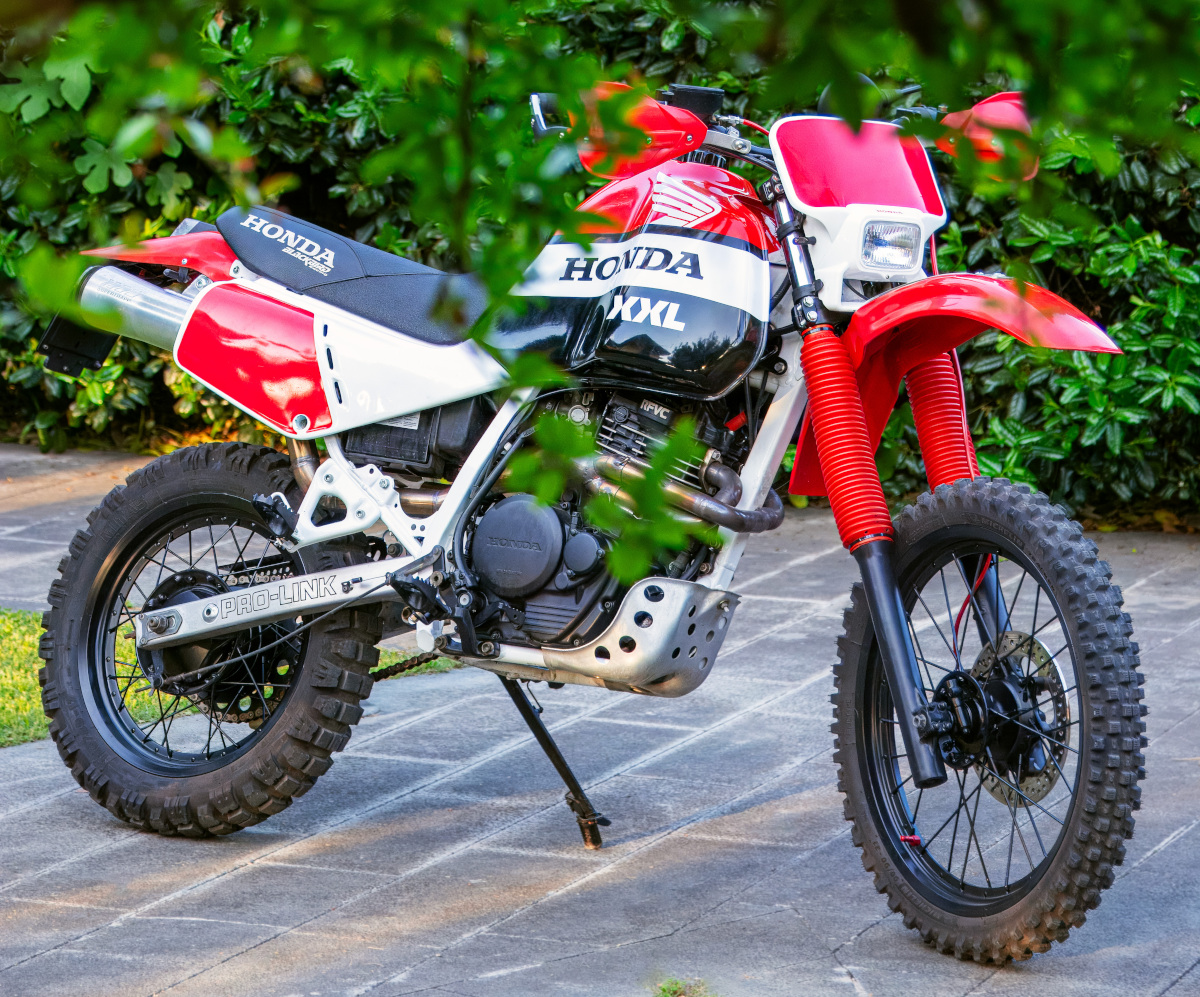
 Francesco Paura resurrects a legendary thumper…
In 1983, Honda released the original RFVC (Radial Four Valve Combustion) single-cylinder dirt bikes, which were destined to become icons of a generation. With a hemispherical combustion chamber, centrally located spark plug, and radially arranged valves, the design allowed for larger valves, better flow, higher compression ratios, and faster burn, resulting in stronger low to midrange torque and improved top-end power. The new design soon proved itself in off-road races like the Paris-Dakar Rally, Baja 1000, ISDE, GNCC series, and more.
“Do you think that when the first XR600R rolled off the assembly line, anyone had an inkling that it would become the definitive off-road bike, not only of a generation, but for two or three generations? Do you think they knew that they had just built a wildly successful race bike as well as general purpose campground cruiser?” –Dirt Bike Magazine
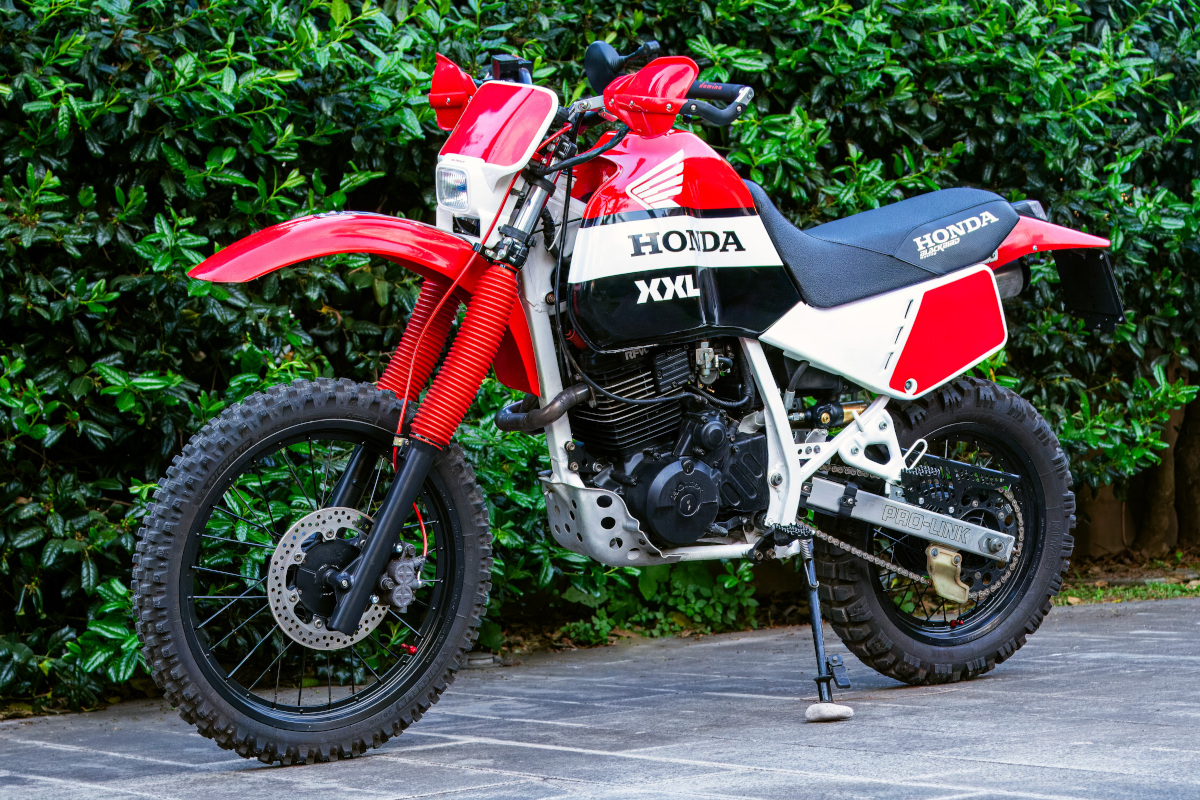 The XL600 was the first street-legal enduro (dual-sport) to carry the RFVC engine. It employed the same frame as the XR500R, which won both the Paris-Dakar Rally and Baja 1000 before the introduction of the XR600R. Though it didn’t have the suspension travel of a pure dirt bike, the XL could cruise at 75 mph and hit the mighty ton, and Honda even produced a big-tank XL600LM Paris-Dakar version to celebrate their Dakar success.
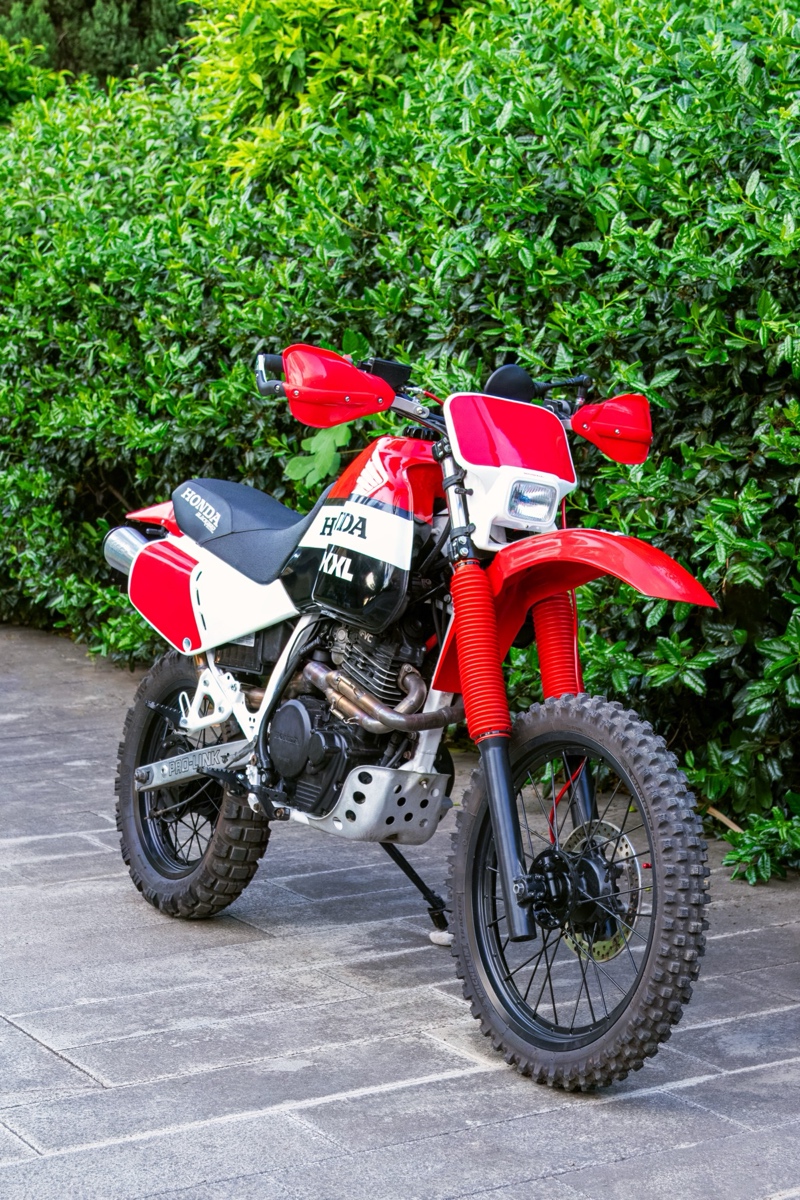
Cycle World was well impressed with the big trailie:
“This thing is fast… 315 lb. is light for a 43-bhp motorcycle. The XL turns performance figures comparable to several Twins. A quarter mile in the high 13s is no slouch; this time we don’t have to mention that it’s quicker than the average $50,000 car. This is a quick time on two wheels. And the XL is a genuine 100-mph bike.” –Cycle World, 1983
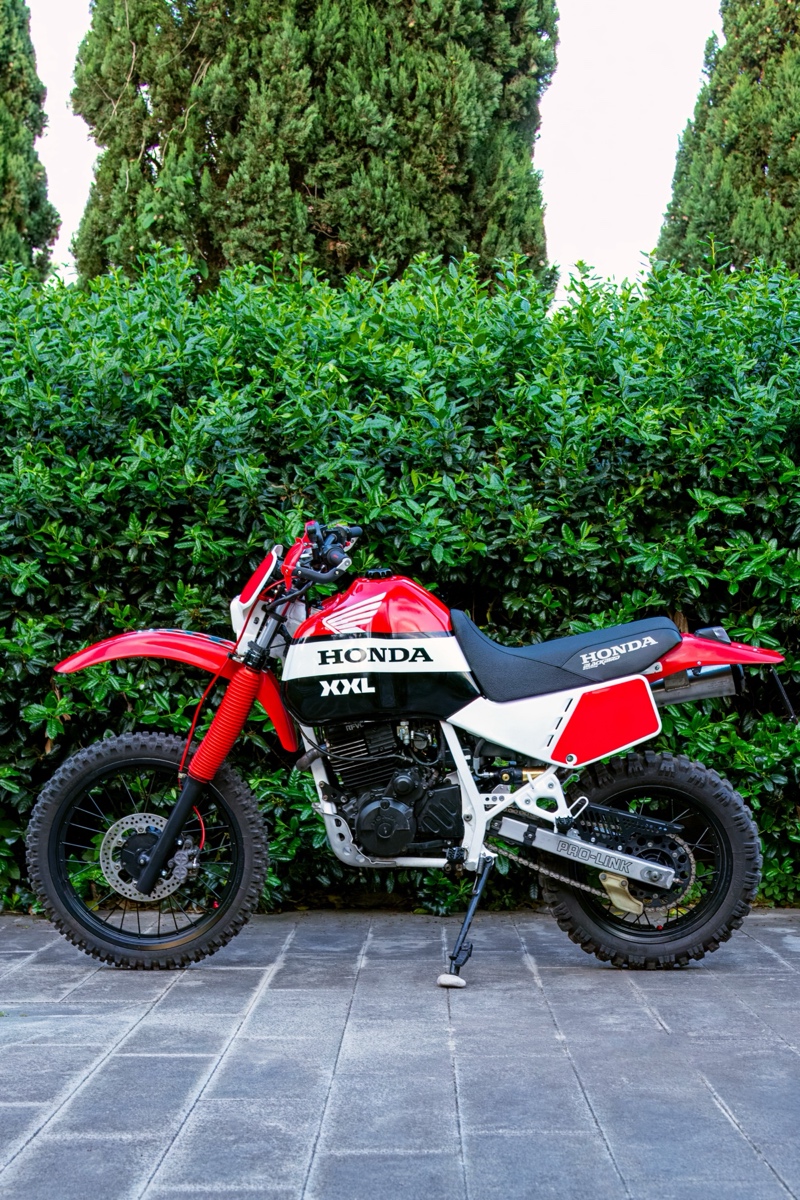
The ’87 XL600 comes from our old buddy Francesco Paura, many of whose builds have graced our pages in the past. This “XXL600” is a bit different, however, as Francesco built it just for himself.
“This is truly my personal bike. I’ve been building it over the last two years in my spare time between clients. I’ve always wanted that legendary Paris-Dakar bike, and I’ve loved Honda’s RFVC engines since I was a kid.”
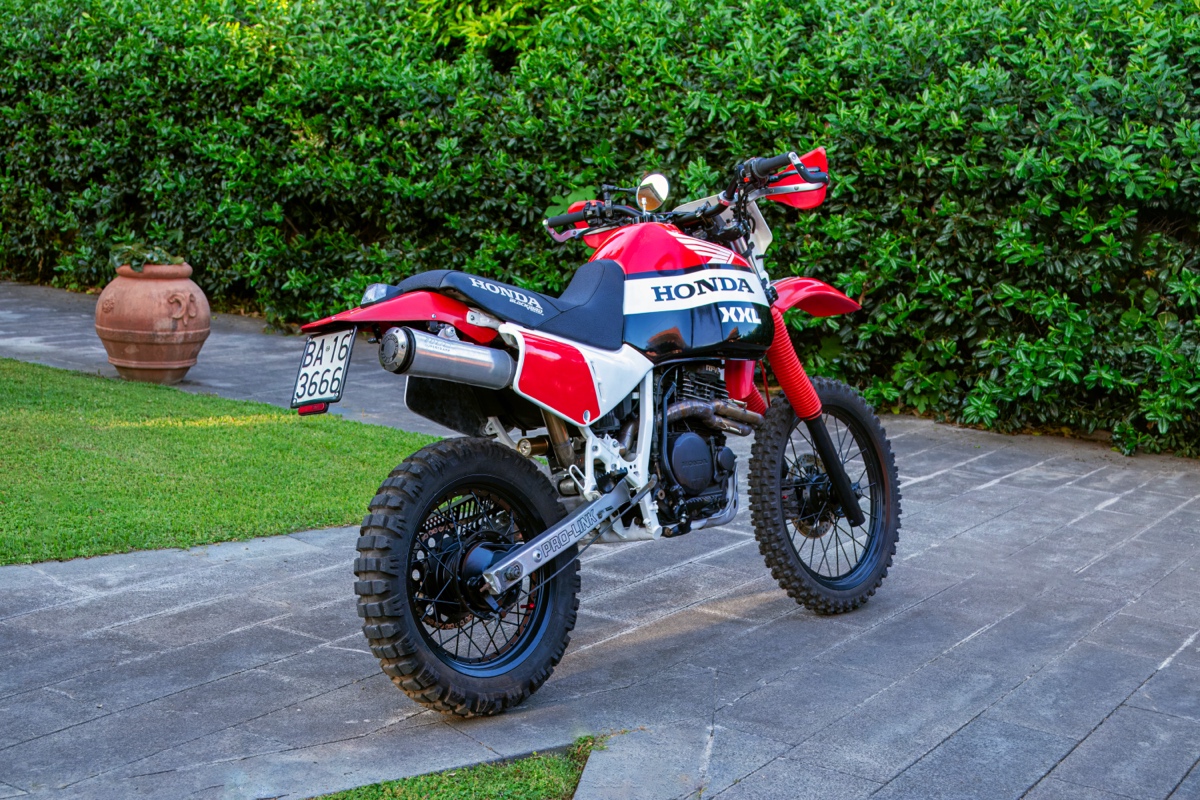
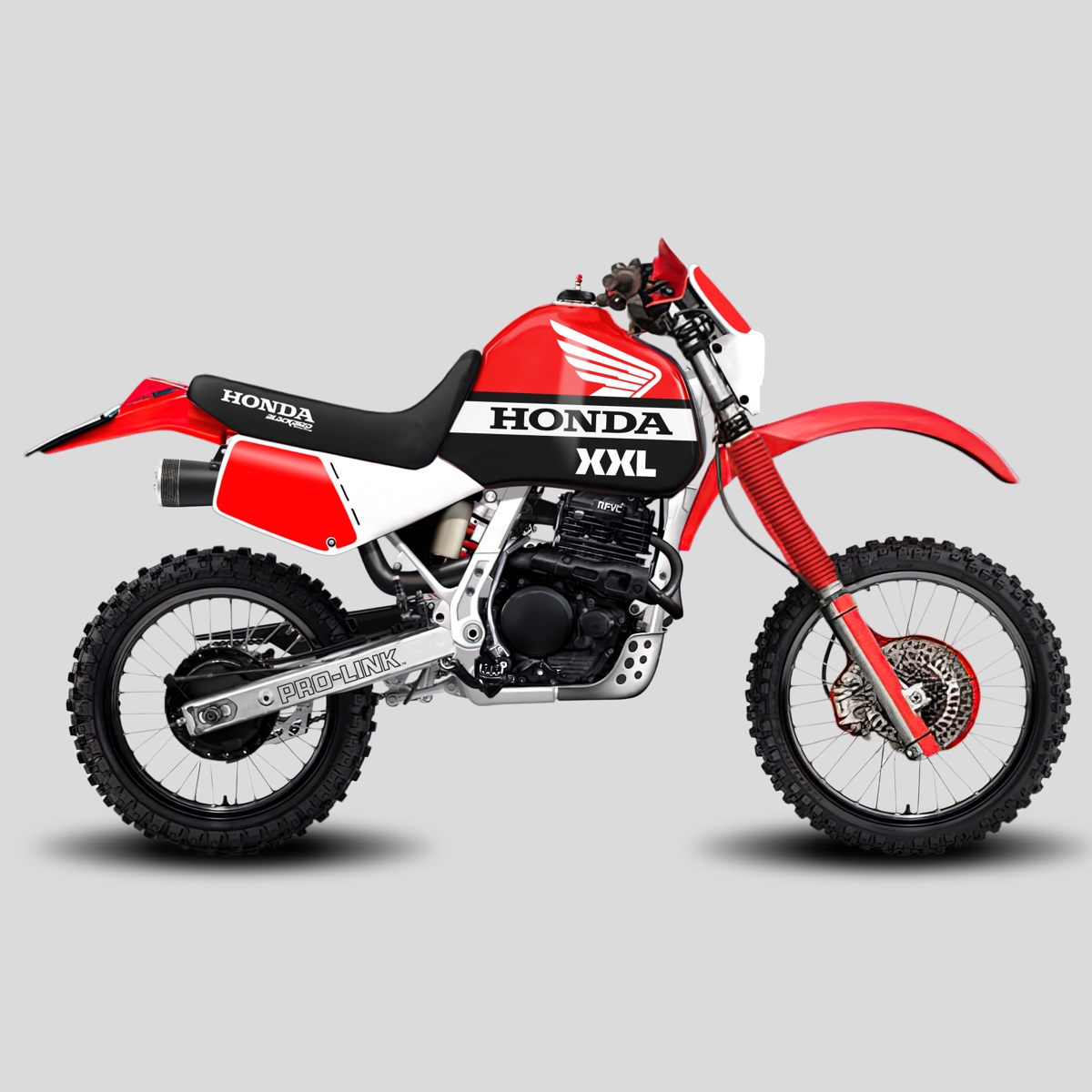
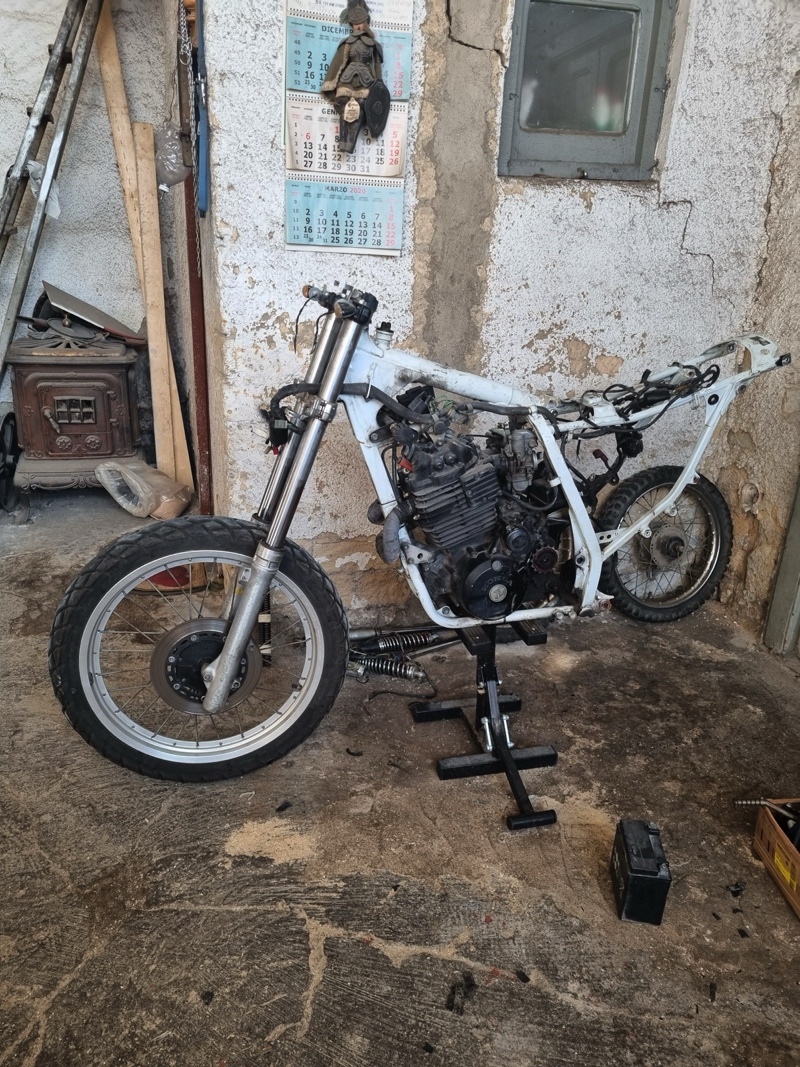
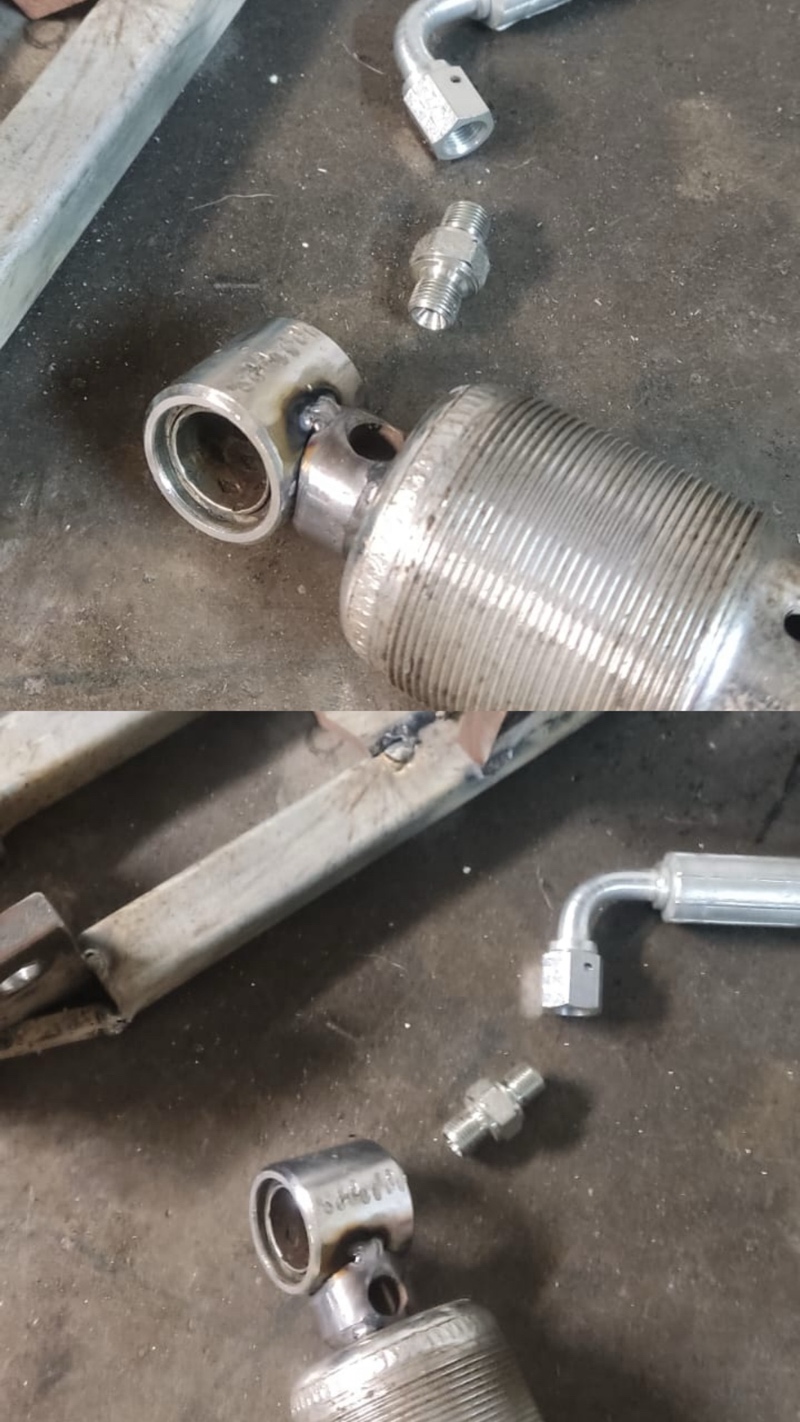
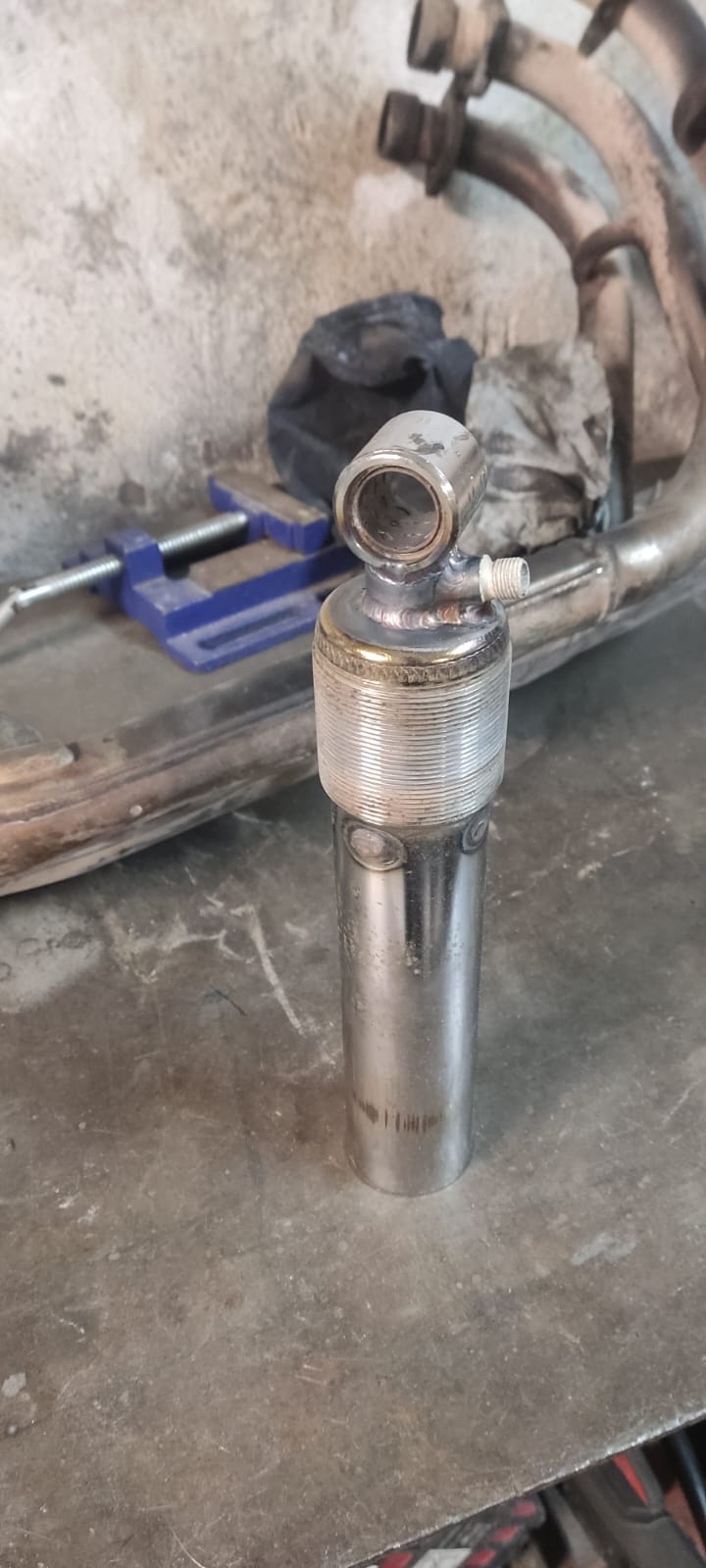
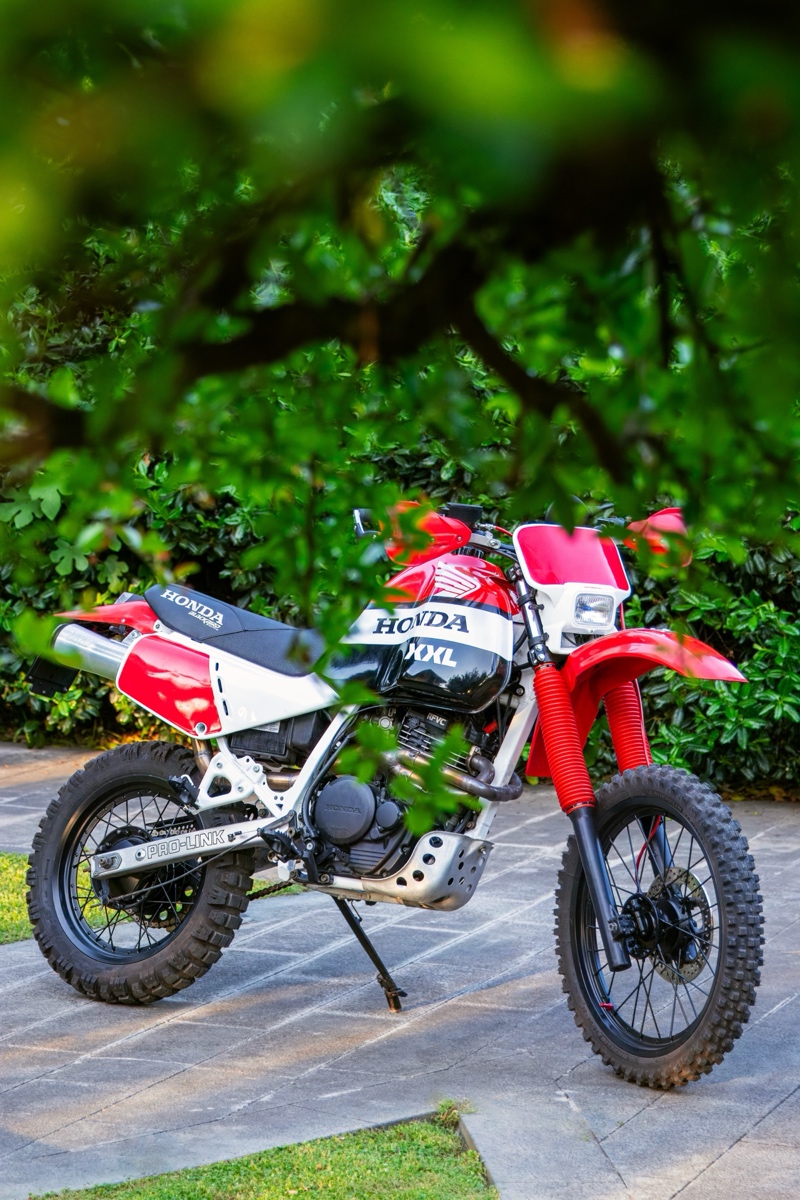
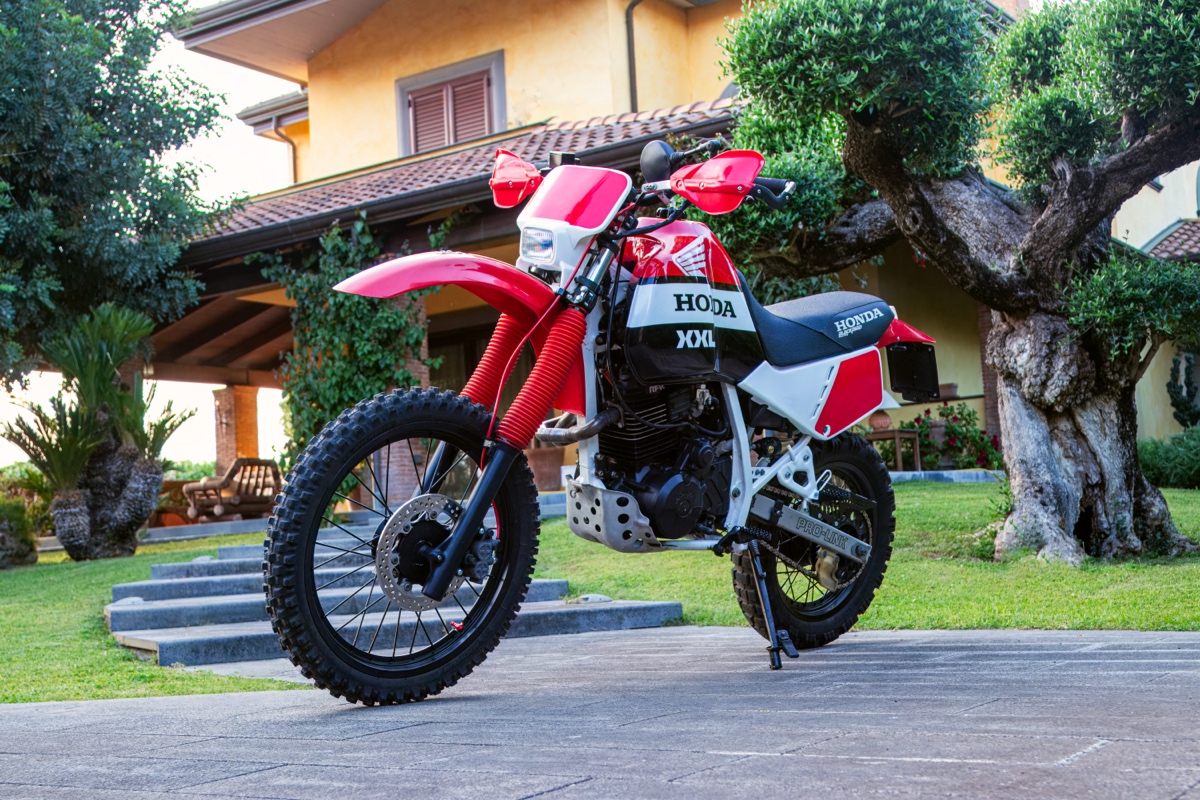
The donor was bad in shape, but it did already have the long-range Dakar tank that Francesco wanted. With the help of his team of trusted specialists, Francesco installed new brakes, overhauled the front forks, and his buddy Fabio Zoppo (@fabio_z_officina) converted the OEM rear shock to a gas-charged unit using components from a CBR shock — “Fabio, you’re a brilliant nut,” says Francesco.
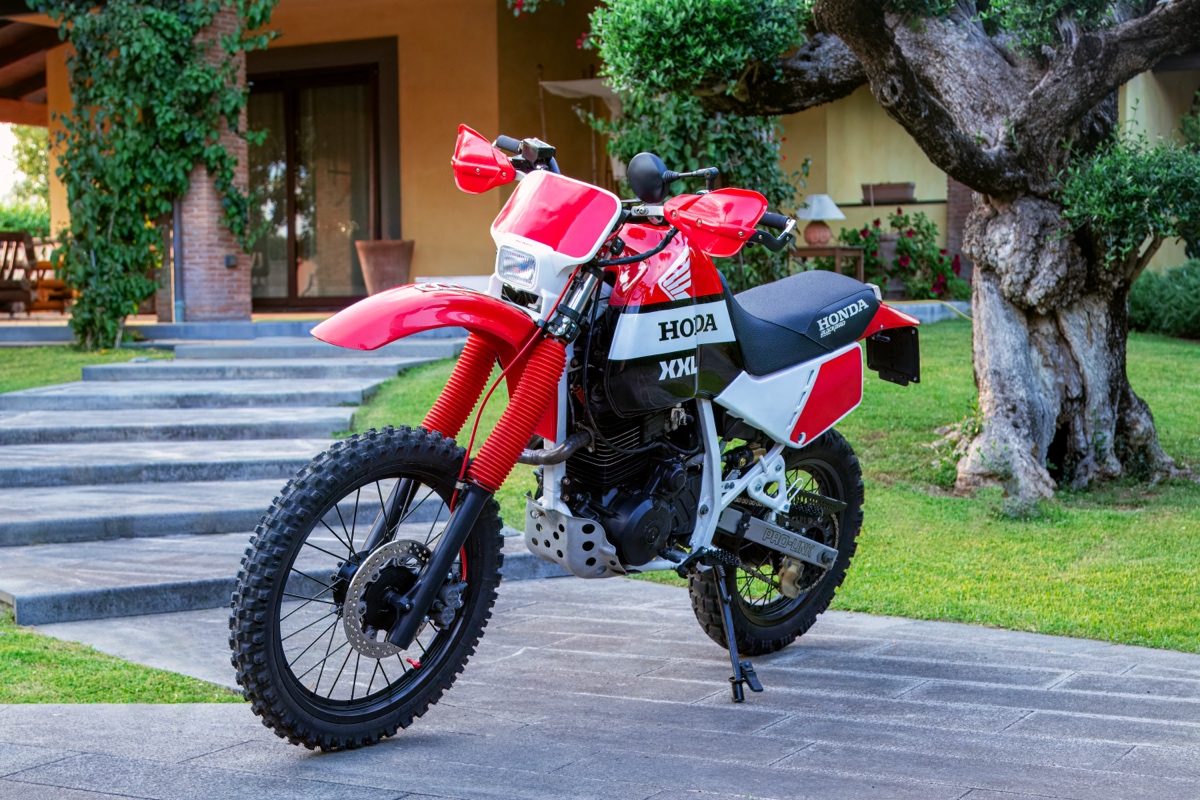
Fabio hand-crafted the exhaust system as well, and the side panels were made from fiberglass since original ones were too hard to find. The headlight comes from the XR600, and the bike is now running a digital speedo and LED indicators.
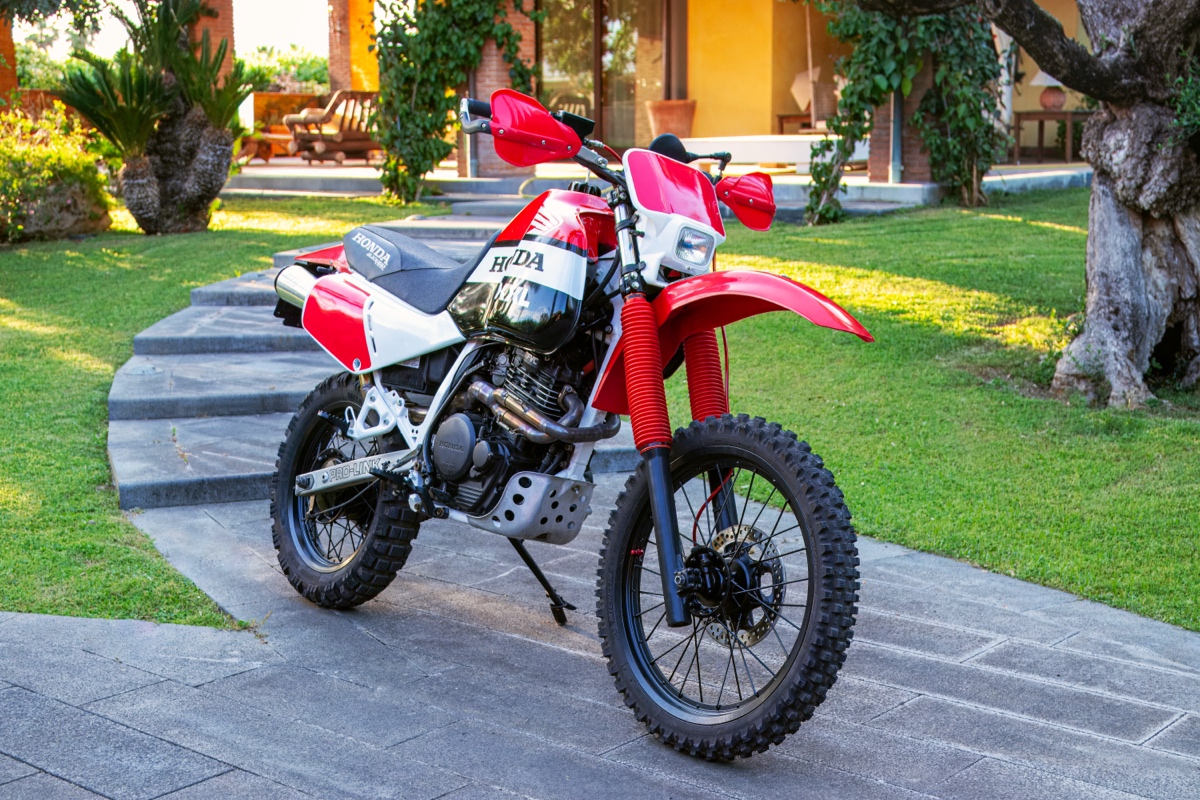
The fuel tank was modified to accommodate Ergal (7075 aluminum) caps, and the bike is running XR400 fenders — though the rear unit was modified significantly, including a metal frame to strengthen the fender and house the license plate.
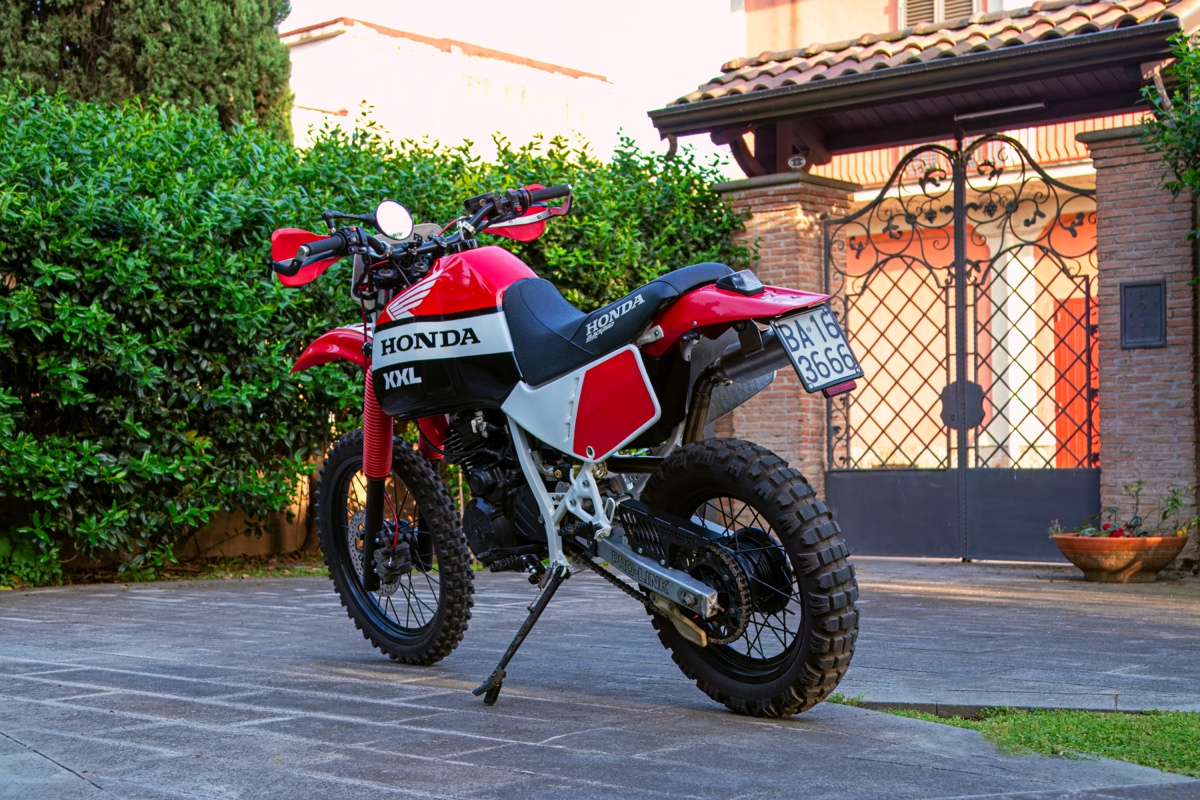
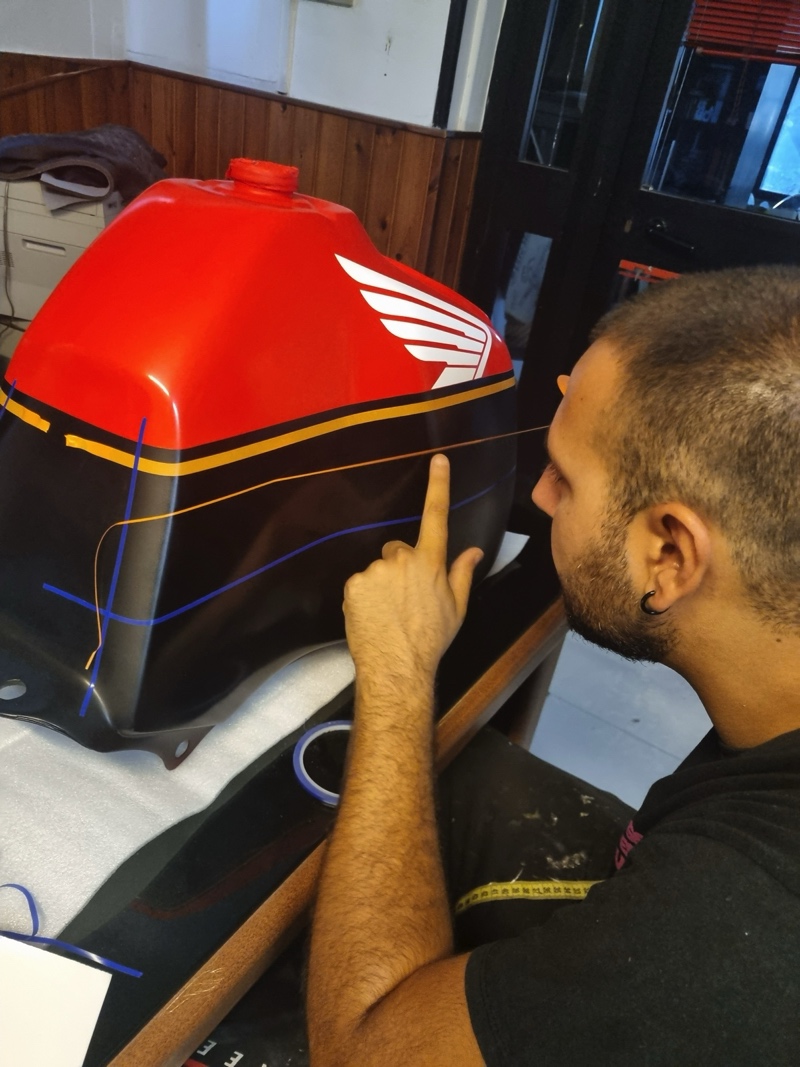
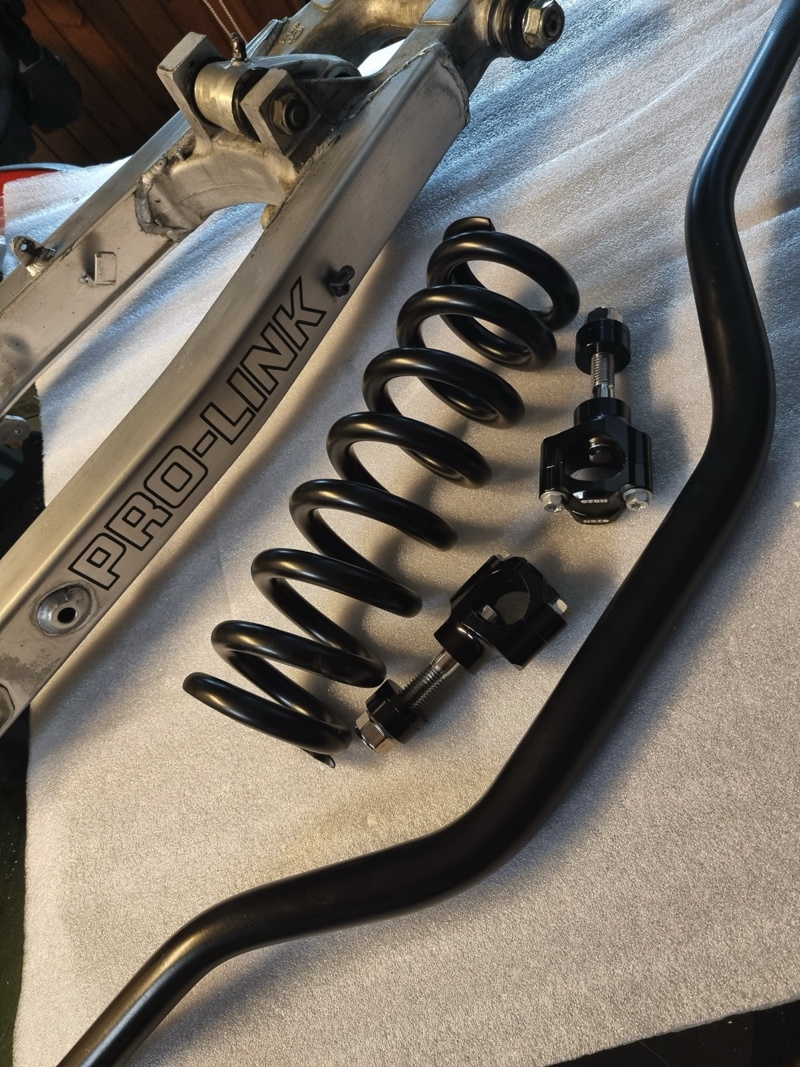
The frame, triple clamps, wheels, and shock absorber spring were powder-coated, and the rear swingarm brushed to a high polish. Aniello Rozza (@dreamsartandcolors_) airbrushed the tank, and the decals were applied beneath a clear coat.
The carburetors were rebuilt with a stage 2 Dynojet kit and racing air filterm, and the electrical system was overhauled. The list goes on.
“I’m proud to have resurrected a motorcycle that is a legend for my generation. I believe I’ve given it a new and captivating look, as well as improving its technical performance. All the single-cylinder bikes from those years should be preserved.”
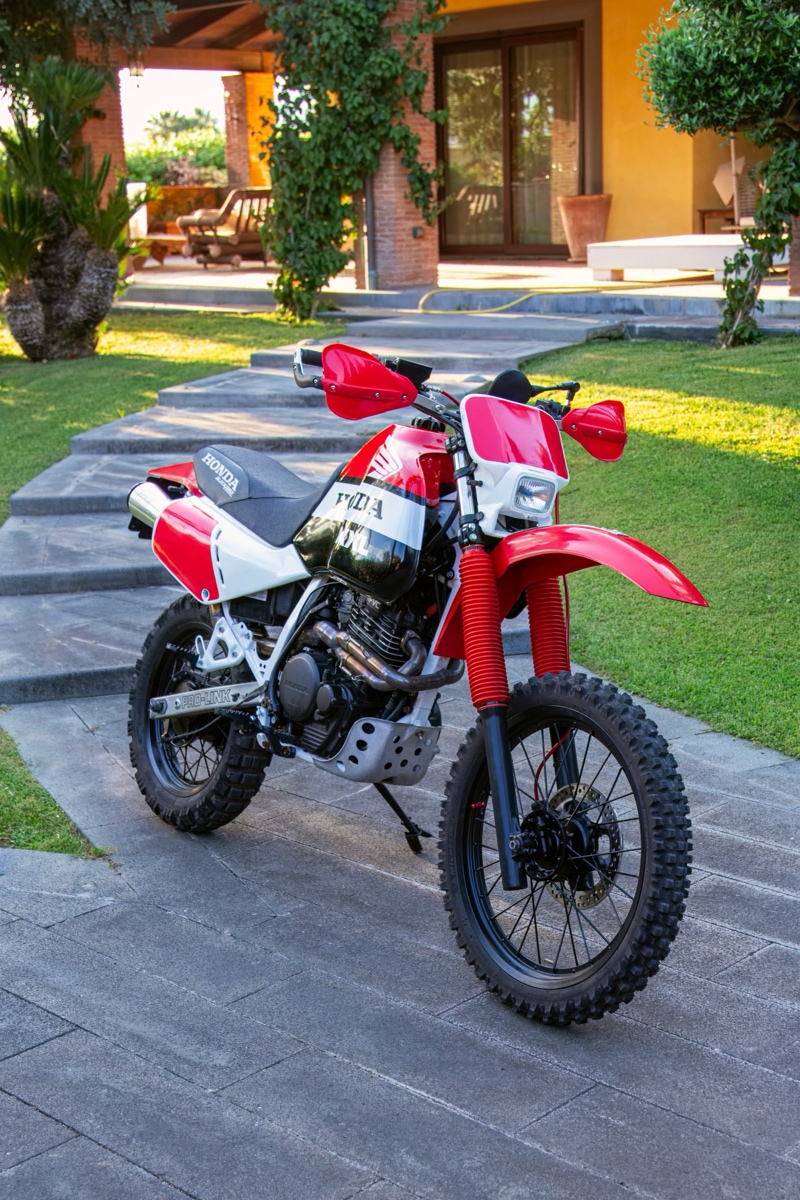
For Francesco, who’s 6’1″ and 240 lbs, this big “XXL600” is the perfect mount for adventure — a street-legal dirt bike that can handle commuting, touring, and off-road / desert trips.
“The updated suspension gives a feeling of security, even with a rear drum brake. The gear shift is smooth and intuitive, and the longer ratios compared to the XR make it perfect for desert crossings and for a mix of road and off-road use… You just have to hop on it and fall in love. The feeling of riding this type of bike is unforgettable. For me, there’s something poetic and indescribable about these bikes.”
We agree, Francesco! Thank you for resurrecting this iconic thumper — we wish you many miles and smiles on this Big Red beast!
Honda XL600 Restomod: Builder Interview
• What’s the make, model, and year of the bike?
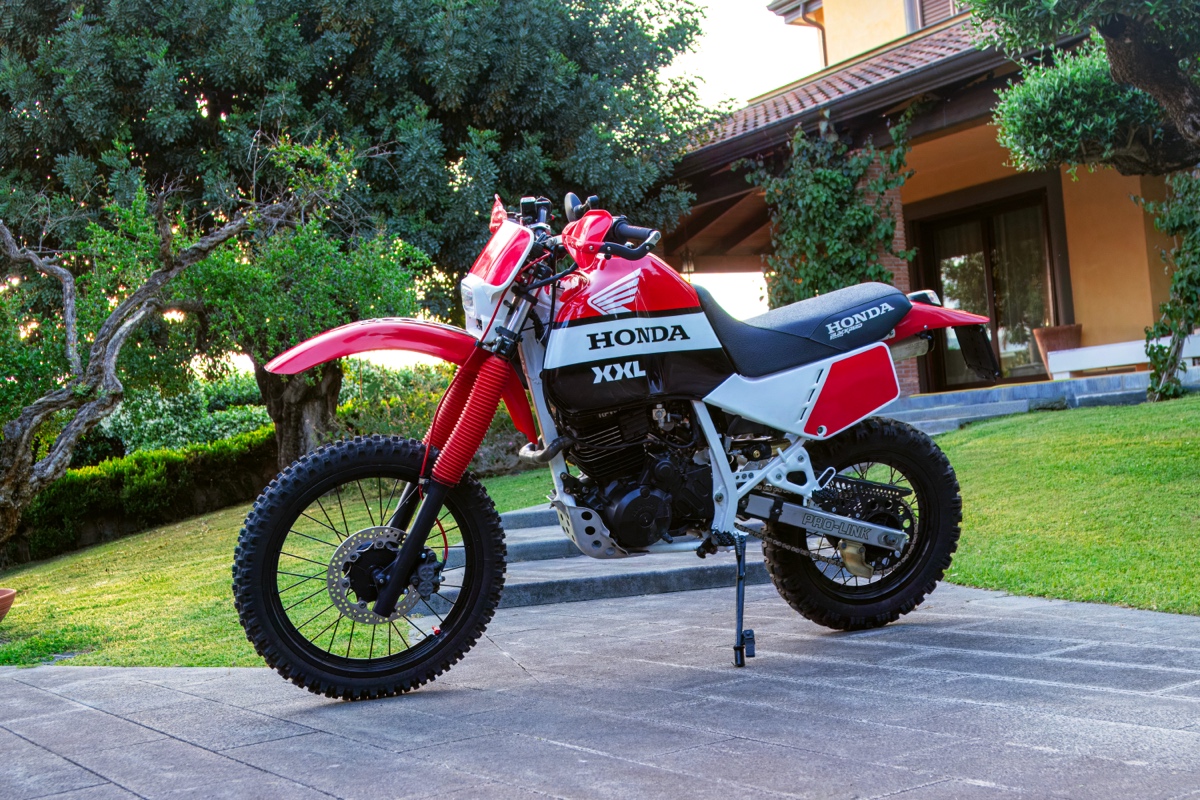
The starting bike is a 1987 Honda XL600RM. At the time, the XL600 was available in two versions: the RM with a small tank and the LM, also known as the XL Paris-Dakar. The bikes were practically identical, except for the tank, seat, and side number plates. The previous owner had already installed the LM tank and seat, which were needed for my project. So that was helpful. (Thanks Ciro, I hope you’re happy with the result.)
• Why was this bike built?
This is truly my personal bike. I’ve been building it over the last two years in my spare time between clients. I’ve always wanted that legendary Paris-Dakar bike, and I’ve loved Honda’s RFVC engines since I was a kid. I’m also in talks to buy an XR.
• What was the design concept and what influenced the build?
I’ve seen various restomods online based on XL600s, Dominators, and XR600s, with desert tanks. I immediately thought it would be fun to have a bike like that to ride every day. And it’s a great fit for my size: I’m 6’1″ and weigh 240 lbs (yes, I’m going on a diet, I promise!). Naturally, I tried to give my own interpretation to that type of build.
• What custom work was done to the bike?
The bike had been really abused. First, we fixed the upper triple clamp. The ignition switch housing was cracked. The frame, triple clamps, rims, and shock absorber spring were powder-coated.
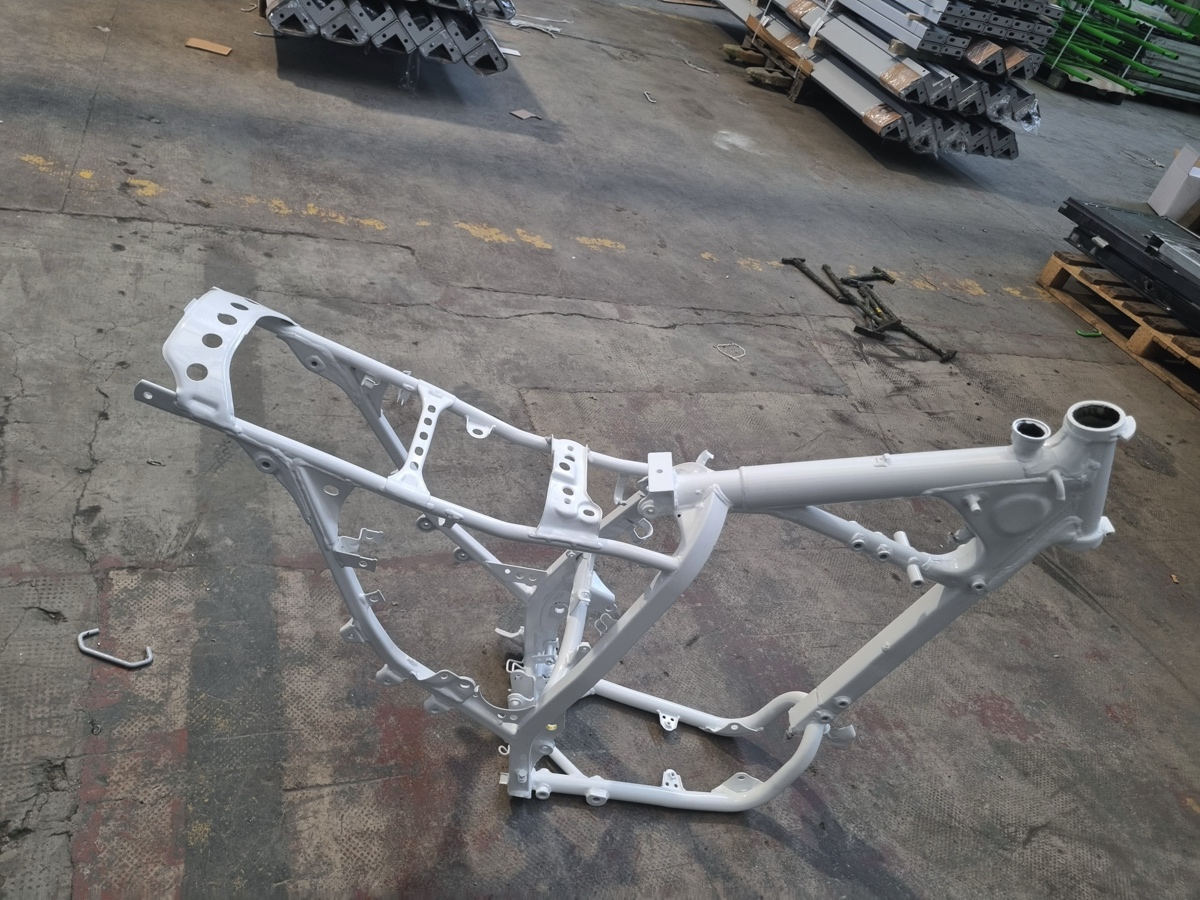
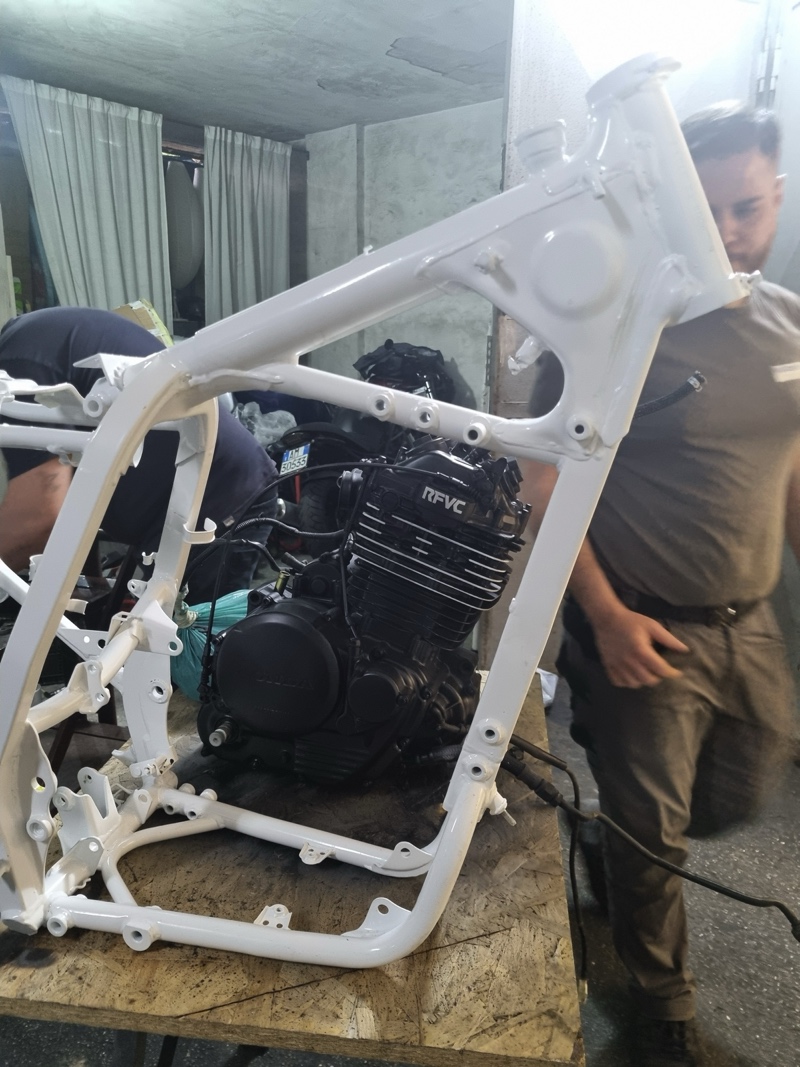
The rear swingarm was brushed to a high gloss. The tank was airbrushed and partially decaled under the clear coat.
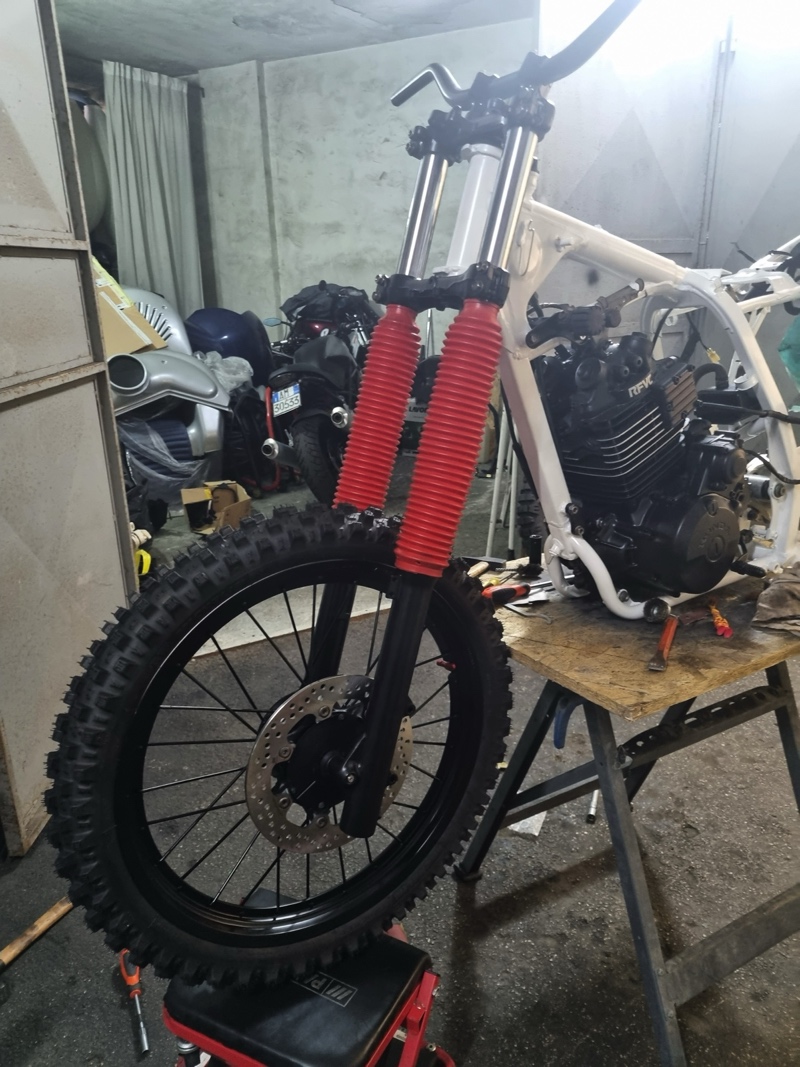
I installed completely new brakes. I overhauled the front fork with progressive springs.
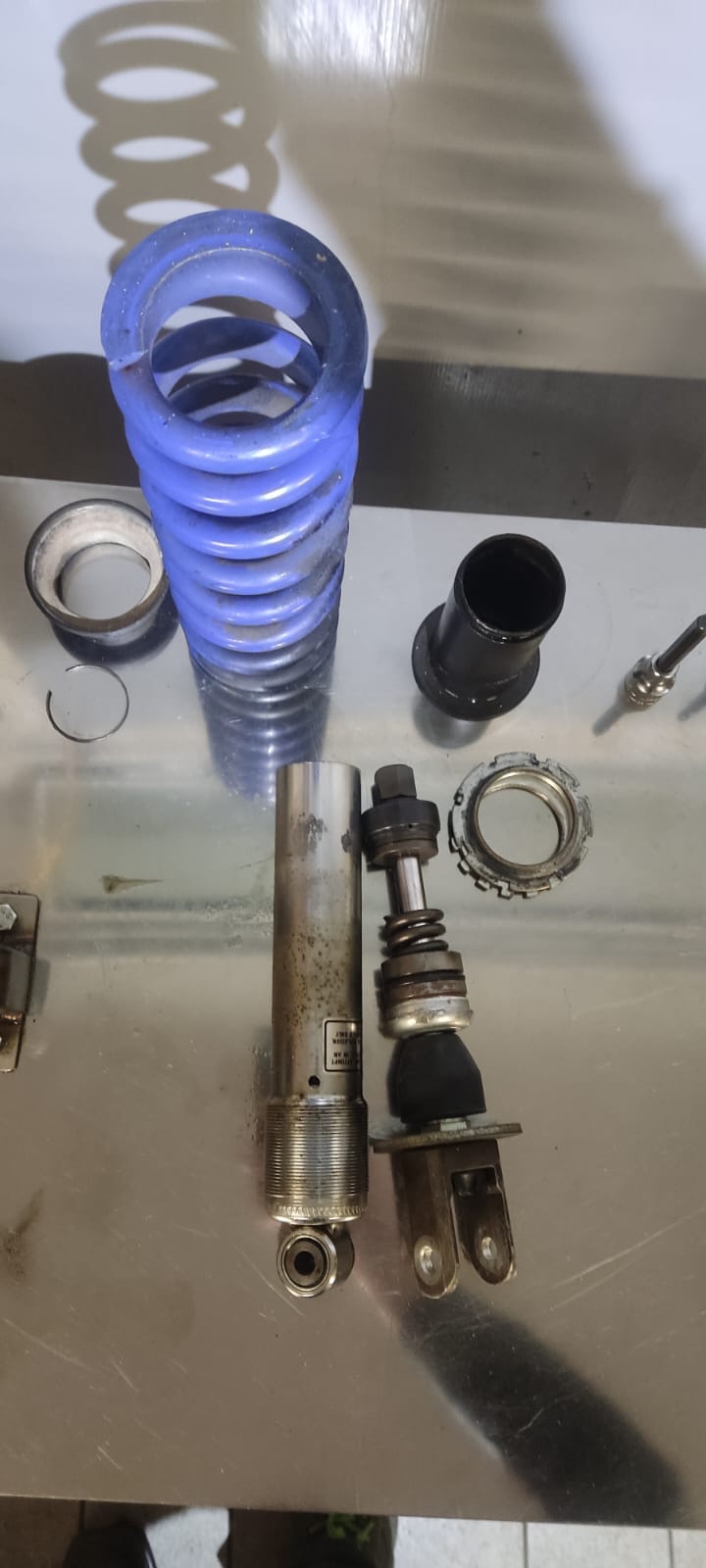
The original shock absorber was converted to a gas-charged monoshock using components from a CBR shock absorber (Fabio, you’re a brilliant nut).
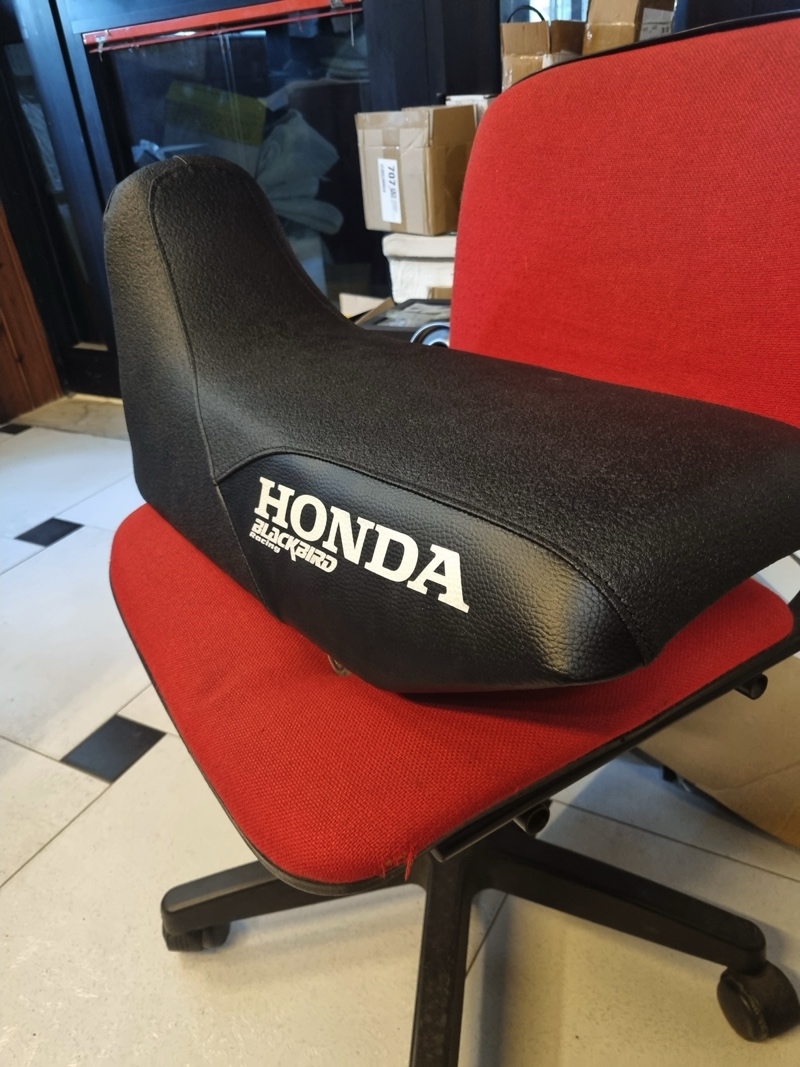
The seat was reupholstered with anti-slip material. The exhaust was handcrafted. The number plates were made of fiberglass because original ones are hard to find.
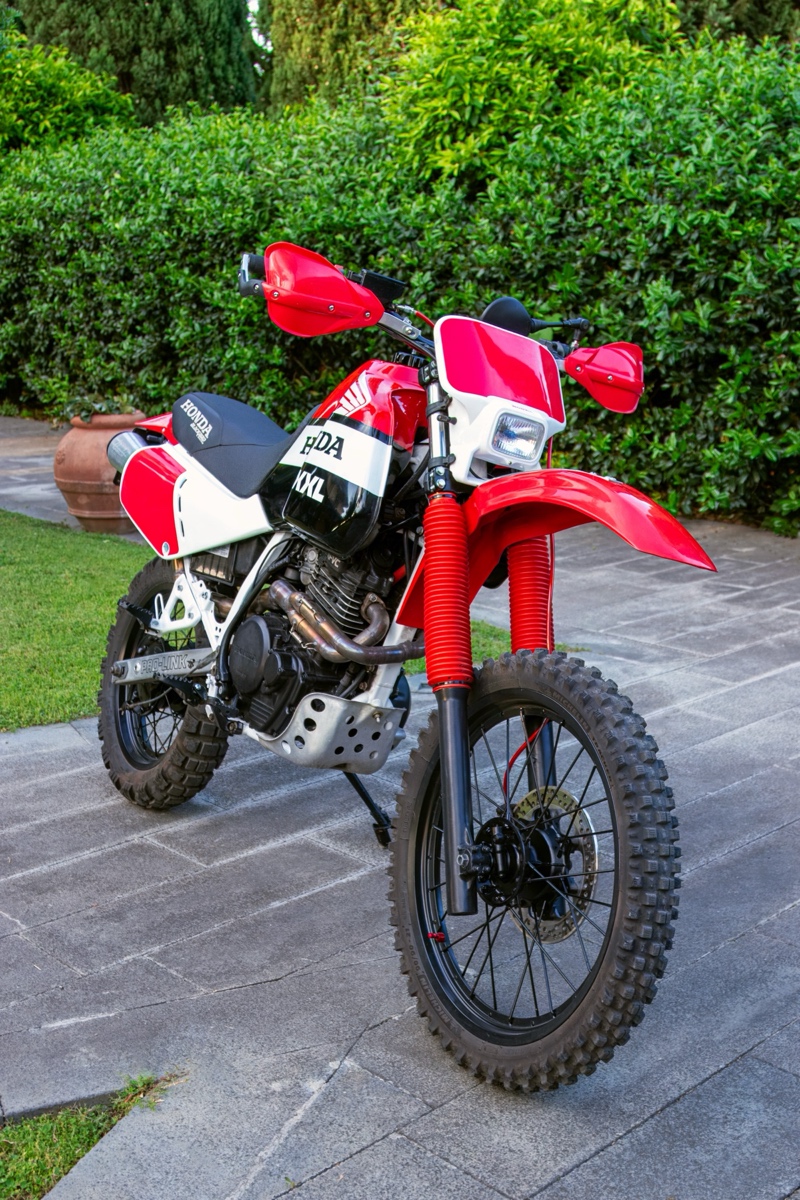
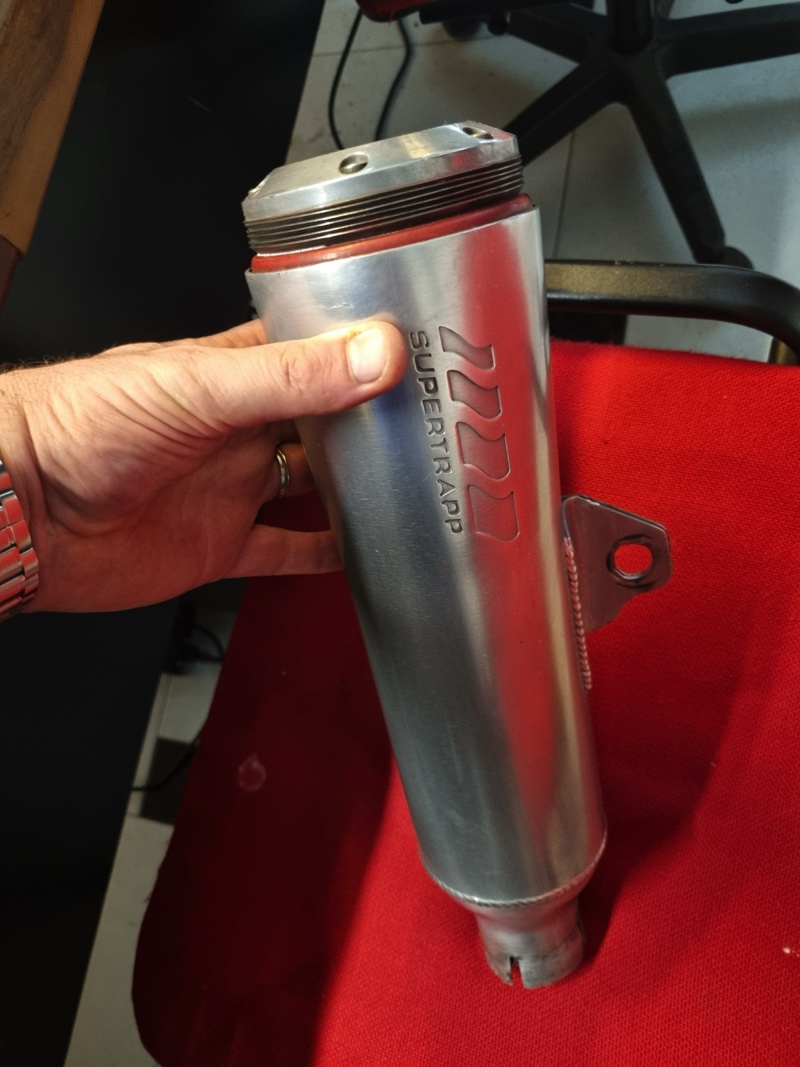
We overhauled the carburetors with a stage 2 Dynojet kit and a racing air filter. The electrical system was overhauled. A new chain drive was installed. For the exhaust, I wanted a Supertrapp from the same period as the bike, which I found on an eBay auction. The fenders are from the Honda XR400, but the rear one has been significantly modified, and we created a metal frame to strengthen it and house the license plate.
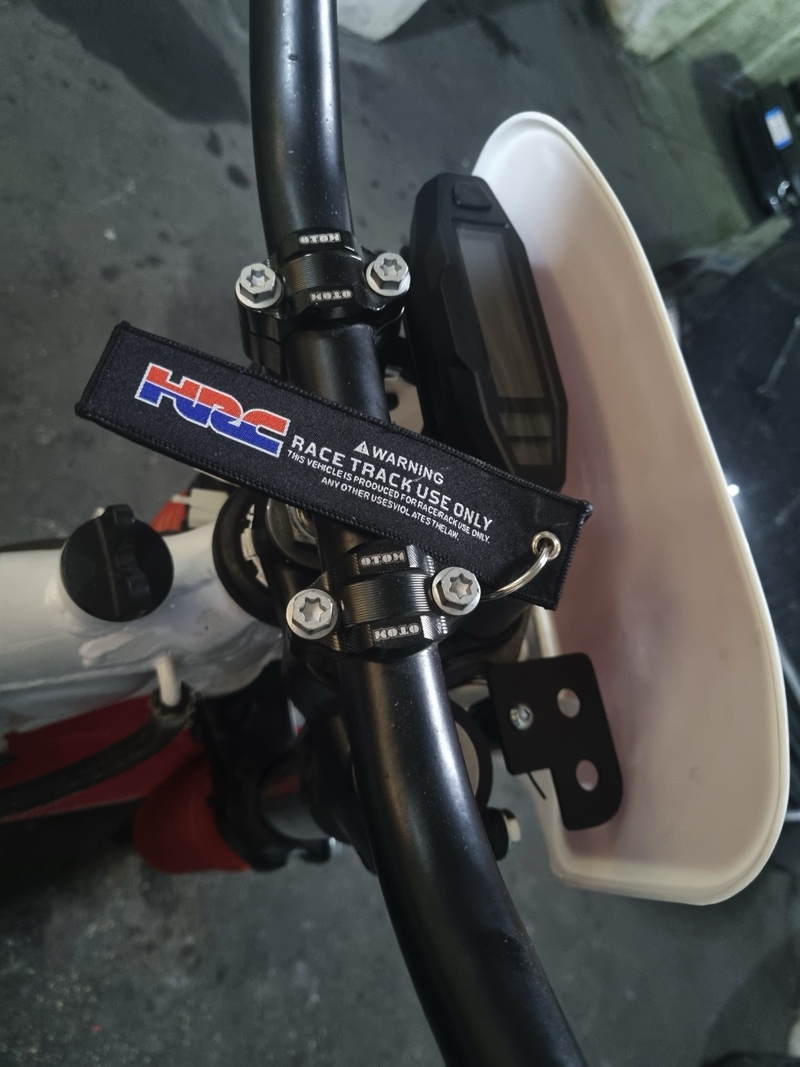
The front headlight is the iconic headlight from the XR600 America. The speedometer is digital, and the turn signals are LED. The fuel tank has also been modified with a lathe-machined metal mount to fit the Ergal caps. The handlebars have a tapered section, and the risers are aluminum.
• Does the bike have a nickname?
As you can read on the tank, I called it XXL. The XL (eXtra Light) acronym from Honda indicates enduro bikes also suitable for the road, what we call dual-purpose today. But it’s also a clothing size. My size is XXL because I’m tall and big. So I thought I’d call it XXL.
• Can you tell us what it likes to ride?
The bike is incredibly fun to ride. The updated suspension gives a feeling of security, even with a rear drum brake. The gear shift is smooth and intuitive, and the longer ratios compared to the XR make it perfect for desert crossings and for a mix of road and off-road use. It’s easy to handle and very comfortable. You just have to hop on it and fall in love. The feeling of riding this type of bike is unforgettable. For me, there’s something poetic and indescribable about these bikes.
• Was there anything done during this build that you are particularly proud of?
I’m proud to have resurrected a motorcycle that is a legend for my generation. I believe I’ve given it a new and captivating look, as well as improving its technical performance. All the single-cylinder bikes from those years should be preserved.
• Is there anyone you’d like to thank?
I thank my team, which is made up of wonderful and truly capable people. Salvatore Mattiello, Marco Di Pinto, and Luca Colucci for helping me with the complete assembly. Fabio Zoppo for making the exhaust and converting the shock absorber (madness). Vincenzo Giglio for the powder coating. Aniello Rozza for the side panels and airbrushing the tank. And finally, Don Gennaro Napolitano, an 85-year-old legendary turner who made the fuel cap mount for me. Thank you for putting up with me and enthusiastically embracing all my ideas!
Follow the Builder
Design director: @Francesco_Paura
Mechanical / Custom Work: Salvatore Mattiello (@southcustomsnaples), Marco Di Pinto, Luca Colucci (@customizermoto)
Exhaust / Rear Shock: Fabio Zoppo (@fabio_z_officina)
Airbrush: Aniello Rozza (@dreamsartandcolors_)
More Francesco Paura Builds
 Resto Enduro: Honda “XXL600” Restomod - Francesco Paura resurrects a legendary thumper… In 1983, Honda released the original RFVC (Radial Four Valve Combustion) single-cylinder dirt bikes, which were destined to become icons of a generation. With a hemispherical combustion chamber, centrally […]
 Retro Supermoto: Honda FMX650 “Kaze” - Vinduro-Style 650 Motard from Francesco Paura… Introduced in 2005, the Honda FMX650 featured the beloved old single-cylinder RFVC engine from the Honda Dominator in a supermoto package. Unlike competition bike-based motards, like those built […]
 Boxer Bruiser: BMW R1200R Custom Roadster - Remade Roadster from Italy’s Francesco Paura… Introduced in 2006, the BMW R1200R was a big Boxer roadster whose high-cam, four-valve 1170cc flat-twin was good for 109 hp and 85 lb-ft of torque — a 28% […]
 Bulldog to Bull Terrier: Yamaha BT1100 Custom - Francesco Paura and friends transform a V-Twin Bulldog… In 2001, Yamaha introduced the BT1100 Bulldog, a naked V-twin designed and produced in Italy. Italian style and Japanese build quality is one solid combination, and the […]
 Cookie Monster: Yamaha MT-01 Custom - Got Torque? 1.7L V-twin from Francesco Paura… Yamaha’s popular MT series is said to stand for “Master of Torque.” However, one bike in the MT lineage has stood above the rest in that department, the […]
 El Calcolante: Honda Hornet 600 - Italy’s Francesco Paura builds one bad black Hornet… Introduced in 1998, the Honda CB600F Hornet — known as the 599 here in the States — quickly earned a strong reputation among racers, couriers, and commuters […]


Sooooooo nice‼️‼️
Would absolutely be proud to own a terrific build like this‼️‼️
👏👏👏