
 Reborn “Modello Motogiro” from Argentina’s Coronas Modificadas…
In the mid-1950s, the Ducati Gran Sport “Marianna” was the “uncontested queen” of Gran Fondo (endurance) races like the Milano–Taranto and Motogiro D’Italia. The single-cylinder, bevel-gear-driven OHC “Miracle of the Motogiro” dominated these grueling, long-distance open-road stage races against larger, more powerful machines.
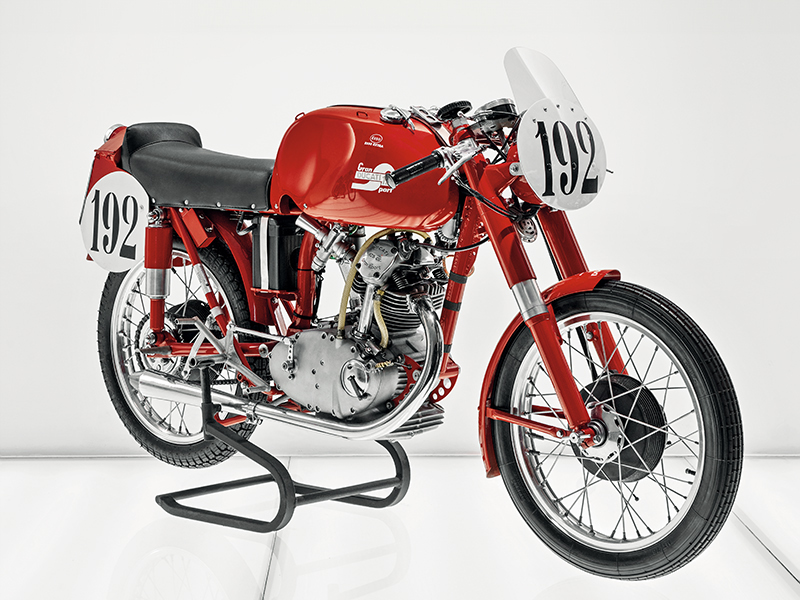
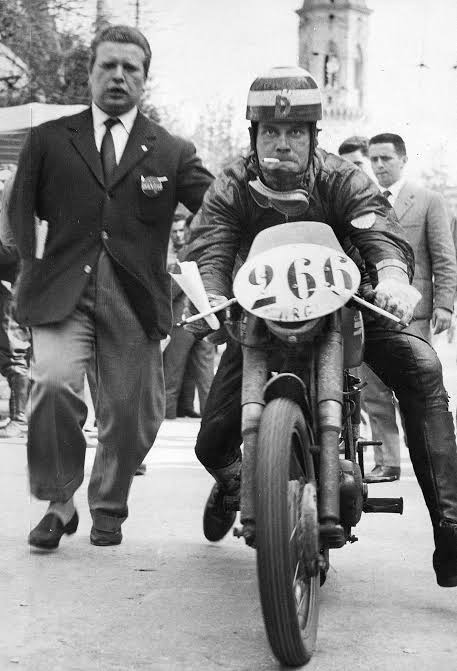
In 1956, for instance, Giuliano Maoggi piloted his 125 Ducati to victory in the Motogiro D’Italia, averaging a speed of 99.792 km/h (62 mph) over a total of 25 hours and 53 minutes, beating the 175cc class winner by nearly 10 minutes. Soon, Ducatisti wanted a production version of the machine.
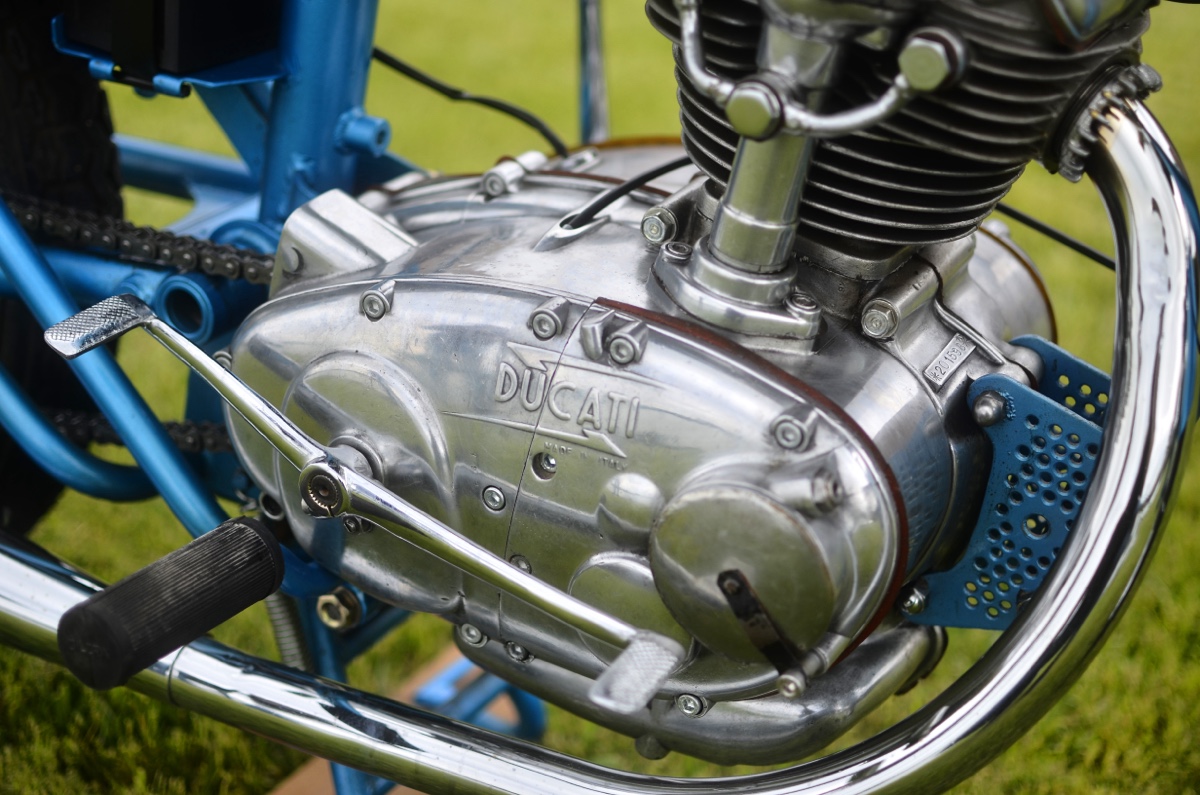
Thus, engineer Fabio Taglioni set out to design the Ducati 100 and 125 Sport series, also known as the “Modello Motogiro” for their close technical relationship to their racing brethren. These sporting singles featured unit-construction engines (rare at the time) serving as stressed members of the single-downtube frames. They had a gear-driven primary drive, wet sump lubrication, a battery ignition, and of course the iconic camshaft drive with a bevel gear at the top.
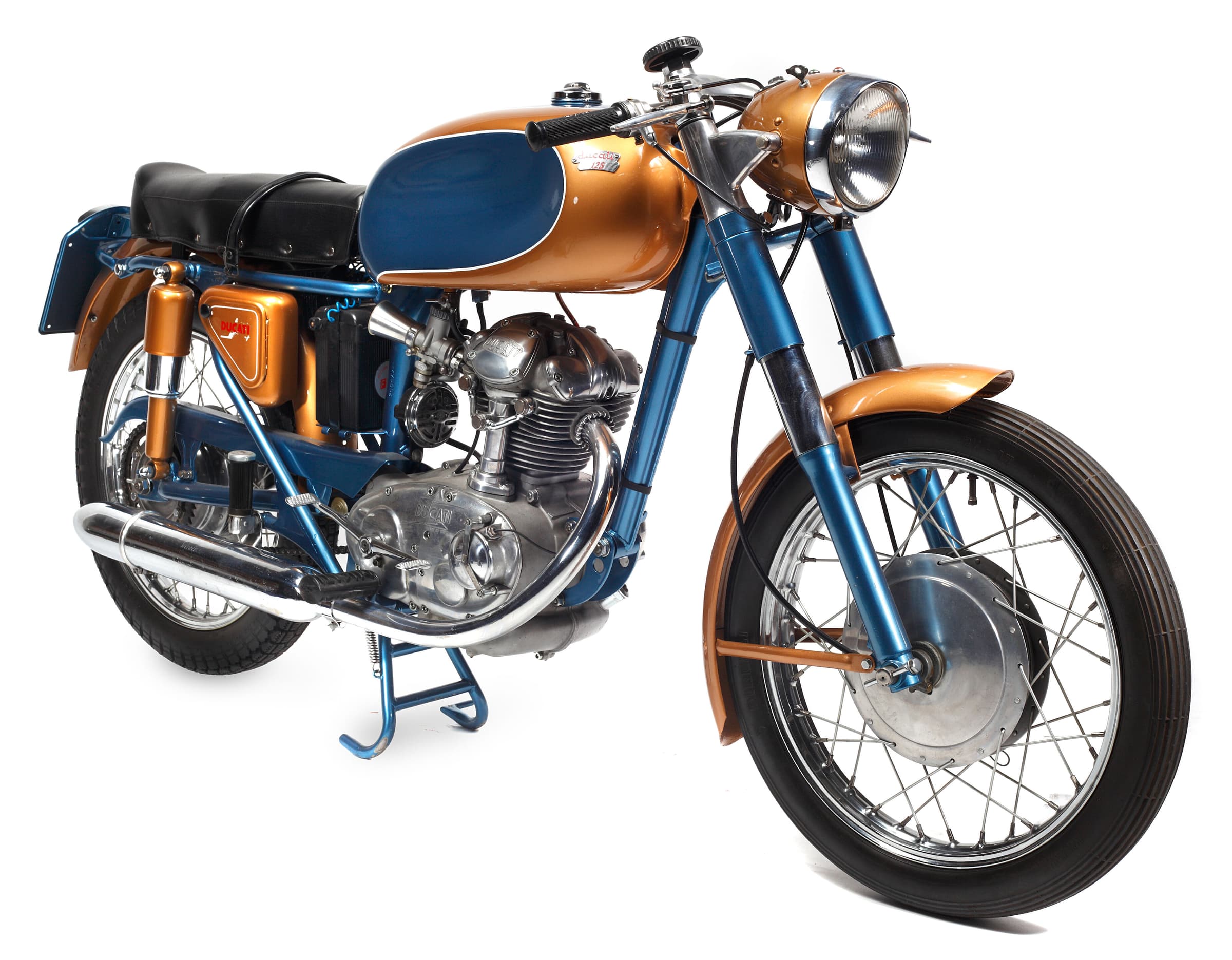
The 125 Sport produced 10 horsepower at 8500 rpm, weighed 222 pounds, and had a top speed in stock trim of 70 mph. With the factory race kit, however, top speeds of 95 mph became possible. Of course, there was the added mystique of piloting a machine directly derived from a dominant road racing machine of the era.
“Ducati singles proved to be among the most versatile ever produced by an Italian manufacturer. In the home market, boy racers would stick a number plate and fly screen over the headlamp and go racing. In the American market, importers avoided the low handlebars in favor of buckhorn bars with full windshields, setting the bikes up for long-distance touring.” –Hemmings
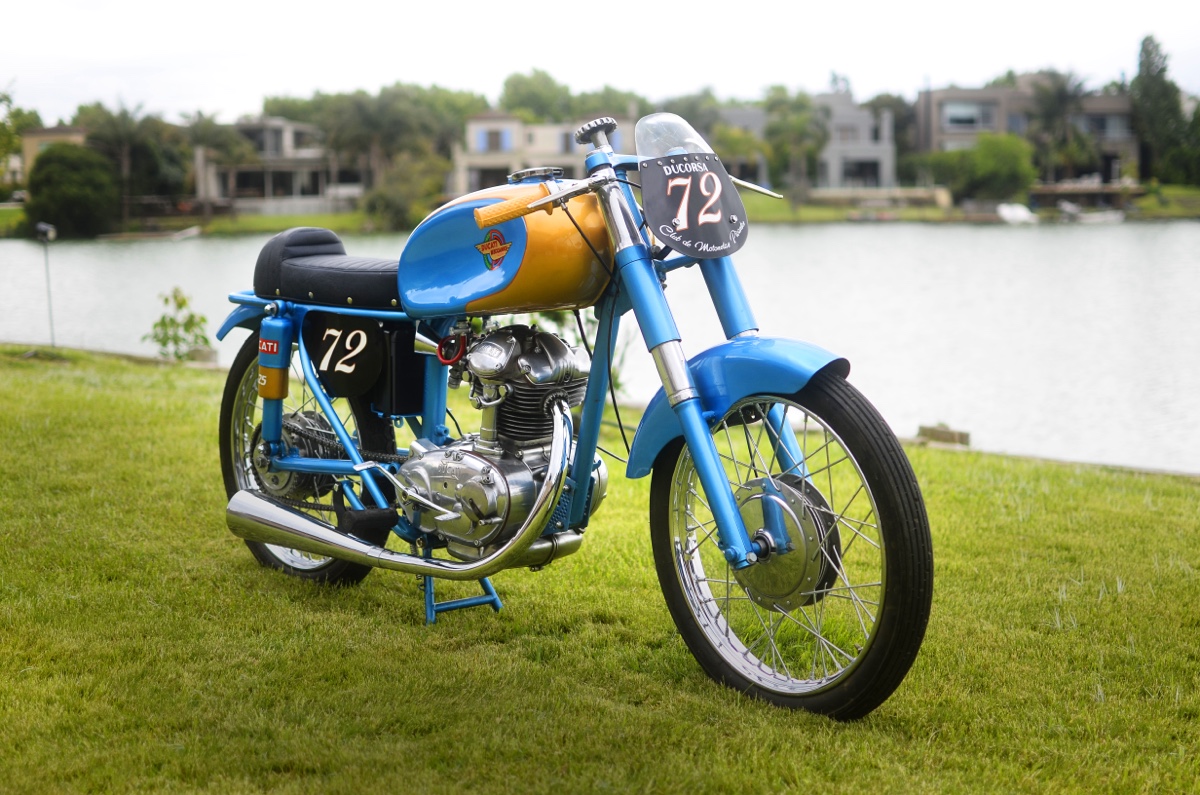
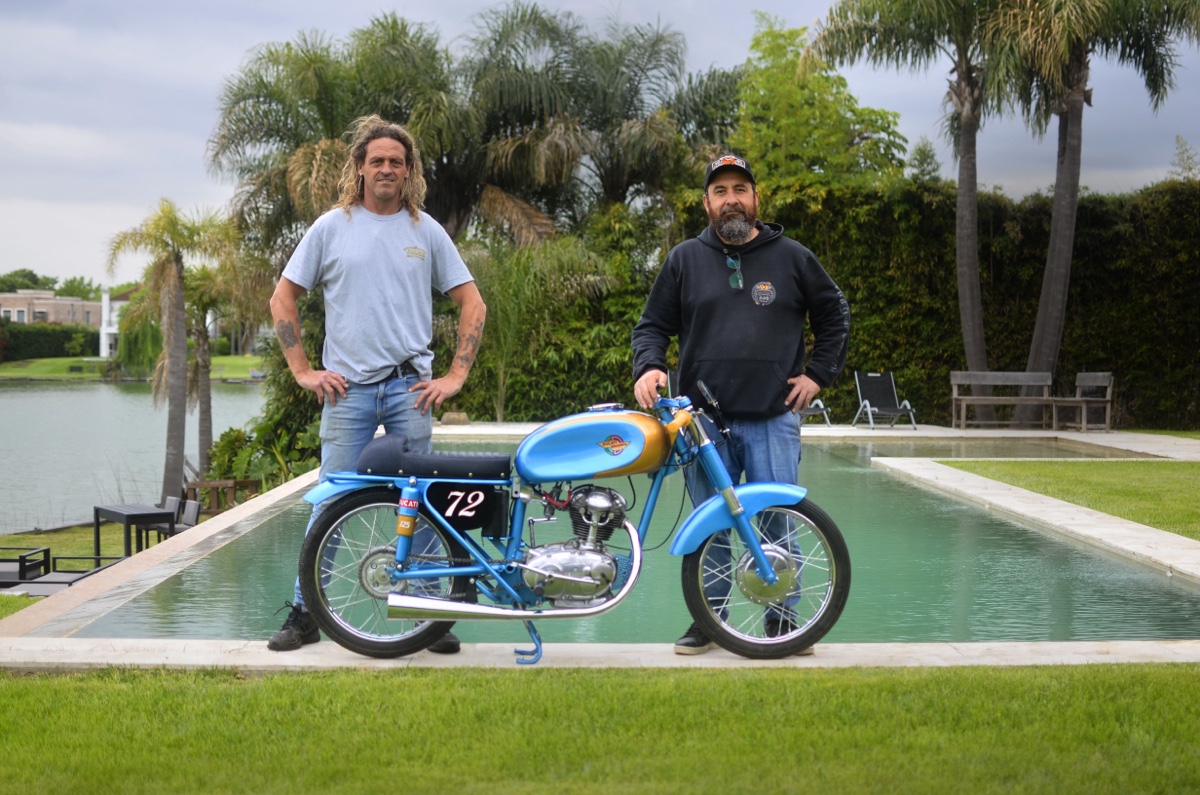
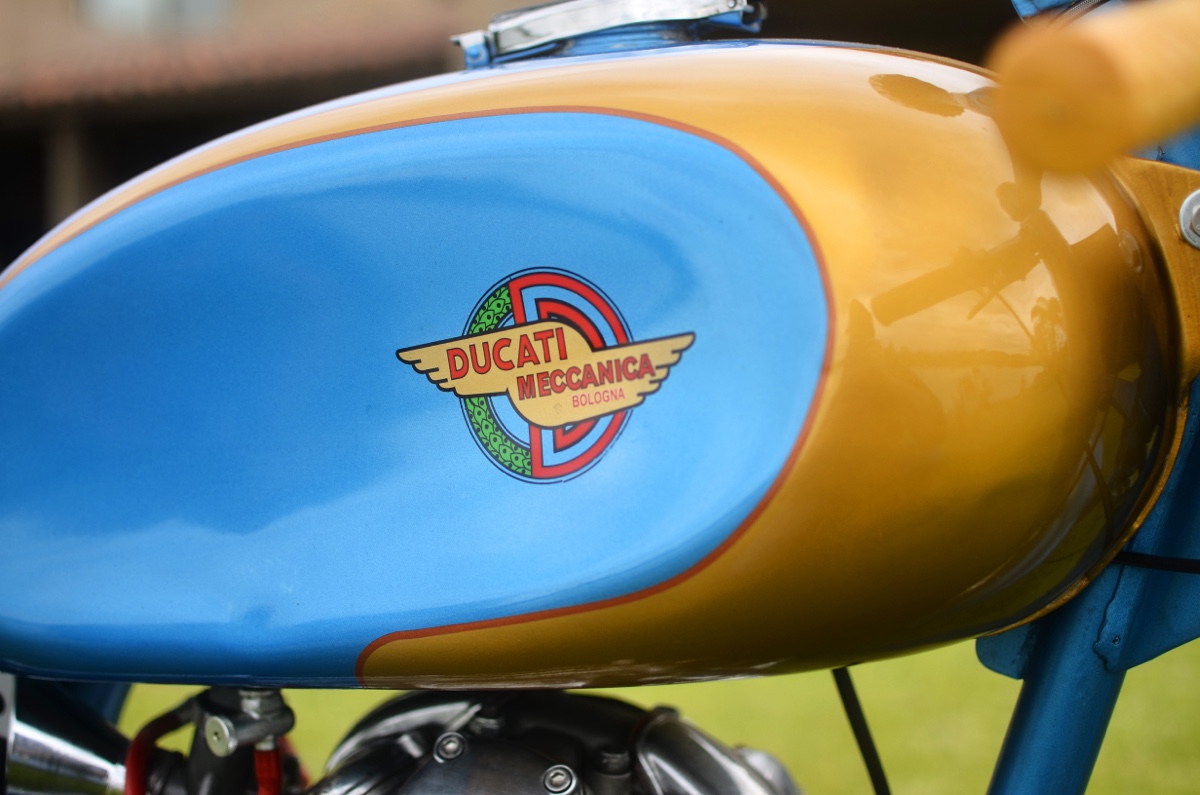
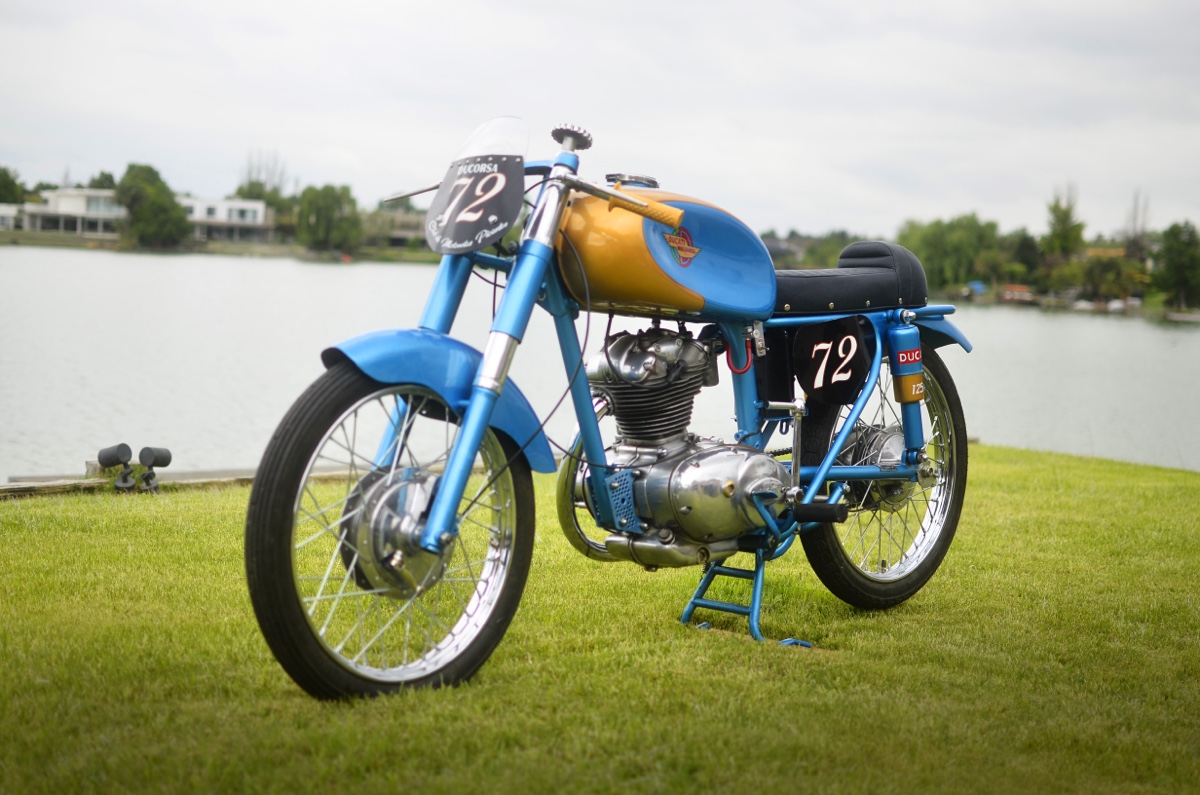 This 1961 Ducati 125 Sport comes from Gabriel Jiménez of Coronas Modificadas — a workshop based in Buenos Aires, Argentina.
“My workshop is a humble place where motorcycles arrive in crates, boxes, completely disassembled, or with missing parts, and leave finished in their original style, racer style, or with a specific modification requested by the client.”
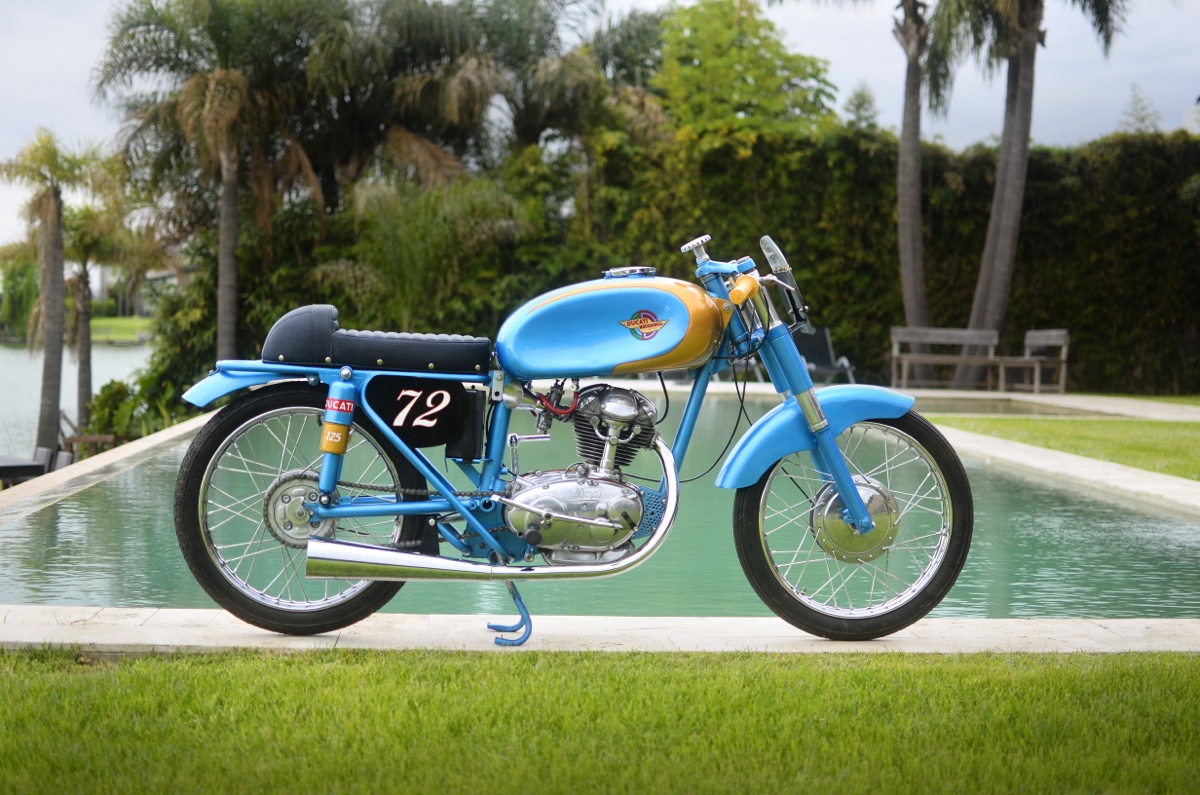
True to form, this 125 Sport arrived completely disassembled after a succession of past workshops didn’t give it the attention it deserved. The owner, Matías Bracuto, is a friend of Gabriel’s, and wanted to restore the bike into an old-school café racer like the kind that might have zipped around the streets of Rome or coursed the Italian countryside in the 1960s.
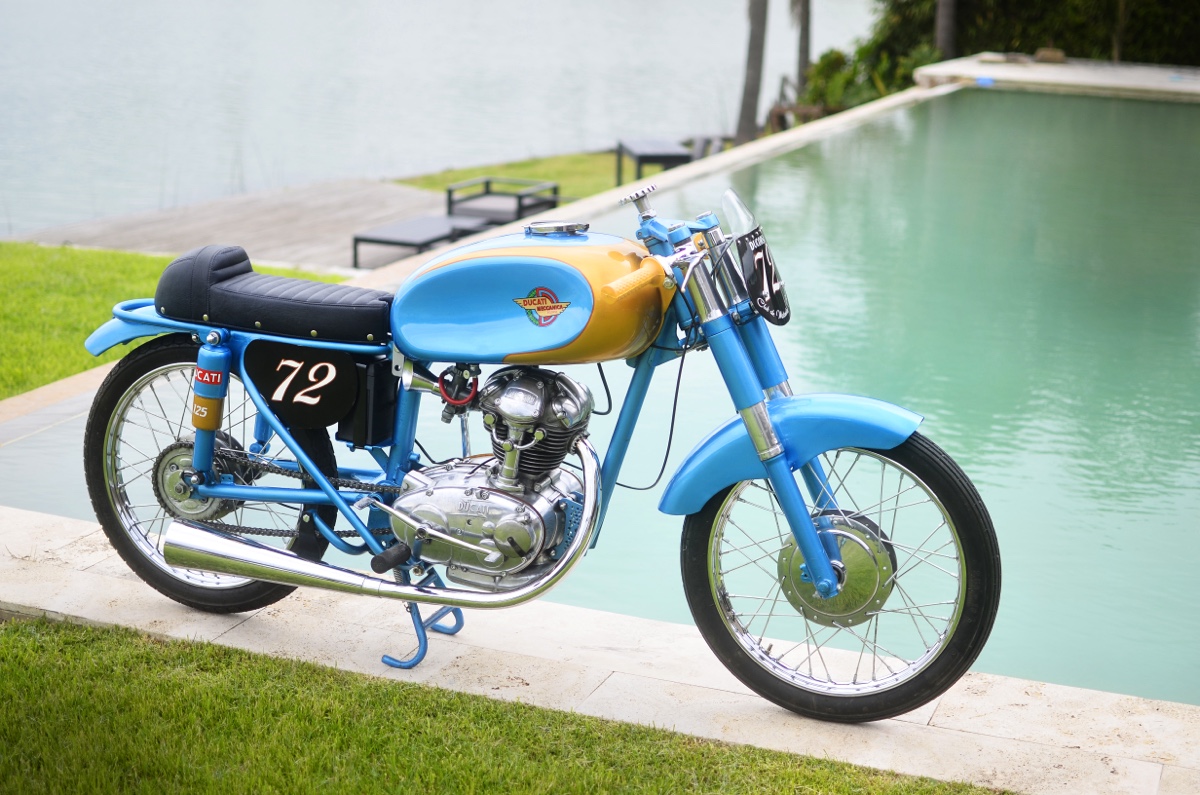
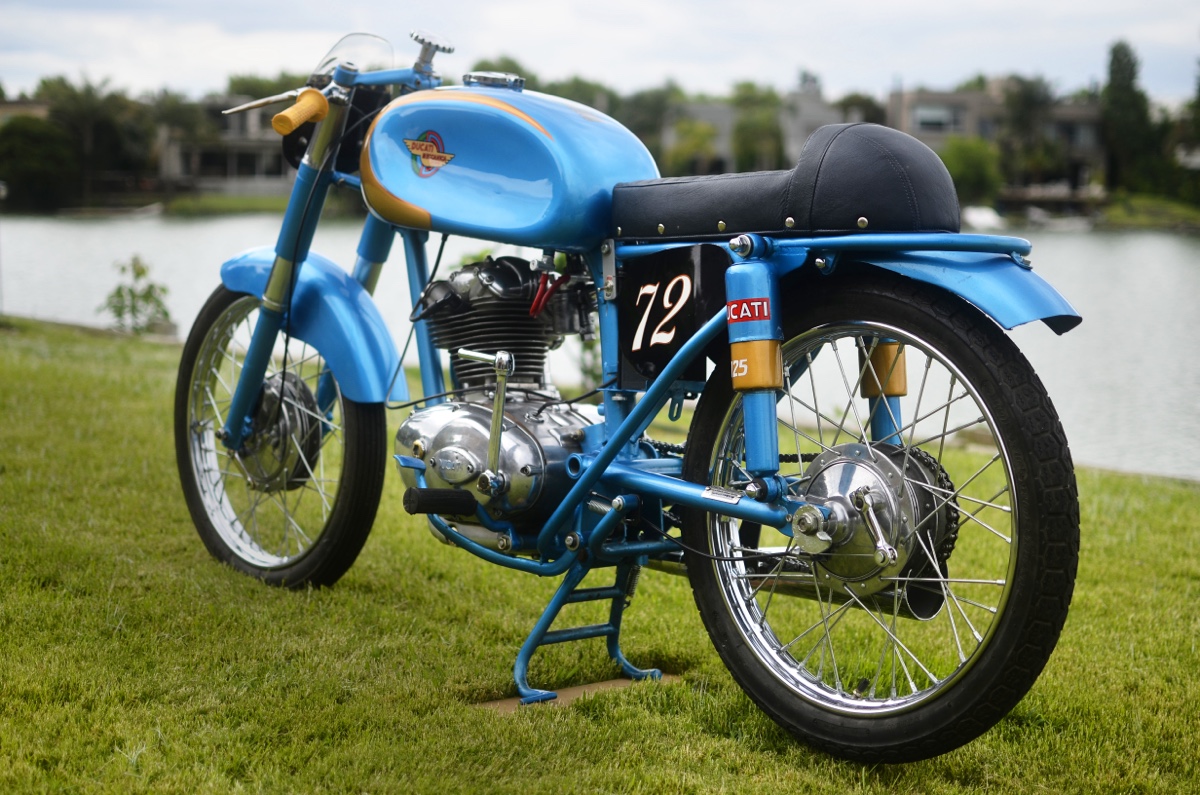
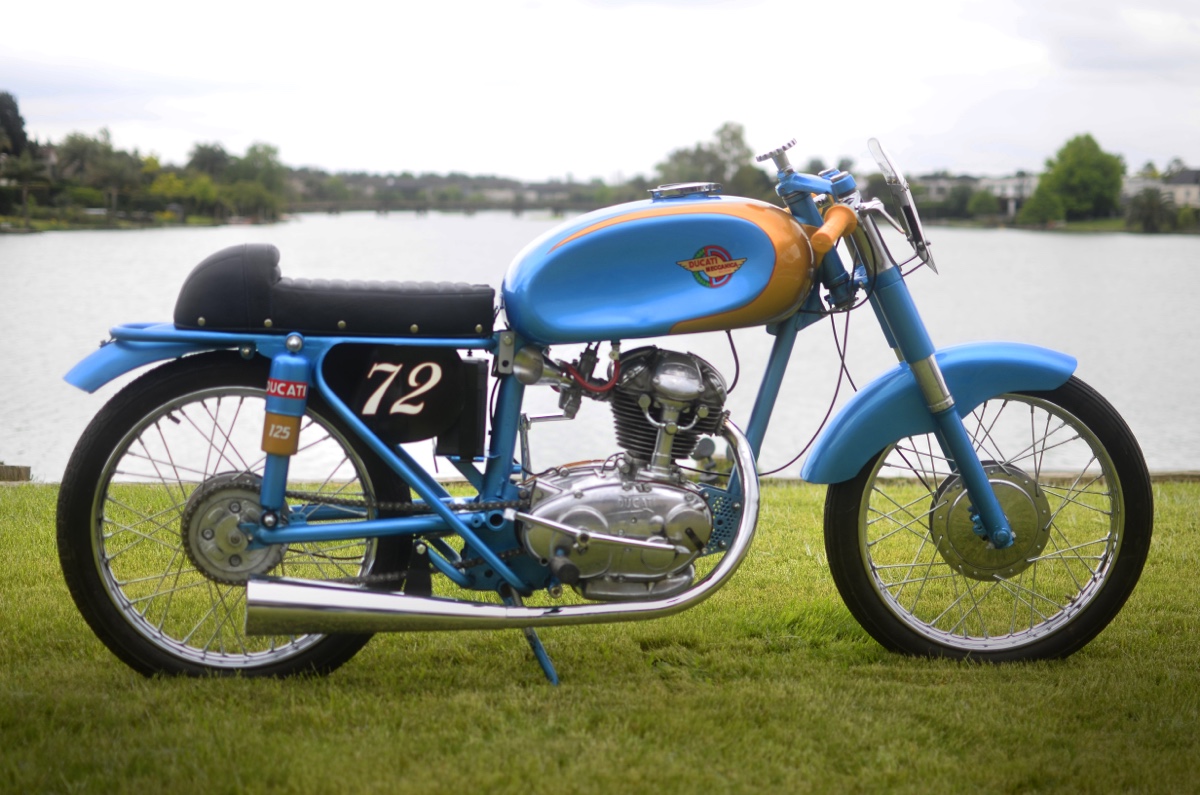
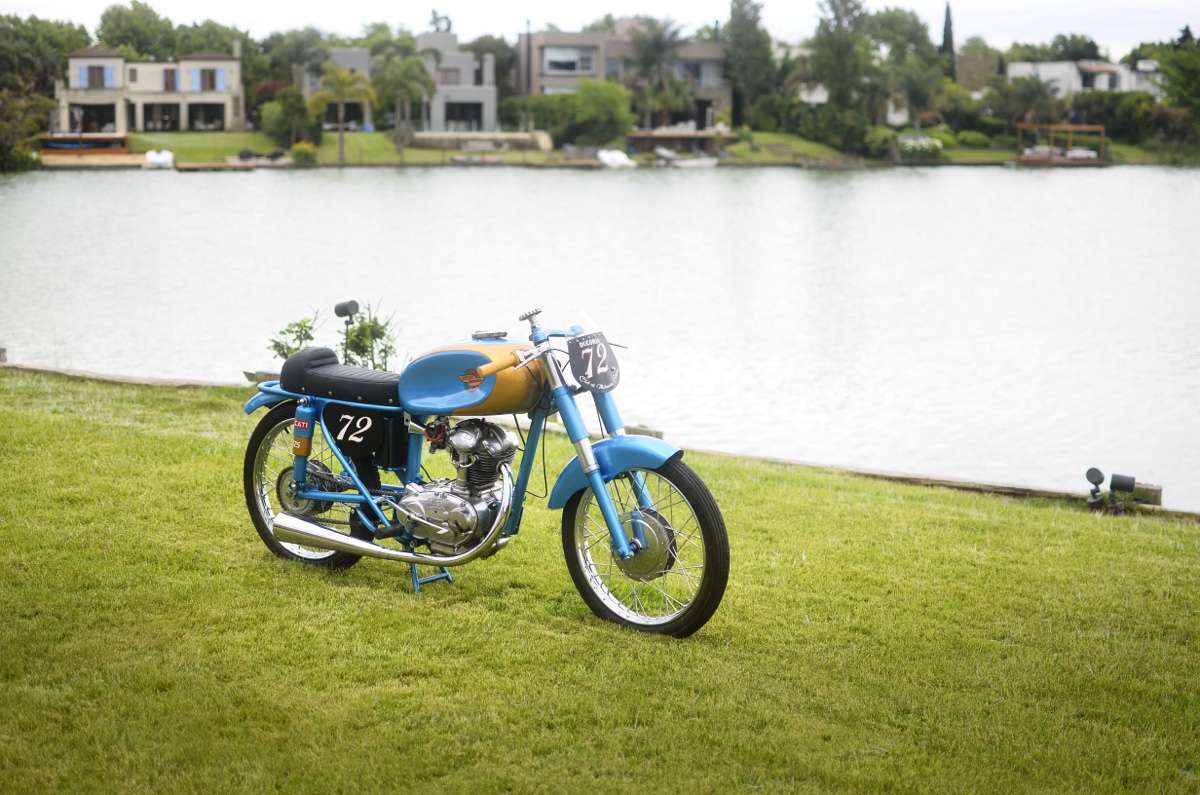
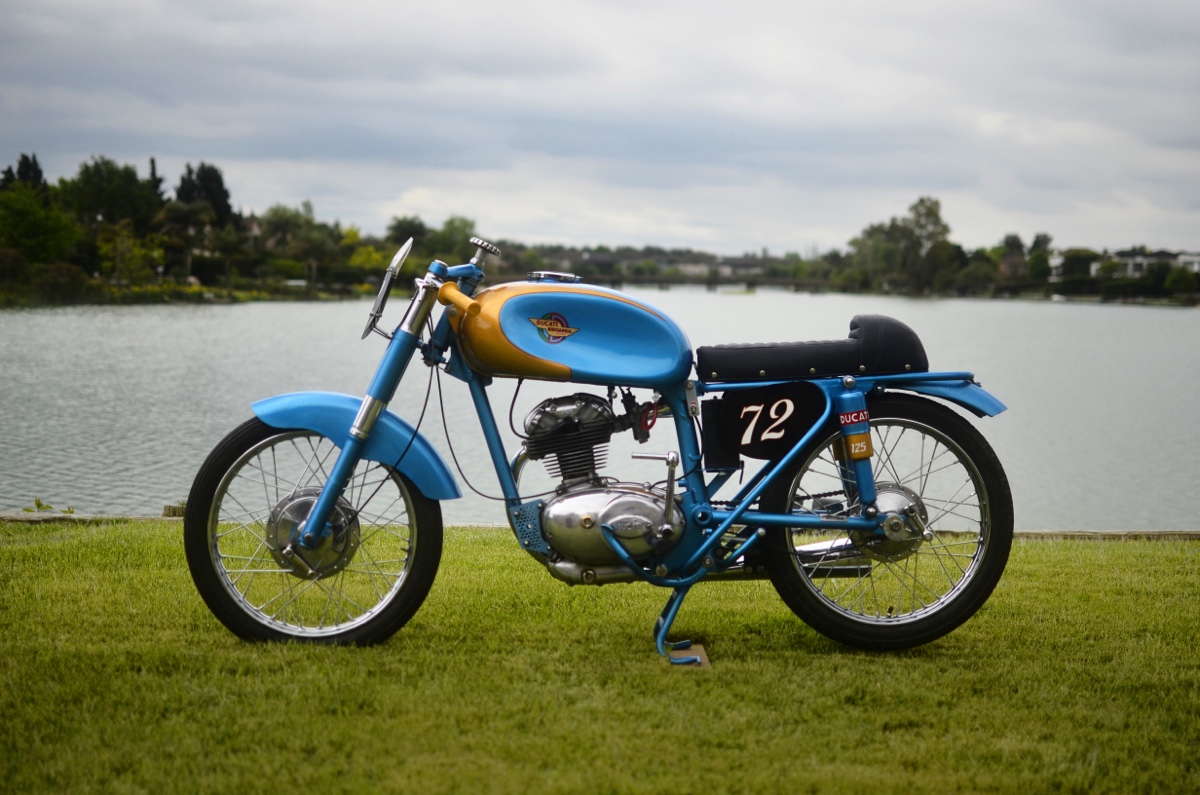 The project was as much a restoration as customization. Still, Gabriel outfitted this little Duc with an array of custom parts: the number boards, seat, fenders, wheels, handlebars, tank mounts and latches, and some “minor engine improvements.” The result is a jewel-like single-cylinder racer that looks ready to tackle a 1960s Motogiro. Gabriel has appropriately christened the machine the “Ducorsa” (half Ducati, half Corsa), and the front number plate reads Club de Motonetas Picantes — the Spicy Scooter Club.
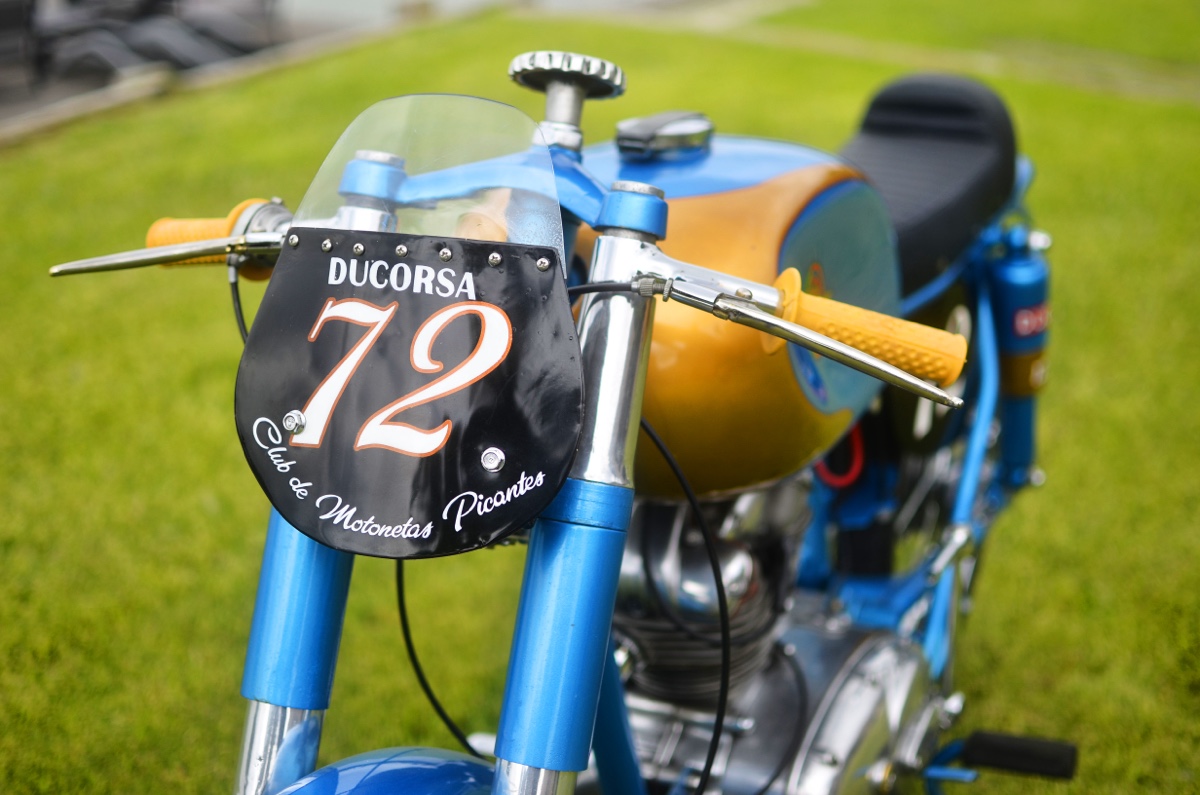
As you can imagine, this is one spicy single on the street:
“It’s small in size, but it has long gear ratios, good acceleration, and a high top speed.”
We absolutely love this reborn Ducati single that harks back to the glory days of the legendary open-road stage races of mid-century Italy. Bravo, Gabriel — we look forward to featuring more of your work!
Ducati 125 Sport: Builder Interview
• Please tell us a bit about yourself, your history with motorcycles, and your workshop.
My name is Gabriel, and I am the owner of a workshop called Coronas Modificadas in Buenos Aires, Argentina. Among all the work I do, I regularly restore vintage British, Italian, American, and of course, Argentinian motorcycles.
My workshop is a humble place where motorcycles arrive in crates, boxes, completely disassembled, or with missing parts, and leave finished in their original style, racer style, or with a specific modification requested by the client.
• What’s the make, model, and year of the donor bike?
The donor bike is a 1961 Ducati 125 Sport that arrived completely disassembled, and I was commissioned to give it a café racer design and name it “Ducorsa.”
• Why was this bike built?
The project came to me from a friend and client, Matías Bracuto, who told me that it had been through several workshops and nobody gave it the importance it deserved, so I started restoring it as a personal favor.
• What was the design concept and what influenced the build?
For the design, I took a picture and, using the photo of an identical motorcycle that I own, I began to map out the changes and modifications, and I built it respecting that sketch.
• What custom work was done to the bike?
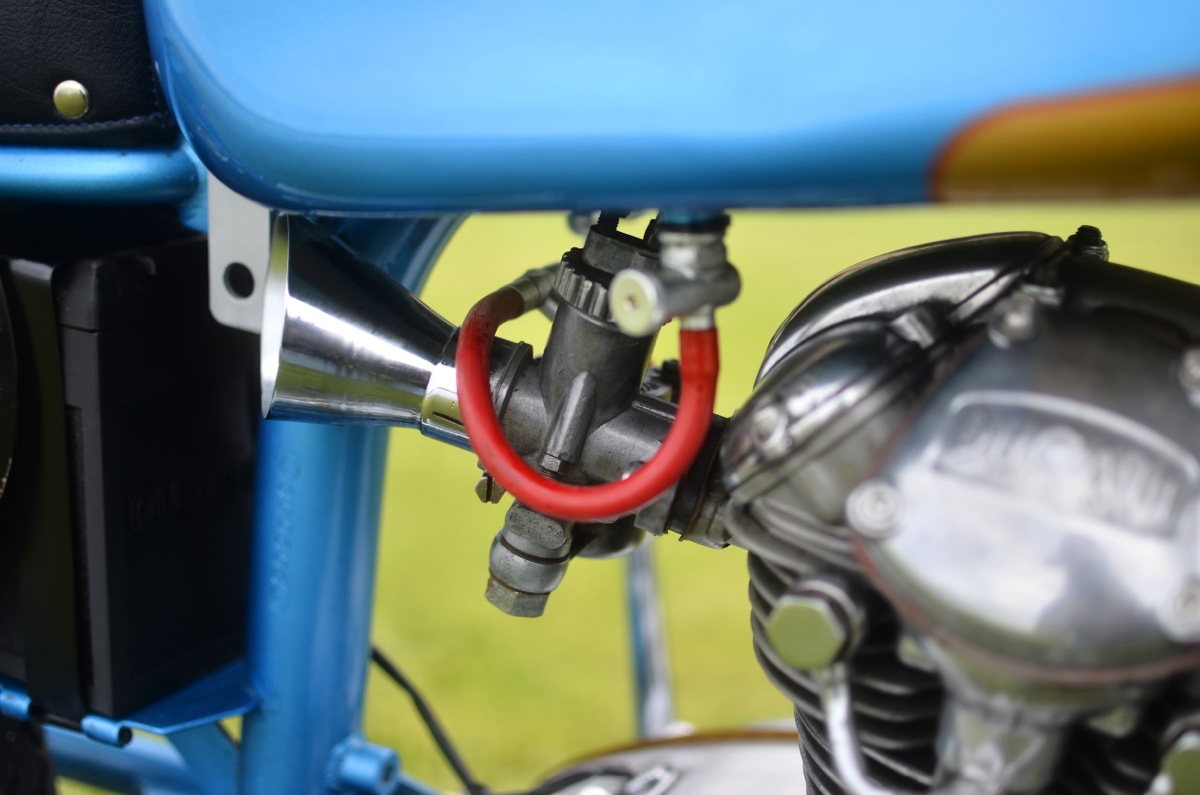
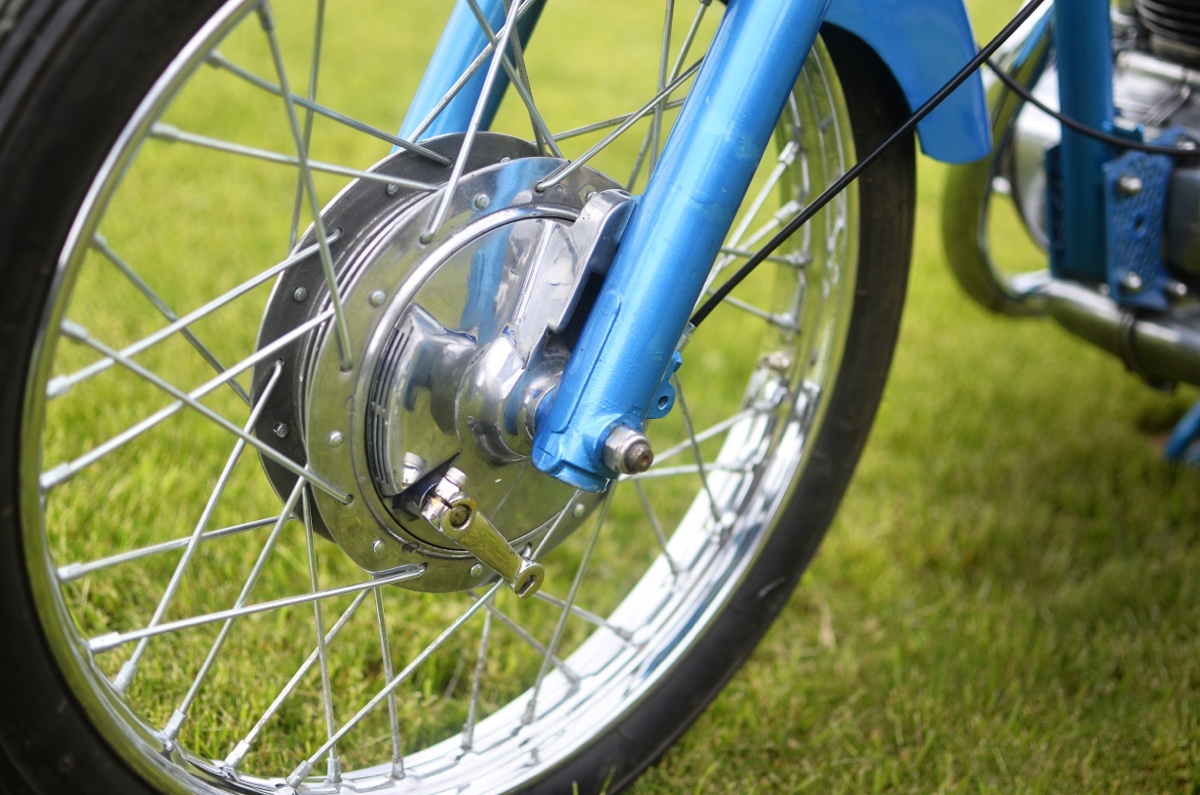
Not much custom work was done, except for the side numbers and the front number board, the seat, custom fenders, the mount and latches for the fuel tank, the handlebars, the wheels, and some minor engine improvements.
• Does the bike have a nickname?
Every motorcycle that leaves my workshop has a nickname; the one for this Ducati is DUCORSA, half Ducati, half corsa.
• Can you tell us what it’s like to ride this bike?
Riding that motorcycle is strange, because it’s small in size, but it has long gear ratios, good acceleration, and a high top speed. At the traffic lights, you have to play with the throttle so it doesn’t stall, haha.
• Was there anything done during this build that you are particularly proud of?
What I am most proud of regarding Ducorsa is having been able to finish that project: six years in the workshop, with tons of missing parts and pieces that were broken, deteriorated, or completely useless, and it left the workshop as a motorcycle worthy of being ridden.
Follow the Builder
Instagram: @coronas_modificadas
Facebook: Coronas Modificadas


