

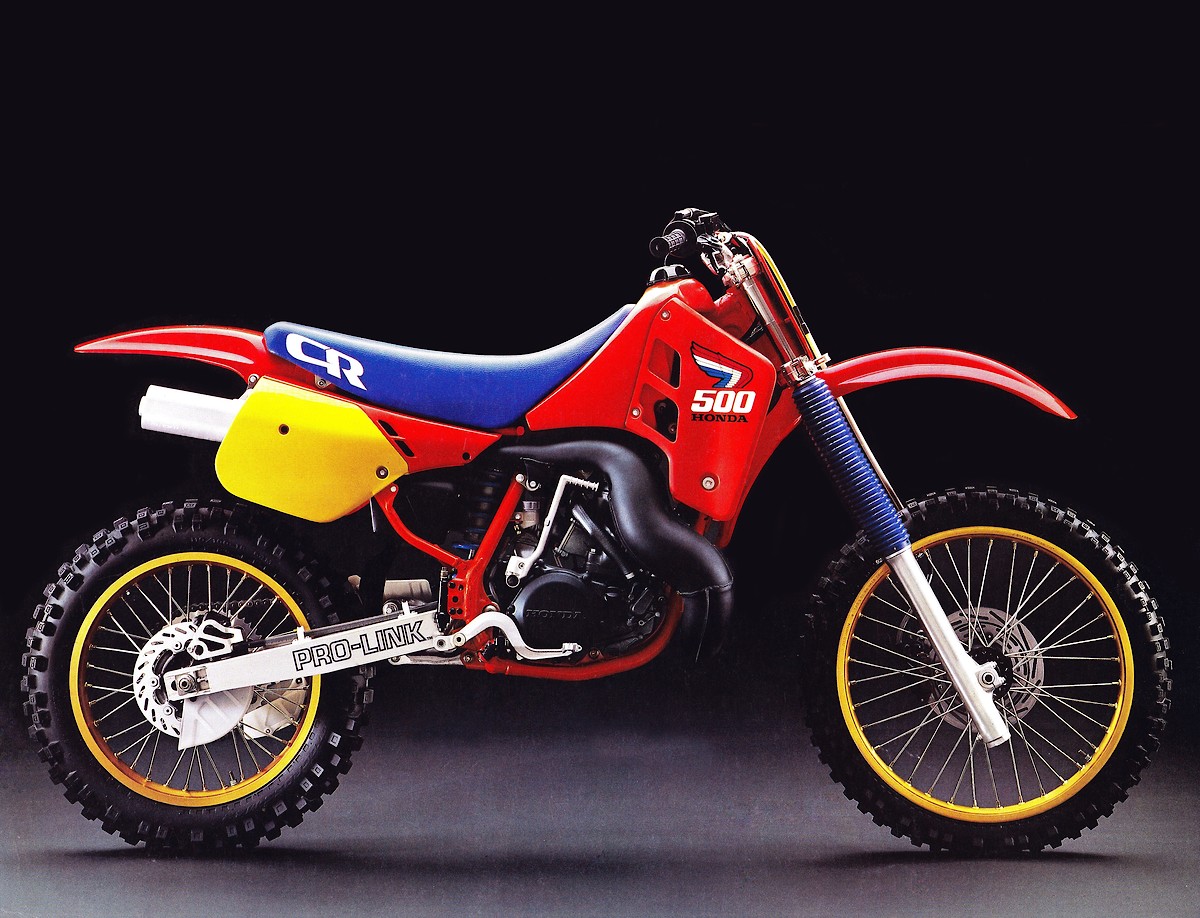
Few motorcycles have earned a reputation as fearsome — and beloved — as the Honda CR500. Produced from 1984 to 2001, the CR500 is the very definition of a legend: a 491cc two-stroke monster known for its brutal power delivery, towering torque, and ability to intimidate even seasoned riders.
Today, the CR500 has achieved true cult status. It’s a bike that riders dream about, wrench on, restore, and try to tame. Whether you’re drawn by nostalgia, performance, or the sheer audacity of a big-bore two-stroke, the CR500 remains one of the most iconic off-road motorcycles ever built.
Overview
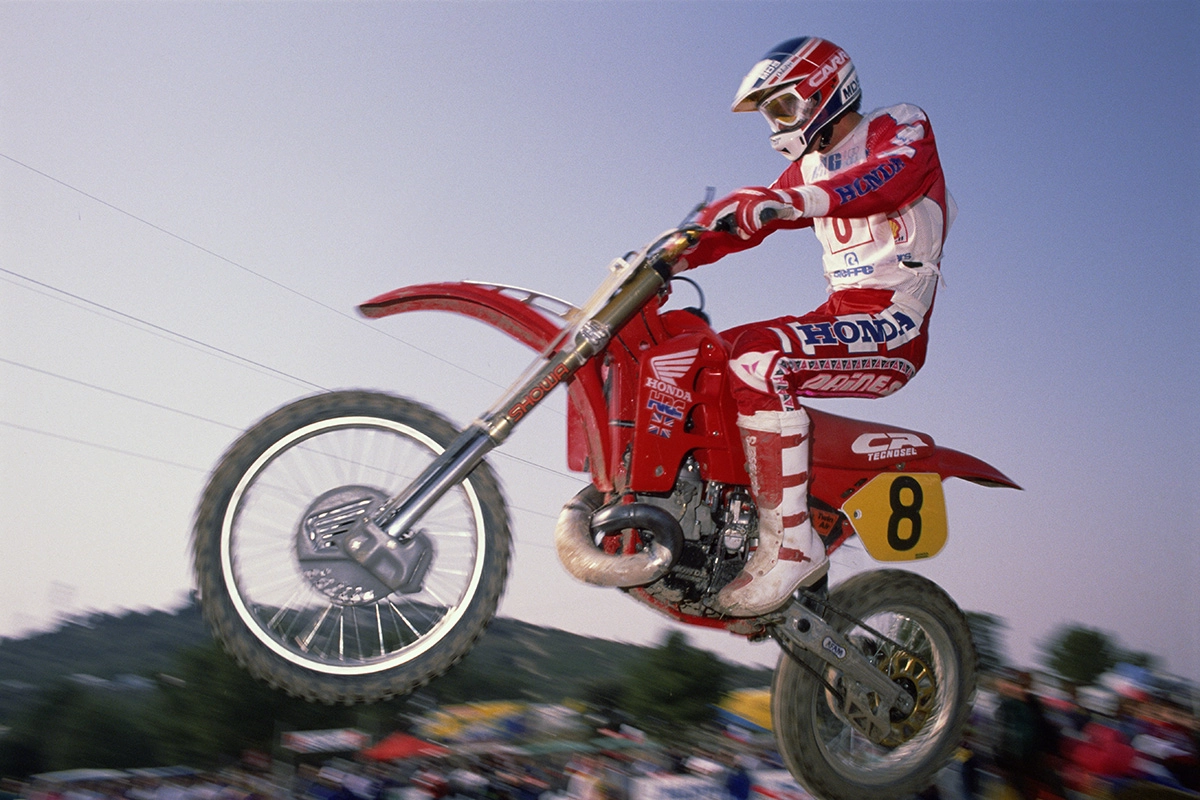
At its core, the CR500 is everything that modern dirt bikes are not: raw, untamed, simple, and explosive. The engine delivers massive torque from nearly idle, surging into a ferocious midrange that earned the bike its well-deserved “widowmaker” reputation.
Honda paired this engine with the company’s evolving chassis tech over the years, ultimately resulting in a surprisingly stable, well-balanced platform — but make no mistake, the CR500 is always the star of the show.
Despite being a pure motocross and off-road competition machine, many riders have converted CR500s into supermotos, desert racers, or even dual-sport builds. The engine lends itself to nearly anything that calls for enormous grunt and minimal weight.
Engine & Performance
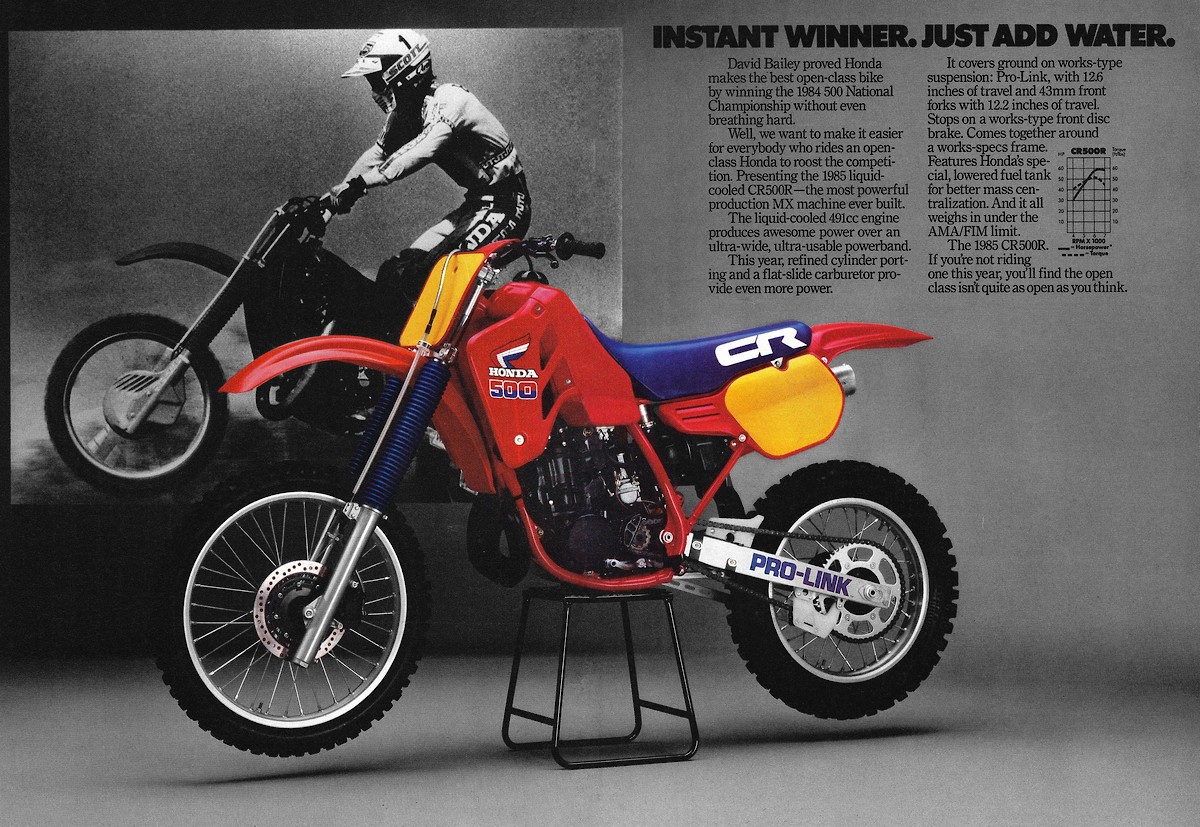
The 491cc air-then-liquid-cooled two-stroke single is one of the most powerful dirt-bike engines ever mass-produced. What sets it apart isn’t just top-end power—it’s the torque that hits like a sledgehammer.
While exact numbers vary by year and tune, a healthy CR500 typically makes around:
- 55+ horsepower
- 50+ lb-ft of torque
- With a curb weight under 240 pounds
The result is acceleration that remains shocking even today. On loose terrain, it’s effortless to break traction. On open desert trails, the CR500 is a rocket ship. And on tighter tracks, the power demands respect… and a disciplined throttle hand.
The engine is also remarkably simple — a hallmark of two-stroke design. Riders appreciate the relative ease of maintenance, rebuilds, and tuning, which helps keep these older machines alive decades after production ended.
Handling & Chassis
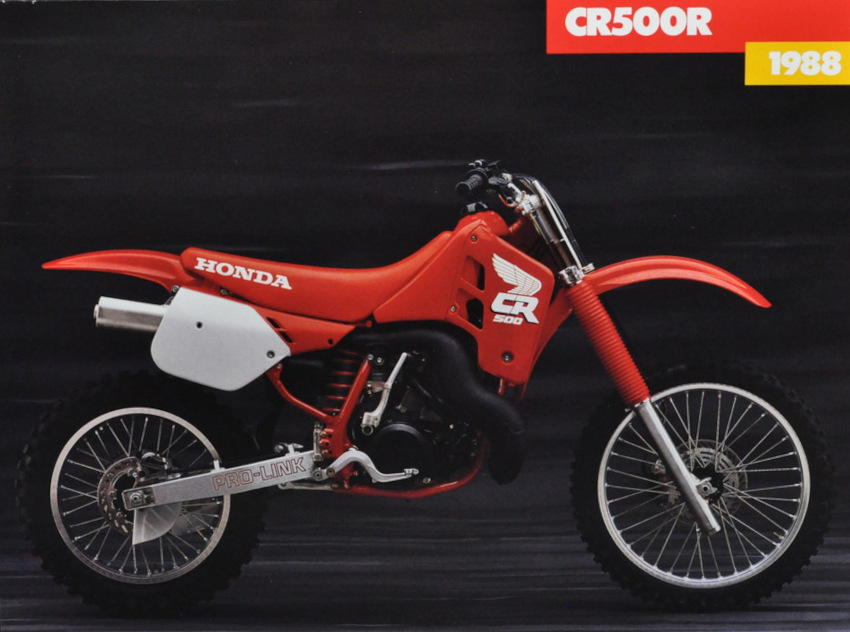
Honda continually refined the CR500’s chassis throughout its lifespan, with the later aluminum-frame models (1997–2001) being the most sought-after. These final versions offer:
- Sharper cornering
- Improved stability
- Better suspension adjustability
- A lighter, stiffer frame
Earlier steel-frame models have a classic, more flexible feel and a slightly smoother ride in rough terrain. Many riders prefer them for desert work or long-distance off-road use.
Despite its intimidating engine, riders are often surprised by how manageable the CR500 can feel when ridden smoothly. The bike tracks well, hooks up better than the power output suggests, and rewards technique over brute force.
Why Riders Still Love the CR500
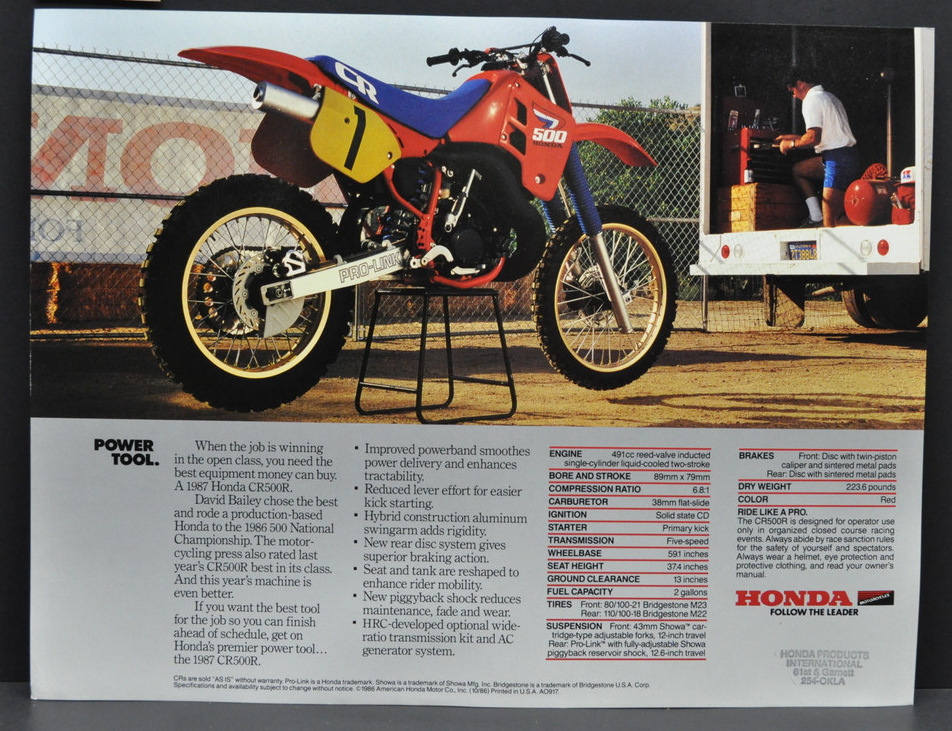
The modern four-strokes may be faster around a track, but few bikes match the CR500’s combination of brute character, mechanical simplicity, and nostalgia. Enthusiasts love it because:
- It delivers instant, massive torque unmatched by nearly any dirt bike.
- It feels alive, with a visceral quality missing from modern smooth powerplants.
- It’s durable, overbuilt, and easy to work on.
- The sound and feel of a big-bore two-stroke are intoxicating.
This is a bike that leaves an impression — sometimes on the rider, sometimes on the dirt behind them.
Honda CR500 Specifications

(Late-model aluminum frame versions)
Engine: 491cc liquid-cooled two-stroke single
Bore x Stroke: 89 x 79 mm
Compression Ratio: ~6.6:1
Power: ~55+ hp (varies by year/tune)
Torque: ~50+ lb-ft
Transmission: 5-speed
Carburetor: Keihin PWK
Front Suspension: 46mm inverted cartridge fork
Rear Suspension: Pro-Link single shock
Front Brake: Single disc
Rear Brake: Single disc
Curb Weight: ~235 lbs (varies slightly by year)
Seat Height: ~38.0 in
Fuel Capacity: 2.0–2.2 gal
CR500 in Today’s Riding World
Even though production ended over two decades ago, the CR500 refuses to fade away. Owners continue to build:
- CR500AF conversions (CR500 engines in newer Honda MX chassis)
- Supermoto builds capable of shocking 1000cc street bikes
- Desert racing machines
- Trail and woods bikes with torque to spare
- Dual-sport conversions in states with more relaxed plating laws
It’s a testament to the engine’s longevity and to the kind of motorcycle culture that values experience as much as performance.
CR500 in Pop Culture
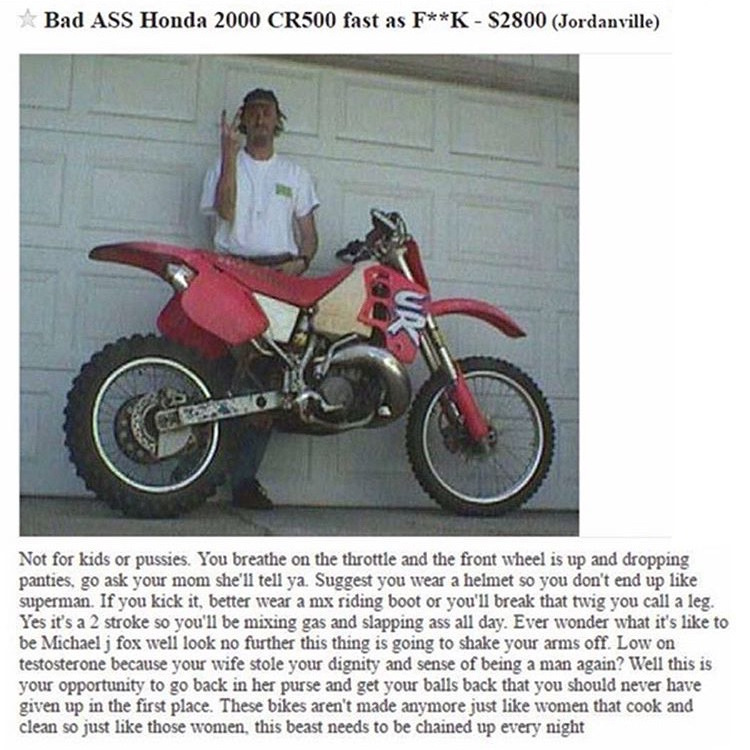
The CR500’s mythic status extends far beyond the track. Thanks to its wild performance and unmistakable sound, the bike has shown up repeatedly in films, magazines, legends, and internet lore. A few standout points:
• The “Widowmaker” Reputation
The CR500 became one of the most talked-about dirt bikes in motorcycle media. Stories of riders looped out in third gear or being launched by the torque became part of its mythology, adding to its cult following.
• A Staple of 1990s Off-Road Culture
In motocross and desert-racing magazines of the era, the CR500 was portrayed as the king of open-class displacement. It was the bike for riders who wanted to dominate dunes, hare scrambles, hill climbs, and fast desert terrain.
• Hill-Climb Icon
With its massive torque, the CR500 became a favorite in the hill-climb world. You’ll still see CR500-powered machines — sometimes with extended swingarms — rocketing up impossible slopes at events across the U.S.
• Viral Supermoto Builds
In the internet era, videos of CR500 supermotos wheelieing down city streets, outrunning liter bikes, and shredding tracks helped introduce the bike to a younger generation. Many riders first discovered the CR500 through viral clips rather than dealerships or magazines.
• Two-Stroke Revival Symbol
As modern four-strokes took over racing, the CR500 became the poster child for those who missed the raw simplicity and ferocity of two-stroke power. It’s regularly referenced in discussions about whether big-bore smokers should return.
CR500 Buyer’s Guide

What to Look For:
- Low hours since last rebuild or documented top-end/bottom-end work
- Frame integrity — cracks can occur on hard-ridden older models
- Proper jetting — these engines are sensitive to poor mixtures
- Healthy compression — should feel very strong
- Wear on the power valve system (on later engines equipped with it)
- Suspension condition — rebuildable but adds cost
Things That Improve the Bike:
- Modern suspension revalve
- Updated carb tuning
- Aftermarket reeds and exhaust
- Oversized radiators
- Modern tires and gearing tweaks
Verdict on the Market:
Prices have risen sharply in recent years. Well-preserved CR500s — especially late-model aluminum-frame bikes — now command premium values, and clean examples sell extremely fast.
CR500AF (Aluminum Frame) Conversions
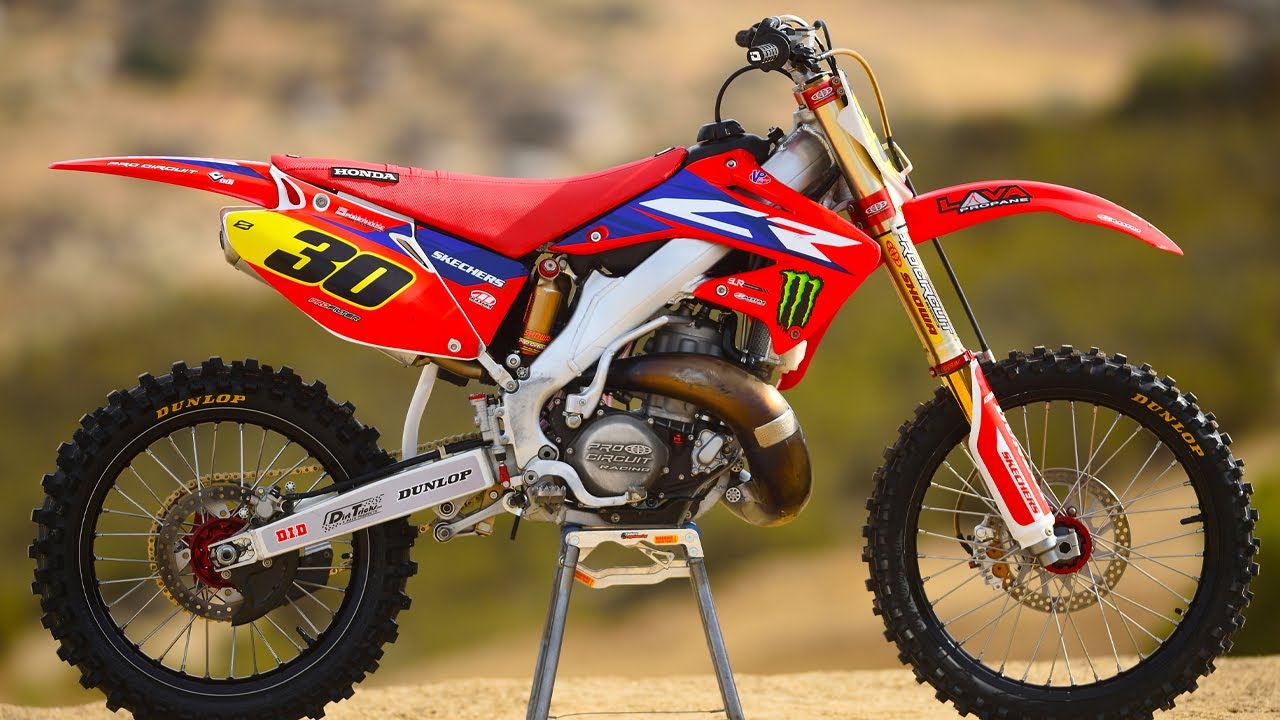
One of the most fascinating chapters in the CR500’s legacy is the rise of the CR500AF — a custom hybrid that places the legendary 500cc two-stroke engine into a modern aluminum Honda motocross chassis.
Honda never produced these bikes from the factory, but riders have been building them for decades, and a few specialty shops became famous for professionally assembled conversions. The result is an incredible fusion of eras: modern suspension, ergonomics, and handling combined with the sledgehammer torque of a big-bore two-stroke.
Why the CR500AF Exists:
- The later 2001 CR500 engine was still considered world-class, but the chassis was dated.
- Riders wanted the sharp cornering, modern suspension, and rigidity of CRF250R/450R frames.
- The hybrid naturally improves stability, reduces weight, and gives the engine a more planted platform.
What It Feels Like:
A CR500AF feels like a modern motocross bike with a warhead inside it. The chassis handles ruts, whoops, and jumps far more effectively than any stock CR500 ever could. Yet the power remains completely unfiltered — a heavy hit off the bottom, a midrange explosion, and a seat-yanking rush that will keep even experienced riders honest.
AF Variants You’ll See:
- CRF450R-based builds – the most popular and best handling
- CRF250R-based builds – slightly lighter, razor sharp
- Custom shop builds – often with reinforced mounts, upgraded cooling, and tuned engines
Good CR500AF conversions are highly sought after and often command prices well above a stock CR500. They’re the ultimate evolution of the platform — the bike Honda never officially built.
Why Honda Stopped Making the CR500…

The end of the CR500 in 2001 wasn’t due to lack of popularity — it was a combination of regulatory pressure, racing trends, and evolving engineering priorities.
1. Emissions and Noise Regulations
By the late 1990s, global emissions standards were tightening, and big-bore two-strokes were among the worst offenders. Their simple ported engines produced high hydrocarbons and were notoriously loud. Bringing the CR500 into compliance would have required significant and expensive redesigns.
2. The Rise of Four-Strokes
Yamaha’s YZ400F proved that four-strokes could win at the highest level. The AMA shifted rules to favor them, and manufacturers followed. Honda saw the writing on the wall and put its resources into developing the CRF450R platform rather than updating aging two-stroke designs.
3. Declining Open-Class Racing
The “open class” that once favored big-bore two-strokes was slowly disappearing. As classes standardized around 250F and 450F machines, bikes like the CR500 no longer fit the competitive landscape.
4. Diminishing Mass-Market Demand
The CR500 had become a niche bike — adored by loyalists but intimidating for the average rider. Honda ultimately chose a more sustainable direction: modern, accessible, race-focused four-strokes.
Despite its discontinuation, the CR500 refused to fade away. Riders kept restoring them, racing them, swapping engines into newer chassis, and proving that big-bore two-strokes still had a place in the off-road world.
Verdict
The Honda CR500 isn’t just a motorcycle — it’s a legend that has transcended eras. Brutally powerful yet mechanically simple, it remains one of the most memorable off-road machines ever built. Its torque-rich engine, raw character, and unmistakable presence continue to captivate riders decades after production stopped.
The CR500 stands as a symbol of everything riders miss about the big-bore two-stroke era: explosive power, simplicity, durability, and personality. It dominated open-class racing, shaped off-road culture, and sparked an entire industry of engine-swapped “AF” builds that still thrive today.
Whether in stock form, built into a CR500AF hybrid, or tuned for desert riding or supermoto mayhem, the CR500 offers an experience no modern bike can truly replicate. It’s not the easiest machine to ride, nor the most forgiving, but that’s exactly why people love it.
Honda may have stopped making the CR500, but the community surrounding it is stronger than ever. Clean examples are increasingly sought after, values continue to climb, and the bike enjoys a near-mythical status both online and in the real world.
If you want a visceral, unforgettable riding experience — the kind that gets your heart rate up before you even kick it over — the Honda CR500 remains in a class all its own.
Honda CR500 Customs
Here are some of the CR500 builds we’ve recently featured…
 Two-Stroke Supermoto: Honda CRF / CR500 Hybrid! - MCNC builds a CRF-framed, CR500 supermotard! Introduced in 1984, the Honda CR500 would become one of the most infamous motorcycles of all time, a two-stroke open-class monster that made more than 60 hp in stock […]
 ’86 Honda CR500 Supermoto by Canellos Racing - An open-class two-stroke supermotard built in the spirit of Superbikers…. Starting in 1979, ABC commissioned Superbikers, a made-for-TV series hosted at California’s Carlsbad Raceway, where motorcycling greats from all different disciplines raced head-to-head on special […]
 Honda CR500 Supermoto by Dab Design - At just 26 years old, Simon Dabadie of Dab Design has already made quite a splash in the custom motorcycle world. With a background in the emerging industries of 3D Printing and 3D software publishing, […]
 Honda CR500 Tracker - The Honda CR500 was perhaps the most wicked dirt bike ever produced — a 53-horsepower, liquid-cooled 2-stroke beast, with a hair-trigger throttle and the power band of a Saturn V rocket. As this Craiglist seller […]


