

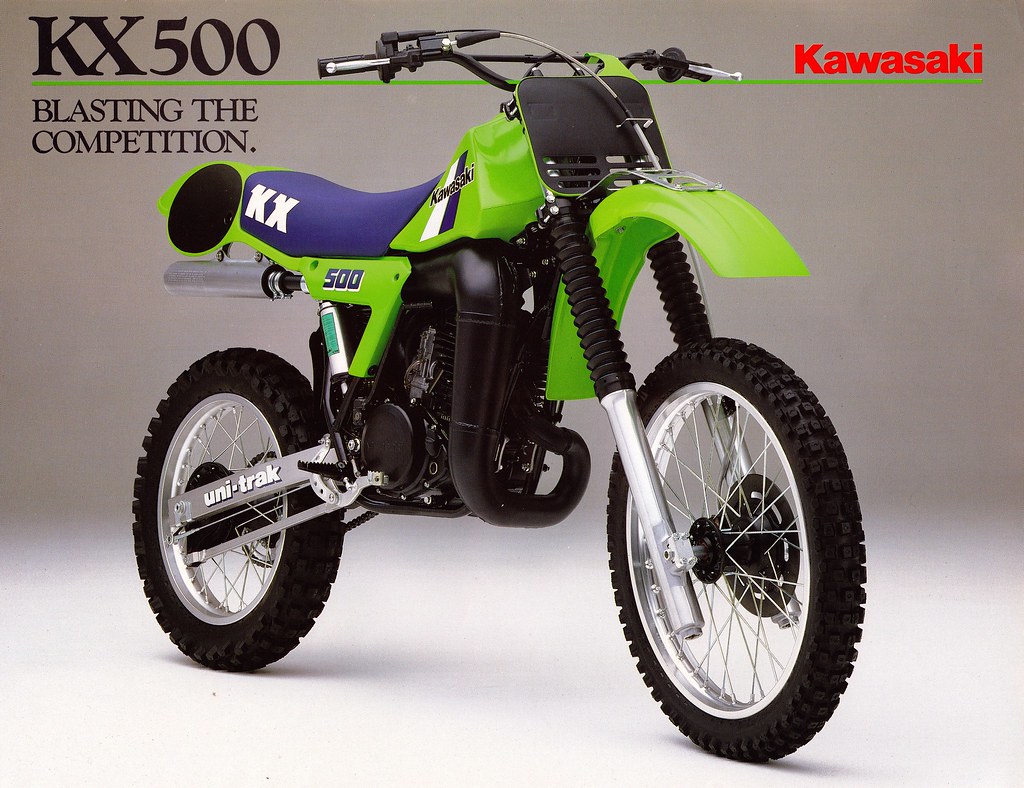
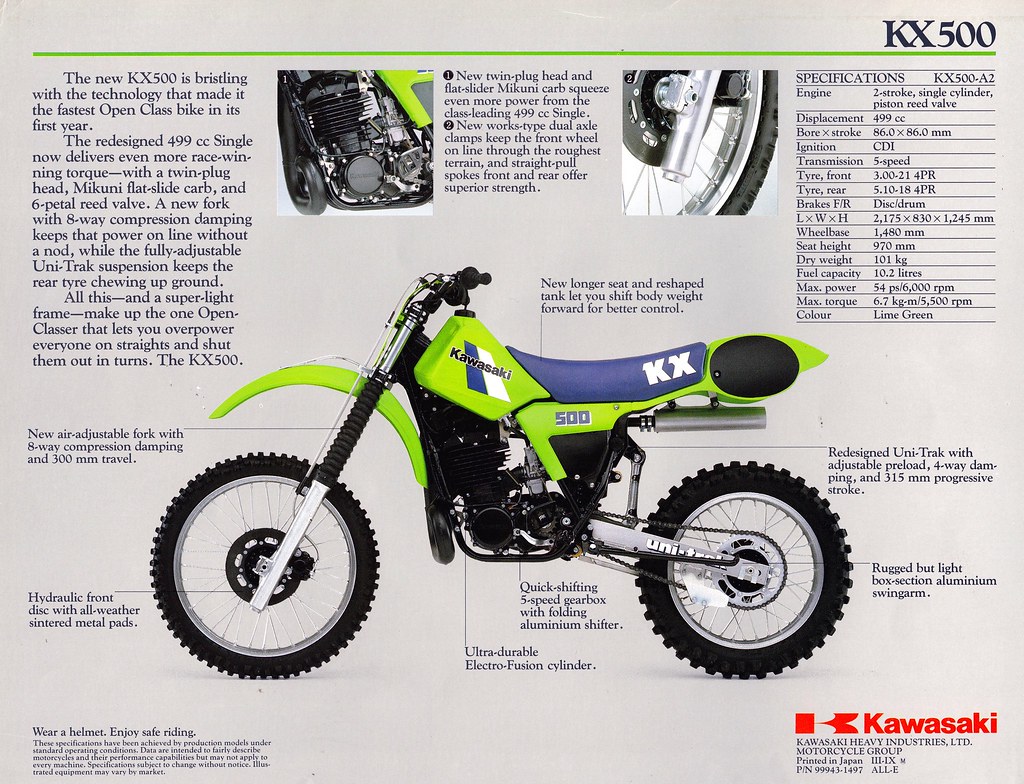
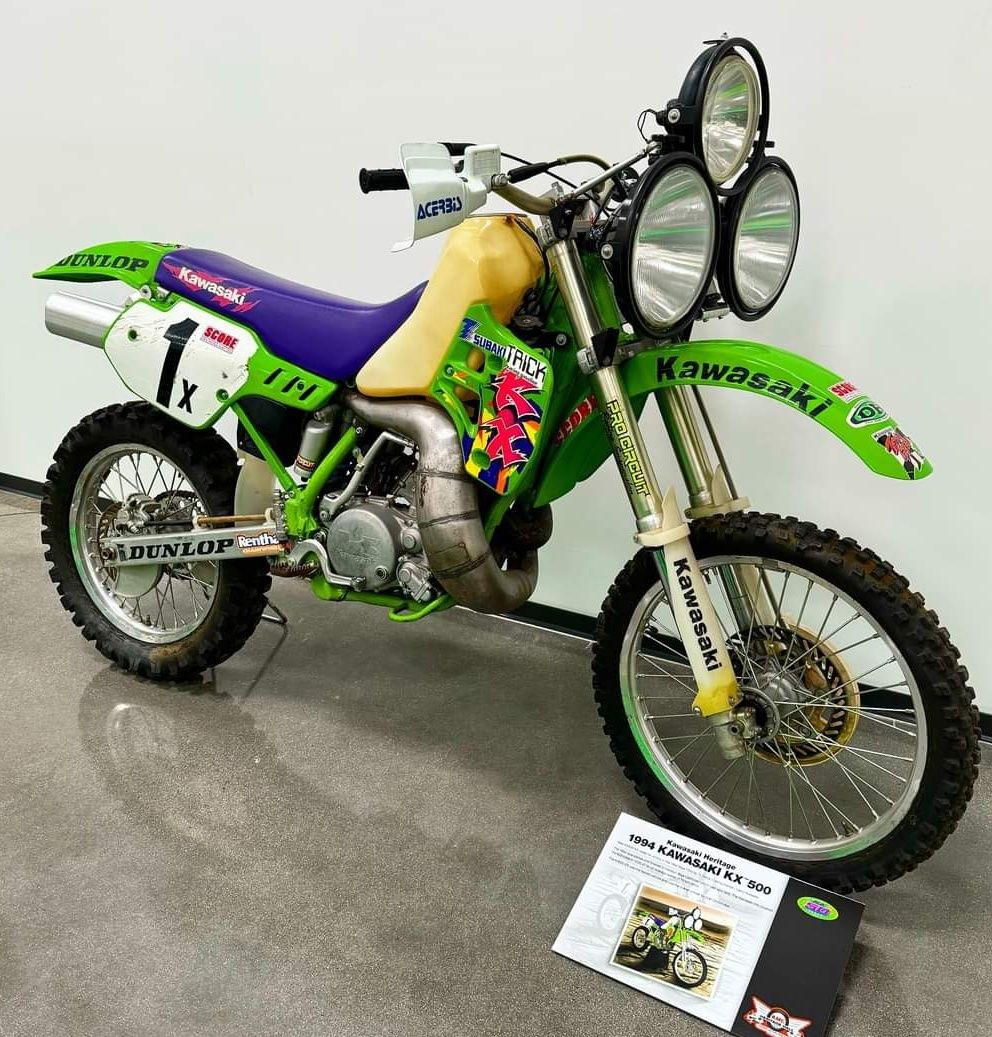
If the Honda CR500 was the king of refinement in the open-class two-stroke era, the Kawasaki KX500 was the wild child — a sand-spraying, arm-stretching, brutally fast machine that earned its own legendary reputation. Produced from 1983 to 2004, the KX500 outlived every other 500cc two-stroke motocrosser, cementing itself as one of the most iconic high-performance off-road motorcycles ever built.
Known for its explosive power, exceptional desert-racing pedigree, and unmistakable Kawasaki attitude, the KX500 remains one of the most sought-after big-bore two-strokes on the planet.
Overview
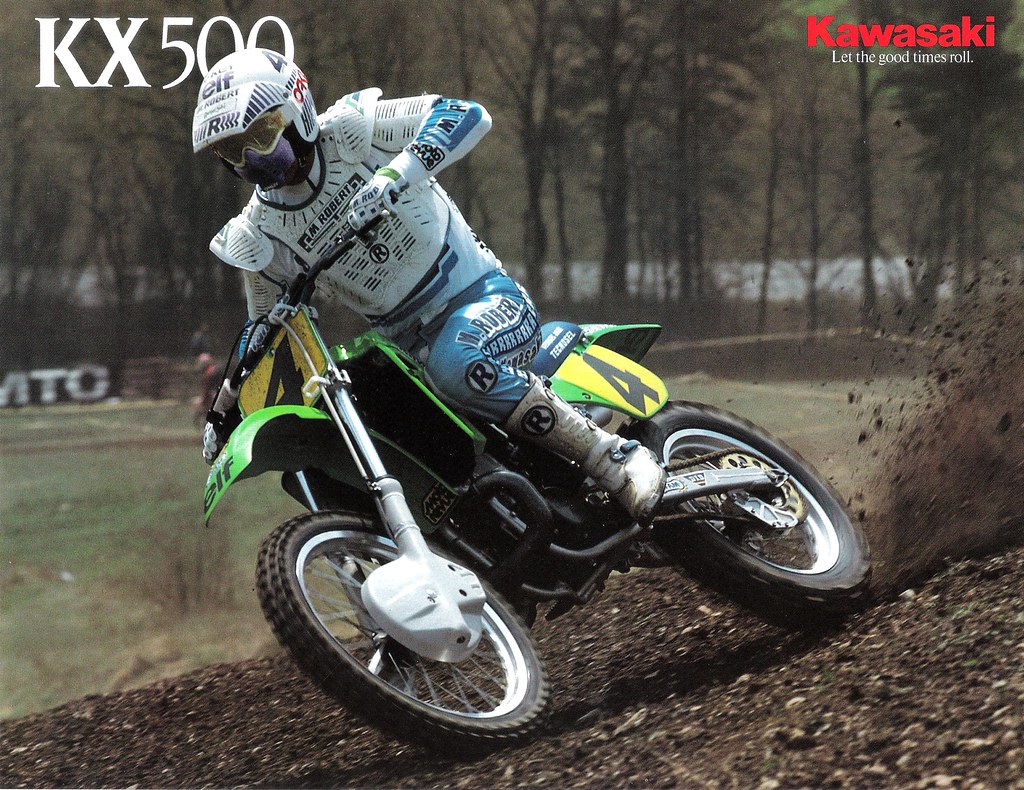
The KX500 was always a bike with a mission: dominate wide-open terrain. If the CR500 was the torque monster of the class, the KX500 was the speed weapon — hard-hitting, fast-revving, and ferociously capable in high-speed off-road environments.
Its powerband is famously aggressive, delivering a sharp surge that can transform even experienced riders into passengers if they aren’t ready. Yet, despite the explosive personality, the KX500’s long-stroke engine and stable chassis make it shockingly effective for desert racing, dunes, and big, fast trails.
For nearly two decades, the KX500 anchored Team Green’s off-road program and became the winningest machine in desert racing history.
Engine & Performance
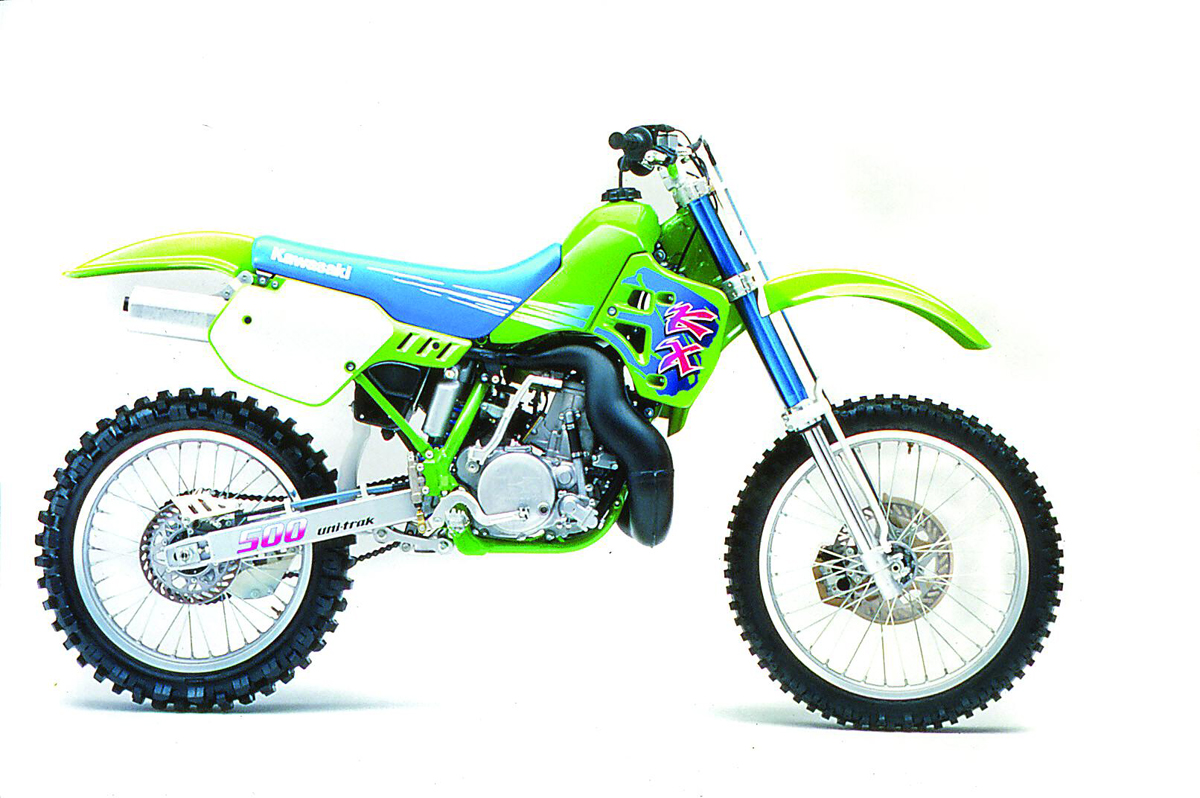
The heart of the KX500 is a 499cc liquid-cooled two-stroke single — one of the most potent and distinctive engines ever built. It produces a power character that is different from its rival Honda:
Typical performance figures:
- 60+ horsepower (one of the strongest stock 500s ever made)
- 45+ lb-ft of torque
- A fierce, quick-revving hit followed by massive top-end pull
Where the CR500 is a grunt-heavy tractor, the KX500 enjoys revs. It snarls, it snaps, and it rips through the midrange into a very strong overrev. This makes it spectacular for sand washes, hill climbs, and long, pinned desert sections.
The engine is durable and relatively simple to maintain, and it responds extremely well to jetting and pipe changes. Many riders consider the KX500 the ultimate big-bore powerplant for sheer adrenaline.
Handling & Chassis
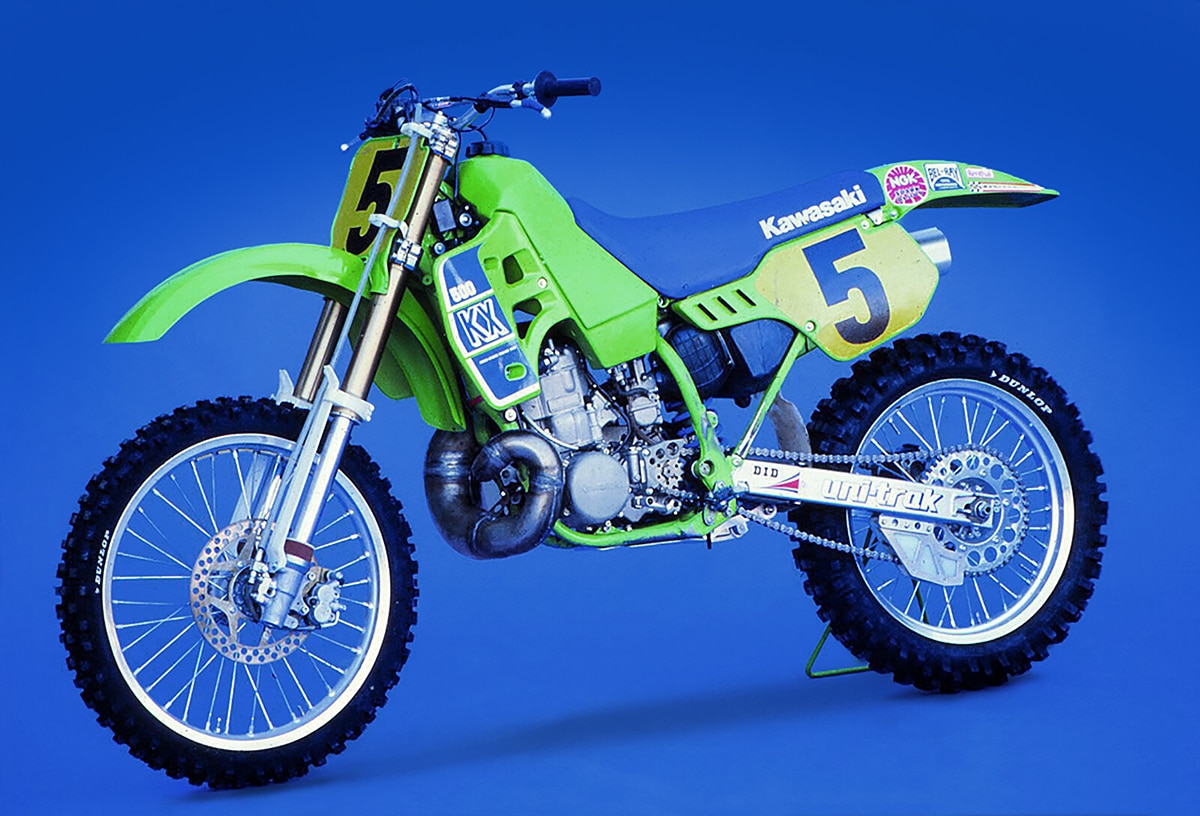
Kawasaki kept the KX500’s steel chassis architecture throughout its run, refining geometry and components but never switching to aluminum. While dated by modern standards, this frame has some benefits:
- A supple, forgiving feel in rough terrain
- Excellent high-speed stability
- Predictable behavior on fast, loose surfaces
- A slightly plusher ride than stiffer aluminum-frame bikes
Suspension varies by generation, but the late-model bikes (1995–2004) offer well-damped and fully adjustable components that handle high speeds with authority.
The bike’s size, combined with its massive power, makes it more of a desert racer than a tight-woods machine — though talented riders can make it work almost anywhere.
Why Riders Love the KX500
The KX500 holds a special place in off-road culture:
- It has an explosive, addictive powerband, unmatched in character.
- It’s known as the ultimate desert racing motorcycle of its era.
- It has a reputation for rock-solid reliability even under brutal conditions.
- It’s widely considered the most powerful production 500 two-stroke.
Even today, the KX500 feels alien and exciting compared to modern bikes. It’s raw, loud, and unapologetically extreme — and that’s exactly why enthusiasts love it.
Kawasaki KX500 Specifications
(Late-model 1998–2004 versions)
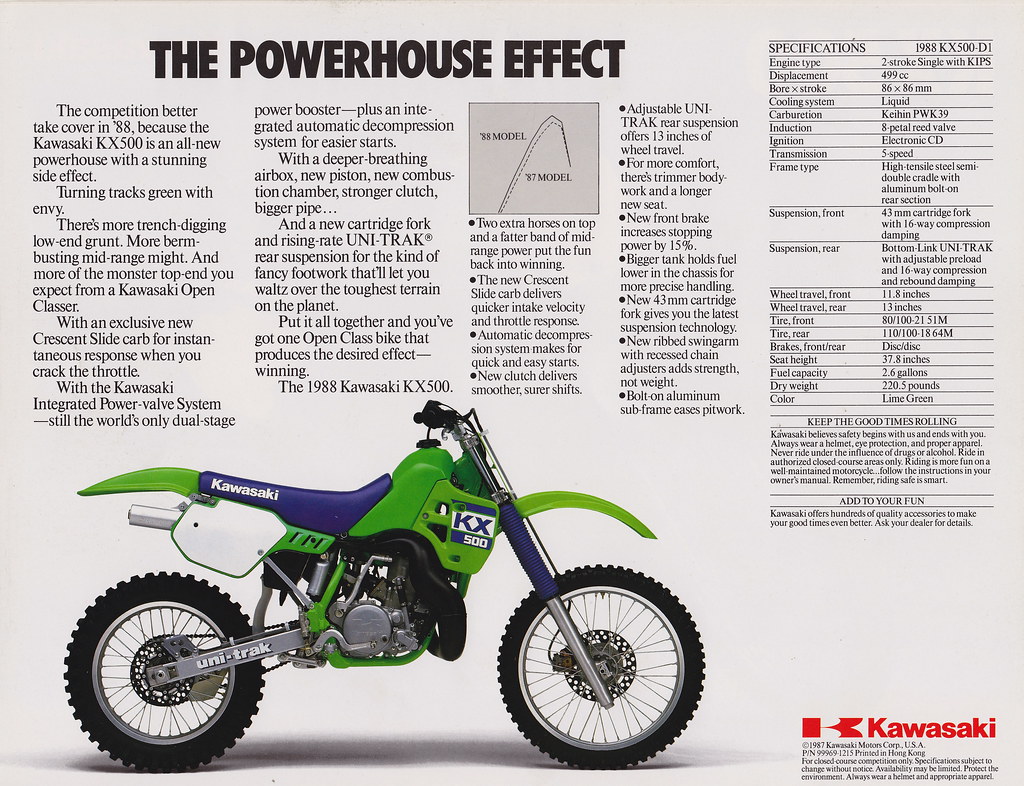
Engine: 499cc liquid-cooled two-stroke single
Bore x Stroke: 86 x 86 mm
Compression Ratio: ~8.0:1
Power: 60+ hp (varies by year/tune)
Torque: ~45+ lb-ft
Transmission: 5-speed
Carburetor: Keihin PWK
Front Suspension: 46mm inverted cartridge fork
Rear Suspension: Uni-Trak single shock
Front Brake: Single disc
Rear Brake: Single disc
Curb Weight: ~235–240 lbs
Seat Height: ~37.4 in
Fuel Capacity: 2.5 gal
KX500AF Conversions
Like the CR500, the KX500 has inspired its own generation of hybrid builds known as the KX500AF. These bikes feature the KX500 engine installed into modern aluminum KX250F or KX450F frames.
Why riders love the AF concept:
- Vastly improved cornering and ergonomics
- Modern suspension and brakes
- Better rigidity and high-speed tracking
- Retention of the KX500’s explosive power
Although less common than CR500AF builds, the KX500AF is a dream machine for many riders — a perfect blend of vintage fury and modern precision.
KX500 in Pop Culture
The KX500 carved out a huge footprint in off-road history:
• Desert Racing Dominance
The KX500 absolutely ruled events like the Baja 1000, Baja 500, and Best in the Desert races for years. It became the bike for high-speed events where reliability and top-end power were king.
• Magazine and VHS Legend
90s motocross media often portrayed the KX500 as the “big, bad Kawasaki.” It was featured in countless shootouts, hill-climb specials, and off-road films.
• Internet Fame
As the online dirt bike culture grew, videos of KX500s hitting dunes, blowing roost, and sounding like artillery cemented its mythic image for the next generation.
• A Symbol of Two-Stroke Excess
With four-strokes now dominating the sport, the KX500 represents everything riders nostalgically crave: simplicity, savagery, and a powerband that modern machines just can’t mimic.
Why Kawasaki Stopped Making the KX500
The KX500 was discontinued after 2004 for reasons similar to the CR500:
- Emissions and noise regulations tightened
- Four-stroke dominance in racing
- Declining open-class competition categories
- Shrinking consumer demand for extreme two-strokes
- High production costs for a low-volume machine
Kawasaki focused on its highly successful KX250F/KX450F four-strokes, leaving the 500-class bikes to enthusiasts and collectors.
Buyer’s Guide
What to Look For:
- Fresh top/end bottom end or documented rebuilds
- Smooth clutch action (KX500s can develop notchy baskets)
- Tight swingarm/linkage bearings
- Straight frame and swingarm
- Proper jetting
- Healthy compression — a must with this engine
Worthwhile Upgrades:
- Modern reeds and pipe
- Suspension revalving
- Oversized radiators
- Desert tanks for long-range riding
- Updated bars, clamps, and controls
Market Notes:
Clean late-model KX500s are getting hard to find, and prices are rising fast. Well-kept examples move quickly.
CR500 vs. KX500: The Iconic Big-Bore Battle
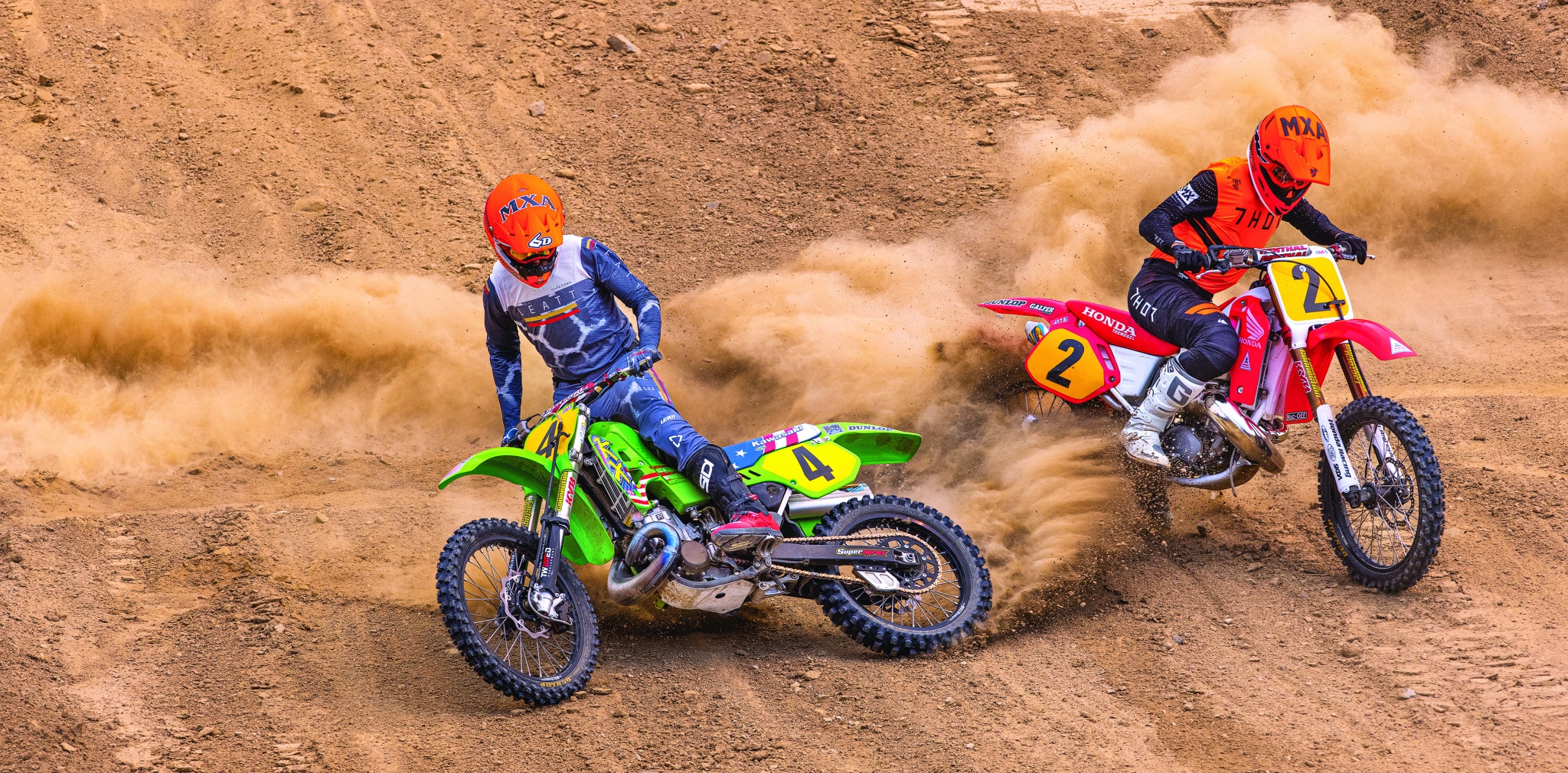
Few rivalries in off-road history are as legendary as the clash between the Honda CR500 and Kawasaki KX500. These bikes defined the open-class era and remain the gold standard for big-bore two-stroke comparison. While similar in purpose, they have distinct personalities that give each a loyal following.
Power Delivery
Honda CR500:
- Massive, tractor-like torque
- Pulls from extremely low rpm
- Smoother hit than the Kawasaki
- Known for being the “torque monster” of the class
Kawasaki KX500:
- Snappy, harder-hitting midrange
- Revvier and more aggressive
- Bigger top-end pull
- Generally the more explosive-feeling engine
Verdict:
The CR500 is easier to modulate and more forgiving, while the KX500 feels like it’s always trying to break loose and rocket forward. Riders who want low-end control favor the CR. Riders who want violent acceleration and huge top-end love the KX.
Handling & Chassis
CR500:
- Later aluminum-frame models offer sharp, modern-feeling handling
- Stable but noticeably stiffer ride
- Better turning precision
- Favored for CR500AF conversions
KX500:
- Steel frame gives a plush, flexible feel over rough terrain
- Incredible high-speed stability
- Excels in sand, whoops, and desert-style riding
- Slightly heavierand taller in feel
Verdict:
The CR500 corners better; the KX500 crushes high-speed terrain. For tight woods or MX, the Honda has the edge. For open desert, the Kawasaki reigns.
Racing Pedigree
CR500:
- Strong motocross heritage
- Favored in hill climbs and supermoto conversions
- Popular for “AF” chassis swaps
KX500:
- The undisputed king of desert racing (especially Baja)
- Dominated long-distance off-road competition for years
- Known for unmatched high-speed durability
Verdict:
Both have racing legacies, but the KX500’s dominance in long-distance desert racing gives it a special historical edge.
Riding Experience
CR500:
- Feels controlled, predictable, muscular
- Pulls cleanly everywhere
- Intimidating, but in a more manageable way
KX500:
- Feels wild, loud, rowdy, and razor-sharp
- Explodes through the midrange
- A handful even for experienced riders
Verdict:
The CR500 is the more all-around versatile machine. The KX500 is the adrenaline specialist.
Which One Wins?
There is no clear winner — only preference.
Choose the CR500 if:
- You want a broader, more controllable powerband
- You prefer sharper turning and a modern-feeling chassis
- You want an excellent base for AF conversions or dual-sport builds
Choose the KX500 if:
- You ride desert, dunes, or fast, open terrain
- You want the most explosive acceleration of any production 500 two-stroke
- You value Yamaha-like top-end pull with Kawi toughness
Both bikes are legends — but the way they deliver their legend is very, very different.
KX500 & CR500 in Baja Racing History
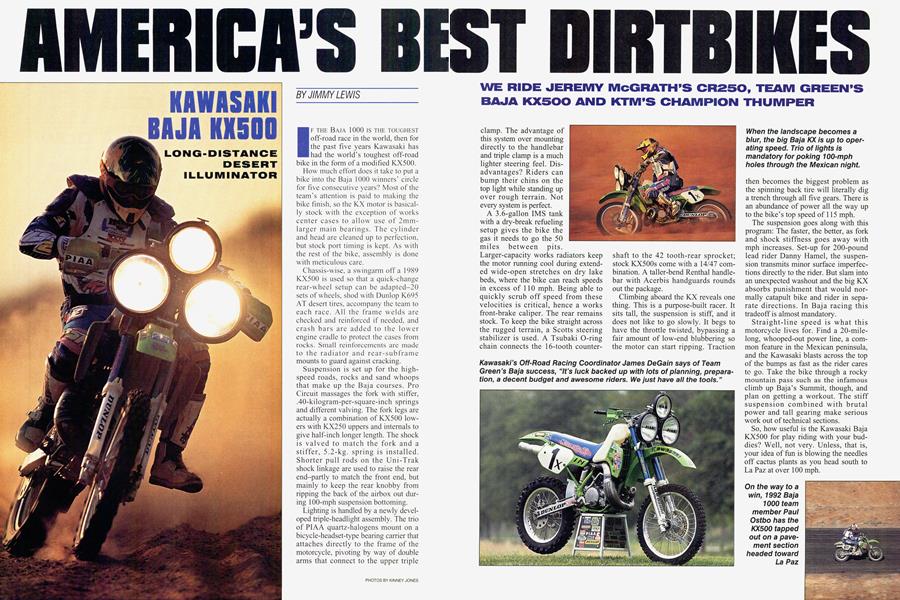
While both machines found success in off-road racing, the Kawasaki KX500 became the undisputed king of Baja, earning a legacy that still influences desert racing today.
Why Baja Suited the 500s
Open-class two-strokes were almost tailor-made for the Baja 500 and Baja 1000:
- Colossal horsepower
- Massive torque
- High-speed stability
- Simplicity and durability under extreme stress
- Lightweight compared to early four-strokes
On long, fast sections, these machines could run wide open for mile after mile — a task modern four-strokes sometimes struggle with due to heat and complexity.
Kawasaki’s Dominance
The KX500’s desert pedigree is unmatched. Through the 1990s and early 2000s, Team Green absolutely ruled Baja. The bike was famous for:
- Bulletproof reliability
- Incredible high-speed stability
- A motor that thrived in fast, sandy terrain
- Cooling performance that held up even in extreme heat
The KX500 won multiple Baja 1000 and 500 titles, often with legendary riders like:
- Destry Abbott
- Ty Davis
- Larry Roeseler
- Paul Krause
This era cemented the KX500 as the definitive Baja weapon.
Honda’s Role in Baja
While Honda became the dominant force in later four-stroke desert racing with the XR650R and CRF450X, the CR500 had its share of success earlier on, especially in the late 80s and early 90s. Riders praised the CR500 for:
- Unstoppable torque
- Exceptional durability
- The ability to muscle through technical rocky terrain
- Simplicity and ease of repair in remote areas
Though not as dominant as the KX500 in Baja specifically, the CR500 still earned important victories and a strong following among desert racers.
The End of the 500 Era
By the early 2000s, four-strokes were taking over Baja due to:
- Better fuel efficiency
- Softer, longer-range power delivery
- Larger tank compatibility
- Evolving rules favoring four-stroke displacement
- Factory development focused on XR and CRF platforms
Still, hardcore desert racers continued to run the big 500s long after they were discontinued — a testament to just how effective they were.
Summary / Verdict
The Kawasaki KX500 is one of the greatest open-class two-strokes ever produced. With its brutal acceleration, legendary top-end speed, and bulletproof reliability, it defined desert racing for two decades and remains an icon of off-road performance.
If you want a motorcycle that delivers pure, unfiltered chaos with world-class performance heritage, the KX500 stands at the top of the list. It is fast, unforgiving, wildly capable, and thrilling in a way modern bikes simply aren’t. For dune riders, desert racers, and big-bore two-stroke loyalists, the KX500 remains one of the most exciting machines ever built — a true heavyweight legend of the off-road world.
Even long after its production ended, riders still seek them out because nothing else feels quite like a KX500 — not then, not now, not ever.
Kawasaki KX500 Customs
Here are some of the KX500 builds we’ve recently featured…
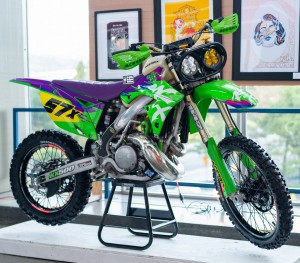 Modern Baja Tribute: Kawasaki KX500AF “Purple Monster” - A 500cc two-stroke monster built in the image of the Mean Green Baja kings… The Kawasaki KX500 is one of the most legendary, if not notorious, off-road weapons ever created. The performance numbers are still […]
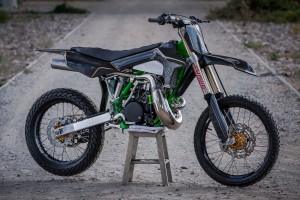 Kawasaki KX500 “Carbolution” by JZ Handmade - Carbon KX from the Czech Republic! The Kawasaki KX500 is one of the most infamous dirt weapons ever created. The 500cc 2-stroke motocross bike made 63 horsepower in stock trim and weighed just 220 pounds […]
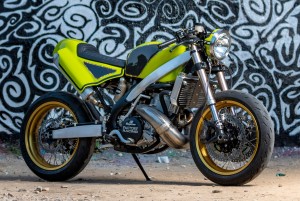 “Street Lethal” Kawasaki KX500 Cafe Racer - Meet the ultimate lightweight, big bore 2-stroke street weapon… The Kawasaki KX500 is one of the most notorious motorcycles ever built — a fire-breathing 2-stroke legend of motocross and desert racing whose power delivery has […]


