 Roman Juriš fulfills a two-wheeled dream of his youth…
For the latter half of the 20th century, many of us took for granted that we could acquire and ride some of the hottest, most iconic bikes on the market, whether they be Japanese, European, or American. In fact, many of you reading this did just that. While money may have been too tight to purchase the bikes we really wanted — or else we had other priorities at the time — there was always a chance…
However, for motorcycle enthusiasts living in the Soviet Bloc, there was an even more robust obstacle: The Iron Curtain. For Slovakia’s Roman Juriš, who grew up under communist rule in Czechoslovakia, a motorcycle like the Yamaha RZ350 was an unthinkable dream. In Roman’s time and place, there was only one “big bike” available: the Jawa 350.
“A Jawa motorcycle was the dream of every young man — and, at the same time, a scarce commodity.”
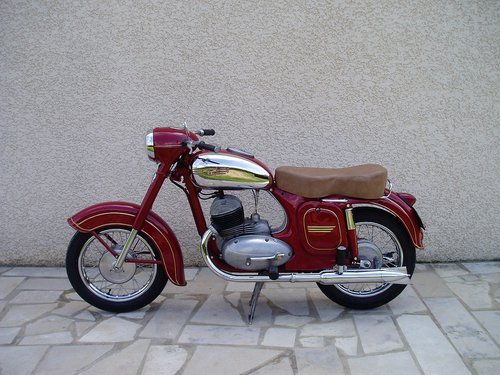
When Roman was 18, he and his father brought home a “decrepit, barely running Jawa 350” (Type 354), and the young Slovakian teenager embarked on his first custom build, his inspiration coming from Western photos that filtered through the Iron Curtain. Of course, he wanted to outfit the two-stroke twin with liquid-cooling just like the RZ350 / RD350 YPVS giant-killers, but that was impossible given his limited resources.
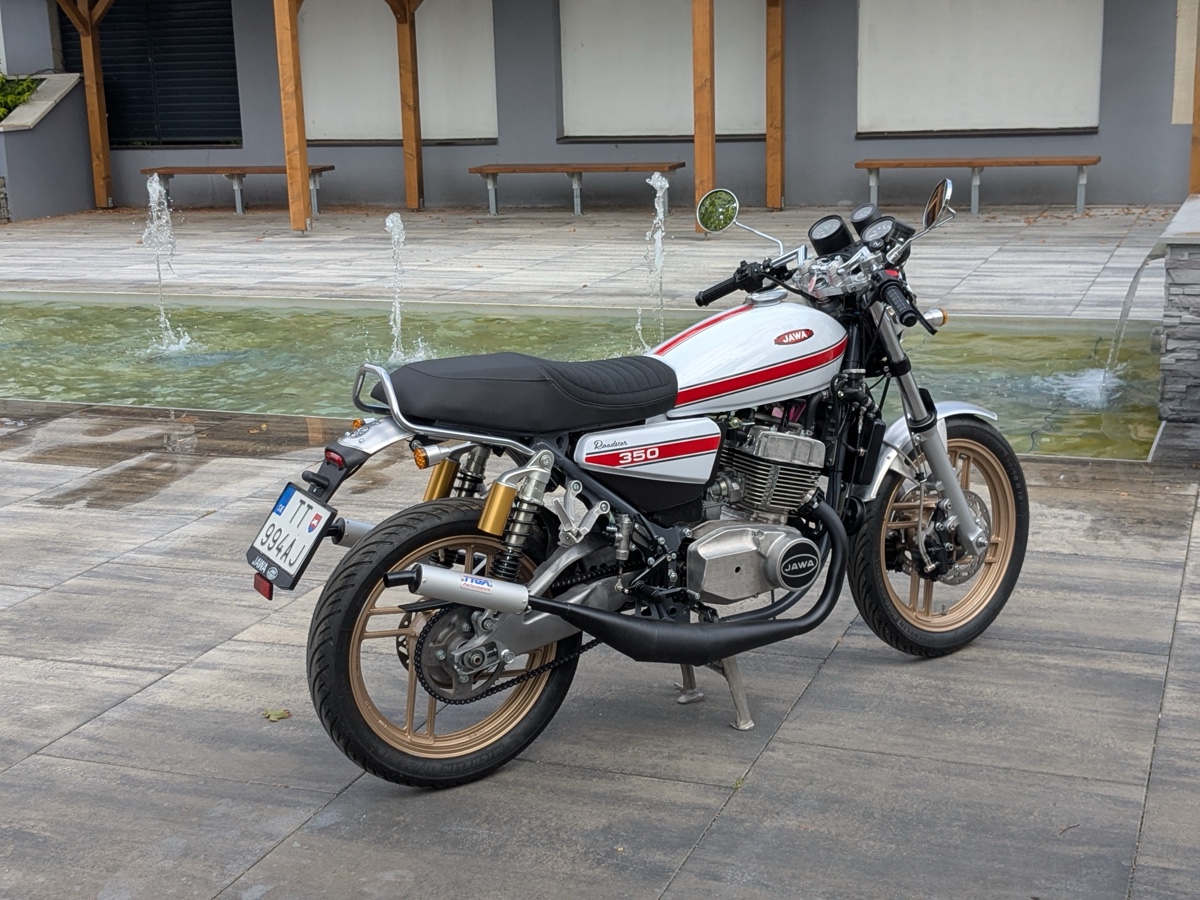
Fast forward many decades and bike builds later — including his Yamaha XS400 roadster — and Roman decided to return to his roots.
“I would finally fulfill a dream from my youth after 40 years. I would build a liquid-cooled Jawa 350 — the kind of bike I had longed for at twenty, but which was a pipe dream under communist rule.”
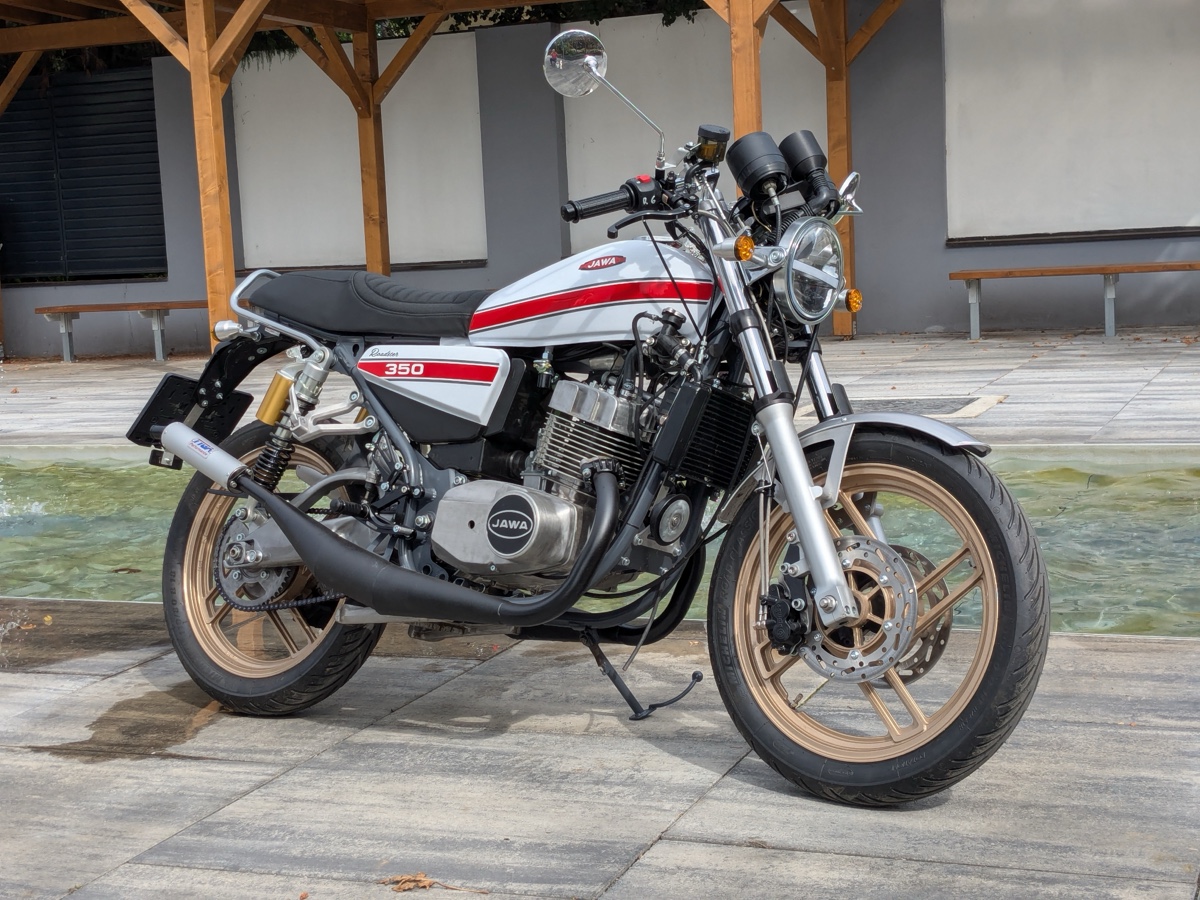
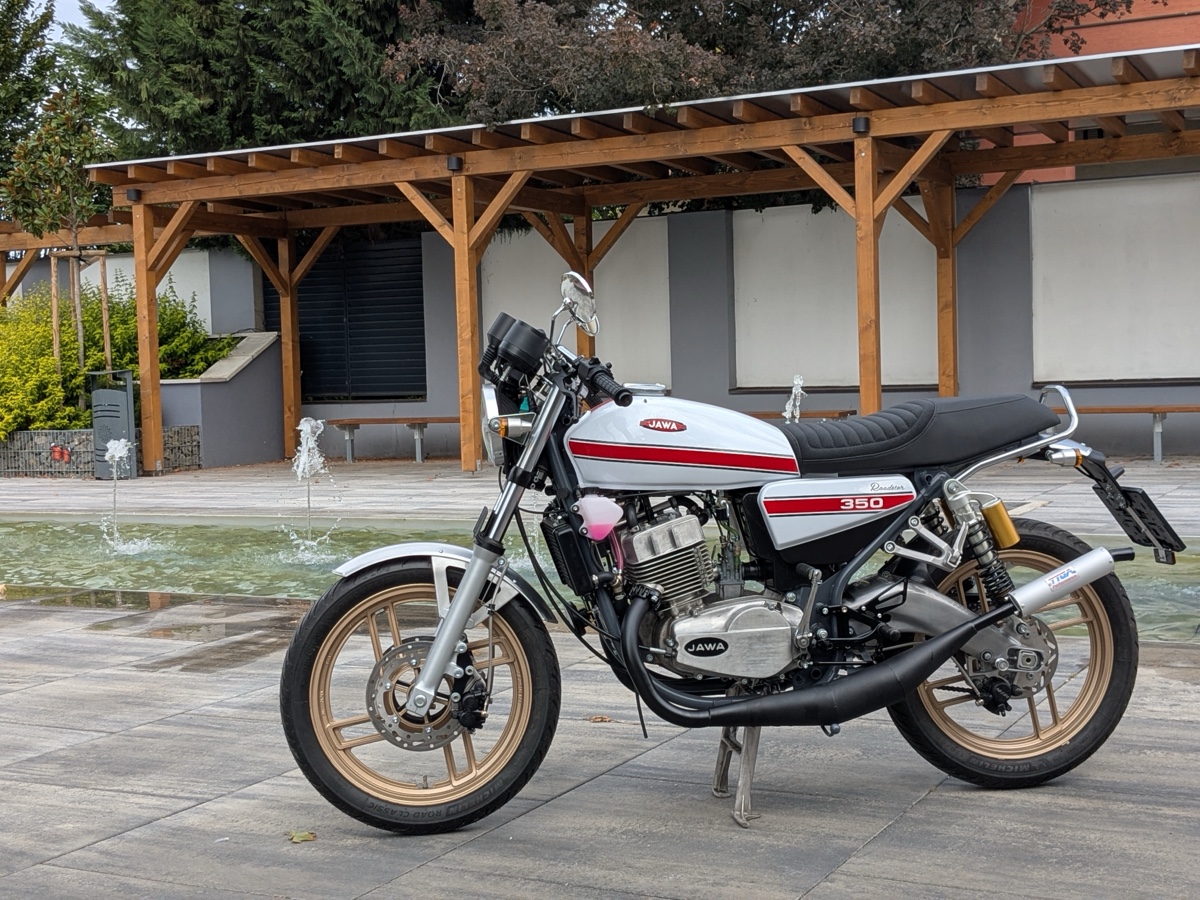
With a Kawasaki ZR7 fork, Aprilia swingarm, electric motocross pump, some serious welding, and a hell of a lot of perseverance, Roman has crafted the liquid-cooled Jawa 350 he dreamed of as a young man. Below, he gives us the full story on this two-stroke restomod.
In the Builder’s Words…
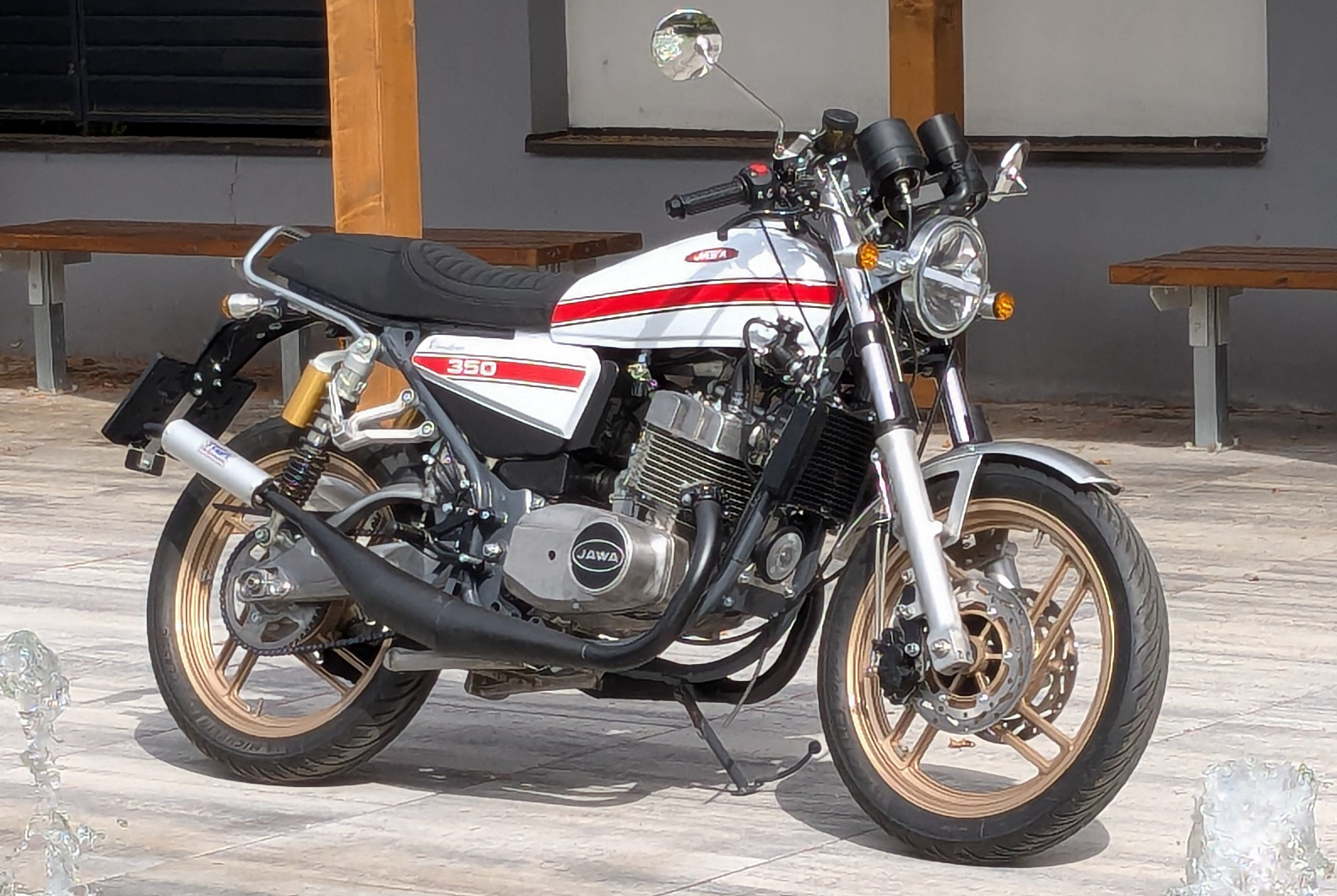
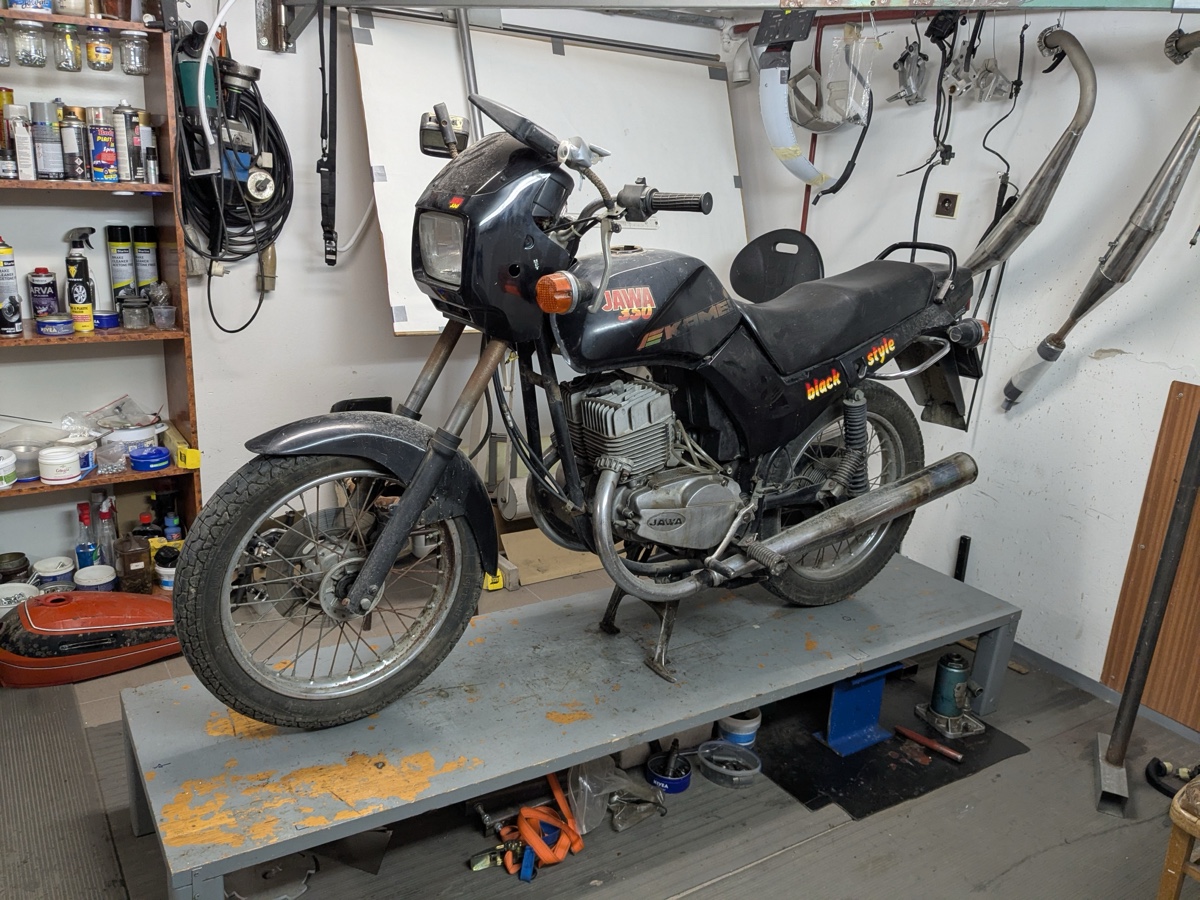
When I was 18, I longed for a “big” motorcycle. In socialist Czechoslovakia — as it was then — the only large motorcycle available was the Jawa 350. My father contributed some money, and we brought home a decrepit, barely running Jawa 350 (Type 354) from a colleague of his.
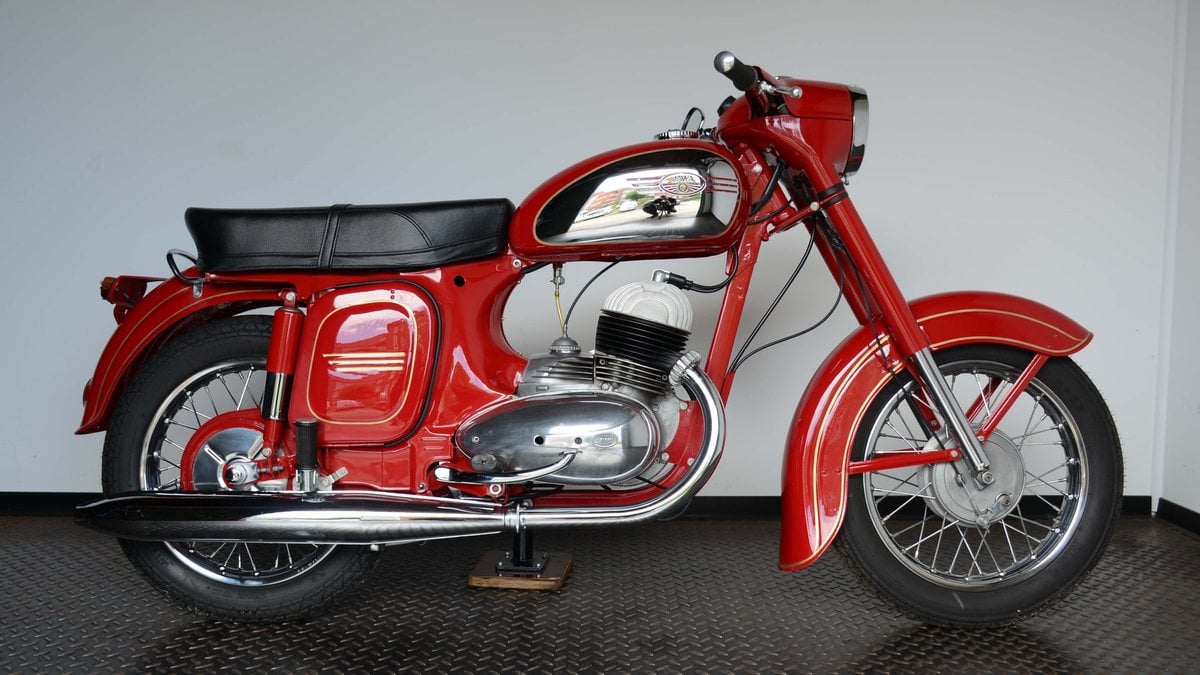
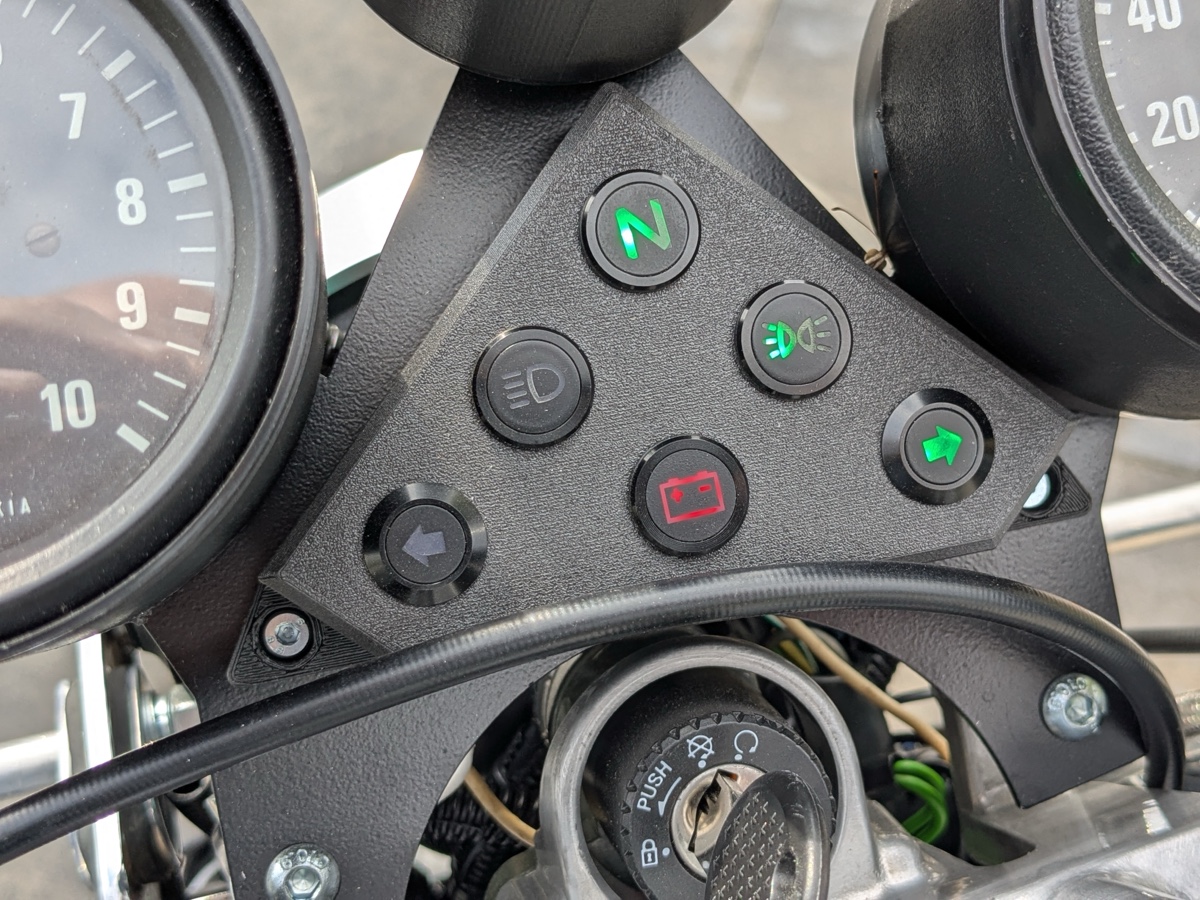
Some images of modern motorcycles did manage to filter through the Iron Curtain after all, so I began a custom build. A rear wheel larger than the front (Honda was doing this at the time), a fiberglass fairing copied from a Moto Guzzi, a dashboard panel, a custom seat, and a few other details.
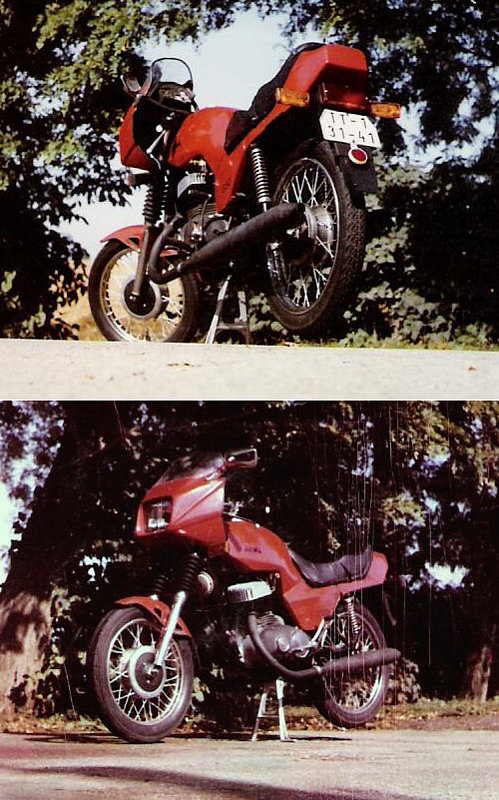
And, of course, it had to have liquid cooling, because the Yamaha RD350 had it — a motorcycle we could only dream of back then, and one that clearly no one would be buying during the socialist era since the communists wouldn’t allow it. Due to the cooling I couldn’t sleep for 40 years.
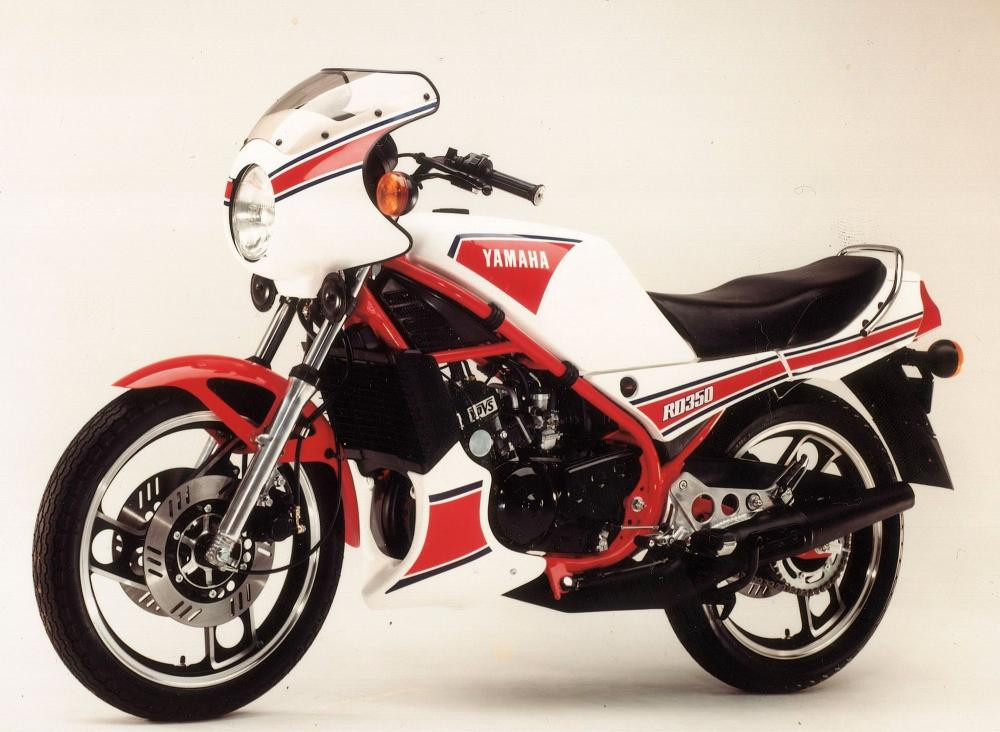
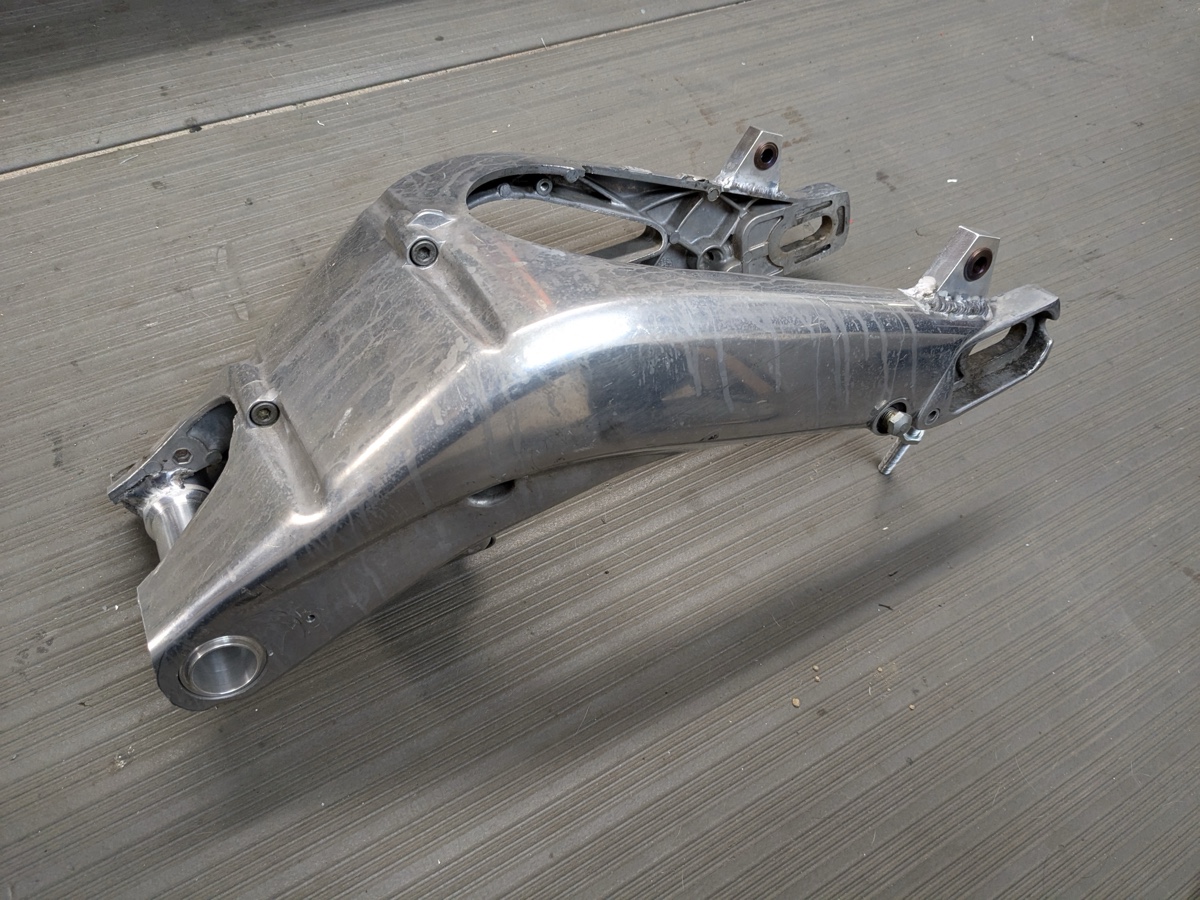
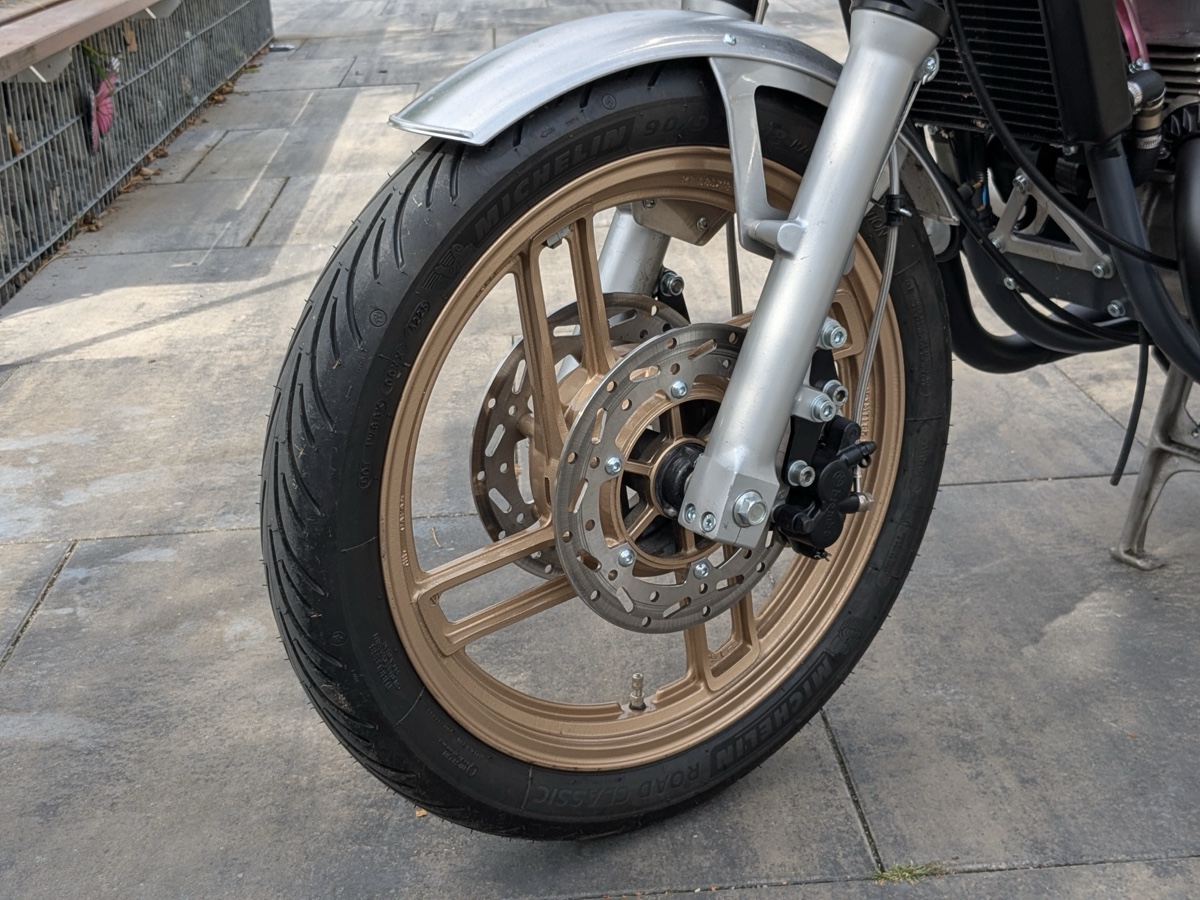
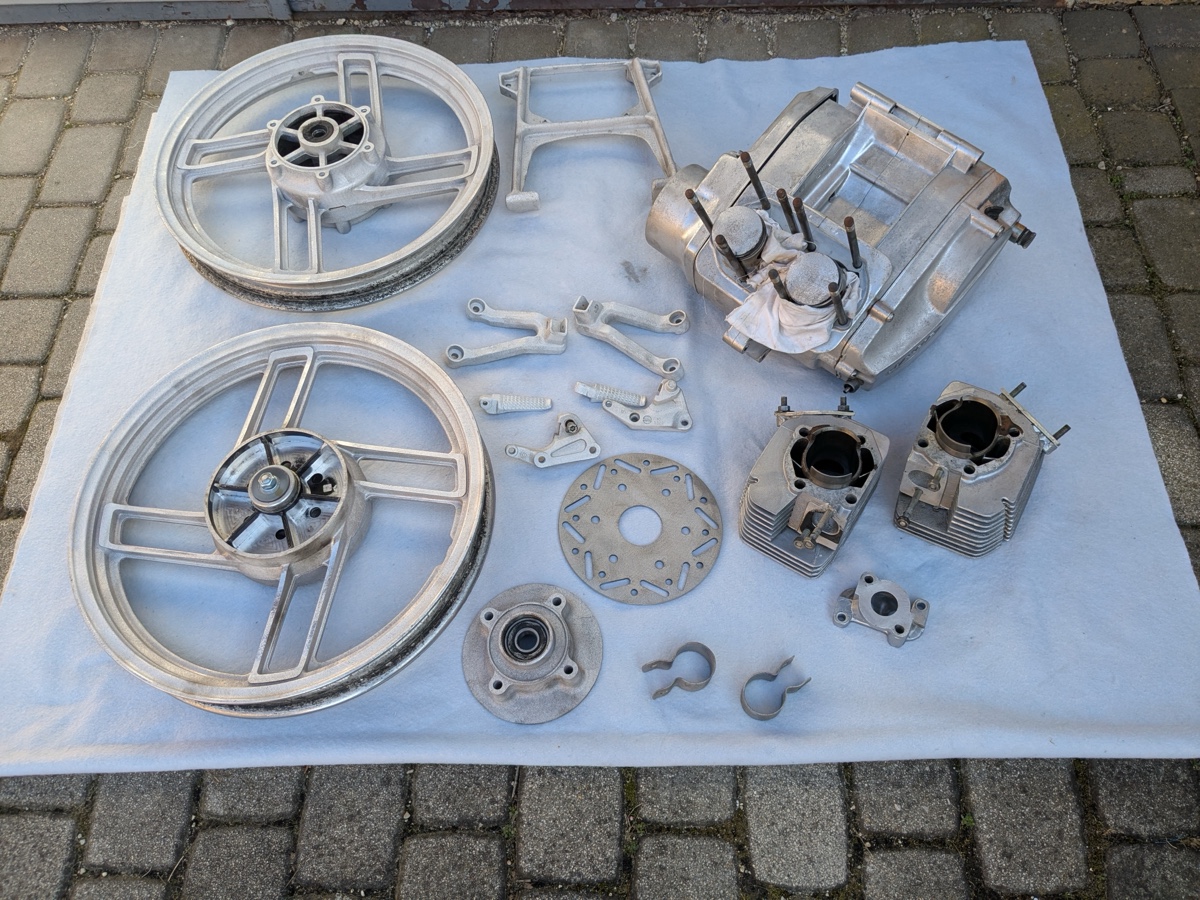
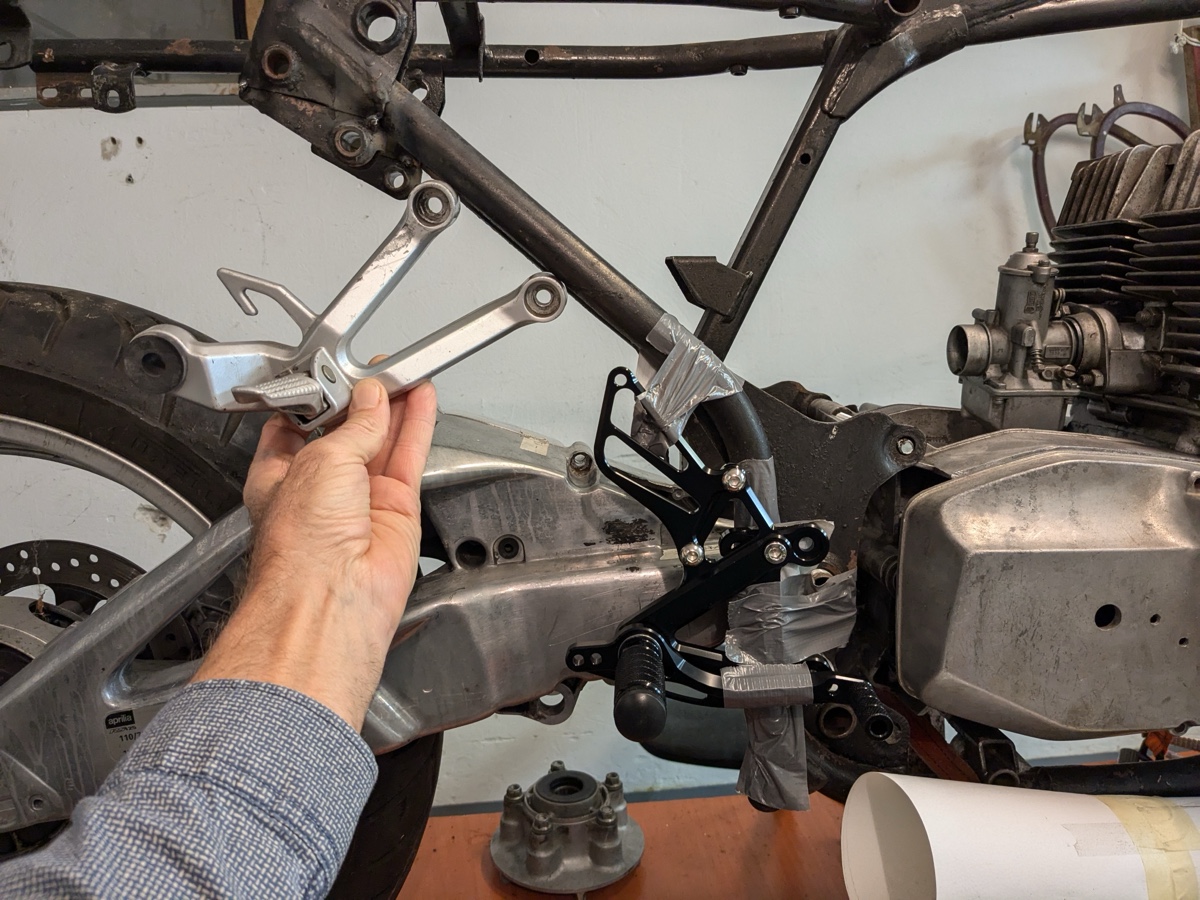
In the spring of 2024, I finished my Yamaha XS400, but I was haunted by the thought of what I would do during the long winter evenings. While tidying up the workshop, I came across the original 18-inch Yamaha wheels (I had used 17-inch supermoto wheels for the Yam build), a front fork from a Kawasaki ZR7, and a rear swingarm from an Aprilia 250.
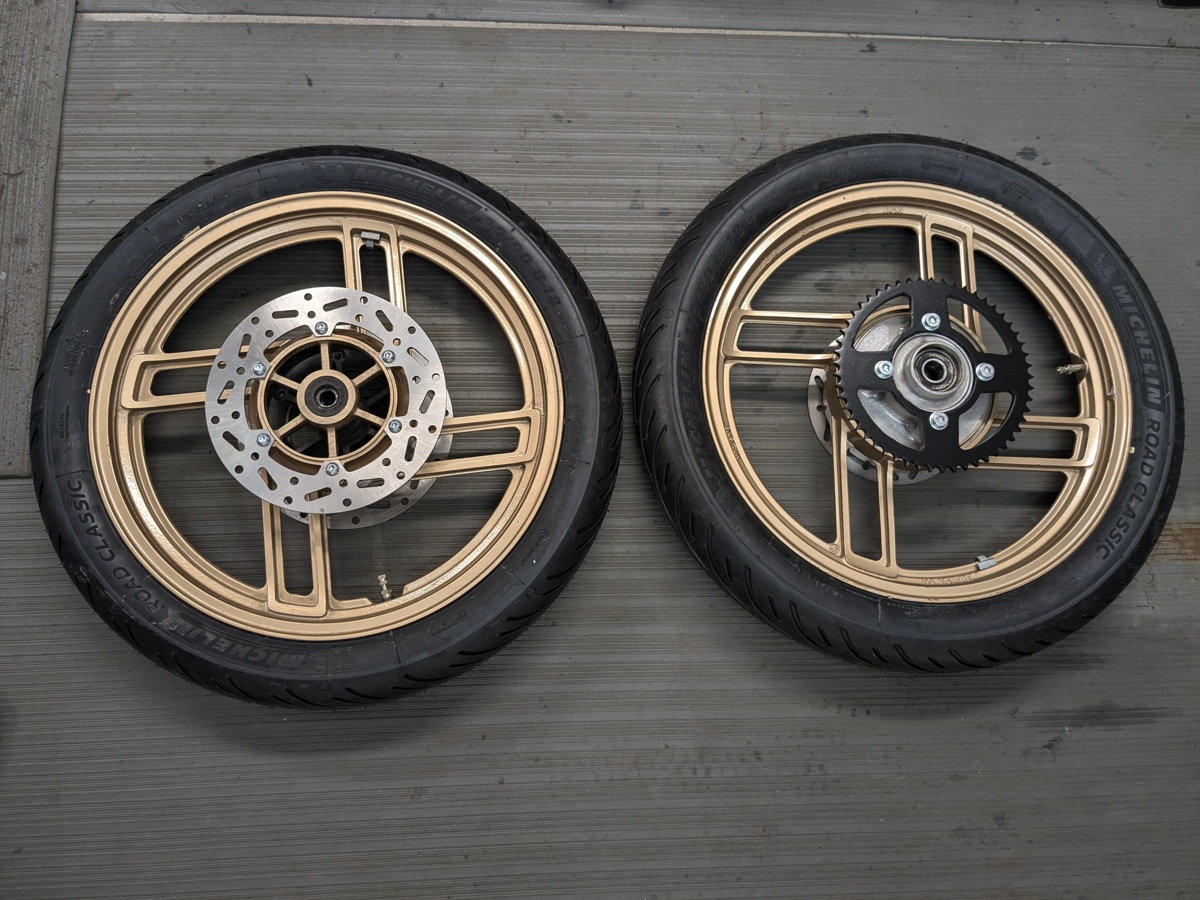
I had originally intended to use that swingarm on the Yamaha, but it had the wrong orientation — the chain on Aprilia was on the right side — so it couldn’t be used. It just so happened that the Czechoslovak Jawa also has its chain on the “wrong” side.
That’s when the idea struck: using these parts — along with many, many others — I would finally fulfill a dream from my youth after 40 years. I would build a liquid-cooled Jawa 350 — the kind of bike I had longed for at twenty, but which was a pipe dream under communist rule.
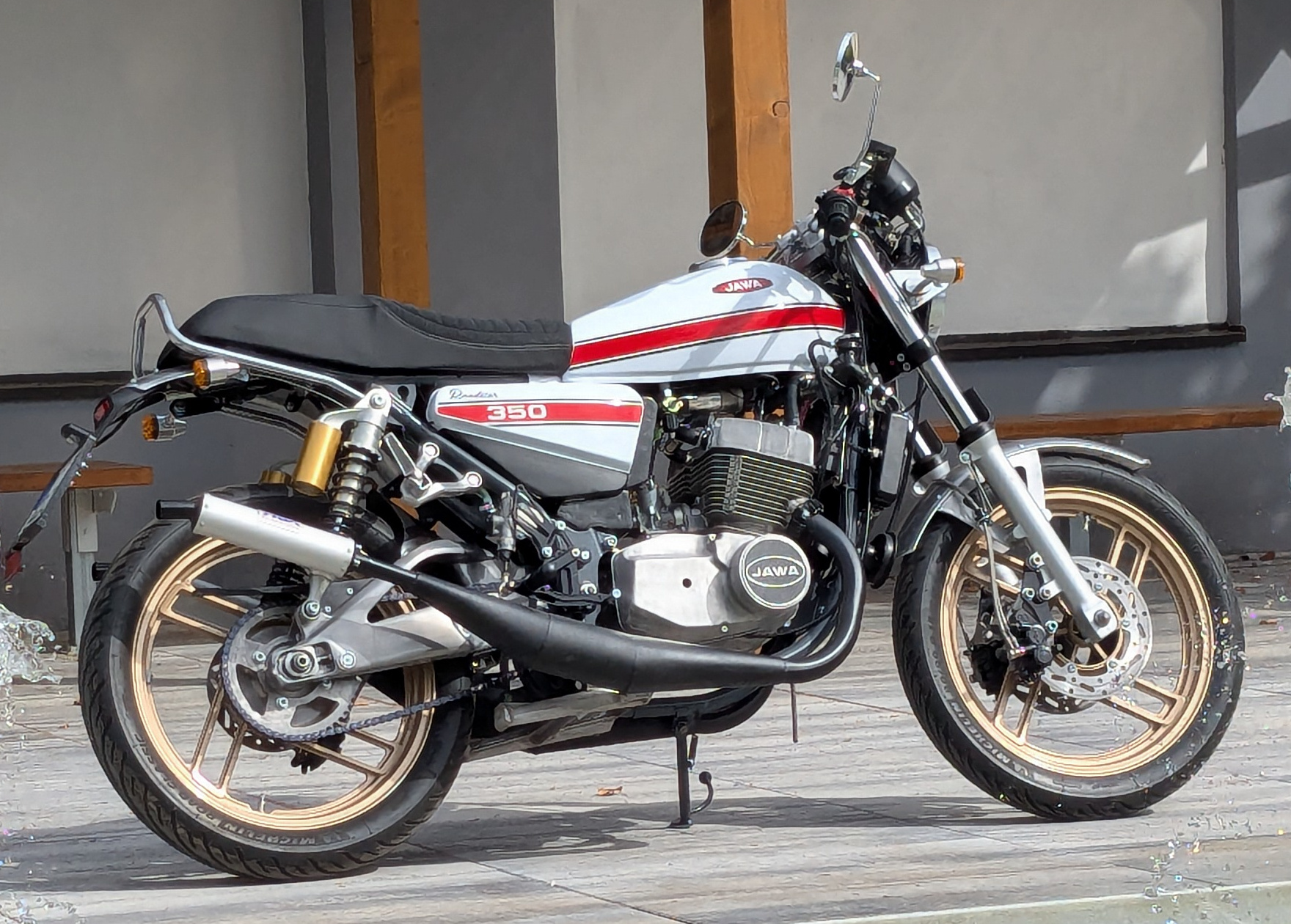
I didn’t want to use a well-preserved example — better suited for a museum than a restomod — for the build. I wanted a wreck with paperwork so I could legally ride it on backroads later. At the time, I couldn’t find a wreck, so I bought a frame and engine without documents. I used them as a development mule, employing a trial-and-error approach. This meant I didn’t have to make modifications under the pressure of having only one shot at getting it right.
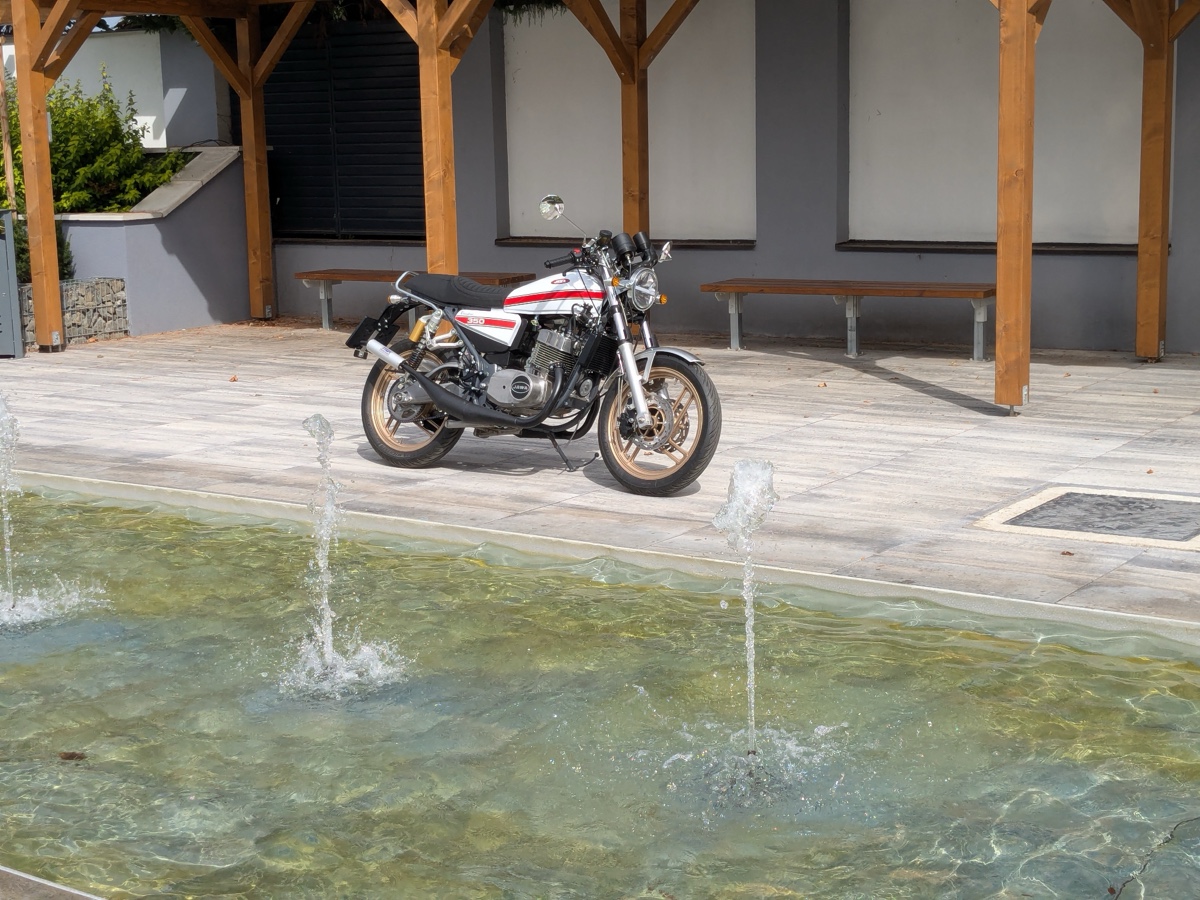
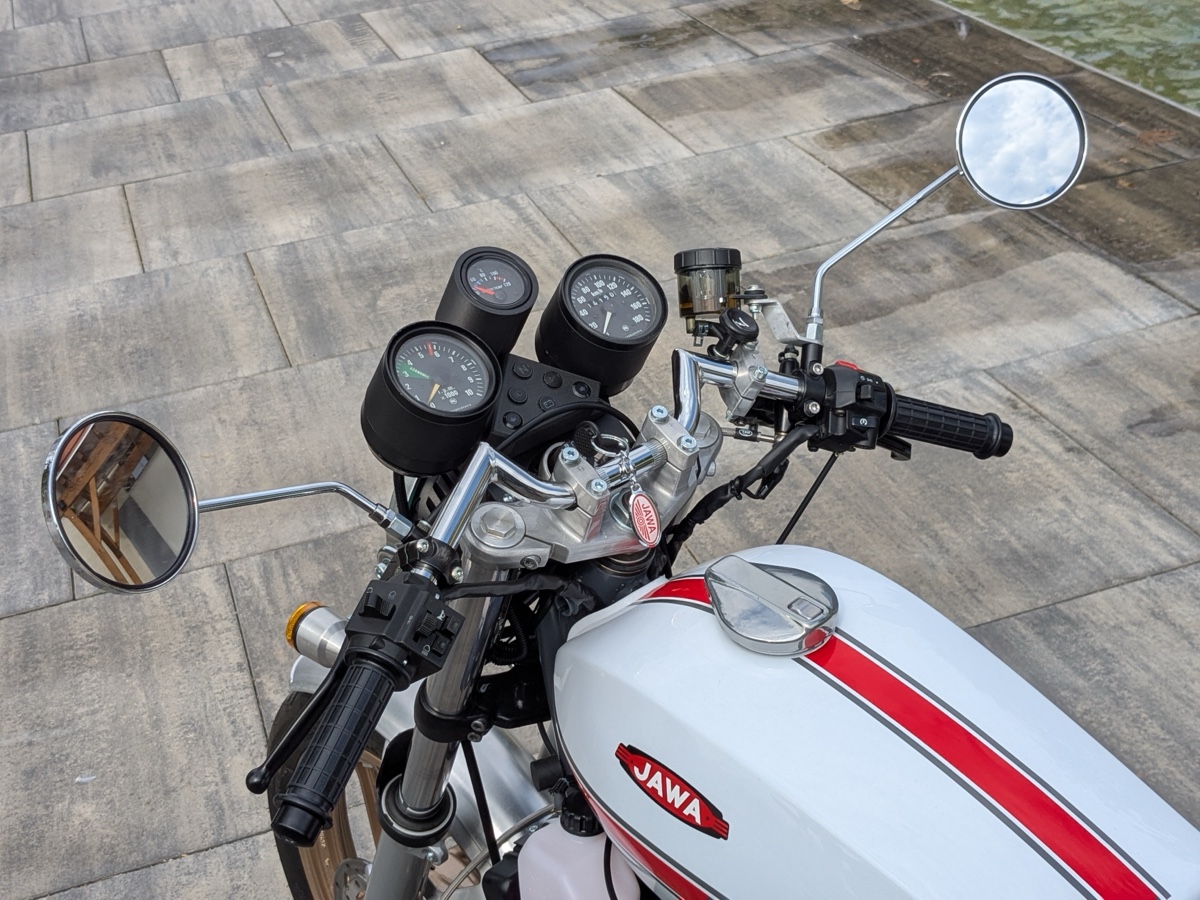
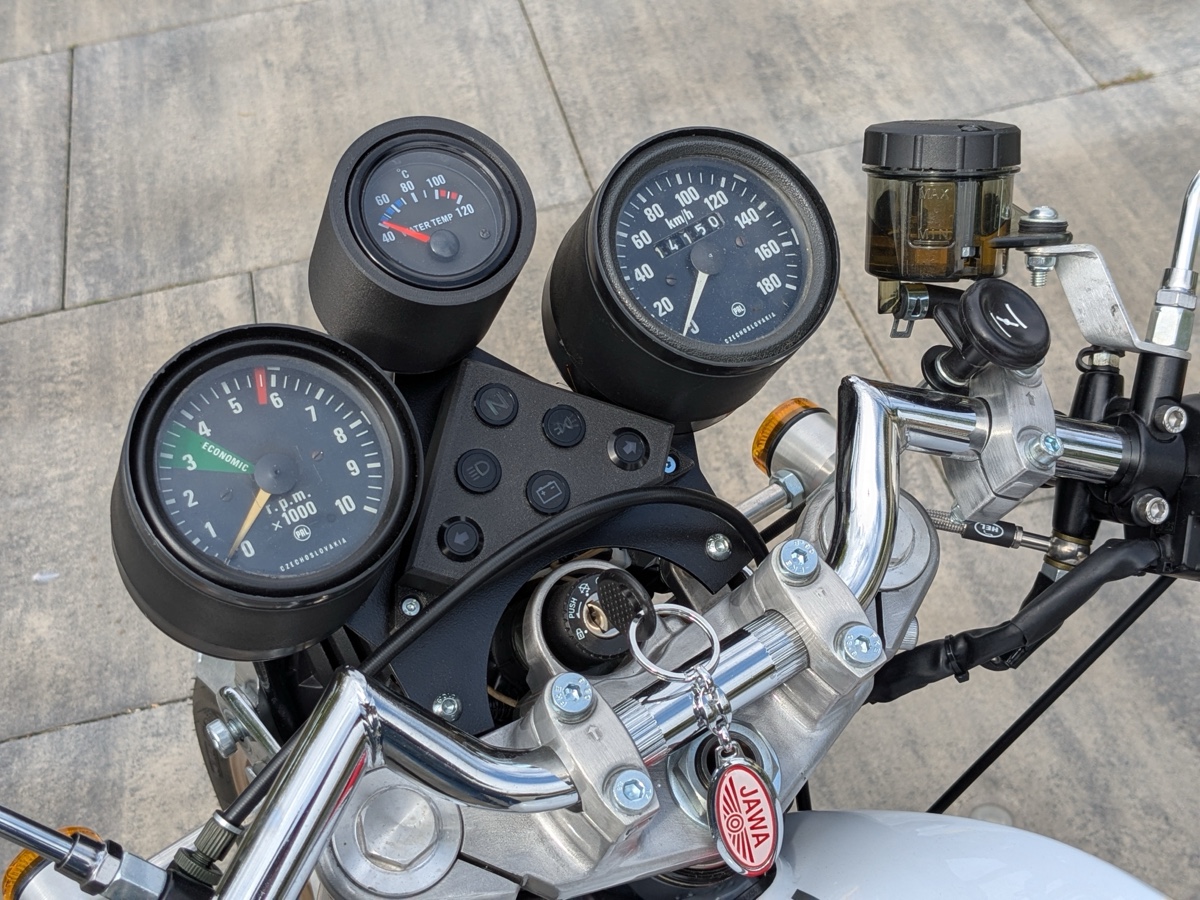
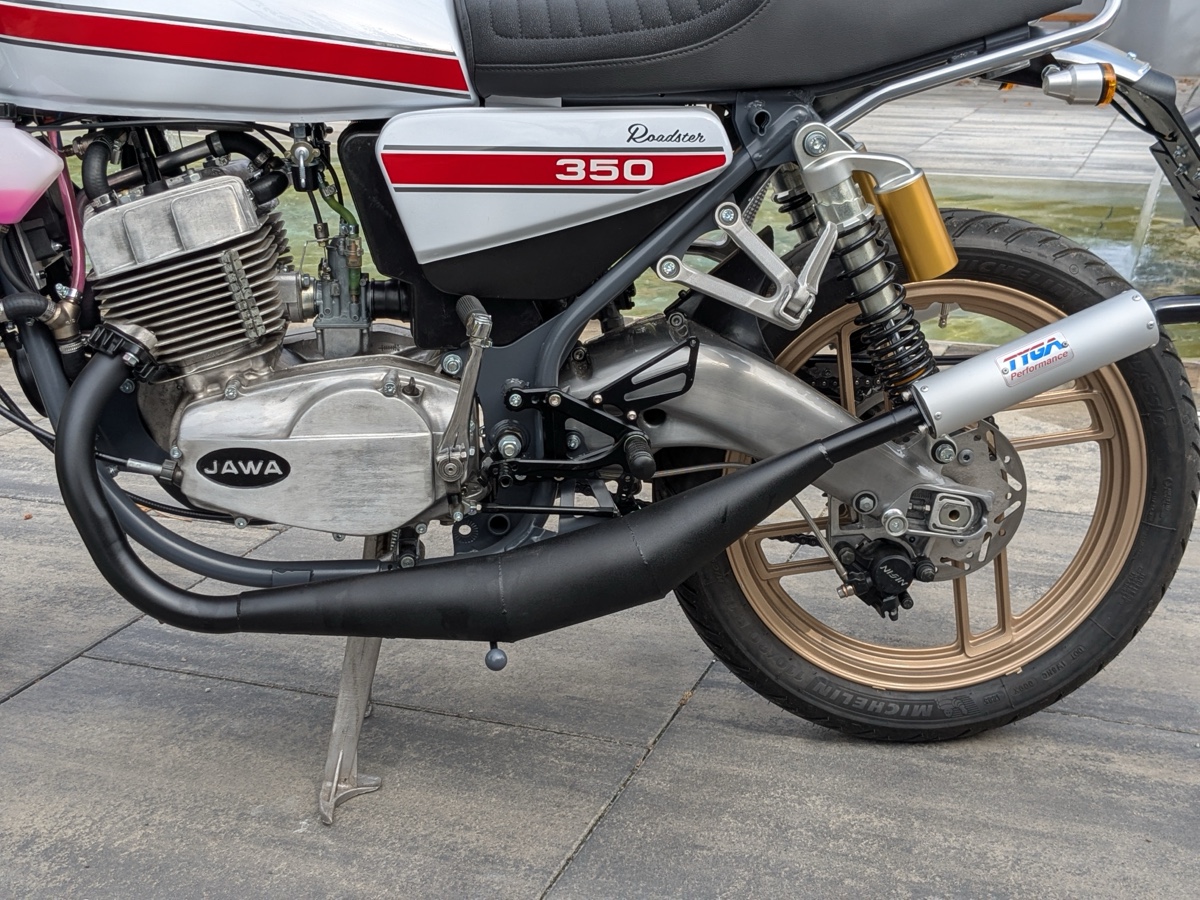
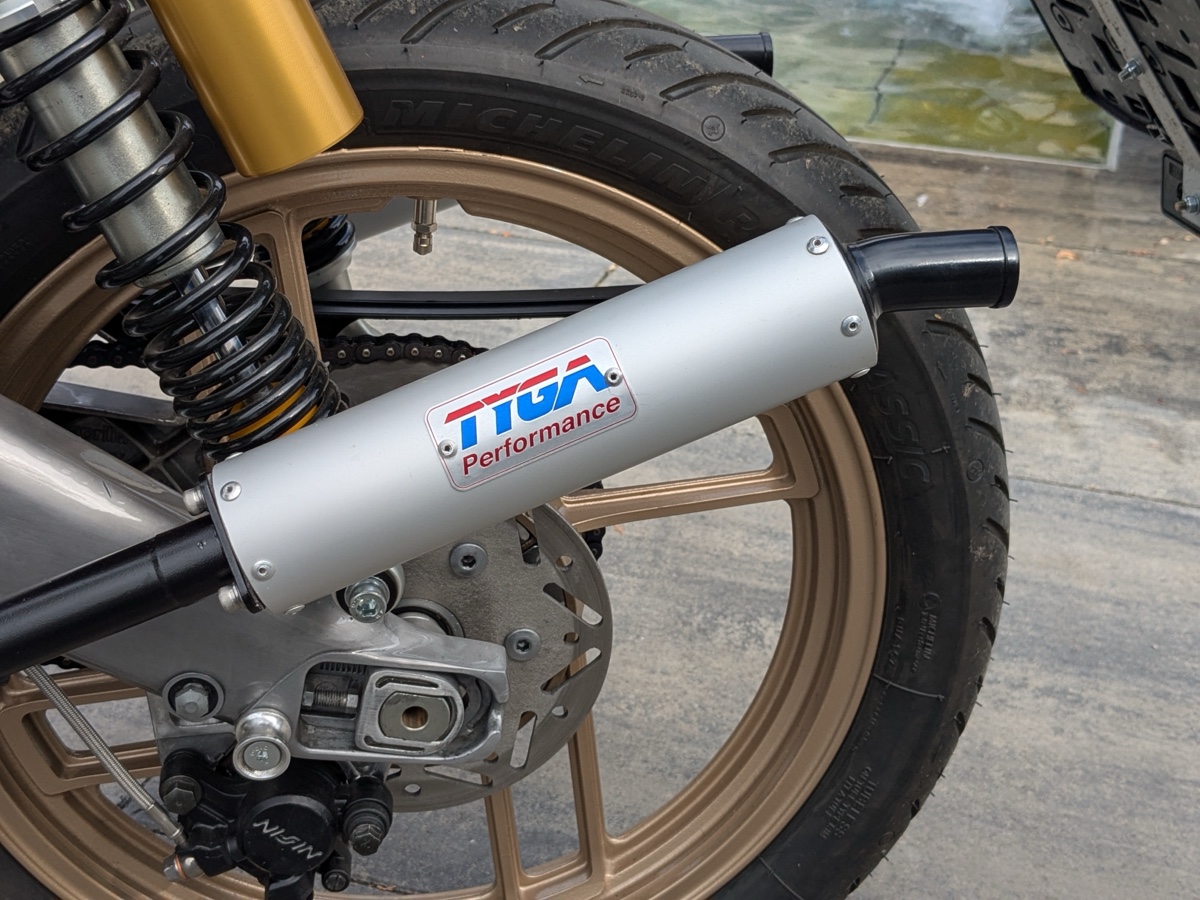
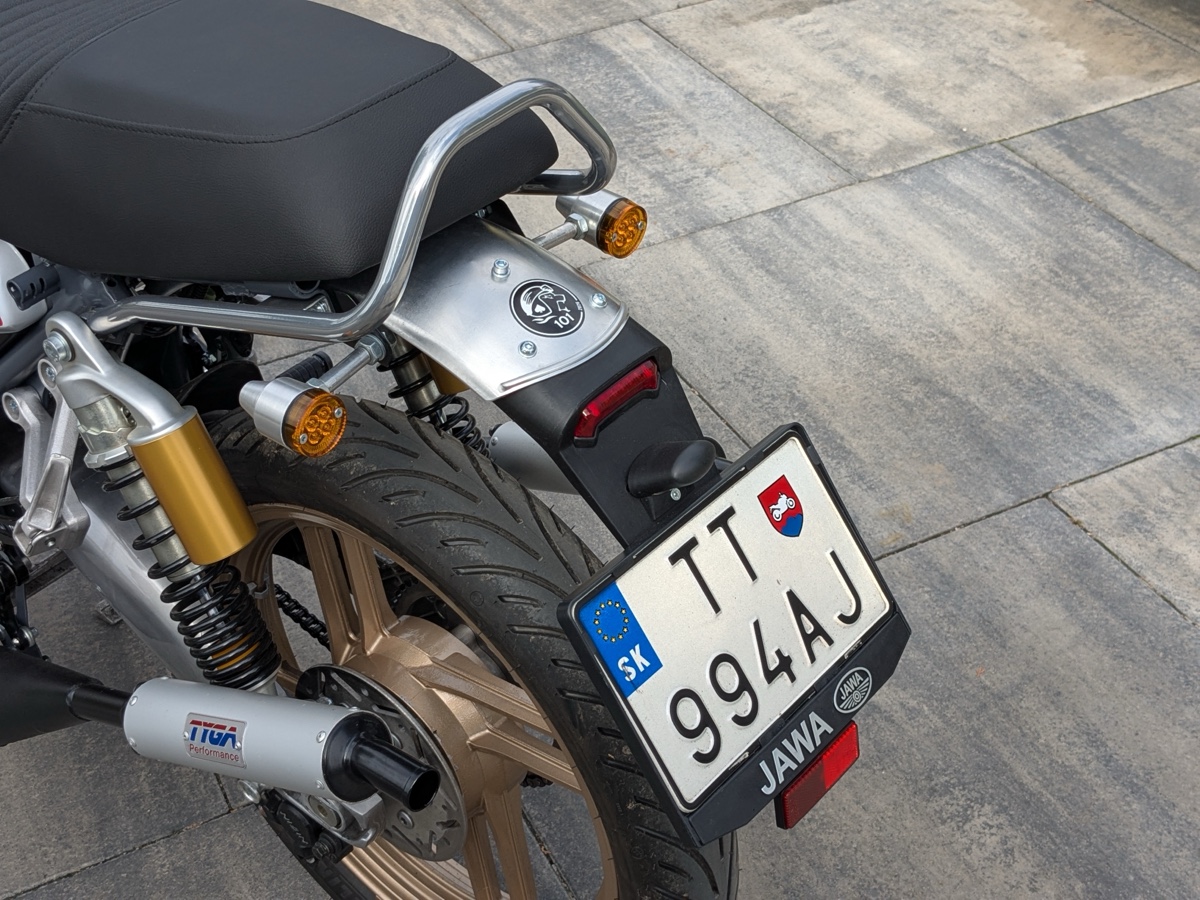
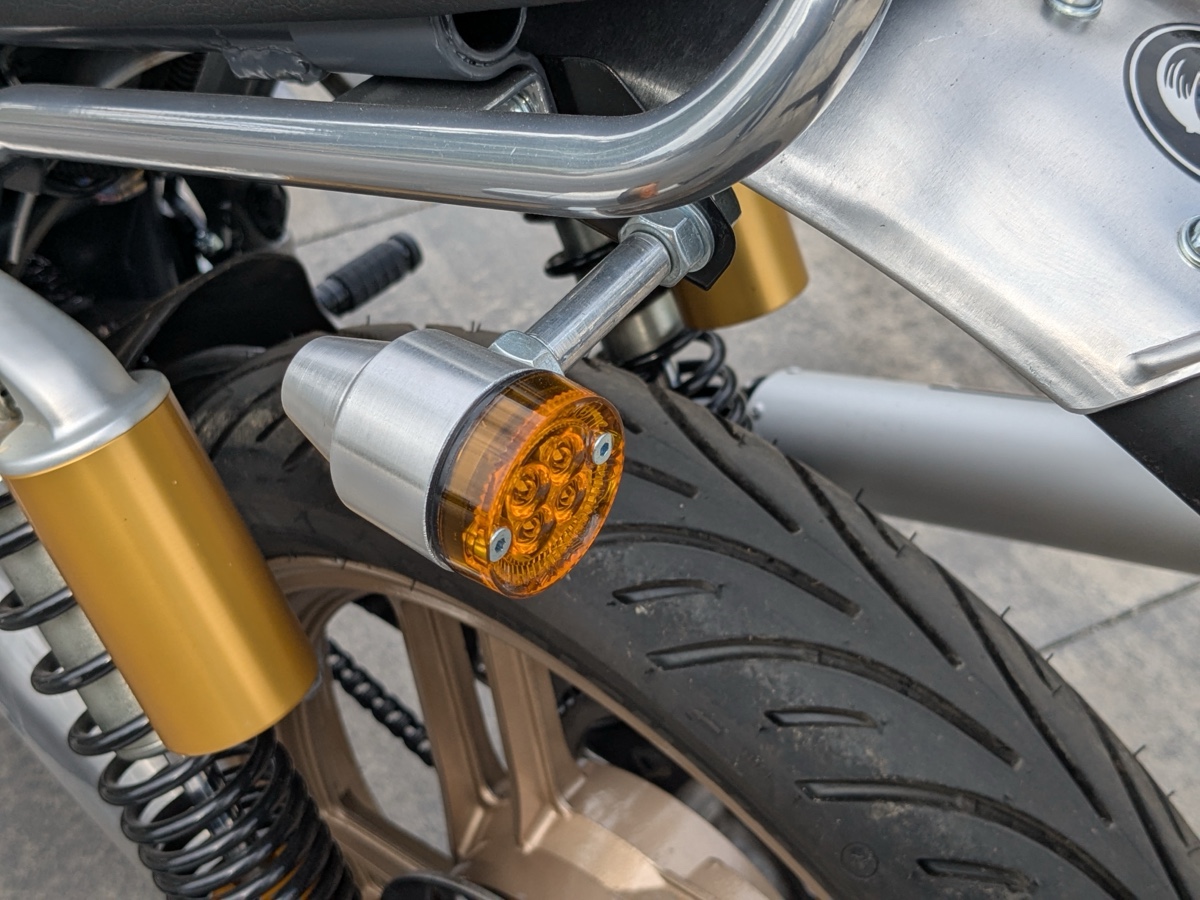
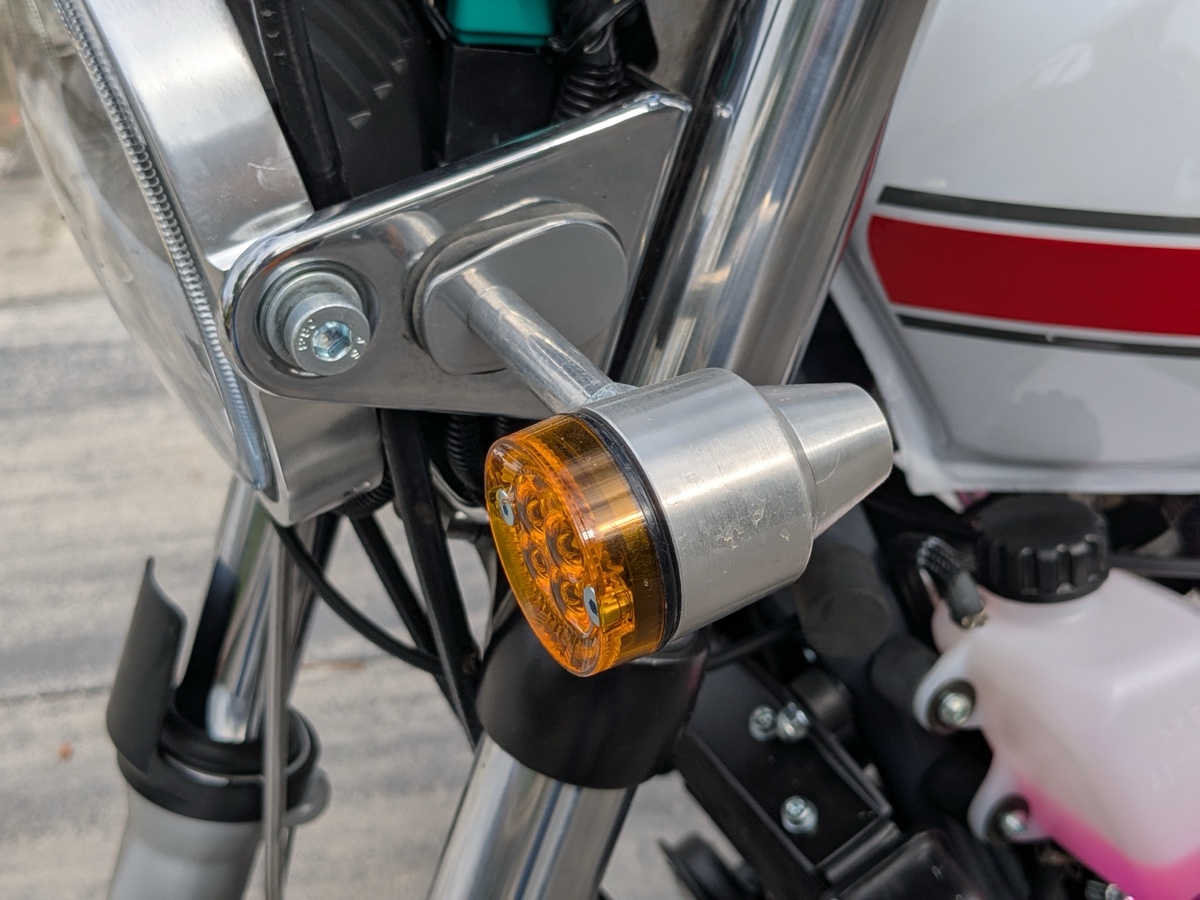
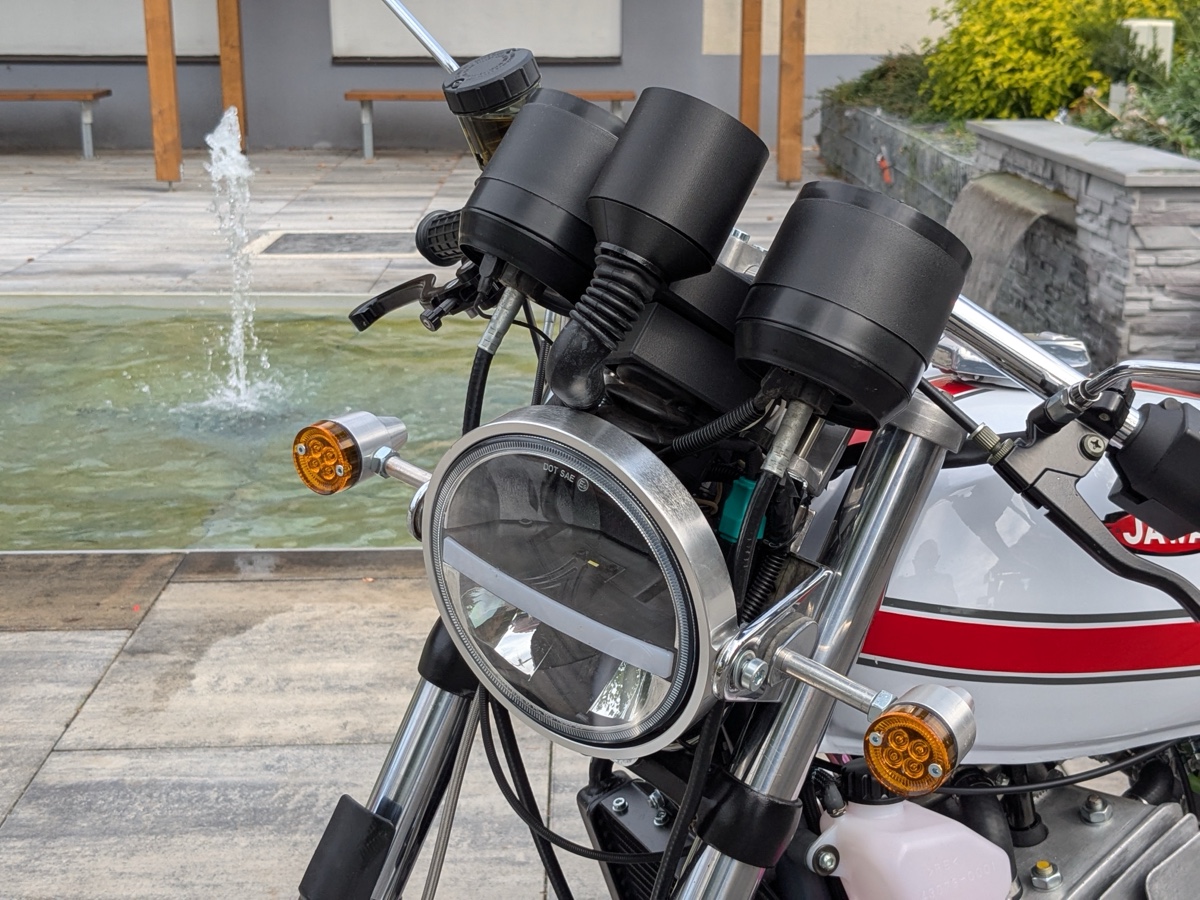
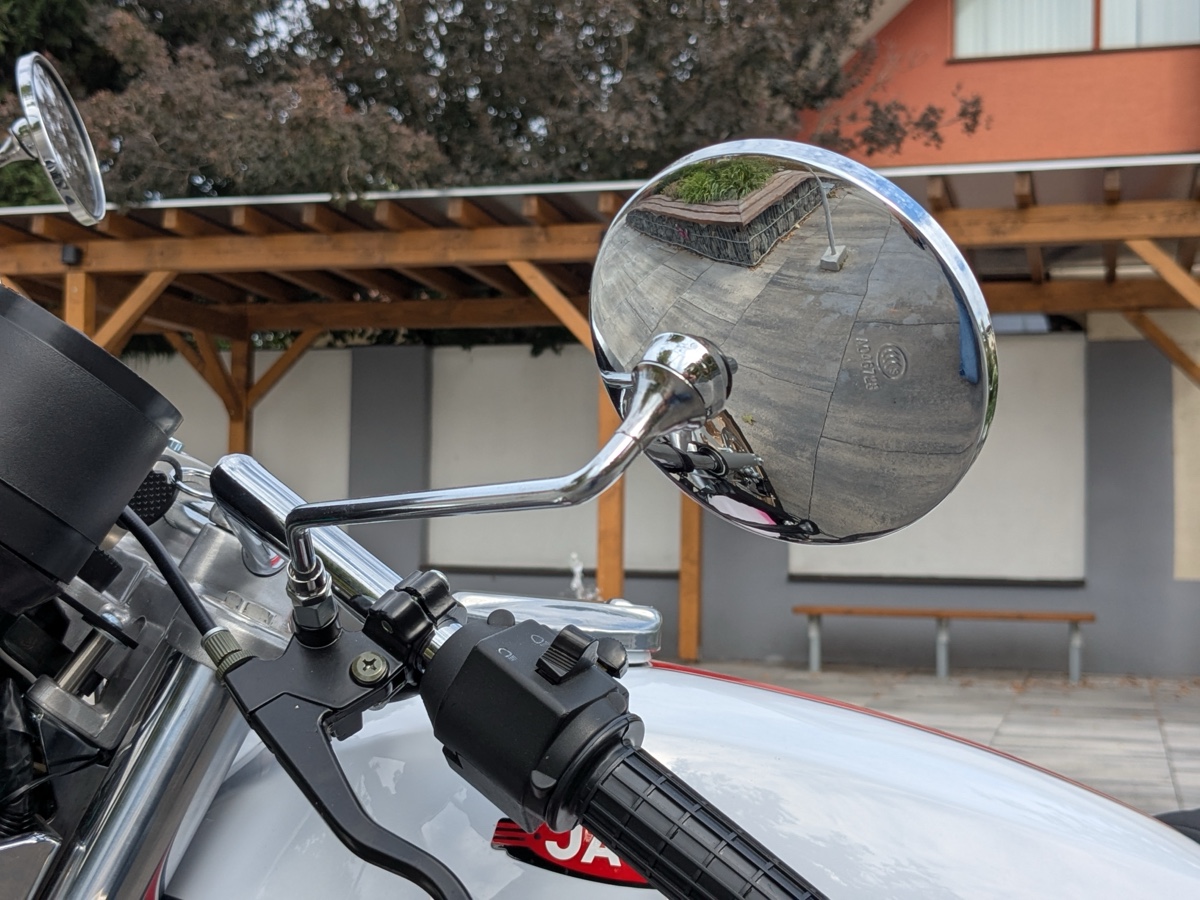
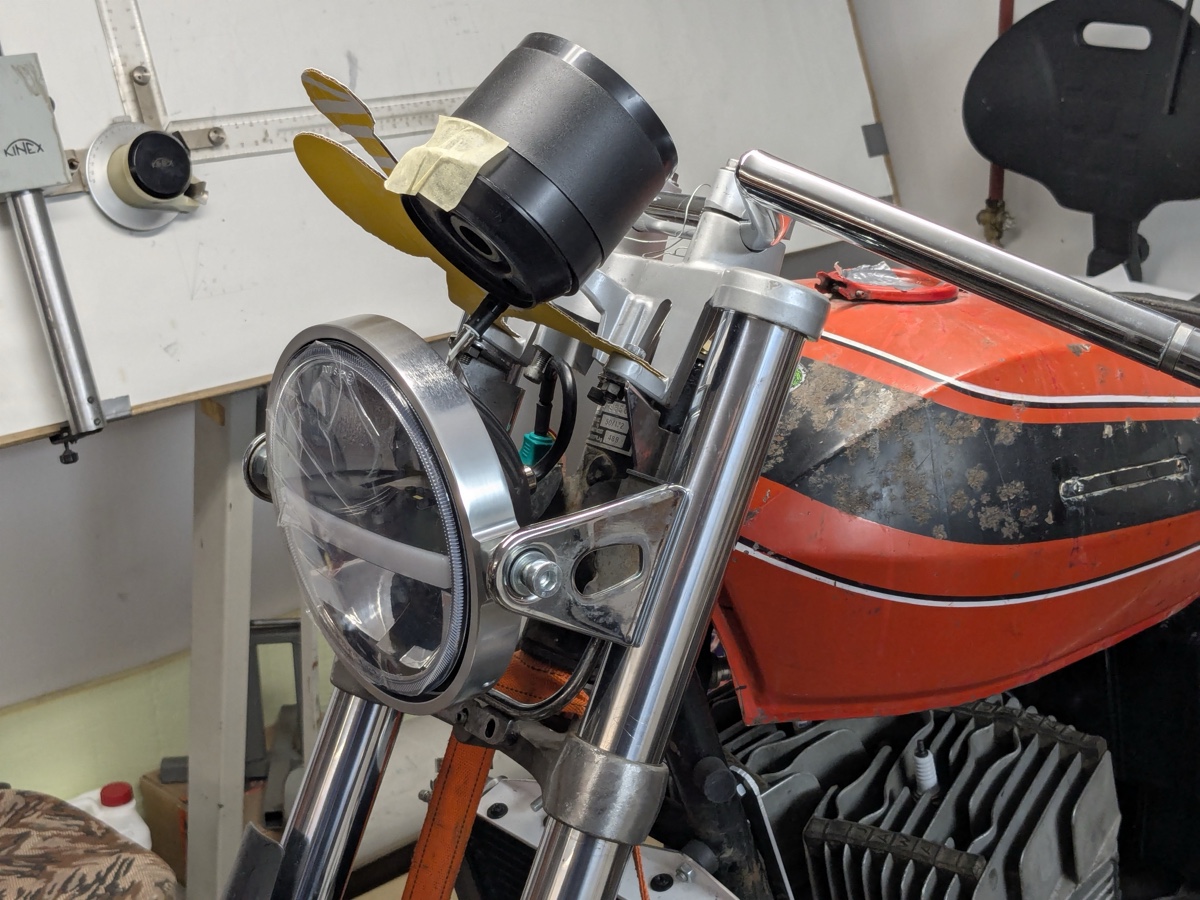
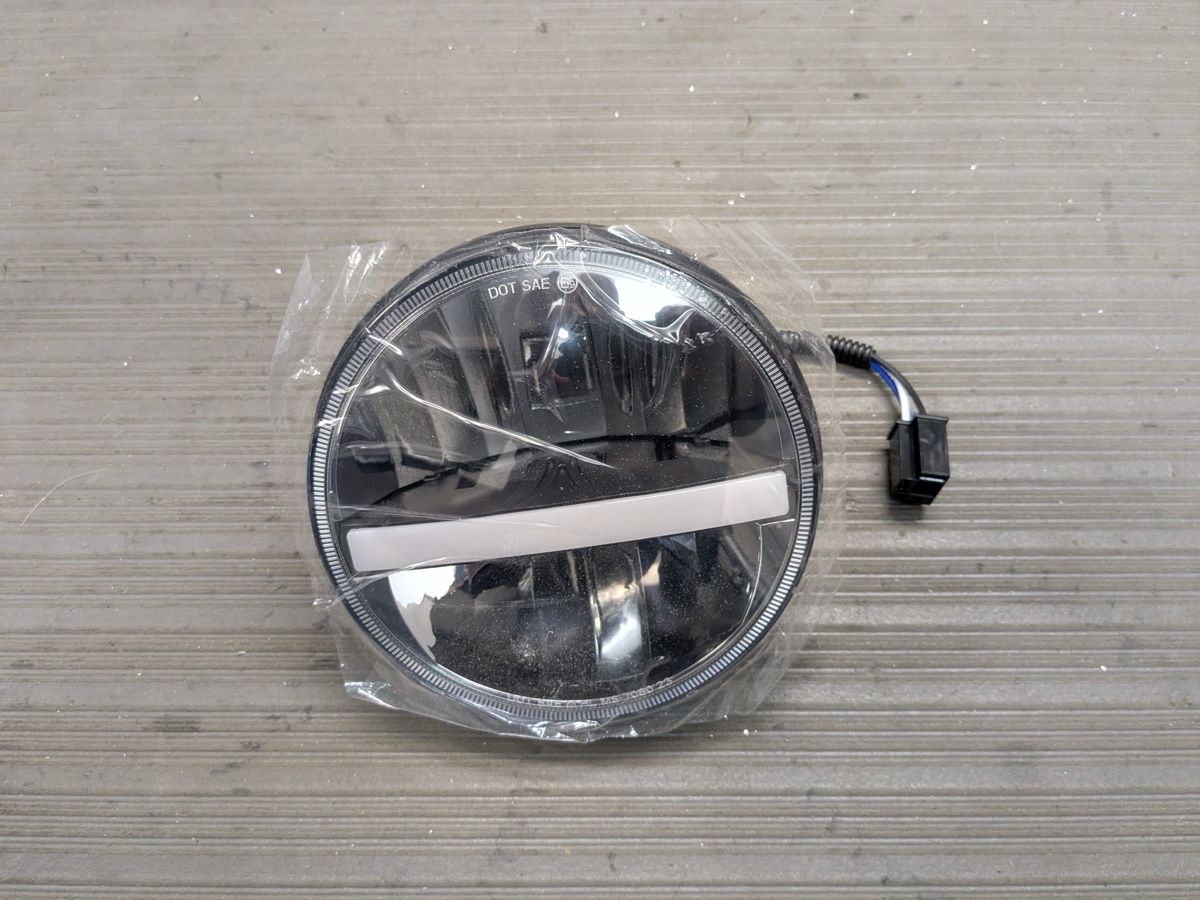
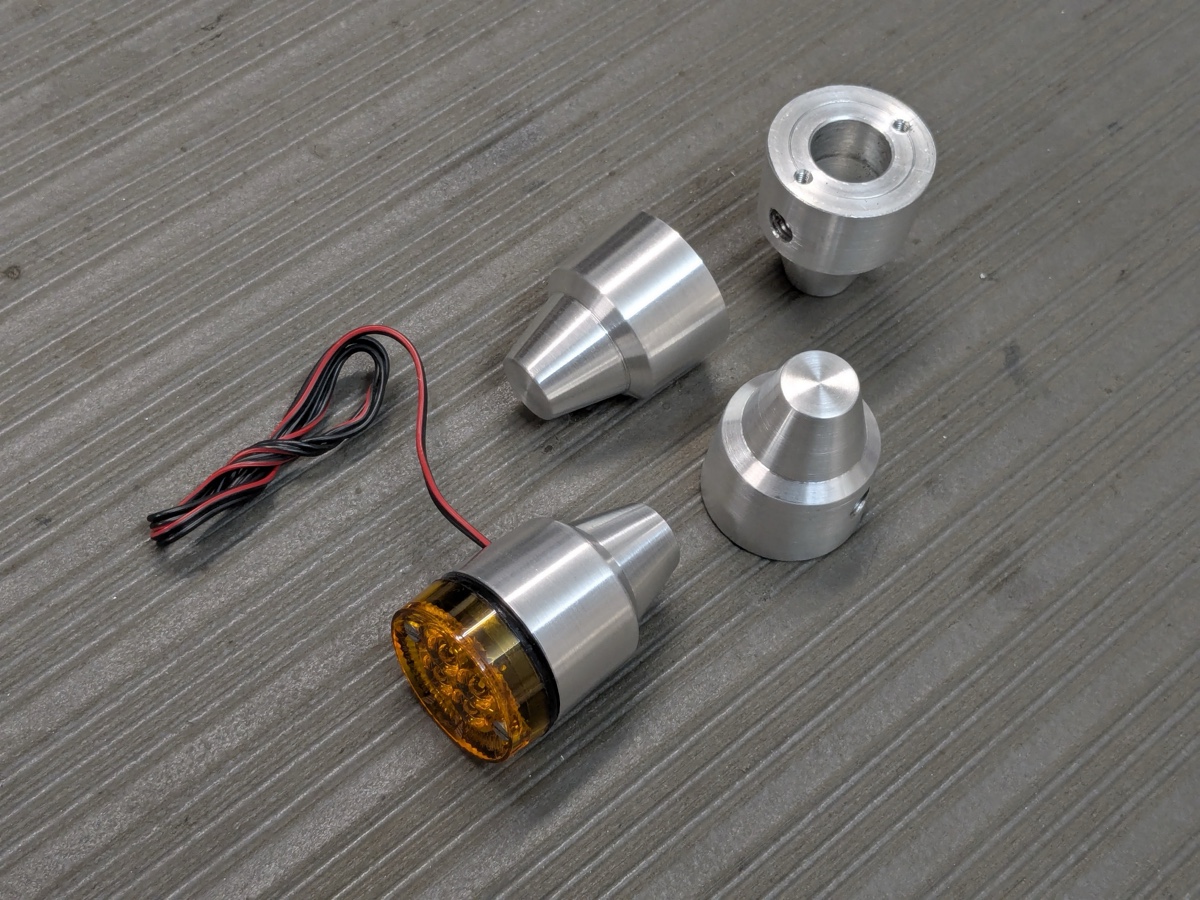
Only a few components of the original motorcycle remained untouched: the center stand, the left handlebar switch, the crankshaft, and the cylinders. Naturally, there are new parts — especially the lighting. Everything else underwent modification, repair, or alteration.
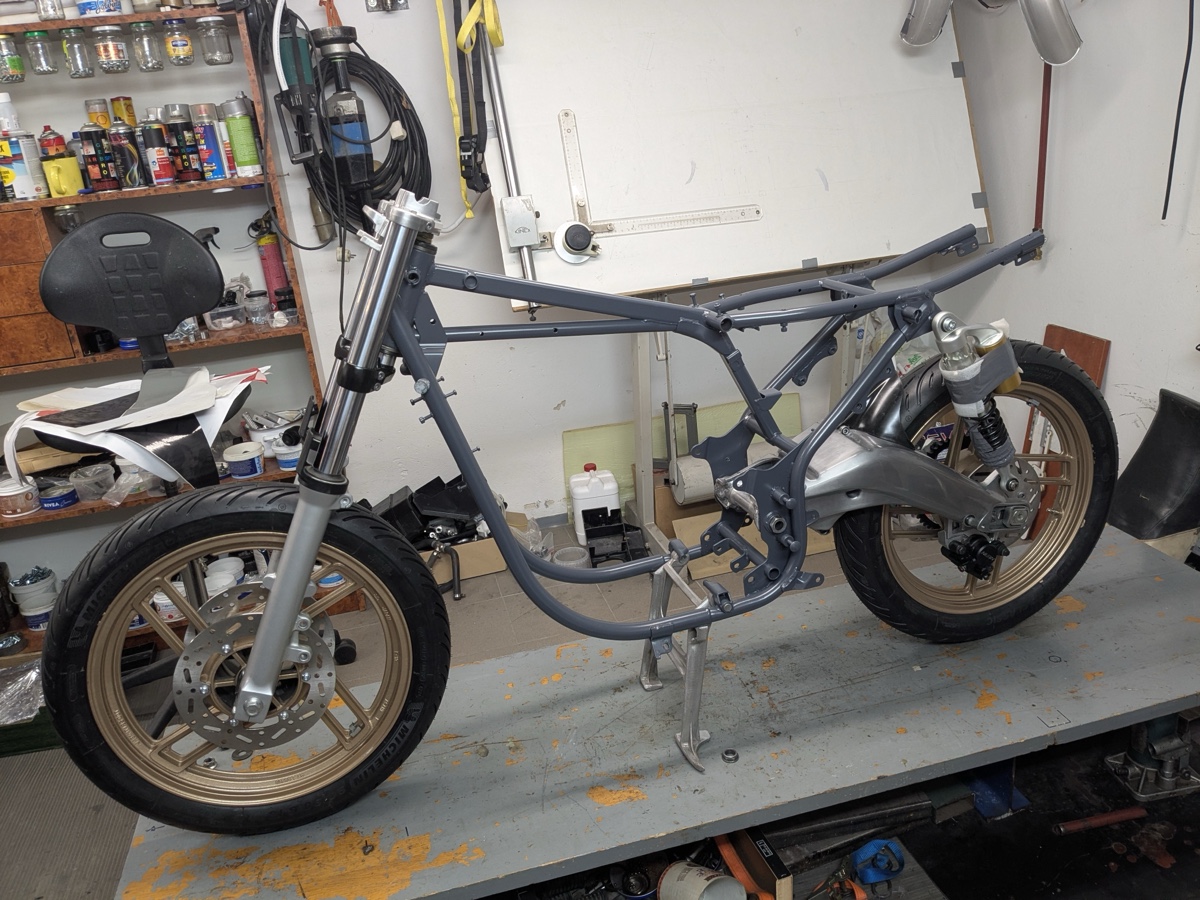
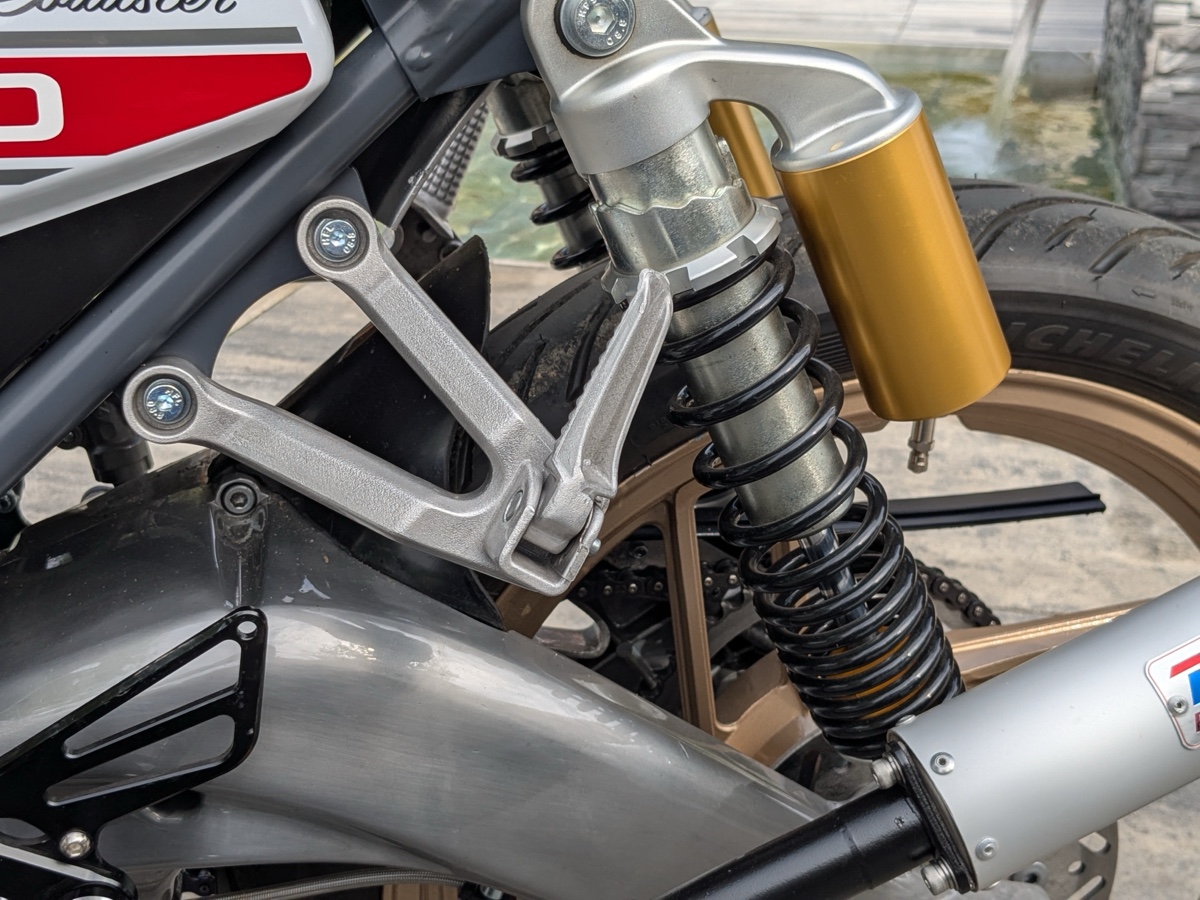
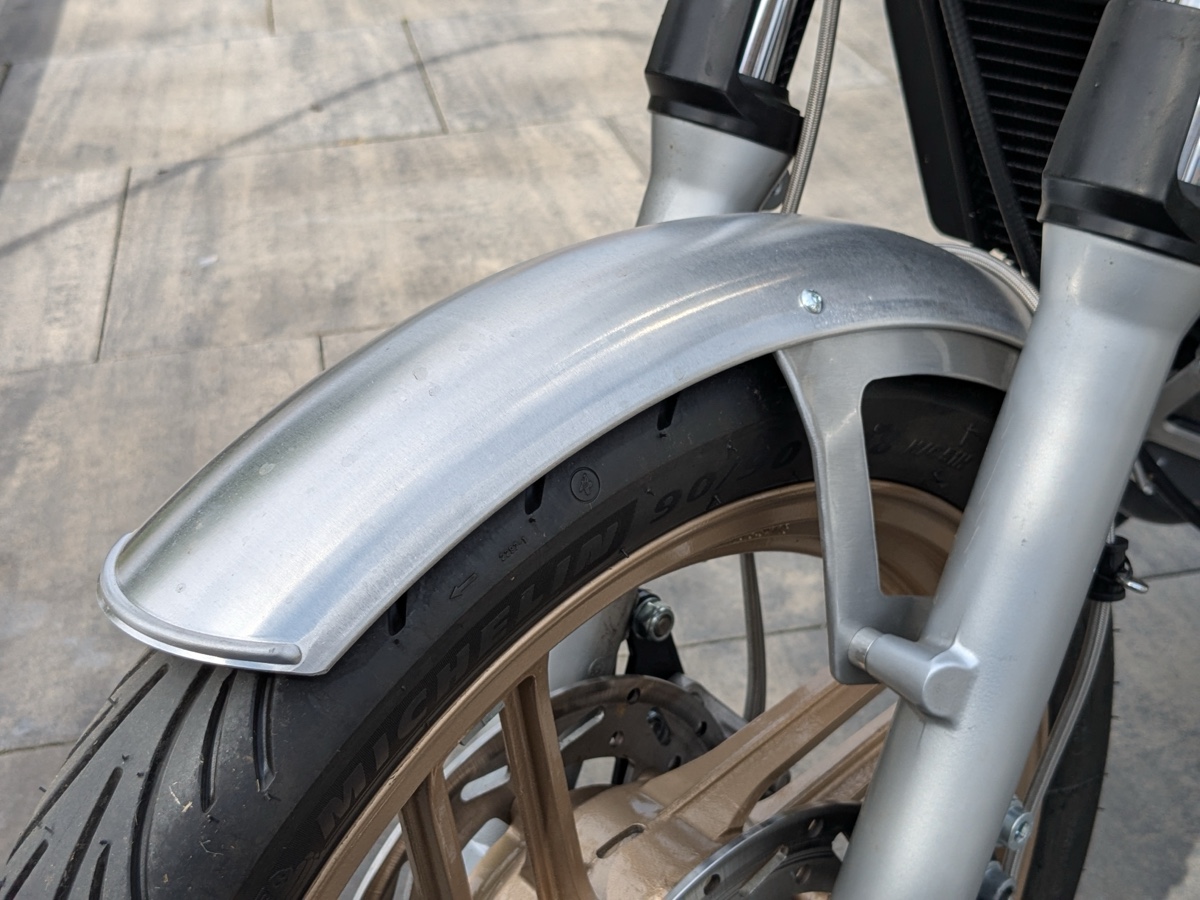
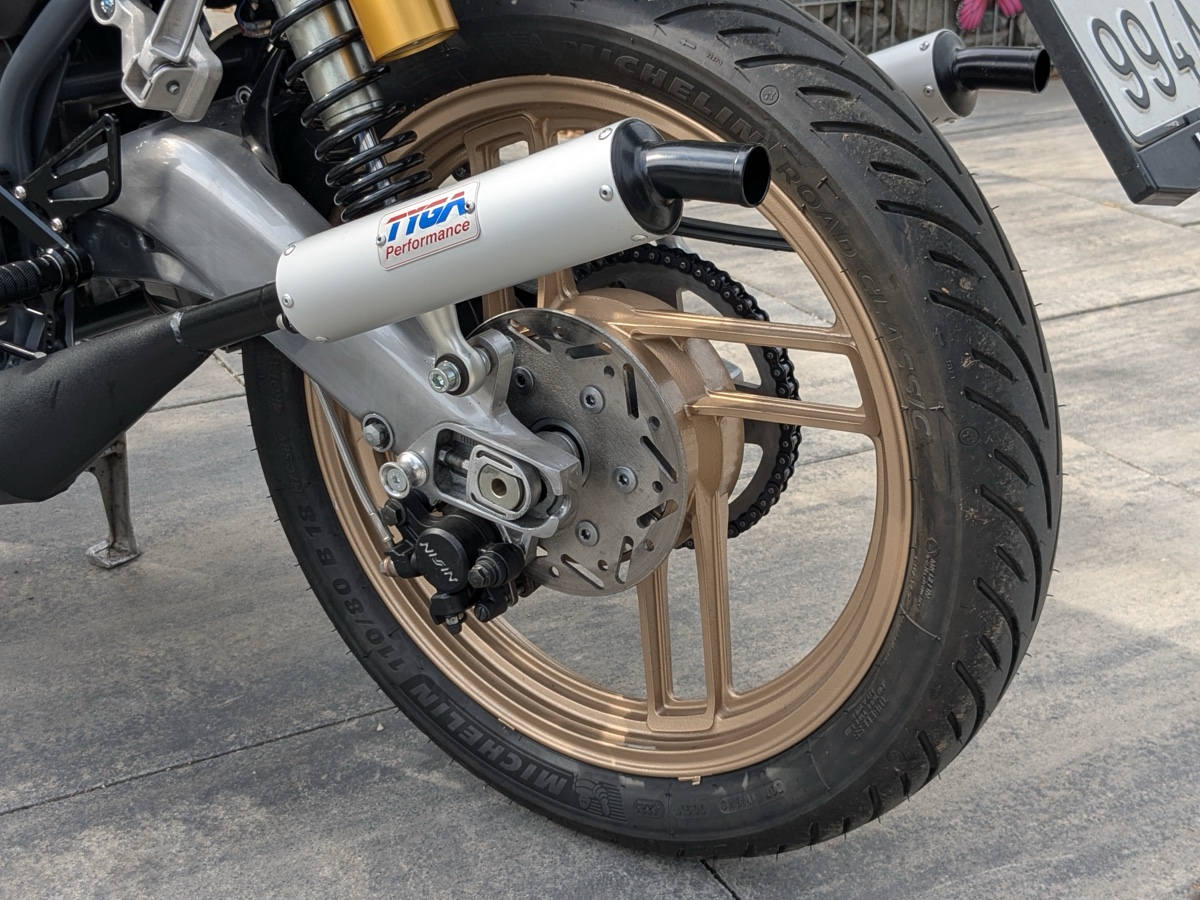
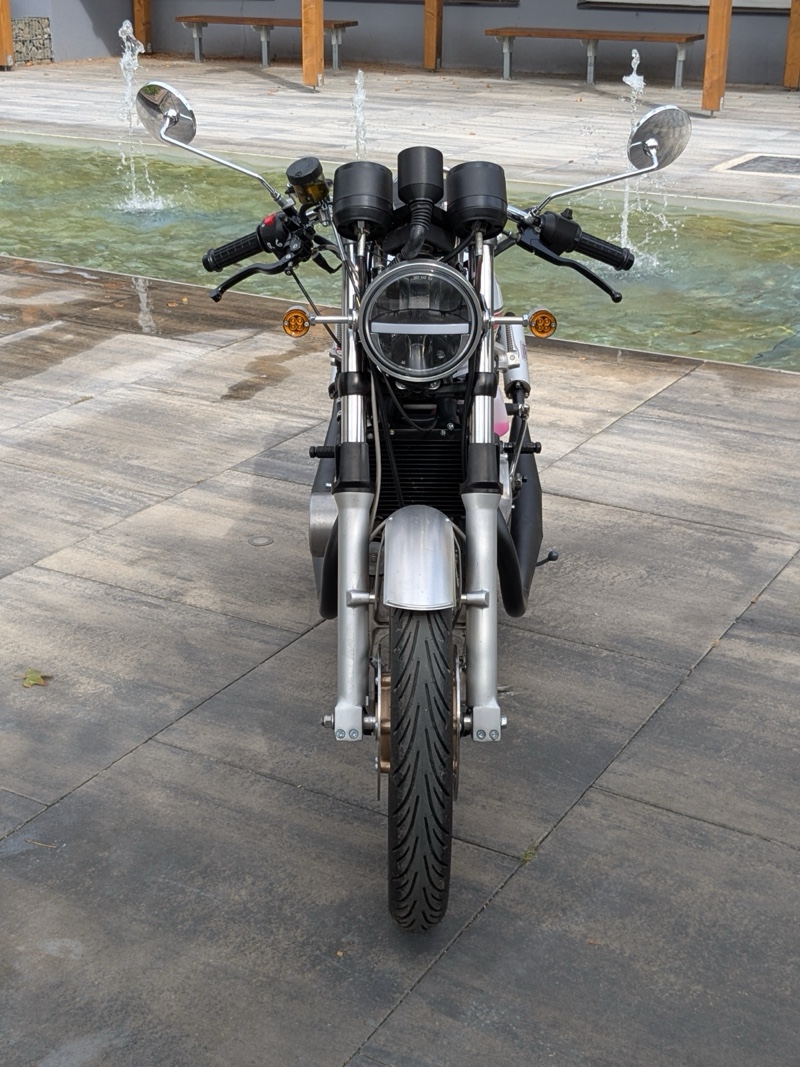
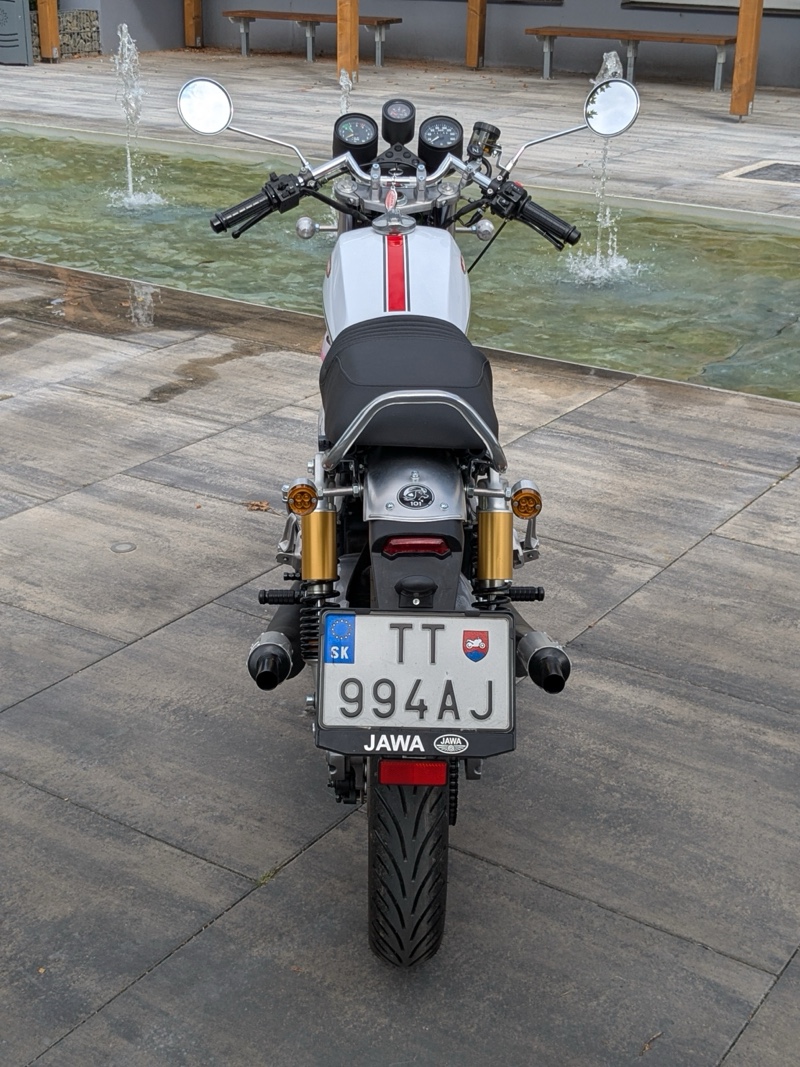
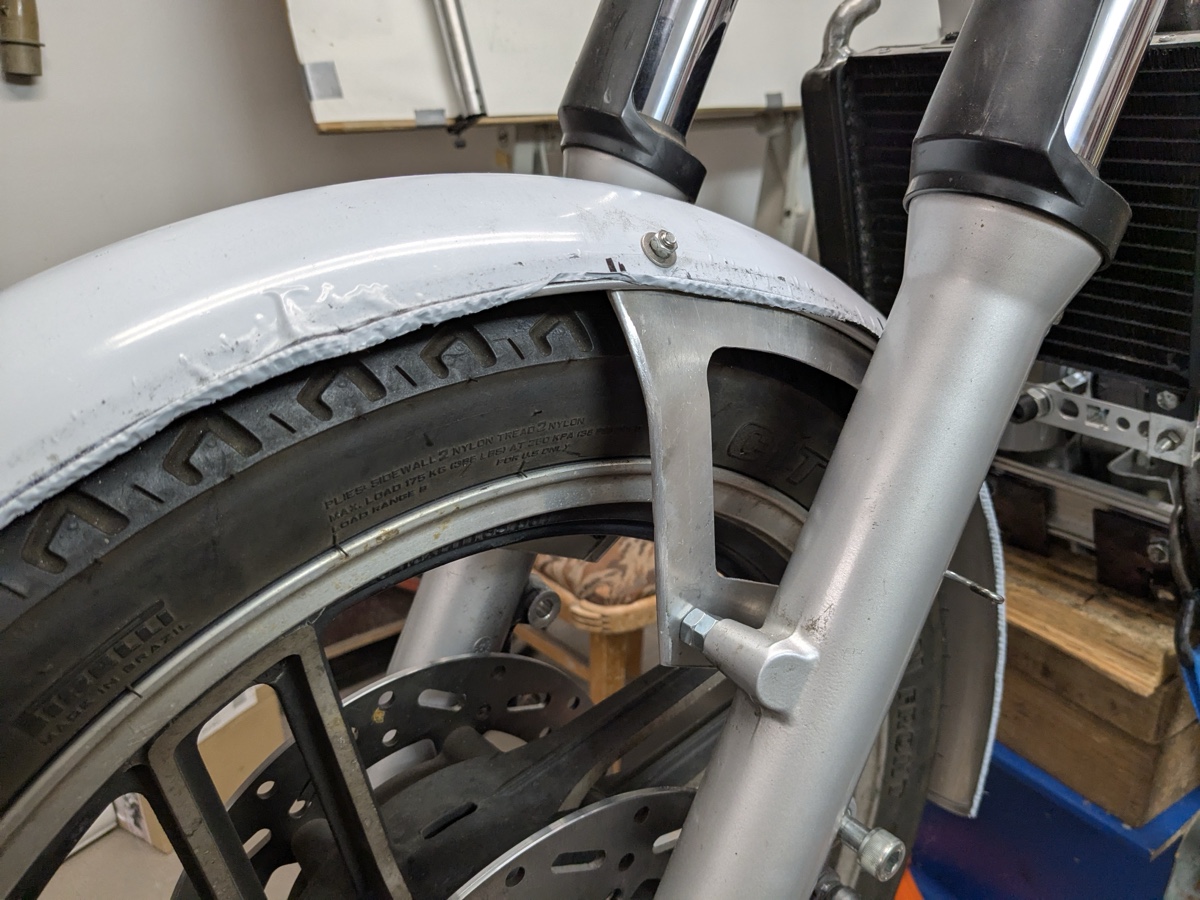
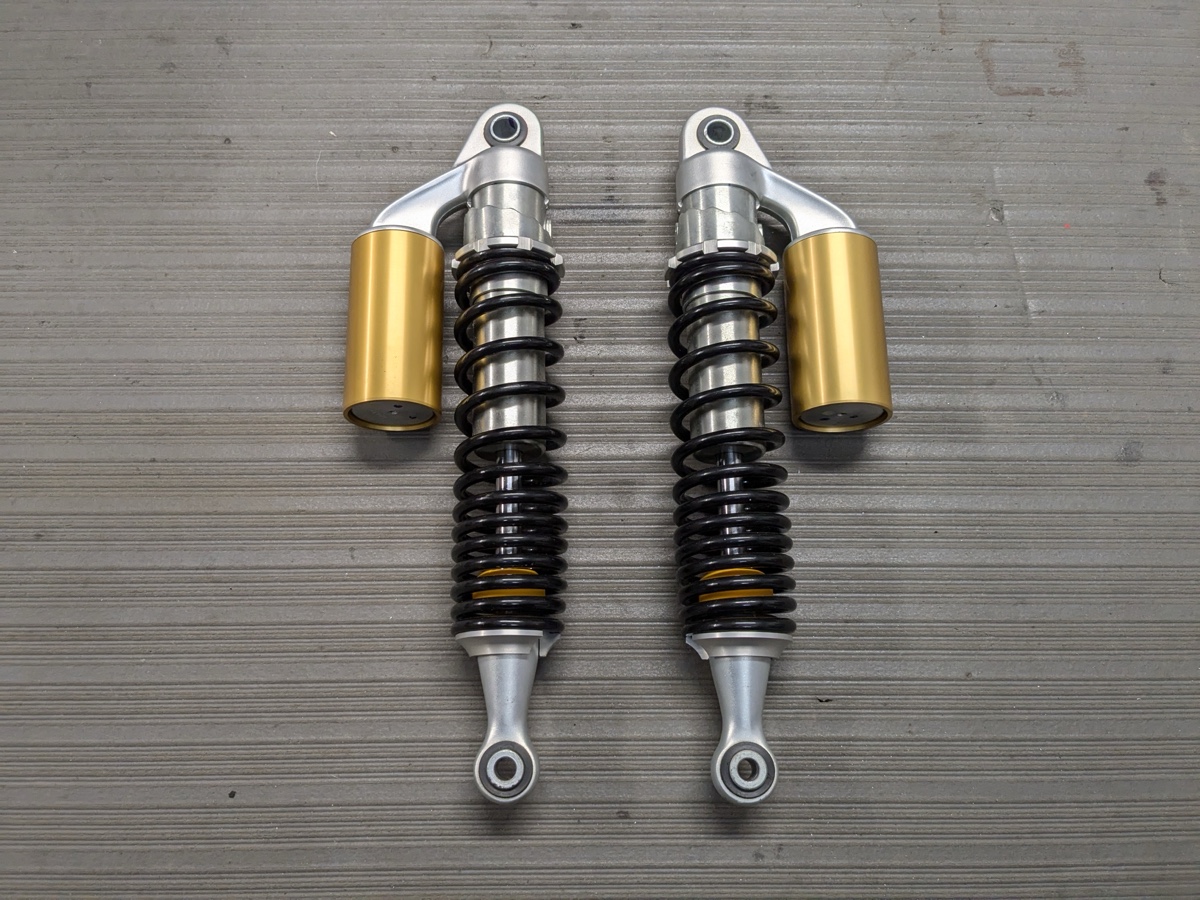
The Kawasaki front fork uses a completely different triple clamp compared to the Jawa, and the front axle has been moved closer to the engine. To maintain an approximate wheelbase, the swingarm has been shortened, and mounting points for Royal Enfield rear suspension units have been added.
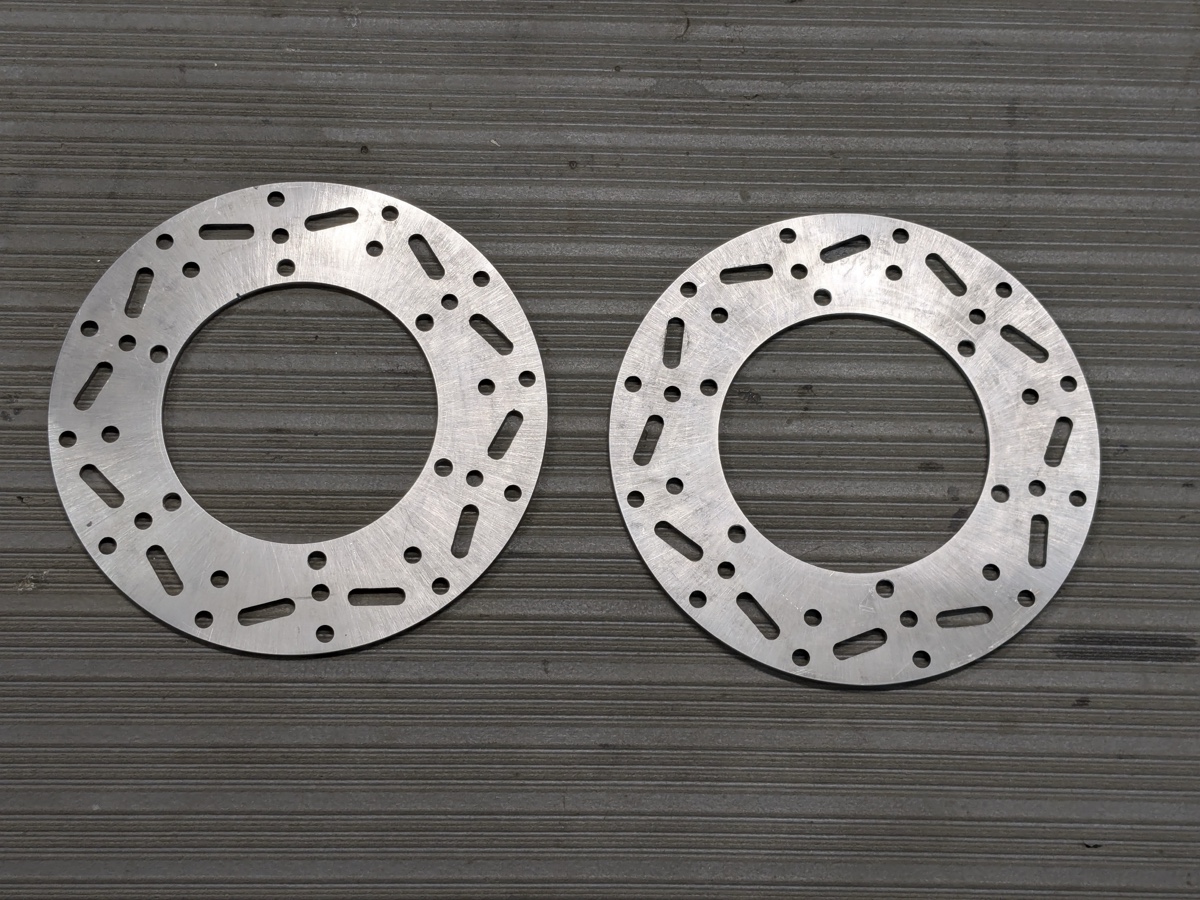
Unlike the original Jawa, this bike features dual front disc brakes. However, I didn’t want massive 300 mm discs; they wouldn’t have looked right on such a slender motorcycle. In the end, I sourced 220 mm diameter discs. All the weight-reduction holes — just like on the rear disc — were ground out by hand. The brake calipers are Brembo units from a Ducati, mounted via adapters.
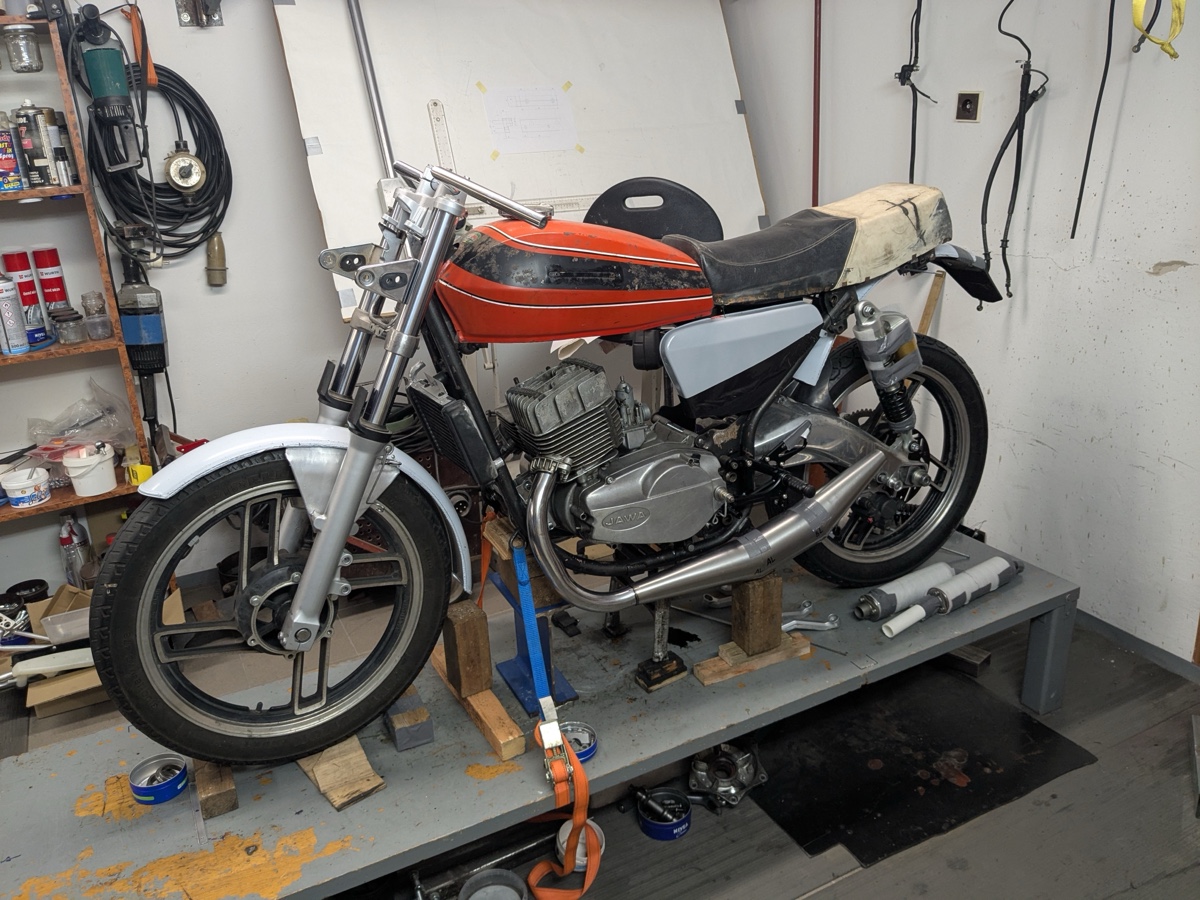
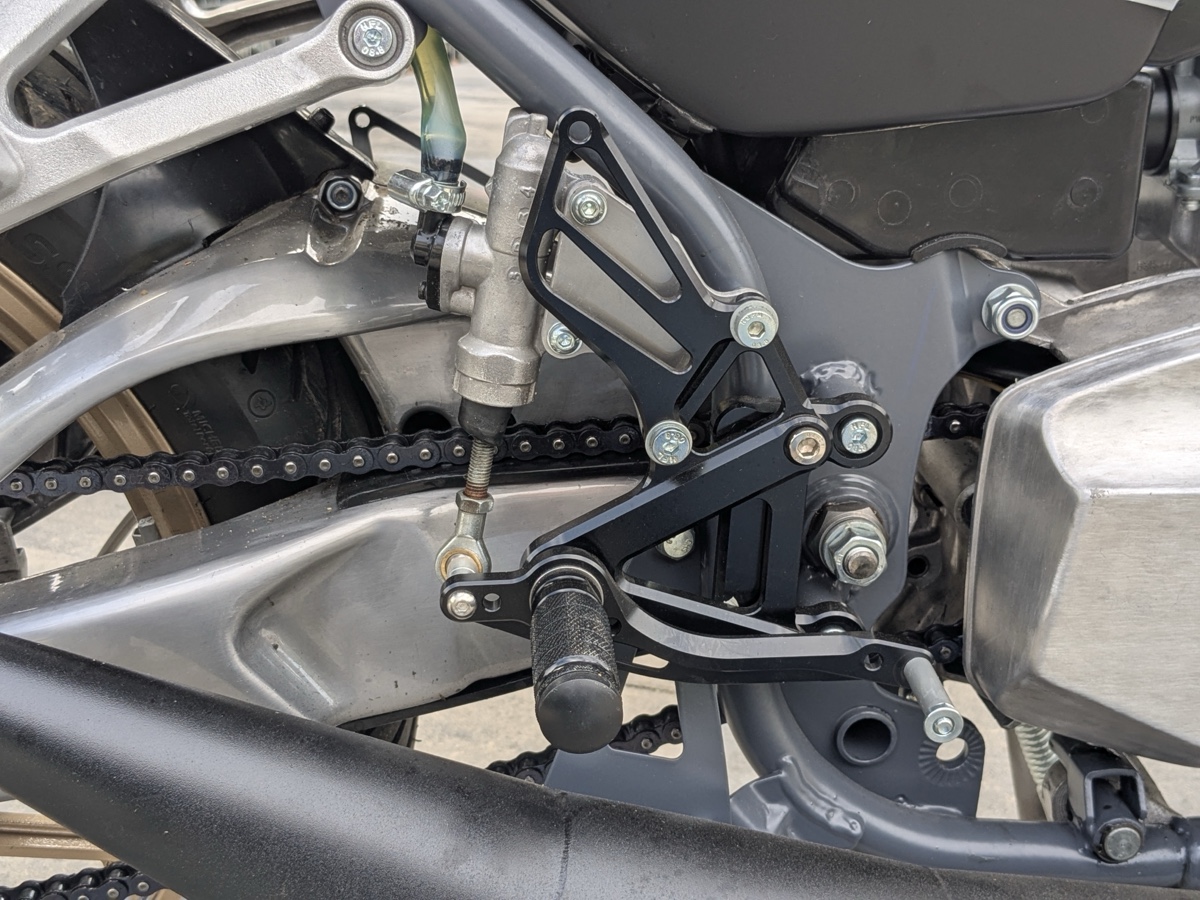
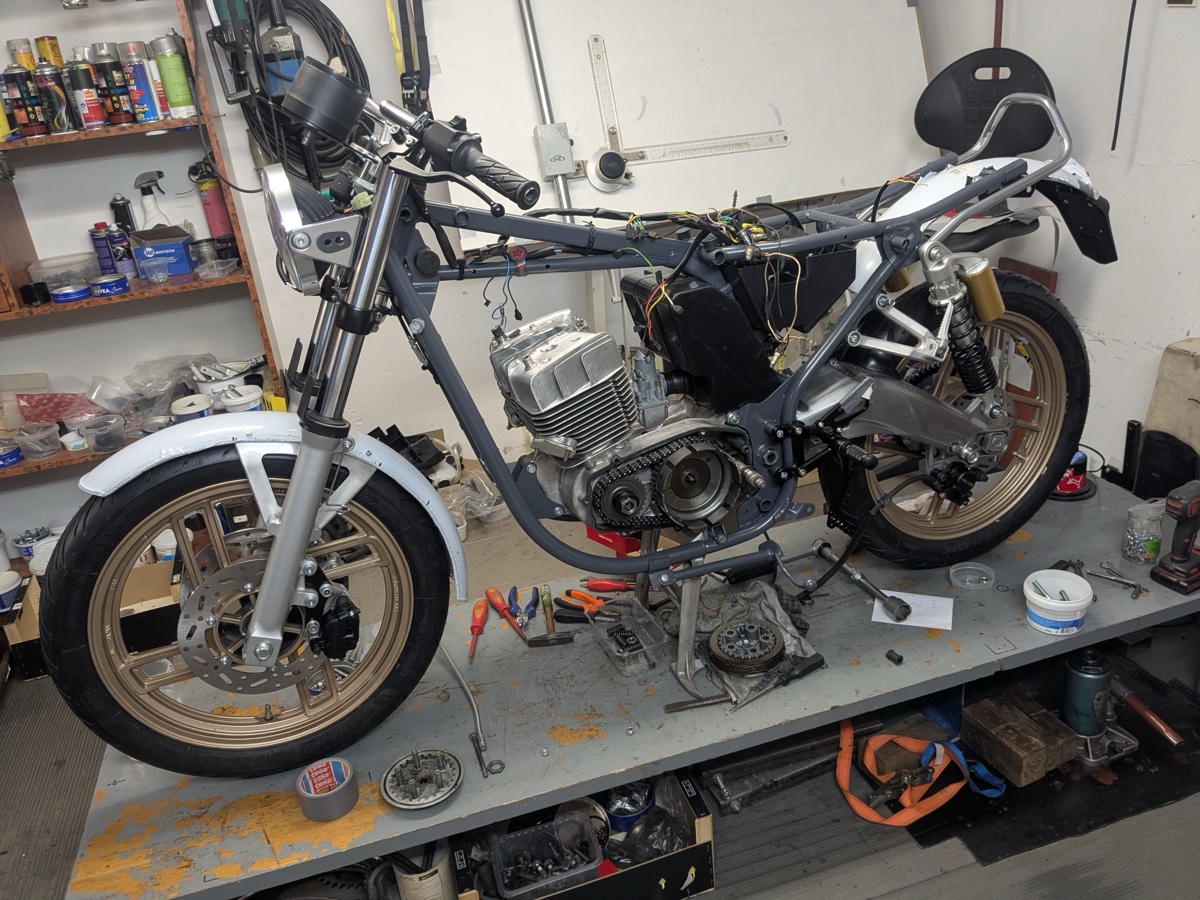
Converting the rear hub required a great deal of work. The chain had to be moved from the left side to the right, and the brake from the right to the left. Even the brake itself underwent a conversion — switching from a drum brake to a disc brake. I had searched the internet for inspiration regarding this kind of modification (moving the chain from left to right) but found nothing, so I had to figure it out myself.
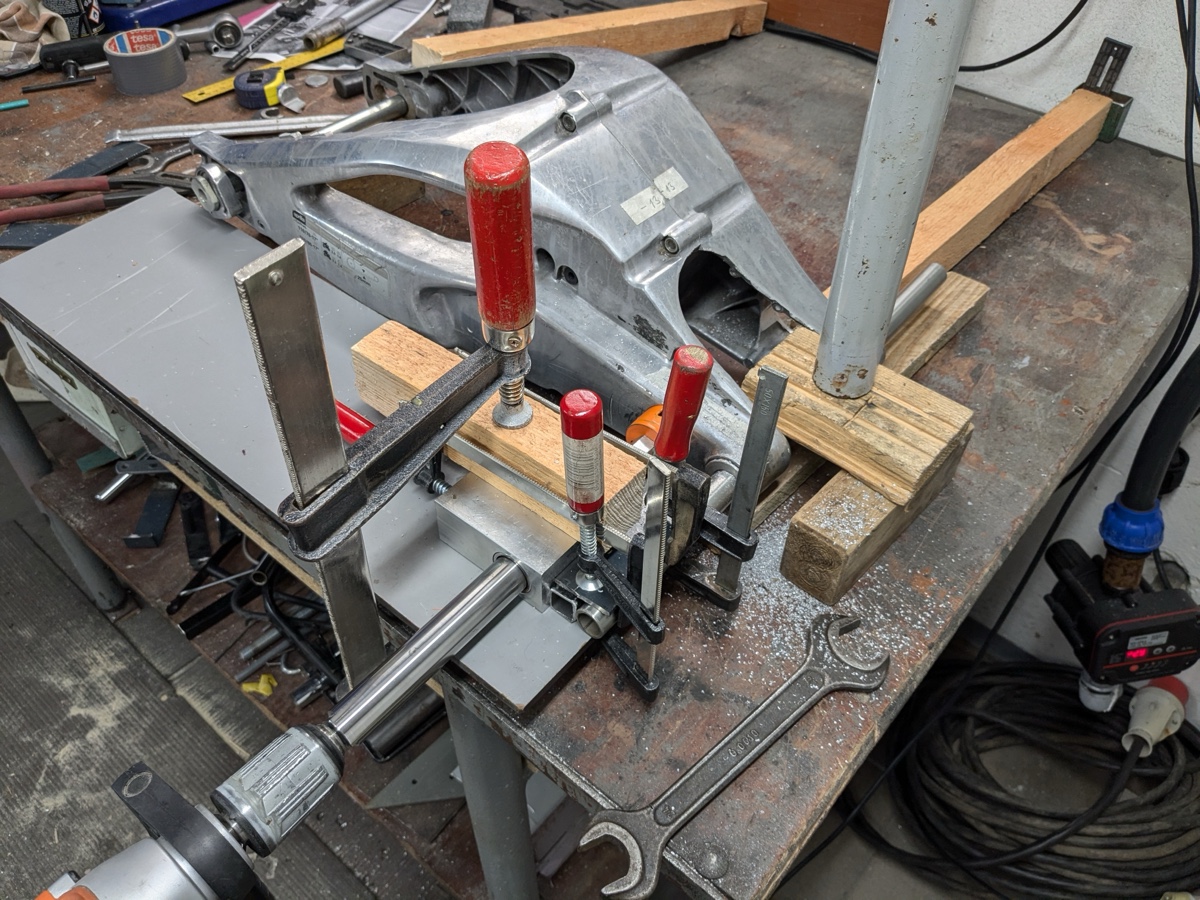
The engine. I found several examples of water-cooled Yamaha RD engines online. One used thermosyphon cooling — relying on natural circulation — but that wasn’t what I wanted. There were others with mechanical pumps, but I couldn’t figure out how to mount one of those on the Jawa. That left me with only the electric pump option. However, I couldn’t find any examples of that setup online to use as inspiration, either.
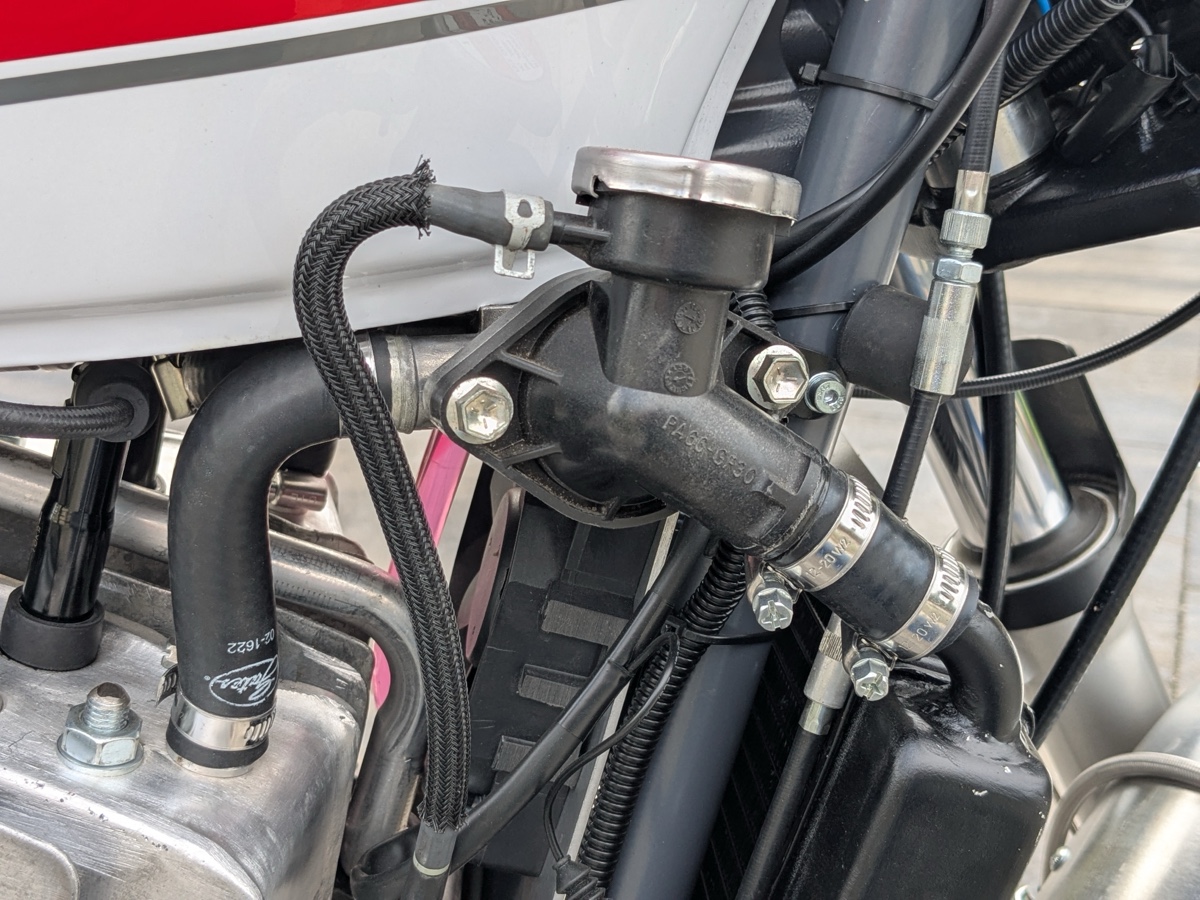
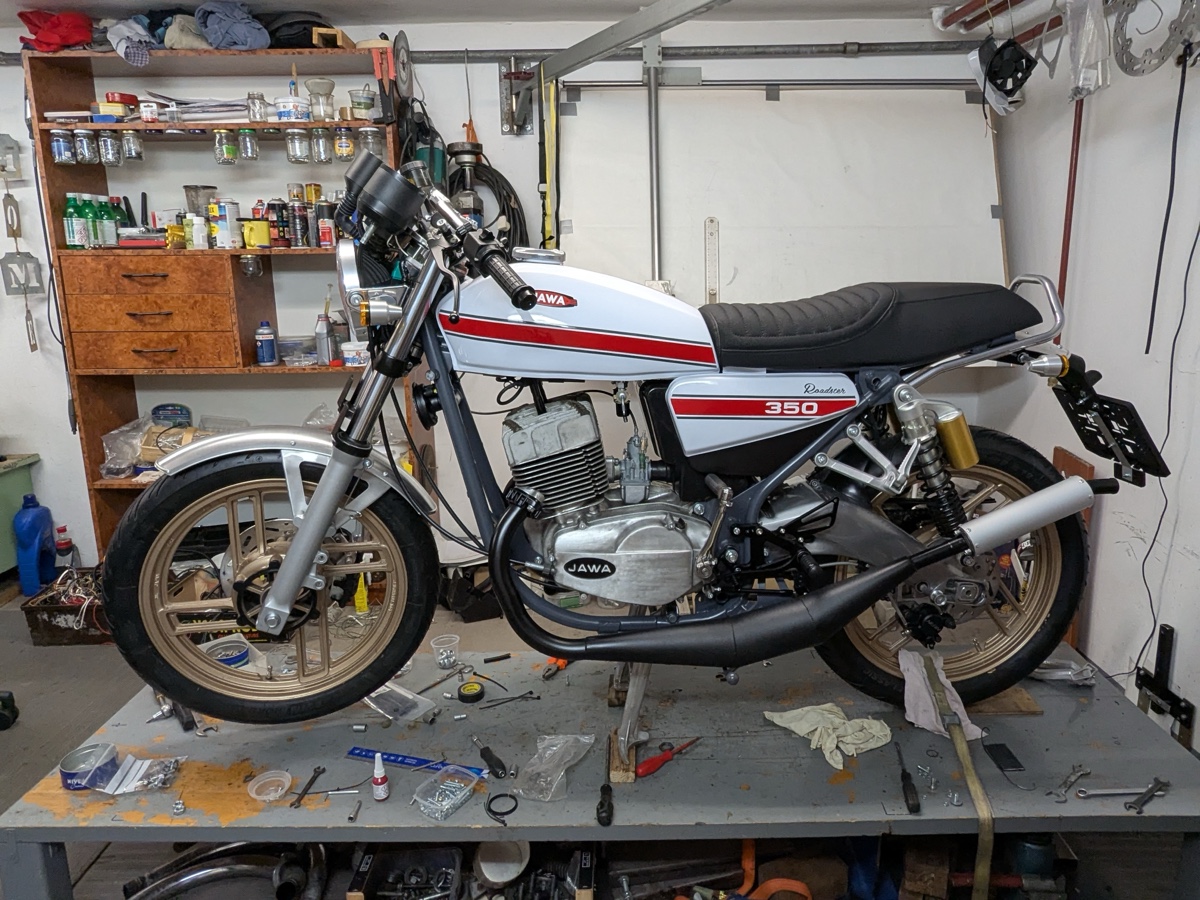
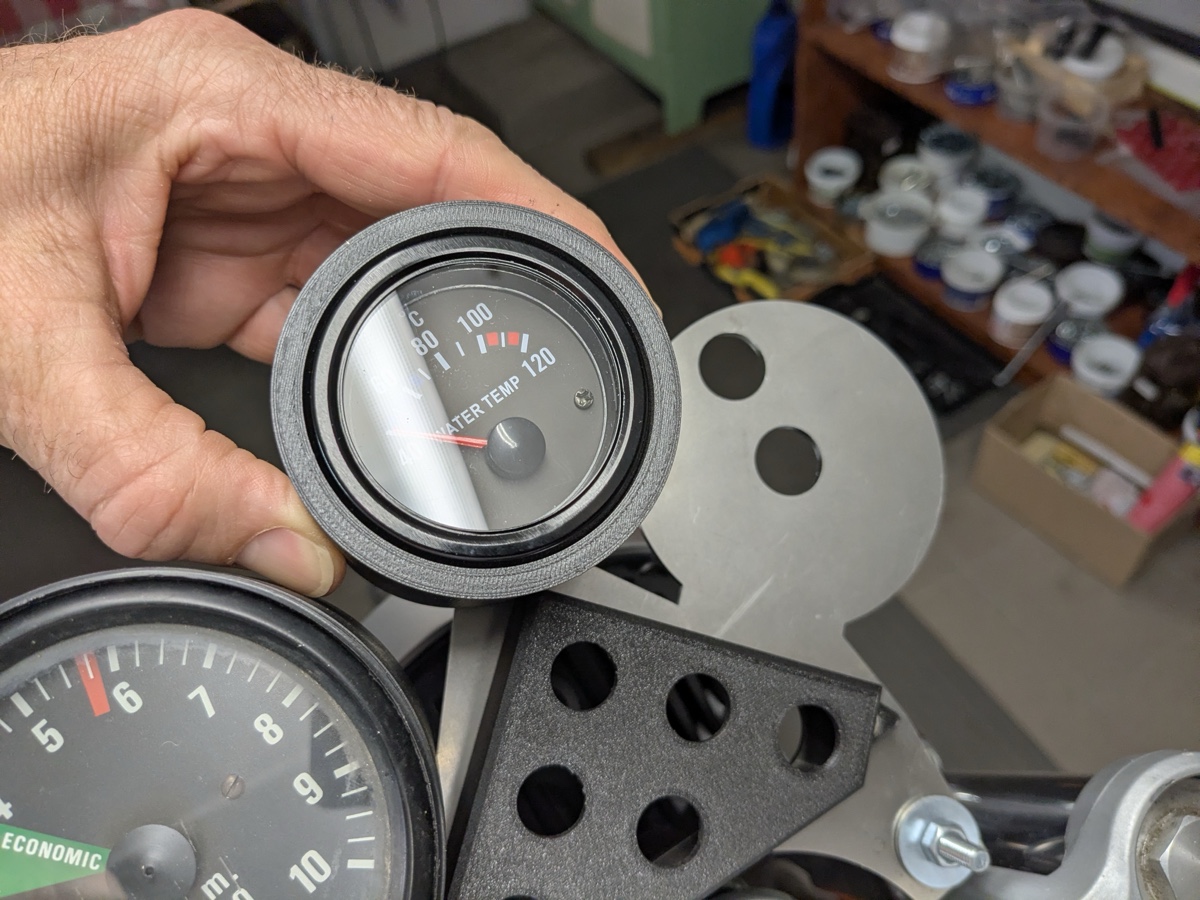
I tried using an auxiliary electric pump of the type found in car heating systems, but it required a connection to the central control unit — a requirement that couldn’t be bypassed. I was saved by an electric pump used in motocross. The modified radiator came from a Chinese ATV, and the thermostat from a Suzuki Bandit.
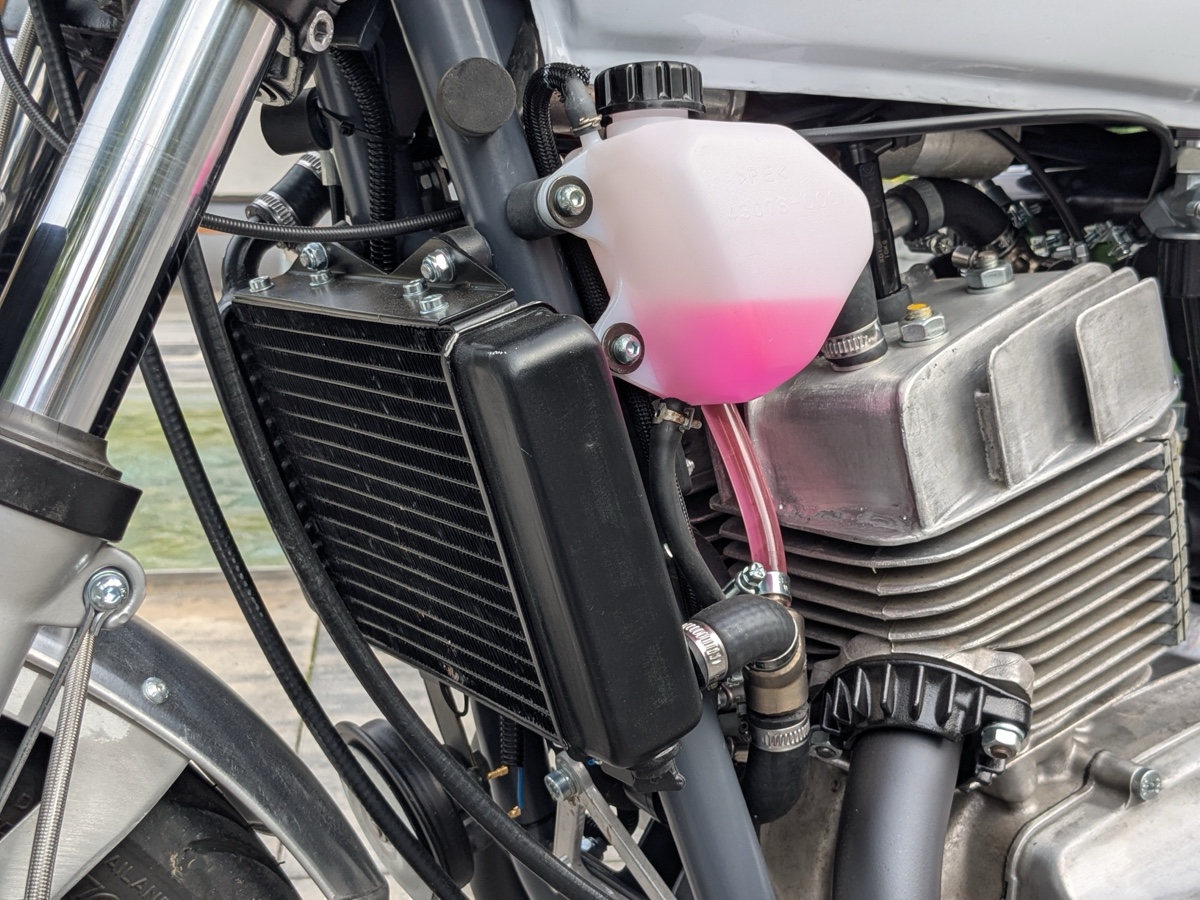
I bought automotive rubber hoses with various bends, used modified stainless steel fittings of the kind heating specialists use, and salvaged some nice aluminum tubing from the broken heater in our company’s Iveco van. All that remained was to hook it all up correctly. The cooling system features primary and secondary circuits, a simple Chinese controller to switch the electric pump, and a fan mounted behind the radiator. Those are the simpler parts of the setup.
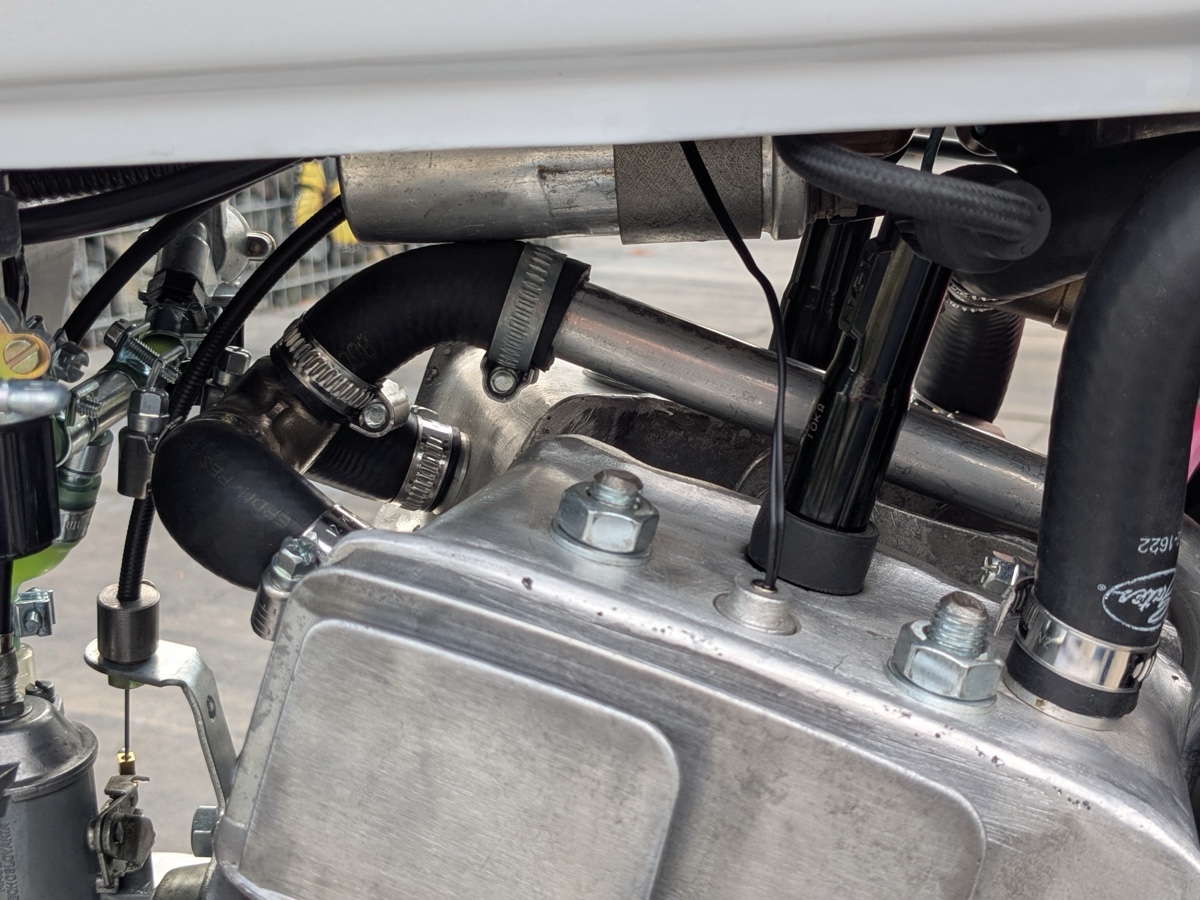
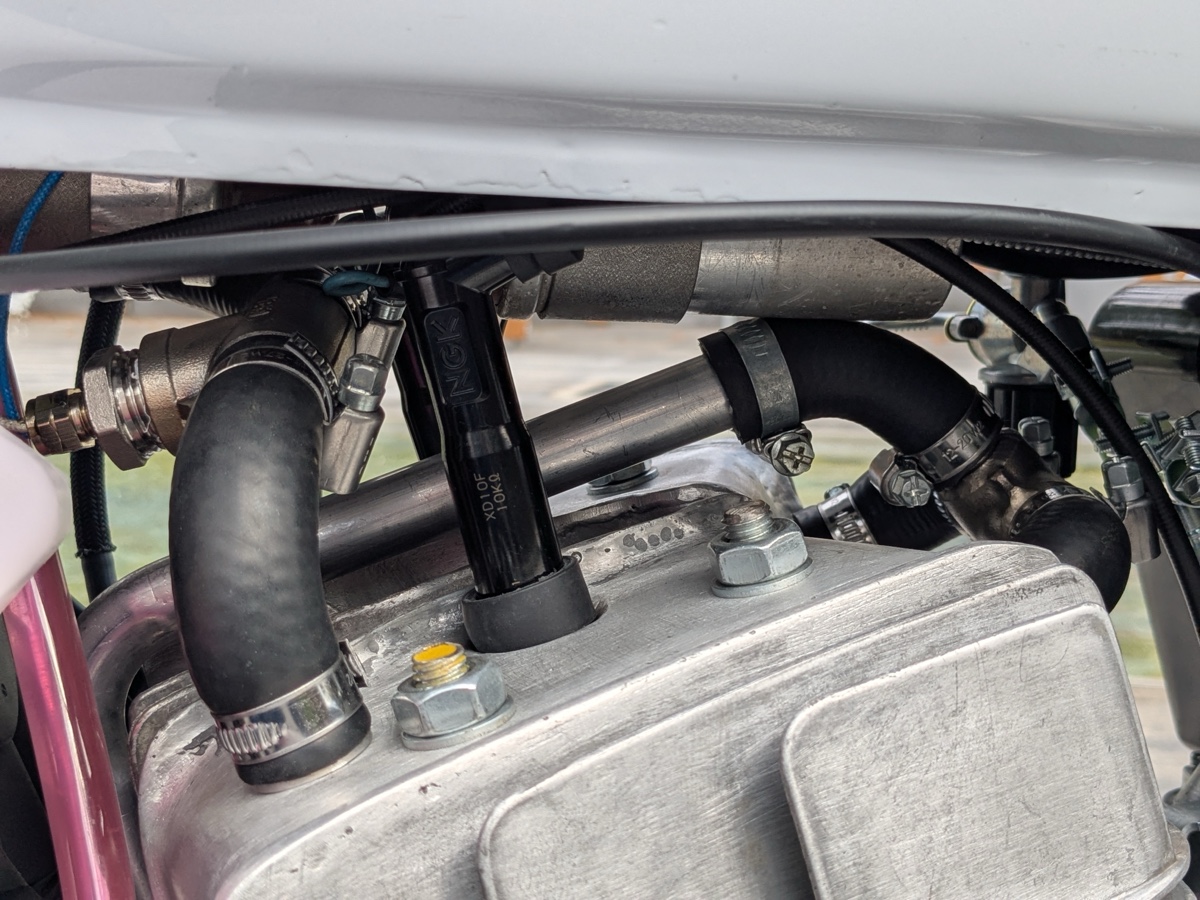
I wanted to preserve the engine’s distinctive design — with its characteristic ribbing — so I decided to use liquid cooling only for the cylinder heads. I didn’t have the funds to have new heads machined on a CNC, nor did I want to go that route. I set myself a different challenge: welding. I had to convince many people — experts included — that it could be done. It was quite an adventure, but sheer determination conquers all. I’ll provide the instructions for a fee…
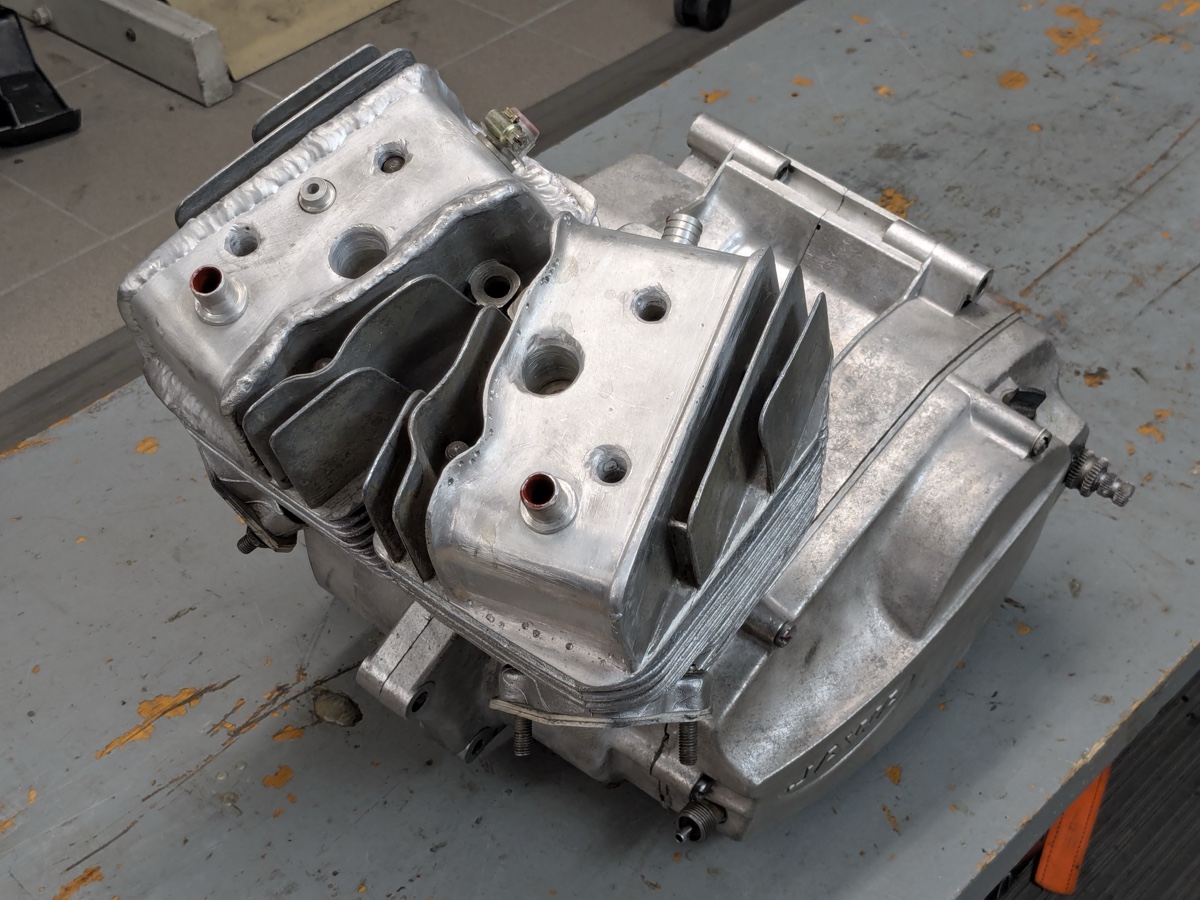
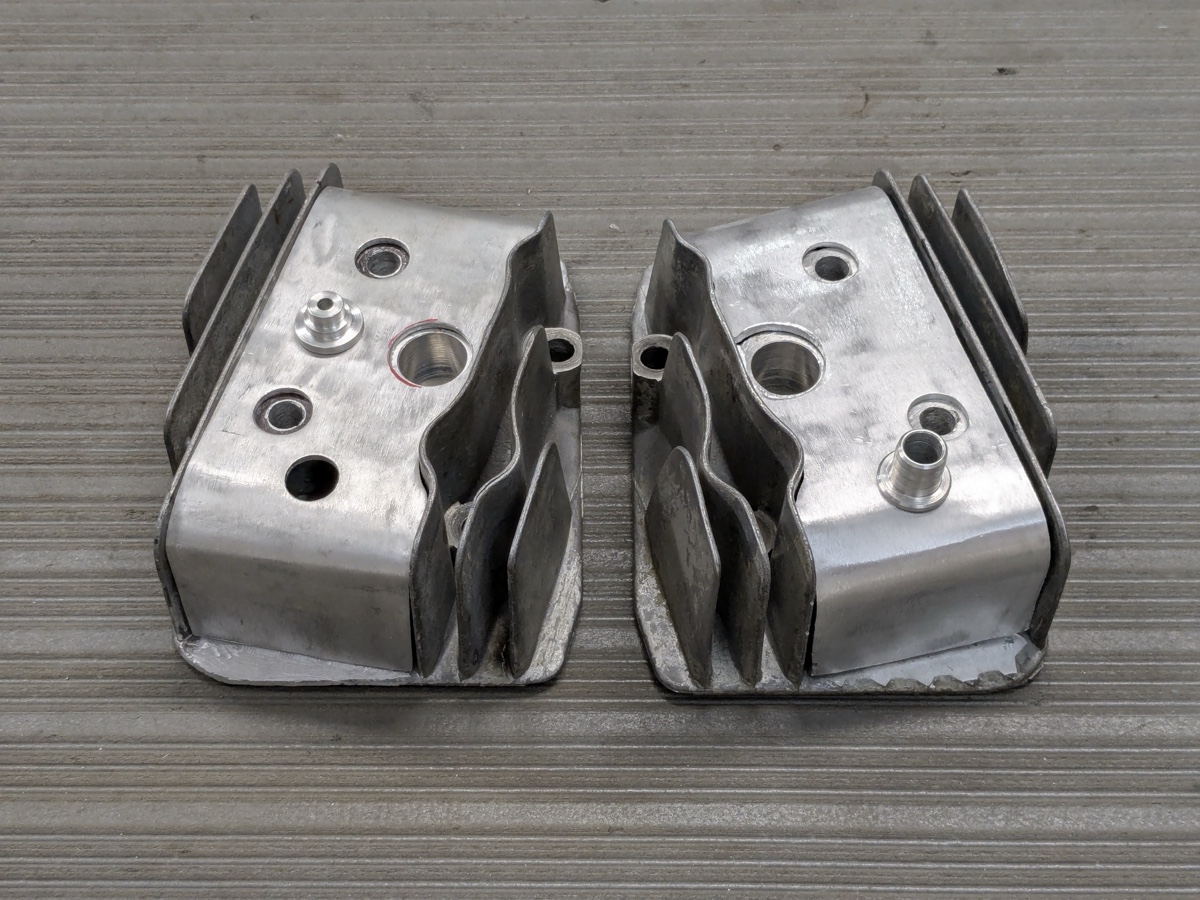
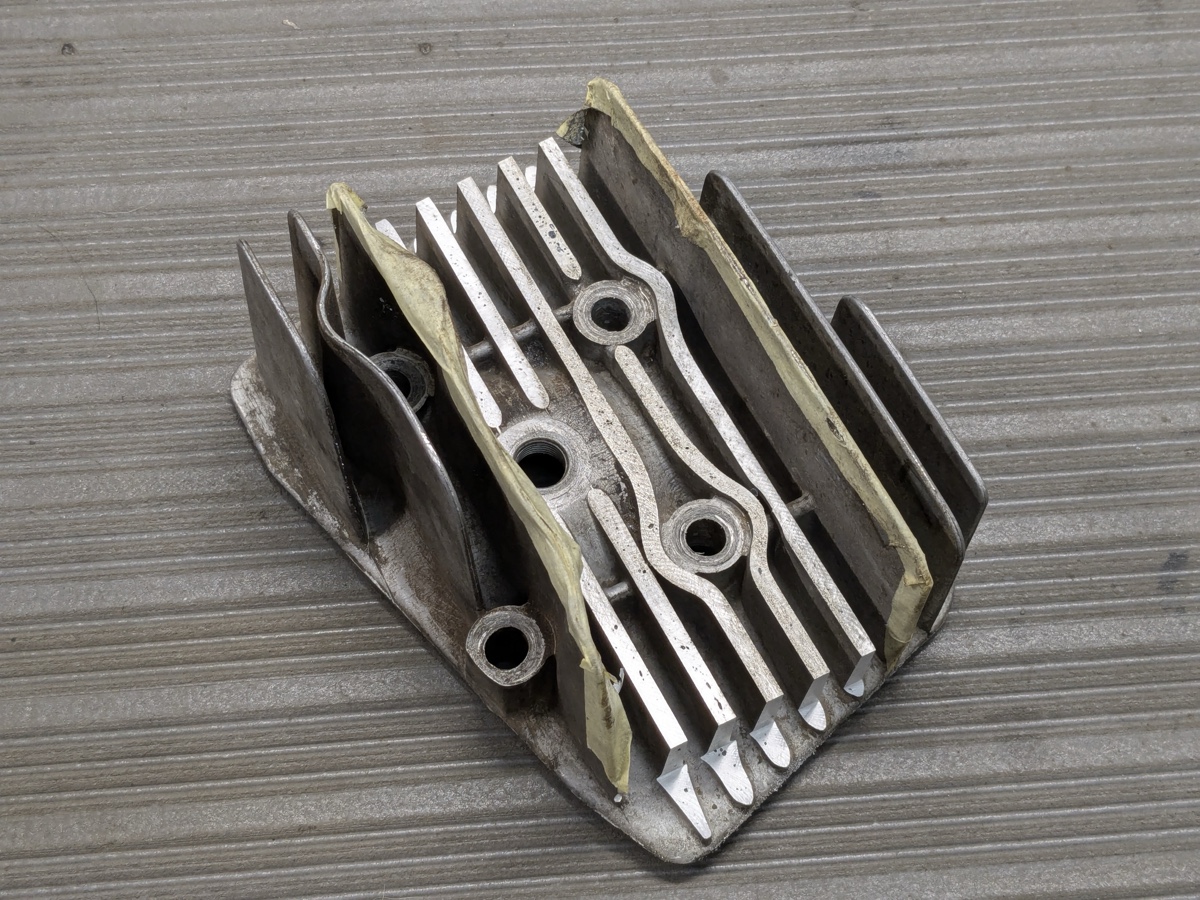
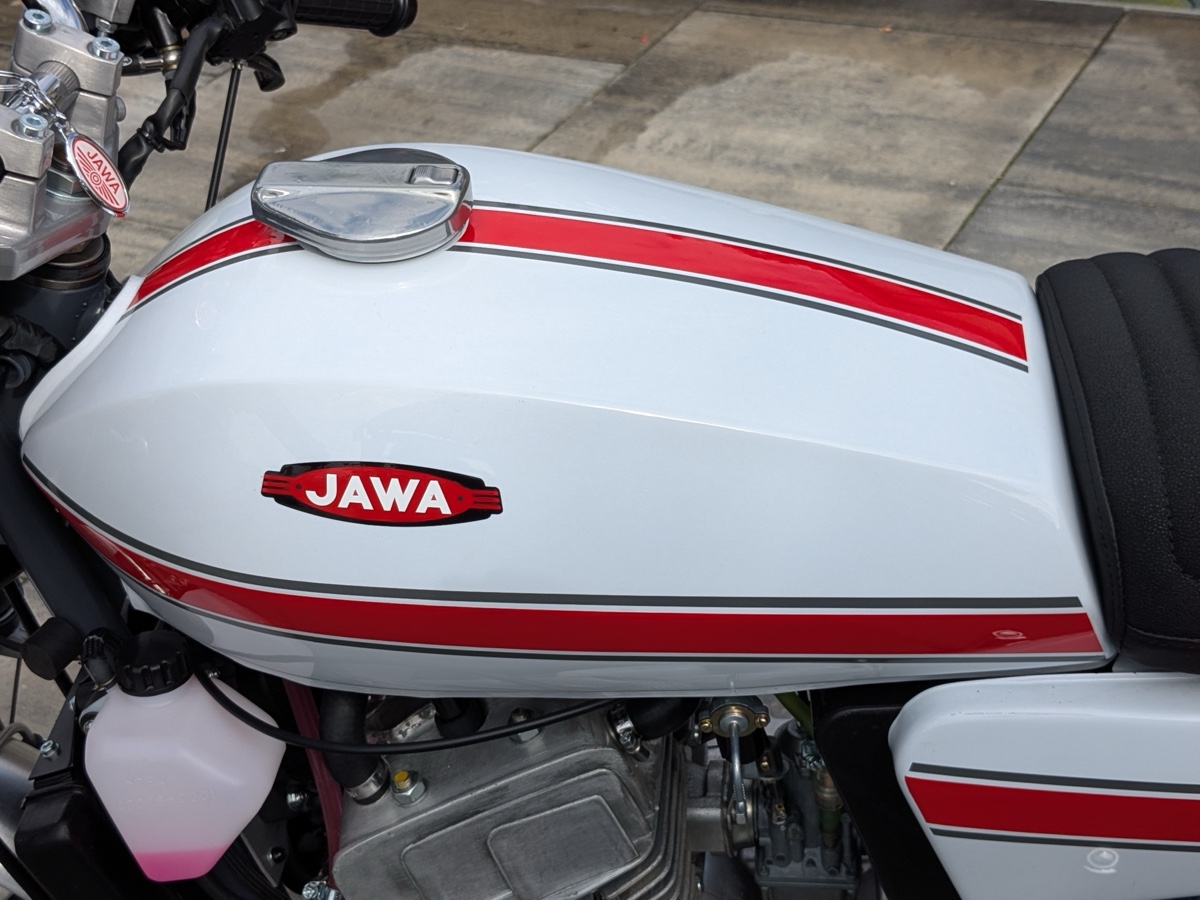
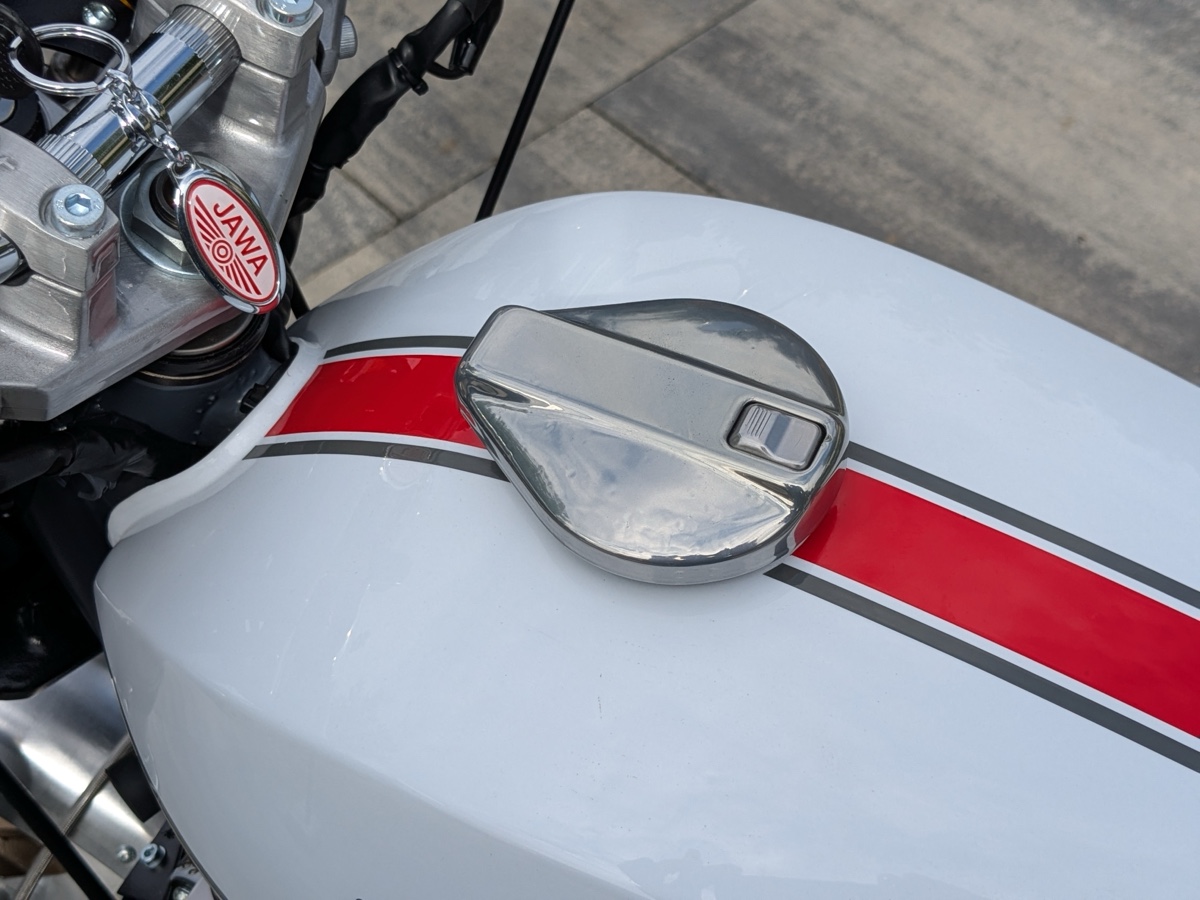
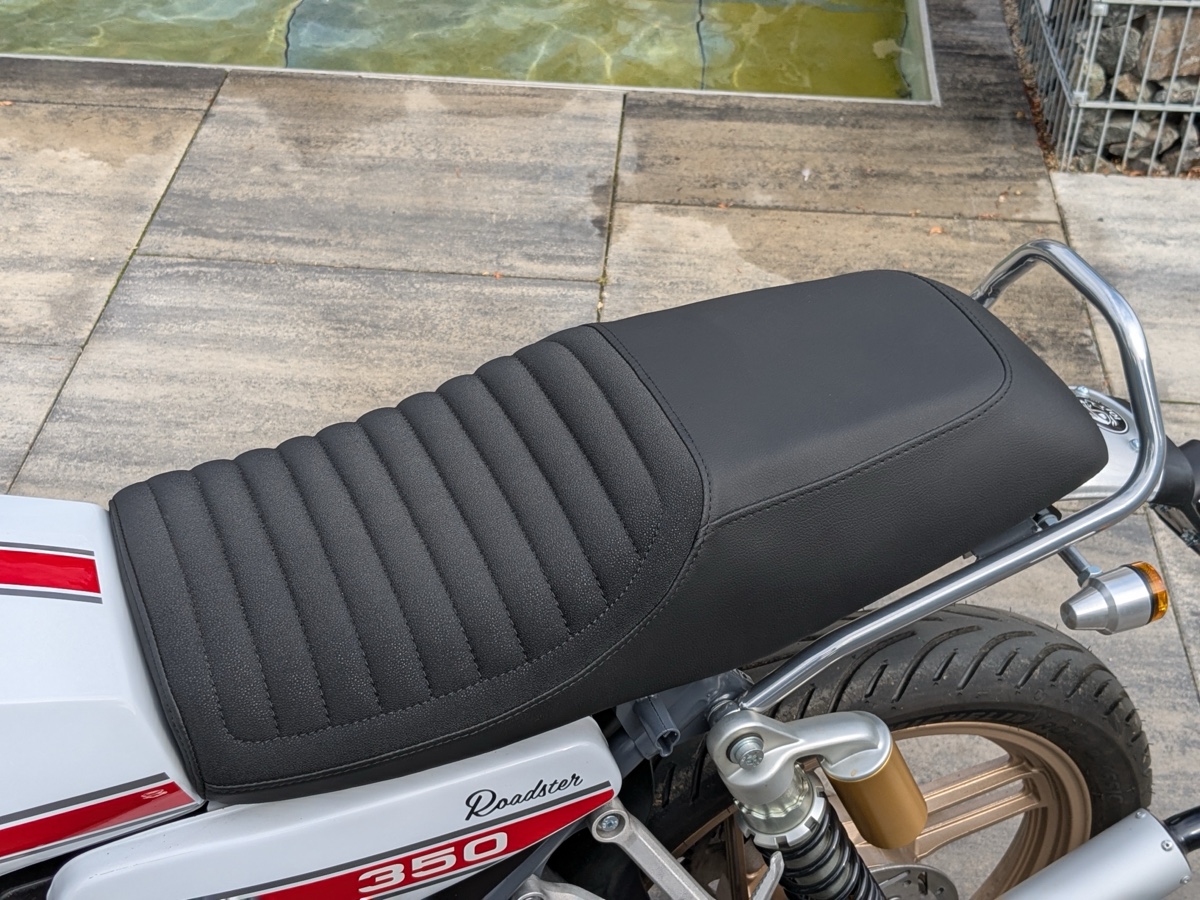
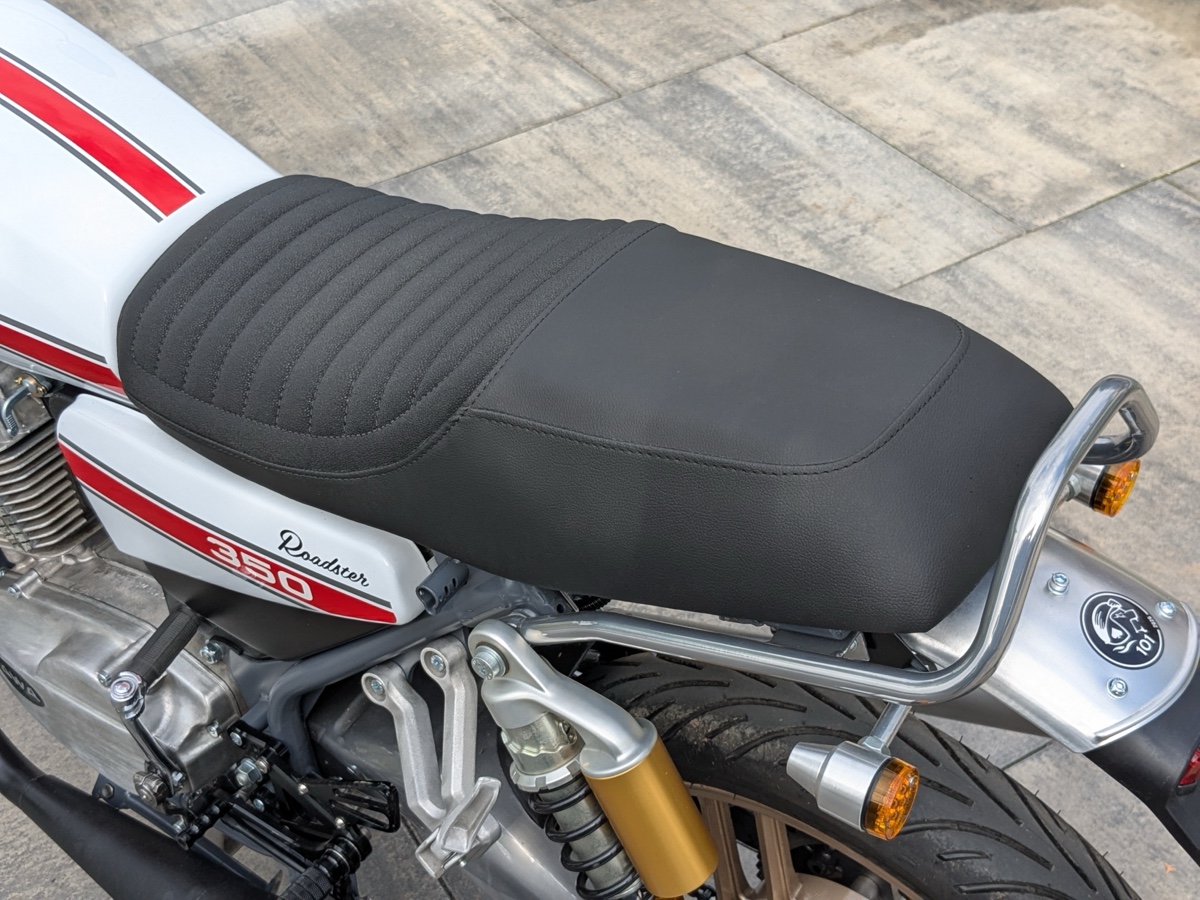
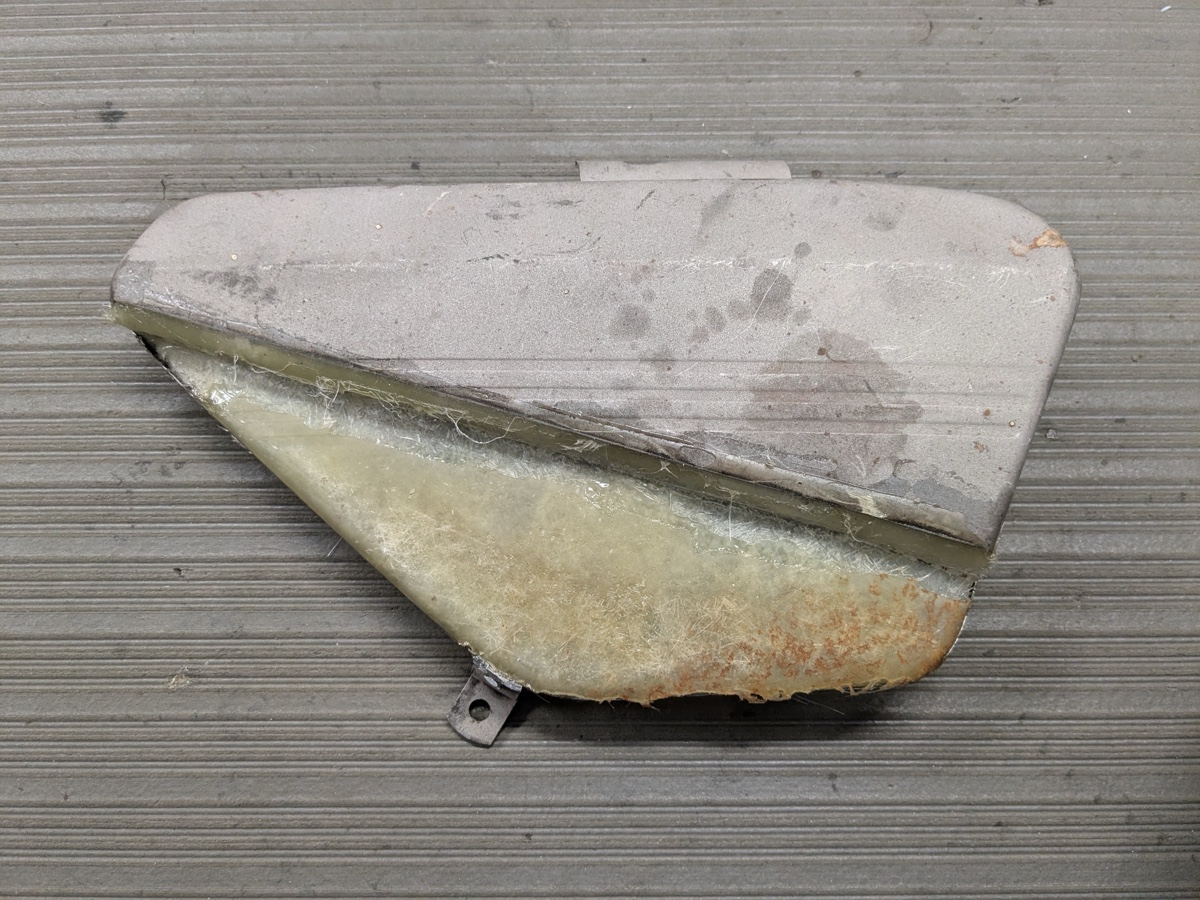
When I had the prototype nearly finished, I came across an ad for a non-running Jawa. I didn’t hesitate and bought it. I swapped everything over and added a Benelli 250 fuel tank, side panels, aluminum fenders, a custom-made seat, and a host of other parts.
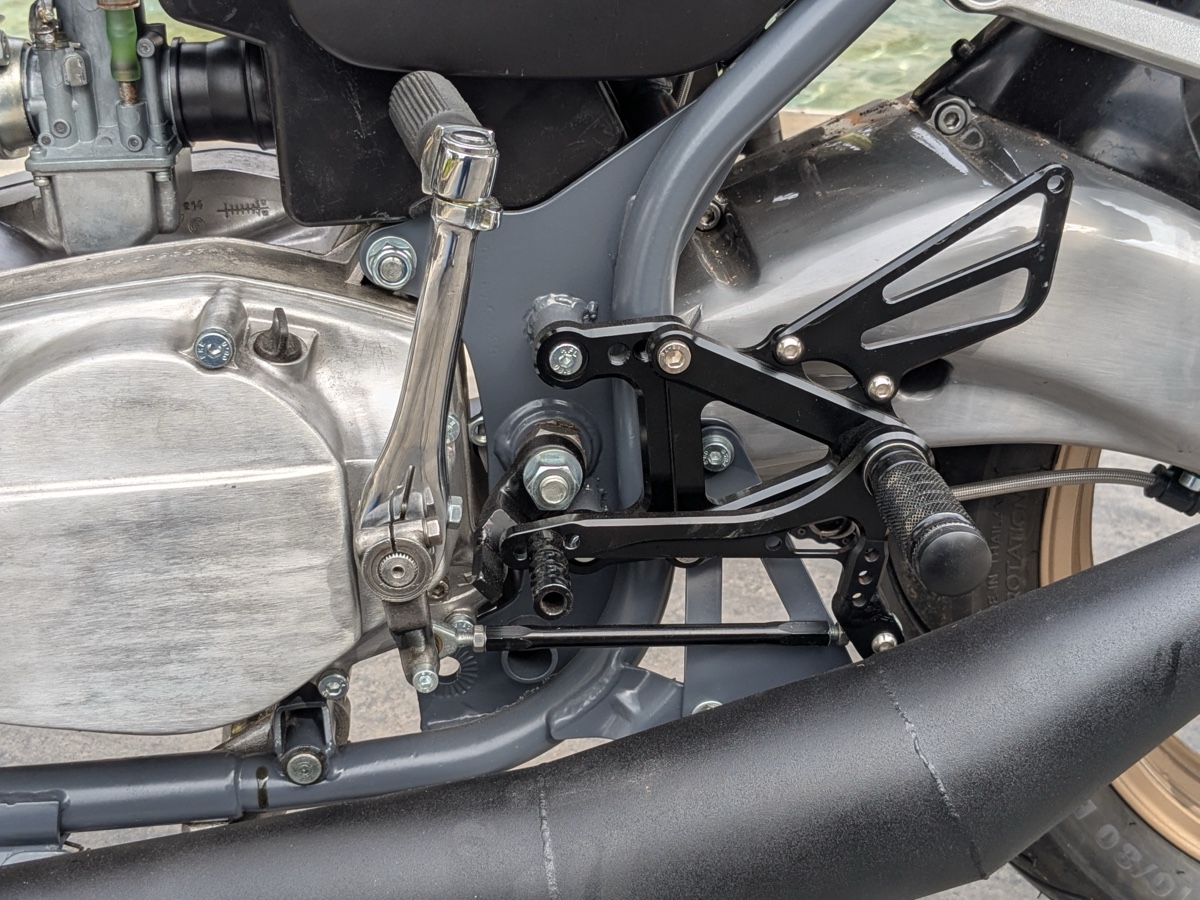
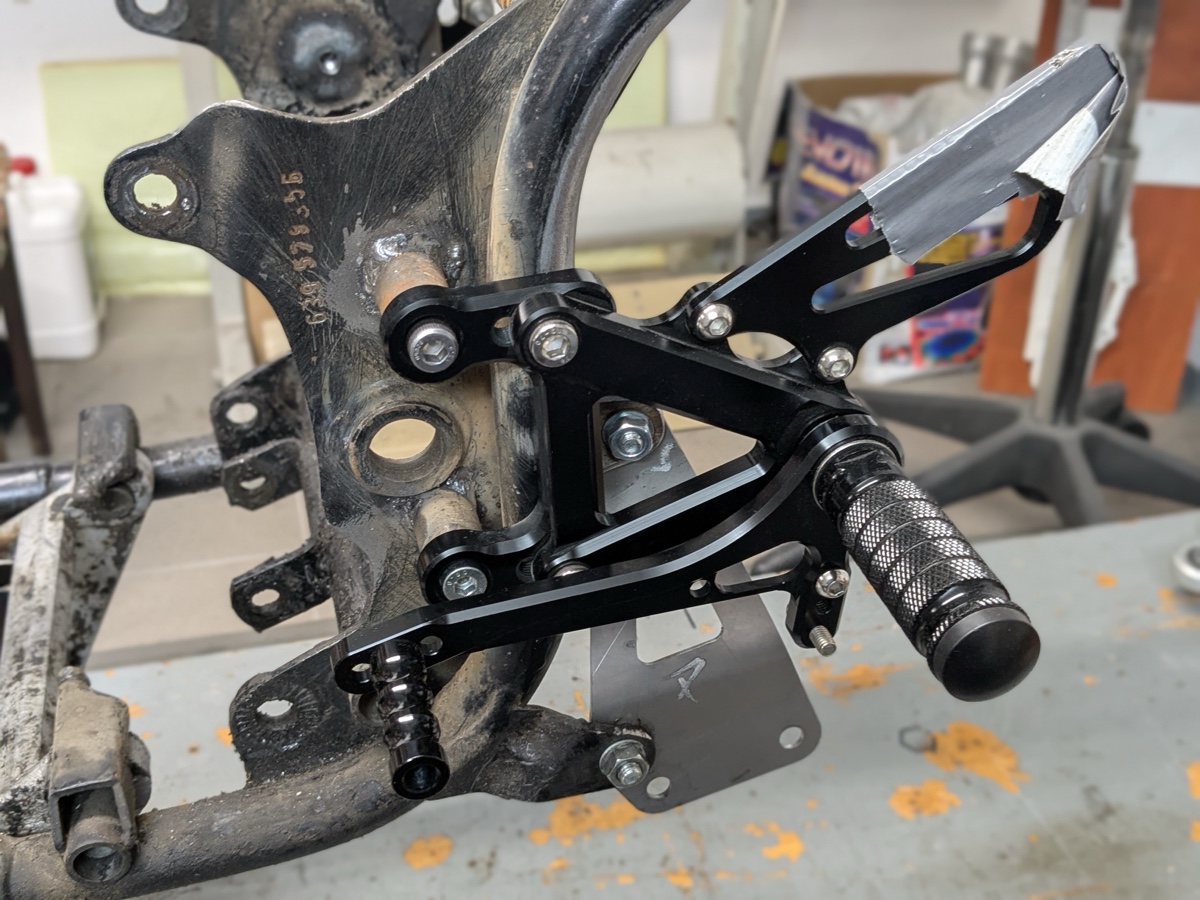
Sometime in the 1960s, Jawa patented a system that combined the kick-starter and gear shifter into a single lever. It was a clever invention at first glance, but the patent made it impossible to reposition the footrests. The solution was to install the dual-shaft system used by Jawa just after World War II, thereby separating the starting and shifting functions. I managed to do this, and I’m quietly proud of it.
I designed the entire color scheme myself. Some parts are powder-coated, while others are painted.
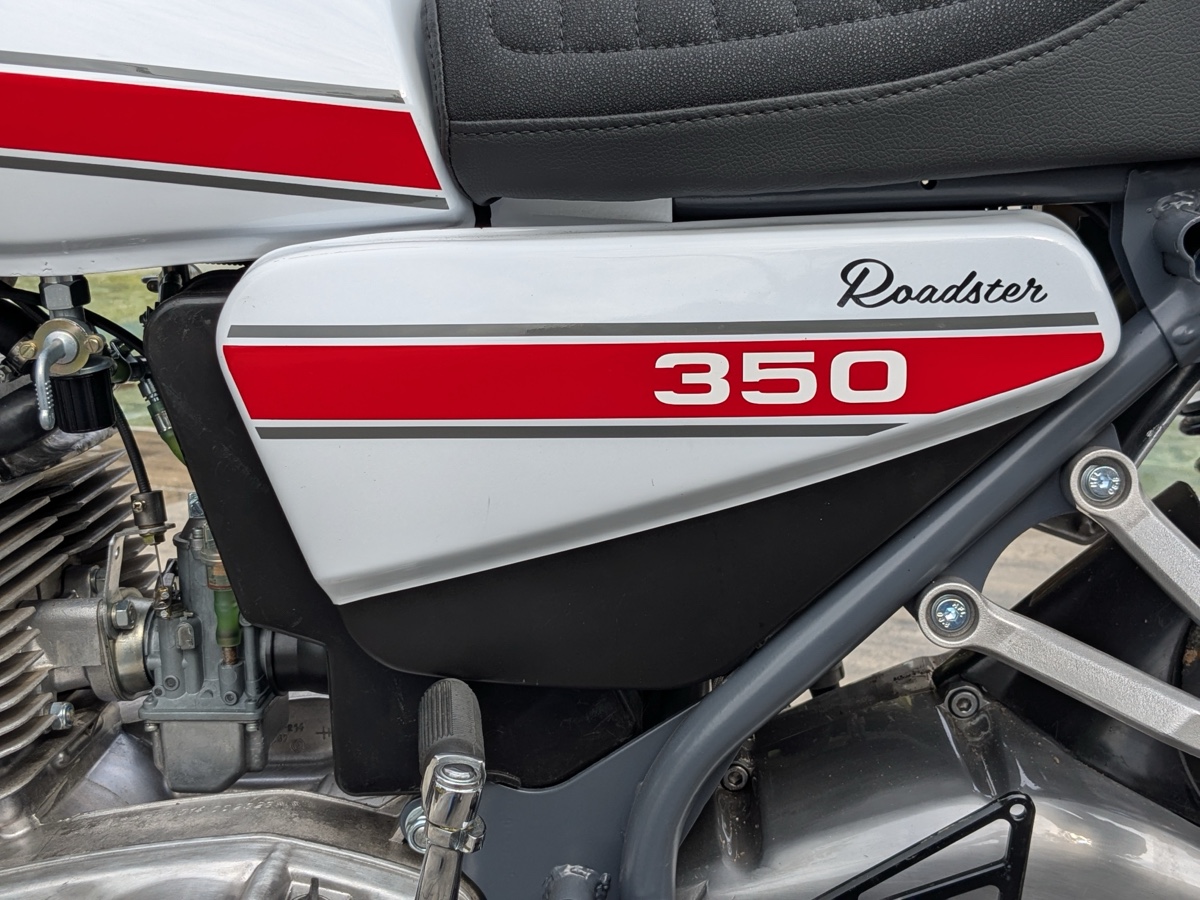
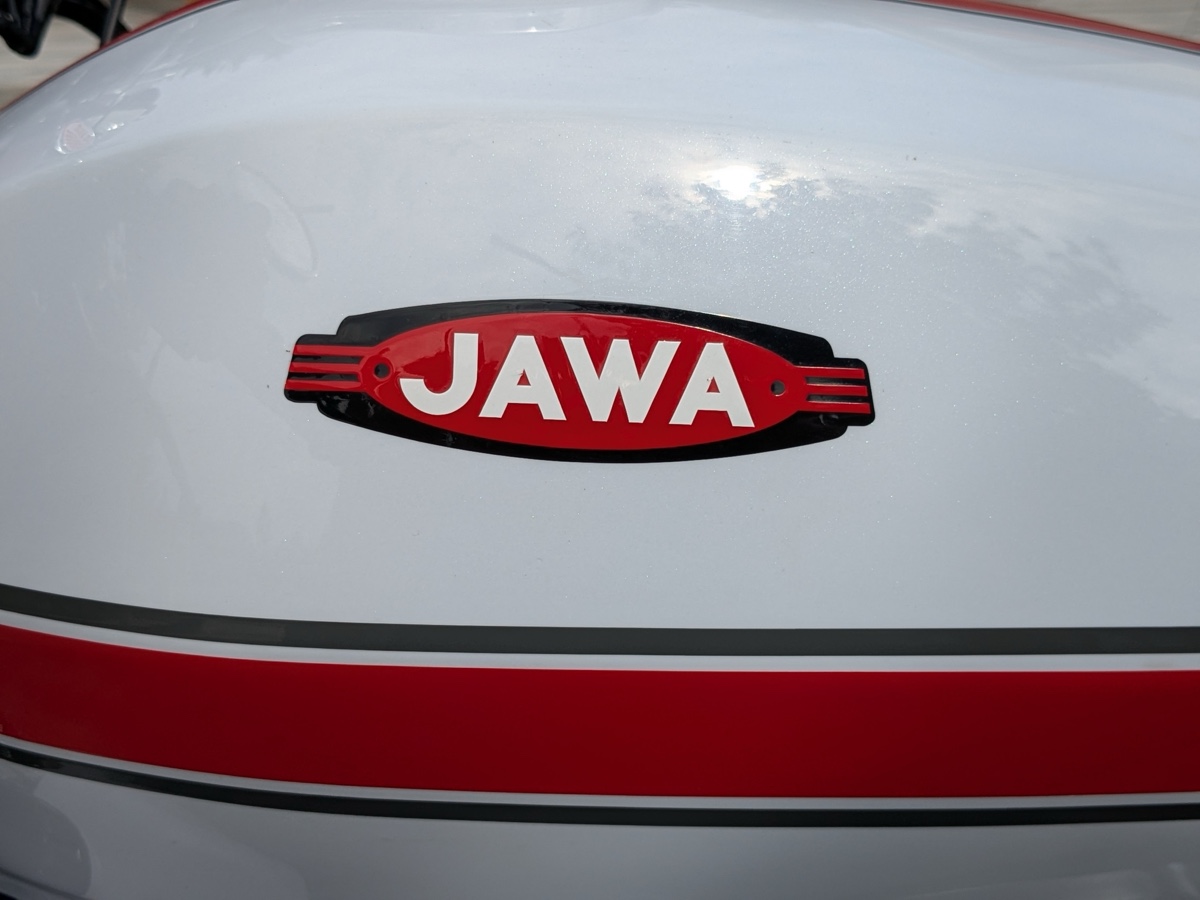
The Jawa engine is original and has very low power — only around 21 horsepower. However, the handling has improved dramatically. The entire project took two years of work in the evenings. I am no Jawa expert — just a few words. The engine is an air-cooled, two-stroke, inline twin, and the bore × stroke dimensions of 58 × 65 mm have remained the same from the first post-war model — the Type 18 “Pérák” (Sprung) — right up to the final Type 640.
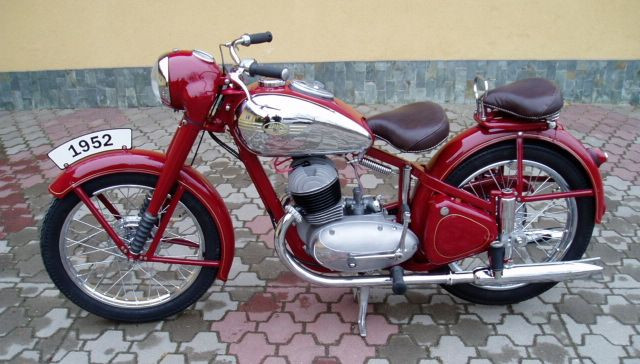
Key improvements included the transition from the simple frame of the Model 354 (“Kývačka”) to the double-cradle frame of the Model 634. This resulted in a more modern design and robust construction, as the model was intended for the Soviet market, to which approximately 100,000 motorcycles were reportedly exported annually. The remaining 5,000 or so units went to other countries in the then-socialist bloc. A Jawa motorcycle was the dream of every young man — and, at the same time, a scarce commodity.
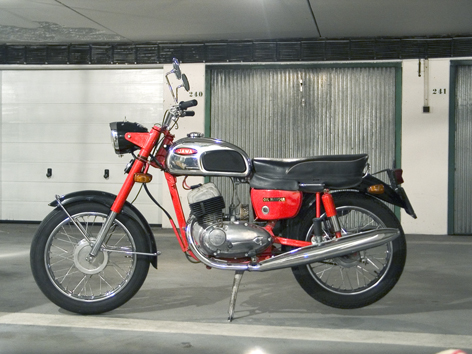
We must not forget the iconic Type 362 — the Californian. As the name suggests, it was a motorcycle designed primarily for export to the USA. It rolled on the then-fashionable 18-inch wheels (whereas all other models had 16-inch ones), featured a fresh design, and boasted a power output 25 HP unmatched by any other Jawa 350, either before or since.
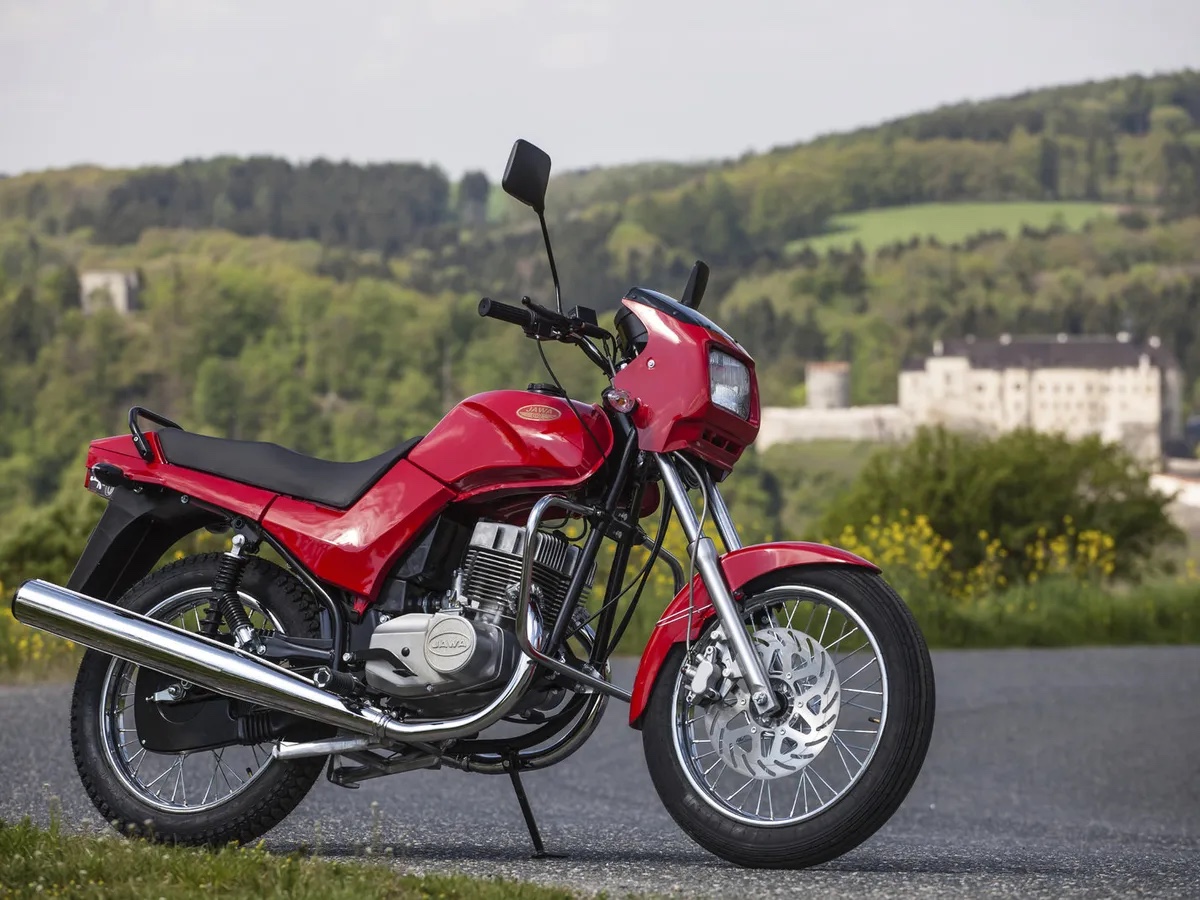
The Type 639 featured aluminum cylinders, a redesigned crankcase exterior (though the internal configuration remained largely unchanged), and a slightly more modern look. The final model, the Type 640, was no longer truly competitive; following the fall of the Iron Curtain, global brands arrived, used motorcycles from Western Europe began to be imported on a large scale, and all the major manufacturers eventually established themselves in the market.
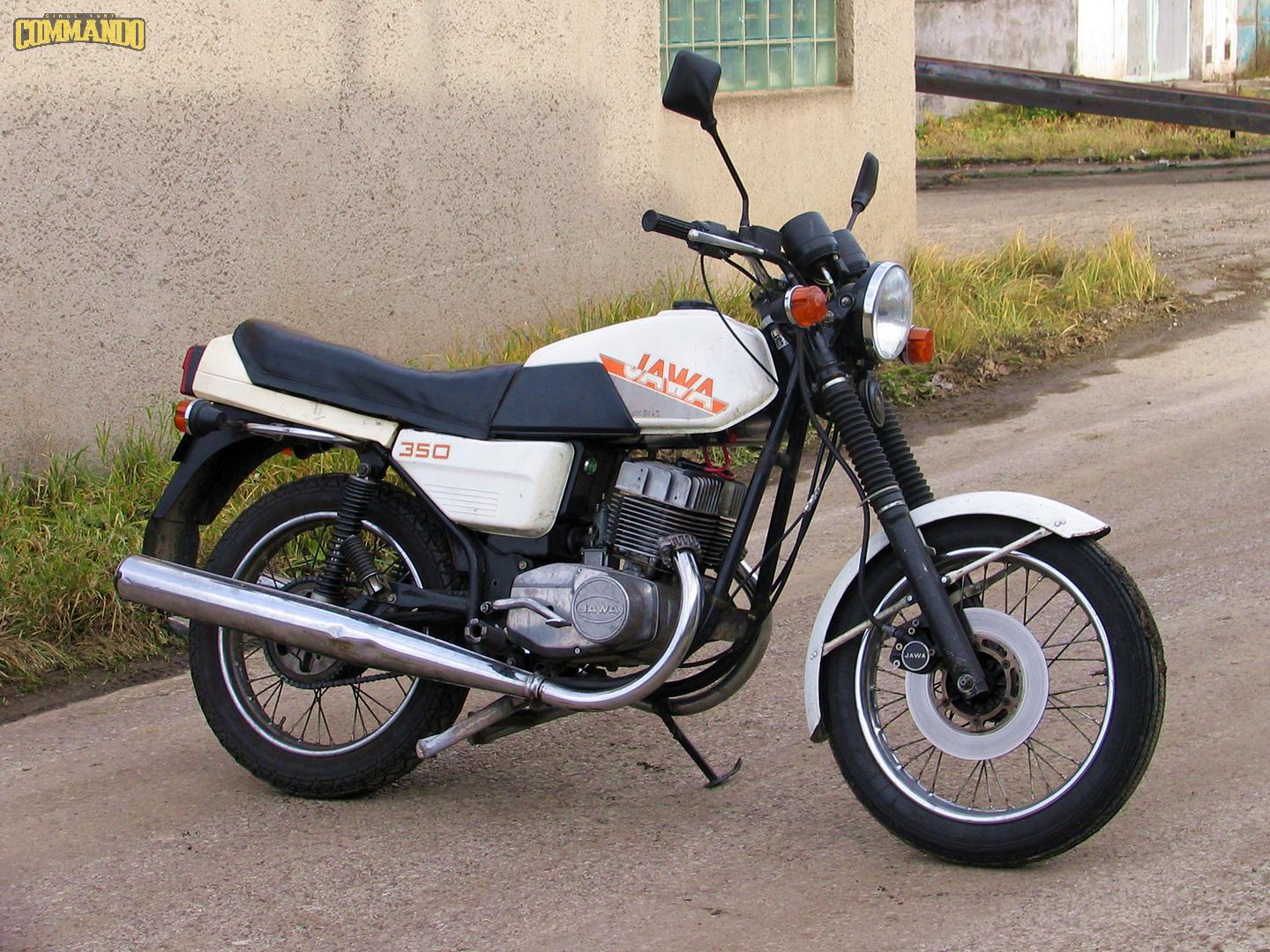
The Jawa 350 is an icon of socialism in the former Czechoslovakia and clear proof of how socialism and the so-called planned economy failed to ensure any development. As I mentioned at the beginning, my first bike was an older 350cc model, the Type 356. My second Jawa 350 was the Type 639. Based on a clay model I designed myself, an acquaintance made a fiberglass fairing for me. I replaced the front drum brake with a disc brake from an East German MZ motorcycle. I believe that, at the time, it was the first Jawa in Slovakia to feature a front disc brake.
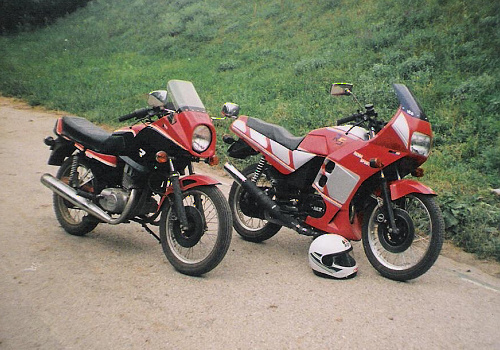
In the photo, he is with his MZ. He bought the front fairing and the seat section (all fiberglass), while I handled the design and the painting.
More Photos: Final Build
More Photos: Build Process
More Roman Juriš Builds
 Czech Mate: Liquid-Cooled Jawa 350 Restomod - Roman Juriš fulfills a two-wheeled dream of his youth… For the latter half of the 20th century, many of us took for granted that we could acquire and ride some of the hottest, most iconic […]
 Event Report: Glemseck 101 2026 - Roman Juriš reports from Glemseck 2026… This year marked the 19th annual edition of the Glemseck 101, the largest outdoor motorcycle festival in Europe. Some 40,000 motorcycle enthusiasts congregate the first weekend of September at […]
 We Are Lions: Glemseck 101 2025 - Roman Juriš reports from Glemseck… This month marked the 18th annual edition of the Glemseck 101, said to be the largest outdoor motorcycle festival in all of Europe. More than 40,000 motorcycle enthusiasts congregate the […]
 Event Report: 2024 Glemseck 101 - Event report and photos from our man on the ground, Roman Juriš, who brought his Yamaha XS400 “Roadster” more than 1000 kilometers from his home country of Slovakia to attend. From Roman: All café racer […]
 Event Report: Biker Fest Italy 2024 - International Biker Fest, held each year in the resort town of Lignano Sabbiadoro, is the largest motorcycle rally in Italy and one of the biggest in all of Europe. 2024 marked the 38th annual edition […]
 Patent Pending: Yamaha XS400 “Roadster” - Innovative XS400 from Roman Juriš… Introduced in 1976, the Yamaha XS400 came during a time when the major manufacturers were foreseeing the end of the two-stroke era and turning their attention to the development […]
 Wildly Addictive: KTM 990 Super Tourer - KTM 990 Super Duke Special from Roman Juriš… In 2005, the original KTM 990 Super Duke hit the motorcycling world like a two-wheeled bolt of lightning. Here was a naked bike with a chromoly […]
 Event Report: Custombike Show 2023 - Custombike Show 2023 from Bad Salzuflen, Germany… The annual Custombike Show in Bad Salzuflen, Germany is said to be the “world’s largest motorcycle show for rebuilt motorcycles,” typically featuring ~400 custom bikes over a space […]
 Event Report: Glemseck 101 - From Leonberg with Love, Drag Races, and Rock… The Glemseck 101 is the largest motorcycle event in all of Europe. This year, more than 40,000 visitors rode, drove, and flew to the former “Solitude” racetrack […]
 Joy Machine: Kawasaki ZR-7 Cafe Racer - “I decided to build a café racer with knee-down potential.” Introduced in 1999, the Kawasaki ZR-7 (aka ZR750F) hit the market as an affordable naked bike that harked back to the inline-four UJM machines of […]
 Alps Ace: Suzuki SV650 Sport Special - A Sportier SV from Roman Juriš… Introduced in 1999, the Suzuki SV650 was destined to become one of the most beloved middleweight twins of the modern age. While the bike wasn’t particularly outstanding on paper, […]
 Slovakian Supermono: Jawa “JSA 650RR” - Jawa / Suzuki / Aprilia = JSA 650RR… It’s easy to take for granted the opportunities many of us have to own and work on our own motorcycles. Recently we heard from Roman Juriš of […]


